Effects of Ca/Si and Si/Al Ratios on the Wood Biomass Ash-Based Alkali-Activated Materials with Pozzolanic Additives




Abstract
1. Introduction
2. Materials and Methods
2.1. Raw Materials
2.2. Mix Proportions and Sample Casting
2.3. Testing Methods
3. Results and Discussions
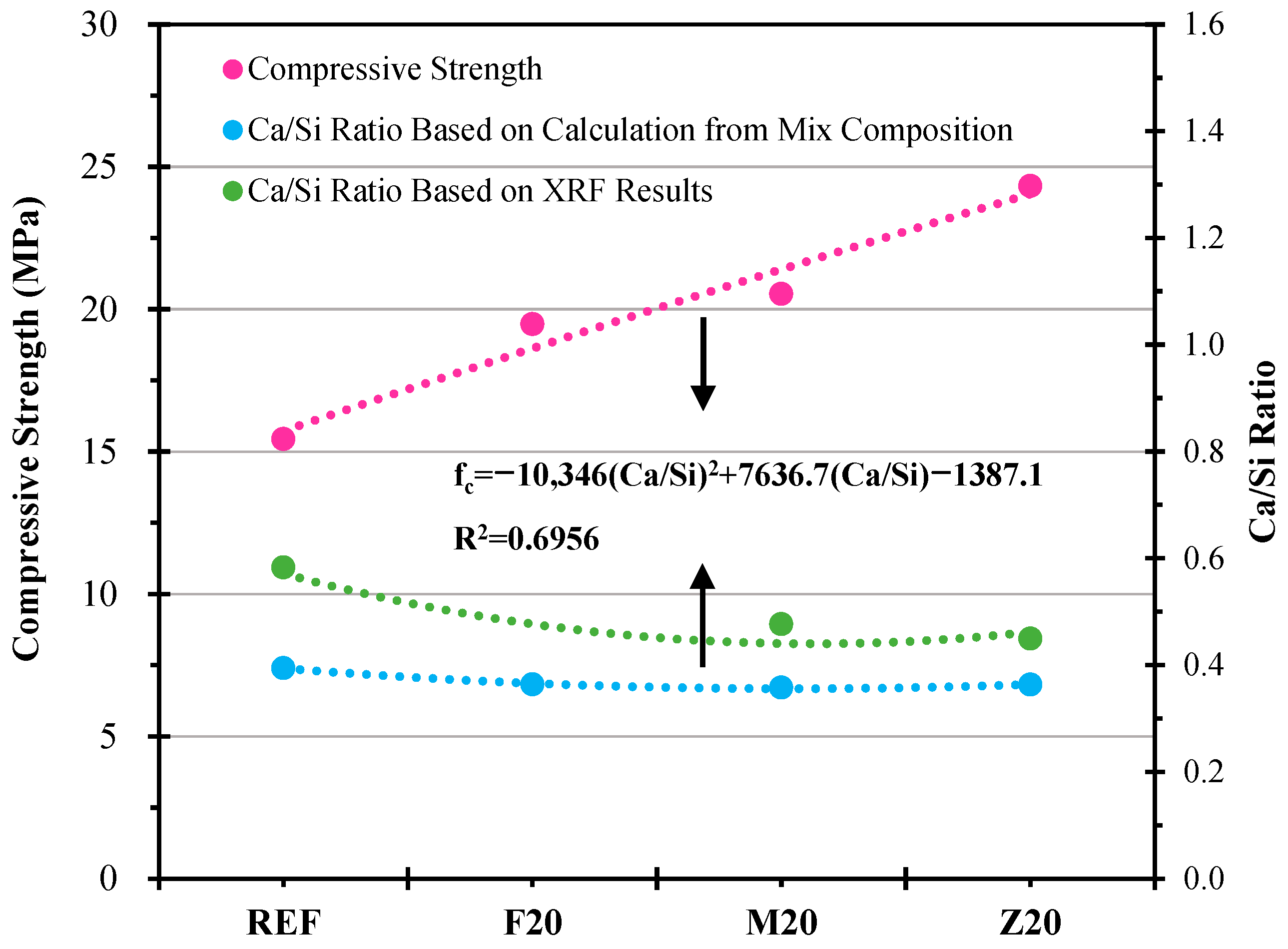
3.1. Strength Development
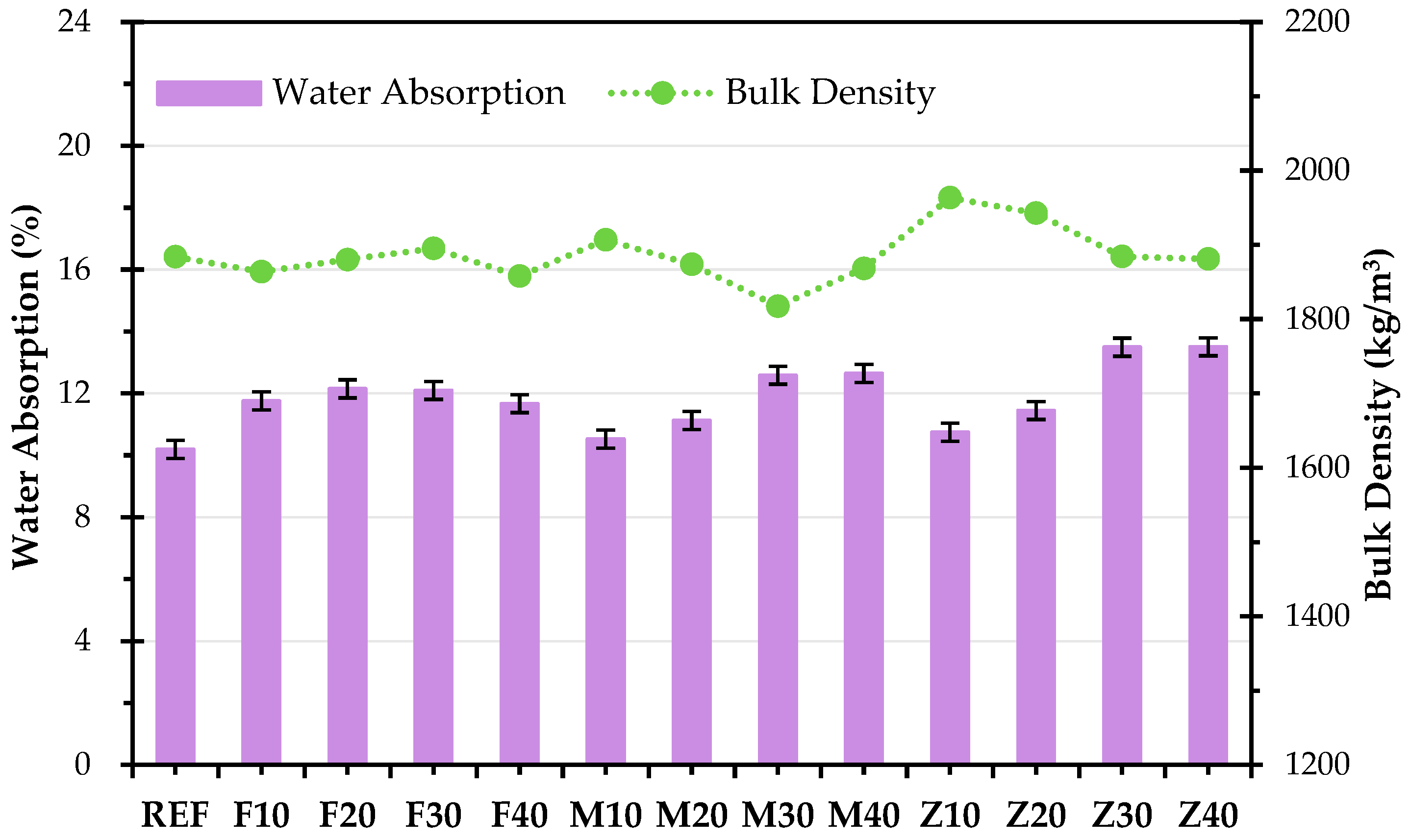
3.2. Water Absorption
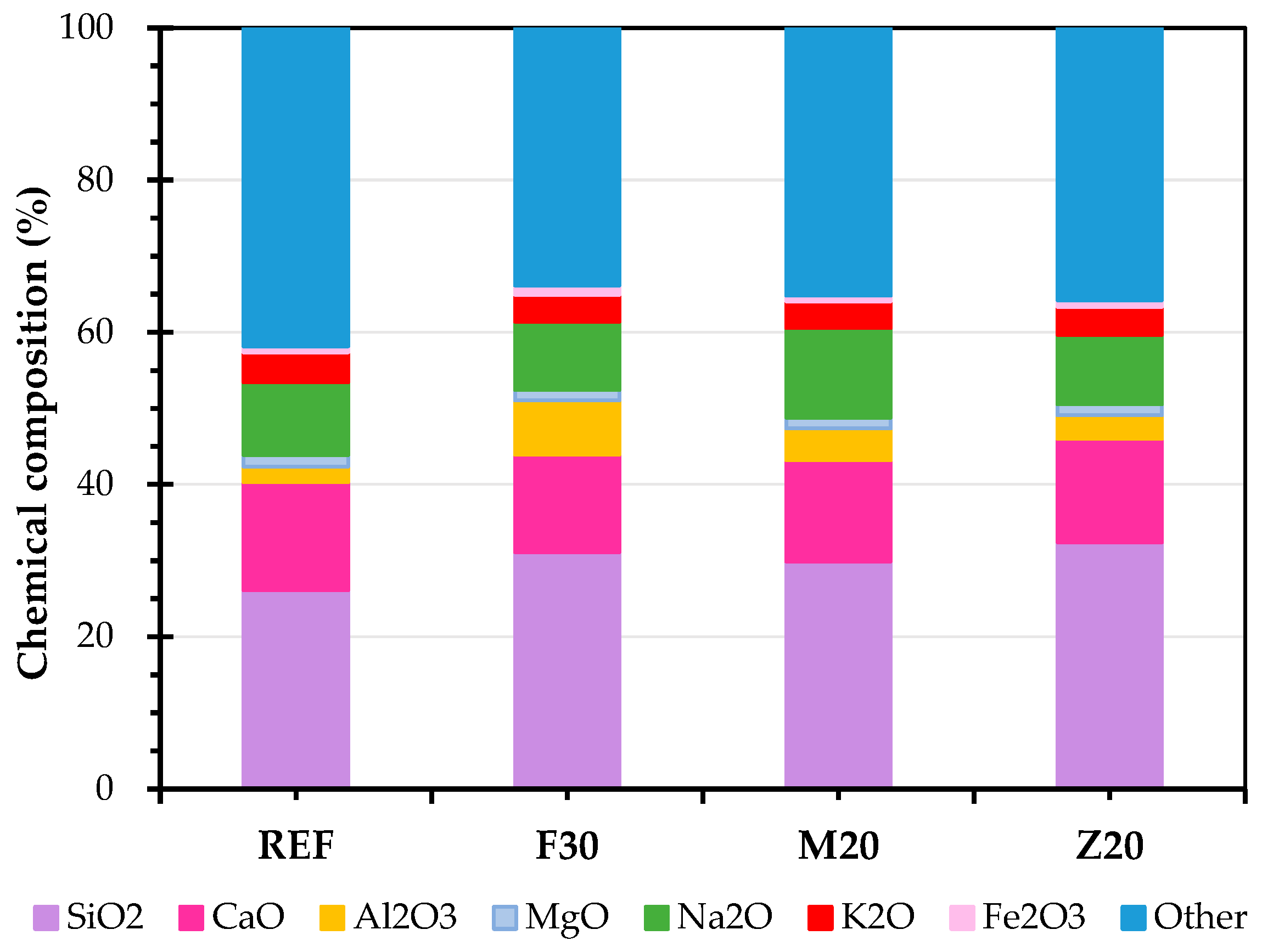
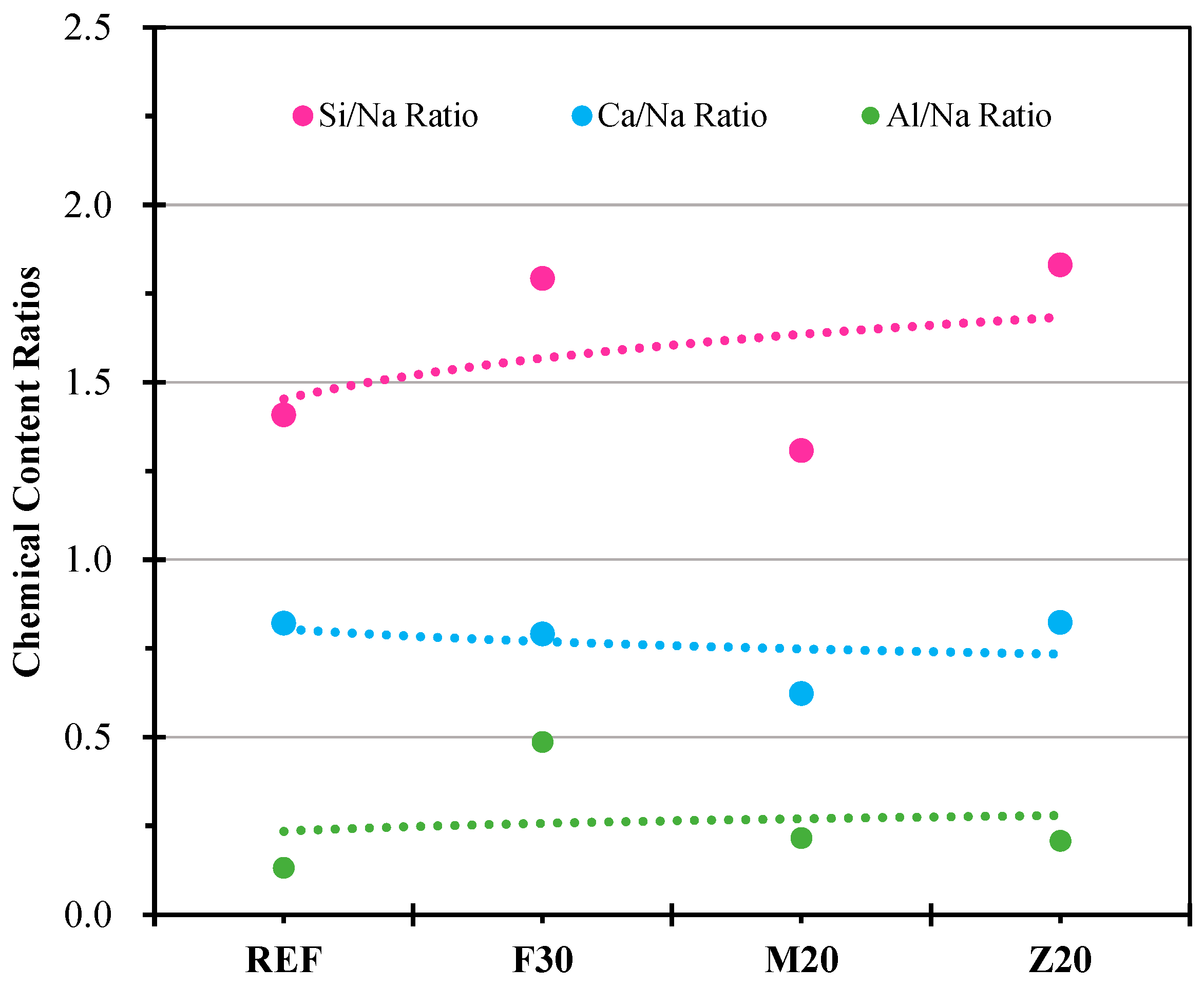
3.3. Chemical and Phase Composition
4. Conclusions
Author Contributions
Funding
Institutional Review Board Statement
Informed Consent Statement
Data Availability Statement
Acknowledgments
Conflicts of Interest
References
- Çelik, A.İ.; Karalar, M.; Tunç, U.; Şahan, M.F.; Althaqafi, E.; Umiye, O.A.; Özkılıç, Y.O. Mechanical and Impact Behavior of Lightweight Geopolymer Concrete Produced by Pumice and Waste Rubber. Sci. Rep. 2025, 15, 35280. [Google Scholar] [CrossRef] [PubMed]
- Top, S.; Vapur, H.; Altiner, M.; Kaya, D.; Ekicibil, A. Properties of Fly Ash-Based Lightweight Geopolymer Concrete Prepared Using Pumice and Expanded Perlite as Aggregates. J. Mol. Struct. 2020, 1202, 127236. [Google Scholar] [CrossRef]
- Çelik, A.İ.; Tunç, U.; Kayabaşı, R.; Acar, M.C.; Şener, A.; Özkiliç, Y.O. Influence of Aluminum Waste, Hydrogen Peroxide, and Silica Fume Ratios on the Mechanical and Thermal Characteristics of Alkali-Activated Sustainable Raw Perlite Based Geopolymer Paste. Sustain. Chem. Pharm. 2024, 41, 101727. [Google Scholar] [CrossRef]
- Çelik, A.İ.; Tunç, U.; Karalar, M.; Althaqafi, E.; Özkılıç, Y.O. Sustainable Utilization of Aluminum Waste in Geopolymer Concrete: Influence of Alkaline Activation on Microstructure and Mechanical Properties. Rev. Adv. Mater. Sci. 2025, 64, 20250152. [Google Scholar] [CrossRef]
- Wan, F.; Guo, Y.; Zheng, M.; Li, B.; Elghazouli, A.Y. Sustainable Engineered Geopolymer Composites Incorporating Recycled Waste Rubber as Full Replacement of Fine Aggregates. J. Mater. Res. Technol. 2025, 37, 5614–5641. [Google Scholar] [CrossRef]
- Hamid, Z.; Rafiq, S. An Experimental Study on Behavior of Wood Ash in Concrete as Partial Replacement of Cement. Mater. Today Proc. 2021, 46, 3426–3429. [Google Scholar] [CrossRef]
- Vu, V.A.; Cloutier, A.; Bissonnette, B.; Blanchet, P.; Duchesne, J. The Effect of Wood Ash as a Partial Cement Replacement Material for Making Wood-Cement Panels. Materials 2019, 12, 2766. [Google Scholar] [CrossRef]
- Bhat, J.A. Mechanical Behaviour of Self Compacting Concrete: Effect of Wood Ash and Coal Ash as Partial Cement Replacement. Mater. Today Proc. 2021, 42, 1470–1476. [Google Scholar] [CrossRef]
- Abdulkareem, O.A.; Ramli, M.; Matthews, J.C. Production of Geopolymer Mortar System Containing High Calcium Biomass Wood Ash as a Partial Substitution to Fly Ash: An Early Age Evaluation. Compos. B Eng. 2019, 174, 106941. [Google Scholar] [CrossRef]
- Cheah, C.B.; Part, W.K.; Ramli, M. The Hybridizations of Coal Fly Ash and Wood Ash for the Fabrication of Low Alkalinity Geopolymer Load Bearing Block Cured at Ambient Temperature. Constr. Build. Mater. 2015, 88, 41–55. [Google Scholar] [CrossRef]
- Du, Y.; Pundiene, I.; Pranckeviciene, J.; Korjakins, A.; Kligys, M. Mechanical Properties and Lifecycle Assessment of a Green Alkali-Activated Mortar Based on Biomass Wood Ash. Environ. Clim. Technol. 2024, 28, 195–207. [Google Scholar] [CrossRef]
- Arunkumar, K.; Muthukannan, M.; Kumar, A.S.; Ganesh, A.C.; Devi, R.K. Production of Eco-Friendly Geopolymer Concrete by Using Waste Wood Ash for a Sustainable Environment. Pollution 2021, 7, 993–1006. [Google Scholar] [CrossRef]
- Candamano, S.; De Luca, P.; Frontera, P.; Crea, F. Production of Geopolymeric Mortars Containing Forest Biomass Ash as Partial Replacement of Metakaolin. Environments 2017, 4, 74. [Google Scholar] [CrossRef]
- Jurado-Contreras, S.; Bonet-Martínez, E.; Sánchez-Soto, P.J.; Gencel, O.; Eliche-Quesada, D. Synthesis and Characterization of Alkali-Activated Materials Containing Biomass Fly Ash and Metakaolin: Effect of the Soluble Salt Content of the Residue. Arch. Civil. Mech. Eng. 2022, 22, 121. [Google Scholar] [CrossRef]
- Du, Y.; Pundienė, I.; Pranckevičienė, J.; Kligys, M.; Girskas, G.; Korjakins, A. A Review of Biomass Wood Ash in Alkali-Activated Materials: Treatment, Application, and Outlook. J. Compos. Sci. 2024, 8, 161. [Google Scholar] [CrossRef]
- Papa, E.; Medri, V.; Amari, S.; Manaud, J.; Benito, P.; Vaccari, A.; Landi, E. Zeolite-Geopolymer Composite Materials: Production and Characterization. J. Clean. Prod. 2018, 171, 76–84. [Google Scholar] [CrossRef]
- Nikolov, A.; Rostovsky, I.; Nugteren, H. Geopolymer Materials Based on Natural Zeolite. Case Stud. Constr. Mater. 2017, 6, 198–205. [Google Scholar] [CrossRef]
- Villa, C.; Pecina, E.T.; Torres, R.; Gómez, L. Geopolymer Synthesis Using Alkaline Activation of Natural Zeolite. Constr. Build. Mater. 2010, 24, 2084–2090. [Google Scholar] [CrossRef]
- Wang, J.; Hu, Z.; Chen, Y.; Huang, J.; Ma, Y.; Zhu, W.; Liu, J. Effect of Ca/Si and Al/Si on Micromechanical Properties of C(-A)-S-H. Cem. Concr. Res. 2022, 157, 106811. [Google Scholar] [CrossRef]
- Wang, J.; Gao, C.; Tang, J.; Hu, Z.; Liu, J. The Multi-Scale Mechanical Properties of Calcium-Silicate-Hydrate. Cem. Concr. Compos. 2023, 140, 105097. [Google Scholar] [CrossRef]
- Silva, R.V.; De Brito, J.; Dhir, R.K. Properties and Composition of Recycled Aggregates from Construction and Demolition Waste Suitable for Concrete Production. Constr. Build. Mater. 2014, 65, 201–217. [Google Scholar] [CrossRef]
- Verian, K.P.; Ashraf, W.; Cao, Y. Properties of Recycled Concrete Aggregate and Their Influence in New Concrete Production. Resour. Conserv. Recycl. 2018, 133, 30–49. [Google Scholar] [CrossRef]
- Rashid, K.; Rehman, M.U.; de Brito, J.; Ghafoor, H. Multi-Criteria Optimization of Recycled Aggregate Concrete Mixes. J. Clean. Prod. 2020, 276, 124316. [Google Scholar] [CrossRef]
- Wang, B.; Yan, L.; Fu, Q.; Kasal, B. A Comprehensive Review on Recycled Aggregate and Recycled Aggregate Concrete. Resour. Conserv. Recycl. 2021, 171, 105565. [Google Scholar] [CrossRef]
- Du, Y.; Pundienė, I.; Pranckevičienė, J. Valorisation of Wood Biomass Wastes in Alkali-Activated Mortar with Hybrid Activator. Ceram. Int. 2025; in press. [Google Scholar] [CrossRef]
- Zhu, C. Development of Alkali-Activated Materials Using Biomass Fly Ash, Phosphogypsum, and Recycled Concrete Aggregates; Vilnius Gediminas Technical University: Vilnius, Lithuania, 2024. [Google Scholar]
- Rożek, P.; Król, M.; Mozgawa, W. Geopolymer-Zeolite Composites: A Review. J. Clean. Prod. 2019, 230, 557–579. [Google Scholar] [CrossRef]
- Jiang, T.; Liu, Z.; Tian, X.; Wu, J.; Wang, L. Review on the Impact of Metakaolin-Based Geopolymer’s Reaction Chemistry, Nanostructure and Factors on Its Properties. Constr. Build. Mater. 2024, 412, 134760. [Google Scholar] [CrossRef]
- Luhar, I.; Luhar, S. A Comprehensive Review on Fly Ash-Based Geopolymer. J. Compos. Sci. 2022, 6, 219. [Google Scholar] [CrossRef]
- Du, Y.; Pundiene, I.; Pranckeviciene, J.; Korjakins, A. Sulphate Resistance of Alkali-Activated Material Produced Using Wood Ash. Materials 2025, 18, 4313. [Google Scholar] [CrossRef] [PubMed]
- Vaiciukyniene, D.; Nizeviciene, D.; Mikelioniene, A.; Radzevicius, A. Utilization of Zeolitic Waste in Alkali-Activated Biomass Bottom Ash Blends. Molecules 2020, 25, 3053. [Google Scholar] [CrossRef]
- Rocha, T.d.S.; Dias, D.P.; França, F.C.C.; Guerra, R.R.d.S.; Marques, L.R.d.C.d.O. Metakaolin-Based Geopolymer Mortars with Different Alkaline Activators (Na+ and K+). Constr. Build. Mater. 2018, 178, 453–461. [Google Scholar] [CrossRef]
- Rajamma, R.; Labrincha, J.A.; Ferreira, V.M. Alkali Activation of Biomass Fly Ash-Metakaolin Blends. Fuel 2014, 98, 265–271. [Google Scholar] [CrossRef]
- Oliwa, K.; Kozub, B.; Łoś, K.; Łoś, P.; Korniejenko, K. Assessment of Durability and Degradation Resistance of Geopolymer Composites in Water Environments. Materials 2025, 18, 3892. [Google Scholar] [CrossRef]
- Sun, Y.; Liu, S.; Zhang, S.; Li, G.; Guan, X.; Zhu, J.; Liu, Z.; Wang, F. Optimized Ca/Si Ratio Design for Ultra-High Strength Carbon Mineralization Materials: Integrating Synergistic Mineral Effects and Crystal Grain Size Enhancement. Constr. Build. Mater. 2025, 494, 143398. [Google Scholar] [CrossRef]
- Xie, Y.; Zhou, H.; Wang, J.; Meng, H.; Wei, S.; Sun, J.; Hu, Y. Enhancing Autoclaved Aerated Concrete Performance via Replacement of Fly Ash with Granite Stone Powder and Steel Slag: Critical Role of Ca/Si Ratio. Constr. Build. Mater. 2025, 477, 141360. [Google Scholar] [CrossRef]
- Lei, Z.; Wang, E.; Li, Z.; Shi, X. Ultrafine Rice Husk Ash in Alkali-Activated Slag Systems: Synergistic Modulation of Si/Ca and Si/Al Ratios to Improve Mechanical Performance and Dimensional Stability. Constr. Build. Mater. 2025, 492, 142969. [Google Scholar] [CrossRef]
- de Oliveira, L.B.; de Azevedo, A.R.G.; Marvila, M.T.; Pereira, E.C.; Fediuk, R.; Vieira, C.M.F. Durability of Geopolymers with Industrial Waste. Case Stud. Constr. Mater. 2022, 16, e00839. [Google Scholar] [CrossRef]
- Puligilla, S.; Mondal, P. Role of Slag in Microstructural Development and Hardening of Fly Ash-Slag Geopolymer. Cem. Concr. Res. 2013, 43, 70–80. [Google Scholar] [CrossRef]
- Amran, M.; Debbarma, S.; Ozbakkaloglu, T. Fly Ash-Based Eco-Friendly Geopolymer Concrete: A Critical Review of the Long-Term Durability Properties. Constr. Build. Mater. 2021, 270, 121857. [Google Scholar] [CrossRef]
- Sprynskyy, M.; Golembiewski, R.; Trykowski, G.; Buszewski, B. Heterogeneity and Hierarchy of Clinoptilolite Porosity. J. Phys. Chem. Solids 2010, 71, 1269–1277. [Google Scholar] [CrossRef]
- Kim, B.; Lee, S.; Chon, C.M.; Cho, S. Setting Behavior and Phase Evolution on Heat Treatment of Metakaolin-Based Geopolymers Containing Calcium Hydroxide. Materials 2022, 15, 194. [Google Scholar] [CrossRef]
- Ulloa, N.A.; Baykara, H.; Cornejo, M.H.; Rigail, A.; Paredes, C.; Villalba, J.L. Application-Oriented Mix Design Optimization and Characterization of Zeolite-Based Geopolymer Mortars. Constr. Build. Mater. 2018, 174, 138–149. [Google Scholar] [CrossRef]
- Statkauskas, M.; Vaičiukynienė, D.; Grinys, A.; Paul Borg, R. Mechanical Properties and Microstructure of Ternary Alkali Activated System: Red Brick Waste, Metakaolin and Phosphogypsum. Constr. Build. Mater. 2023, 387, 131648. [Google Scholar] [CrossRef]
- Ibrahim, J.E.F.M.; Kotova, O.B.; Sun, S.; Kurovics, E.; Tihtih, M.; Gömze, L.A. Preparation of Innovative Eco-Efficient Composite Bricks Based on Zeolite-Poor Rock and Hen’s Eggshell. J. Build. Eng. 2022, 45, 103491. [Google Scholar] [CrossRef]



| Material Properties | WBBA | WBFA | RS | CFA | MK | NZ |
|---|---|---|---|---|---|---|
| Physical parameters | ||||||
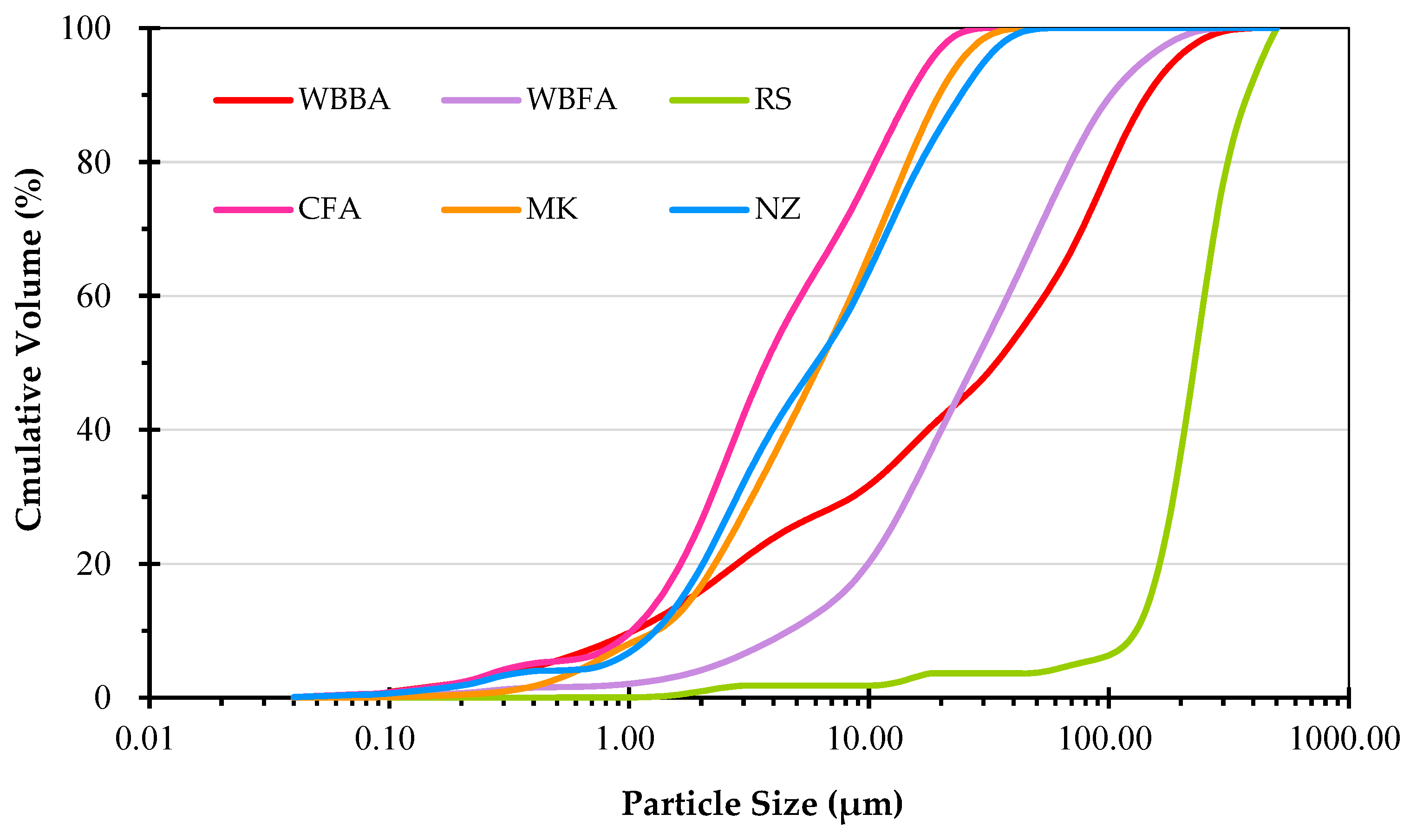
| Mean diameter (μm) | 56.62 | 27.62 | 273.20 | 6.06 | 8.63 | 9.66 |
| Bulk density (g/cm3) | 1.03 | 0.57 | 1.23 | 0.794 | 0.43 | 0.24 |
| Chemical contents (wt%) | ||||||
| SiO2 | 50.26 | 22.91 | 62.03 | 37.00 | 54.4 | 71.5 |
| Al2O3 | 9.20 | 2.63 | 4.65 | 22.80 | 31.9 | 13.1 |
| CaO | 19.99 | 31.50 | 14.14 | 1.92 | 2.82 | 3.22 |
| Fe2O3 | 1.90 | 2.33 | 0.71 | 3.63 | 0.42 | 1.66 |
| MgO | 6.44 | 3.57 | 5.50 | 0.88 | 0.44 | 0.81 |
| Na2O | 1.19 | 0.26 | 0.61 | 0.50 | 5.46 | 0.60 |
| K2O | 5.71 | 4.01 | 6.42 | 2.96 | 0.50 | 2.99 |
| P2O5 | 3.34 | 2.71 | 3.40 | 0.73 | 0.13 | 0.03 |
| SO3 | 0.51 | 0.88 | 1.16 | 0.18 | 0.13 | 0.01 |
| Loss of ignition | 2.73 | 26.93 | 0.96 | 5.20 | 1.10 | - |
| Group | Mix | WBBA | WBFA | CFA | MK | NZ | RS | SH Solution | WG | CH | BA | Binder | Na2O eq% |
|---|---|---|---|---|---|---|---|---|---|---|---|---|---|
| 1 | REF | 273 | 273 | - | - | - | 1094 | 301 | 168 | 55 | 5 | 1075 | 9.36 |
| 2 | F10 | 246 | 246 | 55 | - | - | 1094 | 301 | 168 | 55 | 5 | 1075 | 9.44 |
| F20 | 219 | 219 | 109 | - | - | 1094 | 301 | 168 | 55 | 5 | 1075 | 9.27 | |
| F30 | 191 | 191 | 164 | - | - | 1094 | 301 | 168 | 55 | 5 | 1075 | 9.23 | |
| F40 | 164 | 164 | 219 | - | - | 1094 | 301 | 168 | 55 | 5 | 1075 | 9.18 | |
| 3 | M10 | 246 | 246 | - | 55 | - | 1094 | 301 | 168 | 55 | 5 | 1075 | 9.40 |
| M20 | 219 | 219 | - | 109 | - | 1094 | 301 | 168 | 55 | 5 | 1075 | 9.47 | |
| M30 | 191 | 191 | - | 164 | - | 1094 | 301 | 168 | 55 | 5 | 1075 | 9.52 | |
| M40 | 164 | 164 | - | 219 | - | 1094 | 301 | 168 | 55 | 5 | 1075 | 9.57 | |
| 4 | Z10 | 246 | 246 | - | - | 55 | 1094 | 301 | 168 | 55 | 5 | 1075 | 9.32 |
| Z20 | 219 | 219 | - | - | 109 | 1094 | 301 | 168 | 55 | 5 | 1075 | 9.28 | |
| Z30 | 191 | 191 | - | - | 164 | 1094 | 301 | 168 | 55 | 5 | 1075 | 9.24 | |
| Z40 | 164 | 164 | - | - | 219 | 1094 | 301 | 168 | 55 | 5 | 1075 | 9.19 |
| Optimal Mix | Flexural Strength (%) | p-Values | Compressive Strength (%) | p-Values |
|---|---|---|---|---|
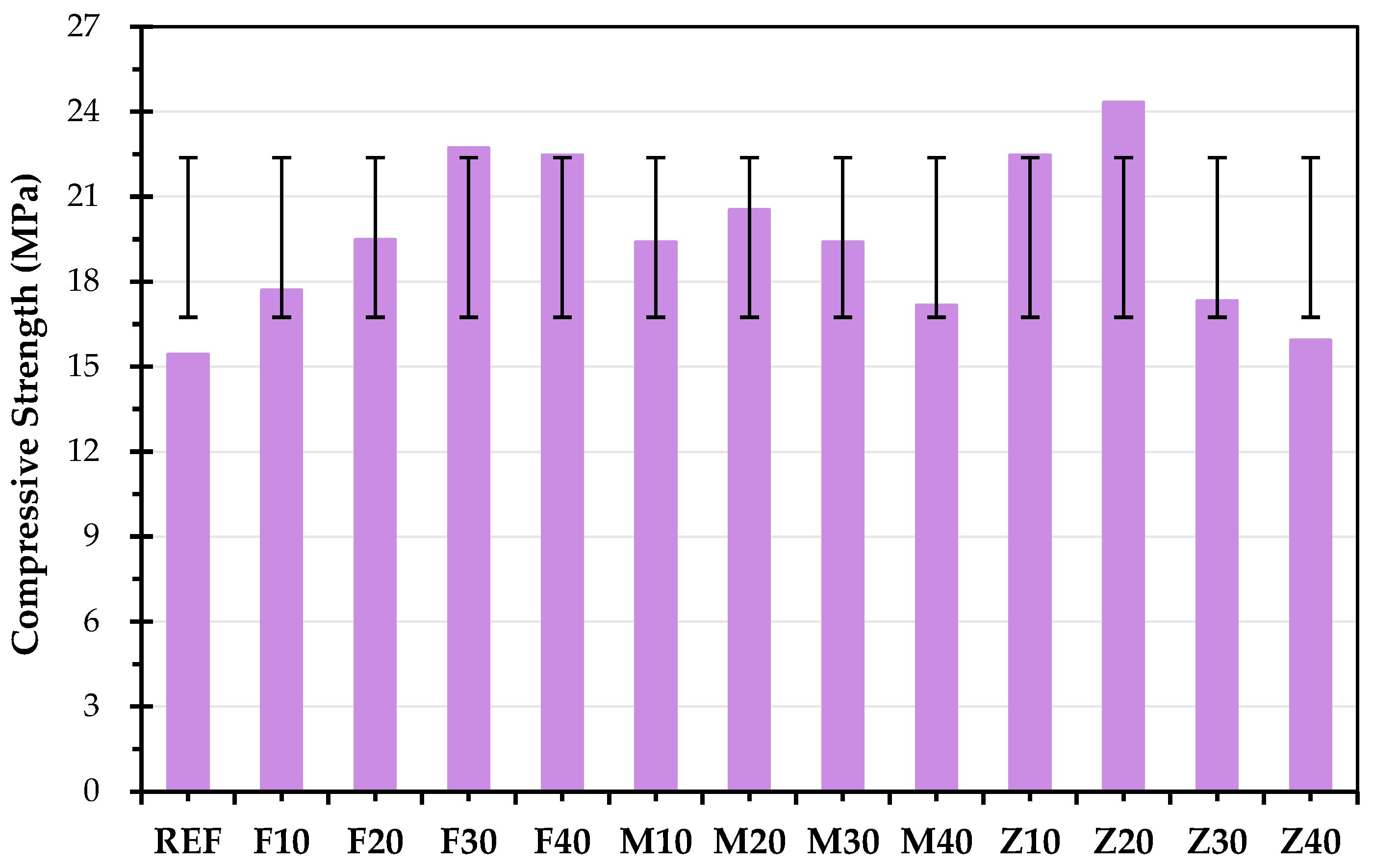
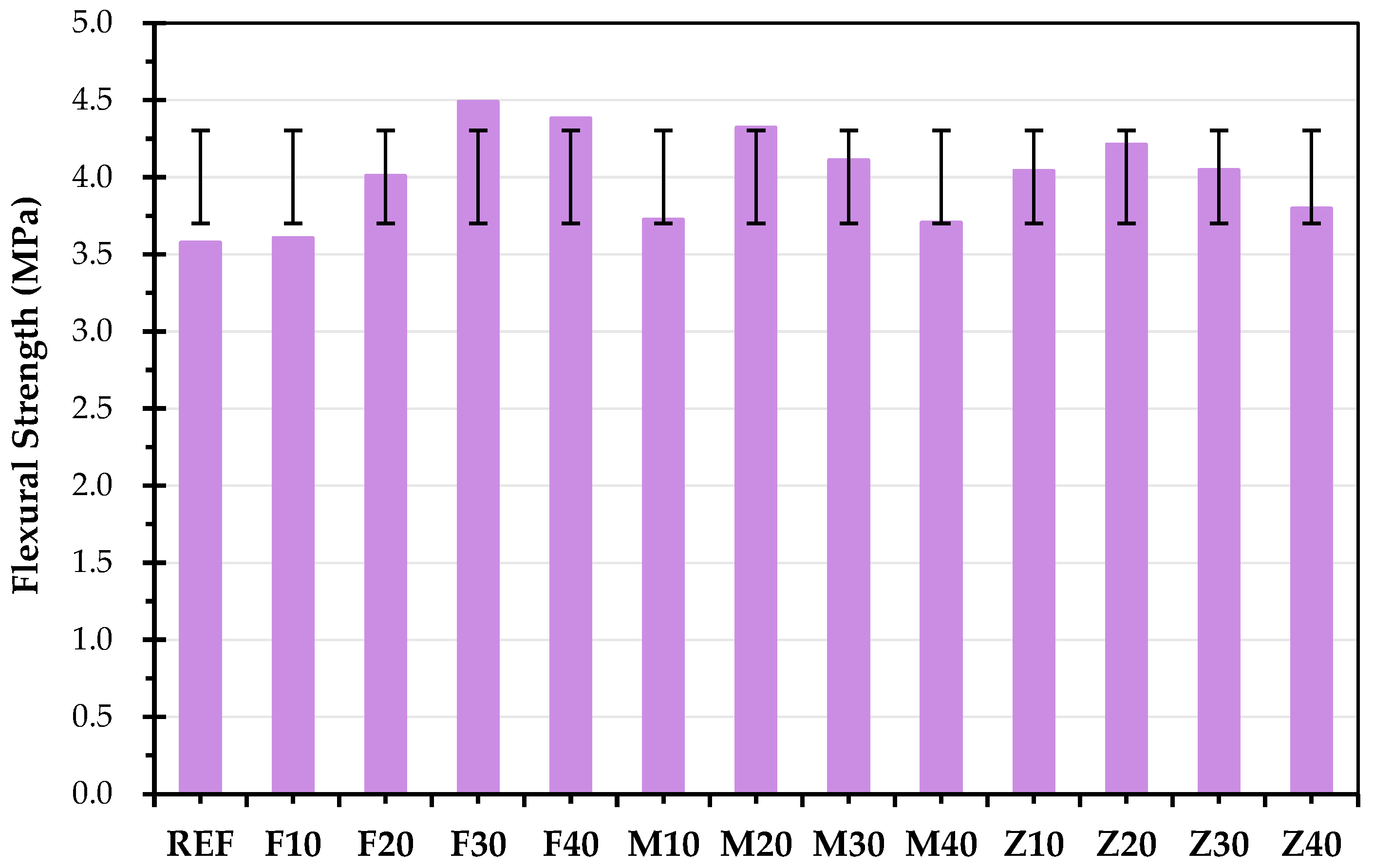
| F30 | 25.53 | 0.00988 | 47.15 | 0.00278 |
| M20 | 20.88 | 0.01873 | 33.05 | 0.01218 |
| Z20 | 17.78 | 0.00805 | 57.62 | 0.0000067 |
Disclaimer/Publisher’s Note: The statements, opinions and data contained in all publications are solely those of the individual author(s) and contributor(s) and not of MDPI and/or the editor(s). MDPI and/or the editor(s) disclaim responsibility for any injury to people or property resulting from any ideas, methods, instructions or products referred to in the content. |
© 2025 by the authors. Licensee MDPI, Basel, Switzerland. This article is an open access article distributed under the terms and conditions of the Creative Commons Attribution (CC BY) license.
Share and Cite
Du, Y.; Pundienė, I.; Pranckevičienė, J. Effects of Ca/Si and Si/Al Ratios on the Wood Biomass Ash-Based Alkali-Activated Materials with Pozzolanic Additives. Buildings 2026, 16, 51. https://doi.org/10.3390/buildings16010051
Du Y, Pundienė I, Pranckevičienė J. Effects of Ca/Si and Si/Al Ratios on the Wood Biomass Ash-Based Alkali-Activated Materials with Pozzolanic Additives. Buildings. 2026; 16(1):51. https://doi.org/10.3390/buildings16010051
Chicago/Turabian StyleDu, Yiying, Ina Pundienė, and Jolanta Pranckevičienė. 2026. "Effects of Ca/Si and Si/Al Ratios on the Wood Biomass Ash-Based Alkali-Activated Materials with Pozzolanic Additives" Buildings 16, no. 1: 51. https://doi.org/10.3390/buildings16010051
APA StyleDu, Y., Pundienė, I., & Pranckevičienė, J. (2026). Effects of Ca/Si and Si/Al Ratios on the Wood Biomass Ash-Based Alkali-Activated Materials with Pozzolanic Additives. Buildings, 16(1), 51. https://doi.org/10.3390/buildings16010051