Modular Design of Steel Box Girders: A BIM-Driven Framework Integrating Knowledge Graphs and Data

Abstract
1. Introduction
1.1. Background and Development Trends of Modular Steel Box Girder Design
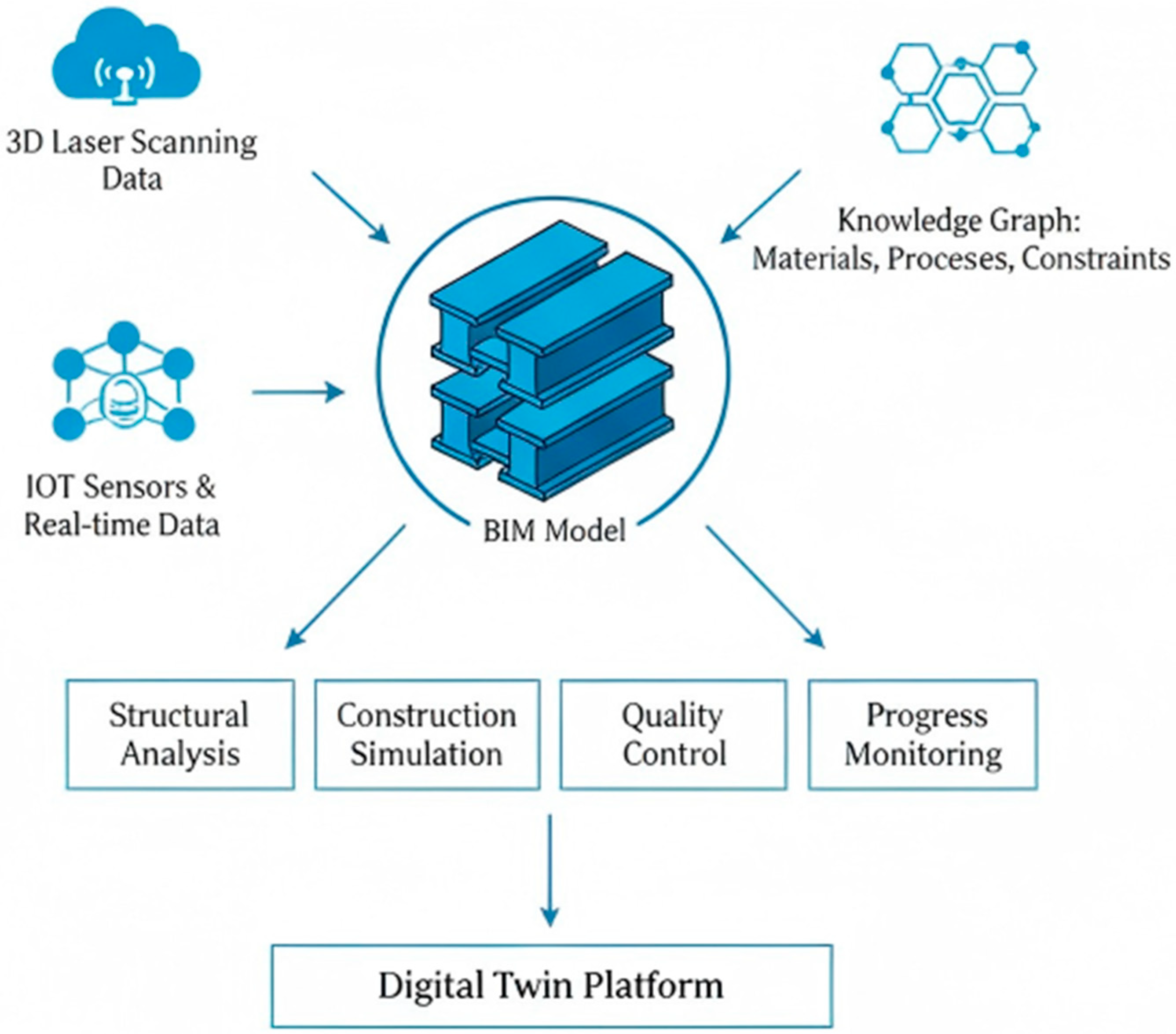
1.2. The Value of BIM, Knowledge Graphs, and Data Fusion Technologies in Engineering
1.3. Research Motivation and Core Scientific Issues
1.4. Overview of Main Contributions and Innovations
1.5. Thesis Structure
2. Research Progress
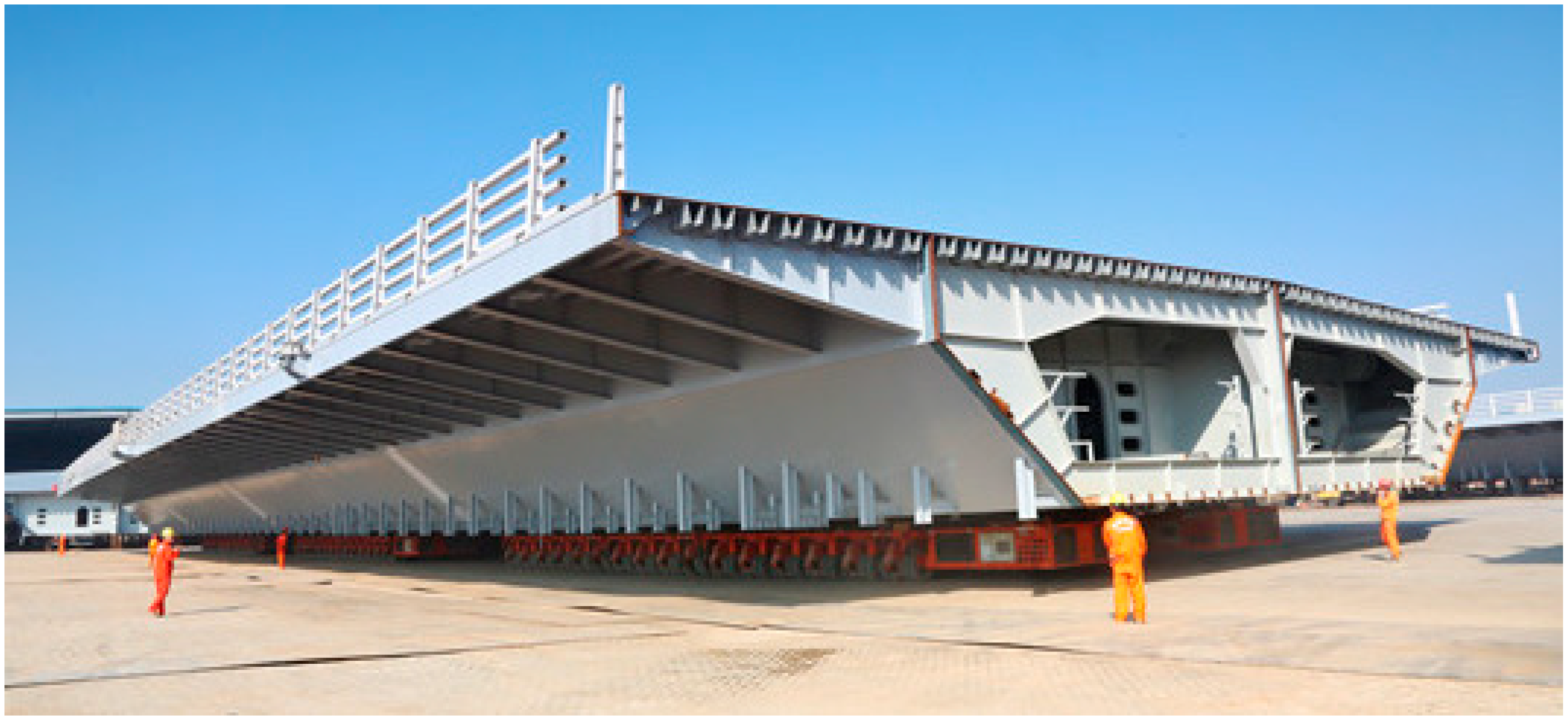
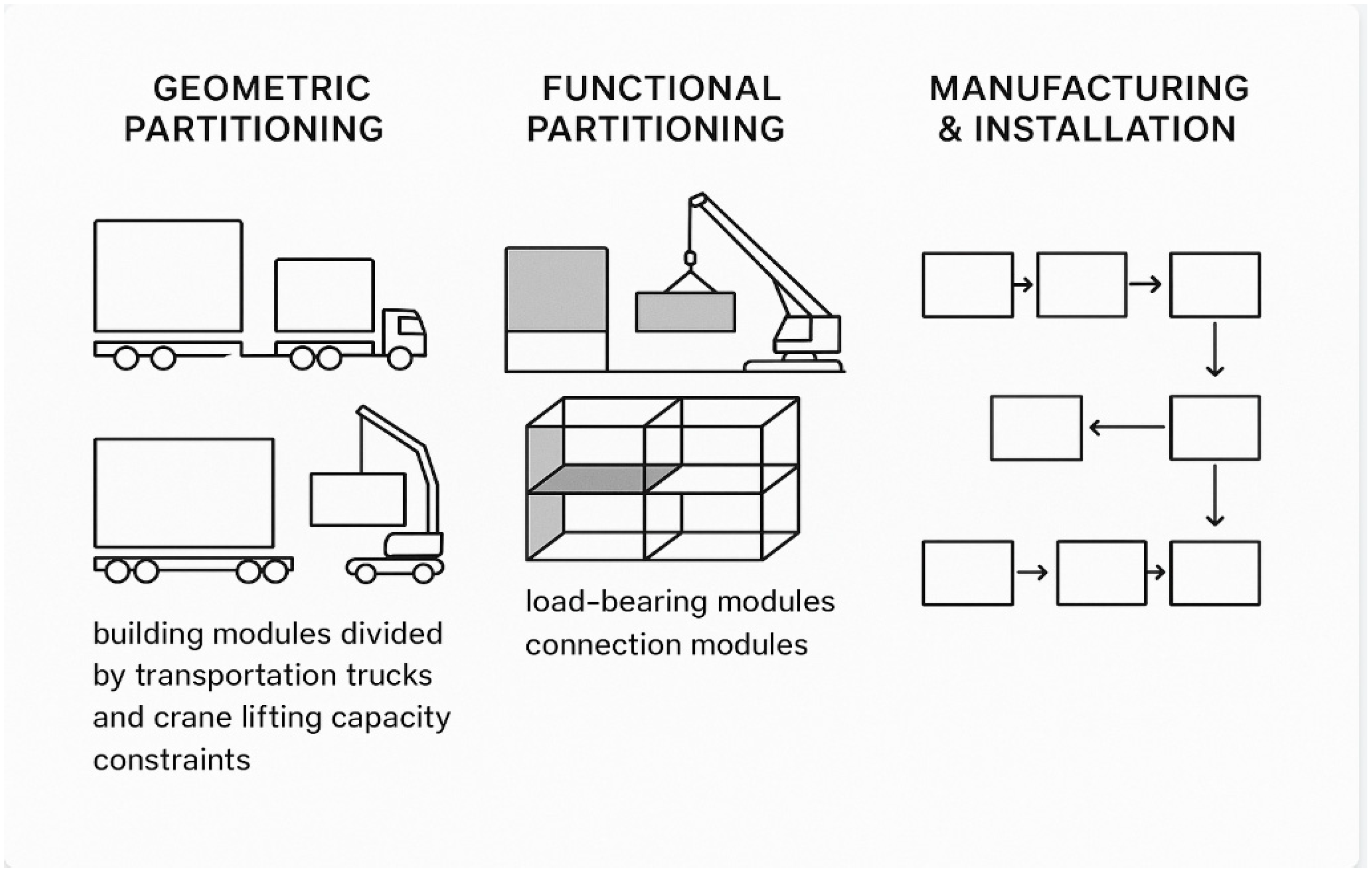
2.1. Research Progress in Modular Steel Box Girder Design
2.2. Knowledge Graph Construction Technology and Its Applications in the Construction Industry
- Engineering Safety Management: An intelligent intelligent support approach for engineering safety management using knowledge graphs. By constructing safety knowledge graphs, intelligent identification of construction-site hazards and risk warnings can be achieved.
- Regulatory Compliance Checking: Transforming architectural design codes into rules within KGs enables the development of automated compliance-checking tools, enhancing review efficiency and accuracy.
- Fault Diagnosis and Maintenance: In infrastructure maintenance, KGs can integrate equipment information, historical fault data, and repair records to assist in fault diagnosis and predictive maintenance.
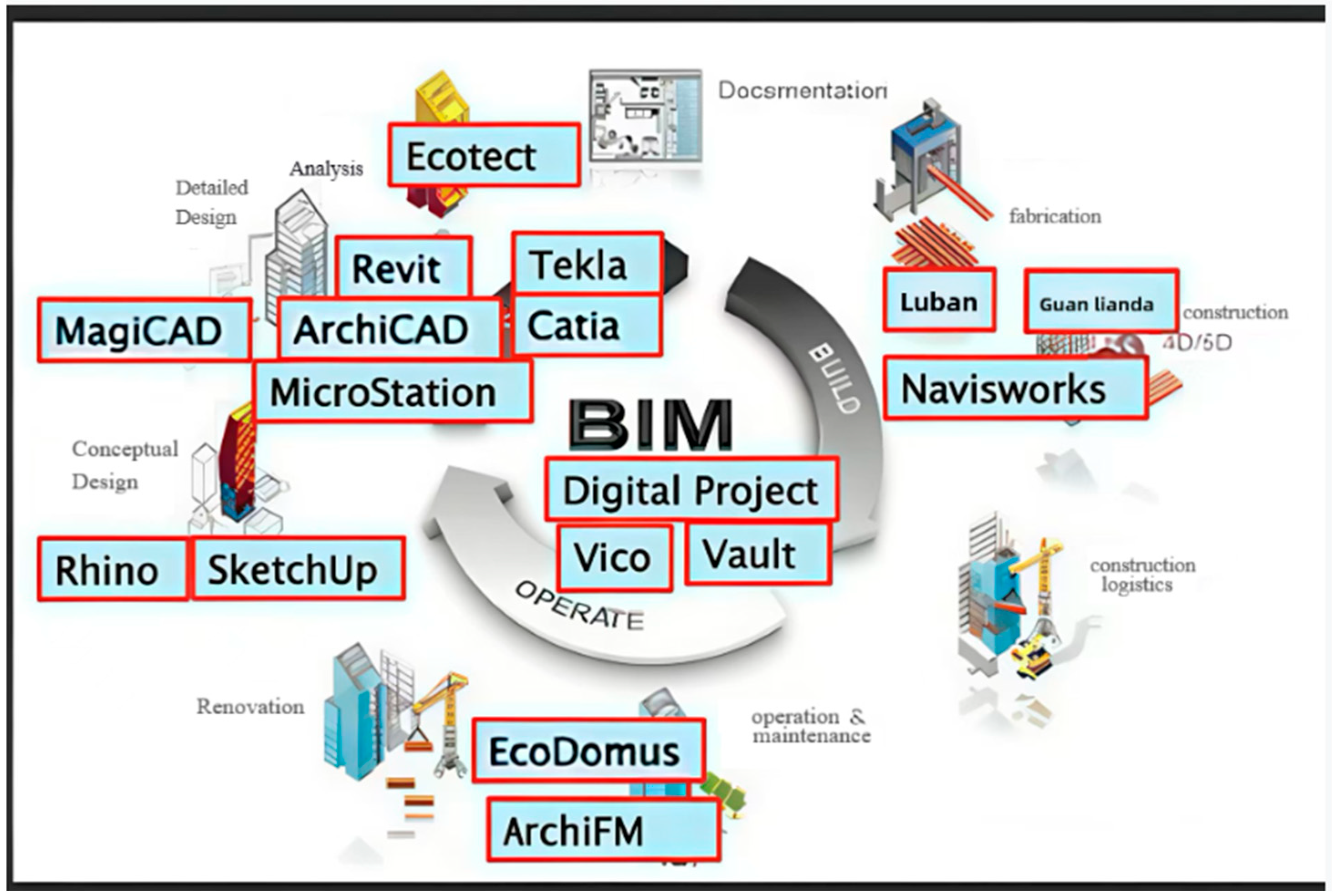
- Integration with BIM: Some studies have begun exploring the linkage of BIM model data—rich in geometric and semantic information—with KGs to enhance BIM’s knowledge depth and enable more intelligent analysis and applications [19]. For example, Automated Code Compliance Checking Research Based on BIM and Knowledge Graph (published in Scientific Reports, 2023) proposed a BIM and KG-based automated compliance-checking system.
- Incomplete Domain Knowledge Coverage: The construction knowledge system is vast, yet specialized KGs for specific subfields (e.g., modular steel box girder design) remain underdeveloped.
- Difficulty in Ontology Construction: The lack of a unified, widely accepted top-level ontology for the construction industry necessitates extensive manual effort and expert input, making the process time-consuming and labor-intensive.
- Challenges in Knowledge Acquisition and Updates: A significant portion of engineering knowledge exists in unstructured forms (e.g., text, drawings), necessitating improved automation and accuracy in knowledge extraction. Moreover, KG dynamic updating and evolution mechanisms remain immature.
- Limited Application Scenarios: Current applications are mostly confined to specific project phases, lacking lifecycle-wide implementations that deeply integrate with business workflows.
- Persistent Data Silos: KGs generated across different systems and project stages may remain isolated, hindering knowledge sharing and interoperability.
2.3. Current State of BIM Reverse Modeling and Data Fusion Technologies
2.3.1. BIM Reverse Modeling
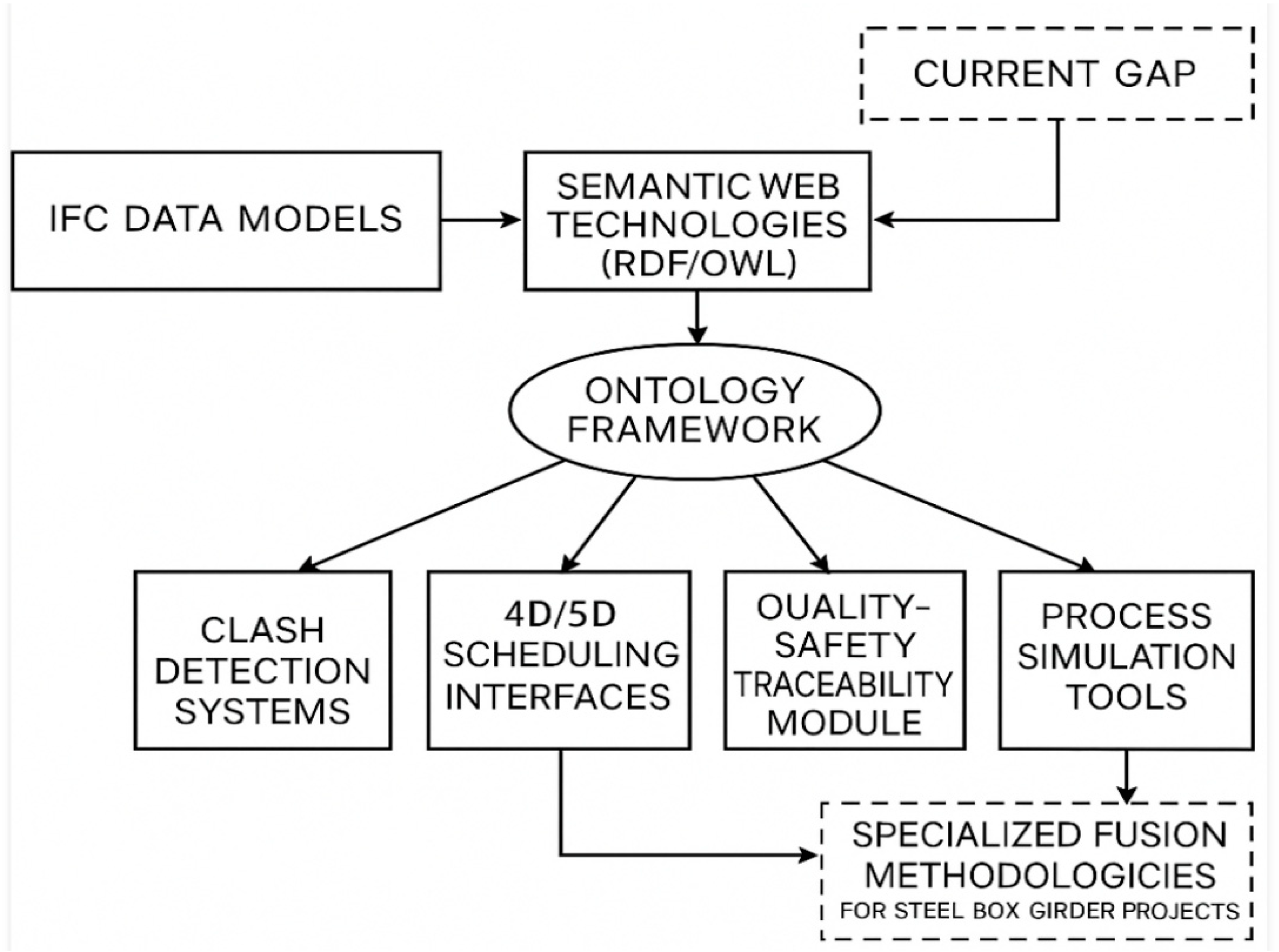
2.3.2. Design-Construction Data Fusion
- Semantic heterogeneity: Discrepancies in terminology for identical concepts require semantic alignment and mapping.
- Data quality issues: Missing, erroneous, redundant, or conflicting data necessitate cleansing and validation.
- High-volume real-time processing: Construction-phase sensor data imposes significant computational demands for analysis.
- Standardization gaps: Despite standards like IFC, domain-specific applications still lack unified data formats and exchange protocols.
- Design optimization and clash detection: Integrating construction constraints and site conditions during design to identify potential conflicts early.
- Precision schedule-cost management: Linking BIM models with 4D schedules and 5D cost data for dynamic visual management.
- Quality-safety traceability and risk: Correlating inspection records and safety patrol data with BIM components for issue and risk prediction.
2.4. Research on Modular Knowledge Service Systems
- Intelligent Q&A Systems—Capable of understanding users’ natural language queries, retrieving answers from the knowledge graph, and even performing simple reasoning. For example, in engineering, they can answer questions such as, “What is the recommended fireproofing material for a specific type of component?”
- Knowledge Recommender Systems—Proactively provide relevant design solutions, technical specifications, and similar case studies from the knowledge graph based on users’ current tasks, historical behavior, or project characteristics.
- Limited Knowledge Sources—Fail to adequately integrate multi-source heterogeneous knowledge pertaining to modular design.
- Insufficient Integration with Mainstream Design Tools (e.g., BIM)—Knowledge services are not effectively embedded into practical design workflows
- Limited Intelligent Capabilities—Primarily reliant on basic information retrieval, lacking advanced semantic understanding and reasoning functionalities.
2.5. Research Gaps and This Study’s Approach
- Systematic and Intelligent Management of Domain Knowledge: How to construct a specialized knowledge graph for modular steel box girder design, enabling structured representation and linkage of knowledge such as design codes, component characteristics, connection methods, manufacturing processes, construction techniques, and expert experience, while supporting intelligent querying and reasoning.
- Deep Integration of BIM Models and Knowledge Graphs: How to establish interoperability between parametric BIM models and knowledge graphs, facilitating bidirectional mapping and interaction between model data and domain knowledge, thereby transforming BIM models from mere carriers into platforms for knowledge application [27]. Special consideration will be given to scenarios where users can only provide 2D drawings or partial 3D data, requiring reverse modeling techniques to generate usable BIM models.
- Closed-Loop Integration of Design and Construction Data: How to integrate design outputs (e.g., BIM models, design parameters) with limited construction-phase information (e.g., construction planning documents, process constraints, historical issues) to establish a dynamic feedback mechanism for knowledge application—enhancing both the constructability of designs and the feasibility of construction plans.
- Scenario-Oriented Intelligent Knowledge Services: How to develop a modular knowledge service system based on integrated knowledge and data, providing AI-powered support for key processes such as design scheme generation and optimization, compliance verification, and construction risk assessment.
3. A BIM-Driven Framework Integrating Knowledge Graph and Data Fusion
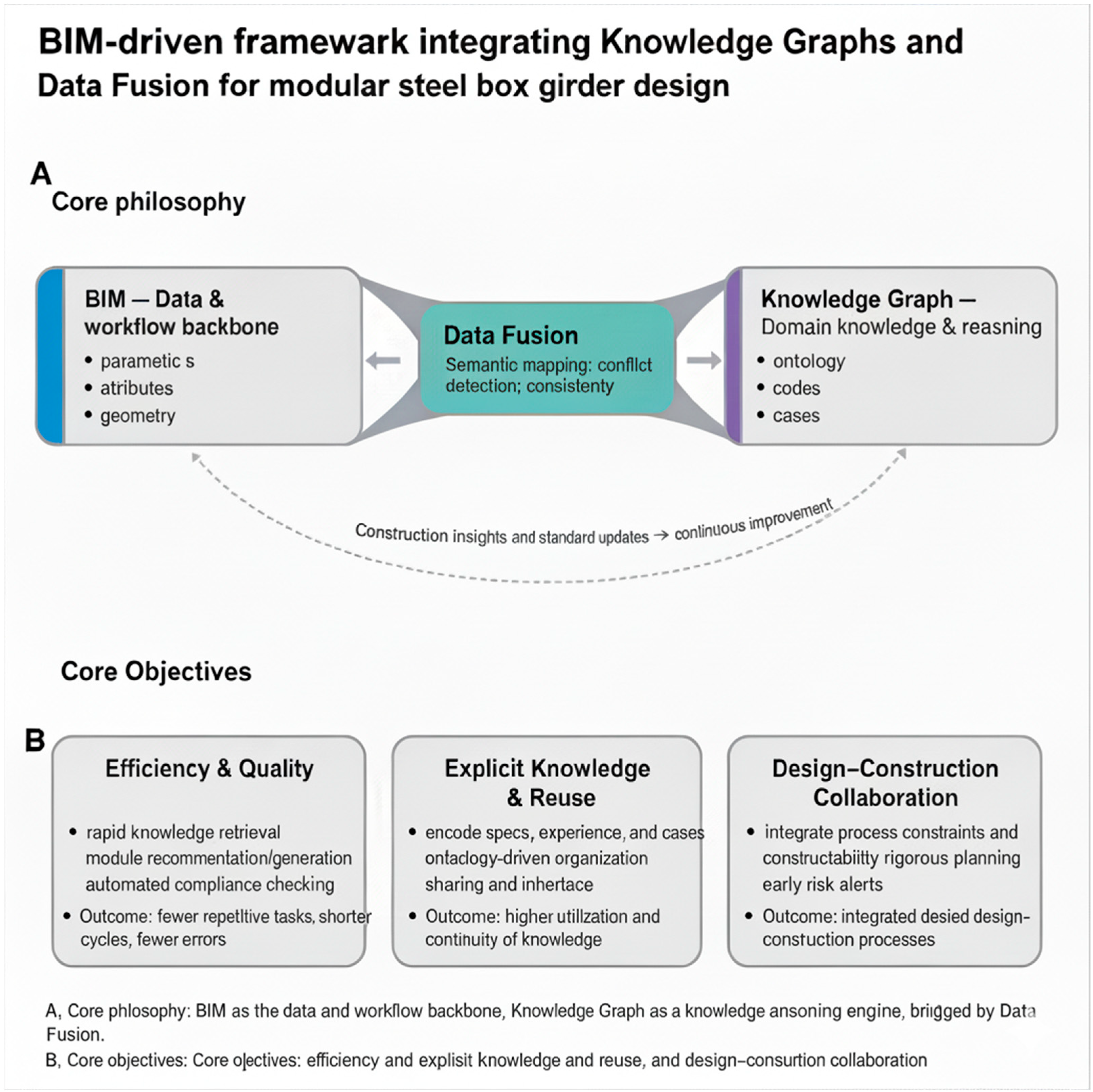
3.1. Core Design Philosophy and Objectives
- Enhancing Modular Design Efficiency and Quality: By enabling rapid knowledge retrieval, intelligent recommendation and generation of parametric modules, and automated compliance checking of design solutions, the framework reduces repetitive tasks, shortens the design cycle, and minimizes design errors.
- Promoting Explicit Representation and Reuse of Domain Knowledge: The framework transforms implicit design specifications, construction experience, and expert knowledge into structured knowledge graphs, facilitating systematic management, sharing, and inheritance of knowledge while improving its utilization.
- Strengthening Design-Construction Collaboration: By integrating design BIM models with construction-phase knowledge (such as process constraints and lifting plans), the framework ensures enhanced constructability of designs and scientific rigor in construction planning, promoting integrated design-construction processes.
- Knowledge Extraction and Graph Construction: Knowledge is extracted from design codes, technical standards, engineering drawings (including user-provided CAD drawings), expert experience, historical case studies, and (limited) construction organization documents to construct the Steel Box Girder Modular Knowledge Graph (SBG-MKG).
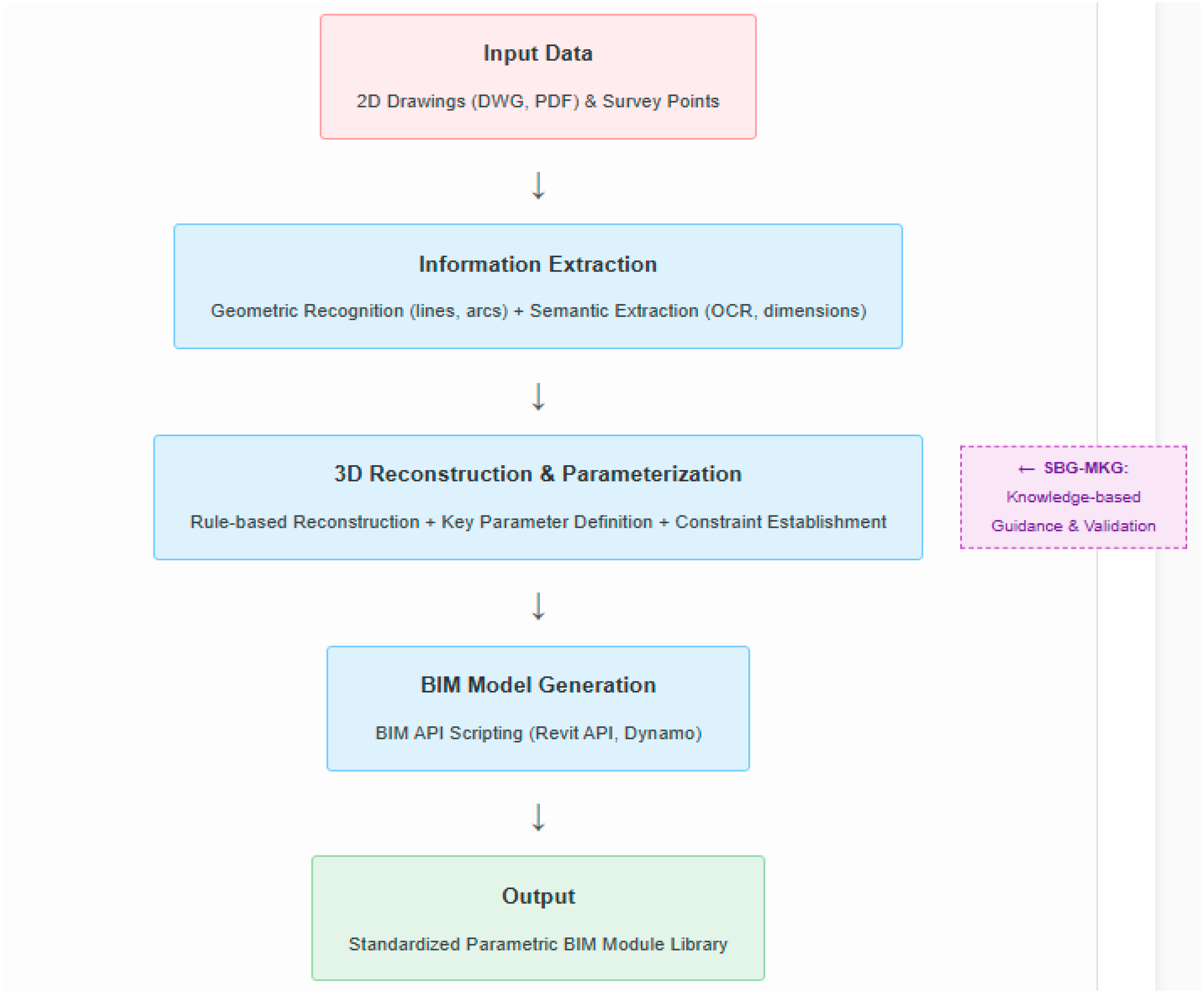
- BIM Parametric Reverse Modeling: Based on user-provided 2D drawings and box girder top-surface data, combined with module definitions and constraints from the knowledge graph, the framework performs parametric BIM reverse modeling, generating a standardized BIM module library [30].
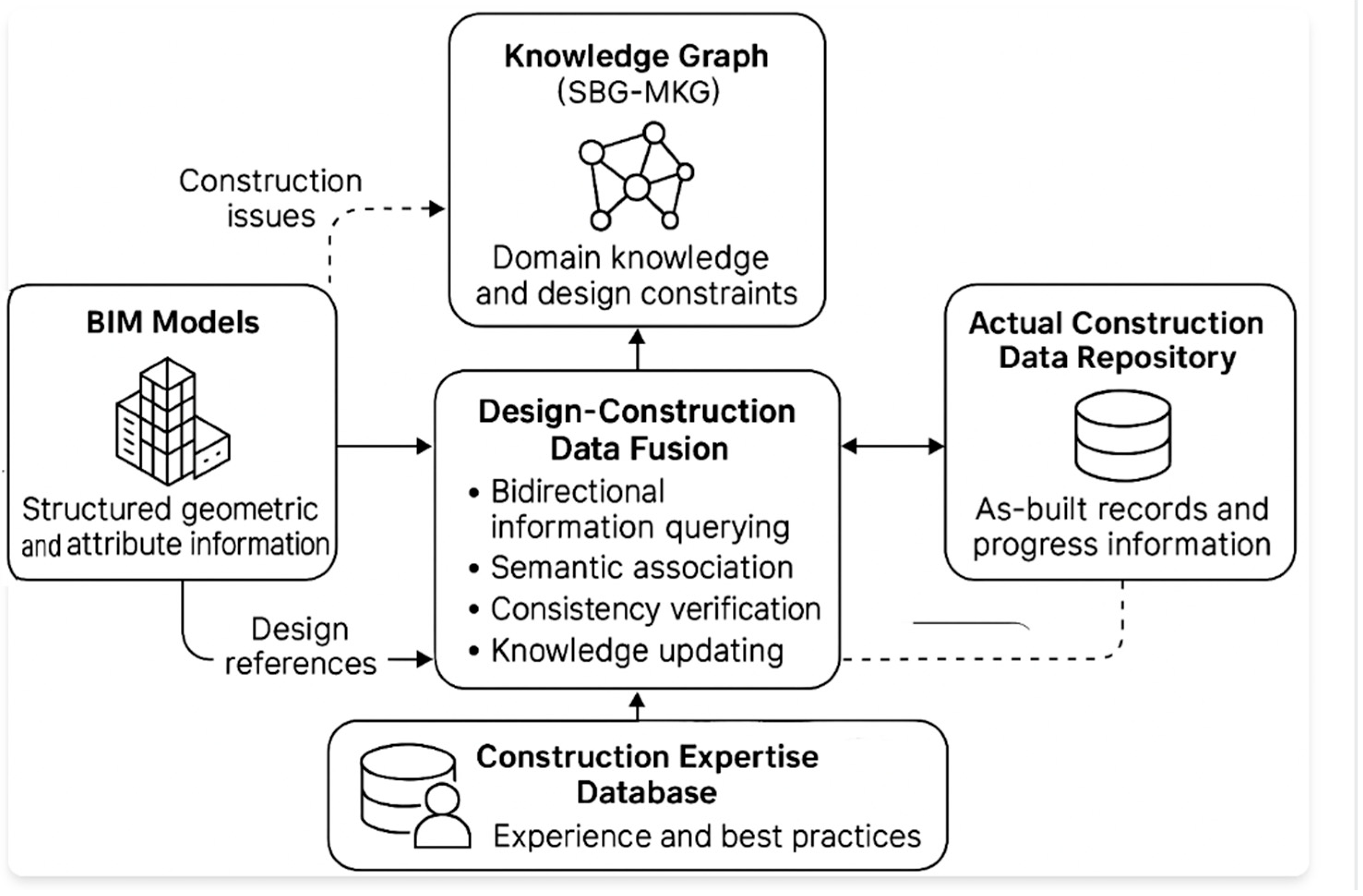
- Data and Knowledge Fusion: Geometric and attribute information from the BIM model is semantically aligned, linked, and fused with domain knowledge in the knowledge graph, forming an integrated information model that encapsulates both explicit data and implicit knowledge.
- Knowledge Services and Applications: Leveraging the fused information model, the framework provides modular knowledge services to support high-level applications (such as intelligent design, construction simulation, and compliance checking), empowering design and construction processes.
- Knowledge Feedback and Iteration: New knowledge, emerging challenges, and updated experience generated during design and construction applications are fed back into the knowledge graph for refinement and expansion, enabling continuous knowledge evolution and self-optimization of the framework.
3.2. Multi-Layer Framework Architecture
3.2.1. Data Layer
3.2.2. Knowledge Layer
3.2.3. Modeling and Fusion Layer
3.2.4. Application Service Layer
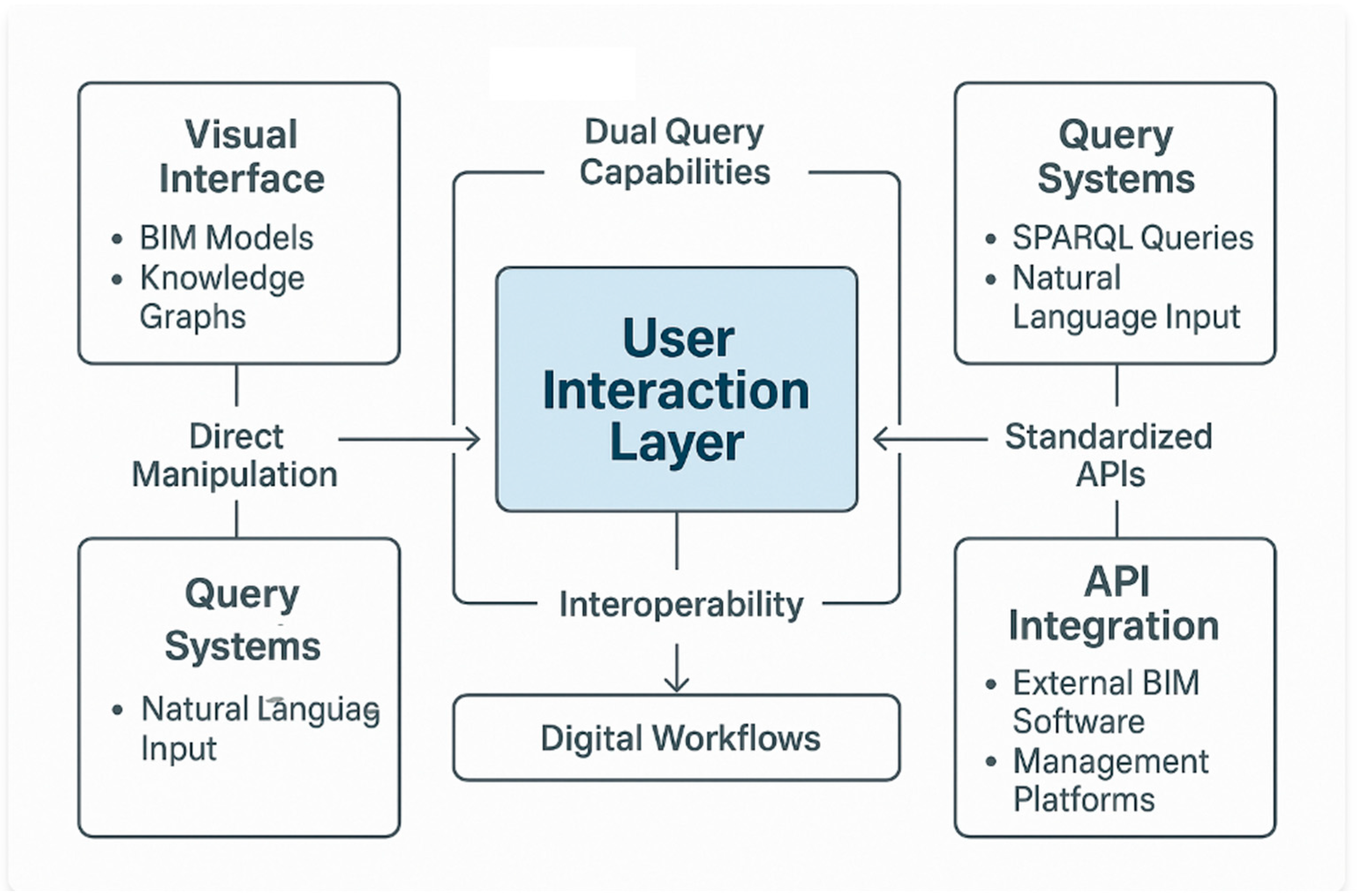
3.2.5. User Interaction Layer
3.3. Core Module 1: Construction of Steel Box Girder Mo
3.3.1. Ontological Framework for Steel Box Girder Modular Design
3.3.2. Knowledge Extraction
3.3.3. Knowledge Representation and Storage
3.4. Core Module II: BIM Reverse Modeling and Parametric Representation
3.4.1. Strategies for Processing User-Provided Data
3.4.2. Conversion Process from 2D Drawings to 3D BIM Models
3.4.3. Point Cloud Data Processing
3.4.4. Modular Component Library Establishment
3.5. Core Module III: Design-Construction Data Fusion Mechanism
3.5.1. Fusion Objectives and Scope
3.5.2. Semantic Alignment and Mapping
- (1)
- Class-Level Mapping:
- The IfcBeam (beam object) in BIM may map to SteelBoxGirderSegment in the SBG-MKG or its subclass, the StandardSegmentModule [50].
- The IfcPlate (plate object) in BIM, depending on its context and attributes (e.g., names containing “Top flange plate” or “web plate”), can map to TopFlangePlate or WebPlate in the SBG-MKG, respectively.
- (2)
- Attribute-Level Mapping:
- A specific attribute of a BIM component (e.g., the Revit family parameter “Material grade”) may map to a corresponding attribute of an entity in the knowledge graph (e.g., hasSteelGrade).
- BIM attribute values (e.g., “Q345qD”) may map to corresponding instances or literals in the knowledge graph.
- (3)
- Relationship Mapping:
- Topological relationships between components in a BIM model (e.g., component A connects to component B) may map to isConnectedTo relationships in the knowledge graph.
- Compositional relationships (e.g., a stiffener rib belonging to a web plate) may map to is Part Of relationships in the knowledge graph (Table 2).
3.5.3. Data Association Methods
3.5.4. Conflict Detection and Resolution (Preliminary)
- For detected conflicts, the system should: Provide warnings by highlighting the conflicting BIM components or parameters in the user interface and specifying the conflict description (e.g., which regulation was violated or what potential construction difficulties may arise).
- Suggest modification alternatives (if knowledge-supported) by recommending relevant solutions or substitution options from the knowledge graph when available. For instance, when insufficient plate thickness is detected, the system may propose increasing the thickness or adjusting stiffener spacing.
- Maintain conflict records by documenting identified conflicts and their resolution status for future traceability and learning purposes [52].
3.5.5. Bidirectional Data Synchronization (Conceptual Design with Data Constraints)
3.6. Core Module 4: Modular Knowledge Service System (MKSS)
3.6.1. Service Objectives and User Scenarios
Service Objectives
Typical User Scenarios
3.6.2. Knowledge Query and Retrieval Services
3.6.3. Intelligent Design Assistance Service
- Real-time verification: Dynamically triggers rule checks when parameters are modified during the design process.
- Batch inspection: Conducts comprehensive compliance reviews for either entire models or selected components.
- Issue highlighting and reporting: Visually marks non-compliant elements within the BIM environment (achieved through plugin interfaces with BIM software) while generating detailed inspection reports that identify problem descriptions, violated specification clauses, and potential modification suggestions.
3.6.4. Intelligent Construction Support Service
3.6.5. System Interface Design
4. Case Study and System Implementation
4.1. Project Overview and Data Acquisition
4.2. Case Study: Knowledge Graph Construction for Modular Steel Box Girder Design
- (1)
- From CAD drawings, entities were extracted through parsing of drawing frames, annotations, and symbols, including:
- Module Unit: “Standard Beam Segment_Mid Span” with attributes: length = 30 m, theoretical weight = XX tons.
- Component: “U_Stiffener_Type A” with attributes: material = Q355qD, thickness = 8 mm.
- Connection Joint: “Field Splice_Main Girder_Weld” with attributes: welding method = CO2 gas shielded welding.
- (2)
- From construction organization design documents, entities were extracted using NLP techniques (keyword matching, rule templates, NER), including:
- Construction Method: “Segmental Hoisting (Segmental Lifting)”, attributes: required equipment = 200-ton crawler crane.
- Semantic relationships include:(Standard Beam Segment_Mid Span, adopts Construction Method, Segmental Hoisting); (Standard Beam Segment_Mid Span, subjected To Constraint, Transportation Length Limit < 32 m).
4.3. Applications of BIM Reverse Modeling and Data Integration
- (1)
- Case Demonstration of Design-Construction Data Integration: The construction organization plan’s description of “Standard Segment S-01 Hoisting” was selected for data integration analysis. The construction documentation specifies: “Standard Segment S-01 represents a mid-span section measuring 30m in length, requiring lifting using a 200-ton crawler crane for complete segmental installation. Pre-lift procedures mandate completion of temporary support inspections at Piers #1 and #2. Following precise positioning, temporary connections with adjacent segments shall be established prior to executing field splice welds using an elevated working procedure. The prescribed welding sequence (bottom plate → web → top plate) incorporates symmetrical welding techniques to prevent deformation.”
- (2)
- The integration process is implemented as follows:
- The “Standard Beam Segment S-01” component in the BIM model (matched by ID or name) is systematically associated with the “Standard Beam Segment S-01 Hoisting” task specified in the construction organization design documents.
- The resource requirement for a “200-ton crawler crane” is formally assigned to the specified hoisting task within the system.
- The temporary support structures at “Pier #1” and “Pier #2” are established as mandatory predecessor tasks within the construction workflow.
- The “Overhead Butt Welding” process is established as the successor activity, with specific welding sequences (“Base Plate → Web Plate → Top Plate”) and symmetrical welding requirements formally integrated into the BIM model through knowledge graph technology.
- (3)
- Integration Demonstration: By utilizing the property panel or custom plug-ins within BIM software, selecting the “Standard Beam Segment S-01” in the BIM model dynamically displays its associated construction planning summaries, proposed lifting equipment, critical process requirements, and other relevant data. This approach integrates design information and (planned) construction methodologies on a unified platform, enhancing engineers’ overall comprehension of the project. Although actual construction data are not yet incorporated, this preliminary integration based on planned workflows effectively demonstrates the potential of the proposed method.
4.4. Prototype of the Modular Knowledge Service System and Functional Verification
- (1)
- Core Functionality Demonstration:
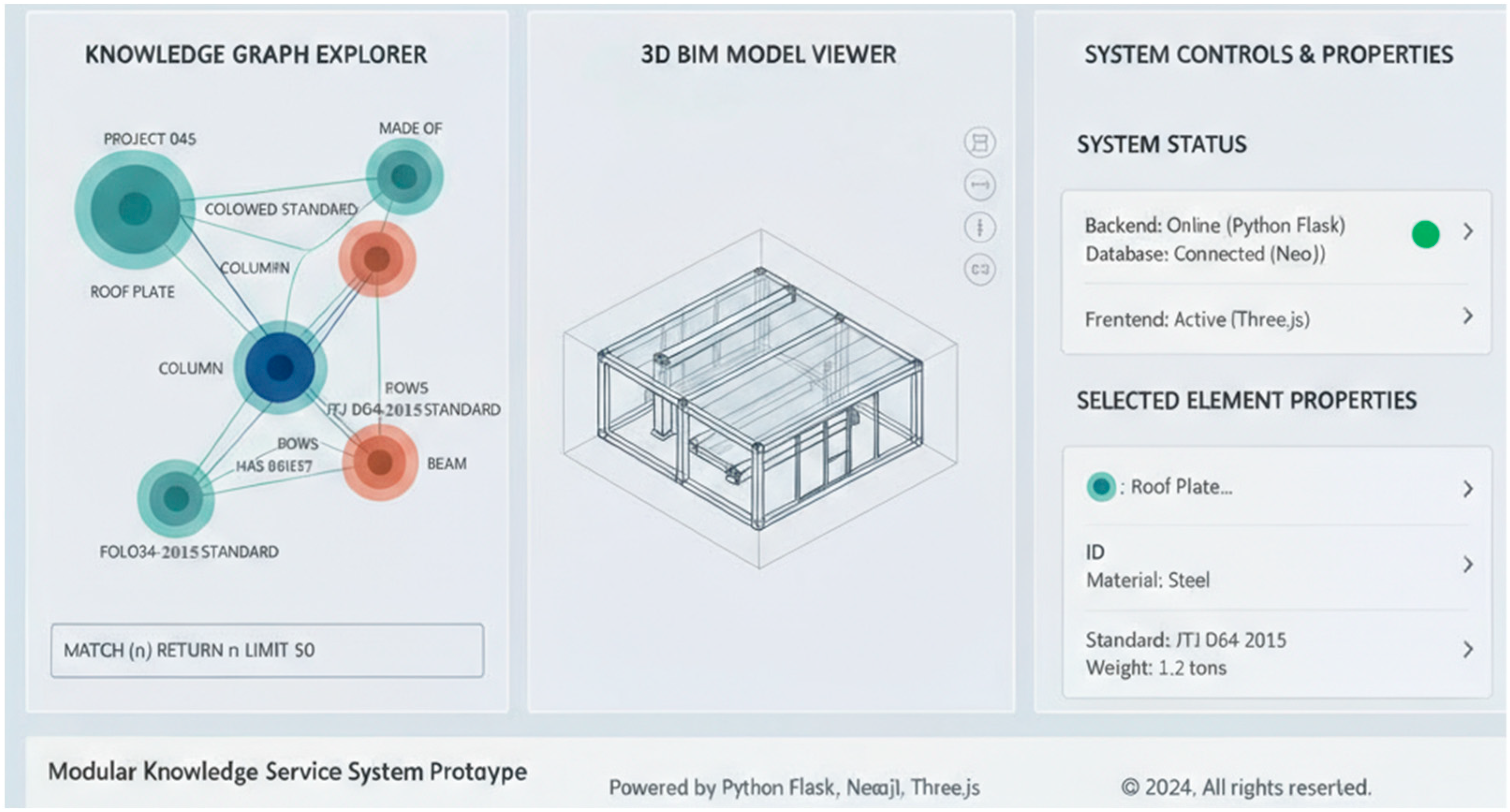
- Scenario 1: Modular Connection Node Knowledge Query. When a user enters the key phrase “design requirements for main girder butt welds” into the system, the backend knowledge graph service initiates Cypher query processing to retrieve entities and relationships associated with “main girder butt welds” from the knowledge base, including “design code clauses”, “recommended welding procedures”, and “common defect types”. The results are presented both as structured lists and localized knowledge graph visualizations. For instance, returned data may include: fatigue calculation requirements for butt welds per JTG D64 (2015) [56] Specifications for Design of Highway Steel Bridge Structures; recommended welding methods (submerged arc welding or CO2 gas-shielded welding); and critical warnings regarding potential weld cracks and lack of penetration defects.
- Scenario 2: Modular Unit Information Integration Display. Upon selecting a “standard beam segment module” in the BIM model, the system automatically queries associated data using the module’s unique ID from both the knowledge graph and integrated database. Retrieved information—including constituent components (U-ribs, diaphragm plates, etc.), material grades, theoretical weight, planned hoisting sequences from construction methodologies, required lifting equipment, and quality control benchmarks—is systematically organized and displayed in the property panel.
- (2)
- Operational Workflow Description:
5. Results and Discussion
5.1. Framework Effectiveness Analysis
5.1.1. Modular Design Efficiency Enhancement
Qualitative Analysis
Quantitative Assessment (Preliminary Estimates Based on Case Simulation and Prototype Testing)
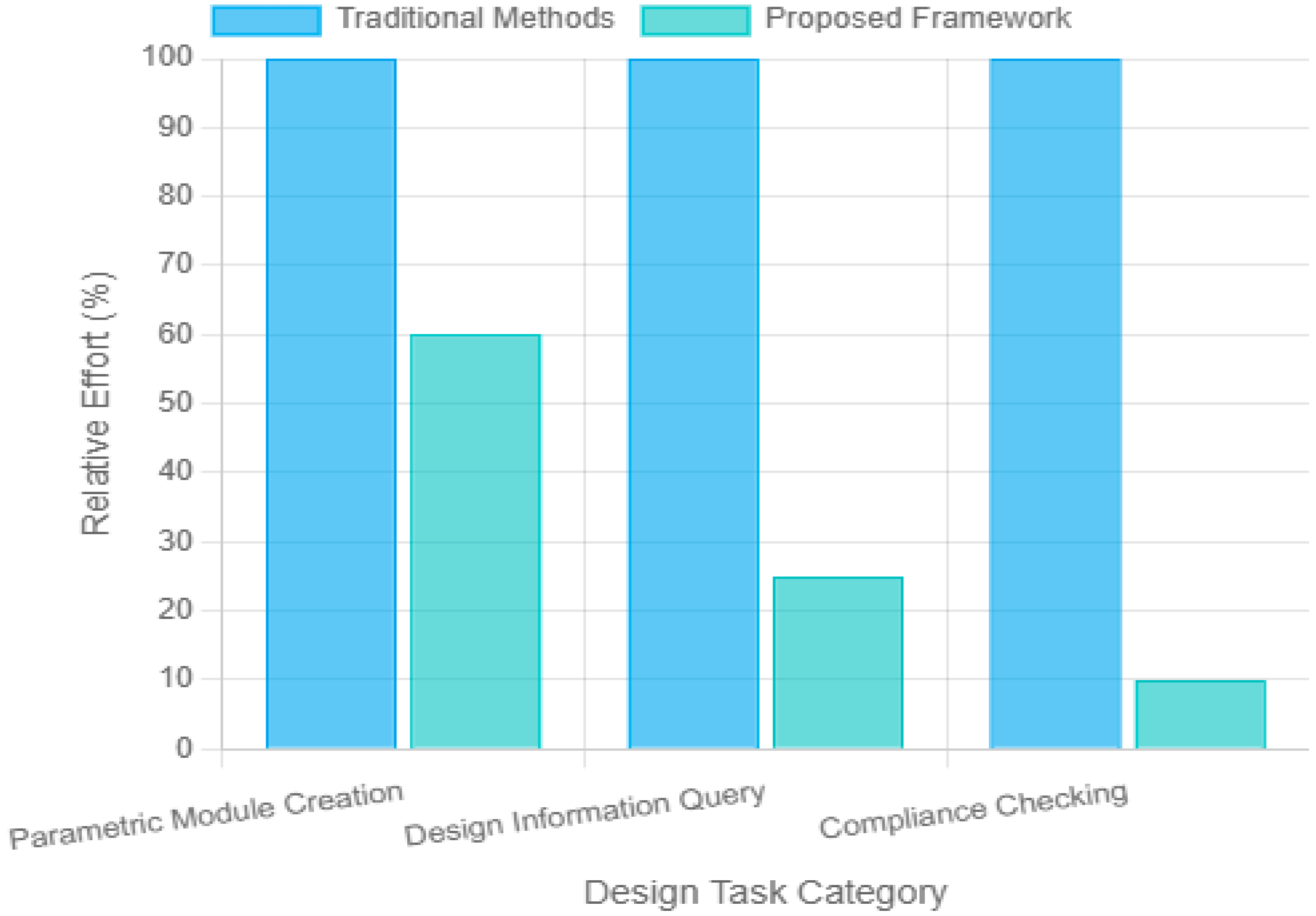
- Parametric Module Modeling Efficiency: Compared to traditional manual modeling of detailed steel box girder modules in Revit based on 2D drawings, the framework’s parametric approach (integrated with Dynamo scripts) may require comparable or slightly longer time for initial module creation (including parametric logic definition). However, once the parametric family library is established, generating instances of the same module type with varying parameters demonstrates an estimated 30–50% efficiency gain, primarily attributable to parameter-driven automation and scripting capabilities.
- Design Information Retrieval Efficiency: For typical design queries such as “determining allowable stress limits for specific components under given load conditions,” conventional methods often demand cross-referencing multiple sections across various specifications, consuming tens of minutes to hours. In contrast, the prototype knowledge service system—leveraging keyword or natural language queries (assuming data integration in the knowledge graph)—can retrieve relevant clauses and interpretations within seconds to minutes, marking a substantial efficiency improvement.
- Compliance Validation Efficiency: Manual comprehensive code compliance checks are time-intensive and prone to oversight [58]. The framework’s envisioned automated validation (validated in Scenario 1 for technical feasibility) can execute batch inspections of numerous BIM model components against predefined rules within minutes, achieving an order-of-magnitude efficiency gain.
5.1.2. Knowledge Utilization Enhancement
5.1.3. Design-Construction Coordination Enhancement (Theoretical Framework and Preliminary Validation)
5.2. Performance Evaluation of Key Technical Elements
5.2.1. Knowledge Graph Construction (SBG-MKG)
- (1)
- Knowledge Extraction Accuracy and Recall Rates (Small-Sample Testing):
- Constraint Extraction from Regulatory Texts: The test case selected sections on plate local stability and fatigue design from the Design Specifications for Highway Steel Box Girder Bridges, where approximately 50 critical constraint rules were manually annotated. The extraction methodology implemented a hybrid approach combining rule-based techniques (regular expressions with keyword matching) and basic natural language processing (supported by dependency parsing) for automated rule acquisition.
- Precision: Approximately 82% (indicates that 82% of the extracted rules were verified as correct).
- Recall: Approximately 70% (indicates 70% of all target rules were successfully extracted from the specification documents).
- Root Cause Analysis: The limited precision primarily stems from the inherent complexity and ambiguity in certain rule descriptions, which cannot be accurately matched using simplistic rule-based approaches. Similarly, the inadequate recall rate results from the diverse expressions of constraints that exceed the coverage capability of predefined extraction rules.
- Dimension Extraction Accuracy: Approximately 95% (for clearly annotated dimensions).
- Material Grade and Text Description Extraction Accuracy (post-OCR): Approximately 88%.
- Key Challenges: Drawing quality issues (e.g., blurred text, overlapping lines), non-standard annotations, and recognition of complex symbols.
5.2.2. Accuracy Evaluation of BIM Reverse Modeling from 2D Drawings
5.2.3. Data Fusion
- (1)
- Accuracy of BIM-KG Semantic Mapping:
- (2)
- When matching BIM-extracted attributes (e.g., component names, types, key dimensions) with pre-existing standard module definitions in the knowledge graph, accuracy exceeded 90% when attribute overlap was high (e.g., matching on three or more key attributes). Algorithm efficiency depends on feature quantity and matching strategy.
5.3. Comparative Analysis with Existing Related Research/Methods
5.4. Theoretical Contributions and Engineering Application Value
5.4.1. Theoretical Contributions
5.4.2. Engineering Application Value
5.5. Analysis of Research Limitations
5.6. Future Research Perspectives
5.6.1. Advancing Knowledge Graph Research and Applications
5.6.2. Advancing Multi-Source Data Fusion Technology
5.6.3. Expanding BIM Integration and Intelligent Applications
5.6.4. Enhancing Practical Applications and Operational Functions
5.6.5. Optimizing Large Language Model Integration
5.6.6. Framework Validation and Continuous Improvement Pathways
6. Conclusions
- A BIM-driven integrated framework was established, outlining an intelligent approach to modular steel box girder design with BIM as the core carrier, knowledge graph as the knowledge engine, and data fusion as the information bridge. A multi-layer system architecture was designed, encompassing the data layer, knowledge layer, model and fusion layer, application service layer, and user interaction layer.
- Domain knowledge graph construction was investigated, proposing the design concept of Steel Box Girder Modular Ontology (SBG-M Ontology) and exploring methods for extracting knowledge from multi-source heterogeneous data (including user-provided 2D drawings and construction organization design documents) and storing it as RDF triples in a graph database.
- Parametric BIM reverse modeling was achieved by implementing a conversion process from 2D drawing information to parametric 3D BIM modular units tailored to user data characteristics, with emphasis on establishing a modular component library.
- A novel approach to knowledge integration: This study demonstrates that knowledge graph technology can effectively consolidate fragmented, multi-source knowledge (such as specifications, standards, processes, and empirical knowledge) in the field of modular steel box girder design. By constructing SBG-MKG, it enables systematic management, intelligent retrieval and inference applications of this knowledge.
- Semantic enhancement of BIM models: By establishing associations between parametric BIM models and knowledge graphs, BIM components are no longer merely carriers of geometric and basic attributes but are endowed with richer semantic connotations (such as related code provisions, applicable construction methods, and potential risk points), significantly enhancing the knowledge content and application value of BIM models.
- Preliminary resolution of data silos: The design-construction data fusion mechanism bridges BIM design information (explicit data), domain knowledge in knowledge graphs (derived from tacit or unstructured knowledge), and preliminary construction planning information (extracted from construction organization designs), offering initial alleviation of information silo problems.
- Potential for intelligent decision-making support: Validation of the modular knowledge service system prototype demonstrates that integrated knowledge and data can provide effective intelligent assistance to designers and construction managers in parameter queries, compliance judgment, process reference, thereby enhancing decision-making efficiency and scientific rigor.
- Emphasize digitalization and intelligentization of domain knowledge: The bridge engineering industry should prioritize digital accumulation, structured management, and intelligent application of valuable knowledge assets such as design codes, construction standards, engineering cases, and expert experience. The active promotion of knowledge graph and ontology engineering technologies is crucial for establishing industry-level or enterprise-level engineering knowledge bases.
- Deepen BIM technology’s lifecycle application and integrated innovation: Further expand the in-depth application of BIM technology across the entire lifecycle of complex structures like steel box girders (including design, manufacturing, construction, and maintenance), while encouraging exploration of integrated innovation paths between BIM and emerging technologies such as artificial intelligence (e.g., knowledge graphs, machine learning, large language models), IoT, and digital twins to fully unlock the value of BIM data.
- Data-driven foundation for intelligent transformation: Data serves as the cornerstone of intelligent development. The industry should strengthen standardized collection, regulated management, and secure sharing of engineering data (while adhering to legal regulations and protecting commercial confidentiality). Promoting unified data standards and exchange protocols, along with encouraging the opening of valuable de-identified datasets for research and technological innovation, will provide essential data support for the intelligent transformation of steel box girder projects and the broader construction industry.
- Cultivate interdisciplinary professionals: The intelligent transformation requires talent in both engineering expertise and information technology skills (such as BIM, AI, and big data). Industry associations, universities, and enterprises should enhance collaboration to reform talent cultivation models and build a talent reserve for industry development.
Author Contributions
Funding
Data Availability Statement
Conflicts of Interest
References
- Khan, I.U.; Gul, A.; Shahzada, K.; Khan, K.; Khan, S.W.; Ullah, A.; Khan, F.A. Restoring seismic capacity of damaged dry stacked Self-Interlocking masonry structure through ferrocement overlay. Eng. Struct. 2023, 293, 116687. [Google Scholar] [CrossRef]
- Luo, H.; Ikago, K.; Chong, C.; Keivan, A.; Phillips, B.M. Performance of low-frequency structures incorporated with rate-independent linear damping. Eng. Struct. 2019, 181, 324–335. [Google Scholar] [CrossRef]
- Meng, F.; Wang, Q.; Liu, Y.; Zhang, Y. Design and BIM-based technology on a new cross-sea bridge in Xiamen, China. Proc. Inst. Civ. Eng.-Civ. Eng. 2023, 176, 121–127. [Google Scholar] [CrossRef]
- Peng, J.; Cui, X.; Jia, K.; Liu, B.; Lei, T.; Zhao, P.; Liu, P. Applied research on BIM + GIS + IoT multi-source heterogenous data fusion. In Proceedings of the International Conference on Electronic Information Engineering and Computer Science (EIECS 2022), Changchun, China, 16–18 September 2023. [Google Scholar]
- Moshynskyi, V.; Trach, R.; Striletskyi, P. Application of the building information modelling (BIM) for bridge structures. Architectura 2022, 20, 3–9. [Google Scholar] [CrossRef]
- Aleke, C.U.; Usang, W.O.; Obi-obuoha, A.; Jolaosho, A.A.; Michael, O.O. Artificial Intelligence as a tool for enhancing Building Information Modeling (BIM). World J. Adv. Res. Rev. 2024, 24, 1846. [Google Scholar] [CrossRef]
- Huang, J.; Jiang, X.; Ma, Y.; Fu, H. Application of BIM Technology in Construction Engineering. Appl. Sci. Innov. Res. 2024, 8, 138. [Google Scholar] [CrossRef]
- Niknam, M.; Karshenas, S. A shared ontology approach to semantic representation of BIM data. Autom. Constr. 2017, 80, 22–36. [Google Scholar] [CrossRef]
- Elhefnawy, M.; Ouali, M.-S.; Ragab, A.; Amazouz, M. Fusion of heterogeneous industrial data using polygon generation & deep learning. Results Eng. 2023, 19, 101234. [Google Scholar] [CrossRef]
- Gui, Y.; Chen, L. Research on the application of BIM-based digital bridge design, construction and operation and maintenance secondary development. In Proceedings of the 2021 7th International Conference on Hydraulic and Civil Engineering & Smart Water Conservancy and Intelligent Disaster Reduction Forum (ICHCE & SWIDR), Nanjing, China, 6–8 November 2021; pp. 260–265. [Google Scholar]
- Hakimi, O.; Liu, H.; Abudayyeh, O.; Houshyar, A.; Almatared, M.; Alhawiti, A. Data Fusion for Smart Civil Infrastructure Management: A Conceptual Digital Twin Framework. Buildings 2023, 13, 2725. [Google Scholar] [CrossRef]
- Wang, Y.; Cheng, Y.; Qi, Q.; Tao, F. IDS-KG: An Industrial Dataspace-based Knowledge Graph Construction Approach for Smart Maintenance. J. Ind. Inf. Integr. 2024, 38, 100566. [Google Scholar] [CrossRef]
- Zhu, S.; Zhou, J.; Cheng, L.; Fu, X.; Wang, Y.; Dai, K. Research on a BIM Model Quality Compliance Checking Method Based on a Knowledge Graph. J. Comput. Civ. Eng. 2025, 39, 04024049. [Google Scholar] [CrossRef]
- Doh, J.H.; Ho, N.M.; Miller, D.; Peters, T.; Carlson, D.; Lai, P. Steel Bracket Connection on Modular Buildings. J. Steel Struct. Constr. 2017, 2, 1000121. [Google Scholar]
- Ding, Y.; Deng, E.; Zong, L.; Dai, X.; Li, Y.; Wang, H.; Bi, J. Research Progress on Connection Nodes in Modular Steel Structure Buildings. J. Build. Struct. 2019, 40, 33–40. (In Chinese) [Google Scholar] [CrossRef]
- Li, M.; Wong, B.C.; Liu, Y.; Chan, C.M.; Gan, V.J.; Cheng, J.C. DfMA-oriented design optimization for steel reinforcement using BIM and hybrid metaheuristic algorithms. J. Build. Eng. 2021, 44, 103310. [Google Scholar] [CrossRef]
- Chithra, J.; Nagarajan, P.; Sajith, A.S. Design of Box Girder Bridges Using Simplified Frame Analysis. In Lecture Notes in Civil Engineering; Springer: Singapore, 2020; pp. 639–647. [Google Scholar]
- Xia, Y.; Liu, J.; Qi, H.; Wang, L.; Li, J.; Feng, L. Graph-based BIM generation method for integrated design of steel modular buildings. J. Build. Eng. 2025, 106, 112476. [Google Scholar] [CrossRef]
- Liu, H.; Cheng, J.C.P.; Gan, V.J.L.; Zhou, S. A novel Data-Driven framework based on BIM and knowledge graph for automatic model auditing and Quantity Take-off. Adv. Eng. Inform. 2022, 54, 101757. [Google Scholar] [CrossRef]
- Kang, K.; Ra, I.; Park, S. Hash-Based Method for Generating Building Information Models From 2D CAD Drawings. IEEE Access 2024, 12, 147065–147072. [Google Scholar] [CrossRef]
- Xiong, Z.; Wang, T. Research on BIM Reconstruction Method Using Semantic Segmentation Point Cloud Data Based on PointNet. IOP Conf. Ser. Earth Environ. Sci. 2021, 719, 022042. [Google Scholar] [CrossRef]
- Herrera-Martín, J.J.; Castilla-Rodriguez, I.; González, E.J.; Martín-Dorta, N. A method for transferring BIM data into domain ontologies: A case study based on airport services. Egypt. Inform. J. 2022, 23, 447–467. [Google Scholar] [CrossRef]
- Şenol, H.İ.; Gökgöz, T. Integration of Building Information Modeling (BIM) and Geographic Information System (GIS): A new approach for IFC to CityJSON conversion. Earth Sci. Inform. 2024, 17, 3437–3454. [Google Scholar] [CrossRef]
- Meng, S.; Wen, D.; Tan, K.; Li, T.; Pu, Y. BIM+3D scanning and robot measuring and setting out in “magic cube” building curtain wall application study. In Proceedings of the 2022 International Conference on Electronic Information Engineering, Big Data and Computer Technology, Sanya, China, 20–22 January 2022. [Google Scholar]
- Li, W.; Wu, P.; Huang, J.; Xu, Y. A new paradigm for construction safety management in China: Introducing knowledge graph and accident database into the early-stage of BIM. J. Clean. Prod. 2024, 470, 143367. [Google Scholar] [CrossRef]
- He, R.; Li, M.; Gan, V.J.L.; Ma, J. BIM-enabled computerized design and digital fabrication of industrialized buildings: A case study. J. Clean. Prod. 2021, 278, 123505. [Google Scholar] [CrossRef]
- Chen, Y.; Wang, X.; Liu, Z.; Cui, J.; Osmani, M.; Demian, P. Exploring Building Information Modeling (BIM) and Internet of Things (IoT) Integration for Sustainable Building. Buildings 2023, 13, 288. [Google Scholar] [CrossRef]
- Pan, Y.; Zhang, L. Sequential Design Command Prediction Using BIM Event Logs. In Proceedings of the Construction Research Congress 2020, Tempe, Arizona, 8–10 March 2020. [Google Scholar]
- Topraklı, A.Y. Enabling circularity in Turkish construction: A case of BIM-based material management utilizing material passports. Smart Sustain. Built Environ. 2024. [Google Scholar] [CrossRef]
- Mzyece, D.; Ndekugri, I.E.; Ankrah, N.A. Building information modelling (BIM) and the CDM regulations interoperability framework. Eng. Constr. Archit. Manag. 2019, 26, 2682–2704. [Google Scholar] [CrossRef]
- Soliman, K.; Naji, K.; Gunduz, M.; Tokdemir, O.B.; Faqih, F.; Zayed, T. BIM-based Facility Management Models for Existing Buildings. J. Eng. Res. 2021, 10, 21–37. [Google Scholar] [CrossRef]
- Li, S.; Wang, J.; Xu, Z. Automated compliance checking for BIM models based on Chinese-NLP and knowledge graph: An integrative conceptual framework. Eng. Constr. Archit. Manag. 2024, 32, 3832–3856. [Google Scholar] [CrossRef]
- Katsamenis, I.; Doulamis, N.; Doulamis, A.; Protopapadakis, E.; Voulodimos, A. Simultaneous Precise Localization And Classification of metal rust defects for robotic-driven maintenance and prefabrication using residual attention U-Net. Autom. Constr. 2022, 137, 104182. [Google Scholar] [CrossRef]
- Ramonell, C.; Chacón, R.; Posada, H. Knowledge graph-based data integration system for digital twins of built assets. Autom. Constr. 2023, 156, 105109. [Google Scholar] [CrossRef]
- Kang, J.; Dong, W.; Huang, Y. A Bim-Based Automatic Design Optimization Method for Modular Steel Structures: Rectangular Modules as an Example. Buildings 2023, 13, 1410. [Google Scholar] [CrossRef]
- Lai, Y.; Ke, K.; Wang, L.; Wang, L. BIM-based intelligent optimization of complex steel joints using SVM and NSGA-II. J. Constr. Steel Res. 2024, 223, 109086. [Google Scholar] [CrossRef]
- Giordano, D.; Giobergia, F.; Pastor, E.; La Macchia, A.; Cerquitelli, T.; Baralis, E.; Mellia, M.; Tricarico, D. Data-driven strategies for predictive maintenance: Lesson learned from an automotive use case. Comput. Ind. 2022, 134, 103554. [Google Scholar] [CrossRef]
- ISO 15926; Industrial Automation Systems and Integration—Integration of Life-Cycle Data for Process Plants Including Oil and Gas Pro-duction Facilities—Part 6: Rules for the Development and Validation of Reference Data of ISO/TS 15926-4. ISO: Geneva, Switzerland, 2024.
- Xia, X.; Li, X.; Chu, H.; Zhang, K.; Liu, K. Research on knowledge extraction in knowledge graph construction. In Proceedings of the Third International Conference on Computer Vision and Data Mining (ICCVDM 2022), Hulun Buir, China, 19–21 August 2022; Zhang, T., Yang, T., Eds.; SPIE: Bellingham, WA, USA, 2023; p. 18. [Google Scholar]
- Zadgaonkar, A.; Agrawal, A.J. An Approach for Analyzing Unstructured Text Data Using Topic Modeling Techniques for Efficient Information Extraction. New Gener. Comput. 2024, 42, 109–134. [Google Scholar] [CrossRef]
- Röder, M.; de Souza, G., Jr.; Ngomo, A.C.N. Squirrel—Crawling RDF Knowledge Graphs on the Web. In International Semantic Web Conference; Springer International Publishing: Cham, Switzerland, 2020. [Google Scholar]
- Yu, E.; Choi, J. Development of building information modeling (BIM)-based automation assessment process for universal design of public buildings. J. Comput. Des. Eng. 2023, 10, 641–654. [Google Scholar]
- Kim, S.; Myint, M.H.; Yu, Y.; Lee, W.; Kim, T.W.; Koo, B. Application of Parametric Modeling Techniques for Automated Detailing of Exterior Finishes in Architectural BIM Models: A South Korean Case Study. Buildings 2024, 14, 4013. [Google Scholar] [CrossRef]
- Sompolgrunk, A.; Banihashemi, S.; Golzad, H.; Le Nguyen, K. Strategic alignment of BIM and big data through systematic analysis and model development. Autom. Constr. 2024, 168, 105801. [Google Scholar] [CrossRef]
- Marzouk, M.; Labib, N.; Metawie, M. Blockchain technology applications in maintaining heritage buildings. J. Cult. Herit. 2024, 67, 62–72. [Google Scholar] [CrossRef]
- Lee, Y.S.; Rashidi, A.; Talei, A.; Kong, D. Innovative Point Cloud Segmentation of 3D Light Steel Framing System through Synthetic BIM and Mixed Reality Data: Advancing Construction Monitoring. Buildings 2024, 14, 952. [Google Scholar] [CrossRef]
- Chelaru, B.; Onuțu, C.; Ungureanu, G.; Șerbănoiu, A.A. Integration of point cloud, historical records, and condition assessment data in HBIM. Autom. Constr. 2024, 161, 105347. [Google Scholar] [CrossRef]
- Lilis, G.N.; Wang, M.; Katsigarakis, K.; Mavrokapnidis, D.; Korolija, I.; Dimitrios, R. BIM-based semantic enrichment and knowledge graph generation via geometric relation checking. Autom. Constr. 2025, 173, 106081. [Google Scholar] [CrossRef]
- Barbero, A.; Vergari, R.; Ugliotti, F.M.; Del Giudice, M.; Osello, A.; Manzone, F. Automated Semantic and Syntactic Bim Data Validation Using Visual Programming Language. TEMA 2021, 7, 122–133. [Google Scholar]
- Abdulfattah, B.S.; Abdelsalam, H.A.; Abdelsalam, M.; Bolpagni, M.; Thurairajah, N.; Perez, L.F.; Butt, T.E. Predicting implications of design changes in BIM-based construction projects through machine learning. Autom. Constr. 2023, 155, 105057. [Google Scholar] [CrossRef]
- Hu, Z.Z.; Leng, S.; Lin, J.R.; Li, S.W.; Xiao, Y.Q. Knowledge Extraction and Discovery Based on BIM: A Critical Review and Future Directions. Arch. Comput. Methods Eng. 2022, 29, 335–356. [Google Scholar] [CrossRef]
- Jiang, W.; Qi, L.; Zhang, S.; Rong, J. Quality inspection method of BIM model for power grid engineering based on knowledge graph. Sci. Insights Discov. Rev. 2024, 2, 203–210. [Google Scholar] [CrossRef]
- Yang, C.; Peng, J. Digital Application of BIM Technology in the Architectural Design Stage. J. Archit. Res. Dev. 2024, 8, 7–12. [Google Scholar] [CrossRef]
- Xu, C.; Zheng, X.; Wu, Z.; Zhang, C. Automated Prefabricated Slab Splitting Design Using a Multipopulation Coevolutionary Algorithm and BIM. Buildings 2024, 14, 433. [Google Scholar] [CrossRef]
- Villaschi, F.S.; Carvalho, J.P.; Bragança, L. BIM-Based Method for the Verification of Building Code Compliance. Appl. Syst. Innov. 2022, 5, 64. [Google Scholar] [CrossRef]
- JTG D64-2015; Specifications for Design of Highway Steel Bridge. Ministry of Transport of the People’s Republic of China: Beijing, China, 2015.
- Sun, H.; Liu, Z. Research on Intelligent Dispatching System Management Platform for Construction Projects Based on Digital Twin and BIM Technology. Adv. Civ. Eng. 2022, 2022, 8273451. [Google Scholar] [CrossRef]
- Yu, S.; Zhang, Y.; Zhang, W.; Qi, L.; Yuan, J.; Yang, L.; Cao, H.; Li, Y.; Chen, H.; Wu, N. Application and Research of BIM Technology in the Construction of Ningbo International Conference Center. Buildings 2024, 14, 1710. [Google Scholar] [CrossRef]
- Tian, J.; Luo, S.; Wang, X.; Hu, J.; Yin, J. Crane Lifting Optimization and Construction Monitoring in Steel Bridge Construction Project Based on BIM and UAV. Adv. Civ. Eng. 2021, 2021, 5512229. [Google Scholar] [CrossRef]
- Di Sipio, C.; Di Rocco, J.; Di Ruscio, D.; Nguyen, P.T. LEV4REC: A feature-based approach to engineering RSSEs. J. Comput. Lang. 2024, 78, 101256. [Google Scholar] [CrossRef]





| Methodology | Primary Input | Core Techniques | Potential Accuracy | Key Advantages | Key Challenges |
|---|---|---|---|---|---|
| Based on 2D Drawings | DWG, DXF, PDF files | Image processing, pattern recognition, rule-based inference, NLP for annotations | Dependent on drawing quality, completeness, and scale accuracy | Leverages widely available legacy data; lower data acquisition cost | Ambiguity, information gaps, requires significant inference, error-prone |
| Based on 3D Point Clouds | Laser scan data (e.g., LiDAR, Photogrammetry) | Point cloud segmentation, feature extraction, geometric surface fitting | High geometric fidelity to as-built conditions | Captures actual state accurately; ideal for complex/irregular surfaces | Large data volume, high processing complexity, semantic information is initially absent |
| Knowledge Graph Component | Count |
|---|---|
| Core Entity Classes | ~85 |
| Semantic Relation Types | ~150 |
| Total Knowledge Triples (Subject-Predicate-Object) | >15,000 |
| Data Sources | Design Specs, CAD Drawings, Construction Plans, Academic Papers |
| Technology Component | Performance Metric | Data Source/Test Case | Result | Notes |
|---|---|---|---|---|
| Knowledge Extraction | Precision | Constraint rules from JTG D64-2015 | 82% | Based on rule-based and NLP methods. |
| Recall | Constraint rules from JTG D64-2015 | 70% | Some rule expressions were not fully covered. | |
| Attribute Extraction Accuracy | Component properties from DWG drawings | ~95% (Dimensions) ~88% (Text/OCR) | Dependent on drawing quality and clarity. | |
| BIM Reverse Modeling | Geometric Accuracy | Standard straight module vs. 2D drawings | ±5 mm | For primary controlling dimensions. |
| Parametric Flexibility | Key parameter adjustment (e.g., length, plate thickness) | High | Model correctly updates within logical constraints. | |
| Data Fusion &Validation | Semantic Mapping Accuracy | BIM objects to KG ontology classes | High (for typical components) | Manual rules defined for the case study. |
| Conflict Detection Accuracy | Plate width-to-thickness ratio check | >90% (Simulated) | Validated against predefined rules in the KG. |
| Comparative Dimension | Traditional CAD + Experiential Design | General BIM Software (e.g., Revit) | Single-Domain KB/Expert System (e.g., Flat Steel Box Girder Expert System) | Proposed Integrated Framework |
| Core Technology | 2D Drafting, Manual Experience | 3D Parametric Modeling, Geometric and Attribute Management | Rule-Based KB/Database, Domain-Specific Algorithms | BIM, Knowledge Graph, Data Fusion, Parametric Reverse Modeling |
| Knowledge Management and Reuse | Reliant on individual expertise with low transferability | BIM models store information but have limited knowledge embedding (reuse depends on family libraries) | Structured domain-specific knowledge with good reusability, though limited in scope | Systematic multi-source heterogeneous knowledge via KG, supporting semantic query, reasoning, and dynamic updates for enhanced reuse |
| BIM Model Processing | No BIM capability | Strong in parametric modeling; reverse engineering requires plugins/manual input | May include parametric BIM generation but lacks generalized reverse modeling | Focus on parametric reverse modeling from sparse data to generate analysis-ready BIM components |
| Data Integration and Fusion | Severe information silos, manual transfers | Multi-disciplinary model integration within BIM, but limited external knowledge/construction data fusion | Primarily internal data fusion with minimal external system interaction | Semantic-level fusion of BIM, KG, and (constrained) construction data with bidirectional interaction |
| Modular Design Support | Limited, experience-based segmentation | Module representation via families but lacks dedicated modular knowledge | Optimized for specific modular scenarios but with poor generality/smart features | Dedicated modular KG for partition, connection, and process knowledge to streamline design |
| Intelligence Level | Low | Medium (visualization, parameterization, partial automation) | Medium-High (specialized problem-solving, automated generation) | High (knowledge-driven semantic reasoning, intelligent queries, decision aids, conflict alerts) |
| Advantages | Well-established and easy-to-use tools | 3D visualization, parametric modeling, collision detection | Strong domain-specific problem-solving capability | Systematic integration, knowledge-driven intelligence, potential for design-construction integration, adaptability to complex modular requirements |
| Main Limitations | Low efficiency, error-prone, poor collaboration | Weak knowledge representation capability, difficult construction information integration | Poor generalizability, challenging knowledge updates/maintenance, isolated system | High framework complexity, strong data dependency (despite considering data limitations), knowledge acquisition remains a challenge |
Disclaimer/Publisher’s Note: The statements, opinions and data contained in all publications are solely those of the individual author(s) and contributor(s) and not of MDPI and/or the editor(s). MDPI and/or the editor(s) disclaim responsibility for any injury to people or property resulting from any ideas, methods, instructions or products referred to in the content. |
© 2025 by the authors. Licensee MDPI, Basel, Switzerland. This article is an open access article distributed under the terms and conditions of the Creative Commons Attribution (CC BY) license (https://creativecommons.org/licenses/by/4.0/).
Share and Cite
Si, M.; Wang, L.; Dong, Y.; Chen, Y.; Tan, L.; Han, D. Modular Design of Steel Box Girders: A BIM-Driven Framework Integrating Knowledge Graphs and Data. Buildings 2025, 15, 4574. https://doi.org/10.3390/buildings15244574
Si M, Wang L, Dong Y, Chen Y, Tan L, Han D. Modular Design of Steel Box Girders: A BIM-Driven Framework Integrating Knowledge Graphs and Data. Buildings. 2025; 15(24):4574. https://doi.org/10.3390/buildings15244574
Chicago/Turabian StyleSi, Matao, Lin Wang, Yanjie Dong, Yulong Chen, Le Tan, and Daguang Han. 2025. "Modular Design of Steel Box Girders: A BIM-Driven Framework Integrating Knowledge Graphs and Data" Buildings 15, no. 24: 4574. https://doi.org/10.3390/buildings15244574
APA StyleSi, M., Wang, L., Dong, Y., Chen, Y., Tan, L., & Han, D. (2025). Modular Design of Steel Box Girders: A BIM-Driven Framework Integrating Knowledge Graphs and Data. Buildings, 15(24), 4574. https://doi.org/10.3390/buildings15244574