1. Introduction
In fires and other emergency situations, kindergartens typically adopt an overall descending evacuation strategy to ensure the rapid and orderly movement of children. However, this approach often introduces several safety risks, including reduced evacuation efficiency, crowding, and route retracing [
1]. Moreover, most existing studies treat ground-level courtyards as the sole evacuation destination, overlooking the potential of roof evacuation platforms as complementary refuge space. Given the unpredictability and urgency of emergencies [
2], it is necessary to systematically examine the coordinated use of refuge areas and their corresponding evacuation strategies. Furthermore, children’s limited cognitive awareness and self-care abilities during emergencies, combined with their unfamiliarity with evacuation routes, often lead to disoriented or impulsive behavior, increasing the risk of accidents [
3]. Therefore, studying roof–courtyard bidirectional evacuation can enable targeted responses to localized fires, improve overall evacuation efficiency, reduce detours and congestion, and enhance the overall safety performance of kindergartens in emergencies.
Existing research on evacuation strategies encompasses diverse aspects, including evacuation routes, guidance methods, and evacuation postures [
4,
5,
6,
7,
8,
9,
10,
11,
12,
13,
14,
15], and the scope of investigations is continuously expanding. Evacuation path configuration has been shown to significantly influence children’s evacuation time [
4] and efficiency [
8]. Under varying exit conditions, adopting a staged evacuation strategy has been shown to effectively mitigate crowding during large-scale evacuations by reducing the average chord length of pedestrian arch formations, thereby alleviating congestion at the exits [
16]. Similarly, Huo et al. [
10] conducted evacuation experiments involving 130–260 students and found that queued evacuations resulted in slower speeds and longer durations than those of free evacuations. Although layered evacuation increased the total evacuation time, it promoted a more balanced evacuation process, reduced congestion risk, and enhanced overall safety. Building on the concept of staged evacuation, subsequent studies have proposed diverted and layered evacuation approaches, which eventually led to the introduction of roof evacuation strategies. For instance, Jia et al. [
11] employed MassMotion software to simulate evacuation scenarios for 12 kindergarten classes and, under fire emergency conditions, proposed a diverted evacuation strategy directing children from third-floor classrooms to the roof platform. However, the underlying mechanisms and practical feasibility of this approach remain unclear. Huo [
12] further analyzed evacuation issues in seven non-independent children’s educational facilities in China and systematically examined horizontal and vertical evacuation strategies and factors such as functional zoning, doorway configuration, and guidance systems. Huo’s study established design principles for non-independent facilities and innovatively proposed the utilization of roof spaces as refuge areas, thereby providing systematic theoretical and practical guidance for evacuation strategy design in such building types.
Xie et al. [
13] conducted an evacuation simulation using STEPS software for a commercial building accommodating 551 occupants, approximately 10% of whom were children. Their study introduced the concept of a roof evacuation platform and compared its performance with that of a traditional refuge floor. The simulation results examined the application conditions and facility requirements of the platform, demonstrating its feasibility as an effective evacuation destination and providing theoretical support for the design of related evacuation areas. Building on this concept, Zhang [
14] systematically analyzed evacuation strategies for children ascending to roof platforms and proposed feasibility conditions and supporting measures, such as ensuring compliance with fire resistance standards, promoting sufficient smoke dilution, and installing additional firefighting facilities. Zhang’s research provided robust theoretical guidance for the spatial selection and functional optimization of roof evacuation platforms, establishing a solid foundation for subsequent investigations in this field. Rusinová and Šlanhof [
17] proposed optimized evacuation strategies for a kindergarten converted from a two-story primary school through regulatory benchmarking and cost assessment. Their approach included establishing dual escape routes, connecting the second floor to the ground via reinforced concrete corridors, and dividing classrooms into independent fire compartments. Their work provides innovative design insights for the evacuation retrofitting of existing buildings. The role of evacuation guidance is equally critical to staged evacuation. Hamilton et al. [
5,
6] compared the influence of guides of different age groups on evacuation efficiency in four primary schools in Ireland. The results showed that children guided by student peers achieved a higher average walking speed (1.60 m/s) than those guided by adults (1.25 m/s). This indicates that the choice of guide substantially influences evacuation outcomes. Similarly, Zhao et al. [
15] found that advance announcements of evacuation drills significantly improved the evacuation efficiency of children with intellectual disabilities. Their results highlight the effectiveness of pre-informed strategies and confirm the importance of careful planning. Regarding other fire evacuation strategies, Zhang et al. [
9] examined the evacuation postures of 28 children aged 4–6 years. They found that bent-over walking was more advantageous than upright walking, emphasizing the importance of postural adaptation under low-visibility and high-smoke conditions. In summary, existing studies on evacuation strategies have primarily focused on optimizing horizontal and descending evacuation routes, layered organizational methods, evacuation posture adjustments, and variations in guide allocation and guidance approaches.
Studies on the evacuation behavior of children aged 3–6 years have identified differences in age structure and motor abilities as key factors influencing evacuation efficiency. Younger children move significantly slower than older children because of their greater numbers and slower mobility [
18]. Moreover, during emergency evacuations, children often exhibit behavioral loss of control, blind following, and other irrational actions that further reduce evacuation efficiency, primarily because of their limited cognitive and adaptive capacities [
19]. Zhang et al. [
20] found that children’s familiarity with the evacuation environment and their compliance with evacuation strategies were closely related to evacuation performance. Their results highlight the importance of incorporating psychological factors into the design of evacuation procedures and drill mechanisms. Wen [
21] similarly noted that primary school students and younger children displayed insufficient cognitive judgment during emergencies, which may lead to herd behavior. In such cases, strategic human guidance is pivotal for maintaining order and enhancing evacuation efficiency. Jia [
11] observed that children may engage in route retracing, reckless movement, and overtaking during evacuation, underscoring the necessity of establishing effective strategy-guided mechanisms to ensure their safety. Similarly, Xue et al. [
22] found that even in unidirectional corridors, children may still attempt overtaking or rushing due to low risk awareness and limited cognitive ability, further reinforcing the importance of guided interventions in evacuation strategies.
Regarding children’s evacuation speeds, researchers have conducted systematic field measurements and statistical analyses to characterize their movements under varying environmental conditions. Yao and Lu [
23,
24] reported an average stair evacuation speed of 0.55 ± 0.17 m/s, noting significant differences in stair movement patterns among age groups. Additionally, children’s average horizontal movement speed was 0.86 ± 0.20 m/s, whereas their average vertical speed on stairs was 0.53 m/s, indicating that the direction of movement substantially influences evacuation speed [
25,
26,
27]. Similarly, Fang et al. [
28] reported horizontal and stair speeds of 0.81 ± 0.40 m/s and 0.63 ± 0.20 m/s, respectively, confirming similar trends across movement directions. Najmanová and Ronchi [
4] monitored the evacuation behavior of 188 children aged 3–6 years and reported horizontal corridor speeds of 0.69–1.33 m/s, indoor stair speeds of 0.57 m/s, and outdoor stair speeds of 0.34 m/s. Similarly, Hamilton et al. [
5,
6] measured average vertical and horizontal evacuation speeds of 0.92 m/s and 1.46 m/s, respectively, for children aged 4–12 years. In addition, Kholshchevnikov et al. [
29] provided more detailed age-specific stair movement data: 0.66 m/s for 4–5-year-olds and 0.74 m/s for 5–7-year-olds, offering refined reference values for evacuation modeling among children in similar age groups.
In addition to the aforementioned studies on overall evacuation speeds, several researchers have specifically investigated ascending evacuation velocities. Lam et al. [
30] conducted experiments measuring the upward movement speeds of children aged 5–9 years and reported an average of 0.484 m/s, demonstrating that both age and gender significantly affect vertical walking speed. Peng [
31] further observed that young children’s upward movement speed averaged 0.4 m/s, whereas their downward movement speed reached 0.52 m/s. Similarly, Yeo and He [
32] recorded and analyzed the walking speeds of 283 children in a passenger transport station, reporting ascending, descending, and horizontal speeds of 0.29 m/s, 0.31 m/s, and 1.08 m/s, respectively, thus providing a comparative reference for different movement directions. Li et al. [
33] analyzed ascending evacuation speeds of participants aged 10–60 years in a ten-story office building through analog experiments and video analysis. The results showed that young males exhibited a higher average upward speed (0.97 m/s) than young females (0.78 m/s).
Existing studies indicate that children’s evacuation behavior is influenced by multiple factors, including age, cognitive ability, familiarity with the environment, and the presence of strategic guidance. These studies also reported the occurrence of irrational behaviors during emergency evacuations, such as freezing, wandering, and overtaking, highlighting the critical role of guidance strategies in maintaining an orderly evacuation. With respect to evacuation speed and strategy, most existing research has concentrated on horizontal or descending evacuations, whereas data and physiological parameters related to ascending evacuations are scarce. On the one hand, sample sizes for upward movement are generally small, and systematic age-stratified analyses are lacking. On the other hand, studies exploring roof–courtyard bidirectional evacuation are relatively limited, particularly those that investigate in detail the coordinated use of both ground and roof spaces as refuge areas. To address these gaps, this study first measured the ascending evacuation speeds of children and then examined the coordinated use of roof and courtyard refuge spaces during fire conditions. The efficiency of bidirectional evacuation strategies was subsequently evaluated, and optimal local and overall evacuation schemes were identified across different emergency scenarios, with the ultimate goal of optimizing refuge space utilization and enhancing the evacuation efficiency of kindergartens during emergencies.
2. Methods
This section is organized into six subsections.
Section 2.1 describes the specific information of the experimental site and the detailed characteristics of the experimental equipment.
Section 2.2 introduces the participant information, and
Section 2.3 outlines the procedures for data investigation.
Section 2.4 presents the simulation software and the construction of the simulation model.
Section 2.5 explains the configuration of evacuation strategy protocols used in the simulation experiments, and
Section 2.6 describes the data analysis methods.
2.1. Selection of Experimental Site and Equipment
The experiments in this study were conducted in the fire-protected stairwell of a three-story building with a total height of 13.8 m. The ascending evacuation processes from all three floors were recorded to obtain data on evacuation performance when reaching the rooftop space. According to the Chinese Code for Fire Protection Design of Buildings (GB50016-2014) [
34], staircases in kindergartens should be enclosed or smoke-proof to ensure independent and safe evacuation routes. In compliance with these requirements, the experimental stairwell was fully fire-protected and equipped with metal fire doors with specifications and dimensions that strictly adhered to the relevant design standards. Consequently, this stairway configuration is suitable for simulating kindergarten evacuation scenarios during fire emergencies [
33]. The experimental environment was well-lit and evenly illuminated, thereby eliminating the potential influence of ambient lighting on the experimental process.
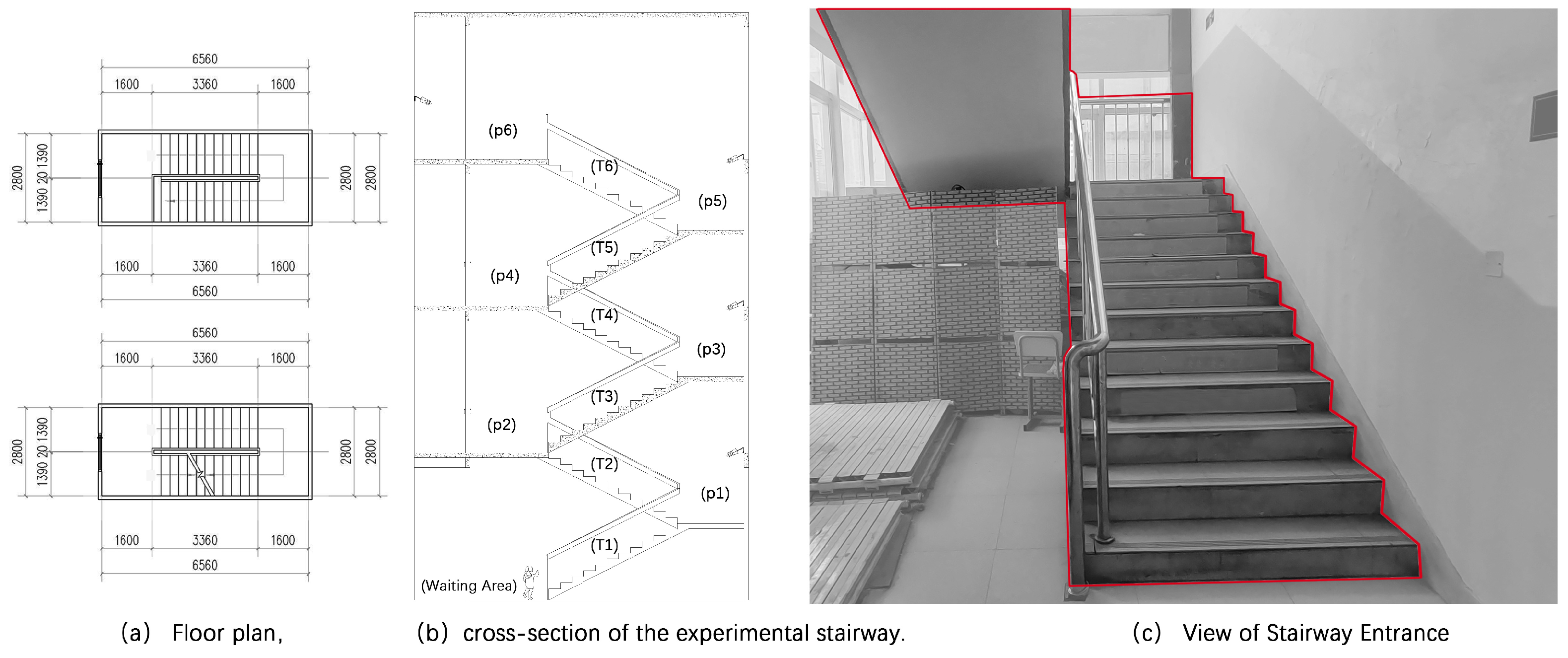
As shown in
Figure 1, the stairwell features a two-flight configuration comprising 24 steps in total. Each flight has a width of 1.39 m, a tread depth of 0.28 m, and a riser height of 0.14 m, corresponding to a slope of 26.5°. The intermediate landing measures 2.8 m × 1.6 m. Detailed structural information is provided in
Figure 1, which includes (a) a plan view, (b) a sectional view, and (c) a stair entrance view. During the experiments, surveillance cameras were used to continuously record participants’ entire upward movement. As shown in
Figure 1, four fixed digital cameras were deployed, each with a resolution of 1920 × 1080 pixels and a frame rate of 30 fps. All cameras were connected to the same wireless network at the beginning of the experiment to ensure time synchronization and calibration accuracy.
2.2. Participant Information
A total of 60 children (30 boys and 30 girls) participated in the experiment. The age, sex, and height of each participant were recorded prior to the experiment. All children were in good physical health and exhibited no apparent motor impairments. Detailed demographic information is presented in
Table 1. Informed consent was obtained from the guardians of all participants. The study was reviewed and approved by the ethics committee in compliance with institutional ethical standards.
2.3. Data Collection Procedure
To collect children’s ascending evacuation speeds, a total of 60 participants were recruited for the experiment. This number represents the maximum sample size achievable under the kindergarten’s safety requirements and the principle of voluntary participation by both guardians and children. Among them, 17 were from the lower kindergarten group, 20 were from the middle kindergarten group, and 23 were from the upper kindergarten group, forming a sample structure consistent with the actual distribution of students across age levels. The participants were grouped by grade, and each trial involved dispatching one child at a time to complete the evacuation task individually. All other experimental conditions were kept identical across trials to ensure consistency and repeatability.
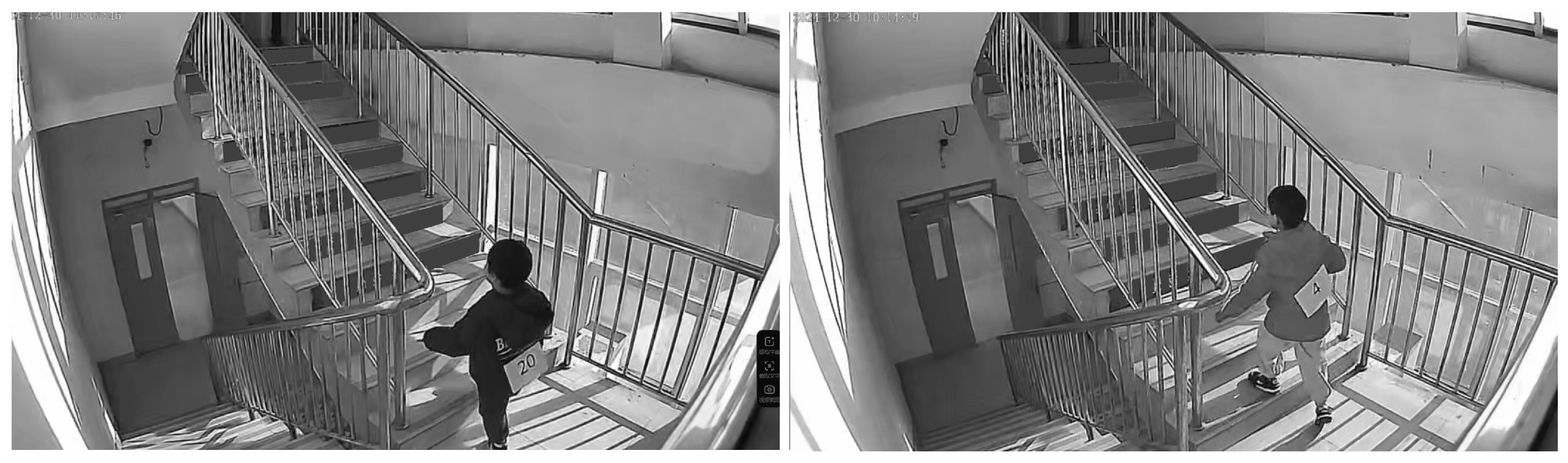
Specifically, each participant first gathered in a designated waiting area and completed a brief resting phase before entering the evacuation route to initiate upward movement. The entire process was recorded continuously using fixed surveillance cameras. Notably, the participants were unfamiliar with the experimental environment, which helped more accurately emulate the uncertainty characteristics of real emergency evacuation scenarios. After each trial, all participants were required to rest for 10 min to mitigate fatigue effects. The overall experimental setup is shown in
Figure 2.
In this study, the evacuation speed on the staircase was calculated following the methodology used in previous studies [
4,
15,
35], that is, by dividing the total distance traveled along the evacuation route by the time taken to complete it, thereby determining each participant’s movement speed.
The specific calculation formulas are provided in Equations (1) and (2), respectively.
where
represents the frame number at the start of the area;
denotes the frame number at the end of the area;
represents the camera frame rate;
denotes the number of steps;
represents the hypotenuse length of each step;
denotes the turning length at the stair landing, which corresponds to the arc length of a semicircle;
denotes the length of the stair landing; and
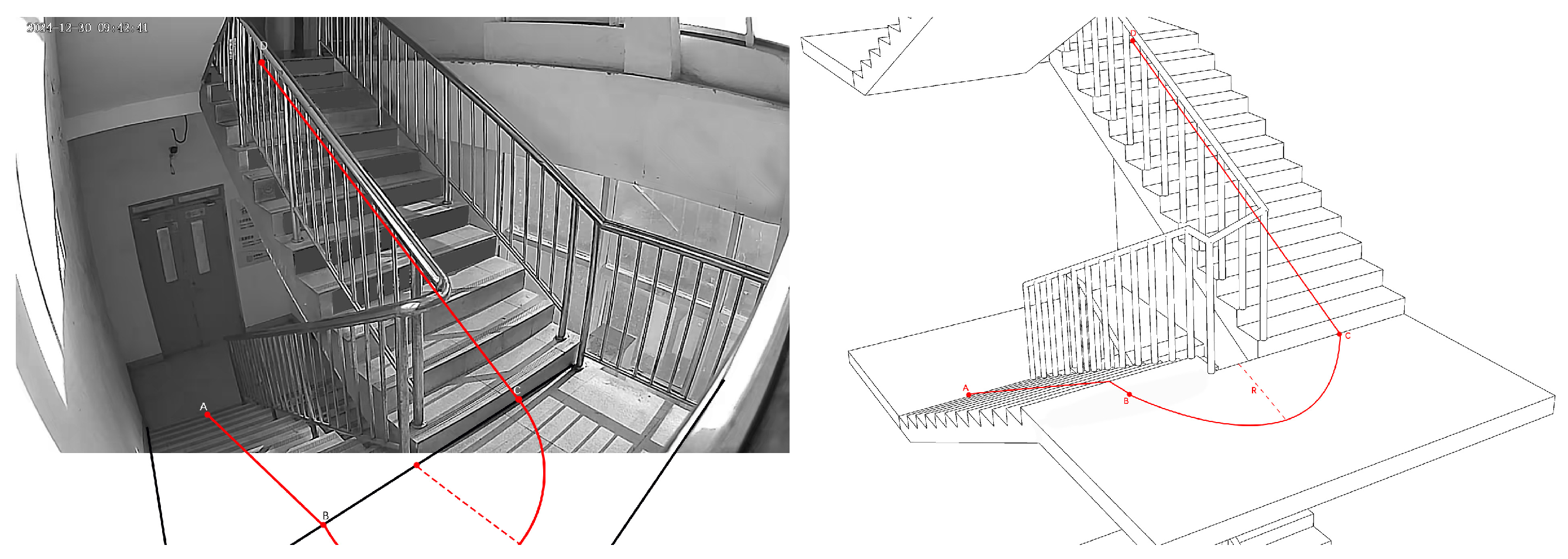
represents the step length. The formulation is based on the circumference equation of a circular arc, as the turning section at the stair landing is treated as an equivalent semicircular path. The reference points used to calculate the ascending evacuation distance are shown in
Figure 3. Specifically, A represents the starting point of the first half of the stair flight, B represents the end point of the first half, C represents the starting point of the second half of the stair flight, D represents the end point of the second half, and R denotes the turning radius.
In this experiment, particular emphasis was placed on ensuring accurate measurement of children’s vertical ascending evacuation data. The timing interval was defined to start at the moment a participant’s first foot stepped onto the initial stair tread and to end when the last foot completely left the final stair tread. This definition was intended to minimize potential data bias resulting from ambiguous starting or ending points. It is worth noting that, owing to individual differences in children’s step length and turning radius at the stair landing, the actual ascending distance may inevitably differ slightly from the calculated geometric distance.
2.4. Simulation Platform and Model Construction
2.4.1. Introduction to Simulation Software
In this study, MassMotion 11.0, developed by ARUP, was used as the simulation platform [
36]. This software has been extensively validated in the field of large-scale crowd modeling [
37]. MassMotion supports agent-based dynamic route selection, social force interactions, and responsiveness to environmental changes, enabling effective simulation of realistic behaviors during ascending evacuation [
38]. In this study, only the core functionalities related to scene construction and agent movement were used.
2.4.2. Building Model Construction
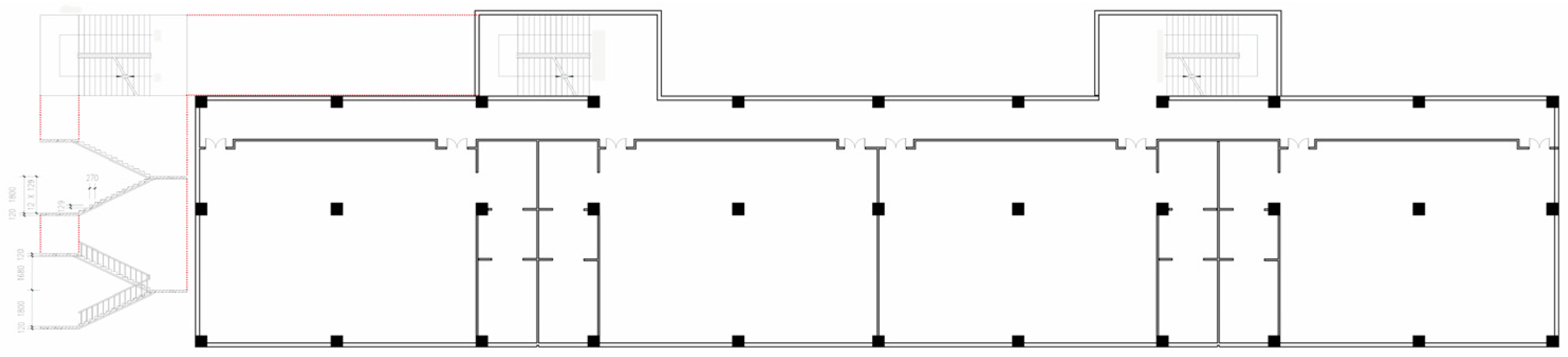
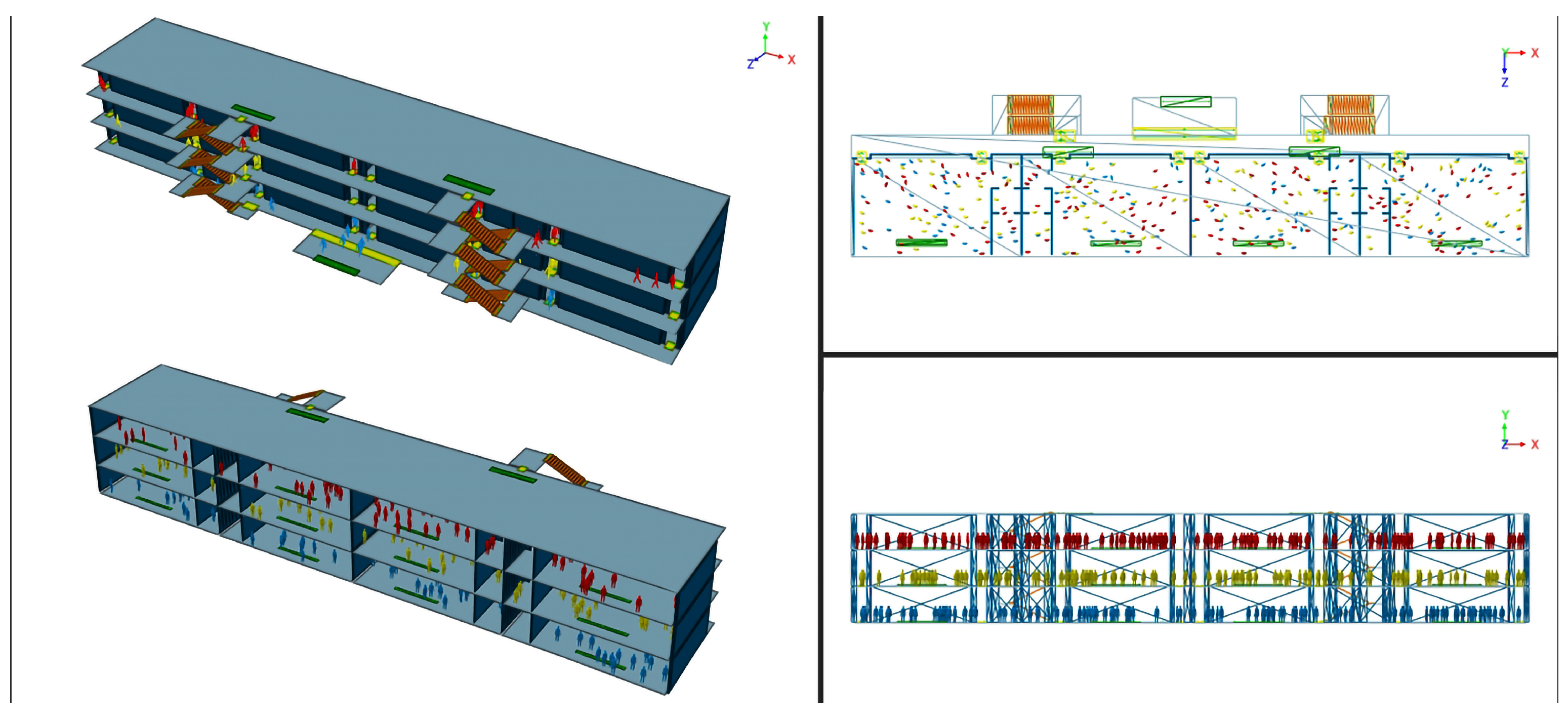
The research model was based on a typical three-story “linear” kindergarten building [
39], with four activity rooms on each floor. Each activity room was equipped with two evacuation exits, each 1.5 m wide. Two internal two-flight staircases served as the primary vertical circulation routes, with detailed specifications presented in
Figure 4. Considering that the initial occupant distribution was freely assigned within the activity units, the three-dimensional (3D) simulation setup and detailed scenario elements of the base model are shown in
Figure 5 and
Table 2, respectively.
2.4.3. Agent Model
This study comprehensively referred to the China Anthropometric Data of Minors [
40], and field survey data were collected, with the P95 percentile values selected as the primary reference standards. Detailed information is provided in
Table 3 and
Table 4.
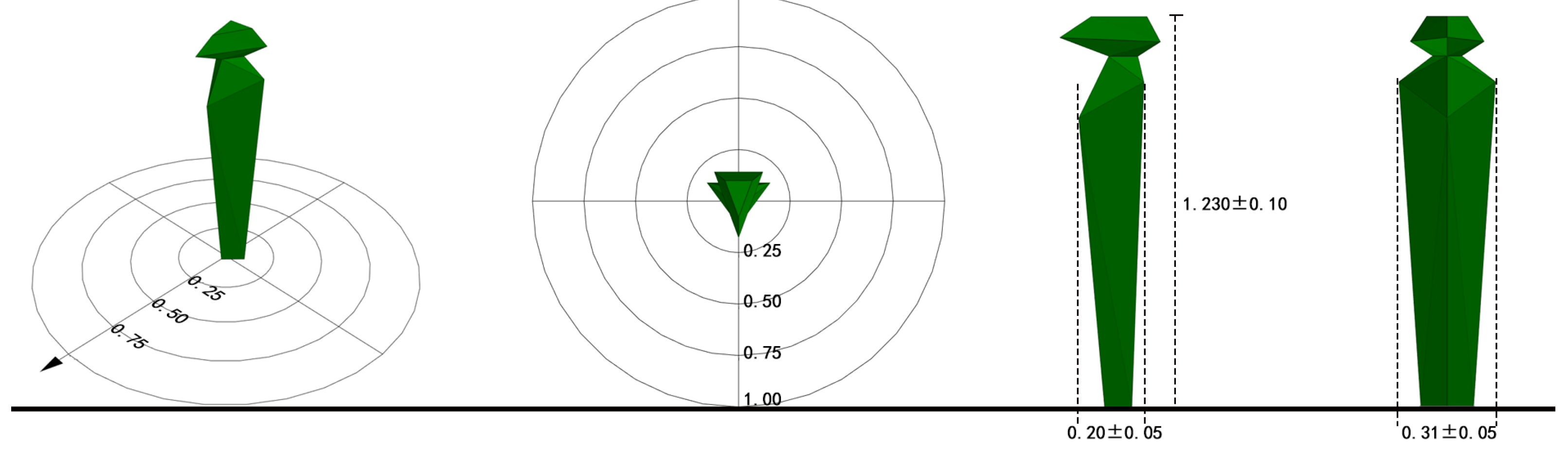
Based on these data and the observed variation range, the children’s height was set to 1230 ± 100 mm, body width to 310 ± 50 mm, and body depth to 200 ± 50 mm in the simulation. To facilitate evacuation simulation in the software, the anthropometric structures of kindergarten children were simplified into corresponding geometric forms in the simulation model, as illustrated in
Figure 6. Meanwhile, two key behavioral settings were incorporated into the model. First, the behavior of the agent group is influenced by social forces. Second, all agents are assumed to have received clear evacuation instructions from teachers and act strictly in accordance with the directions specified in these instructions.
2.5. Configuration of Evacuation Strategy Programs in the Simulation Experiment
2.5.1. Simulation Speed Settings for Bidirectional Evacuation of Children
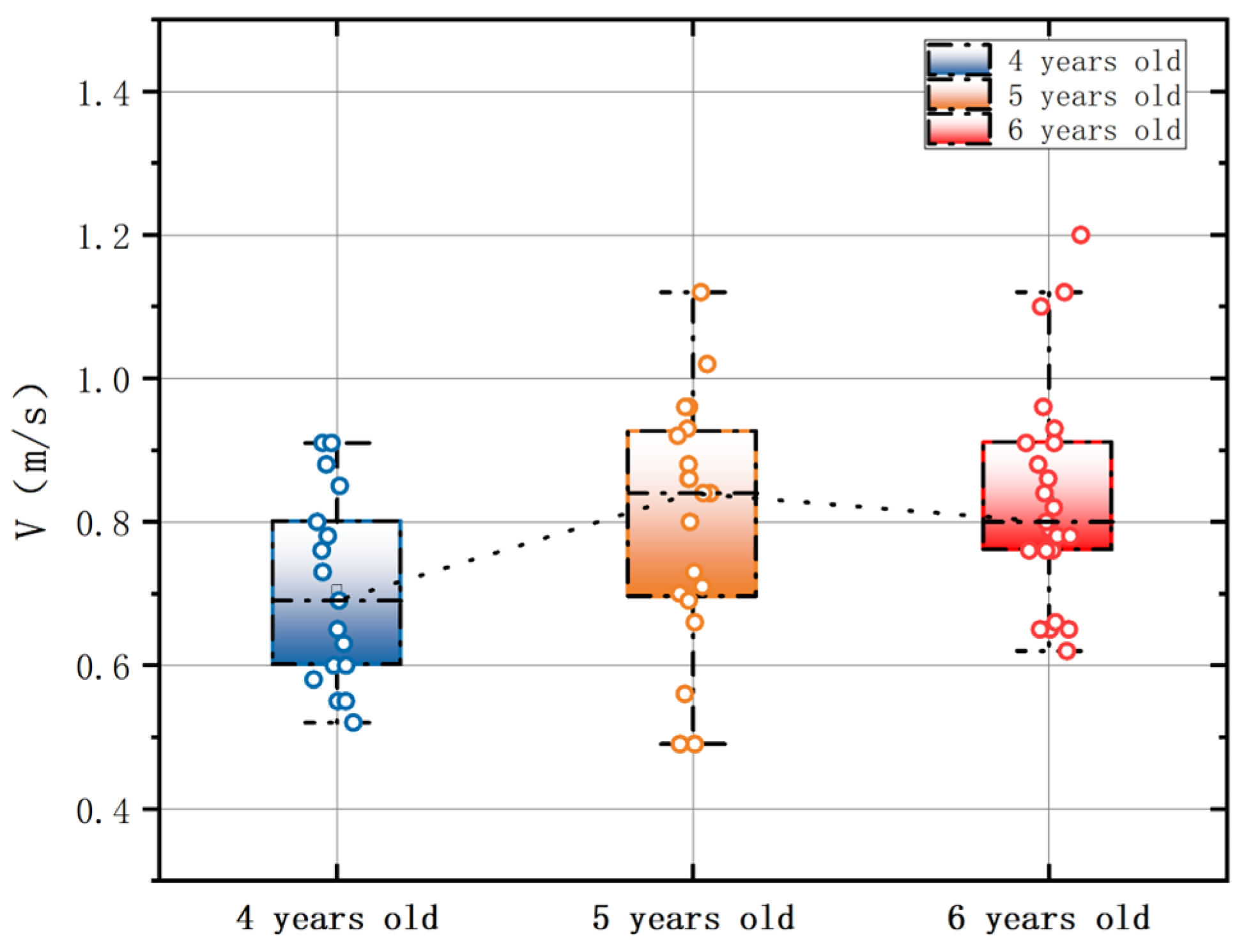
This subsection summarizes and analyzes the ascending evacuation speeds of all participating children and, in combination with existing research data, establishes a bidirectional evacuation database to support the present simulation study. Based on the data collection methods described above, the experiment compiled the ascending evacuation times and corresponding speeds of all 60 participants. Statistical analysis revealed that children’s ascending evacuation times ranged from 28 to 72 s, with corresponding speeds between 0.49 and 1.20 m/s. Detailed statistics are provided in
Table 5, and the distribution characteristics of the data are illustrated in
Figure 7. Based on the experimental conditions, including stair geometry, building height, and safety environment, these speed results are applicable to staircases of similar dimensions in public buildings, as well as for one- to four-story ascending distances of approximately 13.8 m.
In constructing the simulation parameters for children’s evacuation, this study referenced both the research findings of the present team and relevant studies by other scholars [
28,
41], integrating these with the experimental data obtained in this study. The movement speed ranges for children of different age groups in the simulation model were determined as follows: (1) lower kindergarten class: horizontal and descending evacuation speeds of 0.41–0.85 m/s and ascending speeds of 0.59–0.83 m/s; (2) middle kindergarten class: horizontal and descending evacuation speeds of 0.54–1.19 m/s and ascending speeds of 0.69–0.90 m/s; and (3) upper kindergarten class: horizontal and descending evacuation speeds of 0.64–1.51 m/s and ascending speeds of 0.74–0.94 m/s. The overall speed settings were assumed to follow a normal distribution. To enhance data validity and reduce potential errors, the standard deviations of the speed data were also input into the simulation software, and the evacuation scenario was set to emergency mode. Detailed modeling speed parameters are presented in
Table 6.
Moreover, this study conducted model validation. Each type of child agent was simulated individually following the same procedure as the physical experiment, and each simulation was repeated 30 times. The simulated evacuation time of each type of child agent was then compared with the experimentally measured time to calculate the deviation. All deviation values remained below 7%. In addition, the simulated speed values fell within the range reported by Fang et al. [
28], further supporting the reliability of this agent-based model. Details are provided in
Table 7.
2.5.2. Crowd Distribution Settings in the Simulation Experiments
According to the relevant provisions in the Code for the Design of Nurseries and Kindergartens (JGJ 39-2016) [
42] regarding the number of children per class, this study set the simulated class sizes based on the prescribed upper limit. The specific number of modeled participants is presented in
Table 8.
2.5.3. Establishment of Evacuation Strategies and Flow Lines in the Simulation Model
To simulate realistic evacuation scenarios, the evacuation units within the model were systematically organized into different flow line combinations based on the following principles. (1) For clarity, classes were designated as follows: lower kindergarten (Small A, Small B, Small C, and Small D); middle kindergarten (Medium A, Medium B, Medium C, and Medium D); and upper kindergarten (Large A, Large B, Large C, and Large D). (2) Evacuation destinations and route logic. The model defined two safe refuge areas: the ground-level outdoor space and the rooftop evacuation platform, thereby enabling bidirectional evacuation. This design accommodates practical fire scenarios, such as mandatory ascending evacuation when a fire occurs between the second and third floors or when a local classroom fire on the second floor spreads upward, forcing third-floor occupants to move to the roof. It also reflects situations in which a fire on the first floor may cause congestion at ground exits, making ascending evacuation a necessary alternative. Routes that violated fundamental evacuation logic were excluded, and no intersecting or obstructive movements between adjacent floors were permitted. (3) Single-floor combination. Each floor contained four classrooms, theoretically yielding 2
4 = 16 possible single-floor combinations. After removing redundant routes owing to symmetry, 10 distinct single-floor flow line organizations remained (
Table 9).
(4) Three-floor combinations. Based on the 10 single-floor flow types, the theoretical number of three-floor combinations was 10
3 = 1000. However, according to the rational evacuation route principles described above, a total of 28 combinations remained (10 + (2 + 4 + 2) + 10). Because the simultaneous ascending evacuation of all third-floor occupants does not conform to the efficiency optimization concept, the final number of flow line combinations was reduced to 27. The combination logic is presented in
Table 10.
(5) 3D modeling. A 3D model was developed for all 27 flow line combinations, with each assigned a unique identifier for subsequent simulations. Among them, Model 4A was designated as the control group, representing the conventional full descending evacuation strategy. Detailed model parameters are presented in
Table 11.
2.6. Data Analysis Methods
To evaluate the evacuation efficiency and stability of different strategies, this study analyzed the total evacuation time, number of remaining occupants, and their interrelationships. To enhance the reliability of the results, each evacuation strategy was simulated 30 times, generating 30 sets of evacuation data. Statistical analyses of the evacuation time range, mean value, and standard deviation were conducted to quantify the fluctuation and stability of each strategy. Furthermore, Pearson correlation analysis was applied to examine the relationship between the remaining number of occupants and the evacuation time.
Trend curves were plotted based on the correlation results to visualize the evacuation characteristics at different time stages. By integrating these multi-dimensional analyses, this study systematically compared and verified the efficiency and applicability of each evacuation strategy, providing quantitative evidence for optimizing evacuation organization in kindergartens under fire emergency conditions.
4. Discussion
4.1. Results of Ascending Evacuation Speeds of Children
In this study, the measured ascending evacuation speeds of children aged 4–6 years were as follows: (1) 4-year-old group (mean = 0.71 m/s, 95% CI: 0.59–0.83 m/s); (2) 5-year-old group (mean = 0.80 m/s, 95% CI: 0.69–0.90 m/s); and (3) 6-year-old group (mean = 0.83 m/s, 95% CI: 0.74–0.94 m/s). The results clearly indicate that the ascending evacuation speed of children increased significantly with age. This finding aligns with the conclusions of Kholshchevnikov et al. [
29], who also reported an age-dependent increase in evacuation speed, although their work primarily focused on descending evacuation. Notably, the results of the present study differ considerably from those reported by Peng [
31]. Two main factors account for this discrepancy. First, Peng’s study did not classify participants by age group, resulting in more generalized data. Second, the datasets referenced in that study were derived from Yan [
43], who investigated adult evacuation speeds and merged children and elderly individuals into a single category. In that framework, the evacuation speed of young and middle-aged men was halved to estimate values for other demographic groups. These data sources and processing approaches differ fundamentally from the field-based measurement methodology adopted in the present study, thereby explaining the observed variation in the results.
Similarly, the results of this study differed from those reported by Lam et al. [
30], who recorded an ascending evacuation speed of 0.484 m/s. These discrepancies can be attributed to two primary factors. First, regarding age classification, Lam’s study examined children aged 5–9 years, and the reported value represented the overall average speed. In contrast, the present study focused specifically on younger children aged 4–6 years, with further subdivision into age subgroups to allow for more refined comparisons. This variation in participant age structure constitutes a major source of difference. Second, in terms of behavioral context, Lam’s experiment required participants to engage in one minute of horizontal walking before entering the stairway and maintain a normal walking pace while ascending. In contrast, the present study was designed to simulate real emergency evacuation conditions, with all participants instructed to ascend in an emergency. Consequently, the methodological and experimental differences between the two studies account for the generally higher evacuation speeds observed in the present study compared with those reported by Lam et al. [
30].
Overall, the ascending evacuation speed data obtained in this study enrich the existing body of research by addressing the current knowledge gap regarding children’s emergency ascending evacuations. The results provide a quantitative characterization of the evacuation behavior of children aged 4–6 years and demonstrate a significant age-dependent increase in the evacuation speed. These findings not only offer empirical data to support the design and optimization of bidirectional evacuation strategies in kindergartens during emergencies such as fires but also establish a theoretical foundation for comparing and analyzing differences between children’s ascending and descending evacuation behaviors.
4.2. Results of Overall Descending and Three-Floor Bidirectional Evacuation Times
According to the simulation results, four evacuation strategies (3B, 3C, 3D, and 3G) exhibited higher evacuation efficiency when comparing overall descending evacuation with three-floor bidirectional evacuation. This finding indicates that, relative to the conventional single-direction descending evacuation approach, bidirectional evacuation strategies can effectively enhance overall evacuation efficiency. Among these, Strategy 3G was the most effective, achieving the highest evacuation efficiency. This result suggests that, for third-floor classrooms, a bidirectional evacuation pattern in which the central classrooms evacuate upward while the two side classrooms descend provides the optimal configuration for maximizing evacuation performance.
First, as shown in
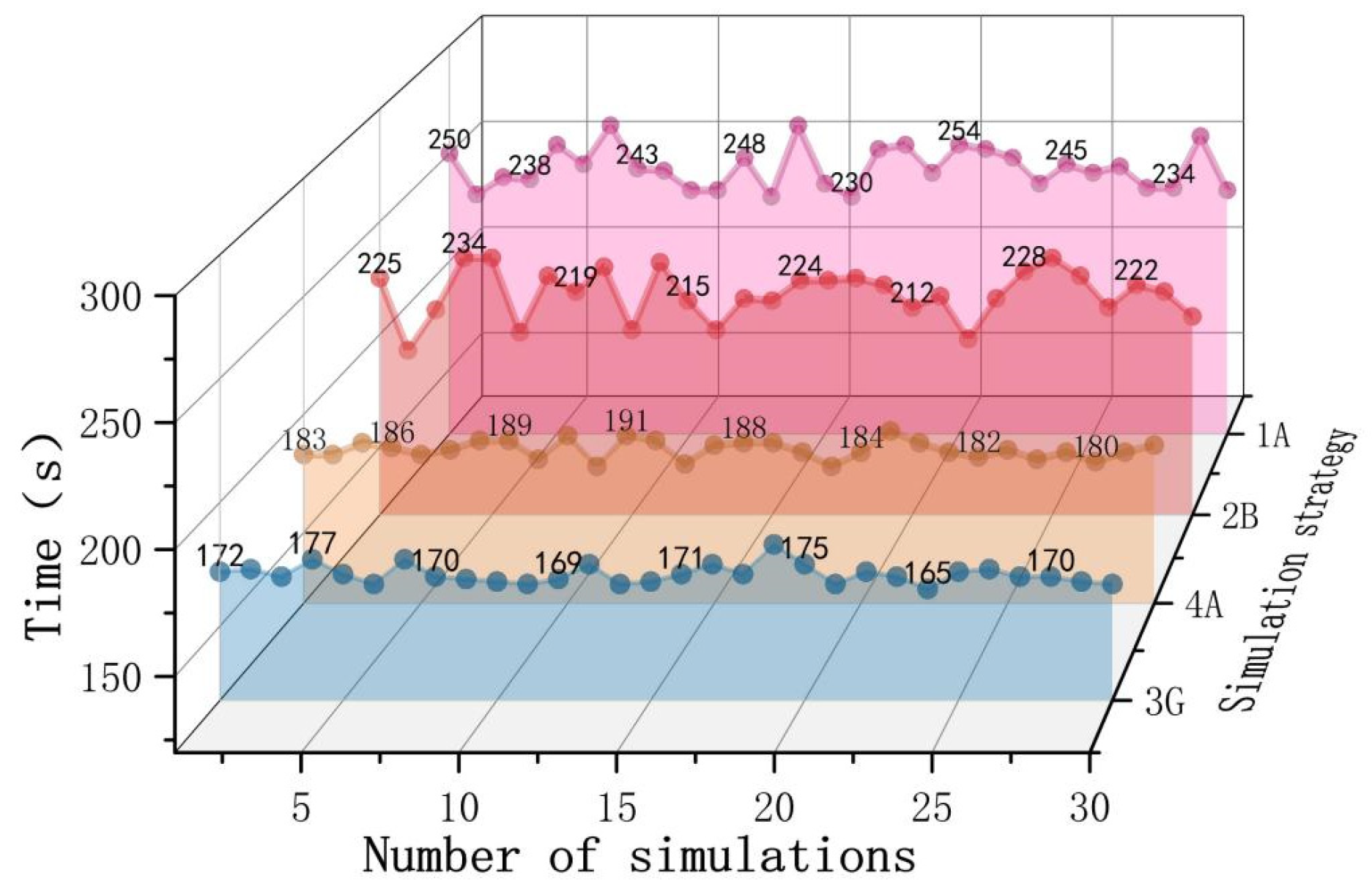
Figure 8, the overall evacuation process under Strategy 3G remained stable, a finding that was statistically supported by its standard deviation values. An analysis of the experienced density maps (
Table 19) revealed that Strategy 3G maintained a relatively uniform density distribution during the evacuation process. Here, “experienced density” refers to the average occupant density at each location, calculated as a weighted mean across all agents. Areas of congestion (high-density red zones) were limited in spatial extent and dissipated rapidly. Notably, the rooftop-level experienced density maps indicate that Strategy 3G effectively distributed evacuation pressure across the two ascending stairways, allowing the middle and side classrooms to achieve a relative balance during evacuation. This diversion pattern prevents excessive concentration of occupants along any single evacuation route, ensuring a smoother overall flow from classrooms to ground-level and rooftop refuge areas. Consequently, Strategy 3G substantially enhances both the overall efficiency and stability of third-floor bidirectional evacuation by achieving effective vertical flow separation and balanced utilization of evacuation spaces.
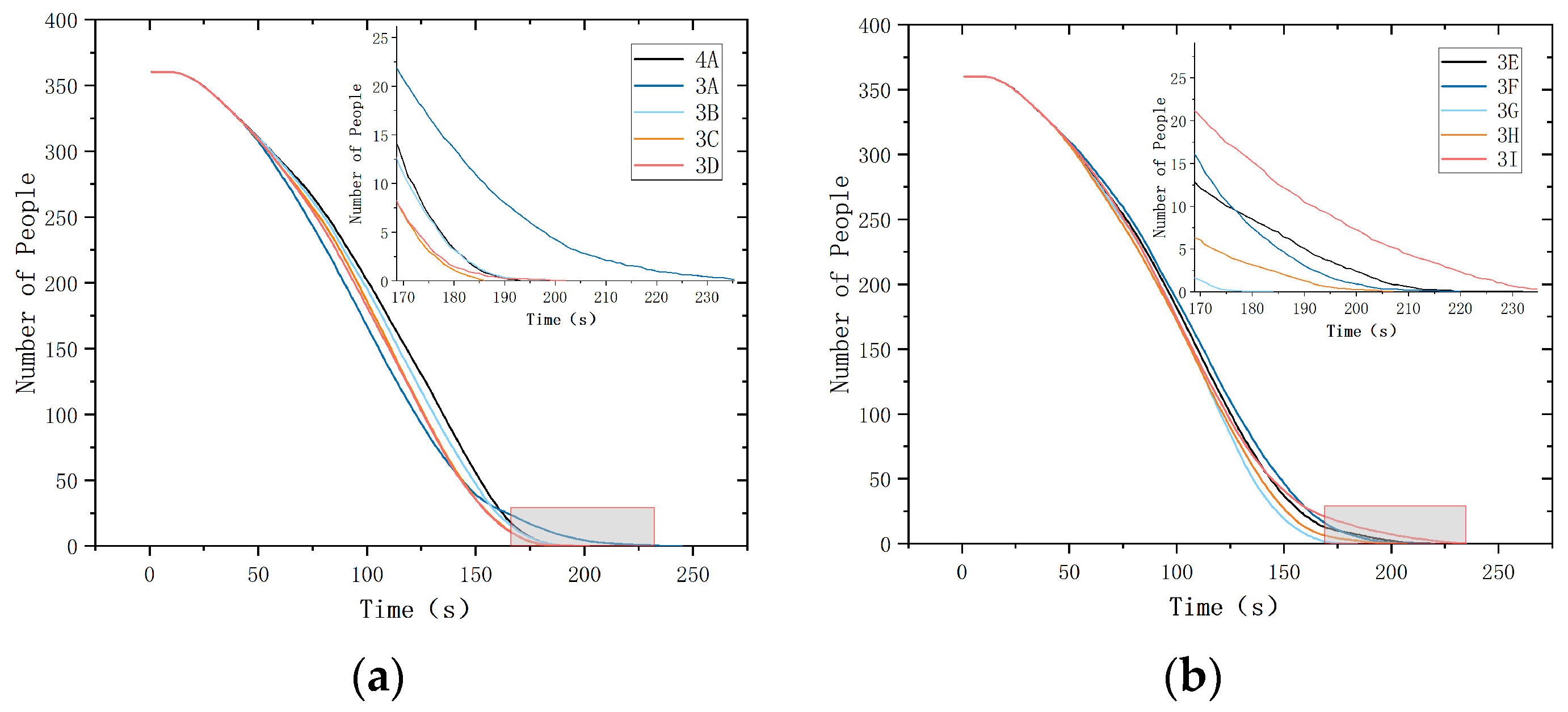
Second, in addition to the previously discussed analysis of Strategy 3G’s experienced density distribution and overall evacuation efficiency, further examination of the relationship between evacuation time and the number of remaining occupants (
Figure 9) revealed that the 3G curve was notably smoother, with balanced slope variations. This pattern indicates minimal congestion and relatively stable occupant flow throughout the evacuation process. More importantly, this analysis not only reinforces the superior overall efficiency of Strategy 3G but also highlights its distinct advantages during the later stages of evacuation. After approximately 125 s, the 3G curve exhibited the fastest and most consistent decline, demonstrating strong “tail-clearance” capability, the ability to rapidly reduce the number of remaining evacuees and effectively mitigate the “trailing effect” caused by a few delayed participants. This outcome is closely related to the spatial organization logic of the strategy. The two central classes, which were situated closer to the stairways, initiated ascending evacuation earlier, thereby alleviating initial congestion and facilitating a smoother distribution during subsequent large-scale descending evacuations. Moreover, during the synchronous ascending–descending phase, the ascending population remained moderate and well balanced with the descending flow, preventing excessive crowding or passage interference.
This subsection investigates localized emergency scenarios in three-story kindergarten buildings and proposes an innovative bidirectional evacuation approach. This study systematically evaluated multiple bidirectional evacuation strategies and conducted comparative analyses with conventional unidirectional evacuation methods. Assessments were performed across several key dimensions, including total evacuation time, extreme value distribution, process stability, and experienced density. The results demonstrated that certain bidirectional strategies substantially outperformed traditional approaches, ultimately identifying an optimal targeted evacuation scheme. The proposed methodology and its findings provide valuable guidance for both theoretical research and practical implementation of bidirectional evacuation strategies in three-story kindergartens during fire emergencies.
4.3. Statistical Results of Bidirectional Evacuation Times for Second-Floor Classes
According to the simulation results, among the bidirectional evacuation strategies for second-floor classes, Strategy 2B achieved the shortest average evacuation time. This finding suggests that adopting a split-flow evacuation pattern for second-floor classrooms can yield optimal overall efficiency. In this configuration, a single central class evacuated upward, whereas the remaining three classes descended.
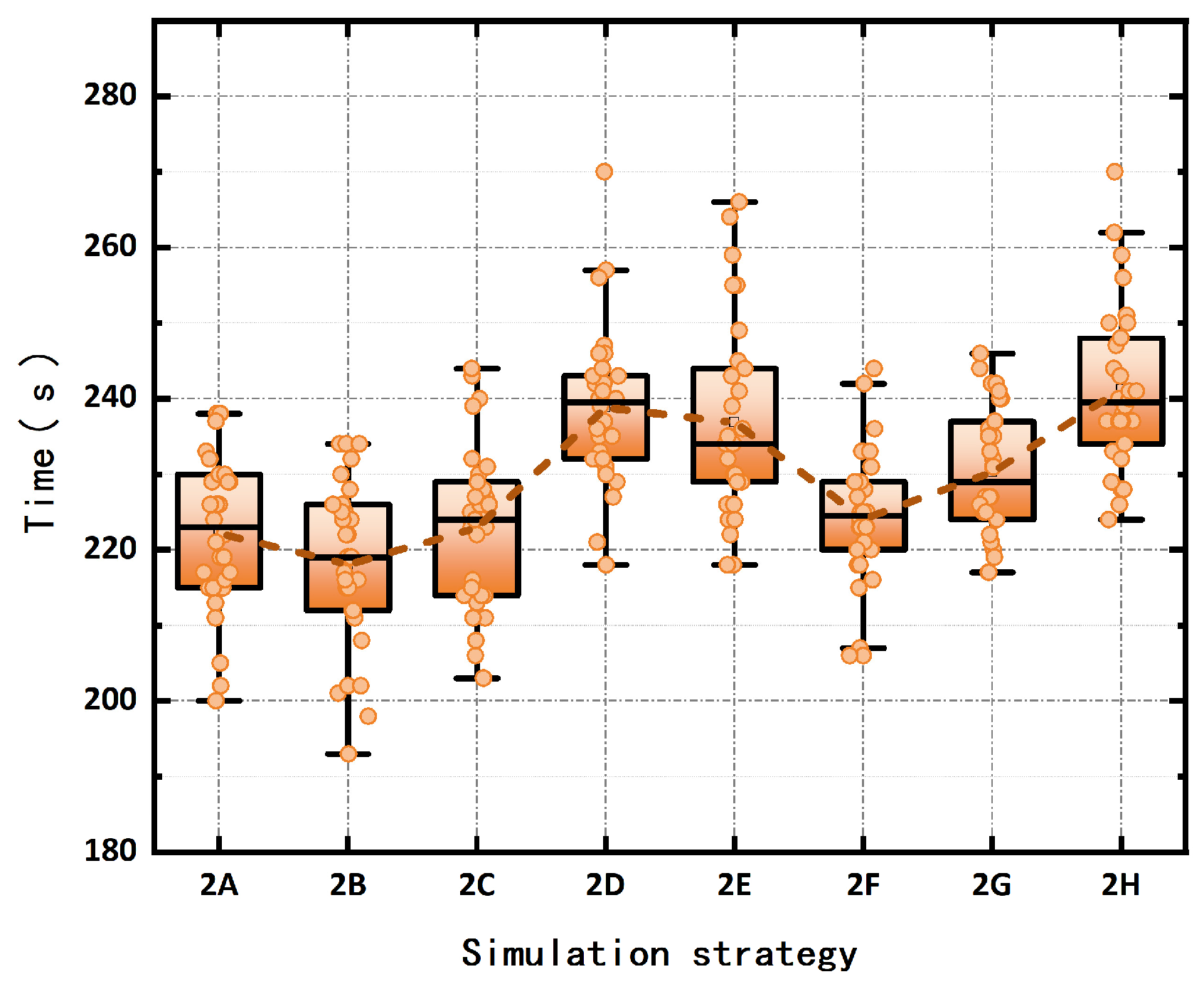
However, considering the temporal fluctuations presented in
Figure 10 and the experienced density maps shown in
Table 20, the applicability of Strategy 2B should be interpreted with caution. Although 2B exhibited relatively low mean and minimum evacuation times, its time-series fluctuations were considerably large. The experienced density distribution revealed that the first-floor plan, the two right-side classes on the second floor, and the stair flights leading to the roof maintained relatively uniform density patterns. In these areas, the congestion dissipated rapidly. In contrast, high-density clusters appeared in the left-side corridor on the second floor and in the third-floor corridor, leading to the stairways. Furthermore, Strategy 2B exhibited a higher SD than six of the other seven strategies on the same floor, suggesting greater variability and result dispersion.
In summary, although Strategy 2B demonstrates a superior average evacuation time compared with the other strategies, it also presents significant congestion risks in several key passageways, which may reduce process stability.
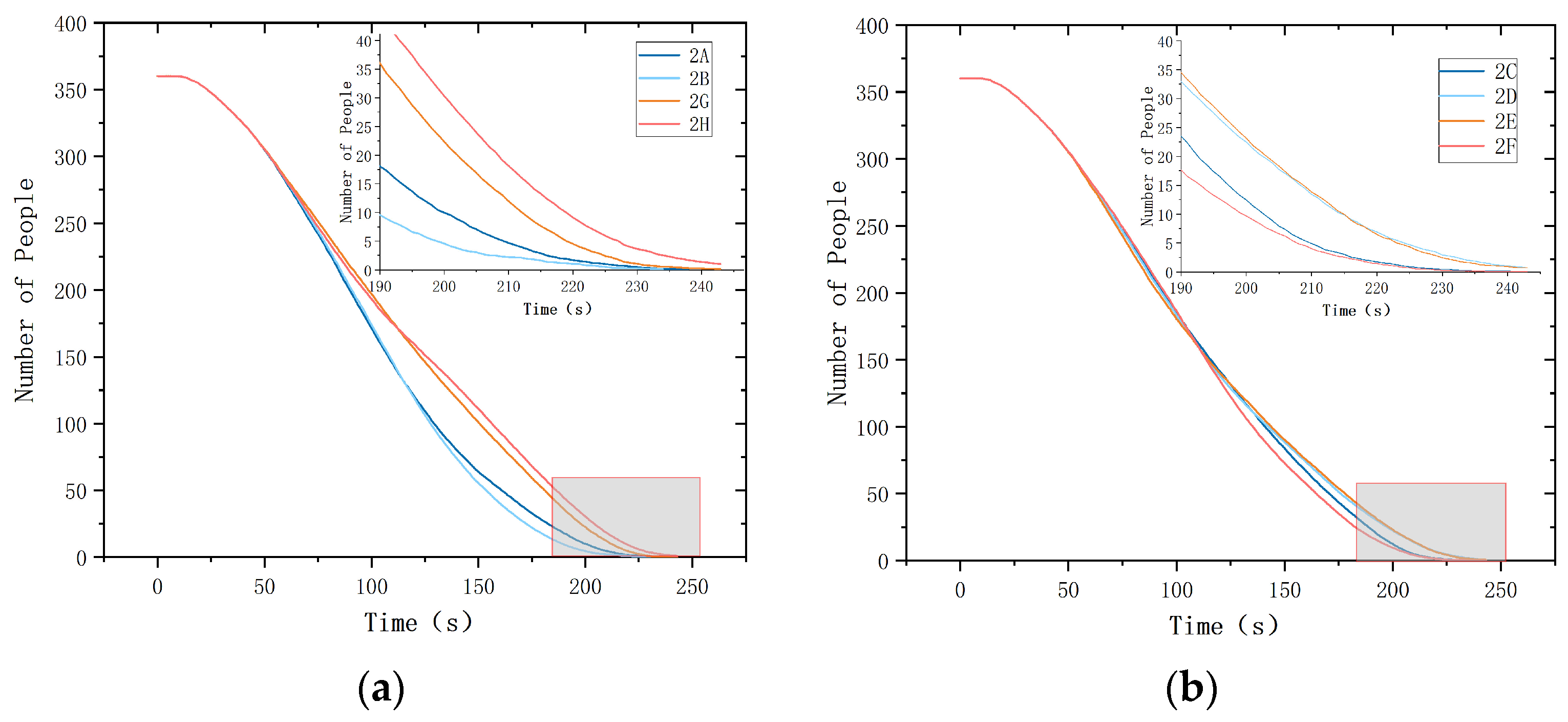
Furthermore, beyond the analysis of Strategy 2B’s experienced density distribution and overall evacuation efficiency, examination of the relationship between evacuation time and the number of remaining occupants (
Figure 11) provides additional insights. The time-series curve for Strategy 2B exhibited distinct phase-dependent slope variations, reflecting the dynamic process of congestion formation and subsequent dissipation during evacuation. Specifically, the most pronounced slope changes occurred during the 50–75 s interval and again after approximately 125 s. In the first phase, the curves of 2A and 2B steepened sharply, indicating a temporary acceleration in the evacuation rate during the mid-stage. At approximately 125 s, when the remaining evacuee count dropped to approximately 125 individuals, Strategy 2B accelerated further. Although both strategies employ a single-class ascending evacuation pattern with the remaining classes descending, suggesting theoretically similar overall pacing, the superior performance of Strategy 2B is likely due to the faster dissipation of localized congestion during the early stage. This early relief of congestion allows subsequent evacuation flows to remain smooth. Therefore, the advantage of Strategy 2B lies not only in its ability to reduce overall evacuation time but also in its enhanced efficiency in handling “tail-end occupants” during the final evacuation phase, effectively mitigating delays caused by residual evacuees and improving total clearance time.
This subsection focuses on localized emergency scenarios on the second floor of kindergartens and proposes and compares several roof–ground bidirectional evacuation strategies. The findings reveal that although some strategies achieve shorter average evacuation times, they often exhibit poorer process stability and reduced flow smoothness. These deficiencies make them more prone to localized congestion and substantial temporal fluctuations, thereby reducing their practical reliability. Based on multi-dimensional evaluation metrics, including average evacuation time, time-series variability, and experienced density distribution, this study underscores that “fastest” does not necessarily equate to “most suitable”. Under second-floor localized emergency conditions, an optimal evacuation approach should balance efficiency and stability, prioritizing strategies that demonstrate superior congestion control and “tail-clearance” capabilities throughout the evacuation process. The methods and findings presented in this study provide methodological and practical guidance for the selection and optimization of evacuation strategies in similar kindergarten settings.
4.4. Statistical Results of Bidirectional Evacuation Times for First-Floor Classes
Based on the simulation results, among the bidirectional evacuation strategies for first-floor classes, Strategy 1A achieved the shortest average evacuation time. This finding suggests that for first-floor evacuations, adopting a “full descending evacuation” approach yields the highest overall efficiency.
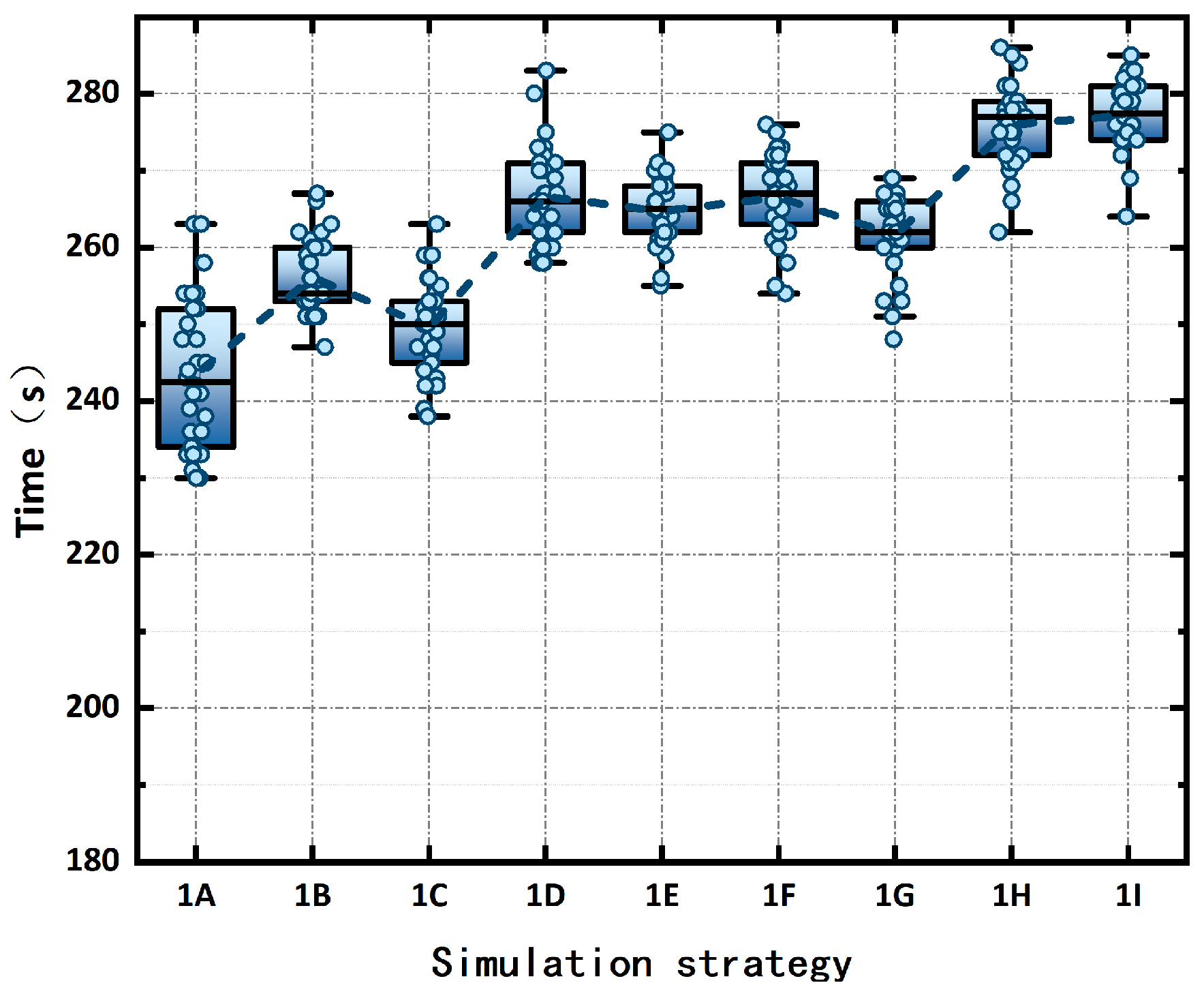
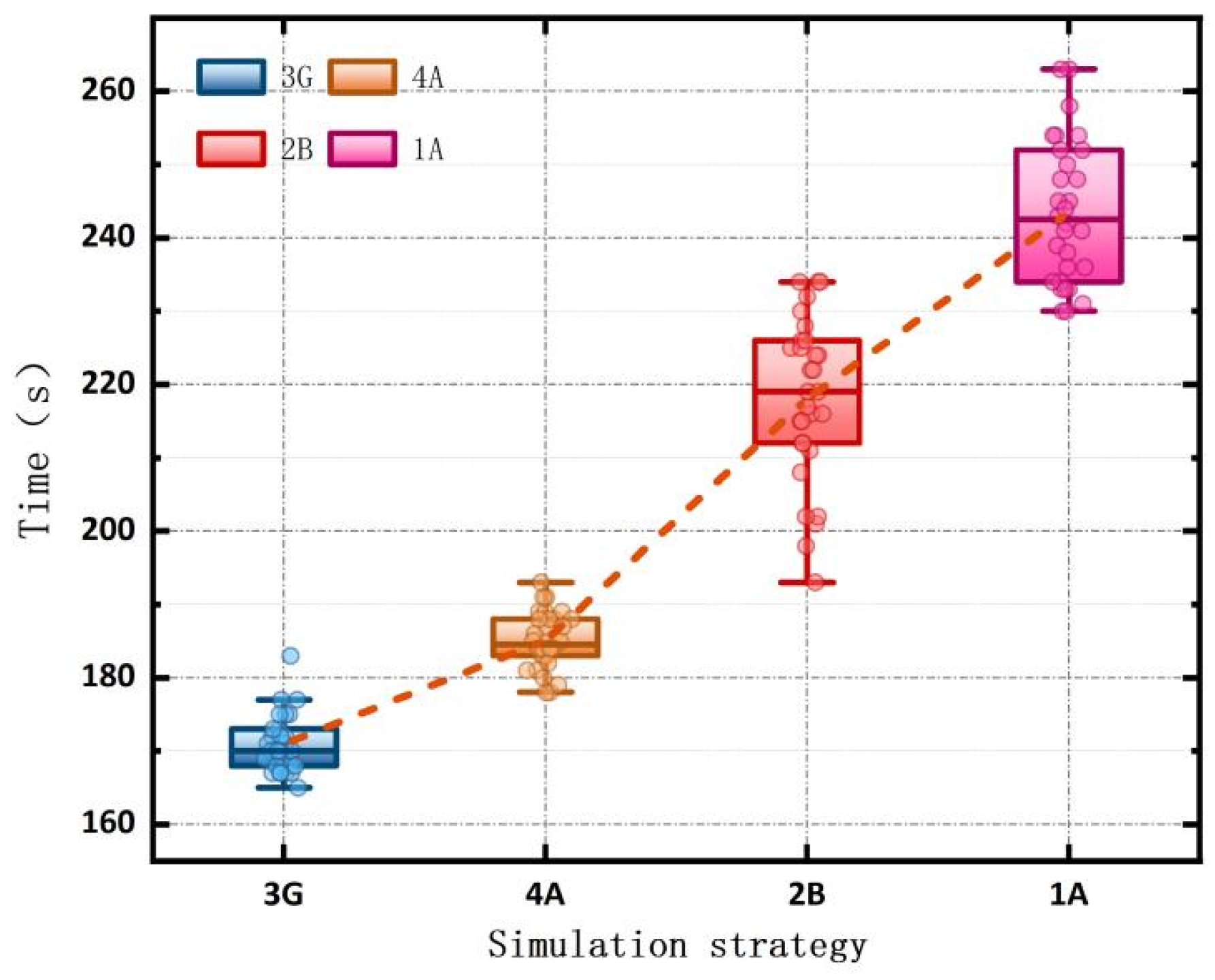
However, an analysis of the boxplots (
Figure 12) and the experienced density maps (
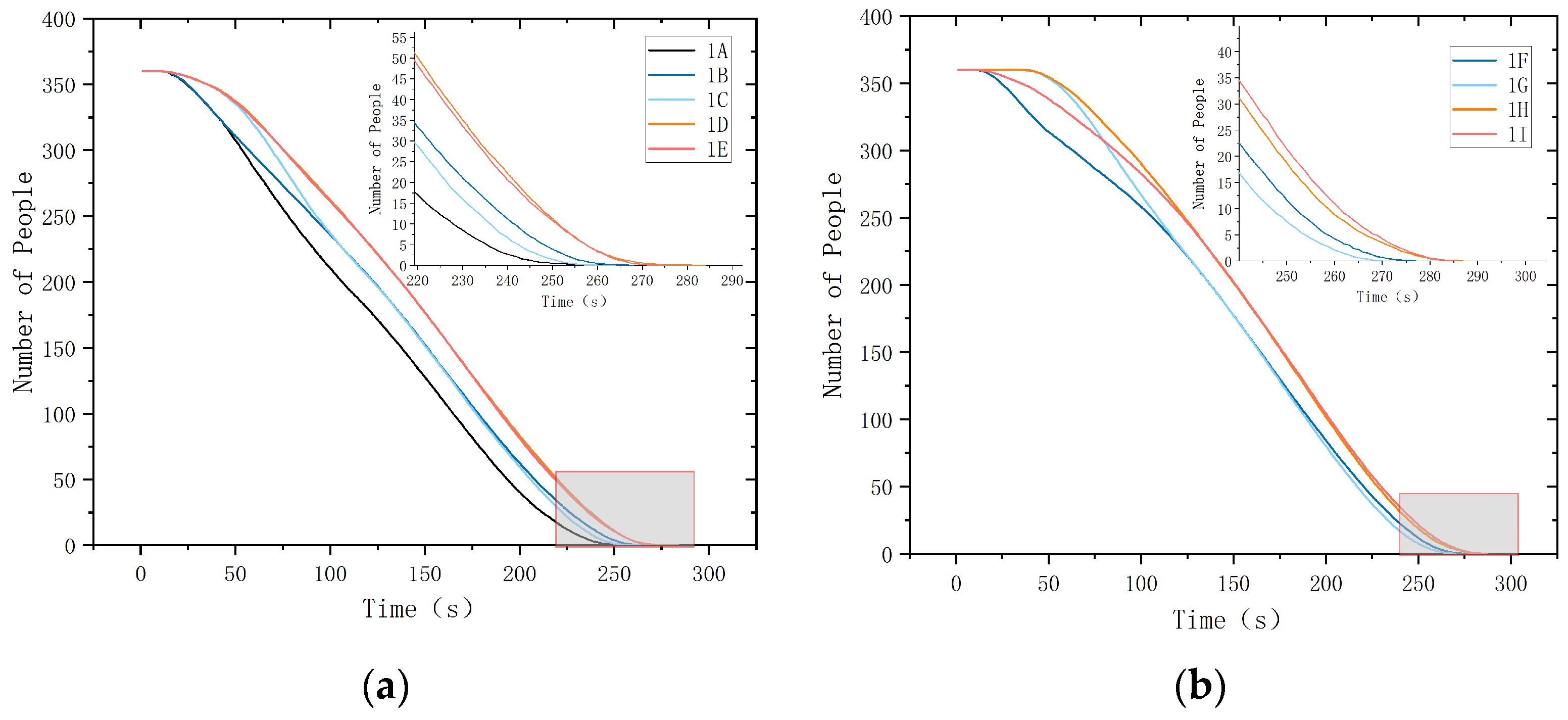
Table 21) indicates that the applicability of this strategy should be approached with caution. Although Strategy 1A performed better in terms of mean and minimum evacuation times, it exhibited the greatest dispersion in the simulation time points, reflecting limited stability. In contrast, despite having the longest evacuation time, Strategy 1I showed the smoothest and most stable temporal pattern. The experienced density distribution further revealed that under Strategy 1A, high-density congestion zones emerged on the second and third floors, particularly along corridors leading to stair flights. These congested zones often extended into adjacent classrooms, forming linear bottlenecks that impeded the flow. Additionally, large-scale congestion occurred along the stair flights that ascended to the rooftop. Moreover, Strategy 1A exhibited both a higher SD and longer boxplot ranges than all other strategies on the same floor, reflecting greater variability and uncertainty in the evacuation performance. In summary, although Strategy 1A achieves the shortest average completion time, the results emphasize that the “fastest” strategy often entails significant instability and potential risks.
Furthermore, analysis of the relationship between evacuation time and the number of remaining occupants (
Figure 13) reveals that Strategy 1A exhibited distinct phase-dependent slope variations in its time series, reflecting the dynamic process of congestion formation and subsequent dissipation during evacuation. Specifically, significant slope changes occurred within the 25–75 s, 100–150 s, and 200–250 s intervals. During the initial stage, the evacuation curves of Strategies 1A and 1B overlapped closely, indicating comparable evacuation rates early in the process. However, when the curve for Strategy 1A increased sharply, it signified the relief of localized congestion, allowing subsequent evacuation flows to progress more smoothly. Further analysis indicates that during the 100–150 s and 200–250 s phases, the pronounced slope variations, supported by the experienced density maps, suggest that simultaneous ascending evacuation from all classrooms on the second and third floors imposes substantial evacuation pressure at stairway entry points during the mid-to-late stages. Therefore, although Strategy 1A successfully reduces overall evacuation time, it also introduces potential congestion risks during three critical phases, highlighting the need for cautious assessment in practical applications.
This subsection examines bidirectional evacuation scenarios for first-floor kindergarten classes and proposes and compares several strategic configurations. By integrating multidimensional assessment metrics, including average evacuation time, time-series fluctuations, experienced density distribution, and congestion–retention characteristics, this study demonstrates that the “fastest” route does not necessarily equate to the “most suitable”. Under Strategy 1A, pronounced strip-shaped occupant retention and widespread congestion occurred near stairway entrances and corridors, accompanied by sudden instabilities and elevated congestion risks during several critical time intervals. Therefore, in the practical implementation of first-floor bidirectional evacuation, balancing efficiency and stability to ensure safety and reliability is essential. The methods and findings presented in this subsection provide cautionary insights and methodological guidance for optimizing evacuation strategies in similar kindergarten scenarios.
4.5. Comparative Analysis of Overall Descending Evacuation and Floor-Specific Optimal Strategies
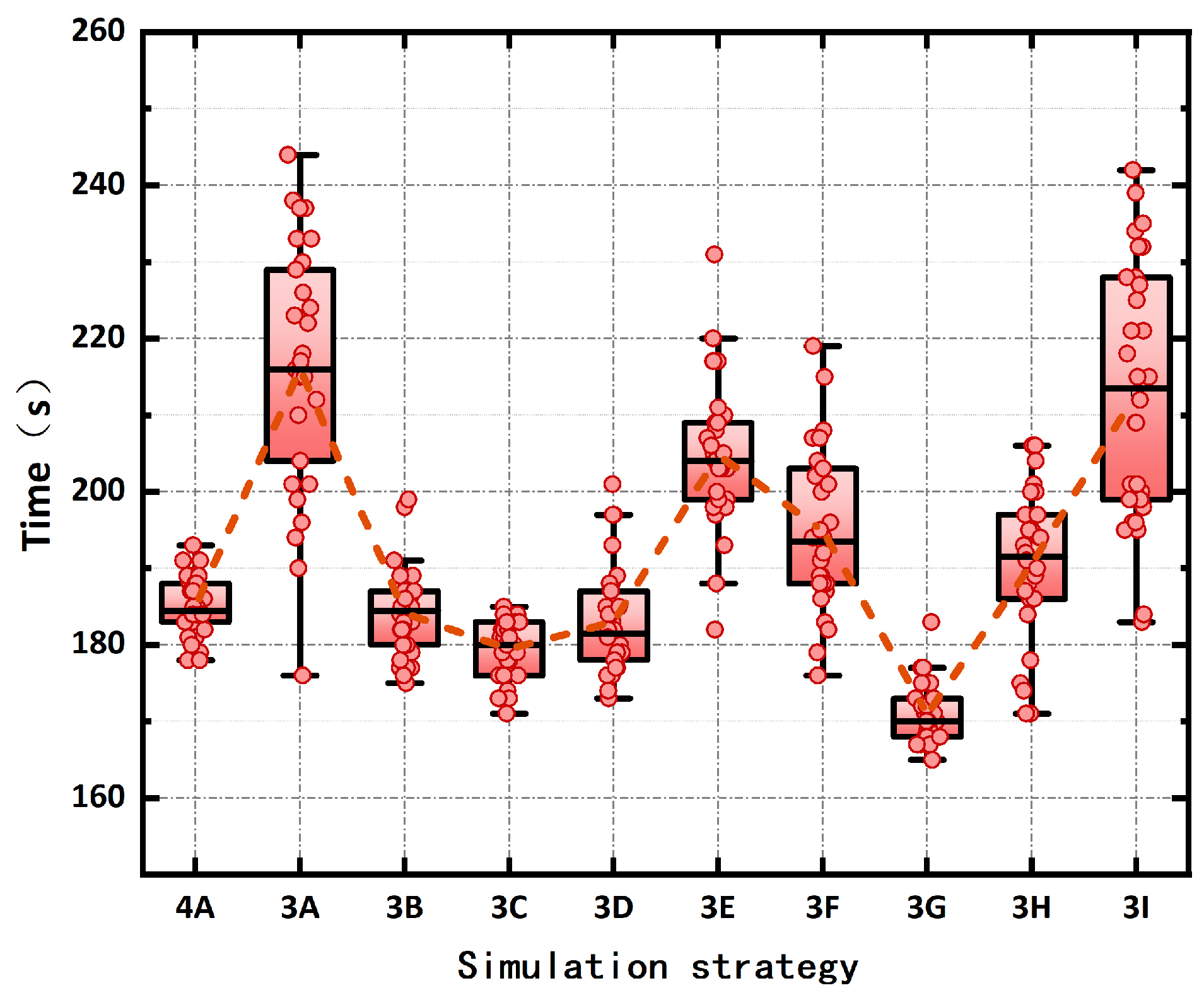
In the preceding sections, the optimal bidirectional evacuation strategies for each floor under localized emergency scenarios were identified and discussed. This section shifts the focus to overall evacuation performance, comparing the floor-specific optimal strategies to determine the globally optimal bidirectional evacuation configuration for multi-story kindergarten buildings under fire and similar emergency conditions. As shown in the time fluctuation chart (
Figure 14) and the box plot (
Figure 15), Strategy 3G achieved the shortest average evacuation time and exhibited smooth temporal fluctuations and tightly clustered data points.
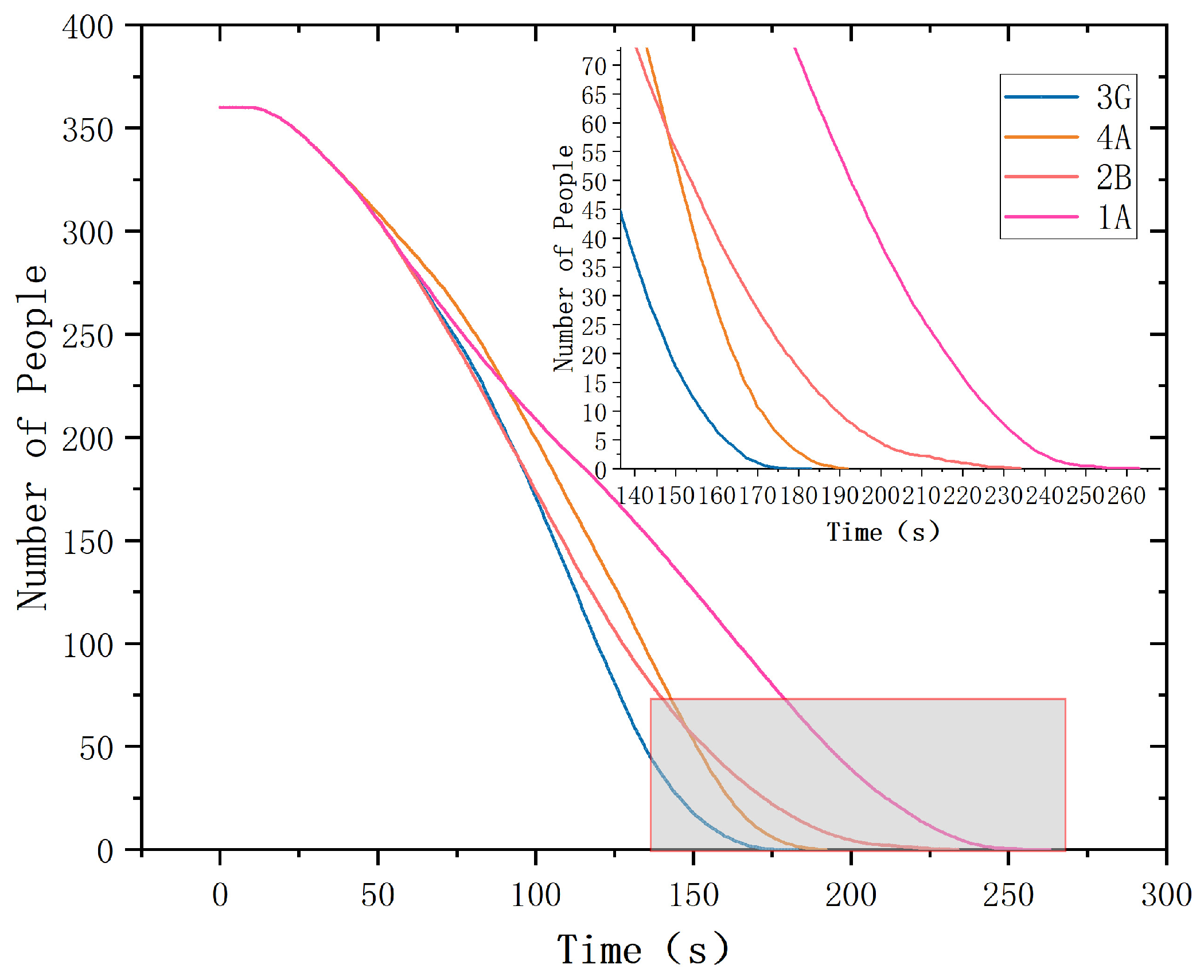
The temporal characteristics shown in
Figure 16 reveal clear time-dependent variations in the effectiveness of the four evacuation strategies. During the initial stage (0–50 s), all strategy curves closely overlapped. This result indicates that at the onset of evacuation, interactions among occupants and between occupants and the building environment yielded comparable evacuation rates. As the process advanced into the mid-phase, individual flow lines began to merge and diverge, intensifying interaction effects. This resulted in rapid differentiation in the curve slopes and occasional curve crossings, demonstrating that the relative performance of each strategy evolved dynamically over time. Specifically, Strategies 3G and 2B exhibited similar trends before approximately 100 s; however, in the subsequent phase, the slope of 3G steepened significantly, reaching zero residual occupants first. This reflects its capacity to maintain a lower occupant density during the mid-phase while efficiently clearing residual evacuees (“tail clearance”) in the final stage. In contrast, the control strategy 4A showed a phased performance advantage (initially slower, followed by acceleration) and surpassed the other strategies at certain time points. This pattern indicates that evacuation efficiency is dynamic rather than static and varies across different temporal stages. From a holistic evacuation perspective, evaluation should consider not only total completion time but also critical temporal metrics such as mid-phase slope behavior and tail-end clearance rate. Reliance solely on total evacuation time may obscure localized bottlenecks, whereas effective overall evacuation requires both stability and continuity of flow throughout the entire process.
A sensitivity analysis was further conducted to examine the robustness of the evacuation results. In the simulation model, the ascending evacuation speeds of children in each age group (including mean, maximum, and minimum values) were adjusted by ±20%, and the simulation procedure was repeated accordingly. The results indicate that Strategy 3G consistently remained the optimal evacuation strategy under all adjusted speed conditions. Therefore, the sensitivity analysis further verified the high efficiency and strong stability of Strategy 3G, and the relative ranking of evacuation strategies remained unchanged. Details are provided in
Table 22.
Based on a comprehensive comparison of bidirectional evacuation strategies across all floors, Strategy 3G was identified as the globally optimal configuration. This conclusion provides a practical and innovative reference framework. Future designs can enhance the safety and reliability of roof refuge spaces and optimize the dimensions of roof exits and the stair turning points leading from third-floor classrooms to the roof to better support this ascending evacuation strategy. In terms of emergency management, the proposed strategy can guide the planning of evacuation drills, enabling occupants to become familiar with effective evacuation procedures in advance, thereby improving guidance efficiency and overall evacuation performance during actual emergencies.
4.6. Limitations of This Study
It should be noted that the experimental subjects in this study were limited to kindergarten-aged children, and the simulation models employed simplified representations of children’s behaviors. Moreover, this study primarily focused on the efficiency of evacuation strategies and did not incorporate fire simulation scenarios.
5. Conclusions
This study systematically compiled and analyzed bidirectional evacuation speed data for children. Based on these data, optimal roof–ground bidirectional evacuation strategies for a three-story kindergarten under localized fire scenarios were investigated. This study further compared multiple strategies to identify the globally optimal evacuation configuration and examined the influencing factors and potential risks affecting evacuation efficiency across multiple data dimensions. The main conclusions are as follows.
(1) Evacuation efficiency in kindergartens is strongly influenced by the adopted strategy. Under localized emergency conditions on each floor, the optimal strategies are as follows. (i) For third-floor bidirectional evacuation, the most effective and stable configuration involves the two central classes ascending, while the remaining classes descend. (ii) For second-floor bidirectional evacuation, the most efficient approach involves one central class ascending together with all third-floor classes, whereas the remaining classes descend. However, this strategy exhibits relatively low stability. (iii) For first-floor bidirectional evacuation, the most efficient method is for all first-floor classes to evacuate directly outward, whereas the upper floor classes ascend. This strategy also demonstrates low temporal stability.
(2) For the overall evacuation, a comparison of floor-specific optimal strategies with the control (fully downward) strategy identified Strategy 3G as the global optimum. In this configuration, the two centrally located third-floor classes ascend, whereas the remaining classes descend. This strategy achieved high evacuation efficiency and strong stability, reducing total evacuation time by 11.1 s compared with the control group, representing an 8.25% improvement in efficiency. Moreover, it demonstrates a pronounced “tail-end” clearance capability, effectively minimizing delays caused by the last remaining evacuees.
Future research directions may include the following. First, studies should encompass children across a wider age range and increase the sample size to enable more robust comparative analysis. This would broaden the experimental scope and allow for a more systematic examination of behavioral differences during ascending evacuation across age groups. Second, integrating behavioral data from children of various ages into simulation studies would further enhance the depth and applicability of roof–courtyard bidirectional evacuation models. Moreover, future studies should consider combining evacuation simulations with fire dynamics simulations to provide a more comprehensive assessment of evacuation performance under realistic fire conditions.