


Deformation Behavior of River Sediment Under Vacuum–Air-Bag Preloading Toward Resource Utilization

 ,
,
Abstract
1. Introduction
2. Finite Element Modeling
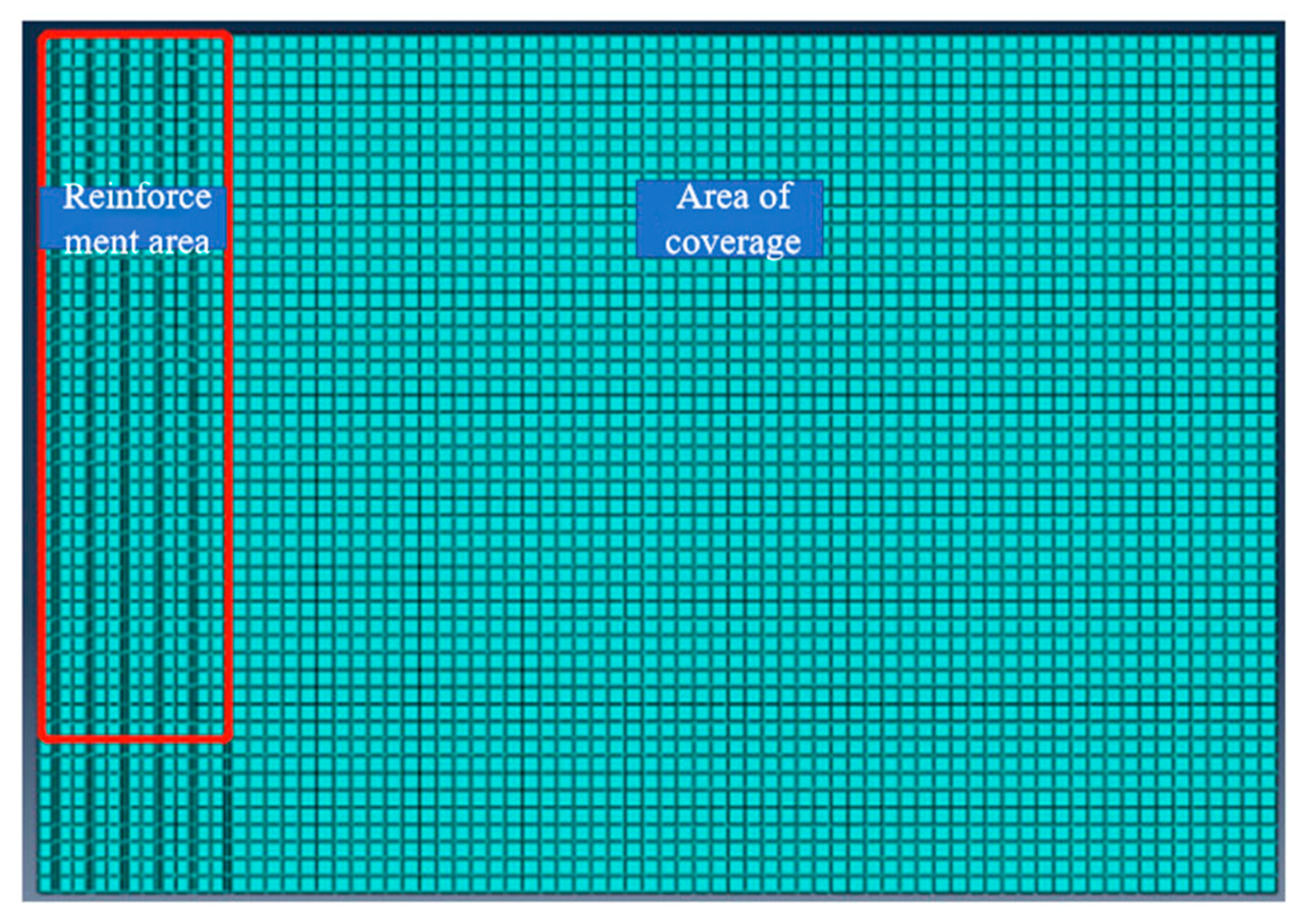
2.1. Geometric Dimensions and Boundary Conditions
2.2. The Basic Properties of Soil and the Determination of Numerical Simulation Parameters
2.3. Air-Bag Modeling and Loading Scheme
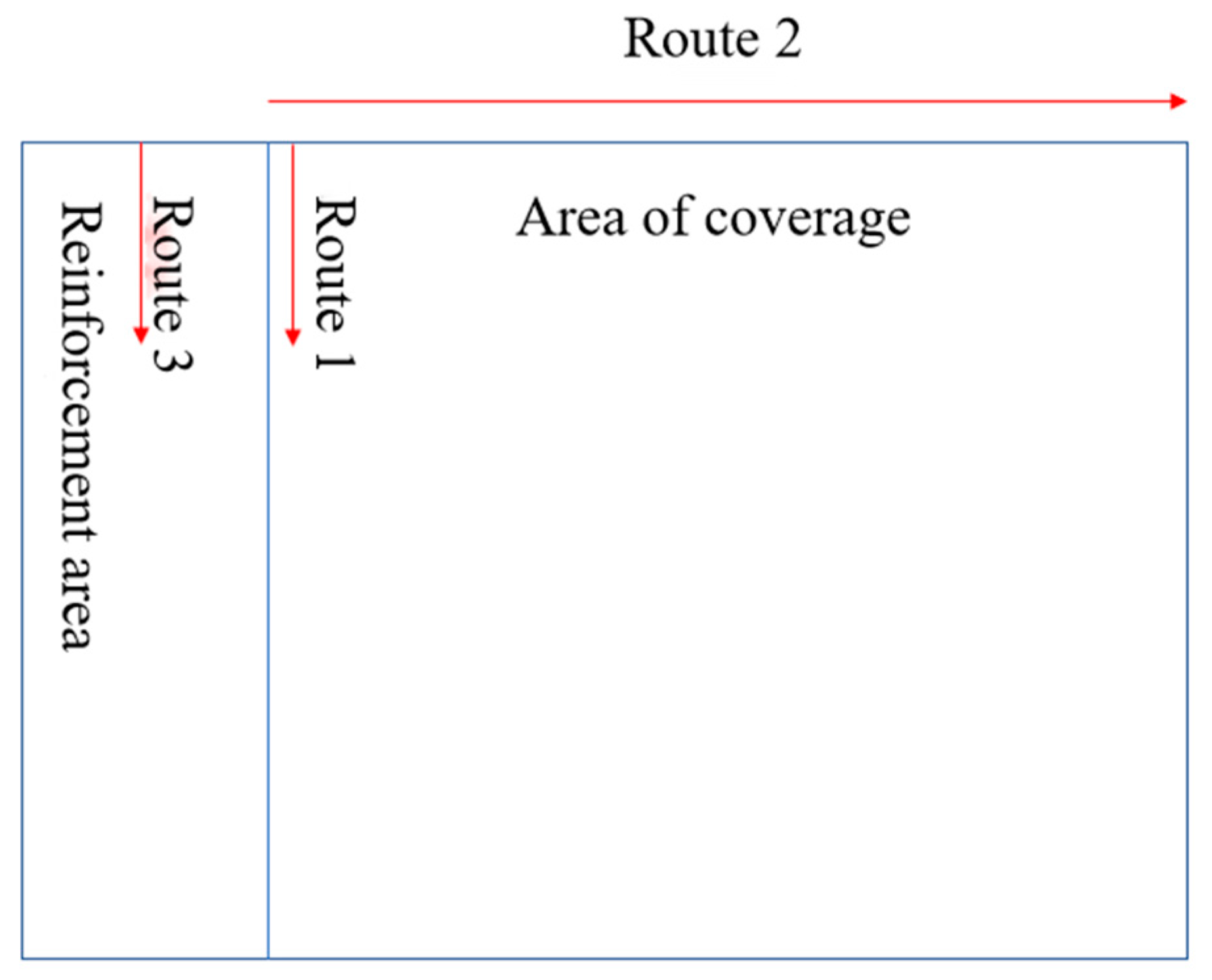
2.4. Selection of Analysis Profile for the Reinforced Soil
3. Results and Discussion
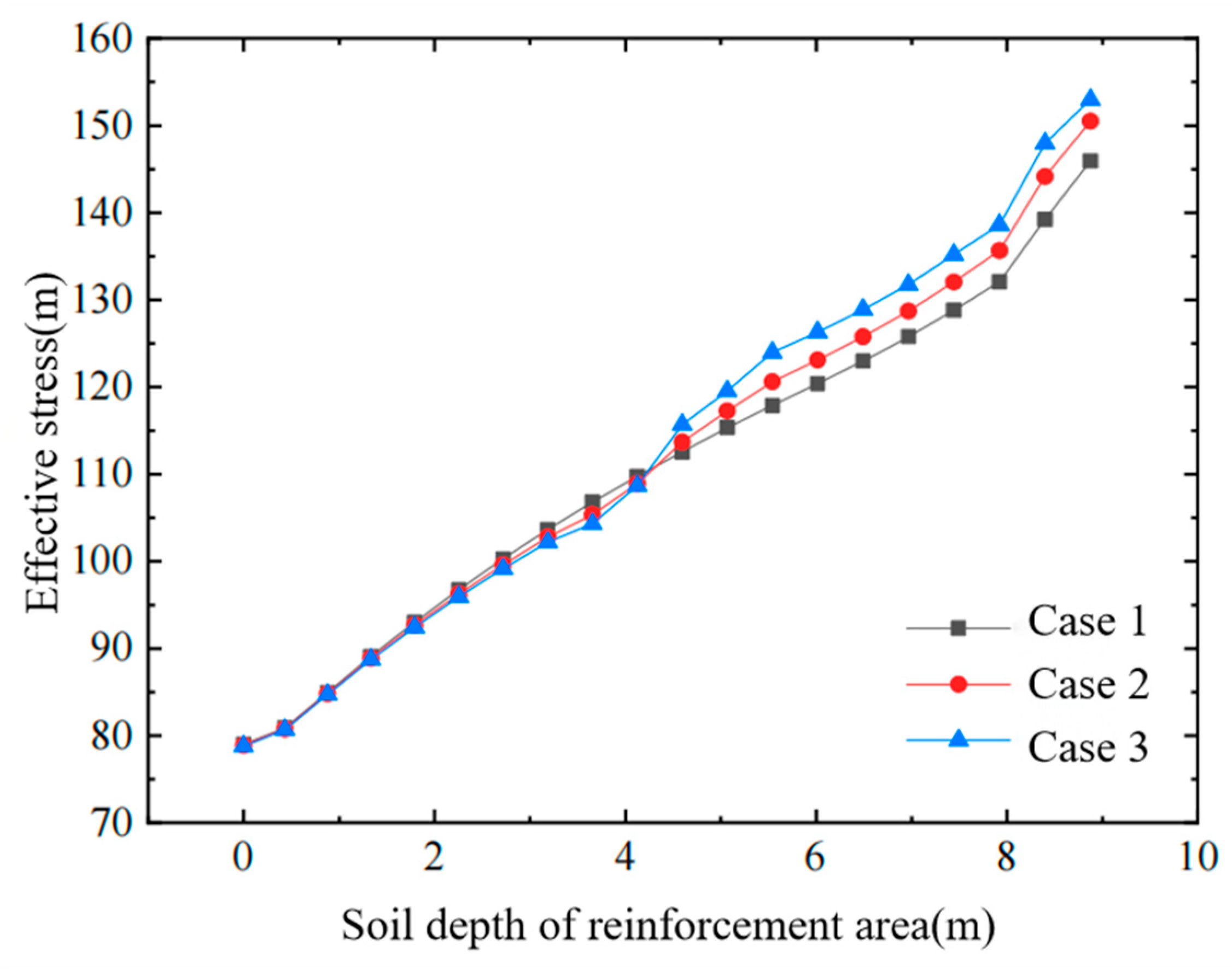
3.1. Influence of Air-Bag Pressure Magnitude and Pressurization Timing
- (1)
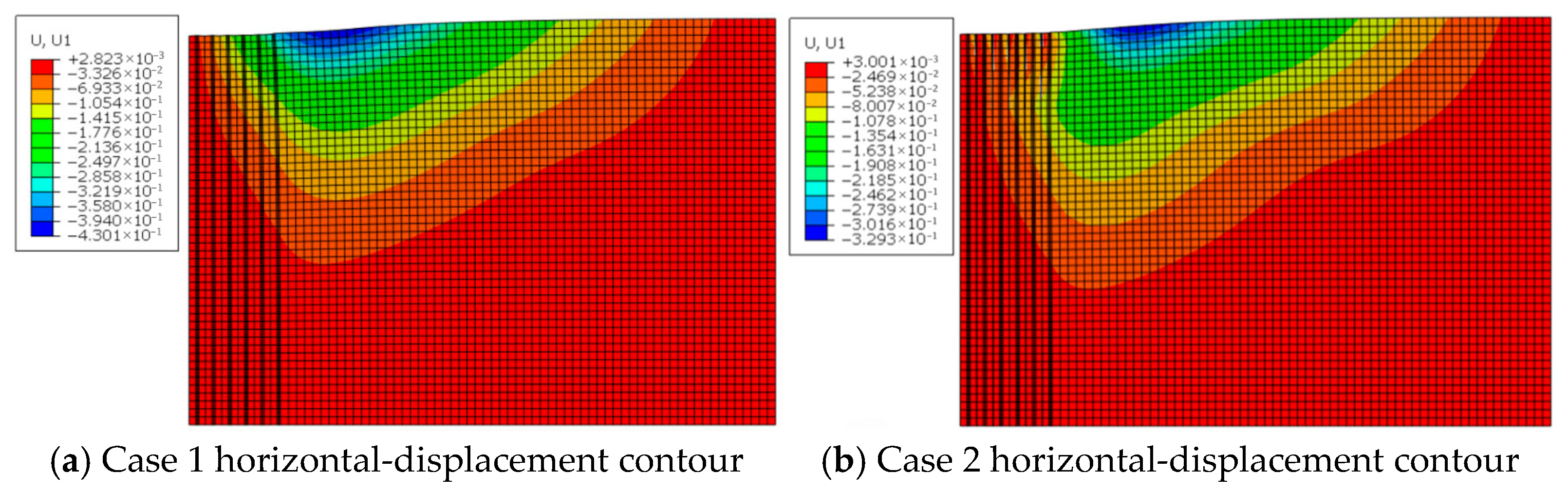
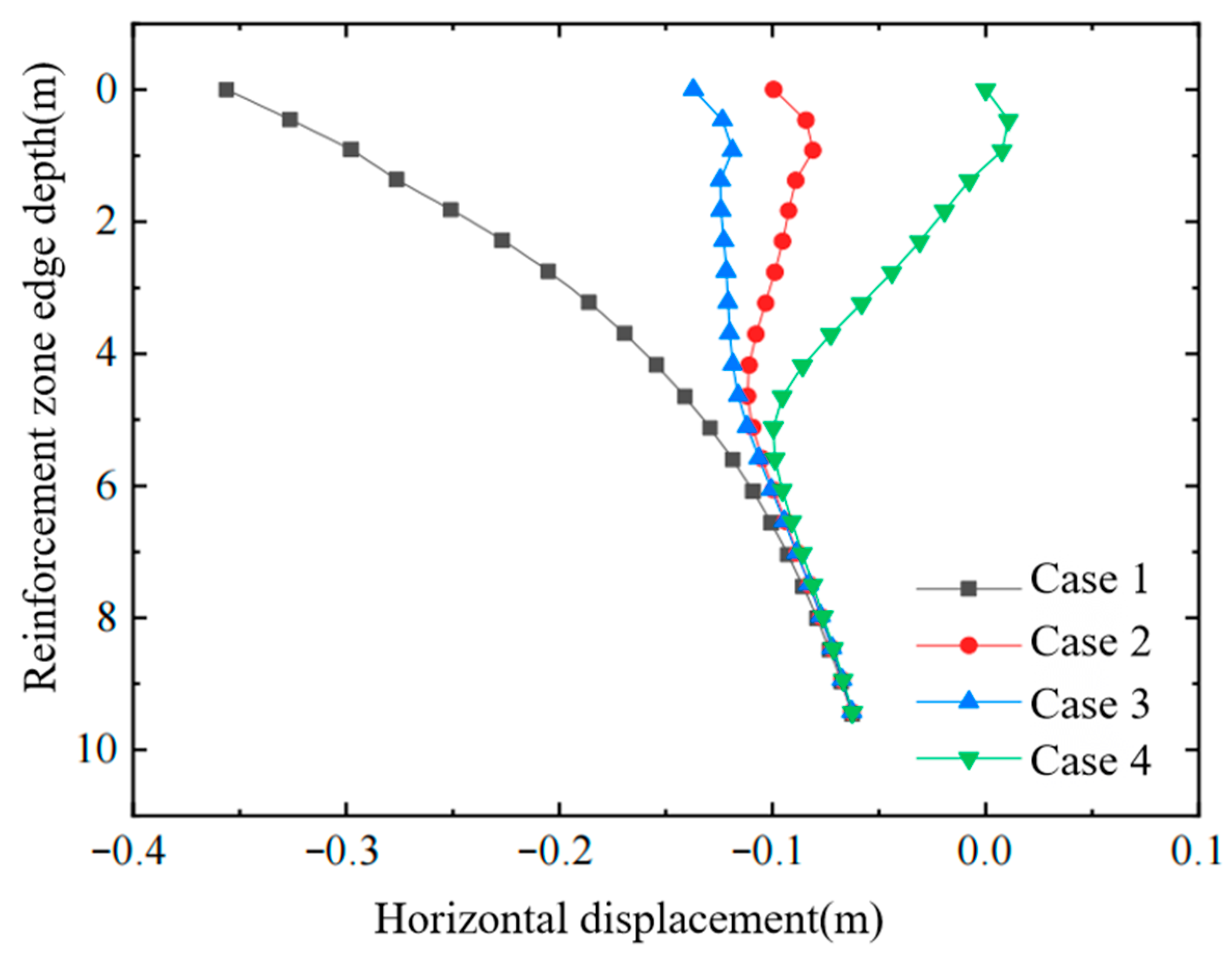
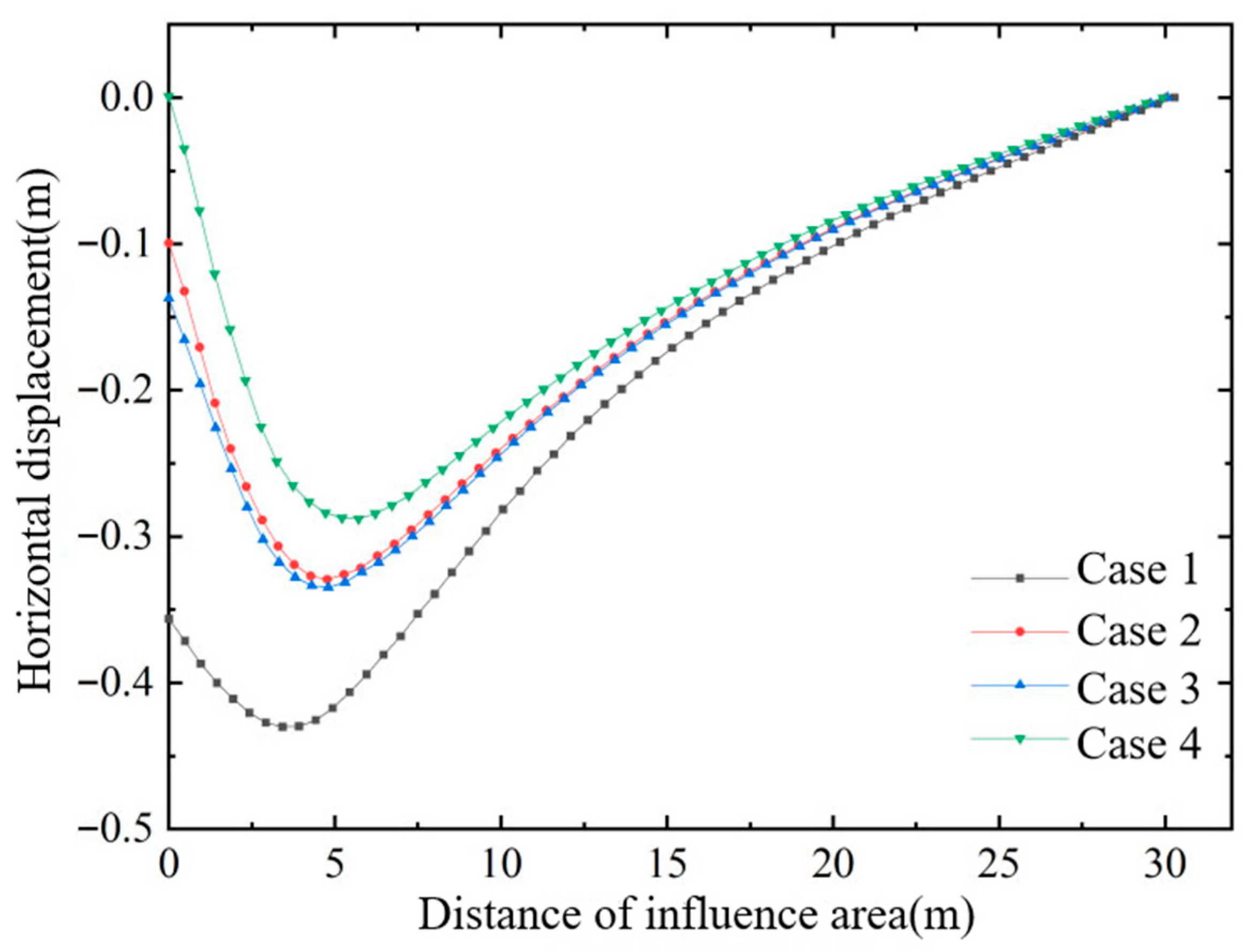
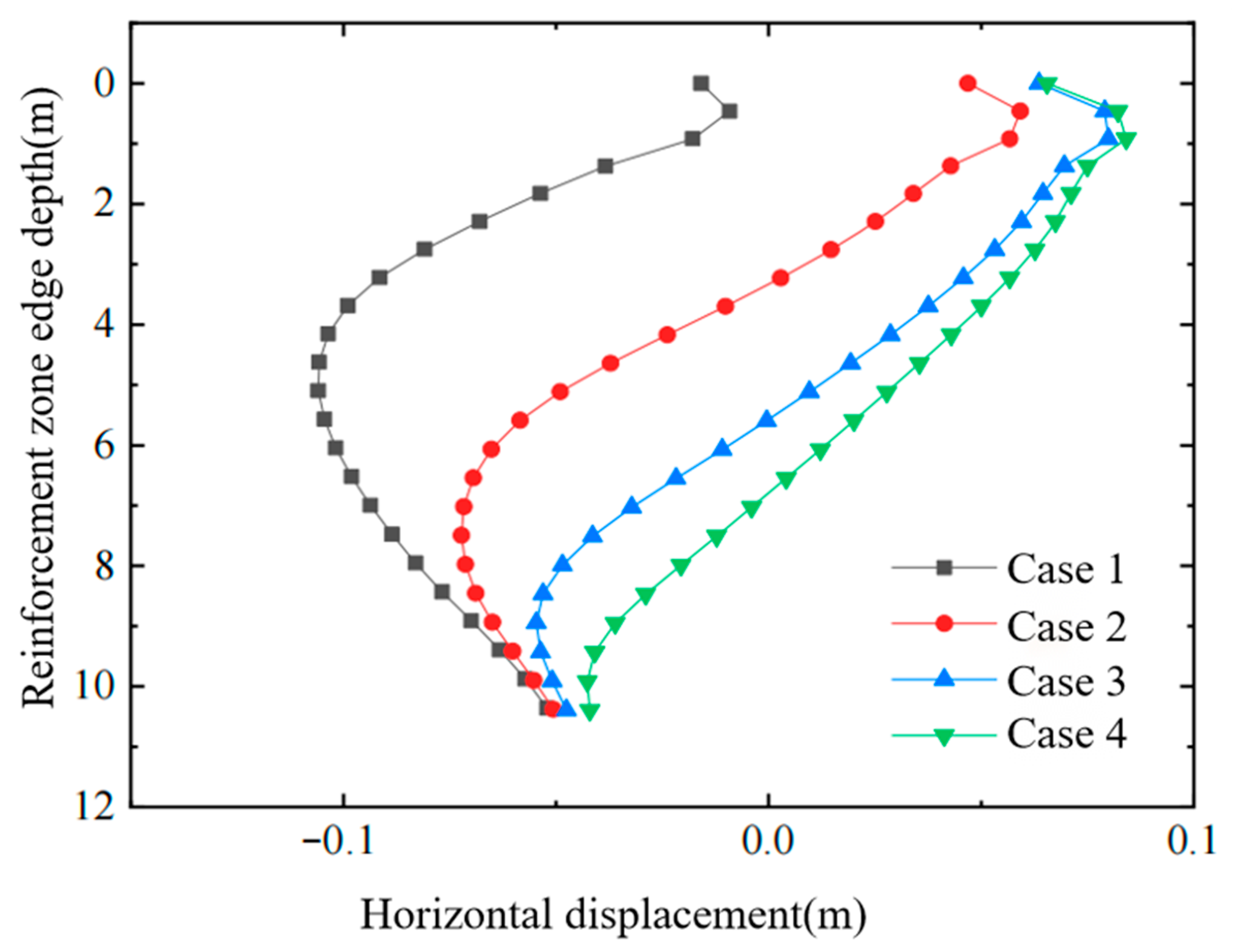
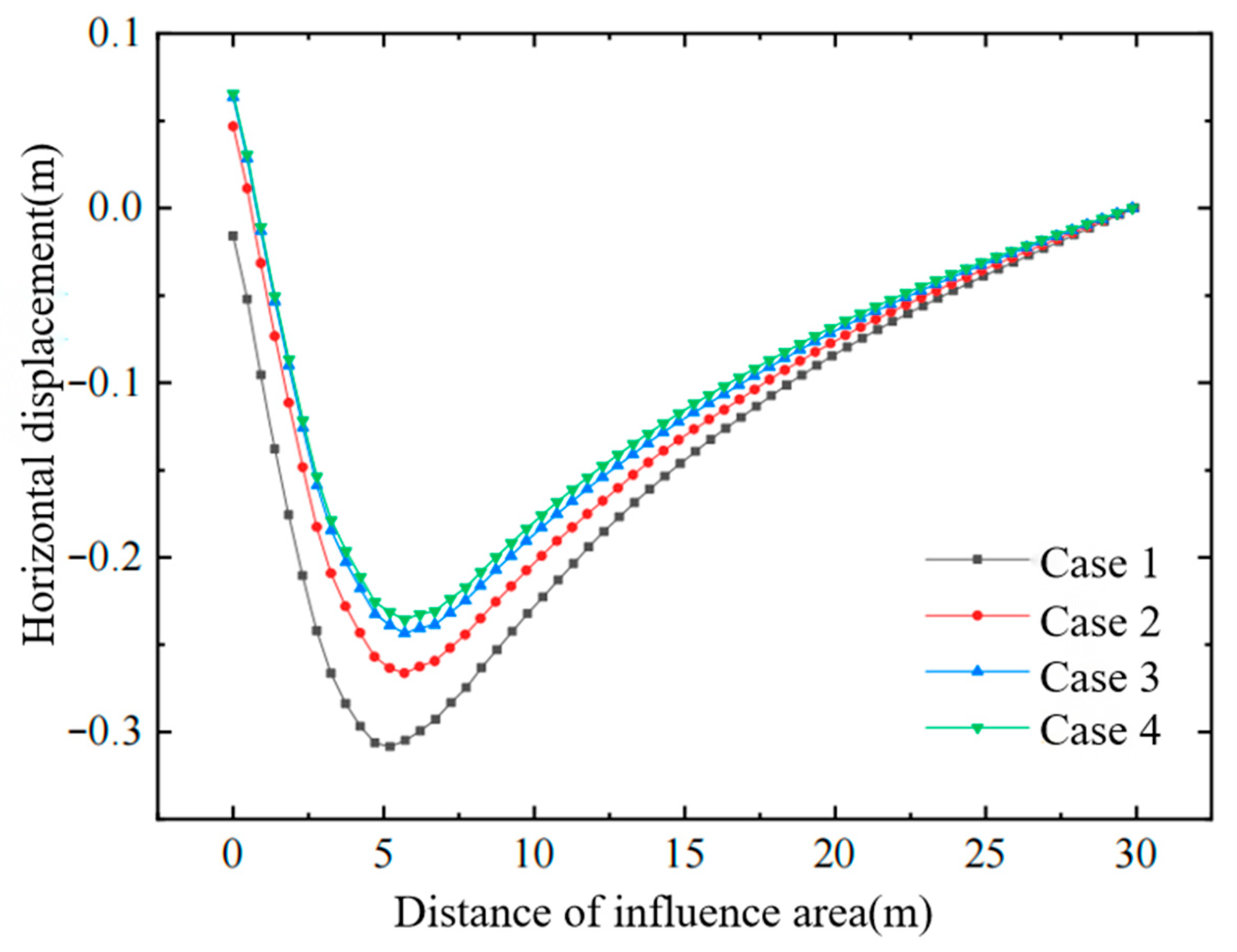
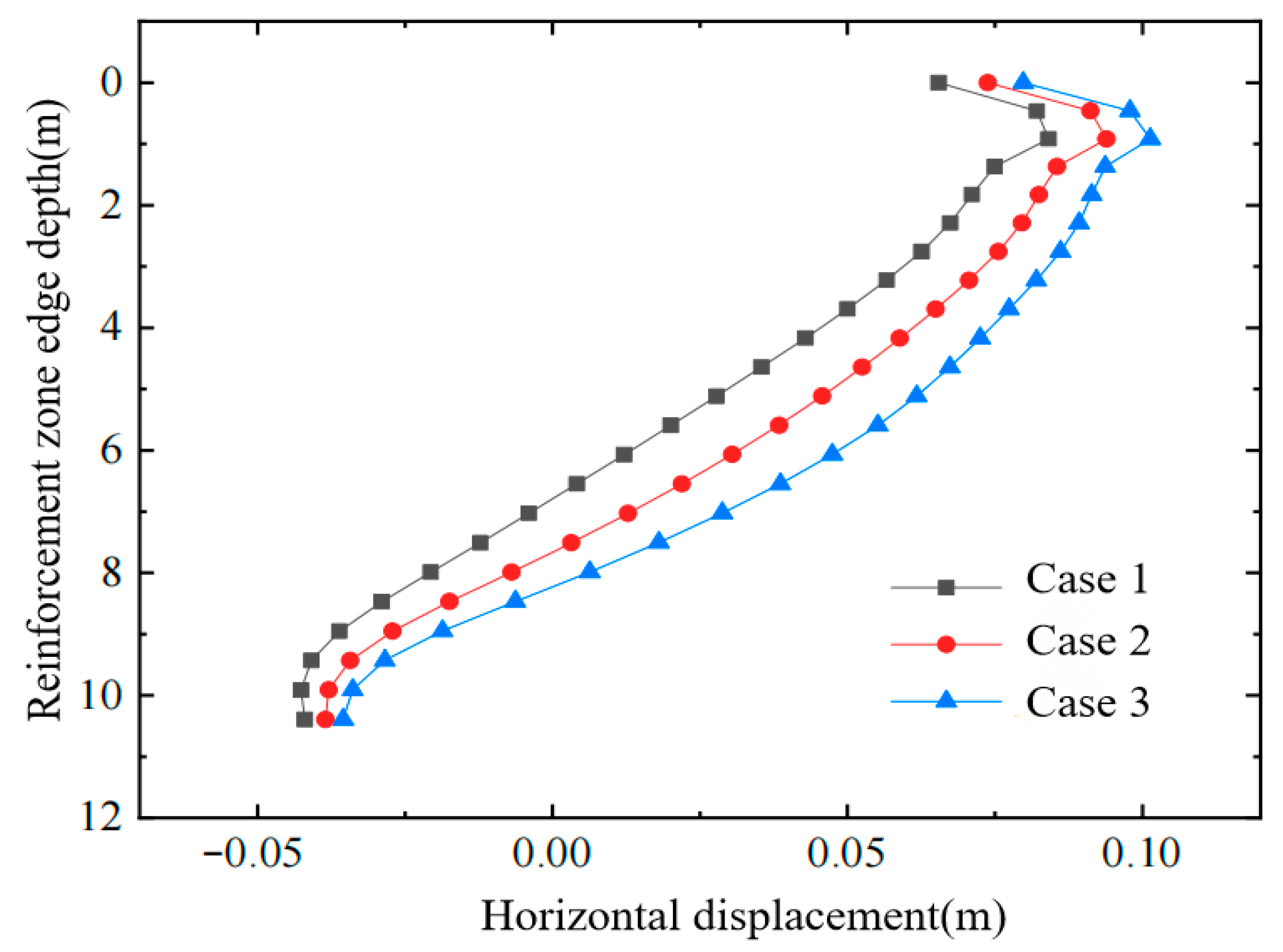
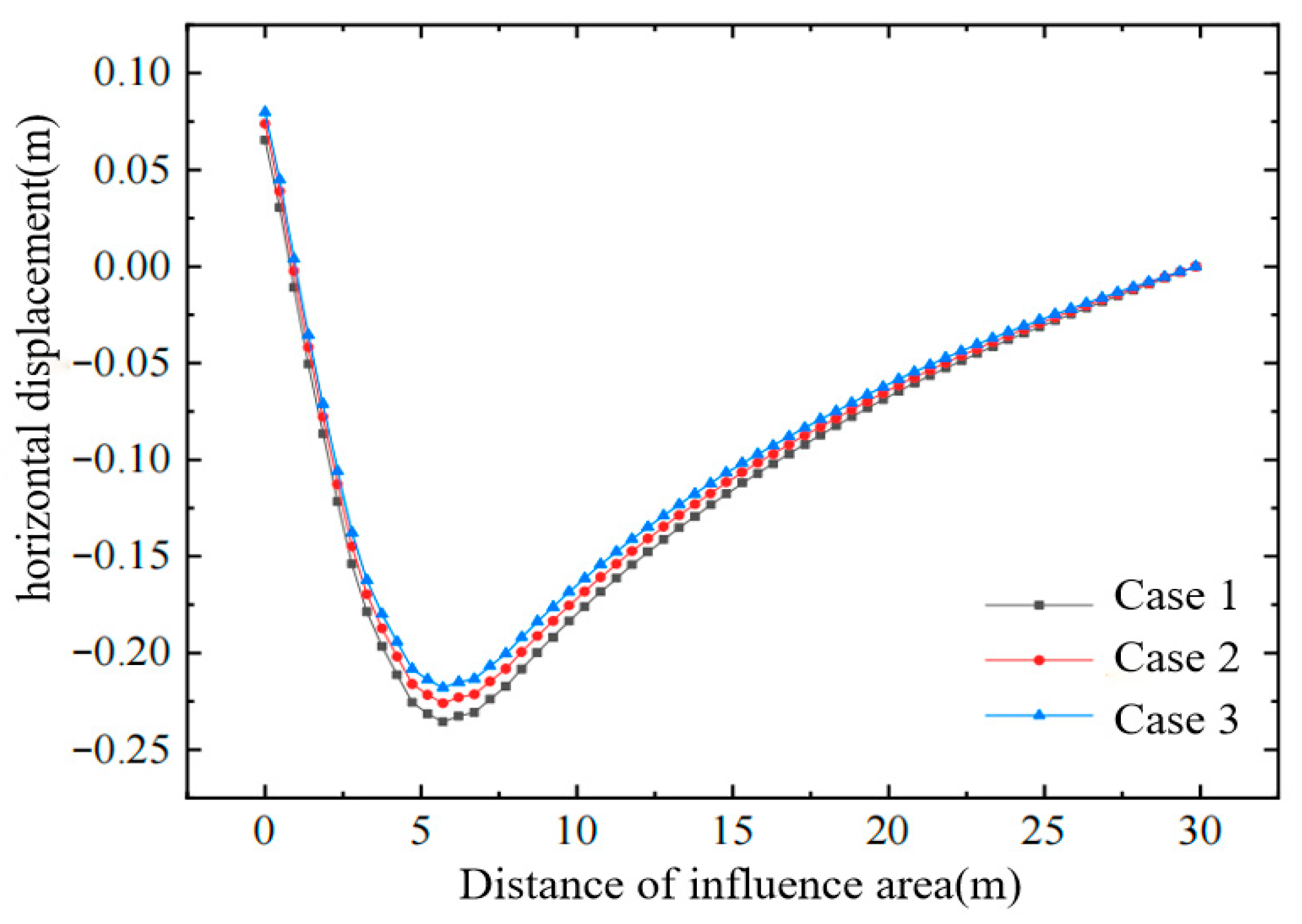
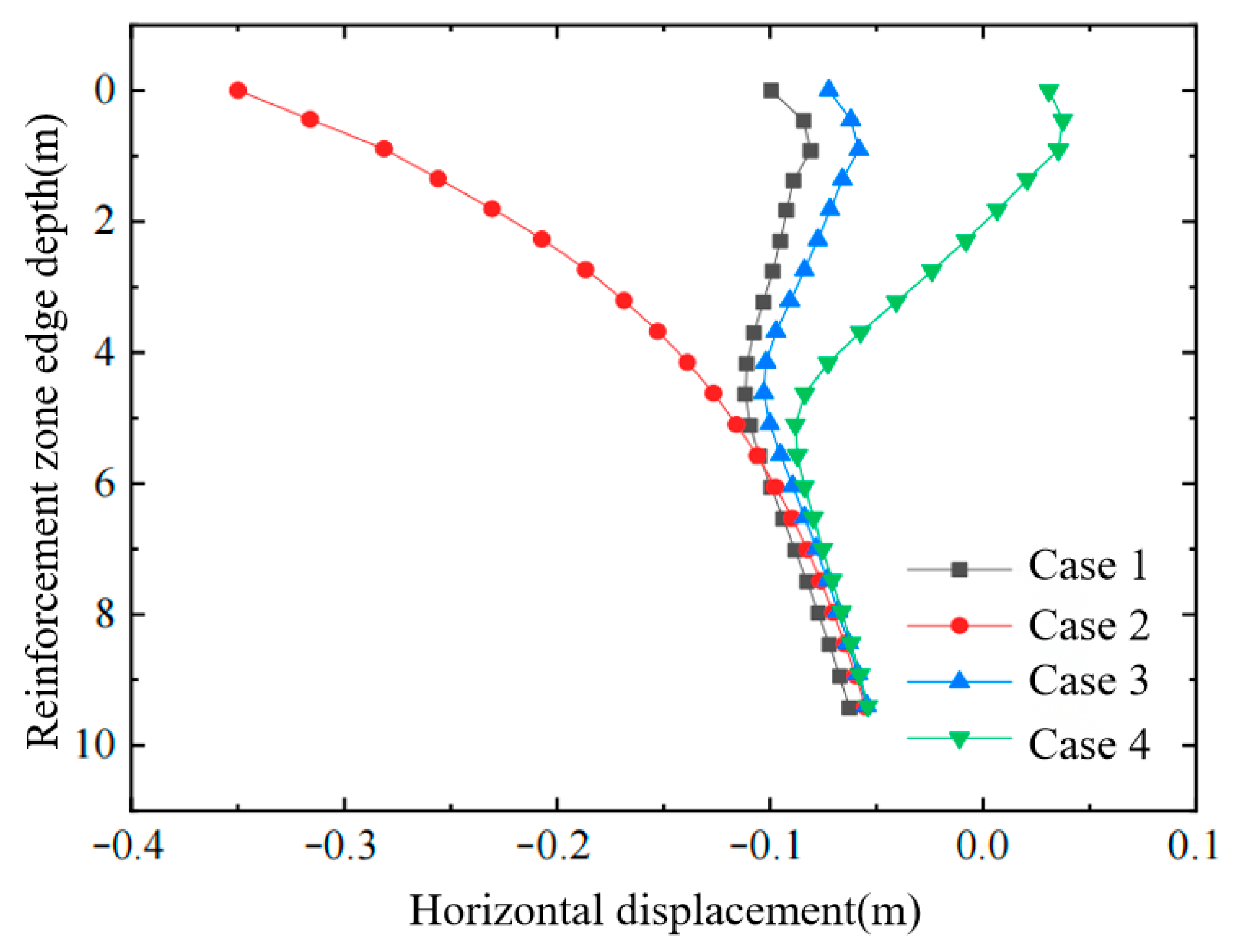
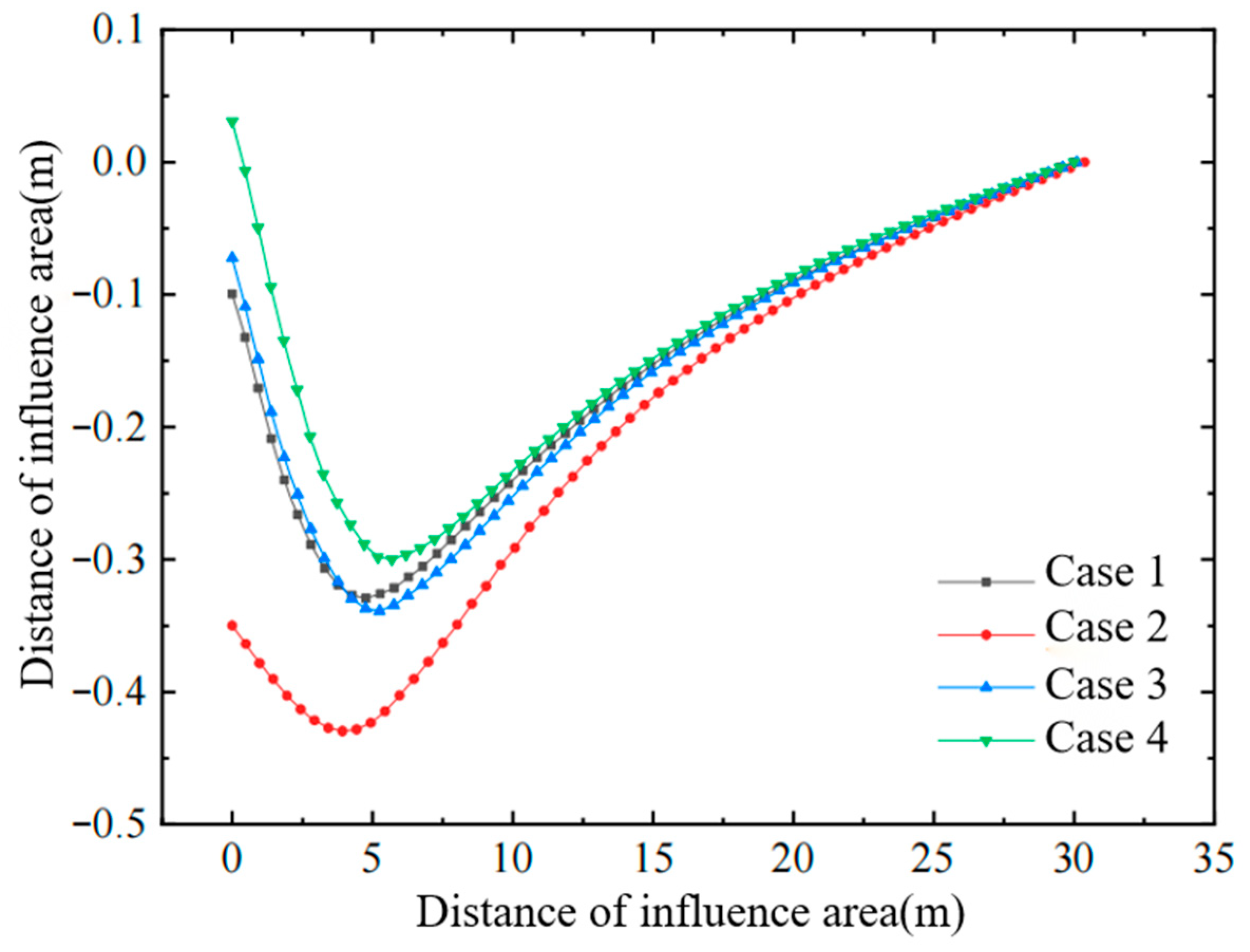
- Conventional vacuum preloading produces large negative horizontal displacements at the edge of the improved zone. The combined vacuum–air-bag method, however, generates a lateral expansion that counteracts part of the vacuum-induced inward force, thereby reducing horizontal deformation and decreasing the negative horizontal displacements in both the improved zone and the adjacent affected area.
- (2)
- As the air-bag pressure increases, the reduction in negative horizontal displacement becomes more pronounced, especially within the depth interval where the bag is installed. Because lateral earth pressure grows with depth, the influence of the air-bag pressure on horizontal displacement gradually diminishes downward and becomes essentially identical below the level of the bag.
- (3)
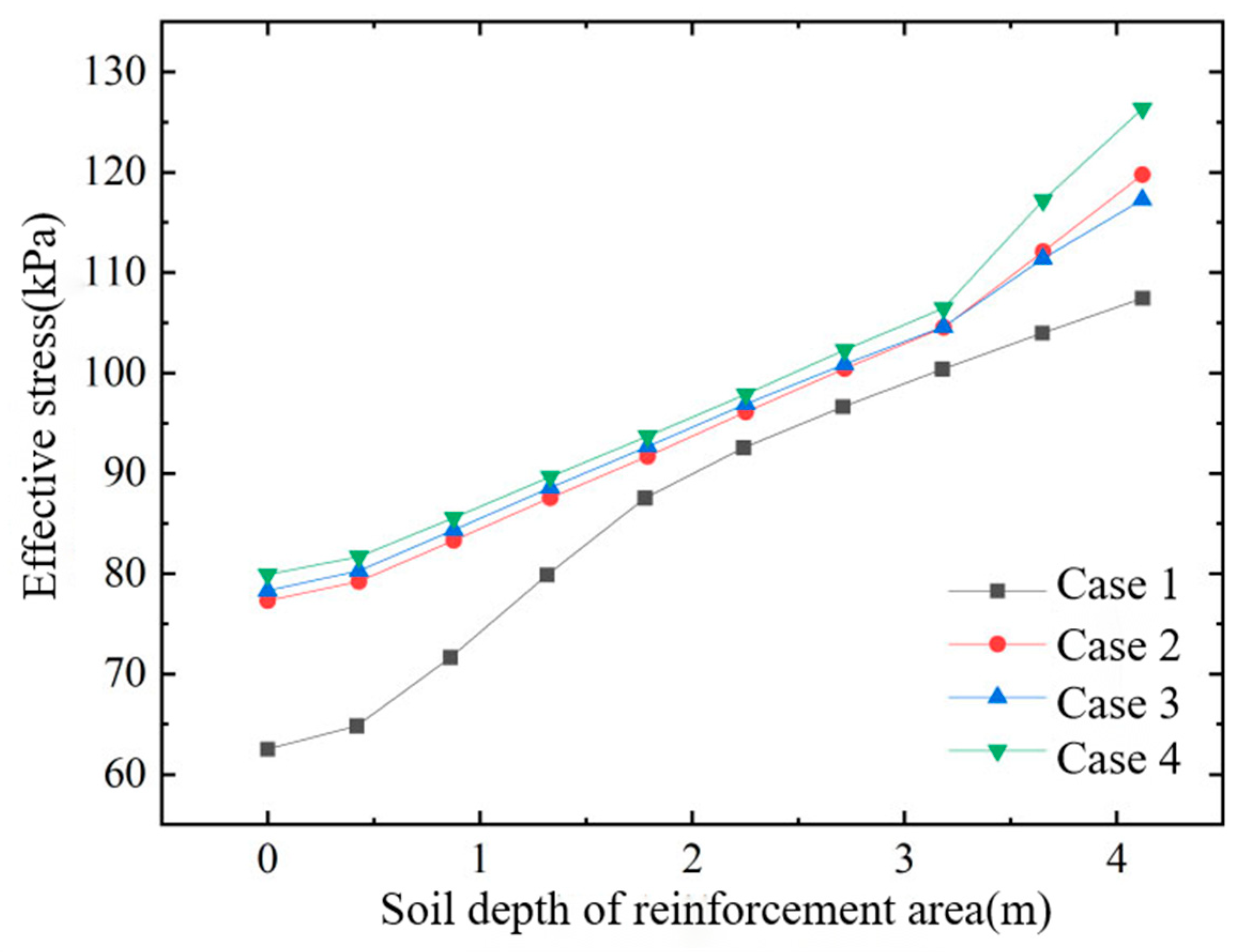
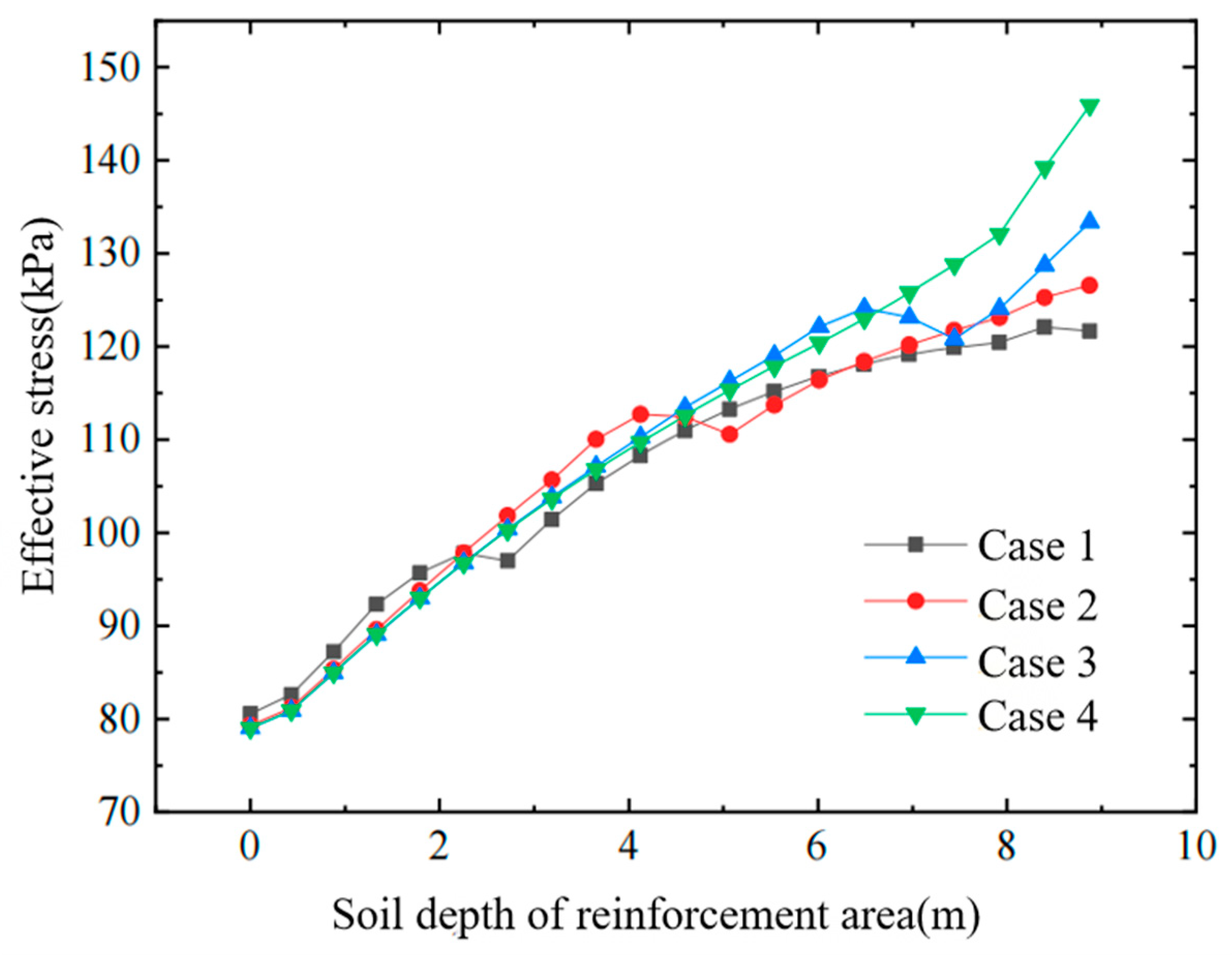
- The final magnitude of horizontal displacement is closely related to the timing of air-bag pressurization; the earlier the pressure is applied—when the soil’s effective stress is still low—the more pronounced the improvement in horizontal displacement becomes.
- (4)
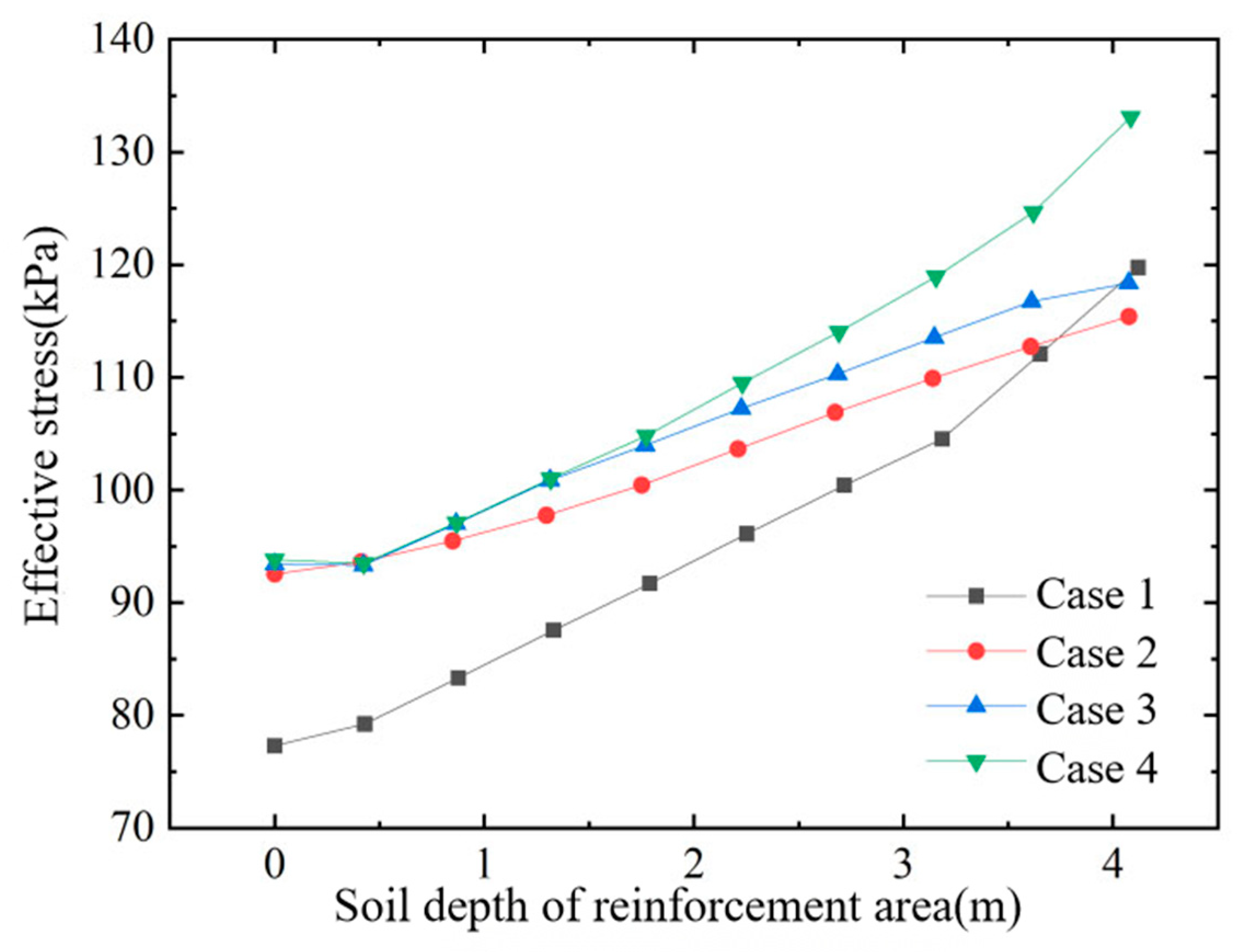
- At the same depth, the effective stress in the soil increases significantly after air-bag pressurization and rises with the magnitude of the air-bag pressure, thereby enhancing soil strength.
3.2. Influence of Air-Bag Embedment Depth
- (1)
- For a given air-bag pressure, the horizontal displacement of the soil decreases as the bag is placed deeper. A greater embedment depth reduces the lateral movement of the deeper strata, which in turn diminishes the cumulative displacement propagated upward; consequently, the horizontal displacement in the upper layers also declines. Therefore, an appropriate air-bag depth can be selected whenever control of horizontal displacement in the affected zone is required.
- (2)
- Increasing the air-bag embedment depth raises the effective stress in the deeper soil layers, thereby further enhancing the overall strength of the foundation.
3.3. Optimized Multi-Stage Pressurization
- (1)
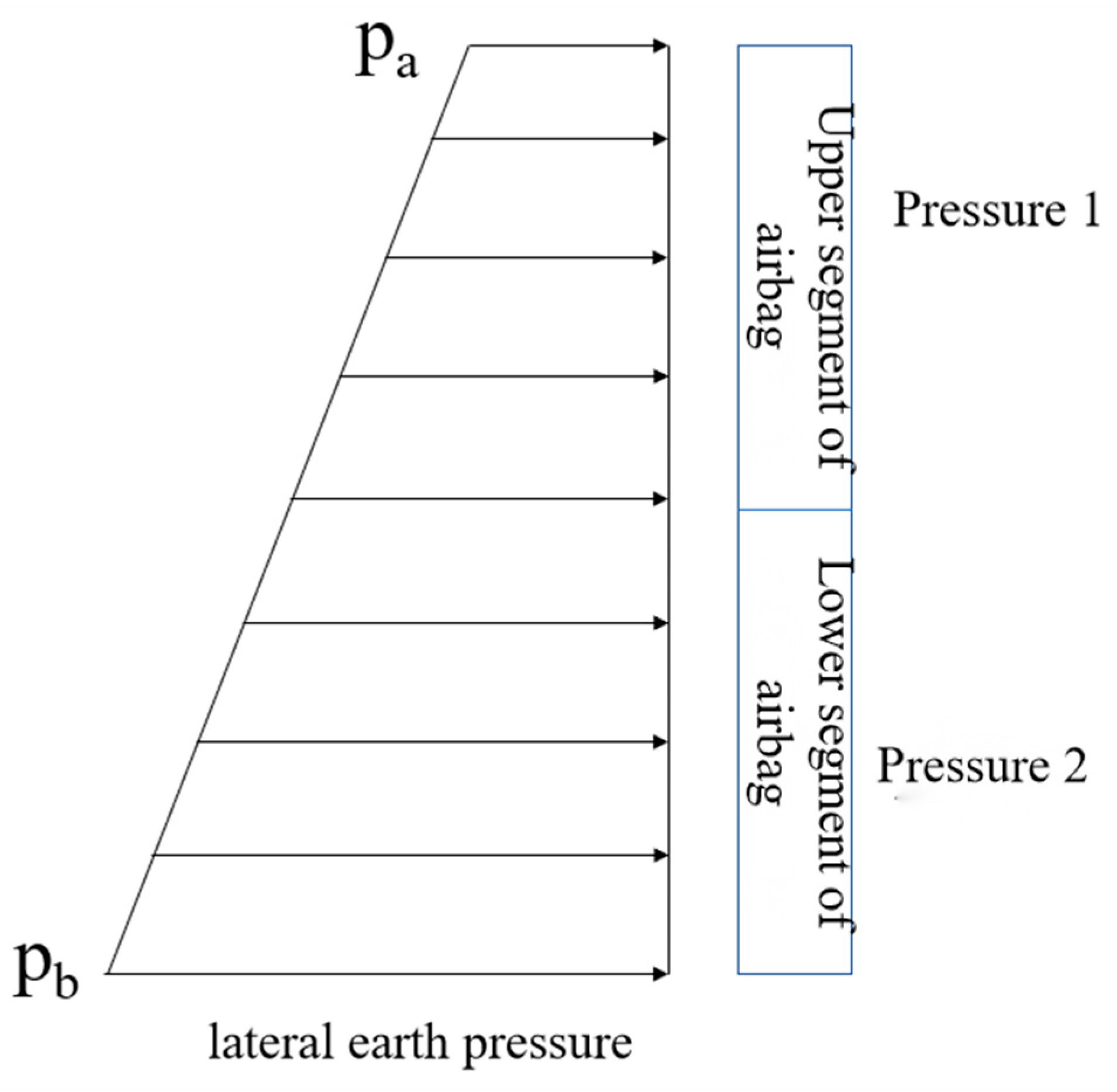
- Compared with applying a uniform air-bag pressure over the entire depth, the stepped “smaller-at-top, larger-at-bottom” pressure distribution more effectively counteracts the inward vacuum-induced contraction, reducing the horizontal displacement of the deep soil and, in turn, further decreasing the negative horizontal displacement of the upper layers.
- (2)
- The stepped air-bag pressure (lower at the top, higher at the bottom) further increases the effective stress in the deeper soil, thereby enhancing the overall strength of the foundation.
3.4. Application of Combined Surcharge Preloading
- (1)
- Compared with the combined vacuum–surcharge preloading method, the vacuum preloading plus air-bag pressurization scheme produces an additional reduction in negative (inward) horizontal soil displacement.
- (2)
- Under the same air-bag pressure, the combined vacuum–air-bag–surcharge preloading method further reduces lateral soil displacement and increases effective stress.
- (3)
- At the same surcharge pressure, increasing the air-bag pressure reduces the soil’s negative horizontal displacement, with the reduction being most pronounced within the depth interval where the air bag is installed.
- (4)
- For the same surcharge pressure and soil depth, the effective stress in the soil increases significantly after air-bag pressurization, and this effective stress rises with the magnitude of the air-bag pressure.
4. Conclusions
- (1)
- The VPA method significantly reduces inward horizontal displacement by over 20% under –80 kPa vacuum and 20 kPa air-bag pressure, while effective stress increases linearly with pressure.
- (2)
- Early pressurization (20 days) enhances lateral deformation control and strength gain. Deeper embedment (e.g., 10 m) further reduces displacement and increases deep-layer effective stress.
- (3)
- Staged pressurization (20 kPa upper, 40 kPa lower) outperforms uniform loading, reducing displacement by an additional 5–8% and improving cost-effectiveness.
- (4)
- Under equivalent total load, VPA reduces horizontal displacement by 10–18% compared to vacuum–surcharge preloading.
- (5)
- The hybrid vacuum–air-bag–surcharge scheme achieves the highest effective stress and minimal lateral deformation.
- (6)
- Limitations and Future Work: The model assumes axisymmetric conditions and idealized soil homogeneity. Future studies should incorporate 3D effects, soil heterogeneity, and field validation.
Author Contributions
Funding
Data Availability Statement
Conflicts of Interest
Nomenclature
| VPA | Vacuum preloading–air-bag |
| PVD | Prefabricated vertical drain |
| MCC | Modified Cam-Clay |
| λ | Compression index |
| κ | Swelling index |
| M | Critical state stress ratio |
| e | Void ratio |
| k | Permeability coefficient |
References
- Zhu, W.; Zhang, C.; Liu, H.; Gao, Y. The status quo of dredged spoils utilization. Environ. Sci. Technol. 2002, 25, 39–41+50. [Google Scholar]
- Chu, J.; Yan, S.; Indraranata, B. Vacuum preloading techniques- recent developments and applications. GeoCongress 2008 Geosustain. Geohazard Mitig. 2008, 586–595. [Google Scholar] [CrossRef] [Scilit]
- Indraratna, B.; Rujikiatkamjorn, C.; Balasubramaniam, A.; McIntosh, G. Soft ground improvement via vertical drains and vacuum assisted preloading. Geotext. Geomembr. 2012, 30, 16–23. [Google Scholar] [CrossRef] [Scilit]
- Tang, M.; Shang, J. Vacuum preloading consolidation of Yaoqiang Airport runway. Geotechnique 2000, 50, 613–623. [Google Scholar] [CrossRef] [Scilit]
- Voottipruex, P.; Bergado, D.; Lam, L.; Hino, T. Back-analyses of flow parameters of PVD improved soft Bangkok clay with and without vacuum preloading from settlement data and numerical simulations. Geotext. Geomembranes 2014, 42, 457–467. [Google Scholar] [CrossRef] [Scilit]
- Indraratna, B.; Rujikiatkamjorn, C.; Kelly, R.; Buys, H. Sustainable soil improvement via vacuum preloading. Proc. Inst. Civ. Eng.-Ground Improv. 2010, 163, 31–42. [Google Scholar] [CrossRef] [Scilit]
- Griffin, H.; O’Kelly, B.C. Sustainability of combined vacuum and surcharge preloading. In Proceedings of the 2014 Geo-Congress: Geo-Characterization and Modeling for Sustainability, Atlanta, GA, USA, 23–26 February 2014; GSP. American Society of Civil Engineers: Reston, VA, USA, 2014; Volume 234, pp. 3826–3835. [Google Scholar]
- Zhang, X.; Wu, Y.; Lu, Y.; Chen, G.; Deng, Q.; Xu, Y.; Ye, P. Influence of prefabricated vertical drains spacing on FeCl3-vacuum consolidation of a landfill sludge. Soils Found 2021, 61, 1630–1644. [Google Scholar] [CrossRef] [Scilit]
- Bergado, D.; Chai, J.; Miura, N.; Balasubramaniam, A. PVD improvement of soft Bangkok clay with combined vacuum and reduced sand embankment preloading. Geotech. Eng. 1998, 29, 95–122. [Google Scholar] [CrossRef] [Scilit]
- Cai, Y.; Qiao, H.; Wang, J.; Geng, X.; Wang, P.; Cai, Y. Experimental tests on effect of deformed prefabricated vertical drains in dredged soil on consolidation via vacuum preloading. Eng. Geol. 2017, 222, 10–19. [Google Scholar] [CrossRef] [Scilit]
- Salari, M.; Lezgy-Nazargah, M.; Shafaie, V.; Movahedi Rad, M. Numerical Study of the Ultimate Bearing Capacity of Two Adjacent Rough Strip Footings on Granular Soil: Effects of Rotational and Horizontal Constraints of Footings. Buildings 2024, 14, 1653. [Google Scholar] [CrossRef] [Scilit]
- Chai, J.-C.; Carter, J.; Hayashi, S. Vacuum consolidation its combination with embankment loading. Can. Geotech. J. 2006, 43, 985–996. [Google Scholar] [CrossRef] [Scilit]
- Saowapakpiboon, J.; Bergado, D.; Voottipruex, P.; Lam, L.; Nakakuma, K. PVD improvement combined with surcharge and vacuum preloading including simulations. Geotext. Geomembranes 2011, 29, 74–82. [Google Scholar] [CrossRef] [Scilit]
- Yan, S.-W.; Chu, J. Soil improvement for a storage yard using the combined vacuum fill preloading method. Can. Geotech. J. 2005, 42, 1094–1104. [Google Scholar] [CrossRef] [Scilit]
- Indraratna, B.; Rujikiatkamjorn, C.; Ameratunga, J.; Boyle, P. Performance prediction of vacuum combined surcharge consolidation at Port of Brisbane. J. Geotech. Geoenviron. Eng. 2011, 137, 1009–1018. [Google Scholar] [CrossRef] [Scilit]
- Zhang, L.; Hu, L. Laboratory tests of electro-osmotic consolidation combined with vacuum preloading on kaolinite using electrokinetic geosynthetics. Geotext. Geomembr. 2019, 47, 166–176. [Google Scholar] [CrossRef] [Scilit]
- Wang, J.; Ma, J.; Liu, F.; Mi, W.; Cai, Y.; Fu, H.; Wang, P. Experimental study on the improvement of marine clay slurry by electroosmosis-vacuum preloading. Geotext. Geomembr. 2016, 44, 615–622. [Google Scholar] [CrossRef] [Scilit]
- Sun, Z.H.; Yu, X.J.; Gao, M.J.; Li, X.; Wang, L.; Zhang, Y.; Chen, J.; Liu, H.; Zhao, Q.; Xu, W. Consolidation experimental study on vacuum-electroosmosis combined reinforcement technology. Chin. J. Geotech. Eng. 2017, 39, 250–258. [Google Scholar]
- Wu, Y.; Zhou, R.; Lu, Y.; Zhang, X.; Zhang, H.; Tran, Q.C. Experimental study of PVD-improved dredged soil with vacuum preloading and air pressure. Geotext. Geomembr. 2022, 50, 668–676. [Google Scholar] [CrossRef] [Scilit]
- Wu, Y.; Wu, J.; Lu, Y.; Zhang, X.; Nguyen Xuan Quang, C. Experimental study on vacuum preloading combined with intermittent airbag pressurization for treating dredged sludge. Geotext. Geomembr. 2025, 53, 366–377. [Google Scholar] [CrossRef] [Scilit]
- Wu, Y.; Liu, C.; Chen, H.; Lu, Y.; Wu, J.; Quang, C.N.X. Experimental study on controlling surrounding soil deformation during vacuum preloading by Volume-Compensated Airbag. China Civ. Eng. J. 2025. [Google Scholar]

| Parameter | v | (m/d) | (m/d) | ||||
|---|---|---|---|---|---|---|---|
| value | 0.15 | 0.92 | 1.71 | 0.02 | 0.38 | 0.00194 | 0.00057 |
| Case | Air-Bag Pressure Magnitude (kPa) | Pre-Loading Vacuum Duration (d) |
|---|---|---|
| 1 | 0 | 20 |
| 2 | 10 | 20 |
| 3 | 10 | 40 |
| 4 | 20 | 20 |
| Case | Air-Bag Pressure Magnitude (kPa) | Air-Bag Embedment Depth (m) |
|---|---|---|
| 1 | 20 | 2.5 |
| 2 | 20 | 5 |
| 3 | 20 | 7.5 |
| 4 | 20 | 10 |
| Case | Magnitude of Air-Bag Pressure (kPa) | Air-Bag Embedment Depth (m) |
|---|---|---|
| 1 | 20 | 0~10 |
| 20 | 0~5 | |
| 2 | 30 | 0~10 |
| 3 | 20 | 0~5 |
| 40 | 0~10 |
| Case | Surcharge Pressure (kPa) | Magnitude of Air-Bag Pressure (kPa) |
|---|---|---|
| 1 | 0 | 10 |
| 2 | 30 | 0 |
| 3 | 30 | 10 |
| 4 | 30 | 20 |
Disclaimer/Publisher’s Note: The statements, opinions and data contained in all publications are solely those of the individual author(s) and contributor(s) and not of MDPI and/or the editor(s). MDPI and/or the editor(s) disclaim responsibility for any injury to people or property resulting from any ideas, methods, instructions or products referred to in the content. |
© 2025 by the authors. Licensee MDPI, Basel, Switzerland. This article is an open access article distributed under the terms and conditions of the Creative Commons Attribution (CC BY) license (https://creativecommons.org/licenses/by/4.0/).
Share and Cite
Lu, Y.; Meng, K.; Wu, Y.; Zhou, R.; Cheng, H.; Dong, Y.; Zhang, J.; Jin, T. Deformation Behavior of River Sediment Under Vacuum–Air-Bag Preloading Toward Resource Utilization. Buildings 2025, 15, 4396. https://doi.org/10.3390/buildings15244396
Lu Y, Meng K, Wu Y, Zhou R, Cheng H, Dong Y, Zhang J, Jin T. Deformation Behavior of River Sediment Under Vacuum–Air-Bag Preloading Toward Resource Utilization. Buildings. 2025; 15(24):4396. https://doi.org/10.3390/buildings15244396
Chicago/Turabian StyleLu, Yitian, Kai Meng, Yajun Wu, Rong Zhou, Hualin Cheng, Yulu Dong, Juntao Zhang, and Tao Jin. 2025. "Deformation Behavior of River Sediment Under Vacuum–Air-Bag Preloading Toward Resource Utilization" Buildings 15, no. 24: 4396. https://doi.org/10.3390/buildings15244396
APA StyleLu, Y., Meng, K., Wu, Y., Zhou, R., Cheng, H., Dong, Y., Zhang, J., & Jin, T. (2025). Deformation Behavior of River Sediment Under Vacuum–Air-Bag Preloading Toward Resource Utilization. Buildings, 15(24), 4396. https://doi.org/10.3390/buildings15244396

