


Abstract
This study investigated the effects of aging processes on the microstructure, mechanical properties, and wear properties of Cu-Cr-Zr alloys prepared by vacuum melting. The experimental results show that the particles in the alloy are arranged along the rolling direction after rolling. After aging treatment at 450 °C for 6 h, the particles in the alloy are well-distributed without obvious agglomeration, and the alloy exhibits excellent comprehensive properties: the hardness is increased by about 35%, the electrical conductivity is improved by approximately 1.68 times, and the strength is enhanced by 14.46% compared with the unaged rolled samples. It is also found that the wear properties of the samples under different aging processes are related to the material hardness; as the material hardness increases, the wear mechanism transforms from material transfer to abrasive wear.
1. Introduction
In recent years, Cu-Cr-Zr alloys, applied for their exceptional combination of high strength and high conductivity, have garnered significant attention in materials science. Boasting an impressive combination of high strength, excellent electrical conductivity, and good plasticity, these alloys can perform stably under diverse complex operating conditions [1,2]. Their unique ability to balance mechanical and physical properties has established them as critical foundational materials in numerous high-end manufacturing sectors [3,4,5]. In practical engineering applications, the service performance of Cu-Cr-Zr alloys is linked to their microstructure. Key properties such as mechanical performance and wear resistance are governed by microstructural parameters, including grain size, phase boundary morphology, and dislocation configuration [6,7,8]. The Cu-Cr-Zr alloy has emerged as a focal point of research within the realm of copper alloys, owing to its exceptional combination of high strength and conductivity. Therefore, the Cu-Cr-Zr alloy is the most promising candidate material for lead frames of integrated circuits [9]. Aging treatment, as a core process for regulating alloy microstructure, exerts a profound influence on the comprehensive properties of materials by precisely controlling the precipitation behavior of alloying elements. At the microstructural level, Cr and Zr elements play dual roles in Cu-Cr-Zr alloys: on one hand, they form uniformly dispersed nanoscale precipitates during aging. These nanoparticles effectively inhibit grain growth through grain boundary pinning, achieving grain refinement strengthening; simultaneously, their interaction with dislocations hinders dislocation motion, significantly enhancing the strength and hardness of the alloy. On the other hand, the proper distribution and size control of these precipitates minimize excessive scattering of electron migration, thereby preserving the alloy’s high electrical conductivity [10,11,12,13,14]. Nevertheless, improper selection of aging parameters can induce adverse effects. Over-aging promotes precipitate coarsening, weakens solid solution strengthening, disrupts the strength-toughness balance, and may even cause embrittlement. Thus, in-depth research into how aging temperature and time affect the microstructural evolution of Cu-Cr-Zr alloys, along with exploring the kinetics of precipitate nucleation and growth, holds substantial theoretical and engineering significance for optimizing alloy structure and enhancing performance.
The Cu-Cr-Zr alloy boasts high strength and conductivity, with wide applications in functional and structural fields. Among the above fields, there are some typical applications, such as circuit contact lines and resistance welding electrodes, requiring Cu-Cr-Zr alloys to be used in harsh working conditions. Therefore, the alloy is required to have excellent mechanical and wear properties [15]. Research in the field of materials has shown that the improvements in mechanical properties and wear resistance of copper alloys stem from the synergistic effect of fine-grain strengthening and precipitation strengthening induced by severe plastic deformation processing and subsequent aging treatment [16]. Nowadays, some researchers have found that the improved mechanical and wear properties of Cu alloys are due to the common effects of fine-grain strengthening and precipitation strengthening after large deformation and subsequent aging treatment [17]. However, in practical service scenarios requiring high strength and high conductivity, the Cu-Cr-Zr alloy is frequently subject to friction and wear, which may lead to material failure and damage, and thus compromise the service life of the alloy. Therefore, it is necessary to pay attention to its friction and wear properties.
Numerous studies have explored the effects of aging processes on the microstructure, properties, and wear behavior of Cu-Cr-Zr-based alloys. An aging study on Cu-0.65Cr-0.07Zr alloy showed that aging temperature impacts the alloy’s wear performance, which correlates with hardness trends; excessively high temperatures cause over-aging [18]. Cu-Cr-Zr-ZrB2 composites prepared via ultrasonic vibration treatment, followed by thermal deformation and aging, exhibited enhanced local deformation resistance, wear-resistant layer stability, and a transformed current-carrying wear mechanism [19]. An investigation into aged Cu-Cr-Zr-Nb alloys showed that aging temperature regulates hardness, tensile strength, and electrical conductivity; cold working and aging-induced microstructural evolution affect softening temperature, with precipitation strengthening as the main mechanism, supplemented by grain refinement and dislocation strengthening [20]. Although existing studies have focused on the aging processes and property regulation of Cu-Cr-Zr series alloys and composites, systematic research on the combined effects of the aging process and load should be conducted to fill the relevant research gap.
This study mainly explores the influencing laws of the aging process on the microstructure and mechanical properties of the Cu-Cr-Zr alloy. The evolution of the microstructure characteristics and the corresponding changes in hardness, tensile strength, and electrical conductivity are studied. Meanwhile, the combined effects of the aging process and load on the wear properties are revealed.
2. Materials and Methods
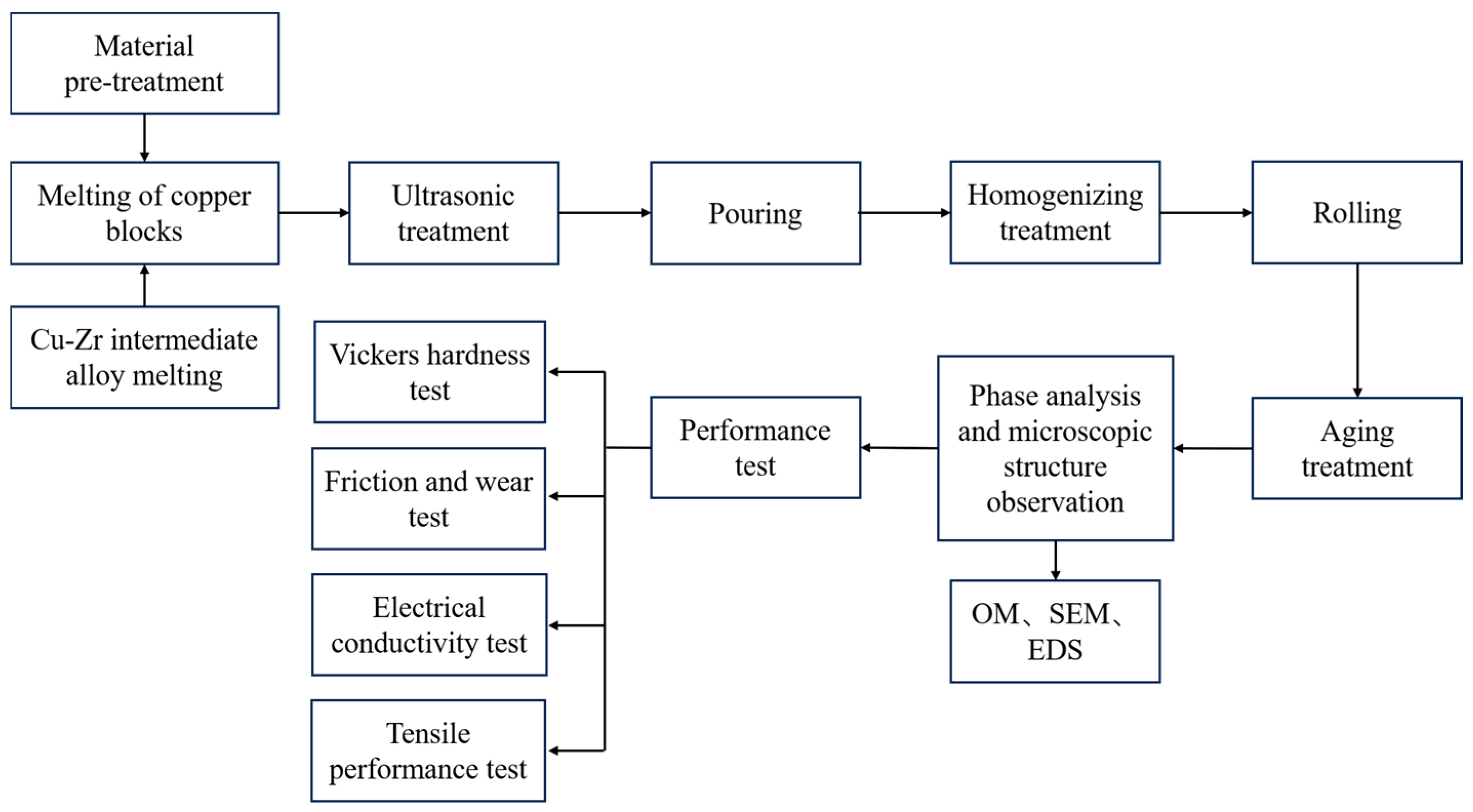
Table 1 presents the raw materials employed in this experiment, along with their morphologies and purities, and the experimental procedure is illustrated in Figure 1. Electrolytic copper blocks were cut, rinsed with alcohol on the surface, and then dried. The masses of Cr flakes and Zr particles were configured based on the chemical compositions of the master alloy and the final alloy material, and the Cu-Zr master alloy was smelted. The alloy with composition Cu-1Cr-0.3Zr was melted by a vacuum ultrasonic high-frequency induction furnace (Model: JZG-3, Bohai University, Jinzhou, China), followed by ultrasonic treatment on the molten alloy. The ultrasonically treated castings were homogenized at 960 °C for 24 h, quenched, and subsequently subjected to 60% hot rolling and 30% room-temperature rolling. Specimens were cut from the rolled material and placed in a muffle furnace (Model: KSL-1200X, Hefei Kexing Materials Technology Co., Ltd., Hefei, China) for aging treatment under different aging parameters, and qualified metallographic samples were finally prepared.

Table 1.
Composition of experimental raw materials.
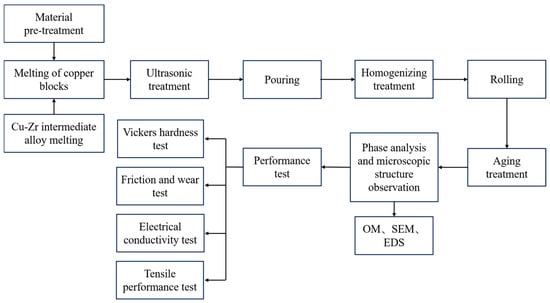
Figure 1.
Experimental flow chart.
The microstructure of the samples was observed using an Olympus LEXT OLS4100 metallographic microscope (Yijingtong Optical Technology Co., Ltd., Shanghai, China), and scanning tests were carried out using a tungsten filament scanning electron microscope (S-3400N, Hitachi High-Tech Co., Ltd., Shanghai, China) and a Zeiss thermal field emission scanning electron microscope (ZEISS Gemini SEM 300, Carl Zeiss Management Co., Ltd., Shanghai, China). Through scanning the samples, surface scanning images, element distribution maps, and EDS spectra were obtained. The effect of the aging process on the phase distribution uniformity of the Cu-Cr-Zr alloy was investigated by analyzing the microstructure distribution maps of the sample surfaces, which involved observations of the microstructure, particle distribution, and wear morphology. Aging treatment was conducted in a KSL-1200X muffle furnace (Hefei Kexing Materials Technology Co., Ltd., Hefei City, China), with the aging parameters set as 400 °C/6 h, 450 °C/3 h, 450 °C/6 h, and 500 °C/3 h, respectively. Tensile tests were performed using an MTS tensile testing machine (Meitex Industrial Systems (China) Co., Ltd., Shanghai, China), while hardness tests were carried out with a UH250 digital Vickers hardness tester (Guangzhou Leituo Trading Co., Ltd., Guangzhou, China). Electrical conductivity measurements were implemented with a handheld eddy current conductivity meter (Model: FD-102, Xiamen Fushite Electronic Technology Co., Ltd., Xiamen, China). Wear performance tests were conducted on a ball-on-disk rolling wear tester under the conditions of applied loads of 10 N, 20 N, and 30 N, an oscillation frequency of 2 Hz, and a friction radius of 10 mm. Based on the above test results, the effects of aging treatment on the hardness, strength, electrical conductivity, and wear properties of the material were analyzed.
3. Results and Discussion
3.1. The Influence of Aging Treatment on the Microstructure of the Cu-Cr-Zr Alloy
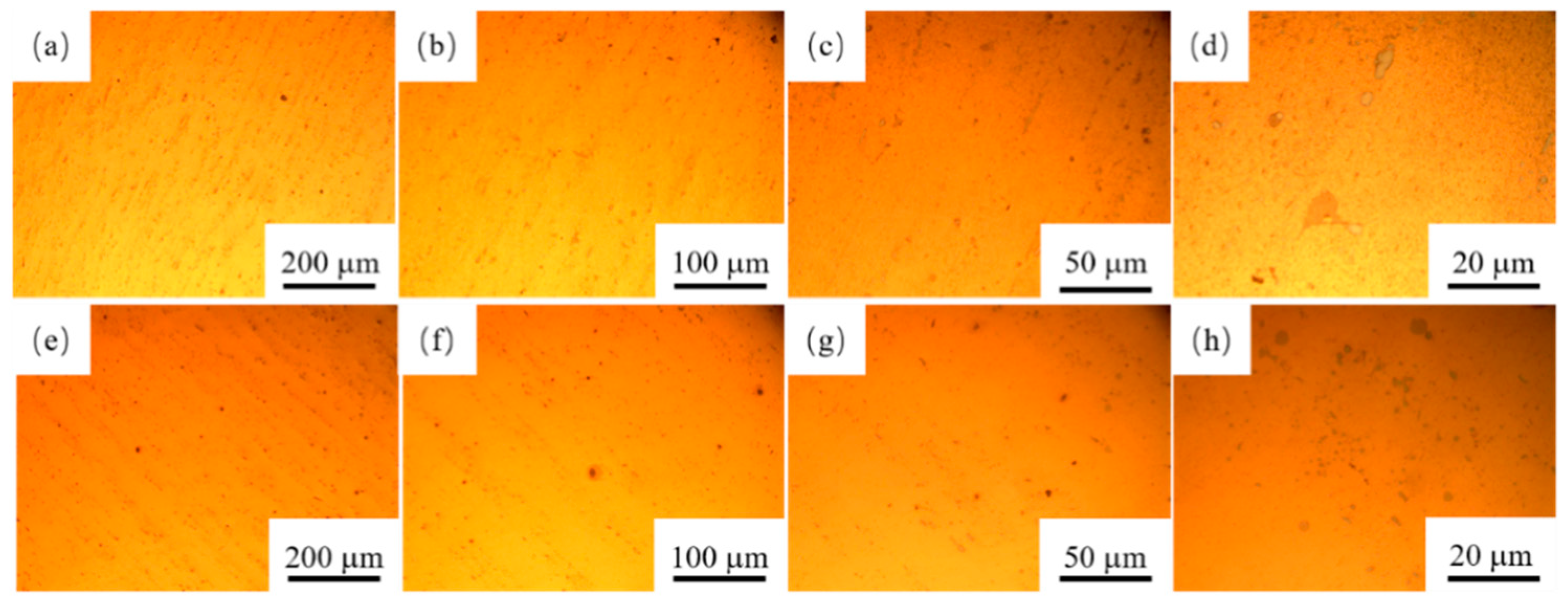
Figure 2 shows the metallographic microstructures of the rolled sample and the sample aged at 450 °C for 6 h, observed at different magnifications. According to Figure 2a,b, the rolled sample exhibits a relatively uniform microstructure, which presents a banded distribution along the rolling direction at different magnifications. At low magnifications (50× and 100×), numerous black particles are distributed on the surface of the copper matrix in the metallographic structure. To further investigate the composition of these black particles, higher magnifications were used for observation. As shown in Figure 2c,d, relatively large-sized particles (reaching the micrometer scale) can be clearly observed in the microstructure at high magnifications; meanwhile, analysis indicates that these black particles may consist of added alloying element particles. Figure 2e,f display the microstructures of the alloy aged at 450 °C for 6 h under lower magnifications. The particle distribution here is more uniform than that in the unaged rolled sample, with no obvious agglomeration, and still shows a banded distribution. From Figure 2g,h (observed at high magnifications), the particles appear round-like and are distributed relatively uniformly, indicating that the melting process was well-controlled with no obvious agglomeration.
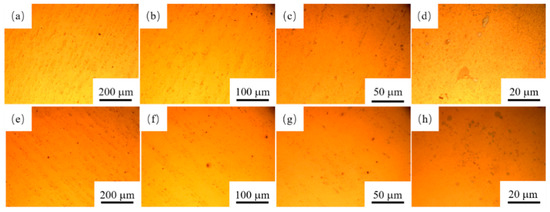
Figure 2.
Microstructure images of as-rolled specimens and those aged at 450 °C for 6 h at different magnifications: as-rolled state, (a) ×50, (b) ×100, (c) ×200, (d) ×500; aged state, (e) ×50, (f) ×100, (g) ×200, (h) ×500.
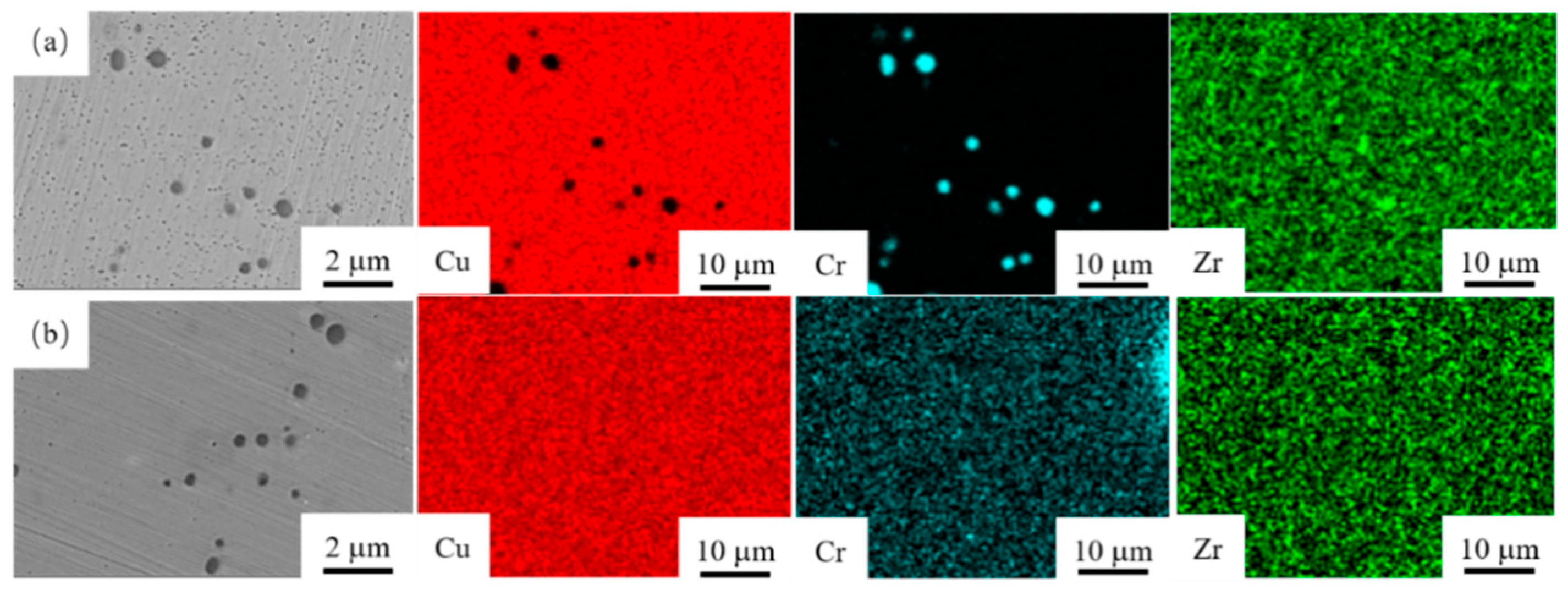
From the surface micromorphology shown in the figures, it can be seen that there are micron-sized particles in the structure of Figure 3a. In addition, nanoscale Cr precipitates are also formed in the alloy. Element distribution maps reveal that these particles are mainly composed of Cr. Meanwhile, energy spectrum analysis indicates the rolled part has an elemental composition and content of Cu 97.8%, Cr 2.0%, and Zr 0.2%. Composition distribution maps show that Cu and Zr elements are uniformly distributed in the matrix. The structure of Figure 3b also contains relatively large particles with no significant change in size. Energy spectrum analysis of the rolled part after aging treatment at 450 °C for 6 h shows an elemental composition and content of Cu 99.1%, Cr 0.6%, and Zr 0.2%. Composition distribution maps demonstrate that Cu, Cr, and Zr elements are uniformly distributed in the matrix phase.
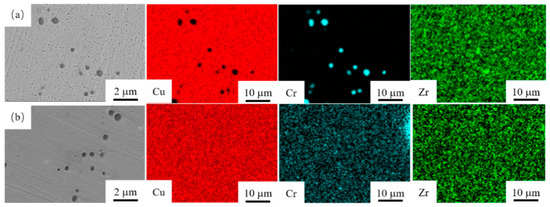
Figure 3.
SEM images and EDS elemental analysis: (a) as-rolled state, (b) aged state.
3.2. Analysis of Hardness and Electrical Conductivity Test Results
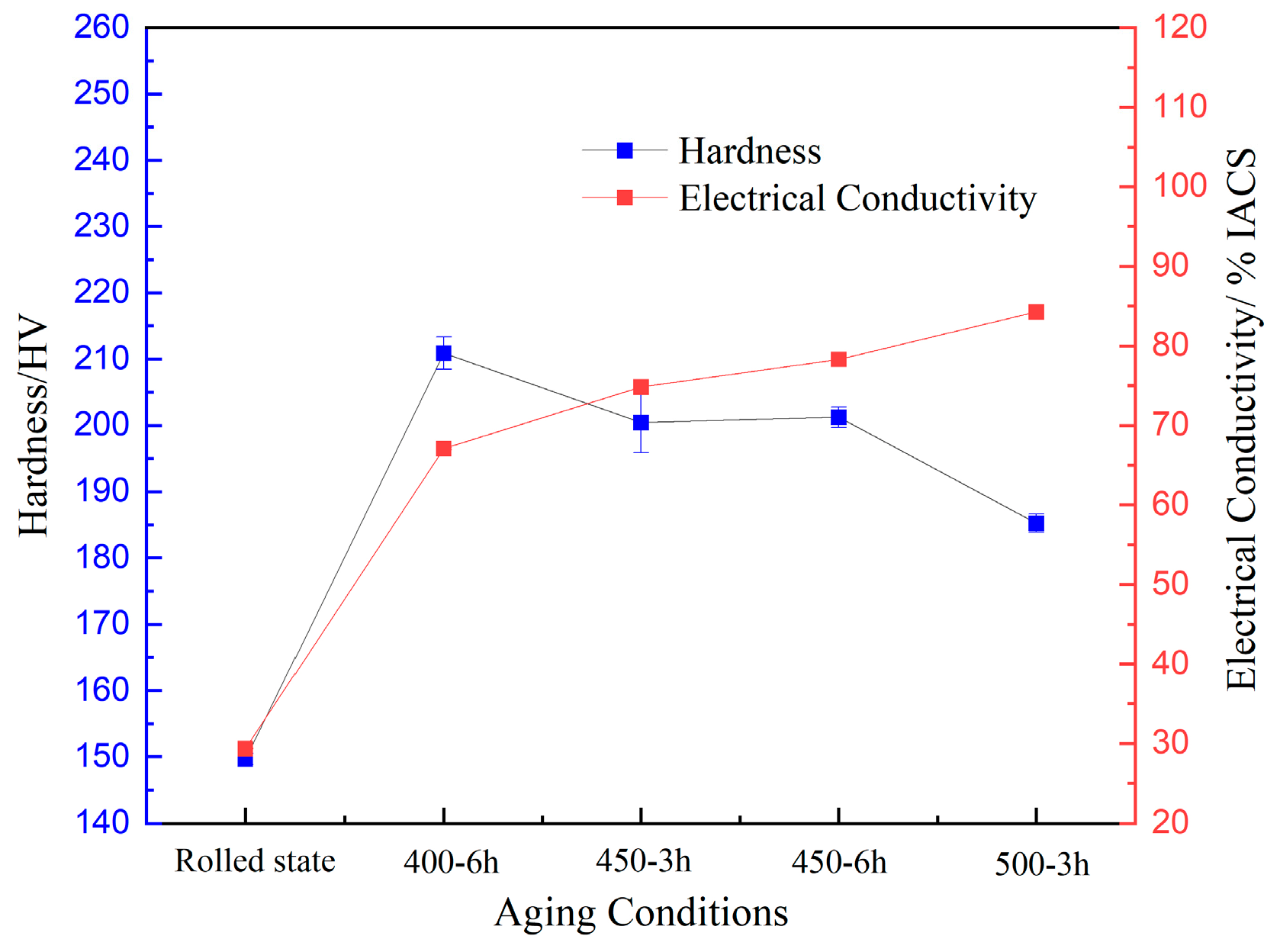
As can be seen from Table 2, the Vickers hardness of the unaged rolled part is 149.37 HV. After aging treatment at 400 °C for 6 h, the rolled part achieves a maximum Vickers hardness of 210.52 HV, an increase of approximately 40.94% compared with the unaged rolled part. The Vickers hardness is 197.73 HV after aging at 450 °C for 3 h, and 201.29 HV after aging at 450 °C for 6 h. The Vickers hardness increases with the extension of aging time, but the growth rate is relatively low. After aging at 500 °C for 3 h, the Vickers hardness is 185.13 HV. Obviously, the hardness begins to decrease significantly after aging at 500 °C for 3 h, but it is still higher than that of the unaged rolled part. This indicates that aging treatment can improve the hardness of the Cu-Cr-Zr alloy.
Table 2.
Average hardness of Cu-Cr-Zr alloys under different states.
Figure 4 shows the variation diagram of average hardness and average electrical conductivity. As can be seen from Table 3, the electrical conductivity of the unaged rolled part is 29.25% IACS. After aging treatment at 400 °C for 6 h, the electrical conductivity of the rolled part reaches 67.07% IACS, which is approximately 1.3 times higher than that of the unaged rolled part. The electrical conductivity is 74.82% IACS after aging at 450 °C for 3 h, and 78.3% IACS after aging at 450 °C for 6 h. This indicates that the electrical conductivity shows a trend of monotonous growth with the extension of aging time. The electrical conductivity after aging at 500 °C for 3 h is 84.26% IACS. Therefore, it is shown that the electrical conductivity will be significantly improved with the increase in aging temperature.
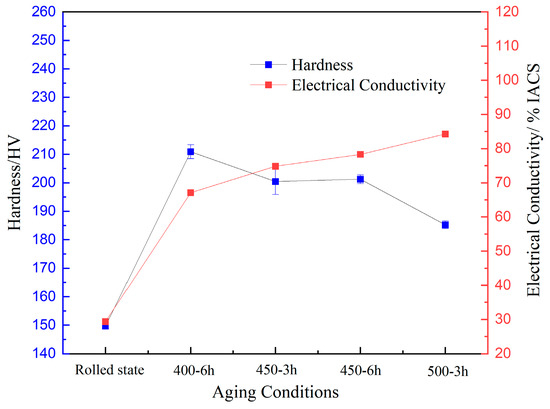
Figure 4.
Variations in hardness and electrical conductivity of Cu-Cr-Zr alloys with different aging states.
Table 3.
Average conductivity of the Cu-Cr-Zr alloy under different states.
Combining Table 2 and Table 3, it can be concluded that the Cu-Cr-Zr alloy achieves excellent comprehensive properties after aging treatment at 450 °C for 6 h. Its hardness is increased by approximately 35% compared with the unaged part, and its electrical conductivity is increased by about 1.68 times. It can maintain high electrical conductivity while possessing high hardness, thus showing broad application prospects. Therefore, 450 °C/6 h is selected as the aging parameter for the tensile samples.
3.3. Analysis of Tensile Test Results
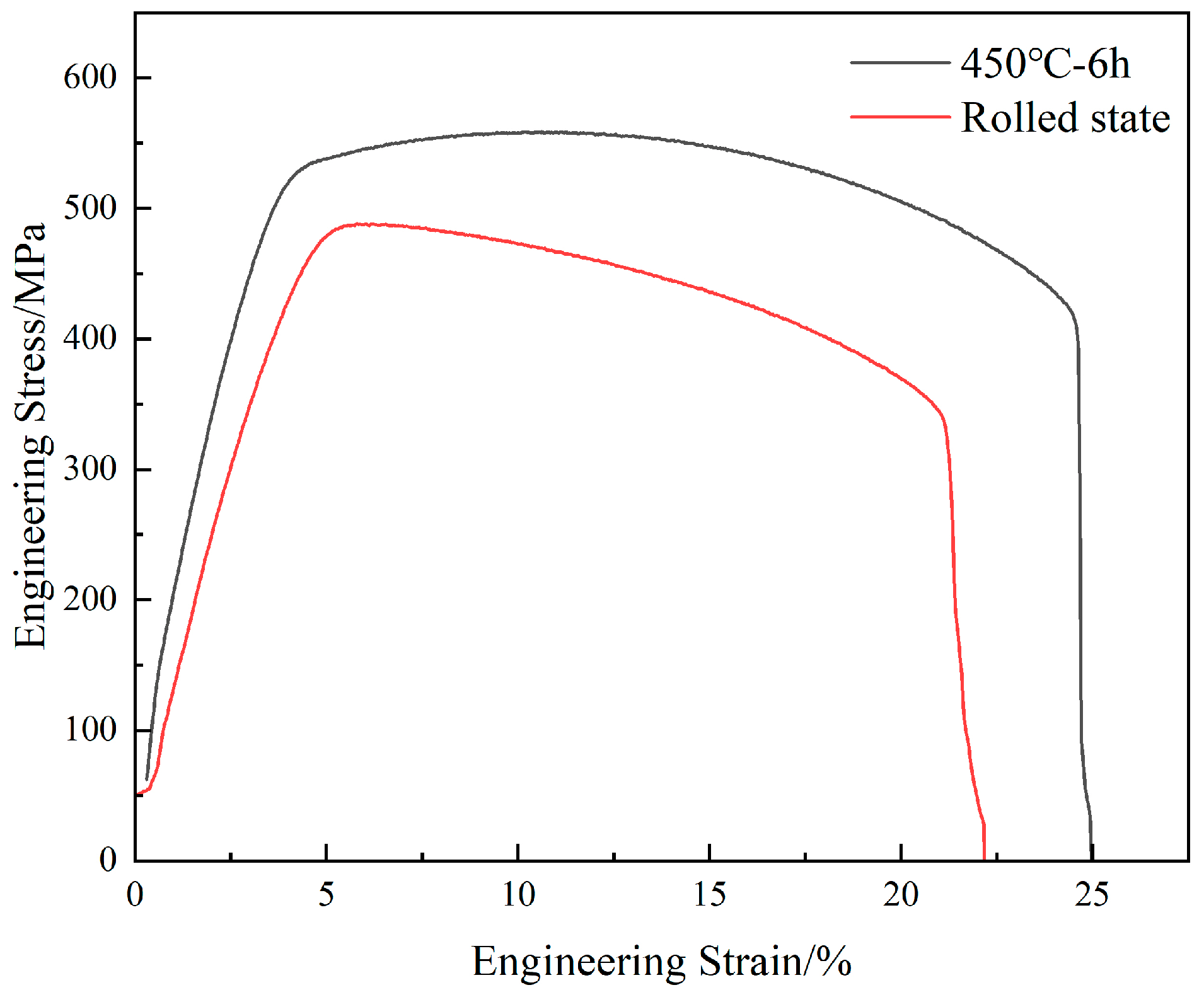
Based on the analysis of the hardness and electrical conductivity test results, the Cu-Cr-Zr alloy treated with aging at 450 °C for 6 h exhibits excellent comprehensive properties due to the synergistic strengthening effect of microscale Cr particles and Cr precipitates. Therefore, tensile property tests were conducted on both unaged samples and Cu-Cr-Zr alloy samples aged at 450 °C/6 h. The tensile strength and elongation parameters are shown in Table 4, and Figure 5 presents the stress–strain curves of the unaged samples and the Cu-Cr-Zr alloy samples aged at 450 °C/6 h. Analysis indicates that compared with the unaged samples, the tensile strength of the aged samples is increased by 14.46%, and the elongation is increased by 14.82%. In comparison, the Cu-Cr-Zr alloy in this study exhibits more excellent comprehensive properties than the Cu-0.7Cr-0.19Zr alloy aged at 425 °C for 5 h under similar conditions, which has a hardness of 137 ± 3, an electrical conductivity of 70.8 ± 2, and a tensile strength of 409 ± 3 [21].
Table 4.
Basic performance parameters of the Cu-Cr-Zr alloy.
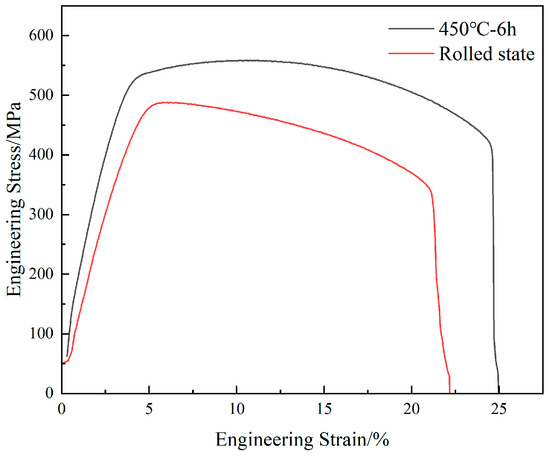
Figure 5.
Stress–strain curve of the Cu-Cr-Zr alloy.
3.4. Coefficient of Friction Analysis
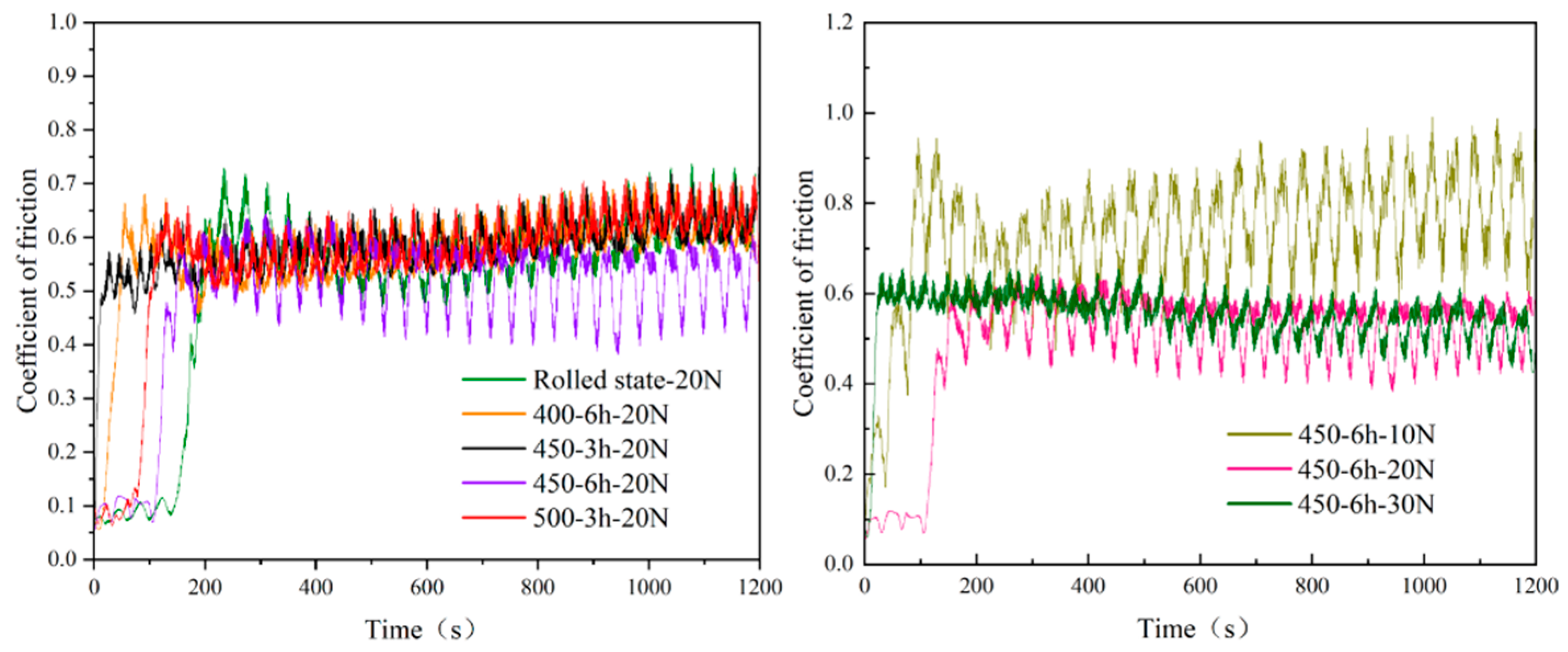
In this experiment, friction and wear coefficients were tested under a constant load of 20 N for as-rolled samples and those aged at 400 °C/6 h, 450 °C/3 h, 450 °C/6 h, and 500 °C/3 h (Figure 6). The horizontal axis represents the wear test time in seconds, the vertical axis represents the friction coefficient, and the curves reflect the variation in the alloy’s friction coefficient. From the as-rolled (20 N) curve in Figure 6, in the initial stage, the friction coefficient of the room-temperature as-rolled sample shows an up-and-down fluctuation trend, which may be due to the running-in process of the material surface. The friction coefficient increases rapidly until the wear test time reaches about 200 s. With the increase in wear time, the surface friction state tends to be stable, and the friction coefficient stabilizes with small fluctuations. Its average friction coefficient is approximately 0.6. The 400 °C/6 h aged sample shows a rapid initial friction coefficient increase, stabilizing with small fluctuations at ~100 s; its average is slightly below 0.6. The 450 °C/3 h aged sample exhibits a sharp initial rise in friction coefficient, stabilizing quickly with minimal fluctuations and an average still below 0.6. The 450 °C/6 h aged sample fluctuates initially, rises rapidly at ~100 s, and gradually stabilizes with larger fluctuations—its average also remains below 0.6. The 500 °C/3 h aged sample fluctuates first, rises rapidly at ~100 s, then stabilizes with small fluctuations, with an average friction coefficient of ~0.6.
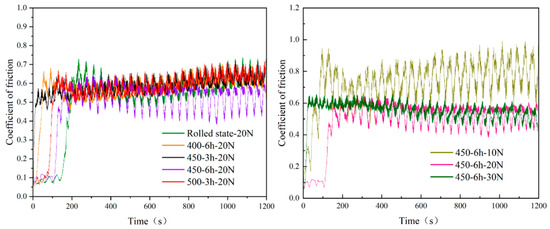
Figure 6.
The friction and wear coefficient of the Cu-Cr-Zr alloy under the action of 20 N and other loads under the aging state of −450 °C/6 h rolling at room temperature.
3.5. Two-Dimensional Profile Analysis of the Sample
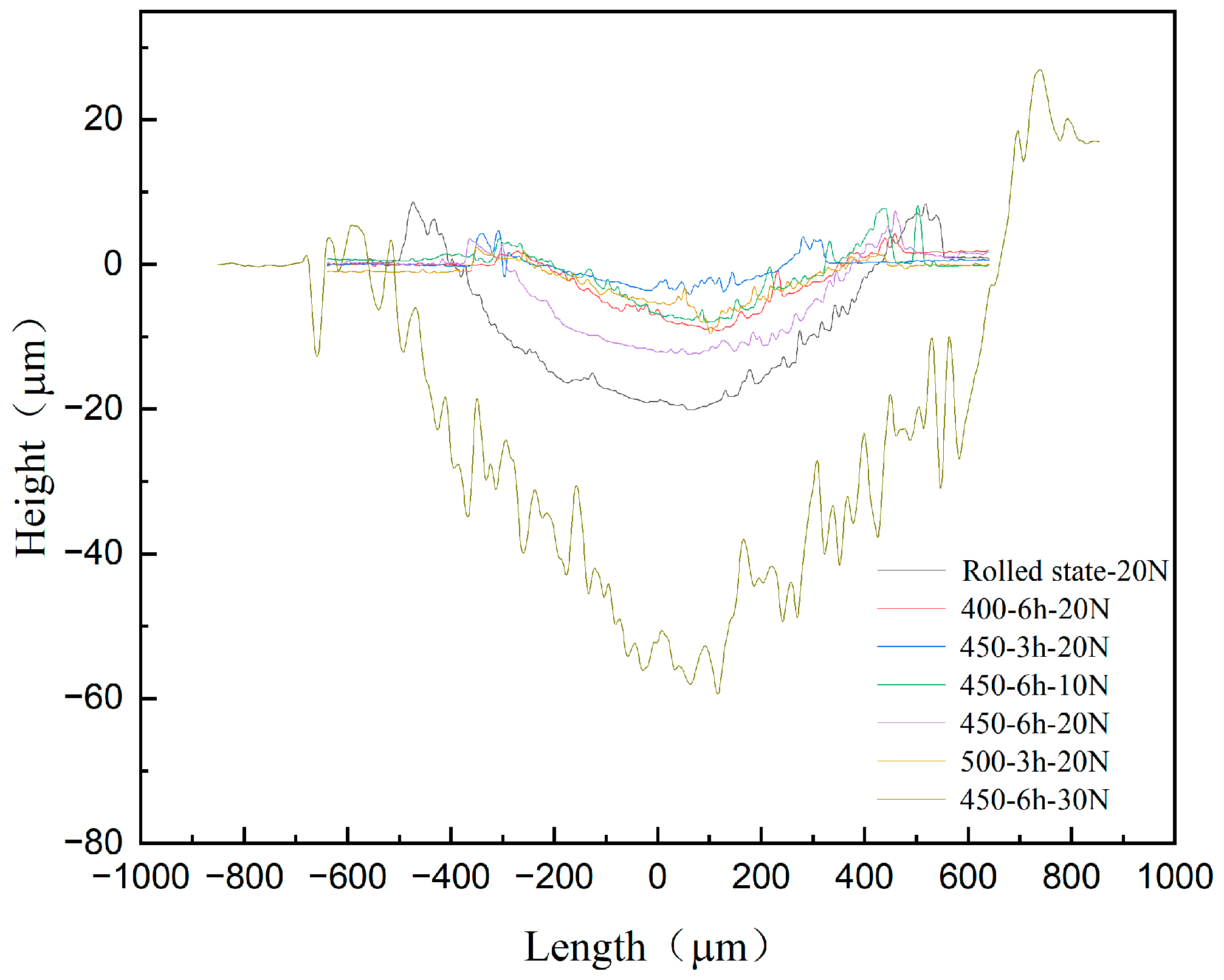
Figure 7 shows the two-dimensional contour diagrams of the rolled parts under different states and loads. It can be observed from the figures that the contours of the rolled parts in different states all show a certain degree of fluctuation along the length direction, which may be caused by changes in surface roughness or microstructure. When the rolled parts aged at 450 °C/6 h are subjected to loads of 10 N and 20 N, the fluctuation amplitude of the alloy’s contours is relatively gentle. However, under a load of 30 N, the fluctuation in the height direction is the most obvious for the rolled parts aged at 450 °C/6 h. This indicates that the surface of the Cu-Cr-Zr alloy will exhibit different depths under different loads after aging at 450 °C/6 h, suggesting significant differences in mass loss. After comprehensive evaluation, the samples aged at 450 °C/3 h and 450 °C/6 h show better wear resistance.
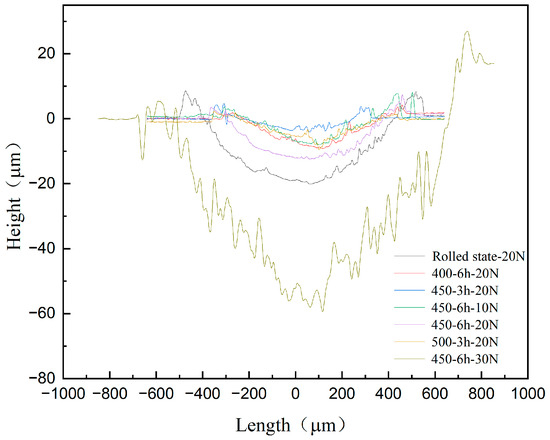
Figure 7.
Two-dimensional contour maps of friction and wear surfaces of Cu-Cr-Zr alloys under the same load (20 N) with different aging states and under different loads.
3.6. Three-Dimensional Diagram Analysis of the Sample
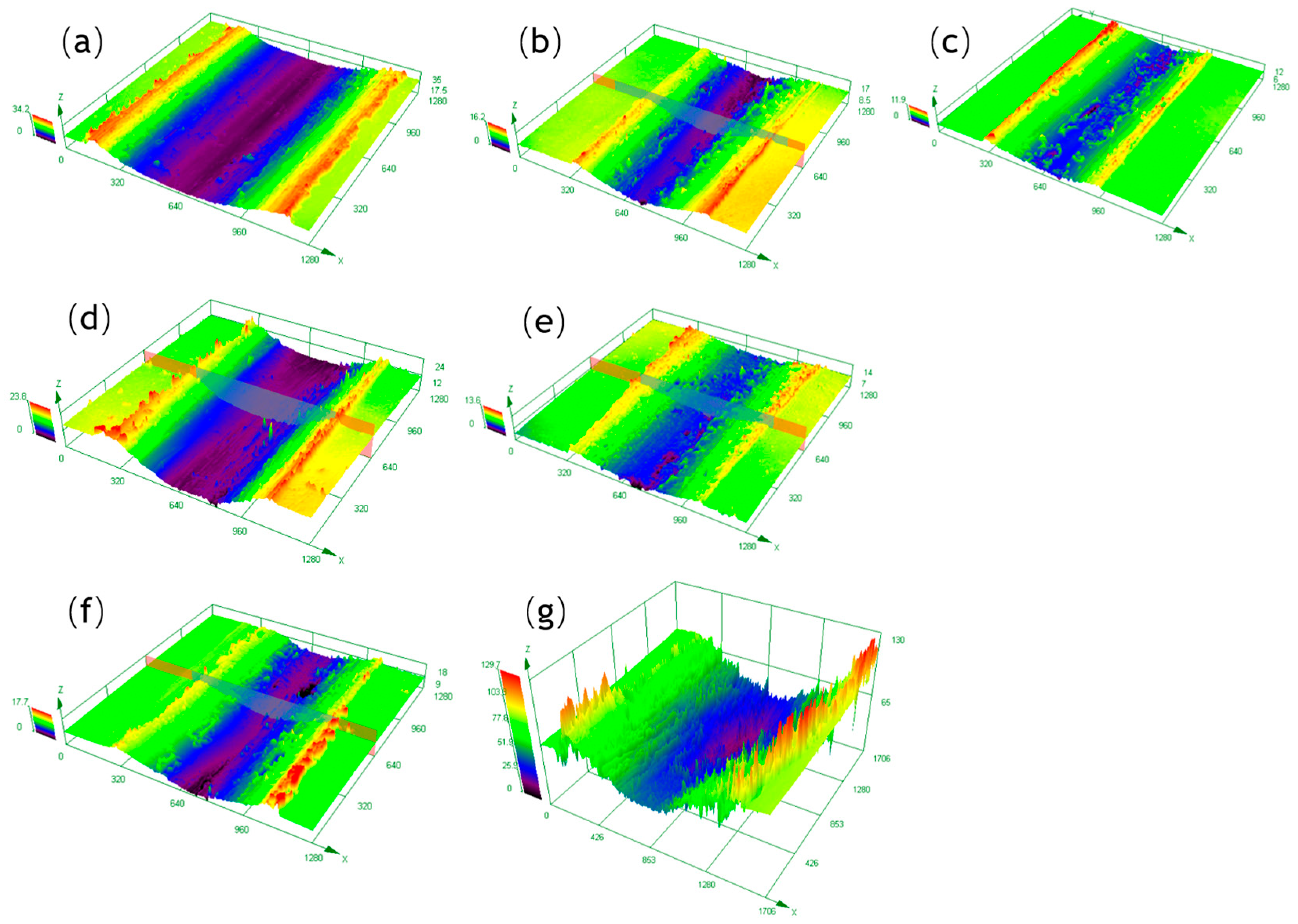
Figure 8 shows the three-dimensional (3D) maps of friction and wear, which clearly demonstrate the surface changes in the material after the test. The color bar represents the height or depth along the Z-axis, with colors ranging from purple to red indicating a change from low to high.
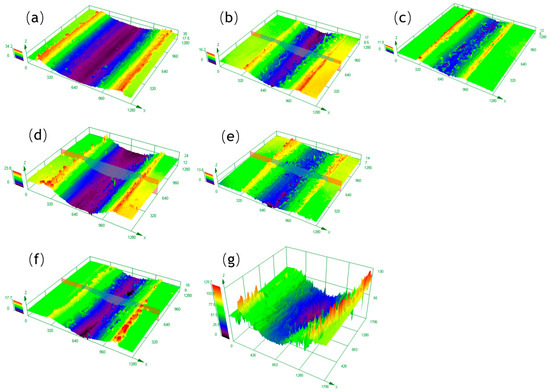
Figure 8.
Two-dimensional contour morphologies of the friction and wear surfaces of 450 °C/6 h aged samples under different loads, and samples with different aging states under the same load (20 N): different aging states, (a) room temperature rolling state, (b) 400 °C/6 h, (c) 450 °C/3 h, (d) 450 °C/6 h, (e) 500 °C/3 h; different loads, (f) 10 N, (g) 30 N. Red represents the severely worn areas or specific wear mechanisms, while purple represents the slightly worn or transition areas.
It can be clearly observed from Figure 8 that during the friction and wear process, different aging treatments have different effects on surface morphology and wear degree under the same load. It can be seen from Figure 8a that the unaged rolled part has a very deep wear depth under a load of 20 N, indicating poor wear resistance. From Figure 8b, for the rolled part aged at 400 °C/6 h under a 20 N load, the wear depth only reaches the purple layer in some areas, showing a significant reduction in wear. Thus, it is reflected that aging treatment improves the strength of the rolled part, thereby enhancing its wear resistance capacity and further improving the wear resistance of the rolled part. As shown in Figure 8c, the rolled part aged at 450 °C/3 h under a 20 N load barely reaches the purple layer area, with most of it at the blue layer depth, indicating slight wear. This demonstrates that the rolled part aged at 450 °C/3 h has much better wear resistance than the unaged one under a 20 N load. From Figure 8d, the rolled part aged at 450 °C/6 h under a 20 N load has a wear depth reaching the purple layer, indicating severe wear and poor wear resistance. Compared with Figure 8c, it can be seen that under the same aging temperature, the extension of aging time leads to more severe wear of the corresponding aged rolled parts. As shown in Figure 8e, the rolled part aged at 500 °C/3 h under a 20 N load barely reaches the purple layer area, reflecting a low wear rate. From Figure 8f, the rolled part aged at 450 °C/6 h under a 10 N load has a wear depth reaching the purple layer in most areas, indicating relatively deep wear and poor wear resistance under this condition. As shown in Figure 8g, the rolled part aged at 450 °C/6 h under a 30 N load only reaches the purple layer depth in local areas, indicating good wear resistance under this condition. It can be reflected from Figure 8d,f,g that under the same aging parameters, the wear rate of the rolled part is greatly affected by the load applied during the friction and wear test.
3.7. Analysis of the Composition Content and Surface Morphology of the Worn Alloy After Friction and Wear
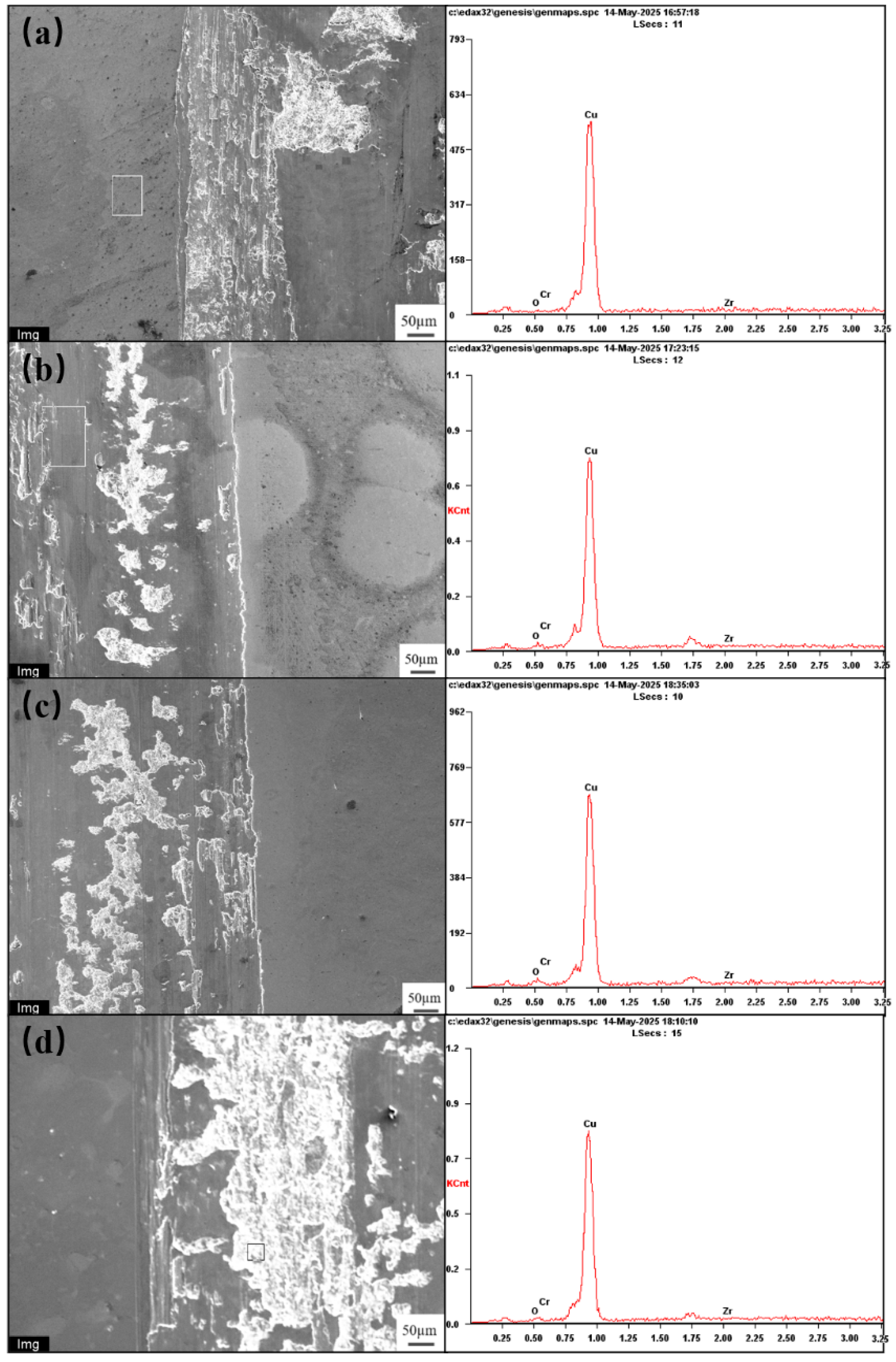
Figure 9 shows the friction and wear surface morphologies and energy spectrum diagrams of rolled parts with different aging treatments under the same load of 20 N. Figure 9a–d are the SEM images and energy spectrum diagrams of Cu-Cr-Zr alloys under different aging states. It can be observed from Figure 9a that the worn surface is obviously fractured, and the worn layer is detached. This is mainly because the unaged sample has low hardness, and the worn layer has weak deformation resistance, leading to the fracture and detachment of the worn layer and a high wear rate. However, with the introduction of aging processes, the fracture of the worn layer is significantly alleviated, and the wear mechanism transforms into adhesive wear and abrasive wear. It can be observed in the microstructure that adhesion and transfer occur on part of the worn surface. Meanwhile, plow grooves caused by the sliding friction of hard particles can be observed on the worn surface, which indicates that with the increase in hardness, the deformation resistance of the worn surface is significantly improved, and the wear mechanism changes obviously. The oxygen element can be observed in the energy spectrum diagrams, indicating that a certain degree of oxidation occurred during the wear process. The primary Cr particles and Cr precipitates in the matrix react with oxygen in the air to form chromium oxide (Cr3O). This substance can act as a lubricant, reducing the wear rate of the material to a certain extent.
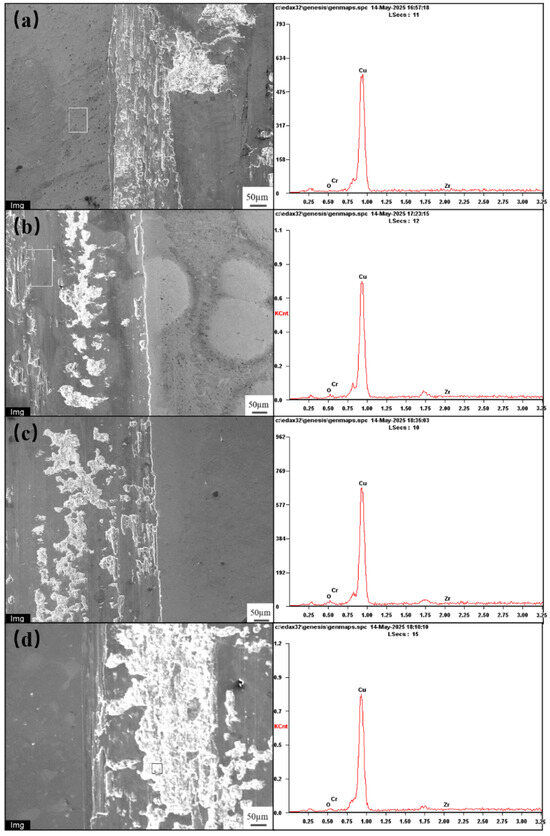
Figure 9.
SEM and energy spectra of different temporal states with the same load (20 N): (a) room temperature rolled state, (b) 400 °C/6 h, (c) 450 °C/3 h, (d) 500 °C/3 h. The gray frame indicates the area where energy spectrum analysis was performed.
Differences in the magnification of friction and wear surface morphologies result in varying levels of detail presentation. At low magnification, relatively macroscopic wear surface features can be observed with a larger field of view, allowing the general shape and distribution of the wear area to be seen. At high magnification, the focus is on micro-details, revealing finer textures, microcracks, wear pits, and other microstructures on the wear surface—details that are difficult to distinguish at low magnification. More wear surface details, such as wear textures and local micro-defects, can be observed in Figure 9a,b. However, compared with Figure 9c,d, their detail fineness is slightly inferior. Nevertheless, they balance a certain range of field of view and detailed observation, making them suitable for analyzing the medium-scale features of the wear area. SEM images are mainly used to observe the surface morphology of samples, while energy spectrum diagrams are used to analyze the elemental composition of the sample surface. Through these energy spectrum diagrams, information such as the presence and relative content of elements in Cu-Cr-Zr alloy samples under different aging states can be confirmed.
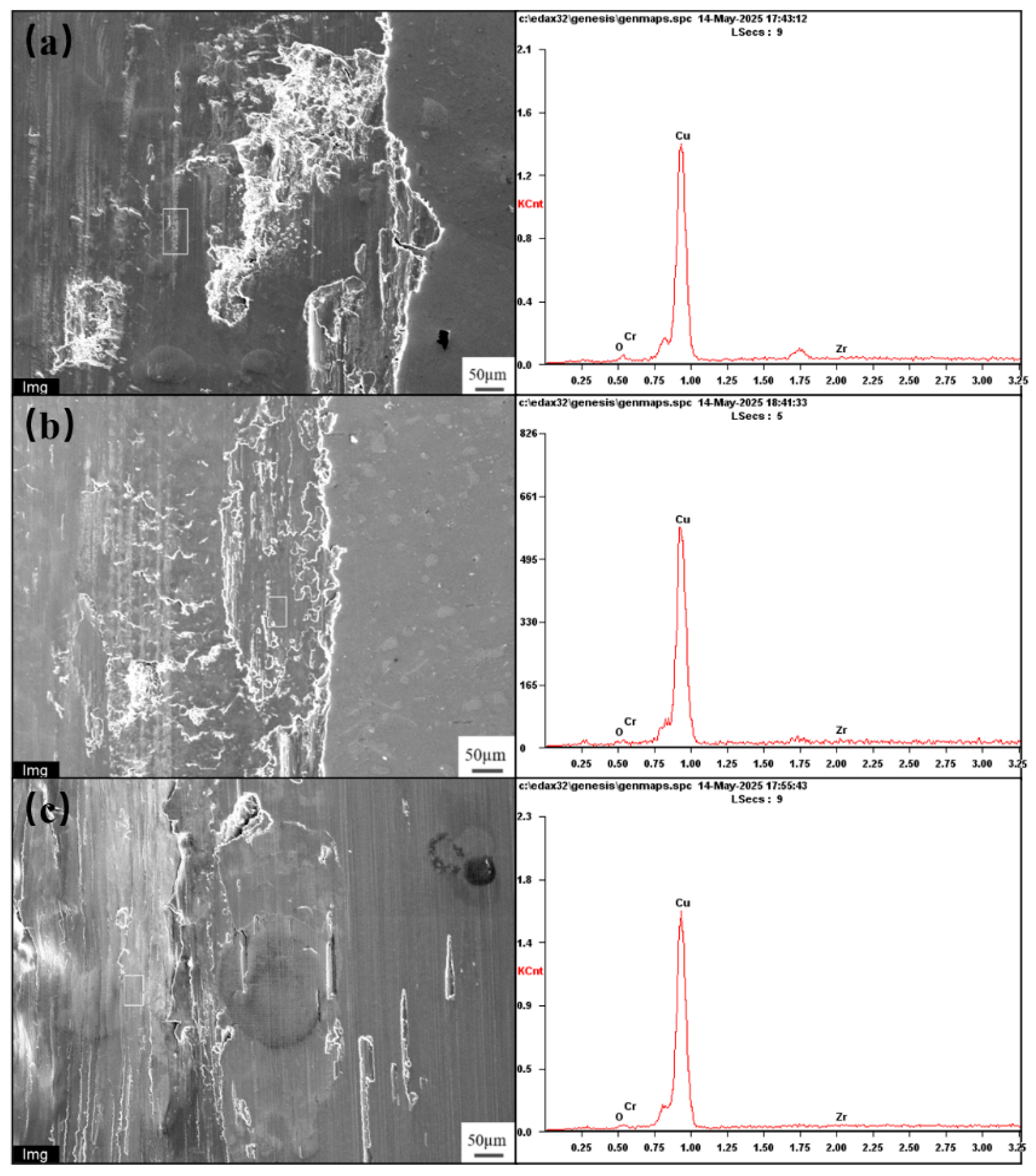
Figure 10 shows the friction and wear surface morphologies and energy spectrum diagrams of the rolled parts aged at 450 °C/6 h under different load conditions. It can be seen from the friction and wear surface morphology diagrams under different magnifications in Figure 10a–c that the rolled parts after friction and wear under different loads with the same aging treatment have different friction and wear surface morphologies and varying degrees of wear. From Figure 10a, under a load of 10 N, the worn surface remains intact without obvious damage and delamination. With the increase in load, the worn surface fractures, and the area of the adhesive zone increases. When the load is increased to 30 N, the worn surface fractures, indicating that the increase in load will cause significant changes in the wear mechanism.
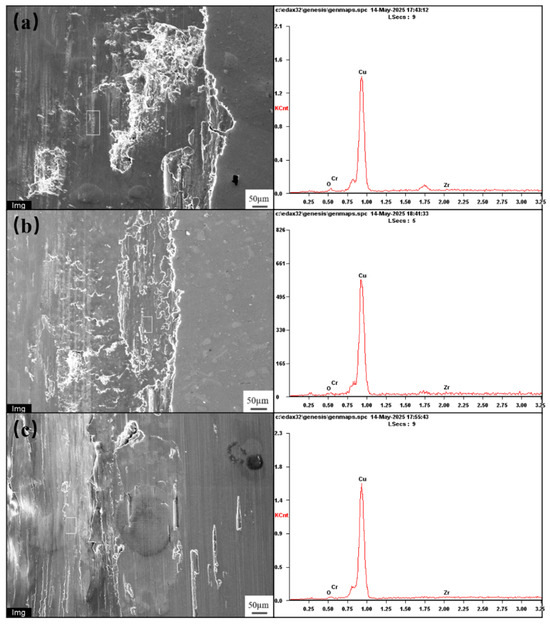
Figure 10.
SEM and energy spectra of different loads aged at 450 °C/6 h: (a) 10 N, (b) 20 N, (c) 30 N. The gray frame indicates the area where energy spectrum analysis was performed.
4. Conclusions
Taking the Cu-Cr-Zr alloy as the research object, this paper conducted aging treatments at different temperatures and times on as-rolled samples. The microstructure of the samples was observed, and their mechanical properties, as well as friction and wear properties, were tested. Additionally, the influence of laws of aging processes on the microstructure, mechanical properties, and friction and wear properties of the Cu-Cr-Zr alloy was analyzed. The following conclusions are drawn:
- (1)
- After rolling, the particles exhibit the characteristic of aligning along the rolling direction. After aging treatment at 450 °C/6 h, the particles in the Cu-Cr-Zr alloy sample are well-distributed without obvious aggregation.
- (2)
- After aging treatment at 450 °C for 6 h, nanoscale Cr precipitates form in the Cu-Cr-Zr alloy. The synergistic strengthening effect of micro-scale Cr particles and Cr precipitates endows the alloy with excellent comprehensive properties. Its hardness is increased by approximately 35% compared with the unaged rolled part, and the electrical conductivity is increased by about 1.68 times. The strength reaches 558.7 MPa, an increase of 14.46% compared with the unaged part; the elongation reaches 24.25%, an increase of 14.82% compared with the unaged part.
- (3)
- The friction and wear properties of samples under different aging processes are related to the material’s hardness. Nanoscale Cr precipitates can significantly enhance the hardness of the material. As the material’s hardness increases, the wear mechanism transforms from material transfer to abrasive wear. Furthermore, the primary Cr particles and Cr precipitates will come into contact with oxygen in the air and oxidize to form Cr3O during the wear process. As a lubricant, Cr3O can reduce the material’s wear rate to a certain extent.
Author Contributions
Conceptualization, S.Z. and G.L.; methodology, S.Z. and G.L.; software, S.Z. and H.Z.; validation, S.Z., H.Z., and G.L.; formal analysis, H.Z., B.L., and Y.W.; investigation, S.Z., G.Z., and X.Z.; data curation, H.Z., B.L., and Y.W.; writing—original draft preparation, H.Z., G.Z., and X.Z.; writing—review and editing, H.Z. and S.Z.; supervision, G.L.; project administration, S.Z. and G.L.; funding acquisition, H.Z., B.L., and Y.W. All authors have read and agreed to the published version of the manuscript.
Funding
This work was supported by the National Key Research and Development Program of China (Grant No. 2022YFF0605300), the Key Laboratory of Special Machine and High Voltage Apparatus (Shenyang University of Technology), and the Ministry of Education (Grant No. KFKT202106) and National Natural Science Foundation of China (Grant No. 52174228).
Institutional Review Board Statement
Not applicable.
Informed Consent Statement
Not applicable.
Data Availability Statement
The original contributions presented in this study are included in the article. Further inquiries can be directed to the corresponding author.
Conflicts of Interest
Authors Hongkui Zhang, Bing Li, and Yukun Wang were employed by the company “Fushun CCTEG Inspection Center Co., Ltd.”. The remaining authors declare that the research was conducted in the absence of any commercial or financial relationships that could be construed as potential conflicts of interest.
References
- Chen, J.; Wang, J.; Xiao, X.; Wang, H.; Chen, H.; Yang, B. Contribution of Zr to strength and grain refinement in Cu-Cr-Zr alloy. Mater. Sci. Eng. A 2019, 756, 464–473. [Google Scholar] [CrossRef]
- Wang, J.; Chen, J.; Guo, C.; Xiao, X.; Wang, H.; Yang, B. Low cycle fatigue behavior of precipitation-strengthened Cu-Cr-Zr contact wires. Int. J. Fatigue 2020, 137, 105642. [Google Scholar] [CrossRef]
- Li, J.; Dong, H.; Li, B.; Li, W. Microstructure evolution and properties of a Cu–Cr–Zr alloy with high strength and high conductivity. Mater. Sci. Eng. A 2021, 819, 141464–141472. [Google Scholar] [CrossRef]
- Wang, Y.; Fu, R.; Li, Y.; Zhang, L. A high strength and high electrical conductivity Cu-Cr-Zr alloy fabricated by cryogenic friction stir processing and subsequent annealing treatment. Mater. Sci. Eng. A 2019, 755, 166–169. [Google Scholar] [CrossRef]
- Wang, Y.; Liu, M.; Yu, B.; Wu, L.; Xue, P.; Ni, D.; Ma, Z. Enhanced combination of mechanical properties and electrical conductivity of a hard state Cu-Cr-Zr alloy via one-step friction stir processing. J. Mater. Process. Technol. 2021, 288, 116880. [Google Scholar] [CrossRef]
- Wallis, C.; Buchmayr, B. Effect of heat treatments on microstructure and properties of Cu-Cr-Zr produced by laser-powder bed fusion. Mater. Sci. Eng. A 2018, 744, 215–223. [Google Scholar] [CrossRef]
- Shangina, D.V.; Bochvar, N.R.; Morozova, A.L.; Belyakov, A.N.; Kaibyshev, R.O.; Dobatkin, S.V. Effect of chromium and zirconium content on structure, strength and electrical conductivity of Cu-Cr-Zr alloys after high pressure torsion. Mater. Lett. 2017, 199, 46–49. [Google Scholar] [CrossRef]
- Bodyakova, I.A.; Mishnev, V.R.; Kaibyshev, O.R. Microstructure and Properties of Cu–Cr–Zr Alloys After Plastic Deformation and Aging. Met. Sci. Heat Treat. 2024, 66, 343–354. [Google Scholar] [CrossRef]
- Yan, P.; Zu, G.; Zha, J.; Ye, F.; Zhu, W.; Han, Y.; Zou, H.; Zhao, Y.; Li, M.; Ran, X. Effect of Annealing and Aging Treatment on Microstructure and Properties of High Deformation Hot-Rolled Cu-Cr-Zr Alloy. J. Mater. Eng. Perform. 2025, 70, 1409–1416. [Google Scholar] [CrossRef]
- Zhang, Y.; Volinsky, A.A.; Tran, T.H.; Chai, Z.; Liu, P.; Tian, B.; Liu, Y. Aging behavior and precipitates analysis of the Cu–Cr–Zr–Ce alloy. Mater. Sci. Eng. A 2016, 650, 248–253. [Google Scholar] [CrossRef]
- Fu, H.; Xu, S.; Li, W.; Xie, J.; Zhao, H.; Pan, Z. Effect of rolling and aging processes on microstructure and properties of Cu-Cr-Zr alloy. Mater. Sci. Eng. A 2017, 700, 107–115. [Google Scholar] [CrossRef]
- Meng, A.; Nie, J.; Wei, K.; Kang, H.; Liu, Z.; Zhao, Y. Optimization of strength, ductility and electrical conductivity of a Cu–Cr–Zr alloy by cold rolling and aging treatment. Vacuum 2019, 167, 329–335. [Google Scholar] [CrossRef]
- Huang, A.; Wang, Y.; Wang, M.; Song, L.; Li, Y.; Gao, L.; Huang, C.; Zhu, Y. Optimizing the strength, ductility and electrical conductivity of a Cu-Cr-Zr alloy by rotary swaging and aging treatment. Mater. Sci. Eng. A 2019, 746, 211–216. [Google Scholar] [CrossRef]
- Zhang, S.; Li, R.; Kang, H.; Chen, Z.; Wang, W.; Zou, C.; Li, T.; Wang, T. A high strength and high electrical conductivity Cu-Cr-Zr alloy fabricated by cryorolling and intermediate aging treatment. Mater. Sci. Eng. A 2017, 680, 108–114. [Google Scholar] [CrossRef]
- Purcek, G.; Yanar, H.; Shangina, D.V.; Demirtas, M.; Bochvar, N.R.; Dobatkin, S.V. Influence of high pressure torsion-induced grain refinement and subsequent aging on tribological properties of Cu-Cr-Zr alloy. J. Alloys Compd. 2018, 742, 325–333. [Google Scholar] [CrossRef]
- Miao, Y.; Gan, C.; Wang, M.; Lgor, L. The phase structure, hardness, and wear properties of the Cu–Cr–Zr–Nb alloy under different aging states. J. Mater. Res. Technol. 2024, 33, 515–525. [Google Scholar] [CrossRef]
- Meng, X.; Cui, Z.; Huang, L.; Xia, C.; Lei, Q. Effects of loads and speeds on friction and wear properties of Cu–Ti alloys processed by combination aging treatments. J. Mater. Res. Technol. 2023, 26, 948–960. [Google Scholar] [CrossRef]
- Sağlam, I.; Özyürek, D.; Çetinkaya, K. Effect of ageing treatment on wear properties and electrical conductivity of Cu-Cr-Zr alloy. Bull. Mater. Sci. 2011, 34, 1465–1470. [Google Scholar] [CrossRef]
- Ren, J.; Zhang, S.; Shi, S.; Li, J. Enhancing the Dry and Current-Carrying Wear Properties of Cu-Cr-Zr-ZrB2 Composites by Ultrasonic Vibration Treatment. J. Mater. Eng. Perform. 2025, 1–13. [Google Scholar] [CrossRef]
- Miao, Y.; Gan, C.; Jin, W.; Wang, M.; Chen, Y.; Liu, Z.; Zhang, Z. Effect of aging temperature on microstructure and softening property of the Cu-Cr-Zr-Nb alloy. J. Alloys Compd. 2024, 983, 173818–173831. [Google Scholar] [CrossRef]
- Hu, J.; Tian, Y.; Yu, H.; Ling, G.; Li, S.; Jiang, M.; Li, H.; Qin, G. Optimizing strength and electrical conductivity of Cu-Cr-Zr alloy by two-stage aging treatment. Mater. Lett. 2022, 315, 131937. [Google Scholar] [CrossRef]
Disclaimer/Publisher’s Note: The statements, opinions and data contained in all publications are solely those of the individual author(s) and contributor(s) and not of MDPI and/or the editor(s). MDPI and/or the editor(s) disclaim responsibility for any injury to people or property resulting from any ideas, methods, instructions or products referred to in the content. |
© 2025 by the authors. Licensee MDPI, Basel, Switzerland. This article is an open access article distributed under the terms and conditions of the Creative Commons Attribution (CC BY) license.