


Abstract
This study explores the multifactorial synergistic effects and configurational pathways for enhancing corporate social responsibility (CSR) performance among Chinese professional sports clubs. Drawing on 188 valid questionnaires from Chinese professional football and basketball clubs, the research employs fuzzy-set qualitative comparative analysis to examine the influence of seven antecedent conditions, commercial environment, government regulation, expectancy pressure, economic interests, internal emotional traits, moral quality, and information disclosure, on CSR performance. The findings reveal that CSR performance results from the interplay of multiple factors, identifying two equivalent pathways for enhancement: the coupling of government pressure with internal autonomy, and the coordination of commercial environment with internal moral qualities. These insights clarify the complex causal mechanisms underlying CSR implementation in professional sports clubs and propose two strategic approaches for promoting CSR: optimizing external institutional frameworks and activating internal endogenous motivation. The study offers configurationally grounded pathway options and managerial implications for improving CSR practices in Chinese professional sports clubs.
1. Introduction
In the modern market economy, corporate social responsibility (CSR) has emerged as a core strategy for businesses aiming to achieve sustainable development and secure long-term competitive advantages. CSR plays a crucial role in balancing the often competing demands of commercial operations and social welfare [1,2]. Within the realm of professional sports, clubs possess extensive social visibility, deep emotional connections with their communities, and unique public attributes. Consequently, professional sports clubs view CSR not only as a response to stakeholder expectations but also as a foundation for building organizational legitimacy and sustainable value [3]. Existing research consistently shows that effective CSR practices can significantly enhance brand reputation, fan loyalty, commercial performance, and social influence for professional sports clubs. However, the realization of these benefits fundamentally depends on the club’s ability to achieve high levels of CSR implementation. As a result, scholars have extensively investigated the key conditions that promote CSR within clubs, examining both internal and external drivers, institutional pressures, and economic incentives [4,5,6,7], these studies have provided valuable insights into improving CSR practices in sports organizations. Despite these advances, mainstream research often relies on linear and reductionist paradigms, focusing on the “net effects” of individual factors or treating multiple variables as independent and competing explanations [8]. Yet, CSR implementation in professional sports clubs is inherently a contextualized process, embedded within complex institutional, market, and social networks. It is likely driven by the interplay and synergistic effects of multiple antecedents [9,10]. Single-factor or linear models struggle to fully explain the differentiated CSR performance observed under diverse conditions, particularly in uncovering how specific combinations of factors collectively enable high-level CSR outcomes. Therefore, moving beyond traditional regression approaches, exploring the concurrent interactions and equivalent pathways of multiple conditions from a configurational perspective has become a critical theoretical frontier. This approach deepens our understanding of the mechanisms through which professional sports clubs enhance their CSR performance.
The unique institutional and market environment in China offers a highly valuable empirical context for examining CSR in professional sports clubs. The professional sports system, exemplified by the Chinese super league (CSL) and the Chinese basketball association (CBA), has witnessed the rise in several influential clubs, such as Shandong Taishan and Beijing Guoan in the CSL, and Guangdong Hongyuan and Liaoning Shenyang in the CBA, amid rapid commercialization. These clubs function not only as competitive entities but also as significant social institutions embodying regional cultural identities and fulfilling community service roles [11,12]. However, under the dual pressures of institutional regulation and market-driven profit motives, CSR practices among Chinese clubs exhibit considerable heterogeneity and uneven implementation, occasionally resulting in public skepticism and legitimacy challenges [12,13]. Although prior research has examined CSR in Chinese clubs from perspectives including public perception, institutional environment, and consumer attitudes [14,15,16,17], no study to date has systematically explored how multiple conditions, such as commercial environment, government regulation, and social expectations, interact synergistically to drive high-level CSR implementation from a holistic, causal-complexity perspective. This theoretical gap limits our understanding of the deeper mechanisms influencing CSR behavior in Chinese professional sports clubs and constrains the relevance and effectiveness of associated management strategies. To address this gap, the present study transcends the limitations of traditional variance-based theories by adopting a configurational perspective. It centers on the core question: Which combinations of conditions effectively drive clubs to achieve high levels of CSR implementation? Utilizing fuzzy-set qualitative comparative analysis (fsQCA), a method well-suited for small to medium samples and the exploration of causal complexity, this study incorporates multiple antecedent conditions, including commercial environment, government regulation, and expectancy pressure, into a unified analytical framework. The goal is to deconstruct the complex causal mechanisms behind CSR implementation within Chinese clubs and identify multiple, equivalent pathways leading to successful CSR outcomes. This approach not only advances theoretical understanding of the multifaceted drivers of CSR behaviors in sports organizations within transitional economies but also provides empirical evidence and practical pathway options for club managers and policymakers to design differentiated and systematic CSR promotion strategies.
2. Theoretical Basis and Research Hypotheses
2.1. Applicability of Classic CSR Theories in Professional Sports Clubs
The theoretical evolution of CSR dates back to the early 20th century [18]. After more than a century of academic discourse and practical development, CSR has matured into a systematic, multi-level theoretical framework (see Table A1) that profoundly shapes modern business strategy and sustainable development practices. Within the sports industry, CSR has gradually become an integral component of organizational operations and a key strategic focus [19,20]. Amid the increasing commercialization and professionalization of sports, professional sports clubs have transcended their traditional competitive roles to become complex entities embedded within market economies and social governance networks. Consequently, their CSR practices have evolved from reactive, moral obligations to proactive, strategic initiatives, actively identifying social needs and designing targeted programs as part of systematic organizational behavior [4,6]. This transformation has drawn substantial attention from both academia and industry to CSR in sports clubs. However, understanding CSR implementation requires the interplay of theory and practice, akin to the two wheels of a cart, both essential for progress. To uncover the intrinsic mechanisms behind CSR in professional sports clubs, it is crucial to ground the analysis in established theoretical frameworks, thereby creating an integrative analytical foundation. Accordingly, this study moves beyond reliance on any single theoretical perspective, instead adopting a triangulated approach that organically integrates Carroll’s CSR model, stakeholder theory, and institutional theory. This integrated framework provides a robust foundation for comprehensively understanding CSR implementation in professional sports clubs. Specifically:
CSR Content Dimensions—Carroll’s Three-Dimensional Model: In the 1970s, scholarly discourse on CSR coalesced around three key perspectives. The first emphasized the scope of responsibility, arguing that it should encompass economic, legal, and voluntary dimensions [21]. The second concentrated on the specific social issues businesses must address [22]. The third focused on the principles and strategies through which companies respond to societal demands [23,24]. Carroll synthesized these views into a comprehensive three-dimensional model of CSR, comprising the following: The Nature of CSR: This dimension interrogates whether CSR extends beyond mere economic and legal compliance to include broader social obligations [25]. The Content of CSR: Carroll delineates four levels of responsibility that constitute CSR, economic, legal, ethical, and philanthropic (voluntary) responsibilities [2,26]. CSR Response Strategies: This dimension recognizes that businesses may adopt a range of approaches in responding to societal demands, from passive compliance to proactive engagement [27]. Applying Carroll’s model to the professional sports context offers a systematic theoretical lens for in-depth analysis of CSR practices in sports clubs. Firstly, regarding content, a club’s economic responsibility underpins its survival and investment in competitive performance. Legal responsibility entails adherence to mandatory regulations, including league rules, labor laws, and safety standards. Ethical responsibility demands that clubs uphold core sportsmanship values such as fairness and integrity in both operations and competition. Philanthropic responsibility encourages clubs to leverage their social influence proactively by engaging in community welfare and charitable initiatives [28]. Secondly, in terms of nature, public expectations increasingly require professional sports clubs to transcend basic profit-making and legal compliance, embracing broader social and cultural roles [29,30]. Finally, with respect to response strategies, clubs’ CSR actions manifest across a dynamic spectrum. These can range from reactive measures addressing public opinion crises, adaptive adjustments to regulatory changes, defensive tactics to protect reputation, to proactively designed and strategically led social initiatives [31,32]. Thus, CSR decision-making in professional sports clubs is not a one-dimensional process. Instead, it necessitates a holistic understanding of CSR’s multifaceted nature, careful consideration of multi-level responsibilities, and strategic selection of appropriate response approaches within a complex institutional and market environment.
Boundary of CSR Targets—Applying Stakeholder Theory: Stakeholder theory, which emerged in the 1960s, posits that firms should be accountable not only to shareholders but also to a broad spectrum of stakeholders whose interests and demands influence or are influenced by organizational actions. Freeman defines stakeholders as “any individual or group who can affect the achievement of an organization’s objectives or is affected by the process of achieving those objectives” [33,34]. Regarding stakeholder classification, multiple frameworks exist. Freeman, for example, distinguishes between internal stakeholders, such as shareholders and employees, and external stakeholders, including government bodies, communities, and the media [35,36]. In contrast, Clarkson categorizes stakeholders based on the closeness of their relationship with the organization, differentiating primary stakeholders, whose engagement is essential for the firm’s survival (e.g., shareholders, customers, employees, government), from secondary stakeholders, who do not engage in direct transactions but can still influence the organization (e.g., interest groups, the general public) [37]. At its core, these typologies address the fundamental question: To whom should the firm be accountable? They underscore that sustainable corporate development necessitates the systematic identification and careful balancing of diverse stakeholder interests. When applied to professional sports, stakeholder theory offers a vital lens to understand the motivations behind clubs’ fulfillment of social responsibilities. Professional sports clubs are essentially complex assemblages of multiple stakeholder claims and contractual relationships [38,39]. Unlike many traditional enterprises, sports clubs possess exceptionally high social visibility and emotional embeddedness, with their survival and growth heavily reliant on multiple resources, including fan support, government policies, commercial sponsorships, and community recognition [40]. These key stakeholders control not only economic but also symbolic resources. Their collective expectations often coalesce into powerful “social expectations,” compelling clubs to embed CSR strategically to maintain legitimacy, strengthen stakeholder relationships, and secure sustained support. Therefore, stakeholder theory not only clarifies the range of actors to whom professional sports clubs are accountable in their CSR efforts but also elucidates the key driving mechanisms underlying responsibility-oriented behaviors.
Supplementing the Background of CSR—The Application of Institutional Theory: Institutional theory posits that institutions constitute a fundamental system of rules that shape organizational behavior and inter-organizational relationships. These institutions encompass both formal mechanisms, such as laws and regulations, and informal constraints, including cultural traditions and social norms [41]. The theory emphasizes that organizations do not operate in isolation; rather, their strategies and behaviors are profoundly influenced by the external institutional environment. Organizations tend to adapt to these environments through mechanisms of “isomorphism” to secure legitimacy and access to critical resources [42]. Within the realm of CSR research, institutional theory has emerged as a dominant analytical framework [43]. Its primary focus lies in elucidating how institutional pressures, such as regulatory mandates, social expectations, and cultural values, both drive and constrain firms’ CSR practices. This perspective is particularly effective in explaining cross-national and cross-industry variations in CSR, as well as the processes through which companies internalize social responsibility into organizational routines [44,45,46,47]. Applying institutional theory to professional sports clubs sheds light on how external contextual factors systematically shape their CSR models. These clubs are deeply embedded within specific political, social, and cultural fields. Their actions must respond not only to formal sports regulations, government policies, and league controls but also to significant pressures exerted by informal institutions, such as fan culture, local traditions, and media discourse [48]. Consequently, CSR practices in professional sports clubs can be understood as strategic responses aimed at legitimacy-building in the face of multiple, sometimes competing, institutional logics. These include national sports development agendas, local community identity demands, and the commercial imperatives of increasingly market-driven leagues. This underscores the critical explanatory power of the “institutional context” in comprehensively understanding and analyzing CSR behaviors in professional sports clubs.
The aforementioned Carroll’s CSR model, stakeholder theory, and institutional theory collectively form a multi-level, dynamically integrated analytical framework, offering a robust theoretical foundation for systematically analyzing CSR behaviors in professional sports clubs. Each theory addresses fundamental questions regarding why and how clubs engage in CSR from distinct but complementary dimensions: the content dimension (what actions are undertaken), the object dimension (to whom these actions are directed), and the environmental dimension (within what contextual conditions they occur). This integrated perspective not only synthesizes previously fragmented theoretical strands but also enables a concrete and systematic deconstruction of CSR behaviors within the interrelated logic of “institutional pressures → stakeholder expectations → organizational responsibility responses.” Such a framework empowers clubs to holistically recognize the breadth of their social responsibilities and serves as a vital conceptual tool for interpreting the variations and diverse pathways of CSR practices across different organizations.
2.2. CSR Practices of Professional Sports Clubs
While the aforementioned theories provide a universal framework for understanding CSR, CSR practices within the professional sports sector exhibit unique complexities. This complexity arises from the dual nature of professional sports clubs, which function simultaneously as commercial enterprises and social institutions [19,49,50]. On one hand, as highly commercialized business entities, clubs must operate in accordance with market forces to ensure economic sustainability and deliver returns on investment. On the other hand, sports inherently embody profound public values, including health promotion, education, and community cohesion, and clubs are frequently perceived as community symbols and moral exemplars. This dual role generates expectations that clubs not only strive for competitive success but also actively “give back to society” through charitable initiatives, community engagement, and other social responsibility efforts. Consequently, the management and operations of professional sports clubs consistently navigate a dynamic tension between economic imperatives and social obligations, constituting the distinctive context within which their CSR practices unfold [51,52].
It is this unique context and the inherent tension between economic and social roles that have established CSR research in professional sports clubs as a distinct and productive academic field. Existing studies first affirm the positive impacts of clubs’ CSR efforts, demonstrating that effective CSR practices can significantly enhance a club’s brand image, strengthen fan identification, improve community relations, and ultimately contribute to both business performance and organizational legitimacy [20,30,52]. Secondly, the literature highlights that clubs’ CSR engagement is shaped by both external pressures, such as government regulations and league policies, and internal motivations, including reputational risk management and responsiveness to stakeholder demands [32,53]. This dual perspective helps deconstruct the multifaceted connotations of CSR fulfillment within clubs. Building upon this foundation, advances in research methodologies have facilitated the development of CSR assessment tools, the analysis of stakeholder perceptions, and comparative studies of CSR practices across different institutional contexts [15,54,55,56]. These efforts have further deepened scholarly understanding of how professional sports clubs perceive, evaluate, and implement CSR initiatives.
However, a review of the existing literature reveals that most studies adhere to an explanatory paradigm centered on singular causal logics or focus on examining the “net effects” of isolated factors on CSR performance. While such linear, variance-based approaches clarify the directional influence of individual variables, they fall short in capturing the concurrent, interactive causal relationships among multiple factors operating within complex contexts. There remains a notable absence of localized empirical research that systematically analyzes how external and internal conditions of responsible entities interact synergistically to enhance CSR performance in clubs from a holistic, configurational perspective. To address this theoretical gap, it is necessary to adopt research methods capable of effectively capturing causal complexity, conditional interactions, and the equifinality of outcomes. fsQCA emerges as an appropriate methodological tool that bridges qualitative insights with quantitative calibration. By moving beyond linear assumptions, fsQCA reveals multiple driving configurations and alternative pathways leading to high-level CSR fulfillment in professional sports clubs, thereby providing a more nuanced and systematic theoretical explanation of their social responsibility behaviors.
2.3. CSR of Professional Sports Clubs in the Chinese Context
To address the theoretical call for a configurational perspective and to deeply explore the underlying mechanisms of CSR behavior in professional sports clubs, research must be firmly grounded in specific institutional and cultural contexts. Within the global landscape of professional sports, China represents a highly representative yet under-explored empirical field. The development trajectory of Chinese professional sports clubs is deeply embedded within the country’s unique political-economic system, rapid marketization process, and pronounced regional disparities [57]. Unlike the commercial logic dominant in mature Western markets, Chinese professional sports are characterized by a dual dynamic of government leadership intertwined with market expansion [58,59], situating clubs’ CSR practices within a more complex environment shaped by institutional constraints and resource dependencies. Existing empirical research vividly captures this complexity, outlining key theoretical drivers behind clubs’ CSR fulfillment. Firstly, administrative forces remain a critical driver, government guidance and policy pressures significantly influence clubs’ CSR orientations [60], reflecting their substantial dependence on local governments [12]. Secondly, market logic has gained increasing prominence, with some clubs leveraging CSR strategically for brand differentiation and competitive advantage [15]. However, the interaction of these dual logics varies greatly across regions and clubs, exhibiting considerable heterogeneity. This variation depends not only on clubs’ internal resource endowments [14], but is also closely tied to regional economic development levels and broader institutional environments [61]. This reality highlights that CSR fulfillment in Chinese clubs is not the linear result of a single factor, but rather a complex configurational outcome shaped by multiple intertwined conditions, including the commercial environment, government pressures, and internal organizational factors. Yet, existing studies predominantly focus on isolated factors or describe heterogeneity superficially, lacking a systematic examination of how these multiple conditions interact in specific combinations to collectively drive high-level CSR performance. This theoretical gap raises a critical question: within China’s unique transitional context, what distinct yet convergent configurations and pathways effectively guide professional sports clubs toward outstanding CSR outcomes? Accordingly, conducting a configurational analysis of CSR practices in Chinese clubs not only advances the theory of complex causality but also responds to local management realities, offering crucial insights to refine and enhance CSR implementation.
2.4. Antecedent Conditions and Research Hypotheses
Building upon the preceding theoretical discourse and contextual analysis, this study embraces the core logic of configurational research, which holds that outcomes result from the synergistic interplay of multiple antecedent conditions. To unravel the causal complexity driving high-level CSR performance in Chinese professional sports clubs, the study does not attempt to capture every possible influencing factor. Instead, it systematically identifies the most explanatory key conditions grounded in established theories and empirical findings. The selection process rigorously adheres to relevant methodological principles [62], considering four key criteria: globality (encompassing both macro-institutional and micro-organizational levels), relevance (alignment with the specific characteristics of professional sports), granularity (operationalizability into concrete, measurable dimensions), and accessibility (availability of reliable data). Consequently, the core antecedent conditions are conceptualized at two primary levels: the “External Environment for CSR” and the “Internal Conditions for CSR.” This framework aims to systematically explore how these conditions combine and interact concurrently and non-linearly to produce effective configurations that foster high-level CSR performance. The specific research conditions and hypotheses are outlined below.
External:
① The commercial environment provides essential elements such as infrastructure and human resources for the operation and development of professional sports clubs, influencing their commercial production and operational logic. It serves as a critical external causal condition that facilitates the fulfillment of CSR by these clubs. According to social interaction theory and institutional theory, the behavior of professional sports clubs exhibits ‘embeddedness’ within social relations, and their fulfillment of CSR is constrained and influenced by the external commercial environment [63,64]. Particularly when professional sports clubs lack the voluntariness and initiative to fulfill their CSR, a conducive commercial environment can leverage elements such as regulation, norms, and pressure to recalibrate the principle of voluntariness in CSR practices, thereby incentivizing both the willingness and capacity of clubs to engage in such practices [65,66].
② Government regulation can compel professional sports clubs to transcend their immediate economic interests, fulfill legally mandated obligations, and adhere to industry-specific rules [26,67], thereby effectively mitigating the occurrence of “free-rider” behavior [68]. From the perspectives of legitimacy motivation and resource dependence theory, professional sports clubs possess limited resources that cannot fully satisfy all their developmental needs [69]. However, governments control scarce resources such as resource allocation and macroeconomic regulation. These scarce resources can enhance clubs’ market incentives, resource distribution, and foster favorable environments [58]. This necessitates clubs adhering to governmental guidance and regulations, conveying positive signals to authorities, and effectively addressing negative externalities—namely, safeguarding legitimacy through CSR to secure political backing, preferential government treatment, and resources required for social compliance [44,70,71]. Furthermore, clubs must adapt their CSR initiatives according to contingent factors in the macro-environment to avoid more stringent government regulations and ensure stable and efficient operations.
③ Expectancy pressure, as an external causal condition for CSR fulfillment by professional sports clubs, exerts a positive influence on club implementation of CSR [72]. From the perspective of stakeholder theory, the existence of expectation pressure stems from the increasingly evident symbiotic relationship between professional sports clubs and their consumers, government entities, employees, and local communities. In a sense, the essence of professional sports clubs lies in the aggregation of diverse stakeholder interests and multilateral contracts [73]. These stakeholders have invested specific resources in the club’s survival and development, either by sharing certain operational risks or incurring costs related to the club’s activities. As a result, they are justified in demanding that the club fulfills its CSR [74]. Simultaneously, the motivations of professional sports clubs’ stakeholders play a decisive role, as they possess considerable economic influence [75]. To achieve profitability [76], clubs must prioritize the expectancies and pressures exerted by stakeholders, secure their sustained support, and thereby obtain the resources necessary for efficient operations and high financial performance. Consequently, stakeholder expectancies and pressures compel clubs to fulfill CSR and generate societal benefits [52].
Internal:
① Everything people strive for is related to their interests. Interests constitute the sum of conditions necessary for the existence and development of the acting subject. All relationships within human society are founded upon specific interests. In the CSR decision-making of professional sports clubs, economic interests represent the primary internal causal condition. Capital market theory posits that adequate financial backing is an indispensable material foundation for clubs to implement long-term operational strategies and maintain sustainable development [77]. Only robust economic support ensures clubs can fulfill their corporate social responsibilities [78]. The economic incentive perspective argues that professional sports clubs engage in CSR out of a desire to gain high visibility, enhance brand image, and increase customer loyalty [79,80], thereby generating sustained economic interests. This implies a correlation between a club’s economic interests and its CSR engagement [81,82,83], specifically, stronger economic interests is associated with more substantial CSR fulfillment [84,85], leading to a more significant impact on social and environmental sustainability [86].
② CSR decisions are ultimately made by natural persons, which implies that the fulfillment of CSR by professional sports clubs is, to some extent, moderated by the internal emotional traits within the club—such as the personal characteristics, attitudes, values, cognitive patterns, and discretionary authority of managers and employees [87,88,89]. From a superstructure theory perspective, the strategic selection process of professional sports clubs constitutes a complex undertaking, wherein the perception and interpretation of managerial issues are contingent upon the psychological frameworks of both administrators and employees within the organization [90]. This implies that the affective characteristics of club management personnel and staff exert significant influence on the deliberation of ultimate strategic decisions. For example, compassionate club managers are more inclined to contribute to social welfare and demonstrate greater proactivity in fulfilling CSR. In contrast, highly educated managers may be more motivated to enhance their personal reputation and prestige by making effective decisions that encourage the club to undertake more CSR [91], thereby reinforcing the club’s legitimacy.
③ Morality is a kind of cognition of human beings and also an ability to handle the relationship between human beings and the world, which is reflected as a quality of the subject [92]. As rational beings, humans are capable of conscious action based on their understanding of the world. When such actions align with the laws of objective development and humanity’s conception of goodness, they are considered moral. In social practice, the level of moral competence directly and significantly influences nature and purpose of activities and may even determine their success or failure. From the perspective of business ethics theory, professional sports clubs, as one of the key actors in society, share an implicit contractual relationship with the broader community. Their conduct should align with fundamental social ethical norms and adhere to the moral framework of “doing the right thing” and “doing what ought to be done” [93], consciously acting in accordance with objective principles and humanity’s collective expectation of goodness. From the perspective of CSR principles, these principles originate from the concept that “those with the capacity ought to assist those in need” [94]. This notion requires clubs to demonstrate consistency in their ethical exemplification, selfless contribution, and long-term commitment. It emphasizes that moral imperatives must not be superseded by cost considerations, meaning that professional sports clubs should fulfill their CSR obligations regardless of whether such actions bring economic benefits to the organization.
④ Information disclosure serves as a proxy variable for measuring the CSR performance of professional sports clubs, representing one of the most critical elements of concern for market participants and stakeholders. From an information economics perspective, information disclosure by professional sports clubs can mitigate the asymmetric distribution of information between insiders (managers) and outsiders (governments, associations, etc.). This helps clubs assess whether their actions are desirable, appropriate, or proper [95]. It fulfills societal expectations for club transparency [94], ensures efficient resource allocation, heightens market participants’ attention [96], and strengthens the clubs’ own sense of responsibility and mission. Consequently, it promotes the fulfillment of CSR by professional sports clubs.
Building on the preceding theoretical foundation, this study integrates seven antecedent conditions organized into two levels: external environment (commercial environment, government regulation, expectancy pressure) and internal conditions (economic interests, internal emotional traits, moral quality, and information disclosure). It posits that the enhancement of CSR performance in professional sports clubs does not rely on any single factor in isolation; rather, it emerges from the complex interactions and synergies among these multiple conditions. Given the presence of potentially intricate concurrent causal relationships among antecedents, traditional linear analytical approaches prove insufficient to capture the configurational effects driving CSR outcomes. Therefore, this study argues that the pathways leading to enhanced CSR performance exhibit equifinality, multiple distinct combinations of internal and external factors can produce equivalent positive results. To systematically investigate this proposition, the study adopts fsQCA, a method particularly suited for small-to-medium sample sizes and the analysis of causal complexity. Accordingly, the following overarching research hypothesis is proposed:
H1:
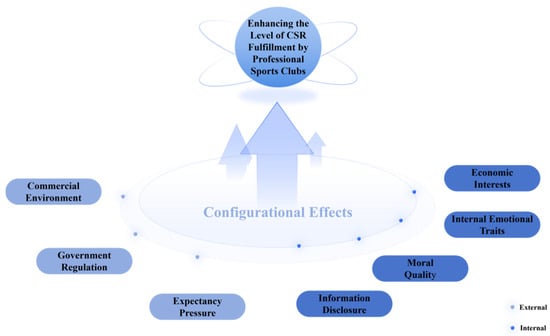
The high-level fulfillment of CSR in Chinese professional sports clubs is not attributable to any single antecedent condition. Instead, it results from the configurational interplay of multiple antecedent conditions, including commercial environment, government regulation, expectancy pressure, economic interests, internal emotional traits, moral quality, and information disclosure, interacting in complex, synergistic ways. In other words, multiple distinct yet equivalent pathways can lead to the achievement of high-level CSR fulfillment. The theoretical model illustrating these relationships is presented in Figure 1.
Figure 1.
Theoretical model of causal hypotheses for enhancing CSR fulfillment in clubs.
3. Research Design
3.1. Method Selection and Applicability Explanation
Variations in the fulfillment of CSR by professional sports clubs are generally not determined in a linear fashion by any single factor [97,98]. Rather, these variations result from configurational outcomes, where multiple antecedent conditions interact interdependently and synergistically. This complex causal nature limits the explanatory power of traditional statistical methods, such as regression analysis, that rely on assumptions of linearity and additivity. These methods primarily estimate the “net effect” of individual variables and thus struggle to reveal how different combinations of conditions interact and align to produce the same outcome [99]. Moreover, they are inadequate for addressing complex phenomena such as causal asymmetry.
In contrast, fsQCA, grounded in the logic of set theory, offers a more nuanced analytical approach suited to this study. First, fsQCA effectively addresses the concept of “multiple concurrent causality” [100], enabling the identification of various equivalent pathways that lead to high-level CSR fulfillment. This approach aligns well with the complex institutional environments and diverse governance logics characteristic of Chinese professional sports clubs. Second, fsQCA is capable of handling “causal asymmetry” [101], recognizing that configurations driving high-level CSR are not simply the inverse of those resulting in low-level CSR. This capacity provides a comprehensive understanding of the underlying mechanisms motivating clubs’ CSR performance. Moreover, since this study examines clubs from the CSL and the CBA, representative of a typical “medium-sized” sample, fsQCA preserves the qualitative depth of individual case analysis while enabling the quantitative generalization of patterns, making it an optimal methodological choice for research with such sample characteristics [102].
In terms of operational logic, the core of fsQCA lies in data calibration [103]. This study adopts the direct calibration method proposed by [104], which transforms raw data into fuzzy membership scores. Unlike traditional statistical methods that rely mechanically on sample means or standard deviations for normalization, this approach integrates theoretical insights and the substantive meaning of the data. This ensures that variable assignments not only capture the distributional characteristics of the data but also objectively reflect the actual level of clubs on specific indicators. Consequently, this method provides a more precise basis for identifying key configurational pathways driving CSR performance, thereby establishing a rigorous foundation for the subsequent analysis.
3.2. Scale Development and Questionnaire Design
To ensure the empirical data meets rigorous quality standards, this study adhered strictly to standardized procedures for scale development and questionnaire design, safeguarding measurement reliability and validity across multiple dimensions, including cross-cultural adaptability, procedural control, and content validity.
Introduction and Cross-Cultural Adaptation of Scales: Measurement items for all core constructs were adapted from well-established, validated scales in prior research (representative measurement items are shown in Table 1). the unique linguistic and cultural context of China, the study rigorously followed the “Translation and Back-Translation” method to ensure cross-cultural equivalence [105]. Initially, the research team translated the original English scales into Chinese. Subsequently, two bilingual experts, uninvolved in earlier stages, independently back-translated the Chinese versions into English. Through iterative rounds of comparison and semantic adjustments, potential language ambiguities and cultural discrepancies were minimized to ensure conceptual consistency.
Procedural Controls for Common Method Bias (CMB): To address potential CMB stemming from single-source data, the study implemented several procedural remedies during questionnaire design and administration, following the recommendations of Podsakoff [106]. These included: ① Anonymity Assurance: Emphasizing the academic purpose and strict confidentiality of responses in the introduction to reduce social desirability bias; ② Item Randomization: Randomizing the order of items from different constructs to prevent response consistency biases or cognitive shortcuts; ③ Psychological Separation: Providing explicit instructions in each subscale clarifying that “there are no right or wrong answers,” encouraging respondents to answer based on their genuine perceptions.
Content Validity and Pilot Testing: Prior to formal data collection, a pilot test was conducted involving an expert panel of five senior managers from professional sports clubs and three scholars specializing in sports management. Their feedback guided the localization of certain items to enhance clarity, relevance, and alignment with the practical management context of Chinese professional sports, thereby improving the questionnaire’s content validity.
The finalized questionnaire comprises two sections: Part One gathers respondents’ demographic and club-related information, such as job position and club type. Part Two assesses the core study variables, structured strictly according to the theoretical framework. It covers antecedent conditions, including external dimensions (commercial environment, government regulation, expectancy pressure) and internal dimensions (economic interests, emotional traits, moral quality, information disclosure), as well as the outcome variable (club CSR performance). All items utilize a 5-point Likert scale (1 = “Strongly Disagree” to 5 = “Strongly Agree”) to capture variable variations accurately.

Table 1.
Measurement items in the questionnaire.
Table 1.
Measurement items in the questionnaire.
| Variable | Presentation of Selected Measurement Items | References |
| Commercial Environment | ① The region in which the club is located has a highly competitive business environment. ② The level of the business environment in the club’s region influences its operations. | [44,107] |
| Government Regulation | ① The government imposes relatively stringent compliance requirements on the club. ② The government provides substantial support and encouragement for the club’s proactive activates. | [108,109] |
| Expectancy Pressure | ① Stakeholders hold high expectations regarding the club’s fulfillment of CSR. ② Stakeholders show strong concern about the club’s performance in CSR. | [27,37] |
| Economic Interests | ① The club has sustained growth in profitability and net profit margin in recent years, coupled with a reduction in operational costs. ② The club has experienced an increase in commercial revenue and brand value in recent years. | [110,111] |
| Internal Emotional Traits | ① Management and employees generally identify with the club’s values and culture. ② Management and employees exhibit a high level of identification with the club’s social mission. | [112,113] |
| Moral Quality | ① The club prioritizes ethical considerations in its decision-making. ② Management and employees of the club demonstrate a high standard of moral conduct. | [114] |
| Information Disclosure | ① The club regularly discloses operational and activity information to the public. ② The club proactively publicizes corrective measures taken in response to negative CSR incidents. | [115,116] |
| CSR Fulfillment of the Club | ① The club has clear commitments and inputs in environmental protection. ② The club actively participates in community public welfare initiatives. | [15,117,118] |
3.3. Data Collection and Sample
Based on the characteristics of professional sports development in China, as well as club size and stability, this study focuses on Chinese professional football and basketball clubs as research subjects [119,120], for two primary reasons: ① Football and basketball are the most professionalized and widely followed sports within China; ② The sample encompasses clubs with significant regional representation, including those located in economically developed areas such as Guangzhou, Beijing, and Shanghai, regions typically exhibiting stronger social welfare and environmental initiatives, as well as clubs from regions with rich sports traditions, like Liaoning and Guangdong, which have distinct advantages in youth development and community engagement. This sampling strategy ensures diversity in both geographic location and resource endowments.
Regarding key informants and data collection, given the confidentiality and limited access to internal operational data of professional sports clubs, this study adopts a “Key Informant” approach. The research targets mid- and senior-level managers and key business personnel who are directly involved in strategic decision-making and operational management, enabling accurate assessments of the clubs’ CSR motivations and actual practices. Due to the closed nature of this target group, a non-probability sampling strategy combining in-depth field interviews and online “snowball” sampling was employed [121]. The research team initially leveraged its social networks to contact core managers, who then facilitated chain referrals, expanding the sample reach effectively.
To ensure sample reliability and internal validity, the study implemented strict three-tier screening criteria: ① Identity Threshold: Respondents must be full-time employees of professional sports clubs with a minimum of one year’s industry experience; ② Job Relevance: Respondents’ roles must pertain to operations, marketing, public relations, or community relations, functions closely tied to CSR activities; ③ Cognitive Validation: The questionnaire incorporated “trap questions” and “familiarity self-assessment” items to exclude respondents who were completely unaware of their club’s CSR initiatives. A total of 203 questionnaires were collected. After rigorous data cleaning, 15 invalid responses, characterized by patterned answers or failure to meet screening criteria, were excluded. The final sample comprised 188 valid questionnaires, resulting in a valid response rate of 92.6%. Among these, 46.8% were from football clubs and 53.2% from basketball clubs, ensuring a balanced structural ratio that satisfies the sample size requirements for fsQCA analysis [122].
3.4. Reliability and Validity Tests
To ensure the reliability and validity of the measurement instruments, this study conducted a comprehensive assessment using the 188 valid responses with SPSS 27.0 and AMOS 27 software.
For reliability testing, Cronbach’s α coefficient and composite reliability (CR) were employed as evaluation metrics. The results showed that Cronbach’s α coefficients for all constructs exceeded 0.8, with several surpassing 0.9, well above the commonly accepted threshold of 0.7, indicating strong internal consistency of the scales [123]. Additionally, CR values for all latent variables met the recommended standards, further confirming the reliability of the constructs [124,125].
Regarding validity, the study focused on convergent and discriminant validity. The average variance extracted for all latent variables exceeded the critical value of 0.5, demonstrating that the measurement items effectively captured the underlying constructs and confirming good convergent validity [126]. Moreover, the constructs exhibited satisfactory discriminant validity, indicating distinctiveness among the variables.
In summary, the questionnaire employed in this study demonstrates adequate reliability and validity, thereby providing a robust foundation for subsequent analyses. Detailed results of the reliability and convergent validity assessments, along with the discriminant validity matrix, are provided in Table A2 and Table A3.
4. Data Processing and Configurational Results
4.1. Descriptive Statistics and Data Calibration
To gain an initial understanding of the basic characteristics of the collected data, this study first conducted descriptive statistical analysis. As shown in Table 2, the minimum values of the indicators range from 1.375 to 2.200, while the maximum values lie between 4.000 and 5.000. The mean values are concentrated between 3.649 and 3.988. Regarding dispersion, the standard deviations and variances indicate that the data for each indicator are relatively concentrated, reflecting strong data stability [127]. These characteristics provide a solid foundation for the subsequent assessment of overall variable conditions and support the implementation of fsQCA.
Table 2.
Descriptive statistics of variables and anchor thresholds (N = 188).
Following the descriptive statistical analysis, this study proceeds to calibrate the indicator data by converting the raw scores into fuzzy set membership values. This transformation is crucial for conducting necessary and sufficient condition analyses within the fsQCA framework. Given that the data were collected using a 5-point Likert scale, precise calibration is essential. This involves careful consideration of the scale’s meaning [128], data variation, and application of relevant theoretical insights to set appropriate calibration thresholds for each antecedent condition and the outcome variable [13]. Accordingly, this study adopts the direct calibration method, widely used in previous research for Likert-scale data [128,129,130,131,132,133]. Specifically, qualitative thresholds are set at 4, 3, and 2, representing full membership, the crossover point, and full non-membership, respectively [99,134,135] applied consistently across the seven antecedent variables and the outcome variable.
4.2. Necessity Analysis
Before conducting the configurational analysis, this study first examined the necessity of individual antecedent conditions for achieving high-level CSR fulfillment. According to fsQCA standards, a consistency index exceeding 0.9 is generally accepted as the threshold for identifying necessary conditions [104,136,137]. The analysis results (see Table 3) reveal that the consistency coefficients for commercial environment, government regulation, internal emotional traits, moral quality, and information disclosure all surpass this 0.9 threshold. This indicates that these five variables constitute necessary conditions for Chinese professional sports clubs to attain high-level CSR performance. This finding carries significant theoretical implications and reflects the specific institutional and organizational context of China’s sports industry.
Table 3.
Results of necessity analysis.
From the perspective of external conditions, government regulation emerges as a key necessary condition, confirming the explanatory power of institutional theory within the Chinese professional sports context. The development of professional sports clubs in China has long operated under a government-led macro-management system, where critical resources, such as policy support, venue permits, and league entry qualifications, are heavily controlled by government authorities [61]. Consequently, responding to governmental regulatory pressures and seeking political legitimacy have become foundational and mandatory drivers for clubs’ CSR engagement. Similarly, the necessity of a well-developed commercial environment highlights how marketization and industrialization have deeply embedded clubs in competitive market dynamics. A robust and competitive commercial environment not only promotes CSR through normative pressures and peer imitation [138], but also positions CSR as a strategic tool for clubs to gain competitive advantages and secure essential commercial resources.
From the perspective of internal conditions, the necessity of internal emotional traits and moral quality underscores the critical role of “soft” organizational factors. This aligns with upper echelons theory and ethical decision-making perspectives [90,139], suggesting that within Chinese clubs, the emotional commitment, value identification, and moral awareness of managers and employees act as vital filters and amplifiers, converting external pressures into genuine, self-driven CSR behaviors. The necessity of information disclosure further reflects the importance of legitimacy management mechanisms. In the face of increasing societal demands for organizational transparency in China, regular disclosure not only functions as a signaling mechanism that demonstrates compliance and social commitment to stakeholders, but also serves as an institutional prerequisite for social supervision, credibility maintenance, and sustained operational legitimacy [140].
In contrast, although expectancy pressure and economic interests exhibit relatively high consistency scores (both above 0.8), neither meets the 0.9 threshold to qualify as necessary conditions. This likely reflects the prevalent challenges faced by professional sports clubs in China, including ongoing profitability pressures and resource constraints. Thus, these factors are not essential on their own for achieving high-level CSR, but rather act as significant drivers that influence CSR outcomes in conjunction with other core necessary conditions, such as government regulation and internal moral quality, through different configurational pathways.
In summary, the necessity analysis identifies a “fundamental driving configuration” for CSR fulfillment in Chinese professional sports clubs, which relies heavily on the combined influence of external institutional pressures (governmental and market), internal cultural and ethical support, and legitimacy demonstration mechanisms like information disclosure. This provides a critical foundation for subsequent configurational analysis to explore how these multiple conditions interact in diverse ways to produce high-level CSR performance.
4.3. Results of Configurational Analysis
Following the necessity test, this study utilized fsQCA 3.0 software to perform a sufficiency analysis of configurational paths. Consistent with prevailing research practices, the consistency threshold was set at 0.8, the case frequency threshold at 1, and the proportional reduction in inconsistency consistency at 0.7 [99,141,142,143,144]. The initial analysis identified four configurational pathways leading to high-level CSR performance among professional sports clubs (see Table 4). However, not all these pathways possess equal theoretical and empirical relevance. To enhance the explanatory power and parsimony of the results, the study further refined the initial configurations by integrating statistical indicators with the contextual realities of professional sports development in China.
Table 4.
Configurations for enhancing CSR fulfillment in professional sports clubs.
From a statistical perspective, both Configuration Path 1 and Configuration Path 4 exhibited unique coverage values below 0.01. This suggests that these two pathways are largely redundant, showing significant overlap with other configurations and failing to provide distinct explanatory value. In essence, the cases covered by these paths are already accounted for by other configurations, indicating their limited independent contribution to the model [128,145].
Second, from both theoretical and contextual perspectives, the development of professional sports clubs in China is distinctly characterized by a “state-guided” feature. Their fulfillment of CSR largely depends on institutional arrangements and social consciousness rather than being purely driven by economic motives [15,146,147,148]. Existing research confirms that economic factors play a relatively limited role in motivating CSR engagement among Chinese clubs [16]. Often, clubs can only undertake social responsibilities within the constraints of their financial capacity [147,149]. More importantly, many clubs continue to fulfill social responsibilities due to legitimacy pressures even when their overall economic performance is weak [15,150]. This indicates that economic interests are not a core necessary condition driving CSR fulfillment for most Chinese clubs at present. Consequently, Configuration Path 1, which heavily relies on economic factors, lacks sufficient explanatory power in practice and is therefore excluded. At the same time, Configuration Path 4 presents a pattern where government regulation and internal moral commitment are relatively downplayed. This path relies mainly on general commercial norms and the autonomous motivation derived from internal emotional traits. However, within China’s institutional context, the government remains the central actor in resource allocation and legitimacy conferral, rendering the CSR practices of professional sports clubs distinctly “politically embedded” [140]. Given that Chinese professional sports are still transitioning from administrative governance to a market-oriented model, the absence of strong government guidance or deep-rooted organizational moral commitment often makes it difficult to sustain stable, high-level CSR performance [61,151]. This pathway may only occur in a few exceptional cases characterized by extremely high marketization levels and uniquely cohesive management teams, and thus lacks broad representativeness. Therefore, despite its theoretical relevance, this pathway is considered a “peripheral” configuration due to its limited typicality and practical applicability, and is excluded from further analysis [152].
Following screening based on the theoretical and statistical criteria outlined above, this study ultimately identifies two core configurational pathways with significant theoretical and practical implications (see adjusted results in Figure 2). This finding confirms the presence of equifinality, multiple distinct yet equally effective pathways, to achieving high-level CSR performance among Chinese professional sports clubs. Based on the unique combinations of core conditions characterizing each configuration, these pathways are designated as follows:
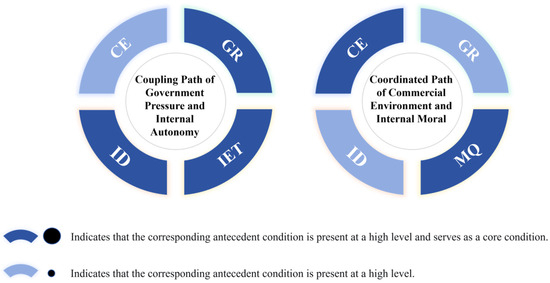
Figure 2.
Configurational paths. Note: CE is the abbreviation for Commercial Environment, GR is the abbreviation for Government Regulation, IET is the abbreviation for Information Disclosure, MQ is the abbreviation for Moral Quality, ID is the abbreviation for Information Disclosure.
- Configuration 1 (formerly Path 2): The coupling of government pressure and internal autonomy.
- Configuration 2 (formerly Path 3): The coordination of commercial environment with internal moral.
These two pathways reveal distinct mechanisms by which external environmental pressures and internal organizational factors align under different contexts, providing a robust foundation for subsequent in-depth analysis and discussion.
4.4. Robust Tests
Before analyzing the configuration outcomes, this study conducted robustness tests to ensure the scientific validity and credibility of the findings, drawing on established practices in prior research. Common robustness testing approaches include adjusting calibration thresholds [153], increasing consistency levels [154], modifying minimum case frequency requirements [155], and varying anchor points or other key parameters to evaluate result stability. Following these methodological guidelines, this study deliberately excluded the analysis of counterfactual outcomes as a robustness check [156], to avoid potential misinterpretations between the original configurations and robustness test results [157]. Accordingly, two robustness tests were performed: (1) the frequency threshold was set to 1, while the consistency threshold was raised from 0.8 to 0.9 [158,159,160] and (2) the consistency threshold was maintained at 0.8, with the frequency threshold increased from 1 to 2 [161]. These parameter adjustments did not produce significant changes in the number, composition, consistency, or coverage of the identified configurations. Therefore, the configurational analysis results presented in this study can be regarded as robust and reliable.
It is particularly noteworthy that the robustness checks in this study adhere to the holistic logic intrinsic to configurational analysis. Their primary purpose is not to isolate and verify the independent effects of internal or external conditions but rather to evaluate the stability and consistency of the overall solution configurations. This approach is grounded in the theoretical premise that CSR fulfillment by professional sports clubs emerges from the synergistic interaction between internal organizational characteristics and external institutional pressures. The fundamental value of configurational analysis lies precisely in uncovering the specific patterns of this synergy. Even when applying a stricter consistency threshold, demanding greater causal certainty, no configuration paths composed solely of individual external factors, such as government regulation or commercial environment, were identified. Instead, all robust configurations under these heightened criteria consistently reflected necessary combinations of both “external institutional pressures” and “internal organizational attributes.”
This finding highlights a distinctive strength of the fsQCA methodology in addressing complex causal relationships: rather than separating internal and external influences, it analyzes their combined effects holistically, revealing a functional complementarity between them. Specifically, while external pressures like government regulation significantly shape CSR behaviors, they do not independently constitute sufficient conditions for achieving high-level CSR performance without the concurrent presence of internal factors such as emotional commitment or moral quality. Consequently, this holistic assessment not only reaffirms the critical influence of the external institutional environment but also underscores the pivotal role of clubs’ internal agency in interpreting, responding to, and transforming these external pressures. This enhances both the theoretical comprehensiveness and the explanatory robustness of the study’s conclusions.
5. Analysis and Discussion
Based on the fsQCA configurational analysis, this study identifies two equivalent pathways that can lead to high-level CSR fulfillment among Chinese professional sports clubs. This finding confirms that CSR behavior in clubs is not a linear result of any single factor, but rather a non-linear outcome shaped by the complex interplay and combined influence of “external institutional pressures” and the “internal agency of the organization” within specific contextual settings. To offer a deeper understanding of the mechanisms driving these pathways, the following section deconstructs and interprets their underlying causal logic.
5.1. Coupling of Government Pressure and Internal Autonomy
The core characteristic of this pathway is the simultaneous presence of strong government regulation, pronounced internal emotional traits, and robust information disclosure, with the commercial environment acting as a complementary condition. This configuration exemplifies a typical “institutional compliance–agentive internalization” model for CSR enhancement within the distinctive context of Chinese professional sports. Its underlying logic illustrates how external coercive pressure and internal proactive responses, through a specific coupling mechanism, jointly drive high-level CSR fulfillment.
First, government regulation serves as the institutional foundation of this pathway. Drawing on Resource Dependence Theory, professional sports clubs in China exhibit significant reliance on scarce and critical resources controlled by the government, such as competition licenses, venue approvals, and fiscal subsidies [140,162]. This asymmetric dependency generates powerful coercive institutional pressures, establishing a non-negotiable compliance baseline and a fundamental framework for clubs’ CSR practices [163]. Simultaneously, a favorable commercial environment acts as a complementary condition, providing normative benchmarks for industry competition and further reinforcing external incentives for clubs to secure legitimacy through responsible conduct.
However, external pressure alone often results in symbolic compliance, which is insufficient for driving sustained, high-quality CSR. The distinctive theoretical contribution of this pathway lies in highlighting the pivotal “converter” role of internal emotional traits. According to Upper Echelons Theory, managers’ and key employees’ sense of mission identification and empathetic capacity function as psychological intermediaries, transforming external “hard constraints” into internalized “soft consciousness” [90]. This elevated level of internal emotional traits not only reduces resistance to external coercion but also motivates clubs to view CSR as an inherent imperative for creating social value, effectively bridging the gap between “policy and implementation” [164,165]. Building on this foundation, a high level of information disclosure serves a dual role as both a “signal transmission” mechanism and a “legitimacy reinforcement” tool [166]. It acts as the club’s institutionalized response to governmental and public scrutiny, demonstrating compliance. Concurrently, through public commitment, it generates “reputational collateral,” thereby reinforcing the sustainability and stability of the organization’s commitment to responsible conduct.
Thus, this pathway reveals a comprehensive cyclical mechanism of “pressure–identification–demonstration–reinforcement”: under strong government regulation, clubs with high emotional engagement proactively internalize external pressures as part of their organizational mission. By maintaining high transparency through information disclosure, they secure external legitimacy, successfully transitioning from “passive compliance” to “active responsibility-taking.”
5.2. Coordination of Commercial Environment with Internal Moral
The core characteristic of this pathway lies in the simultaneous presence of a strong commercial environment and high moral quality, illustrating a typical logic of “competition-driven, ethics-guided” CSR enhancement. Unlike the first pathway, this configuration demonstrates how, within a market-driven framework, external competitive pressures and internal moral commitments jointly propel clubs toward CSR practices that align strategic intent with authentic purpose.
From an external perspective, a favorable commercial environment imposes robust isomorphic pressures and competitive incentives. According to New Institutionalism Theory, a mature market features intense competition and well-established industry norms. In such a context, normative and mimetic isomorphic mechanisms compel clubs to treat CSR as a vital strategic tool to differentiate themselves competitively and meet stakeholder expectations [138,167]. Although government regulation does not emerge as a core condition here, it nonetheless provides the essential institutional backdrop that underpins market competition and guarantees baseline compliance.
In response to these external pressures, moral quality plays a critical internal role in orienting and filtering organizational behavior [114]. Motivated by commercial interests, only clubs with a high degree of moral quality, reflected in a strong ethical climate and morally conscious management [168], can uphold the principle of “doing the right thing” while pursuing economic gains. This internal ethical filter deters short-term opportunism, ensuring that CSR actions are substantive and deeply embedded in sustainable organizational practices [169]. Information disclosure acts as a crucial bridge in this process: it serves as a costly signal that communicates the club’s governance quality to the market, enhancing brand value, while simultaneously enforcing ethical alignment and process standardization internally through transparent communication.
Thus, this pathway reveals a sophisticated form of CSR driven by the dual forces of market instrumental rationality and ethical value rationality. Against the backdrop of China’s advancing professional sports marketization, clubs that successfully integrate external competitive dynamics with internal moral commitment transform CSR from a perceived liability into a strategic asset, fostering a harmonious balance between commercial logic and social value.
In summary, adopting a configurational perspective, this study confirms that CSR fulfillment in professional sports clubs is characterized by “multiple concurrent causality.” There is no single optimal model; rather, diverse combinations of internal and external conditions can lead to high CSR performance. Specifically, external and internal factors jointly constitute the structural framework shaping CSR outcomes, with their interaction across levels determining implementation effectiveness. External conditions define the institutional and market contexts, providing both constraints and opportunities for CSR. Internal conditions influence the club’s agency and strategic choices within these contexts. Regarding their specific roles: at the external level, government regulation stands out as the most powerful and consistent driver, functioning both as a direct source of authoritative pressure and as a foundation for market competition. The commercial environment’s influence is more contingent, manifesting primarily when combined with strong internal ethical qualities. Internally, emotional identification and organizational belonging act as autonomous motivators, while moral cognition and ethical principles serve as normative drivers. Information disclosure performs an indispensable “bridging” function in both pathways by converting internal and external pressures into public commitments, subjecting clubs to social scrutiny, thereby consolidating legitimacy and ensuring the sustainability of responsible practices.
6. Conclusions and Implications
6.1. Conclusions
Given the current landscape where the level of CSR implementation among Chinese professional sports clubs exhibits significant variation and is driven by complex underlying factors, this study transcends the limitations of traditional linear regression analysis. Drawing on a configurational perspective, it employs fsQCA to empirically explore the synergistic effects of seven key conditions, commercial environment, government regulation, expectancy pressure, economic interests, internal emotional traits, moral quality, and information disclosure, on CSR fulfillment. The results reveal that no single condition alone is sufficient to ensure high-level CSR performance; rather, it is the specific configurations and interactions between internal and external factors that drive effective CSR outcomes.
Based on the empirical results and in-depth discussion, the main findings and contributions of this study can be distilled into the following three aspects:
① Methodologically, it reveals the causal complexity of CSR fulfillment. By employing fsQCA, this study demonstrates the presence of causal complexity in CSR performance, confirming multiple concurrent causality and causal asymmetry among antecedent conditions and high-level CSR outcomes. In other words, different configurations of conditions can lead to equivalent CSR fulfillment, a concept known as equifinality, or “different paths to the same destination.” This insight methodologically clarifies why clubs operating under diverse resource endowments and institutional environments may nonetheless achieve comparable CSR results. It thereby offers a valuable complement to prior studies that predominantly focused on the isolated net effects of individual variables.
② It proposes a dual-pathway integrated model. This study identifies two equivalent and distinct pathways to high-level CSR performance in Chinese professional sports clubs. The first pathway, termed the “coupling path of government pressure and internal autonomy,” highlights that under strong governmental regulation, internal emotional traits play a crucial role in converting external institutional pressures into genuine responsible actions. The second pathway, described as the “coordinating path of commercial environment and internal ethics,” emphasizes that within a competitive market context, high moral quality acts as a key stabilizing factor balancing commercial interests with social responsibility. Together, these pathways illustrate the differentiated strategic responses of clubs navigating the coexistence of administrative and market logics.
③ It identifies directions for future research. Given the study’s focus primarily on football and basketball clubs and the inherent limitations of fsQCA in terms of the number of conditions analyzed, its conclusions have defined boundaries. Future research should consider expanding along three main dimensions: (1) broadening the sample to include a wider variety of sports to enhance the generalizability of findings; (2) adopting a longitudinal approach to capture the dynamic evolution of CSR fulfillment over time; and (3) integrating additional variables, such as managerial characteristics and fan culture, to develop a more nuanced and comprehensive explanatory framework. Such expansions would serve to validate and deepen the theoretical model within the Chinese context.
6.2. Managerial Implications
Based on the configurational analysis findings of this study, two typical and equivalent pathways for enhancing CSR performance in professional sports clubs have been identified: the “coupling of government pressure with internal autonomy” and the “coordination between the business environment and internal ethics.” Building on these insights, this study proposes multi-level management recommendations aimed at providing a solid theoretical foundation and strategic guidance for optimizing CSR practices within Chinese professional sports clubs.
6.2.1. Optimizing External Institutional Arrangements: Shifting from “Coercive Regulation” to “Incentive Compatibility”
Regarding the “coupling path of government pressure and internal autonomy” identified in this study, government regulation emerges as the pivotal external driver of CSR engagement in Chinese professional sports clubs. Institutional theory emphasizes that the government functions not only as a source of coercive pressure but also as a critical institutional architect shaping the normalization of organizational behavior. Consequently, policy development should transcend traditional direct interventions through administrative mandates and instead focus on cultivating an institutional environment characterized by “incentive compatibility,” thereby effectively converting external pressures into intrinsic organizational motivations for fulfilling social responsibilities.
First, a differentiated policy guidance and support mechanism must be established. Since reliance solely on punitive measures risks prompting clubs to engage in symbolic or defensive compliance, government agencies should leverage their resource allocation powers to design positive incentives. Examples include establishing dedicated fiscal subsidies for CSR initiatives, offering targeted tax incentives, or explicitly incorporating CSR performance into criteria for league membership and point-based evaluations. These incentives can substantially lower the marginal costs for clubs in fulfilling their social responsibilities [44]. By doing so, external compliance pressures are transformed into strategic motivations, encouraging clubs to actively pursue policy benefits and thereby enhance their competitive advantages [170]. This shift fosters a transition from passive compliance to proactive, strategically embedded CSR fulfillment.
Second, the institutionalization of a diversified supervisory system within the commercial environment is essential. In relation to the “coordination pathway between the commercial environment and internal ethics,” this study finds that a well-regulated, transparent market environment enables competitive mechanisms to select and incentivize responsible clubs. To support this, industry associations and regulatory authorities should collaborate to construct a stakeholder-based, diversified supervisory network. The goal is not to intensify administrative control but rather to empower clubs through institutional innovations, such as strengthening the independence of media oversight, supporting fan organizations’ participation in governance, and establishing authoritative third-party CSR rating and disclosure platforms. These measures will significantly elevate the market visibility and social scrutiny of clubs’ CSR performance [171,172]. Consequently, exemplary CSR practices can be directly translated into tangible market advantages, including enhanced brand reputation and increased fan loyalty, fostering a virtuous commercial ecosystem in which “good money drives out bad.”
6.2.2. Activate Internal Endogenous Motivation: From “Peripheral Tactics” to “Core Strategy”
The study reveals that internal emotional traits and moral quality serve as crucial internal drivers distinguishing various pathways to enhancing CSR performance. This finding signals to club managers the necessity of moving beyond perceiving CSR merely as a short-term “public relations embellishment.” Instead, CSR must be systematically internalized as a core strategic capability integral to the organization’s identity.
First, it is imperative to foster the deep integration of CSR within the club’s long-term development strategy. From the perspective of strategic CSR, clubs should embed CSR objectives holistically into their overarching business strategies. Managers must proactively identify responsibility areas that not only respond to significant social expectations but also bolster the club’s core competitiveness, such as strengthening fan identification and cultivating brand reputation, with the ultimate goal of creating “shared value.” This approach elevates CSR from a peripheral activity to a strategic pillar, driving meaningful organizational engagement through the dissemination of leadership values and the cultivation of supportive cultural mechanisms [90,173].
Second, clubs emphasizing moral quality should establish robust internal CSR governance structures grounded in ethical decision-making. Specifically, implementing formal ethical review processes or integrating explicit CSR performance metrics into management evaluation systems is recommended [174]. Such measures transcend instrumental brand management by embedding ethical decision-making theories within organizational practices through institutional design. This institutionalization ensures a steadfast commitment to “doing the right thing,” even under commercial pressures, thereby fundamentally safeguarding the authenticity and sustainability of CSR efforts.
Finally, clubs must cultivate sustainable trust capital through high-quality information disclosure. Recognizing the pivotal role of disclosure across both pathways, clubs should treat it as a strategic mechanism to manage legitimacy and reduce information asymmetry. Drawing on signaling theory, standardized, transparent, and high-quality disclosures not only meet external stakeholder expectations but also signify the quality of internal governance [175,176]. Therefore, clubs should develop a regular CSR reporting system that shifts disclosure from mere activity enumeration to systematic narrative communication, clearly articulating how CSR initiatives align with the club’s core mission, community needs, and long-term development objectives. This in-depth narrative effectively connects both the rational and emotional dimensions of internal and external stakeholders, continuously reinforcing the club’s social legitimacy and establishing a robust foundation of social trust conducive to sustainable growth.
In conclusion, this study demonstrates that enhancing CSR performance in professional sports clubs is not reliant on isolated administrative mandates or singular measures. Rather, it demands a systemic approach that coordinates institutional design, organizational strategy, and legitimacy management. Admittedly, given the complexity of the Chinese professional sports landscape, the practical application of these insights may face constraints in granularity and scope and may not address every executional nuance. Nonetheless, the core contribution lies in transcending simplistic, homogenized linear thinking to offer managers and policymakers a strategic action framework grounded in configurational theory. Practitioners are thus encouraged to carefully tailor and dynamically adjust these strategies based on thorough contextual analyses, i.e., the club’s specific configurational pathway, exploring sustainable avenues that deeply integrate social responsibility with business development amid uncertainty.
Author Contributions
Conceptualization, Q.M.; Methodology, Q.M., L.W., Y.L. and T.C.; Investigation, Q.M., L.W., Y.L. and X.W.; Resources, Q.M.; Data curation, Q.M. and L.W.; Writing—original draft, Q.M.; Writing—review and editing, T.C.; Supervision, T.C. All authors have read and agreed to the published version of the manuscript.
Funding
This research received no external funding.
Institutional Review Board Statement
The authors point out that this survey is a non-interventional study. According to Article 32 of the “Notification on Issuing the Measures for Ethical Review of Life Sciences and Medical Research Involving Humans” (National Health Science Education Development [2023] No. 4), research using anonymized information data that does not cause harm to human subjects, involve sensitive personal information, or commercial interests may be exempt from ethical review. This aims to reduce unnecessary burdens on researchers and facilitate the conduct of such studies. As this study utilizes anonymized information data, it falls under the category of exemption from ethical review. For details, click: https://www.nhc.gov.cn/qjjys/c100016/202302/6b6e447b3edc4338856c9a652a85f44b.shtml (accessed on 15 March 2025).
Informed Consent Statement
Informed consent was obtained from all subjects involved in the study.
Data Availability Statement
The original contributions presented in this study are included in the article. Further inquiries can be directed to the corresponding author.
Conflicts of Interest
The authors declare no conflicts of interest.
Appendix A
Table A1.
Theories of CSR: Selected Perspectives.
Table A1.
Theories of CSR: Selected Perspectives.
| Scholar(s) | Main Perspective(s) |
|---|---|
| McGuire | Enterprises not only have economic and legal obligations, but also certain responsibilities to society [177]. |
| Davis | Enterprises should consider or respond to issues beyond the narrow economic, technological and legislative requirements, and achieve the unification of traditional economic goals and social interests [178]. |
| Drucker | CSR is the requirement of society for the legitimacy of a company’s management and operation rights, and it is also a social function of the enterprise [179]. |
| Brown et | CSR refers to the position and activities of enterprises in relation to their social obligations or obligations towards stakeholders [139]. |
| Elkington | If an enterprise forms an economic and social system, then its development goals should constitute a triple bottom line, namely, economic, social and environmental [180]. |
| Margolis et al. | CSR refers to the voluntary activities carried out by enterprises to improve social and environmental conditions [181]. |
| Golob et al. | Enterprises must assume responsibilities beyond production and profit-making within society [182]. |
| Friedman | CSR constitutes the cornerstone of the stakeholder concept [110,183]. |
| Keinert | CSR as a defining framework, aims to describe the relationship between a company and the larger society surrounding it [184]. |
Table A2.
Reliability and Convergent Validity (N = 188).
Table A2.
Reliability and Convergent Validity (N = 188).
| Variable | Measurement Item | Standardized Loading Factor | CA | CR | AVE |
|---|---|---|---|---|---|
| Commercial Environment | CE1 | 0.761 | 0.835 | 0.644 | 0.843 |
| CE2 | 0.827 | ||||
| CE3 | 0.804 | ||||
| Government Regulation | GR1 | 0.779 | 0.898 | 0.692 | 0.899 |
| GR2 | 0.823 | ||||
| GR3 | 0.866 | ||||
| GR4 | 0.844 | ||||
| Expectancy Pressure | EP1 | 0.847 | 0.905 | 0.775 | 0.911 |
| EP2 | 0.897 | ||||
| EP3 | 0.886 | ||||
| Economic Interests | EI1 | 0.769 | 0.808 | 0.703 | 0.823 |
| EI2 | 0.888 | ||||
| Internal Emotional Traits | IET1 | 0.850 | 0.934 | 0.744 | 0.935 |
| IET2 | 0.874 | ||||
| IET3 | 0.874 | ||||
| IET4 | 0.859 | ||||
| IET5 | 0.853 | ||||
| Moral Quality | MQ1 | 0.913 | 0.939 | 0.762 | 0.941 |
| MQ2 | 0.919 | ||||
| MQ3 | 0.854 | ||||
| MQ4 | 0.796 | ||||
| MQ5 | 0.860 | ||||
| Information Disclosure | ID1 | 0.777 | 0.904 | 0.727 | 0.913 |
| ID2 | 0.907 | ||||
| ID3 | 0.920 | ||||
| ID4 | 0.766 | ||||
| CSR Fulfillment of the Club | CSR1 | 0.780 | 0.950 | 0.708 | 0.951 |
| CSR2 | 0.773 | ||||
| CSR3 | 0.948 | ||||
| CSR4 | 0.929 | ||||
| CSR5 | 0.874 | ||||
| CSR6 | 0.843 | ||||
| CSR7 | 0.816 | ||||
| CSR8 | 0.778 |
Note: Cronbach’s alpha (CA), composite reliability (CR), average variance extracted (AVE).
Table A3.
Validity tests of variables (N = 188).
Table A3.
Validity tests of variables (N = 188).
| CE | GR | EP | EI | IET | MQ | ID | CSR | |
|---|---|---|---|---|---|---|---|---|
| CE | 0.802 | |||||||
| GR | 0.735 *** | 0.832 | ||||||
| EP | 0.499 *** | 0.718 *** | 0.880 | |||||
| EI | 0.538 *** | 0.756 *** | 0.761 *** | 0.838 | ||||
| IET | 0.617 *** | 0.777 *** | 0.754 *** | 0.761 *** | 0.863 | |||
| MQ | 0.577 *** | 0.625 *** | 0.697 *** | 0.651 *** | 0.708 *** | 0.873 | ||
| ID | 0.744 *** | 0.467 *** | 0.428 *** | 0.46 *** | 0.569 *** | 0.600 *** | 0.853 | |
| CSR | 0.652 *** | 0.526 *** | 0.519 *** | 0.525 *** | 0.548 *** | 0.671 *** | 0.664 *** | 0.841 |
Note: CE is the abbreviation for Commercial Environment, GR is the abbreviation for Government Regulation, EP is the abbreviation for Expectancy Pressure, EI is the abbreviation for Economic Interests, IET is the abbreviation for Information Disclosure, MQ is the abbreviation for Moral Quality, ID is the abbreviation for Information Disclosure, CSR is the abbreviation for CSR Fulfillment of the Club.“***” indicates p < 0.001.
References
- McWilliams, A.; Siegel, D.S.; Wright, P.M. Corporate social responsibility: Strategic implications. J. Manag. Stud. 2006, 43, 1–18. [Google Scholar] [CrossRef]
- Carroll, A.B. Corporate social responsibility: The centerpiece of competing and complementary frameworks. Organ. Dyn. 2015, 44, 87–96. [Google Scholar] [CrossRef]
- Paramio-Salcines, J.L.; Babiak, K.; Walters, G. Routledge Handbook of Sport and Corporate Social Responsibility; Routledge: London, UK, 2013. [Google Scholar]
- Sheth, H.; Babiak, K.M. Beyond the game: Perceptions and practices of corporate social responsibility in the professional sport industry. J. Bus. Ethics 2010, 91, 433–450. [Google Scholar] [CrossRef]
- Blumrodt, J.; Desbordes, M.; Bodin, D. Professional football clubs and corporate social responsibility. Sport Bus. Manag. Int. J. 2013, 3, 205–225. [Google Scholar] [CrossRef]
- Walzel, S.; Robertson, J.; Anagnostopoulos, C. Corporate social responsibility in professional team sports organizations: An integrative review. J. Sport Manag. 2018, 32, 511–530. [Google Scholar] [CrossRef]
- Babiak, K.; Wolfe, R. Determinants of corporate social responsibility in professional sport: Internal and external factors. J. Sport Manag. 2009, 23, 717–742. [Google Scholar] [CrossRef]
- Misangyi, V.F.; Greckhamer, T.; Furnari, S.; Fiss, P.C.; Crilly, D.; Aguilera, R. Embracing causal complexity: The emergence of a neo-configurational perspective. J. Manag. 2017, 43, 255–282. [Google Scholar] [CrossRef]
- Athanasopoulou, A.; Selsky, J.W. The social context of corporate social responsibility: Enriching research with multiple perspectives and multiple levels. Bus. Soc. 2015, 54, 322–364. [Google Scholar] [CrossRef]
- Vitolla, F.; Rubino, M.; Garzoni, A. Integrated corporate social responsibility: Driving factors and means of integration–a multiple case study analysis. J. Manag. Dev. 2016, 35, 1323–1343. [Google Scholar] [CrossRef]
- Li, L. Philosophical Insights into Value Transmission within Cross-Regional Sports Cultural Interactions. Cult. Int. J. Philos. Cult. Axiolog. 2025, 22, 4. [Google Scholar]
- Liu, D.; Schwarz, E.C. Assessing the community beliefs about the corporate social responsibility practices of professional football clubs in China. Soccer Soc. 2020, 21, 584–601. [Google Scholar] [CrossRef]
- Wang, C.; Zhou, H.; Zhang, Y.; Liu, L. Promotion pathways of financial performance: A configuration analysis of corporate social responsibility based on a fuzzy set qualitative comparative analysis approach. IEEE Access 2022, 10, 10970–10982. [Google Scholar] [CrossRef]
- Wang, C.; Song, J.; Wang, Z. What Do We Focus on? Investigating Chinese Public Preferences for CSR Initiatives in Professional Sports Clubs. Sustainability 2025, 17, 9648. [Google Scholar] [CrossRef]
- Yang, X.; Lu, H.; Cai, J.; Zhang, S. Constructing a social responsibility system for professional sports clubs based on the perspective of China. Bus. Ethics Environ. Responsib. 2025, 34, 528–540. [Google Scholar] [CrossRef]
- Liu, D.; Wilson, R.; Plumley, D.; Chen, X. Perceived corporate social responsibility performance in professional football and its impact on fan-based patronage intentions: An example from Chinese football. Int. J. Sports Mark. Spons. 2019, 20, 353–370. [Google Scholar] [CrossRef]
- Qiao, Z.; Guo, Z.; Wen, L. Current Situation, Influencing Factors and Path of Social Responsibility of Professional Sports Clubs Based on Consumer Emotion Regulation. Int. J. Neuropsychopharmacol. 2022, 25, A53. [Google Scholar] [CrossRef]
- Cochran, P.L. The evolution of corporate social responsibility. Bus. Horiz. 2007, 50, 449–454. [Google Scholar] [CrossRef]
- Smith, A.C.; Westerbeek, H.M. Sport as a vehicle for deploying corporate social responsibility. J. Corp. Citizsh. 2007, 43–54. Available online: https://www.jstor.org/stable/jcorpciti.25.43 (accessed on 20 December 2025).
- Walker, M.; Parent, M.M. Toward an integrated framework of corporate social responsibility, responsiveness, and citizenship in sport. Sport Manag. Rev. 2010, 13, 198–213. [Google Scholar] [CrossRef]
- Engel, D.L. An approach to corporate social responsibility. Stanf. Law Rev. 1979, 32, 1–98. [Google Scholar] [CrossRef]
- Epstein, E.M. Societal, Managerial, and Legal Perspectives on Corporate Social Responsibility—Product and Process. Hastings LJ 1978, 30, 1287. [Google Scholar]
- Hess, D. Social reporting: A reflexive law approach to corporate social responsiveness. J. Corp. Law 1999, 25, 41. [Google Scholar]
- L’etang, J. Ethical corporate social responsibility: A framework for managers. J. Bus. Ethics 1995, 14, 125–132. [Google Scholar] [CrossRef]
- Carroll, A.B. Corporate social responsibility: Evolution of a definitional construct. Bus. Soc. 1999, 38, 268–295. [Google Scholar] [CrossRef]
- Carroll, A.B. A Three-Dimensional Conceptual Model of Corporate Performance. Acad. Manag. Rev. 1979, 4, 479–505. [Google Scholar] [CrossRef]
- Carroll, A.B. The pyramid of corporate social responsibility: Toward the moral management of organizational stakeholders. Bus. Horiz. 1991, 34, 39–48. [Google Scholar] [CrossRef]
- Godfrey, P.C. Corporate social responsibility in sport: An overview and key issues. J. Sport Manag. 2009, 23, 698–716. [Google Scholar] [CrossRef]
- Cobourn, S. Responsibility Revolution: An International Investigation of Corporate Social Responsibility in Professional Sport. Ph.D. Thesis, University of Technology Sydney, Ultimo, NSW, Australia, 2014. [Google Scholar]
- Robertson, J.F. Exploring the Social Responsibility of Sport Organisations. Ph.D. Thesis, Victoria University, Melbourne, VIC, Australia, 2016. [Google Scholar]
- Greenhow, A. Social Responsibility, Stakeholders and Professional Football Clubs: From ’Window-Dressing’to Civic Wealth Creation. In Research Handbook on the Law of Professional Football Clubs; Edward Elgar Publishing: Cheltenham, UK, 2023; pp. 369–392. [Google Scholar]
- Kolyperas, D. Corporate and social responsibility in professional football club organizations. Int. J. Sport Manag. Mark. 2012, 10, 83–103. [Google Scholar]
- Freeman, R.E. Divergent stakeholder theory. Acad. Manag. Rev. 1999, 24, 233–236. [Google Scholar] [CrossRef]
- Freeman, R.E.; Phillips, R.A. Stakeholder theory: A libertarian defense. Bus. Ethics Q. 2002, 12, 331–349. [Google Scholar] [CrossRef]
- Freeman, R.E.; Phillips, R.; Sisodia, R. Tensions in stakeholder theory. Bus. Soc. 2020, 59, 213–231. [Google Scholar] [CrossRef]
- Freeman, R.E.; Harrison, J.S.; Wicks, A.C. Managing for Stakeholders: Survival, Reputation, and Success; Yale University Press: New Haven, CT, USA, 2007. [Google Scholar]
- Clarkson, M.E. A stakeholder framework for analyzing and evaluating corporate social performance. Acad. Manag. Rev. 1995, 20, 92–117. [Google Scholar] [CrossRef]
- Mendizabal, X.; San-Jose, L.; Garcia-Merino, J.D. Understanding and mapping stakeholders of sport clubs: Particularities. Sport Bus. Manag. Int. J. 2020, 10, 359–378. [Google Scholar] [CrossRef]
- Gammelsæter, H. Institutional pluralism and governance in “commercialized” sport clubs. Eur. Sport Manag. Q. 2010, 10, 569–594. [Google Scholar] [CrossRef]
- Crompton, J. Beyond economic impact: An alternative rationale for the public subsidy of major league sports facilities. J. Sport Manag. 2004, 18, 40–58. [Google Scholar] [CrossRef]
- Milgrom, P.R.; North, D.C.; Weingast*, B.R. The role of institutions in the revival of trade: The law merchant, private judges, and the champagne fairs. Econ. Politics 1990, 2, 1–23. [Google Scholar] [CrossRef]
- Dahlsrud, A. How corporate social responsibility is defined: An analysis of 37 definitions. Corp. Soc. Responsib. Environ. Manag. 2008, 15, 1–13. [Google Scholar] [CrossRef]
- Frynas, J.G.; Yamahaki, C. Corporate social responsibility: Review and roadmap of theoretical perspectives. Bus. Ethics A Eur. Rev. 2016, 25, 258–285. [Google Scholar] [CrossRef]
- Campbell, J.L. Why would corporations behave in socially responsible ways? An institutional theory of corporate social responsibility. Acad. Manag. Rev. 2007, 32, 946–967. [Google Scholar] [CrossRef]
- Yang, X.; Rivers, C. Antecedents of CSR practices in MNCs’ subsidiaries: A stakeholder and institutional perspective. J. Bus. Ethics 2009, 86, 155–169. [Google Scholar] [CrossRef]
- Jamali, D.; Neville, B. Convergence versus divergence of CSR in developing countries: An embedded multi-layered institutional lens. J. Bus. Ethics 2011, 102, 599–621. [Google Scholar] [CrossRef]
- Matten, D.; Moon, J. “Implicit” and “explicit” CSR: A conceptual framework for a comparative understanding of corporate social responsibility. Acad. Manag. Rev. 2008, 33, 404–424. [Google Scholar] [CrossRef]
- Breitbarth, T.; Walzel, S.; Anagnostopoulos, C.; Van Eekeren, F. Corporate social responsibility and governance in sport: “Oh, the things you can find, if you don’t stay behind!”. Corp. Gov. 2015, 15, 254–273. [Google Scholar] [CrossRef]
- Sohrabi, Z.; Moharramzadeh, M.; Nazari, R. The Commercialization Model of Professional Sport Clubs. Arch. Sport Manag. Leadersh. 2023, 1, 51–60. [Google Scholar]
- Smith, A.C.; Stewart, B. The Special Features of Sport: A Critical Revisit. In Handbook of Research on Sport and Business; Edward Elgar Publishing: Cheltenham, UK, 2013; pp. 526–547. [Google Scholar]
- Hamil, S.; Morrow, S. Corporate social responsibility in the Scottish Premier League: Context and motivation. Eur. Sport Manag. Q. 2011, 11, 143–170. [Google Scholar] [CrossRef]
- Breitbarth, T.; Harris, P. The role of corporate social responsibility in the football business: Towards the development of a conceptual model. Eur. Sport Manag. Q. 2008, 8, 179–206. [Google Scholar] [CrossRef]
- Rith, R.; Spinelli, R. Examining the X factor of corporate social responsibility in professional football clubs: An integrative literature review. Corp. Soc. Responsib. Environ. Manag. 2024, 31, 3487–3501. [Google Scholar] [CrossRef]
- Barbu, M.C.R.; Popescu, M.C.; Burcea, G.B.; Costin, D.-E.; Popa, M.G.; Păsărin, L.-D.; Turcu, I. Sustainability and social responsibility of Romanian sport organizations. Sustainability 2022, 14, 643. [Google Scholar] [CrossRef]
- François, A.; Bayle, E.; Gond, J.-P. A multilevel analysis of implicit and explicit CSR in French and UK professional sport. Eur. Sport Manag. Q. 2019, 19, 15–37. [Google Scholar] [CrossRef]
- Breitbarth, T.; Hovemann, G.; Walzel, S. Scoring strategy goals: Measuring corporate social responsibility in professional European football. Thunderbird Int. Bus. Rev. 2011, 53, 721–737. [Google Scholar] [CrossRef]
- Zheng, J.; Chen, S.; Tan, T.-C.; Lau, P.W.C. Sport policy in China (mainland). Int. J. Sport Policy Politics 2018, 10, 469–491. [Google Scholar] [CrossRef]
- Shi, Y.; Song, Q.; Li, L. Research on the factors and path of sports industry development in China: A fsQCA study of 31 provinces. PLoS ONE 2024, 19, e0298167. [Google Scholar] [CrossRef] [PubMed]
- Zhan, X. From budding to developing: The history of china’s sport industry policy. Int. J. Hist. Sport 2016, 33, 2238–2252. [Google Scholar] [CrossRef]
- Xiong, H. Regional coordinated development of low-carbon sports industry in China. Sci. Rep. 2024, 14, 18689. [Google Scholar] [CrossRef]
- Graafland, J.; Zhang, L. Corporate social responsibility in C hina: Implementation and challenges. Bus. Ethics A Eur. Rev. 2014, 23, 34–49. [Google Scholar] [CrossRef]
- Arvate, P.R.; Curi, A.Z.; Rocha, F.; Miessi Sanches, F.A. Corruption and the size of government: Causality tests for OECD and Latin American countries. Appl. Econ. Lett. 2010, 17, 1013–1017. [Google Scholar] [CrossRef]
- Berber, N.; Aleksić, M.; Slavić, A.; Jelača, M.S. The relationship between corporate social responsibility and corporate reputation in Serbia. Eng. Econ. 2022, 33, 232–245. [Google Scholar] [CrossRef]
- Jiang, H.; Wang, Y.; Zhu, S.; Lv, Z.; Kong, P. Causal Complexity of Green Business Environment with Corporate Social Responsibility in China from a Dynamic Fsqca. SSRN 2024. [Google Scholar] [CrossRef]
- Newman, C.; Rand, J.; Tarp, F.; Trifkovic, N. Corporate social responsibility in a competitive business environment. J. Dev. Stud. 2020, 56, 1455–1472. [Google Scholar] [CrossRef]
- Zou, H.; Wang, R.; Qi, G. The response of CSR to economic policy uncertainty: Evidence from China. Sustainability 2023, 15, 12978. [Google Scholar] [CrossRef]
- Windsor, D. Corporate social responsibility: Three key approaches. J. Manag. Stud. 2006, 43, 93–114. [Google Scholar] [CrossRef]
- Dummett, K. Drivers for corporate environmental responsibility (CER). Environ. Dev. Sustain. 2006, 8, 375–389. [Google Scholar] [CrossRef]
- Tariq, S. Choice of market entry mode is contingent on environment: Integrating the resource dependence and contingency theory perspectives. Int. J. Sci. Bus. 2019, 3, 173–182. [Google Scholar]
- Christensen, J.; Murphy, R. The social irresponsibility of corporate tax avoidance: Taking CSR to the bottom line. Development 2004, 47, 37–44. [Google Scholar] [CrossRef]
- Gardberg, N.A.; Fombrun, C.J. Corporate citizenship: Creating intangible assets across institutional environments. Acad. Manag. Rev. 2006, 31, 329–346. [Google Scholar] [CrossRef]
- Jo, H.; Song, M.H.; Tsang, A. Corporate social responsibility and stakeholder governance around the world. Glob. Financ. J. 2016, 29, 42–69. [Google Scholar] [CrossRef]
- Freeman, R.E.; Evan, W.M. Corporate governance: A stakeholder interpretation. J. Behav. Econ. 1990, 19, 337–359. [Google Scholar] [CrossRef]
- Mitchell, R.K.; Agle, B.R.; Wood, D.J. Toward a theory of stakeholder identification and salience: Defining the principle of who and what really counts. Acad. Manag. Rev. 1997, 22, 853–886. [Google Scholar] [CrossRef]
- Waygood, S. How do the capital markets undermine sustainable development? What can be done to correct this? J. Sustain. Financ. Invest. 2011, 1, 81–87. [Google Scholar] [CrossRef]
- Vásquez-Ordóñez, L.R.; Lassala, C.; Ulrich, K.; Ribeiro-Navarrete, S. The impact of corporate social responsibility on the financial performance of renewable energy firms. Econ. Res. -Ekon. Istraž. 2023, 36, 2174152. [Google Scholar] [CrossRef]
- Majumdar, S.K.; Chang, H. On the determinants of non-market strategy: The separations mechanism and cost shifting in the telecommunications industry. Telecommun. Policy 2010, 34, 711–725. [Google Scholar] [CrossRef]
- Lioui, A.; Sharma, Z. Environmental corporate social responsibility and financial performance: Disentangling direct and indirect effects. Ecol. Econ. 2012, 78, 100–111. [Google Scholar] [CrossRef]
- Minor, D.; Morgan, J. CSR as reputation insurance: Primum non nocere. Calif. Manag. Rev. 2011, 53, 40–59. [Google Scholar] [CrossRef]
- Martínez, P.; Del Bosque, I.R. CSR and customer loyalty: The roles of trust, customer identification with the company and satisfaction. Int. J. Hosp. Manag. 2013, 35, 89–99. [Google Scholar] [CrossRef]
- Li, W.; Zhang, R. Corporate social responsibility, ownership structure, and political interference: Evidence from China. J. Bus. Ethics 2010, 96, 631–645. [Google Scholar] [CrossRef]
- Li, Q.; Luo, W.; Wang, Y.; Wu, L. Firm performance, corporate ownership, and corporate social responsibility disclosure in C hina. Bus. Ethics A Eur. Rev. 2013, 22, 159–173. [Google Scholar] [CrossRef]
- Zhang, R.; Rezaee, Z.; Zhu, J. Corporate philanthropic disaster response and ownership type: Evidence from Chinese firms’ response to the Sichuan earthquake. J. Bus. Ethics 2010, 91, 51–63. [Google Scholar] [CrossRef]
- Alnajjar, F.K. Determinants of Social Responsibility Disclosures of US Fortune 500 Firms: An Application of Content Analysis. In Advances in Environmental Accounting & Management; Emerald Group Publishing Limited: Leeds, UK, 2000; pp. 163–200. [Google Scholar]
- Van Beurden, P.; Gössling, T. The worth of values–a literature review on the relation between corporate social and financial performance. J. Bus. Ethics 2008, 82, 407–424. [Google Scholar] [CrossRef]
- Hussain, N.; Rigoni, U.; Orij, R.P. Corporate governance and sustainability performance: Analysis of triple bottom line performance. J. Bus. Ethics 2018, 149, 411–432. [Google Scholar] [CrossRef]
- Mudrack, P. Individual personality factors that affect normative beliefs about the rightness of corporate social responsibility. Bus. Soc. 2007, 46, 33–62. [Google Scholar] [CrossRef]
- Maon, F.; Lindgreen, A.; Swaen, V. Designing and implementing corporate social responsibility: An integrative framework grounded in theory and practice. J. Bus. Ethics 2009, 87, 71–89. [Google Scholar] [CrossRef]
- Buchholtz, A.K.; Amason, A.C.; Rutherford, M.A. Beyond resources: The mediating effect of top management discretion and values on corporate philanthropy. Bus. Soc. 1999, 38, 167–187. [Google Scholar] [CrossRef]
- Hambrick, D.C.; Mason, P.A. Upper echelons: The organization as a reflection of its top managers. Acad. Manag. Rev. 1984, 9, 193–206. [Google Scholar] [CrossRef]
- Guping, C.; Safdar Sial, M.; Wan, P.; Badulescu, A.; Badulescu, D.; Vianna Brugni, T. Do board gender diversity and non-executive directors affect CSR Reporting? Insight from agency theory perspective. Sustainability 2020, 12, 8597. [Google Scholar] [CrossRef]
- Johnson, M. Morality for Humans: Ethical Understanding from the Perspective of Cognitive Science. In Morality for Humans; University of Chicago Press: Chicago, IL, USA, 2015. [Google Scholar]
- Ellemers, N.; Kingma, L.; Van De Burgt, J.; Barreto, M. Corporate social responsibility as a source of organizational morality, employee commitment and satisfaction. J. Organ. Moral Psychol. 2011, 1, 97–124. [Google Scholar]
- Parent, B. Social responsibility in sports: Current Landscape. J. Leg. Asp. Sport 2018, 28, 126. [Google Scholar] [CrossRef]
- Stubbs, W.; Higgins, C. Stakeholders’ perspectives on the role of regulatory reform in integrated reporting. J. Bus. Ethics 2018, 147, 489–508. [Google Scholar] [CrossRef]
- Reverte, C. Corporate social responsibility disclosure and market valuation: Evidence from Spanish listed firms. Rev. Manag. Sci. 2016, 10, 411–435. [Google Scholar] [CrossRef]
- Tian, Z. The Impact Path of Platform Enterprise Network Information Content Responsibility Based on fsQCA; Southeast University: Nanjing, China, 2022. [Google Scholar]
- Liu, Y.; Ren, W.; Xu, Q.; Liu, Z.-y. Decision analysis of supply chains considering corporate social responsibility and government subsidy under different channel power structures. Ann. Oper. Res. 2022, 315, 1841–1869. [Google Scholar] [CrossRef]
- Fiss, P.C. Building better causal theories: A fuzzy set approach to typologies in organization research. Acad. Manag. J. 2011, 54, 393–420. [Google Scholar] [CrossRef]
- Huang, G.; Chen, S.; Huang, J.; Zhao, R. Multiple Driving Paths for Development of Agroforestry Economy: Configuration Analysis Based on fsQCA. Land 2025, 14, 2121. [Google Scholar] [CrossRef]
- Glaesser, J. Analysing causal asymmetry: A comparison of logistic regression and Qualitative Comparative Analysis (QCA). Int. J. Soc. Res. Methodol. 2024, 27, 289–300. [Google Scholar] [CrossRef]
- Geremew, Y.M.; Huang, W.-J.; Hung, K. Fuzzy-set qualitative comparative analysis as a mixed-method and analysis technique: A comprehensive systematic review. J. Travel Res. 2024, 63, 3–26. [Google Scholar] [CrossRef]
- Krogslund, C.; Choi, D.D.; Poertner, M. Fuzzy sets on shaky ground: Parameter sensitivity and confirmation bias in fsQCA. Political Anal. 2015, 23, 21–41. [Google Scholar] [CrossRef]
- Ragin, C.C. Redesigning Social Inquiry: Fuzzy Sets and Beyond; University of Chicago Press: Chicago, IL, USA, 2009. [Google Scholar]
- Cha, E.S.; Kim, K.H.; Erlen, J.A. Translation of scales in cross-cultural research: Issues and techniques. J. Adv. Nurs. 2007, 58, 386–395. [Google Scholar] [CrossRef]
- Podsakoff, P.M.; MacKenzie, S.B.; Lee, J.-Y.; Podsakoff, N.P. Common method biases in behavioral research: A critical review of the literature and recommended remedies. J. Appl. Psychol. 2003, 88, 879. [Google Scholar] [CrossRef]
- Direction, S. Strategy and society: The link between competitive advantage and corporate social responsibility. Strateg. Dir. 2007, 23, 78–91. [Google Scholar] [CrossRef]
- Berrone, S.; Pieraccini, S.; Scialo, S. A PDE-constrained optimization formulation for discrete fracture network flows. SIAM J. Sci. Comput. 2013, 35, B487–B510. [Google Scholar] [CrossRef]
- Marano, V.; Kostova, T. Unpacking the institutional complexity in adoption of CSR practices in multinational enterprises. J. Manag. Stud. 2016, 53, 28–54. [Google Scholar] [CrossRef]
- Friedman, M. The Social Responsibility of Business is to Increase Its Profits. In Corporate Ethics and Corporate Governance; Springer: Berlin/Heidelberg, Germany, 2007; pp. 173–178. [Google Scholar]
- McWilliams, A.; Siegel, D. Corporate social responsibility: A theory of the firm perspective. Acad. Manag. Rev. 2001, 26, 117–127. [Google Scholar] [CrossRef]
- Waldman, D.A.; Siegel, D.S.; Javidan, M. Components of CEO transformational leadership and corporate social responsibility. J. Manag. Stud. 2006, 43, 1703–1725. [Google Scholar] [CrossRef]
- Aguinis, H.; Glavas, A. What we know and don’t know about corporate social responsibility: A review and research agenda. J. Manag. 2012, 38, 932–968. [Google Scholar] [CrossRef]
- Treviño, L.K.; Weaver, G.R.; Reynolds, S.J. Behavioral ethics in organizations: A review. J. Manag. 2006, 32, 951–990. [Google Scholar] [CrossRef]
- Gray, R. Thirty years of social accounting, reporting and auditing: What (if anything) have we learnt? Bus. Ethics A Eur. Rev. 2001, 10, 9–15. [Google Scholar] [CrossRef]
- Dhaliwal, D.S.; Li, O.Z.; Tsang, A.; Yang, Y.G. Voluntary nonfinancial disclosure and the cost of equity capital: The initiation of corporate social responsibility reporting. Account. Rev. 2011, 86, 59–100. [Google Scholar] [CrossRef]
- McCullough, B.P.; Trail, G.T. Assessing key performance indicators of corporate social responsibility initiatives in sport. Eur. Sport Manag. Q. 2023, 23, 82–103. [Google Scholar] [CrossRef]
- Zeimers, G.; Lefebvre, A.; Winand, M.; Anagnostopoulos, C.; Zintz, T.; Willem, A. Organisational factors for corporate social responsibility implementation in sport federations: A qualitative comparative analysis. Eur. Sport Manag. Q. 2021, 21, 173–193. [Google Scholar] [CrossRef]
- Hong, F.; Zhouxiang, L. The professionalisation and commercialisation of football in China (1993–2013). Int. J. Hist. Sport 2013, 30, 1637–1654. [Google Scholar] [CrossRef]
- Liu, H. The regulation of Chinese professional football: Review and prospects. Int. J. Hist. Sport 2017, 34, 1950–1963. [Google Scholar] [CrossRef]
- Biernacki, P.; Waldorf, D. Snowball sampling: Problems and techniques of chain referral sampling. Sociol. Methods Res. 1981, 10, 141–163. [Google Scholar] [CrossRef]
- Greckhamer, T.; Misangyi, V.F.; Fiss, P.C.; Cambré, B.; Marx, A. Configurational theory and methods in organizational research. Res. Sociol. Organ. Ser. 2013, 38, 49–76. [Google Scholar]
- Cronbach, L.J. Coefficient alpha and the internal structure of tests. Psychometrika 1951, 16, 297–334. [Google Scholar] [CrossRef]
- Haji-Othman, Y.; Yusuff, M.S.S. Assessing reliability and validity of attitude construct using partial least squares structural equation modeling. Int. J. Acad. Res. Bus Soc. Sci. 2022, 12, 378–385. [Google Scholar] [CrossRef] [PubMed]
- Hair, J.F. A primer on Partial Least Squares Structural Equation Modeling (PLS-SEM); Sage: Newcastle upon Tyne, UK, 2014. [Google Scholar]
- Maruf, T.I.; Manaf, N.; Haque, A.; Maulan, S.B. Factors affecting attitudes towards using ride-sharing apps. Int. J. Bus. Econ. Law 2021, 25, 60–70. [Google Scholar]
- Khan, M.S.H. Standard Deviation. In International Encyclopedia of Statistical Science; Springer: Berlin/Heidelberg, Germany, 2025; pp. 2413–2415. [Google Scholar]
- Rubinson, C.; Gerrits, L.; Rutten, R.; Greckhamer, T. Avoiding common errors in QCA: A short guide for new practitioners. Sociology 2019, 9, 397–418. [Google Scholar]
- Pappas, I.O.; Woodside, A.G. Fuzzy-set Qualitative Comparative Analysis (fsQCA): Guidelines for research practice in Information Systems and marketing. Int. J. Inf. Manag. 2021, 58, 102310. [Google Scholar] [CrossRef]
- Teng, C. Using the fsQCA approach to investigate factors affecting university students’ satisfaction with online learning during the COVID-19 pandemic: A case from China. Front. Psychol. 2023, 14, 1123774. [Google Scholar] [CrossRef]
- Emmenegger, P.; Schraff, D.; Walter, A. QCA, the Truth Table Analysis and Large-N Survey Data: The Benefits of Calibration and the Importance of Robustness Tests. In Proceedings of the 2nd International QCA Expert Workshop, Zurich, Switzerland, 5–7 November 2014; pp. 1–36. [Google Scholar]
- Gligor, D.; Bozkurt, S. FsQCA versus regression: The context of customer engagement. J. Retail. Consum. Serv. 2020, 52, 101929. [Google Scholar] [CrossRef]
- Ordanini, A.; Parasuraman, A.; Rubera, G. When the recipe is more important than the ingredients: A qualitative comparative analysis (QCA) of service innovation configurations. J. Serv. Res. 2013, 17, 134–149. [Google Scholar] [CrossRef]
- Pappas, I.O.; Pateli, A.G.; Giannakos, M.N.; Chrissikopoulos, V. Moderating effects of online shopping experience on customer satisfaction and repurchase intentions. Int. J. Retail Distrib. Manag. 2014, 42, 187–204. [Google Scholar] [CrossRef]
- Woodside, A.G. Moving beyond multiple regression analysis to algorithms: Calling for adoption of a paradigm shift from symmetric to asymmetric thinking in data analysis and crafting theory. J. Bus. Res. 2013, 66, 463–472. [Google Scholar] [CrossRef]
- Sanchez-Roger, M.; Oliver-Alfonso, M.D.; Sanchís-Pedregosa, C.; Roig-Tierno, N. Bail-in and interbank contagion risk: An application of FSQCA methodology. Entrep. Sustain. Issues 2020, 7, 2604. [Google Scholar] [CrossRef] [PubMed]
- Ragin, C.C. The Comparative Method: Moving Beyond Qualitative and Quantitative Strategies; University of California Press: Oakland, CA, USA, 2014. [Google Scholar]
- DiMaggio, P.J.; Powell, W.W. The iron cage revisited: Institutional isomorphism and collective rationality in organizational fields. Am. Sociol. Rev. 1983, 48, 147–160. [Google Scholar] [CrossRef]
- Brown, T.J.; Dacin, P.A. The company and the product: Corporate associations and consumer product responses. J. Mark. 1997, 61, 68–84. [Google Scholar] [CrossRef]
- Marquis, C.; Qian, C. Corporate social responsibility reporting in China: Symbol or substance? Organ. Sci. 2014, 25, 127–148. [Google Scholar] [CrossRef]
- Iannacci, F.; Fearon, C.; Kawalek, P.; Simeonova, B. Aligning the Qualitative Comparative Analysis (QCA) counterfactual approach with the practice of retroduction: Some preliminary insights. Inf. Syst. J. 2023, 33, 467–485. [Google Scholar] [CrossRef]
- Huang, Y.; Bu, Y.; Long, Z. Institutional environment and college students’ entrepreneurial willingness: A comparative study of Chinese provinces based on fsQCA. J. Innov. Knowl. 2023, 8, 100307. [Google Scholar] [CrossRef]
- Xie, Y.; Chen, R.; Yan, S. Configuration effect of resource and capability factors on the business ecological advantage of electric vehicle enterprises. Renew. Sustain. Energy Rev. 2025, 210, 115180. [Google Scholar] [CrossRef]
- Wang, G.; Luo, L. Fuzzy-set qualitative comparative analysis of influencing factors on family doctor service performance during major public health emergencies. Front. Public Health 2025, 13, 1565499. [Google Scholar] [CrossRef]
- Iannacci, F.; Fearon, C.; Pole, K. From acceptance to adaptive acceptance of social media policy change: A set-theoretic analysis of B2B SMEs. Inf. Syst. Front. 2021, 23, 663–680. [Google Scholar] [CrossRef]
- Wang, F.; Wang, W. On the Role of Government in Developing Sports Industry. In Proceedings of the 2010 International Conference on Management and Service Science, Wuhan, China, 24–26 August 2010; pp. 1–3. [Google Scholar]
- Liu, D.; Zhang, J.J.; Desbordes, M. Sport business in China: Current state and prospect. Int. J. Sports Mark. Spons. 2017, 18, 2–10. [Google Scholar] [CrossRef]
- Kang, L. The Evolution of China’s Sports Industry Policies, Stage Characteristics and Development Trends. Qual. Sport 2025, 39, 59290. [Google Scholar] [CrossRef]
- Li, J.; Deeprasert, J.; Li, R.Y.M.; Lu, W. The Influence of Chinese Professional Basketball Organizations’(CPBOs’) Corporate Social Responsibility (CSR) Efforts on Their Clubs’ Sustainable Development. Sustainability 2022, 14, 12339. [Google Scholar] [CrossRef]
- Zheng, Q.; Luo, Y.; Maksimov, V. Achieving legitimacy through corporate social responsibility: The case of emerging economy firms. J. World Bus. 2015, 50, 389–403. [Google Scholar] [CrossRef]
- Tan, T.-C.; Bairner, A. Globalization and Chinese sport policy: The case of elite football in the People’s Republic of China. China Q. 2010, 203, 581–600. [Google Scholar] [CrossRef]
- Schneider, C.Q.; Wagemann, C. Set-Theoretic Methods for the Social Sciences: A Guide to Qualitative Comparative Analysis; Cambridge University Press: Cambridge, UK, 2012. [Google Scholar]
- Cooper, B.; Glaesser, J. Exploring the robustness of set theoretic findings from a large n fsQCA: An illustration from the sociology of education. Int. J. Soc. Res. Methodol. 2016, 19, 445–459. [Google Scholar] [CrossRef]
- Chen, X.; Hu, M. Identifying factors and configurations influencing the effectiveness of government data openness in China based on fsQCA. Data Inf. Manag. 2025, 9, 100071. [Google Scholar] [CrossRef]
- Sun, J.; Wang, Y. Fuzzy-set qualitative comparative analysis (fsQCA) in second language acquisition: An applied example of writing engagement. Res. Methods Appl. Linguist. 2025, 4, 100193. [Google Scholar] [CrossRef]
- Mendel, J.M.; Korjani, M.M. Charles Ragin’s fuzzy set qualitative comparative analysis (fsQCA) used for linguistic summarizations. Inf. Sci. 2012, 202, 1–23. [Google Scholar] [CrossRef]
- Skaaning, S.-E. Assessing the robustness of crisp-set and fuzzy-set QCA results. Sociol. Methods Res. 2011, 40, 391–408. [Google Scholar] [CrossRef]
- Oana, I.-E.; Schneider, C.Q. A robustness test protocol for applied QCA: Theory and R software application. Sociol. Methods Res. 2021, 53, 57–88. [Google Scholar] [CrossRef]
- Liu, D.; Huang, Z. Configuration analysis of marine economic resilience based on 11 coastal provinces of China: An fsQCA approach. Front. Mar. Sci. 2024, 11, 1398899. [Google Scholar] [CrossRef]
- Xie, Y.; Hu, R. Assessing the technical efficiency performance of Chinese ports logistics: Evidence from the DEA and fsQCA. PLoS ONE 2024, 19, e0300655. [Google Scholar] [CrossRef] [PubMed]
- Li, Y.-D.; Yan, C.-L. Driving Paths and Evolution Trends of Urban Low-Carbon Transformation: Configuration Analysis Based on Three Batches of Low-Carbon Pilot Cities. Sustainability 2024, 16, 7630. [Google Scholar] [CrossRef]
- Wang, Z.; Kling, G.; Rejchrt, P. Kindness or hypocrisy: Political mindset and corporate social responsibility decoupling in Chinese firms. Eur. J. Financ. 2024, 30, 524–548. [Google Scholar] [CrossRef]
- Khurshid, A.; Cifuentes-Faura, J.; Hongbin, Y.; Saleem, S.F. Corporate social responsibility in the era of government subsidies: A novel empirical perspective on market competitiveness. Corp. Soc. Responsib. Environ. Manag. 2025, 32, 102–117. [Google Scholar] [CrossRef]
- Koo, K.K.; Kim, J.B. Managerial pessimism and investment in corporate social responsibility. J. Bus. Res. 2025, 186, 114953. [Google Scholar] [CrossRef]
- Lin, D.; Zhao, Y. The impact of environmental regulations on enterprises’ green innovation: The mediating effect of managers’ environmental awareness. Sustainability 2023, 15, 10906. [Google Scholar] [CrossRef]
- Hawn, O.; Ioannou, I. Mind the gap: The interplay between external and internal actions in the case of corporate social responsibility. Strateg. Manag. J. 2016, 37, 2569–2588. [Google Scholar] [CrossRef]
- Ng, P.Y.; Sia, J.K.-M. Managers’ perspectives on restaurant food waste separation intention: The roles of institutional pressures and internal forces. Int. J. Hosp. Manag. 2023, 108, 103362. [Google Scholar] [CrossRef]
- Robertson, J.L.; Montgomery, A.W.; Ozbilir, T. Employees’ response to corporate greenwashing. Bus. Strategy Environ. 2023, 32, 4015–4027. [Google Scholar] [CrossRef]
- Kougiannou, N.K.; Wallis, M.O.M. ‘Chimneys don’t belch out carnations!’ The (in) tolerance of corporate hypocrisy: A case study of trust and community engagement strategies. J. Bus. Res. 2020, 114, 348–362. [Google Scholar] [CrossRef]
- Feng, C.; Luo, J.; Cheng, X. Can Heterogeneous Environmental Regulations Enhance the Capacity Utilization of Steel Enterprises? The Moderating Role of Government Subsidies and Political Embeddedness. Emerg. Mark. Financ. Trade 2025, 61, 2557–2569. [Google Scholar] [CrossRef]
- De Bettignies, J.-E.; Liu, H.F.; Robinson, D.T. Corporate Social Responsibility and Imperfect Regulatory Oversight: Theory and Evidence from Greenhouse Gas Emissions Disclosures; Harvard Law School Forum on Corporate Governance: Cambridge, MA, USA, 2020. [Google Scholar] [CrossRef]
- Akinsola, K. Legal Oversight of State-Owned Enterprises: Governance Structures, Compliance, and Public Accountability. SSRN 2025. [Google Scholar]
- Tourky, M.; Kitchen, P.; Shaalan, A. The role of corporate identity in CSR implementation: An integrative framework. J. Bus. Res. 2020, 117, 694–706. [Google Scholar] [CrossRef]
- Burke, J.J.; Hoitash, R.; Hoitash, U. The heterogeneity of board-level sustainability committees and corporate social performance. J. Bus. Ethics 2019, 154, 1161–1186. [Google Scholar] [CrossRef]
- Chen, C.; Martin, X.; Roychowdhury, S.; Wang, X.; Billett, M.T. Clarity begins at home: Internal information asymmetry and external communication quality. Account. Rev. 2018, 93, 71–101. [Google Scholar] [CrossRef]
- Agyei-Mensah, B.K. Internal control information disclosure and corporate governance: Evidence from an emerging market. Corp. Gov. Int. J. Bus. Soc. 2016, 16, 79–95. [Google Scholar] [CrossRef]
- McGuire, J.W. The changing nature of business responsibilities. J. Risk Insur. 1969, 36, 55–61. [Google Scholar] [CrossRef]
- Davis, K. Understanding the social responsibility puzzle. Bus. Horiz. 1967, 10, 45–50. [Google Scholar] [CrossRef]
- Drucker, P.F. Management: Tasks, Responsibilities, Practices; Harper Business: New York, NY, USA, 1974. [Google Scholar]
- Elkington, J. Cannibals with Forks: The Triple Bottom Line of 21st Century; Capstone Pub. Oxford: Oxford, UK, 1997. [Google Scholar]
- Margolis, J.D.; Walsh, J.P. Misery loves companies: Rethinking social initiatives by business. Adm. Sci. Q. 2003, 48, 268–305. [Google Scholar] [CrossRef]
- Golob, U.; Bartlett, J.L. Communicating about corporate social responsibility: A comparative study of CSR reporting in Australia and Slovenia. Public Relat. Rev. 2007, 33, 1–9. [Google Scholar] [CrossRef]
- Freeman, R.E. Strategic Management: A Stakeholder Approach; Cambridge University Press: Cambridge, UK, 2010. [Google Scholar]
- Keinert, C. Corporate Social Responsibility as an International Strategy; Springer: Berlin/Heidelberg, Germany, 2008. [Google Scholar]
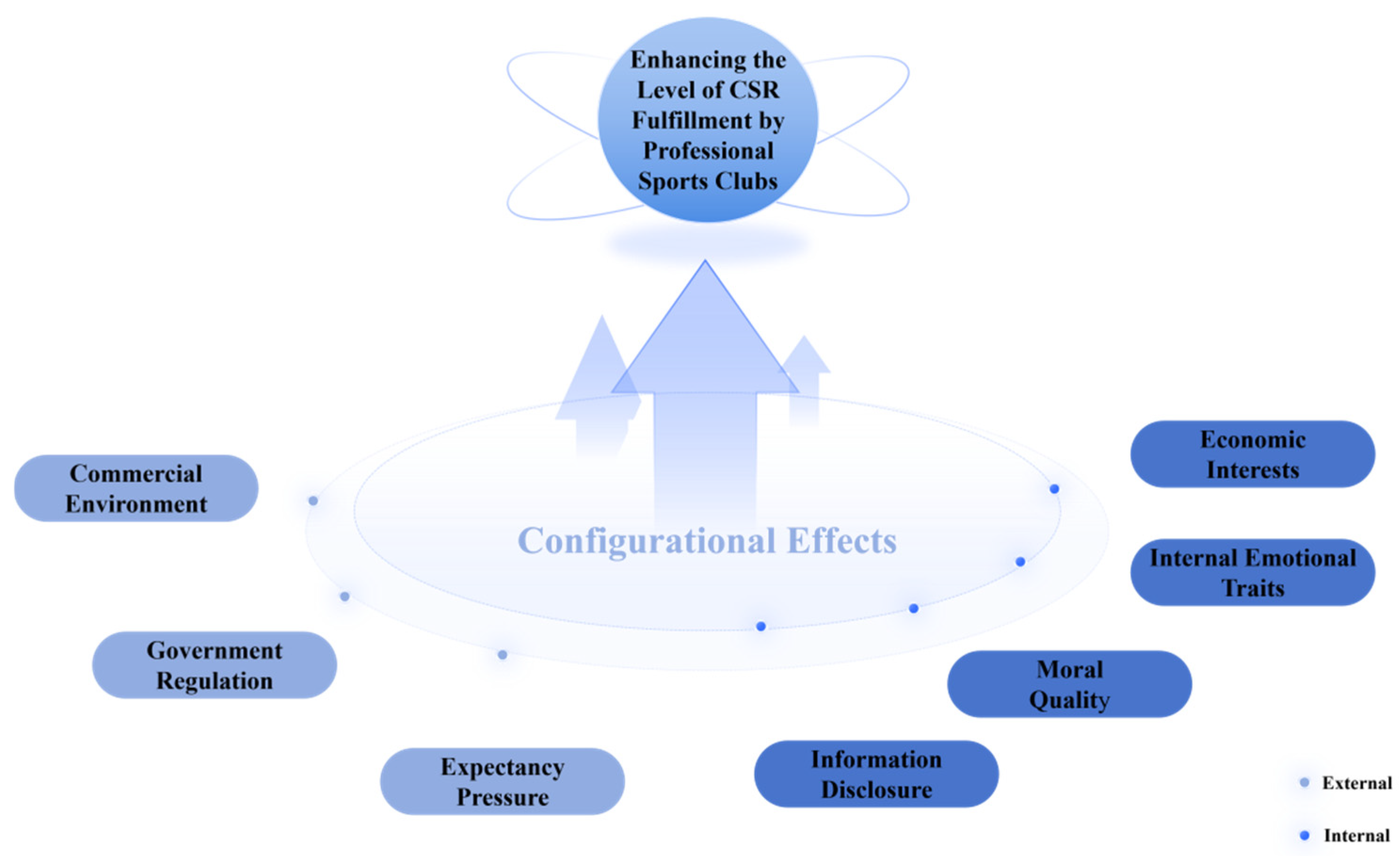
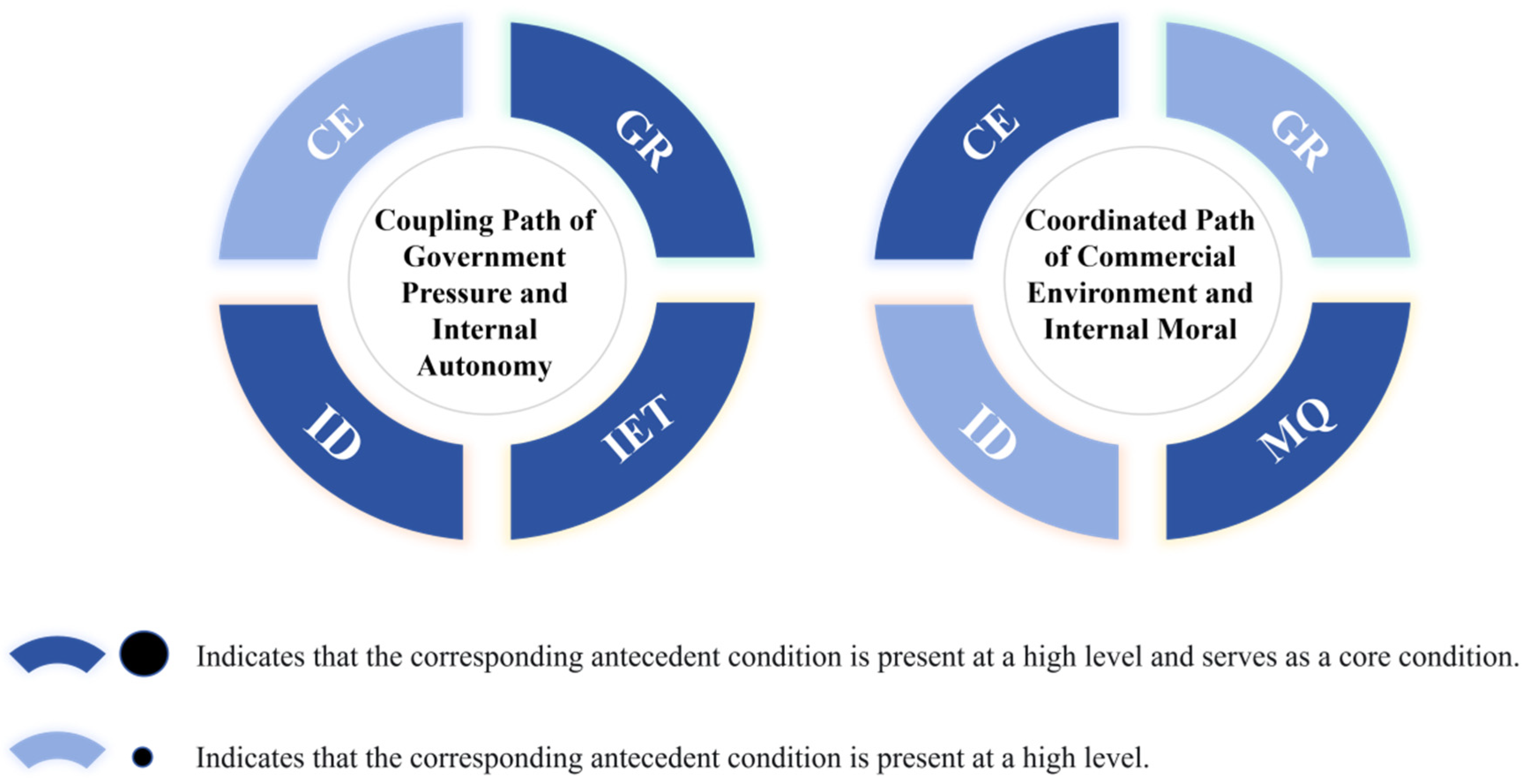
Disclaimer/Publisher’s Note: The statements, opinions and data contained in all publications are solely those of the individual author(s) and contributor(s) and not of MDPI and/or the editor(s). MDPI and/or the editor(s) disclaim responsibility for any injury to people or property resulting from any ideas, methods, instructions or products referred to in the content. |
© 2025 by the authors. Licensee MDPI, Basel, Switzerland. This article is an open access article distributed under the terms and conditions of the Creative Commons Attribution (CC BY) license.