


Abstract
Still rings are a unique gymnastics apparatus allowing for a combination of dynamic and static elements in a specific technique. This review aimed to compile the dynamic, kinematic, and EMG characteristics of swing, dismount, handstand, strength, and hold elements on still rings. This systematic review was conducted in concordance with PRISMA in PubMed, EBSCOhost, Scopus, and Web of Science databases. In total, 37 studies were included, describing the strength and hold elements, the kip and swing elements, swing through or to handstand, and dismounts. The current evidence suggests that the execution of gymnastics elements on still rings and training drills requires a high training load. Specific preconditioning exercises could be used to train for the Swallow, iron cross, and support scale. Negative impacts of load during hold elements can be reduced by special support devices such as the Herdos or support belts. Another aspect is improving strength prerequisites by exercises such as bench presses, barbell exercises, and support belts, where the main focus should be on muscular coordination similar to the other considerable elements. Electromyography is an appropriate tool for the investigation of muscular coordination and force platforms for assessing a sufficient strength level to successfully perform elements on still rings.
1. Introduction
Compared with other disciplines of all-around men’s artistic gymnastics, rings are still a unique discipline, where the gymnasts are required to use their upper limbs to support their body mass [1] during the whole routine. The absence of a solid base due to movable rings connected to steel construction affects typical movements, training methods, performance assessment by judges, and injury risk. According to The Code of the points of Men’s artistic gymnastics (MAG CoP) [2], elements on still rings are officially divided into Element Groups, which are: kip and swing elements, and swing through or to handstand (hold 2 s); strength elements and hold elements (2 s); swing-to-strength hold elements; and dismounts, where this classification is critical for routine composition and its assessment of difficulty by judges. The performance in men’s artistic gymnastics is assessed as a sum of the difficulty score and execution score, which then make up the final score [3,4]. For each apparatus of men’s all-around gymnastics, the unique requirements for the composition of the routine, its difficulty, and assessment of technique errors are determined. The specific requirements and evaluation of technical errors in still ring apparatus result from discipline specification (moving steel cables) such as the wrong position of rings (hands turned in on L-sit) or excessive movements in static elements such as handstand after forward swing [5]. The gymnast has to involve at least one element from each element group in their routine. In particular, the strength elements and swing elements are critical for routine composition in order to gain a higher final score. On the other hand, perfect execution is required because all deviations from an expected way of execution are penalized based on MAG CoP [2]. For the inclusion of specific elements into the routine, the gymnasts should perform these elements at least to grade “3” or “4” according to an assessment of the quality value scale [4].
Exercising on still rings is included at an early stage of sports participation, training, and competition. The training on the still rings starts with more effortless strength static elements and swing movements at long hangs [4,6] and continues with the training of elements with a higher point of difficulty, which increases demands on technical preparation and physical prerequisites such as muscle strength, which have to be developed. High demands increase the weight-bearing on the upper extremities, mainly on shoulder joints. An adequately mastered technique requires a well-conducted training process based on quality diagnostic methods for evaluating the mechanical loading on the gymnast’s body. One way to evaluate loading on the gymnast’s body during the execution of exercises on still rings is by measuring external forces acting on the gymnast’s body [7]. In this way, it is easier to avoid unnecessary injuries that can endanger a gymnast’s health or their entire sports career. Within the strength and hold elements category, there are relative and maximal strength requirements for gymnasts, primarily in isometric and eccentric muscle contractions [8,9,10,11]. The relative strength of the gymnast could play an important role in Swallow, for instance [12]. On the other hand, Schärer [10] claimed that training under maximal muscle tension for a very long time improves the execution of Swallow, iron cross, and support scale; thus, the maximal and endurance strength could be needed [10].
Due to the high complexity, several training aids and methods serve as useful tools making the training process easier and safer. Training methods, such as strengthening exercises aimed at strength and coordination development of selected muscles used in specific elements, are preferably considered. For instance, Bernasconi [1] compared shoulder muscle activity during two exercises with barbells and during a support scale on still rings, with the result that barbell exercises reduce the participation of the serratus anterior in stabilizing the scapula [1]. The biomechanical approach can be the critical point of view for distinguishing the correct way of different gymnastics elements, for making training strategies or their valuation.
Several studies aimed to strength and power development had already been published; however, it is not clear what preconditioning exercises and types of muscle contraction are preferred for selected strength elements and hold elements with maximal strength, relative strength or strength endurance. Another potential disagreement is in external loading evaluation during backward and forward swings, where the external loading can take on different values.
Current studies provide a disunited description of gymnastic rings biomechanical characteristics and their uncertain movement pattern relations. Therefore, the aim of this review was to compile the dynamic, kinematic, and EMG characteristics of swing, dismount, handstand, strength, and hold elements on steady rings in any cross-sectional or intervention studies comparing any biomechanical measures on male gymnasts. This review should be able to distinguish an appropriate training method, performance evaluation, and correct technique evaluation based on MAG CoP [2].
2. Materials and Methods
This systematic review summarises the current scientific literature focused on gymnastics still rings and was conducted in concordance with the recommendations of PRISMA [13] (Figure 1) using the review protocol (available in Supplemental Online Material).
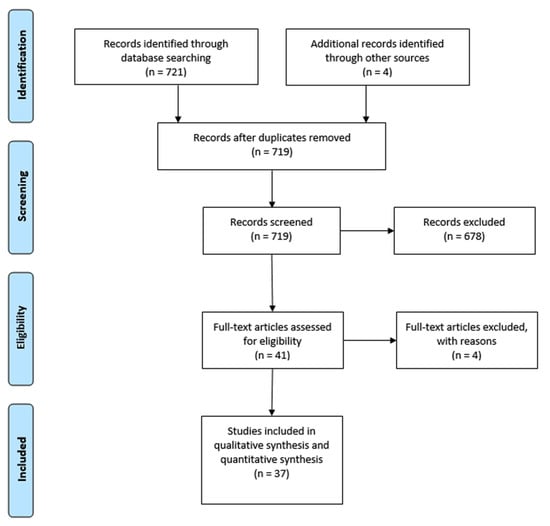
Figure 1.
Flowchart illustrating phases of the search and study selection.
2.1. Search Strategy
Two researchers from author’s membership (RM and JCh) independently performed the literature search in the four databases on the 6th of February 2023: PubMed, EBSCO, Scopus, and Web of Science. For the search strategy, we used the same stream in all the databases (Table 1).

Table 1.
Search strategy.
2.2. Eligibility Criteria
Only peer-reviewed papers were included, exclusively available in full and in the English language, reporting still rings’ exercise among a population of male artistic gymnasts of any age and any level. Due to the relatively low count of studies found, we included studies regardless of the date of publication. After removing duplicates, we also removed studies which did not relate to men’s artistic gymnastics and rings (678 removed); subsequently, we removed studies with no direct relationship to still rings exercises (4).
2.3. Data Extraction and Synthesis
Results from the four databases were put into a references manager, and then all the duplicate records were discarded. Two reviewers using the Excel® spreadsheet (Microsoft Corp., Redmond, WA, USA) extracted data independently. Extracted information covered the country of origin, study design, study population (number of participants), main tools, focuses, and main findings. Both narrative and quantitative syntheses of findings from the included studies, structured around the types of exercise are provided in this review. For all studies that were subsequently selected, we performed risk of bias evaluation by JBI Critical Appraisal Checklist for Analytical Cross Sectional Studies.
2.4. Supplementary Online Material
The risk of bias of each study included in this systematic review, PRISMA checklist, protocol of the systematic review, and full searching formula (including .csv of PubMed and Scopus) are available in Supplementary Online Material.
3. Results
Out of all 721 papers found in the four databases, including the 3 papers from the references lists checking, and after assessing eligibility, we included 37 studies in the qualitative analysis. Overall, these studies included 263 elite gymnasts and 11 national coaches as participants. Studies came from 16 countries: 7 studies were from the United Kingdom (UK), 3 were from France, and United States (US), 5 from Switzerland, 2 were from Bulgaria, Poland, Canada, China, Brazil, and Spain, and one study each was from Slovenia, Argentina, Iraq, Germany, Japan, and Egypt. Dividing the studies according to the methods revealed that most were observation studies, and out of them, 9 were case studies. Only 2 studies were experimental, and 3 studies were quasi-experimental. Out of the main methods, the kinematic analysis was the most frequent (16×), followed by EMG (7×), force platform and force system measurements (5×), as well as muscle strength tests (4×). The performance level of elements on still rings was used as a measure only once. Biomechanical characteristics of selected elements were the most frequent focus (10×), followed by the comparison of different training conditions (5×), and the evaluation of the force platform and force system measurements as a training aid (7×). The verification of new training aids and methods was the main topic of the experimental studies. The risk of bias for each study included in this systematic review is listed in the Supplementary Material online.
The strength elements and hold elements were included in 22 studies, where strength or gymnast net force (measured predominantly on force plates) were identified as differentiation factors between performers and non-performers of L-Sit cross [8], Maltese cross [14], Iron cross [15], and Swallow [9,16], Azarian [17], and Swallow-holding duration [12].
The elements which require high muscular coordination is possible to evaluate by EMG, specifically in Azarian cross [18], support scale [1,19], inverted cross [20], and iron cross [21,22]. The basic description of all the included studies is presented in Table 2.
Table 2.
The basic description of strength elements and hold elements.
Considerable external loading is present during swing elements as reaction forces are produced on the gymnast’s body, where the reaction forces are greater during back swing than forward swing [30]. On the other hand, the pulling forces produced by gymnasts during the backward and forward long swing are almost similar [31,32]. The external loading could be reduced by horizontal displacement of the gymnast’s centre of mass during swings, can reduce centrifugal interactive force and to minimize the mechanical load on the shoulder joints [33]. This is most evident when the gymnast is commencing the backward giant circle when the handstand swing reaches the bottom of its swing arc [34].
Asymmetrical arm movements contributed to the subsequent removal of tilt during twisting techniques used in dismounts [35]. A very high force and momentum is needed to perform triple salto backward from still rings with extreme grip strength during the preparation phase. A comparatively fast rotation is required during the flight phase with extreme strength and fast work of the trunk and leg flexors, as well as strength of the leg extensors [36]. The landing after the backward giant swing tuck of 2-circle back flip and 360° turn is characterized by increasing of the velocity of gravity centre with a swing down from the handstand with subsequent leg throw up forwards while the whole body passes through the vertical plane. Both hands left the rings immediately at the moment the rings resumed from the handstand [37]. A handstand on still rings is specific to different muscle activity such as the pectoralis major, latissimus dorsi, biceps brachii, descendent part of trapezius and the deltoid muscle due to instability of the rings [38], where special tools such as “rocker” or “bowls” might be used to train the handstand [26,27]. Two studies without the orientation to the specific elements on still rings were described as others. Brewin and Kerwin indirectly evaluated cable tension during specific static (1/2 lever) and dynamic (basic swing, inlocates and dislocates, backward and forward longswing) elements on still rings [7]. Kochanowicz et al. (2019) compared the EMG of specific muscles during handstand on three different apparatus (i.e., floor, parallel bars, and still rings) [38] (Table 3).
Table 3.
The basic description of kip and swing elements and swing through or to handstand.
Four studies investigated dismounts on the still rings’ apparatus [35,36,37,40]. Some of the observed dismount’s elements were the triple salto backwards, full twisting double somersault, 2-circle back flip and a 360° twist, and double back straight somersault and double back straight somersault with a full twist. All four included studies were biomechanically pointed but with different aims. The basic description of dismounts is highlighted in Table 4.
Table 4.
The basic description of dismounts.
We ultimately classified four studies as others. The first study was interested in the kinematic analysis of specific elements on still rings [7]. However, the study also sought to complete a kinematic analysis similar to previously included studies, this study also considered the combination of static and dynamic elements. The second study identified the muscle activity during a handstand on various apparatus including still rings [38]. The basic description of these two studies is highlighted in Table 5. The last two studies referred to describing the training plan of one Olympic gymnast [41], and descriptions of trends and guidelines across key exercises during the training perspective of still rings [42].
Table 5.
The basic description of studies assigned as “others”.
4. Discussion
Still rings are a unique apparatus due to requirements of advanced strength abilities in order to execute a constrained number of elements chosen from the element groups performed during the routine, as we listed above. The studies included in this systematic review provided information about various research approaches and outcomes focused on performance on still rings. A common feature of relevant studies is the performance level of participants, mostly elite gymnasts. An important issue was the gymnastics terminology that was not uniform across the reviewed studies. It seems that in different states and regions, various names for the same gymnastics elements are used (i.e., Maltese cross vs. iron cross or cross support). The comparison of research outcomes is complicated by utilizing uniform measurement units and their transformation (e.g., kN, kg, multiple of body weight).
4.1. Strength, and Hold Elements on Still Rings
Among the studies categorized as force and balance elements or strength abilities, seven focused on the Swallow, five iron cross, and three on the support scale. All of these elements are commonly used during the still rings routine. The substance of the Swallow element performance is in keeping the whole body in a horizontal plane at the height of the rings with straight arms for two seconds [4,43]. Iron cross performance is described as maintaining 90° shoulder abduction in the frontal plane with both straight upper limbs for at least two seconds [4]. The support scale is a typical strength element performed at the straddle legs position or with legs together by all top-level gymnasts. Including these elements is required at both age categories (Junior, Senior); the rules limit their number and order in the routine. Therefore, strength training and the training of these skills are a common part of young gymnasts’ training.
Within the evaluation of still rings routines during competitions, reliable measurement systems can help to minimize errors made by judges during gymnastic routine evaluation, especially for determining the holding time (2 s minimum) of strength and hold elements [29]. On the other hand, it also depends on the point of view [44,45] of the judges, who evaluate not only the holding time, but also, for example, deviations from the angles within the posture of the individual elements (90° shoulder abduction in the iron cross), which are determined by rules [45].
Training Methods, Preconditioning Exercises and Evaluation in Strength Elements and Hold Elements
In connection with the above, it seems that the training methods, utilization of precondition exercises, and different methods of gymnasts´ strength evaluation are the most important information for coaches.
Results of reviewed studies showed the suitability of using drills with spotting, counterweight, dumbbells, and other devices to increase the strength training effect [1,8,9,10,14,16,18,20,21,23,24]. For example, the counterweight exercise could be used to strengthen the muscles that stabilize the scapula (serratus anterior and trapezius), given proper muscle coordination during execution concerned element. The barbell exercise could provide an interesting exercise to prepare for muscle coordination of the shoulder flexors. The dumbbells exercise may be valuable in the initial preparation of rotator cuff muscles for the still rings because the load could be adapted to each shoulder [1]. It seems that some training tools or devices help with the exercises themselves on still rings, for example, “herodos”, which shortens the lever and, therefore, reduces stress on the elbows and shoulders of gymnasts [15,18,21]. The solution for specific muscle activity coordination during strength elements training seems to be a utilization of spotting by another person (trainer), such as during an inverted cross from below for stimulating the element [20]. Preconditioning exercises are a common and useful practice in gymnastics strength training. Hübner and Schärer [9] found a significant correlation between Swallow and preconditioning exercises, Swallow supine position and bench press. Additionally, specific training methods using specific muscle contractions could be considered within short training exposure. Eccentric exercises are often used to improve maximum strength, where the eccentric isokinetic training with additional load during training could be appropriate method to effectively increase maximum strength and strength endurance in short term training [11].
Results of reviewed studies showed the benefits of strength testing assess athletes’ strength abilities and distinguishing athletes who had sufficient strength status for considered high-assessed skill on still rings [14,15,25]. In this context, it has to be mentioned that coaches should constantly search to improve gymnasts’ strength by using readiness prediction and utilization of optimal strength methods. For this purpose, the force platforms could be appropriate devices. As some authors show [8,14,15,16] force platforms could be useful for holding elements (e.g., iron cross, Maltese cross, L-sit cross, Swallow, and others), where is necessary to compare gymnasts’ level of strength, and estimating their level of readiness to perform selected elements. Fujihara (2023) used specific force analysis system to measure the force generated by gymnast on rings during Azarian element. The system works on the principle of sensing the gymnast’s weight via cable tension and at the same time is able to calculate the percentage value of the weight being spotted by the coach. Unlike force plates, this system can be implemented directly on the rings [17]. Compared with the force plates and force analysis systems such as assessing tools for athletes’ strength abilities, EMG is also used in still rings exercises to detect muscle activity during selected elements/movements [1,18,20,21,22]. It seems that knowledge about muscle activity, and the co-contraction of activated muscles during performing different still ring elements could be useful for optimizing training methods not only for strength and holding elements. However, the positive effect of different training devices results from strength elements execution and the synergy of muscle groups, as shown, e.g., utilization of a special belt for Azarian seems to be suitable rather than “herdos”, whereas the “herdos” did not stimulate the same muscle coordination in the shoulder joint compared with the belt on still rings [18].
Preconditioning exercises are common praxes, but their utilization and level of specificity are discussed. As the results show, EMG could help to find variations in muscle activity during different types of preconditioning exercises, e.g., pectoralis major participated less in shoulder flexion during the counterweight exercise, whereas the deltoideus was more activated during dumbbells exercise, the barbell exercises reduced the activity of serratus anterior [1]. Göpfer et al. (2022) used EMG for description of the wavelet-transformed changes muscle intensity pattern and frequency spectra of eight upper body muscles during Swallow and support scale execution. The observed changes corresponded with acute muscular fatigue during both elements [19]. From this point of view, EMG could also be a suitable tool for testing changes in muscles patterns in other static elements on still rings.
However, strength and hold elements are only one part of the competition routine. The different elements (strength and swing elements) evoke repetitive concentric and eccentric muscle contractions and levels of their activation. This reflects the specific fatigue and recovery rates of different muscle groups in relation to fibre composition and metabolic demands [28].
4.2. Swings on Still Rings
Swing elements together with Kip form one group of exercises according to CoP FIG. Swing elements could be performed in different ways of execution. Senior and Junior gymnasts have to perform at least one swing element to the handstand with 2 s. hold in their routine and must be inside ten counting elements for seniors or eight for juniors [2]. The lonswings are a common part of young gymnasts’ training and coaches recognise them as crucial skills for the acquisition of other skills. Alasim et al. [46] claimed that pulling forces in the right and up direction require higher activation of shoulder muscles (supraspinatus and infraspinatus); thus the pulling forces could be detected during longswings. The acting forces during pulling phase are comparatively high (6.5 BW) [30], and can be the cause of injuries. Serafin et al. [30] concluded that the influence of reaction forces was significantly greater during back swings than during forward swings, and supported these findings by higher susceptibility of the motor system to forward bending rather than backward bending during swings. On the other hand, several study results showed the possibility of optimizing the gymnast’s technique which could contribute to reducing mechanical loading influencing the gymnast’s body. In particular, the horizontal displacement of the gymnast’s centre of mass during swings can contribute to minimizing the mechanical load on the shoulder joints [33]. On the other hand, we do not find a general agreement among the authors about the amount of the acting force on gymnasts’ body parts (mainly shoulders and hips) according to the direction of movement or the body position during exercise [31,32]. With regard above and other results, the main role for energy generating have hips and shoulders muscles. The hip flexors play an important role in excessive hyperextension prevention during downward swing phase and the shoulder flexors and extensors are primary sources of energy generation during whole movement [39].
The long swings often begin and end in a static position. Most frequently, the handstand is the initial and required final position for the giant circle. For that reason, the handstand was assumed as a critical skill for giant circle performance [27,38]. Mastering of the handstand at the competition level requires a long-term and systematic training process, and also the quality of execution is important. Gymnasts have to reduce actively the amplitude of oscillation rings during exercise to hold a static body position [4]. According to Sprigings et al. [34], the gymnast should eliminate any swing in the final or next handstand if an initial swing amplitude is in the range of 3–6°. Alongside this, the body configuration changes should be timed within 15 ms, whereas a delay of 30 ms would result in a considerable residual swing. Therefore, maintaining the initial and final handstand in a static position without apparent swings when performing backward giant circle is necessary [5].
The large number of elements performed during the training process may cause undesirable overload. A problem arises, especially when elements are performed with lower quality of technique or poor execution [33]. Improperly performed exercise increases the negative impact of training, which may lead to injuries [47,48,49]. Hart et al. [6] reported high injury rates in gymnastics sports and shoulder joints’ injuries were often associated with still rings [6,50]. Moreover, injuries of the upper extremities and especially the shoulders are characterised as injuries connected to fatigue or wrongly performed techniques [6,28,50,51,52]. Therefore, training according to current scientific knowledge (using all available training equipment) may help to keep gymnasts safe from injury. Beyranvand et al. [49] concluded that having rounded shoulders could significantly affect further stability of the upper limbs and increase injury risk. On this basis, we should also pay attention to the stability of the shoulder joint. The elasticity of the still rings’ apparatus, especially of the cables, may minimise mechanical load at the shoulder joints [33], which are often injured in men’s artistic gymnastics on the still rings’ apparatus [4,50]. Brewin et al. [33] showed that the flexibility of the gymnast and apparatus contributed to minimising peak shoulder forces. Despite the apparent considerable mechanical load in pulling forces acting on the gymnast’s body, there were just two studies that mention injury risk.
4.3. Dismount on Still Rings
Dismount is an integral part of all routines performed on still rings. The execution and difficulty contribute to the final score. In our review, only three studies investigated dismounts on the still rings’ apparatus [35,36,37,40]. All four included studies were biomechanically pointed but with different aim. Some observed dismount elements include triple salto backwards, full twisting double somersault, double back straight somersault with and without full twist, and 2-circle back flip and a 360° twist. Although these dismounts were very difficult elements even for elite gymnasts, coaches of elite gymnasts can profit from the results of their kinematic analyses. They could use the obtained results for training methods development, mainly if they are analysed elements with a high level of difficulty performed by top-level gymnasts. For instance, the magnitude forces at landing can range from 3.9 to 14.4 times a gymnast’s body weight, and the force magnitude is related to the skill difficulty [53]. That is a relatively considerable load, which the gymnast’s body has to resist, mainly when the loading acts repetitively from one attempt to another. The triple salto backward study was interested in the biomechanical characteristics of the element with specific strength and speed demands on the gymnast’s body during execution of the element [36]. Similarly sufficient speed of legs (ankles) is essential during double back straight somersault and double back straight somersault with full twist [40]. Although the study of Yeadon was aimed to biomechanical aspects of selected element too, the main findings corresponded to movements of arms during twist initiation in dismount. The author claimed that arms were predominantly in asymmetrical positions during twisting and consider arm movements as an important contributor to initiate twists during dismounts from still rings. The key points for coaching the removal of tilt are to pike prior to landing and to abduct the left arm if the twist is to the left [35]. The arms’ asymmetry is also in concordance with Kolimechkov et al. (2021), who claimed that during twisting within double straight somersault one of two gymnasts used slight asymmetrical actions of arms. Zou et al. aimed their research to landing after backward giant swing tuck of 2-circle back flip and 360° turns, especially for the improvement of dismount’s technique and theoretical advice for dismount. The author described speed differences during the swing phase where the greatest speed of the centre of gravity was crossing the vertical plane on the rings. The whole body should be in a straight position during the moment when the hands leave the rings. This effect speeds up the level of rotation. Further importance is assigned to the trunk angle during landing where too much forward lean of the trunk can lead to more forward step [37].
4.4. Handstand on Still Rings
It is clear that the handstand is an important element for many other gymnastics skills performed not only on the still rings. However, handstands on still rings are a bit more difficult than on other apparatus. The comparison of performing a handstand under different conditions (three apparatus: parallel bars, floor, and still rings) revealed higher EMG activity and, therefore, greater difficulty of handstand on still rings compared with the other apparatus (probably due to unstable still ring construction) [38]. Similar to strength training, the issue of usability, effectiveness, and specificity of various training devices is solved. Examples can be seen in the studies by Yeadon et al. [27] and Khargan et al. [26], who solved problems with still rings instability, especially during training. The authors in both studies designed, constructed, and assessed training aids that help to eliminate the still rings’ inherent swinging. The results of those two studies show that these aids simplify the training process and allow learning handstands on still rings more effectively. The explanation could be that special exercises with assistance training tools or devices have a great role in improving motor and skilful abilities [26,27], and their strong similarity (specificity) to final execution.
As part of sports preparation, careful periodization and planning of training is needed to achieve the best sports performance [54]. The issue of periodization of training is also crucial in gymnastic especially in still rings exercises, specific testing of strength level and subsequent detailed planning of training period can optimally increase the performance [41]. Another aspect is in the compliance of guidelines already at an early age of training. It is necessary to take into account some elements that are key to the evaluation of sports performance on the rings, but are also important for the future development of the gymnast. Yanev (2021) claimed that junior gymnasts should perform specific elements such as Jonasson and Yamawaki and swing elements to handstand within an increase in the D score above 4.5.
5. Conclusions
In conclusion, a relatively high interest in different performance aspects on still rings was found in this study with relatively high diversification across the included studies. Comparatively to studies aimed on different pieces of apparatus (i.e., high bar, floor, parallel bars), there are a lack of studies aimed at injury risk prevention. Only 2 studies out of the total of 37 pointed out a possible negative influence of the mechanical load on the risk of injuries, which is most likely associated with incorrect technique. Therefore, future research should be focused on injury issues related to exercises on still rings.
Practical Applications
The findings of this systematic review have several practical applications for gymnastics coaches. Coaches should pay attention to specific strengthening methods and their combination, including using specific training tools or devices and spotting for developing proper and improving muscular strength for selected strength and balance elements. Those aspects could be essential for quick learning of proper techniques for the strength elements and encourage the distinctive strength demands of the included active muscles. For future development of training methods and gymnasts’ performance, progress is important to integrate modern research methods for the evaluation of training outcomes as part of coaches’ common practice.
In connection with swing elements on the still rings, coaches should pay attention to reducing the negative effects of mechanical loading exposure on the gymnasts’ body, especially to the shoulder joints, by directing them to the proper technique. The relation to higher injury risk is particularly evident by the evidence of the negative impact of repeated increased external forces on the gymnast’s body during the training of swing skills on the rings due to improper technique.
Supplementary Materials
The following supporting information can be downloaded at: https://www.mdpi.com/article/10.3390/sports11030050/s1, Supplementary Material File S1: Protocol of systematic review; Supplementary Material File S2: The JBI Checklist for Analytical Cross Sectional Studies; Supplementary Material File S3: The PRISMA Checklist; Supplementary Material File S4: Full search strategy of all databases.
Author Contributions
Conceptualization, J.C., R.M. and M.Š.; methodology, M.Š. and R.M.; resources, R.M. and J.C.; writing—original draft preparation, R.M., J.C. and M.Š.; writing—review and editing, R.M., J.C., M.Š. and P.S.; supervision, M.Š. All authors have read and agreed to the published version of the manuscript.
Funding
This review was supported by the research grants of Charles University, Czech Republic [UNCE/HUM/032 and SVV 260599], and Cooperatio Program, research area Sport Sciences—Biomedical & Rehabilitation Medicine (SPOB).
Institutional Review Board Statement
Not applicable.
Informed Consent Statement
Not applicable.
Data Availability Statement
Data will be made available upon request.
Acknowledgments
The authors gratefully acknowledge the support of the research grants of Charles University, Czech Republic [UNCE/HUM/032 and SVV 260599].
Conflicts of Interest
The authors declare no conflict of interest.
References
- Bernasconi, S.M.; Tordi, N.R.; Parratte, B.M.; Rouillon, J.-D.R. Can Shoulder Muscle Coordination during the Support Scale at Ring Height Be Replicated during Training Exercises in Gymnastics? J. Strength Cond. Res. 2009, 23, 2381–2388. [Google Scholar] [CrossRef]
- International Gymnastics Federation. 2022–2024. Code of Points: Men’s Artistic Gymnastics. Available online: https://www.docdroid.net/dR5jZJ9/mag-cop-2017-2020-draft-1-pdf (accessed on 16 July 2022).
- Dallas, G.; Kirialanis, P. Judges’ Evaluation of Routines in Men’s Artistic Gymnastics. Sci. Gymnast. J. 2009, 2, 49–57. [Google Scholar]
- Fink, H.; Hofmann, D.; Scholtz, D. Age Group Development and Competition Program for Men’s Artistic Gymnastics; Avenue de la Gare 12A; Fédération Internationale de Gymnastique: Lausanne, Switzerland, 2021. [Google Scholar]
- Yeadon, M.R.; Brewin, M.A. Optimised Performance of the Backward Longswing on Rings. J. Biomech. 2003, 36, 545–552. [Google Scholar] [CrossRef]
- Hart, E.; Meehan, W.P.; Bae, D.S.; d’Hemecourt, P.; Stracciolini, A. The Young Injured Gymnast: A Literature Review and Discussion. Curr. Sport. Med. Rep. 2018, 17, 366–375. [Google Scholar] [CrossRef]
- Brewin, M.A.; Kerwin, D.G. Indirect Estimation of Cable Tension during Gymnastic Movements on Rings. Sports Eng. 2003, 6, 177–185. [Google Scholar] [CrossRef]
- Bango, B.; Navandar, A.; Grande Rodríguez, I.; Quintana, M. Evaluation of Isometric Force Production in L-Sit Cross in Still Rings among Elite Male Artistic Gymnasts. J. Hum. Sport Exerc. 2017, 12, 257–266. [Google Scholar] [CrossRef]
- Hübner, K.; Schärer, C. Relationship between Swallow, Support Scale and Iron Cross on Rings and Their Specific Preconditioning Strengthening Exercises. Sci. Gymnast. J. 2015, 7, 59–68. [Google Scholar]
- Schärer, C.; Tacchelli, L.; Göpfert, B.; Gross, M.; Lüthy, F.; Taube, W.; Hübner, K. Specific Eccentric–Isokinetic Cluster Training Improves Static Strength Elements on Rings for Elite Gymnasts. Int. J. Environ. Res. Public Health 2019, 16, 4571. [Google Scholar] [CrossRef]
- Schärer, C.; Bucher, P.; Lüthy, F.; Hübner, K. Combined Eccentric-Isokinetic and Isoinertial Training Leads to Large Ring-Specific Strength Gains in Elite Gymnasts. Sports 2022, 10, 49. [Google Scholar] [CrossRef]
- Gorosito, M.A. Relative Strength Requirement for Swallow Element Proper Execution: A Predictive Test. Sci. Gymnast. J. 2013, 5, 59–67. [Google Scholar]
- Moher, D.; Liberati, A.; Tetzlaff, J.; Altman, D.G. Preferred Reporting Items for Systematic Reviews and Meta-Analyses: The PRISMA Statement. BMJ 2009, 339, b2535. [Google Scholar] [CrossRef]
- Sands, W.; Stone, M.; Mcneal, J.; Smith, S.L.; Jemni, M.; Hewit, J.; Mizushima, K.; Haff, G. A Pilot Study to Measure Force Development during a Simulated Maltese Cross for Gymnastics Still Rings. In Proceedings of the XXIV International Symposium on Biomechanics in Sports, Salzburg, Austria, 16 July 2006; p. 407. [Google Scholar]
- Dunlavy, J.K.; Sands, W.A.; McNeal, J.R.; Stone, M.H.; Smith, S.L.; Jemni, M.; Haff, G.G. Strength Performance Assessment in a Simulated Men’s Gymnastics Still Rings Cross. J. Sports Sci. Med. 2007, 6, 93–97. [Google Scholar]
- Bango, B.; Quintana, M.; Grande Rodríguez, I. New Tool to Assess the Force Production in the Swallow. Sci. Gymnast. J. 2013, 5, 47–58. [Google Scholar]
- Fujihara, T. Real-Time Video and Force Analysis Feedback System for Learning Strength Skills on Rings in Men’s Artistic Gymnastics. Sport. Biomech. 2023, 22, 186–194. [Google Scholar] [CrossRef]
- Bernasconi, S.M.; Tordi, N.R.; Parratte, B.M.; Rouillon, J.-D.R.; Monnier, G.G. Effects of Two Devices on the Surface Electromyography Responses of Eleven Shoulder Muscles during Azarian in Gymnastics. J. Strength Cond. Res. 2006, 20, 53–57. [Google Scholar] [CrossRef]
- Göpfert, B.; Schärer, C.; Tacchelli, L.; Gross, M.; Lüthy, F.; Hübner, K. Frequency Shifts in Muscle Activation during Static Strength Elements on the Rings before and after an Eccentric Training Intervention in Male Gymnasts. J. Funct. Morphol. Kinesiol. 2022, 7, 28. [Google Scholar] [CrossRef]
- Sands, W.; Mcneal, J. The Inverted Cross: A Case Study with Training Implications. Technique 2006, 26, 22–23. [Google Scholar]
- Bernasconi, S.; Tordi, N.; Parratte, B.; Rouillon, J.D.D.; Monnier, G. Surface Electromyography of Nine Shoulder Muscles in Two Iron Cross Conditions in Gymnastics. J. Sports Med. Phys. Fit. 2004, 44, 240–245. [Google Scholar]
- Carrara, P.; Amadio, A.C.; Serrão, J.C.; Irwin, G.; Mochizuki, L. The Cross on Rings Performed by an Olympic Champion. Rev. Bras. De Educ. Física E Esporte 2016, 30, 71–77. [Google Scholar] [CrossRef]
- El-Awady, O.E.-E. Effects of Functional Suspension Training On L-Sit Cross in Still Rings Fro Egyptian Elite Male Artistic Gymnasts. Ovidius Univ. Ann. Ser. Phys. Educ. Sport Sci. Mov. Health 2018, 18, 52–60. [Google Scholar]
- Schärer, C.; Hübner, K. Accuracy of Prediction of Maximum Resistance at Increased Holding Times Based on a Three Seconds Maximum Static Strength Test of the Three Main Strength Elements on Rings. Sci. Gymnast. J. 2016, 8, 125–134. [Google Scholar]
- Schärer, C.; Huber, S.; Bucher, P.; Capelli, C.; Hübner, K. Maximum Strength Benchmarks for Difficult Static Elements on Rings in Male Elite Gymnastics. Sports 2021, 9, 78. [Google Scholar] [CrossRef]
- Khargan, A.A.; Muhammad1, S.Y.; Alwan1, H.A.S. The Effect of Special Exercises by Using Training Methods to Assist in the Development of Some Motor Abilities and Handstand Skill of Still Rings for Young People. Med. Leg. Update 2020, 20, 1211–1216. [Google Scholar] [CrossRef]
- Yeadon, M.R.; Rosamond, E.L.; Hiley, M.J. The Biomechanical Design of a Gymnastics Training Aid for a Handstand on the Rings. Proc. Inst. Mech. Eng. Part P J. Sport. Eng. Technol. 2011, 226, 24–31. [Google Scholar] [CrossRef]
- Irwin, G.; Glazier, P.; Tong, R.; Radway, J. Changes in Muscle Activation Characteristics during Gymnastics Rings Routines. J. Sport. Sci. 2002, 20, 10–11. [Google Scholar]
- Lehmann, T.; Winter, A.; Seemann-Sinn, A.; Naundorf, F. Use of Objective Methods to Determine the Holding Time of Hold Elements on Still Rings. Sci. Gymnast. J. 2021, 13, 181–189. [Google Scholar] [CrossRef]
- Serafin, R.; Golema, M.; Siemieński, A. Mechanical Loading of the Gymnast’s Motor Systém During Swings on Rings. Biol. Sport 2008, 10, 351–360. [Google Scholar]
- Mills, S.H. Indirect Measurement of Forces on the Gymnastics Rings. In Proceedings of the ISBS-Conference Proceedings Archive, Konstanz, Germany, 21–25 July 1998. [Google Scholar]
- Niu, J.; Lu, X.; Xu, G.; Liang, B. Study on Gymnastics Ring Movements Using Force Measuring System. In Proceedings of the ISBS-Conference Proceedings Archive, Hong Kong, China, 25–30 June 2000. [Google Scholar]
- Brewin, M.A.; Yeadon, M.R.; Kerwin, D.G. Minimising Peak Forces at the Shoulders during Backward Longswings on Rings. Hum. Mov. Sci. 2000, 19, 717–736. [Google Scholar] [CrossRef]
- Sprigings, E.J.; Lanovaz, J.L.; Glen Watson, L.; Russell, K.W. Removing Swing from a Handstand on Rings Using a Properly Timed Backward Giant Circle: A Simulation Solution. J. Biomech. 1997, 31, 27–35. [Google Scholar] [CrossRef]
- Yeadon, M. Twisting Techniques Used in Dismounts from Rings. J. Appl. Biomech. 1994, 10, 178–188. [Google Scholar] [CrossRef]
- Čuk, I.; Držaj, S.; Karacsony, I. Triple Salto Backward Tucked from Rings (a Case Study)./Trojni Skrčeni Salto Nazaj S Krogov (Študij Primera). Kinesiol. Slov. 2010, 16, 23–32. [Google Scholar]
- Ningxiang, Z.; Mingxin, G.; Lejun, W.; Jiangbo, W. A Kinematic Analysis of Yan Mingyong’s Landing from Rings after the Backward Giant Swing Tuck of 2-Circle Back Flip and a 360° Turn. In Proceedings of the 2012 International Conference on Systems and Informatics (ICSAI2012), Systems and Informatics (ICSAI), Yantai, China, 19–20 May 2012; pp. 1050–1053. [Google Scholar] [CrossRef]
- Kochanowicz, A.; Niespodziński, B.; Mieszkowski, J.; Marina, M.; Kochanowicz, K.; Zasada, M. Changes in the Muscle Activity of Gymnasts During a Handstand on Various Apparatus. J. Strength Cond. Res. 2019, 33, 1609–1618. [Google Scholar] [CrossRef]
- Sprigings, E.; Lanovaz, J.; Russell, K. The Role of Shoulder and Hip Torques Generated during a Backward Giant Swing on Rings. J. Appl. Biomech. 2000, 16, 289–300. [Google Scholar] [CrossRef]
- Kolimechkov, S.; Yanev, I.; Kiuchukov, I.; Petrov, L. Kinematic Analysis of Double Back Straight Somersault and Double Back Straight Somersault with Full Twist on Rings. Sci. Gymnast. J. 2021, 13, 191–202. [Google Scholar] [CrossRef]
- Goto, M.; Carrara, P.; Lopes, H.; Nunomura, M. Towards the Olympic Gold: The Training Plan on the Gymnastics Rings. Sci. Gymnast. J. 2022, 14, 145–158. [Google Scholar] [CrossRef]
- Yanev, I. Trends of Exercises Content on the Rings Final from the 1st Junior World Artistic Gymnastics Championships. Trakia J. Sci. 2021, 19, 847–852. [Google Scholar] [CrossRef]
- Campos, M.; Sousa, F.; Lebre, E. The Swallow Element and Muscular Activations. Port. J. Sport Sci. 2011, 11, 723–726. [Google Scholar]
- Dallas, G.; Mavidis, A.; Chairopoulou, C. Influence of Angle of View on Judges’ Evaluations of Inverted Cross in Men’s Rings. Percept. Mot. Skills 2011, 112, 109–121. [Google Scholar] [CrossRef]
- Plessner, H.; Schallies, E. Judging the Cross on Rings: A Matter of Achieving Shape Constancy. Appl. Cogn. Psychol. 2005, 19, 1145–1156. [Google Scholar] [CrossRef]
- Alasim, H.N.; Nimbarte, A.D.; Jaridi, M. Impact of Pulling Direction and Magnitude of Force Exertion on the Activation of Shoulder Muscles. Int. J. Ind. Ergon. 2019, 69, 14–22. [Google Scholar] [CrossRef]
- Bukva, B.; Vrgoč, G.; Madić, D.M.; Sporiš, G.; Trajković, N. Correlation between Hypermobility Score and Injury Rate in Artistic Gymnastics. J. Sports Med. Phys. Fit. 2019, 59, 330–334. [Google Scholar] [CrossRef]
- Hume, P.A.; Bradshaw, E.J.; Brueggemann, G.-P. Biomechanics: Injury Mechanisms and Risk Factors. In Gymnastics; John Wiley & Sons, Ltd.: Hoboken, NJ, USA, 2013; pp. 75–84. [Google Scholar] [CrossRef]
- Beyranvand, R.; Mirnasouri, R.; Mollahoseini, S.; Mostofi, S. The Functional Stability of the Upper Limbs in Healthy and Rounded Shoulder Gymnasts. Sci. Gymnast. J. 2017, 9, 279–290. [Google Scholar]
- Meeusen, R.; Borms, J. Gymnastic Injuries. Sports Med. 1992, 13, 337–356. [Google Scholar] [CrossRef]
- Keller, M.S. Gymnastics Injuries and Imaging in Children. Pediatr. Radiol. 2009, 39, 1299–1306. [Google Scholar] [CrossRef]
- Westermann, R.W.; Giblin, M.; Vaske, A.; Grosso, K.; Wolf, B.R. Evaluation of Men’s and Women’s Gymnastics Injuries: A 10-Year Observational Study. Sport. Health 2015, 7, 161–165. [Google Scholar] [CrossRef]
- Marinsek, M. Basic Landing Characteristics and Their Application in Artistic Gymnastics. Sci. Gymnast. J. 2010, 2, 59–67. [Google Scholar]
- Bompa, T.O.; Buzzichelli, C. Periodization: Theory and Methodology of Training, 6th ed.; Human Kinetics: Champaign, IL, USA, 2019. [Google Scholar]
Disclaimer/Publisher’s Note: The statements, opinions and data contained in all publications are solely those of the individual author(s) and contributor(s) and not of MDPI and/or the editor(s). MDPI and/or the editor(s) disclaim responsibility for any injury to people or property resulting from any ideas, methods, instructions or products referred to in the content. |
© 2023 by the authors. Licensee MDPI, Basel, Switzerland. This article is an open access article distributed under the terms and conditions of the Creative Commons Attribution (CC BY) license (https://creativecommons.org/licenses/by/4.0/).