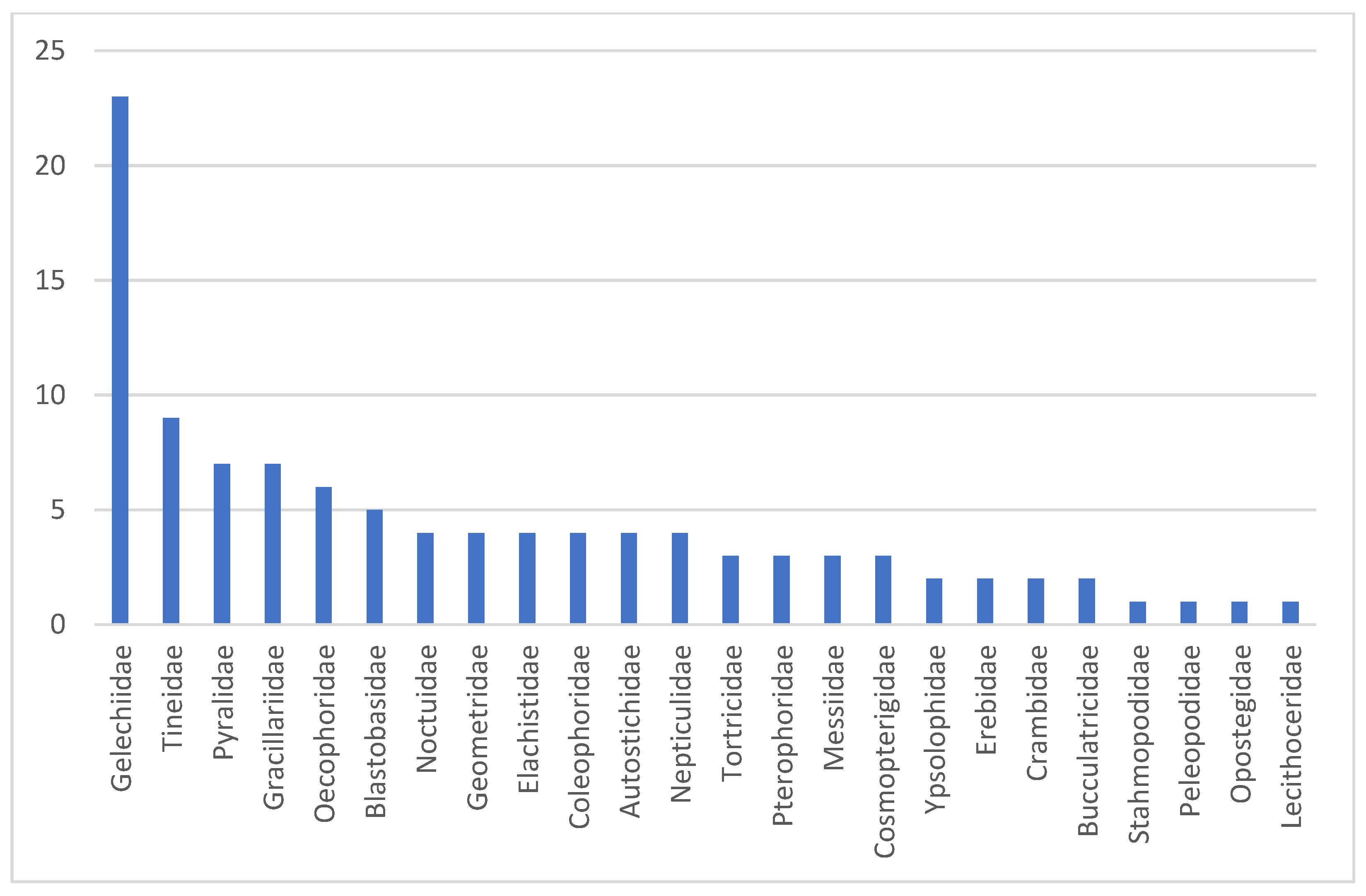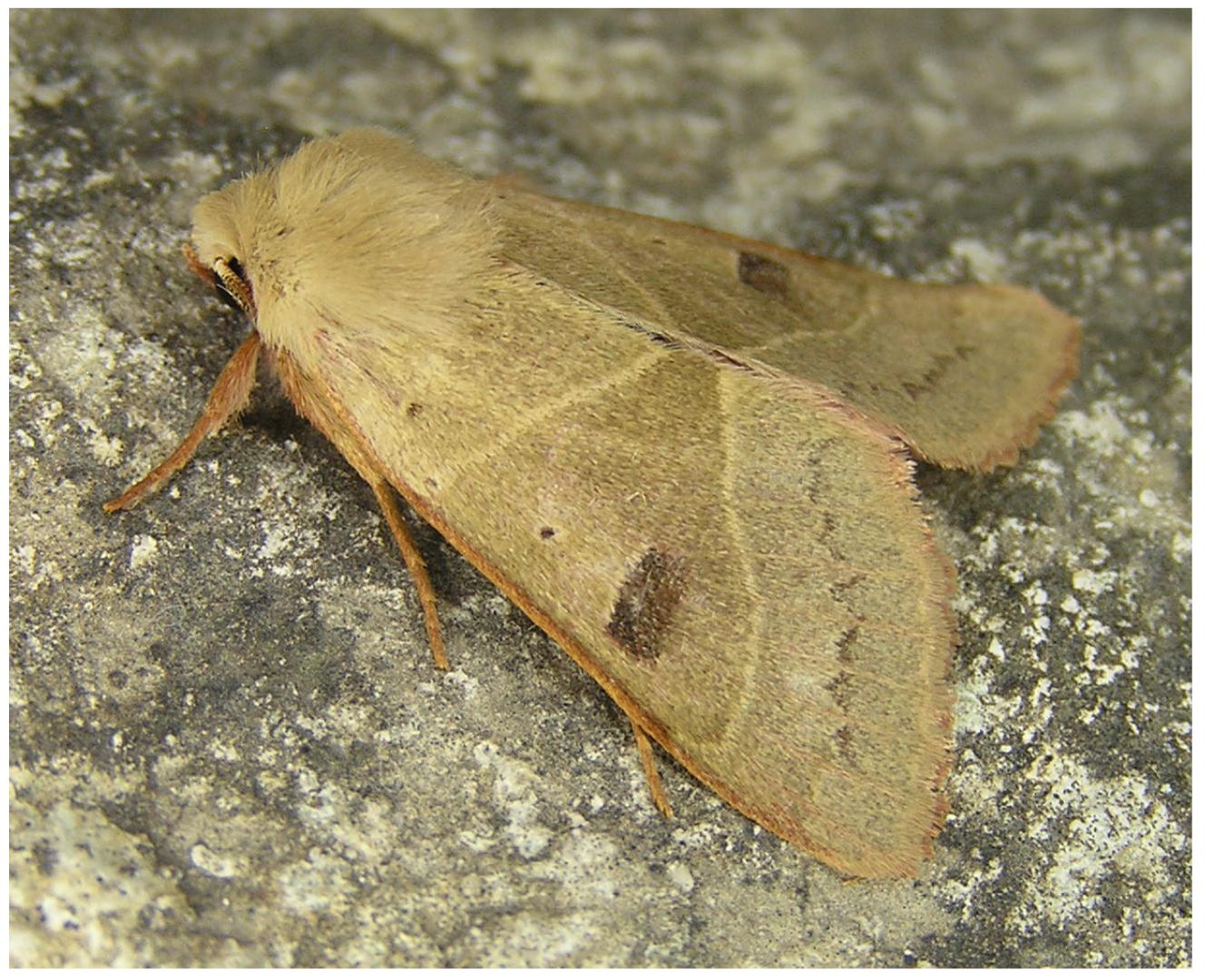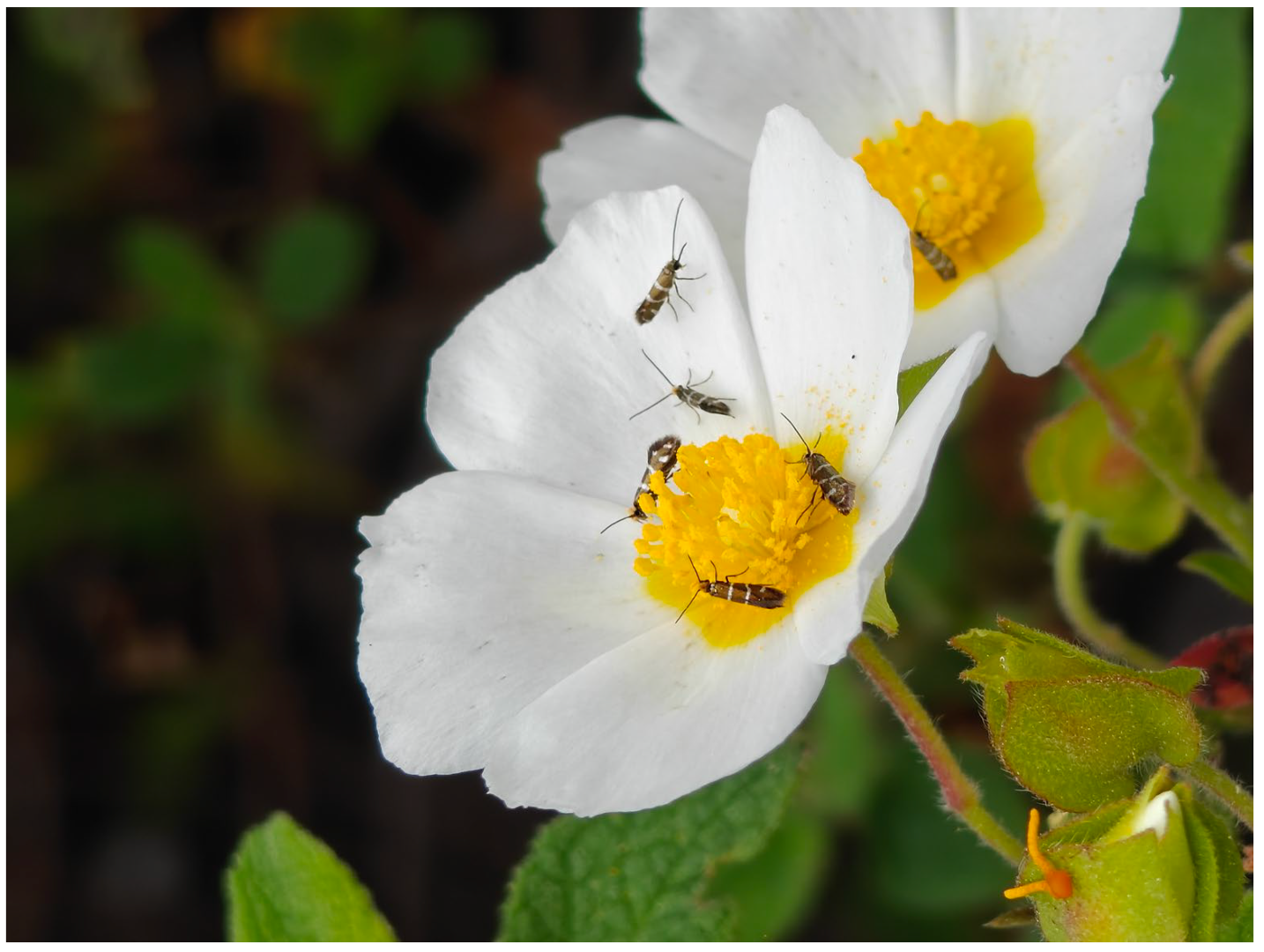

Well-Known, Misidentified, or Unnamed? A DNA Barcode-Based Reassessment of the Lepidoptera Fauna of Cyprus Supported by Morphology
 , , and
Simple Summary
Abstract
1. Introduction
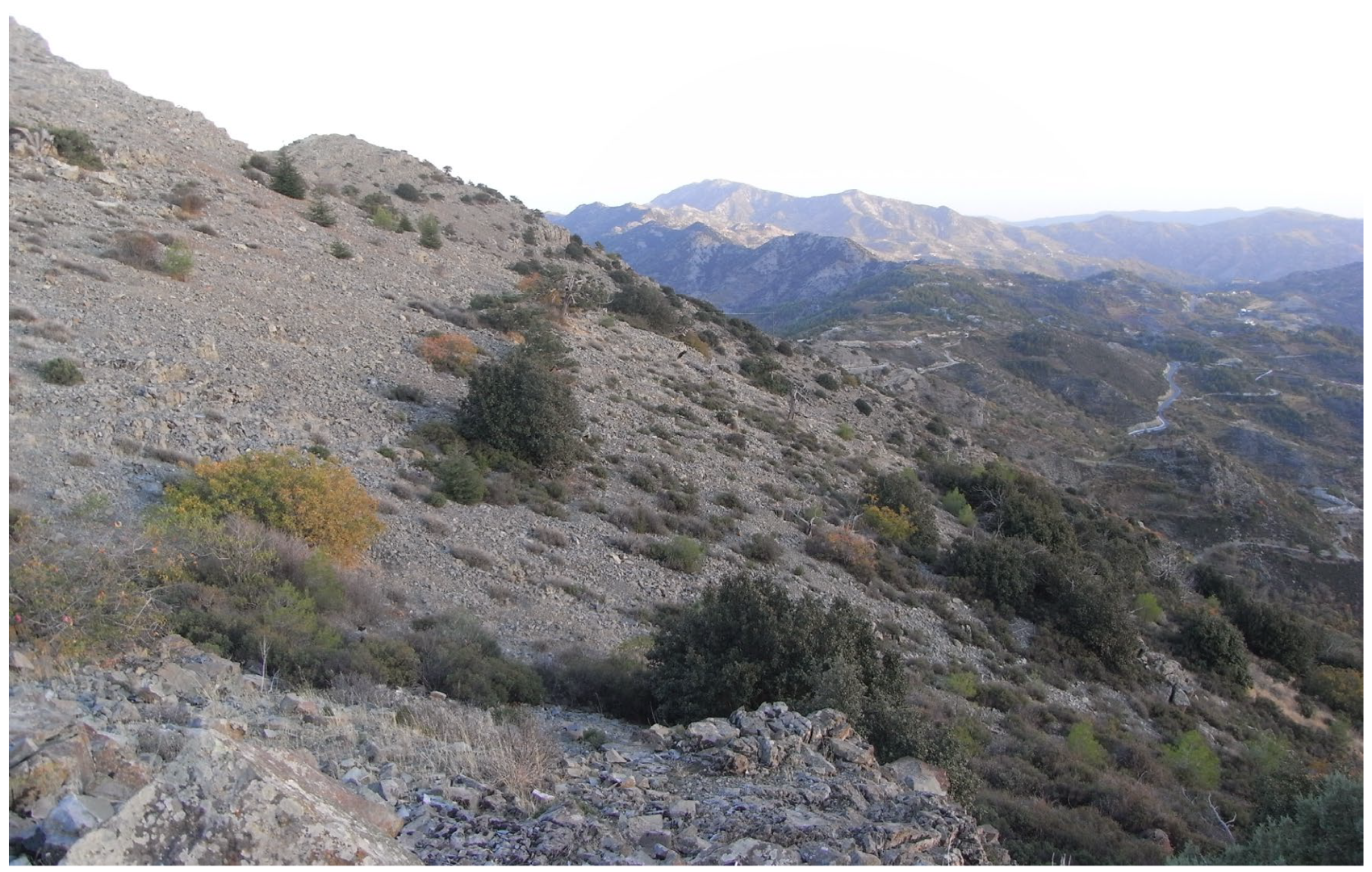

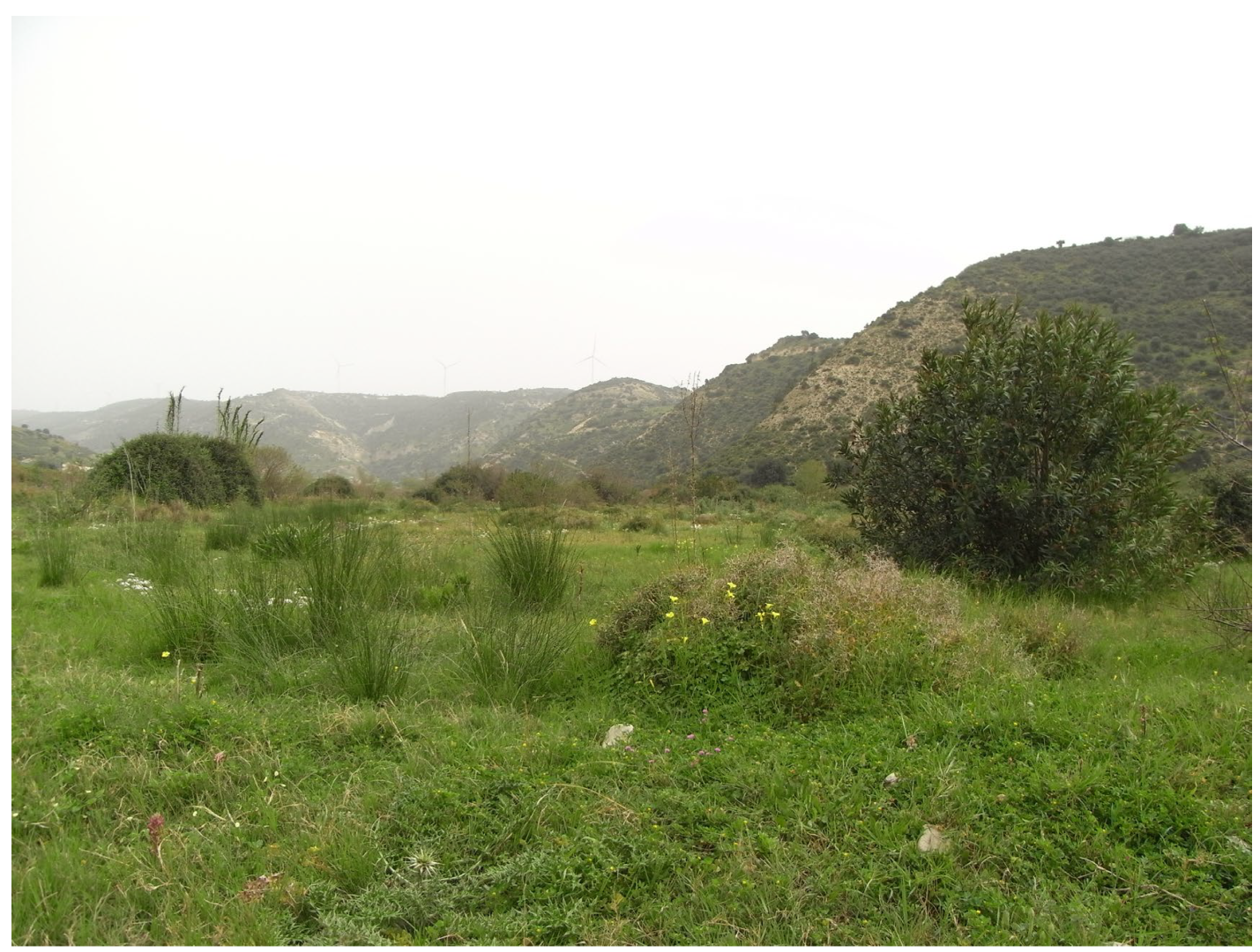
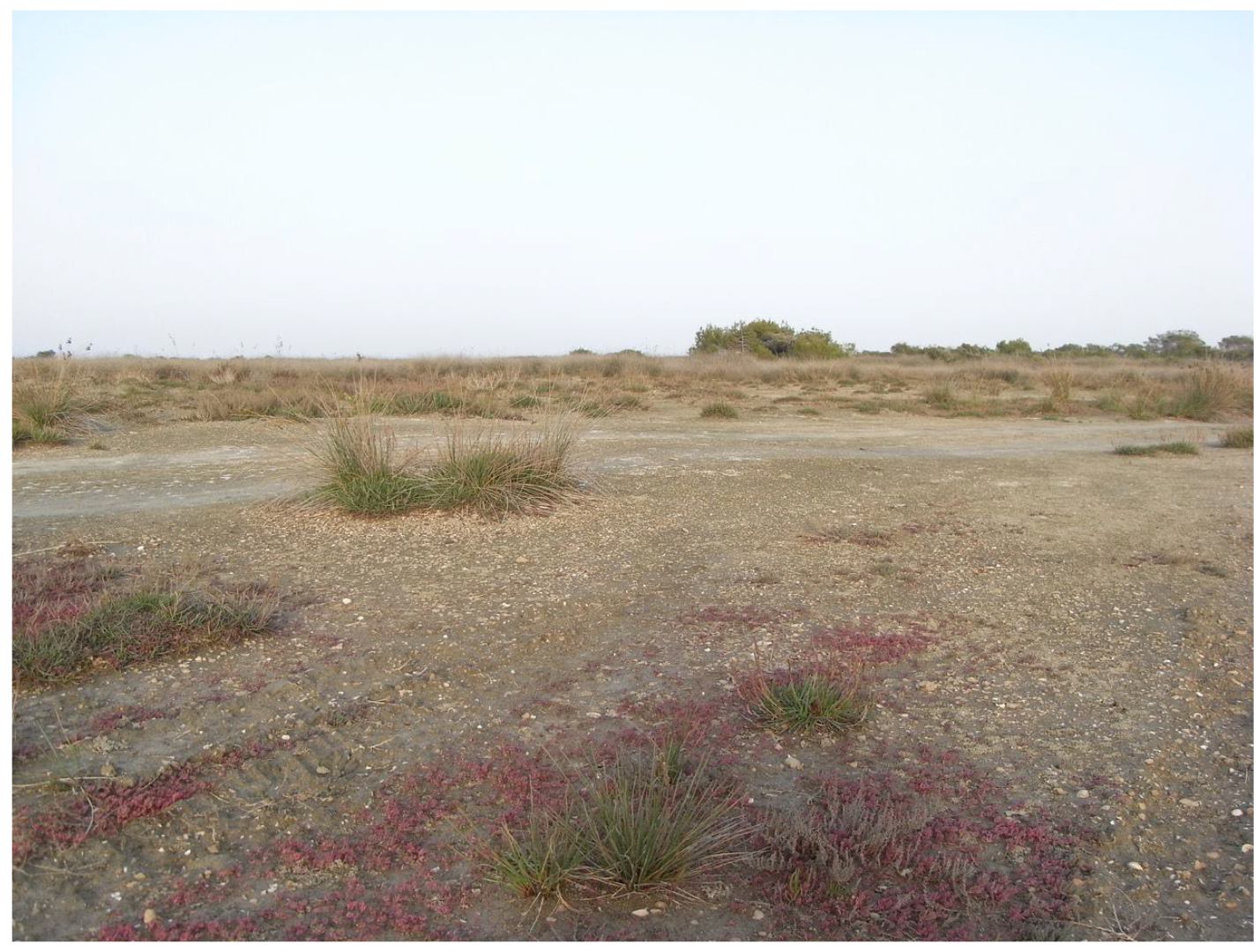

2. Materials and Methods
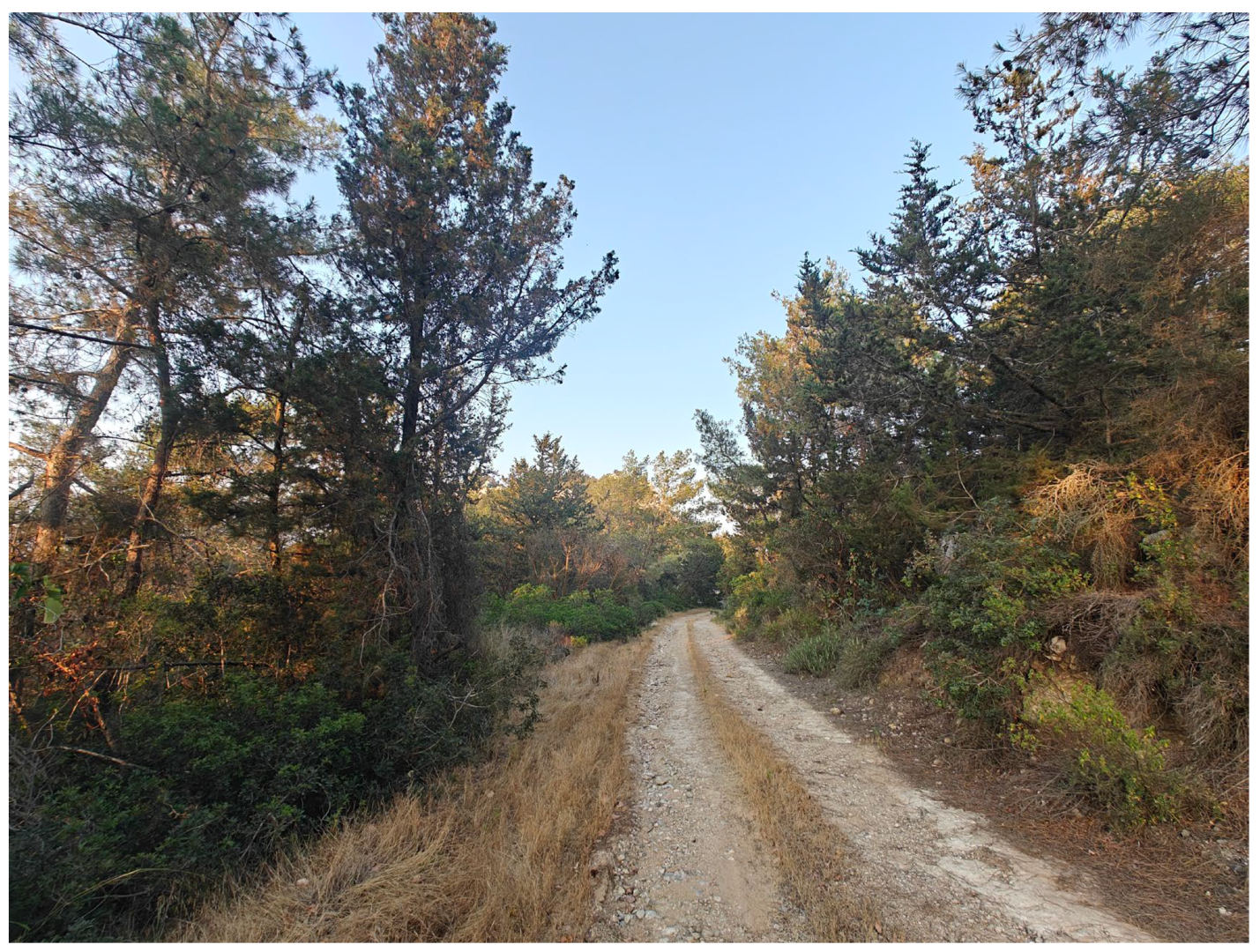
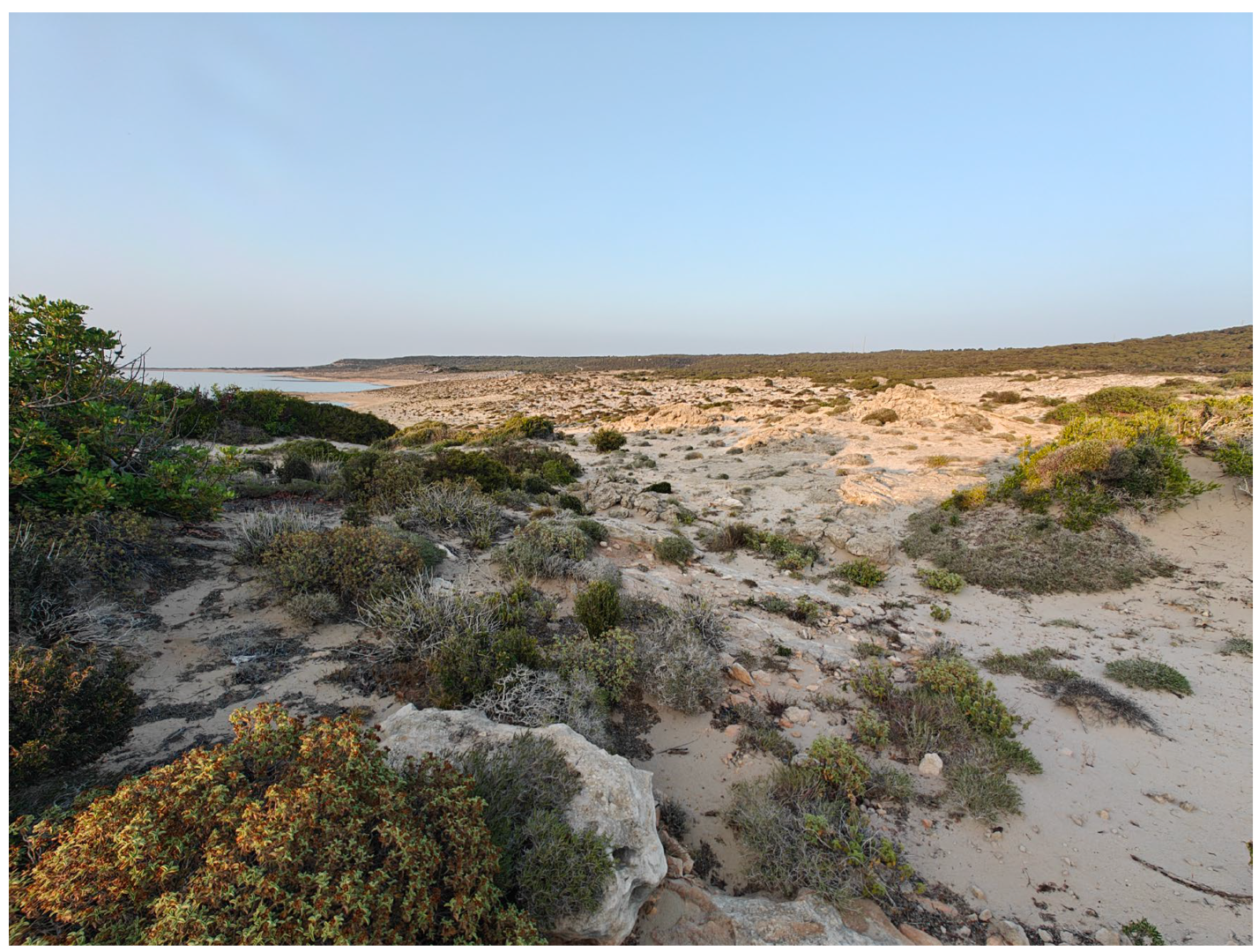
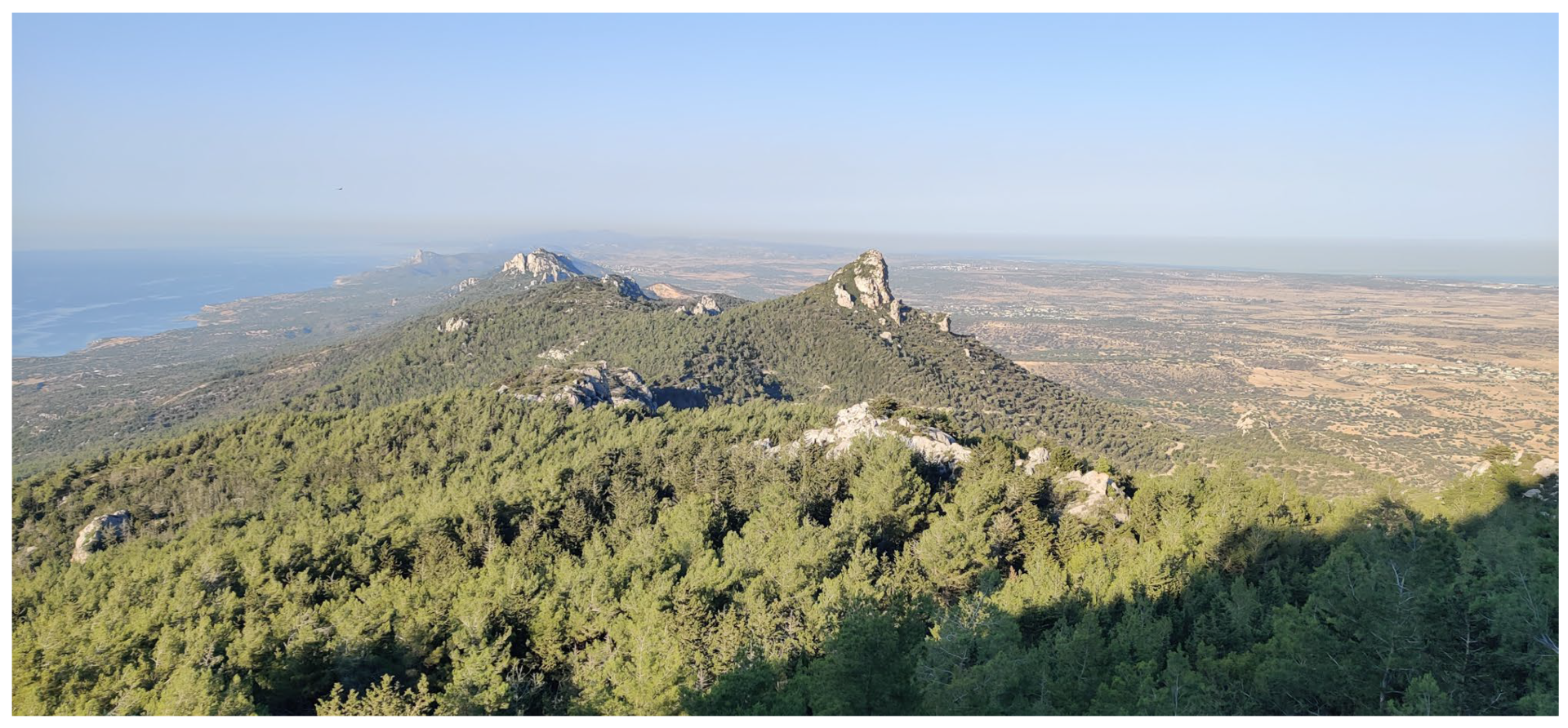
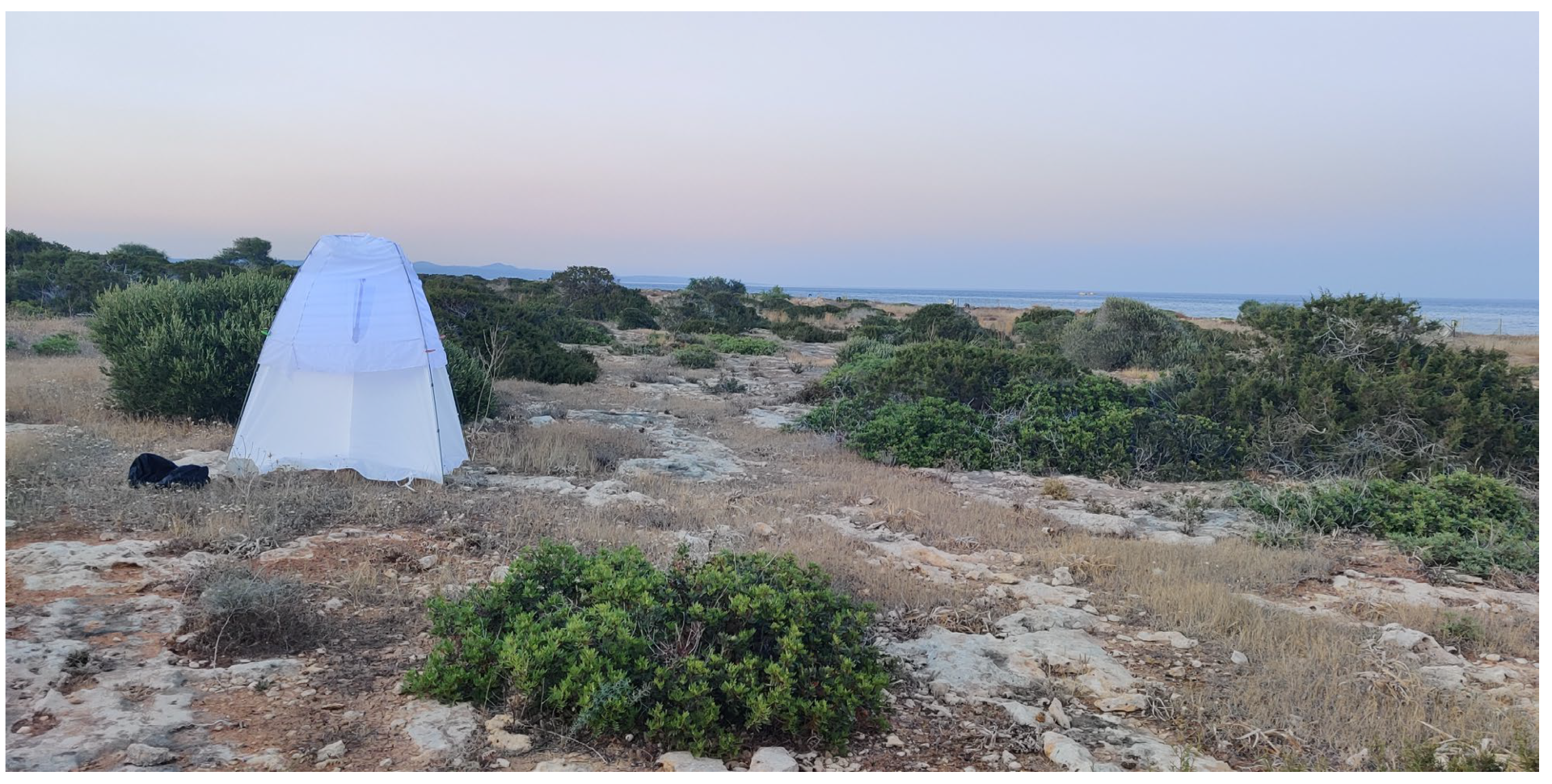
2.1. Field Surveys


2.2. DNA Barcoding
2.3. Checklist
3. Results
3.1. DNA Barcodes—General Overview
3.2. BINs Attributed to Linnaean Names
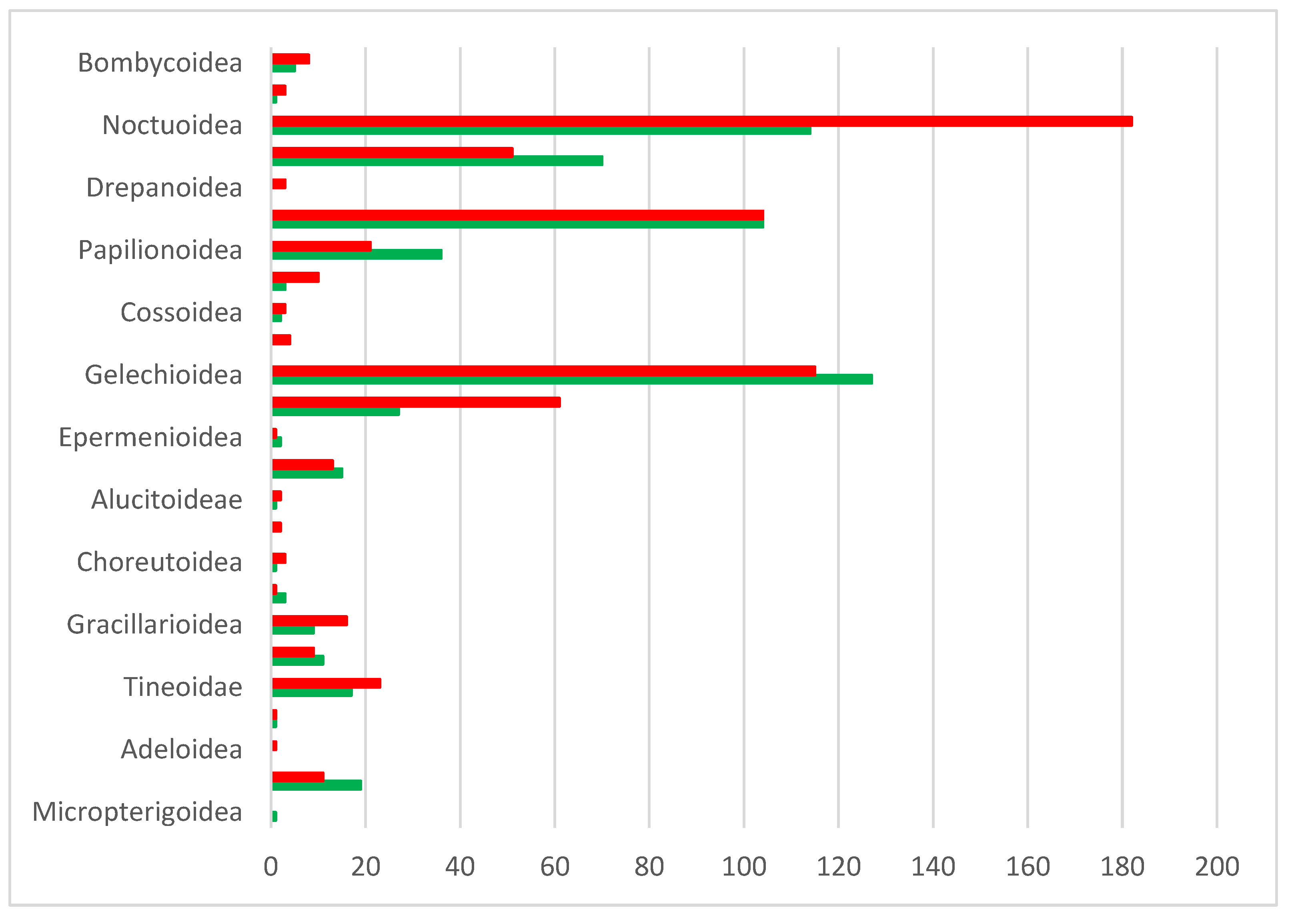
3.3. New Faunistic Records
3.3.1. New Records with Accompanying DNA Barcodes
3.3.2. New Records Based on Morphology
3.4. Unidentified Species—Potential Cryptic Diversity
3.4.1. Unidentfied BINs

3.4.2. Morphology-Based Unidentified Species
3.5. Critical Review of Doubtful or Incorrect Records from Cyprus
- (a)
- misidentifications of voucher specimens or, more recently, photographs;
- (b)
- changes in species concepts;
- (c)
- unresolved genetic divergences indicating overlooked cryptic diversity;
- (d)
- technical errors (e.g., incorrect data tables or specimen mislabelling).
3.6. Revised and Updated Checklist
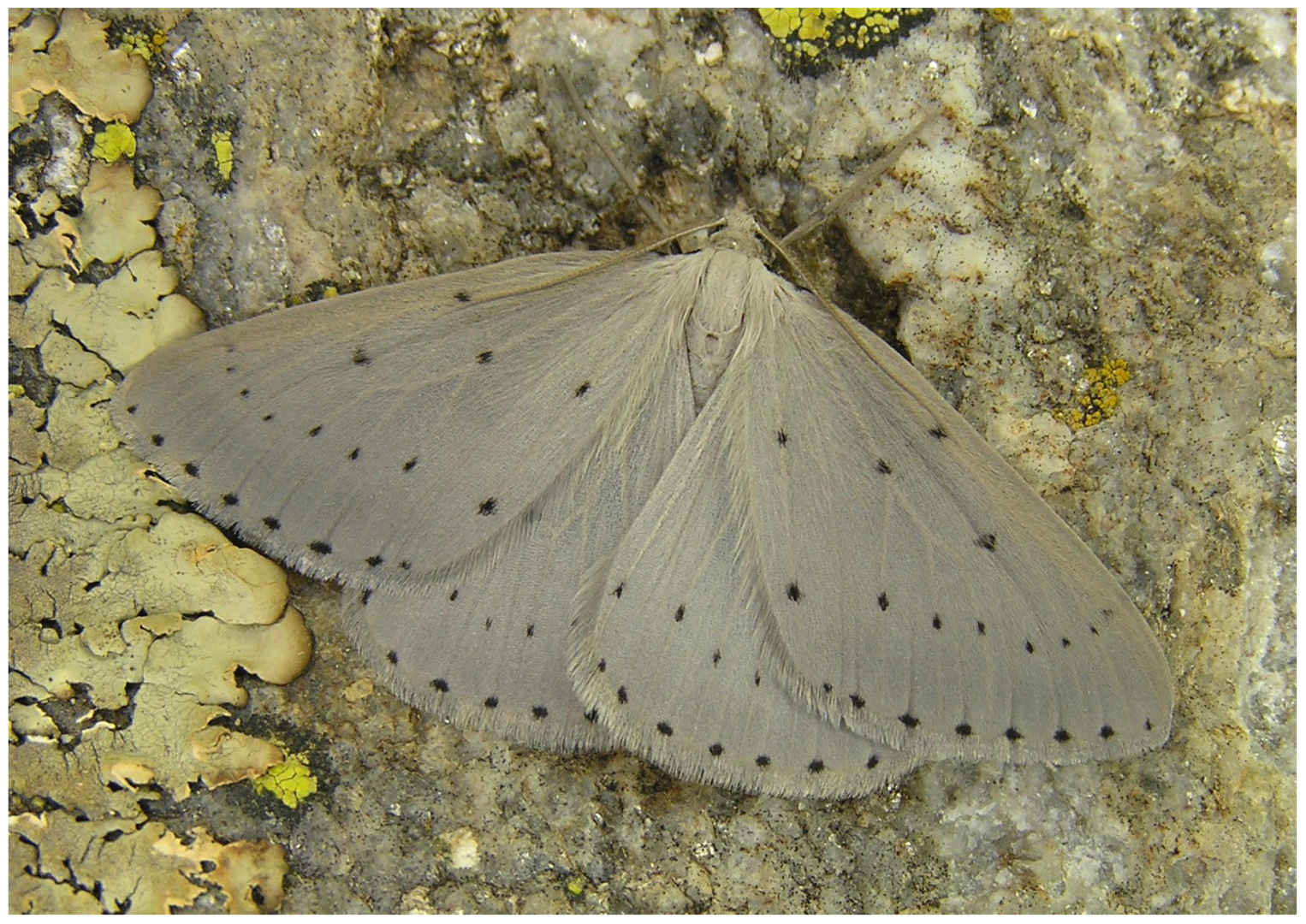
3.7. Insular Endemism


4. Discussion
5. Conclusions
Supplementary Materials
Author Contributions
Funding
Data Availability Statement
Acknowledgments
Conflicts of Interest
References
- Gökçekuş, H.; Kassem, Y. (Eds.) Climate Change and Natural Resources: Environmental Management and Sustainable Development; Springer Nature: Cham, Switzerland, 2025; Volume VIII, 455p. [Google Scholar] [CrossRef] [Scilit]
- Cyprus Geological Survey; Ministry of Agriculture; Rural Development and Environment; Government of Cyprus. Geology of Cyprus. Available online: https://www.moa.gov.cy/moa/gsd/gsd.nsf/All/3ED655D39943ACEDC225839400340EBE/$file/GEOLOGY%20OF%20CYPRUS%20%20WEB.pdf?OpenElement (accessed on 3 November 2025).
- Hand, R.; Hadjikyriakou, G.N.; Christodoulou, C.S. (Eds.) (Continuously Updated): Flora of Cyprus—A Dynamic Checklist. Available online: http://www.flora-of-cyprus.eu/ (accessed on 3 November 2025).
- Sparrow, D.; John, E. An Introduction to the Wildlife of Cyprus, 1st ed.; Terra Cypria: Limassol, Cyprus, 2016; 897p. [Google Scholar]
- Özden, Ö.; Hodgson, D.J. Butterflies (Lepidoptera) highlight the ecological value of shrubland and grassland mosaics in Cypriot garrigue ecosystems. Eur. J. Entomol. 2011, 108, 431–437. [Google Scholar] [CrossRef] [Scilit]
- Lederer, J. Beitrag zur Schmetterlingsfauna von Cypern, Beirut und einem Theile Kleinasiens (mit Abbild.). Verh. Zool.-Bot. Ver. Wien 1855, 5, 177–254. [Google Scholar]
- Staudinger, O. Lepidopterenfauna Kleinasiens. Horae Soc. Ent. Ross. 1879 – 1881, 14–16, 65–135, 159–435. [Google Scholar]
- Meyrick, E. Three new Microlepidoptera from Cyprus. Entomologist 1923, 56, 277–278. [Google Scholar]
- Meyrick, E. Exotic Microlepidoptera; Taylor and Francis: London, UK, 1923–1930; Volume 3, 640p. [Google Scholar]
- Hayward, K.J. Pyralidae and Microlepidoptera collected in Cyprus during 1920 and 1921. Entomol. Rec. J. Var. 1938, 50, 6–7, 28–30, 80–82, 90. [Google Scholar]
- Rebel, H. Über die Lepidopterenfauna Cyperns. Jahresber. Wien. Entomol. Ver. 1916, 26, 93–110. [Google Scholar]
- Rebel, H. Zur Lepidopterenfauna Cyperns. Mitt. Münch. Entomol. Ges. 1939, 29, 487–564. [Google Scholar]
- Wiltshire, E.P. Middle East Lepidoptera, IX: Two new forms or species and thirty-five new records from Cyprus. Entomol. Rec. J. Var. 1948, 60, 79–87. [Google Scholar]
- Amsel, H.G. Cyprische Kleinschmetterlinge. Z. Wien. Entomol. Ges. 1958, 43, 51–58, 69–75. [Google Scholar]
- Arenberger, E. Die palaearktischen Agdistis-Arten (Lepidoptera, Pterophoridae). Beitr. Naturk. Forsch. SW-Deutschl. 1977, 36, 185–226. [Google Scholar]
- Błeszyński, S. Microlepidoptera Palaearctica . In Crambinae; Georg Fromme & Co.: Wien, Austria, 1965; Volume 1, pp. I–XLVII, 1–553. [Google Scholar]
- Deschka, G. Neue Lithocolletiden von Zypern (Lepidoptera, Lithocolletidae). Entomol. Ber. 1974, 34, 174–179. [Google Scholar]
- Gerini, V. Contributo alla conoscenza dei principali insetti presenti sugli agrumi a Cipro. Riv. Agr. Subtrop. Trop. 1977, 71, 147–159. [Google Scholar]
- Georghiou, G.P. The Insects and Mites of Cyprus. With Emphasis on Species of Economic Importance to Agriculture, Forestry, Man, and Domestic Animals; Benaki Phytopathological Institute: Athens, Greece, 1977; pp. 1–347. [Google Scholar]
- Arenberger, E. Zusammenfassende Darstellung der Mikrolepidopterenfauna Zyperns. Ann. Mus. Goulandris 1994, 9, 253–336. [Google Scholar]
- Arenberger, E.; Wimmer, J. Erster Nachtrag zur Mikrolepidopterenfauna Zyperns. Nachr. Entomol. Ver. Apollo N. F. 1996, 17, 209–224. [Google Scholar]
- Arenberger, E.; Wimmer, J. 2. Nachtrag zur Mikrolepidopterenfauna Zyperns. Z. Arb. Österr. Entomol. 1999, 51, 41–46. [Google Scholar]
- Arenberger, E.; Wimmer, J. Dritter Nachtrag zur Microlepidopterenfauna Zyperns. Quadrifina 2003, 6, 43–54. [Google Scholar]
- Barton, I. A contribution to the microlepidopteran fauna of Cyprus. Entomol. Rec. J. Var. 2015, 127, 157–167. [Google Scholar]
- Barton, I. A second contribution to the Lepidopteran fauna of Cyprus, presenting new records for 48 taxa from 17 families. Entomol. Rec. J. Var. 2018, 130, 29–39. [Google Scholar]
- Huemer, P.; Özden, Ö. First attempts at DNA barcoding Lepidoptera in North Cyprus reveal unexpected complexities in taxonomic and faunistic issues. Diversity 2024, 16, 671. [Google Scholar] [CrossRef] [Scilit]
- Hausmann, A. Beitrag zur Geometridenfauna Zyperns. Z. ArbGem. Österr. Entomol 1994, 46, 91–98. [Google Scholar]
- Hausmann, A. Neue Geometriden-Funde aus Zypern und Gesamtübersicht über die Fauna. Mitt. Münchn. Entomol. Ges. 1995, 85, 79–111. [Google Scholar]
- Fibiger, M. A new Ammoconia species from Cyprus: A. aholai Fibiger, sp. n. (Lepidoptera, Noctuidae). Esperiana 1996, 4, 269–271. [Google Scholar]
- Fibiger, M. New noctuid moths from Cyprus with winter appearance (Lepidoptera, Noctuidae). Entomol. Medd. 1997, 65, 17–27. [Google Scholar]
- Ahola, M. Noctuoidea (Lepidoptera) from Cyprus with descriptions of larvae of some species. Entomol. Fenn. 1998, 9, 19–36. [Google Scholar] [CrossRef] [Scilit]
- Fibiger, M.; Nilsson, D.; Svendsen, P. Contribution to the Noctuidae fauna of Cyprus, with descriptions of four new species, six new subspecies, and reports of 55 species not previously found on Cyprus (Lepidoptera, Noctuidae). Esperiana 1999, 7, 639–667. [Google Scholar]
- Can Doğanlar, F.; Arap, N. On the geometrid moths (Lepidoptera) of northern Cyprus, including three new records. Zool. Middle East 2005, 34, 79–85. [Google Scholar] [CrossRef] [Scilit]
- Lewandowski, S.; Fischer, H. Check-Liste der Noctuidae von Zypern (Lepidoptera, Noctuidae). Atalanta 2004, 35, 119–126. [Google Scholar]
- Lewandowski, S. Ergänzungen und Korrekturen zur Check-Liste der Noctuidae von Zypern. Atalanta 2006, 35, 229–230. [Google Scholar]
- Fischer, H.; Lewandowski, S. Aktualisierte Checkliste der Geometridenarten von Zypern inklusive der wichtigsten Literaturangaben zu dieser Familie (Lepidoptera, Geometridae). Atalanta 2010, 41, 265–269. [Google Scholar]
- Manil, L. Les Rhopalocères de Chypre (Lepidoptera: Papilionoidea Hesperioidea). Linneana Belg. 1990, 12, 313–391. [Google Scholar]
- Karsholt, O.; van Nieukerken, E.J. Lepidoptera, Moths. Fauna Europaea 2013, Version 2021.12. Available online: https://www.eu-nomen.eu/portal/ (accessed on 21 November 2025).
- Lepiforum: Website zur Bestimmung von Schmetterlingen (Lepidoptera) und Ihren Präimaginalstadien. Available online: https://lepiforum.org/wiki/page/Downloads (accessed on 25 October 2025).
- Gozmány, L. The Lepidoptera of Greece and Cyprus. Fauna Graecia IX; Hellenic Zoological Society: Athens, Greece, 2012; Volume 1, pp. 1–409. [Google Scholar]
- Dinca, V.; Dapporto, L.; Somervuo, P.; Vodă, R.; Cuvelier, S.; Gascoigne-Pees, M.; Huemer, P.; Mutanen, M.; Hebert, P.D.N.; Vila, R. High resolution DNA barcode library for European butterflies reveals continental patterns of mitochondrial genetic diversity. Commun. Biol. 2021, 4, 315. [Google Scholar] [CrossRef] [Scilit] [PubMed]
- Lopez-Vaamonde, C.; Kirichenko, N.; Cama, A.; Doorenweerd, C.; Godfray, H.C.J.; Guiguet, A.; Gomboc, S.; Huemer, P.; Landry, J.-F.; Laštůvka, A.; et al. Evaluating DNA barcoding for species identification and discovery in European gracillariid moths. Front. Ecol. Evol. 2021, 9, 626752. [Google Scholar] [CrossRef] [Scilit]
- Basso, A.; Avtzis, D.; Burban, C.; Kerdelhué, C.; İpekdal, K.; Magnoux, E.; Rousselet, J.; Negrisolo, E.; Battisti, A. The pine processionary moth Thaumetopoea pityocampa (Notodontidae) species complex: A phylogeny-based revision. Arthropod Syst. Phylogeny 2023, 81, 1031–1050. [Google Scholar] [CrossRef] [Scilit]
- Tabell, J.; Junnilainen, J.; Sihvonen, P. Eupithecia conquesta Tabell & Junnilainen, a new species from Cyprus (Lepidoptera, Geometridae, Larentiinae). Nota Lepidopt. 2024, 47, 11–18. [Google Scholar]
- Huemer, P.; Özden, Ö. Scrobipalpa chardonnayi sp. nov.: A new presumably endemic species from Cyprus (Lepidoptera, Gelechiidae). Zootaxa 2024, 5523, 437–447. [Google Scholar] [CrossRef] [Scilit]
- Pühringer, F. Eine neue Art der Gattung Bembecia Hübner, [1819] (Lepidoptera: Sesiidae) aus Zypern. Z. ArbGem. Österr. Entomol. 2024, 76, 19–25. [Google Scholar]
- deWaard, J.R.; Ivanova, N.V.; Hajibabaei, M.; Hebert, P.D.N. Assembling DNA Barcodes: Analytical Protocols. In Methods in Molecular Biology: Environmental Genomics; Martin, C.C., Ed.; Humana Press Inc.: Totowa, NJ, USA, 2008; pp. 275–293. [Google Scholar]
- Ratnasingham, S.; Hebert, P.D.N. BOLD: The Barcode of Life Data System (http://www.barcodinglife.org). Mol. Ecol. Notes 2007, 7, 355–364. [Google Scholar] [CrossRef] [Scilit]
- Huemer, P.; Berggren, K.; Aarvik, L.; Rennwald, E.; Hausmann, A.; Segerer, A.; Staffoni, G.; Aspaas, A.M.; Trichas, A.; Hebert, P.D.N. Extensive DNA Barcoding of Lepidoptera of Crete (Greece) Reveals Significant Taxonomic and Faunistic Gaps and Supports the First Comprehensive Checklist of the Island’s Fauna. Insects 2025, 16, 438. [Google Scholar] [CrossRef] [Scilit]
- Ratnasingham, S.; Hebert, P.D.N. A DNA-based registry for all animal species: The Barcode Index Number (BIN) System. PLoS ONE 2013, 8, e66213. [Google Scholar] [CrossRef] [Scilit]
- Huemer, P.; Karsholt, O.; Aarvik, L.; Berggren, K.; Bidzilya, O.; Junnilainen, J.; Landry, J.-F.; Mutanen, M.; Nupponen, K.; Segerer, A.; et al. DNA barcode library for European Gelechiidae (Lepidoptera) suggests greatly underestimated species diversity. ZooKeys 2020, 921, 141–157. [Google Scholar] [CrossRef] [Scilit]
- Lvovsky, A.L.; Sinev, S.Y.; Kravchenko, V.D.; Müller, G.C. A contribution to the Israeli fauna of Microlepidoptera: Oecophoridae, Autostichidae, Depressariidae, Cryptolechiidae and Lecithoceridae with ecological and zoogeographical remarks (Lepidoptera: Gelechioidea). SHILAP Rev. Lepidopt 2016, 44, 97–113. [Google Scholar] [CrossRef] [Scilit]
- Gozmány, L. Microlepidoptera Palaearctica . In Lecithoceridae; Georg Fromme & Co.: Wien, Austria, 1978; Volume 5, pp. I–XXVIII, 1–306. [Google Scholar]
- iNaturalist. Available online: https://www.inaturalist.org (accessed on 15 October 2025).
- Demetriou, J.; Radea, C.; Peyton, J.M.; Groom, Q.; Roques, A.; Rabitsch, W.; Seraphides, N.; Arianoutsou, M.; Roy, H.E.; Martinou, A.F. The Alien to Cyprus Entomofauna (ACE) database: A review of the current status of alien insects (Arthropoda, Insecta) including an updated species checklist, discussion on impacts and recommendations for informing management. NeoBiota 2023, 83, 11–42. [Google Scholar] [CrossRef] [Scilit]
- Demetriou, J.; Aristophanous, M.; Koutsoukos, E.; John, E.; Roy, H.E.; Martinou, A.F.; Rota, J. A cosmopolitan invader—Choreutis sexfasciella (Lepidoptera, Choreutidae)—In Cyprus: First record, molecular characterization, and a reared parasitoid. Nota Lepidopt. 2025, 48, 15–28. [Google Scholar] [CrossRef] [Scilit]
- Huemer, P.; Özden, Ö. Molecular identification of newly recorded Lepidoptera for Cyprus and Europe (Insecta: Lepidoptera). SHILAP Rev. Lepidopt 2024, 52, 691–700. [Google Scholar] [CrossRef] [Scilit]
- Karsholt, O.; Razowksi, J. The Lepidoptera of Europe: A Distributional Checklist; Apollo Books: Stenstrup, Denmark, 1996; pp. 1–380. [Google Scholar]
- Aguiar, A.M.F.; Karsholt, O. Systematic Catalogue of the Entomofauna of the Madeira Archipelago amd Selvagens Islands; Museu Municipal do Funchal: Funchal, Portugal, 2006; Volume I, 140p. [Google Scholar]
- Ronkay, G.; Ronkay, L. A revision of the Episema korsakovi (Christoph, 1885) species complex (Noctuidae, Xyleninae, Episemini). Fibigeriana Suppl. 2025, 5, 187–206. [Google Scholar]
- Fibiger, M. (Ed.) Noctuidae Europaeae . In Noctuinae I; Entomological Press: Sorø, Denmark, 1990; Volume 1, pp. 1–208. [Google Scholar]
- Fibiger, M. (Ed.) Noctuidae Europaeae . In Noctuinae III; Entomological Press: Sorø, Denmark, 1997; Volume 3, pp. 1–418. [Google Scholar]
- Hacker, H.; Ronkay, L.; Hreblay, M. Noctuidae Europaeae . In Hadeninae I; Entomological Press: Sorø, Denmark, 2002; Volume 4, pp. 1–419. [Google Scholar]
- Zilli, A.; Ronkay, L.; Fibiger, M. Noctuidae Europaeae . In Apamaeini; Entomological Press: Sorø, Denmark, 2005; Volume 8, pp. 1–323. [Google Scholar]
- Fibiger, M.; Hacker, H. Noctuidae Europaeae . In Amphipyrinae–Xyleninae; Entomological Press: Sorø, Denmark, 2007; Volume 9, pp. 1–410. [Google Scholar]
- Goater, B.; Ronkay, L.; Fibiger, M. Noctuidae Europaeae . In Catocalinae & Plusiinae; Entomological Press: Sorø, Denmark, 2003; Volume 10, pp. 1–452. [Google Scholar]
- Witt, T.J.; Ronkay, L. (Eds.) Noctuidae Europaeae . In Lymantriinae and Arctiinae Including Phylogeny and Check List of the Quadrifid Noctuoidea of Europe; Entomological Press: Sorø, Denmark, 2011; Volume 13, pp. 1–448. [Google Scholar]
- Zhang, J.; Cong, Q.; Shen, J.; Song, L.; Grishin, N.V. Descriptions of three hundred new species of Hesperiidae (Lepidoptera: Papilionoidea). Insecta Mundi 2025, 1148, 1–369. [Google Scholar] [CrossRef] [Scilit]
- Roslin, T.; Somervuo, P.; Pentinsaari, M.; Hebert, P.D.N.; Agda, J.; Ahlroth, P.; Anttonen, P.; Aspi, J.; Blagoev, G.; Blanco, S.; et al. A molecular-based identification resource for the arthropods of Finland. Mol. Ecol. Res. 2021, 22, 803–822. [Google Scholar] [CrossRef] [Scilit]
- Huemer, P.; Mutanen, M. An incomplete European barcode library has a strong impact on the identification success of Lepidoptera from Greece. Diversity 2022, 14, 118. [Google Scholar] [CrossRef] [Scilit]
- Heath, J. New species of Micropterix Hübner (Lepidoptera, Zeugloptera: Micropterigidae) from Greece and Cyprus. Nota Lepidopt. 1985, 8, 336–340. [Google Scholar]
- Gustafsson, B. New leaf-mining moths of the family Nepticulidae from Cyprus, Greece (Lepidoptera). Ent. Scand. 1981, 12, 453–469. [Google Scholar] [CrossRef] [Scilit]
- van Nieukerken, E.J.; Doorenweerd, C.; Hoare, R.J.B.; Davis, D.R. Revised classification and catalogue of global Nepticulidae and Opostegidae (Lepidoptera, Nepticuloidea). ZooKeys 2016, 628, 65–246. [Google Scholar] [CrossRef] [Scilit] [PubMed]
- van Nieukerken, E.J. Acalyptris Meyrick: Revision of the platani and staticis groups in Europe and the Mediterranean (Lepidoptera: Nepticulidae). Zootaxa 2007, 1436, 1–48. [Google Scholar] [CrossRef] [Scilit]
- van Nieukerken, E.J.; Laštůvka, A.; Laštůvka, Z. Western Palaearctic Ectoedemia (Zimmermannia) Hering and Ectoedemia Busck s. str. (Lepidoptera: Nepticulidae): Five new species and new data on distribution, hostplants and recognition. ZooKeys 2010, 32, 1–82. [Google Scholar] [CrossRef] [Scilit]
- van Nieukerken, E.J. A taxonomic revision of the Western Palaearctic species of the subgenera Zimmermannia Hering and Ectoedemia Busck s. str. (Lepidoptera, Nepticulidae), with notes on their phylogeny. Tijdschr. Entomol. 1985, 128, 1–164. [Google Scholar]
- Timossi, G.; Huemer, P. Adela paludicolella Zeller, and Adela orientella Staudinger, Lepidoptera, Adelidae: Two distinct species revealed by morphological analysis and DNA barcoding, 1850, 1870 sp. rev. Zootaxa 2025, 5621, 249–261. [Google Scholar] [CrossRef] [Scilit]
- Gaedike, R. Microlepidoptera of Europe . In Tineidae I (Dryadaulinae, Hapsiferinae, Euplocaminae, Scardiinae, Nemapogoninae and Meessiinae); Brill: Leiden, The Netherlands, 2015; Volume 7, pp. 1–308. [Google Scholar]
- Weidlich, M. Die Psychidenfauna der Republik Zypern (Lepidoptera: Psychidae). Beitr. Entomol. 2015, 65, 113–124. [Google Scholar] [CrossRef] [Scilit]
- Weidlich, M. The bisexual Dahlica triquetrella (Hübner, 1813) and new records of Luffia lapidella (Goeze, 1783) in Slovenia (Lepidoptera: Psychidae). Acta Entomol. Slovenica 2013, 21, 163–168. [Google Scholar]
- Gaedike, R. Beitrag zur Kenntnis der ostmediterranen Nemapogoninae (Lepidoptera, Tineidae). Reichenbachia 1986, 24, 23–39. [Google Scholar]
- Gaedike, R.; Kullberg, J. A contribution to the Dryadaulidae and Tineidae of Lebanon, with two species new to science (Lepidoptera). Beitr. Entomol. 2016, 66, 154–172. [Google Scholar] [CrossRef] [Scilit]
- Gaedike, R. New and poorly known Lepidoptera from the West Palaearctic (Tineidae, Acrolepiidae, Douglasiidae, Epermeniidae). Nota Lepidopt 2007, 29, 159–176. [Google Scholar]
- Gaedike, R. Microlepidoptera of Europe . In Tineidae II (Myrmecozelinae, Perissomasticinae, Tineinae, Hieroxestinae, Teichobiinae, and Stathmopolitinae); Brill: Leiden, The Netherlands, 2019; Volume 9, pp. I–XXIII, 1–248. [Google Scholar]
- Moraiti, C.A.; Kadis, C.; Papayiannis, L.C.; Stavrinides, M.C. Insects and mites feeding on berries of Juniperus foetidissima Willd. on the Mediterranean island of Cyprus. Phytoparasitica 2019, 47, 71–77. [Google Scholar] [CrossRef] [Scilit]
- Scholz, A. Zwei neue, paläarktische Alucita-Arten (Lepidoptera Alucitidae). Alexanor 1997, 20, 51–58. [Google Scholar]
- Arenberger, E. Die Microlepidopteren Zyperns. 1. Teil: Pterophoridae. Faun. Abh. Mus. Tierk. Dresd. 1985, 12, 129–132. [Google Scholar]
- Arenberger, E. Ergänzungen zur Gattung Agdistis (Lepidoptera, Pterophoridae). Andrias 1983, 3, 51–54. [Google Scholar]
- Arenberger, E. Microlepidoptera Palaearctica . In Pterophoridae. Platyptiliinae: Platyptiliini: Stenoptilia; Goecke & Evers: Keltern, Germany, 2005; Volume 12, pp. 1–191. [Google Scholar]
- Arenberger, E. Zwei neue Mikrolepidopteren aus Zypern (Lepidoptera: Tortricidae, Pterophoridae). Stapfia 1998, 55, 305–311. [Google Scholar]
- Fazekas, I.; Edmunds, H. New records of Alucitidae and Pterophoridae species from Crete (Lepidoptera). Lepidopt. Hung. 2023, 19, 25–36. [Google Scholar]
- Gaedike, R. Two new species of the genus Epermenia Hübner, [1825] and some new distributional and taxonomic records (Lepidoptera: Epermeniidae). SHILAP Rev. Lepidopt. 2022, 50, 755–765. [Google Scholar] [CrossRef] [Scilit]
- Nupponen, K.; Junnilainen, J.; Nupponen, T.; Olschwang, V. The cochylid fauna of the Southern Ural Mountains, with description of Cochylimorpha ignicolorana Junnilainen & K. Nupponen sp. n. (Lepidoptera: Tortricidae: Cochylini). Entomol. Fenn. 2001, 12, 94–107. [Google Scholar]
- Razowski, J. Microlepidoptera Palaearctica. In Tortricini; Braun: Melsungen, Germany, 1984; Volume 6, p. I–XV, 1–376. [Google Scholar]
- Larsen, K. Revision of the genus Ditula (Lepidoptera, Tortricidae) with description of a new species. Phegea 2015, 43, 2–5. [Google Scholar]
- Pröse, H. Bemerkungen zur Cydia succedana-Gruppe im Alpen- und Mediterranraum (Lepidoptera, Tortricidae). Stapfia 1988, 16, 257–271. [Google Scholar]
- Pröse, H.; Sutter, R. Cydia marathonana sp. nov., eine neue Art der succedana-Gruppe aus Griechenland und Bemerkungen über Cydia trogodana Pröse, 1988 (Lepidoptera: Tortricidae). Entomol. Z. 2003, 113, 168–169. [Google Scholar]
- Krambias, A. Integrated pest management of pome fruits in Cyprus. Arab. J. Plant Prot. 1998, 16, 49–51. [Google Scholar]
- Karisch, T.; Pinzari, M. Cydia molybdana (Constant, 1884)—A valid species (Lepidoptera: Tortricidae: Olethreutinae). Beitr. Entomol. 2010, 60, 463–470. [Google Scholar] [CrossRef] [Scilit]
- Barton, I. On Pammene crataegophila Amsel, 1935 (Tortricidae) from Cyprus, with a description of the female genitalia. Entomol. Rec. J. Var. 2015, 127, 104–108. [Google Scholar]
- Gozmány, L.A. Three new Symmocid species from the Mediterranean Region (Lepidoptera, Symmocidae). Boll. Mus. Reg. Sci. Nat. Torino 2000, 17, 281–286. [Google Scholar]
- Gozmány, L.A. The family Symmocidae and the description of new taxa mainly from the Near East (Lepidoptera). Acta Zool. Acad. Sci. Hung. 1963, 9, 67–134. [Google Scholar]
- Gozmány, L.A. New Symmocid and Holcopogonid species from the Eastern Mediterranean (Lepidoptera; Symmocidae, Holcopogonidae). Entomofauna 1986, 7, 201–214. [Google Scholar]
- Hackman, W. On the insect fauna of Cyprus. Results of the expedition of 1939 by Harald Håkan and P. H. Lindberg. IX. Lepidoptera. Comment. Biol. 1952, 18, 1–9. [Google Scholar]
- Tokár, Z.; Jaworski, T. Batia hilszczanskii spec. nov. from Cyprus (Lepidoptera, Oecophoridae). Spixiana 2015, 38, 71–76. [Google Scholar]
- Buchner, P.; Corley, M.F.V. Microlepidoptera of Europe . In Depressariidae; Brill: Leiden, The Netherlands, 2024; Volume 10, pp. 1–624. [Google Scholar]
- Huemer, P. The supposedly unmistakable mistaken: Carcina ingridmariae sp. nov., a surprising example of overlooked diversity from Europe and the Near East (Lepidoptera, Peleopodidae). Alp. Entomol. 2025, 9, 51–63. [Google Scholar] [CrossRef] [Scilit]
- Falck, P.; Karsholt, O. Gelechiidae of the Canary Islands (Spain). Part 1. Anacampsinae (Insecta: Lepidoptera). SHILAP Rev. Lepidopt. 2025, 53, 5–41. [Google Scholar] [CrossRef] [Scilit]
- Bidzilya, O.; Karsholt, O.; Kravchenko, V.; Šumpich, J. An annotated checklist of Gelechiidae (Lepidoptera) of Israel with description of two new species. Zootaxa 2019, 4677, 1–68. [Google Scholar] [CrossRef] [Scilit] [PubMed]
- Rebel, H. Zur Lepidopterenfauna Cyperns. V. Verh. Zool.-Bot. Ges. Wien 1928, 78, 29–34. [Google Scholar]
- Karsholt, O.; Rutten, T. The genus Bryotropha Heinemann in the Western Palaearctic (Lepidoptera: Gelechiidae). Tijdschr. Voor Entomol. 2005, 148, 77–207. [Google Scholar] [CrossRef] [Scilit]
- Bidzilya, O.; Karsholt, O. A review of the Palearctic Ptycerata Ely, 1910 (= Caulastrocecis Chrétien, 1931, syn. nov.) based on morphology (Lepidoptera, Gelechiidae). Zootaxa 2021, 5026, 151–181. [Google Scholar] [CrossRef] [Scilit]
- Huemer, P.; Karsholt, O. Microlepidoptera of Europe . In Gelechiidae II (Gelechiinae: Gnorimoschemini); Apollo Books: Stenstrup, Denmark, 2010; Volume 6, pp. 1–586. [Google Scholar]
- Huemer, P.; Karsholt, O. Microlepidoptera of Europe . In Gelechiidae I; Apollo Books: Stenstrup, Denmark, 1999; Volume 3, pp. 1–356. [Google Scholar]
- Koster, S.; Sinev, S.Y. Microlepidoptera of Europe . In Momphidae s. l; Apollo Books: Stenstrup, Denmark, 2003; Volume 5, pp. 1–387. [Google Scholar]
- Barton, I. A new species of metallic-green Coleophora (Hübner, 1822) (Lepidoptera: Coleophoridae) from Cyprus. Entomol. Rec. J. Var. 2016, 128, 167–171. [Google Scholar]
- Baldizzone, G. I Microlepidotteri di Cipro: III parte, Coleophoridae. Ann. Mus. Goulandris 1985, 7, 263–270. [Google Scholar]
- Kaila, L.; Junnilainen, J. Taxonomy and identification of Elachista cingillella (Herrich-Schäffer, 1855) and its close relatives (Lepidoptera: Elachistidae), with descriptions of two new species. Entomol. Fenn. 2002, 13, 167–188. [Google Scholar] [CrossRef] [Scilit]
- Lewandowski, S.; Makris, C. Dritter Beitrag zur Fauna der „Spinner und Schwärmer” Zyperns: Neue Erkenntnisse zur Gattung Ocneria Hübner, 1819 (Lepidoptera, Lymantriidae) und aktualisierte Daten zu anderen Familien. Nachr. Entomol. Ver. Apollo N. F. 2006, 27, 165–170. [Google Scholar]
- Yakovlev, R.; Lewandowski, S. Paropta paradoxus kathikas subspec. nov., a new subspecies of the genus Paropta from Cyprus (Lepidoptera, Cossidae). Atalanta 2007, 38, 217–219. [Google Scholar]
- Rebel, H. Bericht der Sektion für Lepidopterologie. Versammlung am 7. Jänner 1927. IV. Beitrag zur Lepidopterenfauna der Insel Cypern. Verh. Zool.-Bot. Ges. Wien 1927, 77, 58–63. [Google Scholar]
- Vassiliou, V.A.; Michael, C.; Kazantzis, E.; Meligronidou-Pantelidou, A. First report of the palm borer Paysandisia archon (Burmeister 1880) (Lepidoptera: Castniidae) in Cyprus. Phytoparasitica 2009, 37, 327–329. [Google Scholar] [CrossRef] [Scilit]
- Hofmann, P.; Rose, K. Zur Rhopaloceren-Fauna Zyperns (Lepidoptera). Nachr. Entomol. Ver. Apollo N. F. 1987, 7, 133–141. [Google Scholar]
- John, E.; Bağlar, H.; Başbay, O.; Salimeh, M. First appearance in Cyprus of Papilio demoleus Linnaeus, 1758 (Lepidoptera: Papilionidae), as it continues its predicted westward spread in the Palaearctic region. Entomol. Gaz. 2021, 72, 257–264. [Google Scholar] [CrossRef] [Scilit]
- Tshikolovets, V.V. Butterflies of Europe & the Mediterranean Area; Tshikolovets Publications: Pardubice, Czech Republic, 2011; 544p. [Google Scholar]
- de Jong, R.; Coutsis, J.G. A re-appraisal of Gegenes Hübner, 1819 (Lepidoptera, Hesperiidae) based on male and female genitalia, with the description of a new genus, Afrogegenes . Tijdschr. Entomol. 2017, 160, 41–60. [Google Scholar] [CrossRef] [Scilit]
- John, E.; Evans, S. A first record of eremic Pontia glauconome (Lepidoptera: Pieridae: Pierinae) in Cyprus: An example of unavoidable wind-borne displacement by a Saharan dust storm? Phegea 2025, 53, 86–92. [Google Scholar]
- John, E.; Hawkes, W.L.S.; Walker, E.J. A review of Mediterranean records of Catopsilia florella (Lepidoptera: Pieridae, Coliadinae), with notes on the spring 2019 arrival in Cyprus of this Afrotropical migrant. Phegea 2019, 47, 80–86. [Google Scholar]
- Chapman, T.A. An undescribed Lycaenid Butterfly from Cyprus, Glaucopsyche paphos, sp. n. (Lycaenidae). Trans. Entomol. Soc. Lond. 1920, 166, 166–169. [Google Scholar] [CrossRef] [Scilit]
- John, E.; Houkes, J.; Salmela, T. Rediscovery of Issoria lathonia (Lepidoptera: Nymphalidae: Heliconiinae) in Cyprus. Phegea 2024, 52, 44–46. [Google Scholar]
- Benjamini, D. Hypolimnas misippus (Linnaeus, 1767) (Lepidoptera: Nymphalidae) in Cyprus and other records in the Eastern Mediterranean, an overlooked record and east Mediterranean butterfly migration corridors. Entomol. Gaz. 2021, 72, 243–252. [Google Scholar]
- Graves, P.P. Epinephele cypricola Sp. nov. Entomologist 1928, 61, 5–7. [Google Scholar]
- John, E.; Haines, D.H.; Haines, H.M. Chazara persephone (Hübner, 1803) (Lepidoptera: Nymphalidae, Satyrinae)—Has the species retained a secretive presence in Cyprus for one hundred years? Entomol. Gaz. 2011, 62, 79–82. [Google Scholar]
- Holik, O. Über die Gattung Satyrus L. Z. Wien Entomol. Ges. 1949, 34, 98–105. [Google Scholar]
- Slamka, F. Pyraloidea of Europe (Lepidoptera) . In Pyralinae, Galleriinae, Epipaschiinae, Cathariinae & Odontiinae; F. Slamka: Bratislava, Slovakia, 2006; Volume 1, pp. 1–138. [Google Scholar]
- Slamka, F. Pyraloidea of Europe (Lepidoptera) . In Phycitinae–Part 1; F. Slamka: Bratislava, Slovakia, 2019; Volume 4, pp. 1–432. [Google Scholar]
- Yepishin, J.; Bidzilya, O.; Budashkin, Y.; Zhakov, O.; Mushynskyi, V.; Novytskyi, S. New records of little known pyraloid moths (Lepidoptera: Pyraloidea) from Ukraine. Zootaxa 2020, 4808, 101–120. [Google Scholar] [CrossRef] [Scilit]
- Roesler, R.U. Microlepidoptera Palaearctica . In Phycitinae; Georg Fromme & Co.: Wien, Austria, 1973; Volume 4, p. I–XVI, 1–752. [Google Scholar]
- Roesler, U. Chorologische Untersuchungen über den Homoeosoma-Ephestia-Komplex (Lepidoptera: Phycitinae) im paläarktischen Raum. Bonn. Zool. Beitr 1965, 16, 318–349. [Google Scholar]
- Amsel, H.G. Die Microlepidopteren der Brandt’schen Iran-Ausbeute. 4. Teil. Ark. Zool. 1953, 6, 255–326. [Google Scholar]
- Goater, B.; Nuss, M.; Speidel, W. Microlepidoptera of Europe . In Pyraloidea I (Crambidae: Acentropinae, Evergestinae, Heliothelinae, Schoenobiinae, Scopariinae); Apollo Books: Stenstrup, Denmark, 2005; Volume 4, pp. 1–304. [Google Scholar]
- Barton, I.; Rosewarne, K.; John, E. Chilo partellus (Swinhoe, 1885) (Lep.: Pyraloidea, Crambidae) a stem borer on Cyprus. Entomol. Rec. J. Var. 2013, 125, 181–185. [Google Scholar]
- Slamka, F. Pyraloidea of Europe (Lepidoptera) . In Crambinae & Schoenobiinae; F. Slamka: Bratislava, Slovakia, 2008; Volume 2, pp. 1–223. [Google Scholar]
- Slamka, F. Pyraloidea of Europe (Lepidoptera) . In Pyraustinae & Spilomelinae; F. Slamka: Bratislava, Slovakia, 2013; Volume 3, pp. 1–357. [Google Scholar]
- Skou, P.; Sihvonen, P. The Geometrid Moths of Europe. In Subfamily Ennominae I (Abraxini, Apeirini, Baptini, Caberini, Campaeini, Cassymini, Colotoini, Ennomini, Epionini, Gnophini (Part), Hypochrosini, Lithinini, Macariini, Prosopolophini, Theriini and 34 Species of Uncertain Tribus Association); Brill: Leiden, The Netherlands, 2015; Volume 5, 657p. [Google Scholar]
- Prout, L.B. New Palaearctic Geometridae. Novit. Zool. 1929, 35, 142–149. [Google Scholar]
- Fischer, H. Crocallis cypriaca sp. nov., eine neue Spannerart von der Insel Zypern (Lepidoptera: Geometridae, Ennominae). Entomol. Z 2003, 113, 372–374. [Google Scholar]
- Müller, B.; Erlacher, S.; Hausmann, A.; Rajaei, H.; Sihvonen, P.; Skou, P. The Geometrid Moths of Europe. In Subfamily Ennominae II (Boarmiini, Gnophini, Additions to Previous Volumes); Brill: Leiden, The Netherlands, 2019; Volume 6. [Google Scholar]
- Prout, L.B. Spannerartige Nachtfalter. In Die Gross-Schmetterlinge der Erde. Eine Systematische Bearbeitung der bis jetzt bekannten Gross-Schmetterlinge; Seitz, A., Ed.; Kernen: Stuttgart, Germany, 1904–1914; Volume 4 (I–V), pp. 1–479. [Google Scholar]
- Hausmann, A. The Geometrid Moths of Europe. In Sterrhinae; Apollo Books: Stenstrup, Denmark, 2004; Volume 2, pp. 1–600. [Google Scholar]
- Hausmann, A.; Viidalepp, J. The Geometrid Moths of Europe. In Larentiinae I; Apollo Books: Vester Skerninge, Denmark, 2012; Volume 3, pp. 1–743. [Google Scholar]
- Prout, L.B. Die Gross-Schmetterlinge der Erde. Eine Systematische Bearbeitung der bis jetzt bekannten Gross-Schmetterlinge; Seitz, A., Ed.; Kernen: Stuttgart, Germany, 1934–1954; Volume 4, Suppl. pp. 1–766. [Google Scholar]
- Hausmann, A.; Friedrich, E. An integrative taxonomic approach to resolving some difficult questions in the Larentiinae of the Mediterranean region (Lepidoptera, Geometridae). Mitt. Münchn. Entomol. Ges. 2011, 101, 73–97. [Google Scholar]
- Mironov, V. The Geometrid Moths of Europe. In Larentiinae II (Perizomini and Eupitheciini); Apollo Books: Stenstrup, Denmark, 2003; Volume 4, pp. 1–464. [Google Scholar]
- Bang-Haas, O. Ocnogyna cypriaca . Ent. Zeit. Int. Ent. Zeit. 1934, 48, 48. [Google Scholar]
- Koçak, A.Ö.; Kemal, M. A synonymous and distributional list of the species of the Lepidoptera of Turkey. CESA Mem. 2018, 8, 1–487. [Google Scholar]
- Macià, R.; Ylla, J.; Gastón, J.; Huertas, M.; Bau, J. The species of Eilema Hübner, [1819] sensu lato present in Europe and North Africa (Lepidoptera: Erebidae: Arctiinae: Lithosiini). Zootaxa 2022, 5191, 1–87. [Google Scholar] [CrossRef] [Scilit] [PubMed]
- Fibiger, M.; Ronkay, L.; Yela, J.L.; Zilli, A. Noctuidae Europaeae . In Rivulinae, Boletobiinae, Hypenodinae, Araeopteroninae, Eublemminae, Herminiinae, Hypeninae, Phytometrinae, Euteliinae, and Micronoctuidae. Including Supplement to Volumes 1–11; Entomological Press: Sorø, Denmark, 2010; Volume 12, pp. 1–451. [Google Scholar]
- Boursin, C. Zwei neue Cryphia Hb. (Bryophila)-Arten aus dem vorderasiatisch-mediterranen Faunenkreis. (Beiträge zur Kenntnis der “Agrotidae-Trifinae” LV (55)). Z. Wien. Entomol. Ges. 1952, 37, 152–155. [Google Scholar]
- Top-Jensen, M.; Fritsch, D.; Kononenko, V. Noctuidae Europaeae Essential; Bugbook Publishing: Oestermarie, Denmark, 2023; 837p. [Google Scholar]
- Hacker, H. Revision of the genus Caradrina Ochsenheimer, 1816, with notes on other genera of the tribus Caradrini (Lepidoptera, Noctuidae). Esperiana 2004, 10, 7–690. [Google Scholar]
- Hacker, H. Ergänzungen zu „Die Noctuidae Vorderasiens” und neuere Forschungsergebnisse zur Fauna der Türkei II (Lepidoptera). Esperiana 1996, 4, 273–330. [Google Scholar]
- Benedek, B.; Tóth, B. Boursinia discordans (Boursin, 1940), a new Noctuidae species for the fauna of Cyprus (Lepidoptera: Noctuidae). Ann. Mus. Hist.-Nat. Hung. 2022, 114, 129–133. [Google Scholar] [CrossRef] [Scilit]
- Hampson, G.F. Catalogue of the Lepidoptera Phalaenae in the British Museum; Taylor and Francis: London, UK, 1903; Volume 4, pp. i–xx, 1–689. [Google Scholar]
- Brandstetter, J. Beschreibung einer neuen Art der Gattung Agrotis Ochsenheimer, 1816 aus Zypern (Lepidoptera, Noctuidae). Atalanta 2010, 41, 285–288. [Google Scholar]
- Lödl, M. Noctua warreni sp. n., a new sibling species of Noctua comes Hübner, 1813 from Cyprus (Lepidoptera, Noctuidae). Nota Lepidopt. 1987, 10, 163–174. [Google Scholar]
- Danner, F.; Eitschberger, U.; Surholt, B. Die Schwärmer der westlichen Palaearktis. Bausteine zu einer Revision (Lepidoptera: Sphingidae). Herbipoliana. Buchr. Zur Lepidopterol. 1998, 4/1–4/2, 368–720. [Google Scholar]
- Aristophanous, M.; Pittaway, A.R.; Aristophanous, A. Rediscovery of Clarina syriaca (Lederer, 1855) (Lepidoptera, Sphingidae, Macroglossinae) in Cyprus after 70 years; with notes on its biology and early life history from the Levant. Nota Lepidopt. 2022, 45, 305–314. [Google Scholar] [CrossRef] [Scilit]
- Gregersen, K.; Karsholt, O. Taxonomic confusion around the Peach Twig Borer, Anarsia lineatella Zeller, 1839, with description of a new species (Lepidoptera, Gelechiidae). Nota Lepidopt. 2017, 40, 65–85. [Google Scholar] [CrossRef] [Scilit]
- Berggren, K.; Aarvik, L. Callima icterinella (Mann, 1867) comb. nov. (Lepidoptera, Oecophoridae), a complex consisting of seven species. Nor. J. Entomol. 2024, 71, 95–108. [Google Scholar] [CrossRef] [Scilit]
- Adamczewski, S. On the systematics and origin of the generic group Oxyptilus Zeller (Lep., Alucitidae). Bull. Br. Mus. (Nat. Hist.) Entomol. 1951, 1, 303–387. [Google Scholar] [CrossRef] [Scilit]
- Trematerra, P. Clepsis trifasciata sp. n. with notes on some Lepidoptera Tortricidae from Kirgizstan. J. Entomol. Acarol. Res. 2010, 42, 1–10. [Google Scholar] [CrossRef] [Scilit]
- John, E.; Wiemers, M.; Makris, C.; Russell, P. The Pontia daplidice (Linnaeus, 1758)/Pontia edusa (Fabricius, 1777) complex (Lepidoptera: Pieridae): Confirmation of the presence of Pontia daplidice in Cyprus, and of Cleome iberica DC. as a new host plant for this species in the Levant. Entomol. Gaz. 2013, 64, 69–78. [Google Scholar]

| Taxon | Family |
|---|---|
| Alucita zonodactyla Zeller, 1847 | Alucitidae |
| Coleophora variicornis Toll, 1952 | Coleophoridae |
| Alloclita deprinsi Koster & Sinev, 2003 | Cosmopterigidae |
| Anatrachyntis badia (Hodges, 1962) | Cosmopterigidae |
| Limnaecia phragmitella Stainton, 1851 | Cosmopterigidae |
| Dolicharthria metasialis (Rebel, 1916) | Crambidae |
| Glaucocharis euchromiella (Ragonot, 1895) | Crambidae |
| Agonopterix rotundella (Douglas, 1846) | Depressariidae |
| Depressaria bantiella (Rocci, 1934) | Depressariidae |
| Klimeschia lutumella (Amsel, 1938) | Douglasiidae |
| Elachista griseella (Duponchel, 1843) | Elachistidae |
| Eilema costalis (Zeller, 1847) | Erebidae |
| Epermenia aequidentellus (Hofmann, 1867) | Epermeniidae |
| Caryocolum proxima (Haworth, 1828) | Gelechiidae |
| Dichomeris helianthemi (Walsingham, 1903) | Gelechiidae |
| Gelechia obscuripennis (Frey, 1880) | Gelechiidae |
| Helcystogramma lutatella (Herrich-Schäffer, 1854) | Gelechiidae |
| Isophrictis kefersteiniellus (Zeller, 1850) | Gelechiidae |
| Parastenolechia nigrinotella (Zeller, 1847) | Gelechiidae |
| Pexicopia malvella (Hübner, 1805) | Gelechiidae |
| Scrobipalpa spergulariella (Chrétien, 1910) | Gelechiidae |
| Stenolechiodes macrolepiellus Huemer & Karsholt, 1999 | Gelechiidae |
| Teleiodes luculella (Hübner, 1813) | Gelechiidae |
| Telphusa cistiflorella (Constant, 1889) | Gelechiidae |
| Acanthovalva inconspicuaria (Hübner, 1819) | Geometridae |
| Eupithecia irriguata (Hübner, 1813) | Geometridae |
| Eupithecia unedonata Mabille, 1868 | Geometridae |
| Ectoedemia caradjai (Groschke, 1944) | Nepticulidae |
| Ectoedemia contorta van Nieukerken, 1985 | Nepticulidae |
| Zimmermannia monemvasiae (van Nieukerken, 1985) | Nepticulidae |
| Bryophila felina (Eversmann, 1852) | Noctuidae |
| Nycteola asiatica (Krulikovsky, 1904) | Nolidae |
| Opostega spatulella Herrich-Schäffer, 1855 | Opostegidae |
| Capperia loranus (Fuchs, 1895) | Pterophoridae |
| Hellinsia coniodactylus (Staudinger, 1859) | Pterophoridae |
| Achroia grisella (Fabricius, 1794) | Pyralidae |
| Acrobasis obtusella (Hübner, 1796) | Pyralidae |
| Acrobasis xanthogramma (Staudinger, 1870) | Pyralidae |
| Aglossa signicostalis Staudinger, 1870 | Pyralidae |
| Delplanqueia inscriptella (Dupopnchel, 1836) | Pyralidae |
| Dioryctria pineae (Staudinger, 1859) | Pyralidae |
| Ephestia abnormalella Ragonot, 1887 | Pyralidae |
| Hypsotropa paucipunctella Ragonot, 1895 | Pyralidae |
| Pempelia albariella Zeller, 1839 | Pyralidae |
| Peoria cremoricosta (Ragonot, 1895) | Pyralidae |
| Episcythris triangulella (Ragonot, 1874) | Scythrididae |
| Elatobia bugrai Koçak, 1981 | Tineidae |
| Bactra bactrana (Kennel, 1901) | Tortricidae |
| Clepsis trivia (Meyrick, 1913) | Tortricidae |
| Cnephasia cupressivorana (Staudinger, 1870) | Tortricidae |
| Cochylimorpha additana (Kennel, 1901) | Tortricidae |
| Cydia alienana (Caradja, 1916) | Tortricidae |
| Endothenia ustulana (Haworth, 1811) | Tortricidae |
| Lobesia artemisiana (Zeller, 1847) | Tortricidae |
| Lobesia limoniana (Millière, 1860) | Tortricidae |
| Lobesia porrectana (Zeller, 1847) | Tortricidae |
| Zelleria hepariella Stainton, 1849 | Yponomeutidae |
| Species | Family |
|---|---|
| Bedellia ehikella Szőcs, 1967 | Bedelliidae |
| Coleophora ochrea (Haworth, 1828) | Coleophoridae |
| Coleophora pennella (Denis & Schiffermüller, 1775) | Coleophoridae |
| Bifascioides leucomelanella (Rebel, 1917) * | Cosmopterigidae |
| Cosmopterix pulchrimella Chambers, 1875 | Cosmopterigidae |
| Dolicharthria stigmosalis (Herrich-Schäffer, 1848) | Crambidae |
| Euchromius vinculellus (Zeller, 1847) | Crambidae |
| Eudonia speideli Leraut, 1982 | Crambidae |
| Evergestis frumentalis (Linnaeus, 1761) | Crambidae |
| Patania balteata (Fabricius, 1798) | Crambidae |
| Pyrausta purpuralis (Linnaeus, 1758) | Crambidae |
| Agonopterix cnicella (Treitschke, 1832) | Depressariidae |
| Agonopterix subpropinquella (Stainton, 1849) | Depressariidae |
| Depressaria floridella Mann, 1864 | Depressariidae |
| Depressaria hirtipalpis Zeller, 1854 | Depressariidae |
| Watsonalla uncinula (Borkhausen, 1790) * | Drepanidae |
| Dysauxes parvigutta (Christoph, 1889) | Erebidae |
| Schrankia costaestrigalis (Stephens, 1834) | Erebidae |
| Psoricoptera gibbosella (Zeller, 1839) | Gelechiidae |
| Scrobipalpa bradleyi Povolný, 1971 | Gelechiidae |
| Scrobipalpa voltinella (Chrétien, 1898) | Gelechiidae |
| Eupithecia antalica Mironov, 2001 | Geometridae |
| Phigalia pilosaria (Denis & Schiffermüller, 1775) | Geometridae |
| Aspilapteryx tringipennella (Zeller, 1839) | Gracillariidae |
| Caloptilia coruscans (Walsingham, 1907) | Gracillariidae |
| Phyllonorycter lapadiella (Krone, 1909) | Gracillariidae |
| Phyllonorycter mespilella (Hübner, 1805) | Gracillariidae |
| Stigmella nivenburgensis (Preissecker, 1942) | Nepticulidae |
| Ctenoplusia limbirena (Guenée, 1852) | Noctuidae |
| Euxoa zernyi Boursin, 1944 | Noctuidae |
| Bryophilopsis roederi (Standfuss, 1892) * | Nolidae |
| Garella nilotica (Rogenhofer, 1882) | Nolidae |
| Meganola impura (Mann, 1862) | Nolidae |
| Xanthodes albago (Fabricius, 1794) * | Nolidae |
| Hellinsia carphodactyla (Hübner, 1813) | Pterophoridae |
| Aphomia sabella (Hampson, 1901) * | Pyralidae |
| Epischnia asteris Staudinger, 1870 | Pyralidae |
| Euzophera lunulella (Costa, 1836) | Pyralidae |
| Euzopherodes lutisignella (Mann, 1869) | Pyralidae |
| Stemmatophora combustalis (Fischer von Röslerstamm, 1841) | Pyralidae |
| Scythris apicalis (Zeller, 1847) | Scythrididae |
| Stathmopoda auriferella (Walker, 1864) | Stathmopodidae |
| Gaedikeia kokkariensis Sutter, 1998 | Tineidae |
| Nemapogon arenbergeri Gaedike, 1986 | Tineidae |
| Cnephasia oxyacanthana (Herrich-Schäffer, 1851) | Tortricidae |
| Cochylimorpha decolorella (Zeller, 1839) * | Tortricidae |
| Cochylimorpha diana (Kennel, 1899) | Tortricidae |
| Cochylimorpha langeana (Kalchberg, 1898) | Tortricidae |
| Cydia duplicana (Zetterstedt, 1839) | Tortricidae |
| Endothenia oblongana (Haworth, 1811) | Tortricidae |
| Epiblema graphana (Treitschke, 1835) | Tortricidae |
| Epinotia dalmatana (Rebel, 1891) | Tortricidae |
| Epinotia immundana (Fischer von Röslerstamm, 1839) | Tortricidae |
| Hysterophora maculosana (Haworth, 1811) | Tortricidae |
| Longicornutia epilinana (Duponchel, 1843) | Tortricidae |
| Neocochylis hybridella (Hübner, 1813) | Tortricidae |
| Pammene avetianae Kuznetsov, 1964 | Tortricidae |
| Pammene nannodes Walsingham, 1900 | Tortricidae |
| Pammene querceti (Gozmány, 1957) | Tortricidae |
| Pseudeulia asinana (Hübner, 1799) | Tortricidae |
| Sparganothis pilleriana (Denis & Schiffermüller, 1775) | Tortricidae |
| Ypsolopha trichonella (Mann, 1861) | Ypsolophidae |
Disclaimer/Publisher’s Note: The statements, opinions and data contained in all publications are solely those of the individual author(s) and contributor(s) and not of MDPI and/or the editor(s). MDPI and/or the editor(s) disclaim responsibility for any injury to people or property resulting from any ideas, methods, instructions or products referred to in the content. |
© 2025 by the authors. Licensee MDPI, Basel, Switzerland. This article is an open access article distributed under the terms and conditions of the Creative Commons Attribution (CC BY) license.
Share and Cite
Huemer, P.; Özden, Ö.; Rennwald, E.; Barton, I.; Junnilainen, J.; Hausmann, A.; van Nieukerken, E.J.; Hebert, P.D.N. Well-Known, Misidentified, or Unnamed? A DNA Barcode-Based Reassessment of the Lepidoptera Fauna of Cyprus Supported by Morphology. Insects 2026, 17, 4. https://doi.org/10.3390/insects17010004
Huemer P, Özden Ö, Rennwald E, Barton I, Junnilainen J, Hausmann A, van Nieukerken EJ, Hebert PDN. Well-Known, Misidentified, or Unnamed? A DNA Barcode-Based Reassessment of the Lepidoptera Fauna of Cyprus Supported by Morphology. Insects. 2026; 17(1):4. https://doi.org/10.3390/insects17010004
Chicago/Turabian StyleHuemer, Peter, Özge Özden, Erwin Rennwald, Ian Barton, Jari Junnilainen, Axel Hausmann, Erik J. van Nieukerken, and Paul D. N. Hebert. 2026. "Well-Known, Misidentified, or Unnamed? A DNA Barcode-Based Reassessment of the Lepidoptera Fauna of Cyprus Supported by Morphology" Insects 17, no. 1: 4. https://doi.org/10.3390/insects17010004
APA StyleHuemer, P., Özden, Ö., Rennwald, E., Barton, I., Junnilainen, J., Hausmann, A., van Nieukerken, E. J., & Hebert, P. D. N. (2026). Well-Known, Misidentified, or Unnamed? A DNA Barcode-Based Reassessment of the Lepidoptera Fauna of Cyprus Supported by Morphology. Insects, 17(1), 4. https://doi.org/10.3390/insects17010004