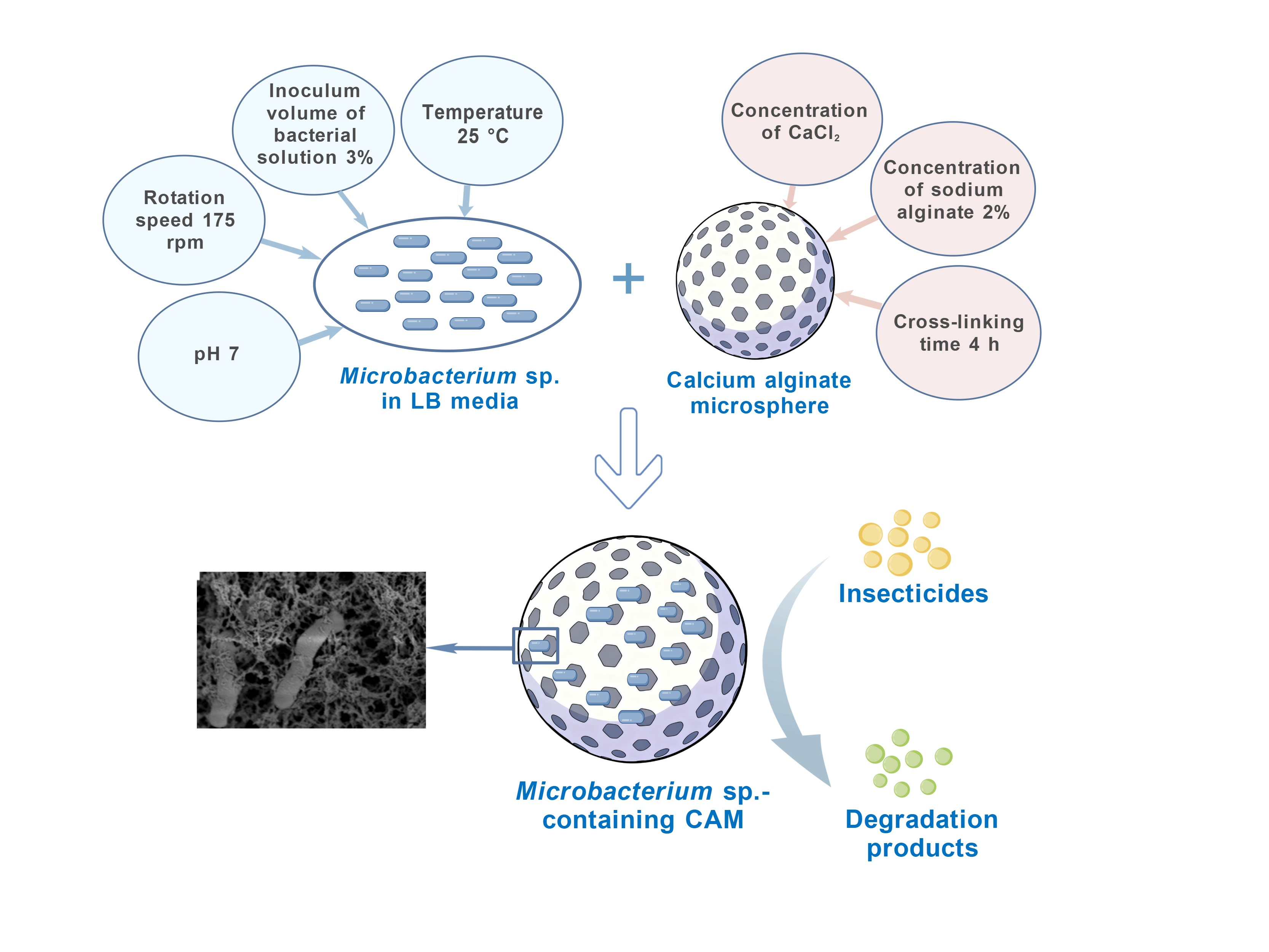
Fermentation and Immobilization of Insect-Derived Deltamethrin-Degrading Strain, Microbacterium sp.


Simple Summary
Abstract
1. Introduction
2. Materials and Methods
2.1. Culture Media and the Bacterial Strain
2.2. Evaluation of the Deltamethrin Removal Rate
2.3. Optimization of Bacterial Culture Conditions
2.4. Bacterial Immobilization
2.5. Characterization of Immobilized Microbacterium sp.
2.6. Application of the CAMs Under Mimic Situations
2.7. Statistical Analysis
3. Results
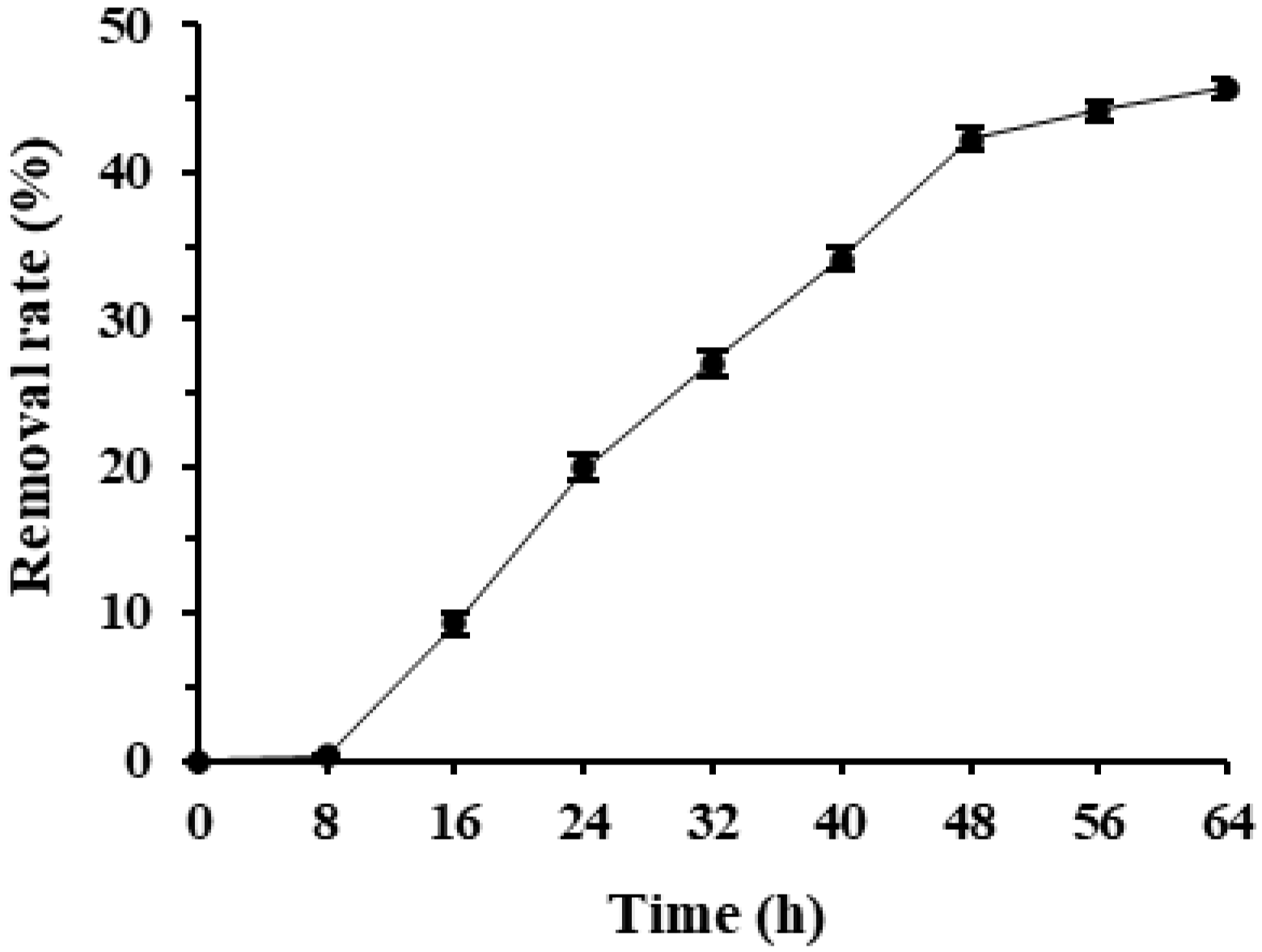
3.1. Deltamethrin Removal Capability of Microbacterium sp.
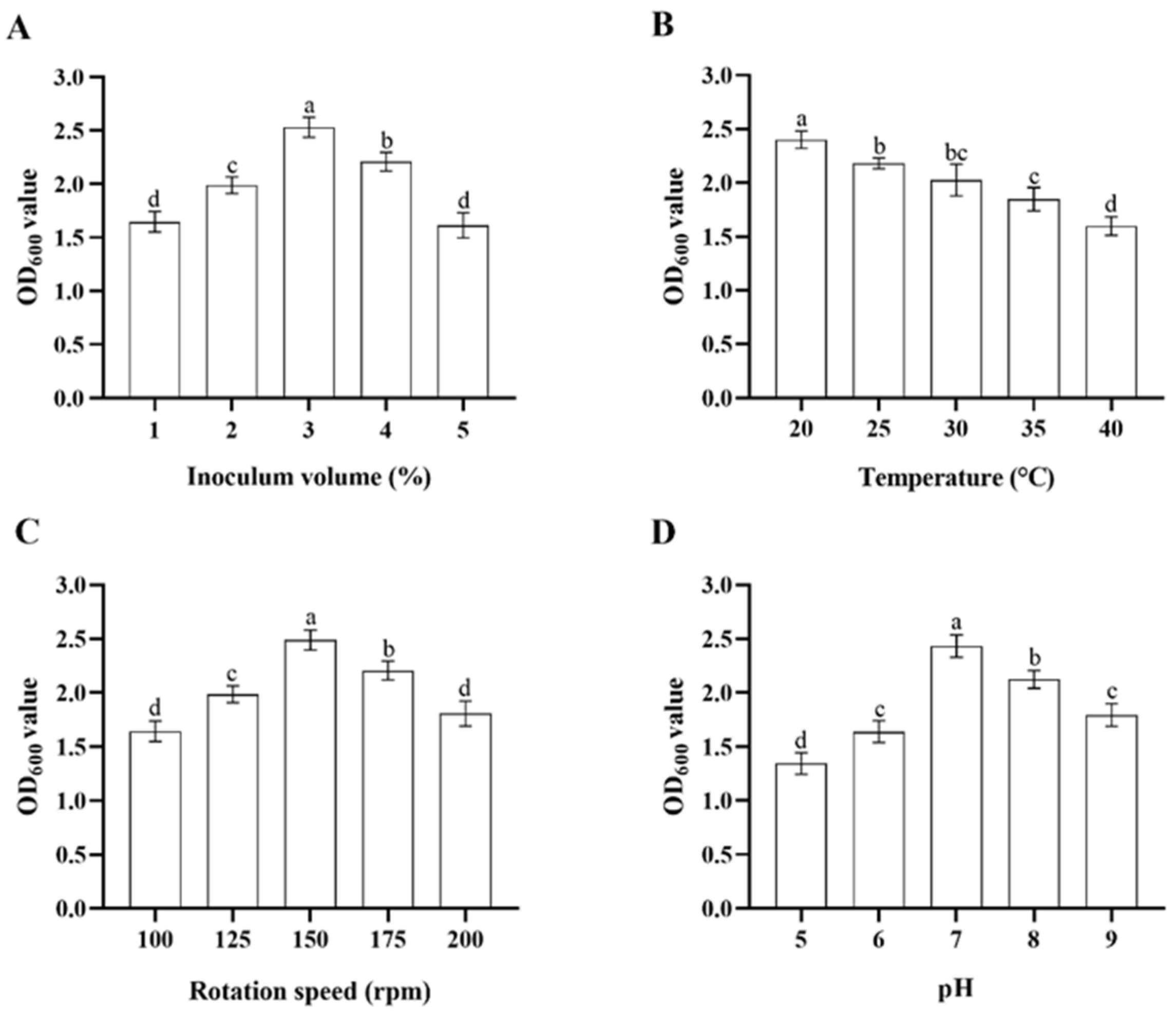
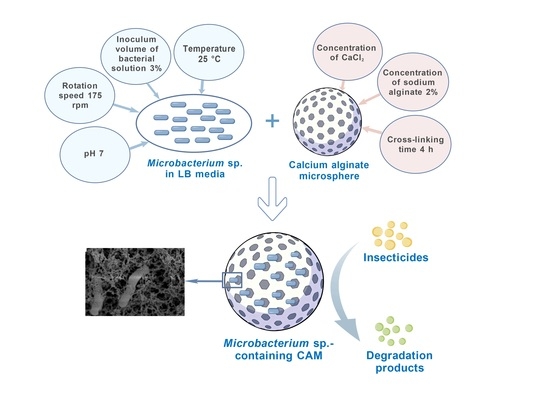
3.2. Optimal Culture Conditions of Microbacterium sp.
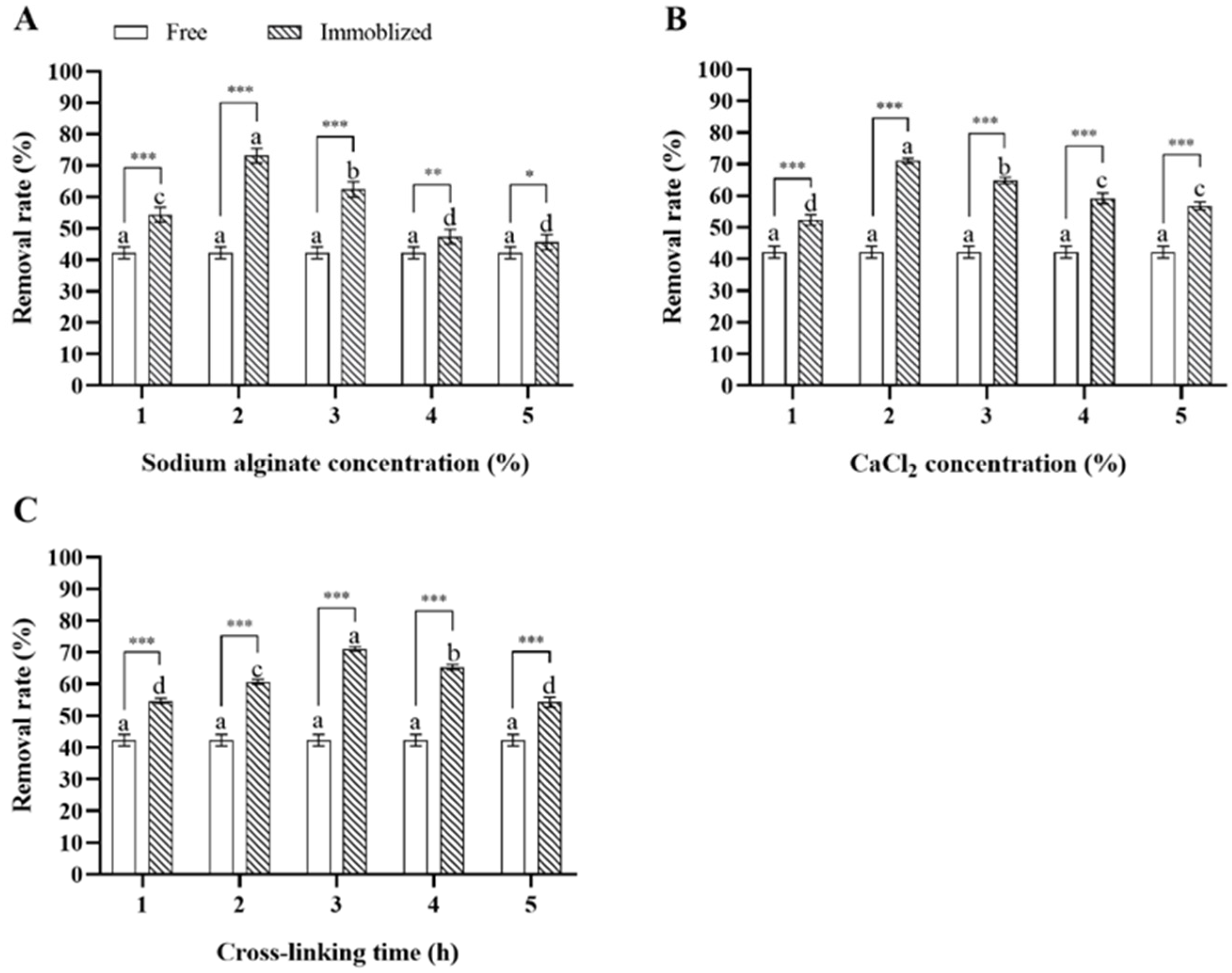
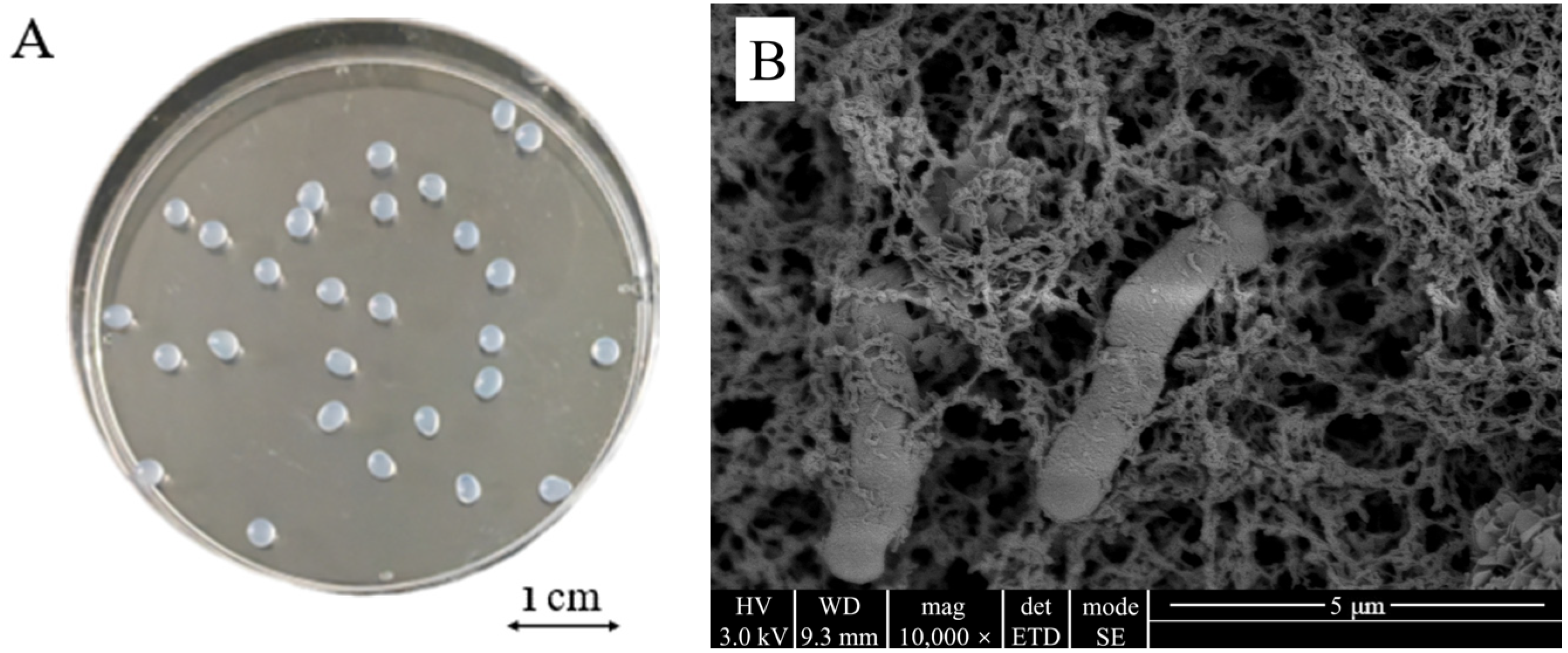
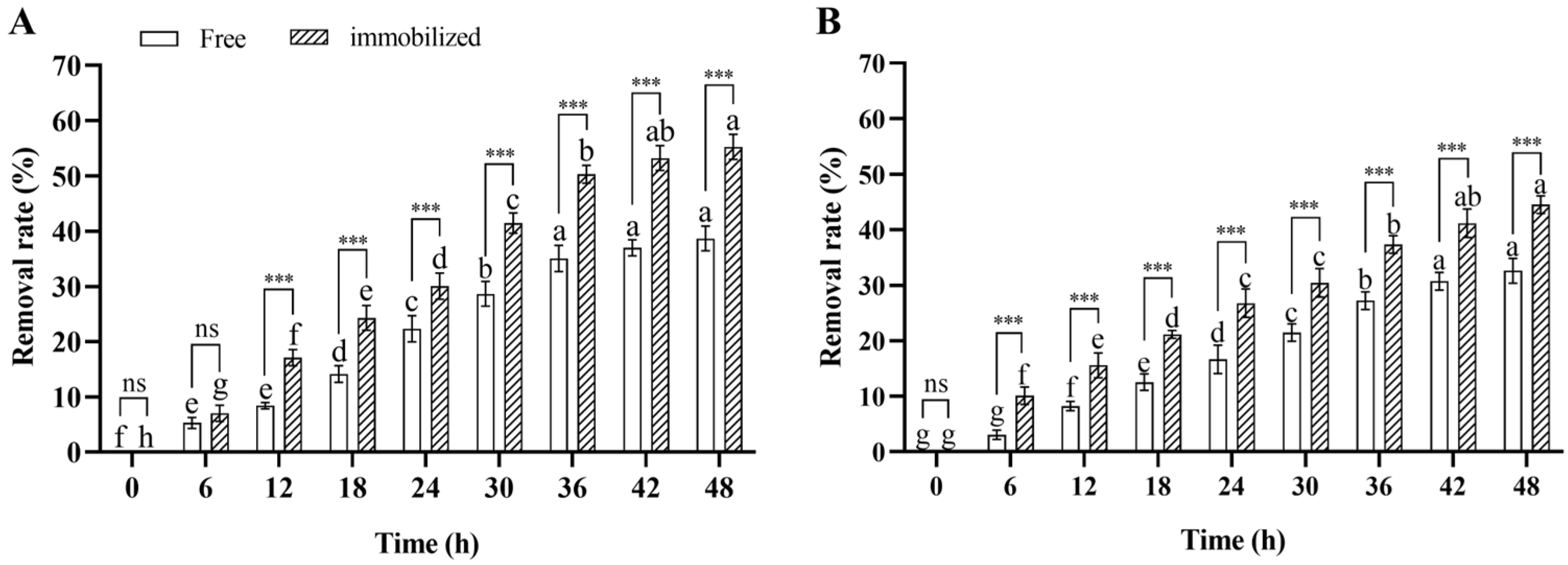
3.3. Optimal Immobilization Conditions for Microbacterium sp.
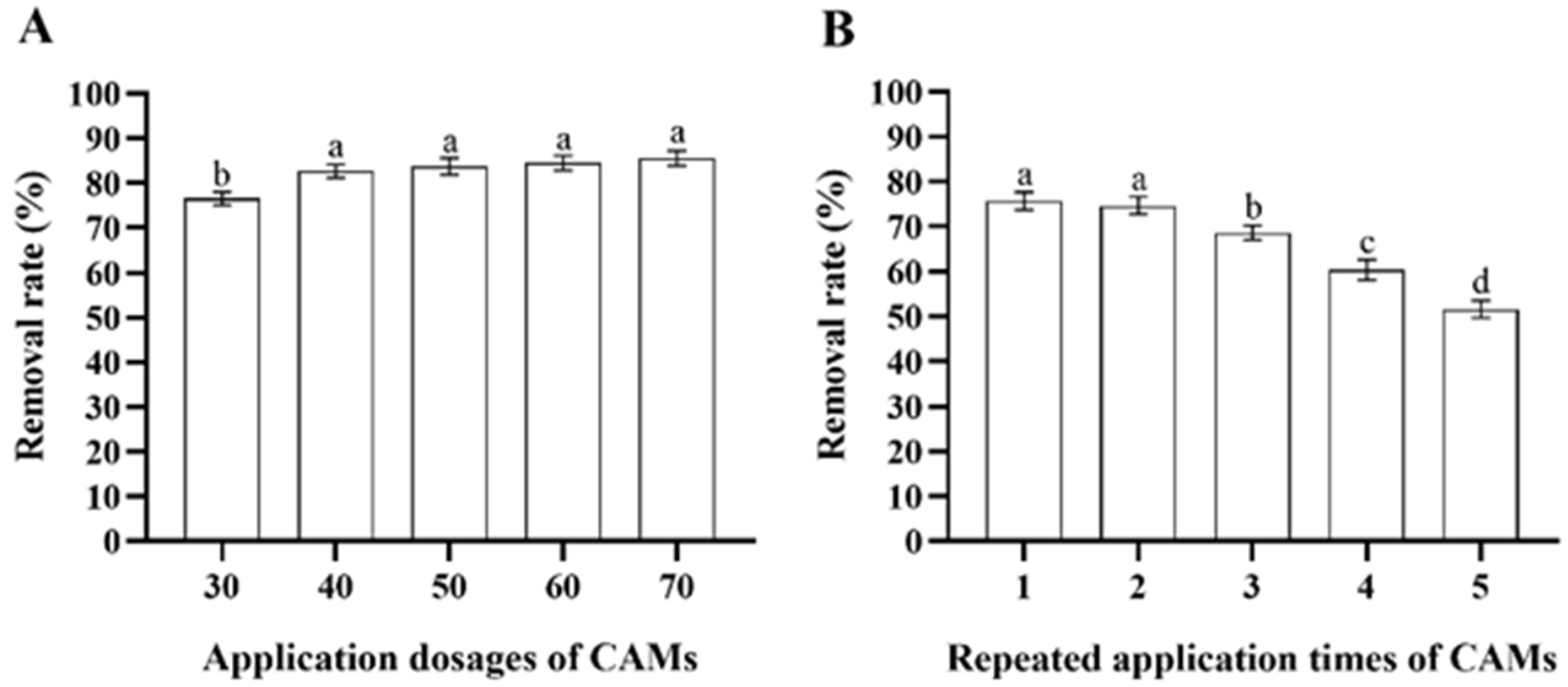
3.4. Deltamethrin Removal Capability of Microbacterium sp. in Water and Soil
4. Discussion
5. Conclusions
Author Contributions
Funding
Data Availability Statement
Conflicts of Interest
References
- Giambo, F.; Teodoro, M.; Costa, C.; Fenga, C. Toxicology and microbiota: How do pesticides influence gut microbiota? A review. Int. J. Environ. Res. Public Health 2021, 18, 5510. [Google Scholar] [CrossRef] [Scilit]
- Mulla, S.I.; Ameen, F.; Talwar, M.P.; Eqani, S.A.M.A.S.; Bharagava, R.N.; Saxena, G.; Tallur, P.N.; Ninnekar, H.Z. Organophosphate pesticides: Impact on environment, toxicity, and their degradation. In Bioremediation of Industrial Waste for Environmental Safety: Volume I: Industrial Waste and Its Management; Saxena, G., Bharagava, R.N., Eds.; Springer Nature: Singapore, 2020; pp. 265–290. [Google Scholar] [CrossRef] [Scilit]
- Pujar, N.K.; Premakshi, H.G.; Ganeshkar, M.P.; Kamanavalli, C.M. Biodegradation of pesticides used in agriculture by soil microorganisms. In Enzymes for Pollutant Degradation; Mulla, S.I., Bharagava, R.N., Eds.; Springer Nature: Singapore, 2022; pp. 213–235. [Google Scholar] [CrossRef] [Scilit]
- Zhao, J.; Jia, D.; Du, J.; Chi, Y.; Yao, K. Substrate regulation on co-metabolic degradation of β-cypermethrin by Bacillus licheniformis B-1. AMB Express 2019, 9, 83. [Google Scholar] [CrossRef] [Scilit]
- Hao, X.; Zhang, X.; Duan, B.; Huo, S.; Lin, W.; Xia, X.; Liu, K. Screening and genome sequencing of deltamethrin-degrading bacterium ZJ6. Curr. Microbiol. 2018, 75, 1468–1476. [Google Scholar] [CrossRef] [Scilit]
- Jaffar, S.; Ahmad, S.; Lu, Y. Contribution of insect gut microbiota and their associated enzymes in insect physiology and biodegradation of pesticides. Front. Microbiol. 2022, 13, 979383. [Google Scholar] [CrossRef] [Scilit]
- Jankielsohn, A. The importance of insects in agricultural ecosystems. Adv. Entomol. 2018, 6, 62–73. [Google Scholar] [CrossRef]
- de Almeida, L.G.; de Moraes, L.A.B.; Trigo, J.R.; Omoto, C.; Consoli, F.L. The gut microbiota of insecticide-resistant insects houses insecticide-degrading bacteria: A potential source for biotechnological exploitation. PLoS ONE 2017, 12, e0174754. [Google Scholar] [CrossRef] [Scilit] [PubMed]
- Wang, Z.; Wang, W.; Lu, Y. Biodegradation of insecticides by gut bacteria isolated from stored grain beetles and its implication in host insecticide resistance. J. Stored Prod. Res. 2022, 96, 101943. [Google Scholar] [CrossRef] [Scilit]
- Wang, Z.; Zhao, Y.; Yong, H.; Liu, Z.; Wang, W.; Lu, Y. The contribution of gut bacteria to pesticide resistance of Tribolium castaneum (Herbst). J. Stored Prod. Res. 2023, 103, 102160. [Google Scholar] [CrossRef] [Scilit]
- Mrozik, A.; Piotrowska-Seget, Z. Bioaugmentation as a strategy for cleaning up of soils contaminated with aromatic compounds. Microbiol. Res. 2010, 165, 363–375. [Google Scholar] [CrossRef] [Scilit]
- Berillo, D.; Al-Jwaid, A.; Caplin, J. Polymeric materials used for immobilisation of bacteria for the bioremediation of contaminants in water. Polymers 2021, 13, 1073. [Google Scholar] [CrossRef] [Scilit] [PubMed]
- Bouabidi, Z.B.; El-Naas, M.H.; Zhang, Z. Immobilization of microbial cells for the biotreatment of wastewater: A review. Environ. Chem. Lett. 2018, 17, 241–257. [Google Scholar] [CrossRef] [Scilit]
- Bustos-Terrones, Y.A.; Estrada-Vazquez, R.; Ramirez-Pereda, B.; Bustos-Terrones, V.; Rangel-Peraza, J.G. Kinetics of a fixed bed reactor with immobilized microorganisms for the removal of organic matter and phosphorous. Water Environ. Res. 2020, 92, 1956–1965. [Google Scholar] [CrossRef] [Scilit] [PubMed]
- Wasi, S.; Tabrez, S.; Ahmad, M. Suitability of immobilized Pseudomonas fluorescens SM1 strain for remediation of phenols, heavy metals, and pesticides from water. Water Air Soil Pollut. 2011, 220, 89–99. [Google Scholar] [CrossRef] [Scilit]
- Wu, X.; Zhang, C.; An, H.; Li, M.; Pan, X.; Dong, F.; Zheng, Y. Biological removal of deltamethrin in contaminated water, soils and vegetables by Stenotrophomonas maltophilia XQ08. Chemosphere 2021, 279, 130622. [Google Scholar] [CrossRef] [Scilit]
- Zhang, H.; Zhang, Y.; Hou, Z.; Wang, X.; Wang, J.; Lu, Z.; Zhao, X.; Sun, F.; Pan, H. Biodegradation potential of deltamethrin by the Bacillus cereus strain Y1 in both culture and contaminated soil. Int. Biodeterior. Biodegrad. 2016, 106, 53–59. [Google Scholar] [CrossRef] [Scilit]
- Zhang, Y.; Tang, J.; Wang, S.; Zhou, X.; Peng, C.; Zhou, H.; Wang, D.; Lin, H.; Xiang, W.; Zhang, Q.; et al. Mechanism of deltamethrin biodegradation by Brevibacillus parabrevis BCP-09 with proteomic methods. Chemosphere 2024, 350, 141100. [Google Scholar] [CrossRef] [Scilit]
- Shi, Y.; Feng, X.; Sun, Z.; Zhang, B.; Li, C. Issues on microbial soil remediation: A case of Cd detoxification by Bacillus strains for alleviating heavy metal stress in crop plants. Front. Microbiol. 2025, 16, 1665354. [Google Scholar] [CrossRef] [Scilit]
- Yang, E.; Fan, L.; Yan, J.; Doucette, C.; Fillmore, S.; Walker, B. Influence of culture media, pH and temperature on growth and bacteriocin production of bacteriocinogenic lactic acid bacteria. AMB Express 2018, 8, 10. [Google Scholar] [CrossRef] [Scilit] [PubMed]
- Li, H.; van den Driesche, S.; Bunge, F.; Yang, B.; Vellekoop, M.J. Optimization of on-chip bacterial culture conditions using the Box-Behnken design response surface methodology for faster drug susceptibility screening. Talanta 2019, 194, 627–633. [Google Scholar] [CrossRef] [Scilit]
- Zhao, L.; Fan, F.; Wang, P.; Jiang, X. Culture medium optimization of a new bacterial extracellular polysaccharide with excellent moisture retention activity. Appl. Microbiol. Biotechnol. 2013, 97, 2841–2850. [Google Scholar] [CrossRef] [Scilit]
- Khalid, S.; Han, J.I.; Hashmi, I.; Hasnain, G.; Ahmed, M.A.; Khan, S.J.; Arshad, M. Strengthening calcium alginate microspheres using polysulfone and its performance evaluation: Preparation, characterization and application for enhanced biodegradation of chlorpyrifos. Sci. Total Environ. 2018, 631–632, 1046–1058. [Google Scholar] [CrossRef] [Scilit]
- Bai, Y.; Wu, W. The neutral protease immobilization: Physical characterization of sodium alginate-chitosan gel beads. Appl. Biochem. Biotechnol. 2022, 194, 2269–2283. [Google Scholar] [CrossRef] [Scilit]
- Sun, J.; Liu, J.; Liu, Y.; Li, Z.; Nan, J. Optimization of entrapping conditions of nitrifying bacteria and selection of entrapping agent. Procedia Environ. Sci. 2011, 8, 166–172. [Google Scholar] [CrossRef] [Scilit]
- Liu, J.; Pan, D.; Wu, X.; Chen, H.; Cao, H.; Li, Q.X.; Hua, R. Enhanced degradation of prometryn and other s-triazine herbicides in pure cultures and wastewater by polyvinyl alcohol-sodium alginate immobilized Leucobacter sp. JW-1. Sci. Total Environ. 2018, 615, 78–86. [Google Scholar] [CrossRef] [Scilit]
- Liu, C.; Wen, S.; Li, S.; Tian, Y.; Wang, L.; Zhu, L.; Wang, J.; Kim, Y.M.; Wang, J. Enhanced remediation of chlorpyrifos-contaminated soil by immobilized strain Bacillus H27. J. Environ. Sci. 2024, 144, 172–184. [Google Scholar] [CrossRef] [Scilit] [PubMed]
- Sogorb, M.A.; Vilanova, E. Enzymes involved in the detoxification of organophosphorus, carbamate and pyrethroid insecticides through hydrolysis. Toxicol. Lett. 2002, 128, 215–228. [Google Scholar] [CrossRef] [Scilit]
- Guo, P.; Wang, B.; Hang, B.; Li, L.; Ali, S.W.; He, J.; Li, S. Pyrethroid-degrading Sphingobium sp. JZ-2 and the purification and characterization of a novel pyrethroid hydrolase. Int. Biodeterior. Biodegrad. 2009, 63, 1107–1112. [Google Scholar] [CrossRef] [Scilit]
- Cycon, M.; Zmijowska, A.; Piotrowska-Seget, Z. Enhancement of deltamethrin degradation by soil bioaugmentation with two different strains of Serratia marcescens. Int. J. Environ. Sci. Technol. 2014, 11, 1305–1316. [Google Scholar] [CrossRef] [Scilit]
- Singh, B.K.; Walker, A.; Morgan, J.A.W.; Wright, D.J. Effects of soil pH on the biodegradation of chlorpyrifos and isolation of a chlorpyrifos-degrading bacterium. Appl. Environ. Microbiol. 2003, 69, 5198–5206. [Google Scholar] [CrossRef] [Scilit]
- Zhang, C.; Jia, L.; Wang, S.; Qu, J.; Li, K.; Xu, L.; Shi, Y.; Yan, Y. Biodegradation of beta-cypermethrin by two Serratia spp. with different cell surface hydrophobicity. Bioresour. Technol. 2010, 101, 3423–3429. [Google Scholar] [CrossRef] [Scilit] [PubMed]
- Sanchez-Clemente, R.; Igeno, M.I.; Poblacion, A.G.; Guijo, M.I.; Merchan, F.; Blasco, R. Study of pH changes in media during bacterial growth of several environmental strains. Proceedings 2018, 2, 1297. [Google Scholar] [CrossRef] [Scilit]
- Singh, V.; Haque, S.; Niwas, R.; Srivastava, A.; Pasupuleti, M.; Tripathi, C.K.M. Strategies for fermentation medium optimization: An in-depth review. Front. Microbiol. 2017, 7, 2087. [Google Scholar] [CrossRef] [Scilit] [PubMed]
- Ismail, Z.Z.; Khudhair, H.A. Biotreatment of real petroleum wastewater using non-acclimated immobilized mixed cells in spouted bed bioreactor. Biochem. Eng. J. 2018, 131, 17–23. [Google Scholar] [CrossRef] [Scilit]
- Bustos-Terrones, Y.A. A review of the strategic use of sodium alginate polymer in the immobilization of microorganisms for water recycling. Polymers 2024, 16, 788. [Google Scholar] [CrossRef] [Scilit]
- Li, L.; Zhang, M.; Jiang, W.; Yang, P. Study on the efficacy of sodium alginate gel particles immobilized microorganism SBBR for wastewater treatment. J. Environ. Chem. Eng. 2022, 10, 107134. [Google Scholar] [CrossRef] [Scilit]
- Xiang, X.; Yi, X.; Zheng, W.; Li, Y.; Zhang, C.; Wang, X.; Chen, Z.; Huang, M.; Ying, G. Enhanced biodegradation of thiamethoxam with a novel polyvinyl alcohol (PVA)/sodium alginate (SA)/biochar immobilized Chryseobacterium sp. H5. J. Hazard. Mater. 2023, 443, 130247. [Google Scholar] [CrossRef] [Scilit] [PubMed]
- Gur, S.D.; Idil, N.; Aksoz, N. Optimization of enzyme co-immobilization with sodium alginate and glutaraldehyde-activated chitosan beads. Appl. Biochem. Biotechnol. 2018, 184, 538–552. [Google Scholar] [CrossRef] [Scilit]
- Guobin, S.; Jianmin, X.; Chen, G.; Huizhou, L.; Jiayong, C. Biodesulfurization using Pseudomonas delafieldii in magnetic polyvinyl alcohol beads. Lett. Appl. Microbiol. 2005, 40, 30–36. [Google Scholar] [CrossRef] [Scilit]
- Klein, S.; Kuhn, J.; Avrahami, R.; Tarre, S.; Beliavski, M.; Green, M.; Zussman, E. Encapsulation of bacterial cells in electrospun microtubes. Biomacromolecules 2009, 10, 1751–1756. [Google Scholar] [CrossRef] [Scilit]
- Li, Y.; Yang, X.; Geng, B. Preparation of immobilized sulfate-reducing bacteria-microalgae beads for effective bioremediation of copper-containing wastewater. Water Air Soil Pollut. 2018, 229, 54. [Google Scholar] [CrossRef] [Scilit]
- Xiao, L.; Li, Z.; Dou, X.; Long, Y.; Li, Z.; Liu, Y.; Dong, Q. Advancing microbial risk assessment: Perspectives from the evolution of detection technologies. npj Sci. Food 2025, 9, 157. [Google Scholar] [CrossRef] [Scilit] [PubMed]
- Hou, L.; Hu, K.; Huang, F.; Pan, Z.; Jia, X.; Liu, W.; Yao, X.; Yang, Z.; Tang, P.; Li, J. Advances in immobilized microbial technology and its application to wastewater treatment: A review. Bioresour. Technol. 2024, 413, 131518. [Google Scholar] [CrossRef] [Scilit] [PubMed]




| Variable | Level | ||
|---|---|---|---|
| 1 | 2 | 3 | |
| Inoculum volume (%) | 2 | 3 | 4 |
| Temperature (°C) | 20 | 25 | 30 |
| Rotation speed (rpm) | 125 | 150 | 175 |
| pH | 7 | 8 | 9 |
| Variable | Level | ||
|---|---|---|---|
| 1 | 2 | 3 | |
| Sodium alginate concentration (%) | 1 | 2 | 3 |
| CaCl2 concentration (%) | 2 | 3 | 4 |
| Cross-linking time (h) | 2 | 3 | 4 |
| No. | Inoculum Volume | Temperature | Rotation Speed | pH | OD600 |
|---|---|---|---|---|---|
| 1 | 1 | 1 | 1 | 1 | 1.738 |
| 2 | 1 | 2 | 2 | 2 | 1.850 |
| 3 | 1 | 3 | 3 | 3 | 1.597 |
| 4 | 2 | 1 | 2 | 3 | 2.063 |
| 5 | 2 | 2 | 3 | 1 | 2.283 |
| 6 | 2 | 3 | 1 | 2 | 1.692 |
| 7 | 3 | 1 | 3 | 2 | 2.060 |
| 8 | 3 | 2 | 1 | 3 | 1.742 |
| 9 | 3 | 3 | 2 | 1 | 1.843 |
| K1 | 5.185 | 5.861 | 5.172 | 5.864 | |
| K2 | 6.038 | 5.875 | 5.756 | 5.602 | |
| K3 | 5.645 | 5.131 | 5.939 | 5.402 | |
| k1 | 1.728 | 1.954 | 1.724 | 1.955 | |
| k2 | 2.013 | 1.958 | 1.919 | 1.867 | |
| k3 | 1.882 | 1.710 | 1.980 | 1.801 | |
| R | 0.285 | 0.248 | 0.256 | 0.154 |
| No. | Sodium Alginate Concentration | CaCl2 Concentration | Cross-Linking Time | Blank | Deltamethrin Removal Rate (%) |
|---|---|---|---|---|---|
| 1 | 1 | 1 | 1 | 1 | 56.4 |
| 2 | 1 | 2 | 2 | 2 | 57.1 |
| 3 | 1 | 3 | 3 | 3 | 55.8 |
| 4 | 2 | 1 | 2 | 3 | 72.3 |
| 5 | 2 | 2 | 3 | 1 | 76.4 |
| 6 | 2 | 3 | 1 | 2 | 71.3 |
| 7 | 3 | 1 | 3 | 2 | 65.6 |
| 8 | 3 | 2 | 1 | 3 | 66.2 |
| 9 | 3 | 3 | 2 | 1 | 62.4 |
| K1 | 169.3 | 194.3 | 193.9 | 195.2 | |
| K2 | 220.0 | 199.7 | 191.8 | 194.0 | |
| K3 | 194.2 | 189.5 | 197.8 | 194.3 | |
| k1 | 56.4 | 64.8 | 64.6 | 65.1 | |
| k2 | 73.3 | 66.6 | 63.9 | 64.7 | |
| k3 | 64.7 | 63.2 | 65.9 | 64.8 | |
| R | 16.9 | 3.4 | 2.0 | 0.4 |
Disclaimer/Publisher’s Note: The statements, opinions and data contained in all publications are solely those of the individual author(s) and contributor(s) and not of MDPI and/or the editor(s). MDPI and/or the editor(s) disclaim responsibility for any injury to people or property resulting from any ideas, methods, instructions or products referred to in the content. |
© 2025 by the authors. Licensee MDPI, Basel, Switzerland. This article is an open access article distributed under the terms and conditions of the Creative Commons Attribution (CC BY) license.
Share and Cite
Wang, Z.; Luo, Q.; Liu, Y.; Ye, T.; Zhang, Y.; Xu, W. Fermentation and Immobilization of Insect-Derived Deltamethrin-Degrading Strain, Microbacterium sp. Insects 2026, 17, 3. https://doi.org/10.3390/insects17010003
Wang Z, Luo Q, Liu Y, Ye T, Zhang Y, Xu W. Fermentation and Immobilization of Insect-Derived Deltamethrin-Degrading Strain, Microbacterium sp. Insects. 2026; 17(1):3. https://doi.org/10.3390/insects17010003
Chicago/Turabian StyleWang, Zhengyan, Qiong Luo, Yifan Liu, Tianwei Ye, Yujia Zhang, and Wei Xu. 2026. "Fermentation and Immobilization of Insect-Derived Deltamethrin-Degrading Strain, Microbacterium sp." Insects 17, no. 1: 3. https://doi.org/10.3390/insects17010003
APA StyleWang, Z., Luo, Q., Liu, Y., Ye, T., Zhang, Y., & Xu, W. (2026). Fermentation and Immobilization of Insect-Derived Deltamethrin-Degrading Strain, Microbacterium sp. Insects, 17(1), 3. https://doi.org/10.3390/insects17010003