



Functional, Structural, and AI-Based MRI Analysis: A Comprehensive Review of Recent Advances

Abstract
1. Introduction
2. fMRI Data Analysis
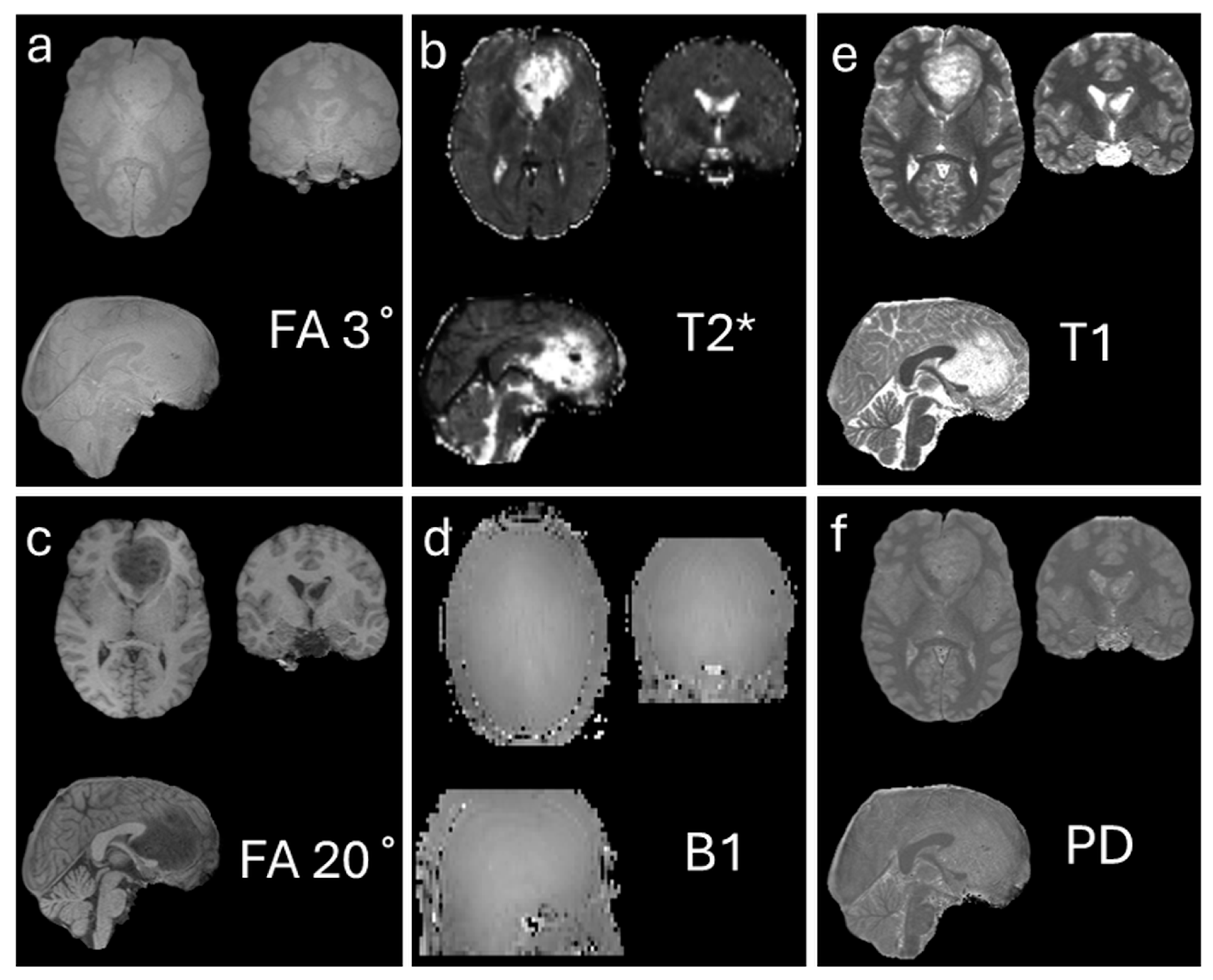
3. Quantitative MRI (qMRI)
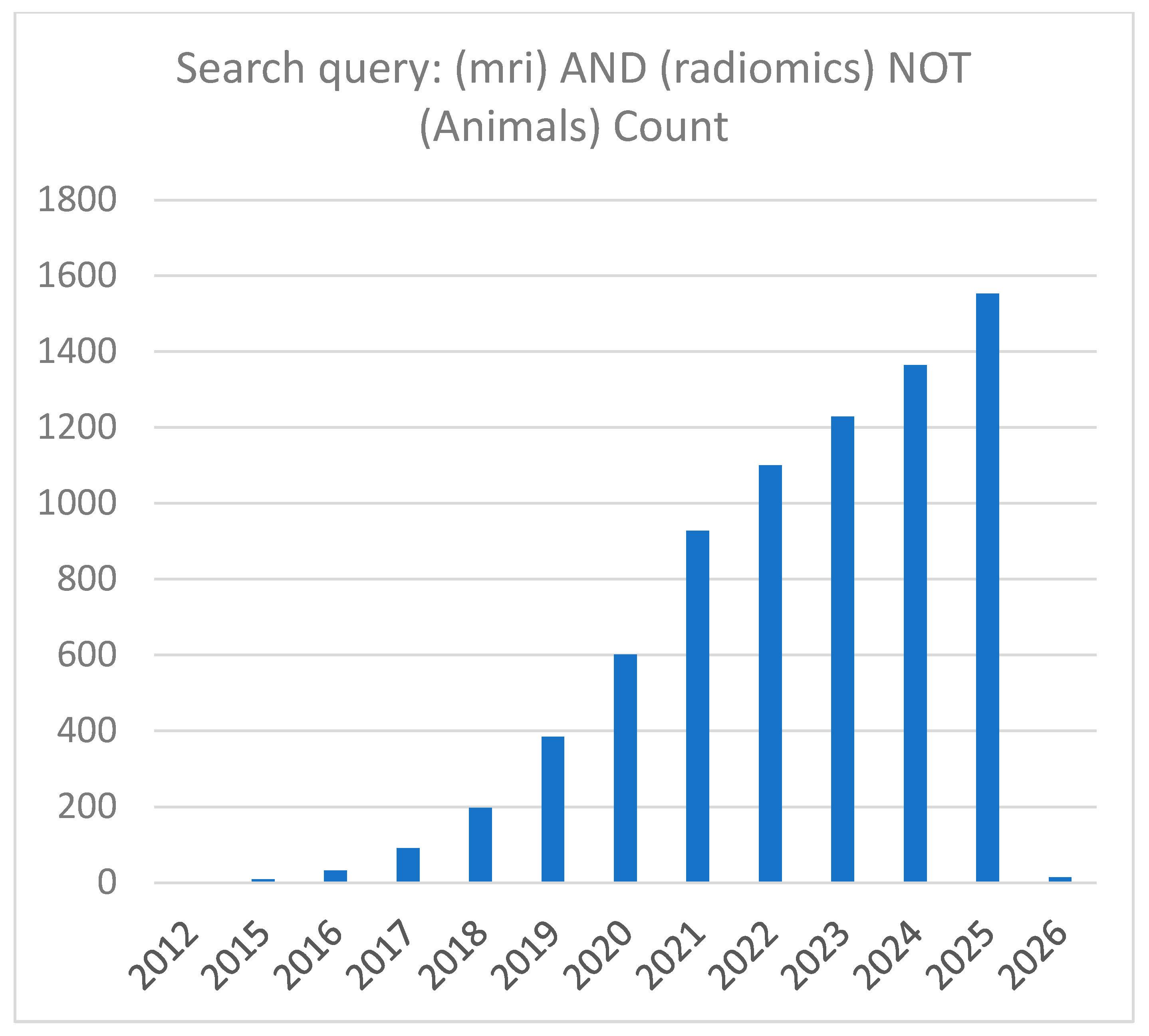
4. MRI Radiomics Study
5. MR Image Segmentation
6. Machine Learning Methods and Model Selection for Radiomics Study
7. Discussion and Conclusions
8. Future Research Directions
Funding
Institutional Review Board Statement
Informed Consent Statement
Data Availability Statement
Conflicts of Interest
Abbreviations
| fMRI | Functional MRI |
| BOLD | Blood oxygenation level-dependent |
| EPI | echo-planar imaging |
| ME-fMRI | Multi-echo (ME) functional MRI |
| TEs | Echo times |
| LASSO | Least Absolute Shrinkage and Selection Operator |
| ICA | Independent component analysis |
| PCA | Principal component analysis |
| qMRI | Quantitative MRI |
| PD | Proton density |
| DSC-MRI | Dynamic susceptibility contrast MRI |
| DCE-MRI | Dynamic contrast-enhanced MRI |
| DTI | Diffusion tensor imaging |
| CNNs | Convolutional neural networks |
| ROIs | Regions of interest |
| MRS | Magnetic resonance spectroscopy |
| ASL | Arterial spin labeling |
| CE | Cross-entropy |
| DWI | Diffusion-weighted imaging |
References
- Wehrli, F.W. Recent Advances in MR Imaging-based Quantification of Brain Oxygen Metabolism. Magn. Reson. Med. Sci. 2024, 23, 377–403. [Google Scholar] [CrossRef]
- Pavlovich, K.; Pang, J.; Holmes, A.; Constable, T.; Fornito, A. The efficacy of resting-state fMRI denoising pipelines for motion correction and behavioural prediction. Imaging Neurosci. 2025, 3, IMAG.a.97. [Google Scholar] [CrossRef]
- Addeh, A.; Williams, R.J.; Golestani, A.; Pike, G.B.; MacDonald, M.E. Physiological Confounds in BOLD-fMRI and Their Correction. NMR Biomed. 2025, 38, e70076. [Google Scholar] [CrossRef]
- Ren, J.; An, N.; Lin, C.; Zhang, Y.; Sun, Z.; Zhang, W.; Li, S.; Guo, N.; Cui, W.; Hu, Q.; et al. DeepPrep: An accelerated, scalable and robust pipeline for neuroimaging preprocessing empowered by deep learning. Nat. Methods 2025, 22, 473–476. [Google Scholar] [CrossRef]
- Worsley, K.J.; Liao, C.H.; Aston, J.; Petre, V.; Duncan, G.H.; Morales, F.; Evans, A.C. A general statistical analysis for fMRI data. Neuroimage 2002, 15, 1–15. [Google Scholar] [CrossRef] [PubMed]
- Soleimani, N.; Iraji, A.; van Erp, T.G.M.; Belger, A.; Calhoun, V.D. A Method for Estimating Dynamic Functional Network Connectivity Gradients (dFNGs) From ICA Captures Smooth Inter-Network Modulation. Hum. Brain Mapp. 2025, 46, e70262. [Google Scholar] [CrossRef]
- Novelli, L.; Barnett, L.; Seth, A.K.; Razi, A. Minimum-Phase Property of the Hemodynamic Response Function, and Implications for Granger Causality in fMRI. Hum. Brain Mapp. 2025, 46, e70285. [Google Scholar] [CrossRef]
- Li, X.; Zhang, Y. Identifying Brain Network Structure for an fMRI Effective Connectivity Study Using the Least Absolute Shrinkage and Selection Operator (LASSO) Method. Tomography 2024, 10, 1564–1576. [Google Scholar] [CrossRef]
- Greaves, M.D.; Novelli, L.; Mansour, L.S.; Zalesky, A.; Razi, A. Structurally informed models of directed brain connectivity. Nat. Rev. Neurosci. 2025, 26, 23–41. [Google Scholar] [CrossRef]
- Kundu, P.; Voon, V.; Balchandani, P.; Lombardo, M.V.; Poser, B.A.; Bandettini, P.A. Multi-echo fMRI: A review of applications in fMRI denoising and analysis of BOLD signals. NeuroImage 2017, 154, 59–80. [Google Scholar] [CrossRef]
- Giubergia, A.; Ferrazzi, G.; Castellaro, M.; Mascheretti, S.; Lampis, V.; Montano, F.; Bertoldo, A.; Peruzzo, D. Multi-echo versus single-echo EPI sequences for task-fMRI: A comparative study. Imaging Neurosci. 2025, 3, IMAG.a.94. [Google Scholar] [CrossRef]
- Lynch, C.J.; Power, J.D.; Scult, M.A.; Dubin, M.; Gunning, F.M.; Liston, C. Rapid Precision Functional Mapping of Individuals Using Multi-Echo fMRI. Cell Rep. 2020, 33, 108540. [Google Scholar] [CrossRef]
- Gordon, E.M.; Chauvin, R.J.; Van, A.N.; Rajesh, A.; Nielsen, A.; Newbold, D.J.; Lynch, C.J.; Seider, N.A.; Krimmel, S.R.; Scheidter, K.M.; et al. A somato-cognitive action network alternates with effector regions in motor cortex. Nature 2023, 617, 351–359. [Google Scholar] [CrossRef]
- Feng, T.; Baqapuri, H.I.; Zweerings, J.; Li, H.; Cong, F.; Mathiak, K. Characterizing the distribution of neural and non-neural components in multi-echo EPI data across echo times based on tensor-ICA. NeuroImage 2025, 311, 121199. [Google Scholar] [CrossRef]
- Vigotsky, A.D.; Iannetti, G.D.; Apkarian, A.V. Mental state decoders: Game-changers or wishful thinking? Trends Cogn. Sci. 2024, 28, 884–895. [Google Scholar] [CrossRef]
- Liu, R.; Chang, H.; El-Said, D.; Wassermann, D.; Zhang, Y.; Menon, V. Brain-wide decoding of numbers and letters: Converging evidence from multivariate fMRI analysis and probabilistic meta-analysis. Cortex 2025, 189, 256–274. [Google Scholar] [CrossRef]
- Fares, J.; Wan, Y.; Mayrand, R.; Li, Y.; Mair, R.; Price, S.J. Decoding Glioblastoma Heterogeneity: Neuroimaging Meets Machine Learning. Neurosurgery 2025, 96, 1181–1192. [Google Scholar] [CrossRef] [PubMed]
- Patel, S.B.; FitzGerald, J.J.; Antoniades, C.A. Decoding dynamic brain networks in Parkinson’s disease with temporal attention. Sci. Rep. 2025, 15, 18798. [Google Scholar] [CrossRef]
- Alotaibi, S.; Alotaibi, M.M.; Alghamdi, F.S.; Alshehri, M.A.; Bamusa, K.M.; Almalki, Z.F.; Alamri, S.; Alghamdi, A.J.; Alhazmi, M.; Osman, H. The role of fMRI in the mind decoding process in adults: A systematic review. PeerJ 2025, 13, e18795. [Google Scholar] [CrossRef]
- Gillig, A.; Cremona, S.; Zago, L.; Mellet, E.; Thiebaut de Schotten, M.; Joliot, M.; Jobard, G. GINNA, a 33 resting-state networks atlas with meta-analytic decoding-based cognitive characterization. Commun. Biol. 2025, 8, 253. [Google Scholar] [CrossRef]
- Veronese, L.; Moglia, A.; Pecco, N.; Anthony Della Rosa, P.; Scifo, P.; Mainardi, L.; Cerveri, P. Optimized AI-based neural decoding from BOLD fMRI signal for analyzing visual and semantic ROIs in the human visual system. J. Neural Eng. 2025, 22, 046048. [Google Scholar] [CrossRef] [PubMed]
- Bublitz, C. Banning biometric mind reading: The case for criminalising mind probing. Law Innov. Technol. 2024, 16, 432–462. [Google Scholar] [CrossRef]
- Moskovich, S.; Shtangel, O.; Mezer, A.A. Approximating R1 and R2: A Quantitative Approach to Clinical Weighted MRI. Hum. Brain Mapp. 2024, 45, e70102. [Google Scholar] [CrossRef]
- Sbaihat, H.; Roenneke, K.; Müller, D.; Ladopoulos, T.; Schneider, R.; Krieger, B.; Bellenberg, B.; Lukas, C. MRI-based human brain atlases of R1, R2, proton density, and myelin volume fraction using synthetic quantitative imaging at 1.5 T. J. Neurol. 2025, 272, 578. [Google Scholar] [CrossRef]
- Bibiano, J.; Kleineisel, J.; Schad, O.; Weng, A.M.; Köstler, H.; Slawig, A. No-wait inversion—A novel model for T1 mapping from inversion recovery measurements without the waiting times. Front. Phys. 2024, 11, 1299522. [Google Scholar] [CrossRef]
- Assländer, J.; Flassbeck, S. Magnetization transfer explains most of the T1 variability in the MRI literature. Magn. Reson. Med. 2025, 94, 293–301. [Google Scholar] [CrossRef]
- Volz, S.; Nöth, U.; Deichmann, R. Correction of systematic errors in quantitative proton density mapping. Magn. Reson. Med. 2012, 68, 74–85. [Google Scholar] [CrossRef]
- Gracien, R.M.; Reitz, S.C.; Hof, S.M.; Fleischer, V.; Zimmermann, H.; Droby, A.; Steinmetz, H.; Zipp, F.; Deichmann, R.; Klein, J.C. Changes and variability of proton density and T1 relaxation times in early multiple sclerosis: MRI markers of neuronal damage in the cerebral cortex. Eur. Radiol. 2016, 26, 2578–2586. [Google Scholar] [CrossRef]
- Volz, S.; Noth, U.; Jurcoane, A.; Ziemann, U.; Hattingen, E.; Deichmann, R. Quantitative proton density mapping: Correcting the receiver sensitivity bias via pseudo proton densities. Neuroimage 2012, 63, 540–552. [Google Scholar] [CrossRef]
- Cunningham, C.H.; Pauly, J.M.; Nayak, K.S. Saturated double-angle method for rapid B1+ mapping. Magn. Reson. Med. 2006, 55, 1326–1333. [Google Scholar] [CrossRef]
- Serai, S.D. Basics of magnetic resonance imaging and quantitative parameters T1, T2, T2*, T1rho and diffusion-weighted imaging. Pediatr. Radiol. 2022, 52, 217–227. [Google Scholar] [CrossRef]
- Hupfeld, K.E.; Murali-Manohar, S.; Zöllner, H.J.; Song, Y.; Davies-Jenkins, C.W.; Gudmundson, A.T.; Simicic, D.; Lamesgin Simegn, G.; Carter, E.E.; Hui, S.C.; et al. Metabolite T2 relaxation times decrease across the adult lifespan in a large multi-site cohort. Magn. Reson. Med. 2025, 93, 916–929. [Google Scholar] [CrossRef]
- Buelo, C.J.; Velikina, J.; Mao, L.; Zhao, R.; Yuan, Q.; Ghasabeh, M.A.; Ruschke, S.; Karampinos, D.C.; Harris, D.T.; Mattison, R.J.; et al. Multicenter, multivendor validation of liver quantitative susceptibility mapping in patients with iron overload at 1.5 T and 3 T. Magn. Reson. Med. 2025, 93, 330–340. [Google Scholar] [CrossRef]
- Reeder, S.B.; Yokoo, T.; França, M.; Hernando, D.; Alberich-Bayarri, Á.; Alústiza, J.M.; Gandon, Y.; Henninger, B.; Hillenbrand, C.; Jhaveri, K. Quantification of liver iron overload with MRI: Review and guidelines from the ESGAR and SAR. Radiology 2023, 307, e221856. [Google Scholar] [CrossRef] [PubMed]
- Beyer, C.; Andersson, A.; Shumbayawonda, E.; Alkhouri, N.; Banerjee, A.; Pandya, P.; Harisinghani, M.; Corey, K.; Dennis, A.; Pansini, M. Quantitative MRI for Monitoring Metabolic Dysfunction-Associated Steatotic Liver Disease: A Test-Retest Repeatability Study. J. Magn. Reson. Imaging 2025, 61, 1947–1955. [Google Scholar] [CrossRef]
- Simchick, G.; Zhao, R.; Yuan, Q.; Ghasabeh, M.A.; Ruschke, S.; Karampinos, D.C.; Harris, D.T.; do Vale Souza, R.; Mattison, R.J.; Jeng, M.R.; et al. Practical Application of Multivendor MRI-Based R2* Mapping for Liver Iron Quantification at 1.5 T and 3.0 T. J. Magn. Reson. Imaging 2025, 61, 150–165. [Google Scholar] [CrossRef]
- Heidenreich, J.F.; Tang, J.; Tamada, D.; Müller, L.; Grunz, J.-P.; do Vale Souza, R.; Anagnostopoulos, A.; Pirasteh, A.; Reeder, S.B.; Hernando, D. Motion-Insensitive Flip Angle Modulated Liver Proton Density Fat-Fraction and R2* Mapping During Free-Breathing MRI in a Clinical Setting. J. Magn. Reson. Imaging 2025, 62, 1452–1463. [Google Scholar] [CrossRef]
- Khorasani, A.; Tavakoli, M.B. Multiparametric study for glioma grading with FLAIR, ADC map, eADC map, T1 map, and SWI images. Magn. Reson. Imaging 2023, 96, 93–101. [Google Scholar] [CrossRef]
- Pirkl, C.M.; Nunez-Gonzalez, L.; Kofler, F.; Endt, S.; Grundl, L.; Golbabaee, M.; Gómez, P.A.; Cencini, M.; Buonincontri, G.; Schulte, R.F. Accelerated 3D whole-brain T1, T2, and proton density mapping: Feasibility for clinical glioma MR imaging. Neuroradiology 2021, 63, 1831–1851. [Google Scholar] [CrossRef]
- Tavakoli, M.B.; Khorasani, A.; Jalilian, M. Improvement grading brain glioma using T2 relaxation times and susceptibility-weighted images in MRI. Inform. Med. Unlocked 2023, 37, 101201. [Google Scholar] [CrossRef]
- Omoumi, P. The Dixon method in musculoskeletal MRI: From fat-sensitive to fat-specific imaging. Skelet. Radiol. 2022, 51, 1365–1369. [Google Scholar] [CrossRef]
- Dixon, W.T. Simple proton spectroscopic imaging. Radiology 1984, 153, 189–194. [Google Scholar] [CrossRef] [PubMed]
- Starekova, J.; Rutkowski, D.; Bae, W.C.; Do, H.; Madhuranthakam, A.J.; Malis, V.; Lin, S.Q.; Serai, S.; Yokoo, T.; Reeder, S.B.; et al. Multi-Center, Multi-Vendor Validation of Simultaneous MRI-Based Proton Density Fat Fraction and R2* Mapping Using a Combined Proton Density Fat Fraction-R2* Phantom. J. Magn. Reson. Imaging 2025, 62, 800–811. [Google Scholar] [CrossRef]
- Ahmed, A.; Cule, M.; Naz, A.; Thanaj, M.; Sorokin, E.P.; Odoemelam, C.S.; Whitcher, B.; Sattar, N.; Bell, J.D.; Thomas, E.L. MRI-Based Genetic Studies Reveal Specific Genetic Variants and Disease Risks Associated with Fat Distribution Across Anatomical Sites. J. Obes. 2025, 2025, 7792701. [Google Scholar] [CrossRef]
- Elhaie, M.; Koozari, A.; Koohi, H.; Alqurain, Q.T. Machine learning and deep learning approaches in MRI for quantifying and staging fatty liver disease: A systematic review. J. Med. Imaging Radiat. Sci. 2025, 56, 102112. [Google Scholar] [CrossRef]
- Azma, Y.N.; Boci, N.; Abramowicz, K.; Russo, L.; Orton, M.R.; Tunariu, N.; Koh, D.-M.; Charles-Edwards, G.; Collins, D.J.; Winfield, J.M. Influence of imaging method on fat fraction estimation for assessing bone marrow in metastatic prostate cancer. Eur. Radiol. 2025, 35, 6039–6051. [Google Scholar] [CrossRef] [PubMed]
- Nasr, A.J.; Harris, J.; Wang, J.; Khazzam, M.; Jain, N.B.; Tzen, Y.-T.; Lin, Y.-S. The Use of Dixon Magnetic Resonance Imaging Methods for the Quantification of Rotator Cuff Fatty Infiltration: A Systematic Review. Muscles 2024, 3, 133–152. [Google Scholar] [CrossRef]
- Feuerriegel, G.C.; Fritz, B.; Marth, A.A.; Sommer, S.; Wieser, K.; Sutter, R. Assessment of the Rotator Cuff Muscles: State-of-the-Art MRI and Clinical Implications. Radiology 2025, 315, e242131. [Google Scholar] [CrossRef]
- van der Weijden, C.W.J.; Gutmann, I.W.; Somsen, J.F.; Luurtsema, G.; van der Goot, T.; Arzanforoosh, F.; Kramer, M.C.A.; Buunk, A.M.; de Vries, E.F.J.; Rauscher, A.; et al. DSC Perfusion MRI Artefact Reduction Strategies: A Short Overview for Clinicians and Scientific Applications. J. Clin. Med. 2025, 14, 4776. [Google Scholar] [CrossRef]
- Mohammadi, S.; Ghaderi, S.; Jouzdani, A.F.; Azinkhah, I.; Alibabaei, S.; Azami, M.; Omrani, V. Differentiation Between High-Grade Glioma and Brain Metastasis Using Cerebral Perfusion-Related Parameters (Cerebral Blood Volume and Cerebral Blood Flow): A Systematic Review and Meta-Analysis of Perfusion-weighted MRI Techniques. J. Magn. Reson. Imaging 2025, 61, 758–768. [Google Scholar] [CrossRef]
- Kåstad Høiskar, M.; Sæther, O.; Delange Alsaker, M.; Røe Redalen, K.; Winter, R.M. Quantitative dynamic contrast-enhanced magnetic resonance imaging in head and neck cancer: A systematic comparison of different modelling approaches. Phys. Imaging Radiat. Oncol. 2024, 29, 100548. [Google Scholar] [CrossRef]
- Li, X.; Huang, W.; Holmes, J.H. Dynamic Contrast-Enhanced (DCE) MRI. Magn. Reson. Imaging Clin. N. Am. 2024, 32, 47–61. [Google Scholar] [CrossRef]
- Boesen, M.; Iakimov, A.; Shakoor, D.; Carrino, J.A.; Kubassova, O. Use of DCE-MRI in arthritis in the appendicular skeleton: A narrative review. Skelet. Radiol. 2025, 54, 2457–2479. [Google Scholar] [CrossRef]
- Mirshahvalad, S.A.; Dias, A.B.; Ghai, S.; Ortega, C.; Perlis, N.; Berlin, A.; Avery, L.; van der Kwast, T.; Metser, U.; Veit-Haibach, P. Value of Dynamic Contrast-Enhanced MRI for Grade Group Prediction in Prostate Cancer: A Radiomics Pilot Study. Acad. Radiol. 2025, 32, 250–259. [Google Scholar] [CrossRef]
- Woods, J.G.; Achten, E.; Asllani, I.; Bolar, D.S.; Dai, W.; Detre, J.A.; Fan, A.P.; Fernández-Seara, M.A.; Golay, X.; Günther, M.; et al. Recommendations for quantitative cerebral perfusion MRI using multi-timepoint arterial spin labeling: Acquisition, quantification, and clinical applications. Magn. Reson. Med. 2024, 92, 469–495. [Google Scholar] [CrossRef]
- Hashido, T.; Saito, S.; Ishida, T. A radiomics-based comparative study on arterial spin labeling and dynamic susceptibility contrast perfusion-weighted imaging in gliomas. Sci. Rep. 2020, 10, 6121. [Google Scholar] [CrossRef]
- Azab, M.A.; El-Gohary, N.; Atallah, O.; Shama, M.; Ibrahim, I.A. Perfusion-MRI for differentiating cerebral metastatic lesions and gliomas: An evidence-based review. J. Clin. Neurosci. 2025, 133, 111036. [Google Scholar] [CrossRef] [PubMed]
- Le Bihan, D.; Mangin, J.-F.; Poupon, C.; Clark, C.A.; Pappata, S.; Molko, N.; Chabriat, H. Diffusion tensor imaging: Concepts and applications. J. Magn. Reson. Imaging 2001, 13, 534–546. [Google Scholar] [CrossRef] [PubMed]
- Carter, F.; Anwander, A.; Johnson, M.; Goucha, T.; Adamson, H.; Friederici, A.D.; Lutti, A.; Gauthier, C.J.; Weiskopf, N.; Bazin, P.L.; et al. Assessing quantitative MRI techniques using multimodal comparisons. PLoS ONE 2025, 20, e0327828. [Google Scholar] [CrossRef]
- Patel, T.; Athawale, T.M.; Ouermi, T.A.J.; Johnson, C.R. Fast HARDI Uncertainty Quantification and Visualization with Spherical Sampling. Comput. Graph. Forum 2025, 44, e70138. [Google Scholar] [CrossRef]
- Shamir, I.; Assaf, Y. Tutorial: A guide to diffusion MRI and structural connectomics. Nat. Protoc. 2025, 20, 317–335. [Google Scholar] [CrossRef]
- Wedeen, V.J.; Hagmann, P.; Tseng, W.-Y.I.; Reese, T.G.; Weisskoff, R.M. Mapping complex tissue architecture with diffusion spectrum magnetic resonance imaging. Magn. Reson. Med. 2005, 54, 1377–1386. [Google Scholar] [CrossRef]
- Gillies, R.J.; Kinahan, P.E.; Hricak, H. Radiomics: Images Are More than Pictures, They Are Data. Radiology 2016, 278, 563–577. [Google Scholar] [CrossRef]
- Kocak, B.; Keles, A.; Kose, F.; Sendur, A. Quality of radiomics research: Comprehensive analysis of 1574 unique publications from 89 reviews. Eur. Radiol. 2025, 35, 1980–1992. [Google Scholar] [CrossRef]
- Abbasian Ardakani, A.; Mohammadi, A.; Yeong, C.H.; Ng, W.L.; Ng, A.H.; Tangaraju, K.N.; Behestani, S.; Mirza-Aghazadeh-Attari, M.; Suresh, R.; Acharya, U.R. Diagnosis of thyroid nodule malignancy using peritumoral region and artificial intelligence: Results of hand-crafted, deep radiomics features and radiologists’ assessment in multicenter cohorts. J. Ultrasound Med. 2025, 44, 1059–1074. [Google Scholar] [CrossRef] [PubMed]
- Li, X.; Marcus, D.; Russell, J.; Aboagye, E.O.; Ellis, L.B.; Sheeka, A.; Park, W.-H.E.; Bharwani, N.; Ghaem-Maghami, S.; Rockall, A.G. An Integrated Clinical-MR Radiomics Model to Estimate Survival Time in Patients with Endometrial Cancer. J. Magn. Reson. Imaging 2023, 57, 1922–1933. [Google Scholar] [CrossRef] [PubMed]
- Ronneberger, O.; Fischer, P.; Brox, T. U-Net: Convolutional Networks for Biomedical Image Segmentation; Springer International Publishing: Cham, Switzerland, 2015. [Google Scholar]
- Zhou, Z.; Rahman Siddiquee, M.M.; Tajbakhsh, N.; Liang, J. UNet++: A Nested U-Net Architecture for Medical Image Segmentation; Springer International Publishing: Cham, Switzerland, 2018. [Google Scholar]
- Isensee, F.; Jaeger, P.F.; Kohl, S.A.A.; Petersen, J.; Maier-Hein, K.H. nnU-Net: A self-configuring method for deep learning-based biomedical image segmentation. Nat. Methods 2021, 18, 203–211. [Google Scholar] [CrossRef] [PubMed]
- Yu, X.; Yang, Q.; Zhou, Y.; Cai, L.Y.; Gao, R.; Lee, H.H.; Li, T.; Bao, S.; Xu, Z.; Lasko, T.A.; et al. UNesT: Local spatial representation learning with hierarchical transformer for efficient medical segmentation. Med. Image Anal. 2023, 90, 102939. [Google Scholar] [CrossRef]
- Milletari, F.; Navab, N.; Ahmadi, S.A. V-Net: Fully Convolutional Neural Networks for Volumetric Medical Image Segmentation. In Proceedings of the 2016 Fourth International Conference on 3D Vision (3DV), Stanford, CA, USA, 25–28 October 2016. [Google Scholar]
- Badrinarayanan, V.; Kendall, A.; Cipolla, R. SegNet: A Deep Convolutional Encoder-Decoder Architecture for Image Segmentation. IEEE Trans. Pattern Anal. Mach. Intell. 2017, 39, 2481–2495. [Google Scholar] [CrossRef]
- Oktay, O.; Schlemper, J.; Folgoc, L.L.; Lee, M.; Heinrich, M.; Misawa, K.; Mori, K.; McDonagh, S.; Hammerla, N.Y.; Kainz, B. Attention u-net: Learning where to look for the pancreas. arXiv 2018, arXiv:1804.03999. [Google Scholar] [CrossRef]
- Ma, J.; He, Y.; Li, F.; Han, L.; You, C.; Wang, B. Segment anything in medical images. Nat. Commun. 2024, 15, 654. [Google Scholar] [CrossRef] [PubMed]
- Wasserthal, J.; Breit, H.-C.; Meyer, M.T.; Pradella, M.; Hinck, D.; Sauter, A.W.; Heye, T.; Boll, D.T.; Cyriac, J.; Yang, S.; et al. TotalSegmentator: Robust Segmentation of 104 Anatomic Structures in CT Images. Radiol. Artif. Intell. 2023, 5, e230024. [Google Scholar] [CrossRef] [PubMed]
- Diaz-Pinto, A.; Alle, S.; Nath, V.; Tang, Y.; Ihsani, A.; Asad, M.; Pérez-García, F.; Mehta, P.; Li, W.; Flores, M.; et al. MONAI Label: A framework for AI-assisted interactive labeling of 3D medical images. Med. Image Anal. 2024, 95, 103207. [Google Scholar] [CrossRef]
- Minaee, S.; Boykov, Y.; Porikli, F.; Plaza, A.; Kehtarnavaz, N.; Terzopoulos, D. Image segmentation using deep learning: A survey. IEEE Trans. Pattern Anal. Mach. Intell. 2021, 44, 3523–3542. [Google Scholar] [CrossRef]
- Jadon, S. A survey of loss functions for semantic segmentation. In Proceedings of the 2020 IEEE Conference on Computational Intelligence in Bioinformatics and Computational Biology (CIBCB), Vina del Mar, Chile, 27–29 October 2020. [Google Scholar]
- Yeung, M.; Sala, E.; Schönlieb, C.-B.; Rundo, L. Unified Focal loss: Generalising Dice and cross entropy-based losses to handle class imbalanced medical image segmentation. Comput. Med. Imaging Graph. 2022, 95, 102026. [Google Scholar] [CrossRef]
- Whybra, P.; Zwanenburg, A.; Andrearczyk, V.; Schaer, R.; Apte, A.P.; Ayotte, A.; Baheti, B.; Bakas, S.; Bettinelli, A.; Boellaard, R.; et al. The Image Biomarker Standardization Initiative: Standardized Convolutional Filters for Reproducible Radiomics and Enhanced Clinical Insights. Radiology 2024, 310, e231319. [Google Scholar] [CrossRef]
- Bouhafra, S.; El Bahi, H. Deep Learning Approaches for Brain Tumor Detection and Classification Using MRI Images (2020 to 2024): A Systematic Review. J. Imaging Inform. Med. 2025, 38, 1403–1433. [Google Scholar] [CrossRef]
- Mijwil, M.M. Smart architectures: Computerized classification of brain tumors from MRI images utilizing deep learning approaches. Multimed. Tools Appl. 2025, 84, 2261–2292. [Google Scholar] [CrossRef]
- Asaduzzaman, M.; Alom, M.K.; Karim, M.E. ALZENET: Deep learning-based early prediction of Alzheimer’s disease through magnetic resonance imaging analysis. Telemat. Inform. Rep. 2025, 17, 100189. [Google Scholar] [CrossRef]
- Eatukuri, A. Auto-Encoder Based Image Classification Technique for Classifying Brain Tumors. J. Electr. Eng. Technol. 2025, 20, 1841–1852. [Google Scholar] [CrossRef]
- Das, S.; Goswami, R.S. Advancements in brain tumor analysis: A comprehensive review of machine learning, hybrid deep learning, and transfer learning approaches for MRI-based classification and segmentation. Multimed. Tools Appl. 2025, 84, 26645–26682. [Google Scholar] [CrossRef]
- Dorfner, F.J.; Patel, J.B.; Kalpathy-Cramer, J.; Gerstner, E.R.; Bridge, C.P. A review of deep learning for brain tumor analysis in MRI. npj Precis. Oncol. 2025, 9, 2. [Google Scholar] [CrossRef]
- Zwanenburg, A.; Vallières, M.; Abdalah, M.A.; Aerts, H.J.W.L.; Andrearczyk, V.; Apte, A.; Ashrafinia, S.; Bakas, S.; Beukinga, R.J.; Boellaard, R.; et al. The Image Biomarker Standardization Initiative: Standardized Quantitative Radiomics for High-Throughput Image-based Phenotyping. Radiology 2020, 295, 328–338. [Google Scholar] [CrossRef]
- Tibshirani, R. Regression shrinkage and selection via the lasso. J. R. Stat. Soc. Ser. B Stat. Methodol. 1996, 58, 267–288. [Google Scholar] [CrossRef]
- Maruotto, I.; Ciliberti, F.K.; Gargiulo, P.; Recenti, M. Feature Selection in Healthcare Datasets: Towards a Generalizable Solution. Comput. Biol. Med. 2025, 196, 110812. [Google Scholar] [CrossRef] [PubMed]
- Sauwen, N.; Acou, M.; Van Cauter, S.; Sima, D.M.; Veraart, J.; Maes, F.; Himmelreich, U.; Achten, E.; Van Huffel, S. Comparison of unsupervised classification methods for brain tumor segmentation using multi-parametric MRI. NeuroImage Clin. 2016, 12, 753–764. [Google Scholar] [CrossRef]
- Hollmann, N.; Müller, S.; Purucker, L.; Krishnakumar, A.; Körfer, M.; Hoo, S.B.; Schirrmeister, R.T.; Hutter, F. Accurate predictions on small data with a tabular foundation model. Nature 2025, 637, 319–326. [Google Scholar] [CrossRef] [PubMed]
- Li, X.; Dessi, M.; Marcus, D.; Russell, J.; Aboagye, E.O.; Ellis, L.B.; Sheeka, A.; Park, W.-H.E.; Bharwani, N.; Ghaem-Maghami, S.; et al. Prediction of Deep Myometrial Infiltration, Clinical Risk Category, Histological Type, and Lymphovascular Space Invasion in Women with Endometrial Cancer Based on Clinical and T2-Weighted MRI Radiomic Features. Cancers 2023, 15, 2209. [Google Scholar] [CrossRef]
- Li, L.; Jamieson, K.; Rostamizadeh, A.; Gonina, E.; Hardt, M.; Recht, B.; Talwalkar, A. A system for massively parallel hyperparameter tuning. arXiv 2018, arXiv:1810.05934. [Google Scholar]
- Li, X.; Marcus, D.; Russell, J.; Aboagye, E.O.; Ellis, L.B.; Sheeka, A.; Park, W.-H.E.; Bharwani, N.; Ghaem-Maghami, S.; Rockall, A.G. Weibull parametric model for survival analysis in women with endometrial cancer using clinical and T2-weighted MRI radiomic features. BMC Med. Res. Methodol. 2024, 24, 107. [Google Scholar] [CrossRef]
- Wiegrebe, S.; Kopper, P.; Sonabend, R.; Bischl, B.; Bender, A. Deep learning for survival analysis: A review. Artif. Intell. Rev. 2024, 57, 65. [Google Scholar] [CrossRef]
- Trujillo, P.; Aumann, M.A.; Claassen, D.O. Neuromelanin-sensitive MRI as a promising biomarker of catecholamine function. Brain 2024, 147, 337–351. [Google Scholar] [CrossRef] [PubMed]
- Pluijm, M.v.d.; Wengler, K.; Reijers, P.N.; Cassidy, C.M.; Joe, K.T.T.; Peuter, O.R.d.; Horga, G.; Booij, J.; Haan, L.d.; Giessen, E.v.d. Neuromelanin-Sensitive MRI as Candidate Marker for Treatment Resistance in First-Episode Schizophrenia. Am. J. Psychiatry 2024, 181, 512–519. [Google Scholar] [CrossRef] [PubMed]
- Vos, I.N.; Ruigrok, Y.M.; Bennink, E.; Velthuis, M.R.E.; Paic, B.; Ophelders, M.E.H.; Buser, M.A.D.; van der Velden, B.H.M.; Geng, C.; Coupet, M.; et al. Evaluation of techniques for automated classification and artery quantification of the circle of Willis on TOF-MRA images: The CROWN challenge. Med. Image Anal. 2025, 105, 103650. [Google Scholar] [CrossRef] [PubMed]
- Eftekhari, Z.; Shaw, T.B.; Deelchand, D.K.; Marjańska, M.; Bogner, W.; Barth, M. Reliability and Reproducibility of Metabolite Quantification Using 1H MRS in the Human Brain at 3 T and 7 T. NMR Biomed. 2025, 38, e70087. [Google Scholar] [CrossRef]
- Nabizadeh, F.; Sheykhlou, S.; Mahmoodi, S.; Khalili, E.; Zafari, R.; Hosseini, H. Neuroimaging Findings of Psychosis in Alzheimer’s Disease: A Systematic Review. Brain Behav. 2025, 15, e70205. [Google Scholar] [CrossRef]
- Shaker, A.; Maaz, M.; Rasheed, H.; Khan, S.; Yang, M.H.; Khan, F.S. UNETR++: Delving into Efficient and Accurate 3D Medical Image Segmentation. IEEE Trans. Med. Imaging 2024, 43, 3377–3390. [Google Scholar] [CrossRef]
- Hatamizadeh, A.; Tang, Y.; Nath, V.; Yang, D.; Myronenko, A.; Landman, B.; Roth, H.R.; Xu, D. Unetr: Transformers for 3d medical image segmentation. In Proceedings of the IEEE/CVF Winter Conference on Applications of Computer Vision, Waikoloa, HI, USA, 3–8 January 2022. [Google Scholar]
- Altalhan, M.; Algarni, A.; Alouane, M.T.-H. Imbalanced data problem in machine learning: A review. IEEE Access 2025, 13, 13686–13699. [Google Scholar] [CrossRef]
- Ghosh, K.; Bellinger, C.; Corizzo, R.; Branco, P.; Krawczyk, B.; Japkowicz, N. The class imbalance problem in deep learning. Mach. Learn. 2024, 113, 4845–4901. [Google Scholar] [CrossRef]
- Varoquaux, G.; Cheplygina, V. Machine learning for medical imaging: Methodological failures and recommendations for the future. npj Digit. Med. 2022, 5, 48. [Google Scholar] [CrossRef]
- Kelly, C.J.; Karthikesalingam, A.; Suleyman, M.; Corrado, G.; King, D. Key challenges for delivering clinical impact with artificial intelligence. BMC Med. 2019, 17, 195. [Google Scholar] [CrossRef] [PubMed]
- Dhar, T.; Dey, N.; Borra, S.; Sherratt, R.S. Challenges of Deep Learning in Medical Image Analysis—Improving Explainability and Trust. IEEE Trans. Technol. Soc. 2023, 4, 68–75. [Google Scholar] [CrossRef]
- Alowais, S.A.; Alghamdi, S.S.; Alsuhebany, N.; Alqahtani, T.; Alshaya, A.I.; Almohareb, S.N.; Aldairem, A.; Alrashed, M.; Bin Saleh, K.; Badreldin, H.A.; et al. Revolutionizing healthcare: The role of artificial intelligence in clinical practice. BMC Med. Educ. 2023, 23, 689. [Google Scholar] [CrossRef]
- Feinberg, D.A.; Beckett, A.J.S.; Vu, A.T.; Stockmann, J.; Huber, L.; Ma, S.; Ahn, S.; Setsompop, K.; Cao, X.; Park, S.; et al. Next-generation MRI scanner designed for ultra-high-resolution human brain imaging at 7 Tesla. Nat. Methods 2023, 20, 2048–2057. [Google Scholar] [CrossRef]
- Morales, M.A.; Manning, W.J.; Nezafat, R. Present and Future Innovations in AI and Cardiac MRI. Radiology 2024, 310, e231269. [Google Scholar] [CrossRef] [PubMed]
- Pitarch, C.; Ungan, G.; Julià-Sapé, M.; Vellido, A. Advances in the Use of Deep Learning for the Analysis of Magnetic Resonance Image in Neuro-Oncology. Cancers 2024, 16, 300. [Google Scholar] [CrossRef] [PubMed]
Disclaimer/Publisher’s Note: The statements, opinions and data contained in all publications are solely those of the individual author(s) and contributor(s) and not of MDPI and/or the editor(s). MDPI and/or the editor(s) disclaim responsibility for any injury to people or property resulting from any ideas, methods, instructions or products referred to in the content. |
© 2025 by the author. Licensee MDPI, Basel, Switzerland. This article is an open access article distributed under the terms and conditions of the Creative Commons Attribution (CC BY) license (https://creativecommons.org/licenses/by/4.0/).
Share and Cite
Li, X. Functional, Structural, and AI-Based MRI Analysis: A Comprehensive Review of Recent Advances. Diagnostics 2025, 15, 3212. https://doi.org/10.3390/diagnostics15243212
Li X. Functional, Structural, and AI-Based MRI Analysis: A Comprehensive Review of Recent Advances. Diagnostics. 2025; 15(24):3212. https://doi.org/10.3390/diagnostics15243212
Chicago/Turabian StyleLi, Xingfeng. 2025. "Functional, Structural, and AI-Based MRI Analysis: A Comprehensive Review of Recent Advances" Diagnostics 15, no. 24: 3212. https://doi.org/10.3390/diagnostics15243212
APA StyleLi, X. (2025). Functional, Structural, and AI-Based MRI Analysis: A Comprehensive Review of Recent Advances. Diagnostics, 15(24), 3212. https://doi.org/10.3390/diagnostics15243212

