


Fourteen Deaths from Suspected Heparin Overdose in an Italian Primary-Level Hospital

 , , , , , , ,
Abstract
1. Introduction
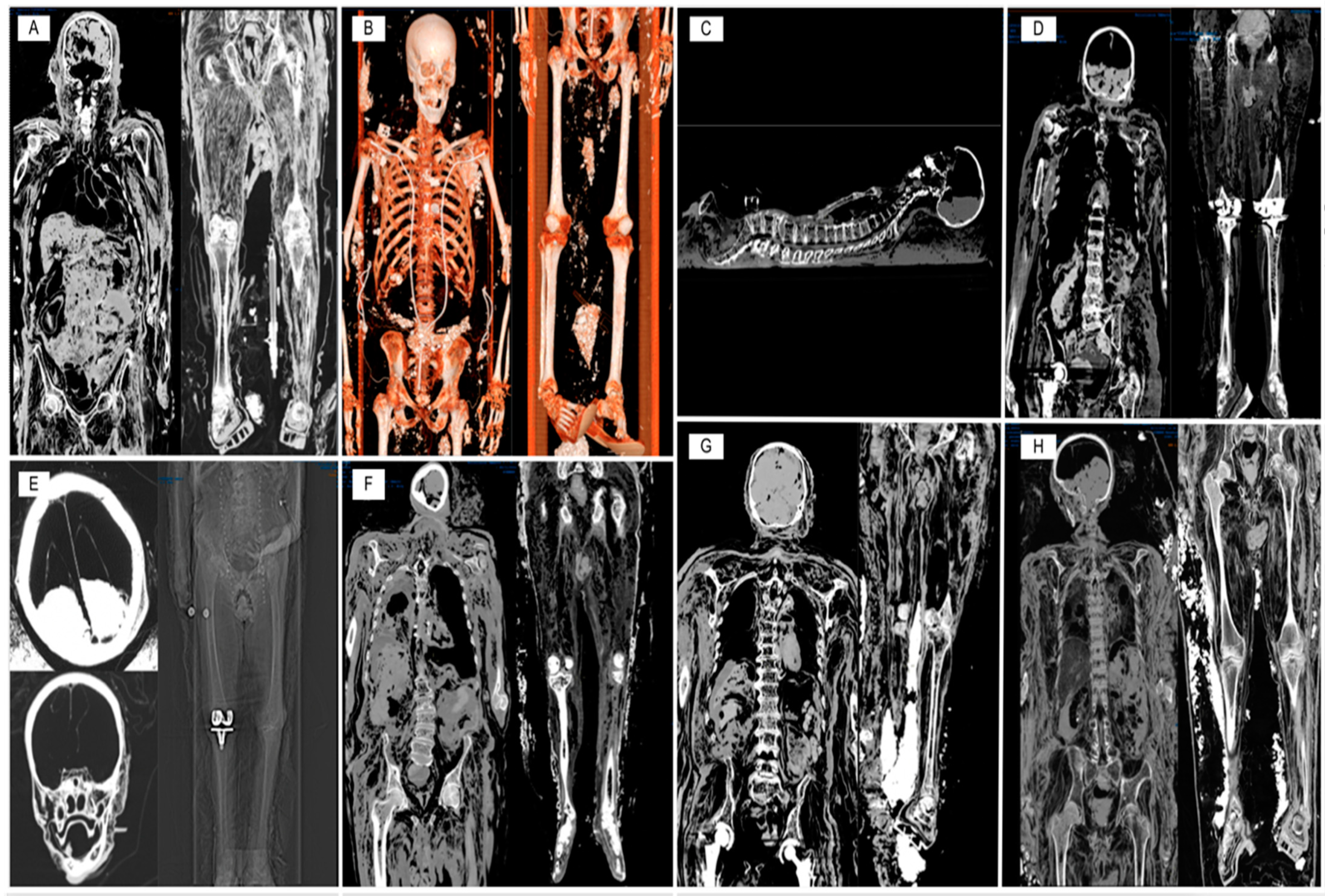
- autopsy investigation;
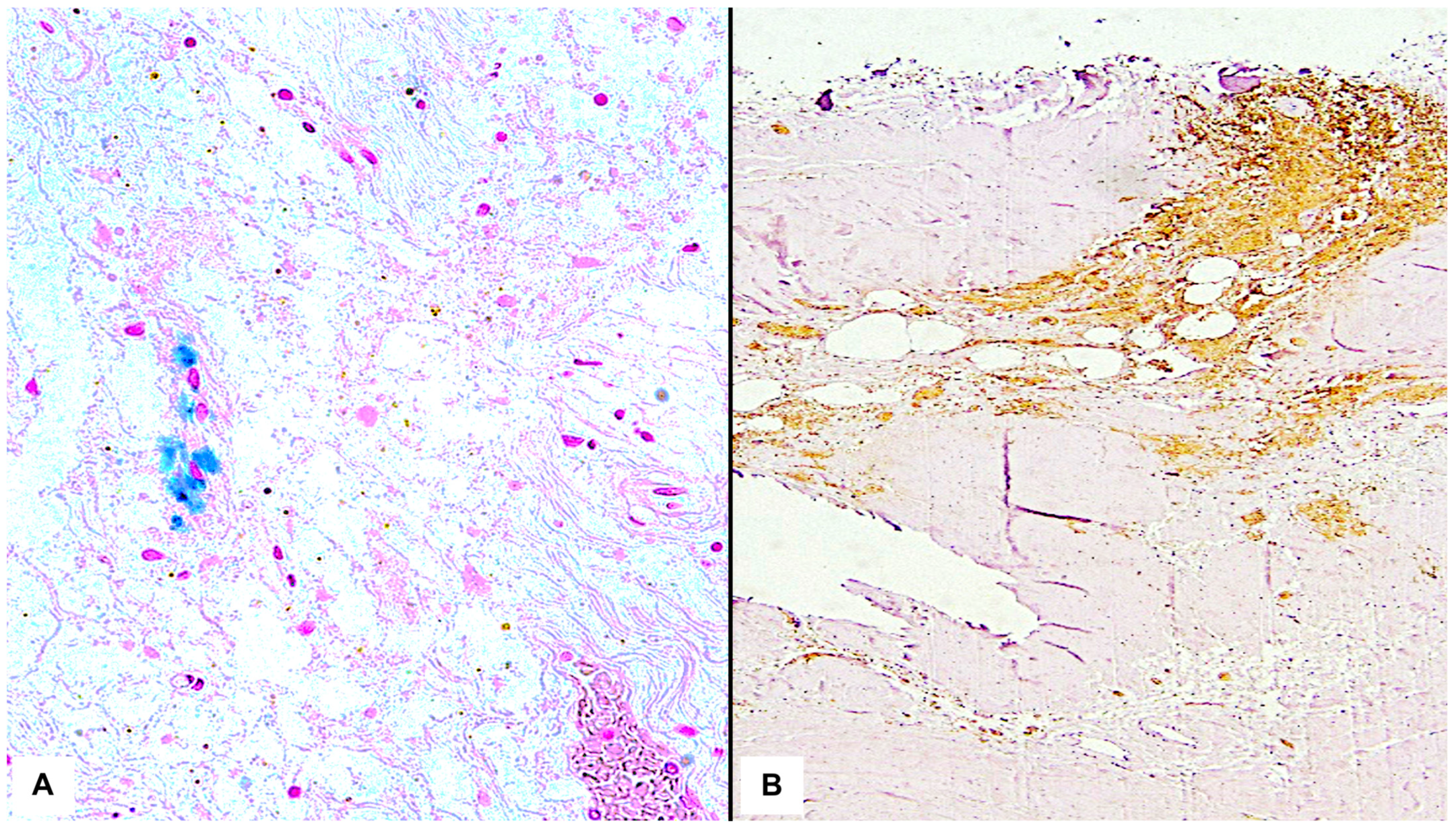
- histopathological investigations on samples taken from the deceased;
- sampling of biological tissues suitable for toxicological investigations [11].
2. Materials and Methods
- the administration and dosage of anticoagulant drugs available within the hospital of interest for the 14 patients under investigation;
- the causes of the 14 deaths and the potential responsibility of the hospital’s health services.
- pre-treatment of the sample with 0.25 M ethylenediaminetetraacetic acid (EDTA) to facilitate antigenic screening and increase membrane permeability to antibodies;
- traditional fixation by passing the sample through an alcohol solution and then a formalin solution;
- washing in water and inclusion in paraffin;
- production of 4-µm-thick sections from paraffin blocks using a slide microtome;
- slide mounting by covering with 3-aminopropyl-triethoxysilane;
- application of anti-Glycophorin antibody A (Santa Cruz, CA, USA) at a concentration of 1:500;
- incubation of the preparation for 120 min at an ambient temperature of 20 °C;
- detection using avidin–biotin reaction.
- solid-phase extraction (SPE) using Isolute HCX columns.
- cryophylation using nitrogen.
- inclusion using a 1% solution of acetonitrile and formic acid.
- untargeted analysis using a liquid chromatography–mass spectrometry device from Thermo.
3. Results
- the major hemorrhagic events could be attributed to the overdose of enoxaparin sodium;
- the observation of shifts helped establish the relationship between the facts described in the file and the health professionals involved.
4. Discussion
5. Conclusions
Author Contributions
Funding
Institutional Review Board Statement
Informed Consent Statement
Data Availability Statement
Conflicts of Interest
Abbreviations
| ABG | arterial blood gas |
| AF | atrial fibrillation |
| aPTT | Activated Partial Thromboplastin Time |
| ARF | acute respiratory failure |
| ASA | aspirin |
| ATIII | antithrombin III |
| BNP | brain natriuretic peptide |
| BP | blood pressure |
| CABG | coronary artery bypass graft |
| CF | cardiac frequency |
| CSH | chronic subdural hematoma |
| CVC | central venous catheter |
| DIC | disseminated intravascular coagulation |
| ECG | electrocardiography |
| ED | Emergency Department |
| EDTA | ethylenediaminetetraacetic acid |
| EF | ejection fraction |
| EGD | esophagogastroduodenoscopy |
| ENT | ear, nose, throat |
| HB | hemoglobin |
| HBV | Human Hepatitis B Virus |
| HCV | Human Hepatitis C Virus |
| HF | heart failure |
| ICU | Intensive Care Unit |
| INR | International Normalized Ratio |
| LC-MS | liquid chromatography–mass spectrometry |
| LMWH | low-molecular-weight heparin |
| NSTEMI | non-ST-segment elevation myocardial infarction |
| PE | pulmonary embolism |
| PEA | pulseless electrical activity |
| PEG | Percutaneous Endoscopic Gastrostomy |
| OR | operative room |
| PLT | platelets |
| PM | post mortem |
| PMCT | post-mortem computed tomography |
| PMI | post-mortem interval |
| PT | prothrombin time |
| RBC | red blood cell |
| RCP | reactive C protein |
| RT | Reptilase Time |
| SPE | solid-phase extraction |
| TEA | Transcatheter Edge-to-Edge Repair |
| TIA | transient ischemic attack |
| TT | Thrombin Time |
| UFH | Unfractioned Heparins. |
References
- Yorker, B.C. Hospital epidemics of factitious disorder by proxy. In The Spectrum of Factitious Disorders; American Psychiatric Press: Washington, DC, USA, 1996. [Google Scholar]
- Jacobs, L. The Jewish Religion: A Companion, 1st ed.; Oxford University Press: Oxford, UK, 1995; p. 116. [Google Scholar]
- Geppert, C. The Angel of Death in Clarksburg. Fed. Pract. 2021, 38, 564–565. [Google Scholar] [CrossRef] [PubMed]
- Yorker, B.C.; Kizer, K.W.; Lampe, P.; Forrest, A.R.; Lannan, J.M.; Russell, D.A. Serial murder by healthcare professionals. J. Forensic Sci. 2006, 51, 1362–1371. [Google Scholar] [CrossRef]
- US Department of Veterans Affairs. Office of Inspector General Veterans Health Administration care and oversight deficiencies related to multiple homicides at the Louis A. Johnson VA Medical Center in Clarksburg, West Virginia. In Healthcare Inspection Report #20035993-140; US Department of Veterans Affairs: Washington, DC, USA, 2021. [Google Scholar]
- Manetti, A.C.; Visi, G.; Spina, F.; De Matteis, A.; Del Duca, F.; Turillazzi, E.; Maiese, A. Insulin and Oral Hypoglycemic Drug Overdose in Post-Mortem Investigations: A Literature Review. Biomedicines 2022, 10, 2823. [Google Scholar] [CrossRef] [PubMed]
- Beine, K.H. Homicides of patients in hospitals and nursing homes: A comparative analysis of case series. Int. J. Law Psychiatry 2003, 26, 373–386. [Google Scholar] [CrossRef] [PubMed]
- Skopp, G. Postmortem toxicology. Forensic Sci. Med. Pathol. 2010, 6, 314–325. [Google Scholar] [CrossRef]
- Collins, K.A. Elder maltreatment: A review. Arch. Pathol. Lab. Med. 2006, 130, 1290–1296. [Google Scholar] [CrossRef] [PubMed]
- Carvalho, M.L.; Rodrigues Ferreira, F.E.; Neves, M.C.M.; Casaca, C.; Cunha, A.S.; Marques, J.P.; Amorim, P.; Marques, A.F.; Marques, M.I. Arsenic detection in nineteenth century Portuguese King post mortem tissues by energy-dispersive x-ray fluorescence spectrometry. X-ray Spectrom. 2002, 31, 305–309. [Google Scholar] [CrossRef]
- Ferner, R.E. Post-mortem clinical pharmacology. Br. J. Clin. Pharmacol. 2008, 66, 430–443. [Google Scholar] [CrossRef]
- Re, G.L.; Salerno, S.; Terranova, M.C.; Argo, A.; Casto, A.L.; Zerbo, S.; Lagalla, R. Virtopsy and Living Individuals Evaluation Using Computed Tomography in Forensic Diagnostic Imaging. Semin. Ultrasound CT MRI 2019, 40, 67–78. [Google Scholar]
- Re, G.L.; Salerno, S.; Terranova, M.C.; Argo, A.; Casto, A.L.; Zerbo, S.; Lagalla, R. Imaging features in post-mortem x-ray dark-field chest radiographs and correlation with conventional x-ray and CT. Eur. Radiol. Exp. 2019, 3, 25. [Google Scholar]
- De Marco, E.; Vacchiano, G.; Frati, P.; La Russa, R.; Santurro, A.; Scopetti, M.; Guglielmi, G.; Fineschi, V. Evolution of post-mortem coronary imaging: From selective coronary arteriography to post-mortem CT-angiography and beyond. La Radiol. Medica 2018, 123, 351–358. [Google Scholar] [CrossRef] [PubMed]
- Ruder, T.D.; Thali, M.J.; Hatch, G.M. Essentials of forensic post-mortem MR imaging in adults. Br. J. Radiol. 2014, 87, 20130567. [Google Scholar] [CrossRef] [PubMed]
- Thali, M.J.; Yen, K.; Schweitzer, W.; Vock, P.; Boesch, C.; Ozdoba, C.; Schroth, G.; Ith, M.; Sonnenschein, M.; Doernhoefer, T.; et al. Virtopsy, a new imaging horizon in forensic pathology: Virtual autopsy by postmortem multislice computed tomography (MSCT) and magnetic resonance imaging (MRI)--a feasibility study. J. Forensic Sci. 2003, 48, 386–403. [Google Scholar] [CrossRef] [PubMed]
- Bertozzi, G.; Cafarelli, F.P.; Ferrara, M.; Di Fazio, N.; Guglielmi, G.; Cipolloni, L.; Manetti, F.; La Russa, R.; Fineschi, V. Sudden Cardiac Death and Ex-Situ Post-Mortem Cardiac Magnetic Resonance Imaging: A Morphological Study Based on Diagnostic Correlation Methodology. Diagnostics 2022, 12, 218. [Google Scholar] [CrossRef]
- Ebert, L.C.; Franckenberg, S.; Sieberth, T.; Schweitzer, W.; Thali, M.; Ford, J.; Decker, S. A review of visualization techniques of post-mortem computed tomography data for forensic death investigations. Int. J. Leg. Med. 2021, 135, 1855–1867. [Google Scholar] [CrossRef]
- Flach, P.M.; Gascho, D.; Schweitzer, W.; Ruder, T.D.; Berger, N.; Ross, S.G.; Thali, M.J.; Ampanozi, G. Imaging in forensic radiology: An illustrated guide for postmortem computed tomography technique and protocols. Forensic Sci. Med. Pathol. 2014, 10, 583–606. [Google Scholar] [CrossRef]
- Collini, F.; Andreola, S.A.; Gentile, G.; Marchesi, M.; Muccino, E.; Zoja, R. Preservation of histological structure of cells in human skin presenting mummification and corification processes by Sandison’s rehydrating solution. Forensic Sci. Int. 2014, 244, 207–212. [Google Scholar] [CrossRef]
- Pankoke, K.; Nielsen, S.S.; Jørgensen, B.M.; Jensen, H.E.; Barington, K. Immunohistochemical study of CD31 and α-SMA expression for age estimation of porcine skin wounds. J. Comp. Pathol. 2023, 206, 22–31. [Google Scholar] [CrossRef]
- Dettmeyer, R.B. Forensic Histopathology: Fundamentals and Perspectives; Springer: Berlin, Germany, 2011. [Google Scholar]
- Di Fazio, N.; Delogu, G.; Ciallella, C.; Padovano, M.; Spadazzi, F.; Frati, P.; Fineschi, V. State-of-Art in the Age Determination of Venous Thromboembolism: A Systematic Review. Diagnostics 2021, 11, 2397. [Google Scholar] [CrossRef]
- Biro, C.; Kopani, M.; Kopaniova, A.; Zitnanova, I.; El-Hassoun, O.; Minoo, P.; Kolenova, L.; Sisovsky, V.; Caplovicova, M.; Stvrtina, S.; et al. Iron accumulation in human spleen in autoimmune thrombocytopenia and hereditary spherocytosis. Bratisl. Lek. Listy 2012, 113, 92–94. [Google Scholar] [CrossRef]
- Toma, L.; Vignali, G.; Maffioli, E.; Tambuzzi, S.; Giaccari, R.; Mattarozzi, M.; Nonnis, S.; Milioli, M.; Franceschetti, L.; Paredi, G.; et al. Mass spectrometry-based proteomic strategy for ecchymotic skin examination in forensic pathology. Sci. Rep. 2023, 13, 6116. [Google Scholar] [CrossRef] [PubMed]
- Crudele, G.D.L.; Galante, N.; Fociani, P.; Del Gobbo, A.; Tambuzzi, S.; Gentile, G.; Zoja, R. The forensic application of the Glycophorin A on the Amussat’s sign with a brief review of the literature. J. Forensic Leg. Med. 2021, 82, 102228. [Google Scholar] [CrossRef] [PubMed]
- Taborelli, A.; Andreola, S.; Di Giancamillo, A.; Gentile, G.; Domeneghini, C.; Grandi, M.; Cattaneo, C. The use of the anti-Glycophorin A antibody in the detection of red blood cell residues in human soft tissue lesions decomposed in air and water: A pilot study. Med. Sci. Law 2011, 51 (Suppl. S1), S16–S19. [Google Scholar] [CrossRef] [PubMed]
- Zhou, B.; Xiao, J.F.; Tuli, L.; Ressom, H.W. LC-MS-based metabolomics. Mol. BioSyst. 2012, 8, 470–481. [Google Scholar] [CrossRef]
- Seger, C.; Salzmann, L. After another decade: LC-MS/MS became routine in clinical diagnostics. Clin. Biochem. 2020, 82, 2–11. [Google Scholar] [CrossRef]
- Ignjatovic, V. Activated partial thromboplastin time. Methods Mol. Biol. 2013, 992, 111–120. [Google Scholar]
- Onishi, A.; St Ange, K.; Dordick, J.S.; Linhardt, R.J. Heparin and anticoagulation. Front. Biosci.-Landmark 2016, 21, 1372–1392. [Google Scholar]
- Marlar, R.A.; Clement, B.; Gausman, J. Activated Partial Thromboplastin Time Monitoring of Unfractionated Heparin Therapy: Issues and Recommendations. Semin. Thromb. Hemost. 2017, 43, 253–260. [Google Scholar]
- Undas, A. Determination of Fibrinogen and Thrombin Time (TT). Methods Mol. Biol. 2017, 1646, 105–110. [Google Scholar]
- Troisi, R.; Balasco, N.; Autiero, I.; Sica, F.; Vitagliano, L. New insight into the traditional model of the coagulation cascade and its regulation: Illustrated review of a three-dimensional view. Res. Pract. Thromb. Haemost. 2023, 7, 102160. [Google Scholar] [CrossRef]
- Barocas, A.; Savard, P.; Carlo, A.; Lecompte, T.; de Maistre, E. How to assess hypercoagulability in heparin-induced thrombocytopenia? Biomarkers of potential value to support therapeutic intensity of non-heparin anticoagulation. Thromb. J. 2023, 21, 100. [Google Scholar] [CrossRef] [PubMed]
- Karapetian, H. Reptilase time (RT). Methods Mol. Biol. 2013, 992, 273–277. [Google Scholar] [PubMed]
- Sapapsap, B.; Srisawat, C.; Suthumpoung, P.; Luengrungkiat, O.; Leelakanok, N.; Saokaew, S.; Kanchanasurakit, S. Safety of Vitamin K in mechanical heart valve patients with supratherapeutic INR: A systematic review and meta-analysis. Medicine 2022, 101, e30388. [Google Scholar] [CrossRef]
- Cartocci, G.; Santurro, A.; Neri, M.; Zaccagna, F.; Catalano, C.; La Russa, R.; Turillazzi, E.; Panebianco, V.; Frati, P.; Fineschi, V. Post-mortem computed tomography (PMCT) radiological findings and assessment in advanced decomposed bodies. La Radiol. Medica 2019, 124, 1018–1027. [Google Scholar] [CrossRef] [PubMed]
- Vicentin-Junior, C.A.; Vieira, R.B.; Damascena, N.P.; Silva, M.C.; Santiago, B.M.; Cunha, E.; Issa, J.P.M.; Martins-Filho, P.R.; Machado, C.E.P. Differences in ballistic findings between autopsy and post-mortem computed tomography in the head and neck region of gunshot victims: A comprehensive synthesis for forensic decision-making. EXCLI J. 2023, 22, 600–603. [Google Scholar]
- Santurro, A.; Maria Vullo, A.; Borro, M.; Gentile, G.; La Russa, R.; Simmaco, M.; Frati, P.; Fineschi, V. Personalized Medicine Applied to Forensic Sciences: New Advances and Perspectives for a Tailored Forensic Approach. Curr. Pharm. Biotechnol. 2017, 18, 263–273. [Google Scholar] [CrossRef]
- Baldari, B.; Vittorio, S.; Sessa, F.; Cipolloni, L.; Bertozzi, G.; Neri, M.; Cantatore, S.; Fineschi, V.; Aromatario, M. Forensic Application of Monoclonal Anti-Human Glycophorin A Antibody in Samples from Decomposed Bodies to Establish Vitality of the Injuries. A Preliminary Experimental Study. Healthcare 2021, 9, 514. [Google Scholar] [CrossRef]
- Maiese, A.; Manetti, A.C.; Iacoponi, N.; Mezzetti, E.; Turillazzi, E.; Di Paolo, M.; La Russa, R.; Frati, P.; Fineschi, V. State-of-the-Art on Wound Vitality Evaluation: A Systematic Review. Int. J. Mol. Sci. 2022, 23, 6881. [Google Scholar] [CrossRef]
- Kibayashi, K.; Honjyo, K.; Higashi, T.; Tsunenari, S. Differentiation of discolouration in a body by an erythrocyte membrane component, glycophorin A. Ann. Acad. Med. Singap. 1993, 22, 28–32. [Google Scholar]
- Kibayashi, K.; Hamada, K.; Honjyo, K.; Tsunenari, S. Differentiation between bruises and putrefactive discolorations of the skin by immunological analysis of glycophorin A. Forensic Sci. Int. 1993, 61, 111–117. [Google Scholar] [CrossRef]
- Maujean, G.; Vacher, P.; Bagur, J.; Guinet, T.; Malicier, D. Forensic Autopsy of Human Decomposed Bodies as a Valuable Tool for Prevention: A French Regional Study. Am. J. Forensic Med. Pathol. 2016, 37, 270–274. [Google Scholar] [CrossRef] [PubMed]
- Bolliger, S.A.; Tomasin, D.; Heimer, J.; Richter, H.; Thali, M.J.; Gascho, D. Rapid and reliable detection of previous freezing of cerebral tissue by computed tomography and magnetic resonance imaging. Forensic Sci. Med. Pathol. 2018, 14, 85–94. [Google Scholar] [CrossRef] [PubMed]
- Barranco, R.; Ventura, F. Immunohistochemistry in the Detection of Early Myocardial Infarction: Systematic Review and Analysis of Limitations Because of Autolysis and Putrefaction. Appl. Immunohistochem. Mol. Morphol. 2020, 28, 95–102. [Google Scholar] [CrossRef] [PubMed]
- Scherer, S.; Pomeroy, R. Italian nurse arrested over serial killings of patients. Reuters World News. 2016. Available online: https://www.reuters.com/article/italy-serialkiller-idINKCN0WX0KR (accessed on 31 August 2023).
- Kinnell, H.G. Serial homicide by doctors: Shipman in perspective. BMJ 2000, 321, 1594–1597. [Google Scholar] [CrossRef][Green Version]
- Baines, E. Italian doctors face fraud and murder charges. Lancet 2008, 371, 2159. [Google Scholar] [CrossRef]
- Lucy, D.; Aitken, C.G.G. A review of the role of roster data and evidence of attendance in cases of suspected excess deaths in a medical context. Law Probab. Risk 2002, 1, 141–160. [Google Scholar] [CrossRef]
- Esmail, A. Physician as serial killer--the Shipman case. N. Engl. J. Med. 2005, 352, 1843–1844. [Google Scholar] [CrossRef]
- Tartaglia, R.; Prineas, S.; Poli, D.; Albolino, S.; Bellandi, T.; Biancofiore, G.; Bertolini, G.; Toccafondi, G. Safety Analysis of 13 Suspicious Deaths in Intensive Care: Ergonomics and Forensic Approach Compared. J. Patient Saf. 2021, 17, e1774–e1778. [Google Scholar] [CrossRef]

| Case | Age | History | Diagnosis | Clinical Data | Blood Exams | Therapy |
|---|---|---|---|---|---|---|
| Case 1 | 73 | Obesity, arterial hypertension, hypertrophic cardiomegaly. | Trauma from a fall. | 28 September 2015—9:57 a.m.: The patient arrived at the ED of Piombino Hospital by ambulance due to a fall from approximately 3 m. The patient was in a supine position, with normal hemodynamic state, and symmetric neurological function without focal deficits, but with a noticeable limitation of the left lower limb. Blood chemistry tests revealed hyperglycemia (275 mg/dL) and high-sensitivity troponin of 6.5 pg/mL. The ECG showed “T-wave inversion in precordial leads suggestive of hypertensive heart disease”. X-rays of the cervical spine and left knee were performed, and no fractures were detected. However, an X-ray of the left femur revealed a fragmented and dislocated pertrochanteric fracture. A thoracic–abdominal CT scan was also conducted, which indicated thickening of the pulmonary interstitium, a suspected left adrenal adenoma, and post-traumatic lesions at the L2-L3 level, without any hematomas or post-traumatic vascular injuries. 15:45 p.m.: He was transferred to the local ICU. 18:45 p.m.: He underwent osteosynthesis surgery. 19:45 p.m.: End of surgery. 20:15 p.m.: He returned to the ICU from the operating room still intubated, being monitored, and in spontaneous breath. The surgical wound started bleeding. 20:45 p.m.: An orthopedic consultation was performed, and the wound was dressed with a compression bandage. 21:50 p.m.: He became hypotensive, with cold sweating and agitation. His blood pressure was 50/42, and heart rate was 67. Blood transfusion was performed, but there was new bleeding from the surgical wound. The nursing diary reported “Considerable bleeding from the femoral wound that expands massively; the orthopedist is alerted”. 23:30 p.m.: An orthopedic consultation was performed, and bleeding was controlled from 3 surgical accesses. The compressive dressing was renewed, and a repeat blood transfusion was performed. Intubation was carried out. The patient was soporous and hypotensive with episodes of severe bradycardia, which were later resolved. 29 September 2015—00:40 a.m.: Severe bradycardia with ST elevation was observed, and eventually, asystole occurred. 01:10 a.m.: Demise. | 28 September 2015 At 9:57 a.m.: HB 14.5 g/dL, RBC 4.79 × 10¹²/L, PLT 179 × 109/L, PT 23%, APTT 106 s, INR 1, Fibrinogen (not available), Antithrombin (not available), D-dimer (not available), Creatinine 0.89 mg/dL. At 09:17 p.m.: HB 8.9 g/dL, RBC 2.95 × 10¹²/L, PLT 179 × 109/L, PT 57%, APTT uncoagulable, INR 1.5, Fibrinogen 266 mg/dL, Antithrombin (not available), D-dimer (not available), Creatinine 1.34 mg/dL. 28 September 2015 At 00:30 a.m.: HB 8 g/dL, RBC 2.67 × 10¹²/L, PLT 160 × 109/L, PT 70%, APTT uncoagulable, INR 1.3, Fibrinogen 222 mg/dL, Antithrombin (not available), D-dimer (not available), Creatinine (not available). | Plasma (1 unit at 11:30 p.m.) Phytomenadione sodium (1 vial at 10:00 a.m.) Tranexamic acid (2 vials at 10:00 p.m.) Prothrombin complex concentrate (1500 IU at 10:00 p.m.) Protamine (1 vial at 00:00 a.m.) Fibrinogen (2 g at 00:00 a.m.) Plasma (1 unit of exchange at 00:30 a.m.) |
| Case 2 | 73 | Chronic vascular encephalopathy, atrophy of the cerebellar worm, heart dilatation, chronic atrial fibrillation under anticoagulant therapy, hypothyroidism, carrier of cardiac pacemaker and mitral valve prosthesis. | Hypercapnic respiratory failure. | 23 June 2015—01:41 p.m.: Patient accesses the emergency room. 06:49 p.m.: The patient is transferred to the General Medicine Department due to hypercapnic respiratory failure (type II). Stable clinical status. 23 June 2015—ENT consultation performed due to absence of swallowing reflex and the need for PEG placement and tracheotomy. 30 June 2015—00:35 p.m.: Undergoes tracheotomy surgery and PEG placement. Emagel at 500 mL is administered during the procedure. The patient is transferred to the ICU for post-operative monitoring. 04:00 p.m.: Severe bleeding observed from both the tracheotomy and the PEG entry site. 04:30 p.m.: ENT and surgical consultation conducted, and ice applied. Two stitches are placed on the bleeding PEG site, resulting in bleeding cessation. Active bleeding from the tracheostomy continues. 07:10 p.m.: The patient is transferred to the operating room. 08:30 p.m.: Copious bleeding resumes from the tracheotomy site, characterized by bright red blood, which obstructs the airways. 09:15 p.m.: The patient is transferred back to the operating room for tracheotomy revision surgery, revealing abundant bleeding from the bronchi and closure of the tracheotomy. 1 July 2015—02:45 a.m.: The patient’s condition becomes very serious, experiencing shock and anuria. 05:10 a.m.: Blood pressure measured at 75/45 (heart rate at 45). ECG shows ST segment elevation and negative T-waves. 07:10 a.m.: Blood pressure becomes undetectable, anuria and diffuse marbling observed. ECG shows the presence of PM spikes. Demise occurs. | 23 June 2015 HB 13.6 g/dL, RBC 4.86 × 10¹²/L, PLT 203 × 109/L, PT/, APTT 41 s, INR 2.9, Fibrinogen/, Antithrombin/, D-dimer 102 ng/mL, Creatinine 0.84 mg/dL. 27 June 2015 PLT 144 × 109/L, PT/, APTT/, INR 2.2, Fibrinogen/, Antithrombin/, D-dimer/, Creatinine 0.68 mg/dL. 30 June 2015 At 03:27 p.m.: HB 12.4 g/dL, RBC 4.31 × 10¹²/L, PLT 131 × 109/L, PT 68%, APTT 39 s, INR 1.3, Fibrinogen 449 mg/dL, Antithrombin/, D-dimer/, Creatinine 0.76 mg/dL. At 08:11 p.m.: HB 10.9 g/dL, RBC 3.75 × 10¹²/L, PLT 118 × 109/L, Repeat PT, Repeat APTT, Repeat INR, Repeat Fibrinogen, Antithrombin/, Repeat D-dimer, Creatinine/. At 10:07 p.m.: Uncoagulable PT, Uncoagulable APTT, INR/, Fibrinogen 103 mg/dL, Antithrombin/, D-dimer 113 ng/mL, Creatinine/. At 11:24 p.m.: HB 8.6 g/dL, RBC 3.02 × 10¹²/L, PLT 109 × 109/L, Uncoagulable PT, Uncoagulable APTT, INR/, Fibrinogen 100 mg/dL, Antithrombin/, D-dimer 91 ng/mL, Creatinine 0.74 mg/dL. 1 July 2015 03:20 a.m.: HB 6.7 g/dL, RBC 2.39 × 10¹²/L, PLT 167 × 109/L, PT 57%, APTT Uncoagulable, INR 1.5, Fibrinogen 251 mg/dL, Antithrombin 61%, D-dimer 83 ng/mL, Creatinine/. | 23 June 2015 Warfarin (½ tablet per day) 26 June 2015 Enoxaparin sodium (6000 IU per day) 27 June 2015 Enoxaparin sodium (6000 IU ×2 per day) 30 June 2015 Enoxaparin sodium (6000 IU) Phytomenadione sodium (1 vial) Prothrombin complex concentrate (500 IU at 20:30 + 2000 IU at 09:15 p.m.) Tranexamic acid (500, 1 vial through OT tube) + Prothrombin complex concentrate (2000 IU, 500 mL + 500 mL during the second revision surgery) Plasma (1 unit at 10:50 p.m.) 1 July 2015 Prothrombin complex concentrate (3500 IU at 01:00 a.m.) Plasma (1 unit at 02:00 a.m.) Fibrinogen (2 g at 02:45 a.m.) RBCs (1 unit at 05:10 a.m.) |
| Case 3 | 82 | Heart dilation, with a pacemaker and mitral valve prosthesis, moderate aortic insufficiency, chronic atrial fibrillation under anticoagulant therapy, and chronic pancreatitis. | Heart failure. | 07 March 2015—09:46 a.m.: Admission to Piombino Hospital for heart failure and acute bronchitis. 03:00 p.m.: Transferred to the Department of General Medicine for heart failure. Clinically stable. 10 March 2015—Urgent thoracoabdominal CT scan performed for respiratory failure and dyspnea during aerosol therapy, revealing ‘severe interstitial pneumonia with thrombosis of the portal branch and splenic infarction, with no signs of pulmonary embolism.’ 08:10 p.m.: Patient transferred to the local ICU due to acute respiratory failure in a cardiac patient, with thrombosis in the hepatic artery and splenic infarction. 11 March 2015—03:30 a.m.: Hypotension with oliguria, accompanied with psychomotor agitation and confusion. 06:20 a.m.: Septic shock, with severe conditions and decreased blood pressure. Urinary catheter inserted, revealing the presence of hematuria. 08:30 a.m.: Severe clinical conditions persist (hypotension and anuria) with unstable hemodynamics despite aminergic support, and extensive hematomas in the inguinal area. 04:00 p.m.: Pediatric central venous catheter (CVC) placed in the right arm brachial vein, followed by rapid infusion of 500 mL of 5% Albumin for blood pressure of 47/30. Anuria persists. 05:00 p.m.: Respiratory arrest with pulseless electrical activity (PEA). Resuscitation–ventilation and administration of adrenaline performed without success. 05:10 p.m.: Patient’s passing. | 07 March 2015 HB 15.2 g/dL, RBC 4.85 × 10¹²/L, PLT 67 × 109/L, PT/, APTT 47 s, INR 7.6, Fibrinogen 381 mg/dL, Antithrombin 49%, D-dimer 609 ng/mL, Creatinine/. 08 March 2015 APTT 59 s, INR 5.6, Fibrinogen/, Antithrombin/, D-dimer 102 ng/mL, Creatinine 0.84 mg/dL. 10 March 2015 At 07:00 a.m.: HB/, RBC/, PLT/, PT 40%, APTT 42 s, INR 1.9, Fibrinogen 426 mg/dL, Antithrombin 47%, D-dimer 1180 ng/mL, Creatinine/. At 08:48 a.m.: HB 15.1 g/dL, RBC 4.78 × 10¹²/L, PLT 27 × 109/L, PT/, APTT/, INR/, Fibrinogen/, Antithrombin/, D-dimer/, Creatinine/. At 08:29 p.m.: HB 13.7 g/dL, RBC 4.36 × 10¹²/L, PLT 22 × 109/L, PT repeat, APTT repeat, INR repeat, Fibrinogen repeat, Antithrombin repeat, D-dimer repeat, Creatinine 1.30 mg/dL. At 11:18 p.m.: HB/, RBC/, PLT/, PT/, APTT > 400 s, INR > 15, Fibrinogen/, Antithrombin 32%, D-dimer 1185 ng/mL, Creatinine/. 11 March 2015 At 07:00 a.m.: HB 7.9 g/dL, RBC 2.53 × 10¹²/L, PLT 42 × 109/L, PT uncoagulable, APTT uncoagulable, INR/, Fibrinogen/, Antithrombin uncoagulable, D-dimer/, Creatinine 1.74 mg/dL. At 03:48 p.m.: HB 6.3 g/dL, RBC 2.06 × 10¹²/L, PLT 24 × 109/L, PT/, APTT 34 s, INR 2.1, Fibrinogen 216 mg/dL, Antithrombin/, D-dimer/, Creatinine 2.32 mg/dL. | 07 March 2015 Phytomenadione sodium (1/3 vial orally) 08 March 2015 Phytomenadione sodium (1 vial orally) 10 March 2015 Phytomenadione sodium (1/3 vial orally) Antithrombin III (at 11:00 p.m.) 11 March 2015 PLT pool (at 01:30 a.m.) Plasmapheresis Phytomenadione sodium (1 vial at 01:00 p.m.) |
| Case 4 | 77 | Hip and knee implants, non-Hodgkin’s lymphoma, former smoker. | Heart failure, atrial fibrillation. | 2 January 2015—05:18 p.m.: Access to the ED for intense asthenia and acute respiratory failure (pH 7.43, pCO2 52 mmHg, pO2 46 mmHg, SO2 88.4%, HCO3 34.5 mmol/l). 08:20 p.m.: Patient transferred to the Department of Cardiology for low-flow heart failure, dyspnea, and hyperpyrexia, associated with unknown onset atrial fibrillation and elevated troponin I. Clinical condition stable, and asymptomatic for angina. Echocardiogram shows left ventricular overload with concentric wall hypertrophy, EF 60%, and mild aortic insufficiency. ECG shows atrial fibrillation. CT scan shows alveolitis. Blood tests reveal progressively decreasing troponin I, decreasing BNP, lymphocytic leukocytosis, and elevated CRP values. Arterial blood gas analysis shows hypercapnic respiratory failure. 4 January 2015—12:00 a.m.: Patient transferred to the local ICU for sepsis and acute respiratory failure in non-Hodgkin’s lymphoma. 07:00 p.m.: Patient becomes increasingly drowsy, and endotracheal intubation is performed after sedation and preparation. 6 January 2015—Afternoon: Peripheral venous access is removed, and a right femoral CVC (central venous catheter) is placed. From the CVC management monitoring board: “Heparin for flushing: No”. 7 January 2015—12:00 a.m.: Hematological consultation reveals the current hematological situation is not concerning and will be reassessed if there is an improvement in clinical conditions. Night shift: CVC dressing changed due to excessive bleeding. Patient weighed. 8 January 2015—08:00 p.m.: Presence of hematuria. Night shift: Blood clot aspirated from the endotracheal tube, and hematuria observed in the evening. Coagulation test results were abnormal, with ATIII within normal range. Coagulation test repeated, confirming abnormal coagulation. Bright red blood aspirated. Patient presents hematuria and bleeding from the mouth during aspiration. 9 January 2015—06:00 a.m.: Presence of blood from the NG tube. Aspirated clots and performed wash. The patient opens her eyes and responds to simple commands. Medication administered at the femoral insertion site. 08:00 a.m.: Stable parameters, but bleeding continues from the NG tube. 08:30 a.m.: Patient in critical condition, with bleeding from the NG tube, mouth, and hematoma at the femoral vein site. 01:45 p.m.: Worsening hemodynamics despite fluid resuscitation. 02:15 p.m.: Demise. | 4 January 2015 At 07:00 a.m.: HB 13.8 g/dL, RBC 4.68 × 10¹²/L, PLT 308 × 109/L. 5 January 2015 At 08:32 a.m.: HB 12.6 g/dL, RBC 4.22 × 10¹²/L, PLT 258 × 109/L, PT 83%, APTT 23 s, INR 1.1, Fibrinogen 464 mg/dL, Antithrombin/, D-dimer/, Creatinine 1.74 mg/dL. 9 January 2015 At 07:00 a.m.: HB 10.7 g/dL, RBC 3.59 × 10¹²/L, PLT 247 × 109/L, PT/, APTT/, INR/, Fibrinogen/, Antithrombin/, D-dimer/. At 10:38 a.m.: HB 10.1 g/dL, RBC 3.43 × 10¹²/L, PLT 258 × 109/L, PT 63%, APTT uncoagulable, TT > 300 s, INR 1.3, Fibrinogen 352 mg/dL, Antithrombin 87%, D-dimer 3162 ng/mL. At 11:01 a.m.: HB 9.9 g/dL, RBC 3.37 × 10¹²/L, PLT 288 × 109/L, PT/, APTT/, INR/, Fibrinogen/, Antithrombin/, D-dimer/. | 3 January 2015 ASA (100 mg per day) Fondaparinux sodium (2.5 mg per day) 5 January 2015 Fondaparinux sodium 2.5 mg per day 8 January 2015 Vitamin K (1 vial in 100 cc normal saline) 9 January 2015 Plasma (5 units + 3 units) |
| Case 5 | 88 | Severe cerebrovascular and degenerative dementia with psychosis, diabetes mellitus, chronic atrial fibrillation under Coumadin therapy, chronic HCV and HBV infection. | Chronic subdural hematoma with recent bleeding. | 25 November 2014—11:42 a.m.: Access to the ED for recent facial trauma (3 days prior). Neurological impairment observed (dysphasia, disorientation, GCS 14). A cranial CT scan is performed, revealing chronic subdural hematoma (CSH) with recent bilateral temporal-fronto-parietal bleeding. The patient is transferred to the local ICU. 06:00 p.m.: Epistaxis occurs. 06:50 p.m.: The patient undergoes a head CT control after 6 h, which shows no change. 09:00 p.m.: INR 1.4. A blood sample is sent to determine the presence of coagulopathy (indeterminable). Even after repeating the test, the sample still yields an indeterminable result (the laboratory mentions a ‘strange’ coagulation curve that cannot be interpreted)… The patient tends to experience bleeding from venous accesses and the oral cavity. 26 November 2014—06:30 a.m.: Neurological condition worsens, with the patient entering a state of coma. Midriatic pupils. GCS 3/15. INR 3.6. 08:55 a.m.: A head CT scan reveals an increase in the thickness of the subdural hematoma (maximum thickness of 3 cm), temporal herniation with compression of the midbrain, and a sickle hernia with midline deviation of 1.5 cm. 01:10 p.m.: The patient passes away. | 25 November 2014 At 12:08 a.m.: Hb 11 g/dL, RBC 3.58 × 10¹²/L, PLT 247 × 109/L, PT not available, APTT 34 s, INR 2.5, Fibrinogen level not available, Antithrombin level not available, D-dimer level not available, Creatinine level 0.72 mg/dL. At 11:32 p.m.: HB not available, RBC not available, PLT count, PT undetermined, APTT not available, TT undetermined. 26 November 2014 At 06:25 a.m.: HB 8.9 g/dL, RBC 2.83 × 10¹²/L, PLT 262 × 109/L, PT not available, APTT uncoagulable, INR 3.9, Fibrinogen 686 ng/dL, Antithrombin level not available, D-dimer level not available, Creatinine 0.69 mg/dL. | 25 November 2014 Tranexanic acid + Phytomenadione sodium (1 vial at 6:00 p.m.) 26 November 2014 Prothrombin complex concentrate (1000 IU) |
| Case 6 | 88 | Bronchial asthma, ankylosis of the left upper limb, diabetes mellitus type 2, paroxysmal advanced atrioventricular block with recent implantation of bicameral pacemaker and VDD (single-lead atrial sensing ventricular pacing). | Pulmonary embolism with hemodynamic instability, accompanied with sepsis likely caused by a pacemaker infection. | 19 June 2014—Accessed the ED of another hospital due to disorientation and agitation. Underwent head CT, ECO-cardio, venous ecodoppler of the upper left limb, and pulmonary angio-CT, which showed the absence of hemorrhagic or ischemic brain lesions, presence of a thrombus in the right atrium, complete recent thrombosis of the left subclavian vein and the ipsilateral internal jugular, and pulmonary embolism. 24 June 2014—11:30 p.m.: Transferred to the ICU of Piombino Hospital due to hemodynamic instability caused by pulmonary embolism (PE). 25 June 2014—Morning (7:00 a.m./02:00 p.m.): Serious general condition … Underwent blood sampling for aPTT control every 4 h starting from 10:00 a.m. (02:00 p.m.–06:00 p.m.–10:00 p.m.–02:00 a.m.–06:00 a.m.)”. Underwent urination, rectal swab, and sputum tests, which came back negative. Blood culture tested positive for Staph. Epidermidis. Night (09:00 p.m./07:00 a.m.): Blood withdrawal performed at 22:00 and 24:00, but it was not possible to evaluate it. Subsequent samplings were performed every 6 h instead of every 2 h… 26 June 2014—09:30 a.m.: Serious clinical condition with signs of bleeding from venous access. Heparin was suspended. 02:40 p.m.: Serious clinical condition. Anuria. 11:00 p.m.: Patient remains hypotensive and anuric, presence of digested blood in the bag connected to the NG tube. 27.06.2014—07:50 a.m.: Patient passed away. | 24 June 2014 At 11:45 p.m.: Hb 13 g/dL, RBC 4.24 × 10¹²/L, PLT 147 × 109/L, PT 59%, APTT 38 s, INR 1.4, Fibrinogen 568 mg/dL, Antithrombin not available, D-dimer 4117 ng/mL, Creatinine 1.05 mg/dL. 25 June 2014 At 10:00 a.m.: HB (not available), RBC (not available), PLT (not available), PT 53%, APTT 115 s, INR 1.5, Fibrinogen 519 ng/dL, Antithrombin (not available), D-dimer (not available), Creatinine (not available). At 05:43 p.m.: HB 11.1 g/dL, RBC 3.7 × 10¹²/L, PLT 141 × 109/L, Repeated PT, Repeated APTT, Repeated INR, Repeated Fibrinogen, Antithrombin (not available), D-dimer (not available), Creatinine 0.7 mg/dL. 26 June 2014 At 06:00 a.m.: HB 8.2 g/dL, RBC 2.77 × 10¹²/L, PLT 181 × 109/L, PT not executable, APTT not executable, INR not executable, Fibrinogen not executable, Antithrombin 51%, D-dimer (not available), Creatinine 0.78 mg/dL. At 10:54 a.m.: PT 39%, APTT > 240 s, INR 1.9, Fibrinogen 186 ng/dL, Antithrombin (not available), D-dimer (not available), Creatinine (not available). At 11:06 p.m.: PT (not available), APTT 93 s, INR 2.1, Fibrinogen 327 ng/dL, Antithrombin (not available), D-dimer (not available), Creatinine (not available). 27 June 2014 At 07:00 a.m.: HB 5.1 g/dL, RBC 1.71 × 10¹²/L, PLT 167 × 109/L, PT 39%, APTT 49 s, INR 1.9, Fibrinogen 312 mg/dL, Antithrombin 51%, D-dimer (not available), Creatinine 1.90 mg/dL. | 24 June 2014 Ringer lactate (83 mL/h at 11:00 p.m.) Midazolam (45 mg at 22:30) Omeprazole (40 mg) + Levofloxacin (500 mg at 11:00 p.m.) Heparin sodium (25,000 IU and Vancomycin (1 g at 00:00 a.m.) 25 June 2014 Poligeline (500 mg at 07:30 a.m.) Metronidazole (500 mg) and Ranitidine (1 tablet). Discontinue Ringer lactate and Heparin sodium. Calcium heparin (20,000 IU), Midazolam (50 mg), and Furosemide (60 mg). Glucose and saline solution (5%) Metronidazole (500 mg) Oxacilline sodium monohidrated (3 g, 20%), Albumin and Rifampicin (600 mg), Gentamycin (80 mg), and Metronidazole (500 mg). Oxacilline sodium monohidrated (3 g) 26 June 2014 Oxacillin (3 g) Metronidazole (500 mg) Gentamycin (80 mg) Ranitidine (1 tablet), Albumin 20% Glucose 5% Saline solution. Midazolam (50 mg) and Furosemide (80 mg) Isolyte (2000 mL), Oxacillin (3 g), Gentamycin (80 mg) Metronidazole (500 mg) Lispro insulin. 20% Albumin Oxacillin (3 g) Gentamycin (80 mg), Metronidazole (500 mg) |
| Case 7 | 88 | Chronic cerebral vasculopathy, previous osteosynthesis of the right femur under ASA therapy. | Fracture in the right humeral meta-diaphysis. | 15 December 2014—11:58 a.m.: Admitted to the ED for suspected fracture of the right humerus. Presents extensive hematoma in the arm and right shoulder with pain, limited mobility, and joint crepitus during movement. Appears uncooperative and disoriented, without signs of neurological deficits. Chest, spine, rib cage, right shoulder, and arm X-rays are performed, revealing a comminuted displaced meta-diaphyseal fracture of the proximal right humerus. Abdominal ultrasound shows no traumatic injuries or abdominal effusions. Brain and spine CT scan demonstrate no intra- or extra-parenchymal hematomas or focal abnormalities in the subtentorial region. 04:36 p.m.: Transferred to the Orthopedics and Traumatology department for the comminuted diaphyseal fracture of the right humerus. 08:00 p.m.: Nursing diary reports bleeding from the bandage. 16 December 2014—08:00 a.m.: Clinical diary reports blood loss from the Desault brace. Upon opening the bandage, a full-thickness skin lesion is observed and treated with a new dressing. 07:30 p.m.: Nursing diary reports serous fluid discharge from the wound. Internal medicine consultation is conducted, and the patient is alert, calm, not dyspneic or tachypneic, and experiencing severe pain during mobilization attempts, without added sounds, tachycardia, or dependent edema. 17 December 2014—10:50 a.m.: Anesthesia consultation is performed for evaluation before orthopedic surgery (ASA IV). 07:10 p.m.: Transferred to the Intensive Care and Resuscitation unit for monitoring during a high-risk transfusion. 18 December 2014—The clinical diary reports stable vital signs. CT scans of the right and left shoulder are performed, revealing a comminuted metaepiphyseal fracture of the right humerus with diastatic fragments and an impacted metaepiphyseal fracture of the left humerus with upward displacement of the bone fragment. 19 December 2014—09:30 a.m.: Orthopedic consultation is conducted, which does not indicate surgery for the fracture. Sedation is recommended for the placement of a brace in 45° adduction position and suturing of the exposure on the left arm (to minimize the risk of bleeding). 07:00 p.m.: Orthopedic consultation is performed due to bleeding from the fracture, which started approximately 30 min earlier. It reveals an exposed bone stump with bleeding from the fracture site, without arterial and/or venous bleeding. Urgent “open” stabilization surgery is recommended. The patient undergoes open reduction and internal fixation of the right humerus. The fracture is reduced, and osteosynthesis is performed using 3 cannulated screws. 11:23 p.m.: Orthopedic consultation is conducted, and the dressing is changed due to bleeding from the surgical wound. 20 December 2014—From the clinical diary: “Severe hemorrhagic shock with coagulation refractory to therapy”. 03:30 a.m.: The patient is pronounced deceased. | 17 December 2014 At 07:00 a.m.: HB 8.9 g/dL, RBC 3.11 × 10¹²/L, PLT 208 × 109/L, PT 89%, APTT 18 s, INR 1.1, Fibrinogen 751 mg/dL, Antithrombin/. 18 December 2014 At 07:00 a.m.: HB 9.4 g/dL, RBC 3.34 × 10¹²/L, PLT 248 × 109/L, PT 88%, APTT 25 s, INR 1.1, Fibrinogen 648 mg/dL, Antithrombin/. 19 December 2014 At 07:12 p.m.: HB 10.2 g/dL, RBC 3.57 × 10¹²/L, PLT 266 × 109/L. At 11:51 p.m.: HB 5.5 g/dL, RBC 1.98 × 10¹²/L, PLT 202 × 109/L, PT undetermined, APTT undetermined, INR uncoagulable, Fibrinogen/, Antithrombin 45%. 20 December 2014 At 02:55 a.m.: HB 8.5 g/dL, RBC 2.86 × 10¹²/L, PLT 120 × 109/L, PT/, APTT undetermined, INR 6.4, Fibrinogen undetermined, Antithrombin/. | 15 December 2014 Ivor 3500 17 December 2014 Bemiparin sodium (3500 at 8:00 p.m.) Packed RBCs 1 U 19 December 2014 Packed RBCs 1 U, Plasma 1 U, antithrombin III 1000 U Vitamin K (1 vial), Prothrombin complex concentrate 1000 U 20 December 2014 Packed RBCs 1 U, Plasma 1 U |
| Case 8 | 76 | Arterial hypertension, Parkinson’s disease, thoracic aortic aneurysm, previous prostatectomy, depressive syndrome, hepatic steatosis and psoriatic arthritis, reported diagnostic assessment for pulmonary neoformation. | Wheezing. | 26 September 2014—09:08 p.m.: Presented at the ED with worsening dyspnea (pH 7.47, pCO2 36 mmHg, pO2 62 mmHg, pO2 95.5%, HCO3 26.2 mmol/l, P/F 295 mmHg, Lac 1.6 mmol/L). The patient had fever, productive cough, and marked neutrophilia (84% neutrophils). On physical examination, the patient was alert but intensely dyspneic, with coarse crackles throughout the lung fields, expiratory wheezing, and diffuse rhonchi. Chest X-ray showed decreased transparency in the mid-right field suggestive of consolidation. 27 September 2014—09:20 a.m.: Transferred to the General Medicine ward due to respiratory failure with hyperpyrexia and right lower lung consolidation. The patient was awake, alert, and dyspneic during speech. Serial blood gas analysis showed hypercapnic respiratory failure with respiratory acidosis (pH 7.28, pCO2 65 mmHg, pO2 75 mmHg). 28/09 01:55 pH 7.28, pCO2 65 mmHg, pO2 83 mmHg. 28 September 2014—02:30 a.m.: Transferred to the ICU due to respiratory failure caused by right-sided pneumonia. 29 September 2014—The patient’s condition is severe. Sedation and neuromuscular blockade were initiated due to poor patient–ventilator synchrony. Chest CT scan revealed consolidation in the upper left and upper right lobes. 30 September 2014—12:00 a.m.: The patient is sedated with stable vital signs. ASA medication was discontinued due to epistaxis. Bronchoscopy was performed, and abundant secretions were suctioned from the right upper lobe bronchus, followed by bronchial lavage. 1 October 2014—Sudden onset of significant nasal–oral bleeding with aspiration of fresh blood from the nasal, oral, and pharyngeal regions. 04:00 p.m.: ENT consultation reveals epistaxis. 05:00 p.m.: Profuse epistaxis and bleeding from the mouth. Anterior nasal packing followed by posterior packing is performed. 06:00 p.m.: ENT consultation with posterior packing. 07:10 p.m.: Suspected DIC. 09:07 p.m.: Nursing record: “Patient on intermittent positive pressure ventilation (IPPV). Critical condition. Bleeding from the mouth. Fever. 00:00 a.m.: Expectorated sputum culture report (common bacteria and fungi) shows negative results. 2 October 2014—06:55 a.m.: Clinical record—continued significant blood loss. Extremely critical clinical condition. 07:10 a.m.: Pronounced deceased. | 28 September 2014 At 07:00 a.m.: HB 13.6 g/dL, RBC 4.51 × 10¹²/L, PLT 144 × 109/L, PT 66%, APTT 26 s, INR 1.3, Fibrinogen 1029 mg/dL, D-dimer 2232, Creatinine 1.24, Antithrombin/. 01 October 2014 At 07:00 a.m.: HB 12.2 g/dL, RBC 4.13 × 10¹²/L, PLT 174 × 109/L, PT 83%, APTT 24 s, INR/, Fibrinogen 885 mg/dL, Antithrombin/. At 05:28 p.m.: HB 11.6 g/dL, RBC 3.91 × 10¹²/L, PLT 142 × 109/L, PT/, APTT uncoagulable, INR/, Fibrinogen/, Antithrombin 95%. At 09:36 p.m.: HB 11.1 g/dL, RBC 3.69 × 10¹²/L, PLT 145 × 109/L, PT uncoagulable, APTT uncoagulable, INR/, Fibrinogen uncoagulable, Antithrombin 100%. 02 October 2014 At 07:00 a.m.: HB 7.8 g/dL, RBC 2.65 × 10¹²/L, PLT 224 × 109/L, PT/, APTT uncoagulable, INR 4.0, Fibrinogen 582 mg/dL, Antithrombin/. | |
| Case 9 | 77 | Scleroderma, depressive syndrome, dyshyroidism and venous insufficiency in the lower limbs. | Pulmonary embolism. | 11 September 2014—08:11 a.m.: Admitted to the ED due to fever and dyspnea for approximately 10 days. On physical examination, there is a rapid and rhythmic cardiac action, no added heart sounds, reduced breath sounds in the chest, no signs of peripheral vascular disease, and no dependent edema. Chest X-ray reveals mild inflammatory interstitial alveolar opacities in the left basal region and slight indications of chronic obstructive pulmonary disease (COPD). Chest CT scan shows the presence of embolic material in the segmental branches directed towards the medial segments and lower lobes of the right lung, consolidation in the lung parenchyma, and pericardial effusion. 01:40 p.m.: Transferred to the Cardiology Department with a diagnosis of pulmonary embolism. Echocardiography shows aortic regurgitation, mitral regurgitation, and an ejection fraction (EF) of 60%, along with tricuspid regurgitation. During hospitalization, the patient remains stable. Reports dyspnea, slight tachycardia, and hyperpyrexia. 18 September 2014—04:45 p.m.: Transferred to the ICU with a diagnosis of acute respiratory failure. According to the Clinical and Nursing records, the patient’s vital signs are stable, and there is no fever. 19 September 2014—07:00 a.m.: Negative urine culture. 08:30 a.m.: the patient is dyspneic but breathing spontaneously. A chest CT scan reveals worsening bilateral parenchymal involvement characterized by multiple diffuse areas of bilateral parenchymal consolidation, no pleural effusion, and no signs of pulmonary embolism. BiPap non-invasive ventilation is applied. According to the Clinical and Nursing records, the patient’s vital signs are stable, and there is no fever. 20 September 2014—the patient is cooperative, with stable hemodynamics and preserved diuresis. According to the Nursing records, the patient is occasionally agitated and confused. 21 September 2014—03:35 p.m.: Cardiorespiratory arrest, chest compressions, and oro-tracheal intubation. Initiation of mechanical ventilation, critical clinical condition. Presence of hematuria. 07:00 p.m.: there is significant bleeding from the mouth and the tube. 07:45 p.m.: bright red blood is observed from the oro-tracheal tube and the tube. 12:00 a.m.: According to the clinical diary— bradycardia (34 bpm), gasping, midriatic non-reactive pupils. Bright red blood is aspirated from the trachea and mouth, and hematuria appears. Pharmacologically refractory cardiac arrest. 01:12 a.m.: Pronouncement of death. | 11 September 2014 At 08:32 a.m.: Hb 11.5 g/dL, RBC 4.6 × 10¹²/L, PLT 283 × 109/L, PT 77%, APTT 22 s, INR 1.2, Fibrinogen 542 mg/dL, D-dimer 2537, Creatinine 1.25, Antithrombin/. 17 September 2014 At 07:00 a.m.: Hb 11 g/dL, RBC 4.37 × 10¹²/L, PLT 283 × 109/L, PT/, APTT 35 s, INR 3, Fibrinogen 724 mg/dL, Antithrombin/. 20 September 2014 At 07:00 a.m.: Hb 10.4 g/dL, RBC 4.08 × 10¹²/L, PLT 325 × 109/L, PT/, APTT/, INR/, Fibrinogen/, Antithrombin/. 21 September 2014 At 09:05 a.m.: Hb 10.4 g/dL, RBC 4.08 × 10¹²/L, PLT 325 × 109/L. At 09:33 a.m.: INR 4.7, Fibrinogen 948 mg/dL, D-dimer 978 ng/mL. At 09:40 p.m.: Hb 8.9 g/dL, RBC 3.46 × 10¹²/L, PLT 328 × 109/L, PT uncoagulable, APTT uncoagulable, INR uncoagulable, Fibrinogen uncoagulable, Antithrombin 88%, D-dimer 929 ng/mL. | 11 September 2014 Bemiparin sodium (7500 units, 1 vial) 12 September 2014 (Bemiparin sodium, 7500 units, 1 vial) Warfarin (2 tablets) 14 September 2014 Bemiparin sodium (7500 units, 1 vial) 18 September 2014 Warfarin ½ tablet 19 September 2014 Warfarin 1 tablet 20 September 2014 Warfarin ½ tablet 21 September 2014 Vitamin K 2 vials Prothrombin complex concentrate (28,000 IU + 2800 IU) |
| Case 10 | 85 | Parkinson’s disease, previous bilateral hip implants, right periprosthetic fracture, subcapitate humerus fracture and wrist fracture. | Displaced femur fracture on the left coxofemoral prosthesis. | 19 November 2014—05:37 p.m.: Admitted to the ED due to a complex fracture of the left femur on the coxofemoral prosthesis resulting from an accidental fall. 06:43 p.m.: Transferred to the Orthopedics department for a complex fracture of the left femur on the coxofemoral prosthesis. 21 November 2014—08:30 a.m.: Exhibits worsening dyspnea, tachypnea, and hyperpyrexia. 08:44 a.m.: Arterial blood gas analysis reveals acute type 1 respiratory failure. Differently reduced respiratory rate in the chest, with prolonged expiratory phase and expiratory wheezing; bibasilar crackles. 09:15 a.m.: ECG shows sinus tachycardia and lateral right ventricular abnormalities. 09:50 a.m.: An anesthesiology consultation suggests deferring the surgery until the patient’s clinical condition stabilizes. 10:00 a.m.: Undergoes urological examination, revealing that the patient has dislodged the catheter, and attempts at re-catheterization were unsuccessful. 10:45 a.m.: Transferred to the ICU for acute respiratory failure (during the surgical procedure for the left femoral fracture). 01:00 p.m.: Decreased blood pressure, ++ hematuria (the catheter was dislodged in orthopedics and repositioned by the urologist). Chest CT scan shows no signs of pulmonary embolism in the main branches or segmental branches, no parenchymal lesions, or pleural effusion. 02:00 p.m.: Slight rise in temperature with blood presence in the urinary catheter. Hematuria. Hemodynamically stable, very drowsy, difficult to awaken. 22 November 2014—Blood clots and blood in the urine, bleeding from the urethral meatus. At 13:00, taken to the operating room for left femoral skeletal traction. Urinary catheter changed, replaced with a 3-way catheter. Returns from the operating room at 13:30. Stable parameters, feverish, bladder washout for hematuria, nasogastric tube (NGT) removed. 23 November 2014—08:00 a.m.: Stable parameters, bladder washout in progress. 10:27 a.m.: Cardiology consultation reveals increased troponin I levels (I 0.04; II 0.15; III 2.01 on 22.11). ECG from 21/11/14 shows ST segment depression from V4 to V6, different from the initial ECG; current ECG shows normal sinus rhythm and T wave in V4, with decreased ST segment depression. Normal echocardiogram with normal ventricular function (ejection fraction 50%) and mild aortic insufficiency. Bladder washout performed. 06:30 p.m.: Orthopedic consultation indicates poor general condition and high surgical risk. Only fracture stabilization is deemed necessary. Patient is highly agitated and has dislodged a peripheral needle; continuous bladder washout for hematuria. 24 November 2014—04:30 p.m.: Patient returns from Orthopedic operating room, where they underwent surgery under general anesthesia for osteosynthesis of the periprosthetic fracture on the left side using a plate and screws. Arrives in the Recovery Room, drowsy, arousable to verbal and tactile stimuli. Conscious. Has cardiovascular system, blood system … from surgical wound. 06:00 p.m.: Drowsy, arousable to verbal and tactile stimuli, hypotensive, with unmeasurable urine output. Alb 5% 25 is administered. 08:00 p.m.: Patient unresponsive to verbal and tactile stimuli. Hemoglobin (Hb) 9.1. Transfusion of 2 units of packed red blood cells (PRBCs) performed. Coagulation test shows uncoagulable blood. Blood loss from the surgical wound. Arterial blood gas (ABG) analysis: pH 7.53, pCO2 27, pO2 119, K+ (potassium) levels, lactate 1.9. Operated limb highly edematous and bleeding. Patient in a state of shock, orotracheal intubation and ventilation, cardiopulmonary resuscitation (CPR) performed. Patient received reinfusion until 08:00 p.m., then a Redon drain was placed (the reservoir contained 150 mL of blood). At 08:00 p.m., the patient is unresponsive to stimuli. Significant blood loss from the surgical wound. Blood transfusion performed. 09:05 p.m.: Patient’s death is confirmed. | 19 November 2014 At 17:57 p.m.: HB 13.4 g/dL, RBC 4.21 × 10¹²/L, PLT 119 × 109/L. 22 November 2014 At 07:00 a.m.: HB 9.3 g/dL, RBC 2.87 × 10¹²/L, PLT 90 × 109/L, PT 84%, APTT 24 s, INR 1.1, Fibrinogen 608 mg/dL, Antithrombin/. 23 November 2014 At 07:00 a.m.: HB 8.6 g/dL, RBC 2.84 × 10¹²/L, PLT 97 × 109/L, PT 102%, APTT 26 s, INR 1, Fibrinogen 638 mg/dL, Antithrombin/. At 17:43 p.m.: HB 8.8 g/dL, RBC 2.88 × 10¹²/L, PLT 92 × 109/L. 24 November 2014 At 07:00 a.m.: HB 10.4 g/dL, RBC 3.34 × 10¹²/L, PLT 94 × 109/L. At 17:42 p.m.: HB 9.1 g/dL, RBC 2.92 × 10¹²/L, PLT 108 × 109/L. | 19 November 2014 Bemiparin sodium 3500 21 November 2014 Packed RBCs 1 U Bemiparin sodium 3500 22 November 2014 Bemiparin sodium 3500 23 November 2014 Packed red blood cells 1 U + 1 U Bemiparin sodium 3500 24 November 2014 Bemiparin sodium 3500 Packed RBCs 1 U |
| Case 11 | 59 | Ex-smoker, type 2 diabetes mellitus, hypertension, obesity, dyslipidemia, previous NSTEMI. | Respiratory failure. | 12 January 2014—At 11:21 p.m.: Admitted to the ED due to recent respiratory failure with fever and altered level of consciousness (temperature 36.5, FiO2 5, SpO2 76, SpO2 on O2 90). 13 January 2014—At 02:30 a.m.: Transferred to the ICU of Piombino Hospital for respiratory failure. Patient intubated and monitored, and insertion of NGT and triple-lumen CVC performed. 14 January 2014—At 05:00 a.m.: Active bleeding observed from the mouth, CVC, and urinary catheter. Morning: Persistent nasal bleeding and bleeding from injection sites reported in the nursing diary. Afternoon: Severe clinical condition noted in the medical and nursing diaries, with hypotension and profuse bleeding from the oral cavity, nostrils, arms, and hematuria. Night: Bleeding from the airways and upper limbs reported in the nursing diary. 15 January 2014—Morning: The medical and nursing diaries report bleeding with clots in the upper limbs. At 02:00 p.m.: Dressing changes performed on the upper limbs. Night: The medical and nursing diaries note additional bleeding from the upper limbs and airways. 16 January 2014—Morning: Severe condition reported in the nursing diary with reduced bleeding. Sample collected for culture examination from the left arm clots, disinfected, and covered with sterile dressings. The medical diary reports bleeding from the entry sites of devices (CVC and urinary catheter). Afternoon: Very severe general condition noted in the medical and nursing diaries. Upper limbs dressed again. Cranial, thoracic, and abdominal CT scan performed, which does not show active bleeding. Night: Stable parameters with fever reported in the nursing diary. Sample collected for culture examination from the body fluid, resulting in positivity for Staphylococcus epidermidis. 17 January 2014—Morning: Repeated blood aspiration and repositioning of the SNG reported in the nursing diary. Afternoon: Dressing changes on the upper limbs and as-needed blood aspiration reported in the nursing diary. Night: Stable parameters with fever reported in the medical and nursing diaries. 18 January 2014—Stable parameters reported in the medical and nursing diaries with an episode of desaturation and tracheal tube obstruction due to the presence of blood encrustations along the tube wall and tip. Blood culture performed from the CVC. 19 January 2014—Stable parameters, hyperpyrexia, and as-needed blood aspiration reported in the medical and nursing diaries. Dressing changes on the upper limbs. Blood sample collected for culture examination, resulting in positivity for Staphylococcus epidermidis. At 07:20 p.m.: Patient’s demise confirmed. | 12 January 2014 At 11:50 p.m.: HB 14.2 g/dL, RBC 5.32 × 10¹²/L, PLT 276 × 109/L, PT/, APTT 27 s, INR 1.1. 14 January 2014 At 07:12 a.m.: HB 11.3 g/dL, RBC 4.31 × 10¹²/L, PLT 233 × 109/L, Fibrinogen 535 mg/dL. At 01:02 p.m.: PT uncoagulable, APTT uncoagulable, INR uncoagulable, Fibrinogen uncoagulable. At 09:29 p.m.: HB 7.8 g/dL, RBC 2.9 × 10¹²/L, PLT 238 × 109/L, PT 46%, APTT uncoagulable, INR 1.7, Fibrinogen uncoagulable, Antithrombin 70%, D-dimer 200 ng/mL. 15 January 2014 At 07:23 a.m.: HB 7.8 g/dL, RBC 2.9 × 10¹²/L, PLT 220 × 109/L, PT 76%, APTT 34 s, INR 1.2, Fibrinogen 574 mg/dL, Antithrombin/, D-dimer 229 ng/mL. 19 January 2014 At 07:35 a.m.: HB 11.2 g/dL, RBC 4.24 × 10¹²/L, PLT 250 × 109/L, PT 83%, APTT 26 s, INR 1.2, Fibrinogen 648 mg/dL, Antithrombin/, D-dimer/. | 13 January 2014 Fondaparinux sodium 2.5 mg Enoxaparin sodium 8000 IU 14 January 2014 Vitamin K 2 vials Plasma 3 U Packed RBCs 2 units 15 January 2014 Packed RBCs 2 units 16 January 2014 Packed RBCs 1 unit |
| Case 12 | 84 | Arterial hypertension, chronic atrial fibrillation, CABG, pacemaker carrier, TEA surgery, peripheral vasculopathy with amputation of the 4th and 5th fingers of the right foot, home therapy with Warfarin, ASA, and LMWH for approximately 1 week. | Chest pain in chronic anemia. | 25 December 2014—10:28 p.m.: Admitted to the ED for suspected chronic anemia. Elevated cardiac enzymes reported on admission (troponin I 1.92 ng/mL, BNP 708 pg/mL) with reported chest pain. 00:05 a.m.: Transferred to the ICU due to troponin movement and anemia. 08:00 a.m.: Administered Clexane 6000 1f. Dyspneic and restless; SNG inserted due to the presence of bright red blood. Fecal occult blood test conducted. Urgent EGD recommended due to the presence of melena. 12:00 p.m.: Troponin I level of 3.21 ng/mL and CK-Mb mass of 10.8 ng/mL obtained. 12:15 p.m.: Initiated blood transfusion with unit number 5109 (BP 65/35, HR 80). 01:55 p.m.: Initiated second unit with number 12617 (BP 140/76, HR 66). 02:20 p.m.: Initiated third unit with number 12267 (BP 133/68, HR 68, Temp 36). Stable parameters. 11:23 p.m.: Troponin I level obtained for the 24th hour, showing 2.82 ng/mL. 27 December 2014—09:00 a.m.: Patient restless, no presence of blood observed from the nasogastric tube. 05:00 p.m.: Drowsy and unresponsive, undergoes a cranial CT scan that shows no intra- or extra-parenchymal hemorrhagic areas or focal lesions. 05:45 p.m.: Clexane reduced due to suspicion of a possible ischemic event. 08:00 p.m.: the presence of hematuria is reported. 09:00 p.m.: the presence of hematuria is reported. 00:25 a.m.: The patient’s passing is confirmed. | 25 December 2014 At 10:43 p.m.: HB 7.1 g/dL, RBC 2.34 × 10¹²/L, PLT 125 × 109/L, PT 36%, APTT 34 s, INR 1.9, Fibrinogen/, Creatinine 2.04 mg/dL. 26 December 2014 At 07:00 a.m.: HB 6.7 g/dL, RBC 2.21 × 10¹²/L, PLT 119 × 109/L, PT 37%, APTT 36 s, INR 1.9, Fibrinogen 409 mg/dL, Creatinine 2.06 mg/dL. At 05:17 p.m.: HB 9.8 g/dL, RBC 3.17 × 10¹²/L, PLT 111 × 109/L. 27 December 2014 At 07:01 a.m.: PT 41%, APTT 40 s, INR 1.8, Fibrinogen/, Creatinine 1.93 mg/dL. At 04:15 p.m.: HB 9.6 g/dL, RBC 3.14 × 10¹²/L, PLT 112 × 109/L. At 08:51 p.m.: HB 10.2 g/dL, RBC 3.34 × 10¹²/L, PLT 109 × 109/L, Fibrinogen repeat. | 26 December 2014 Enoxaparin sodium (6000 IU 2 vials) Packed RBCs (1 unit + 1 unit + 1 unit) 27 December 2014 Enocxaparin sodium (6000 IU 1 vial + 2000 IU 1 vial) |
| Case 13 | 87 | Right femur fracture. | Recent percutaneous aortic valvuloplasty surgery. | 30 July 2015—Discharged from the Cardiology Department to undergo percutaneous aortic valvuloplasty at another hospital. The patient presented to the ED with a right femur fracture after an accidental fall. She was on Coumadin therapy (INR 2.1), which was temporarily suspended, and received half a dose of Konakion intravenously (resulting in INR 2.6). 3 August 2015—04:40 p.m.: The aforementioned procedure was performed, and the patient returned to the hospital in the UCU. Physical examination: mild crackles. Cardiac auscultation: regular heart action. Patient reports itching. Sinus rhythm. Mild pain at admission. 4 August 2015—Stable vital signs. Spontaneous breathing on room air. Lung examination: some crackles. Cardiac examination: systolic murmur 2/6 remains unchanged. Wound on the femur dressed twice with positive results. Slightly febrile. 5 August 2015—Restless patient with general malaise. ECG: incomplete left bundle branch block with marked left axis deviation. Stationary condition. Anxious. Physical examination unchanged. Disoriented. Abundant diuresis. Slightly febrile. 6 August 2015—Psychiatric and physical therapy consultation. Stable vital signs. 7 August 2015—ECG: unchanged. Stationary condition. Experiencing back pain. Lung examination: crackles at the right base. Cardiac examination: unchanged. Calm patient. 07:00 p.m.: Developed fever with chills, administered intravenous antibiotics + cortisone. The patient never regained consciousness and repeatedly moved her legs out of bed. 8 August 2015—Stable condition. Mild fever. Attempted ambulation, but patient non-compliant. Developed fever with chills, administered Rocefin. Physical examination unchanged. Rested throughout the night. 9 August 2015—Stationary condition. Afebrile. Wound in good condition. Sutures removed. ECG: Non-specific abnormalities in ventricular repolarization. Clinical condition stable. Right hip pain. Restless patient. Decreased heart rate and electromechanical dissociation. Intubation performed along with resuscitation maneuvers and administration of three doses of adrenaline, resulting in the return of heart rate and blood pressure. Subsequent ventricular fibrillation occurred, followed by DC shock without success. Cordarone and adrenaline administered. 08:30 p.m.: Patient pronounced deceased. | 4 August 2015 At 07:00 a.m.: HB 9.5 g/dL, RBC 3.29 × 10¹²/L, PLT 135 × 109/L, PT 100%, APTT 30 s, INR 1, Fibrinogen 479 mg/dL, Creatinine 0.58 mg/dL. 5 August 2015 At 07:00 a.m.: HB 10.1 g/dL, RBC 3.43 × 10¹²/L, PLT 132 × 109/L, Creatinine 0.48 mg/dL. 6 August 2015 At 07:00 a.m.: HB 9.4 g/dL, RBC 3.25 × 10¹²/L, PLT 149 × 109/L. 7 August 2015 At 07:01 a.m.: HB 9.6 g/dL, RBC 3.37 × 10¹²/L, PLT 271 × 109/L. | 3 August 2015 Enoxaparin sodium (400 IU, 1 vial) 4 August 2015 Enoxaparin sodium (400 IU, 1 vial) 5 August 2015 Enoxaparin sodium (400 IU, 1 vial) 6 August 2015 Enoxaparin sodium (400 IU, 1 vial) 7 August 2015 Enoxaparin sodium (400 IU, 1 vial) 8 August 2015 Enoxaparin sodium (400 IU, 1 vial) |
| Case 14 | 90 | Syncope and bradycardia in permanent atrial fibrillation under home therapy with Coumadin; COPD; aortic valve. Previous TIA and TEA procedure. Previous radiotherapy for epithelioma. | Cardiac arrhythmia. | 11 January 2015—At 11:51 p.m.: Admitted to the ED due to a syncopal episode with a laceration on the scalp. The patient presents bradycardia and hypotension (heart rate 44, blood pressure 65/90). A cranial CT scan is performed, which does not reveal focal brain or bone lesions. 12 January 2015—At 01:00 p.m.: Transferred to the Coronary Care Unit for rhythm disturbances and lightheadedness. The clinical condition is stable. An ECG shows normofrequent atrial fibrillation, low voltages in peripheral leads, and right bundle branch block, and an echocardiogram reveals moderate mitral insufficiency, concentric hypertrophy, moderate tricuspid insufficiency, and no pericardial effusion. At 11:50 p.m.: Blood tests show a troponin I level of 5.21 ng/mL. 13 January 2015—At 09:00 a.m.: An ECG shows “Right bundle branch block and diffuse T-wave abnormalities”, with increasing troponin I levels. A bedside chest X-ray shows “interstitial congestive involvement and cardiomegaly”. 14 January 2015—At 07:00 a.m.: An ECG shows “Normofrequent atrial fibrillation, right bundle branch block, sporadic ventricular extrasystole, signs of left ventricular overload”. At 10:40 a.m.: The medical record states “Restart Coumadin therapy…” At 11:50 a.m.: Sudden hypotension and bradyarrhythmia (33 bpm) with loss of consciousness occur, treated with Trendelenburg position and administration of dopamine in 250 cc of saline solution and Hydrocortisone 1000 mg. The medical record notes “Unconscious patient, after MCR patient regained consciousness and increased blood pressure … patient in a critical condition”. At 02:30 p.m.: The patient is pronounced deceased. | 11 January 2015 At 11:51 p.m.: HB 12.4 g/dL, RBC 3.99 × 10¹²/L, PLT 100 × 109/L, PT/, APTT 36 s, INR 2.4, Creatinine 1.43 mg/dL. 12 January 2015 At 07:01 a.m.: HB 12.1 g/dL, RBC 3.96 × 10¹²/L, PLT 102 × 109/L, INR 2.6, Creatinine 1.40 mg/dL. | 12 January 2015 Saline solution (500 mL) Oxygen therapy (1 L/min with nasal cannula) Theophylline (1 mL IV) Omeprazole, Normal saline 500 mL + Aminophylline, Dutasteride, and Enoxaparin (0.4 mL) 13 January 2015 Irbesartan (300 mg half tablet) Furosemide (25 mg) Silodosin Enoxaparin sodium (0.4 mL), Dutasteride 14 January 2015 Bisoprolol (1.25 mg) Irbesartan (150 mg, 1 tablet) Silodosin Dopamine, Hydrocortisone (1000 mg) |
| Cases | Brain | Lungs | Heart | Liver | Spleen | Kidneys | Other |
|---|---|---|---|---|---|---|---|
| Case 1 | Advanced autolithic alterations | Advanced autolithic alterations, endoalveolar edema | Advanced autolithic alterations, arteriolosclerosis | Advanced autolithic alterations | Advanced autolithic alterations | Advanced autolithic alterations | |
| Case 2 | Advanced autolithic alterations | Autolithic alterations, endoalveolar edema and hemorrhages | Putrefactive alteration | Putrefactive alteration | Putrefactive alteration | Putrefactive alteration | |
| Case 3 | Putrefactive alteration | Putrefactive alteration, slight endoalveolar edema | Advanced putrefactive alteration, small interstitial hemorrhages | Putrefactive alteration | Putrefactive alteration | Advanced putrefactive alteration | Skin from thighs: putrefactive alteration, small interstitial hemorrhages. Glycophorin A + |
| Case 4 | Advanced autolithic alterations | Advanced autolithic alterations, endoalveolar edema and erythrocytes | Advanced autolithic alterations | Autolithic alterations | Autolithic phenomena | Skin and muscle tissue from left thigh: putrefactive alteration, small interstitial hemorrhages. Glycophorin A + | |
| Case 5 | Advanced autolithic alterations, perivascular edema. Positive reaction to Glycophorin A in encephalic structures | Advanced putrefactive alteration, endoalveolar edema | Autolithic alterations, arteriolosclerosis | Advanced autolithic alterations | Advanced autolithic alterations | Autolithic alterations, arteriolosclerosis | Gastric wall: autolithic alterations Small intestine wall: autolithic alterations Skin from dorsal surface on right elbow: putrefactive alteration, small interstitial hemorrhages. Glycophorin A + Skin from dorsal surface on right wrist: putrefactive alteration, small interstitial hemorrhages. Glycophorin A + Skin from medial surface of left ankle: putrefactive alteration, small interstitial hemorrhages. Glycophorin A + |
| Case 6 | Putrefactive alteration, perivascular and perineuronal edema | Putrefactive alteration, edema, focal atelectasis, microembolization aspects | Connective substitution, coronarosclerosis, putrefactive alteration | Putrefactive alteration | Putrefactive alteration | Advanced putrefactive alteration | Skin and muscle tissue from VC insertion site: putrefactive alteration, small interstitial hemorrhages. Glycophorin A + Skin from dorsal surface of right forearm: putrefactive alteration, small interstitial hemorrhages. Glycophorin A + Skin and muscle tissue from left thigh: putrefactive alteration, small interstitial hemorrhages. Glycophorin A + |
| Case 10 | Advanced autolithic alterations | Advanced autolithic alterations, endoalveolar edema | Advanced autolithic alterations, arteriolosclerosis | Advanced autolithic alterations | Advanced autolithic alterations | Advanced autolithic alterations | |
| Case 14 | Autolithic alterations, arteriolosclerosis | Putrefactive phenomena | Autolithic alterations | Advanced autolithic alterations | Autolithic alterations, milza senile | Autolithic alterations |
| Cases | aPTT | PT | TT | INR | RT | Heparin Blood Concentration | High Heparin Blood Concentration/Heparin Administration Compatibility |
|---|---|---|---|---|---|---|---|
| Case 1 | Uncoagulable | Uncoagulable | Severe prolongation | Normal | Normal | >2 UI/ml | Yes |
| Case 2 | Severe prolongation | Severe prolongation | Uncoagulable | Pharmacologically induced mild elevation | Normal | 7.4 UI/ml | Yes |
| Case 3 | Uncoagulable | Uncoagulable | Uncoagulable | Pharmacologically induced mild elevation | Normal | >2 UI/ml | Yes |
| Case 4 | Severe prolongation | Uncoagulable | Uncoagulable | Normal | Normal | >2 UI/ml | Yes |
| Case 5 | Uncoagulable | Pharmacologically induced moderate elevation | Yes | ||||
| Case 6 | Uncoagulable | Uncoagulable | Uncoagulable | Normal | Normal | Yes | |
| Case 7 | Uncoagulable | Uncoagulable | Yes | ||||
| Case 8 | Uncoagulable | Uncoagulable | Pharmacologically induced moderate elevation | Yes |
| Cases | Significant Hemorrhagic Events | Causal Link between Hemorrhagic Event and Death | Heparin-Specific Laboratory Abnormalities | Heparinemia Dosage in Life | |
|---|---|---|---|---|---|
| Group I | Case 1 | Bleeding from surgical wound (post-femoral osteosynthesis surgery) | + | + | + |
| Case 2 | Bleeding after PEG placement and tracheostomy | + | + | + | |
| Case 3 | Hematuria, hepatic artery thrombosis, and splenic infarction | + | + | + | |
| Case 4 | Bleeding from NGT, mouth, and hematoma in the femoral area | + | + | + | |
| Group II | Case 5 | Subdural hematoma | + | + | - |
| Case 6 | Bleeding from venous access sites and NG tube | + | + | - | |
| Case 7 | Bleeding from surgical wound (post-humeral osteosynthesis surgery) | + | + | - | |
| Case 8 | Nasal–oral bleeding, DIC | + | + | - | |
| Case 9 | Hematuria, bleeding from mouth and oro-tracheal tube | + | + | - | |
| Case 10 | Hematuria and bleeding from surgical wound (post-femoral osteosynthesis surgery) | + | + | - | |
| Group III | Case 11 | Bleeding from mouth, nose, upper limbs, CVC, urinary catheter | - | - | - |
| Case 12 | Hematuria | - | - | - | |
| Group IV | Case 13 | Not reported | - | - | - |
| Case 14 | Not reported | - | - | - |
Disclaimer/Publisher’s Note: The statements, opinions and data contained in all publications are solely those of the individual author(s) and contributor(s) and not of MDPI and/or the editor(s). MDPI and/or the editor(s) disclaim responsibility for any injury to people or property resulting from any ideas, methods, instructions or products referred to in the content. |
© 2023 by the authors. Licensee MDPI, Basel, Switzerland. This article is an open access article distributed under the terms and conditions of the Creative Commons Attribution (CC BY) license (https://creativecommons.org/licenses/by/4.0/).
Share and Cite
Di Fazio, N.; Scopetti, M.; Delogu, G.; Morena, D.; Santurro, A.; Cipolloni, L.; Serviddio, G.; Papi, L.; Frati, P.; Turillazzi, E.; et al. Fourteen Deaths from Suspected Heparin Overdose in an Italian Primary-Level Hospital. Diagnostics 2023, 13, 3361. https://doi.org/10.3390/diagnostics13213361
Di Fazio N, Scopetti M, Delogu G, Morena D, Santurro A, Cipolloni L, Serviddio G, Papi L, Frati P, Turillazzi E, et al. Fourteen Deaths from Suspected Heparin Overdose in an Italian Primary-Level Hospital. Diagnostics. 2023; 13(21):3361. https://doi.org/10.3390/diagnostics13213361
Chicago/Turabian StyleDi Fazio, Nicola, Matteo Scopetti, Giuseppe Delogu, Donato Morena, Alessandro Santurro, Luigi Cipolloni, Gaetano Serviddio, Luigi Papi, Paola Frati, Emanuela Turillazzi, and et al. 2023. "Fourteen Deaths from Suspected Heparin Overdose in an Italian Primary-Level Hospital" Diagnostics 13, no. 21: 3361. https://doi.org/10.3390/diagnostics13213361
APA StyleDi Fazio, N., Scopetti, M., Delogu, G., Morena, D., Santurro, A., Cipolloni, L., Serviddio, G., Papi, L., Frati, P., Turillazzi, E., & Fineschi, V. (2023). Fourteen Deaths from Suspected Heparin Overdose in an Italian Primary-Level Hospital. Diagnostics, 13(21), 3361. https://doi.org/10.3390/diagnostics13213361

