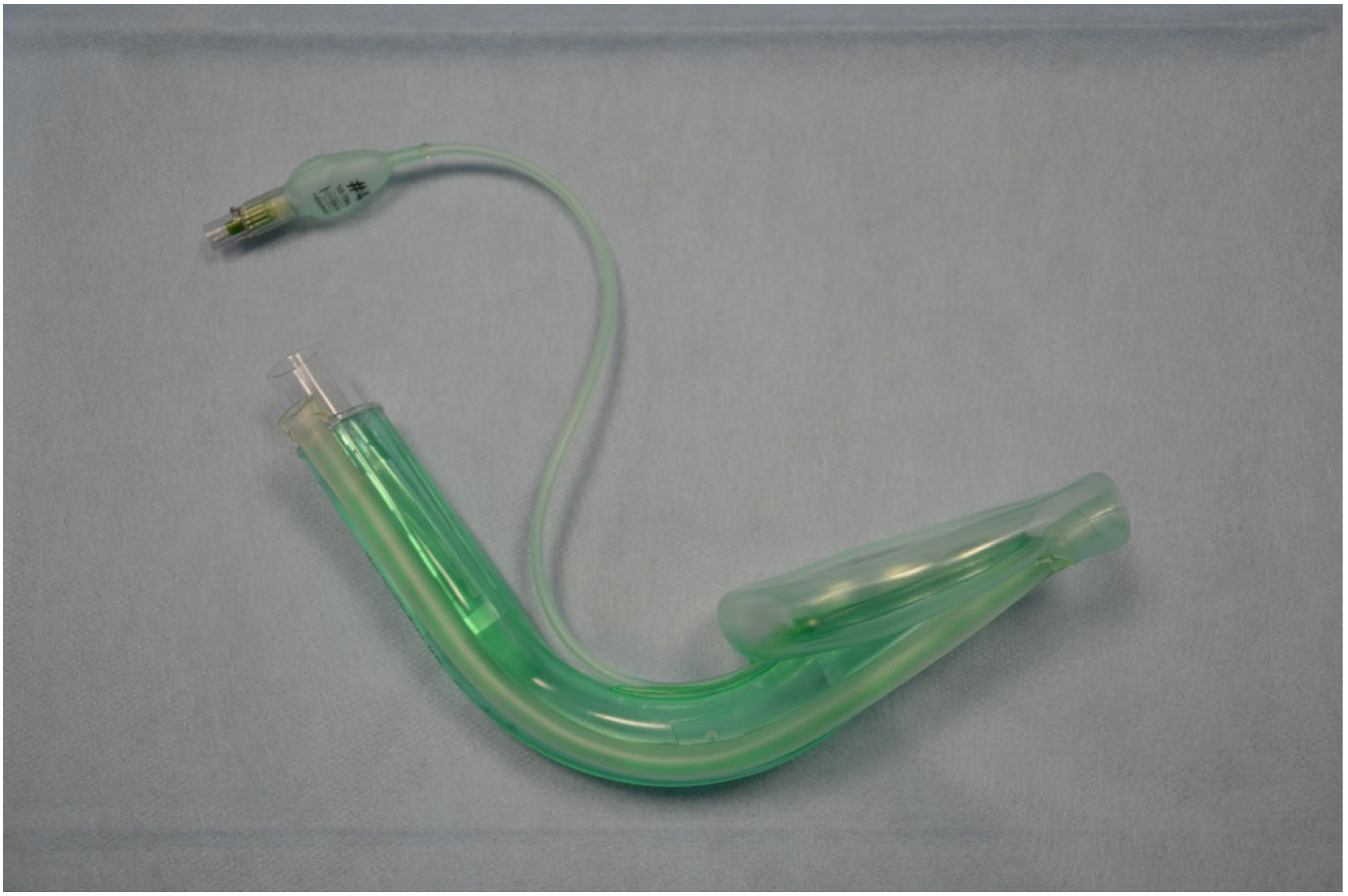
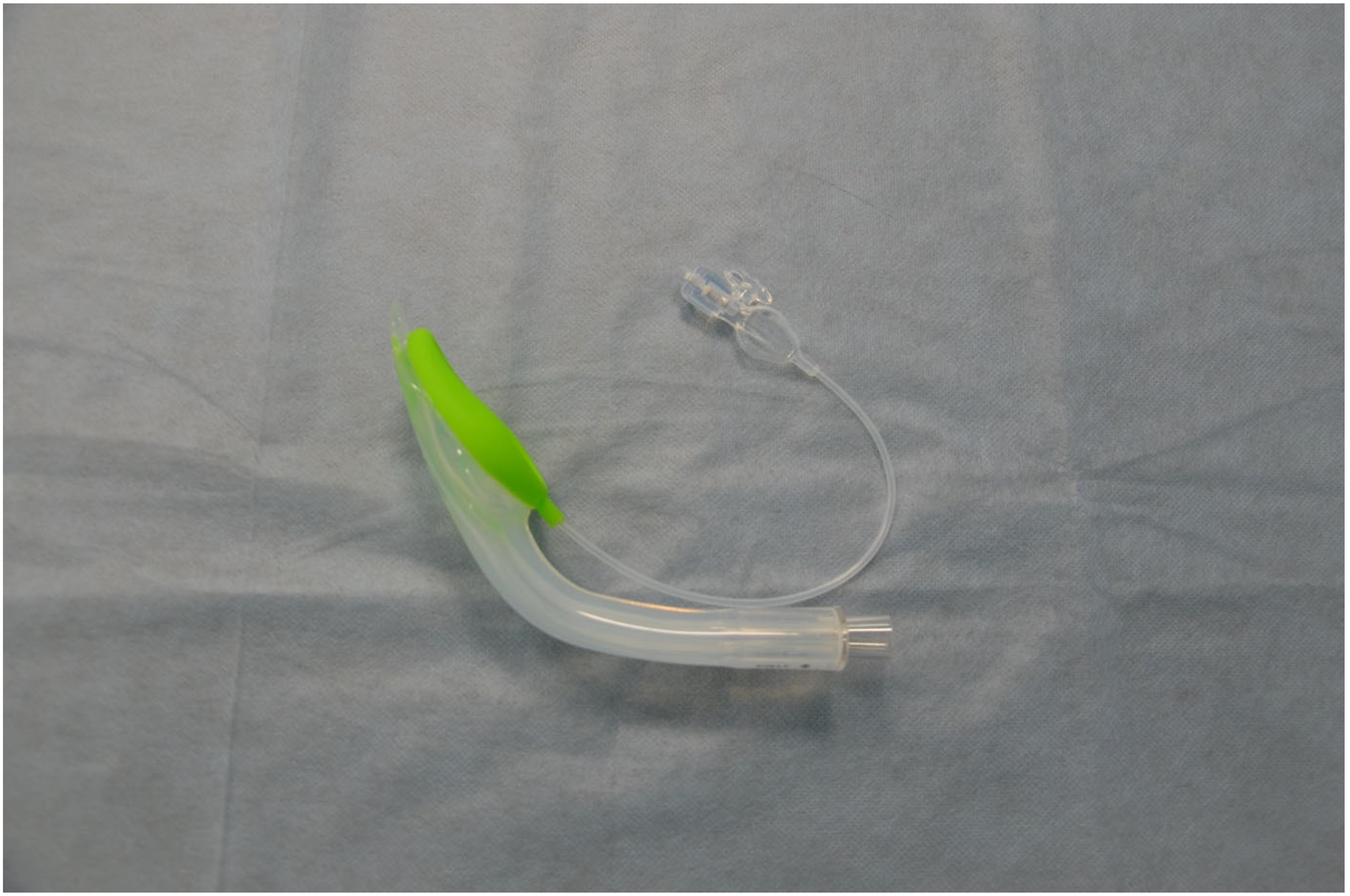
A Comparison of Four Newer Supraglottic Airway Devices for Airway Management of Entrapped Trauma Patients with Difficult Access—A Randomised, Controlled Manikin Trial


Abstract
1. Introduction
2. Materials and Methods
3. Results
4. Discussion
5. Conclusions
Author Contributions
Funding
Institutional Review Board Statement
Informed Consent Statement
Data Availability Statement
Conflicts of Interest
References
- Brown, C.V.R.; Inaba, K.; Shatz, D.V.; Moore, E.E.; Ciesla, D.; Sava, J.A.; Alam, H.B.; Brasel, K.; Vercruysse, G.; Sperry, J.L.; et al. Western Trauma Association critical decisions in trauma: Airway management in adult trauma patients. Trauma Surg. Acute Care Open 2020, 5, e000539. [Google Scholar] [CrossRef] [PubMed]
- Knapp, J.; Wenzel, V.; Greif, R.; Hossfeld, B.; Bernhard, M. First-Pass Intubation Success Bedeutung und Umsetzung in der Notfallmedizin. Notf. Rettungsmed 2016, 19, 566–573. [Google Scholar] [CrossRef]
- Nutbeam, T.; Fenwick, R.; Smith, J.; Bouamra, O.; Wallis, L.; Stassen, W. A comparison of the demographics, injury patterns and outcome data for patients injured in motor vehicle collisions who are trapped compared to those patients who are not trapped. Scand. J. Trauma Resusc. Emerg. Med. 2021, 29, 17. [Google Scholar] [CrossRef] [PubMed]
- Shavit, I.; Levit, B.; Basat NBen Lait, D.; Somri, M.; Gaitini, L. Establishing a definitive airway in the trauma patient by novice intubators: A randomised crossover simulation study. Injury 2015, 46, 2108–2112. [Google Scholar] [CrossRef]
- Aleksandrowicz, D. Definitywne drogi oddechowe. In Udrażnianie Dróg Oddechowych. Podstawy, Urządzenia, Techniki, 1st ed.; Makmed: Lublin, Poland, 2024; p. 175. [Google Scholar]
- Caruana, E.; Duchateau, F.X.; Cornaglia, C.; Devaud, M.L.; Pirracchio, R. Tracheal intubation related complications in the prehospital setting. Emerg. Med. J. 2015, 32, 882–887. [Google Scholar] [CrossRef]
- Pepe, P.E.; Roppolo, L.P.; Fowler, R.L. Prehospital endotracheal intubation: Elemental or detrimental? Crit. Care 2015, 19, 121. [Google Scholar] [CrossRef]
- Santoni, B.G.; Hindman, B.J.; Puttlitz, C.M.; Weeks, J.B.; Johnson, N.; Maktabi, M.A.; Todd, M.M. Manual in-line stabilization increases pressures applied by the laryngoscope blade during direct laryngoscopy and orotracheal intubation. Anesthesiology 2009, 110, 24–31. [Google Scholar] [CrossRef]
- Aleksandrowicz, D.; Gaszyński, T. Intubation through 2 supraglottic airway device in cervical spine immobilization: A randomized trial of residents’ use of the intubating laryngeal mask airway and the intubating laryngeal tube in manikins. Emergencias 2018, 30, 186–189. [Google Scholar]
- Brain, A.I. The development of the Laryngeal Mask--a brief history of the invention, early clinical studies and experimental work from which the Laryngeal Mask evolved. Eur. J. Anaesthesiol. 1991, 4, 5–17. [Google Scholar]
- Aleksandrowicz, D.; Mickowski, P.; Gawrysiak, M.; Ratajczyk, P. An evaluation of four supraglottic airway devices by paramedics in a simulated condition of entrapped trauma patients-a randomised, controlled manikin trial. Healthcare 2025, 13, 1404. [Google Scholar] [CrossRef]
- Gage, C.B.; Powell, J.R.; Bosson, N.; Crowe, R.; Guild, K.; Yeung, M.; Maclean, D.; Browne, L.R.; Jarvis, J.L.; Sholl, J.M.; et al. Evidence-based guidelines for prehospital airway management: Methods and resources document. Prehospital Emerg. Care 2024, 28, 561–567. [Google Scholar] [CrossRef] [PubMed]
- Zhang, K.; Zhou, M.; Zou, Z.; Zhu, C.; Jiang, R. Supraglottic airway devices: A powerful strategy in airway management. Am. J. Cancer Res. 2024, 14, 16–32. [Google Scholar] [CrossRef] [PubMed]
- World Health Organization Global Status Report on Road Safety 2023. Available online: https://www.who.int/publications/i/item/9789240086517 (accessed on 20 September 2025).
- Hulme, J.; Perkins, G.D. Critically injured patients, inaccessible airways, and laryngeal mask airways. Emerg. Med. J. 2005, 22, 742–744. [Google Scholar] [CrossRef] [PubMed]
- Russo, S.G.; Zink, W.; Herff, H.; Wiese, C.H. Tod durch (k)einen Atemweg. Trauma durch die präklinische Atemwegssicherung? Anaesthesist 2010, 59, 929–939. [Google Scholar] [CrossRef]
- Athanassoglou, V.; Rogers, A.; Hofmeyr, R. In-hospital management of the airway in trauma. BJA Educ. 2024, 24, 238–244. [Google Scholar] [CrossRef]
- Tannheimer, M.; Reinke, M.; Lechner, R. Comparison of laryngeal mask airway seal between anesthesiologists and individuals without previous airway experience. J. Emerg. Med. 2024, 66, e470–e476. [Google Scholar] [CrossRef]
- Copeland, G.B.; Zilevicius, D.J.; Bedolla, C.N.; Islas, A.L.; Guerra, M.N.; Salazar, S.J.; de Lorenzo, R.A.; Schauer, S.G.; Hood, R.L. Review of commercially available supraglottic airway devices for prehospital combat casualty care. Mil. Med. 2022, 187, e862–e876. [Google Scholar] [CrossRef]
- van Zundert, T.C.; Brimacombe, J.R.; Ferson, D.Z.; Bacon, D.R.; Wilkinson, D.J. Archie Brain: Celebrating 30 years of development in laryngeal mask airways. Anaesthesia 2012, 67, 1375–1385. [Google Scholar] [CrossRef]
- Saeedi, M.; Hajiseyedjavadi, H.; Seyedhosseini, J.; Eslami, V.; Sheikhmotaharvahedi, H. Comparison of endotracheal intubation, combitube, and laryngeal mask airway between inexperienced and experienced emergency medical staff: A manikin study. Int. J. Crit. Illn. Inj. Sci. 2014, 4, 303–308. [Google Scholar] [CrossRef]
- Lyng, J.W.; Baldino, K.T.; Braude, D.; Fritz, C.; March, J.A.; Peterson, T.D.; Yee, A. Pre-hospital Supraglottic Airways: An NAESMP Position Statement and Resource Document. Prehospital Emerg. Care 2022, 26, 32–41. [Google Scholar] [CrossRef]
- Aleksandrowicz, D.; Gaszyński, W.; Gaszyński, T. Wytyczne dotyczące udrażniania dróg oddechowych w warunkach pozaszpitalnych u chorych po urazach. Anest. Ratow. 2013, 7, 233–243. [Google Scholar]
- Apfelbaum, J.L.; Hagberg, C.A.; Connis, R.T.; Abdelmalak, B.B.; Agarkar, M.; Dutton, R.P.; Fiadjoe, J.E.; Greif, R.; Klock, P.A.; Mercier, D.; et al. 2022 American Society of Anesthesiologists Practice Guidelines for Management of the Difficult Airway. Anesthesiology 2022, 136, 31–81. [Google Scholar] [CrossRef] [PubMed]
- Timmermann, A. Supraglottic airways in difficult airway management: Successes, failures, use and misuse. Anaesthesia 2011, 66, 45–56. [Google Scholar] [CrossRef] [PubMed]
- Michalek, P.; Donaldson, W.; Vobrubova, E.; Hakl, M. Complications associated with the use of supraglottic airway devices in perioperative medicine. Biomed. Res. Int. 2015, 2015, 746560. [Google Scholar] [CrossRef]
- Cheon, G.; Siddiqui, S.; Lim, T.; Seet, E.; Qing, L.B.; Palaniappan, S.P.; Koh, K.F. Thinking twice before using the LMA for obese and older patients-a prospective observational study. J. Anesth. Clin. Res. 2013, 4, 283. [Google Scholar] [CrossRef]
- Pap, R.; van Loggerenberg, C. A comparison of airway management devices in simulated entrapment-trauma: A prospective manikin study. Int. J. Emerg. Med. 2019, 12, 15. [Google Scholar] [CrossRef]
- Santos, A.; Leal, B.; Valente, F. From prone to prepared: Airway management in a patient with penetrating thoracic trauma. Cureus 2024, 16, e76193. [Google Scholar] [CrossRef]
- Shou, D.; Levy, M.; Troncoso, R.; Scharf, B.; Margolis, A.; Garfinkel, E. Perceived versus actual time of prehospital intubation by paramedics. West. J. Emerg. Med. 2024, 25, 645–650. [Google Scholar] [CrossRef]
- Saini, S.; Singhal, S.; Prakash, S. Airway management in maxillofacial trauma. J. Anaesthesiol. Clin. Pharmacol. 2021, 37, 319–327. [Google Scholar] [CrossRef]
- Martin, A.B.; Lingg, J.; Lubin, J.S. Comparison of airway management methods in entrapped patients: A manikin study. Prehosp Emerg. Care 2016, 20, 657–661. [Google Scholar] [CrossRef]
- Bosson, N.; Abo, B.N.; Litchfield, T.D.; Qasim, Z.; Steenberg, M.F.; Toy, J.; Osuna-Garcia, A.; Lyng, J. Prehospital Trauma Compendium: Management of the entrapped patient-a position statement and resource document of NAEMSP. Prehospital Emerg. Care 2024, 24, 1–13. [Google Scholar] [CrossRef]
- Wetsch, W.A.; Schneider, A.; Schier, R.; Spelten, O.; Hellmich, M.; Hinkelbein, J. In a difficult access scenario, supraglottic airway devices improve success and time to ventilation. Eur. J. Emerg. Med. 2015, 22, 374–376. [Google Scholar] [CrossRef]
- Steinmann, D.; Ahne, T.; Heringhaus, C.; Goebel, U. Comparison of airway management techniques for different access in a simulated motor vehicle entrapment scenario. Eur. J. Emerg. Med. 2016, 23, 279–285. [Google Scholar] [CrossRef]
- Lamba, N.S.; Garg, A.; Sharma, A.K. Use of Baska mask in military trauma and disasters: Military medicine on the move. IJAR 2019, 9, 2. [Google Scholar] [CrossRef]
- Finnveden, G.; Hauschild, M.Z.; Ekvall, T.; Guinée, J.; Heijungs, R.; Hellweg, S.; Koehler, A.; Pennington, D.; Suh, S. Recent developments in Life Cycle Assessment. J. Environ. Manag. 2009, 91, 1–21. [Google Scholar] [CrossRef]
- Talbot, A.; Liang, G.; Plepys, A.; Bentzer, P. Climate impact of laryngeal masks: Climate and other environmental impacts of reusable and single-use laryngeal masks in Sweden. Acta Anaesthesiol. Scand. 2026, 70, e70144. [Google Scholar] [CrossRef]
- Rai, M.R.; Popat, M.T. Evaluation of airway equipment: Man or manikin? Anaesthesia 2011, 66, 1–3. [Google Scholar] [CrossRef]



| Studied Device | Time Required to Insert the Device and Ventilate the Manikin (Tiv) [s] | |||
|---|---|---|---|---|
| Min | Max | Median (IQR) | p Value | |
| Baska | 10.1 | 21.8 | 9 (10) | <0.001 |
| iLTS-D | 7.2 | 30.1 | 9.5 (11) | 0.23 |
| AuraGain | 6.7 | 20.3 | 7.5 (4) | <0.001 |
| DMSDLLM | 9.7 | 28.9 | 9 (7) | 0.37 |
| Studied Device | Number of Attempts Required for Successful Placement [n (%)] | ||
|---|---|---|---|
| 1st Attempt | 2nd Attempt | 3rd Attempt | |
| Baska | 39 (78) | 9 (18) | 2 (4) |
| iLTS-D | 40 (80) | 6 (12) | 4 (8) |
| AuraGain | 45 (90) | 5 (10) | - |
| DMSDLLM | 41 (82) | 9 (18) | - |
| Studied Device | NRS | |||
|---|---|---|---|---|
| Min | Max | Mean (SD) | p Value | |
| Baska | 7 | 10 | 8.6 (0.7) | 0.195 |
| iLTS-D | 5 | 8 | 6.8 (1.41) | <0.0001 |
| AuraGain | 7 | 10 | 8.4 (0.82) | <0.0001 |
| DMSDLLM | 6 | 9 | 7.7 (0.91) | 0.0005 |
| Device | Baska | iLTS-D | AuraGain | DMSDLLM |
|---|---|---|---|---|
| Type | Supraglottic | Retroglottic | Supraglottic | Supraglottic |
| Presence of gastric channel | Yes | Yes | Yes | Yes |
| Is tracheal intubation possible? | Yes | Yes | Yes | Yes |
| Are paediatric sizes available? | Only ‘large child’ | Height > 125 cm | Yes | Yes |
| Reusability | Single-use | Single-use | Single-use | Single-use |
| Cuff type | Self-sealing | Inflatable | Inflatable | Inflatable |
Disclaimer/Publisher’s Note: The statements, opinions and data contained in all publications are solely those of the individual author(s) and contributor(s) and not of MDPI and/or the editor(s). MDPI and/or the editor(s) disclaim responsibility for any injury to people or property resulting from any ideas, methods, instructions or products referred to in the content. |
© 2025 by the authors. Licensee MDPI, Basel, Switzerland. This article is an open access article distributed under the terms and conditions of the Creative Commons Attribution (CC BY) license (https://creativecommons.org/licenses/by/4.0/).
Share and Cite
Aleksandrowicz, D.; Gaszyński, T. A Comparison of Four Newer Supraglottic Airway Devices for Airway Management of Entrapped Trauma Patients with Difficult Access—A Randomised, Controlled Manikin Trial. Life 2025, 15, 1904. https://doi.org/10.3390/life15121904
Aleksandrowicz D, Gaszyński T. A Comparison of Four Newer Supraglottic Airway Devices for Airway Management of Entrapped Trauma Patients with Difficult Access—A Randomised, Controlled Manikin Trial. Life. 2025; 15(12):1904. https://doi.org/10.3390/life15121904
Chicago/Turabian StyleAleksandrowicz, Dawid, and Tomasz Gaszyński. 2025. "A Comparison of Four Newer Supraglottic Airway Devices for Airway Management of Entrapped Trauma Patients with Difficult Access—A Randomised, Controlled Manikin Trial" Life 15, no. 12: 1904. https://doi.org/10.3390/life15121904
APA StyleAleksandrowicz, D., & Gaszyński, T. (2025). A Comparison of Four Newer Supraglottic Airway Devices for Airway Management of Entrapped Trauma Patients with Difficult Access—A Randomised, Controlled Manikin Trial. Life, 15(12), 1904. https://doi.org/10.3390/life15121904