
Magnetic Field-Assisted Linearizes Solidification Front to Suppress Edge Cracking in AZ31 Alloy Cast-Rolling


Abstract
1. Introduction
2. Physical Model and Boundary Conditions
2.1. Model Parameters and Conditional Assumptions
- (1)
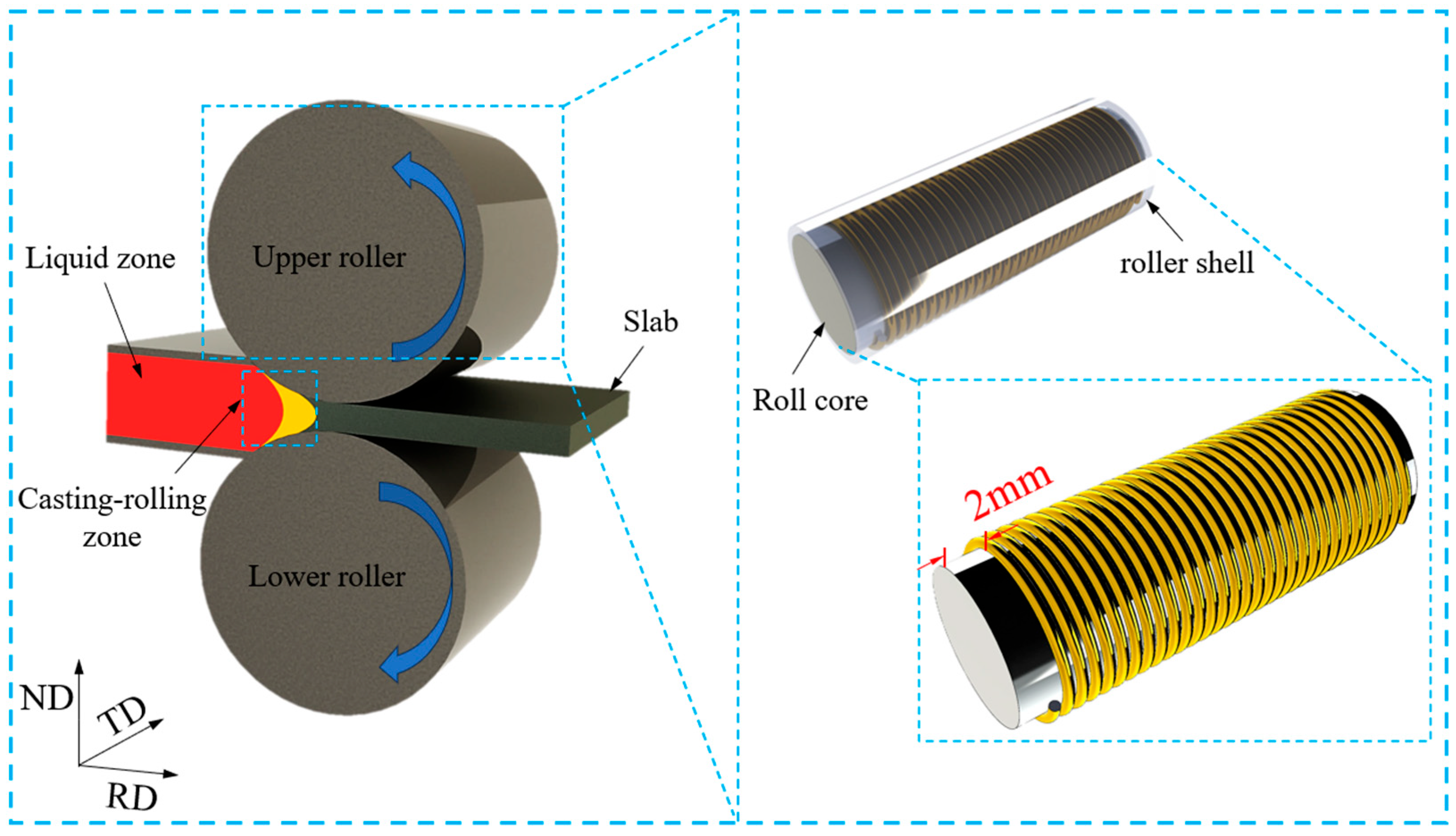
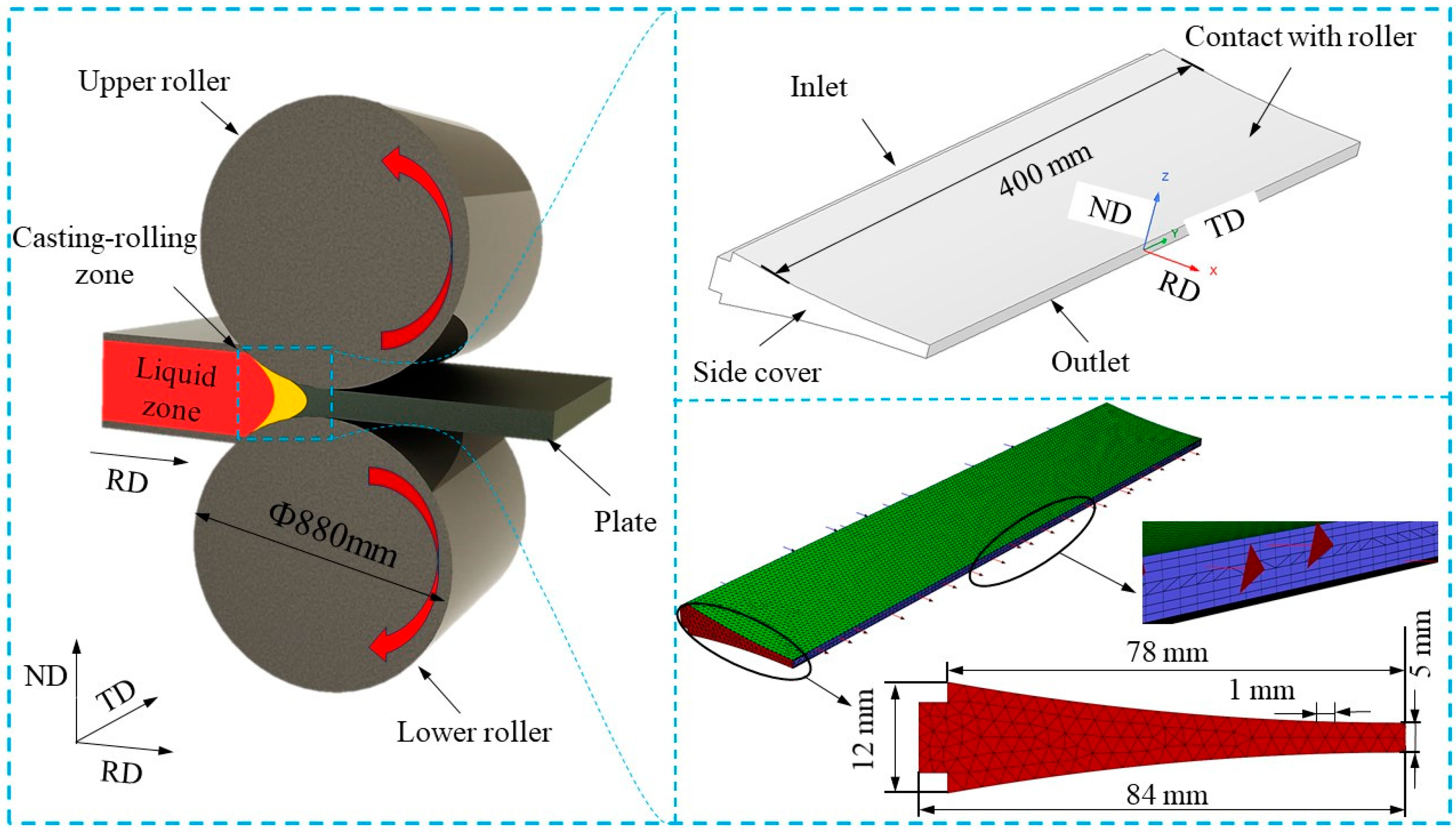
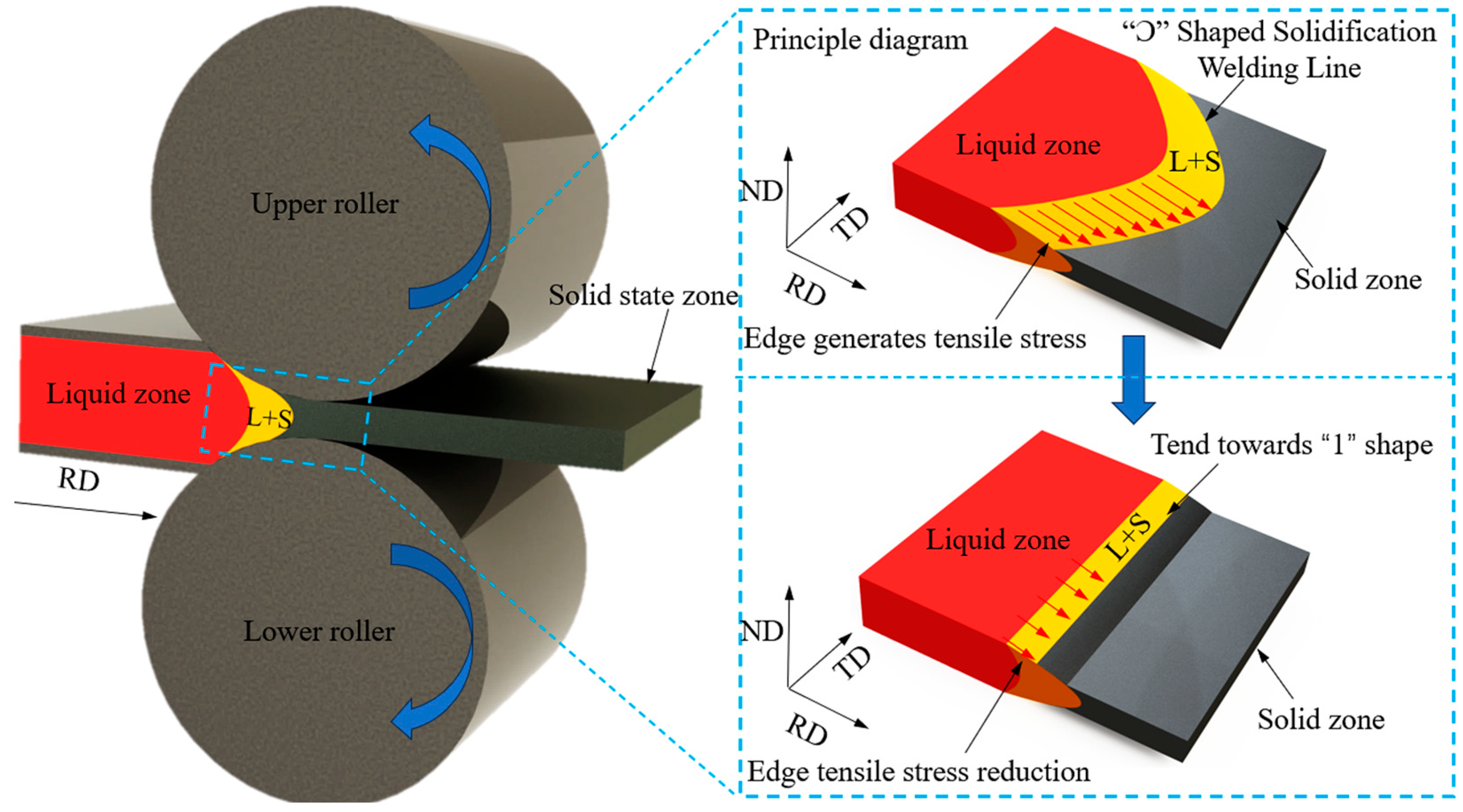
- Casting–rolling can be divided into liquid phase, paste phase, and solid phase. The process of casting–rolling is complicated, so a wide range of fluids are used to express the flow process in the three-phase region [22].
- (2)
- The magnesium alloy melt is treated as an incompressible Newtonian fluid.
- (3)
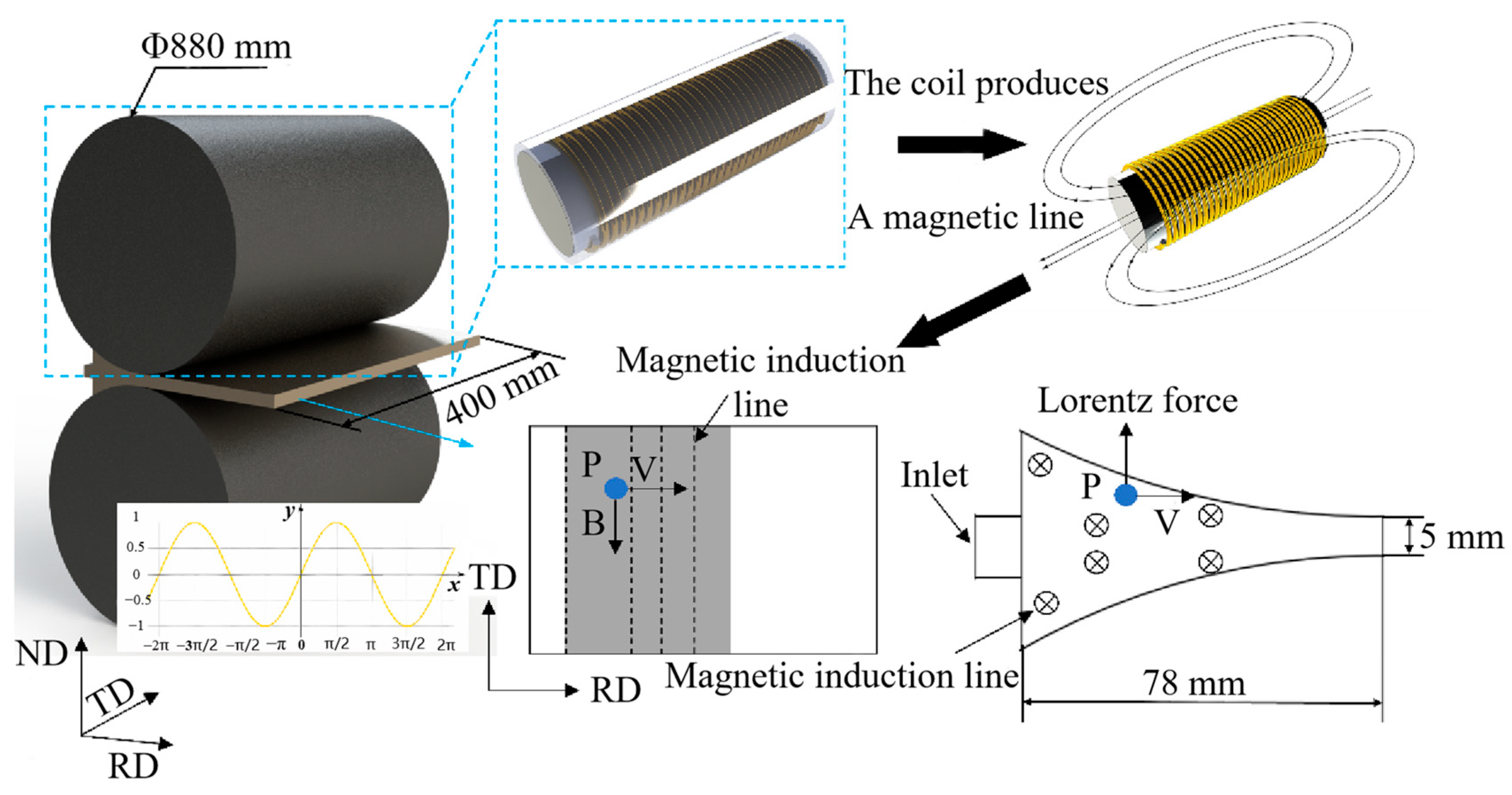
- Gravity effects are neglected during the casting–rolling process [10].
- (4)
- The temperature at the inlet of the casting–rolling zone is assumed to be equal to the pouring temperature throughout the process.
- (5)
- Heat dissipation through radiation from the magnesium alloy volume is not taken into account.
- (6)
- The side sealing plate is considered to be made of an ideal insulating material.
- (7)
- It is assumed that there is no relative motion between the roll and the solidified shell.
- (8)
- The effect of casting roll rotation on the magnetic field is disregarded [23].
- (9)
- Variations in permeability caused by temperature changes are not considered.
- (10)
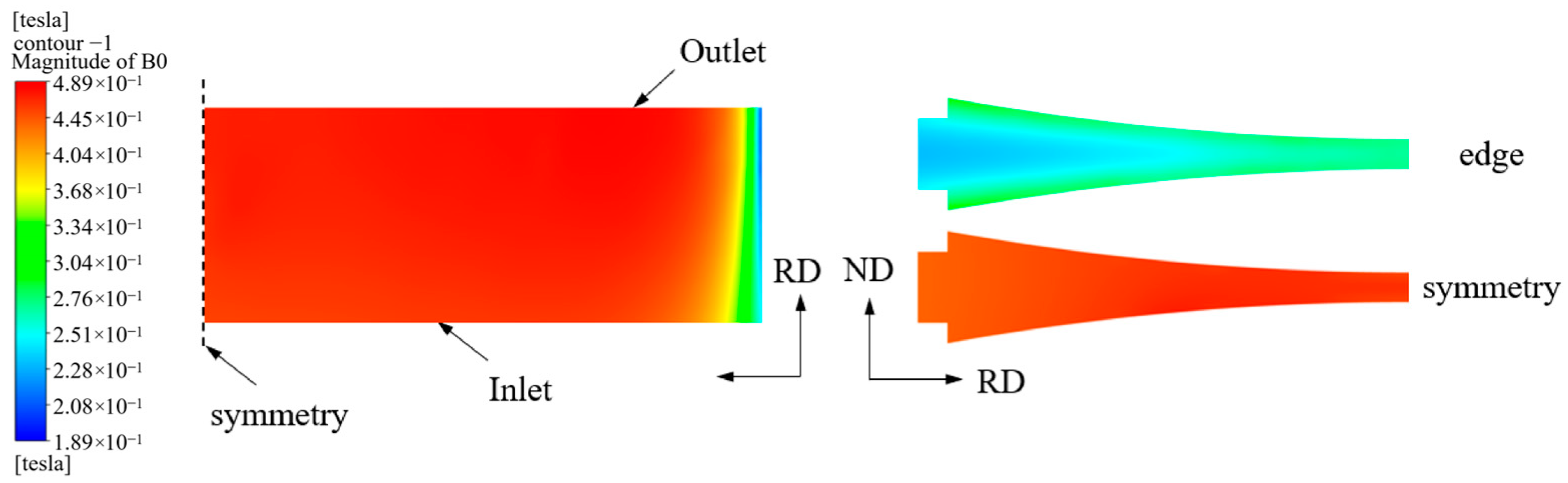
- The influence of roll core and sleeve on magnetic field is ignored.
2.2. Casting–Rolling Simulation Parameters and Magnetic Field Parameters
2.3. Boundary Conditions
2.4. Viscous Models
3. Results and Discussion
3.1. Effect of Magnetic Field Strength on Casting–Rolling of Magnesium Alloy
3.1.1. Multi-Field Analysis of Casting–Rolling Zone
3.1.2. Effect of Magnetic Field Strength on Flow Field
3.1.3. Effect of Magnetic Field Strength on Solidified Welded Line
3.2. Effect of Magnetic Field Frequency on Casting–Rolling of Magnesium Alloy
3.2.1. Effect of Magnetic Field Frequency on Flow Field
3.2.2. Effect of Magnetic Field Frequency on Solidified Welded Line
4. Conclusions
- (1)
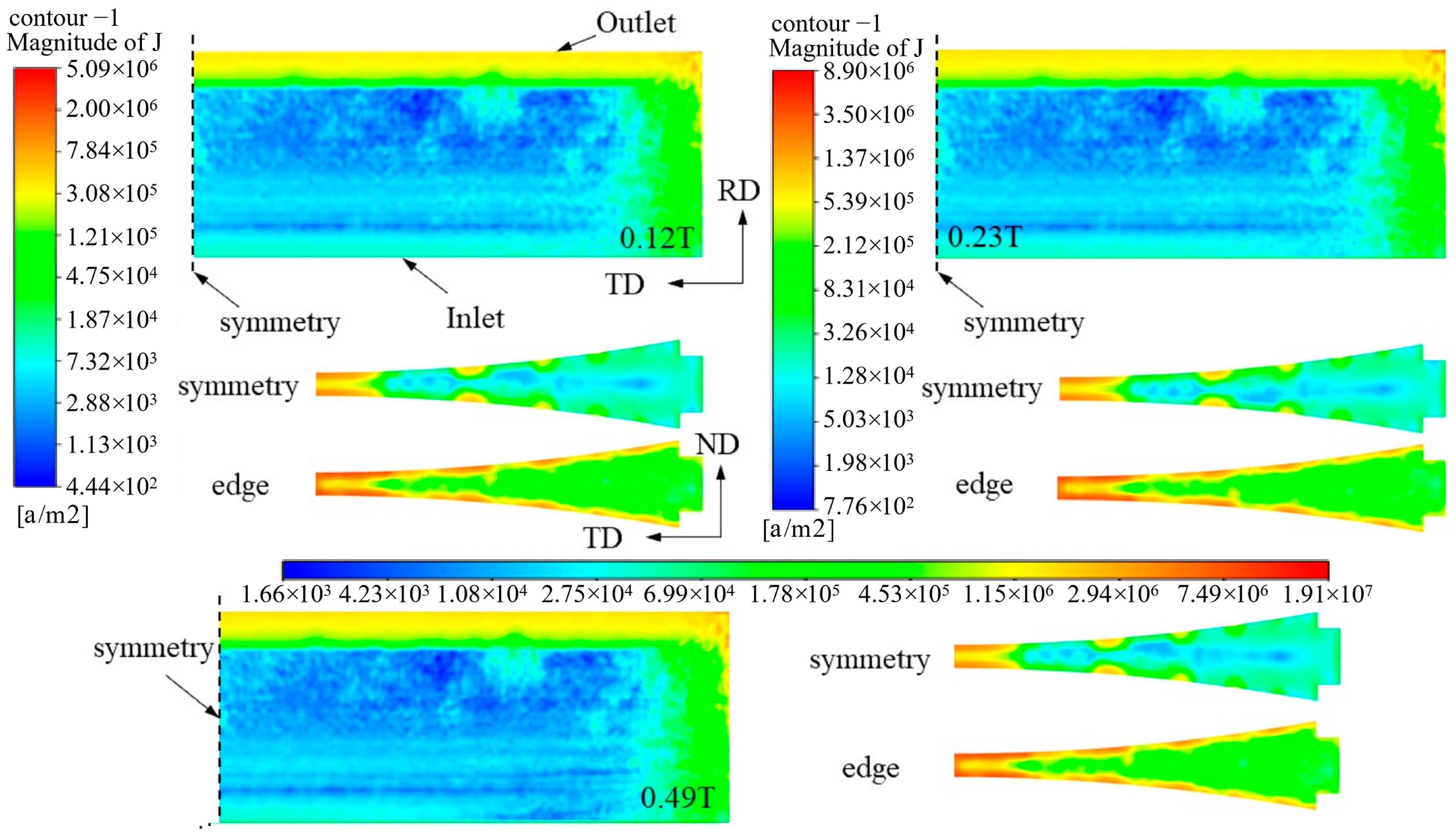
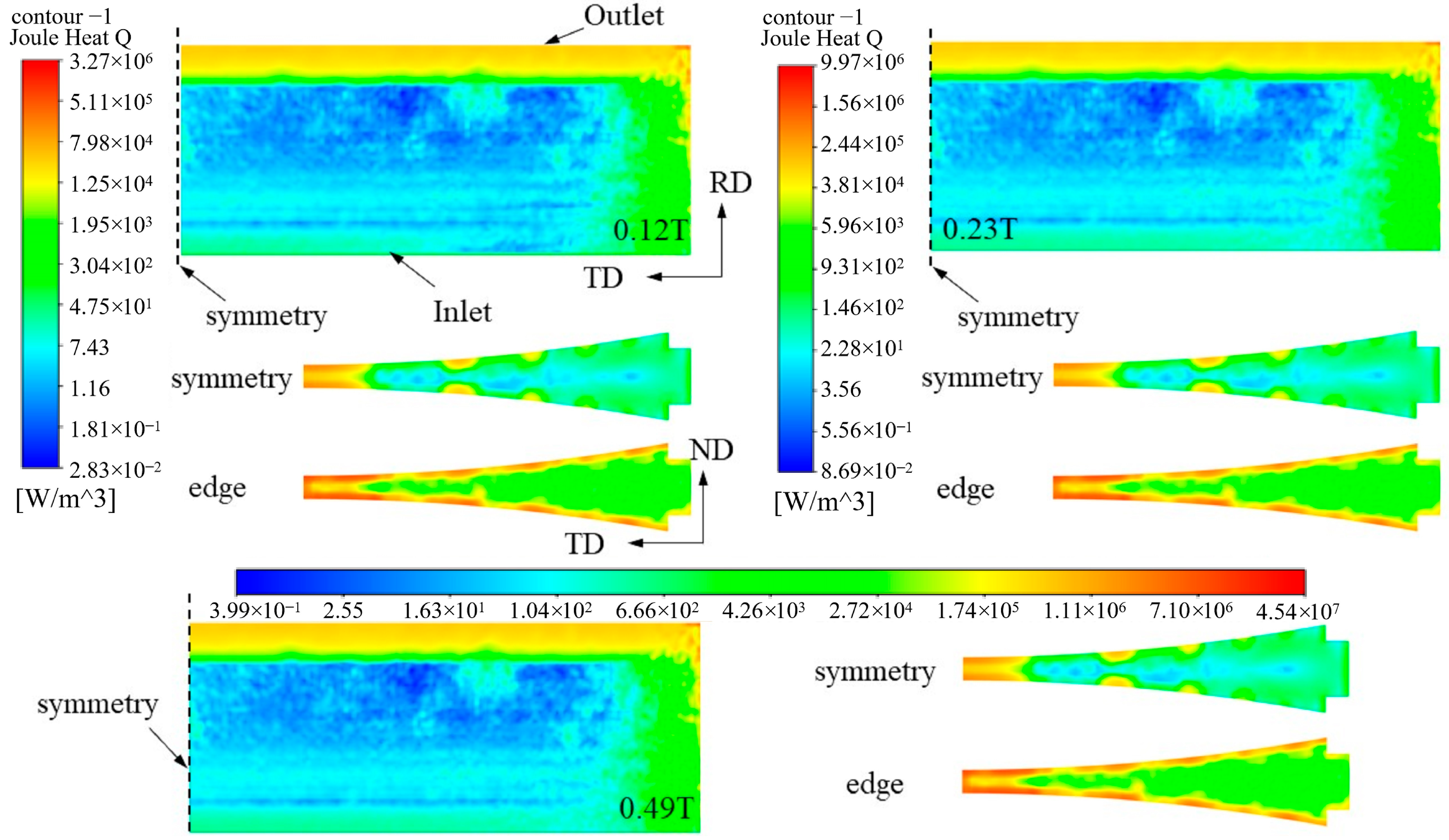
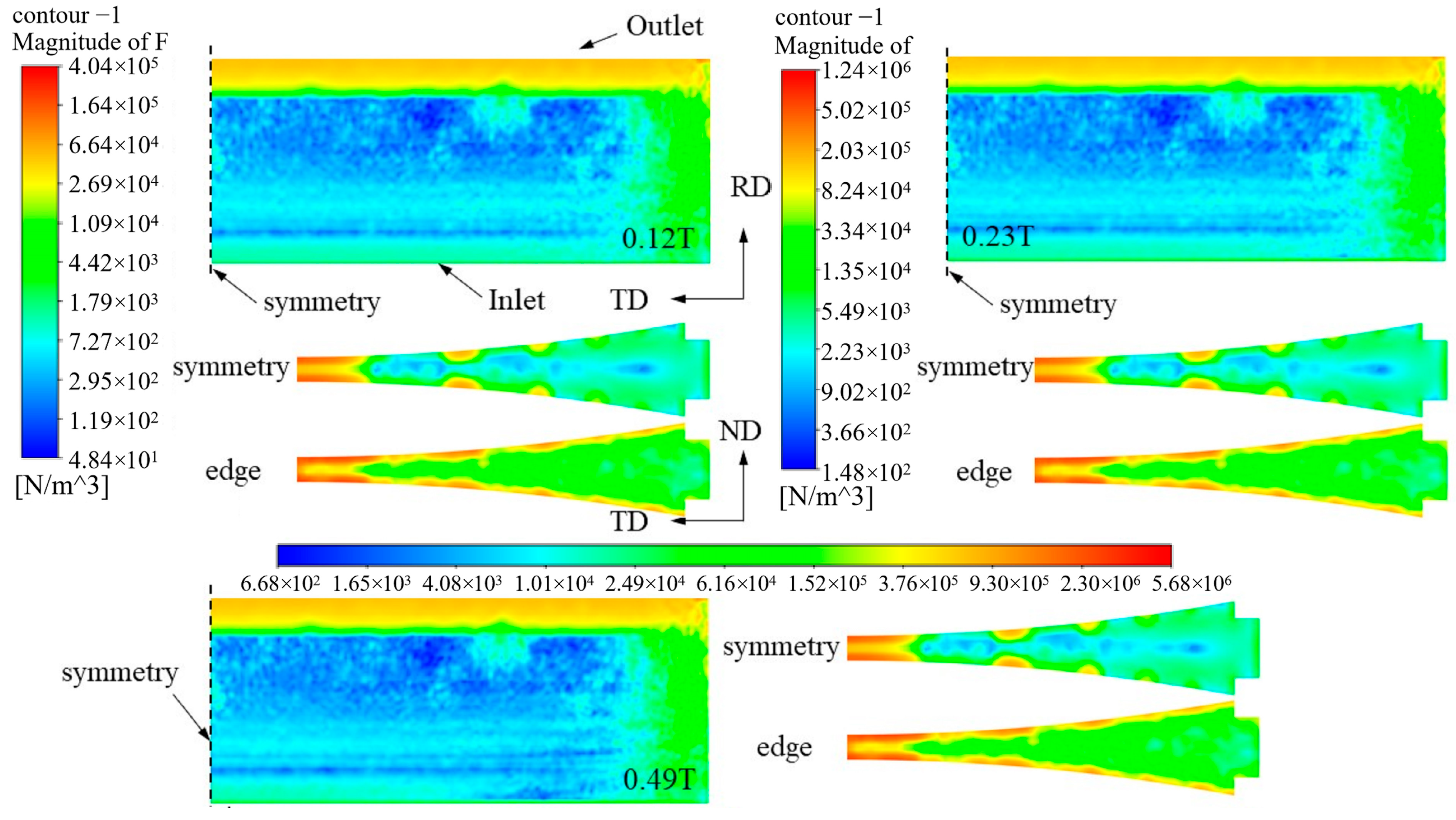
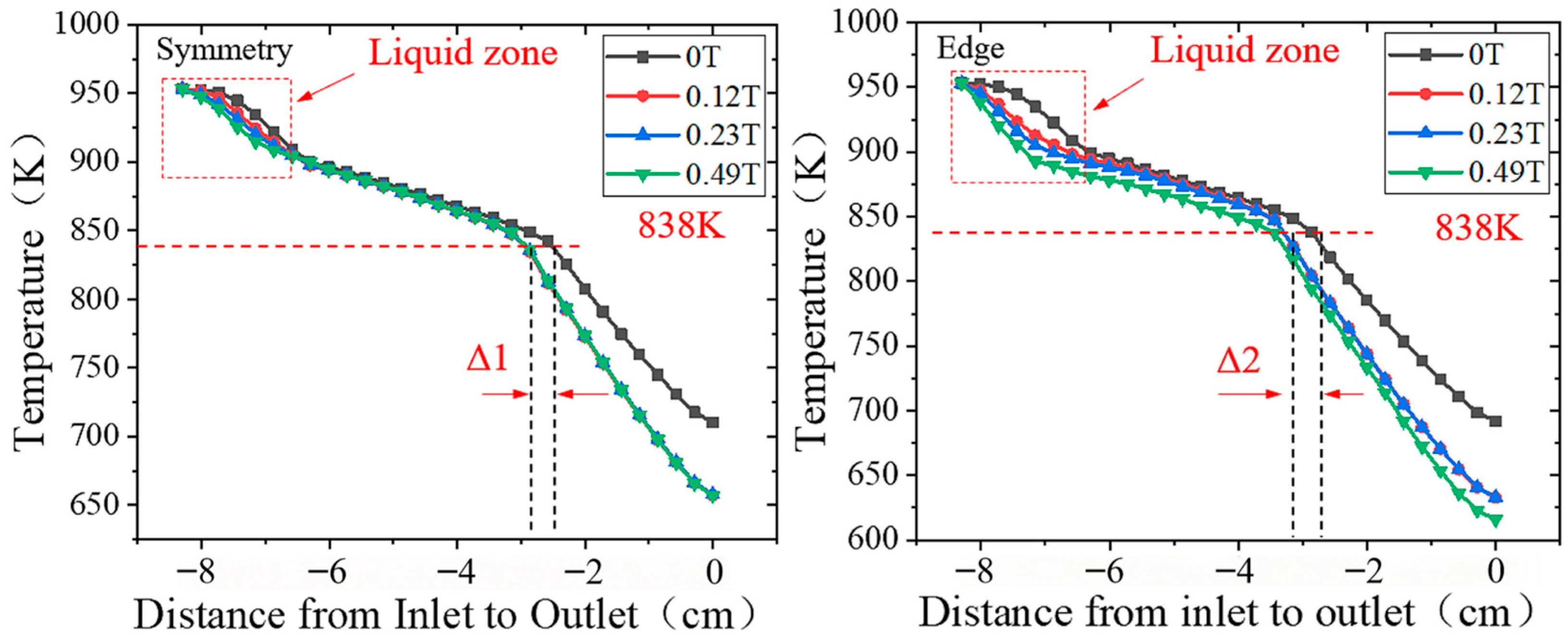
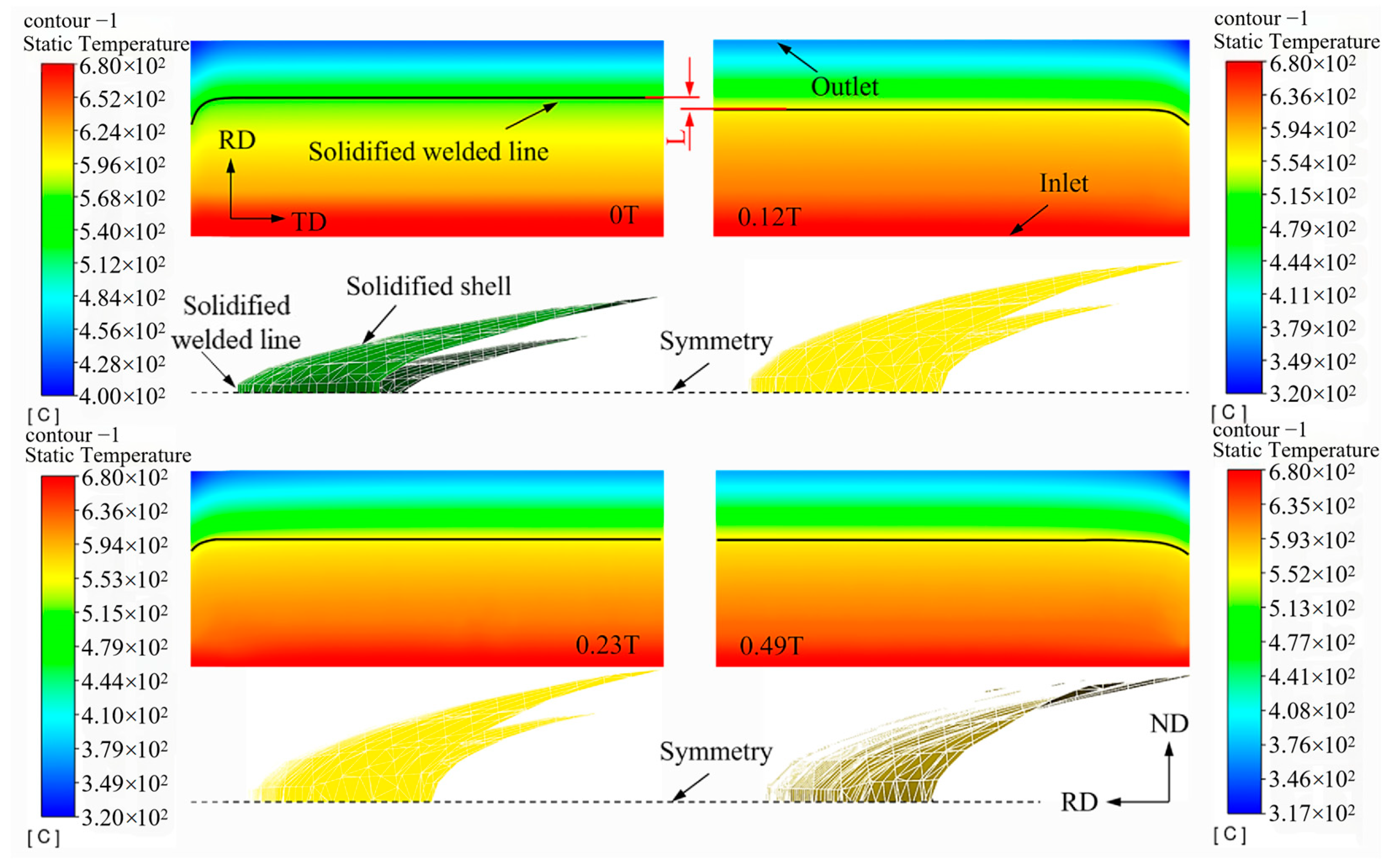
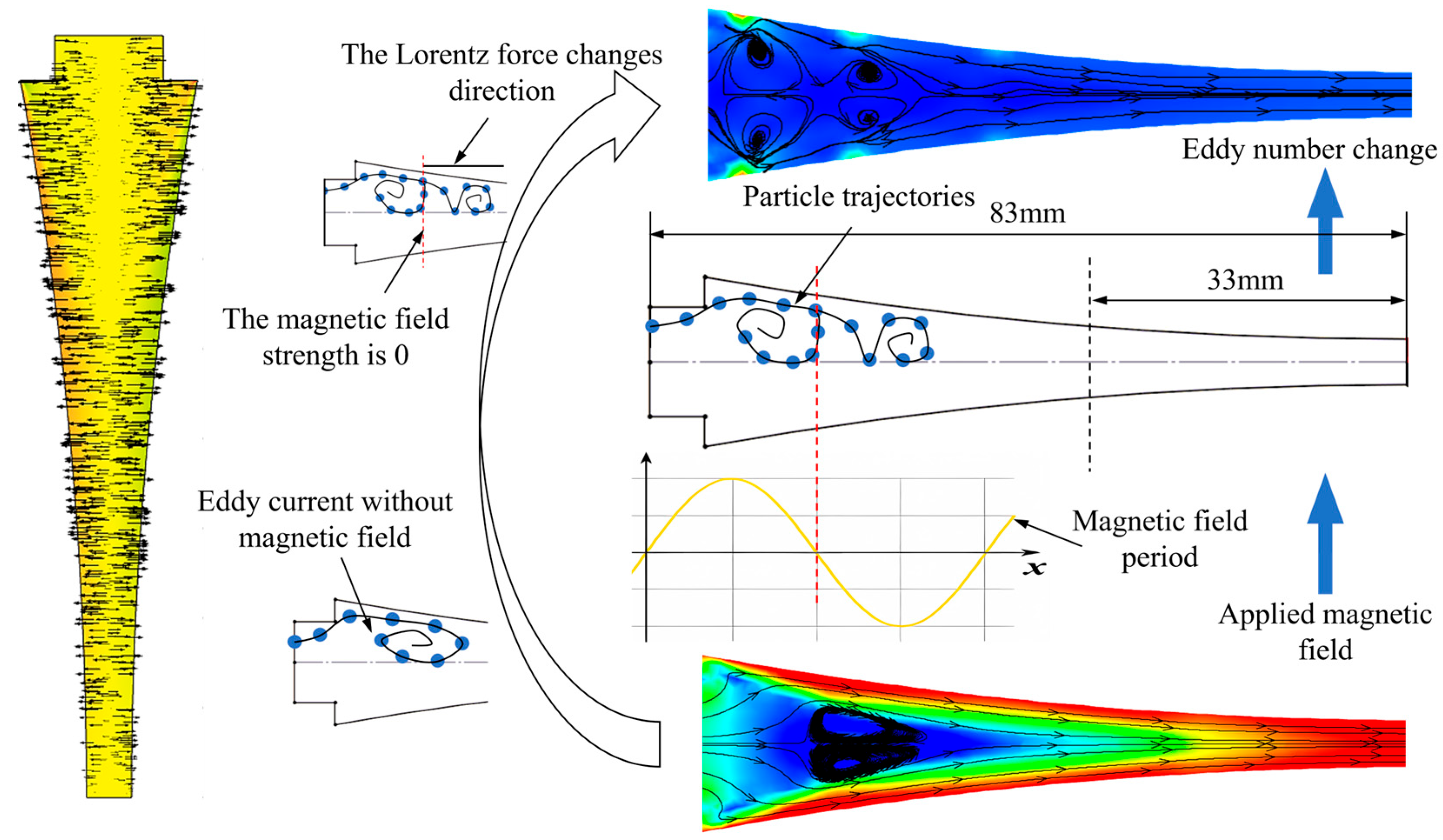
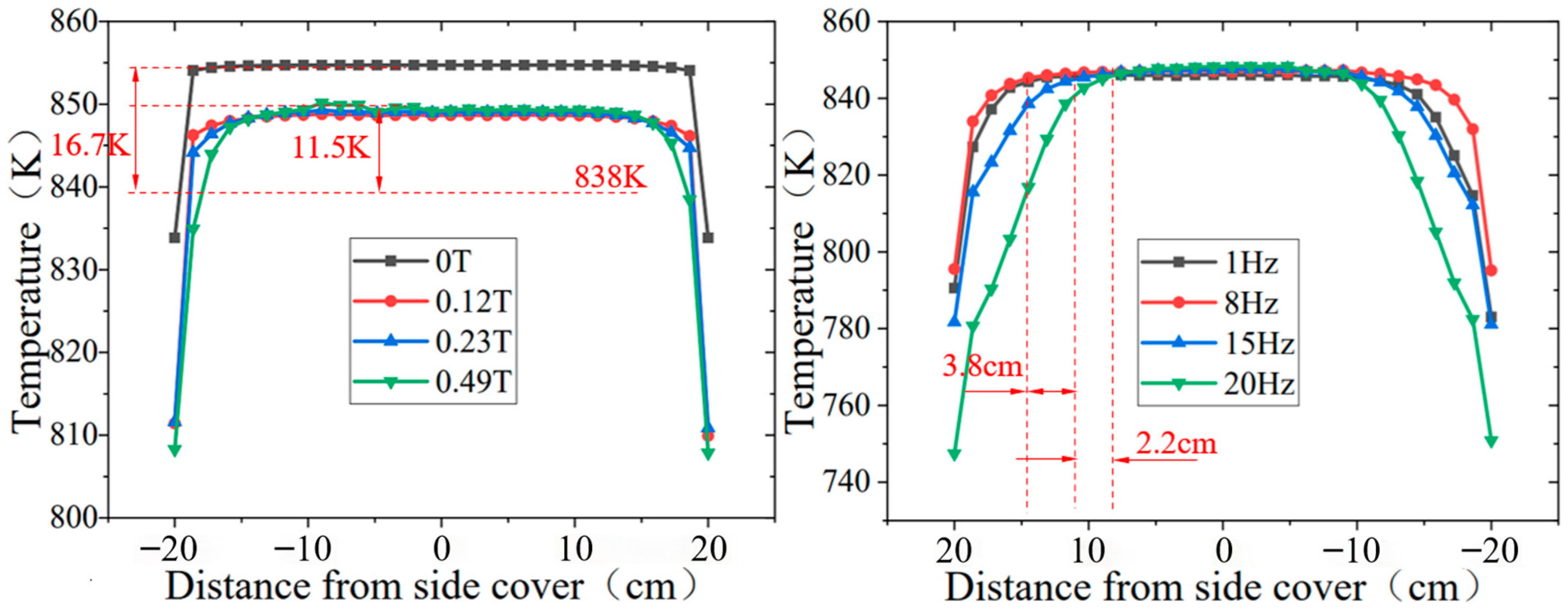
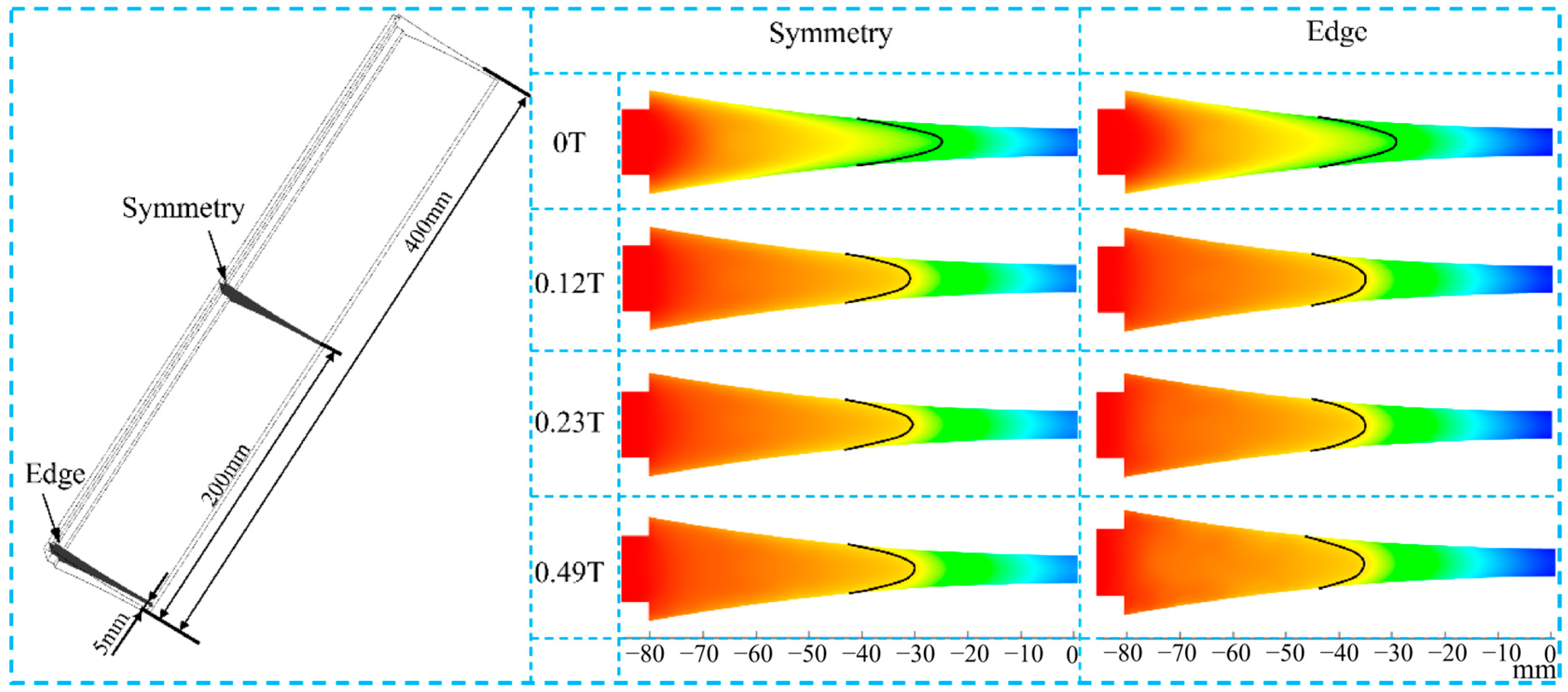
- After the magnetic field is applied, the solidified welding line moves towards the inlet, and the moving distance is 4.5 mm. The high temperature area (between the inlet and the solidified welding line) is more evenly distributed and affected by the magnetic field. The joule heat generated by a magnetic field cannot heat up the cast-rolling zone, so the Lorentz force is the main reason for the change in the flow field and temperature field.
- (2)
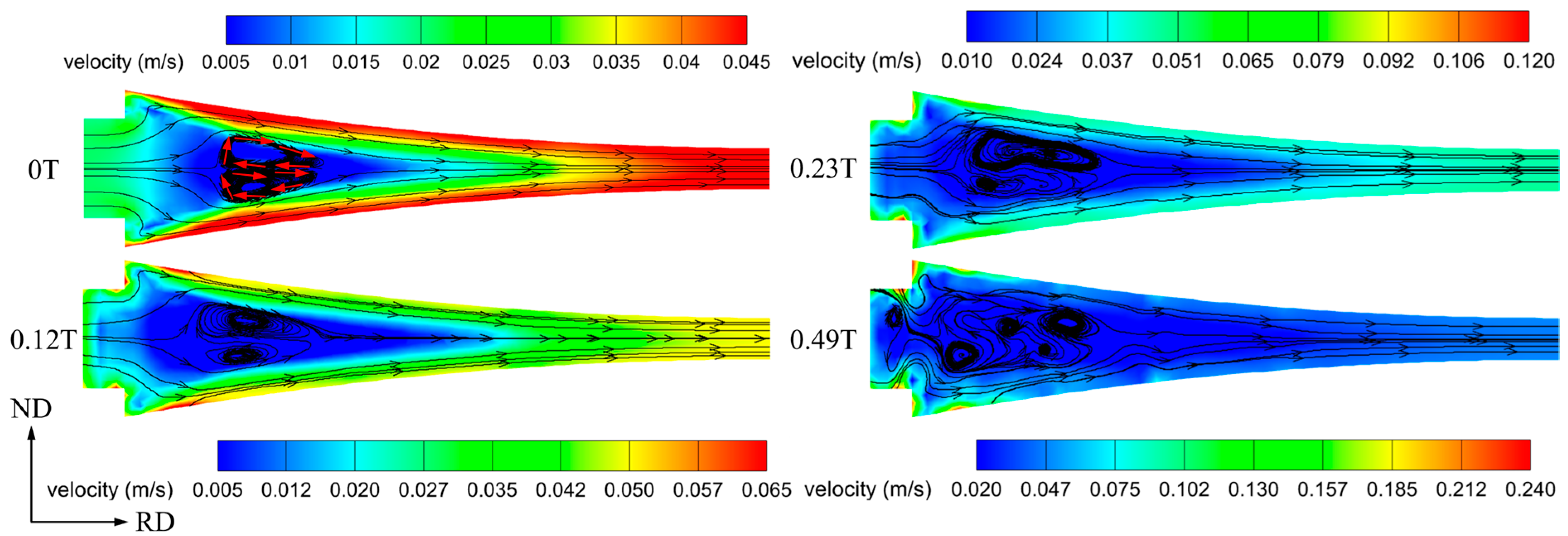
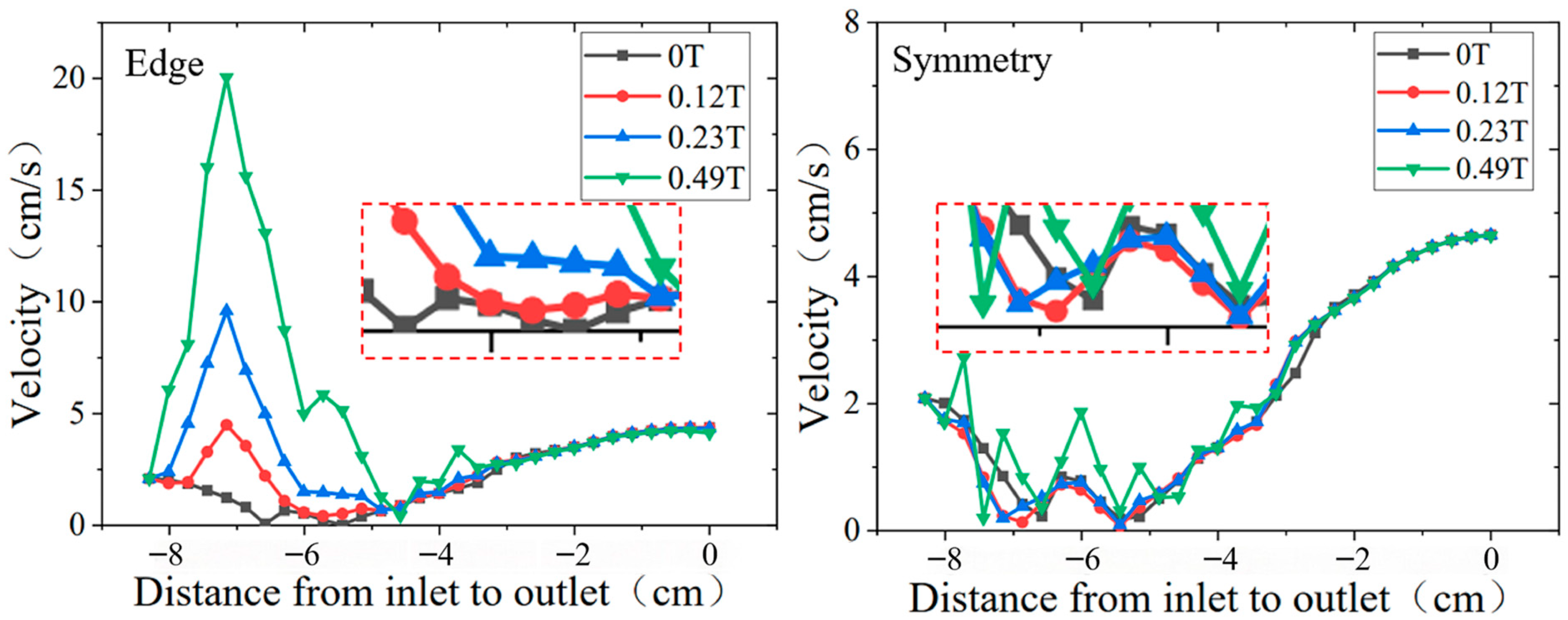
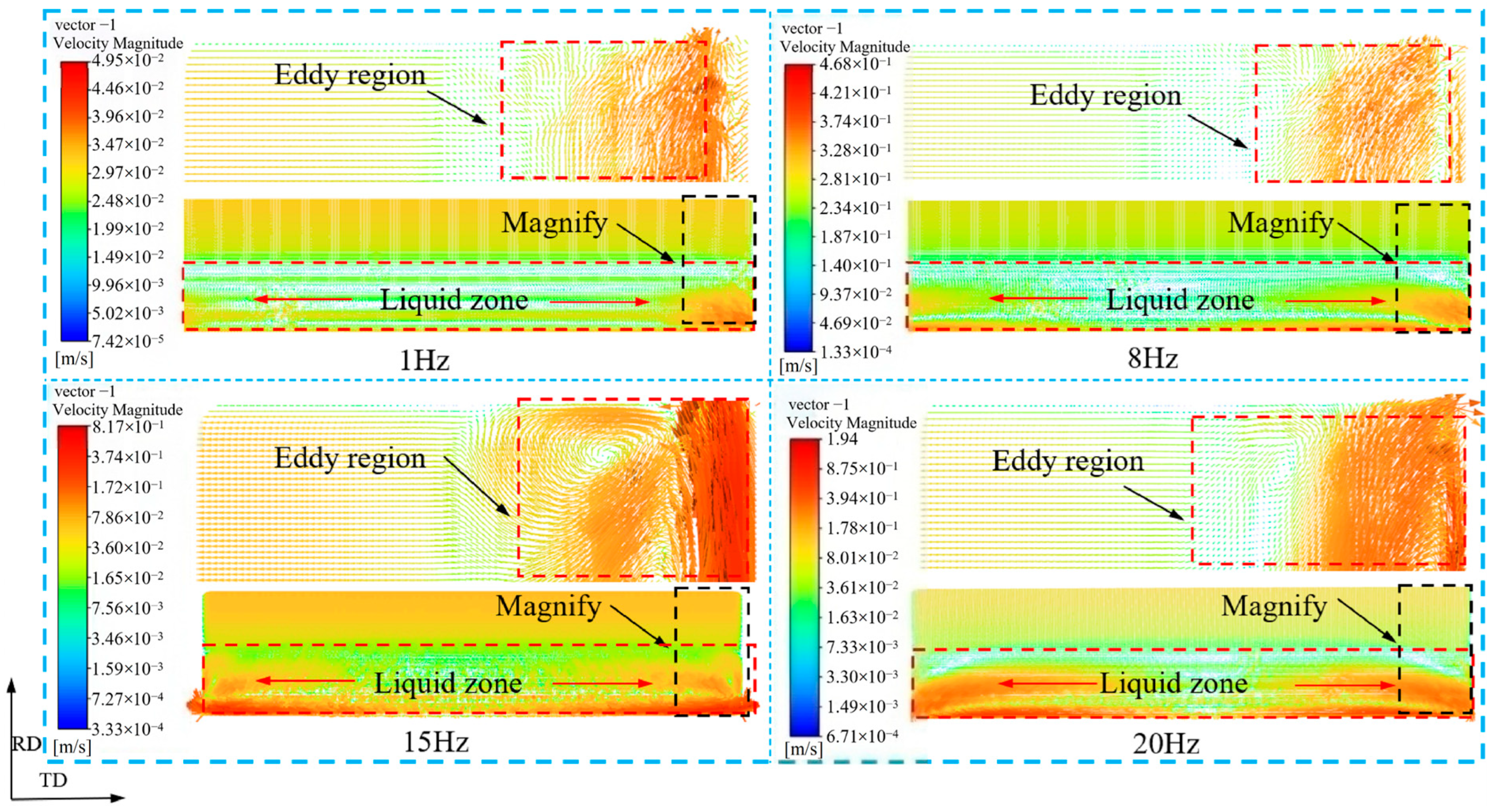
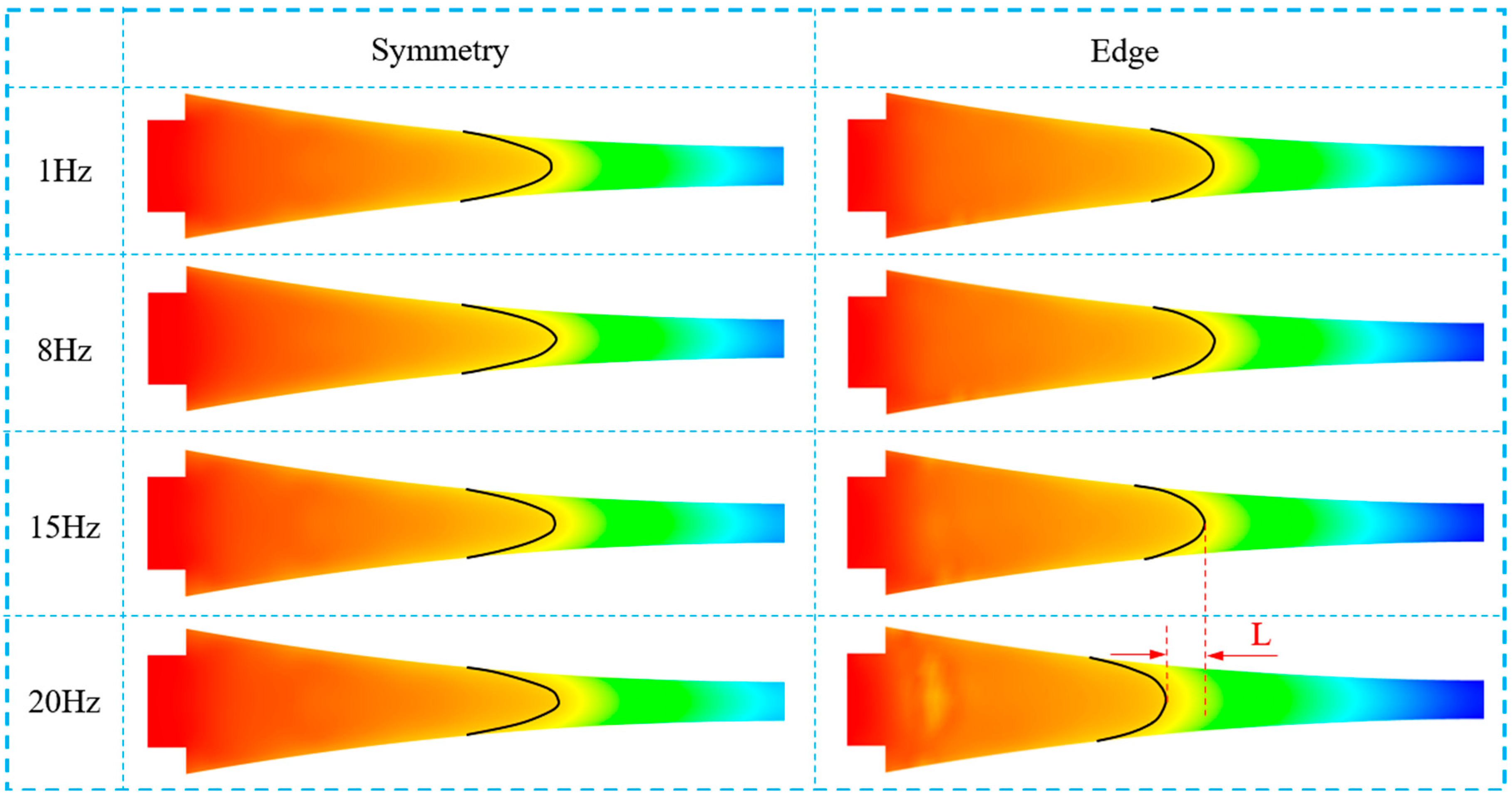
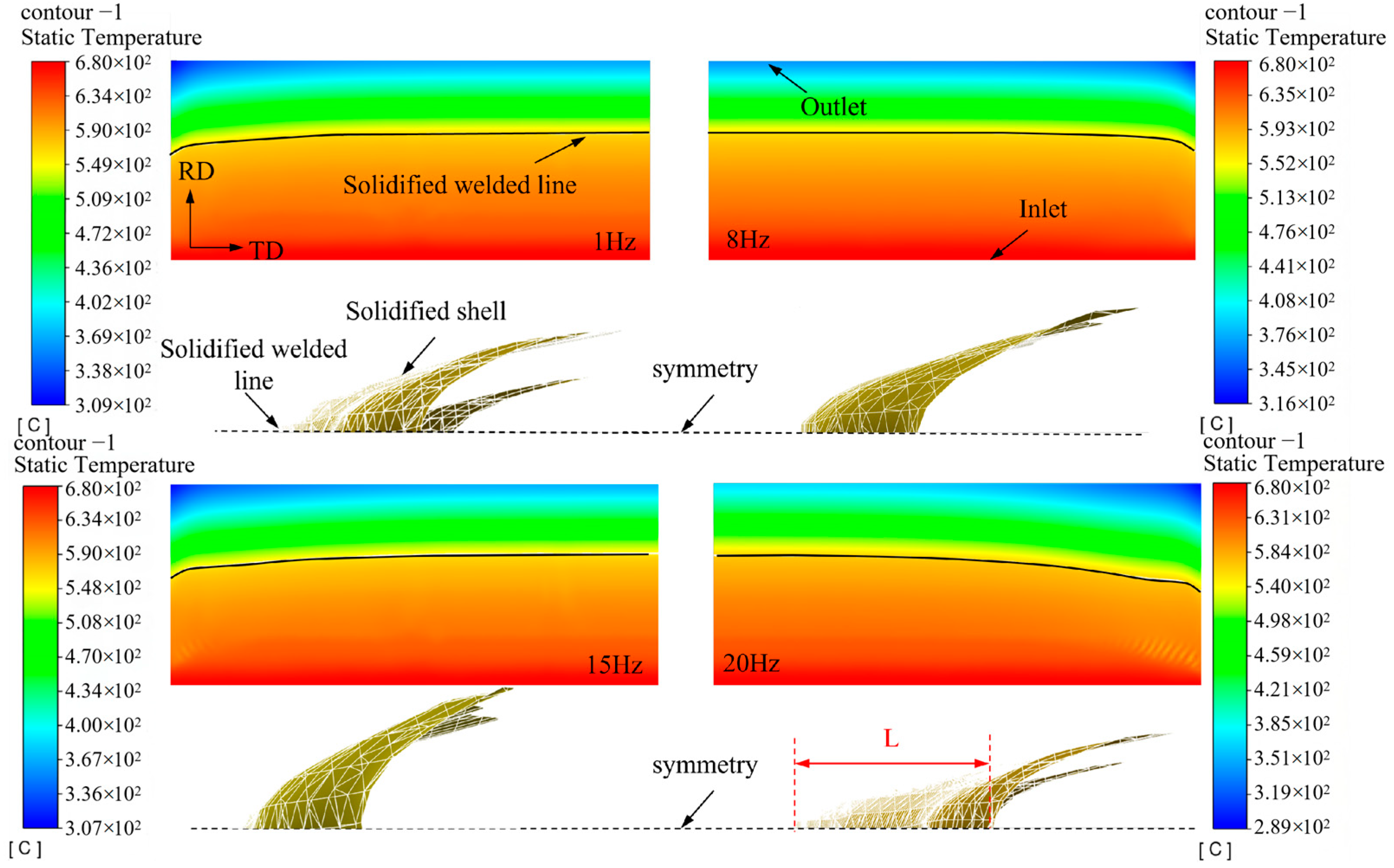
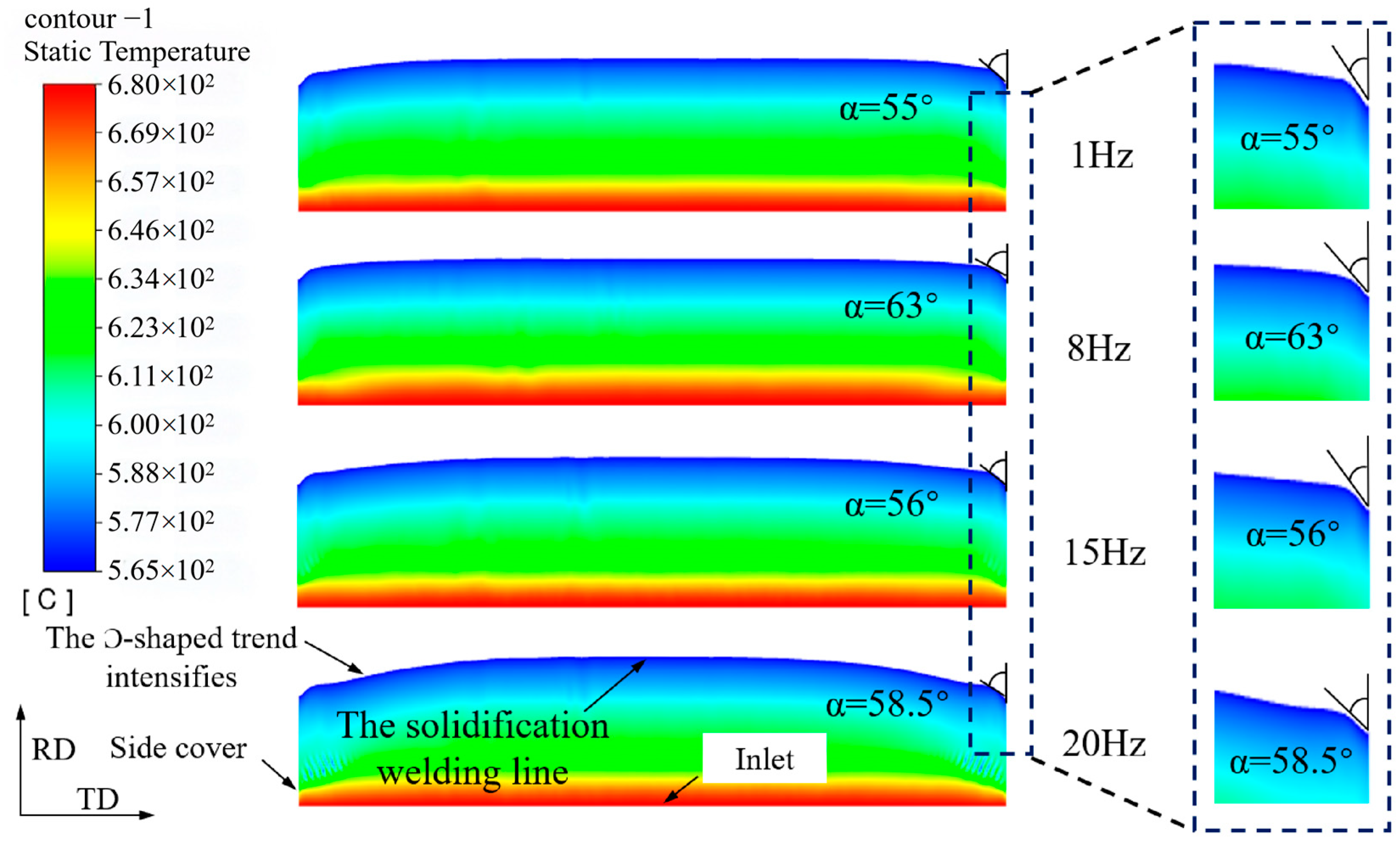
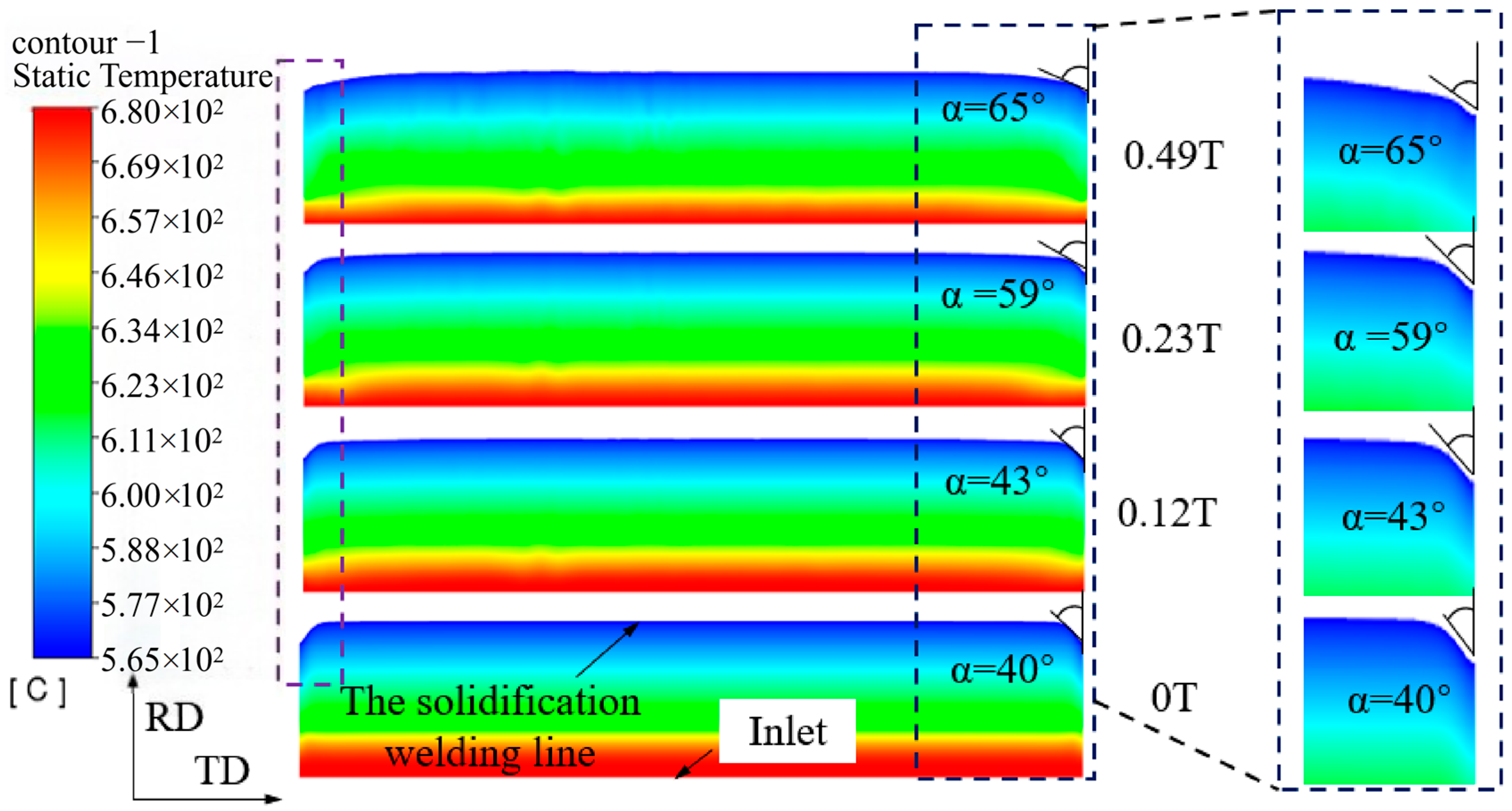
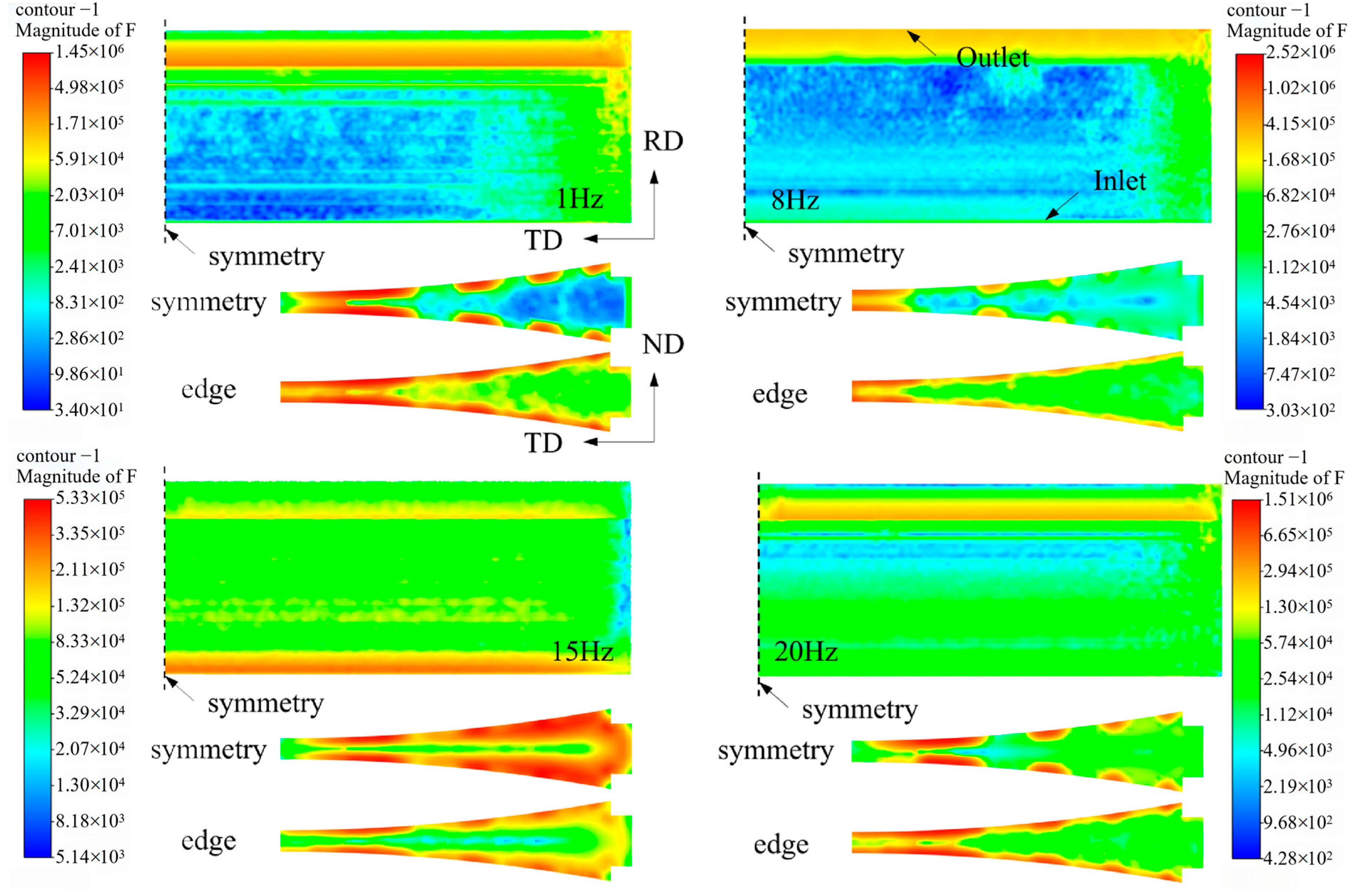
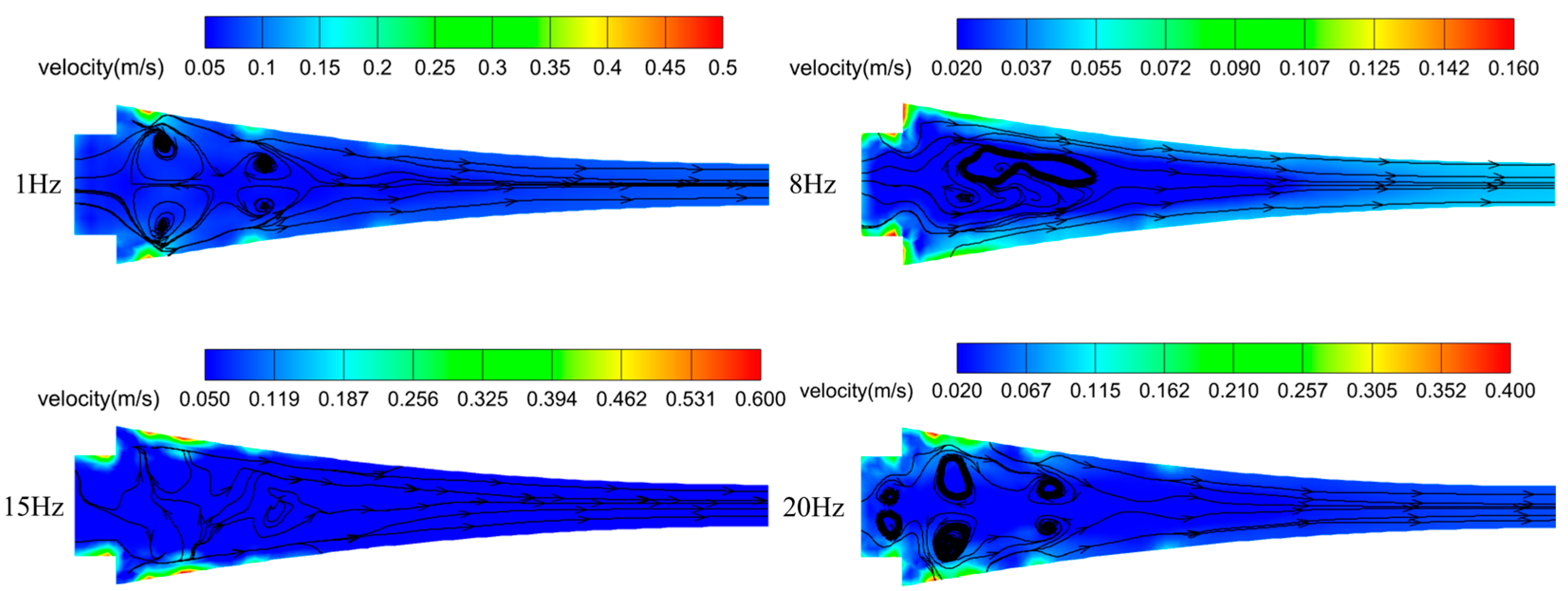
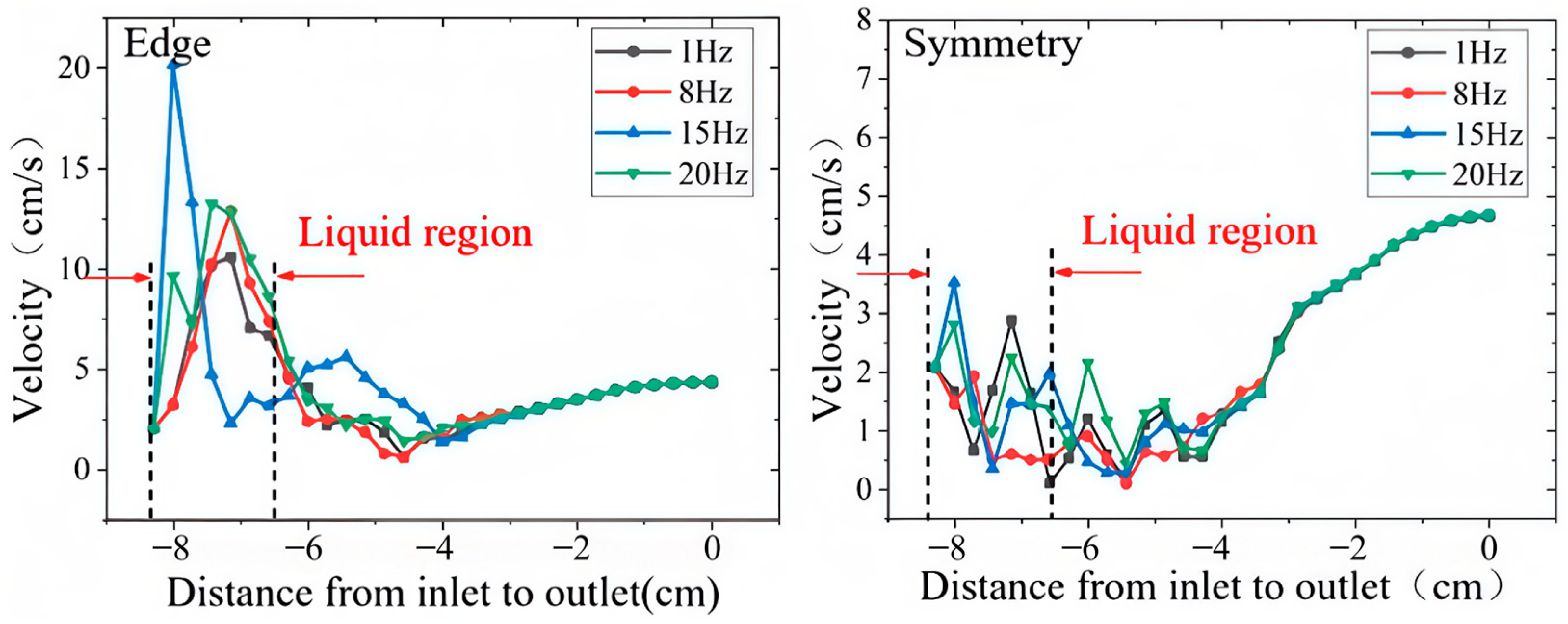
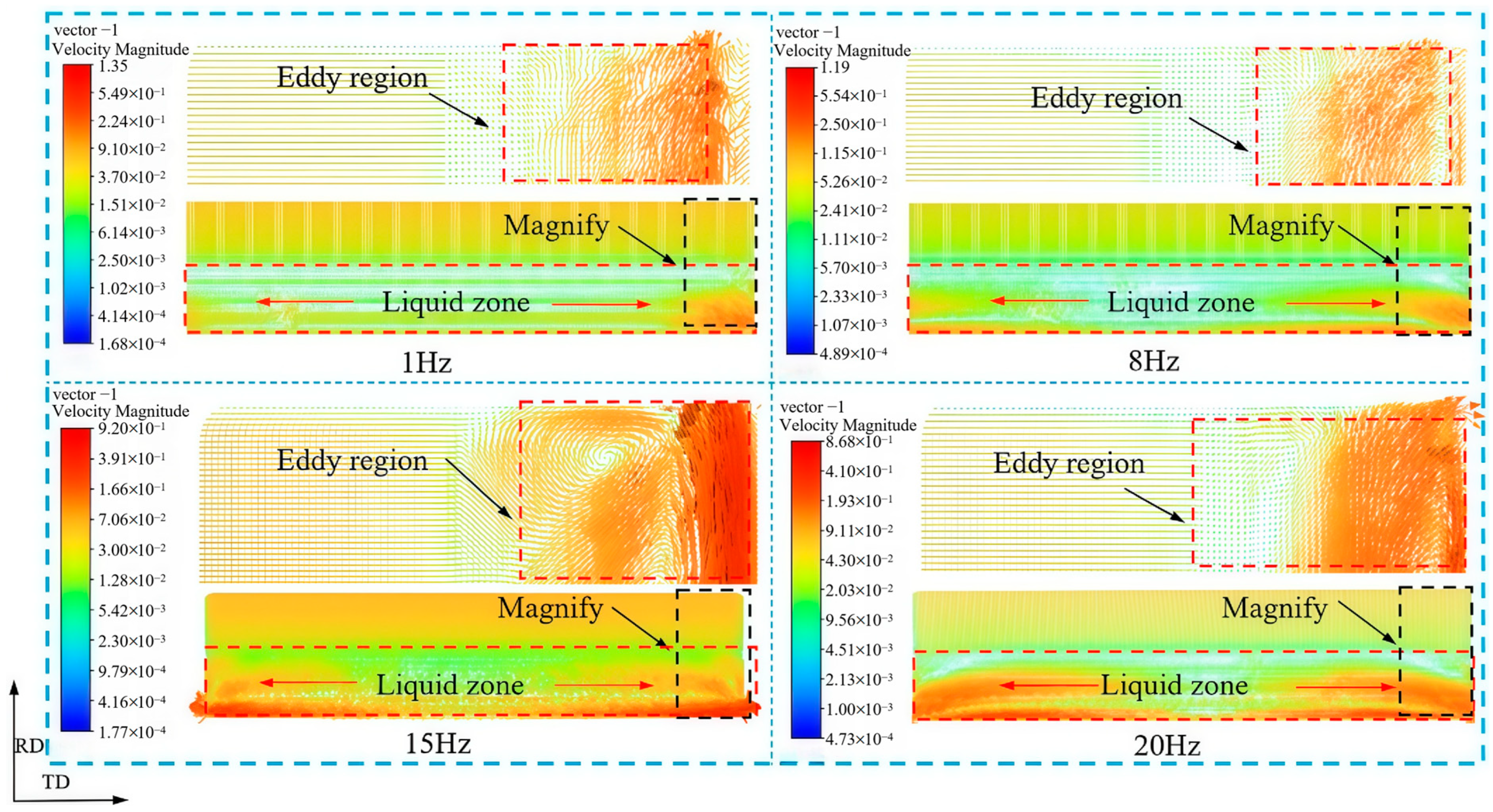
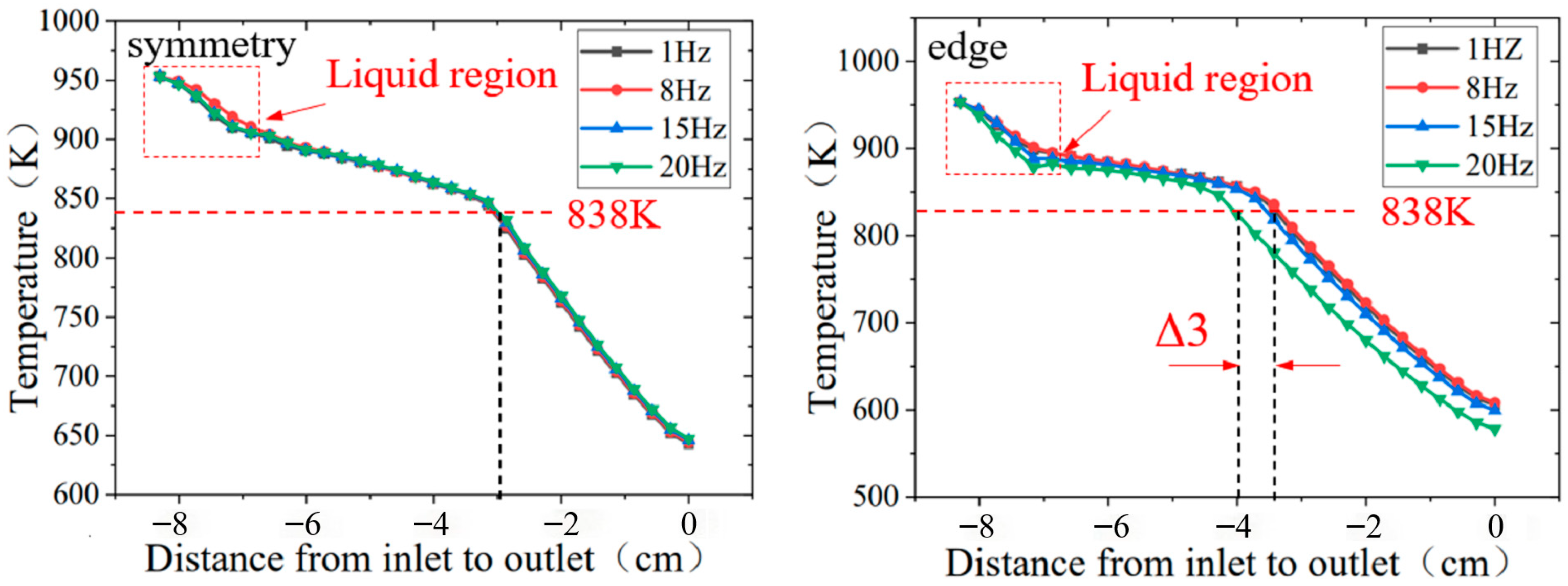
- Changes in the strength of the magnetic field will change the position and number of eddies. This is due to the Lorentz force’s influence on the flow field eddy. The greater the Lorentz force forces the larger eddy to split into more, smaller eddies. With the increase in the magnetic field intensity from 0 T to 0.49 T, α gradually increases to 65°. This makes the solidification welding line tend to be a “1” shape. While the change in the magnetic field frequency will cause the change in the eddy current number. When the magnetic field frequency increases, α firstly increases and then decreases, and when the frequency is 20 Hz, the “Ɔ” shape trend of the solidification welding line becomes more and more serious.
- (3)
- According to this study, the reasonable range of process parameters is a magnetic field strength of 0.49 T, and magnetic field frequency should be between 1 Hz and 8Hz.
Author Contributions
Funding
Data Availability Statement
Conflicts of Interest
References
- Yeganeh, M.; Mohammadi, N. Superhydrophobic surface of Mg alloys: A review. J. Magnes. Alloys 2018, 6, 59–70. [Google Scholar] [CrossRef]
- Song, J.; She, J.; Chen, D.; Pan, F. Latest research advances on magnesium and magnesium alloys worldwide. J. Magnes. Alloys 2020, 8, 1–41. [Google Scholar] [CrossRef]
- Tariq, H.M.R.; Kang, H.; Chaudry, U.M.; Khan, M.K.; Jun, T. Impact of Surface Roughness on the Yield Drop of Hot-Rolled AZX311 Mg Alloy. Adv. Eng. Mater. 2024, 27, 2401689. [Google Scholar] [CrossRef]
- Chen, B.; Lv, W.; Chen, S.; Dou, Z.; Cheng, Y.; Xu, J. Interfacial Coupling through In-situ Fabrication of 3D Carbon Fiber/Cu Composites. J. Alloys Compd. 2025, 1046, 184903. [Google Scholar] [CrossRef]
- Yang, X.; Patel, J.B.; Huang, Y.; Mendis, C.L.; Fan, Z. Towards directly formable thin gauge AZ31 Mg alloy sheet production by melt conditioned twin roll casting. Mater. Des. 2019, 179, 107887. [Google Scholar] [CrossRef]
- Kwon, Y.; Hwang, J.H.; Choi, H.C.; Trang, T.T.T.; Kim, B.; Zargaran, A.; Kim, N.J. Microstructure and Tensile Properties of Ferritic Lightweight Steel Produced by Twin-Roll Casting. Met. Mater. Int. 2020, 26, 75–82. [Google Scholar] [CrossRef]
- Kainer, K.U.; Kurz, G.; Pakulat, S.; Letzig, D. Influence of Microstructure Evolution During Twin-Roll Casting on the Properties of Magnesium Sheets. In TMS 2019 148th Annual Meeting & Exhibition Supplemental Proceedings; Springer: Cham, Switzerland, 2019; pp. 1677–1686. [Google Scholar] [CrossRef]
- Minárik, P.; Zimina, M.; Čížek, J.; Stráska, J.; Krajňák, T.; Cieslar, M.; Vlasák, T.; Bohlen, J.; Kurz, G.; Letzig, D. Increased structural stability in twin-roll cast AZ31 magnesium alloy processed by equal channel angular pressing. Mater. Charact. 2019, 153, 199–207. [Google Scholar] [CrossRef]
- Zhu, T.; Fu, P.; Peng, L.; Hu, X.; Zhu, S.; Ding, W. Effects of Mn addition on the microstructure and mechanical properties of cast Mg-9Al-2Sn(wt.%)alloy. J. Magnes. Alloys 2014, 2, 27–35. [Google Scholar] [CrossRef]
- Huang, Z.; Lai, H.-Y.; Zhou, H.-B.; Guo, H. Effect of Casting and rolling Process Parameters On Solidification Welding Line of Magnesium Alloy. J. Min. Metall. B Metall. 2022, 58, 1–10. [Google Scholar] [CrossRef]
- Neuser, M.; Kappe, F.; Ostermeier, J.; Krüger, J.T.; Bobbert, M.; Meschut, G.; Schaper, M.; Grydin, O. Mechanical Properties and Joinability of AlSi9 Alloy Manufactured by Twin-Roll Casting. Adv. Eng. Mater. 2022, 24, 2200874. [Google Scholar] [CrossRef]
- Huang, Z.; Zhao, Z.; Gao, X.; Zhang, T. Effect of the rolling speed on the flow field and solidification welding line of the roll casting for AZ31 magnesium alloy. Int. J. Adv. Manuf. Technol. 2023, 127, 1199–1208. [Google Scholar] [CrossRef]
- Victoria-Hernández, J.; Kurz, G.; Bohlen, J.; Yi, S.; Letzig, D. Influence of Twin-Roll Casting Speed on Microstructural Homogeneity, Centerline Segregation, and Surface Quality of Three Different Mg Alloys. JOM 2021, 73, 1460–1470. [Google Scholar] [CrossRef]
- Patel, J.B.; Yang, X.; Mendis, C.L.; Fan, Z. Melt Conditioning of Light Metals by Application of High Shear for Improved Microstructure and Defect Control. JOM 2017, 69, 1071–1076. [Google Scholar] [CrossRef]
- Zhang, L.; Guo, X.; Gao, J.; Deng, A.; Wang, E. Effect of electromagnetic stirring on microstructure and mechanical properties of TiB2 particle-reinforced steel. Acta. Metall. Sin. 2020, 56, 1239–1246. [Google Scholar] [CrossRef]
- Diao, M.; Guo, C.; Wang, S.; Li, L.; Dong, T.; Xin, S.; Sun, Z.; Chen, Z.; Konovalov, S.; Jiang, F. Influence of Laser Power on Grain Refinement of Ti5321G Alloy Fabricated by Laser Powder Direct Energy Deposition Assisted with Ultrasonic Energy Field. Adv. Eng. Mater. 2025, 27, 2403002. [Google Scholar] [CrossRef]
- Wu, C.; Li, D.; Zhu, X.; Shi, H.; Liu, X.; Zhao, L.; Lei, H.; Wang, Q. Experimental Study of Macrostructure and Segregation by a Novel Electromagnetic Nozzle Swirling Flow Combined with Electromagnetic Stirring in Continuous Casting. Metall. Mater. Trans. B 2021, 52, 1207–1212. [Google Scholar] [CrossRef]
- Huang, J.; Li, J.; Li, C.; Huang, C.; Friedrich, B. Elimination of edge cracks and centerline segregation of twin-roll cast aluminum strip by ultrasonic melt treatment. J. Mater. Res. Technol. 2020, 9, 5034–5044. [Google Scholar] [CrossRef]
- Li, S.; Jiang, T.; Wang, J.; Chen, L.; Wei, B.; Li, Y.; Xu, G.; Wang, Z. Effects of different external fields on the microstructure and mechanical properties of novel AlCuLi alloy during twin-roll casting. Mater. Sci. Eng. A 2019, 757, 14–22. [Google Scholar] [CrossRef]
- Li, Y.; Mangelinck-Noël, N.; Zimmermann, G.; Sturz, L.; Nguyen-Thi, H. Modification of the microstructure by rotating magnetic field during the solidification of Al-7 wt.% Si alloy under microgravity. J. Alloys Compd. 2020, 836, 155458. [Google Scholar] [CrossRef]
- Zimmermann, G.; Pickmann, C.; Schaberger-Zimmermann, E.; Galindo, V.; Eckert, K.; Eckert, S. Do rotating magnetic fields unconditionally lead to grain refinement? A case study for directionally solidified Al-10wt%Cu alloys. Materialia 2018, 3, 326–337. [Google Scholar] [CrossRef]
- Tozuka, H.; Seki, K.; Watari, H.; Haga, T. Casting of High Aluminum Content AM Series Magnesium Alloys by Using a Horizontal Twin Roll Caster. Key Eng. Mater. 2020, 4874, 340–345. [Google Scholar] [CrossRef]
- Guo, C.; Guo, D.; Li, H.; Ji, C.; Yan, M.; Huang, H. Numerical and Physical Simulation of Aluminum Alloy Electromagnetically Twin-Roll Casting Process. Metall. Mater. Trans. B 2025, 56, 4775–4791. [Google Scholar] [CrossRef]
- Liang, H.; Cai, G.; Huang, Z.; He, R.; Gao, X.; Zou, J.; Zhao, Z. The mechanism of electric field control in the solidification of welding lines in magnesium alloy casting-rolling. Mater. Today Commun. 2024, 41, 110850. [Google Scholar] [CrossRef]
- Lu, J.; Wang, W.; Dou, K. Numerical Simulation of Fluid Flow, Heat Transfer, and Solidification in AISI 304 Stainless Steel Twin-Roll Strip Casting. Metals 2025, 15, 749. [Google Scholar] [CrossRef]
- Guo, C.; Xue, Y.; Yan, F.; Hu, X. Numerical simulation on flow and heat transfer in twin roll strip casting and rolling molten pool with side dams vibrating. Int. J. Adv. Manuf. Technol. 2023, 125, 4497–4512. [Google Scholar] [CrossRef]
- Wang, Y.; Li, Z.; Liu, H.; Teng, Z.; Xia, Y.; Li, Y. Effect of the external magnetic field on microstructure and mechanical properties in resistance spot welding of microstructurally inhomogeneous high-pressure die casting aluminum alloy. J. Mater. Process. Technol. 2025, 344, 119034. [Google Scholar] [CrossRef]
- Zhu, R.; Wang, J.; Zhang, Y.; Tian, Z.; Miao, X.; Zhai, Q. Flow and Solidification Microstructure in Metal Melts Driven by a Combined Magnetic Field. Acta Met. Sin 2022, 60, 231–246. [Google Scholar] [CrossRef]
- Yang, Y.; Chen, Y.; Zhang, H.; Yin, Z.; Liu, H.; Li, R.; Li, L.; Xu, Z.; Zhong, H.; Zhai, Q. Optimization of Process Parameters for 40Cr Steel Continuous Casting Round Bloom with Pulsed Magneto-Oscillation Treatment. Steel Res. Int. 2024, 95, 2300660. [Google Scholar] [CrossRef]
- Liu, S.-Y.; Zhou, Y.; Miao, X.-C.; Zhao, J.-Y.; Ai, X.-G.; Li, S.-L. Synergistic mechanism of forced convection and Joule heating on microstructural evolution and mechanical properties improvement of Al-7 wt% Si casting alloy. J. Alloys Compd. 2025, 1014, 178731. [Google Scholar] [CrossRef]











| Parameter | Value | Parameter | Value |
|---|---|---|---|
| Roller diameter/mm | 880 | Roller length/mm | 400 |
| Roller gap height/mm | 5 | Convection temperature/°C | 80 |
| rolling speed/(m/min) | 3 | Coefficient of heat transfer/(W/(m2·K)) | 5500 |
| pouring temperature/°C | 680 | Model total length/mm | 84 |
| Parameter | Magnetic Field Intensity/T | Field Frequency/Hz |
|---|---|---|
| Value | 0 | 0 |
| 0.12 | 8 | |
| 0.23 | 8 | |
| 0.49 | 8 | |
| 0.33 | 1 | |
| 0.33 | 8 | |
| 0.33 | 15 | |
| 0.33 | 20 |
Disclaimer/Publisher’s Note: The statements, opinions and data contained in all publications are solely those of the individual author(s) and contributor(s) and not of MDPI and/or the editor(s). MDPI and/or the editor(s) disclaim responsibility for any injury to people or property resulting from any ideas, methods, instructions or products referred to in the content. |
© 2026 by the authors. Licensee MDPI, Basel, Switzerland. This article is an open access article distributed under the terms and conditions of the Creative Commons Attribution (CC BY) license.
Share and Cite
Gao, X.; He, R.; Liang, H.; Zou, J.; Huang, Y.; Huang, Z.; Wang, S. Magnetic Field-Assisted Linearizes Solidification Front to Suppress Edge Cracking in AZ31 Alloy Cast-Rolling. Machines 2026, 14, 245. https://doi.org/10.3390/machines14020245
Gao X, He R, Liang H, Zou J, Huang Y, Huang Z, Wang S. Magnetic Field-Assisted Linearizes Solidification Front to Suppress Edge Cracking in AZ31 Alloy Cast-Rolling. Machines. 2026; 14(2):245. https://doi.org/10.3390/machines14020245
Chicago/Turabian StyleGao, Xiangyu, Rui He, Hanxiao Liang, Jinchao Zou, Yuanchun Huang, Zhiquan Huang, and Shaoluo Wang. 2026. "Magnetic Field-Assisted Linearizes Solidification Front to Suppress Edge Cracking in AZ31 Alloy Cast-Rolling" Machines 14, no. 2: 245. https://doi.org/10.3390/machines14020245
APA StyleGao, X., He, R., Liang, H., Zou, J., Huang, Y., Huang, Z., & Wang, S. (2026). Magnetic Field-Assisted Linearizes Solidification Front to Suppress Edge Cracking in AZ31 Alloy Cast-Rolling. Machines, 14(2), 245. https://doi.org/10.3390/machines14020245