1. Introduction
The steadily increasing global energy demand has made the need for reliable, efficient, and environmentally sustainable energy generation technologies more critical than ever for ensuring economic development and maintaining living standards. In this context, gas turbines—widely used in both power generation and industrial applications—play a vital role due to their high thermodynamic efficiency, flexible operating conditions, versatile applicability, and environmentally friendly characteristics [
1,
2]. Current market data clearly reflect the growing global importance of this technology. The global gas turbine power plant market, valued at 20.79 billion USD in 2023, is reported to have reached 21.86 billion USD by 2024. Following the existing growth trend, the market is projected to reach a volume of 29.36 billion USD by 2032 [
3]. This anticipated growth not only reinforces the strategic position of gas turbines in the energy sector but also clearly demonstrates their significant potential for the future.
The overall efficiency of the gas turbine cycle system is directly dependent on the performance of turbomachinery components, particularly the compressor blades, turbine blades, and inlet air filter [
4]. In this context, the inlet air filter—an auxiliary component of critical importance for gas turbines—plays a vital role by supplying clean air required for the system, thereby contributing to the safe, efficient, and economical operation of the turbine. The performance of a filter is determined by technical indicators such as its ability to capture particles, the pressure loss it introduces to the airflow, and the amount of dust it can retain over time [
5]. However, over time, the accumulation of particles on the filter surface can deteriorate these parameters, leading to a reduction in inlet pressure, a decrease in power output, and a loss of turbine efficiency [
6].
In this context, a decrease in filter performance not only affects energy generation efficiency but can also lead to severe structural damage and failures in turbine components. Among these failures are Foreign Object Damage (FOD), erosion, fouling, and corrosion [
7]. FOD is a well-known failure mechanism in gas turbines, occurring when an external object that is not part of the turbine strikes and damages a turbine component [
8]. Therefore, effective filtration systems and protective screens must be used to prevent the entry of large particles into the turbine. Erosion is a mechanism that develops due to the impact of hard particles larger than approximately 10 µm and causes irreversible damage. In such cases, the reuse of blades is not possible, and the only solution is component replacement. As the particle size and hardness decrease, the risk of erosion diminishes, but this increases the risk of fouling. Particles most prone to cause fouling are typically smaller than 2 µm in diameter [
9]. While submicron particles can be captured by standard filters, components such as oil vapors and water require specially designed filtration systems. Corrosion in gas turbines occurs due to the interaction of chemically reactive substances with metal surfaces and can be categorized into two main forms: cold corrosion and hot corrosion. Cold corrosion develops in the compressor section due to humid deposits formed by aggressive gases, whereas hot corrosion occurs in the turbine section as a result of the interaction between combustion by-products—often difficult to filter—and metallic surfaces. Although appropriate alloys and protective coatings are effective in mitigating such damage, the most effective method for preventing corrosion is the use of high-performance air filtration systems [
9,
10].
Gas turbines, depending on their surrounding environmental conditions, ingest large volumes of air from the atmosphere, along with a wide variety of contaminants of different sizes and properties. For example, a gas turbine with a nominal air flow capacity of 500,000 ACFM can ingest approximately 25 kg (55 lb) of contaminant particles per day under ISO standard environmental conditions—even when the ambient air contains only 1 ppm of particulate contaminants and no inlet air filtration system is employed [
11]. This clearly demonstrates the critical importance of the inlet air filtration system. Filters used in filtration systems employ multiple physical and electrostatic mechanisms simultaneously to remove contaminants from the air. Typically, each filter effectively captures pollutants through the concurrent operation of several filtration mechanisms [
12].
In evaluating filter performance, not only the condition of the filter when it is new but also the range of pressure loss it will experience throughout its service life must be taken into account. As the filter’s operational time progresses, an increase in pressure loss is observed due to the accumulation of contaminants. This situation leads to a partial reduction in gas turbine performance. To prevent performance degradation, filters must be replaced or cleaned at regular intervals, thereby maintaining a low and controllable pressure drop within the system. The degree of this change in pressure loss largely depends on the filter type, the material properties used, and the type and concentration of contaminants encountered [
12]. However, in humid and polluted environments, dust and environmental contaminants increase the pressure drop across filters and reduce the efficiency of the filtration system. With the onset of the rainy season or an increase in humidity, filters gradually lose their effectiveness, and water-soluble particles pass through the filters, entering the compressor and turbine. These particles are typically water-soluble contaminants that cause deposit formation on turbine blades and other sensitive components. This condition can lead to a decrease in turbine efficiency, an increase in fuel consumption, and premature failure of turbine components [
13].
Gas turbine plants generate mechanical energy by utilizing natural gas or other types of fuels and converting this energy into electrical power. For such facilities to operate economically and efficiently, critical parameters such as ambient conditions, inlet air pressure, the efficiency of system components, and the physical/chemical properties of the fuel must be carefully optimized. Proper management of these factors is essential for maximizing the thermal efficiency of the plant and ensuring operational sustainability [
14]. In this context, the performance and effects of inlet air filters used in gas turbines have been extensively examined in the literature as an important factor that directly influences system efficiency. Yusuf et al. [
15] evaluated the effects of particulate matter in ambient air on the operating efficiency of the Muara Karang Combined Cycle Power Plant (CCPP) Block 3 in Jakarta, Indonesia. Their findings revealed that airborne particulates not only led to more frequent filter clogging but also accumulated on compressor blades, adversely affecting performance. This buildup caused a reduction in airflow and an increase in operating temperatures, resulting in decreased compressor efficiency. Through improvements in the filtration system, clogging was mitigated, and the thermal efficiency increased from 32.09% to 32.43%. Igie et al. [
16] investigated the impact of compressor fouling caused by unfiltered particles in a 268 MW gas turbine operating under coastal conditions. Using four months of operating data, the study quantitatively evaluated total power losses due to filter pressure drop and fouling under high- and low-efficiency filtration scenarios. The results showed an inverse relationship between filter pressure drop and fouling intensity, with threshold values of approximately 843 Pa and 593 Pa determined for high- and low-load conditions, respectively. Despite higher differential pressures, the high-efficiency filtration system exhibited total losses about 1% lower and up to 1.75 times better performance at part load compared to the low-efficiency system. The findings confirmed that compressor fouling had a greater impact on performance than the losses caused by filter pressure drop, emphasizing the necessity of high-efficiency filtration in industrial gas turbines. Dorfeshan et al. [
13] demonstrated that the inlet air system of gas turbines is critical for optimal performance and equipment longevity. Particularly in humid and contaminated environments, water-soluble particles passing through the filters can cause deposit buildup and corrosion on turbine blades, leading to a phenomenon known as the Washing Through Effect. In their study on the Behbahan CCPP gas turbines, upgrading the filter class from F7 to F8, implementing an offline pulse jet cleaning system, applying anti-icing measures, and controlling humidity were shown to mitigate the Washing Through Effect and enhance turbine performance. Furthermore, the use of coalescer filters, demisters, and drainage channels beneath the inlet panels prevented moisture ingress, thereby extending turbine lifespan and reducing fuel consumption. Hashmi et al. [
17] revealed that the performance of industrial gas turbines is influenced by factors such as inlet air temperature and fouling. In their study, they developed a model for a single-shaft industrial gas turbine (Taurus 70) to investigate the effects of fouling and variable environmental conditions on performance. The results showed that fouling decreases thermal efficiency and specific fuel consumption, while inlet air cooling and variable inlet guide vane (IGV) techniques mitigate these losses and improve performance. The study emphasized that integrating inlet air cooling and variable IGV control can significantly enhance turbine performance, particularly in hot climates. Hepperle et al. [
18] developed a methodology to quantitatively assess performance degradation in gas turbines based on operational data. This approach enables the identification of recoverable and non-recoverable performance losses, correction of long-term trends, and estimation of maintenance potential by evaluating the effects of compressor fouling and inlet filtration. The study highlighted that high filtration efficiency and regular offline compressor washing reduce fouling and are crucial for maintaining sustained high-power output. Effiom et al. [
6] examined the effects of inlet air filtration on two industrial gas turbines operating in marine and desert environments. The study reported that an increase in inlet pressure drop (up to 1.66 kPa) resulted in a 14–17% reduction in power output and up to a 7% drop in efficiency, primarily due to decreased mass flow rate and increased compressor work. It was also noted that aero-derivative turbines with higher overall pressure ratios are more sensitive to filter pressure drop, and that regular pre-filter replacement and inlet air cooling are recommended to maintain performance. Litinetski et al. [
19] reported the successful implementation of a transition from single-stage pulse-cleaned F9 filters to three-stage static Efficiency Particulate Air (EPA) filters of class E11 in F-technology gas turbines operated by the Israel Electric Corporation. This upgrade eliminated compressor fouling and sea salt ingress in coastal areas, increased power output by approximately 4 MW, and reduced the heat rate by 55 kJ/kWh. Additionally, the EPA filters provided a lower average pressure drop, extending the offline washing interval to over 5700 h and completely eliminating the need for online washing. The study demonstrated that EPA-class filtration enhances turbine performance, reduces corrosion risk, and provides economic benefits in coastal and industrial applications.
Studies on the economic analysis of inlet air filtration systems in gas turbines aim not only to improve system performance but also to ensure cost-effectiveness. In this context, Fauzi and Sulaiman [
20] investigated the relationship between air filter pressure and fuel consumption for Block 1 of the Guney Power Generation Plant. Their study emphasized that an increase in the Air Filter House (AFH) pressure drop directly affects fuel consumption and increases fuel costs. According to the analysis results, each 1 Pa increase in AFH pressure drop raised fuel costs by an average of 41.33 RM per hour. It was also noted that early filter replacement, proper selection of filter elements, and regular on/offline compressor washing can enhance turbine performance and economic efficiency. Schirmeister and Mohr [
21] examined the effect of advanced EPA-class (E10–E11) filtration on compressor efficiency and power loss in gas turbines. Based on data from 12 Alstom turbines operating across six countries, upgrading the filter class from F8 to E11 reduced annual power loss from 6.8% to 1.2% and efficiency loss from 1.8% to 0.3%. The three-stage G4/F8/E11 filtration system provided an annual saving of approximately 363,000 USD and a payback period of 1.4 years. The study demonstrated that EPA-class filtration reduces compressor fouling, improves performance, and offers significant economic advantages.
Since gas turbine systems involve complex structures, robust models are required for their accurate and reliable evaluation. To analyze such complex systems, indirect yet dependable methods such as soft computing have increasingly replaced direct analytical approaches. Consequently, artificial intelligence has successfully solved many prediction problems in the energy sector [
22]. In this context, machine learning (ML) and deep learning (DL) techniques are gaining growing importance as modern approaches for maintenance, monitoring, and performance enhancement in gas turbine systems. These methods offer high accuracy and flexibility in modeling complex processes such as the health assessment of air filtration systems, performance prediction, and efficiency optimization. Li et al. [
23] proposed a novel method for the quantitative diagnosis of inlet filter clogging in gas turbine power plants. It was noted that existing pressure-difference-based methods could yield inaccurate results due to factors such as guide vane opening and atmospheric temperature. To address this issue, a dimensionless health parameter based on measurable variables was derived, and a DL model was developed to predict theoretical pressure differences using healthy system data. Simulation results demonstrated that the proposed method maintained high robustness under variable operating conditions, achieving diagnostic accuracy above 97%. Hao et al. [
24] focused on the air filtration system as the research subject to improve the performance of the air quality assurance system, an essential component of gas turbines. In their study, a dynamic neural network was employed to establish a performance prediction framework for air filtration. This network structure depended not only on current inputs but also on past input, output, and state information. Furthermore, a feed-forward structure was designed to enhance prediction performance. Experiments and collected data showed that computations based on the dynamic network model and the time-series-based air filtration prediction model were effective. By developing a fine filter differential pressure model as a function of ambient temperature and relative humidity (RH), the filter pressure drop could be accurately predicted. Surase and Ramakrishna [
14] conducted a two-stage investigation on Combined Cycle Gas Turbine systems to enhance thermal efficiency and reduce NOx emissions. In the first stage, the study focused on air filter pressure loss, automatic cleaning mechanisms, and fuel control, while the second stage examined exergy losses occurring in the condenser and methods for NOx reduction. Within this scope, models based on the Polynomial Adaptive Swarm Parallel Genetic Optimization approach and the Bayesian Kalman controller were developed. The results showed that the first controller reduced exergy destruction and improved NOx reduction efficiency, while the second controller effectively predicted turbine performance. Both approaches achieved approximately 91% overall efficiency and 69% thermal efficiency, demonstrating stable and high-accuracy performance in combined gas turbine systems.
Raghavan et al. [
25] developed a method to detect early degradation of gas turbine components operating under off-design conditions. Using operating data from a General Electric Frame 9E turbine within a 60–100% load range, Artificial Neural Network (ANN) models were developed for the air filter, compressor, combustion chamber, and turbine. The resulting models (R
2 > 0.95) successfully evaluated filter performance and identified compressor fouling, combustion nozzle cracks, and turbine seal damages.
Existing literature has largely focused on assessing the performance implications of inlet air filter fouling using model-based approaches, while data-driven analyses remain relatively scarce. These studies have revealed the adverse impacts of filter fouling on key performance parameters such as compressor efficiency, power output, and heat rate. However, research that systematically analyzes filter fouling in inlet air systems through data-driven modeling remains quite limited. In particular, there is a noticeable lack of comprehensive studies that comparatively evaluate different ML algorithms. The aim of this study is to comprehensively investigate the effects of inlet air filter fouling on gas turbine performance. This study clearly distinguishes itself from existing literature through the comparative analysis of multiple ML algorithms, the use of a large-scale full-load operational dataset, the simultaneous quantitative assessment of the effects of filter fouling on power, efficiency, and emissions, and the evaluation of the global carbon footprint.
In this study, using real operational data, different ML algorithms such as Multiple Linear Regression (MLR), Quadratic Support Vector Regression (SVR), Regression Tree (Fine Tree), and ANN were applied, and the predictive performances of these models were comparatively evaluated using various statistical metrics. However, the study not only quantitatively demonstrated the effects of filter fouling on power output, but also examined its impact on the turbine’s fuel consumption and the resulting greenhouse gas emissions. This comprehensive assessment provides a significant contribution to the literature. The findings offer valuable insights for the development of predictive maintenance strategies, more accurate determination of filter replacement intervals, and more efficient management of energy generation processes from both economic and environmental perspectives.
Below is a summary of the essential contributions and highlights of the research.
Filter fouling affecting gas turbine performance was analyzed in detail: This study quantitatively examines the impact of inlet air filter fouling on GT Power Output using operational data and ML methods, thereby filling a significant knowledge gap in this area.
ML algorithms were comparatively evaluated: Different algorithms such as MLR, Quadratic SVR, Regression Tree, and ANN were applied to compare model performances, and the most suitable model was identified. The ANN algorithm demonstrated superior predictive performance, achieving high accuracy in GT Power Output prediction with a MAE of 0.6399.
Contribution to predictive maintenance strategies in power plants: The developed models can anticipate performance degradation caused by filter fouling, thereby enabling more efficient planning of maintenance activities.
Modeling based on real field data: The models were developed using real operational data obtained from a gas turbine unit, ensuring their reliability. This approach allows the study to contribute directly to practical applications and ensures that the results accurately reflect real operating conditions.
Decision-support system through ML and data analysis: The independent variable coefficients obtained from the MLR method provide decision-makers with a data-driven, analytical, and reliable tool for operating gas turbines more efficiently and sustainably. These findings indicate that the MLR method can serve as a practical guide for performance optimization and operational strategy development.
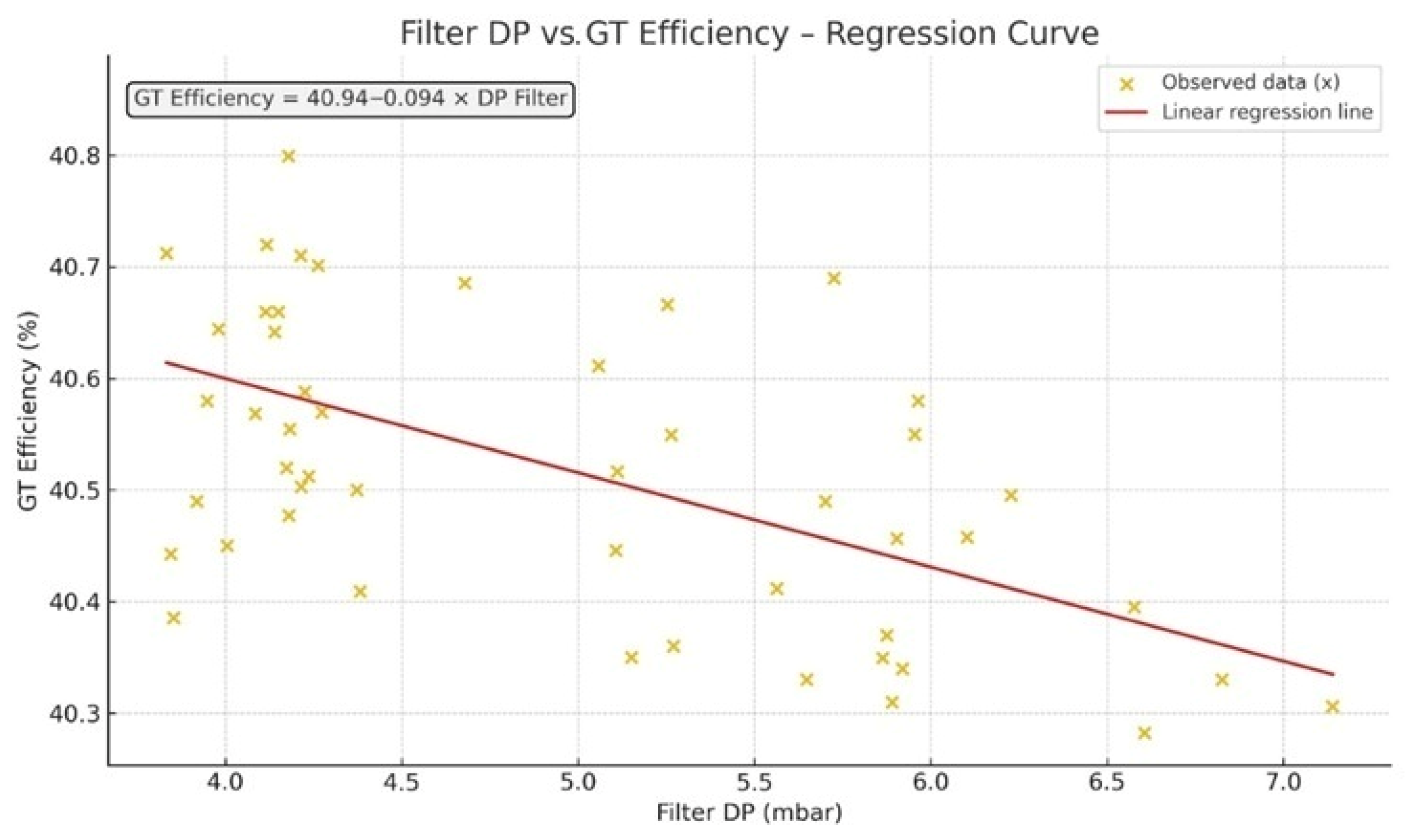
Quantification of the decrease in gas turbine efficiency: It was determined that each 1 mbar increase in filter differential pressure (Filter DP) leads to an average decrease of approximately 0.094% in gas turbine efficiency. This finding clearly demonstrates the adverse effect of filter fouling on thermal performance and highlights its importance as a critical indicator for maintaining energy efficiency.
Quantification of the impact of filter fouling on greenhouse gas emissions: The analysis showed that a 1 mbar rise in Filter DP results in roughly 0.45 kgCO2e of additional emissions for each MWh of electricity produced. This study scientifically illustrates the low-efficiency–high-emission cycle caused by filter fouling, providing critical insights for reducing the carbon footprint. On a global scale, it is estimated that a 1 mbar increase in Filter DP could result in an additional approximately 3.56 MtCO2e of emissions per year, representing a significant contribution to the literature. Furthermore, the developed models serve as a direct guide for formulating predictive maintenance strategies in power plants with a focus on emission reduction.
The remainder of the paper is structured as follows:
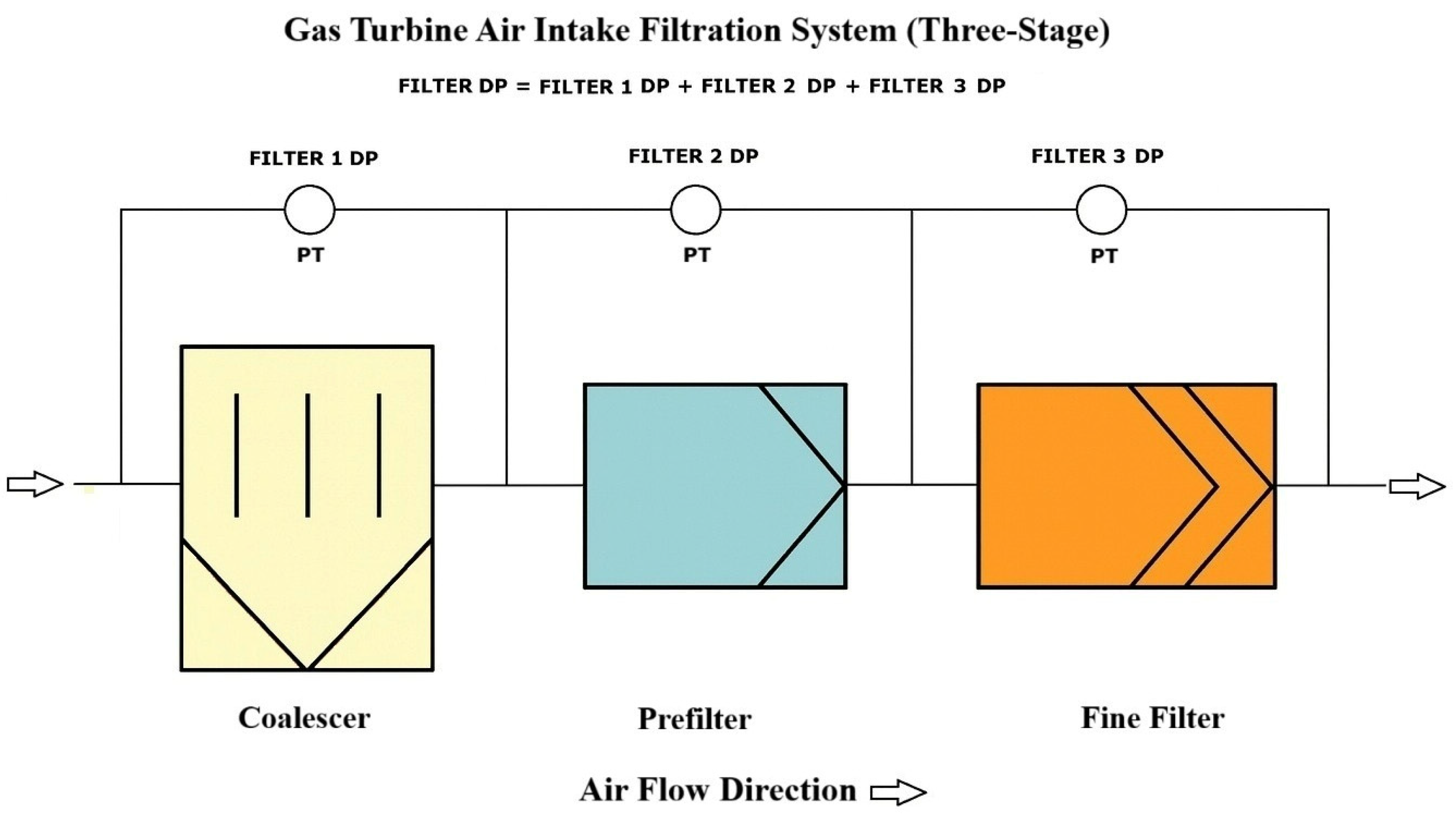
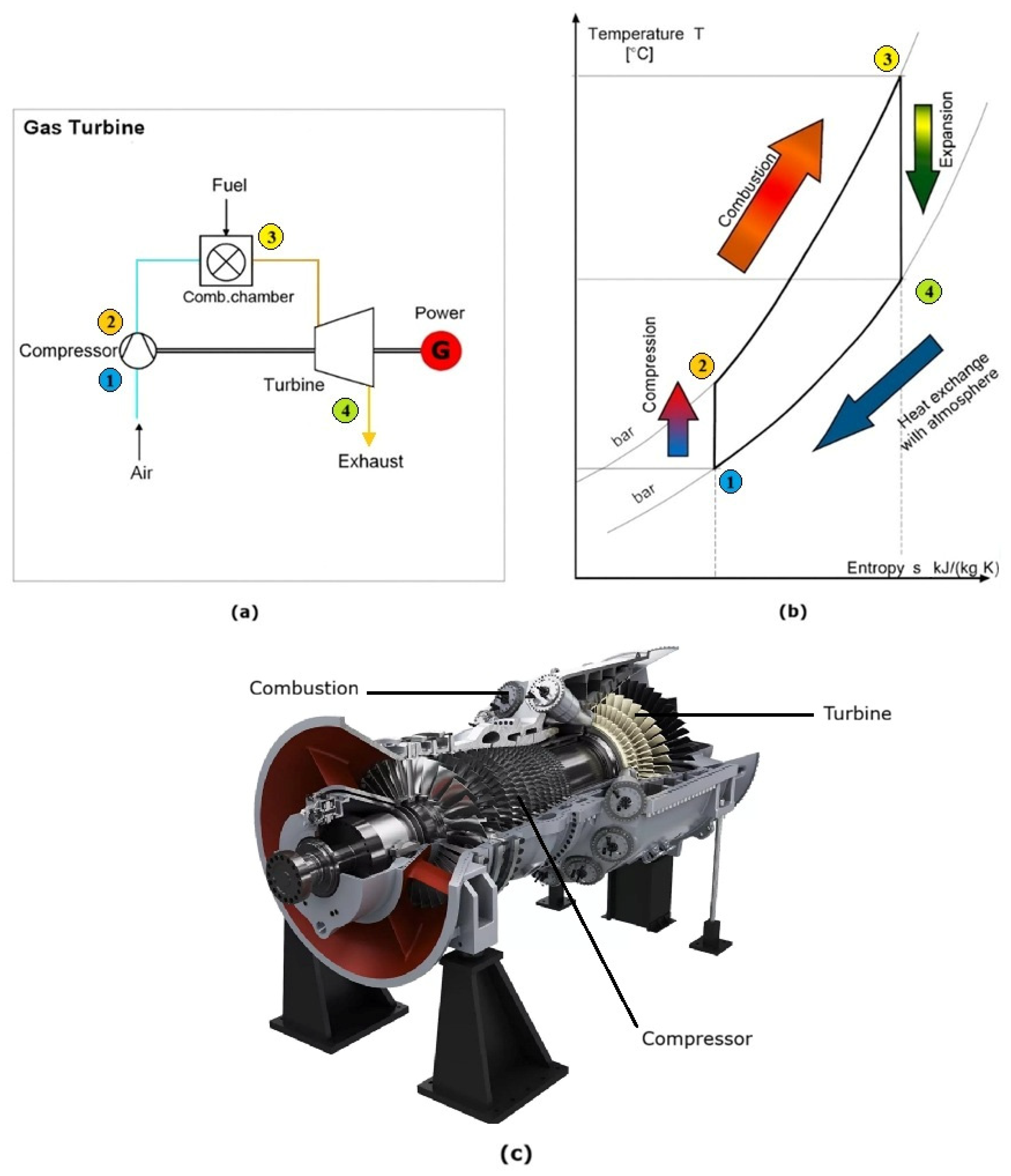
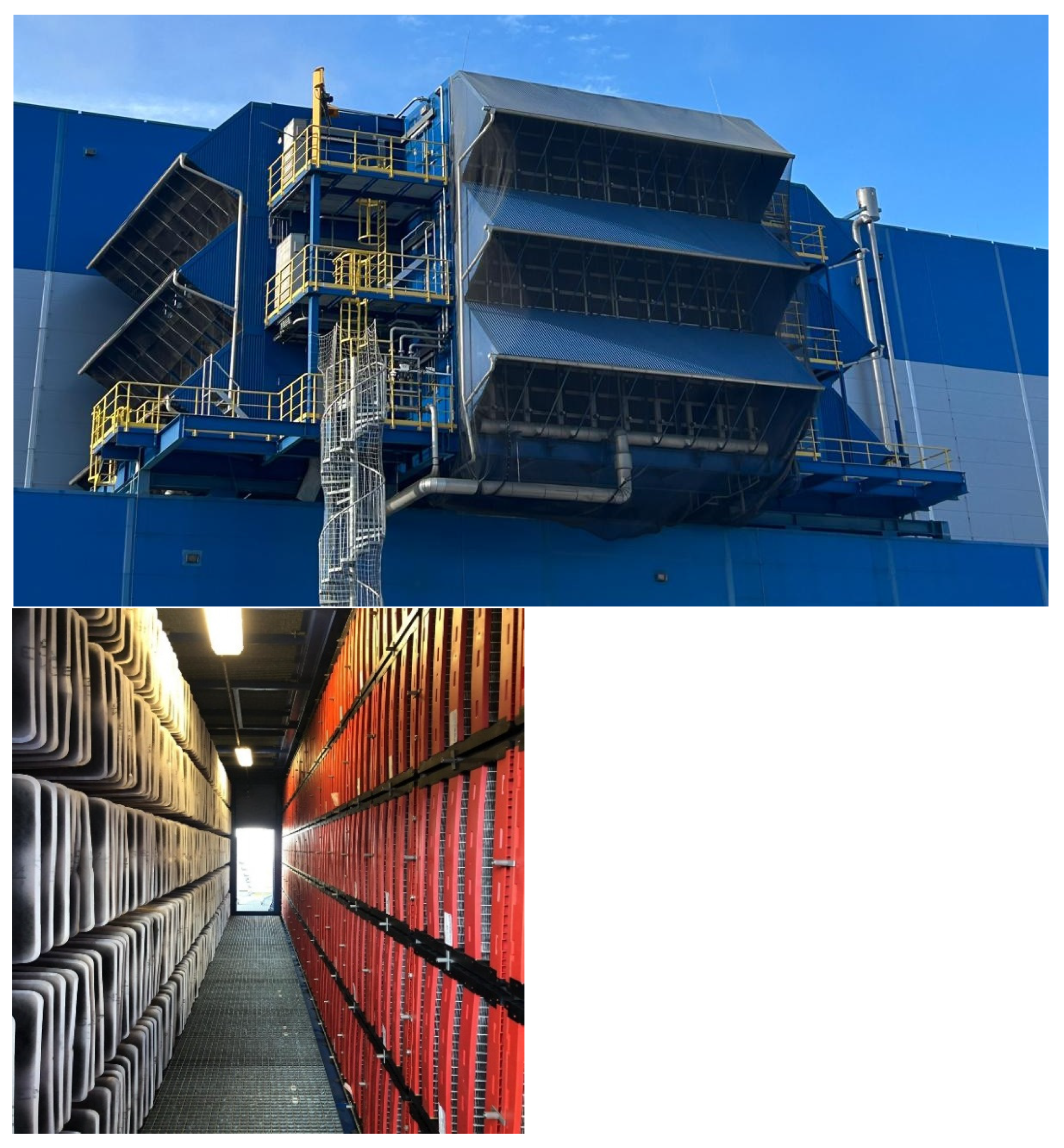
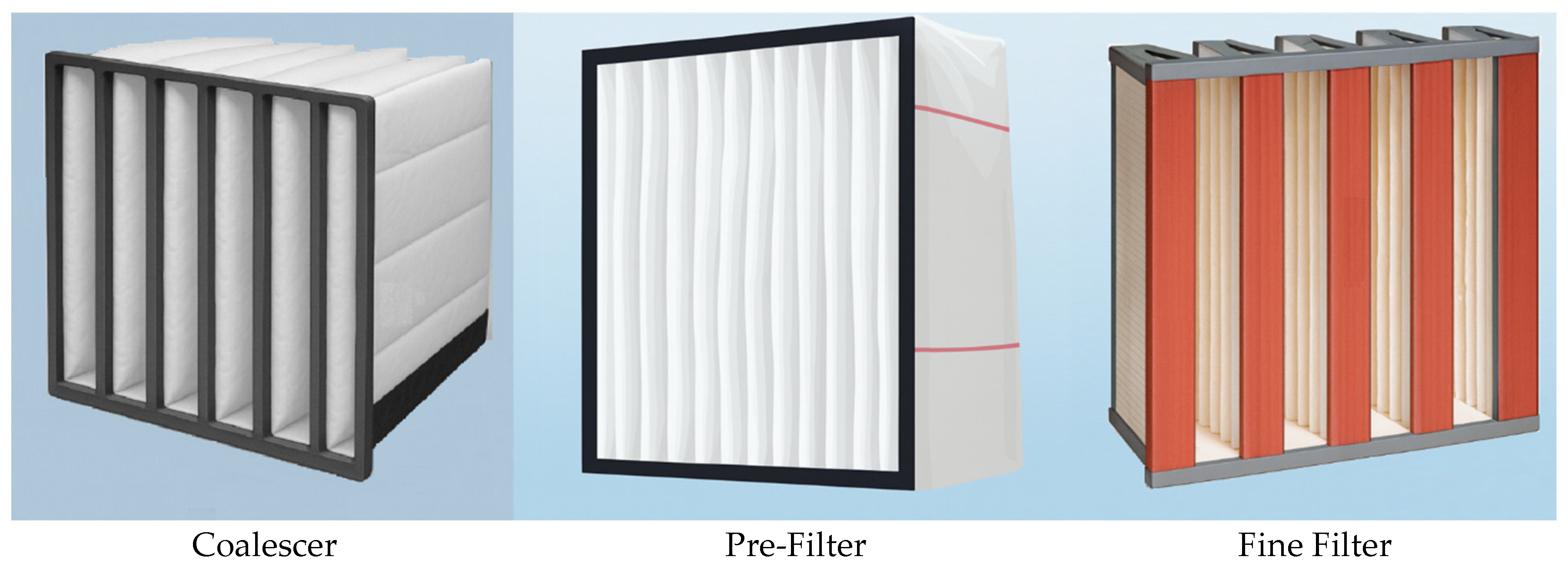
Section 2 describes the gas turbine and filtration system under investigation.
Section 3 and
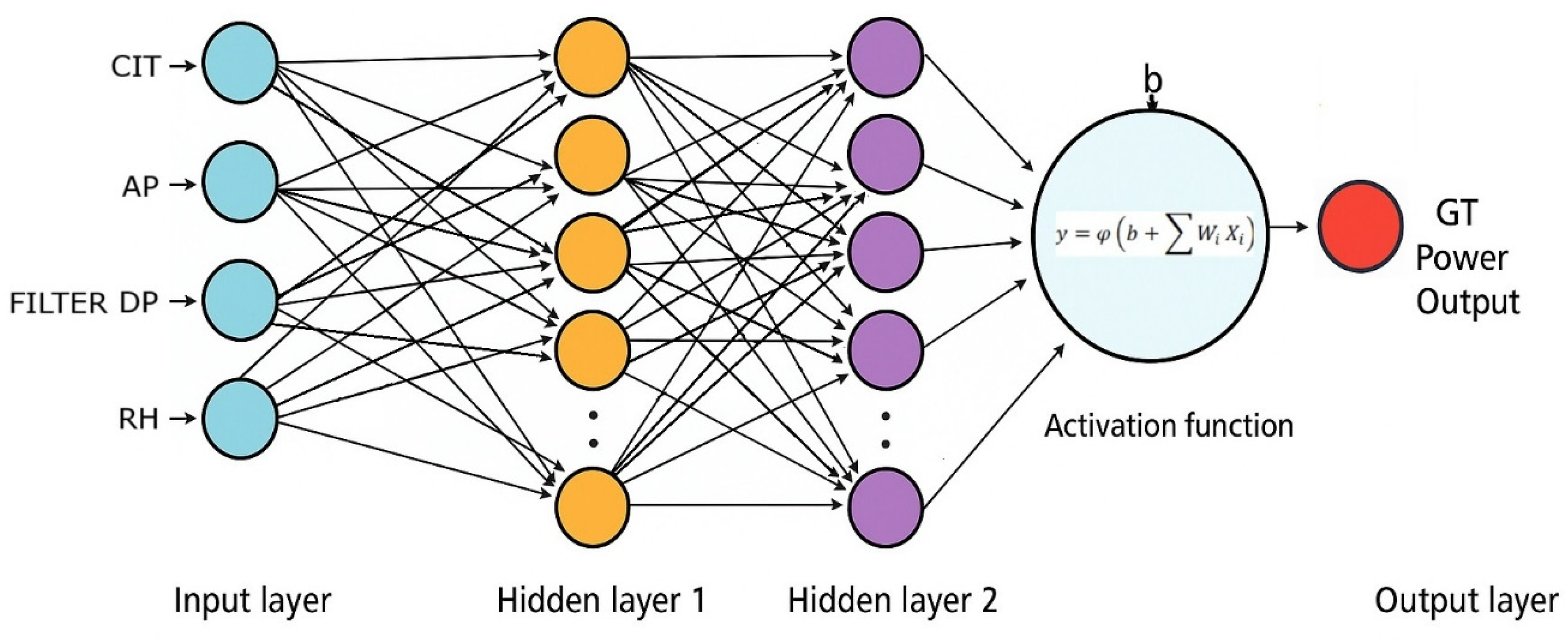
Section 4 detail the regression analysis methods employed (MLR, Quadratic SVR, Regression Tree, and ANN) along with the evaluation criteria.
Section 5 presents the thermal efficiency calculations, while
Section 6 and
Section 7 discusses the results and analyses. Finally,
Section 8 provides a summary of the study’s main conclusions.
6. Results and Discussion
In this study, the effects of gas turbine inlet air filter fouling on GT Power Output were investigated using ML-based models and real operational data. In addition, the gas turbine efficiency was evaluated. The MLR, Quadratic SVR, ANN, and Regression Tree (Fine Tree) algorithms were applied in the analyses, and the predictive performance of each model was comparatively evaluated using statistical indicators. All analyses and model implementations were carried out using MATLAB R2025b and IBM SPSS Statistics 27 software. The findings obtained revealed that filter fouling has significant impacts on key performance parameters such as GT Power Output and efficiency.
Table 3 presents the descriptive statistics of the dataset. There are 4438 data points for each variable. The table summarizes the mean value and standard deviation associated with each parameter.
In the examined gas turbine, following the installation of new inlet air filters, the turbine operated for approximately 10,000 h. During this period, in addition to operating under base load conditions, the turbine was also run at variable loads according to grid demand, following Secondary Frequency Control, Primary Frequency Control, Load Up, and Load Down instructions. To accurately and objectively evaluate the effect of filter differential pressure on gas turbine performance, the analyses were limited to periods when the turbine was operating under base load conditions. Within this scope, regression analyses were performed on the base load data obtained from the total 10,000 h of operation, achieving a high level of accuracy.
Under real operating conditions, the collected data may contain outliers due to measurement errors, short term operational fluctuations, and environmental effects. In the investigated power plant, the full load power level of the gas turbine varies significantly depending on ambient conditions. For example, on a hot summer day, the full load power is approximately 370 MW, whereas on a cold winter day this value can increase to as high as 410 MW. Therefore, a power output of 370 MW under cold ambient conditions does not represent full load operation; instead, it corresponds to an intermediate load operating regime. Evaluating such operating points together with full load data can adversely affect the physical validity and statistical consistency of the analysis results.
Additionally, when the gas turbine operates in Primary Frequency Control mode, it is subjected to continuous load variations even at power levels close to full load. For this reason, during the data preprocessing stage, frequency control modes were separated, and only data points representing stable base load operating conditions were included in the analysis. Furthermore, measurement errors arising from sensor failures, calibration inaccuracies, and transient system deviations were carefully filtered out to ensure the reliability of the analysis results.
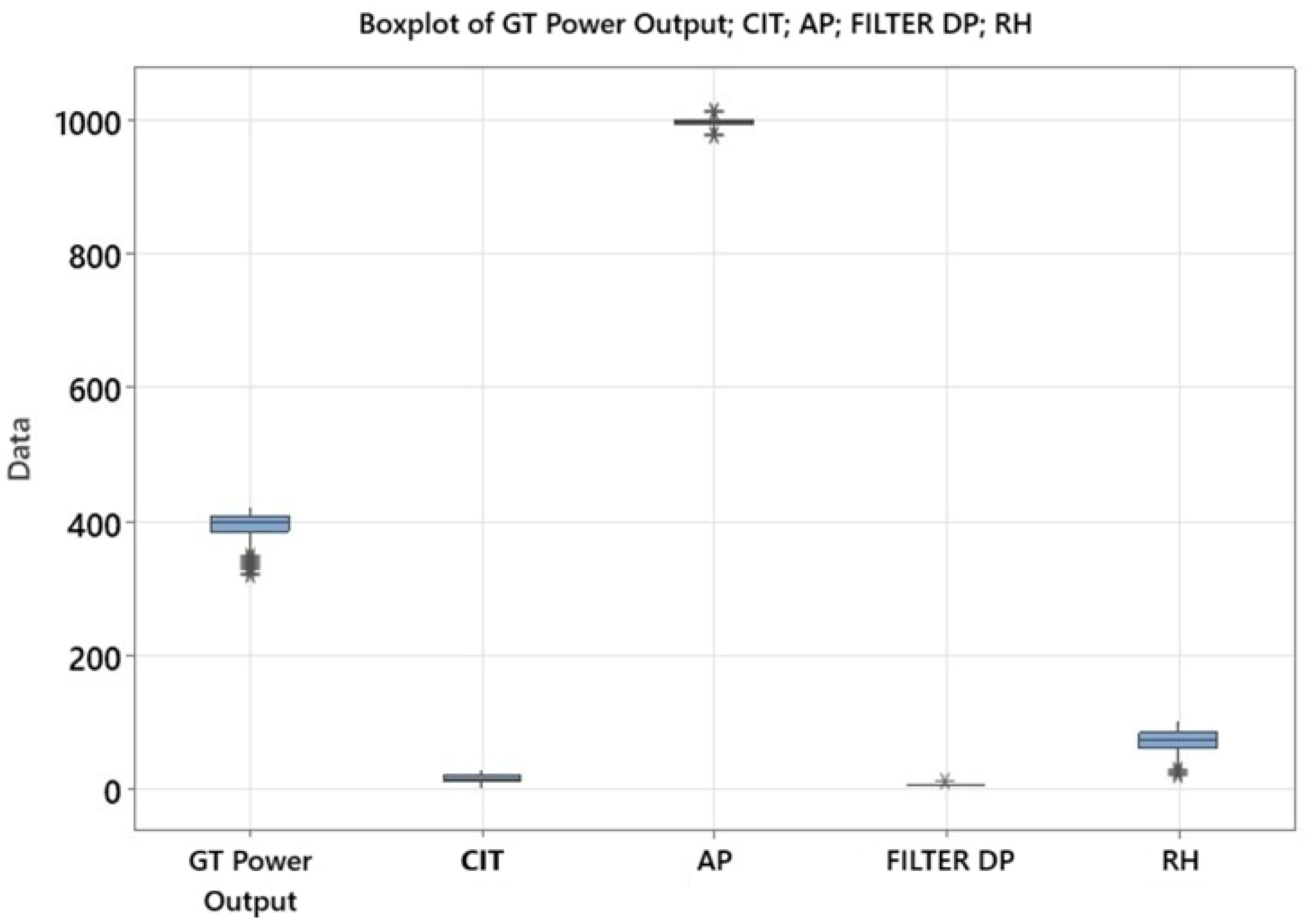
To identify outliers, both boxplot analysis and Cook’s distance method were employed. After removing the outlier data points, the remaining 4438 h of base load operating data were used in the regression analyses. This approach ensured that only data points with high representativeness and reliability were included in the modeling process, thereby significantly improving the accuracy, statistical significance, and generalizability of the regression analyses. The boxplot analysis conducted to identify outliers in the dataset is presented in
Figure 6.
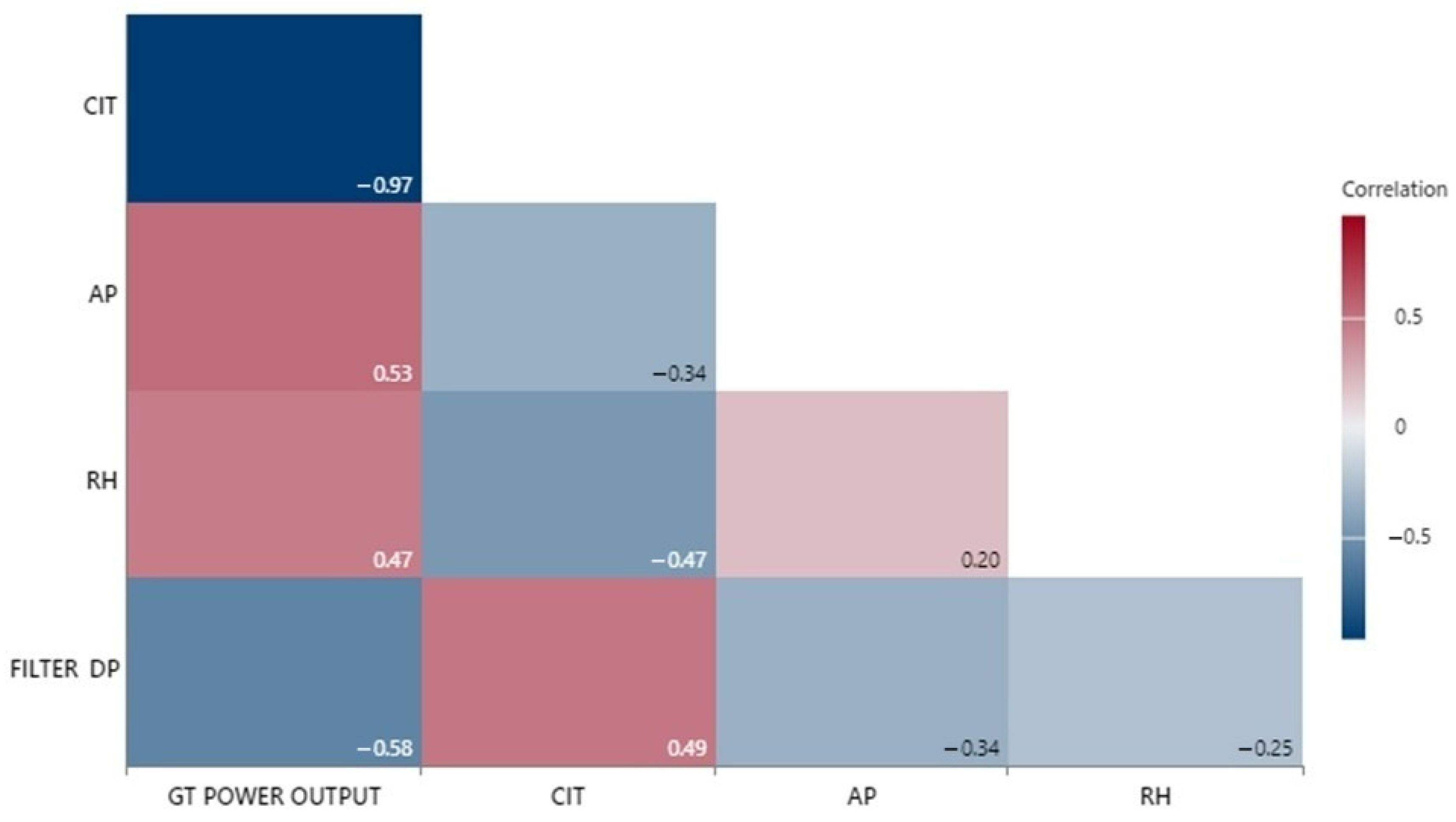
Figure 7 illustrates the correlation relationships among the key variables affecting gas turbine performance. The correlation coefficients reflect the direction and strength of the linear relationships between the variables. Accordingly, there is a strong negative correlation between CIT and GT Power Output (−0.97), indicating that power output decreases as the inlet temperature increases. AP has a positive effect on GT Power Output (0.53), meaning that power generation increases with rising pressure. A correlation of 0.47 indicates that RH and GT Power Output exhibit a moderately positive linkage, implying that higher humidity marginally enhances output. A negative correlation (−0.58) was also observed between Filter DP and GT Power Output, showing that turbine performance declines as filter fouling increases. These correlation analyses reveal the complex interdependencies among the environmental and operational variables affecting gas turbine performance and indicate that CIT and filter fouling play a particularly decisive role in determining GT Power Output. These findings support the necessity of prioritizing these variables in modeling and performance prediction processes.
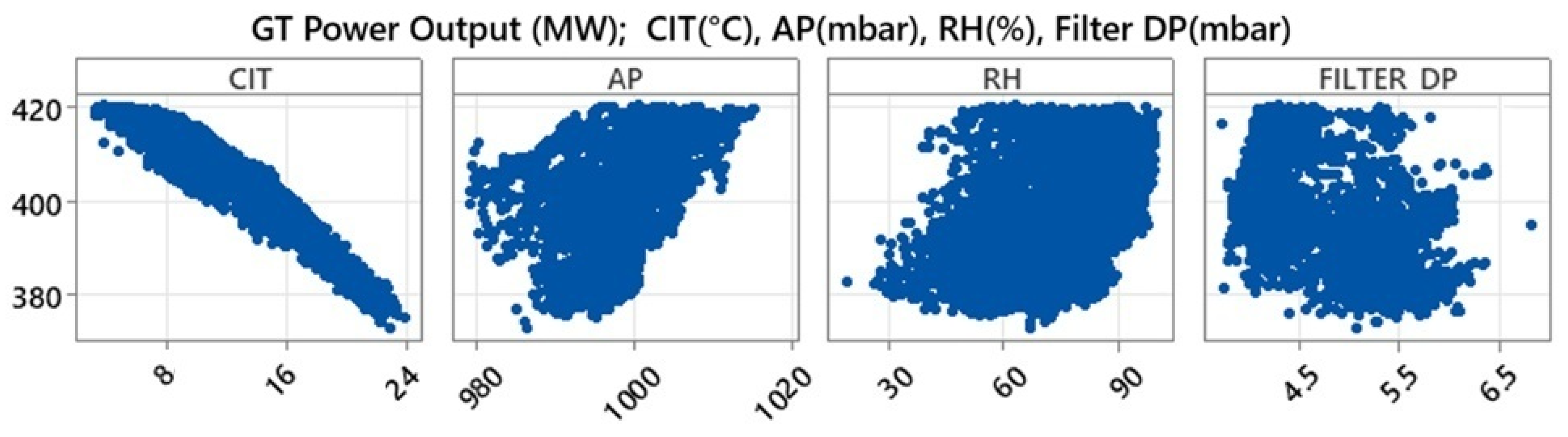
Figure 8 illustrates the relationships between GT Power Output and four key environmental and operational parameters—CIT, AP, RH, and Filter DP. All graphs are presented in scatter plot form, showing the influence of each parameter on GT Power Output. A clear negative correlation is observed between CIT and GT Power Output. As CIT increases—meaning as ambient temperature rises—the power generated by the turbine decreases. This phenomenon can be attributed to the fact that higher inlet temperatures reduce air density, which in turn diminishes the mass flow supplied to the compressor and negatively affects combustion efficiency. Consequently, the turbine produces higher power under lower temperature conditions. Changes in AP have a positive effect on GT Power Output. Higher atmospheric pressure increases air density, allowing more air mass to enter the compressor, which in turn enhances combustion efficiency and power generation. Therefore, during periods of elevated AP, GT Power Output shows a distinct increasing trend. RH shows a rather limited and unclear connection with GT Power Output, indicating that the influence of humidity is weak and not well defined. The data exhibit a generally homogeneous distribution without a clear trend, indicating that RH, although it may influence power output indirectly, is not as decisive a parameter as CIT or AP. For Filter DP, a negative trend is evident with GT Power Output. The increase in pressure drop due to accumulated dirt or particulates in the filters reduces the airflow entering the turbine, negatively affecting power generation. Overall, the figure clearly demonstrates the sensitivity of GT Power Output to environmental conditions. Among these, CIT, AP, and Filter DP are the most influential parameters affecting power output, while the effect of RH remains secondary.
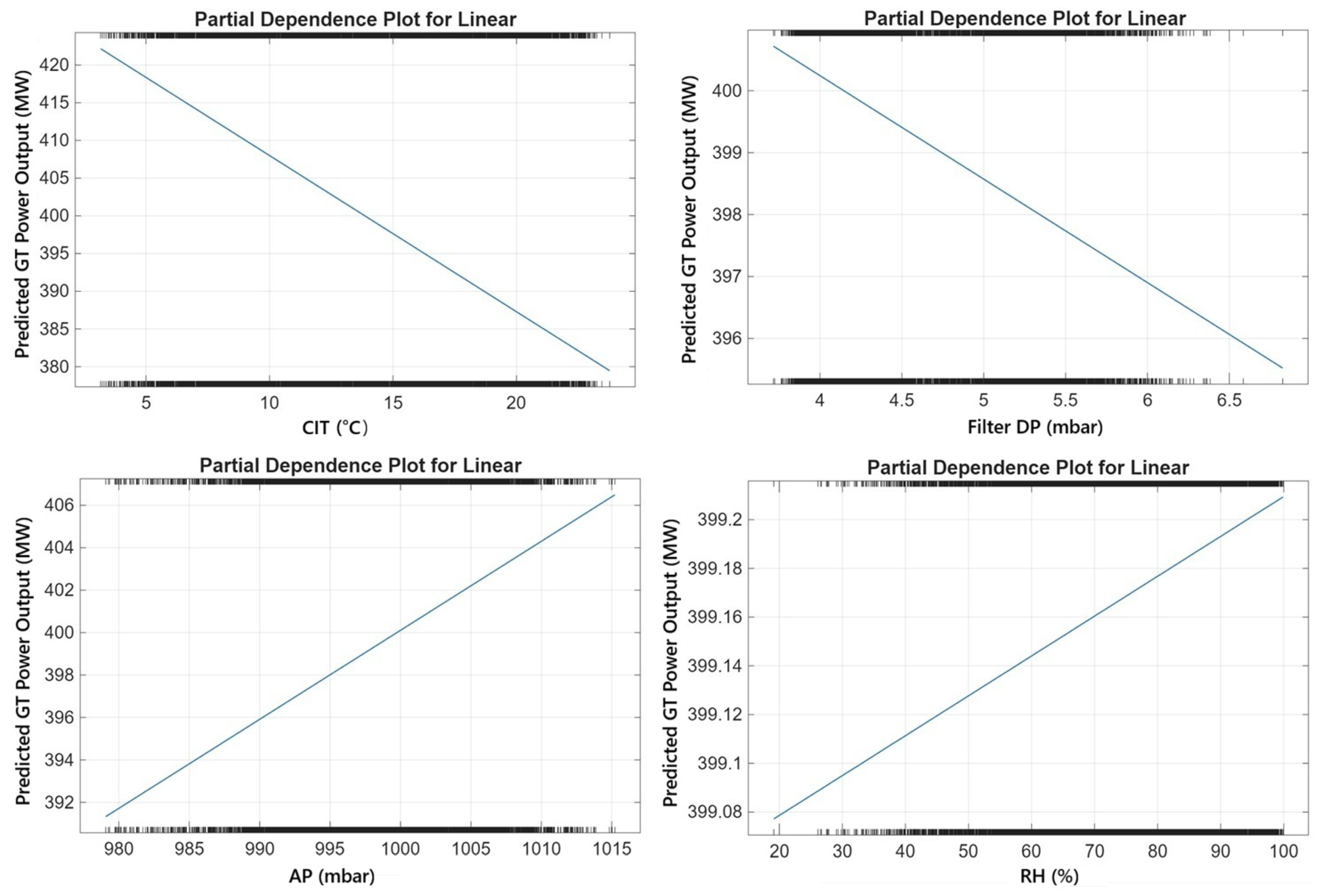
Figure 9 presents the partial dependence plots obtained from the MLR method, showing the individual effects of the main operating parameters (CIT, Filter DP, AP, and RH) on GT Power Output.
Table 4 and
Table 5 present the comparison of the ML models’ performances in predicting GT Power Output, based on the evaluation metrics RMSE, MSE, R
2, MAE, and MAPE (%). In
Table 4, the Filter DP input variable was not included in the regression modeling, and three input variables (CIT, AP, and RH) were used. In
Table 5, the Filter DP variable was included, resulting in four input variables (CIT, AP, Filter DP, and RH). When comparing
Table 4 and
Table 5, it is observed that the inclusion of the Filter DP variable in the regression model significantly improved the prediction performance. The ANN model showed the lowest error values in both cases, achieving the greatest improvement when the Filter DP variable was added—with the MAE decreasing from 0.8038 to 0.6399. These results indicate that the Filter DP is a statistically significant explanatory variable in predicting GT Power Output.
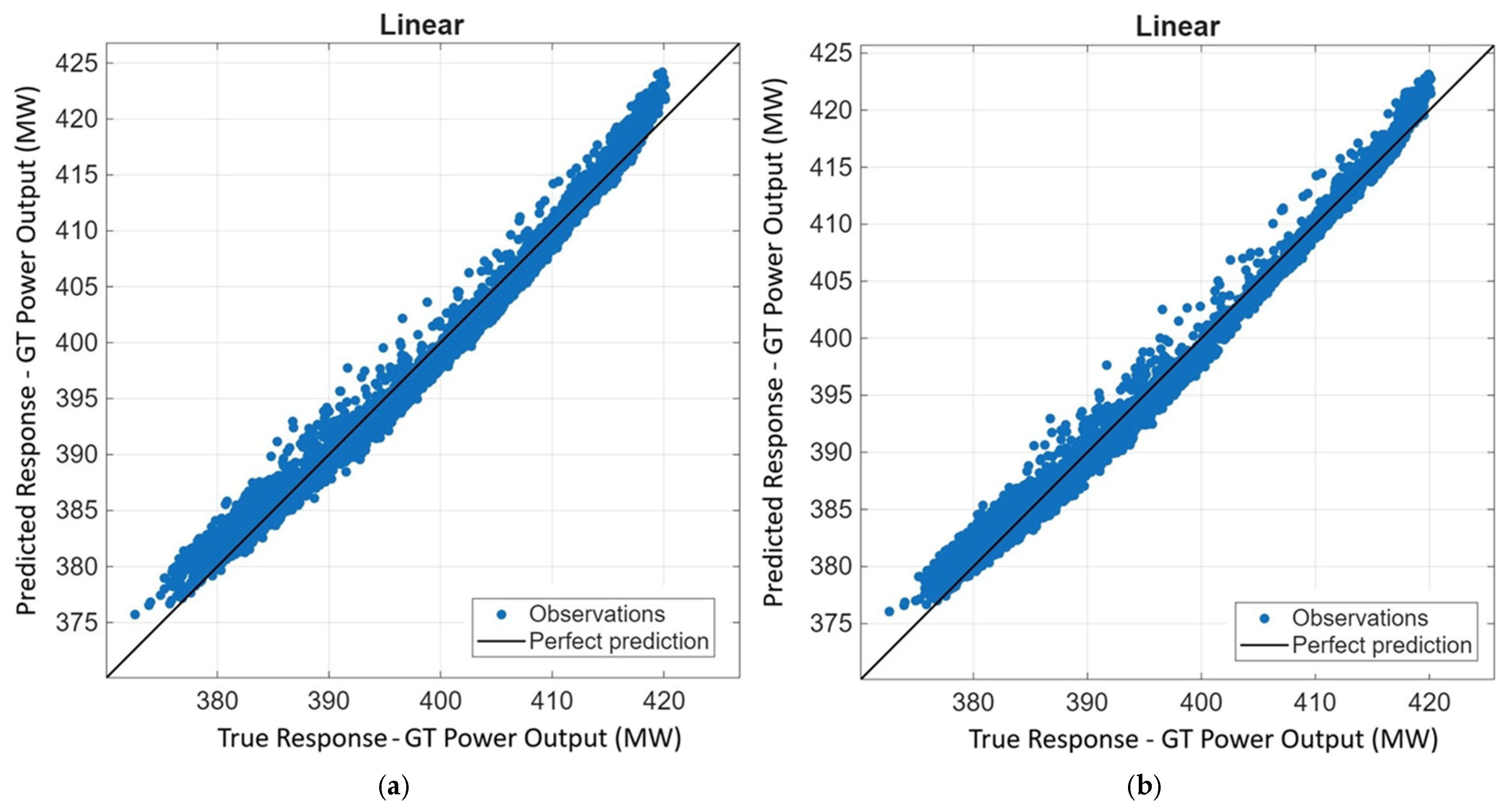
Figure 10 presents a comparative visualization of the MLR model’s performance in predicting GT Power Output, under two different conditions—before and after the inclusion of the Filter DP variable in the regression model. In both graphs, the horizontal axis represents the true (measured) values, while the vertical axis represents the predicted values generated by the model. The diagonal line on the plots denotes the ideal prediction line, where the predicted and actual values perfectly coincide. The closer the data points are distributed around this line, the higher the prediction accuracy of the model.
When the Filter DP variable was not included in the regression model—that is, when the effects of only three independent variables (AP, RH, and CIT) on GT Power Output were evaluated—the R
2 value was obtained as 98.4% (
Table 4). Although the data points generally lie close to the ideal prediction line in the figure, noticeable deviations are observed, particularly at high power levels above 410 MW. Therefore, when the Filter DP variable is excluded from the regression model, the model’s linear prediction capability decreases, and systematic errors become evident.
In contrast, when the Filter DP variable was included in the regression model—that is, when the effects of four independent variables (AP, RH, CIT, and Filter DP) on GT Power Output were evaluated—the R
2 value increased to 98.9% (
Table 5). In the figure, the data points are observed to cluster much more tightly and closely around the ideal prediction line. The reduction in residuals indicates that the filter variable helps limit noise effects on the system and contributes to the increase in the R
2 of the MLR model.
This comparison demonstrates that the Filter DP provides a significant improving effect not only on physical performance but also on the accuracy of data-driven prediction models. As a result, the inclusion of the Filter DP variable enhanced the prediction accuracy of the MLR model, reduced the error margin, and produced a statistically more consistent regression trend. Furthermore, considering that the system examined is a gas-turbine-based CCPP, the influence of the Filter DP on GT Power Output is also expected to have a substantial impact on the overall plant efficiency and total power generation capacity.
Using the MLR method, the quantitative effects of each independent variable on GT Power Output were determined. According to the analysis results:
An increase of 1 °C in the compressor inlet temperature results in an estimated 2.07 MW reduction in turbine output.
A 1 mbar increase in AP results in an increase of about 0.42 MW.
Each 1 mbar increase in Filter DP causes an average decrease of 1.67 MW in turbine load.
The effect of RH is relatively small, with each 1% increase leading to only about 0.002 MW change.
These findings clearly reveal the sensitivity of each parameter on gas turbine performance.
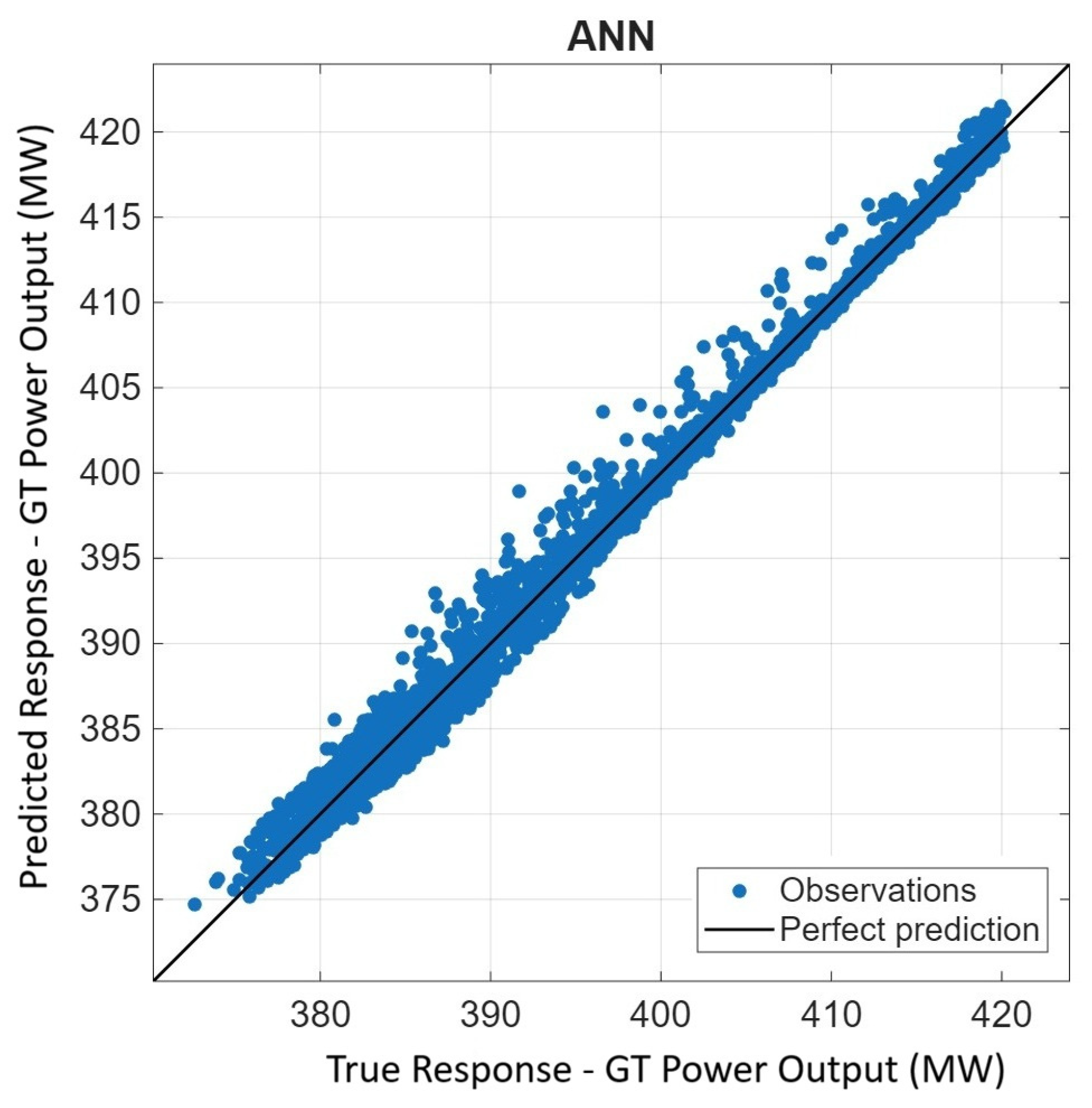
Figure 11 shows the correspondence between the ANN-based predictions and the actual operational data, confirming the model’s superior ability to capture the effects of AP, RH, CIT, and Filter DP on GT Power Output. The blue dots on the graph represent the model’s prediction results, while the black 45° diagonal line denotes the perfect prediction line. It can be observed that the majority of the data points are densely clustered around this reference line, indicating that the ANN model provides high-accuracy predictions with minimal systematic bias. The model’s predictions exhibit a strong linear correlation with the actual measurements, which is further supported by the high R
2 value and low error metrics (MAE, RMSE). Therefore, the ANN model demonstrates a reliable prediction performance, successfully capturing the complex nonlinear relationships within the system.
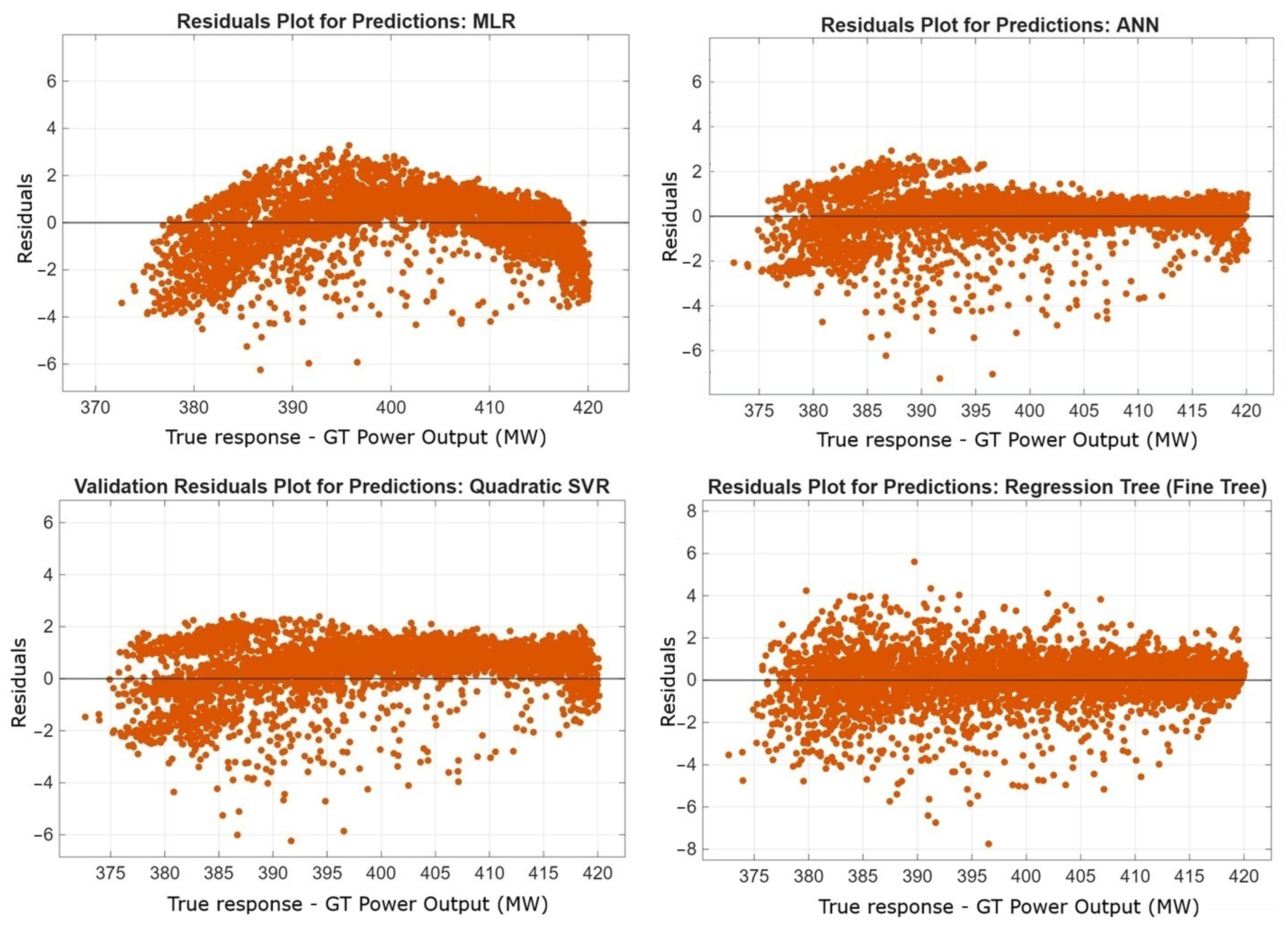
Figure 12 presents the residual distributions obtained from the ML models (MLR, Fine Tree, Quadratic SVR, and ANN) used to estimate GT Power Output. On the horizontal axis, the actual measured response values are displayed, while the vertical axis illustrates the residuals, which correspond to the differences between the predicted and observed values.
In the residual plot of the MLR model, the residuals are generally distributed regularly around the zero line, showing only a slight curvature trend. This indicates that the model captures the relationships between the variables quite accurately and demonstrates strong predictive performance. Examination of the residual values suggests that the MLR model produces stable and reliable results. In the ANN model, the concentration of residuals within a narrow range indicates that the model generates predictions with higher accuracy and lower error compared to other models. This result demonstrates that the ANN algorithm effectively learns the complex relationships between variables and represents the gas turbine power output in the most accurate manner. The Quadratic SVR algorithm successfully captures nonlinear relationships and provides stable and reliable predictions of GT Power Output. In the residual plot of the Fine Tree model, the data appear balanced around the zero line with no noticeable curvature or systematic bias. The fact that most of the model predictions fall within the ±2 MW range indicates that the errors are low and the prediction accuracy is high. These findings confirm that the Fine Tree algorithm effectively captures the nonlinear interactions among variables and reliably represents GT Power Output.
When all models are compared, it is observed that the MLR model, with its linear approach, successfully captures the overall trend but fails to fully represent the nonlinear relationships. The Fine Tree model better captures the complex interactions between variables, offering lower error and a more balanced residual distribution. The Quadratic SVR model effectively models nonlinear boundaries, producing accurate and stable predictions. Among all the evaluated methods, the ANN model delivered the strongest overall performance. The fact that its residuals are tightly clustered within a narrow interval demonstrates that it achieves the highest prediction accuracy and the lowest error level. This comparison clearly demonstrates that ANN is the most effective and reliable method for predicting GT Power Output.
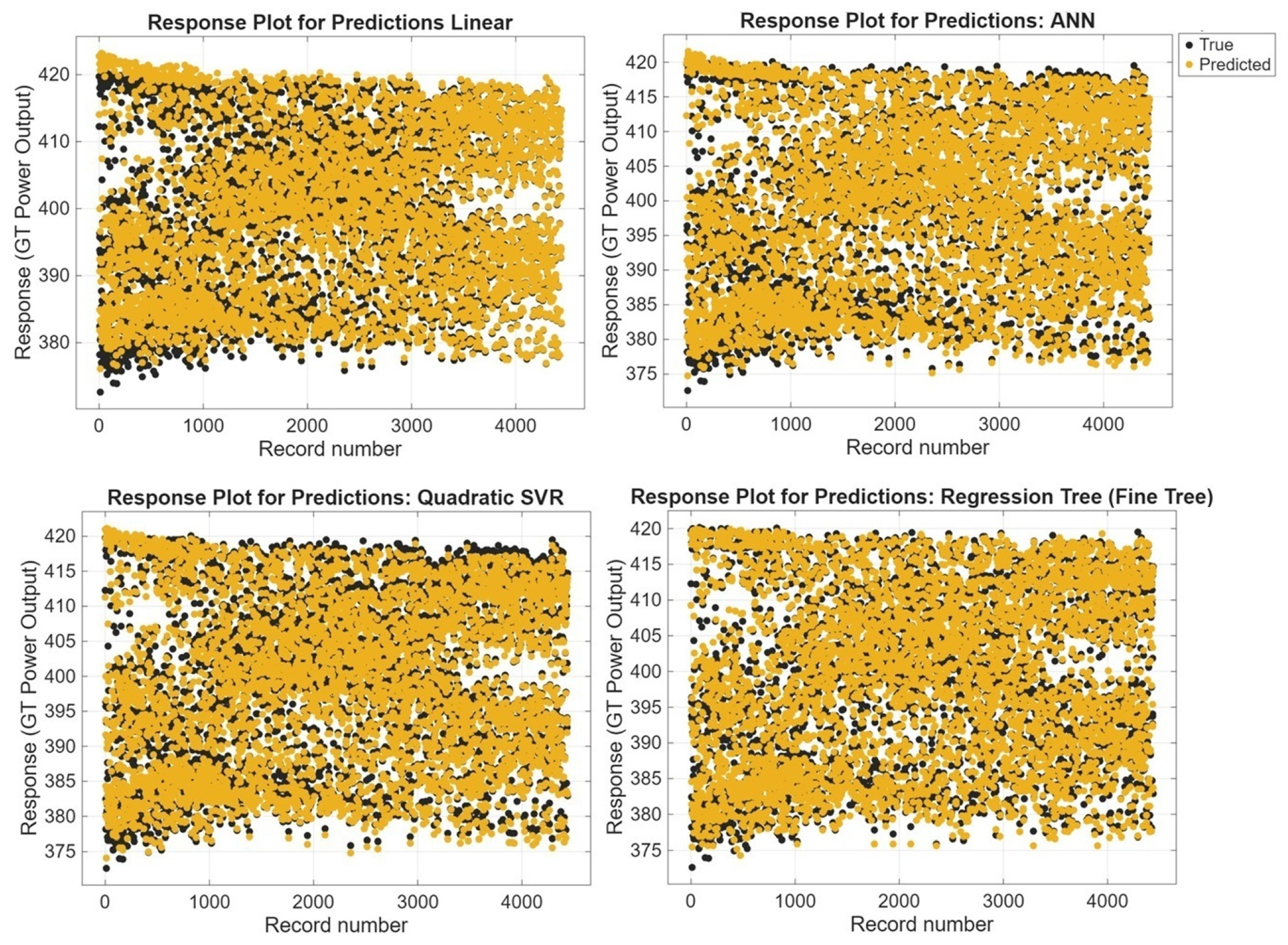
Figure 13 presents a comparative illustration of the GT Power Output prediction performance of the ML models (MLR, Fine Tree, Quadratic SVR, and ANN). In each graph, the black dots represent the measured (actual) GT Power Output values, while the yellow dots represent the predicted values generated by the models. The vertical axis indicates the GT Power Output, and the horizontal axis shows the data record number.
The MLR model successfully captured the overall trend and effectively represented the fundamental relationships. However, slight deviations were observed in complex and nonlinear interactions. Despite this, the model’s overall predictive performance was consistent, and it can be stated that it provided reliable results in GT Power Output predictions. The Fine Tree model offered greater flexibility by dividing the data into multiple subregions and produced more accurate predictions, particularly in the mid-range power levels. With its second-order kernel, the Quadratic SVR model was able to represent nonlinear behavior more effectively, and its prediction outputs showed a close alignment with the measured values. In comparison, the ANN model achieved the strongest consistency overall; its predicted values almost completely matched the actual measurements and delivered outstanding accuracy, particularly within the 380–410 MW operating range.
Overall, although all models accurately captured the general trend of GT Power Output, the MLR model represented the simplest approach, while the Fine Tree and Quadratic SVR models better captured the nonlinear effects. The ANN model, on the other hand, achieved the highest prediction accuracy by effectively capturing the complex and multidimensional relationships among the parameters. This result indicates that gas turbine performance data inherently contain strong nonlinear components and that ANN-based approaches are more suitable for addressing such problems.
In this section of the study, the effects of the Filter DP variable on turbine efficiency were analyzed in detail using Equation (15) and real operational data. In this analysis, key operating parameters of the gas turbine system—such as temperature, pressure, fuel flow rate, power output, and environmental conditions—recorded over specific time intervals were taken into consideration. The relevant parameters are presented in
Table 6, quantitatively illustrating the performance variations in the system under different operating conditions. Within this context, the measurement results for two distinct operating conditions (Condition 1 and Condition 2) were comparatively evaluated. Each observation represents two operating states recorded under similar environmental conditions (with CIT, AP, and RH values kept as close to each other as possible) but with different Filter DP values.
The obtained results showed that the differences between Condition 1 and Condition 2 were directly related to the variation in the Filter DP parameter. The increase in Filter DP caused a restriction in the airflow at the compressor inlet, leading to a reduction in mass air flow rate and consequently altering the air–fuel ratio entering the combustion chamber. This condition resulted in a measurable decrease in GT Power Output, while simultaneously creating an increasing trend in the fuel flow rate required to meet the same power demand. A decrease in turbine efficiency, calculated using Equation (15), quantitatively confirmed this trend; in particular, it was observed that turbine efficiency significantly decreased at higher Filter DP values.
Figure 14 illustrates the linear relationship between the Filter DP and gas turbine efficiency. The yellow “×” markers represent observation points obtained from real operational data, while the red line denotes the linear regression fit. The negative slope of the regression line (−0.094%/mbar) indicates that gas turbine efficiency decreases linearly with increasing Filter DP values. Specifically, each 1 mbar increase in filter differential pressure results in approximately a 0.094% decrease in turbine efficiency. This trend clearly demonstrates the adverse impact of filter fouling on turbine performance and confirms that pressure losses occurring in the inlet air filtration system directly reduce the thermodynamic efficiency of the gas turbine.
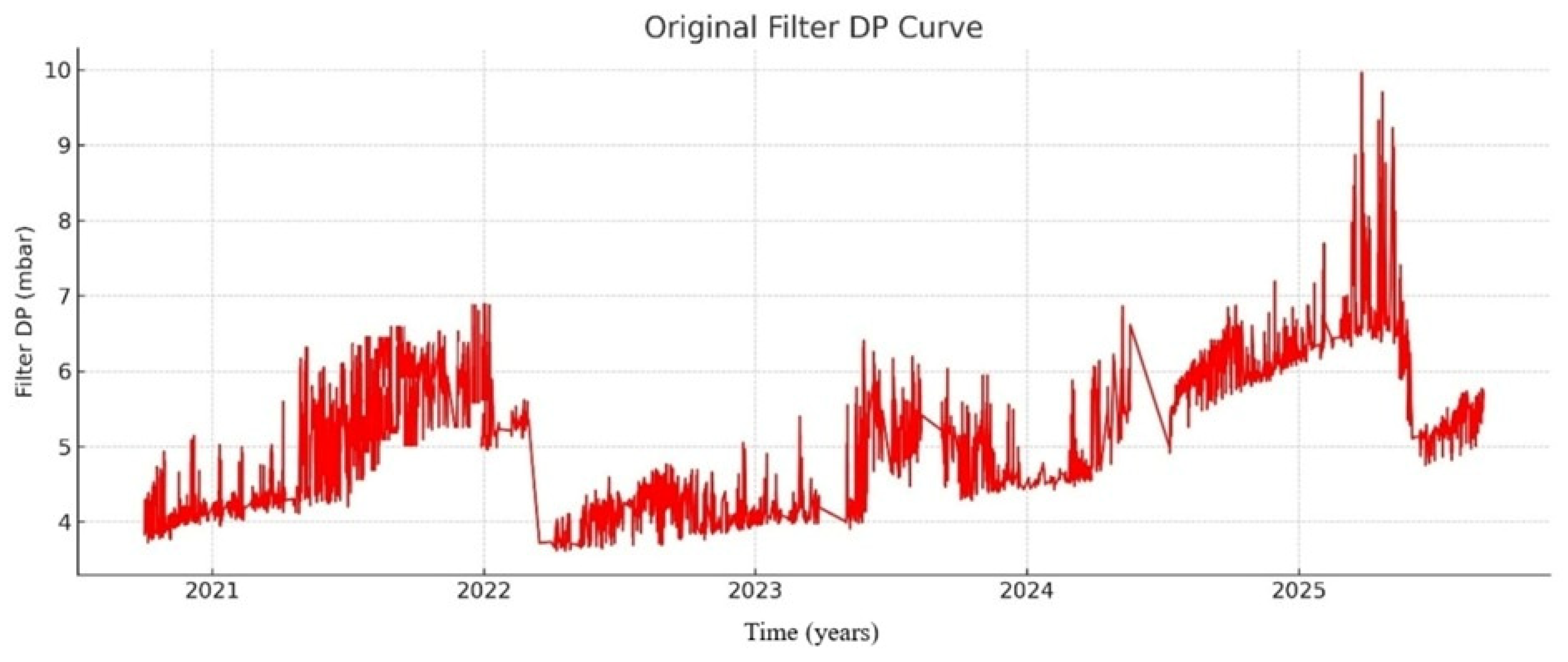
Figure 15 illustrates the variation in gas turbine inlet air Filter DP between 2021 and 2025, providing important guidance on how the filter replacement strategy should be planned. At the beginning of 2022, the complete replacement of the three-stage filter set within a short interval resulted in a sharp drop in differential pressure to approximately 3.60 mbar. This significant decrease indicates that simultaneous renewal of all filter stages rapidly improves airflow and noticeably enhances overall system performance. In contrast, during the subsequent periods, implementing only single-stage filter replacements led to a limited reduction in differential pressure, causing the total pressure loss across the filter system to remain high. As a result, insufficient improvement in compressor inlet airflow negatively affected both GT Power Output and gas turbine efficiency.
Overall, the figure clearly reflects the contamination–performance loss–replacement cycle of the filter and highlights the critical role of regular and holistic filter maintenance in sustaining turbine performance. In line with these findings, optimizing filter replacements within a condition-based maintenance framework is highly important—not only performing the change at the right time, but also ensuring that the appropriate filter stages are replaced together.
For the gas turbine analyzed in this study, the production of 1 MWh of electricity requires roughly 245 sm3 of natural gas. When the Filter DP value increases by 1 mbar, this consumption rises to 245.23 sm3/MWh, resulting in a measurable increase in fuel usage. It has been calculated that a 1 mbar increase in Filter DP leads to an additional 0.45 tCO2e of greenhouse gas emissions per 1 MWh of electricity produced. Accordingly, during a 5000 h operating period of the turbine, a total of approximately 2.25 tCO2e of additional emissions is generated. Therefore, filter replacement strategies are critically important not only for turbine performance and efficiency but also for reducing the overall carbon footprint.
Table 7 presents the amount of natural gas consumed by the gas turbine during an hourly electricity production of 418 MW, along with the corresponding greenhouse gas emissions. This table clearly reveals the turbine’s fuel consumption characteristics and the associated emission values, providing an important reference for performance evaluation and environmental impact analyses.
The results demonstrate that even a 1 mbar increase in the differential pressure of gas turbine inlet air filters can generate significant environmental impacts on a global scale. Currently, there are approximately 2170 GW of installed oil- and natural gas-fired power generation capacity worldwide [
47], of which nearly 1500 GW consists of gas turbines. Assuming an average capacity factor of 60% for these units, even such a minor increase in Filter DP is estimated to result in approximately 3.56 million tCO
2e of additional annual emissions by increasing the fuel consumption associated with global electricity generation. This corresponds to an annual excess natural gas consumption of roughly 1.82 billion Sm
3. Therefore, improving inlet air filtration systems in gas turbines not only enhances operational efficiency but also contributes significantly to global energy efficiency goals and emission reduction strategies.
These calculations are based on modern gas turbines with an average electrical efficiency of approximately 40%. However, since a considerable portion of the global power generation fleet still consists of lower-efficiency units, the actual increases in emissions and fuel consumption are expected to be higher than these estimates. Therefore, improving inlet air filtration systems and optimizing maintenance strategies, especially in lower-efficiency plants, can provide even greater reductions in emissions and fuel consumption on a global scale.
In this study, the impact of inlet air filters on performance has been evaluated not only from a technical perspective but also from an economic one, using actual operational data. In a gas turbine with a capacity of 400 MW and a cycle efficiency of approximately 40%, the cost of electricity generation under clean filter conditions was determined to be 68.6 USD/MWh. It was assumed that an increase in the Filter DP leads to a reduction in turbine efficiency at a rate of 0.094% per 1 mbar.
For each differential pressure level, the turbine efficiency and the corresponding electricity generation cost were calculated. Assuming that the cost of electricity is inversely proportional to efficiency, the effect of efficiency losses due to filter fouling on the unit electricity cost was quantified. The calculations showed that the unit electricity cost gradually increases with rising Filter DP, and multiplying this increase by the plant capacity indicates the hourly economic loss.
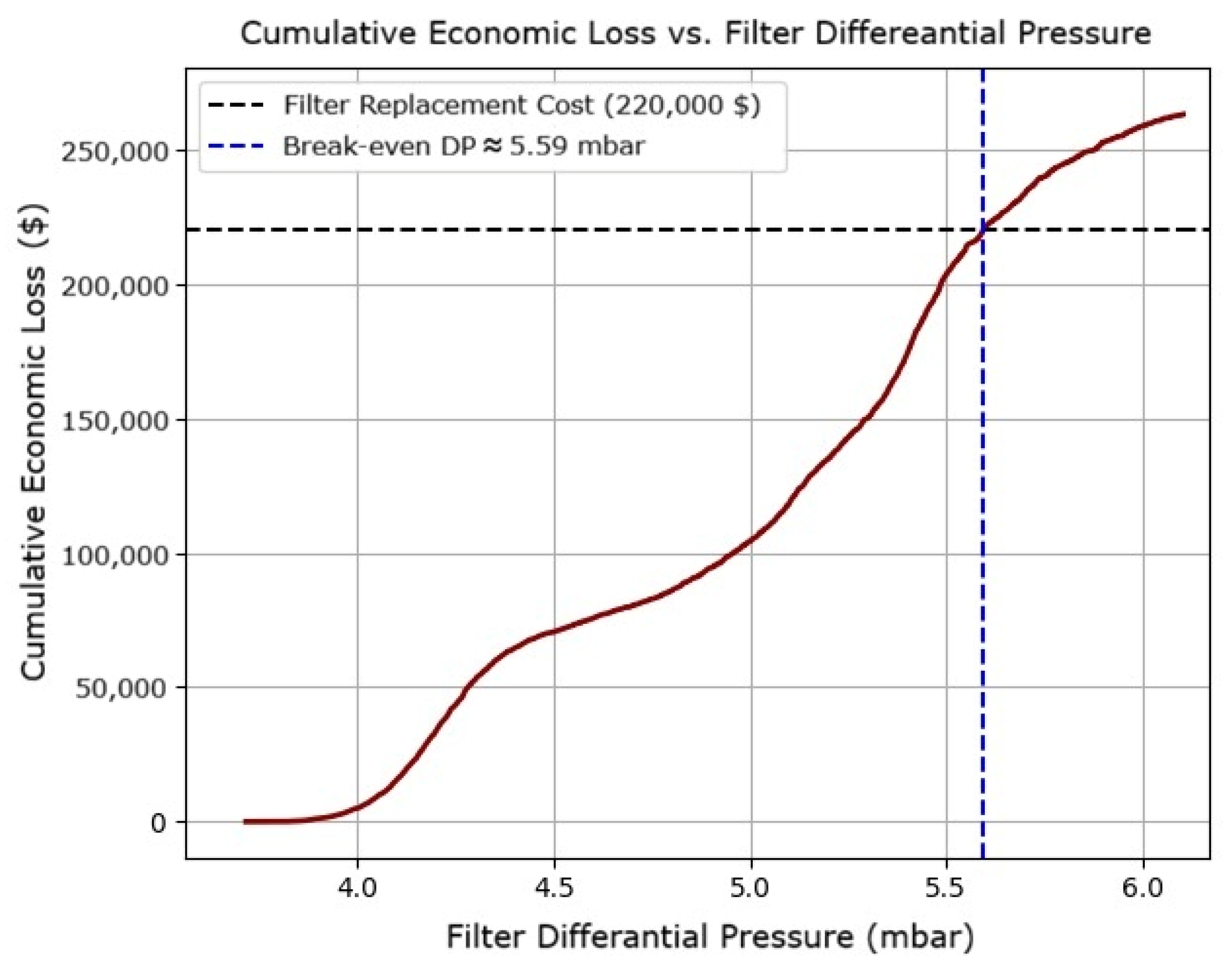
By evaluating the cumulative hourly economic losses over time, the analysis revealed that if the Filter DP reaches 5.6 mbar, the cumulative production and fuel losses would equal the total replacement cost of the three-stage filter system, which is 220,000 USD (
Figure 16). This analysis was conducted for a gas turbine, and when considering the impact of gas turbine production on the steam turbine, these losses would be even higher. Beyond this point, delaying filter replacement is no longer economically rational for plant operation and leads to increasing financial losses.
The results indicate that decisions regarding filter maintenance and replacement should not rely solely on fixed intervals but should also take into account the real time measured Filter DP and the associated economic loss indicators. In this context, the AI-based performance prediction model and economic evaluation approach developed in this study provide plant operators with a quantitative, transparent, and practical decision-support tool for determining the optimal timing of filter replacement.
Based on detailed economic analyses, it is recommended to replace the filter when the total differential pressure, including the effects of the evaporator system, exceeds 6 mbar. The economic impact and operational decision table based on filter DP is presented in
Table 8.