


Abstract
Aviation hydraulic systems operate under high pressure and large flow rates, which induce significant fluid pressure pulsations and hydraulic shocks in pipelines. These pulsations, exacerbated by complex external loads, can lead to excessive vibration stress, component damage, oil leakage, and compromised system safety. While existing methods—such as pump structure optimization, pipeline layout adjustment, and active control—can reduce pulsations to some extent, they are limited by cost, reliability, and adaptability, particularly under high-pressure and multi-excitation conditions. Passive control, using pressure pulsation damping devices, has proven to be more practical; however, conventional designs typically focus on low-load systems and have limited frequency adaptability. This paper proposes a multi-hole parallel pressure pulsation damping device that offers high vibration attenuation, broad adaptability, and easy installation. A combined simulation–experiment approach is employed to investigate its damping mechanism and performance. The results indicate that the damping device effectively reduces vibrations in the 200–500 Hz range, with minimal impact from changes in load pressure and rotational speed. Under a high pressure of 21 MPa and a speed of 1500 rpm, the maximum insertion loss can reach 15.82 dB, significantly reducing the pressure pulsation in the hydraulic pipeline.
1. Introduction
The high pressure and large flow rate of aviation hydraulic systems inevitably cause fluid pressure pulsations and hydraulic shocks in pipelines. When coupled with external and complex excitation loads, these effects result in excessive vibration stress, component damage, noise, and other failures [1,2]. Among the system components, the hydraulic pump plays a key role. The periodic high-pressure and high-speed fluid discharged from the pump generates strong pressure pulsations, which directly impact the pipeline and may induce fluid–structure interactions. This can lead to fatigue fractures between pipelines and clamps, damage other hydraulic components, and even cause oil leakage, thereby compromising the safety of the entire aircraft [3,4].
To mitigate pressure pulsations, researchers have proposed various approaches [5,6]. From the source perspective, methods such as optimizing the damping groove and triangular groove dimensions [7,8] of the plunger pump distributor plate, improving the swash plate angle, and modifying the unloading groove have been explored. The focus has been on optimizing or improving the pump structure to reduce outlet flow pulsations and hydraulic shocks [9]. However, this approach comes with high economic costs and low benefits, especially in high-pressure, high-power hydraulic systems, where structural changes alone are insufficient to reduce system vibration and noise. By addressing the propagation path of pressure pulsations, optimizing the layout of piping, clamps, and support positions during the piping design phase [10], as well as using high-damping support clamps during the piping service phase, pressure pulsations can be reduced to some extent.
In addition to the aforementioned measures, scholars have proposed other active and passive control methods. Among these, active control is achieved by generating secondary pressure pulsations that are opposite in phase and equal in magnitude to the pressure pulsations from the pump source, using servo valves, servo actuators, or piezoelectric ceramics. With excellent controllability, active control can monitor and reduce pipeline vibration in real time. However, active control methods require advanced control systems and algorithms, and their reliability is relatively low [11]. Another significant challenge is whether the relevant equipment can operate stably over long periods in high-temperature and multi-source excitation environments.
Passive control primarily involves installing pressure pulsation damping devices (pulsation attenuators/filters) at the pump outlet or within the hydraulic piping to absorb and suppress pressure pulsations [12]. These vibration damping devices feature a relatively simple structure and stable operation, making them a practical and effective control measure in hydraulic systems. Paidoussis [13] used multiple parallel spherical Helmholtz pressure pulsation damping devices to reduce pressure pulsations in the low-frequency range. When the spherical cavity is filled with air, the reduction in pressure pulsations is most significant in the 0–100 Hz range. Nishiumi, et al. [14] designed the cavity of a Helmholtz pressure pulsation damping device as a hemispherical shape and developed its lumped parameter model, distributed parameter model, and stepped-section approximation model. Experimental testing revealed that the distributed parameter model was more consistent with the experimental results. Selamet et al. [15] employed a two-dimensional analytical method to establish a mathematical model for an H-type pressure pulsation damping device with an elongated neck and analyzed the effects of neck elongation length, neck shape, and perforation on acoustic performance, providing new methodological insights for reducing pressure pulsations in hydraulic systems. Guan. et al. [16] considered neck friction losses and modeled a three-stage series H-type pressure pulsation damping device as a three-degree-of-freedom “mass–spring–damper” system. Simulation analysis showed that neck friction losses had little effect on the resonance frequency but reduced the damping effect at the resonance frequency. Ichiyanagi et al. [17] established mathematical models of a three-stage series H-type pressure pulsation damping device using both the concentrated parameter and distributed parameter methods, and combined them with damping characteristic tests under varying neck diameters. The results showed that the distributed parameter model was more accurate.
To further enhance adaptability, researchers have developed adaptive and composite damping devices. Purdue University in Indiana, USA [18], developed an adaptive H-type pressure pulsation damping device, which features a fixed plate and a movable plate within the cavity. By adjusting the movable plate to change the cavity volume, the filter’s resonance frequency can be optimized. However, this device introduces uncertainties and is only effective in reducing noise at a single frequency. Further research is required for its application in hydraulic systems. Kela [19] also designed an adaptive H-type pressure pulsation damping device, which changes the resonance frequency by controlling the position of a piston within the cavity to adjust the cavity volume, achieving a maximum attenuation of 20 dB. Yuan et al. [20] introduced a novel pressure pulsation damping device in 2021, combining C-type and H-type configurations in a series–parallel arrangement. This device incorporates two expansion chambers, with multiple third-order series-connected H-type pressure pulsation damping devices formed between the expansion chambers and the housing. Simulation results in MATLAB 2020showed insertion loss curves across the 0–2000 Hz frequency range, with damping effects exceeding 50 dB. Although the vibration damping effect of this device surpasses that of a single-stage design, it has relatively high resistance loss, and its actual vibration damping performance has not been validated by testing. In 2012, Guan et al. [21] introduced a “mass–spring–damper” system into the cavities of C-type and H-type vibration damping devices, creating composite fluid pressure pulsation vibration damping devices. A comparative analysis of their vibration damping characteristics using the transfer matrix method showed significantly improved damping effects compared to previous devices, particularly in the low-frequency range. Gao et al. [22] also incorporated a “mass–spring–damper” system into the Helmholtz cavity and divided the cavity into two sections. The high-pressure chamber was connected to the main pipeline, while the low-pressure chamber was connected to the return oil pipeline. The spring adjusted the piston position based on the pressure difference between the two chambers. In tests, the pulsation amplitude was reduced by up to 80%, demonstrating significant effectiveness. However, leakage in the high-pressure chamber limited the maximum operating pressure.
The distribution of pipelines on aircraft engine casing is highly complex, with narrow gaps between adjacent pipelines, between pipelines and accessories, and between pipelines and the casing shell [23]. Zhu et al. [24] studied dynamic characteristics of bladder fluid pulsation attenuators using dynamic mesh technology. Their analysis revealed insights into optimizing the performance of fluid pulsation dampers, providing an additional perspective on improving attenuation in high-pressure systems. Moreover, the fluid pulsation in aviation hydraulic pipelines contains multiple frequency components. These factors impose strict constraints on the size, installation orientation, and robustness of pressure pulsation attenuators. Therefore, there is a need for a device that can operate reliably under high pressure, provide effective attenuation over a relatively broad frequency range, and maintain a compact, easy-to-install structure.
In this paper, a multi-hole parallel pressure pulsation damping device is investigated for application in high-pressure aviation hydraulic systems. The device is designed to achieve significant vibration reduction, broad frequency adaptability, and convenient axial installation within limited pipeline space. Analytical modeling, computational fluid dynamics (CFD) simulation and experimental testing are used to systematically study its pressure pulsation damping characteristics and performance.
2. Related Works
2.1. Operating Principle of Pressure Pulsation Damping Device
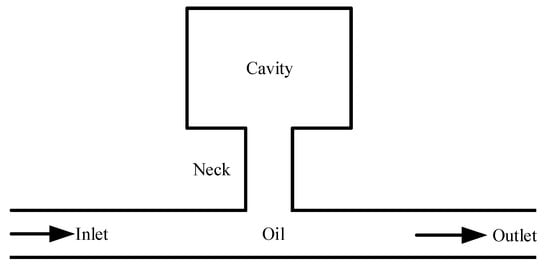
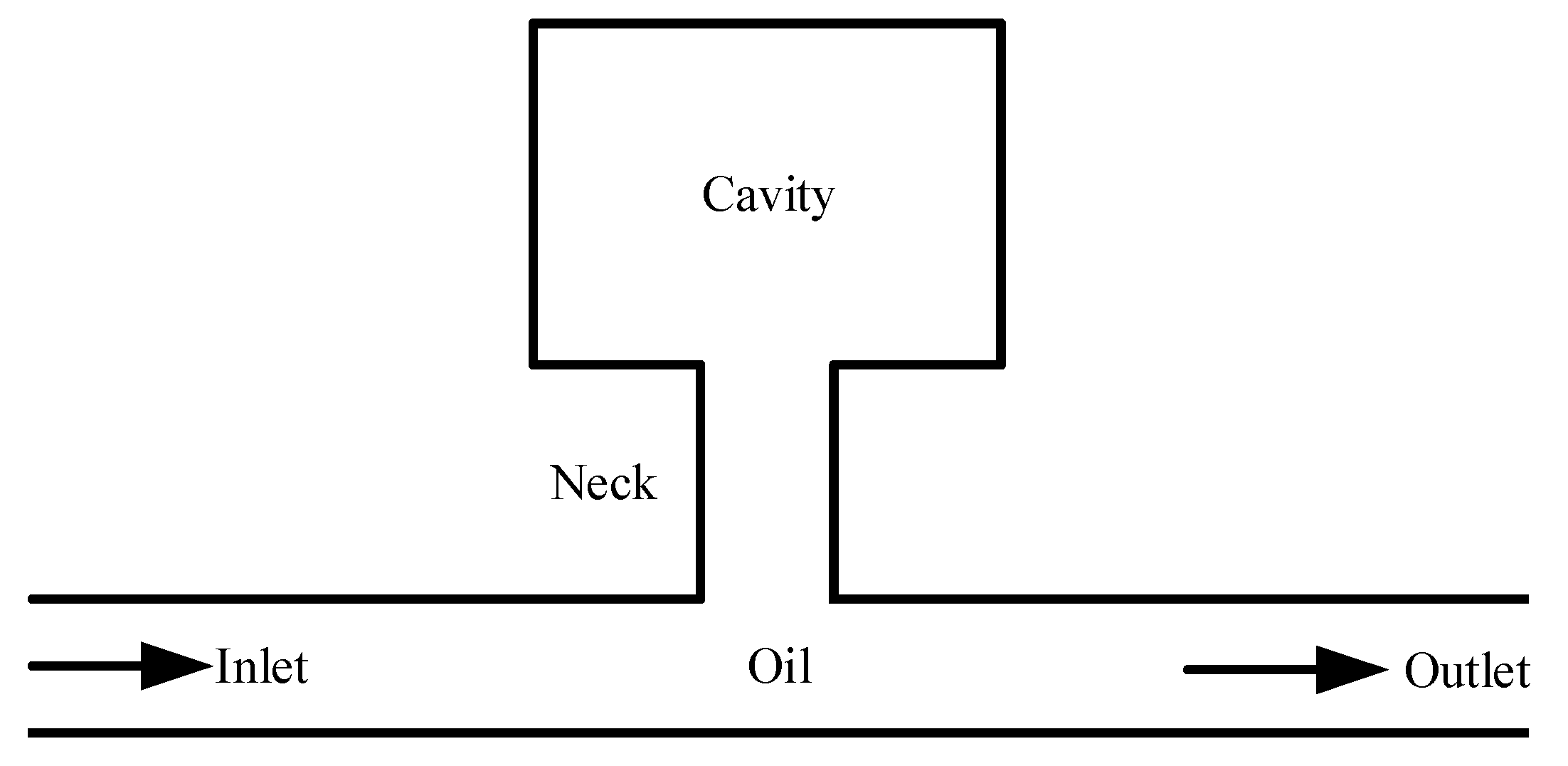
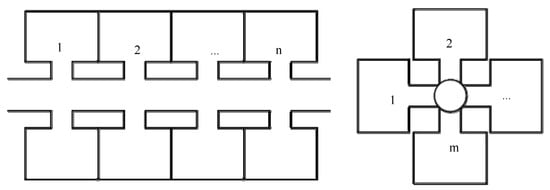
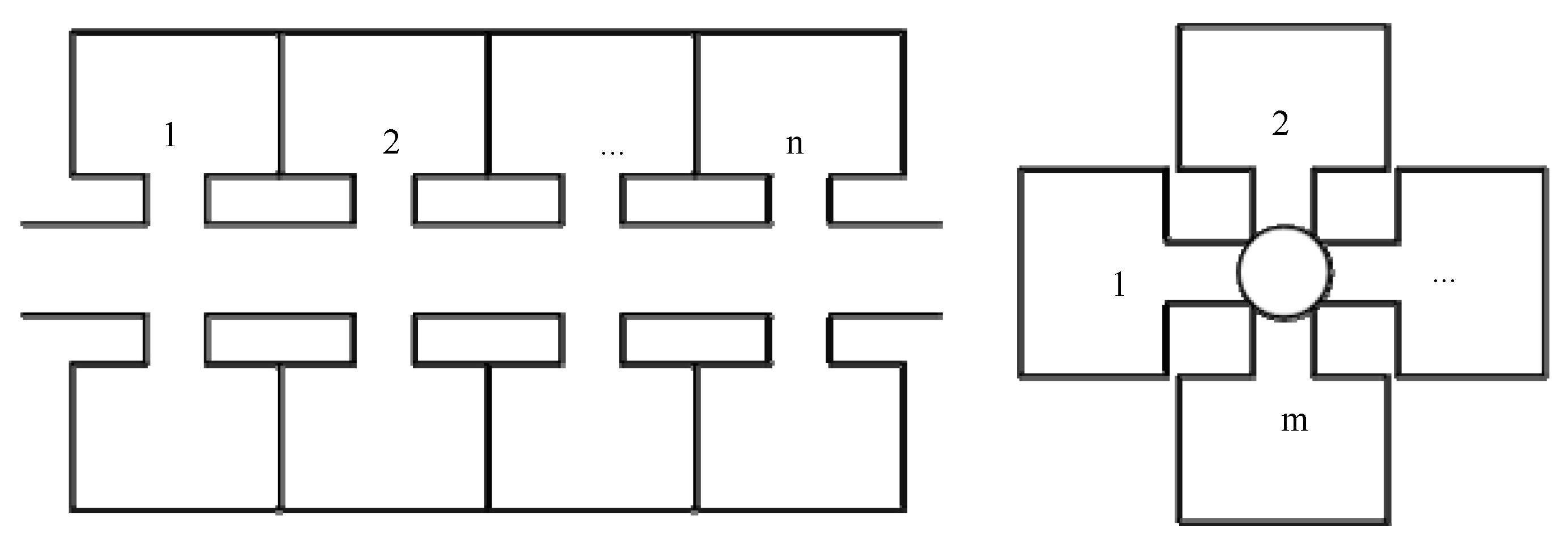
Based on the principle of Helmholtz vibration damping, a kind of pressure pulsation damping device with multiple holes in parallel is designed in this paper. Under the action of pressure pulsation, the liquid column in the neck moves up and down repeatedly, and the friction and damping between the liquid column and the wall surface transform part of pulsation energy into heat energy dissipation. When the resonance frequency of the system is close to or consistent with the pulse frequency, the pulse energy consumption is the largest. The fundamental theoretical model is shown in Figure 1 and Figure 2.
Figure 1.
Helmholtz Vibration Elimination Principle.
Figure 2.
Structure of Porous Parallel Pressure Pulsation Damper.
2.2. Establishment of Mathematical Model for Pressure Pulsation Damping Device
The multi-hole parallel pressure pulsation damping device is composed of multiple Helmholtz-type pressure pulsation damping devices in parallel, so it is necessary to establish these multiple Helmholtz-type pressure pulsation damping devices first. When establishing the multi-hole parallel pressure pulsation damping device, the following assumptions should be made: All branch holes are assumed to have the same geometric parameters, so that the volume flow rate is approximately uniformly distributed among the parallel branches. Ignore the local pressure loss at the connection between the main pipe and the branch hole. It is assumed that the individual Helmholtz cavities interact mainly through a common main pipe, and the direct strong coupling between the cavities is not explicitly modeled. Based on the above assumptions and frequency method, the mathematical model of the Helmholtz pressure pulsation damping device is:
where is the apparent volume elastic modulus, is the density of oil medium, is the length of the neck pipe, is the flow area of the neck pipe, is the volume of the cavity, and is the relative friction coefficient.
For the convenience of selecting the relative friction coefficient, the determination coefficient is defined to adjust the friction damping strength of the pipeline as a whole:
Select the relative friction coefficient in the corresponding interval according to different values, as shown in Formula (3):
where , is the motion viscosity of the oil in the pipeline, is the pressure fluctuation angle frequency of the oil medium, and is the oil radius in the pipeline.
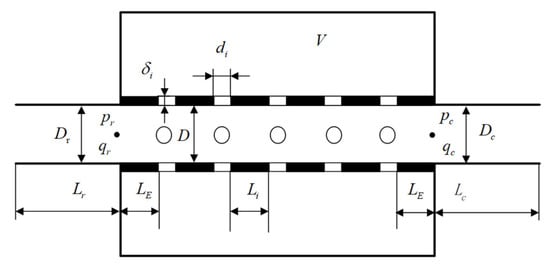
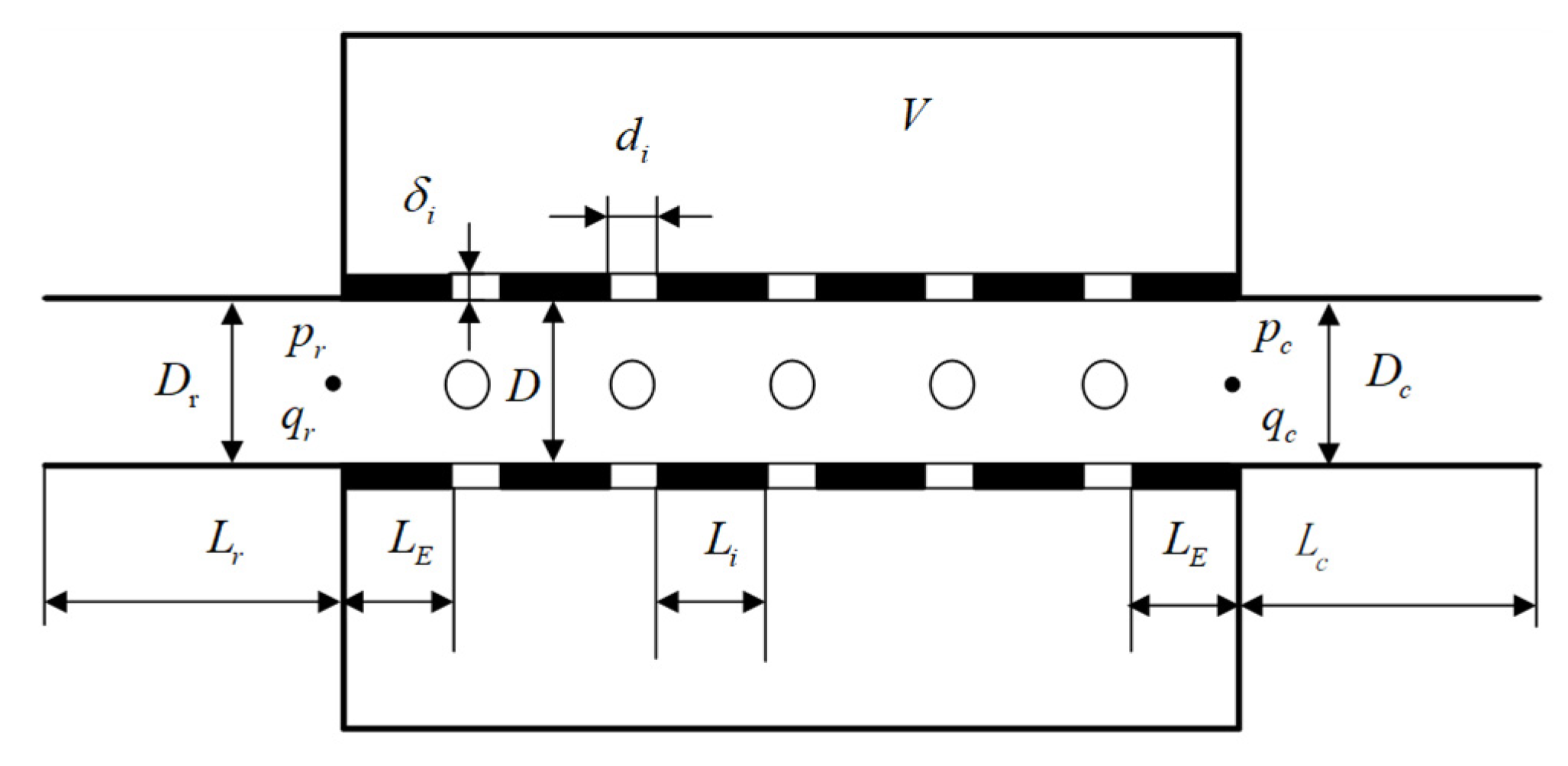
The equivalent structure diagram of multi-hole parallel pressure pulsation damping device is shown in Figure 3. The number of radial openings is , and the number of axial openings is .
Figure 3.
Equivalent structure diagram of porous parallel pressure pulsation damper.
The holes along the radial direction, i.e., multiple branch line models at the same location, can be viewed as multiple Helmholtz-type pressure pulsation damping devices in parallel, which are mathematically modeled as:
where is the opening length, is the opening area, is the volume of the corresponding volume, is the complex frequency-domain variable in the Laplace transform.
There are several sections of pipeline with length of in the multi-hole parallel pressure pulsation damping device, and the pipeline length near the end face of the cavity is . According to the distribution parameter method, the transmission matrix of each section of pipeline can be obtained as follows:
where is the propagation factor, is the speed of sound in the oil medium, and are the characteristic impedances of the pipeline.
Then, the transfer matrix between inlet pressure flow and outlet pressure flow of multi-hole parallel pressure pulsation damper is:
The insertion loss is selected to evaluate the vibration elimination characteristics of the pressure pulsation damping device. The insertion loss represents the ratio of the pressure pulsation at the load end of the system before the installation of the vibration damping device to the pressure pulsation at the load end after the installation of the vibration damping device:
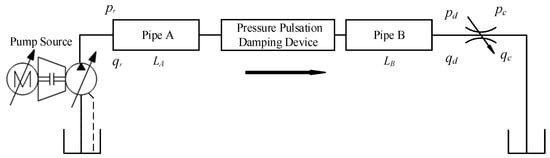
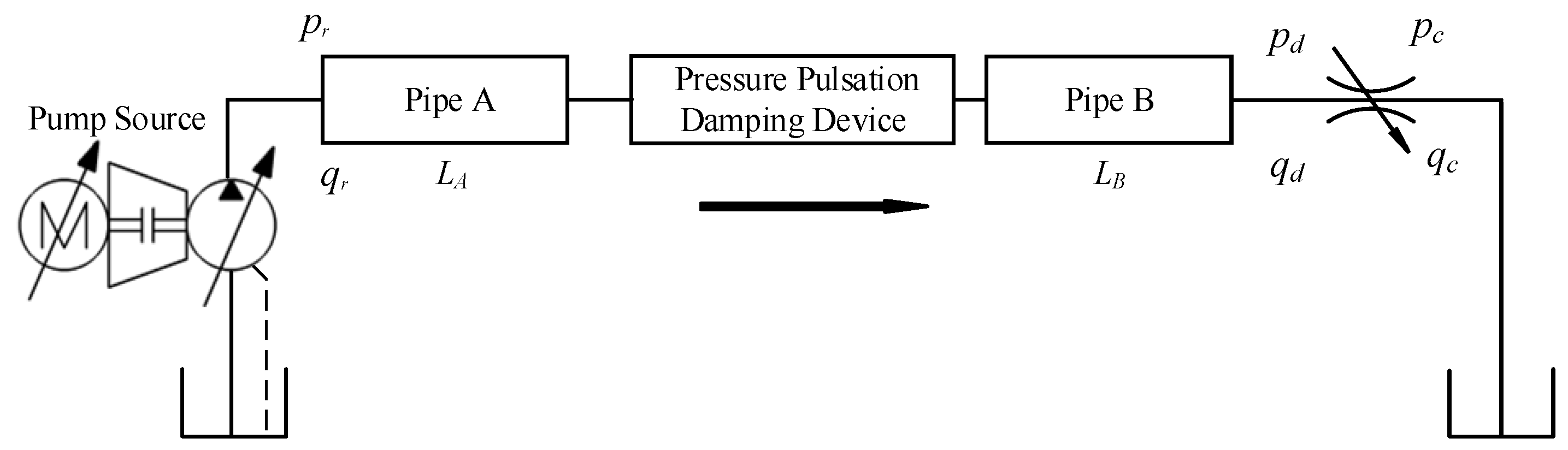
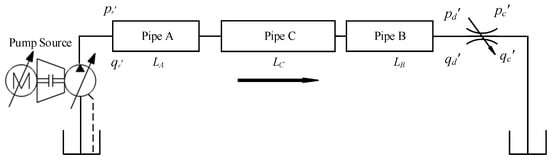
The multi-hole parallel pressure pulsation damping device is installed in the hydraulic system pipeline, as shown in Figure 4. Because of constraints in the experimental setup, it was not possible to install measurement points directly at the inlet and outlet of the damping device. As a result, a straight pipe with a length of was used to connect the hydraulic pump outlet to the device, and a straight pipe with a length of was used to connect the device to the load side. In the figure, and are the pressure and flow at the pipeline inlet, respectively; and are the pressure and flow in front of the load end, respectively; and are the pressure and flow after the load end, respectively.
Figure 4.
Schematic diagram of pressure pulsation vibration elimination system.
Pipelines and adopt the distribution parameter method to establish their transfer matrix, as follows:
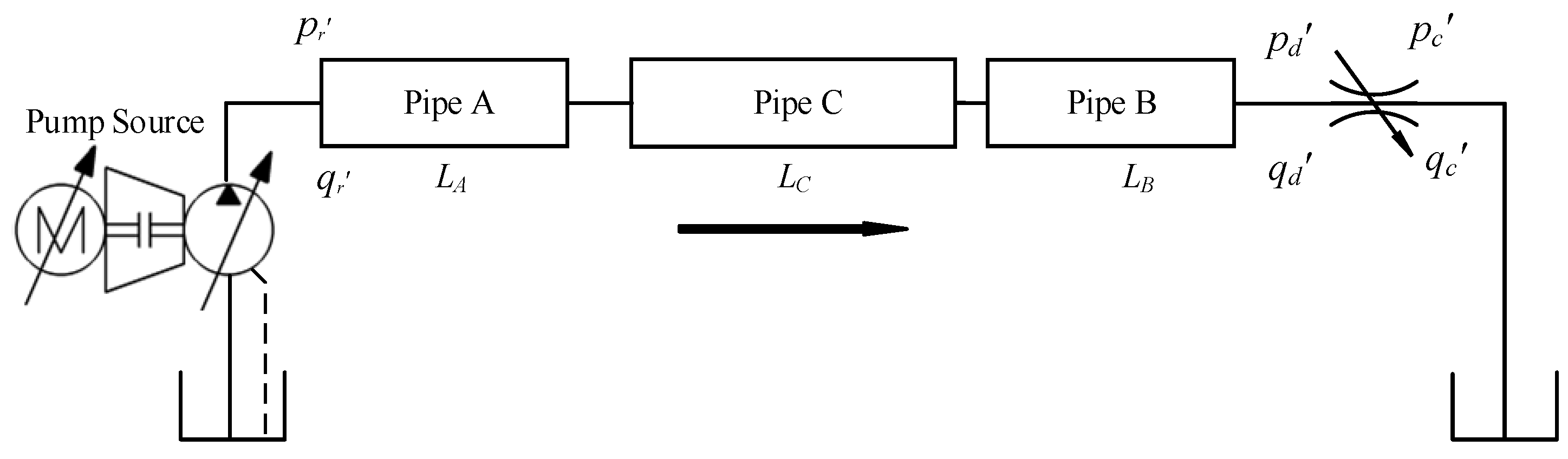
When the pulsation dampener is not installed, replace the pulsation dampener with a line of length connected to the loop as shown in Figure 5.
Figure 5.
Schematic diagram of system without pressure pulsation damper.
Then the transfer matrix model of pipeline is:
Let ; in the pressure pulsation damping system, the pressure and flow transfer matrix in front of the inlet end and the load end is:
Let ; in the system where the pressure pulsation damping device is installed, the pressure and flow transfer matrix in front of the inlet end and the load end is:
Assuming a certain working condition before and after the installation of the vibration elimination device, it can be considered that the flow at the system inlet is consistent with , and the expression formula of the insertion loss is obtained:
3. Method
3.1. Establishment of CFD Simulation Model for Pressure Pulsation Attenuator
Using the industry-leading commercial computational fluid dynamics software ANSYS Fluent 2024 R1, a range of advanced turbulence models are provided to ensure fast convergence speeds and exceptional solution accuracy. The software features a user-friendly and intuitive interface, allowing users to efficiently perform complex fluid dynamics analysis and simulations.
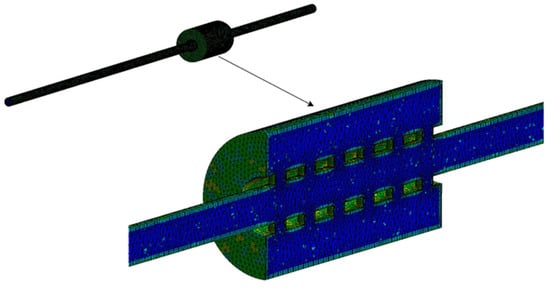
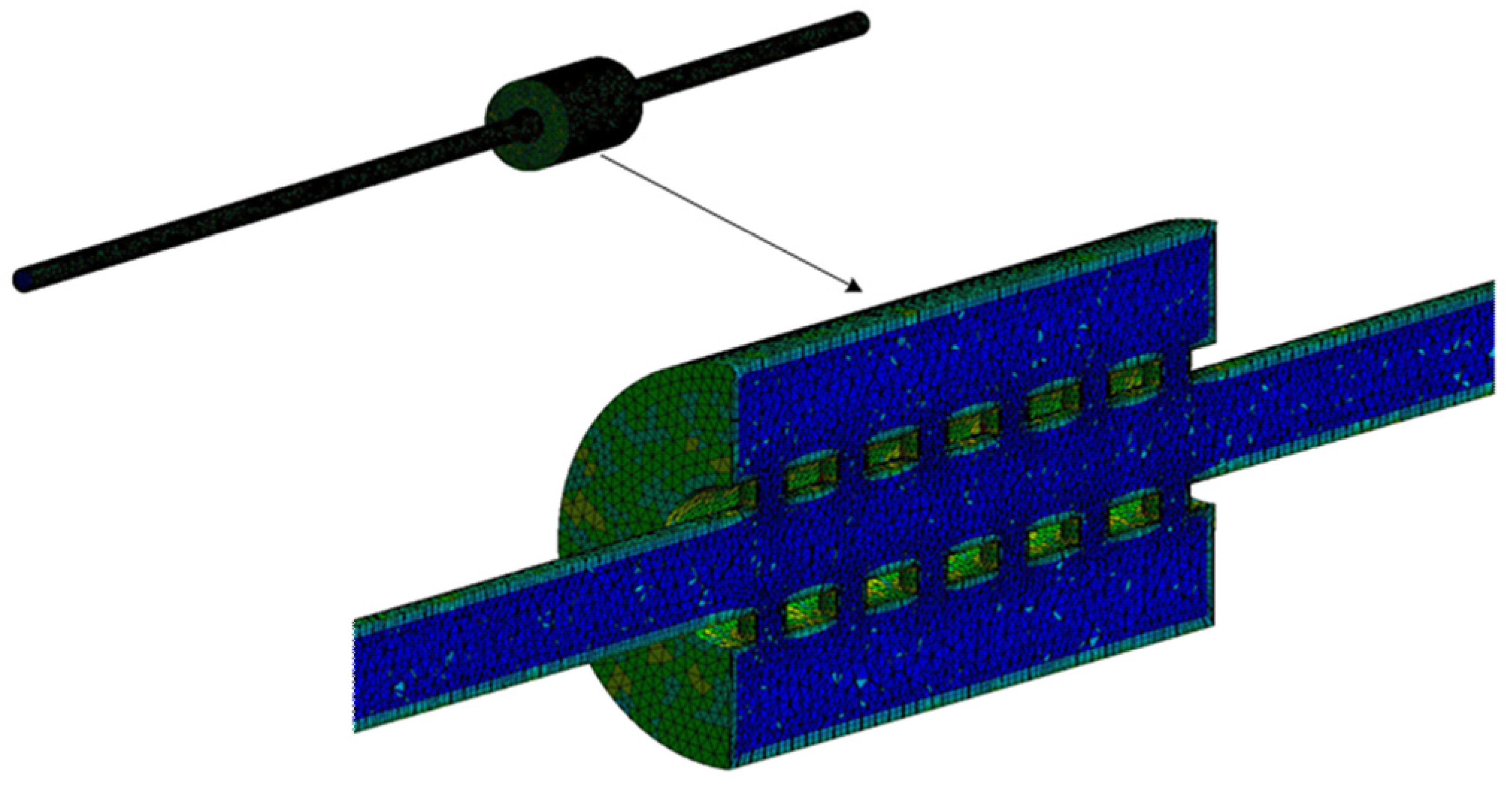
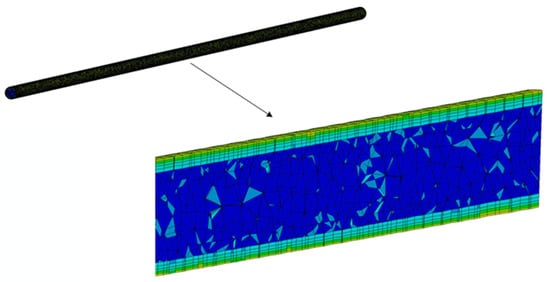
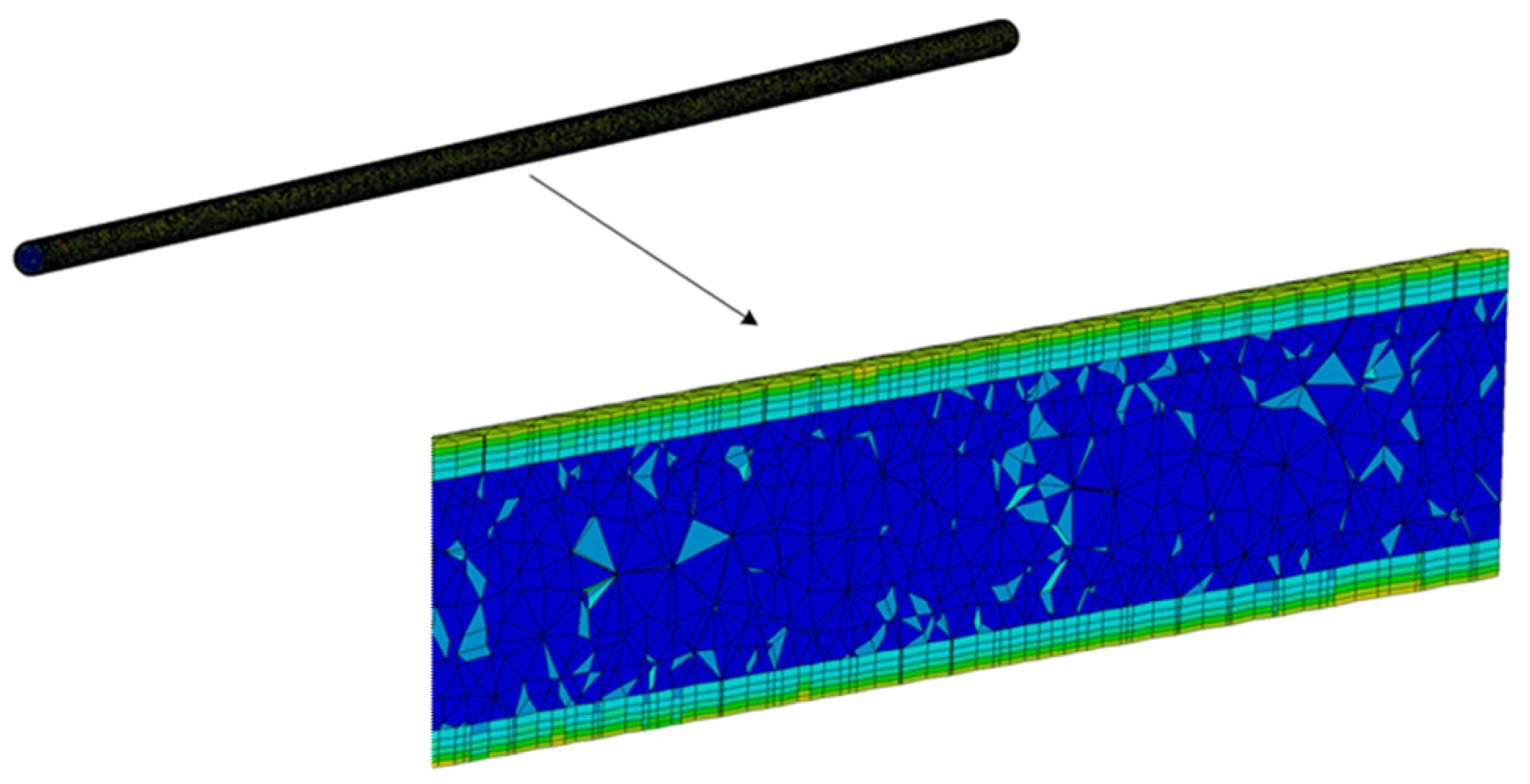
First, based on the pump rotational speed, the number of plungers, and the measured pipeline pressure spectrum, the frequency range of pressure pulsations that needs to be mainly suppressed is determined. Then, on the basis of the Helmholtz resonance principle and combined with the theoretical analysis and numerical–experimental results from our previous work, the structural parameters, including the cavity volume and the neck length and diameter, are selected so that the resonance frequency of the attenuator falls within the target frequency band and a large insertion loss is achieved in this band. The final structural parameters are listed in Table 1. On this basis, a three-dimensional internal fluid-domain model of the porous parallel pressure pulsation damping device is established, and meshing is performed, as shown in Figure 6 and Figure 7. A hybrid tetrahedral–hexahedral mesh is adopted. To improve near-wall resolution, five inflation layers are applied. For mesh quality control, the smoothing option is set to High, and the global element size is controlled at 2 mm [22]. In addition, an adaptive meshing/refinement strategy is employed to automatically refine the mesh in regions that have a strong influence on the results—such as the boundary layer and the liquid columns inside small holes—thereby enabling more accurate capture of key flow features and improving computational accuracy. The resulting baseline mesh for the internal fluid domain contains 693,588 elements and 250,035 nodes, with a minimum cell volume of 2.72 × 10⁻¹¹ m3. The number of grid cells in the internal fluid domain without the pressure pulsation damping device installed is 360,932, with 141,125 nodes and a minimum cell volume of 1.33 × 10⁻¹⁰ m3.
Table 1.
Main parameters of model.
Figure 6.
Mesh delineation of mounted pressure pulsation damping device.
Figure 7.
Mesh division of uninstalled pressure pulsation damping device.
To ensure that the numerical simulation results do not change significantly with mesh refinement, and thus to guarantee the reliability of the computed results, a mesh refinement study and grid-independence verification were further conducted. The general criteria for confirming grid independence are as follows: after further mesh refinement, the relative deviation of key physical quantities should remain within an acceptable range, and meshes with different refinement levels should exhibit consistent core dynamic features, such as the frequency characteristics of the flow field. Once these criteria are satisfied, the solution can be regarded as grid-independent, and an optimal mesh can be selected by balancing accuracy and computational cost.
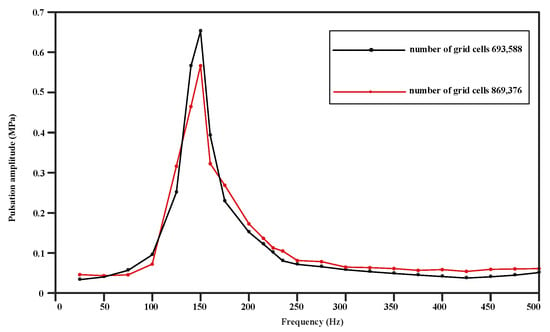
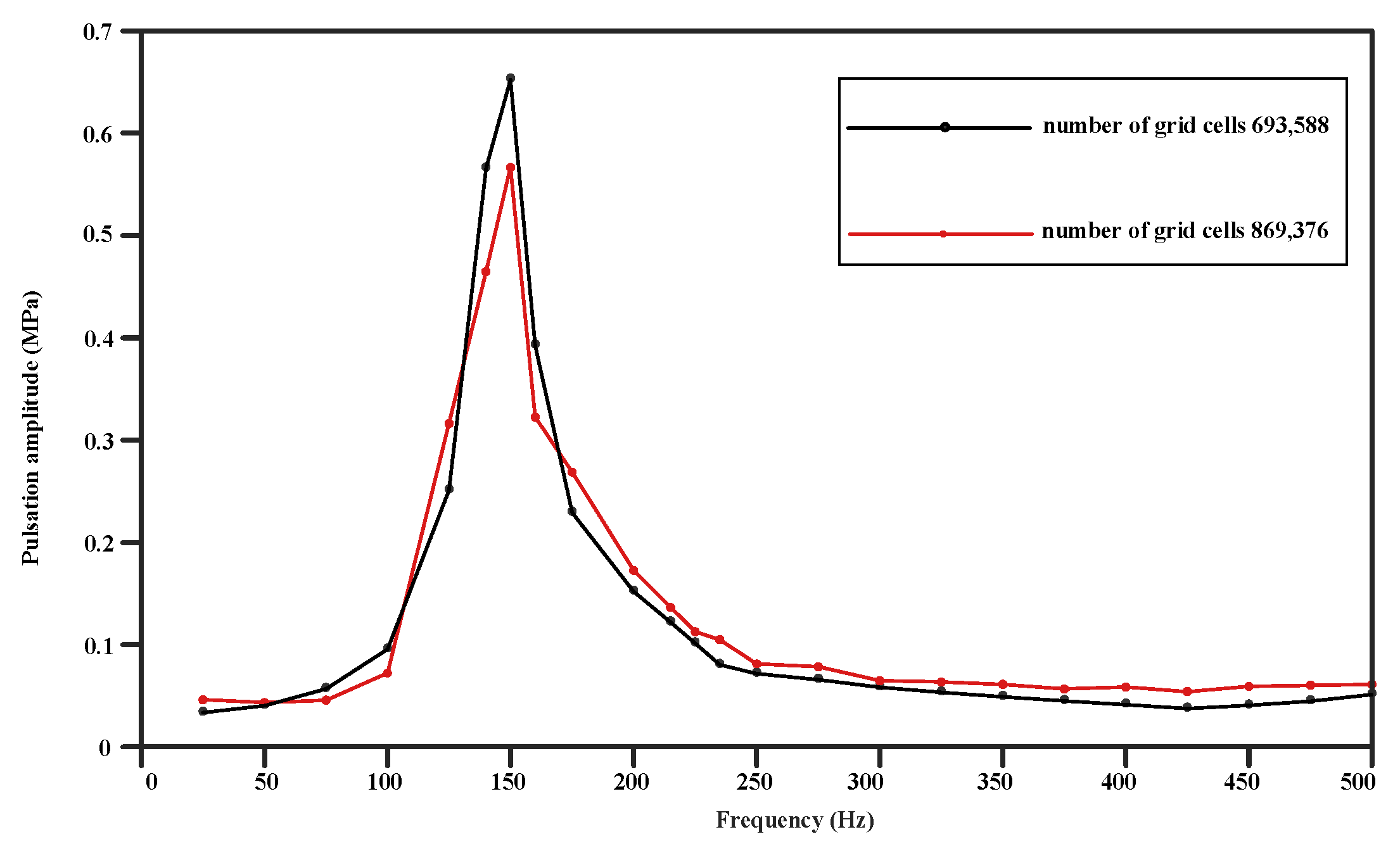
Based on this principle, when establishing the internal fluid-domain model of the porous parallel pressure pulsation damping device, two meshes containing 693,588 and 869,376 elements were selected for comparative simulations, and the frequency-domain pulsation amplitudes under different mesh resolutions were extracted and compared (Figure 8). The results indicate that, compared with the 869,376-element mesh, the 693,588-element mesh yields a deviation of only 0.22% in the average volume fraction, and the variation trend of the frequency-domain pulsation amplitude remains consistent. This demonstrates that the simulation results do not change significantly with further mesh refinement. Therefore, both meshes are suitable for investigating the vibration attenuation characteristics of the porous parallel pressure pulsation damping device. Considering both computational accuracy and efficiency, the mesh with 693,588 elements was adopted for the subsequent analyses.
Figure 8.
Schematic diagram of grid independence verification.
In the aviation hydraulic piping system, the pressure pulsation damping device is faced with the complex and harsh working conditions of high pressure and large flow, which requires high specifications for the hydraulic fluid. Therefore, this paper selects No. 46 anti-wear hydraulic oil, the main parameters of the fluid as shown in Table 2.
Table 2.
Main parameters of the fluid.
We set the oil medium parameters. In the boundary condition setting, considering that the oil flowing from the piston pump has periodic flow pulsation, the inlet selects the mass flow rate inlet and uses the UDF function to customize the mass flow rate of the inlet as in Equation (15). The outlet boundary condition type is selected as pressure outlet.
where is the mean value of mass flow rate, is the first-order mass flow rate pulsation coefficient, second-order mass flow rate pulsation coefficient, and are the first-order pulsation frequency and second-order pulsation frequency, respectively.
The solver type is selected as pressure-based solver, the simulation type is set as transient simulation, and the turbulence model is selected as a standard k-ε model. The 50 mm in front of the inlet of the damping device is used as the monitoring point , the 50 mm after the outlet of the damping device is used as the monitoring point , and the pressure at both places is monitored. When the vibration damping device is not installed, monitoring points and are set at the same location of the straight pipe.
3.2. Test Principles and Test Platforms
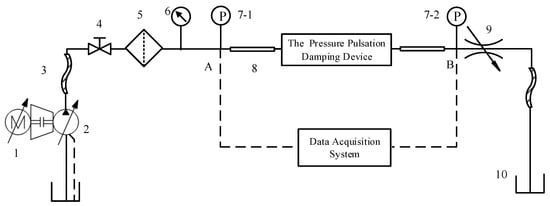
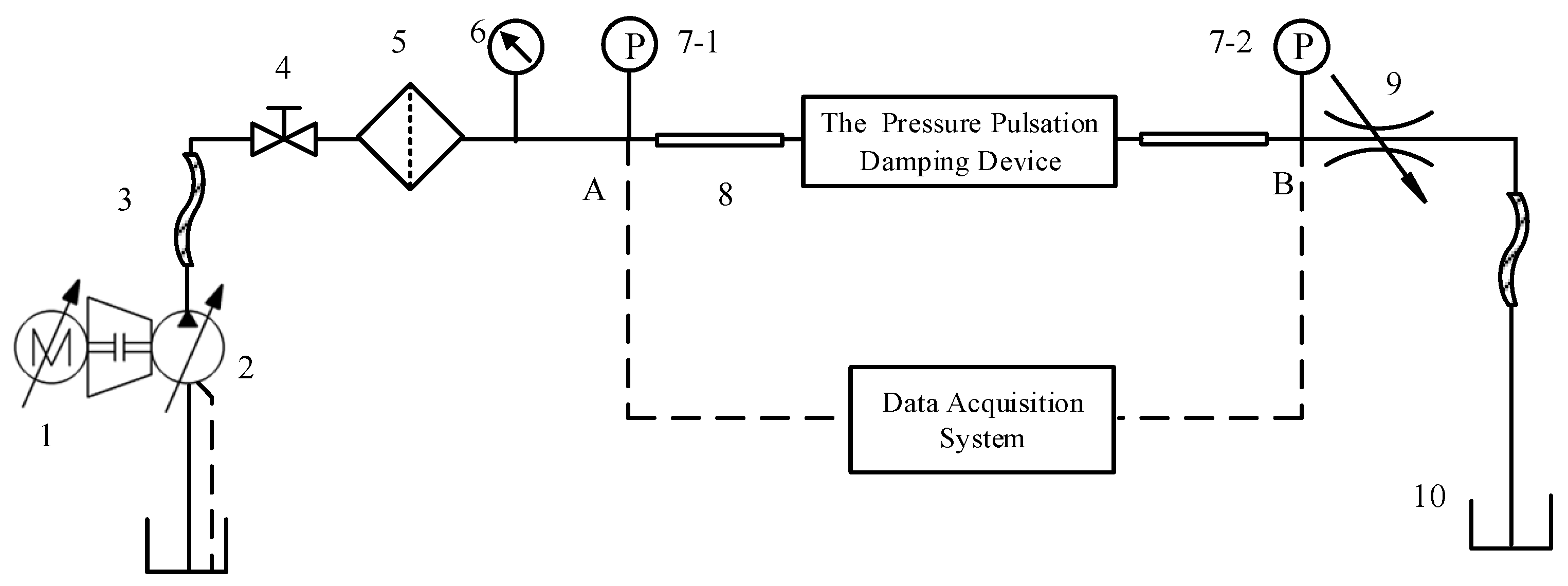
The testing principle of the hydraulic system vibration damping test bench is shown in Figure 9. It primarily consists of a variable frequency motor (1), a piston pump (2), high-pressure hoses (3), high-pressure shut-off valves (4), filter (5), pressure gauge (6), pressure transmitters (7), rigid tubing lines (8), throttle valve (9), and an oil tank (10). The pressure sensor used is a HYDAC pressure transmitter, model HYDAC HAD-4746-A-400-000, with a range of 400 bar, an accuracy of 0.25%, and an analog output of 4–20 mA, which meets the experimental measurement requirements. The rigid tubing has a length of 400 mm and a diameter of 16 mm. A dynamic pressure sensor A is installed at the outlet of the hydraulic pump to monitor pressure pulsations at the pump source outlet. A pressure transmitter B is installed at the front end of the load to monitor pressure pulsations after passing through the damping device. The pressure pulsation signals at points A and B are stored and recorded by the data acquisition system to facilitate subsequent data processing and analysis.
Figure 9.
Schematic diagram of hydraulic system vibration damping test bench.
4. Results
4.1. Analysis of CFD Simulation Results
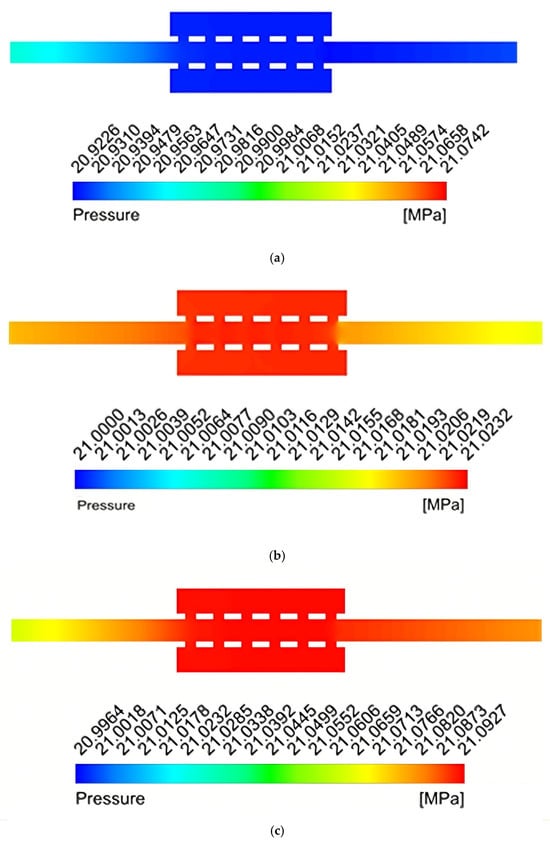
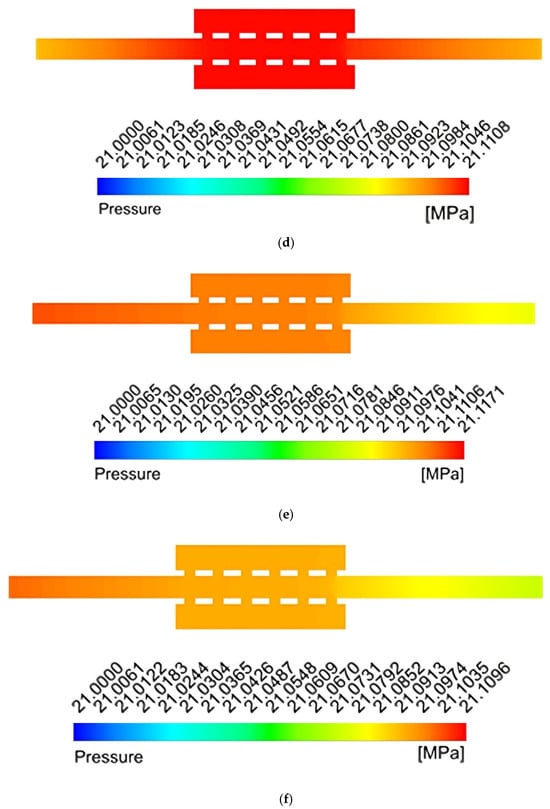
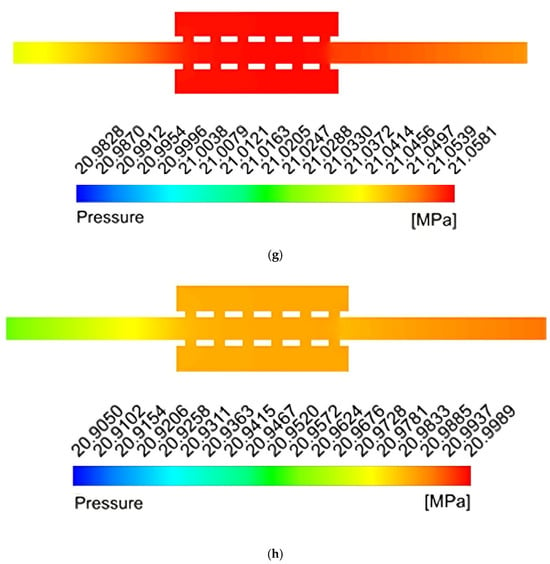
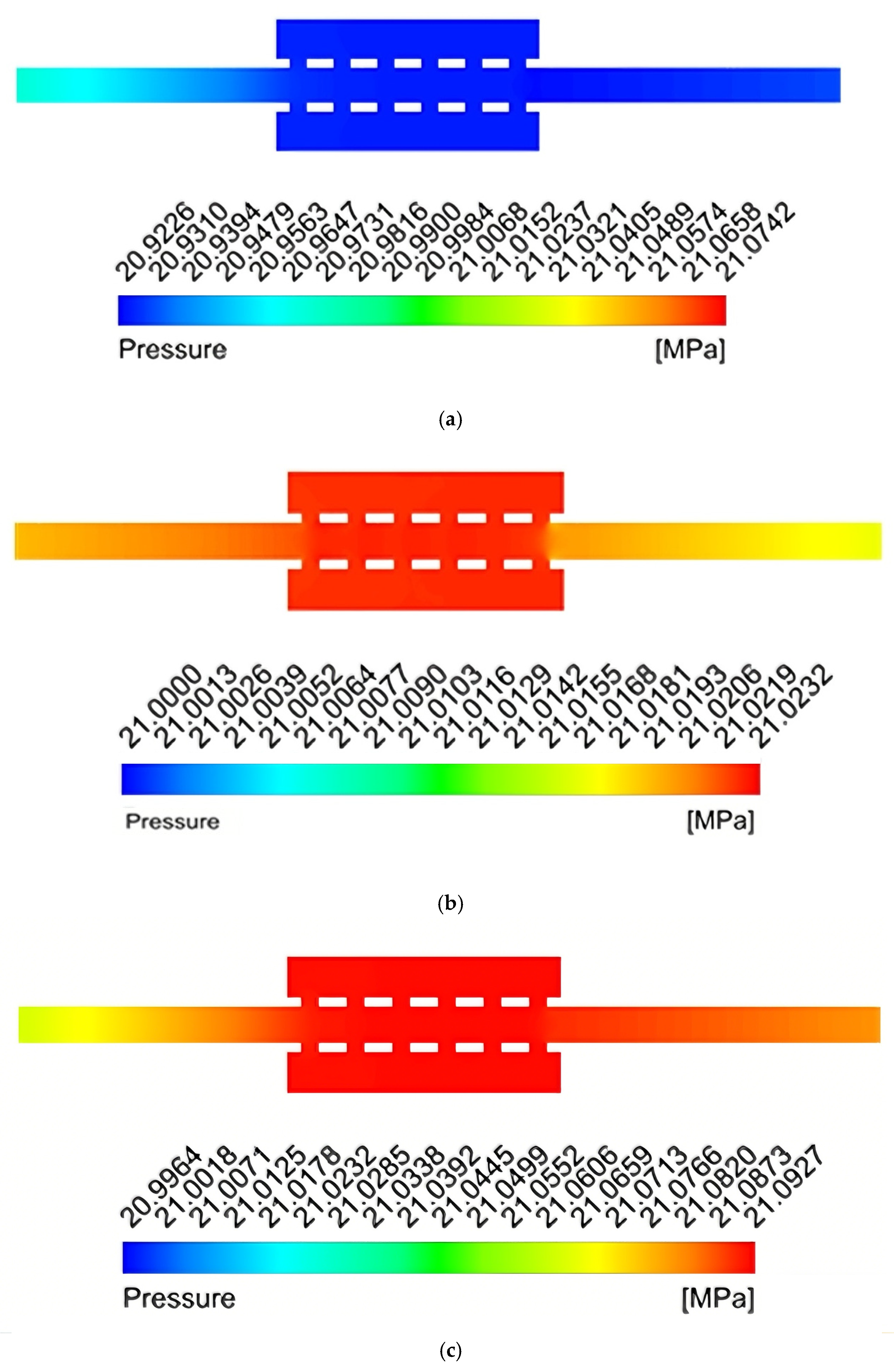
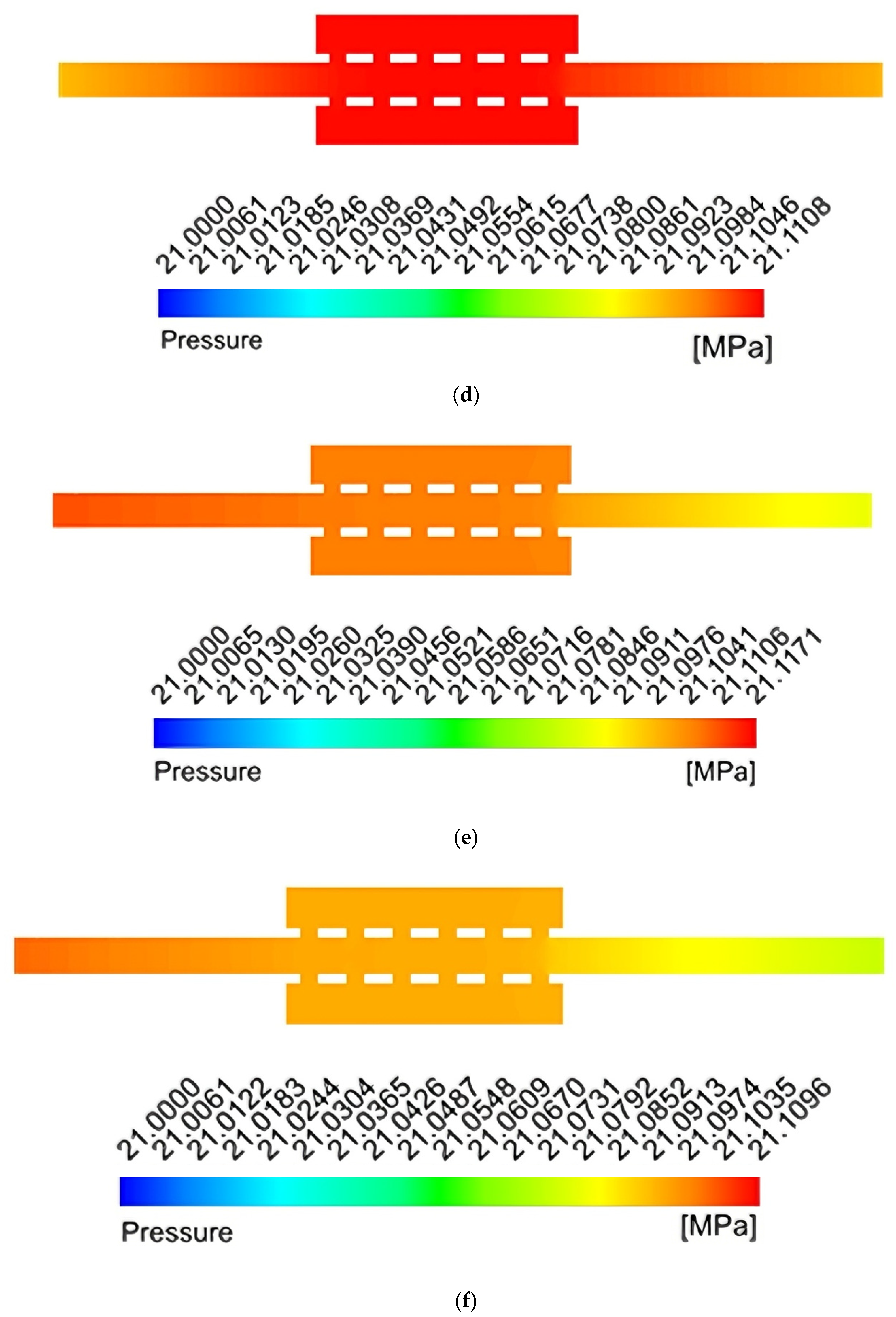
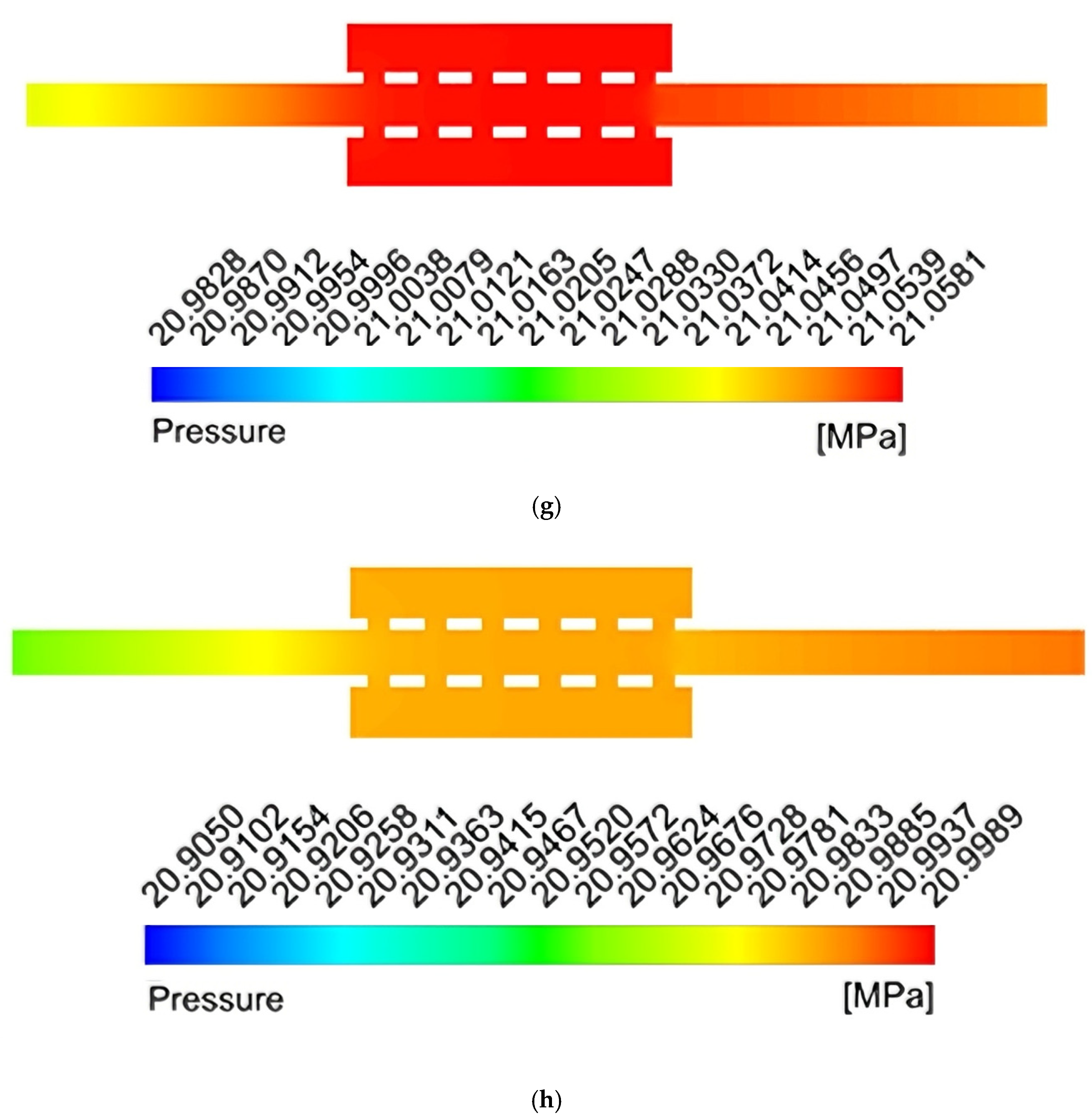
A suitable time step size of 20 and a time step number of 400 are set for the transient solution calculation. After the initial transient process decays, the oil flow reaches a periodic steady state. A representative time window from 0.07600 s to 0.07911 s is selected, and the pressure nephogram is extracted every 0.00044 s within this window. As shown in Figure 10, the pressure pulsation propagates along the pipeline. During one pulsation cycle, the pressure inside the vibration damping device gradually increases from a minimum of 20.9226 MPa to a maximum of 21.1108 MPa, and then gradually decreases. After installing the pressure pulsation damping device, the pressure pulsations in the pipeline are smoothed, with fluctuations not exceeding 0.4 MPa.
Figure 10.
Pressure cloud inside the porous parallel pressure pulsation attenuator. (a) 0.07600 s, (b) 0.07644 s, (c) 0.07688 s, (d) 0.07733 s, (e) 0.07778 s, (f) 0.07822 s, (g) 0.07867 s, (h) 0.07911 s.
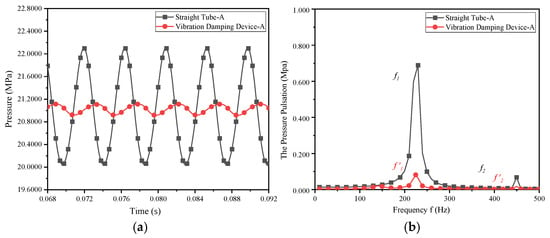
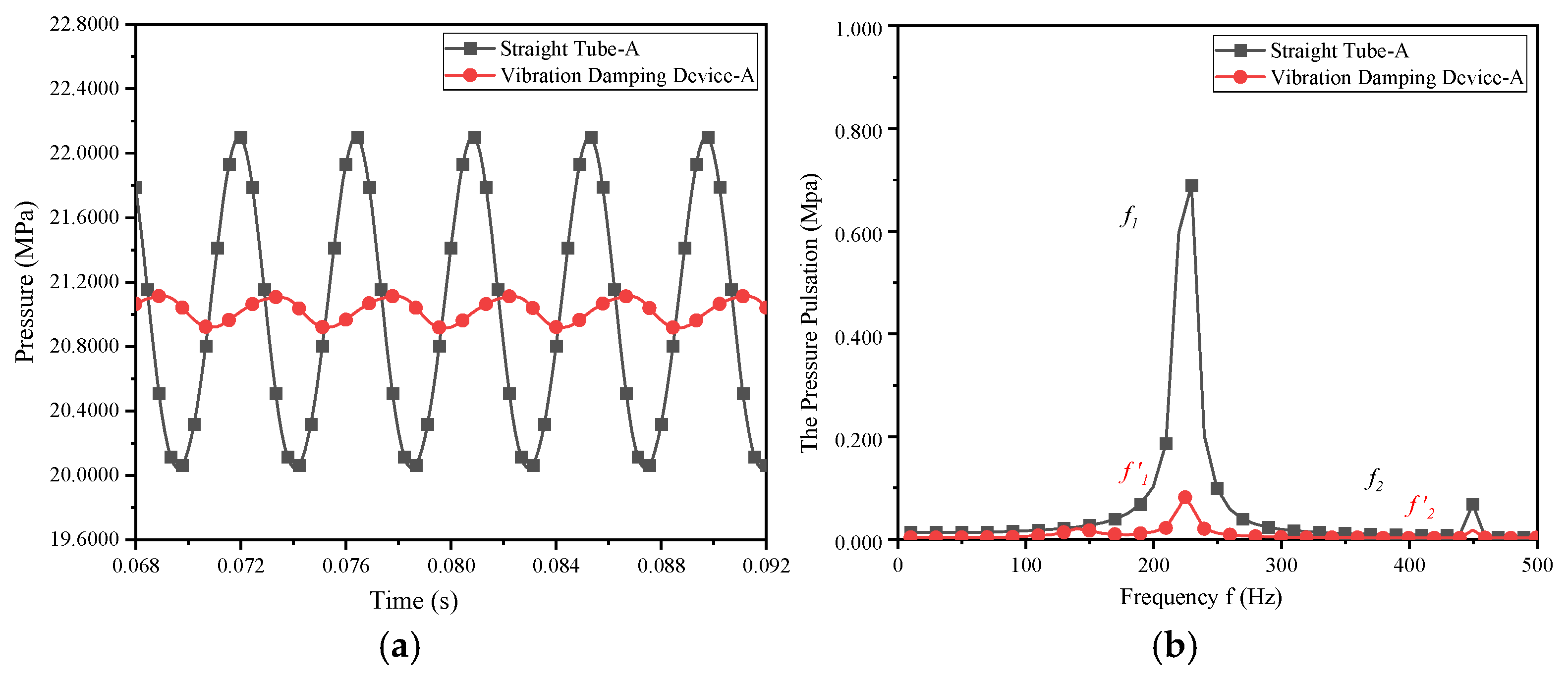
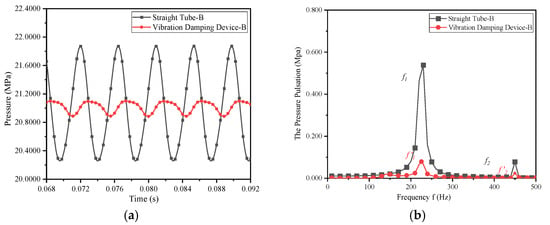
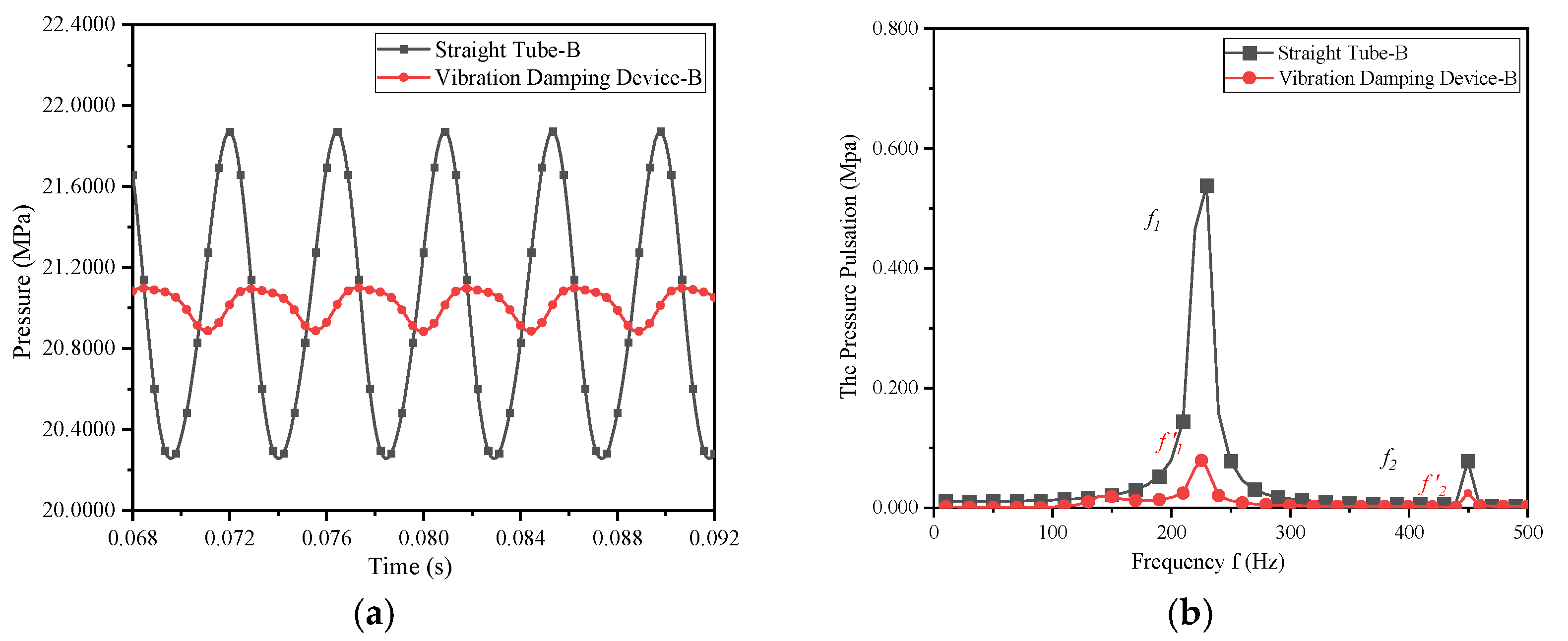
To further study the damping characteristics of the multi-hole parallel pressure pulsation damping device, the pressure data at monitoring point were extracted and analyzed for comparison. As shown in Figure 11a, after installing the pressure pulsation damping device, the pressure fluctuation at the inlet is greatly reduced, and the peak value of pressure pulsation is reduced from 2.0342 MPa to 0.1923 MPa, which has a significant damping effect. As seen in Figure 11b, at the first-order pulsation frequency (225 Hz), the pressure pulsation is reduced by about 88%; at the second-order pulsation frequency (450 Hz), the pressure pulsation is reduced by about 73%. Extracting the pressure data at the monitoring point and analyzing it comparatively, as shown in Figure 12, the pressure fluctuation at the outlet becomes smooth, the peak value of pressure pulsation is reduced by 1.4021 MPa, and the vibration damping effect is obvious. At the first-order pulsation frequency (225 Hz), the decrease is more than 80%; at the second-order pulsation frequency (450 Hz), the pressure pulsation is reduced by 0.0537 MPa, a decrease of about 69%.
Figure 11.
Time–frequency variation curve of pressure pulsation at monitoring point A. (a) Time-domain comparison curves. (b) Frequency-domain comparison curves.
Figure 12.
Time–frequency variation curve of pressure pulsation at monitoring point B. (a) Time-domain comparison curves. (b) Frequency-domain comparison curves.
4.2. Comparative Analysis of CFD Simulation and Mathematical Modeling
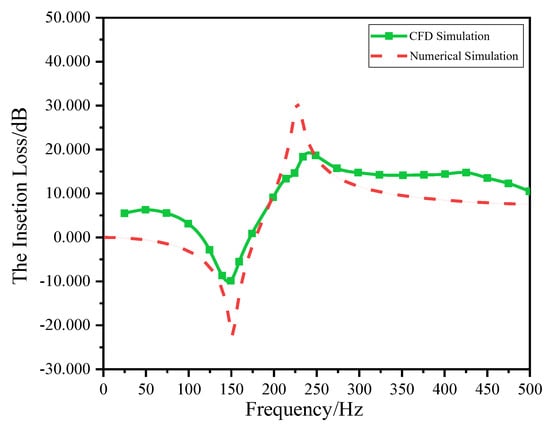
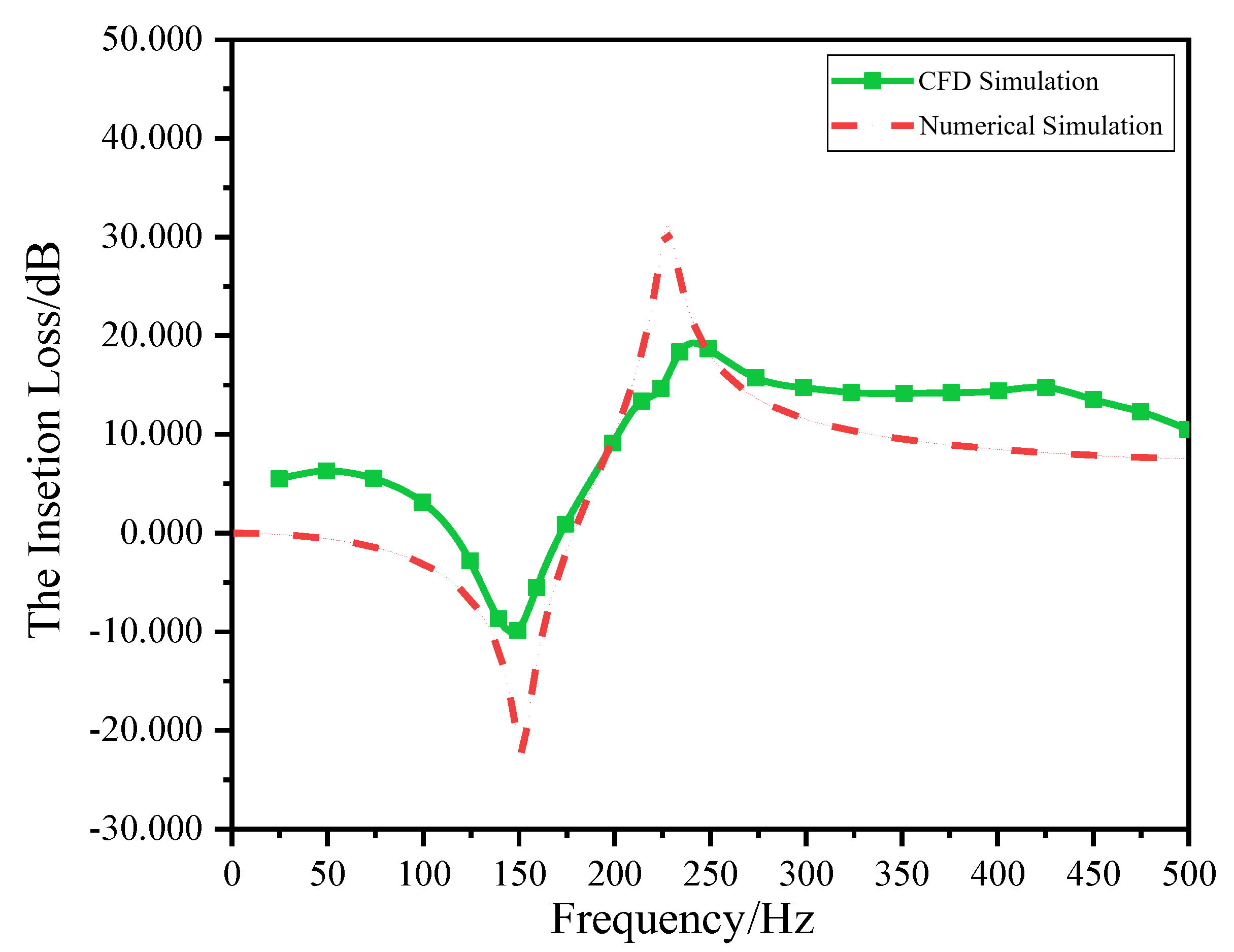
The mass flow rate of the inlet boundary condition was reset, and the pulsation frequency was set at 0–500 Hz, with intervals taken to be 25 Hz, and intervals taken to be 10 Hz near the crest and trough. This not only ensures the accuracy of the simulation results but also saves calculation time. The damping characteristic curve of the multi-hole parallel pressure pulsation damping device is obtained by CFD simulation, as shown in Figure 13. The overall trends of the two are basically consistent, mutually verifying the validity of the CFD simulation model and the mathematical model. Among them, the peak frequency of CFD simulation deviates from the numerical model, but both are close to the first-order pulsation frequency, with an insertion loss of 14.65 dB; at the second-order pulsation frequency, the insertion loss is 7.88 dB. Within the range of 200–500 Hz, the insertion loss is above 8 dB, demonstrating a broad vibration suppression bandwidth and remarkably effective damping performance. The reasons for the differences between the mathematical model and CFD simulation model are as follows: (1) The mathematical model is simplified at the branch pipeline, and the local pressure loss and the change of pressure pulsation here are ignored. (2) In the mathematical model, the vibration damping device is equally divided into parallel connection of multiple Helmholtz cavities, but the influence of each Helmholtz cavity on the pressure pulsation is not considered. (3) The mathematical model does not account for the impact of fluid turbulent flow on pressure pulsations, etc. The CFD simulation model takes the entire fluid domain inside the vibration damping device as its study object, considering the effects of local geometric structure changes. It employs a turbulence model to simulate pressure–velocity changes in the flow field, including the influence of each Helmholtz cavity on the fluid.
Figure 13.
Comparison of CFD simulation and numerical simulation damping characteristic curve.
4.3. Vibration Attenuation Tests Under Varying Load Pressures
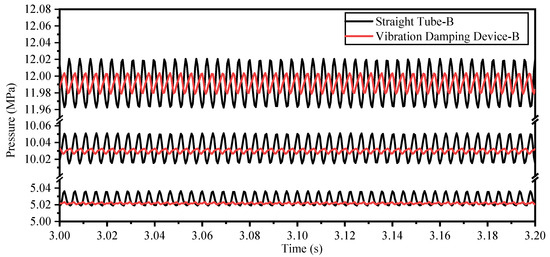
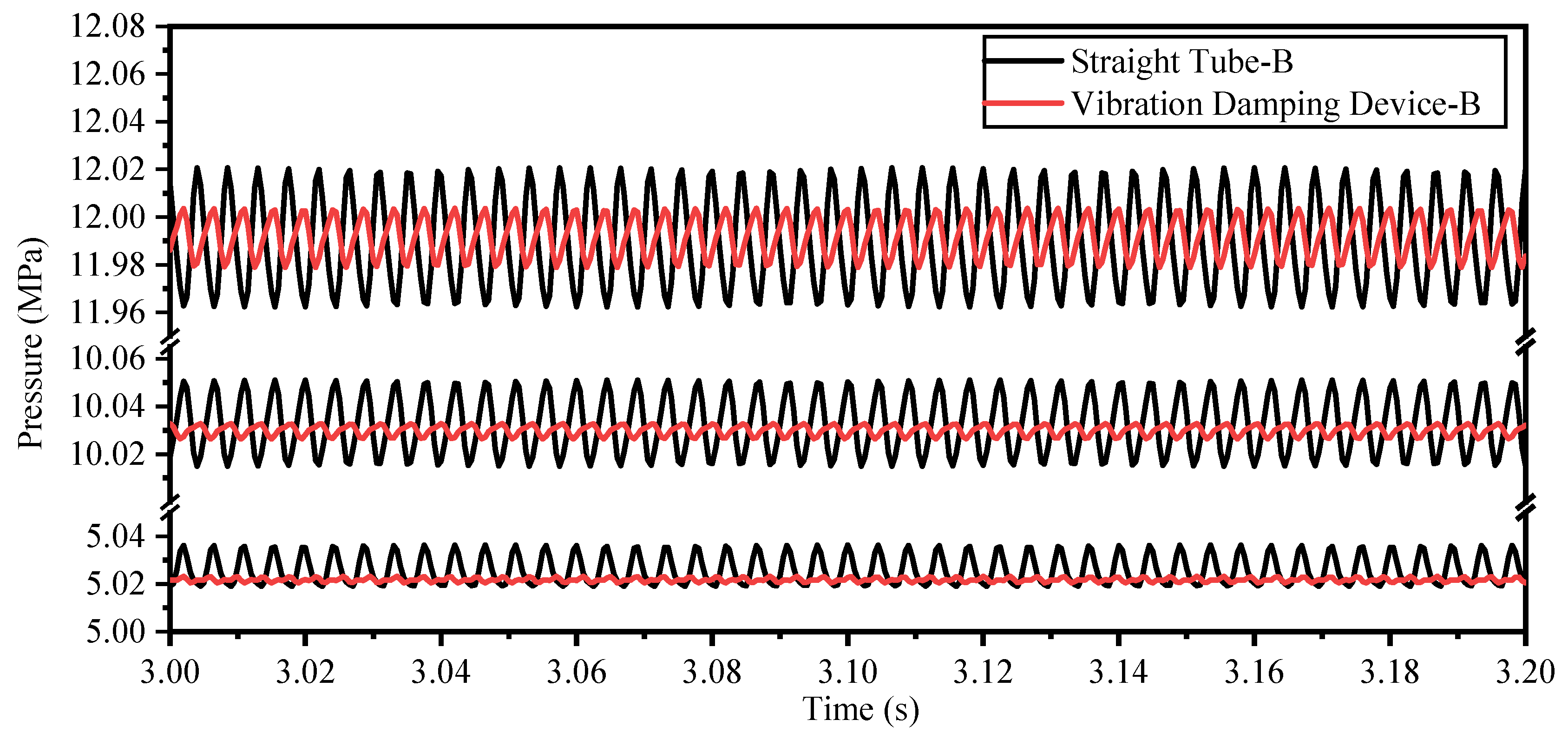
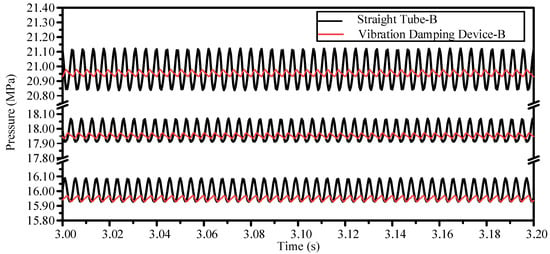
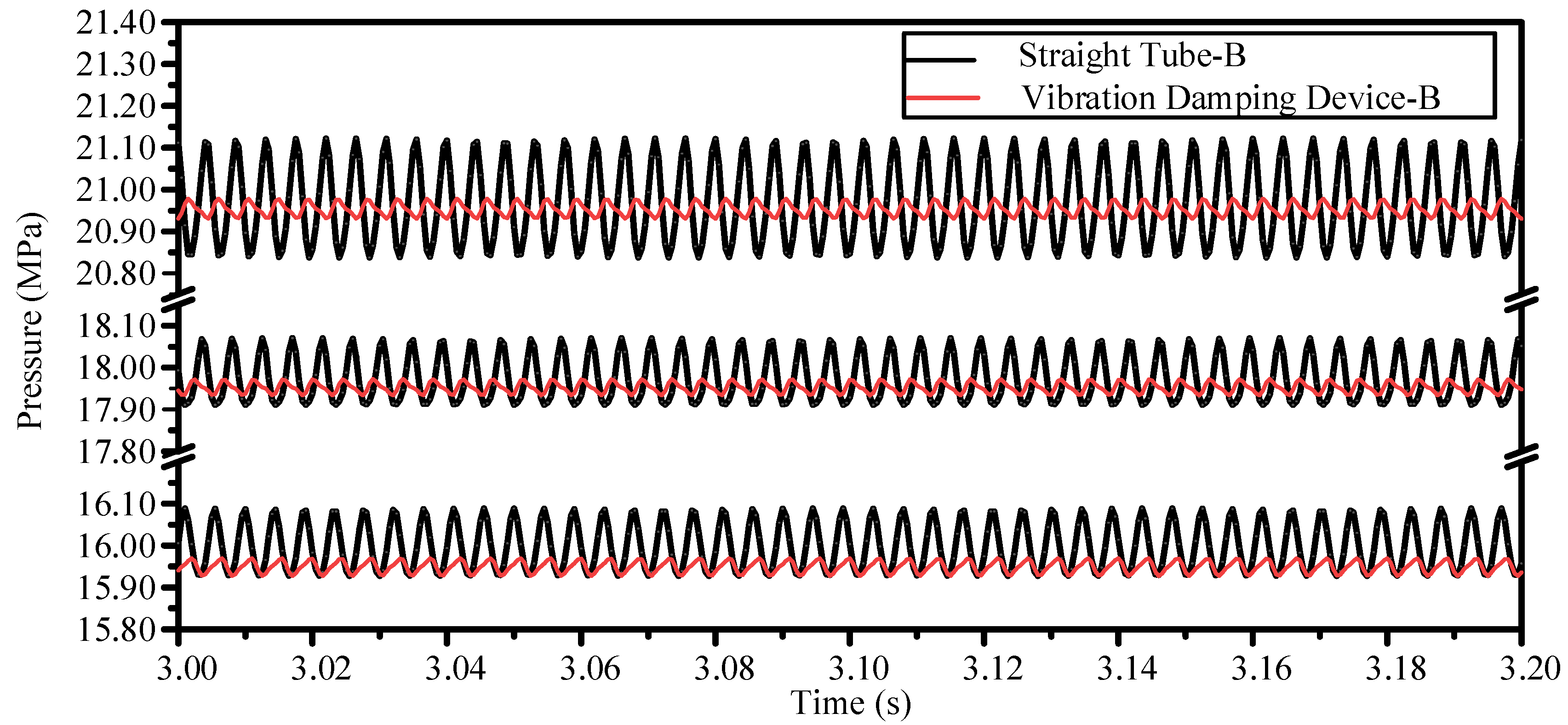
The multi-hole parallel pressure pulsation damping device is installed in the hydraulic pipeline system, the speed of the piston pump is set to 1500 rpm, and the flow rate is set to 18 L/min. The throttle valve is adjusted manually, and the load pressures are set to 5 MPa, 10 MPa, 12 MPa, 16 MPa, 18 MPa, and 21 MPa, with all other conditions remaining constant. The pressure pulsation changes at monitoring point B with and without the installation of the multi-hole parallel damping device are shown in Figure 14 and Figure 15.
Figure 14.
5–12 MPa pressure pulsation change curve.
Figure 15.
16–21 MPa pressure pulsation change curve.
As shown in Figure 14 and Figure 15, the changes in the peak-to-peak values of pressure pulsations at monitoring point B before and after installing the pressure pulsation damping device under various load pressures are summarized in Table 3. When the load pressure increases from 5 MPa to 21 MPa, the peak-to-peak value of pressure pulsation in the straight pipe gradually increases from 0.0169 MPa to 0.2836 MPa. After installing the pressure pulsation damping device, the peak-to-peak value of pressure pulsation decreases significantly, with the highest value being only 0.0458 MPa. At low-to-medium pressures, the peak-to-peak pressure pulsation reduction rate ranged from 55% to 85%, with the highest reduction occurring at 5 MPa. At higher pressures, the peak-to-peak reduction rate exceeded 70%, reaching a maximum of 83.85%, showing slightly better damping performance than at low to medium pressures. Time-domain analysis results further confirm that the pressure pulsation damping device exhibits superior damping performance across different load pressures.
Table 3.
Comparison of pressure pulsation peak-to-peak values at different load pressures.
4.4. Damping Characteristics Test
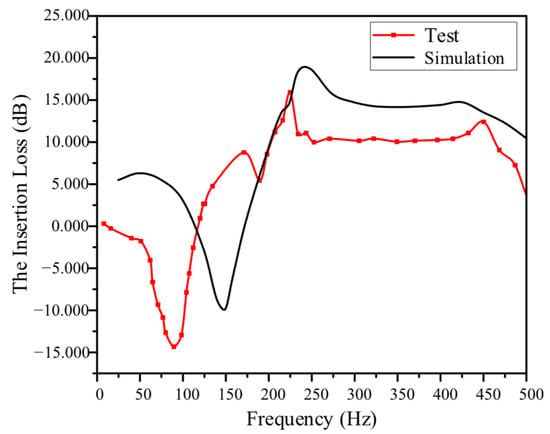
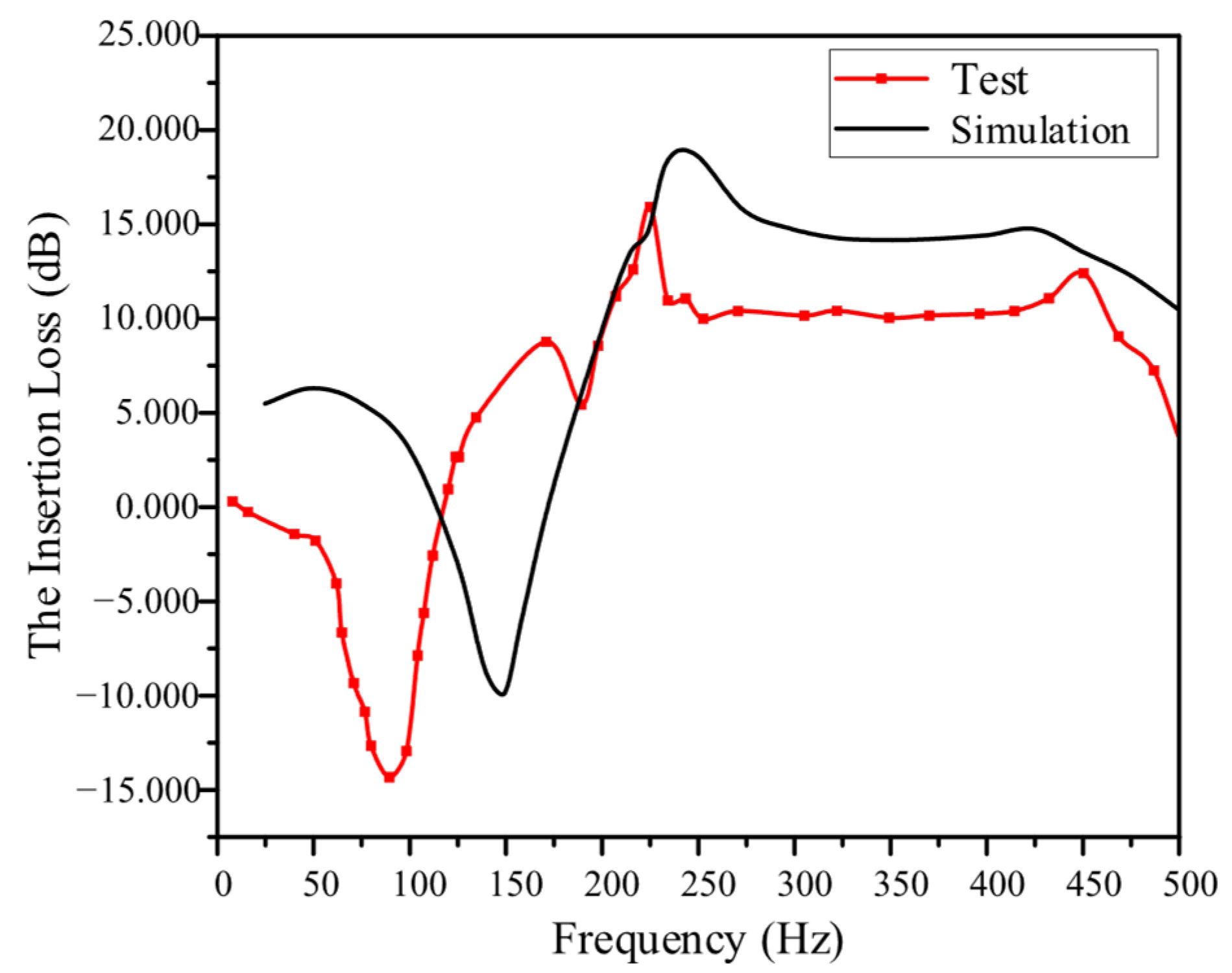
To further analyze the damping effect at other frequencies, the speed of the piston pump was adjusted to test the damping characteristics of the pressure pulsation damping device within the 0–500 Hz range. The pressure signals collected and recorded by pressure transmitter B were processed and analyzed, and the insertion loss at the corresponding frequency points was calculated and fitted to generate the damping characteristic curve. The CFD simulation results were then compared and analyzed with the test results, as shown in Figure 16.
Figure 16.
Comparison of simulated and tested damping characteristic curves.
As shown in Figure 16, the vibration damping characteristic curves from simulation analysis and experimental testing exhibit consistent trends. Within the frequency range of 200 Hz to 500 Hz, the curves show a high degree of agreement, validating the accuracy and effectiveness of the CFD simulation model to some extent. The peaks of both curves are closely aligned, occurring around 225 Hz, with peak values exceeding 15 dB and minimal differences. Near 450 Hz, the insertion loss reaches a local maximum value of at least 10 dB. The experimental tests demonstrate that the vibration damping device effectively reduces the amplitude of pressure pulsations within the frequency range of 130 Hz to 500 Hz, with the actual damping frequency band being even broader. When the pressure pulsation frequency is close to or coincides with the optimal damping frequency, the damping effect is significantly enhanced, showcasing the superior performance of the damping device.
However, there are significant differences between the simulation analysis and test results in terms of insertion loss at certain frequency points. The main reasons for these differences are as follows:
1. Difference between simulation models and test. The simulation models primarily focus on the fluid domain inside the vibration damping device and the rigid pipes at both ends. In reality, however, there are hoses, valve blocks, pipe joints, and other components between the pump outlet and the vibration damping device, and between the device and the oil tank. The bending of hoses, changes in valve blocks, and connection channels can all significantly impact pressure pulsations.
2. Difference between simulation conditions and test. During the CFD simulation, the effects of gravitational acceleration and cavitation on oil flow are neglected, and changes in oil properties due to temperature variations are not considered.
3. The interaction between the fluid and the pipeline also influences the vibration damping performance of the damping device. In the simulation model, the fluid domain is the main focus, without considering the coupling effect between the fluid flow and the pipeline. This lack of consideration contributes to the difference between the simulation and test results in terms of damping performance.
4. Equipment and external factors interference. During the test, all load pressures were manually controlled by adjusting the throttle valve, making it impossible to ensure that the hydraulic piping system was under the same load pressure before and after the installation of the damping device. This discrepancy affects the vibration damping performance. Additionally, the sensitivity of the pressure transmitter, the accuracy of the data acquisition instruments, and external noise and vibration interference all have an impact on the test results.
5. Discussion
This study proposes and validates a multi-hole parallel pressure pulsation damping device. Through numerical simulations and experimental analyses, its pressure pulsation attenuation performance in high-pressure hydraulic systems is demonstrated. Experimental results show that the device significantly reduces pressure pulsation amplitude in the 200–500 Hz frequency range, with a maximum insertion loss of 15.82 dB, verifying the effectiveness of the multi-hole parallel structure in attenuating pressure pulsations.
Compared to the wide-band pulsation damping device design proposed by Stosiak et al. [25], our approach incorporates a multi-hole structure, which not only improves the device’s pulsation suppression capability across a broad frequency range but also enhances its adaptability to complex hydraulic flow fields, demonstrating stronger robustness and frequency adaptability in experiments. Compared to the pulsation-reduction concepts and attenuation solutions for aircraft hydraulic piston pumps summarized by Guo et al. [26], our method not only employs a multi-hole parallel structure but also optimizes multiple parallel cavities, effectively broadening the effective working frequency range of the damping device and enhancing attenuation performance at both low and high frequencies.
Although the device performed well in experimental verification, its performance in real systems may be affected by geometric parameters and pipeline layout. At higher pressures, the frequency response characteristics of the device may be influenced by system impedance, pipeline installation, and vibration reflections, leading to some differences between simulations and experimental results. Additionally, compared to active control methods, the adaptability of passive damping structures in nonlinear, complex operating conditions is still limited. Therefore, future work could explore the integration of multi-hole parallel designs with active control strategies to further enhance pulsation suppression capability across more operating conditions.
6. Conclusions
1. Based on the Helmholtz vibration dissipation principle, this paper designs a multi-hole parallel-type pressure pulsation damping device. It features a wide damping frequency band and excellent performance, ensuring stable operation under various conditions. In practical applications, it is installed axially, with a compact structure and minimal space requirements.
2. Changes in the internal flow field of the pressure pulsation damping device are obtained through CFD simulation. The peak pressure pulsation at the device inlet and outlet is reduced by more than 80%, and pressure fluctuations are significantly minimized, achieving efficient dissipation and absorption of pressure pulsations. Additionally, the CFD simulation and numerical simulation results are in good agreement, mutually validating the accuracy of the mathematical and simulation models.
3. A pressure pulsation dissipation test is conducted under different load pressures. At a high pressure of 21 MPa, the device reduces the peak pressure pulsation by over 80%, and by at least 59% under other load conditions, demonstrating superior performance. It exhibits a wide vibration cancelation band within the 0–500 Hz range, with insertion loss reaching 15 dB or more. The simulation analysis aligns with the experimental test results, confirming the correctness and validity of the simulation model.
Author Contributions
Conceptualization, S.Z.; methodology, S.Z.; software, N.Z.; validation, S.Z.; formal analysis, N.Z. and Y.Z.; investigation, S.Z.; resources, J.L. and G.W.; data curation, N.Z. and X.L.; writing—original draft preparation, S.Z.; writing—review and editing, J.L.; visualization, Y.Z.; supervision, S.Z.; project administration, H.M.; funding acquisition, S.Z. All authors have read and agreed to the published version of the manuscript.
Funding
This research was funded by National Science and Technology Major Project, grant number: J2019-I-0008-0008.
Data Availability Statement
The original contributions presented in this study are included in the article. Further inquiries can be directed to the corresponding author.
Conflicts of Interest
The authors declare no conflicts of interest.
Abbreviations
The following abbreviations are used in this manuscript:
| CFD | Computational Fluid Dynamics |
References
- Yan, G.; Du, H.; Liu, Y.; Liu, Z. Research on fatigue life prediction model of aero-engine hydraulic pipeline. Mach. Tool Hydraul. 2023, 51, 171–175. [Google Scholar]
- Li, H.; Gu, J.; Li, J.; Sun, Z.; Sun, K.; Liu, X.; Wang, X.; Zhang, B.; Zhang, R.; Gao, D.; et al. Dynamics modeling and validation of L-shaped pipeline in aero-engine subjected to base random vibration excitation and fluid pressure pulsation excitation loads. Acta Aeronaut. Astronaut. Sin. 2024, 45, 229375. [Google Scholar]
- Guo, Q. The Analysis of Fluid-Structureinteraction in Pipelines of Aircrafthydraulic System. Master’s Thesis, Shanghai Jiao Tong University, Shanghai, China, 2010. [Google Scholar]
- Zhang, S.; Yang, L.; Shao, M. Dynamic characterisics of aviation hydraulic piping system. J. Dyn. Control 2022, 20, 58–63. [Google Scholar]
- Wu, C.; Jiao, Z.; Xu, Y.; Hu, J.; Pan, H. Developments in pogo suppression methods for liquid rockets. Prog. Aerosp. Sci. 2023, 140, 100931. [Google Scholar] [CrossRef] [Scilit]
- Gao, P.; Yu, T.; Zhang, Y.; Wang, J.; Zhai, J. Vibration analysis and control technologies of hydraulic pipeline system in aircraft: A review. Chin. J. Aeronaut. 2021, 34, 83–114. [Google Scholar] [CrossRef] [Scilit]
- Guo, Z.; Zhai, J.; Wu, D.; Hong, H. Multi-parameter optimization of damping groove on axial piston pump based on multi-objective genetic algorithm. J. Mech. Electr. Eng. 2023, 40, 773–780. [Google Scholar]
- Zhang, C.; Zhang, D.; Lu, Y.; Li, S.; Ruan, J. Research on flow and pressure pulsation optimization of roller piston pump with triangular damping groove. Flow Meas. Instrum. 2025, 106, 103000. [Google Scholar] [CrossRef] [Scilit]
- Dong, C.; Zheng, W.G. The Improved Structure of Swash Plate Axial Piston Pump. Appl. Mech. Mater. 2014, 2948, 733–735. [Google Scholar]
- Shen, H.; Xiong, Y. Optimization method of pipe and clamp layout based on EEMD_IWOA_LSSVM. Electron. Des. Eng. 2024, 32, 31–36. [Google Scholar]
- Zheng, H.; Jiao, Z.; Xu, Y.; Chai, L. Efficient active control of fluid borne pulsation in hydraulic piping systems. In Proceedings of the 2016 IEEE/CSAA International Conference on Aircraft Utility Systems (AUS), Beijing, China, 8–14 October 2016; pp. 1105–1110. [Google Scholar]
- Fei, G.; Songlin, N.; Yeqing, H.; Fanglong, Y.; Ruidong, H.; Hui, J. Research on vibration reduction of direct-drive piston pump based on porous variable diameter Helmholtz pulsation attenuator. J. Braz. Soc. Mech. Sci. Eng. 2022, 45, 33. [Google Scholar] [CrossRef] [Scilit]
- Paidoussis, M.P. High-pass acoustic filters for hydraulic loops. J. Sound Vib. 1971, 14, 433–437. [Google Scholar] [CrossRef] [Scilit]
- Nishiumi, T.; Ichiyanagi, T.; Kuribayashi, T. Investigations on Wave Propagation of the Pressure Pulsation in a Helmholtz-Type Hydraulic Silencer with a Hemispherical Vessel. J. Vib. Acoust. 2016, 139, 011003. [Google Scholar] [CrossRef] [Scilit]
- Selamet, A.; Lee, I. Helmholtz resonator with extended neck. J. Acoust. Soc. Am. 2003, 113, 1975–1985. [Google Scholar] [CrossRef] [Scilit]
- Guan, C.; Jiao, Z. Modeling and Optimal Design of 3 Degrees of Freedom Helmholtz Resonator in Hydraulic System. Chin. J. Aeronaut. 2012, 25, 776–783. [Google Scholar] [CrossRef] [Scilit]
- Ichiyanagi, T.; Kuribayashi, T.; Nishiumi, T. Design Criteria of a Helmholtz Silencer with Multiple Degrees of Freedom for Hydraulic Systems. J. Fluid Sci. Technol. 2013, 8, 277–293. [Google Scholar] [CrossRef] [Scilit]
- Bedout, J.M.D.; Franchek, M.A.; Bernhard, R.J.; Mongeau, L. Adaptive-passive noise control with self-tuning Helmholtz resonators. J. Sound Vib. 1997, 202, 109–123. [Google Scholar] [CrossRef] [Scilit]
- Kela, L. Attenuating Amplitude of Pulsating Pressure in a Low-Pressure Hydraulic System by an Adaptive Helmholtz Resonator. Ph.D. Thesis, University of Oulu, Oulu, Finland, 2010. [Google Scholar]
- Yuan, J.; Jiang, H.; Fang, Z.; Wang, T.; Luo, Z.; Jiang, F.; Yin, G. Design and Characteristic Analysis of a New Type of Hydraulic Pulsation Suppressor. E3S Web Conf. 2021, 293, 02028. [Google Scholar] [CrossRef] [Scilit]
- Guan, C.; He, S.; Jiao, Z. Development research of reflection-absorption compound type fluid pulsation attenuator. In Proceedings of the IEEE 10th International Conference on Industrial Informatics, Beijing, China, 25–27 July 2012; pp. 606–612. [Google Scholar]
- Gao, F.; Ouyang, X.; Yang, H.; Xu, X. A novel pulsation attenuator for aircraft piston pump. Mechatronics 2013, 23, 566–572. [Google Scholar] [CrossRef] [Scilit]
- Wang, D.; Sun, W.; Gao, Z.; Li, H. Vibration response analysis and hoop layout optimization of spatial pipeline under random excitation. Aircr. Eng. Aerosp. Technol. 2022, 94, 1242–1251. [Google Scholar] [CrossRef] [Scilit]
- Zhu, Q.; Zhang, Y.; Zhu, D. Study on dynamic characteristics of the bladder fluid pulsation attenuator based on dynamic mesh technology. J. Mech. Sci. Technol. 2019, 33, 1159–1168. [Google Scholar] [CrossRef] [Scilit]
- Stosiak, M.; Yatskiv, I.; Prentkovskis, O.; Karpenko, M. Reduction of Pressure Pulsations over a Wide Frequency Range in Hydrostatic Systems. Machines 2025, 13, 25. [Google Scholar] [CrossRef] [Scilit]
- Guo, S.; Chen, J.; Lu, Y.; Wang, Y.; Dong, H. Hydraulic piston pump in civil aircraft: Current status, future directions and critical technologies. Chin. J. Aeronaut. 2020, 33, 16–30. [Google Scholar] [CrossRef] [Scilit]

Disclaimer/Publisher’s Note: The statements, opinions and data contained in all publications are solely those of the individual author(s) and contributor(s) and not of MDPI and/or the editor(s). MDPI and/or the editor(s) disclaim responsibility for any injury to people or property resulting from any ideas, methods, instructions or products referred to in the content. |
© 2025 by the authors. Licensee MDPI, Basel, Switzerland. This article is an open access article distributed under the terms and conditions of the Creative Commons Attribution (CC BY) license.