1. Introduction
The separation and recovery of fine-grained minerals have long been a challenge in mineral processing. Fine-grained minerals typically refer to particles smaller than 50 μm. Due to their low mass and kinetic energy, these particles exhibit low recovery rates in conventional flotation processes. The weak inertia of these particles results in fewer effective collisions with flotation bubbles, leading to lower attachment efficiency and poor recovery [
1]. Moreover, fine-grained minerals are prone to sludge formation, where small particles aggregate, increasing pulp viscosity and process complexity, further reducing flotation efficiency [
2].
Traditional flotation methods mainly rely on the attachment of large bubbles to mineral particles. However, due to the small size of fine particles, large bubbles cannot form stable attachments on their surfaces, tending instead to carry these particles into tailings, thus reducing the recovery of target minerals and increasing tailings treatment complexity [
3]. To address this issue, conventional strategies such as intensified agitation, use of flocculants, and reagent optimization have been employed [
4,
5,
6]. These methods, however, often yield diminishing returns with ultra-fine particles and can exacerbate issues like non-selective reagent adsorption and elevated operational costs [
7].
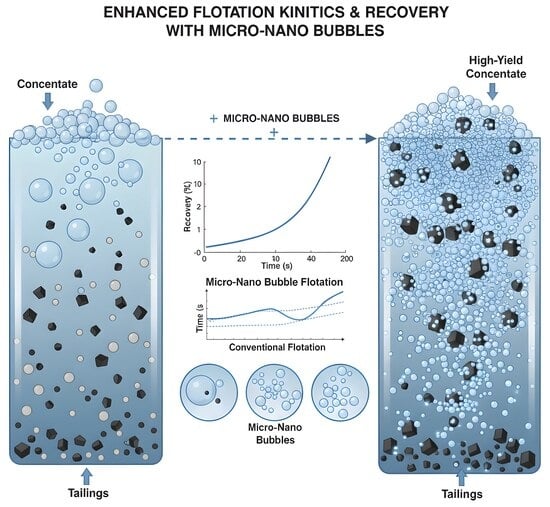

Recently, micro-nanobubbles, a novel bubble generation technology, have been introduced into the flotation of fine-grained minerals. micro-nanobubbles refer to bubbles with diameters ranging from tens to hundreds of nanometers. Crucially, their high gas–liquid interfacial area and negative surface charge promote efficient collision with and attachment to fine particles, overcoming the kinetic limitations of conventional flotation [
8,
9,
10]. Furthermore, the “bubble bridge” effect facilitates the aggregation of hydrophobic fine particles, effectively increasing their apparent size and improving flotation selectivity [
2].
The introduction of micro-nanobubbles provides a new approach to addressing the inefficiencies of fine-grained mineral recovery. First, micro-nanobubbles’ small size allows them to easily penetrate the slurry and form stable attachments with fine-grained particles. This interaction not only enhances the capture efficiency during flotation but also significantly reduces losses to tailings [
11]. Second, the high stability of micro-nanobubbles enables them to remain suspended in the slurry for longer, providing continuous attachment opportunities for particles. Additionally, these bubbles can significantly increase the hydrophobicity of mineral surfaces, further enhancing flotation selectivity [
12,
13,
14].
Micro-nanobubbles have already shown significant progress in mineral flotation. For example, in copper flotation experiments, the introduction of micro-nanobubbles significantly increased copper recovery rates while reducing reagent consumption [
15]. In iron ore flotation, studies have shown that micro-nanobubbles not only increased recovery rates but also improved concentrate grade and stability [
16]. Furthermore, micro-nanobubbles have demonstrated considerable improvements in flotation efficiency for minerals such as graphite, phosphate, and coal [
17]. These cases suggest that micro-nanobubbles technology has significant potential to enhance the recovery rate of fine-grained minerals, reduce reagent consumption, and optimize separation selectivity [
18].
In addition, the technology for generating micro-nanobubbles has been steadily advancing. Currently, common generation methods include hydrodynamic cavitation, ultrasonic cavitation, electrolysis, and gas supersaturation [
19]. Each of these methods has unique characteristics and can generate stable micro-nanobubbles under different laboratory and industrial conditions. Hydrodynamic cavitation uses pressure differentials created by high-speed liquid flow in a venturi tube, a common industrial method; ultrasonic cavitation generates bubbles through sound wave cavitation effects, suitable for laboratory and small-scale applications [
20]. Electrolysis generates micro-nanobubbles through water electrolysis, primarily for laboratory research and small-scale applications, while gas supersaturation dissolves high-pressure gas, which is then rapidly depressurized to generate bubbles, making it highly efficient for industrial applications [
21].
Despite its significant potential in improving fine-grained mineral recovery, micro-nanobubbles technology still faces challenges in industrial applications. For example, the stability of micro-nanobubbles in complex slurry environments may be compromised, leading to fluctuations in separation efficiency. Additionally, the high cost of micro-nanobubbles generation could limit its application in certain mineral processing sectors [
22]. Therefore, future research should focus on optimizing micro-nanobubbles generation processes, improving their stability in slurry, and developing more cost-effective flotation equipment and processes [
23].
In summary, micro-nanobubbles have demonstrated significant potential and advantages in the flotation of fine-grained minerals. By increasing the probability of particle–bubble collisions, enhancing attachment stability, and reducing reagent usage, micro-nanobubbles provide a novel technological pathway and practical solution for improving fine-grained mineral recovery. This review systematically classifies four micro-nanobubbles generation methods and their industrial applicability, integrates cross-mineral application data, and identifies future research directions in process integration and smart control, which fills the gap in the existing literature regarding the integrated application of micro-nanobubbles technology in fine-grained mineral flotation. The widespread application of this technology could not only improve resource utilization but also play a vital role in environmental protection and sustainable development.
2. Challenges in the Recovery of Fine-Grained Minerals
The efficient recovery of fine-grained minerals (<50 μm) is impeded by several interrelated physical and chemical constraints. Their low mass leads to poor momentum and low probability of collision with rising flotation bubbles [
24]. Simultaneously, their high specific surface area results in excessive and often non-selective reagent consumption, complicating separation efficiency [
25].
Another significant challenge in fine-grained mineral recovery is the formation of slimes. Slimes refer to agglomerations of fine particles within the pulp, which not only increase the viscosity of the pulp but also impede bubble ascent and mineral separation [
26]. The presence of slimes causes fine particles to be more readily carried into the tailings during flotation, further reducing recovery rates and concentrate grades. Additionally, the surface characteristics of slimy particles are affected by pulp chemistry, including pH, pulp density, and reagent types, making their separation more complex and unpredictable [
27].
Another critical factor limiting fine-grained mineral recovery is the low attachment probability between particles and bubbles during flotation. Due to their low mass and high surface energy, fine particles exhibit pronounced Brownian motion in the slurry, making them more likely to be carried away by the slurry flow than to form stable attachments on bubble surfaces [
21]. Even in cases where initial collisions occur, the weak hydrophobicity of fine particles often prevents the formation of a stable attachment layer on the bubble surface [
22]. Furthermore, the high specific surface area of fine-grained minerals requires more reagents to enhance their hydrophobicity, leading to increased consumption, higher costs, and potential environmental risks [
18].
Reagent consumption is another major issue in the recovery of fine-grained minerals. To enhance the hydrophobicity and flotation selectivity of fine particles, large amounts of collectors and frothers are often needed. However, the high specific surface area of fine-grained minerals leads to strong reagent adsorption, which not only increases reagent consumption but may also cause non-selective adsorption, reducing flotation selectivity [
28]. The excessive use of reagents not only raises flotation costs but also poses environmental pollution risks, creating a difficult balance between resource recovery and environmental protection [
20].
The surface characteristics of fine-grained minerals can also vary significantly during flotation. These variations are influenced by pulp chemistry, impurities, organic matter, and oxidation films on particle surfaces [
17]. In some cases, surface impurities and oxidation films can cover the mineral surface, preventing effective attachment of collectors, which further reduces flotation recovery [
29]. Appropriate pretreatment methods (e.g., grinding, activation) are needed to improve the surface properties of fine-grained minerals and enhance their hydrophobicity during flotation [
30].
In practical industrial applications, the recovery of fine-grained minerals is also constrained by equipment and process limitations. Conventional flotation devices, such as mechanical agitator cells and column flotation cells, are less effective at handling fine particles. This is because the agitation and bubble generation methods in these devices are more suited for larger particles, while fine-grained minerals require smaller bubbles for efficient capture [
22]. However, generating and maintaining small bubbles with high stability is challenging in industrial settings, further limiting the improvement of fine-grained mineral flotation efficiency [
20].
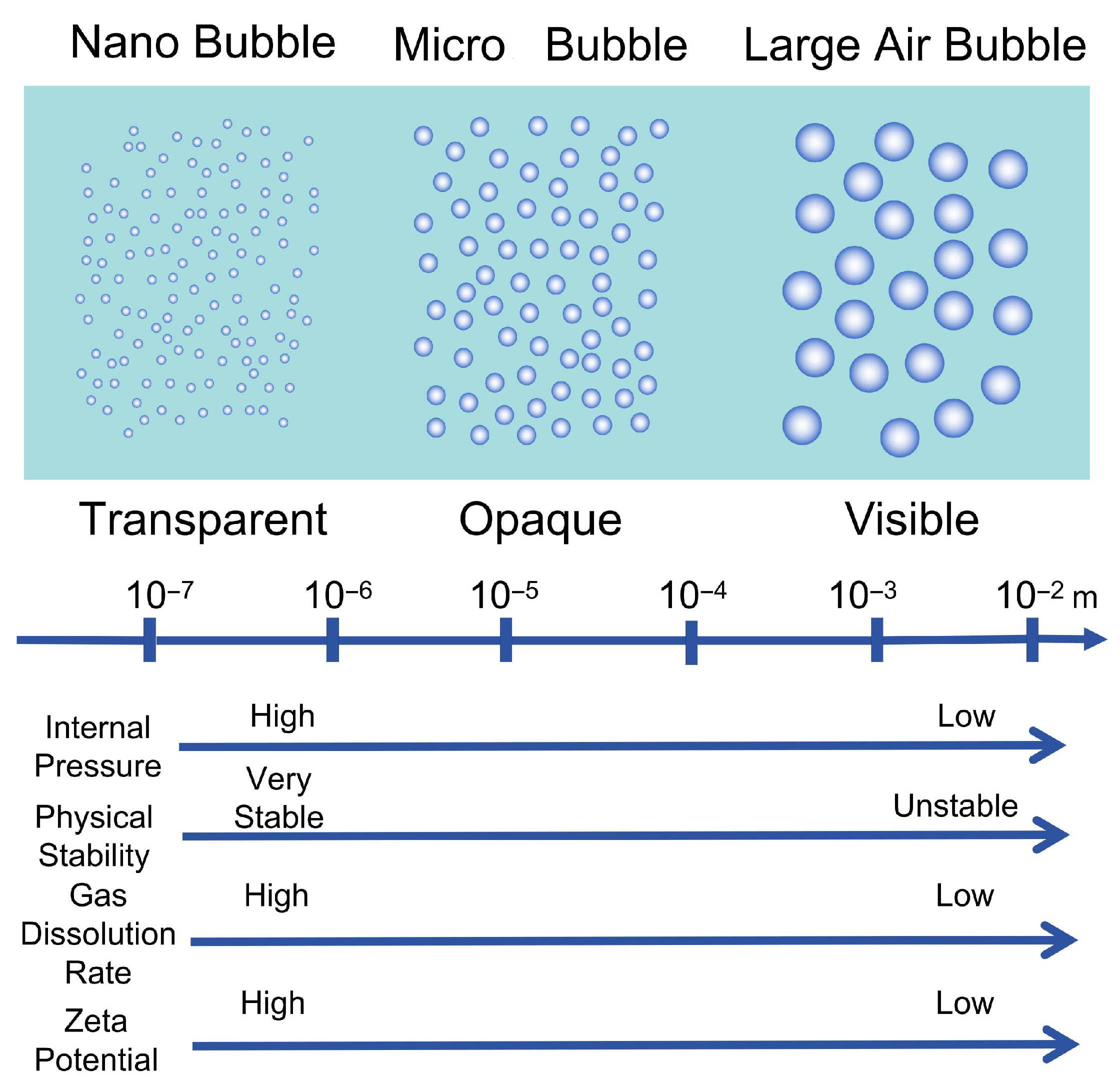
To address these challenges, recent research has focused on developing novel flotation technologies and reagents, as well as optimizing flotation processes and equipment. For instance, the introduction of micro-nanobubbles technology offers a promising solution for enhancing fine-grained mineral recovery. With smaller sizes and larger specific surface areas, micro-nanobubbles can achieve more effective collisions and stable attachments with fine particles, thereby increasing recovery rates and selectivity [
18]. Additionally, the high stability and long lifespan of micro-nanobubbles help mitigate the effects of slimes, reducing the likelihood of valuable particles being lost to tailings [
17]. These features make micro-nanobubbles a promising technology for overcoming the challenges of fine-grained mineral recovery. As shown in
Figure 1, the behavior of bubbles of different sizes differs significantly in flotation. micro-nanobubbles demonstrate clear advantages in the recovery of fine-grained minerals due to their small size, large specific surface area, and high stability.
3. Micro-Nanobubbles Generation Methods and Equipment
Micro-nanobubbles generation technology has been widely studied and applied in recent years, showing substantial potential in improving flotation recovery, particularly for fine-grained minerals. Various methods for generating micro-nanobubbles have been developed, including hydrodynamic cavitation, ultrasonic cavitation, electrolysis, and gas supersaturation [
18]. Each method has unique characteristics and can generate stable micro-nanobubbles under different laboratory and industrial conditions.
3.1. Hydrodynamic Cavitation
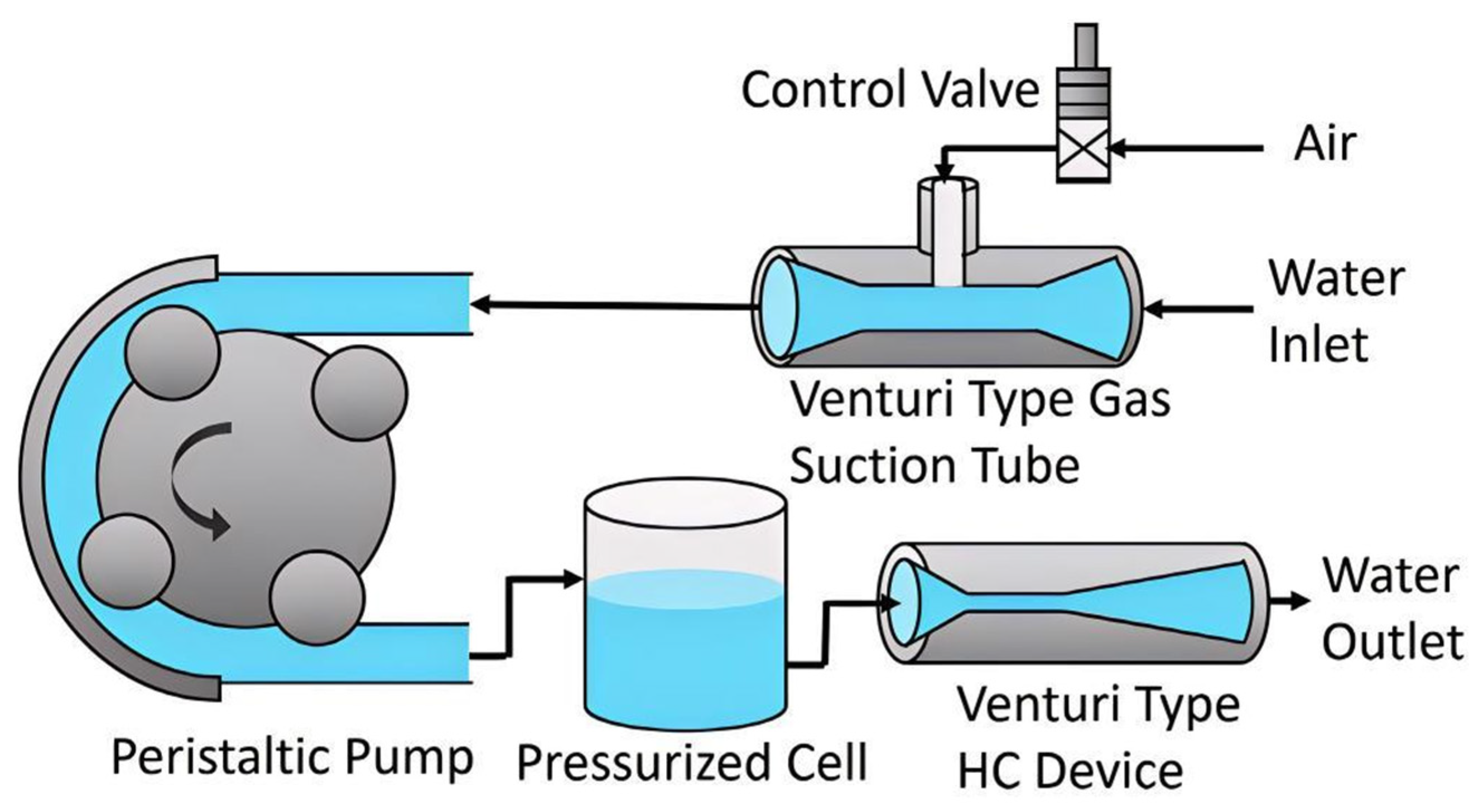
Hydrodynamic cavitation is one of the most commonly used methods for industrial-scale micro-nanobubbles generation. It relies on pressure differentials created by high-speed liquid flow in venturi tubes, nozzles, or specially designed valves, which induce cavitation and produce a large number of micro-nanobubbles. Cavitation occurs when rapid pressure changes in the fluid lead to the formation and collapse of gas bubbles. During this process, dissolved gases in the fluid come out of the solution, forming stable micro-nanobubbles [
17].
The advantages of hydrodynamic cavitation include simple equipment design, ease of operation, and relatively low energy consumption, making it suitable for large-scale industrial applications. Venturi tubes and multiphase pumps are typical equipment used for hydrodynamic cavitation [
32]. The design of venturi tubes increases liquid velocity and decreases pressure, leading to micro-nanobubbles formation. Multiphase pumps mix gas and liquid, introducing the mixture into a cavitation zone to produce micro-nanobubbles. This method has been widely validated in mineral flotation, especially in the treatment of copper, iron, and phosphate ores [
33]. As shown in
Figure 2, the device is primarily composed of a Venturi tube, a peristaltic pump, and a pressurized tank. Initially, the water flow is adjusted by the peristaltic pump. When the water enters the first-stage Venturi tube, the pressure suddenly drops at the throat, causing external air to enter the liquid. By regulating the air flow through a control valve, an air-water mixture is formed. This mixture is then pressurized in the tank before entering the second-stage Venturi tube, which causes the bubbles dissolved in the liquid to burst and form micro-nanobubbles. Finally, the bubble water flows out through the outlet.
Furthermore, the high shear forces and intense energy release during the collapse of cavitation-generated micro-nanobubbles at mineral surfaces can contribute to the delamination or disintegration of layered mineral structures (e.g., graphite, molybdenite, certain clays). This in situ liberation of valuable lamellae or the removal of surface impurities creates fresh, hydrophobic surfaces concurrently with the bubble generation process, thereby synergistically enhancing subsequent flotation recovery.
The economic costs in flotation mainly include the use of frothing agents, collectors, regulators, and other chemical reagents, as well as the consumption of electricity and process water. The generation of micro-nanobubbles through fluid dynamic cavitation can reduce the amount of frothing agents used in flotation. Micro-nanobubbles are more physically stable and have more stable internal pressure compared to traditional bubbles, thus requiring less chemical reagents. The generation of micro-nanobubbles through fluid dynamic cavitation does not require additional pressurized equipment, relying mainly on the pressure difference created by high-speed fluids to produce micro-nanobubbles. Therefore, it consumes less electricity and has a higher flotation efficiency for fine particles compared to traditional flotation, which can reduce energy consumption during the flotation process, lower the difficulty of tailings treatment, improve mineral recovery efficiency, and reduce the economic costs of mineral flotation.
The transposition based on the principle of hydrodynamic cavitation has been industrially applied. There are already experimental proofs that applying micro-nanobubbles to phosphate ore can increase revenue by
$10 million a year and reduce the consumption of frothing agents, process water, and electricity in the flotation process [
34].
Figure 2.
Hydrodynamic cavitation-based bubble generation device with auto gas suction design [
35].
Figure 2.
Hydrodynamic cavitation-based bubble generation device with auto gas suction design [
35].
3.2. Ultrasonic Cavitation
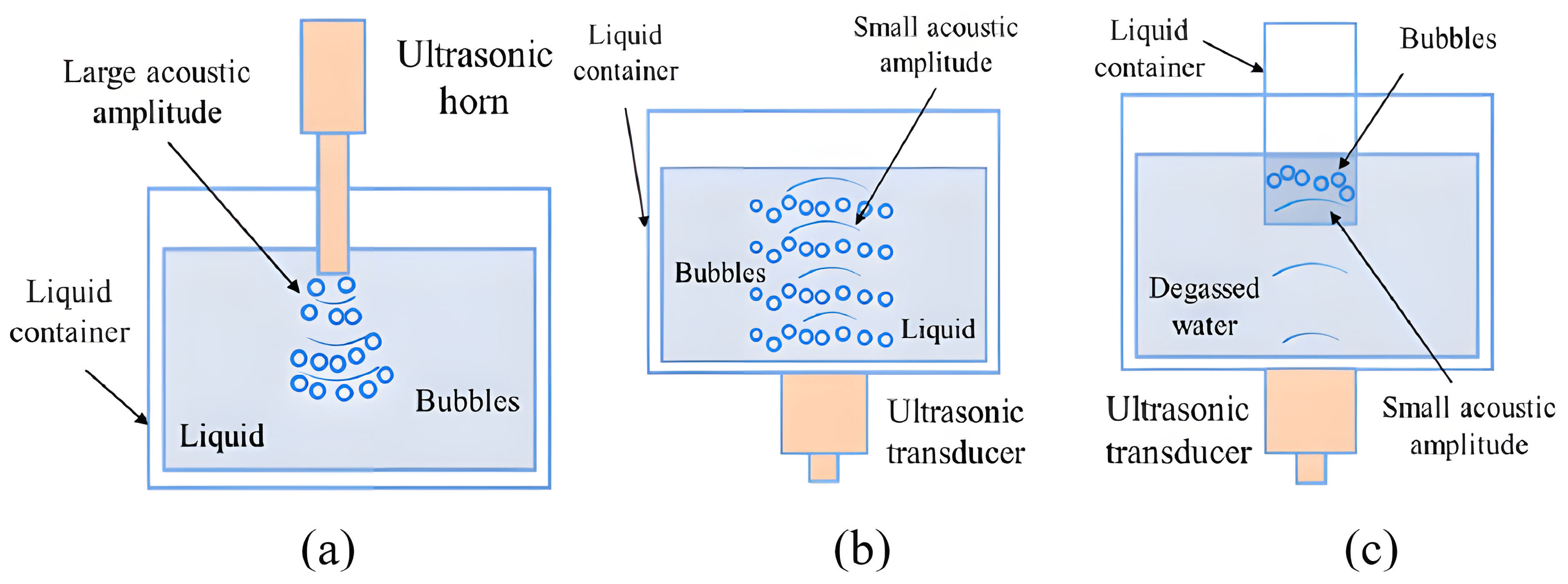
Ultrasonic cavitation utilizes the cavitation effect of ultrasonic waves to generate micro-nanobubbles. Ultrasonic waves are high-frequency sound waves that create localized pressure fluctuations in a liquid, causing bubbles to form, expand, and collapse. Ultrasonic cavitation can produce a large number of small, uniform, and stable bubbles, often with diameters at the nanometer scale [
36].
Micro-nanobubbles generated by ultrasonic cavitation offer distinct advantages in flotation. They can increase the probability of collision and attachment between bubbles and fine particles and can disperse and agitate the slurry, reducing the formation of slimes and improving flotation selectivity [
3]. Ultrasonic cavitation equipment is suitable for laboratory and small-scale industrial applications, making it ideal for flotation testing and technology development [
37].
Figure 3 illustrates three different ultrasonic cavitation methods. The first method is a horn-type sonochemical reactor (
Figure 3a), where the ultrasonic amplitude transducer is immersed in the pulp, generating ultrasonic amplitude variations that cause the gas in the pulp to rupture and produce micro-nanobubbles. The second method is a standing-wave type sonochemical reactor (
Figure 3b), where the ultrasonic transducer is placed outside the pulp container, creating ultrasonic waves that form standing waves inside the pulp, thus producing micro-nanobubbles, but the amplitude produced is less than that of the first method [
38]. The third method is a water bath ultrasonic reactor (
Figure 3c), which generates micro-nanobubbles in the pulp through water bath oscillation and the addition of an external ultrasonic transducer [
39].
The application of ultrasonic cavitation in pulp not only improves mineral flotation efficiency by producing micro-nanobubbles but also cleans mineral particles, such as in coal flotation, where the cleaning of coal particle surfaces enhances the flotation efficiency of coal. Ultrasonic cavitation also aids in the dispersion of reagents, making them more effective. Moreover, the ultrasonic energy not only generates bubbles but also promotes the cleaning and delamination of mineral surfaces, which is particularly beneficial for liberating fine-grained valuable minerals from layered or coated structures, further enhancing flotation selectivity. The main challenge for the large-scale industrial application of ultrasonic cavitation is its high energy consumption.
3.3. Electrolysis
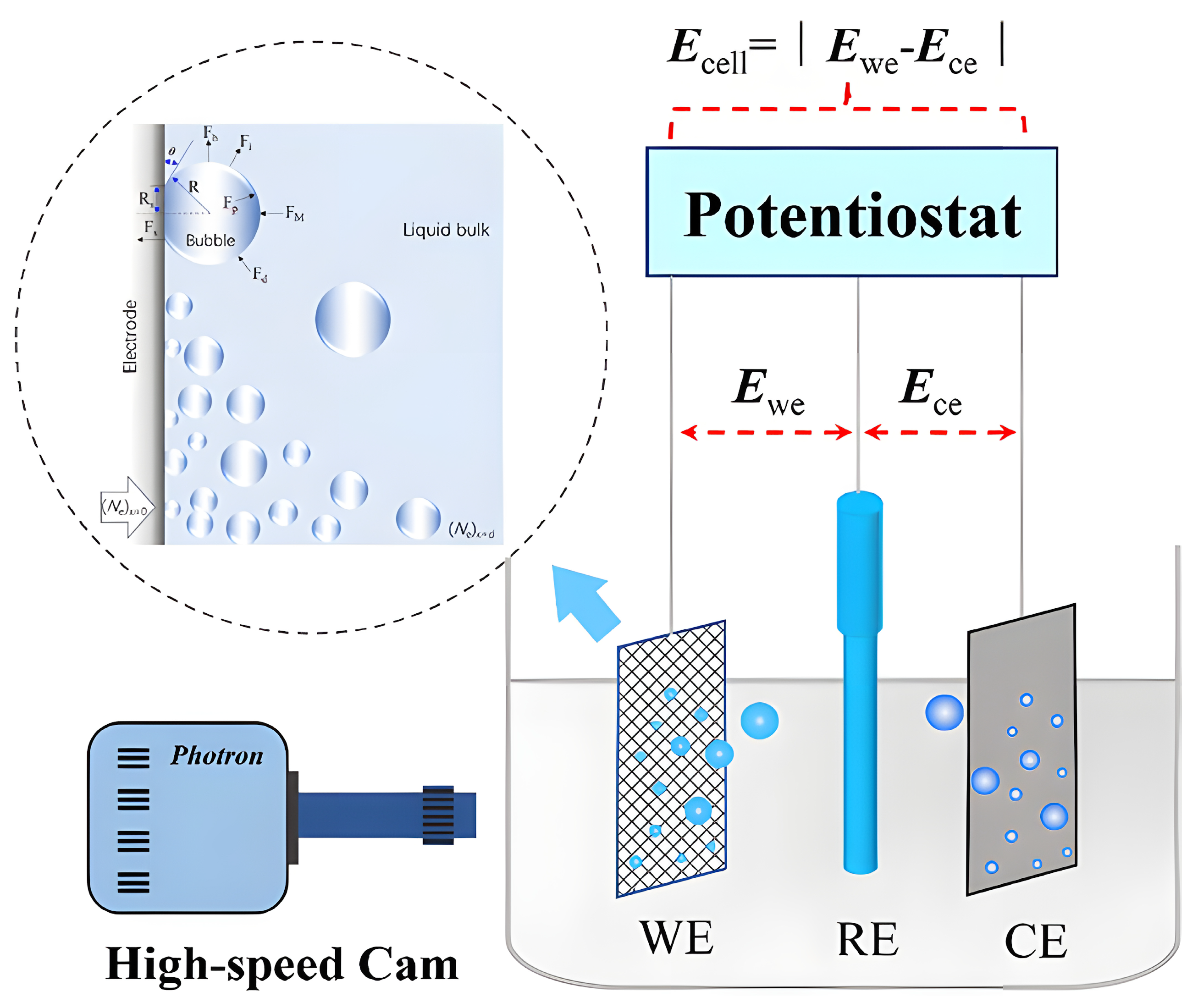
Electrolysis generates micro-nanobubbles by applying an electric field in an electrolytic cell, causing dissolved gas molecules in the liquid to split and form bubbles. A typical electrolysis reaction is the splitting of water, where oxygen bubbles are generated at the anode and hydrogen bubbles at the cathode. The electrolysis method generates high-purity micro-nanobubbles by applying an external electric field to decompose water, producing oxygen bubbles at the anode and hydrogen bubbles at the cathode. Its working principle is illustrated in
Figure 4. The advantages of electrolysis include the ability to generate high-purity micro-nanobubbles under normal temperature and pressure, while the generation rate and bubble size can be controlled by adjusting current density, electrode material, and solution composition [
17].
The micro-nanobubbles generated by electrolysis are highly stable and uniform, making this method suitable for laboratory research and small-scale industrial applications [
40]. However, the high energy consumption of electrolysis, especially in large-scale industrial applications, can be a limiting factor. Additionally, the choice of electrode material and the chemical properties of the electrolyte can affect bubble generation efficiency and flotation performance [
41].
3.4. Gas Supersaturation
Gas supersaturation involves dissolving gas into a liquid under high pressure and then rapidly releasing the pressure, allowing gas to come out of the solution and form a large number of micro-nanobubbles [
32,
42]. This method is effective in generating large quantities of bubbles with high stability, making it suitable for large-scale industrial applications. Common equipment used includes high-pressure reactors, rapid decompression valves, and gas–liquid mixing ejectors [
17,
43]. This method has shown promising results in flotation, particularly in the recovery of fine-grained iron, copper, and coal [
44,
45,
46,
47,
48].
Gas supersaturation technology is an advanced flotation process that generates a large number of micro-nanobubbles in the pulp by pressurizing and then depressurizing the mineral slurry. This process significantly improves the flotation efficiency of the target minerals because it increases the opportunities for bubbles to come into contact with mineral particles, thereby enhancing the flotation rate and selectivity of the mineral particles [
49,
50].
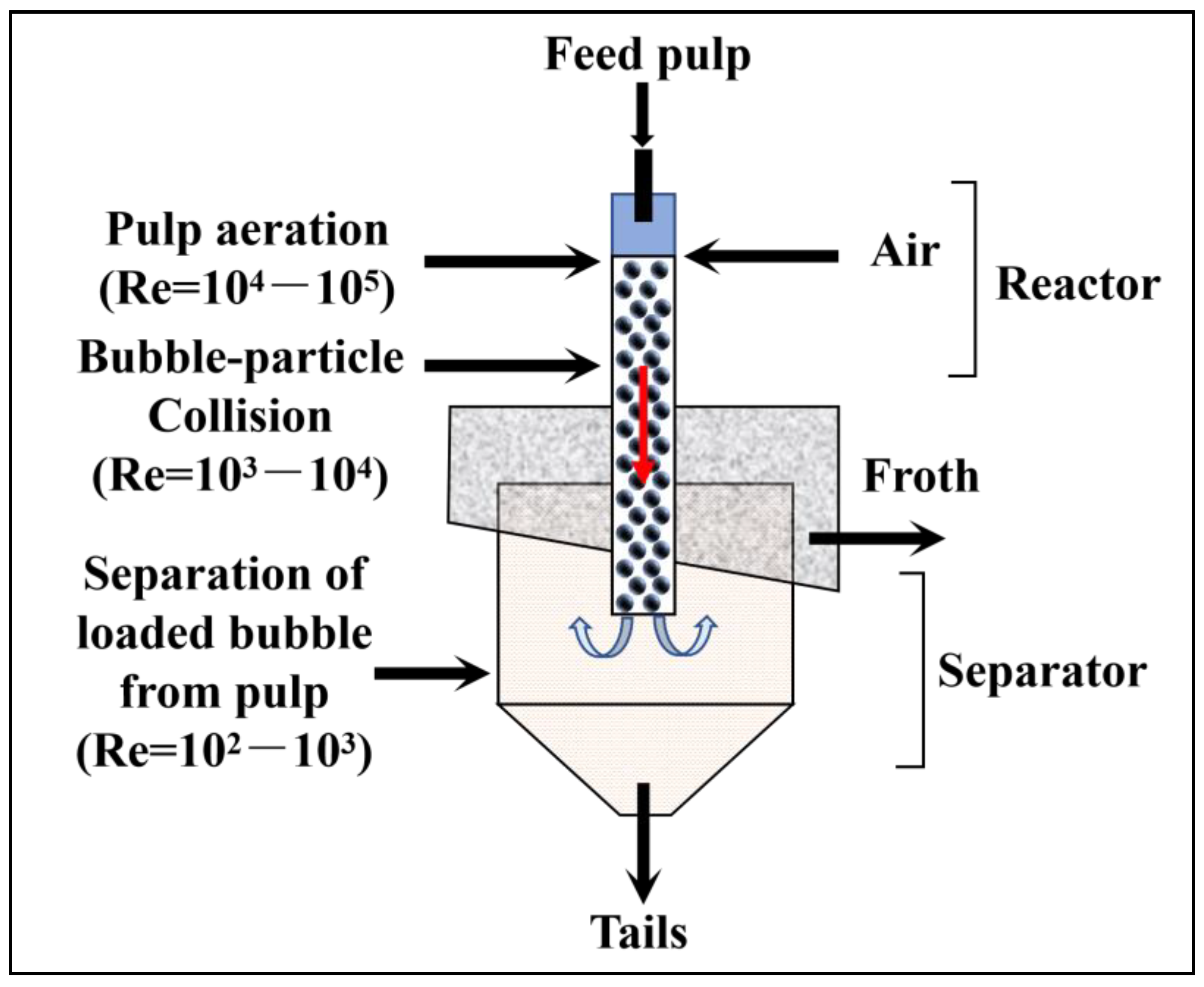
The main factors affecting the generation of micro-nanobubbles in this process include: Gas composition: The type of gas used (such as air, nitrogen, or oxygen) affects the formation and stability of the bubbles. Different gas compositions may have different impacts on the flotation behavior of minerals. Pressurization pressure: Pressurization pressure is a key parameter for the generation of micro-nanobubbles. Higher pressures can increase the solubility of gases in liquids, resulting in more bubbles being produced upon depressurization. Liquid flow rate: The flow rate of the pulp affects the formation and distribution of bubbles. An appropriate flow rate ensures that bubbles come into full contact with mineral particles, improving flotation efficiency. Rate of dissolved oxygen release: The rate at which dissolved oxygen is released affects the formation and stability of bubbles, which in turn affects the flotation results. Gas flow rate: The gas flow rate determines the degree of gas supersaturation, which affects the formation of bubbles and flotation efficiency. The gas supersaturation method is often employed in conjunction with specific flotation cell configurations, such as the reactor-separator flotation cell shown in
Figure 5. Its design enhances the generation of micro-nanobubbles and mineral recovery efficiency by optimizing hydrodynamic conditions, such as the Reynolds number (Re).
In practical operations, when the volume of the pulp remains constant, the content of dissolved oxygen gradually increases with the rise in pressurization pressure. This phenomenon is crucial for improving flotation efficiency because dissolved oxygen can act as an oxidizing agent in the flotation process, promoting the flotation of certain minerals. In the recovery of iron ores, studies have shown that using micro-nanobubbles generated by the pressurized vessel method in conjunction with conventional bubbles can increase the recovery rate of iron ores by about 10% compared to using conventional bubbles alone. This result indicates that micro-nanobubbles have a significant advantage in improving the flotation efficiency of fine-grained minerals [
39].
Micro-nanobubbles generated by the gas saturation method are efficient and have smaller bubble sizes, which is particularly important for improving the flotation efficiency of fine-grained minerals. Therefore, this method not only has broad application prospects but is also very suitable for industrial application.
However, this method also brings certain challenges, especially in terms of safety. Factories must strictly comply with safety regulations to ensure that the production of pressurized gas dissolution tanks meets standards to avoid potential safety accidents. This includes strict requirements for the design, manufacturing, operation, and maintenance of equipment to ensure the safety and reliability of the entire flotation process.
3.5. Integrated Generation Devices and New Technologies
In practical applications, a single method of micro-nanobubbles generation often cannot meet the demands of different pulp conditions. To enhance bubble generation efficiency and flotation performance, various integrated generation devices and new technologies have emerged. For example, hybrid bubble generators combine the advantages of hydrodynamic cavitation and ultrasonic cavitation to generate more stable micro-nanobubbles in the slurry [
51].
To further optimize micro-nanobubbles generation for diverse flotation conditions, some integrated devices combine multiple generation methods. For example, hybrid bubble generators may merge hydrodynamic cavitation with ultrasonic cavitation to enhance bubble stability and maximize generation efficiency in the slurry [
52,
53]. This approach allows for generating a greater quantity of stable micro-nanobubbles that can significantly improve particle capture rates and flotation selectivity.
Additionally, multiphase pumps integrated with bubble generators can combine gas–liquid mixing and cavitation effects, enabling high-efficiency, large-scale generation of stable micro-nanobubbles. These systems can be seamlessly integrated with existing flotation columns and cells, leading to comprehensive process optimization [
54]. By enhancing the efficiency of flotation, such integrated systems support the efficient recovery of fine-grained minerals across a variety of minerals.
The automation and smart control of bubble generation devices are also critical developments. Real-time monitoring systems enable constant adjustment of bubble generation rates, bubble size distribution, and overall stability, ensuring stable and efficient flotation performance [
55,
56]. Additionally, new materials and nanotechnology are being explored to enhance bubble generation efficiency. For example, specially coated ultrasonic probes or high-efficiency electrolytic electrodes can generate micro-nanobubbles with higher purity and lower energy consumption [
18].
Overall, micro-nanobubbles generation methods and devices have made significant advancements in recent years. Whether in laboratory settings or industrial applications, these methods demonstrate good adaptability and efficiency. Future research should continue to focus on optimizing existing devices, reducing energy consumption, and developing more integrated technologies that can handle complex slurry conditions and demanding flotation requirements.
4. Advantages of Micro-Nanobubbles in Mineral Flotation
Micro-nanobubbles possess unique physical and chemical properties that offer multiple advantages in mineral flotation. These benefits include improved collision and attachment efficiency between particles and bubbles, enhanced flotation selectivity, reduced reagent consumption, increased flotation speed and efficiency, and decreased energy use and environmental impact. Compared to conventional bubbles, micro-nanobubbles, with their smaller diameters (typically in the range of tens to hundreds of nanometers), larger specific surface areas, and higher surface charges, provide significant advantages in the flotation of fine-grained minerals.
4.1. Increased Collision Probability Between Particles and Bubbles
The low recovery rates of fine-grained minerals in flotation are often due to the low collision probability between particles and conventional bubbles. Micro-nanobubbles, due to their smaller size and larger specific surface area, enable more frequent and effective collisions with fine particles in the slurry [
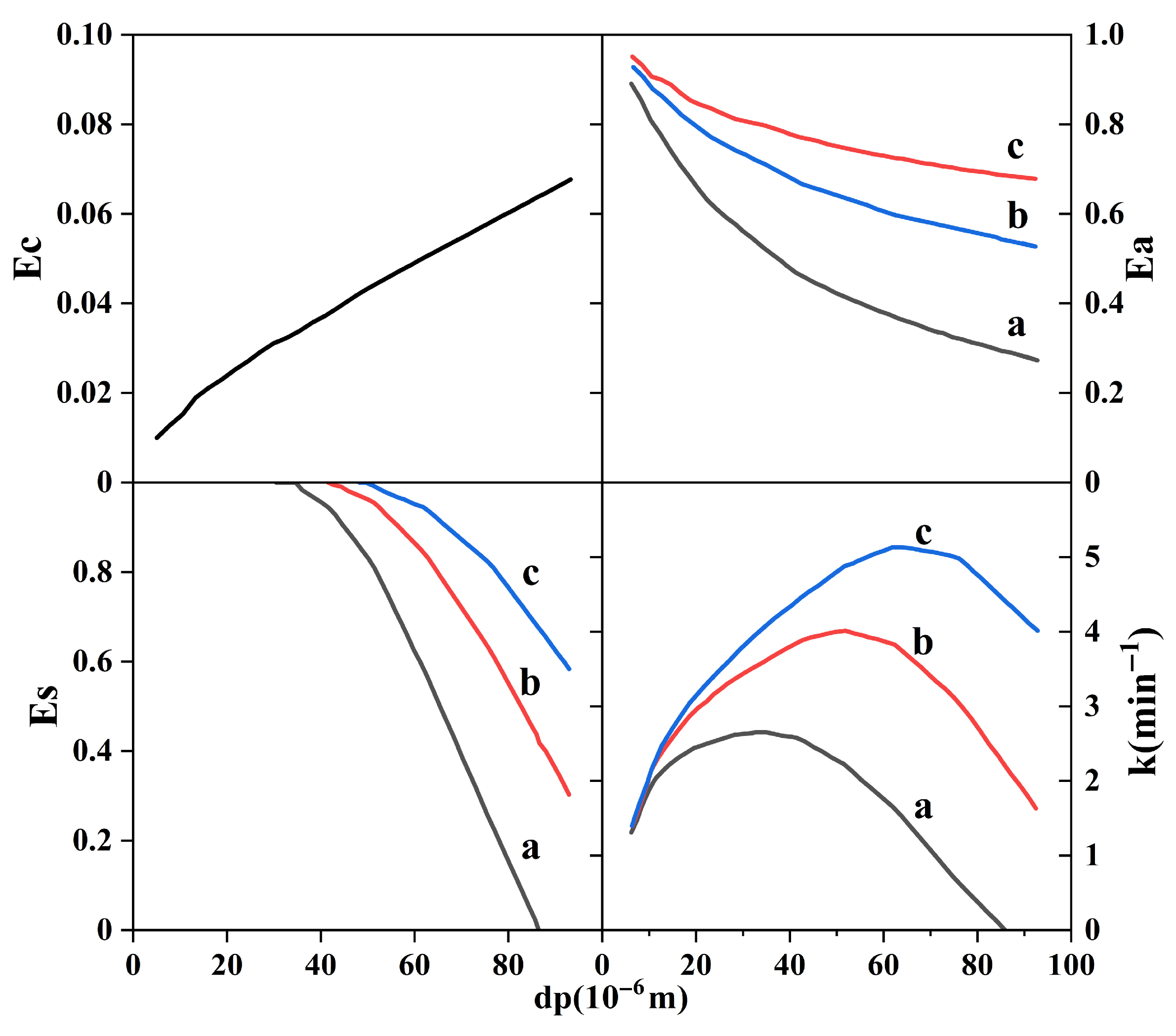
3]. The collision efficiency is governed by particle and bubble trajectories; the smaller size and slower rise velocity of micro-nanobubbles significantly increase the dwelling time in the pulp, thus enhancing the probability of intercepting fine particles governed by Brownian motion or fluid drag. Additionally, the higher surface charge of micro-nanobubbles enhances electrostatic attraction between bubbles and particles, increasing attachment rates [
17]. As shown in
Figure 6, as the particle size of quartz increases, its collision efficiency (Ec), attachment efficiency (Ea), stability efficiency (Es), and flotation rate constant (k) all undergo significant changes. The higher the surface hydrophobicity of the particles (a < b < c), the more pronounced the improvement in flotation efficiency, which reflects the theoretical advantage of micro-nanobubbles in enhancing the recovery of fine-grained minerals.
Experiments have shown that interactions between micro-nanobubbles and mineral particles are more stable and lasting compared to traditional bubbles [
57,
58,
59]. This not only improves particle capture efficiency but also reduces the likelihood of particle detachment. The small diameter of micro-nanobubbles allows them to penetrate narrow spaces between particles, facilitating the capture and flotation of fine-grained minerals [
57]. This characteristic of improved collision probability and attachment stability significantly enhances the recovery of fine-grained minerals.
4.2. Enhanced Particle Attachment and Aggregation
In addition to increasing collision rates, micro-nanobubbles also enhance particle attachment and aggregation through a “bubble bridge” effect [
27]. The “bubble bridge” refers to the ability of micro-nanobubbles to act as a bridge connecting hydrophobic mineral particles, aggregating them and improving flotation selectivity and efficiency. Because of their smaller size, micro-nanobubbles can form stable bridges between particles, enhancing both aggregation and surface hydrophobicity, thus promoting effective flotation [
60].
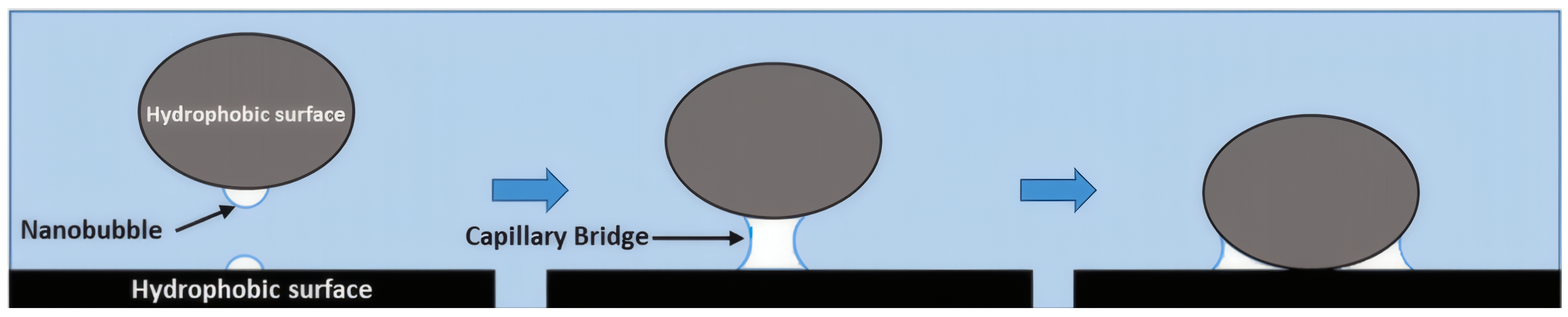
Figure 7 illustrates a simplified mechanism of capillary bridge formation between two hydrophobic surfaces as depicted by Hampton and Nguyen [
61]. When two hydrophobic surfaces are in close proximity to each other, surface nanobubbles eventually coalesce and create capillary bridges.
Research has found that micro-nanobubbles significantly increase the hydrophobicity and contact angle of mineral particles, making attachment to the bubbles more likely [
17]. This phenomenon results in higher recovery rates, as well as more persistent and efficient particle attachment [
62]. Additionally, micro-nanobubbles can form stable attachment layers on the particle surface, ensuring that the flotation process is longer-lasting and more effective.
4.3. Improved Flotation Selectivity
Selectivity in flotation is often limited by bubble size and reagent usage in conventional processes. However, micro-nanobubbles significantly improve selectivity due to their smaller size and larger specific surface area. In flotation, micro-nanobubbles selectively attach to more hydrophobic particles, avoiding less hydrophobic or hydrophilic particles [
15,
63]. This leads to more effective separation of different types of minerals and higher concentrate purity.
The selectivity advantage of micro-nanobubbles is particularly evident in complex ores. For example, in copper and iron ore flotation, micro-nanobubbles significantly increase the recovery of target minerals while reducing gangue mineral entrainment [
64]. This improvement in flotation product purity enhances both the economic value and environmental sustainability of the flotation process [
22,
65].
4.4. Reduced Reagent Consumption
Reagent consumption is a key cost factor in flotation, particularly for fine-grained mineral recovery. Conventional flotation processes often require large amounts of reagents to modify the hydrophobicity of particles. However, micro-nanobubbles can reduce reagent usage by directly enhancing particle hydrophobicity upon contact, thus requiring less reagent to achieve the desired flotation results [
17,
66].
Studies indicate that the use of micro-nanobubbles can reduce collector and frother consumption by 20% to 30%, thereby lowering flotation costs and minimizing chemical pollution [
27]. Zhang et al., [
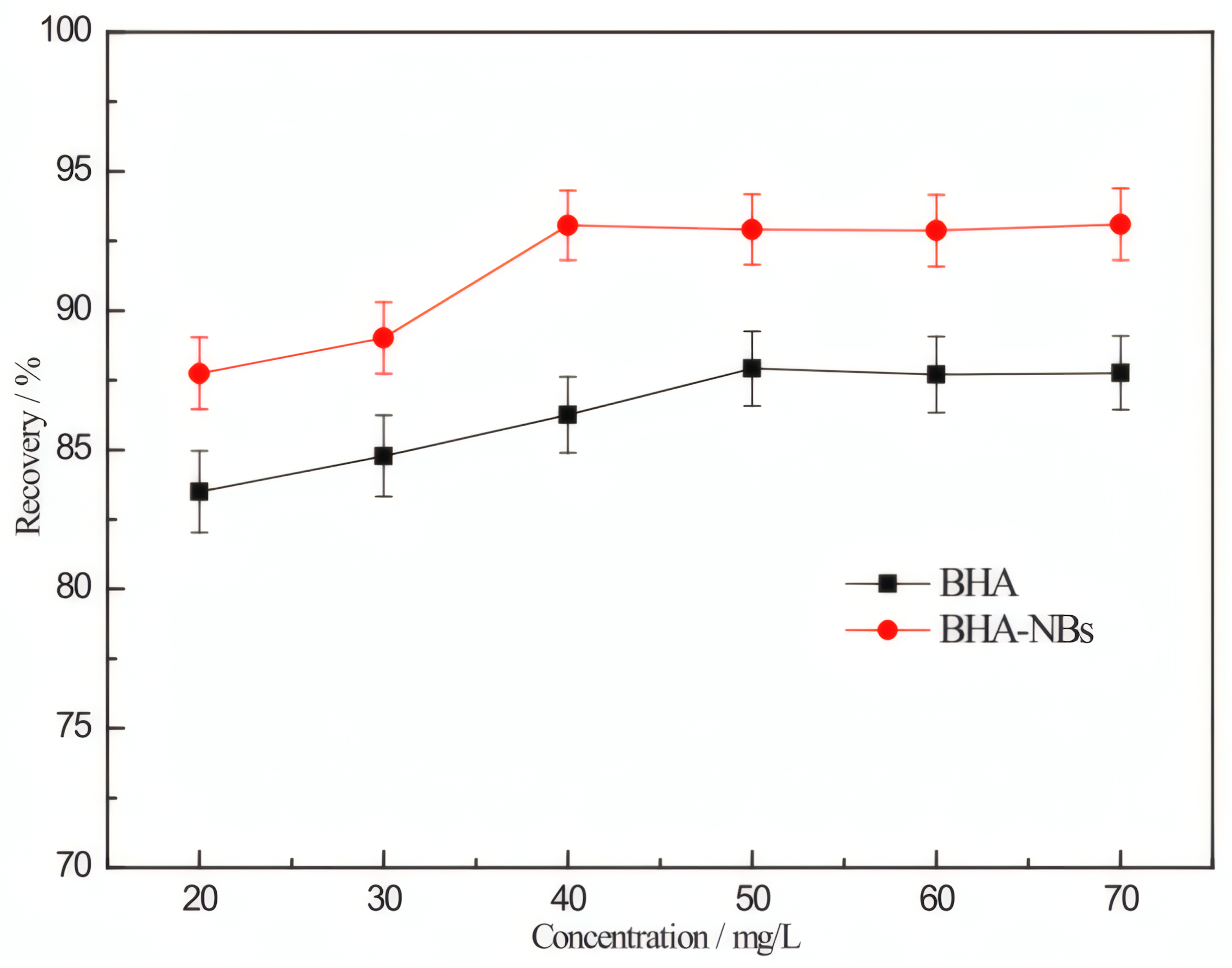
62] measured the effect of collector dosage on flotation recovery in the absence and presence of NBs in the experiment of the Role of nanobubbles in the flotation of fine rutile particles, as shown in
Figure 8. The results showed that the recovery rate increased with the increase in collector concentration, and the recovery rate of NB flotation was higher than that of ordinary flotation. In addition, when the collector concentration was 50 mg/L, the ordinary flotation reached a plateau, while the NB flotation reached a plateau at the collector concentration of 40 mg/L. In summary, the addition of NBs reduces collector concentration by 25% under optimal recovery conditions, which can significantly reduce reagent costs. This reduction can be attributed to the supplementary hydrophobicity imparted by micro-nanobubbles upon attachment to particle surfaces, effectively reducing the demand for chemical collectors to achieve the same degree of surface hydrophobicity required for bubble attachment [
13]. Additionally, micro-nanobubbles can act as “secondary collectors,” further improving attachment efficiency even at lower reagent concentrations [
13,
61].
4.5. Enhanced Flotation Efficiency and Speed
Flotation efficiency and speed are crucial performance indicators in mineral processing. Due to their smaller size and larger specific surface area, micro-nanobubbles significantly increase recovery rates and flotation speed. In the slurry, micro-nanobubbles can quickly disperse and cover the mineral particle surfaces, facilitating faster collisions and attachment [
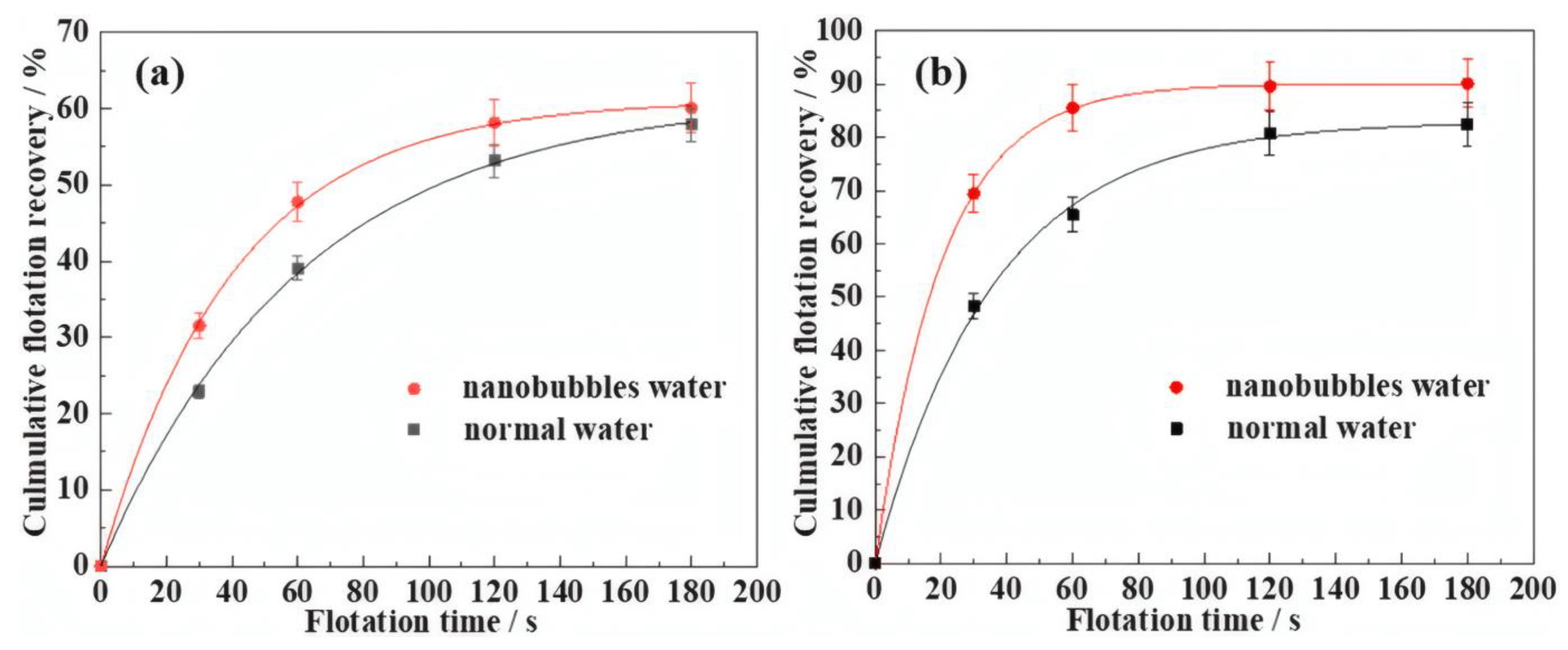
26]. This rapid interaction between bubbles and particles accelerates the flotation process and reduces flotation time. Flotation experiments were performed with −38 μm hydrophilic particles and hydrophobic particles in nanobubble water and normal water, respectively, at 25 °C. The cumulative flotation recovery of −38 μm hydrophilic particles in nanobubble water increased by approximately 2% compared to normal water. This increase is attributed to a larger relative surface area, which greatly increases the probability of NBs formation. In
Figure 9, the cumulative flotation recovery of −38 μm hydrophobic particles increased from 82.46% in normal water to 90.10% in nanobubble water, showing a significant increase in hydrophobic particles flotation efficiency in the presence of nanobubbles [
67].
Moreover, the high stability and longer lifespan of micro-nanobubbles provide more opportunities for particle attachment during flotation, thereby reducing valuable mineral losses in the tailings [
50,
68]. As a result, micro-nanobubbles effectively enhance both flotation efficiency and speed.
4.6. Lower Energy Consumption and Environmental Impact
Traditional flotation processes often require increased agitation or high reagent concentrations to improve fine-grained mineral recovery, leading to higher energy consumption and potential environmental harm. In contrast, micro-nanobubbles can significantly enhance flotation efficiency and selectivity without increasing energy input [
69]. By achieving high flotation efficiency at lower reagent concentrations, micro-nanobubbles reduce the total amount of chemicals used, minimizing environmental pollution [
27,
40,
70].
Additionally, the high stability of micro-nanobubbles reduces the need for intense agitation, thereby decreasing equipment energy consumption and wear. This energy-saving characteristic makes micro-nanobubbles technology an environmentally friendly solution with significant potential for broader adoption in the mineral processing industry [
17].
In conclusion, the advantages of micro-nanobubbles in flotation include increased collision probability, enhanced particle attachment, improved flotation selectivity, reduced reagent consumption, faster flotation, and lower energy use and environmental impact. These advantages contribute to improved fine-grained mineral recovery rates and separation effectiveness, as well as enhanced economic and environmental sustainability.
5. Application Cases of Micro-Nanobubbles Flotation
Micro-nanobubbles technology has found wide application in the flotation recovery of various minerals. Whether in laboratory research or large-scale industrial practices, micro-nanobubbles have demonstrated significant improvements in recovery efficiency, optimized flotation selectivity, and reduced reagent consumption. The following discussion covers specific application cases of micro-nanobubbles in the flotation of copper, iron, coal, graphite, and other minerals, showcasing their effectiveness in real-world flotation processes.
5.1. Applications in Copper Flotation
Copper flotation is one of the most common applications of micro-nanobubbles technology. The primary challenge in fine copper sulfide mineral flotation is the loss of ultra-fine valuable particles to tailings. Introducing micro-nanobubbles addresses this by providing a higher population of attachment sites with favorable collision dynamics. In copper flotation, introducing micro-nanobubbles has been shown to significantly improve recovery rates and concentrate grades [
3]. Conventional copper flotation often requires higher reagent dosages and agitation intensity to enhance the capture of fine-grained minerals. However, micro-nanobubbles, due to their efficient attachment and larger specific surface area, can achieve high flotation efficiency with lower reagent consumption [
71].
Laboratory tests have combined micro-nanobubbles with traditional flotation, resulting in copper concentrate recovery rates increasing by approximately 10% to 15%, while impurity content in the concentrate decreased significantly [
72]. In industrial applications, a copper processing plant introduced a hydrodynamic cavitation-based micro-nanobubbles generation system, increasing recovery rates from 78% to 85% while reducing reagent consumption by 20% [
17]. This improvement not only boosted production efficiency but also reduced operating costs. This case illustrates how micro-nanobubble integration can directly tackle the core economic and environmental challenges in copper concentrators—improving metal yield while reducing chemical input and waste volume.
5.2. Applications in Iron Ore Flotation
Iron ore flotation is another field where micro-nanobubbles technology has been widely adopted, especially in the processing of difficult-to-float fine-grained hematite, magnetite, and limonite. The low recovery rates of fine iron ore are often improved by introducing micro-nanobubbles, which increase both recovery efficiency and concentrate grades [
22].
Laboratory studies on fine hematite have demonstrated that the introduction of micro-nanobubbles, particularly via gas supersaturation, can increase iron recovery by promoting the aggregation of fine hydrophobic iron oxide particles, making them more amenable to capture by larger bubbles [
22,
73]. In industrial-scale applications, a large iron ore processing plant integrated micro-nanobubbles generators into the flotation process, not only enhancing recovery rates but also reducing valuable mineral losses in tailings [
27]. This integration improved both economic benefits and environmental sustainability in iron ore flotation.
5.3. Applications in Coal Flotation
micro-nanobubbles have also been extensively studied and successfully implemented in coal flotation. Coal flotation faces challenges with the recovery of fine-grained coal slimes, primarily due to their low surface hydrophobicity and small particle size. micro-nanobubbles, with their smaller diameter and larger specific surface area, have shown excellent performance in improving the recovery efficiency and concentrate grade of coal slimes [
74].
Laboratory tests introducing micro-nanobubbles into coal flotation have demonstrated an increase in combustible recovery by 8% to 10% [
17]. In industrial applications, a coal processing plant retrofitted its flotation equipment by adopting a venturi-based micro-nanobubbles generation system to obtain a clean coal product with 10 to 11% ash from raw coal and an increase in combustible gas recovery to 85 to 90%, and a significant reduction in the consumption of blowing agents and collectors [
75]. This improvement not only increased production efficiency but also reduced environmental pollution.
5.4. Applications in Graphite Flotation
Graphite, due to its unique physical and chemical properties, is widely used in batteries, lubricants, and composite materials. However, graphite flotation often encounters challenges related to pulp slimes and the difficulty of recovering fine-grained graphite. micro-nanobubbles, with their distinctive advantages in particle aggregation and attachment, have proven to be an effective way to improve graphite flotation efficiency [
46,
76]. In particular, when generated via cavitation methods (hydrodynamic or ultrasonic), micro-nanobubbles can induce delamination of graphite layers through collapse-induced shear forces, simultaneously liberating fresh hydrophobic surfaces and providing attachment sites. This combined “cavitation-induced delamination and flotation” mechanism represents a key advantage in processing fine or intercalated graphite ores.
In graphite flotation tests, micro-nanobubbles generated through electrolysis were introduced, significantly increasing graphite recovery rates. The concentrate grade improved from 80% to 90%, while reagent consumption was reduced by 25% [
22]. In industrial-scale applications, a graphite mine implemented ultrasonic cavitation-based micro-nanobubbles generators, increasing recovery rates by over 10% and reducing reagent usage and tailings treatment costs [
27].
5.5. Applications in Other Minerals
micro-nanobubbles have also achieved success in the flotation recovery of various other minerals, including phosphate, lithium, zinc, and gold. In phosphate flotation, micro-nanobubbles not only increased recovery rates but also significantly improved concentrate grades, particularly when processing fine-grained apatite [
77]. In lithium flotation, micro-nanobubbles enhanced the hydrophobicity and attachment capability of spodumene, resulting in increased recovery rates and concentrate grades [
78].
In zinc and gold flotation, micro-nanobubbles have shown high potential. In zinc flotation, micro-nanobubbles improved the recovery and grade of zinc concentrate, especially when processing fine-grained sphalerite [
17]. In gold flotation, micro-nanobubbles reduced gold particle loss, increased recovery rates, and lowered reagent consumption [
79].
5.6. Integrated Application Cases
In some large-scale mineral processing projects, micro-nanobubbles technology has been integrated throughout the beneficiation process to optimize mineral separation and recovery efficiency at different stages. For example, a large copper-gold mining project incorporated micro-nanobubbles generation systems into both roughing and cleaning stages, achieving efficient separation of copper and gold while reducing reagent consumption and energy use [
72]. This integrated approach not only improved overall recovery rates but also significantly enhanced the economic benefits and environmental sustainability of the project.
In another polymetallic mining project, researchers applied micro-nanobubbles technology to different flotation stages, achieving efficient separation and recovery of copper, lead, zinc, and silver. Recovery rates of each metal increased by 5% to 12%, while concentrate grades were also significantly improved [
22]. This comprehensive application demonstrates the broad applicability and efficiency of micro-nanobubbles technology in polymetallic mineral processing.
In summary, micro-nanobubbles technology has achieved remarkable success in the flotation of different mineral types. These cases highlight the advantages of micro-nanobubbles in improving recovery rates, optimizing flotation selectivity, and reducing reagent consumption. The technology’s demonstrated effectiveness across various minerals and flotation processes confirms its broad applicability and feasibility. Future research should focus on further optimizing micro-nanobubbles generation processes, developing new flotation equipment, and exploring its potential in other mineral types.
6. Conclusions and Future Prospects
Micro-nanobubbles technology presents a transformative solution for the efficient flotation of fine-grained minerals. This review demonstrates that, compared to conventional flotation bubbles, micro-nanobubbles—with their sub-micron size and exceptionally large specific surface area—can significantly enhance particle–bubble collision and attachment efficiency. For instance, in copper flotation, the recovery rate increases by 10%–15% and reagent consumption reduces by 20% with the introduction of micro-nanobubbles. In iron ore flotation, the recovery rate improves by about 10%. In graphite flotation, the concentrate grade increases from 80% to 90% and reagent consumption reduces by 25%. These improvements lead to better recovery and concentrate grade of target minerals while reducing reagent consumption and environmental risks, showcasing substantial integrated advantages in technology, economics, and environmental performance.
However, scaling up this technology for widespread industrial application still faces core challenges: first, maintaining the long-term stability of micro-nanobubbles in complex pulp environments; second, the large-scale fabrication and operational costs of efficient, low-cost micro-nanobubbles generation devices. To break through these bottlenecks, future research should focus on the following directions:
Equipment Innovation and Process Integration: Develop composite bubble generation devices (e.g., cavitation-ultrasonic combined systems) with lower energy consumption and greater adaptability, and conduct systematic studies to optimize their integration points within existing flotation circuits.
Synergistic Enhancement with Other Technologies: Explore the synergistic effects of combining micro-nanobubbles with technologies such as ultrasonic pre-treatment, selective flocculation, or novel nano-reagents, aiming to further enhance the selective separation of ultra-fine and refractory minerals.
Intelligent Process Control: Promote the digitalization and intelligent control of the flotation process. By real-time monitoring of pulp properties and bubble parameters, intelligent feedback control systems can be established to dynamically adjust generation parameters (e.g., pressure, power) in response to feed variability, ensuring stable separation performance.
In-Depth Exploration of Fundamental Mechanisms: Strengthen fundamental research on the interfacial properties, stability mechanisms, and microscopic interaction mechanisms of micro-nanobubbles with different mineral surfaces in complex pulp systems, providing theoretical guidance for process optimization.
In conclusion, micro-nanobubbles flotation technology is at a critical stage of transitioning from laboratory research to industrial application. Through continuous interdisciplinary research and engineering innovation, this technology has the potential to lead the mineral processing field towards higher recovery, lower energy consumption, and more environmentally friendly practices, providing crucial support for the efficient and sustainable utilization of mineral resources.