


Abstract
The origin of Mesozoic granites associated with the Dahutang W-Cu-Mo orefield in northern Jiangxi, which hosts the world’s second-largest tungsten deposit, remains a compelling subject despite extensive geochemical and geochronological studies. In this contribution, we present wolframite mineral and whole-rock geochemistry, as well as monazite and zircon U-Pb ages, for the Mesozoic granites to constrain our understanding of the petrogenesis of these granites and their coupling relationship with the mineralization. The following two magmatic phases and four types of rocks in the study area are identified: the early stage (152–147 Ma) biotite (G1) granites and the late stage (144–130 Ma) two-mica (G2),muscovite (G3), and albite (G4) granite series. These two magmatic phases are temporally coincident with two mineralization stages (~150 Ma and 144–139 Ma). All the Mesozoic granites share the characteristics of high silica content, peraluminosity (A/CNK > 1.1), and low Zr + Nb + Ce + Y values (<200 ppm); they are derived from the partial melting of a Proterozoic crustal source and classified as S-type granites. Specifically, the G1 granites are characterized by relatively high MgO (~0.5%), CaO (~1%), and low P2O5 (0.13%–0.20%). They formed through a relatively high degree of partial melting at approximately 766 °C (zircon saturation temperatures), a process influenced by biotite dehydration reactions, with minor contributions from mantle-derived materials. In contrast, the G2–G4 granite series exhibits more typical peraluminous S-type granite features, such as high Al2O3, Na2O, and P2O5 (mostly > 0.2%) contents, and low Sr and Ba contents. They are products of low-degree partial melting that occurred under conditions close to muscovite breakdown at ~726 °C. Additionally, fluid–melt interaction is recorded in both granites by distinctive geochemical signatures, including enrichment in Sn (>30 ppm), Cs (>35 ppm), Li (>250 ppm), F (>0.4%), and W (10–1000 ppm), coupled with low K/Rb (<150) and Nb/Ta (<5) ratios. The near-chondritic Zr/Hf (22.6–34.1) and Y/Ho (24.5–31.5) ratios of the G1 granites imply a relatively limited role of magmatic fluid–melt interaction during its evolution. For the G2–G4 granites, however, intense crystal fractionation and late-stage fluid–melt interaction are well-documented by their highly variable and low ratios of Y/Ho (14.8–41.4), Nb/Ta (0.89–5.57), Zr/Hf (8.84–41.67), and K/Rb (13.96–128.29). In the long-lived, reduced, and volatile-rich aqueous environment of the G2–G4 magmas, fractional crystallization and albitization collectively enhanced the solubility and hydrothermal transport capacity of W, Sn, Li, Nb, and Ta by multiple orders of magnitude. In contrast, in the earlier, more oxidized G1 magmas (which incorporated mantle materials), the exsolution and hydrothermal transport of Cu and Mo were associated with localized greisenization, but their capacity diminished with fractional crystallization. Historically, mineral exploration in the Dahutang mining area has focused primarily on W, Cu, and Mo. Based on this research, we conclude that there is significant mineral potential for rare metals (particularly Sn, Li, and Ta), and future exploration should prioritize areas adjacent to the evolved G2–G4 peraluminous leucogranites to search for new concealed mineral occurrences.
1. Introduction
As the most evolved end members of granite series, rare-metal granites are typically markedly enriched in multiple high-value metallic elements, including Li, Ta, Nb, W, Be, and Sn. Studying these granites provides valuable insights into crustal growth, reworking events, thermal history, and fluid evolution during orogenic events [1,2].
Located in northern Jiangxi Province, South China, the Dahutang orefield was identified in 2012 as the world’s second-largest W deposit [3], which is associated with Cu-Mo and rare-metal (e.g., Au, Ag, and Sn) mineralization. The genetically related Mesozoic peraluminous granites have subsequently attracted significant attention owing to their considerable economic potential and scientific value. However, recognizing and characterizing these granites is challenging for the following three main reasons: (i) granites are mainly in a concealed state; (ii) lush local vegetation obscures most outcrops; and (iii) they lack distinctive petrophysical features, which hampers geophysical exploration.
Substantial research progress has been made in understanding the petrogenesis and emplacement history of these granites, particularly through rock geochemistry and isotope geochemistry studies. Extensive research has focused on the multi-stage magmatic evolution and associated mineralization [4,5,6,7,8,9,10,11,12]. However, the genesis of the deposit and the ore-related granites remains debated. Key controversies concern the spatiotemporal relationship between multi-stage granites and mineralization; the key characteristics of each magmatic and mineralizing stage; and the mechanism for the coexistence of copper deposits and rare-metal mineralization.
This study integrates whole-rock geochemical data of the petrographically well-characterized Mesozoic granites associated with W-Cu-Mo-(±Sn-Li-Ta-Nb) mineralization, along with monazite U-Pb ages and wolframite mineral analyses. These data are applied to unravel the genesis and evolution of these granites, providing a comprehensive understanding of their origin and their relationship with mineralization. This study offers new insights into the broader geological framework and mineral potential of the Dahutang orefield.
2. Geologic Setting
2.1. Regional Geology
The Dahutang polymetallic deposit in northern Jiangxi Province (Figure 1a) is located in the central segment of the Jiangnan Orogenic Belt, within the Jiuling Mountains. Stretching approximately 1500 km in an ENE-WSW direction, the Jiangnan Orogenic Belt lies along the southeastern margin of the Yangtze Block (Figure 1). It comprises Neoproterozoic arc terranes that have undergone syn-schistose deformation and greenschist-facies metamorphism, culminating in the emplacement of Neoproterozoic granites (e.g., Jiuling granite; 819 Ma) [13,14]. The basement of the Jiangnan Orogen is mainly composed of Neoproterozoic metasedimentary and minor meta-volcanic rocks, known as the Shuangqiaoshan Group in this region.
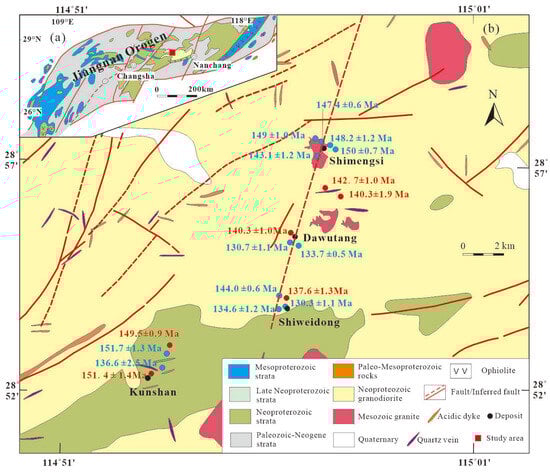
Figure 1.
Geological sketch map of (a) the Jiangnan Orogen and (b) the Dahutang orefield. Age data of the Mesozoic granites are denoted by the following symbols: red circle from this study data, blue circle from [5,6,7,9,15].
Tectonically, the Dahutang orefield is bounded by the Jiujiang–Shitai and Jiangshan–Shaoxing faults (Figure 1). The region exhibits well-developed fault systems, including approximately W-E trending faults in the north that intersect the Xin’anli tungsten deposit, as well as several NE- to NNE-trending faults (Figure 1b). The most prominent is the NNE-trending Xianguoshan–Shimensi–Shiweidong fault, which extends over 25 km and hosts numerous ore deposits along its strike within the Dahutang district.
The metasedimentary sequence is represented by the Neoproterozoic Shuangqiaoshan Group, a marine volcanic-clastic sedimentary succession composed of sandstones, phyllites, and slates interlayered with quartz keratophyres and tuffs. The largest magmatic intrusion is the Jiuling Pluton, a Neoproterozoic biotite granodiorite, batholith emplaced into the Shuangqiaoshan Group. It is gray in color, medium- to coarse-grained, and primarily consists of plagioclase (~65%), quartz (~20%), and biotite (~15%). The Pluton contains abundant dark gray, deep-source xenoliths, which are typically rounded or elliptical (occasionally irregular), range from several centimeters to tens of centimeters in size, and are sporadically distributed throughout the intrusion.
Mesozoic intrusions occur as small stocks, bosses, and sills intruding both the Neoproterozoic granodiorite and the Shuangqiaoshan Group.
2.2. Petrography of Mesozoic Granites
Mesozoic granites, occurring as small stocks, bosses, and sills, were emplaced into both the Neoproterozoic granodiorite and Shuangqiaoshan Group. The rock types closely associated with mineralization primarily include biotite granite, two-mica granite, and muscovite granite.
Biotite granites (G1) exhibit a porphyritic texture (Figure 2a), with a medium-grained monzonitic matrix. Phenocrysts predominantly comprise quartz (~3%), plagioclase (~6%), K-feldspar (~5%), and biotite (1%) with variable size. The matrix consists mainly of quartz (~35%), K-feldspar (~32%), plagioclase (~25%), biotite (~6%), muscovite (~2%), and minor magnetite. The rock has undergone intense greisenization, with irregular microcrystalline secondary quartz and sericite aggregates filling intergranular spaces, resulting in serrated edges on early-formed minerals. Plagioclase exhibits polysynthetic twinning or rhythmic zoning, with crystal edges showing a serrated shape due to fluid dissolution (Figure 2a).
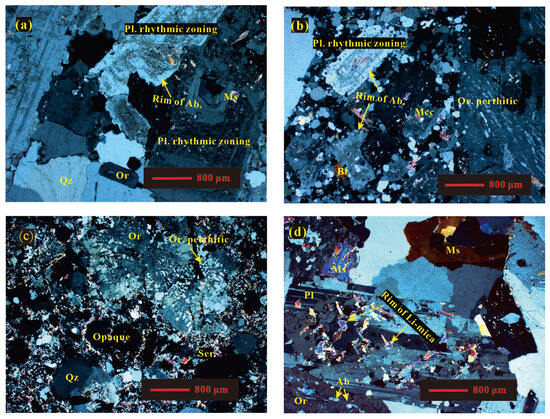
Figure 2.
Microphotographs (crossed polarizers) of the Dahutang orefield. (a) Biotite (G1) granite. Plagioclase exhibits polysynthetic twinning or rhythmic zoning, with crystal edges showing a serrated shape due to fluid dissolution; (b) two-mica (G2) granite. Coarse quartz and plagioclase surrounded by fine recrystallized quartz along its boundaries. Plagioclase has albite rim, orthoclase perthite crystal shows patch perthite type; (c) two-mica granite. Sericite aggregates and replaces K-feldspar, biotite, and is replaced by chlorite and opaque minerals; (d) muscovite granite. Margins of muscovite are bordered and replaced by Li-mica. (Pl = plagioclase; Or = orthoclase; Mcc = microcline; Ms = muscovite; Qz = quartz; Bt = biotite; Ab = albite; and Ser = Sericite).
Two-mica granites (G2) display a massive structure and porphyritic texture, with phenocrysts dominated by plagioclase (~15%), K-feldspar (~10%), quartz (~10%), biotite (~3%), and muscovite (~2%). The matrix exhibits a fine-grained texture (Figure 2b). Major mineral compositions include plagioclase (~15%), K-feldspar (~15%), quartz (~25%), muscovite (~3%), and minor biotite (1%), with accessory minerals such as ilmenite and magnetite. Quartz is found also as finer recrystallized crystals surrounding the rock-constituting minerals (Figure 2b), which sometimes show polygonal boundaries. K-feldspars are represented by coarse subhedral to anhedral tabular crystals of perthitic orthoclase with modest quantities of microcline. Biotite occurs as thick greenish-brown to yellowish-brown flakes and is replaced partially or completely by muscovite, chlorite, and iron oxides. Sericite occurs as irregular aggregates that replace K-feldspar, biotite, and is itself replaced by chlorite and opaque minerals (Figure 2c).
The muscovite granites (G3) exhibit a distinct zoning structure. From the outer to the inner portions of the rock-mass contact zone, it can be subdivided into fine-grained → medium-grained → coarse-grained muscovite granite. The fine-grained muscovite granite shows strong mineralization, particularly Li mineralization, serving as the primary ore-hosting rock in the mining area. In contrast, the medium- to coarse-grained muscovite granite, distal to the contact zone, displays poor mineralization. The rock is grayish-white to flesh-red in color and composed of quartz (~40%), plagioclase (~30%), K-feldspar (~25%), muscovite (11%–15%), and trace biotite (~2%) (Figure 2d). The fine-grained muscovite granite has undergone intense albitization, as evidenced by the nearly complete replacement of K-feldspar by albite and muscovite, the predominant alteration of plagioclase into albite, and the common occurrence of Li-mica bordering and replacing the margins of muscovite (Figure 2d). Lithium is predominantly hosted in Li-mica. The local fine-grained muscovite granites gradually transition, instead of a distinct interface, into albite granites (G4).
3. Ore Characteristics
Fifteen large, medium, and small mineral deposits and ore occurrences have been identified in Dahutang and its marginal area, forming a significant ore concentration zone dominated by W associated with Cu, Mo, Li, Sn, Nb, Ta, and other rare metals. The region hosts resources of 1.46 × 10⁶ t of WO3, accompanied by 0.69 × 10⁶ t Cu and 30,600 t Mo [16]. Multiple large-to-medium-sized W-Cu-Mo polymetallic deposits are distributed across the area, including the Shimensi, Dawutang, Shiweidong, and Kunshan mining areas (Figure 1b).
The orefield comprises the following four main genetic ore types: disseminated-vein type, altered-granite type, hydrothermal cryptoexplosive breccia type, and large quartz-vein type (Figure 3). Among these, the first two are the most economically important and exhibit typical porphyry-style characteristics, including pervasive whole-rock alteration and mineralization, low-grade ore, and large-tonnage deposit scales. The industrial W ores are primarily of the following two kinds: scheelite-dominant ores with minor wolframite and sulfides in the disseminated veinlet and altered granite, and wolframite-dominant ores with minor scheelite and sulfide in the quartz vein.
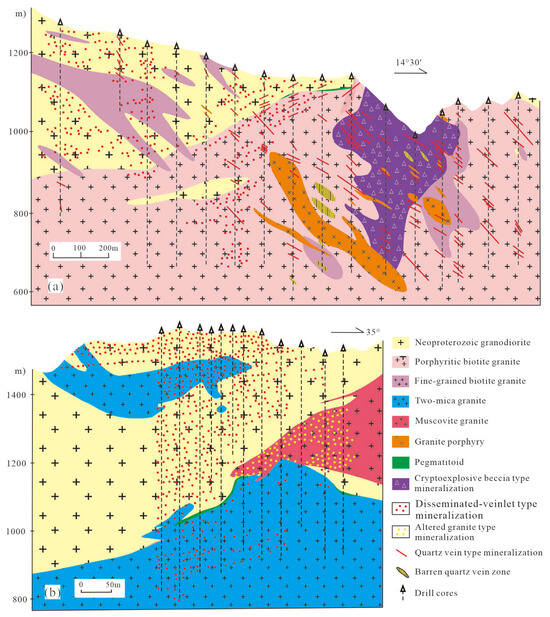
Figure 3.
Geological section along (a) the No. 4 exploration line of the Shimensi mining area, and (b) the No. 6 exploration of the Dawutang mining area. Compiled and redrawn based on [17,18].
Disseminated-veined and altered-granite ores occur in the contact zones between Mesozoic granites and Neoproterozoic biotite granodiorite (Figure 3a,b). These orebodies generally have gentle dips, typically at 10°–30°, largely consistent with the orientation of the contacting surfaces. These types are well-developed in the Shimensi and Dawutang mining areas. Disseminated-veined ores distributed within the exocontact zones (the Neoproterozoic granodiorite) are the most important type in the mining area (Figure 3 and Figure 4a,b), exhibiting higher grade and better mineralization continuity, whereas those in the endocontact zone are generally thinner, lower-grade, and discontinuously mineralized. Hydrothermal alteration associated with disseminated-vein type ores is extensive, with greisen alteration being predominant. The altered-granite type ores occur in the cupolas of the muscovite granite and albite granite (Figure 3b). Potassic alteration and albite alteration are the dominant alteration types associated with these ores (Figure 2d). These two ore types share similar strikes and geometries, often coexisting or occurring independently. Major ore minerals include scheelite, wolframite, chalcopyrite, lepidolite, zinnwaldite, and molybdenite.
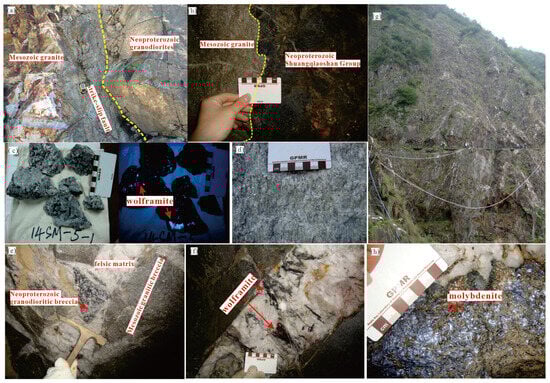
Figure 4.
Field photographs of rocks and ores of the Dahutang orefield. (a) Mesozoic granite intrudes into Neoproterozoic granodiorite; (b) Mesozoic granite intrudes into Neoproterozoic Shuangqiaoshan Group; (c) disseminated-veinlet tungsten ore; (d) altered-granite type ore; (e) hydrothermal cryptoexplosive breccia; (f) comb-like wolframite aggregates growing vertically or obliquely to the vein walls; (g) crisscrossing quartz veinlets in the Kunshan mining area; and (h) scaly molybdenite.
Hydrothermal cryptoexplosive breccia type ores are mainly distributed in the upper parts of the Mesozoic granites, with ore orientations perpendicular to the intrusive contact surfaces (Figure 3a). The breccia matrix consists of magma melt or felsic hydrothermal materials, while the clasts are predominantly Neoproterozoic granodiorite, with minor Mesozoic granite (Figure 4e). These ore bodies exhibit complex morphologies and are dominated by veinlet-disseminated mineralization. The ore assemblages are intricate and diverse; primary metallic minerals include wolframite, scheelite, chalcopyrite, and molybdenite, followed by stannite, sphalerite, cassiterite, and others.
Quartz-vein type ores are primarily hosted within Neoproterozoic granodiorite and Shuangqiaoshan Group (Figure 4g,h), and their occurrence is mainly controlled by fracture structures. This type is commonly observed in the Shimensi, Shiweidong, and Kunshan mining areas. These ores have the highest W average grade (0.282%) and account for about 1% of the total W resource. Wolframite is the main ore mineral, followed by scheelite. Wolframite occurs as coarse tabular or columnar crystals along the walls of large veins, with their long axes oriented perpendicular or oblique to the vein walls, forming symmetrical comb structures (Figure 4g). Associated metallic minerals primarily include molybdenite (Figure 4h) and chalcopyrite.
4. Materials and Methods
4.1. Minerals Collection
Wolframite, monazite, and zircon were obtained from the Mesozoic granites of the Dahutang orefield (Table 1). These minerals were separated using the heavy mineral separation method, and homogeneous, transparent grains were selected under a binocular microscope for preparing sample mounts. Additionally, 22 samples were collected from the Shimensi, Kunshan, and Dawutang mining areas for whole-rock chemical analysis.

Table 1.
Summary of minerals analyzed in the study area.
4.2. Backscattered Electron of Wolframite
The targets and backscattered electron (BSE) photographs of wolframite, monazite, and zircon were conducted at the Institute of Geology and Geophysics, Chinese Academy of Sciences. The major elements analyses of wolframite were conducted at the Institute of Geology and Geophysics, Chinese Academy of Sciences, by the JXA-8100 (JEOL, Tokyo, Japan) electron probe with an excitation voltage of 20 KV, an excitation current of 1 × 10⁻⁸ A, and a spot size of 0.5 μm.
4.3. Laser Ablation ICP-MS of Monazite and Zircon
The U-Pb dating analyses of monazite and zircon were carried out at the isotope Laboratory of Tianjin Center of China Geological Survey by the laser ablation Multi-receiving Plasma mass spectrometer (LA-ICP-MS, Agilent Corporation, Santa Clara, CA, USA), with using an excimer laser of NEW WAVE 193 nm FX ArF, a NEPUNE multi-receiver inductively coupled plasma mass spectrometer. Each analysis consisted of 20~30 s of background signal acquisition, followed by 65 s of ablation. During sample analysis, monazite standard sample 44,069 (424.9 ± 0.4 Ma; Aleinikoff [19]) and zircon GJ-1 were used as the external age standard for U-Pb isotopic fractionation correction. In the standard deviation of the standard of isotope ratio, the standard deviation of the isotope ratio of the sample and the standard isotope ratio are also taken into account, and the relative standard deviation is set at 2%. Monazite standard analyses data are presented in Table S1. Isotopic age mapping was performed using the ISOPLOT/EX 3.23 procedure [20]. Data without common Pb correction are plotted on the Tera–Wasserburg diagram. The 206Pb/238U age was calculated as a lower intercept of the 206Pb/238U value of the regression line with the concordia curve. Weighted mean ages for each spot were calculated using the 207Pb-correction for common Pb.
4.4. Whole-Rock Chemical Analyses
In this paper, whole-rock major- and trace-element analyses were carried out at the analysis and test Center of Nanjing Center of China Geological Survey. Fresh samples were crushed and powdered in an agate grinder mill and sieved with a <200 μm mesh. SiO2, Al2O3, Fe2O3T, MnO, MgO, CaO, K2O, Na2O, and P2O5 were analyzed as a fused disk using X-ray fluorescence (XRF) spectroscopy (PANalytical PW2424, PANalytical BV, Almelo, The Netherlands), with measurement uncertainty standard deviation of <5%. LOI at 1000 °C was measured for each sample, and elemental concentrations were normalized with the results of both analyses. The FeO content was measured by volumetric titration. Rare earth and other trace elements were analyzed using a Perkin Elmer Elan 9000 (PerkinElmer, Springfield, IL, USA) inductively coupled plasma mass spectroscopy (ICP-MS) in solution mode. Prepared samples were added to lithium metaborate/lithium tetraborate flux, mixed well, and fused in a furnace at 1025 °C. The resulting melts were then cooled and dissolved in a mixture of nitric, hydrochloric, and hydrofluoric acids prior to analysis. Standards were used to monitor the reliability of analytical results, and accuracy was 1%–5% for major elements and 5%–10% for most trace elements. Rock standard analyses data are presented in Table S1.
5. Results
5.1. Geochronology
Monazite/zircon U-Pb ages from LA-ICP-MS analyses are shown in Table S2.
5.1.1. Dawutang Mining Area
Monazites from the medium- to coarse-grained G3 granite (14PM-5) and fine-grained G2 granite (14YKD-1) are light yellow, subhedral to euhedral, with grain sizes ranging from 50 to 80 μm. Under backscattered electron (BSE) images, their structures are relatively homogeneous, with indistinct zoning (Figure 5). A total of 28 and 29 analytical points were acquired for 14PM-5 and 14YKD-1, respectively. Data were plotted and calculated on Tera–Wasserburg inverse concordia diagrams. For 14PM-5, the monazite lower intercept age is 142.9 ± 1.0 Ma (MSWD = 2.3), with a weighted mean 206Pb/238U age of 142.7 ± 1.0 Ma (MSWD = 1.1). For 14YKD-1, the monazite lower intercept age is 139.2 ± 0.98 Ma (MSWD = 1.3), and the weighted mean 206Pb/238U age is 140.6 ± 1.3 Ma (MSWD = 0.52) (Figure 6).
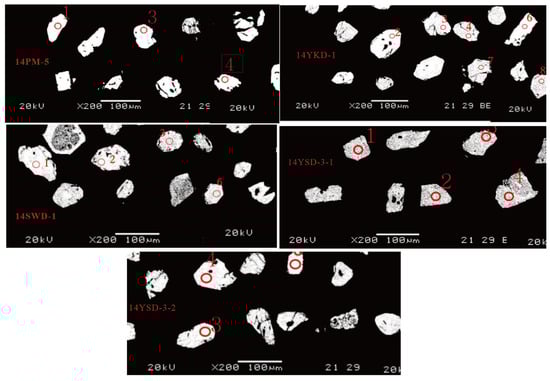
Figure 5.
Representative backscaterred electron (BSE) images of monazite grains used for U–Pb dating.
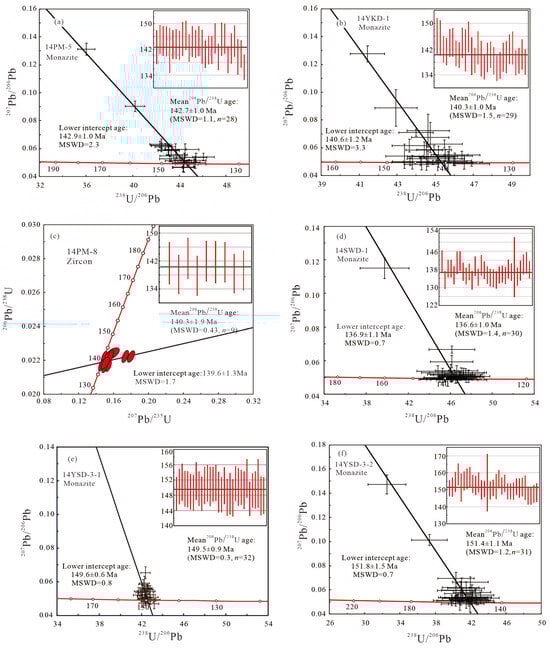
Figure 6.
(a,b,d–f) Tera–Wasserburg (T-W) inverse concordia diagrams and weighted mean 206Pb/238U ages of monazites, and (c) Wetherill concordia diagram and weighted mean 206Pb/238U ages of zircons.
Zircons from the porphyritic G2 granite (14PM-8) are elongated, subhedral to euhedral, with grain sizes varying from 50 to 100 μm. Under cathodoluminescence (CL) imaging, zircons are dark in color, displaying zoning, and some grains exhibit core-rim structures with bright cores and dark black rims. A total of 16 zircon grains from 14PM-8 were analyzed, but data from 7 grains with U > 10,000 ppm and obvious inherited characteristics were excluded from plotting and calculations. Measured 207Pb/235U and 206Pb/238U values were plotted on a Wetherill concordia diagram, and the weighted mean 206Pb/238U age was calculated. Results yield a lower intercept age of 139.6 ± 1.3 Ma (MSWD = 1.7) and a weighted mean age of 140.3 ± 1.9 Ma (MSWD = 0.43) (Figure 6).
5.1.2. Shiweidong Mining Area
The monazites from the G2 granite (14SWD-1) are light yellow, euhedral to subhedral crystals, ranging from 60 to 90 μm in size. Backscattered electron (BSE) imaging reveals a uniform internal structure with indistinct zoning (Figure 5). Thirty analyses of these monazites yield a lower intercept age of 137.6 ± 1.3 Ma (MSWD = 3.0) on Tera–Wasserburg inverse concordia diagrams, and a weighted average 206Pb/238U age of 137.5 ± 1.0 Ma (MSWD = 0.72) (Figure 6).
5.1.3. Kunshan Mining Area
The monazites from two G1 granite samples (14YSD-3-1, 14YSD-3-2) are colorless, transparent, subhedral columnar crystals measuring 80–150 μm, displaying distinct banding under backscattered electron (BSE) imaging (Figure 5). Thirty-two analyses of monazites from 14YSD-3-1 yield a lower intercept age of 149.6 ± 0.6 Ma (MSWD = 0.8) on Tera–Wasserburg inverse concordia diagrams, and a weighted mean 206Pb/238U age of 149.5 ± 0.9 Ma (MSWD = 0.3). Thirty-one analyses of monazites from 14YSD-3-2 yield a lower intercept age of 151.8 ± 1.5 Ma (MSWD = 0.7) and a weighted average 206Pb/238U age of 151.4 ± 1.4 Ma (MSWD = 1.2; Figure 6).
5.2. Geochemistry of Wolframite
Wolframite occurs in the G1 granites of the Shimensi and Kunshan mining areas, as well as in the G2 granites of the Dawutang and Shiweidong mining areas. The mineral is black to brownish-black in color, with euhedral to subhedral crystals ranging from 60 to 150 μm in size, exhibiting tabular, acicular, or hair-like morphologies. Electron microprobe analysis data are presented in Table S3.
The results show that wolframite is primarily composed of WO3, MnO, and FeO, with trace amounts of Ta2O5, MoO3, and PbO. Significant differences exist in the major element compositions of wolframite from different granites as follows (Figure 7): wolframite in the G1 granites contains 74.41% to 77.06% (avg. 76.08%) WO3, 14.19%–18.85% (avg. 17.29%) FeO, and 5.65%–10.31% (avg. 7.10%) MnO; in the G2 granites, it contains 75.12%–76.63% (avg. 75.84%) WO3, 17.52%–21.09% (avg. 19.69%) FeO, and 3.36%–6.68% (avg. 4.72%) MnO.
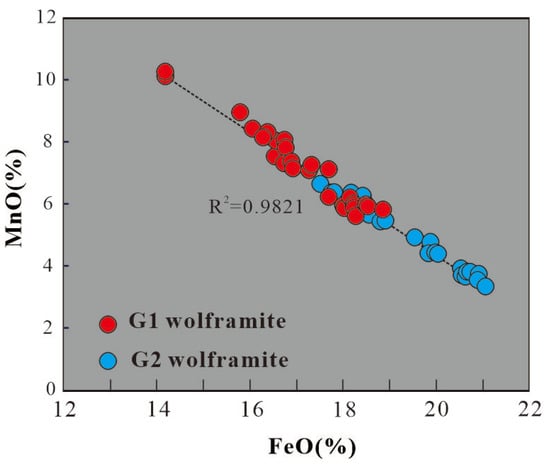
Figure 7.
Correlation diagrams of oxide content in wolframites. Arrows represent best-fit lines.
The crystal chemical formula of wolframite is determined to be (Fe0.60–0.89, Mn0.14–0.44)1.01–1.05W0.98–1.01O4, indicating a slight deficit in W6+ and an excess of Fe2+ and Mn2+, with Mn2+ being significantly lower in content compared to Fe2+, suggesting that wolframite is iron-rich. The deficit in W6+ may be due to the substitution of W by trace elements, such as Ta and Mo, in the wolframite lattice. WO3 exhibits a negative correlation with FeO and a positive correlation with MnO in wolframite. A strong linear negative correlation is observed between MnO and FeO (Figure 7). Wolframite in the G1 granites contains relatively higher concentrations of WO3 and MnO, whereas that in the G2 granites shows a significantly higher FeO content.
In addition to major elements such as W, Fe, and Mn, the chemical characteristics of trace elements like Ta, Nb, and Mo in wolframite warrant attention. The analyzed wolframite exhibits remarkably high Ta contents (Ta2O5: 0.38%–0.64%, avg. 0.50%), whereas Nb contents are extremely low (Nb2O5: 0–0.17%, avg. 0.036%). This is a relatively uncommon phenomenon in wolframite. In typical wolframite, Nb content is generally higher than Ta content for the following two reasons: first, Nb exhibits geochemical properties more similar to W than Ta does, and Nb5+ is more likely to substitute for W6+ than Ta5+; second, the upper limits of Ta isomorphism in wolframite are reported as Ta2O5 (0.3%–0.4%) [21]. Notably, the Ta content of wolframite in the study area significantly exceeds this threshold, as well as the Nb content. Additionally, no correlation was observed between Nb (or Ta) content in wolframite and rock type or with major elements (W, Fe, and Mn). As proposed by Xie [22], the decrease in the Nb/Ta ratio is attributed to magmatic-hydrothermal processes in peraluminous granites, which may be genetically associated with the mineralization of Ta, Cs, Nb, Be, Sn, and W.
The Mo content in wolframite from the Dahutang orefield is relatively high in content (0.01%–0.25%, avg. 0.152% MoO3) and is considered to be a substitute for W6+ in the crystal lattice in the hexavalent state.
5.3. Whole-Rock Chemistry of Mesozoic Granites
A total of twenty-two whole-rock elemental compositions of the Mesozoic granites were analyzed in this study (Table S4), including 14 G1 granites from the Shimensi and Kunshan mining areas and 8 G2 granites from the Dawutang mining area. Additionally, twenty previously reported whole-rock geochemical data are also included for the following discussions (Table S4). These comprise 3 G2 granites from the Shiweidong mining area [5], 11 G3 granites from the Dawutang mining area [23], and 6 G4 granites from the Dawutang mining area [12].
Overall, the Mesozoic granites are characterized by high and variable SiO2 (70.7%–75.52%), Al2O3 (12.92%–16.58%), low MgO (0.03%–0.54%), and CaO (0.30%–1.34%) (Table S4). G1 granites have the highest average MgO, TiO2, FeOT, and CaO relative to the G2–G4 granites (Figure 8). The decreasing CaO, TiO2, FeOT, and MgO contents during magmatic fractionation can be explained by the separation of biotite and plagioclase. In the SiO2 vs. (Na2O + K2O) diagram (Figure 9a), all data points fall within the field of calc-alkalic granites. Furthermore, all the studied granites are strongly peraluminous, with A/CNK values ranging from 1.10 to 1.67, consistently plotting within the peraluminous field on the A/NK vs. A/CNK diagram (Figure 9b). On the variation diagrams of major elements (Figure 8), Al2O3, FeOT, Na2O, and Zr exhibit the following distinct trends between the G1 and G2–G4 granites: the geochemical data of the G2–G4 granites define a continuous evolutionary trend, with Al2O3 and Na2O showing a negative correlation with MgO, while FeOT and Zr display a positive correlation with MgO. In contrast, Al2O3, FeOT, Na2O, and Zr in the G1 granites are geochemically discontinuous with those in the G2–G4 granites, and their correlations with MgO are less pronounced. This indicates that the degree of fractional crystallization in the G2–G4 granites is higher than that in the G1 granites.
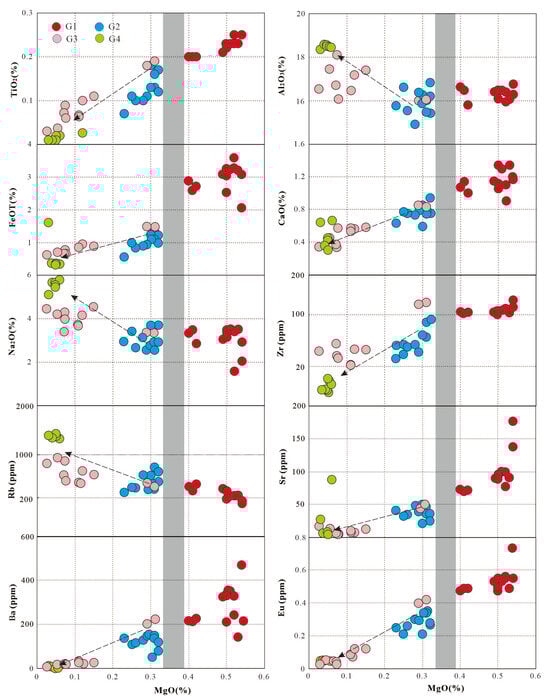
Figure 8.
Variation diagrams of major elements of the Mesozoic granites in the Dahutang orefield.
The K/Al vs. Na/Al molar ratio diagram (Figure 9c) was used to characterize the alteration trends of the Mesozoic peraluminous granites. The logic behind this method is that minimally altered igneous rock samples typically exhibit relatively balanced major element compositions. In contrast, metasomatized rocks display distinct chemical signatures, characterized by the dominance of one or two major elements (e.g., Na, K), which reflect the nature of hydrothermal alteration processes such as albitization, K-feldspathization, muscovitization, or greisenization. Most of the data points plot approximately at the middle region of unaltered granite with Na/Al molar ratios of 0.3–0.5 [24]. The G1 granites exhibit a slight greisenization trend, which is characterized by low (<0.3) Na/Al molar ratio values for variable K/Al molar ratios (0.1–0.4). The G3 and G4 granites show pronounced albitization accompanied by increase in the Na/Al molar ratio (>0.5) and decrease in the K/Al molar ratio (<0.3), exemplified by the G4 granite, which is the product of the albitization of G3 granite. The G2 granites place them in the “unaltered” field, but microscopic evidence (e.g., perthite and plagioclase with albite rim; Figure 2b) reveals local albitization. The alteration trends revealed by the major element composition of the granite are consistent with the field observations.
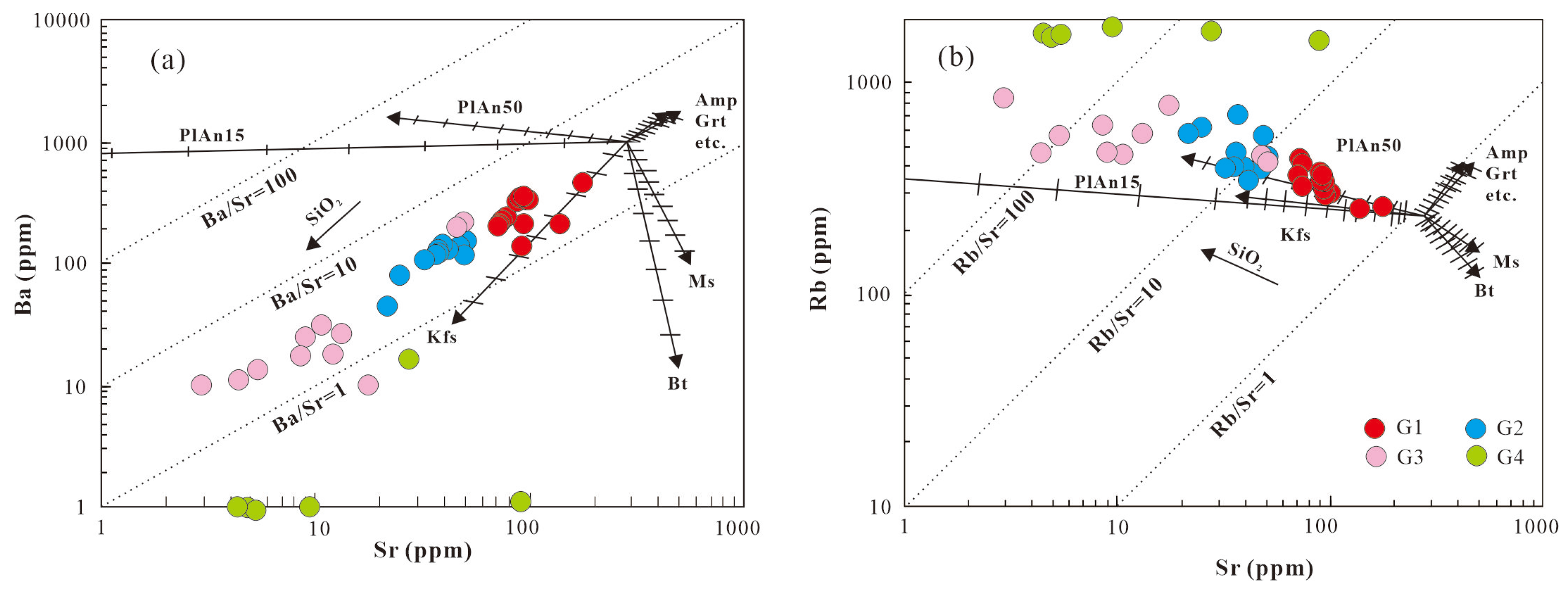
The Mesozoic granites exhibit negatively sloped REE patterns with enrichment in light rare earth elements (LREEs), characterized by LREE/HREE fractionation and negative Eu anomalies (Figure 10). The G4 granite is distinguished by severely Eu-depleted (Eu < 0.05 ppm) and pronounced M-type REE tetrad effects (TE1,3 values up to 1.28; [13]). Ba, Sr, Th, U, Zr, and the REE are lower and Rb is higher in the geochemically evolved G2–G4 granites, which also have stronger Eu anomalies, relative to the G1 granites, consistent with the features of those S-type granites. Zirconium concentrations are generally low (<130 ppm). These decrease with increasing MgO (Figure 8), which is compatible with zircon fractionation. Strong Eu depletion requires extensive fractionation of plagioclase and/or K-feldspar. The extremely low Sr and Ba concentrations likely result from intensive fractionation of plagioclase and K-feldspar (Figure 8 and Figure 11a), which incorporate these elements into their lattices and deplete them from the residual melt. Conversely, Rb, being incompatible in feldspars, accumulates preferentially in the residual melt during fractionation, leading to the high Rb content typical of highly fractionated granites (Figure 8 and Figure 11b). Notably, Ta and Nb display significant fractionation, with high Ta and low Nb concentrations.
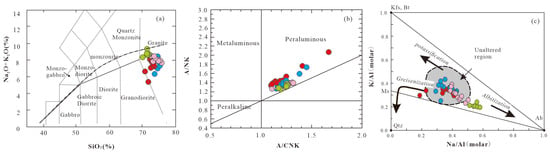
Figure 9.
(a) SiO2 vs. (K2O + Na2O) diagram [25]; (b) molar Al2O3/(Na2O + K2O) versus Al2O3/(CaO + Na2O + K2O) [26]; and (c) K/Al versus Na/Al molar ratio diagram [27]. Ab = albite, Bt = biotite, Kfs = Kfeldspar, Ms = muscovite, and Qtz = quartz. The compositional field for the least-altered peraluminous granites from the French Massif Central is shown for reference (dashed line).
Figure 9.
(a) SiO2 vs. (K2O + Na2O) diagram [25]; (b) molar Al2O3/(Na2O + K2O) versus Al2O3/(CaO + Na2O + K2O) [26]; and (c) K/Al versus Na/Al molar ratio diagram [27]. Ab = albite, Bt = biotite, Kfs = Kfeldspar, Ms = muscovite, and Qtz = quartz. The compositional field for the least-altered peraluminous granites from the French Massif Central is shown for reference (dashed line).
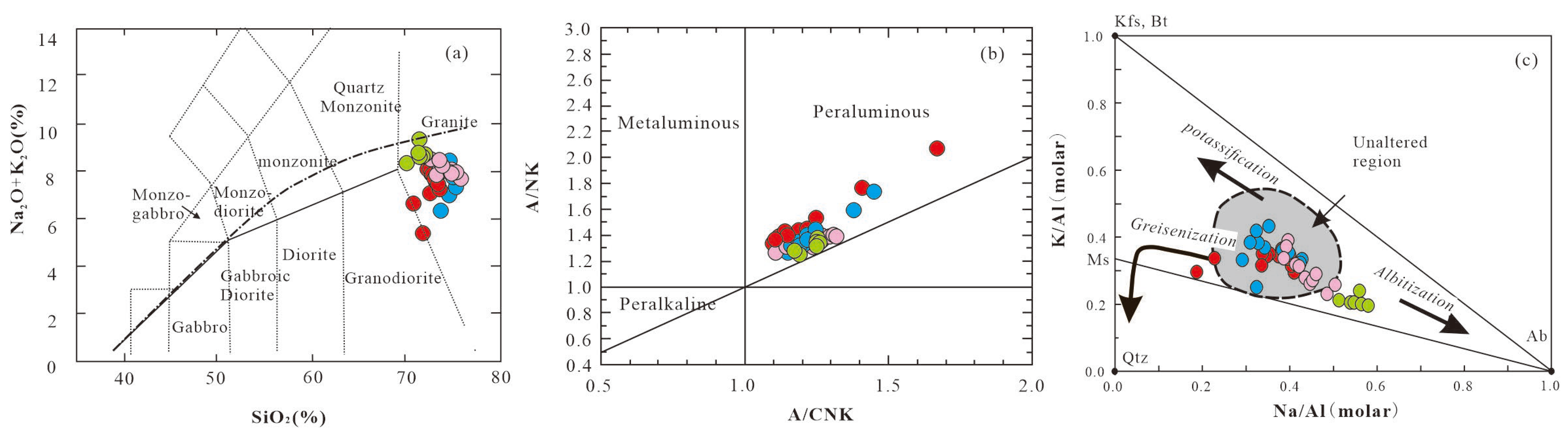
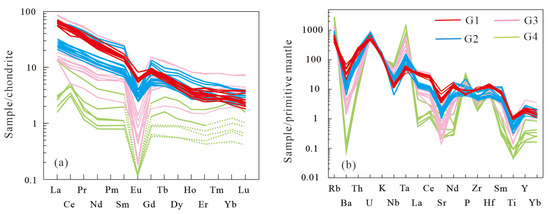
Figure 10.
(a) Chondrite-normalized REE distribution patterns (the dashed lines of albite granites represent the inferred trend) and (b) Primitive mantle-normalized trace element spider diagrams of granites in the Dahutang orefield. Chondrite and primitive mantle values from [28].
Figure 10.
(a) Chondrite-normalized REE distribution patterns (the dashed lines of albite granites represent the inferred trend) and (b) Primitive mantle-normalized trace element spider diagrams of granites in the Dahutang orefield. Chondrite and primitive mantle values from [28].
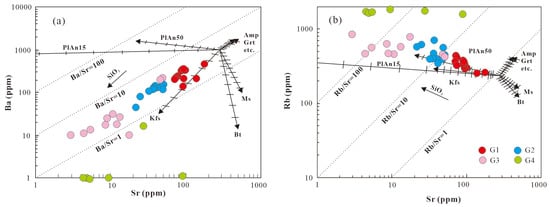
Figure 11.
(a) Sr versus Ba and (b) Sr versus Rb plots for the Mesozoic granites in the Dahutang orefield. Labeled vectors correspond to up to 50% fractional crystallization of the main rock-forming minerals (field boundaries are after [29]).
Figure 11.
(a) Sr versus Ba and (b) Sr versus Rb plots for the Mesozoic granites in the Dahutang orefield. Labeled vectors correspond to up to 50% fractional crystallization of the main rock-forming minerals (field boundaries are after [29]).
5.4. Characteristics of Zr/Hf, Y/Ho, Nb/Ta, and K/Rb Isovalent Ratios
In pure magmatic fractionation, isovalent element ratios like Y/Ho and Zr/Hf remain coherent and near chondritic levels, as mineral-melt fractionation depends on ionic substitution in lattices (governed by charge and radius), termed CHARAC behavior [30]. By contrast, fluid-driven leaching or precipitation, influenced by elements’ distinct chemical properties, causes non-CHARAC behavior, disrupting coherence between isovalent “twins”. Highly evolved, H2O-Li-P-B-Cl-rich magmas show such unusual non-CHARAC ratios [30,31].
The Y/Ho ratios in G1–G3 granites range from 23.33 to 35.69, which is close to the chondritic ratio (Y/Ho = 28) [32] (Table 2; Figure 12a). In contrast, the Y/Ho ratios in G4 granites (14.8–41.4) deviate slightly from the chondritic ratio, indicating non-CHARAC behavior and a moderately evolved composition. Similarly, the Zr/Hf ratios follow a comparable pattern as follows: in G1, G2, and G3 granites, the Zr/Hf ratios vary between 17.31 and 41.67, whereas in G4 granites, they range from 8.84 to 11.64 (Table 2; Figure 12a). The Zr/Hf ratios in G1–G3 granites are close to those of chondrites (the chondritic ratio is thirty-eight) [32], but the Zr/Hf ratios of G4 granites clearly deviate from these values. Breiter [33] proposed categorizing granites into common granites (Zr/Hf > 55), moderately evolved granites (25 < Zr/Hf < 55), and highly evolved granites (Zr/Hf < 25). It is evident that the G1–G3 granites exhibit a composition that ranges from less evolved to moderately evolved, whereas the G4 granites are characterized by a more highly evolved composition compared to that of G1–G3 granites.
Table 2.
Rare-element contents of Mesozoic peraluminous granites in the Dahutang orefield.
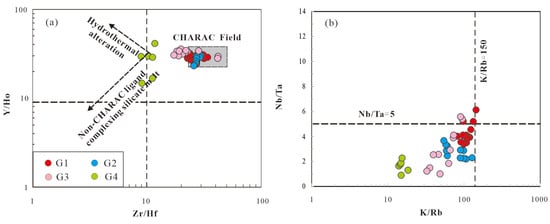
Figure 12.
(a) Zr/Hf vs. Y/Ho ratios and (b) K/Rb vs. Nb/Ta ratios. Hydrothermal alteration and CHARAC field from [30].
Fractional crystallization (i.e., of mica and feldspars) induces a reduction in Nb/Ta and K/Rb ratios. However, fractional crystallization alone is insufficient to explain the occurrence of Nb/Ta < 5 and K/Rb < 150 in most peraluminous granites. It has been suggested that extremely low Nb/Ta and K/Rb ratios are further enhanced by hydrothermal processes during the magmatic-hydrothermal transition, particularly in highly evolved granites [34].
The Nb/Ta ratios of Mesozoic peraluminous granites in the study area range from 0.89 to 6.11 (Table 2; Figure 12b), which deviate from the chondritic ratio (chondritic Nb/Ta = 17) [32]. If Nb/Ta ≤ 5 is taken as an indicator of hydrothermal processes [34], most Mesozoic granites predominantly fall within the magmatic-hydrothermal field. All studied granite samples exhibit low K/Rb ratios (<150), indicating a highly evolved magma composition. The K/Rb ratio of magmatic rocks (230) is close to that of chondrites (242) [32], while most crust-forming rocks have K/Rb ratios ranging from 150 to 350 [35]. The G1 granites have the highest K/Rb ratios, ranging from 81.77 to 144.15, whereas the G2–G4 granites have lower and more widely varying ratios, ranging from 13.96 to 128.29 (Table 2; Figure 12b). Therefore, the low Nb/Ta and K/Rb ratios of the Mesozoic peraluminous granites result from both mineral crystallization fractionation and hydrothermal alteration during the late magmatic subsolidus stage.
5.5. Characteristics of Ore-Forming Elements
Geochemical data reveal the following concentrations of ore-forming elements in the Mesozoic peraluminous granites of the study area: 4.17–801 ppm W, 3.07–1443 ppm Cu, 51.5–2367 ppm Li, 0.15–12.2 ppm Mo, 4.45–51.3 ppm Nb, 1.7–57.9 ppm Ta, and 8.55–369 ppm Sn (Table 2). Relative to the upper continental crust (UCC; values from [36]), the Mesozoic peraluminous granites exhibit strong enrichment in W, Sn, and Li, moderate enrichment in Ta and Cu, and comparable abundances in Mo and Nb. The enrichment sequence of metallogenic elements is W > Sn > Li > Ta > Cu > Mo > Nb.
On ore-forming element box plots, the G1 granites are characterized by lower abundances of all rare metals, with the exception of Cu. The G2–G4 granites are enriched in W, Li, Sn, Ta, and Nb relative to the less-evolved G1 granites, with their contents increasing progressively from G2 to G4 granite. G4 granite shows significantly higher abundances of W, Li, Sn, Ta, and Nb, compared to the G1, G2, and G3 granites (Figure 13). In contrast, Cu content shows the following inverse trend: G1 > G2> G3 > G4 granite. Nb content is slightly below the UCC value in G1 (8.58 ppm).
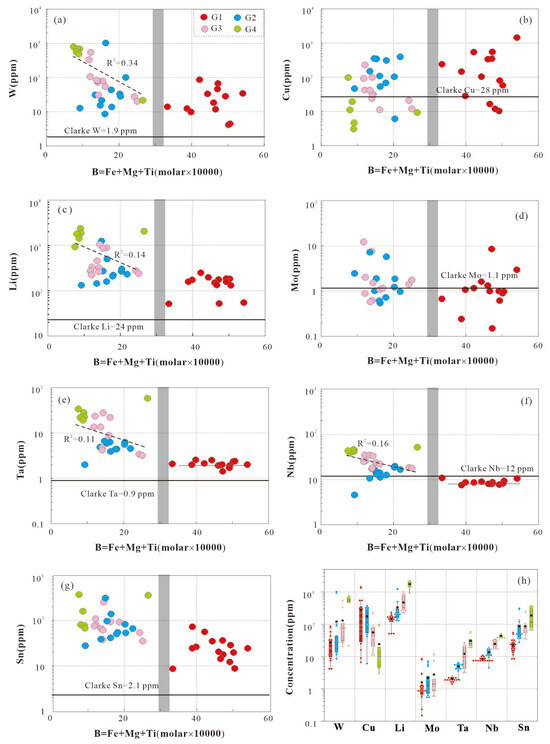
Figure 13.
(a–g) Ore-forming elements versus the differentiation index plot [36] and (h) box plots of concentrations in ore-forming elements. Clarke values for the upper continental crust are shown as thick black lines (values from [36]).
Using Σ(Fe + Mg + Ti) as a fractionation indicator, where decreasing Σ(Fe + Mg + Ti) indicates increasing degrees of fractionation or a variable source [37], ore-forming elements exhibit distinct behaviors between the G1 granites and the G2–G4 granites (Figure 13), analogous to the variation pattern of major elements. Nb and Ta increase with fractionation in G2–G4 granites but remain constant in G1 granites. W and Sn are significantly elevated in the G2–G4 granite series relative to G1 granites. The data points of Cu and Mo are relatively scattered without a distinct trend; however, the distribution of Cu and Mo data points is clearly opposite to that of Li, W, Sn, Nb, and Ta. It is evident that the G1 granites and the G2–G4 granites have distinct sources, and the differentiation of the two series exerts different influences on ore-forming elements. For W and Sn, differentiation is conducive to the enrichment of these elements—the higher the degree of differentiation, the greater the enrichment. For Cu, however, differentiation is unfavorable for mineralization, particularly in the G2–G4 granites. As for Li, Nb, and Ta, the situation is more complex, with their behaviors varying across different rock types.
6. Discussion
6.1. Spatio-Temporal Distribution of the Mesozoic Peraluminous Granites
In the Dahutang ore concentration area, substantial chronological and petrological studies have established a basic consensus that the magmatic activity in this region occurred within the time frame of 150–130 Ma. However, debates persist regarding whether this represents a prolonged single magmatic event or two discrete magmatic episodes. We collected recently reported precise ages of the Mesozoic granites as well as the mineralization ages for cross-validation (Table 3, Figure 14). Although only a limited number of mineralization ages were available, the crystallization ages were screened using the following criteria: U content was less than 3000 ppm; each dataset includes at least fifteen effective analytical points; and for the same lithology in a single article, the data with the highest testing accuracy are selected. The Mesozoic peraluminous granites are divided into the following two periods: 152–147 Ma and 144–130 Ma. Existing mineralization dating efforts have predominantly centered on two time intervals, ~150 Ma and 144–139 Ma (Table 3 and Figure 14), which are consistent with the magmatic activities.
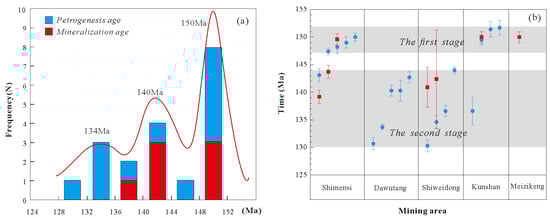
Figure 14.
(a) Histogram of ages and (b) box plots of the Mesozoic granite and related ore deposits in the Dahutang District (the sources of the age data in the plots are listed in Table 3).
We have noticed that despite the rigorous selection of age data, the dispersion in the age data of the two episodes still shows the following systematic differences: the dispersion of the crystallization ages of the G1 granites (152–147 Ma) and its associated mineralization ages (~150 Ma) are relatively small, while the dispersions of the crystallization ages of the G2–G4 granites (144–130 Ma) and their associated mineralization ages (144–139 Ma) are relatively large. The large age dispersions of the extensive G2–G4 magmatic stage are attributed not only to the limitations of analytical precision but also potentially to the recrystallization of dated minerals caused by magmatic-hydrothermal processes, which results in scattered ages and relatively large dispersion [38].
The 152–147 Ma magmatic activity is characterized by a single lithology (primarily G1), a narrow geochemical and time range, implying limited magmatic differentiation, whereas 144–130 Ma magmatic activity consists of complex lithologies (including G2, G3, and G4) and shows diverse compositions and a higher degree evolution over a longer time span. Thus, though the emplacement of the G1 granites coincides spatially with that of the G2–G4 granites, it is noteworthy that these two episodes of magmatism are not genetically related and evolved independently.
Table 3.
The ages of magmatic crystallization and mineralization in the Dahutang ore concentration area and its surrounding areas.
Table 3.
The ages of magmatic crystallization and mineralization in the Dahutang ore concentration area and its surrounding areas.
| Deposit | Lithology or Ore Body | Age | MSWD | Mineral and Method | Reference | |
|---|---|---|---|---|---|---|
| Shimensi mining area | Magmatic crystallization age | Porphyritic biotite granite | 147.4 ± 0.6 | 1.3 | Zircon U-Pb | [7] |
| Porphyritic biotite granite | 149 ± 1 | 1.7 | Monazite U-Pb | [9] | ||
| Biotite granite | 150 ± 0.7 | 1.6 | Monazite U-Pb | [9] | ||
| Porphyritic granite | 143.1 ± 1.2 | 0.4 | Zircon U-Pb | [7] | ||
| Porphyritic biotite granite | 148.2 ± 1.2 | 2.2 | Monazite U-Pb | [9] | ||
| Mineralization age | Quartz vein type | 139.2 ± 1.0 | 2.9 | Molybdenite Re-Os | [39] | |
| Quartz vein type | 143.7 ± 1.2 | 0.8 | Molybdenite Re-Os | [40] | ||
| Quartz vein type | 149.6 ± 1.2 | 1.6 | Molybdenite Re-Os | [4] | ||
| Dawutang mining area | Magmatic crystallization age | Granite porphyry | 130.7 ± 1.1 | 0.5 | Zircon U-Pb | [6] |
| Muscovite granite | 133.7 ± 0.5 | 0.5 | Zircon U-Pb | [6] | ||
| Muscovite granite | 142.7 ± 1.0 | 1.1 | Monazite U-Pb | This paper | ||
| Two-mica granite | 140.3 ± 1.0 | 1.5 | Monazite U-Pb | This paper | ||
| Granite porphyry | 140.3 ± 1.9 | 0.4 | Zircon U-Pb | This paper | ||
| Shiweidong mining area | Magmatic crystallization age | Granite porphyry | 130.3 ± 1.1 | 2 | Zircon U-Pb | [6] |
| Granite porphyry | 134.6 ± 1.2 | 1.8 | Zircon U-Pb | [5] | ||
| Porphyritic two-mica granite | 144 ± 0.6 | 0.2 | Zircon U-Pb | [6] | ||
| Porphyritic two-mica granite | 136.6 ± 1.0 | 1.4 | Monazite U-Pb | This paper | ||
| Mineralization age | Quartz vein type | 140.9 ± 3.6 | 2.3 | Molybdenite Re-Os | [40] | |
| Fine vein immersion type | 142.4 ± 8.9 | 1.7 | Scheelite Sm-Nd | [8] | ||
| Kunshan mining section | Magmatic crystallization age | Porphyritic biotite granite | 149.5 ± 0.9 | 0.3 | Monazite U-Pb | This paper |
| Porphyritic biotite granite | 151.4 ± 1.4 | 1.2 | Monazite U-Pb | This paper | ||
| Porphyritic granite | 151.7 ± 1.3 | 1.6 | Zircon U-Pb | [15] | ||
| Granite porphyry | 136.6 ± 2.5 | 3.8 | Zircon U-Pb | [15] | ||
| Mineralization age | Quartz vein type | 150.0 ± 1.0 | 0.3 | Molybdenite Re-Os | [15] | |
| Meizikeng mine spot | Mineralization age | Quartz vein type | 150.0 ± 1.0 | 0.7 | Molybdenite Re-Os | [41] |
Statistical principles of crystallization age are as follows: 1. U content is less than 3000 ppm; 2. no less than fifteen effective analysis points for each data; and 3. select the data with the best test accuracy for the same lithology in an article.
6.2. Implications for Magma Temperature
Zircon saturation thermometry (TZr = 12,900/[2.95 + 0.85M + ln(496,000/Zrmelt)]) [42] provides a simple and robust means of estimating magma temperatures. In the granites of the study area, zirconium content decreases with decreasing MgO (Figure 8), and abundant inherited zircons are observed (e.g., 14PM-8), indicating that zircon reached saturation during melt fractionation. Among all granites, G1 biotite granites have the highest zirconium content (100–129 ppm), with calculated TZr values 766 ± 12 °C for fourteen samples (Table S4). Next is G2, where eleven samples have zirconium contents of 49.7–98.3 ppm and calculated TZr values of 726 ± 18 °C. Third is G3 granite, which exhibits the widest temperature variation range as follows: eleven samples have zirconium contents of 31.2–124 ppm and calculated TZr values of 718 ± 30 °C. The G4 has the lowest temperature, with six samples showing zirconium contents of 20.6–41.4 ppm and TZr values of 663 ± 17 °C. Among them, the highly fractionated G4 granite and a few G3 granites, with Zr < 45 ppm, exhibit lowest saturation temperatures and highest alkalinity. High alkalinity leads to an increase in the M-value, which is a compositional factor that accounts for the dependence of zircon solubility on SiO2 and peraluminosity of the melt M = 100 (Na + K+ 2Ca)/(Al·Si) (Figure 15). Given a fixed measured zirconium content in the granite, for a melt with a high M-value (high alkalinity), the calculated temperature required for it to reach zirconium saturation will be lower [29,43]. Excluding samples of zirconium < 45 ppm, the temperature of G3 granite is 729 ± 28 °C, which is essentially consistent with the temperature of G2 granite (726 ± 18 °C) and differs by 40 °C from that of G1 biotite granites 766 ± 12 °C. Thus, ~766 °C and ~726 °C reflect the initial magma temperature of G1 granites and G2–G4 granites, respectively.
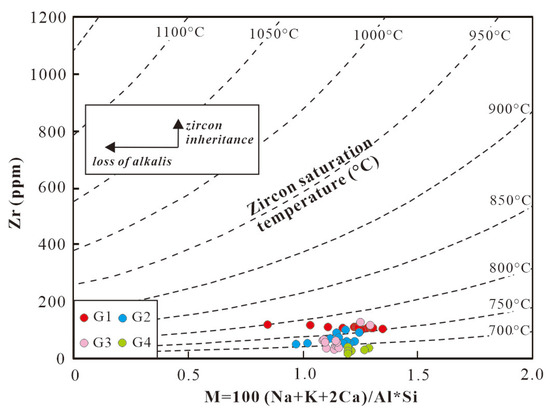
Figure 15.
Binary plot of M = 100 (Na + K + 2Ca)/Al × Si versus Zr (ppm) [29]. The isotherms of Zr saturation levels were calculated using the model of Watson and Harrison (1983) [42]. The arrows indicate the effects of increasing zircon inheritance and (hypothetical) alkali loss, both of which would produce slight temperature overestimates.
Magma with a temperature of <800 °C was defined as “cold magma” by Miller [43]. At such a low temperature, mafic minerals and calcic plagioclase are highly insoluble, and melts are near Ab-Or-Qz minimum melt compositions. As a result, the magma contains a large number of residual minerals from the source area, making it almost impossible for the magma to erupt. All current models for generating large-scale magmas at T < 800 °C within the crust require a source of water-rich fluid, because anhydrous melts require unrealistically high temperatures, and fluids could ascend into the zone of melting as a consequence of dehydration of underthrust sedimentary rocks or of hydrous mafic silicates in ultramafic-mafic rocks (cf. Thompson, 2001 [44]; Patiño Douce, 1999 [45]; Spear, 1995 [46]). In conclusion, the formation of the low-temperature, peraluminous granites with a concealed state in the study area could be attributed to the dehydration melting of subducted sedimentary rocks in a thickened crust.
6.3. Tectonic Setting and Metallogenic Materials
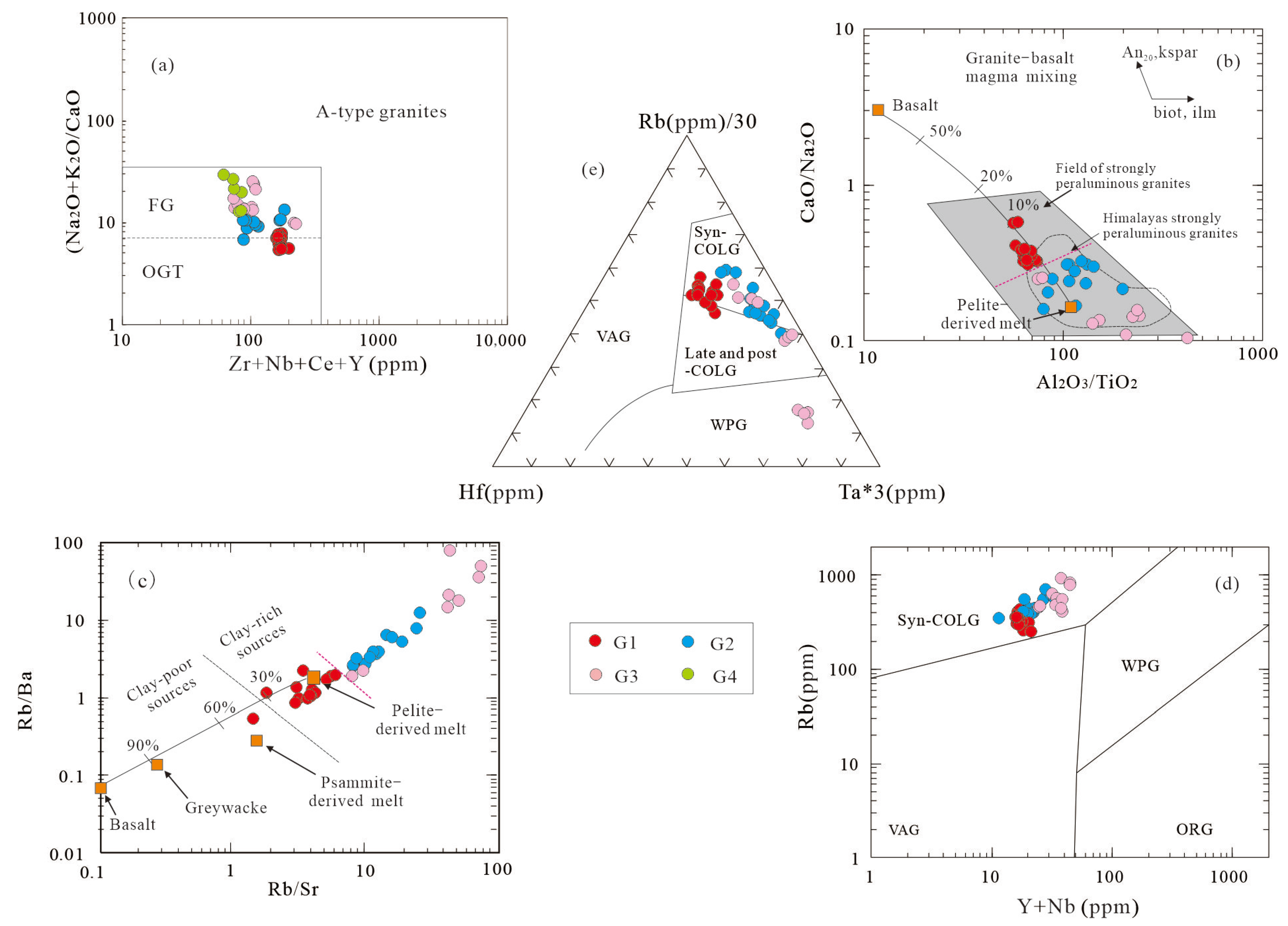
The Mesozoic granites are calc-alkalic and strongly peraluminous (A/CNK > 1.1; Figure 9a,b), with low Zr + Nb + Ce + Y contents (<200 ppm; Figure 16a). These characteristics distinguish them from typical A-type granites [47]. Furthermore, the studied granites have significantly lower zircon saturation temperatures (<800 °C; Table S4) than those typical of A-type granites (>820 °C). The Mesozoic granites exhibit the fundamental characteristics of S-type granites. First, from a petrographic perspective, the Mesozoic granites contain protolith muscovite, a characteristic aluminum-rich mineral typically found in S-type granites. Second, from a geochemical perspective, these granites display strongly peraluminous features (most samples A/CNK > 1.1, as shown in Table S4). Additionally, consistent with S-type granites, the P2O5 content in these rocks increases with the degree of fractionation [48,49]. The granites have high P2O5 contents (>0.13%, with that in albite granite reaching up to 0.75%), which increase progressively from the G1 to the G4 granites. This trend further indicates their S-type affinity.
Sylvester [50] divided the source rock compositions of strongly peraluminous granites into psammite- and pelite-derived melt based on the CaO/Na2O value of 0.3 as the boundary. The G2–G4 granites are characterized by low CaO/Na2O values (0.06–0.30) and high Rb/Sr (8.1–382.2) and Rb/Ba ratios (1.9–3237; Figure 16b,c), which are similar to the compositions of the Himalayan strongly peraluminous granites. This indicates that they originated from the melting of upper crustal sediments with a high clay component. In contrast, the G1 granites show relatively high CaO/Na2O (0.31–0.57), low Al2O3/TiO2, and low Rb/Sr (1.5–5.2) and Rb/Ba ratios (0.54–2.25). The samples plot near the mixing trend between basalt melt and pelite melt (Figure 16b,c), supporting a hybrid origin involving a small amount of basaltic material and clay-rich pelitic sediment, which reflects crust–mantle interaction. Further evidence for mantle material contribution comes from the zircon Hf-O isotopic signatures of the following granites: δ18O values range from 6.4‰ to 8.87‰, which is lower than the 11‰ average of metasedimentary sources, respectively [51,52], while high εHf(t) values reach −2.4, −2.13 and 4.48 in the Shimensi and Dawutang mining area, respectively [5,52]. The mantle signature in the G1 magmas is primarily attributed to its elevated thermal state, which promoted partial melting of crustal mafic minerals and calcic plagioclase. Conversely, the G2–G4 magmas record lower and progressively decreasing temperatures, with melt compositions approaching the Ab-Or-Qz minimum.
The field relationships, mineralogy, and geochemistry data help to define the geodynamic setting of the Mesozoic peraluminous granites. The present study shows that the Mesozoic peraluminous granites are undeformed and unmetamorphosed. It represents the youngest igneous activity in the study area and intrudes the subduction-related rocks. These criteria indicate a post-collisional setting for the Mesozoic peraluminous granites. Also, the chemical characteristics of the Mesozoic peraluminous granites are consistent with a post-collisional tectonic setting as follows: marked depletion in Sr, MgO, CaO, and transition metals, primitive mantle-normalized patterns (Figure 10) enriched in both LILE and HFSE, and no depletion (quite the opposite, in fact) in Nb and Ta. On the tectonic discrimination diagram (Figure 16d,e), all granites fall within the collisional region, indicating they formed in post-collisional environments.
The Shuangqiaoshan Group in the eastern Jiangnan Orogen formed in a back-arc basin associated with NW-dipping Neoproterozoic oceanic plate subduction beneath the Yangtze Block (Figure 1b) [53]. Plausibly, fluids could ascend into the zone of melting as a consequence of dehydration of subduction-related Shuangqiaoshan Group. W, Sn, Li, Nb, and Ta partition strongly into muscovites, which are often the first minerals involved in incongruent melting reactions. If metapelite source micas are also enriched in W, Sn, Li, Nb, and Ta, any W, Sn, Li, Nb, and Ta that is not partitioned into residual minerals during melting will be released to the resultant melt [54,55]. In fact, the Shuangqiaoshan Group is enriched in ore-forming metals, with W, Sn, Cu, Mo, and Ta contents of 10.1, 5.1, 38.5, 2.6, and 36–76 ppm, respectively [56,57,58], which are one to two orders of magnitude higher than the UCC. One of the reasons for the low Nb content in Mesozoic granites is the low Nb content of the Shuangqiaoshan Group (8–12 ppm, a little lower than UCC); low melting temperature is also an important contributing factor. Fe-Ti oxides are among the host minerals of Nb (e.g., Stepanov & Hermann, 2013 [59]); at a low melting temperature, these minerals do not melt and cause Nb to partition into residual Fe-Ti oxides.
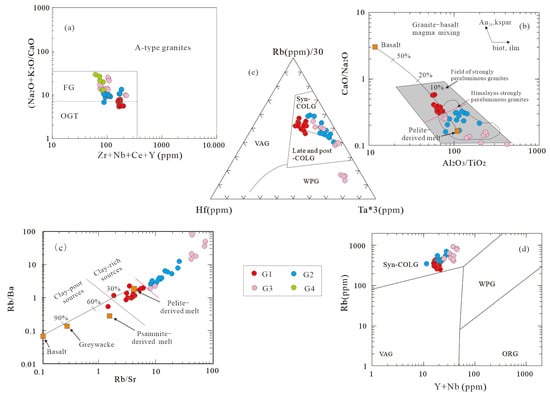
Figure 16.
(a) (K2O + Na2O)/CaO − Zr + Nb + Ce + Y [46], (b) CaO/Na2O − Al2O3/TiO2 [50], (c) Rb/Sr − Sr/Ba [50], (d) Rb − (Y + Nb), and (e) Rb − Hf − Ta × 3 [60]. FG: fractionated felsic granites; OGT: unfractionated M-, I-, and S-type granites; An20: vectors for fractional crystallization of oligoclase; kspar: K-feldspar; biot: biotite; and ilm: ilmenite; syn-COLG: syn-collisional; VAG: volcanic arc; WPG: within-plate; ORG: oceanic ridge; and late and post-COLG: late and post-collisional.
Figure 16.
(a) (K2O + Na2O)/CaO − Zr + Nb + Ce + Y [46], (b) CaO/Na2O − Al2O3/TiO2 [50], (c) Rb/Sr − Sr/Ba [50], (d) Rb − (Y + Nb), and (e) Rb − Hf − Ta × 3 [60]. FG: fractionated felsic granites; OGT: unfractionated M-, I-, and S-type granites; An20: vectors for fractional crystallization of oligoclase; kspar: K-feldspar; biot: biotite; and ilm: ilmenite; syn-COLG: syn-collisional; VAG: volcanic arc; WPG: within-plate; ORG: oceanic ridge; and late and post-COLG: late and post-collisional.
6.4. The Role of Fluorine and Phosphorus
Although F was not analyzed in this study, it emerges as a key control on the distribution of W, Sn, Nb, and Ta in peraluminous Mesozoic granites. Based on previous data [13], the F content shows a moderate increase from approximately 0.1%–0.69% in G2 granite to 0.21%–0.84% in G3 and G4 granites. Elevated F is typical of fractionated peraluminous melts; together with other fluxing elements (e.g., P, Li, and B), it lowers the melt temperature and reduces viscosity [61]. High F concentrations promote the retention of W, Sn, Li, Nb, and Ta in low-temperature melts, with these metals preferentially partitioning into the melt during its evolution [62,63]. This pattern is observed in the G4 granite, which has the highest F contents and also exhibits the highest W, Sn, Li, Nb, and Ta concentrations (Figure 13). No relevant data on F in G1 granites were identified.
Like F, phosphorus accumulates with the fractionation of peraluminous melts, reaching maximum levels in the most evolved granites which also have the lowest Ca contents. When P is present in high concentrations alongside low Ca, a relationship designated the “Pedrobernardo-type” trend by Bea [64], P exhibits the behavior of an incompatible element and concentrates in residual fluids. This phenomenon arises because limited Ca availability constrains apatite crystallization. Within the G2–G4 granites, P2O5 shows a positive correlation with Rb, commonly enriched in residual melts and a negative correlation with compatible elements such as Sr and Ba (Figure 8 and Figure 10). Extending this relationship to rare metals is as follows: in G2–G4 granites, P2O5 contents correlate positively with W, Sn, Li, Nb, Ta, and Mo, and negatively with Cu, while showing no clear overall trend with Mo; in G1 granites, W, Cu, Li, and Sn show no overall trends, while Nb and Ta exhibit a weak positive correlation (Figure 17). The combined effects of F and P, along with Li, favor the retention of W, Sn, Nb, and Ta, with no such effect on Cu and Mo in the granitic melt. The variations in phosphorus contents between the G1 and G2–G4 granites reflect differing degrees of fractionation, with the G2–G4 granites being significantly higher than the G1 granites. This higher degree of fractionation enhances the potential for these metals (W, Sn, Nb, and Ta) to later partition into exsolving magmatic-hydrothermal fluids.
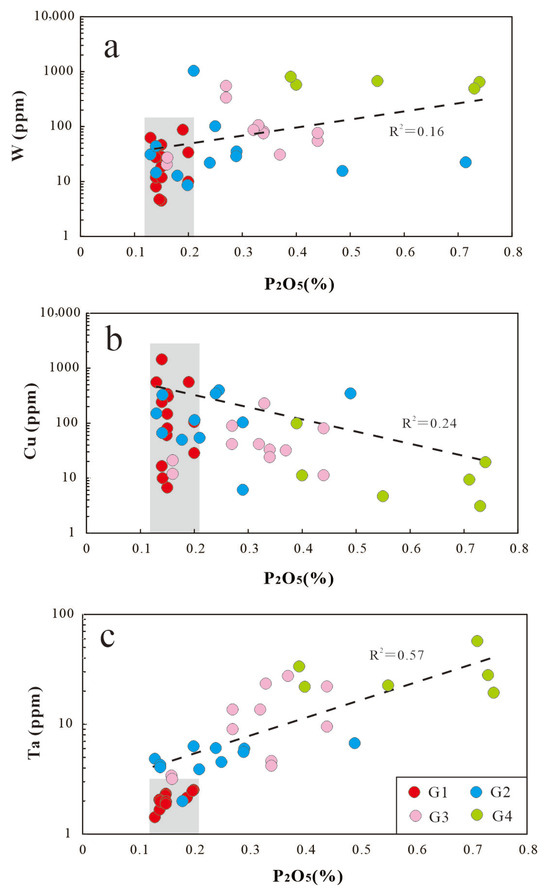
Figure 17.
Trace element variation diagrams with P2O5 (%) as the abscissa. P2O5 becomes concentrated in residual fluids during evolution of peraluminous granites and correlations for (a) P2O5-W, (b) P2O5-Cu, and (c) P2O5-Ta, indicating whether these metals concentrated in residual fluids.
6.5. PH-Eh Conditions as Indicators of Mineralization
Redox state controls the efficiencies of removal of metal from source into the melt, the partition coefficients of metal species to coexisting melt, and transportation of metal into ore-forming fluid [65]. An empirical redox indicator is the whole-rock Fe2O3/FeO ratio (=(Fe2O3T − FeO × 1.1117)/FeO; e.g., Yang [12]). The G1 granites exhibit Fe2O3/FeO ratios ranging from 0.04 to 1.47 (avg. 1.07) as follows: 7 samples from the Shimensi mining area range from 1.27 to 1.47, whereas 3 samples from the Kunshan mining area exhibit significantly lower ratios (0.04–0.14) (Figure 18a,b). Most samples reflect an oxidized redox state (high oxygen fugacity) and correspond to the magnetite series as defined by Ishihara [66]. The G2–G4 granites, characterized by Fe2O3/FeO ratios of 0.04–0.47 (avg. 0.19), reflect a reduced redox state (low oxygen fugacity), consistent with the ilmenite series (Figure 18a,b). Nevertheless, as pointed out by Blevin [67], for granitic rocks with high SiO2 contents (>72%) and low FeOT (<2%), the Fe2O3/FeO ratio is unsuitable for revealing magmatic oxygen fugacity, so alternative methods for determining the redox state are necessary.
Previous experimental studies have demonstrated a certain correlation between the FeO and MnO contents in wolframite and the pH-Eh conditions of formation [68,69,70]. Wolframite (Fe, Mn)WO4 is an intermediate member of the complete isomorphous series of ferberite (FeWO4)–hübnerite (MnWO4). In a weakly acidic and oxidizing environment, iron predominantly exists as Fe3+, which is unfavorable for combining with WO42−, favoring instead the formation of MnWO4 and leading to an MnWO4/FeWO4 ratio > 1. Conversely, in a weakly alkaline and reducing environment, Fe2+ is stable and preferentially combines with WO42− to form FeWO4, resulting in an MnWO4/FeWO4 ratio < 1. For the wolframites in G1 granites, the MnWO4/FeWO4 ratios range from 0.31 to 0.73 (avg. 0.42) as follows: 0.32–0.73 (average 0.48) in the Shimensi mining area and 0.31–0.46 (avg. 0.35) in the Kunshan mining area. For the wolframites in G2 granites, the MnWO4/FeWO4 ratios range from 0.16 to 0.39 (avg. 0.25) as follows: 0.17–0.36 (avg. 0.24) in the Dawutang mining area and 0.19–0.39 (avg. 0.26) in the Shiweidong mining area. All wolframite samples have MnWO4/FeWO4 < 1, indicating they are ferromanganese wolframite and crystallized from a generally weakly alkaline and relatively reducing fluid. However, the ratio is significantly higher in G1-related wolframite than in G2-related wolframite, especially in the Shimensi mining area (Figure 18c), suggesting crystallization in two periods under different physicochemical conditions.
Based on the geochemical characteristics of whole rocks and wolframites, the magmas of both G1 granites and G2–G4 granites are generally in obviously different redox states. The G2–G4 granitic magmas are highly reduced, with the intensity of reduction increasing alongside the Rb/Sr ratio from G2 to G4. In contrast, the G1 granitic magmas exhibit an intermediate redox state, lying between reduced and oxidized conditions. The relatively more oxidized signature of the G1 magmas may be attributed to the injection of minor mantle-derived materials into their source region.
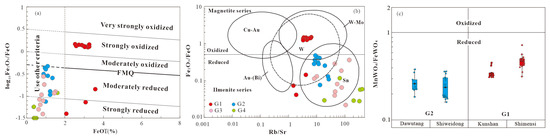
Figure 18.
(a) log10Fe2O3/FeO vs. FeOT diagram (field boundaries are after [67]); (b) Fe2O3/FeO vs. Rb/Sr diagram (field boundaries are after [71,72]); and (c) box plots showing the range of MnWO4/FeWO4 ratio of wolframites.
Figure 18.
(a) log10Fe2O3/FeO vs. FeOT diagram (field boundaries are after [67]); (b) Fe2O3/FeO vs. Rb/Sr diagram (field boundaries are after [71,72]); and (c) box plots showing the range of MnWO4/FeWO4 ratio of wolframites.
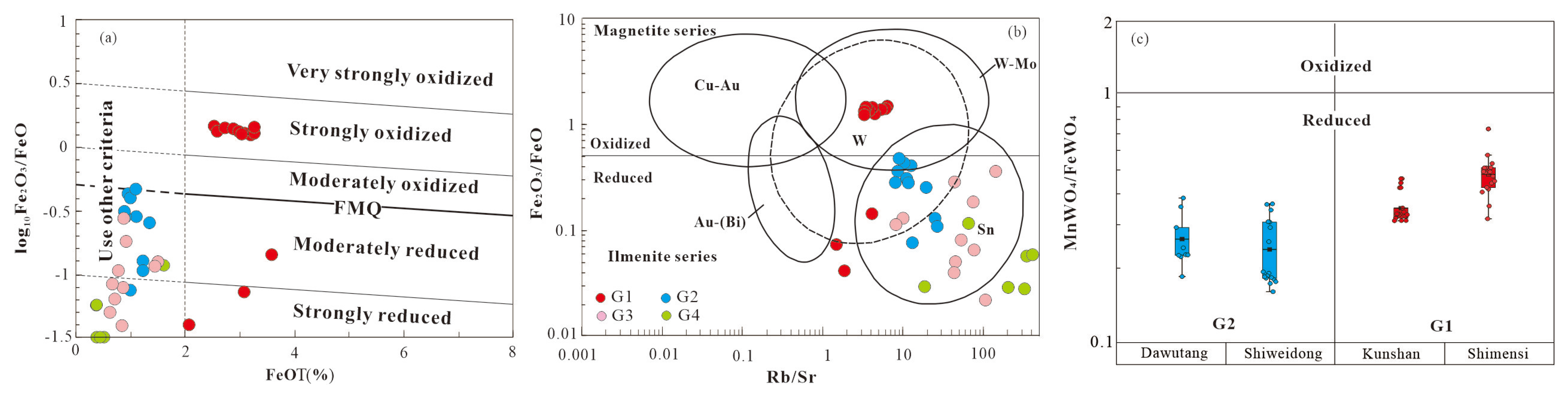
The magmatic redox state plays an important role in determining the types of ore deposits produced from magmatic melts by affecting the enrichment processes of metals. Cu and Mo are chalcophile elements, and their mineralization is generally associated with oxidized magmas [65,73,74], whereas a reduced redox state is beneficial for Sn, Li, Nb, and Ta mineralization (Figure 18a,b; e.g., Linnen [75]; Zaraisky [76]). W seems to show little dependence on magmatic redox state because it dissolves predominantly as W6+ at all oxygen fugacities in silicate magma [77]. However, lower oxygen fugacity is favorable for the removal of tungsten from magma into hydrothermal ore-forming fluids [65,78]. We infer that the G1 magmas have the potentials to form minor Cu and Mo mineralization whereas the G2–G4 magmas are favorable for significant W, Sn, Li, Nb, and Ta.
6.6. Magmatic Evolution, Hydrothermal Alteration, and Mineralization
More than one genetic hypothesis has been proposed for the origin of the Mesozoic peraluminous granites in the Dahutang area, such as the following: (1) melt–fluid interaction origin [11]; (2) fractional crystallization origin [14]; and (3) an origin involving a combination of melt–fluid interaction with fractional crystallization origin [12].
Both G1 granites and G2–G4 granites represent different stages of fractionation and late-stage fluid–melt interactions, as evidenced by numerous geologic, petrographic, and chemical observations. Geologically, the formation of hydrothermal cryptoexplosive breccia pipes, pegmatitoids, greisens, and quartz veins in Dahutang area indicates that the parent melts were volatile-saturated. Petrographically, in granites, features such as exsolution textures represented by perthites, rhythmic zoning in plagioclase, and turbidity of alkali feldspars provide evidence of late magmatic fluid–melt interaction [79,80,81]. Geochemically, depletion in CaO, TiO2, and Sr, enrichment in Al2O3 and Na2O, and strong negative Eu anomalies can reflect extensive fractionation of biotite and plagioclase; meanwhile, low Ba contents can be attributed to K-feldspar fractionation [82], which is compatible with albite dominance in G2–G4 granites and orthoclase in G1 granites. Both G1 granites and G2–G4 granites show significant evidence of interaction with fluids, i.e., high contents of Sn (30–10,000 ppm), Cs (35–1000 ppm), F (>0.4%–4%), Li (250–2000 ppm), W (10–1000 ppm), and Rb (>500 ppm), with low Nb/Ta (<5) [34]. Because such incompatible elements have a strong affinity for magmatic fluids, their enrichment is commonly used as a marker of a magmatic-hydrothermal alteration in evolved crustal granites.
The Nb/Ta ratios of G1 granites range from 3.39 to 6.11, whereas G2–G4 samples have lower Nb/Ta ratios (0.89–3.66). Figure 19 illustrates the melt evolution model proposed by Ballouard [34]. This modeling qualitatively reproduces the behaviors of Nb and Ta. According to this model, G1 granites and G2–G4 granites exhibit two distinct mineral fractionation trends, associated with Fe-Ti oxides and micas, respectively. However, both require a high degree of fractionation, ranging from 75% to 90%, to reach low Nb/Ta ratios of 2–4. This unrealistic degree of fractionation suggests the involvement of hydrothermal processes as well. For this reason, the extensive decrease in the whole-rock Nb/Ta values in G2–G4 granites may be enhanced by late magmatic fluids causing secondary muscovitization process [34].
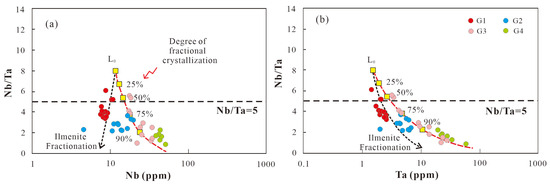
Figure 19.
(a) Nb/Ta vs. Nb and (b) Nb/Ta vs. Ta diagram. Red curves represent the model of evolution of Nb and Ta in liquid L0 (Nb = 12 ppm, Ta = 1.5 ppm, and Nb/Ta = 8) during fractionation of assemblage made of 10% biotite + 10% muscovite + 80% (quartz + feldspar). Numbers above curves indicate the amount of fractional crystallization. Black dashed line represents the same model during fractionation of assemblage composed of 10% biotite + 10% muscovite + 0.5% ilmenite + 79.5% (quartz + feldspar). The melt evolution model is proposed by Ballouard C [34].
In the G1 granites, the K/Rb ratios vary between 81.77 and 144.15, whereas in the G2–G4 granites, they vary between 13.96 and 128.29. As noted by Irber [31], ratios below 100 are indicative of interaction with an aqueous fluid phase [83] or mineral growth in the presence of aqueous fluids [84]. A correlation is observed between Nb/Ta and K/Rb ratios (Figure 12b). Notably, most granites with low Nb/Ta ratios are characterized by K/Rb values below 150, which is typical of pegmatite-hydrothermal evolution [85,86].
The Zr/Hf ratios of G1 granites range from 22.61 to 34.13, close to the Zr/Hf ratio of chondrite (38) [32], indicating that G1 granites represent the stage of evolution corresponding to the beginning of fluid–melt interaction, accompanied by fractionation of biotite and feldspars. In contrast, the ratios of Zr/Hf of G2–G4 granites decrease strongly, relative to chondrite, indicating the later stage of evolution more affected by fluid–melt interaction. Based on the variation characteristics of the Y/Ho and Zr/Hf ratio (influenced solely by magmatic fluids) and the K/Rb and Nb/Ta ratios (influenced by both fractional crystallization and magmatic fluids), we infer that G1 granites represent a moderately fractionated melt with the lower effect of magmatic melt–fluid interaction, and G2–G4 granites support intense crystal fractionation and fluid mobilization.
The Zr/Hf ratio serves as a geochemical proxy for the fertility of granitic rocks. Specifically, granites associated with Sn, W, Mo, Be, and Ta mineralization are anticipated to have a Zr/Hf ratio < 30 (corresponding to the lower limit of CHARAC range; [30]), as illustrated in Figure 20a [87]. In Figure 20a, all the Mesozoic peraluminous granites in the Dahutang district have geochemical features distinct from those of barren granites, but similar to those of ore-bearing granites. Among these granites, the G1 granites, characterized by small variations in Zr/Hf ratio (20 < Zr/Hf < 35), are associated with Sn, W, Mo, and Be mineralization. In contrast, the G2–G4 granites exhibit a large range of Zr/Hf ratio (~10 < Zr/Hf < 45), which is associated with a broader mineralization potential—encompassing not only Sn, W, Mo, and Be but also Li and Ta mineralization. Similarly, in a Nb/Ta vs. Zr/Hf diagram (Figure 20b), the G1 granites fall into the field of Sn-W-(U)-bearing granites, while the G2–G4 granitic series span the following two zones: Sn-W-(U)-bearing granites and rare-metal-bearing granites (Figure 20b).
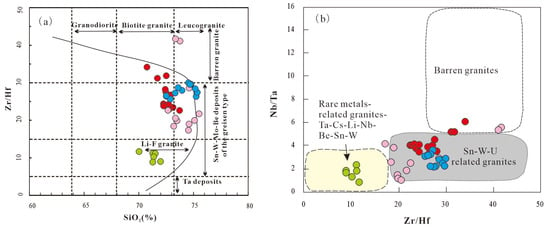
Figure 20.
(a) SiO2 vs. Zr/Hf [85] and (b) Zr/Hf vs. Nb/Ta diagram [34].
From the perspective of the geochemical properties of elements, tungsten is a lithophile element, while copper is a chalcophile element. In the Dahutang orefield, U and Cu are closely associated, with U reaching a super-large scale and Cu reaching a medium-large scale. The cause of the rare metallogenic phenomenon of the close association between U and Cu has long been a subject of discussion (e.g., [5,10,25]). If the W-Cu association were formed in a single phase of magma, it would be rare and difficult to explain. However, if they are products of different magmas that only overlap in the ore-hosting space, this can be easily understood. From the diagrams presented in Figure 13, Figure 14 and Figure 16, we highlight significant chronological (152–147 Ma and 144–130 Ma), geochemical (S-type), redox state, and metallogenic (W-Cu-Mo and W-Sn-Li-Ta mineralization) evidence indicating that each stage of granites has its own discrete episodes of magmatism and mineralization, and there is not a continuous fluid source for the mineralization. The G1 granites and G2–G4 granites have potentially exsolved different metals and rare metals in differing relative proportions due to variations in source melting conditions and subsequent fractionation. Fractional crystallization and subsolidus hydrothermal alteration have together boosted the solubility and hydrothermal transport capacity of W, Sn, Li, Nb, and Ta by multiple orders of magnitude—this effect occurs specifically in the G2–G4 magmas, which are reduced, rich in volatiles, and aqueous. In contrast, the G1 granitic magmas differ significantly: they are more oxidized and poorer in volatiles than the G2–G4 suite. When intense crystal fractionation takes place, these G1 magmas have the potential to generate W, Cu, and Mo mineralization. Mineral exploration efforts in the Dahutang orefield have historically centered mainly on W, Cu, and Mo. Our research, however, leads us to the conclusion that the region holds substantial mineral potential for rare metals—with Sn, Li, and Ta being the key targets. Looking ahead, future surveys ought to give priority to zones neighboring the evolved G2–G4 peraluminous leucogranites, as these areas are promising for discovering new concealed mineral deposits.
7. Conclusions
The Mesozoic peraluminous granites are composite, formed over a period of >20 Ma. The earlier magmatic stage (152–147 Ma) involved biotite melting of a Proterozoic subducted crustal source, with minor mantle material, generating the biotite (G1) granites. Sustained collision induced lower-temperature, muscovite-dominated melting, leading to a second major magmatic episode (144–130 Ma) that produced two-mica (G2) granites. Subsequent fractionation yielded muscovite (G3) and albite (G4) granites. This crustal source, enriched in W, Sn, Li, Cu, Mo, and Ta, therefore generated melts rich in these elements.
The G1 and G2–G4 granites are peraluminous rare-metal-bearing S-type granites that were formed by fractional crystallization, accompanied by a varied late magmatic fluid overprint. They share some similarities but differ greatly in other geologic, petrographical, and chemical aspects. The G2–G4 granites are more evolved, showing numerous evidences of late magmatic fluid–melt interaction as follows: (1) hydrothermal cryptoexplosive breccia pipe, pegmatitoid, and quartz veins; (2) exsolution textures represented by perthites; (3) secondary albite overgrowth on the rim of K-feldspar; (4) enrichment in fluxing elements (e.g., F, P, and Li); and (5) low values of K/Rb, Nb/Ta, Zr/Hf, and the REE tetrad effect in the G4 granite that indicate non-CHARAC behavior, causing modification of magmatic trace element abundances by fluid–melt interaction. On the other hand, G1 granites show fewer evidences of late-magmatic fluid–melt interaction as follows: (1) hydrothermal cryptoexplosive breccia pipe, pegmatitoid, greisen, and quartz veins; (2) slight replacement of biotite by muscovite, chlorite, and iron oxides; (3) K/Rb and Nb/Ta ratios that are lower than those of chondrites but higher than those of G2–G4 granites; and (4) chondritic or closely chondritic Zr/Hf and Y/Ho ratios and the absence of a tetrad effect, indicating a lower imprint of late-stage magmatic fluid–melt interaction than in the G2–G4 granites.
Zr saturation temperatures (<800 °C) indicate that these granites crystallized under shallow, low-temperature, and water-rich conditions. In the reduced, volatile-rich aqueous G2–G4 magmas, the solubility and hydrothermal transport capacity of W, Sn, Li, Nb, and Ta were enhanced by multiple orders of magnitude under the combined influence of fractional crystallization and subsolidus hydrothermal alteration. However, the G1 granitic magmas, which were more oxidized and poorer in volatiles than the G2–G4 granitic magmas, have the potential to form W, Cu, and Mo mineralization when accompanied by intense crystal fractionation.
Supplementary Materials
The following supporting information can be downloaded at https://www.mdpi.com/article/10.3390/min16030262/s1. Table S1. Monazite standard and rock standard analyses data; Table S2. LA-ICP-MS monazite and zircon U-Pb analysis data of Mesozoic granites in the Dahutang District; Table S3. Analysis results of electron probe microanalysis for wolframite (%); Table S4. Analysis data of major elements (%) and trace elements (ppm) from Mesozoic granite in the Dahutang District.
Author Contributions
Conceptualization, H.Y. and M.S.; methodology, H.Y.; formal analysis, H.Y. and F.F.; investigation, H.Y. and C.W.; resources, H.Y. and M.Y.; data curation, H.Y.; writing—original draft preparation, H.Y.; writing—review and editing, H.Y. and M.S.; visualization, H.Y.; supervision, H.Y.; project administration, H.Y.; funding acquisition, H.Y., M.Y. and F.F. All authors have read and agreed to the published version of the manuscript.
Funding
This research was funded by the National Natural Science Foundation of China (Grant No. 92062223) and China Geological Survey Project (Grant Nos. DD202402081 and DD20240067).
Data Availability Statement
The original contributions presented in this study are included in the article. Further inquiries can be directed to the corresponding authors.
Acknowledgments
This study has benefited from valuable discussions with Chuanlin Zhang and Xianhua Li. We sincerely thank Jian Zhang and Hualing Li for their dedicated technical support during the experimental work. Additionally, the manuscript was greatly improved by the constructive and critical reviews provided by anonymous reviewers.
Conflicts of Interest
The authors declare no conflicts of interest.
References
- Bonin, B. Do coeval mafic and felsic magmas in post-collisional to within-plate regimes necessarily imply two contrasting, mantle and crustal, sources? A review. Lithos 2004, 78, 1–24. [Google Scholar] [CrossRef]
- Bonin, B. A-type granites and related rocks: Evolution of a concept, problems and prospects. Lithos 2007, 97, 1–29. [Google Scholar] [CrossRef]
- Xiang, X.K.; Wang, P.; Sun, D.M.; Zhong, B. Re-Os isotopic age of molybdeinte from the Shimensi tungsten polymetallic deposit in northern Jiangxi province and its geological implications. Geol. Bull. China 2013, 32, 1824–1831. [Google Scholar]
- Huang, L.C.; Jiang, S.Y. Geochronology, geochemistry and petrogenesis of the tungsten-bearing porphyritic granite in the Dahutang tungsten deposit, Jiangxi Province. Acta Petrol. Sin. 2013, 29, 4323–4335. [Google Scholar]
- Huang, L.C.; Jiang, S.Y. Highly fractionated S-type granites from the giant Dahutang tungsten deposit in Jiangnan Orogen, Southeast China: Geochronology, petrogenesis and their relationship with W-mineralization. Lithos 2014, 202–203, 207–226. [Google Scholar] [CrossRef]
- Mao, Z.H.; Liu, J.J.; Mao, J.W.; Deng, J.; Zhang, F.; Meng, X.Y.; Xiong, B.K.; Xiang, X.K.; Luo, X.H. Geochronology and geochemistry of granitoids related to the giant Dahutang tungsten deposit, middle Yangtze River region, China: Implications for petrogenesis, geodynamic setting, and mineralization. Gondwana Res. 2015, 28, 816–836. [Google Scholar] [CrossRef]
- Jiang, S.Y.; Peng, N.J.; Huang, L.C.; Xu, Y.M.; Zhan, G.L.; Dan, X.H. Geological characteristic and ore genesis of the giant tungsten deposits from the Dahutang ore-concentrated district in northern Jiangxi Province. Acta Petrol. Sin. 2015, 31, 639–655. [Google Scholar]
- Ye, H.M.; Zhang, X.; Zhu, Y.H. In-situ Monazite U-Pb Geochronology of Granites in Shimensi Tungsten Polymetallic Deposit, Jiangxi Province and its Geological Significance. Geotecton. Metallog. 2016, 40, 58–70. [Google Scholar]
- Sun, K.K.; Chen, B.; Deng, J. Biotite in highly evolved granites from the Shimensi W-Cu-Mo polymetallic ore deposit, China: Insights into magma source and evolution. Lithos 2019, 350–351, 105245. [Google Scholar] [CrossRef]
- Fan, X.K.; Hou, Z.Q.; Zhang, Z.Y.; Mavrogenes, J.; Pan, X.F.; Zhang, X.; Xiang, X.K. Metallogenic ages and sulfur sources of the giantDahutang W-Cu-Mo ore field, South China: Constraints frommuscovite 40Ar/39Ar dating and in situ sulfur isotope analyses. Ore Geol. Rev. 2021, 134, 104141. [Google Scholar] [CrossRef]
- Zhang, Z.H.; Zhang, D.; Xiang, X.K.; Zhu, X.Y.; He, X.L. Geology and mineralization of the supergiant Shimensi granitic-type W-Cu-Mo deposit (1.168 Mt) in northern Jiangxi, South China: A Review. China Geol. 2022, 5, 510–527. [Google Scholar] [CrossRef]
- Yang, Y.S.; Pan, X.F.; Hou, Z.Q.; Deng, Y.; Zhang, Z.Y.; Fan, X.K.; Li, X.; Liu, D.W. Petrogenesis and redox state of late Mesozoic granites in the Pingmiao deposit: Implications for the W–Cu–Mo mineralization in the Dahutang district. Ore Geol. Rev. 2022, 145, 104898. [Google Scholar] [CrossRef]
- Li, X.H.; Li, Z.X.; Ge, W.C.; Zhou, H.W.; Li, W.X.; Liu, Y.; Wingate, M.T.D. Neoproterozoic granitoids in South China: Crustal melting above a mantle plume atnca. 825 Ma? Precambian Res. 2003, 122, 45–83. [Google Scholar] [CrossRef]
- Sun, K.K.; Chen, B.; Chen, J.S.; Xiang, X.K. The petrogenesis of the Jiuling granodiorite from the Dahutang deposit, Jiangxi Province and its tectonic implications. Acta Petrol. Sin. 2017, 33, 907–924. [Google Scholar]
- Zhang, M.Y.; Feng, C.Y.; Li, D.X.; Wang, H.; Zhou, J.H.; Ye, S.Z.; Wang, G.H. Geochronological study of the Kunshan W-Mo-Cu Deposit in the Dahu-tang Area, Northern Jiangxi Province and its geological significance. Geotecton. Metallog 2016, 40, 503–516. [Google Scholar]
- Wuning County People’s Government. Overall Plan for Mineral Resources of Wuning County (2021–2025) (Draft for Comment) Chapter V Construction of Green Mines and Ecological Protection in Mining Areas Chapter III Layout of Mineral Exploration, Development and Protection. 2021. Available online: https://www.wuning.gov.cn/nzwgk/zwwgk/jcgk/yjzjjfk/202111/P020211101371000511536.pdf (accessed on 10 October 2025).
- Wang, P.; Liang, T.; Jiang, H.J.; Xiang, X.K.; Zhong, B. Trace Elements and Pb-O Isotopes of Scheelite: Metallogenic Implications for the Shimensi W-Polymetallic Deposit in South China. Minerals 2022, 12, 1461. [Google Scholar] [CrossRef]
- Zhong, H.; Yu, N.B.; Lu, G.S.; Chen, D.K.; Dan, X.H. Discovery and Exploration Enlightenment of the Dawutang Extra Large Tungsten Deposit in the Jiangnan Tungsten Mine Belt. South China Geol. 2024, 40, 343–352. [Google Scholar]
- Aleinikoff, J.N.; Schenck, W.S.; Plank, M.O.; Srogi, L.A.; Fanning, C.M.; Kamo, S.L.; Bosbyshell, H. Deciphering igneous and metamorphic events in high-grade rocks of the Wilmington Complex, Delaware: Morphology, cathodoluminescence and backscattered electron zoning, and SHRIMP U–Pb geochronology of zircon and monazite. Geol. Soc. Am. Bull. 2006, 118, 39–64. [Google Scholar] [CrossRef]
- Ludwig, K.R. User’s Manual for Isoplot/Ex (Rev. 2.49): A Geochronological Toolkit for Microsoft Excel; Berkeley Geochronology Centre Special Publication: Berkeley, CA, USA, 2001; Volume 1a, pp. 1–55. [Google Scholar]
- Ивoйлoв, A.C.; Qiu, Y.Z. Supplementary information of the form of niobium tantalum in the black tungsten deposit. Geol. Geochem. 1974, 7, 20–21. [Google Scholar]
- Xie, W.; Zeng, Q.D.; Zhou, L.L.; Lan, T.G.; Wang, R.L.; Wu, J.J. Ore Genesis of the Baishitouwa Quartz–Wolframite Vein-Type Deposit in the Southern Great Xing’an Range W Belt, NE China: Constraints from Wolframite In-Situ Geochronology and Geochemistry Analyses. Minerals 2022, 12, 515. [Google Scholar] [CrossRef]
- Jiangxi Bureau of Geology and Mineral Exploration and Development Northwest Jiangxi Brigade (Jiujiang, China). Verification report of tungsten ore resources and reserves in Dawutang mining area, Jing’an County, Jiangxi Province, China. 2016; No published. [Google Scholar]
- Harlaux, M.; Blein, O.; Ballouard, C.; Kontak, D.J.; Thi’eblemont, D.; Dabosville, A.; Gourcerol, B. Geochemical footprints of peraluminous rare-metal granites and pegmatites in the northern French Massif Central and implications for exploration targeting. Ore Geol. Rev. 2025, 176, 106409. [Google Scholar] [CrossRef]
- Le Maitre, R.W.; Bateman, P.; Dudek, A.; Keller, J.; Lameyre, J.; Le Bas, M.J.; Sabine, P.A.; Schmid, R.; Sorensen, H.; Streckeisen, A.; et al. A Classification of Igneous Rocks and Glossary of Terms; Cambridge University Press: Oxford, UK, 1989; pp. 1–193. [Google Scholar]
- Maniar, P.D.; Piccoli, P.M. Tectonic discrimination of granitoids. Geol. Soc. Am. Bull. 1989, 101, 635–643. [Google Scholar] [CrossRef]
- Stanley, C.R. Molar element ratio analysis of lithogeochemical data: A toolbox for use in mineral exploration and mining. Geochem. Explor. Environ. Anal. 2020, 20, 233–256. [Google Scholar] [CrossRef]
- Sun, S.S.; McDonough, W.F. Chemical and isotopic systematics of oceanicbasalts: Implications for mantle composition and processes. Geol. Soc. Lond. Spec. Publ. 1989, 42, 313–345. [Google Scholar] [CrossRef]
- Janoušek, V.; Finger, F.; Roberts, M.; Frýda, J.; Pin, C.; Dolejš, D. Deciphering the petrogenesis of deeply buried granites: Whole-rock geochemical constraints on the origin of largely undepleted granulites from the Moldanubian Zone of the Bohemian Massif. Trans. Trans. Soc. Edinb. Earth Sci. 2004, 95, 141–159. [Google Scholar] [CrossRef]
- Bau, M. Controls on the fractionation of isovalent trace elements in magmatic and aqueous systems: Evidence from Y/Ho, Zr/Hf, and lanthanide tetrad effect. Contrib. Mineral. Petrol. 1996, 123, 323–333. [Google Scholar] [CrossRef]
- Irber, W. The lanthanide tetrad effect and its correlation with K/Rb, Eu/Eu *, Sr/Eu, Y/Ho, and Zr/Hf of evolving peraluminous granite suites. Geochem. Cosmochim. Acta 1999, 63, 489–508. [Google Scholar] [CrossRef]
- Anders, E.; Grevesse, N. Abundances of the elements: Meteoritic and solar. Geochem. Cosmochim. Acta 1989, 53, 197–214. [Google Scholar] [CrossRef]
- Breiter, K.; Skoda, R.; Uher, P. Nb-Ta-Ti-W-Sn oxide minerals as indicators of a peraluminous P- and F-rich granitic systems evolution: Podlesi, Czech Republic. Miner. Petrol. 2007, 91, 225–248. [Google Scholar] [CrossRef]
- Ballouard, C.; Poujol, M.; Boulvais, P.; Branquet, Y.; Tartèse, R.; Vigneresse, J. Nb-Ta fractionation in peraluminous granites: A marker of the magmatic-hydrothermal transition. Geology 2016, 44, 231–234. [Google Scholar] [CrossRef]
- Taylor, S. The application of trace element data to problems in petrology. Phys. Chem. Earth 1965, 6, 133–213. [Google Scholar] [CrossRef]
- Rudnick, R.L.; Gao, S. Composition of the Continental Crust. In Treatise on Geochemistry, 2nd ed.; Elsevier: Amsterdam, The Netherlands, 2014; Volume 4, pp. 1–51. [Google Scholar] [CrossRef]
- Debon, F.; Le Fort, P. A chemical–mineralogical classification of common plutonic rocks and associations. Trans. Trans. Soc. Edinb. Earth Sci. 1983, 73, 135–149. [Google Scholar] [CrossRef]
- Wang, X.L.; Coble, M.A.; Valley, J.W.; Shu, X.J.; Kitajima, K.; Spicuzza, M.J.; Sun, T. Influence of radiation damage on Late Jurassic zircon from southern China: Evidence from in situ measurements of oxygen isotopes, laser Raman, U–Pb ages, and trace elements. Chem. Geol. 2014, 389, 122–136. [Google Scholar] [CrossRef]
- Mao, Z.H.; Cheng, Y.B.; Liu, J.J.; Yuan, S.D.; Wu, S.H.; Xiang, X.K.; Luo, X.H. Geology and molybdenite Re–Os age of the Dahutang granite-related veinlets-disseminated tungsten ore field in the Jiangxin Province, China. Ore Geol. Rev. 2013, 53, 422–433. [Google Scholar] [CrossRef]
- Feng, C.Y.; Zhang, D.Q.; Xiang, X.K.; Li, D.X.; Qu, H.Y.; Liu, J.N.; Xiao, Y. Re-Os isotopic dating of molybdenite from the Dahutang tungsten deposit in northwestern Jiangxi Province and its geological implication. Acta Petrol. Sin. 2012, 28, 3858–3868. [Google Scholar]
- Zhang, Z.H.; Zhang, D.; Wu, G.G.; Luo, P.; Chen, X.H.; Di, Y.J.; Lü, L.J. Re-Os isotopic age of molybdenite from the Meizikeng molybdenite deposit in Northern Jiangxi Province and its geological significance. J. Jilin Univ. Earth Sci. Edit. 2013, 43, 1851–1863. [Google Scholar]
- Watson, E.B.; Harrison, T.M. Zircon saturation revisited: Temperature and composition effects in a variety of crustal magma types. Earth Planet. Sci. Lett. 1983, 64, 295–304. [Google Scholar] [CrossRef]
- Miller, C.F.; McDowell, S.M.; Mapes, R.W. Hot and cold granites? Implications of zircon saturation temperatures and preservation of inheritance. Geology 2003, 31, 529–532. [Google Scholar] [CrossRef]
- Thompson, A.B. Partial melting of metavolcanics in amphibolite facies regional metamorphism. J. Earth Sys. Sci. 2001, 110, 287–291. [Google Scholar] [CrossRef]
- Patiño Douce, A.E. What do experiments tell us about the relative contributions of crust and mantle to the origin of granitic magmas? Geol. Soc. Spec. Public. 1999, 168, 55–75. [Google Scholar] [CrossRef]
- Spear, F.S. Metamorphic Phase Equilibria and Pressure-Temperature-Time Paths; Mineralogical Society of America: Washington, DC, USA, 1995; pp. 1–799. [Google Scholar]
- Whalen, J.; Currie, K.; Chappell, B. A-type granites: Geochemical characteristics, discrimination and petrogenesis. Contrib. Mineral. Petrol. 1987, 95, 407–419. [Google Scholar] [CrossRef]
- Taylor, R.P.; Fallick, A.E. The evolution of fluorine-rich felsic magmas: Source dichotomy, magmatic convergence and the origins of topaz granite. Terra Nova 1997, 9, 105–108. [Google Scholar] [CrossRef]
- Li, X.H.; Li, Z.X.; Li, W.X.; Liu, Y.; Yuan, C.; Wei, G.J.; Qi, C.S. U-Pb zircon, geochemical and Sr–Nd–Hf isotopic constraints on age and origin of Jurassic I- andA-type granites from central Guangdong, SE China: A major igneous event in response to foundering of a subducted flat-slab? Lithos 2007, 96, 186–204. [Google Scholar] [CrossRef]
- Sylvester, P.J.; Liegeois, J.P. Post-collisional strongly peraluminous granites. Lithos 1998, 45, 29–44. [Google Scholar] [CrossRef]
- Simon, L.; L’ecuyer, C. Continental recycling: The oxygen isotope point of view. Geochem. Geophys. Geosys. 2005, 6, 1–10. [Google Scholar] [CrossRef]
- Wei, W.F.; Shen, N.P.; Yan, B.; Lai, C.; Yang, J.H.; Gao, W.; Liang, F. Petrogenesis of ore-forming granites with implications for W–mineralization in the super-large Shimensi tungsten-dominated polymetallic deposit in northern Jiangxi Province, South China. Ore Geol. Rev. 2018, 95, 1123–1139. [Google Scholar] [CrossRef]
- Wang, X.L.; Zhou, J.C.; Griffin, W.L.; Zhao, G.C.; Yu, J.H.; Qiu, J.S.; Zhang, Y.J.; Xing, G.F. Geochemical zonation across a Neoproterozoic orogenic belt: Isotopic evidence from granitoids and metasedimentary rocks of the Jiangnan orogen, China. Precambram Res. 2014, 242, 154–171. [Google Scholar] [CrossRef]
- Harris, N.; Ayres, M.; Massey, J. Geochemistry of graniticmelts produced during the incongruent melting of muscovite: Implications for extraction of Himalayan leucogranite magmas. J. Geophys. Res. 1995, 100, 15767–15777. [Google Scholar] [CrossRef]
- Harris, N.B.W.; Inger, S. Trace element modelling of pelite-derived granites. Contrib. Mineral. Petrol. 1992, 110, 46–56. [Google Scholar] [CrossRef]
- Liu, Y.J.; Ma, D.S. The geochemical studies of tungsten built in South China. Sci. China B 1982, 10, 939–950. [Google Scholar]
- Lin, D.S. Tantalum-Rich Granite Type Deposits in South China; Geological Publishing House: Beijing, China, 1996; pp. 1–147. [Google Scholar]
- Xu, J. W-bearing sedimentary formations and stratabound W-deposits in Jiangxi Province. Geol. Prospect. 1988, 10, 12–18. [Google Scholar]
- Stepanov, A.S.; Hermann, J. Fractionation of Nb and Ta by biotite and phengite: Implications for the “missing Nb paradox”. Geology 2013, 41, 303–306. [Google Scholar] [CrossRef]
- Pearce, J.A. Source and settings of granitic rocks. Episodes 1996, 19, 120–125. [Google Scholar] [CrossRef]
- Černŷ, P.; Belvin, P.L.; Cuney, M.; London, D. Granite-related ore deposits. In Economic Geology; 100th Anniversary Volume; Economic Geology Publishing Company: Littleton, CO, USA, 2005; pp. 337–370. [Google Scholar]
- Keppler, H. Influende of fluorine on the enrichment of high field strength elements in granitic rocks. Contrib. Mineral. Petrol. 1993, 114, 479–488. [Google Scholar] [CrossRef]
- Linnen, R. The solubility of Nb–Ta–Zr–Hf–W in granitic melts with Li and Li + F: Constraints for mineralisation in rare metal granites and pegmatites. Econ. Geol. 1998, 93, 1013–1025. [Google Scholar] [CrossRef]
- Bea, F.; Fershtater, G.; Corretgé, L.G. The geochemistry of phosphorus in granite rocks and the effect of aluminium. Lithos 1992, 29, 43–56. [Google Scholar] [CrossRef]
- Candela, P.A.; Bouton, S.L. The influence of oxygen fugacity on tungsten and molybdenum partitioning between silicate melts and ilmenite. Econ. Geol. 1990, 85, 633–640. [Google Scholar] [CrossRef]
- Ishihara, S. The granitoids series and mineralization. In Economic Geology; 75th Anniversary Volume; Economic Geology Publishing Company: Littleton, CO, USA, 1981; pp. 458–484. [Google Scholar]
- Blevin, P.L. Redox and compositional parameters for interpreting the granitoid metallogeny of eastern Australia: Implications for gold-rich ore systems. Resour. Geol. 2004, 54, 241–252. [Google Scholar] [CrossRef]
- Chen, T.H. On various features of the chemical composition of wolframites in a tungsten-tin deposit in Jiangxi Province. J. Nanjing Univ. Nat. Sci. 1982, 1, 133–145. [Google Scholar]
- Tan, Y.J. Geochemical types of the vein wolframite deposits in the Nanling region. Geochimica 1982, 2, 155–161. [Google Scholar] [CrossRef]
- Monnier, L.; Melleton, J.; Vanderhaeghe, O.; Salvi, S.; Lach, P.; Bruguier, O.; Benmammar, A.; Baill, L.; Béziat, D.; Gloaguen, E. Episodic Precipitation of Wolframite during An Orogen: The Echassières District, Variscan Belt of France. Minerals 2021, 11, 923. [Google Scholar] [CrossRef]
- Baker, T.; Pollard, P.J.; Mustard, R.; Mark, G.; Graham, J.L. A comparison of granite-related tin, tungsten, and gold-bismuth deposits: Implications for exploration. SEG Newslett. 2005, 61, 5–17. [Google Scholar] [CrossRef]
- Blevin, P.L.; Chappell, B.W. The role of magma sources, oxidation states and fractionation in determining the granite metallogeny of eastern Australia. Trans. Royal Soc. Edinburgh 1992, 83, 305–316. [Google Scholar] [CrossRef]
- Sillitoe, R.H. Porphyry Copper Systems. Econ. Geol. 2010, 105, 3–41. [Google Scholar] [CrossRef]
- Sun, W.D.; Huang, R.F.; Li, H.; Hu, Y.B.; Zhang, C.C.; Sun, S.J.; Zhang, L.P.; Ding, X.; Li, C.Y.; Zartman, R.E.; et al. Porphyry deposits and oxidized magmas. Ore Geol. Rev. 2015, 65, 97–131. [Google Scholar] [CrossRef]
- Linnen, R.L.; Cuney, M. Granite-related rare-element deposits and experimental constraints on Ta-Nb-W-Sn-Zr-Hf mineralization. In Rare-Element Geochemistry and Mineral Deposits; Linnen, R.L., Samson, I.M., Eds.; Short Course Notes 17; Geological Association: Vancouver, BC, Canada, 2008; pp. 45–67. [Google Scholar]
- Zaraisky, G.P.; Korzhinskaya, V.; Kotova, N. Experimental studies of Ta2O5 and columbite–tantalite solubility in fluoride solutions from 300 to 550 °C and 50 to 100 Mpa. Mineral. Petrol. 2010, 99, 287–300. [Google Scholar] [CrossRef]
- Che, X.D.; Linnen, R.L.; Wang, R.C.; Aseri, A.; Thibault, Y. Tungsten solubility in evolved granitic melts: An evaluation of magmatic wolframite. Geochim. Cosmochim. Acta 2013, 106, 84–98. [Google Scholar] [CrossRef]
- Bali, E.; Keppler, H.; Audetat, A. The mobility of W and Mo in subduction zone fluids and the Mo–W–Th–U systematics of island arc magmas. Earth Planet. Sci. Lett. 2012, 351, 195–207. [Google Scholar] [CrossRef]
- Pollard, P.J. Geologic characteristics and genetic problems associated with the development of granite-hosted deposits of tantalum and niobium. In Lanthanides, Tantalum and Niobium; Möller, P., Cerny, P., Saupe, F., Eds.; Springer: New York, NY, USA, 1989; pp. 240–256. [Google Scholar]
- Schwartz, M.O. Geochemical criteria for distinguishing magmatic and metasomatic albite-enrichment in granitoids: Examples from the Ta–Li granite Yichun (China) and the Sn–W deposit Tikus (Indonesia). Miner. Depos. 1992, 27, 101–108. [Google Scholar] [CrossRef]
- Helba, H.; Trumbull, R.B.; Morteani, G.; Khalil, S.O.; Arslan, A. Geochemical and petrographic studies of Ta mineralization in the Nuweibi albite granite complex, Eastern Desert, Egypt. Miner. Depos. 1997, 32, 164–179. [Google Scholar] [CrossRef]
- Wu, F.; Sun, D.; Huimin, L.; Jahn, B.; Wilds, S. A-type granites in northeastern China: Age and geochemical constraints on their petrogenesis. Chem. Geol. 2002, 187, 143–173. [Google Scholar] [CrossRef]
- Clarke, D.B. The mineralogy of peraluminous granites: A review. Can. Mineral. 1992, 19, 3–17. [Google Scholar]
- Shearer, C.; Papike, J.; Laul, J. Chemistry of potassium feldspars from three zoned pegmatites, Black Hills, South Dakota: Implications concerning pegmatite evolution. Geochem. Cosmochim. Acta 1985, 49, 663–673. [Google Scholar] [CrossRef]
- Shaw, D. A Review of K-Rb Fractionation Trends by Covariance Analysis. Geochem. Cosmochim. Acta 1968, 32, 573–601. [Google Scholar] [CrossRef]
- Dostal, J.; Chatterjee, A.K. Contrasting Behaviour of Nb/Ta and Zr/Hf Ratios in a Peraluminous Granitic Pluton (Nova Scotia, Canada). Chem. Geol. 2000, 163, 207–218. [Google Scholar] [CrossRef]
- Zaraisky, G.P.; Aksyuk, A.M.; Devyatova, V.N.; Udoratina, O.V.; Chevychelov, V.Y. The Zr/Hf ratio as a fractionation indicator of rare-metal granites. Petrology 2009, 17, 25–45. [Google Scholar] [CrossRef]
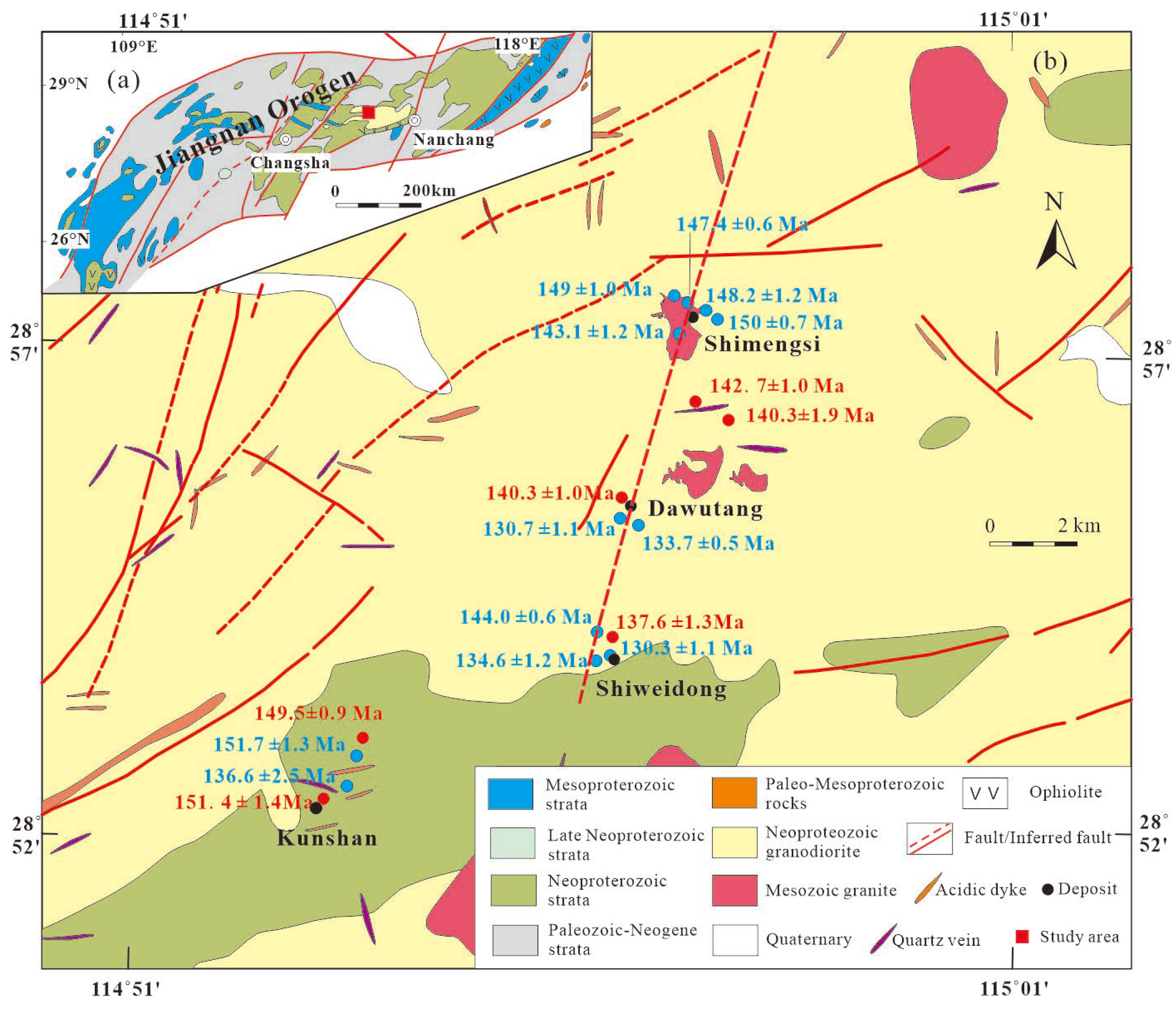
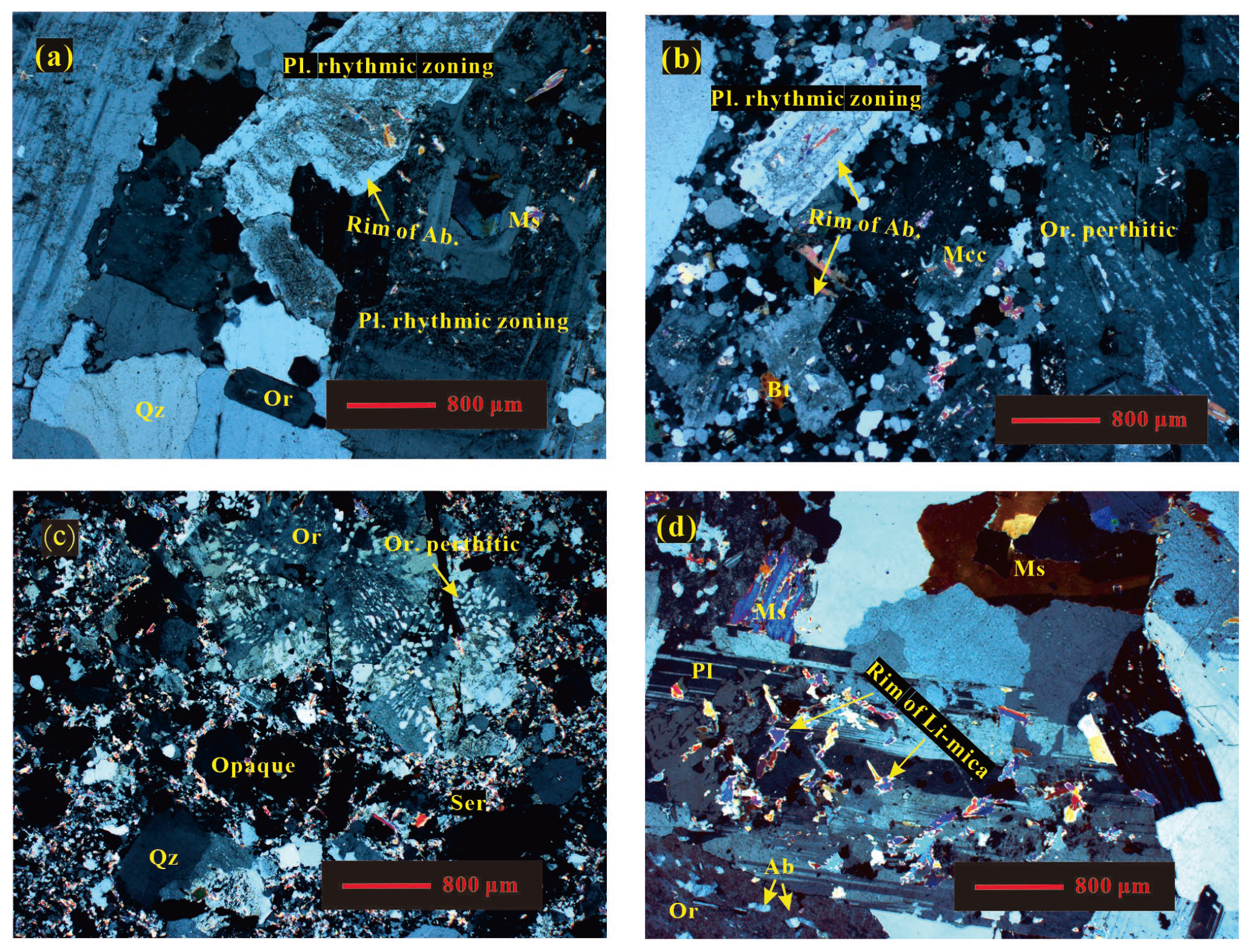
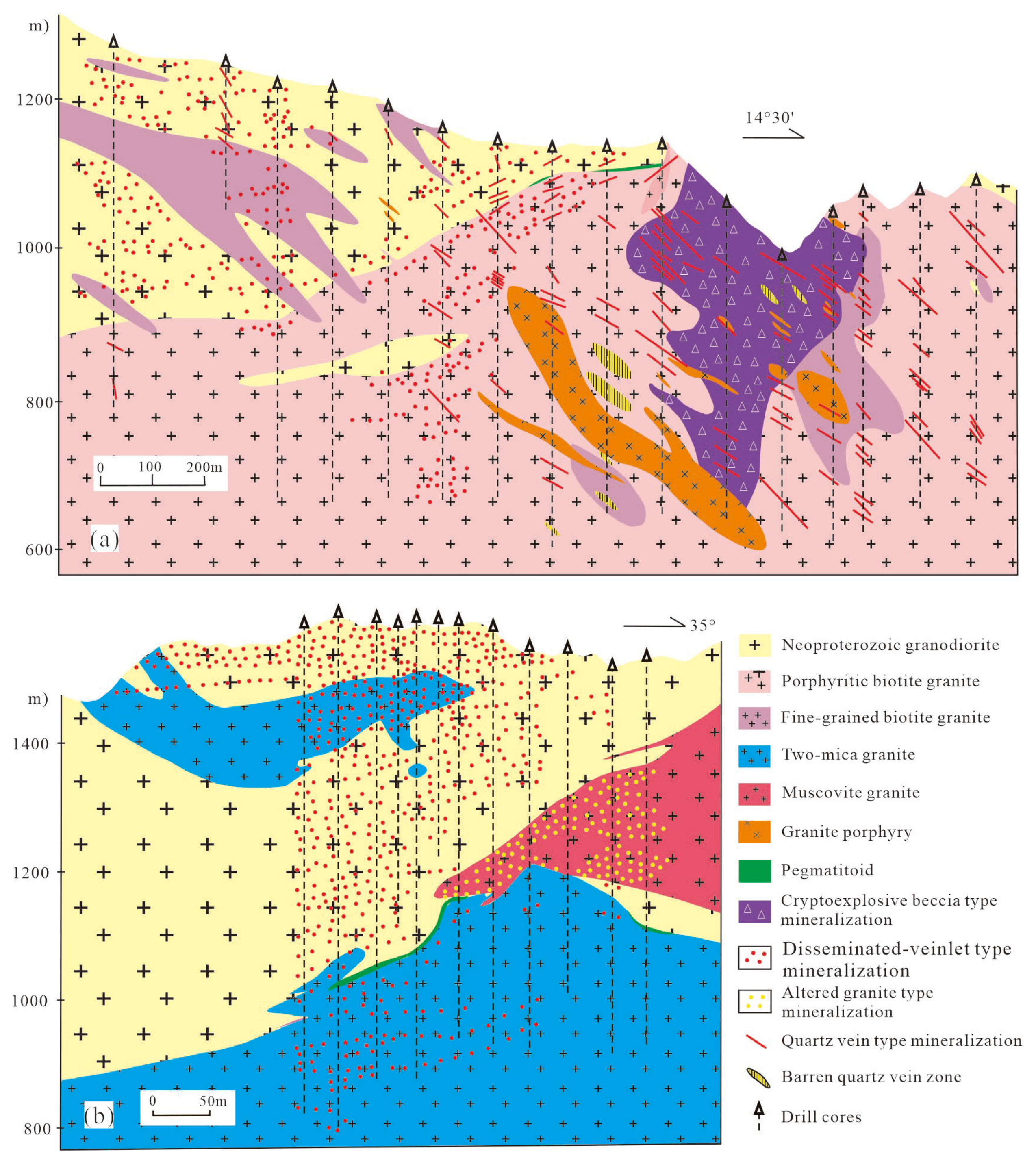
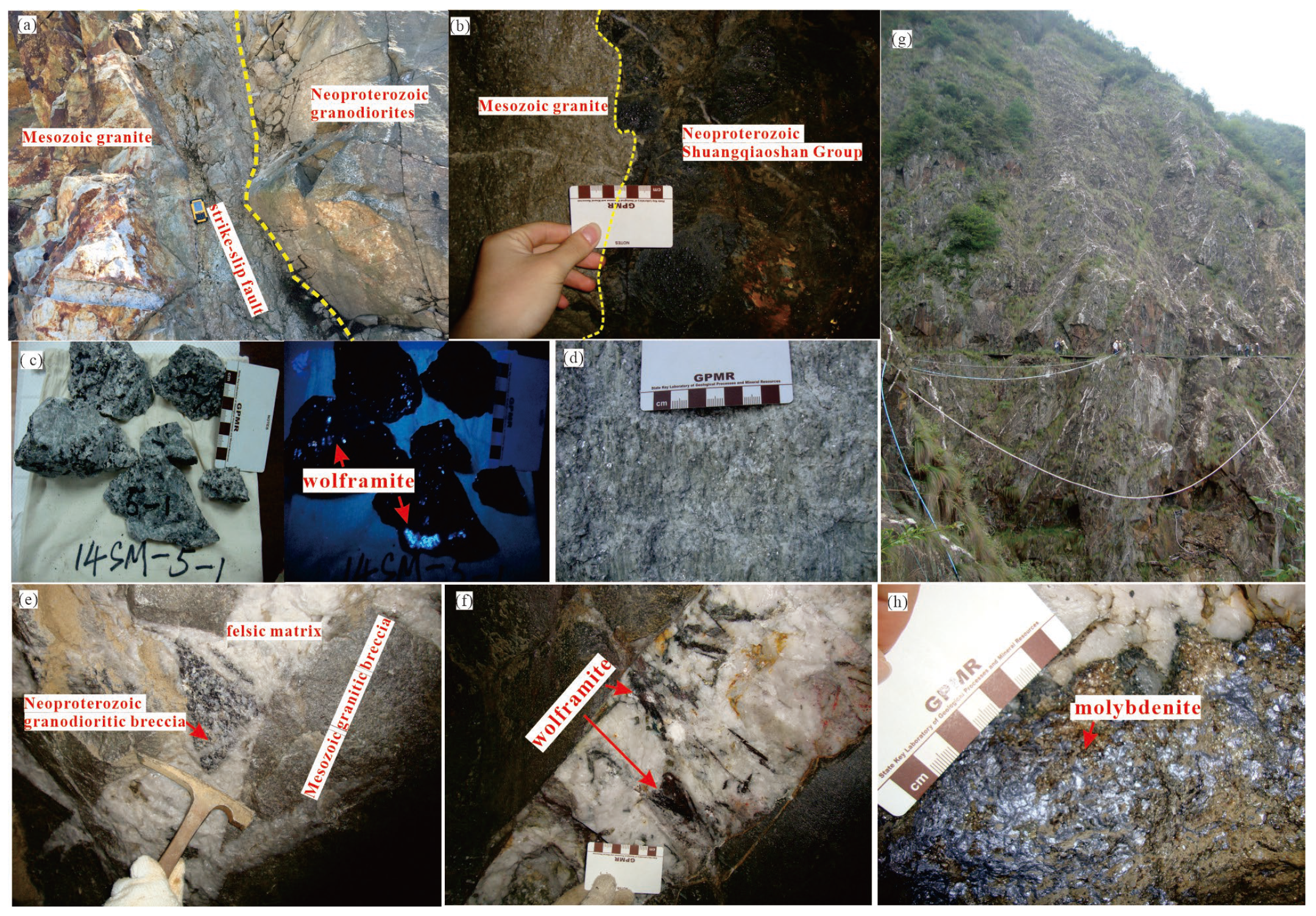
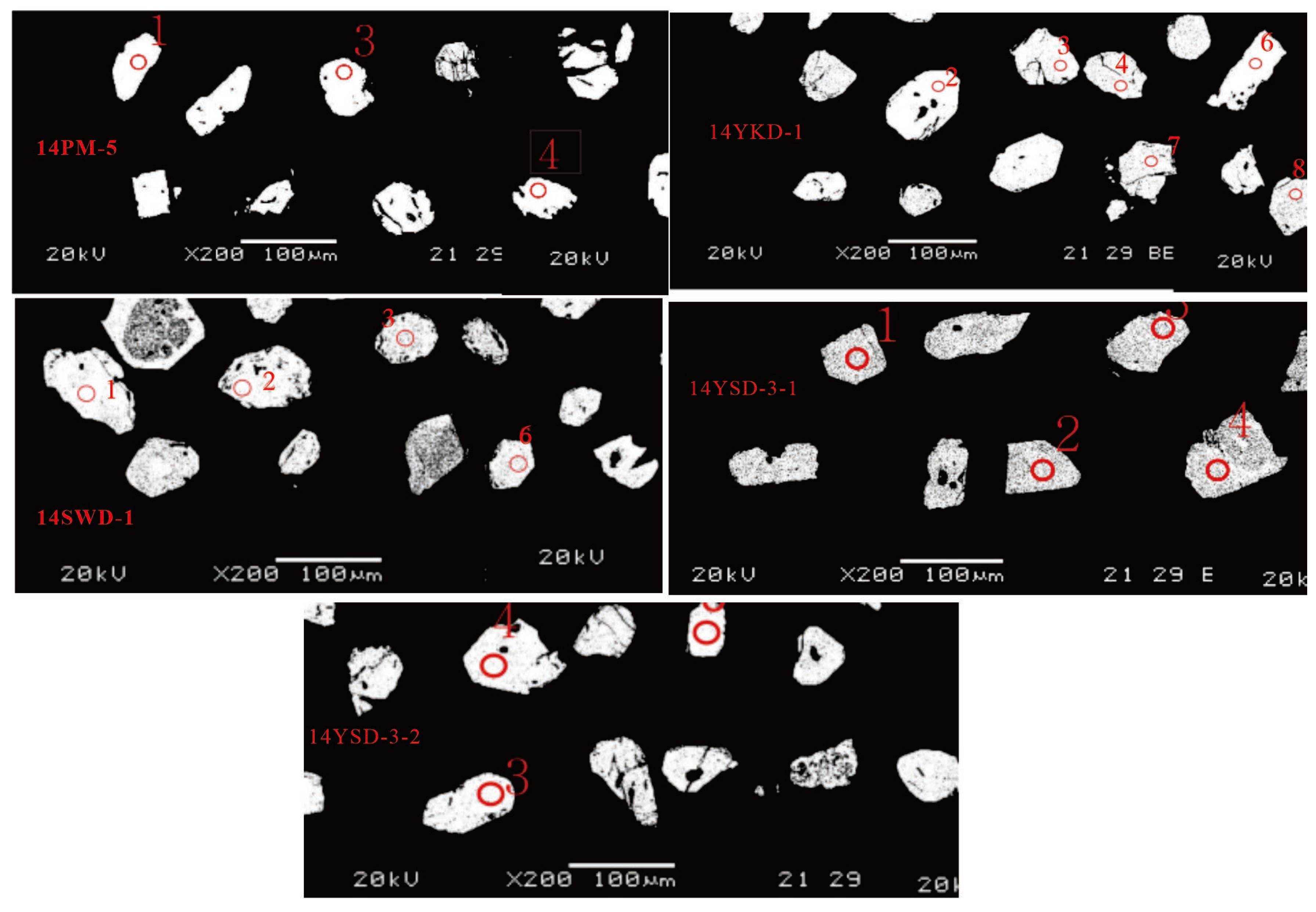
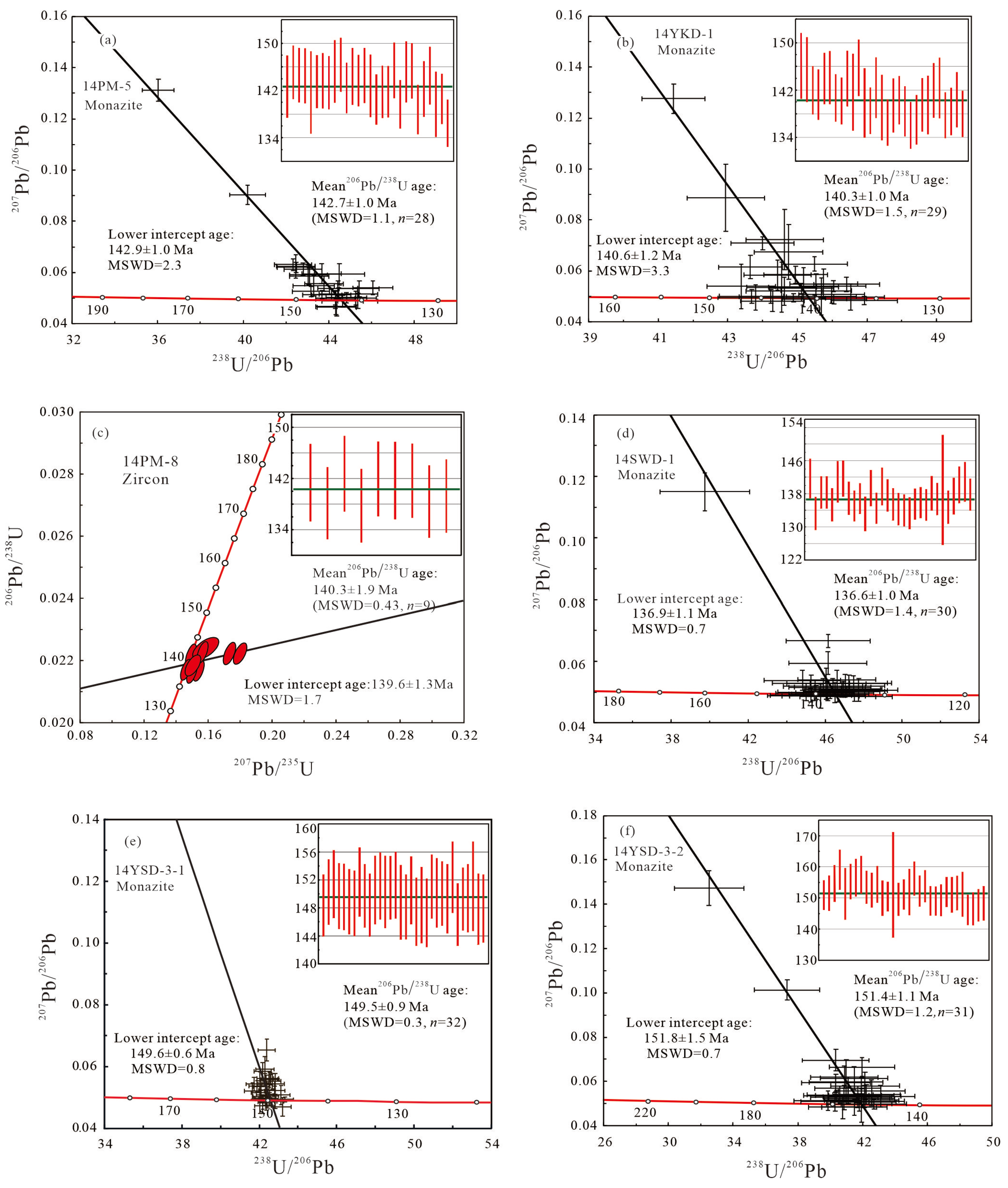
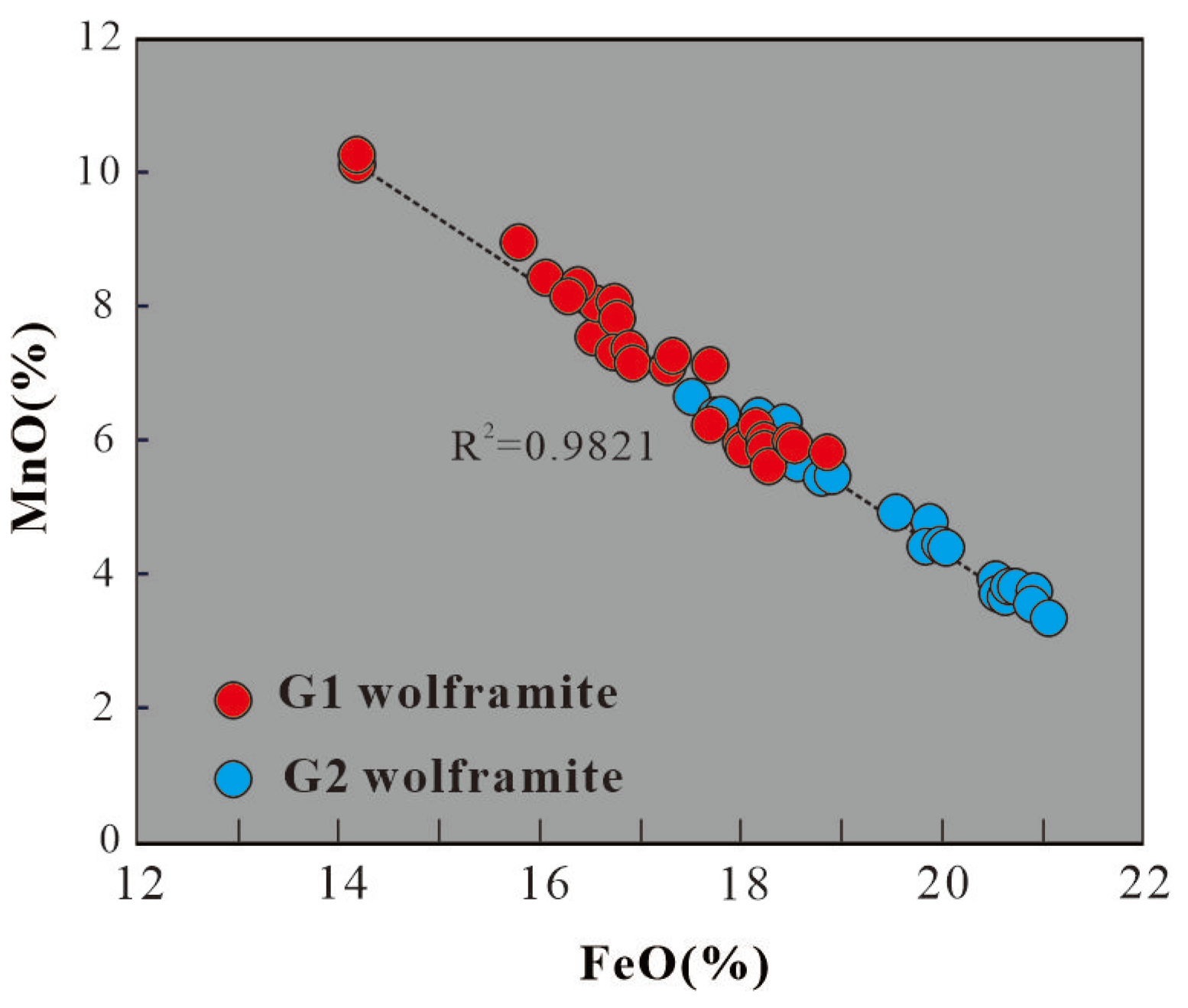
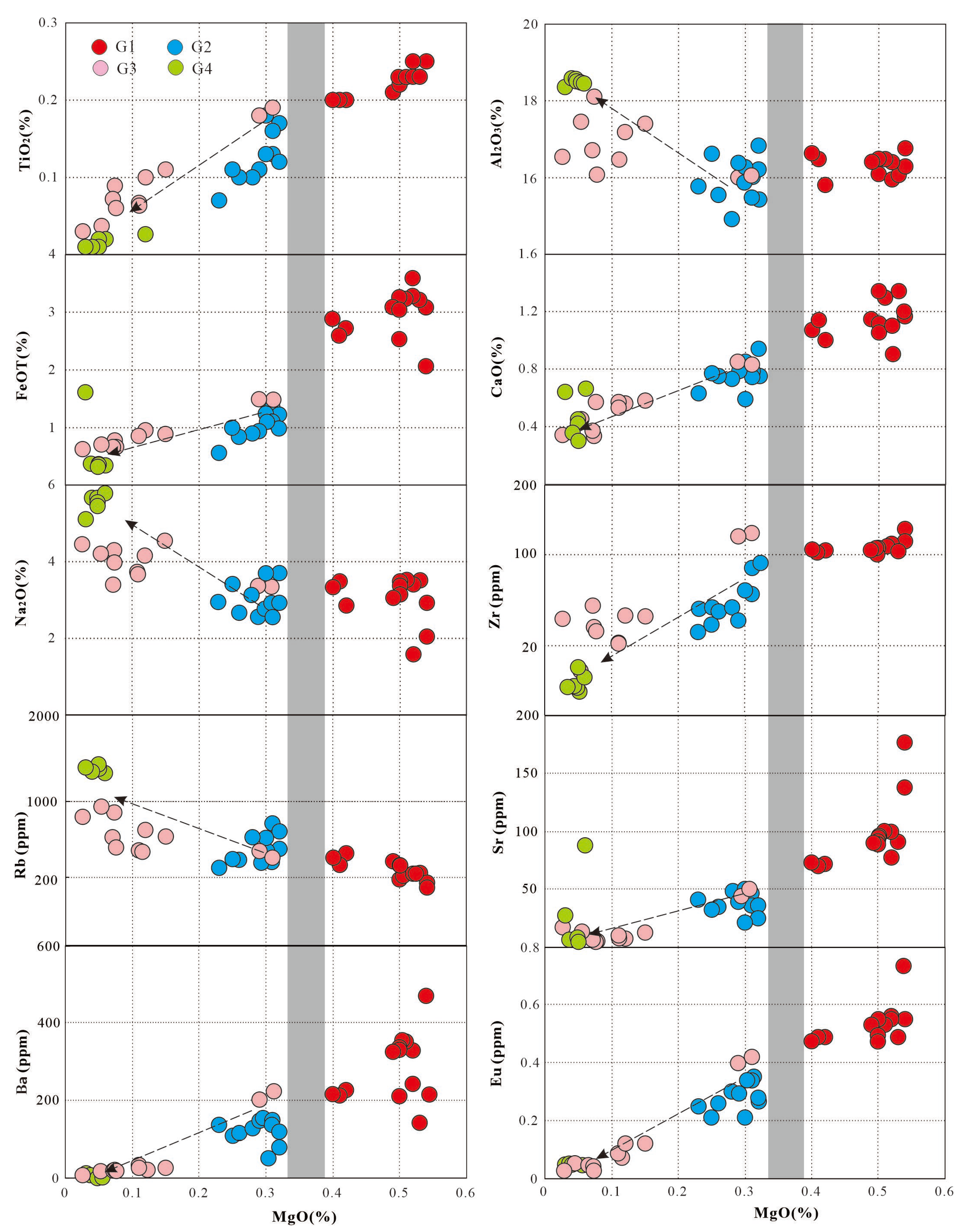
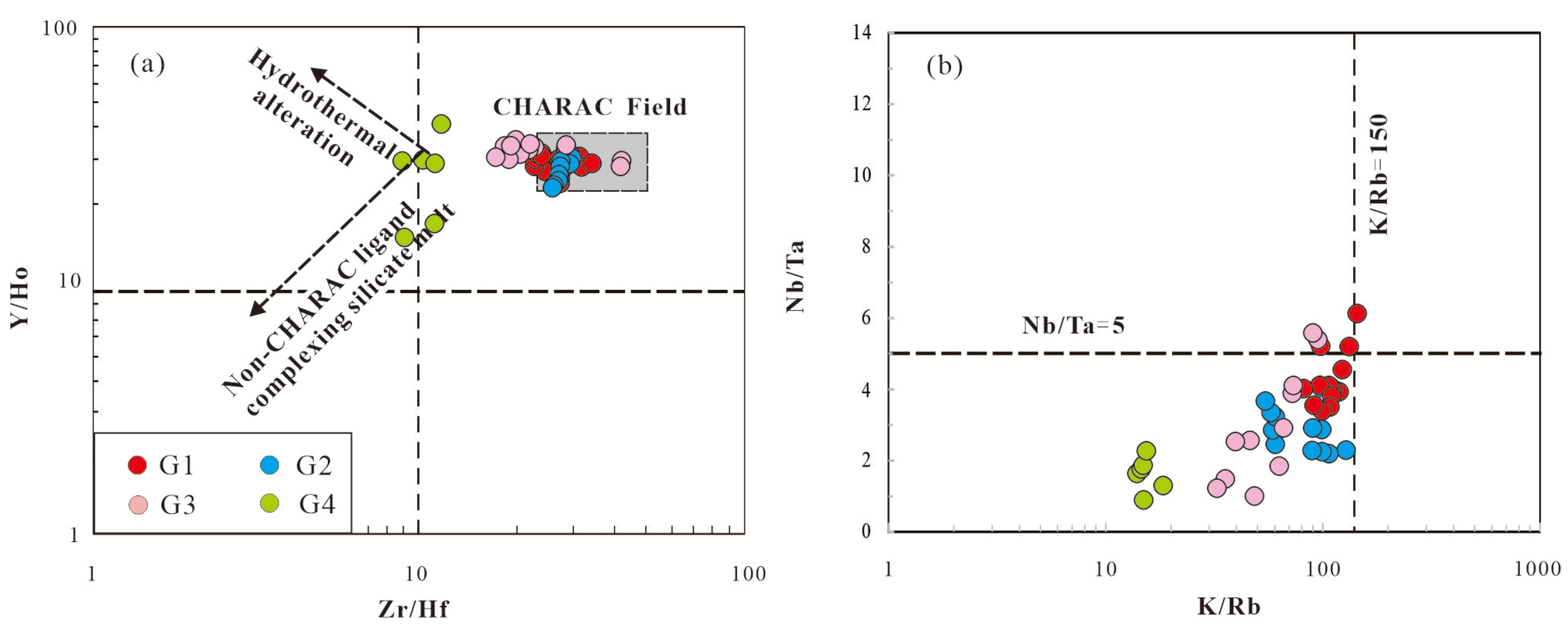
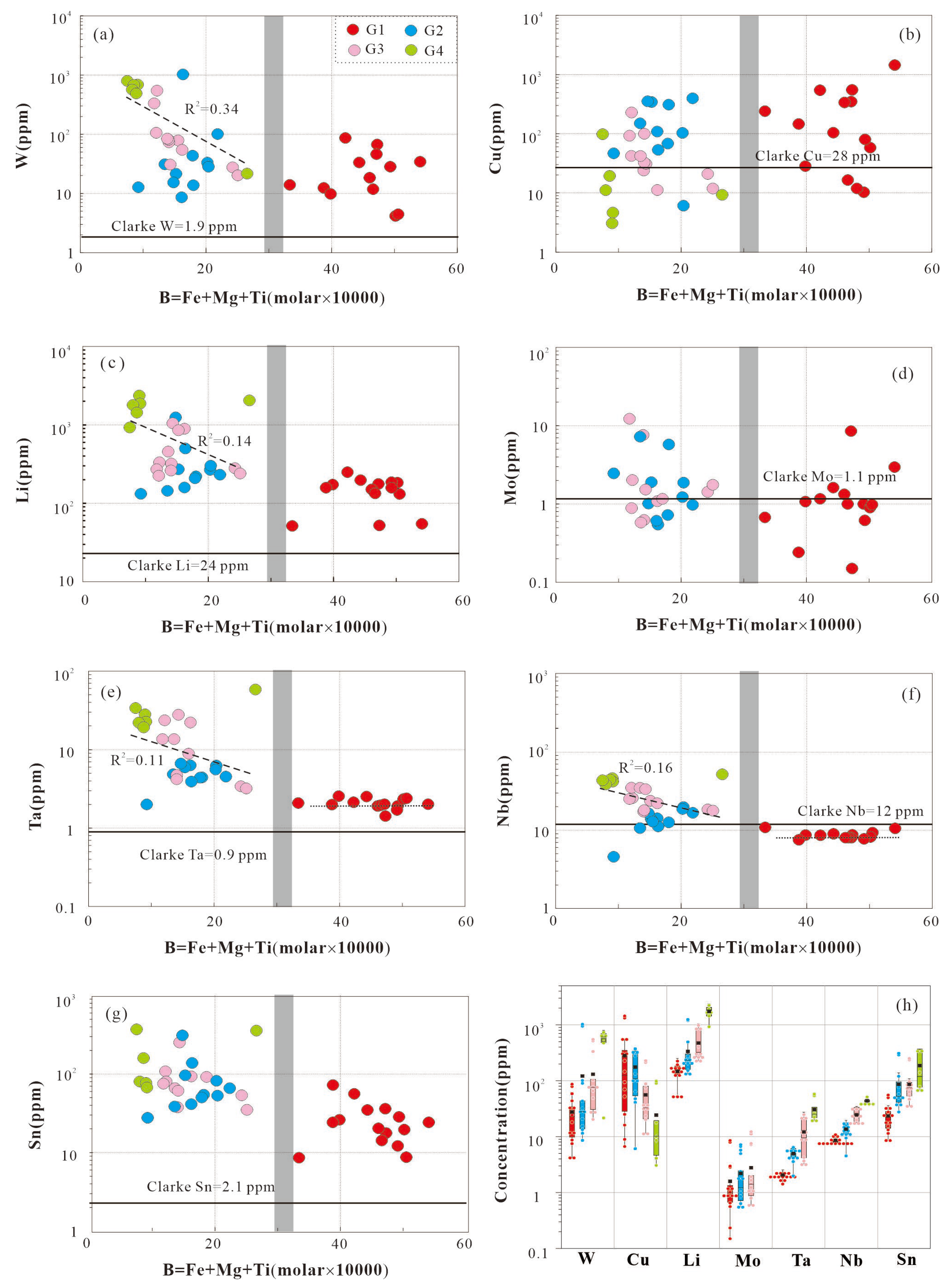
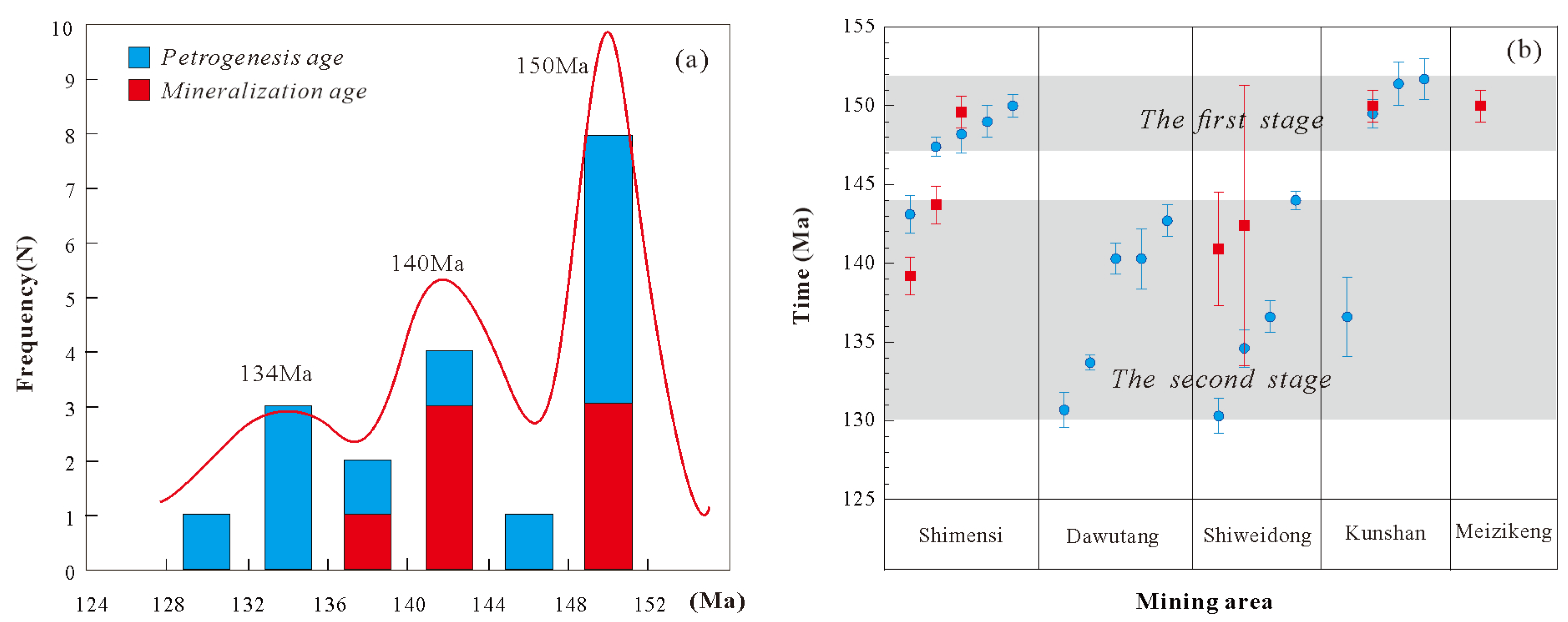
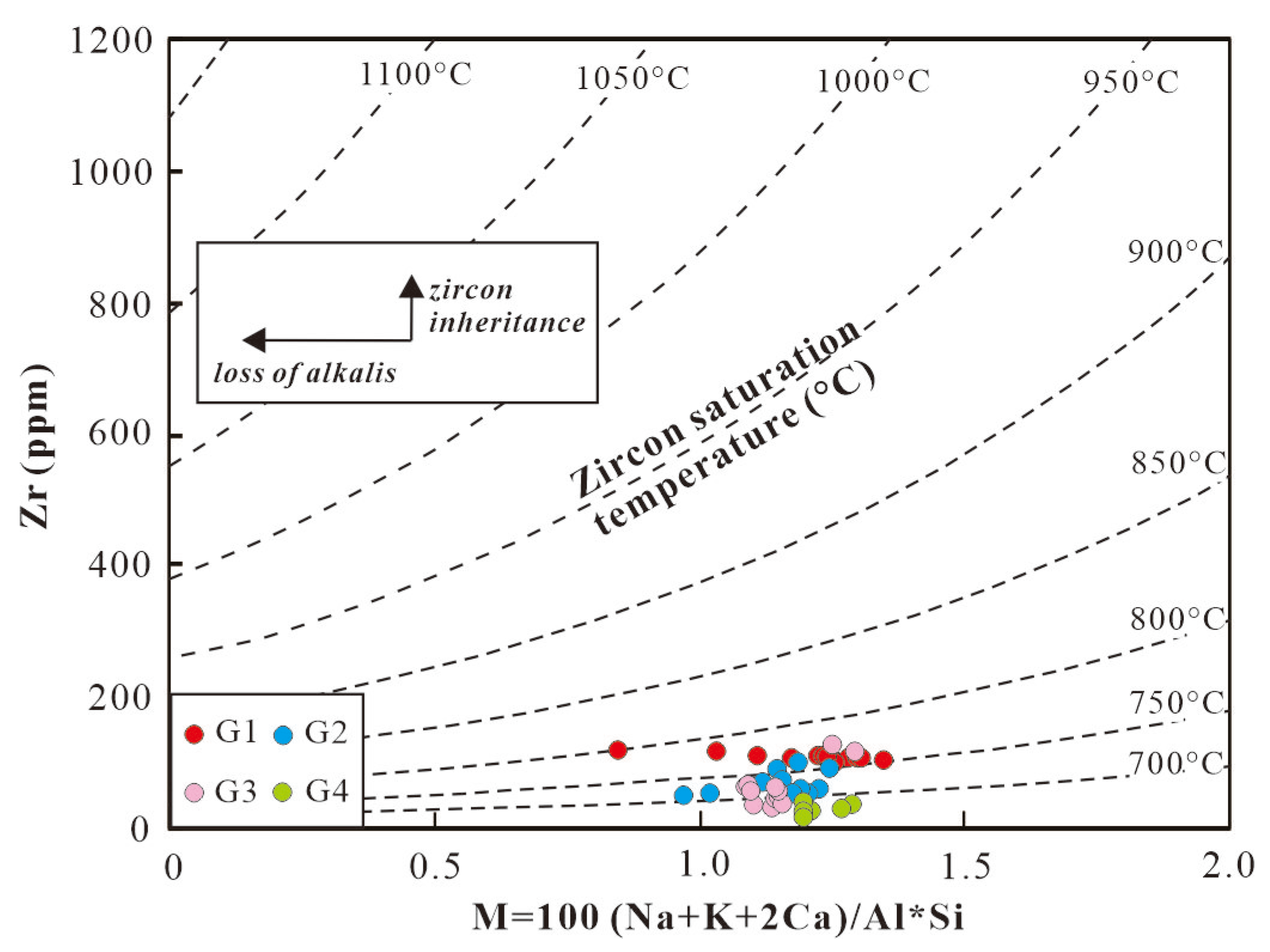
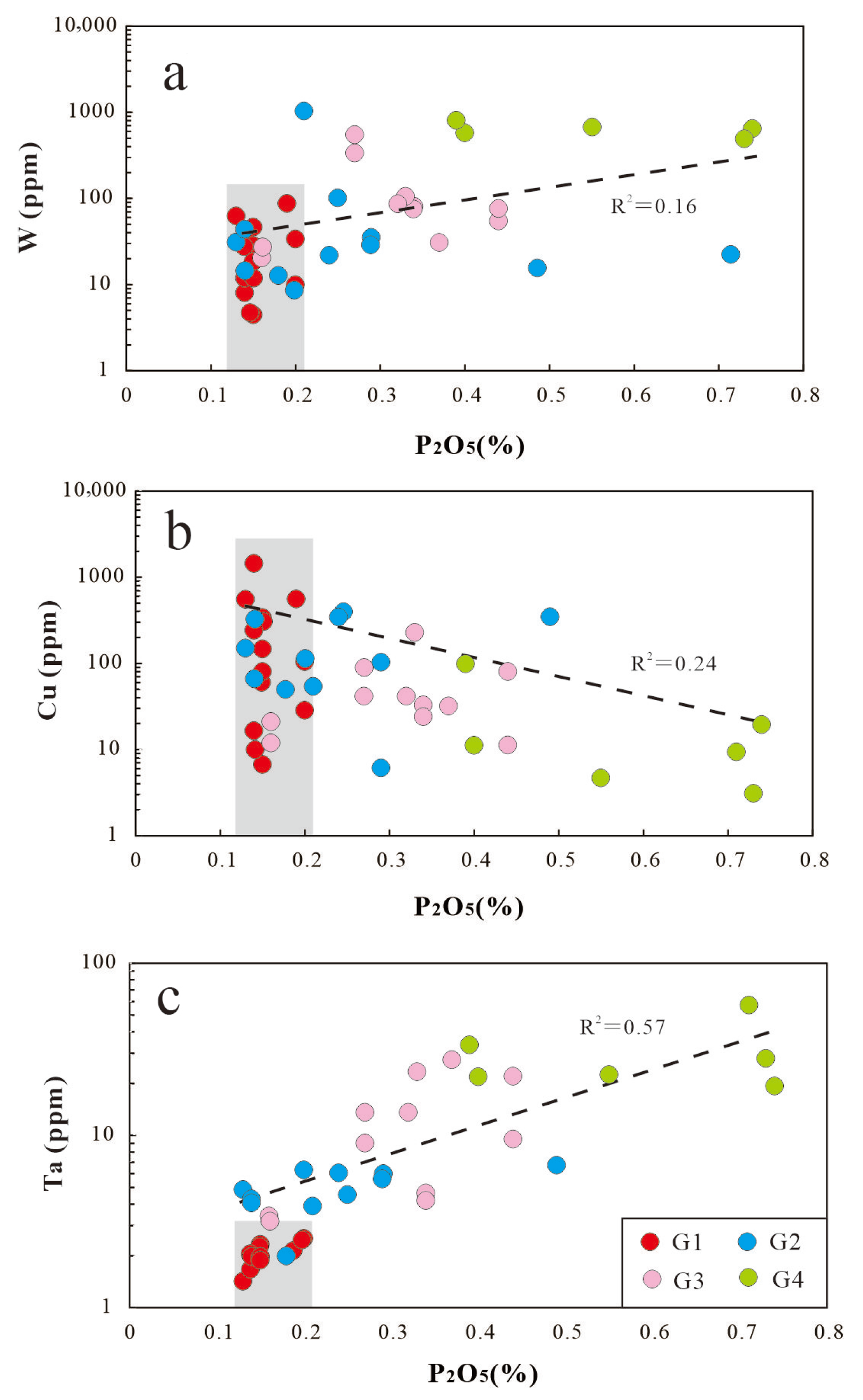
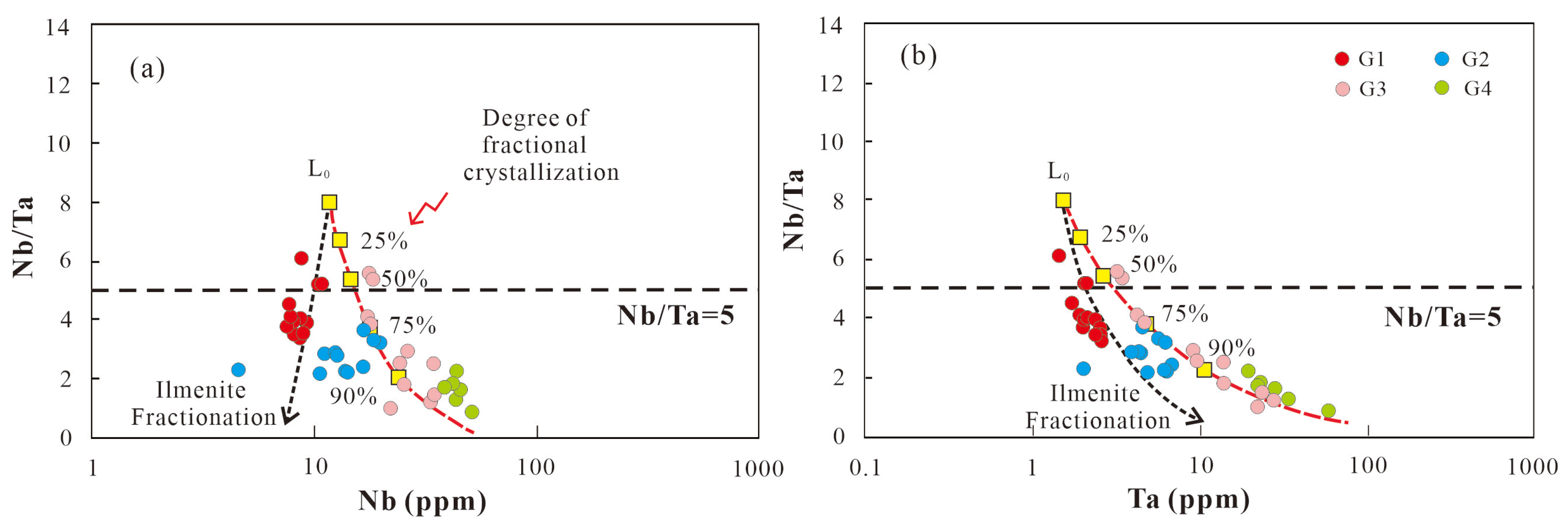
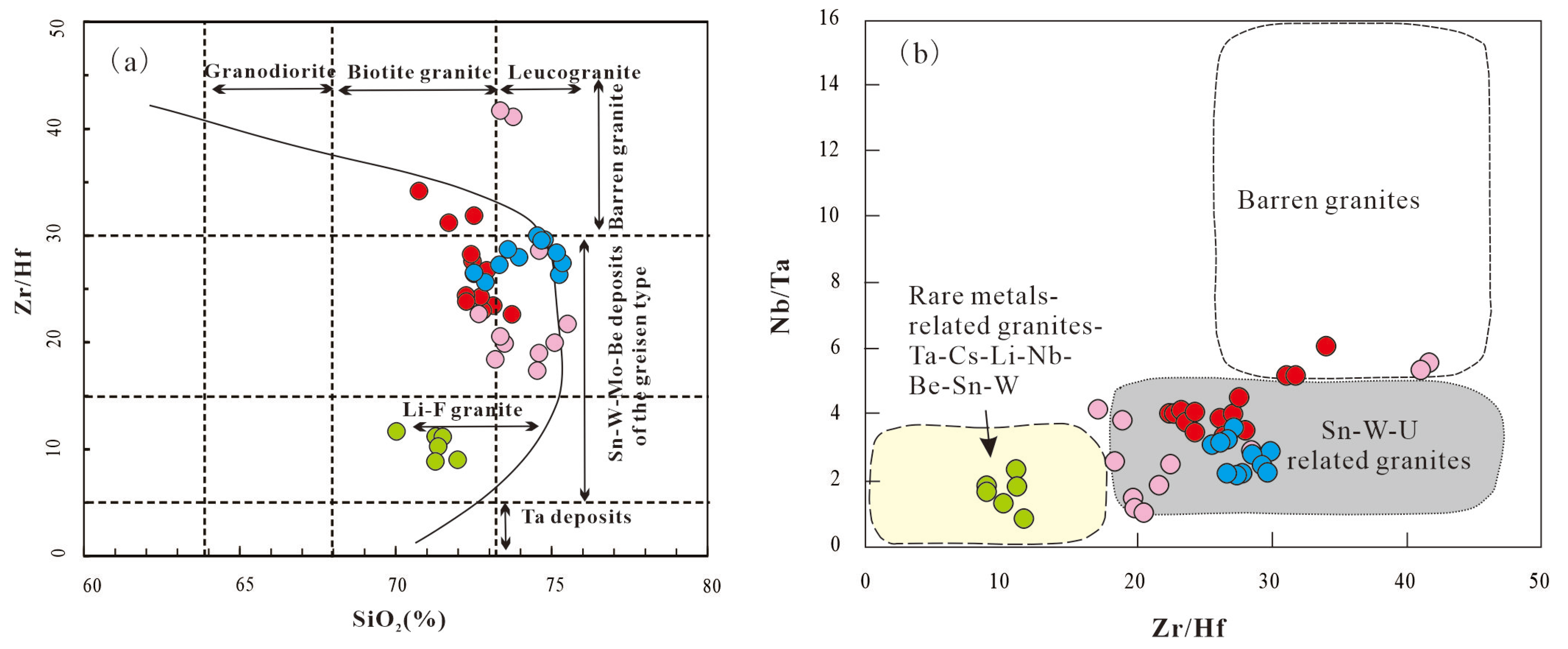
Disclaimer/Publisher’s Note: The statements, opinions and data contained in all publications are solely those of the individual author(s) and contributor(s) and not of MDPI and/or the editor(s). MDPI and/or the editor(s) disclaim responsibility for any injury to people or property resulting from any ideas, methods, instructions or products referred to in the content. |
© 2026 by the authors. Licensee MDPI, Basel, Switzerland. This article is an open access article distributed under the terms and conditions of the Creative Commons Attribution (CC BY) license.