


Abstract
Integrated Electrical Resistivity Imaging (ERI) and Induced Polarization (IP) studies were performed to identify potential tin (Sn) mineralization prospects in the Eastern Tin Belt of Peninsular Malaysia. A total of 23 profiles were obtained utilizing a Schlumberger configuration, generating resistivity and chargeability sections employed to delineate weathering structures, lithological connections, and structurally regulated anomalies. ERI models consistently delineate a three-tier subsurface structure consisting of conductive soil/alluvial deposits (5–300 Ωm), weathered bedrock (300–1500 Ωm), and resistive fresh bedrock (>1500 Ωm), featuring undulating basement relief beneath floodplain layers. IP data indicate localized, often pronounced chargeability anomalies (~5–40 ms; locally reaching ~50 ms), interpreted as corridors influenced by fractures and veins, especially when they align with significant resistivity contrasts at metamorphic–granitic boundaries and intrusive contacts. The integration of fence diagrams in the alluvial-over-granite zone reveals laterally consistent chargeability peaks at the alluvial–bedrock interface, suggesting enduring subsurface conduits. XRF examination of quartz-vein samples verifies Sn enrichment (599–717 ppm), corroborating a granite-related vein/alteration hypothesis and indicating possible isolated greisenized zones within the weathered granite. The integrated ERI–IP analysis identifies priority targets for subsequent trenching and borehole drilling to verify an anomaly’s origins and evaluate Sn grade and continuity.
1. Introduction
Tin (Sn) is an imperative mineral with major strategic importance worldwide. It is crucial for both conventional industries, including building and packaging, and advanced technology sectors such as electronics, clean energy, and defence [1,2]. Regionally, Southeast Asia hosts substantial tin mineralization spanning over 250 million years owing to several magmatic-hydrothermal events occurring from the Permian to the Miocene periods [1]. In Peninsular Malaysia, these deposits are genetically linked to granitic intrusions and associated hydrothermal activity, appearing as hydrothermal veins, skarns, and polymetallic sulfide types connected to Sn-bearing granites [3,4]. Essential alteration characteristics such as greisenization and sheeted mica-quartz veins, frequently bearing cassiterite and sulfides, serve as vital indicators of mineralization in I- and S-type granitoids [5].
Despite this diverse endowment, exploration and research have traditionally focused on the precisely delineated, high-grade deposits of the Western Tin Belt. In contrast, the Eastern Tin Belt is markedly underexplored, notwithstanding persuasive evidence of substantial tin potential. This evidence comprises aberrant geochemical fingerprints, newer Mesozoic–Cenozoic mineralized granitoids, and large greisenized alteration zones. Recent studies have identified Late Permian (~264 Ma) tin mineralization genetically associated with I-type granites in the Eastern Belt, confirming the existence of significant primary hydrothermal vein-type deposits and providing direct evidence of its metallogenic endowment [6,7]. The discrepancy reveals considerable knowledge deficiency and significant resource potential. A systematic examination of the Eastern Belt is essential to assess a new mineral frontier, promote the long-term viability of Malaysia’s mining sector, and diversify global supply chains for this essential commodity [8,9].
The Ladang Kampung Sungai area, located within this underexplored Eastern Belt, shows this inherent potential. Historical mining relics, including adits and tailings, provide tangible evidence of past tin production. In view of increased worldwide demand and developments in exploration technology, there is now an opportune chance to reevaluate such locations utilizing modern investigative approaches. Traditional prospecting methods, like pit testing and drilling, are generally limited by spatial coverage, expense, and logistical constraints in complex geological terrains. Consequently, geophysical approaches have emerged as key instruments for efficient, non-invasive subsurface characterization at diverse scales [10].
Geophysical techniques, notably the combined use of Electrical Resistivity Imaging (ERI) and Induced Polarization (IP), have demonstrated significant efficacy in mineral discovery. Electrical Resistivity Imaging (ERI) offers ongoing visualization of subsurface resistivity fluctuations, clarifying structural and lithological distinctions [11,12,13], whereas Induced Polarization (IP) exhibits heightened sensitivity to disseminated metallic minerals and sulfide particles, rendering it particularly effective for identifying chargeable mineralized areas [14,15]. This integrated methodology has been effectively utilized globally to delineate base metal deposits and recognize mineralized formations [16,17]. Nevertheless, an apparent shortcoming in the literature persists: there are few, if any, focused studies that have utilized integrated ERI-IP surveys specifically for tin exploration in the Eastern Belt of Peninsular Malaysia.
To address this gap, this study intends to assess the feasibility of integrating advanced ERI and IP techniques to explore the Sn mineralization potential in the Ladang Kampung Sungai region of Eastern Peninsular Malaysia. The research aims to: (1) identify the subsurface distribution, orientation, and depth of potential tin-bearing structures through the acquisition and interpretation of field geophysical data, supported by geochemical analysis; (2) estimate areas of high chargeability and resistivity contrasts that suggest sulfide and cassiterite mineralization; and (3) produce a comprehensive, data-driven evaluation to prioritize optimal targets for future drilling operations. The results are anticipated to offer an updated exploration framework to direct future tin prospecting in the inadequately examined Eastern Tin Belt in Peninsular Malaysia.
2. Study Area
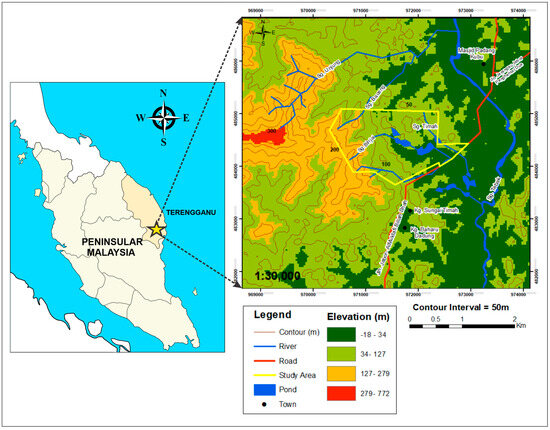
This study was conducted at Billah Shah (Route 14), Peninsular Malaysia, within a steep terrain area (Figure 1). The area was mapped using the West Malaysia Rectified Skew Orthomorphic (RSO) coordinate system with the Kertau 1948 Datum. Elevations range from around 35 to 176 m above mean sea level. Land use is currently dominated by oil palm agriculture; nonetheless, the site is historically involved with tin mine, and vestiges of former activity remain obvious, including a network of adits created along the main ore zones and residual tailings remained on the surface.
Figure 1.
Location map of study area at Ladang Kampung Sungai Timah, Kemaman, Terengganu, showing the elevation of area.
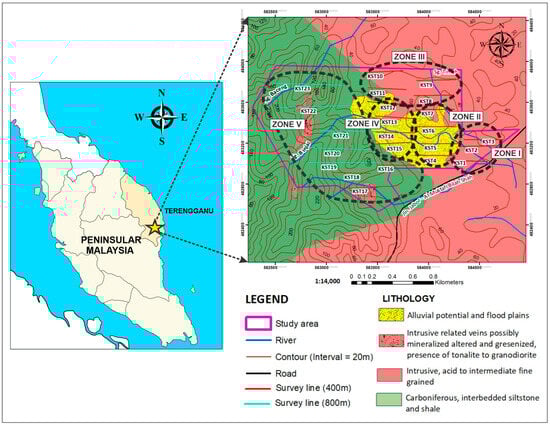
Geologically, the area lies within the Eastern Belt of Peninsular Malaysia, one of three major tectono-stratigraphic provinces (Western, Central, and Eastern Belts) that characterize the region’s tectonic evolution. The Eastern Belt is well recognized for tin mineralization linked with I- and S-type granitoids, greisen alteration, hydrothermal lodes, and skarn mineralization [7]. Geological, geochemical, and geophysical research in and around the study region indicate ideal conditions for Sn mineralization (Figure 2). The local bedrock is dominated by sedimentary to metasedimentary stages, having an argillaceous succession interbedded with shale and siltstone. Metamorphic overprints are evident in metasandstone and strongly silicified siltstone, particularly near quartz-veined zones. Discrete outcrops of fine-grained granodiorite exist across the area and locally intrude tonalitic strata. Widespread quartz veins with sheeted mica suggest considerable greisenization, and the primary adit complex is located inside a greisenized zone holding garnet, cassiterite, and galena. Ore-bearing veins generally strike N–S to NNE–SSW, with wider regional trends reaching NNW–SSE.
Figure 2.
Geological map of the study area.
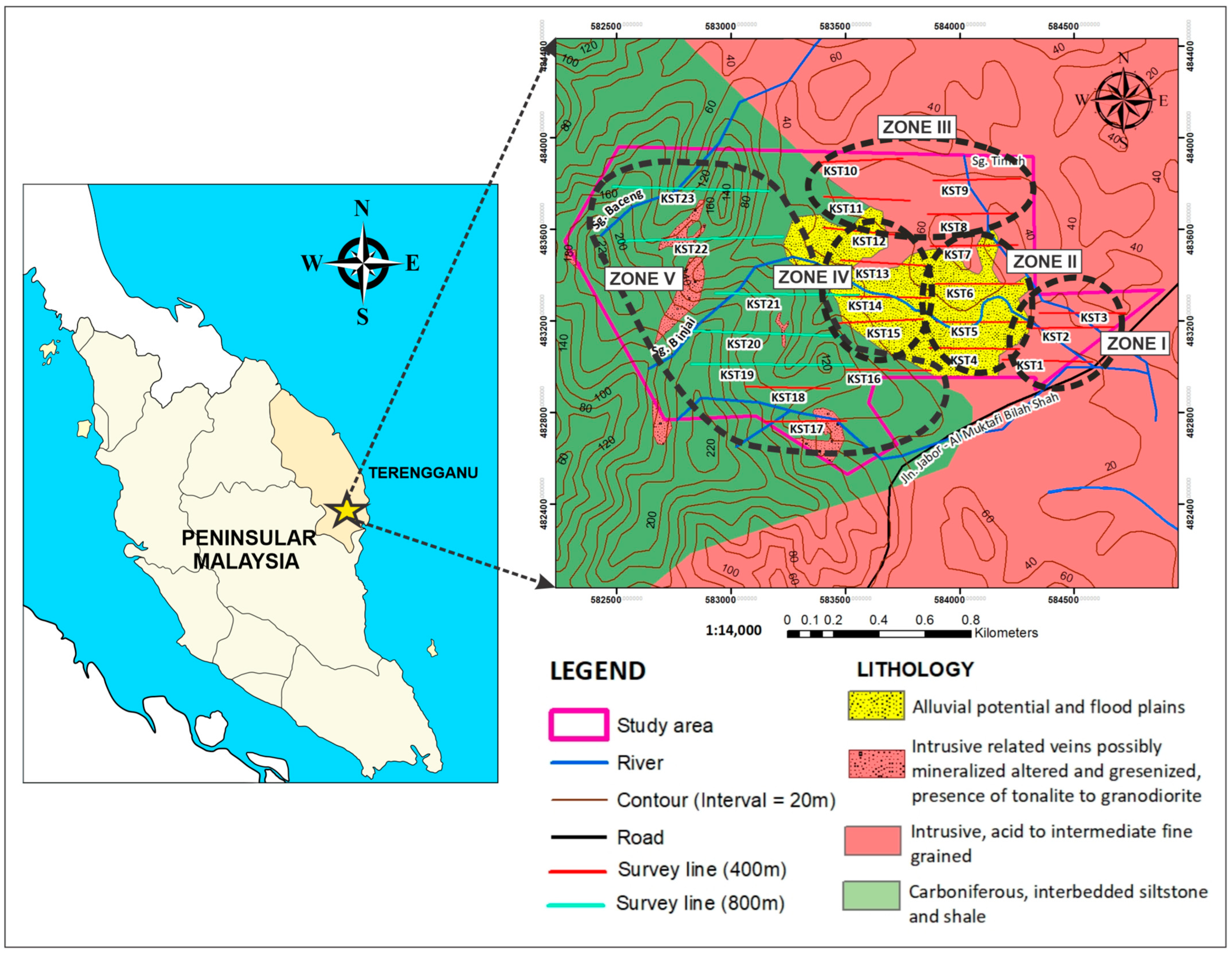
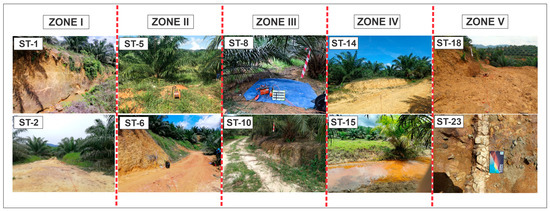
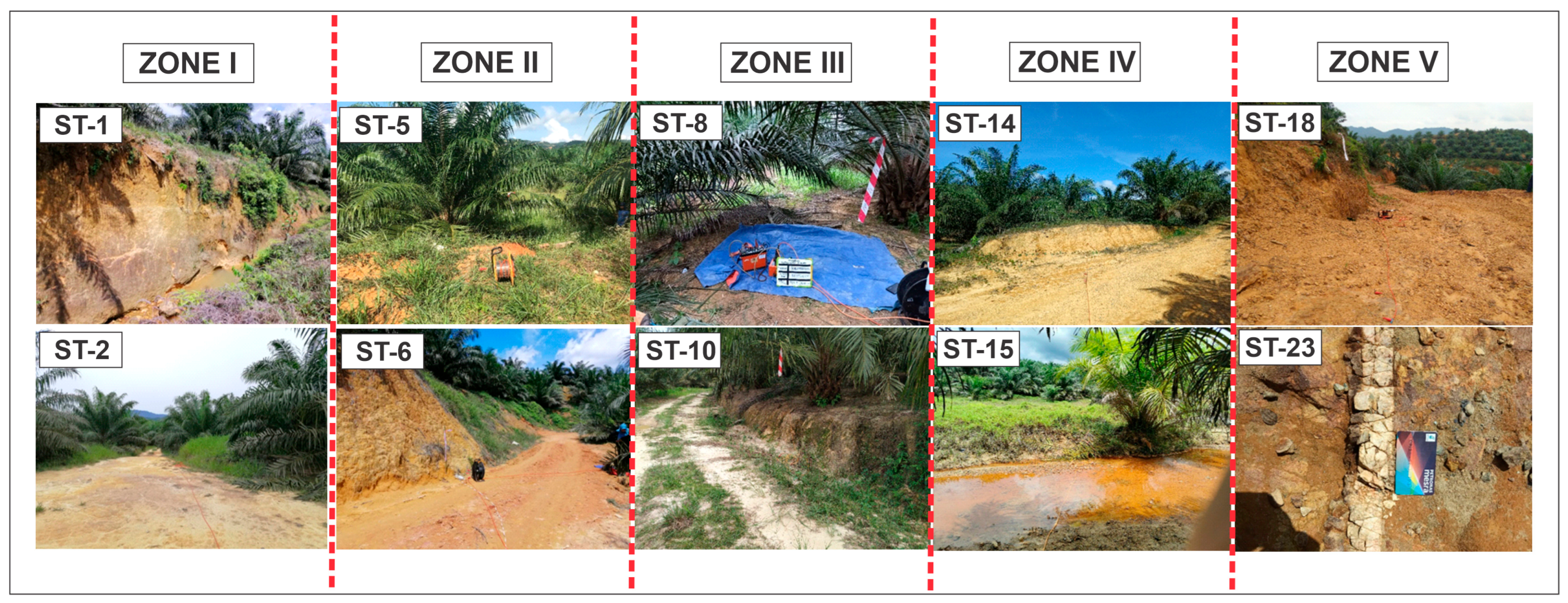
Lithological and geomorphic variations are also noticeable across the site: the western sector exposes carbonaceous shale strata, whilst the eastern sector is defined by extensive alluvial deposits. For interpretation and discussion, the survey lines were classified into five lithological zones based on the prominent mapped units (Table 1). The spatial distribution of these zones and associated survey lines are shown in Figure 3.
Table 1.
Lithological zoning of ERT–IP survey lines in the Billah Shah (Route 14) study area, demonstrating the grouping of lines (ST-1 to ST-23) by dominating mapped lithology.
Figure 3.
Field photograph of the study area shows the five lithological zones used to classify the ERI–IP survey lines.
3. Methods
3.1. Electrical Resistivity Imaging and Induced Polarization Techniques
Geoelectrical prospecting techniques detect the influence of direct current as it flows through a material by using current electrodes, while potential electrodes measure the electrical potential across the material, providing insight into the electrical properties of the encountered formations [18,19]. The outcomes of these methods depend on the electrode arrangement and the physical properties of the materials as they respond to the applied electrical current [20,21,22].
IP is an electrical phenomenon caused by current and characterized by a delayed voltage response in geological materials resulting from polarization processes initiated by an applied current [20]. Analogous to DC resistivity, IP surveys are used to assess chargeability (M, in ms), which measures the extent of the polarization response (i.e., the propensity of subsurface materials to temporarily retain electrical charge) [23]. Significantly, IP anomalies can originate from various mechanisms and materials: pronounced IP responses are typically linked to disseminated metallic minerals (e.g., sulfides) via electrode polarization, while clay-rich and weathered zones may also display IP effects due to membrane polarization or the presence of other conductive minerals [24]. IP effects can be quantified in the time domain (as the post-current voltage decay) or in the frequency domain (as a frequency-dependent impedance/phase response); however, field IP measurements are often carried out in the time domain due to the simplicity of obtaining the decay curve and the more direct interpretation of the underlying IP behaviour in this domain [24].
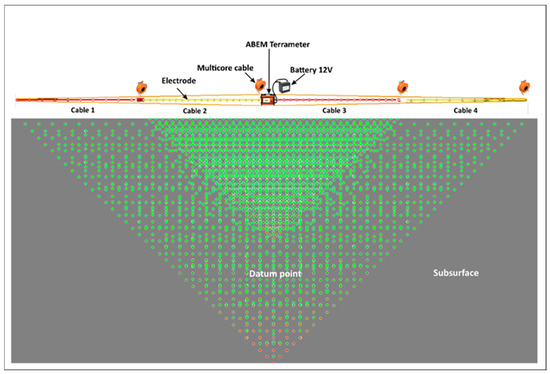
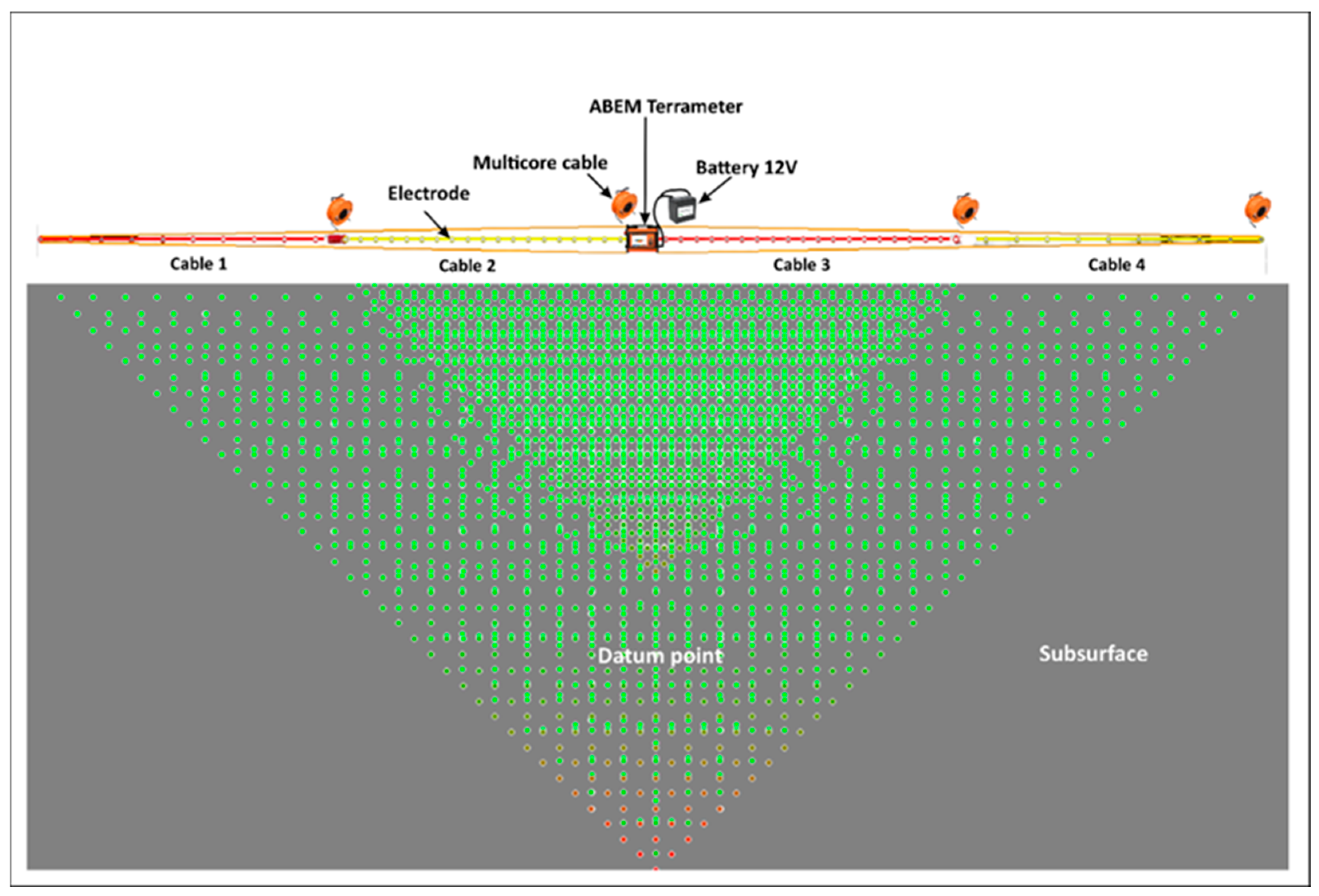
To explore potential Sn-rich zones, ERI and IP surveys were carried out at targeted sites throughout the study area (Figure 4). Survey lines were positioned perpendicular to the regional geological strike (N-S) to optimize data acquisition. Other factors, such as mineralization indicators observed in the field, were also considered in the survey design. The integration of ERI and IP methods can effectively identify cassiterite-bearing zones, especially those associated with sulfide accumulation, as the polarizability of sulfides creates anomalies that contrast with surrounding materials [25]. Soil samples from specified points were also collected for a subsequent geochemical analysis.
Figure 4.
Geoelectrical data acquisition showing the measurement sequence for constructing a pseudo-section with equipment used for the data acquisition of ERI-IP subsurface Sn mineralization.
3.2. Acquisition and Inversion of Datasets
To improve spatial resolution and image quality, ERI and IP measurements were performed to visualize subsurface parameters in both horizontal and vertical orientations. The integrated ERI/IP data elucidate the relative position of mineralized zones and subsurface heterogeneity. To enhance comparability and reproducibility, we delineate the survey structure and electrode spacings in relation to the utilized Schlumberger array. Field measurements were obtained with an ABEM Terrameter SAS4000 Utilities 3.17 resistivity system, comprising 61 stainless-steel electrodes linked by multi-core 100 m cables and copper connecting jumpers. We utilized the linear symmetric Schlumberger array, which incorporates outer current electrodes and inner potential electrodes (AB), with AB spacings specified as the distance between the current electrodes. In our survey, the electrodes were set up 5 m apart on 400 m lines (AB = 5 m) and 10 m apart on 800 m lines (AB = 10 m). This arrangement offers extensive data coverage with robust sensitivity to horizontal stratification while maintaining feasible depths. The inter-electrode distance affects both lateral and vertical resolution, while the array’s length determines the maximum exploration depth. Reduced electrode spacing enhances detail for optimal resolution in model development [24]. IP measurements were combined with ERI, facilitating the simultaneous acquisition of apparent resistivity and chargeability.
Geophysical data were processed to create pseudo-sections along each survey line, which were then inverted using the robust inversion method in the RES2DINVx64 tomography inversion program developed by Geotomo Software Version 4.07. Consequently, the derived pseudo-section serves as an inversion model of the subsurface. The electrode positions and altitudes along each survey line were georeferenced with a portable global positioning system (GPS) to align the data for processing and inversion. The apparent resistivity and chargeability data were analyzed with the RES2DINVx64 tomography inversion software, created by Geotomo Software. Prior inversion, these models underwent correction for topographical alterations to guarantee precise subsurface imaging, and data influenced by noise were eliminated. The inversion procedure utilized the restricted least-squares technique, grounded in the robust finite element method, to create a computed model that highlights the true resistivities of subsurface geological structures [26].
3.3. Geochemical Analysis
The elemental composition of soil samples was analyzed using a Shimadzu EDX-7000 EDXRF spectrometer, adhering to normal loose-powder sample preparation protocols. Samples were air-dried, rigorously disaggregated using an agate mortar and pestle, and sieved to <63 µm to ensure a consistent fine fraction, hence eliminating grain-size effects. Approximately 1.0–2.0 g of each powdered sample was subsequently positioned into an acrylic XRF cup lined with a thin polyester (Mylar) film, serving as an X-ray-transparent window to minimize background absorption due to its low atomic number. The powder was evenly distributed without compaction, the cup was sealed with a lid, labeled, and evaluated under vacuum conditions. The vacuum enhances the detection of light elements. The Shimadzu unit (Rh anode tube and Silicon Drift Detector (SDD)) was utilized in accordance with the manufacturer’s guidelines to excite the sample and acquire fluorescence X-ray spectra. Elemental concentrations were measured utilizing the instrument’s fundamental parameters algorithm to adjust for matrix effects. The analytical accuracy was validated by testing certified soil reference samples under the same conditions.
The loose-powder EDXRF method is well-established for soil analysis: it is quick, non-destructive, and requires minimal sample preparation, producing solid multi-element data [27]. EDXRF may rapidly deliver total element concentrations in soils with minimal preparation, such as crushed particles in thin-film cups [28,29,30]. Our approach adheres to established best practices, guaranteeing uniform conditions for the analysis of main and trace elements.
4. Results
4.1. 2D ERI and IP Models
4.1.1. Zone I (Survey Line ST-1–ST-3)
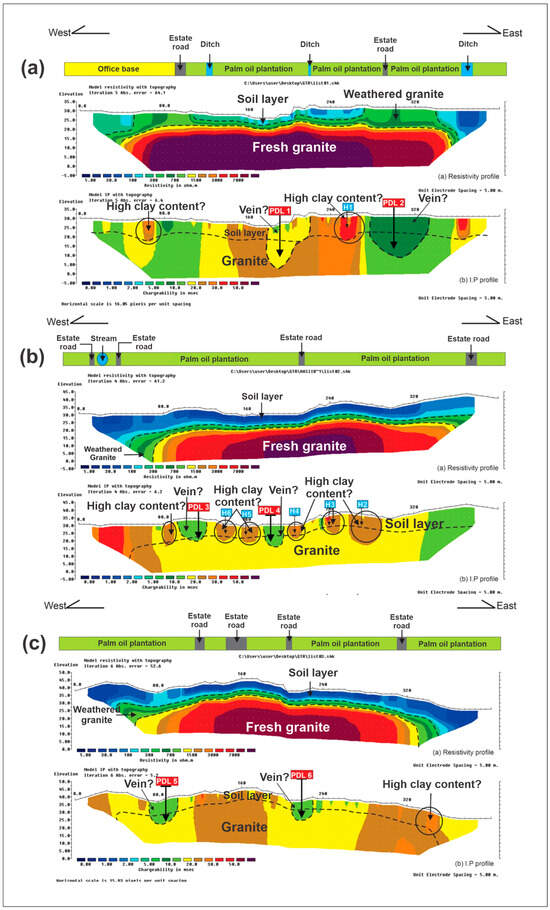
Figure 5a–c illustrates the integrated ERI and IP findings for Zone I (ST-1–ST-3), characterized by a weathering profile formed on intrusive granitic bedrock. The ERI sections consistently identify a near-surface low-resistivity layer (~5–300 Ωm) with an estimated thickness of ~6.7–9 m, interpreted as soil/regolith originating from extensively weathered bedrock. The spatial correlation of this conductive layer with heightened chargeability (>10 ms) in the IP models suggests a clay-rich stratum and/or significantly weathered material, aligning with the ability of clay minerals to store electrical charge compared to coarser, less reactive substances.
Figure 5.
Zone I ERI–IP sections for (a) ST-1, (b) ST-2, and (c) ST-3.
Below the conductive regolith, an intermediate-resistivity layer (~300–1500 Ωm) reaches a depth of around 7–11 m and is interpreted as weathered bedrock (saprolite to moderately decomposed granite). The thickness of this weathered horizon differs throughout the sites, with ST1 exhibiting a relatively thicker weathered profile than ST2 and ST3, indicating more pronounced or deeper weathering at ST1. At increased depths, resistivity significantly rises to above 1500 Ωm, locally nearing over 10,000 Ωm, regarded as fresh granitic bedrock. The geometry of the high-resistivity basement displays undulations that align with the hilly topography, suggesting varied depth to bedrock across the survey corridor.
In the IP models, with the clay-associated high-chargeability response at the surface, localized moderate chargeability anomalies (~10–20 ms) manifest at certain locations inside the profiles and can be correlated across neighboring lines. When these anomalies manifest along the regolith–bedrock interface or inside the upper bedrock, they may indicate structurally influenced alteration and/or disseminated sulfides along fractures that could serve as conduits for hydrothermal fluids.
4.1.2. Zone II (Survey Line ST-4–ST-7)
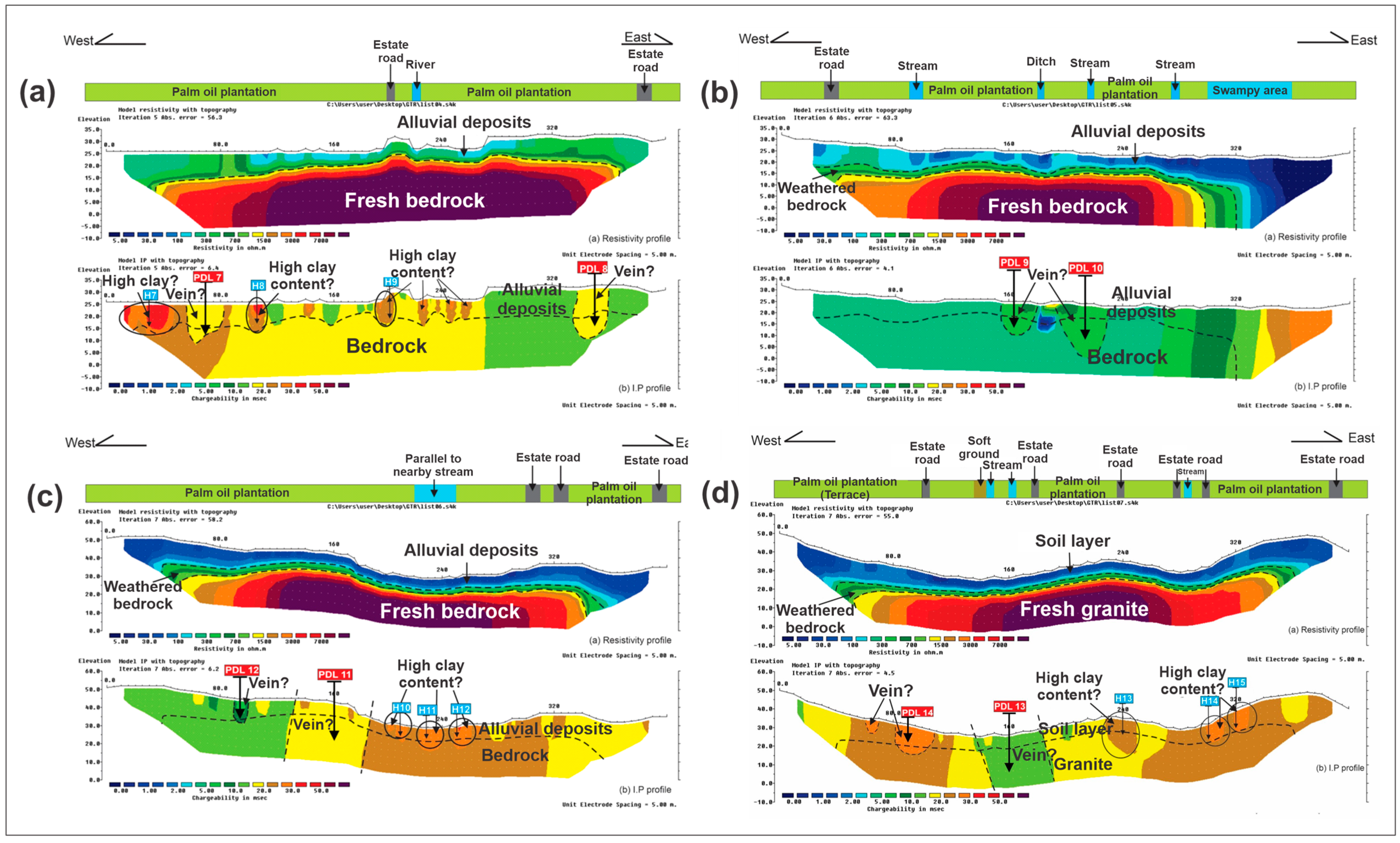
Survey lines ST-4 to S-T7 were carried out on low-lying floodplain topography characterized by alluvial deposits. The ERI and IP sections (Figure 6a–d) reveal consistent subsurface patterns throughout the zone, facilitating the recognition of a laterally varying although generally equivalent geoelectrical stratigraphy. Generally, ST-4–ST-6 navigate the principal alluvial zone, while ST7 intersects a transitional environment where alluvium is preserved only in localized areas.
Figure 6.
Zone II ERI–IP sections for (a) ST4, (b) ST5, (c) ST6, and (d) ST7.
The ERI models identify a shallow, laterally continuous low-resistivity unit (about 5–300 Ωm), interpreted as alluvium/soil resulting from the weathering and redeposition of material from the adjacent bedrock, augmented by moisture retention in the floodplain. In ST-4–ST-6 (Figure 6a–c), this conductive layer constitutes a relatively continuous blanket with an estimated thickness of around 4–12 m, aligning with an alluvial cover. Conversely, ST-7 (Figure 6d) demonstrates that the conductive alluvial unit is distinctly developed only over a restricted segment, roughly between 200 m and 290 m along the line, while the other sections are construed as a thinner soil cover overlying more resistive weathered material, indicative of the floodplain margin.
Below the alluvium/soil, an intermediate layer exhibiting moderate resistivity (~300–1500 Ωm) is identified as weathered bedrock (saprolite). This unit exhibits thickness fluctuations along the profiles, which often grow more evident toward the middle regions of the lines, indicating uneven underlying topography and/or discrete areas of intensified weathering. At increased depths, a high-resistivity unit (>1500 Ωm, locally reaching ~10,000 Ωm) is interpreted as less weathered to fresh bedrock, constituting the resistive basement beneath the overlying weathering profile and alluvial cover.
The IP models impose further limits by emphasizing discrete, localized chargeability abnormalities that are not represented as continuous layers. Multiple zones display elevated chargeability values (>15 ms), with a significant abnormality seen between about 160 m and 230 m along the profile. These anomalies typically manifest as narrow to lensoid structures within the weathered bedrock unit and/or adjacent to the alluvium–bedrock interface and are regarded as potential mineralized veins and/or sulfide-rich zones.
4.1.3. Zone III (Survey Line ST-8–ST-11)
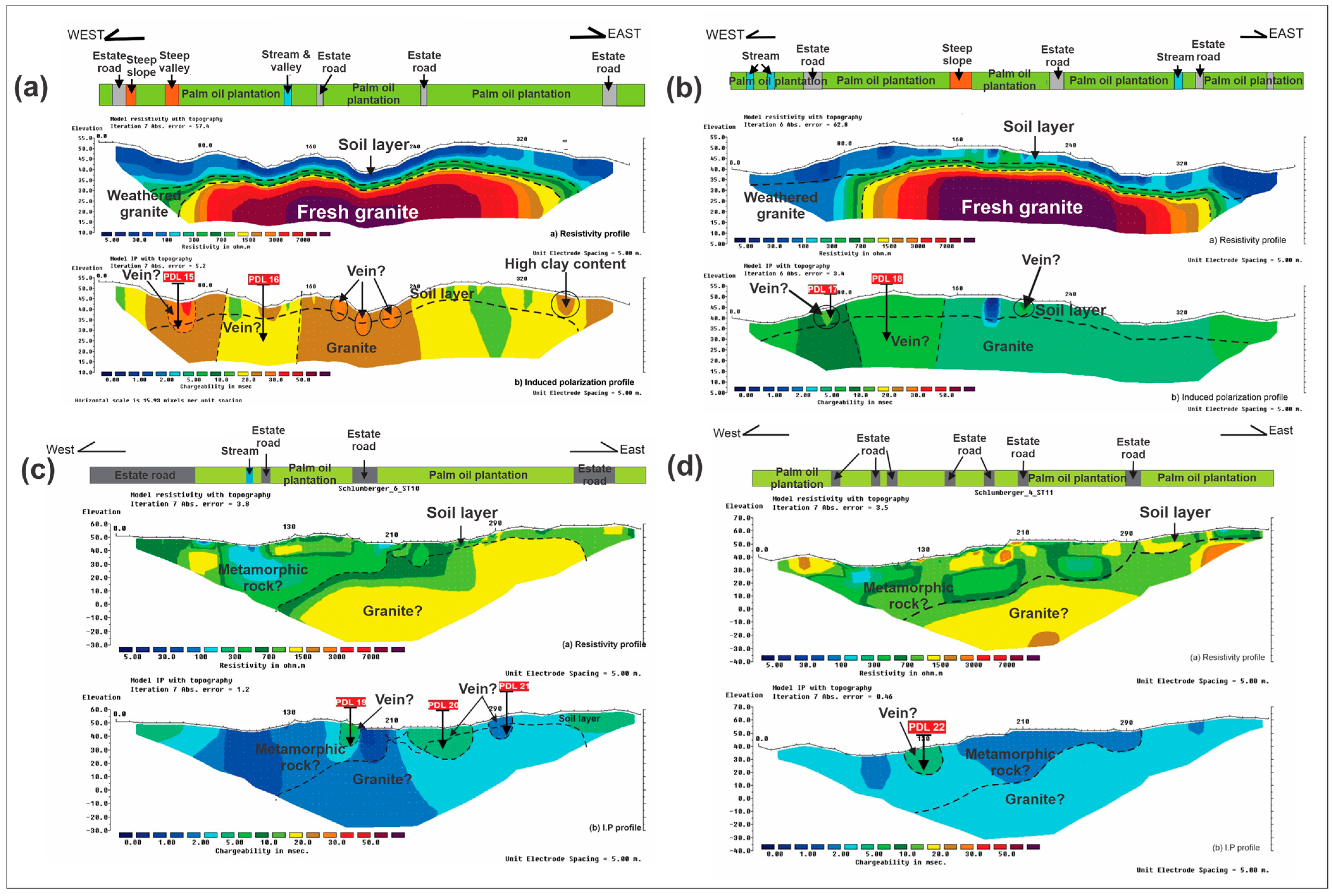
Zone III (ST-8–ST-11; Figure 7a–d) is distinguished by pronounced resistivity differences indicative of the weathering profile and a lithological shift throughout the area. The ERI sections for ST8 and ST9 (Figure 7a,b) exhibit a very uniform subsurface sequence, characterized by a shallow low-resistivity layer (~5–300 Ωm) interpreted as soil and extensively weathered near-surface material, extending to a depth of around ~7 m. Resistivity escalates downward into moderately resistive weathered bedrock and then into high-resistivity fresh bedrock, with an undulating bedrock surface indicating uneven weathering and irregular basement topography. In contrast, ST-10 and ST-11 (Figure 7c,d) exhibit pronounced lateral resistivity changes and a more heterogeneous resistivity distribution, aligning with their location across the delineated contact between metamorphic rocks and granitic bedrock. The conductive near-surface unit remains but exhibits varying thickness, whereas the bedrock response occurs at differing depths, signifying varied weathering and structurally disturbed terrain characteristic of contact zones.
Figure 7.
Zone III ERI–IP sections for (a) ST-8, (b) ST-9, (c) ST-10, and (d) ST-11.
The IP sections offer further clarification of potential structure-related targets via localized chargeability peaks. Distinct anomalies exhibiting heightened chargeability (~5–40 ms) manifest as discrete, non-layered structures that align with fracture- and/or vein-controlled zones harboring polarizable substances. The chargeability responses are more prominent and spatially concentrated in ST-10 and ST-11, where they align with the resistivity transitions interpreted as the metamorphic–granitic boundary and related structural pathways. Differences in anomaly sharpness and continuity among profiles likely indicate variations in the concentration and distribution of vein material (either more concentrated or more dispersed), which might enhance or diminish the chargeability signal.
4.1.4. Zone IV (Survey Line ST-12–ST-15)
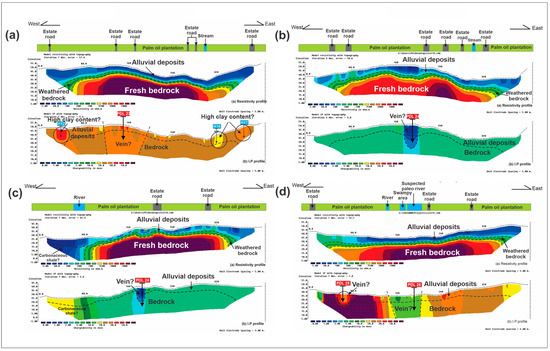
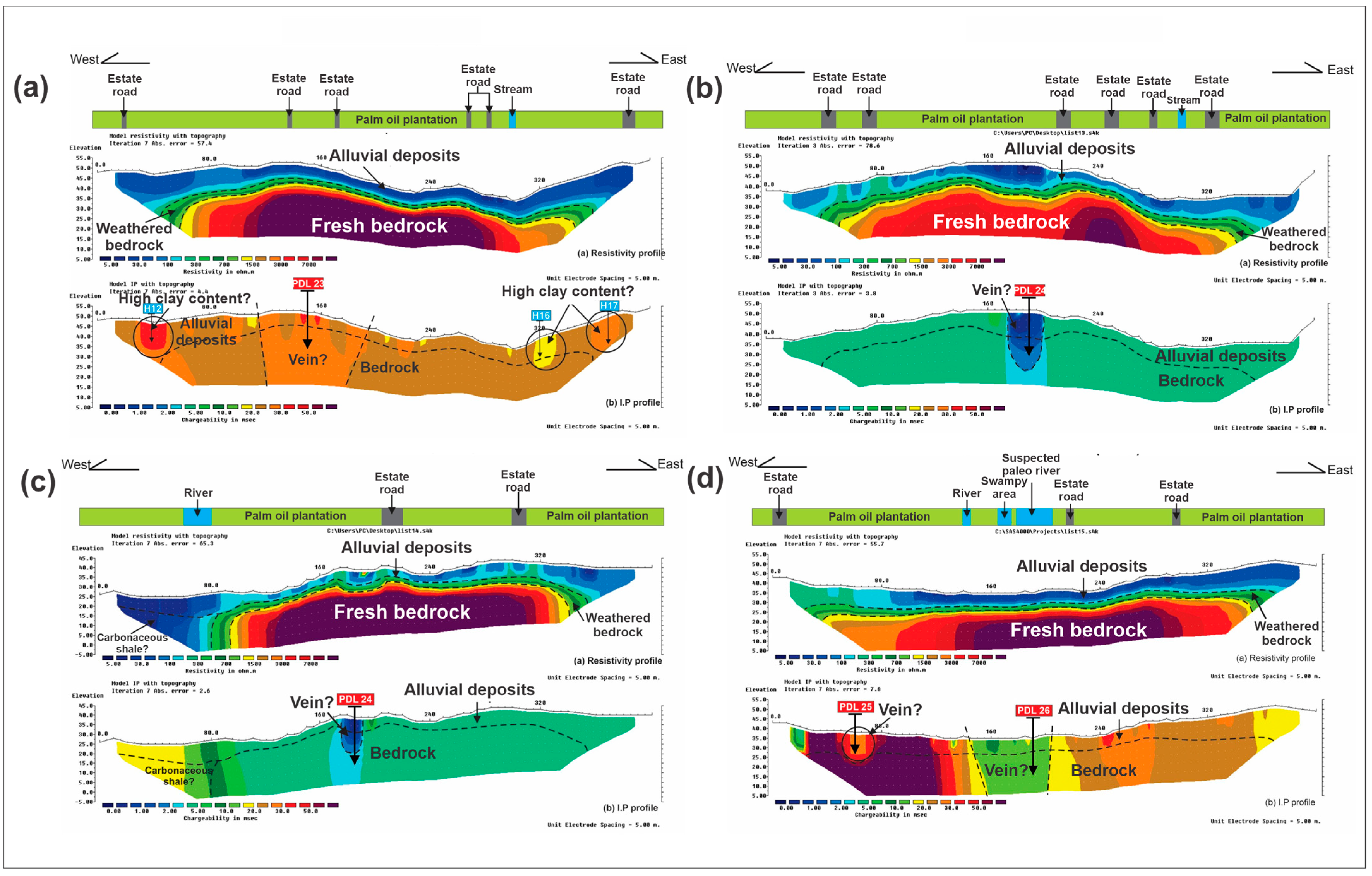
Zone IV (ST-12–ST-15; Figure 8a–d), which crosses the alluvial cover above the granitic substrate, presents a uniform three-layer resistivity configuration. The ERI sections delineate a high-resistivity unit (5–300 Ωm), interpreted as soil and/or alluvial deposits. This unit is laterally extensive across all four lines and consists of unconsolidated materials characterized by strong moisture retention and varied clay concentration. Under this conductive layer, resistivity rises into a moderate-resistivity zone (300–1500 Ωm), interpreted as weathered granitic bedrock (saprolite). At depth, a high-resistivity unit (>1500 Ωm) signifies the transition to fresh granitic bedrock, typically becoming more prevalent below around 15 m, while the bedrock surface is undulating, indicating heterogeneous granite weathering and irregular basement relief beneath the alluvium.
Figure 8.
Zone IV ERI–IP sections for (a) ST-12, (b) ST-13, (c) ST-14, and (d) ST-15.
The IP sections enhance the resistivity interpretation by delineating the thickness of the conductive blanket and emphasizing localized polarizable areas. The chargeability distribution indicates that the soil/alluvial unit has an average thickness of roughly 9 m from the surface. Distinct high-chargeability anomalies (~15–40 ms) are seen inside this shallow package, notably along the alluvium–weathered granite interface. The anomalies are spatially localized instead of laterally continuous, indicating distinct lenses or zones of enhanced polarizable material within the alluvial sequence and/or along the uppermost weathered granite, potentially influenced by clay-rich horizons, permeability variations, or structurally controlled pathways that aggregate fine material near the basement interface.
All four profiles exhibit comparable first-order stratigraphy, thereby enhancing confidence in the delineated unit boundaries. The variations in chargeability highs exhibit differences in intensity and lateral continuity across lines, suggesting that the polarizable material is spatially heterogeneous. Numerous anomalies manifest near the base of the conductive overburden and within the upper section of the weathered bedrock, a location conducive to (i) the accumulation of secondary mineralization in basal alluvial horizons and/or (ii) increased alteration and mineral concentration along permeable pathways at the soil–bedrock interface.
Zone IV is essential as the geophysical signals offer a physical basis to elucidate and corroborate the chemistry anomalies detailed in Section 4.2. Specifically, intervals with high chargeability (15–40 ms) coinciding with low resistivity (5–300 Ωm) identify priority zones where clay enrichment, mineralized material, or both are concentrated.
4.1.5. Zone V (Survey Line ST-16–ST-23)
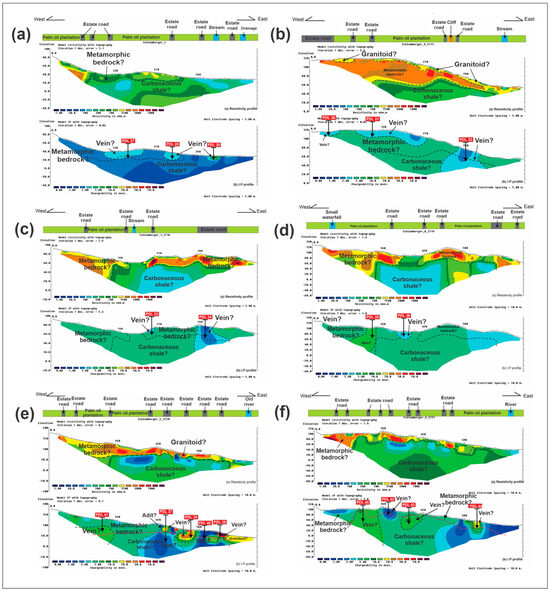
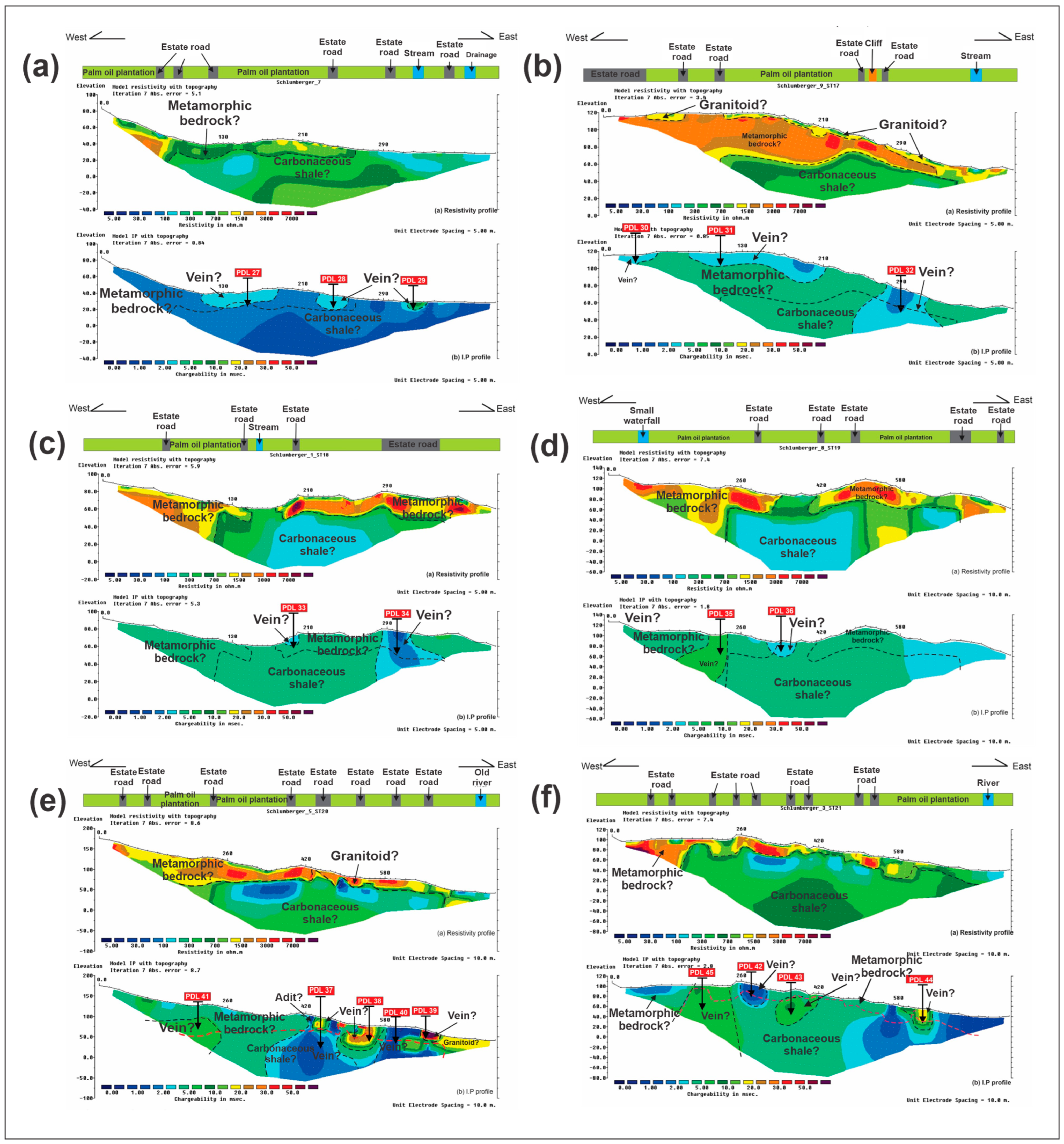
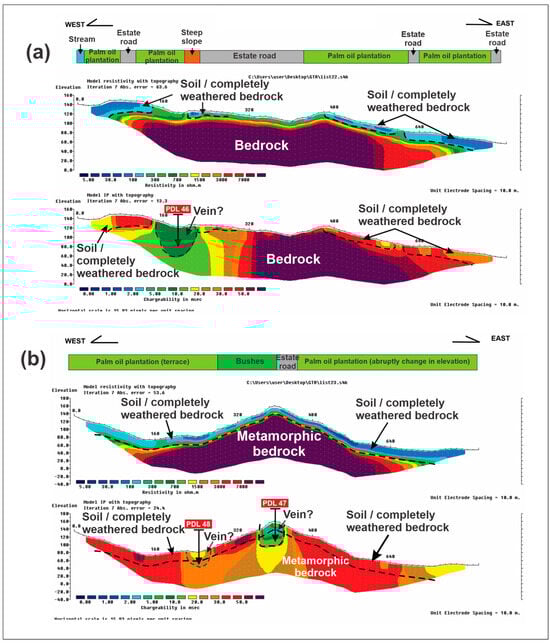
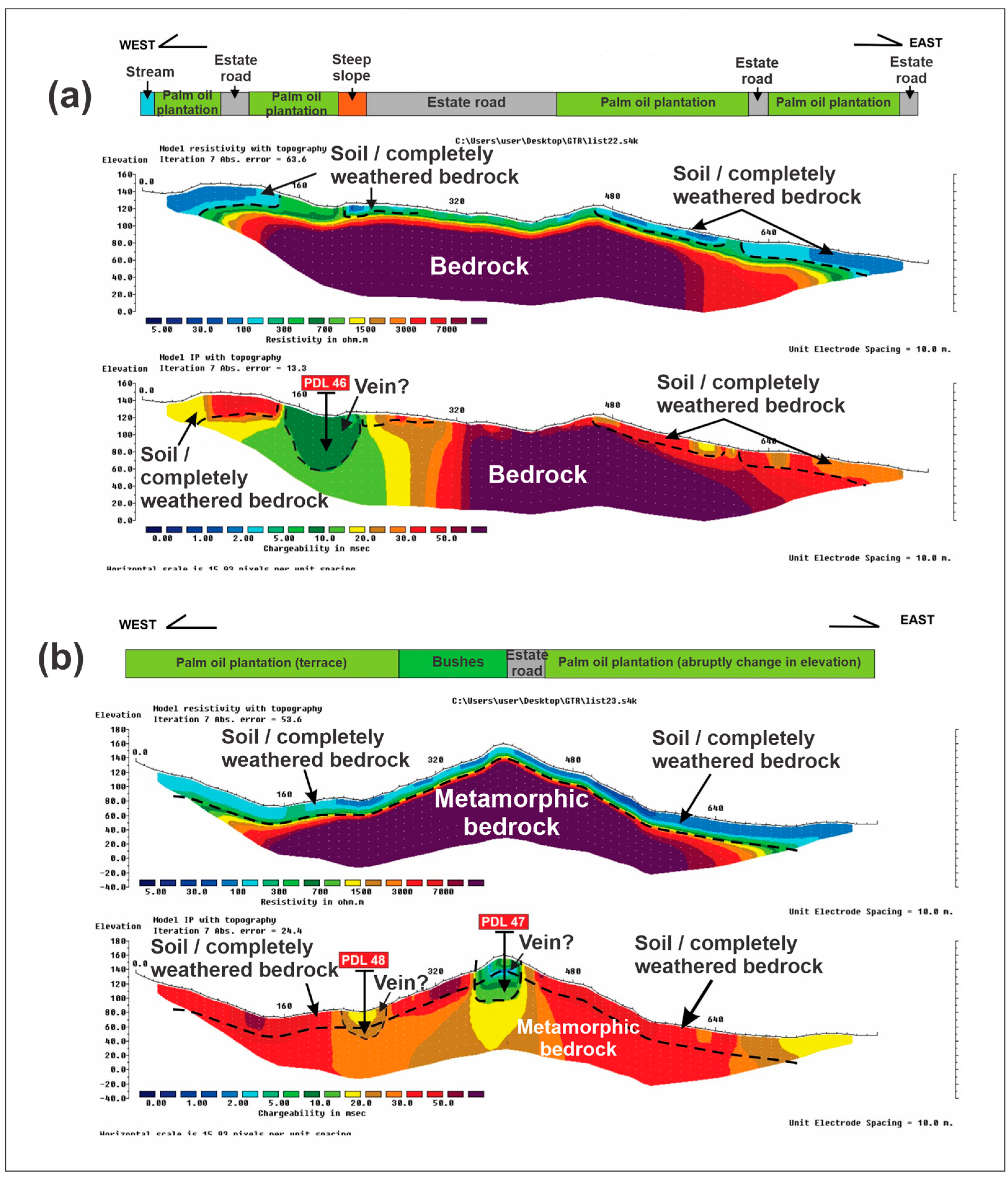
Zone V (ST-16–ST-23; Figure 9a–f and Figure 10a,b) is characterized by high-resistivity basement characteristics, interpreted as metamorphic bedrock, which is locally intruded by a granitoid body. In the majority of profiles (ST16–ST21), the ERI models reveal significant high-resistivity zones (~700–7000 Ωm), interpreted as metamorphic rock, with the resistive unit often extending to depths of about ~20–40 m. A similar high-resistivity response is observed at shallow depths on ST-17 and ST-20; however, in these profiles, the near-surface resistive mass is interpreted as a granitic to intermediate intrusive body (noted near the adit area), likely constituting a diorite–granodiorite–tonalite intrusive complex, with an estimated thickness of approximately 10–20 m beneath the surface. Below the resistive basement, a lower-resistivity unit (~100–700 Ωm) is observed in multiple profiles, especially at depths over 20 m, and is interpreted as sedimentary layers consisting of interbedded carbonaceous shale and siltstone. Conversely, ST-22 and ST-23 have an inverted near-surface configuration, with the upper layer being conductive (~100–300 Ωm), interpreted as soil and/or fully weathered rock, under which lies a deeper high-resistivity unit (~700–7000 Ωm) corresponding to metamorphic bedrock (Figure 10a,b).
Figure 9.
Zone V ERI–IP sections for (a) ST-16, (b) ST-17, (c) ST-18, (d) ST-19, (e) ST-20, and (f) ST-21.
Figure 10.
Zone V ERI–IP sections for (a) ST-22, and (b) ST-23.
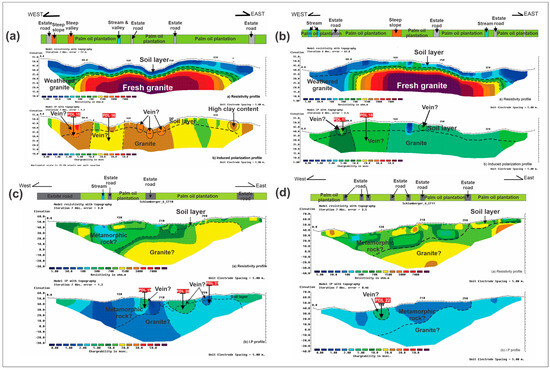
The IP sections throughout Zone V reveal several distinct polarizable zones characterized by intermediate-to-high chargeability anomalies (about 2–20 ms). The anomalies are generally vertically elongated and mostly concentrated in the higher sections of the profiles at depths of approximately 10–40 m, indicating features governed by structure, such as fracture or vein corridors, rather than laterally continuous stratigraphic horizons. Two persistent trends of chargeability anomalies are identifiable, occurring predominantly on the western and eastern sides of the profiles, suggesting recurrent structural paths throughout the zone. The most pronounced response occurs at ST-20 (Figure 9e), when chargeability locally rises to around 10–50 ms, creating a significant vertical anomaly. When analyzed in conjunction with the ERI result for ST20, this elevated chargeability characteristic is interpreted as a region of concentrated polarizable material linked to the interface between the diorite–granodiorite–tonalite intrusive complex and the surrounding metamorphic rock, which signifies a crucial structural–lithological environment for vein formation.
4.2. Fence Diagram Generation and Geochemical Data
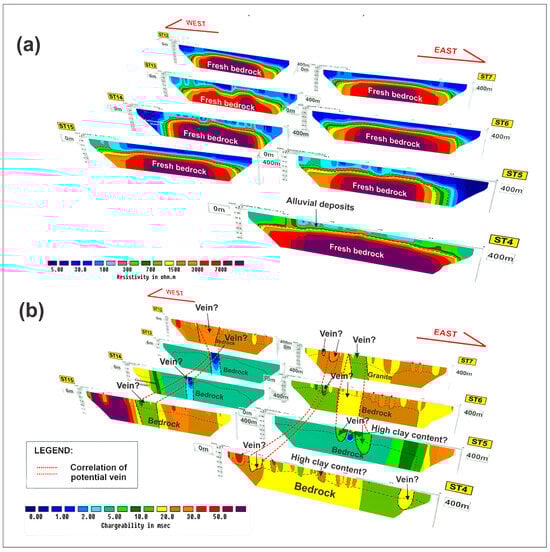
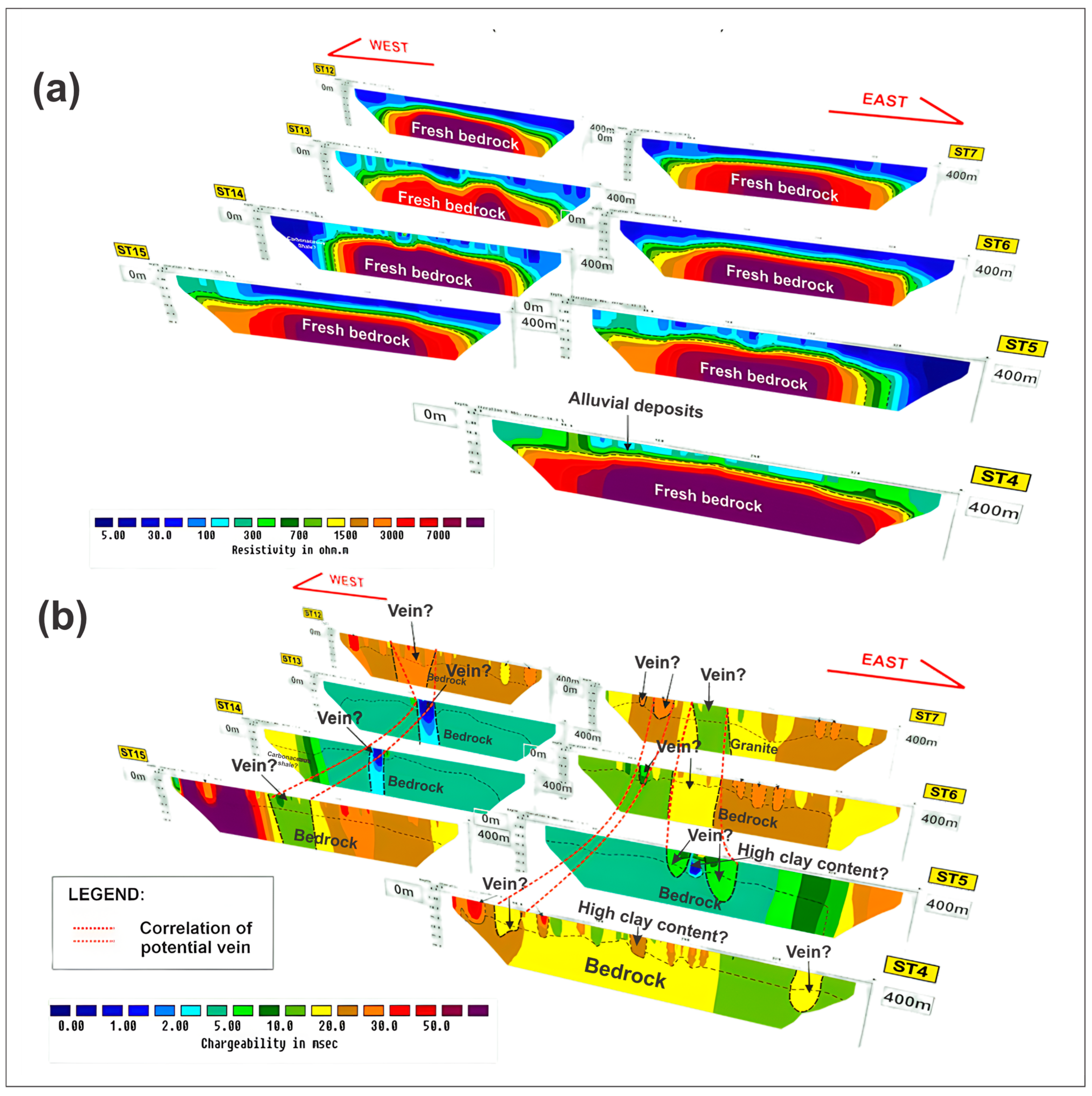
To evaluate the lateral continuity of anomalies in Zone II and IV, the 2-D ERI and IP inversions from survey lines ST-4–ST-7 and ST- 12–ST-15 were amalgamated into fence diagrams (Figure 11a,b). The resistivity fence diagram verifies a uniform three-unit structure consisting of (i) a superficial conductive unit identified as soil/alluvial deposits (5–300 Ωm), (ii) weathered granitic bedrock (300–1500 Ωm), and (iii) laterally widespread fresh granitic bedrock (>1500 Ωm). The conductive alluvial layer is generally continuous along the fence, whereas the fresh-bedrock surface is undulating, suggesting varying weathering depth and uneven granitic foundation topography beneath the alluvium.
Figure 11.
Zone II (ST-4–ST-7) and IV (ST-12–ST-15) fence diagrams: (a) resistivity and (b) chargeability.
The IP fence diagram illustrates several high-chargeability features manifesting as steep to sub-vertical anomaly zones, consistently identified between neighboring lines. Numerous anomalies are situated along the alluvial-granitic bed boundary and extend locally into the upper section of the worn granite. The correlation lines in demonstrate that identified chargeability highs may be followed laterally across these survey lines, reinforcing the idea that they signify enduring subsurface structures aligned with fracture/vein corridors, rather than isolated artifacts. This area exhibits a correlation between high chargeability (typically ~15–40 ms) and the basal alluvium as well as the top weathered granite, indicating the presence of structurally regulated channels along or just above the granitic bedrock surface.
Geochemical analyses of five samples (ST-13a–ST-13e) obtained from the quartz-vein contact in Zone IV reinforce the vein-corridor hypothesis and delineate the probable alteration style. The samples demonstrate a highly uniform bulk composition, with primary oxides concentrated at SiO2 ≈ 48.9–49.7 wt.%, Al2O3 ≈ 29.4–29.8 wt.%, and K2O ≈ 5.90–6.23 wt.%. This suggests that the analyzed “quartz vein” material is not exclusively silica, but includes a significant K–Al-rich component, in accordance with the presence of abundant white mica (muscovite/sericite/illite) or fine-grained alteration products found within vein fragments and altered wall-rock selvages. The inferred alteration assemblage aligns with quartz–sericite (greisen-style) alteration in granitic hydrothermal systems, especially where feldspars are degraded and substituted by quartz and mica. In line with this, CaO remains low (~0.42–0.45 wt.%), indicating a depletion of Ca-bearing phases characteristic of feldspar degradation and acid alteration.
Ore-associated oxides further validate a mineralized hydrothermal vein setting. All five samples exhibit quantifiable tin, with SnO2 ranging from 0.076 to 0.091 wt.% (about 599–717 ppm as elemental Sn), suggesting that tin is present within the vein/alteration material rather than being confined to distal alluvial deposits (Table 2). The vein suite demonstrates consistently elevated PbO levels of 0.723–0.760 wt.%, alongside minor CuO concentrations of 0.053–0.061 wt.%, suggesting a correlation with sulfide-bearing phases (e.g., galena ± Cu-sulfides). This offers a credible mineralogical reason for the significant IP chargeability anomalies detected in Zone IV. Despite the absence of key greisen pathfinders (e.g., F, Li, W) in the current analysis, the cumulative evidence (i) Sn-bearing quartz–mica–rich vein/alteration chemistry, (ii) elevated K2O–Rb2O coupled with low SrO, and (iii) spatial correlation with chargeability highs at the alluvium–granite interface corroborates the interpretation that Zone IV may contain localized, structurally controlled sericitized/greisenized zones and greisen-related Sn vein corridors formed within the upper weathered granite.
Table 2.
Major/trace oxides (wt.%) and trace element (ppm) concentrations of quartz-vein soil samples determined by EDXRF.
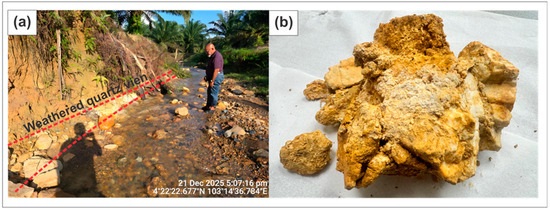
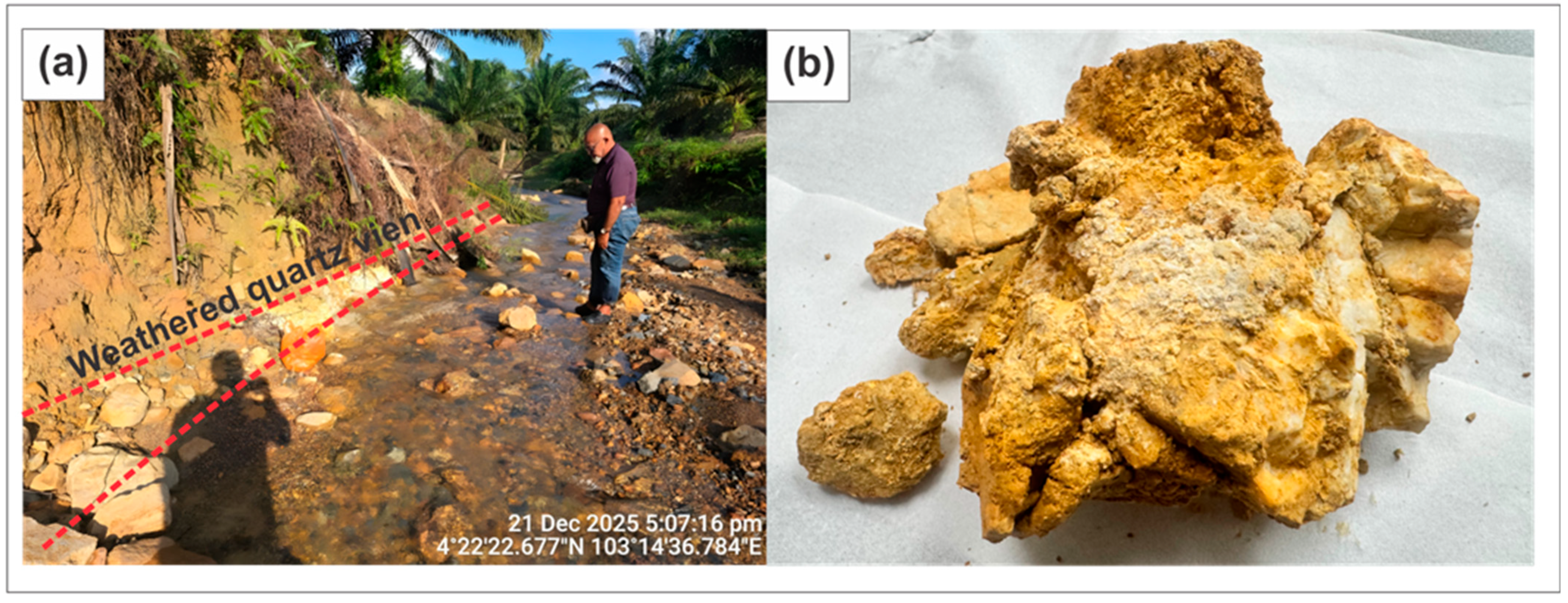
Field observations align with the fence diagram explanation. Quartz-rich vein material is revealed along a shallow erosional cut/drainage (Figure 12a), where light-hued vein fragments are found both in situ and as adjacent float, signifying the existence of quartz veins within the local bedrock and their mechanical degradation due to continuous weathering and runoff. A hand specimen of substantial milky quartz (Figure 12b) has distinct yellow-brown staining, interpreted as iron-oxide byproducts resulting from oxidation along fractures and vein boundaries. This surface evidence corresponds with the geophysical manifestation of pronounced, laterally extendable chargeability anomalies concentrated at the alluvium–granite interface, supporting the interpretation that Zone IV is primarily influenced by structurally controlled quartz-vein/fracture corridors rather than merely stratigraphic variations in conductivity.
Figure 12.
Field evidence of quartz-vein material in the study area: (a) exposure of weathered quartz veins and vein-associated float in an erosional drainage/stream cut; (b) a representative milky quartz sample exhibiting iron-oxide staining due to weathering.
5. Discussion
Electrical Resistivity Imaging (ERI) and Induced Polarization (IP) were utilized to assess hidden Sn mineralization by delineating (i) the near-surface weathering structure that influences cover thickness and groundwater/clay distribution and (ii) distinct subsurface targets possibly associated with vein-hosted mineralization. In mineral exploration, ERI is notably effective at delineating lithological and hydrogeological variations, as resistivity is influenced by factors such as porosity, saturation, clay composition, and alteration. In contrast, IP identifies areas with electrically polarizable materials, including disseminated sulfides and certain oxide/clay-rich substances [12,31]. The significance of chargeability anomalies in exploration is well recognized, since induced polarization (IP) typically offers direct targeting criteria for sulfide-bearing formations and informs subsequent drilling operations [32,33,34].
Throughout the studied area, ERI consistently delineates a three-dimensional electrical stratigraphy consisting of a superficial conductive layer (generally 5–300 Ωm), interpreted as soil/alluvium, under which lies moderately resistive weathered bedrock (ranging from hundreds to about 1500 Ωm) and a highly resistive fresh basement (exceeding 1500 Ωm). This pattern is indicative of tropical weathering on crystalline rocks, where clay formation and moisture retention reduce resistivity at the surface, while resistivity increases with depth into less weathered bedrock [12,31]. In Zones II and IV, the laterally broad shallow conductive unit and undulatory bedrock surface suggest paleotopographic influence on alluvial thickness and moisture distribution. Analogous associations among alluvial cover, uneven basement topography, and exploration targeting have been recorded in comparable Malaysian contexts, where the geometry of lowland sediments affects both the geophysical response and the preservation and redistribution of mineralized resources.
The IP sections, overlaid on the resistivity stratigraphy, have pronounced chargeability highs that are typically confined and steeply inclined, rather than exhibiting laterally continuous horizons. This geometry serves as a crucial interpretive indicator: pronounced or vertically induced polarization anomalies are commonly linked to structurally controlled mineralization along fractures, faults, and vein zones, while clay-rich horizons typically yield more stratiform and laterally continuous chargeability responses [35]. In the present study, numerous significant anomalies are located near the base of the conductive layer and extend into the top weathered bedrock, aligning with differences in fracture permeability and fluid routes at the soil–bedrock interface. Analogous pronounced, simultaneous low-resistivity/high-chargeability patterns have been documented in ERI–IP applications in Peninsular Malaysia, where they were construed as mineralized structures rather than diffuse clay effects [36,37]. However, in areas where high chargeability significantly coincides with very low resistivity within the shallow conductive unit, the presence of clay remains a feasible factor that necessitates validation; consequently, anomaly geometry, structural position, and inter-line repeatability were prioritized as key criteria in target assessment [35,38].
Zone III (ST-8–ST-11) demonstrates how lithological limits augment geophysical contrast and may concentrate paths for veining. ST8–ST9 display a rather uniform weathering profile, while ST-10–ST-11, located at a metamorphic–granitic interface, demonstrate pronounced lateral resistivity variations and more inconsistent bedrock depths, indicative of the heterogeneous weathering and fracture typically observed along such contacts. The marked chargeability highs correspond to areas of significant resistivity changes, reinforcing a scenario in which fracture corridors are localized along or adjacent to the contact. This view aligns with Malaysian case studies demonstrating that mineralization is statistically and geographically correlated with faults and lithologic boundaries [39], as well as with ERI–IP investigations indicating that contact zones frequently exhibit concentrated chargeability anomalies [37].
Zone IV (ST-12–ST-15) offers the most definitive evidence for laterally persistent subsurface targets, as the lines exhibit a similar alluvial-over-granite context and the fence diagrams illustrate inter-line consistency. The resistivity fence indicates a continuous conductive layer throughout a varied granitic terrain, whereas the IP fence reveals consistent steep to sub-vertical chargeability peaks (typically ~15–40 ms) located at the alluvial–bedrock boundary and extending into the upper worn granite. The capability to follow these anomalies laterally over adjacent lines enhances the interpretation of continuous fracture/vein corridors instead of isolated surface heterogeneity [35]. Field observations of quartz-vein material in Zone IV, along with Sn-bearing sample results, provide additional evidence for a granite-related hydrothermal vein hypothesis. Cassiterite mineralization in granite-related tin systems is typically linked to quartz veins and greisen-style alteration occurring within or adjacent to granitic intrusions [40,41], aligning with the overarching metallogenic framework of the Eastern Belt [42,43]. The presence of (i) pronounced, laterally consistent chargeability anomalies, (ii) their location atop weathered granite, and (iii) direct field evidence of quartz veining offers the most coherent explanation for the Zone IV targets, despite IP responses potentially indicating multiple polarizable sources.
Zone V (ST-16–ST-23) is distinct from the alluvial-granite zones due to the presence of wide high-resistivity basement interpreted as metamorphic rocks, alongside localized shallow high-resistivity bodies associated with intrusive components, particularly observed on ST-17 and ST-20. IP anomalies are primarily characterized by steepness and vertical elongation, signifying structural control. The most robust response on ST20 (about 10–50 ms) geographically correlates with the predicted intrusive–host border, a context typically linked to increased fracture, alteration, and vein formation in intrusive-related mineral systems [12,35]. Similar Malaysian ERI–IP research has highlighted that the most promising anomalies arise where chargeability maxima align with significant structural disruptions and intrusive/contact environments [36,37].
The results collectively suggest that the most defensible targets are chargeability highs that are (a) steep/columnar, (b) laterally consistent between adjacent lines (as illustrated by the fence diagrams in Zones II and IV), and (c) spatially correlated with contacts or structurally disturbed areas (Zones III and V). This targeting methodology aligns with previous Malaysian implementations of ERI–IP for structurally controlled mineralization, utilizing anomaly geometry and contact association to mitigate the ambiguity arising from clay-related IP responses. Consequently, the Zone IV corridors adjacent to the alluvial–weathered granite interface and the ST-20 contact-related anomaly in Zone V are identified as the foremost sites for subsequent trenching and drilling to verify vein continuity, alteration severity, and Sn grade distribution [34].
6. Conclusions
In conclusion, the ERI results consistently delineate a three-layer subsurface structure consisting of a conductive soil/alluvial layer (5–300 Ωm), moderately resistant weathered bedrock (300–1500 Ωm), and resistive fresh basement (>1500 Ωm), with an undulating bedrock surface underlying the alluvium. Overlaying this model, IP inversion identifies distinct, sharply oriented chargeability anomalies (generally ~5–40 ms; locally reaching ~50 ms) interpreted as structurally governed fracture or vein corridors rather than laterally continuous stratigraphic influences. The fence diagram integration in Zones II and IV reveals that multiple chargeability highs are consistently seen across adjacent lines and are concentrated along the alluvium–bedrock interface, hence identifying priority targets. Areas linked to lithological boundaries further refine target delineation, encompassing the metamorphic–granitic interface in Zone III and the presumed intrusive–host contact in Zone V (particularly ST-20), where the most pronounced chargeability responses are observed. Field evidence of quartz veining, along with Sn-enriched EDXRF data from vein-associated samples, substantiates a granite-related hydrothermal vein/alteration hypothesis; hence, targeted trenching and borehole drilling are advised to confirm anomaly sources, geometry, and Sn grade continuity. However, the ERI–IP interpretations are nevertheless generic, and higher chargeability can reflect various polarizable sources, including sulfides as well as clay-rich or oxide-bearing materials, in particular when high chargeability coincides with very low resistivity in the shallow conductive unit. Furthermore, the results have been limited by the resolution and spatial coverage of the line-based surveys and by the limited evidence available at depth; therefore, drilling and further verification are required to confirm the underlying sources of the anomalies and their economic significance.
Author Contributions
Conceptualization, M.H.A., H.A.H.Z. and A.S.N.S.; methodology, M.H.A., H.A.H.Z., S.H.K., A.S.N.S. and N.S.M.N.; software, M.A.A.S., M.K.I.I., Z.F.S., M.H.M. and M.T.Z.; validation, M.H.A., S.H.K., M.T.Z. and M.B.I.B.; formal analysis, H.A.H.Z., M.A.A.S., M.K.I.I., Z.F.S. and M.H.M.; investigation, H.A.H.Z., M.A.A.S., M.K.I.I., Z.F.S. and A.S.N.S.; resources, M.H.A. and N.S.M.N.; data curation, A.S.N.S., H.A.H.Z., M.A.A.S., M.K.I.I., Z.F.S., M.H.M. and M.B.I.B.; writing—original draft preparation, A.S.N.S. and H.A.H.Z.; writing—review and editing, A.S.N.S., M.H.A. and N.S.M.N.; visualization, A.S.N.S., H.A.H.Z., M.H.A. and N.S.M.N.; supervision, M.H.A. and S.H.K.; project administration, M.H.A. and S.H.K.; funding acquisition, M.H.A. and N.S.M.N. All authors have read and agreed to the published version of the manuscript.
Funding
Financial support for this research was supported by Ministry of Higher Education through Fundamental Research Grant Scheme (FRGS/1/2020/WAB07UKM/03/1) provided by Ministry of Higher Education of Malaysia (MOHE).
Data Availability Statement
The data presented in this study is available on request from the corresponding author.
Conflicts of Interest
The authors declare no conflicts of interest.
Abbreviations
| EDXRF | Energy Dispersive X-Ray Fluorescence |
| ERI | Electrical Resistivity Imaging |
| IP | Induced Polarization |
| ms | Millisecond(s) (chargeability unit) |
| Rh | Rhodium (X-ray tube target) |
| SDD | Silicon Drift Detector |
| Sn | Tin |
| Ωm | Ohm-metre (resistivity unit) |
| wt.% | Weight percent |
References
- Sun, X.; Zheng, M.; Pei, T.; Hollings, P.; Si, X.; Zhang, R.; Deng, J. Reassessing the spatial and temporal evolution of the Southeast Asian Tin Belt: Insights into recurrent tin mineralization. Earth-Sci. Rev. 2025, 270, 105233. [Google Scholar] [CrossRef] [Scilit]
- Fan, X.; Li, H.; Yu, Q.; Xu, J.; Li, M. Assessment of Sustainable Supply Capability of Chinese Tin Resources Based on the Entropy Weight-TOPSIS Model. Sustainability 2023, 15, 13076. [Google Scholar] [CrossRef] [Scilit]
- Hosking, K.F.G. The Nature and origin of mineralizing fluids associated with Tin and Tungsten Deposits. Mineral. Mag. 1969, 37, 180–190. [Google Scholar]
- Heng, C.L.; Chand, F.; Singh, D.S. Primary Tin Mineralization in Malaysia: Aspects of geological setting and exploration strategy. In Geology of Tin Deposits in Asia and the Pacific; Hutchison, C.S., Ed.; Springer: Berlin/Heidelberg, Germany, 1988; pp. 593–613. [Google Scholar]
- Launay, G.; Sizaret, S.; Lach, P.; Melleton, J.; Gloaguen, E.; Poujol, M. Genetic relationship between greisenization and Sn–W mineralization in vein and greisen deposits: Insights from the Panasqueira deposit (Portugal). BSGF—Earth Sci. Bull. 2021, 192, 2. [Google Scholar] [CrossRef] [Scilit]
- Ishihara, S.; Yajima, T.; Shibata, K. Ilmenite-series vs. magnetite-series granitoids and their geologic environments in Japan. Geol. Soc. Am. Bull. 1979, 90, 274–279. [Google Scholar]
- Du, G.; Yang, X.; Cao, J.; Aziz, J.H.A. Genesis and timing of the Sungai Lembing tin deposit in Pahang, East Malaysia: Constraints from LA–ICP–MS zircon and cassiterite U–Pb dating, geochemical compositions and Sr–Nd–Hf isotopes. Ore Geol. Rev. 2020, 119, 103364. [Google Scholar] [CrossRef] [Scilit]
- Majid, A.A.; Shaharudin, H.M.; Alias, S.; Adnan, E.; Hassan, A.I.A.; Ali, M.Z. Malaysian Mining Industry; Minerals and Geoscience Department Malaysia: Kuala Lumpur, Malaysia, 2013; p. 152.
- Kusin, F.M.; Abd Rahman, M.S.; Madzin, Z.; Jusop, S.; Mohamat-Yusuff, F.; Ariffin, M. The occurrence and potential ecological risk assessment of bauxite mine-impacted water and sediments in Kuantan, Pahang, Malaysia. Environ. Sci. Pollut. Res. 2017, 24, 1306–1321. [Google Scholar] [CrossRef] [Scilit]
- Zaid, H.A.H.; Arifin, M.H.; Hussin, H.; Basori, M.B.I.; Umor, M.R.; Hazim, S.H. Manganese ore exploration using electrical resistivity and induced polarization methods in Central Belt, Peninsular Malaysia. Near Surf. Geophys. 2022, 20, 679–696. [Google Scholar] [CrossRef] [Scilit]
- Bauman, P. 2-D resistivity surveying for hydrocarbons–A primer. CSEG Rec. 2005, 30, 25–33. [Google Scholar]
- Reynolds, J.M. An Introduction to Applied and Environmental Geophysics, 2nd ed.; John Wiley & Sons: West Sussex, UK, 2011; pp. 289–300. [Google Scholar]
- Gonzales Amaya, A.; Dahlin, T.; Barmen, G.; Rosberg, J.-E. Electrical Resistivity Tomography and Induced Polarization for Mapping the Subsurface of Alluvial Fans: A Case Study in Punata (Bolivia). Geosciences 2016, 6, 51. [Google Scholar] [CrossRef] [Scilit]
- Moreira, C.A.; Borges, M.R.; Vieira, G.M.L.; Filho, W.M.; Montanheiro, M.A.F. Geological and geophysical data integration for delimitation of mineralized areas in a supergene manganese deposits. Geofísica Int. 2014, 53, 199–210. [Google Scholar] [CrossRef] [Scilit]
- Vieira, L.B.; Moreira, C.A.; Côrtes, A.R.; Luvizotto, G.L. Geophysical modeling of the manganese deposit for Induced Polarization method in Itapira (Brazil). Geofísica Int. 2016, 55, 107–117. [Google Scholar] [CrossRef] [Scilit]
- Riva, R.; Ralay, R.; Boni, R. Evaluation of flake graphite ore using self-potential (SP), electrical resistivity tomography (ERT) and induced polarization (IP) methods in east coast of Madagascar. J. Appl. Geophys. 2019, 169, 134–141. [Google Scholar] [CrossRef] [Scilit]
- Moreira, C.A.; Casagrande, M.F.S.; Borssatto, K. Analysis of the potential application of geophysical survey (induced polarization and DC resistivity) to a long-term mine planning in a sulfide deposit. Arab. J. Geosci. 2020, 13, 1083. [Google Scholar] [CrossRef] [Scilit]
- Loke, M. Constrained time-lapse resistivity imaging inversion. In Symposium on the Application of Geophysics to Engineering and Environmental Problems Proceedings; GeoScienceWorld: McLean, VA, USA, 2001; p. EEM7. [Google Scholar]
- Smith, R.C.; Sjogren, D.B. An evaluation of electrical resistivity imaging (ERI) in quaternary sediments, Southern Alberta, Canada. Geosphere 2006, 2, 287–298. [Google Scholar] [CrossRef] [Scilit]
- Sharma, P.V. Environmental and Engineering Geophysics; Cambridge University Press: Cambridge, UK, 1997; pp. 1–475. [Google Scholar]
- Marescot, L.; Monnet, R.; Chapellier, D. Resistivity and induced polarization surveys for slope instability studies in the Swiss Alps’. Eng. Geol. 2008, 98, 18–28. [Google Scholar] [CrossRef] [Scilit]
- Upadhyay, A.; Singh, A.; Panda, K.P.; Sharma, S.P. Delineation of gold mineralization near Lawa village, North Singhbhum Mobile Belt, India, using electrical resistivity imaging, self-potential and very low frequency methods. J. Appl. Geophys. 2020, 72, 103902. [Google Scholar] [CrossRef] [Scilit]
- Spitzer, K.; Chouteau, M. A dc resistivity and IP borehole survey at the Casa Berardi gold mine in northwestern Quebec. Geophysics 2003, 68, 453–463. [Google Scholar] [CrossRef] [Scilit]
- Martínez, J.; Rey, J.; Sandoval, S.; Hidalgo, M.C.; Mendoza, R. Geophysical Prospecting Using ERT and IP Techniques to Locate Galena Veins. Remote Sens. 2019, 11, 2923. [Google Scholar] [CrossRef] [Scilit]
- Silva, M.A.; Moreira, C.A.; Borssatto, K.; Ilha, L.M.; Santos, S.F. Geophysical prospection in tin mineral occurrence associated to greisen in granite São Sepé (RS). REM-Int. Eng. J. 2018, 71, 183–189. [Google Scholar] [CrossRef] [Scilit]
- Loke, M.H.; Barker, R.D. Rapid least-squares inversion of apparent resistivity pseudosections by a quasi-Newton method. Geol. Prospect. 1996, 44, 131–152. [Google Scholar]
- Croffie, M.E.T.; Williams, P.N.; Fenton, O.; Fenelon, A.; Metzger, K.; Daly, K. Optimising Sample Preparation and Calibrations in EDXRF for Quantitative Soil Analysis. Agronomy 2020, 10, 1309. [Google Scholar] [CrossRef] [Scilit]
- Wu, C.-M.; Tsai, H.-T.; Yang, K.-H.; Wen, J.-C. How reliable is X-Ray fluorescence (XRF) measurement for different metals in soil contamination? Environ. Forensics 2012, 13, 110–121. [Google Scholar] [CrossRef] [Scilit]
- Thomas, C.L.; Acquah, G.E.; Whitmore, A.P.; McGrath, S.P.; Haefele, S.M. The effect of different organic fertilizers on yield and soil and crop nutrient concentrations. Agronomy 2019, 9, 776. [Google Scholar] [CrossRef] [Scilit]
- Tavares, T.R.; Mouazen, A.M.; Alves, E.E.N.; Dos Santos, F.R.; Melquiades, F.L.; De Carvalho, H.W.P.; Molin, J.P. Assessing soil key fertility attributes using a portable X-ray fluorescence: A simple method to overcome matrix effect. Agronomy 2020, 10, 787. [Google Scholar] [CrossRef] [Scilit]
- Telford, W.M.; Geldart, L.P.; Sheriff, R.E. Applied Geophysics, 2nd ed.; Cambridge University Press: Cambridge, UK, 1990; pp. 1–792. [Google Scholar]
- Moon, C.J.; Whateley, M.K.; Evans, A.M. Introduction to Mineral Exploration, 2nd ed.; Blackwell Publishing: Malden, MA, USA, 2006; pp. 1–496. [Google Scholar]
- Bery, A.A.; Saad, R.; Mohamad, E.T.; Jinmin, M.; Azwin, I.; Akip Tan, N.; Nordiana, M. Electrical resistivity and induced polarization data correlation with conductivity for iron ore exploration. Electron. J. Geotech. Eng. 2012, 17, 3223–3233. [Google Scholar]
- Dentith, M.; Mudge, S.T. Geophysics for the Mineral Exploration Geoscientist; Cambridge University Press: Cambridge, UK, 2014; pp. 1–438. [Google Scholar]
- Ward, S.H. Resistivity and Induced Polarization Methods in Geotechnical and Environmental Geophysics; Society of Exploration Geophysicists: Tulsa, OK, USA, 1990; pp. 147–189. [Google Scholar]
- Arifin, M.H.; Kayode, J.S.; Izwan, M.K.; Zaid, H.A.H.; Hussin, H. Data for the potential gold mineralization mapping with the applications of electrical resistivity imaging and induced polarization geophysical surveys. Data Brief 2018, 22, 830–835. [Google Scholar] [CrossRef] [Scilit] [PubMed]
- Zaid, H.A.H.; Arifin, M.H.; Kayode, J.S.; Basori, M.B.I.; Umor, M.R.; Hazim, S.H. Application of 2-D electrical resistivity imaging, and induced polarization methods for delineating gold mineralization at Felda Chiku 3, Kelantan, Malaysia. Sains Malays 2023, 52, 305–320. [Google Scholar] [CrossRef] [Scilit]
- Sumner, J.S. Principles of Induced Polarization for Geophysical Exploration; Elsevier Scientific: Amsterdam, The Netherlands, 1976; pp. 1–292. [Google Scholar]
- Tagwai, M.G.; Jimoh, O.A.; Ariffin, K.S.; Abdul Razak, M.F. Investigation based on quantified spatial relationships between gold deposits and ore genesis factors in northeast Malaysia. J. Spat. Sci. 2021, 66, 229–252. [Google Scholar] [CrossRef] [Scilit]
- Hosking, K.F.G. The primary tin mineralisation patterns of West Malaysia. Geol. Soc. Malays 1973, 6, 297–308. [Google Scholar] [CrossRef] [Scilit]
- Lehmann, B. Metallogeny of Tin; Springer: Berlin/Heidelberg, Germany, 1990; pp. 1–290. [Google Scholar]
- Cobbing, E.J.; Pitfield, P.E.J.; Darbyshire, D.P.F.; Mallick, D.I.J. The Granites of the South-East Asian Tin Belt; British Geological Survey: London, UK, 1992; pp. 1–369. [Google Scholar]
- Yeap, E. Tin and gold mineralizations in Peninsula Malaysia and their relationships to the tectonic development. J. Southeast Asian Earth Sci. 1993, 8, 329–348. [Google Scholar] [CrossRef] [Scilit]

Disclaimer/Publisher’s Note: The statements, opinions and data contained in all publications are solely those of the individual author(s) and contributor(s) and not of MDPI and/or the editor(s). MDPI and/or the editor(s) disclaim responsibility for any injury to people or property resulting from any ideas, methods, instructions or products referred to in the content. |
© 2026 by the authors. Licensee MDPI, Basel, Switzerland. This article is an open access article distributed under the terms and conditions of the Creative Commons Attribution (CC BY) license.