

Hydrometallurgical Process to Extract Niobium from Tin Slag Through Alkaline Treatment and Sulfuric Acid Leaching
 ,
,  and
and
Abstract
1. Introduction
2. Materials and Methods
2.1. Characterization
2.2. Experimental Procedure
3. Results and Discussion
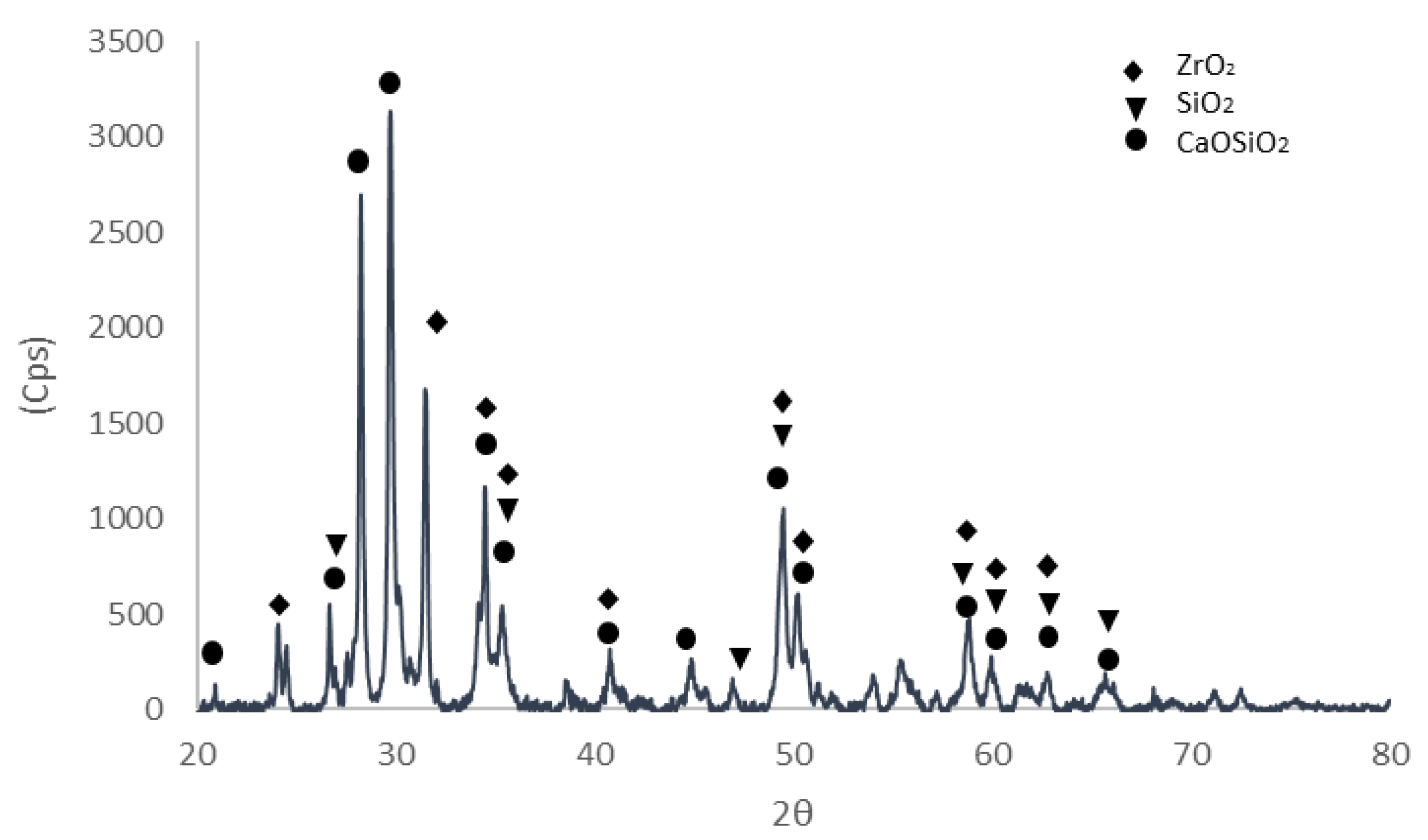
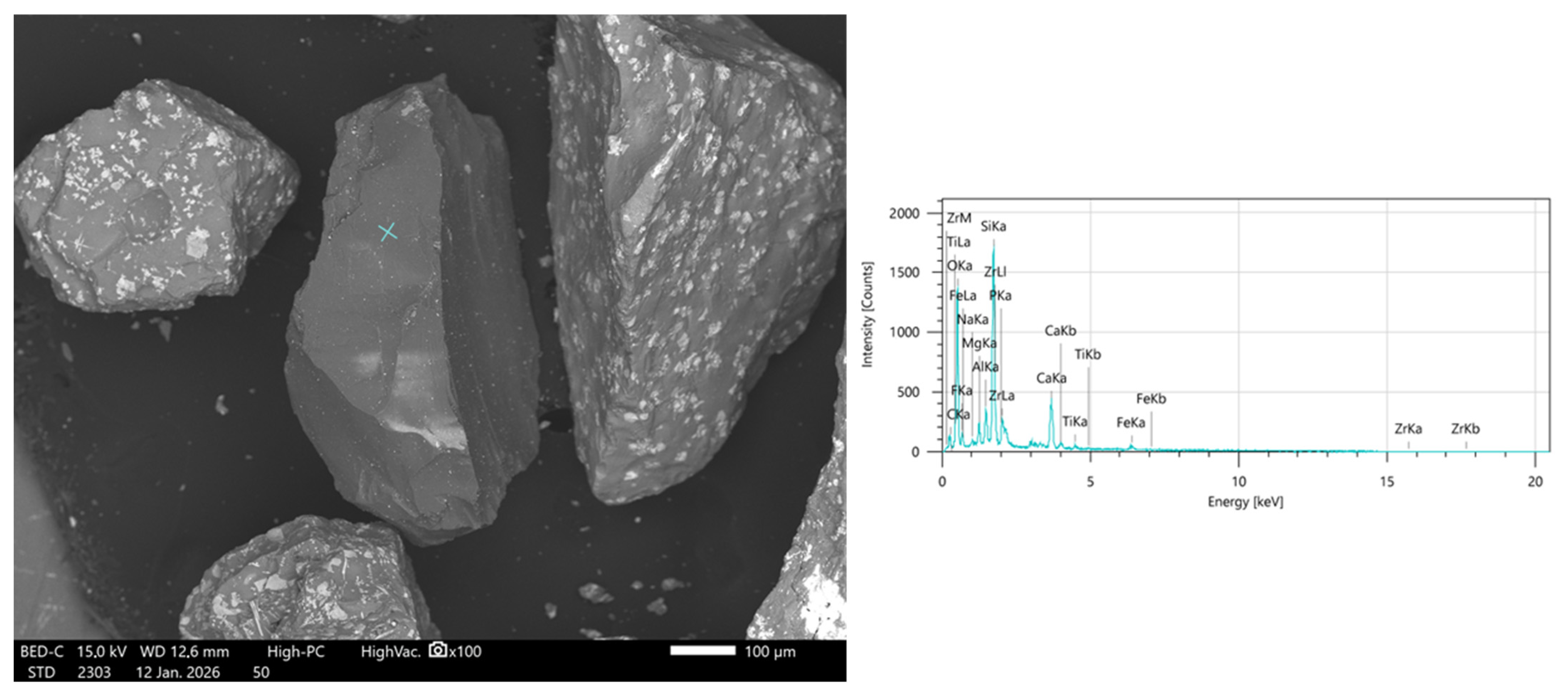
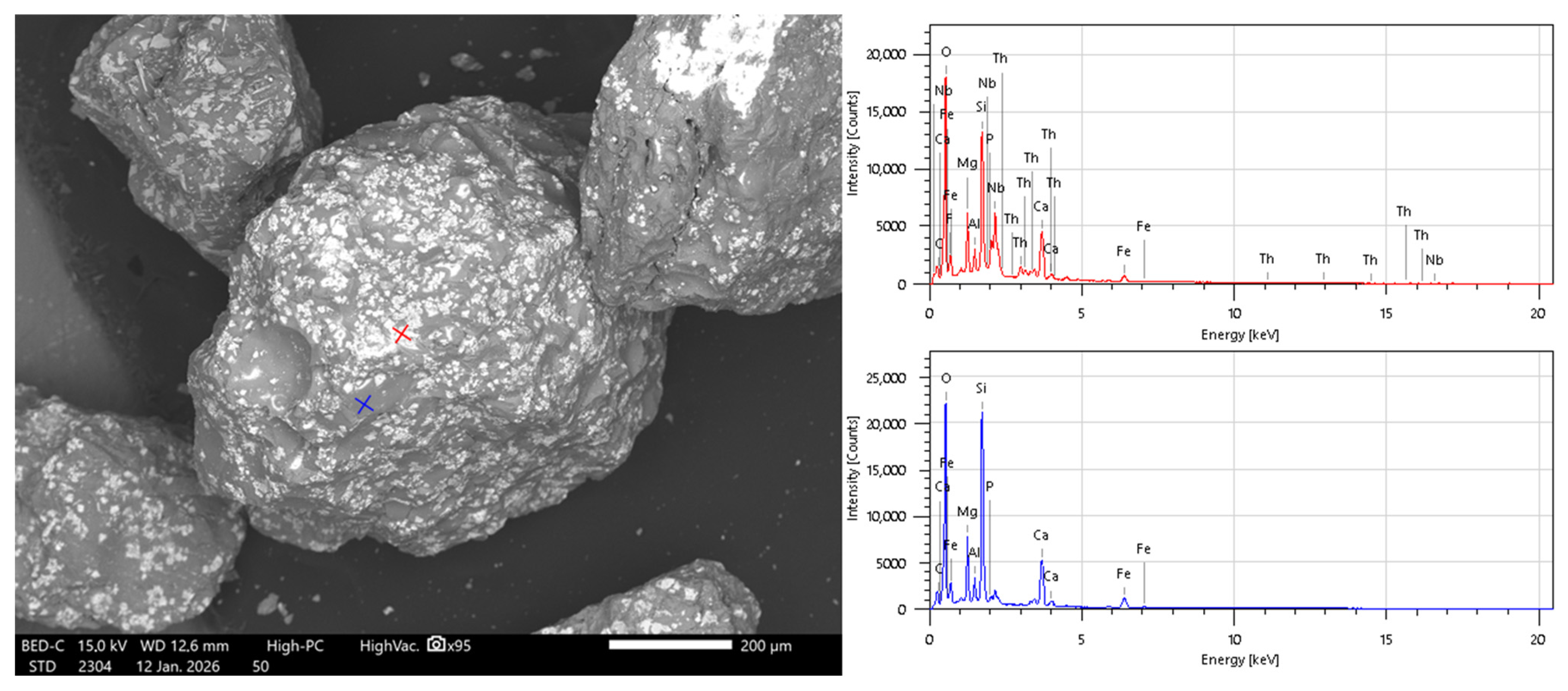
3.1. Characterization
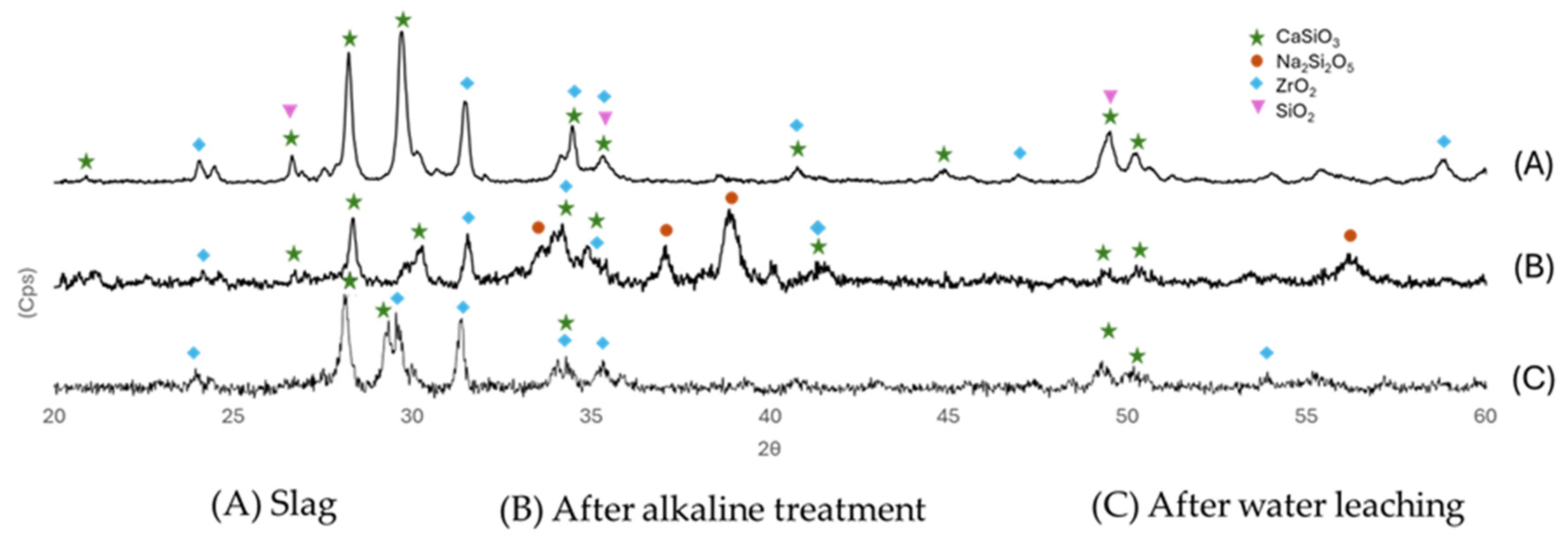
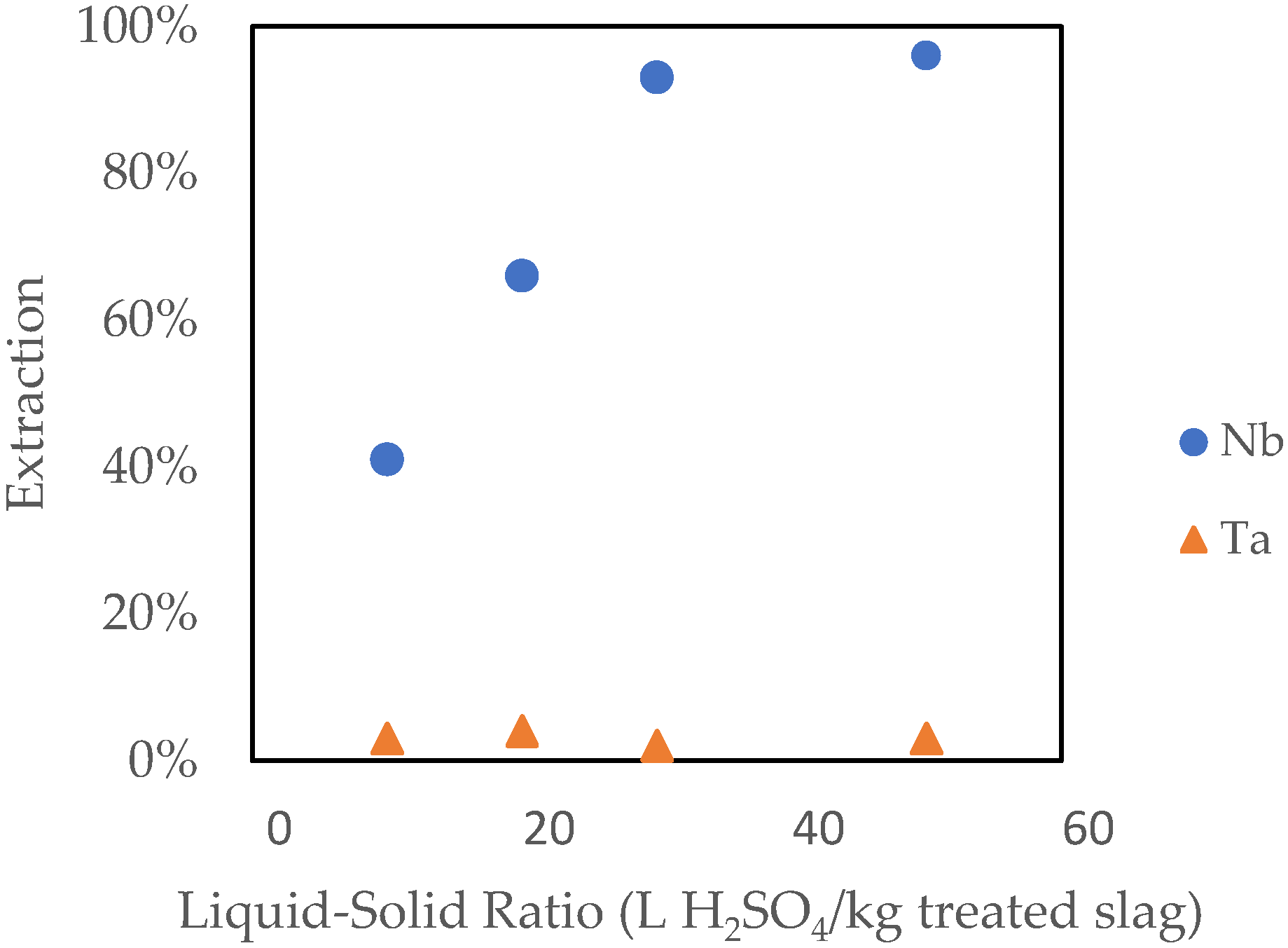
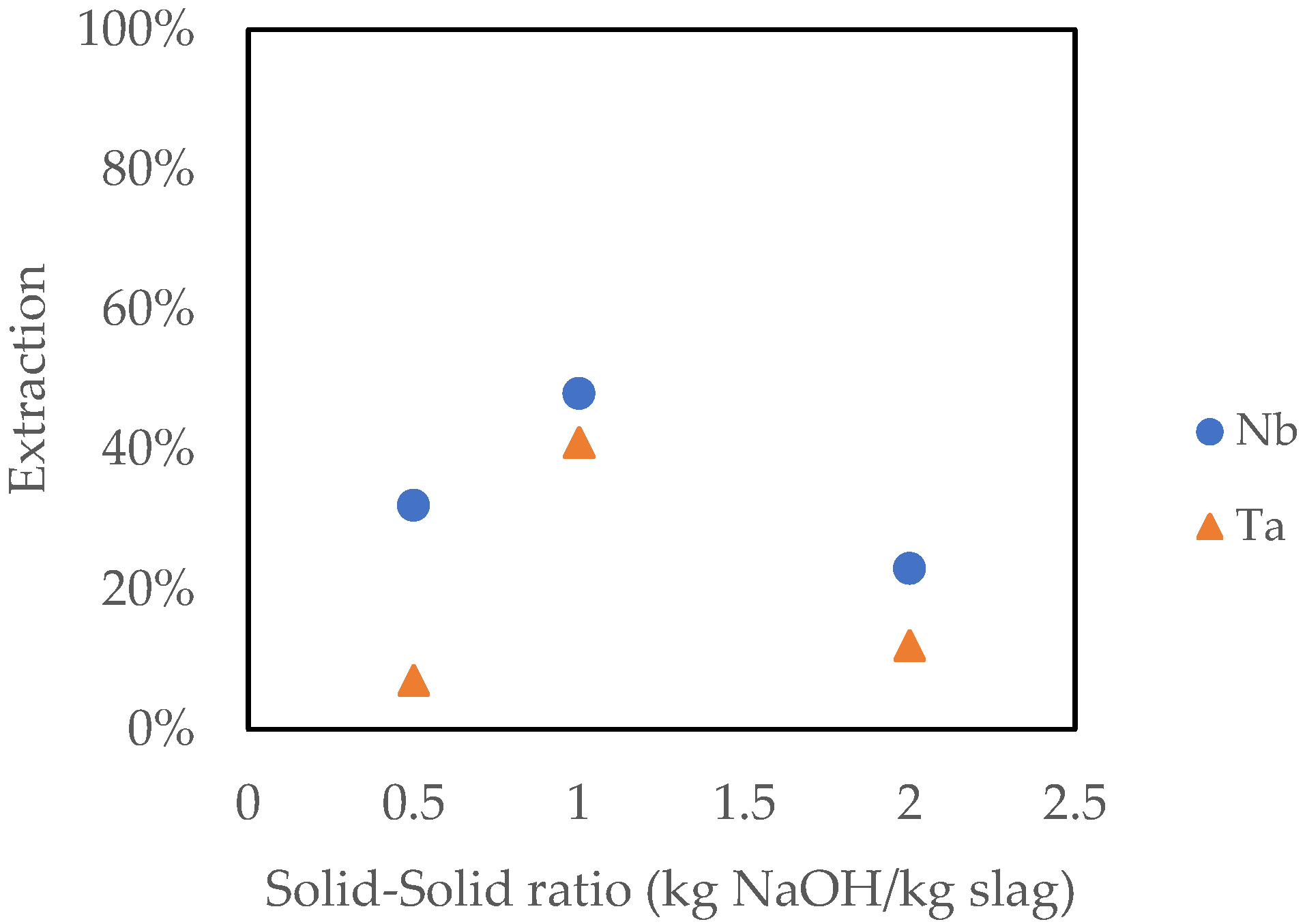
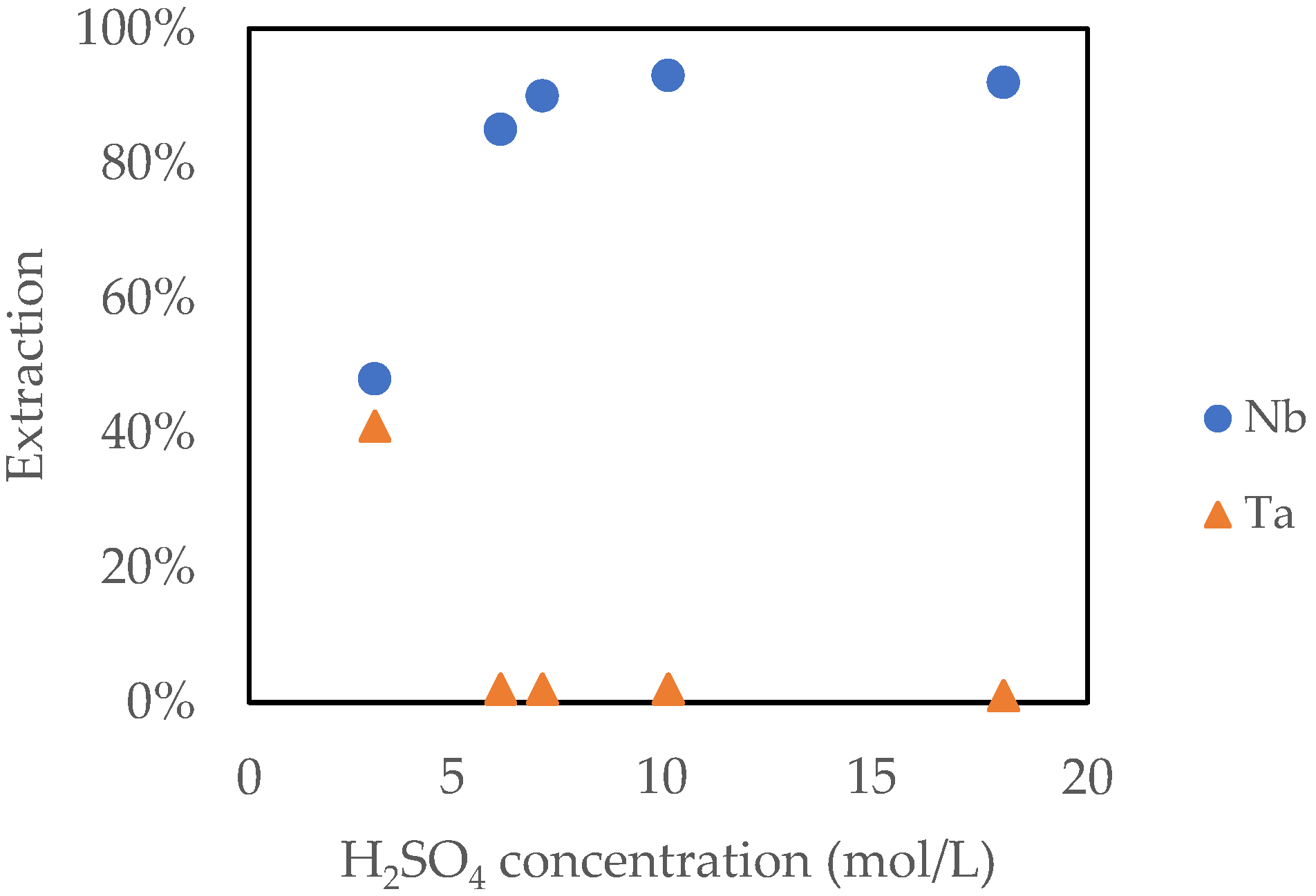
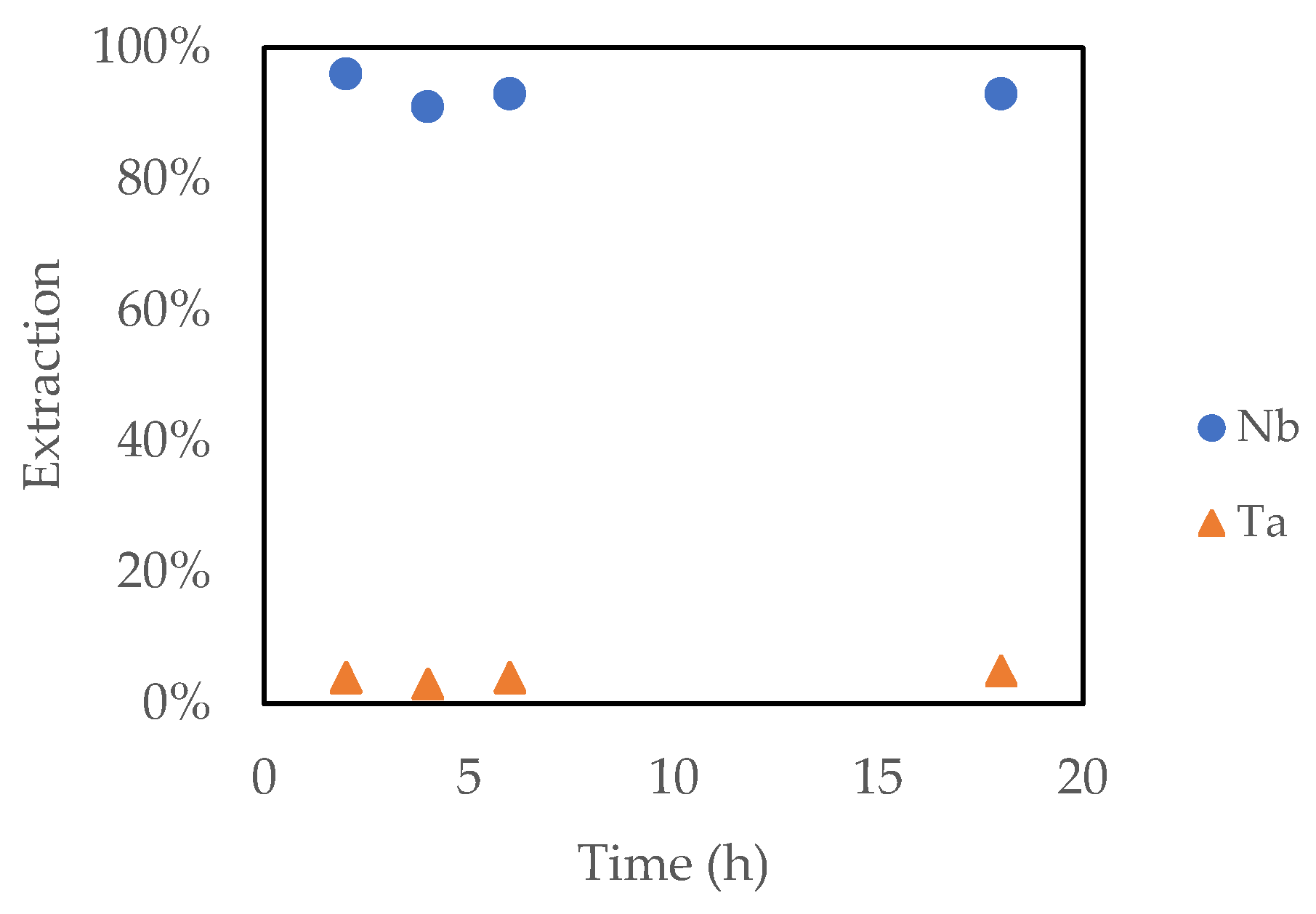
3.2. Nb and Ta Extraction
4. Conclusions
Author Contributions
Funding
Data Availability Statement
Acknowledgments
Conflicts of Interest
References
- Sanchez-Segado, S.; Monti, T.; Katrib, J.; Kingman, S.; Dodds, C.; Jha, A. Towards sustainable processing of columbite group minerals: Elucidating the relation between dielectric properties and physico-chemical transformations in the mineral phase. Sci. Rep. 2017, 7, 18016. [Google Scholar] [CrossRef]
- Rodriguez, M.H.; Rosales, G.D.; Pinna, E.G.; Suarez, D.S. Effect of Na+ ion on the dissolution of ferrocolumbite in autoclave. Hydrometallurgy 2016, 159, 60–64. [Google Scholar] [CrossRef]
- Machaca Cheje, D.M.; de Carvalho, T.C.; Soares Tenório, J.A.; Romano Espinosa, D.C. Advancements in the extraction of niobium and tantalum: Innovative strategies in hydrometallurgical processes. Min. Eng. 2025, 222, 109125. [Google Scholar] [CrossRef]
- Habinshuti, J.B.; Munganyinka, J.P.; Adetunji, A.R.; Mishra, B.; Tanvar, H.; Mukiza, J.; Ofori-Sarpong, G.; Onwualu, A.P. Caustic potash assisted roasting of the Nigerian ferro-columbite concentrate and guanidine carbonate-induced precipitation: A novel technique for extraction of Nb–Ta mixed-oxides. Results Eng. 2022, 14, 100415. [Google Scholar] [CrossRef]
- United States Geological Survey (USGS). Mineral Commodity Summaries 2025: Niobium (Columbium). 2025. Available online: https://pubs.usgs.gov/periodicals/mcs2025/mcs2025-niobium.pdf (accessed on 10 January 2026).
- United States Geological Survey (USGS). Mineral Commodity Summaries 2025: Tantalum. 2025. Available online: https://pubs.usgs.gov/periodicals/mcs2025/mcs2025-tantalum.pdf (accessed on 10 January 2026).
- Weberg, A.B.; Chaudhuri, S.; Cheisson, T.; Uruburo, C.; Lapsheva, E.; Pandey, P.; Gau, M.R.; Carroll, P.J.; Schatz, G.C.; Schelter, E.J. Tantalum, easy as Pi: Understanding differences in metal–imido bonding towards improving Ta/Nb separations. Chem. Sci. 2022, 13, 6796–6805. [Google Scholar] [CrossRef]
- Zhang, L.; Jiang, S.Y. Two episodic Nb-Ta mineralization events and genesis of the Zhaojinggou rare-metal deposit, north margin of the North China Craton. Ore Geol. Rev. 2021, 131, 103994. [Google Scholar] [CrossRef]
- Marinova, S.; Bach, V.; Yokoi, R.; Motoshita, M.; Islam, K.; Finkbeiner, M. Country-level criticality assessment of abiotic resource use in Japan—Application of the SCARCE method. J. Clean. Prod. 2023, 412, 137355. [Google Scholar] [CrossRef]
- Liang, Z.; Geng, Y.; Zhong, C.; Xiao, S.; Wei, W. Tracking the evolution of niobium cycle in China from 2000 to 2021: A dynamic material flow analysis. J. Clean. Prod. 2024, 434, 140455. [Google Scholar] [CrossRef]
- de Oliveira, T.F.; Tenório, J.A.S.; Espinosa, D.C.R. An overview on recent separation and purification strategies for recovery of Nb and Ta from primary and secondary ore sources. Min. Eng. 2023, 201, 108224. [Google Scholar] [CrossRef]
- Shikika, A.; Sethurajan, M.; Muvundja, F.; Mugumaoderha, M.C.; Gaydardzhiev, S. A review on extractive metallurgy of tantalum and niobium. Hydrometallurgy 2020, 198, 105496. [Google Scholar] [CrossRef]
- IAnes, A.; Garjulli, F.; de Carvalho, M.S.; Tenório, J.A.S.; Espinosa, D.C.R.; Coleti, J.L. Extraction of niobium in one step from tin slag by NH4F-HCl leaching process. Can. J. Chem. Eng. 2024, 102, 168–176. [Google Scholar] [CrossRef]
- Wang, X.; Jia, Y.; Ma, S.; Zheng, S.; Sun, Q. Effect of mechanical activation on the leaching kinetics of niobium-bearing mineralisation in KOH hydrothermal system. Hydrometallurgy 2018, 181, 123–129. [Google Scholar] [CrossRef]
- Garjulli, F.; de S Gonçalves, G.A.; Tenório, J.A.S.; Espinosa, D.C.R. Characterization of Brazilian Tin Slag and Evaluation of Its Potential as a Secondary Source of Nb and Ta. Minerals 2025, 15, 1126. [Google Scholar] [CrossRef]
- Martinez-Gutierrez, G.O.; Machaca, D.M.C.; Garjulli, F.; Pereira, B.R.; Mayta-Armas, A.F.; Espinosa, D.C.R.; Tenório, J.A.S.; Baltazar, M.d.P.G. Extraction of Nb from Cassiterite Flotation Residues by Acid Calcination and Water Solubilization. J. Sustain. Metall. 2025, 12, 883–897. [Google Scholar] [CrossRef]
- Allain, E.; Kanari, N.; Diot, F.; Yvon, J. Development of a process for the concentration of the strategic tantalum and niobium oxides from tin slags. Miner. Eng. 2019, 134, 97–103. [Google Scholar] [CrossRef]
- Gaballah, I.; Allain, E.; Djona, M. Extraction of tantalum and niobium from tin slags by chlorination and carbochlorination. Metall. Mater. Trans. B 1997, 28, 359–369. [Google Scholar] [CrossRef]
- Akli, H.F.; Permana, S.; Maksum, A.; Soedarsono, J.W.; Widana, K.S.; Anggraini, M.; Munir, B. Enrichment of Tantalum and Niobium Contents in Bangka Tin Slag by NaOH and H3PO4 Leaching. IOP Conf. Ser. Mater. Sci. Eng. 2019, 547, 012050. [Google Scholar] [CrossRef]
- Bandopadhyay, N.G.; Goswami, N.P.; Rao, N.M.L. Recovery of niobium and tantalum from low grade tin slag—A hydrometallurgical approach. Environ. Waste Manag. 1998, 100–107. [Google Scholar]
- Prasetyo, E.; Supriyatna, Y.I.; Bahfie, F.; Trinopiawan, K. Extraction of thorium from tin slag using acidic roasting and leaching method. AIP Conf. Proc. 2020, 2232, 040008. [Google Scholar] [CrossRef]
- Zhao, C.M.; Wang, G.C.; Li, S.L.; Ai, X.G.; Wang, Z.R.; Zhai, Y.C. Reaction pathway led by silicate structure transformation on decomposition of CaSiO3 in alkali fusion process using NaOH. Trans. Nonferrous Met. Soc. China 2015, 25, 3827–3833. [Google Scholar] [CrossRef]
- Deblonde, G.J.P.; Chagnes, A.; Bélair, S.; Cote, G. Solubility of niobium(V) and tantalum(V) under mild alkaline conditions. Hydrometallurgy 2015, 156, 99–106. [Google Scholar] [CrossRef]
- Alkan, G.; Yagmurlu, B.; Cakmakoglu, S.; Hertel, T.; Kaya, Ş.; Gronen, L.; Stopic, S.; Friedrich, B. Novel Approach for Enhanced Scandium and Titanium Leaching Efficiency from Bauxite Residue with Suppressed Silica Gel Formation. Sci. Rep. 2018, 8, 5676. [Google Scholar] [CrossRef]
- Scott, S.; Galeczka, I.M.; Gunnarsson, I.; Arnórsson, S.; Stefánsson, A. Silica polymerization and nanocolloid nucleation and growth kinetics in aqueous solutions. Geochim. Cosmochim. Acta 2024, 371, 78–94. [Google Scholar] [CrossRef]
- Matinfar, M.; Nychka, J.A. A review of sodium silicate solutions: Structure, gelation, and syneresis. Adv. Colloid Interface Sci. 2023, 322, 103036. [Google Scholar] [CrossRef]
- Binnemans, K.; Jones, P.T. The Twelve Principles of Circular Hydrometallurgy. J. Sustain. Metall. 2023, 9, 1–25. [Google Scholar] [CrossRef]






| Strategy | Procedure | Results | Reference |
|---|---|---|---|
| Chlorination and Carbochlorination | Using gas mixtures (Cl2 + N2 and Cl2 + CO + N2) at high temperatures (~1000 °C) to form soluble chlorides and carbonates | Leaching: 84% Nb 65% Ta | [18] |
| Direct leaching with fluoride salt (NH4F-HCl) | Direct leaching of the ground slag using a mixture of HCl and NH4F to generate HF in situ for the complexation of Nb and Ta | Leaching: 100% Nb 5% Ta | [13] |
| A-B-A (acid–base–acid) or B-A-B (base–acid–base) A: HCl and HF B: NaOH | Sequential acid–base–acid leaching selectively dissolves matrix, concentrating tantalum-niobium oxides. | Enrichment of the slag from 15 wt.% (Nb + Ta oxides) to 63 wt.%, with a loss of 14% of the original Nb and Ta mass. | [17] |
| NaOH treatment and H3PO4 leaching | Reaction with NaOH (8 M) and H3PO4 (0.5–1.5 M) for Nb–Ta enrichment | Tantalum enrichment from 0.23% to 0.85% and niobium enrichment from 0.47% to 1.45% | [19] |
| NaOH treatment and HCl Leaching | Alkali roasting with NaOH removes impurities, followed by HCl acid leaching | Residue enriched threefold, reaching ~10% Nb2O5 and Ta2O5 | [20] |
| Parameters | Conditions |
|---|---|
| Time (h) | 3 |
| Temperature (°C) | 700 |
| Ratio (g NaOH/g slag) | 0.5:1, 1:1, 2:1 |
| Parameters | Conditions |
|---|---|
| Temperature (°C) | 90 |
| Acid concentration (mol/L) | 3, 6, 7, 10, 18 |
| Time (h) | 2, 4, 6, 18 |
| Ratio (g sample/mL acid solution) | 1:10, 1:20, 1:30, 1:50 |
| Mesh | Sample Fraction (%) | Nb Content (%) | Ta Content (%) |
|---|---|---|---|
| 10 | 0.6 | 3.9 | 0.6 |
| 18 | 1.2 | 3.6 | 0.6 |
| 35 | 20.2 | 3.6 | 0.6 |
| 60 | 29.3 | 3.6 | 0.6 |
| 120 | 23.6 | 3.5 | 0.6 |
| 200 | 10.8 | 3.6 | 0.6 |
| 400 | 9.7 | 3.6 | 0.6 |
| <400 | 4.6 | 3.9 | 0.6 |
| Al | Ca | Fe | K | Mg | Mn | Na | Nb | Si |
|---|---|---|---|---|---|---|---|---|
| 2.6% | 9.0% | 3.5% | 1.2% | 1.8% | 0.4% | 0.2% | 3.7% | 19.9% |
| Sn | Ta | Th | Ti | U | Y | Zn | Zr | O (balance) |
| 1.9% | 0.5% | 1.7% | 1.1% | 0.4% | 0.2% | 0.4% | 11.9% | 39.6% |
| Al | Fe | K | Mg | Mn | Nb | Ta |
|---|---|---|---|---|---|---|
| 713 | 1121.1 | 75.8 | 807 | 115.5 | 1284.6 | 2.6 |
| Th | Ti | U | Y | Zn | Zr | |
| 608.4 | 373.5 | 162 | 22.9 | 141.1 | 3095.9 |
Disclaimer/Publisher’s Note: The statements, opinions and data contained in all publications are solely those of the individual author(s) and contributor(s) and not of MDPI and/or the editor(s). MDPI and/or the editor(s) disclaim responsibility for any injury to people or property resulting from any ideas, methods, instructions or products referred to in the content. |
© 2026 by the authors. Licensee MDPI, Basel, Switzerland. This article is an open access article distributed under the terms and conditions of the Creative Commons Attribution (CC BY) license.
Share and Cite
Garjulli, F.; Mendes de Oliveira, J.; Gusman Garreta Zamengo, F.; Espinosa, D.C.R.; Soares Tenório, J.A. Hydrometallurgical Process to Extract Niobium from Tin Slag Through Alkaline Treatment and Sulfuric Acid Leaching. Minerals 2026, 16, 175. https://doi.org/10.3390/min16020175
Garjulli F, Mendes de Oliveira J, Gusman Garreta Zamengo F, Espinosa DCR, Soares Tenório JA. Hydrometallurgical Process to Extract Niobium from Tin Slag Through Alkaline Treatment and Sulfuric Acid Leaching. Minerals. 2026; 16(2):175. https://doi.org/10.3390/min16020175
Chicago/Turabian StyleGarjulli, Franco, Juliana Mendes de Oliveira, Fernanda Gusman Garreta Zamengo, Denise Crocce Romano Espinosa, and Jorge Alberto Soares Tenório. 2026. "Hydrometallurgical Process to Extract Niobium from Tin Slag Through Alkaline Treatment and Sulfuric Acid Leaching" Minerals 16, no. 2: 175. https://doi.org/10.3390/min16020175
APA StyleGarjulli, F., Mendes de Oliveira, J., Gusman Garreta Zamengo, F., Espinosa, D. C. R., & Soares Tenório, J. A. (2026). Hydrometallurgical Process to Extract Niobium from Tin Slag Through Alkaline Treatment and Sulfuric Acid Leaching. Minerals, 16(2), 175. https://doi.org/10.3390/min16020175