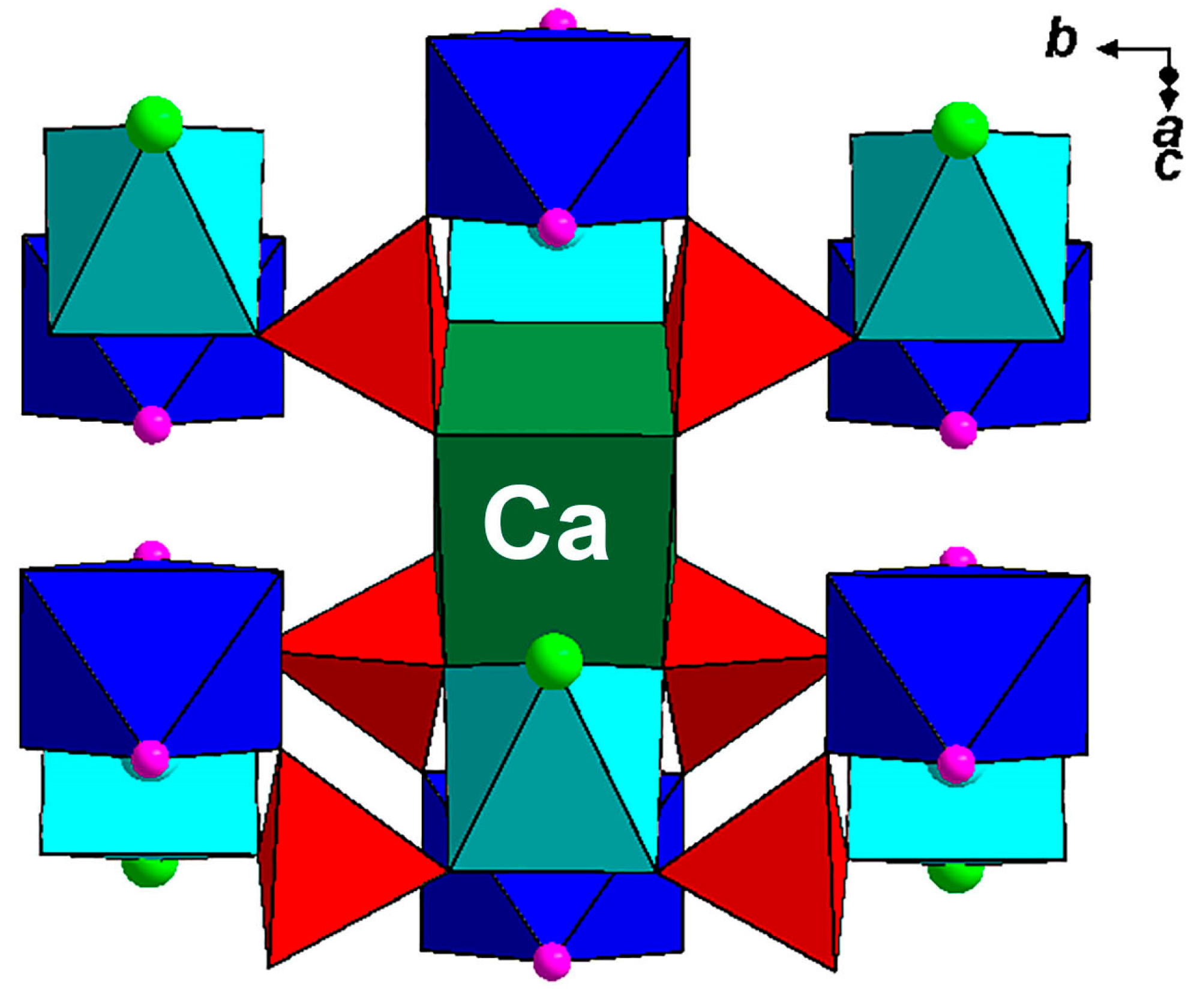

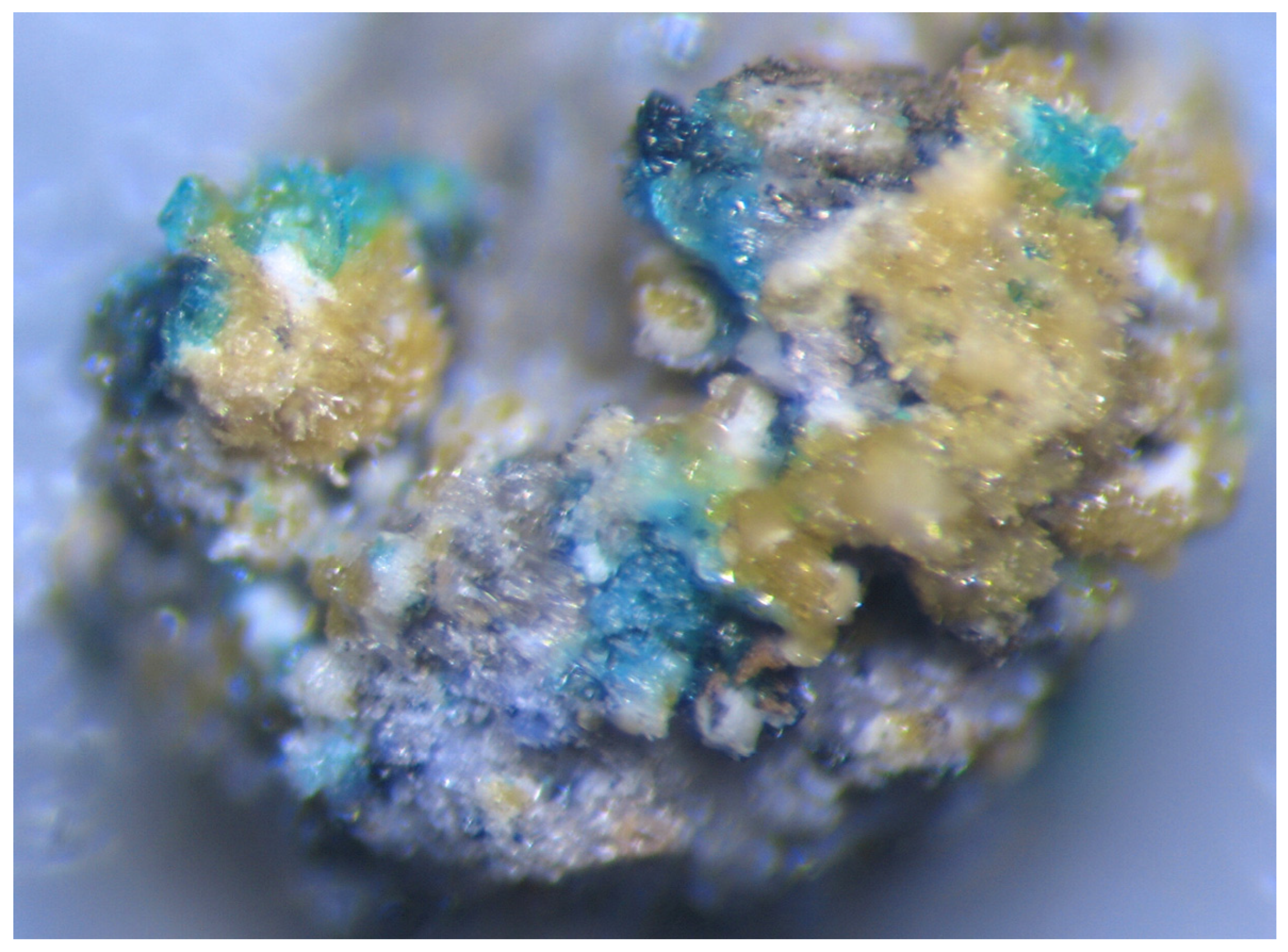
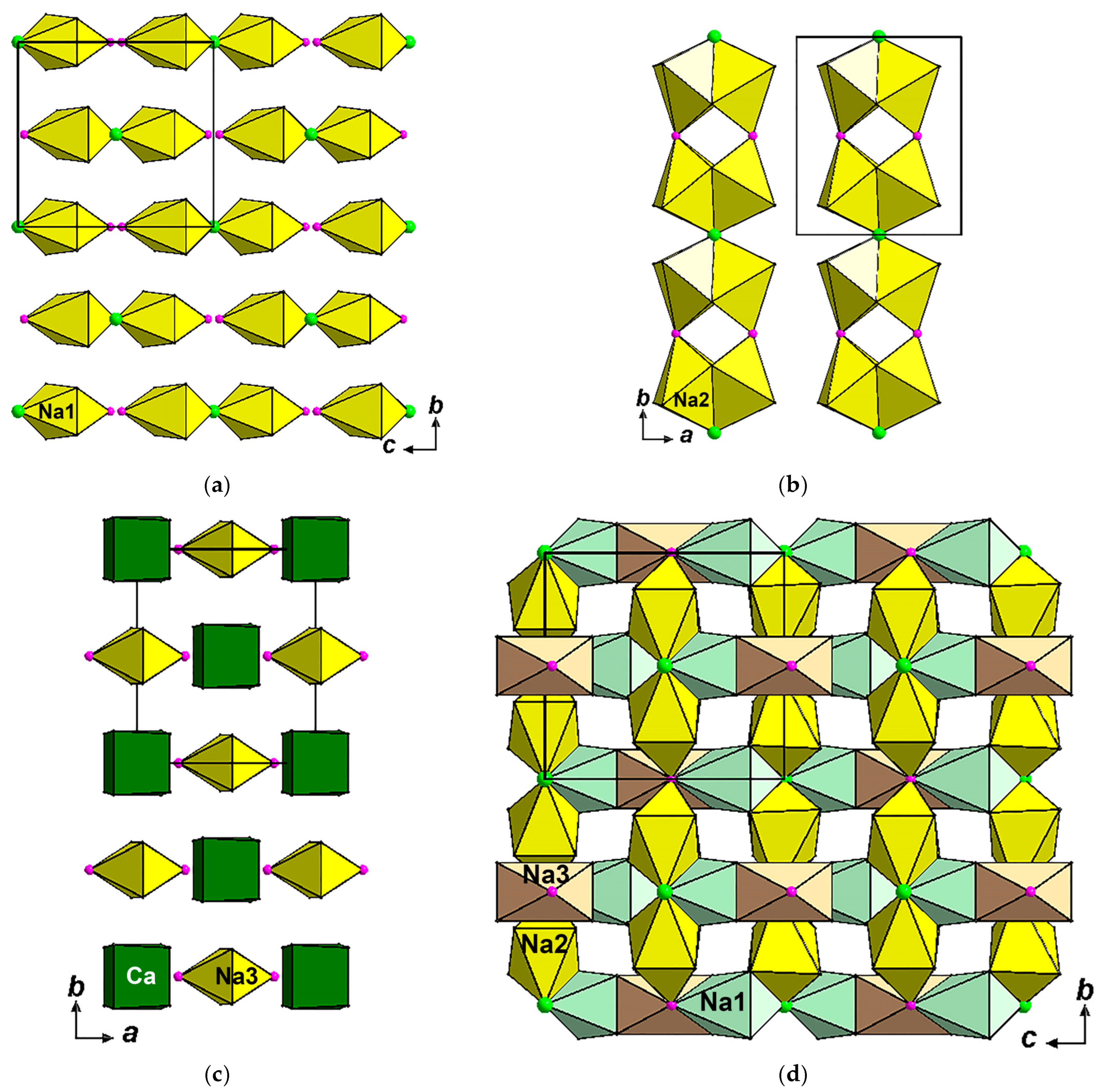
Polyarsite, Na7CaMgCu2(AsO4)4F2Cl, a New Mineral with Unique Complex Layers in the Novel-Type Crystal Structure


 , , ,
, , ,  and
and
Abstract
1. Introduction
2. Methods
3. Results
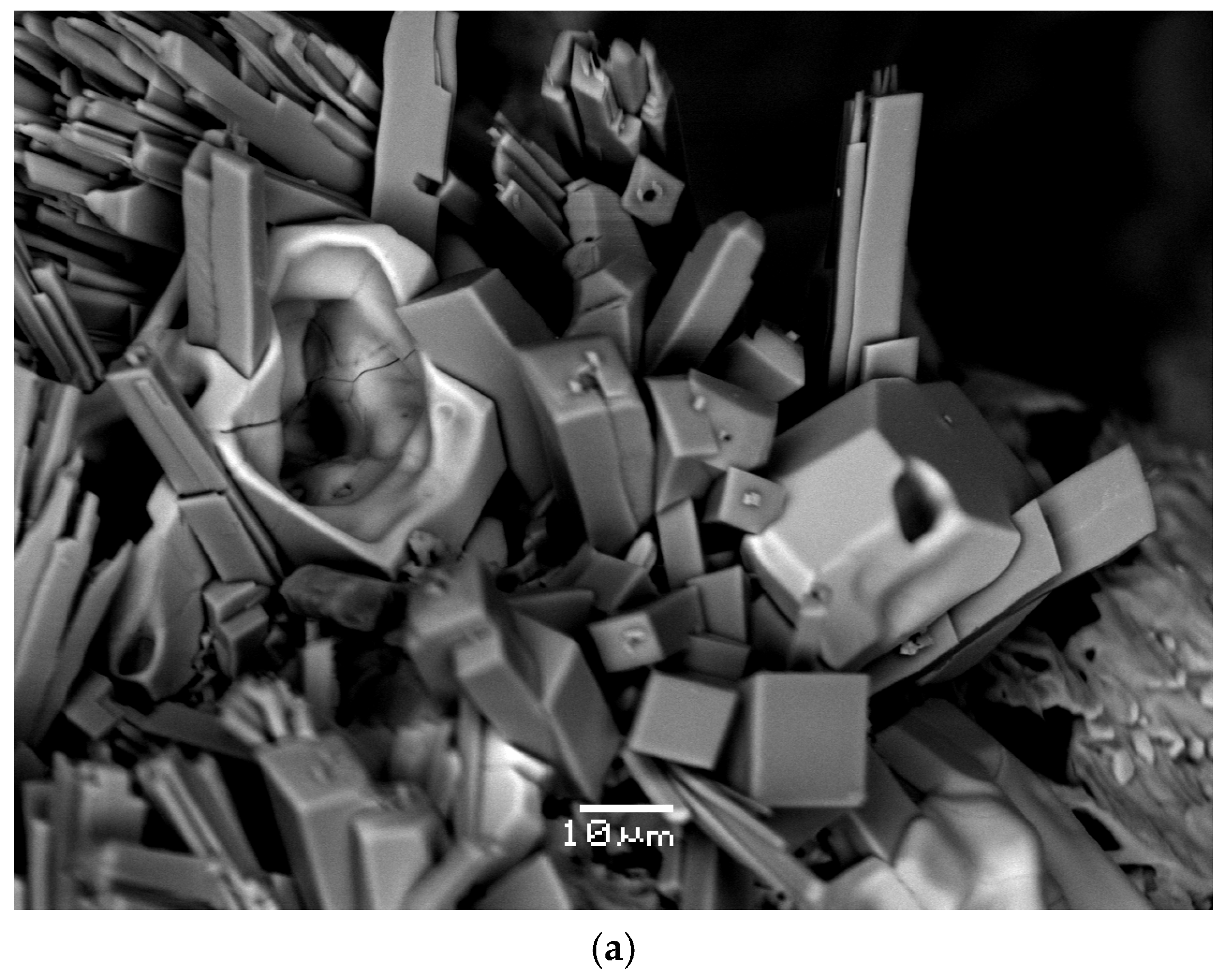
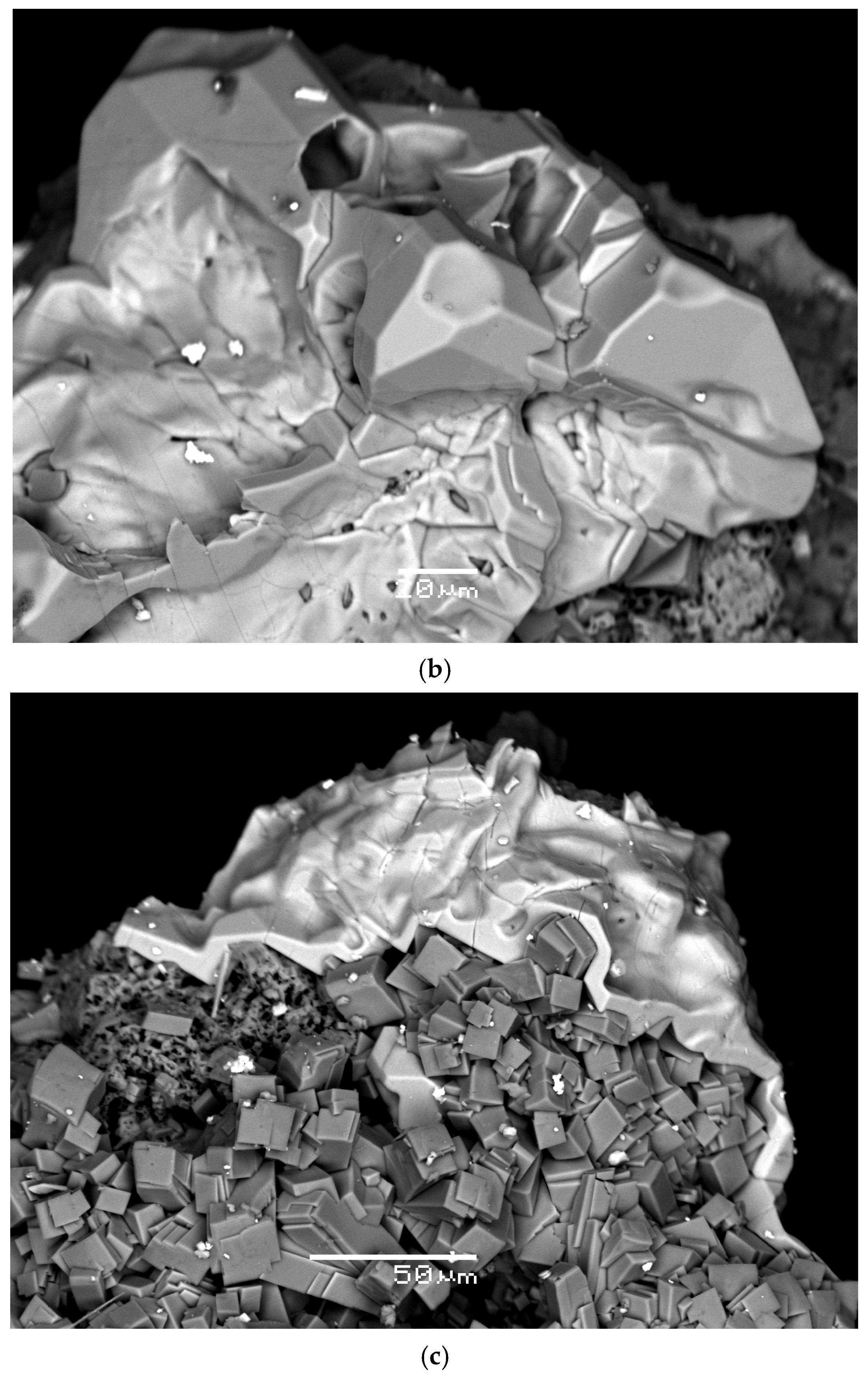
3.1. Occurrence and General Appearance
3.2. Physical Properties and Optical Data
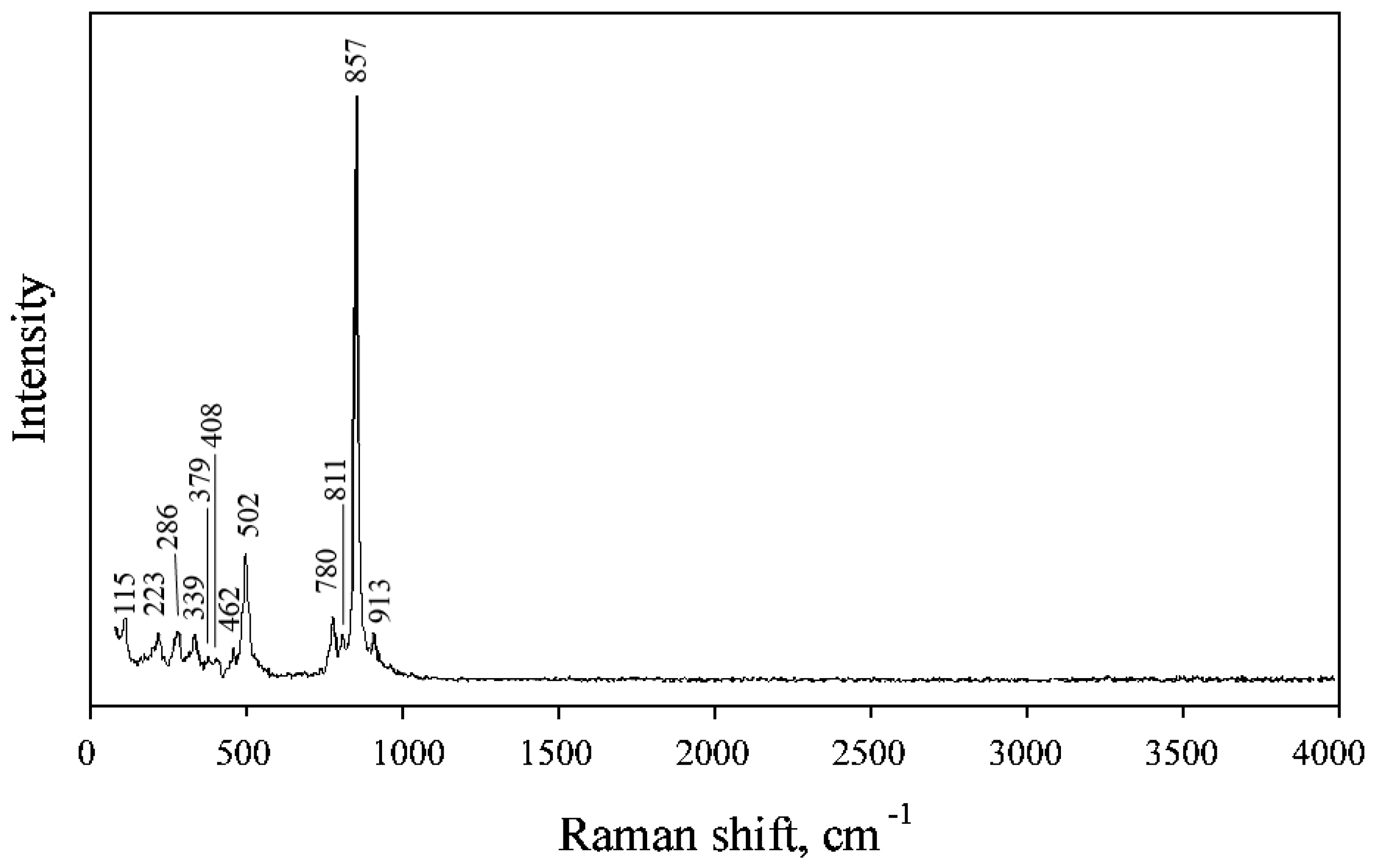
3.3. Raman Spectroscopy
3.4. Chemical Composition
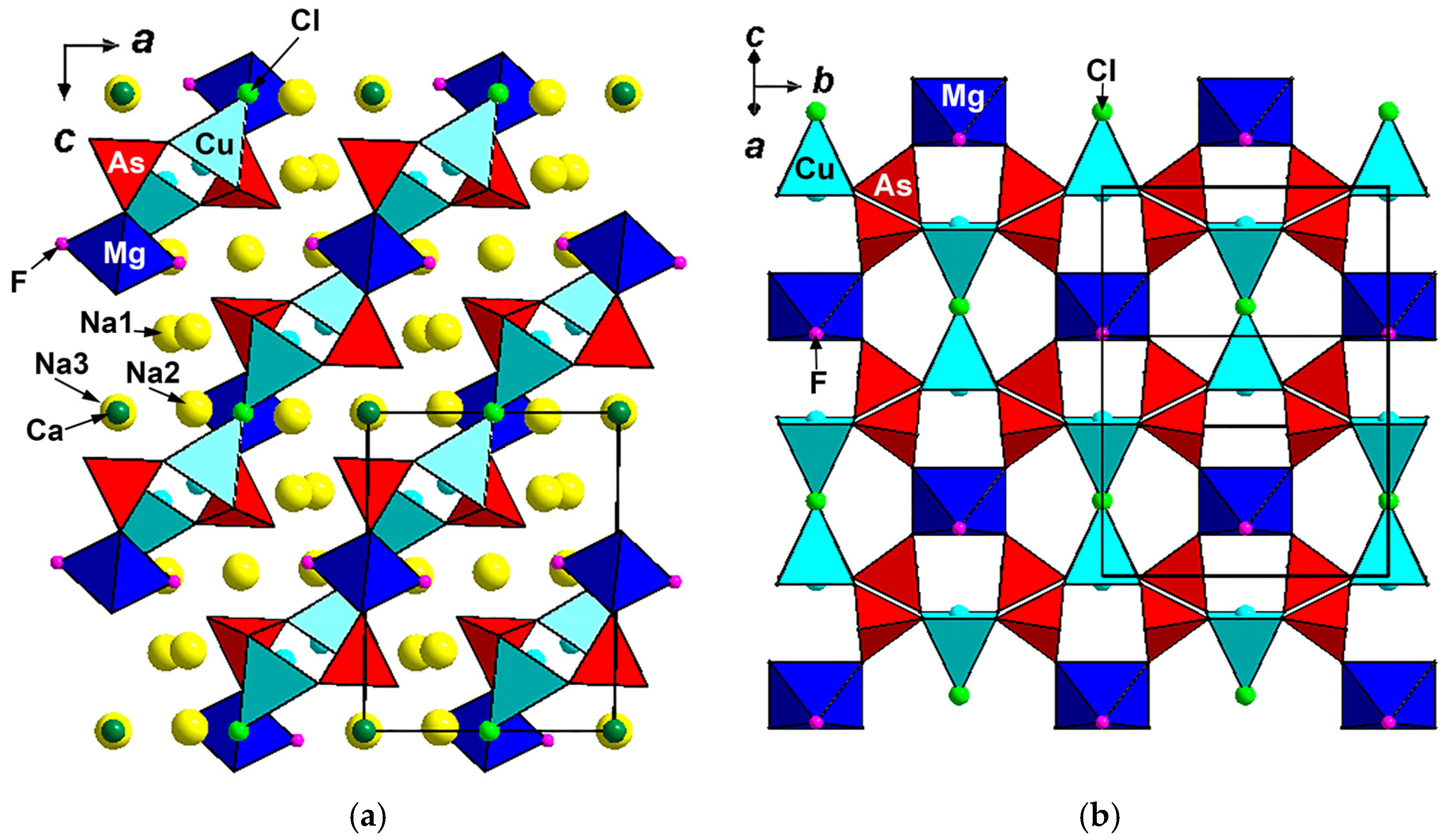
3.5. X-Ray Crystallography and Crystal Structure Determination
4. Discussion
Author Contributions
Funding
Data Availability Statement
Conflicts of Interest
References
- Fedotov, S.A.; Markhinin, Y.K. (Eds.) The Great Tolbachik Fissure Eruption; Cambridge University Press: New York, NY, USA, 1983. [Google Scholar]
- Pekov, I.V.; Agakhanov, A.A.; Zubkova, N.V.; Koshlyakova, N.N.; Shchipalkina, N.V.; Sandalov, F.D.; Yapaskurt, V.O.; Turchkova, A.G.; Sidorov, E.G. Oxidizing-type fumaroles of the Tolbachik volcano, a mineralogical and geochemical unique. Russ. Geol. Geophys. 2020, 61, 675–688. [Google Scholar] [CrossRef]
- Pekov, I.V.; Zubkova, N.V.; Yapaskurt, V.O.; Belakovskiy, D.I.; Lykova, I.S.; Vigasina, M.F.; Sidorov, E.G.; Pushcharovsky, D.Y. New arsenate minerals from the Arsenatnaya fumarole, Tolbachik volcano, Kamchatka, Russia. I. Yurmarinite, Na7(Fe3+,Mg,Cu)4(AsO4)6. Mineral. Mag. 2014, 78, 905–917. [Google Scholar] [CrossRef]
- Pekov, I.V.; Koshlyakova, N.N.; Zubkova, N.V.; Lykova, I.S.; Britvin, S.N.; Yapaskurt, V.O.; Agakhanov, A.A.; Shchipalkina, N.V.; Turchkova, A.G.; Sidorov, E.G. Fumarolic arsenates—A special type of arsenic mineralization. Eur. J. Mineral. 2018, 30, 305–322. [Google Scholar] [CrossRef]
- Shchipalkina, N.V.; Pekov, I.V.; Koshlyakova, N.N.; Britvin, S.N.; Zubkova, N.V.; Varlamov, D.A.; Sidorov, E.G. Unusual silicate mineralization in fumarolic sublimates of the Tolbachik volcano, Kamchatka, Russia—Part 1: Neso-, cyclo-, ino- and phyllosilicates. Eur. J. Mineral. 2020, 32, 101–119. [Google Scholar] [CrossRef]
- Agilent Technologies. CrysAlisPro Software System, Version 1.171.37.34; Agilent Technologies UK Ltd.: Oxford, UK, 2014. [Google Scholar]
- Sheldrick, G.M. Crystal structure refinement with SHELXL. Acta Crystallogr. 2015, 71, 3–8. [Google Scholar] [CrossRef]
- Britvin, S.N.; Dolivo-Dobrovolsky, D.V.; Krzhizhanovskaya, M.G. Software for processing the X-Ray powder diffraction data obtained from the curved image plate detector of Rigaku RAXIS Rapid II diffractometer. Zap. Ross. Mineral. Obs. 2017, 146, 104–107. (In Russian) [Google Scholar]
- Nakamoto, K. Infrared and Raman Spectra of Inorganic and Coordination Compounds; John Wiley & Sons: New York, NY, USA, 1986. [Google Scholar]
- Mandarino, J.A. The Gladstone–Dale compatibility of minerals and its use in selecting mineral species for further study. Can. Mineral. 2007, 45, 1307–1324. [Google Scholar] [CrossRef]
- Gagné, O.C.; Hawthorne, F.C. Comprehensive derivation of bond-valence parameters for ion pairs involving oxygen. Struct. Sci. 2015, 71, 562–578. [Google Scholar] [CrossRef] [PubMed]
- Brese, N.E.; O`Keeffe, M. Bond-valence parameters for solids. Acta Crystallogr. 1991, B47, 192–197. [Google Scholar] [CrossRef]
- Reinen, D. Cu2+, a chameleon in coordination chemistry. Comments Inorg. Chem. 1983, 2, 227–246. [Google Scholar] [CrossRef]
- Pekov, I.V.; Zubkova, N.V.; Agakhanov, A.A.; Yapaskurt, V.O.; Belakovskiy, D.I.; Britvin, S.N.; Sidorov, E.G.; Kutyrev, A.V.; Pushcharovsky, D.Y. New arsenate minerals from the Arsenatnaya fumarole, Tolbachik volcano, Kamchatka, Russia. XIX. Axelite, Na14Cu7(AsO4)8F2Cl2. Mineral. Mag. 2023, 87, 109–117. [Google Scholar] [CrossRef]
- Britvin, S.N.; Pekov, I.V.; Yapaskurt, V.O.; Koshlyakova, N.N.; Göttlicher, J.; Krivovichev, S.V.; Turchkova, A.G.; Sidorov, E.G. Polyoxometalate chemistry at volcanoes: Discovery of a novel class of polyoxocuprate nanoclusters in fumarolic minerals. Sci. Rep. 2020, 10, 6345. [Google Scholar] [CrossRef] [PubMed]
- Pekov, I.V.; Britvin, S.N.; Yapaskurt, V.O.; Koshlyakova, N.N.; Polekhovsky, Y.S.; Göttlicher, J.; Chukanov, N.V.; Vigasina, M.F.; Krivovichev, S.V.; Turchkova, A.G.; et al. Arsmirandite, Na18Cu12Fe3+O8(AsO4)8Cl5, and lehmannite, Na18Cu12TiO8(AsO4)8FCl5, new mineral species from fumarole exhalations of the Tolbachik volcano, Kamchatka, Russia. Zap. Ross. Mineral. Obs. 2020, 149, 1–17. [Google Scholar] [CrossRef]
- Symonds, R.B.; Reed, M.H. Calculation of multicomponent chemical equilibria in gas-solid-liquid systems; calculation methods, thermo-chemical data, and applications to studies of high-temperature volcanic gases with examples from Mount St. Helens. Am. J. Sci. 1993, 293, 758–864. [Google Scholar] [CrossRef]





| Constituent | Mean * | Range | SD |
|---|---|---|---|
| Na2O | 22.32 | 21.45–23.29 | 0.58 |
| CaO | 5.74 | 5.20–6.15 | 0.29 |
| MgO | 3.81 | 3.11–4.60 | 0.51 |
| CuO | 16.80 | 15.83–17.26 | 0.58 |
| Fe2O3 ** | 0.45 | 0.08–0.79 | 0.26 |
| As2O5 | 46.54 | 45.89–47.12 | 0.48 |
| SO3 | 0.44 | 0.06–0.69 | 0.20 |
| F | 3.23 | 3,01–3.49 | 0.16 |
| Cl | 3.85 | 3.77–3.98 | 0.09 |
| –O=(F,Cl) | −2.23 | ||
| Total | 100.95 |
| Iobs | dobs | Icalc * | dcalc ** | hkl |
|---|---|---|---|---|
| 12 | 7.35 | 6 | 7.347 | 011 |
| 42 | 6.66 | 35 | 6.672 | −101 |
| 15 | 6.48 | 9 | 6.472 | 110 |
| 98 | 5.357 | 67 | 5.354 | 002 |
| 5 | 5.054 | 3 | 5.049 | 020 |
| 48 | 4.218 | 34 | 4.216 | 200 |
| 10 | 4.148 | 8 | 4.148 | −112 |
| 6 | 4.004 | 2 | 4.005 | 121 |
| 23 | 3.673 | 17, 2 | 3.673, 3.672 | 022, −211 |
| 20 | 3.365 | 8, 9 | 3.365, 3.335 | 013, −202 |
| 49 | 3.304 | 35, 7 | 3.304, 3.289 | −103, 202 |
| 24 | 3.237 | 24 | 3.236 | 220 |
| 68 | 3.127 | 58 | 3.126 | 130 |
| 61 | 2.783 | 68 | 2.783 | −222 |
| 100 | 2.757 | 9, 100, 13 | 2.765, 2.756, 2.745 | −123, 222, 123 |
| 54 | 2.704 | 1, 7, 31 | 2.709, 2.708, 2.706 | 301, 310, −132 |
| 61 | 2.679 | 13, 32 | 2.693, 2.677 | 132, 004 |
| 7 | 2.614 | 3 | 2.613 | 213 |
| 12 | 2.550 | 12 | 2.549 | 231 |
| 17 | 2.525 | 15 | 2.524 | 040 |
| 6 | 2.484 | 4 | 2.484 | −114 |
| 14 | 2.431 | 13 | 2.430 | −312 |
| 7 | 2.402 | 2, 4 | 2.403, 2.400 | 312, −321 |
| 3 | 2.358 | 2 | 2.357 | 141 |
| 3 | 2.276 | 2 | 2.275 | −204 |
| 2 | 2.246 | 2 | 2.245 | 204 |
| 2 | 2.225 | 1 | 2.224 | −303 |
| 2 | 2.193 | 2 | 2.193 | 303 |
| 5 | 2.126 | 5 | 2.127 | −233 |
| 12 | 2.108 | 13 | 2.108 | 400 |
| 4 | 2.084 | 3 | 2.083 | −105 |
| 5 | 2.069 | 5 | 2.069 | 105 |
| 6 | 2.052 | 5 | 2.052 | 224 |
| 6 | 2.003 | 1, 0.5, 2 | 2.006, 2.003, 1.998 | −143, 242, 143 |
| 12 | 1.965 | 9 | 1.964 | 150 |
| 6 | 1.925 | 5 | 1.926 | −125 |
| 9 | 1.917 | 5, 5 | 1.917, 1.914 | −314, 125 |
| 4 | 1.892 | 4 | 1.891 | 314 |
| 10 | 1.851 | 7, 1 | 1.853, 1.847 | −341, 341 |
| 37 | 1.837 | 7, 32, 11 | 1.842, 1.837, 1.836 | 152, 044, −422 |
| 10 | 1.821 | 10 | 1.821 | 422 |
| 2 | 1.797 | 1, 0.5 | 1.797, 1.794 | −413, 251 |
| 2 | 1.777 | 2 | 1.776 | 413 |
| 4 | 1.759 | 3 | 1.758 | 431 |
| 13 | 1.716 | 1, 16 | 1.716, 1.715 | 116, −305 |
| 4 | 1.692 | 3, 1 | 1.692, 1.690 | 305, −244 |
| 8 | 1.684 | 5 | 1.683 | 060 |
| 6 | 1.668 | 1, 5 | 1.669, 1.668 | −343, −235 |
| 22 | 1.642 | 11, 16 | 1.645, 1.640 | 404, 350 |
| 3 | 1.625 | 0.5, 3 | 1.626, 1.624 | −253, −325 |
| 2 | 1.605 | 1, 0.5 | 1.605, 1.604 | 062, 325 |
| 10 | 1.581 | 4, 1, 4, 6 | 1.585, 1.582, 1.581, 1.579 | −521, 512, 154, 521 |
| 8 | 1.572 | 8, 2 | 1.572, 1.570 | −352, −226 |
| 10 | 1.565 | 11 | 1.564 | 352 |
| 16 | 1.556 | 17, 2 | 1.556, 1.554 | 226, −442 |
| 2 | 1.534 | 2 | 1.533 | −503 |
| 5 | 1.508 | 3, 4 | 1.509, 1.508 | −107, 530 |
| 5 | 1.499 | 1, 1, 4 | 1.501, 1.500, 1.498 | 107, −316, 262 |
| 8 | 1.469 | 6, 7 | 1.469, 1.467 | 055, −523 |
| 4 | 1.457 | 2 | 1.456 | −532 |
| 11 | 1.446 | 4, 5, 5, 3 | 1.447, 1.446, 1.446, 1.443 | −451, 532, −127, 451 |
| 4 | 1.421 | 3, 3 | 1.422, 1.419 | 170, −345 |
| 6 | 1.406 | 0.5, 5 | 1.405, 1.405 | 345, 600 |
| 7 | 1.393 | 7, 1, 3 | 1.393, 1.392, 1.392 | 354, −541, −255 |
| Formula | Na7CaMgCu2(AsO4)4F2Cl |
| Formula weight | 981.53 |
| Temperature, K | 293(2) |
| Radiation and wavelength, Å | MoKα; 0.71073 |
| Crystal system, space group, Z | Monoclinic, I2/m, 2 |
| Unit cell dimensions, Å/° | a = 8.4323(4) b = 10.0974(4), β = 90.822(4) c = 10.7099(6) |
| V, Å3 | 911.79(8) |
| Absorption coefficient μ, mm−1 | 10.267 |
| F000 | 924 |
| Crystal size, mm | 0.03 × 0.09 × 0.11 |
| Diffractometer | Xcalibur S CCD |
| θ range for data collection, °/collection mode | 2.77–28.28/full sphere |
| Index ranges | −11 ≤ h ≤ 11, −13 ≤ k ≤ 13, −14 ≤ l ≤ 14 |
| Reflections collected | 7603 |
| Independent reflections | 1200 (Rint = 0.0569) |
| Independent reflections with I > 2σ(I) | 1125 |
| Data reduction | CrysAlisPro, Agilent Technologies, v. 1.171.37.35 [6] |
| Absorption correction | Gaussian |
| Structure solution | direct methods |
| Refinement method | full-matrix least-squares on F2 |
| Number of refined parameters | 89 |
| Final R indices [I > 2σ(I)] | R1 = 0.0391, wR2 = 0.0754 |
| R indices (all data) | R1 = 0.0454, wR2 = 0.0769 |
| GoF | 1.247 |
| Largest diff. peak and hole, e/Å3 | 1.03 and −1.46 |
| Site | x | y | z | Ueq | Q |
|---|---|---|---|---|---|
| Na(1) | 0.2058(4) | ½ | 0.7532(3) | 0.0164(6) | 4 |
| Na(2) | 0.1959(3) | 0.7497(2) | 0.5112(2) | 0.0187(5) | 8 |
| Na(3) | 0 | ½ | 0 | 0.0153(9) | 2 |
| Mg | 0 | 0 | ½ | 0.0043(6) | 2 |
| Ca | 0 | 0 | 0 | 0.0085(4) | 2 |
| Cu | 0.17576(10) | ½ | 0.27884(8) | 0.00693(19) | 4 |
| As | 0.02510(6) | 0.79403(5) | 0.22226(4) | 0.00457(14) | 8 |
| O(1) | 0.0319(4) | 0.6285(3) | 0.1996(3) | 0.0097(7) | 8 |
| O(2) | 0.4844(4) | 0.6614(4) | 0.1278(3) | 0.0109(7) | 8 |
| O(3) | 0.6323(4) | 0.6490(3) | 0.3587(3) | 0.0092(7) | 8 |
| O(4) | 0.1830(4) | 0.8646(3) | 0.1513(3) | 0.0088(7) | 8 |
| Cl | 0 | ½ | ½ | 0.0171(5) | 2 |
| F | 0.2672(5) | ½ | −0.0299(4) | 0.0148(9) | 4 |
| As–O(2) 1.670(3) | Na(1)–O(3) 2.369(4) × 2 |
| - O(3) 1.677(3) | - F 2.372(5) |
| - O(1) 1.690(3) | - O(1) 2.446(4) × 2 |
| - O(4) 1.699(3) | - Cl 3.199(3) |
| Cu–O(4) 1.955(3) × 2 | Na(2)–O(3) 2.240(4) |
| - O(1) 1.961(3) × 2 | - O(2) 2.296(4) |
| - Cl 2.8121(9) | - O(4) 2.336(4) |
| - O(2) 2.369(4) | |
| Mg–F 1.984(4) × 2 | - F 2.554(3) |
| - O(2) 2.134(3) × 4 | - Cl 3.015(3) |
| Ca–O(3) 2.418(3) × 4 | Na(3)–F 2.280(4) × 2 |
| - O(4) 2.608(3) × 4 | - O(1) 2.512(3) × 4 |
| Na(1) | Na(2) | Na(3) | Mg | Ca | Cu | As | ∑ | |
|---|---|---|---|---|---|---|---|---|
| O(1) | 0.17×2 ↓ | 0.14×4 ↓ | 0.46×2 ↓ | 1.24 | 2.01 | |||
| O(2) | 0.24 0.20 | 0.31×4 ↓ | 1.31 | 2.06 | ||||
| O(3) | 0.20×2 ↓ | 0.27 | 0.29×4 ↓ | 1.28 | 2.04 | |||
| O(4) | 0.22 | 0.18×4 ↓ | 0.47×2 ↓ | 1.21 | 2.08 | |||
| Cl | 0.06×2 → | 0.10×4 → | 0.11×2 → | 0.74 | ||||
| F | 0.15 | 0.09×2 → | 0.20×2 ↓ | 0.34×2 ↓ | 0.87 | |||
| ∑ | 0.95 | 1.12 | 0.96 | 1.92 | 1.88 | 1.97 | 5.04 |
Disclaimer/Publisher’s Note: The statements, opinions and data contained in all publications are solely those of the individual author(s) and contributor(s) and not of MDPI and/or the editor(s). MDPI and/or the editor(s) disclaim responsibility for any injury to people or property resulting from any ideas, methods, instructions or products referred to in the content. |
© 2026 by the authors. Licensee MDPI, Basel, Switzerland. This article is an open access article distributed under the terms and conditions of the Creative Commons Attribution (CC BY) license.
Share and Cite
Pekov, I.V.; Zubkova, N.V.; Agakhanov, A.A.; Belakovskiy, D.I.; Vigasina, M.F.; Yapaskurt, V.O.; Britvin, S.N.; Turchkova, A.G.; Sidorov, E.G.; Zhitova, E.S.; et al. Polyarsite, Na7CaMgCu2(AsO4)4F2Cl, a New Mineral with Unique Complex Layers in the Novel-Type Crystal Structure. Minerals 2026, 16, 122. https://doi.org/10.3390/min16020122
Pekov IV, Zubkova NV, Agakhanov AA, Belakovskiy DI, Vigasina MF, Yapaskurt VO, Britvin SN, Turchkova AG, Sidorov EG, Zhitova ES, et al. Polyarsite, Na7CaMgCu2(AsO4)4F2Cl, a New Mineral with Unique Complex Layers in the Novel-Type Crystal Structure. Minerals. 2026; 16(2):122. https://doi.org/10.3390/min16020122
Chicago/Turabian StylePekov, Igor V., Natalia V. Zubkova, Atali A. Agakhanov, Dmitry I. Belakovskiy, Marina F. Vigasina, Vasiliy O. Yapaskurt, Sergey N. Britvin, Anna G. Turchkova, Evgeny G. Sidorov, Elena S. Zhitova, and et al. 2026. "Polyarsite, Na7CaMgCu2(AsO4)4F2Cl, a New Mineral with Unique Complex Layers in the Novel-Type Crystal Structure" Minerals 16, no. 2: 122. https://doi.org/10.3390/min16020122
APA StylePekov, I. V., Zubkova, N. V., Agakhanov, A. A., Belakovskiy, D. I., Vigasina, M. F., Yapaskurt, V. O., Britvin, S. N., Turchkova, A. G., Sidorov, E. G., Zhitova, E. S., & Pushcharovsky, D. Y. (2026). Polyarsite, Na7CaMgCu2(AsO4)4F2Cl, a New Mineral with Unique Complex Layers in the Novel-Type Crystal Structure. Minerals, 16(2), 122. https://doi.org/10.3390/min16020122