


Abstract
Urban sprawl and brownfields are recognized as the main challenges for sustainable land use in post-industrial cities. Using a mixed methodology (GIS and interviews), this research aimed to examine the relationship between the redevelopment process of former Soviet military brownfields and urban sprawl in Hungary. Research findings highlighted the overall importance of the regeneration of military brownfields in urban development; however, not all the assessed projects appeared to be beneficial to densification objectives. We could identify two groups of brownfields lying within the boundaries of the compact city and outside the boundaries. The regeneration of military brownfields embedded in the built-up areas of cities can contribute to densification objectives and attract new functions and residents to abandoned areas. They can also support wider regeneration strategies of local governments, especially in run-down neighborhoods. However, a large number of military brownfields are located on the peripheries of metropolitan areas. The regeneration of such sites, as demonstrated by the case studies, can play a catalyst role in urban sprawl. Therefore, it is important to emphasize that local municipalities should make a careful strategic selection of military brownfield sites for redevelopment based upon their characteristics and location, as supported by the typology presented in this study, together with locally perceived socio-economic and risk factors.
1. Introduction
Sustainable urban development has been seriously challenged by unsustainable land-use practices in the last decades, like urban sprawl or the spread of derelict (and often vacant) land, the so-called brownfield sites. The term brownfield typically refers to land that was once occupied by industrial, railway, military, institutional, or commercial functions, but are no longer in use and often carrying the risk of contamination. Such sites present not only significant challenges, but also opportunities for contemporary urban development that go beyond their old uses [1,2,3]. In Western Europe and the United States, the emergence of brownfields is usually linked with the post-Fordist economic transition that became especially prevalent in the 1960s and 70s. The phenomenon was driven by deindustrialization and the decline of the Fordist economy, which reshaped urban landscapes and left many industrial, transport, and commercial sites abandoned [4].
In Central and Eastern Europe, the appearance of brownfield sites in cities followed a different trajectory, as state socialism maintained outdated industrial production and low-quality services until the late 1980s for ideological reasons [5]. Only after the collapse of the state-socialist system in 1989–1990 could deindustrialization and economic transformation evolve in the region as an outcome of the transition from centrally planned economies to a market-based system [6,7,8,9]. At the same time, due to the dismantling of the Iron Curtain and the end of the Cold War, the successive demilitarization and downsizing of the armed forces took place, leaving many military sites abandoned [10]. This was also the case in Hungary, where after World War II, the socialist state designated vast areas for industrial, transportation, and military purposes, mostly in major cities, resulting in large complexes dedicated to production, transportation, or defense [11]. After 1989, many of these sites became obsolete and unused, leaving behind extensive industrial, transport, and military brownfields.
Among the various types of brownfields, military brownfields deserve special attention due to their unique function, physical characteristics, and related environmental challenges [12,13]. This is especially the case in Central and Eastern Europe (CEE), in countries lying between the boundaries of the former Iron Curtain and the Soviet Union, where excessive military infrastructure was developed during the Cold War. After the end of the Cold War, as part of the demilitarization process, a large number of military brownfields emerged, mainly in cities [14,15,16]. In this process, two distinct phases could be distinguished. The first phase was primarily between 1989 and 1995 and involved countries lying outside the Soviet Union but belonging to the Soviet sphere of influence (e.g., German Democratic Republic, Czechoslovakia, Hungary). Following the end of the Cold War and the political transformations of 1989–1990, approximately 500,000 Soviet troops were withdrawn from CEE, leaving behind extensive military properties [17,18]. These sites, including garrisons, airbases, and associated infrastructure, were taken over by the national governments.
The second phase followed the dissolution of the Soviet Union in 1991, when Soviet forces were gradually withdrawn from the newly independent states after the mid-1990s. This phase was also characterized by military restructuring undertaken by the newly independent nation states, involving the downsizing and reorganization of their armed forces [17]. As a result, many former military properties with well-established infrastructure were abandoned and became brownfields in the eastern half of Europe [19].
The cleaning up of military brownfields and the conversion of former military sites into new livable areas of cities is a rather complex process [12,13,20,21], but it can significantly contribute to urban densification. Urban densification refers to the internal development of cities through infill projects that convert undeveloped land reserves into developed areas or by increasing the density of already developed land (e.g., brownfields) through regeneration [22]. Even though the concept of densification is not always perceived positively in the literature, as it may cause social tensions [23,24], we believe that vacant military brownfield sites offer a lot of opportunities for contemporary urban planning to make cities more compact and enriched by new residential and green areas.
The main objective of this paper is to investigate the level and forms of rehabilitation of former Soviet military sites in Hungary, and to analyze the current stage of investment vs. disinvestment in space, giving an answer to the question of whether these sites can be seen as a suitable tool for combating urban sprawl, or on the contrary, whether they generate further sprawl in urban areas.
The rest of this paper is organized as follows. The next section discusses existing works that focus on the definition and main features of military brownfields in the urban studies literature, with special attention to the challenges attached to their redevelopment. The third section describes the process of data acquisition and the applied research methods. A section then follows with the main research findings, depicting the main features of the different types of military brownfields, analyzing their generations, and the new functions after redevelopment. Finally, we present our conclusions, discuss their wider implications, highlight the limitations of the research, and explore possible future work in the field.
2. Literature Review
According to the literature, military brownfields—encompassing former military barracks, training grounds, airfields, and other facilities—differ considerably from other types of brownfields in legal, environmental, and urban geographical terms; therefore, they deserve special attention and their potential for urban regeneration must be differentiated from other types of brownfields [25,26]. Many studies have demonstrated that the regeneration of military brownfields involves addressing various distinct challenges that must be carefully identified and thoroughly resolved in each case [18,19,21,25,26,27].
Each military brownfield is unique, and each site is likely to present distinct architectural features, sometimes with buildings that are symbolic of the history of the city and the country or region where it is located [28,29]. Many of these former military sites and buildings hold not only historical significance but also possess considerable architectural and emotional value, which can limit rehabilitation options and require careful consideration regarding the possible new uses [30,31]. The requirements towards preservation often create complexity and additional costs for regeneration, where the well-preserved buildings, as architectural heritage sites, may have the potential to become key tourist attractions for a city [32]. Thus, the rehabilitation of military brownfields holds potential for the development of a city and its region, but at the same time, causes challenges concerning the preservation of its historical or cultural elements under the contemporary demands of urban growth [27,33].
Another challenge is that military brownfields often cover extensive areas with complex urban structures, including residential buildings, warehouses, technical facilities, or training grounds [25,34]. This is important to consider, because the original use of a site also significantly influences its potential future utilization after regeneration. For instance, residential buildings of former military barracks have often been designated for housing functions in the future [35]. However, many of the former residential buildings were demolished and replaced by new, upmarket housing. This phenomenon has been especially prevalent in post-socialist CEE countries, where the most common use of revitalized military brownfields is residential, which is commonly appreciated by the public [27,36,37]. On the other hand, abandoned technical facilities, training grounds, and airports pose greater challenges for planners and local decision-makers in finding optimal use, which often slows down their regeneration process [38]. According to the literature, after decontamination, such sites are often transformed into industrial parks, recreational and sports venues, or even wildlife reserves, contributing to environmental conservation and improving the quality of life for the surrounding communities [39,40].
Abandoned military sites frequently pose significant environmental challenges because they may be contaminated with hazardous substances such as fuels, chemicals, toxic and radioactive waste that may endanger public health, or unexploded ammunition, which need a costly and complex remediation process that often hinders the rehabilitation and new utilization of the site [38,41]. The most heavily contaminated areas tend to be former airports, missile bases, and weapon and fuel storage facilities. The cleaning up of these sites is often prolonged or only partially completed, which leads to the limited interest of potential investors [17].
The question of ownership also often arises between national governments and local municipalities when military properties become abandoned. This was especially the case in CEE countries once the Soviet troops left. Such debates and the gradual establishment of the legal, planning, and administrative frameworks also slowed down the regeneration of former Soviet military sites [42]. In addition, the rehabilitation of military brownfields often requires time-consuming negotiations between defense authorities, local governments, planning authorities, and private developers [43,44]. In CEE countries, redevelopment efforts on such brownfield sites have often been characterized by top-down initiatives, as the properties were typically transferred to central government ownership [45].
However, regeneration plans also often fail due to the lack of alignment with local needs and priorities, highlighting the importance of incorporating community interests into the planning and decision-making processes [46]. Over time, it has become evident that regeneration strategies of military brownfield sites are most effective if they adopt a multidisciplinary approach, involving a wide range of professions and stakeholders [47,48,49]. This process involves incorporating the interests and experiences of various stakeholders in order to reach a consensus regarding the objectives of regeneration. This collaborative framework ensures that diverse perspectives and expertise contribute to the planning and implementation processes, ultimately leading to more successful and sustainable outcomes [33].
Best practices worldwide have shown that despite the above-mentioned challenges, military brownfields also offer great opportunities for urban development [50,51]. Their size and strategic locations near transportation hubs or close to the city center make them ideal for various redevelopment projects, from mixed-use neighborhoods to large-scale single-function developments [19]. These locations often provide a unique advantage in terms of accessibility and connectivity, making them highly attractive for investors and real estate developers. The regeneration of these sites can help mitigate pressure on the surrounding greenfield areas, preserving natural landscapes while managing the growing demand for housing [52,53], green spaces [54,55], and commercial facilities in urban settings [52,53,54]. Additionally, the redevelopment of military brownfields may offer socio-economic benefits for people, such as job creation, increased security, a livable environment, and accessibility to services [49,56]. Successful projects not only enhance local economies but also foster urban regeneration, reducing inequalities between urban cores and peripheries. By active community involvement and aligning redevelopment efforts with local needs, these projects can become catalysts for broader urban renewal [57].
The challenges and opportunities raised by military brownfields also coincide with broader urban development issues, particularly the phenomenon of urban sprawl. Urban sprawl refers to the expansion of low-density land-use forms on undeveloped land around the compact city driven by different processes [58]. As it has been demonstrated by a growing body of literature, cities in post-socialist CEE have been hard hit by uncontrolled spatial expansion and urban sprawl since the political and economic transformation [59,60,61,62]. A number of authors came to the conclusion that the interplay between market forces and weak planning regulations had outmost importance in the genesis of suburbanization and urban sprawl around CEE cities [63,64,65,66,67]. However, the redevelopment of military brownfield sites may provide an opportunity and possible strategy for planners to mitigate urban sprawl, supporting more compact forms of urban development [68,69]. Redirecting investments away from greenfield developments and putting the emphasis on the reuse of previously developed land can pave the way for urban densification [70], and a more sustainable urban growth [71]. The strategic location of military brownfields (often near urban cores or along expanding peripheral axis) makes them suitable for such interventions in managing and mitigating urban sprawl [34,71]. These sites offer valuable opportunities for strategies aimed at limiting urban sprawl with infill developments, providing a sustainable alternative to the limitless outward expansion of cities [72]. Through studying the relationship between the regeneration of Soviet military brownfields and urban sprawl, this research aims to fill a relevant gap in the literature.
3. Materials and Methods
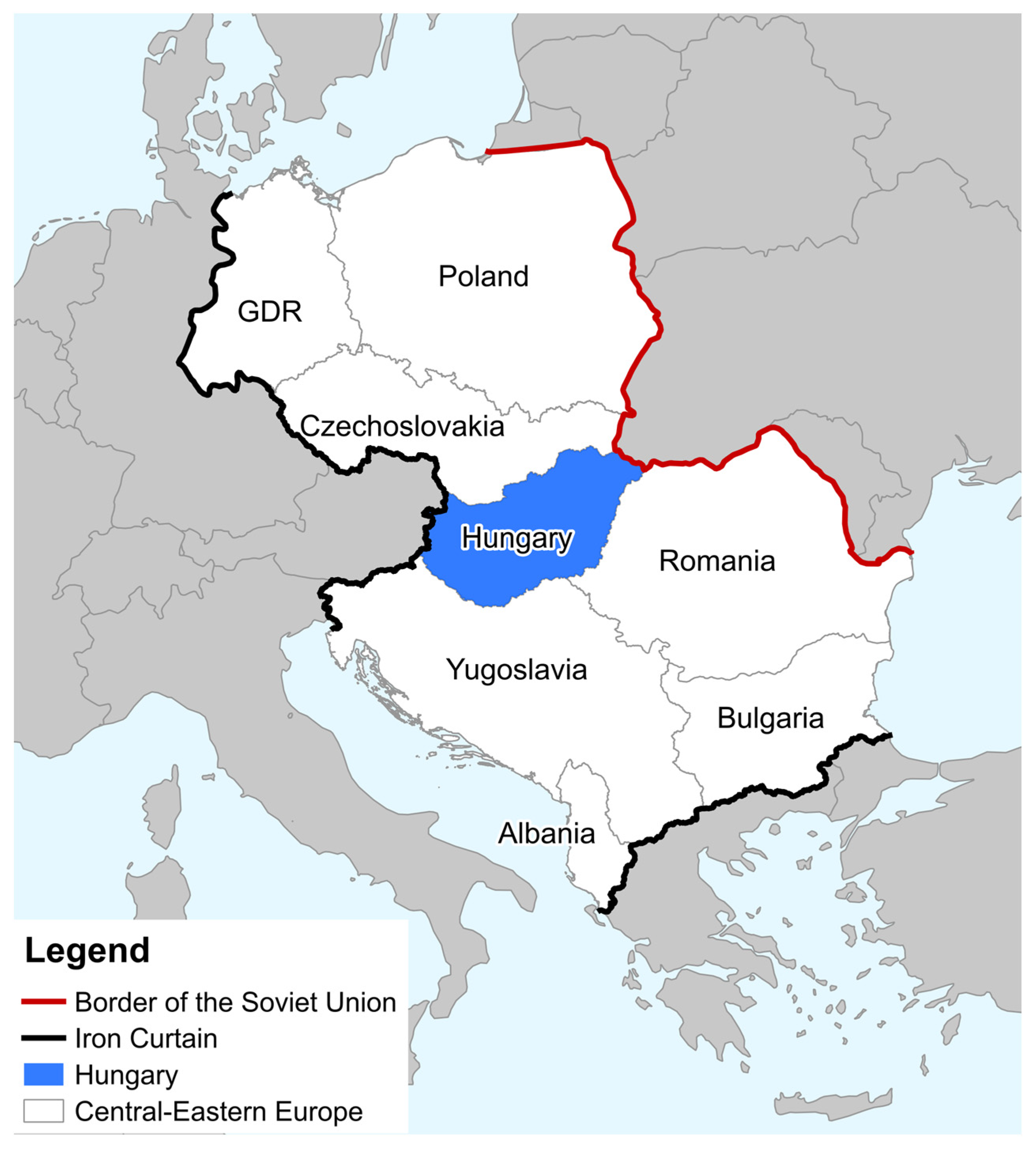
This research aims to examine the relationship between the revitalization process of former Soviet military brownfields and urban sprawl in Hungary. The Soviet red army liberated Hungary and other CEE countries from Nazi occupation in the final stage of World War II in autumn 1944 (Figure 1). However, due to the outbreak of the Cold War, they remained for the next nearly half a century and withdrew only in the summer of 1991 [14]. The exact number and location of Soviet military troops were not allowed to be disclosed due to confidentiality reasons, and publications that have appeared since their withdrawal provide significantly different data.
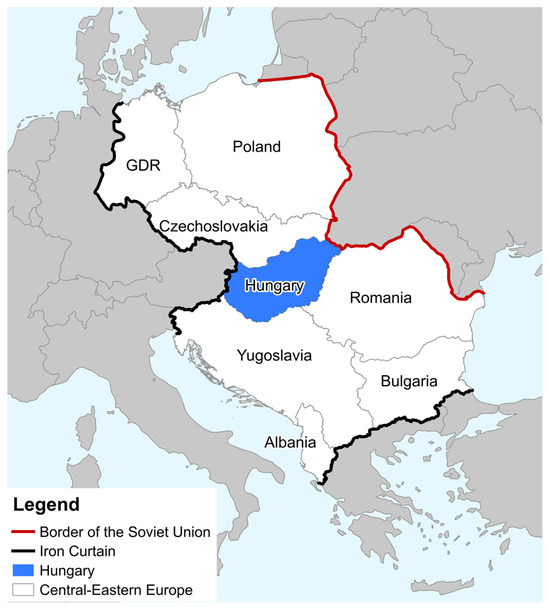
Figure 1.
The location of Hungary and the CEE countries during Cold War.
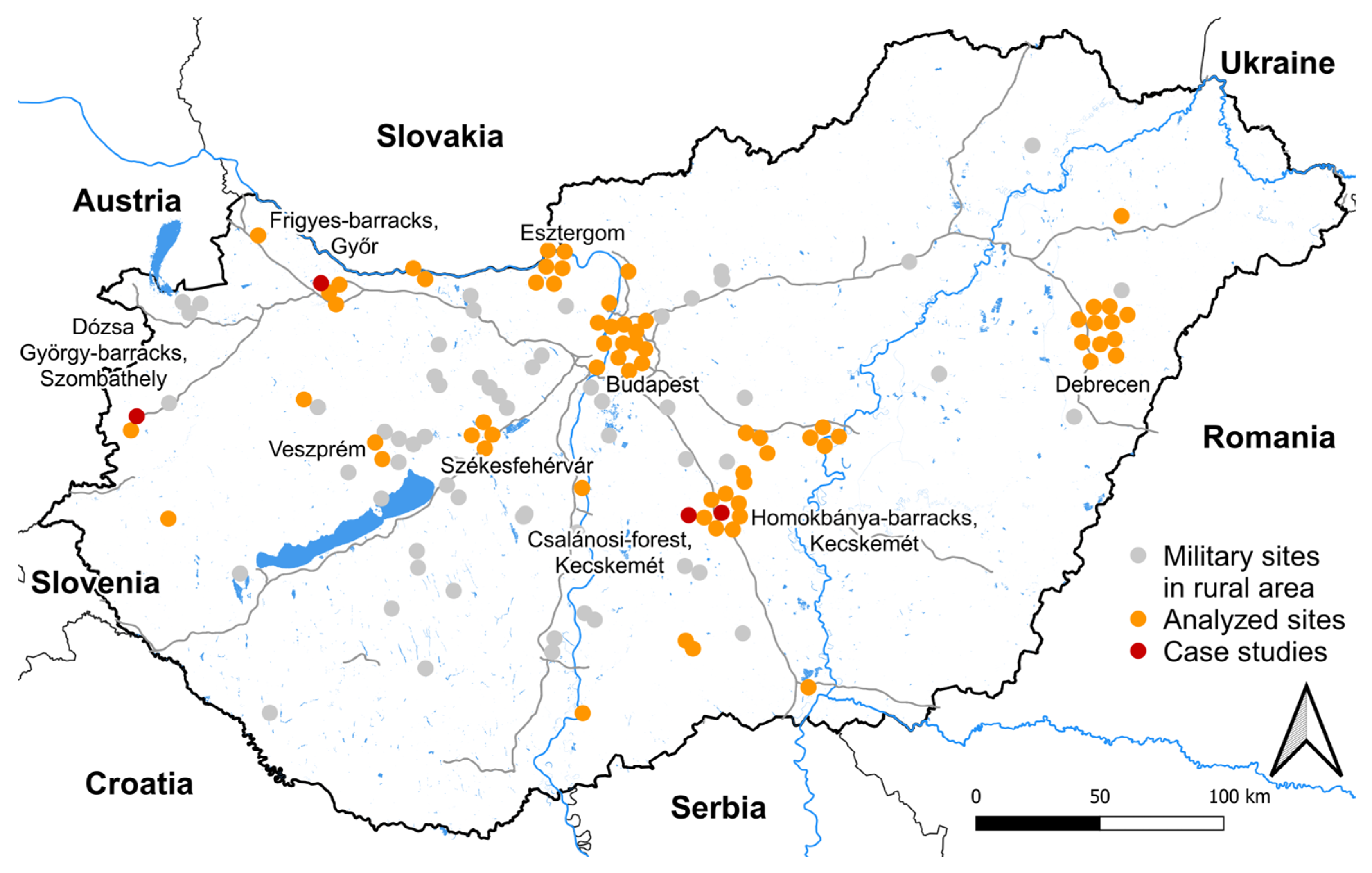
As a first step, we collected and reviewed all the relevant literature dealing with the regeneration of military brownfield sites at the international level. Then, a literature search was performed at the national level. Based on archive materials and contemporary news reports, the first reliable study appeared only in 2013, which provided a detailed database of former Soviet military sites in Hungary; according to the database, there are 349 military brownfields in the country [73]. However, a recent study found that in some cases, the exact location of Soviet military brownfields could not be identified properly (e.g., former military training grounds that became vegetated areas in the meantime) or their size was too small, and they could not be considered as independent military brownfields (e.g., smaller transmission tower) [27]. The narrowed list of former Soviet military sites contained 135 records with a total area of 10 thousand 603 hectares, which was the starting point for this research. The spatial pattern of Soviet garrisons and military sites shows a high concentration in the central part of Hungary, especially in and around Budapest, and in major cities like Győr, Veszprém, and Székesfehérvár in the western part of Hungary, as well as Kecskemét and Debrecen in the East. This spatial pattern can be explained by military strategic considerations of the Soviet army occupying the central part of the country and concentrating its forces in major transport (rail, road, and air) hubs, providing easy communication among the troops and the homeland [42]. Since the phenomenon of urban sprawl is characteristic mainly for larger urban places, the database was further narrowed down and we considered only those Soviet military brownfields that are located in urban municipalities above 20,000 inhabitants. In the end, we analyzed the spatial impacts of 73 Soviet military brownfields during the research, as shown in Figure 2. We also indicated the cities and the names of the military brownfields that were subject to the case-study analysis.
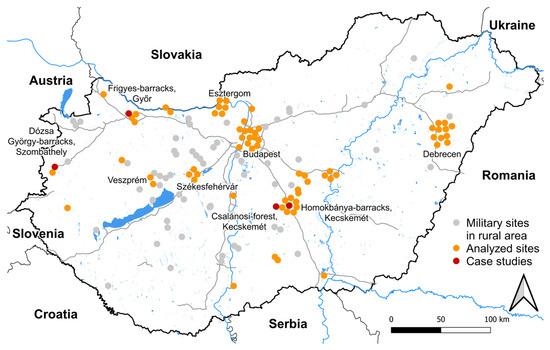
Figure 2.
The location of the former Soviet military sites in Hungary.
After determining the geolocation and the size of the brownfield areas, the impact on urban sprawl was examined using the 1990 and 2018 CORINE Land Cover databases [74,75]. These two dates were chosen because Soviet troops left Hungary in 1990–91, and the most recent publicly available version of the CLC database is from 2018. The CORINE Land Cover database has been widely used in the literature to measure urban sprawl [59]. During the analysis, the database was processed in Microsoft Office Excel and IBM SPSS Statistics 27 programs, while the map analysis was performed in QGIS.
Depending on the level of redevelopment and geographical location of the military brownfields and their possible impacts on compaction or sprawl, a matrix was created (Table 1). Following the logic of the matrix, distinct types of military brownfields were defined.

Table 1.
Possible types of military brownfields based on their geographical location and level of redevelopment.
The categorization was based on the level of redevelopment since the site became vacant and the position of the site relative to the compact city (i.e., continuous urban fabric) in 1990. Both intact sites and redeveloped sites were classified according to their location, and land-use changes between 1990 and 2018 were captured by the CORINE Land Cover database. Common characteristics of the brownfield types were identified and their impacts on urban sprawl were assessed.
In addition to the quantitative methodology, semi-structured in-depth interviews were conducted with local stakeholders, planners, and decision- and/or policymakers who had information about and sufficient insight into the process of regeneration of the brownfields (or the lack of it), and sometimes they even participated in it (Table 2). All the interviews were conducted in-person, recorded, and then transcribed for the purposes of analysis. To ensure compliance with the General Data Protection Regulation (GDPR) and data protection regulations, all data were anonymized.
Table 2.
Summary data of the interviews.
The main questions asked during the interviews were as follows:
- What is the size of the site in question?
- What was its former function? What type of Soviet facility operated on the site and what was its purpose?
- What was the condition of the site following the departure of the Soviet forces?
- When did the rehabilitation of the area begin (if it took place at all), who was/were the main stakeholder(s) behind the project (state, private company, etc.), and how successful was it?
- Who acquired ownership of the area following its rehabilitation? What types of investors arrived in the area?
- What concepts were proposed for the utilization of the site? Why was the final project implemented instead of other alternatives? What sources of funding were used for the redevelopment?
- What has been the main impact of the redevelopment regarding the wider development of the city, and what potential effects it may have in the future?
- How well does the newly established function resulting from the redevelopment align with the social and economic character of the city?
- Did the development increase or decrease the level of built-up areas compared to the previous conditions?
- How did locals perceive the redevelopment, both residents living in the immediate vicinity and the city as a whole? Did the regeneration have any positive or negative impact on the surrounding areas?
The typology of sites based on land-use data could be extended with a more in-depth analysis based on the qualitative information derived from the interviews. During the interviews, respondents highlighted the problems and difficulties associated with the regeneration of Soviet military brownfields, which provided an opportunity to define the main obstacles of larger redevelopment programs. Taken altogether, these interviews allowed us to triangulate the data from different sources and develop a detailed and in-depth understanding of how the redevelopment of Soviet military brownfields has unfolded in Hungary since 1991. Considering all this information, the impact of regeneration or the lack of it on the wider urban transformations, and more specifically urban sprawl, could not only be quantitatively assessed, but also qualitatively assessed.
4. Results
The previous functions of the 73 Soviet military brownfields covering an area of 2540.18 hectares could be identified as former military barracks (i.e., buildings lodging soldiers and commanders extended by other facilities), warehouses (storing explosives, fuel etc.), airfields, training fields, radio stations, hospitals, and residential enclaves. For detailed information about the individual sites, see Appendix A. According to their location and spatial effects, the military brownfields investigated could be classified into three distinct types (Table 3). Sites that have not been redeveloped yet were labeled as ‘intact’. They could be located either inside the compact city or outside. Those fully or partially redeveloped were divided further into two sub-groups: those lying within the boundaries of the compact city (‘compact’) or outside the boundaries (‘peripheral’). The relationship of sites belonging to different categories with urban sprawl was then carefully analyzed.
Table 3.
The number and the size of brownfields in each category.
4.1. Intact Sites
We identified 12 intact military brownfields with 613.51 hectares (24.2% of the total area) where redevelopment has not taken place since the withdrawal of the Soviet army, and the sites have remained unused. Typically, these sites still have their original buildings, but in very obsolete conditions, some parts of the infrastructure have been dismantled, while the remediation of the site is still missing. A previous study showed that intact military brownfields in Hungary are mainly concentrated in smaller towns and villages, at lower levels of the settlement hierarchy, reflecting the relevance of the size of the municipality and its budgetary potential regarding redevelopment [21].
The geographical location of the intact sites deserves special attention; two-thirds of them are located outside the compact city (i.e., urbanized areas) far from the city center, with no or limited access to the existing transport network. Such sites were usually developed by the Soviet army in the 1960s and 70s and functioned as airfields, ammunition depots, and radar stations. This group of military brownfields has no direct impact on urban sprawl; being unattractive for investors, they have not served as magnets for new developments (Figure 3).
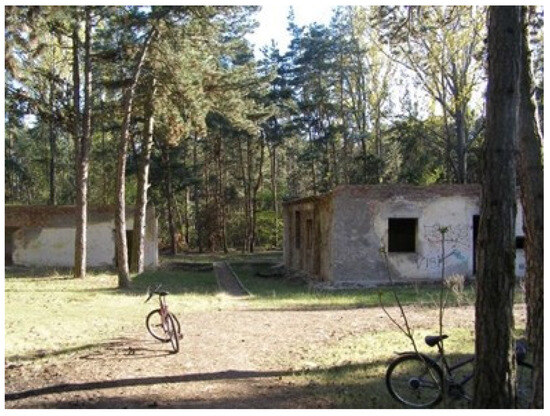
Figure 3.
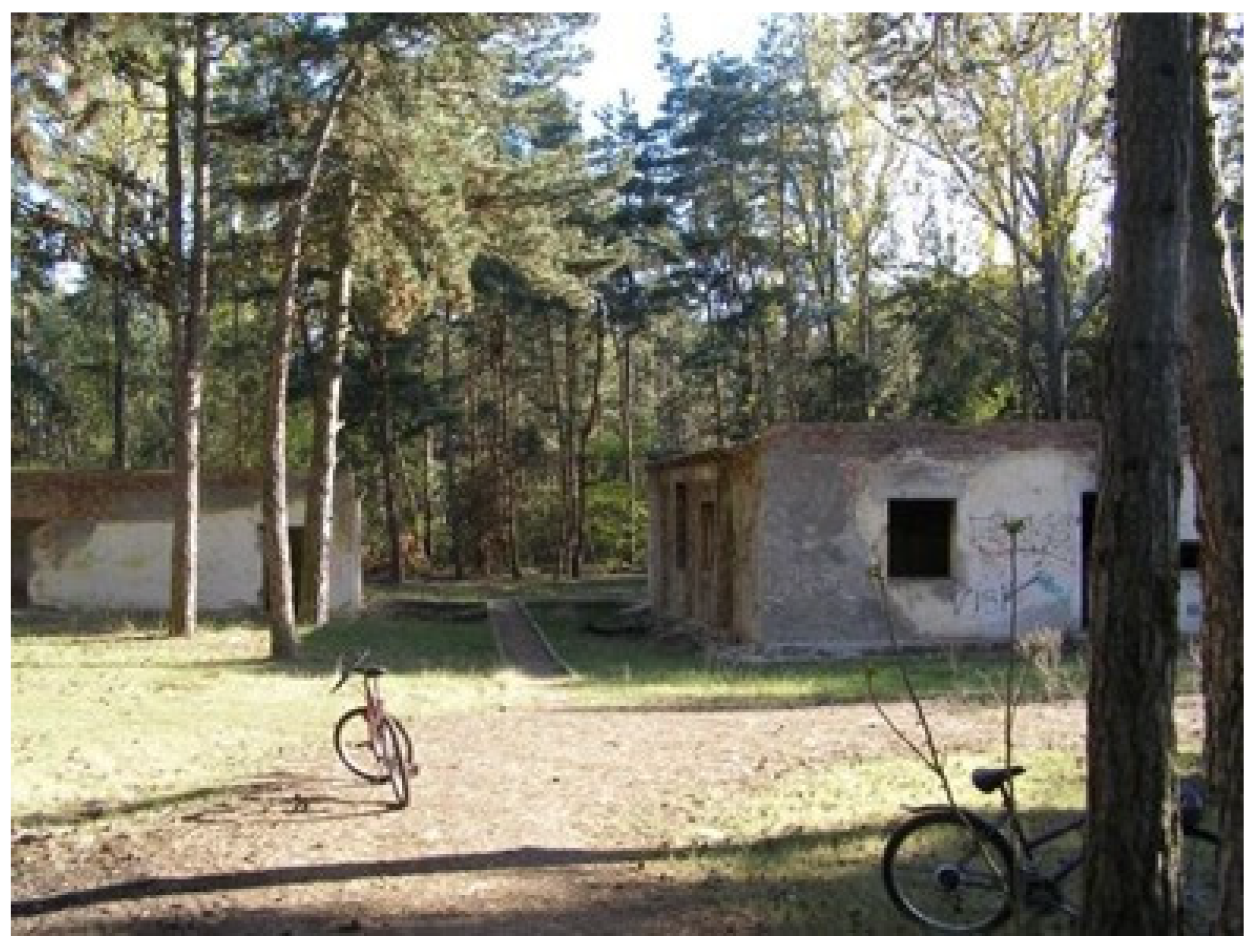
Former Soviet ammunition depots and training ground in Csalánosi forest near Kecskemét.
An example for the intact military brownfields is the ammunitions depots and training ground of the Soviet army in Csalánosi forest near Kecskemét, a second-tier city in Hungary with ca. 115 thousand inhabitants. The site (131.34 ha) was originally used for shooting exercises, hand grenade throwing, etc., and went through a clean-up program in 2002. A part of the site is now used as a forest, but the former ammunition depots are intact and the nuances of the landscape with artificial hills still reflect the original military use.
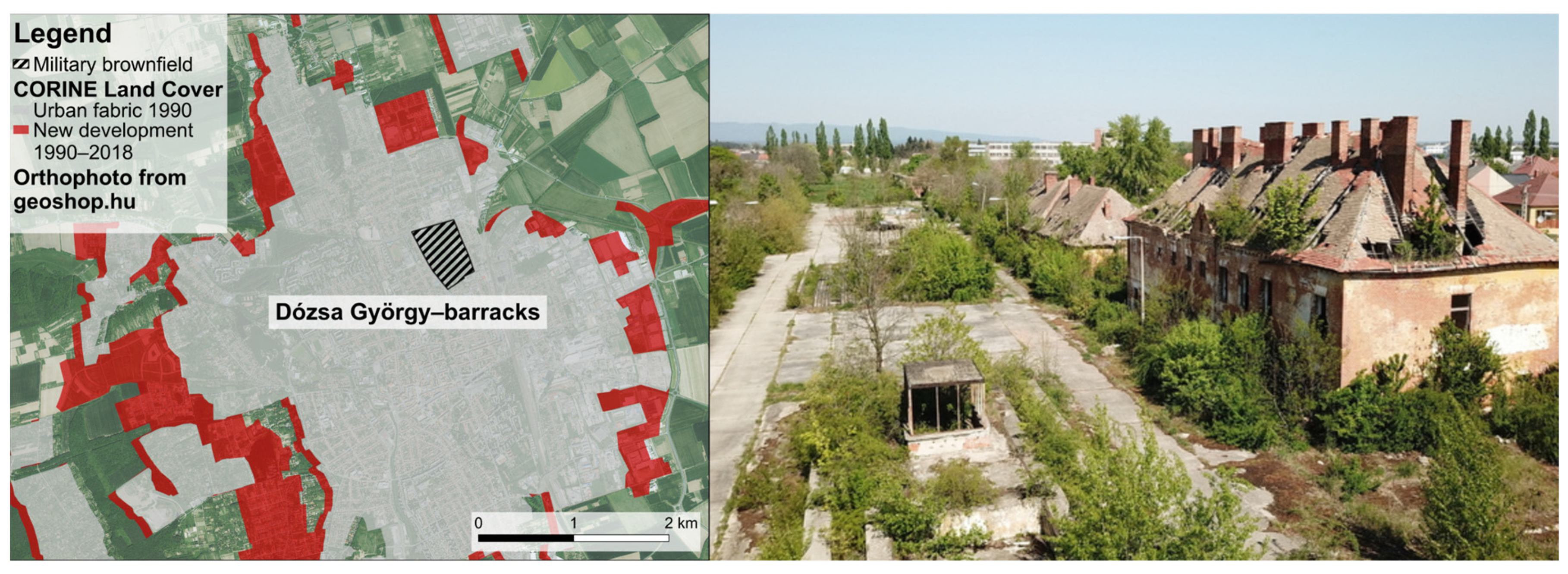
However, we also found intact military brownfields in the densely built areas of cities, mainly in Budapest and larger cities. The indirect impact of such sites on urban sprawl is obvious; instead of their reuse and rehabilitation, the cities expanded outside the continuously built-up areas and consumed greenfield areas. A good example of such sites is the Dózsa György barracks (26.62 ha) in Szombathely, a major city in Western Hungary with around 80 thousand inhabitants (Figure 4). The barracks were built in 1889 and hosted a section of the Hungarian cavalry regiment until the early 1950s when they were occupied by the Soviet troops. After the withdrawal of the Soviet army in 1989, the buildings—which are part of the national cultural heritage—remained empty for decades and deteriorated visibly.
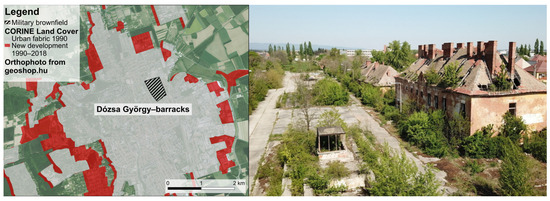
Figure 4.
The abandoned Soviet military barracks in Szombathely, Hungary.
A common feature of the property relations of this type of site is that they are owned by the local municipality, which tries to sell them from time to time, but no investors are found. The main reasons behind the failed transactions are usually the high estimated costs of remediation and the strict regulations regarding the forms of regeneration set by heritage protection. To find some solutions for the utilization of such sites, local governments often designate temporary functions (e.g., weekly market, car park).
4.2. Redeveloped Sites in the Compact City (‘Compact’)
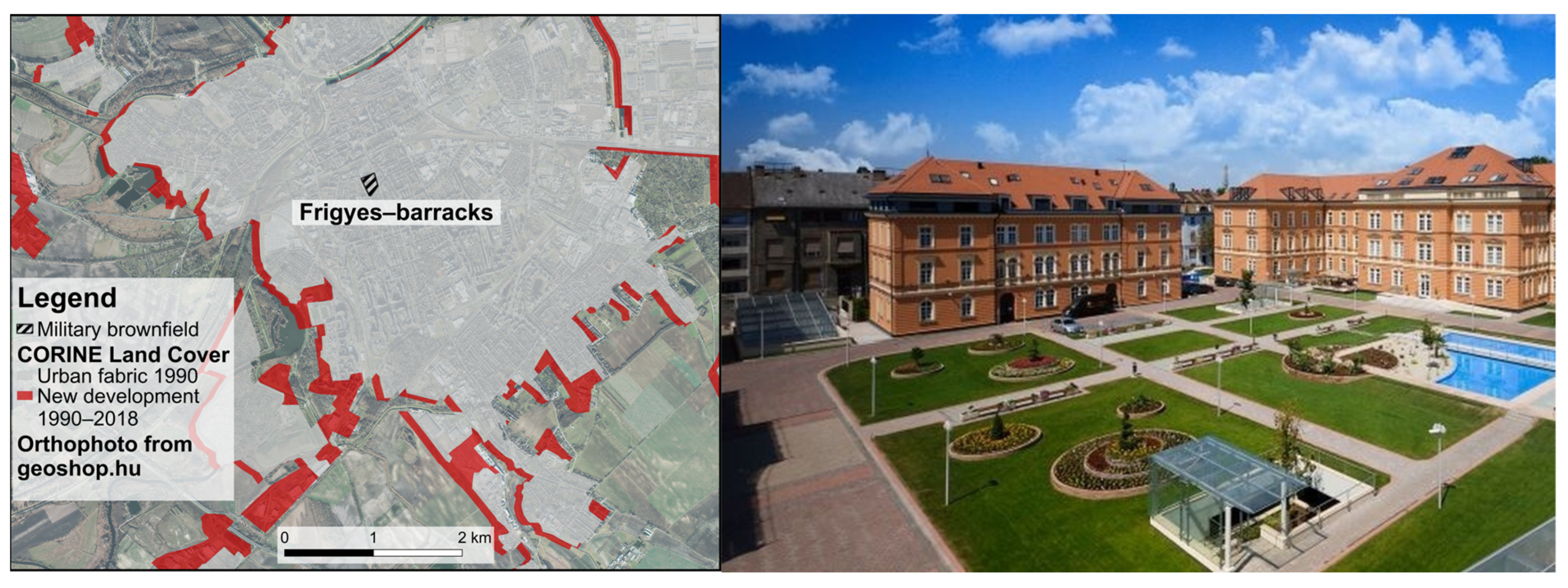
We identified 33 fully or significantly redeveloped Soviet military brownfields with an area of 330.85 hectares (13% of the total area). These brownfields were located in the continuously built-up areas of cities in 1990. These facilities were very often developed by the Austro-Hungarian Monarchy in the late 19th century and were taken over by the Soviet army after WWII. When these barracks were erected, they were located at the edge of the compact city, but in the subsequent half of the century, they became an integral part of the built-up area of cities due to urban growth and land conversion. Their size on average is relatively small, and they possess considerable architectural and emotional value; therefore, their redevelopment was relatively easy and successful. An example is the Frigyes barracks, located in Győr in Western Hungary (Figure 5).
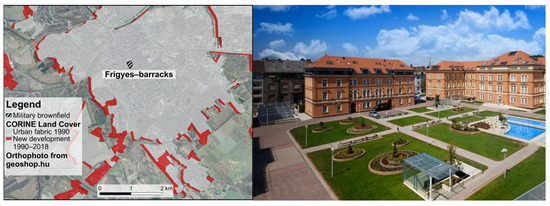
Figure 5.
The former Frigyes barracks serving today as Leier City Centre in Győr.
The Frigyes barracks were completed in 1896 by the Austro-Hungarian Monarchy and served the needs of the Hungarian army. After the 1956 revolution, it was confiscated by the Soviet army. After more than three decades, the property was transferred to the local municipality in 1989. The Soviet troops left the buildings in very run-down conditions, but the site became a part of heritage protection in 2001. After long negotiations, in 2005, the site was bought by the Austrian Leier International company, which specializes in building materials manufacturing. Since then, the six buildings, located on 2.7 hectares of land in the center of Győr, have been completely renovated and converted to offices (giving a home to the Hungarian headquarters of the company) and high-quality residential spaces. The project can be considered very successful, and it has contributed to the extension of the city center of Győr.
As respondents confirm during the in-depth interviews, the rehabilitation of military brownfields in the compact city was relatively successful and their integration into the urban fabric was completed between 1990 and 2018. One of the interviewees, a senior project manager from Budapest’s third district, noted the following:
“The site with the former Soviet barracks gives our district a significant development potential, as it lies along the main transit road leading to the suburbs. This is probably the reason why potential developers interested in the area appeared soon after the political changes”.(Respondent 3)
Nearly all of the successfully redeveloped sites are located in larger cities of Hungary in the upper levels of the urban hierarchy and Budapest. The success of their regeneration and integration into urban life largely depends on their proximity to the city center, the architectural quality of the buildings, and the policy of the local municipality.
4.3. Redeveloped Sites Outside the Compact City (‘Peripheral’)
We identified 28 former Soviet military sites with an area of 1595.82 hectares (62.8% of the total area); these sites were located outside the continuous urban fabric (i.e., compact city) in 1990 and became completely redeveloped by 2018. Thus, this is the largest group of military sites, considering their territorial extent. These military installations were usually developed in the 1950s outside the inhabited areas of cities along main radial roads connecting the cities to the national highway system. The 2018 CLC data confirmed that the spatial expansion of the artificial surfaces of cities reached these sites in the meantime and often outgrew them. Data confirm that 40% of the investigated military sites in our sample actively contributed to urban sprawl. Even though Budapest, the capital city of Hungary, has been subject to rapid urban sprawl in the last three decades [46], we have not found any military brownfield around Budapest that would have contributed to the sprawl. During the analysis, we found that military brownfields with peripheral locations generated urban sprawl mainly around second-tier cities.
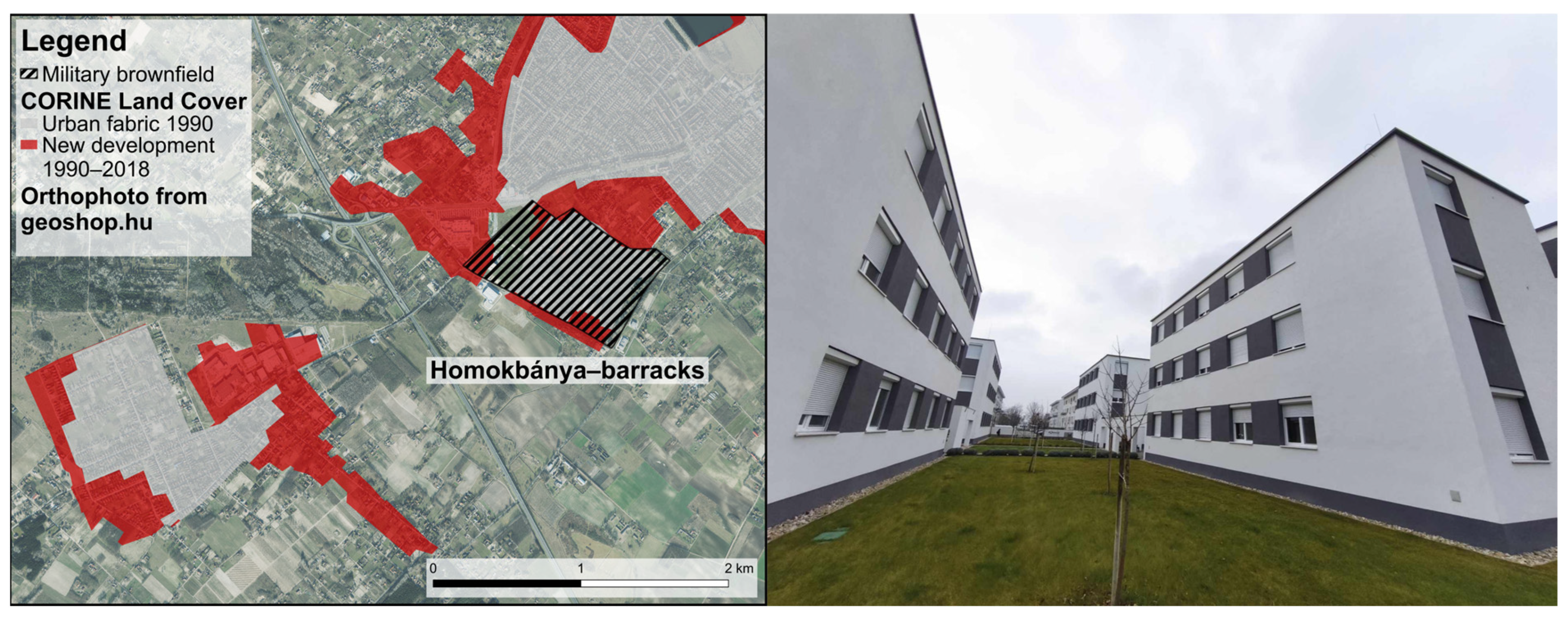
An example for this type of military brownfields is the former Homokbánya barracks, occupying 70.07 hectares in Kecskemét (Figure 6). The site was originally developed for the Hungarian People’s Army in 1950; later, it was taken over and significantly expanded by the Soviet army. After the withdrawal of the Soviet troops, the site was gradually redeveloped by private investors due to the incentives of the local municipality. The original buildings were renovated and converted to modern housing, and the newly arriving residents were supplied with public transport and communal facilities (school, kindergarten, etc.). The project attracted new investments like a gated community or the student dormitory of the local university. According to the local plans, the newly evolving Homokbánya neighborhood would serve as a community center in the future on the western side of the city with mixed land-use patterns, and include new functions (business, commerce, etc.).
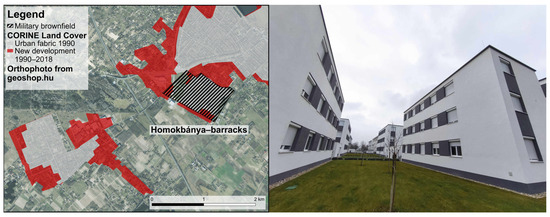
Figure 6.
The former Homokbánya barracks near Kecskemét.
“The local government has been planning for the area a sub-center function for a long time to relieve the burden on the city center and provide services for the outer parts of the city. There are still 30 hectares of unused land available in the area, for which several plans have been made. The latest plan envisaged an urban sub-center with mixed-functions and good public transport connections with the city center, and a bike path”.(Respondent 1)
A deeper analysis of the newly evolving urbanized surfaces linked to former military sites outside the compact city shows that the most common functions are residential, business, and logistics. Due to their excellent location, such sites were very much favored by investors seeking locations with good accessibility for their projects. In many cases, the site was converted to an upmarket housing compound, most often a gated community, which attracted further housing developments in the nearby green areas in the form of low-rise single-family homes, just like in the case of Homokbánya barracks. The same applies if the military brownfield was successfully converted to a business park. In subsequent years, other firms engaged in businesses or logistics settled in the area. Thus, this type of Soviet military brownfield often served as a catalyst for urban growth and land conversion in the peripheries of cities.
4.4. Generations of Former Soviet Military Sites
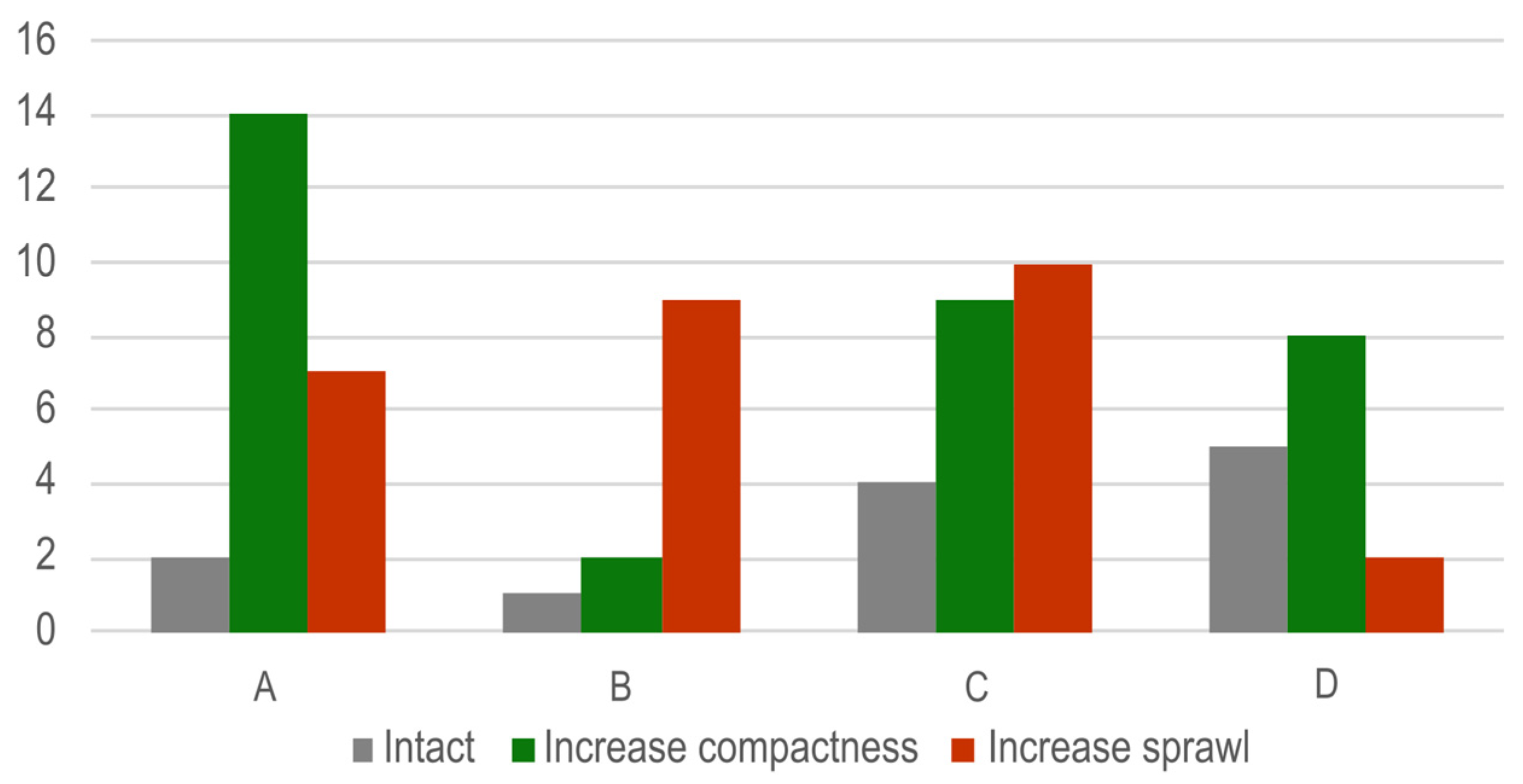
Regarding the age of their construction, geographical location, and the level of transformation, former Soviet military sites can be divided into four distinct types: (A) military land (mainly barracks) developed by the Austro-Hungarian Monarchy before World War I; (B) military installations originally built for the Hungarian People’s Army before the arrival of the Soviet troops; (C) military sites developed by the Soviet army after the 1950s; and (D) civilian urban facilities (e.g., hospitals, airfields, depots, residential buildings) developed by the Hungarian state and taken over by the Soviet army. The impacts of the different generations of military brownfields on urban spatial development are demonstrated in Figure 7.
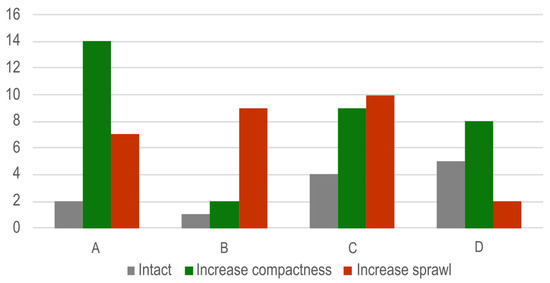
Figure 7.
Generations of former Soviet military sites in Hungary and their spatial impact (number of sites).
Older military sites and properties designed for civilian use (types A and D) enhanced dense development patterns and increased the compactness of cities after redevelopment, whereas military installations put in place in the early years of communism by the Hungarian state or the Soviet army (types B and C) generated urban sprawl. The reasons behind this are not only the more peripheral location and bigger size of the latter groups, but also the weaker planning control and the higher demand of investors for cheaper land in the urban periphery [7,76].
4.5. Functions of the Reuse of Soviet Military Brownfields
The development potential and the functions of the reuse of military brownfields differ considerably, as do their accessibility, the architectural quality of the buildings, and the land value. Therefore, the actual use of the redeveloped military brownfields located inside (‘compact’) and outside (‘peripheral’) the compact city was analyzed separately. Only the current use of military brownfields that went through regeneration was captured and analyzed.
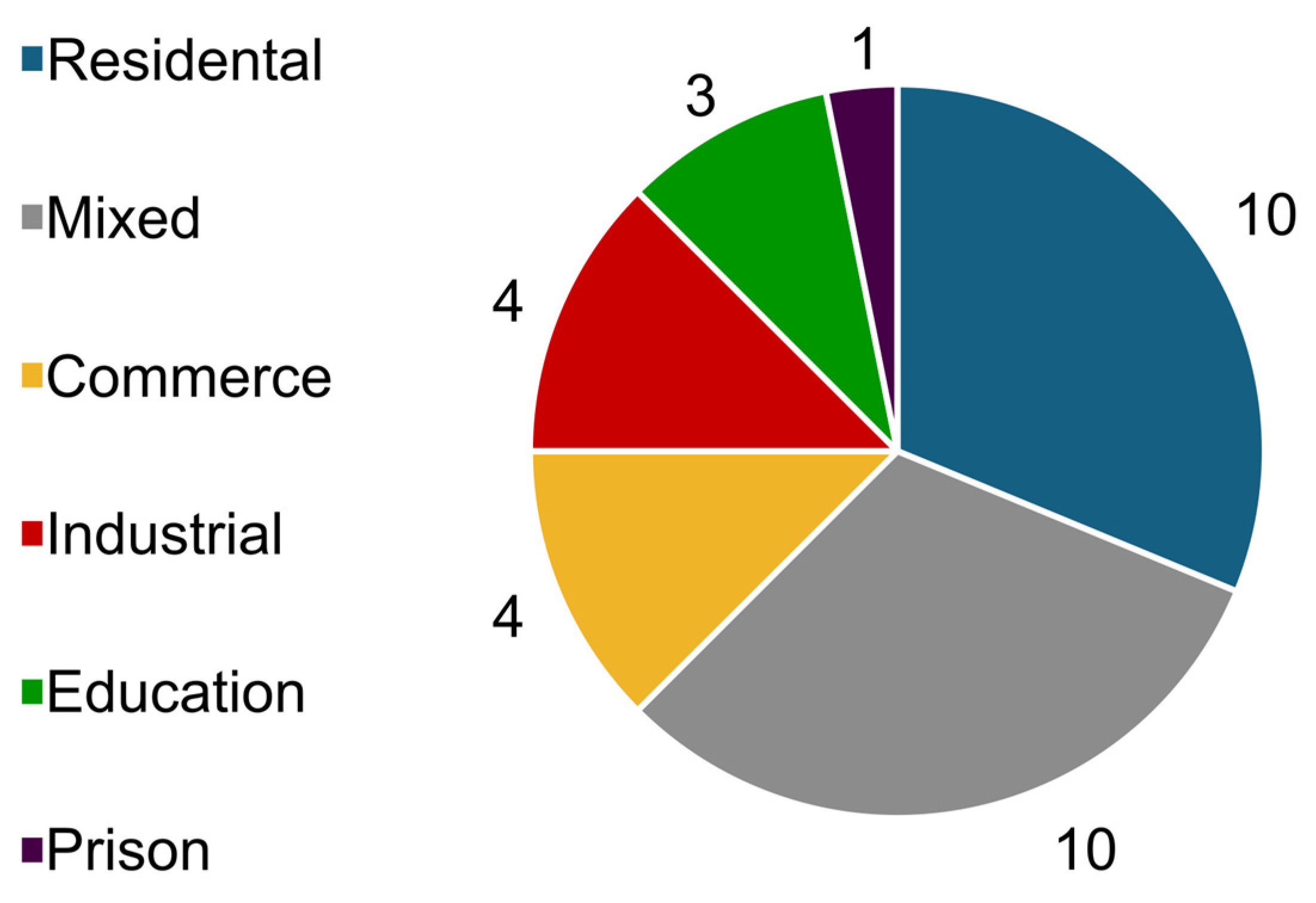
Most of the military brownfields embedded in the continuous urban fabric have been targets of local rehabilitation programs and they have become fully or significantly renovated by now, mainly due to their advantageous accessibility, the existing urban infrastructure, and high real estate value. The dominant new functions of these sites are residential and mixed-use, followed by commercial and industrial uses (Figure 8). Mixed-use developments usually comprise a combination of residential, commercial, and office spaces, whereas industry plays a subordinated role. The redevelopment of such sites has been successful, since they have been favored by real-estate developers and various mixed-use projects of the public sector (local governments, central government).
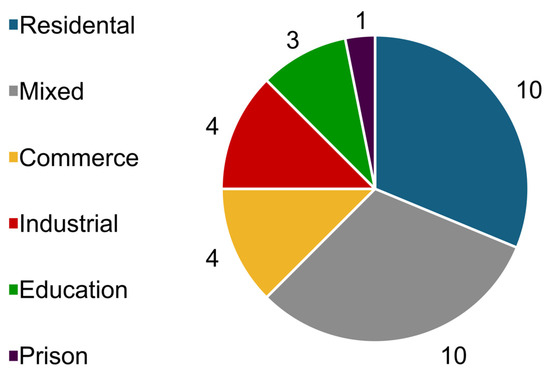
Figure 8.
Functional use of redeveloped ‘compact’ sites (number of sites).
“The main building of the barracks stood empty for a long time, because the municipality did not have sufficient resources for renovation. Situation changed when the county level institution of the national archives was removed there. Then the renovation was carried out from public money and the building got a new function”.(Respondent 8)
Local municipalities could use such sites as a catalyst for wider rehabilitation programs targeting specific neighborhoods or districts of a city. If the original buildings had architectural or historical values, the site could also be involved in heritage preservation programs subsidized by the national government and the EU.
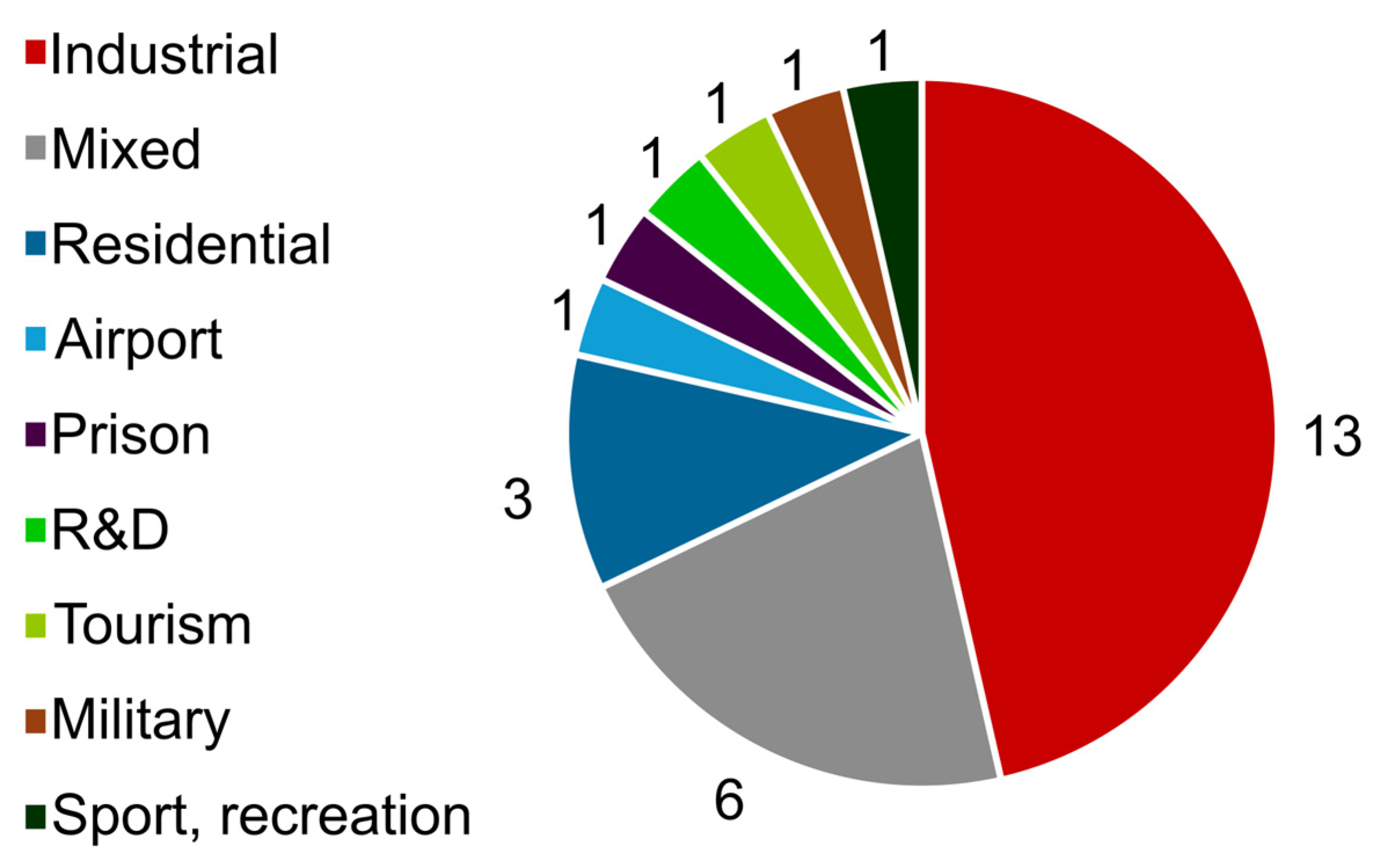
The redevelopment of ‘peripheral’ military brownfields has been less successful; many of them have been renovated only partially and are often disconnected from the wider urban environment. Also, there is a high diversity of new functions compared to the redeveloped sites in the compact city. The dominant function of their new use is industry, followed by mixed-use, usually comprising industrial and residential uses (Figure 9). Single-use residential functions only rarely come to the fore, just like other functions, such as airport, R&D, leisure, etc. During their redevelopment, industrial investors often buy additional agricultural land near the brownfield site, generating urban sprawl. This also applies to mixed-use developments, where new housing projects have often been realized near new industries.
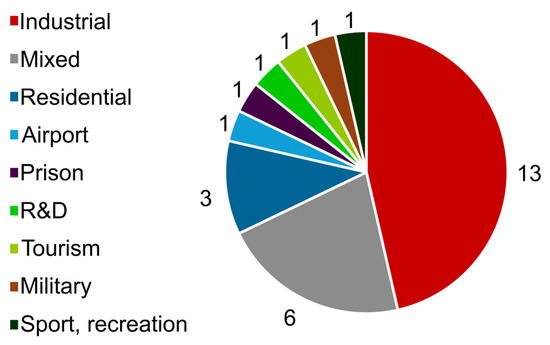
Figure 9.
Functional use of ‘peripheral’ sites (number of sites).
5. Discussion and Conclusions
Nowadays, urban sprawl and the territorial expansion of derelict land, the so-called brownfields, are among the main challenges of sustainable urban development. This study linked the two phenomena in its approach and analyses the potentials of brownfield regeneration in combating urban sprawl, with special attention to military brownfields. Military brownfields are considered to be a special case in the wide spectrum of derelict and underused urban areas due to their larger size, peripheral location, and contamination problems. However, according to the literature, military brownfields also offer unprecedented development opportunities for urban planners to restrict urban sprawl and stimulate the compact growth of cities through the otherwise complicated process of cleaning up and redeveloping land [21,29,44].
Using a mix of quantitative (GIS) and qualitative (interviews) research methods and applying a case-study approach, this paper investigated the relationship between the redevelopment of former Soviet military sites and urban sprawl in Hungary. Geopolitically, the country was liberated and at the same time occupied by the Soviet army in the final phase of World War II, who remained in the country until June 1991. During this period, the Soviet army confiscated old military facilities that were originally built for the national army, developed new ones, and occupied properties in civilian use (e.g., hospitals, airports, office buildings). After the withdrawal of the Soviet army in 1991, most of their facilities were abandoned, and gradually they became dilapidated brownfields. The main question of this research was whether military brownfields can be used as a tool for combating urban sprawl or, on the contrary, whether they generate sprawl themselves.
The findings of this paper highlight the overall relevance of military brownfield regeneration in urban compaction, densification policy [70], and urban sustainability. However, as it was demonstrated, not all the redevelopment projects appear to be beneficial to densification objectives. The regeneration of military brownfields embedded in the built-up areas of cities can increase compactness and attract new functions, including culture, art, and entertainment [77], as well as new residents to abandoned areas. They can also actively contribute to the wider regeneration strategies and culture-based policies of local and central governments, especially in run-down neighborhoods close to downtown [77]. However, a large number of military brownfields are located on the peripheries of urban areas. The regeneration of such sites, as it was demonstrated, may play a catalyst role in urban sprawl. Thus, the answer to the question indicated in the title of this paper is far from straightforward. Our study showed that some of the military brownfields offer opportunities to combat urban sprawl via redevelopment; others, however, can actively generate land conversion and sprawl. This research found that the extent of the latter group far exceeds the former. Therefore, it is important to emphasize that local municipalities should make a careful strategic selection of military brownfield sites in their redevelopment strategies based upon their characteristics and location, as supported by the typology presented in this study, together with socio-economic and risk factors. Brownfield sites located outside the continuous urban fabric, which may serve as possible catalysts of urban sprawl, deserve particular attention.
This study also shed light on the relevance of local politics, particularly on how municipal governments perceive and handle the challenges caused by military brownfields. In Hungary, abandoned military facilities left behind by the Soviet army were transferred in most cases from the central government to municipal governments in the 1990s. However, local political and budgetary conditions as well as planning objectives often had a great influence on the success of the regeneration of military brownfield sites and their wider impact on urban land use. In this regard, our respondent in Kecskemét emphasized the following:
“Local governments’ budgets are getting smaller and smaller due to government restrictions. They are unable to compete with real estate speculators. Local governments can only implement smaller developments from their own resources (e.g., infrastructure development). The best chance is if the city successfully applies for state or EU funds, which may limit the development that can be carried out, but at least the area can be recycled”.(Respondent 1)
Cities where the municipal government actively supported the remediation and integration of military brownfields to the built-up area of the city could use the rehabilitation process to promote densification and compaction policies. However, when the municipal government wanted to get rid of the problems caused by the newly acquired military brownfields and sold the properties to real-estate developers, the rehabilitation often failed or discontinued, and the redevelopment projects often generated new investments in nearby sites, generating urban sprawl. In addition to local efforts, budgetary conditions also played a role in this process, because some municipalities were in desperate financial situation.
“As a significant part of the area became privatized the possibility for the municipality to have influence on the utilization of buildings became very limited. It does not help either that the area has been divided up among several owners, and buying back the land is not a possible solution. We can only hope that new developments recently evolved at the urban fringe will have a positive impact on the future of the military barracks”.(Respondent 2)
The limitations of this study include its geographical scope and methodology. We used only one country, Hungary, in CEE, as a case study; however, we think that the urban challenges caused by the redevelopment of former military properties are rather similar in other regions [14,15] and worldwide. Regarding the methodology, in follow-up research, other types of brownfields should also be investigated from a comparative perspective. Despite these limitations, we think that the results of this study provide a reference for future policy formulations in countries with a similar geopolitical heritage as Hungary.
Author Contributions
Conceptualization, B.S. and Z.K.; methodology, B.S. and T.K.; software, B.S.; validation, B.S. and T.K.; formal analysis, B.S.; investigation, B.S.; resources, Z.K.; data curation, B.S.; writing—original draft preparation, B.S.; writing—review and editing, T.K. and Z.K.; visualization, T.K.; supervision, T.K. and Z.K.; project administration, Z.K.; funding acquisition, Z.K. All authors have read and agreed to the published version of the manuscript.
Funding
This research has been funded by the Hungarian Scientific Research Fund (OTKA), Grant Agreement No. K135546, and the National Research, Development, and Innovation Fund of the Ministry of Innovation and Technology, Hungary, under the TKP2021-NVA-09 funding scheme.
Data Availability Statement
The original contributions presented in this study are included in the article. Further inquiries can be directed to the corresponding author. The other (Land Cover) data presented in this study are available in Corine Land Cover at https://land.copernicus.eu/en/products/corine-land-cover/ (accessed on 3 November 2024).
Conflicts of Interest
The authors declare no conflicts of interest. The funders had no role in the design of the study; in the collection, analyses, or interpretation of data; in the writing of the manuscript; or in the decision to publish the results.
Appendix A
| ID | Settlement Name | Object Name | Size (ha) | Former Function | New Function | Redeveloped | Partially Renewed | Intact | Selected |
|---|---|---|---|---|---|---|---|---|---|
| 1 | Aszód | József Attila barracks | 5.85 | barrack | Mixed | X | No | ||
| 2 | Baja | Bethlen Gábor barracks | 28.33 | barrack | - | X | No | ||
| 3 | Baja | training ground | 90.62 | training ground | Military | X | No | ||
| 4 | Baja | Damjanich jános barracks | 16.40 | barrack | Commercial | X | Yes | ||
| 5 | Balatonfüred | hospital, sanatorium | 1.81 | hospital | Culture | X | No | ||
| 6 | Berettyóújfalu | airport | 164.31 | airport | Agriculture | X | No | ||
| 7 | Bócsa | training ground | 950.63 | training ground | Nature reserve | X | No | ||
| 8 | Budapest | military residential buildings | 14.94 | residential building | Mixed | X | Yes | ||
| 9 | Budapest | Dózsa György barracks | 7.17 | barrack | Mixed | X | Yes | ||
| 10 | Budapest | Landler Jenő barracks | 13.22 | barrack | Mixed | X | Yes | ||
| 11 | Budapest | hospital | 7.33 | hospital | - | X | Yes | ||
| 12 | Budapest | Rákóczi Ferenc barracks | 19.11 | barrack | Mixed | X | Yes | ||
| 13 | Budapest | airport | 43.48 | airport | Sport, recreation | X | Yes | ||
| 14 | Budapest | barracks | 10.20 | barrack | Industrial | X | Yes | ||
| 15 | Budapest | military residential buildings | 0.43 | residential building | Residential | X | Yes | ||
| 16 | Budapest | military residential buildings | 1.77 | residential building | Residential | X | Yes | ||
| 17 | Budapest | radio station | 3.42 | radio station | Industrial | X | Yes | ||
| 18 | Budapest | Beloiannisz barracks | 20.33 | barrack | Residential | X | Yes | ||
| 19 | Budapest | Stromfeld Aurél barracks | 26.31 | barrack | Industrial | X | Yes | ||
| 20 | Budapest | Budatétény barracks | 3.20 | barrack | Industrial | X | Yes | ||
| 21 | Cegléd | Kossuth Lajos barracks | 24.18 | barrack | Mixed | X | Yes | ||
| 22 | Cegléd | barracks, ammunition depot | 10.08 | barrack | Industrial | X | Yes | ||
| 23 | Cegléd | ammunition depot | 25.77 | warehouse | - | X | Yes | ||
| 24 | Csákvár | airport | 195.67 | airport | Nature reserve | X | No | ||
| 25 | Csákvár | barracks | 24.52 | barrack | Industrial | X | No | ||
| 26 | Császár | barracks | 116.81 | barrack | - | X | No | ||
| 27 | Csemő | ammunition depot | 35.88 | warehouse | - | X | No | ||
| 28 | Csévharaszt | ammunition depot | 74.13 | warehouse | Tourism | X | No | ||
| 29 | Debrecen | Gábor Áron barracks | 17.70 | barrack | Mixed | X | Yes | ||
| 30 | Debrecen | Esze Tamás barracks | 27.38 | barrack | Prison | X | Yes | ||
| 31 | Debrecen | radio station | 0.76 | radio station | Residential | X | Yes | ||
| 32 | Debrecen | airport | 402.45 | airport | Airport | X | Yes | ||
| 33 | Debrecen | ammunition depot | 10.77 | warehouse | - | X | Yes | ||
| 34 | Debrecen | radio station | 0.65 | radio station | Residential | X | Yes | ||
| 35 | Debrecen | training ground | 240.01 | training ground | Nature reserve | X | Yes | ||
| 36 | Debrecen | radio station | 0.86 | radio station | Residential | X | Yes | ||
| 37 | Debrecen | warehouse | 1.92 | warehouse | Industrial | X | Yes | ||
| 38 | Debrecen | ammunition depot | 11.52 | warehouse | Sport, recreation | X | Yes | ||
| 39 | Dunaföldvár | Hunyadi barracks | 14.78 | barrack | Mixed | X | No | ||
| 40 | Dunaújváros | Tolbuchin barracks | 15.90 | barrack | Industrial | X | Yes | ||
| 41 | Dunavarsány | radio station | 10.51 | radio station | Tourism | X | No | ||
| 42 | Esztergom | Malinovszkij barracks | 7.39 | barrack | Commercial | X | Yes | ||
| 43 | Esztergom | Rózsa Ferenc barracks | 11.45 | barrack | Mixed | X | Yes | ||
| 44 | Esztergom | KECS barracks | 5.65 | barrack | - | X | Yes | ||
| 45 | Esztergom | Zalka Máté barracks | 19.13 | barrack | Industrial | X | Yes | ||
| 46 | Esztergom | Nagy Sándor barracks | 38.60 | barrack | - | X | Yes | ||
| 47 | Esztergom | hospital | 3.45 | hospital | Education | X | Yes | ||
| 48 | Etyek | Fürst Sándor barracks | 16.04 | barrack | Residential | X | No | ||
| 49 | Etyek | training ground | 40.24 | training ground | - | X | No | ||
| 50 | Fertőd | Klapka György barracks | 17.98 | barrack | Mixed | X | No | ||
| 51 | Fertőd | ammunition depot | 5.15 | warehouse | Agriculture | X | No | ||
| 52 | Fertőd | radio station | 3.62 | radio station | Utility | X | No | ||
| 53 | Gödöllő | warehouse | 29.40 | warehouse | Culture | X | No | ||
| 54 | Győr | Frigyes barracks | 2.77 | barrack | Mixed | X | Yes | ||
| 55 | Győr | Vadász barracks | 12.20 | barrack | Mixed | X | Yes | ||
| 56 | Győr | Lovassági barracks | 15.52 | barrack | Residential | X | Yes | ||
| 57 | Győr | warehouse | 2.63 | warehouse | - | X | Yes | ||
| 58 | Hajdúböszörmény | fuel depot | 8.15 | warehouse | - | X | Yes | ||
| 59 | Hajdúhadház | training ground | 1711.72 | training ground | Military | X | No | ||
| 60 | Hajmáskér | barracks | 40.30 | barrack | - | X | No | ||
| 61 | Hajmáskér | barracks | 5.45 | barrack | - | X | No | ||
| 62 | Hajmáskér | ammunition depot | 30.54 | warehouse | - | X | No | ||
| 63 | Igal | radar station | 22.44 | radio station | Industrial | X | No | ||
| 64 | Kalocsa | airport | 474.26 | airport | Airport | X | No | ||
| 65 | Kalocsa | Bethlen Gábor barracks | 39.88 | barrack | - | X | No | ||
| 66 | Kaposszekcső | Tolbuchin barracks | 33.34 | barrack | Industrial | X | No | ||
| 67 | Kecskemét | Losonczi barracks | 13.00 | barrack | Mixed | X | Yes | ||
| 68 | Kecskemét | Zrínyi barracks | 3.88 | barrack | Education | X | Yes | ||
| 69 | Kecskemét | Petőfi barracks | 2.41 | barrack | Residential | X | Yes | ||
| 70 | Kecskemét | Homokbánya barracks | 70.07 | barrack | Mixed | X | Yes | ||
| 71 | Kecskemét | Zalka Máté barracks | 6.70 | barrack | Commercial | X | Yes | ||
| 72 | Kecskemét | training ground | 131.34 | training ground | - | X | Yes | ||
| 73 | Kecskemét | helicopter base | 56.10 | airport | Industrial | X | Yes | ||
| 74 | Kecskemét | fuel depot | 3.59 | warehouse | Residential | X | Yes | ||
| 75 | Kecskemét | KECS barracks | 2.20 | barrack | Prison | X | Yes | ||
| 76 | Kiskunhalas | Esze Tamás barracks | 27.49 | barrack | Mixed | X | Yes | ||
| 77 | Kiskunhalas | Gábor Áron barracks | 6.44 | barrack | Industrial | X | Yes | ||
| 78 | Kiskunlacháza | Kilián György barracks, airport | 510.17 | airport | - | X | No | ||
| 79 | Kiskunmajsa | Ságvári Endre barracks | 39.67 | barrack | Mixed | X | No | ||
| 80 | Komárom | Klapka György barracks | 64.46 | barrack | Mixed | X | Yes | ||
| 81 | Komárom | barracks | 8.77 | barrack | - | X | Yes | ||
| 82 | Kunmadaras | airport | 769.22 | airport | - | X | No | ||
| 83 | Lepsény | Szondi György barracks | 35.20 | barrack | Mixed | X | No | ||
| 84 | Lepsény | ammunition depot | 9.57 | warehouse | - | X | No | ||
| 85 | Lovasberény | barracks | 13.27 | barrack | Industrial | X | No | ||
| 86 | Lovasberény | ammunition depot | 152.34 | warehouse | - | X | No | ||
| 87 | Lőrinci | Damjanich János barracks | 11.79 | barrack | Industrial | X | No | ||
| 88 | Lőrinci | ammunition depot | 2.91 | warehouse | - | X | No | ||
| 89 | Mád | fuel depot | 17.33 | warehouse | Industrial | X | No | ||
| 90 | Mezőkövesd | barracks | 24.05 | barrack | - | X | No | ||
| 91 | Mór | Kinizsi Pál barracks | 14.81 | barrack | Industrial | X | No | ||
| 92 | Mór | ammunition depot | 15.49 | warehouse | Mixed | X | No | ||
| 93 | Mosonmagyaróvár | Táncsics Mihály barracks | 12.32 | barrack | Mixed | X | Yes | ||
| 94 | Nagykőrös | Nagy Sándor barracks | 21.39 | barrack | Industrial | X | Yes | ||
| 95 | Nagykőrös | Széchenyi barracks | 15.28 | barrack | Industrial | X | Yes | ||
| 96 | Nagytevel | training ground | 131.49 | training ground | Sport, recreation | X | No | ||
| 97 | Nagyvázsony | barracks | 32.40 | barrack | - | X | No | ||
| 98 | Nyíregyháza | warehouse | 1.89 | warehouse | Commercial | X | Yes | ||
| 99 | Orgovány | training ground | 196.93 | training ground | Nature reserve | X | No | ||
| 100 | Pápa | Bottyán barracks | 63.21 | barrack | Industrial | X | Yes | ||
| 101 | Pétfürdő | fuel depot | 33.27 | warehouse | Industrial | X | No | ||
| 102 | Piliscsaba | Perczel Mór barracks | 39.22 | barrack | Education | X | No | ||
| 103 | Polgárdi | Kossuth Lajos barracks | 19.50 | barrack | Mixed | X | No | ||
| 104 | Polgárdi | ammunition depot | 8.40 | warehouse | - | X | No | ||
| 105 | Sárbogárd | Rákóczi barracks | 19.73 | barrack | Industrial | X | No | ||
| 106 | Sárbogárd | military residential buildings | 2.62 | residential building | Residential | X | No | ||
| 107 | Sárbogárd | ammunition depot | 6.07 | warehouse | Industrial | X | No | ||
| 108 | Sármellék | airport | 384.29 | airport | Airport | X | No | ||
| 109 | Szeged | Öthalom barracks | 120.43 | barrack | R&D | X | Yes | ||
| 110 | Székesfehérvár | Gyalogsági barracks | 12.18 | barrack | Education | X | Yes | ||
| 111 | Székesfehérvár | Kossuth Lajos barracks | 14.46 | barrack | Industrial | X | Yes | ||
| 112 | Székesfehérvár | Lovassági barracks | 16.63 | barrack | Mixed | X | Yes | ||
| 113 | Székesfehérvár | barracks, airport | 419.25 | barrack | Industrial | X | Yes | ||
| 114 | Szentendre | Dózsa György barracks | 33.16 | barrack | - | X | Yes | ||
| 115 | Szentkirályszabadja | barracks | 61.19 | barrack | - | X | No | ||
| 116 | Szolnok | József Attila barracks | 11.56 | barrack | Industrial | X | Yes | ||
| 117 | Szolnok | Nagy barracks | 3.70 | barrack | Mixed | X | Yes | ||
| 118 | Szolnok | Bocskai István barracks | 18.17 | barrack | Residential | X | Yes | ||
| 119 | Szolnok | hospital | 2.38 | hospital | Residential | X | Yes | ||
| 120 | Szombathely | Dózsa György barracks | 26.62 | barrack | - | X | Yes | ||
| 121 | Szombathely | ammunition depot | 5.62 | warehouse | Residential | X | Yes | ||
| 122 | Tab | Hunyadi barracks | 31.56 | barrack | - | X | No | ||
| 123 | Tab | training ground | 15.40 | training ground | Sport, recreation | X | No | ||
| 124 | Táborfalva | Kossuth Lajos barracks | 18.63 | barrack | - | X | No | ||
| 125 | Tamási | Szondi György barracks | 18.21 | barrack | Mixed | X | No | ||
| 126 | Tápiószentmárton | airport | 188.77 | airport | Airport | X | No | ||
| 127 | Tarany | radio station | 6.62 | radio station | Agriculture | X | No | ||
| 128 | Tolna | Bem József barracks | 17.58 | barrack | Mixed | X | No | ||
| 129 | Tolna | ammunition depot | 44.34 | warehouse | Agriculture | X | No | ||
| 130 | Tököl | airport | 463.64 | airport | Mixed | X | No | ||
| 131 | Vác | fuel depot | 17.00 | warehouse | - | X | Yes | ||
| 132 | Vát | training ground | 522.47 | training ground | Nature reserve | X | No | ||
| 133 | Veszprém | barracks | 93.67 | barrack | Military | X | Yes | ||
| 134 | Veszprém | Kossuth Lajos barracks | 7.27 | barrack | Mixed | X | Yes | ||
| 135 | Zalaegerszeg | airport | 123.38 | airport | Airport | X | Yes |
References
- Jacek, G.; Rozan, A.; Desrousseaux, M.; Combroux, I. Brownfields over the Years: From Definition to Sustainable Reuse. Environ. Rev. 2022, 30, 50–60. [Google Scholar] [CrossRef]
- Adams, D.; De Sousa, C.; Tiesdell, S. Brownfield Development: A Comparison of North American and British Approaches. Urban Stud. 2010, 47, 75–104. [Google Scholar] [CrossRef]
- Alker, S.; Joy, V.; Roberts, P.; Smith, N. The Definition of Brownfield. J. Environ. Plan. Manag. 2000, 43, 49–69. [Google Scholar] [CrossRef]
- Kunc, J.; Martinát, S.; Tonev, P.; Frantál, B. Destiny of Urban Brownfields: Spatial Patterns and Perceived Consequences of Post-Socialistic Deindustrialization. Transylv. Rev. Adm. Sci. 2014, 10, 109–128. [Google Scholar]
- Trócsányi, A.; Karsai, V.; Pirisi, G. Formal Urbanisation in East-Central Europe. Hung. Geogr. Bull. 2024, 73, 49–72. [Google Scholar] [CrossRef]
- Grigorescu, I.; Dumitrică, C.; Dumitrașcu, M.; Mitrică, B.; Dumitrașcu, C. Urban Development and the (Re)Use of the Communist-Built Industrial and Agricultural Sites after 1990. The Showcase of Bucharest–Ilfov Development Region. Land 2021, 10, 1044. [Google Scholar] [CrossRef]
- Săgeată, R.; Mitrică, B.; Cercleux, A.-L.; Grigorescu, I.; Hardi, T. Deindustrialization, Tertiarization and Suburbanization in Central and Eastern Europe. Lessons Learned from Bucharest City, Romania. Land 2023, 12, 1731. [Google Scholar] [CrossRef]
- Michalski, T. A Geographic Approach to the Transformation Process in European Post-Communist Countries. In A Geographic Approach to the Transformation Process in European Post–Communist Countries; Wydawnictwo Bernardinum: Gdynia, Poland, 2006; pp. 7–24. [Google Scholar]
- King, L.P.; Szelényi, I. 10. Post-Communist Economic System. In The Handbook of Economic Sociology, 2nd ed.; Princeton University Press: Princeton, NJ, USA, 2010; pp. 205–230. [Google Scholar]
- Camerin, F.; Córdoba Hernández, R. What Factors Guide the Recent Spanish Model for the Disposal of Military Land in the Neoliberal Era? Land Use Policy 2023, 134, 106911. [Google Scholar] [CrossRef]
- O’Relley, Z.E. From Totalitarian Central Planning to a Market Economy: Decentralization and Privatization in Hungary. J. Priv. Enterp. 2001, 17, 111–123. [Google Scholar]
- Ponzini, D.; Vani, M. Planning for Military Real Estate Conversion: Collaborative Practices and Urban Redevelopment Projects in Two Italian Cities. Urban Res. Pract. 2014, 7, 56–73. [Google Scholar] [CrossRef]
- Ural, E.; Severcan, Y.C. Assessing User Preferences Regarding Military Site Regeneration: The Case of the Fourth Corps Command in Ankara. Cities 2022, 129, 103807. [Google Scholar] [CrossRef]
- Jarczewski, W.; Kuryło, M. Regeneration of Post-Military Areas in Poland. Eur. XXI 2010, 21, 117–133. [Google Scholar] [CrossRef]
- Korczak, J. Regeneration of Military Sites as a Factor in the Improvement of the Town’s Logistics Infrastructure. Procedia Soc. Behav. Sci. 2014, 151, 158–171. [Google Scholar] [CrossRef][Green Version]
- Moniak, A. The Functioning of the Collective Memory of Lower Silesians within the Multicultural Community of Borne Sulinowo. Hist. Teor. 2016, 1, 55. [Google Scholar] [CrossRef][Green Version]
- Myrttinen, H. Base Conversion in Central and Eastern Europe 1989–2003. BICC 2003, 30. Available online: https://www.bicc.de/Publikationen/paper30.pdf (accessed on 3 November 2024).
- Glintić, M. Revitalization of Military Brownfields in Eastern and Central Europe. Strani Prav. Ziv. 2015, 1, 123–136. [Google Scholar]
- Hercik, J.; Szczyrba, Z. Post-Military Areas as Space for Business Opportunities and Innovation. Stud. Ind. Geogr. Comm. Pol. Geogr. Soc. 2012, 19, 153–168. [Google Scholar] [CrossRef]
- Assylkhanova, A.; Nagy, G.; Morar, C.; Teleubay, Z.; Boros, L. A Critical Review of Dark Tourism Studies. Hung. Geogr. Bull. 2024, 73, 413–435. [Google Scholar] [CrossRef]
- Rey, E.; Laprise, M.; Lufkin, S. Urban Brownfields: Origin, Definition, and Diversity. In Neighbourhoods in Transition; The Urban Book Series; Springer: Cham, Switzerland, 2022; pp. 7–45. [Google Scholar]
- Bolleter, J.; Edwards, N.; Cameron, R.; Hooper, P. Density My Way: Community Attitudes to Neighbourhood Densification Scenarios. Cities 2024, 145, 104596. [Google Scholar] [CrossRef]
- Jansson, M.; Schneider, J. The Welfare Landscape and Densification—Residents’ Relations to Local Outdoor Environments Affected by Infill Development. Land 2023, 12, 2021. [Google Scholar] [CrossRef]
- Maloutas, T.; Frangopoulos, Y.; Makridou, A.; Kostaki, E.; Kourkouridis, D.; Spyrellis, S.N. Exploring Spatial Proximity and Social Exclusion through Two Case Studies of Roma Settlements in Greece. Land 2024, 13, 202. [Google Scholar] [CrossRef]
- Hercik, J.; Šimáček, P.; Szczyrba, Z.; Smolová, I. Military Brownfields in the Czech Republic and the Potential for Their Revitalisation, Focused on Their Residential Function. Quaest. Geogr. 2014, 33, 127–138. [Google Scholar] [CrossRef]
- Rudnicka-Bogusz, M. Innovative Use in Adaptation of Post Military Barrack Complexes. In Proceedings of the International Multidisciplinary Scientific GeoConference, Albena, Bulgaria, 2–8 July 2018; SGEM: Sofia, Bulgaria, 2018. [Google Scholar]
- Szabó, B.; Kovalcsik, T.; Kovács, Z. Lessons of the Regeneration of Former Soviet Military Sites in Hungary. In Achieving Sustainability in Ukraine Through Military Brownfields Redevelopment. NATOARW 2023. NATO Science for Peace and Security Series C: Environmental Security; Morar, C., Berman, L., Erdal, S., Niemets, L., Eds.; Springer: Dordrecht, The Netherlands, 2024; pp. 139–148. [Google Scholar] [CrossRef]
- Camerin, F.; Gastaldi, F. Italian Military Real Estate Assets Re-Use Issues and Opportunities in Three Capital Cities. Land Use Policy 2018, 78, 672–681. [Google Scholar] [CrossRef]
- Camerin, F. Former Military Barracks as Places for Informal Placemaking in Italy. An Inventory for New Insights. J. Urban. Int. Res. Placemaking Urban Sustain. 2024, 17, 190–213. [Google Scholar] [CrossRef]
- Morar, C.; Nagy, G.; Dulca, M.; Boros, L.; Sehida, K. Aspects Regarding the Military Cultural-Historical Heritage in the City of Oradea (Romania). Ann. Anal. Istrske Mediter. Stud. Ser. Hist. Sociol. 2019, 29, 303–322. [Google Scholar] [CrossRef]
- Jevremovic, L.; Stanojevic, A.; Djordjevic, I.; Turnsek, B. The Redevelopment of Military Barracks between Discourses of Urban Development and Heritage Protection: The Case Study of Nis, Serbia. Spatium 2021, 46, 22–35. [Google Scholar] [CrossRef]
- Rudnicka-Bogusz, M. The Genius Loci Issue in the Revalorization of Post-Military Complexes: Selected Case Studies in Legnica (Poland). Buildings 2022, 12, 232. [Google Scholar] [CrossRef]
- Niemets, L.; Sehida, K.; Babichev, A.; Subiros, J.V.; Morar, C.; Grama, V.; Kravchenko, K.; Telebienieva, I. Issues of the Military Brownfields in Ukraine: A Sustainable Development Perspective. In Achieving Sustainability in Ukraine Through Military Brownfields Redevelopment. NATOARW 2023. NATO Science for Peace and Security Series C: Environmental Security; Morar, C., Berman, L., Erdal, S., Niemets, L., Eds.; Springer: Dordrecht, The Netherlands, 2024; pp. 83–95. [Google Scholar] [CrossRef]
- Matković, I.; Jakovcic, M. Conversion and Sustainable Use of Abandoned Military Sites in the Zagreb Urban Agglomeration. Hrvat. Geogr. Glas. Croat. Geogr. Bull. 2020, 82, 81–106. [Google Scholar] [CrossRef]
- Komár, A. The Problems of the Revitalisation and Reusing of Former Military Lands in Central and Eastern Europe. Geografie 1998, 103, 347–351. [Google Scholar] [CrossRef]
- Mezentsev, K.; Niemets, L.; Sehida, K. Transforming Brownfields: Urban Renewal in Ukrainian Cities. In Achieving Sustainability in Ukraine Through Military Brownfields Redevelopment. NATOARW 2023. NATO Science for Peace and Security Series C: Environmental Security; Morar, C., Berman, L., Erdal, S., Niemets, L., Eds.; Springer: Dordrecht, The Netherlands, 2024; pp. 289–299. [Google Scholar] [CrossRef]
- Wendt, J.A.; Bógdał-Brzezińska, A. Historical Context and Political Conditions of Revitalization of Degraded Military Areas: Case Study “Garnizon” in Gdańsk. In Achieving Sustainability in Ukraine Through Military Brownfields Redevelopment. NATOARW 2023. NATO Science for Peace and Security Series C: Environmental Security; Morar, C., Berman, L., Erdal, S., Niemets, L., Eds.; Springer: Dordrecht, The Netherlands, 2024; pp. 327–342. [Google Scholar] [CrossRef]
- Jauhiainen, J. Conversion of Military Brownfields in Oulu. In Rebuilding the City. Managing the Built Environment and Remediation of Brownfields; Urban, V.D., Ed.; Baltic University Press: Hamburg, Germany, 2007; pp. 27–33. [Google Scholar]
- Havlick, D.G. Disarming Nature: Converting Military Lands to Wildlife Refuges. Geogr. Rev. 2011, 101, 183–200. [Google Scholar] [CrossRef]
- Bell, P.; Gallent, N.; Howe, J. Re-Use of Small Airfields: A Planning Perspective. Prog. Plann. 2001, 55, 195–262. [Google Scholar] [CrossRef]
- Magyar, B.; Stickel, J.; Vero, L.; Padar, I. Assessment and Remediation of Environmental Damage in the Abandoned Soviet Military Bases in Hungary. In Proceedings of the IAHS-AISH Publication, Rome, Italy, 13–17 September 1994; pp. 255–266. [Google Scholar]
- Kádár, K. The Rehabilitation of Former Soviet Military Sites in Hungary. Hung. Geogr. Bull. 2014, 63, 437–456. [Google Scholar] [CrossRef]
- Jauhiainen, J. Militarisation, Demilitarisation and Re-Use of Military Areas: The Case of Estonia. Geography 1997, 82, 118–126. [Google Scholar] [CrossRef]
- Bagaeen, S.; Clark, C. Sustainable Regeneration of Former Military Sites; Routledge: London, UK; New York, NY, USA, 2016. [Google Scholar]
- Seljamaa, E.-H.; Czarnecka, D.; Demski, D. “Small Places, Large Issues”: Between Military Space and Post-Military Place. Folk. Electron. J. Folk. 2017, 70, 7–18. [Google Scholar] [CrossRef]
- Rizzo, E.; Pesce, M.; Pizzol, L.; Alexandrescu, F.M.; Giubilato, E.; Critto, A.; Marcomini, A.; Bartke, S. Brownfield Regeneration in Europe: Identifying Stakeholder Perceptions, Concerns, Attitudes and Information Needs. Land Use Policy 2015, 48, 437–453. [Google Scholar] [CrossRef]
- Peric, A.; Miljus, M. The Regeneration of Military Brownfields in Serbia: Moving towards Deliberative Planning Practice? Land Use Policy 2021, 102, 105–222. [Google Scholar] [CrossRef]
- Bagaeen, S.G. Redeveloping Former Military Sites: Competitiveness, Urban Sustainability and Public Participation. Cities 2006, 23, 339–352. [Google Scholar] [CrossRef]
- Fazia, C.; Catania, G.F.G.; Sortino, F. The Recovery of Disused Infrastructure and Military Areas in Spain and Italy, Contributions to the Regeneration of Territories. In International Conference on Computational Science and Its Applications; Springer: Cham, Switzerland, 2024; pp. 107–122. [Google Scholar] [CrossRef]
- Bagaeen, S.; Celia, C. (Eds.) Sustainable Regeneration of Former Military Sites; Routledge: Abingdon-on-Thames, UK, 2018. [Google Scholar]
- Morar, C.; Berman, L.; Erdal, S.; Niemets, L. (Eds.) Achieving Sustainability in Ukraine Through Military Brownfields Redevelopment; Springer: Dordrecht, The Netherlands, 2024; ISBN 978-94-024-2277-1. [Google Scholar]
- Squires, G.; Hutchison, N. Barriers to Affordable Housing on Brownfield Sites. Land Use Policy 2021, 102, 105276. [Google Scholar] [CrossRef]
- Greenberg, M.; Craighill, P.; Mayer, H.; Zukin, C.; Wells, J. Brownfield Redevelopment and Affordable Housing: A Case Study of New Jersey. Hous. Policy Debate 2001, 12, 515–540. [Google Scholar] [CrossRef]
- De Sousa, C.A. Turning Brownfields into Green Space in the City of Toronto. Landsc. Urban Plan. 2003, 62, 181–198. [Google Scholar] [CrossRef]
- Krupar, S. Waste Frontiers/War Enclosures: Decolonial Geosocial Analysis of Contaminated Military Land Conversions. Ann. Am. Assoc. Geogr. 2024, 114, 977–1000. [Google Scholar] [CrossRef]
- Ganser, R. Redeveloping the Redundant Defence Estate in Regions of Growth and Decline—Challenges for Spatial Planning; Routledge: London, UK, 2012; ISBN 9781409427414. [Google Scholar]
- Bagaeen, S. Framing Military Brownfields as a Catalyst for Urban Regeneration. In Sustainable Regeneration of Former Military Sites; Routledge: London, UK, 2016; pp. 1–18. [Google Scholar]
- Oueslati, W.; Alvanides, S.; Garrod, G. Determinants of Urban Sprawl in European Cities. Urban Stud. 2015, 52, 1594–1614. [Google Scholar] [CrossRef]
- Kovács, Z.; Farkas, Z.J.; Egedy, T.; Kondor, A.C.; Szabó, B.; Lennert, J.; Baka, D.; Kohán, B. Urban Sprawl and Land Conversion in Post-Socialist Cities: The Case of Metropolitan Budapest. Cities 2019, 92, 71–81. [Google Scholar] [CrossRef]
- Hardi, T.; Repaská, G.; Veselovský, J.; Vilinová, K. Environmental Consequences of the Urban Sprawl in the Suburban Zone of Nitra: An Analysis Based on Landcover Data. Geogr. Pannonica 2020, 24, 205–220. [Google Scholar] [CrossRef]
- Kubeš, J.; Szmytkie, R. Environmental Acceptability of Suburban Sprawl around Two Differently Sized Czech Cities. Eur. Plan. Stud. 2024, 32, 1231–1250. [Google Scholar] [CrossRef]
- Vasárus, G.L.; Farkas, J.Z.; Hoyk, E.; Kovács, A.D. The Impact of Urban Sprawl on the Urban-Rural Fringe of Post-Socialist Cities in Central and Eastern Europe—Case Study from Hungary. J. Urban Manag. 2024, 13, 800–812. [Google Scholar] [CrossRef]
- Zlatar, J. Zagreb. Cities 2014, 39, 144–155. [Google Scholar] [CrossRef]
- Tammaru, T.; Leetmaa, K.; Silm, S.; Ahas, R. Temporal and Spatial Dynamics of the New Residential Areas around Tallinn. Eur. Plan. Stud. 2009, 17, 423–439. [Google Scholar] [CrossRef]
- Schmidt, S.; Fina, S.; Siedentop, S. Post-Socialist Sprawl: A Cross-Country Comparison. Eur. Plan. Stud. 2015, 23, 1357–1380. [Google Scholar] [CrossRef]
- Szmytkie, R. The Impact of Residential Suburbanization on Changes in the Morphology of Villages in the Suburban Area of Wrocław, Poland. Environ. Socio-Econ. Stud. 2020, 8, 24–43. [Google Scholar] [CrossRef]
- Farkas, R.; Klobučník, M. Residential Suburbanisation in the Hinterland of Bratislava—A Case Study of Municipalities in the Austrian Border Area. Hung. Geogr. Bull. 2021, 70, 311–323. [Google Scholar] [CrossRef]
- Csomós, G.; Szalai, Á.; Farkas, J.Z. A Sacrifice for the Greater Good? On the Main Drivers of Excessive Land Take and Land Use Change in Hungary. Land Use Policy 2024, 147, 107352. [Google Scholar] [CrossRef]
- Egedy, T.; Szigeti, C.; Harangozó, G. Suburban Neighbourhoods versus Panel Housing Estates—An Ecological Footprint-Based Assessment of Different Residential Areas in Budapest, Seeking for Improvement Opportunities. Hung. Geogr. Bull. 2024, 73, 165–184. [Google Scholar] [CrossRef]
- Harrison, P.; Klein, G.; Todes, A. Scholarship and Policy on Urban Densification: Perspectives from City Experiences. Int. Dev. Plan. Rev. 2021, 43, 151–173. [Google Scholar] [CrossRef]
- Dulić, O.; Krklješ, M. Brownfield Redevelopment as a Strategy for Preventing Urban Sprawl, 17 February 2014; pp. 1371–1378. Available online: https://www.researchgate.net/publication/281651820_Brownfield_Redevelopment_as_a_Strategy_for_Preventing_Urban_Sprawl.2014 (accessed on 3 November 2024).
- Baing, A.S. Containing Urban Sprawl? Comparing Brownfield Reuse Policies in England and Germany. Int. Plan. Stud. 2010, 15, 25–35. [Google Scholar] [CrossRef]
- Kádár, K. Funkcióváltás Szovjet Katonai Objektumok Helyén. Barnamezős Katonai Területek Újra-Hasznosítása Hat Magyar Megyeszékhelyen [Functional Change at the Location of Soviet Mili-Tary Sites. Reuse of Military Brownfields in Six Hungarian County Centers]. Ph.D. Thesis, University of Pécs, Pécs, Hungary, 2013. [Google Scholar]
- Copernicus Services CORINE Land Cover. 2018. Available online: https://land.copernicus.eu/en/products/corine-land-cover/clc2018 (accessed on 3 November 2024).
- Copernicus Services CORINE Land Cover. 1990. Available online: https://land.copernicus.eu/en/products/corine-land-cover/clc-1990 (accessed on 3 November 2024).
- Pénzes, J.; Hegedűs, L.D.; Makhanov, K.; Túri, Z. Changes in the Patterns of Population Distribution and Built-Up Areas of the Rural–Urban Fringe in Post-Socialist Context—A Central European Case Study. Land 2023, 12, 1682. [Google Scholar] [CrossRef]
- Balsas, C.J.L. Qualitative Planning Philosophy and the Governance of Urban Revitalization, a Plea for Cultural Diversity. Urban Gov. 2022, 2, 247–258. [Google Scholar] [CrossRef]
Disclaimer/Publisher’s Note: The statements, opinions and data contained in all publications are solely those of the individual author(s) and contributor(s) and not of MDPI and/or the editor(s). MDPI and/or the editor(s) disclaim responsibility for any injury to people or property resulting from any ideas, methods, instructions or products referred to in the content. |
© 2025 by the authors. Licensee MDPI, Basel, Switzerland. This article is an open access article distributed under the terms and conditions of the Creative Commons Attribution (CC BY) license (https://creativecommons.org/licenses/by/4.0/).