


Abstract
For runoff-generated debris flow continuum mechanics-based early warning models, the computational unit must satisfy the homogeneity assumption of continuum mechanics. Although traditional grid cells meet the homogeneity assumption as computational units, they segment channel geomorphological functional reaches, weaken the clustered mobilization of sediment sources, and constrain efficiency due to grid-by-grid calculations. To address these limitations, we construct a Froude number () calculation model constrained by key factors such as the channel cross-sectional geometry and topographic parameters. The absolute deviation of is used as a criterion for homogeneity within the computational unit. By combining critical shear stress theory and velocity perturbation, physical thresholds for the criteria are derived. A physical model-based method for automatically delineating homogeneous channel units () is proposed, ensuring that the geometric features and hydrodynamic parameters within are homogeneous, while ensuring heterogeneity between adjacent . Comprehensive multi-scale validation in Yeniu Gully, a typical debris flow catchment in Wenchuan County, demonstrates that parameters such as longitudinal gradient, cross-sectional area, flow depth, and shear stress remain relatively homogeneous within each but differ significantly between adjacent . Furthermore, the proposed method can stably characterize key channel geomorphological functional units, such as bends, confluences, abrupt width changes, longitudinal gradient changes, erosion segments, and deposition segments. Sensitivity analysis demonstrates that the method satisfies both robustness and universality under various conditions of rainfall intensity, runoff coefficient, and Manning’s roughness coefficient. Even under the most unfavorable extreme conditions, the accuracy of delineation exceeds 88.64%, indicating high reliability and suitability for deployment in various debris flow catchments. The proposed framework for defining resolves the conflict in traditional computational units between the “continuum model homogeneity requirement” and “geomorphological functional unit continuity,” providing a more rational and efficient computational environment for runoff-generated debris flow continuum mechanics-based early warning models.
1. Introduction
Debris flow poses persistent and widespread threats to lives and property in mountainous regions and is widely distributed across steep terrain on all continents except Antarctica [1,2,3,4,5,6,7]. Engineering countermeasures are direct and effective means of risk reduction [8,9,10,11], but their construction and maintenance demand substantial human, material, and financial resources. Moreover, the sheer number and wide distribution of debris flow gullies in mountainous areas make comprehensive engineering measures infeasible everywhere [12,13,14]. In contrast, debris flow early warning and forecasting—an economical and efficient non-structural measure—can provide advance information on the evolution of debris flow events, reducing casualties and economic losses, and has played a key role in practice across many regions [15,16,17,18,19].
Existing debris flow early warning/forecasting approaches primarily include statistical models [20,21,22,23], machine learning/deep learning models [6,24,25,26], empirical causative models [12,27,28], and physics-based mechanistic models [29,30,31,32]. The first three categories of models heavily rely on long time series of historical debris flow disaster records, which are difficult to obtain in many mountainous regions prone to debris flow; consequently, their applicability is limited in data-scarce areas [19,33,34,35,36]. In contrast, physics-based mechanistic forecasting can operate with only basic parameters of the study area and exhibits very low dependence on historical event data; underpinned by sound physical principles, such models often achieve higher warning accuracy with fewer false and missed alarms and show stronger generalizability [32,37]. Therefore, deductively derived mechanistic approaches are frequently used as a benchmark to evaluate the accuracy of inductive approaches (statistical, AI-driven, and empirical causative models) [38,39].
According to assumptions about the flowing medium, physics-based models for mechanistic debris flow early warning can be categorized as continuum models (dominated by the liquid phase) [8,32,40,41], discrete models (dominated by the solid phase) [42,43], and mixture/two-phase models (co-evolving solid and fluid phases) [44,45,46]. Discrete and mixture models often suffer from high computational complexity and difficulties in verification/validation [43,47,48,49], whereas continuum models—owing to simplifying assumptions and computational tractability—have become the mainstream physical framework for mechanistic early warning of debris flow [8,50]. Substantial progress has been made for soil mechanics-type debris flow (for which initial motion is primarily driven by the gravitational component of the soil–debris mass) in mechanistic early warning studies [37,51]. However, for runoff-generated debris flow, research on mechanistic early warning remains comparatively weak, and a number of scientific challenges still need to be addressed [52,53,54]. Most mechanistic early warning models for runoff-generated debris flow adopt continuum formulations [29,31,55,56]. Under continuum mechanics assumptions, the governing equations require that, within each computational unit, mechanical and topographic conditions are relatively uniform—without abrupt discontinuities—to ensure convergence and numerical stability [8,32,57,58]. Consequently, the computational unit plays a critical, irreplaceable role in mechanistic early warning (and forecasting) models for runoff-generated debris flow.
At present, grid cells are the computational unit most commonly used in mechanistic early warning of runoff-generated debris flow [59,60,61,62,63]. Although grid cells satisfy the local homogeneity requirement of continuum models [64,65,66], natural channel networks often contain homogeneous channel reaches—tens to hundreds of meters in length—where geomorphic geometry and hydrodynamic conditions are relatively uniform. Prior studies have shown that debris flow channel networks commonly develop typical geomorphological functional units, such as erosional reaches, depositional reaches, and transport (erosion–deposition balance) reaches [63,67,68,69]. These units exhibit spatial self-similarity in morphology, hydraulic gradients, and sedimentological parameters, and they meet the homogeneity assumption of continuum models. In addition, initiation of channel-stored debris by runoff often occurs as clustered mobilization within a homogeneous channel reach (rather than in an isolated grid cell), and erosion and deposition processes frequently occur coherently at the channel reach (i.e., cluster-of-grids) scale. Thus, a purely grid-based spatial discretization is limited in representing the continuity of natural geomorphic functional units; it segments the spatial linkage of the erosion–transport–deposition sequence, weakens the clustering effect of sediment source mobilization, and reduces computational efficiency due to grid-by-grid calculations. Therefore, the entire channel network can be conceptualized as an assembly of discrete channel reaches, each characterized by relatively uniform geomorphic geometry features and hydrodynamic parameters. These properties are relatively homogeneous within any given channel reach but differ markedly between adjacent channel reaches. Scientifically extracting such homogeneous channel reaches from debris flow gullies and using them as computational units would satisfy the homogeneity requirement of continuum models while preserving the morphological continuity and functional structure of geomorphic units, thereby improving the efficiency and applicability of mechanistic early warning models.
This study integrates geomorphic-process theory and hydrodynamics to propose a physics-constrained division theory and method for a new homogeneous computational unit—the “channel unit”—achieving the unification of computational-unit homogeneity and geomorphic functional-segment continuity. The approach calculates segment-scale (channel-discretized segment) Froude numbers and applies a physically derived homogeneity threshold, based on critical shear stress and velocity-perturbation analysis, to merge adjacent channel-discretized segments into coherent channel units. The method can automatically delineate channel units on the ArcGIS 9.3 platform and is expected to provide a more rigorous and efficient computational environment for continuum mechanics-based early warning models of runoff-generated debris flow, as well as a practical reference for researchers and engineers.
2. Methods
This study uses the Digital Elevation Model (DEM) as the data carrier. First, the channel network is discretized into a sequence of channel-discretized segments (a differential perspective), each with a step length following the D8 flow-direction path: for orthogonal moves and for diagonal moves, where denotes the DEM cell size (pixel side length). Next, using the absolute deviation of the Froude number () as the homogeneity criterion, an along-channel rolling merge/split iterative algorithm is applied to aggregate adjacent channel-discretized segments into homogeneous channel units that satisfy hydraulic–geometric consistency (an integral perspective). The threshold is determined from the critical shear stress for incipient motion together with an adaptive velocity-perturbation analysis, thereby ensuring that the physical state within each channel unit can be regarded as locally homogeneous under the continuum approximation, while preserving the morphological continuity and structural integrity of geomorphic functional segments.
2.1. Definition and Mathematical Description of Channel Units ()
From the DEM perspective, a debris flow channel network can be regarded as an assemblage of grid cells distributed longitudinally and laterally along the channel. In this study, a channel unit is defined as a relatively homogeneous channel reach composed of contiguous grid cells with consistent geomorphic geometry and hydrodynamic conditions. Channel unit conforms to the basic requirement imposed on the computational unit by continuum-based physical models [70,71]: parameters within a unit are approximately uniform, and significant differences exist between adjacent units. A channel unit thus simultaneously satisfies the local homogeneity assumption of continuum equations and the morphological continuity of a geomorphic functional segment, and serves as the computational unit for continuum mechanics-based early warning of runoff-generated debris flow.
Let the entire channel network () be the set consisting of grid cells, each denoted . The can also be expressed as the proper union of channel units, each denoted ; any comprises grid cells (see Figure 1d,e). Then the mathematical relationship among the total set , the proper subsets , and the elements is
Figure 1.
Plan-view schematics: (a) with length under the differential perspective; (b) with length under the differential perspective; (c) boundary constraints for the length of ; (d) set-theoretic containment among , , and , and boundary constraints for the width of ; (e) illustration of intra- similarity in geomorphic geometry versus inter- dissimilarity between and adjacent , together with the boundary constraints for and .
From Equation (1), the are mutually exclusive and unique in space, and their union reconstructs the entire channel network.
To constrain the geometric scale of , boundary conditions are defined for the length and width as follows:
where is the side length of a square grid cell (DEM cell size; Figure 1a,c), and is its diagonal (Figure 1b,c). Here, and are positive integers: scales the along-channel length as an integer multiple of or (Figure 1c), and scales the cross-channel width as an integer multiple of or (Figure 1d,e). The first two expressions in Equation (2) apply when the channel centerline grid cells are aligned with the flow direction (orthogonal moves; Figure 1a,c,d), while the last two apply when the centerline grid cells are arranged at 45° to the flow direction (diagonal moves; Figure 1b,c,e). The distinction between the orthogonal-move and diagonal-move cases is made using the D8 flow-direction algorithm; after the channel network has been extracted, each channel segment along the flow path (i.e., each potential ) is thus classified as either an orthogonal-move case or a diagonal-move case. Accordingly, is at least one integer multiple of or , and is at least one integer multiple of or .
Based on the DEM, each channel is first partitioned—under the differential perspective—into channel-discretized segments, denoted , whose length equals (orthogonal moves) or (diagonal moves) and whose width equals an integer multiple of (orthogonal moves) or (diagonal moves) (Figure 1a,b,d,e). We assume that geomorphic–geometric attributes and hydrodynamic conditions can be regarded as uniform within each at this length scale. Then, based on whether the topographic–geometric features and hydrodynamic conditions between and its adjacent segments are sufficiently similar (i.e., homogeneous), we apply a merge/split rule to delineate (integral perspective). The mathematical relationship among , , and is
where denotes rounding to the nearest integer. The resulting homogeneous satisfy the geometric bounds in Equation (2) for and (see Figure 1c–e). Field surveys further indicate that most relatively homogeneous channel reaches have lengths of several tens to several hundreds of meters and widths of several to several tens of meters (Figure 1a,b,e), supporting the reasonableness of the bounds in Equation (2). In what follows, Equation (2) is used as the geometric constraint on and . Combined with the physical criterion in Section 2.2, the entire channel network is automatically delineated to obtain and their associated and .
2.2. Physical Identification Model for Delineating
2.2.1. Physical Criterion and Its Computation
The Froude number () is widely used in hydraulics, sediment transport, and debris flow dynamics [72,73,74,75,76]. Its magnitude is directly controlled jointly by the cross-sectional mean flow velocity and flow depth [77,78,79]. In channels, and are, in turn, governed by channel geometry and runoff generation–concentration conditions, including bottom width , bank-slope coefficient , longitudinal gradient , drainage area , Manning’s roughness , runoff coefficient , and peak hourly rainfall intensity . Hence, apart from and the material-property coefficients (, ), the remaining predictors influencing the at a given are the relatively fixed geometric parameters associated with that . Mechanically, is the ratio of inertial to gravitational forces, and it can also indicate the order of magnitude of impact pressure for both dilute and viscous debris flow [72,80]. Accordingly, serves as a bridge linking geomorphic geometry and hydrodynamics [81,82,83], and is thus suitable as the homogeneity criterion in this study.
Adjacent and are spatially continuous, with centroids separated by only or . They can normally be regarded as sharing the same rainfall intensity and material-property coefficients, so the difference in between them is driven mainly by differences in geometric parameters (, , , ). If is sufficiently small, the two adjacent segments ( and ) are deemed hydraulically–geometrically similar and are merged; otherwise, they are split.
The original definition of the Froude number is as follows [77,78,79]:
where is the cross-sectional mean velocity (), is the mean flow depth (m), and is gravitational acceleration ().
To compute at the scale, we couple the continuity equation with Manning’s formula, explicitly introducing (drainage area, ), (longitudinal gradient), (cross-sectional area, ; is channel bottom width, m; is the average bank-slope coefficient), the material-property coefficients (Manning’s roughness, ) and (runoff coefficient), as well as (peak hourly rainfall intensity, mm/h, converted to m/s as I/3,600,000). Other quantities are as defined above, and all inputs are taken locally at the position of . This yields
Combining Equations (5) and (6) gives a transcendental implicit function for at the scale. All parameters are first non-dimensionalized and then transformed using the natural logarithm (trial calculations with field-based channel parameters show numerical solutions equivalent to the non-log forms with negligible residuals), ensuring the strict validity of the logarithmic operations:
Substituting Equations (4) and (5) yields the -scale expression for , which characterizes both geometric and hydraulic conditions and is constrained by cross-sectional geometry and other key topographic factors:
Mass conservation is enforced via and the section continuity (obtain Equation (5)). Momentum is not solved using the full Saint–Venant equation; instead, a steady, gradually varied one-dimensional closure is adopted via Manning’s law (i.e., Equation (6), with ), which combined with continuity yields Equation (7) and hence in Equation (8). The depth appearing in Equation (8) is obtained from Equation (7). By setting , the transcendental implicit function is cast as an implicit equation, which is then solved for . We set the numerical tolerance for to 10−6 m (0.001 mm), which ensures the relative error in is far smaller than the threshold magnitude required by the decision rule in Section 2.2.2. Accordingly, for any single , the variation of its is driven by changes in the inputs (, ); in contrast, the difference in between adjacent segments and is governed primarily by differences in the geometric parameters (), whose changes also induce corresponding changes in hydraulic variables. This demonstrates that the computation model formed by Equations (7) and (8) effectively represents the geomorphic geometry and hydraulic state of any , and that the inter-segment change in effectively reflects the degree of difference in geometric and hydrodynamic conditions between adjacent segments.
2.2.2. Determination of the Critical Threshold for the Physical Criterion
This study requires that the among all within a given vary only within a reasonable range (i.e., small permissible deviations). If one were to use only the difference between adjacent and as the merging criterion (i.e., merge when the difference is below a threshold), sequentially merging adjacent and may accumulate deviations, leading to an overly long . This would enlarge the difference between and within the , and ultimately increase intra- differences in geomorphic–geometric and hydrodynamic parameters. To avoid this, every inside a given is required to satisfy the following:
where is a small constant threshold, is the Froude number of any within a given , and is the mean of over all in that . Each is uniquely labeled by its , and adjacent and generally exhibit large differences in . Introducing effectively suppresses the progressive accumulation of errors when consecutively merging adjacent and , because controls the overall aggregated deviation among multiple consecutive along the channel. At the same time, the magnitude of is directly governed by the magnitudes of the individual . For an already delineated , is the average over all within that , whereas at the onset of a merge/split decision for a pair of adjacent and , is taken as the average of their two values, and (see Figure 2).
Figure 2.
Workflow for delineating channel units ().
By constraining the “departure from the mean,” Equation (9) suppresses along-channel error accumulation while ensuring that variations in hydraulic–geometric parameters within a remain sufficiently small so as not to significantly change the mobilized amount of stored debris. This, in turn, keeps the variation in the mixture density within a small, because the amount of mobilized debris directly affects mixture density, and classical studies have demonstrated that mixture density/concentration strongly influences rheological and dynamic behavior [74,84,85]. Adjacent and , in contrast, are separated where hydraulic–geometric parameters differ markedly. Accordingly, we merge adjacent and into the same when , and we split (do not merge) them when , assigning the two adjacent segments to different . Applying this rule across the entire channel network yields the partitioning for the whole catchment. Therefore, determining the threshold is crucial. The numerical value of governs the allowable variations in geomorphic–geometric and hydrodynamic attributes within each , thereby indirectly affecting the permissible variation in mixture density inside each , as well as the final delineation.
The dynamics of debris flow are strongly modulated by the proportion of solid and liquid phases [32,74,86]. Among them, the coarse solid fraction primarily controls mixture density, with an influence far exceeding that of the fine liquid-phase fraction [74,84,86]. Pronounced changes in mixture density substantially affect rheology and flow dynamics [74,84,85]. Therefore, to quantify the “minimum admissible dynamic perturbation” as an operational threshold, we employ the critical shear (friction) velocity for incipient motion, , associated with the solid–liquid boundary grain size [8,84], to construct an adaptive velocity perturbation: . Its properties are as follows: when , , avoiding excessive disturbance to the system, as increases, increases monotonically, but its upper bound is limited by , so the perturbation remains “small and controllable” (). Classical initiation theory indicates that, when no perturbation is applied and , only particles with diameter ≤ D (the boundary size) are likely to be entrained—smaller particles have higher entrainment probability—whereas particles with diameter > D (coarse solids) remain stable [30,87,88,89]. Hence, under the foregoing “small and controllable” perturbation, the tiny primarily affects liquid-phase dynamics, with negligible impact on the entrainment statistics of coarse solids, thereby keeping mixture density and rheology approximately unchanged (i.e., relatively stable). Because the upper bound of is constrained by , the perturbation will not significantly alter the entrainment statistics of coarse grains. This preserves the stability of the mixture density within each , so the tolerated fluctuation of can be regarded as a small local variation under the “same mechanical state.” We then define the allowable change in under this small perturbation as for each . Taking the average of the values of over all in the channel network yields , which serves as the final threshold in Equation (9). In other words, the small-scale (per-) admissible variations of are averaged to impose a strict constraint on the large-scale (per-) dispersion of , thereby enforcing stronger homogeneity within each . Thus, reflects the average allowable range of within any and corresponds to the average permissible variations in geomorphic geometry and hydrodynamics within that . The quantities and are computed by Equation (10) (with used as in Equation (9)); all physical parameters in the formula are as defined previously:
As Equation (10) indicates, the critical shear (friction) velocity required to initiate motion of grains at the solid–liquid boundary size is essential for computing and hence .
Derivation of (mechanics):
Under hydrostatic conditions and the bed slope , the maximum stable angle of a spherical particle (volume , contact area ) is the subaqueous angle of repose . Under flowing conditions with , the critical shear stress for incipient motion of a spherical sediment particle with a diameter is as follows:
where is sediment density (kg/m3) and is water density (kg/m3).
The bed shear stress exerted by the flow is as follows [90,91]:
Combining Equations (11) and (12) with force balance gives the initiation condition:
from which
For a horizontal bed () the maximum is as follows:
The empirical formula for the subaqueous angle of repose from Tianjin University flume experiments [92] is as follows:
We take the solid–liquid boundary grain size as , a commonly adopted threshold across sediment, soil, and debris flow literature [93,94,95,96,97]. Using Equations (15) and (16) yields , which is then substituted into Equation (10) to compute . Finally, is used as the threshold in Equation (9).
2.2.3. Identification Model for Delineating
Using as the threshold for the admissible variation within a :
We adopt a cyclic iterative merge/split strategy (see Figure 2): starting from the headwater of each channel, we proceed downstream segment by segment, compute for each , then compute , and evaluate . According to Equation (17) and the threshold , we merge or split adjacent and to delineate , until the entire channel network of the debris flow catchment is partitioned. The algorithm is implemented in Python 3.11.9 (see Section 2.2.4 for details) and outputs relatively homogeneous , with heterogeneity preserved between adjacent and .
2.2.4. Software and Implementation
DEM pre-processing and channel-network extraction were performed in ArcGIS 9.3 software (Spatial Analyst/3D Analyst): Fill → Flow Direction (D8) → Flow Accumulation → Raster Calculator → Stream Link → Stream to Feature, followed by raster-to-point conversion to obtain step lengths of (orthogonal moves, is the length of in the along-channel direction) and (diagonal moves, is the length of in the along-channel direction).
All physics-based computations were implemented in Python 3.11.9: (i) for each , solve Equation (7) for (bisection; tolerance 10−6 m); (ii) compute by Equation (8); (iii) compute using Equations (10)–(16); (iv) apply the along-channel iterative merge/split rule in Equation (17) to aggregate adjacent into ; and (v) write the resulting identifiers back to the existing DEM–channel network layer as an attribute field for visualization. Software versions and numerical settings are reported here to facilitate reproduction.
2.3. Accuracy Evaluation of the Delineation—Identification Model
2.3.1. Practical Application Test
We select a typical debris flow catchment and extract its channel network. The network is discretized into with lengths or . For each , we compute , , , , , and . Using Equations (7) and (8), we obtain for each segment (each ), compute using Equation (10), and then delineate according to Equation (17) (see Section 2.2.4 for details). The evaluation includes the following:
- (i)
- Testing the homogeneity of key geomorphic–geometric parameters (, ) among within a , and the contrasts in and between adjacent and ;
- (ii)
- Testing the homogeneity of key mechanical factors () and the similarity of kinematic trends () among within a , as well as the dissimilarity in and the contrasts in between adjacent and ;
- (iii)
- Preliminarily assessing the ability to identify geomorphic functional units (e.g., large bends, confluences, abrupt width changes, and abrupt changes in longitudinal gradient).Accordingly, we conduct validation at both catchment and tributary channel scales.
2.3.2. Accuracy Assessment at Field-Measured Homogeneous Reaches
At field-measured homogeneous reaches representing typical geomorphic functional units (erosional, depositional, and transport/balance reaches), we perform detailed validation. The length , longitudinal gradient , and cross-sectional area jointly characterize the 3-D channel geometry and are compared with observations. We evaluate the model prediction errors (for and mean ) using Equation (18), and analyze the distributions of , and within the at the field-measured locations.
where represents the absolute error rate, represents the original observed values, and represents the predicted values calculated by the model.
Validation follows a multi-scale scheme of “point (single measured reach)—line (tributary channel)—area (catchment)” to assess the reliability of the delineation.
3. Study Area and Data Sets
3.1. Study Area
Yeniu Gully is a small catchment located in Wenchuan County, Sichuan Province, China (103°24′45″ E–103°29′16″ E; 31°9′25″ N–31°12′4″ N; see Figure 3a). It is a first-order tributary on the right bank of the Min River, with a drainage area of approximately 24.2 km2 and a main-channel length of about 8.6 km. The main channel is 30–90 m wide in the downstream section, reaching a maximum width of ~165 m at the alluvial fan. The maximum relative relief of the catchment is 2974 m, and the overall mean slope is ~28°. The main channel is gentler than the tributaries; in the channel network, slopes range from ~0° to ~64.5°, with a mean of ~19°. Several major tributaries display a venation-like (dendritic) planform, which promotes runoff convergence and downcutting of channel deposits, thereby providing both the hydrological and sediment-source conditions for runoff-generated debris flow [98].
Figure 3.
Overview map of the study area ((a) geographic location, topography, channel network, and positions of measured cross-sections in Yeniu Gully; (b) photographic images of the upstream, midstream, and downstream, as well as the 3-dimensional imagery of the Yeniu Gully).
Along-channel topography in the Yeniu Gully network varies markedly from upstream tributaries to the downstream main stem, exhibiting alternating widths, undulating slopes, and repeated curvature changes (Figure 3b). Overall, the channel’s geometric attributes are highly heterogeneous; nevertheless, multiple locally homogeneous reaches () exist. This geomorphic pattern—macroscopic complexity coexisting with local homogeneity—leads to high-frequency fluctuations of key hydraulic parameters along the profile where geometric conditions change rapidly, whereas locally homogeneous geometry maintains uniformity in hydraulic parameters and similarity in kinematic trends; both effects regulate . Yeniu Gully is a natural debris flow gully without artificial check structures. Its sinuous planform and complex, spatially variable hydraulics provide an ideal setting for testing the delineation method. In addition, seven channel cross-sections were surveyed in the catchment (Figure 3a) to obtain geometric parameters for model validation.
3.2. Data Sets
3.2.1. Data Set for Method Implementation and Testing
To obtain the parameters of each required by Equations (7), (8), and (10), we used a clipped DEM of Yeniu Gully with 12.5 m × 12.5 m spatial resolution (DEM cell size) (Figure 3a). The inputs were derived and processed as summarized in Table 1.
Table 1.
Sources and processing of model input parameters.
We set , the mean of peak hourly intensities from multiple extreme rainfall events in Yeniu Gully. Given the strong influence of on and , Section 5 quantitatively evaluates how changes in affect for any , the catchment-wide , between adjacent and , within each , and the final delineation; the impacts of the material property coefficients and on these outcomes are assessed in parallel.
All parameters above were substituted into Equations (7)–(10), and were delineated according to Equation (17). All computations were implemented in Python 3.11.9. In addition, based on channel-network imagery of Yeniu Gully, representative geomorphic functional reaches—major bends, confluences, abrupt width changes, and abrupt changes in longitudinal gradient—were compiled (remote-sensing perspective) to preliminarily assess the method’s ability to identify geomorphic functional units.
3.2.2. Field-Surveyed Reach Evaluation Data Set
To assess the applicability of the proposed delineation at specific localities, seven channel reaches (1–1 to 7–7 in Figure 3a) with relatively homogeneous geometric characteristics were selected in Yeniu Gully. In the field, we measured their length , mean width , bank-slope coefficient , and longitudinal gradient . Field identification (in situ perspective) indicates that these relatively homogeneous reaches include transport reaches (1–1, 6–6), depositional reaches (2–2, 3–3), and erosional reaches (4–4, 5–5, 7–7). Within these geomorphic functional units, geometric form, hydraulic gradient, and the roughness and thickness of deposits all exhibit pronounced spatial self-similarity and relative homogeneity.
4. Results
All results in this section are computed under the baseline scenario ( 36.5 mm/h, 0.096 , 0.4). Sensitivity and robustness analyses for variations in , , and are provided in Section 5.
4.1. Threshold of the Physical Criterion ()
With the solid–liquid cutoff grain size set to = 2 mm, Equation (16) gives the underwater angle of repose . Substituting into Equation (15) yields the corresponding critical friction velocity . We then use Equation (10) to compute, for the entire channel network in Yeniu Gully, the permissible perturbation thresholds for all 1030 (small scale), and take their arithmetic mean to obtain the final threshold (Figure 4) for delineating (large scale). (A demonstration of the representativeness and consistency of using the mean of all as the final threshold is provided in Section 5.) Accordingly, the constant in Equation (9) and the threshold in Equation (17) both take the value 0.134, which is used to decide whether adjacent are merged or split to form . Spatially, values generally decrease from upstream to downstream (Figure 4): narrow, steep headwater tributaries are more sensitive to small perturbations, whereas the wider, gentler main stem is more stable. This pattern is consistent with the general mechanical understanding that larger physical systems are more disturbance-resistant and also matches the geomorphic contrast of “narrow–steep upstream vs. wide–gentle downstream” in Yeniu Gully.
Figure 4.
Distribution of for all in the basin versus distance to the debris flow fan ().
4.2. Delineation for the Yeniu Gully Channel Network
4.2.1. Basin-Wide (“Areal”) Scale
Applying the along-channel rolling, iterative rule of Equation (17) to the channel network (which contains 2893 , each 12.5 m × 12.5 m, yields a total of 409 (see the count of light-blue spheres in Figure 5a and Figure 6a). Measured by element count, using as the computational unit compresses the computational scale by a factor of ∼7.1 relative to grid cells (), which can substantially improve efficiency when running continuum-based mechanistic models within the channel network.
Figure 5.
delineation and distribution of -related variables versus distance to the debris flow fan () for the entire network and for TC1 and TC3: (a) Trends of for all , for each , and within each ; (b) distribution of between any adjacent in the whole network, and between any adjacent ; (c,d) delineation in TC1 and TC3, within each , between adjacent , and between adjacent .
Figure 6.
delineation in Yeniu Gully: (a) Basin-wide ; (b) in tributary TC1; (c) in tributary TC3; (d) close-up of width contrasts between adjacent ; (e) close-up of longitudinal-gradient contrasts between adjacent .
In terms of geometric scales, the minimum/maximum length is 12.5/177 m, and the minimum/maximum width is 8.8/159 m; most fall within m and m, consistent with field observations of relatively homogeneous reaches (lengths of tens to hundreds of meters and widths of several to several tens of meters).
Spatially, the main channel contains more in total because it is longer, yet its density per unit channel length (250 m) is lower than in tributaries (Figure 6a); tributaries exhibit more frequent fluctuations of geometric parameters along the profile, leading to denser distributions over the same length (Figure 6a). This contrast is visually apparent from the densities of light-blue markers in Figure 5a and red markers in Figure 5b: at greater upstream distances (mostly tributaries), the “spheres” are more densely spaced.
Regarding , which jointly reflects channel geometry and hydraulics: within each , all satisfy . Basin-wide, decreases from upstream to downstream (Figure 5a), consistent with the overall setting: narrow, steep upstream reaches with larger (and energy slope), smaller , and higher , versus wide, gentle downstream reaches with reduced , larger , and lower . This indicates that is effective for representing both geometric and hydraulic conditions.
At the adjacent-scale contrast: within any given , between adjacent is generally small (blue spheres in Figure 5b). Although a local peak max occurs, the corresponding still satisfies (green spheres in Figure 5a). In contrast, between adjacent is clearly larger (mean/maximum/minimum of 0.337/1.628/0.099; red spheres in Figure 5b). These results show that is homogeneous within and heterogeneous between , and that the “relative-to-mean” constraint effectively suppresses along-reach accumulation of deviation, thereby maintaining intra- homogeneity.
4.2.2. Representative Single Tributaries (“Linear” Scale)
To present the delineation more clearly, we zoom in on the two shortest tributaries, TC1 and TC3 (Figure 5c,d). Each is partitioned into 8 (not all tributaries necessarily have 8 ), namely and , respectively.
For both tributaries, and within each are very small (blue and green dotted lines in Figure 5c,d), whereas between adjacent is markedly larger (yellow pentagrams in Figure 5c,d). In TC3 (Figure 5d), at = 3627 m and = 3778 m the values of between adjacent are slightly smaller (0.136 and 0.148), close to the critical value 0.134, and at those locations is < 0.1. However, forcibly merging across these locations would produce a with , and the merged would have a large spread between the maximum and minimum . Hence, “split” is more appropriate here. This again verifies that constraining intra- dispersion by prevents along-reach accumulation of deviations and avoids pseudo-homogeneous units, ensuring that remains homogeneous within and heterogeneous between .
Explicit presentations of key geometric and hydraulic parameters (Figure 7a–d) show that, for both tributaries, the mean differences in longitudinal gradient , flow depth , flow shear stress , and the velocity-ratio trend between adjacent within each (i.e., , , , and ) are all small (black error bars and the internal dispersion of each stacked bar are small), indicating relative homogeneity of key geometric and hydraulic parameters within any . In contrast, the mean differences in these parameters between adjacent (i.e., , , , and ) are all pronounced (larger green error bars and greater separation between stacked bars), demonstrating that significant heterogeneity exists in the key geomorphological and hydrodynamic parameters between adjacent .
Figure 7.
Distributions of key geomorphic and hydraulic variables within each for TC1 () and TC3 (): (a) for each within each , the mean across all within each , the mean deviation in between adjacent and within each (), and the deviation between the mean of adjacent and (); (b) for each within each , the mean across all within each , the mean deviation in between adjacent and within each (), and the deviation between the mean of adjacent and (); (c) for each within each , the mean across all within each , the mean deviation in between adjacent and within each (), and the deviation between the mean of adjacent and (); (d) the velocity ratio () between adjacent and within each , the mean across all adjacent pairs ( and ) within each , the mean deviation between the velocity ratios of successive pairs of adjacent CDSs () within each , and the deviation between the mean velocity ratios of adjacent and (); Note that in (d), the results of the velocity ratio consistently include an additional calculation of between the last of and the first of the subsequent .
At typical geomorphic functional units (Figure 6b,c; remote-sensing perspective), the delineated in both tributaries are highly sensitive to major bends (black circles) and confluences (red circles), separating them into different according to hydraulic–geometric contrasts. Although this treatment breaks the morphological continuity of a bend or confluence considered as a single geomorphic unit, subdividing a bend into an inlet homogeneous segment () and an outlet homogeneous segment () better satisfies the homogeneity requirement of continuum models than treating the whole bend as one unit; similarly, subdividing a confluence (“Y”-shaped junction) into the two pre-confluence homogeneous branches () and the post-confluence homogeneous segment () better meets the homogeneity condition. This is consistent with our “dual requirement”: prioritize homogeneity for continuum modeling and, subject to that, pursue morphological continuity. Where bends or confluences are absent, the two can be satisfied simultaneously. In other tributaries (not TC1/TC3), the method also performs well at detecting abrupt changes in and (Figure 6d,e; remote-sensing perspective): locations with strong width changes (e.g., in Figure 6d) and with abrupt longitudinal gradient changes (horizontally arranged in Figure 6e) are accurately partitioned into different , further showing that the method can identify geomorphic functional units at geometric breakpoints and thus reconcile “homogeneity vs. morphological continuity.”
4.3. Independent Validation at Field-Identified Homogeneous Reaches (“Point” Scale)
4.3.1. Fr and Its Dispersion
As shown in Figure 8a,b, for the seven delineated at the seven known, field-identified homogeneous reaches in Yeniu Gully, the of all within the seven cluster around (small dispersion), and all satisfy . The maximum of between adjacent and within the seven is 0.191 (at the depositional reach 2–2), yet still holds there. At 6–6 (a transport reach), the contains only two ; hence the “mean = min = max” situation arises for , which slightly exceeds 0.134, but for the two remains <0.134, so the delineation is still justified. For the other five reaches, is consistently very small and , indicating relative homogeneity of within each at these sites.
Figure 8.
Uniformity of (a) and (b) within the seven at seven field-identified homogeneous reaches in Yeniu Gully (where is the value at the corresponding within each , each of which contains at least one ; the blue horizontal lines and numbers in panel (a) denote (the mean within each ).
4.3.2. Comparison of Geometric Quantities
Figure 9a,b shows that, relative to the observed values at the seven homogeneous reaches, the mean absolute error rates of model-predicted and cross-sectional area are 14.475% and 5.577%, respectively. The largest error in (35.86%) occurs at the erosional reach 5–5 because the long “measured homogeneous reach” is reasonably split: the cumulative extreme deviation of would exceed the threshold if it were forced into a single , producing . The model, therefore, splits it into two or more , reflecting the method’s sensitivity and the strict control on intra-unit dispersion. As seen from the overall distribution of in Section 4.2.1, this sensitivity does not lead to universally short .
Figure 9.
Uniformity of geometric conditions within the seven at seven field-identified homogeneous reaches. (a) Measured length of each homogeneous reach vs. the delineated ; (b) measured mean reach cross-sectional area vs. the delineated mean ; (c) intra- uniformity of ( across all within each ); (d) intra- uniformity of ( across all within each ). Blue horizontal lines and numbers in (c,d) denote means of the corresponding parameters. In panels (a,b), denotes a Homogeneous Channel Segment.
The maximum error rate for is 16.086% (at depositional reach 3–3), likely due to inherent discrepancies between remote-sensing imagery and actual field object scales. From the perspective of between adjacent and within each (Figure 9d), aside from the relatively larger dispersion of within the at 2–2 (deposition), the other six show fairly uniform . Across the seven , the overall mean absolute adjacent difference is 2.5976 ; the maximum is 9.4367 (at 2–2). Although is more dispersed within the at 2–2, the adjacent difference in longitudinal gradient there has both very small maximum and mean values, and this shows the tightest clustering of around among the seven (Figure 9c). Because the proposed delineation considers overall three-dimensional geometric homogeneity (with , , , jointly characterizing the cross section, and , , directly determining ), the at 2–2 can still be judged geometrically homogeneous at the reach scale.
For (Figure 9c), across the seven , the maximum absolute adjacent difference max is 0.086 (roughly corresponding to a slope difference < 5°), and the mean is 0.041 (slope difference < 2.4°), which is compatible with intra-unit homogeneity. Overall, the delineated at the seven field-identified homogeneous reaches satisfy relative homogeneity of geometric conditions.
From Section 3.2.2, reaches 1–1 and 6–6 are transport segments; 2–2 and 3–3 are depositional segments; and 4–4, 5–5, and 7–7 are erosional segments. Field observations show marked spatial self-similarity within these geomorphic functional units and relative homogeneity of geometric and hydraulic parameters. Correspondingly, the delineation yields relatively homogeneous at all seven sites, except that 5–5 is split into two due to its length (Figure 9a–d), the other sites preserve both morphological continuity of the functional unit and intra-unit homogeneity.
4.3.3. Hydraulic and Kinematic Indicators
As shown in Figure 10a, the bed shear stress values within each of the seven at the seven field-identified homogeneous reaches cluster near the mean (small dispersion). This indicates similar across within each because the maximum adjacent difference max is only 0.36578 kN/m2 at erosional reach 5–5, i.e., 0.36578 kPa (equivalent head ∼3.7 cm), which is small and acceptable; moreover, the mean between adjacent and within each is very small at all seven sites. Thus, the hydraulic parameters are similar and relatively homogeneous within each .
Figure 10.
Uniformity of hydraulic (a) and kinematic (b) conditions within the seven at seven field-identified homogeneous reaches in Yeniu Gully (blue horizontal lines in the violin–box plots denote means).
From Figure 10b, it is evident that the velocity ratios between adjacent within the seven at the seven measured homogeneous reach locations are mostly clustered around the mean value , with the majority of values close to 1. Furthermore, the absolute difference between successive pairs of adjacent (, , and ) is generally small within each , indicating that and are similar, i.e., the kinematic variation is consistent within each .
Taken together (Figure 8, Figure 9 and Figure 10), at the “point” scale, the delineated are self-consistent with the field-identified homogeneous reaches along four evidence chains: –geometry–mechanics–kinematics. Statistically, and cross-sectional area vary inversely (cf. Figure 8a and Figure 9d), whereas correlates positively with the longitudinal gradient and shear stress (cf. Figure 8a, Figure 9c and Figure 10a). with smaller and exhibit greater intra-unit homogeneity in geometric and hydraulic parameters and more similar kinematic behavior, indicating that local hydraulics are primarily controlled by local near-field geometry; basin-wide hydraulic contrasts are jointly modulated by upstream contributing area and rainfall conditions. The resulting simultaneously satisfy the morphological continuity of geomorphic functional segments and the homogeneity requirement within computational units.
In summary, multi-scale (areal–linear–point) evidence shows that, with as the core constraint, the physical framework formed by Equations (4)–(8) and (10)–(17)—i.e., an “-driven homogeneity criterion + along-channel rolling merge/split”—stably yields that are “relatively homogeneous within units and significantly heterogeneous between units.” These meet the homogeneity assumption for computational units in continuum models while preserving and depicting the morphological continuity of geomorphic functional segments (by representing relatively homogeneous reaches as grid clusters). They also avoid the issues of grid cells segmenting functional-unit continuity and overlooking clustered sediment-source mobilization, thereby providing a more rational and efficient computational unit for subsequent continuum-based mechanistic early warning models.
5. Discussion
This study proposes an integrated theoretical–computational framework for delineating . Under satellite remote-sensing DEM and GIS conditions, we first develop, from hydraulics and geomorphic-process theory, an computation model that jointly characterizes channel geometric and hydraulic conditions, enabling to directly quantify the hydro-geomorphic state of each . We then describe inter- contrasts via , including the two metrics and . Next, drawing on the critical bed-shear theory at the solid-liquid cutoff grain size and a small-velocity-perturbation analysis, we determine the threshold . With the “relative-to-mean constraint” and within the framework of Equations (4)–(8) and (10)–(17), an along-channel rolling merge/split procedure yields as clusters of grid cells that are relatively homogeneous within units but markedly heterogeneous between units. Compared with conventional grid cells, not only satisfy the homogeneity hypothesis required of computational units in continuum mechanics models, but also preserve the morphological continuity of geomorphic functional segments, thereby avoiding the fragmentation of functional units by single pixels and the neglect of clustered source-mobilization effects. Section 4 (“Results”) has validated the method across “point–line–areal” scales along four evidence chains: , geometry, mechanics, and kinematics. Building on this, we now discuss robustness, generality, advantages, and limitations (Section 5.1 and Section 5.2), closing the loop with the prior statements in Section 3.2.1 and Section 4.1.
5.1. Robustness, Generality, and Advantages of the Delineation
In Section 3.2 (Data Sets), the material-property coefficients (runoff coefficient and Manning roughness ) were assigned recommended values within commonly used ranges [99,100,101,102,103,104,105,106], and the peak hourly rainfall intensity was set to a computed baseline. In Equations (7), (8), and (10), parameters other than , , and —namely , , , , and —are fixed or can be uniquely determined from the DEM via ArcGIS 9.3. Because , , and have some empirical latitude and, when entering Equations (7), (8), and (10), act through and to influence , , and (with defined as the arithmetic mean of all basin-wide), it is necessary to examine whether changes in , , and materially affect , , , and thus the delineation. To this end, we select tributary TC1 and, under multiple combinations of , compute , , , , and the resulting . We also chose a representative to test how their local respond to changes in and , and whether those trends accord with the basin-wide , thereby assessing representativeness and consistency.
5.1.1. Effect of on , , , and
As shown in Figure 11a,b and Figure 12a,b, we keep and fixed (Table 1) and set = 11.26, 14.11, 16.88, 18.47, 20.49, 23.28, 30, 36.5, 42.5, 49, and 55 mm/h, corresponding to return periods of 5-, 10-, 20-, 30-, 50-, and 100-year events, plus several random values (increments of 6–7 mm/h) around the 100-year peak. Following our method, for each we obtain for all in TC1, for every adjacent pair, and within each . We also compute and the new delineation for the whole basin. The main findings are:
Figure 11.
Responses of and for in TC1 to changes in , , and . (a,b) Effects of on and ; (c,d) effects of on and ; (e,f) effects of on and .
Figure 12.
Effects of varying , , and on delineation and on . (a,b) Effects of ; (c,d) effects of ; (e,f) effects of . Note: In panels (a,c,e), the horizontal lines mark for each scenario, contiguous runs of below the line are merged to form a , and above the line is split as separate .
- (1)
- Increasing markedly elevates (Figure 11a), whereas shows very weak sensitivity to (Figure 11b). At the location with the strongest response ( = 2128 m), the difference between the minimum at = 11.26 and the maximum at = 55 mm/h is only 0.055. Where adjacent have similar geometry (e.g., at = 2030, 2057, 2087, 2098, 2102, and 2191 m), is essentially insensitive to .
- (2)
- As increases, the growth rates of both and diminish (convergent behavior), indicating that is not the sole control on these quantities, and supports the need for a multi-parameter model.
Using and to decide merge/split (Equation (17)), the delineation matches the baseline ( 36.5 mm/h, 0.096 , 0.4) exactly for ≥ 30 mm/h (TC1: ); the division error rate is 0 (Table 2; Figure 12a,b). For 16.88 23.28 mm/h, only one is over-merged into (i.e., the would-be one-segment collapses into ), leaving 94.12% of stably classified and a division error rate of 12.5% (Table 2; Figure 12a,b). For 11.26 14.11 mm/h, two over-merges cause to collapse into a single , yielding two unstable and 88.24% stable classification but a division error rate of 37.5% (flagged as an outlier in Table 2; Figure 12a,b). The outlier arises from a thin-sheet flow situation at very low : the actual wetted width may not fully span the bed, whereas our DEM+GIS workflow assumes bed-wide coverage, producing smaller and and slightly larger , hence a modestly inflated . Apart from that low- outlier range, decreases mildly with and remains close to the baseline value 0.134, without materially altering the delineation (Table 2; Figure 12a,b).
Table 2.
Robustness of the delineation in tributary TC1 under various operating conditions.
Excluding outliers, the mean -division accuracy across scenarios is 94.44%; including outliers it is still 88.64%. Thus, small can slightly perturb the result, but robustness remains controllable; large scarcely affects delineation. We recommend using larger (e.g., 30 mm/h) when delineating , which stabilizes results and avoids thin-sheet-flow biases.
5.1.2. Effect of on , , , and
With and fixed (Table 1), we set 0.2, 0.3, 0.4, 0.5, 0.6, 0.7, and 0.8 (Figure 11c,d and Figure 12c,d). Because both and affect discharge and hence and , their impacts on , , , and are analogous to those in Section 5.1.1 and are not repeated here (see Figure 11c,d and Figure 12c,d).
Using and as the decision rule, the delineation matches the baseline exactly for 0.3 (TC1: ); the division error rate is 0 (Table 2; Figure 12c,d). For 0.2 0.3, only one is over-merged into (the one-segment collapses into ), leaving 94.12% of stably classified and a division error rate of 12.5% (Table 2; Figure 12c,d). Across all scenarios, the mean -division accuracy reaches 98.21% (Table 2). We therefore recommend 0.3 0.5: robustness is excellent, and the range is consistent with values commonly reported for debris flow gullies [103,104,105,106]. Overall, the delineation is insensitive to .
5.1.3. Effect of on , , , and
With and fixed (Table 1), we set 0.02, 0.04, 0.06, 0.08, 0.096, 0.11, 0.13, and 0.15 (Figure 11e,f and Figure 12e,f). The main results are:
- (1)
- Increasing (rougher bed) typically decreases and increases , thereby reducing ; this effect is stronger than those of and (Figure 11e).
- (2)
- The impact of on is selective: where adjacent differ strongly in geometry, is more sensitive to . Near 2128 m, the difference between at 0.02 and at 0.15 reaches 1.161. Where adjacent have similar geometry (e.g., 2030, 2087, 2098, 2102, and 2191 m), is barely affected (Figure 11f). Both and show convergent decreases with increasing .
Using and as the decision rule, the delineation matches the baseline exactly for 0.04 0.11 (TC1: ); the division error rate is 0 (Table 2; Figure 12e,f). For 0.02 0.04 , two are split into separate (one at 2164 m detaches from the original , passively causing another at 2146 m to detach as well), increasing the count by two; 88.24% of remain stably classified, but the division error rate is 25% (flagged as an outlier; Table 2; Figure 12e,f). This outlier likely reflects unrealistically small : debris flow gullies commonly have very rough beds (vegetation, cobbles, and boulders), often rougher than mountain streams, for which recommended is already 0.04–0.07 [107]. Hence 0.04 is typically too small for debris flow settings. For 0.11 0.15 , only one is over-merged into ( collapses into ); 94.12% of remain stable and the division error rate is 12.5% (Table 2; Figure 12e,f). As increases, declines mildly and converges toward the baseline value, without materially affecting delineation (except for the 0.04 outlier range).
Excluding outliers, the mean -division accuracy over scenarios is 96.4%; including outliers it is 94%. Given typical roughness in debris flow gullies (cobbles/boulders and rough vegetation, often no smoother than mountain streams), we recommend 0.04 0.11 : use 0.04–0.07 for less-rough perennial gullies and 0.07–0.11 for rough or ephemeral (rain-season) gullies. These ranges agree with prior studies [99,100,101,102]; delineations are highly robust within them. Field calibration of is advisable when possible.
5.1.4. Representativeness of : Consistency Between and
To test whether the arithmetic mean is representative basin-wide, we select three : one whose under the baseline (TC5, , 5152 m; Figure 13a,b), one with the basin-minimum velocity (main channel MC, , 4403 m; Figure 13c,d), and one with the basin-maximum velocity (MC, , 2809 m; Figure 13e,f). We then examine how their hydraulic variables and respond to changes in and , and whether the trends match those of . Given that Figure 11 and Figure 12 demonstrate identical effects of and on the relevant physical quantities and their variation patterns, a representative analysis of either parameter is deemed sufficient. Accordingly, and were selected from among the three parameters (, , ) for subsequent analysis.
Figure 13.
Effects of and on hydraulic variables and at three representative . (a,b) A in TC5 (, 5152 m) where under the baseline; (c,d) a in the main channel (MC, , 4403 m) with the basin-minimum velocity; (e,f) a in MC (, 2809 m) with the basin-maximum velocity. Notes: is the actual velocity; is the perturbed velocity under . and are the corresponding depths. and are the Froude numbers based on (, ) and (, ), respectively. .
Results show that increasing raises (or ), (or ), and with diminishing increments, while decreases monotonically and converges (Figure 13a,c,e), consistent with decreasing and converging as increases (Figure 12c,d). Increasing lowers (or ) and raises (or ) via discharge continuity and quasi-hydrostatic depth effects; both and decrease with diminishing decrements, and decreases monotonically and converges (Figure 13b,d,f), consistent with decreasing and converging as increases (Figure 12e,f). Therefore, reflects the basin’s overall resistance to flow-field perturbations and is consistent with local responses, demonstrating representativeness and robustness. Together with Section 5.1.1, Section 5.1.2 and Section 5.1.3, the method exhibits high consistency under parameter changes and stably outputs .
5.1.5. Generality and Methodological Advantages
Although the application here focuses on Yeniu Gully (Wenchuan County), the method is physics-based and DEM+GIS-driven, requiring only three data types: DEM, peak hourly rainfall intensity , and material-property coefficients and . Hence, it has good engineering portability and practical convenience. The parameters , , and can be assigned from regional information or field calibration, as is common for theoretical models in practice. Thus, the proposed delineation is both robust and general, facilitating deployment across different debris flow gullies and regions.
Compared with grid cells, can satisfy the computational-unit requirements of continuum models (homogeneous within, heterogeneous between) and more faithfully express structural and functional attributes of channel segments. By analogy—as chords vs. isolated notes in music, organs vs. single cells in biology, phrases vs. single characters in linguistics, or molecules/atoms vs. sub-particles in physics— capture structure and function more realistically than grid cells, thereby reflecting overall network function and process continuity. This also implies that the smallest computational scale is not always “best”; rather, subject to homogeneity, moderately enlarging the scale can better represent functional structure and clustered hydro-dynamics. The idea is consistent with the continuum mechanics “Representative Volume Element (RVE)” concept: macroscopically infinitesimal yet microscopically large (it must be macroscopically infinitesimal to preserve field continuity, yet microscopically sufficiently large to encompass the underlying microstructure, a manifestation of the inherent scale dependence between “macro” and “micro” domains). Practically, provide a scientifically sound computational environment for convergence and stability of continuum models, reduce the computational burden at the network scale, and improve efficiency when simulating with continuum mechanics-based models. They also avoid breaking the morphological continuity of functional segments inherent to pixel-wise discretization and account for clustered source-mobilization effects. Overall, constitute a more rational and efficient computational unit for continuum mechanics-based early warning models of runoff-generated debris flow.
5.2. Limitations and Future Directions
First, the method benefits from higher-resolution DEMs; lower resolutions can degrade delineation. In headwater sectors where actual channel width is narrower than the DEM pixel size, the delineated width may exceed reality, reflecting the resolution limit. Systematic geolocation bias between remote-sensing imagery and ground objects is also hard to eliminate. We therefore recommend high-resolution DEMs and multiple ground control points for geospatial calibration to reduce system error. Second, extracting the channel network via the ArcGIS 9.3 D8 algorithm (with prior depression filling) tends to smooth sharp knickpoints and local rises to enforce outlet drainage, which makes delineation at these sites conservative, a known challenge of DEM–GIS toolchains in this domain. In debris flow channels that contain artificial check dams or other hydraulic control structures, the delineation of can be locally biased in the vicinity of the dams. Channel segments immediately upstream and downstream may be merged into a single, excessively long unit, or two hydraulically distinct reaches on either side of a dam may not be separated. This bias stems from the DEM preprocessing and hydraulic closure. First, channel networks are derived from a DEM subjected to depression filling, which enforces continuous flow paths and tends to represent the area immediately upstream and downstream of a dam as a single continuous surface, forming an artificially unified channel segment. Second, in the hydrodynamic module, the depth-averaged momentum balance is approximated by a one-dimensional Manning formulation closed with , where is the bed slope estimated from the filled DEM. Depression filling smooths local adverse slopes upstream of dams, so the geometric slope may differ from the true energy slope while the model still uses as its surrogate. This limitation is confined to the immediate vicinity of artificial check dams; channel segments located sufficiently far from such structures are not affected, and the delineation of remains reliable for the majority of the channel network. Nevertheless, the delineated around check-dam sites should be interpreted with caution. Overall, the method remains applicable to debris flow channels containing artificial check dams and other hydraulic control structures, provided that the delineated in the vicinity of the dams are treated with appropriate caution. Fortunately, continuing advances in remote sensing and GIS (higher resolution, better algorithms) are expected to improve delineation accuracy with our method. Regarding the trade-off between unit homogeneity and morphological continuity: while the method performs well at depositional, erosional, and transport segments, at major bends, confluences, and strong jumps in width or slope, we deliberately prioritize homogeneity first, and morphological continuity where possible. For critical engineering sites, manual review or field checks are advisable to balance physical consistency and engineering interpretability.
Future work should compare using versus grid cells as computational units in continuum mechanics-based early warning/forecasting of runoff-generated debris flow, evaluating accuracy, false-alarm/miss rates, and timeliness. We will also extend validation across basins and sediment-source settings, and under different DEM resolutions, to comprehensively assess performance. Finally, delineated can be directly coupled with mobile-bed shallow-water equations or viscoplastic rheological models for integrated initiation–propagation hazard mapping and reach-based engineering layout; related efforts are underway.
6. Conclusions
In response to the needs of continuum mechanics-based early warning and forecasting of runoff-generated debris flow, this study proposes and validates a physics-based method for delineating homogeneous channel units (). The method integrates hydraulic theory with geomorphic-process theory and develops an identification model centered on the Froude number () as the core criterion. It aims to unify the relative homogeneity of computational units (in both hydraulic and geometric parameters) with the morphological functionality of channel segments, thereby overcoming the structural limitations of conventional grid cells, which cannot concurrently ensure homogeneity in hydraulic and geometric parameters and preserve the morphological continuity of geomorphic functional segments. The main conclusions are as follows:
- (1)
- We construct an computation model constrained by cross-sectional geometry, topographic parameters, and material property coefficients, enabling to jointly characterize the geometric features and hydraulic parameters of channel-discretized segments (). The spatial variability of between adjacent is shown to be controlled primarily by local differences in geometric parameters; statistically, is positively correlated with longitudinal gradient and bed shear stress, and negatively correlated with cross-sectional area. Using the critical bed-shear stress for incipient motion at the solid–liquid cutoff grain size together with a small velocity-perturbation analysis, we determine a physical identification threshold. Constraining the absolute deviation of within each by this threshold yields an automated, physics-based framework for delineating homogeneous , ensuring the physical self-consistency and transferability of the units.
- (2)
- Multi-scale (point–line–areal) validation in the Yeniu Gully catchment demonstrates that the proposed framework produces computational units that are relatively homogeneous within (in longitudinal gradient, cross-sectional area, flow depth, shear stress, etc.) and heterogeneous between , while preserving the morphological continuity of geomorphic functional segments. A total of 409 are delineated across the basin; their spatial pattern accords with terrain complexity—denser in tributaries and sparser in the main channel—consistent with actual geomorphic complexity and along-channel hydraulic attenuation. The stably capture key geomorphic functional units, including bends, confluences, slope and width breaks, erosional reaches, and depositional reaches. Under varying rainfall intensity, runoff coefficient, and Manning roughness scenarios, the overall delineation accuracy remains 94.44–98.21%, and even under the most adverse extreme condition it exceeds 88.64%, indicating strong robustness and generality.
- (3)
- The method requires only three types of input data—DEM, peak hourly rainfall intensity, and material property coefficients—and the DEM+GIS workflow affords strong engineering portability and operational convenience, enabling deployment in diverse debris flow gullies. While the delineation accuracy is constrained by DEM resolution and the inherent behavior of the D8 flow-routing algorithm in ArcGIS 9.3, these limitations are common to the field; anticipated advances in remote sensing and GIS will continuously improve performance. Future work will (i) extrapolate and validate the proposed delineation across basins with different sediment sources and under DEMs of varying resolution; (ii) compare the performance of versus grid cells as computational units in continuum mechanics-based early warning/forecasting of runoff-generated debris flow (hit rate, false-alarm rate, miss rate, and timeliness). We also expect to couple directly with other continuum models (e.g., mobile-bed shallow-water equations or viscoplastic rheologies) for integrated initiation–propagation hazard mapping and reach-scale engineering design.
In sum, the proposed physics-constrained delineation of homogeneous is well-founded in terms of theoretical completeness, computational reproducibility, robustness, and engineering portability, and shows promise as a new-generation computational unit within continuum models for runoff-generated debris flow. It unifies the computational unit with the geomorphic functional unit, and is expected to enhance the accuracy, timeliness, and geomorphic functional relevance of continuum mechanics-based early warning and forecasting.
Author Contributions
Conceptualization, F.W., S.Z. and H.Y.; methodology, X.L., S.Z. and H.Y.; software, X.L. and H.Y.; validation, X.L. and S.Z.; formal analysis, F.W. and S.Z.; investigation, S.Z., H.Y. and X.L.; resources, S.Z. and F.W.; data curation, H.Y. and X.L.; writing—original draft preparation, X.L.; writing—review and editing, F.W., S.Z. and H.Y.; visualization, X.L.; supervision, S.Z. and H.Y.; project administration, F.W. and S.Z.; funding acquisition, S.Z. All authors have read and agreed to the published version of the manuscript.
Funding
This work was supported by the National Key R&D Program of China (No. 2023YFC3007205), the Geological Disaster Patterns and Mitigation Strategies Under River–Reservoir Hydrodynamics in the Three Gorges Reservoir Fluctuation Zone (5000002024CC20004), and the Project of the Department of Science and Technology of Sichuan Province (No. 2024YFHZ0098).
Data Availability Statement
The original contributions presented in the study are included in the article; further inquiries can be directed to the corresponding author.
Acknowledgments
The authors would like to express their sincere gratitude to all the funding agencies for their financial support of this project.
Conflicts of Interest
The authors declare no conflict of interest.
References
- Thiene, M.; Shaw, W.D.; Scarpa, R. Perceived risks of mountain landslides in Italy: Stated choices for subjective risk reductions. Landslides 2017, 14, 1077–1089. [Google Scholar] [CrossRef] [Scilit]
- Zhang, S.J.; Yang, H.J.; Wei, F.Q.; Jiang, Y.H.; Liu, D.L. A Model of Debris Flow Forecast Based on the Water-Soil Coupling Mechanism. J. Earth Sci. 2014, 25, 757–763. [Google Scholar] [CrossRef] [Scilit]
- Zhang, S.J.; Wei, F.Q.; Liu, D.L.; Yang, H.J.; Jiang, Y.H. A Regional-Scale Method of Forecasting Debris Flow Events Based on Water-Soil Coupling Mechanism. J. Mt. Sci. 2014, 11, 1531–1542. [Google Scholar] [CrossRef] [Scilit]
- Jakob, M.; Hungr, O. Debris-Flow Hazards and Related Phenomena—Introduction; Springer: Berlin/Heidelberg, Germany, 2005; pp. 1–7. [Google Scholar]
- Yune, C.Y.; Kim, B.J.; Jun, K.J.; Park, S.D.; Lee, S.W.; Kim, G.H.; Lee, C.W.; Paik, J.C. Real-scale experiment of debris flow in a natural gulley: Key findings and lessons learned. Landslides 2023, 20, 2757–2774. [Google Scholar] [CrossRef] [Scilit]
- Zhao, Y.; Meng, X.; Qi, T.; Qing, F.; Xiong, M.; Li, Y.; Guo, P.; Chen, G. Al-based identification of low-frequency debris flow catchments in the Bailong River basin, China. Geomorphology 2020, 359, 107125. [Google Scholar] [CrossRef] [Scilit]
- Bernard, M.; Gregoretti, C. The Use of Rain Gauge Measurements and Radar Data for the Model-Based Prediction of Runoff-Generated Debris-Flow Occurrence in Early Warning Systems. Water Resour. Res. 2021, 57, e2020WR027893. [Google Scholar] [CrossRef] [Scilit]
- Takahashi, T. Debris Flow: Mechanics, Prediction and Countermeasures; Taylor & Francis: Abingdon, UK, 2007. [Google Scholar] [CrossRef] [Scilit]
- Li, S.; You, Y.; Chen, X.; Liu, J.; Chen, J. Regulation effectiveness of a window-check dam on debris flows. Eng. Geol. 2019, 253, 205–213. [Google Scholar] [CrossRef] [Scilit]
- Piton, G.; Recking, A. Design of sediment traps with open check dams. I: Hydraulic and deposition processes. J. Hydraul. Eng. 2016, 142, 04015045. [Google Scholar] [CrossRef] [Scilit]
- Xiong, M.; Meng, X.; Wang, S.; Guo, P.; Li, Y.; Chen, G.; Qing, F.; Cui, Z.; Zhao, Y. Effectiveness of debris flow mitigation strategies in mountainous regions. Prog. Phys. Geogr. Earth Environ. 2016, 40, 768–793. [Google Scholar] [CrossRef] [Scilit]
- Wei, F.; Gao, K.; Cui, P.; Hu, K.; Xu, J.; Zhang, G.; Bi, B. Method of debris flow prediction based on a numerical weather forecast and its application. In Proceedings of the 1st International Conference on Monitoring, Simulation, Prevention and Remediation of Dense and Debris Flows, Rhodes, Greece, 7–9 June 2006; pp. 37–46. [Google Scholar]
- Wabbels, D.; Bezzola, G.R. Invited Perspectives: “Small country, big challenges—Switzerland’s hazard prevention research”. Nat. Hazards Earth Syst. Sci. 2022, 22, 927–930. [Google Scholar] [CrossRef] [Scilit]
- Schwindt, S.; Franca, M.J.; Reffo, A.; Schleiss, A.J. Sediment traps with guiding channel and hybrid check dams improve controlled sediment retention. Nat. Hazards Earth Syst. Sci. 2018, 18, 647–668. [Google Scholar] [CrossRef] [Scilit]
- Arattano, M.; Marchi, L. Systems and Sensors for Debris-flow Monitoring and Warning. Sensors 2008, 8, 2436–2452. [Google Scholar] [CrossRef] [Scilit]
- Ponziani, M.; Pogliotti, P.; Stevenin, H.; Ratto, S.M. Debris-flow Indicator for an early warning system in the Aosta valley region. Nat. Hazards 2020, 104, 1819–1839. [Google Scholar] [CrossRef] [Scilit]
- Liu, D.L.; Zhang, S.J.; Yang, H.J.; Zhao, L.Q.; Jiang, Y.H.; Tang, D.; Leng, X.P. Application and analysis of debris-flow early warning system in Wenchuan earthquake-affected area. Nat. Hazards Earth Syst. Sci. 2016, 16, 483–496. [Google Scholar] [CrossRef] [Scilit]
- Cai, S.; Zhang, Z.; Yang, X.; Lv, Q.; Liu, X.; Lai, R.; Yu, X.; Hu, Y. The modified theoretical model for debris flows predication with multiple rainfall characteristic parameters. Sci. Rep. 2025, 15, 12402. [Google Scholar] [CrossRef] [Scilit]
- Yang, H.; Zhang, S.; Hu, K.; Wei, F.; Liu, Y. Evaluation of rainfall threshold models for debris flow initiation in the Jiangjia Gully, Yunnan Province, China. J. Mt. Sci. 2024, 21, 1799–1813. [Google Scholar] [CrossRef] [Scilit]
- Wu, M.-H.; Wang, J.P.; Chen, I.C. Optimization approach for determining rainfall duration-intensity thresholds for debris flow forecasting. Bull. Eng. Geol. Environ. 2019, 78, 2495–2501. [Google Scholar] [CrossRef] [Scilit]
- Chen, C.Y.; Chen, T.C.; Yu, F.C.; Yu, W.H.; Tseng, C.C. Rainfall duration and debris-flow initiated studies for real-time monitoring. Environ. Geol. 2005, 47, 715–724. [Google Scholar] [CrossRef] [Scilit]
- Dennis, M.S.; Joseph, E.G.; Jason, W.K. Objective Definition of Rainfall Intensity-Duration Thresholds for Post-fire Flash Floods and Debris Flows in the Area Burned by the Waldo Canyon Fire, Colorado, USA. In Proceedings of the 12th International IAEG Congress, Torino, Italy, 15–19 September 2015; pp. 621–624. [Google Scholar]
- Liu, F.Z.; Xu, Q.; Dong, X.J.; Yu, B.; Frost, J.D.; Li, H.J. Design and performance of a novel multi-function debris flow mitigation system in Wenjia Gully, Sichuan. Landslides 2017, 14, 2089–2104. [Google Scholar] [CrossRef] [Scilit]
- Zhao, Y.; Meng, X.; Qi, T.; Chen, G.; Li, Y.; Yue, D.; Qing, F. Extracting more features from rainfall data to analyze the conditions triggering debris flows. Landslides 2022, 19, 2091–2099. [Google Scholar] [CrossRef] [Scilit]
- Zhao, Y.; Meng, X.; Qi, T.; Li, Y.; Chen, G.; Yue, D.; Qing, F. AI-based rainfall prediction model for debris flows. Eng. Geol. 2022, 296, 106456. [Google Scholar] [CrossRef] [Scilit]
- Qiu, C.; Su, L.; Bian, C.; Zhao, B.; Geng, X. An AI-Based Method for Estimating the Potential Runout Distance of Post-Seismic Debris Flows. Int. J. Disaster Risk Sci. 2024, 15, 608–621. [Google Scholar] [CrossRef] [Scilit]
- Kung, H.-Y.; Chen, C.-H.; Ku, H.-H. Designing intelligent disaster prediction models and systems for debris-flow disasters in Taiwan. Expert Syst. Appl. 2012, 39, 5838–5856. [Google Scholar] [CrossRef] [Scilit]
- Wang, W.; Xu, W.L.; Liu, S.J. Prevention of debris flow disasters on Chengdu-Kunming Railway. J. Environ. Sci. 2001, 13, 333–336. [Google Scholar]
- Takahashi, T. Mechanical Characteristics of Debris Flow. J. Hydraul. Div. -Asce 1978, 104, 1153–1169. [Google Scholar] [CrossRef] [Scilit]
- Shields, A. Anwendung der Ähnlichkeitsmechanik und der Turbulenzforschung auf die Geschiebebewegung: Mitteilungen der Preußischen Versuchsanstalt für Wasserbau und Schiffbau. Heft 1936, 26, 1–36. [Google Scholar]
- Berti, M.; Simoni, A. Experimental evidences and numerical modelling of debris flow initiated by channel runoff. Landslides 2005, 2, 171–182. [Google Scholar] [CrossRef] [Scilit]
- Iverson, R.M. The physics of debris flows. Rev. Geophys. 1997, 35, 245–296. [Google Scholar] [CrossRef] [Scilit]
- Segoni, S.; Piciullo, L.; Gariano, S.L. A review of the recent literature on rainfall thresholds for landslide occurrence. Landslides 2018, 15, 1483–1501. [Google Scholar] [CrossRef] [Scilit]
- Liu, S.; Wang, L.; Zhang, W.; He, Y.; Pijush, S. A comprehensive review of machine learning-based methods in landslide susceptibility mapping. Geol. J. 2023, 58, 2283–2301. [Google Scholar] [CrossRef] [Scilit]
- Long, K.; Zhang, S.; Wei, F.; Hu, K.; Zhang, Q.; Luo, Y. A hydrology-process based method for correlating debris flow density to rainfall parameters and its application on debris flow prediction. J. Hydrol. 2020, 589, 125124. [Google Scholar] [CrossRef] [Scilit]
- Piciullo, L.; Calvello, M.; Cepeda, J.M. Territorial early warning systems for rainfall-induced landslides. Earth-Sci. Rev. 2018, 179, 228–247. [Google Scholar] [CrossRef] [Scilit]
- Zhou, S.Y.; Gao, L.; Zhang, L.M. Predicting debris-flow clusters under extreme rainstorms: A case study on Hong Kong Island. Bull. Eng. Geol. Environ. 2019, 78, 5775–5794. [Google Scholar] [CrossRef] [Scilit]
- Román-Herrera, J.C.; Rodríguez-Peces, M.J.; Garzón-Roca, J. Comparison between Machine Learning and Physical Models Applied to the Evaluation of Co-Seismic Landslide Hazard. Appl. Sci. 2023, 13, 8285. [Google Scholar] [CrossRef] [Scilit]
- Alvioli, M.; Loche, M.; Jacobs, L.; Grohmann, C.H.; Abraham, M.T.; Gupta, K.; Satyam, N.; Scaringi, G.; Bornaetxea, T.; Rossi, M.; et al. A benchmark dataset and workflow for landslide susceptibility zonation. Earth-Sci. Rev. 2024, 258, 104927. [Google Scholar] [CrossRef] [Scilit]
- Pudasaini, S.P.; Hutter, K. Granular Avalanches: Definition, Related Concepts and a Review of Classical Models. In Avalanche Dynamics: Dynamics of Rapid Flows of Dense Granular Avalanches; Springer: Berlin/Heidelberg, Germany, 2007; pp. 47–112. [Google Scholar] [CrossRef] [Scilit]
- Wang, W.; Chen, G.; Han, Z.; Zhou, S.; Zhang, H.; Jing, P. 3D numerical simulation of debris-flow motion using SPH method incorporating non-Newtonian fluid behavior. Nat. Hazards 2016, 81, 1981–1998. [Google Scholar] [CrossRef] [Scilit]
- Cundall, P.; Strack, O. Discrete Numerical-Model for Granular Assemblies. Geotechnique 1979, 29, 47–65. [Google Scholar] [CrossRef] [Scilit]
- Albaba, A.; Schwarz, M.; Wendeler, C.; Loup, B.; Dorren, L. Numerical modeling using an elastoplastic-adhesive discrete element code for simulating hillslope debris flows and calibration against field experiments. Nat. Hazards Earth Syst. Sci. 2019, 19, 2339–2358. [Google Scholar] [CrossRef] [Scilit]
- Shiu, W.-J.; Lee, C.-F.; Chiu, C.-C.; Weng, M.-C.; Yang, C.-M.; Chao, W.-A.; Liu, C.-Y.; Lin, C.-H.; Huang, W.-K.; Geo, P.W.G. Analyzing landslide-induced debris flow and flow-bridge interaction by using a hybrid model of depth-averaged model and discrete element method. Landslides 2023, 20, 331–349. [Google Scholar] [CrossRef] [Scilit]
- Xiong, Y.; Mahaffey, S.; Liang, Q.; Rouainia, M.; Wang, G. A new 1D coupled hydrodynamic discrete element model for floating debris in violent shallow flows. J. Hydraul. Res. 2020, 58, 778–789. [Google Scholar] [CrossRef] [Scilit]
- Kattel, P.; Kafle, J.; Fischer, J.; Mergili, M.; Tuladhar, B.; Pudasaini, S. Interaction of two-phase debris flow with obstacles. Eng. Geol. 2018, 242, 197–217. [Google Scholar] [CrossRef] [Scilit]
- Pudasaini, S.P. A general two-phase debris flow model. J. Geophys. Res.-Earth Surf. 2012, 117, F03010. [Google Scholar] [CrossRef] [Scilit]
- Bouchut, F.; Fernandez-Nieto, E.D.; Mangeney, A.; Narbona-Reina, G. A Two-Phase Shallow Debris Flow Model with Energy Balance. Esaim-Math. Model. Numer. Anal.-Model. Math. Anal. Numer. 2015, 49, 101–140. [Google Scholar] [CrossRef] [Scilit]
- Mergili, M.; Jaboyedoff, M.; Pullarello, J.; Pudasaini, S. Back calculation of the 2017 Piz Cengalo-Bondo landslide cascade with r.avaflow: What we can do and what we can learn. Nat. Hazards Earth Syst. Sci. 2020, 20, 505–520. [Google Scholar] [CrossRef] [Scilit]
- Qiao, Z.; Li, T.; Simoni, A.; Gregoretti, C.; Bernard, M.; Wu, S.; Shen, W.; Berti, M. Numerical modelling of an alpine debris flow by considering bed entrainment. Front. Earth Sci. 2023, 10, 1059525. [Google Scholar] [CrossRef] [Scilit]
- Liao, Z.; Hong, Y.; Kirschbaum, D.; Adler, R.F.; Gourley, J.J.; Wooten, R. Evaluation of TRIGRS (transient rainfall infiltration and grid-based regional slope-stability analysis)’s predictive skill for hurricane-triggered landslides: A case study in Macon County, North Carolina. Nat. Hazards 2011, 58, 325–339. [Google Scholar] [CrossRef] [Scilit]
- Cavagnaro, D.B.; McCoy, S.W.; Kean, J.W.; Thomas, M.A.; Lindsay, D.N.; McArdell, B.W.; Hirschberg, J. A Robust Quantitative Method to Distinguish Runoff-Generated Debris Flows From Floods. Geophys. Res. Lett. 2024, 51, e2024GL109768. [Google Scholar] [CrossRef] [Scilit]
- Kean, J.W.; McCoy, S.W.; Tucker, G.E.; Staley, D.M.; Coe, J.A. Runoff-generated debris flows: Observations and modeling of surge initiation, magnitude, and frequency. J. Geophys. Res.-Earth Surf. 2013, 118, 2190–2207. [Google Scholar] [CrossRef] [Scilit]
- Coe, J.A.; Kinner, D.A.; Godt, J.W. Initiation conditions for debris flows generated by runoff at Chalk Cliffs, central Colorado. Geomorphology 2008, 96, 270–297. [Google Scholar] [CrossRef] [Scilit]
- Gregoretti, C.; Fontana, G.D. The triggering of debris flow due to channel-bed failure in some alpine headwater basins of the Dolomites: Analyses of critical runoff. Hydrol. Process. 2008, 22, 2248–2263. [Google Scholar] [CrossRef] [Scilit]
- Armanini, A.; Gregoretti, C. Incipient sediment motion at high slopes in uniform flow condition. Water Resour. Res. 2005, 41, W12431. [Google Scholar] [CrossRef] [Scilit]
- Pudasaini, S.P.; Hutter, K. Avalanche Dynamics: Dynamics of Rapid Flows of Dense Granular Avalanches; Springer Science & Business Media: Berlin/Heidelberg, Germany, 2007. [Google Scholar]
- Hungr, O.; McDougall, S.; Bovis, M. Entrainment of material by debris flows. In Debris-Flow Hazards and Related Phenomena; Springer Berlin Heidelberg: Berlin/Heidelberg, Germany, 2005; pp. 135–158. [Google Scholar]
- O’Brien, J.S.; Julien, P.Y.; Fullerton, W.T. Two-Dimensional Water Flood and Mudflow Simulation. J. Hydraul. Eng. 1993, 119, 244–261. [Google Scholar] [CrossRef] [Scilit]
- Pitman, E.; Le, L. A two-fluid model for avalanche and debris flows. Philos. Trans. R. Soc. A-Math. Phys. Eng. Sci. 2005, 363, 1573–1601. [Google Scholar] [CrossRef] [Scilit]
- Liu, W.; He, S. Comprehensive modelling of runoff-generated debris flow from formation to propagation in a catchment. Landslides 2020, 17, 1529–1544. [Google Scholar] [CrossRef] [Scilit]
- Tang, H.; McGuire, L.; Rengers, F.; Kean, J.; Staley, D.; Smith, J. Developing and Testing Physically Based Triggering Thresholds for Runoff-Generated Debris Flows. Geophys. Res. Lett. 2019, 46, 8830–8839. [Google Scholar] [CrossRef] [Scilit]
- Xia, X.; Jarsve, K.T.; Dijkstra, T.; Liang, Q.; Meng, X.; Chen, G. An integrated hydrodynamic model for runoff-generated debris flows with novel formulation of bed erosion and deposition. Eng. Geol. 2023, 326, 107310. [Google Scholar] [CrossRef] [Scilit]
- Wang, K.; Zhang, S.; DelgadoTellez, R.; Wei, F. A new slope unit extraction method for regional landslide analysis based on morphological image analysis. Bull. Eng. Geol. Environ. 2019, 78, 4139–4151. [Google Scholar] [CrossRef] [Scilit]
- Wang, K.; Xu, H.; Zhang, S.; Wei, F.; Xie, W. Identification and Extraction of Geomorphological Features of Landslides Using Slope Units for Landslide Analysis. ISPRS Int. J. Geo-Inf. 2020, 9, 274. [Google Scholar] [CrossRef] [Scilit]
- Ba, Q.; Chen, Y.; Deng, S.; Yang, J.; Li, H. A comparison of slope units and grid cells as mapping units for landslide susceptibility assessment. Earth Sci. Inform. 2018, 11, 373–388. [Google Scholar] [CrossRef] [Scilit]
- Benda, L. The Influence of Debris Flows on Channels and Valley Floors in the Oregon Coast Range, USA. Earth Surf. Process. Landf. 1990, 15, 457–466. [Google Scholar] [CrossRef] [Scilit]
- de Haas, T.; Nijland, W.; de Jong, S.M.; McArdell, B.W. How memory effects, check dams, and channel geometry control erosion and deposition by debris flows. Sci. Rep. 2020, 10, 14024. [Google Scholar] [CrossRef] [Scilit] [PubMed]
- Stock, J.D.; Dietrich, W.E. Erosion of steepland valleys by debris flows. Geol. Soc. Am. Bull. 2006, 118, 1125–1148. [Google Scholar] [CrossRef] [Scilit]
- Carrara, A.; Cardinali, M.; Detti, R.; Guzzetti, F.; Pasqui, V.; Reichenbach, P. Gis Techniques and Statistical-Models in Evaluating Landslide Hazard. Earth Surf. Process. Landf. 1991, 16, 427–445. [Google Scholar] [CrossRef] [Scilit]
- Guzzetti, F.; Carrara, A.; Cardinali, M.; Reichenbach, P. Landslide hazard evaluation: A review of current techniques and their application in a multi-scale study, Central Italy. Geomorphology 1999, 31, 181–216. [Google Scholar] [CrossRef] [Scilit]
- Khan, M.A.; Mustaffa, Z.; Harahap, I.S.H. Dynamic response of dilute to viscous channelized debris flow on pipeline crossing. Nat. Hazards 2024, 120, 5141–5161. [Google Scholar] [CrossRef] [Scilit]
- Heller, V. Scale effects in physical hydraulic engineering models. J. Hydraul. Res. 2011, 49, 293–306. [Google Scholar] [CrossRef] [Scilit]
- Coussot, P.; Meunier, M. Recognition, classification and mechanical description of debris flows. Earth-Sci. Rev. 1996, 40, 209–227. [Google Scholar] [CrossRef] [Scilit]
- Hu, F.X.; Matuda, K.; Tokai, T. Effects of drag coefficient of netting for dynamic similarity on model testing of trawl nets. Fish. Sci. 2001, 67, 84–89. [Google Scholar] [CrossRef] [Scilit]
- Huang, W.; Yang, Q.; Xiao, H. CFD modeling of scale effects on turbulence flow and scour around bridge piers. Comput. Fluids 2009, 38, 1050–1058. [Google Scholar] [CrossRef] [Scilit]
- Sadeghi, S.H.; Jafarpoor, A.; Homaee, M.; Darki, B.Z. Changeability of rill erosion properties due to microorganism inoculation. Catena 2023, 223, 106956. [Google Scholar] [CrossRef] [Scilit]
- Follett, E.; Schalko, I.; Nepf, H. Reply to Comment by Poppema and Wüthrich on “Momentum and Energy Predict the Backwater Rise Generated by a Large Wood Jam”. Geophys. Res. Lett. 2024, 51, e2024GL108808. [Google Scholar] [CrossRef] [Scilit]
- Shu, H.P.; Ma, J.Z.; Qi, S.; Chen, P.Y.; Guo, Z.Z.; Zhang, P. Experimental results of the impact pressure of debris flows in loess regions. Nat. Hazards 2020, 103, 3329–3356. [Google Scholar] [CrossRef] [Scilit]
- Qiu, E.; Luo, X.; Xu, D.; Wang, F.; Bai, H.; Liu, J.; Xiong, X.; Peng, Z. Dynamic response characteristics of bridges under the impact of debris flows in mountainous areas. Phys. Fluids 2025, 37, 027172. [Google Scholar] [CrossRef] [Scilit]
- Kemp, J.L.; Harper, D.M.; Crosa, G.A. The habitat-scale ecohydraulics of rivers. Ecol. Eng. 2000, 16, 17–29. [Google Scholar] [CrossRef] [Scilit]
- Jowett, I.G. A Method for Objectively Identifying Pool, Run, and Riffle Habitats from Physical Measurements. N. Z. J. Mar. Freshw. Res. 1993, 27, 241–248. [Google Scholar] [CrossRef] [Scilit]
- Hauer, C.; Mandlburger, G.; Habersack, H. Hydraulically Related Hydro-Morphological Units: Description Based on A New Conceptual Mesohabitat Evaluation Model (Mem) Using Lidar Data as Geometric Input. River Res. Appl. 2009, 25, 29–47. [Google Scholar] [CrossRef] [Scilit]
- Major, J.J.; Pierson, T.C. Debris Flow Rheology—Experimental-Analysis of Fine-Grained Slurries. Water Resour. Res. 1992, 28, 841–857. [Google Scholar] [CrossRef] [Scilit]
- Miao, R.; Howard, A.D.; Dietrich, W.E. The sediment transport mechanics driving lateral accretion in muddy meanders. Proc. Natl. Acad. Sci. 2025, 122, e2506462122. [Google Scholar] [CrossRef] [Scilit]
- Chen, H.X.; Zhang, L.M.; Zhang, S. Evolution of debris flow properties and physical interactions in debris-flow mixtures in the Wenchuan earthquake zone. Eng. Geol. 2014, 182, 136–147. [Google Scholar] [CrossRef] [Scilit]
- McEwan, I.; Sorensen, M.; Heald, J.; Tait, S.; Cunningham, G.; Goring, D.; Willetts, B. Probabilistic modeling of bed-load composition. J. Hydraul. Eng. 2004, 130, 129–139. [Google Scholar] [CrossRef] [Scilit]
- Buffington, J.M.; Montgomery, D.R. A systematic analysis of eight decades of incipient motion studies, with special reference to gravel-bedded rivers. Water Resour. Res. 1997, 33, 1993–2029. [Google Scholar] [CrossRef] [Scilit]
- Rijn, L.C.v. Sediment Transport, Part I: Bed Load Transport. J. Hydraul. Eng. 1984, 110, 1431–1456. [Google Scholar] [CrossRef] [Scilit]
- Schlichting, H.; Gersten, K. Boundary-Layer Theory; Springer: Berlin/Heidelberg, Germany, 2016. [Google Scholar] [CrossRef] [Scilit]
- Chanson, H. Hydraulics of Open Channel Flow; Butterworth-Heinemann: Oxford, UK, 2004. [Google Scholar]
- Fei, X.; Shu, A. Mechanisms of Debris Flow Motion and Disaster Mitigation; Tsinghua University Press: Beijing, China, 2004. (In Chinese) [Google Scholar]
- Cannon, S.; Bigio, E.; Mine, E. A process for fire-related debris flow initiation, Cerro Grande fire, New Mexico. Hydrol. Process. 2001, 15, 3011–3023. [Google Scholar] [CrossRef] [Scilit]
- Wang, Q.; Xie, J.; Yang, J.; Liu, P.; Chang, D.; Xu, W. A hyperspectral detection model for permeability coefficient of debris flow fine-grained sediments, Southwestern China. Int. J. Digit. Earth 2023, 16, 1589–1606. [Google Scholar] [CrossRef] [Scilit]
- Yang, T.; Li, Y.; Guo, X.; Wang, K.; Zhang, J.; Luo, J.; Liu, J. Rheology of debris flows: Insights from experiments with coarse-grained matrix. Earth Surf. Process. Landf. 2025, 50, e6069. [Google Scholar] [CrossRef] [Scilit]
- Wang, Y.; Cui, P.; Wang, Z.; Liang, S. Threshold criterion for debris flow initiation in seasonal gullies. Int. J. Sediment Res. 2017, 32, 231–239. [Google Scholar] [CrossRef] [Scilit]
- Wentworth, C. A scale of grade and class terms for clastic sediments. J. Geol. 1922, 30, 377–392. [Google Scholar] [CrossRef] [Scilit]
- Lei, X.; Zhang, S.; Yang, H.; Wei, F. A sediment influx-outflux-accommodation composite index-based method for estimating sediment storage in debris flow channels. J. Mt. Sci. 2025, 22, 1889–1911. [Google Scholar] [CrossRef] [Scilit]
- Pastorello, R.; D’Agostino, V.; Hurlimann, M. Debris flow triggering characterization through a comparative analysis among different mountain catchments. Catena 2020, 186, 104348. [Google Scholar] [CrossRef] [Scilit]
- D’Agostino, V.; Michelini, T. On kinematics and flow velocity prediction in step-pool channels. Water Resour. Res. 2015, 51, 4650–4667. [Google Scholar] [CrossRef] [Scilit]
- Zhu, X.H.; Liu, B.X.; Liu, Y. New Method for Estimating Roughness Coefficient for Debris Flows. Water 2020, 12, 2341. [Google Scholar] [CrossRef] [Scilit]
- Cui, W.R.; Chen, J.G.; Chen, X.Q.; Tang, J.B.; Jin, K. Debris flow characteristics of the compound channels with vegetated floodplains. Sci. Total Environ. 2023, 868, 161586. [Google Scholar] [CrossRef] [Scilit]
- Chen, L.; Liu, C.; Li, Y.; Wang, G. Impacts of climatic factors on runoff coefficients in source regions of the huanghe river. Chin. Geogr. Sci. 2007, 17, 47–55. [Google Scholar] [CrossRef] [Scilit]
- Zhang, J.H.; Su, Z.A.; Liu, G.C. Effects of terracing and agroforestry on soil and water loss in hilly areas of the Sichuan Basin, China. J. Mt. Sci. 2008, 5, 241–248. [Google Scholar] [CrossRef] [Scilit]
- Dhakal, N.; Fang, X.; Asquith, W.H.; Cleveland, T.G.; Thompson, D.B. Rate-Based Estimation of the Runoff Coefficients for Selected Watersheds in Texas. J. Hydrol. Eng. 2013, 18, 1571–1580. [Google Scholar] [CrossRef] [Scilit]
- Chen, B.; Krajewski, W.F.; Helmers, M.J.; Zhang, Z.D. Spatial Variability and Temporal Persistence of Event Runoff Coefficients for Cropland Hillslopes. Water Resour. Res. 2019, 55, 1583–1597. [Google Scholar] [CrossRef] [Scilit]
- Perry, B. Open-Channel Hydraulics. Ven Te Chow. McGraw-Hill, New York, 1959. xviii + 680 pp. Illus. $17. Science 1960, 131, 1215. [Google Scholar] [CrossRef] [Scilit]
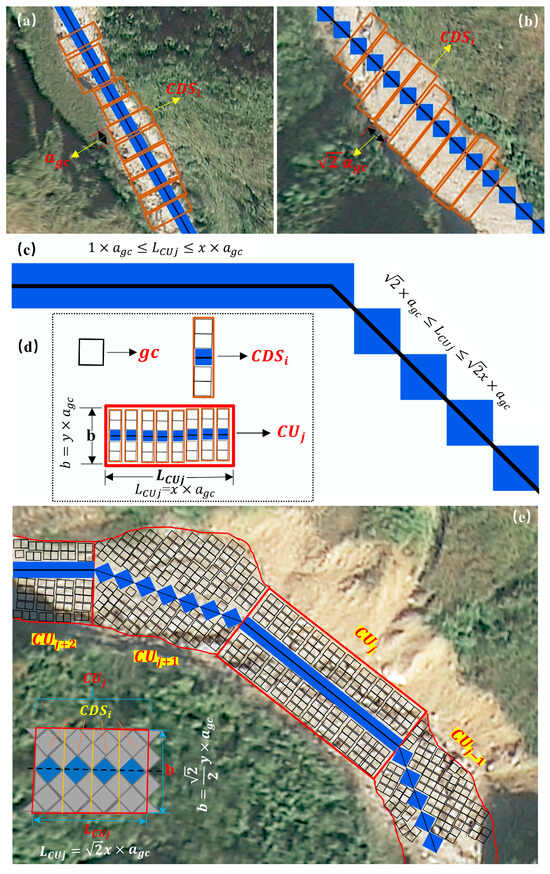
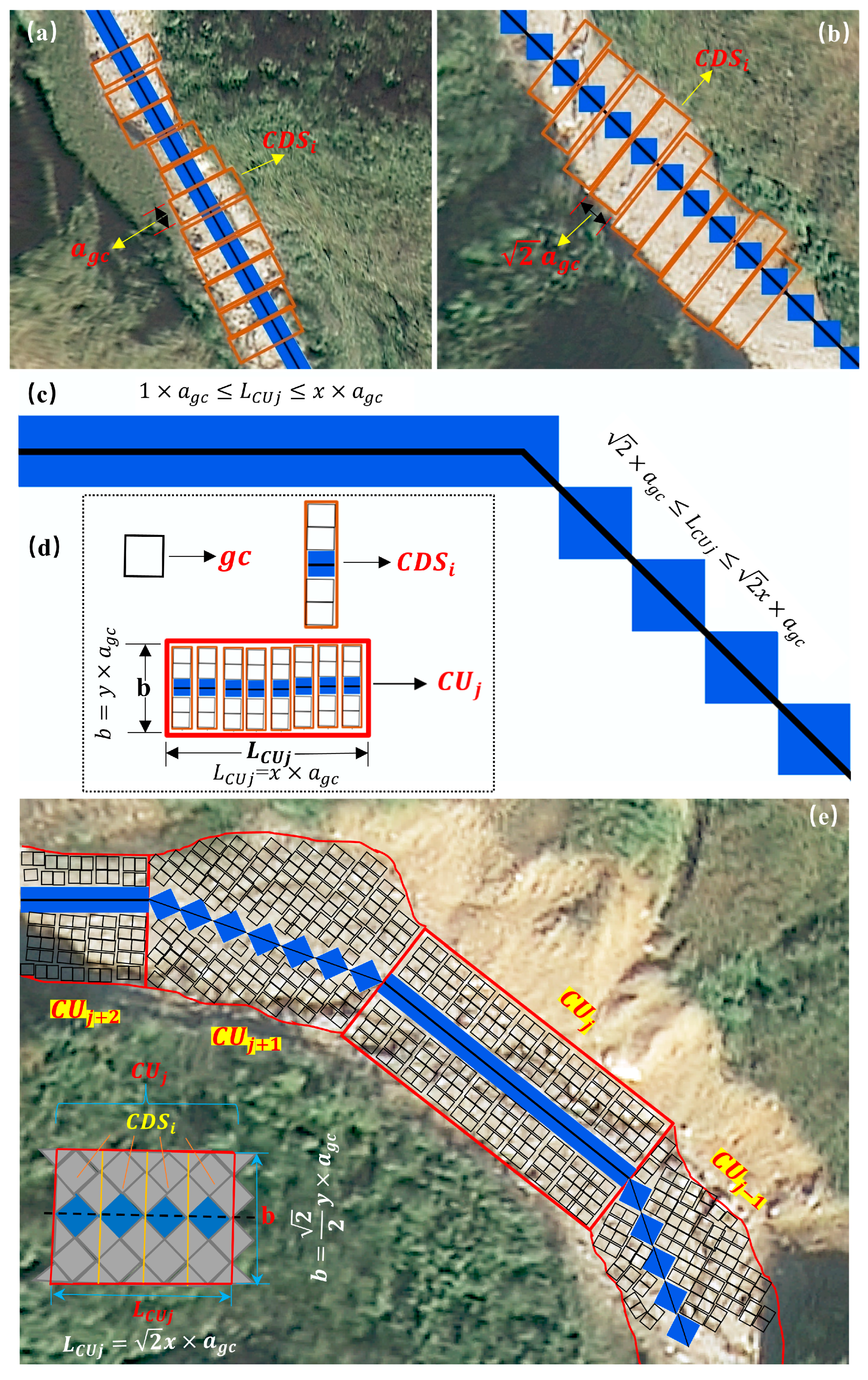
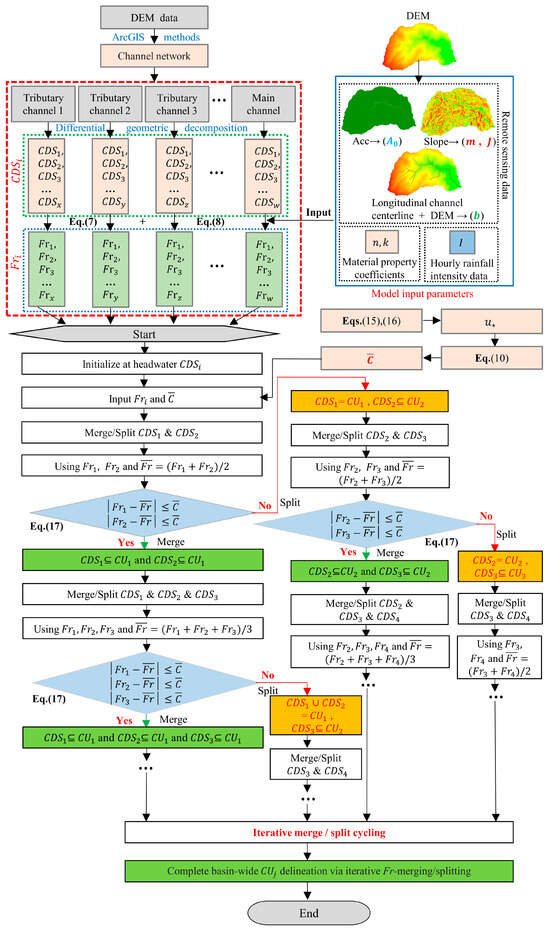
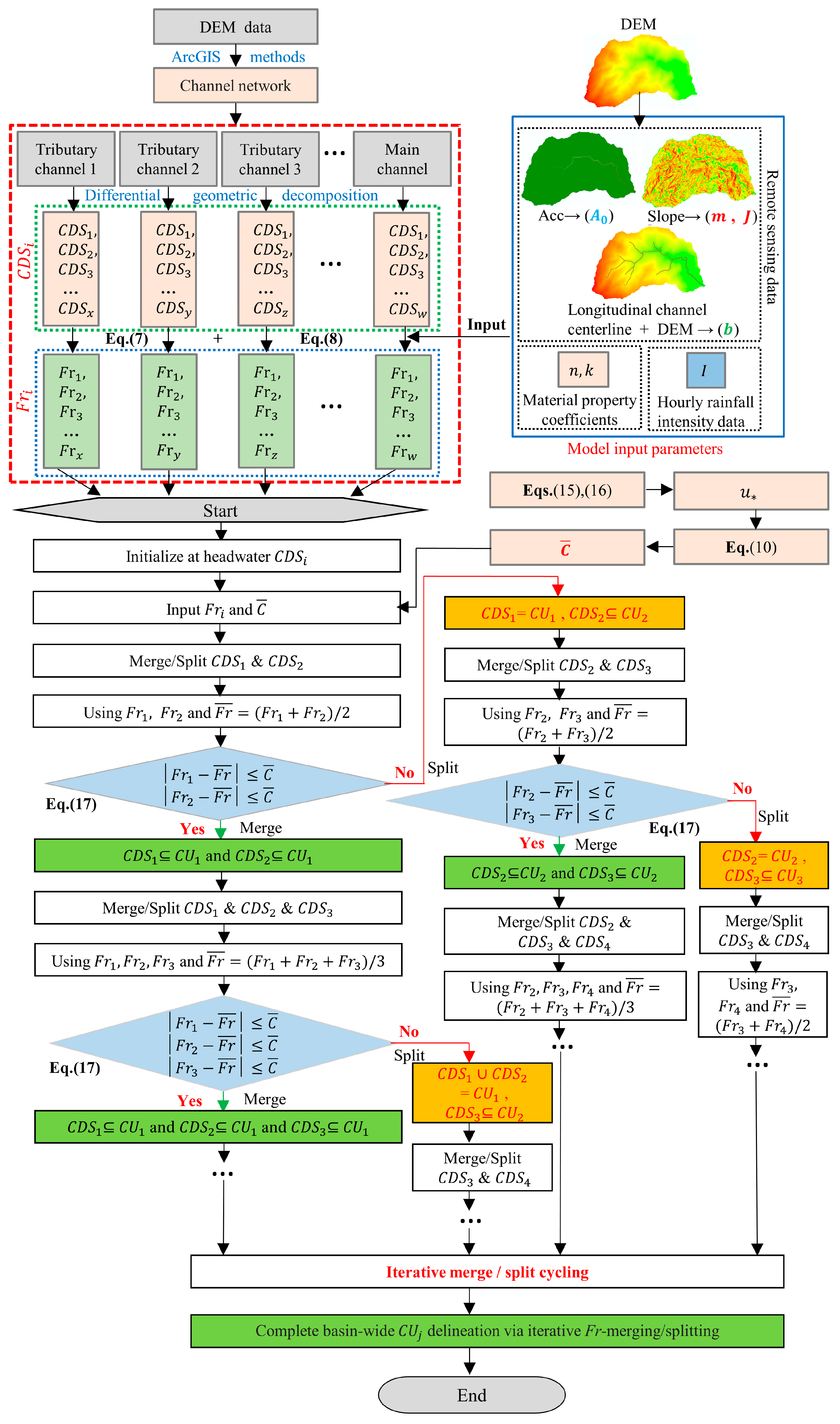
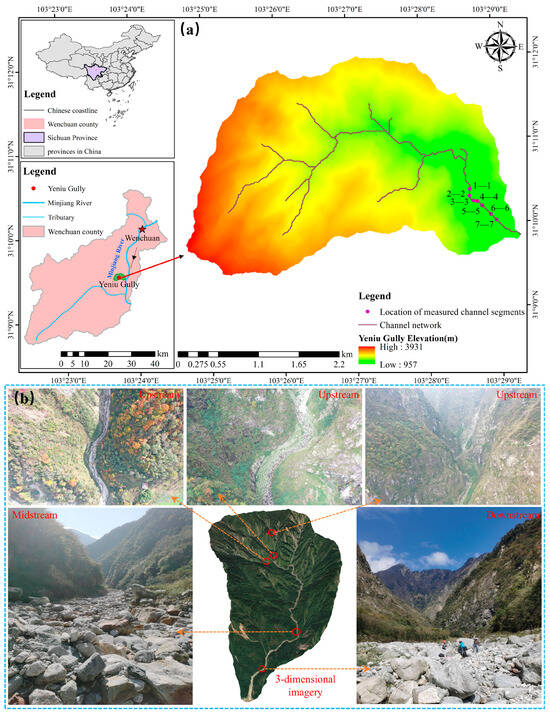
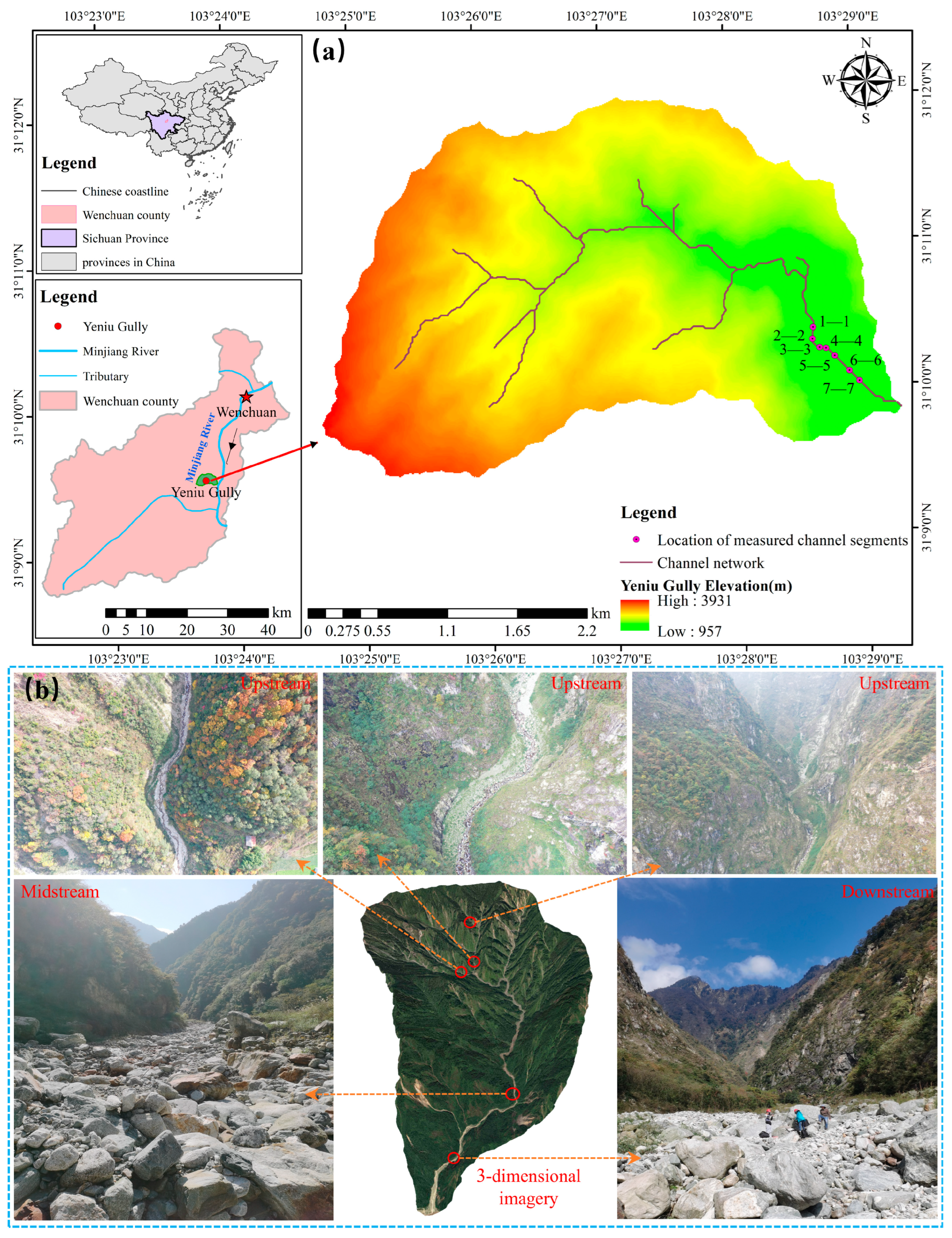
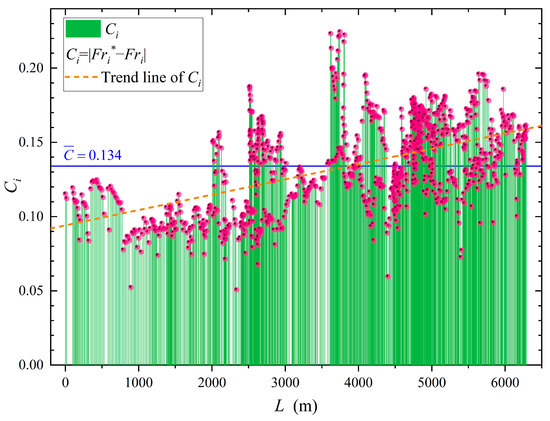
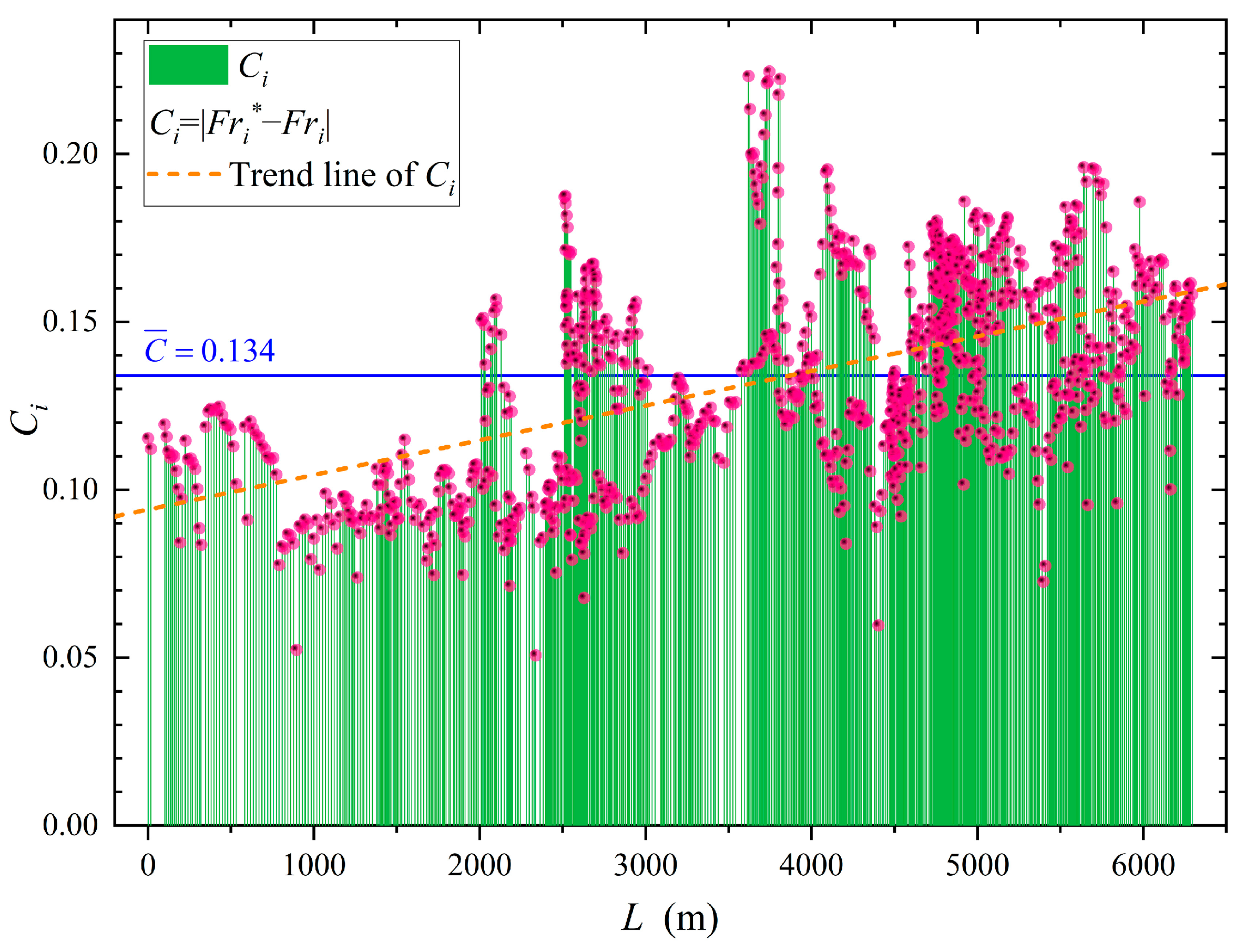
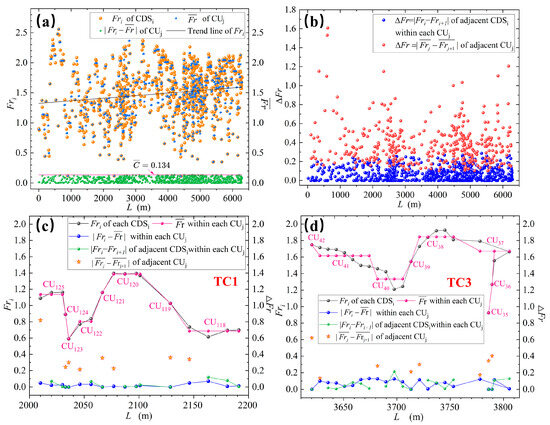
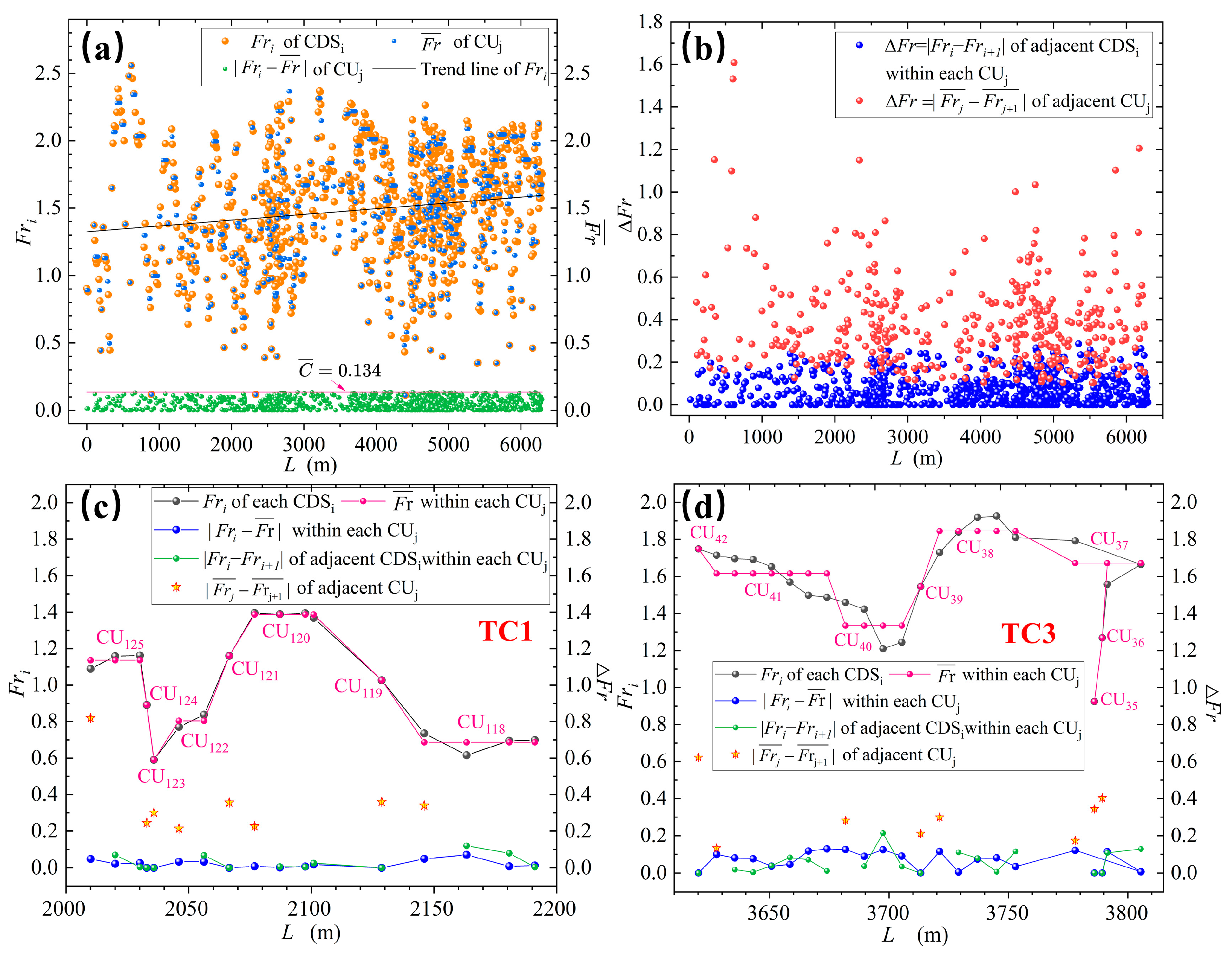
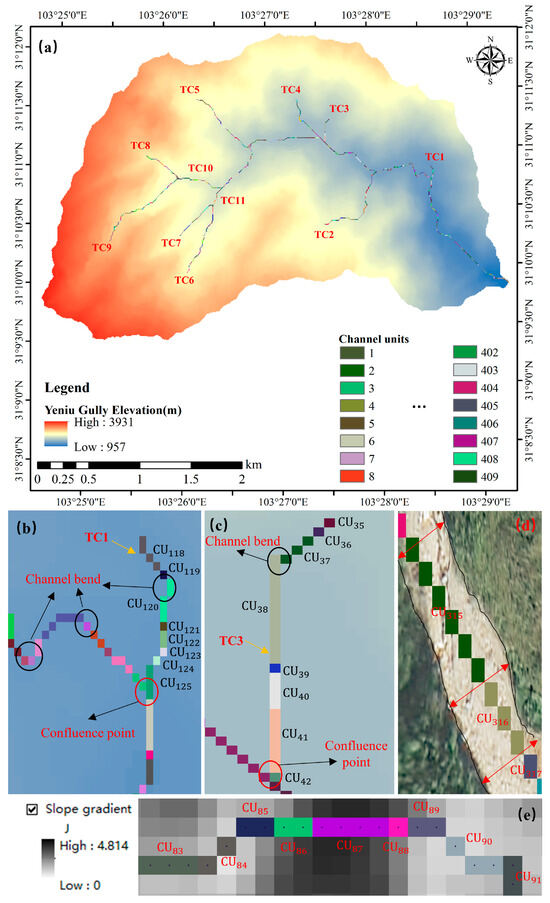
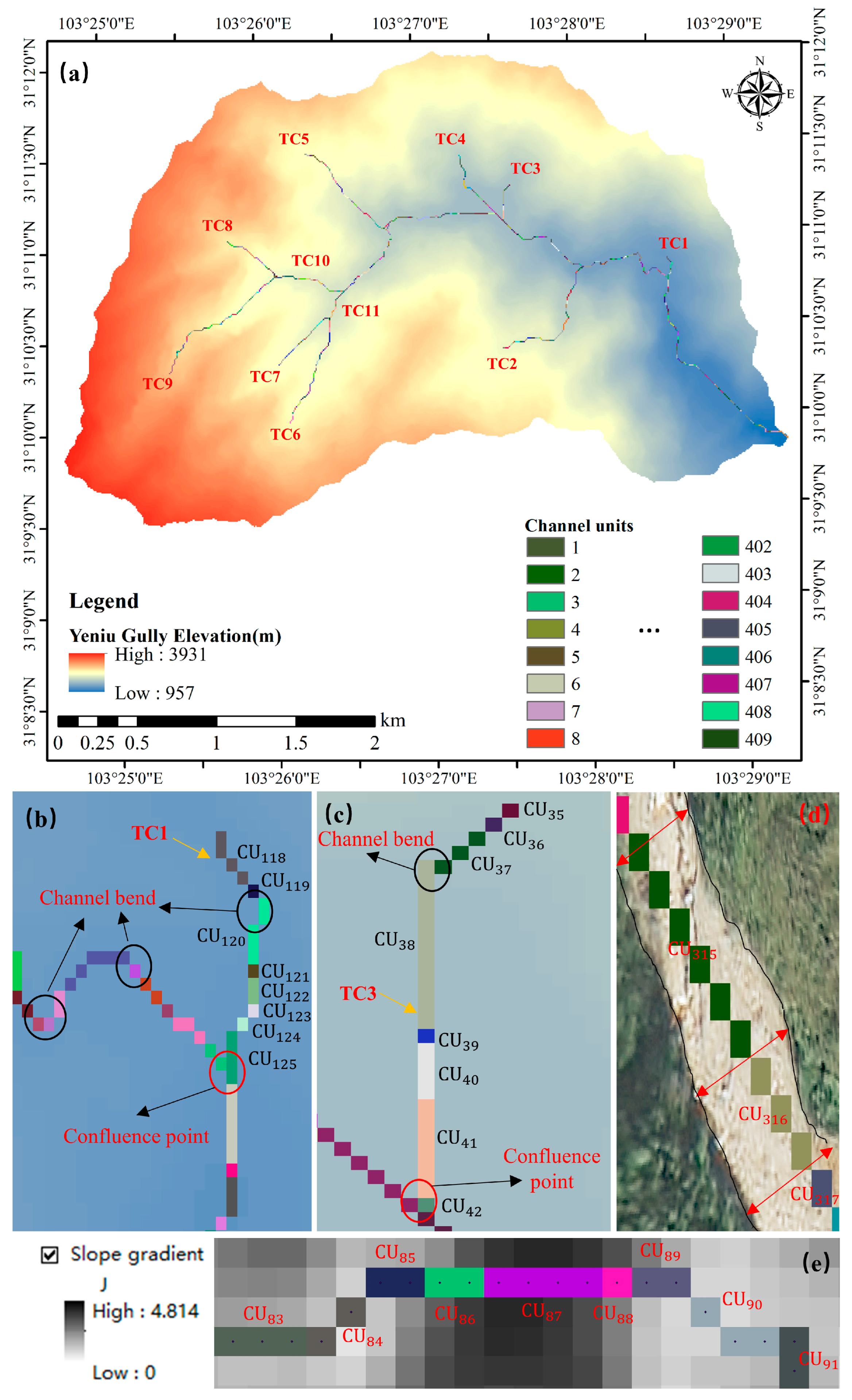
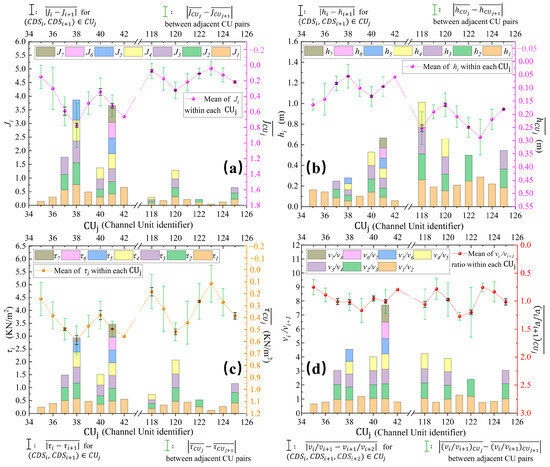
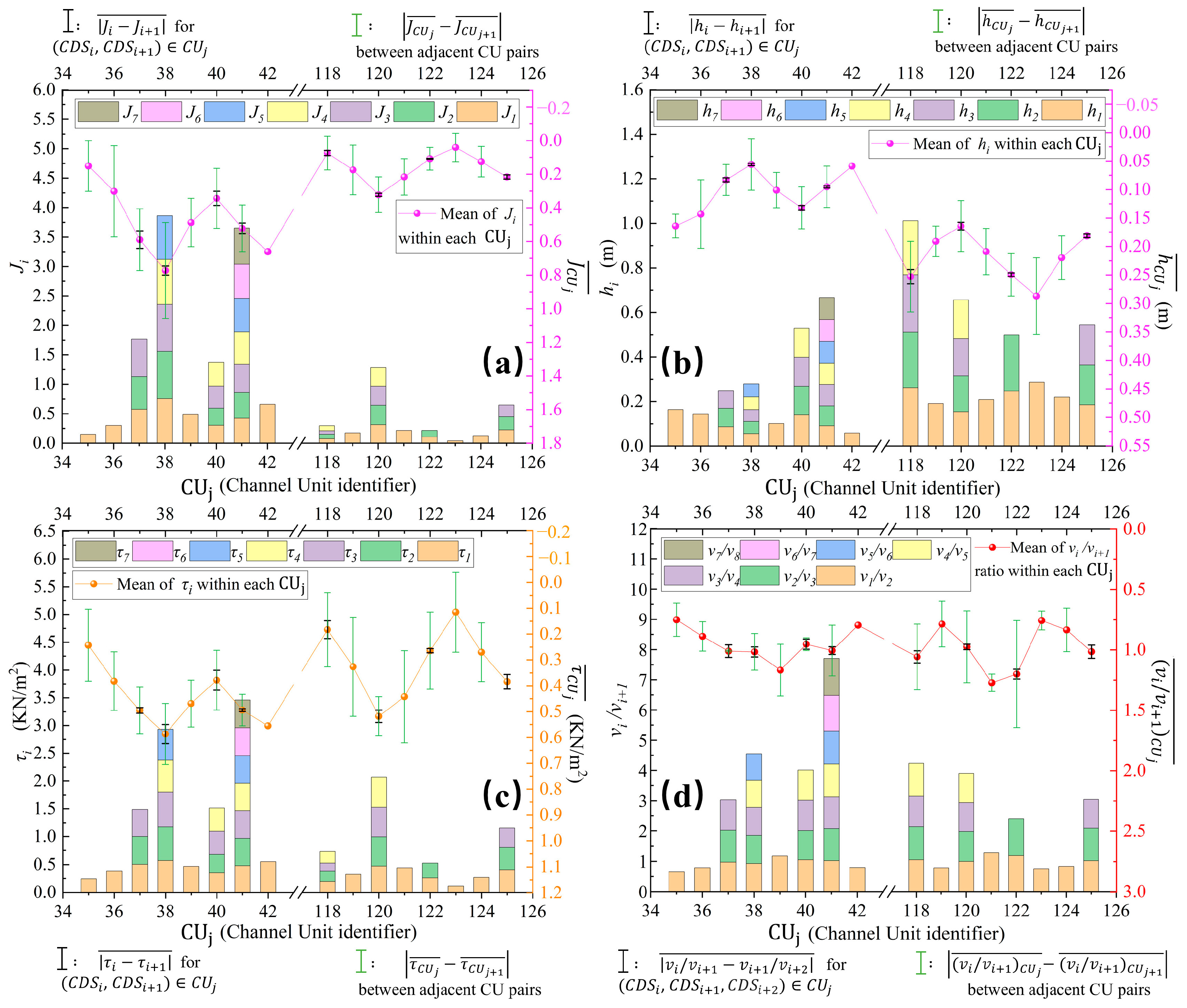
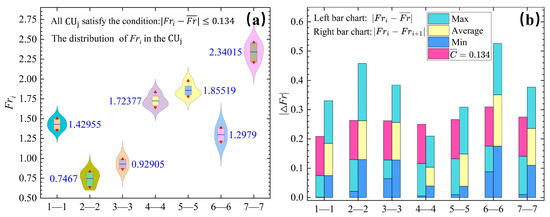
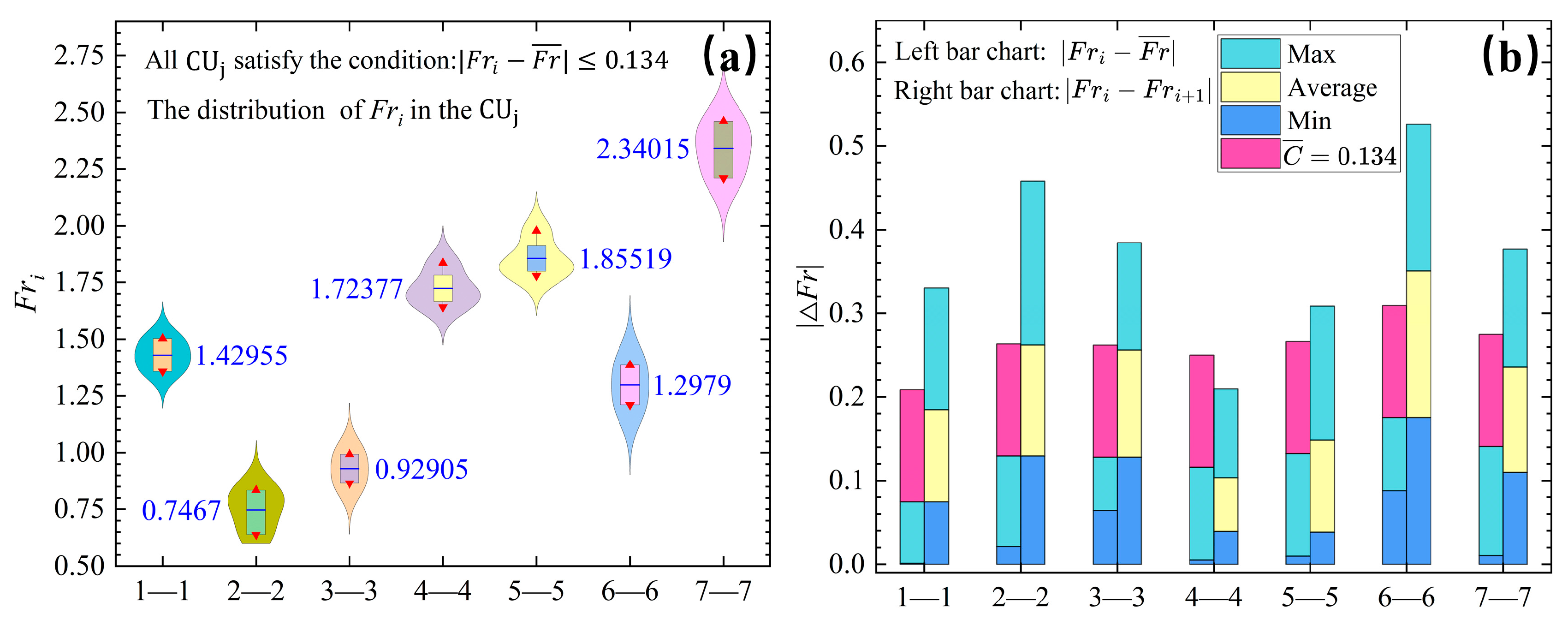
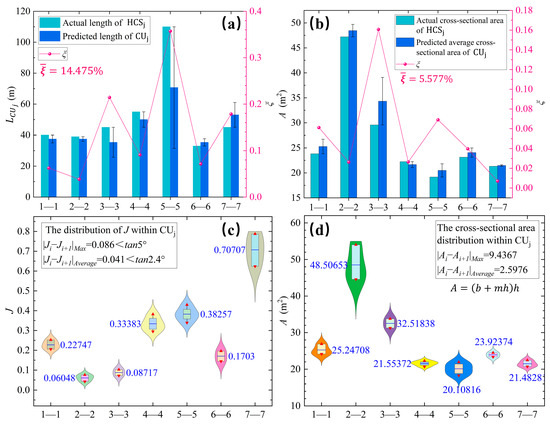
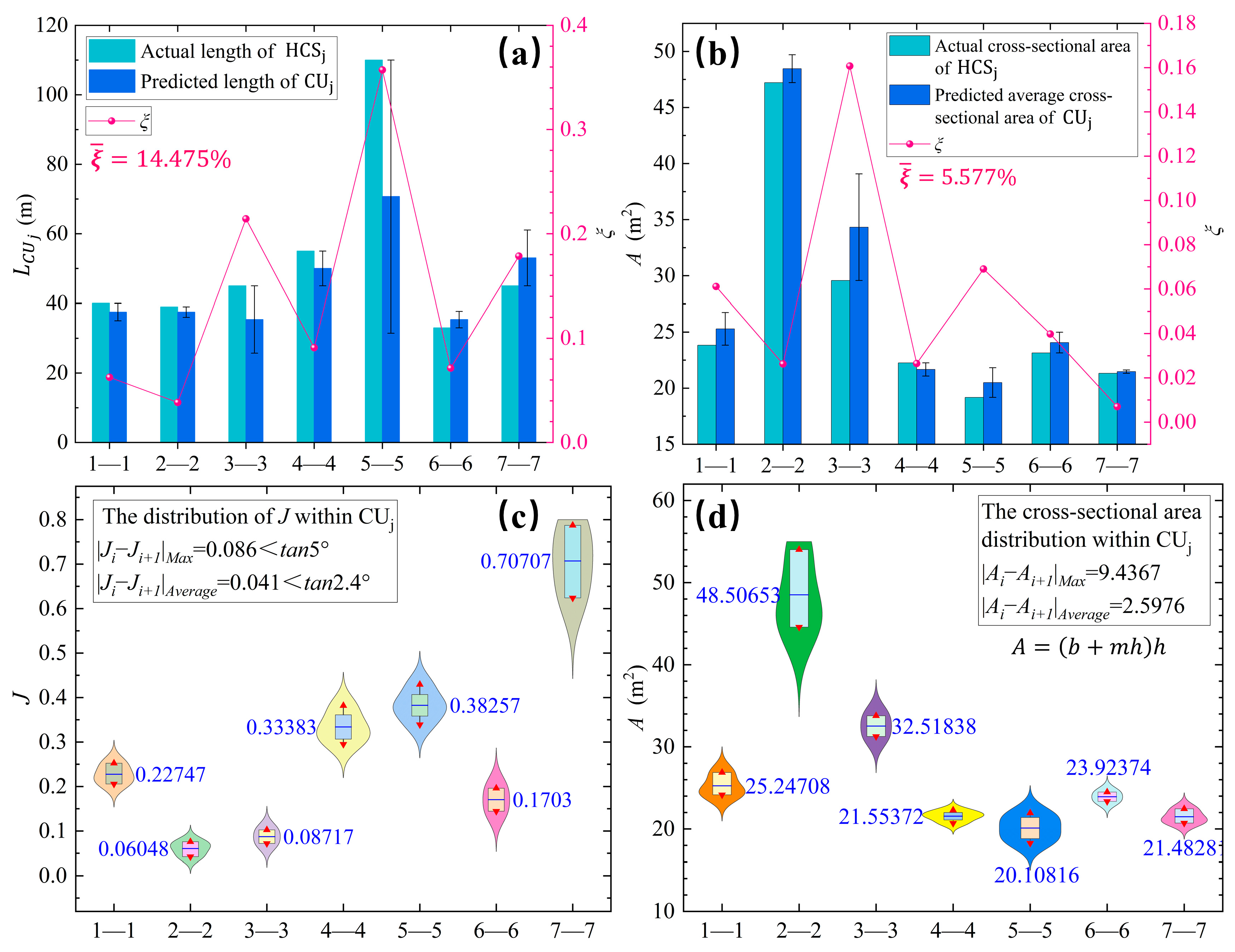
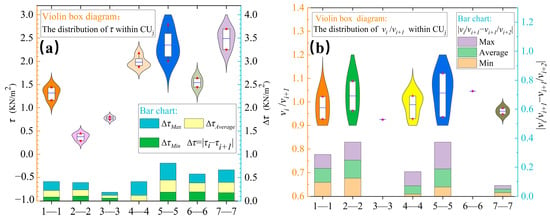
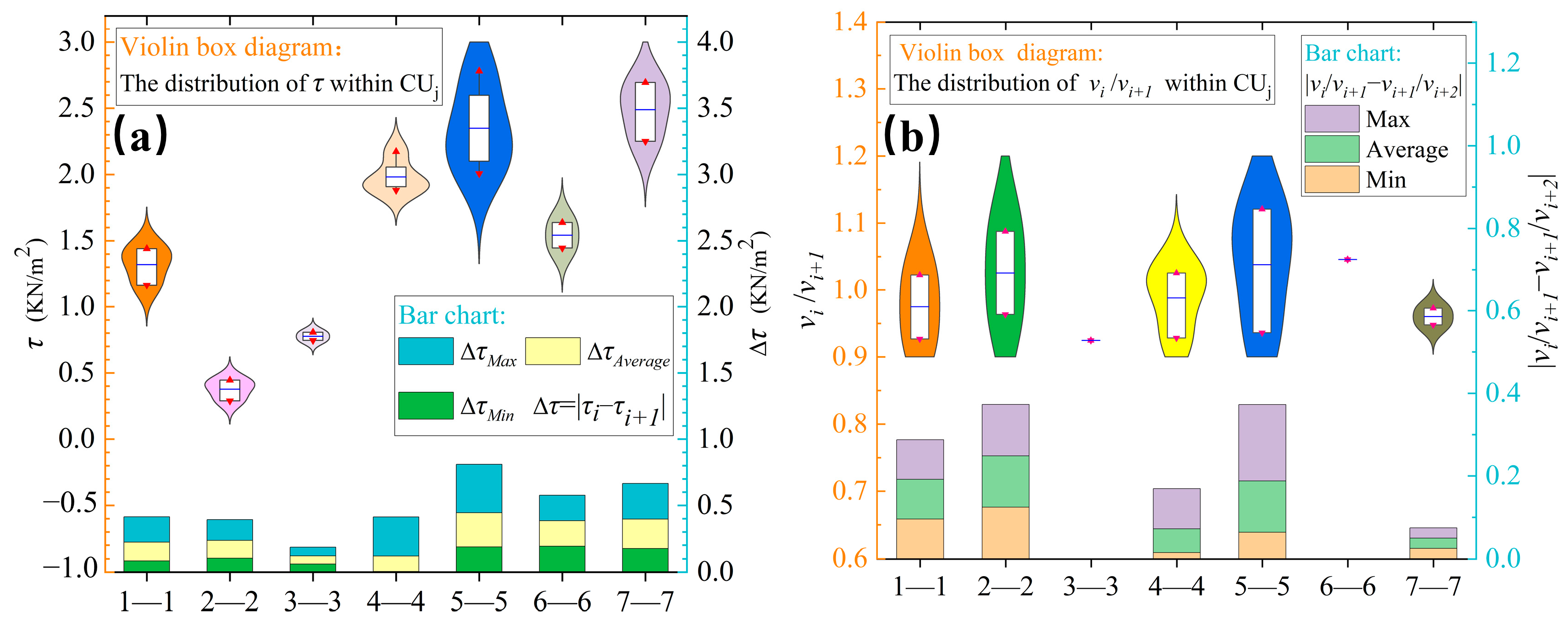
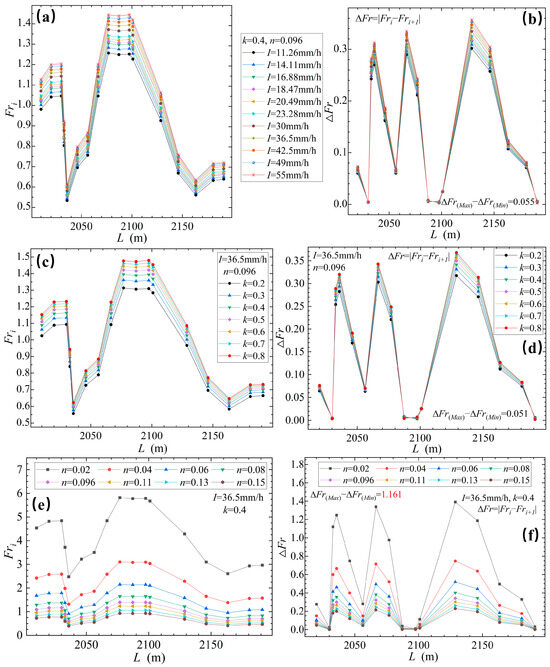
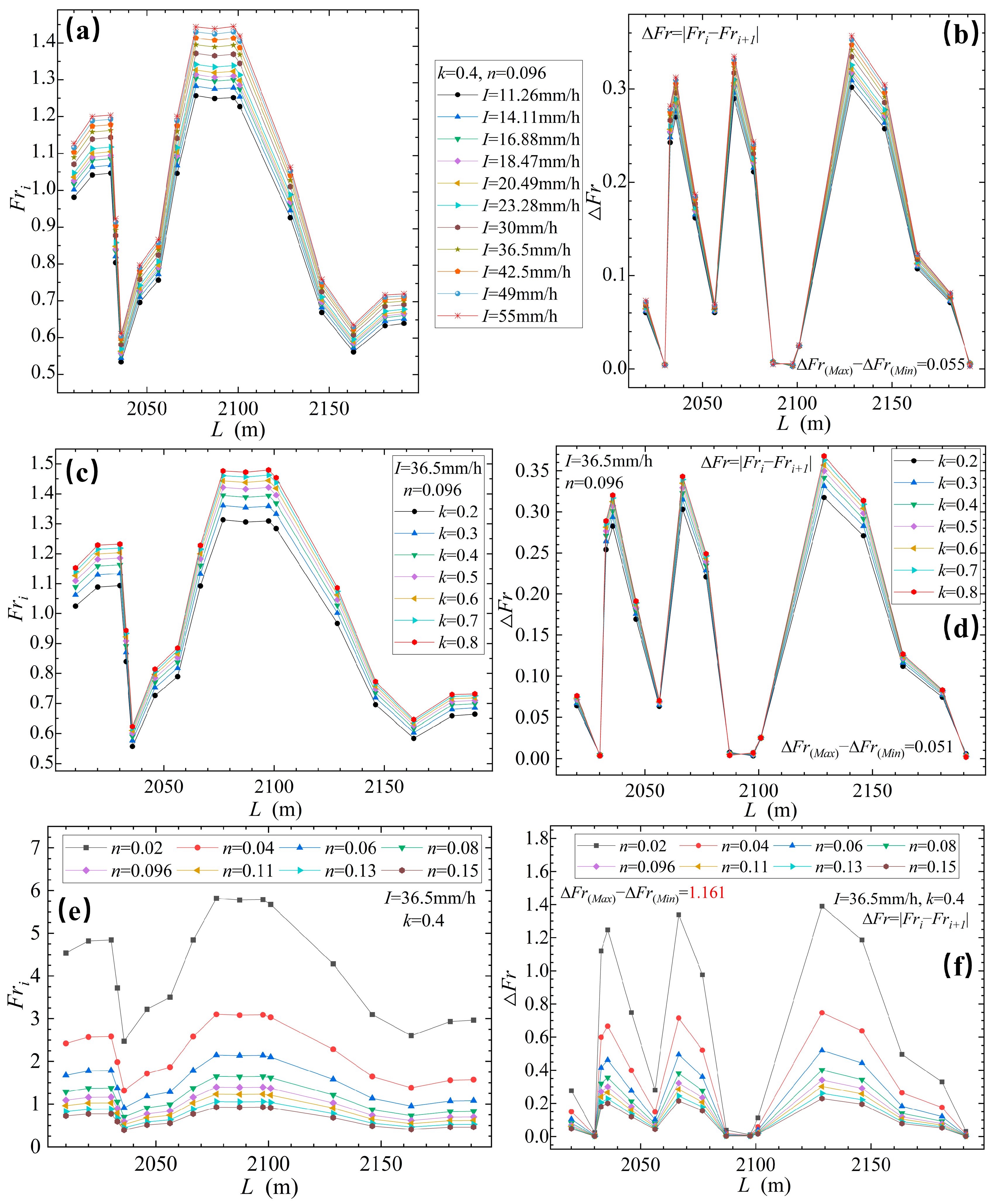
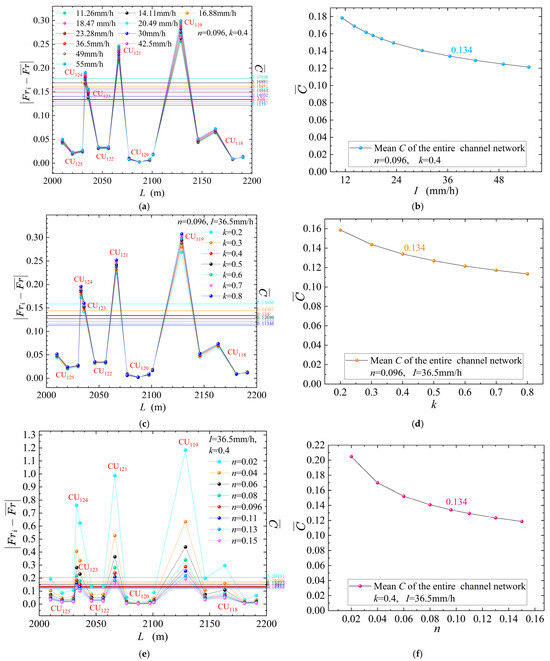
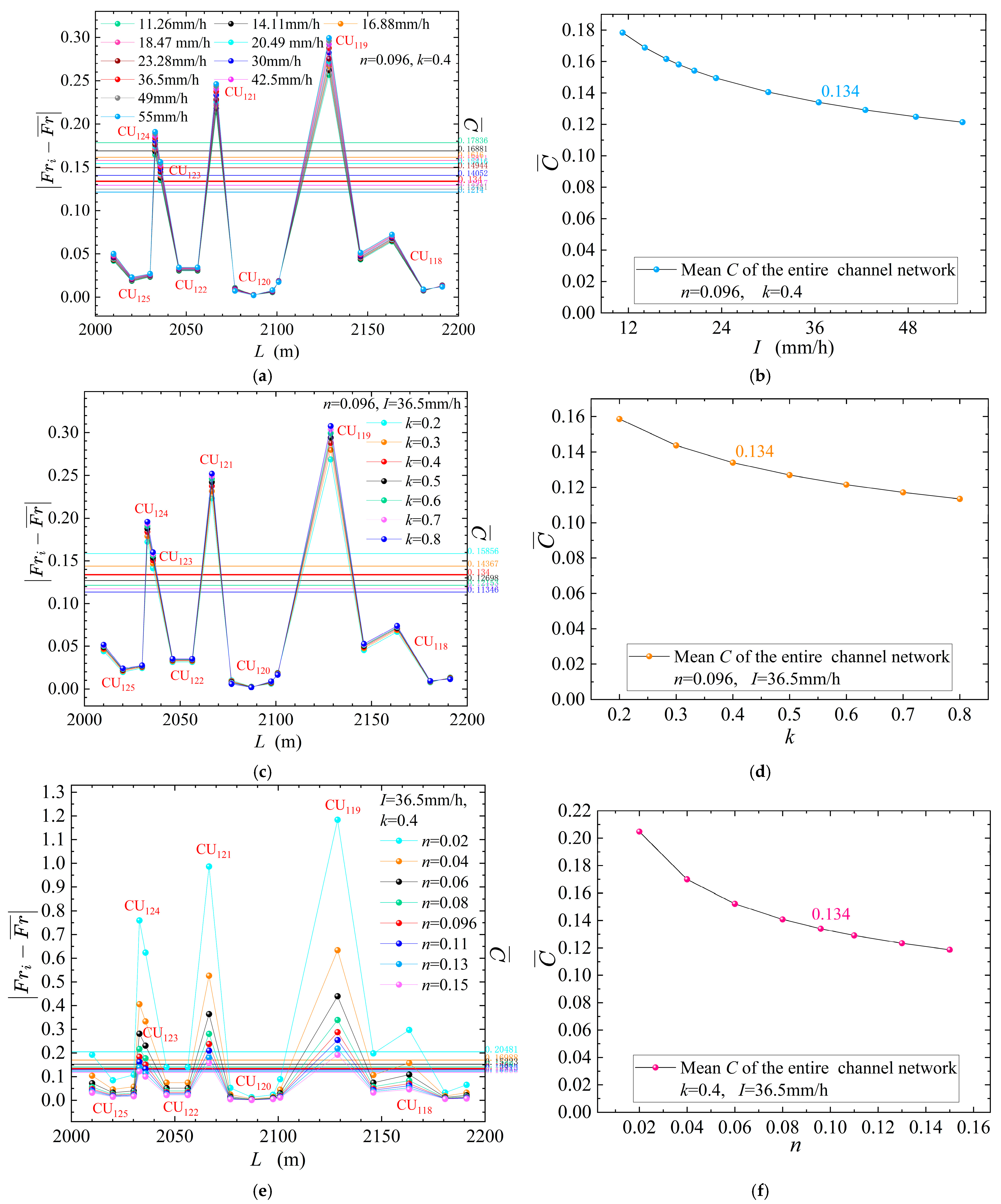
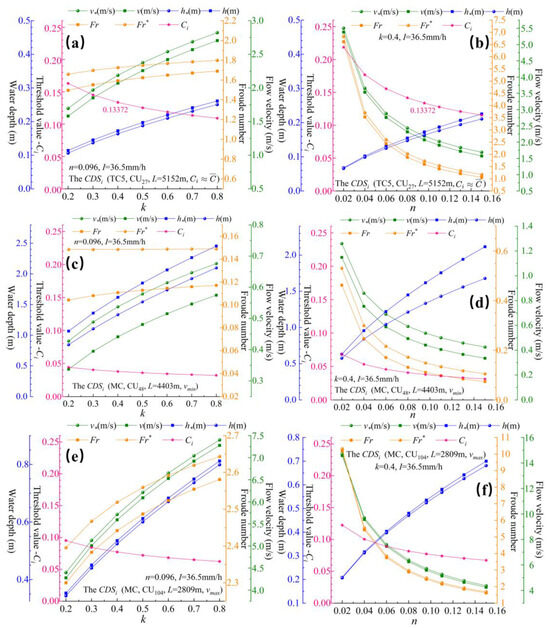
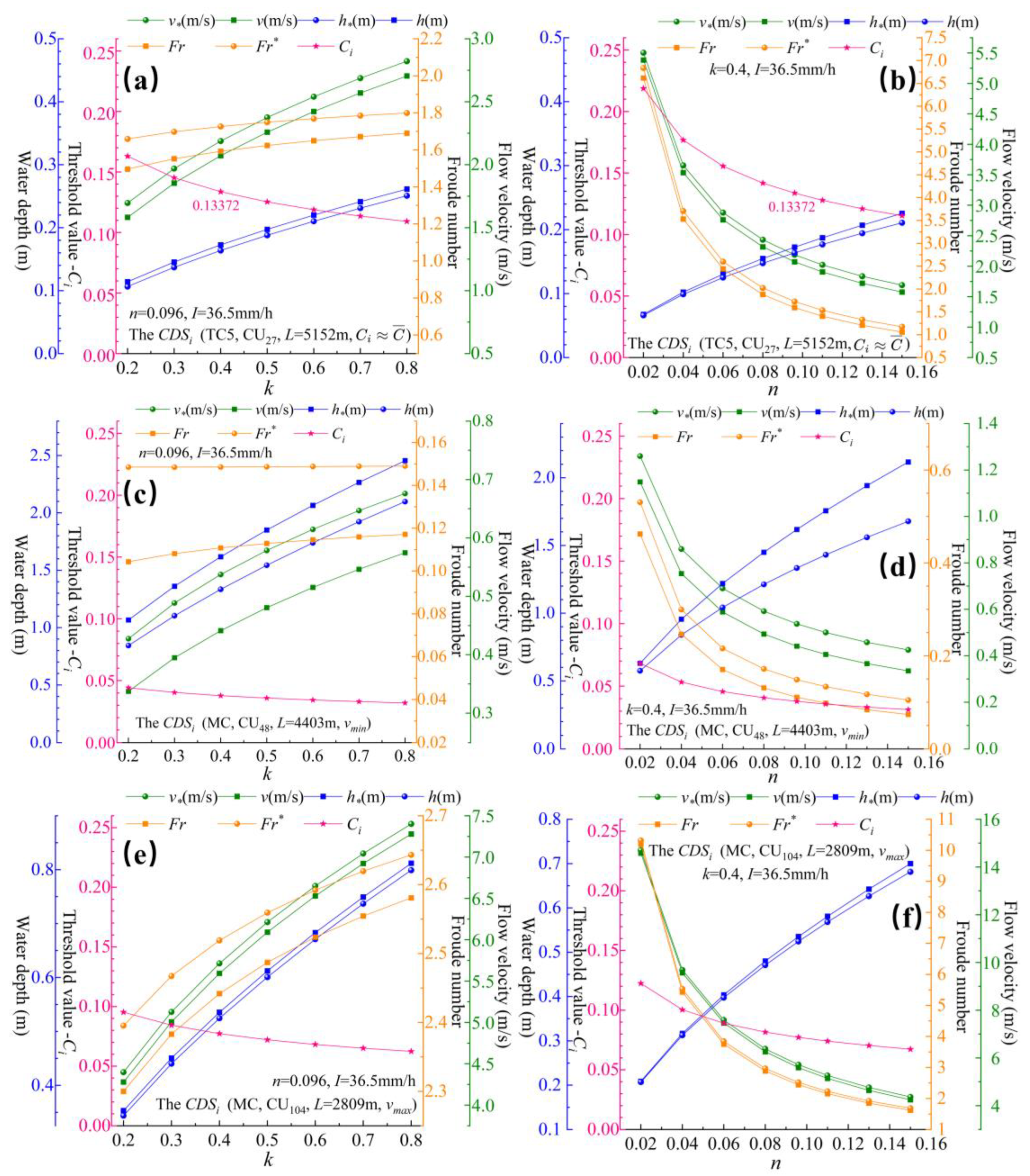

Disclaimer/Publisher’s Note: The statements, opinions and data contained in all publications are solely those of the individual author(s) and contributor(s) and not of MDPI and/or the editor(s). MDPI and/or the editor(s) disclaim responsibility for any injury to people or property resulting from any ideas, methods, instructions or products referred to in the content. |
© 2025 by the authors. Licensee MDPI, Basel, Switzerland. This article is an open access article distributed under the terms and conditions of the Creative Commons Attribution (CC BY) license (https://creativecommons.org/licenses/by/4.0/).