1. Introduction
Floods represent one of the most significant natural hazards worldwide, with profound impacts on human societies, infrastructure, and ecosystems. Their study is therefore essential to improve risk assessment and mitigation strategies, as highlighted by recent global and European studies [
1,
2,
3]. The integration of historical data has proven to be a particularly valuable approach in extending flood chronologies beyond the relatively short instrumental period, providing a broader temporal perspective on extreme hydrological events [
4].
Even in Europe, there remain regions and small catchments that have received little scientific attention despite their high susceptibility to flash floods and local hydrometeorological extremes [
5]. Within the Iberian Peninsula, this is particularly evident in the Guadiana River basin, for which relatively few studies exist [
6,
7,
8]. Barriendos et al. [
9] demonstrated that the Guadiana basin exhibits the lowest event density among all Iberian basins, suggesting that its flood history is still incompletely known. In recent years, however, several works have contributed to filling this gap by reconstructing and modeling historical flood events in the basin [
10,
11,
12,
13]. Fortunately, studies on flooding in the Iberian Peninsula have multiplied in recent years, leading to a better understanding of the phenomenon [
14,
15,
16,
17,
18,
19,
20,
21,
22]. Furthermore, it is important to note that the advances made in recent years are not only related to the Mediterranean basin [
16,
20,
22], an area where this type of study has a long tradition, but also to other areas of the Iberian Peninsula [
14,
15,
17,
18].
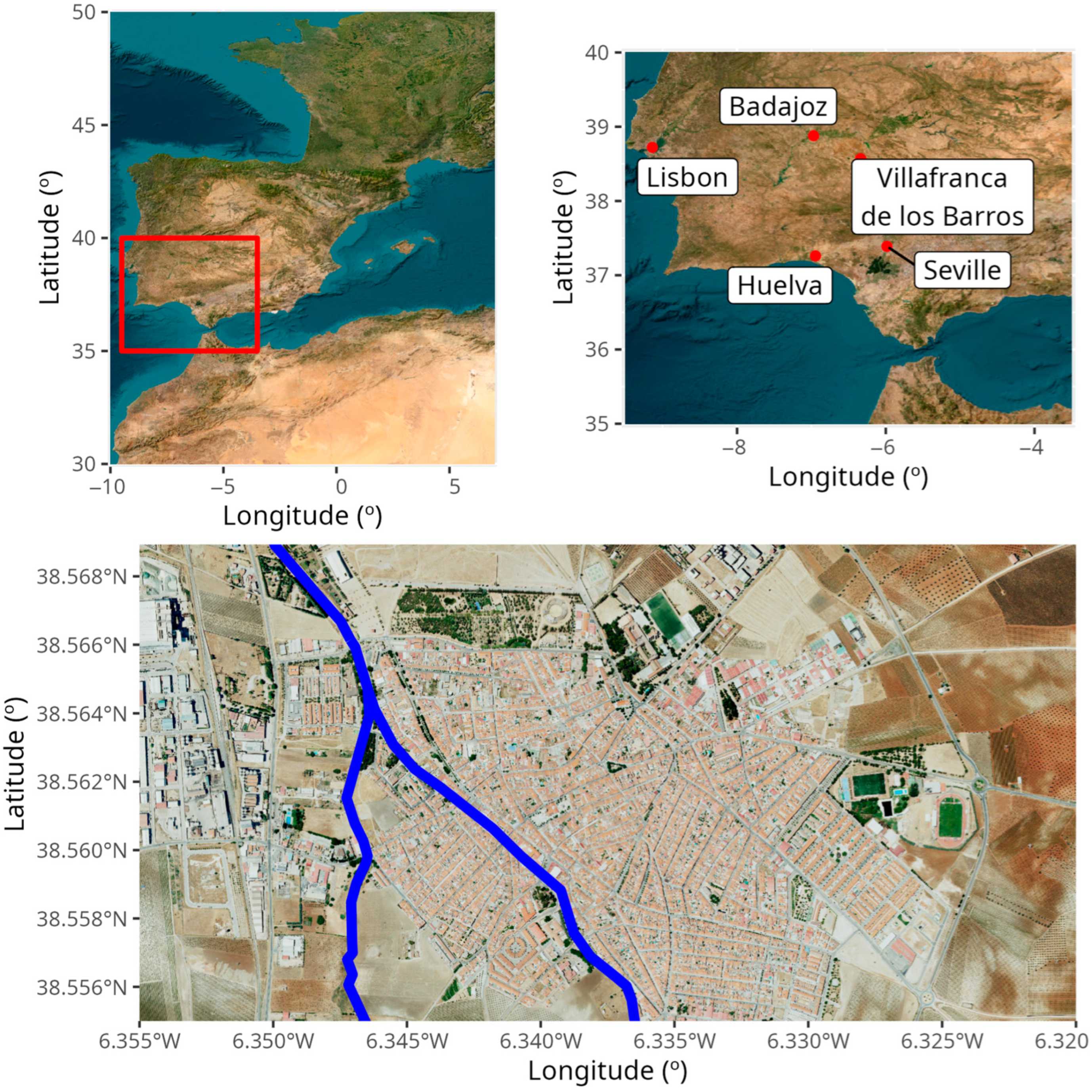
Despite these efforts, a large number of small tributaries in southwestern Iberia remain unexplored, even though they have produced catastrophic local floods. One of the most illustrative examples is the Tripero stream, a small tributary of the Guadiana River that crosses the town of Villafranca de los Barros (province of Badajoz, Extremadura, Spain, see
Figure 1).
The Tripero stream is an intermittent watercourse that originates approximately 6 km south of Villafranca de los Barros and flows into the Alange Reservoir, about 25 km north of the town. The catchment area covers roughly 244 km
2, with a total elevation drop of about 230 m along its course. Within the basin, one can find irrigated orchards near the town, as well as cultivated lands primarily devoted to vineyards and olive groves. Several Spanish institutions provide geographical and hydrological information about this sub-basin through online geoportals. On the one hand, the Guadiana River Basin Authority offers the “GeoGuadiana” platform (
https://geoguadiana.chguadiana.es/visor [last access: 11 November 2025]). On the other hand, the Ministry of Agriculture, Fisheries and Food (MAPA) and the Ministry for the Ecological Transition and the Demographic Challenge (MITERD) of the Spanish Government provide access to the “GeoPortal” (
https://sig.mapama.gob.es/geoportal/ [last access: 11 November 2025]), where users can interact with maps containing geographic information related to various thematic areas within the scope of activity of both Ministries.
Historical evidence shows that this stream has caused several devastating floods that severely affected the town. Local historians and geographers have documented at least five major flood events: (i) 2 October 1865, (ii) 5 December 1876, (iii) 12 July 1903, (iv) 7 June 1949, and (v) 21–23 May 1952 [
23,
24,
25].
The urban development of Villafranca de los Barros played a significant role in the vulnerability of the population to these floods. As noted by Sánchez-González [
25], the original settlement, founded in the late 13th or early 14th century, was located on the eastern slope of the small valley formed by the Tripero stream in the clay soil of the region, approximately 170 m from the riverbed where nowadays is located the current
Fernando Ceballos Square (which is popularly known as
Plaza Vieja [Old Square]). However, the rapid population growth during the 19th century led to progressive urban expansion toward the stream, significantly increasing exposure to flooding. There is no news of significant floods in the town’s archives until the second half of the 19th century. Due to the rapid growth of the population during this century, the scarce space available for the construction of buildings caused houses to be built increasingly closer to the stream. The recurrent disasters culminated in the mid-20th century, prompting the channelization of the stream after the catastrophic floods of 1949 and 1952 [
25].
The main objective of this article is to analyze, from a meteorological and historical perspective, the catastrophic floods of the Tripero stream that affected Villafranca de los Barros. Specifically, we aim to identify the synoptic patterns responsible for these extreme events and to relate them to the typical circulation configurations known to produce floods in the Guadiana basin.
Section 2 presents the data sources and methods employed.
Section 3 provides a historical reconstruction of each of the five flood events based on documentary evidence.
Section 4 offers a synoptic meteorological analysis, while
Section 5 discusses, finally, the implications of our findings.
2. Materials and Methods
The historical floods of the Tripero stream occurred in a period when hydrometeorological observations were extremely scarce in the Extremadura region. The first systematic meteorological networks in Spain were not established until the late 19th century, and even then, the density of observation stations in southwestern Iberia remained very low [
26]. Consequently, no direct hydrological or meteorological records exist for the historical flood events of the Tripero stream. This limitation necessitates a multidisciplinary approach that combines documentary sources with modern reanalysis datasets to reconstruct the atmospheric context of these events.
2.1. Historical Documentary Sources
Information on the Tripero floods has been recovered primarily from historical documentary evidence. The most valuable contributions come from local historians and geographers who have examined municipal archives, administrative reports, and eyewitness accounts preserved in Villafranca de los Barros [
23,
24,
25]. These sources provide qualitative descriptions of rainfall intensity, flood timing, and the social and material impacts of the events.
In addition to local archives, national and regional newspapers constitute an essential resource for reconstructing past hydrometeorological phenomena. For the case of Extremadura, the newspapers HOY (founded in 1933) and Extremadura (founded in 1923) have proven particularly rich sources of information related to geophysical and astronomical events [
27,
28]. Their detailed reports often include meteorological descriptions, testimonies, and references to affected areas, making them valuable complements to scientific and municipal records. Other national newspapers, such as ABC, also provided coverage of major weather-related disasters. This type of documentary material has previously demonstrated its usefulness in the reconstruction of extreme events and their societal impacts in Iberia [
29,
30].
2.2. Reanalysis Data
Given the absence of instrumental data for the historical period under study [
31], large-scale atmospheric conditions associated with the Tripero floods were examined using the Twentieth Century Reanalysis (20CR) dataset (
https://psl.noaa.gov/data/20thC_Rean/ (accessed on 9 December 2025)), developed by NOAA’s Physical Sciences Laboratory. The 20CR provides a global, dynamically consistent reconstruction of the atmosphere from 1836 to the present, based on surface pressure observations assimilated into an ensemble Kalman filter and constrained by monthly sea surface temperature and sea-ice distributions, making it particularly suitable for the study of historical meteorological events [
32,
33].
The reanalysis offers six-hourly data with a horizontal resolution of 2° × 2°, including key variables such as sea level pressure (SLP), geopotential height, temperature, and wind at multiple pressure levels. These fields allow the reconstruction of synoptic-scale circulation patterns associated with extreme precipitation and flood episodes. In this study, we used the 20CR version 3 (20CRv3), which incorporates updated input datasets and improved data assimilation techniques, significantly enhancing the representation of large-scale circulation features and reducing uncertainties in earlier periods [
34,
35].
For each of the five catastrophic flood events of the Tripero stream (1865, 1876, 1903, 1949, and 1952), we analyzed the daily and synoptic evolution of atmospheric variables over southwestern Europe and the North Atlantic. Particular attention was given to identifying low-pressure systems, frontal passages, and large-scale teleconnection patterns such as the North Atlantic Oscillation (NAO), which are known to modulate precipitation and flood occurrence in the Guadiana basin.
The combined use of documentary evidence and reanalysis data provides a complementary framework for understanding historical floods. While documentary sources offer high-resolution qualitative insights at the local scale (describing damage, timing, and intensity), the reanalysis enables the identification of the broader meteorological mechanisms that generated these events. Together, these sources allow a more comprehensive interpretation of the historical flood dynamics in the Tripero stream, linking local impacts to regional atmospheric circulation.
3. Descriptions of the Historical Floods
3.1. Flood of 1865
The first documented overflow of the Tripero stream occurred on 2 October 1865. The available information on this event is scarce and comes from the Municipal Archive, as analyzed by Sánchez-González [
25]. The records indicate that the main affected streets were
Carrera Chica and
Carrera Grande, now known as
Avenida de la Constitución. This impact is understandable given the proximity of both streets to the stream’s course and the topographical configuration of the area, which makes them particularly vulnerable to flooding. No details are provided regarding the extent of the damage or the possible existence of fatalities. However, the limited response from the municipal authorities (who merely investigated the causes of the event, in clear contrast to the actions taken in later disasters) suggests that the overflow resulted only in material damage.
3.2. Flood of 1876
The flooding of the Tripero stream on 5 December 1876, is masked by the exceptional hydrometeorological situation that affected the entire Guadiana River basin, as well as parts of the Guadalquivir and Tagus basins, impacting a large portion of the southwestern Iberian Peninsula. Trigo et al. [
11] conducted a detailed study of this widespread flooding event. During the first week of December 1876, the southwestern Iberian Peninsula experienced extreme weather conditions, resulting in record-breaking discharges in two major international rivers (Tagus and Guadiana). As a consequence, several Portuguese and Spanish towns suffered severe flooding on 7 December. These floods were exacerbated by the particularly wet preceding autumn months, especially October, which recorded exceptionally high precipitation anomalies across western Iberia. Precipitation data from Lisbon and Évora show a peak on 5 December. Furthermore, the rainfall observed between 28 November and 7 December remains the highest on record for average daily precipitation over periods ranging from 2 to 10 days. Using sources such as historical newspapers, recently digitized meteorological data from Spain and Portugal, and the 20th Century Reanalysis, Trigo et al. [
11] analyzed the socio-economic impacts, rainfall values, and atmospheric circulation associated with the event. The autumn of 1876 was characterized by an extremely negative NAO index, with November reaching the lowest value recorded since 1865. The heavy rainfall resulted from the continuous passage of Atlantic low-pressure systems, driven by a tropical moisture atmospheric river over the central Atlantic Ocean.
Within this broader context, the overflow of the Tripero stream on 5 December 1876, was particularly severe at Villafranca de los Barros. During an extraordinary session, the local Town Council reported that many families, whose homes had been destroyed, were left destitute and had to be sheltered in public buildings [
25]. The affected streets were covered with mud and debris, prompting the authorities to request aid from the provincial government. The actions of Civil Guard Lieutenant Julián León y Gutiérrez were especially noted; he risked his life to rescue several individuals from being swept away by the waters. A council record from March 1877 indicated that buildings along what is now Avenida de la Constitución (Constitution Avenue) had been reduced to ruins. Additionally, the heavy rains caused the collapse of the cemetery walls, located north of the town, resulting in the formation of a large pond that had to be drained [
25].
3.3. Flood of 1903
Sánchez-González [
25] has demonstrated that little information is available in municipal archives regarding the flood that occurred on 12 July 1903. The preserved documentation indicates that a severe summer storm triggered the overflow of the Tripero stream. The primary impacts were damage to buildings near the stream and the destruction of crops, as fields were devastated by the severe precipitation. It is known that the town council allocated a sum of 610 pesetas to assist those affected by the flooding.
Additionally, press coverage from the time provides further details. Heraldo de Madrid (14 July 1903) reported that “during the previous night, a terrible and formidable storm struck the town, devastating the entire municipal area in a short time and destroying several homes belonging to poor residents.” Another newspaper, El Imparcial, offered more specific information, stating that “a dreadful storm lasted for seven hours, causing flooding in the lower districts […] and resulting in the collapse of several buildings.” It also noted that “the current swept away livestock, furniture, and grain, among other goods. […] There were no casualties, but the material losses were considerable.” Similarly, ABC (21 July 1903) reported that seven houses near the stream were flooded.
Overall, the available records indicate that no fatalities occurred. The material damage caused by the flood—alongside the losses in agricultural production due to heavy rainfall—was primarily limited to the destruction of several houses and the loss of furniture, stored grain, and livestock carried away by the water.
3.4. Flood of 1949
The preserved municipal records indicate that the flooding of the Tripero stream on 7 June 1949, had particularly severe consequences. The minutes of a meeting held on 15 June, recovered by Sánchez-González [
25], state that “a dreadful cloudburst flooded and devastated the lower districts of the town, resulting in five fatalities and extensive damage”.
Press reports from the time provide further details. The newspaper
ABC (8 June) reported that several areas of the town were flooded, numerous houses were destroyed, and the telephone network suffered serious damage. The article mentioned an unspecified number of casualties, noting that seven people were missing and three bodies had been recovered. In a subsequent article (10 June),
ABC indicated that over 250 houses had been damaged. It also described other significant losses, including the death of all livestock housed in pens and the destruction of cultivated fields along the banks of the stream. In a later update (12 June),
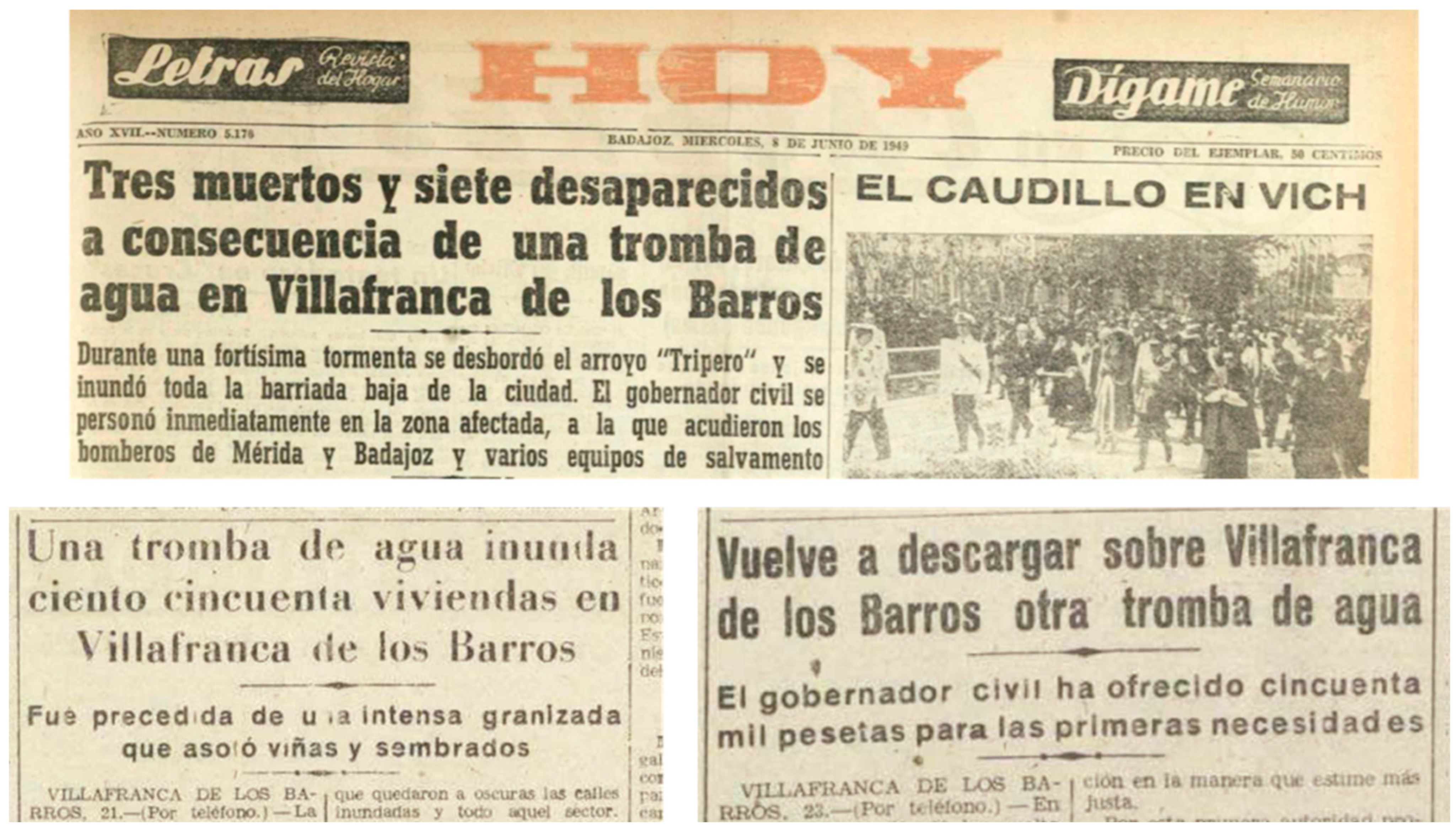
ABC reported that the town’s festivities in honor of Saint Anthony had been suspended as a sign of mourning. Similar news was published by other newspapers such as “HOY” (see
Figure 2, upper panel).
3.5. Floods of 1952
The last historically documented episode of flooding in Villafranca de los Barros caused by the Tripero stream actually consists of two distinct flood events, which occurred within a short interval (on 21 and 23 May 1952) [
25]. These floods represent the culmination of a long history of catastrophic events that repeatedly affected the town.
According to municipal records, the first flood on 21 May was triggered by a severe thunderstorm that caused extensive flooding in the lower part of the town. Several residents were left without their homes, and widespread property damage was reported. Before recovery efforts could begin, a second and even stronger flood struck on the morning of 23 May, described as more destructive than the first, particularly in terms of material losses.
Contemporary newspaper accounts provide additional details that corroborate and enrich the municipal documentation. Reports indicate that the 21 May thunderstorm was accompanied by hail and intense rainfall, leading to the flooding of more than 150 houses. The 23 May event, also described as a severe thunderstorm, brought torrential rainfall lasting for approximately two hours. While the duration was relatively short, the impacts were devastating. Many of the houses, already weakened by the earlier flood, collapsed during this second episode, significantly compounding the destruction (see
Figure 2, lower panel).
From a meteorological perspective, the temporal proximity of the two floods suggests that the soil was already saturated following the first event, dramatically increasing surface runoff during the second. This sequence of convective storms over a short period reflects the vulnerability of small basins like the Tripero stream, where limited drainage capacity amplifies the effects of localized but intense precipitation. The 21–23 May 1952 floods thus stand out not only for their hydrometeorological intensity, but also as a reminder of how repeated convective activity within a few days can escalate the severity of flooding in small catchments.
4. Large-Scale Atmospheric Conditions Associated with the Floods
Given the scarce local observational coverage available for the historical period, the large-scale atmospheric patterns associated with the Tripero stream floods in Villafranca de los Barros were analyzed using the 20th Century Reanalysis, version 3 (20CRv3) dataset. Previous studies have already demonstrated the utility of 20CR data for investigating extreme weather events in southwestern Iberia, even for relatively early dates such as December 1876 [
11] and June 1925 [
30].
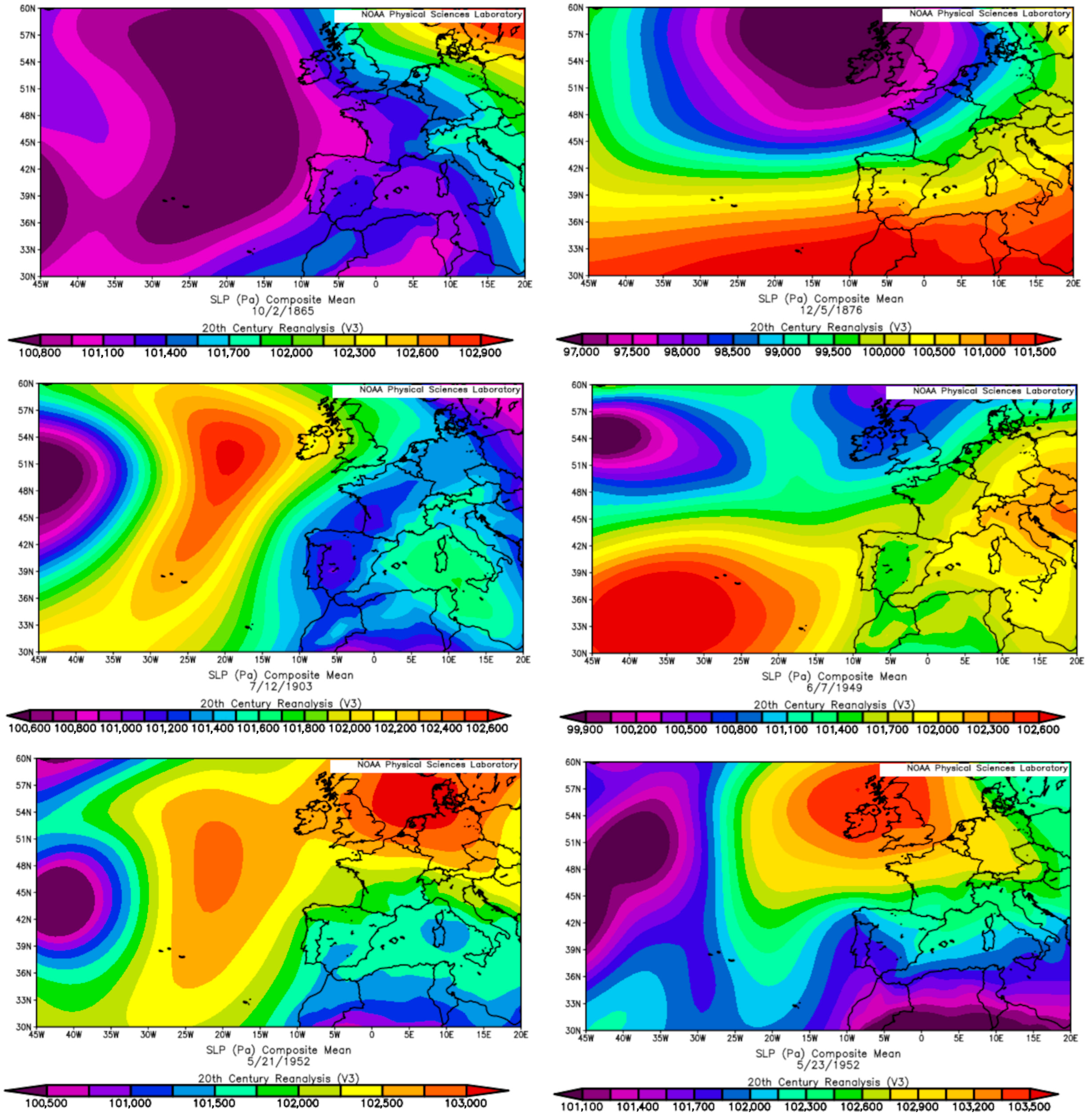
Figure 3 displays the mean sea-level pressure fields corresponding to the five historical flood events analyzed in this study. The first noteworthy aspect is the remarkable diversity of synoptic situations observed across these events. For the 2 October 1865 flood, the atmospheric configuration was dominated by an extensive low-pressure system covering the western Iberian Peninsula. In contrast, the 5 December 1876 flood was associated with a much deeper low-pressure center located to the northwest of the British Isles, which likely enhanced moisture advection over southwestern Iberia. For the floods occurring in 1903 and 1952, high-pressure systems prevailed over the northwestern and northern sectors of the peninsula, whereas during the 7 June 1949 event, the Azores High was clearly established, influencing the regional flow pattern. The findings indicate a substantial range of synoptic patterns, which not only capture the influence of seasonal fluctuations but also highlight the varied atmospheric mechanisms responsible for generating the floods. Note that this “seasonal variability” and the “diversity of meteorological origins” could represent gaps in existing research.
This diversity of synoptic situations partly reflects the range of seasons during which these historical floods occurred. One of the events (5 December 1876) took place in winter, when atmospheric dynamics are particularly active in the region; another (2 October 1865) occurred in autumn, while the remaining floods were recorded in late spring and early summer (May, June, and July). This seasonal distribution contrasts sharply with the pattern found for the major floods of the main Guadiana River, which have been shown to occur predominantly during the winter months (December–March) [
10].
In the following subsections, we analyze each flood event in greater detail, highlighting the specific atmospheric circulation features that may have contributed to their occurrence.
4.1. Flood of 1865
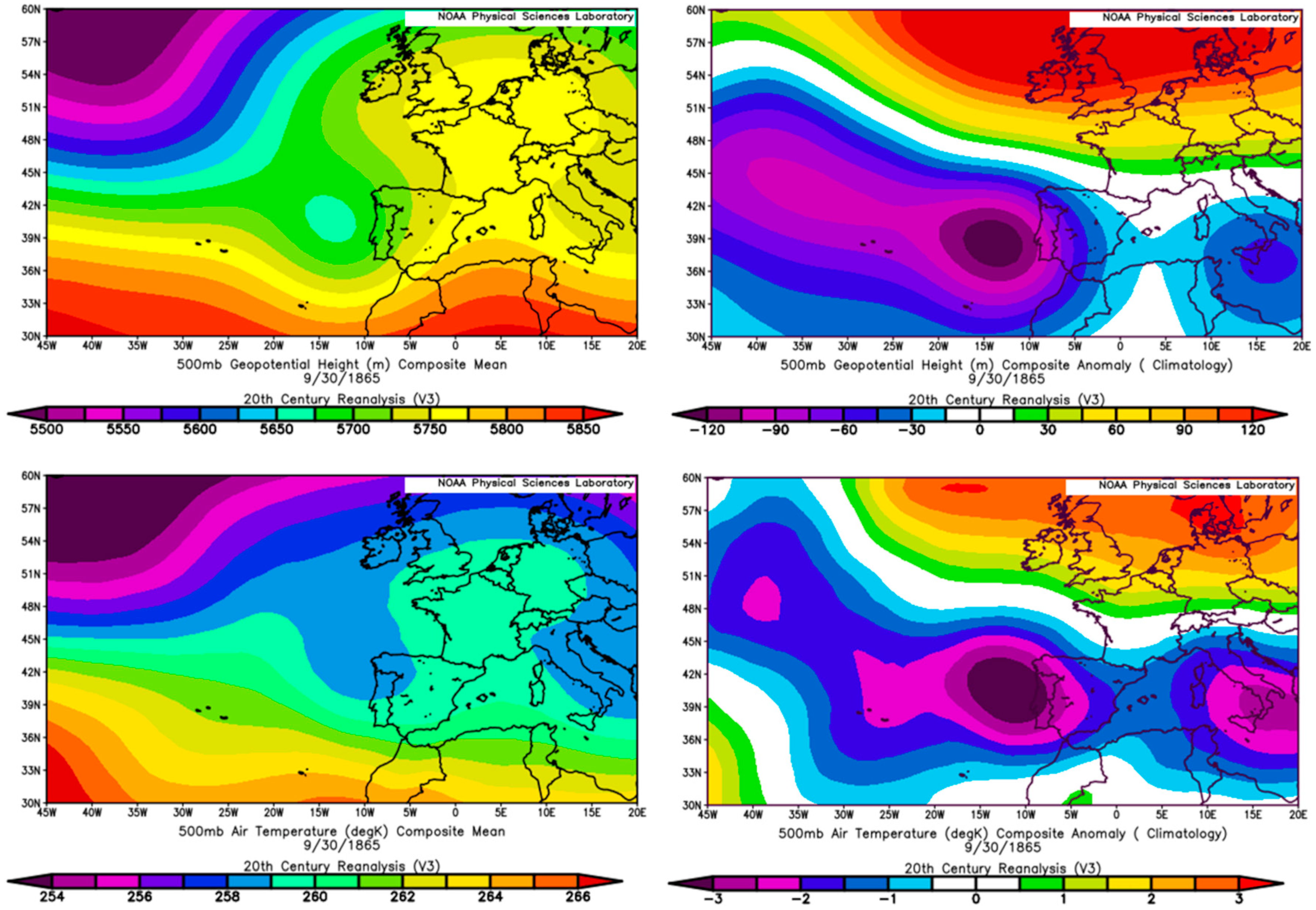
In the Iberian Peninsula, torrential rainfall events during autumn are often linked to specific synoptic configurations that combine upper-level disturbances, such as cut-off lows, with intense moisture transport from lower latitudes. These situations can lead to localized but severe precipitation episodes, particularly over the southwestern part of the Peninsula. In this subsection, we analyze the large-scale atmospheric conditions associated with the 2 October 1865 flood in the Tripero stream at Villafranca de los Barros, using data from the 20th Century Reanalysis version 3 (20CRv3).
Figure 4 displays the Geopotential Height fields (upper panels) and Air Temperature fields at 500 hPa (lower panels). The mean values for 30 September 1865, two days before the flood, are shown on the left panels, while the anomalies are shown on the right. The synoptic configuration clearly reveals the presence of a cut-off low system centered over the northwestern Iberian Peninsula [
36,
37]. The anomaly fields indicate a well-defined cold core aloft, which is characteristic of such systems. This upper-level disturbance likely enhanced dynamic instability and vertical motion over the western and southwestern sectors of the Peninsula. Subsequent daily fields indicate that the cut-off low system gradually weakened and dissipated over the following days, consistent with the transient nature of these features.
Moreover,
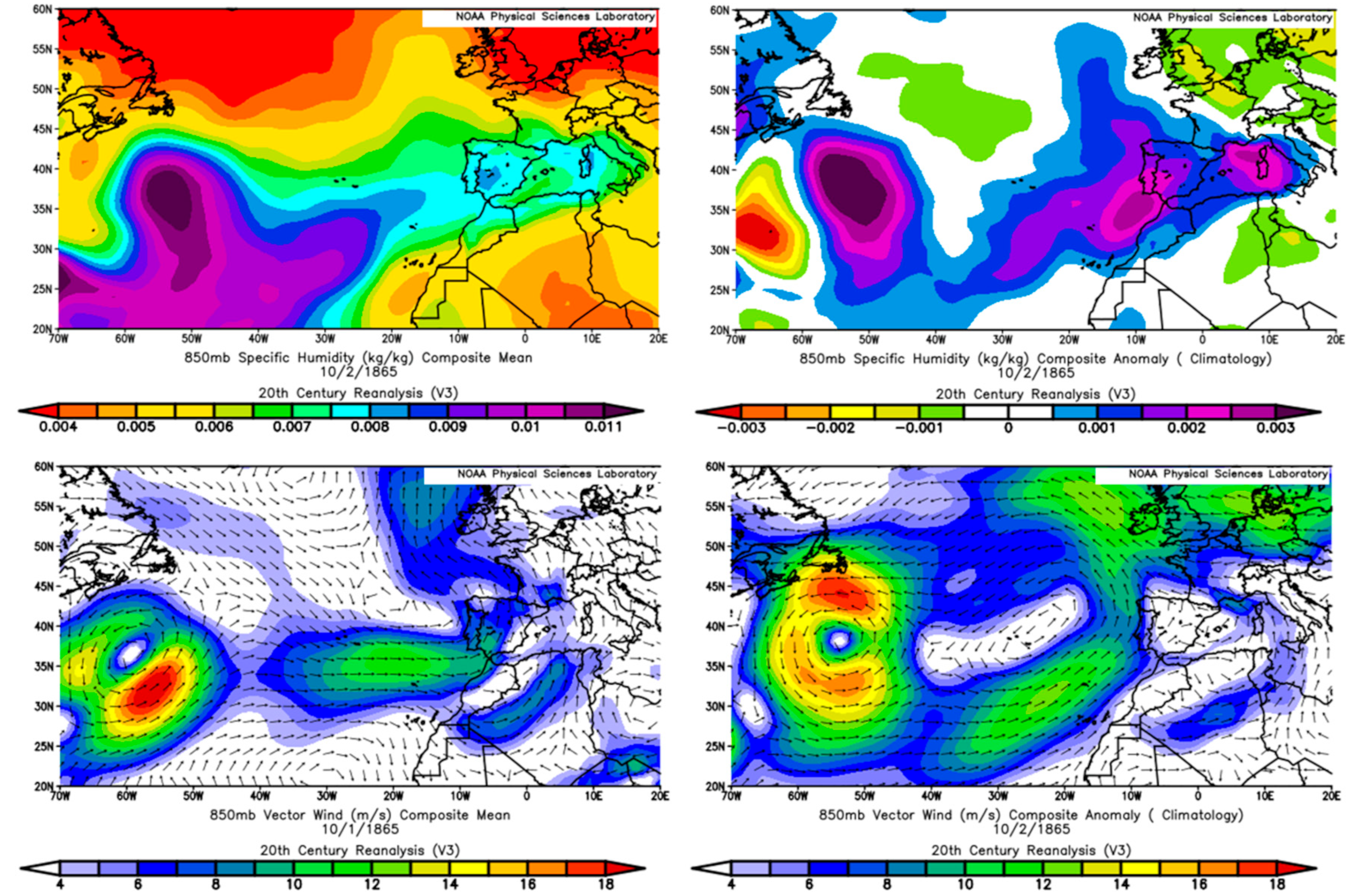
Figure 5 presents the specific humidity (top panels) and vector wind fields at 850 hPa (bottom panels) for 2 October 1865, the day of the flood. The mean fields are shown on the left and the anomalies on the right. These maps suggest the presence of an extraordinary moisture transport from the tropical Atlantic toward the Iberian Peninsula, with strong southwesterly winds in the lower troposphere channeling moist air masses toward the region. The configuration resembles that of an atmospheric river [
38,
39], a synoptic-scale filament of enhanced water vapor flux often associated with heavy precipitation events in mid-latitudes. The convergence of this moisture-rich air with the dynamical forcing produced by the upper-level cut-off low likely triggered intense and persistent convective activity over southwestern Iberia.
Therefore, the 20CRv3 reanalysis indicates that the 2 October 1865 flood in the Tripero stream was likely caused by the combined influence of a cut-off low system over northwestern Iberia and atmospheric river-type moisture transport from the tropical Atlantic. This combination of upper-level instability and sustained moisture advection created ideal conditions for the development of heavy rainfall and localized flooding, consistent with the historical descriptions of this catastrophic event in Villafranca de los Barros.
4.2. Flood of 1876
The flood that occurred in the Tripero stream as it passes through Villafranca de los Barros on 5 December 1876 is associated with a fairly large set of floods in small and large basins in the southwest of the Iberian Peninsula, including the catastrophic flood in the Guadiana River basin was the result of an extraordinary sequence of meteorological events affecting the southwestern Iberian Peninsula between late November and early December. As documented by Trigo et al. [
11], the first week of December was marked by record-breaking rainfall linked to the persistence of a highly anomalous large-scale circulation pattern over the North Atlantic. The North Atlantic Oscillation (NAO) reached an exceptionally negative phase, with November 1876 showing the lowest value on record since 1865 (−4.4). This strong negative NAO configuration, characterized by a marked dipole in sea level pressure with low anomalies over the Azores and high pressure near Iceland, caused a southward displacement of the Atlantic storm tracks, directing a succession of deep low-pressure systems toward Iberia. As a consequence, the region experienced prolonged and intense rainfall, with monthly anomalies exceeding 250 mm above normal in western Iberia [
11].
According to 20th Century Reanalysis (20CR) data, the large-scale circulation during this episode was dominated by two main phases of intense cyclonic activity [
11]. The first, between 28 and 30 November 1876, corresponded to a low-pressure system crossing the Atlantic Ocean, associated with a cut-off low at 500 hPa that generated heavy precipitation along the western Iberian coast. The second, and more significant phase, began on 2 December, when a new extratropical cyclone developed over the central Atlantic and moved eastward. The system became nearly stationary west of the British Isles, maintaining an almost continuous influx of moist and unstable air toward Iberia until 7 December. This situation resulted in persistent precipitation over southern Portugal and southwestern Spain.
At the synoptic scale, the persistence of this configuration was reinforced by the southward displacement of the jet stream to approximately 42° N, enhancing upper-level divergence over the western Iberian Peninsula [
11]. This promoted vertical motion and surface convergence, favoring the intensification of surface lows. Moreover, a tropical moisture plume, identified as an atmospheric river, extended from the subtropical Atlantic toward Iberia, providing an additional source of latent moisture. This atmospheric river was clearly detected between 2 and 5 December, with high specific humidity values (>5 g/kg) at 900 hPa and strong southwesterly winds exceeding 20 m/s [
11]. The convergence of this warm, moist air with the dynamically forced ascent over the region produced extreme rainfall totals and widespread flooding. For further details, interested readers should refer to the article by Trigo et al. [
11].
4.3. Floods Due to Thunderstorms
According to Doswell et al. [
40], the development of deep moist convection and thunderstorms requires the simultaneous presence of three fundamental ingredients: moisture, instability, and lifting. In addition, vertical wind shear plays a crucial role in allowing the organization and persistence of convective systems (e.g., [
41]). In this subsection, we examined the synoptic and thermodynamic conditions associated with the late-spring and summer flood events in Villafranca de los Barros by analyzing the Precipitable Water Entire Atmosphere (PWEA) as a proxy for moisture availability, the Convective Available Potential Energy (CAPE) as an indicator of instability, and the vertical velocity (Omega, dp/dt) as a measure of large-scale ascent. All these variables were obtained from the 20th Century Reanalysis v3 (20CRv3) dataset. Historical documentation clearly describes these floods as being produced by intense local thunderstorms typical of the summer season. The 20CRv3 data corroborates this interpretation.
For the 12 July 1903 flood, the 20CRv3 fields show pronounced negative Omega values (indicating upward motion) over Morocco, the Strait of Gibraltar, and the eastern Iberian coast, suggesting favorable conditions for convective lifting in the broader region. Although CAPE values were not particularly high over southwestern Iberia, elevated values were found over northern Iberia and northern Morocco, while PWEA exhibited locally enhanced moisture content across these same regions. This pattern is consistent with the potential formation of localized convection in the Villafranca de los Barros area, even though the coarse spatial resolution of the reanalysis may have displaced key mesoscale features by several hundred kilometers.
Similarly, during the 7 June 1949 flood, the 20CRv3 data indicate widespread lifting across Morocco, central Iberia, northern Spain, and the Mediterranean coast, although CAPE values remained modest over the Iberian interior. Nevertheless, relatively high PWEA values were observed over Extremadura, including the Villafranca de los Barros region. These conditions (moderate instability combined with significant moisture and upward motion) again suggest a convective environment capable of generating localized severe thunderstorms and heavy precipitation.
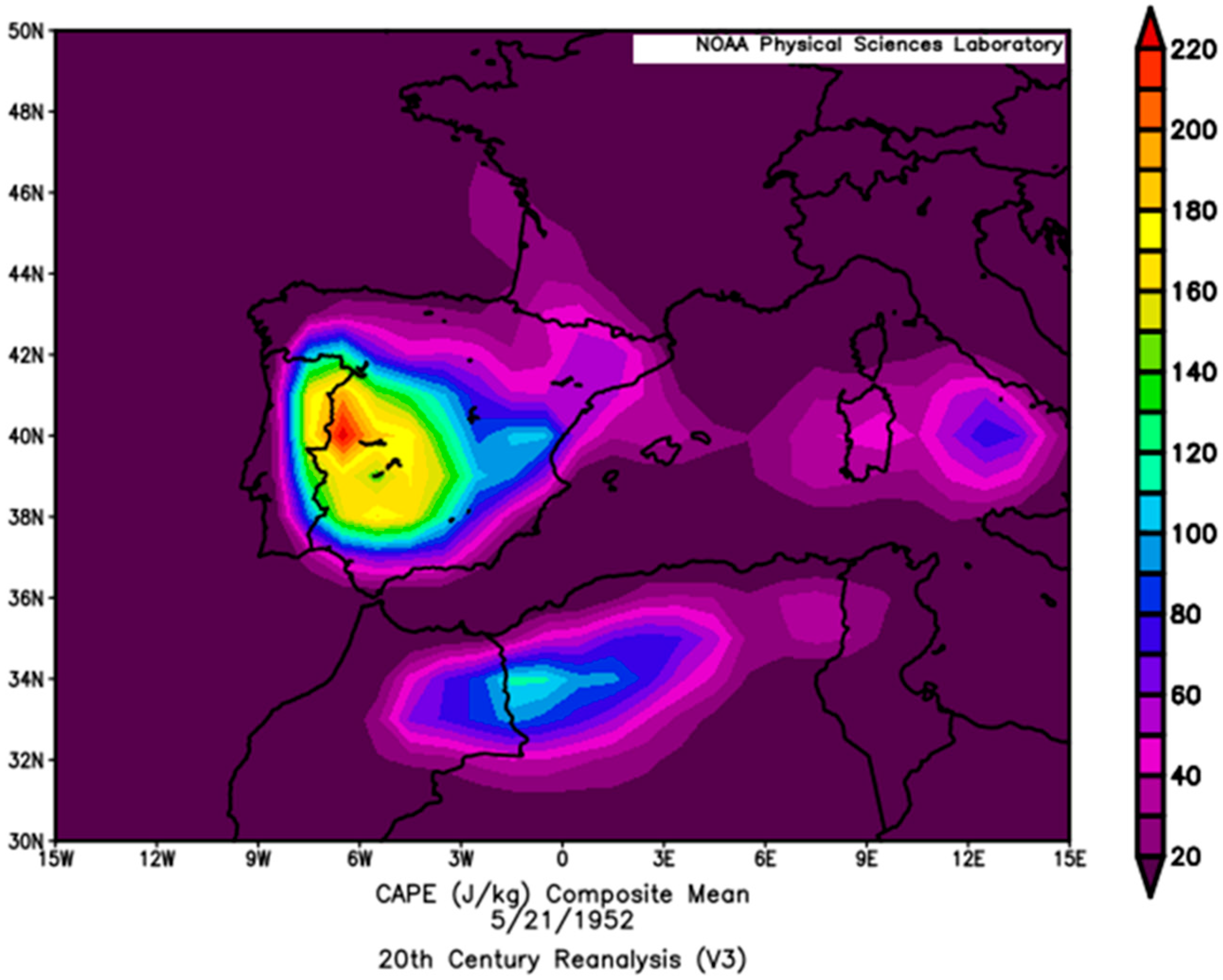
The May 1952 flood events present a particularly illustrative case. On 21 May, the Omega field at 1000 mb showed moderate lifting over the Villafranca de los Barros area, with stronger ascent over northern Iberia and Morocco. CAPE values were high throughout southwestern Iberia, reaching their maxima over northwestern Extremadura (
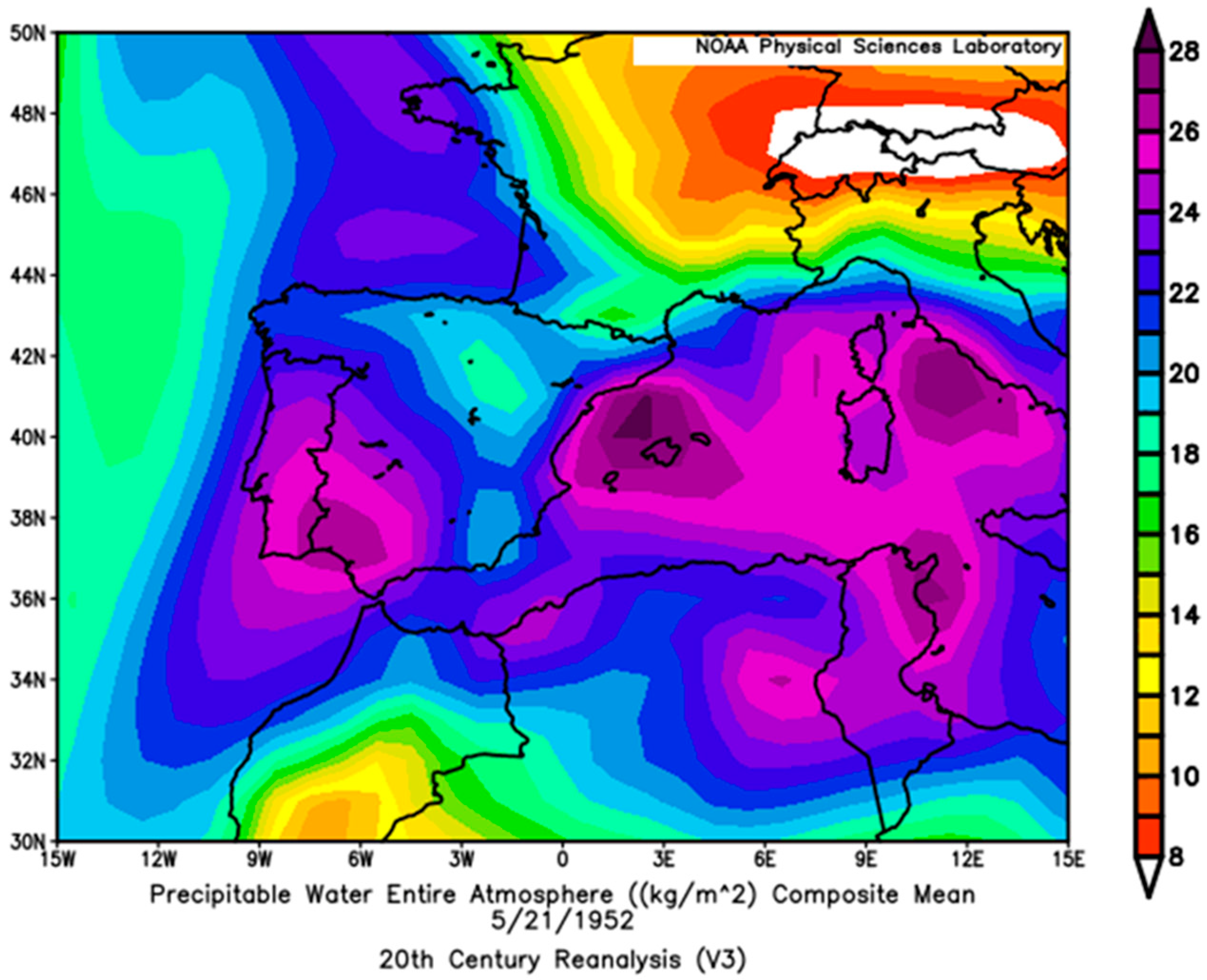
Figure 6). Additionally, PWEA exhibited large values over the study area, with especially high values across southern Badajoz and Huelva provinces (
Figure 7). On 22 May, moderate ascent persisted over Extremadura, while stronger lifting appeared over the Valencian coast and east of the Strait of Gibraltar. CAPE remained elevated across the entire region, including North Africa, and PWEA continued to show high moisture availability over Badajoz province. By 23 May, vertical motion weakened in Extremadura, although moderate Omega values were still present, with stronger ascent over northern Portugal, and PWEA values remained high.
Taken together, these patterns confirm the presence of typical synoptic and thermodynamic environments conducive to summer-type thunderstorms, consistent with the historical reports describing short-lived but intense convective events that triggered flash floods in Villafranca de los Barros. Although the 20CRv3 reanalysis cannot fully resolve the local-scale features responsible for these events, its large-scale fields provide strong evidence that these floods were linked to convective outbreaks favored by the combination of abundant moisture, moderate instability, and mesoscale lifting mechanisms over southwestern Iberia.
5. Conclusions
This study provides a detailed reconstruction of five catastrophic historical floods that affected Villafranca de los Barros between 1865 and 1952, combining documentary evidence with large-scale atmospheric reanalysis. The results demonstrate the usefulness of integrating historical archives and modern datasets, allowing us to link local hydrological disasters to their broader synoptic context.
The atmospheric patterns identified reveal two dominant mechanisms responsible for the floods. The events of 1865 and 1876 were clearly associated with large-scale Atlantic disturbances—including a cut-off low and a negative NAO phase—that produced persistent and widespread rainfall across southwestern Iberia. Conversely, the floods of 1903, 1949, and 1952 were caused by intense, short-lived convective storms typical of the late spring and summer seasons, driven by the combination of moisture availability, atmospheric instability, and vertical lifting.
These findings emphasize the meteorological diversity of flood-generating processes in small Iberian basins and highlight the vulnerability of rapidly urbanizing settlements such as Villafranca de los Barros, where encroachment on flood-prone areas amplified the impacts. The multidisciplinary approach adopted here, combining reanalysis data with historical documentation, offers a valuable framework for improving our understanding of past extreme events in data-scarce regions. It also underscores the importance of incorporating historical climatology into modern flood risk assessment and planning strategies, particularly in the context of a changing climate. Moreover, future research should delve deeper into the role of convective activity, the North Atlantic Oscillation (NAO), cut-off low systems, and atmospheric rivers in shaping flood variability across the Iberian interior. Such investigations could not only refine our understanding of the atmospheric drivers behind extreme hydrometeorological events but also contribute to the development of more robust predictive models and risk management strategies. Integrating these analyses with high-resolution climate projections and socio-environmental data would offer a comprehensive framework for anticipating compound risks in the context of accelerating climate change and land-use transformation.





 ,
,