Abstract
Aminoacetaldehyde (glycinal, NH2CH2CHO) is a first-generation oxidation product of monoethanolamine (MEA, NH2CH2CH2OH), a solvent widely used for CO2 gas separation, which is proposed as the basis for a range of carbon capture technologies. A complete oxidation mechanism for MEA is required to understand the atmospheric transformation of carbon capture plant emissions, as well as the degradation of this solvent during its use and the oxidative destruction of waste solvent. In this study, we have investigated the •OH radical-initiated oxidation chemistry of aminoacetaldehyde using quantum chemical calculations and RRKM theory/master equation kinetic modeling. This work predicts that aminoacetaldehyde has a tropospheric lifetime of around 6 h and that the reaction predominantly produces the NH2CH2C•O radical intermediate at room temperature, along with minor contributions from NH2•CHCHO and •NHCH2CHO. The dominant radical intermediate NH2CH2C•O is predicted to promptly dissociate to NH2•CH2 and CO, where NH2•CH2 is known to react with O2 under tropospheric conditions to form the imine NH = CH2 + HO2. The NH2•CHCHO radical experiences captodative stabilization and is found to form a weakly bound peroxyl radical upon reaction with O2. Instead, the major oxidation product of NH2•CHCHO and the aminyl radical •NHCH2CHO is the imine NH = CHCHO (+HO2). In the atmosphere, the dominant fate of imine compounds is thought to be hydrolysis, where NH = CH2 will form ammonia and formaldehyde, and NH = CHCHO will produce ammonia and glyoxal. Efficient conversion of the dominant first-generation oxidation products of MEA to ammonia is consistent with field observations and supports the important role of imine intermediates in MEA oxidation.
1. Introduction
Amine-based carbon capture and storage (CCS) is a proposed technology to handle CO2 pollution from fossil fuel-fired power plants and other industries [1,2,3,4], where CO2 is absorbed from flue gas into a reactive amine solvent, then thermally stripped to produce a concentrated CO2 stream. Monoethanolamine (MEA, or 2-aminoethanol) is the benchmark solvent for CO2 gas separation, including carbon capture technology [5,6,7,8]. A serious concern with solvent-based CCS operations is their potential to release volatile amines like MEA into the atmosphere, where they can contribute to secondary aerosol formation and the generation of toxic oxidized nitrogen compounds [4,9,10,11]. Moreover, aqueous amine solvents are known to degrade over time as they are exposed to high temperatures and reactive flue gases. This produces large quantities of waste solvents that must be disposed of. Various thermal and oxidative process technologies exist to dispose of waste amines, such as incineration, co-firing, and supercritical water oxidation (SCWO). There is, therefore, a great need to understand the oxidation chemistry of MEA and related amines in diverse environments, including in the atmosphere, during CO2 absorption and stripping, in combustion, and during SCWO.
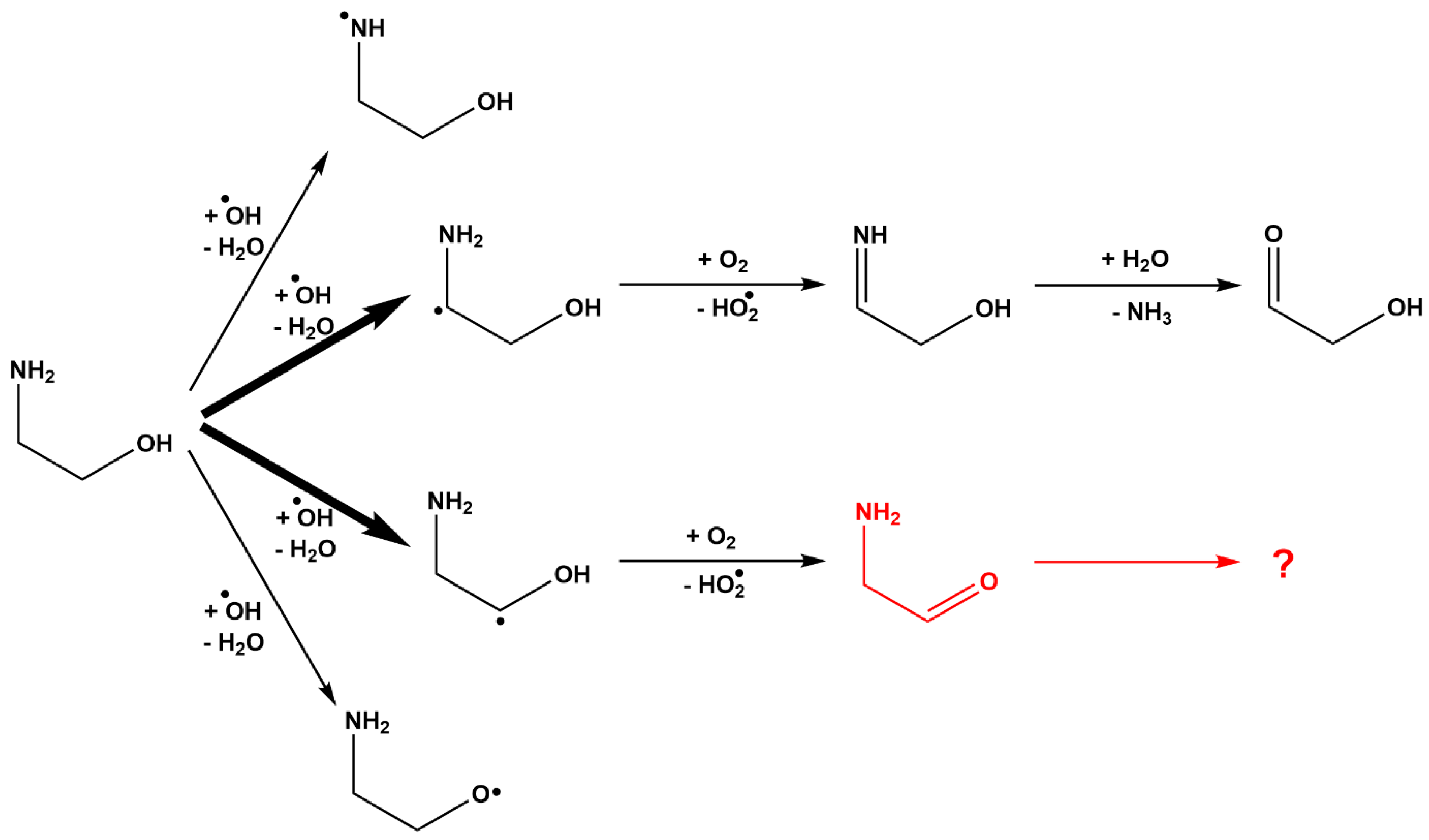
The presently accepted mechanism for the atmospheric degradation of MEA is shown in Scheme 1. Recent investigations of MEA oxidation [12,13,14,15,16] demonstrate that the process is primarily initiated by OH radical attack via H-abstraction from the two unique C—H sites and, to a lesser extent, from the N—H and O—H sites, to produce four isomeric radicals. This reaction proceeds with a relatively large rate coefficient of 7.27 × 10⁻¹¹ cm3 molecule−1 s−1 at 298 K. Based on several experimental and theoretical investigations, the α-aminoalkyl (NH2C●HCH2OH) and α-hydroxyalkyl (NH2CH2C●HOH) radicals are expected as the dominant initial products of the MEA + OH reaction, and their subsequent reactions will, therefore, determine the primary initial products of MEA oxidation [12,14,15].
Scheme 1.
Key reactions in the atmospheric oxidation of MEA. The further oxidation chemistry of aminoacetaldehyde (shown in red) remains poorly understood.
A recent analysis of MEA atmospheric chemistry shows that the NH2C●HCH2OH radical reacts with O2 to directly produce 2-iminoethanol (NH = CHCH2OH) and HO2● radical via the chemically activated α-aminoalkylperoxyl mechanism [16]. Similarly, the NH2CH2C●HOH radical reacts with O2 to produce aminoacetaldehyde (NH2CH2CHO) and HO2● via the α-hydroxyalkylperoxyl mechanism [12,17]. The C2H5NO isomers 2-iminoethanol and aminoacetaldehyde are, thus, the key first-generation oxidation products of MEA.
In the atmosphere, 2-iminoethanol is expected to undergo hydrolysis to produce ammonia and glycolaldehyde (CH2OHCHO) [16,18]. The atmospheric fate of aminoacetaldehyde, however, is all but unknown despite this compound being detected in atmospheric MEA oxidation experiments [4] and in the stack gases of industrial MEA absorbers [19]. Aminoacetaldehyde has also been implicated as a product of redox reactions [20] and flame-induced aqueous oxidation [21,22] of MEA. Past chemical transport modeling of the atmospheric impact of MEA emissions has assumed that the aminoacetaldehyde intermediate predominantly reacts to give formamide (NH2CHO), with smaller yields of 2-oxoacetamide (NH2C(O)CHO) [23], but there is little experimental or theoretical support for these mechanisms.
This study attempts to address the gaps in our understanding of the atmospheric fate of aminoacetaldehyde through a theoretical investigation of the aminoacetaldeyhde + OH reaction. A theoretical approach is warranted here because α-amino aldehydes are reactive, challenging to synthesize, and prone to assembly in the condensed phase (which may help explain the absence of direct experimental studies) [24]. Rate coefficients and branching fractions are presented for the aminoacetaldeyhde + OH reaction as a function of temperature, followed by an investigation of the oxidation reactions of the radicals that are formed. In addition to its role in atmospheric chemistry, aminoacetaldehyde has been proposed as an important species in interstellar and prebiotic chemistry, where it can serve as a precursor to the amino acid glycine (note that within this context, aminoacetaldehyde is usually referred to as glycinal) [25,26,27,28]. The present investigation of aminoacetaldehyde and its free radicals may, therefore, also be of relevance to understanding its astrochemical significance.
2. Methods
Ab initio calculations reported here are all with the composite G3X-K method [29], which uses M06-2X/6-31G(2df,p)-optimized structures and vibrational frequencies in a series of single-point wave function theory energy evaluations at up to the CCSD(T) level of theory. Reported energies are 0 K enthalpies (i.e., zero point energy corrected electronic energies). Relaxed internal rotor scans were performed to identify the lowest energy conformation for each stationary point. Intrinsic reaction coordinate (IRC) scans were used to confirm the connectivity of each transition state. All electronic structure theory calculations were performed in the Gaussian 16 program [30].
Statistical reaction rate theory calculations were performed using the MultiWell 2016 [31] program suite. Sums and densities of states are from M06-2X/6-31G(2df,p)-optimized structures calculated according to the rigid rotor-harmonic oscillator model. Microscopic rate coefficients k(E) are from RRKM theory, with structures treated as symmetric tops with an active 1-dimensional and an inactive 2-dimensional rotor. Hydrogen abstraction reactions are corrected for quantum mechanical tunneling from Eckart’s theory. The barrierless association of NH2CH2CHO with ●OH was treated with the restricted Gorin model [32], following an approach described in further detail previously [33,34]. In the master equation calculations, bath gas collisions are treated using a Lennard-Jones model. The Lennard-Jones parameters for all C2H6NO2 wells were estimated as σ = 4.94 Å and ε = 555.6 K using the Joback method for boiling point estimation along with additivity procedures [35]. Stochastic master equation simulations feature 106 trials of up to 100 collisions at 1 atm pressure for the temperature range of 300–2000 K. Calculated rate coefficients are fit to Arrhenius expressions for use in chemical kinetic modeling. Based upon the choice of theoretical method, we estimate that our rate coefficient calculations have an uncertainty of less than 1 kcal/mol in activation energies Ea and a factor of two in pre-exponential factors A.
3. Results
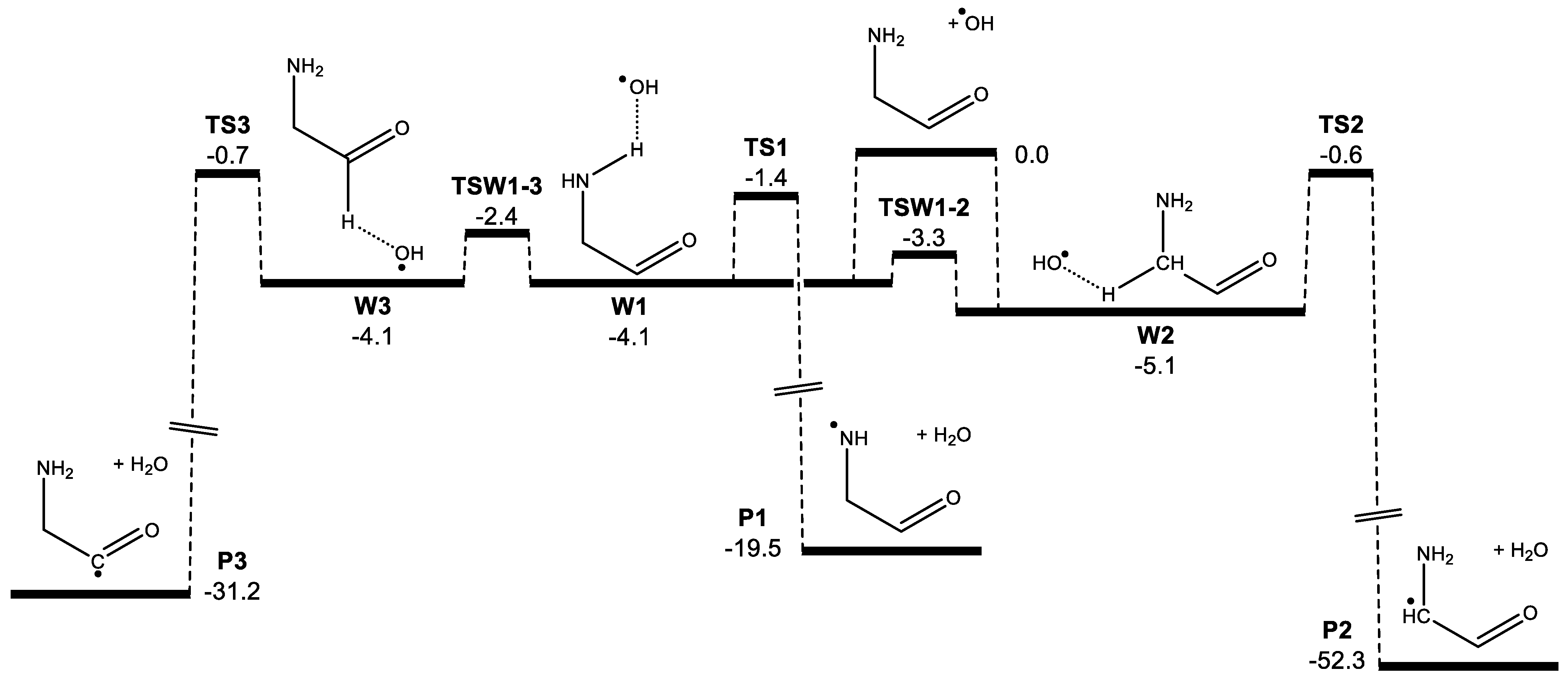
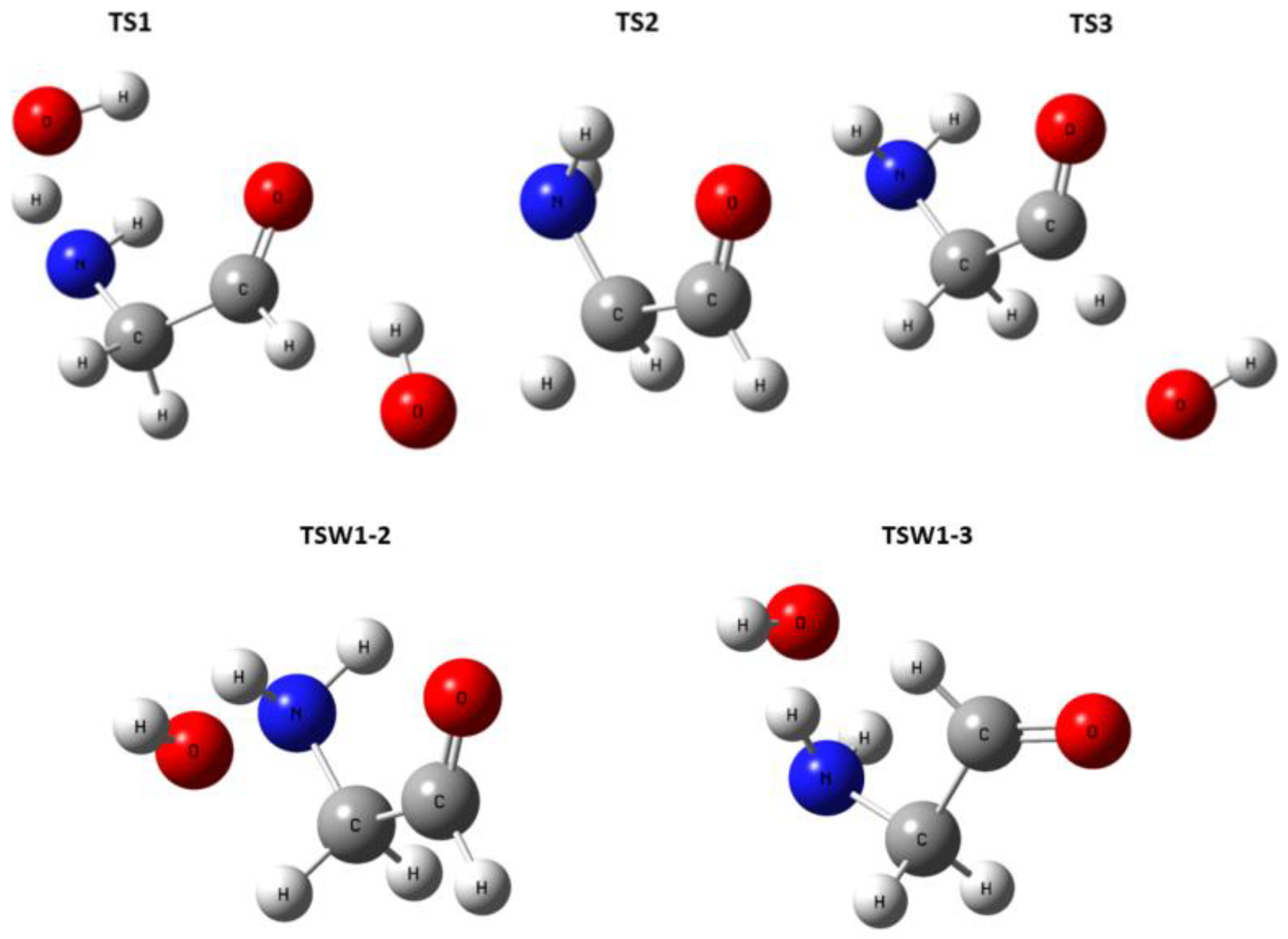
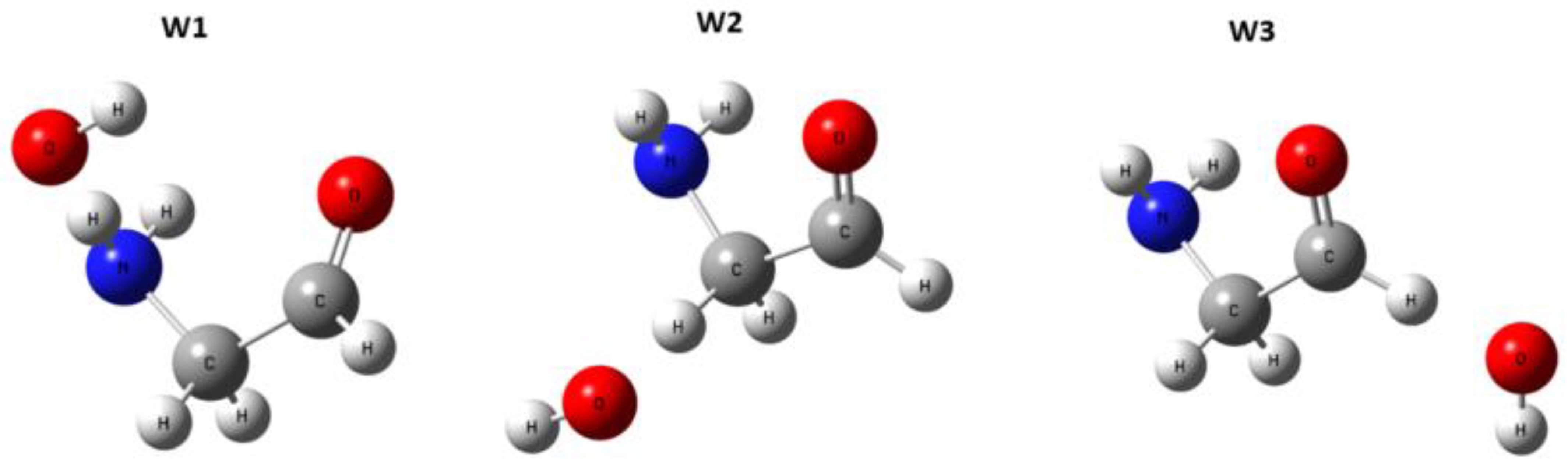
A potential energy surface for the NH2CH2CHO + ●OH reaction is shown in Figure 1. The optimized wells and transition state structures are presented in Figure 2 and Figure 3.
Figure 1.
Potential energy surface for the NH2CH2CHO + ●OH reaction at the G3X-K level of theory (relative 0 K enthalpies in kcal/mol).
Figure 2.
Optimized structures for intermediate wells in the NH2CH2CHO + ●OH reaction at the M06-2X/6-31G(2df,p) level of theory.
Figure 3.
Optimized structures for transition states in the NH2CH2CHO + ●OH reaction mechanism at the M06-2X/6-31G(2df,p) level of theory.
Figure 1 reveals the reaction of aminoacetaldehyde with ●OH to proceed through the formation of the pre-reactive complexes W1, W2, and W3 (see Figure 2), with each sitting at around 4 to 5 kcal mol−1 below the energy of the reactants. In each of these complexes, the ●OH radical is coordinated with—and acting as a hydrogen bond acceptor for—the H atom, which it abstracts, via TS1 (−1.4 kcal mol−1), TS2 (−0.6 kcal mol−1), and TS3 (−0.7 kcal mol−1), respectively. These three channels produce the N-centered radical ●NHCH2CHO (TS1) and the two C-centered radicals, NH2C●HCHO (TS2) and NH2CH2C●O (TS3), along with H2O. Moreover, the pre-reaction complexes can interconvert via TSW1-2 and TSW1-3, with barriers around 2–3 kcal mol−1 below the reactants.
A statistical reaction rate model of the NH2CH2CHO + ●OH reaction has been developed on the basis of the potential energy surface shown in Figure 1. In this model, barrierless formation of the NH2CH2CHO∙∙∙●OH adducts (W1–W3) is treated using the restricted Gorin approach, based on Morse potential fits. The parameters used to fit the Morse potential, external 2D rotor, and restricted internal rotational constants are listed in Table 1 for the formation of W1 at 300–2000 K. Similar parameters for the formation of W2 and W3 are provided in the Supporting Information. The transition state 2D moment of inertia decreases from around 300 to 150 amu Å2 as temperature increases from 300 to 2000 K, indicating a tightening of the hypothetical rate-determining structures.
Table 1.
Parameters used to fit restricted Gorin transition states to the NH2CH2CHO + ●OH → W1 reaction, and resultant hindrance parameter (η) and adiabatic external rotor fits as a function of temperature (300−2000 K).
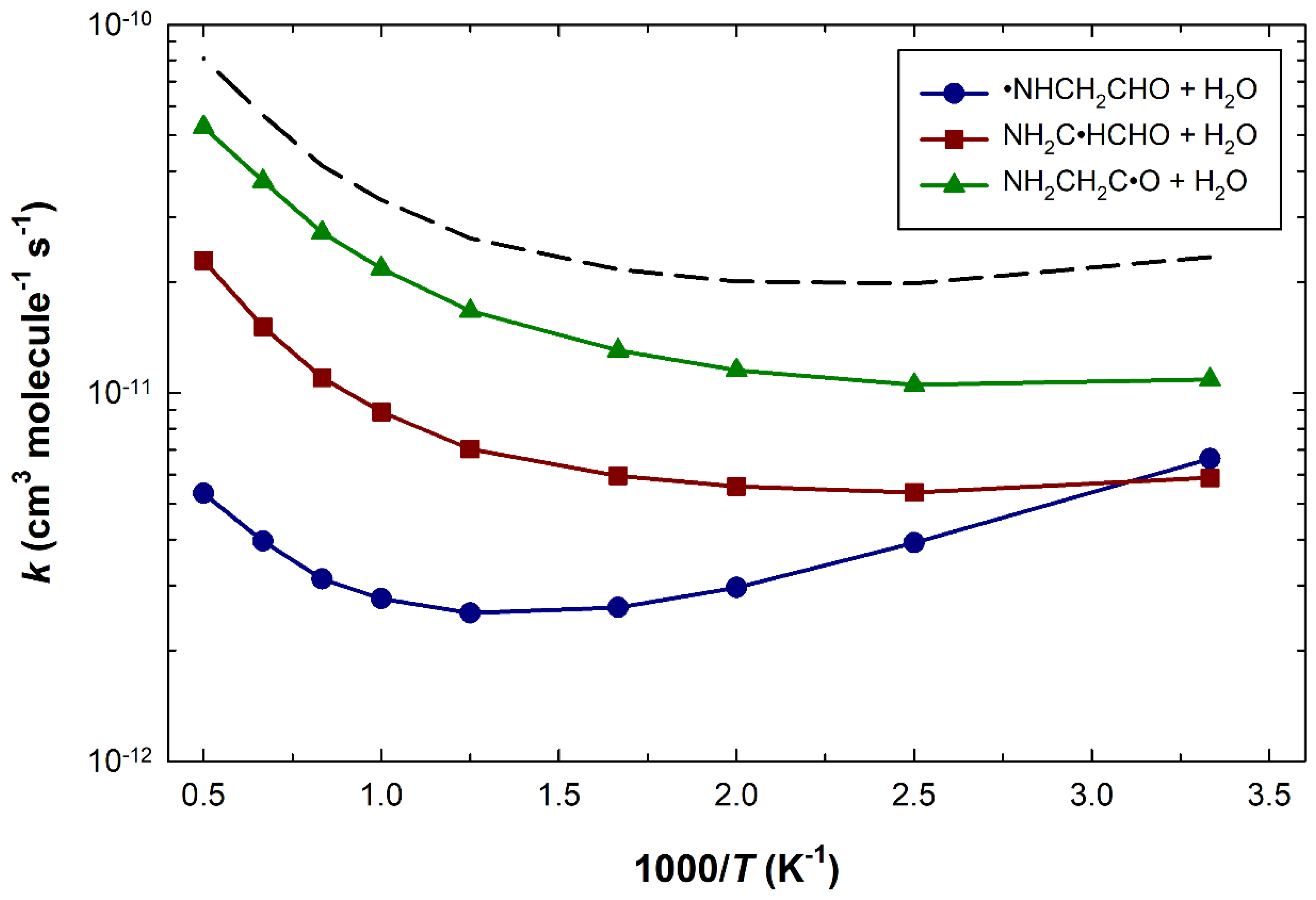
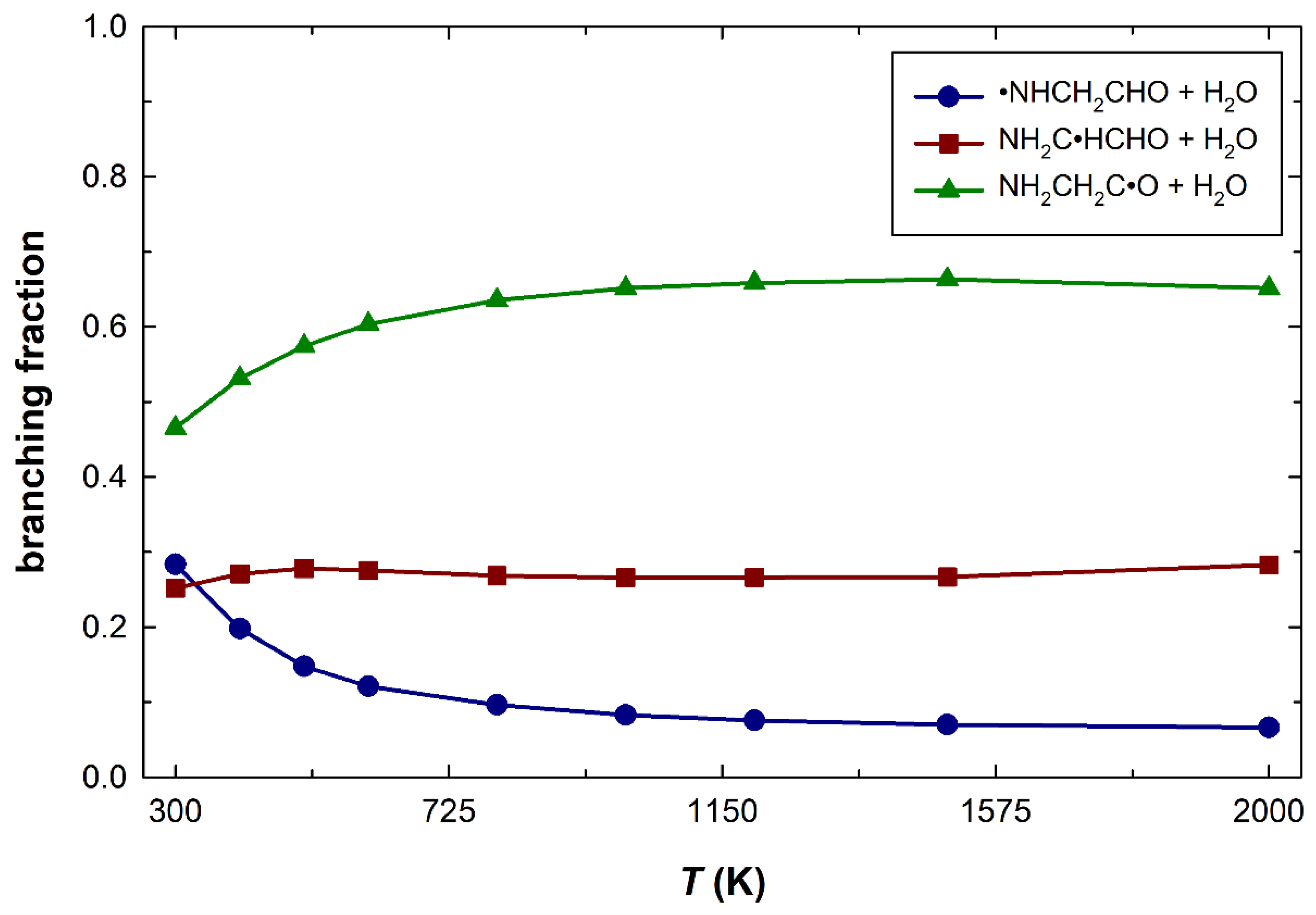
Master equation simulations were carried out to predict the overall rate coefficient and branching fractions for the NH2CH2CHO + ●OH reaction from 300 to 2000 K in 1 atm of N2. The calculated rate coefficients are depicted in Figure 4, with branching fractions shown in Figure 5. Figure 4 reveals that the reaction is relatively rapid at 300 K, with a total rate coefficient of 2.3 × 10⁻¹¹ cm3 molecule−1 s−1, compared to a capture rate of 7.8 × 10⁻¹¹ cm3 molecule−1 s−1. For a typical daytime tropospheric ●OH concentration of 2 × 10⁶ molecule/cm3, we predict that the lifetime of aminoacetaldehyde is ca. 6 h, indicating that it will experience limited transport beyond the planetary boundary layer.
Figure 4.
Calculated rate coefficients k(T) for the different product channels in the NH2CH2CHO + ●OH reaction from 300–2000 K at 1 atm. Dashed black line shows the total rate coefficient.
Figure 5.
Calculated branching fractions for the different product channels in the NH2CH2CHO + ●OH reaction from 300 to 2000 K at 1 atm.
At 300 K, the reaction of aminoacetaldehyde with ●OH is dominated by formyl group OC—H abstraction to NH2CH2C●O (46.5%), with smaller yields of the ●NHCH2CHO (28.3%) and NH2C●HCHO (25.2%) radicals. As temperature increases from 300 K, the NH2CH2CHO + ●OH reaction exhibits classical negative activation energy behavior, as the activated pre-reaction complexes demonstrate increased probability to re-dissociate. This effect is particularly pronounced for formyl abstraction, with the rate coefficient dropping from ca. 5 × 10⁻¹¹ cm3 molecule−1 s−1 to 1 × 10⁻¹¹ cm3 molecule−1 s−1 across the investigated temperature range.
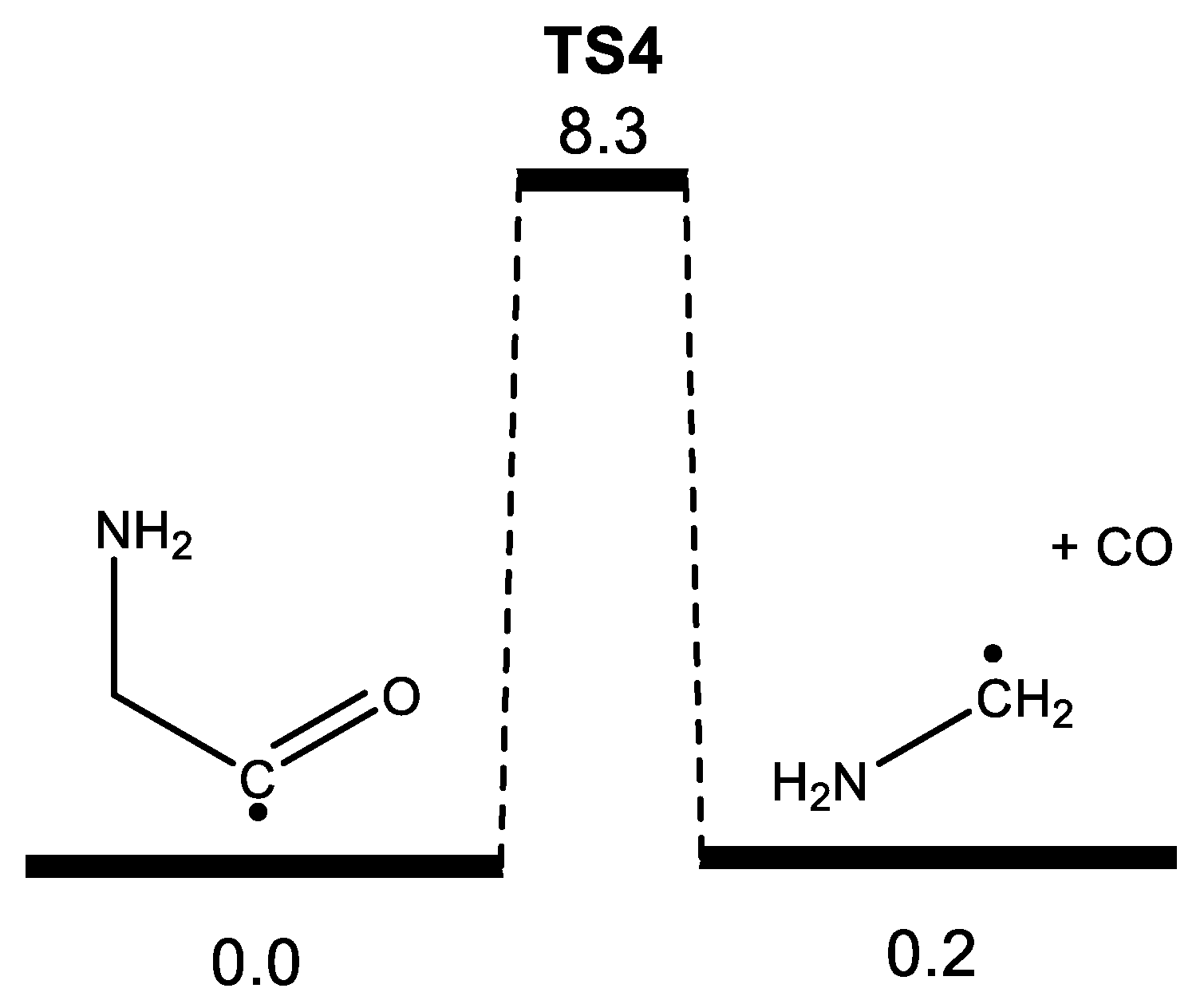
Our calculations indicate that NH2CH2C●O will be the dominant intermediate radical in the ●OH radical-initiated oxidation of aminoacetaldehyde, along with non-negligible yields of ●NHCH2CHO and NH2C●HCO. The NH2CH2C●O radical is relatively fragile and can dissociate to ●CH2NH2 + CO with a barrier of less than 9 kcal/mol, as shown in Figure 6. This barrier is sufficiently low to be rapid at room temperature. Moreover, because of the exothermicity of the reaction NH2CH2CHO + ●OH → NH2CH2C●O + H2O (>30 kcal/mol), the nascent NH2CH2C●O radical will carry sufficient excess vibrational energy to undergo prompt dissociation before it is able to participate in collisions with surrounding O2 molecules, thus precluding the formation of a peroxyl radical intermediate. In the air, the ●NH2CH2 radical will react with O2 to produce NH = CH2 + HO2● [36,37,38]. Assuming that NH = CH2 reacts with water to produce ammonia and formaldehyde, formyl abstraction from aminoacetaldehyde in the air, therefore, results in the following net outcome:
NH2CH2CHO + ●OH + O2 + H2O → NH3 + HCHO + CO + H2O + HO2●
Figure 6.
Energy diagram for dissociation of NH2CH2C●O, at the G3X-K level of theory (relative 0 K enthalpies in kcal mol−1).
Importantly, the above process illustrates that a cascade of reactions following ●OH radical initiation can rapidly convert aminoacetaldehyde into ammonia and oxygenated single-carbon species. This is consistent with the experimental observation of high ammonia concentrations both in the stack emissions of CO2 absorbers operating on MEA [19] and in atmospheric chamber studies of MEA photooxidation [4].
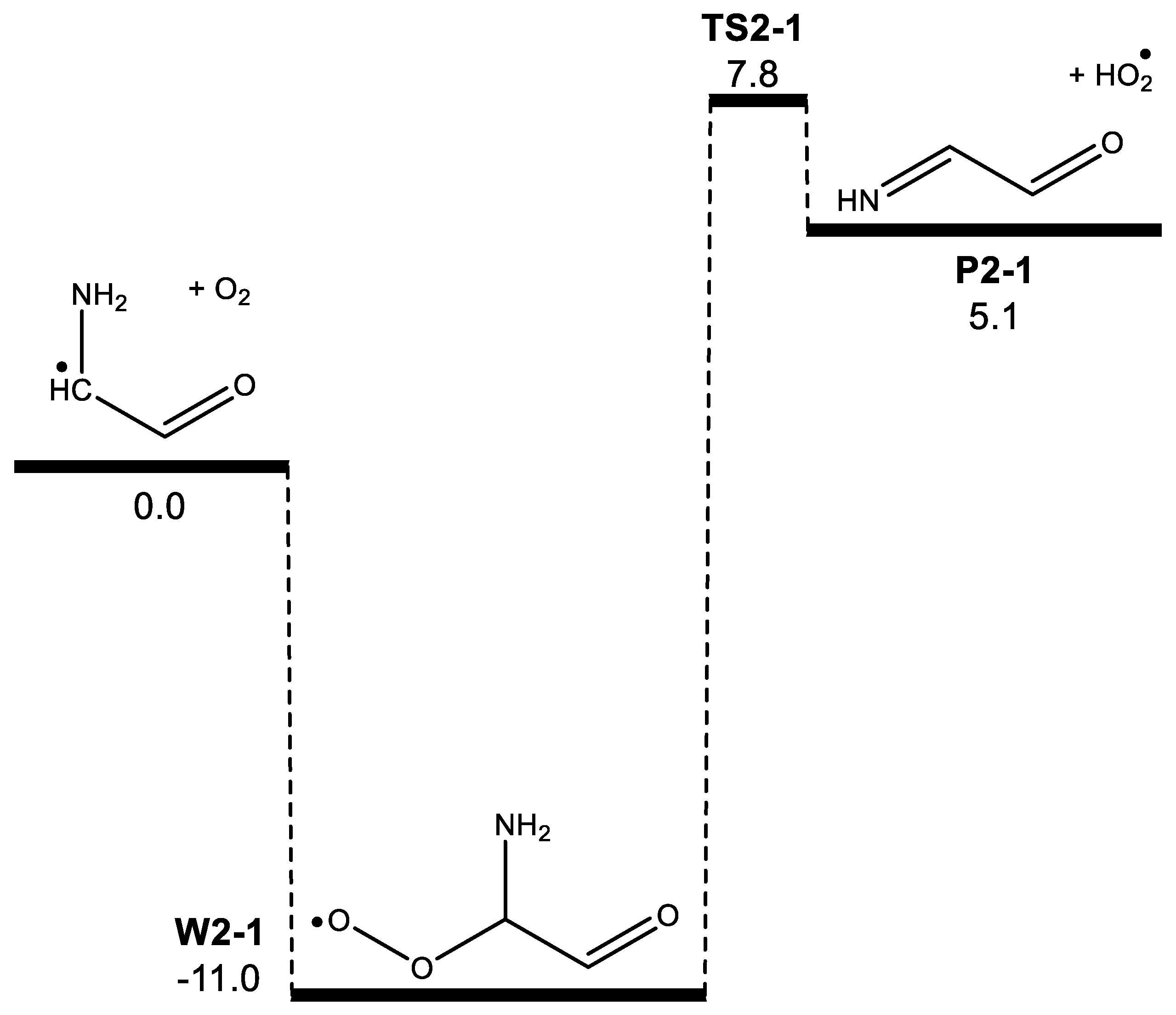
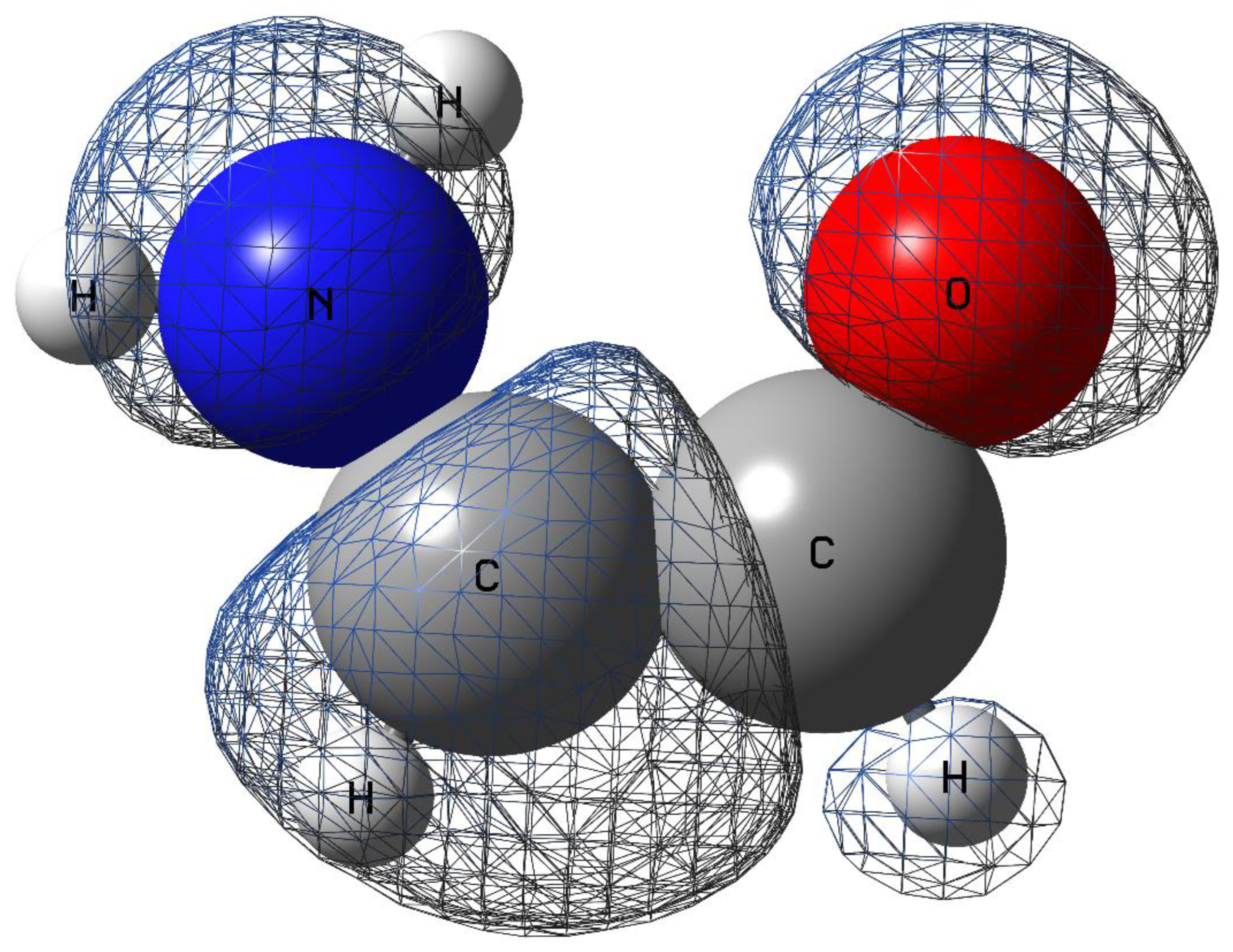
Potential energy surfaces for reactions of the minor NH2C●HCHO and ●NHCH2CHO radicals with O2 have been developed and are shown in Figure 7 and Figure 8, respectively (structures of the key wells and transition states are illustrated in the Supporting Information). By analogy with the α-aminoalkyl radical oxidation mechanism [37], the NH2C●HCHO radical associates with O2 to form a peroxyl radical intermediate that can eliminate HO2● to form an imine, without the participation of a hydroperoxide intermediate. However, as Figure 7 reveals, O2 addition to NH2C●HCHO releases surprisingly little energy (11 kcal/mol). We attribute this to the captodative effect, where resonance stabilization between the NH2—●CH—CH = O and NH2—CH = CH—O● radical forms is further enhanced by electron donation from the nitrogen lone pair to create zwitterionic resonance structures such as ●+NH2—CH = CH—O− [39]. This is demonstrated in the spin density plot for NH2CH2C●O (Figure 8), which reveals contributions from all three of the above-mentioned resonance structures. The consequence of captodative stabilization of NH2C●HCHO is evident in Figure 1, where this radical is stabilized by over 20 and 30 kcal/mol relative to the respective NH2CH2C●O and ●NHCH2CHO isomers. This is consistent with previous calculations on this free radical, which predict a radical stabilization energy of 22 kcal/mol, of which around 10 kcal/mol is attributed to the captodative effect [39]. Although the peroxyl radical intermediate (W2-1) can still eliminate HO2● with a relatively low barrier (ca. 19 kcal/mol), comparable to that in other α-aminoalkylperoxyl radicals [36,37], the low exothermicity of O2 addition makes this an overall endothermic process.
Figure 7.
Energy diagram for the NH2C●HCHO + O2 reaction, at the G3X-K level of theory (relative 0 K enthalpies in kcal/mol).
Figure 8.
Alpha electron spin density in the NH2C●HCHO radical, demonstrating the captodative effect (calculated at the M06-2X/6-31G(2df,p) level of theory).
Canonical transition state theory calculations have been used to estimate rate coefficients for direct H abstraction by O2 from NH2C●HCHO via the transition state depicted in Figure 7. This assumes that the reaction bypasses the weak peroxyl radical intermediate and likely represents an upper limit to the true rate coefficient. At room temperature, this gives k = 1.3 × 10⁻¹⁵ cm3 molecule−1 s−1. Although relatively slow, for a tropospheric O2 concentration of 5.2 × 10¹⁸ molecule cm−3, this corresponds to a pseudo-first-order reaction rate of 6760 s−1 or a lifetime of 150 μs. We, therefore, predict that the NH2C●HCHO radical product of the aminoaceteldehyde + ●OH reaction will react with O2 to form the imine NH = CHCH = O (+ HO2●) in the atmosphere. Stabilization of the peroxyl radical intermediate NH2CH(O2●)CHO is not expected to be significant under atmospheric conditions due to the binding energy of only 11 kcal/mol. However, if this species forms, we expect it will react with NO to give the alkoxyl radical NH2CH(O●)CHO. Calculations at the G3X-K level of theory predict that this compound dissociates to the formyl radical (HC●O) and formamide (NH2CHO) with a barrier of less than 1 kcal/mol. Production of formamide in even small yields may be significant given the rapid atmospheric conversion of amides to highly toxic isocyanic acid [40,41,42]. The relatively slow reaction of O2 with the captodative stabilized radical NH2C●HCHO means that it may also be available to associate with NO and NO2 in the atmosphere, forming the NH2CH(NO●)CHO and NH2CH(NO2●)CHO radicals, respectively.
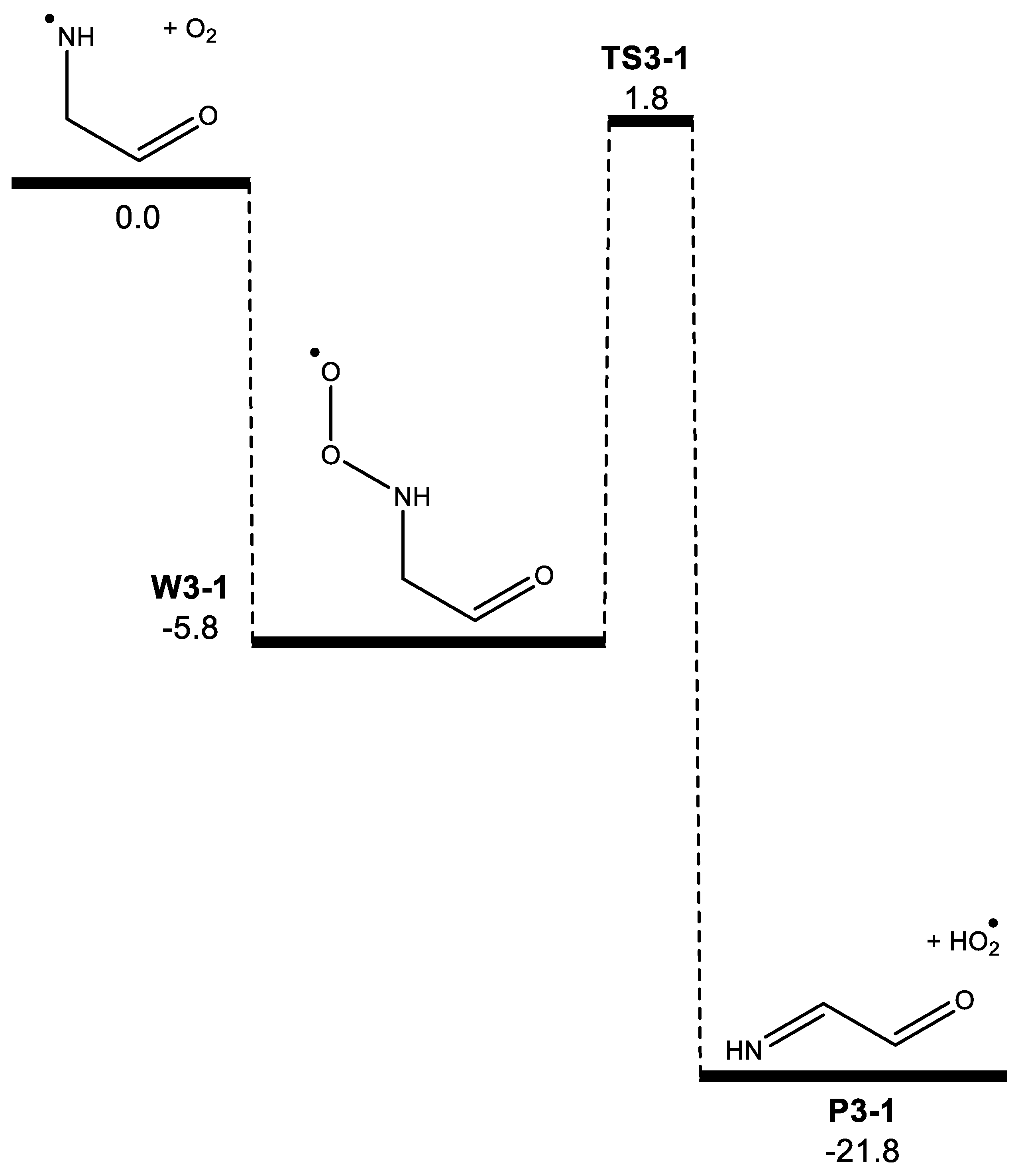
From the potential energy surface for the ●NHCH2CHO radical + O2 reaction (Figure 9), we see that this reaction proceeds via the process described by Alam et al. [43] for the ●NHCH3 + O2 radical. Here, a weak amino-peroxyl radical intermediate (W3-1) first forms, from which HO2 can be eliminated via TS3-1, which sits at 1.8 kcal/mol above the reactants. Following a similar approach to the NH2CHCHO + O2 reaction above, we predict a tropospheric lifetime of 447 μs, providing it with little opportunity to react with NOx to form nitrosamines and other harmful substances [44,45,46,47].
Figure 9.
Energy diagram for the ●NHCH2CHO + O2 reaction, at the G3X-K level of theory (relative 0 K enthalpies in kcal mol−1).
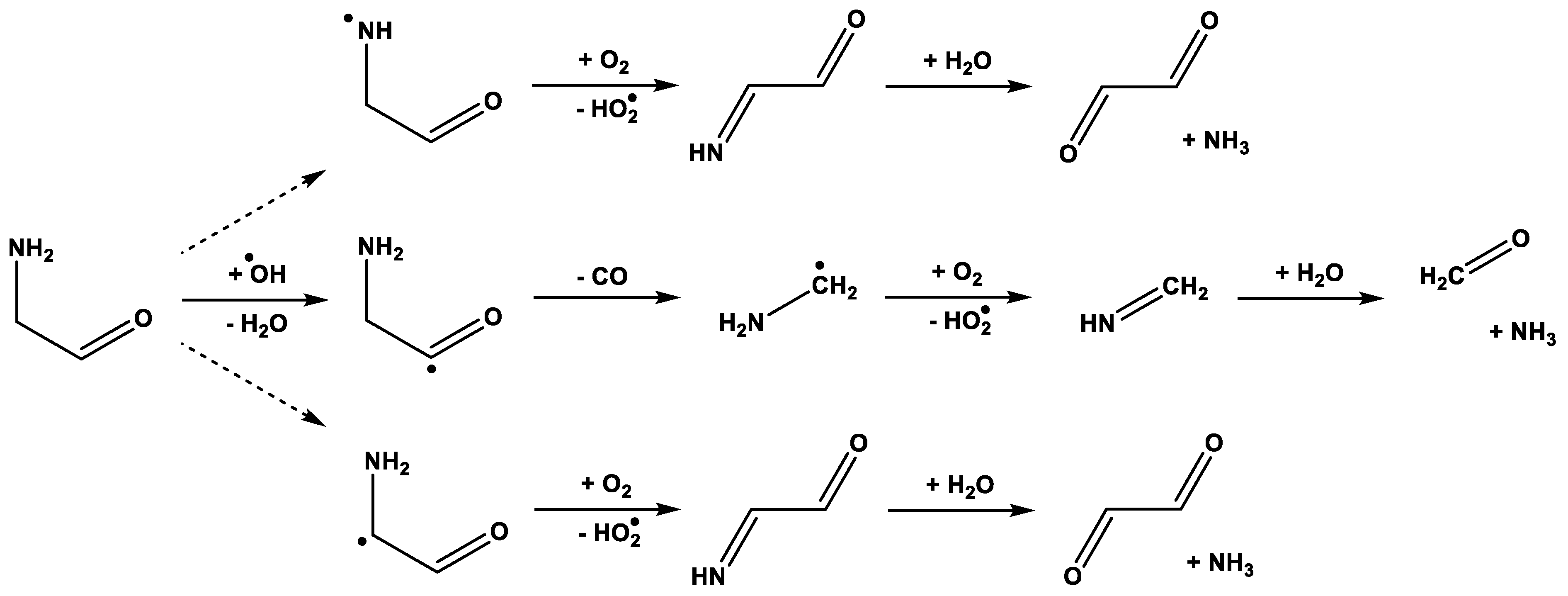
This study has developed a photochemical oxidation mechanism of aminoacetaldehyde, as summarized in Scheme 2, with calculated rate coefficient expression parameters listed in Table 2. Irrespective of the initial abstraction site, a sequence of oxidation and hydrolysis reactions efficiently converts the reduced nitrogen in aminoacetaldehyde into ammonia alongside oxidized C1 and C2 VOCs. The dominant reaction channel proceeds via the fragile NH2CH2C●O radical, which ultimately fragments, oxidizes, and hydrolyses to CO + HCHO + NH3, thus cleaving the C—N and both C—C bonds in the initial reactant.
Scheme 2.
Proposed photochemical oxidation mechanism of aminoacetaldehyde developed in this study.
Table 2.
Calculated rate coefficient expressions k = Aexp(−Ea/RT) for reactions in the aminoacetaldehyde + OH + O2 reaction sequence at 300–2000 K and 1 atm N2.
4. Conclusions
The photochemical oxidation mechanism and reaction kinetics of aminoacetaldehyde are determined in this study through the application of a high-level composite theoretical method and transition state theory calculations. This study reveals that formyl H-abstraction to produce the NH2CH2C•O radical dominates, with appreciable contriubutions from abstraction at the other two unique sites. The NH2CH2C•O radical subsequently decomposes to NH2•CH2 and CO, and the reactions of NH2•CH2, NH2•CHCHO, and •NHCH2CHO with O2 to produce imine products are shown to be important processes. Interestingly, captodative stabilization in NH2•CHCHO substantially limits its reactivity toward O2.
Supplementary Materials
The following supporting information can be downloaded at: https://www.mdpi.com/article/10.3390/atmos15081011/s1, Figure S1: Optimized structures for intermediate well and transition state in the NH2CHCHO + O2 reaction, at the M06-2X/6-31G(2df,p) level; Figure S2: Optimized structures for intermediate well and transition state in the NHCH2CHO + O2 reaction, at the M06-2X/6-31G(2df,p) level; Table S1: Parameters used to Fit Morse Potential and Restricted Gorin Transition States to the NH2CH2CHO +OH Reaction, As a Function of Temperature (300−2000 K); Table S2: Parameters used to Fit Morse Potential and Restricted Gorin Transition States to the NH2CH2CHO +OH Reaction, As a Function of Temperature (300−2000 K).
Author Contributions
Conceptualization, A.A. and G.d.S.; methodology, A.A. and G.d.S.; software, A.A. and G.d.S.; validation, A.A. and G.d.S.; formal analysis, A.A. and G.d.S.; investigation, A.A. and G.d.S.; resources, A.A. and G.d.S.; data curation, A.A. and G.d.S.; writing—original draft preparation, A.A.; writing—review and editing, G.d.S.; visualization, A.A. and G.d.S.; supervision, G.d.S.; project administration, G.d.S. All authors have read and agreed to the published version of the manuscript.
Funding
This research received no external funding.
Institutional Review Board Statement
Not applicable.
Informed Consent Statement
Not applicable.
Data Availability Statement
Data is contained within the article or Supplementary Material.
Conflicts of Interest
The authors declare no conflict of interest.
References
- Veawab, A.; Tontiwachwuthikul, P.; Chakma, A. Corrosion behavior of carbon steel in the CO2 absorption process using aqueous amine solutions. Ind. Eng. Chem. Res. 1999, 38, 3917–3924. [Google Scholar]
- Puxty, G.; Rowland, R.; Allport, A.; Yang, Q.; Bown, M.; Burns, R.; Maeder, M.; Attalla, M. Carbon dioxide postcombustion capture: A novel screening study of the carbon dioxide absorption performance of 76 amines. Environ. Sci. Technol. 2009, 43, 6427–6433. [Google Scholar]
- Rubin, E.S.; Mantripragada, H.; Marks, A.; Versteeg, P.; Kitchin, J. The outlook for improved carbon capture technology. Prog. Energy Combust. Sci. 2012, 38, 630–671. [Google Scholar]
- Nielsen, C.J.; D’Anna, B.; Dye, C.; Graus, M.; Karl, M.; King, S.; Maguto, M.M.; Müller, M.; Schmidbauer, N.; Stenstrøm, Y. Atmospheric chemistry of 2-aminoethanol (MEA). Energy Procedia 2011, 4, 2245–2252. [Google Scholar]
- Veltman, K.; Singh, B.; Hertwich, E.G. Human and environmental impact assessment of postcombustion CO2 capture focusing on emissions from amine-based scrubbing solvents to air. Environ. Sci. Technol. 2010, 44, 1496–1502. [Google Scholar] [PubMed]
- Karl, M.; Wright, R.F.; Berglen, T.F.; Denby, B. Worst case scenario study to assess the environmental impact of amine emissions from a CO2 capture plant. Int. J. Greenh. Gas Control 2011, 5, 439–447. [Google Scholar]
- Reynolds, A.J.; Verheyen, T.V.; Adeloju, S.B.; Meuleman, E.; Feron, P. Towards commercial scale postcombustion capture of CO2 with monoethanolamine solvent: Key considerations for solvent management and environmental impacts. Environ. Sci. Technol. 2012, 46, 3643–3654. [Google Scholar] [PubMed]
- Rochelle, G.T. Amine scrubbing for CO2 capture. Science 2009, 325, 1652–1654. [Google Scholar]
- Luis, P. Use of monoethanolamine (MEA) for CO2 capture in a global scenario: Consequences and alternatives. Desalination 2016, 380, 93–99. [Google Scholar]
- Sharma, S.D.; Azzi, M. A critical review of existing strategies for emission control in the monoethanolamine-based carbon capture process and some recommendations for improved strategies. Fuel 2014, 121, 178–188. [Google Scholar]
- Pitts, J.N., Jr.; Grosjean, D.; Van Cauwenberghe, K.; Schmid, J.P.; Fitz, D.R. Photooxidation of aliphatic amines under simulated atmospheric conditions: Formation of nitrosamines, nitramines, amides, and photochemical oxidant. Environ. Sci. Technol. 1978, 12, 946–953. [Google Scholar]
- Xie, H.-B.; Li, C.; He, N.; Wang, C.; Zhang, S.; Chen, J. Atmospheric chemical reactions of monoethanolamine initiated by OH radical: Mechanistic and kinetic study. Environ. Sci. Technol. 2014, 48, 1700–1706. [Google Scholar] [PubMed]
- Borduas, N.; Abbatt, J.P.; Murphy, J.G. Gas phase oxidation of monoethanolamine (MEA) with OH radical and ozone: Kinetics, products, and particles. Environ. Sci. Technol. 2013, 47, 6377–6383. [Google Scholar] [PubMed]
- Onel, L.; Blitz, M.; Seakins, P. Direct Determination of the Rate Coefficient for the Reaction of OH Radicals with Monoethanol Amine (MEA) from 296 to 510 K. J. Phys. Chem. Lett. 2012, 3, 853–856. [Google Scholar]
- Karl, M.; Dye, C.; Schmidbauer, N.; Wisthaler, A.; Mikoviny, T.; d’Anna, B.; Müller, M.; Borrás, E.; Clemente, E.; Muñoz, A. Study of OH-initiated degradation of 2-aminoethanol. Atmos. Chem. Phys. 2012, 12, 1881–1901. [Google Scholar]
- da Silva, G. Atmospheric chemistry of 2-aminoethanol (MEA): Reaction of the NH2•CHCH2OH radical with O2. J. Phys. Chem. A 2012, 116, 10980–10986. [Google Scholar] [PubMed]
- da Silva, G.; Bozzelli, J.W. Role of the a-hydroxyethylperoxy radical in the reactions of acetaldehyde and vinyl alcohol with HO2. Chem. Phys. Lett. 2009, 483, 25–29. [Google Scholar]
- Bunkan, A.J.C.; Reijrink, N.G.; Mikoviny, T.; Muller, M.; Nielsen, C.J.; Zhu, L.; Wisthaler, A. Atmospheric chemistry of N-methylmethanimine (CH3N=CH2): A theoretical and experimental study. J. Phys. Chem. A 2022, 126, 3247–3264. [Google Scholar]
- Zhu, L.; Schade, G.W.; Nielsen, C.J. Real-time monitoring of emissions from monoethanolamine-based industrial scale carbon capture facilities. Environ. Sci. Technol. 2013, 47, 14306–14314. [Google Scholar]
- Venkata Nadh, R.; Syama Sundar, B.; Radhakrishnamurti, P.S. Kinetics of ruthenium(III) catalyzed and uncatalyzed oxidation of monoethanolamine by n-bromosuccinimide. Russ. J. Phys. Chem. A 2016, 90, 1760–1765. [Google Scholar]
- Nomoto, S.; Takasaki, M.; Sakata, N.; Harada, K. Flame-induced oxidation reaction of aliphatic amines in an aqueous solution. Tetrahed. Lett. 1983, 24, 3357–3360. [Google Scholar]
- Nomoto, S.; Shimoyama, A.; Shiraishi, S.; Sahara, D. Under-flame oxidation of amines and amino acids in an aqueous solution. Biosci. Biotechnol. Biochem. 1996, 60, 1851–1855. [Google Scholar]
- Karl, M.; Svendby, T.; Walker, S.-E.; Velken, A.S.; Castell, N.; Solberg, S. Modelling atsmopheric oxidation of 2-aminoethanol (MEA) emitted from post-combustion capture using WRF-Chem. Sci. Total Environ. 2015, 527–528, 185–202. [Google Scholar]
- Mestrom, L.; Bracco, P.; Hanefeld, U. Amino aldehydes revisited. Eur. J. Org. Chem. 2017, 7019, 7019–7025. [Google Scholar]
- Garrod, R.T. A three-phase chemical model of hot cores: The formation of glycine. Astrophys. J. 2013, 765, 60. [Google Scholar]
- Redondo, P.; Sanz-Novo, M.; Largo, A.; Barrientos, C. Amino acetaldehyde conformers: Structure and spectroscopic properties. Mon. Not. R. Astron. Soc. 2020, 492, 1827–1833. [Google Scholar]
- Simmie, J.M. C2H5NO isomers: From acetamide to 1,2-oxazetidine and beyond. J. Phys. Chem. A 2022, 126, 924–939. [Google Scholar] [PubMed]
- Marks, J.H.; Wang, J.; Kleimeier, N.F.; Turner, A.M.; Eckhardt, A.E.; Kaiser, R.I. Prebiotic synthesis and isomerization in interstellar analog ice: Glycinal, acetamide, and their enol tautomers. Angew. Chem. Int. Ed. 2023, 62, e202218645. [Google Scholar]
- da Silva, G. G3X-K theory: A composite theoretical method for thermochemical kinetics. Chem. Phys. Lett. 2013, 558, 109–113. [Google Scholar]
- Frisch, M.J.; Trucks, G.W.; Schlegel, H.B.; Scuseria, G.E.; Robb, M.A.; Cheeseman, J.R.; Scalmani, G.; Barone, V.; Petersson, G.A.; Nakatsuji, H.; et al. Gaussian 16; Gaussian, Inc.: Wallingford, CT, USA, 2016. [Google Scholar]
- Barker, J.; Nguyen, T.; Stanton, J.; Aieta, C.; Ceotto, M.; Gabas, F.; Kumar, T.; Li, C.; Lohr, L.; Maranzana, A. MultiWell-2016 Software Suite; University of Michigan: Ann Arbor, MI, USA, 2016. [Google Scholar]
- Smith, G.; Golden, D. Application of RRKM theory to the reactions OH + NO2 + N2 → HONO2 + N2 (1) and ClO + NO2 + N2 → ClONO2 + N2 (2); a modified gorin model transition state. Int. J. Chem. Kinet. 1978, 10, 489–501. [Google Scholar]
- da Silva, G. Reaction of methacrolein with the hydroxyl radical in air: Incorporation of secondary O2 addition into the MACR + OH master equation. J. Phys. Chem. A 2012, 116, 5317–5324. [Google Scholar] [PubMed]
- Ren, Z.; da Silva, G. Atmospheric oxidation of piperazine initiated by OH: A theoretical kinetics investigation. ACS Earth Space Chem. 2019, 3, 2510–2516. [Google Scholar]
- Sherwood, T.K.; Reid, R.C. The Properties of Gases and Liquids: Their Estimation and Correlation; McGraw-Hill: New York, NY, USA, 1958. [Google Scholar]
- Ly, T.; Kirk, B.B.; Hettiarachchi, P.I.; Poad, B.L.J.; Trevitt, A.J.; da Silva, G.; Blanksby, S.J. Reactions of simple and peptidic alpha-carboxylate radical anions with dioxygen in the gas phase. Phys. Chem. Chem. Phys. 2011, 13, 16314–16323. [Google Scholar]
- da Silva, G.; Kirk, B.B.; Lloyd, C.; Trevitt, A.J.; Blanksby, S.J. Concerted HO2 elimination from α-aminoalkylperoxyl free radicals: Experimental and theoretical evidence from the gas-phase NH2•CHCO2− + O2 reaction. J. Phys. Chem. Lett. 2012, 3, 805–811. [Google Scholar]
- Dash, M.R.; Ali, M.A. Can a single ammonia and water molecule enhance the formation of methanimine under tropospheric conditions? Kinetics of CH2NH2 + O2 (+NH3/H2O). Front. Chem. 2023, 11, 1243235. [Google Scholar] [CrossRef]
- Leroy, G.; Dewispelaere, J.-P.; Benkadour, H.; Riffi Temsamani, D.; Wilante, C. Theoretical investigation of some evidences of the captodative effect. Bull. Soc. Chim. Belg. 1994, 103, 367–378. [Google Scholar]
- Barnes, I.; Solignac, G.; Mellouki, A.; Becker, K.H. Aspects of the atmospheric chemistry of amides. ChemPhysChem 2010, 11, 3844–3857. [Google Scholar]
- Borduas, N.; da Silva, G.; Murphy, J.G.; Abbatt, J.P.D. Experimental and theoretical understanding of the gas phase oxidation of atmospheric amides with OH radicals: Kinetics, products, and mechanisms. J. Phys. Chem. A 2015, 119, 4298–4308. [Google Scholar] [PubMed]
- Borduas, N.; Abbatt, J.P.D.; Murphy, J.G.; So, S.; da Silva, G. Gas-phase mechanisms of the reactions of reduced organic nitrogen compounds with OH radicals. Environ. Sci. Technol. 2016, 50, 11723–11734. [Google Scholar]
- Alam, M.A.; Ren, Z.; da Silva, G. Nitramine and nitrosamine formation is a minor pathway in the atmospheric oxidation of methylamine: A theoretical kinetic study of the CH3NH + O2 reaction. Int. J. Chem. Kinet. 2019, 51, 723–728. [Google Scholar]
- Yizhen, T.; Nielsen, M.; Jorgen, C. Do primary nitrosamines form and exist in the gas phase? A computational study of CH3NHNO and (CH3)2NNO. Phys. Chem. Chem. Phys. 2012, 14, 16365–16370. [Google Scholar]
- da Silva, G. Formation of nitrosamines and alkyldiazohydroxides in the gas phase: The CH3NH + NO reaction revisited. Environ. Sci. Technol. 2013, 47, 7766–7772. [Google Scholar] [PubMed]
- Liu, C.; Ma, F.; Elm, J.; Fu, Z.; Tang, W.; Chen, J.; Xie, H.-B. Mechanism and predictive model development of reaction rate constants for N-center radicals with O2. Chemosphere 2019, 237, 124411. [Google Scholar] [PubMed]
- Nguyen, L.T.; Mai, T.V.-T.; Vien, H.D.; Nguyen, T.T.; Huynh, L.K. Ab initio kinetics of the CH3NH + NO2 reaction: Formation of nitramines and N-alkyl nitroxides. Phys. Chem. Chem. Phys. 2023, 25, 31936–31947. [Google Scholar] [PubMed]
Disclaimer/Publisher’s Note: The statements, opinions and data contained in all publications are solely those of the individual author(s) and contributor(s) and not of MDPI and/or the editor(s). MDPI and/or the editor(s) disclaim responsibility for any injury to people or property resulting from any ideas, methods, instructions or products referred to in the content. |
© 2024 by the authors. Licensee MDPI, Basel, Switzerland. This article is an open access article distributed under the terms and conditions of the Creative Commons Attribution (CC BY) license (https://creativecommons.org/licenses/by/4.0/).