Article

Secondary Ice Formation in Idealised Deep Convection—Source of Primary Ice and Impact on Glaciation


by
Annette K. Miltenberger
1,*,
Tim Lüttmer
1 and
Christoph Siewert
2
1
Institute for Atmospheric Physics, Johannes Gutenberg University Mainz, 55128 Mainz, Germany
2
Deutscher Wetterdienst, 63067 Offenbach, Germany
*
Author to whom correspondence should be addressed.
Atmosphere 2020, 11(5), 542; https://doi.org/10.3390/atmos11050542
Submission received: 14 April 2020 / Revised: 13 May 2020 / Accepted: 20 May 2020 / Published: 23 May 2020
(This article belongs to the Special Issue Microphysics of Precipitation Particles: Raindrops, Hail, and Snow)

Abstract

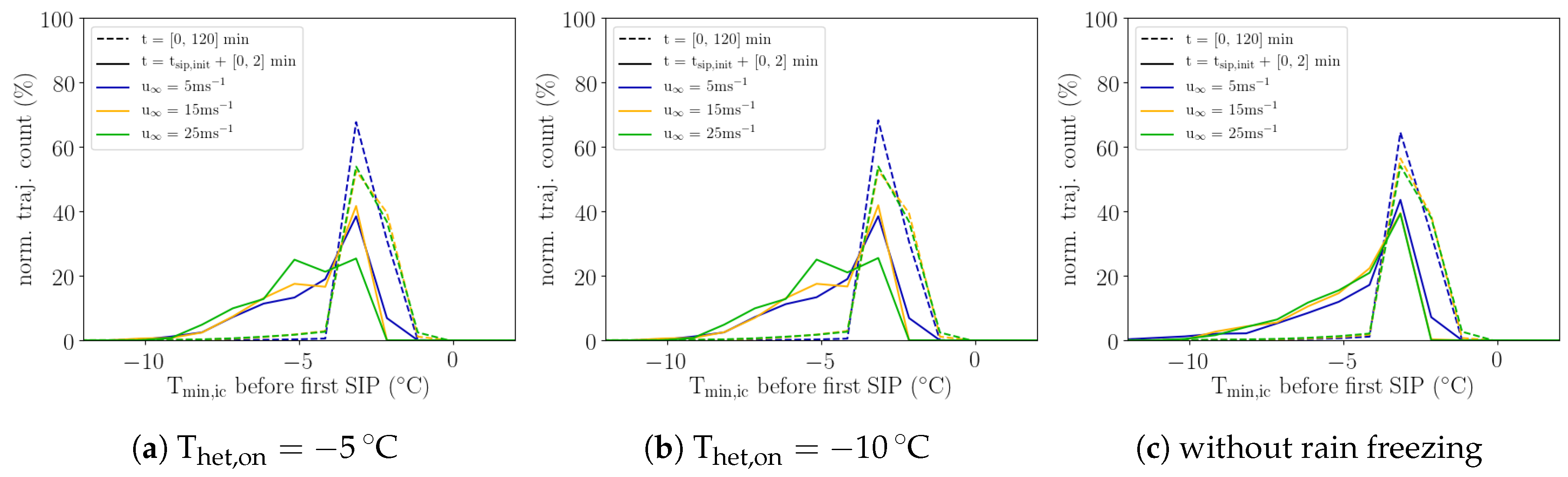
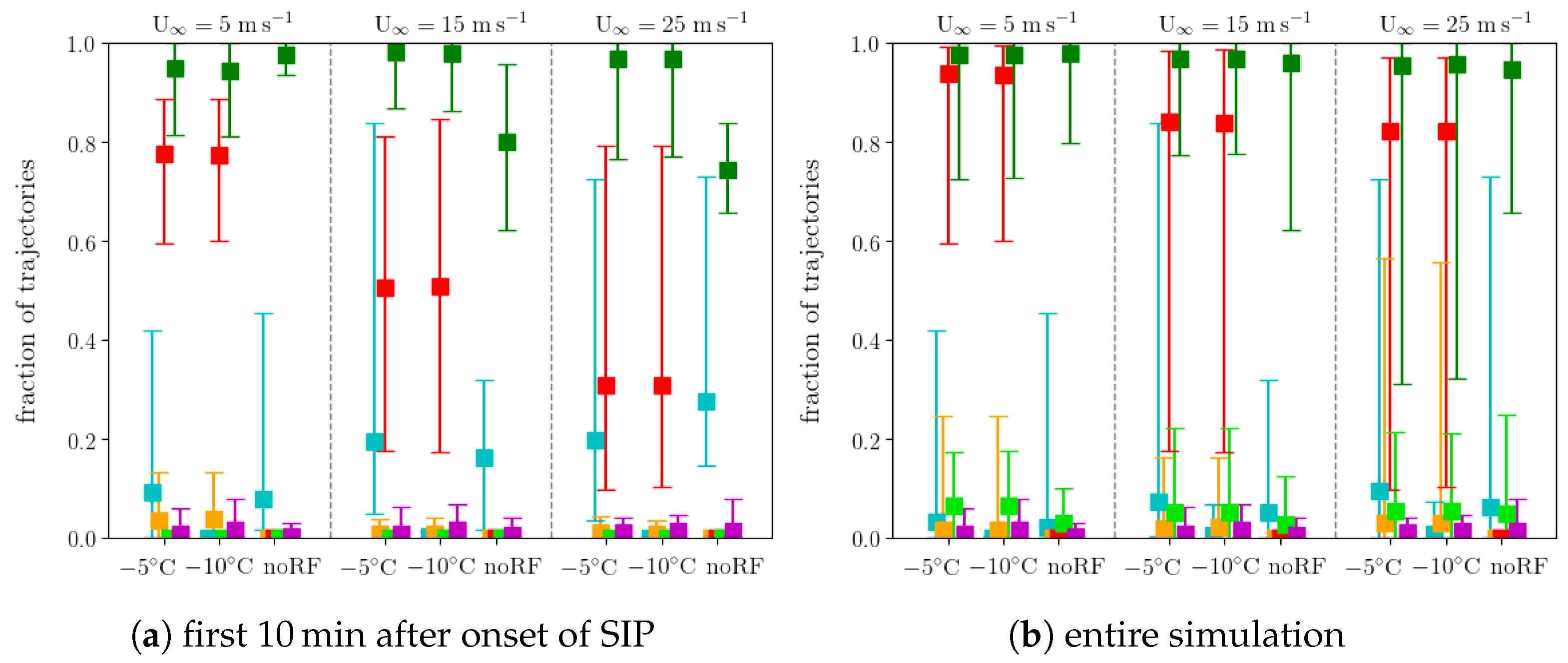
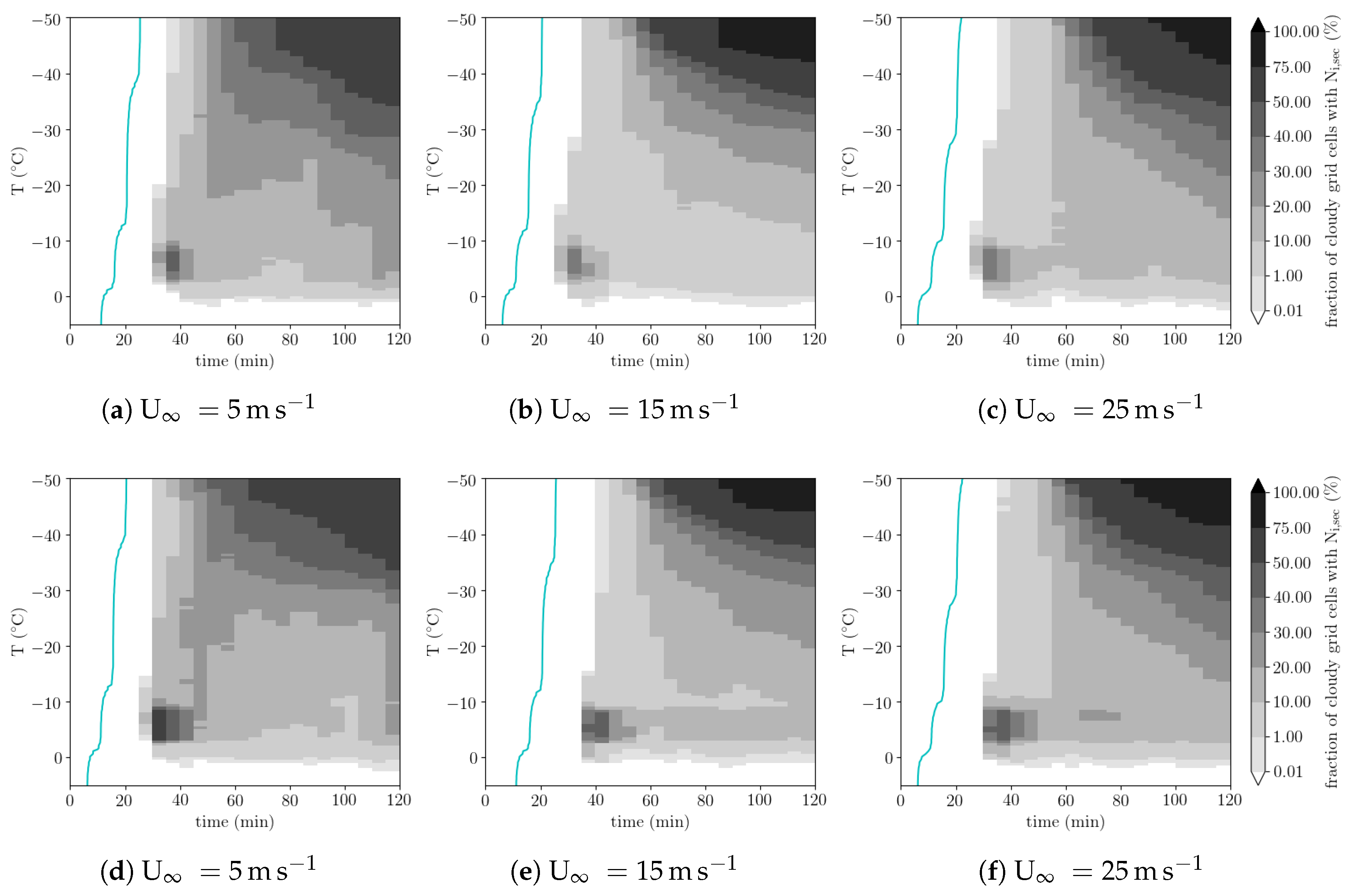
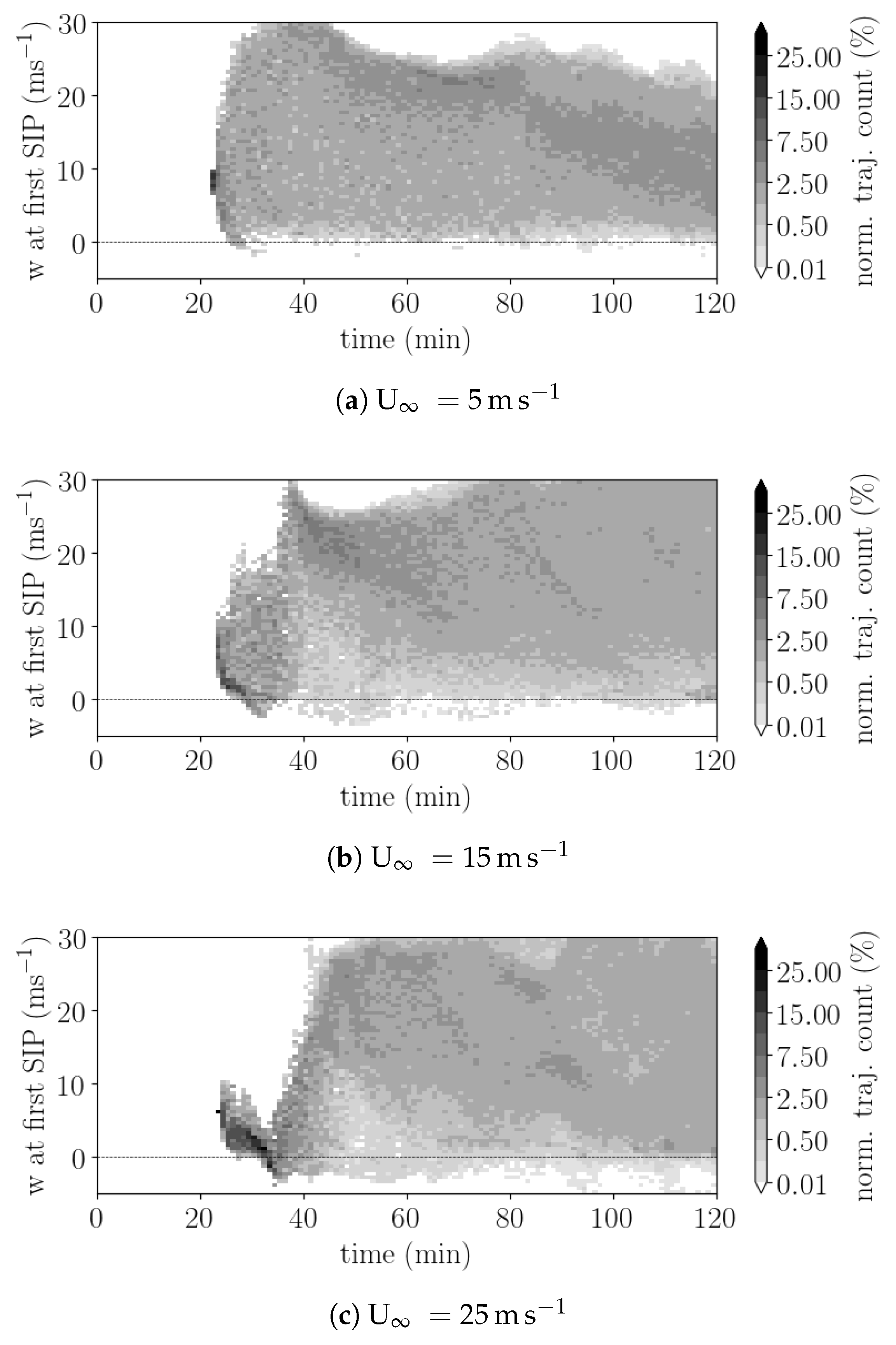
Secondary ice production via rime-splintering is considered to be an important process for rapid glaciation and high ice crystal numbers observed in mixed-phase convective clouds. An open question is how rime-splintering is triggered in the relatively short time between cloud formation and observations of high ice crystal numbers. We use idealised simulations of a deep convective cloud system to investigate the thermodynamic and cloud microphysical evolution of air parcels, in which the model predicts secondary ice formation. The Lagrangian analysis suggests that the “in-situ” formation of rimers either by growth of primary ice or rain freezing does not play a major role in triggering secondary ice formation. Instead, rimers are predominantly imported into air parcels through sedimentation form higher altitudes. While ice nucleating particles (INPs) initiating heterogeneous freezing of cloud droplets at temperatures warmer than −10 °C have no discernible impact of the occurrence of secondary ice formation, in a scenario with rain freezing secondary ice production is initiated slightly earlier in the cloud evolution and at slightly different places, although with no major impact on the abundance or spatial distribution of secondary ice in the cloud as a whole. These results suggest that for interpreting and analysing observational data and model experiments regarding cloud glaciation and ice formation it is vital to consider the complex vertical coupling of cloud microphysical processes in deep convective clouds via three-dimensional transport and sedimentation.
Keywords: secondary ice production; deep convection; ice-nucleating particles; rain freezing secondary ice production; deep convection; ice-nucleating particles; rain freezing