Abstract
Background: Autoimmune polyendocrinopathy candidiasis ectodermal dystrophy (APECED) is a rare monogenetic autosomal recessive disorder caused by a mutation in the autoimmune regulator (AIRE) gene characterized by complex phenotypic characteristics discovered over years of follow-up. Methods: 7 patients were recruited in this case series in a period of the last 37 years from Southern Croatia. All patients were screened for AIRE R257X mutations. Results: This study group had a mean current age of 25.3 years (age range from 5.4 to 40.2 years), while the mean age at the onset of the disease was 6.5 years (age range from 0.7 to 9.2 years) and with a mean follow-up period of 17.8 years. The overall prevalence of APECED syndrome is estimated to be 1 in 75,000. The most common initial manifestation of the disease was onychodystrophy, while the first major component of APECED syndrome was chronic mucocutaneous candidiasis. Conclusions: APECED is a ‘‘multi-faced’’ disease based on the very unpredictable and inconsistent onset of major components. Furthermore, based on our results, we suggest that onychodystrophy could be included as a warning sign of APECED syndrome.
1. Introduction
Autoimmune polyendocrinopathy candidiasis ectodermal dystrophy (APECED) (OMIM 240300), also known as autoimmune polyglandular syndrome type 1 (APS1), is a rare monogenetic autosomal recessive disorder caused by a mutation in the autoimmune regulator (AIRE) gene characterized by complex phenotypic characteristics discovered over years of follow-up [1,2,3,4]. Today, more than 120 mutations of the AIRE gene are reported, which are located on the chromosome 21q22.3 and play an important role in the regulation of the negative selection of auto-reactive T-cells in the thymus [5,6,7]. The prevalence of APECED varies depending on the observed population, but it is well known that the prevalence is higher in populations with a high-level of genetical isolation, such as: Iranian Jews (1 in 9000), Finns (1 in 14,000), and Sardinians (1 in 25,000) [1,8,9]. A clinical diagnosis of APECED is defined by the presence of two out of the three components of the classical triad: hypoparathyroidism, Addison’s disease (AD), and chronic mucocutaneous candidiasis (CMC) [3,10]. In addition, multiple other clinical manifestations occur as part of APECED syndrome, including endocrinopathies due to autoimmune tissue disruption, and ectodermal dysplasia, most commonly a defect in enamel and nails [11,12]. Furthermore, the syndrome includes various organ-specific autoimmune diseases with highly variable prevalence and manifestation time [12,13]. Based on this finding, organ-specific autoantibodies can be found in patients with functional failure as a consequence of the lymphocytic infiltration of the affected tissue, such as autoantibodies on 21-hydroxylase and side-chain-cleavage enzyme [14,15]. Unfortunately, these autoantibodies are not specific diagnostical markers for the APECED because they are specific for target organs and not to the disease itself [15]. However, recently it has been shown that almost all patients with the APECED display autoantibodies to interferons and interleukins, and especially for interferon omega (INFω) and interferon alfa (INFα), which may appear years before the onset of the first clinical symptoms and are possible good diagnostic screening markers [2,14].
The aim of this case series was to determine the prevalence of APECED in the Southern part of Croatia and demonstrate the complex and unpredictable relationship between genotype and phenotype in our group during the long period of follow-up.
2. Materials and Methods
The study was approved by the Ethics Committee of the University Hospital of Split and is conducted in accordance with the 1975 Declaration of Helsinki and its later amendments. The study group were recruited in a period of the last 37 years from the Dalmatia, Southern Croatia, and all patients were referred to the Division of Pediatric Endocrinology of the University Hospital in Split. Informed written consent was obtained from the parents or patients of all the study participants.
2.1. Clinical Assessment and Follow-Up
All patients received a follow-up at least once a year, and standard visit protocol included clinical examination, anthropometric measurements, and hormonal status. Furthermore, depending on the clinical symptoms, patients were referred to other specialists such as an ophthalmologist, pediatric gastroenterologist, pediatric hematologist, pediatric neurologist, pediatric nephrologist, and dentist.
2.2. Genetic Analysis of the AIRE Gene
All patients were screened for AIRE R257X mutations. DNA was isolated using Qiazol reagent (Qiagen, Hilden, Germany) according to the manufacturer’s protocol. Approximately 200 ng of DNA was used for PCR reaction. The reaction was performed on a PCR Arktik Thermal Cycler (Thermo Scientific) using the following conditions: initial denaturation step at 95 °C for 10 min, followed by 35 cycles of amplification (95 °C for 1 min, 55 °C for 1 min, 72 °C for 1 min) with final extension step at 72 °C for 5 min. Following primer set was used: 5′-GCGGCTCCAAGAAGTGCATCCAGG-3′ and 5′-CTCCACCCTGCAAGGAAGAGGGGC-3′. Sequences were analyzed using package sangerseq R in R programming language (ver. 3.6.3) [16].
3. Results
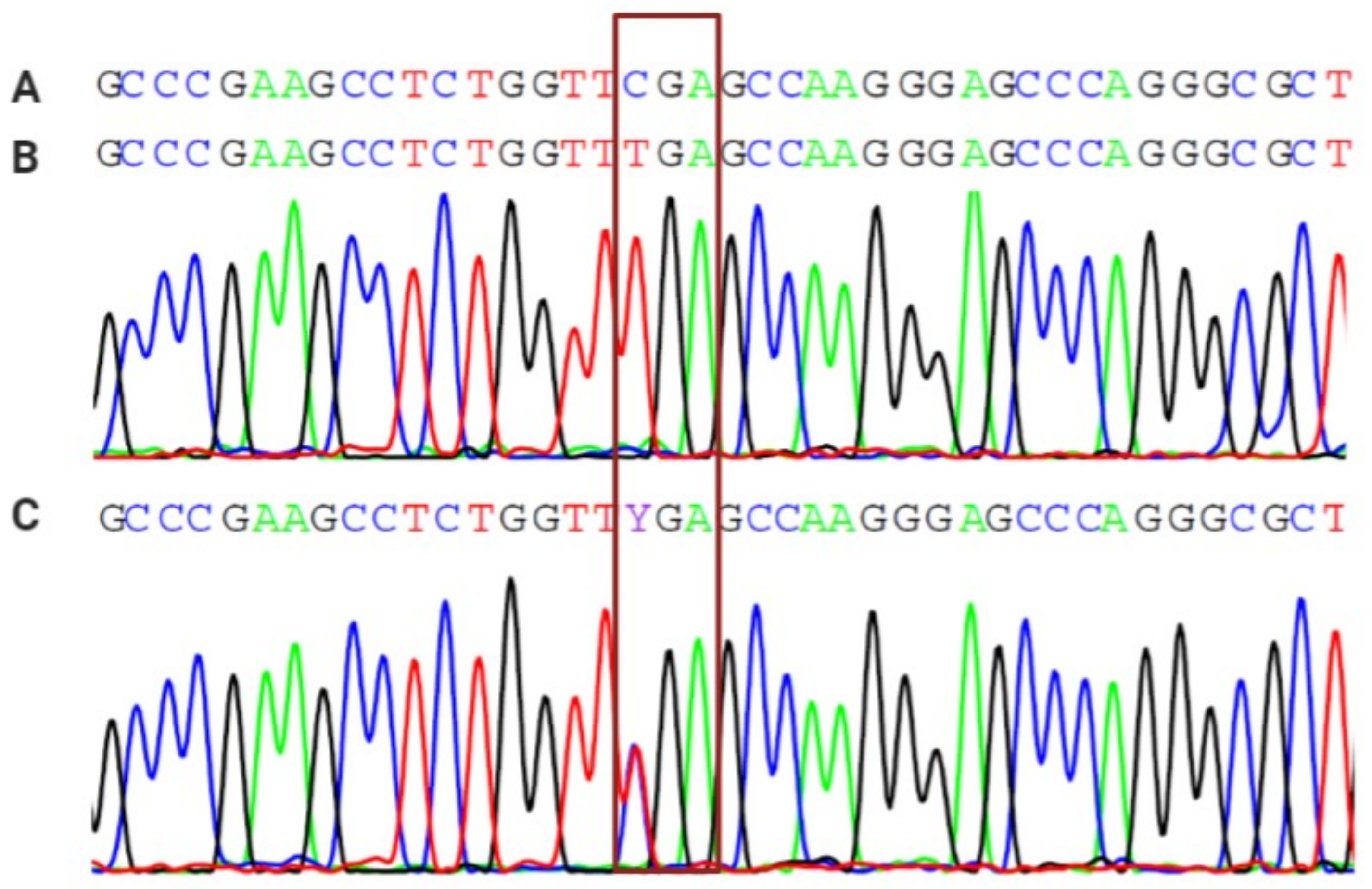
This study group of seven subjects with APECED syndrome have a mean current age of 25.3 years (age range from 5.4 to 40.2 years), while the mean age at the onset of the disease was 6.5 years (age range from 0.7 to 9.2 years) and with a mean follow-up period of 17.8 years. In addition, four patients were male, three patients were female, and patients number 1 and 2 and patients number 5 and 6 were siblings. The overall prevalence of APECED syndrome in Southern Croatia is estimated to be 1 in 75,000. All patients were homozygous for the R257X (c.769C > T) mutation in the AIRE gene (Figure 1).
Figure 1.
Sequencing analysis for the R257X (c.769C > T) mutation in AIRE gene: (A) Healthy homozygote. (B) Homozygote for R257Xmutation with c.769C > T conversion. (C) Heterozygote for R257Xmutation with c.769C > T conversion in one allele.
3.1. Initial Clinical Characteristics
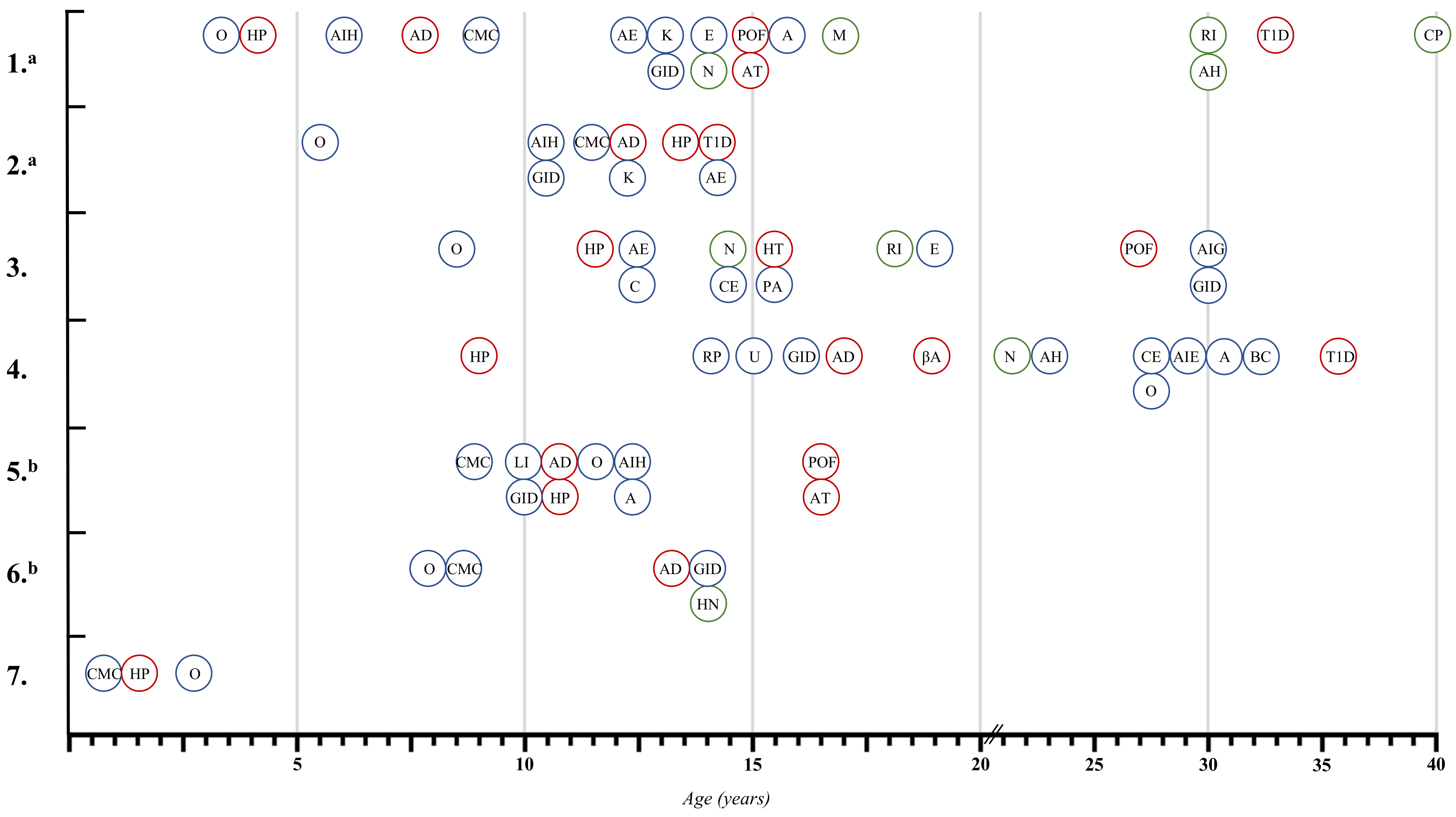
The chronological presentation of diseases in all the patients with APECED syndrome is presented in Figure 2.
Figure 2.
Chronological presentation of diseases in all of patients with APECED syndrome enrolled in the study. O, onychodystrophy; HP, hypoparathyroidism; AIH, autoimmune hepatitis; AD, Addison’s disease; CMC, Chronic mucocutaneous candidiasis; AE, albinism of eyelashes; K, keratitis; GID, gastrointestinal dysfunction; E, enamel dysplasia; N, nephrocalcinosis; POF, premature ovarian failure, AT, autoimmune thyroiditis; A, alopecia; M, megacolon; RI, renal insufficiency; AH, albinism of hair; T1D, type 1 diabetes; CP, colon perforation; C, cheilosis; CE, candidiasis of esophagus; HT, hyperthyroidism; PA, pernicious anemia; AIG, autoimmune gastritis; RP, retinitis pigmentosa; U, prolonged urticaria and angioedema; βA, positive GADA- 65 and ICA β cell antibodies; AH, arterial hypertension; AIE, autoimmune encephalitis; BC, bilateral cataract; LI, liver insufficiency; HN, hydronephrosis; a siblings; b siblings. Endocrinopathies are marked with red circle, while non-endocrinopathies are marked with a blue circle, and non-autoimmune other manifestations are marked with a green circle.
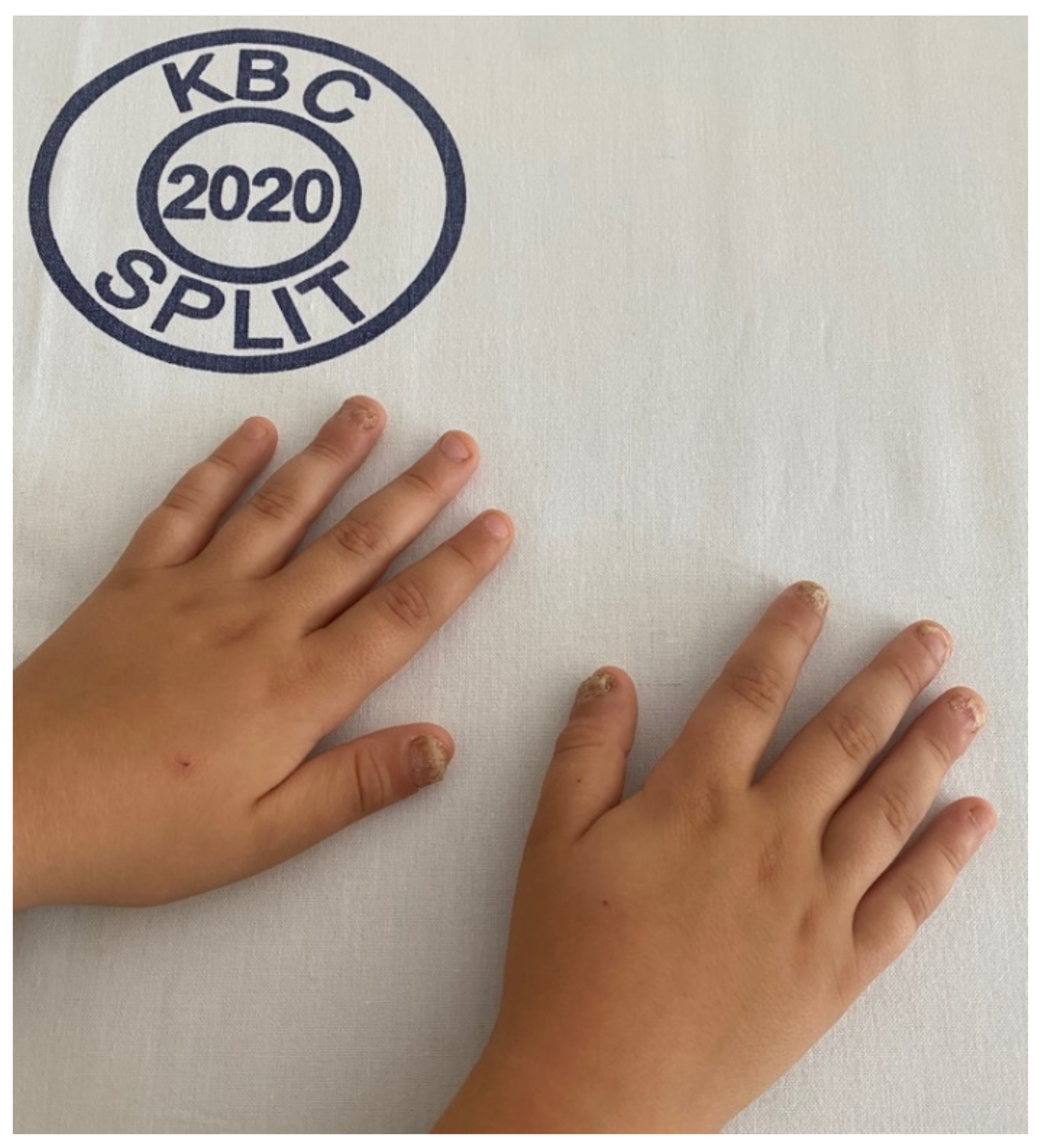
The most common initial manifestation of the disease was onychodystrophy in four (57.1%) patients (Figure 3), while the first major component of APECED syndrome was CMC in 4 (57.1%) patients and hypoparathyroidism in three (42.9%) patients.
Figure 3.
Onychodystrophy.
3.2. Endocrinological Manifestations
All of our patients developed one of the major endocrinological components of APECED syndrome hypoparathyroidism or AD, while one (14.2%) patient developed five endocrinopathies, one (14.2%) had four endocrinopathies, two (28.7%) had three endocrinopathies, one (14.2%) had two endocrinopathies and two (28.7%) patients developed only one endocrinopathy. The additional clinical and laboratory endocrine characteristics of our subjects with APECED syndrome are presented in Table 1.
Table 1.
Endocrinological manifestation and clinical features of the subjects enrolled in the study.
Furthermore, patient number 2 died from hypoglycemia due to unregulated type 1 diabetes (T1D). In addition, patient number 4 manifested T1DM after more than 17 years of a positive glutamic acid decarboxylase 65-kDA isoform (GADA-65) and islet cell cytoplasmic autoantibodies (ICA) β cell antibodies. None of the male subjects developed testicular failure, while all of our female subjects developed premature ovarian failure.
3.3. Non-Endocrinological Manifestations
The frequency of non-endocrinopathies is also variable. One (14.2%) of our patients had 14 non-endocrinopathies, two (28.7%) had ten non-endocrinopathies, two (28.7%) had six non-endocrinopathies, one (14.2%) had three non-endocrinopathies, and one (14.2%) patient had only two non-endocrinopathies. Onychodystrophy manifested in all of our patients.
3.4. Rare Manifestations
Gastrointestinal manifestations occurred in six (85.7%) patients and varied from different types of gastrointestinal dysfunctions to more serious complications such as autoimmune hepatitis (patient 1), liver insufficiency (patient 5), and colon perforation (patient 1). Furthermore, five (71.1%) patients have different types of skin diseases including the most common alopecia and albinism of eyelashes. Patient number 4 manifested autoimmune GAD65 positive encephalitis, which led to a severe and life-threatening condition.
4. Discussion
In a longitudinal follow-up study, we reported seven subjects with APECED syndrome with different clinical characteristics and phenotype discrepancy regardless of the homogeneity of the AIRE gene mutation in our study population. In addition, the first manifestation of the syndrome in six of our patients was non-endocrinopathy, most commonly onychodystrophy, while the most common first endocrinopathy was Addison’s disease. To the best of our knowledge, this study is the first to report the prevalence of APECED syndrome in Croatia.
In most European countries, there is a high heterogeneity of mutations of the AIRE gene, which can vary between different regions within the same country [10,14,17,18,19]. This heterogeneity in the AIRE gene mutation has been shown in several studies in the Italian population, which demonstrates that the R203X mutation of AIRE gene is most common in southern Italy compared with northeastern Italy, where the most frequent R257X mutation is present [13,15,17]. Contrary to findings, in the Finnish population, which is one of the largest longitudinally follow-up cohorts of APECED patients, they reported markedly homogeneous prevalence of mutations in the AIRE gene, and 62 patients out of a total of 80 had the R257X mutation [1,3]. Our findings are consistent with the results of a Finnish study and show a homogeneous genotype in patients with APECED syndrome. Furthermore, the R257X mutation of the AIRE gene it is the most common mutation in the population of eastern and central Europe, which indicates the consistency of mutations in our region [10,19]. However, this congruence in patients’ genotypes does not correspond to the different presentations of the APECED syndrome in our population, which indicates a complex relationship between genotype and phenotype in APECED syndrome. These phenotypic discrepancies may be explained by unknown epigenetic, molecular, environmental, and/or unowned third factors which could have an influence on the clinical manifestation and also the progression of the disease.
In addition, onychodystrophy was the first manifestation of APECED syndrome in most of our patients, which is in contrast with other studies. Myhre et al. reported that only one of their patients had onychodystrophy as a first sign of illness and gradually developed in 10% of their study population of patients with APECED syndrome in Norway [20]. In a Finnish study, the most common initial manifestations were components of the classical triad: CMC and hypoparathyroidism, while onychodystrophy was found later in 52% of patients [1,3]. Our findings further emphasize the heterogeneity of the phenotypes of APECED syndrome as a truly multifaced disease, and possibly indicate the importance of onychodystrophy as new waring signs for the APECED syndrome. However, larger studies are needed which will focus on possible unrecognized first manifestations of the disease to further clarify the importance of onychodystrophy as a trigger for the screening for APECED syndrome.
Furthermore, two pairs of siblings from our study showed significant phenotypic variability regardless of the identical AIRE mutation, which cannot be completely clarified by the various external triggers associated with the APECED syndrome [21]. Additional total exon sequencing studies are needed to elucidate the wider possible genetic causes of phenotypic variations.
In comparison with other neighboring populations, we reported a lower prevalence of APECED syndrome, which varies in Italy depending on the observed region from 1 in 14,400 to 1 in 35,000 [9,13,22]. Additionally, in the Slovenian population, prevalence is estimated to be 1 in 43,000, which is slightly lower compared to the Finnish cohort where the prevalence is 1 in 25,000 [1,10,23]. However, we reported higher prevalence compared to the Norwegian population 1 in 800,000, Polish population 1 in 129,000 and Irish population 1 in 130,000 [11,20,24].
This study has some limitations. First, the smaller size of the study group and the size of the study region might influence the generalizability of our result. Second, in our study we did not measure the levels of specific autoantibodies (interferons and interleukins) which may also have affected our results. Finally, the point on genetic analysis of only the R257X mutation and not the overall sequencing of the AIRE gene could possibly have an effect on the unknown genetic cause of phenotypic differences in our study group.
5. Conclusions
In conclusion, we confirmed that APECED is a ‘‘multi-faced’’ disease based on the very unpredictable and inconsistent onset of major components in our genetically homogeneous cohort of patients. Based on our results, we suggest that onychodystrophy could be included as a warning sign of APECED and a possible trigger for early screening, which might possibly prevent endocrine and non-endocrine life-threatening complications. Future research is still needed to completely clarify the relationship between genotype and phenotype in larger international cohorts with long-term follow-up of patients with APECED.
Author Contributions
Conceptualization, V.S. and M.S.; methodology V.S. and M.S.; formal analysis, I.S., R.S. and B.R.; investigation, I.S., R.S. and B.R; writing—original draft preparation, I.S. and R.S.; writing—review and editing, V.S. and M.S.; supervision, V.S. and M.S. All authors have read and agreed to the published version of the manuscript.
Funding
This research received no external funding.
Institutional Review Board Statement
The study was conducted following the Declaration of Helsinki and approved by the Ethics Committee of University Hospital of Split (500-03/20-01/09, 2181-147-01/06/M.S.-20-9).
Informed Consent Statement
Every patient and/or parent signed an informed written consent form.
Data Availability Statement
The data presented in this study are available on request from the corresponding author. The data are not publicly available due to restrictions e.g., privacy or ethics.
Conflicts of Interest
The authors declare no conflict of interest.
References
- Ahonen, P.; Myllärniemi, S.; Sipilä, I.; Perheentupa, J. Clinical Variation of Autoimmune Polyendocrinopathy-Candidiasis-Ectodermal Dystrophy (APECED) in a Series of 68 Patients. N. Engl. J. Med. 1990, 322, 1829–1936. [Google Scholar] [CrossRef] [PubMed]
- Capalbo, D.; De Martino, L.; Giardino, G.; Di Mase, R.; Di Donato, I.; Parenti, G.; Vajro, P.; Pignata, C.; Salerno, M. Autoimmune Polyendocrinopathy Candidiasis Ectodermal Dystrophy: Insights into Genotype-Phenotype Correlation. Int. J. Endocrinol. 2012, 2012, 353250. [Google Scholar] [CrossRef] [PubMed]
- Perheentupa, J. Autoimmune Polyendocrinopathy-Candidiasis-Ectodermal Dystrophy. J. Clin. Endocrinol. Metab. 2006, 91, 2843–2850. [Google Scholar] [CrossRef] [PubMed] [Green Version]
- Carpino, A.; Buganza, R.; Matarazzo, P.; Tuli, G.; Pinon, M.; Calvo, P.L.; Montin, D.; Licciardi, F.; De Sanctis, L. Autoimmune Polyendocrinopathy–Candidiasis–Ectodermal Dystrophy in Two Siblings: Same Mutations but Very Different Phenotypes. Genes 2021, 12, 169. [Google Scholar] [CrossRef] [PubMed]
- Database Human Gene Mutation. Available online: http://www.hgmd.cf.ac.uk/ac/gene.php?gene=AIRE (accessed on 15 December 2021).
- Borchers, J.; Pukkala, E.; Mäkitie, O.; Laakso, S. Patients with APECED Have Increased Early Mortality Due to Endocrine Causes, Malignancies and Infections. J. Clin. Endocrinol. Metab. 2020, 105, dgaa140. [Google Scholar] [CrossRef] [Green Version]
- Kekäläinen, E.; Tuovinen, H.; Joensuu, J.; Gylling, M.; Franssila, R.; Pöntynen, N.; Talvensaari, K.; Perheentupa, J.; Miettinen, A.; Arstila, T.P. A Defect of Regulatory T Cells in Patients with Autoimmune Polyendocrinopathy-Candidiasis-Ectodermal Dystrophy. J. Immunol. 2007, 178, 1208–1215. [Google Scholar] [CrossRef] [Green Version]
- Zlotogora, J.; Shapiro, M.S. Polyglandular Autoimmune Syndrome Type I among Iranian Jews. J. Med. Genet. 1992, 29, 824–826. [Google Scholar] [CrossRef] [Green Version]
- Rosatelli, M.C.; Meloni, A.; Meloni, A.; Devoto, M.; Cao, A.; Scott, H.S.; Peterson, P.; Heino, M.; Krohn, K.J.E.; Nagamine, K.; et al. A Common Mutation in Sardinian Autoimmune Polyendocrinopathy-Candidiasis-Ectodermal Dystrophy Patients. Hum. Genet. 1998, 103, 428–434. [Google Scholar] [CrossRef]
- Podkrajšek, K.T.; Bratanič, N.; Kržišnik, C.; Battelino, T. Autoimmune Regulator-1 Messenger Ribonucleic Acid Analysis in a Novel Intronic Mutation and Two Additional Novel AIRE Gene Mutations in a Cohort of Autoimmune Polyendocrinopathy-Candidiasis-Ectodermal Dystrophy Patients. J. Clin. Endocrinol. Metab. 2005, 90, 4930–4935. [Google Scholar] [CrossRef] [Green Version]
- Dominguez, M.; Crushell, E.; Ilmarinen, T.; McGovern, E.; Collins, S.; Chang, B.; Fleming, P.; Irvine, A.D.; Brosnahan, D.; Ulmanen, I.; et al. Autoimmune Polyendocrinopathy-Candidiasis-Ectodermal Dystrophy (APECED) in the Irish Population. J. Pediatr. Endocrinol. Metab. 2006, 19, 1343–1352. [Google Scholar] [CrossRef]
- Husebye, E.S.; Perheentupa, J.; Rautemaa, R.; Kämpe, O. Clinical Manifestations and Management of Patients with Autoimmune Polyendocrine Syndrome Type I. J. Intern. Med. 2009, 265, 514–529. [Google Scholar] [CrossRef]
- Cervato, S.; Mariniello, B.; Lazzarotto, F.; Morlin, L.; Zanchetta, R.; Radetti, G.; De Luca, F.; Valenzise, M.; Giordano, R.; Rizzo, D.; et al. Evaluation of the Autoimmune Regulator (AIRE) Gene Mutations in a Cohort of Italian Patients with Autoimmune-Polyendocrinopathy-Candidiasis-Ectodermal- Dystrophy (APECED) and in Their Relatives. Clin. Endocrinol. 2009, 70, 421–428. [Google Scholar] [CrossRef] [PubMed]
- Bruserud, Ø.; Oftedal, B.E.; Landegren, N.; Erichsen, M.M.; Bratland, E.; Lima, K.; Jørgensen, A.P.; Myhre, A.G.; Svartberg, J.; Fougner, K.J.; et al. A Longitudinal Follow-up of Autoimmune Polyendocrine Syndrome Type 1. J. Clin. Endocrinol. Metab. 2016, 101, 2975–2983. [Google Scholar] [CrossRef] [PubMed]
- Meloni, A.; Willcox, N.; Meager, A.; Atzeni, M.; Wolff, A.S.B.; Husebye, E.S.; Furcas, M.; Rosatelli, M.C.; Cao, A.; Congia, M. Autoimmune Polyendocrine Syndrome Type 1: An Extensive Longitudinal Study in Sardinian Patients. J. Clin. Endocrinol. Metab. 2012, 97, 1114–1124. [Google Scholar] [CrossRef] [PubMed] [Green Version]
- Hill, J.T.; Demarest, B.L.; Bisgrove, B.W.; Su, Y.C.; Smith, M.; Yost, H.J. Poly Peak Parser: Method and Software for Identification of Unknown Indels Using Sanger Sequencing of Polymerase Chain Reaction Products. Dev. Dyn. 2014, 243, 1632–1636. [Google Scholar] [CrossRef] [Green Version]
- Valenzise, M.; Fierabracci, A.; Cappa, M.; Porcelli, P.; Barcellona, R.; De Luca, F.; Barollo, S.; Garelli, S.; Betterle, C. Autoimmune Polyendocrinopathy-Candidiasis-Ectodermal Dystrophy: Report of Seven Additional Sicilian Patients and Overview of the Overall Series from Sicily. Horm. Res. Paediatr. 2014, 82, 127–132. [Google Scholar] [CrossRef] [PubMed]
- Proust-Lemoine, E.; Saugier-Véber, P.; Lefranc, D.; Dubucquoi, S.; Ryndak, A.; Buob, D.; Lalau, J.D.; Desailloud, R.; Weill, J.; Prin, L.; et al. Autoimmune Polyendocrine Syndrome Type 1 in North-Western France: AIRE Gene Mutation Specificities and Severe Forms Needing Immunosuppressive Therapies. Horm. Res. Paediatr. 2010, 74, 275–284. [Google Scholar] [CrossRef]
- Cihakova, D.; Trebusak, K.; Heino, M.; Fadeyev, V.; Tiulpakov, A.; Battelino, T.; Tar, A.; Halsz, Z.; Blmel, P.; Tawfik, S.; et al. Novel AIRE Mutations and P450 Cytochrome Autoantibodies in Central and Eastern European Patients with APECED. Hum. Mutat. 2001, 18, 225–232. [Google Scholar] [CrossRef]
- Myhre, A.G.; Halonen, M.; Eskelin, P.; Ekwall, O.; Hedstrand, H.; Rorsman, F.; Kämpe, O.; Husebye, E.S. Autoimmune Polyendocrine Syndrome Type 1 (APS I) in Norway. Clin. Endocrinol. 2001, 54, 211–217. [Google Scholar] [CrossRef]
- Capalbo, D.; Fusco, A.; Aloj, G.; Improda, N.; Vitiello, L.; Dianzani, U.; Betterle, C.; Salerno, M.; Pignata, C. High Intrafamilial Variability in Autoimmune Polyendocrinopathy- Candidiasis-Ectodermal Dystrophy: A Case Study. J. Endocrinol. Investig. 2012, 35, 77–81. [Google Scholar]
- Meloni, A.; Perniola, R.; Faà, V.; Corvaglia, E.; Cao, A.; Rosatelli, M.C. Delineation of the Molecular Defects in the AIRE Gene in Autoimmune Polyendocrinopathy-Candidiasis-Ectodermal Dystrophy Patients from Southern Italy. J. Clin. Endocrinol. Metab. 2002, 87, 841–846. [Google Scholar] [CrossRef] [PubMed]
- Aaltonen, J.; Björses, P.; Sandkuijl, L.; Perheentupa, J.; Peltonen, L. An Autosomal Locus Causing Autoimmune Disease: Autoimmune Polyglandular Disease Type I Assigned to Chromosome 21. Nat. Genet. 1994, 8, 83–87. [Google Scholar] [CrossRef] [PubMed]
- Stolarski, B.; Pronicka, E.; Korniszewski, L.; Pollak, A.; Kostrzewa, G.; Rowińska, E.; Włodarski, P.; Skórka, A.; Gremida, M.; Krajewski, P.; et al. Molecular Background of Polyendocrinopathy-Candidiasis-Ectodermal Dystrophy Syndrome in a Polish Population: Novel AIRE Mutations and an Estimate of Disease Prevalence. Clin. Genet. 2006, 70, 348–354. [Google Scholar] [CrossRef] [PubMed]
Publisher’s Note: MDPI stays neutral with regard to jurisdictional claims in published maps and institutional affiliations. |
© 2022 by the authors. Licensee MDPI, Basel, Switzerland. This article is an open access article distributed under the terms and conditions of the Creative Commons Attribution (CC BY) license (https://creativecommons.org/licenses/by/4.0/).