Spatial Phenotype of the Mast Cell Population in Endometritis of Various Severities
 , , ,
, , ,  , , , , , and
Abstract
1. Introduction
2. Materials and Methods
2.1. Samples and Preparation
2.2. Primary and Secondary Antibodies
2.3. Image Acquisition
2.4. Controls
2.5. Statistics
3. Results
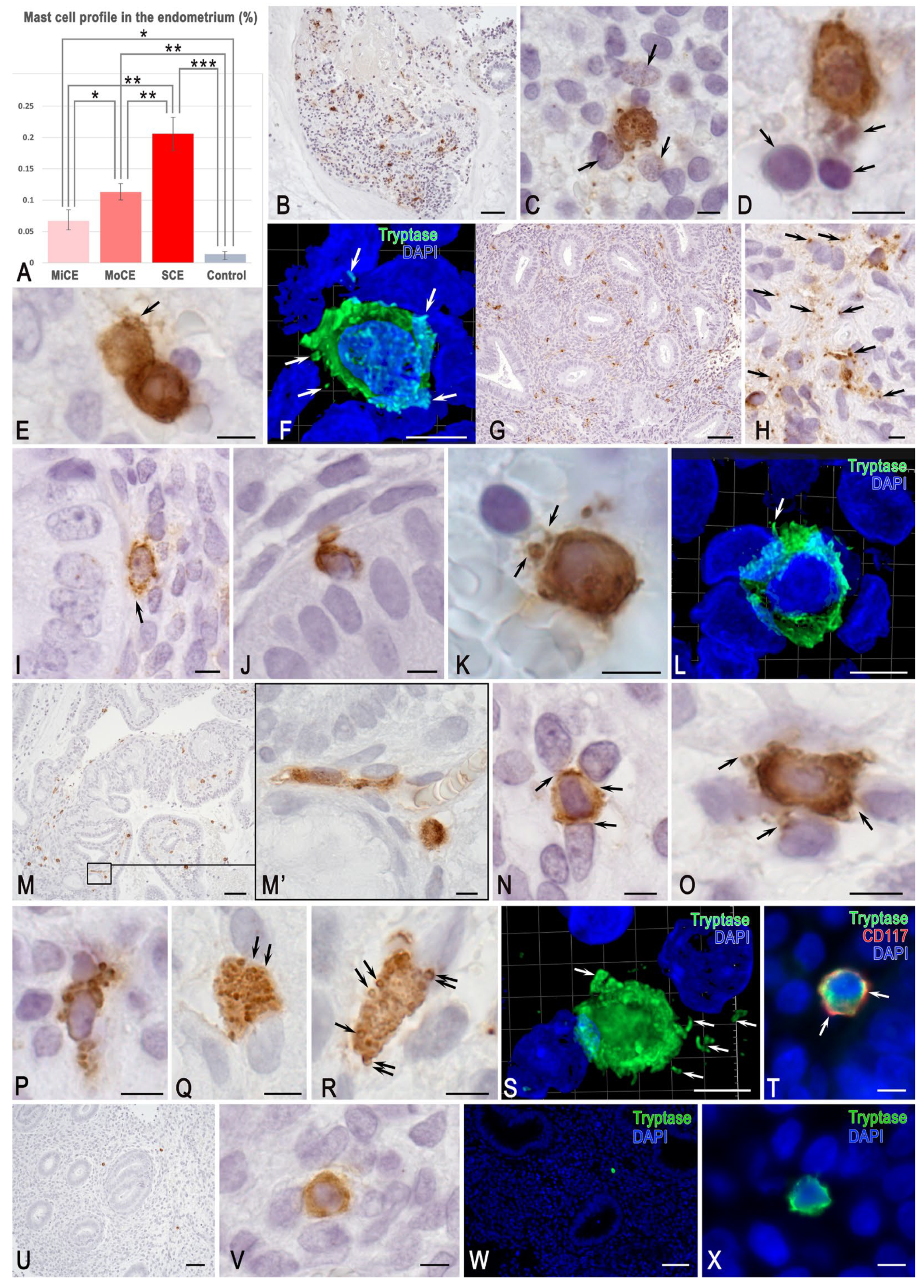
3.1. MCs and Tryptase
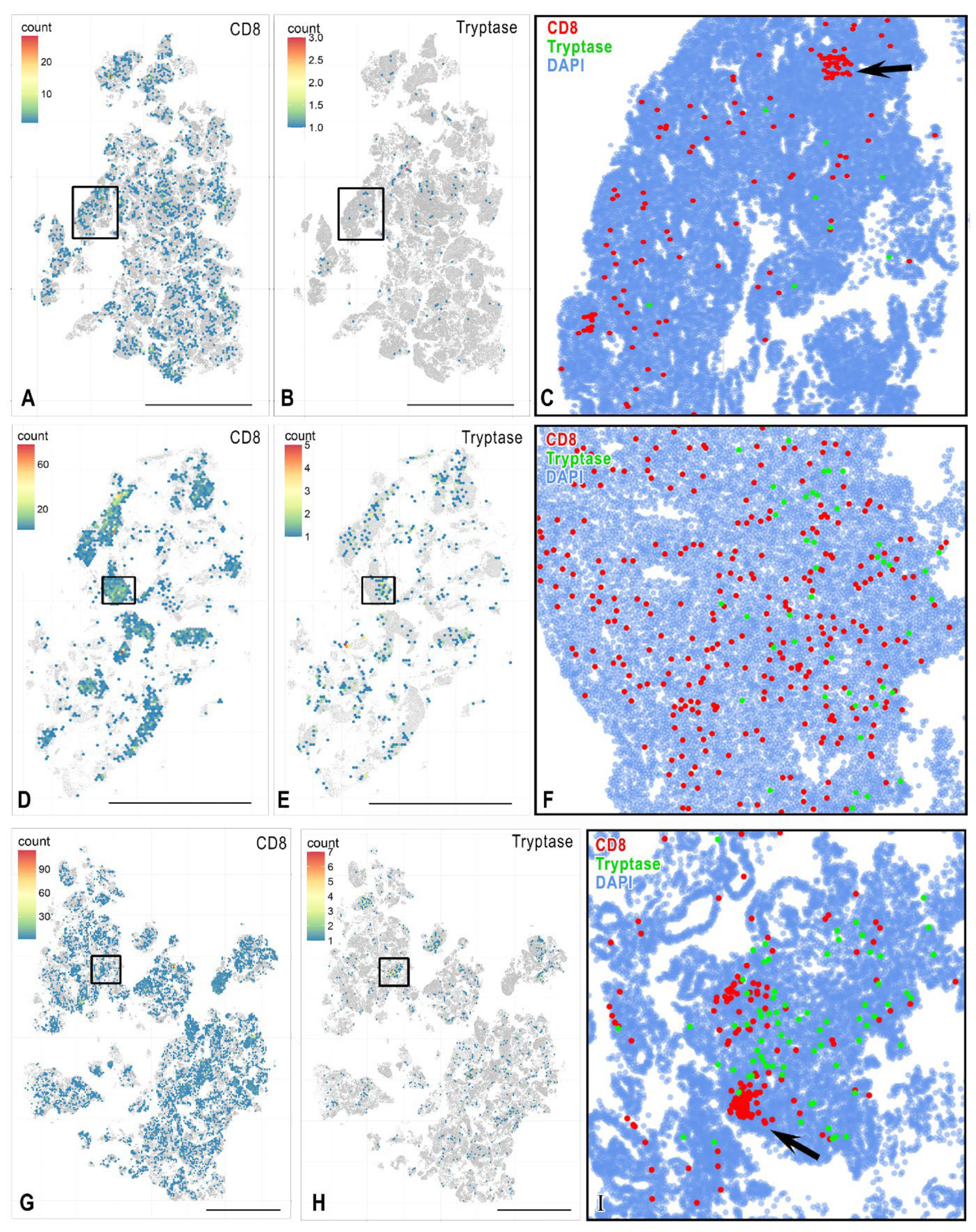
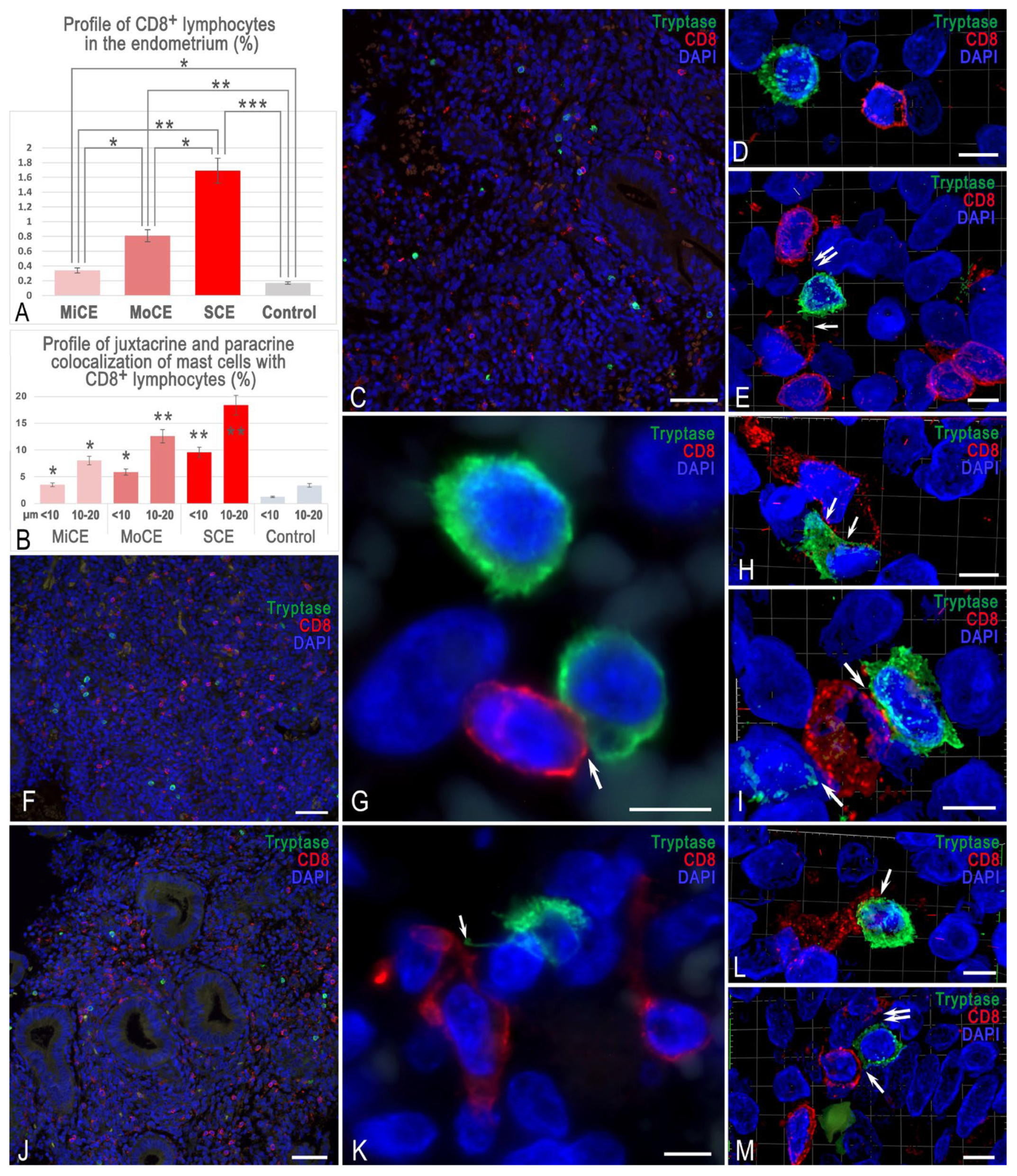
3.2. MCs and CD8+ Cells
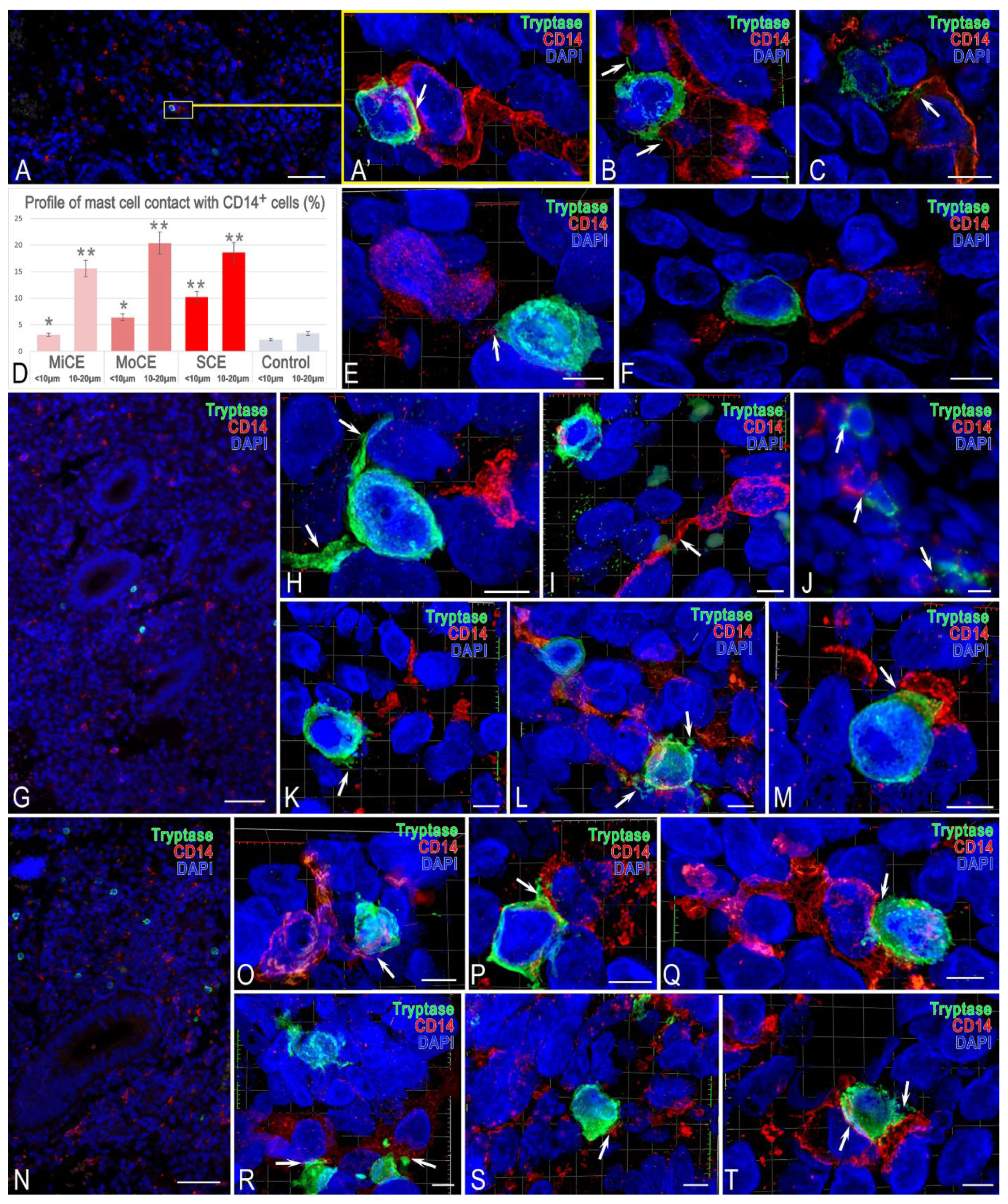
3.3. MCs and Monocytes
3.4. MCs and Macrophages (M1 and M2)
4. Discussion
5. Conclusions
Supplementary Materials
Author Contributions
Funding
Institutional Review Board Statement
Informed Consent Statement
Data Availability Statement
Conflicts of Interest
Abbreviations
| MCs | mast cells |
| CE | chronic endometritis |
| AUB | abnormal uterine bleeding |
| RPL | recurrent pregnancy loss |
| PAR-2 | Protease-Activated Receptor-2 |
References
- Zeng, S.; Liu, X.; Liu, D.; Song, W. Research update for the immune microenvironment of chronic endometritis. J. Reprod. Immunol. 2022, 152, 103637. [Google Scholar] [CrossRef] [Scilit] [PubMed]
- Danusevich, I.; Lazareva, L.; Nemchenko, U.; Kolesnikova, L. Endometrial Cytokines in Women with Reproductive Disorders. Int. J. Biomed. 2021, 11, 526–531. [Google Scholar] [CrossRef] [Scilit]
- Agic, A.; Xu, H.; Finas, D.; Banz, C.; Diedrich, K.; Hornung, D. Is endometriosis associated with systemic subclinical inflammation? Gynecol. Obstet. Investig. 2006, 62, 139–147. [Google Scholar] [CrossRef] [Scilit] [PubMed]
- Weiss, G.; Goldsmith, L.T.; Taylor, R.N.; Bellet, D.; Taylor, H.S. Inflammation in reproductive disorders. Reprod. Sci. 2009, 16, 216–229. [Google Scholar] [CrossRef] [Scilit]
- Lee, S.K.; Kim, C.J.; Kim, D.J.; Kang, J.H. Immune cells in the female reproductive tract. Immune Netw. 2015, 15, 16–26. [Google Scholar] [CrossRef] [Scilit]
- Elieh Ali Komi, D.; Shafaghat, F.; Haidl, G. Significance of mast cells in spermatogenesis, implantation, pregnancy, and abortion: Cross talk and molecular mechanisms. Am. J. Reprod. Immunol. 2020, 83, e13228. [Google Scholar] [CrossRef] [Scilit]
- Theoharides, T.C.; Alysandratos, K.D.; Angelidou, A.; Delivanis, D.A.; Sismanopoulos, N.; Zhang, B.; Asadi, S.; Vasiadi, M.; Weng, Z.; Miniati, A.; et al. Mast cells and inflammation. Biochim. Biophys. Acta 2012, 1822, 21–33. [Google Scholar] [CrossRef] [Scilit]
- Valent, P.; Akin, C.; Hartmann, K.; Nilsson, G.; Reiter, A.; Hermine, O.; Sotlar, K.; Sperr, W.R.; Escribano, L.; George, T.I.; et al. Mast cells as a unique hematopoietic lineage and cell system: From Paul Ehrlich’s visions to precision medicine concepts. Theranostics 2020, 10, 10743–10768. [Google Scholar] [CrossRef] [Scilit]
- Kolkhir, P.; Elieh-Ali-Komi, D.; Metz, M.; Siebenhaar, F.; Maurer, M. Understanding human mast cells: Lesson from therapies for allergic and non-allergic diseases. Nat. Rev. Immunol. 2022, 22, 294–308. [Google Scholar] [CrossRef] [Scilit]
- Galli, S.J.; Gaudenzio, N.; Tsai, M. Mast Cells in Inflammation and Disease: Recent Progress and Ongoing Concerns. Annu. Rev. Immunol. 2020, 38, 49–77. [Google Scholar] [CrossRef] [Scilit]
- Atiakshin, D.; Kostin, A.; Volodkin, A.; Nazarova, A.; Shishkina, V.; Esaulenko, D.; Buchwalow, I.; Tiemann, M.; Noda, M. Mast Cells as a Potential Target of Molecular Hydrogen in Regulating the Local Tissue Microenvironment. Pharmaceuticals 2023, 16, 817. [Google Scholar] [CrossRef] [Scilit] [PubMed]
- Elieh-Ali-Komi, D.; Shafaghat, F.; Alipoor, S.D.; Kazemi, T.; Atiakshin, D.; Pyatilova, P.; Maurer, M. Immunomodulatory Significance of Mast Cell Exosomes (MC-EXOs) in Immune Response Coordination. Clin. Rev. Allergy Immunol. 2025, 68, 20. [Google Scholar] [CrossRef] [Scilit]
- Heidarzadeh-Asl, S.; Maurer, M.; Kiani, A.; Atiakshin, D.; Stahl Skov, P.; Elieh-Ali-Komi, D. Novel insights on the biology and immunologic effects of histamine: A road map for allergists and mast cell biologists. J. Allergy Clin. Immunol. 2024, 155, 1095–1114. [Google Scholar] [CrossRef] [Scilit] [PubMed]
- Varricchi, G.; Marone, G. Mast Cells: Fascinating but Still Elusive after 140 Years from Their Discovery. Int. J. Mol. Sci. 2020, 21, 464. [Google Scholar] [CrossRef] [Scilit] [PubMed]
- Galvan-Morales, M.A.; Vizuet-de-Rueda, J.C.; Montero-Vargas, J.M.; Teran, L.M. Role of Mast Cells in Human Health and Disease: Controversies and Novel Therapies. Int. J. Mol. Sci. 2025, 26, 8895. [Google Scholar] [CrossRef] [Scilit]
- Caughey, G.H. Mast cell tryptases and chymases in inflammation and host defense. Immunol. Rev. 2007, 217, 141–154. [Google Scholar] [CrossRef] [Scilit]
- Pejler, G.; Ronnberg, E.; Waern, I.; Wernersson, S. Mast cell proteases: Multifaceted regulators of inflammatory disease. Blood 2010, 115, 4981–4990. [Google Scholar] [CrossRef] [Scilit]
- Frenzel, L.; Hermine, O. Mast cells and inflammation. Jt. Bone Spine 2013, 80, 141–145. [Google Scholar] [CrossRef] [Scilit]
- Reber, L.L.; Frossard, N. Targeting mast cells in inflammatory diseases. Pharmacol. Ther. 2014, 142, 416–435. [Google Scholar] [CrossRef] [Scilit]
- Raj, S.; Unsworth, L.D. Targeting active sites of inflammation using inherent properties of tissue-resident mast cells. Acta Biomater. 2023, 159, 21–37. [Google Scholar] [CrossRef] [Scilit]
- Atiakshin, D.; Patsap, O.; Kostin, A.; Mikhalyova, L.; Buchwalow, I.; Tiemann, M. Mast Cell Tryptase and Carboxypeptidase A3 in the Formation of Ovarian Endometrioid Cysts. Int. J. Mol. Sci. 2023, 24, 6498. [Google Scholar] [CrossRef] [Scilit] [PubMed]
- Bacci, S. The evolution of mast cells across all vertebrate classes: The mystery continues. Histol. Histopathol. 2025, 41, 18926. [Google Scholar] [CrossRef] [Scilit]
- Fukuishi, N.; Takahama, K.; Kurosaki, H.; Ono, S.; Asai, H. The Role of Endogenous Specialized Proresolving Mediators in Mast Cells and Their Involvement in Inflammation and Resolution. Int. J. Mol. Sci. 2025, 26, 1491. [Google Scholar] [CrossRef] [Scilit] [PubMed]
- De Leo, B.; Esnal-Zufiaurre, A.; Collins, F.; Critchley, H.O.D.; Saunders, P.T.K. Immunoprofiling of human uterine mast cells identifies three phenotypes and expression of ERbeta and glucocorticoid receptor. F1000Research 2017, 6, 667. [Google Scholar] [CrossRef] [Scilit]
- Derbala, Y.; Elazzamy, H.; Bilal, M.; Reed, R.; Salazar Garcia, M.D.; Skariah, A.; Dambaeva, S.; Fernandez, E.; Germain, A.; Gilman-Sachs, A.; et al. Mast cell-induced immunopathology in recurrent pregnancy losses. Am. J. Reprod. Immunol. 2019, 82, e13128. [Google Scholar] [CrossRef] [Scilit]
- McCallion, A.; Nasirzadeh, Y.; Lingegowda, H.; Miller, J.E.; Khalaj, K.; Ahn, S.; Monsanto, S.P.; Bidarimath, M.; Sisnett, D.J.; Craig, A.W.; et al. Estrogen mediates inflammatory role of mast cells in endometriosis pathophysiology. Front. Immunol. 2022, 13, 961599. [Google Scholar] [CrossRef] [Scilit] [PubMed]
- Makoui, M.H.; Fekri, S.; Makoui, R.H.; Ansari, N.; Esmaeilzadeh, A. The Role of Mast Cells in the Development and Advancement of Endometriosis. Am. J. Reprod. Immunol. 2025, 93, e70019. [Google Scholar] [CrossRef] [Scilit]
- Wang, Y.; Li, B.; Zhao, Y. Inflammation in Preeclampsia: Genetic Biomarkers, Mechanisms, and Therapeutic Strategies. Front. Immunol. 2022, 13, 883404. [Google Scholar] [CrossRef] [Scilit]
- Shamarakova, M.V.; Nizyaeva, N.V.; Bogdanova, I.M.; Boltovskaya, M.N.; Artemyeva, K.A.; Mikhaleva, L.M. The role of mast cells in physiological and complicated pregnancy. Arkh Patol. 2023, 85, 75–81. [Google Scholar] [CrossRef] [Scilit]
- Niu, W.; Zhang, Y.; Liu, H.; Liang, N.; Xu, L.; Li, Y.; Yao, W.; Shi, W.; Liu, Z. Single-Cell Profiling Uncovers the Roles of Endometrial Fibrosis and Microenvironmental Changes in Adenomyosis. J. Inflamm. Res. 2023, 16, 1949–1965. [Google Scholar] [CrossRef] [Scilit]
- Skarzynski, D.J.; Szostek-Mioduchowska, A.Z.; Rebordao, M.R.; Jalali, B.M.; Piotrowska-Tomala, K.K.; Leciejewska, N.; Lazarczyk, M.; Ferreira-Dias, G.M. Neutrophils, monocytes and other immune components in the equine endometrium: Friends or foes? Theriogenology 2020, 150, 150–157. [Google Scholar] [CrossRef] [Scilit]
- Owens, E.P.; Vesey, D.A.; Kassianos, A.J.; Healy, H.; Hoy, W.E.; Gobe, G.C. Biomarkers and the role of mast cells as facilitators of inflammation and fibrosis in chronic kidney disease. Transl. Androl. Urol. 2019, 8, S175–S183. [Google Scholar] [CrossRef] [Scilit]
- Atiakshin, D.; Buchwalow, I.; Samoilova, V.; Tiemann, M. Tryptase as a polyfunctional component of mast cells. Histochem. Cell Biol. 2018, 149, 461–477. [Google Scholar] [CrossRef] [Scilit] [PubMed]
- Zhang, X.; Zhang, J.; Wang, C. Mast cell tryptase-PAR2 axis promotes ovarian fibrosis through RNF152-mediated stabilization of Bcl-xL. J. Ovarian Res. 2025, 18, 122. [Google Scholar] [CrossRef] [Scilit]
- Xie, C.; Lu, C.; Liu, Y.; Liu, Z. Diagnostic gene biomarkers for predicting immune infiltration in endometriosis. BMC Womens Health 2022, 22, 184. [Google Scholar] [CrossRef] [Scilit] [PubMed]
- Russell, P.; Anderson, L.; Lieberman, D.; Tremellen, K.; Yilmaz, H.; Cheerala, B.; Sacks, G. The distribution of immune cells and macrophages in the endometrium of women with recurrent reproductive failure I: Techniques. J. Reprod. Immunol. 2011, 91, 90–102. [Google Scholar] [CrossRef] [Scilit] [PubMed]
- Buchwalow, I.B.; Böcker, W. Immunohistochemistry: Basics and Methods; Springer Science & Business Media: Berlin/Heidelberg, Germany, 2010. [Google Scholar]
- Mitrelis, R.Y.; Mikhaleva, L.; Orazov, M.R.; Radzinskiy, V.; Mikhalev, S.; Rositsa, A.V.; Masalimova, D.N.; Kobyzeva, T.Y.; Homskaya, E.G. Morphological and functional features of spiral arteries in chronic endometritis of varying severity. Clin. Exp. Morphol. 2025, 14, 43–51. [Google Scholar] [CrossRef] [Scilit]
- Buchwalow, I.; Samoilova, V.; Boecker, W.; Tiemann, M. Non-specific binding of antibodies in immunohistochemistry: Fallacies and facts. Sci. Rep. 2011, 1, 28. [Google Scholar] [CrossRef] [Scilit]
- Bankhead, P.; Loughrey, M.B.; Fernandez, J.A.; Dombrowski, Y.; McArt, D.G.; Dunne, P.D.; McQuaid, S.; Gray, R.T.; Murray, L.J.; Coleman, H.G.; et al. QuPath: Open source software for digital pathology image analysis. Sci. Rep. 2017, 7, 16878. [Google Scholar] [CrossRef] [Scilit]
- Schmidt, U.; Weigert, M.; Broaddus, C.; Myers, G. Cell Detection with Star-Convex Polygons. In Proceedings of the Medical Image Computing and Computer Assisted Intervention—MICCAI 2018, Granada, Spain, 16–20 September 2018; pp. 265–273. [Google Scholar]
- The R Core Team. R: A Language and Environment for Statistical Computing; R Foundation for Statistical Computing: Vienna, Austria, 2006; Volume 1. [Google Scholar]
- Menyhart, O.; Weltz, B.; Gyorffy, B. Correction: MultipleTesting.com: A tool for life science researchers for multiple hypothesis testing correction. PLoS ONE 2022, 17, e0274662. [Google Scholar] [CrossRef] [Scilit]
- Lesack, K.; Naugler, C. An open-source software program for performing Bonferroni and related corrections for multiple comparisons. J. Pathol. Inform. 2011, 2, 52. [Google Scholar] [CrossRef] [Scilit]
- Suarez Vazquez, T.A.; Lopez Lopez, N.; Salinas Carmona, M.C. MASTer cell: Chief immune modulator and inductor of antimicrobial immune response. Front. Immunol. 2024, 15, 1360296. [Google Scholar] [CrossRef] [Scilit]
- Elieh Ali Komi, D.; Kuebler, W.M. Significance of Mast Cell Formed Extracellular Traps in Microbial Defense. Clin. Rev. Allergy Immunol. 2022, 62, 160–179. [Google Scholar] [CrossRef] [Scilit] [PubMed]
- Hellman, L.; Akula, S.; Fu, Z.; Wernersson, S. Mast Cell and Basophil Granule Proteases—In Vivo Targets and Function. Front. Immunol. 2022, 13, 918305. [Google Scholar] [CrossRef] [Scilit]
- Tominaga, K.; Fujikawa, Y. Tryptase activates enteric glial cells followed by affecting neuronal properties possibly via the stimuli-associated mediators. J. Pharmacol. Sci. 2023, 151, 163–170. [Google Scholar] [CrossRef] [Scilit] [PubMed]
- Das, N.; de Almeida, L.G.N.; Derakhshani, A.; Young, D.; Mehdinejadiani, K.; Salo, P.; Rezansoff, A.; Jay, G.D.; Sommerhoff, C.P.; Schmidt, T.A.; et al. Tryptase beta regulation of joint lubrication and inflammation via proteoglycan-4 in osteoarthritis. Nat. Commun. 2023, 14, 1910. [Google Scholar] [CrossRef] [Scilit] [PubMed]
- Xie, P.; Xu, S.; Chen, X.; Xu, H.; Zhang, R.; Li, D.; Sun, L.; Zhu, D.; Cui, M. Tryptase as a Biomarker for Adverse Prognosis in ST-Segment Elevation Myocardial Infarction Patients: A Prospective Cohort Study. J. Inflamm. Res. 2025, 18, 3817–3828. [Google Scholar] [CrossRef] [Scilit]
- Liu, G.; Tiotiu, A.; Hansbro, P.M. Mast cell chymase-1 and tryptases: Therapeutic targets for COPD? Expert. Opin. Ther. Targets 2025, 29, 9–12. [Google Scholar] [CrossRef] [Scilit]
- Ribatti, D. Tryptase and tumor angiogenesis. Front. Oncol. 2024, 14, 1500482. [Google Scholar] [CrossRef] [Scilit]
- Atiakshin, D.; Morozov, S.; Dlin, V.; Kostin, A.; Volodkin, A.; Ignatyuk, M.; Kuzovleva, G.; Baiko, S.; Chekmareva, I.; Chesnokova, S.; et al. Renal Mast Cell-Specific Proteases in the Pathogenesis of Tubulointerstitial Fibrosis. J. Histochem. Cytochem. 2024, 72, 495–515. [Google Scholar] [CrossRef] [Scilit]
- Gonzalez-de-Olano, D.; Alvarez-Twose, I. Mast Cells as Key Players in Allergy and Inflammation. J. Investig. Allergol. Clin. Immunol. 2018, 28, 365–378. [Google Scholar] [CrossRef] [Scilit]
- Zhang, Z.; Kurashima, Y. Two Sides of the Coin: Mast Cells as a Key Regulator of Allergy and Acute/Chronic Inflammation. Cells 2021, 10, 1615. [Google Scholar] [CrossRef] [Scilit]
- Hughes, M.R.; McNagny, K.M. Preface. Mast cells. Methods Mol. Biol. 2015, 1220, 7–8. [Google Scholar] [CrossRef] [Scilit]
- O’Connell, M.P.; Lyons, J.J. Resolving the genetics of human tryptases: Implications for health, disease, and clinical use as a biomarker. Curr. Opin. Allergy Clin. Immunol. 2022, 22, 143–152. [Google Scholar] [CrossRef] [Scilit] [PubMed]
- Vitte, J. Human mast cell tryptase in biology and medicine. Mol. Immunol. 2015, 63, 18–24. [Google Scholar] [CrossRef] [Scilit] [PubMed]
- Longo, V.; Tamma, R.; Brunetti, O.; Pisconti, S.; Argentiero, A.; Silvestris, N.; Ribatti, D. Mast cells and angiogenesis in pancreatic ductal adenocarcinoma. Clin. Exp. Med. 2018, 18, 319–323. [Google Scholar] [CrossRef] [Scilit]
- Pejler, G.; Abrink, M.; Ringvall, M.; Wernersson, S. Mast cell proteases. Adv. Immunol. 2007, 95, 167–255. [Google Scholar] [CrossRef] [Scilit]
- Chimenti, M.S.; Sunzini, F.; Fiorucci, L.; Botti, E.; Fonti, G.L.; Conigliaro, P.; Triggianese, P.; Costa, L.; Caso, F.; Giunta, A.; et al. Potential Role of Cytochrome c and Tryptase in Psoriasis and Psoriatic Arthritis Pathogenesis: Focus on Resistance to Apoptosis and Oxidative Stress. Front. Immunol. 2018, 9, 2363. [Google Scholar] [CrossRef] [Scilit]
- Lucena, F.; McDougall, J.J. Protease Activated Receptors and Arthritis. Int. J. Mol. Sci. 2021, 22, 9352. [Google Scholar] [CrossRef] [Scilit]
- Melo, F.R.; Vita, F.; Berent-Maoz, B.; Levi-Schaffer, F.; Zabucchi, G.; Pejler, G. Proteolytic histone modification by mast cell tryptase, a serglycin proteoglycan-dependent secretory granule protease. J. Biol. Chem. 2014, 289, 7682–7690. [Google Scholar] [CrossRef] [Scilit]
- Melo, F.R.; Wallerman, O.; Paivandy, A.; Calounova, G.; Gustafson, A.M.; Sabari, B.R.; Zabucchi, G.; Allis, C.D.; Pejler, G. Tryptase-catalyzed core histone truncation: A novel epigenetic regulatory mechanism in mast cells. J. Allergy Clin. Immunol. 2017, 140, 474–485. [Google Scholar] [CrossRef] [Scilit] [PubMed]
- Rabelo Melo, F.; Santosh Martin, S.; Sommerhoff, C.P.; Pejler, G. Exosome-mediated uptake of mast cell tryptase into the nucleus of melanoma cells: A novel axis for regulating tumor cell proliferation and gene expression. Cell Death Dis. 2019, 10, 659. [Google Scholar] [CrossRef] [Scilit]
- Alanazi, S.; Rabelo Melo, F.; Pejler, G. Tryptase Regulates the Epigenetic Modification of Core Histones in Mast Cell Leukemia Cells. Front. Immunol. 2021, 12, 804408. [Google Scholar] [CrossRef] [Scilit] [PubMed]
- Alanazi, S.; Grujic, M.; Lampinen, M.; Rollman, O.; Sommerhoff, C.P.; Pejler, G.; Melo, F.R. Mast Cell beta-Tryptase Is Enzymatically Stabilized by DNA. Int. J. Mol. Sci. 2020, 21, 5065. [Google Scholar] [CrossRef] [Scilit] [PubMed]
- Mikhalev, S.; Kurtser, M.; Radzinsky, V.; Beeraka, N.; Kostin, A.; Atiakshin, D.; Orazov, M.; Mikhaleva, L. Immune and Extracellular Matrix Dynamics in Chronic Endometritis: Insights into Endometrial Homeostasis and Fibrogenic Niche Evolution. Int. J. Biomed. 2025, 15, 119–128. [Google Scholar] [CrossRef] [Scilit]
- Zhao, S.X.; Li, W.C.; Fu, N.; Kong, L.B.; Zhang, Q.S.; Han, F.; Ren, W.G.; Cui, P.; Du, J.H.; Wang, B.Y.; et al. CD14(+) monocytes and CD163(+) macrophages correlate with the severity of liver fibrosis in patients with chronic hepatitis C. Exp. Ther. Med. 2020, 20, 228. [Google Scholar] [CrossRef] [Scilit]
- Fan, X.; Yang, Y.; Wen, Q.; Li, Y.; Meng, F.; Liao, J.; Chen, H.; Lu, G.X.; Lin, G.; Gong, F. CD19 and intraglandular CD163-positivity as prognostic indicators of pregnancy outcome in CD138-negative women with a previous fresh-embryo-transfer failure. J. Reprod. Immunol. 2021, 147, 103362. [Google Scholar] [CrossRef] [Scilit]
- Ekemen, S.; Comunoglu, C.; Kayhan, C.K.; Bilir, E.; Cavusoglu, I.; Etiler, N.; Bilgi, S.; Ince, U.; Coban, C.; Erden, H.F. Endometrial Staining of CD56 (Uterine Natural Killer), BCL-6, and CD138 (Plasma Cells) Improve Diagnosis and Clinical Pregnancy Outcomes in Unexplained Infertility and Recurrent IVF Failures: Standardization of Diagnosis with Digital Pathology. Diagnostics 2023, 13, 1557. [Google Scholar] [CrossRef] [Scilit]
- Bobryshev, Y.V.; Shchelkunova, T.A.; Morozov, I.A.; Rubtsov, P.M.; Sobenin, I.A.; Orekhov, A.N.; Smirnov, A.N. Changes of lysosomes in the earliest stages of the development of atherosclerosis. J. Cell Mol. Med. 2013, 17, 626–635. [Google Scholar] [CrossRef] [Scilit]
- Chistiakov, D.A.; Killingsworth, M.C.; Myasoedova, V.A.; Orekhov, A.N.; Bobryshev, Y.V. CD68/macrosialin: Not just a histochemical marker. Lab. Investig. 2017, 97, 4–13. [Google Scholar] [CrossRef] [Scilit]
- Zhang, J.; Li, S.; Liu, F.; Yang, K. Role of CD68 in tumor immunity and prognosis prediction in pan-cancer. Sci. Rep. 2022, 12, 7844. [Google Scholar] [CrossRef] [Scilit] [PubMed]
- Song, L.; Lee, C.; Schindler, C. Deletion of the murine scavenger receptor CD68. J. Lipid Res. 2011, 52, 1542–1550. [Google Scholar] [CrossRef] [Scilit] [PubMed]
- Kurushima, H.; Ramprasad, M.; Kondratenko, N.; Foster, D.M.; Quehenberger, O.; Steinberg, D. Surface expression and rapid internalization of macrosialin (mouse CD68) on elicited mouse peritoneal macrophages. J. Leukoc. Biol. 2000, 67, 104–108. [Google Scholar] [CrossRef] [Scilit] [PubMed]
- Wei, X.; Jin, C.; Li, D.; Wang, Y.; Zheng, S.; Feng, Q.; Shi, N.; Kong, W.; Ma, X.; Wang, J. Single-cell transcriptomics reveals CD8(+) T cell structure and developmental trajectories in idiopathic pulmonary fibrosis. Mol. Immunol. 2024, 172, 85–95, Corrigendum to Mol. Immunol. 2024, 173, 99. https://doi.org/10.1016/j.molimm.2024.07.013. [Google Scholar] [CrossRef] [Scilit]
- Fiorucci, L.; Erba, F.; Ascoli, F. Histone-tryptase interaction: H2A N-terminal tail removal and inhibitory activity. Arch. Biochem. Biophys. 1997, 347, 229–234. [Google Scholar] [CrossRef] [Scilit]
- Liu, Y.; DiStasio, M.; Su, G.; Asashima, H.; Enninful, A.; Qin, X.; Deng, Y.; Nam, J.; Gao, F.; Bordignon, P.; et al. High-plex protein and whole transcriptome co-mapping at cellular resolution with spatial CITE-seq. Nat. Biotechnol. 2023, 41, 1405–1409. [Google Scholar] [CrossRef] [Scilit]
- Fan, R.; Zhang, D.; Rodriguez-Kirby, L.; Lin, Y.; Song, M.; Wang, L.; Wang, L.; Kanatani, S.; Jimenez-Beristain, T.; Dang, Y.; et al. Spatial dynamics of mammalian brain development and neuroinflammation by multimodal tri-omics mapping. Res. Sq. 2024. [Google Scholar] [CrossRef] [Scilit]
- Fan, R.; Baysoy, A.; Tian, X.; Zhang, F.; Renauer, P.; Bai, Z.; Shi, H.; Zhang, D.; Li, H.; Tao, B.; et al. Spatially Resolved Panoramic in vivo CRISPR Screen via Perturb-DBiT. Res. Sq. 2025. [Google Scholar] [CrossRef] [Scilit]
- Berbic, M.; Ng, C.H.; Fraser, I.S. Inflammation and endometrial bleeding. Climacteric 2014, 17, 47–53. [Google Scholar] [CrossRef] [Scilit]
- Ticconi, C.; Inversetti, A.; Marraffa, S.; Campagnolo, L.; Arthur, J.; Zambella, E.; Di Simone, N. Chronic endometritis and recurrent reproductive failure: A systematic review and meta-analysis. Front. Immunol. 2024, 15, 1427454. [Google Scholar] [CrossRef] [Scilit]
- Turner, M.L.; Healey, G.D.; Sheldon, I.M. Immunity and inflammation in the uterus. Reprod. Domest. Anim. 2012, 47, 402–409. [Google Scholar] [CrossRef] [Scilit]
- Li, J.W.; Wan, R.T.; Liu, Q.D.; Xu, H.L.; Chen, Q. Causal association of immune cells and endometritis: A Mendelian randomization study. Sci. Rep. 2024, 14, 24822. [Google Scholar] [CrossRef] [Scilit]



| Antibody | Detecting Cell | Host | Catalog Nr. | Dilution | Source |
|---|---|---|---|---|---|
| Tryptase | Mast cells | Mouse monoclonal | #ab2378 | 1:4000 | AbCam, Cambridge, UK |
| CD3 | T lymphocytes | Rabbit monoclonal | ab16669 | 1:150 | AbCam, Cambridge, UK |
| CD8 | Cytotoxic T lymphocyte | Rabbit monoclonal | ab101500 | 1:100 | AbCam, Cambridge, UK |
| CD14 | Monocyte | Rabbit monoclonal | EPR3653 | RTU * | Cell Marque, Rocklin, CA 95677, USA |
| CD20 | B-lymphocytes | Rabbit monoclonal | ab166865 | 1:200 | AbCam, Cambridge, UK |
| CD31 | Endothelium | Rabbit monoclonal | ab182981 | 1:2000 | AbCam, Cambridge, UK |
| CD68 | Macrophages | Mouse monoclonal | ab955 | 1:3000 | AbCam, Cambridge, UK |
| CD38 | Plasma cells | Rabbit monoclonal | ab108403 | 1:500 | AbCam, Cambridge, UK |
| CD163 | Macrophage type 2 | Rabbit monoclonal | ab182422 | 1:500 | AbCam, Cambridge, UK |
| Antibodies and Other Reagents | Source | Dilution | Label |
|---|---|---|---|
| Goat Anti-Mouse IgG Ab (#ab97035) | AbCam, Cambridge, UK | 1/300 | Cy3 |
| Goat Anti-Rabbit IgG Ab (#ab150077) | AbCam, Cambridge, UK | 1/300 | Alexa Fluor 488 |
| Goat Anti-Rabbit IgG H&L (Alexa Fluor®® 555) (#ab150078) | AbCam, Cambridge, UK | 1/300 | Alexa Fluor 555 |
| Goat Anti-Mouse IgG H&L (Alexa Fluor®® 555) preadsorbed (#ab150118) | AbCam, Cambridge, UK | 1/300 | Alexa Fluor 555 |
| Goat Anti-Mouse IgG H&L (Alexa Fluor®® 594) (#ab150116) | AbCam, Cambridge, UK | 1/200 | Alexa Fluor 594 |
| Goat Anti-Mouse IgG H&L (Alexa Fluor®® 647) (#ab150115) | AbCam, Cambridge, UK | 1/200 | Alexa Fluor 647 |
| Goat Anti-Rabbit IgG H&L (Alexa Fluor®® 647) (#ab150079) | AbCam, Cambridge, UK | 1/200 | Alexa Fluor 647 |
| DAPI FP1501001KT | Akoya Biosciences, Marlborough, MA, USA | RTU * | DAPI |
| 1X Plus Auto Amplification Diluent FP1609 | Akoya Biosciences, Marlborough, MA, USA | RTU | w/o |
| Opal Polymer HRP Ms + Rb Akoya Biosciences ARH1001EA | Akoya Biosciences, Marlborough, MA, USA | RTU | HRP |
| Antibody Diluent/Block buffer Akoya Biosciences ARD1001EA | Akoya Biosciences, Marlborough, MA, USA | RTU | w/o |
| Secondary antibodies conjugated with horseradish peroxidase FP1500001KT | Akoya Biosciences, Marlborough, MA, USA | RTU | Opal 480 |
| Secondary antibodies conjugated with horseradish peroxidase Opal 540 Reagent (#FP1494001KT) | Akoya Biosciences, Marlborough, MA, USA | RTU | Opal 540 |
| Secondary antibodies conjugated with horseradish peroxidase Opal 570 Reagent (#FP1488001KT) | Akoya Biosciences, Marlborough, MA, USA | RTU | Opal 570 |
| Secondary antibodies conjugated with horseradish peroxidase Opal 620 Reagent (#FP1495001KT) | Akoya Biosciences, Marlborough, MA, USA | RTU | Opal 620 |
| Secondary antibodies conjugated with horseradish peroxidase Opal 650 Reagent (#FP1496001KT) | Akoya Biosciences, Marlborough, MA, USA | RTU | Opal 650 |
| Secondary antibodies conjugated with horseradish peroxidase Opal 690 Reagent (#FP1497001KT) | Akoya Biosciences, Marlborough, MA, USA | RTU | Opal 690 |
| AmpliStain™ anti-Mouse 1-Step HRP (#AS-M1-HRP) | SDT GmbH, Baesweiler, Germany | RTU | HRP |
| AmpliStain™ anti-Rabbit 1-Step HRP (#AS-R1-HRP) | SDT GmbH, Baesweiler, Germany | RTU | HRP |
| 4′,6-diamidino-2-phenylindole (DAPI, #D9542-5MG) | Sigma, Hamburg, Germany | 5 µg/mL | w/o |
| VECTASHIELD®®®® Mounting Medium (#H-1000) | Vector Laboratories, Burlingame, CA, USA | RTU | w/o |
| DAB Peroxidase Substrat Kit (#SK-4100) | Vector Laboratories, Burlingame, CA, USA | RTU | DAB |
| Toluidine blue (Biovitrum, #07-002) | ErgoProduction LLC, Saint Petersburg, Russia | RTU | w/o |
| Silver impregnation (Biovitrum, #21-026) | ErgoProduction LLC, Saint Petersburg, Russia | RTU | w/o |
| Picro Sirius Red Stain Kit (Connective Tissue Stain) (#ab150681) | AbCam, Cambridge, UK | RTU | w/o |
| Mayer’s Hematoxylin (Biovitrum, #05-002) | ErgoProduction LLC, Saint Petersburg, Russia | RTU | w/o |
| Design Challenge | Detection Targets | Label | Counterstaining of Nuclei |
|---|---|---|---|
| Immune landscape of the tumor microenvironment | Tryptase + CD3 | Alexa Fluor 488 and Cy3 | DAPI |
| Tryptase + CD8 | Alexa Fluor 488 and Cy3 | ||
| Tryptase + CD14 | Alexa Fluor 488 and Cy3 | ||
| Tryptase + CD20 | Alexa Fluor 488 and Cy3 | ||
| Tryptase + CD38 | Alexa Fluor 488 and Cy3 | ||
| Tryptase + CD68 | Alexa Fluor 488 and Cy3 | ||
| Tryptase + CD138 | Alexa Fluor 488 and Cy3 | ||
| Tryptase + CD163 | Alexa Fluor 488 and Cy3 | ||
| Immune landscape | Tryptase + CD3 + CD8 + CD14 + CD68 + CD163 | OPAL 480, OPAL 540, OPAL 570, OPAL 620, OPAL 650, OPAL 690 | DAPI (Akoya Biosciences, Marlborough, MA, USA) |
Disclaimer/Publisher’s Note: The statements, opinions and data contained in all publications are solely those of the individual author(s) and contributor(s) and not of MDPI and/or the editor(s). MDPI and/or the editor(s) disclaim responsibility for any injury to people or property resulting from any ideas, methods, instructions or products referred to in the content. |
© 2025 by the authors. Licensee MDPI, Basel, Switzerland. This article is an open access article distributed under the terms and conditions of the Creative Commons Attribution (CC BY) license.
Share and Cite
Mikhalev, S.; Kostin, A.; Kurtser, M.; Radzinsky, V.; Orazov, M.; Alekhnovich, A.; Prikhodko, A.; Demyashkin, G.; Klabukov, I.; Baranovskii, D.; et al. Spatial Phenotype of the Mast Cell Population in Endometritis of Various Severities. Cells 2026, 15, 38. https://doi.org/10.3390/cells15010038
Mikhalev S, Kostin A, Kurtser M, Radzinsky V, Orazov M, Alekhnovich A, Prikhodko A, Demyashkin G, Klabukov I, Baranovskii D, et al. Spatial Phenotype of the Mast Cell Population in Endometritis of Various Severities. Cells. 2026; 15(1):38. https://doi.org/10.3390/cells15010038
Chicago/Turabian StyleMikhalev, Sergey, Andrey Kostin, Mark Kurtser, Victor Radzinsky, Mekan Orazov, Alexander Alekhnovich, Aleksandra Prikhodko, Grigory Demyashkin, Ilya Klabukov, Denis Baranovskii, and et al. 2026. "Spatial Phenotype of the Mast Cell Population in Endometritis of Various Severities" Cells 15, no. 1: 38. https://doi.org/10.3390/cells15010038
APA StyleMikhalev, S., Kostin, A., Kurtser, M., Radzinsky, V., Orazov, M., Alekhnovich, A., Prikhodko, A., Demyashkin, G., Klabukov, I., Baranovskii, D., Elieh-Ali-Komi, D., Buchwalow, I., Tiemann, M., Mikhaleva, L., & Atiakshin, D. (2026). Spatial Phenotype of the Mast Cell Population in Endometritis of Various Severities. Cells, 15(1), 38. https://doi.org/10.3390/cells15010038