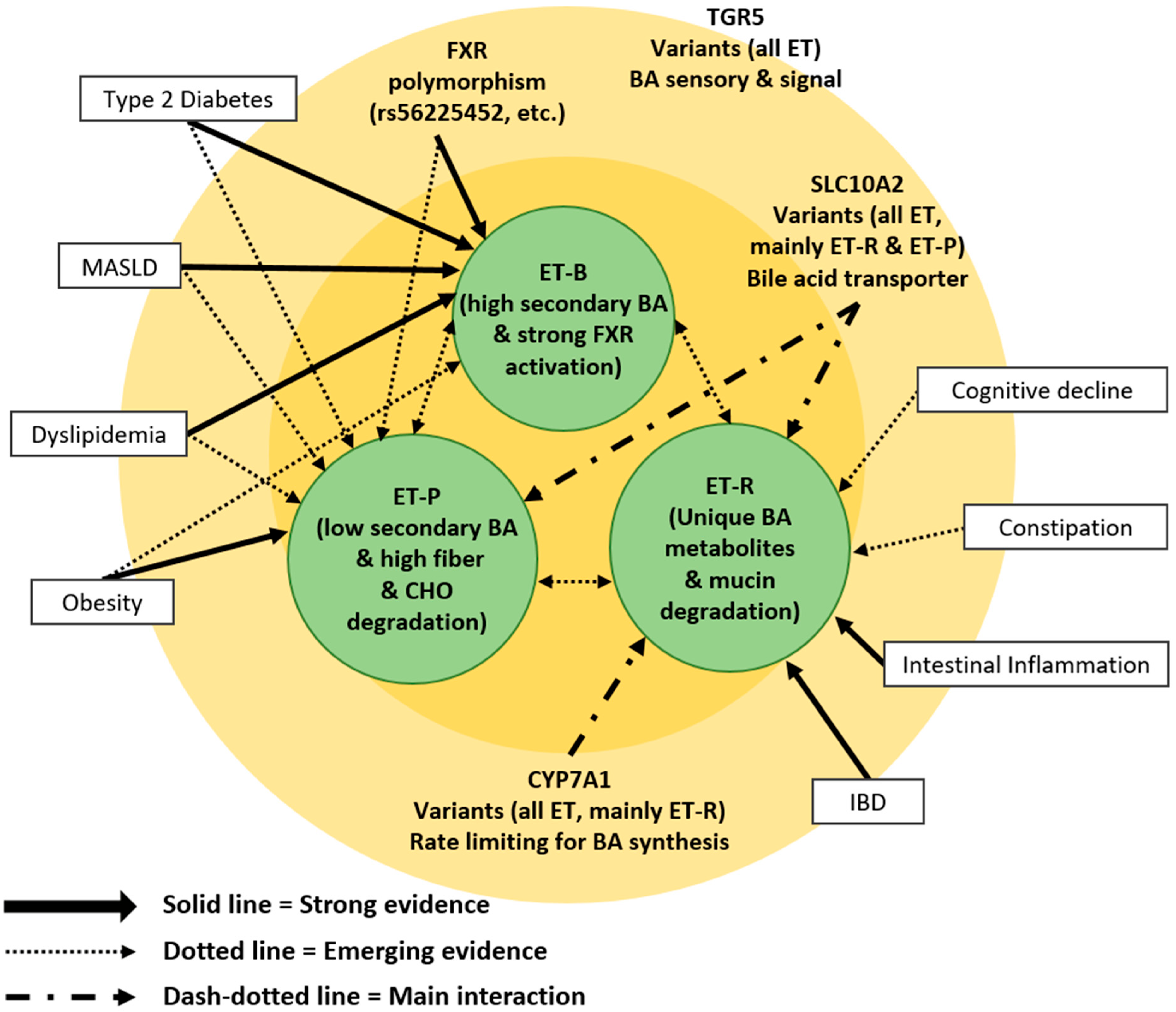
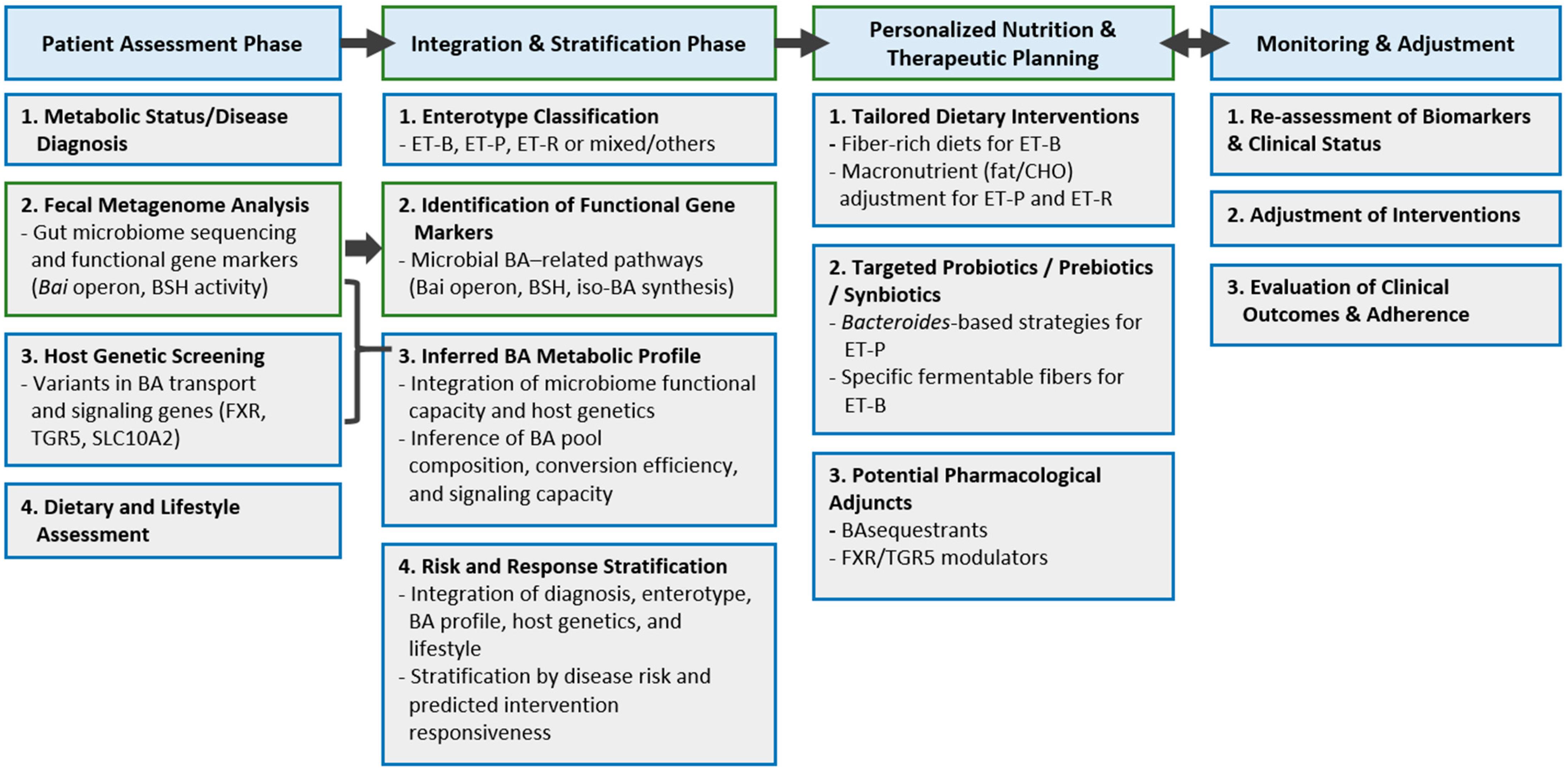
Microbiota-Mediated Bile Acid Metabolism as a Mechanistic Framework for Precision Nutrition in Gastrointestinal and Metabolic Diseases
_Daily_III.jpg)


Abstract
1. Introduction
2. Gut Microbiota Enterotypes: Compositional Patterns and Functional Implications
2.1. Definition, Historical Context, and Classification Principles
2.2. Characteristics of the Major Human Enterotypes
2.2.1. Characteristics of ET-B
2.2.2. Characteristics of ET-P
2.2.3. Characteristics of ET-R
2.3. Enterotype Stability and Classification Challenges
2.4. Host Genetic and Environmental Determinants of Enterotypes
3. BA Composition Across Enterotypes: From Hepatic Synthesis to Enterohepatic Circulation
3.1. Hepatic BA Synthesis: Classical and Alternative Pathways
3.2. EHC and Enterotype-Specific Patterns
3.3. BA Signaling: The FXR and TGR5 Pathway
4. Microbial Transformation of BAs Across Enterotypes
4.1. Enzymatic Machinery: BSH as the Deconjugation Gateway
4.2. Enzymatic Machinery: 7α-Dehydroxylases and Secondary BA Formation
4.3. Genetic Basis: The Bai Operon—Blueprint for BA Dehydroxylation
4.4. Enterotype-Specific Enzymatic Profiles and Metabolic Capacity
5. The Host Genetic Determinants of BA-Enterotype Interactions
5.1. BA Synthesis and Transport Gene Polymorphisms

| Transporter/Receptor | Location | Primary Function | Associated Pathway | Study Type; REF |
|---|---|---|---|---|
| Bile Salt Export Pump (BSEP, ABCB11) | Hepatocyte Canalicular Membrane | Major efflux system for BAs into bile canaliculi. | Enterohepatic Circulation | in vitro, in vivo; [95] |
| Sodium Taurocholate Cotransporting Polypeptide (NTCP, SLC10A1) | Hepatocyte Basolateral Membrane | Active uptake of conjugated BAs from portal blood into hepatocytes. | Enterohepatic Circulation | human (cross-sectional); [96] |
| Farnesoid X Receptor (FXR) | Intestine, Liver (Nuclear Receptor) | Endogenous ligand-activated receptor; regulates BA synthesis and lipid/glucose metabolism. | Negative Feedback Loop, Host Signaling | in vitro, in vivo; [97] |
| G Protein-Coupled BA Receptor 1 (TGR5) | Intestine, Immune Cells (Membrane Receptor) | Endogenous ligand-activated receptor; modulates energy, glucose, and inflammation. | Host Signaling | in vitro, in vivo; [6] |
| Apical Sodium-Dependent BA Transporter (ASBT) | Terminal Ileum | Active reabsorption of BAs from the intestinal lumen. | Enterohepatic Circulation) | in vitro, in vivo; [98] |
5.2. Nuclear Receptor Gene Polymorphisms: FXR and TGR5 Signaling
5.3. SLC10A2 Polymorphisms and Enterotype-Specific BA Availability
5.4. Gene–Environment–Microbiome Interactions
6. Enterotype-Specific BA Profiles and Disease Signatures
6.1. Hepatic Diseases: MASLD/MASH and Cirrhosis
6.2. Metabolic Disorders: Type 2 Diabetes
6.3. Inflammatory Bowel Disease (IBD): Intestinal Integrity and Immune Modulation
6.4. Colorectal Cancer: Secondary BAs and Carcinogenesis Risk
6.5. Predictive Biomarkers and Disease Progression Patterns
7. Enterotype-Guided Therapeutic Strategies
7.1. Precision Nutrition and Dietary Interventions
7.2. Microbiome-Targeted Therapies
7.3. Pharmacological Modulation of BA Signaling
7.4. Enterotype-Specific Integration Strategies
7.5. Implementation Considerations and Advanced Approaches
8. Clinical Implementation and Future Outlook
8.1. From Research to Practice: Challenges and Opportunities
8.2. Essential Biomarkers for Guiding Precision Therapies
8.3. The Path Forward: Clinical Validation and Advanced Analytics
8.4. Limitations
8.5. Future Research Directions
9. Conclusions
Author Contributions
Funding
Institutional Review Board Statement
Informed Consent Statement
Data Availability Statement
Conflicts of Interest
Abbreviations
References
- Abeltino, A.; Hatem, D.; Serantoni, C.; Riente, A.; De Giulio, M.M.; De Spirito, M.; De Maio, F.; Maulucci, G. Unraveling the Gut Microbiota: Implications for Precision Nutrition and Personalized Medicine. Nutrients 2024, 16, 3806. [Google Scholar] [CrossRef]
- Arumugam, M.; Raes, J.; Pelletier, E.; Le Paslier, D.; Yamada, T.; Mende, D.R.; Fernandes, G.R.; Tap, J.; Bruls, T.; Batto, J.M.; et al. Enterotypes of the human gut microbiome. Nature 2011, 473, 174–180. [Google Scholar] [CrossRef]
- Wise, J.L.; Cummings, B.P. The 7-α-dehydroxylation pathway: An integral component of gut bacterial bile acid metabolism and potential therapeutic target. Front. Microbiol. 2022, 13, 1093420. [Google Scholar] [CrossRef] [PubMed]
- Dong, Z.; Yang, S.; Tang, C.; Li, D.; Kan, Y.; Yao, L. New insights into microbial bile salt hydrolases: From physiological roles to potential applications. Front. Microbiol. 2025, 16, 1513541. [Google Scholar] [CrossRef] [PubMed]
- Di Ciaula, A.; Garruti, G.; Lunardi Baccetto, R.; Molina-Molina, E.; Bonfrate, L.; Wang, D.Q.H.; Portincasa, P. Bile Acid Physiology. Ann. Hepatol. 2017, 16, S4–S14. [Google Scholar] [CrossRef] [PubMed]
- Song, G.; Xie, Y.; Yi, L.; Cheng, W.; Jia, H.; Shi, W.; Liu, Q.; Fang, L.; Xue, S.; Liu, D.; et al. Bile acids affect intestinal barrier function through FXR and TGR5. Front. Med. 2025, 12, 1607899. [Google Scholar] [CrossRef]
- Park, S.; Zhang, T.; Kang, S. Fecal Microbiota Composition, Their Interactions, and Metagenome Function in US Adults with Type 2 Diabetes According to Enterotypes. Int. J. Mol. Sci. 2023, 24, 9533. [Google Scholar] [CrossRef]
- Hur, H.J.; Wu, X.; Yang, H.J.; Kim, M.J.; Lee, K.-H.; Hong, M.; Park, S.; Kim, M.-S. Beneficial Effects of a Low-Glycemic Diet on Serum Metabolites and Gut Microbiota in Obese Women With Prevotella and Bacteriodes Enterotypes: A Randomized Clinical Trial. Front. Nutr. 2022, 9, 1880. [Google Scholar] [CrossRef]
- Yuan, H.; Zhou, J.; Wu, X.; Wang, S.; Park, S. Enterotype-stratified gut microbial signatures in MASLD and cirrhosis based on integrated microbiome data. Front. Microbiol. 2025, 16, 1568672. [Google Scholar] [CrossRef]
- Son, S.J.; Wu, X.; Roh, H.W.; Cho, Y.H.; Hong, S.; Nam, Y.J.; Hong, C.H.; Park, S. Distinct gut microbiota profiles and network properties in older Korean individuals with subjective cognitive decline, mild cognitive impairment, and Alzheimer’s disease. Alzheimers Res. Ther. 2025, 17, 187. [Google Scholar] [CrossRef]
- Collins, S.L.; Stine, J.G.; Bisanz, J.E.; Okafor, C.D.; Patterson, A.D. Bile acids and the gut microbiota: Metabolic interactions and impacts on disease. Nat. Rev. Microbiol. 2023, 21, 236–247. [Google Scholar] [CrossRef] [PubMed]
- Costea, P.I.; Hildebrand, F.; Arumugam, M.; Bäckhed, F.; Blaser, M.J.; Bushman, F.D.; de Vos, W.M.; Ehrlich, S.D.; Fraser, C.M.; Hattori, M.; et al. Enterotypes in the landscape of gut microbial community composition. Nat. Microbiol. 2018, 3, 8–16. [Google Scholar] [CrossRef] [PubMed]
- Park, S.; Li, C.; Wu, X.; Zhang, T. Gut Microbiota Alterations and Their Functional Differences in Depression According to Enterotypes in Asian Individuals. Int. J. Mol. Sci. 2023, 24, 13329. [Google Scholar] [CrossRef]
- Wu, X.; Zhang, T.; Zhang, T.; Park, S. The impact of gut microbiome enterotypes on ulcerative colitis: Identifying key bacterial species and revealing species co-occurrence networks using machine learning. Gut Microbes 2024, 16, 2292254. [Google Scholar] [CrossRef]
- Knights, D.; Ward, T.L.; McKinlay, C.E.; Miller, H.; Gonzalez, A.; McDonald, D.; Knight, R. Rethinking “enterotypes”. Cell Host Microbe 2014, 16, 433–437. [Google Scholar] [CrossRef]
- Bah, Y.R.; Baba, K.; Mustafa, D.N.A.B.; Watanabe, S.; Takeda, A.K.; Yamashita, T.; Kasahara, K. Bacteroides- and Prevotella-enriched gut microbial clusters associate with metabolic risks. Gut Pathog. 2025, 17, 55. [Google Scholar] [CrossRef]
- Wu, G.D.; Chen, J.; Hoffmann, C.; Bittinger, K.; Chen, Y.Y.; Keilbaugh, S.A.; Bewtra, M.; Knights, D.; Walters, W.A.; Knight, R.; et al. Linking long-term dietary patterns with gut microbial enterotypes. Science 2011, 334, 105–108. [Google Scholar] [CrossRef]
- Kaoutari, A.E.; Armougom, F.; Gordon, J.I.; Raoult, D.; Henrissat, B. The abundance and variety of carbohydrate-active enzymes in the human gut microbiota. Nat. Rev. Microbiol. 2013, 11, 497–504. [Google Scholar] [CrossRef]
- Sun, L.; Zhang, Y.; Cai, J.; Rimal, B.; Rocha, E.R.; Coleman, J.P.; Zhang, C.; Nichols, R.G.; Luo, Y.; Kim, B.; et al. Bile salt hydrolase in non-enterotoxigenic Bacteroides potentiates colorectal cancer. Nat. Commun. 2023, 14, 755. [Google Scholar] [CrossRef]
- He, Y.; Shaoyong, W.; Chen, Y.; Li, M.; Gan, Y.; Sun, L.; Liu, Y.; Wang, Y.; Jin, M. The functions of gut microbiota-mediated bile acid metabolism in intestinal immunity. J. Adv. Res. 2025; in press. [Google Scholar] [CrossRef] [PubMed]
- Sasidharan Pillai, S.; Gagnon, C.A.; Foster, C.; Ashraf, A.P. Exploring the Gut Microbiota: Key Insights Into Its Role in Obesity, Metabolic Syndrome, and Type 2 Diabetes. J. Clin. Endocrinol. Metab. 2024, 109, 2709–2719. [Google Scholar] [CrossRef]
- Zhang, J.; Zhou, J.; He, Z.; Li, H. Bacteroides and NAFLD: Pathophysiology and therapy. Front. Microbiol. 2024, 15, 1288856. [Google Scholar] [CrossRef]
- Gorvitovskaia, A.; Holmes, S.P.; Huse, S.M. Interpreting Prevotella and Bacteroides as biomarkers of diet and lifestyle. Microbiome 2016, 4, 15. [Google Scholar] [CrossRef]
- De Filippis, F.; Pasolli, E.; Tett, A.; Tarallo, S.; Naccarati, A.; De Angelis, M.; Neviani, E.; Cocolin, L.; Gobbetti, M.; Segata, N.; et al. Distinct Genetic and Functional Traits of Human Intestinal Prevotella copri Strains Are Associated with Different Habitual Diets. Cell Host Microbe 2019, 25, 444–453.e3. [Google Scholar] [CrossRef]
- Zhang, Y.; Zhou, Z.; Li, Y.; Xu, M.; Li, Y.; Yang, Y.; Hu, X.; Wang, X.; Yi, H.; Wu, X. Clostridial-dominated gut microbiota promotes 7α-dehydroxylation of obeticholic acid to lithocholic acid in cholestasis treatment. Biochem. Biophys. Res. Commun. 2025, 782, 152565. [Google Scholar] [CrossRef] [PubMed]
- Hai, C.; Hao, Z.; Bu, L.; Lei, J.; Liu, X.; Zhao, Y.; Bai, C.; Su, G.; Yang, L.; Li, G. Increased rumen Prevotella enhances BCAA synthesis, leading to synergistically increased skeletal muscle in myostatin-knockout cattle. Commun. Biol. 2024, 7, 1575. [Google Scholar] [CrossRef]
- Adamberg, S.; Adamberg, K. Prevotella enterotype associates with diets supporting acidic faecal pH and production of propionic acid by microbiota. Heliyon 2024, 10, e31134. [Google Scholar] [CrossRef]
- Jiang, B.; Yuan, G.; Wu, J.; Wu, Q.; Li, L.; Jiang, P. Prevotella copri ameliorates cholestasis and liver fibrosis in primary sclerosing cholangitis by enhancing the FXR signalling pathway. Biochim. Biophys. Acta. Mol. Basis Dis. 2022, 1868, 166320. [Google Scholar] [CrossRef]
- Kovatcheva-Datchary, P.; Nilsson, A.; Akrami, R.; Lee, Y.S.; De Vadder, F.; Arora, T.; Hallen, A.; Martens, E.; Björck, I.; Bäckhed, F. Dietary Fiber-Induced Improvement in Glucose Metabolism Is Associated with Increased Abundance of Prevotella. Cell Metab. 2015, 22, 971–982. [Google Scholar] [CrossRef] [PubMed]
- Zhang, X.; Zhang, D.; Jia, H.; Feng, Q.; Wang, D.; Liang, D.; Wu, X.; Li, J.; Tang, L.; Li, Y.; et al. The oral and gut microbiomes are perturbed in rheumatoid arthritis and partly normalized after treatment. Nat. Med. 2015, 21, 895–905. [Google Scholar] [CrossRef] [PubMed]
- Medina-Vera, I.; Sanchez-Tapia, M.; Noriega-López, L.; Granados-Portillo, O.; Guevara-Cruz, M.; Flores-López, A.; Avila-Nava, A.; Fernández, M.L.; Tovar, A.R.; Torres, N. A dietary intervention with functional foods reduces metabolic endotoxaemia and attenuates biochemical abnormalities by modifying faecal microbiota in people with type 2 diabetes. Diabetes Metab. 2019, 45, 122–131. [Google Scholar] [CrossRef]
- Kupczyk, D.; Bilski, R.; Szeleszczuk, Ł.; Mądra-Gackowska, K.; Studzińska, R.J.N. The Role of Diet in Modulating Inflammation and Oxidative Stress in Rheumatoid Arthritis, Ankylosing Spondylitis, and Psoriatic Arthritis. Nutrients 2025, 17, 1603. [Google Scholar] [CrossRef] [PubMed]
- Yuan, H.; Wu, X.; Wang, X.; Zhou, J.Y.; Park, S. Microbial Dysbiosis Linked to Metabolic Dysfunction-Associated Fatty Liver Disease in Asians: Prevotella copri Promotes Lipopolysaccharide Biosynthesis and Network Instability in the Prevotella Enterotype. Int. J. Mol. Sci. 2024, 25, 2183. [Google Scholar] [CrossRef] [PubMed]
- Tomova, A.; Bukovsky, I.; Rembert, E.; Yonas, W.; Alwarith, J.; Barnard, N.D.; Kahleova, H. The Effects of Vegetarian and Vegan Diets on Gut Microbiota. Front. Nutr. 2019, 6, 47. [Google Scholar] [CrossRef]
- Meadows, V.; Antonio, J.M.; Ferraris, R.P.; Gao, N. Ruminococcus gnavus in the gut: Driver, contributor, or innocent bystander in steatotic liver disease? FEBS J. 2025, 292, 1252–1264. [Google Scholar] [CrossRef] [PubMed]
- Hodgkinson, K.; El Abbar, F.; Dobranowski, P.; Manoogian, J.; Butcher, J.; Figeys, D.; Mack, D.; Stintzi, A. Butyrate’s role in human health and the current progress towards its clinical application to treat gastrointestinal disease. Clin. Nutr. 2023, 42, 61–75. [Google Scholar] [CrossRef]
- Koren, O.; Knights, D.; Gonzalez, A.; Waldron, L.; Segata, N.; Knight, R.; Huttenhower, C.; Ley, R.E. A Guide to Enterotypes across the Human Body: Meta-Analysis of Microbial Community Structures in Human Microbiome Datasets. PLoS Comput. Biol. 2013, 9, e1002863. [Google Scholar] [CrossRef]
- Wahlström, A.; Sayin, S.I.; Marschall, H.-U.; Bäckhed, F. Intestinal Crosstalk between Bile Acids and Microbiota and Its Impact on Host Metabolism. Cell Metab. 2016, 24, 41–50. [Google Scholar] [CrossRef]
- Guo, X.; Okpara, E.S.; Hu, W.; Yan, C.; Wang, Y.; Liang, Q.; Chiang, J.Y.L.; Han, S. Interactive Relationships between Intestinal Flora and Bile Acids. Int. J. Mol. Sci. 2022, 23, 8343. [Google Scholar] [CrossRef]
- Welsch, E.C.; Barron, M.R.; Storage, K.M.; Kazen, A.B.; Aboulalazm, F.A.; Kirby, J.R.; Kindel, T.L. Gut microbiome and bile acid changes after male rodent sleeve gastrectomy: What comes first? Am. J. Physiol. Regul. Integr. Comp. Physiol. 2025, 329, R410–R421. [Google Scholar] [CrossRef]
- Zhong, S.; Chèvre, R.; Castaño Mayan, D.; Corlianò, M.; Cochran, B.J.; Sem, K.P.; van Dijk, T.H.; Peng, J.; Tan, L.J.; Hartimath, S.V.; et al. Haploinsufficiency of CYP8B1 associates with increased insulin sensitivity in humans. J. Clin. Investig. 2022, 132. [Google Scholar] [CrossRef]
- Xiang, X.; Han, Y.; Neuvonen, M.; Pasanen, M.K.; Kalliokoski, A.; Backman, J.T.; Laitila, J.; Neuvonen, P.J.; Niemi, M. Effect of SLCO1B1 polymorphism on the plasma concentrations of bile acids and bile acid synthesis marker in humans. Pharmacogenetics Genom. 2009, 19, 447–457. [Google Scholar] [CrossRef]
- Lee, S.D.; Thornton, S.J.; Wasan, K.M. Abstract 282: Murine Abcb1 Functions as an Efflux Transporter for Bile Salts After Chronic Administration of a Western Diet. Arterioscler. Thromb. Vasc. Biol. 2012, 32, A282. [Google Scholar] [CrossRef]
- Jonker, J.W.; Liddle, C.; Downes, M. FXR and PXR: Potential therapeutic targets in cholestasis. J. Steroid Biochem. Mol. Biol. 2012, 130, 147–158. [Google Scholar] [CrossRef] [PubMed]
- Holter, M.M.; Chirikjian, M.K.; Govani, V.N.; Cummings, B.P. TGR5 Signaling in Hepatic Metabolic Health. Nutrients 2020, 12, 2598. [Google Scholar] [CrossRef] [PubMed]
- Larabi, A.B.; Masson, H.L.P.; Bäumler, A.J. Bile acids as modulators of gut microbiota composition and function. Gut Microbes 2023, 15, 2172671. [Google Scholar] [CrossRef]
- Reddy, B.S.; Engle, A.; Simi, B.; O’Brien, L.T.; Barnard, R.J.; Pritikin, N.; Wynder, E.L. Effect of low-fat, high-carbohydrate, high-fiber diet on fecal bile acids and neutral sterols. Prev. Med. 1988, 17, 432–439. [Google Scholar] [CrossRef]
- Chen, L.; Ye, Z.; Li, J.; Wang, L.; Chen, Y.; Yu, M.; Han, J.; Huang, J.; Li, D.; Lv, Y.; et al. Gut bacteria Prevotellaceae related lithocholic acid metabolism promotes colonic inflammation. J. Transl. Med. 2025, 23, 55. [Google Scholar] [CrossRef]
- Hossain, K.S.; Amarasena, S.; Mayengbam, S. B Vitamins and Their Roles in Gut Health. Microorganisms 2022, 10, 1168. [Google Scholar] [CrossRef]
- Arifuzzaman, M.; Collins, N.; Guo, C.J.; Artis, D. Nutritional regulation of microbiota-derived metabolites: Implications for immunity and inflammation. Immunity 2024, 57, 14–27. [Google Scholar] [CrossRef]
- Ramírez-Pérez, O.; Cruz-Ramón, V.; Chinchilla-López, P.; Méndez-Sánchez, N. The Role of the Gut Microbiota in Bile Acid Metabolism. Ann. Hepatol. 2017, 16, s15–s20. [Google Scholar] [CrossRef]
- Gao, Y.; Lin, J.; Ye, C.; Guo, S.; Jiang, C. Microbial transformations of bile acids and their receptors in the regulation of metabolic dysfunction-associated steatotic liver disease. Liver Res. 2023, 7, 165–176. [Google Scholar] [CrossRef] [PubMed]
- Di Ciaula, A.; Bonfrate, L.; Khalil, M.; Portincasa, P. The interaction of bile acids and gut inflammation influences the pathogenesis of inflammatory bowel disease. Intern. Emerg. Med. 2023, 18, 2181–2197. [Google Scholar] [CrossRef]
- Peng, Y.-L.; Wang, S.-H.; Zhang, Y.-L.; Chen, M.-Y.; He, K.; Li, Q.; Huang, W.-H.; Zhang, W. Effects of bile acids on the growth, composition and metabolism of gut bacteria. npj Biofilms Microbiomes 2024, 10, 112. [Google Scholar] [CrossRef]
- Harnisch, L.O.; Mihaylov, D.; Bein, T.; Apfelbacher, C.; Moerer, O.; Quintel, M. A reduced glycine-to-taurine ratio of conjugated serum bile acids signifies an adaptive mechanism and is an early marker of outcome in acute respiratory distress syndrome. Intern. Emerg. Med. 2023, 18, 607–615. [Google Scholar] [CrossRef]
- Naito, Y. Role of Gut Microbiota in Bile-Acid Metabolism. In Psychology and Pathophysiological Outcomes of Eating; Takada, A., Himmerich, H., Eds.; IntechOpen: London, UK, 2021. [Google Scholar]
- Tripathi, A.; Debelius, J.; Brenner, D.A.; Karin, M.; Loomba, R.; Schnabl, B.; Knight, R. The gut-liver axis and the intersection with the microbiome. Nat. Rev. Gastroenterol. Hepato 2018, 15, 397–411. [Google Scholar] [CrossRef] [PubMed]
- Frost, F.; Lerch, M.M. Gut microbial pathways for bile acid metabolism. Hepatobiliary Surg. Nutr. 2021, 10, 379–381. [Google Scholar] [CrossRef] [PubMed]
- Chiang, J. Bile Acid Metabolism and Signaling. Compr. Physiol. 2013, 3, 1191–1212. [Google Scholar] [CrossRef] [PubMed]
- Ticho, A.L.; Malhotra, P.; Dudeja, P.K.; Gill, R.K.; Alrefai, W.A. Intestinal Absorption of Bile Acids in Health and Disease. Compr. Physiol. 2019, 10, 21–56. [Google Scholar] [CrossRef]
- Dawson, P.A.; Haywood, J.; Craddock, A.L.; Wilson, M.; Tietjen, M.; Kluckman, K.; Maeda, N.; Parks, J.S. Targeted deletion of the ileal bile acid transporter eliminates enterohepatic cycling of bile acids in mice. J. Biol. Chem. 2003, 278, 33920–33927. [Google Scholar] [CrossRef]
- Vodenlich, A.D., Jr.; Gong, Y.Z.; Geoghegan, K.F.; Lin, M.C.; Lanzetti, A.J.; Wilson, F.A. Identification of the 14 kDa bile acid transport protein of rat ileal cytosol as gastrotropin. Biochem. Biophys. Res. Commun. 1991, 177, 1147–1154. [Google Scholar] [CrossRef]
- Lucas, L.N.; Mallikarjun, J.; Cattaneo, L.E.; Gangwar, B.; Zhang, Q.; Kerby, R.L.; Stevenson, D.; Rey, F.E.; Amador-Noguez, D. Investigation of Bile Salt Hydrolase Activity in Human Gut Bacteria Reveals Production of Conjugated Secondary Bile Acids. bioRxiv 2025. [Google Scholar] [CrossRef]
- Nagano, T.; Pambu, A.L.; Higashimura, Y.; Nakano, M.; Nishiuchi, T. Dietary bacterial cellulose modulates gut microbiota and increases bile acid excretion in high-fat diet-induced obese mice. Food Hydrocoll. Health 2025, 7, 100213. [Google Scholar] [CrossRef]
- Li, Z.; Yuan, H.; Chu, H.; Yang, L. The Crosstalk between Gut Microbiota and Bile Acids Promotes the Development of Non-Alcoholic Fatty Liver Disease. Microorganisms 2023, 11, 2059. [Google Scholar] [CrossRef] [PubMed]
- Pathak, P.; Xie, C.; Nichols, R.G.; Ferrell, J.M.; Boehme, S.; Krausz, K.W.; Patterson, A.D.; Gonzalez, F.J.; Chiang, J.Y.L. Intestine farnesoid X receptor agonist and the gut microbiota activate G-protein bile acid receptor-1 signaling to improve metabolism. Hepatology 2018, 68, 1574–1588. [Google Scholar] [CrossRef] [PubMed]
- Modica, S.; Gadaleta, R.M.; Moschetta, A. Deciphering the nuclear bile acid receptor FXR paradigm. Nucl. Recept. Signal. 2010, 8, e005. [Google Scholar] [CrossRef]
- Almeqdadi, M.; Gordon, F.D. Farnesoid X Receptor Agonists: A Promising Therapeutic Strategy for Gastrointestinal Diseases. Gastro Hep Adv. 2024, 3, 344–352. [Google Scholar] [CrossRef]
- Panzitt, K.; Wagner, M. FXR in liver physiology: Multiple faces to regulate liver metabolism. Biochim. Biophys. Acta-Mol. Basis Dis. 2021, 1867, 166133. [Google Scholar] [CrossRef]
- Shapiro, H.; Kolodziejczyk, A.A.; Halstuch, D.; Elinav, E. Bile acids in glucose metabolism in health and disease. J. Exp. Med. 2018, 215, 383–396. [Google Scholar] [CrossRef]
- Lun, W.; Yan, Q.; Guo, X.; Zhou, M.; Bai, Y.; He, J.; Cao, H.; Che, Q.; Guo, J.; Su, Z. Mechanism of action of the bile acid receptor TGR5 in obesity. Acta Pharm. Sin. B 2024, 14, 468–491. [Google Scholar] [CrossRef] [PubMed]
- Thomas, C.; Gioiello, A.; Noriega, L.; Strehle, A.; Oury, J.; Rizzo, G.; Macchiarulo, A.; Yamamoto, H.; Mataki, C.; Pruzanski, M.; et al. TGR5-mediated bile acid sensing controls glucose homeostasis. Cell Metab. 2009, 10, 167–177. [Google Scholar] [CrossRef]
- Bartsch, M.; Hahn, A.; Berkemeyer, S. Bridging the Gap from Enterotypes to Personalized Dietary Recommendations: A Metabolomics Perspective on Microbiome Research. Metabolites 2023, 13, 1182. [Google Scholar] [CrossRef]
- Mohanty, I.; Allaband, C.; Mannochio-Russo, H.; El Abiead, Y.; Hagey, L.R.; Knight, R.; Dorrestein, P.C. The changing metabolic landscape of bile acids—Keys to metabolism and immune regulation. Nat. Rev. Gastroenterol. Hepatol. 2024, 21, 493–516. [Google Scholar] [CrossRef]
- Han, B.; Lv, X.; Liu, G.; Li, S.; Fan, J.; Chen, L.; Huang, Z.; Lin, G.; Xu, X.; Huang, Z.; et al. Gut microbiota-related bile acid metabolism-FXR/TGR5 axis impacts the response to anti-α4β7-integrin therapy in humanized mice with colitis. Gut Microbes 2023, 15, 2232143. [Google Scholar] [CrossRef]
- Núñez-Sánchez, M.A.; Herisson, F.M.; Keane, J.M.; García-González, N.; Rossini, V.; Pinhiero, J.; Daly, J.; Bustamante-Garrido, M.; Hueston, C.M.; Patel, S.J.G.m. Microbial bile salt hydrolase activity influences gene expression profiles and gastrointestinal maturation in infant mice. Gut Microbes 2022, 14, 2149023. [Google Scholar] [CrossRef] [PubMed]
- Dong, Z.; Lee, B.H. Bile salt hydrolases: Structure and function, substrate preference, and inhibitor development. Protein Sci. 2018, 27, 1742–1754. [Google Scholar] [CrossRef] [PubMed]
- Meibom, K.L.; Marion, S.; Volet, C.; Nass, T.; Vico-Oton, E.; Menin, L.; Bernier-Latmani, R. BaiJ and BaiB are key enzymes in the chenodeoxycholic acid 7α-dehydroxylation pathway in the gut microbe Clostridium scindens ATCC 35704. Gut Microbes 2024, 16, 2323233. [Google Scholar] [CrossRef] [PubMed]
- Kim Kyung, H.; Park, D.; Jia, B.; Baek Ju, H.; Hahn, Y.; Jeon Che, O. Identification and Characterization of Major Bile Acid 7α-Dehydroxylating Bacteria in the Human Gut. mSystems 2022, 7, e00455-22. [Google Scholar] [CrossRef]
- Jarocki, P.; Podleśny, M.; Glibowski, P.; Targoński, Z. A new insight into the physiological role of bile salt hydrolase among intestinal bacteria from the genus Bifidobacterium. PLoS ONE 2014, 9, e114379. [Google Scholar] [CrossRef]
- Alili, R.; Belda, E.; Fabre, O.; Pelloux, V.; Giordano, N.; Legrand, R.; Bel Lassen, P.; Swartz, T.D.; Zucker, J.D.; Clément, K. Characterization of the Gut Microbiota in Individuals with Overweight or Obesity during a Real-World Weight Loss Dietary Program: A Focus on the Bacteroides 2 Enterotype. Biomedicines 2021, 10, 16. [Google Scholar] [CrossRef]
- Devlin, A.S.; Fischbach, M.A. A biosynthetic pathway for a prominent class of microbiota-derived bile acids. Nat. Chem. Biol. 2015, 11, 685–690. [Google Scholar] [CrossRef] [PubMed]
- Liao, X.-X.; Wu, X.-Y.; Zhou, Y.-L.; Li, J.-J.; Wen, Y.-L.; Zhou, J.-J. Gut microbiome metabolites as key actors in atherosclerosis co-depression disease. Front. Microbiol. 2022, 13, 988643. [Google Scholar] [CrossRef]
- Li, W.; Chen, H.; Tang, J. Interplay between Bile Acids and Intestinal Microbiota: Regulatory Mechanisms and Therapeutic Potential for Infections. Pathogens 2024, 13, 702. [Google Scholar] [CrossRef]
- Thomas, J.P.; Modos, D.; Rushbrook, S.M.; Powell, N.; Korcsmaros, T. The Emerging Role of Bile Acids in the Pathogenesis of Inflammatory Bowel Disease. Front. Immunol. 2022, 13, 829525. [Google Scholar] [CrossRef] [PubMed]
- Valentino, V.; De Filippis, F.; Marotta, R.; Pasolli, E.; Ercolini, D. Genomic features and prevalence of Ruminococcus species in humans are associated with age, lifestyle, and disease. Cell Rep. 2024, 43, 115018. [Google Scholar] [CrossRef] [PubMed]
- Liu, Y.; Zhang, S.; Zhou, W.; Hu, D.; Xu, H.; Ji, G. Secondary Bile Acids and Tumorigenesis in Colorectal Cancer. Front. Oncol. 2022, 12, 813745. [Google Scholar] [CrossRef] [PubMed]
- Kemis, J.H.; Linke, V.; Barrett, K.L.; Boehm, F.J.; Traeger, L.L.; Keller, M.P.; Rabaglia, M.E.; Schueler, K.L.; Stapleton, D.S.; Gatti, D.M.; et al. Genetic determinants of gut microbiota composition and bile acid profiles in mice. PLoS Genet. 2019, 15, e1008073. [Google Scholar] [CrossRef]
- Li, T.; Francl, J.M.; Boehme, S.; Chiang, J.Y. Regulation of cholesterol and bile acid homeostasis by the cholesterol 7α-hydroxylase/steroid response element-binding protein 2/microRNA-33a axis in mice. Hepatology 2013, 58, 1111–1121. [Google Scholar] [CrossRef]
- Sun, X.; Chen, Z.; Yu, L.; Zeng, W.; Sun, B.; Fan, H.; Bai, Y. Bacteroides dorei BDX-01 alleviates DSS-induced experimental colitis in mice by regulating intestinal bile salt hydrolase activity and the FXR-NLRP3 signaling pathway. Front. Pharmacol. 2023, 14, 1205323. [Google Scholar] [CrossRef]
- Qin, J.; Han, T.Q.; Yuan, W.T.; Zhang, J.; Fei, J.; Jiang, Z.Y.; Niu, Z.M.; Zhang, K.Y.; Hua, Q.; Cai, X.X.J.J.o.G.; et al. Single nucleotide polymorphism rs3732860 in the 3′-untranslated region of CYP 8 B 1 gene is associated with gallstone disease in Han Chinese. J. Gastroenterol. Hepatol. 2013, 28, 717–722. [Google Scholar] [CrossRef]
- Yin, C.; Zhong, R.; Zhang, W.; Liu, L.; Chen, L.; Zhang, H. The Potential of Bile Acids as Biomarkers for Metabolic Disorders. Int. J. Mol. Sci. 2023, 24, 12123. [Google Scholar] [CrossRef]
- Ballatori, N.; Christian, W.V.; Wheeler, S.G.; Hammond, C.L. The heteromeric organic solute transporter, OSTα-OSTβ/SLC51: A transporter for steroid-derived molecules. Mol. Asp. Med. 2013, 34, 683–692. [Google Scholar] [CrossRef]
- Sultan, M.; Rao, A.; Elpeleg, O.; Vaz, F.M.; Abu-Libdeh, B.; Karpen, S.J.; Dawson, P.A. Organic solute transporter-β (SLC51B) deficiency in two brothers with congenital diarrhea and features of cholestasis. Hepatology 2018, 68, 590–598. [Google Scholar] [CrossRef]
- Lam, P.; Soroka, C.J.; Boyer, J.L. The bile salt export pump: Clinical and experimental aspects of genetic and acquired cholestatic liver disease. Semin. Liver Dis. 2010, 30, 125–133. [Google Scholar] [CrossRef]
- Qiu, J.W.; Deng, M.; Cheng, Y.; Atif, R.M.; Lin, W.X.; Guo, L.; Li, H.; Song, Y.Z. Sodium taurocholate cotransporting polypeptide (NTCP) deficiency: Identification of a novel SLC10A1 mutation in two unrelated infants presenting with neonatal indirect hyperbilirubinemia and remarkable hypercholanemia. Oncotarget 2017, 8, 106598–106607. [Google Scholar] [CrossRef]
- Zhang, Y. Farnesoid X receptor-Acting through bile acids to treat metabolic disorders. Drugs Future 2010, 35, 635–642. [Google Scholar] [CrossRef] [PubMed]
- Balakrishnan, A.; Polli, J.E. Apical sodium dependent bile acid transporter (ASBT, SLC10A2): A potential prodrug target. Mol. Pharm. 2006, 3, 223–230. [Google Scholar] [CrossRef] [PubMed]
- Baars, A.; Oosting, A.; Knol, J.; Garssen, J.; Van Bergenhenegouwen, J. The Gut Microbiota as a Therapeutic Target in IBD and Metabolic Disease: A Role for the Bile Acid Receptors FXR and TGR5. Microorganisms 2015, 3, 641–666. [Google Scholar] [CrossRef]
- Piątek, K.; Kurzawińska, G.; Ożarowski, M.; Olbromski, P.J.; Kamiński, A.; Brązert, M.; Karpiński, T.M.; Markwitz, W.; Seremak-Mrozikiewicz, A. Polymorphic Variants of Selected Genes Regulating Bile Acid Homeostasis in Women with Intrahepatic Cholestasis of Pregnancy. Int. J. Mol. Sci. 2025, 26, 7456. [Google Scholar] [CrossRef] [PubMed]
- Hu, M.; Lui, S.S.; Tam, L.S.; Li, E.K.; Tomlinson, B. The farnesoid X receptor -1G>T polymorphism influences the lipid response to rosuvastatin. J. Lipid Res. 2012, 53, 1384–1389. [Google Scholar] [CrossRef][Green Version]
- Cipriani, S.; Mencarelli, A.; Chini, M.G.; Distrutti, E.; Renga, B.; Bifulco, G.; Baldelli, F.; Donini, A.; Fiorucci, S. The bile acid receptor GPBAR-1 (TGR5) modulates integrity of intestinal barrier and immune response to experimental colitis. PLoS ONE 2011, 6, e25637. [Google Scholar] [CrossRef]
- Semmler, G.; Simbrunner, B.; Scheiner, B.; Schwabl, P.; Paternostro, R.; Bucsics, T.; Stättermayer, A.F.; Bauer, D.; Pinter, M.; Ferenci, P.; et al. Impact of farnesoid X receptor single nucleotide polymorphisms on hepatic decompensation and mortality in cirrhotic patients with portal hypertension. J. Gastroenterol. Hepatol. 2019, 34, 2164–2172. [Google Scholar] [CrossRef]
- Poland, J.C.; Flynn, C.R. Bile Acids, Their Receptors, and the Gut Microbiota. Physiology 2021, 36, 235–245. [Google Scholar] [CrossRef]
- Ho, R.H.; Leake, B.F.; Urquhart, B.L.; Gregor, J.C.; Dawson, P.A.; Kim, R.B. Functional characterization of genetic variants in the apical sodium-dependent bile acid transporter (ASBT.; SLC10A2). J. Gastroenterol. Hepatol. 2011, 26, 1740–1748. [Google Scholar] [CrossRef] [PubMed]
- Grüner, N.; Mattner, J. Bile Acids and Microbiota: Multifaceted and Versatile Regulators of the Liver–Gut Axis. Int. J. Mol. Sci. 2021, 22, 1397. [Google Scholar] [CrossRef]
- Trefflich, I.; Marschall, H.U.; Giuseppe, R.D.; Ståhlman, M.; Michalsen, A.; Lampen, A.; Abraham, K.; Weikert, C. Associations between Dietary Patterns and Bile Acids-Results from a Cross-Sectional Study in Vegans and Omnivores. Nutrients 2019, 12, 47. [Google Scholar] [CrossRef] [PubMed]
- Brønden, A.; Albér, A.; Rohde, U.; Rehfeld, J.F.; Holst, J.J.; Vilsbøll, T.; Knop, F.K. Single-Dose Metformin Enhances Bile Acid–Induced Glucagon-Like Peptide-1 Secretion in Patients With Type 2 Diabetes. J. Clin. Endocrinol. Metab. 2017, 102, 4153–4162. [Google Scholar] [CrossRef]
- Zhou, K.; Yee, S.W.; Seiser, E.L.; van Leeuwen, N.; Tavendale, R.; Bennett, A.J.; Groves, C.J.; Coleman, R.L.; van der Heijden, A.A.; Beulens, J.W.; et al. Variation in the glucose transporter gene SLC2A2 is associated with glycemic response to metformin. Nat. Genet. 2016, 48, 1055–1059. [Google Scholar] [CrossRef]
- Khan, A.F.Y.S. Biochemistry, Lipopolysaccharide; StatPearls: Tempa, FL, USA, 2023. [Google Scholar]
- Yang, N.; Dong, Y.-Q.; Jia, G.-X.; Fan, S.-M.; Li, S.-Z.; Yang, S.-S.; Li, Y.-B. ASBT(SLC10A2): A promising target for treatment of diseases and drug discovery. Biomed. Pharmacother. 2020, 132, 110835. [Google Scholar] [CrossRef] [PubMed]
- Ridlon, J.M.; Alves, J.M.; Hylemon, P.B.; Bajaj, J.S. Cirrhosis, bile acids and gut microbiota: Unraveling a complex relationship. Gut Microbes 2013, 4, 382–387. [Google Scholar] [CrossRef]
- Mouzaki, M.; Wang, A.Y.; Bandsma, R.; Comelli, E.M.; Arendt, B.M.; Zhang, L.; Fung, S.; Fischer, S.E.; McGilvray, I.G.; Allard, J.P. Bile Acids and Dysbiosis in Non-Alcoholic Fatty Liver Disease. PLoS ONE 2016, 11, e0151829. [Google Scholar] [CrossRef]
- Wang, R.; Sheps, J.A.; Liu, L.; Han, J.; Chen, P.S.K.; Lamontagne, J.; Wilson, P.D.; Welch, I.; Borchers, C.H.; Ling, V. Hydrophilic bile acids prevent liver damage caused by lack of biliary phospholipid in Mdr2(-/-) mice. J. Lipid Res. 2019, 60, 85–97. [Google Scholar] [CrossRef] [PubMed]
- Bai, S.H.; Chandnani, A.; Cao, S. Bile Acids in Inflammatory Bowel Disease: From Pathophysiology to Treatment. Biomedicines 2024, 12, 2910. [Google Scholar] [CrossRef]
- Baldelli, V.; Scaldaferri, F.; Putignani, L.; Del Chierico, F. The Role of Enterobacteriaceae in Gut Microbiota Dysbiosis in Inflammatory Bowel Diseases. Microorganisms 2021, 9, 697. [Google Scholar] [CrossRef]
- Chen, T.; Long, W.; Zhang, C.; Liu, S.; Zhao, L.; Hamaker, B.R. Fiber-utilizing capacity varies in Prevotella- versus Bacteroides-dominated gut microbiota. Sci. Rep. 2017, 7, 2594. [Google Scholar] [CrossRef] [PubMed]
- Qian, W.; He, L.; Fu, C.; Zeng, T.; Wang, H.; Li, H. Metabolic dysfunction-associated steatotic liver disease (MASLD): Emerging insights into gut microbiota interactions and therapeutic perspectives. Explor. Dig. Dis. 2025, 4, 100579. [Google Scholar] [CrossRef]
- Chong, S.; Lin, M.; Chong, D.; Jensen, S.; Lau, N.S. A systematic review on gut microbiota in type 2 diabetes mellitus. Front. Endocrinol. 2025, 15, 1486793. [Google Scholar] [CrossRef] [PubMed]
- Chiang, J.Y.; Pathak, P.; Liu, H.; Donepudi, A.; Ferrell, J.; Boehme, S. Intestinal Farnesoid X Receptor and Takeda G Protein Couple Receptor 5 Signaling in Metabolic Regulation. Dig. Dis. 2017, 35, 241–245. [Google Scholar] [CrossRef]
- Sultan, S.; El-Mowafy, M.; Elgaml, A.; Ahmed, T.A.E.; Hassan, H.; Mottawea, W. Metabolic Influences of Gut Microbiota Dysbiosis on Inflammatory Bowel Disease. Front. Physiol. 2021, 12, 715506. [Google Scholar] [CrossRef]
- Acevedo-Román, A.; Pagán-Zayas, N.; Velázquez-Rivera, L.I.; Torres-Ventura, A.C.; Godoy-Vitorino, F. Insights into Gut Dysbiosis: Inflammatory Diseases, Obesity, and Restoration Approaches. Int. J. Mol. Sci. 2024, 25, 9715. [Google Scholar] [CrossRef]
- Yoneno, K.; Hisamatsu, T.; Shimamura, K.; Kamada, N.; Ichikawa, R.; Kitazume, M.T.; Mori, M.; Uo, M.; Namikawa, Y.; Matsuoka, K.; et al. TGR5 signalling inhibits the production of pro-inflammatory cytokines by in vitro differentiated inflammatory and intestinal macrophages in Crohn’s disease. Immunology 2013, 139, 19–29. [Google Scholar] [CrossRef]
- Yang, H.; Shi, X.; Wang, B.; Li, H.; Li, B.; Zhou, T.; Tian, L.; Wang, S.; Yin, K. Bile acid receptors regulate the role of intestinal macrophages in inflammatory bowel disease. Front. Immunol. 2025, 16, 1577000. [Google Scholar] [CrossRef]
- Larsen, J.M. The immune response to Prevotella bacteria in chronic inflammatory disease. Immunology 2017, 151, 363–374. [Google Scholar] [CrossRef]
- Cai, J.-A.; Zhang, Y.-Z.; Yu, E.-D.; Ding, W.-Q.; Jiang, Q.-W.; Cai, Q.-C.; Zhong, L. Gut Microbiota Enterotypes Mediate the Effects of Dietary Patterns on Colorectal Neoplasm Risk in a Chinese Population. Nutrients 2023, 15, 2940. [Google Scholar] [CrossRef] [PubMed]
- Niekamp, P.; Kim, C.H. Microbial Metabolite Dysbiosis and Colorectal Cancer. Gut Liver 2023, 17, 190–203. [Google Scholar] [CrossRef]
- Kouhzad, M.; Götz, F.; Navidifar, T.; Taki, E.; Ghamari, M.; Mohammadzadeh, R.; Seyedolmohadesin, M.; Bostanghadiri, N. Carcinogenic and anticancer activities of microbiota-derived secondary bile acids. Front. Oncol. 2025, 15, 1514872. [Google Scholar] [CrossRef] [PubMed]
- Galasso, L.; Termite, F.; Mignini, I.; Esposto, G.; Borriello, R.; Vitale, F.; Nicoletti, A.; Paratore, M.; Ainora, M.E.; Gasbarrini, A.; et al. Unraveling the Role of Fusobacterium nucleatum in Colorectal Cancer: Molecular Mechanisms and Pathogenic Insights. Cancers 2025, 17, 368. [Google Scholar] [CrossRef]
- Kostic, A.D.; Chun, E.; Robertson, L.; Glickman, J.N.; Gallini, C.A.; Michaud, M.; Clancy, T.E.; Chung, D.C.; Lochhead, P.; Hold, G.L.; et al. Fusobacterium nucleatum potentiates intestinal tumorigenesis and modulates the tumor-immune microenvironment. Cell Host Microbe 2013, 14, 207–215. [Google Scholar] [CrossRef]
- Chen, H.L.; Hu, P.Y.; Chen, C.S.; Lin, W.H.; Hsu, D.K.; Liu, F.T.; Meng, T.C. Gut colonization of Bacteroides plebeius suppresses colitis-associated colon cancer development. Microbiol. Spectr. 2025, 13, e0259924. [Google Scholar] [CrossRef]
- Chen, W.; Wang, D.; Deng, X.; Zhang, H.; Dong, D.; Su, T.; Lu, Q.; Jiang, C.; Ni, Q.; Cui, Y.; et al. Bile acid profiling as an effective biomarker for staging in pediatric inflammatory bowel disease. Gut Microbes 2024, 16, 2323231. [Google Scholar] [CrossRef]
- McMillan, A.S.; Foley, M.H.; Perkins, C.E.; Theriot, C.M. Loss of Bacteroides thetaiotaomicron bile acid-altering enzymes impacts bacterial fitness and the global metabolic transcriptome. Microbiol. Spectr. 2024, 12, e0357623. [Google Scholar] [CrossRef]
- Zhao, M.; Zhao, J.; Yang, H.; Ouyang, Z.; Lv, C.; Geng, Z.; Zhao, J. The bile acid-gut microbiota axis: A central hub for physiological regulation and a novel therapeutic target for metabolic diseases. Biomed. Pharmacother. 2025, 188, 118182. [Google Scholar] [CrossRef]
- Christensen, L.; Roager, H.M.; Astrup, A.; Hjorth, M.F. Microbial enterotypes in personalized nutrition and obesity management. Am. J. Clin. Nutr. 2018, 108, 645–651. [Google Scholar] [CrossRef]
- Singh, J.; Metrani, R.; Shivanagoudra, S.R.; Jayaprakasha, G.K.; Patil, B.S. Review on Bile Acids: Effects of the Gut Microbiome, Interactions with Dietary Fiber, and Alterations in the Bioaccessibility of Bioactive Compounds. J. Agric. Food Chem. 2019, 67, 9124–9138. [Google Scholar] [CrossRef]
- Joyce, S.A.; MacSharry, J.; Casey, P.G.; Kinsella, M.; Murphy, E.F.; Shanahan, F.; Hill, C.; Gahan, C.G. Regulation of host weight gain and lipid metabolism by bacterial bile acid modification in the gut. Proc. Natl. Acad. Sci. USA 2014, 111, 7421–7426. [Google Scholar] [CrossRef]
- Holscher, H.D. Dietary fiber and prebiotics and the gastrointestinal microbiota. Gut Microbes 2017, 8, 172–184. [Google Scholar] [CrossRef]
- Liu, W.; Li, Z.; Ze, X.; Deng, C.; Xu, S.; Ye, F. Multispecies probiotics complex improves bile acids and gut microbiota metabolism status in an in vitro fermentation model. Front. Microbiol. 2024, 15, 1314528. [Google Scholar] [CrossRef] [PubMed]
- Lu, G.; Zhang, S.; Wang, R.; Wu, X.; Chen, Y.; Wen, Q.; Cui, B.; Zhang, F.; Li, P. Fecal microbiota transplantation improves bile acid malabsorption in patients with inflammatory bowel disease: Results of microbiota and metabolites from two cohort studies. BMC Med. 2025, 23, 511. [Google Scholar] [CrossRef]
- Hou, S.; Yu, J.; Li, Y.; Zhao, D.; Zhang, Z. Advances in Fecal Microbiota Transplantation for Gut Dysbiosis-Related Diseases. Adv. Sci. 2025, 12, 2413197. [Google Scholar] [CrossRef] [PubMed]
- Andary, C.M.; Al, K.F.; Chmiel, J.A.; Gibbons, S.; Daisley, B.A.; Parvathy, S.N.; Maleki Vareki, S.; Bowdish, D.M.E.; Silverman, M.S.; Burton, J.P. Dissecting mechanisms of fecal microbiota transplantation efficacy in disease. Trends Mol. Med. 2024, 30, 209–222. [Google Scholar] [CrossRef] [PubMed]
- Cai, H.; Lin, M.; Chen, K.; Wu, Y.; Le, T.N.; Zhang, J.; Zhao, M. Dose-specific amelioration of caffeic acid phenethyl ester on high-fat diet-induced obesity based on intestinal FXR signaling and bile acid regulation. Food Biosci. 2025, 68, 106628. [Google Scholar] [CrossRef]
- Gu, Y.; Wang, X.; Li, J.; Zhang, Y.; Zhong, H.; Liu, R.; Zhang, D.; Feng, Q.; Xie, X.; Hong, J.; et al. Analyses of gut microbiota and plasma bile acids enable stratification of patients for antidiabetic treatment. Nat. Commun. 2017, 8, 1785. [Google Scholar] [CrossRef]
- Wang, Y.; Yu, J.; Chen, B.; Jin, W.; Wang, M.; Chen, X.; Jian, M.; Sun, L.; Piao, C. Bile acids as a key target: Traditional Chinese medicine for precision management of insulin resistance in type 2 diabetes mellitus through the gut microbiota-bile acids axis. Front. Endocrinol. 2024, 15, 1481270. [Google Scholar] [CrossRef]
- Yang, R.; Qian, L. Research on Gut Microbiota-Derived Secondary Bile Acids in Cancer Progression. Integr. Cancer Ther. 2022, 21, 15347354221114100. [Google Scholar] [CrossRef] [PubMed]
- Pushpass, R.-A.G.; Alzoufairi, S.; Jackson, K.G.; Lovegrove, J.A. Circulating bile acids as a link between the gut microbiota and cardiovascular health: Impact of prebiotics, probiotics and polyphenol-rich foods. Nutr. Res. Rev. 2022, 35, 161–180. [Google Scholar] [CrossRef] [PubMed]
- Abdelsalam, N.A.; Hegazy, S.M.; Aziz, R.K. The curious case of Prevotella copri. Gut Microbes 2023, 15, 2249152. [Google Scholar] [CrossRef] [PubMed]
- Wu, X.; Yang, H.-J.; Ryu, M.-S.; Jung, S.-J.; Ha, K.; Jeong, D.-Y.; Park, S. Association of Mucin-Degrading Gut Microbiota and Dietary Patterns with Colonic Transit Time in Constipation: A Secondary Analysis of a Randomized Clinical Trial. Nutrients 2025, 17, 138. [Google Scholar] [CrossRef]
- Wu, X.; Unno, T.; Kang, S.; Park, S. A Korean-Style Balanced Diet Has a Potential Connection with Ruminococcaceae Enterotype and Reduction of Metabolic Syndrome Incidence in Korean Adults. Nutrients 2021, 13, 495. [Google Scholar] [CrossRef]
- Sugihara, K.; Kamada, N. Diet-Microbiota Interactions in Inflammatory Bowel Disease. Nutrients 2021, 13, 1533. [Google Scholar] [CrossRef]
- Gutierrez Lopez, D.E.; Lashinger, L.M.; Weinstock, G.M.; Bray, M.S. Circadian rhythms and the gut microbiome synchronize the host’s metabolic response to diet. Cell Metab. 2021, 33, 873–887. [Google Scholar] [CrossRef]
- Zhai, T.; Zou, X.; Zhang, Z.; Wang, Y.; Shi, L.; Ren, W.; Huang, J. Circadian rhythms of gut microbiota and plaque vulnerability: Mechanisms and chrono-microbiota modulation interventions. Gut Microbes 2025, 17, 2532703. [Google Scholar] [CrossRef] [PubMed]
- Zhao, Q.; Chen, Y.; Huang, W.; Zhou, H.; Zhang, W. Drug-microbiota interactions: An emerging priority for precision medicine. Signal Transduct. Target. Ther. 2023, 8, 386. [Google Scholar] [CrossRef]
- Lim, E.C.N.; Lim, C.E.D. Microbiome-Targeted Therapies in Gastrointestinal Diseases: Clinical Evidence and Emerging Innovations. Acta Microbiol. Hell. 2025, 70, 36. [Google Scholar] [CrossRef]
- Muijsenberg, A.; Canfora, E.E.; Blaak, E.E. Metabolic Phenotypes, Genotypes, and Gut Microbiome Signatures in Obesity: Implications for Precision Nutrition Strategies in Type 2 Diabetes Prevention. Nutr. Rev. 2025, 84, 158–188. [Google Scholar] [CrossRef]
- Mills, S.; Stanton, C.; Lane, J.A.; Smith, G.J.; Ross, R.P. Precision Nutrition and the Microbiome, Part I: Current State of the Science. Nutrients 2019, 11, 923. [Google Scholar] [CrossRef]
- Song, E.-J.; Shin, J.-H. Personalized Diets based on the Gut Microbiome as a Target for Health Maintenance: From Current Evidence to Future Possibilities. J. Microbiol. Biotechnol. 2022, 32, 1497–1505. [Google Scholar] [CrossRef] [PubMed]
- Fogelson, K.A.; Dorrestein, P.C.; Zarrinpar, A.; Knight, R. The Gut Microbial Bile Acid Modulation and Its Relevance to Digestive Health and Diseases. Gastroenterology 2023, 164, 1069–1085. [Google Scholar] [CrossRef] [PubMed]
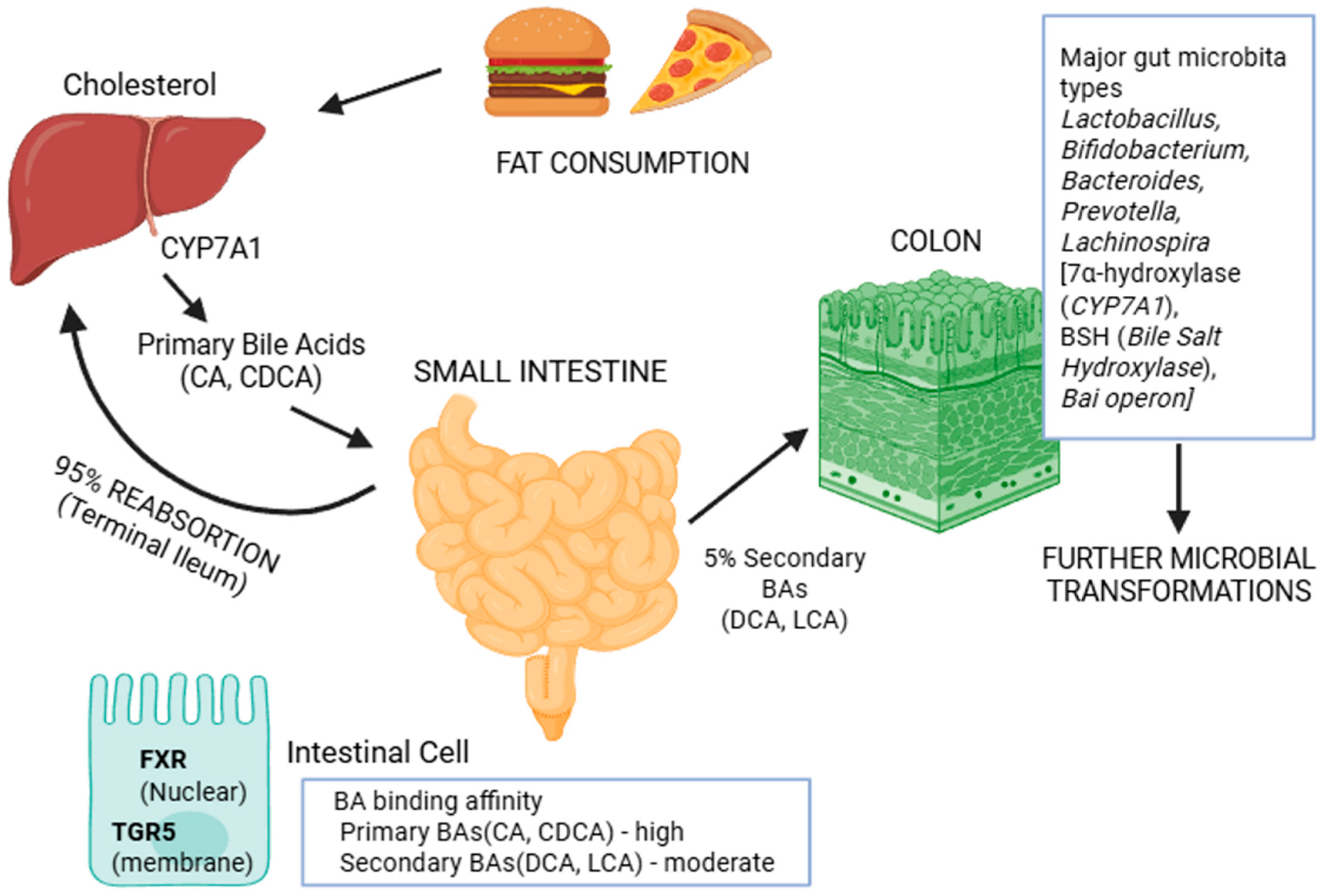


| Enzyme/Operon | Microbial Source (Genus) | Catalyzed Reaction | Resulting BA Product | REF |
|---|---|---|---|---|
| Bile Salt Hydrolase (BSH) | Bacteroides, Clostridium, Ruminococcus, Lactobacillus | Deconjugation of glycine or taurine from primary BAs. | Unconjugated primary BAs (CA, CDCA) | [4,77,78] |
| bai operon | Clostridium, Ruminococcus | 7α-dehydroxylation of primary BAs. | Secondary BAs (DCA, LCA) | [3,78,79,80] |
| Hydroxysteroid Dehydrogenase (HSDH) | Bacteroides thetaiotaomicron, Ruminococcus gnavus | Oxidation and epimerization of hydroxyl groups on BAs. | Diverse secondary BAs, including iso-bile acids | [80,81,82] |
| Feature | ET-B (Bacteroides-Dominant) | ET-P (Prevotella-Dominant) | ET-R (Ruminococcus-Dominant) |
|---|---|---|---|
| Dominant Taxa [2] | Bacteroides spp. | Prevotella spp. | Ruminococcus spp. |
| BSH Activity | Highest Activity (Extensive gene repertoire) [19] | Moderate/Low Activity [25] | Intermediate Activity [19] |
| Key Enzymatic Step | 7α-Dehydroxylation (Robust bai operon) [25] | Carbohydrate Metabolism (SCFA Production) [25] | Unique BA Modification/Sequestration [33] |
| Main Metabolite Pool in the Colon | High Secondary BAs (DCA, LCA) [20] | High Primary BAs (P-BAs dominate) [26] | Balanced/Unique BAs (e.g., iso-BAs, BA-polysaccharide complexes) [25] |
| Host Receptor Signal | Strongest FXR Activation [78,85] | Weakest FXR Activation [27,28] | Variable FXR Activation [25,36] |
| Overall Impact | Maximal BA Transformation and Host BA Conservation | Minimal BA Transformation and Fiber Specialization | Intermediate BA Transformation and Metabolic Stability |
| Enterotype/Subtype | Dominant Bacteria | Key Microbial Enzymes | Characteristic BA Profile | Health Outcome | Study Type; REF |
|---|---|---|---|---|---|
| Bacteroides 2 (ET-B2) | Bacteroides spp. (e.g., B. thetaiotaomicron) | BSH, Hydroxysteroid Dehydrogenases (HSDHs), 7α-dehydroxylases (bai operon) | High deconjugated BAs; elevated secondary BAs (DCA, LCA) | Obesity, Hypertension, MASLD, Colorectal Cancer, Alzheimer’s Disease, Cognitive Decline, Depression | Human (RCT); [81]; |
| Prevotella 2 (ET-P2) | Prevotella spp., unclassified Prevotellaceae genus | Obesity, Hypertension, Metabolic Disease, Colorectal Cancer Risk | Elevated Lithocholic Acid (LCA); reduced secondary BA diversity | Obesity, Type 2 Diabetes, Intestinal Inflammation, MASH, Cirrhosis | Human (cohort); [16] |
| Ruminococcus (ET-R) or Lachinospira (ET-L) | Ruminococcus spp. (R. gnavus, R. torques), Lachnospira | Mucin-degrading GH; 3α-HSDH, 3β-HSDH (produces 3-dehydro-CA, Iso-CA) | Modified BAs (3-dehydrocolate, isocholate); altered BA-mucin interactions | Constipation, Mucin Barrier Dysfunction, Dyslipidemia | Human (cohort); [14,114] |
| IBD-associated profile | Diminished diversity of BA-modifying bacteria; often increased Enterobacteriaceae | Reduced BSH and bai operon activity; loss of BA-transforming capacity | Elevated primary BAs (CA, CDCA); reduced secondary BAs (DCA, LCA) | Inflammatory Bowel Disease (Crohn’s, Ulcerative Colitis), Intestinal Barrier Dysfunction | Review; [115]; |
| Enterobacteriaceae type | Family Enterobacteriaceae (e.g., Escherichia, Salmonella, Klebsiella) | Minimal BA-modifying enzymes; nitrate reductases correlated with an inflamed gut environment | Accumulation of primary conjugated BAs; reduced secondary BA transformation | Dysbiosis, Intestinal Inflammation, Associated with IBS and IBD exacerbations | Review; [116] |
| Bifidobacterium type | Bifidobacterium spp. (B. pseudocatenulatum, B. longum) | BSH | Deconjugated BAs with enhanced hydrogel-forming properties | Generally protective; beneficial for gastrointestinal health and barrier function | In vitro; [80] |
| Enterotype | Recommended Intervention | Hypothesized Mechanism of Action | Targeted BA Changes |
|---|---|---|---|
| Prevotella-Dominant (ET-P) | Increase protein from fish and lean meats. Include moderate healthy fats (omega-3). Reduce refined carbohydrates (white rice, white bread, sweets). Replace with low-glycemic complex carbs. Include vegetables. | Corrects protein/fish dietary deficiency observed in dysbiotic Prevotella states. Reduces excessive carbohydrate fermentation that promotes inflammatory P. copri expansion. Shifts microbiome toward healthier composition while reducing Prevotella dominance. | Reduced LCA production; decreased inflammatory BA metabolites; improved BA signaling through balanced microbial composition; normalized primary: secondary BA ratio. |
| Bacteroides-Dominant (ET-B) | Moderate-to-low-fat diet emphasizing unsaturated over saturated fats. Adequate lean protein (20–25% calories). Include vegetables with every meal (especially cruciferous and leafy greens). Add BA-binding soluble fibers (psyllium, oat beta-glucan, pectin). Targeted BSH-modulating probiotics. | Reduces fat intake to about 30 energy % and uses more MCT, which decreases bile secretion and secondary BA production (DCA, LCA). Vegetables provide polyphenols and antioxidants that mitigate BA toxicity. BA-binding fibers sequester hydrophobic BAs for fecal excretion. | Significantly reduced DCA and LCA production; decreased hydrophobic secondary BA load; improved conjugated: unconjugated ratio; reduced cancer risk and BA-mediated inflammation. |
| Ruminococcus-Dominant (RT-R) | Balanced macronutrient diet with adequate fiber (but not excessive). Regular consumption of fermented foods (kimchi, sauerkraut, kefir, yogurt). Include mucus-protective nutrients (omega-3, zinc, vitamin A). Increase soluble fiber and water intake to improve transit time. Prebiotics supporting beneficial commensals (inulin, FOS). | Fermented foods and probiotics improve intestinal transit time and reduce constipation associated with mucin degradation. Balanced fiber supports beneficial bacteria without overfeeding mucin degraders. Mucus-protective nutrients maintain intestinal barrier integrity despite Ruminococcus’s mucin-degrading activity. | Balanced primary: secondary BA ratio; prevention of BA dysregulation from mucin barrier compromise; improved BA-mediated gut motility signaling; reduced constipation-related BA retention. |
| Dysbiotic States (BAM) | Fecal Microbiota Transplantation (FMT) from donors with verified BA-metabolizing capacity. Post-FMT: personalized diet based on established enterotype. Low-FODMAP during acute inflammation. | Restores comprehensive BA-metabolizing functions (BSH, bai operon). Re-establishes microbial diversity and functional redundancy for secondary BA production. | Decreased serum C4 (primary BA synthesis marker); normalized secondary BA production; reduced BA malabsorption; restored conjugated/unconjugated balance. |
Disclaimer/Publisher’s Note: The statements, opinions and data contained in all publications are solely those of the individual author(s) and contributor(s) and not of MDPI and/or the editor(s). MDPI and/or the editor(s) disclaim responsibility for any injury to people or property resulting from any ideas, methods, instructions or products referred to in the content. |
© 2025 by the authors. Licensee MDPI, Basel, Switzerland. This article is an open access article distributed under the terms and conditions of the Creative Commons Attribution (CC BY) license.
Share and Cite
Kang, S.; Jeong, D.-Y.; Seo, J.; Daily, J.W.; Park, S. Microbiota-Mediated Bile Acid Metabolism as a Mechanistic Framework for Precision Nutrition in Gastrointestinal and Metabolic Diseases. Cells 2026, 15, 23. https://doi.org/10.3390/cells15010023
Kang S, Jeong D-Y, Seo J, Daily JW, Park S. Microbiota-Mediated Bile Acid Metabolism as a Mechanistic Framework for Precision Nutrition in Gastrointestinal and Metabolic Diseases. Cells. 2026; 15(1):23. https://doi.org/10.3390/cells15010023
Chicago/Turabian StyleKang, Suna, Do-Youn Jeong, Jeowon Seo, James W. Daily, and Sunmin Park. 2026. "Microbiota-Mediated Bile Acid Metabolism as a Mechanistic Framework for Precision Nutrition in Gastrointestinal and Metabolic Diseases" Cells 15, no. 1: 23. https://doi.org/10.3390/cells15010023
APA StyleKang, S., Jeong, D.-Y., Seo, J., Daily, J. W., & Park, S. (2026). Microbiota-Mediated Bile Acid Metabolism as a Mechanistic Framework for Precision Nutrition in Gastrointestinal and Metabolic Diseases. Cells, 15(1), 23. https://doi.org/10.3390/cells15010023