Effects of Substrate-Based Root Restriction on Tomato Growth, Fruit Quality, Yield, and Microbial Communities in a Simplified Automatic Soilless Cultivation System



 ,
,
Abstract
1. Introduction
2. Materials and Methods
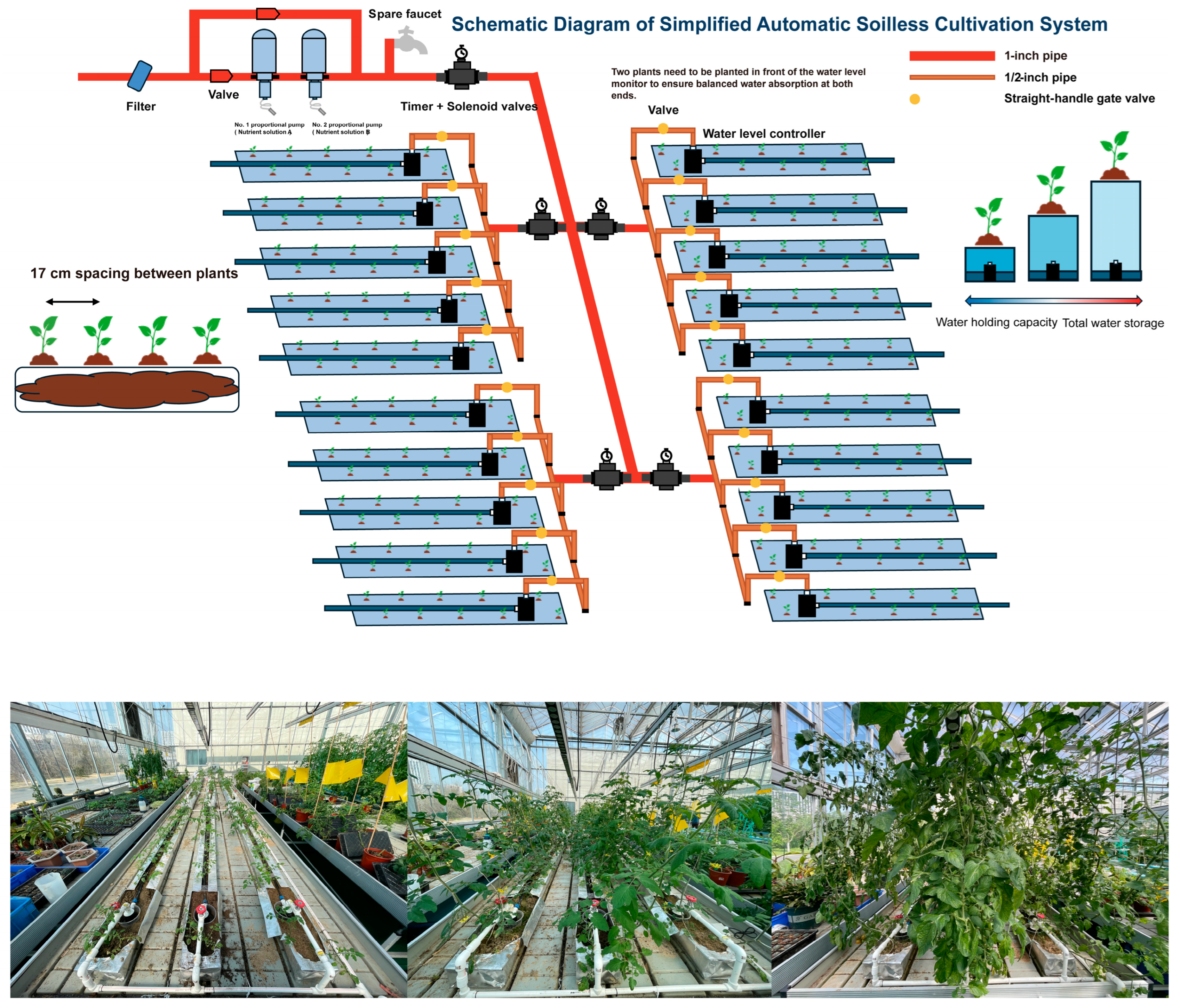
2.1. Plant Materials and Cultivation Facilities
- Fermented peanut shell substrate (PSS)
- Sand (particle size: 0.05–2.0 mm)
- Native soil (collected from the experimental station; coordinates: 120°4′54.1164″ E, 30°18′10.494″ N)
Experimental Design Statistical Basis
- Pre-experimental data analysis indicated that three replicates would achieve a statistical power exceeding 80% (Power > 0.8) at a significance level of α = 0.05.
- This design can detect trait differences ≥15% between treatments (including key indicators such as plant height and yield).
- Based on Cohen’s d effect size calculations, the sample size meets the detection requirements for medium effect sizes (d = 0.5).
- The number of replicates complies with conventional standards for agricultural botanical experiments.
- The factorial design (3 substrates × 3 heights) yields 9 treatment combinations, and 3 replicates provide 27 observational units, meeting the fundamental requirements for analysis of variance (ANOVA).
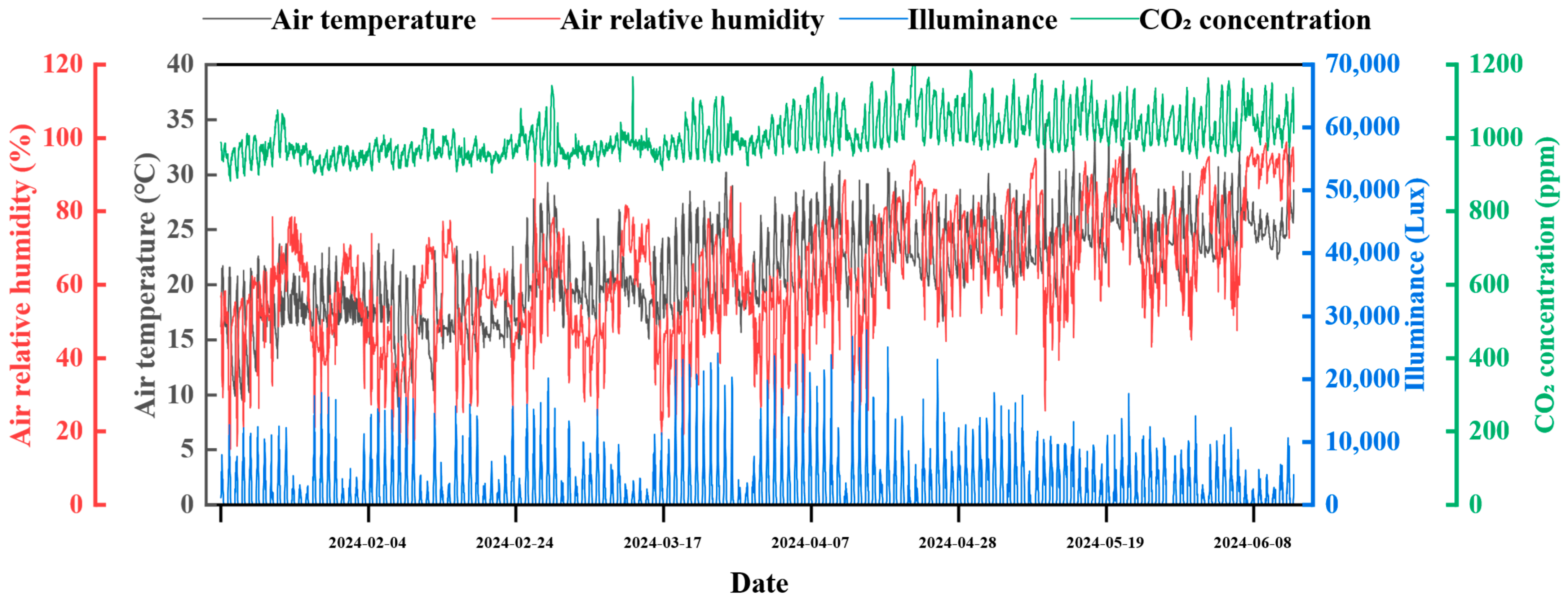
2.2. Environmental Control and Nutrient Management
2.3. Experimental Design and Sample Collection
- Growth parameters: Plant height, stem diameter, and chlorophyll content at peak fruiting (79–80 days after transplanting).
- Fruit quality and yield: Soluble sugars, proteins, lycopene, and yield per plant at maturity (130 days).
- Rhizosphere samples: Roots with adhering substrate were collected at harvest (150 days) and stored at –80 °C for microbial analysis.
2.4. Measurement of Plant and Soil Parameters
2.4.1. Growth Parameters Measurement
2.4.2. Determination of Fruit Quality and Yield
2.4.3. Determination of Substrate Physicochemical Properties
2.4.4. Determination of Bacterial and Fungal Communities in Tomato Rhizosphere
2.4.5. Integrated Workflow: Fungal Isolation, Identification, and Inoculation
2.5. Composite Tomato Indicator Using TOPSIS
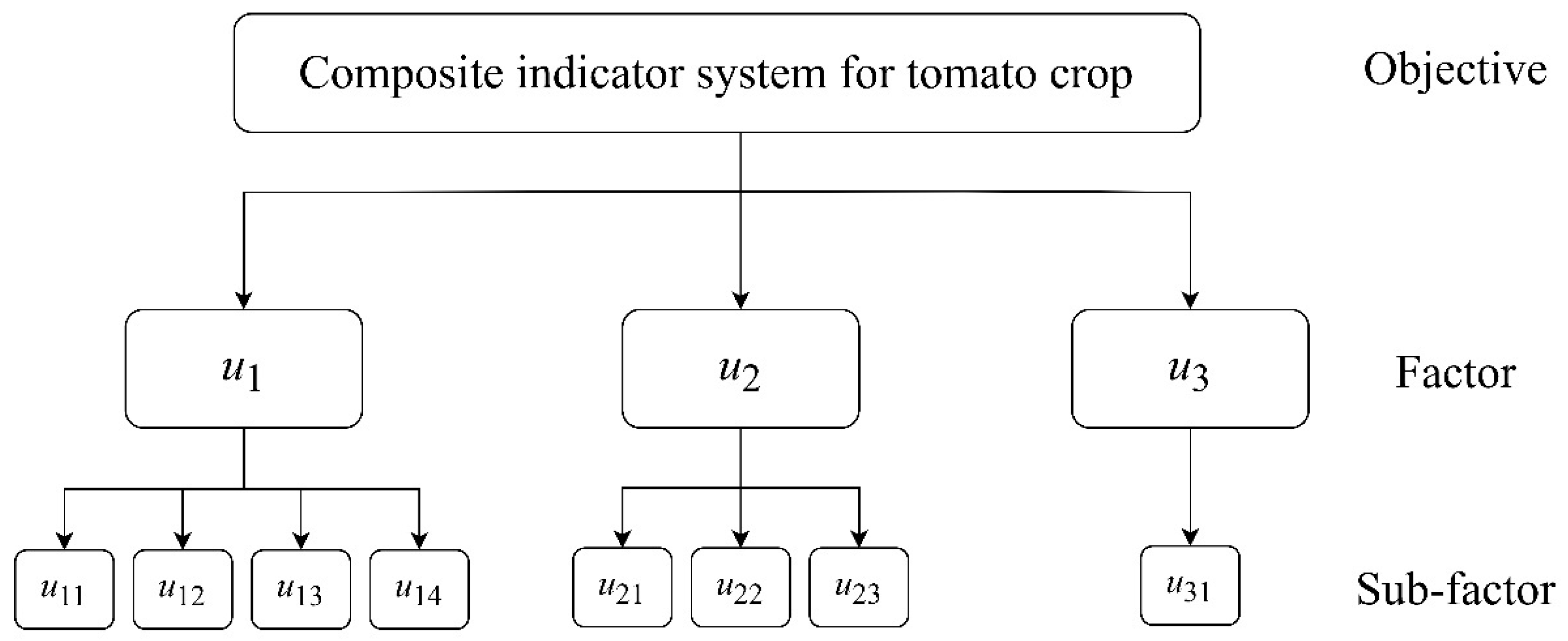
2.5.1. Establishment of Factors and Subfactors
- (1)
- The tomato indicators were the growth condition, fruit quality, and yield:where u1, u2, u3, and u4 are the growth condition, fruit quality, and yield, respectively.
- (2)
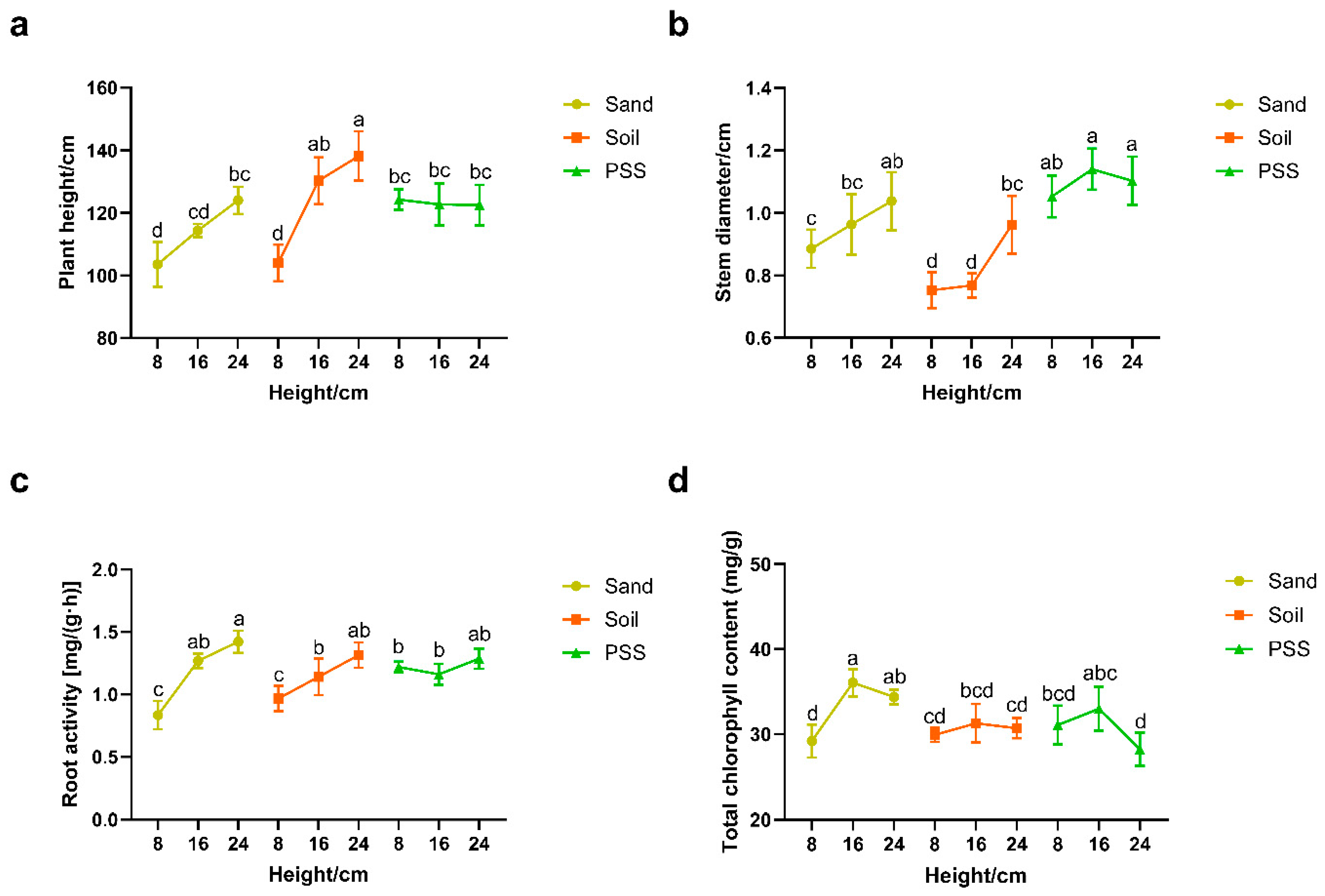
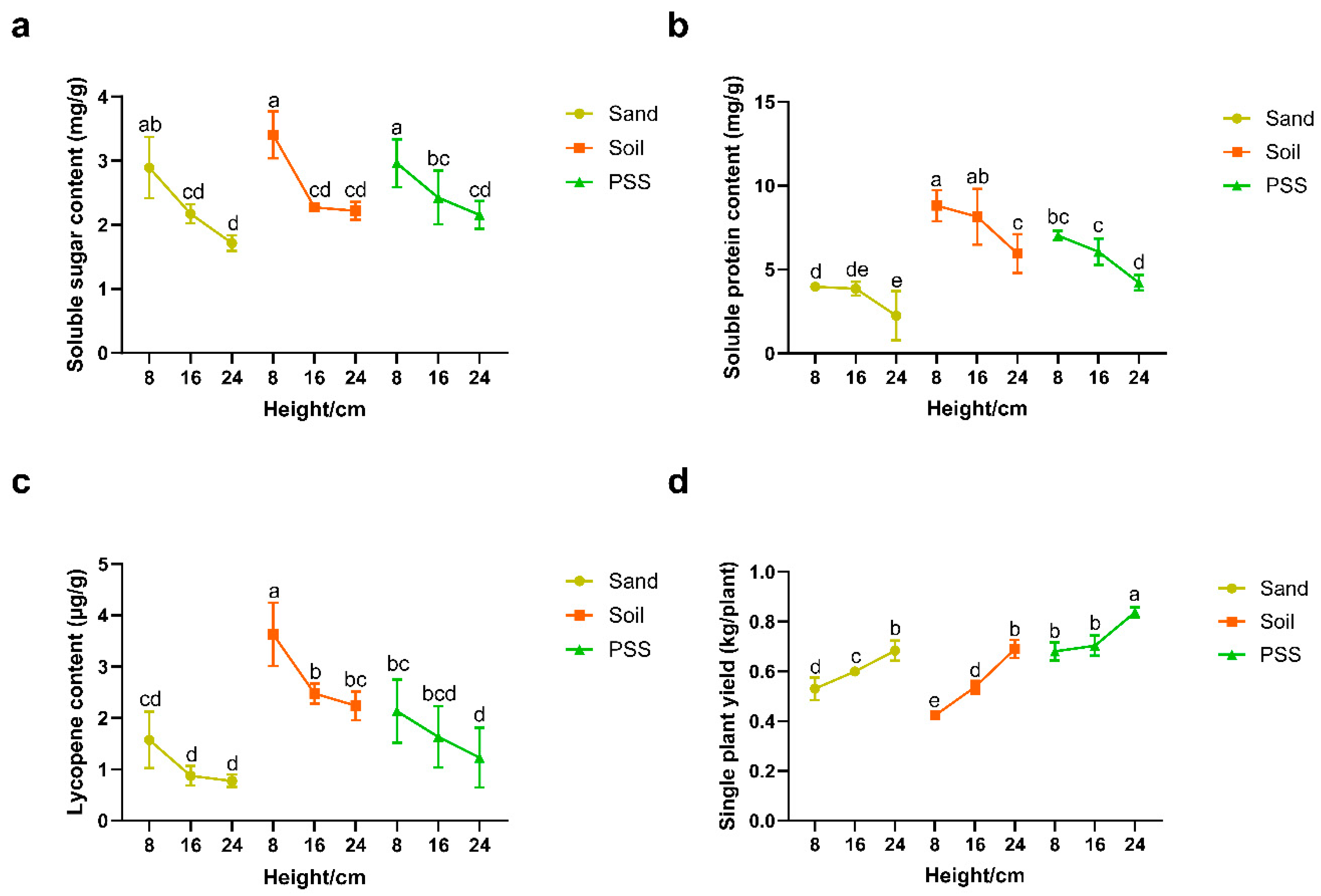
- Each factor was composed of subfactors. The growth condition indicators (u1) were plant height (cm), stem diameter (cm), total chlorophyll content (mg/g), and root activity [mg/(g·h)]. The fruit quality indicators (u2) were soluble sugar (mg/g), soluble protein (mg/g), and lycopene (μg/g) content. The yield indicators (u3) were the single-plant yield (kg/plant):where u11 is plant height, u12 is stem diameter, u13 is total chlorophyll content, and u14 is root activity; u21 is soluble sugar content, u22 is soluble protein content, u23 is the lycopene content, and u31 is single plant yield (Figure 3).
2.5.2. Determination of Factor Weights
2.5.3. Composite Indicators of Tomato Based on TOPSIS
2.6. Data Analysis
3. Results
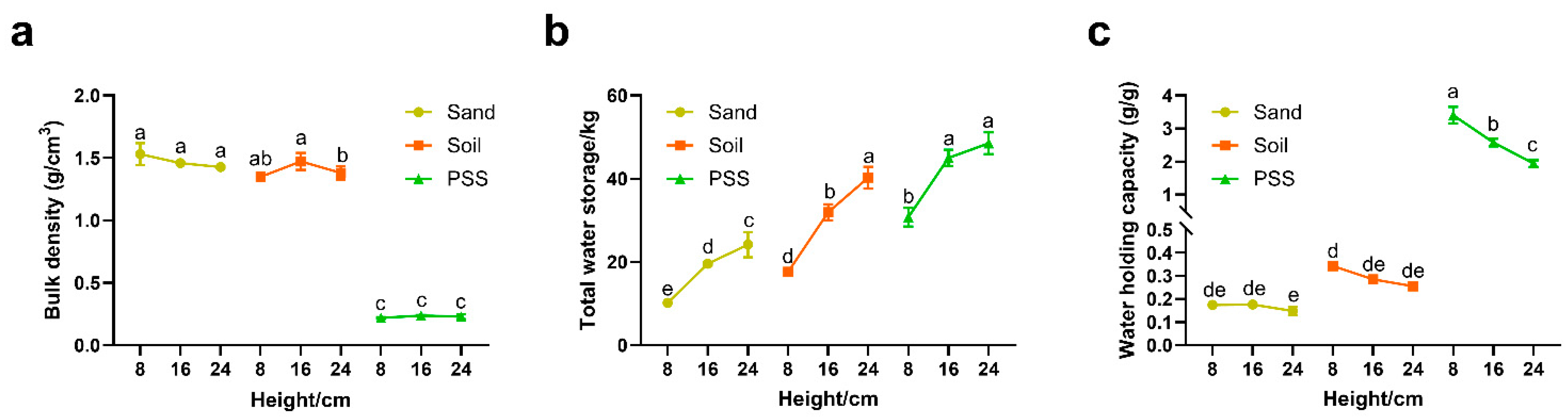
3.1. Substrate Physicochemical Properties
3.2. Tomato Phenotype
3.2.1. Growth Status
3.2.2. Fruit Quality and Yield
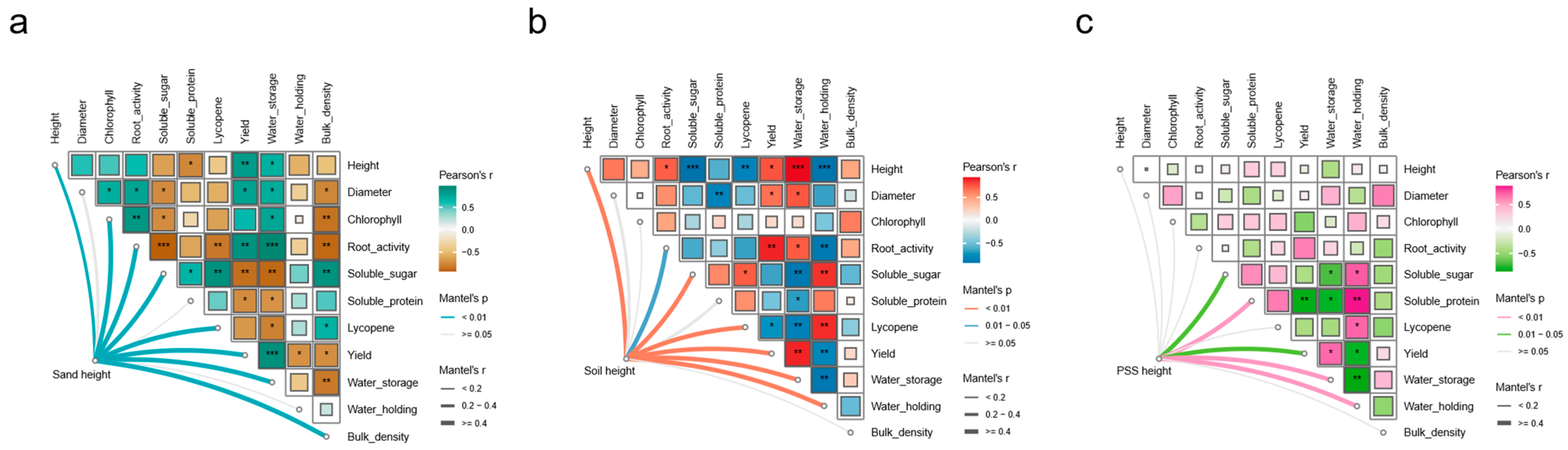
3.3. Multivariate Correlation Analysis of Root-Restriction Height Effects
3.4. Comprehensive Evaluation of Tomato Quality and Yield Improvement Based on TOPSIS Method
3.5. Rhizosphere Microorganisms
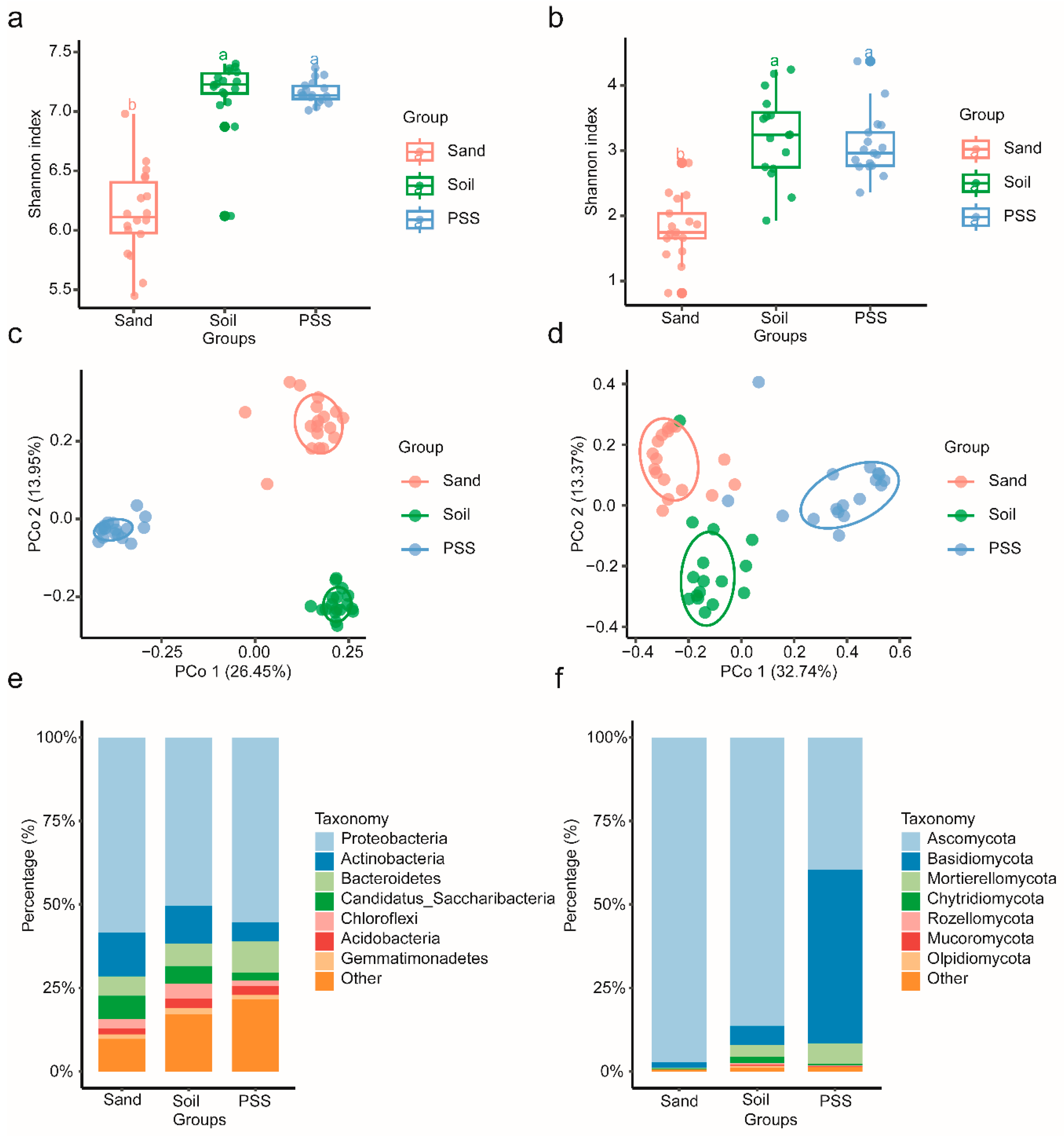
3.5.1. Microbial Diversity and Relative Abundance Under Different Substrates
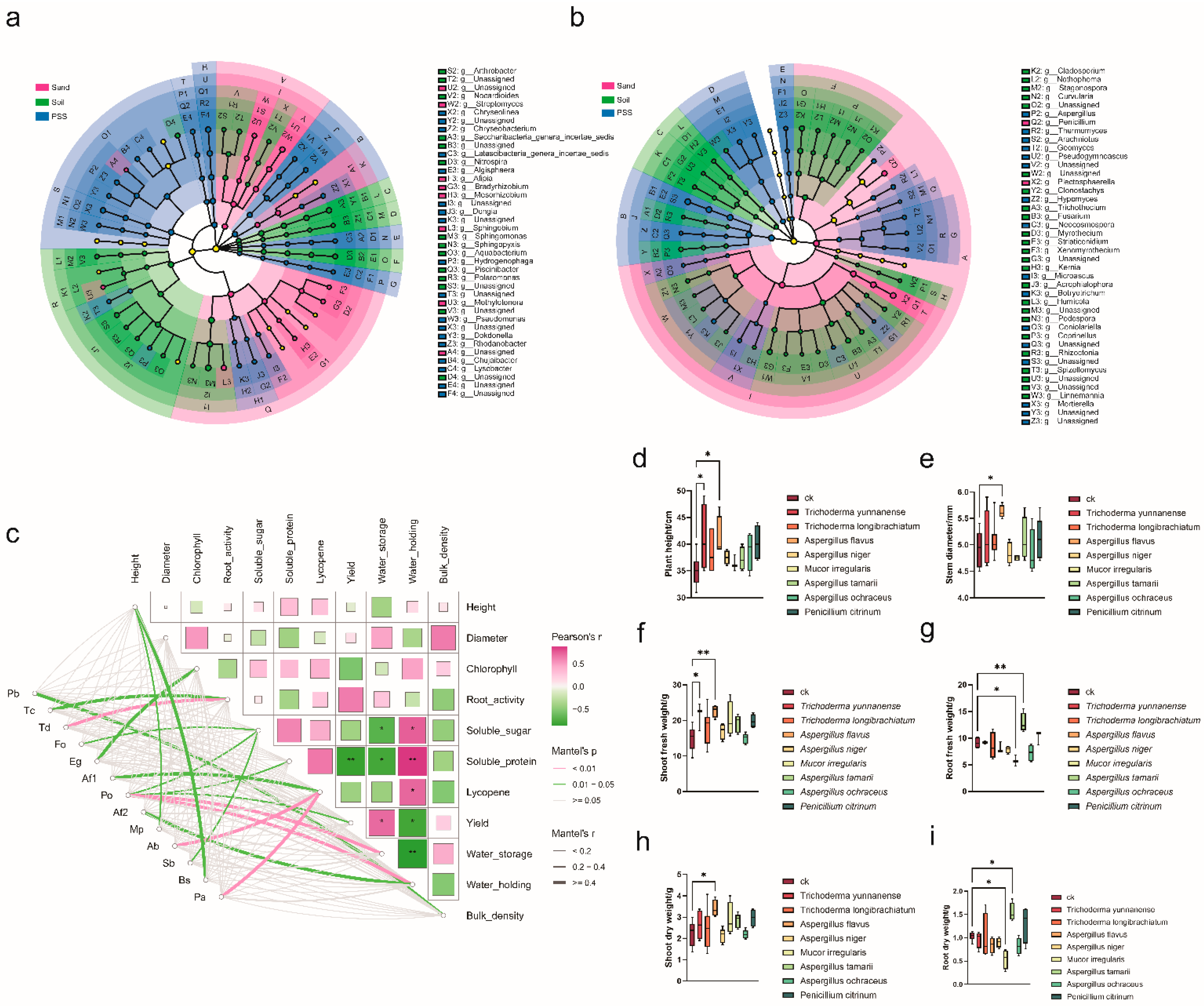
3.5.2. LEfSe (Linear Discriminant Analysis Effect Size) Analysis and Fungal Inoculation Experiment
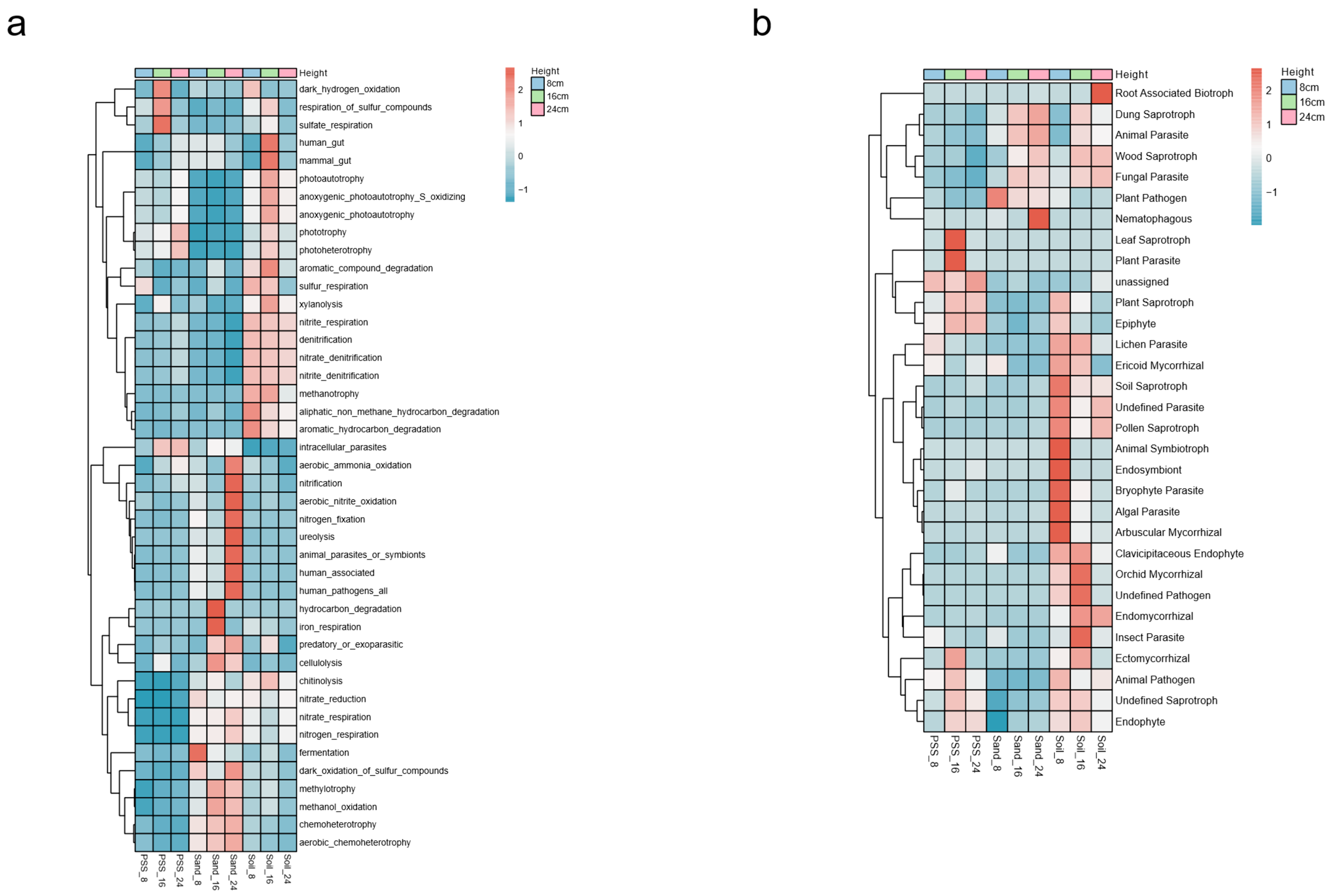
3.5.3. Microbial Functional Annotation
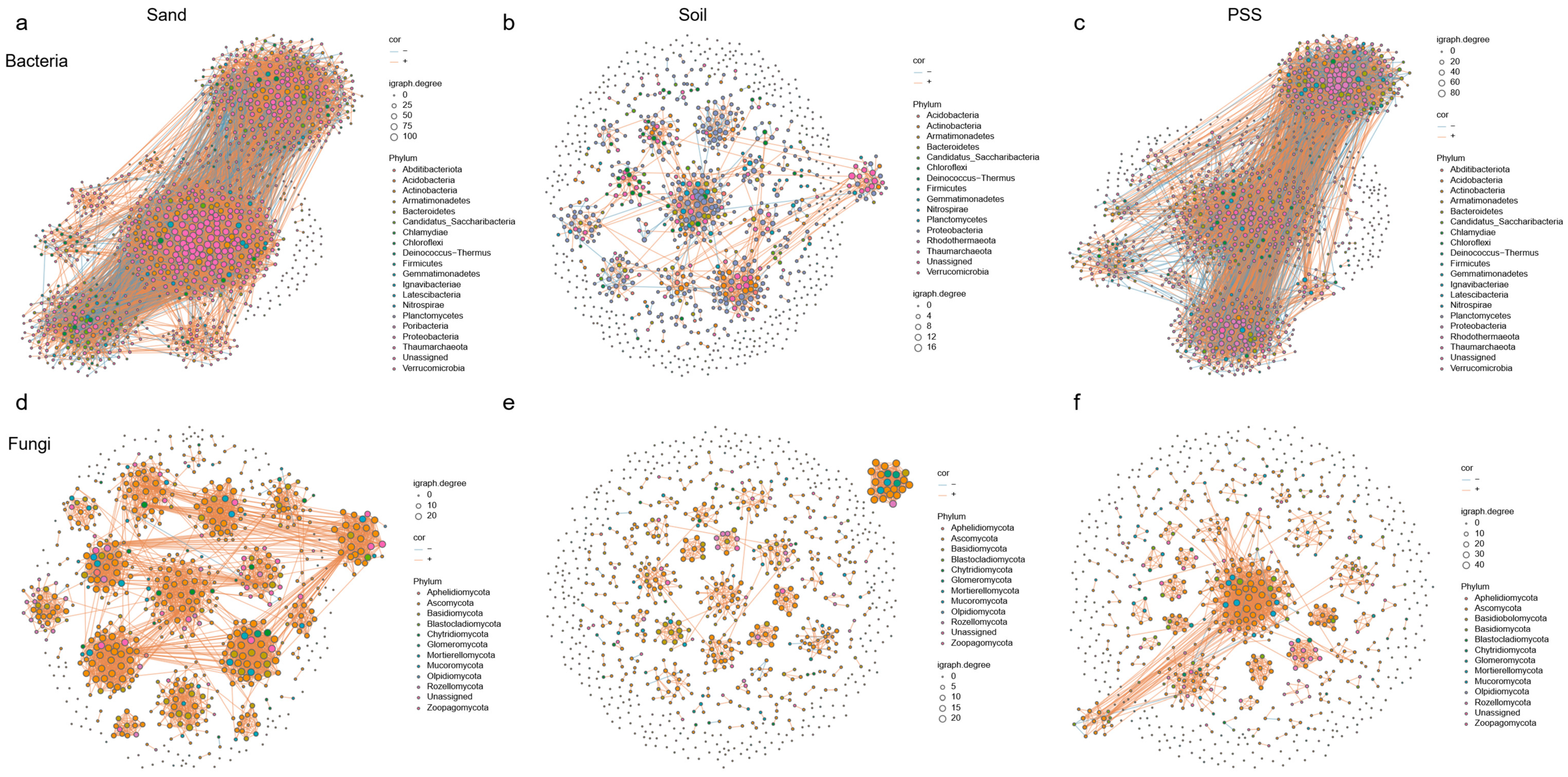
3.5.4. Microbial Network Analysis Under Different Substrates
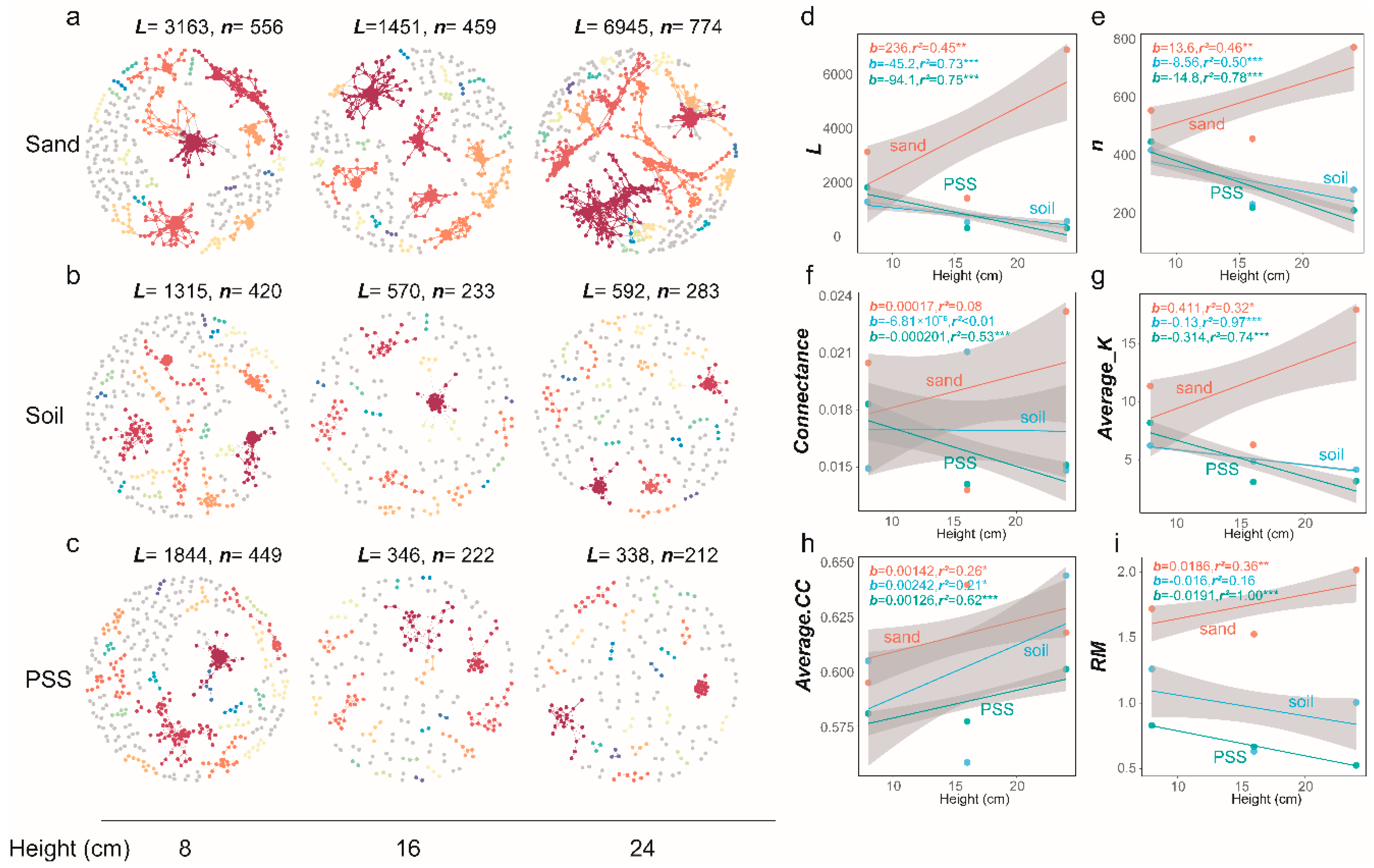
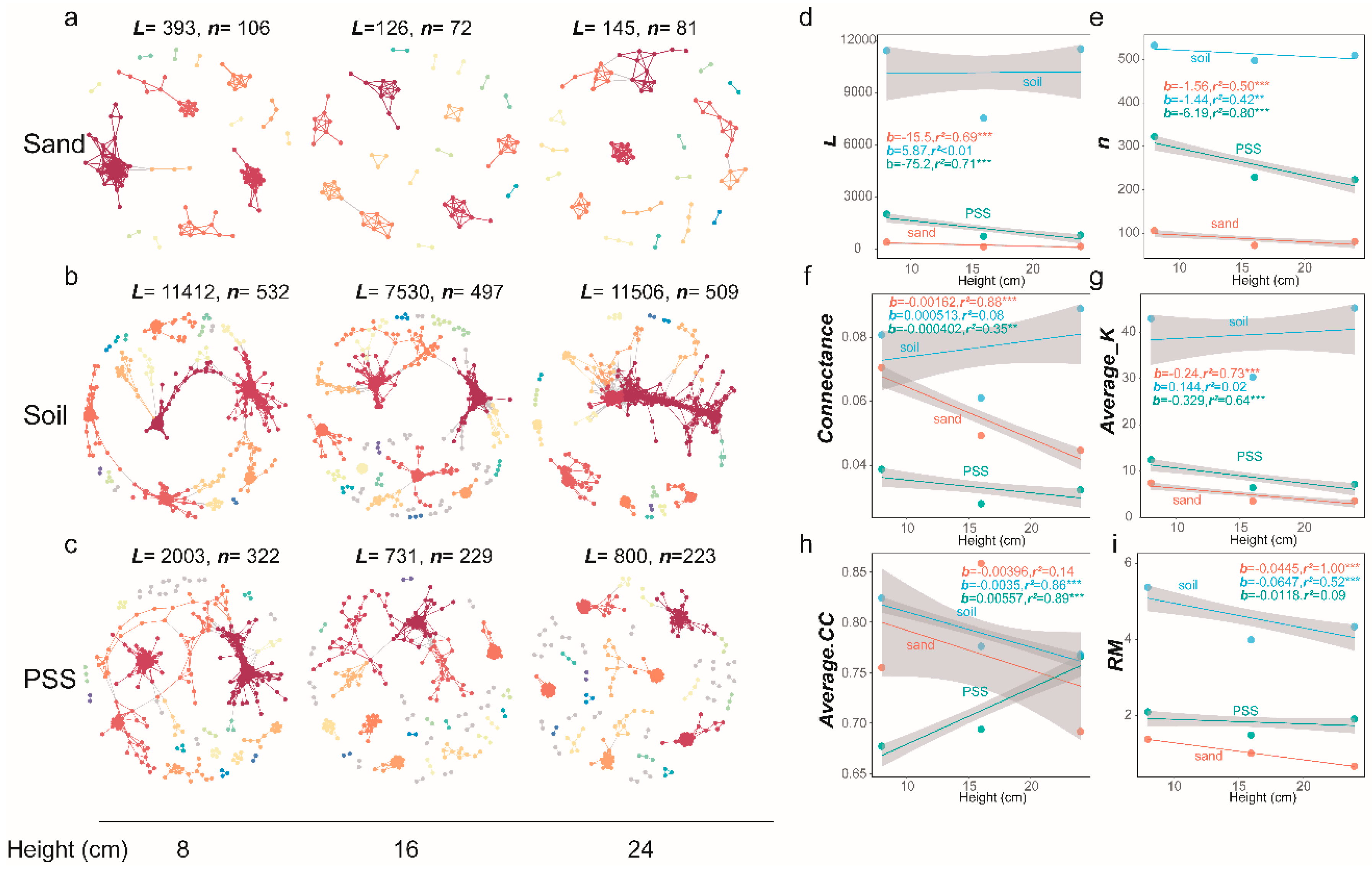
3.5.5. Analysis of Microbial Networks Under Different Container Heights
4. Discussion
4.1. Quality–Yield Trade-Off in Root Restriction Cultivation: The Moderating Role of Substrate Properties
4.2. Rhizosphere Microbial Communities: Substrate-Driven Effects from Structure to Function
4.3. Substrate Physical Properties Influence Ecosystem Function via Microbial Networks
5. Conclusions
- Increasing the height of the cultivation trough can enhance the total water storage capacity of the substrate and fruit yield in the SAS, whereas decreasing the height will improve the fruit quality.
- Using TOPSIS to evaluate the comprehensive indicators of tomatoes, the results indicate that the optimal root-restriction levels for different substrates are 8 cm peanut shell substrate >24 cm soil >8 cm sand.
- Sand, soil, and peanut shell substrate establish bacterial and fungal communities inhabiting roots through the selection of specific microbial taxa.
- High variation in the container can drive the functional differentiation of redox properties in microbial communities, affecting the connectivity and complexity of microbial networks.
5.1. Practical Applications and Limitations
5.2. Future Research Directions
Author Contributions
Funding
Data Availability Statement
Conflicts of Interest
References
- Lal, R. Encyclopedia of Soil Science; CRC Press: Boca Raton, FL, USA, 2017. [Google Scholar]
- Savvas, D. Hydroponics: A modern technology supporting the application of integrated crop management in greenhouse. J. Food Agric. Environ. 2003, 1, 80–86. [Google Scholar]
- Savvas, D.; Gruda, N. Application of soilless culture technologies in the modern greenhouse industry-A review. Eur. J. Hortic. Sci. 2018, 83, 280–293. [Google Scholar] [CrossRef]
- Maboko, M.; Du Plooy, C.; Bertling, I. Comparative performance of tomato cultivars in soilless vs. in-soil production systems. Acta Hortic. 2009, 843, 319–326. [Google Scholar] [CrossRef]
- Bunt, B.R. Media and Mixes for Container-Grown Plants: A Manual on the Preparation and Use of Growing Media for Pot Plants; Springer Science & Business Media: Berlin, Germany, 2012. [Google Scholar]
- Saito, T.; Fukuda, N.; Iikubo, T.; Inai, S.; Fujii, T.; Konishi, C.; Ezura, H. Effects of Root-volume Restriction and Salinity on the Fruit Yield and Quality of Processing Tomato. J. Jpn. Soc. Hortic. Sci. 2008, 77, 165–172. [Google Scholar] [CrossRef][Green Version]
- Caron, J.; Nkongolo, V. Aeration in growing media: Recent developments. Acta Hortic. 1999, 481, 545–551. [Google Scholar] [CrossRef]
- Fonteno, W.C. Problems & Considerations in Determining Physical Properties of Horticultural Substrates. Acta Hortic. 1993, 342, 197–204. [Google Scholar] [CrossRef]
- Raviv, M.; Wallach, R.; Silber, A.; Bar-Tal, A. Substrates and their analysis. In Hydroponic Production of Vegetables and Ornamentals; Embryo: Berlin, Germany, 2002; pp. 25–102. [Google Scholar]
- Gianquinto, G.; Orsini, F.; Michelon, N.; da Silva, D.; de Faria, F. Improving yield of vegetables by using soilless micro-garden technologies in peri-urban area of North-East Brazil. VIII Int. Symp. Prot. Cultiv. Mild Winter Clim. Adv. Soil Soil. Cultiv. Under 2006, 747, 57–65. [Google Scholar] [CrossRef]
- Gao, Y.; Zhou, X.; Liang, H.; Ji, Y.; Liu, M. Effects of Comparative Metabolism on Tomato Fruit Quality under Different Levels of Root Restriction. HortScience 2023, 58, 885–892. [Google Scholar] [CrossRef]
- He, J.; Li, X.; Tian, Y.; He, X.; Qin, K.; Zhu, L.; Cao, Y. Effect of Lycium barbarum L. Root Restriction Cultivation Method on Plant Growth and Soil Bacterial Community Abundance. Agronomy 2023, 13, 14. [Google Scholar] [CrossRef]
- Zakaria, N.I.; Ismail, M.R.; Awang, Y.; Megat Wahab, P.E.; Berahim, Z. Effect of Root Restriction on the Growth, Photosynthesis Rate, and Source and Sink Relationship of Chilli (Capsicum annuum L.) Grown in Soilless Culture. BioMed Res. Int. 2020, 2020, 2706937. [Google Scholar] [CrossRef] [PubMed]
- Xu, Y.; Wang, J.; Wang, R.; Wang, L.; Zhang, C.; Xu, W.; Wang, S.; Jiu, S. The role of strigolactones in the regulation of root system architecture in grapevine (Vitis vinifera L.) in response to root-restriction cultivation. Int. J. Mol. Sci. 2021, 22, 8799. [Google Scholar] [CrossRef]
- Peterson, T.A.; Reinsel, M.D.; Krizek, D.T. Tomato (Lycopersicon esculentum Mill., cv. ‘Better Bush’) Plant Response to Root Restriction. J. Exp. Bot. 1991, 42, 1233–1240. [Google Scholar] [CrossRef]
- Balliu, A.; Zheng, Y.; Sallaku, G.; Fernández, J.A.; Gruda, N.S.; Tuzel, Y. Environmental and Cultivation Factors Affect the Morphology, Architecture and Performance of Root Systems in Soilless Grown Plants. Horticulturae 2021, 7, 243. [Google Scholar] [CrossRef]
- Leng, F.; Duan, S.; Song, S.; Zhao, L.; Xu, W.; Zhang, C.; Ma, C.; Wang, L.; Wang, S. Comparative metabolic profiling of grape pulp during the growth process reveals systematic influences under root restriction. Metabolites 2021, 11, 377. [Google Scholar] [CrossRef] [PubMed]
- Leng, F.; Wang, Y.; Cao, J.; Wang, S.; Wu, D.; Jiang, L.; Li, X.; Bao, J.; Karim, N.; Sun, C. Transcriptomic Analysis of Root Restriction Effects on the Primary Metabolites during Grape Berry Development and Ripening. Genes 2022, 13, 281. [Google Scholar] [CrossRef] [PubMed]
- Grunert, O.; Hernandez-Sanabria, E.; Vilchez-Vargas, R.; Jauregui, R.; Pieper, D.H.; Perneel, M.; Van Labeke, M.-C.; Reheul, D.; Boon, N. Mineral and organic growing media have distinct community structure, stability and functionality in soilless culture systems. Sci. Rep. 2016, 6, 18837. [Google Scholar] [CrossRef]
- Postma, J. The Status of Biological Control of Plant Diseases in Soilless Cultivation. In Recent Developments in Management of Plant Diseases; Springer: Dordrecht, The Netherlands, 2010; pp. 133–146. [Google Scholar] [CrossRef]
- Raviv, M.; Lieth, J.H.; Bar-Tal, A. Soilless Culture: Theory and Practice: Theory and Practice; Elsevier: Amsterdam, The Netherlands, 2019. [Google Scholar]
- Alexander, M. Introduction to soil microbiology. Soil Sci. 1978, 125, 331. [Google Scholar] [CrossRef]
- Koohakan, P.; Ikeda, H.; Jeanaksorn, T.; Tojo, M.; Kusakari, S.-I.; Okada, K.; Sato, S. Evaluation of the indigenous microorganisms in soilless culture: Occurrence and quantitative characteristics in the different growing systems. Sci. Hortic. 2004, 101, 179–188. [Google Scholar] [CrossRef]
- Sammar Khalil, S.K.; Alsanius, B.W. Dynamics of the indigenous microflora inhabiting the root zone and the nutrient solution of tomato in a commercial closed greenhouse system. Eur. J. Hortic. Sci. 2001, 66, 188–198. [Google Scholar] [CrossRef]
- Grunert, O.; Hernandez-Sanabria, E.; Buysens, S.; De Neve, S.; Van Labeke, M.C.; Reheul, D.; Boon, N. In-Depth Observation on the Microbial and Fungal Community Structure of Four Contrasting Tomato Cultivation Systems in Soil Based and Soilless Culture Systems. Front. Plant Sci. 2020, 11, 520834. [Google Scholar] [CrossRef]
- Vallance, J.; Déniel, F.; Le Floch, G.; Guérin-Dubrana, L.; Blancard, D.; Rey, P. Pathogenic and beneficial microorganisms in soilless cultures. Agron. Sustain. Dev. 2011, 31, 191–203. [Google Scholar] [CrossRef]
- Chepsergon, J.; Moleleki, L.N. Rhizosphere bacterial interactions and impact on plant health. Curr. Opin. Microbiol. 2023, 73, 102297. [Google Scholar] [CrossRef]
- Kong, Z.; Liu, H. Modification of Rhizosphere Microbial Communities: A Possible Mechanism of Plant Growth Promoting Rhizobacteria Enhancing Plant Growth and Fitness. Front. Plant Sci. 2022, 13, 920813. [Google Scholar] [CrossRef] [PubMed]
- Grondin, A.; Li, M.; Bhosale, R.; Sawers, R.; Schneider, H.M. Interplay between developmental cues and rhizosphere signals from mycorrhizal fungi shape root anatomy, impacting crop productivity. Plant Soil 2024, 503, 587–594. [Google Scholar] [CrossRef]
- Thepbandit, W.; Athinuwat, D. Rhizosphere Microorganisms Supply Availability of Soil Nutrients and Induce Plant Defense. Microorganisms 2024, 12, 558. [Google Scholar] [CrossRef] [PubMed]
- Beslemes, D.; Tigka, E.; Roussis, I.; Kakabouki, I.; Mavroeidis, A.; Vlachostergios, D. Effect of Arbuscular Mycorrhizal Fungi on Nitrogen and Phosphorus Uptake Efficiency and Crop Productivity of Two-Rowed Barley under Different Crop Production Systems. Plants 2023, 12, 1908. [Google Scholar] [CrossRef]
- Liu, J.J.; Wei, Z.; Li, J.H. Effects of copper on leaf membrane structure and root activity of maize seedling. Bot. Stud. 2014, 55, 47. [Google Scholar] [CrossRef]
- Palta, J.P. Leaf chlorophyll content. Remote Sens. Rev. 1990, 5, 207–213. [Google Scholar] [CrossRef]
- Rao, A.V.; Waseem, Z.; Agarwal, S. Lycopene content of tomatoes and tomato products and their contribution to dietary lycopene. Food Res. Int. 1998, 31, 737–741. [Google Scholar] [CrossRef]
- Snyder, J.C.; Desborough, S.L. Rapid estimation of potato tuber total protein content with coomassie brilliant blue G-250. Theor. Appl. Genet. 1978, 52, 135–139. [Google Scholar] [CrossRef]
- Zhang, Y.; Yun, F.; Man, X.; Huang, D.; Liao, W. Effects of Hydrogen Sulfide on Sugar, Organic Acid, Carotenoid, and Polyphenol Level in Tomato Fruit. Plants 2023, 12, 719. [Google Scholar] [CrossRef]
- Erbach, D.C. Measurement of Soil Bulk Density and Moisture. Trans. ASAE 1987, 30, 922–0931. [Google Scholar] [CrossRef]
- Liu, Y.; Chen, L.; Ma, T.; Li, X.; Zheng, M.; Zhou, X.; Chen, L.; Qian, X.; Xi, J.; Lu, H. EasyAmplicon: An easy-to-use, open-source, reproducible, and community-based pipeline for amplicon data analysis in microbiome research. Imeta 2023, 2, e83. [Google Scholar] [CrossRef] [PubMed]
- Louca, S.; Parfrey, L.W.; Doebeli, M. Decoupling function and taxonomy in the global ocean microbiome. Science 2016, 353, 1272–1277. [Google Scholar] [CrossRef] [PubMed]
- Nguyen, N.H.; Song, Z.; Bates, S.T.; Branco, S.; Tedersoo, L.; Menke, J.; Schilling, J.S.; Kennedy, P.G. FUNGuild: An open annotation tool for parsing fungal community datasets by ecological guild. Fungal Ecol. 2016, 20, 241–248. [Google Scholar] [CrossRef]
- Chen, T.; Liu, Y.; Chen, T.; Yang, M.; Fan, S.; Shi, M.; Wei, B.; Lv, H.; Cao, W.; Wang, C.; et al. ImageGP 2 for enhanced data visualization and reproducible analysis in biomedical research. IMeta 2024, 3, e239. [Google Scholar] [CrossRef]
- Wen, T.; Xie, P.; Yang, S.; Niu, G.; Liu, X.; Ding, Z.; Xue, C.; Liu, Y.X.; Shen, Q.; Yuan, J. ggClusterNet: An R package for microbiome network analysis and modularity-based multiple network layouts. IMeta 2022, 1, e32. [Google Scholar] [CrossRef]
- Ebrahimi, A.N.; Or, D. Microbial dispersal in unsaturated porous media: Characteristics of motile bacterial cell motions in unsaturated angular pore networks. Water Resour. Res. 2014, 50, 7406–7429. [Google Scholar] [CrossRef]
- Holden, P.A. How do the microhabitats framed by soil structure impact soil bacteria and the processes that they regulate? Archit. Biol. Soils: Life Inn. Space 2011, 118–148. [Google Scholar] [CrossRef]
- Stewart, B.A.; Hartge, K.H. Soil Structure: Its Development and Function; CRC Press: Boca Raton, FL, USA, 1995; Volume 7. [Google Scholar]
- Vos, M.; Wolf, A.B.; Jennings, S.J.; Kowalchuk, G.A. Micro-scale determinants of bacterial diversity in soil. FEMS Microbiol. Rev. 2013, 37, 936–954. [Google Scholar] [CrossRef]
- Heller, H.; Bar-Tal, A.; Assouline, S.; Narkis, K.; Suryano, S.; de la Forge, A.; Barak, M.; Alon, H.; Bruner, M.; Cohen, S.; et al. The effects of container geometry on water and heat regimes in soilless culture: Lettuce as a case study. Irrig. Sci. 2015, 33, 53–65. [Google Scholar] [CrossRef]
- Savvas, D. Modern developments in the use of inorganic media for greenhouse vegetable and flower production. Int. Symp. Grow. Media 2007, 819, 73–86. [Google Scholar] [CrossRef]
- Liu, D.; Chen, J.; Hao, Y.; Yang, X.; Chen, R.; Zhang, Y. Effects of Extreme Root Restriction on the Nutritional and Flavor Quality, and Sucrose Metabolism of Tomato (Solanum lycopersicum L.). Horticulturae 2023, 9, 813. [Google Scholar] [CrossRef]
- Bar-Tal, A.; Pressman, E. Root restriction and potassium and calcium solution concentrations affect dry-matter production, cation uptake, and blossom-end rot in greenhouse tomato. J. Am. Soc. Hortic. Sci. 1996, 121, 649–655. [Google Scholar] [CrossRef]
- Asaf, S.; Numan, M.; Khan, A.L.; Al-Harrasi, A. Sphingomonas: From diversity and genomics to functional role in environmental remediation and plant growth. Crit. Rev. Biotechnol. 2020, 40, 138–152. [Google Scholar] [CrossRef] [PubMed]
- White, D.C.; Suttont, S.D.; Ringelberg, D.B. The genus Sphingomonas: Physiology and ecology. Curr. Opin. Biotechnol. 1996, 7, 301–306. [Google Scholar] [CrossRef]
- Zhang, X.; Wu, M.; Zhang, T.; Gao, H.; Ou, Y.; Li, M. Effects of biochar immobilization of Serratia sp. F4 OR414381 on bioremediation of petroleum contamination and bacterial community composition in loess soil. J. Hazard. Mater. 2024, 470, 134137. [Google Scholar] [CrossRef]
- Ma, Y.; Wang, J.; Liu, Y.; Wang, X.; Zhang, B.; Zhang, W.; Chen, T.; Liu, G.; Xue, L.; Cui, X. Nocardioides: “Specialists” for Hard-to-Degrade Pollutants in the Environment. Molecules 2023, 28, 7433. [Google Scholar] [CrossRef]
- Gordon, T.R. Fusarium oxysporum and the Fusarium Wilt Syndrome. Annu. Rev. Phytopathol. 2017, 55, 23–39. [Google Scholar] [CrossRef]
- Han, K.-S.; Lee, S.-C.; Lee, J.-S.; Soh, J.-W. First Report of Pink Mold Rot on Tomato Fruit Caused by Trichothecium roseum in Korea. Res. Plant Dis. 2012, 18, 396–398. [Google Scholar] [CrossRef]
- Leplat, J.; Friberg, H.; Abid, M.; Steinberg, C. Survival of Fusarium graminearum, the causal agent of Fusarium head blight. A review. Agron. Sustain. Dev. 2013, 33, 97–111. [Google Scholar] [CrossRef]
- Li, S.; Dong, X.; Humez, P.; Borecki, J.; Birks, J.; McClain, C.; Mayer, B.; Strous, M.; Diao, M. Proteomic evidence for aerobic methane production in groundwater by methylotrophic Methylotenera. ISME J. 2025, 19, 24. [Google Scholar] [CrossRef]
- Srinivasan, R.; Prabhu, G.; Prasad, M.; Mishra, M.; Chaudhary, M.; Srivastava, R. Penicillium. Benef. Microbes Agro-Ecol. Bact. Fungi 2020, 651–667. [Google Scholar] [CrossRef]
- Raimondo, M.L.; Carlucci, A. Characterization and pathogenicity assessment of Plectosphaerella species associated with stunting disease on tomato and pepper crops in Italy. Plant Pathol. 2018, 67, 626–641. [Google Scholar] [CrossRef]
- Nayak, S.; Samanta, S.; Mukherjee, A.K. Beneficial Role of Aspergillus sp. in Agricultural Soil and Environment. In Frontiers in Soil and Environmental Microbiology; CRC Press: Boca Raton, FL, USA, 2020; pp. 17–36. [Google Scholar] [CrossRef]
- Ozimek, E.; Hanaka, A. Mortierella species as the plant growth-promoting fungi present in the agricultural soils. Agriculture 2021, 11, 7. [Google Scholar] [CrossRef]
- Xiong, W.; Li, R.; Ren, Y.; Liu, C.; Zhao, Q.; Wu, H.; Jousset, A.; Shen, Q. Distinct roles for soil fungal and bacterial communities associated with the suppression of vanilla Fusarium wilt disease. Soil Biol. Biochem. 2017, 107, 198–207. [Google Scholar] [CrossRef]
- Rüger, L.; Feng, K.; Chen, Y.; Sun, R.; Sun, B.; Deng, Y.; Vetterlein, D.; Bonkowski, M. Responses of root architecture and the rhizosphere microbiome assembly of maize (Zea mays L.) to a soil texture gradient. Soil Biol. Biochem. 2023, 181, 109026. [Google Scholar] [CrossRef]
- Zhang, Z.; Laverman, A.; Mellage, A.; Furman, A. Microbial community structure and function in a sandy soil column under dynamic hydrologic regimes. J. Hydrol. 2024, 643, 131797. [Google Scholar] [CrossRef]
- Yuan, M.M.; Guo, X.; Wu, L.; Zhang, Y.; Xiao, N.; Ning, D.; Shi, Z.; Zhou, X.; Wu, L.; Yang, Y.; et al. Climate warming enhances microbial network complexity and stability. Nat. Clim. Change 2021, 11, 343–348. [Google Scholar] [CrossRef]
- Upton, R.N.; Checinska Sielaff, A.; Hofmockel, K.S.; Xu, X.; Wayne Polley, H.; Wilsey, B.J.; Upton, R.N.; Sielaff, A.C.; Hofmockel, K.S.; Xu, X.; et al. Soil depth and grassland origin cooperatively shape microbial community co-occurrence and function. Ecosphere 2020, 11, e02973. [Google Scholar] [CrossRef]
- Zhao, S.; Zhao, X.; Li, Y.; Zhang, R.; Zhao, Y.; Fang, H.; Li, W. Impact of altered groundwater depth on soil microbial diversity, network complexity and multifunctionality. Front. Microbiol. 2023, 14, 1214186. [Google Scholar] [CrossRef]
- Banerjee, S.; Zhao, C.; Kirkby, C.A.; Coggins, S.; Zhao, S.; Bissett, A.; van der Heijden, M.G.; Kirkegaard, J.A.; Richardson, A.E. Microbial interkingdom associations across soil depths reveal network connectivity and keystone taxa linked to soil fine-fraction carbon content. Agric. Ecosyst. Environ. 2021, 320, 107559. [Google Scholar] [CrossRef]
- DeAngelis, K.M.; Silver, W.L.; Thompson, A.W.; Firestone, M.K. Microbial communities acclimate to recurring changes in soil redox potential status. Environ. Microbiol. 2010, 12, 3137–3149. [Google Scholar] [CrossRef]
- Pett-Ridge, J.; Silver, W.L.; Firestone, M.K. Redox fluctuations frame microbial community impacts on N-cycling rates in a humid tropical forest soil. Biogeochemistry 2006, 81, 95–110. [Google Scholar] [CrossRef]
- Pett-Ridge, J.; Firestone, M.K. Redox fluctuation structures microbial communities in a wet tropical soil. Appl. Environ. Microbiol. 2005, 71, 6998–7007. [Google Scholar] [CrossRef]



| Substrate Type | pH | SOM (g/kg) | AN (mg/kg) | AP (mg/kg) | AK (mg/kg) |
|---|---|---|---|---|---|
| Sand | 8.85 ± 0.04 a | 2.27 ± 0.47 b | 11.5 ± 0.25 b | 7.4 ± 0.41 b | 13.6 ± 0.41 b |
| Soil | 8.73 ± 0.05 a | 6.76 ± 0.16 b | 32.5 ± 0.45 b | 16.0 ± 0.062 b | 147.8 ± 4.13 b |
| PSS | 7.52 ± 0.04 b | 377 ± 41 a | 569 ± 13.7 a | 371 ± 4.5 a | 3674 ± 250 a |
| Substrate Type | Root Restriction Height/cm | Rank | |
|---|---|---|---|
| Soil | 8 | 0.546505178 | 4 |
| 16 | 0.48164078 | 6 | |
| 24 | 0.558187026 | 2 | |
| Sand | 8 | 0.362008551 | 7 |
| 16 | 0.330355118 | 9 | |
| 24 | 0.358958413 | 8 | |
| Peanut shell substrate (PSS) | 8 | 0.631022083 | 1 |
| 16 | 0.552148447 | 3 | |
| 24 | 0.520564663 | 5 |
| Production Goal | Recommended Medium | Container Height | Projected Yield Reduction | Quality Enhancement | Target Market Segment |
|---|---|---|---|---|---|
| Quality-Oriented Production | Peanut Shell Substrate (PSS) | 8 cm | 20–25% | 30–40% increase in soluble sugars | Organic/Specialty Produce |
| Balanced Quality-Yield Approach | Peanut Shell Substrate (PSS) | 16 cm | 10–15% | 20–30% elevation in lycopene content | Premium Commercial Market |
| Yield-Maximization Strategy | Native Soil | 24 cm | <5% | Maintained baseline quality | Conventional Wholesale Market |
Disclaimer/Publisher’s Note: The statements, opinions and data contained in all publications are solely those of the individual author(s) and contributor(s) and not of MDPI and/or the editor(s). MDPI and/or the editor(s) disclaim responsibility for any injury to people or property resulting from any ideas, methods, instructions or products referred to in the content. |
© 2026 by the authors. Licensee MDPI, Basel, Switzerland. This article is an open access article distributed under the terms and conditions of the Creative Commons Attribution (CC BY) license.
Share and Cite
Jin, Y.; Xia, S.; Zhang, H.; Wang, L.; Zhou, Y.; Zhou, J.; Xia, X.; Shen, N.; Qi, Z. Effects of Substrate-Based Root Restriction on Tomato Growth, Fruit Quality, Yield, and Microbial Communities in a Simplified Automatic Soilless Cultivation System. Agronomy 2026, 16, 212. https://doi.org/10.3390/agronomy16020212
Jin Y, Xia S, Zhang H, Wang L, Zhou Y, Zhou J, Xia X, Shen N, Qi Z. Effects of Substrate-Based Root Restriction on Tomato Growth, Fruit Quality, Yield, and Microbial Communities in a Simplified Automatic Soilless Cultivation System. Agronomy. 2026; 16(2):212. https://doi.org/10.3390/agronomy16020212
Chicago/Turabian StyleJin, Yecheng, Siqi Xia, Haili Zhang, Lingyu Wang, Ying Zhou, Jie Zhou, Xiaojian Xia, Nianqiao Shen, and Zhenyu Qi. 2026. "Effects of Substrate-Based Root Restriction on Tomato Growth, Fruit Quality, Yield, and Microbial Communities in a Simplified Automatic Soilless Cultivation System" Agronomy 16, no. 2: 212. https://doi.org/10.3390/agronomy16020212
APA StyleJin, Y., Xia, S., Zhang, H., Wang, L., Zhou, Y., Zhou, J., Xia, X., Shen, N., & Qi, Z. (2026). Effects of Substrate-Based Root Restriction on Tomato Growth, Fruit Quality, Yield, and Microbial Communities in a Simplified Automatic Soilless Cultivation System. Agronomy, 16(2), 212. https://doi.org/10.3390/agronomy16020212