High Interfacial Adhesion of PET/Rubber Composites by a New Eco-Friendly Dipping System

Abstract
1. Introduction
2. Materials and Methods
2.1. Materials
2.2. Preparation of Dipping Solution
2.3. Dip-Coating of PET Fiber Cords
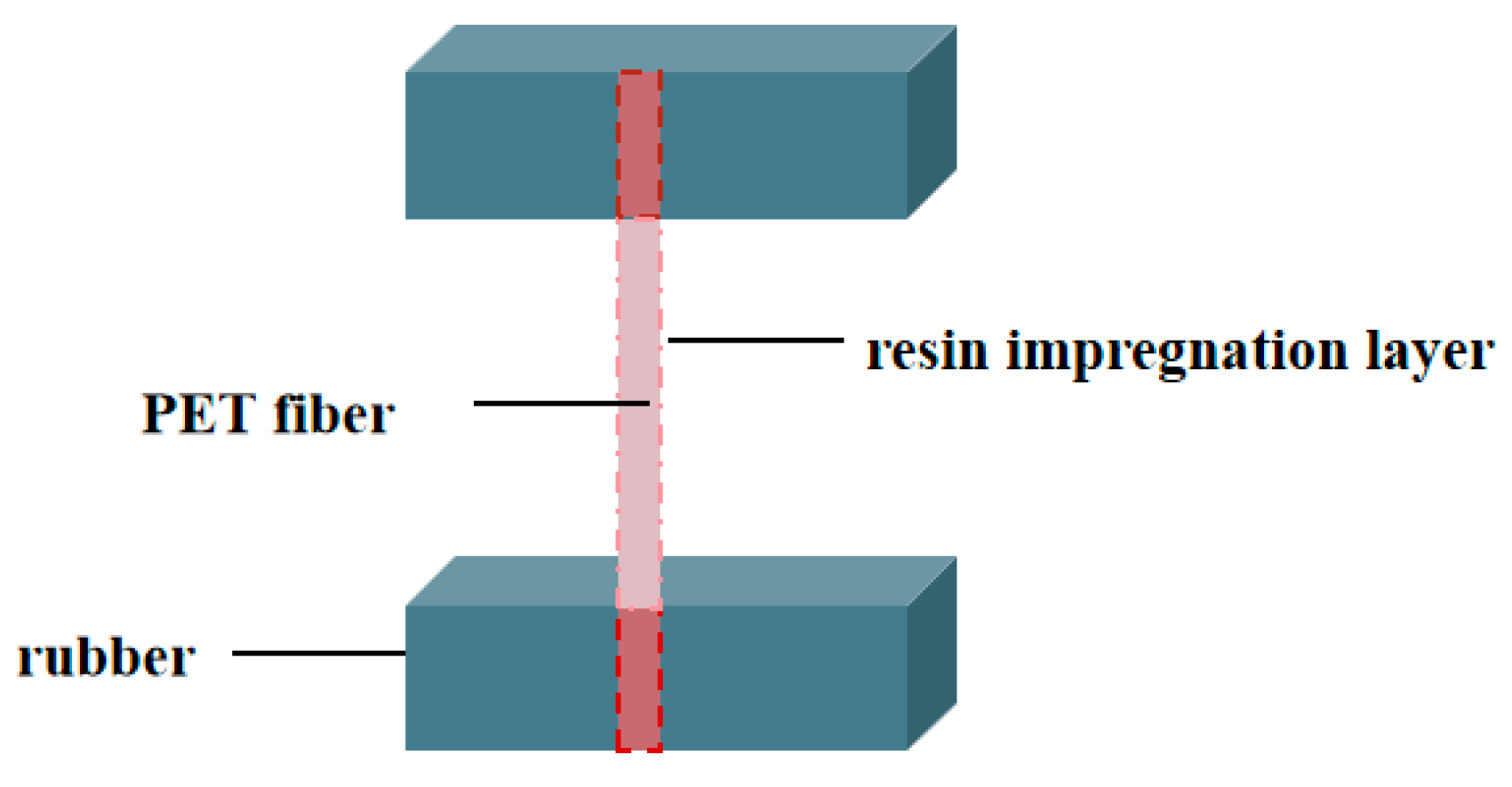
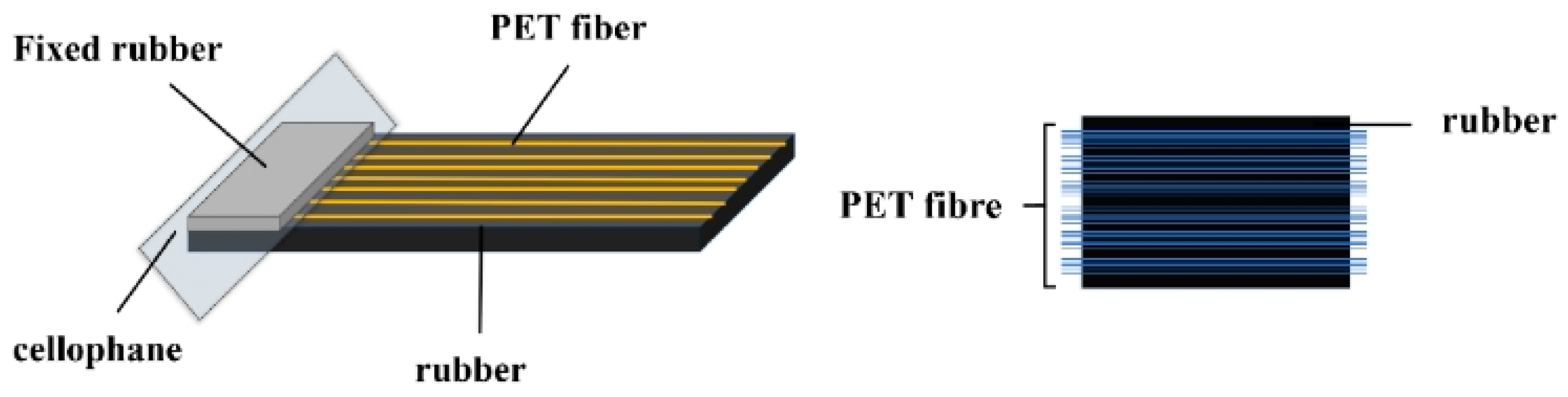
2.4. Preparation of PET Fiber/Rubber Composites
2.5. Characterization
3. Results and Discussion
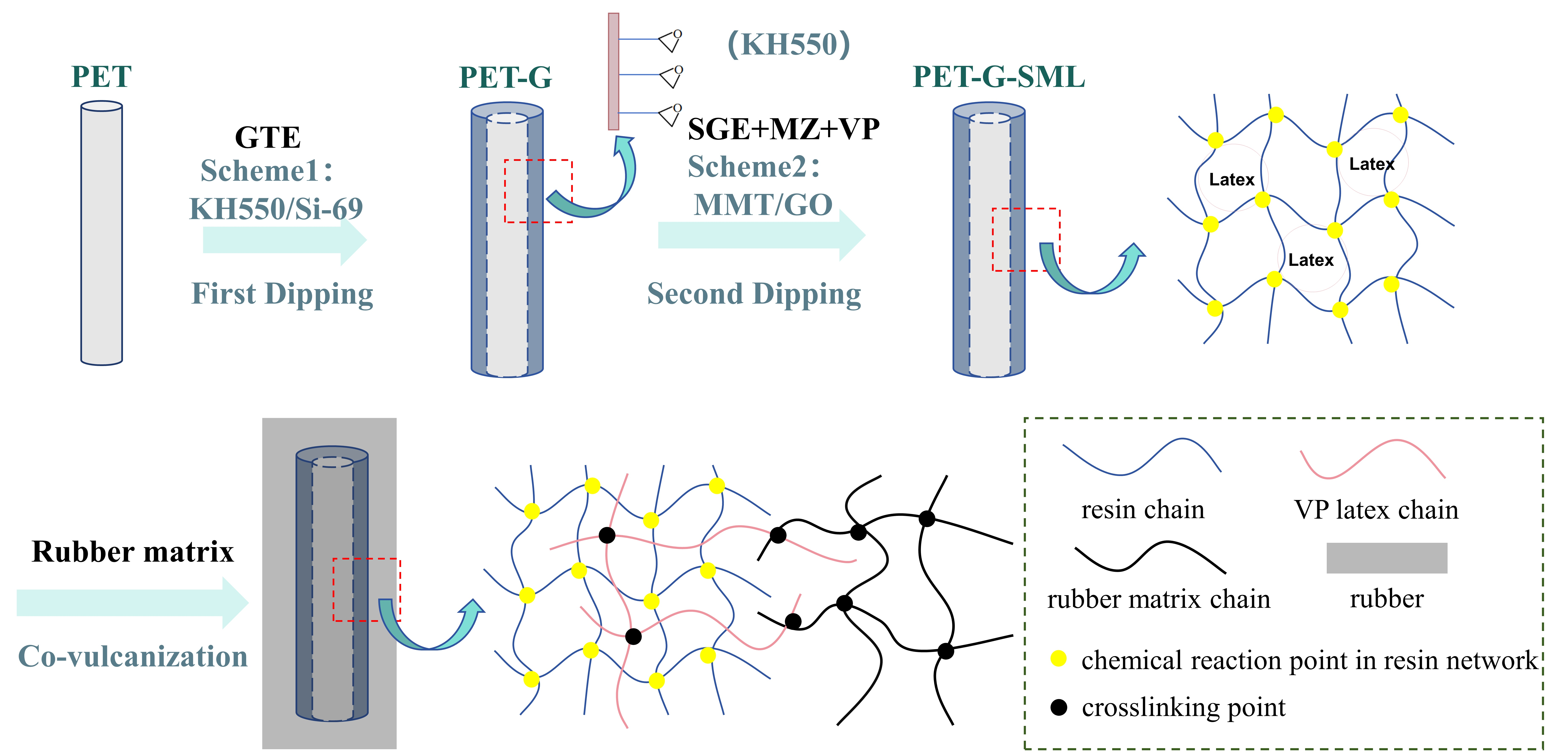
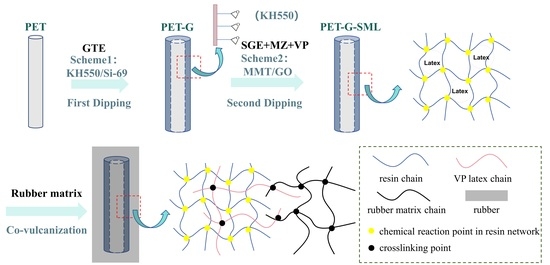
3.1. Dip-Coating Principle
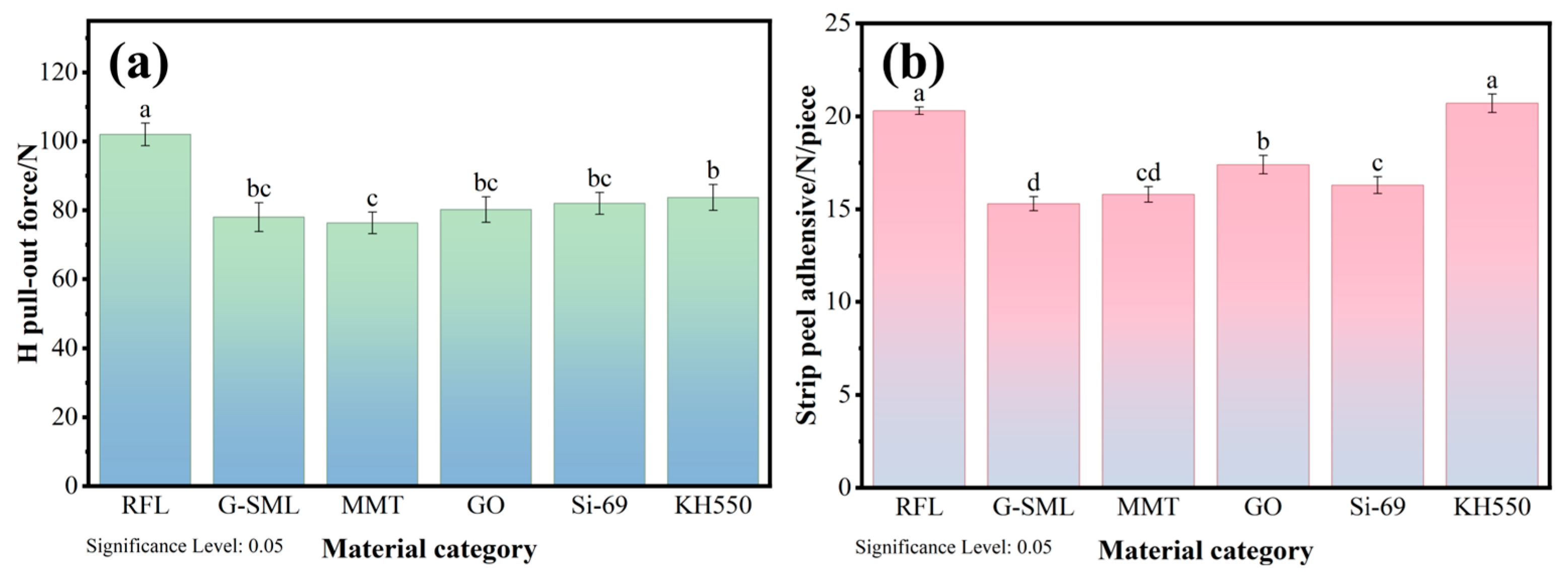
3.2. Effect of Dipping Systems on the Interfacial Adhesion of Fiber/Rubber Composites
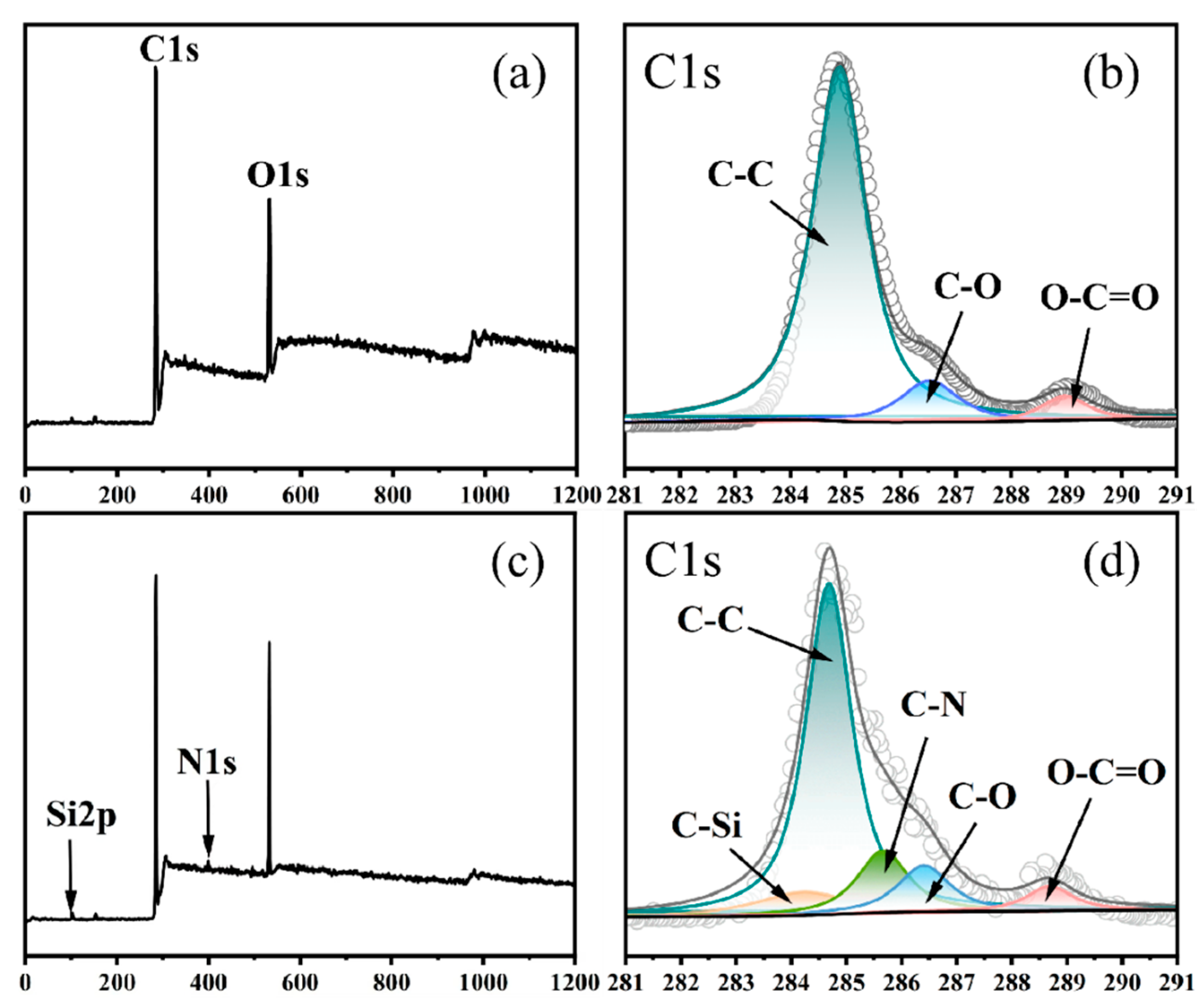
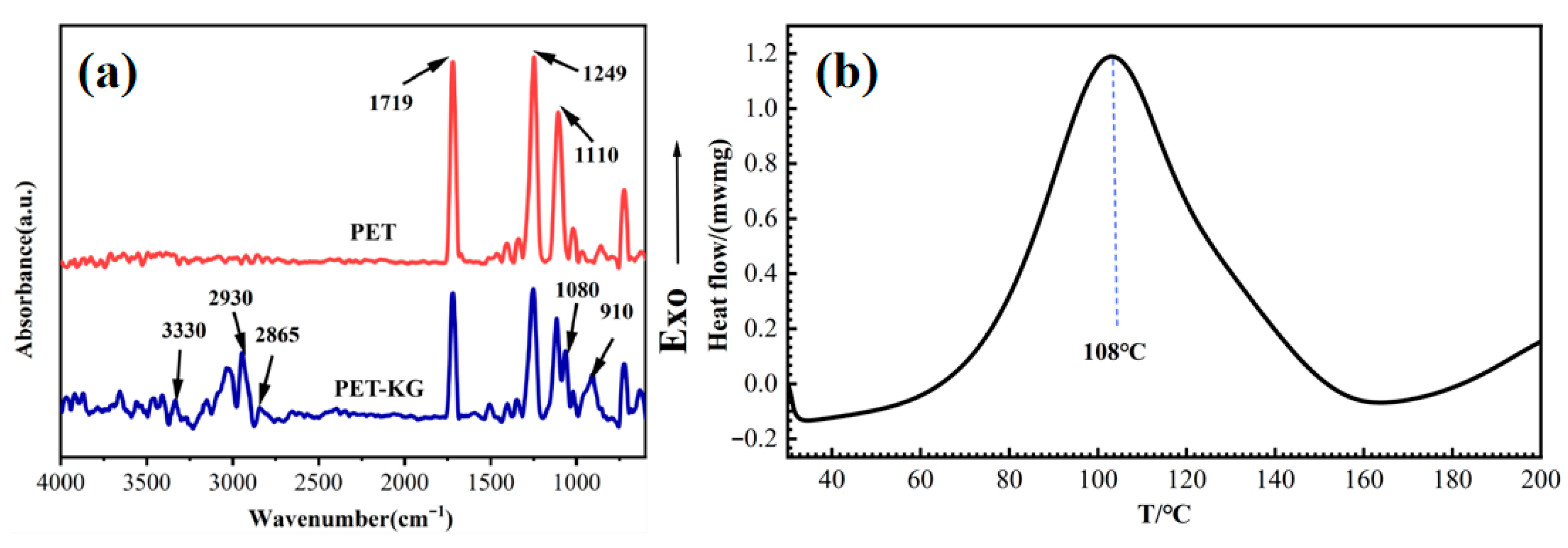
3.3. Chemical Structure of the Dip-Coated Fibers Surface
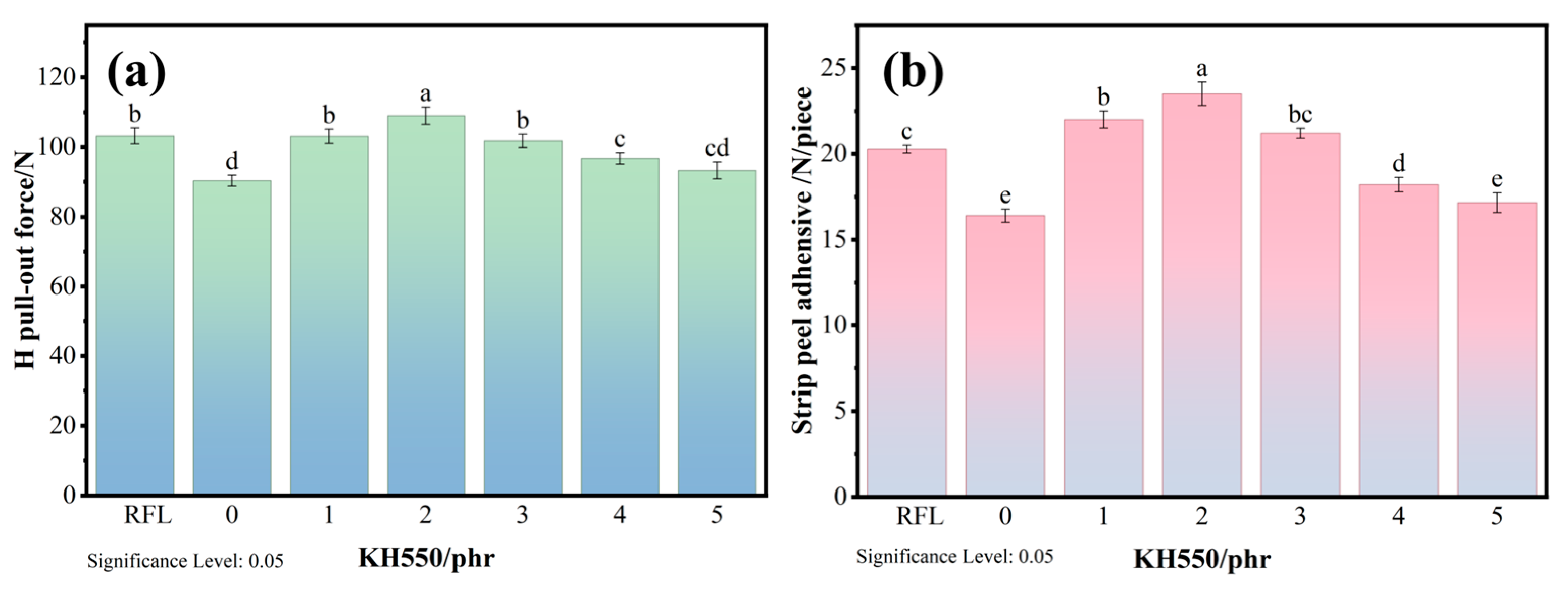
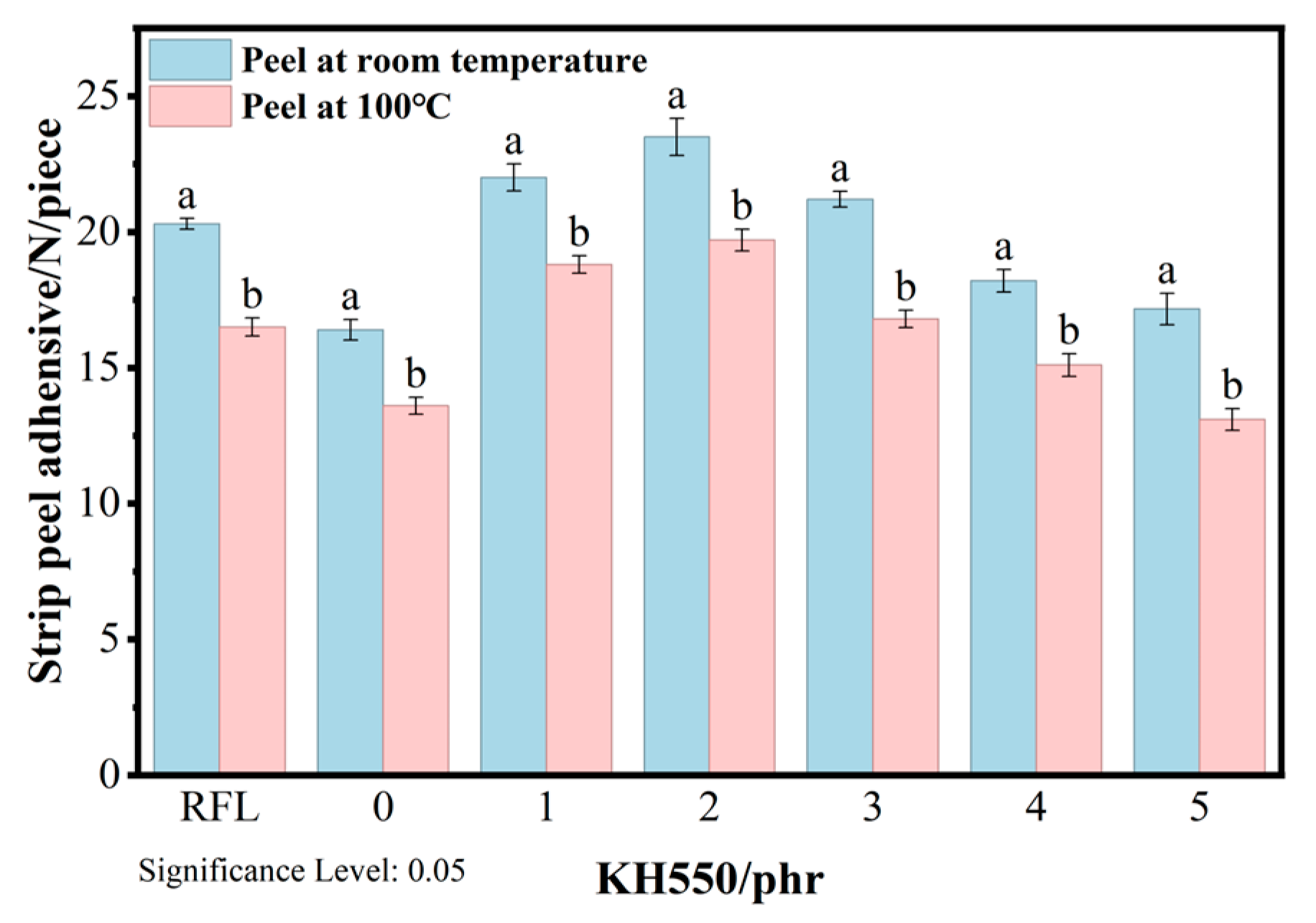
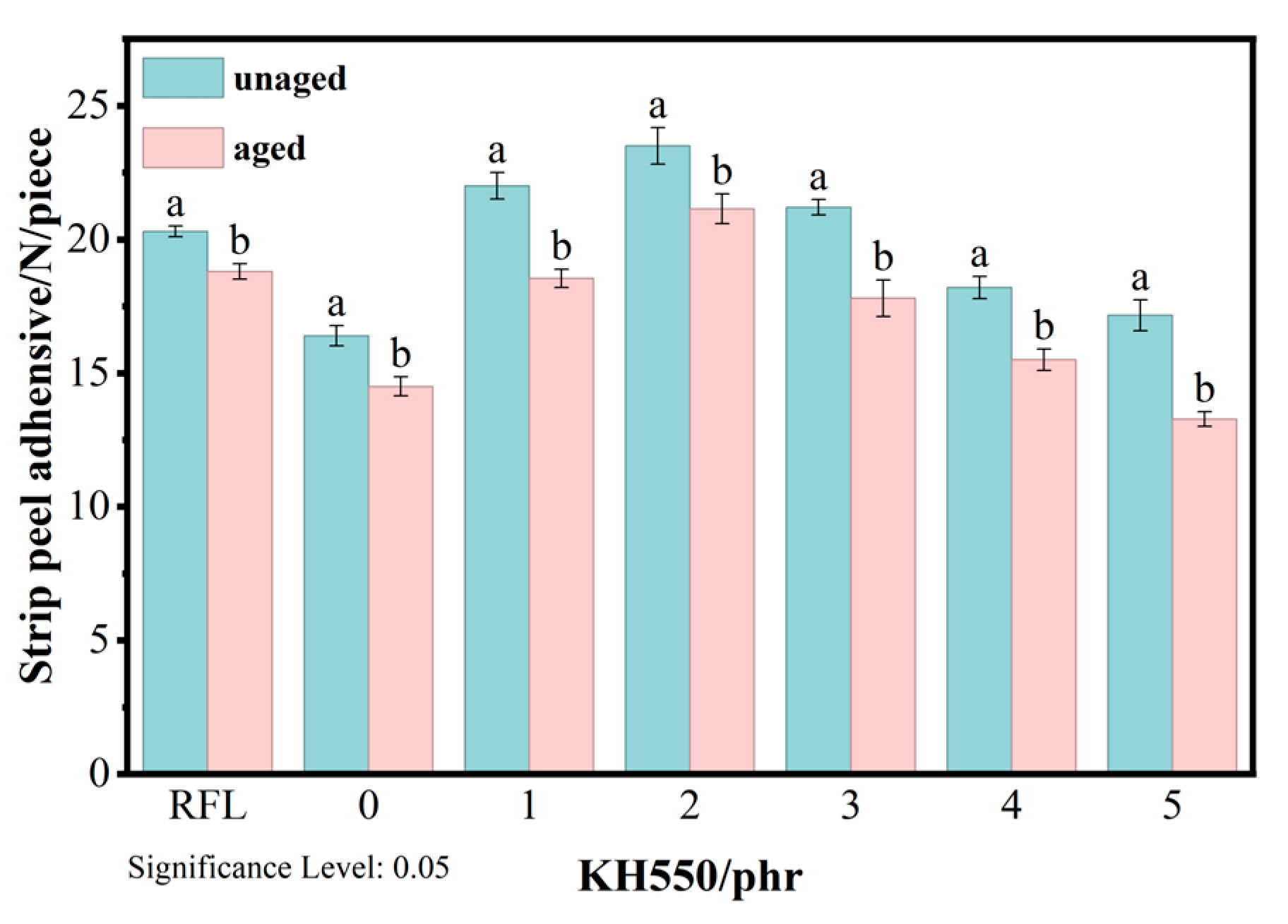
3.4. Influence of KH550 Content on the Static Adhesion Properties of Fiber/Rubber Composites
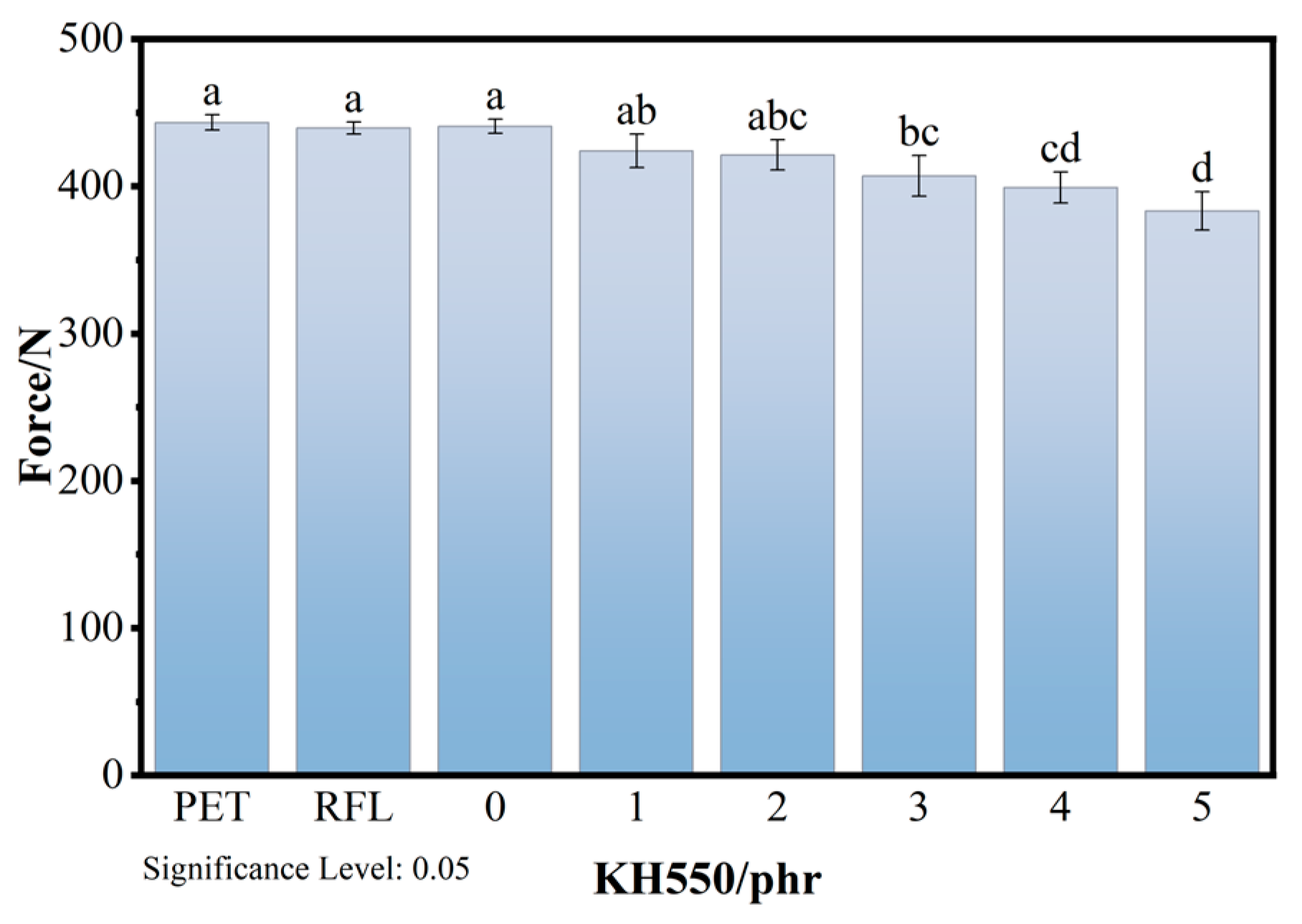
3.5. The Breaking Strength of Dip-Coated Fibers
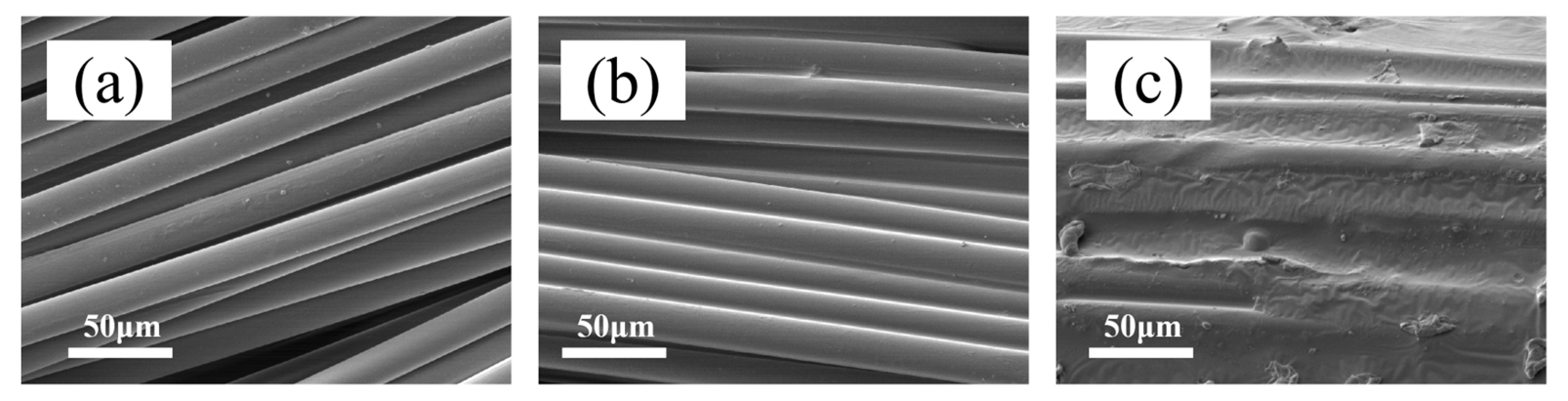
3.6. Surface Morphology of Fibers Before and After Dipping
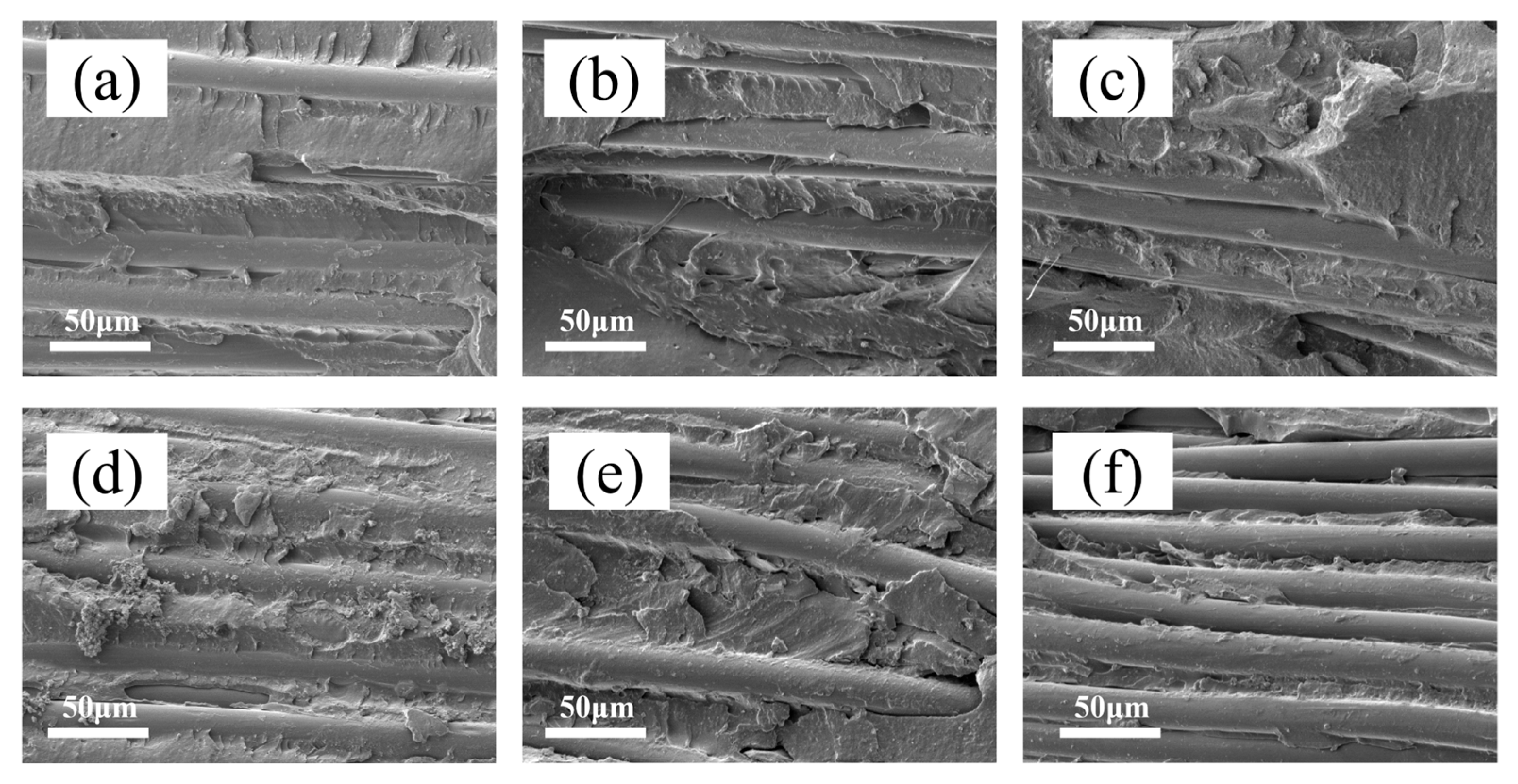
3.7. Micro-Morphology of the Dip-Coated Fibers
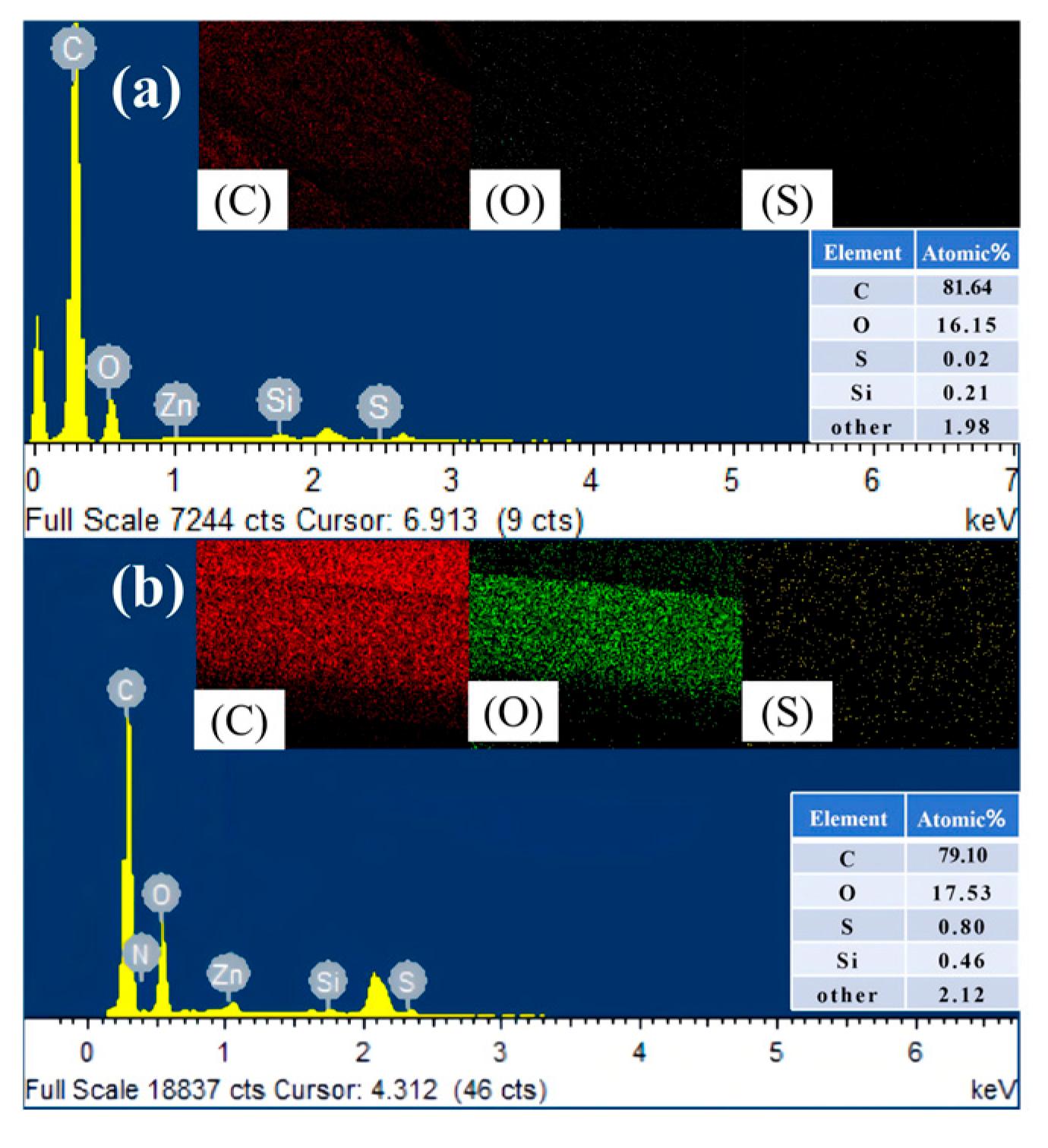
3.8. Surface Elemental Analysis of Composites
4. Conclusions
Supplementary Materials
Author Contributions
Funding
Data Availability Statement
Conflicts of Interest
Abbreviations
| FRRC | Fiber-reinforced rubber composites |
| PET | Polyester |
| RFL | Resorcinol–formaldehyde–latex |
| KH550 | γ-Aminopropyltriethoxysilane |
| KG-SML | KH550-glycerol triglycidyl ether-sorbitol glycidyl ether-2-ethyl-4-methylimidazole-latex |
| phr | Parts per hundred of rubber |
| EPA | Environmental Protection Agency |
| IARC | International Agency for Research on Cancer |
| GTE | Glycerol triglycidyl ether |
| MZ | 2-ethyl-4-methylimidazole |
| SGE | Sorbitol glycidyl ether |
| Na-MMT | Sodium montmorillonite |
References
- Shi, Z.; He, H.; Wu, P.; Yang, Z.; Yu, W.; Liu, F.; Zhu, F.; Zhang, Z.; Zheng, Q. Effect of Micromolecules and Macromolecules on the Environmentally Friendly Impregnation Solution for High-Performance Rubber Composites Compared with Traditional RFL Impregnation. Coatings 2023, 13, 765. [Google Scholar] [CrossRef]
- Zhang, Y.; Zhang, S.; Jiang, X.; Zhao, W.; Wang, Y.; Zhu, P.; Yan, Z.; Zhu, H. Uniaxial tensile properties of multi-scale fiber reinforced rubberized concrete after exposure to elevated temperatures. Clean. Prod. 2023, 389, 136068. [Google Scholar] [CrossRef]
- Wen, K.; Ma, H.; Zhang, J.; Cheng, S.; Wang, X.; Hui, Y.; Li, X.; Xu, P.; Shao, J.; Chen, X. Electrostatic incitation on fiber surface for enhancing mechanical properties of fiber-reinforced composite. Compos. Sci. Technol. 2022, 228, 109627. [Google Scholar] [CrossRef]
- Gao, Z.; He, H.; Yang, Z.; Jia, L.; Yu, W.; Liu, F.; Zheng, Q. Improved adhesion of rubber composites by developing environmentally friendly fiber impregnation coatings with good interfacial modulus transition gradients. Prog. Org. Coat. 2024, 189, 108325. [Google Scholar] [CrossRef]
- Cheng, Z.; Zhang, L.; Jiang, C.; Dai, Y.; Meng, C.; Luo, L.; Liu, X. Aramid fiber with excellent interfacial properties suitable for resin composite in a wide polarity range. CEJ 2018, 347, 483–492. [Google Scholar] [CrossRef]
- Valantin, C.; Lacroix, F.; Deffarges, M.; Morcel, J.; Hocine, N.A. Interfacial Damage on Fatigue-Loaded Textile–Rubber Composites. J. Appl. Polym. Sci. 2015, 132, 41346. [Google Scholar] [CrossRef]
- Zhang, B.; Shao, X.; Tian, M.; Ning, N.; Zhang, L.; Wang, W. Mussel-inspired environmentally friendly dipping system for aramid fiber and its interfacial adhesive mechanism with rubber. Polymer 2022, 238, 124414–124423. [Google Scholar] [CrossRef]
- Zhang, B.; Jia, L.; Tian, M.; Ning, N.; Zhang, L.; Wang, W. Surface and interface modification of aramid fiber and its reinforcement for polymer composites: A review. Eur. Polym. J. 2021, 147, 110352. [Google Scholar] [CrossRef]
- Huang, Y.; He, J.; Yang, R. Mechanical and adhesive properties of RTV silicone rubber blended with silicone polyurethane modified epoxy resin. J. Macromol. Sci. Part A-Pure Appl. Chem. 2024, 61, 565–578. [Google Scholar] [CrossRef]
- Kanelli, M.; Vasilakos, S.; Ladas, S.; Symianakis, E.; Christakopoulos, P.; Topakas, E. Surface modification of polyamide 6.6 fibers by enzymatic hydrolysis. Process Biochem. 2017, 59, 97–103. [Google Scholar] [CrossRef]
- Kuttner, C.; Tebbe, M.; Schlaad, H.; Burgert, I.; Fery, A. Photochemical Synthesis of Polymeric Fiber Coatings and Their Embedding in Matrix Material: Morphology and Nanomechanical Properties at the Fiber-Matrix Interface. ACS Appl. Mater. Interfaces 2012, 4, 3484–3492. [Google Scholar] [CrossRef] [PubMed]
- Wis, A.A.; Kodal, M.; Ozturk, S.; Ozkoc, G. Overmolded polylactide/jute-mat eco-composites: A new method to enhance the properties of natural fiber biodegradable composites. J. Appl. Polym. Sci. 2019, 137, 48692. [Google Scholar] [CrossRef]
- Fang, Z.; Tu, Q.; Shen, X.; Yang, X.; Liang, K.; Pan, M.; Chen, Z. Biomimetic surface modification of UHMWPE fibers to enhance interfacial adhesion with rubber matrix via constructing polydopamine functionalization platform and then depositing zinc oxide nanoparticles. Surf. Interfaces 2022, 29, 101728. [Google Scholar] [CrossRef]
- Zhang, B.; Liang, T.; Shao, X.; Tian, M.; Ning, N.; Zhang, L.; Wang, W. Nondestructive Grafting of ZnO on the Surface of Aramid Fibers Followed by Silane Grafting to Improve its Interfacial Adhesion Property with Rubber. ACS Appl. Polym. Mater. 2021, 3, 4587–4594. [Google Scholar] [CrossRef]
- Sari, Y.B.; Kutlu, B. Adhesion improvement at polyester fabric-silicone rubber interface by plasmas of argon and air to obtain conveyor belt. Ind. Textila 2019, 70, 470–480. [Google Scholar] [CrossRef]
- Kodal, M.; Topuk, Z.D.; Ozkoc, G. Dual effect of chemical modification and polymer precoating of flax fibers on the properties of short flax fiber/poly(lactic acid) composites. J. Appl. Polym. Sci. 2015, 132, 42564. [Google Scholar] [CrossRef]
- Liu, Z.; Chen, P.; Zhang, X.; Yu, Q. Degradation of plasma-treated poly(p-phenylene benzobisoxazole) fiber and its adhesion with bismaleimide resin. RSC Adv. 2014, 4, 3893–3899. [Google Scholar] [CrossRef]
- Lin, F.; Du, X.; Li, W.; Jiang, J.; Chen, N. Interfacial properties of high failure strain polyimide fiber/epoxy composites analyzed by a modified single fiber fragmentation test. Appl. Surf. Sci. 2020, 513, 145869. [Google Scholar] [CrossRef]
- Xu, H.; Xue, J.X.; Bian, H.; Wang, C. Green, simple, and rapid construction of coating on aramid fiber surfaces and their effects on the mechanical properties of aramid fiber/rubber composite interfaces. J. Clean. Prod. 2024, 466, 142867. [Google Scholar] [CrossRef]
- De, B.; Bera, M.; Bhattacharjee, D.; Ray, B.C.; Mukherjee, S. A comprehensive review on fiber-reinforced polymer composites: Raw materials to applications, recycling, and waste management. Prog. Mater. Sci. 2024, 146, 101326. [Google Scholar] [CrossRef]
- Sa, R.; Yan, Y.; Wang, L.; Li, Y.; Zhang, L.; Ning, N.; Wang, W.; Tian, M. Improved adhesion properties of poly-p-phenyleneterephthamide fibers with a rubber matrix via UV-initiated grafting modification. RSC Adv. 2015, 5, 94351–94360. [Google Scholar] [CrossRef]
- Wang, L.; Gao, S.B.; Wang, J.; Wang, W.; Zhang, L.; Tian, M. Surface modification of UHMWPE fibers by ozone treatment and UV grafting for adhesion improvement. J. Adhes. 2018, 94, 30–45. [Google Scholar] [CrossRef]
- Yildiz, Z.; Gungor, A.; Onen, A.; Usta, I. Synthesis and characterization of dual-curable epoxyacrylates for polyester cord/rubber applications. J. Ind. Text. 2016, 46, 596–610. [Google Scholar] [CrossRef]
- Liu, R.Y.; Yan, Z.P.; Liu, M.; Lu, H.; Han, X.; Su, L.; Zhao, S.; Wang, H. Nylon 66 fibers coated with environmentally friendly dopamine-modified adhesives and their interfacial adhesion with neoprene rubber. Polym. Compos. 2024, 45, 862–872. [Google Scholar] [CrossRef]
- Meng, X.Z.; Kang, L.; Guo, X.; Tang, X.; Liu, L.; Shen, M. Highly Strong Interface Adhesion of Polyester Fiber Rubber Composite via Fiber Surface Modification by Meta-Cresol/Formaldehyde Latex Dipping Emulsion. Polymers 2023, 15, 1009. [Google Scholar] [CrossRef]
- Yang, Z.G.; He, H.W.; Gao, Z.; Jia, L.; Liu, F.; Yu, W. A dopamine-like deposition coatings on the polyethylene terephthalate fibers and its interface adhesion with rubber. Surf. Interfaces 2024, 50, 104485. [Google Scholar] [CrossRef]
- Mohsin, M.; Sardar, S.; Iftikhar, K. Performance enhancement of one-bath pigment coloration and finishing process using eco-friendly crosslinkers. Color. Technol. 2021, 137, 217–225. [Google Scholar] [CrossRef]
- Huang, W.; Li, Y.Z.; Zhao, H.; Wang, W.; Yu, B.; Ning, N.; Tian, M.; Zhang, L. A new eco-friendly dipping system for PA66 fiber cords/rubber composites with strong interfacial adhesion and good fatigue stability. Compos. Part B-Eng. 2023, 253, 110541. [Google Scholar] [CrossRef]
- Li, H.Q.; Tang, N.; Cui, J.; Yan, H.; Wen, S.; Shi, Y.; Wu, W. Lignin Biobased Eco-Friendly Dipping System for Polyimide Fiber and Its Interface Adhesive Mechanism with Rubber. Ind. Eng. Chem. Res. 2024, 63, 11939–11949. [Google Scholar] [CrossRef]
- Zhang, B.; Chen, S.X.; Wang, W.; Tian, M.; Ning, N.; Zhang, L. Polyester (PET) fabrics coated with environmentally friendly adhesive and its interface structure and adhesive properties with rubber. Compos. Sci. Technol. 2020, 195, 108171. [Google Scholar] [CrossRef]
- GB/T 2942-2009; Rubber, Vulcanized. Determination of Static Adhension to Textile Cord-H-Pull Test. Standards Press of China: Beijing, China, 2009.
- GB/T 40725-2021; Test Method of Dipped Cord and Rubber Adhesive Peeling Performance. Standards Press of China: Beijing, China, 2021.
- GB/T 32108-2015; Test Methods of Tensile Properties for Dipped Yarns and Cords. Standards Press of China: Beijing, China, 2015.





| Component | Content (Parts per Hundred of Rubber (phr)) |
|---|---|
| SBR | 100 |
| Stearic acid | 2 |
| ZnO | 5 |
| Antiager 4010NA | 1 |
| Antiager RD | 1.5 |
| Carbon black N220 | 40 |
| Sulfur | 1 |
| Accelerant CZ | 1 |
| Accelerant DTDM | 1 |
Disclaimer/Publisher’s Note: The statements, opinions and data contained in all publications are solely those of the individual author(s) and contributor(s) and not of MDPI and/or the editor(s). MDPI and/or the editor(s) disclaim responsibility for any injury to people or property resulting from any ideas, methods, instructions or products referred to in the content. |
© 2026 by the authors. Licensee MDPI, Basel, Switzerland. This article is an open access article distributed under the terms and conditions of the Creative Commons Attribution (CC BY) license.
Share and Cite
Wu, A.; Liu, Y.; Sun, T.; Shen, M. High Interfacial Adhesion of PET/Rubber Composites by a New Eco-Friendly Dipping System. Polymers 2026, 18, 338. https://doi.org/10.3390/polym18030338
Wu A, Liu Y, Sun T, Shen M. High Interfacial Adhesion of PET/Rubber Composites by a New Eco-Friendly Dipping System. Polymers. 2026; 18(3):338. https://doi.org/10.3390/polym18030338
Chicago/Turabian StyleWu, Aolian, Yanlin Liu, Tong Sun, and Mei Shen. 2026. "High Interfacial Adhesion of PET/Rubber Composites by a New Eco-Friendly Dipping System" Polymers 18, no. 3: 338. https://doi.org/10.3390/polym18030338
APA StyleWu, A., Liu, Y., Sun, T., & Shen, M. (2026). High Interfacial Adhesion of PET/Rubber Composites by a New Eco-Friendly Dipping System. Polymers, 18(3), 338. https://doi.org/10.3390/polym18030338