Research Progress in Chitin/Chitosan-Based Biomass Adhesives: Extraction Processes, Composite and Chemical Modification

Abstract
1. Introduction
2. Fundamental Characteristics of Chitin/Chitosan
3. Preparation and Purification Technologies of Chitin/Chitosan
3.1. Source of Raw Materials
3.2. Extraction Process
3.3. Structure and Performance Characterization
3.4. Performance Testing Framework for Chitin-Based Biopolymer Adhesives
3.5. Correlation of Key Parameters with Bonding Performance in Chitosan-Based Adhesives
3.6. Performance Comparison Between Composite-Modified Adhesive and the Original Adhesive
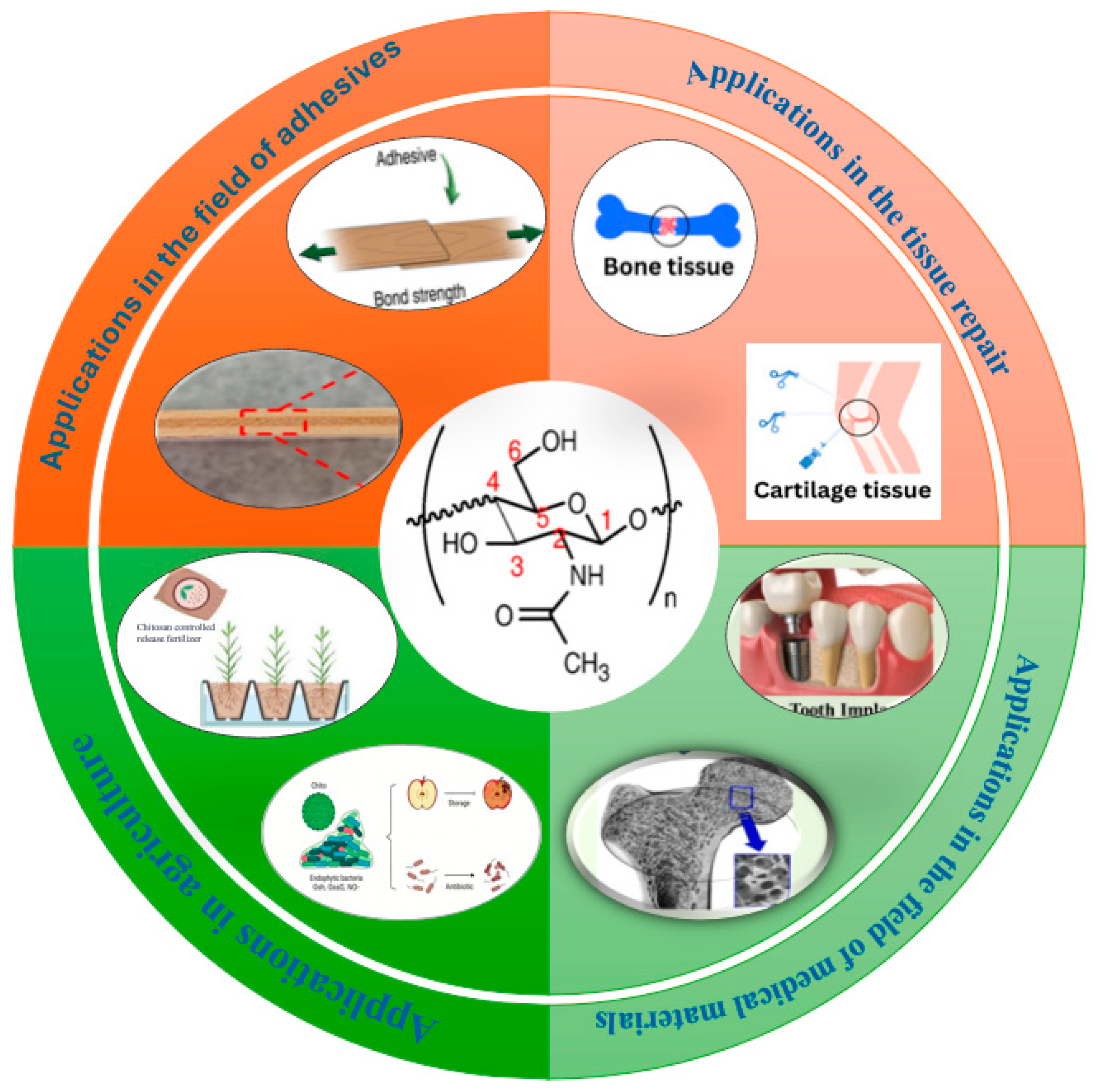
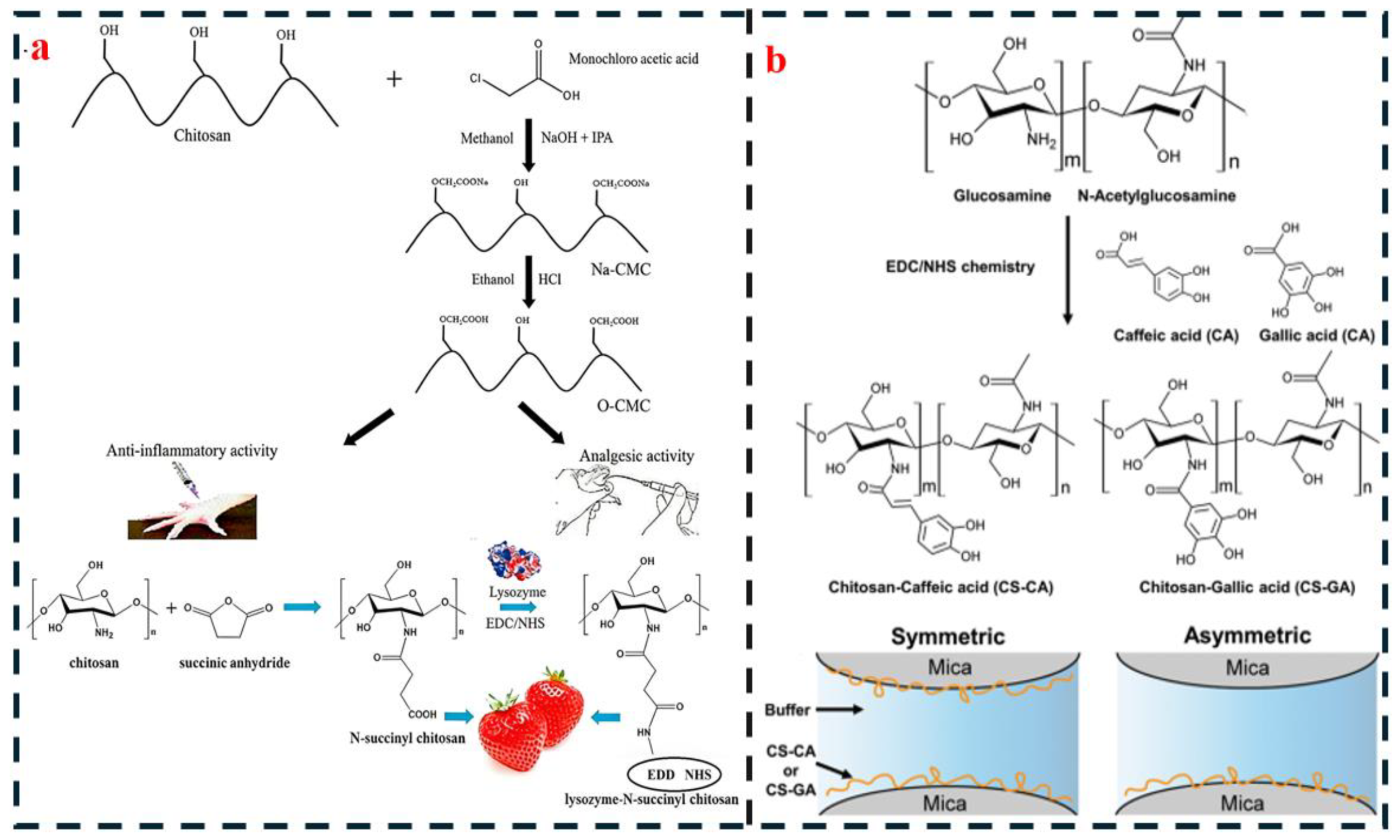
3.7. Main Application Fields of Chitosan and Its Chemically Modified Derivatives
4. Preparation Technology of Chitin/Chitosan-Based Biomass Adhesives
4.1. Pure Chitosan Adhesive
4.2. Composite-Modified Adhesive
4.2.1. Composite with Natural Polymers
4.2.2. Composite with Synthetic Polymer
4.2.3. Nano-Composite Modification
4.3. Chemically Modified Adhesive
4.3.1. Crosslinking Modification
4.3.2. Graft Copolymer Modification
4.3.3. Functional Modification
4.4. Biomineralization and Biomimetic Adhesive Design
4.4.1. Simulated Biological Adhesion Mechanism
4.4.2. Strategies for Enhancing Biomineralization
5. Conclusions and Future Outlook
5.1. Conclusions
- Research Progress and Mechanisms of Chitin/Chitosan-Based Biomass Adhesives
5.2. Current Challenges
5.3. Future Development Direction
Author Contributions
Funding
Institutional Review Board Statement
Data Availability Statement
Acknowledgments
Conflicts of Interest
References
- Boussetta, A.; Benhamou, A.A.; Ihammi, A.; Ablouh, E.-H.; Barba, F.J.; Boussetta, N.; Grimi, N.; Moubarik, A. Shrimp waste protein for bio-composite manufacturing: Formulation of protein-cornstarch-mimosa-tannin wood adhesives. Ind. Crops Prod. 2022, 187, 115323. [Google Scholar] [CrossRef]
- Kristak, L.; Antov, P.; Bekhta, P.; Lubis, M.A.R.; Iswanto, A.H.; Reh, R.; Sedliacik, J.; Savov, V.; Taghiyari, H.R.; Papadopoulos, A.N.; et al. Recent progress in ultra-low formaldehyde emitting adhesive systems and formaldehyde scavengers in wood-based panels: A review. Wood Mater. Sci. Eng. 2023, 18, 763–782. [Google Scholar] [CrossRef]
- Tian, W.; Wang, X.; Ye, Y.; Wu, W.; Wang, Y.; Jiang, S.; Wang, J.; Han, X. Recent progress of biomass in conventional wood adhesives: A review. Green Chem. 2023, 25, 10304–10337. [Google Scholar] [CrossRef]
- Calvez, I.; Garcia, R.; Koubaa, A.; Landry, V.; Cloutier, A. Recent advances in Bio-based adhesives and formaldehyde-free technologies for wood-based panel manufacturing. Curr. For. Rep. 2024, 10, 386–400. [Google Scholar] [CrossRef]
- Lee, S.; Hwang, D.S. Adhesion and Cohesion Differences between Catechol-and Pyrogallol-Functionalized Chitosan. Macromol. Rapid Commun. 2023, 44, 2200845. [Google Scholar] [CrossRef]
- Liu, J.; Dong, M.; Ren, J.; Wu, Y.; Kong, J.; Wan, G.; Sun, L. Comparative optimal design and effective control of different pressure extractive distillation for separating acetone-Methanol. Sep. Purif. Technol. 2022, 301, 121936. [Google Scholar] [CrossRef]
- Niu, B.; Wang, X.; Song, Y.; Xia, L.; Xiang, S. Screening of deep eutectic solvent for butadiene separation: Computational thermodynamics and process simulation. Sep. Purif. Technol. 2025, 362, 131549. [Google Scholar] [CrossRef]
- Salman, M.; Javed, N.; Liu, X.; He, M. Azeotrope separation of ethyl propionate and ethanol by extractive distillation and pressure swing distillation method. Sep. Purif. Technol. 2023, 311, 123361. [Google Scholar] [CrossRef]
- Cai, L.; Chen, Y.; Lu, Z.; Wei, M.; Zhao, X.; Xie, Y.; Li, J.; Xiao, S. Citric acid/chitosan adhesive with viscosity-controlled for wood bonding through supramolecular self-assembly. Carbohydr. Polym. 2024, 329, 121765. [Google Scholar] [CrossRef] [PubMed]
- Huang, E.; Cao, Y.; Duan, X.; Yan, Y.; Wang, Z.; Jin, C. Cross-Linked Chitosan as an Eco-Friendly Binder for High-Performance Wood-Based Fiberboard. Int. J. Polym. Sci. 2021, 2021, 8671384. [Google Scholar] [CrossRef]
- Liu, H.; Feng, Y.; Cao, X.; Luo, B.; Liu, M. Chitin nanocrystals as an eco-friendly and strong anisotropic adhesive. ACS Appl. Mater. Interfaces 2021, 13, 11356–11368. [Google Scholar] [CrossRef]
- Smith, D.L.; Rodriguez-Melendez, D.; Montemayor, M.D.; Convento, M.O.; Grunlan, J.C. Fire Resistant Adhesive from Chitosan. Biomacromolecules 2025, 26, 1141–1148. [Google Scholar] [CrossRef]
- Chen, S.; Aladejana, J.T.; Li, X.; Bai, M.; Shi, S.Q.; Kang, H.; Cao, J.; Li, J. A strong, antimildew, and fully bio-based adhesive fabricated by soybean meal and dialdehyde chitosan. Ind. Crops Prod. 2023, 194, 116277. [Google Scholar] [CrossRef]
- Zhang, C.; Hui, D.; Du, C.; Sun, H.; Peng, W.; Pu, X.; Li, Z.; Sun, J.; Zhou, C. Preparation and application of chitosan biomaterials in dentistry. Int. J. Biol. Macromol. 2021, 167, 1198–1210. [Google Scholar] [CrossRef]
- Gu, R.; Guo, J.; Zhang, S.; Zhou, J.; Wang, J.; Stuart, M.A.C.; Wang, M. Effects of catechol grafting on chitosan-based coacervation and adhesion. Int. J. Biol. Macromol. 2024, 267, 131662. [Google Scholar] [CrossRef] [PubMed]
- Silvestre, J.; Delattre, C.; Michaud, P.; de Baynast, H. Optimization of chitosan properties with the aim of a water resistant adhesive development. Polymers 2021, 13, 4031. [Google Scholar] [CrossRef]
- Kulig, D.; Król-Kilińska, Ż.; Bobak, Ł.; Żarowska, B.; Jarmoluk, A.; Zimoch-Korzycka, A. Functional properties of chitosan oligomers obtained by enzymatic hydrolysis. Polymers 2023, 15, 3801. [Google Scholar] [CrossRef]
- Poshina, D.N.; Raik, S.V.; Poshin, A.N.; Skorik, Y.A. Accessibility of chitin and chitosan in enzymatic hydrolysis: A review. Polym. Degrad. Stab. 2018, 156, 269–278. [Google Scholar] [CrossRef]
- Guo, M.; Wei, X.; Chen, S.; Xiao, J.; Huang, D. Enhancing nonspecific enzymatic hydrolysis of chitin to oligosaccharides pretreated by acid and green solvents under simultaneous microwave-radiation. Int. J. Biol. Macromol. 2022, 209, 631–641. [Google Scholar] [CrossRef]
- Todorovic, T.; Norström, E.; Fogelström, L.; Malmström, E. Chitosan-graft-poly (vinyl acetate) for wood-adhesive applications. Int. J. Adhes. Adhes. 2024, 135, 103818. [Google Scholar] [CrossRef]
- Zhang, X.; Li, Z.; Pizzi, A.; Qin, Z.; Zhu, G.; Li, X.; Du, G.; Deng, S. Development of an environmentally friendly lignosulfonate-chitosan adhesive with excellent water resistance through epoxidation modification. Int. J. Biol. Macromol. 2025, 320, 145846. [Google Scholar] [CrossRef]
- Wang, J.; Zhuang, S. Chitosan-based materials: Preparation, modification and application. J. Clean. Prod. 2022, 355, 131825. [Google Scholar] [CrossRef]
- Zhong, L.; Yan, Y.; Ye, Z.; Zhang, X.; Yang, W.; Zheng, J.; Lin, X.; Zhang, L.; Zhou, G.; Lin, H.; et al. Covalent organic framework-mediated Nafion superhydrophobic coating for stabilizing the anode of aqueous zinc-ion batteries. Chem. Eng. J. 2026, 527, 172018. [Google Scholar] [CrossRef]
- Chen, Q.; Qi, Y.; Jiang, Y.; Quan, W.; Luo, H.; Wu, K.; Li, S.; Ouyang, Q. Progress in Research of Chitosan Chemical Modification Technologies and Their Applications. Mar. Drugs 2022, 20, 536. [Google Scholar] [CrossRef] [PubMed]
- Chen, Y.; Liu, Y.; Dong, Q.; Xu, C.; Deng, S.; Kang, Y.; Fan, M.; Li, L. Application of functionalized chitosan in food: A review. Int. J. Biol. Macromol. 2023, 235, 123716. [Google Scholar] [CrossRef] [PubMed]
- Riseh, R.S.; Vazvani, M.G.; Kennedy, J.F. The application of chitosan as a carrier for fertilizer: A review. Int. J. Biol. Macromol. 2023, 252, 126483. [Google Scholar] [CrossRef]
- El-Araby, A.; Janati, W.; Ullah, R.; Ercisli, S.; Errachidi, F. Chitosan, chitosan derivatives, and chitosan-based nanocomposites: Eco-friendly materials for advanced applications (a review). Front. Chem. 2024, 11, 1327426. [Google Scholar] [CrossRef] [PubMed]
- Hameed, A.Z.; Raj, S.A.; Kandasamy, J.; Baghdadi, M.A.; Shahzad, M.A. Chitosan: A sustainable material for multifarious applications. Polymers 2022, 14, 2335. [Google Scholar] [CrossRef]
- Hamedi, H.; Moradi, S.; Hudson, S.M.; Tonelli, A.E.; King, M.W. Chitosan based bioadhesives for biomedical applications: A review. Carbohydr. Polym. 2022, 282, 119100. [Google Scholar] [CrossRef]
- Poon, L.; Wilson, L.D.; Headley, J.V. Chitosan-glutaraldehyde copolymers and their sorption properties. Carbohydr. Polym. 2014, 109, 92–101. [Google Scholar] [CrossRef]
- Li, B.; Shan, C.-L.; Zhou, Q.; Fang, Y.; Wang, Y.-L.; Xu, F.; Han, L.-R.; Ibrahim, M.; Guo, L.-B.; Xie, G.-L. Synthesis, characterization, and antibacterial activity of cross-linked chitosan-glutaraldehyde. Mar. Drugs 2013, 11, 1534–1552. [Google Scholar] [CrossRef]
- Liu, L.; Kan, Z.; Wang, F.; Huang, Y.; Yang, Y.; Guo, H.; Chen, Y.; Xie, L.; Zhang, L.; Du, G. Dual-interlocking inspired multiple crosslinked chitosan-based composites with synergistic water resistance and flame retardancy for sustainable wood adhesives. Ind. Crops Prod. 2025, 235, 121666. [Google Scholar] [CrossRef]
- Hebeish, A.; Rafei, R.; El-Shafei, A. Crosslinking of chitosan with glutaraldehyde for removal of dyes and heavy metal ions from aqueous solutions. Egypt. J. Chem. 2004, 47, 65–79. [Google Scholar]
- Webster, A.; Halling, M.D.; Grant, D.M. Metal complexation of chitosan and its glutaraldehyde cross-linked derivative. Carbohydr. Res. 2007, 342, 1189–1201. [Google Scholar] [CrossRef]
- Kildeeva, N.; Perminov, P.; Vladimirov, L.; Novikov, V.; Mikhailov, S. About mechanism of chitosan cross-linking with glutaraldehyde. Russ. J. Bioorganic Chem. 2009, 35, 360–369. [Google Scholar] [CrossRef]
- Thambiliyagodage, C.; Jayanetti, M.; Mendis, A.; Ekanayake, G.; Liyanaarachchi, H.; Vigneswaran, S. Recent advances in chitosan-based applications—A review. Materials 2023, 16, 2073. [Google Scholar] [CrossRef] [PubMed]
- Chen, Y.; Liu, L.; Cai, L.; Mu, G.; Ju, T.; Wei, M.; Li, Z.; Lu, Z.; Wang, N.; Zhang, T. High-performance wet adhesion of wood with chitosan. ACS Sustain. Chem. Eng. 2024, 12, 4946–4956. [Google Scholar] [CrossRef]
- Harugade, A.; Sherje, A.P.; Pethe, A. Chitosan: A review on properties, biological activities and recent progress in biomedical applications. React. Funct. Polym. 2023, 191, 105634. [Google Scholar] [CrossRef]
- Issahaku, I.; Tetteh, I.K.; Tetteh, A.Y. Chitosan and chitosan derivatives: Recent advancements in production and applications in environmental remediation. Environ. Adv. 2023, 11, 100351. [Google Scholar] [CrossRef]
- Poznanski, P.; Hameed, A.; Orczyk, W. Chitosan and chitosan nanoparticles: Parameters enhancing antifungal activity. Molecules 2023, 28, 2996. [Google Scholar] [CrossRef]
- Nessa, F.; Masum, S.M.; Asaduzzaman, M.; Roy, S.; Hossain, M.; Jahan, M. A process for the preparation of chitin and chitosan from prawn shell waste. Bangladesh J. Sci. Ind. Res. 2010, 45, 323–330. [Google Scholar] [CrossRef]
- Iber, B.T.; Kasan, N.A.; Torsabo, D.; Omuwa, J.W. A review of various sources of chitin and chitosan in nature. J. Renew. Mater. 2022, 10, 1097. [Google Scholar] [CrossRef]
- Abdou, E.S.; Nagy, K.S.; Elsabee, M.Z. Extraction and characterization of chitin and chitosan from local sources. Bioresour. Technol. 2008, 99, 1359–1367. [Google Scholar] [CrossRef]
- No, H.K.; Meyers, S.P. Preparation and characterization of chitin and chitosan—A review. J. Aquat. Food Prod. Technol. 1995, 4, 27–52. [Google Scholar] [CrossRef]
- Charii, H.; Boussetta, A.; Ait Benhamou, A.; Mennani, M.; Essifi, K.; Ablouh, E.-H.; Zakhem, H.E.; Grimi, N.; Boutoial, K.; Moubarik, A. Exploring the potential of chitin and chitosan extracted from shrimp shell waste in enhancing urea-formaldehyde wood adhesives. Int. J. Adhes. Adhes. 2024, 129, 103599. [Google Scholar] [CrossRef]
- Ni, K.; Yu, J.; Du, G.; Qian, J.; Yang, H.; Wang, J.; Wan, J.; Ran, X.; Gao, W.; Chen, Z. Lobster-inspired chitosan-derived adhesives with a biomimetic design. ACS Appl. Mater. Interfaces 2024, 16, 7950–7960. [Google Scholar] [CrossRef]
- Sajomsang, W.; Gonil, P. Preparation and characterization of α-chitin from cicada sloughs. Mater. Sci. Eng. C 2010, 30, 357–363. [Google Scholar] [CrossRef]
- Naser, A.Z.; Deiab, I.; Darras, B.M. Poly (lactic acid)(PLA) and polyhydroxyalkanoates (PHAs), green alternatives to petroleum-based plastics: A review. RSC Adv. 2021, 11, 17151–17196. [Google Scholar] [CrossRef] [PubMed]
- Holt, I. Renewable Resources for Functional Polymers and Biomaterials; Royal Society of Chemistry: London, UK, 2011. [Google Scholar]
- Saeedi, M.; Vahidi, O.; Moghbeli, M.R.; Ahmadi, S.; Asadnia, M.; Akhavan, O.; Seidi, F.; Rabiee, M.; Saeb, M.R.; Webster, T.J. Customizing nano-chitosan for sustainable drug delivery. J. Control. Release 2022, 350, 175–192. [Google Scholar] [CrossRef]
- Krake, S.; Conzelmann, C.; Heuer, S.; Dyballa, M.; Zibek, S.; Hahn, T. Production of chitosan from Aspergillus niger and quantitative evaluation of the process using adapted analytical tools. Biotechnol. Bioprocess Eng. 2024, 29, 942–954. [Google Scholar] [CrossRef]
- Gbenebor, O.; Adeosun, S.; Adegbite, A.; Akinwande, C. Organic and mineral acid demineralizations: Effects on crangon and Liocarcinus vernalis–sourced biopolymer yield and properties. J. Taibah Univ. Sci. 2018, 12, 837–845. [Google Scholar] [CrossRef]
- Rasweefali, M.; Sabu, S.; Azad, K.M.; Rahman, M.R.; Sunooj, K.; Sasidharan, A.; Anoop, K. Influence of deproteinization and demineralization process sequences on the physicochemical and structural characteristics of chitin isolated from Deep-sea mud shrimp (Solenocera hextii). Adv. Biomark. Sci. Technol. 2022, 4, 12–27. [Google Scholar] [CrossRef]
- Rahayu, A.P.; Islami, A.F.; Saputra, E.; Sulmartiwi, L.; Rahmah, A.U.; Kurnia, K.A. The impact of the different types of acid solution on the extraction and adsorption performance of chitin from shrimp shell waste. Int. J. Biol. Macromol. 2022, 194, 843–850. [Google Scholar] [CrossRef]
- Iber, B.T.; Torsabo, D.; Chik, C.E.N.C.E.; Wahab, F.; Abdullah, S.R.S.; Hassan, H.A.; Kasan, N.A. The impact of re-ordering the conventional chemical steps on the production and characterization of natural chitosan from biowaste of Black Tiger Shrimp, Penaeus monodon. J. Sea Res. 2022, 190, 102306. [Google Scholar] [CrossRef]
- Aranaz, I.; Alcántara, A.R.; Civera, M.C.; Arias, C.; Elorza, B.; Heras Caballero, A.; Acosta, N. Chitosan: An overview of its properties and applications. Polymers 2021, 13, 3256. [Google Scholar] [CrossRef] [PubMed]
- Aisyah, A.; Gavi, M.; Putra, M. Screening of protease-producing lactic acid bacteria from Indonesian fermented fish products and its application in chitin extraction from vannamei shrimp (Litopenaeus vannamei) shell. In Proceedings of the IOP Conference Series: Earth and Environmental Science; IOP Publishing: Bristol, UK, 2023; p. 012029. [Google Scholar]
- Li, J.; Song, R.; Zou, X.; Wei, R.; Wang, J. Simultaneous preparation of chitin and flavor protein hydrolysates from the by-products of shrimp processing by one-step fermentation with Lactobacillus fermuntum. Molecules 2023, 28, 3761. [Google Scholar] [CrossRef]
- Zhang, H.; Jin, Y.; Deng, Y.; Wang, D.; Zhao, Y. Production of chitin from shrimp shell powders using Serratia marcescens B742 and Lactobacillus plantarum ATCC 8014 successive two-step fermentation. Carbohydr. Res. 2012, 362, 13–20. [Google Scholar] [CrossRef] [PubMed]
- Mao, X.; Zhang, J.; Kan, F.; Gao, Y.; Lan, J.; Zhang, X.; Hu, Z.; Li, Y.; Lin, H. Antioxidant production and chitin recovery from shrimp head fermentation with Streptococcus thermophilus. Food Sci. Biotechnol. 2013, 22, 1023–1032. [Google Scholar] [CrossRef]
- Xie, J.; Xie, W.; Yu, J.; Xin, R.; Shi, Z.; Song, L.; Yang, X. Extraction of chitin from shrimp shell by successive two-step fermentation of Exiguobacterium profundum and Lactobacillus acidophilus. Front. Microbiol. 2021, 12, 677126. [Google Scholar] [CrossRef]
- Zhao, D.; Huang, W.-C.; Guo, N.; Zhang, S.; Xue, C.; Mao, X. Two-step separation of chitin from shrimp shells using citric acid and deep eutectic solvents with the assistance of microwave. Polymers 2019, 11, 409. [Google Scholar] [CrossRef]
- Huang, W.-C.; Zhao, D.; Guo, N.; Xue, C.; Mao, X. Green and facile production of chitin from crustacean shells using a natural deep eutectic solvent. J. Agric. Food Chem. 2018, 66, 11897–11901. [Google Scholar] [CrossRef]
- Zhang, Q.; Duan, L.; Li, Y. Positive effects and mechanism of ultrasound on chitin preparation from shrimp shells by co-fermentation. Ultrason. Sonochemistry 2022, 88, 106066. [Google Scholar] [CrossRef] [PubMed]
- Younes, I.; Hajji, S.; Frachet, V.; Rinaudo, M.; Jellouli, K.; Nasri, M. Chitin extraction from shrimp shell using enzymatic treatment. Antitumor, antioxidant and antimicrobial activities of chitosan. Int. J. Biol. Macromol. 2014, 69, 489–498. [Google Scholar] [CrossRef]
- Hong, S.; Yuan, Y.; Yang, Q.; Zhu, P.; Lian, H. Versatile acid base sustainable solvent for fast extraction of various molecular weight chitin from lobster shell. Carbohydr. Polym. 2018, 201, 211–217. [Google Scholar] [CrossRef] [PubMed]
- Saravana, P.S.; Ho, T.C.; Chae, S.-J.; Cho, Y.-J.; Park, J.-S.; Lee, H.-J.; Chun, B.-S. Deep eutectic solvent-based extraction and fabrication of chitin films from crustacean waste. Carbohydr. Polym. 2018, 195, 622–630. [Google Scholar] [CrossRef]
- Feng, M.; Yan, J.; He, B.; Chen, X.; Sun, J. Controllable conversion of shrimp shells into chitin or derived carbon material using acidic deep eutectic solvent. Int. J. Biol. Macromol. 2021, 193, 347–357. [Google Scholar] [CrossRef]
- Rodrigues, L.A.; Radojčić Redovniković, I.; Duarte, A.R.C.; Matias, A.A.; Paiva, A. Low-phytotoxic deep eutectic systems as alternative extraction media for the recovery of chitin from brown crab shells. ACS Omega 2021, 6, 28729–28741. [Google Scholar] [CrossRef] [PubMed]
- Pathak, K.; Misra, S.K.; Sehgal, A.; Singh, S.; Bungau, S.; Najda, A.; Gruszecki, R.; Behl, T. Biomedical Applications of Quaternized Chitosan. Polymers 2021, 13, 2514. [Google Scholar] [CrossRef]
- Xi, X.; Pizzi, A.; Lei, H.; Zhang, B.; Chen, X.; Du, G. Environmentally friendly chitosan adhesives for plywood bonding. Int. J. Adhes. Adhes. 2022, 112, 103027. [Google Scholar] [CrossRef]
- Zeng, H.; Jin, T.; Shi, S.; Liu, L.; Guo, H.; Xie, L.; Chai, X.; Xu, K.; Du, G.; Zhang, L. Boiling water resistant fully bio-based adhesive made from maleated chitosan and glucose with excellent performance. Int. J. Biol. Macromol. 2023, 253, 127446. [Google Scholar] [CrossRef]
- Ifuku, S.; Morooka, S.; Morimoto, M.; Saimoto, H. Acetylation of chitin nanofibers and their transparent nanocomposite films. Biomacromolecules 2010, 11, 1326–1330. [Google Scholar] [CrossRef]
- Maliki, S.; Sharma, G.; Kumar, A.; Moral-Zamorano, M.; Moradi, O.; Baselga, J.; Stadler, F.J.; García-Peñas, A. Chitosan as a tool for sustainable development: A mini review. Polymers 2022, 14, 1475. [Google Scholar] [CrossRef]
- Yadav, M.; Kaushik, B.; Rao, G.K.; Srivastava, C.M.; Vaya, D. Advances and challenges in the use of chitosan and its derivatives in biomedical fields: A review. Carbohydr. Polym. Technol. Appl. 2023, 5, 100323. [Google Scholar] [CrossRef]
- Kankariya, Y.; Chatterjee, B. Biomedical application of chitosan and chitosan derivatives: A comprehensive review. Curr. Pharm. Des. 2023, 29, 1311–1325. [Google Scholar] [CrossRef]
- Huq, T.; Khan, A.; Brown, D.; Dhayagude, N.; He, Z.; Ni, Y. Sources, production and commercial applications of fungal chitosan: A review. J. Bioresour. Bioprod. 2022, 7, 85–98. [Google Scholar] [CrossRef]
- Alemu, D.; Getachew, E.; Mondal, A.K. Study on the Physicochemical Properties of Chitosan and their Applications in the Biomedical Sector. Int. J. Polym. Sci. 2023, 2023, 5025341. [Google Scholar] [CrossRef]
- Vargas Villanueva, J.G.; Sarmiento Huertas, P.A.; Galan, F.S.; Esteban Rueda, R.J.; Briceño Triana, J.C.; Casas Rodriguez, J.P. Bio-adhesion evaluation of a chitosan-based bone bio-adhesive. Int. J. Adhes. Adhes. 2019, 92, 80–88. [Google Scholar] [CrossRef]
- Vilas-Franquesa, A.; Lakemond, C.; Mishyna, M. Biotransformation of insect processing residues: Production of lactic acid bacterial biomass and associated partial removal of proteins from chitin. Bioresour. Technol. 2024, 413, 131540. [Google Scholar] [CrossRef]
- Rajendran, S.; Rathinam, V.; Krishnasamy, V.; Pal, K. Machine learning assisted chitin Extraction: Source and yield prediction from crustacean biomass using deep eutectic solvents. J. Drug Deliv. Sci. Technol. 2025, 114, 107548. [Google Scholar] [CrossRef]
- Talaei, A.; Ashori, A.; Heydari, V. A comparative study on the mechanical and physical properties of plywood panels prepared by chitosan as bio-adhesive. J. Polym. Environ. 2022, 30, 4263–4270. [Google Scholar] [CrossRef]
- Ji, X.; Li, B.; Yuan, B.; Guo, M. Preparation and characterizations of a chitosan-based medium-density fiberboard adhesive with high bonding strength and water resistance. Carbohydr. Polym. 2017, 176, 273–280. [Google Scholar] [CrossRef]
- Ji, X.; Guo, M. Preparation and properties of a chitosan-lignin wood adhesive. Int. J. Adhes. Adhes. 2018, 82, 8–13. [Google Scholar] [CrossRef]
- Li, D.; Zhuang, B.; Wang, X.; Wu, Z.; Wei, W.; Aladejana, J.T.; Hou, X.; Yves, K.G.; Xie, Y.; Liu, J. Chitosan used as a specific coupling agent to modify starch in preparation of adhesive film. J. Clean. Prod. 2020, 277, 123210. [Google Scholar] [CrossRef]
- Liu, T.; Shao, Y.; Zhang, X.; Wan, J.; Du, G.; Yang, L.; Ran, X. A chitosan-based adhesive with high flame retardancy and superior bonding strength fabricated by interface engineering. Int. J. Biol. Macromol. 2025, 305, 140984. [Google Scholar] [CrossRef] [PubMed]
- Todorovic, T.; Norström, E.; Khabbaz, F.; Brücher, J.; Malmström, E.; Fogelström, L. A fully bio-based wood adhesive valorising hemicellulose-rich sidestreams from the pulp industry. Green Chem. 2021, 23, 3322–3333. [Google Scholar] [CrossRef]
- Samyn, P. A platform for functionalization of cellulose, chitin/chitosan, alginate with polydopamine: A review on fundamentals and technical applications. Int. J. Biol. Macromol. 2021, 178, 71–93. [Google Scholar] [CrossRef]
- Abdelmoula, M.; Ben Hlima, H.; Michalet, F.; Bourduche, G.; Chavant, J.-Y.; Gravier, A.; Delattre, C.; Grédiac, M.; Mathias, J.-D.; Abdelkafi, S. Chitosan-based adhesive: Optimization of tensile shear strength in dry and wet conditions. Polysaccharides 2021, 2, 110–120. [Google Scholar] [CrossRef]
- Yu, C.; Chen, Y.; Zhu, Y.; Wang, Z.; Bian, R.; Liu, P.; Li, R.; Lyu, Y.; Li, J.; Li, J. Dynamic covalent bonds enabled recyclable chitosan oligosaccharide-based wood adhesive with high adhesion and anti-mildew performances. Int. J. Biol. Macromol. 2024, 282, 137434. [Google Scholar] [CrossRef]
- Chen, Q.; Xie, G.; Zhang, P.; Liang, C.; Zhao, W.; Chen, G. Preparation optimization by response surface and performance characterization of PEG-urea-dialdehyde starch adhesive. Int. J. Adhes. Adhes. 2023, 125, 103404. [Google Scholar] [CrossRef]
- Nasaj, M.; Chehelgerdi, M.; Asghari, B.; Ahmadieh-Yazdi, A.; Asgari, M.; Kabiri-Samani, S.; Sharifi, E.; Arabestani, M. Factors influencing the antimicrobial mechanism of chitosan action and its derivatives: A review. Int. J. Biol. Macromol. 2024, 277, 134321. [Google Scholar] [CrossRef]
- Greca, L.G.; Kevin, J.; Majoinen, J.; Kummer, N.; Luotonen, O.I.; Campioni, S.; Rojas, O.J.; Nyström, G.; Tardy, B.L. Chitin–amyloid synergism and their use as sustainable structural adhesives. J. Mater. Chem. A 2021, 9, 19741–19753. [Google Scholar] [CrossRef]
- Lin, Q.; Ji, X.; Sun, S.; Zhao, Z. Breaking the Barrier of High Curing Temperature: Efficient Caramelization for Fructose-Based Adhesives in a One-Pot Process. ACS Sustain. Chem. Eng. 2024, 12, 14128–14140. [Google Scholar] [CrossRef]
- Liu, L.; Huang, Y.; Kan, Z.; Yang, Y.; Wang, P.; Chen, Y.; Wei, D.; Lei, H.; Du, G.; Zhang, L. Organic-inorganic hybrid chitosan-based adhesive combined with Cu/ZIF-8 to construct wood composites with flame retardant properties. Int. J. Biol. Macromol. 2025, 320, 145727. [Google Scholar] [CrossRef]
- Ribeiro, E.F.; de Barros-Alexandrino, T.T.; Assis, O.B.G.; Junior, A.C.; Quiles, A.; Hernando, I.; Nicoletti, V.R. Chitosan and crosslinked chitosan nanoparticles: Synthesis, characterization and their role as Pickering emulsifiers. Carbohydr. Polym. 2020, 250, 116878. [Google Scholar] [CrossRef] [PubMed]
- Mukherjee, S.; Cord-Landwehr, S.; Rani, T.S.; Duhsaki, L.; Sarma, S.S.; Rao, T.N.; Moerschbacher, B.M.; Madhuprakash, J. First evidence of cryo-milling enhancing enzymatic production of chitooligosaccharides from chitin biomass. Carbohydr. Polym. 2025, 358, 123509. [Google Scholar] [CrossRef]
- Hisham, F.; Maziati Akmal, M.H.; Ahmad, F.; Ahmad, K.; Samat, N. Biopolymer chitosan: Potential sources, extraction methods, and emerging applications. Ain Shams Eng. J. 2024, 15, 102424. [Google Scholar] [CrossRef]
- Kou, S.; Peters, L.; Mucalo, M. Chitosan: A review of molecular structure, bioactivities and interactions with the human body and micro-organisms. Carbohydr. Polym. 2022, 282, 119132. [Google Scholar] [CrossRef] [PubMed]
- Hong, F.; Qiu, P.; Wang, Y.; Ren, P.; Liu, J.; Zhao, J.; Gou, D. Chitosan-based hydrogels: From preparation to applications, a review. Food Chem. X 2024, 21, 101095. [Google Scholar] [CrossRef]
- Chen, H.; Tang, C. Metal polyphenol network-modified chitin nanocrystals reinforce versatile biomass films: Active packaging, intelligent visualization and controlled photothermal sterilization. Chem. Eng. J. 2024, 500, 157114. [Google Scholar] [CrossRef]
- Huang, Q.; Li, Z.; Bao, Z.; Xu, X.; Liu, H.; Zhang, M.; Qing, Y.; Li, X.; Wu, Y. Nature-derived adhesives based on chitosan and rosin acid with high strength, flame retardancy, and environmental friendliness. Green Chem. 2025, 27, 12319–12332. [Google Scholar] [CrossRef]
- Kan, Z.; Huang, Y.; Wang, F.; Liu, L.; Wei, D.; Guo, H.; Chen, Y.; Xie, L.; Zhang, L.; Du, G. Low-temperature curing, flame-retardant and water-resistant modified cellulose-chitosan adhesive based on organic-inorganic hybridization. Int. J. Biol. Macromol. 2025, 329, 147835. [Google Scholar] [CrossRef]
- Kim, S.; Fernandes, M.M.; Matamá, T.; Loureiro, A.; Gomes, A.C.; Cavaco-Paulo, A. Chitosan–lignosulfonates sono-chemically prepared nanoparticles: Characterisation and potential applications. Colloids Surf. B Biointerfaces 2013, 103, 1–8. [Google Scholar] [CrossRef]
- Saheed, I.O.; Oh, W.D.; Suah, F.B.M. Chitosan modifications for adsorption of pollutants—A review. J. Hazard. Mater. 2021, 408, 124889. [Google Scholar] [CrossRef] [PubMed]
- Charii, H.; Benali, K.; Maarir, H.; Boussetta, A.; El Ouaddari, A.; Ablouh, E.-H.; Grimi, N.; Ibenmoussa, S.; Moubarik, A. Phosphorylated chitosan as a bio-based modifier for urea formaldehyde adhesives in wood composite applications. Constr. Build. Mater. 2025, 490, 142605. [Google Scholar] [CrossRef]
- Bossons, N.; Gomes, R.F.A. Sustainable synthesis of nitrogen-rich aromatics from chitin: Opportunities and challenges. Curr. Opin. Green Sustain. Chem. 2024, 49, 100961. [Google Scholar] [CrossRef]
- Ikram, R.; Mohamed Jan, B.; Abdul Qadir, M.; Sidek, A.; Stylianakis, M.M.; Kenanakis, G. Recent advances in chitin and chitosan/graphene-based bio-nanocomposites for energetic applications. Polymers 2021, 13, 3266. [Google Scholar] [CrossRef] [PubMed]
- Sriupayo, J.; Supaphol, P.; Blackwell, J.; Rujiravanit, R. Preparation and characterization of α-chitin whisker-reinforced chitosan nanocomposite films with or without heat treatment. Carbohydr. Polym. 2005, 62, 130–136. [Google Scholar] [CrossRef]
- Lei, P.; Cheng, J.; Wang, X.; Zheng, R.; Zhang, J.; Wang, X.; Yang, M.; Wang, B. Zincophilic/hydrophobic balanced binder enables highly stable Zn powder anode toward flexible zinc-ion batteries. Nano Energy 2025, 141, 111090. [Google Scholar] [CrossRef]
- Huang, Y.; Yang, Y.; Yang, X.; Liu, L.; Guo, H.; Xie, L.; Chai, X.; Xu, K.; Du, G.; Zhang, L. Development of a Boiling Water Resistant, Flame Retardant, and Mildew Resistant Multifunctional Adhesive Cross-Linked with Chitosan and Biomass Polyester. ACS Sustain. Chem. Eng. 2024, 12, 12341–12353. [Google Scholar] [CrossRef]

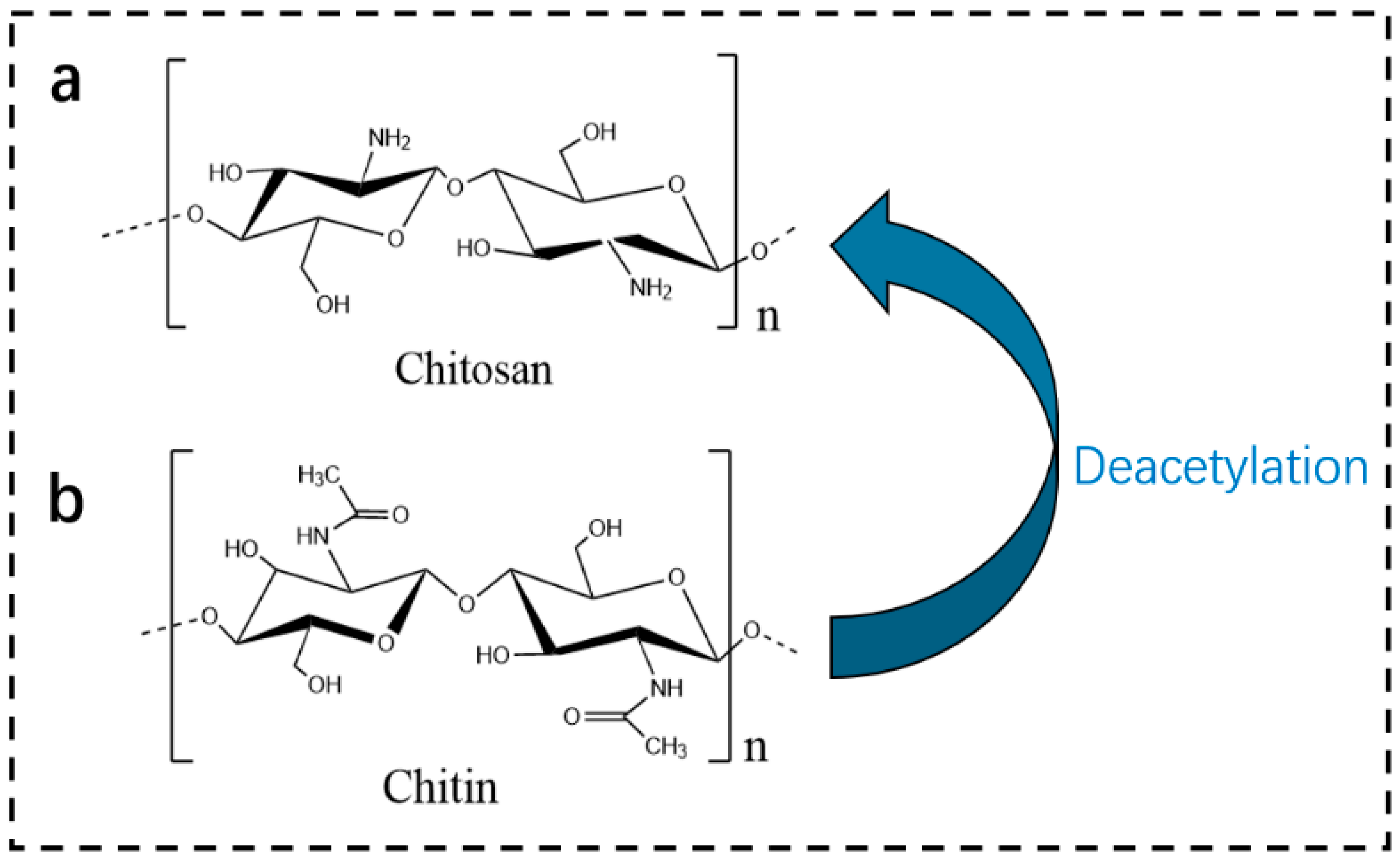
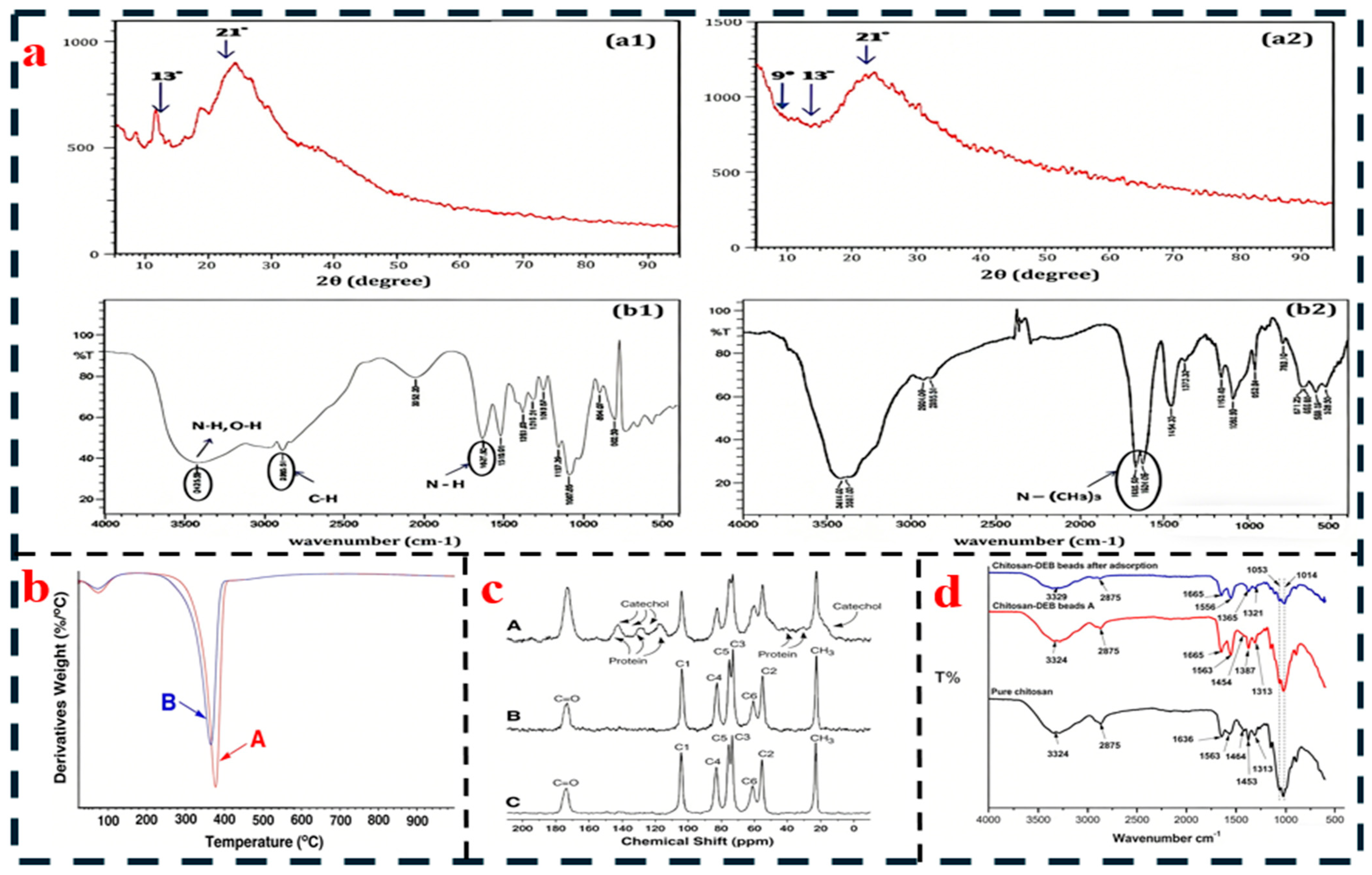
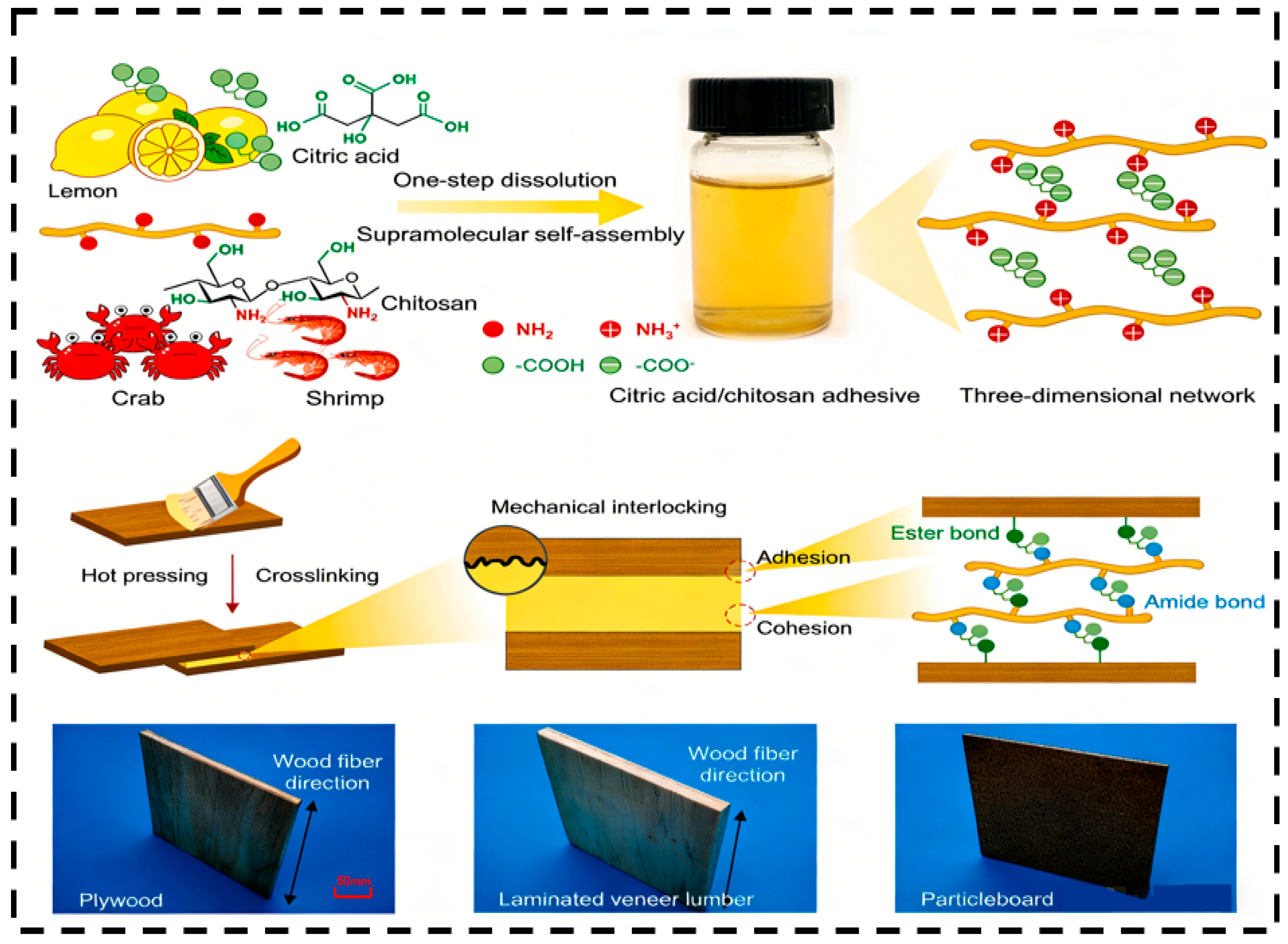
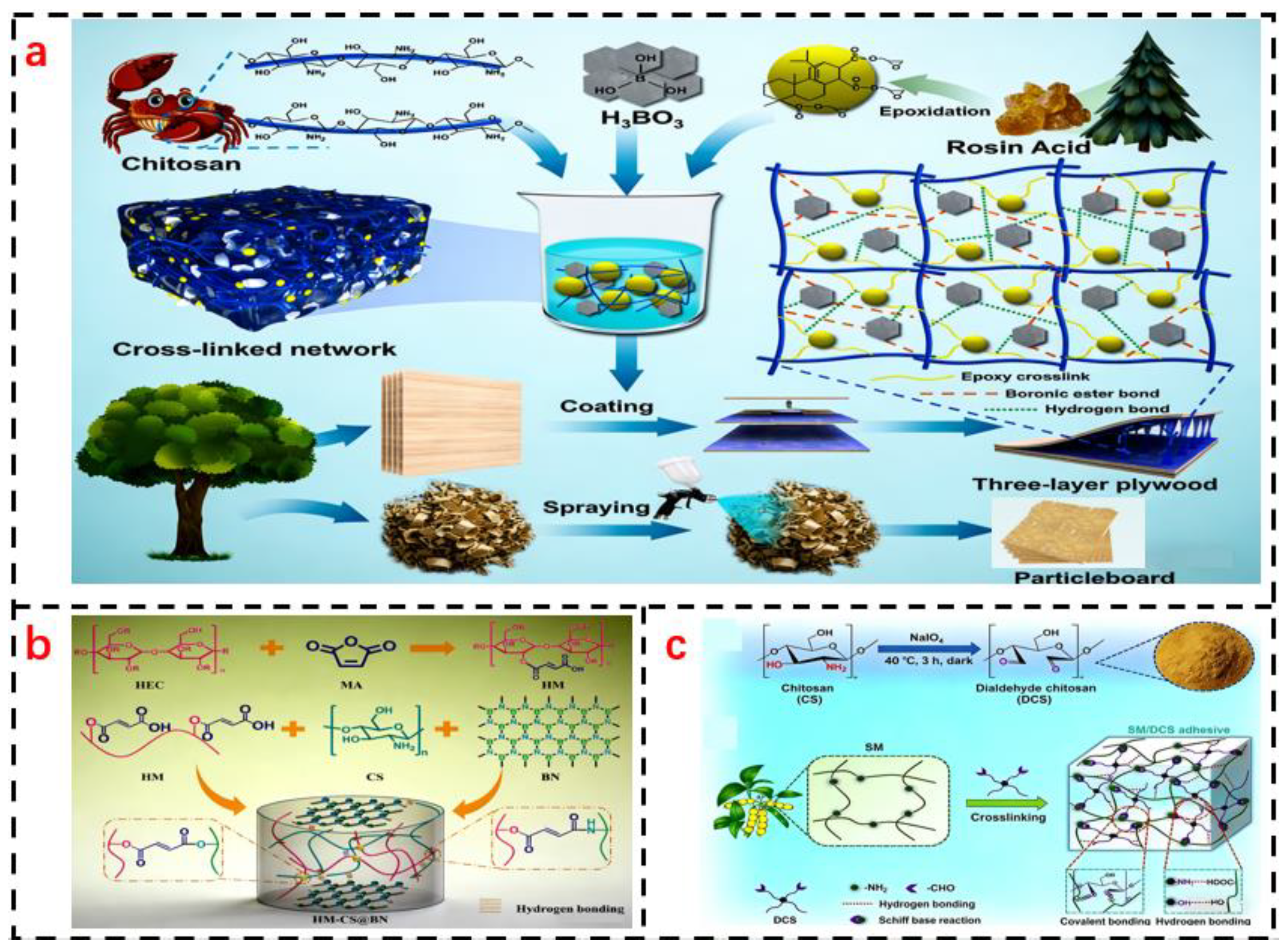



| Raw Material Category | Specific Source | Main Distribution Acquisition Pathway | Chitin/Chitosan Content (dry weight) | Advantages & Characteristics | References |
|---|---|---|---|---|---|
| Marine Biomass Waste | Shrimp shells (e.g., Penaeus, Macrobrachium) | Seafood processing waste; global annual production exceeds 6 million tons, concentrated in coastal fishery processing zones | Chitin: 15–25%; Chitosan (after deacetylation): 8–18% | Centralized source, large output, mature extraction process, high industrial potential | [41,42,43] |
| Crab shells (e.g., Portunus, Scylla) | Seafood processing waste; annual production exceeds 3 million tons; chitin content higher than shrimp shells | Chitin: 20–30%; Chitosan (after deacetylation): 12–22% | High chitin purity, lower impurity (protein, mineral) content, relatively low extraction cost | [1,42,44,45] | |
| Lobster shells (e.g., Homarus americanus) | High-end seafood processing waste; mainly distributed in North America, Europe, and coastal China | Chitin: 18–28%; Chitosan (after deacetylation): 10–20% | Large chitin molecular weight, excellent mechanical properties, suitable for high-performance adhesive raw materials | [43,46] | |
| Other Sources | Cicada slough (e.g., Cryptotympana atrata) | Terrestrial insect waste; widely distributed in temperate and subtropical regions; obtainable via manual collection or farming | Chitin: 10–18%; Chitosan (after deacetylation): 6–14% | Free from marine salt impurities; no complex desalting steps required during extraction; product purity easily controlled | [42,47] |
| Fungal cell walls (e.g., yeast, mold) | Microbial fermentation industry waste (e.g., Saccharomyces cerevisiae residue); artificially cultured fungi (e.g., Aspergillus niger) | Chitin: 5–12%; Chitosan (naturally present in some fungi): 3–8% | Scalable production via microbial fermentation; not limited by season or geography; composition easily adjustable | [48,49] | |
| Squid cartilage, Cuttlebone | Cephalopod seafood processing waste; relatively low yield; concentrated in deep-sea fishery processing zones | Chitin: 8–15%; Chitosan (after deacetylation): 5–10% | Unique chitin structure (low crystallinity), good solubility, easy modification, suitable for biomedical adhesives | [43,49] |
| Process Category | Specific Process Step | Core Parameters | Process Characteristics | Application Suitability (Adhesive Scenarios) | References |
|---|---|---|---|---|---|
| Traditional Extraction Methods | Demineralization (Acid/Alkali Method) | Acid type: Hydrochloric acid/Sulfuric acid; Concentration: 5–15%; Temperature: 20–80 °C; Time: 1–6 h; Solid-to-liquid ratio: 1:10–1:20 | High efficiency in removing calcium salts and other minerals (removal rate > 95%), low cost, industrially mature, but high acid consumption, prone to equipment corrosion and wastewater pollution | Suitable for large-scale production of general wood adhesive raw materials, e.g., chitin extraction from shrimp/crab shells; subsequent neutralization required to treat residual acid | [52,53] |
| Deproteinization (Acid/Alkali Method) | Alkali type: Sodium hydroxide; Concentration: 4–10%; Temperature: 60–100 °C; Time: 2–8 h; Solid-to-liquid ratio: 1:8–1:15 | Protein removal rate > 90%, process easily controlled, but high temperature and strong alkali may degrade chitin molecular chains and reduce molecular weight | Suitable for preparing medium- to low-strength adhesives (e.g., paper bonding); subsequent molecular weight adjustment needed to avoid insufficient bonding strength | [54,55] | |
| Deacetylation (Preparation of Chitosan) | Alkali type: Sodium hydroxide; Concentration: 30–50%; Temperature: 80–120 °C; Time: 2–10 h; Stirring rate: 100–300 rpm | Controllable degree of deacetylation (DD) (50–95%), but energy-intensive, difficult alkali recovery, and may cause chitosan degradation | Adjustable DD to suit different adhesives: High DD (>80%) chitosan, with more amino groups, suitable for cross-linking with aldehydes to prepare high-strength wood adhesives | [49,56] | |
| Green Extraction Technologies | Enzymatic Hydrolysis (Deproteinization/Demineralization) | Enzyme type: Protease (alkaline/neutral protease), phosphatase; Enzyme activity: 1000–5000 U/g; Temperature: 30–50 °C; pH: 6–9; Time: 4–12 h | Environmentally friendly, non-corrosive, protein removal rate > 85%, minimal damage to chitin molecular chains, but enzyme cost is high (approximately 2–3 times that of acid/alkali method) and reaction cycle is long | Suitable for high-purity adhesive raw materials (e.g., medical/dental adhesives), avoiding chemical residue affecting biocompatibility | [57,58,59] |
| Microbial Fermentation (Full-process Extraction) | Strain: Bacillus/Yeast; Fermentation temperature: 25–37 °C; pH: 5–8; Fermentation time: 24–72 h; Carbon-to-nitrogen ratio: 10–20:1 | Simultaneous demineralization and deproteinization, no chemical reagents required, high product purity (chitin purity > 90%), but fermentation cycle is long and yield is low | Suitable for laboratory-scale small-batch preparation of high-purity chitosan for antibacterial adhesives (e.g., composite adhesives inhibiting wood mold) | [60,61] | |
| Ultrasound/Microwave-Assisted Extraction (Enhanced Demineralization/Deproteinization) | Ultrasound power: 200–500 W; Microwave power: 300–800 W; Assistance time: 10–60 min; Combined with acid/alkali method | Reduces traditional process time by 30–60%, lowers acid/alkali consumption by 20–40%, but requires specialized equipment and has high scale-up costs | Adaptable for upgrading existing industrial acid/alkali methods, improving production efficiency of wood adhesive raw materials and reducing energy consumption | [62,63,64,65] | |
| Purification & Refining Processes | Impurity Removal (Decolorization/Desalting) | Decolorizing agent: Activated carbon/Hydrogen peroxide; Concentration: 1–5%; Temperature: 40–60 °C; Desalting: Deionized water dialysis/Ion exchange resin | Decolorization rate > 80%, ash content reduced to <1%, but activated carbon may adsorb some chitosan, reducing recovery yield | Used for high-transparency adhesives (e.g., packaging adhesives) or medical adhesives, avoiding impurities affecting appearance and biosafety | [66] |
| Degree of Deacetylation (DD) Control | Stepwise deacetylation: Multiple treatments with low-concentration alkali (10–20% NaOH); Temperature gradient: 60 → 80 → 100 °C; Time: 1–3 h/step | DD precision control ±2%, enabling preparation of chitosan with specific DD (e.g., 60%, 80%) to meet different cross-linking requirements | High DD (>80%) suitable for aldehyde cross-linking (e.g., dialdehyde starch); low DD (50–60%) suitable for acidic cross-linking (e.g., citric acid); used for wood/paper adhesives | [67,68] | |
| Molecular Weight Control (Degradation/Fractionation) | Degradation: Hydrogen peroxide (concentration 0.5–2%)/Ultrasound (300–600 W); Fractionation: Ethanol precipitation (concentration 30–70%) | Molecular weight adjustable from 1 × 10⁴ to 1 × 10⁶ Da, narrow distribution (PDI 1.2–1.8), but degradation may introduce oxygen-containing impurities | Low molecular weight (<1 × 10⁵ Da) chitosan suitable for low-viscosity coating adhesives (e.g., plywood); high molecular weight (>5 × 10⁵ Da) used for high-strength structural adhesives | [69] |
| Adhesive Type | Curing Temperature | Curing Time | Curing Pressure | Test Standard | Reference |
|---|---|---|---|---|---|
| CS-PAA@Ca2+ | 120 °C | 6.5 min | 1 MPa | Industry-standard severe “4+4+1” test: boiling water immersion for 4 h → drying for 20 h → boiling water re-immersion for 4 h → cold water immersion for 1 h, followed by testing | [86] |
| Hemicellulose–Chitosan Composite Adhesive | 120 °C | 2.5 min | 1.67 MPa | European Standards EN 204, EN 205 | [87] |
| SM/DCS Composite Adhesive | 120 °C | 6 min | 1 MPa | No specific standard; experimental conditions: 30 °C, 99% relative humidity (RH), continued for 30 d, observing mold growth | [13] |
| CSC-G Carboxylated Chitosan–Glucose Adhesive | 140–200 °C (optimum 160 °C) | 1–10 min (optimum 3 min) | 1 MPa | Chinese Standards GB/T 9846-2015, GB/T 17657-2013 | [72] |
| Chitosan–Dopamine Composite Adhesive | Room temperature—120 °C | 2 h | Adjusted as needed (no explicit pressure specified in some cases) | No specific standard; experimental conditions applied | [88] |
| Key Parameter | Influence Pattern on Bonding Performance | Specific Manifestations | References |
|---|---|---|---|
| Degree of Deacetylation (DD) | Positive correlation dominates; higher DD favors improved bonding strength and water resistance. | When DD ≥ 90%, wet shear strength is significantly increased (e.g., reaching 1.40 MPa for CS-PB adhesive). Increased amino group (-NH2) content enhances hydrogen bonding/electrostatic interactions with wood hydroxyl groups and crosslinking reactivity. Excessively high DD (>95%) may reduce solubility due to increased crystallinity, slightly weakening interfacial bonding. | [9,89,90] |
| Molecular Weight (Mw) | Medium molecular weight (50,000–300,000 Da) is optimal; too low or too high is detrimental. | Low Mw (<50,000 Da): High penetration but weak cohesion, dry shear strength < 1.5 MPa. Medium Mw: Balances penetration and cohesion, dry shear strength can reach 2.3–5.6 MPa. High Mw (>500,000 Da): High viscosity, poor penetration, prone to forming “starved glue lines,” resulting in decreased wet strength. | [71] |
| Crosslinking Density | Moderate crosslinking is optimal; either too high or too low impairs performance. | Low crosslinking density: Loose network, poor water resistance (wet strength < 0.5 MPa). Moderate crosslinking (e.g., GL/C = 1:1): Forms a dense three-dimensional network, achieving dry strength > 2.0 MPa and wet strength > 0.8 MPa. Excessively high crosslinking density: Increased brittleness, stress concentration at the interface, leading to decreased bonding strength. | [21,90] |
| Reagent Name | Reagent Type | Function Description | Reference |
|---|---|---|---|
| Sodium Tripolyphosphate (TPP) | Ionic Crosslinking Agent | Interacts electrostatically with the amino groups of chitosan to form ionic crosslinks, facilitating the preparation of nanoparticles and enhancing their stability and dispersibility. | [96] |
| Glutaraldehyde | Covalent Crosslinking Agent | Undergoes a Schiff base reaction with chitosan amino groups to form imine crosslinks, constructing a porous network structure that enhances adsorption capacity and thermal stability. | [30] |
| Citric Acid (CA) | Crosslinker/Solvent | Dissolves chitosan and facilitates supramolecular self-assembly via ionic and hydrogen bonding. After hot-pressing, ester and amide bonds form, enabling viscosity modulation and improving water resistance. | [9] |
| Glycerol Triglycidyl Ether (GTE) | Epoxy Modifier | Epoxidizes lignosulfonate by introducing epoxy groups, enhancing crosslinking reactions with amino and hydroxyl groups of chitosan, and constructing a dense three-dimensional network. | [21] |
| 1,4-Phenylenediboronic Acid (PBA) | Dynamic Covalent Crosslinker | Forms boronic ester dynamic bonds with lignin-derived 3,4-dihydroxybenzaldehyde, which subsequently reacts with chitosan amino groups to form imine bonds, endowing the adhesive with recyclability and high bonding strength. | [90] |
| Poly(sodium 4-styrenesulfonate) (PSS) | Polyanionic Electrolyte | Forms polyelectrolyte complexes (PECs) with cationic chitosan via electrostatic interactions, stabilizing the system. Simultaneously, π-π stacking occurs with lignin, improving compatibility. | [9] |
| 3,4-Dihydroxybenzaldehyde (DBA) | Functional Monomer/Crosslinking Intermediate | Reacts with 1,4-phenylenediboronic acid to generate a dialdehyde-containing monomer, which then forms imine bonds with chitosan, constructing a dynamic crosslinked network that enhances bonding strength and mildew resistance. | [90] |
Disclaimer/Publisher’s Note: The statements, opinions and data contained in all publications are solely those of the individual author(s) and contributor(s) and not of MDPI and/or the editor(s). MDPI and/or the editor(s) disclaim responsibility for any injury to people or property resulting from any ideas, methods, instructions or products referred to in the content. |
© 2026 by the authors. Licensee MDPI, Basel, Switzerland. This article is an open access article distributed under the terms and conditions of the Creative Commons Attribution (CC BY) license.
Share and Cite
Luo, Y.; Zhang, Z.; Zuo, J.; Zhang, L. Research Progress in Chitin/Chitosan-Based Biomass Adhesives: Extraction Processes, Composite and Chemical Modification. Polymers 2026, 18, 337. https://doi.org/10.3390/polym18030337
Luo Y, Zhang Z, Zuo J, Zhang L. Research Progress in Chitin/Chitosan-Based Biomass Adhesives: Extraction Processes, Composite and Chemical Modification. Polymers. 2026; 18(3):337. https://doi.org/10.3390/polym18030337
Chicago/Turabian StyleLuo, Yizhang, Ziying Zhang, Jiachen Zuo, and Libo Zhang. 2026. "Research Progress in Chitin/Chitosan-Based Biomass Adhesives: Extraction Processes, Composite and Chemical Modification" Polymers 18, no. 3: 337. https://doi.org/10.3390/polym18030337
APA StyleLuo, Y., Zhang, Z., Zuo, J., & Zhang, L. (2026). Research Progress in Chitin/Chitosan-Based Biomass Adhesives: Extraction Processes, Composite and Chemical Modification. Polymers, 18(3), 337. https://doi.org/10.3390/polym18030337