pH-Responsive Polyethylene Oxide-Based Electrospun Nanofibers for Controlled Drug Release in Infected Wound Treatment

 ,
,  and
and 
Abstract
1. Introduction
2. Materials and Methods
2.1. Materials
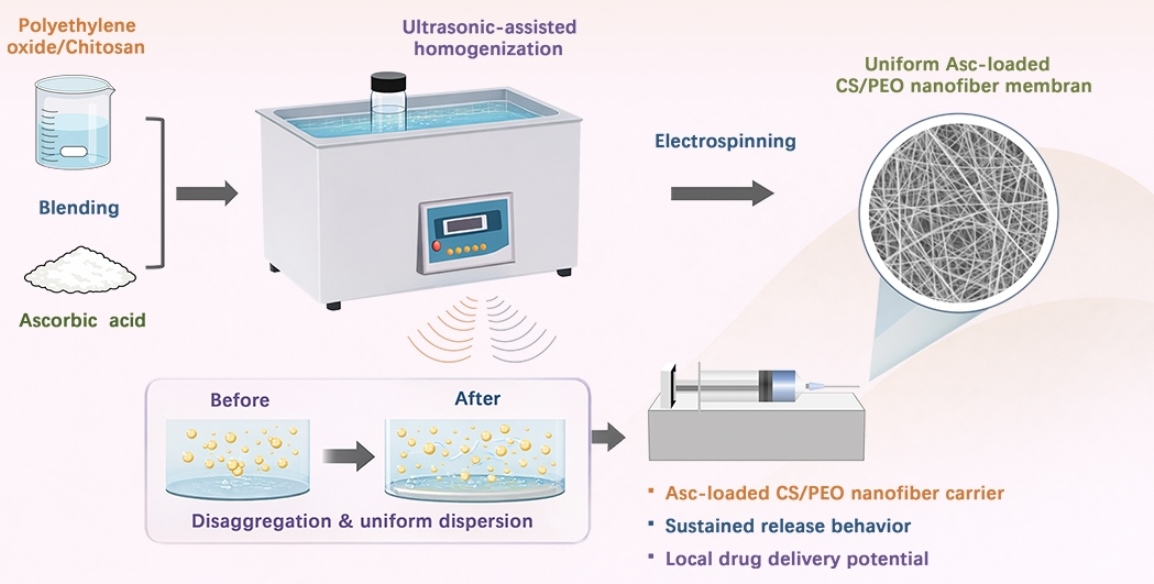
2.2. Preparation of PEO/CS/Asc Composite Fiber Membranes
2.3. Characteristics
2.3.1. Field Emission Scanning Electron Microscopy (SEM)
2.3.2. Fourier Transform Infrared Spectroscopy (FTIR)
2.3.3. Contact Angle
2.3.4. In Vitro Release
2.3.5. Antibacterial Activity
2.3.6. Antioxidant Activity
3. Results
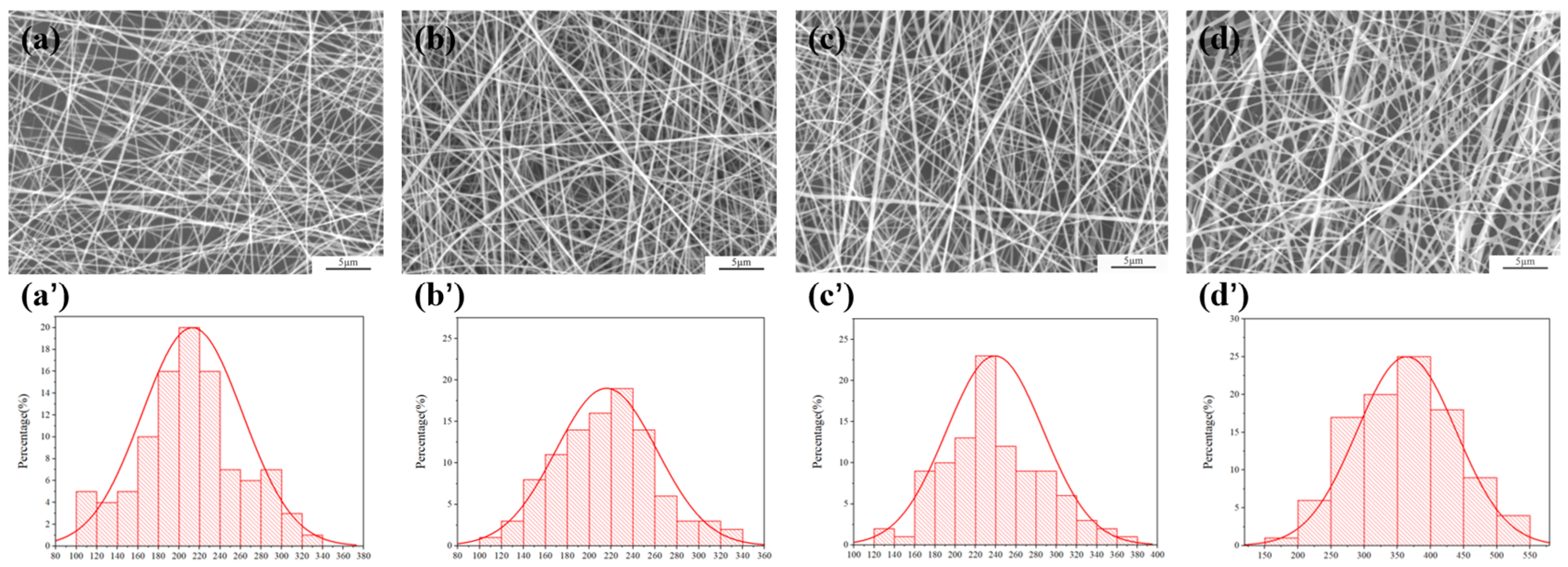
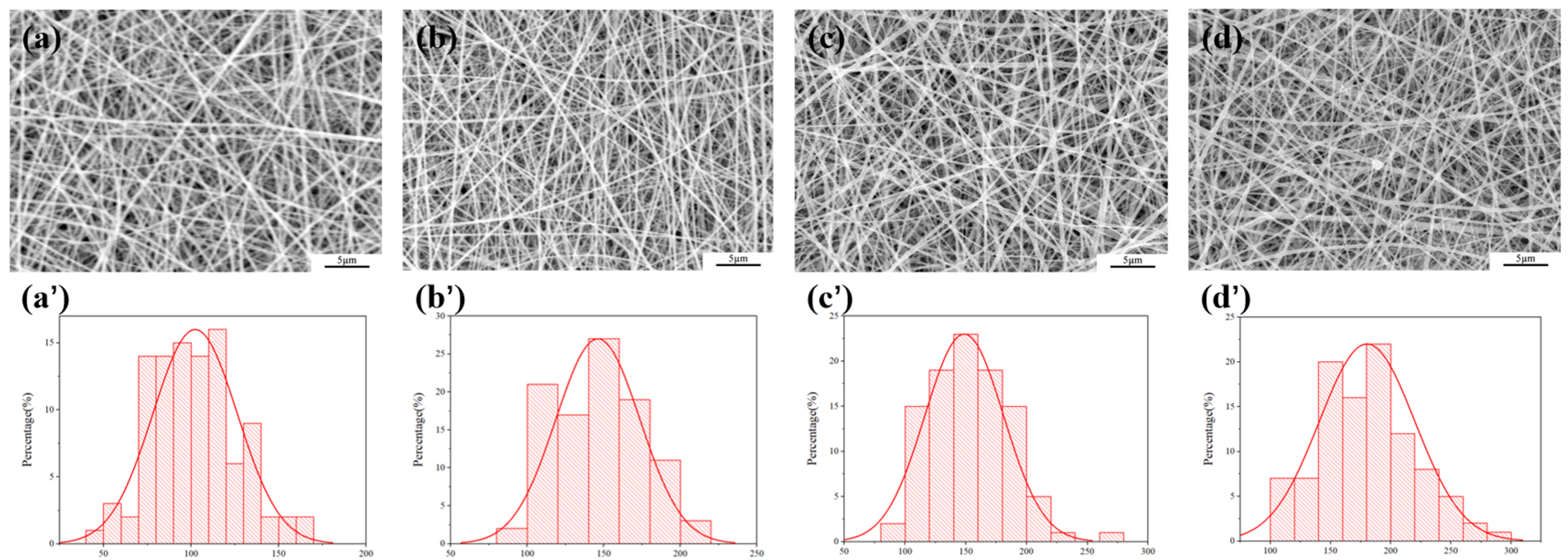
3.1. Microscopic Morphology of Nanofibers
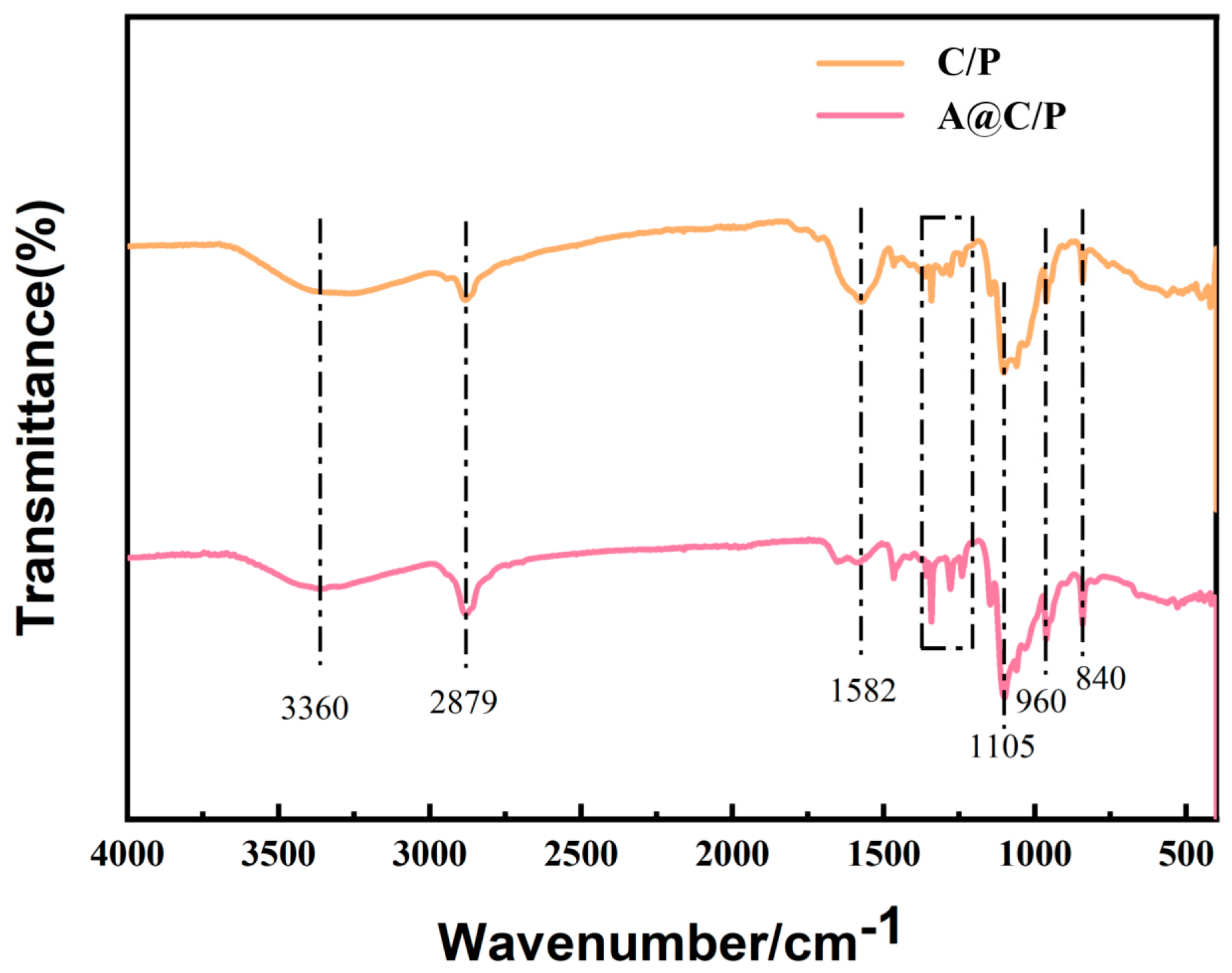
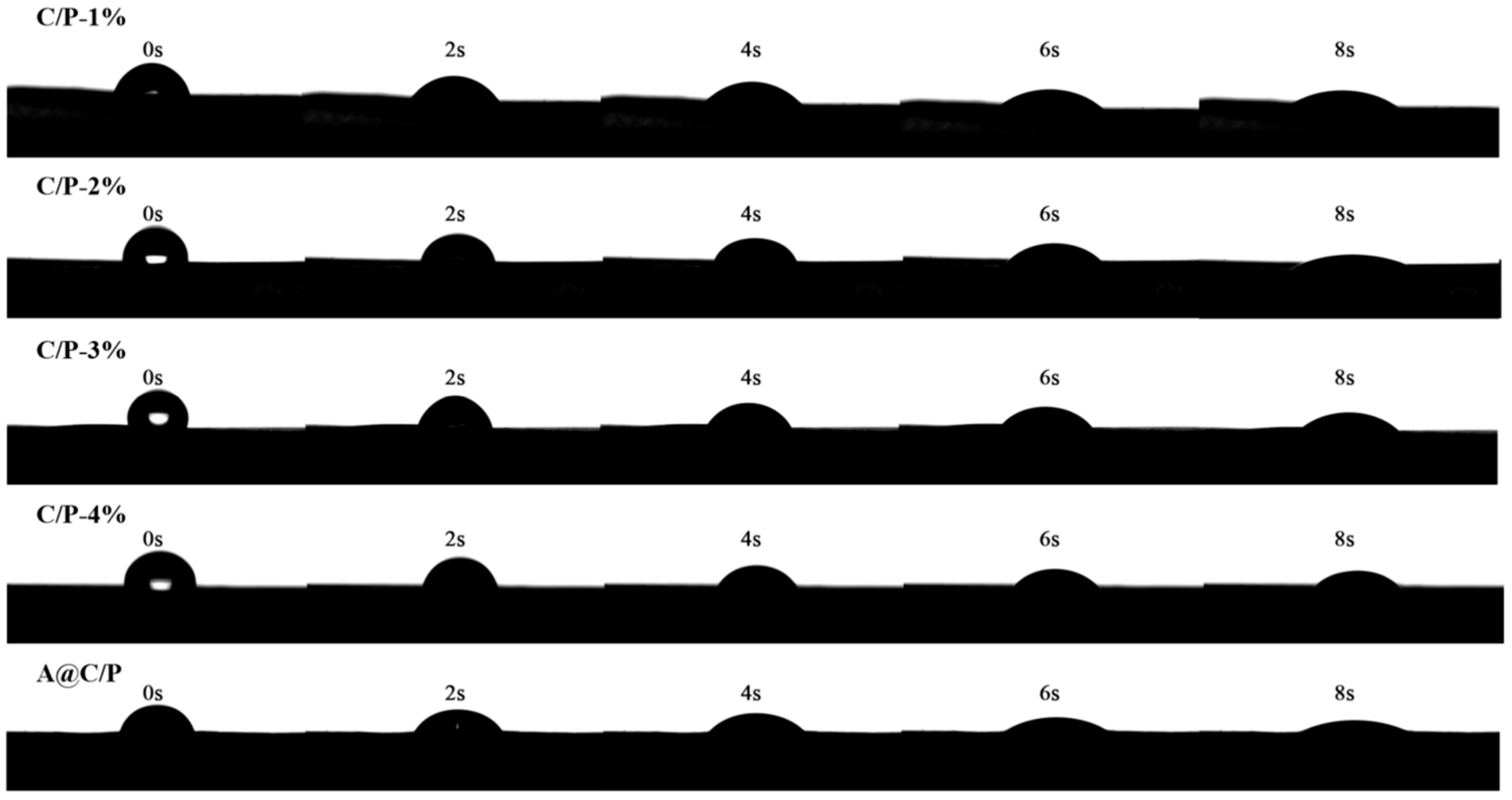
3.2. Chemical Structure and Surface Property Analysis
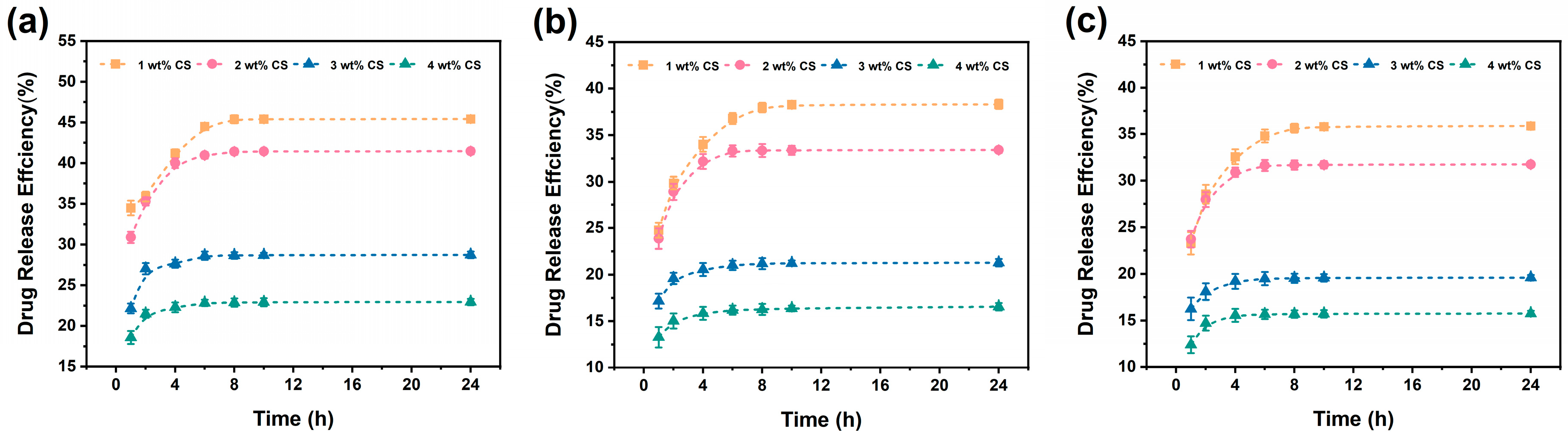
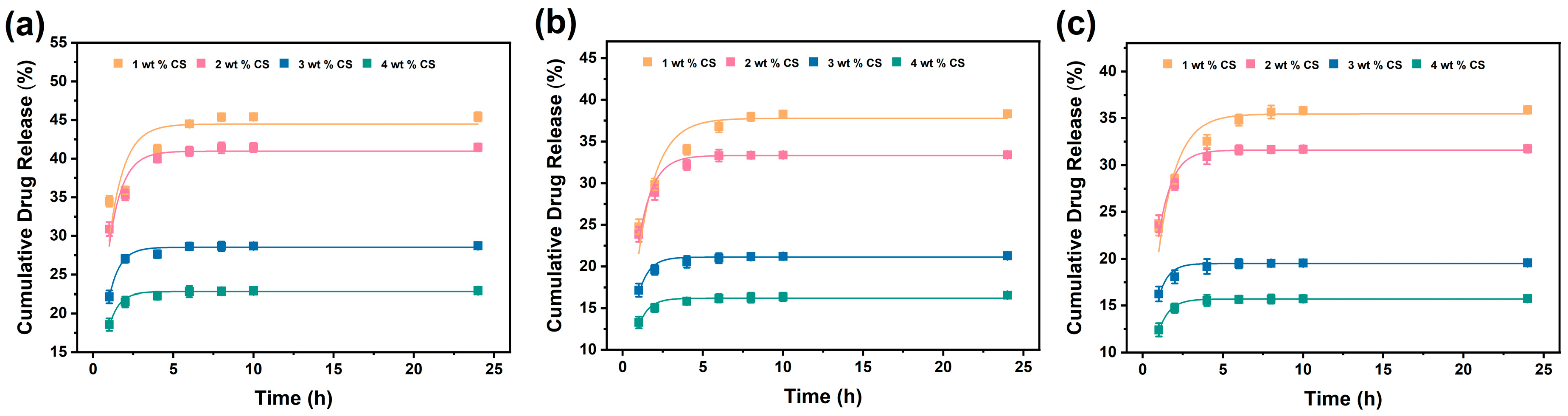
3.3. Analysis of In Vitro Drug Release Behavior
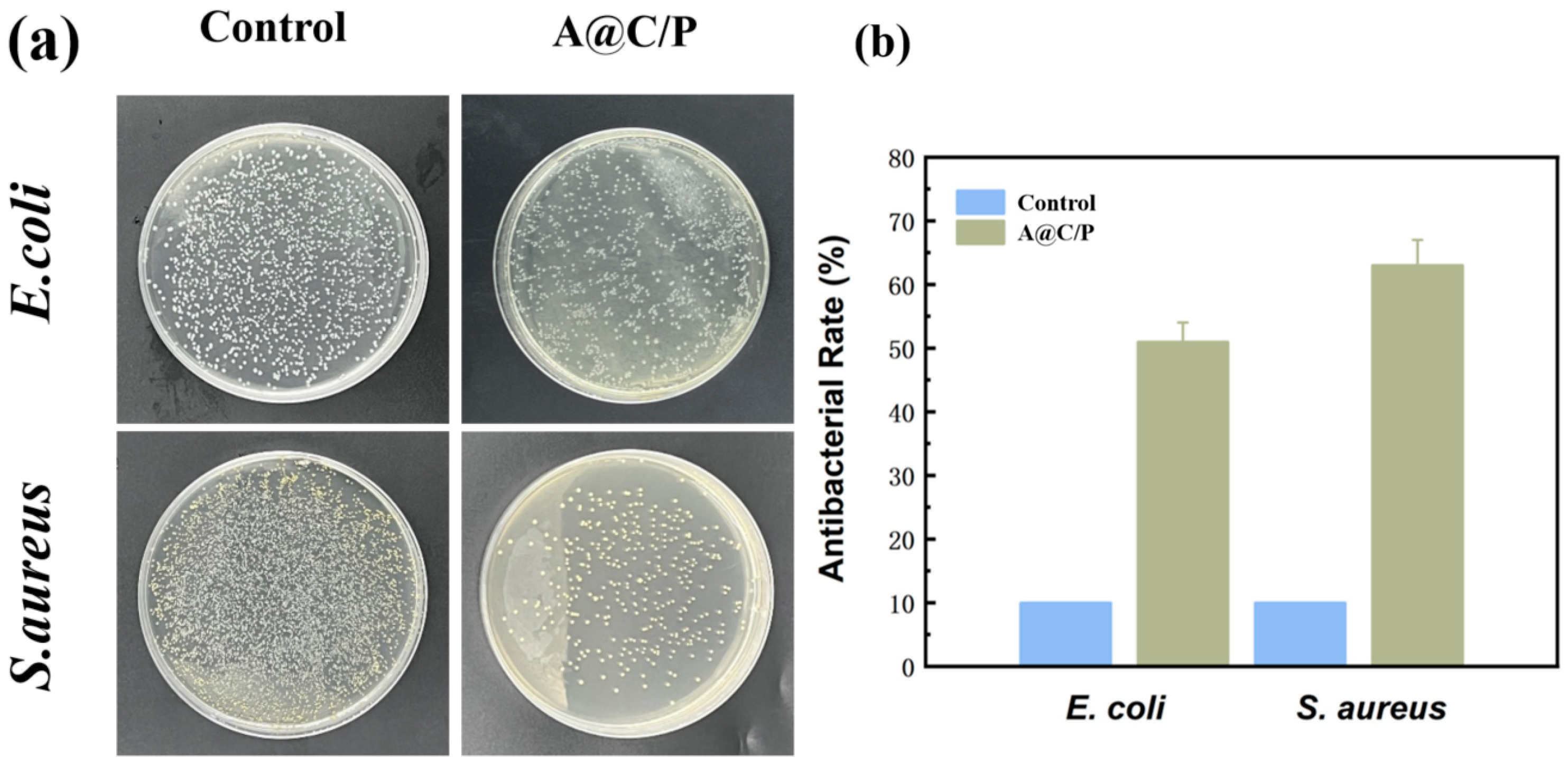
3.4. Evaluation of the Biological Properties of Materials
4. Discussion
Supplementary Materials
Author Contributions
Funding
Data Availability Statement
Acknowledgments
Conflicts of Interest
References
- Zhang, H.; Chen, C.; Zhang, H.; Chen, G.; Wang, Y.; Zhao, Y. Janus medical sponge dressings with anisotropic wettability for wound healing. Appl. Mater. Today 2021, 23, 101068. [Google Scholar] [CrossRef]
- Yang, Y.; Liu, G.; Tang, Y.; Xu, Y.; Ma, T.; Ma, W.; Zhu, H.; Chen, J.; Lei, C.; Wang, Y. pH-responsive medical dressing based on zinc sulfide nanoparticle/silk fibroin composite fibers. ACS Appl. Nano Mater. 2024, 7, 15615–15625. [Google Scholar] [CrossRef]
- Gu, J.; Dai, X.; Liu, S.; Zhang, X.; Hu, Y.; Zhang, Y.; Zou, Z. Preparation of hydrophobic spray-coated spunlace nonwoven fabrics: Possessing the potential for anti-adhesive medical dressings. Surf. Interfaces 2024, 49, 104366. [Google Scholar] [CrossRef]
- Zeng, Q.; Qi, X.; Shi, G.; Zhang, M.; Haick, H. Wound dressing: From nanomaterials to diagnostic dressings and healing evaluations. ACS Nano 2022, 16, 1708–1733. [Google Scholar] [CrossRef]
- Yue, Y.; Xu, R.; Li, N. Integrating piezoelectric dressings with botanicals as emerging smart dressings for diabetic wound healing. Nanoscale 2025, 17, 20044–20056. [Google Scholar] [CrossRef]
- Patenall, B.L.; Carter, K.A.; Ramsey, M.R. Kick-starting wound healing: A review of pro-healing drugs. Int. J. Mol. Sci. 2024, 25, 1304. [Google Scholar] [CrossRef]
- Dong, R.; Guo, B. Smart wound dressings for wound healing. Nano Today 2021, 41, 101290. [Google Scholar] [CrossRef]
- Tricou, L.-P.; Al-Hawat, M.-L.; Cherifi, K.; Manrique, G.; Freedman, B.R.; Matoori, S. Wound pH-modulating strategies for diabetic wound healing. Adv. Wound Care 2024, 13, 446–462. [Google Scholar] [CrossRef]
- Chen, J.; Low, Z.-X.; Feng, S.; Zhong, Z.; Xing, W.; Wang, H. Nanoarchitectonics for electrospun membranes with asymmetric wettability. ACS Appl. Mater. Interfaces 2021, 13, 60763–60788. [Google Scholar] [CrossRef]
- Jiang, Z.; Nguyen, B.T.D.; Seo, J.; Hong, C.; Kim, D.; Ryu, S.; Lee, S.; Lee, G.; Cho, Y.H.; Kim, J.F. Superhydrophobic polydimethylsiloxane dip-coated polycaprolactone electrospun membrane for extracorporeal membrane oxygenation. J. Membr. Sci. 2023, 679, 121715. [Google Scholar] [CrossRef]
- Sheng, S.; Yin, X.; Chen, F.; Lv, Y.; Zhang, L.; Cao, M.; Sun, Y. Preparation and characterization of PVA-co-PE drug-loaded nanofiber membrane by electrospinning technology. AAPS PharmSciTech 2020, 21, 199. [Google Scholar] [CrossRef]
- Yan, X.; Xu, B.; Xia, C.; Xu, M.; Zeng, B.; Zhang, R.; Zhu, L.; Zhang, C. Dual drug-loaded core-shell nanofibers membranes via emulsion electrospinning and their controllable sustained release property. J. Drug Deliv. Sci. Technol. 2023, 88, 104909. [Google Scholar] [CrossRef]
- Huang, Y.; Wang, L.; Liu, Y.; Li, T.; Xin, B. Drug-loaded PLCL/PEO-SA bilayer nanofibrous membrane for controlled release. J. Biomater. Sci. Polym. Ed. 2021, 32, 2331–2348. [Google Scholar] [CrossRef] [PubMed]
- Guo, J.; Wang, T.; Yan, Z.; Ji, D.; Li, J.; Pan, H. Preparation and evaluation of dual drug-loaded nanofiber membranes based on coaxial electrostatic spinning technology. Int. J. Pharm. 2022, 629, 122410. [Google Scholar] [CrossRef]
- Hu, Q.; Tang, W.; Song, Y.; Zhang, H. Preparation and characterization of drug-loaded coaxial electrospun nanofibers membranes with pH-responsive and antibacterial properties. J. Drug Deliv. Sci. Technol. 2025, 104, 106533. [Google Scholar] [CrossRef]
- Ashfaq, M.; Khan, S.; Verma, N. Synthesis of PVA-CAP-based biomaterial in situ dispersed with Cu nanoparticles and carbon micro-nanofibers for antibiotic drug delivery applications. Biochem. Eng. J. 2014, 90, 79–89. [Google Scholar] [CrossRef]
- Xi, J.; Qi, X.; Zhao, Y.; Feng, Y.; Peng, Z.; Wang, Y.; Cai, C.; Yang, D.; Chen, L.; Luo, J. Self-pumping Janus nanofiber membrane with pH monitoring capability, integrated with a drug-loaded fast-dissolving layer for enhanced chronic wound healing. Colloids Surf. B Biointerfaces 2025, 257, 115096. [Google Scholar] [CrossRef]
- Chen, J.; Xu, F.; Wei, Y.; Qi, J. Dual-carrier drug-loaded composite membrane dressings of mesoporous silica and layered double hydroxides. J. Drug Deliv. Sci. Technol. 2022, 75, 103634. [Google Scholar] [CrossRef]
- Shahravi, Z.; Mehdikhani, M.; Amirkhani, M.A.; Mollapour Sisakht, M.; Farsaei, S. Multifunctional electrospun polyvinyl alcohol/gellan gum/polycaprolactone nanofibrous membrane containing pentoxifylline to accelerate wound healing. Polym. Bull. 2023, 80, 2217–2237. [Google Scholar] [CrossRef]
- Surendranath, M.; Rajalekshmi, R.; Ramesan, R.M.; Nair, P.; Parameswaran, R. UV-Crosslinked electrospun Zein/PEO fibroporous membranes for wound dressing. ACS Appl. Bio Mater. 2022, 5, 1538–1551. [Google Scholar] [CrossRef]
- Kianfar, P.; Vitale, A.; Dalle Vacche, S.; Bongiovanni, R. Enhancing properties and water resistance of PEO-based electrospun nanofibrous membranes by photo-crosslinking. J. Mater. Sci. 2021, 56, 1879–1896. [Google Scholar] [CrossRef]
- Zhao, Z.; Li, Y.; Wu, J.; Shi, Z.; Zhao, P.; Su, H.; Wang, Q.; Jin, L. Nanofiber orodispersible films based on carboxymethyl curdlan and PEO: New delivery system for amlodipine besylate. Colloids Surf. Physicochem. Eng. Asp. 2022, 635, 128096. [Google Scholar] [CrossRef]
- Yang, Q.; Guo, J.; Zhang, S.; Guan, F.; Yu, Y.; Yao, Q.; Zhang, X.; Xu, Y. PVA/PEO/PVA-g-APEG nanofiber membranes with cytocompatibility and anti-cell adhesion for biomedical applications. Colloids Surf. Physicochem. Eng. Asp. 2023, 657, 130638. [Google Scholar] [CrossRef]
- Zhang, J.; Li, Y.; Wu, H.; Wang, C.; Salleh, K.M.; Li, H.; Zakaria, S. Thermally treated berberine-loaded SA/PVA/PEO electrospun microfiber membranes for antibacterial wound dressings. Polymers 2022, 14, 4473. [Google Scholar] [CrossRef]
- Fan, J.; Lei, T.; Yu, M.; Wang, Y.; Cao, F.; Yang, Q.; Tian, F.; Liu, Y. Keratin/PEO/hydroxyapatite nanofiber membrane with improved mechanical property for potential burn dressing application. Fibers Polym. 2020, 21, 366–375. [Google Scholar] [CrossRef]
- Bulbul, Y.E.; Okur, M.; Demirtas-Korkmaz, F.; Dilsiz, N. Development of PCL/PEO electrospun fibrous membranes blended with silane-modified halloysite nanotube as a curcumin release system. Appl. Clay Sci. 2020, 186, 105430. [Google Scholar] [CrossRef]
- Zou, C.; Chen, K.; Zheng, S.; Zhang, M.; Liu, Y.; Ma, Z.; Wang, L.; Jin, Z.; Cheng, Y.; Zhang, J. ZnO@ PVDF/CS Piezoelectric Nanofibrous Membrane Promotes the Healing of Infected Wounds Stimulated by Low-Intensity Pulsed Ultrasound. ACS Appl. Mater. Interfaces 2025, 17, 66518–66533. [Google Scholar] [CrossRef] [PubMed]
- Danagody, B.; Bose, N.; Sudhakar, S.; Selvaraj, V.; Rajappan, K. Emerita Analoga Shell-Derived CS/GO Composite Incorporated into a Biomimetic PAN Nanofiber Membrane for Enhanced Bone Tissue Regeneration. ACS Appl. Bio Mater. 2025, 8, 3239–3253. [Google Scholar] [CrossRef]
- Li, T.-T.; Yan, M.; Zhong, Y.; Ren, H.-T.; Lou, C.-W.; Huang, S.-Y.; Lin, J.-H. Processing and characterizations of rotary linear needleless electrospun polyvinyl alcohol (PVA)/Chitosan (CS)/Graphene (Gr) nanofibrous membranes. J. Mater. Res. Technol. 2019, 8, 5124–5132. [Google Scholar] [CrossRef]
- Narmadha, R.; Siranjeevi, R.; Kannan, M.; Kala, K. Evaluation of CAP@ CS nanoparticles infused cellulose acetate membrane and their invitro antidiabetic, anticancer and antibacterial activity. Surf. Interfaces 2023, 40, 103009. [Google Scholar] [CrossRef]
- Zhang, W.; Liu, H.; Yan, L.; Mei, X.; Hou, Z. Combining emulsion electrospinning with surface functionalization to fabricate multistructural PLA/CS@ ZIF-8 nanofiber membranes toward pH-responsive dual drug delivery. Int. J. Biol. Macromol. 2023, 253, 126506. [Google Scholar] [CrossRef]
- Ji, Q.; Su, L.; Boateng, I.D.; Li, Z.; Zhou, C.; Liu, X.; Ma, Y. Preparation of chitosan/peanut shell nano-lignocellulose (CS/NLC) composite film and its preservation effect on cherry tomato and blueberry. Ind. Crops Prod. 2025, 228, 120881. [Google Scholar] [CrossRef]
- Alimohammadi, M.; Fakhraei, O.; Moradi, A.; Kabiri, M.; Passandideh-Fard, M.; Tamayol, A.; Ebrahimzadeh, M.H.; Shaegh, S.A.M. Controlled release of azithromycin from polycaprolactone/chitosan nanofibrous membranes. J. Drug Deliv. Sci. Technol. 2022, 71, 103246. [Google Scholar] [CrossRef]
- Zhang, H.; Wen, X.; Xu, Y.; Lei, Y.; Zhang, X.; Liang, J. Tourmaline nanoparticles applying in chitosan/polyvinyl alcohol fibrous membrane for hemostatic and antibacterial wound dressing. Mater. Today Commun. 2024, 41, 111040. [Google Scholar] [CrossRef]
- Zang, C.; Zhang, Y.; Yang, W.; Hu, Y. Polycaprolactone/chitosan electrospun nanofibrous membranes loaded Chinese yam polysaccharide for active food packaging. LWT 2024, 198, 115985. [Google Scholar] [CrossRef]
- Ahmed, A.; Zhang, M.; Li, S.; Xu, L. Batch preparation and characterization of anthocyanin/CS/PEO nanofiber membranes for food packages. Fibers Polym. 2023, 24, 3075–3084. [Google Scholar]
- Abutalib, M.; Rajeh, A. Enhanced structural, electrical, mechanical properties and antibacterial activity of Cs/PEO doped mixed nanoparticles (Ag/TiO2) for food packaging applications. Polym. Test. 2021, 93, 107013. [Google Scholar] [CrossRef]
- Xia, J.; Yang, Y.; Jiang, X.; Shabbir, M.; Luo, X. Cobalt oxyhydroxide nanoflakes/cellulose composite membranes with enhanced detection of ascorbic acid. ACS Appl. Polym. Mater. 2021, 4, 469–478. [Google Scholar] [CrossRef]
- Zhao, D.; Liu, J.; Liu, G.; Hou, L.; Zhou, L.; Wang, C.; Wen, Y. Ascorbyl palmitate/hydroxypropyl-β-cyclodextrin inclusion complex loaded nanofibrous membrane for accelerated diabetic wound healing. Interdiscip. Mater. 2025, 4, 175–189. [Google Scholar] [CrossRef]
- Cano Fernández, A.; Ettcheto Arriola, M.; Chang, J.-H.; Barroso Fernández, E.; Espina García, M.; Kühne, B.A.; Barenys Espadaler, M.; Auladell i Costa, M.C.; Folch, J.; Souto, E.B. Dual-drug loaded nanoparticles of Epigallocatechin-3-gallate (EGCG)/Ascorbic acid enhance therapeutic efficacy of ECGC in a APPswe/PS1dE9 Alzheimer’s disease mice model. J. Control. Release 2019, 301, 62–75. [Google Scholar] [CrossRef]
- Yakaew, P.; Phetchara, T.; Kampeerapappun, P.; Srikulkit, K. Chitosan-coated bacterial cellulose (BC)/hydrolyzed collagen films and their ascorbic acid loading/releasing performance: A utilization of BC waste from kombucha tea fermentation. Polymers 2022, 14, 4544. [Google Scholar] [CrossRef] [PubMed]
- Tan, W.; Zhang, J.; Zhao, X.; Li, Q.; Dong, F.; Guo, Z. Preparation and physicochemical properties of antioxidant chitosan ascorbate/methylcellulose composite films. Int. J. Biol. Macromol. 2020, 146, 53–61. [Google Scholar] [CrossRef]
- Kowalczyk, D.; Kazimierczak, W.; Zięba, E.; Mężyńska, M.; Basiura-Cembala, M.; Lisiecki, S.; Karaś, M.; Baraniak, B. Ascorbic acid-and sodium ascorbate-loaded oxidized potato starch films: Comparative evaluation of physicochemical and antioxidant properties. Carbohydr. Polym. 2018, 181, 317–326. [Google Scholar] [CrossRef]
- Zhang, Y.; Li, T.-T.; Sun, L.; Shiu, B.-C.; Zhang, L.; Lin, J.-H.; Lou, C.-W. Oriented ascorbic acid onto zeolitic metal-organic framework-8 membrane via microfluidic spinning for biomedical care. Colloids Surf. B Biointerfaces 2023, 229, 113442. [Google Scholar] [CrossRef] [PubMed]
- Shah, Y.A.; Bhatia, S.; Al-Harrasi, A.; Khan, T.S. Chitosan/sodium alginate/ethyl cellulose-based multilayer film incorporated with L-ascorbic acid for improved barrier and antioxidant properties. Int. J. Biol. Macromol. 2025, 284, 138169. [Google Scholar] [CrossRef] [PubMed]



| Sample | Initial Burst Release | Overall Release Level (24 h) | Main Effect of Increasing CS Content | pH-Dependent Release Trend |
|---|---|---|---|---|
| A@C/P-1% | Pronounced | High | Lower diffusion barrier | Most pronounced pH dependence (faster at pH 6.8) |
| A@C/P-2% | Moderate | Medium–high | Increased diffusion resistance | Clear pH dependence (faster at pH 6.8) |
| A@C/P-3% | Suppressed | Medium | Denser CS network limits diffusion | Less pronounced pH dependence |
| A@C/P-4% | Minimal | Low | Highly restricted diffusion dominated by compact matrix | Weakest pH dependence among all samples |
| Sample | Kinetic Model | Formula | R2 |
|---|---|---|---|
| A@C/P-1% | Zero order | Q = 39.4 + 0.4t | 0.3950 |
| First order | Q = 44.5 (1 − e−1.08t) | 0.7024 | |
| Higuchi | Q = 3.1t1/2 + 34.6 | 0.6209 | |
| Ritger–Peppas | Q = 35.6t0.1 | 0.7933 | |
| A@C/P-2% | Zero order | Q = 37.8 + 0.2t | 0.2869 |
| First order | Q = 41 (1 − e−1.21t) | 0.8947 | |
| Higuchi | Q = 1.6t1/2 + 35.2 | 0.449 | |
| Ritger–Peppas | Q = 35.1t0.07 | 0.65 | |
| A@C/P-3% | Zero order | Q = 27 + 0.1t | 0.2420 |
| First order | Q = 28.5 (1 − e−1.48t) | 0.9528 | |
| Higuchi | Q = 0.8t1/2 + 25.8 | 0.3796 | |
| Ritger–Peppas | Q = 25.6t0.04 | 0.5614 | |
| A@C/P-4% | Zero order | Q = 21.9 + 0.1t | 0.2100 |
| First order | Q = 22.8 (1 − e−1.63t) | 0.9458 | |
| Higuchi | Q = 0.5t1/2 + 21 | 0.3709 | |
| Ritger–Peppas | Q = 20.7t0.04 | 0.5956 |
| Sample | Kinetic Model | Formula | R2 |
|---|---|---|---|
| A@C/P-1% | Zero order | Q = 33.2 + 0.3t | 0.3647 |
| First order | Q = 37.8 (1 − e−0.84t) | 0.8881 | |
| Higuchi | Q = 2.2t1/2 + 29.3 | 0.5477 | |
| Ritger–Peppas | Q = 29.4t0.1 | 0.7329 | |
| A@C/P-2% | Zero order | Q = 31.9 + 0.1t | 0.1363 |
| First order | Q = 33.3 (1 − e−1.16t) | 0.9635 | |
| Higuchi | Q = 0.9t1/2 + 30.2 | 0.2734 | |
| Ritger–Peppas | Q = 29.3t0.05 | 0.4958 | |
| A@C/P-3% | Zero order | Q = 20.1 + 0.1t | 0.2734 |
| First order | Q = 21.1 (1 − e−1.56t) | 0.9233 | |
| Higuchi | Q = 0.61/2 + 19.1 | 0.4576 | |
| Ritger–Peppas | Q = 18.9t0.05 | 0.6808 | |
| A@C/P-4% | Zero order | Q = 15.2 + 0.1t | 0.4013 |
| First order | Q = 16.2 (1 − e−1.59t) | 0.8645 | |
| Higuchi | Q = 0.5t1/2 + 14.5 | 0.561 | |
| Ritger–Peppas | Q = 14.5t0.05 | 0.7505 |
| Sample | Kinetic Model | Formula | R2 |
|---|---|---|---|
| A@C/P-1% | Zero order | Q = 30.4 + 0.3t | 0.4174 |
| First order | Q = 35.4 (1 − e−0.88t) | 0.9357 | |
| Higuchi | Q = 2.2t1/2 + 26.9 | 0.5979 | |
| Ritger–Peppas | Q = 27.4t0.1 | 0.7666 | |
| A@C/P-2% | Zero order | Q = 29.7 + 0.1t | 0.4174 |
| First order | Q = 31.6 (1 − e−1.23t) | 0.9471 | |
| Higuchi | Q = 1.1t1/2 + 27.8 | 0.4005 | |
| Ritger–Peppas | Q = 27.5t0.06 | 0.6152 | |
| A@C/P-3% | Zero order | Q = 18.9 + 0.1t | 0.189 |
| First order | Q = 19.5 (1 − e−1.69t) | 0.9207 | |
| Higuchi | Q = 0.4t1/2 + 18.2 | 0.3389 | |
| Ritger–Peppas | Q = 17.9t0.03 | 0.5714 | |
| A@C/P-4% | Zero order | Q = 14.9 + 0.1t | 0.2265 |
| First order | Q = 15.7 (1 − e−1.51t) | 0.9868 | |
| Higuchi | Q = 0.4t1/2 + 14.3 | 0.3569 | |
| Ritger–Peppas | Q = 14.2t0.04 | 0.5463 |
Disclaimer/Publisher’s Note: The statements, opinions and data contained in all publications are solely those of the individual author(s) and contributor(s) and not of MDPI and/or the editor(s). MDPI and/or the editor(s) disclaim responsibility for any injury to people or property resulting from any ideas, methods, instructions or products referred to in the content. |
© 2026 by the authors. Licensee MDPI, Basel, Switzerland. This article is an open access article distributed under the terms and conditions of the Creative Commons Attribution (CC BY) license.
Share and Cite
Yuan, Q.-Y.; Yang, L.; Shiu, B.-C.; Hsieh, C.-T.; Lou, C.-W.; Lin, J.-H. pH-Responsive Polyethylene Oxide-Based Electrospun Nanofibers for Controlled Drug Release in Infected Wound Treatment. Polymers 2026, 18, 191. https://doi.org/10.3390/polym18020191
Yuan Q-Y, Yang L, Shiu B-C, Hsieh C-T, Lou C-W, Lin J-H. pH-Responsive Polyethylene Oxide-Based Electrospun Nanofibers for Controlled Drug Release in Infected Wound Treatment. Polymers. 2026; 18(2):191. https://doi.org/10.3390/polym18020191
Chicago/Turabian StyleYuan, Qian-Yu, Lan Yang, Bing-Chiuan Shiu, Chien-Teng Hsieh, Ching-Wen Lou, and Jia-Horng Lin. 2026. "pH-Responsive Polyethylene Oxide-Based Electrospun Nanofibers for Controlled Drug Release in Infected Wound Treatment" Polymers 18, no. 2: 191. https://doi.org/10.3390/polym18020191
APA StyleYuan, Q.-Y., Yang, L., Shiu, B.-C., Hsieh, C.-T., Lou, C.-W., & Lin, J.-H. (2026). pH-Responsive Polyethylene Oxide-Based Electrospun Nanofibers for Controlled Drug Release in Infected Wound Treatment. Polymers, 18(2), 191. https://doi.org/10.3390/polym18020191