Advances in CO2 Laser Treatment of Cotton-Based Textiles: Processing Science and Functional Applications


 ,
,  ,
,  and
and 
Abstract
1. Introduction
2. Mechanistic Fundamentals of CO2 Laser–Cotton Interaction
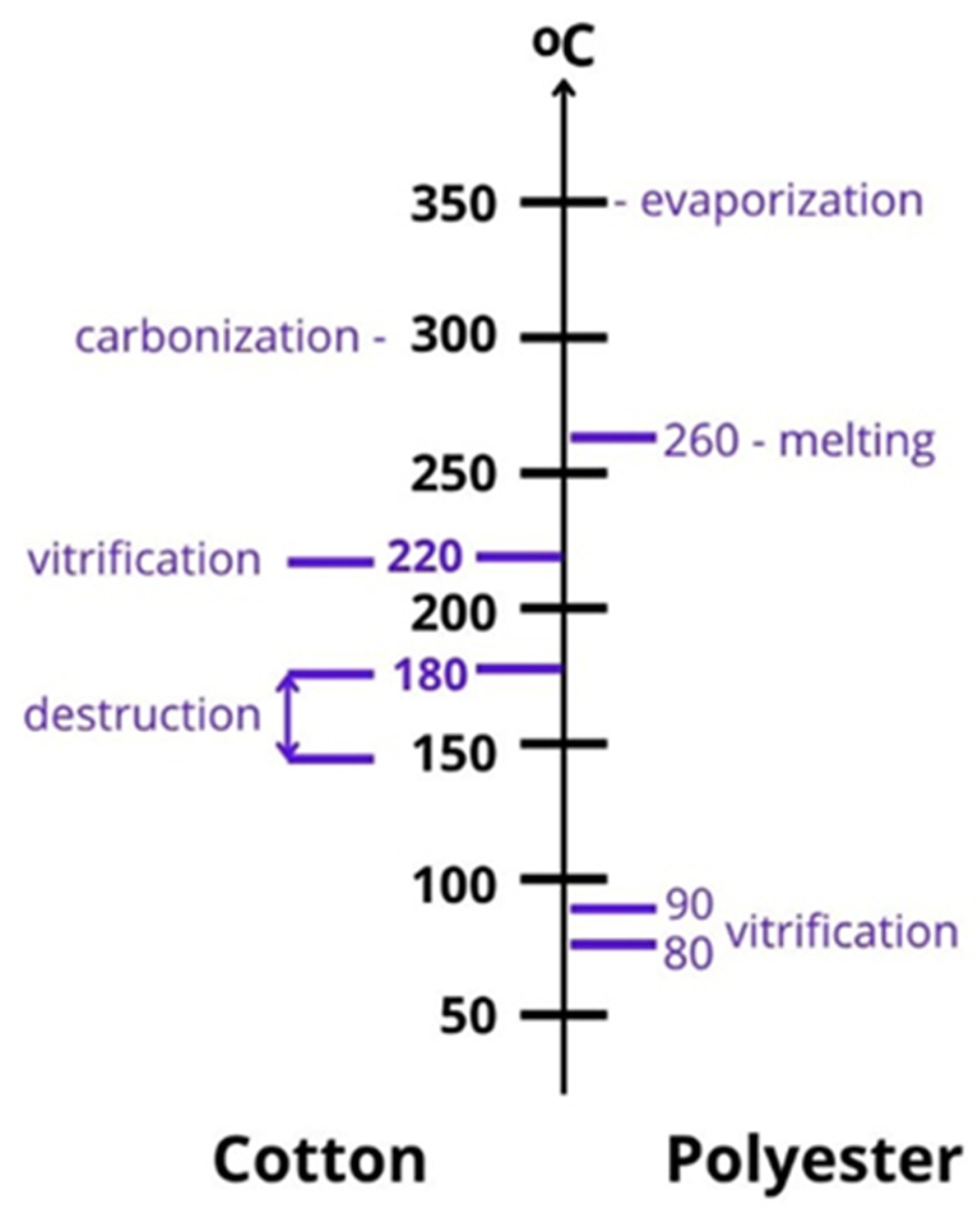
2.1. Photothermal Energy Deposition in Cellulose
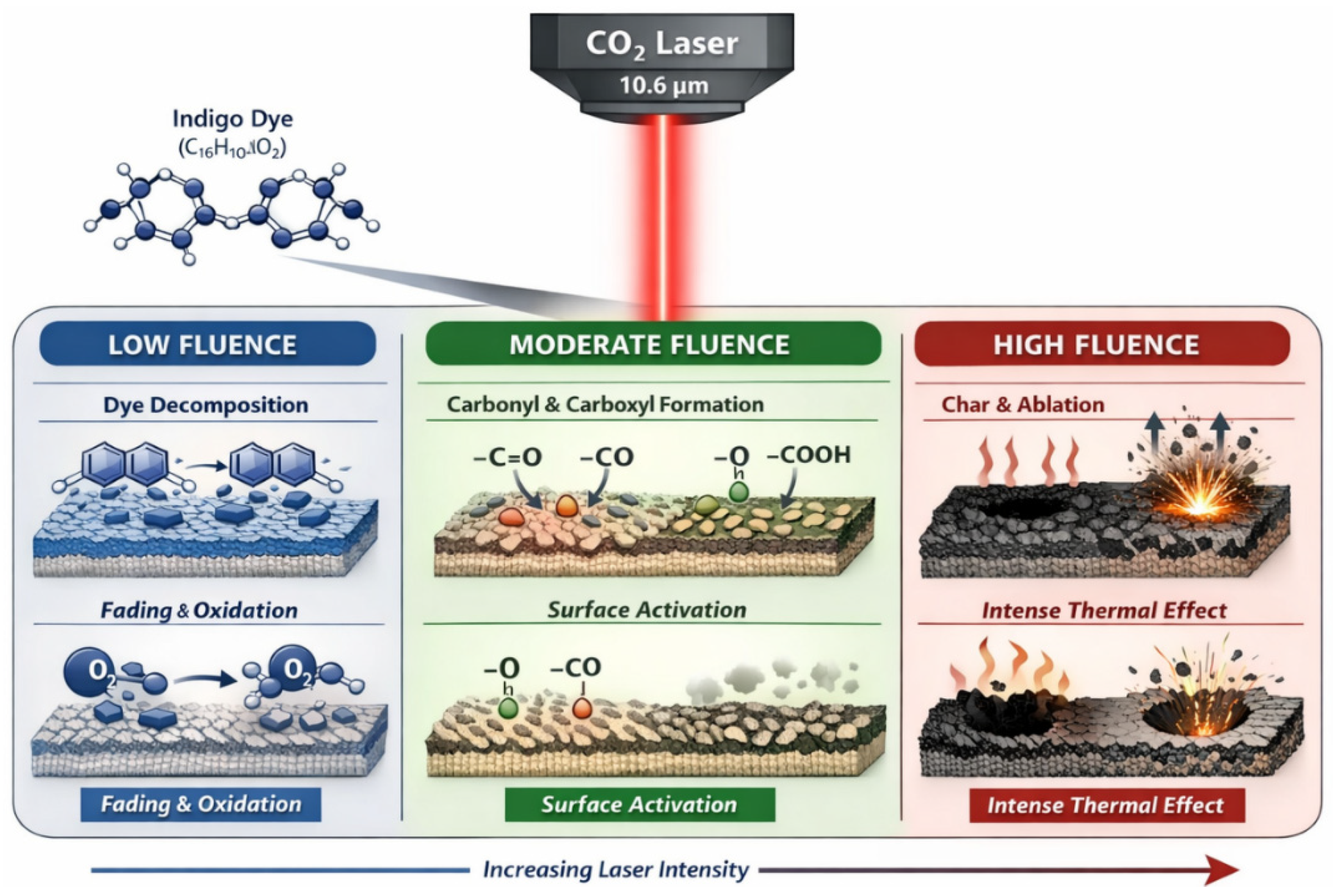
2.2. Thermal Decomposition of Indigo Dye
2.3. Oxidation of Cellulose and Formation of Functional Groups
- ~1730–1745 cm−1, corresponding to carbonyl (C=O) stretching vibrations,
- ~1240–1260 cm−1, attributed to carboxyl (O–C=O) groups,
- and changes in the ~1600–1650 cm−1 region related to oxidised cellulose structures [18].
- ~286.5 eV (C–O),
- ~288.0 eV (C=O),
- ~289.0 eV (O–C=O).
2.4. Micro-Ablation and Morphological Evolution
- Low fluence: Fibres retain relatively smooth surfaces with intact cuticle layers. Morphological changes are minimal, and the dominant mechanism is indigo dye decomposition, resulting in visual fading with negligible fibre damage.
- Moderate fluence: Partial oxidation of cellulose leads to micro-fibrillation and moderate surface roughening. The increased surface area and roughness enhance interfacial interactions, making this regime optimal for functional activation without significant mechanical degradation.
2.5. Mechanistic Progression and Processing Regimes
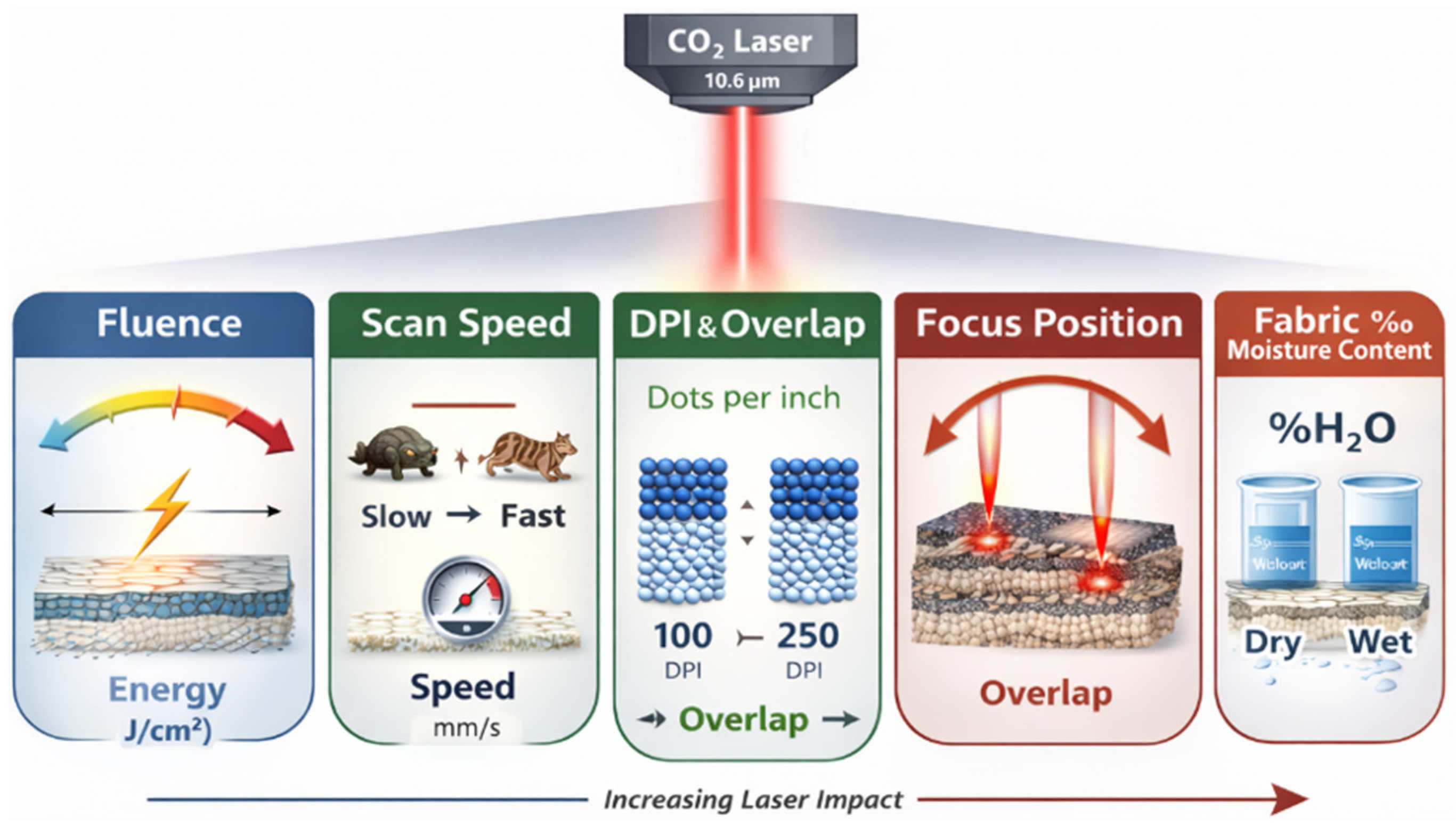
3. Processing Parameters and Material Factors
3.1. Fluence and Effective Thermal Budget
3.2. Scanning Speed, Exposure Time and Temporal Dynamics
3.3. Resolution and Spot Overlap
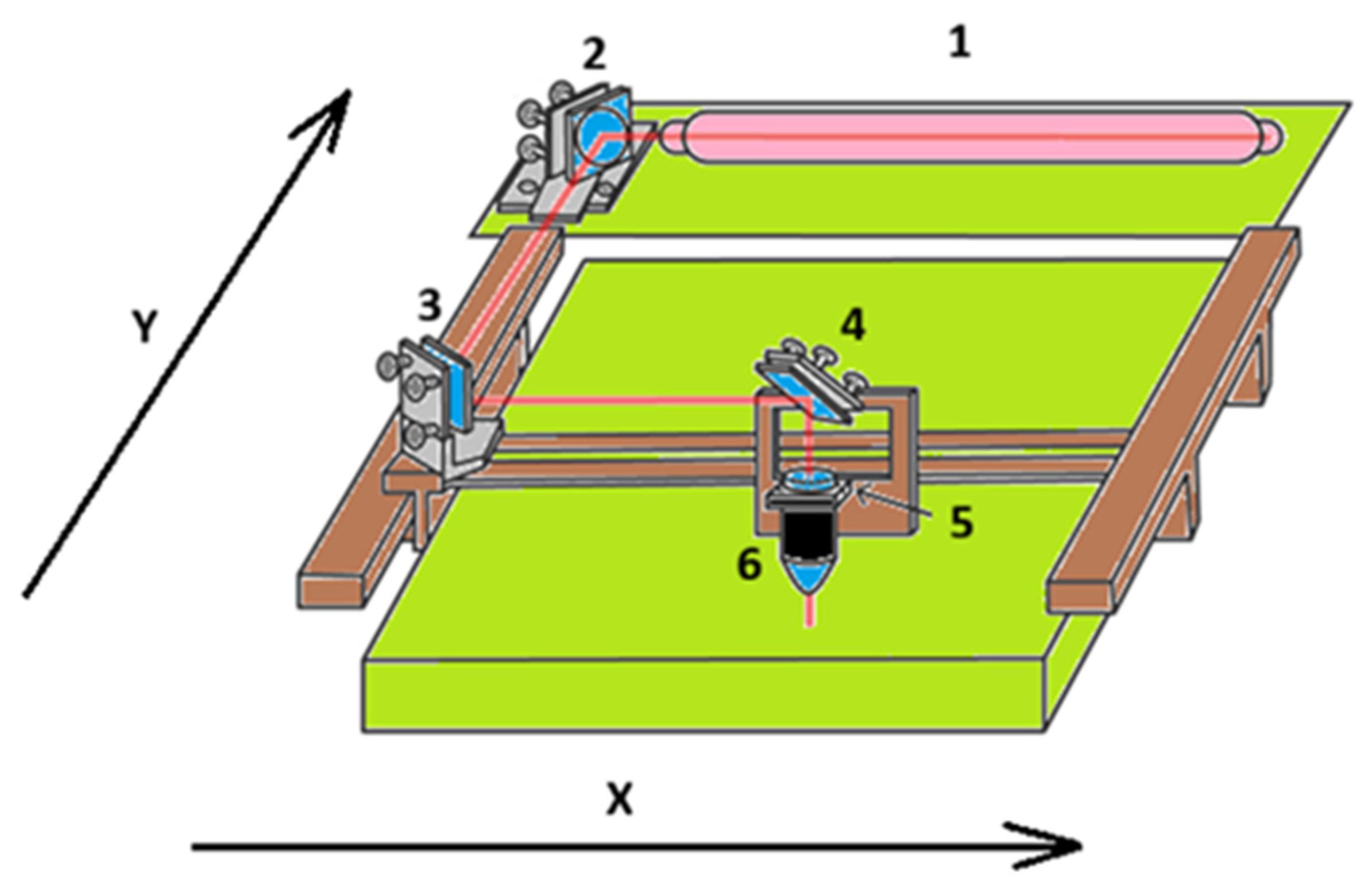
3.4. Beam Diameter, Focal Position and Optical Configuration
3.5. Fabric Composition, Structure and Moisture Content
3.6. Parameter–Response Maps and Processing Windows
4. Laser-Induced Transformations of Cotton and Denim
4.1. Visual and Colourimetric Effects
4.2. Chemical Modification and Surface Activation
4.3. Morphological Evolution and Micro-Texturing
4.4. Mechanical Properties and Hand
5. Post-Laser Functionalisation of Cotton Surfaces
5.1. Enhanced Dyeability and Colour Re-Engineering
5.2. Hydrophobic and Barrier Coatings
5.3. Antimicrobial and Biofunctional Finishes
5.4. Conductive and Electronic Textiles
- Metal nanoparticle-based conductive textiles
- 2.
- Laser-induced carbonaceous structures
- 3.
- Wearable and smart textile systems
5.5. Nanoparticle Immobilisation and Hybrid Composites
5.6. Polymer Grafting and Advanced Materials Integration
6. Sustainability and Digital Integration
7. Challenges and Future Directions
7.1. Coverage of Emerging Directions in the Last Five Years
7.2. Comparative Framework for Quantifying Surface Chemistry and Oxidation Depth
7.3. Differentiated Requirements Across Application Scenarios
7.4. Prioritised Implementation Roadmap: Short-Term vs. Long-Term Directions
8. Conclusions
Author Contributions
Funding
Data Availability Statement
Conflicts of Interest
References
- Jang, E.S.; Goak, J.C.; Lee, H.S.; Lee, S.H.; Han, J.H.; Lee, C.S.; Sok, J.H.; Seo, Y.H.; Park, K.S.; Lee, N.S. Light radiation through a transparent cathode plate with single-walled carbon nanotube field emitters. Appl. Surf. Sci. 2010, 256, 6838–6842. [Google Scholar] [CrossRef]
- Serdechnova, M.; Mohedano, M.; Bouali, A.C.; Höche, D.; Kuznetsov, B.; Karpushenkov, S.; Blawert, C.; Zheludkevich, M.L. Role of Phase Composition of PEO Coatings on AA2024 for In-Situ LDH Growth. Coatings 2017, 7, 190. [Google Scholar] [CrossRef]
- Kan, C. CO2 laser treatment as a clean process for treating denim fabric. J. Clean. Prod. 2014, 66, 624–631. [Google Scholar] [CrossRef]
- Du, W.; Zuo, D.; Gan, H.; Yi, C. Comparative Study on the Effects of Laser Bleaching and Conventional Bleaching on the Physical Properties of Indigo Kapok/Cotton Denim Fabrics. Appl. Sci. 2019, 9, 4662. [Google Scholar] [CrossRef]
- Periyasamy, A.P.; Periyasami, S. Critical Review on Sustainability in Denim: A Step toward Sustainable Production and Consumption of Denim. ACS Omega 2023, 8, 4472–4490. [Google Scholar] [CrossRef]
- Rahaman, M.T.; Hasan, M.K.; Khan, M.S.H. Environmental impact measurement and chromatic performance evaluation of denim washing: A comparison to conventional and sustainable approaches for cleaner production. Environ. Sci. Pollut. Res. 2025, 32, 6110–6129. [Google Scholar] [CrossRef]
- Cundubey, F.S.; Azgin, S.T. Comparative life cycle assessment of denim manufacturing: Evaluating conventional vs. recycled cotton in the context of renewable energy. J. Clean. Prod. 2024, 434, 140117. [Google Scholar] [CrossRef]
- Hung, O.; Kan, C. A Study of CO2 Laser Treatment on Colour Properties of Cotton-Based Fabrics. Coatings 2017, 7, 131. [Google Scholar] [CrossRef]
- Hung, O.-N.; Chan, C.-K.; Kan, C.-W.; Yuen, C.-W.M. Microscopic study of the surface morphology of CO2 laser-treated cotton and cotton/polyester blended fabric. Text. Res. J. 2016, 87, 1107–1120. [Google Scholar] [CrossRef]
- Sheng-bao, Z.; Shang-hong, Z.; Xing-chun, C.; Zhuo-liang, W.; Lei, S. Spectral beam combining of fiber lasers based on a transmitting volume Bragg grating. Opt. Laser Technol. 2010, 42, 308–312. [Google Scholar] [CrossRef]
- Atav, R.; Gündüz, Ö.; Yaz, S.; Çakan, G. Investigation of the application angle and mode parameters on colour fading obtained in laser process. Color. Technol. 2025, 141, 367–374. [Google Scholar] [CrossRef]
- Atav, R.; Gündüz, Ö.; Yaz, S.; Çakan, G. Optimisation of laser fading process in denim trousers: An industrial scale approach. Color. Technol. 2024, 140, 653–661. [Google Scholar] [CrossRef]
- Uysaler, T.; Altay, P.; Özcan, G. Investigation of the effect of preparation processes on CO2 laser-faded denim fabric quality. Res. J. Text. Appar. 2023, 28, 1002–1014. [Google Scholar] [CrossRef]
- Swaminathan, V.; Ahmad, A.R.; Saffiudeen, M.F.; Nouioua, M. Real-time intelligent monitoring system for carbonization control in sustainable laser cutting of leather. Int. J. Adv. Manuf. Technol. 2025, 140, 1565–1580. [Google Scholar] [CrossRef]
- Han, J.; Xin, D.; Pang, J.; Zhao, L.; Sun, D.; Zheng, Y.; Liu, X. Laser-assisted manufacturing for sensors. Int. J. Extreme Manuf. 2025, 7, 042008. [Google Scholar] [CrossRef]
- Wan, Z.; Wang, S.; Haylock, B.; Wu, Z.; Nguyen, T.-K.; Phan, H.-P.; Sang, R.; Nguyen, N.-T.; Thiel, D.; Koulakov, S.; et al. Localized Surface Plasmon Enhanced Laser Reduction of Graphene Oxide for Wearable Strain Sensor. Adv. Mater. Technol. 2021, 6, 2001191. [Google Scholar] [CrossRef]
- Park, H.; Park, J.J.; Bui, P.-D.; Yoon, H.; Grigoropoulos, C.P.; Lee, D.; Ko, S.H. Laser-Based Selective Material Processing for Next-Generation Additive Manufacturing. Adv. Mater. 2024, 36, 2307586. [Google Scholar] [CrossRef] [PubMed]
- Chow, Y.L.; Chan, C.K.; Kan, C.W. Effect of CO2 laser treatment on cotton surface. Cellulose 2011, 18, 1635–1641. [Google Scholar] [CrossRef]
- Gao, X.; Shen, Y.; Ma, Y.; Wu, S.; Zhou, Z. First-principles insights into efficient band gap engineering of the blue phosphorus/g-C3N bilayer heterostructure via an external vertical strain. Appl. Surf. Sci. 2019, 479, 1098–1104. [Google Scholar] [CrossRef]
- He, H.; Ren, Y.; Zhu, Y.-H.; Peng, R.; Lan, S.; Zhou, J.; Yang, B.; Si, Y.; Li, N. Continuous Flow Photothermal Catalytic CO2 Reduction: Materials, Mechanisms, and System Design. ACS Catal. 2025, 15, 10480–10520. [Google Scholar] [CrossRef]
- Li, B.; Ao, S.; Song, H.; Liu, C.; Sun, F.; Su, X. Molecular-engineered cotton textile with multimodal heating and high robustness for personal thermal management. Cellulose 2024, 31, 8961–8976. [Google Scholar] [CrossRef]
- Hu, N.; Zhu, Z.; Cai, X.; Müller-Buschbaum, P.; Zhong, Q. Enhanced anti-bacterial properties and thermal regulation via photothermal conversion with localized surface plasmon resonance effect in cotton fabrics. J. Colloid. Interface Sci. 2025, 681, 25–34. [Google Scholar] [CrossRef]
- Hung, O.; Kan, C. Effect of CO2 Laser Treatment on the Fabric Hand of Cotton and Cotton/Polyester Blended Fabric. Polymers 2017, 9, 609. [Google Scholar] [CrossRef] [PubMed]
- Uysaler, T.; Altay, P.; Özcan, G. More sustainable denim fading process of two different indigo dyed denim fabrics with laser treatment. Int. J. Cloth. Sci. Technol. 2025, 37, 756–772. [Google Scholar] [CrossRef]
- Ahmad, S.; Ashraf, M.; Abid, S.; Jabbar, M.; Shafiq, F.; Siddique, A. Recent Developments in Laser Fading of Denim: A Critical Review. J. Nat. Fibers 2022, 19, 11621–11631. [Google Scholar] [CrossRef]
- Sun, J.; Yang, X.; Zhou, H.; Lv, Z.; Zhang, Y.; Han, G.; Ben, H.; Jiang, W. Rapid quantitative analysis of natural indigo dye content using near-infrared spectroscopy. Text. Res. J. 2024, 94, 1887–1896. [Google Scholar] [CrossRef]
- Tello-Burgos, N.; López-Montes, A.M.; Ballesta-Claver, J.; Collado-Montero, F.J.; Blanc García, M.D.R. Identification of Indigo Dye (Indigofera tinctoria) and Its Degradation Products by Separation and Spectroscopic Techniques on Historic Documents and Textile Fibers. Stud. Conserv. 2021, 66, 7–22. [Google Scholar] [CrossRef]
- Jung, C.; Rhee, J., II; Yoo, D., II; Shin, Y. Application of Fluorescence Spectroscopy in Indigo Reduction Process: Identification of Reduction Stages and Reduced Indigo Concentration. Fibers Polym. 2022, 23, 127–135. [Google Scholar] [CrossRef]
- Primc, G.; Mozetič, M. Plasma Treatment of Cellulose as the First Step in the Synthesis of Second-Generation Biofuel. Polymers 2025, 17, 782. [Google Scholar] [CrossRef]
- Kawasaki, T.; Sakai, T.; Zen, H.; Sumitomo, Y.; Nogami, K.; Hayakawa, K.; Yaji, T.; Ohta, T.; Tsukiyama, K.; Hayakawa, Y. Cellulose Degradation by Infrared Free Electron Laser. Energy Fuels 2020, 34, 9064–9068. [Google Scholar] [CrossRef]
- Arif, S.; Forster, M.; Bushuk, S.; Kouzmouk, A.; Tatur, H.; Batishche, S.; Kautek, W. Mechanistic comparison of pulse laser induced phase separation of particulates from cellulose paper at 213 nm and 532 nm. Appl. Phys. A 2013, 110, 501–509. [Google Scholar] [CrossRef]
- Hung, O.N.; Chan, C.K.; Kan, C.W.; Yuen, C.W.M. An analysis of some physical and chemical properties of CO2 laser-treated cotton-based fabrics. Cellulose 2017, 24, 363–381. [Google Scholar] [CrossRef]
- He, Z.; Nam, S.; Fang, D.D.; Cheng, H.N.; He, J. Surface and Thermal Characterization of Cotton Fibers of Phenotypes Differing in Fiber Length. Polymers 2021, 13, 994. [Google Scholar] [CrossRef]
- Tian, Y.; Zhang, Y.; Yu, Y.; Zhao, K.; Hou, X.; Zhang, Y. Multifunctional cotton fabric with directional water transport, UV protection and antibacterial properties based on tannin and laser treatment. Colloids Surf. A Physicochem. Eng. Asp. 2023, 664, 131131. [Google Scholar] [CrossRef]
- Nofal, R.M.; Sharaf, S.M.; Sakr, E.M. Application of Carbon Dioxide Laser Irradiation in Engraving Polyester and Cotton-Based Textiles. Egypt. J. Chem. 2023, 66, 1081–1091. [Google Scholar] [CrossRef]
- Catarino, M.L.; Sampaio, F.; Gonçalves, A.L. Sustainable Wet Processing Technologies for the Textile Industry: A Comprehensive Review. Sustainability 2025, 17, 3041. [Google Scholar] [CrossRef]
- Gopal, L.; Sudarshan, T. Surface modification of cotton. Surf. Eng. 2024, 40, 529–533. [Google Scholar] [CrossRef]
- Ayesh, M.; Horrocks, A.R.; Kandola, B.K. The Impact of Atmospheric Plasma/UV Laser Treatment on the Chemical and Physical Properties of Cotton and Polyester Fabrics. Fibers 2022, 10, 66. [Google Scholar] [CrossRef]
- Temel-Cicek, M.; Cicek, U.I.; Lloyd, A.B.; Johnson, A.A. Evaluating the effects of design and manufacturing parameters on friction at the surrogate skin–3D-printed textile interface. Text. Res. J. 2025, 95, 00405175251380876. [Google Scholar] [CrossRef]
- Hidayat, W.; Saputra, B.; Rahman, A.F.; Suri, I.F.; Febryano, I.G.; Duryat, D.; Iswandaru, D. Preserving Tradition with Technology: CO2 Laser Engraving of Lampung Tapis on Wood Waste. J. Multidiscip. Appl. Nat. Sci. 2025, 6, 169–183. [Google Scholar] [CrossRef]
- Al-bahadly, J.F. Influence of Laser Fluence on Resistance Characteristics of Cobalt Ohmic Contacts Fabricated on Silicon Surface by Laser-Induced Diffusion. Iraqi J. Appl. Phys. Lett. 2025, 6488, 111–114. [Google Scholar]
- Jia, X.; Zhao, X. Ultrafast laser ablation of copper with GHz bursts: A numerical study on the effects of repetition rate, pulse number and burst fluence on ablation efficiency and heat-affected zone. Opt. Laser Technol. 2023, 158, 108803. [Google Scholar] [CrossRef]
- Aoki, R.; Katayama, K.; Nakamura, D.; Ikenoue, H.; Sadoh, T. Excimer Laser Doping for PN Junction Formation with Extremely Low Thermal Budget. In Proceedings of the 2023 30th International Workshop on Active-Matrix Flatpanel Displays and Devices (AM-FPD), Kyoto, Japan, 4–7 July 2023; pp. 159–160. [Google Scholar]
- Pars, A.; Karadag, R.; Ozen, M.S.; Sancak, E. The Effect of Laser Radiation in Different Mordant and Ratios on Silk Fabrics Dyed with Weld (Reseda luteola L.). J. Nat. Fibers 2022, 19, 9973–9987. [Google Scholar] [CrossRef]
- Awasthi, H.; Renuka, H.; Wagh, M.D.; Kothuru, A.; Srivastava, A.K.; Goel, S. Flexible Paper and Cloth Substrates With Conductive Laser Induced Graphene Traces for Electroanalytical Sensing, Energy Harvesting and Supercapacitor Applications. IEEE Sens. J. 2023, 23, 24078–24085. [Google Scholar] [CrossRef]
- Yamaguchi, M. Ultrashort-Pulsed Laser Modification for Highly Hydrophobic Woven Fabric. J. Laser Micro/Nanoeng. 2024, 19, 170–178. [Google Scholar] [CrossRef]
- Unal, F.; Yavas, A.; Avinc, O. Sustainability in Textile Design with Laser Technology BT—Sustainability in the Textile and Apparel Industries: Sustainable Textiles, Clothing Design and Repurposing; Muthu, S.S., Gardetti, M.A., Eds.; Springer International Publishing: Cham, Switzerland, 2020; pp. 263–287. ISBN 978-3-030-37929-2. [Google Scholar]
- Angelova, Y.P. Factors influencing the laser treatment of textile materials: An overview. J. Eng. Fiber. Fabr. 2020, 15, 1558925020952803. [Google Scholar] [CrossRef]
- Juciene, M.; Urbelis, V.V.; Juchneviciene, Ž.; Saceviciene, V.; Dobilaite, V. The influence of laser treatment and industrial washing on denim fabric tension properties. Int. J. Cloth. Sci. Technol. 2018, 30, 588–596. [Google Scholar] [CrossRef]
- Hung, O.N.; Chan, C.K.; Kan, C.W.; Yuen, C.W.M. Effect of the CO2 laser treatment on properties of 100% cotton knitted fabrics. Cellulose 2017, 24, 1915–1926. [Google Scholar] [CrossRef]
- Hemmerich, M.; Darvish, M.; Conroy, J.; Knollmeyer, L.; Way, J. Galvanometer scanning technology and 9.3 µm CO2 lasers for on-the-fly converting applications. In Proceedings of the Lasers in Manufacturing 2017, Munich, Germany, 26–29 June 2017. [Google Scholar]
- Pospichal, R.; Bielak, R.; Liedl, G. Scwtex—Simultaneous cutting and welding of textiles. ACTA Tech. Corviniensis-Bull. Eng. 2012, 1, 117–121. [Google Scholar]
- Kan, C.W. Impact on textile properties of polyester with laser. Opt. Laser Technol. 2008, 40, 113–119. [Google Scholar] [CrossRef]
- Venkatraman, P.D.; Liauw, C.M. Use of a carbon dioxide laser for environmentally beneficial generation of distressed/faded effects on indigo dyed denim fabric: Evaluation of colour change, fibre morphology, degradation and textile properties. Opt. Laser Technol. 2019, 111, 701–713. [Google Scholar] [CrossRef]
- Babaahmadi, V. High durable three-dimensional electroconductive patterns on textiles: Direct laser scribing of crosslinked graphene oxide sheets. J. Appl. Polym. Sci. 2023, 140, e53726. [Google Scholar] [CrossRef]
- Gulbinienė, A.; Fataraitė-Urbonienė, E.; Jucienė, M.; Dobilaitė, V.; Valeika, V. Effect of CO2 laser treatment on the leather surface morphology and wettability. J. Ind. Text. 2021, 51, 2483S–2498S. [Google Scholar] [CrossRef]
- Obilor, A.F.; Pacella, M.; Wilson, A.; Silberschmidt, V. V Micro-texturing of polymer surfaces using lasers: A review. Int. J. Adv. Manuf. Technol. 2022, 120, 103–135. [Google Scholar] [CrossRef]
- Kan, C.; Lam, Y.; Siu, Y. Effects of laser treatment on fabric characteristics and performance. Surf. Innov. 2015, 3, 228–236. [Google Scholar] [CrossRef]
- Tse, S.; Kan, C. Effect of laser treatment on pigment printing on denim fabric: Low stress mechanical properties. Cellulose 2020, 27, 10385–10405. [Google Scholar] [CrossRef]
- Sreckovic, M.Ž.; Kaludjerovic, B.; Kovacevic, A.G.; Bugarinovic, A.; Družijanic, D. Interaction of laser beams with carbon textile materials. Int. J. Cloth. Sci. Technol. 2015, 27, 720–737. [Google Scholar] [CrossRef]
- Shahidi, S.; Moazzenchi, B.; Ghoranneviss, M. Improving the dyeability of polypropylene fabrics using laser technology. J. Text. Inst. 2013, 104, 1113–1117. [Google Scholar] [CrossRef]
- Zheng, G.; Zhao, Z.; Wang, A.; Cheng, H.; Bao, X.; Zhou, H.; Zhang, D.; Wang, Q. Near infrared laser precisely controlled ultrafast superhydrophilicity-to-hydrophobicity transition of copper sulfide nanosphere coating on cellulose fiber fabric. Int. J. Biol. Macromol. 2025, 290, 138854. [Google Scholar] [CrossRef]
- Zheng, G.; Cui, Y.; Jiang, Z.; Wang, W.; Zhou, M.; Yu, Y.; Wang, P.; Wang, Q. Near infrared laser-mediated hydrophilicity-to-hydrophobicity switch of copper sulfide nanoflowers coating on cotton fabric. Prog. Org. Coat. 2024, 189, 108297. [Google Scholar] [CrossRef]
- Gulati, R.; Sharma, S.; Sharma, R.K. Antimicrobial textile: Recent developments and functional perspective. Polym. Bull. 2022, 79, 5747–5771. [Google Scholar] [CrossRef]
- Lipovka, A.; Fatkullin, M.; Shchadenko, S.; Petrov, I.; Chernova, A.; Plotnikov, E.; Menzelintsev, V.; Li, S.; Qiu, L.; Cheng, C.; et al. Textile Electronics with Laser-Induced Graphene/Polymer Hybrid Fibers. ACS Appl. Mater. Interfaces 2023, 15, 38946–38955. [Google Scholar] [CrossRef]
- Brackmann, F.; Lang, W.; Brosda, M.; Olowinsky, A.; Boich, R.; Gries, T. Laser bonding of conductive tracks on textiles with adapted wavelengths for smart textile applications. J. Laser Appl. 2024, 37, 12014. [Google Scholar] [CrossRef]
- Brackmann, F.; Brosda, M.; Seidenberg, M.; Sonnenschein, J. Feasibility analysis for the application of conduction tracks on textiles by means of laser radiation. Weld. World 2024, 68, 1905–1912. [Google Scholar] [CrossRef]
- Baig, U.; Khan, A.; Gondal, M.A.; Dastageer, M.A.; Falath, W.S. Laser Induced Anchoring of Nickel Oxide Nanoparticles on Polymeric Graphitic Carbon Nitride Sheets Using Pulsed Laser Ablation for Efficient Water Splitting under Visible Light. Nanomaterials 2020, 10, 1098. [Google Scholar] [CrossRef]
- Sharif, A.; Farid, N.; O’Connor, G.M. Ultrashort laser sintering of metal nanoparticles: A review. Results Eng. 2022, 16, 100731. [Google Scholar] [CrossRef]
- Wiklund, J.; Karakoç, A.; Palko, T.; Yiğitler, H.; Ruttik, K.; Jäntti, R.; Paltakari, J. A Review on Printed Electronics: Fabrication Methods, Inks, Substrates, Applications and Environmental Impacts. J. Manuf. Mater. Process. 2021, 5, 89. [Google Scholar] [CrossRef]
- Sreenilayam, S.P.; Ahad, I.U.; Nicolosi, V.; Acinas Garzon, V.; Brabazon, D. Advanced materials of printed wearables for physiological parameter monitoring. Mater. Today 2020, 32, 147–177. [Google Scholar] [CrossRef]
- Devi, M.; Wang, H.; Moon, S.; Sharma, S.; Strauss, V. Laser-Carbonization—A Powerful Tool for Micro-Fabrication of Patterned Electronic Carbons. Adv. Mater. 2023, 35, 2211054. [Google Scholar] [CrossRef] [PubMed]
- Zou, Y.; Zhong, M.; Li, S.; Qing, Z.; Xing, X.; Gong, G.; Yan, R.; Qin, W.; Shen, J.; Zhang, H.; et al. Flexible Wearable Strain Sensors Based on Laser-Induced Graphene for Monitoring Human Physiological Signals. Polymers 2023, 15, 3553. [Google Scholar] [CrossRef]
- Terakawa, M. Laser-Induced Carbonization and Graphitization BT—Handbook of Laser Micro- and Nano-Engineering; Sugioka, K., Ed.; Springer International Publishing: Cham, Switzerland, 2020; pp. 1–22. ISBN 978-3-319-69537-2. [Google Scholar]
- Sun, B.; Zhang, Q.; Liu, X.; Zhai, Y.; Gao, C.; Zhang, Z. Fabrication of Laser-Induced Graphene Based Flexible Sensors Using 355 nm Ultraviolet Laser and Their Application in Human–Computer Interaction System. Materials 2023, 16, 6938. [Google Scholar] [CrossRef]
- Zhou, M.; Wu, J.; Huang, L.; Miao, M.; Cui, Y.; He, X. Smart textiles: Sustainable, self-powered, portable, and durable wearable textiles for human health monitoring. Chem. Eng. J. 2025, 525, 170097. [Google Scholar] [CrossRef]
- Jin, F.; Liao, S.; Wang, Q.; Shen, H.; Jiang, C.; Zhang, J.; Wei, Q.; Ghiladi, R.A. Dual-functionalized luminescent/photodynamic composite fabrics: Synergistic antibacterial activity for self-disinfecting textiles. Appl. Surf. Sci. 2022, 587, 152737. [Google Scholar] [CrossRef]
- Sfameni, S.; Hadhri, M.; Rando, G.; Drommi, D.; Rosace, G.; Trovato, V.; Plutino, M.R. Inorganic Finishing for Textile Fabrics: Recent Advances in Wear-Resistant, UV Protection and Antimicrobial Treatments. Inorganics 2023, 11, 19. [Google Scholar] [CrossRef]
- Ghosh, J.; Rupanty, N.S.; Khan, F.; Noor, T.; Jahangir, R.; Mirmohammadsadeghi, S.; Islam, T. Grafting modification for textile functionalization: Innovations and applications. Discov. Appl. Sci. 2025, 7, 49. [Google Scholar] [CrossRef]
- Ahmed, F.; Rahman, A.N.M.M.; Islam, M.R.; Hossain, M.A.; Aabrar, I. Influence of Laser Treatment and Chemical Washing on the Performance Attributes of Cotton Woven Denim Fabrics. J. Nat. Fibers 2022, 19, 13876–13889. [Google Scholar] [CrossRef]
- Kropidłowska, P.; Irzmańska, E.; Korzeniewska, E.; Tomczyk, M.; Jurczyk-Kowalska, M. Evaluation of laser texturing in fabricating cut-resistant surfaces for protective gloves. Text. Res. J. 2022, 93, 1917–1927. [Google Scholar] [CrossRef]
- Korkmaz, G.; Kılınç, M.; Kılınç, N.; Kut, Y.D. The Role of Surface Modification Methods for Sustainable Textiles; Körlü, A., Bahtiyari, M.İ., Kanat, S., Eds.; IntechOpen: London, UK, 2023; ISBN 978-1-83769-172-2. [Google Scholar]
- Venkatraman, P.D. Carbon Dioxide Laser as a Sustainable Method for Producing a Pattern on Denim Fabric: Evaluation of Colour and Durability. Adv. Res. Text. Eng. 2022, 7, 1068. [Google Scholar] [CrossRef]
- Nayak, R.; George, M.; Jajpura, L.; Khandual, A.; Panwar, T. Laser and ozone applications for circularity journey in denim manufacturing—A developing country perspective. Curr. Opin. Green Sustain. Chem. 2022, 38, 100680. [Google Scholar] [CrossRef]
- Zhang, L.; Leung, M.Y.; Boriskina, S.; Tao, X. Advancing life cycle sustainability of textiles through technological innovations. Nat. Sustain. 2023, 6, 243–253. [Google Scholar] [CrossRef]
- Hashem, A.; Farag, S. Cotton bleaching: Evolution, current practices, and future perspectives. Int. J. Adv. Manuf. Technol. 2025. [Google Scholar] [CrossRef]
- Pavan, M.; Samant, L.; Mahajan, S.; Kaur, M. Role of Chemicals in Textile Processing and Its Alternatives BT—Climate Action Through Eco-Friendly Textiles; Sadhna, Kumar, R., Greeshma, S., Eds.; Springer Nature: Singapore, 2024; pp. 55–72. ISBN 978-981-99-9856-2. [Google Scholar]
- Tang, K.H. State of the Art in Textile Waste Management: A Review. Textiles 2023, 3, 454–467. [Google Scholar] [CrossRef]
- Bui, L.T.C.; Nguyen, H.T.T.; Do, L.T.; Van Huynh, T.; Ta, T.D.; Duong, A.T.B. The Advancement of Computer-Aided Design and Computer-Aided Manufacturing in the Fashion Apparel Industry: Toward a Sustainable Development BT—Use of Digital and Advanced Technologies in the Fashion Supply Chain; Nayak, R., Truong, H., Pal, R., Eds.; Springer Nature: Singapore, 2025; pp. 125–166. ISBN 978-981-97-7528-6. [Google Scholar]
- Pavan, M.; Devi, K.D.; Sowmya, N.; Chanu, S.D.; Mahajan, S. Technological Advancements in Textile Design BT—The Art and Craft of Modern Textile Design: Woven Whimsy; Sadhna, Kumar, R., Greeshma, S., Eds.; Springer Nature: Cham, Switzerland, 2025; pp. 49–69. ISBN 978-3-031-86797-2. [Google Scholar]
- Hossain, M.T.; Shahid, M.A.; Limon, M.G.M.; Hossain, I.; Mahmud, N. Techniques, applications, and challenges in textiles for a sustainable future. J. Open Innov. Technol. Mark. Complex. 2024, 10, 100230. [Google Scholar] [CrossRef]
- Kallawar, G.A.; Bhanvase, B.A. A review on existing and emerging approaches for textile wastewater treatments: Challenges and future perspectives. Environ. Sci. Pollut. Res. 2024, 31, 1748–1789. [Google Scholar] [CrossRef]
- Dey, R.; Samanta, P.K.; Chokda, R.P.; De, B.P.; Appasani, B.; Srinivasulu, A.; Philibert, N. Graphene-based electrodes for ECG signal monitoring: Fabrication methodologies, challenges and future directions. Cogent Eng. 2023, 10, 2246750. [Google Scholar] [CrossRef]
- Mežinska, S.; Pacejs, A.; Adijāns, I.; Zaicevs, E.; Lazov, L. Study of Adhesion of Physical Vapor Deposition Coatings on Functional Textile With Laser Post-Processing. In Proceedings of the 15th International Scientific and Practical Conference, Rezekne, Latvia, 7–28 June 2024; Volume 3, pp. 425–429. [Google Scholar] [CrossRef]
- Li, Z.; Wang, S.; Pan, Y.; Sun, J.; Yin, F. Construction of the heterogeneous coating model and multi-physics coupling analysis in laser cleaning. Opt. Laser Technol. 2025, 191, 113366. [Google Scholar] [CrossRef]
- Sun, S.; Ma, H.; Shao, S.; Wang, X.; Zhang, A.; Zhang, J. Laser-assisted preparation of flexible wearable electronics with copper-liquid metal patterns. Chem. Eng. J. 2025, 525, 170507. [Google Scholar] [CrossRef]
- Fu, J.; Liu, C.; Zhao, R.; Wang, H.; Yu, Z.; Wang, Q. Laser Cutting of Non-Woven Fabric Using UV Nanosecond Pulsed Laser. Micromachines 2024, 15, 1390. [Google Scholar] [CrossRef]
- Elaissi, A.; Ghith, A.; Alibi, H.; Legrand, X. Study of the mechanical, chemical, and surface behaviors of non-woven abrasive made from waste chemically modified tow fibers. J. Ind. Text. 2022, 52, 15280837221126192. [Google Scholar] [CrossRef]
- Li, L.; Zhang, Y.; Huang, S.; Zheng, H.; Qi, H. Research and Application of Nonwoven Materials in Fashion Design. Front. Art Res. 2024, 6, 94–101. [Google Scholar] [CrossRef]
- Madej-Kiełbik, L.; Gzyra-Jagieła, K.; Jóźwik-Pruska, J.; Wiśniewskia-Wrona, M.; Dymel, M. Biodegradable Nonwoven Materials with Antipathogenic Layer. Environments 2022, 9, 79. [Google Scholar] [CrossRef]



| Phenomenon | Mechanism in Laser + Cotton Context |
|---|---|
| “Thermal ablation: remove dye + some fibre” | Laser energy heats and vaporises or decomposes indigo dye on the fibre surface and sometimes removes pieces of fibre. |
| “Oxidation: small graphic of oxygen or ‘O2’ + heat symbol” | Ambient oxygen + heat cause chemical oxidation of cellulose (OH → carbonyl/carboxyl), creating new functional groups. |
| “Pore formation: little holes/micro-pits on fibre surface” | Localised heating/decomposition leads to etching, cracks, and micro-voids visible under an SEM. |
| “Thermal removal of indigo dye” | As under ablation, indigo dye molecules decompose or are removed, lowering colour yield (K/S). |
| “Formation of micro-pores/porosity” | Etching from repeated laser spots causes a porous, sponge-like structure, increasing surface area. |
| “Thermal oxidation → yellowing” | Oxidative degradation leaves charring or oxidised residues, which visually appear yellow or green (with residual blue dye). |
| Group | Parameters |
|---|---|
| Laser settings | Power, pulse duration, speed, wavelength, scanning pitch/overlap |
| Optical configuration | Beam spot diameter, focal length, defocusing |
| Scanning strategy | Hatch pattern, direction, number of passes |
| Material characteristics | Fibre composition, weave/knit, finishing chemicals, humidity |
| Observed Effect | Mechanism |
|---|---|
| Whitening/fading | Oxidation of indigo |
| Brown/black shades | Carbonisation of cellulose |
| Roughening | Micro-ablation of surface fibres |
| Decrease in tensile strength | Thermal degradation |
| Increased hydrophilicity | Micro-fibrillation and oxygen-containing groups |
| Increased surface conductivity (rare) | Carbonised surface under high fluence |
| Technique | Primary Information Returned | Depth Sensitivity/Spatial Resolution | Strengths | Limitations and Best-Fit Scenarios |
|---|---|---|---|---|
| ATR-FTIR/FTIR mapping | Functional groups (C=O, O–C=O), oxidation fingerprints | Near-surface (typically micrometre-scale); mapping at 10–100 µm scale | Rapid, accessible, and directly links to chemical functionality | Limited depth resolution; signal averages over heterogeneous yarn/fibre topography; best for screening and comparative trend analysis |
| XPS | Surface elemental composition and bonding states; O/C ratio; carbonyl/carboxyl components | Top few nanometres; lateral resolution typically tens of µm | Highly surface-sensitive and quantitative for chemistry | Does not resolve depth without profiling; requires vacuum and careful charge compensation; best for verifying true surface activation |
| XPS depth profiling (sputter-based) | Approximate depth distribution of oxidised layer | Depth-resolved but method-dependent; risk of artefacts in polymers | Provides the most direct route to oxidation-depth estimates when carefully controlled | Sputter damage/reduction can distort cellulose chemistry; requires method standardisation; best for research-level mechanistic studies and benchmarking |
| SIMS/ToF-SIMS | Depth and lateral distribution of characteristic fragments and contaminants | High surface sensitivity; nanoscale depth; µm-scale lateral mapping | Rich chemical fingerprint; can detect low-concentration species | Quantification is non-trivial; instrumentation access is limited; best for resolving heterogeneous oxidation and finish residues |
| Raman/micro-Raman mapping | Carbonisation signatures, structural disorder, dye residues; spatial mapping | Micrometre-scale lateral; optical penetration depends on the sample | Non-destructive mapping complements FTIR for carbonisation and dye chemistry | Fluorescence and weak Raman in cellulose can limit; best for identifying carbonised regimes and pattern uniformity |
| SEM (optionally with EDS) | Surface morphology: fibrillation, pits, cracks; micro-ablation features | High spatial resolution (nm–µm) but mainly morphological | Direct visualisation of micro-ablation and texture evolution | Chemical interpretation indirect; sample charging/prep considerations; best for linking process settings to micro-texture and damage thresholds |
| AFM/optical profilometry | Topography and roughness metrics (Ra, Rq); texture anisotropy | nm–µm vertical resolution; limited scan area (AFM) | Quantifies micro-texture that drives adhesion/wettability | Limited representativeness on woven fabrics; best for controlled substrates or local features |
| Wettability/uptake tests (contact angle, wicking) + durability tests | Effective surface energy and capillary transport; functional stability under washing/abrasion | Bulk-integrated response across the yarn network | Application-relevant, low cost; links directly to performance targets | Not mechanism-specific; must be paired with spectroscopy/microscopy; best for qualifying parameter windows for apparel vs. technical/industrial textiles |
Disclaimer/Publisher’s Note: The statements, opinions and data contained in all publications are solely those of the individual author(s) and contributor(s) and not of MDPI and/or the editor(s). MDPI and/or the editor(s) disclaim responsibility for any injury to people or property resulting from any ideas, methods, instructions or products referred to in the content. |
© 2026 by the authors. Licensee MDPI, Basel, Switzerland. This article is an open access article distributed under the terms and conditions of the Creative Commons Attribution (CC BY) license.
Share and Cite
Skromulis, A.; Lazov, L.; Lasenko, I.; Sokolova, S.; Vasilevska, S.; Sanchaniya, J.V. Advances in CO2 Laser Treatment of Cotton-Based Textiles: Processing Science and Functional Applications. Polymers 2026, 18, 193. https://doi.org/10.3390/polym18020193
Skromulis A, Lazov L, Lasenko I, Sokolova S, Vasilevska S, Sanchaniya JV. Advances in CO2 Laser Treatment of Cotton-Based Textiles: Processing Science and Functional Applications. Polymers. 2026; 18(2):193. https://doi.org/10.3390/polym18020193
Chicago/Turabian StyleSkromulis, Andris, Lyubomir Lazov, Inga Lasenko, Svetlana Sokolova, Sandra Vasilevska, and Jaymin Vrajlal Sanchaniya. 2026. "Advances in CO2 Laser Treatment of Cotton-Based Textiles: Processing Science and Functional Applications" Polymers 18, no. 2: 193. https://doi.org/10.3390/polym18020193
APA StyleSkromulis, A., Lazov, L., Lasenko, I., Sokolova, S., Vasilevska, S., & Sanchaniya, J. V. (2026). Advances in CO2 Laser Treatment of Cotton-Based Textiles: Processing Science and Functional Applications. Polymers, 18(2), 193. https://doi.org/10.3390/polym18020193