Research on the Infiltration Effect of Waterborne Polyurethane Cementitious Composite Slurry Penetration Grouting Under Vacuum Effect


Abstract
1. Introduction
2. Theoretical Model
3. Materials and Methods
3.1. Materials
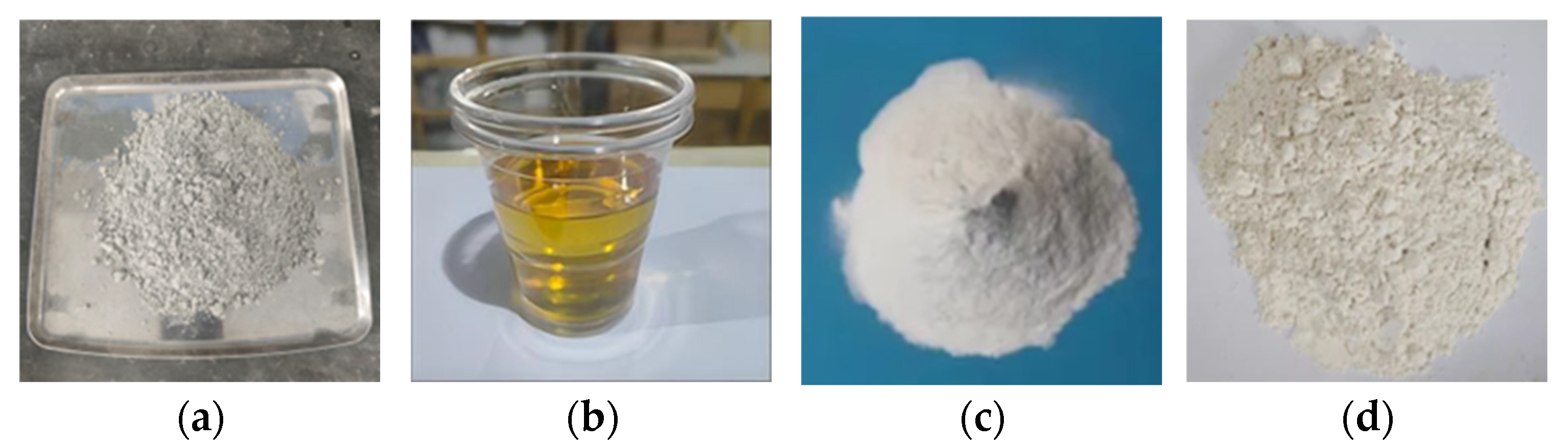
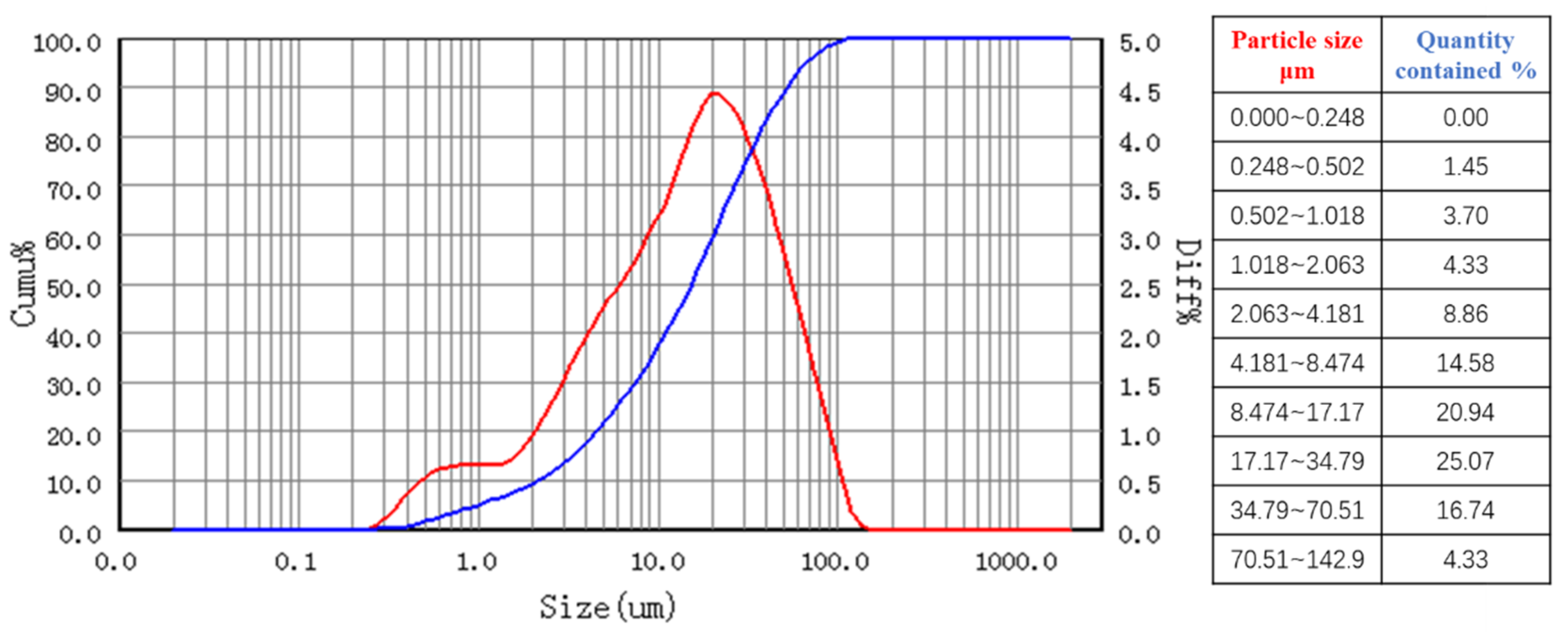
3.1.1. Cement
3.1.2. Polyurethane
3.1.3. Hydroxypropyl Methyl Cellulose
3.1.4. Magnesium Aluminium Silicate
3.2. Method
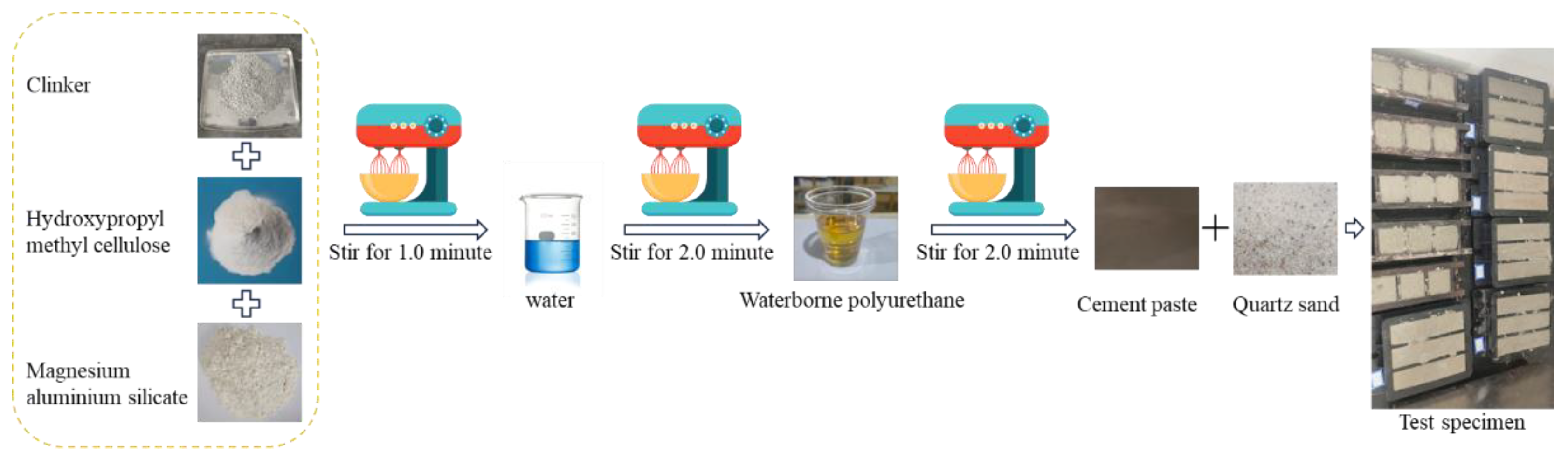
3.2.1. Grout Formulation Design and Test Specimen Fabrication
3.2.2. Infiltration Grouting Tests
- 1.
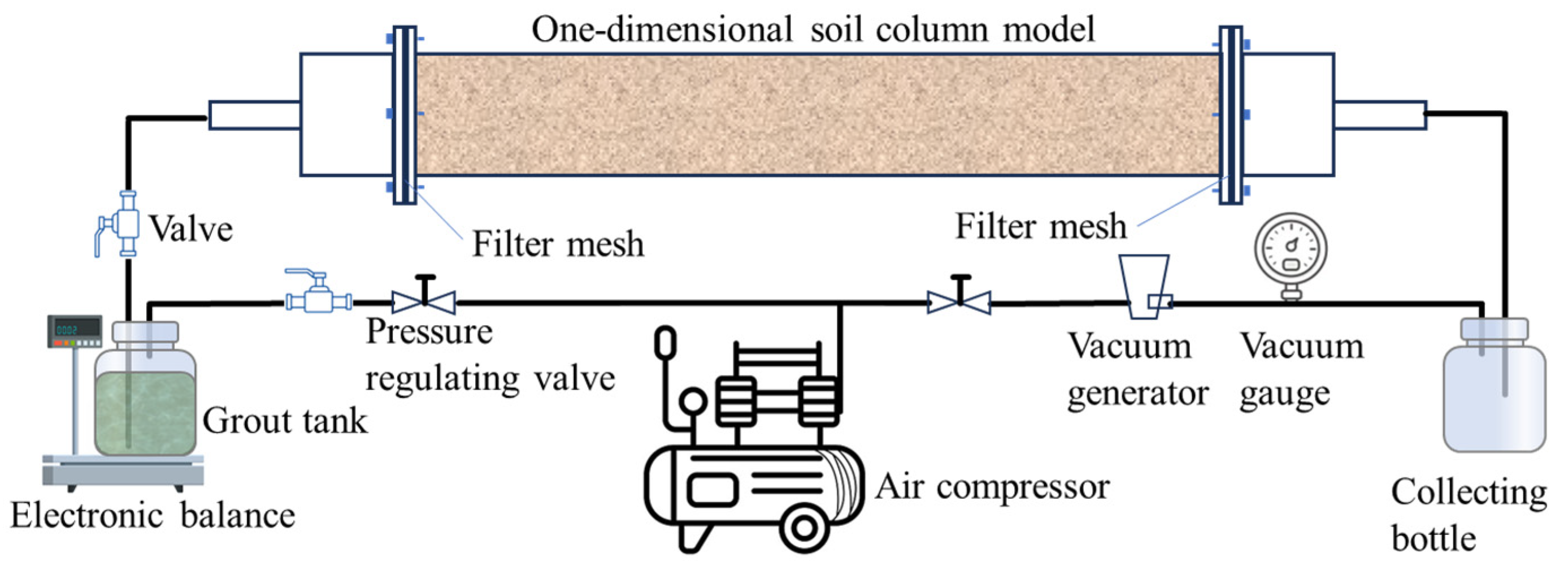
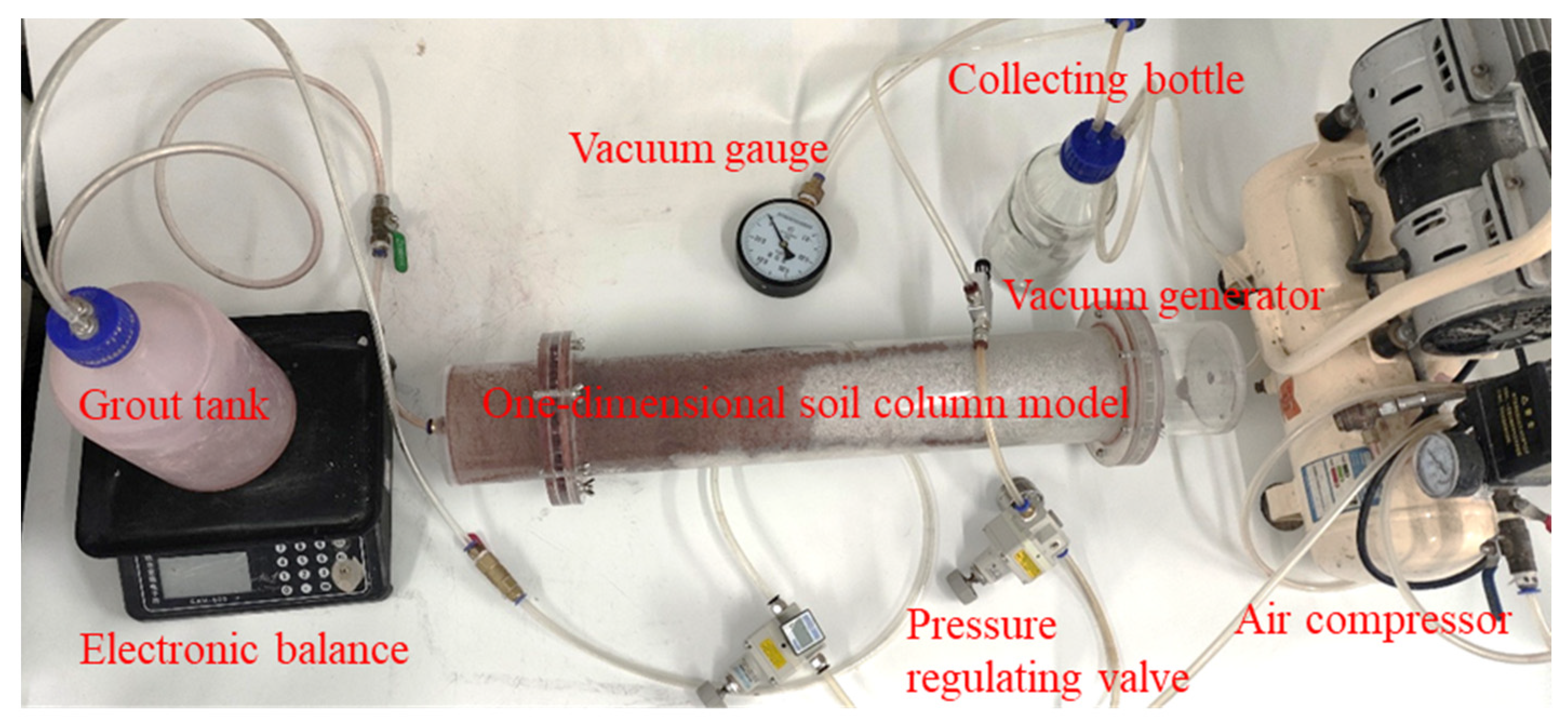
- Test equipment
- 2.
- Pilot programme
- 3.
- Test procedure
4. Results
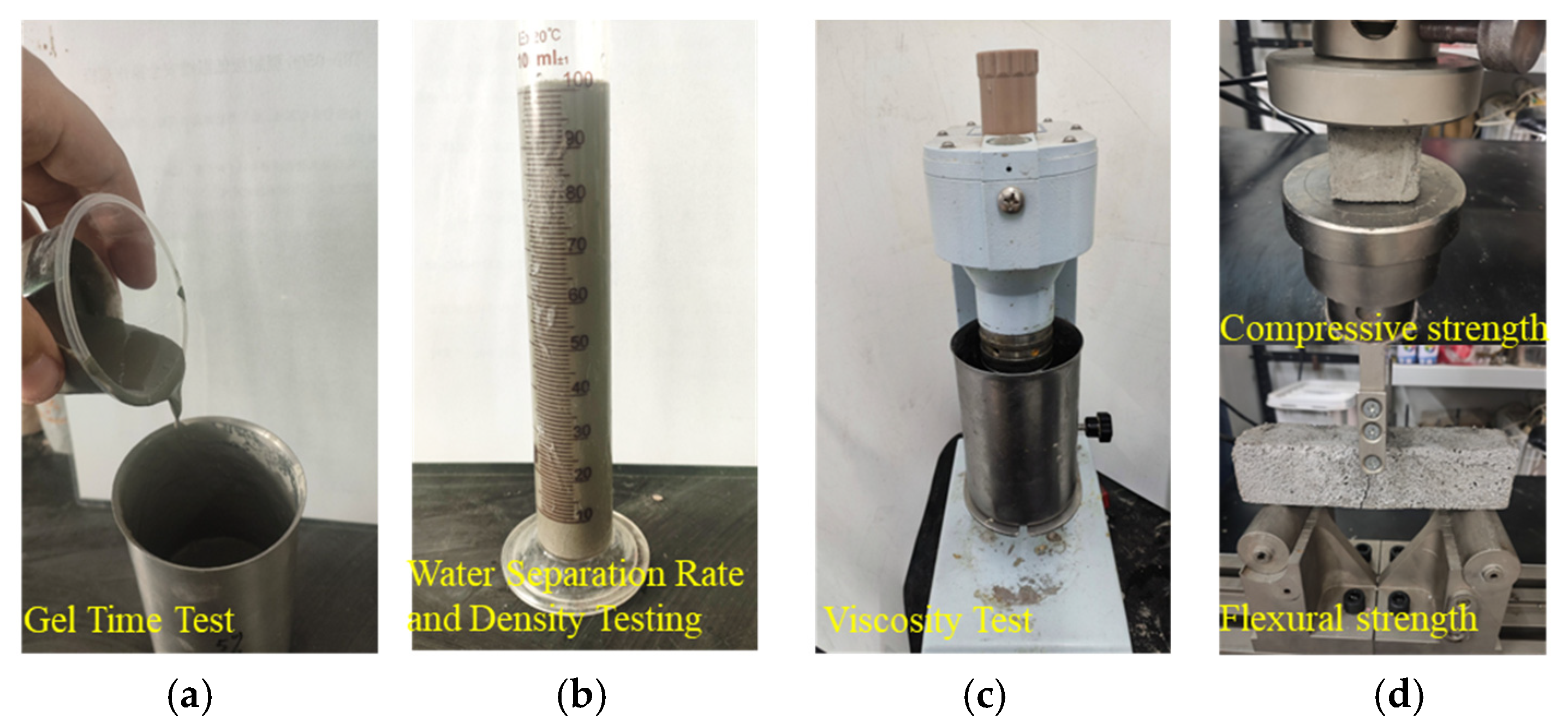
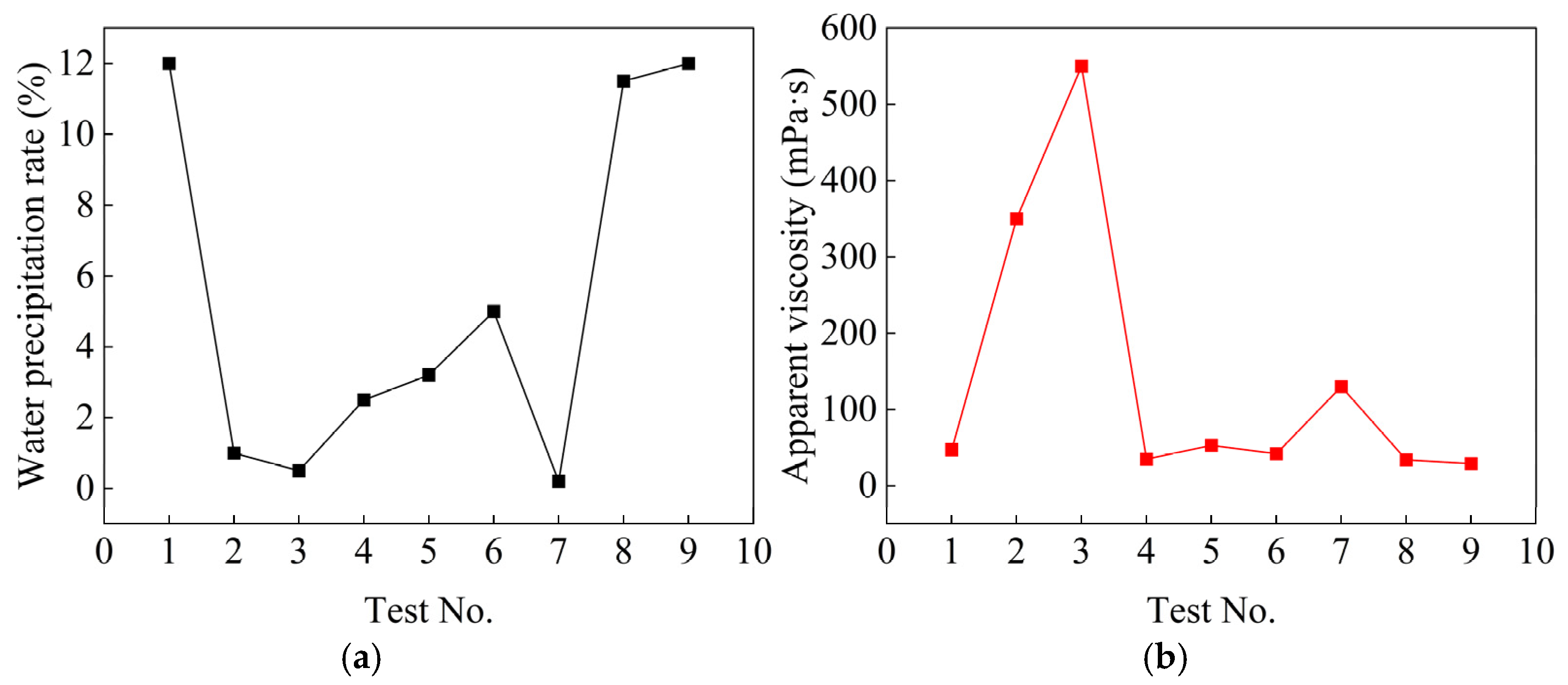
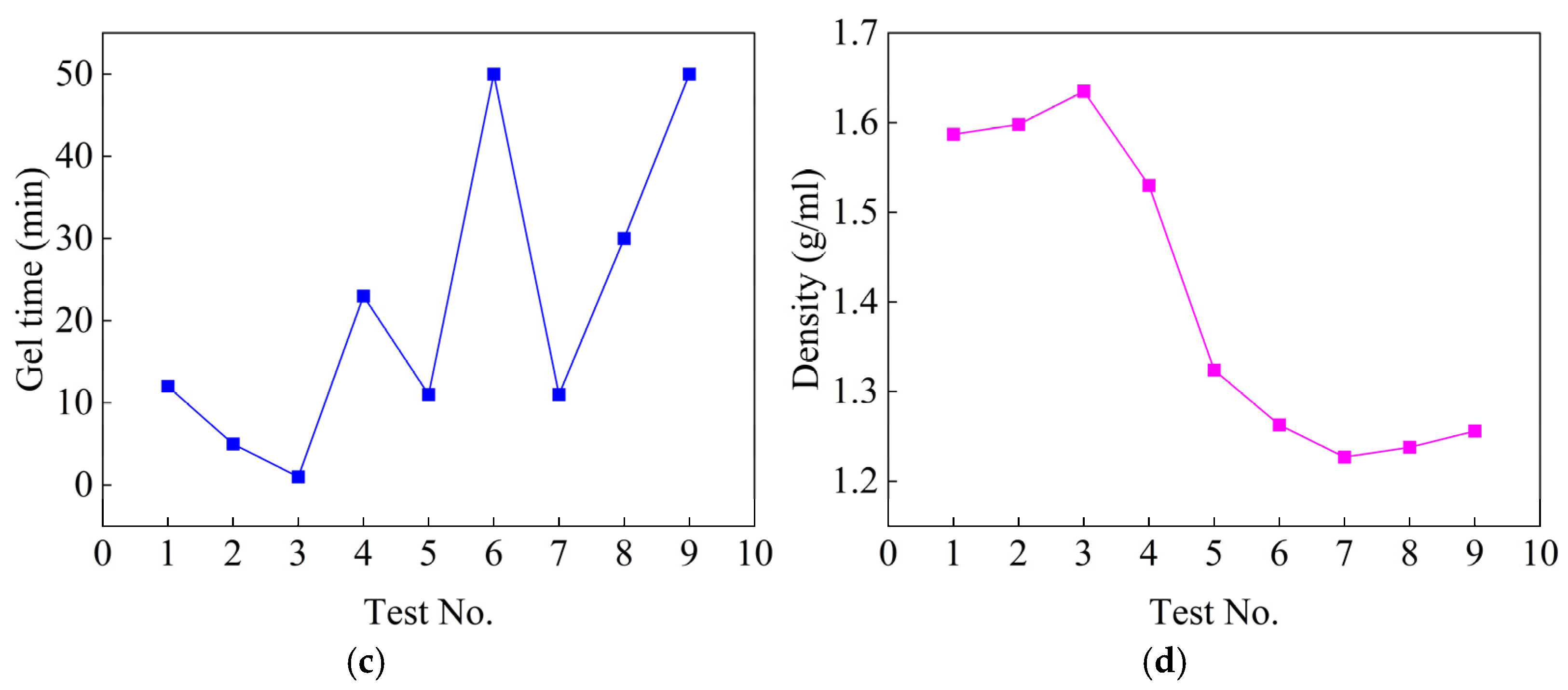
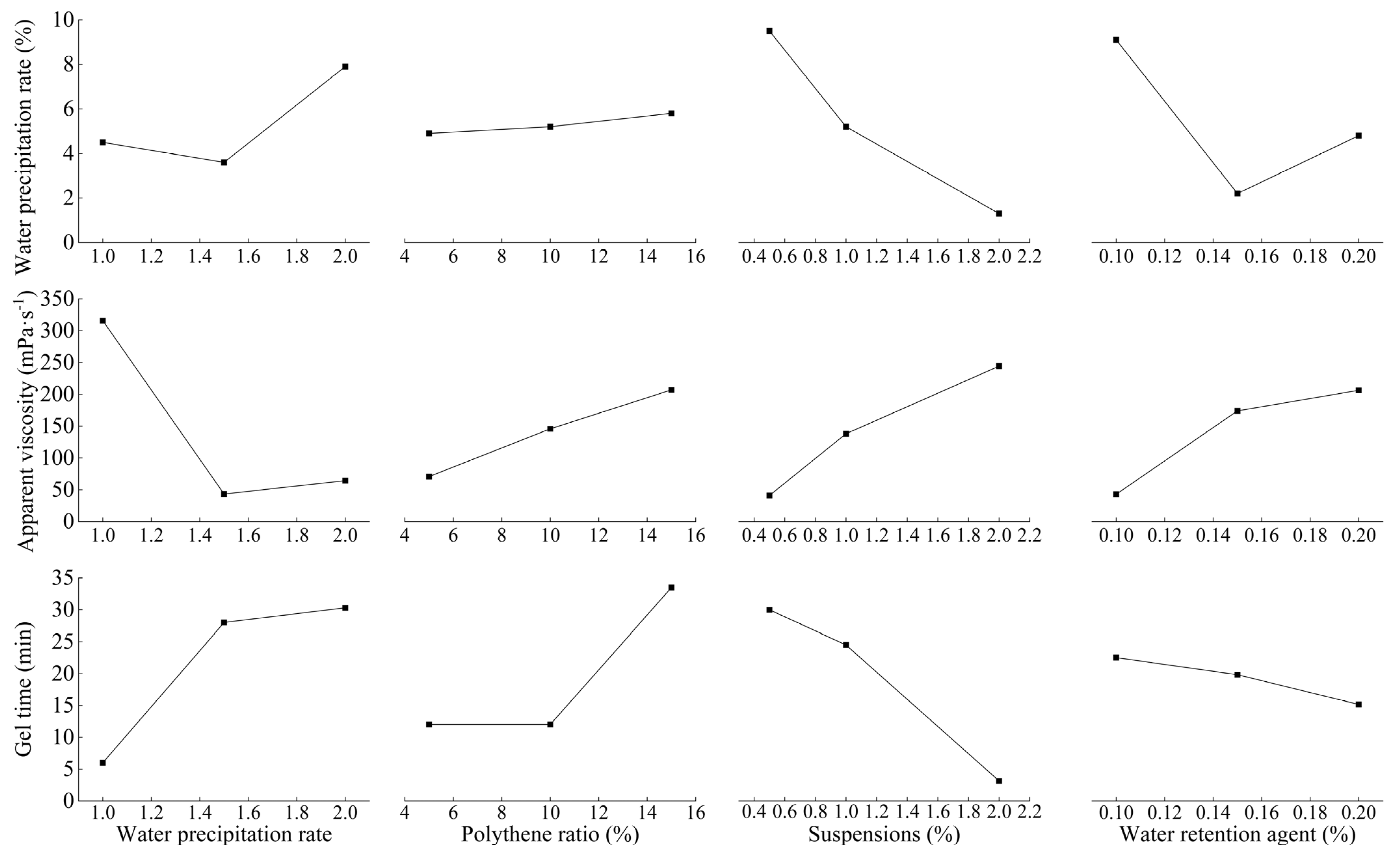
4.1. Slurry Working Properties
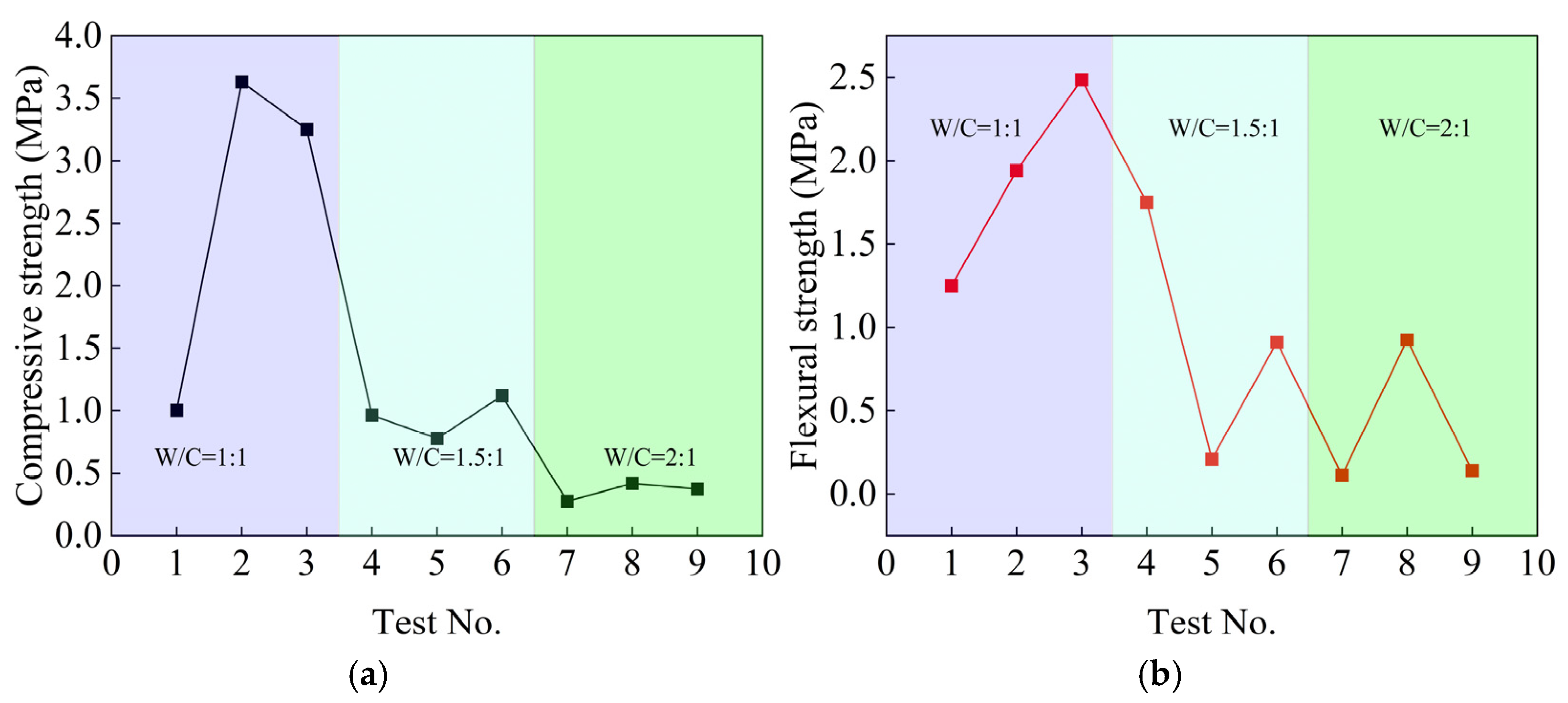
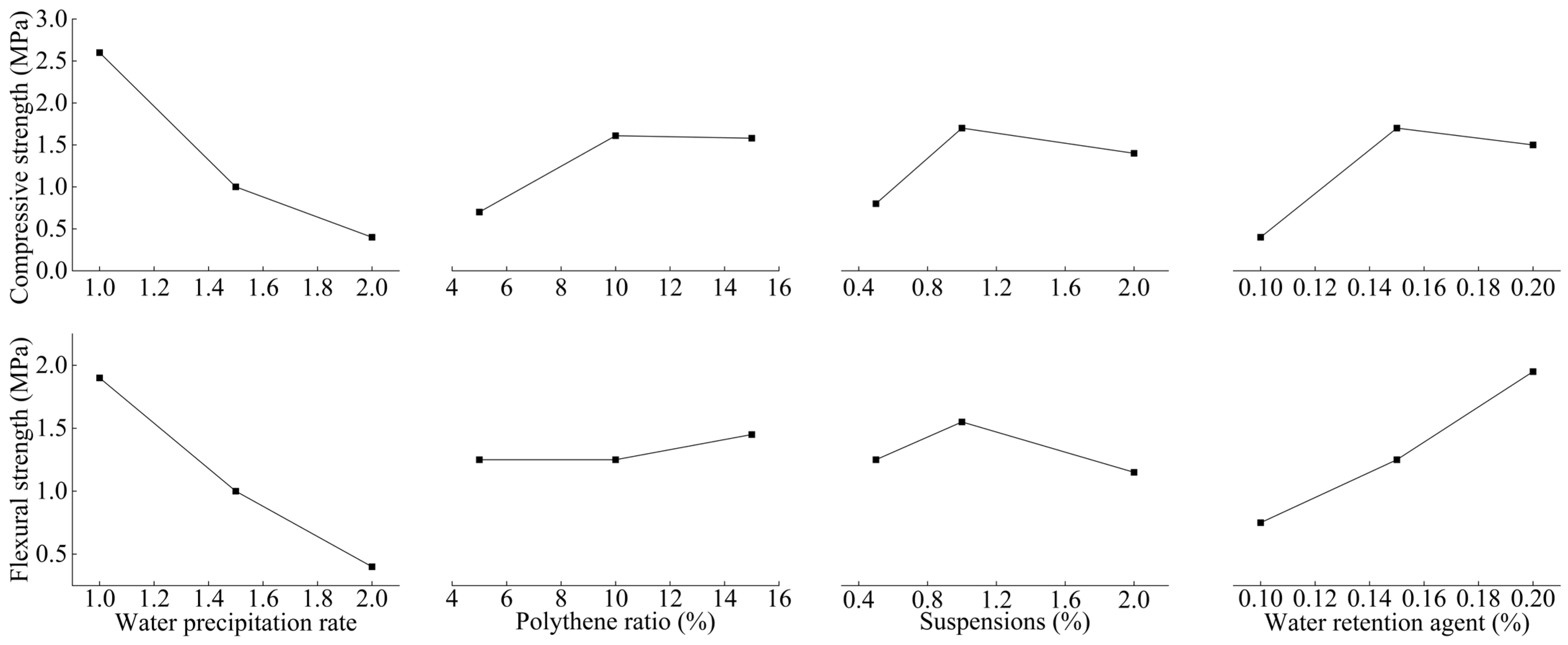
4.2. Mechanical Properties of Consolidated Grout Specimen
4.3. Infiltration Test Result
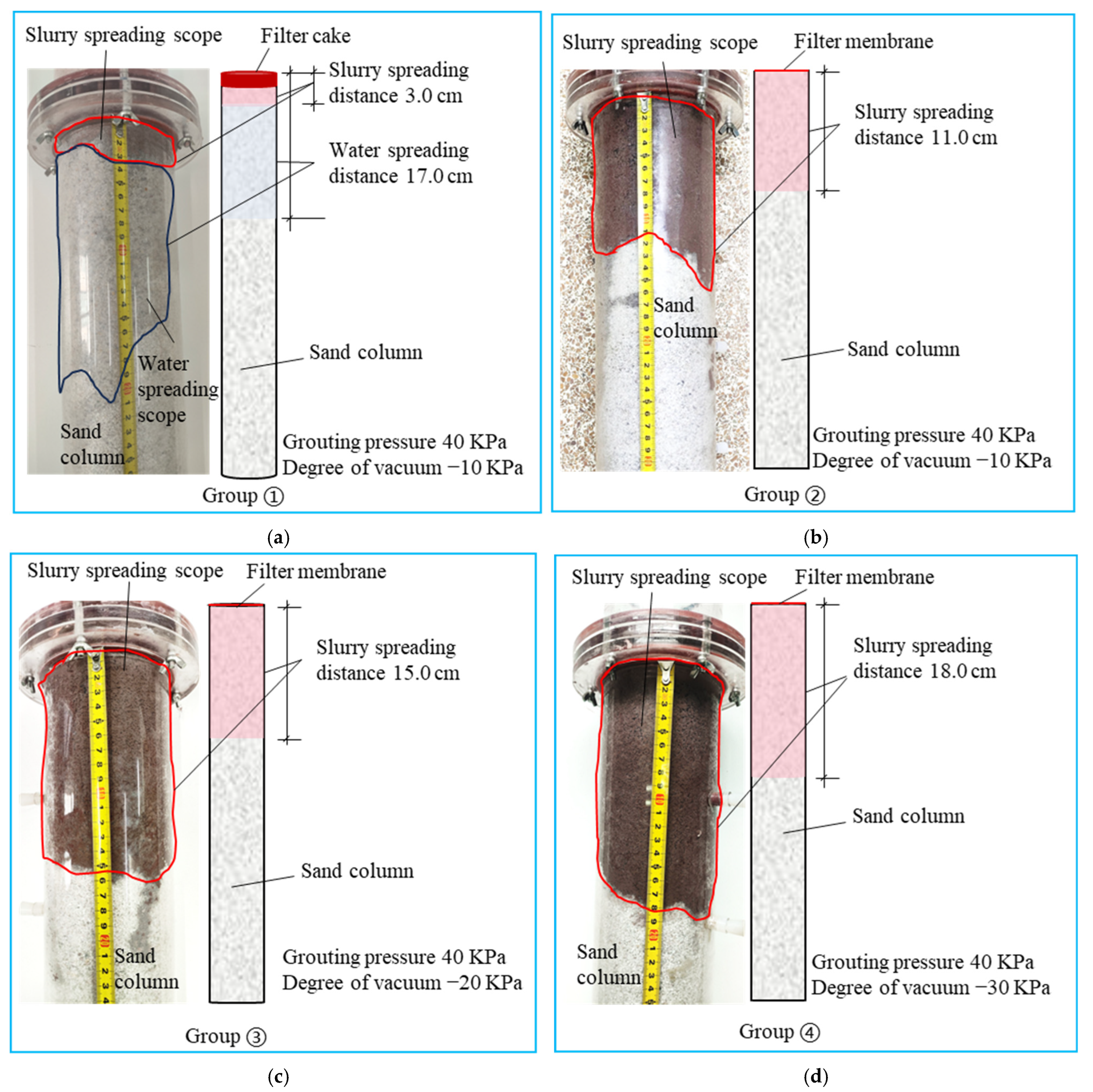
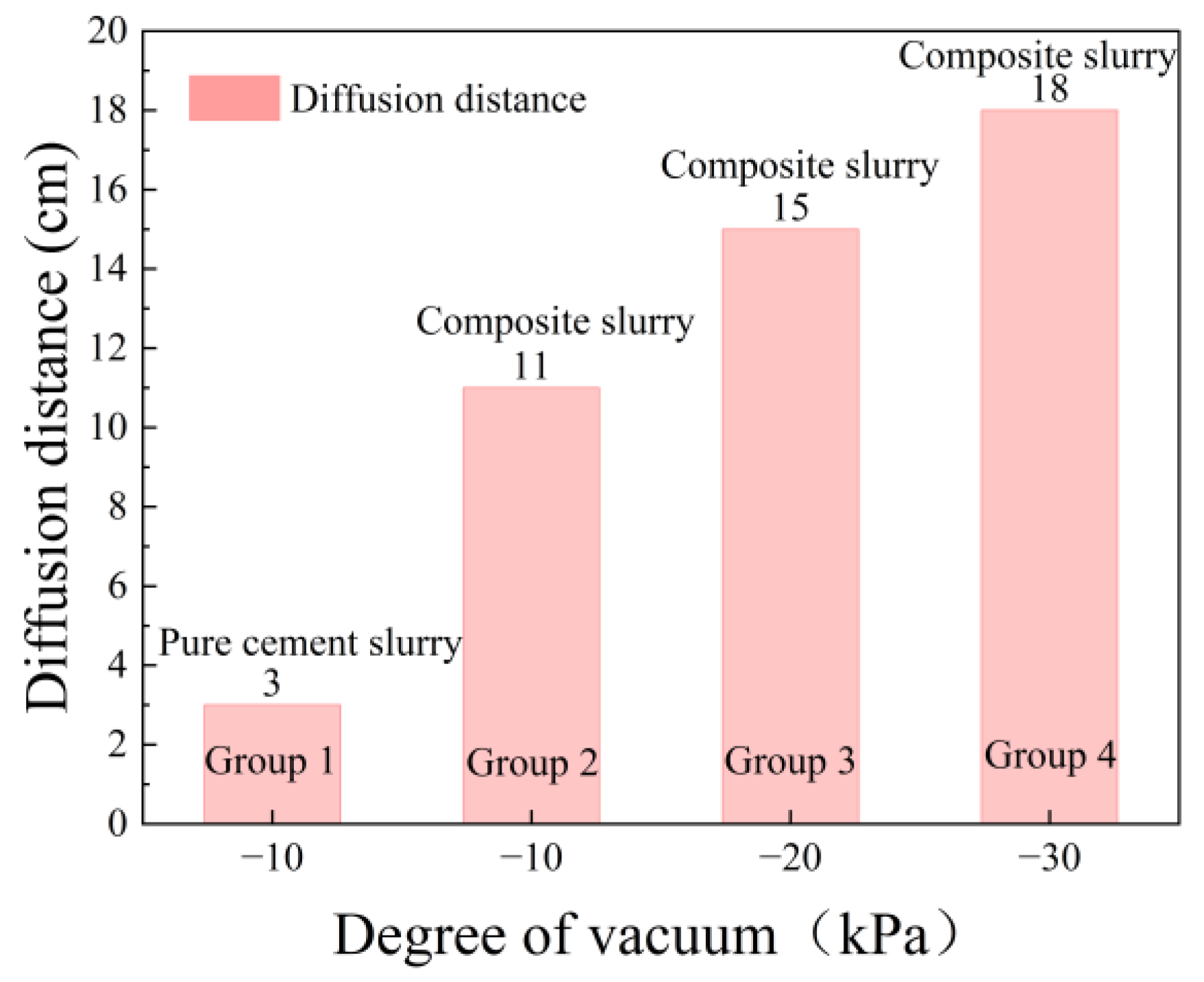
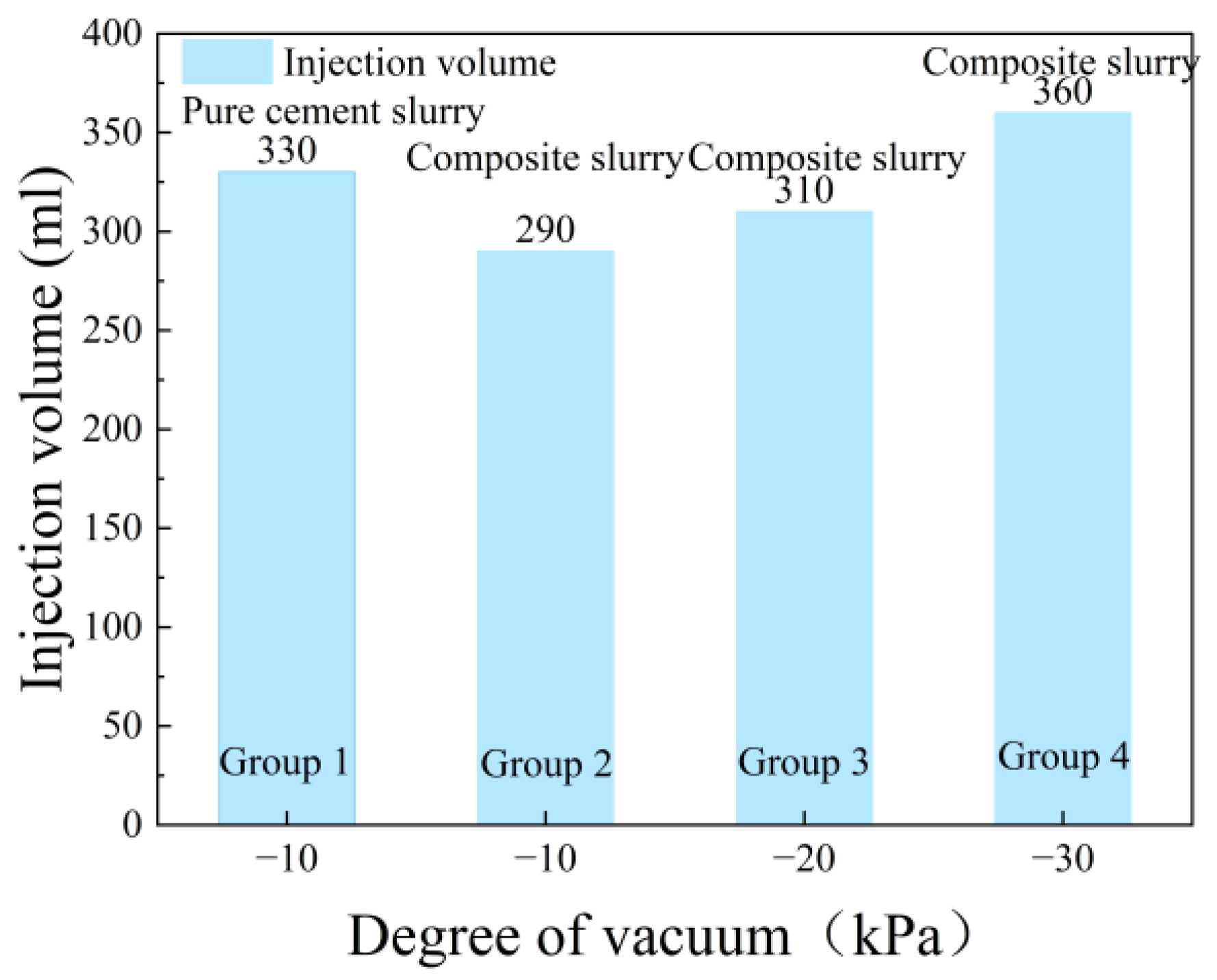
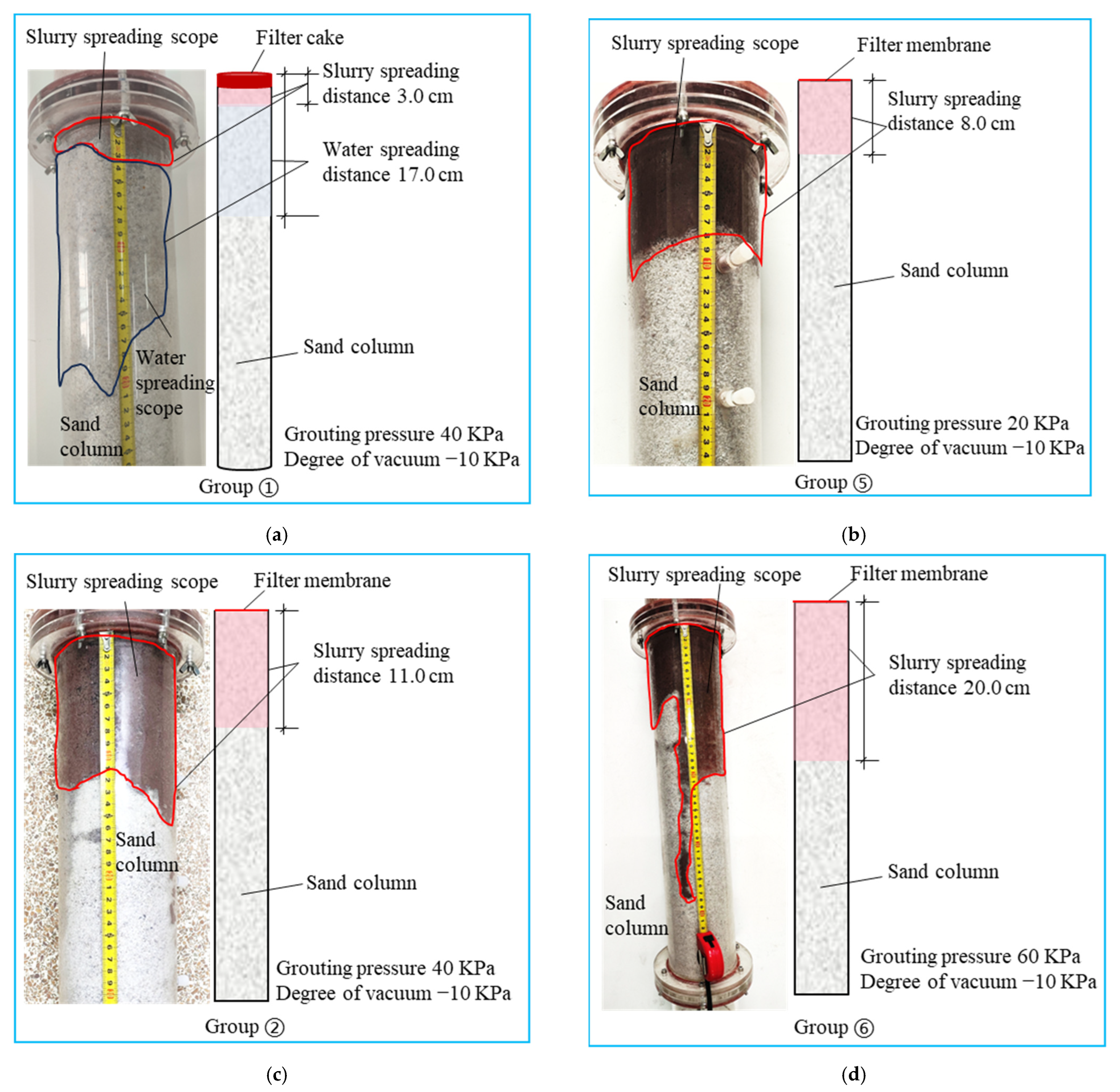
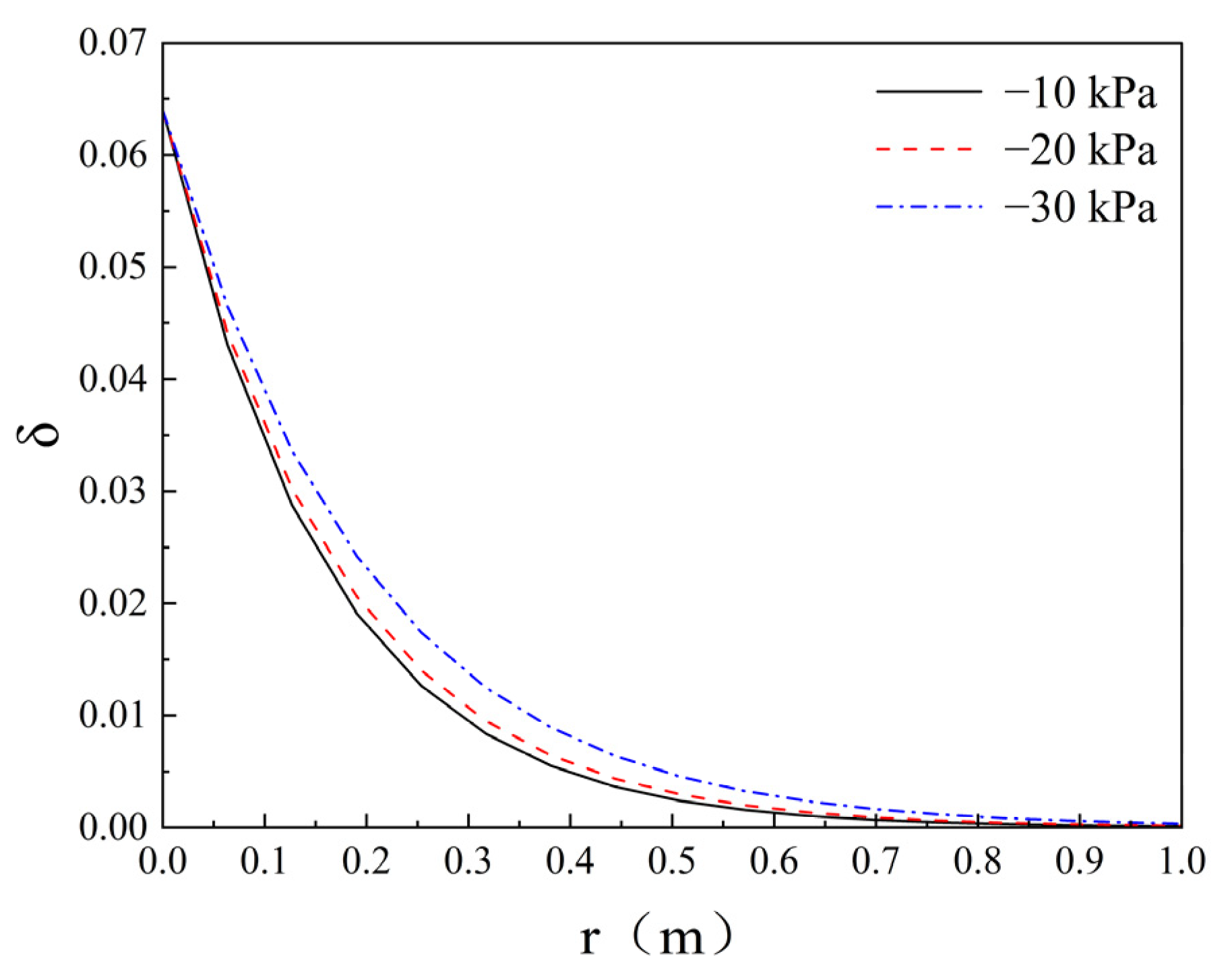
4.3.1. Effect of Vacuum Level on Diffusion Distance
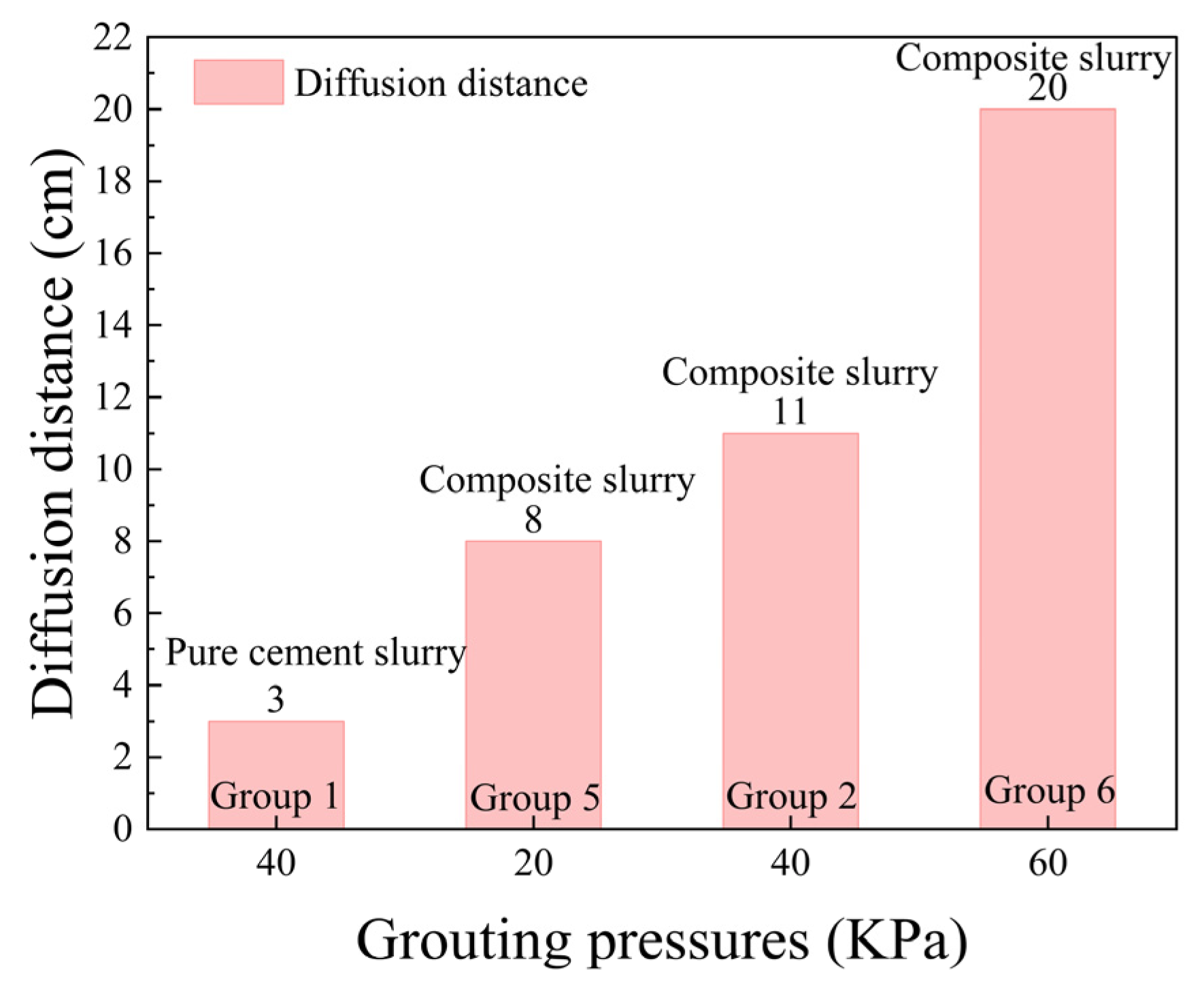
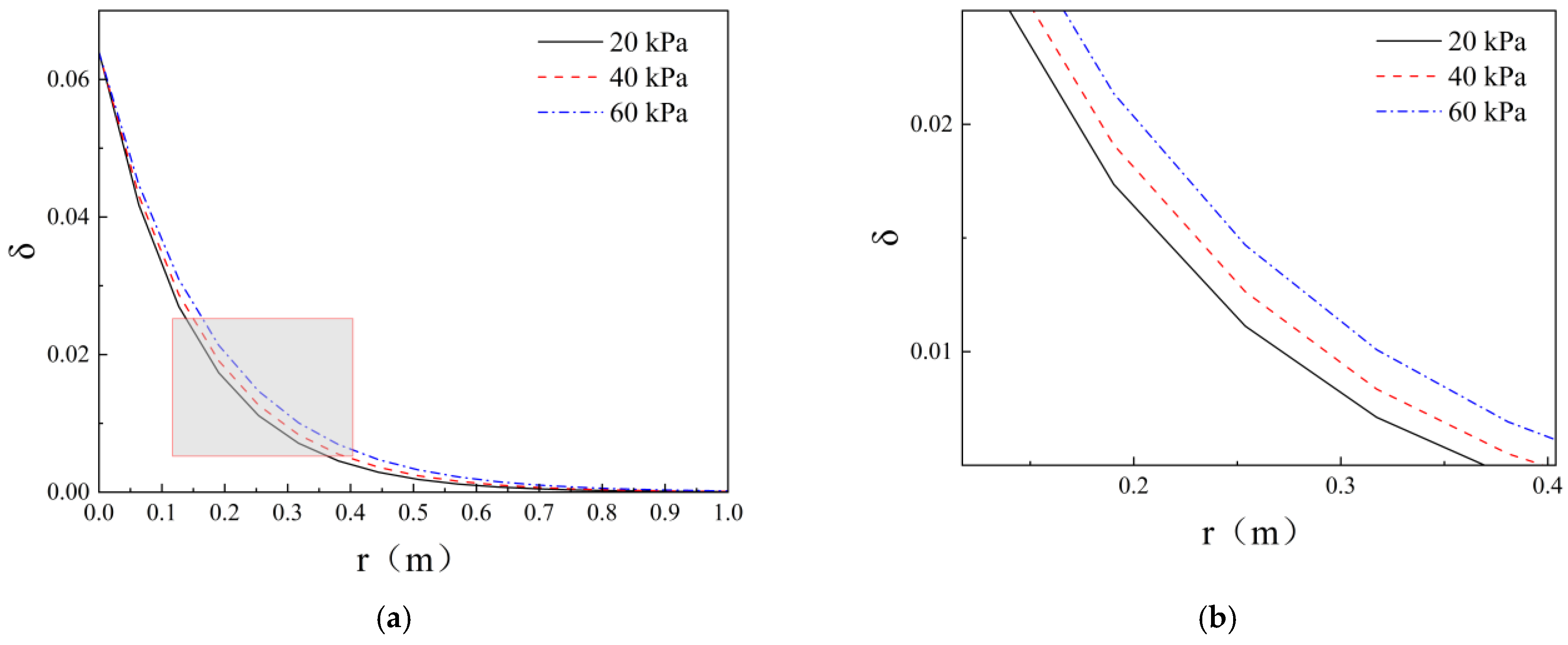
4.3.2. Effect of Grouting Pressure on Spreading Distance
5. Discussion
5.1. Analysis of Slurry Performance
5.2. Analysis of Mechanical Properties of Grouting Plus Solids
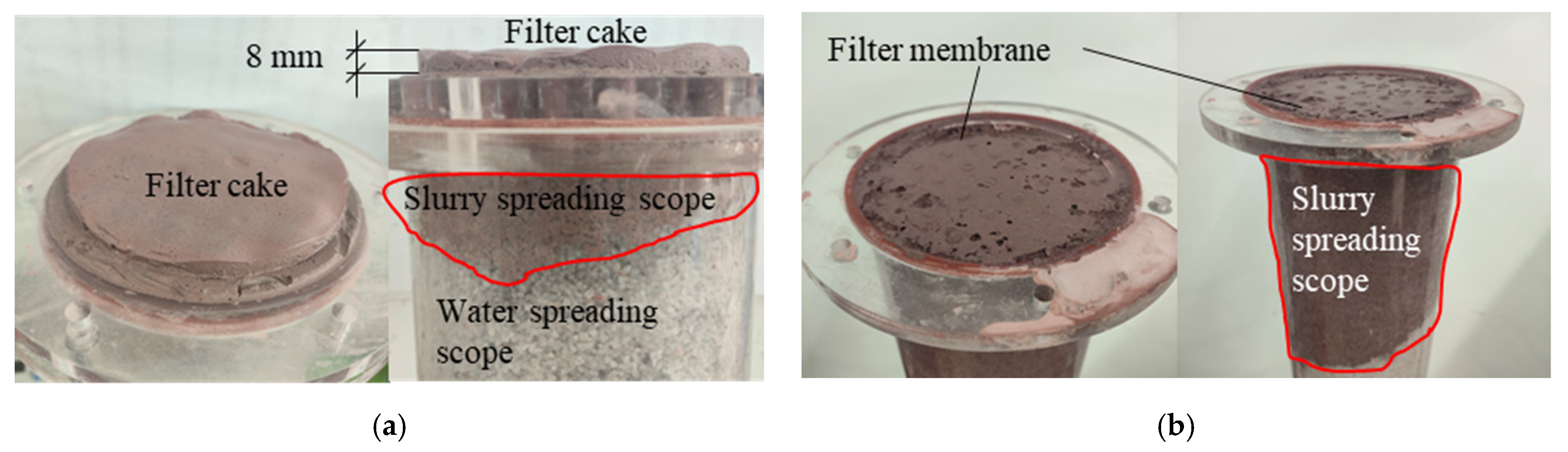
5.3. Assessment of Filtration Effects
5.4. Analysis of the Effect of the Vacuum
5.5. Analysis of the Effect of Injection Pressure
6. Conclusions
- (1)
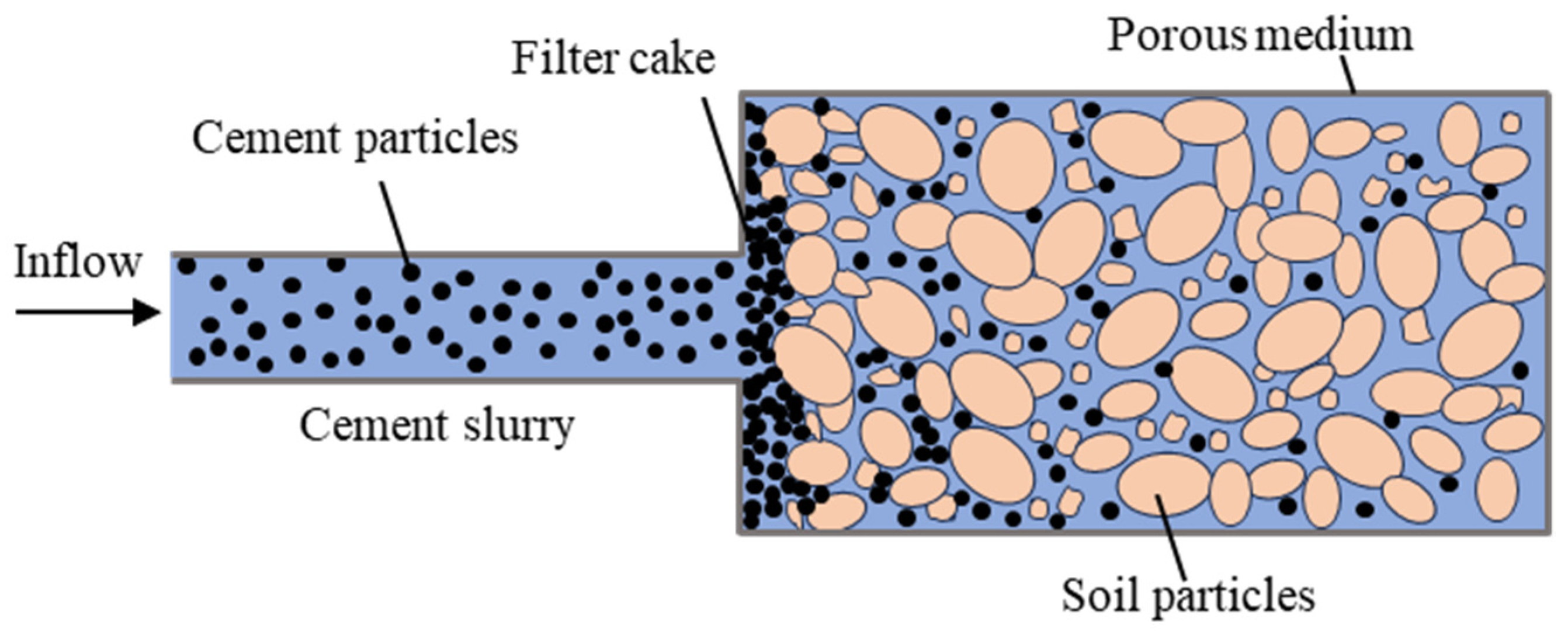
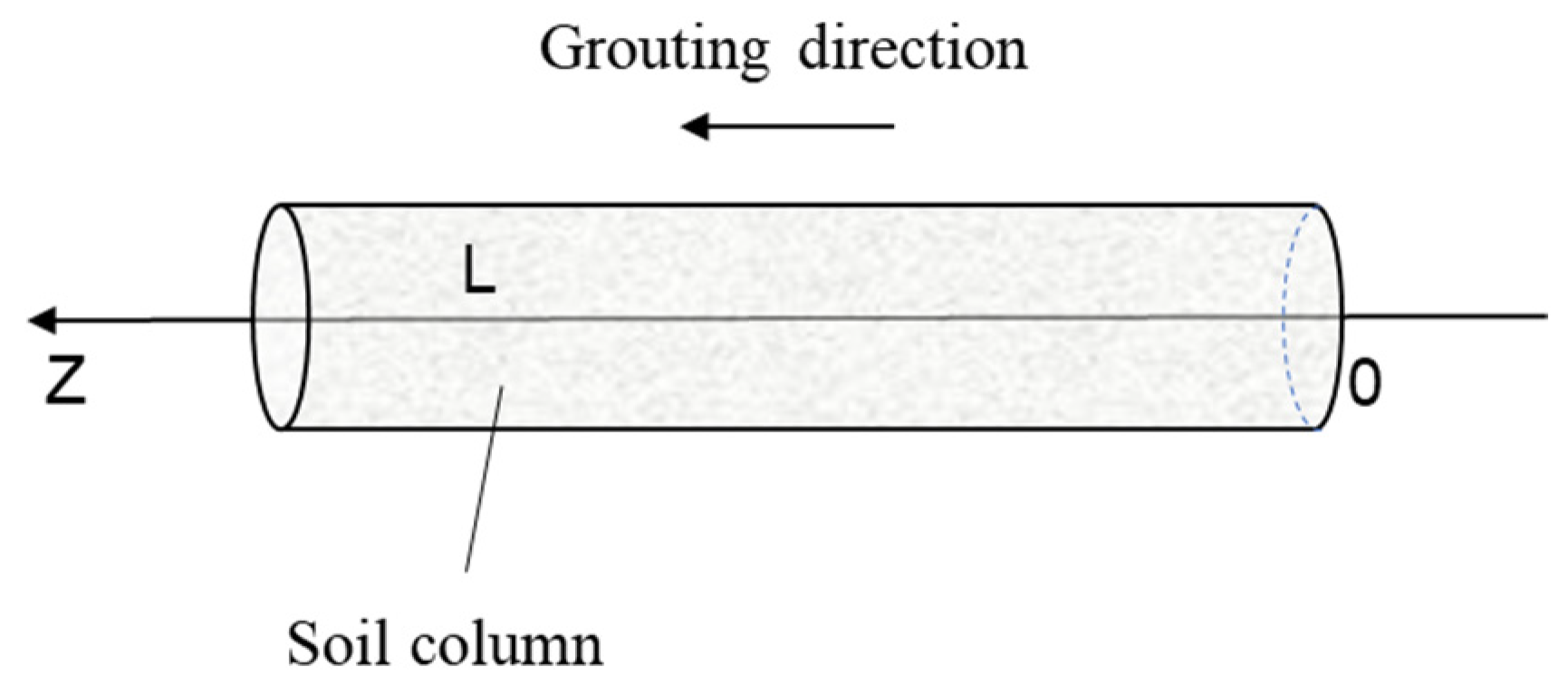
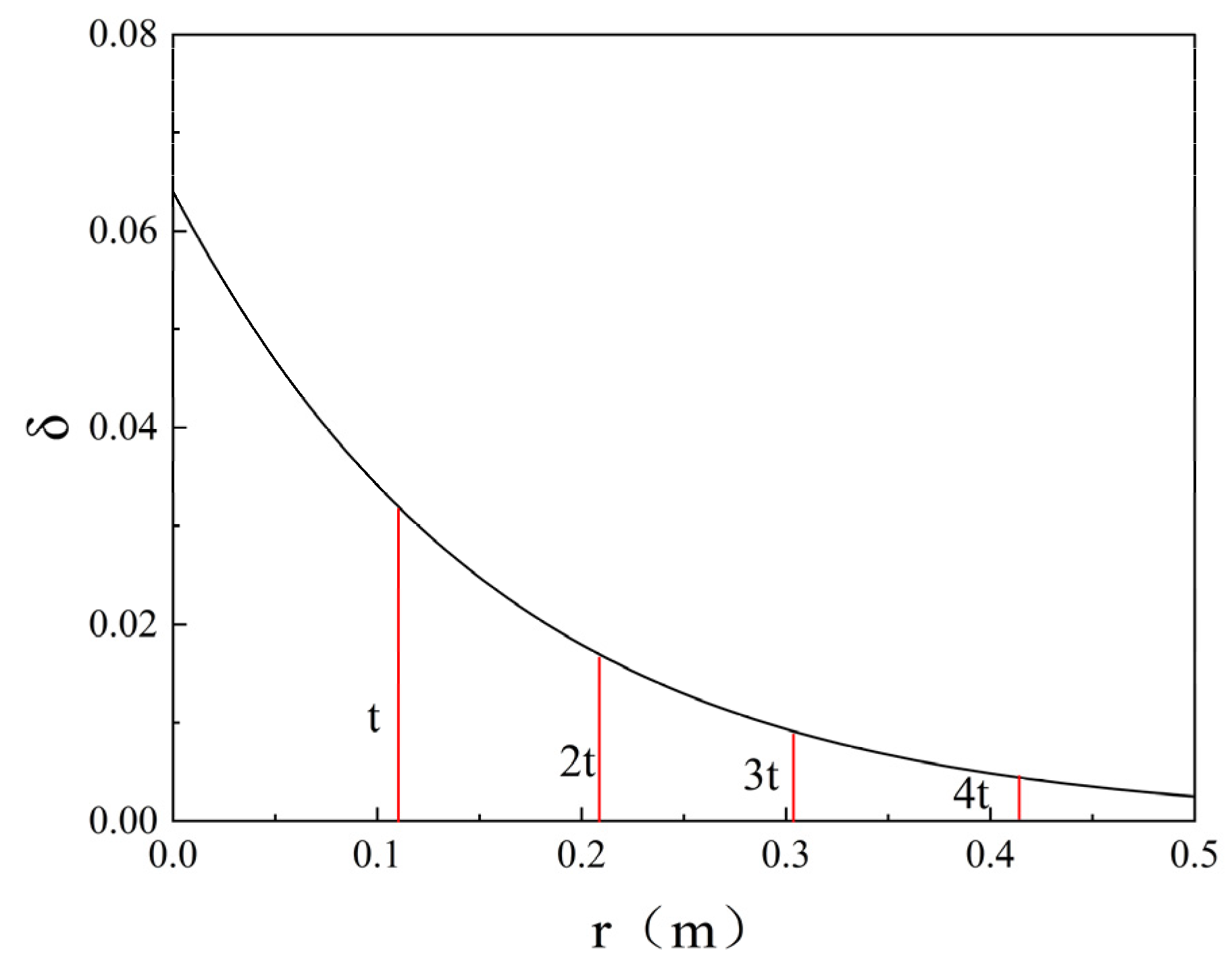
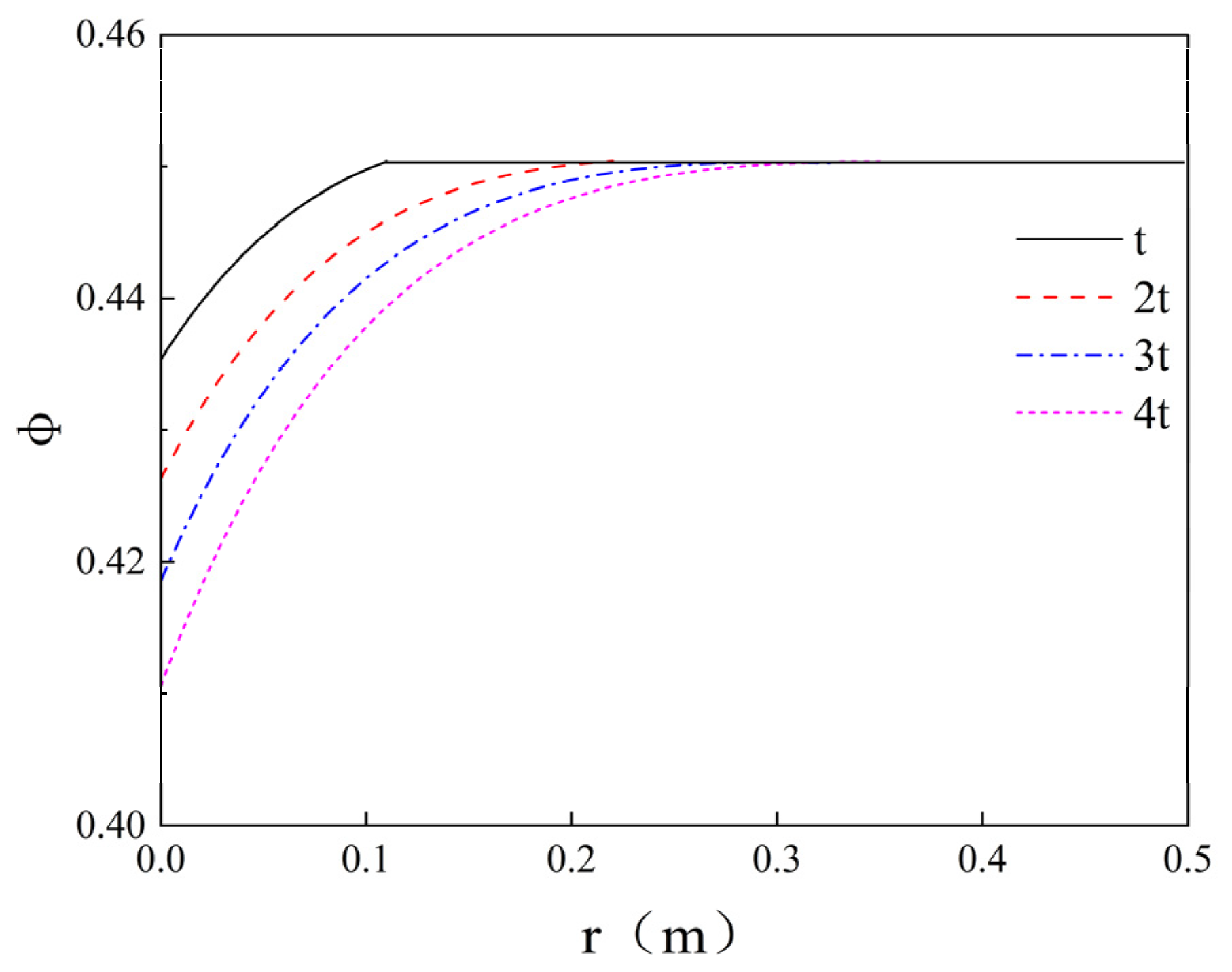
- This paper proposes a suspension flow model in porous media considering the particle percolation effect of suspension in the flow process and applies it to the infiltration grouting of cement slurry in sandy soil. The model depends on two parameters: the volume fraction of cement particles of the slurry and the porosity of the porous medium. The cement particle volume fraction of the porous medium. The cement particle volume fraction decreases with increasing distance from the grouting end, and the front-end velocity of the slurry gradually slows down as the distance from the grouting end increases. The porosity decreases in the range of penetration grouting, and the closer the distance from the grouting end, the smaller the porosity.
- (2)
- Based on orthogonal experimental analysis of water–cement ratio, polyurethane–to-cement ratio, suspension stabiliser, and water-retaining agent content, the optimal formulation for WPU-CS was determined. The optimal slurry ratio was a water–cement ratio of 1.5:1, poly–ash ratio of 5%~10%, suspending agent content of 1%, and water-retaining agent content of 0.15%.
- (3)
- Compared with pure cement slurry, WPU-CS can significantly inhibit the percolation effect during infiltration grouting and thus enhance the effect of grouting waterstopping reinforcement in the sandy soil layer. Based on the experimental results, increasing both vacuum and grouting pressure accelerates slurry flow, reduces the decay rate and retention of cement particle volume fraction, expands slurry diffusion radius, effectively suppresses filtration effects, and enhances grouting efficiency. However, increasing the grouting pressure only during infiltration grouting may lead to premature gelation of the slurry or cause stratum splitting, which may affect the stability of the weak soil layer and produce large deformation. This study demonstrates that using WPU-CS with optimised grouting parameters—moderate pressure coupled with high vacuum—enables effective control over filtration behaviour while ensuring operational safety. This approach achieves a sustainable equilibrium between grouting efficiency and construction reliability, offering an innovative and practical solution for reinforcing sandy soil strata with significant engineering applicability.
Author Contributions
Funding
Institutional Review Board Statement
Informed Consent Statement
Data Availability Statement
Conflicts of Interest
Abbreviations
| WPU-CS | water-based polyurethane-cement composite grout |
| SEM | scanning electron microscope |
| WPU | waterborne polyurethane |
| OPU | oilborne polyurethane |
| PUMC | polyurethane-modified cementitious mortar |
References
- Chen, F.; Wang, Y.-C.; Liang, C.; Zhu, Z.-G. Experimental and Theoretical Study on the Stratum Cavity Collapse Induced by Water and Sand Leakage in Subway Tunnels. Int. J. Geomech. 2024, 24, 107055. [Google Scholar] [CrossRef]
- Maghous, S.; Saada, Z.; Dormieux, L.; Canou, J.; Dupla, J. A model for in situ grouting with account for particle filtration. Comput. Geotech. 2007, 34, 164–174. [Google Scholar] [CrossRef]
- Kim, J.S.; Lee, I.M.; Jang, J.H.; Choi, H. Groutability of cement-based grout with consideration of viscosity and filtration phenomenon. Int. J. Numer. Anal. Methods Geomech. 2009, 33, 1771–1797. [Google Scholar] [CrossRef]
- Yang, F. Experimental Investigation on the Grouting and Analysis on Seepage Calculation in Sand Stratum and Gravel Bed. Master’s Thesis, China Institute of Water Resources and Hydropower Research, Beijing, China, 2005. [Google Scholar]
- Bouchelaghem, F.; Benhamida, A.; Dumontet, H. Mechanical damage behaviour of an injected sand by periodic homogenization method. Comput. Mater. Sci. 2007, 38, 473–481. [Google Scholar] [CrossRef]
- Bradford, S.A.; Simunek, J.; Bettahar, M.; Van Genuchten, M.T.; Yates, S.R. Modeling colloid attachment, straining, and exclusion in saturated porous media. Environ. Sci. Technol. 2003, 37, 2242–2250. [Google Scholar] [CrossRef] [PubMed]
- Bedrikovetsky, P.; Siqueira, F.D.; Furtado, C.A.; Souza, A.L.S. Modified Particle Detachment Model for Colloidal Transport in Porous Media. Transp. Porous Media 2011, 86, 383–413. [Google Scholar] [CrossRef]
- Saada, Z.; Canou, J.; Dormieux, L.; Dupla, J.; Maghous, S. Modelling of cement suspension flow in granular porous media. Int. J. Numer. Anal. Methods Geomech. 2005, 29, 691–711. [Google Scholar] [CrossRef]
- Porubcan, A.A.; Xu, S.-P. Colloid straining within saturated heterogeneous porous media. Water Res. 2011, 45, 1796–1806. [Google Scholar] [CrossRef]
- Wang, Y.-K.; Yu, B.-W.; Wan, Y.-K.; Yu, X. Experimental Investigation and Numerical Verification on Diffusion of Permeable Polymers in Sandy Soils with Considering Grouting Parameters. Int. J. Civ. Eng. 2023, 21, 617–632. [Google Scholar] [CrossRef]
- Jiang, W. Experimental Research on Vacuum Pressure Grouting Method to Reinforce Soft Foundation. Master’s Thesis, Zhejiang University of Technology (Beijing), Beijing, China, 2013. [Google Scholar]
- Wang, Y. Research on Gelatinizing Properties of the Acidic Soluble Glass and the Design of Vacuum Grouting Technology. Master’s Thesis, China University of Geosciences (Beijing), Beijing, China, 2013. [Google Scholar]
- Zhang, L. Research on Simulation Test of Vacuum Grouting Under Silty Sand Stratum. Master’s Thesis, China University of Geosciences (Beijing), Beijing, China, 2015. [Google Scholar]
- Shen, G. Research on Simulation Test of Vacuum Grouting Under Different Stratum. Master’s Thesis, China University of Geosciences (Beijing), Beijing, China, 2014. [Google Scholar]
- Li, Z. Research on the Effect of Vacuum Field on the Properties of Unsaturated Cohesive Soil. Master’s Thesis, China University of Geosciences (Beijing), Beijing, China, 2017. [Google Scholar]
- Lyu, X.; Yang, K.; Fang, J.; Duan, M.; Wang, Y.; Zhang, Z. Experimental study and mechanism analysis of negative pressure grouting reinforcement for broken rock mass in goaf. Chin. J. Rock Mech. Eng. 2023, 42, 4174–4188. [Google Scholar]
- Huang, F.; Lyu, J.; Gao, H.; Wang, G. Modified Maag’s spherical diffusion model of vacuum penetration grouting. Math. Probl. Eng. 2018, 2018, 1758651. [Google Scholar] [CrossRef]
- Gao, H. Study on the Function Law of Influencing Factors of Vacuum Permeation Grouting. Master’s Thesis, China University of Geosciences (Beijing), Beijing, China, 2019. [Google Scholar]
- Tian, Y.; Jin, X.-Y.; Jin, N.-G.; Zhao, R.; Li, Z.-J.; Ma, H.-Y. Research on the microstructure formation of polyacrylate latex modified mortars. Constr. Build. Mater. 2013, 47, 1381–1394. [Google Scholar] [CrossRef]
- Zheng, H.-P.; Pang, B.; Jin, Z.-Q.; Liu, S.-H.; Zhang, Y.-S.; Bi, J.-X.; Chang, H.-L.; Liu, Y.-S.; Wang, F.-D. Mechanical properties and microstructure of waterborne polyurethane-modified cement composites as concrete repair mortar. J. Build. Eng. 2024, 84, 16. [Google Scholar] [CrossRef]
- Çolak, A. Properties of plain and latex modified Portland cement pastes and concretes with and without superplasticizer. Cem. Concr. Res. 2005, 35, 1510–1521. [Google Scholar] [CrossRef]
- Fan, G.-X.; Xiang, W.-T.; Yang, J.; Yang, S.-T.; Xiang, C.-P. Study on Capillary Water Absorption of Waterborne-Polyurethane-Modified Recycled Coarse Aggregate Concrete. Polymers 2023, 15, 3860. [Google Scholar] [CrossRef]
- Hisona, R.M.R.; Omisol, C.J.M.; Tomon, T.R.B.; Etom, A.E.; Calderon, M.J.P.; Osorio, C.K.F.; Asequia, D.M.A.; Erjeno, D.J.D.; Triana, A.P.G.; Aguinid, B.J.M.; et al. Characterization and Performance Enhancement of Bio-Based Polyurethane-Modified Cement Mortar Utilizing Polyglycerol Polyester Polyol. ACS Omega 2024, 9, 45828–45841. [Google Scholar] [CrossRef]
- Ramli, M.; Tabassi, A.A. Effects of polymer modification on the permeability of cement mortars under different curing conditions: A correlational study that includes pore distributions, water absorption and compressive strength. Constr. Build. Mater. 2012, 28, 561–570. [Google Scholar] [CrossRef]
- Barluenga, G.; Hernández-Olivares, F. SBR latex modified mortar rheology and mechanical behaviour. Cem. Concr. Res. 2004, 34, 527–535. [Google Scholar] [CrossRef]
- Liu, H.; Shi, Z.-X.; Li, Z.-Y.; Wang, Y.-K. Experimental Investigation on Reinforcement Application of Newly Permeable Polymers in Dam Engineering with Fine Sand Layers. Water 2023, 15, 3761. [Google Scholar] [CrossRef]
- Kong, X.; Pakusch, J.; Jansen, D.; Emmerling, S.; Neubauer, J.; Goetz-Neuhoeffer, F. Effect of polymer latexes with cleaned serum on the phase development of hydrating cement pastes. Cem. Concr. Res. 2016, 84, 30–40. [Google Scholar] [CrossRef]
- Zhang, X.; Li, G.-X.; Song, Z.-P. Influence of styrene-acrylic copolymer latex on the mechanical properties and microstructure of Portland cement/Calcium aluminate cement/Gypsum cementitious mortar. Constr. Build. Mater. 2019, 227, 9. [Google Scholar] [CrossRef]
- Feng, G.-H.; Li, K.; Zhang, J.; Liu, S. Research review of water-based epoxy resin modified cement based materials. J. Ceram. Process. Res. 2025, 26, 406–417. [Google Scholar]
- Papaioannou, S.; Argyropoulou, R.; Kalogiannidou, C.; Melidis, G.; Papadopoulou, L.; Evelzaman, I.; Argyropoulou, M. Mechanical and adhesion properties of polymer-modified cement mortars in relation with their microstructure. J. Adhes. 2019, 95, 126–145. [Google Scholar] [CrossRef]
- Zebovitz, S.; Krizek, R.J.; Atmatzidis, D.K. Injection of fine sands with very fine cement grout. J. Geotech. Eng. 1989, 115, 1717–1733. [Google Scholar] [CrossRef]
- Bouchelaghem, F.; Vulliet, L.; Leroy, D.; Laloui, L.; Descoeudres, F. Real-scale miscible grout injection experiment and performance of advection–dispersion–filtration model. Int. J. Numer. Anal. Methods Geomech. 2001, 25, 1149–1173. [Google Scholar] [CrossRef]
- Ene, H.; Sanchez-Palencia, E. Equations and Surface Phenomena for the Flow in a Porous Medium. J. Mec. 1975, 14, 73–108. [Google Scholar]
- Duan, X. Preparation of Waterborne Polyurethane-Modified Cement Grouting Materials and Dynamic Mechanical Properties of Nodular Bodies. Master’s Thesis, Shenyang University of Technology, Shenyang, China, 2024. [Google Scholar]
- SL/T 62-2020; Technical Specification for Cement Grouting of Hydraulie Struetures. Ministry of Water Resources: Beijing, China, 2020.
- Hou, J.; Li, T.; Ning, L. Geotechnical Chemistry; China Science Publishing & Media Co., Ltd.: Beijing, China, 2001. [Google Scholar]
- Li, S.; Feng, X.; Liu, R.; Li, K.; Li, W.; Zhang, S.; Sui, H.; Wang, X. Study on infiltration coefficient and reinforcing mechanism of grout suspension in sandy soil medium. Chin. J. Rock Mech. Eng. 2017, 36, 4220–4228. [Google Scholar]
- JGJ 79-2012; Technical Code for Ground Treatment of Building. Ministry of Housing and Urban-Rural Development of the People’s Republic of China: Beijing, China, 2012.



| Stability | Heat Loss (%) | Chloride Content (%) | Initial Setting Time (min) | Final Setting Time (min) | Compressive Strength (MPa) | Flexural Strength (MPa) | ||
|---|---|---|---|---|---|---|---|---|
| 3d | 28d | 3d | 28d | |||||
| Eligible | 5.0 | 0.06 | 30 | 600 | 23.0 | 52.5 | 4.0 | 7.0 |
| Moisture (%) | Viscosity (mPa·s) | Ash (%) | Transmittance (%) | Water Insoluble Matter (%) | Methoxy Content (%) | Gel Temperature (°C) | Hydroxypropyl Content (%) | pH |
|---|---|---|---|---|---|---|---|---|
| 3% | 200,000 | 3 | 96 | 0.3 | 29 | 65 | 13 | 6.5 |
| Considerations | Water–Cement Ratio (Weight Ratio) A | Water-Based Polyurethane B (%) | Suspensions C (%) | Water-Retention Agent D (%) | |
|---|---|---|---|---|---|
| Level | |||||
| 1 | 1:1 | 5 | 0.5 | 0.1 | |
| 2 | 1.5:1 | 10 | 1 | 0.15 | |
| 3 | 2:1 | 15 | 2 | 0.2 | |
| Test No. | Water–Cement Ratio (Weight Ratio) A | Water-Based Polyurethane B (%) | Suspensions C (%) | Water-Retention Agent D (%) |
|---|---|---|---|---|
| 1 | 1:1 | 5 | 0.5 | 0.1 |
| 2 | 1:1 | 10 | 1 | 0.15 |
| 3 | 1:1 | 15 | 2 | 0.2 |
| 4 | 1.5:1 | 5 | 1 | 0.2 |
| 5 | 1.5:1 | 10 | 2 | 0.1 |
| 6 | 1.5:1 | 15 | 0.5 | 0.15 |
| 7 | 2:1 | 5 | 2 | 0.15 |
| 8 | 2:1 | 10 | 0.5 | 0.2 |
| 9 | 2:1 | 15 | 1 | 0.1 |
| Test No. | Degree of Vacuum (kPa) | Grouting Pressure (kPa) | Water-Based Polyurethane (%) | Water–Cement Ratio (Weight Ratio) | Water-Retention Agent (%) | Suspensions (%) | Grouting Time (s) |
|---|---|---|---|---|---|---|---|
| 1 | −10 | 40 | 0 | 1.5:1 | 0 | 1 | 100 |
| 2 | −10 | 40 | 5 | 1.5:1 | 10 | 1 | 100 |
| 3 | −20 | 40 | 5 | 1.5:1 | 10 | 1 | 100 |
| 4 | −30 | 40 | 5 | 1.5:1 | 10 | 1 | 100 |
| 5 | −10 | 20 | 5 | 1.5:1 | 10 | 1 | 100 |
| 6 | −10 | 60 | 5 | 1.5:1 | 10 | 1 | 100 |
| Water precipitation rate (%) | K1 | 13.5 | 14.7 | 28.5 | 27.2 |
| K2 | 10.7 | 15.7 | 15.5 | 6.7 | |
| K3 | 23.7 | 17.5 | 3.9 | 14.5 | |
| κ1 | 4.5 | 4.9 | 9.5 | 9.1 | |
| κ2 | 3.6 | 5.2 | 5.2 | 2.2 | |
| κ3 | 7.9 | 5.8 | 1.3 | 4.8 | |
| Range | 3.4 | 0.9 | 8.2 | 4.3 | |
| Optimal case | A3 | B1 | C3 | D2 | |
| Apparent viscosity (mPa·s) | K1 | 947 | 212 | 123 | 129 |
| K2 | 130 | 437 | 414 | 522 | |
| K3 | 193 | 621 | 733 | 619 | |
| κ1 | 315.7 | 70.7 | 41.0 | 43.0 | |
| κ2 | 43.3 | 145.7 | 138.0 | 174.0 | |
| κ3 | 64.3 | 207.0 | 244.3 | 206.3 | |
| Range | 272.4 | 136.3 | 203.3 | 163.3 | |
| Optimal case | A2 | B1 | C1 | D1 | |
| Gel time (min) | K1 | 18 | 46 | 92 | 73 |
| K2 | 84 | 46 | 78 | 66 | |
| K3 | 91 | 101 | 23 | 54 | |
| κ1 | 6.0 | 15.3 | 30.7 | 24.3 | |
| κ2 | 28.0 | 15.3 | 26.0 | 22.0 | |
| κ3 | 30.3 | 33.7 | 7.7 | 18.0 | |
| Range | 24.3 | 18.4 | 23.0 | 6.3 | |
| Optimal case | A1 | B1 | C3 | D3 |
| Compressive strength (MPa) | K1 | 7.9 | 2.2 | 2.5 | 1.2 |
| K2 | 2.9 | 4.8 | 5.0 | 5.0 | |
| K3 | 1.1 | 4.7 | 4.3 | 4.6 | |
| κ1 | 2.6 | 0.7 | 0.8 | 0.4 | |
| κ2 | 1.0 | 1.6 | 1.7 | 1.7 | |
| κ3 | 0.4 | 1.6 | 1.4 | 1.5 | |
| Range | 2.2 | 0.9 | 0.9 | 1.3 | |
| Optimal case | A1 | B2 | C2 | D2 | |
| Flexural strength (MPa) | K1 | 5.7 | 3.1 | 3.1 | 1.6 |
| K2 | 2.9 | 3.1 | 3.8 | 3.0 | |
| K3 | 1.2 | 3.5 | 2.8 | 5.2 | |
| κ1 | 1.9 | 1.0 | 1.0 | 0.5 | |
| κ2 | 1.0 | 1.0 | 1.3 | 1.0 | |
| κ3 | 0.4 | 1.2 | 0.9 | 1.7 | |
| Range | 1.5 | 0.2 | 0.4 | 1.2 | |
| Optimal case | A1 | B3 | C2 | D3 |
Disclaimer/Publisher’s Note: The statements, opinions and data contained in all publications are solely those of the individual author(s) and contributor(s) and not of MDPI and/or the editor(s). MDPI and/or the editor(s) disclaim responsibility for any injury to people or property resulting from any ideas, methods, instructions or products referred to in the content. |
© 2025 by the authors. Licensee MDPI, Basel, Switzerland. This article is an open access article distributed under the terms and conditions of the Creative Commons Attribution (CC BY) license (https://creativecommons.org/licenses/by/4.0/).
Share and Cite
Zhang, C.; Huang, F.; Shi, Y.; Sun, X.; Wang, G. Research on the Infiltration Effect of Waterborne Polyurethane Cementitious Composite Slurry Penetration Grouting Under Vacuum Effect. Polymers 2025, 17, 3205. https://doi.org/10.3390/polym17233205
Zhang C, Huang F, Shi Y, Sun X, Wang G. Research on the Infiltration Effect of Waterborne Polyurethane Cementitious Composite Slurry Penetration Grouting Under Vacuum Effect. Polymers. 2025; 17(23):3205. https://doi.org/10.3390/polym17233205
Chicago/Turabian StyleZhang, Chungang, Feng Huang, Yingguang Shi, Xiujun Sun, and Guihe Wang. 2025. "Research on the Infiltration Effect of Waterborne Polyurethane Cementitious Composite Slurry Penetration Grouting Under Vacuum Effect" Polymers 17, no. 23: 3205. https://doi.org/10.3390/polym17233205
APA StyleZhang, C., Huang, F., Shi, Y., Sun, X., & Wang, G. (2025). Research on the Infiltration Effect of Waterborne Polyurethane Cementitious Composite Slurry Penetration Grouting Under Vacuum Effect. Polymers, 17(23), 3205. https://doi.org/10.3390/polym17233205