Modification of Polypropylene Fibers with Sodium Silicate: Enhancement of Pozzolanic Properties in Cement-Based Systems


Abstract
1. Introduction
2. Materials and Methods
2.1. Materials
2.1.1. Cementitious System Materials
2.1.2. Chemical Synthesis
Materials for the Synthesis of Modification of PP Polymer Surface with Sodium Silicate
2.2. Methods
2.2.1. Synthesis Method
Synthesis of Modification of PP Polymer Surface with Sodium Silicate
- a.
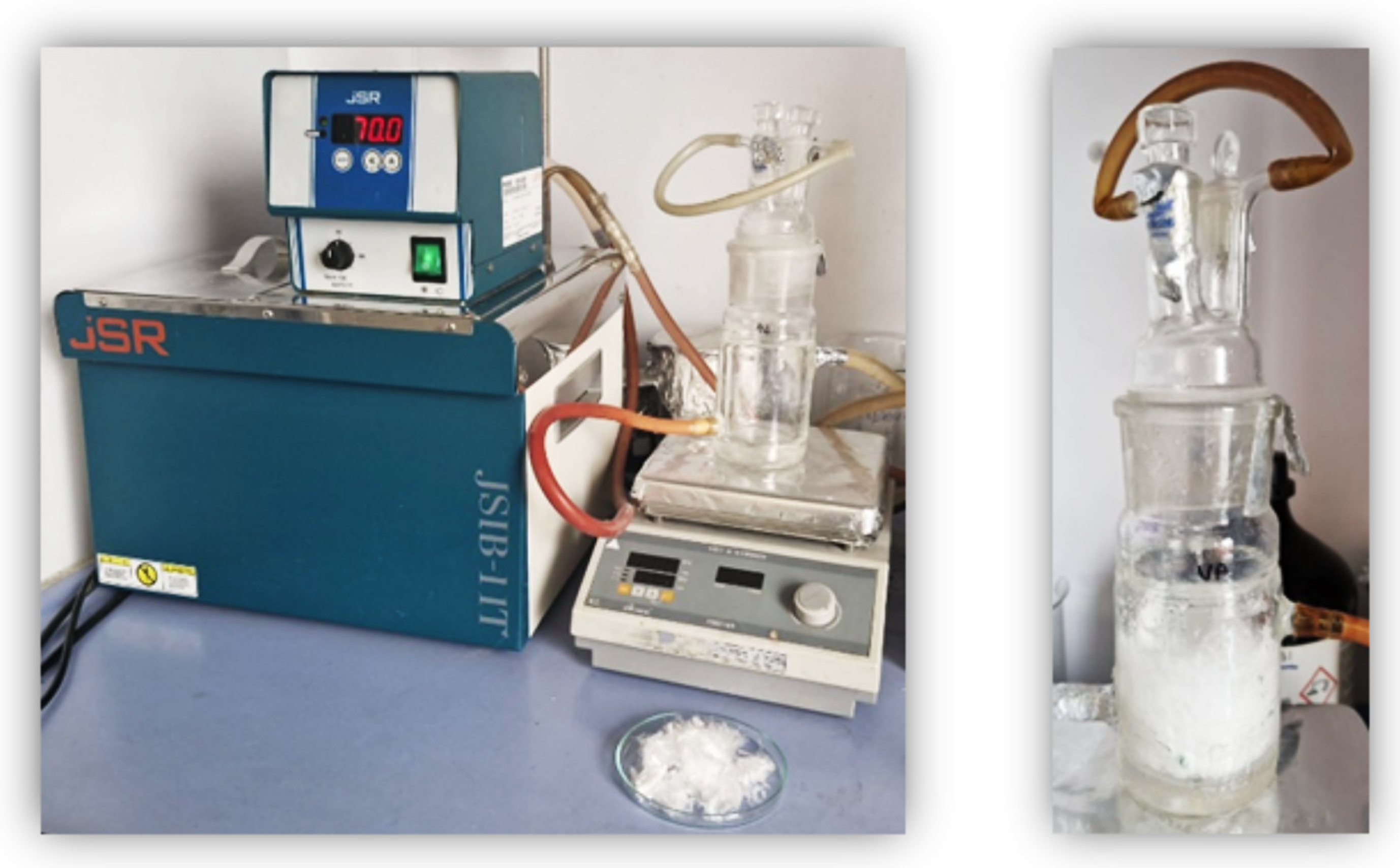
- Reactor Preparation and Addition of Reagents
- b.
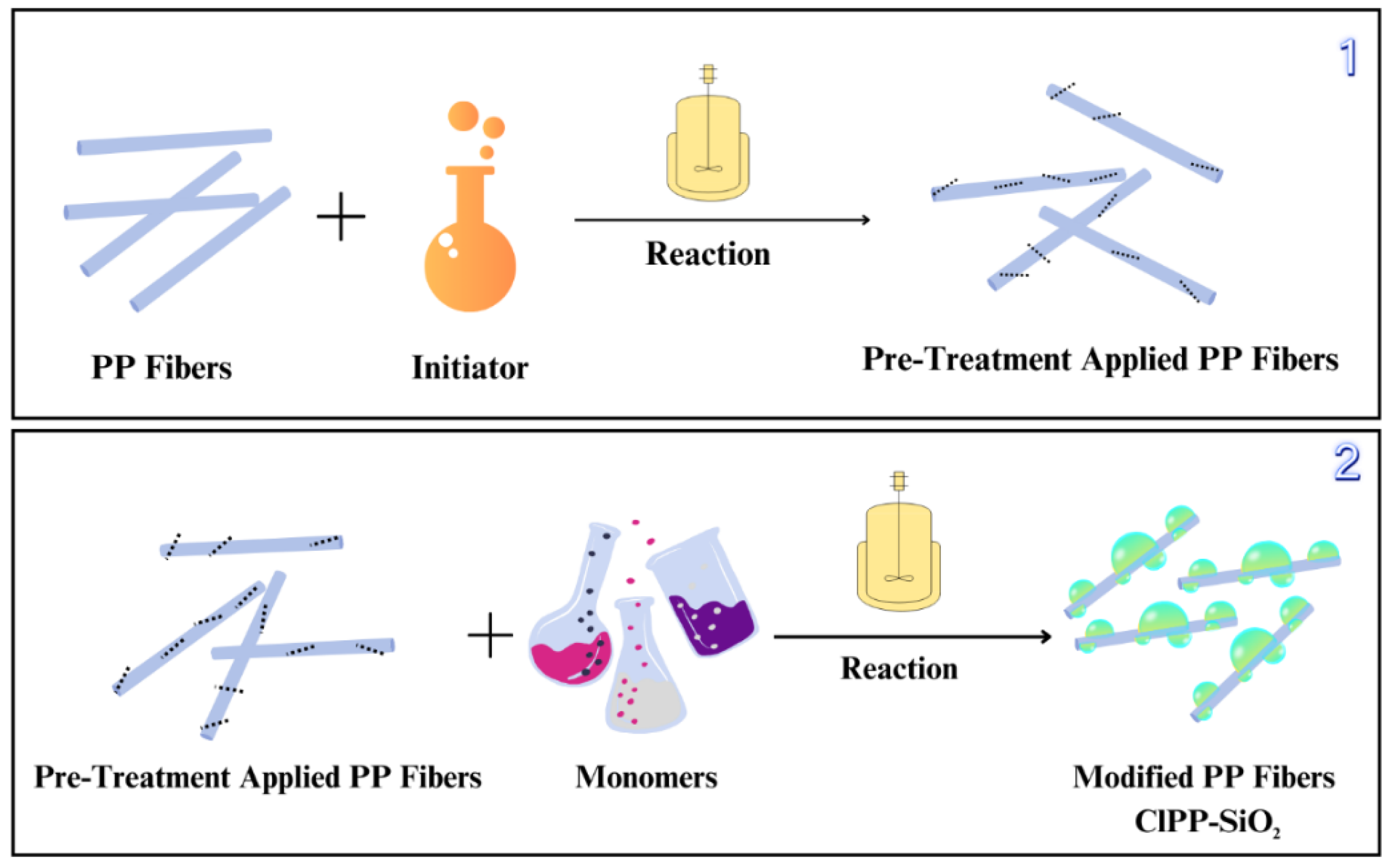
- Surface Modification of Polypropylene Fibers
- c.
- Intermediate Step
- d.
- Modification with Sodium Silicate
- e.
- Reaction Time and Mixing
- f.
- Drying and Subsequent Processes
2.2.2. Chemical Reactions
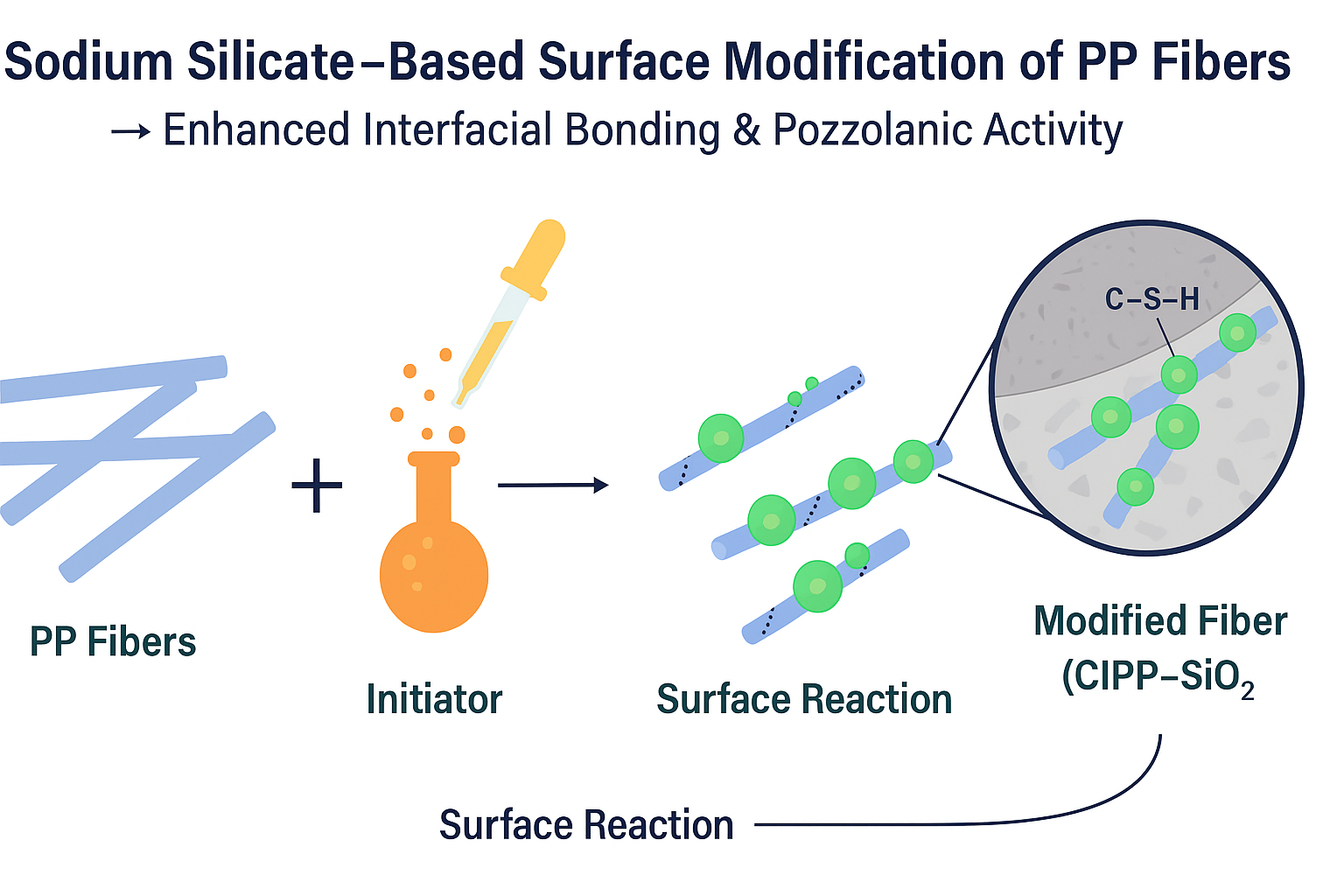
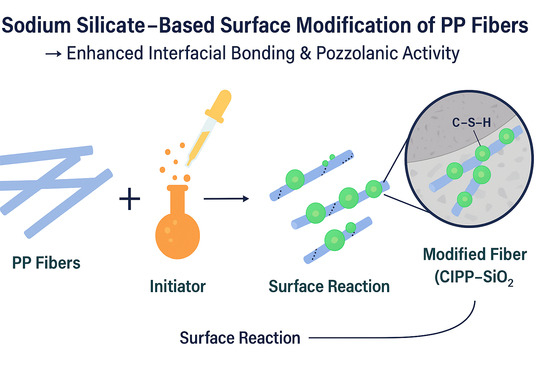
- Radical Activation: The reaction initiates when potassium persulfate (K2S2O8) thermally decomposes, making sulfate radicals (SO4·−). These radicals are strong hydrogen abstractors, and they attack the tertiary carbon atoms of the PP backbone to create macro-radicals (PP·) on the surface. This step weakens the otherwise inert polymer surface [14,17] (Equation (1)).
- Chlorination (The Bridge Step): Next, ethyl chloroformate (C2H5OCOCl) reacts with the newly created PP· radicals (Equation (2)). This step adds reactive chlorine groups to the fiber, forming the CIPP intermediate. The C-Cl bond acts as a reactive site susceptible to nucleophilic attack, unlike the stable C-H bonds of the original polymer. Ethyl chloroformate was specifically selected for this step to facilitate surface-selective functionalization within the aqueous radical polymerization system while preserving the structural integrity of the polypropylene fibers [18]. This makes the surface chemically active and ready for further reaction. Alternative chlorinating agents (e.g., SOCl2 or Cl2 gas) were excluded as they are incompatible with the aqueous reaction medium or induce excessive polymer degradation [19].
- Silicate Grafting: In the final stage, sodium silicate (Na2SiO3) is added. The hydrolyzed silanol groups (Si-OH) undergo a nucleophilic substitution reaction with the chlorinated sites (CIPP). This results in the covalent attachment of a silicate layer (CIPP-SiO2) (Equation (4)). Consequently, the fiber surface transforms from hydrophobic to hydrophilic, gaining the necessary chemical affinity to bond with the cementitious matrix [12,13,14].
2.2.3. Characterization Processes
2.3. Preparation of Mixtures in Cementitious Systems
Cemented System Tests
3. Results and Discussion
3.1. Fiber Characterization
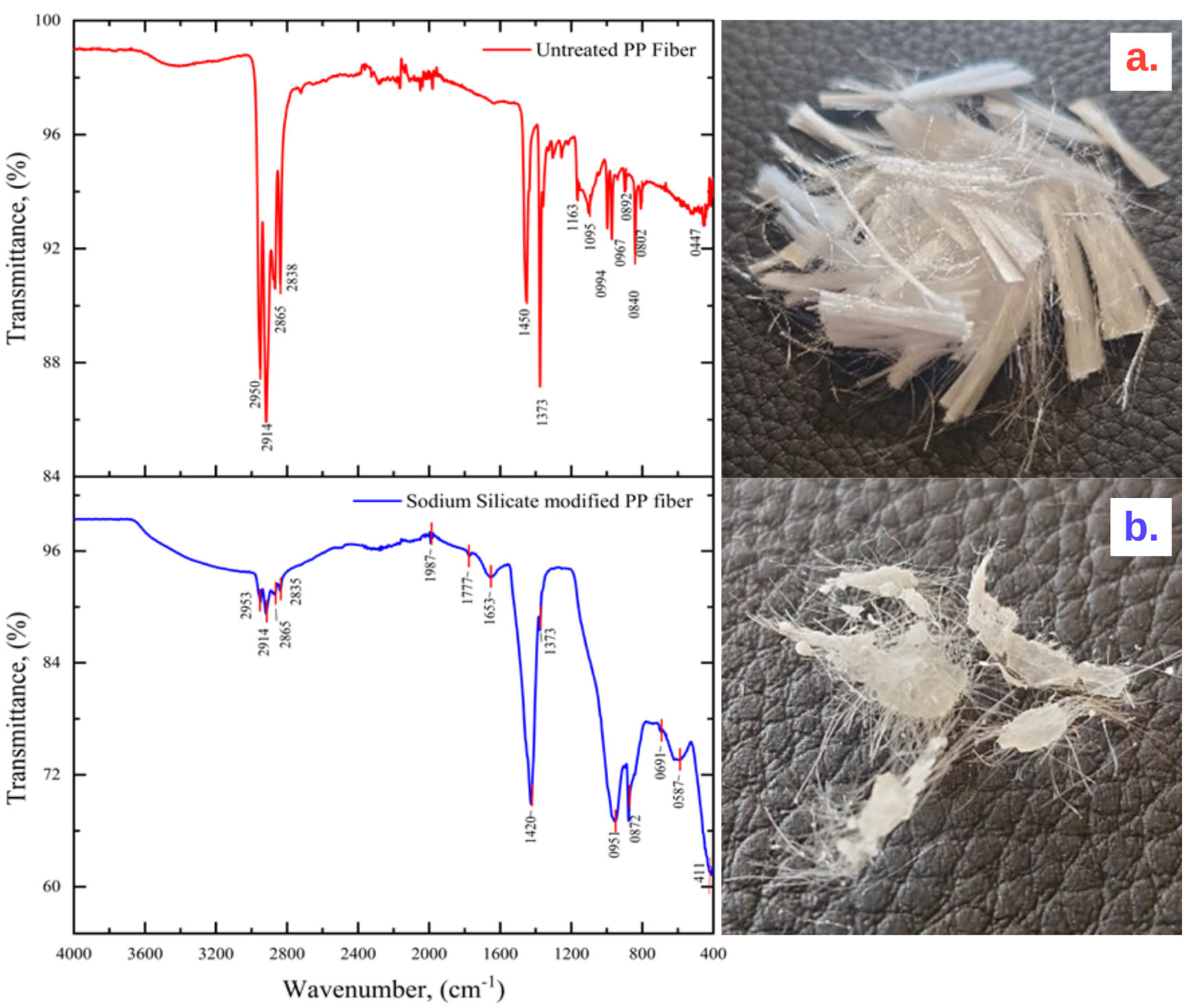
- FTIR Analyses
- b.
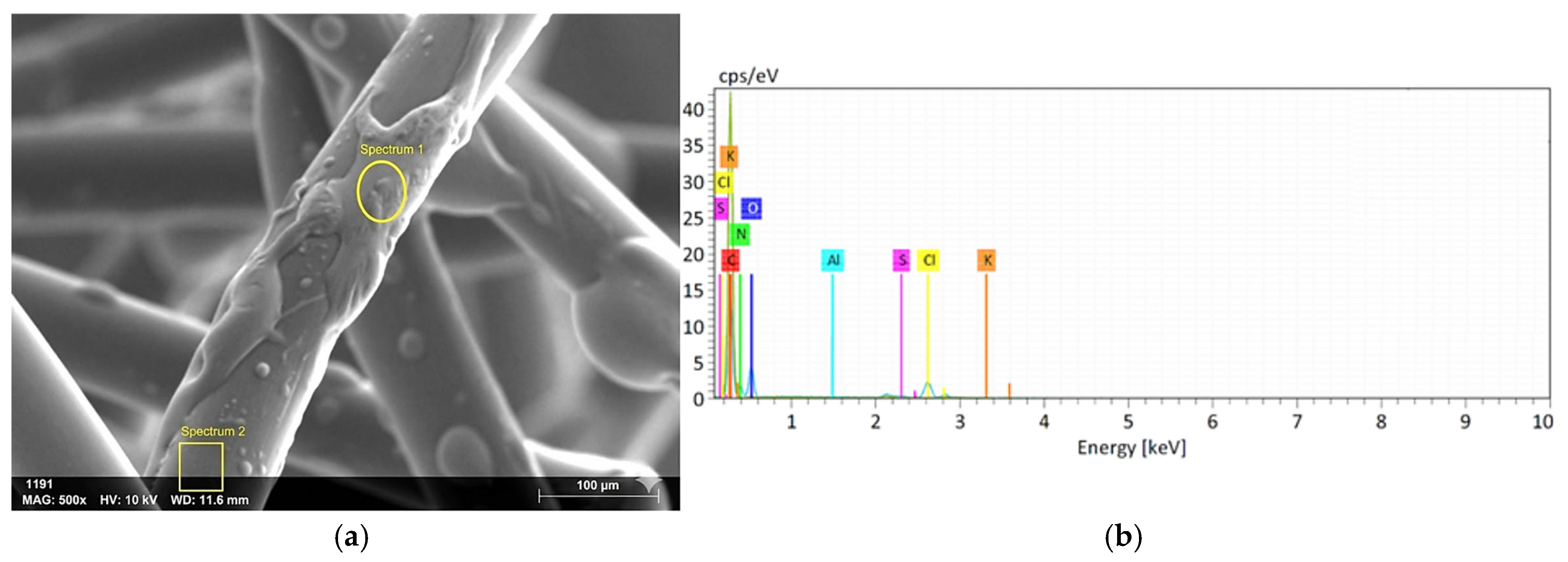
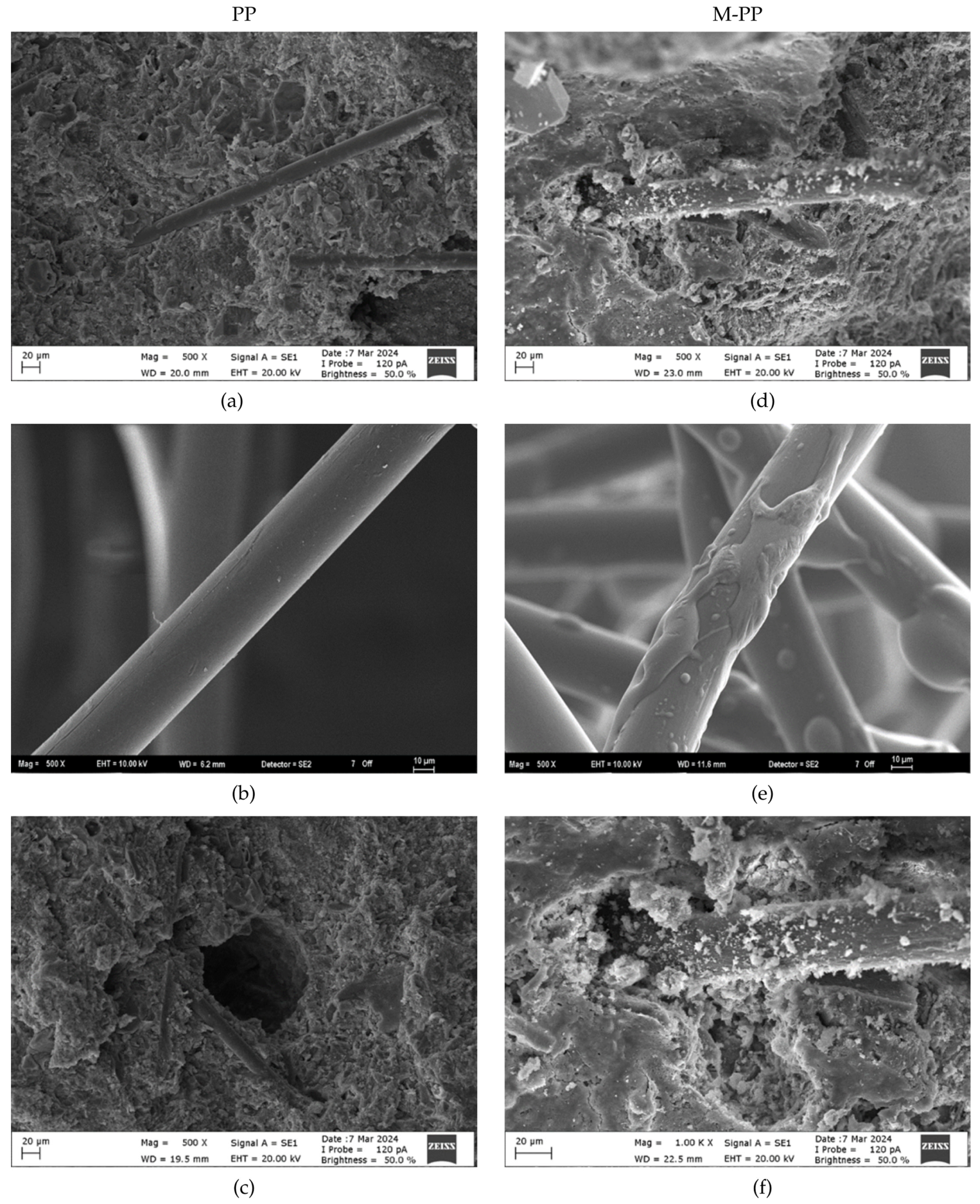
- SEM-EDX Analysis
3.2. Cementitious System Properties
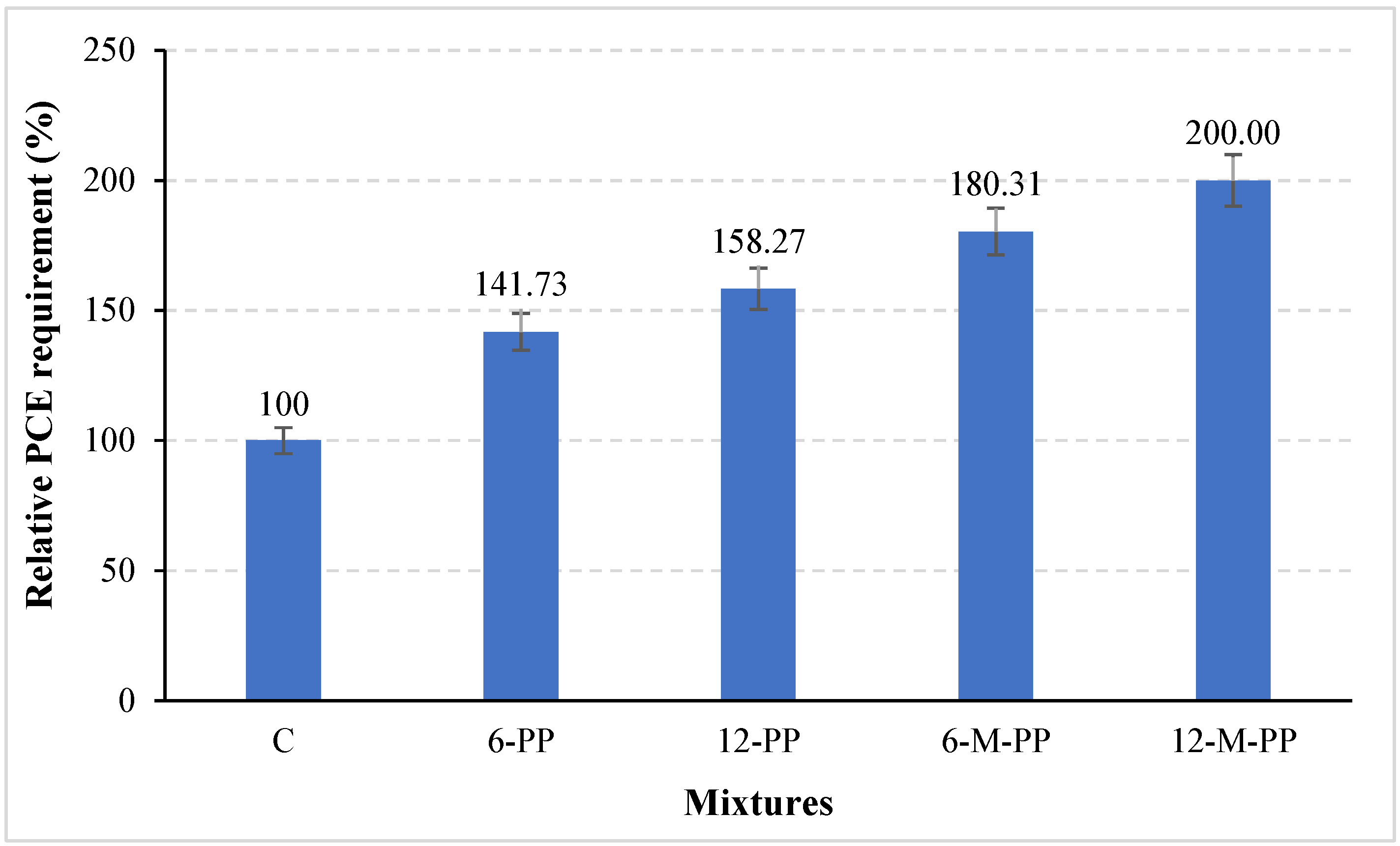
3.2.1. Fresh Properties
3.2.2. Compressive and Flexural Strength
3.2.3. Mechanism
4. Conclusions
Author Contributions
Funding
Data Availability Statement
Acknowledgments
Conflicts of Interest
Abbreviations
| PP | Polypropylene |
| ITZ | Interfacial Transition Zone |
| C-S-H | Calcium Silicate Hydrate |
| Ca(OH)2 | Calcium Hydroxide |
| Na2SiO3 | Sodium Silicate |
| KPS | Potassium Persulfate |
| K2S2O8 | Potassium Persulfate |
| C2H5OCOCl | Ethyl Chloroformate |
| CIPP | Chlorination of Polypropylene |
| CIPP-SiO2 | Silica Functionalization of Polypropylene |
| PCE | Polycarboxylate Ether |
| FT-IR | Fourier Transform Infrared Spectroscopy |
| SEM | Scanning Electron Microscopy |
| EDX | Energy Dispersive X-Ray Spectroscopy |
| EDS | Energy Dispersive Spectroscopy |
| PPE | Personal Protective Equipment |
| bwob | By Weight of Binder |
| rpm | Revolutions Per Minute |
| wt% | Weight Percent |
| CAS | Chemical Abstracts Service |
References
- Şahin, H.G.; Mardani, A. Mechanical properties, durability performance and interlayer adhesion of 3DPC mixtures: A state-of-the-art review. Struct. Concr. 2023, 24, 5481–5505. [Google Scholar] [CrossRef]
- Altun, M.G.; Özen, S.; Mardani-Aghabaglou, A. Effect of side chain length change of polycarboxylate-ether–based high-range water–reducing admixture on properties of cementitious systems containing fly ash. J. Mater. Civ. Eng. 2021, 33, 04021015. [Google Scholar] [CrossRef]
- Yazici, Ş.; Ayekin, B.; Mardani-Aghabaglou, A.; Güller, C. Assessment of mechanical properties of steel fiber reinforced mortar mixtures containing lightweight aggregates improved by bacteria. J. Sustain. Cem.-Based Mater. 2023, 12, 97–115. [Google Scholar] [CrossRef]
- Güleryüz, E.; Özen, S.; Mardani-Aghabaglou, A. Mineral katkı kullanımının hava sürükleyici katkılı çimentolu harçların taze ve sertleşmiş hal özelliklerine etkisi. Pamukkale Univ. Mühendislik Bilim. Derg. 2020, 26, 1053–1061. [Google Scholar] [CrossRef]
- Mardani-Aghabaglou, A.; Öztürk, H.T.; Kankal, M.; Ramyar, K. Assessment and prediction of cement paste flow behavior; Marsh-funnel flow time and mini-slump values. Constr. Build. Mater. 2021, 301, 124072. [Google Scholar] [CrossRef]
- Mardani-Aghabaglou, A.; Yüksel, C.; Hosseinnezhad, H.; Ramyar, K. Performance of steel micro fiber reinforced mortar mixtures containing plain, binary and ternary cementitious systems. J. Green Build. 2016, 11, 109–130. [Google Scholar] [CrossRef]
- Birol, T.; Avcıalp, A. Impact of Macro-Polypropylene Fiber on the Mechanical Properties of Ultra-High-Performance Concrete. Polymers 2025, 17, 1232. [Google Scholar] [CrossRef]
- Biricik, Ö.; Bayqra, S.H.; Kaya, Y.; Mardani, A. Assessment of mechanical properties of fiber reinforced cementitious system exposed to high temperature. Struct. Concr. 2023, 24, 4733–4750. [Google Scholar] [CrossRef]
- Hu, Y.; Ma, L. Effect of Surface Treatment of Polypropylene (PP) Fiber on the Sulfate Corrosion Resistance of Cement Mortar. Materials 2021, 14, 3690. [Google Scholar] [CrossRef]
- Signorini, C.; Sola, A.; Malchiodi, B.; Nobili, A.; Gatto, A. Failure mechanism of silica coated polypropylene fibres for Fibre Reinforced Concrete (FRC). Constr. Build. Mater. 2020, 236, 117549. [Google Scholar] [CrossRef]
- Han, S.H.; Oh, H.J.; Kim, S.S. Evaluation of fiber surface treatment on the interfacial behavior of carbon fiber-reinforced polypropylene composites. Compos. Part B Eng. 2014, 60, 98–105. [Google Scholar] [CrossRef]
- Malchiodi, B.; Pelaccia, R.; Pozzi, P.; Siligardi, C. Three sustainable polypropylene surface treatments for the compatibility optimization of PP fibers and cement matrix in fiber-reinforced concrete. Ceram. Int. 2023, 49, 24611–24619. [Google Scholar] [CrossRef]
- Erdoğan, S.T.; Erdoğan, T.Y. Puzolanik mineral katkılar ve tarihi geçmişleri. In Proceedings of the 2. Yapılarda Kimyasal Katkılar Sempozyumu Bildiriler Kitabı (s. 264–275), Ankara, Turkey, 12–13 April 2007; Kardelen Ofset: Ordu, Turkey, 2007. [Google Scholar]
- Amran, M.; Lesovik, V.; Tolstoy, A.; Fediuk, R.; Rusinov, R.; Rusinova, N.; Qader, D.N.; Mohammed, K.; Rashid, R.S. Properties and performance of polypropylene fibered high-strength concrete with an improved composite binders. Case Stud. Constr. Mater. 2022, 17, e01621. [Google Scholar] [CrossRef]
- Nili, M.; Afroughsabet, V. The effects of silica fume and polypropylene fibers on the impact resistance and mechanical properties of concrete. Constr. Build. Mater. 2010, 24, 927–933. [Google Scholar] [CrossRef]
- ASTM C33/C33M-18; Standard Specification for Concrete Aggregates. ASTM International: West Conshohocken, PA, USA, 2018.
- Kaya, Y.; Biricik, Ö.; Bayqra, S.H.; Mardani, A. Effect of fibre type and utilisation rate on dimensional stability and frost resistance of pavement mortar mixture. Int. J. Pavement Eng. 2023, 24, 2154351. [Google Scholar] [CrossRef]
- Chodak, I. Properties of crosslinked polyolefin-based materials. Prog. Polym. Sci. 1995, 20, 1165–1199. [Google Scholar] [CrossRef]
- Smith, M.B. March’s Advanced Organic Chemistry: Reactions, Mechanisms, and Structure; John Wiley & Sons: Hoboken, NJ, USA, 2025. [Google Scholar]
- ASTM C109/C109M-16; Standard Test Method for Compressive Strength of Hydraulic Cement Mortars. ASTM International: West Conshohocken, PA, USA, 2016.
- Kaya, Y.; Biricik, Ö.; Bayqra, S.H.; Mardani, A. Rheological properties and thixotropic behavior of cementitious systems containing different fiber types. Arab. J. Sci. Eng. 2024, 49, 5203–5223. [Google Scholar] [CrossRef]
- ASTM C1437-20; Standard Test Method for Flow of Hydraulic Cement Mortar. ASTM International: West Conshohocken, PA, USA, 2020.
- EN-196-1; Methods of Testing Cement—Determination of Strength. European Standards Institution: Brussels, Belgium, 2016.
- Pivsa-Art, S.; Kord-Sa-Ard, J.; Pivsa-Art, W.; Wongpajan, R.; Narongchai, O.; Pavasupree, S.; Hamada, H. Effect of compatibilizer on PLA/PP blend for injection molding. Energy Procedia 2016, 89, 353–360. [Google Scholar] [CrossRef]
- Hoidy, W.H.; Ahmad, M.B.; Jaffar Al-Mulla, E.A.; Ibrahim, N.A.B. Preparation and characterization of polylactic acid/polycaprolactone clay nanocomposites. Appl. Sci. 2010, 10, 97–106. [Google Scholar] [CrossRef]
- Abo-El-Enein, S.A.; Eissa, M.A.; Diafullah, A.A.; Rizk, M.A.; Mohamed, F.M. Removal of some heavy metal ions from wastewater by copolymer of iron and aluminum impregnated with active silica derived from rice husk ash. J. Hazard. Mater. 2009, 172, 574–579. [Google Scholar] [CrossRef]
- Yang, H.; Monasterio, M.; Zheng, D.; Cui, H.; Tang, W.; Bao, X.; Che, X. Effects of nano silica on the properties of cement-based materials: A comprehensive review. Constr. Build. Mater. 2021, 282, 122715. [Google Scholar] [CrossRef]
- Jia, E.; Mou, H.; Liu, Z.; Wang, J.; Zeng, L.; Yang, X.; Liu, P. Surface Hydrophilic Modification of Polypropylene Fibers and Their Application in Fiber-Reinforced Cement-Based Materials. J. Macromol. Sci. Part B 2020, 60, 286–298. [Google Scholar] [CrossRef]
- Armandei, M.; de Souza Sanchez Filho, E. Correlation between fracture roughness and material strength parameters in SFRCs using 2D image analysis. Constr. Build. Mater. 2017, 140, 82–90. [Google Scholar] [CrossRef]



| Oxide (%) | Cement | Physical Properties | ||
|---|---|---|---|---|
| SiO2 | 18.86 | Specific gravity | 3.15 | |
| Al2O3 | 5.71 | Mechanical properties | ||
| Fe2O3 | 3.09 | Compressive Strength (MPa) | 1-day | 14.7 |
| CaO | 62.70 | 2-day | 26.80 | |
| MgO | 1.16 | 7-day | 49.80 | |
| SO3 | 2.39 | 28-day | 58.5 | |
| Na2O + 0.658 K2O | 0.92 | Fineness | ||
| Cl− | 0.01 | Specific surface (Blaine, cm2/g) | 3530 | |
| Insoluble residue | 0.32 | Residue in 0.045 mm sieve (%) | 7.6 | |
| Loss of ignition | 3.20 | |||
| Free CaO | 1.26 | |||
| Tip | Density (g/cm3) | Solid Content (%) | pH | Chloride Content (%) | Alkaline Content Na2O (%) |
|---|---|---|---|---|---|
| PCE | 1.097 | 36.35 | 3.82 | <0.1 | <10 |
| Raw Material | Density (g/cm3) | Length (mm) | Tensile Strength (N/mm2) | Modulus of Elasticity (N/mm2) | Melting Point (°C) |
|---|---|---|---|---|---|
| Polypropylene | 0.91 | 12 | 450–700 | 3000–3500 | 162 |
| Mix No | Cement | Water | Sand | PCE | Fiber | Slump-Flow (mm) |
| C | 550 | 266.75 | 1512.50 | 1.27 (0.23%) | - | 182 |
| 6-PP | 550 | 266.75 | 1499.05 | 1.80 (0.33%) | 4.550 | 200 |
| 12-PP | 550 | 266.75 | 1499.05 | 2.01 (0.37%) | 4.550 | 184 |
| 6-M-PP | 550 | 266.75 | 1499.05 | 2.29 (0.42%) | 4.550 | 185 |
| 12-M-PP | 550 | 266.75 | 1499.05 | 2.54 (0.46%) | 4.550 | 195 |
| Spectrum | Carbon | Nitrogen | Oxygen | Sulfur | Silicon | Chlorine | Potassium |
|---|---|---|---|---|---|---|---|
| Spectrum 1 | 48.73 | 18.67 | 23.04 | 0.39 | 2.00 | 7.05 | 0.12 |
| Spectrum 2 | 91.34 | 4.67 | 1.64 | 0.20 | 1.04 | 0.17 | 0.02 |
Disclaimer/Publisher’s Note: The statements, opinions and data contained in all publications are solely those of the individual author(s) and contributor(s) and not of MDPI and/or the editor(s). MDPI and/or the editor(s) disclaim responsibility for any injury to people or property resulting from any ideas, methods, instructions or products referred to in the content. |
© 2025 by the authors. Licensee MDPI, Basel, Switzerland. This article is an open access article distributed under the terms and conditions of the Creative Commons Attribution (CC BY) license (https://creativecommons.org/licenses/by/4.0/).
Share and Cite
Kaya, Y.; Balcı, P.; Özen, S.; Mardani, A.; Kara, A. Modification of Polypropylene Fibers with Sodium Silicate: Enhancement of Pozzolanic Properties in Cement-Based Systems. Polymers 2025, 17, 3206. https://doi.org/10.3390/polym17233206
Kaya Y, Balcı P, Özen S, Mardani A, Kara A. Modification of Polypropylene Fibers with Sodium Silicate: Enhancement of Pozzolanic Properties in Cement-Based Systems. Polymers. 2025; 17(23):3206. https://doi.org/10.3390/polym17233206
Chicago/Turabian StyleKaya, Yahya, Petek Balcı, Süleyman Özen, Ali Mardani, and Ali Kara. 2025. "Modification of Polypropylene Fibers with Sodium Silicate: Enhancement of Pozzolanic Properties in Cement-Based Systems" Polymers 17, no. 23: 3206. https://doi.org/10.3390/polym17233206
APA StyleKaya, Y., Balcı, P., Özen, S., Mardani, A., & Kara, A. (2025). Modification of Polypropylene Fibers with Sodium Silicate: Enhancement of Pozzolanic Properties in Cement-Based Systems. Polymers, 17(23), 3206. https://doi.org/10.3390/polym17233206