Article

Tuning Crystallization Pathways via Phase Competition: Heat-Treatment-Induced Microstructural Evolution


1
State Key Laboratory of Tropic Ocean Engineering Materials and Materials Evaluation & Special Glass Key Laboratory of Hainan Province, Hainan University, Haikou 570228, China
2
School of Materials Science and Engineering, Hainan University, Haikou 570228, China
3
School of Physics and Optoelectronic Engineering, Hainan University, Haikou 570228, China
*
Authors to whom correspondence should be addressed.
Crystals 2026, 16(1), 29; https://doi.org/10.3390/cryst16010029 (registering DOI)
Submission received: 28 November 2025 / Revised: 28 December 2025 / Accepted: 29 December 2025 / Published: 30 December 2025
(This article belongs to the Section Inorganic Crystalline Materials)

Abstract

Spinel-based glass-ceramics face challenges such as a narrow crystallization window for the target phase and the difficulty in suppressing the competitive LixAlxSi1−xO2 crystals. This study proposes a method to regulate the phase formation in ZnO-MgO-Al2O3-SiO2 glass by precisely controlling the heat treatment temperature. The microstructural evolution was analyzed by DSC, XRD, Raman spectroscopy, SEM, TEM, and XPS. The results indicate that the heat treatment at a nucleation temperature of 780 °C for 2 h and a crystallization temperature of 880 °C for 2 h effectively inhibits the precipitation of the LixAlxSi1−xO2 secondary phase, yielding a glass-ceramic with nano-sized MgAl2O4, ZnAl2O4 spinel as the primary crystalline phase. The obtained glass-ceramic exhibits excellent mechanical properties, including a Vickers hardness of 922.6 HV, a flexural strength of 384 MPa, and an elastic modulus of 113 GPa, while maintaining a high visible light transmittance of 84.3%. This work provides a clear processing window and theoretical basis for fabricating high-performance, highly transparent spinel-based glass-ceramics through tailored heat treatment.

1. Introduction

Glass-ceramics are ceramic materials formed through controlled nucleation and crystallization of glass [1]. They are high-performance inorganic non-metallic materials produced by converting specific base glasses via controlled crystallization processes [2]. Their essential structure is a multi-phase composite consisting of fine crystal phases and a residual glass phase. This unique structure endows glass-ceramics with excellent thermal, optical, chemical, and mechanical properties [3,4,5]. Benefiting from these characteristics, glass-ceramics have found widespread applications in numerous technical fields such as architectural decoration, biomedicine, microelectronics, aerospace, and laser technology [6,7,8,9]. Depending on the base glass system, glass-ceramics are primarily categorized into aluminosilicate, fluorosilicate, phosphosilicate, iron silicate, and phosphate types. Among these, aluminosilicate glass-ceramics have become a key area of research and development due to their outstanding mechanical properties, excellent chemical stability, and low thermal expansion characteristics [10].
Within the aluminosilicate glass-ceramic system, spinel-based glass-ceramics have attracted significant attention because of their specific crystalline phase composition. Spinel-based glass-ceramics are novel inorganic non-metallic materials with spinel crystal phases (general formula AB2O4, e.g., MgAl2O4, ZnAl2O4) as the primary crystalline phase [11]. The spinel crystal phase has a Mohs hardness of up to 8, imparting high Vickers hardness to the glass-ceramic [12]. Their scratch resistance is significantly superior to that of aluminosilicate glass. Through nanocrystal strengthening (grain size ≤ 50 nm) and chemical strengthening (compressive stress > 800 MPa), the drop resistance height can exceed 1200 mm. Spinel-based glass-ceramics also possess excellent optical properties, achieving visible light transmittance > 87% and haze < 0.3%, meeting the requirements for electronic display panels. The spinel crystal phase exhibits transmittance > 80% in the 3–5 μm wavelength range, making it suitable for military applications such as missile domes and infrared windows [13,14,15,16]. In recent years, with increasing performance demands for materials in high-end electronic devices, aerospace, and other fields [17], spinel-based glass-ceramics have become a research focus due to their unique crystal structure and tunable physical and chemical properties.
However, despite the promising prospects of spinel-based glass-ceramics, traditional versions have long faced several bottlenecks that urgently require solutions. For instance, it is difficult to precisely control the internal crystallization process of the glass [18]. The precipitation temperature of the spinel crystal phase is high, and it easily coexists with competing phases such as β-quartz/lithium silicate solid solutions, leading to a decrease in the purity of the primary crystalline phase. The formation window for the target crystal phase is narrow [19]; spinel phases like MgAl2O4 are stable only within a narrow temperature range, resulting in low process tolerance. There is a contradiction between the degree of crystallization and transparency [20]: while a high crystallinity improves strength, crystal sizes exceeding 50 nm significantly scatter visible light, reducing the transparency of the glass-ceramic. Furthermore, there is a strong dependence on nucleating agents; nucleating agents such as ZrO2/TiO2 are required to induce crystallization, but their excessive addition can easily introduce impurity phases, reducing the crystallization rate of the primary phase. The spinel phase (e.g., MgAl2O4, ZnAl2O4) and LixAlxSi1−xO2, as two key potential crystalline phases in this glass system, exhibit significant differences in their thermodynamic stability and crystallization kinetics, which directly governs the direction of the heat treatment process. The spinel phase possesses relatively high thermal stability, yet its nucleation and growth typically require higher temperatures and sufficient thermal driving force. Furthermore, its crystallization window is relatively narrow, making it sensitive to temperature fluctuations. In contrast, the LixAlxSi1−xO2 phase, a common competing or intermediate phase in lithia-alumina-silica systems, generally has a lower activation energy for crystallization. It may precipitate within a temperature range that overlaps with that of spinel formation. This difference in thermodynamic driving force and crystallization kinetics is the fundamental reason for the phase competition phenomenon observed during the heat treatment process. Therefore, this study focuses on spinel-based aluminosilicate glass-ceramics, aiming to optimize the heat treatment protocol (nucleation/crystallization temperature—nucleation/crystallization time). The goal is to explore methods for widening the target phase formation range, suppressing the generation of impurity phases, and balancing crystallinity with transmittance, thereby providing theoretical support and technical solutions for overcoming the preparation bottlenecks of high-performance spinel glass-ceramics.
In this experiment, a spinel-based glass-ceramic was prepared. A high Al2O3 content (35.9 wt%) is designed to establish a glass network foundation favoring the formation of spinel as the primary crystalline phase. Al2O3 not only provides the necessary aluminum source for spinel formation but also helps suppress the precipitation of competing crystalline phases with lower thermal stability, such asβ-quartz solid solution, and refines the grain size. The combination of MgO and ZnO, which act as network modifiers and constituents of the spinel crystalline phase, synergistically adjusts the thermal properties and crystallization behavior of the glass, with both cations incorporating into the spinel lattice. When introduced, Li2O and Na2O serve as fluxes, significantly reducing the high-temperature viscosity of the melt, thereby improving melting and homogenization. In this system, ZrO2 primarily functions as an effective nucleating agent to promote uniform bulk crystallization, rather than being targeted as a primary crystalline phase. The core objective of this composition design is to utilize the combination of high alumina content and specific network modifiers to preferentially promote the precipitation of the spinel phase during heat treatment while simultaneously suppressing impurity phases such as LixAlxSi1−xO2. The research presented in this paper can provide theoretical guidance for the preparation of spinel-based glass-ceramics with improved performance.

2. Materials and Experiments

2.1. Preparation of Glass-Ceramic

This study investigated a spinel-system glass with the composition 37.7SiO2-35.9Al2O3-6.7ZrO2-1.6Li2O-2.6Na2O-3.3MgO-12.2ZnO (wt%). Raw powders including Al2O3, SiO2, ZrO2, Li2CO3, Na2CO3, MgO, and ZnO were used, with a small amount of NaCl added as a fining agent. The starting powders were characterized by techniques such as XRD, SEM, TEM, Raman spectroscopy, and XPS. High-purity raw materials were used for batching. Since the quartz crucible employed undergoes slight erosion during the melting process at 1650 °C, causing a portion of SiO2 to dissolve into the glass melt and thereby alter the designed chemical composition, a 5 wt% reduction compensation was applied to the amount of SiO2 powder in the initial batch calculation. This was done to ensure that the actual composition of the final glass would be as close as possible to the target stoichiometry. The melting process was conducted at 1650 °C for 2 h. After complete melting, the molten glass was rapidly poured into a graphite mold and immediately transferred to a muffle furnace for annealing at 600 °C for 2 h to eliminate internal stresses, followed by natural cooling to obtain the base glass. The glass samples were subsequently cut and ground into powder for thermal analysis.

2.2. Experimental Characterization

Differential scanning calorimetry (DSC) was performed on the glass powder using a simultaneous thermal analyzer (Selb, Germany, Netzsch, STA 449 F5). The measurement was conducted under a nitrogen atmosphere, with a constant heating rate of 10 °C/min from room temperature to 1100 °C. The glass transition temperature (Tg) and crystallization peak temperature (Tp) were determined by analyzing the DSC curve. All heat-treated samples were characterized by an X-ray diffraction system (Germany, Bruker, D8 Discover) using a Cu-Kα radiation source operated at 40 kV and 40 mA. The scanning rate was 10°/min over the 2θ range of 5° to 80°. The obtained XRD patterns were analyzed using Jade 9 for phase identification.
The samples, both before and after crystallization, were ground into powder for Raman spectroscopy analysis using a Raman spectrometer (France, Horiba Jobin Yvon, LabRam HR Evolution). The incident laser power was set to 30 mW with an excitation wavelength of 532 nm, and the scanning range was 400–1500 cm−1. Structural changes in the glass-ceramics were analyzed based on the Raman results. Following data acquisition, the Raman spectra were first subjected to baseline correction (using polynomial fitting to remove the fluorescence background). Subsequently, all spectra were normalized by their integrated area to ensure comparable intensity scales across different samples. The changes in peak intensity discussed in the manuscript are all based on the analysis of these normalized spectra. Samples sized 5 mm × 5 mm × 1 mm were polished and then etched in a 5% HF solution for 45 s. The etched samples were ultrasonically cleaned in deionized water. After drying, the samples were coated with a thin layer of gold or platinum to enhance conductivity. The surface crystal morphology and distribution of the glass-ceramics were observed using a field emission scanning electron microscope (Brno, Czech Republic, Tescan, MIRA3).
The samples were ground into powder, which was then dispersed in anhydrous ethanol via ultrasonic agitation for 30 min. A droplet of the dispersion was deposited onto a copper grid and dried. The microstructure, crystal phases, and elemental distribution of the glass-ceramics were analyzed at the nanoscale using a high-resolution transmission electron microscope (Czech Republic, Thermo Scientific, Talos F200X G2). X-ray photoelectron spectroscopy (Waltham, MA, USA, Thermo Fisher Scientific, ESCALAB 250Xi) was employed to obtain the photoelectron spectra of Zn, Al, and O elements, analyzing changes in the chemical states of these elements after crystallization. The acquired XPS spectra were analyzed using the Avantage 2023 software. Peak deconvolution of the spectra was performed using a Voigt function. Reasonable constraints were applied to the peak positions and full width at half maximum (FWHM) during the fitting process: the FWHM values for components belonging to the same chemical state were kept consistent when fitting the same spectrum, and the variation in FWHM for similar types of peaks across different samples was controlled within ±0.2 eV.
The polished samples were tested for hardness changes before and after crystallization using a Vickers hardness tester (Shenyang, China, Kejing, UNIPOL-802). The samples were cut into bars measuring 2.5 mm × 3 mm × 40 mm (as required by the testing machine) and polished on both sides. A universal mechanical testing machine (Shanghai, China, Yuhan, YC-128A) was used for three-point bending tests to compare the flexural strength of the samples. The samples were cut into glass plates measuring 100 mm × 80 mm × 3 mm. The elastic modulus of each sample was measured using a high-temperature dynamic elastic properties tester (Luoyang, China, Zhuosheng Testing Instrument Co., Ltd, IET-1600VP) via the impulse excitation technique. In this method, a pulse excitation signal is applied to the sample by a suitable external force. When a frequency within this excitation signal matches the natural frequency of the specimen, resonance occurs. The elastic modulus is then determined based on this resonant frequency. Finally, samples were cut into 50 mm × 40 mm × 2 mm plates, polished, and their transmittance was measured using a UV-Vis spectrophotometer (Waltham, MA, USA, PerkinElmer, Lambda 750 s).

3. Results and Discussion

3.1. Differential Scanning Calorimetry (DSC)

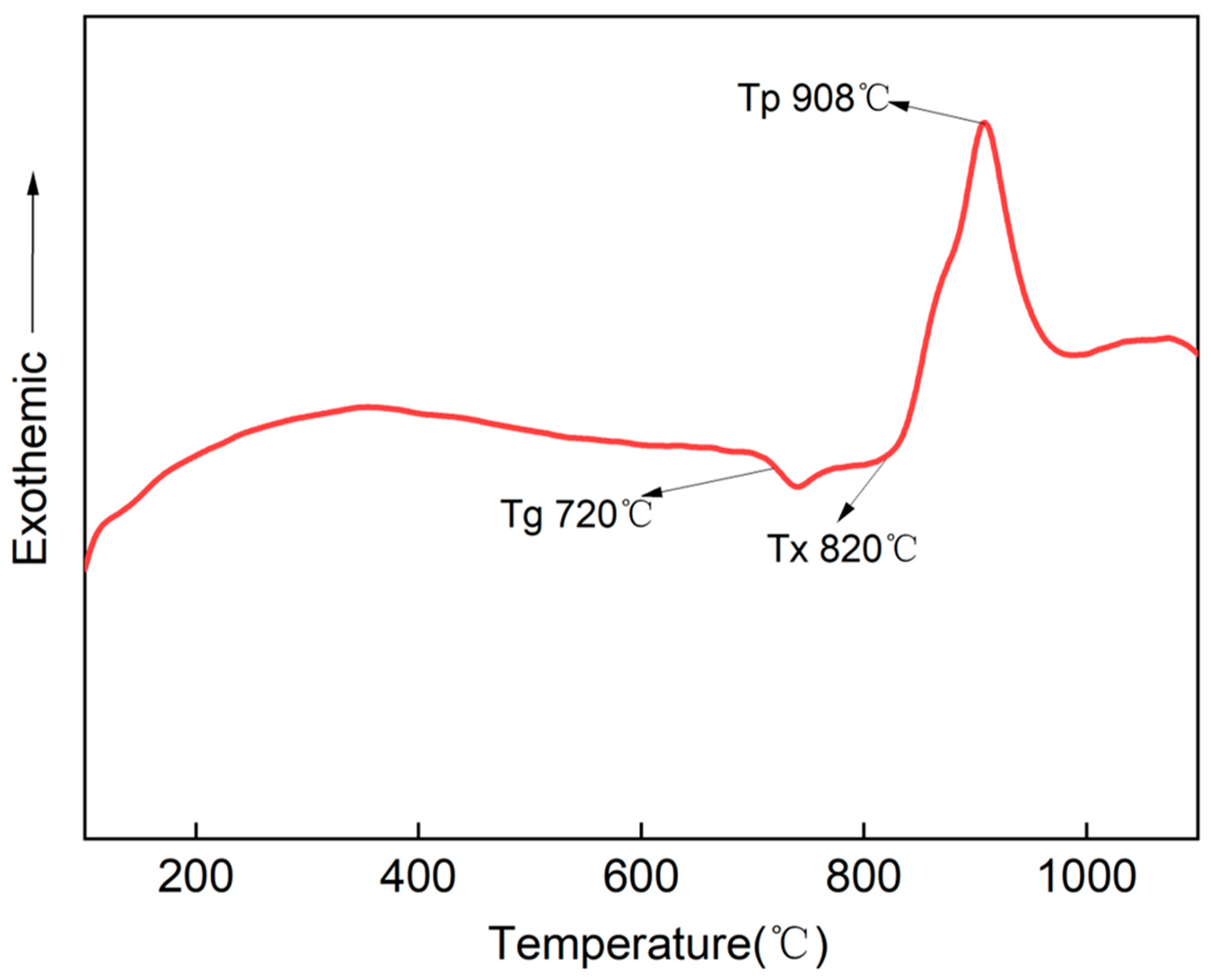
Figure 1 shows the DSC curve obtained at a constant heating rate of 10 °C/min from room temperature to 1100 °C. A typical endothermic step, corresponding to the glass transition region, is observed in the curve within the temperature range of approximately 660 °C to 760 °C. The onset temperature of this endothermic effect, determined using the tangent method, is identified as the glass transition temperature (Tg), which is 720 °C. With the subsequent gradual increase in temperature, the onset of the exothermic peak observed on the DSC curve corresponds to the crystallization temperature of the base glass, i.e., TX at 820 °C, followed by a peak representing the crystallization peak temperature of the base glass, i.e., Tp at 908 °C. Based on the results of Differential Scanning Calorimetry (DSC) tests, a series of crystallization heat treatment experiments were designed (Table 1). The glass samples were placed in a muffle furnace and heated at a rate of 10 °C/min for crystallization. Spinel-based glass-ceramics were prepared using a two-step heat treatment process.

3.2. Analysis of Crystalline Phases and Morphology Under Different Heat Treatment Processes

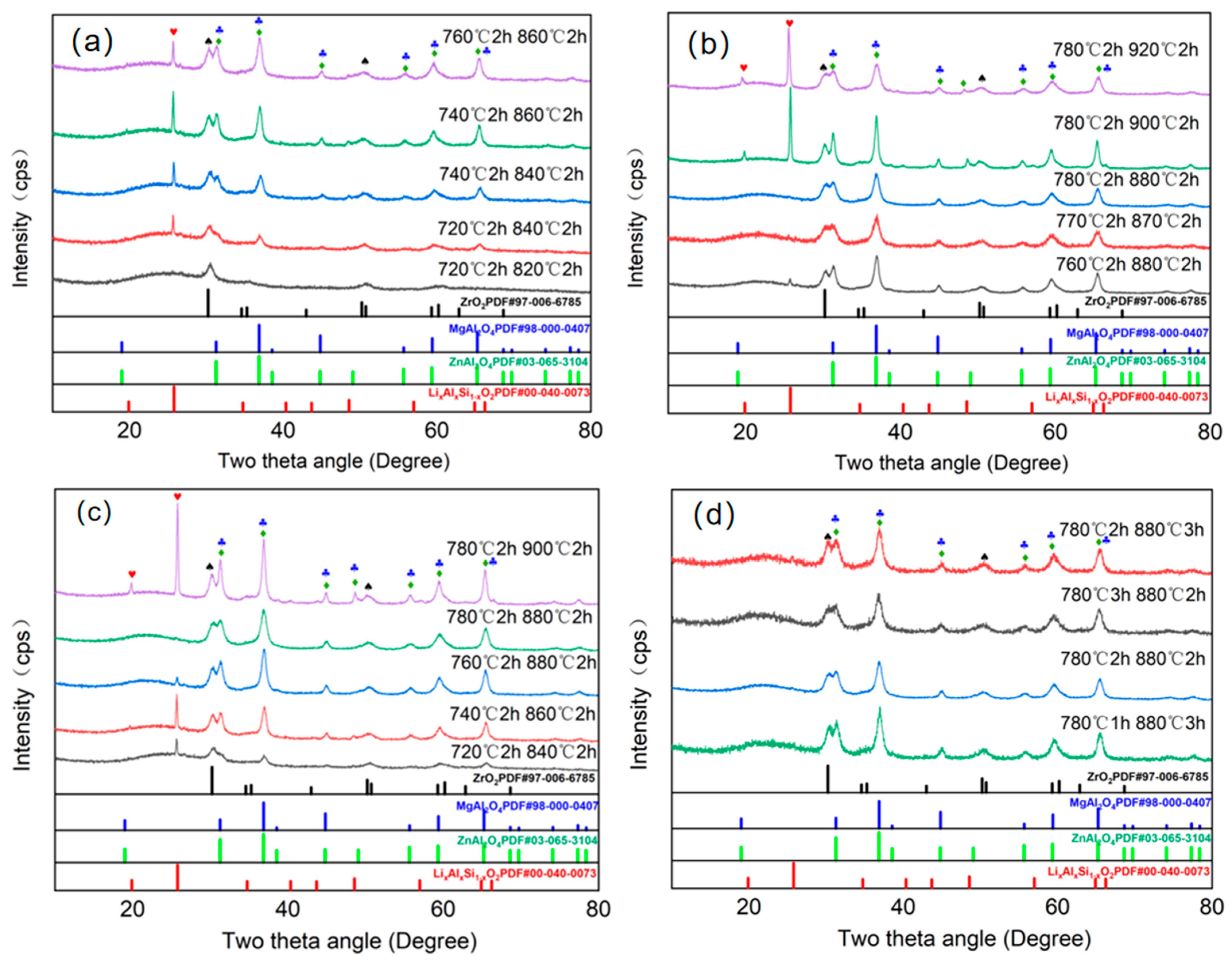
To investigate the influence of different heat treatment processes on the crystallization of spinel-based glass-ceramics, phase analysis was performed on the glass-ceramics. Figure 2 shows the XRD patterns under different heat treatment schedules. Analysis of the XRD results in Figure 2 indicates that the main crystalline phases in the heat-treated samples are ZrO2 (PDF #97-006-6785), ZnAl2O4 (PDF #03-065-3104), MgAl2O4 (PDF #98-000-0407), and LixAlxSi1−xO2 (PDF #00-040-0073). First, as seen in Figure 2a, when the nucleation temperature was set at the glass transition temperature (Tg) and the crystallization temperature was 100 °C higher than the nucleation temperature, only a small amount of ZrO2 phase precipitated with no other crystalline phases detected, likely due to the low temperature. As the temperature gradually increased, the LixAlxSi1−xO2 phase precipitated initially, accompanied by small peaks corresponding to ZnAl2O4 and MgAl2O4, indicating the formation of a small quantity of spinel crystals. Subsequently, a further temperature increase led to intensified and sharper diffraction peaks for ZnAl2O4 and MgAl2O4, suggesting an increased degree of crystal precipitation within the material. Second, Figure 2b shows the results for glass-ceramics heat-treated in the high-temperature range. The results indicate that when the nucleation temperature was between 760 °C and 780 °C and the crystallization temperature was between 870 °C and 880 °C, The primary phase obtained after heat treatment is a spinel solid solution, with zinc aluminate as the dominant constituent and magnesium partially dissolved within its lattice, while the precipitation of LixAlxSi1−xO2 phase was minimal or even absent (no diffraction peaks detected). This suggests that within this temperature range, spinel phases precipitate extensively, while the precipitation of the LixAlxSi1−xO2 phase is suppressed. As the crystallization temperature rose further, near the crystallization peak temperature (Tp), the crystallinity of the sample reached its maximum. Distinct sharp peaks for ZnAl2O4, MgAl2O4, and LixAlxSi1−xO2 were observed. However, the higher peak intensity of LixAlxSi1−xO2 compared to ZnAl2O4 and MgAl2O4 indicates that LixAlxSi1−xO2 became the primary crystalline phase at this stage. Furthermore, continued temperature increase caused white streaks to appear on the sample surface, potentially affecting the glass transmittance. Third, Figure 2c illustrates the trend of phase changes with temperature in the heat treatment process. It can be observed that the heat treatment schedule primarily influences the crystallization behavior of the LixAlxSi1−xO2 phase. At lower heat treatment temperatures, the LixAlxSi1−xO2 phase precipitates. As the temperature increases, the precipitation of LixAlxSi1−xO2 crystals is gradually suppressed. At a nucleation temperature of 780 °C and a crystallization temperature of 880 °C, the diffraction peaks of the LixAlxSi1−xO2 phase completely disappear, suggesting that only ZnAl2O4, MgAl2O4, and ZrO2 crystals remain in the sample. When the crystallization temperature approaches the crystallization peak temperature (Tp), the LixAlxSi1−xO2 diffraction peaks become the sharpest, indicating optimal crystallization for this phase. Finally, Figure 2d shows that under constant heat treatment temperatures, varying only the nucleation and crystallization times resulted in no significant changes in the crystalline phases and minimal changes in peak profiles in the XRD patterns. This suggests that nucleation and crystallization times have little influence on the phase evolution and crystal precipitation in this heat treatment process, with nucleation and crystallization temperatures being the dominant factors.
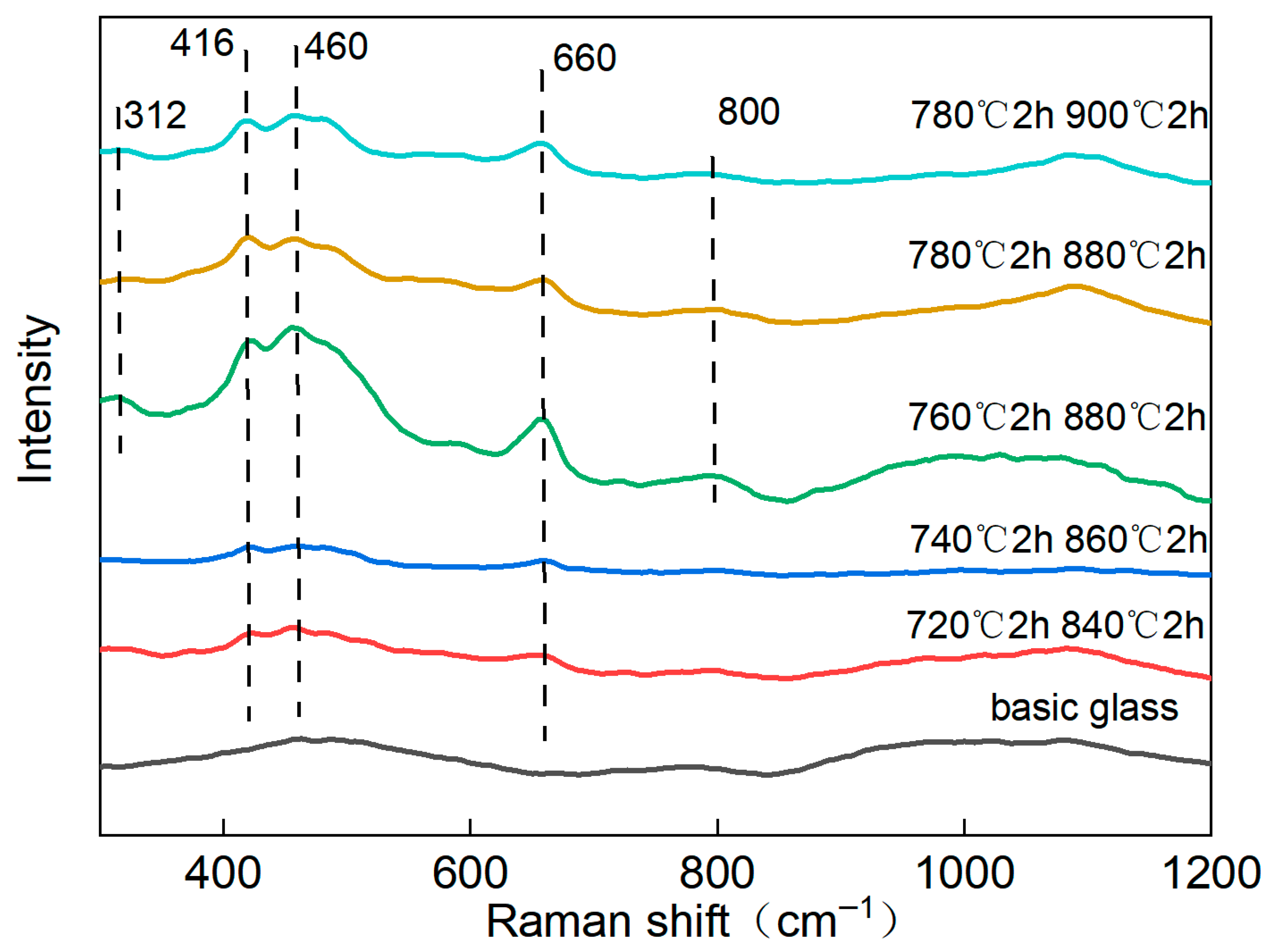
Based on the aforementioned XRD analysis, Raman spectroscopy was performed on samples subjected to different nucleation and crystallization temperatures. The base glass before crystallization exhibits three distinct vibrational regions in its Raman spectrum: a low-frequency band between 400 cm−1 and 600 cm−1, a mid-frequency band between 700 cm−1 and 850 cm−1, and a high-frequency band ranging from 900 cm−1 to 1200 cm−1. After the crystallization heat treatment, at lower temperatures, the Raman spectra of the heat-treated samples show no significant overall change in the vibrational profile compared to the base glass, exhibiting only minor Raman peaks near 416 cm−1, 455 cm−1, and 660 cm−1. This indicates that the structural changes within the glass-ceramic are not substantial at lower nucleation and crystallization temperatures, which is consistent with the XRD analysis. As the nucleation and crystallization temperatures increase, the intensity of the vibrational peaks at 416 cm−1, 455 cm−1, and 660 cm−1 also increases. After treatment at 760 °C/2 h + 880 °C/2 h, a vibrational peak appears near 312 cm−1. This peak is primarily associated with the translational vibration of tetrahedrally coordinated Mg2+ cations, involving the overall movement and rotation of MgO4 tetrahedra, reflecting changes in the local environment of the tetrahedral sites [21] (commonly referred to as the T2g(1) vibrational mode). The peak at 416 cm−1 is the strongest characteristic peak in the spinel Raman spectrum, corresponding to the Eg vibrational mode of the spinel crystal. It originates from the symmetric bending vibration of oxygen atoms perpendicular to the Al–O bond direction [22]. The theoretical position for the Eg vibration is 407 cm−1; the observed shift to a higher wavenumber may be attributed to restricted surface atom vibrations due to the small crystallite size in the sample. The vibrational peak near 460 cm−1 can be assigned to the Si–O–Si bending vibration, reflecting the symmetric deformation mode of silicon-oxygen tetrahedra [23]. The broadening of this peak is related to the diversity of ring structures in the glass network. The increase in the full width at half maximum (FWHM) of the peak position with rising temperature, as seen in the Figure 3, indicates an intensification of network distortion. The peak at 660 cm−1 is attributed to the T2g(2) vibration in the spinel structure, which corresponds to the asymmetric stretching vibration of AlO6 octahedra [21]. The peak at 800 cm−1 is assigned to the Ag vibration in the spinel structure, associated with the symmetric stretching vibration of AlO6 octahedra [24]. The presence of both peaks confirms the formation of spinel crystals [25]. In the high-frequency region, the range of 800–1250 cm−1 can be attributed to vibrations of the Si–O bonds within SiO4 tetrahedra [26,27]. In summary, the Raman spectroscopy results further demonstrate the influence of nucleation and crystallization temperature on the crystallization of the glass-ceramic.
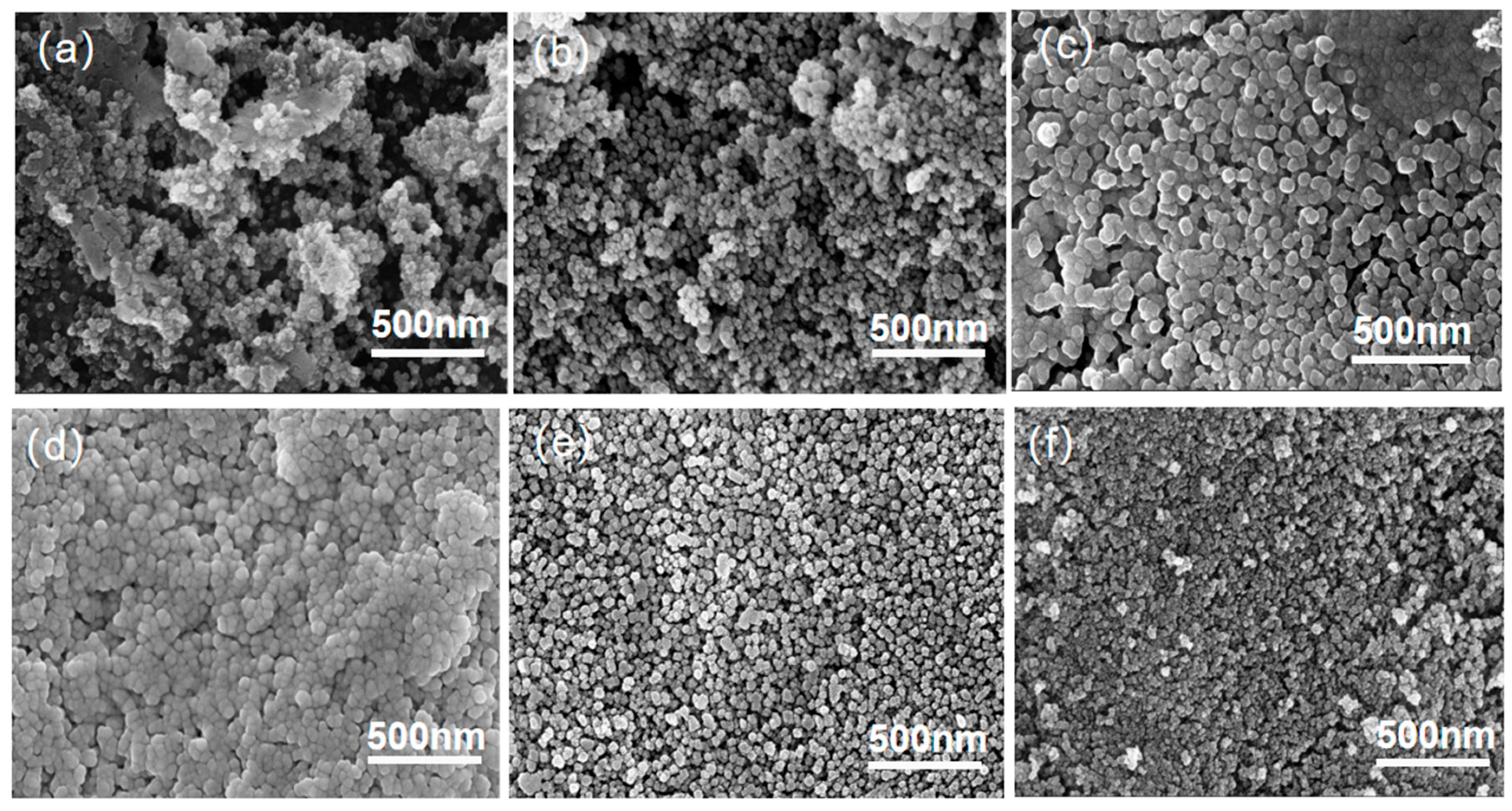
To investigate the influence of different nucleation and crystallization temperatures on the microstructure of the samples, SEM analysis was conducted. The SEM images reveal that the crystal distribution on the surface of the samples in Figure 4a,b is sparse, with the presence of multiple pore pathways. This confirms that fewer crystals precipitate and the structural changes in the glass-ceramic are not substantial when the nucleation and crystallization temperatures are low, which is consistent with the aforementioned Raman spectroscopy results. As the nucleation and crystallization temperatures gradually increased, agglomeration of crystals occurred, and the samples exhibited uniformly and densely distributed spherical crystals. Comparison of the images shows that the crystal particle size gradually refined with increasing temperature. These crystals were confirmed to be ZnAl2O4 and MgAl2O4 by XRD.In Figure 4e, different crystals are entangled together, forming sheet-like structures, alongside a significant precipitation of square-shaped crystals. Combined with XRD analysis, these square crystals are inferred to be LixAlxSi1−xO2. At this stage, the highest amount of crystals precipitated, forming denser crystal clusters.
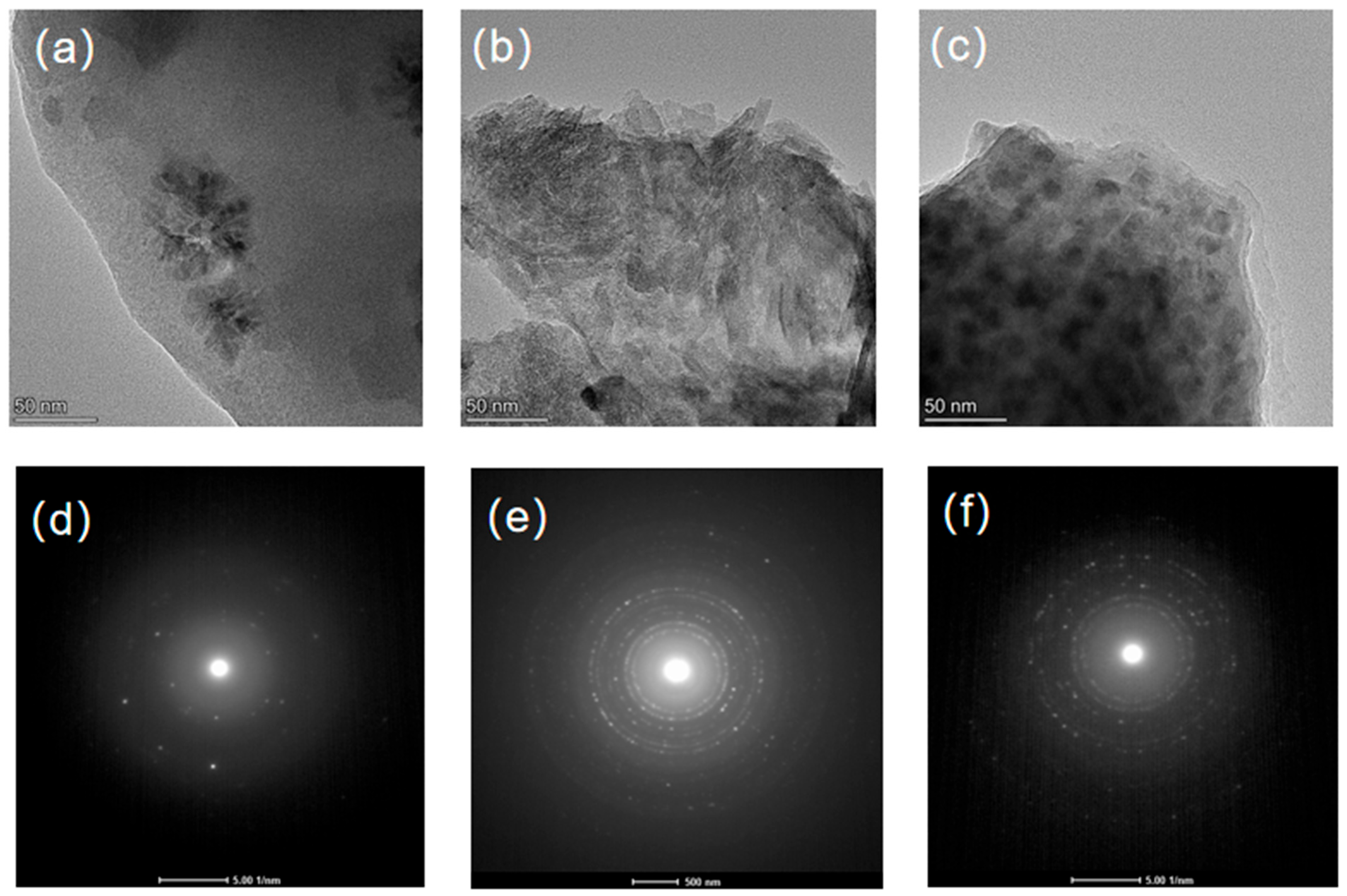
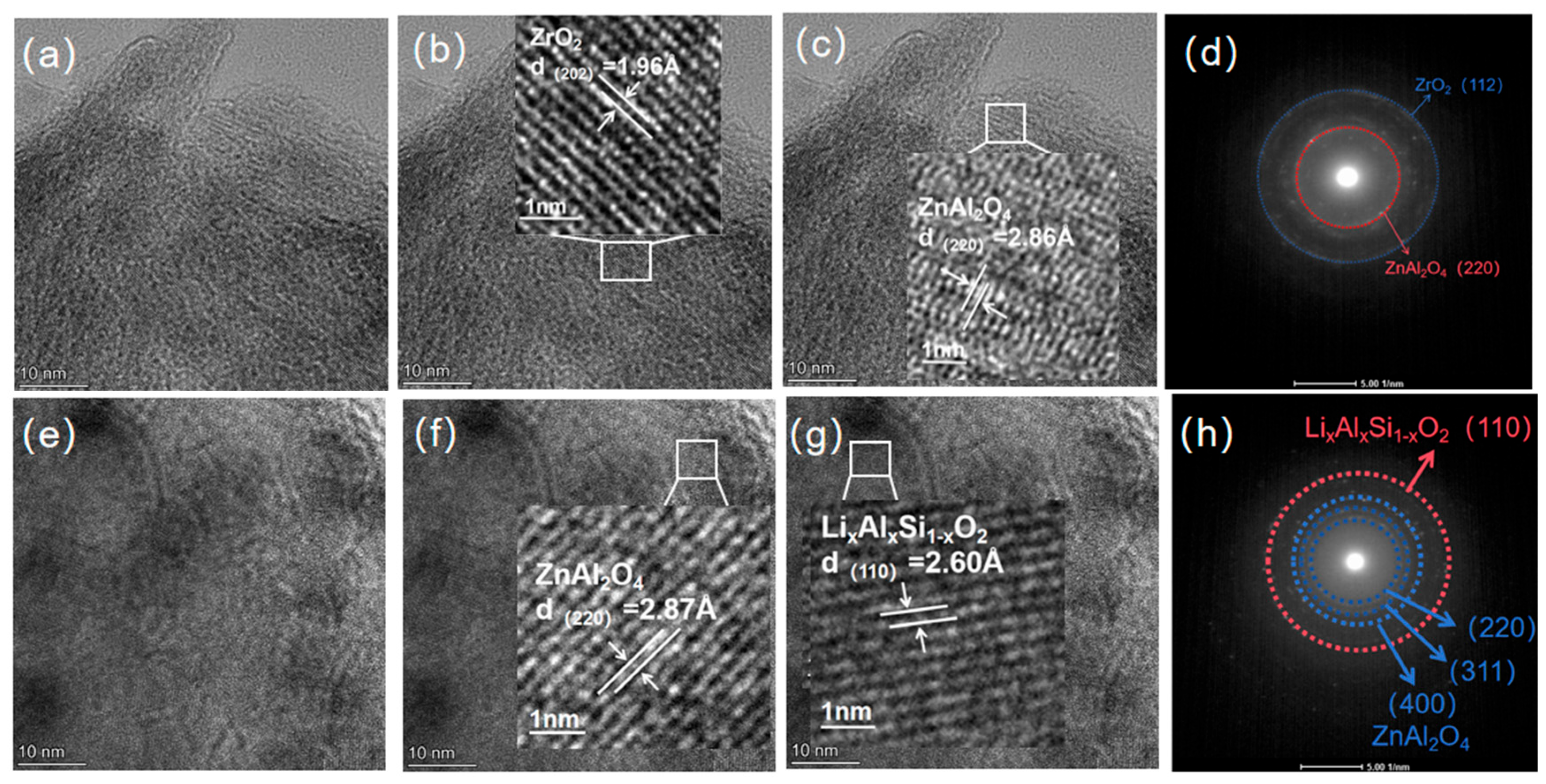
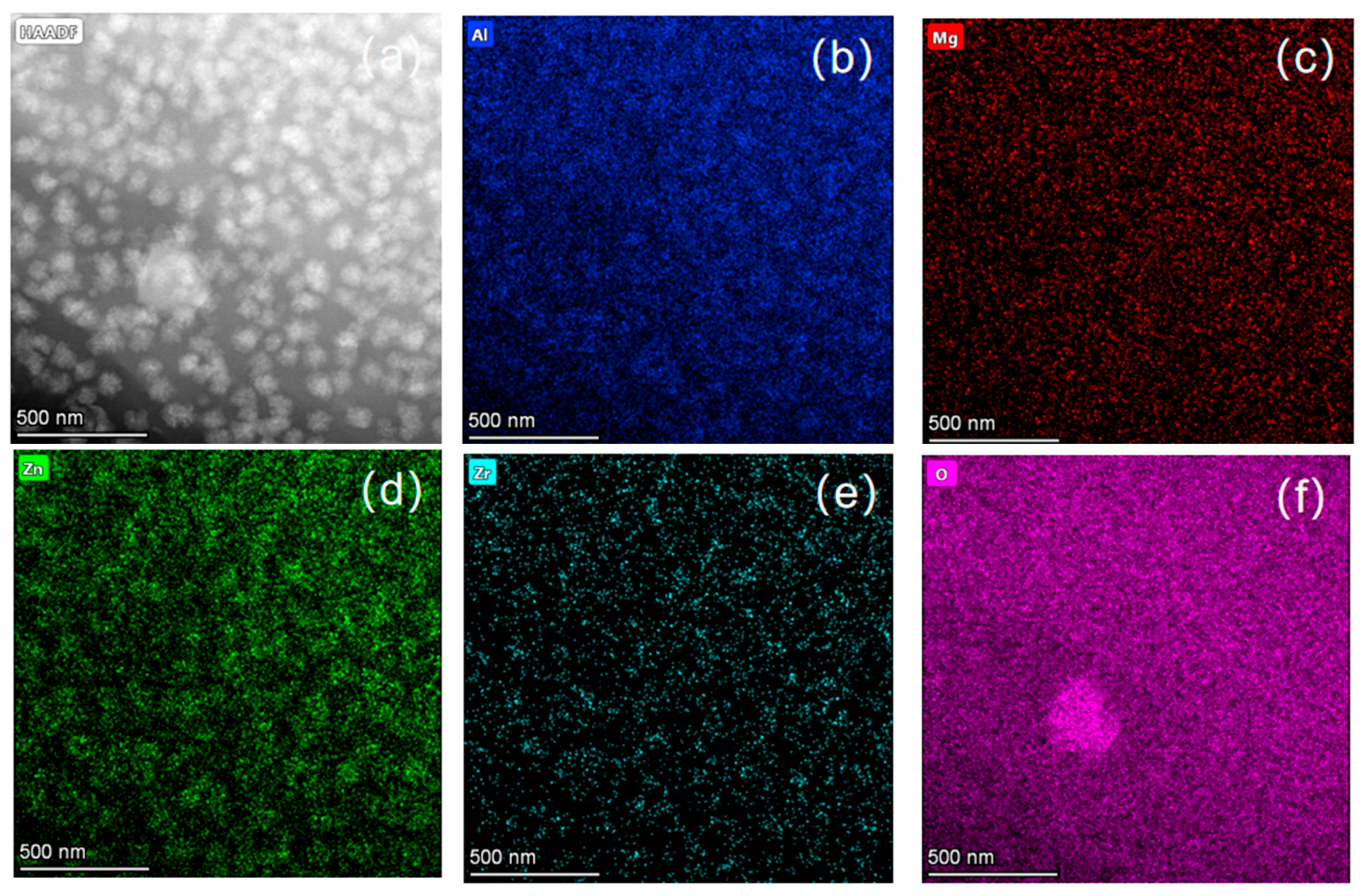
To further determine the crystal structure and observe the microstructure of the samples, transmission electron microscopy (TEM) analysis was performed on samples subjected to different nucleation and crystallization temperatures. Figure 5a shows that the sample contains only a small number of nanocrystals. These nanocrystals are agglomerated, forming several dispersed dark patches, within which fuzzy lattice fringes can be observed. The majority of the remaining area consists of an amorphous glass phase. As the nucleation and crystallization temperatures increased, Figure 5b,c reveal more distinct, clear, and uniformly distributed lattice fringes across the sample. The nanocrystals adhered to and agglomerated with each other, forming an integrated whole. Furthermore, the Selected Area Electron Diffraction (SAED) results indicate that the sample in Figure 5d exhibits very faint diffraction rings with only a few crystalline diffraction spots surrounding them. In contrast, with increasing temperature, the samples in Figure 5e,f display clear diffraction rings and a large number of diffraction spots, further confirming the increased crystallinity of the samples. Subsequently, a detailed analysis using High-Resolution Transmission Electron Microscopy (HRTEM) and SAED was conducted on two samples with higher crystallinity. The results are shown in Figure 6. For the sample treated at 780 °C/2 h + 880 °C/2 h, clear lattice fringes with two different orientations can be observed in Figure 6a. The interplanar spacings measured in Figure 6b,c are 1.96 Å and 2.86 Å, corresponding to the tetragonal ZrO2 crystal and the cubic ZnAl2O4 crystal, respectively. The diffraction rings in Figure 6d correspond to the (112) plane of the ZrO2 crystal and the (220) plane of the ZnAl2O4 crystal. For the sample treated at 780 °C/2 h + 900 °C/2 h, the interplanar spacings measured in Figure 6f,g are 2.87 Å and 2.60 Å, corresponding to the cubic ZnAl2O4 crystal and the hexagonal LixAlxSi1xO2 crystal, respectively. The diffraction rings in Figure 6h correspond to the (200), (311), and (400) planes of the ZnAl2O4 crystal and the (110) plane of the LixAlxSi1xO2 crystal. Furthermore, the lattice fringes of these nanocrystals are clearly visible under HRTEM (Figure 6a,e), providing further evidence for the precipitation of these crystals. To further observe the distribution of various elements within the sample, Energy-Dispersive X-ray Spectroscopy (EDS) characterization was performed. The elemental maps shown in Figure 7 demonstrate that these elements are uniformly distributed throughout the bulk of the glass sample.
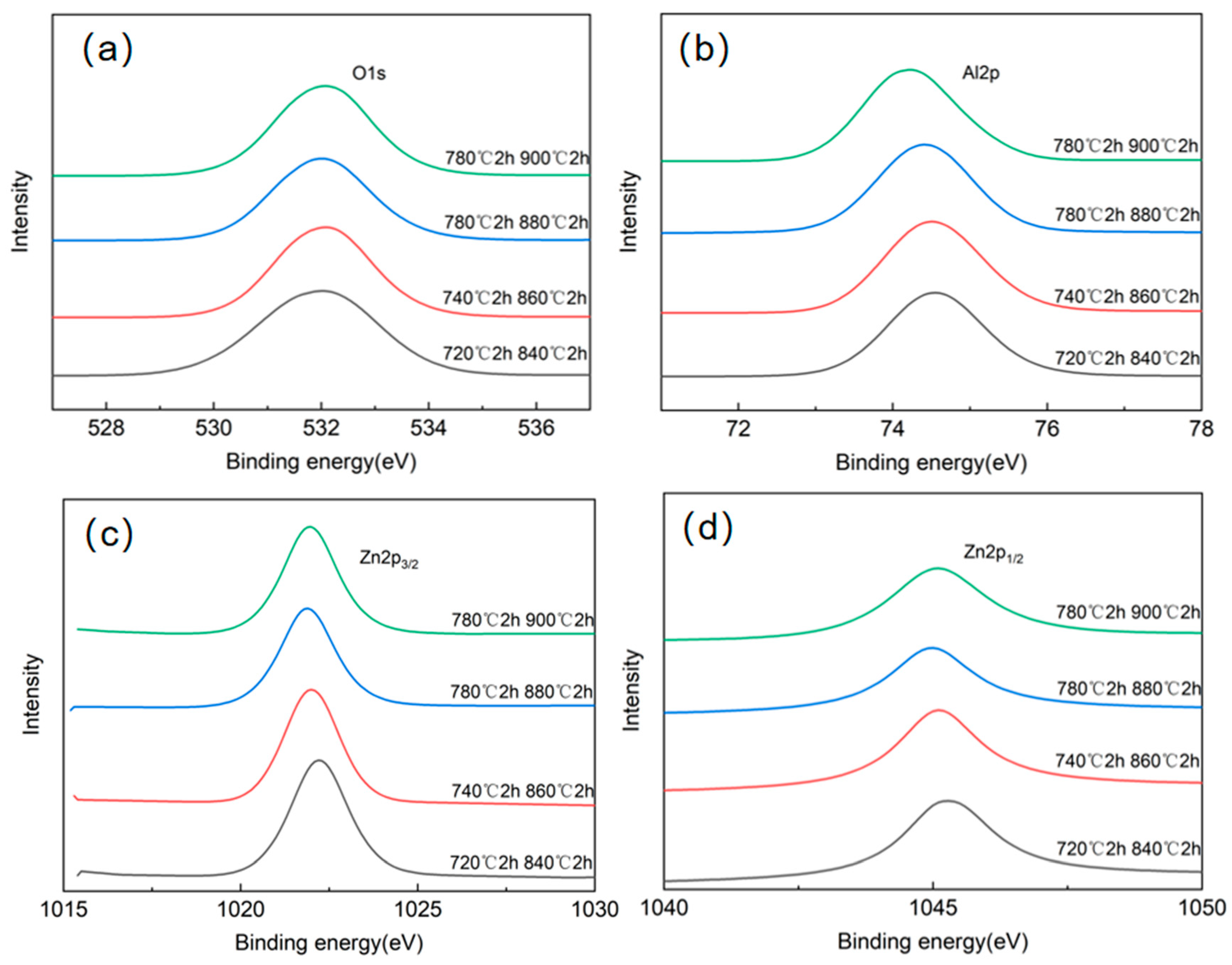
X-ray photoelectron spectroscopy (XPS) was employed to further investigate the changes in the chemical states of O1s, Al2p, Zn2p3/2, and Zn2p1/2 at different crystallization temperatures; the results are shown in Figure 8. With the increase in crystallization temperature, the electron binding energy of O1s showed a tendency to shift towards higher binding energy (Figure 8a). In aluminosilicate glass, oxygen primarily exists as bridging oxygen (BO) and non-bridging oxygen (NBO), where BO has a higher electron binding energy and NBO has a lower one. This shift indicates an increasing proportion of BO in the glass network structure. This occurs because, under the heat treatment process, network modifier cations like Zn2+ and Mg2+ leave their original positions in the glass phase and incorporate into the nascent ZnAl2O4 and MgAl2O4 spinel lattices along with [AlO4] tetrahedra. Consequently, the NBOs associated with Zn2+ and Mg2+ in the glass phase are largely consumed, converting from NBO to BO. Therefore, the increase in BO suggests that crystal precipitation primarily disrupts the glass network regions richer in NBO content. Furthermore, the XPS peaks exhibited significant shifts for the samples treated at 840 °C/2 h + 860 °C/2 h and 780 °C/2 h + 900 °C/2 h, indicating that the precipitation of LixAlxSi1−xO2 led to higher crystallinity. With the crystallization of ZnAl2O4, the electron binding energies of Al2p, Zn2p3/2, and Zn2p1/2 all decreased (Figure 8b–d). This is mainly attributed to the lower electronegativity of both Zn (1.65) and Al (1.61) [28] compared to Si (1.90) [29]. During heat treatment, the Zn-O-Si and Al-O-Si bonds break, forming new Zn-O-Al and Zn-O-Zn bonds in ZnAl2O4. This leads to an increased electron density around the Al and Zn atoms, causing a decrease in the electron binding energies of Al2p, Zn2p3/2, and Zn2p1/2. However, for the sample treated at 780 °C/2 h + 900 °C/2 h, the precipitation of a substantial amount of LixAlxSi1−xO2 crystals caused a large shift in the electron binding energy in the Al spectrum. The formed LixAlxSi1−xO2 crystals tend to attach to the surfaces of the ZnAl2O4 crystals, thereby inhibiting further spinel precipitation. As a result, the electron binding energies of Zn2p3/2 and Zn2p1/2 increased again compared to the previous stage. This observation is consistent with the characterization results from XRD discussed earlier.
Based on the combined results from XRD, Raman, SEM, TEM, and XPS, the competitive precipitation behavior between the spinel phase and the LixAlxSi1xO2 phase is governed by both thermodynamic driving forces and kinetic processes. Under lower heat treatment temperatures, the thermal driving force provided by the system is limited. Under these conditions, the LixAlxSi1xO2 phase, whose structure is closer to that of the base aluminosilicate glass network and which has a relatively lower activation energy for nucleation, holds a kinetic advantage and precipitates preferentially. As the temperature increases to the optimal window (780 °C/2 h + 880 °C/2 h), the thermodynamic driving force of the system is significantly enhanced. The spinel phase, being a thermodynamically more stable crystalline phase, begins to dominate in terms of formation driving force. More importantly, the high Al2O3 content designed in this system, along with the presence of ZrO2 as a nucleating agent, provides abundant AlO6 octahedral structural units and effective nucleation sites for spinel formation. At this stage, the increased mobility of Zn2+ and Mg2+ ions allows them to rapidly combine with these nucleation sites, promoting the extensive and rapid growth of the spinel phase. This process consumes key components within the glass phase that are necessary for the formation of the LixAlxSi1xO2 phase, thereby dually suppressing its precipitation both thermodynamically and in terms of component availability. When the temperature is further increased to approach or exceed Tp, the excessive energy leads to an overly rapid crystal growth rate, potentially triggering the overgrowth of both phases. At this point, not only does the spinel phase continue to grow, but the residual glass phase or intermediate structures may also rearrange and precipitate the LixAlxSi1xO2 phase under the extremely high driving force. Therefore, the optimal heat treatment regime essentially involves precise control within a kinetic window that provides sufficient driving force for the adequate nucleation and growth of spinel, yet is insufficient to induce the excessive growth of impurity phases.

3.3. Performance Analysis

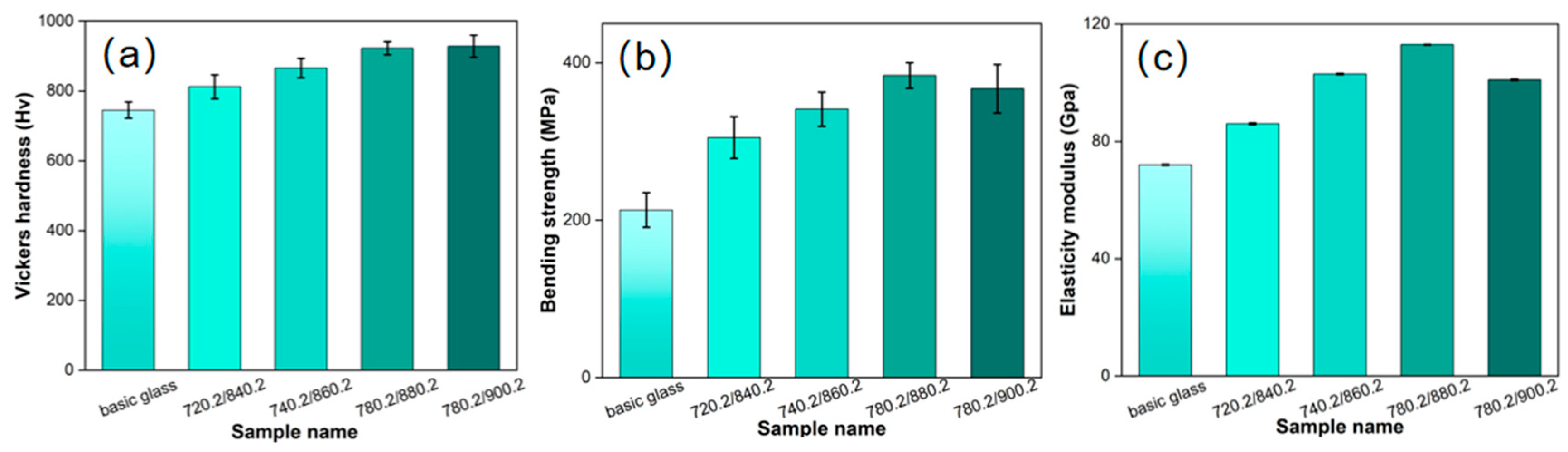
A systematic analysis of the Vickers hardness, flexural strength, and elastic modulus of this glass system is shown in Figure 9. Figure 9a displays the Vickers hardness of the glass before and after crystallization. It can be observed that the Vickers hardness of the base glass is approximately 745 HV, while that of the glass-ceramics obtained after heat treatment all exceeds 800 HV. This indicates that the crystallization treatment significantly enhances the hardness of the glass. Furthermore, the Vickers hardness of the glass-ceramics increases with rising crystallization temperature. The Vickers hardness values for the samples treated at 780 °C/2 h + 880 °C/2 h and 780 °C/2 h + 900 °C/2 h reached 922.6 HV and 928.2 HV, respectively, representing an increase of approximately 180 HV compared to the base glass. Figure 9b shows the flexural strength of the glass before and after crystallization. The results indicate that the flexural strength of the base glass remains around 213 MPa, whereas that of the heat-treated glass-ceramics all surpasses 300 MPa. The sample treated at 780 °C/2 h + 880 °C/2 h exhibited the highest flexural strength, reaching about 384 MPa. Figure 9c presents the elastic modulus of the glass before and after crystallization. The elastic modulus of the base glass is 72 GPa. After crystallization, the elastic moduli of all the glass-ceramics are higher than that of the base glass. The sample treated at 780 °C/2 h + 880 °C/2 h achieved the highest elastic modulus, reaching 113 GPa. In summary, the heat treatment process can comprehensively improve the properties of the glass. The sample treated at the lower temperature of 720 °C/2 h + 840 °C/2 h showed limited improvement in properties due to less crystal precipitation. The samples treated at 780 °C/2 h + 880 °C/2 h and 780 °C/2 h + 900 °C/2 h demonstrated superior overall performance.
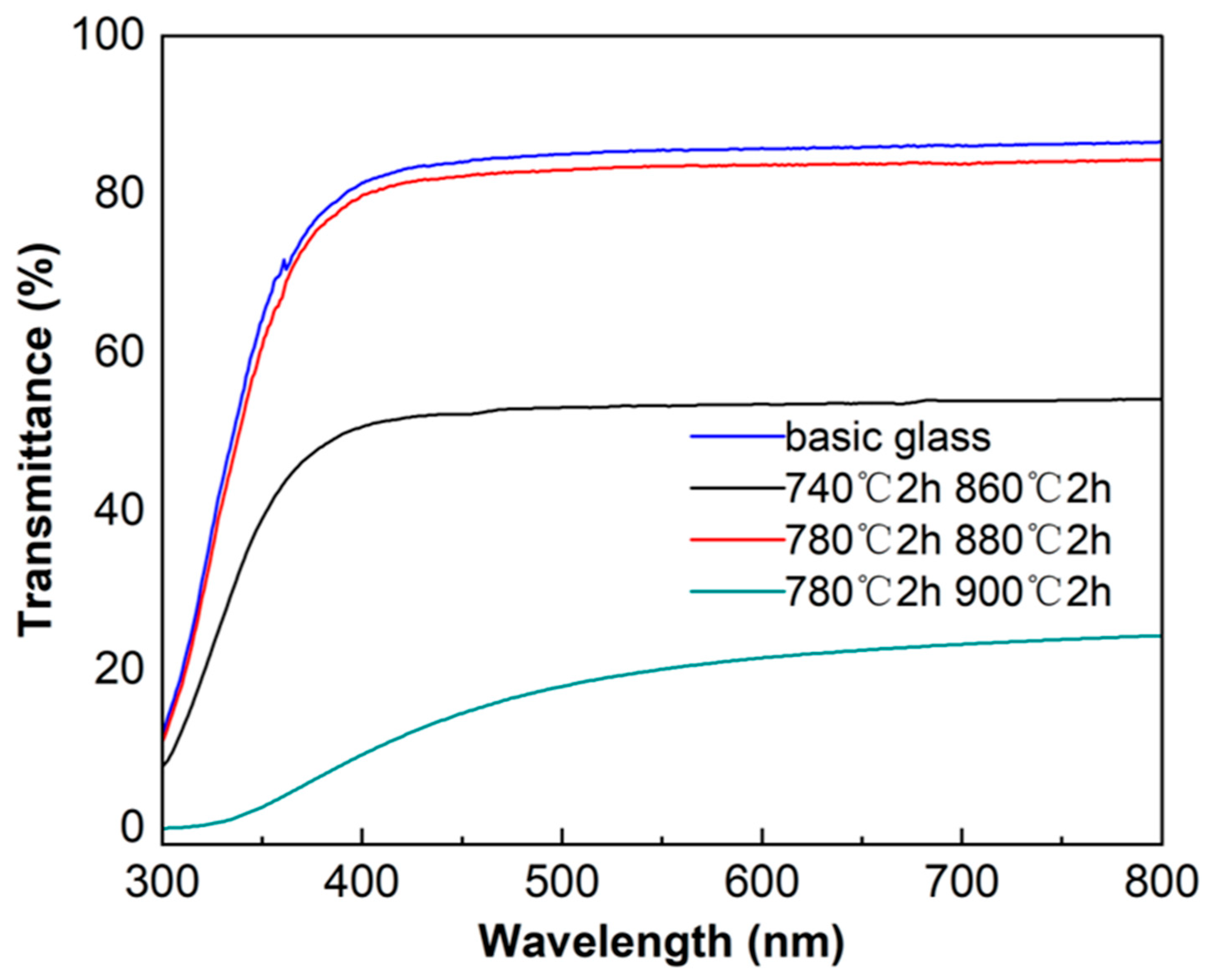
Transmittance tests were conducted on the base glass and glass-ceramics subjected to different heat treatment temperatures; the results are shown in Figure 10. It can be observed from the figure that at a wavelength of approximately 800 nm, the transmittance of the base glass without heat treatment is 86.6%, while the transmittance values of the glass-ceramics are 53.3%, 84.3%, and 24.3%, respectively. The lower transmittance of the 840 °C/2 h + 860 °C/2 h sample is primarily attributed to the partial precipitation of LixAlxSi1−xO2 crystals with an uneven size distribution under this thermal schedule, which enhances light scattering. Conversely, the transmittance of the sample treated at 780 °C/2 h + 900 °C/2 h significantly decreases to 24.3% at a wavelength of 800 nm. The main reason for this is the intensified light scattering caused by excessively large crystal sizes. Combined with the SEM morphological analysis in Figure 4f, it is evident that this thermal process leads to the precipitation of a large quantity of LixAlxSi1−xO2 crystals exceeding 200 nm in size. These crystals interweave with the spinel phase, forming micrometer-scale clusters and sheet-like structures. According to classical Mie scattering theory, the scattering cross-section increases sharply when the size of the precipitated phase approaches or exceeds the wavelength of the incident light, leading to a substantial decrease in overall transmittance. In contrast, under the optimized 780 °C/2 h + 900 °C/2 h heat treatment, the spinel grain size is effectively controlled and the formation of the LixAlxSi1−xO2 phase is suppressed. Therefore, this sample maintains a high transmittance of 84.3% while achieving a high degree of crystallinity. Furthermore, all samples exhibit a steep decrease in the absorption edge within the 300–350 nm wavelength range. This is attributed to ultraviolet absorption arising from the charge transfer transition of Zn2+ in the glass. This phenomenon is consistent with the typical optical behavior of spinel-based glass-ceramics.
The performance analysis of the glass-ceramics presented above indicates that precise control of the heat treatment temperature to manipulate phase competition kinetics is key to achieving the excellent comprehensive properties (combining high mechanical performance and high transmittance) of spinel-based glass-ceramics.

4. Conclusions

This study systematically investigated the influence of the heat treatment schedule on the crystallization behavior, microstructure, and properties of spinel-based glass-ceramics. A two-step heat treatment at 780 °C/2 h + 880 °C/2 h successfully suppressed the formation of the LixAlxSi1−xO2 phase and promoted the precipitation of spinel crystals. This optimal temperature window kinetically facilitates spinel nucleation while simultaneously consuming local components conducive to the formation of the undesirable impurity phase. The resulting desirable phase composition directly leads to a uniform, dense, and fine-grained microstructure. The sample prepared under the optimal schedule (780 °C/2 h + 880 °C/2 h) exhibited significantly enhanced mechanical properties, achieving a Vickers hardness of 922.6 HV, a flexural strength of 384 MPa, and an elastic modulus of 113 GPa compared to the base glass. Excellent optical transparency was maintained by inhibiting the growth of large LixAlxSi1−xO2 crystals. This optimal sample retained a high visible light transmittance of 84.3%, effectively balancing the typical conflict between high crystallinity and high transparency. This undoubtedly provides valuable guidance for the preparation of high-performance spinel-based glass-ceramics.

Author Contributions

Validation, Y.M.; Data curation, Y.W. and J.Z.; Writing—original draft, Y.P.; Writing—review and editing, M.L.; Funding acquisition, H.J. All authors have read and agreed to the published version of the manuscript.

Funding

This work is supported by Joint Fund Project of National Natural Science Foundation of China (Funding Number: U22A20124); Key Laboratory of Materials Modification by Laser, Ion and Electron Beams (Dalian University of Technology), Ministry of Education (Project Number: KF2305).

Data Availability Statement

The original contributions presented in this study are included in the article. Further inquiries can be directed to the corresponding authors.

Conflicts of Interest

The authors declare no conflict of interest.

References

  1. Petrova, P. Glass-ceramic materials with luminescent properties in the system ZnO-B2O3-Nb2O5-Eu2O3. Molecules 2024, 29, 3452. [Google Scholar] [CrossRef]
  2. Kettlewell, B.; Boyd, D. State of the art review for titanium fluorine glasses and glass ceramics. Materials 2024, 17, 1403. [Google Scholar] [CrossRef]
  3. Beall, G.H.; Megles, J.E.; Pinckney, L.R. Glass-Ceramics Containing Cristobalite and Potassium Fluorrichterite. U.S. Patent 4,608,348, 26 August 1986. [Google Scholar]
  4. Tkalčec, E.; Kurajica, S.; Ivanković, H. Crystallization behavior and microstructure of powdered and bulk ZnO-Al2O3-SiO2 glass-ceramics. J. Non-Cryst. Solids 2005, 351, 149–157. [Google Scholar] [CrossRef]
  5. Molla, A.R.; Rodrigues, A.M.; Singh, S.P.; Lancelotti, R.F.; Zanotto, E.D.; Rodrigues, A.C.; Dousti, M.R.; de Camargo, A.S.; Magon, C.J.; Silva, I.D.A. Crystallization, mechanical, and optical properties of transparent, nanocrystalline gahnite glass-ceramics. J. Am. Ceram. Soc. 2017, 100, 1963–1975. [Google Scholar] [CrossRef]
  6. Brokmann, U.; Sönnichsen, K.; Hülsenberg, D. Application of micro structured photosensitive glass for the gravure printing process. Microsyst. Technol. 2008, 14, 1635–1639. [Google Scholar] [CrossRef]
  7. Denry, I.; Holloway, J.A. Ceramics for Dental Applications: A Review. Materials 2010, 3, 351–368. [Google Scholar] [CrossRef]
  8. Yun-Cai, Z.; Xiao-Mei, L. Development of Glass-ceramic Composites Research. Mater. Mech. Eng. 2007, 31, 10–11. [Google Scholar] [CrossRef]
  9. Zhang, Y.; Ying, W.; He, J.; Fan, X.; Xu, S.; Gu, J.; Liu, S. Dual-wavelength enhanced upconversion luminescence properties of Li+-doped NaYF4:Er,Yb glass-ceramic for all-optical logic operations. Dalton Trans. 2023, 52, 2948–2955. [Google Scholar] [CrossRef]
  10. Yang, J.; Quan, Z.; Kong, D.; Liu, X.; Lin, J. Y2O3: Eu3+ Microspheres: Solvothermal Synthesis and Luminescence Properties. Cryst. Growth Des. 2007, 7, 730–735. [Google Scholar] [CrossRef]
  11. Ahmed, I.S.; Shama, S.A.; Dessouki, H.A.; Ali, A.A. Synthesis, thermal and spectral characterization of nanosized Ni(x)Mg(1−x)Al2O4 powders as new ceramic pigments via combustion route using 3-methylpyrozole-5-one as fuel. Spectrochim. Acta Part A Mol. Biomol. Spectrosc. 2011, 81, 324–333. [Google Scholar] [CrossRef]
  12. Wang, J.; She, W.T.; Han, J.J.; Li, L.Y. A Chemically Strengthenable Spinel Glass-Ceramic, Its Preparation Method and Application. CN115010369A, 9 August 2022. CN202210737448.6A, 9 September 2025. [Google Scholar]
  13. da Silva, M.R.; Scalvi, L.V.A.; Neto, V.S.L.; Dall’antonia, L.H. Development of bilayer glass-ceramic SOFC sealants via optimizing the chemical composition of glasses: A review. J. Solid State Electrochem. 2016, 20, 1527–1538. [Google Scholar] [CrossRef]
  14. Zanotto, E.D. A bright future for glass-ceramics. Am. Ceram. Soc. Bull. 2010, 89, 19–27. [Google Scholar]
  15. Liao, W.; Guo, Y.; Lu, Y.; Liu, C. Crystallization of sodium calcium silicate glass for highly transparent glass-ceramics. J. Eur. Ceram. Soc. 2024, 44, 3218–3225. [Google Scholar] [CrossRef]
  16. Reisert, N. Application and machining of Zerodur for optical purposes. In Optical Fabrication and Testing; OSA: Boston, MA, USA, 1991. [Google Scholar] [CrossRef]
  17. Zheng, T.; Li, M.; Ma, Y.; Jiang, H. Kinetic analysis of the crystallization of Y2O3 and La2O3 doped Li2O-Al2O3-SiO2 glass. RSC Adv. 2024, 14, 7052–7060. [Google Scholar] [CrossRef] [PubMed]
  18. Li, M.; Dong, C.; Ma, Y.; Jiang, H. Light-transmitting lithium aluminosilicate glass-ceramics with excellent mechanical properties based on cluster model design. Nanomaterials 2023, 13, 530. [Google Scholar] [CrossRef]
  19. Kleebusch, E.; Patzig, C.; Höche, T.; Rüssel, C. Effect of the concentrations of nucleating agents ZrO2 and TiO2 on the crystallization of Li2O–Al2O3–SiO2 glass: An X-ray diffraction and TEM investigation. J. Mater. Sci. 2016, 51, 10198–10209. [Google Scholar] [CrossRef]
  20. Wen, S.; Wang, Y.; Lan, B.; Zhang, W.; Shi, Z.; Lv, S.; Zhao, Y.; Qiu, J.; Zhou, S. Pressureless Crystallization of Glass for Transparent Nanoceramics. Adv. Sci. 2019, 6, 1901096. [Google Scholar] [CrossRef]
  21. Wang, C.S.; Shen, A.H.; Liu, Y.G.; Qian, Z. Raman spectra study of heating treatment and order-disorder transition of Cr3+-doped MgAl2O4 spinel. Spectrosc. Spectr. Anal. 2019, 39, 109–113. [Google Scholar]
  22. Hwa, L.G.; Hwang, S.L.; Liu, L.C. Infrared and Raman spectra of calcium alumino-silicate glasses. J. Non-Cryst. Solids 1998, 238, 193–197. [Google Scholar] [CrossRef]
  23. Kingma, K.J.; Hemley, R.J. Raman spectroscopic study of microcrystalline silica. Am. Mineral. 1994, 79, 269–273. [Google Scholar]
  24. Loiko, P.; Belyaev, A.; Dymshits, O.; Evdokimov, I.; Vitkin, V.; Volkova, K.; Tsenter, M.; Volokitina, A.; Baranov, M.; Vilejshikova, E.; et al. Synthesis, characterization and absorption saturation of Co:ZnAl2O4 (gahnite) transparent ceramic and glass-ceramics: A comparative study. J. Alloys Compd. 2017, 725, 998–1005. [Google Scholar] [CrossRef]
  25. Mohaček-Grošev, V.; Vrankić, M.; Maksimović, A.; Mandić, V. Influence of titanium doping on the Raman spectra of nanocrystalline ZnAl2O4. J. Alloys Compd. 2017, 697, 90–95. [Google Scholar] [CrossRef]
  26. Bechgaard, T.K.; Goel, A.; Youngman, R.E.; Mauro, J.C.; Rzoska, S.J.; Bockowski, M.; Jensen, L.R.; Smedskjaer, M.M. Structure and mechanical properties of compressed sodium aluminosilicate glasses: Role of non-bridging oxygens. J. Non-Cryst. Solids 2016, 441, 49–57. [Google Scholar] [CrossRef]
  27. McKeown, D.A.; Muller, I.S.; Buechele, A.C.; Pegg, I.L.; Kendziora, C.A. Structural characterization of high-zirconia borosilicate glasses using Raman spectroscopy. J. Non-Cryst. Solids 2000, 262, 126–134. [Google Scholar] [CrossRef]
  28. Tian, P.; Cheng, J.; Zhang, G. X-ray photoelectron spectroscopy of Sm3+-doped CaO–MgO–Al2O3–SiO2 glasses and glass ceramics. Appl. Surf. Sci. 2011, 257, 4896–4900. [Google Scholar] [CrossRef]
  29. Lin, S.-L.; Hwang, C.-S. Structures of CeO2Al2O3SiO2 glasses. J. Non-Cryst. Solids 1996, 202, 61–67. [Google Scholar] [CrossRef]
Figure 1. DSC curve of basic glass.
Crystals 16 00029 g001
Figure 2. XRD patterns of samples subjected to different heat treatment processes: (a) Low-temperature zone heat treatment process (b) High-temperature zone heat treatment process (c) Trend variations in nucleation and crystallization temperatures (d) Different heat treatment durations.
Crystals 16 00029 g002
Figure 3. Raman spectra of samples with different nucleation and crystallization temperatures.
Crystals 16 00029 g003
Figure 4. SEM images of samples with different nucleation and crystallization temperatures: (a) 720 °C/2 h + 840 °C/2 h (b) 740 °C/2 h + 860 °C/2 h (c) 760 °C/2 h + 880 °C/2 h (d) 780 °C/2 h + 860 °C/2 h (e) 780 °C/2 h + 880 °C/2 h (f) 780 °C/2 h + 900 °C/2 h.
Crystals 16 00029 g004
Figure 5. HRTEM and SAED images of samples treated at different nucleation and crystallization temperatures: (a) and (d) 840 °C/2 h + 860 °C/2 h; (b) and (e) 780 °C/2 h + 880 °C/2 h; (c) and (f) 780 °C/2 h + 900 °C/2 h.
Crystals 16 00029 g005
Figure 6. (ad) shows high-resolution electron microscopy and SAED images of the 780 °C/2 h + 880 °C/2 h sample; (eh) shows high-resolution electron microscopy and SAED images of the 780 °C/2 h + 900 °C/2 h sample.
Crystals 16 00029 g006
Figure 7. Shows TEM-EDS images of the 780 °C/2 h + 880 °C/2 h sample: (a) HR-TEM image; (bf) High-Angle Annular Dark-Field (HAADF) images and elemental distributions.
Crystals 16 00029 g007
Figure 8. Photoelectron spectra of samples with different nucleation and crystallization temperatures: (a) O1s (b) Al2p (c) Zn2p3/2 (d) Zn2p1/2.
Crystals 16 00029 g008
Figure 9. Microcrystalline glass at different heat treatment temperatures compared with base glass: (a) Vickers hardness (b) Flexural strength (c) Modulus of elasticity.
Crystals 16 00029 g009
Figure 10. Light transmittance of base glass and microcrystalline glass at different heat treatment temperatures.
Crystals 16 00029 g010
Table 1. Experimental Design for Heat Treatment.
Sample No.Nucleation
Temperature/°C
Nucleation
Time/h
Crystallization Temperature/°CCrystallization
Time/h
172028202
272028402
374028402
474028602
576028602
676028802
777028702
878028802
978018803
1078028803
1178038802
1278029002
1378029202
Disclaimer/Publisher’s Note: The statements, opinions and data contained in all publications are solely those of the individual author(s) and contributor(s) and not of MDPI and/or the editor(s). MDPI and/or the editor(s) disclaim responsibility for any injury to people or property resulting from any ideas, methods, instructions or products referred to in the content.