


Abstract
Volume electron microscopy (Volume-EM) has transformed structural cell biology by enabling nanometre-resolution imaging across cellular and tissue scales. Serial-section TEM, Serial Block-Face Scanning Electron Microscopy (SBF-SEM), Focused Ion Beam Scanning Electron Microscopy (FIB-SEM) and multi-beam SEM now routinely generate terabyte-scale volumes that capture organelles, synapses and neural circuits in three dimensions, while cryogenic Volume-EM extends this landscape by preserving vitrified, fully hydrated specimens in a near-native state. Together, these room-temperature and cryogenic modalities define a continuum of approaches that trade off volume, resolution, throughput and structural fidelity, and increasingly interface with correlative light microscopy and cryo-electron tomography. In parallel, advances in computation have turned Volume-EM into a data-intensive discipline. Multistage preprocessing pipelines for alignment, denoising, stitching and intensity normalisation feed into automated segmentation frameworks that combine convolutional neural networks, affinity-based supervoxel agglomeration, flood-filling networks and, more recently, diffusion-based generative restoration. Weakly supervised and self-supervised learning, multi-task objectives and human-AI co-training mitigate the scarcity of dense ground truth, while distributed storage and streaming inference architectures support segmentation and proofreading at the terascale and beyond. Open resources such as COSEM, MICRONS, OpenOrganelle and EMPIAR provide benchmark datasets, interoperable file formats and reference workflows that anchor method development and cross-laboratory comparison. In this review, we first outline the physical principles and imaging modes of conventional and cryogenic Volume-EM, then describe current best practices in data acquisition and preprocessing, and finally survey the emerging ecosystem of AI-driven segmentation and analysis. We highlight how cryo-Volume-EM expands the field towards native-state structural biology, and how multimodal integration with light microscopy, cryo-electron tomography (cryo-ET) and spatial omics is pushing Volume-EM from descriptive imaging towards predictive, mechanistic, cross-scale models of cell physiology, disease ultrastructure and neural circuit function.
1. Introduction
Since the advent of transmission electron microscopy (TEM) and scanning electron microscopy (SEM), electron microscopy has been indispensable not for “visualising” biological ultrastructure in an optical sense, but for resolving ultrastructure via electron-sample interaction signals. In TEM, these signals arise primarily from elastic and inelastic scattering, whereas in SEM, they are derived from secondary and backscattered electrons, together encoding mass-thickness contrast, scattering behaviour and local electrostatic potential. However, conventional chemically fixed preparation provides predominantly two-dimensional or surface-level information because ultrathin physical sectioning disrupts three-dimensional continuity, making volumetric organisation recoverable only through computational reconstruction. Moreover, dehydration, extraction and staining steps introduce preparation-dependent artefacts that limit accurate reconstruction of native three-dimensional cellular organisation. To overcome these constraints, a family of serial imaging approaches—serial-section TEM (ssTEM), serial block-face SEM (SBF-SEM) and focused ion beam SEM (FIB-SEM)—were developed, collectively giving rise to what is now termed volume electron microscopy (Volume-EM) [1,2,3].
Modern Volume-EM can image tissue volumes approaching the cubic-millimetre scale with few-nanometre lateral sampling and tens of nanometres along z, where “sampling” refers to the voxel sampling interval rather than the true physical resolving power determined by electron-material interactions and instrument optics. Fully isotropic 4–8 nm voxels can be achieved in FIB-SEM whole-cell datasets. These capabilities bridge single-cell ultrastructure with tissue-level organisation and have enabled large-scale initiatives such as MICrONS, COSEM and OpenOrganelle to reconstruct neuronal circuits and entire cellular organelle systems with unprecedented completeness [4,5,6].
In parallel with advances in resin-embedded Volume-EM, the past decade has witnessed the emergence of cryo-Volume-EM—including cryo-FIB-SEM, cryo-serial SEM/TEM workflows and cryo-electron tomography (cryo-ET)—as a critical complementary direction. By combining high-pressure freezing with low-temperature milling and imaging, cryo-Volume-EM preserves water in a vitrified state and captures macromolecular and membrane architectures in situ, free of chemical fixation and heavy metal staining artefacts. Cryo-FIB-SEM has demonstrated the ability to reconstruct fully hydrated cells and tissues at the nanometre sampling scale, revealing native morphologies of Golgi cisternae, ER tubules, mitochondrial cristae and bacterial spores that are often distorted in resin-embedded preparations [7]. Recent serial cryo-FIB/SEM studies have further shown that native-state volumes can uncover disease-related cytoarchitectural disruptions—for example, mitochondrial and ER remodelling in Leigh syndrome patient cells—offering a direct route to linking genotype, metabolism and ultrastructure [8].
Together, conventional and cryogenic Volume-EM form a continuum of technologies ranging from large-scale, high-throughput tissue imaging to native-state nanoscale structural biology. Despite these advances, analysing Volume-EM datasets remains challenging due to their size (terabytes to petabytes), their low intrinsic contrast and the extremely high cost of manual annotation. Consequently, machine learning and deep learning have become central to Volume-EM analysis, enabling automated segmentation and reconstruction of cellular and neuronal structures with increasing accuracy and scalability [9,10,11].
In this review, we aim to provide a unified perspective that connects imaging physics, cryogenic preservation, computational preprocessing and AI-driven reconstruction—domains that are often treated independently in the existing literature. We highlight how integrating conventional and cryogenic Volume-EM with modern machine learning workflows enables multi-scale structural interpretation spanning molecules, organelles, cells and tissues. We summarise the imaging principles and modalities of both conventional and cryogenic Volume-EM, outline recent progress in data acquisition and preprocessing workflows, and highlight emerging trends in automated analysis and AI-driven biological discovery. Special emphasis is placed on how cryo-Volume-EM expands the field towards truly native-state cellular biology, complementing resin-embedded large-volume imaging and positioning Volume-EM as a unifying framework for multi-scale structural analysis.
2. Principles and Imaging Modes of Volume-EM
This section introduces the major Volume-EM modalities, summarised schematically in Figure 1, outlining their operating principles, achievable resolution and throughput, accessible volume range and typical application domains. We also compare their respective strengths and limitations in the context of connectomics and whole-cell ultrastructure mapping.
Figure 1.
Overview of major Volume-EM imaging modalities. (a) Serial-section TEM (ssTEM): A resin-embedded block is cut into 30–70 nm ultrathin serial ribbons using an ultramicrotome. Sections are collected onto copper grids and imaged using transmission electron microscopy, followed by computational alignment and 3D reconstruction. (b) Serial block-face SEM (SBF-SEM): A diamond knife integrated within the SEM chamber repeatedly removes 25–50 nm surface layers, and each newly exposed block face is imaged using backscattered electrons to generate an inherently registered 3D volume. (c) Focused ion beam SEM (FIB-SEM): A focused Ga+ ion beam mills the block face in steps of 5–10 nm, and each freshly exposed surface is imaged via SEM, enabling isotropic nanoscale reconstructions. (d) Array tomography (AT): Serial ultrathin sections are collected onto glass or silicon carriers, enabling repeated cycles of immunofluorescence and SEM imaging for molecularly annotated volumetric reconstruction. (e) Multi-beam SEM: Ultrathin sections are imaged simultaneously using tens to hundreds of parallel electron beams, providing gigapixel-per second throughput for large-scale 2D and 3D mapping. (f) Cryogenic FIB-SEM (cryo-FIB-SEM): Vitrified samples are milled at cryogenic temperature and imaged under frozen-hydrated conditions, preserving native membrane morphology and enabling near-native 3D ultrastructural reconstruction. Schematic elements partially adapted from visual conventions used in ZEISS educational resources (https://www.zeiss.com/, accessed on 17 November 2025).
2.1. Serial-Section Transmission Electron Microscopy (ssTEM)
Serial-section transmission electron microscopy (ssTEM) represents the earliest strategy for reconstructing three-dimensional ultrastructure. Specimens are chemically fixed, resin-embedded and sectioned into ultrathin slices of typically 30–70 nm, which are individually imaged using TEM and subsequently aligned and stacked computationally to form a volumetric reconstruction.
Unlike the later block-face methods, ssTEM relies on physical ultramicrotomy to generate discrete sections that must be individually handled, imaged and computationally registered. In practice, ssTEM datasets are often acquired as large tiled mosaics per section, and accurate reconstruction therefore critically depends on robust non-rigid registration across tiles and across sections, as addressed by elastic and fully automated registration frameworks [12,13].
ssTEM offers excellent in-plane resolution (typically 1–2 nm), but its axial resolution is fundamentally constrained by section thickness. This technique provides high-quality visualisation of membranes, vesicular systems and synaptic structures, and was foundational in early cell ultrastructure analysis and circuit reconstruction efforts.
However, ssTEM is highly susceptible to the following section-specific artefacts: (i) mechanical deformation during cutting (folds, wrinkles and chatter), (ii) thickness variability producing axial discontinuities, (iii) compression and nonlinear distortions that complicate computational registration [12,13], and (iv) partial or complete section loss, producing topological gaps that interrupt three-dimensional continuity. Practical workflows therefore typically require dedicated tools for alignment, annotation and gap-aware reconstruction [14]. These artefacts accumulate across thousands of sections and have historically limited scalability for very large tissue volumes, motivating automated section collection and block-face alternatives.
Overall, ssTEM is best suited to small-volume, high-resolution applications where maximal in-plane detail and membrane contrast are essential. Its strengths lie in its exceptional ultrastructural contrast and compatibility with widely available TEM infrastructure, whereas its key limitations—manual labour, section distortion and intrinsically anisotropic resolution—restrict its applicability for modern large-volume connectomic studies.
2.2. Serial Block-Face Scanning Electron Microscopy (SBF-SEM)
Serial block-face scanning electron microscopy (SBF-SEM), introduced by Denk and Horstmann, integrates an ultramicrotome within the scanning electron microscope (SEM) chamber to enable automated serial imaging of resin-embedded tissue blocks [1]. In this configuration, a diamond knife removes successive layers from the block surface, and each newly exposed face is imaged using backscattered electrons, allowing volumetric reconstruction without physical section collection.
The original demonstration by Denk and Horstmann showed that block-face imaging avoids many of the section-handling distortions inherent to serial-section TEM, resulting in improved slice-to-slice registration and more stable three-dimensional reconstructions of neural tissue at tens-of-a-nanometre axial sampling [1]. This intrinsic mechanical stability established SBF-SEM as a robust platform for automated large-volume imaging, and rapidly led to its adoption in early volumetric studies of brain tissue and neural circuits.
SBF-SEM provides fully automated in situ sectioning with high registration fidelity between successive images. Typical voxel sizes are on the order of ∼10 nm laterally and 25–50 nm axially, and this method supports imaging volumes extending to several hundred micrometres per side (approximately 106–108 µm3) in suitably prepared specimens. Compared with focused ion beam SEM, SBF-SEM offers a substantially higher acquisition throughput and larger accessible volumes at the expense of reduced axial resolution and limited isotropy [11,15].
These characteristics have made SBF-SEM a widely used modality for mesoscale connectomics and tissue-level architectural studies. Seminal applications include dense reconstructions of cortical and retinal circuits, where SBF-SEM has enabled tracing of axonal and dendritic arbors across large tissue blocks while maintaining a sufficient resolution for reliable synapse identification [16]. Beyond neuroscience, SBF-SEM has been applied to three-dimensional analysis of cellular organisation in diverse tissues, supporting studies of epithelial architecture, stromal organisation and large-scale organelle distributions [3].
Despite its scalability, SBF-SEM exhibits several modality-specific limitations. Repeated mechanical sectioning can introduce characteristic cutting artefacts, including periodic surface ripples commonly referred to as knife chatter, arising from micro-vibrations of the ultramicrotome. The severity of such artefacts is strongly dependent on tissue composition and mechanical heterogeneity, and remains a recognised technical consideration compared with ion-beam-milled block-face approaches [17]. In addition, charging effects and backscatter-based contrast can reduce sensitivity for very thin membranes, small vesicles or closely apposed organelles compared with transmission electron microscopy or FIB-SEM.
Overall, SBF-SEM occupies an important intermediate regime within the Volume-EM landscape. Its principal strength lies in balancing acquisition throughput and accessible volume, enabling automated reconstruction of large tissue regions with minimal manual intervention. This makes SBF-SEM particularly well suited for mesoscale connectomics and tissue-level architectural studies, while its anisotropic resolution constrains applications requiring fully isotropic nanometre-scale detail, such as precise synaptic nanostructure or fine organelle contact site mapping.
2.3. Focused Ion Beam Scanning Electron Microscopy (FIB-SEM)
Focused ion beam scanning electron microscopy (FIB-SEM) combines precise material removal using a focused Ga+ ion beam with SEM imaging of the freshly exposed block face. Alternating cycles of milling (typically 3–10 nm steps) and electron imaging produce inherently registered, nearly isotropic three-dimensional datasets.
The seminal work of Knott et al. (2008) demonstrated that ion beam sputtering, unlike mechanical sectioning, generates exceptionally flat block faces with minimal deformation, enabling nanometre-scale isotropic reconstructions of neuronal tissue and whole cells [2]. Related studies on ion beam milling physics, such as that of Winiarski et al. (2017), quantified sputtering behaviour and surface topography evolution, highlighting that homogeneous milling critically determines final image quality and artefact formation [18].
FIB-SEM routinely achieves isotropic voxels of around 5 nm, minimising mechanical artefacts and enabling detailed visualisation of mitochondrial cristae, Golgi cisternae, synaptic vesicles and other nanoscale structures [3].
Several primary studies have highlighted characteristic artefacts associated with ion beam milling. Winiarski et al. (2017) reported “curtaining” patterns arising from differential sputtering of heterogeneous materials [18], while Hoffman et al. (2020) described redeposition and surface modification effects in cryogenic ion beam workflows [19]. Long-duration milling also amplifies charging and thermal drift, requiring stabilised stages and charge compensation schemes to maintain imaging fidelity.
Biological applications demonstrate both the power and limitations of FIB-SEM. Large-scale connectomic studies have shown that cumulative drift, charging and milling stability constrain the practical volume accessible to FIB-SEM, typically limiting datasets to tens of micrometres per side despite its excellent isotropic resolution [20].
Despite these constraints, FIB-SEM remains one of the most powerful techniques for subcellular analysis when truly isotropic nanometre-scale resolution is required, and is therefore widely used for dense reconstructions of neuronal microcircuits and whole-cell ultrastructure in selected regions of interest. Its ability to resolve fine membrane curvature, organelle contact sites, spine necks and vesicle pools continues to position FIB-SEM as the gold standard for high-fidelity ultrastructural mapping, complementing the higher throughput but lower isotropy of SBF-SEM.
Recent advances in plasma-focused ion beam (pFIB) instrumentation—based on xenon or other plasma ion sources—have addressed key limitations of conventional Ga+ FIB, including restricted milling currents and ion implantation. Although pFIB was initially developed primarily for cryo-lamella preparation rather than serial block-face volume imaging, methodological progress has substantially expanded its applicability. In particular, xenon plasma FIB enables high-current bulk milling of high-pressure frozen specimens with high success rates, supporting routine lamella preparation from thick and complex biological samples [21]. Building on this capability, targeted pFIB-based workflows now allow region-specific cryogenic milling and in situ cryo-electron tomography within vitrified tissues, enabling systematic molecular interrogation across defined anatomical contexts [22]. These developments have facilitated high-resolution in situ structural analysis in native cellular and tissue environments, exemplified by cryo-ET reconstructions of intact macromolecular assemblies in physiological states [23].
2.4. Array Tomography (AT)
Array tomography (AT) integrates serial-section electron microscopy with multiplexed fluorescence imaging to provide molecularly annotated ultrastructural volumes. Hundreds of ultrathin sections (typically 50–70 nm) are collected on rigid substrates such as glass coverslips or silicon wafers, enabling repeated cycles of immunostaining, light microscopy and subsequent SEM acquisition on the same section arrays.
In the foundational demonstrations by Micheva and Smith (2007), mounting serial sections onto planar substrates eliminated most folding, tearing and deformation artefacts characteristic of floating sections, thereby enabling reliable, repeated antibody-labelling cycles and high-throughput molecular mapping across large arrays [24]. Follow-up work—including the landmark single-synapse proteomic analyses in the mouse cortex by Micheva et al. (2010)—established AT as a uniquely powerful method for quantifying the molecular diversity of individual synapses in situ, revealing subtype-specific patterns of glutamatergic and GABAergic synapses [25].
Because sections remain mechanically stable on the substrate, they tolerate multiple rounds of staining, imaging and elution without introducing section distortions. AT has therefore become an essential tool for multimodal studies requiring both molecular specificity and ultrastructural context, including analyses of synaptic composition, protein localisation and signalling complex organisation.
Conjugate array tomography (conjugate AT), as introduced by Collman et al. (2015), further integrates voxel-conjugate fluorescence and EM imaging to generate matched molecular and ultrastructural datasets [26]. This approach enables direct mapping of protein distributions onto EM-resolved synaptic architectures and has been widely adopted for studies of synaptic organisation and circuit-level molecular diversity.
A practical limitation of AT is that glass and silicon substrates are not electron-transparent, restricting direct TEM imaging. Where TEM is required, sections must be transferred onto carbon-coated support films, a step that risks partial section loss or deformation. Antibody penetration into resin-embedded sections is also limited, and epitope accessibility varies with fixation and resin chemistry, potentially biasing apparent molecular distributions.
Although AT cannot achieve continuous, isotropic nanoscale membrane reconstruction due to its axial sampling limits, it remains uniquely valuable for correlating molecular identity with ultrastructural organisation. Large-scale volumetric EM initiatives increasingly incorporate conceptually similar “molecular-on-structure’’ strategies, positioning AT as a complementary—not competing—modality for functional and molecular mapping.
2.5. Multi-Beam Scanning Electron Microscopy
Multi-beam scanning electron microscopy (multi-beam SEM) represents a major advance in imaging throughput, using arrays of parallel electron beams to simultaneously scan distinct regions of the specimen. In instruments such as the ZEISS MultiSEM, the column employs 61 beams in early versions and 91 beams in newer designs, enabling simultaneous acquisition of 91 image tiles that cover a hexagonal field of view up to 200 µm in diameter. This parallelisation yields effective pixel acquisition rates exceeding 1.5 Gpixel s−1, corresponding to an up to two orders of magnitude speed-up relative to conventional single-beam SEM.
The feasibility of parallel-beam electron imaging was experimentally demonstrated in the MultiSEM prototype developed by Eberle et al. (2015), who showed that a 61-beam array with dedicated detectors could substantially bypass the dwell time and detector bandwidth limitations inherent to single-beam SEM [27]. Their work provided the first quantitative validation that electron beam multiplexing enables stable operation at gigapixel-per-second rates, and established core architectural principles—including beam separation, synchronised scanning and parallel signal detection—that underpin modern MultiSEM instruments.
When combined with serial-section or block-face Volume-EM workflows, multi-beam SEM achieves voxel sizes comparable to conventional SEM (lateral sampling of a few nanometres and axial steps of tens of nanometres), but at a substantially higher throughput. This enables sub-millimetre-to-millimetre-scale tissue volumes to be imaged within practical timeframes, opening the door to routine large-scale mapping of neural circuits and tissue architecture.
Multi-beam SEM is increasingly adopted for high-throughput tissue imaging and connectomics, whereas projects that prioritise isotropic whole-cell mapping, such as COSEM, continue to rely primarily on high-resolution FIB-SEM datasets [5]. Together, these approaches represent complementary strategies towards routine, large-scale mapping of cellular and neural architecture at a nanometre resolution.
Despite its throughput advantages, multi-beam SEM introduces several technical trade-offs that arise from the complexity of parallel-beam electron optics and detection. For example, electron optical constraints associated with beam multiplexing can limit the achievable numerical aperture per beam, which may reduce the signal-to-noise ratio relative to optimised single-beam instruments [27]. In addition, beam-to-beam current variability and detector non-uniformity can introduce tile-to-tile intensity discontinuities that require downstream normalisation. Multi-beam systems are also sensitive to specimen charging and surface topography, necessitating highly uniform staining, embedding and conductivity to maintain image stability. As a result, MultiSEM excels in imaging large, compositionally homogeneous tissue volumes, but is less suited for applications demanding maximal lateral resolution or detailed membrane topology analysis.
2.6. Cryogenic Volume Electron Microscopy (Cryo-Volume-EM)
A major recent advance in the Volume-EM field is the emergence of cryo-Volume electron microscopy (cryo-Volume-EM), which encompasses cryo-FIB-SEM, cryo-volume SEM/TEM and workflows that interface directly with cryo-electron tomography (cryo-ET). Unlike conventional resin-embedded preparation—which inevitably induces dehydration, fixation artefacts, lipid extraction, membrane collapse and heavy metal staining heterogeneities—cryo-Volume-EM preserves samples in a vitrified, fully hydrated state. As a result, it captures an ultrastructure much closer to the native in situ condition, offering a level of structural fidelity that is difficult to achieve with room-temperature EM [7,28].
Foundational work by Schertel et al. (2013) demonstrated the feasibility of serial cryogenic volume imaging using cryo-FIB-SEM, establishing that low-temperature milling enables continuous three-dimensional reconstruction of frozen-hydrated biological specimens with reduced mechanical deformation [7]. Hayles and De Winter (2021) further developed robust protocols for cryo-FIB cross-sectioning, clarifying how ion beam parameters, stage temperature and redeposition behaviour influence milling stability and image quality under cryogenic conditions [28]. Vidavsky et al. (2016) extended cryo-FIB-SEM to tissue-scale specimens, demonstrating three-dimensional imaging of intact, vitrified, hydrated tissues at a 5–20 nm sampling size and revealing the spatial organisation of cellular organelles within complex biological environments [29].
Together, these studies establish cryo-FIB-SEM as a practical route to volumetric imaging of vitrified, fully hydrated biological material, while also emphasising cryo-specific technical constraints—such as reduced intrinsic contrast, strict dose limits and ion beam-induced artefacts—that must be carefully managed for reliable structural interpretation [7,28].
Building on these methodological foundations, cryo-Volume-EM has rapidly expanded into a tool for nanoscale structural biology in intact cells and tissues. Recent work has shown that cryo-FIB-SEM can provide accurate three-dimensional organisation of organelles in a near-physiological state, revealing membrane topology, organelle contacts, chromatin organisation and cytoskeletal architecture with minimal perturbation [8]. In parallel, an emerging body of work positions cryo-Volume-EM as a platform for high-resolution three-dimensional histology, in which subcellular environments in vitrified tissue are quantitatively related to molecular identity when integrated with single-cell and spatial omics measurements [30].
Cryo-Volume-EM has also become an important platform for molecular localisation. Spehner et al. demonstrated that cryo-FIB-SEM can be combined with immunogold labelling and backscattered electron detection to localise proteins in three dimensions within vitrified cells [31]. Their workflow identifies internalised protein-gold conjugates and maps them onto the surrounding native ultrastructure, enabling correlative visualisation of protein complexes, and signalling assemblies and organelle interactions in fully hydrated cells.
More broadly, genetically encoded or clonable EM contrast strategies—such as the metallothionein-based tags demonstrated by Morphew et al. (2015)—illustrate how molecular labels can be integrated with electron microscopy to enable protein localisation, expanding the conceptual molecular toolkit that can, in principle, be combined with cryogenic workflows [32].
Recent correlative cryogenic workflows, including those of Hoffman et al. (2020), demonstrated that whole vitrified cells can be imaged by cryo-compatible block-face EM while retaining super-resolution fluorescence signals [19], highlighting the feasibility of mapping molecular identity directly onto the native ultrastructure across tens of micrometres of the vitrified cellular volume.
A major strength of cryo-Volume-EM is its natural complementarity with cryo-ET. Cryo-FIB-SEM can survey tens to hundreds of cubic micrometres of vitrified tissue to identify nanoscale structures of interest, after which selected regions are thinned into lamellae suitable for cryo-ET, enabling visualisation of macromolecular complexes and membrane architectures at a molecular or near-atomic resolution within the same specimen [28,31]. This coordinated workflow establishes a multi-scale imaging continuum—from cellular mesoscale organisation to molecular-scale architecture—without introducing chemical artefacts.
Despite its strengths, cryo-Volume-EM introduces several modality-specific limitations. (i) Ice contamination during transfer or milling can obscure surface detail, particularly in low-contrast regions. (ii) Electron beam-induced radiolysis persists at cryogenic temperatures (albeit at reduced rates), imposing strict dose limits. (iii) Low intrinsic contrast in vitrified samples complicates automated segmentation and often necessitates advanced denoising strategies. (iv) Cryo-FIB milling artefacts, including curtaining and redeposition, arise from the same sputtering mechanisms characterised in ion beam studies such as that of Winiarski et al. (2017) [18]. (v) Accessible volume remains limited by milling rate, thermal stability and sublimation risk, typically restricting cryo-FIB-SEM datasets to tens of micrometres per side.
In summary, cryo-Volume-EM provides one of the highest-fidelity views of native ultrastructure currently achievable in electron microscopy. Its strengths are complementary to those of resin-embedded, high-throughput Volume-EM: whereas room-temperature modalities excel at mapping extremely large volumes, cryogenic methods prioritise structural accuracy, molecular interpretability and preservation of labile or dynamic features [7,28]. An emerging paradigm is therefore a combined strategy in which large-scale resin-embedded imaging provides tissue-level context and target identification, followed by targeted cryo-Volume-EM and cryo-ET for native-state interrogation of organelles and molecular assemblies.
2.7. Comparative Summary
Table 1 summarises the major trade-offs among Volume-EM modalities in terms of sampling resolution, accessible volume and acquisition throughput. Transmission-based methods such as ssTEM and array tomography (AT) provide the highest in-plane detail but are limited in scale by serial sectioning and alignment.
Table 1.
Comparison of major Volume-EM imaging techniques.
Block-face approaches—including SBF-SEM, FIB-SEM and multi-beam SEM—enable automated, inherently registered volumetric imaging. SBF-SEM favours large contiguous volumes with moderate axial resolution, FIB-SEM prioritises isotropic nanometre-scale sampling over restricted volumes and multi-beam SEM increases throughput to support large-area imaging at SEM-scale resolution.
AT is distinguished by its ability to integrate multiplexed molecular labelling with ultrastructural imaging, rather than by volumetric continuity.
Across these modalities, voxel size reflects sampling rather than absolute physical resolution, which additionally depends on imaging physics and specimen preparation.
Cryogenic Volume-EM shifts the balance towards native-state preservation, providing a high-fidelity ultrastructure over relatively small volumes at the cost of throughput and contrast.
Together, these techniques occupy complementary regions of the volume-resolution-throughput space, and their characteristic trade-offs largely define the biological questions each modality is best suited to address.
3. Data Acquisition and Preprocessing Pipeline
Transforming raw Volume-EM data into analysis-ready three-dimensional reconstructions requires a multistage preprocessing pipeline that corrects imaging artefacts, normalises intensity variations and prepares volumes for segmentation and downstream quantitative analysis [3,5]. Each step in this workflow substantially influences both the fidelity of structural reconstruction and the performance of AI-based models. At the same time, each computational operation—alignment, denoising, stitching and segmentation—can introduce its own characteristic artefacts, which must be carefully considered to avoid misinterpretation of biological structures. Figure 2 provides an overview of the pipeline from sample preparation and imaging to aligned, denoised and segmented volumes.
Figure 2.
Overview of representative Volume-EM modalities and their operational workflow. (a) General pipeline from sample preparation to sequential imaging and downstream analysis. (b) Comparative positioning of major Volume-EM modalities in resolution space, with colour shading denoting typical acquisition speed (blue, slow; green, moderate; yellow, fast). These panels illustrate how distinct imaging strategies balance spatial resolution, throughput and accessible volume.
3.1. Image Alignment
Raw Volume-EM datasets often comprise thousands of sequential slices that must be precisely registered to form a coherent three-dimensional volume. Misalignments arise from stage drift, beam instabilities and nonlinear warping of physical sections, and can severely disrupt the continuity of structures such as neurites or membranes across slices [3]. Most pipelines therefore adopt a coarse-to-fine strategy: an initial global rigid or affine registration (typically based on cross-correlation or feature-based matching) is followed by local nonlinear warping to correct residual distortions [33]. Widely used implementations include TrakEM2, which provides large-scale serial-section EM alignment within Fiji, and elastix, a general-purpose medical image registration toolbox adapted to Volume-EM datasets [33,34].
Alignment procedures can themselves introduce post-acquisition artefacts if not carefully constrained. For example, highly flexible nonlinear warping may alter genuine biological curvature or locally smooth fine processes, while deformation fields with excessive degrees of freedom can yield transformations that are difficult to interpret physically. In long image series, cumulative drift correction may influence the apparent continuity of elongated structures such as neurites, particularly near section folds, missing tissue or low-contrast regions where correspondence estimation is challenging. These effects highlight the importance of systematic quality control during alignment, as residual registration errors can propagate into downstream segmentation, skeletonisation and morphometric analyses.
Recent advances apply deep-learning-based correspondence estimation to achieve subpixel accuracy in large volumes. Using serial-section EM, Xin et al. introduced an unsupervised optical flow framework with a serial-splitting strategy that improves neurite continuity across long series by mitigating cumulative registration errors [35]. More broadly, registration networks originally developed for medical imaging are being increasingly adapted for volumetric EM data, as summarised in surveys of deep-learning-based image registration [36].
3.2. Denoising
The inherently low signal-to-noise ratio of electron microscopy arises from electron shot noise, detector readout noise and preparation-dependent contrast variability, necessitating dedicated denoising to enhance ultrastructure visibility and improve segmentation accuracy. Traditional pipelines employ Gaussian, median or bilateral filtering, together with CLAHE, to suppress noise and homogenise contrast [37]. Although effective, these hand-crafted methods may blur fine structures and offer limited control over the trade-off between noise reduction and detail preservation.
Content-aware restoration networks (CARE), based on U-Net architectures, have enabled substantially improved denoising for SEM and cryo-EM/tomography, preserving membranes and vesicles while reducing shot noise [38,39]. For SEM data, supervised training on paired noisy-clean or noisy-noisy images is sometimes possible, whereas transmission EM more often relies on Noise2Noise, Noise2Void and Noise2Self frameworks [40,41,42].
Diffusion-based restoration models such as EMDiffuse and vEMDiffuse provide isotropic enhancement and denoising for anisotropic vEM datasets, substantially improving apparent resolution [43]. Across these approaches, learned restoration markedly reduces noise while preserving biological detail.
AI-based denoising approaches, while powerful, may in some cases introduce restoration biases, whereby models preferentially enhance structures consistent with their training distribution. Reported effects include the reinforcement of plausible but incorrect membrane continuities, the appearance of vesicle-like features and local texture homogenisation. Diffusion-based models may additionally smooth curvature or suppress subtle intensity variations, potentially obscuring biologically meaningful heterogeneity. These considerations underscore the importance of validating denoised outputs against raw data, particularly when training datasets are limited or do not fully represent the diversity of ultrastructural contexts present in the target volume.
3.3. Stitching and Volume Assembly
Large-scale acquisitions often consist of partially overlapping tiles that must be stitched into a seamless three-dimensional volume. Accurate stitching requires estimating translational and rotational offsets between neighbouring tiles, followed by global optimisation to minimise cumulative drift [33,44]. Classical tools such as TrakEM2 and TeraStitcher implement hierarchical workflows that combine phase correlation, feature detection and global least-squares adjustment to achieve subpixel accuracy at the terabyte scale.
More recent systems—including BigStitcher and the COSEM ASAP pipeline—extend stitching to distributed, cloud-based environments, enabling parallel computation and multi-resolution mosaicking for very large volumes [4,45].
Despite these advances, stitching remains a nontrivial step in large-scale volume assembly and may introduce residual seams, brightness discontinuities or small geometric offsets if not carefully corrected. Tile-wise shading differences, detector gain variability, vignetting and minor stage misalignments can lead to subtle boundary artefacts that affect structural continuity. In some cases, residual nonlinear distortions between adjacent tiles may manifest as low-amplitude boundary patterns, which can influence automated segmentation by promoting false splits or merges along tile interfaces.
3.4. Intensity Normalisation
Differences in detector gain, staining and acquisition conditions introduce systematic intensity variability that can degrade feature extraction and neural network training [3,15]. Preprocessing typically begins with gain/offset correction, followed by normalisation strategies such as histogram equalisation, percentile clipping or z-score scaling [5]. CLAHE further enhances local contrast in low-signal regions [37].
For large volumes, inter-slice brightness correction and bias field-style shading models compensate for gradual illumination drift due to beam-current fluctuations or detector ageing. These normalisation steps are typically integrated with denoising to stabilise image statistics for AI models.
Intensity normalisation, while essential for stabilising image statistics, may itself influence the appearance of ultrastructural features depending on parameter choice. For example, strong histogram equalisation can amplify background noise or introduce artificial gradients, whereas aggressive percentile clipping may attenuate faint but biologically relevant structures. Such effects can impact downstream segmentation or quantitative analysis, particularly when training data span multiple imaging sessions with differing staining or acquisition characteristics. Careful parameter tuning and cross-session validation are therefore important to maintain biological interpretability.
At scale, normalisation also poses computational challenges: slice-wise gain correction and shading estimation across hundreds of thousands of sections are I/O-limited operations unless implemented with GPU acceleration or parallel block-wise execution. Efficient caching and streaming architectures are increasingly required in petascale workflows.
3.5. Region of Interest Selection and Chunking
To manage petabyte-scale data, Volume-EM datasets are subdivided into spatially localised chunks or regions of interest (ROIs). Chunking enables distributed storage, parallel processing and GPU-compatible training and inference [5,6]. Metadata describing voxel origin and physical coordinates ensure that predictions can be accurately reassembled into the global volume, and overlapping margins help avoid edge artefacts during convolutional or transformer-based segmentation [9].
Biologically guided ROI selection—for example, targeting synapse-rich neuropil or mitochondria-dense cytoplasm—can further focus annotation and computation on informative subvolumes [3,15].
While chunking is essential for scalability, it introduces methodological considerations related to contextual completeness. Insufficient overlap between neighbouring chunks may limit the effective receptive field of convolutional networks or fragment long-range context for attention-based models, potentially affecting continuity across block boundaries. These effects are particularly relevant for thin or elongated structures such as neurites, and are typically mitigated through overlap margins, boundary-aware merging strategies and post hoc reconciliation of labels across chunks.
3.6. Data Storage Formats and Interoperability
Modern workflows employ block-based, cloud-native formats such as N5, Zarr and OME-NGFF, which support random access, parallel I/O and multi-resolution pyramids, and are widely used in COSEM and public resources [5]. These formats allow raw data, probability maps and segmentation labels to coexist in a unified hierarchy.
The OME-NGFF metadata model further captures acquisition parameters and biological context, enabling interoperability with tools such as Ilastik [46,47]. Formats such as Neuroglancer precomputed and CloudVolume provide interactive streaming of terascale datasets [6].
Reproducibility further depends on rigorous versioning of metadata, software environments and processing graphs; even small differences in normalisation parameters, deformation field estimation or downsampling strategies can produce divergent segmentations. Initiatives such as OME-NGFF have therefore emphasised standardised metadata schemas to facilitate transparent, cross-platform processing and long-term data sustainability [46].
4. Automatic Segmentation and Recognition: A Central Frontier for AI
Automatic segmentation is a central challenge in Volume-EM, serving as the critical step that converts terabyte-scale grayscale volumes into biologically interpretable structures such as organelles, synapses and neuronal circuits. Because manual annotation is prohibitively labour-intensive and scales poorly with increasing volume sizes, computational segmentation has become indispensable for extracting structural and functional information from large-scale datasets. The widespread adoption of deep-learning-based segmentation in projects such as COSEM and MICrONS has reshaped the analytical landscape of connectomics and cell biology, enabling near-complete reconstructions of whole cells and tissue volumes at nanometre-scale precision [5,6], where “precision’’ refers to voxel-level boundary prediction accuracy rather than the physical resolving power of the microscope. Despite these advances, segmentation and proofreading remain the major computational bottlenecks, as challenges in model generalisation, correction efficiency and biological validation continue to limit full automation [48,49,50].
4.1. Classical Machine Learning-Based Segmentation
Before the advent of deep neural networks, Volume-EM segmentation relied on traditional image processing and statistical learning frameworks. Hand-crafted features—including local texture descriptors, gradient magnitude, intensity statistics and structure tensors—were extracted and classified using random forests, support vector machines or boosted decision trees [51,52]. Interactive tools such as ilastik and the Trainable Weka Segmentation plugin for Fiji helped to democratise these methods by allowing users to provide sparse annotations and train lightweight classifiers on the fly for pixel- or supervoxel-level labelling without requiring extensive programming expertise [5,52]; these tools were particularly impactful because they enabled non-expert users to perform high-quality segmentation without designing custom feature sets. Such workflows were widely applied to segment mitochondria, nuclei, synaptic vesicles and other ultrastructures in both two-dimensional and volumetric EM datasets [5].
Once probability maps were generated, graph-based post-processing was typically employed to obtain instance-level segmentations. Watershed algorithms and conditional random field (CRF) optimisation were frequently used to refine object boundaries, particularly in densely packed environments such as neuropil [53,54]. Some pipelines, such as those developed by Lucchi and colleagues, combined random forest classifiers with supervoxel clustering and MALIS-based agglomeration to enforce boundary consistency across serial sections and to separate touching instances [52], a design that prefigured later deep-learning-based agglomeration strategies in connectomics.
Although these classical approaches established the foundations of automated segmentation in EM, their reliance on hand-engineered features and limited spatial context restricted their scalability and robustness. As Volume-EM datasets expanded to terabyte and petabyte scales and structural heterogeneity increased across tissues and modalities, such methods proved insufficient—particularly in handling anisotropy, long-range dependencies and subtle membrane ambiguities—ultimately motivating a transition to end-to-end, representation-learning-based deep architectures [5,48].
4.2. Deep-Learning-Based Methods
Deep-learning architectures have fundamentally reshaped Volume-EM segmentation by enabling automated extraction of complex ultrastructural features and substantially reducing reliance on manual annotation [5,15]. Following the success of the U-Net family in biomedical image analysis, volumetric encoder-decoder architectures rapidly became the dominant paradigm for dense segmentation of EM volumes [10,48,55]. Three-dimensional U-Nets preserve fine spatial detail through skip connections while capturing multi-scale contextual information, enabling robust delineation of membranes, organelles and synaptic structures across serial sections [48]. As illustrated in Figure 3a, these architectures form the backbone of many modern Volume-EM pipelines and exemplify the shift from hand-crafted features to data-driven representation learning.
A series of architectural refinements—including residual U-Nets, attention U-Nets and V-Net—introduced residual pathways, attention mechanisms and volumetric convolutions that improve gradient stability and multi-scale information integration [48,56,57,58]. These networks now underpin widely deployed segmentation frameworks, including the 3D CNN backbones used in CDeep3M (v2), DeepImageJ (v3.0) and the COSEM segmentation workflow [5,59,60]. More recently, Müller and colleagues proposed a modular, open and reproducible segmentation and spatial analysis framework that integrates 3D CNNs with quantitative morphometry and interoperable formats such as N5 and OME-NGFF, facilitating large-scale organelle mapping across diverse datasets [61]. Together, these developments provide the computational infrastructure for organelle-level segmentation at cellular and subcellular scales.
In parallel, the output representations of deep models have evolved beyond simple semantic masks. Many state-of-the-art pipelines predict boundary probability maps or voxel-wise affinity graphs, in which the network estimates voxel-to-voxel connectivity along each spatial axis [5,62]. As visualised in Figure 3b, affinity maps render membrane boundaries as regions of low connectivity and object interiors as high connectivity, enabling the generation of fine-grained supervoxels through seeded watersheds [62]. Graph-based agglomeration then merges these supervoxels into coherent neuronal or organelle instances, reducing topological breaks and preserving long-range neurite continuity across thousands of serial sections [62,63].
A major conceptual advance was the introduction of flood-filling networks (FFNs), which reframe segmentation as an iterative, seed-based region-growing task rather than a purely global classification problem [9]. As depicted in Figure 3c, FFNs repeatedly predict object masks within small local fields of view and expand them outward, achieving single-voxel precision while substantially reducing merge and split errors in densely packed neuropils [9]. FFNs have since become central components of large-scale connectomics efforts such as MICrONS, where they are deployed alongside U-Net-style affinity predictors to ensure both boundary accuracy and large-scale morphological coherence across teravoxel datasets [5,6,50].
Beyond convolutional approaches, recent work has incorporated global-context modelling via graph neural networks (GNNs) and transformer modules [48,62,63]. In these architectures, transformers provide long-range contextual reasoning that complements the local receptive fields of CNNs, whereas GNN-based agglomeration layers operate on supervoxel adjacency graphs to enforce topological consistency, a critical requirement for connectomics-scale reconstructions [6,50]. These hybrid architectures bridge voxel-level predictions with structural graph inference, forming the computational substrate for functional connectomics.
At the organelle scale, deep-learning advances have enabled high-precision segmentation of mitochondria, endoplasmic reticulum, lysosomes and other membrane-bound systems. The MitoEM benchmark provided one of the first cross-species datasets for instance-level mitochondrial segmentation, catalysing the development of specialised 3D instance-segmentation networks for EM morphology [64]. The FAMOUS pipeline further integrates YOLO-based object detection, morphological refinement and 3D mesh reconstruction into a streamlined workflow suitable for both FIB-SEM and tomography, enabling near-complete organelle reconstruction within practical timeframes [49]. (To avoid overclaiming, here, “YOLO-based’’ refers to a YOLO-inspired 2D detection module rather than a canonical YOLOv3 pipeline.)
Figure 3.
Overview of major deep-learning-based segmentation strategies for volume electron microscopy (Volume-EM). (a) CNN-based semantic segmentation using encoder-decoder architectures (e.g., U-Net, Residual U-Net, Attention U-Net, V-Net) to generate voxel-wise labels directly from volumetric EM slices. (b) Affinity-based instance segmentation, where CNN-predicted affinity or boundary maps are converted into supervoxels and merged via graph-based agglomeration to reconstruct object instances (following Funke et al., 2019 [62]). (c) Flood-filling networks (FFNs), which iteratively grow object masks from seed voxels through recurrent local inference, achieving high topological accuracy in neurite reconstruction. (d) Generative and diffusion-based models that enhance structural detail and improve membrane visibility through denoising or isotropic restoration, thereby serving as preprocessing modules that support downstream segmentation. Together, these approaches span semantic, instance-level and topology-aware segmentation frameworks that enable scalable reconstruction of cellular and neural architecture in large Volume-EM datasets.
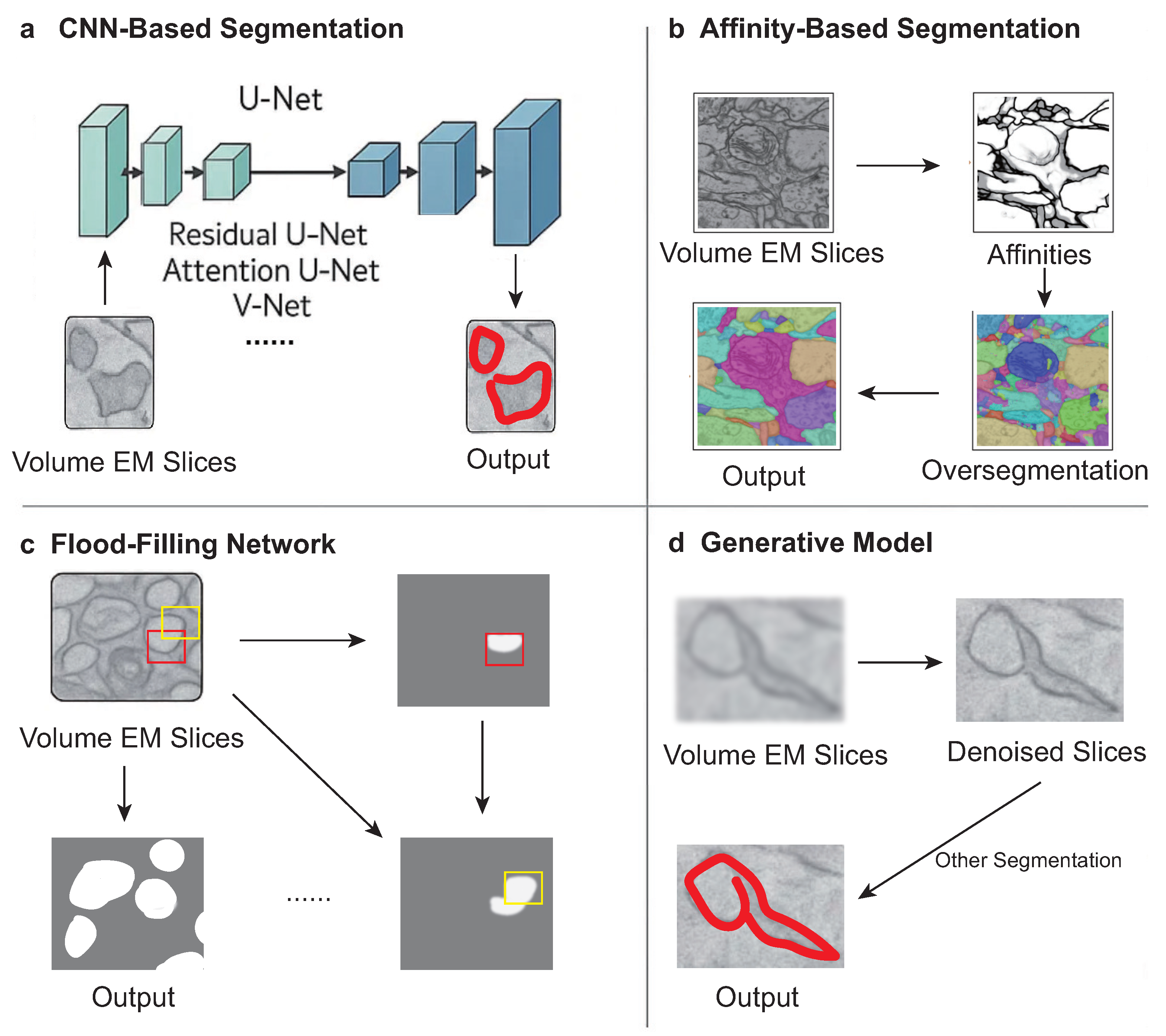
A recent leap has come from integrating diffusion and generative modelling paradigms. As illustrated in Figure 3d, diffusion models such as EMDiffuse improve segmentation performance indirectly by restoring high-fidelity ultrastructure from noisy or anisotropic acquisitions, yielding more isotropic and visually interpretable inputs for downstream networks [43]. By reconstructing thin membranes, cristae and ER sheets with higher fidelity, diffusion-based restoration enhances the performance of CNN- or FFN-based segmentation and can provide voxel-wise uncertainty proxies that can guide proofreading. Self-supervised denoising methods such as Noise2Void and Noise2Self offer complementary label-free denoising strategies that improve cross-dataset generalisation and reduce the need for manually curated training data [41,42].
More broadly, generative models are emerging as a bridge between restoration and segmentation, enabling joint denoising-segmentation training and providing uncertainty-aware predictions that better reflect the statistical structure of EM data. A critical consideration for diffusion-based restoration is the risk of hallucinating structurally plausible but non-existent features. Validation against ground truth data—using held-out resin datasets, physical phantoms or dose-fractionated ground truth projections—is essential to ensure structural fidelity.
Collectively, these developments illustrate a transition from standalone convolutional models to integrated, multistage computational ecosystems. CNN-based semantic segmentation, affinity-driven supervoxel agglomeration, FFN-based topology-aware reconstruction and diffusion-based enhancement now operate as complementary components of modern Volume-EM analysis pipelines [5,6,48,50]. Their convergence enables increasingly accurate reconstruction of neuronal and organellar architecture across millimetre-to-nanometre scales, representing a foundational step towards comprehensive and functionally interpretable mapping of biological structure in the era of AI-augmented microscopy.
4.3. Multi-Task and Weakly Supervised Learning
Because exhaustive voxel-level annotation of large EM volumes is prohibitively labour-intensive, recent work has increasingly focused on weakly supervised and self-supervised learning strategies that reduce dependence on dense ground truth [5,15,48]. Early approaches employed sparse or coarse supervision—leveraging limited manual contours, approximate binary masks or synthetically generated EM-like textures—to pretrain segmentation networks and guide learning in the absence of voxel-accurate labels [10]. Such paradigms have proven particularly effective for organelle segmentation, where structural regularities (e.g., shell-like mitochondria or sheet-like ER) provide strong morphological priors that allow networks to learn boundaries even from imperfect annotations [61]. Few-shot and human-in-the-loop strategies further decrease the annotation burden by iteratively selecting the most informative or uncertain regions for expert correction, enabling targeted refinement of model predictions [6]. These human-AI feedback loops are now standard in large consortia, where proofreading continuously informs network retraining and curation of training sets.
Self-supervised representation learning has emerged as another powerful direction for building models that generalise across tissues, modalities and imaging conditions. Contrastive objectives, blind spot denoising frameworks (for example, Noise2Void and Noise2Self) and masked autoencoder strategies enable models to learn volumetric representations that capture texture, boundary cues and contextual structure without explicit labels [38,41,42]. These pretrained representations can then be finetuned for specific organelles or tissue domains using only a small number of annotated slices [5].
An emerging trend combines weak supervision with multi-task learning, in which networks jointly predict auxiliary targets such as boundary affinities, distance transforms and local contrast statistics to regularise the primary segmentation objective [48,62]. In large-scale efforts such as MICrONS, multi-task objectives are integrated with iterative proofreading-driven retraining rather than purely manual corrections, enabling continual adaptation to new imaging conditions and biological contexts as additional data become available [6]. By unifying supervised, semi-supervised and self-supervised objectives within a single framework, such hybrid paradigms achieve robust performance under label scarcity and provide a scalable foundation for future Volume-EM analysis.
4.4. Segmentation Across Biological Scales
Segmentation algorithms for Volume-EM must operate across several orders of magnitude at the biological scale—from sub-organelle nanostructures to millimetre-scale neuronal circuits [6]. Each regime imposes distinct computational challenges. At the nanoscale, organelle-level segmentation—as exemplified by the COSEM project—requires models capable of capturing fine textures, membrane curvature and topological variability in densely packed intracellular environments. Accurate delineation of mitochondria, Golgi stacks, the endoplasmic reticulum and small vesicular structures demands architectures that simultaneously resolve subtle intensity gradients and preserve local shape regularity. Multi-resolution three-dimensional U-Nets, combined with intensive proofreading rather than exclusively weak supervision, have proven highly effective under these conditions.
At the cellular and tissue scales, as demonstrated by the MICrONS initiative, segmentation emphasises long-range spatial coherence and global topology across thousands of sections [6]. Algorithms must maintain neurite continuity over millimetre-scale distances while achieving voxel-level precision at synaptic junctions. Flood-filling networks (FFNs) and hybrid affinity-based pipelines address these dual constraints by integrating fine-grained membrane detection with global region-growing, thereby producing dense, topologically consistent reconstructions of entire cortical regions [9]. These multistage, hierarchical frameworks link voxel-level predictions to circuit-level morphology, positioning segmentation as a central component of large-scale functional neuroscience [50].
Recent advances in multi-task and multi-scale learning have begun to unify these regimes. Shared backbone architectures that support both organelle-level and cell-level segmentation are increasingly feasible, particularly when augmented with auxiliary tasks such as affinity prediction, topology preservation and synapse detection. This convergence of architectures, supervision strategies and scalable infrastructure is progressively shifting segmentation from a rate-limiting step towards a catalyst for biological discovery [5,6,50]. Looking forward, the field appears to be moving towards large-scale, pre-trained volume-EM models that exhibit improved cross-tissue generalisation, thereby paving the way for more autonomous, cross-scale ultrastructural reconstruction.
5. Data Resources and Open Datasets
The rapid expansion of Volume-EM research was enabled by a growing ecosystem of large, openly accessible datasets that serve as benchmarks for algorithm development and biological discovery [4,5]. These resources span multiple biological scales—from nanometre-resolution organelle reconstructions to millimetre-scale neuronal circuits—and collectively provide a foundation for reproducible, data-driven analysis in the field.
5.1. Janelia COSEM Project
The Cell Organelle Segmentation in Electron Microscopy (COSEM) project at HHMI Janelia represents a major milestone in cellular Volume-EM [5]. Using FIB-SEM at a 4–8 nm isotropic resolution, COSEM generated densely annotated whole-cell datasets across mammalian and yeast systems, covering more than thirty organelle classes. Its segmentation models—based on multi-resolution three-dimensional U-Net architectures—achieved near-human accuracy for many classes and established consistent labelling conventions and morphological descriptors rather than a formal taxonomy [10]. All raw data, trained models and metadata were publicly released through the OpenOrganelle portal (https://openorganelle.janelia.org (accessed on 17 November 2025)), providing a central benchmark for organelle segmentation and whole-cell morphometric studies.
5.2. MICrONS Project
The Machine Intelligence from Cortical Networks (MICrONS) programme is a landmark resource in connectomics, combining large-scale EM imaging with in vivo two-photon physiology to map mouse visual cortices at a synaptic resolution. Serial-section EM volumes with voxel sizes on the order of 4 × 4 × 30–40 nm were paired with functional recordings to link neuronal structure and activity across near-millimetre-scale cortical regions. The reconstruction pipeline—built on three-dimensional U-Nets, flood-filling networks (FFNs) and extensive human-AI proofreading—represents a widely adopted workflow for dense connectome generation [6,9,50]. All volumes, segmentations, skeletons and associated functional metadata are openly available through the MICrONS Explorer portal (https://www.microns-explorer.org (accessed on 17 November 2025)), providing a comprehensive benchmark for large-scale circuit reconstruction and structure-function analysis.
5.3. OpenOrganelle and Related Cellular Atlases
The OpenOrganelle platform, developed by the COSEM team, provides high-resolution FIB-SEM datasets (typically 4–8 nm isotropic) together with curated organelle segmentations for whole mammalian and yeast cells [4,5]. Datasets include mitochondria, endoplasmic reticula, Golgi apparatus, lysosomes and diverse vesicular systems, with volumes distributed in block-based formats such as N5 and OME-NGFF to support scalable access and analysis [5,46]. Integration with interactive visualisation tools such as MoBIE and Neuroglancer facilitates cross-cell-type comparison, model benchmarking and quantitative analysis of cellular architecture. Rather than functioning as a fixed “atlas,” OpenOrganelle serves as an extensible repository and analysis hub whose datasets and segmentations are continually updated as new FIB-SEM volumes are released. Together, these resources form a reproducible and extensible foundation for systems-level cell biology.
5.4. EMPIAR and OME-NGFF Repositories
The Electron Microscopy Public Image Archive (EMPIAR) at EMBL-EBI functions as a primary global repository for raw and processed EM data across modalities, including Volume-EM, cryo-electron tomography and single-particle cryo-EM [46]. Although EMPIAR has historically relied on TIFF and MRC-based structures, recent community efforts have enabled optional deposition and cloud-native access via OME-Next Generation File Format (OME-NGFF), providing multi-resolution, chunked storage suitable for large-scale vEM datasets. Interoperability with tools such as MoBIE and Neuroglancer further supports seamless exploration of terascale datasets. Together, EMPIAR and emerging NGFF-based repositories provide essential components of the data infrastructure required for FAIR (findable, accessible, interoperable and reusable) dissemination within the EM community.
5.5. Community Repositories
Additional community-driven repositories—including the Cell Image Library (CIL), BossDB and NeuroData—host a wide range of cellular- and tissue-level EM datasets used to benchmark segmentation, registration and visualisation tools [3,15]. These repositories vary in their native storage standards; while many datasets are now distributed in Zarr, N5 or OME-NGFF formats, others retain legacy TIFF or HDF5 structures, reflecting the heterogeneous historical development of EM data infrastructure. Browser-based visualisation and annotation interfaces increasingly support remote inspection and collaborative analysis, thereby promoting transparency, reuse and interoperability across laboratories.
5.6. Summary
Open datasets now play a central role in the advancement of Volume-EM. Table 2 summarises representative resources across biological scales and imaging modalities, spanning organelle-resolved cellular volumes and millimetre-scale cortical circuits [4,5,6,15]. Together, these archives establish a comprehensive, FAIR-compliant basis for method development, quantitative morphometry and large-scale reproducibility in modern electron microscopy. As data volumes continue to grow towards the petascale, these repositories also motivate new standards for cloud-native formats, provenance tracking and computational reproducibility.
Table 2.
Representative open datasets for Volume-EM research.
6. Applications of Volume-EM in Biology
Volume-EM has progressed from a specialised imaging technique to a central methodology for interrogating biological organisation across scales, from macromolecular assemblies to millimetre-scale neural circuits [3,15,61]. Its unique ability to couple its nanometre resolution with large fields of view enables direct mapping of structure-function relationships in intact cells and tissues. Below, we highlight representative domains in which Volume-EM has delivered transformative biological insights.
6.1. Connectomics and Neural Circuit Reconstruction
Connectomics was among the earliest fields to embrace Volume-EM, driven by the goal of reconstructing complete neuronal circuits with synaptic precision [16,65]. Pioneering work using ssTEM and SBF-SEM demonstrated the feasibility of dense circuit reconstruction in retina and the neocortex, generating some of the first volumetric wiring diagrams of neural tissue. These studies established that EM’s nanometre resolution allows unambiguous tracing of axonal and dendritic arbours, reliable identification of synaptic contacts and detailed characterisation of pathway-specific connectivity.
Over the past decade, advances in automated sectioning, contrast enhancement and deep-learning-based segmentation have expanded the achievable scale and fidelity of connectomic reconstructions [15]. A defining milestone is the MICrONS programme, which integrates serial-section EM with voxel sizes of approximately 4 × 4 × 30–40 nm and in vivo two-photon calcium imaging to map the mouse visual cortex with a millimetre-scale lateral extent and tens-of-micrometres axial thickness, rather than a true cubic-millimetre volume [6,50]. By combining ultrastructural and physiological data from the same tissue, MICrONS enables direct correspondence between neuronal morphology, synaptic connectivity and functional response properties. Its hierarchical reconstruction pipeline—built on three-dimensional U-Nets, flood-filling networks (FFNs) and extensive human-AI proofreading—has become a reference workflow for large-scale neural circuit mapping, and all of its volumes, segmentations and functional metadata are accessible via the MICrONS Explorer portal [6,9]. Although the original 3D U-Net formulation [10] influenced early architectural choices, MICrONS primarily relies on customised 3D CNNs and FFNs rather than the canonical 3D U-Net implementation.
Parallel efforts in Drosophila connectomics—particularly through the FlyWire ecosystem—have produced near-complete brain reconstructions that now serve as standard reference connectomes for comparative and evolutionary studies [50,66]. FlyWire combines automated segmentation with large-scale, community-driven proofreading and graph analytics in a cloud-native environment, whereas CAVE (Connectome Annotation Versioning Engine) provides a robust infrastructure for version-controlled annotations and collaborative curation of synaptic graphs [66,67]. These reconstructions rely on FIB-SEM datasets generated by the FlyEM programme rather than classical ssTEM, enabling isotropic nanometre-scale tracing of dense neuropils. Together, these platforms exemplify how scalable infrastructure and shared data resources can turn petascale EM volumes into living, community-maintained connectomic atlases.
Although most current large-scale connectomes rely on resin-embedded tissue, cryogenic Volume-EM is beginning to influence neural circuit studies by enabling native-state imaging of nervous tissue. Schertel et al. applied cryo-FIB-SEM to the mouse optic nerve, acquiring volumes of approximately 8 × 6 × 4 µm at a 7.5 × 7.5 × 30 nm voxel size and visualising vesicles, Golgi cisternae, ER and mitochondrial cristae in oligodendrocytes and astrocytic processes without dehydration or resin embedding [7]. Although not designed as a circuit-level reconstruction, this work established the feasibility of cryogenic block-face imaging in myelinated nervous tissue. Hayles and De Winter highlighted that serial cryo-FIB-SEM reconstruction now provides a practical route to volumetric imaging of vitrified tissue and outlined beam, stage and milling considerations important for cryo-connectomics [28]. Complementing these developments, Spehner et al. showed that cryo-FIB-SEM combined with immunogold labelling enables molecular localisation within fully hydrated cells [31]. Together, these studies suggest a path towards “native-state connectomics”, in which selected white matter tracts or synapse-rich regions are interrogated in vitrified tissue to capture ultrastructure and molecular context more faithfully than room-temperature preparations.
Looking ahead, the convergence of Volume-EM with computational modelling and multimodal neuroscience is transforming connectomics from a primarily structural discipline into an integrative, predictive science [6,50]. Cross-modal registration with transcriptomic, proteomic and functional datasets is enabling multi-scale connectomics, linking cellular identity and morphology with network dynamics. Cryo-Volume-EM and correlative cryo-FIB-SEM/cryo-ET workflows offer native-state “zoom-in’’ windows onto regions identified in large resin-embedded datasets, connecting tissue-scale connectivity with molecular-scale architecture at synapses and glial interfaces [7,28,31]. EM-derived reconstructions increasingly inform large-scale neural simulations and disease models, grounding computational theories of perception, learning and degeneration in biologically measured structures. As automated segmentation, large-scale annotation and foundation models continue to mature, connectomics is likely to evolve into a unified framework linking structure, function, molecular state and learning in healthy and diseased brains.
6.2. Organelle Mapping and Cellular Architecture
At the subcellular scale, Volume-EM offers a quantitative framework for analysing organelle morphology, topology and spatial organisation within intact cells [3,15]. Its nanometre-scale resolution enables comprehensive reconstruction of intracellular architecture, revealing the geometric complexity and interconnectivity of the membrane-bound compartments that underlie cellular function.
A major milestone in this domain is the Janelia Cell Organelle Segmentation in Electron Microscopy (COSEM) project, which provides voxel-wise annotations for more than thirty organelle classes derived from FIB-SEM datasets at 4 nm isotropic sampling [5]. These densely annotated datasets capture a broad complement of subcellular structures—including mitochondria, endoplasmic reticula, Golgi apparatus, nuclear envelopes, lysosomes and cytoskeletal elements—and enable systematic quantification of organelle morphology, membrane topology and inter-organelle contact networks. By defining standardised morphological taxonomies and hierarchical segmentation protocols, COSEM has established a reference framework for multi-class semantic segmentation in cellular Volume-EM. The integration of deep-learning-based segmentation, affinity map prediction and iterative human-AI proofreading yields near-human accuracy for many organelle classes, creating a benchmark corpus for algorithm development and comparative morphometry.
In parallel to resin-embedded workflows, cryogenic Volume-EM has begun to extend organelle mapping into truly native, fully hydrated specimens. Schertel et al. applied cryo-FIB-SEM to high-pressure-frozen mouse optic nerves and Bacillus subtilis spores, obtaining volumes of 7.72×5.79×3.81 μm3 at 7.5 nm lateral sampling and 30 nm slicing in z [7]. Under these conditions, the intrinsic membrane contrast was sufficient to distinguish Golgi cisternae, vesicles, the endoplasmic reticulum and mitochondrial cristae directly in vitrified tissue. However, this study served primarily as a feasibility demonstration of cryo-FIB-SEM for hydrated nervous tissue, and did not aim to perform exhaustive organelle classification or morphometric analysis. Hayles and De Winter provided a systematic account of cryo-FIB cross-sectioning and highlighted how debris-free milling at cryogenic temperatures preserves delicate ultrastructures without dehydration or resin embedding [28]. Together, these studies demonstrate that cryo-FIB-SEM can deliver volume reconstructions of organelles in native-state tissue blocks, complementing resin-embedded FIB-SEM atlases such as COSEM [5,7,28].
Cryo-FIB-SEM was also developed as a tool for three-dimensional protein localisation atop organelle-scale reconstructions. Spehner et al. vitrified entire HeLa cells and imaged their internal architecture using cryo-FIB-SEM, combining alignment, denoising, curtaining correction and three-dimensional modelling of major organelles [31]. In the same workflow, they detected internalised protein-gold conjugates via backscattered electrons, enabling simultaneous visualisation of organelle ultrastructure and immunolabelled proteins in fully hydrated cells. This represents a proof-of-principle demonstration rather than a mature routine workflow, but it highlights the feasibility of linking molecular identity with native-state ultrastructure.
The OpenOrganelle platform extends resin-embedded organelle mapping by providing curated FIB-SEM reconstructions of mammalian and yeast cells in N5 and, increasingly, OME-NGFF formats, enabling cloud-native visualisation and analysis [4,5,46]. While this resource does not yet include comprehensive stem cell lineage atlases, it provides high-resolution datasets for several representative cultured cell types, together with machine-generated organelle segmentations and imaging metadata. These datasets facilitate reproducible cross-cell comparisons and the transfer of segmentation models across species and imaging conditions [5,46]. In a broader high-resolution histology context, Xu et al. emphasise that modern tissue analysis spans microscopy imaging, tomographic reconstruction, single-cell and spatial omics modalities from micrometre down to nanometre scales, with the goal of jointly capturing tissue architecture, cellular interactions and subcellular structures in situ [30]. Within this conceptual framework, Volume-EM—especially cryogenic implementations—provides the ultrastructural backbone onto which molecular and spatial omics readouts can be registered, rather than serving as the integrative centrepiece itself.
Recent computational advances have further broadened the analytical power of organelle mapping. Müller and colleagues introduced a modular segmentation and spatial analysis framework integrating deep-learning-based segmentation, quantitative morphometry and three-dimensional rendering into a reproducible workflow [61]. This approach enables high-throughput analysis of organelle shape, volume fraction, membrane curvature and spatial relationships under varying physiological or pathological conditions. Although not designed as a full-scale production pipeline, this framework demonstrates how modular tooling facilitates systematic organelle quantification across diverse datasets.
The convergence of Volume-EM with correlative light microscopy, cryo-electron tomography and spatial omics further enhances its potential for integrative cell biology [4,5,30]. Coupling ultrastructural reconstructions with molecular and transcriptional information enables investigation of how organelle architecture relates to their regulatory state, signalling dynamics and metabolic coordination. Through these developments, organelle-scale Volume-EM has evolved from qualitative visualisation into a quantitative—and increasingly predictive—framework for understanding the structural basis of cell physiology in both resin-embedded and cryogenic native-state preparations.
6.3. Pathology and Disease Ultrastructure
Volume electron microscopy (Volume-EM) has become an increasingly powerful tool for investigating the ultrastructural basis of human disease [3,15,30]. Its ability to generate nanometre-scale, three-dimensional reconstructions of tissues and cells enables direct visualisation of pathological alterations in organelle architecture, membrane organisation and intracellular connectivity that are often inaccessible to conventional light or confocal microscopy. Applications span a broad range of pathological contexts, including neurodegeneration, cancer, metabolic disorders and viral infection.
In mitochondrial diseases such as Leigh syndrome, cryogenic volume imaging of patient-derived fibroblasts has revealed marked disruption of subcellular architecture, including loss of the complex mitochondrial network seen in control cells, simplified or rounded mitochondrial shapes with reduced cristae, and additional membrane-bound compartments [8]. These observations, while specific to the analysed fibroblast cultures, support a structural link between the disease-causing USMG5 mutation and impaired oxidative phosphorylation. More broadly, FIB-SEM and SBF-SEM studies of diseased tissues have demonstrated large-scale remodelling of endomembrane systems and lysosomal compartments, illustrating how cellular architecture adapts—or fails to adapt—to pathological stress [5].
Cryogenic Volume-EM further enhances the diagnostic and mechanistic value of these approaches by preserving diseased tissues and cells in a vitrified, frozen-hydrated state that largely maintains their native ultrastructure [7,28]. Early cryo-FIB-SEM studies established that high-pressure-frozen nervous tissue and bacterial specimens can be imaged as native frozen blocks, providing high-resolution volumes of mouse optic nerves and Bacillus subtilis spores without chemical fixation or staining. Under these conditions, the intrinsic membrane contrast is sufficient to resolve Golgi cisternae, vesicles, the endoplasmic reticulum and mitochondrial cristae in situ. Subsequent work extended cryo-FIB-SEM workflows and related cryogenic block-face approaches to larger tissue samples, enabling volumetric analysis of biological specimens preserved close to their native state [29]. Although still an emerging direction, methodological frameworks for cryo-FIB-SEM cross-sectioning of frozen, hydrated samples increasingly suggest feasibility for interrogating pathological biopsies, organoids and primary cell cultures under near-physiological conditions while minimising preparation-induced artefacts [28].
Beyond preserving morphology, cryo-Volume-EM also supports molecularly informed pathology through three-dimensional protein localisation [31]. Spehner and colleagues vitrified human HeLa cells in amorphous ice and directly imaged their internal architecture via cryo-FIB-SEM without staining, followed by alignment, denoising, removal of curtaining artefacts and three-dimensional modelling of major cell constituents. In the same workflow, they demonstrated that internalised gold particles and gold-conjugated antibodies directed against RNA polymerase II can be visualised by detecting backscattered electrons at a low accelerating voltage while simultaneously imaging cellular ultrastructure with secondary electrons. This proof-of-principle integration of cryogenic volume imaging with in situ immunolabelling highlights the potential—though not yet routine—feasibility of using cryo-Volume-EM for localising disease-relevant proteins and signalling complexes within intact cellular architecture.
Beyond qualitative characterisation, modern Volume-EM pipelines increasingly incorporate quantitative morphometry and machine learning analysis to derive statistically robust biomarkers [5,15]. Metrics such as the organelle volume fraction, membrane curvature, contact site density and spatial co-localisation can be computed directly from segmented reconstructions, enabling systematic comparisons across patient samples, disease models and therapeutic interventions [5]. When performed on vitrified specimens, these measurements more faithfully reflect in vivo pathology and reduce artefacts associated with chemical fixation and dehydration [7,28].
The diagnostic potential of Volume-EM is further amplified through integration with correlative and multimodal imaging [15,30]. Correlative cryo-CLEM and FIB-SEM workflows enable mapping of fluorescently labelled proteins within the pathological ultrastructure, whereas multimodal pipelines incorporating transcriptomic and proteomic data provide molecular context for observed morphological changes. In cryogenic implementations, cryo-FIB-SEM can be combined with cryo-fluorescence microscopy and cryo-electron tomography prepared from the same specimen, establishing a multi-scale continuum from tissue-level architecture to macromolecular assemblies [7,28,31]. Together, these developments position (cryo-)Volume-EM as a central platform for translational structural pathology, linking clinical imaging with mechanistic insights into cellular dysfunction and providing a structural bridge between morphology, molecular state and therapeutic response.
6.4. Correlative and Multimodal Imaging
Correlative light and electron microscopy (CLEM) bridges the molecular specificity of fluorescence imaging with the nanometre-scale resolution of Volume-EM, enabling precise localisation of tagged proteins and molecular complexes within reconstructed ultrastructural contexts [15]. By performing iterative rounds of fluorescence and electron imaging on the same specimen, CLEM provides both molecular identity and high-resolution spatial organisation, overcoming the traditional trade-off between labelling specificity and structural detail. Classical room-temperature CLEM workflows typically combine resin-embedded section arrays or block-face imaging with post-embedding immunolabelling and fluorescence microscopy, providing robust protein localisation at the cost of potential chemical-fixation artefacts.
Recent technological developments have extended CLEM into fully integrated, multimodal and often cryogenic imaging frameworks [28]. Cryogenic preservation combined with fiducial-based registration maintains a near-native ultrastructure and enables reliable alignment of fluorescence and EM channels in three dimensions. Cryo-FIB-SEM cross-sectioning of frozen, hydrated samples, as outlined by Hayles and De Winter, provides access to relatively large cryogenic volumes while retaining membrane integrity and minimising deformation introduced by mechanical sectioning. Building on earlier demonstrations of cryo-FIB-SEM imaging of vitrified nervous tissue and other cellular structures, these emerging workflows allow CLEM-style correlation to be performed directly in vitrified specimens rather than after resin embedding.
Cryo-CLEM strategies that link cryo-fluorescence microscopy, cryo-FIB-SEM and downstream cryo-electron tomography are particularly powerful for protein localisation in three dimensions, providing a route from a tissue-level context to molecular-resolution structural information within a single specimen [28]. In such pipelines, cryo-fluorescence imaging first identifies regions of interest, cryo-FIB-SEM provides a mesoscale map of ultrastructure and navigational landmarks, and cryo-ET interrogates selected subvolumes at the molecular resolution. Complementary work by Spehner et al. demonstrated that cryo-FIB-SEM volumes of vitrified HeLa cells combined with gold-labelled proteins can serve as a volumetric context for molecular localisation, highlighting a proof-of-principle integration of protein labelling with cryogenic volume imaging rather than a mature routine pipeline [31]. Together, these multi-scale, fully cryogenic CLEM workflows preserve hydration and native molecular organisation while delivering correlated information from the protein to the tissue scale [7,28,31].
In parallel, high-resolution “three-dimensional histology’’ frameworks in biomedicine have begun to formalise how Volume-EM, light-sheet or block-face light microscopy, and spatially resolved molecular assays can be combined into unified pipelines [30]. Xu et al. emphasise that volumetric imaging modalities such as FIB-SEM and related EM techniques can serve as a structural backbone onto which single-cell and spatial omics measurements are mapped, thereby linking morphology to cell states and molecular profiles. Together with modular computational workflows that integrate EM segmentation with additional imaging channels within a common coordinate system, such as those described by Müller and colleagues, these developments move beyond a simple overlay of modalities towards quantitatively registered, analysis-ready multimodal datasets.
Overall, convergent strategies of this kind transform Volume-EM from a purely structural technique into an integrative platform that connects ultrastructure, molecular localisation and systems-level organisation [15,30]. Room-temperature CLEM and high-throughput Volume-EM provide a tissue-scale context, whereas cryo-Volume-EM-based CLEM adds native-state fidelity and molecular interpretability [15,28]. In combination with spatial transcriptomics and proteomics, these approaches establish a structural-molecular continuum that links organelle-level architecture with whole-cell and tissue-level function [4,15,30,61].
6.5. Relevance to Crystallography and Biomineralisation
Although Volume-EM is primarily applied to cell biology and connectomics, its ability to visualise the three-dimensional ultrastructure without crystallographic averaging also has important implications for the study of in situ crystallisation, biomineral nucleation and growth, and crystalline organisation within biological environments. High-resolution FIB-SEM and electron tomography have enabled direct three-dimensional visualisation of mineral phases and mineralisation fronts in bone, revealing heterogeneous nucleation, core-shell mineral morphologies and amorphous-to-crystalline transitions that are inaccessible to ensemble-averaged diffraction methods [68]. At larger-length scales, FIB-SEM reconstructions of mineralised osteonal bone further resolve the mesoscale organisation of mineralised collagen lamellae and cement sheaths across extended volumes, providing quantitative insights into crystalline and composite architectures in situ [69]. Together, these studies illustrate how Volume-EM complements X-ray and diffraction-based techniques by directly capturing spatially heterogeneous crystallisation and mineral organisation within native biological contexts.
6.6. Summary
Across diverse applications, Volume-EM has emerged as a technology that unites imaging, computation and artificial intelligence into a coherent framework spanning molecules, cells and entire organ systems [5,6,15,61]. In connectomics, organelle mapping and disease pathology alike, the combination of nanometre-scale imaging, deep-learning-based segmentation and quantitative morphometry enables systematic characterisation of biological organisation across scales. The increasing availability of open datasets, interoperable file formats and standardised analysis pipelines further accelerates reproducibility, benchmarking and cross-laboratory integration [4,46].
An important recent evolution is the complementarity between high-throughput, resin-embedded Volume-EM and cryogenic Volume-EM. Large-scale ssTEM, SBF-SEM, FIB-SEM and multi-beam SEM datasets provide comprehensive coverage of tissue and whole-cell architecture at a nanometre resolution [4,5,6]. In parallel, cryo-Volume-EM workflows based on serial cryo-FIB/SEM and cryo-volume SEM/TEM preserve specimens in a vitrified, fully hydrated state, capturing native membrane morphology, myelin ultrastructure and delicate cytoskeletal and nuclear features that are often distorted by chemical fixation [7,28]. Cryo-FIB-SEM has been established as a robust strategy for cross-sectioning frozen, hydrated samples, producing debris-free surfaces and stable cryogenic volumes suitable for correlation and downstream tomography. Moreover, cryo-FIB-SEM-based CLEM workflows have demonstrated three-dimensional localisation of gold-labelled proteins within native cellular volumes [31]. Together, these modalities define a practical division of labour between scale and fidelity: room-temperature imaging for exhaustive mapping, and cryogenic approaches for native-state validation and mechanistic interpretation.
Looking forward, Volume-EM will be increasingly embedded within broader concepts of high-resolution “three-dimensional histology’’ and multimodal atlasing [30]. Integrated pipelines combining resin-embedded and cryogenic Volume-EM, correlative light microscopy, cryo-electron tomography and spatial omics are beginning to produce cross-scale and cross-species atlases of cellular and tissue ultrastructure [4,5]. As these imaging, computational and molecular resources converge, Volume-EM is moving towards the construction of generalisable, mechanistically interpretable maps that link ultrastructure to cell states and systems-level function, establishing a structural foundation for next-generation integrative and computational biology.
7. Computational Challenges and Emerging Trends
As Volume-EM advances towards terabyte- to petabyte-scale datasets and increasingly complex biological questions, computation has become both the driving force and the primary bottleneck of discovery [5,15,61]. Meeting these demands requires coordinated progress in data infrastructure, scalable algorithms and multimodal integration. At the same time, computational methods—while enabling unprecedented throughput—introduce additional modes of systematic error, including algorithmic bias, over-regularisation and artefact amplification, which must be rigorously evaluated particularly in segmentation, morphometry and multimodal data fusion.
7.1. Scalable Data Storage and Access
Modern EM datasets routinely reach a multi-terabyte scale per sample, and large consortia often accumulate tens to hundreds of terabytes, approaching petabyte-level data management [4,5]. To address these challenges, the field has adopted cloud-optimised, chunked formats such as Zarr, N5 and OME-NGFF [5,46]. These formats provide random access, multi-scale pyramids and efficient data streaming, forming the foundation for visualisation and analysis platforms, including Neuroglancer, MoBIE and napari-ome-zarr [46].
At these scales, storage architecture becomes a critical computational constraint: raw volumes, multi-resolution pyramids, deformation fields, neural network predictions and proofreading annotations can cumulatively exceed the original data size seven-fold. Sustained high-throughput I/O is often the limiting factor for stitching, alignment and segmentation pipelines. Consequently, multi-tier storage strategies—combining fast SSD caches with cloud object storage and archival layers—must be orchestrated to avoid bandwidth bottlenecks and ensure predictable performance across workflows.
7.2. Computational Challenges in Large-Scale Volume-EM Preprocessing
The preprocessing steps in Volume-EM—including denoising, stitching, intensity normalisation and chunked inference—are often dominated by computational and I/O constraints rather than algorithmic complexity.
Volumetric denoising, especially diffusion-based restoration, requires a high GPU memory and long inference times, and may exceed the computational cost of segmentation when applied to full-resolution volumes. Efficient processing of terabyte-petabyte datasets therefore depends on chunk-wise tiling, mixed-precision execution, memory-efficient model variants and distributed multi-GPU or multi-node inference.
Stitching pipelines are strongly computationally and I/O-intensive: reading thousands of tile stacks and computing cross-correlations across several pyramid levels typically dominates runtime. These steps necessitate high-throughput storage backends, aggressive caching and parallel tile indexing. Global optimisation of tile transformations (e.g., solving large sparse systems) may further require distributed computation to achieve practical turnaround times.
Large-scale intensity normalisation is similarly constrained: slice-wise gain correction and shading field estimation across hundreds of thousands of images are heavily I/O-limited unless accelerated by GPU parallelism or block-wise computation. Efficient caching and streaming architectures are increasingly essential in petascale workflows.
Chunk orchestration frequently becomes the dominant bottleneck in distributed segmentation pipelines, as I/O latency, tile loading and GPU scheduling must be closely balanced to maintain utilisation. Modern distributed-inference frameworks therefore incorporate asynchronous prefetching, intelligent chunk scheduling, failure recovery and load balancing to ensure a stable throughput during high-volume processing.
Cryo-Volume-EM introduces additional computational challenges due to its intrinsically low signal-to-noise ratio (SNR) and weak membrane contrast. Segmentation models trained on resin-embedded datasets typically degrade substantially when applied to cryogenic volumes, exhibiting boundary erosion, merge errors and poor generalisation across specimens. Addressing this domain shift requires specialised strategies, including contrast-transfer simulation, adversarial domain adaptation, self-supervised representation learning and curriculum-style finetuning that gradually adapts models from resin-like to native cryo contrast regimes. These approaches are becoming essential for obtaining reliable segmentation performance in low-SNR cryogenic datasets, where the scarcity of high-quality ground-truth annotations further amplifies the domain shift challenge.
In addition to a low SNR, cryo-specific artefacts—including curtaining, ice contamination, beam-induced radiolysis and locally missing contrast—introduce non-stationary noise distributions that violate assumptions commonly made by CNNs and transformers. Such artefacts cause unstable feature extraction, unreliable affinity prediction and inconsistent topology in segmentation outputs, making domain-robust training and artefact-aware augmentation an essential requirement for cryo-Volume-EM analysis.
7.3. Distributed Segmentation and Streaming Inference
The shift from workstation-based processing to distributed, cloud-scale inference has fundamentally changed segmentation workflows [61]. Frameworks such as CloudVolume, Dask, TensorStore and Ray coordinate on-demand streaming of volumetric chunks to GPU clusters, maximising utilisation while minimising I/O latency.
However, large-scale neural inference introduces its own failure modes. Segmentation networks frequently exhibit merge errors, split errors and topological inconsistencies—particularly in low-contrast regions or when training data under-represent certain morphologies. Thus, neural inference is both an enabler and a new source of uncertainty, necessitating systematic error auditing, proofreading and the adoption of topology-aware loss functions and agglomeration strategies.
A further challenge is domain drift: models trained on specific instruments, staining protocols or imaging campaigns often degrade when deployed on new sessions with slightly altered contrast, noise statistics or sample preparation. Although domain adaptation, style transfer and continuous calibration strategies are being explored, robust generalisation across imaging sessions and across tissues (e.g., cortex vs. cerebellum, or mammalian vs. plant samples) remains an outstanding problem.
Workflow engines such as Snakemake and Prefect now manage multistage pipelines encompassing alignment, denoising, neural inference and agglomeration. Distributed systems enable terascale segmentation and proofreading of entire cells and cortical regions within practical time frames [6,61].
In response to these uncertainties, modern segmentation frameworks increasingly incorporate uncertainty quantification—via Monte Carlo dropout, deep ensembles or probabilistic affinity graphs—to highlight regions likely to contain errors and guide targeted proofreading.
7.4. Multimodal Integration and Correlative Microscopy
Next-generation Volume-EM workflows increasingly emphasise integration of ultrastructural, molecular and functional information [30]. Correlative light and electron microscopy (CLEM), cryo-soft X-ray tomography and links between Volume-EM and spatial transcriptomics/proteomics provide complementary context.
Cross-modal integration introduces computational risks: registration between modalities that differ in resolution, contrast mechanisms and deformation behaviour can yield inaccurate or biologically implausible mappings if unregularised optimisation converges to local minima or ambiguous feature correspondences. Machine learning-driven CLEM alignment therefore requires explicit regularisation and quantitative quality metrics to prevent artefactual co-localisation.
Machine learning-based registration and unified coordinate systems now enable fluorescence labels or gene expression patterns to be mapped onto three-dimensional EM reconstructions [30,61]. Such hybrid datasets provide shared substrates for investigating signalling architectures, cell states and organelle-level metabolic organisation.
7.5. Bridging Structural and Systems Biology
Volume-EM is increasingly positioned at the interface of molecular, cellular and systems biology [5,6]. By combining spatial topology with molecular localisation and computational modelling, it connects the static ultrastructure to emergent biological functions [6,50].
A central computational challenge is the propagation of segmentation uncertainty into downstream biological analyses. Errors in organelle boundaries, neurite continuity or synapse identification can distort graph-based connectomic metrics, spatial-statistical models or cell-state embeddings. Reliable biological interpretation therefore requires robustness analyses, uncertainty-aware pipelines and calibration against ground truth experiments.
Organelle-resolved atlases such as COSEM provide a foundation for linking subcellular organisation to physiological states and disease phenotypes [5,15]. As foundation-style models begin integrating imaging, omics and mechanistic simulation, Volume-EM is poised to evolve from a descriptive modality into a predictive framework connecting molecules to cells and cells to systems.
8. Conclusions and Perspective
Volume-EM has redefined the frontiers of structural cell biology by providing nanometre-scale access to cellular and tissue architecture across large spatial scales [3,15]. From connectomics to organelle mapping, it now serves as a quantitative platform for elucidating the structural basis of biological function [5,6,61]. The integration of artificial intelligence, scalable computation and open data standards has transformed Volume-EM into a data-intensive discipline.
Looking ahead, a major direction is the transition from resin-embedded imaging to native-state, cryogenic Volume-EM [7,28]. Cryo-FIB-SEM, cryo-volume SEM/TEM and cryo-CLEM preserve water in a vitrified state and avoid fixation artefacts, enabling direct visualisation of membrane topology, organelle contacts, macromolecular crowding and metabolic structures in their physiological context [7,8,28,31]. These native-state measurements reveal ultrastructural features that cannot be recovered from chemically fixed material and are increasingly essential for interpreting disease and cellular physiology [8].
At the computational level, deep learning will play an expanding role in making cryo-volume data tractable. The inherently low contrast and high noise of vitrified specimens demand advanced denoising, diffusion-based restoration and self-supervised representation learning [38,39,40,41,42,43]. These approaches are converging into unified pipelines that couple restoration, segmentation and topology preservation, and foundation-style models trained across diverse resin and cryo datasets are expected to provide generalisable priors for downstream analyses.
A further frontier is multimodal integration. Cryo-Volume-EM combined with cryo-CLEM, targeted cryo-ET and spatial omics will enable native ultrastructure to be directly linked with molecular identity and functional measurements [28,30,31]. In parallel, computational atlases and AI-driven modelling will help decode how spatial organisation encodes cell state, physiology and network dynamics [5,6,61]. Together, these developments point towards an emerging paradigm of AI-driven, native-state structural biology, in which Volume-EM becomes the structural backbone for integrative, mechanistic and cross-scale biological discovery.
Finally, accessibility is emerging as an important practical consideration. Although large-scale Volume-EM pipelines have traditionally depended on institutional high-performance computing infrastructure, recent advances—including cloud-based workflows, open-source analysis toolchains and serverless object storage formats—are beginning to lower the computational barrier. These developments are making volumetric reconstruction and analysis increasingly feasible for individual laboratories, thereby broadening participation in multi-scale structural biology.
Author Contributions
Conceptualisation, B.S. and Y.Z.; methodology, B.S.; software, B.S.; validation, B.S. and Y.Z.; formal analysis, B.S.; investigation, B.S.; resources, Y.Z.; data curation, B.S.; writing—original draft preparation, B.S.; writing—review and editing, B.S. and Y.Z.; visualisation, B.S.; supervision, Y.Z.; project administration, Y.Z. All authors have read and agreed to the published version of the manuscript.
Funding
This research was supported by the Starry Night Science Fund of Zhejiang University Shanghai Institute for Advanced Study, the National Natural Science Foundation of China (Grant No. 1250040234), and the Fundamental and Interdisciplinary Disciplines Breakthrough Plan of the Ministry of Education of China (Grant No. JYB2025XDXM502).
Institutional Review Board Statement
Not applicable.
Informed Consent Statement
Not applicable.
Data Availability Statement
No new data were created or analysed in this study. Data sharing is not applicable to this article.
Acknowledgments
The authors thank their colleagues at the Institute for Advanced Study in Physics, Zhejiang University, and the ZJU-Hangzhou Global Scientific and Technological Innovation Center for their helpful discussions and support. During the preparation of this manuscript, the authors used OpenAI ChatGPT (GPT-5.1 Thinking version) for language polishing and assistance in checking reference formatting. The authors have reviewed and edited the output and take full responsibility for the content of this publication.
Conflicts of Interest
The authors declare no conflicts of interest.
References
- Denk, W.; Horstmann, H. Serial block-face scanning electron microscopy to reconstruct three-dimensional tissue nanostructure. PLoS Biol. 2004, 2, e329. [Google Scholar] [CrossRef] [Scilit] [PubMed]
- Knott, G.; Marchman, H.; Wall, D.; Lich, B. Serial section scanning electron microscopy of adult brain tissue using focused ion beam milling. J. Neurosci. 2008, 28, 2959–2964. [Google Scholar] [CrossRef] [Scilit]
- Titze, B.; Genoud, C. Volume scanning electron microscopy for imaging biological ultrastructure. Biol. Cell 2016, 108, 307–323. [Google Scholar] [CrossRef] [Scilit]
- Xu, C.S.; Pang, S.; Shtengel, G.; Müller, A.; Ritter, A.T.; Hoffman, H.K.; Takemura, S.-Y.; Lu, Z.; Pasolli, H.A.; Iyer, N.; et al. Publisher correction: An open-access volume electron microscopy atlas of whole cells and tissues. Nature 2021, 599, E5. [Google Scholar] [CrossRef] [Scilit]
- Heinrich, L.; Bennett, D.; Ackerman, D.; Park, W.; Bogovic, J.; Eckstein, N.; Petruncio, A.; Clements, J.; Pang, S.; Xu, C.S.; et al. Whole-cell organelle segmentation in volume electron microscopy. Nature 2021, 599, 141–146. [Google Scholar] [CrossRef] [Scilit] [PubMed]
- MICrONS Consortium. Functional connectomics spanning multiple areas of mouse visual cortex. Nature 2025, 640, 435–447. [Google Scholar] [CrossRef] [Scilit]
- Schertel, A.; Snaidero, N.; Han, H.M.; Ruhwedel, T.; Laue, M.; Grabenbauer, M.; Möbius, W. Cryo FIB-SEM: Volume imaging of cellular ultrastructure in native frozen specimens. J. Struct. Biol. 2013, 184, 355–360. [Google Scholar] [CrossRef] [Scilit] [PubMed]
- Zhu, Y.; Sun, D.; Schertel, A.; Ning, J.; Fu, X.; Gwo, P.P.; Watson, A.M.; Zanetti-Domingues, L.C.; Martin-Fernandez, M.L.; Freyberg, Z.; et al. Serial cryoFIB/SEM reveals cytoarchitectural disruptions in Leigh syndrome patient cells. Structure 2021, 29, 82–87.e3. [Google Scholar] [CrossRef] [Scilit]
- Januszewski, M.; Kornfeld, J.; Li, P.H.; Pope, A.; Blakely, T.; Lindsey, L.; Maitin-Shepard, J.; Tyka, M.; Denk, W.; Jain, V. High-precision automated reconstruction of neurons with flood-filling networks. Nat. Methods 2018, 15, 605–610. [Google Scholar] [CrossRef] [Scilit]
- Çiçek, Ö.; Abdulkadir, A.; Lienkamp, S.S.; Brox, T.; Ronneberger, O. 3D U-Net: Learning dense volumetric segmentation from sparse annotation. In Proceedings of the MICCAI 2016, Athens, Greece, 17–21 October 2016; Lecture Notes in Computer Science; Springer: Cham, Switzerland, 2016; Volume 9901, pp. 424–432. [Google Scholar]
- Kornfeld, J.; Denk, W. Progress and remaining challenges in high-throughput volume electron microscopy. Curr. Opin. Neurobiol. 2018, 50, 261–267. [Google Scholar] [CrossRef] [Scilit]
- Saalfeld, S.; Cardona, A.; Hartenstein, V.; Tomančák, P. As-rigid-as-possible mosaicking and serial section registration of large ssTEM datasets. Bioinformatics 2010, 26, i57–i63. [Google Scholar] [CrossRef] [Scilit] [PubMed]
- Wang, C.W.; Budiman Gosno, E.; Li, Y.S. Fully automatic and robust 3D registration of serial-section microscopic images. Sci. Rep. 2015, 5, 15051. [Google Scholar] [CrossRef] [Scilit]
- Fiala, J.C. Reconstruct: A free editor for serial section microscopy. J. Microsc. 2005, 218, 52–61. [Google Scholar] [CrossRef] [Scilit]
- Peddie, C.J.; Genoud, C.; Kreshuk, A.; Collinson, L.M. Volume electron microscopy. Nat. Rev. Methods Prim. 2022, 2, 51. [Google Scholar] [CrossRef] [Scilit]
- Helmstaedter, M.; Briggman, K.L.; Turaga, S.C.; Jain, V.; Seung, H.S.; Denk, W. Connectomic reconstruction of the inner plexiform layer in the mouse retina. Nature 2013, 500, 168–174. [Google Scholar] [CrossRef] [Scilit]
- Smith, D.; Starborg, T. Serial block face scanning electron microscopy in cell biology: Applications and technology. Tissue Cell 2019, 57, 111–122. [Google Scholar] [CrossRef] [Scilit]
- Winiarski, B.; Gholinia, A.; Mingard, K.; Gee, M.; Thompson, G.; Withers, P. Broad ion beam serial section tomography. Ultramicroscopy 2017, 172, 52–64. [Google Scholar] [CrossRef] [Scilit]
- Hoffman, D.P.; Shtengel, G.; Xu, C.S.; Campbell, K.R.; Freeman, M.; Wang, L.; Milkie, D.E.; Pasolli, H.A.; Iyer, N.; Bogovic, J.; et al. Correlative three-dimensional super-resolution and block-face electron microscopy of whole vitreously frozen cells. Science 2020, 367, eaaz5357. [Google Scholar] [CrossRef] [Scilit]
- Winding, M.; Pedigo, B.D.; Barnes, C.L.; Patsolic, H.G.; Park, Y.; Kazimiers, T.; Fushiki, A.; Andrade, I.V.; Khandelwal, A.; Valdes-Aleman, J.; et al. The connectome of an insect brain. Science 2023, 379, eadd9330. [Google Scholar] [CrossRef] [Scilit] [PubMed]
- Berger, C.; Watson, H.; Naismith, J.H.; Dumoux, M.; Grange, M. Xenon plasma focused ion beam lamella fabrication on high-pressure frozen specimens for structural cell biology. Nat. Commun. 2025, 16, 2286. [Google Scholar] [CrossRef] [Scilit] [PubMed]
- Glynn, C.; Smith, J.L.; Case, M.; Csöndör, R.; Katsini, A.; Sanita, M.E.; Glen, T.S.; Pennington, A.; Grange, M. A generalizable and targeted molecular biopsy approach for in situ cryogenic electron tomography of vitreous brain tissue. Cell Rep. Methods 2025, 5, 101080. [Google Scholar] [CrossRef] [Scilit]
- Tamborrini, D.; Wang, Z.; Wagner, T.; Tacke, S.; Stabrin, M.; Grange, M.; Kho, A.L.; Rees, M.; Bennett, P.; Gautel, M.; et al. Structure of the native myosin filament in the relaxed cardiac sarcomere. Nature 2023, 623, 863–871. [Google Scholar] [CrossRef] [Scilit]
- Micheva, K.D.; Smith, S.J. Array tomography: A new tool for imaging the molecular architecture and ultrastructure of neural circuits. Neuron 2007, 55, 25–36. [Google Scholar] [CrossRef] [Scilit]
- Micheva, K.D.; Busse, B.; Weiler, N.C.; O’Rourke, N.; Smith, S.J. Single-synapse analysis of a diverse synapse population: Proteomic imaging methods and markers. Neuron 2010, 68, 639–653. [Google Scholar] [CrossRef] [Scilit]
- Collman, F.; Buchanan, J.; Phend, K.D.; Micheva, K.D.; Weinberg, R.J.; Smith, S.J. Mapping synapses by conjugate light-electron array tomography. J. Neurosci. 2015, 35, 5792–5807. [Google Scholar] [CrossRef] [Scilit]
- Eberle, A.L.; Mikula, S.; Schalek, R.; Lichtman, J.; Tate, M.L.K.; Zeidler, D. High-resolution, high-throughput imaging with a multibeam scanning electron microscope. J. Microsc. 2015, 259, 114–120. [Google Scholar] [CrossRef] [Scilit]
- Hayles, M.F.; De Winter, D.A.M. An introduction to cryo-FIB-SEM cross-sectioning of frozen, hydrated life science samples. J. Microsc. 2021, 281, 138–156. [Google Scholar] [CrossRef] [Scilit] [PubMed]
- Vidavsky, N.; Akiva, A.; Kaplan-Ashiri, I.; Rechav, K.; Addadi, L.; Weiner, S.; Schertel, A. Cryo-FIB-SEM serial milling and block face imaging: Large volume structural analysis of biological tissues preserved close to their native state. J. Struct. Biol. 2016, 196, 487–495. [Google Scholar] [CrossRef] [Scilit]
- Xu, X.; Su, J.; Zhu, R.; Li, K.; Zhao, X.; Fan, J.; Mao, F. From morphology to single-cell molecules: High-resolution 3D histology in biomedicine. Mol. Cancer 2025, 24, 63. [Google Scholar] [CrossRef] [Scilit] [PubMed]
- Spehner, D.; Steyer, A.M.; Bertinetti, L.; Orlov, I.; Benoit, L.; Pernet-Gallay, K.; Schertel, A.; Schultz, P. Cryo-FIB-SEM as a promising tool for localizing proteins in 3D. J. Struct. Biol. 2020, 211, 107528. [Google Scholar] [CrossRef] [Scilit] [PubMed]
- Morphew, M.K.; O’Toole, E.T.; Page, C.L.; Pagratis, M.; Meehl, J.; Giddings, T.; Gardner, J.; Ackerson, C.; Jaspersen, S.; Winey, M.; et al. Metallothionein as a clonable tag for protein localization by electron microscopy of cells. J. Microsc. 2015, 260, 20–29. [Google Scholar] [CrossRef] [Scilit]
- Cardona, A.; Saalfeld, S.; Schindelin, J.; Arganda-Carreras, I.; Preibisch, S.; Longair, M.; Tomancak, P.; Hartenstein, V.; Douglas, R.J. TrakEM2 software for neural circuit reconstruction. PLoS ONE 2012, 7, e38011. [Google Scholar] [CrossRef] [Scilit]
- Klein, S.; Staring, M.; Murphy, K.; Viergever, M.A.; Pluim, J.P.W. elastix: A toolbox for intensity-based medical image registration. IEEE Trans. Med. Imaging 2010, 29, 196–205. [Google Scholar] [CrossRef] [Scilit]
- Xin, T.; Lv, Y.; Chen, H.; Li, L.; Shen, L.; Shan, G.; Chen, X.; Han, H. A novel registration method for long-serial section images of EM with a serial split technique based on unsupervised optical flow network. Bioinformatics 2023, 39, btad436. [Google Scholar] [CrossRef] [Scilit]
- Fu, Y.; Lei, Y.; Wang, T.; Curran, W.J.; Liu, T.; Yang, X. Deep learning in medical image registration: A review. Phys. Med. Biol. 2020, 65, 20TR01. [Google Scholar] [CrossRef] [Scilit] [PubMed]
- Pizer, S.M.; Amburn, E.P.; Austin, J.D.; Cromartie, R.; Geselowitz, A.; Greer, T.; ter Haar Romeny, B.; Zimmerman, J.B.; Zuiderveld, K. Adaptive histogram equalization and its variations. Comput. Vision Graph. Image Process. 1987, 39, 355–368. [Google Scholar] [CrossRef] [Scilit]
- Weigert, M.; Schmidt, U.; Boothe, T.; Müller, A.; Dibrov, A.; Jain, A.; Wilhelm, B.; Schmidt, D.; Broaddus, C.; Culley, S.; et al. Content-aware image restoration: Pushing the limits of fluorescence microscopy. Nat. Methods 2018, 15, 1090–1097. [Google Scholar] [CrossRef] [Scilit] [PubMed]
- Buchholz, T.O.; Krull, A.; Shahidi, R.; Pigino, G.; Jékely, G.; Jug, F. Content-aware image restoration for electron microscopy. Methods Cell Biol. 2019, 152, 277–289. [Google Scholar]
- Lehtinen, J.; Munkberg, J.; Hasselgren, J.; Laine, S.; Karras, T.; Aittala, M.; Aila, T. Noise2Noise: Learning image restoration without clean data. arXiv 2018, arXiv:1803.04189. [Google Scholar]
- Krull, A.; Buchholz, T.O.; Jug, F. Noise2Void: Learning denoising from single noisy images. In Proceedings of the CVPR 2019, Long Beach, CA, USA, 15–20 June 2019; pp. 2129–2137. [Google Scholar]
- Batson, J.; Royer, L. Noise2Self: Blind denoising by self-supervision. In Proceedings of the ICML 2019, Long Beach, CA, USA, 9–15 June 2019; pp. 524–533. [Google Scholar]
- Lu, C.; Chen, K.; Qiu, H.; Chen, X.; Chen, G.; Qi, X.; Jiang, H. Diffusion-based deep learning method for augmenting ultrastructural imaging and volume electron microscopy. Nat. Commun. 2024, 15, 4677. [Google Scholar] [CrossRef] [Scilit]
- Bria, A.; Iannello, G. TeraStitcher—A tool for fast automatic 3D-stitching of teravoxel-sized microscopy images. BMC Bioinform. 2012, 13, 316. [Google Scholar] [CrossRef] [Scilit]
- Hörl, D.; Rojas Rusak, F.; Preusser, F.; Tillberg, P.; Randel, N.; Chhetri, R.K.; Cardona, A.; Keller, P.J.; Harz, H.; Leonhardt, H.; et al. BigStitcher: Reconstructing high-resolution image datasets of cleared and expanded samples. Nat. Methods 2019, 16, 870–874. [Google Scholar] [CrossRef] [Scilit] [PubMed]
- Moore, J.; Allan, C.; Besson, S.; Burel, J.-M.; Diel, E.; Gault, D.; Kozlowski, K.; Lindner, D.; Linkert, M.; Manz, T.; et al. OME-NGFF: A next-generation file format for expanding bioimaging data-access strategies. Nat. Methods 2021, 18, 1496–1498. [Google Scholar] [CrossRef] [Scilit]
- Berg, S.; Kutra, D.; Kroeger, T.; Straehle, C.N.; Kausler, B.X.; Haubold, C.; Schiegg, M.; Ales, J.; Beier, T.; Rudy, M.; et al. ilastik: Interactive machine learning for (bio)image analysis. Nat. Methods 2019, 16, 1226–1232. [Google Scholar] [CrossRef] [Scilit]
- Aswath, A.; Alsahaf, A.; Giepmans, B.N.G.; Azzopardi, G. Segmentation in large-scale cellular electron microscopy with deep learning: A literature survey. Med. Image Anal. 2023, 89, 102920. [Google Scholar] [CrossRef] [Scilit]
- Nešić, N.; Heiligenstein, X.; Zopf, L.; Blüml, V.; Keuenhof, K.S.; Wagner, M.; Höög, J.L.; Qi, H.; Li, Z.; Tsaramirsis, G.; et al. Automated segmentation of cell organelles in volume electron microscopy using deep learning. Microsc. Res. Tech. 2024, 87, 1718–1732. [Google Scholar] [CrossRef] [Scilit]
- Bock, D.D. Synaptic connectomics: Status and prospects. Nat. Rev. Neurosci. 2025, 26, 581–582. [Google Scholar] [CrossRef] [Scilit] [PubMed]
- Nunez-Iglesias, J.; Kennedy, R.; Plaza, S.M.; Chakraborty, A.; Katz, W.T. Graph-based active learning of agglomeration (GALA). Front. Neuroinform. 2014, 8, 34. [Google Scholar] [CrossRef] [Scilit] [PubMed]
- Lucchi, A.; Smith, K.; Achanta, R.; Knott, G.; Fua, P. Supervoxel-based segmentation of mitochondria in EM image stacks with learned shape features. IEEE Trans. Med. Imaging 2012, 31, 474–486. [Google Scholar] [CrossRef] [Scilit]
- Liu, T.; Jurrus, E.; Seyedhosseini, M.; Ellisman, M.; Tasdizen, T. Watershed merge tree classification for electron microscopy image segmentation. In Proceedings of the IAPR Pattern Recognition, Tsukuba, Japan, 11–15 November 2012; pp. 133–137. [Google Scholar]
- Chen, L.C.; Papandreou, G.; Kokkinos, I.; Murphy, K.; Yuille, A.L. Semantic image segmentation with deep convolutional nets and fully connected CRFs. arXiv 2014, arXiv:1412.7062. [Google Scholar]
- Ronneberger, O.; Fischer, P.; Brox, T. U-Net: Convolutional networks for biomedical image segmentation. In Proceedings of the MICCAI 2015, Munich, Germany, 5–9 October 2015; pp. 234–241. [Google Scholar]
- Oktay, O.; Schlemper, J.; Le Folgoc, L.; Lee, M.; Heinrich, M.; Misawa, K.; Mori, K.; McDonagh, S.; Hammerla, N.Y.; Kainz, B.; et al. Attention U-Net: Learning where to look for the pancreas. arXiv 2018, arXiv:1804.03999. [Google Scholar]
- Milletari, F.; Navab, N.; Ahmadi, S.A. V-Net: Fully convolutional neural networks for volumetric medical image segmentation. In Proceedings of the 3DV 2016, Stanford, CA, USA, 25–28 October 2016; pp. 565–571. [Google Scholar]
- Diakogiannis, F.I.; Waldner, F.; Caccetta, P.; Wu, C. ResUNet-a: A deep learning framework for semantic segmentation of remotely sensed data. ISPRS J. Photogramm. Remote Sens. 2020, 162, 94–114. [Google Scholar] [CrossRef] [Scilit]
- Haberl, M.G.; Churas, C.; Tindall, L.; Boassa, D.; Phan, S.; Bushong, E.A.; Madany, M.; Akay, R.; Deerinck, T.J.; Peltier, S.T.; et al. CDeep3M—Plug-and-play cloud-based deep learning for image segmentation. Nat. Methods 2018, 15, 677–680. [Google Scholar] [CrossRef] [Scilit]
- Gómez-de Mariscal, E.; García-López-de Haro, C.; Ouyang, W.; Donati, L.; Lundberg, E.; Unser, M.; Muñoz-Barrutia, A.; Sage, D. DeepImageJ: A user-friendly environment to run deep learning models in ImageJ. Nat. Methods 2021, 18, 1192–1195. [Google Scholar] [CrossRef] [Scilit]
- Müller, A.; Schmidt, D.; Albrecht, J.P.; Rieckert, L.; Otto, M.; Garcia, L.E.G.; Fabig, G.; Solimena, M.; Weigert, M. Modular segmentation, spatial analysis and visualization of volume electron microscopy datasets. Nat. Protoc. 2024, 19, 1436–1466. [Google Scholar] [CrossRef] [Scilit]
- Funke, J.; Tschopp, F.; Grisaitis, W.; Sheridan, A.; Singh, C.; Saalfeld, S.; Turaga, S.C. Large-scale image segmentation with structured loss based deep learning for connectome reconstruction. IEEE Trans. Pattern Anal. Mach. Intell. 2019, 41, 1669–1680. [Google Scholar] [CrossRef] [Scilit]
- Dorkenwald, S.; Schubert, P.J.; Killinger, M.F.; Urban, G.; Mikula, S.; Svara, F.; Kornfeld, J. Automated synaptic connectivity inference for volume electron microscopy. Nat. Methods 2017, 14, 435–442. [Google Scholar] [CrossRef] [Scilit]
- Wei, D.; Lin, Z.; Franco-Barranco, D.; Wendt, N.; Liu, X.; Yin, W.; Huang, X.; Gupta, A.; Jang, W.-D.; Wang, X.; et al. MitoEM dataset: Large-scale 3D mitochondria instance segmentation from EM images. In Proceedings of the MICCAI 2020, Lima, Peru, 4–8 October 2020; pp. 66–76. [Google Scholar]
- Briggman, K.L.; Helmstaedter, M.; Denk, W. Wiring specificity in the direction-selectivity circuit of the retina. Nature 2011, 471, 183–188. [Google Scholar] [CrossRef] [Scilit] [PubMed]
- Dorkenwald, S.; McKellar, C.E.; Macrina, T.; Kemnitz, N.; Lee, K.; Lu, R.; Wu, J.; Popovych, S.; Mitchell, E.; Nehoran, B.; et al. FlyWire: Online community for whole-brain connectomics. Nat. Methods 2022, 19, 119–128. [Google Scholar] [CrossRef] [Scilit] [PubMed]
- Dorkenwald, S.; Schneider-Mizell, C.M.; Brittain, D.; Halageri, A.; Jordan, C.; Kemnitz, N.; Castro, M.A.; Silversmith, W.; Maitin-Shephard, J.; Troidl, J.; et al. CAVE: Connectome Annotation Versioning Engine. Nat. Methods 2025, 22, 1112–1120. [Google Scholar] [CrossRef] [Scilit] [PubMed]
- Deering, J.; Buss, D.J.; Kröger, R.; Vali, H.; Lagos, M.J.; Reznikov, N.; McKee, M.D. Bone mineralization and the effects of elevated osteopontin: From symmetry-breaking foci to 3D space-filling tessellation. Faraday Discuss. 2025, 261, 406–429. [Google Scholar] [CrossRef] [Scilit] [PubMed]
- Raguin, E.; Rechav, K.; Shahar, R.; Weiner, S. Focused ion beam-SEM 3D analysis of mineralized osteonal bone: Lamellae and cement sheath structures. Acta Biomater. 2021, 121, 497–513. [Google Scholar] [CrossRef] [Scilit] [PubMed]
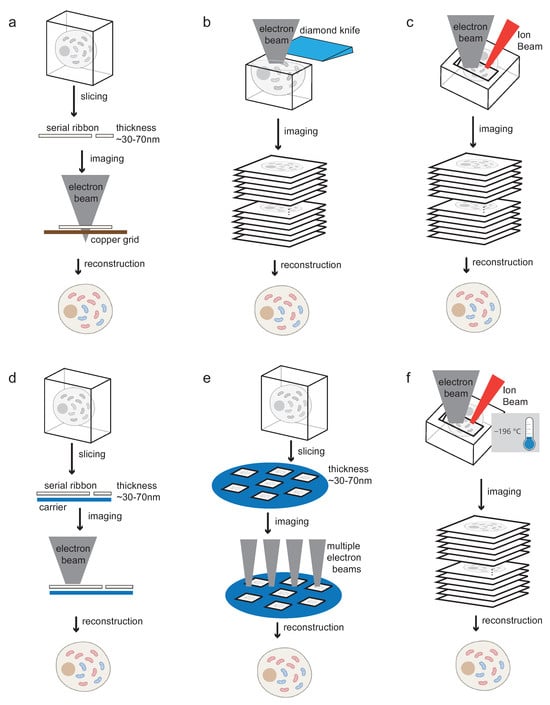
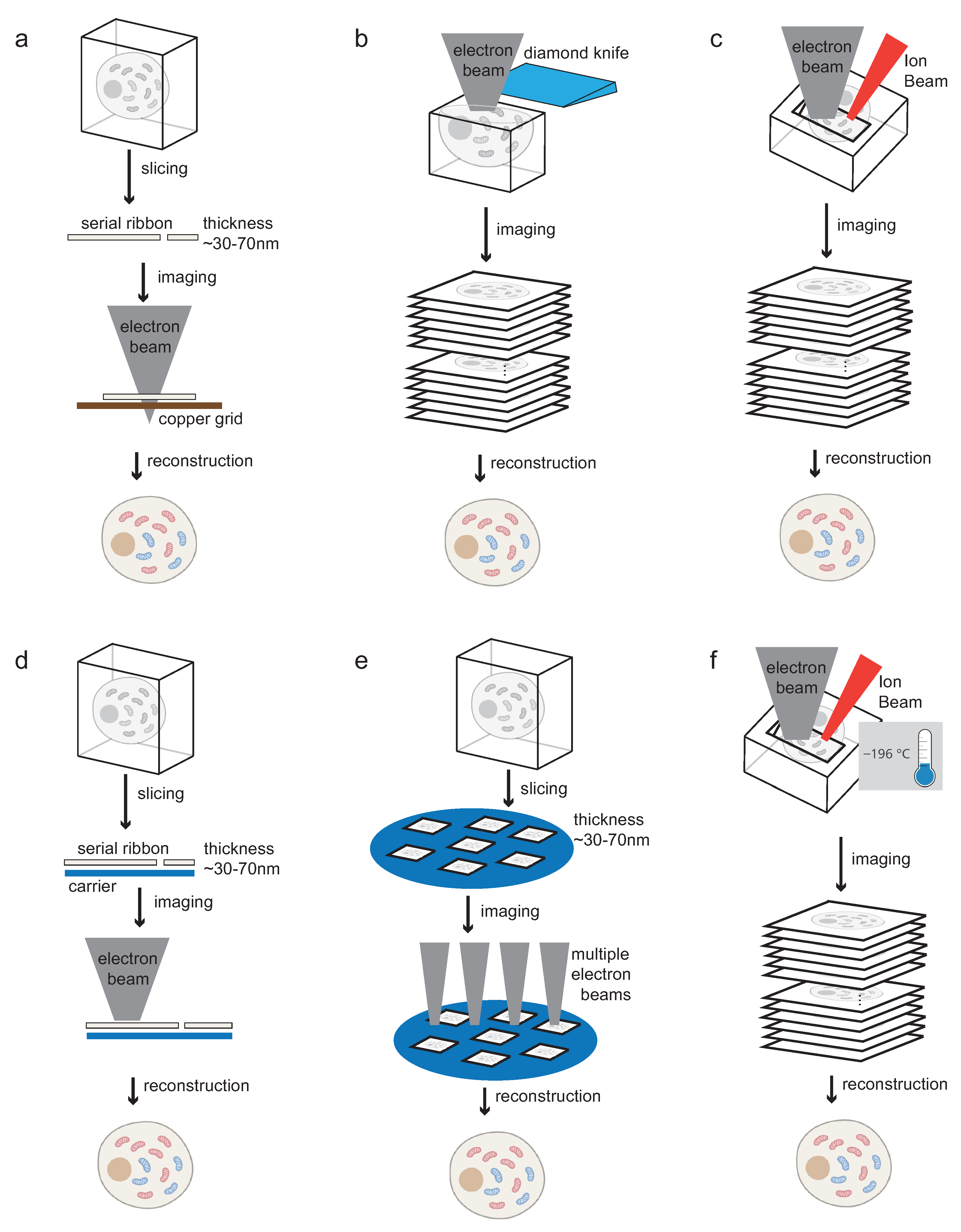
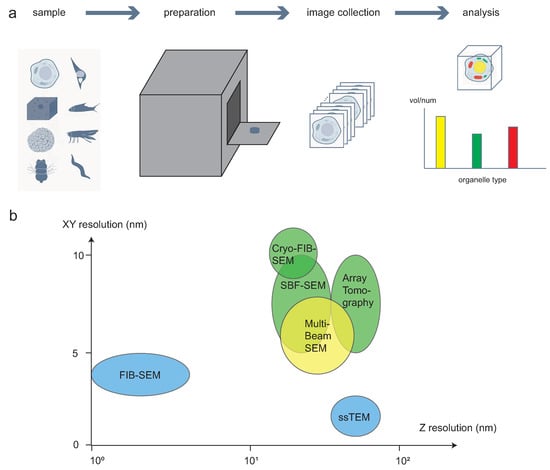
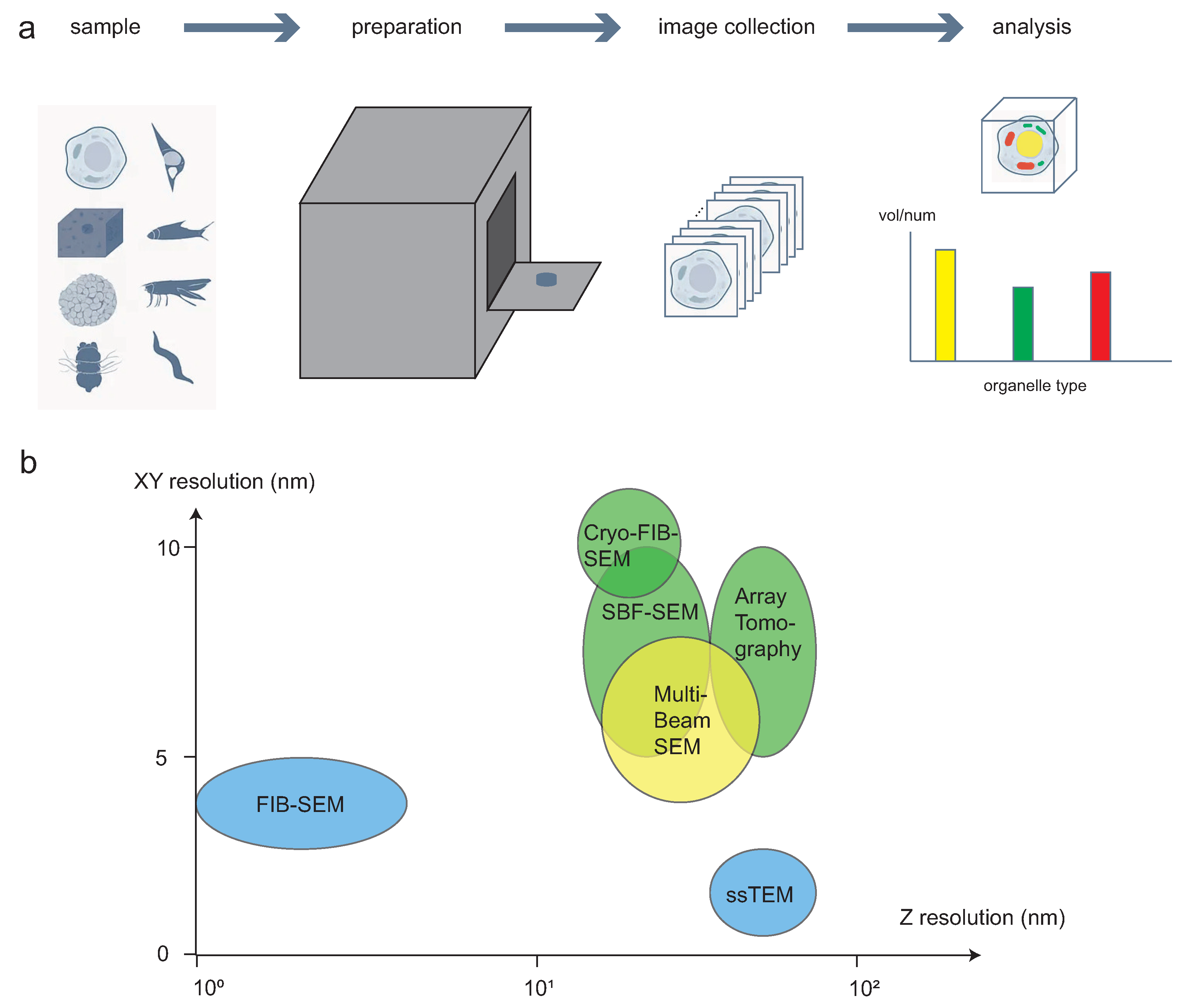

Disclaimer/Publisher’s Note: The statements, opinions and data contained in all publications are solely those of the individual author(s) and contributor(s) and not of MDPI and/or the editor(s). MDPI and/or the editor(s) disclaim responsibility for any injury to people or property resulting from any ideas, methods, instructions or products referred to in the content. |
© 2025 by the authors. Licensee MDPI, Basel, Switzerland. This article is an open access article distributed under the terms and conditions of the Creative Commons Attribution (CC BY) license.