
Heterometallic Catecholates of Zirconium and Alkali Metals

 , , , ,
  , and
, and
Abstract
1. Introduction
2. Experimental Part
2.1. Synthesis
2.2. Crystallography
2.3. Computational Details
3. Results and Discussion
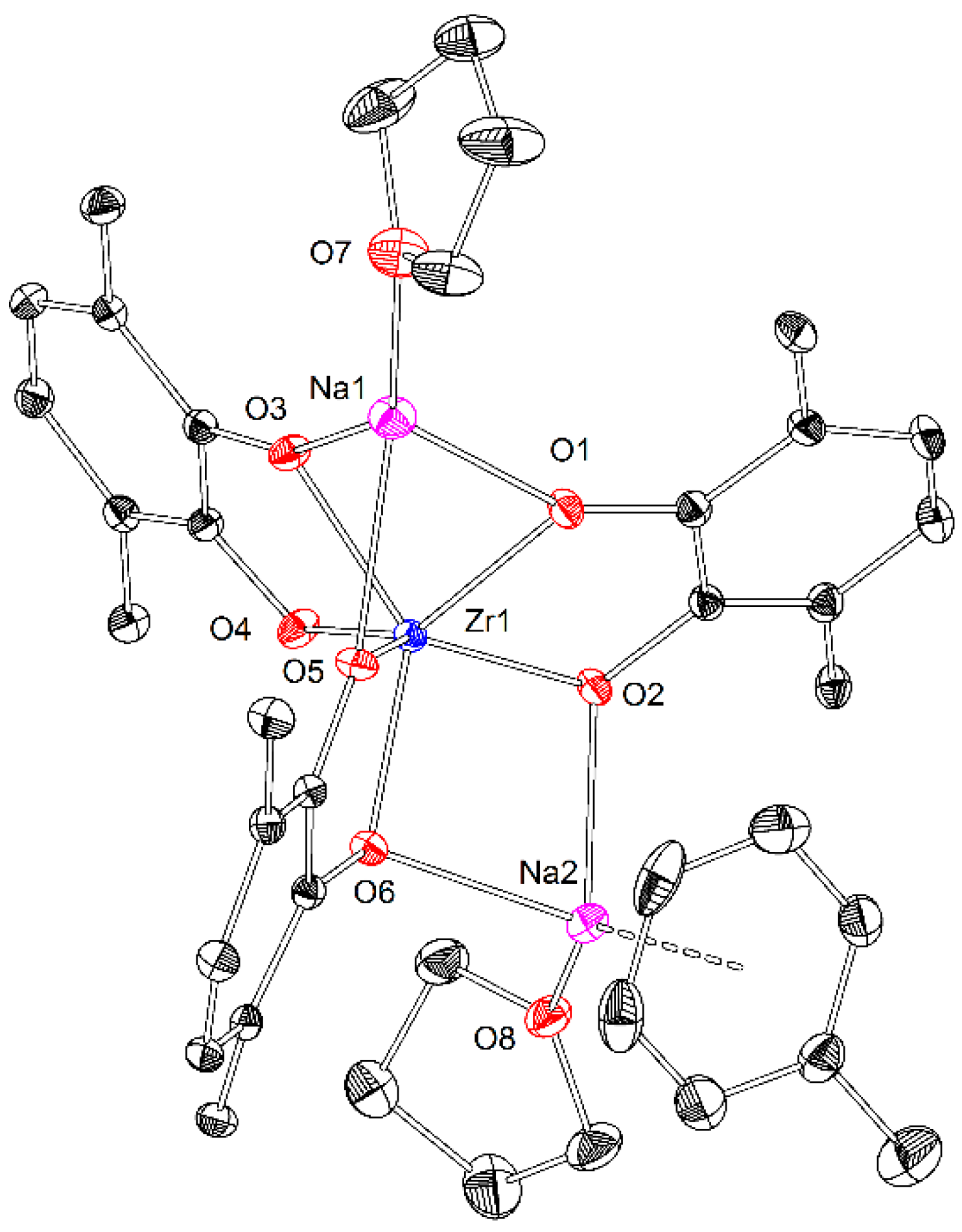
3.1. Synthesis and Structure of the Complex [Na2Zr(Cat36)3(THF)2(C7H8)] (1)
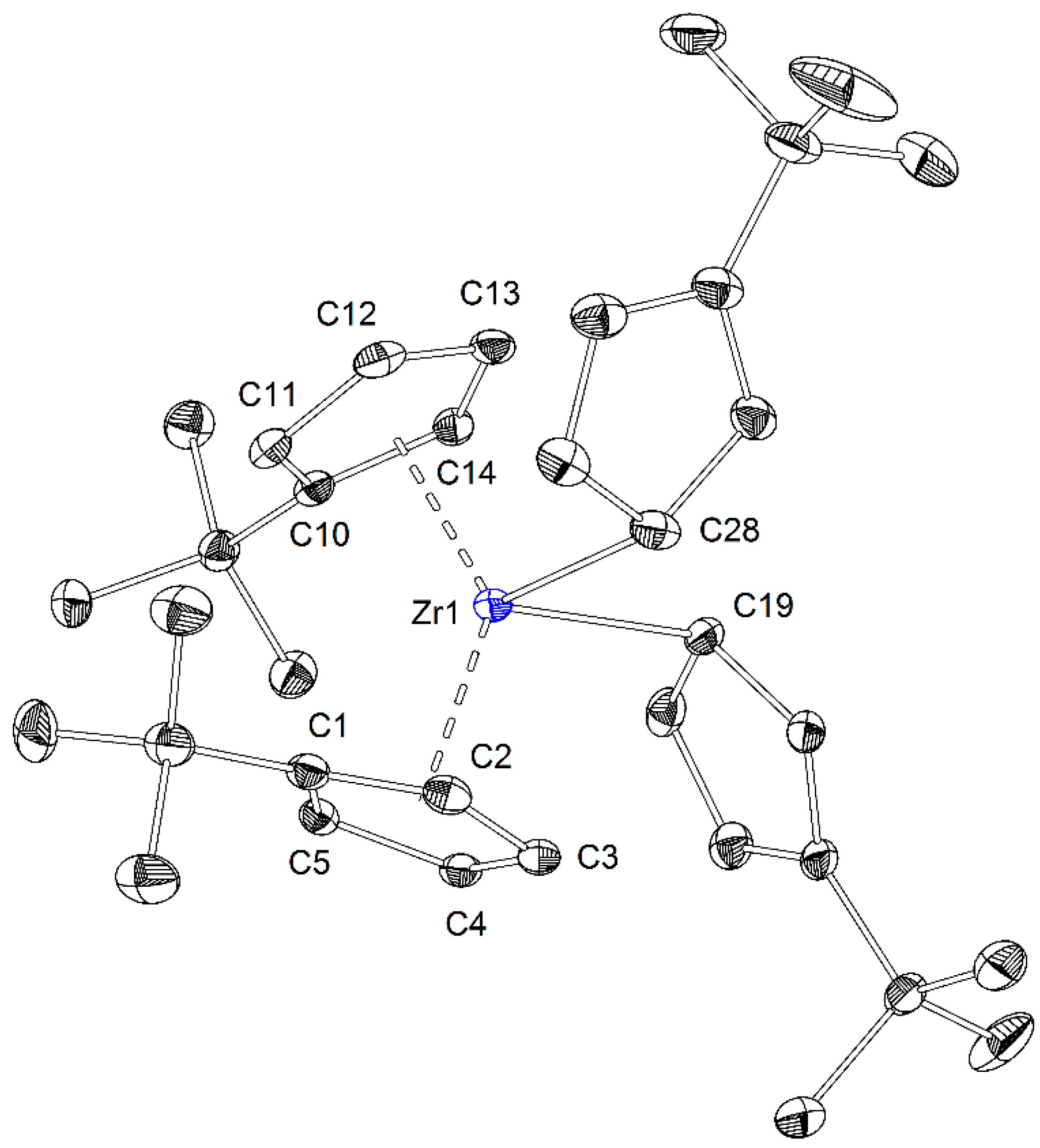
3.2. Synthesis and Structure of the Complex [Zr(η5-Cp’)2(η1-Cp’)2] (2)
3.3. The Structure of [Zr(η5-Cp’2)Cl2]
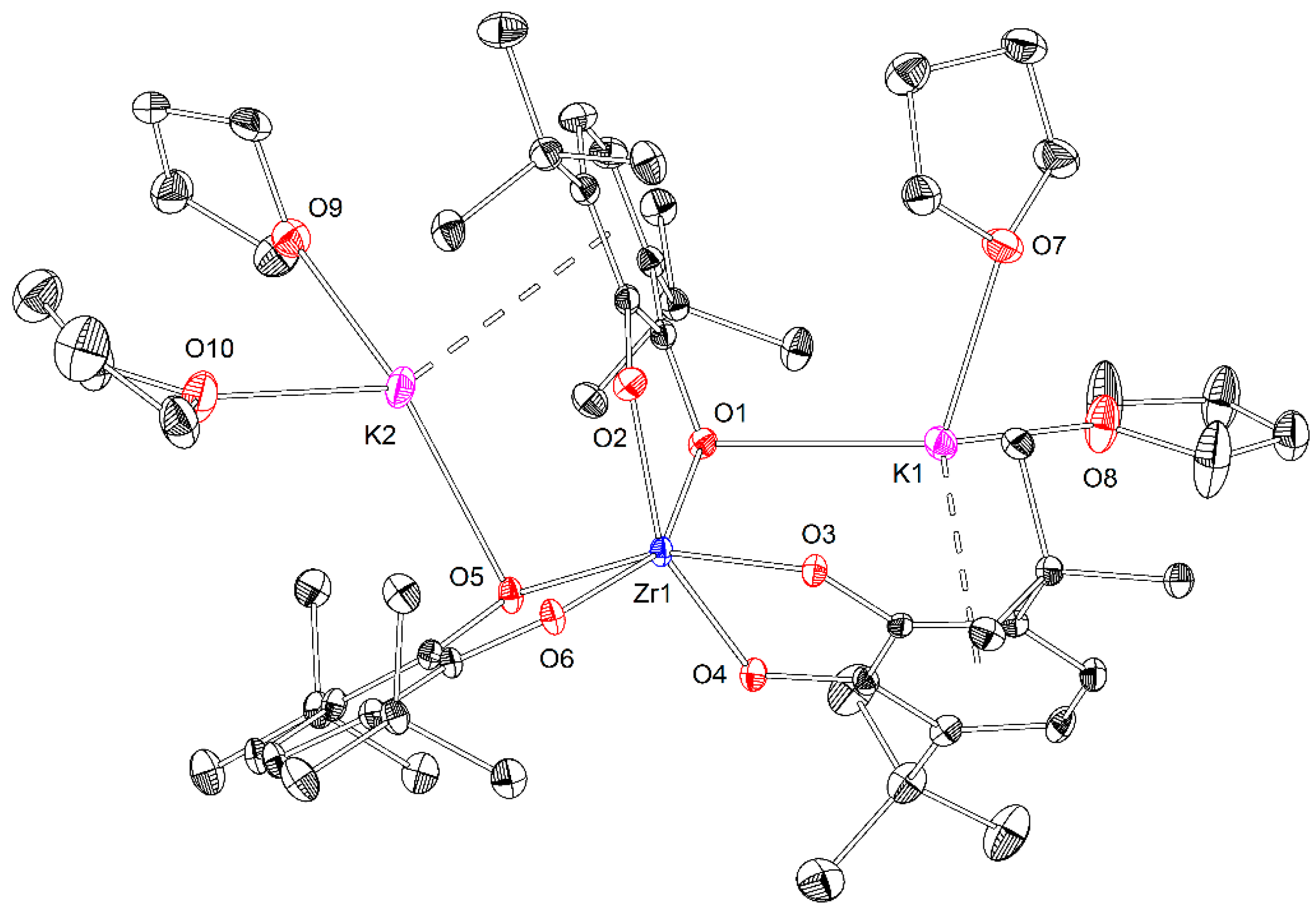
3.4. Synthesis and Structure of the Complex of [K2Zr(Cat36)3(THF)4] (3)
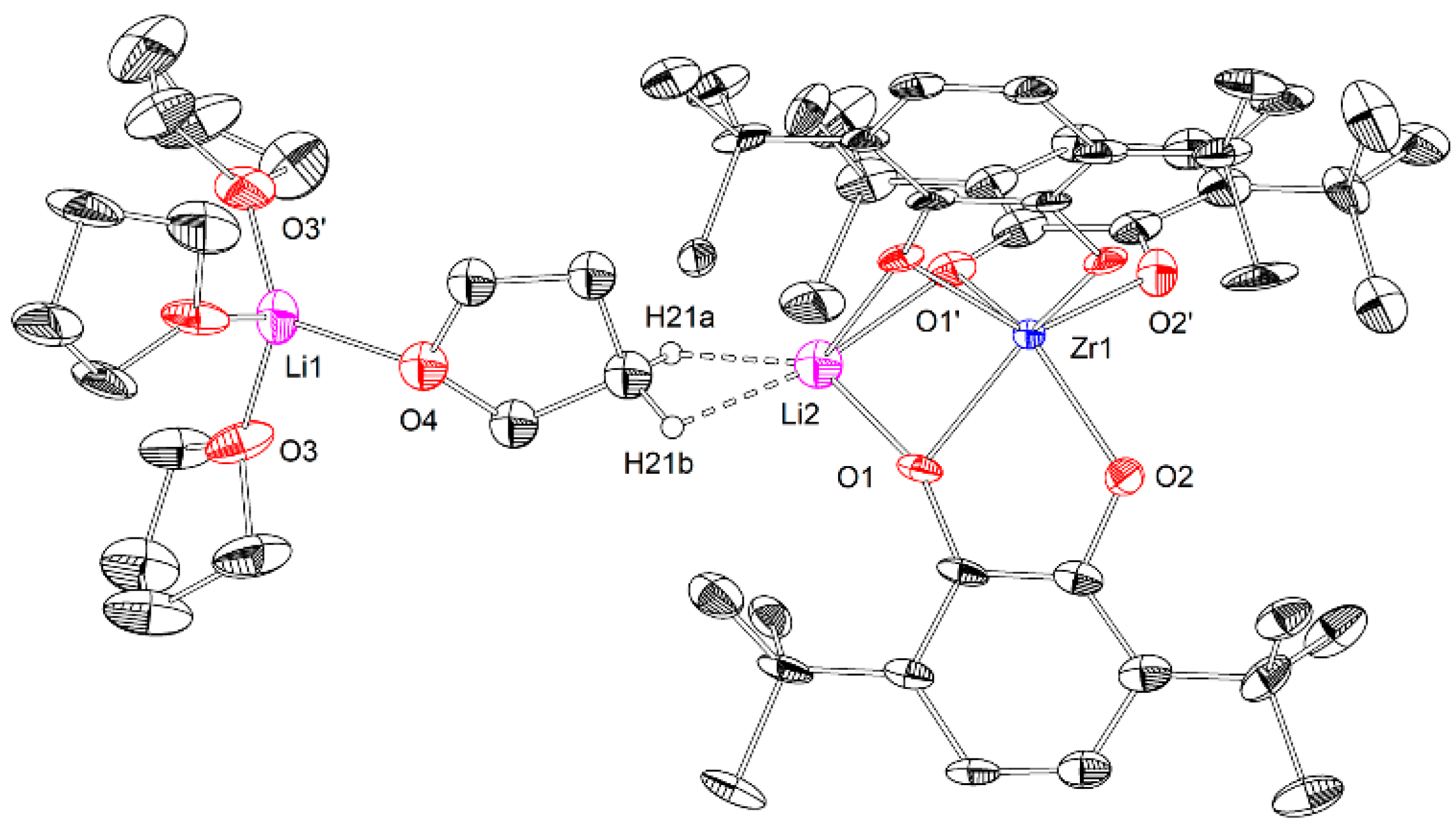
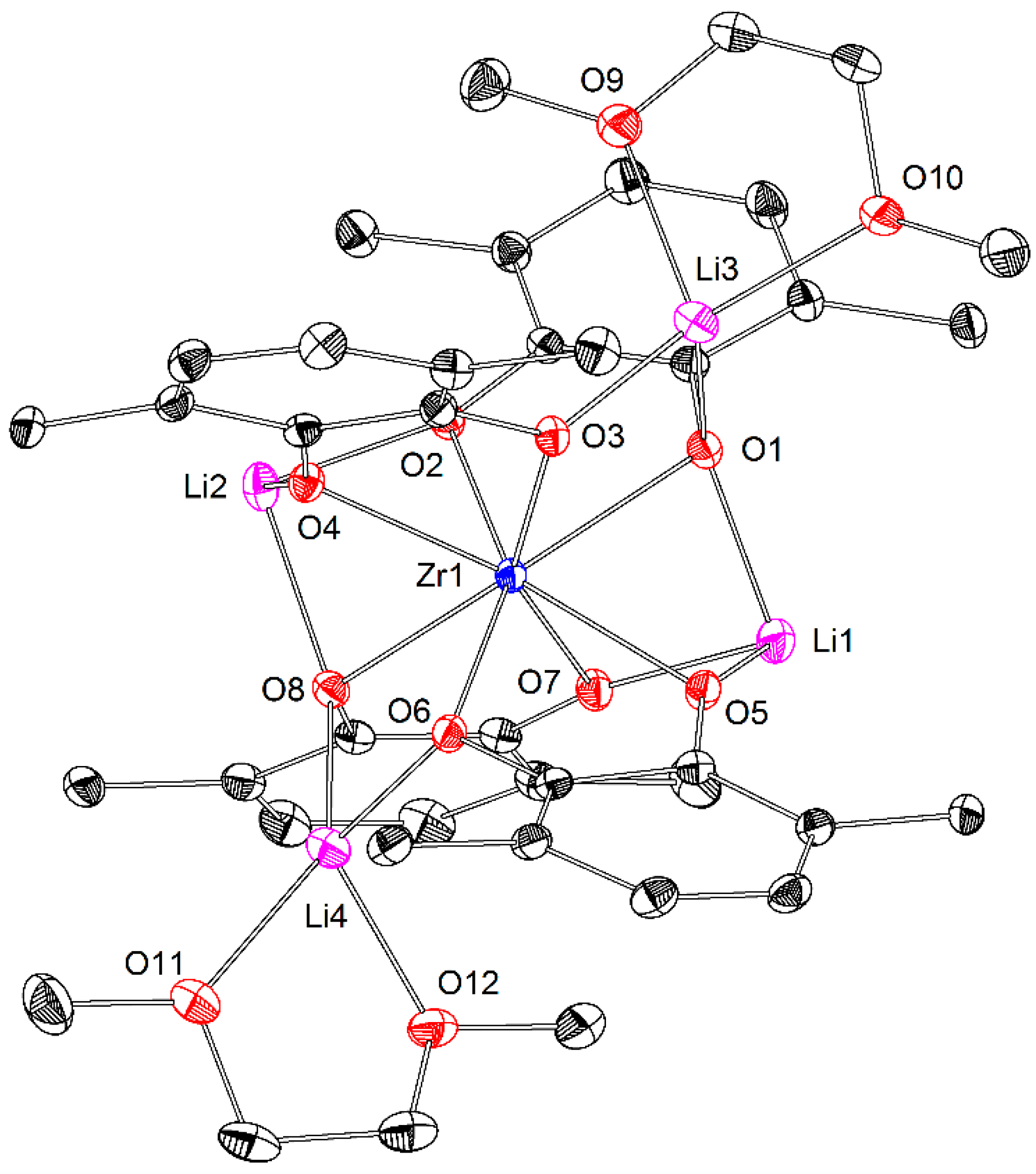
3.5. Synthesis and Structure of the Complex [Li(THF)4][LiZr(Cat36)3]∙THF (4∙THF)
3.6. IR Spectra, 1H and 13C NMR Spectra
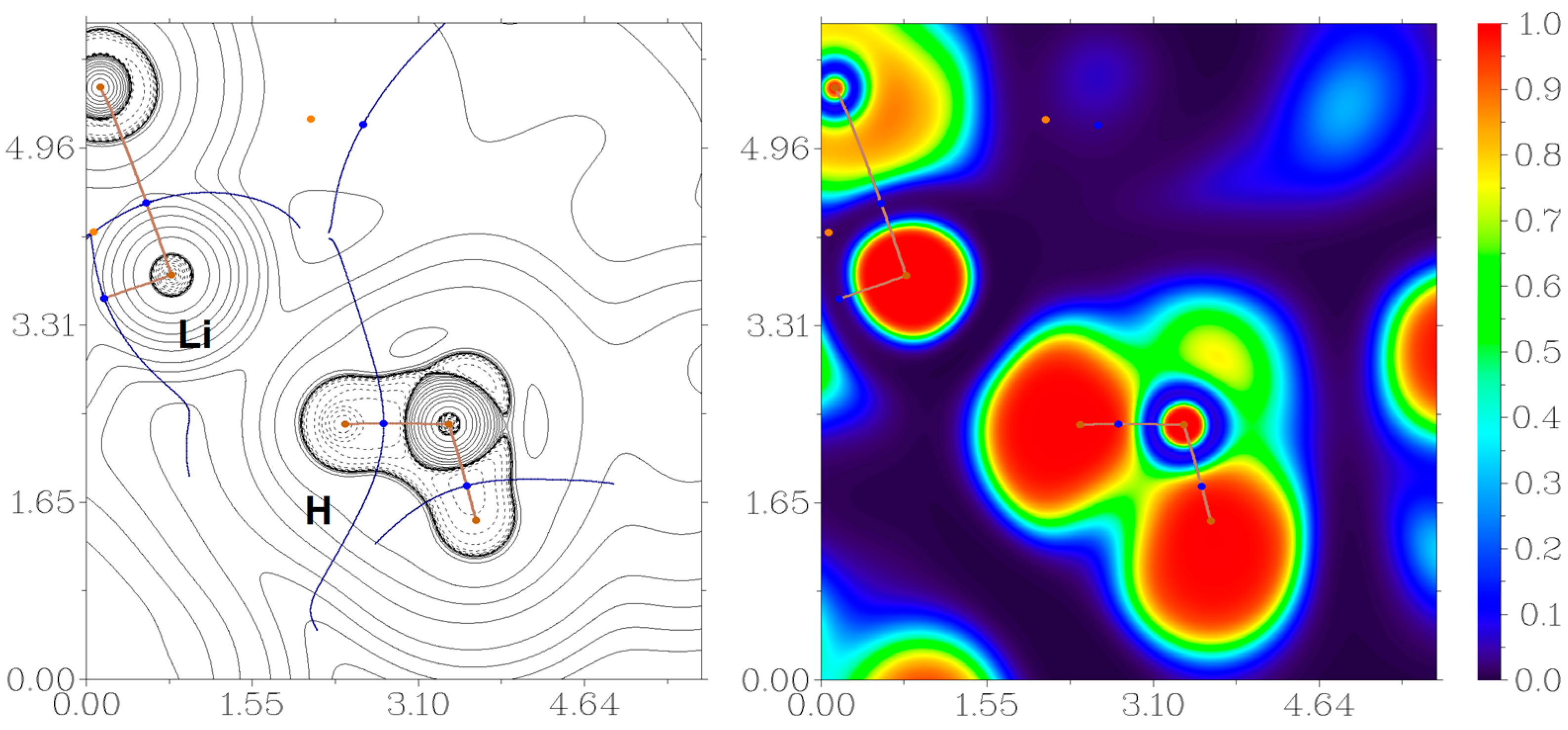
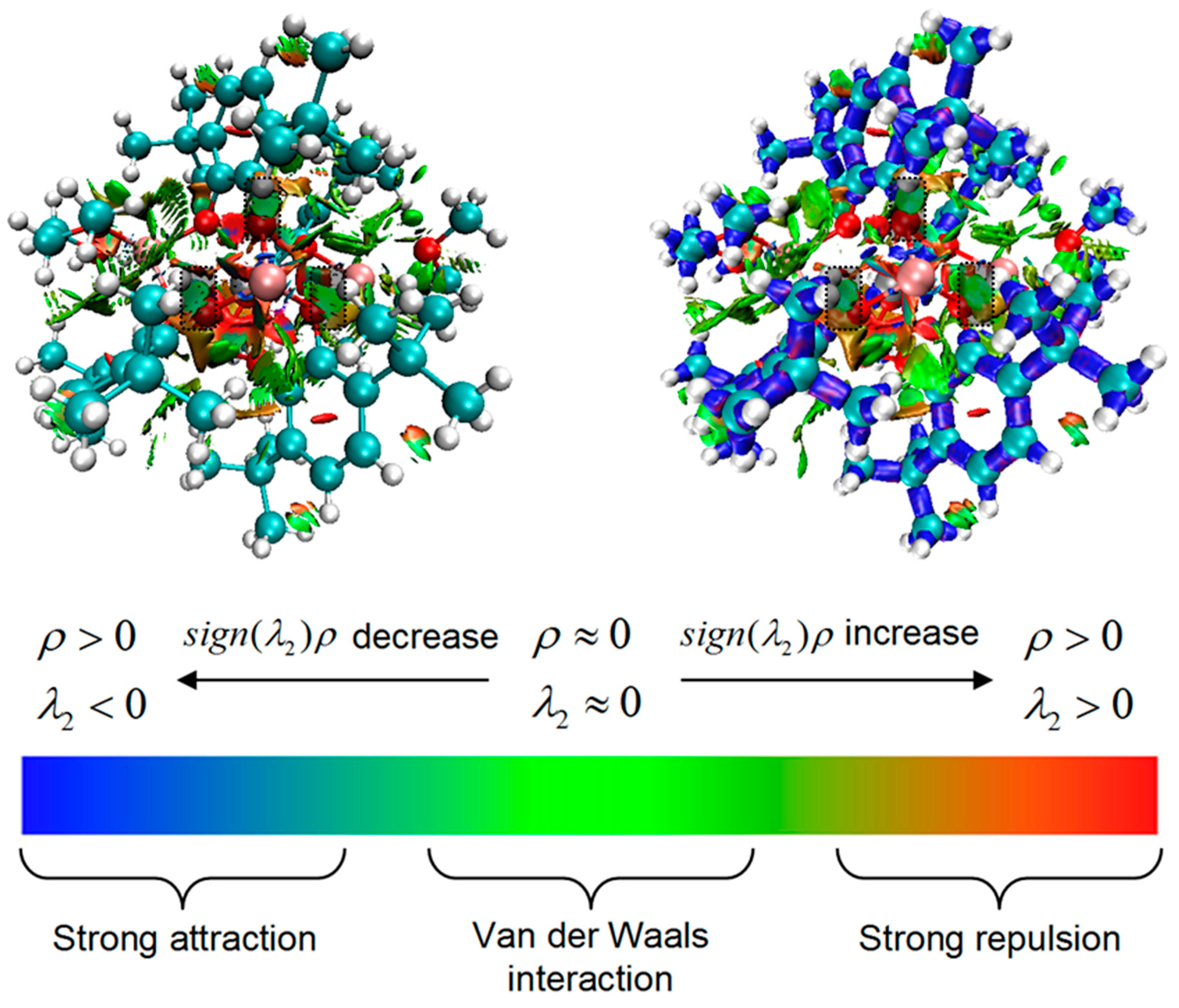
3.7. Results of DFT Calculations and Topological Analysis of the Electron Density Distribution
4. Conclusions
Supplementary Materials
Author Contributions
Funding
Data Availability Statement
Acknowledgments
Conflicts of Interest
References
- Togni, A.; Halterman, R.L. Metallocenes, Synthesis, Reactivity, Applications; Wiley: Hoboken, NJ, USA, 2008. [Google Scholar]
- Tebbe, F.N.; Parshall, G.W.; Reddy, G.S. Olefin Homologation with Titanium Methylene Compounds. J. Am. Chem. Soc. 1978, 100, 3611–3613. [Google Scholar] [CrossRef]
- Hart, D.W.; Schwartz, J. Hydrozirconation. Organic Synthesis via Organozirconium Intermediates. Synthesis and Rearrangement of Alkylzirconium(IV) Complexes and Their Reaction with Electrophiles. J. Am. Chem. Soc. 1974, 96, 8115–8116. [Google Scholar] [CrossRef]
- Kaminsky, W. Metalorganic Catalysts for Synthesis and Polymerization; Springer: Berlin/Heidelberg, Germany, 1999. [Google Scholar] [CrossRef]
- Meléndez, E. Metallocenes as Target Specific Drugs for Cancer Treatment. Inorg. Chim. Acta 2012, 393, 36–52. [Google Scholar] [CrossRef][Green Version]
- Cini, M.; Bradshaw, T.D.; Woodward, S. Using Titanium Complexes to Defeat Cancer: The View from the Shoulders of Titans. Chem. Soc. Rev. 2017, 46, 1040–1051. [Google Scholar] [CrossRef]
- London, H.C.; Whittemore, T.J.; Gale, A.G.; McMillen, C.D.; Pritchett, D.Y.; Myers, A.R.; Thomas, H.D.; Shields, G.C.; Wagenknecht, P.S. Ligand-to-Metal Charge-Transfer Photophysics and Photochemistry of Emissive d0 Titanocenes: A Spectroscopic and Computational Investigation. Inorg. Chem. 2021, 60, 14399–14409. [Google Scholar] [CrossRef] [PubMed]
- London, H.C.; Pritchett, D.Y.; Pienkos, J.A.; McMillen, C.D.; Whittemore, T.J.; Bready, C.J.; Myers, A.R.; Vieira, N.C.; Harold, S.; Shields, G.C.; et al. Photochemistry and Photophysics of Charge-Transfer Excited States in Emissive d10/d0 Heterobimetallic Titanocene Tweezer Complexes. Inorg. Chem. 2022, 61, 10986–10998. [Google Scholar] [CrossRef]
- Dunlop, D.; Večeřa, M.; Gyepes, R.; Kubát, P.; Lang, K.; Horáček, M.; Pinkas, J.; Šimková, L.; Liška, A.; Lamač, M. Luminescent Cationic Group 4 Metallocene Complexes Stabilized by Pendant N-Donor Groups. Inorg. Chem. 2021, 60, 7315–7328. [Google Scholar] [CrossRef] [PubMed]
- Loukova, G.V.; Huhn, W.; Vasiliev, V.P.; Smirnov, V.A. Ligand-to-Metal Charge Transfer Excited States with Unprecedented Luminescence Yield in Fluid Solution. J. Phys. Chem. A 2007, 111, 4117–4121. [Google Scholar] [CrossRef] [PubMed]
- Loukova, G.V.; Milov, A.A.; Vasiliev, V.P.; Minkin, V.I. Dipole Moments and Solvatochromism of Metal Complexes: Principle Photophysical and Theoretical Approach. Phys. Chem. Chem. Phys. 2016, 18, 17822–17826. [Google Scholar] [CrossRef]
- Pritchard, V.E.; Thorp-Greenwood, F.L.; Balasingham, R.G.; Williams, C.F.; Kariuki, B.M.; Platts, J.A.; Hallett, A.J.; Coogan, M.P. Simple Polyphenyl Zirconium and Hafnium Metallocene Room-Temperature Lumophores for Cell Imaging. Organometallics 2013, 32, 3566–3569. [Google Scholar] [CrossRef]
- Zhang, Z.; Hilche, T.; Slak, D.; Rietdijk, N.R.; Oloyede, U.N.; Flowers, R.A.; Gansäuer, A. Titanocenes as Photoredox Catalysts Using Green-Light Irradiation. Angew. Chem. Int. Ed. 2020, 59, 9355–9359. [Google Scholar] [CrossRef]
- Fermi, A.; Gualandi, A.; Bergamini, G.; Cozzi, P.G. Shining Light on TiIV Complexes: Exceptional Tools for Metallaphotoredox Catalysis. Eur. J. Org. Chem. 2020, 2020, 6955–6965. [Google Scholar] [CrossRef]
- Tukhbatullin, A.A.; Kovyazin, P.V.; Sharipov, G.L.; Parfenova, L.V.; Ivchenko, P.V.; Nifant’ev, I.E. Photoluminescence and Mechanoluminescence of Solid-state Zirconocene Dichlorides. J. Lumin. 2021, 36, 943–950. [Google Scholar] [CrossRef]
- Yam, V.W.-W.; Qi, G.-Z.; Cheung, K.-K. Synthesis of Luminescent Zirconium Thiolate Complexes. Crystal Structures of (η5-C5H5)2Zr(SC6H4Cl-p)2 and [(η5-C5H5)2Zr(SC6H4OMe-p)]2O. J. Organomet. Chem. 1997, 548, 289–294. [Google Scholar] [CrossRef]
- Yam, V.W.-W.; Qi, G.-Z.; Cheung, K.-K. Synthesis, Emission and Molecular Orbital Studies of Luminescent Zirconium Thiolate Complexes. Crystal Structure of [Zr(η5-C5Me5)2(SBun)2]. Organometallics 1998, 17, 1819–1823. [Google Scholar] [CrossRef]
- Yam, V.W.-W.; Qi, G.-Z.; Cheung, K.-K. Synthesis, Emission, and Molecular Orbital Studies of Luminescent Hafnium Thiolate Complexes. Crystal Structures of (η5-C5Me5)2Hf(SR)2 (R = nBu, C6H5, C6H4OMe-p). Organometallics 1998, 17, 5448–5453. [Google Scholar] [CrossRef]
- Petrov, P.A.; Sukhikh, T.S.; Nadolinny, V.A.; Bogomyakov, A.S.; Laricheva, Y.A.; Piskunov, A.V. Di-tert-Butylcatecholate Derivatives of Titanocene. New J. Chem. 2019, 43, 6636–6642. [Google Scholar] [CrossRef]
- Petrov, P.A.; Filippova, E.A.; Eltsov, I.V.; Sukhikh, T.S.; Piskunov, A.V.; Sokolov, M.N. Catecholate Derivatives of Zirconocene: Facile Methylation of a Catecholate Ring. J. Organomet. Chem. 2021, 949, 121946. [Google Scholar] [CrossRef]
- Flogeras, J.C.; Allan, C.R.; Vogels, C.M.; Decken, A.; Westcott, S.A. Synthesis and Molecular Structure of Di(3,5-Di-tert-Butylcatecholato)-Dicyclopentadienylzirconium(IV). X Ray Struct. Anal. Online 2011, 27, 45–46. [Google Scholar] [CrossRef]
- Kramer, W.W.; Cameron, L.A.; Zarkesh, R.A.; Ziller, J.W.; Heyduk, A.F. Donor–acceptor ligand-to-ligand charge-transfer coordination complexes of nickel(II). Inorg. Chem. 2014, 53, 8825–8837. [Google Scholar] [CrossRef]
- Cameron, L.A.; Ziller, J.W.; Heyduk, A.F. Near-IR absorbing donor–acceptor ligand-to-ligand charge-transfer complexes of nickel(II). Chem. Sci. 2016, 7, 1807–1814. [Google Scholar] [CrossRef]
- Klimashevskaya, A.V.; Arsenyeva, K.V.; Cherkasov, A.V.; Yakushev, I.A.; Dorovatovskii, P.V.; Piskunov, A.V. Tin (IV) Complexes Based on Diimines and 3, 5-Di-tert-Alkyl Substituted Pyrocatechols. J. Struct. Chem. 2023, 64, 2271–2294. [Google Scholar] [CrossRef]
- Pashanova, K.I.; Bitkina, V.O.; Yakushev, I.A.; Arsenyev, M.V.; Piskunov, A.V. Square-Planar Heteroleptic Complexes of α-Diimine-NiII-Catecholate Type: Intramolecular Ligand-to-Ligand Charge Transfer. Molecules 2021, 26, 4622. [Google Scholar] [CrossRef]
- Pashanova, K.I.; Ershova, I.V.; Trofimova, O.Y.; Rumyantsev, R.V.; Fukin, G.K.; Bogomyakov, A.S.; Piskunov, A.V. Charge Transfer Chromophores Derived from 3d-Row Transition Metal Complexes. Molecules 2022, 27, 8175. [Google Scholar] [CrossRef]
- Tatarin, S.V.; Zhuravlev, I.; Minin, M.M.; Emets, V.V.; Arsenyeva, K.; Piskunov, A.; Bezzubov, S.I. Stable Radical Iridium (III) Complexes with Tunable Panchromatic Absorption. Inorg. Chem. 2025, 64, 24579–24593. [Google Scholar] [CrossRef] [PubMed]
- Greb, L. p-Block Element Catecholates: Lewis Superacidic, Constitutionally Dynamic, and Redox Active. Synlett 2024, 35, 1382–1398. [Google Scholar] [CrossRef]
- Ansmann, N.; Johann, K.; Favresse, P.; Johann, T.; Fiedel, M.; Greb, L. Silicon-Catalyzed Depolymerization of Polyethers: Pushing Scope, Practicability and Mechanistic Understanding. ChemCatChem 2024, 16, e202301615. [Google Scholar] [CrossRef]
- Karnbrock, S.B.; Alcarazo, M. Cooperation between p-Block Elements and Redox-Active Ligands: Stoichiometric and Catalytic Transformations. Chem. Eur. J. 2024, 30, e202302879. [Google Scholar] [CrossRef] [PubMed]
- Arsenyeva, K.V.; Klimashevskaya, A.V.; Pashanova, K.I.; Trofimova, O.Y.; Chegerev, M.G.; Starikova, A.A.; Piskunov, A.V. Stable heterocyclic stannylene: The metal, ligand-centered reactivity, and effective catalytic hydroboration of aldehydes. Appl. Organomet. Chem. 2022, 36, e6593. [Google Scholar] [CrossRef]
- Arsenyeva, K.V.; Pashanova, K.I.; Trofimova, O.Y.; Ershova, I.V.; Chegerev, M.G.; Starikova, A.A.; Piskunov, A.V. O,N-Heterocyclic germylenes as efficient catalysts for hydroboration and cyanosilylation of benzaldehyde. New J. Chem. 2021, 45, 11758–11767. [Google Scholar] [CrossRef]
- Starikova, A.A.; Minkin, V.I. Adducts of transition metal complexes with redox-active ligands: The structure and spin-state-switching rearrangements. Russ. Chem. Rev. 2018, 87, 1049–1079. [Google Scholar] [CrossRef]
- Dunstan, M.A.; Brown, D.S.; Sorace, L.; Mole, R.A.; Boskovic, C. Modulation of Slow Magnetic Relaxation in Gd(III)-Tetrahalosemiquinonate Complexes. Chem. Asian J. 2022, 17, e202200325. [Google Scholar] [CrossRef]
- Janetzki, J.T.; Chegerev, M.G.; Gransbury, G.K.; Gable, R.W.; Clegg, J.K.; Mulder, R.J.; Boskovic, C. Controlling Spin Crossover in a Family of Dinuclear Fe(III) Complexes via the Bis(catecholate) Bridging Ligand. Inorg. Chem. 2023, 62, 15719–15735. [Google Scholar] [CrossRef]
- Nadurata, V.L.; Boskovic, C. Switching metal complexes via intramolecular electron transfer: Connections with solvatochromism. Inorg. Chem. Front. 2021, 8, 1840–1864. [Google Scholar] [CrossRef]
- Tichnell, C.R.; Shultz, D.A.; Popescu, C.V.; Sokirniy, I.; Boyle, P.D. Synthesis, characterization, and photophysical studies of an iron(III) catecholate–nitronylnitroxide spin-crossover complex. Inorg. Chem. 2015, 54, 4466–4474. [Google Scholar] [CrossRef]
- Wheeler, D.E.; McCusker, J.K. Electron Exchange and the Photophysics of Metal−Quinone Complexes. 1. Synthesis and Spectroscopy of Chromium−Quinone Dyads. Inorg. Chem. 1998, 37, 2296–2307. [Google Scholar] [CrossRef]
- Petrov, P.A.; Smolentsev, A.I.; Bogomyakov, A.S.; Konchenko, S.N. Novel Vanadium Complexes Supported by a Bulky Tris(Pyrazolyl)Borate Ligand. Polyhedron 2017, 129, 60–64. [Google Scholar] [CrossRef]
- Bruker. Apex3 Software Suite. 2017. Available online: https://www.bruker.com/en/products-and-solutions/diffractometers-and-x-ray-microscopes/single-crystal-x-ray-diffractometers/sc-xrd-software/apex.html (accessed on 1 December 2025).
- Sheldrick, G.M. SHELXT—Integrated Space-Group and Crystal-Structure Determination. Acta Cryst. A 2015, 71, 3–8. [Google Scholar] [CrossRef] [PubMed]
- Sheldrick, G.M. Crystal Structure Refinement with SHELXL. Acta Cryst. C 2015, 71, 3–8. [Google Scholar] [CrossRef] [PubMed]
- Dolomanov, O.V.; Bourhis, L.J.; Gildea, R.J.; Howard, J.A.K.; Puschmann, H. OLEX2: A Complete Structure Solution, Refinement and Analysis Program. J. Appl. Cryst. 2009, 42, 339–341. [Google Scholar] [CrossRef]
- Chai, J.-D.; Head-Gordon, M. Long-Range Corrected Hybrid Density Functionals with Damped Atom–Atom Dispersion Corrections. Phys. Chem. Chem. Phys. 2008, 10, 6615. [Google Scholar] [CrossRef] [PubMed]
- Frisch, M.J. Gaussian 09, Revision d. 01, Gaussian; Wallingford’s Inc.: Oakland, ME, USA, 2009; 201p. [Google Scholar]
- Barros, C.L.; De Oliveira, P.J.P.; Jorge, F.E.; Canal Neto, A.; Campos, M. Gaussian Basis Set of Double Zeta Quality for Atoms Rb through Xe: Application in Non-Relativistic and Relativistic Calculations of Atomic and Molecular Properties. Mol. Phys. 2010, 108, 1965–1972. [Google Scholar] [CrossRef]
- Jorge, F.E.; Canal Neto, A.; Camiletti, G.G.; Machado, S.F. Contracted Gaussian Basis Sets for Douglas–Kroll–Hess Calculations: Estimating Scalar Relativistic Effects of Some Atomic and Molecular Properties. J. Chem. Phys. 2009, 130, 064108. [Google Scholar] [CrossRef]
- Canal Neto, A.; Jorge, F.E. All-Electron Double Zeta Basis Sets for the Most Fifth-Row Atoms: Application in DFT Spectroscopic Constant Calculations. Chem. Phys. Lett. 2013, 582, 158–162. [Google Scholar] [CrossRef]
- De Berrêdo, R.C.; Jorge, F.E. All-Electron Double Zeta Basis Sets for Platinum: Estimating Scalar Relativistic Effects on Platinum(II) Anticancer Drugs. J. Mol. Struct. Theochem. 2010, 961, 107–112. [Google Scholar] [CrossRef]
- Bader, R.F.W. A Quantum Theory of Molecular Structure and Its Applications. Chem. Rev. 1991, 91, 893–928. [Google Scholar] [CrossRef]
- Johnson, E.R.; Keinan, S.; Mori-Sánchez, P.; Contreras-García, J.; Cohen, A.J.; Yang, W. Revealing Noncovalent Interactions. J. Am. Chem. Soc. 2010, 132, 6498–6506. [Google Scholar] [CrossRef]
- Lu, T.; Chen, Q. Interaction Region Indicator: A Simple Real Space Function Clearly Revealing Both Chemical Bonds and Weak Interactions. Chem. Methods 2021, 1, 231–239. [Google Scholar] [CrossRef]
- Lu, T.; Chen, F. Multiwfn: A Multifunctional Wavefunction Analyzer. J. Comput. Chem. 2012, 33, 580–592. [Google Scholar] [CrossRef]
- Humphrey, W.; Dalke, A.; Schulten, K. VMD: Visual Molecular Dynamics. J. Mol. Graph. 1996, 14, 33–38. [Google Scholar] [CrossRef]
- Samuel, E.; Rausch, M.D. pi.-Cyclopentadienyl and. pi.-indenyl compounds of titanium, zirconium, and hafnium containing. sigma-bonded organic substituents. J. Am. Chem. Soc. 1973, 95, 6263–6267. [Google Scholar] [CrossRef]
- Jantunen, K.C.; Scott, B.L.; Kiplinger, J.L. A comparative study of the reactivity of Zr (IV), Hf (IV) and Th (IV) metallocene complexes: Thorium is not a Group IV metal after all. J. Alloys Compd. 2007, 444, 363–368. [Google Scholar] [CrossRef]
- Filippova, E.A.; Sukhikh, T.S.; Sokolov, M.N.; Petrov, P.A. Heterometallic Titanium and Potassium Complexes with Catecholate and Tetrabromocatecholate. J. Struct. Chem. 2024, 65, 1659–1667. [Google Scholar] [CrossRef]
- Voloshin, Y.; Belaya, I.; Krämer, R. Cage Metal Complexes; Springer International Publishing: Cham, Switzerland, 2017; ISBN 978-3-319-56419-7. [Google Scholar]
- Alvarez, S.; Avnir, D.; Llunell, M.; Pinsky, M. Continuous Symmetry Maps and Shape Classification. The Case of Six-Coordinated Metal compoundsElectronic Supplementary Information (ESI) Available: Tables of CSD Refcodes, Structural Parameters and Symmetry Measures for the Studied Compounds. New J. Chem. 2002, 26, 996–1009. [Google Scholar] [CrossRef]
- Meshcheryakova, I.N.; Shavyrin, A.S.; Cherkasov, A.V.; Piskunov, A.V. Synthesis of Titanium(IV) 3,6-Di-Tert-Butylcatecholate Complexes. Russ. Chem. Bull. 2019, 68, 1414–1423. [Google Scholar] [CrossRef]
- Rosenheim, A.; Sorge, O. Über Oxycarbonsäure-titanate, Polyphenol-titanate und einige analoge Verbindungen. (VII. Mitteilung: Über die Molekularverbindungen anorganischer Halogenide). Berichte Dtsch. Chem. Ges. 1920, 53, 932–939. [Google Scholar] [CrossRef][Green Version]
- Albrecht, M.; Chen, X.; Van Craen, D. From Hierarchical Helicates to Functional Supramolecular Devices. Chem. Eur. J. 2019, 25, 4265–4273. [Google Scholar] [CrossRef]
- Caulder, D.L.; Raymond, K.N. Supermolecules by Design. Acc. Chem. Res. 1999, 32, 975–982. [Google Scholar] [CrossRef]
- Albrecht, M. Dicatechol Ligands: Novel Building-Blocks for Metallo-Supramolecular Chemistry. Chem. Soc. Rev. 1998, 27, 281–288. [Google Scholar] [CrossRef]
- Pluth, M.D.; Bergman, R.G.; Raymond, K.N. Acid catalysis in basic solution: A supramolecular host promotes orthoformate hydrolysis. Science 2007, 316, 85–87. [Google Scholar] [CrossRef] [PubMed]
- Pluth, M.D.; Bergman, R.G.; Raymond, K.N. Catalytic Deprotection of Acetals in Strongly Basic Solution Using a Self-Assembled Supramolecular “Nanozyme”. Angew. Chem. Int. Ed. 2007, 45, 8587–8589. [Google Scholar] [CrossRef]
- Fiedler, D.; Bergman, R.G.; Raymond, K.N. Supramolecular Catalysis of a Unimolecular Transformation: Aza-Cope Rearrangement within a Self-Assembled Host. Angew. Chem. Int. Ed. 2004, 43, 6748–6751. [Google Scholar] [CrossRef]
- Raymond, K.N.; Allred, B.E.; Sia, A.K. Coordination Chemistry of Microbial Iron Transport. Acc. Chem. Res. 2015, 48, 2496–2505. [Google Scholar] [CrossRef]
- Das, R.K.; Barnea, E.; Andrea, T.; Kapon, M.; Fridman, N.; Botoshansky, M.; Eisen, M.S. Group 4 Lanthanide and Actinide Organometallic Inclusion Complexes. Organometallics 2015, 34, 742–752. [Google Scholar] [CrossRef]
- Calderon, J.L.; Cotton, F.A.; DeBoer, B.G.; Takats, J. Stereochemically Nonrigid Organometallic Molecules. XXVIII. The Crystal and Molecular Structures of Tetra(Cyclopentadienyl)Titanium. J. Am. Chem. Soc. 1971, 93, 3592–3597. [Google Scholar] [CrossRef]
- Rogers, R.D.; Bynum, R.V.; Atwood, J.L. Crystal and Molecular Structure of Tetra (Cyclopentadienyl) Zirconium. J. Am. Chem. Soc. 1978, 100, 5238–5239. [Google Scholar] [CrossRef]
- Rogers, R.D.; Bynum, R.V.; Atwood, J.L. First Authentic Example of a Difference in the Structural Organometallic Chemistry of Zirconium and Hafnium: Crystal and Molecular Structure of (η5-C5H5)2Hf(η1-C5H5)2. J. Am. Chem. Soc. 1981, 103, 692–693. [Google Scholar] [CrossRef]
- Palmer, E.J.; Strittmatter, R.J.; Thornley, K.T.; Gallucci, J.C.; Bursten, B.E. Structural Diversity in Tris(Cyclopentadienyl) Complexes of the Group 4 Metals: Synthesis of Cp and MeCp Complexes of Zr and Hf, and Crystallographic Characterization of (MeCp)3HfCl and (MeCp)4Zr (MeCp = C5H4CH3). Polyhedron 2013, 58, 120–128. [Google Scholar] [CrossRef]
- Kulishov, V.I.; Bokii, N.G.; Struchkov, T. Crystal Structures of Transition Metal Polycyclopentadienyl Compounds: I. Tetrakis (Cyclopentadienyl) Zirconium. J. Struct. Chem. 1971, 8, 646–652. [Google Scholar] [CrossRef]
- Howie, R.A.; McQuilian, G.P.; Thompson, D.W.; Lock, G.A. Structure and reactivity of substituted di-η5-cyclopentadienyl metal dihalides. Crystal structure of dichlorobis (η5-t-butylcyclopentadienyl) zirconium (IV). Organomet. Chem. 1986, 303, 213–220. [Google Scholar] [CrossRef]
- Guzei, I.A.; Mitra, A.; Spencer, L.C. Concomitant Twinning and Polymorphism of Ti(C5H4tBu)2Cl2. Cryst. Growth Des. 2009, 9, 2287–2292. [Google Scholar] [CrossRef]
- Casanova, D.; Llunell, M.; Alemany, P.; Alvarez, S. The Rich Stereochemistry of Eight-Vertex Polyhedra: A Continuous Shape Measures Study. Chem. Eur. J. 2005, 11, 1479–1494. [Google Scholar] [CrossRef]
- Gramer, C.J.; Raymond, K.N. Characterization of 2,3-Dihydroxyterephthalamides as M(IV) Chelators1. Inorg. Chem. 2004, 43, 6397–6402. [Google Scholar] [CrossRef]
- Do, T.H.; Brown, S.N. Synthesis, Dynamics and Redox Properties of Eight-Coordinate Zirconium Catecholate Complexes. Dalton Trans. 2020, 49, 11648–11656. [Google Scholar] [CrossRef]
- Freeman, G.E.; Raymond, K.N. Synthetic and Structural Chemistry of Gadolinium and Holmium Catecholates. Inorg. Chem. 1985, 24, 1410–1417. [Google Scholar] [CrossRef]
- Sinitsa, D.K.; Sukhikh, T.S.; Petrov, P.A.; Nadolinny, V.A.; Konchenko, S.N.; Pushkarevsky, N.A. Structural Diversity of Calcium, Strontium, and Barium Complexes with Reduced Forms of the 3,6-Di-Tert.-butyl-o-benzoquinone Ligand. Eur. J. Inorg. Chem. 2019, 2019, 4373–4383. [Google Scholar] [CrossRef]
- Brainina, E.M.; Dvoryantseva, G.G. Tetracyclopentadienylzirconium. Russ. Chem. Bull. 1967, 16, 427–428. [Google Scholar] [CrossRef]
- Brookhart, M.; Green, M.L.H.; Parkin, G. Agostic Interactions in Transition Metal Compounds. Proc. Natl. Acad. Sci. USA 2007, 104, 6908–6914. [Google Scholar] [CrossRef] [PubMed]




| Formula | Space Group | M–Ccentr | M–Cσ | ∠(CcentrMCcentr) | ∠(CσMCσ) | REFCODE | Reference |
|---|---|---|---|---|---|---|---|
| [Zr(η5-Cp’)2(η1-Cp’)2] (2) | P–1 | 2.242, 2.244 | 2.4107(15), 2.4027(16) | 133.5 | 87.25(6) | – | this work |
| [Zr(η5-Cp)3(η1-Cp)] | P212121 | 2.294, 2.348, 2.349 | 2.44(2) | 116.4, 116.7, 119.2 | – | CYPDZR10 | [74] |
| [Zr(η5-Cp)3(η1-Cp)] | C2/c | 2.56(3), 2.59(2), 2.60(2) | 2.447(6) | 115, 116, 119 | – | TCPYZR | [71] |
| [Zr(η5-MeCp)3(η1-MeCp)] | P21/n | 2.303, 2.353, 2.326 | 2.513 | 115.3, 117.7, 118.6 | – | CIGCOM | [73] |
| [Ti(η5-Cp)2(η1-Cp)2] | P6122 | 2.078 | 2.332 | 129.9 | 86.3 | TCYPTI10 | [70] |
| [Hf(η5-Cp)2(η1-Cp)2] | P–421c | 2.199 | 2.38(2) | 130.0 | 88.2 | CYPDHF10 | [72] |
| [Zr(η5-Cp’)2Cl2] (RT) | P21212 | 2.218 | – | 128.7 | – | FEBNUV | [75] |
| [Zr(η5-Cp’)2Cl2] (150K) | P212121 | 2.217, 2.222 | – | 128.9 | – | – | this work |
| [Ti(η5-Cp’)2Cl2] (RT) | P21212 | 2.090 | – | 131.1 | – | CIZTAG04 | [76] |
| [Ti(η5-Cp’)2Cl2] (175K) | P212121 | 2.080, 2.084 | – | 131.1 | – | CIZTAG02 | [76] |
Disclaimer/Publisher’s Note: The statements, opinions and data contained in all publications are solely those of the individual author(s) and contributor(s) and not of MDPI and/or the editor(s). MDPI and/or the editor(s) disclaim responsibility for any injury to people or property resulting from any ideas, methods, instructions or products referred to in the content. |
© 2025 by the authors. Licensee MDPI, Basel, Switzerland. This article is an open access article distributed under the terms and conditions of the Creative Commons Attribution (CC BY) license.
Share and Cite
Filippova, E.A.; Sukhikh, T.S.; Tychinina, A.A.; Eltsov, I.V.; Novikov, A.S.; Yambulatov, D.S.; Petrov, P.A. Heterometallic Catecholates of Zirconium and Alkali Metals. Crystals 2026, 16, 12. https://doi.org/10.3390/cryst16010012
Filippova EA, Sukhikh TS, Tychinina AA, Eltsov IV, Novikov AS, Yambulatov DS, Petrov PA. Heterometallic Catecholates of Zirconium and Alkali Metals. Crystals. 2026; 16(1):12. https://doi.org/10.3390/cryst16010012
Chicago/Turabian StyleFilippova, Elizaveta A., Taisiya S. Sukhikh, Anna A. Tychinina, Ilia V. Eltsov, Alexander S. Novikov, Dmitriy S. Yambulatov, and Pavel A. Petrov. 2026. "Heterometallic Catecholates of Zirconium and Alkali Metals" Crystals 16, no. 1: 12. https://doi.org/10.3390/cryst16010012
APA StyleFilippova, E. A., Sukhikh, T. S., Tychinina, A. A., Eltsov, I. V., Novikov, A. S., Yambulatov, D. S., & Petrov, P. A. (2026). Heterometallic Catecholates of Zirconium and Alkali Metals. Crystals, 16(1), 12. https://doi.org/10.3390/cryst16010012