


Abstract
A new and efficient [(PhCH2O)2P(CH3)2CHNCH(CH3)2]2PdCl2/CuI-co-catalyzed coupling-cyclization reactions of 2-iodophenol with terminal alkynes is described. Different 2-substitued benzo[b]furan derivatives are obtained in good to excellent yields. This protocol employs a relatively low palladium(II) catalyst loading in water under air conditions.
1. Introduction
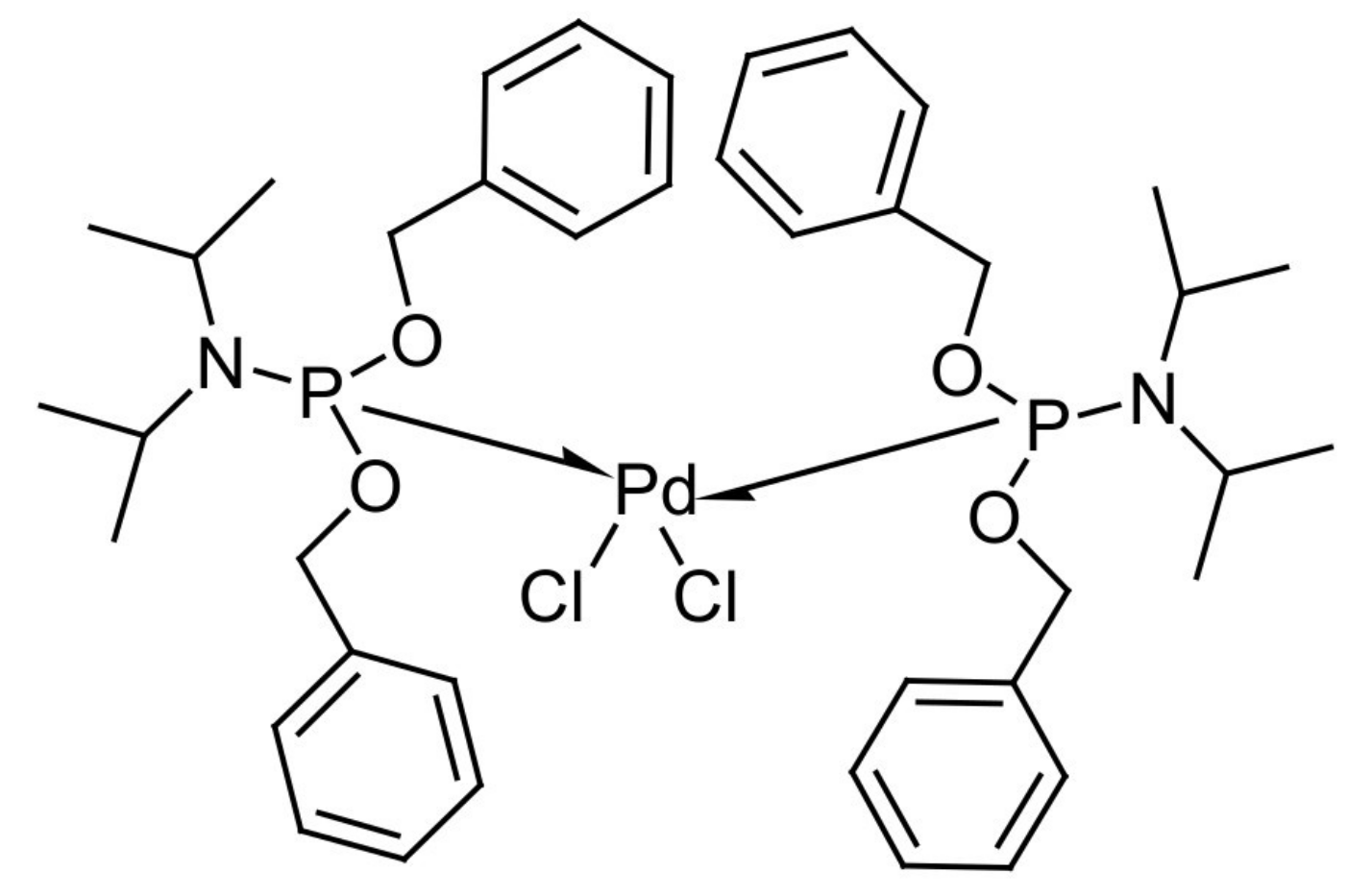
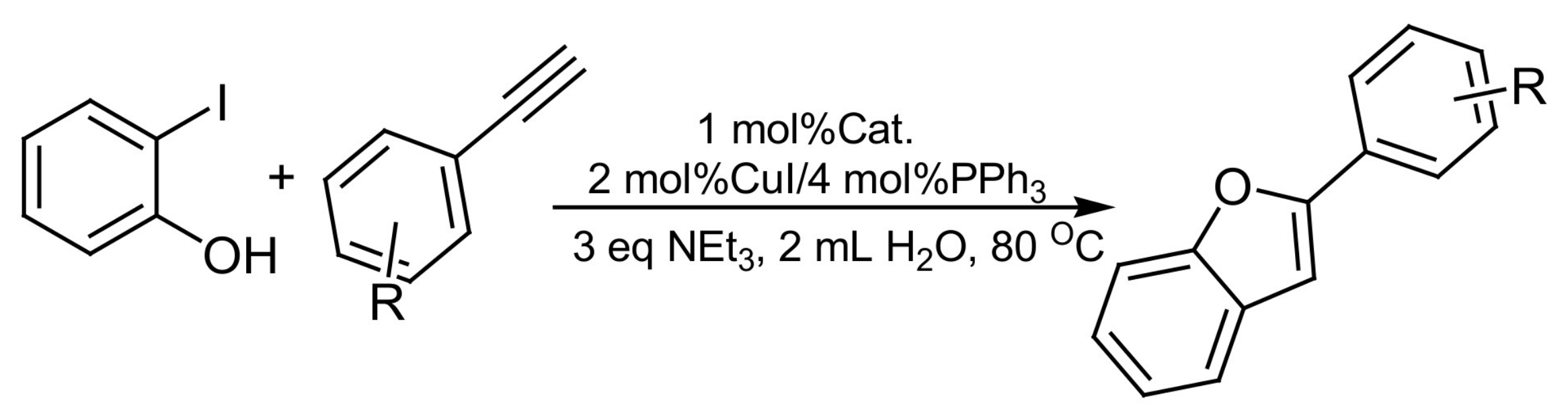
Compounds which contain 2-substituted benzo[b]furan frameworks have been found in applications in areas ranging from pharmaceuticals to natural products owing to their various biological activities, such as antibacterial [1], antifungal [2], antitumor [3], antiviral [4], anti-inflammatory [5], antioxidant [6], and antiradical activities [7]. Various methods [8,9,10,11,12,13,14] have been developed for the synthesis of 2-substituted benzo[b]furan derivatives. Pd-catalyzed one-pot synthesis of benzo[b]furans from 2-halophenols and terminal alkynes by a Sonogashira coupling-cyclization sequence is aclassical, useful, and reliable method [10,11,15,16,17]. Typically, this reaction is performed using a palladium catalyst in the presence of a copper salt as a co-catalyst [18,19,20]. However, most of these reactions are carried out in organic solvents and only several reactions on the synthesis of 2-substituted benzo[b]fuans are performed in water [19,21,22]. However, in the reactions which occurred in water, there are disadvantages, such as low isolated yield [21] and high loading of the palladium catalyst [19,22]. Hence, there is still need to develop a catalytic system performed in water with high yield and low loading of the palladium catalyst. Our group has recently synthesized and characterized a new palladium(II) complex(1) (Figure 1) via single-crystal X-ray crystallography. Owing to the inertness of the palladium(II) complex(1) towards oxygen and moisture, it has been used as catalyst in an aerobic coupling reaction [23]. Herein, we wish to report the use of a new Pd(II)/CuI co-catalytic system for the highly efficient synthesis of 2-substituted benzo[b]furans via coupling-cyclization reactions of 2-iodophenol with terminal alkynes in water under air conditions (Scheme 1).
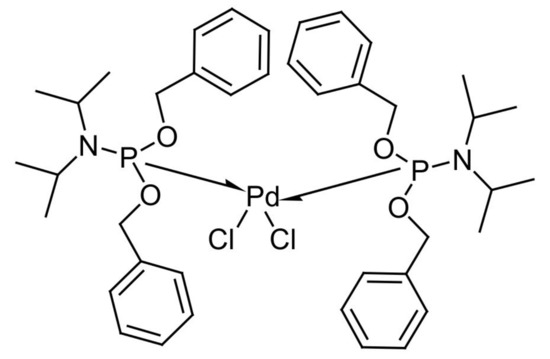
Figure 1.
The palladium(II) complex(1).
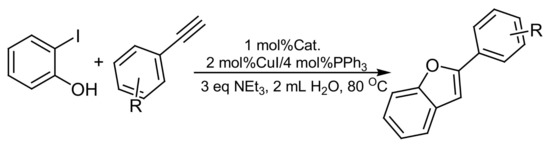
Scheme 1.
2-substituted benzo[b]furans synthesis.
2. Results and Discussion
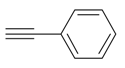
In our initial experiments, we observed that the coupling of 2-iodophenol (0.5 mmol, 1a) with phenylacetylene (0.6 mmol, 2a) in the presence of Pd(II) complex(1) (1 mol %)/CuI (2 mol %) and NEt3 (1.5 mmol) in water (2 mL) at 80 °C for 4 h proceeded to give the desired product 3a in a moderate isolated yield (51%) (Table 1, entry 1). In the same condition, after addition of the traditional ligand PPh3 (2 mol %), the yield was up to 60% (entry 2). This observation prompted us to investigate the effects of different loadings of the ligand PPh3 on the reaction, finding that the yield was increased to 97% in the presence of PPh3 (4 mol %) as a ligand (entry 3). In the following experiments, we further investigated the impacts of different amounts of CuI and different bases on the yields. Consequently, we found that no product 3a was detected in the absence of CuI (entry 6). However, when 1 mol %CuI was used as a co-catalyst, the yield was obviously enhanced to 66% (entry 7). Compared to entries 1 and 3, the results show that both co-catalyst CuI and ligand PPh3 play important roles in this protocol. As for the effects of base on the reaction, we discovered that the yield of product 3a was 28%, 19%, 21%, and 31% when using Cs2CO3, KOH, NaOH, and t-BuOH as a base, respectively (entries 10–12,15), and only a trace yield of product 3a in the presence of pyridine or K2CO3 as bases (entries 13–14). In comparison with entry 3, it is presumed that triethylamine functions not only as a base, but also as a co-solvent to help the organic substrates to disperse in water. We continued to examine the influence of time and temperature on the yields. As can be seen in Table 1, the desired product 3a was obtained in a higher yield of 97% at 80 °C, but in a lower yield of 70% at 60 °C (entry 19). With a slightly higher temperature, the yields were close to those obtained at 80 °C (entries 20–21). Prolonging the reaction time from 2 h to 4 h, the yields range from 90% to 97% (entries 16,3). In addition, the palladium-catalyzed ligand-free coupling-cyclization of 2-iodophenol with terminal alkynes in water was also tested. Using PdCl2, Pd(OAc)2 instead of palladium(II) complex(1) as the catalyst, respectively, only moderate yields of 53% and 51% were achieved (entries 23–24). In a word, the best yield was obtained to perform the reaction in the presence of 1 mol %Pd(II) complex catalyst (1), 2 mol % CuI, and 4 mol % PPh3 using triethylamine as a base at 80 °C for 4 h under air conditions in water.

Table 1.
Optimization of reaction conditions a. 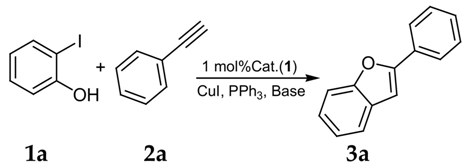
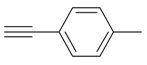
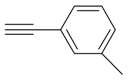
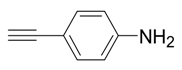
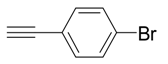
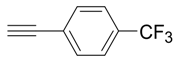
Encouraged by the efficiency of the reaction protocol described above, we expanded the substrate scopes. The reactions of a variety of aromatic terminal alkynes with 2-iodophenol were tested to obtain the corresponding 2-phenylbenzo[b]furan derivatives in good to excellent yields under the optimized conditions. The results are summarized in Table 2. As we can see from Table 2, the reactions of various aromatic acetylenes with electron-donating groups on aromatic rings, such as methyl, methoxy, and butyl gave almost the same high yields (87–96%) (entries 2–6). Additionally, no significant difference was observed in yields at the same reaction conditions when the effect of different positions of the substituent groups on aromatic rings was studied (entries 2–4,7–8). In addition, when aromatic acetylenes with electron-withdrawing groups on aromatic rings reacted with 2-iodophenol under optimized conditions, the yields of the desired products were also up to 80% (entries 9–10).
Table 2.
Scope of the reaction with respect to aromatic acetylenes a. 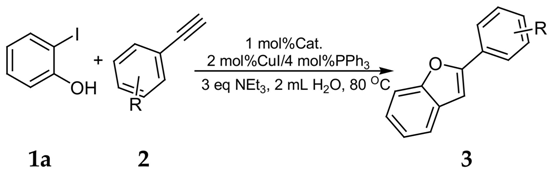
3. Materials and Methods
3.1. Reagents and Machine
The Pd(II) complex catalyst (1) was prepared according to a procedure reported in the literature [23]. Aromatic acetylene derivatives were obtained commercially from J&K Chemical Technology (Shanghai, China) and CCIS-CHEM (Shanghai, China). All reagents employed in the reaction were analytical grade, and other chemicals were obtained commercially and used without any prior purification. All products were isolated using thin-layer chromatography (Qingdao Haiyang Chemical CO, Ltd., Qingdao, China) with GF254 silica gel using hexane and ethyl acetate unless otherwise noted. Products described in the literature were characterized using 1H-NMR and 13C-NMR spectra and compared with previously-reported data. 1H-NMR and 13C-NMR spectra were recorded with a Bruker Avance II 400 spectrometer (Fallanden, Switzerland) using tetramethylsilane as the internal standard and CDCl3 as the solvent.
3.2. General Experimental Procedure for the Coupling-Cyclization Reaction of 2-Iodophenol with Various Aromatic Acetylenes
All reactions were carried out under air conditions. A mixture of 2-iodophenol (0.5 mmol), aromatic acetylene (0.6 mmol), Pd(II) complex catalyst (1) (1 mol %), CuI (2 mol %), PPh3 (4 mol %), triethylamine (1.5 mmol), and water (2 mL) was stirred at 80 °C for 4 h and then extracted with ethyl acetate (3 × 15 mL). The combined organic phase was dried with anhydrous Na2SO4, filtrated, and then the solvent was removed by a rotary evaporator. The product was isolated by thin-layer chromatography. The purified products were identified by 1H-NMR and 13C-NMR spectroscopy.
3.3. Analytical Data of Products (Supplementary Materials)
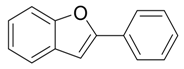
2-Phenyl-benzofuran (3a): White solid (melting point = 121 °C, Ref. [24] 119–120 °C). 1H-NMR (400 MHz, CDCl3): δ 7.87–7.84 (m, 2H), 7.58–7.56 (m, 1H), 7.53–7.50 (m, 1H), 7.45–7.41 (m, 2H), 7.36–7.31 (m, 1H), 7.29–7.25 (m, 1H), 7.23–7.20 (m, 1H), 7.01 (s, 1H); 13C-NMR (101 MHz, CDCl3): δ 155.9, 154.9, 130.5, 129.2, 128.8, 128.6, 124.9, 124.3, 122.9, 120.9, 111.2, 101.3.
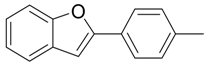
2-p-Tolyl-benzofuran (3b): Yellow solid (melting point = 128 °C, Ref. [25] 127 °C). 1H-NMR (400 MHz, CDCl3): δ 7.76–7.74 (m, 2H), 7.56–7.54 (m, 1H), 7.51–7.49 (m, 1H), 7.26–7.20 (m, 4H), 6.95 (s, 1H), 2.38 (s, 3H); 13C-NMR (101 MHz, CDCl3): δ 156.2, 154.8, 138.6, 132.4, 129.5, 127.8, 124.9, 124.0, 122.9, 120.8, 111.1, 100.6, 21.4.
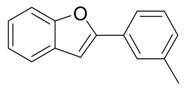
2-m-Tolyl-benzofuran (3c): Yellow solid (melting point = 75 °C, Ref. [25] 76 °C). 1H-NMR (400 MHz, CDCl3): δ 7.57–7.52 (m, 2H), 7.45–7.43 (m, 1H), 7.41–7.39 (m, 1H), 7.22–7.19 (m, 1H), 7.17–7.15 (m, 1H), 7.13–7.09 (m, 1H), 7.04–7.02 (m, 1H), 6.86 (d, J = 4 Hz, 1H), 2.29 (s, 3H); 13C-NMR (101 MHz, CDCl3): δ 155.0, 153.8, 137.3, 129.3, 128.3, 128.1, 127.6, 124.4, 123.1, 121.8, 121.0, 119.8, 110.1, 100.1, 20.4.
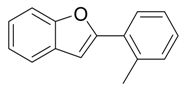
2-o-Tolyl-benzofuran (3d): Yellow oil liquid. 1H-NMR (400 MHz, CDCl3): δ 7.82–7.80 (d, J = 8 Hz, 1H), 7.55–7.53 (d, J = 8 Hz, 1H), 7.49–7.47 (d, J = 8 Hz, 1H), 7.26–7.17 (m, 5H), 6.81 (s, 1H), 2.51 (s, 3H); 13C-NMR (101 MHz, CDCl3): δ 154.5, 153.2, 134.6, 130.1, 128.8, 128.1, 127.3, 127.0, 124.9, 123.1, 121.7, 119.8, 109.9, 104.0, 20.8.
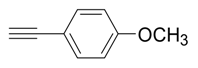
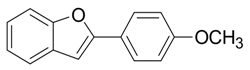
2-(4-Methoxy-phenyl)-benzofuran (3e): White solid (melting point = 152 °C, Ref. [25] 149–150 °C). 1H-NMR (400 MHz, CDCl3): δ 7.78–7.76 (d, J = 8 Hz, 2H), 7.54–7.52 (m, 1H), 7.50–7.47 (m, 1H), 7.26–7.18 (m, 2H), 6.96–6.93 (d, J = 12 Hz, 2H), 6.85 (s, 1H), 3.82 (s, 3H); 13C-NMR (101 MHz, CDCl3): δ 160.0, 156.1, 154.7, 129.5, 126.5, 123.8, 123.4, 122.9, 120.6, 114.3, 111.0, 99.7, 55.4.
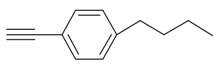
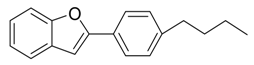
2-(4-Butyl-phenyl)-benzofuran (3f): Yellow solid (melting point = 64 °C). 1H-NMR (400 MHz, CDCl3): δ 7.66–7.62 (m, 2H), 7.43–7.37 (m, 2H), 7.15–7.06 (m, 4H), 6.80 (s, 1H), 2.52–2.48 (t, J = 8 Hz, 2H), 1.53–1.45 (m, 2H), 1.27–1.22 (m, 2H), 0.84–0.80 (t, J = 8 Hz, 3H); 13C-NMR (101 MHz, CDCl3): δ 155.1, 153.7, 142.5, 128.3, 127.8, 126.9, 123.8, 122.9, 121.8, 119.7, 110.0, 99.5, 34.4, 32.4, 21.3, 12.3.
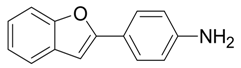
4-Benzofuran-2-yl-phenylamine (3g): Yellow solid (melting point = 148 °C, Ref. [25] 149–151 °C). 1H-NMR (400 MHz, CDCl3): δ 7.66–7.64 (d, J = 8 Hz, 2H), 7.52–7.50 (m, 1H), 7.48–7.46 (m, 1H), 7.23–7.16 (m, 2H), 6.79 (s, 1H), 6.71–6.69 (d, J = 8 Hz, 2H), 3.75 (s, 2H); 13C-NMR (101 MHz, CDCl3): δ 156.7, 154.6, 147.0, 129.3, 126.4, 123.4, 122.8, 121.1, 120.4, 115.1, 110.9, 98.6.
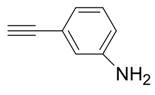
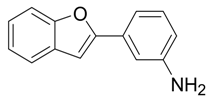
3-Benzofuran-2-yl-phenylamine (3h): Yellow solid (melting point = 124 °C, Ref. [25] 124–126 °C). 1H-NMR (400 MHz, CDCl3): δ 7.57–7.55 (d, J = 8 Hz, 1H), 7.51–7.49 (d, J = 8 Hz, 1H), 7.29–7.19 (m, 5H), 6.96 (s, 1H), 6.67–6.65 (d, J = 8Hz, 1H), 3.74 (s, 2H); 13C-NMR (101 MHz, CDCl3): δ 156.1, 154.8, 146.8, 131.4, 129.8, 129.3, 124.2, 122.9, 120.9, 115.5, 115.4, 111.3, 111.1, 101.3.
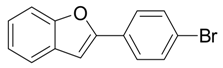
2-(4-Bromo-phenyl)-benzouran (3i): Yellow solid (melting point = 161 °C, Ref. [25] 159–160 °C). 1H-NMR (400 MHz, CDCl3): δ 7.72–7.69 (m, 2H), 7.58–7.56 (m, 2H), 7.55 (s, 1H), 7.51–7.49 (d, J = 8 Hz, 1H), 7.31–7.27 (m, 1H), 7.25–7.21 (m, 1H), 7.00 (s, 1H); 13C-NMR (101 MHz, CDCl3): δ 154.9, 154.8, 132.0, 129.4, 129.0, 126.4, 124.6, 123.1, 122.5, 121.0, 111.2, 101.9.
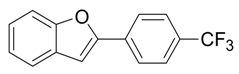
2-(4-Trifluoromethyl-phenyl)-benzofuran (3j): White solid (melting point = 164 °C, Ref. [26] 162–164 °C). 1H-NMR (400 MHz, CDCl3): δ 7.95–7.93 (d, J = 8 Hz, 2H), 7.69–7.67 (d, J = 8 Hz, 2H), 7.61–7.59 (d, J = 8 Hz, 1H), 7.54–7.52 (d, J = 8 Hz, 1H), 7.35–7.30 (m, 1H), 7.27–7.23 (m, 1H), 7.11 (s, 1H); 13C-NMR (101 MHz, CDCl3): δ 155.1, 154.2, 133.7, 130.3, 129.9, 128.8, 125.4, 125.1, 124.9, 123.3, 122.7, 121.3, 111.4, 103.3.
4. Conclusions
In summary, we have developed a new and efficient Pd(II)/CuI co-catalytic system for the coupling and cyclization of 2-iodophenol with various aromatic acetylenes. It is noteworthy that our protocol employs a relatively low-palladium catalyst loading in water under air conditions to obtain the desired products in good to excellent yields. Currently, further efforts to study the mechanism and apply the new approach in other transformations are under way in our laboratory.
Supplementary Materials
Supplementary materials are available online at http://www.mdpi.com/2073-4344/8/4/136/s1.
Acknowledgments
We gratefully acknowledge financial support of this work by the National Natural Science Foundation of China (no. 21363026) and the Scientific and Technological Landing Project of Higher Education of Jiangxi Province (no. KJLD13091).
Author Contributions
M.G. conceived and designed the experiments; P.J. performed the experiments; L.F., Y.W. and X.S. analyzed the data; L.Z. contributed analysis tools; and P.J. wrote the paper.
Conflicts of Interest
The authors declare no conflict of interest.
References
- Takasugi, M.; Nagao, S.; Masamune, T.; Shirata, A.; Takahashi, K. Structures of moracins E, F, G, and H, new phytoalexins from diseased mulberry. Tetrahedron Lett. 1979, 20, 4675–4678. [Google Scholar] [CrossRef]
- Pacher, T.; Seger, C.; Engelmeier, D.; Vajrodaya, S.; Hofer, O.; Greger, H. Antifungal stilbenoids from Stemonacollinsae. J. Nat. Prod. 2002, 65, 820–827. [Google Scholar] [CrossRef] [PubMed]
- Wine-Show, S.; lan-Lih, T.; Teng, C.M.; Chen, I.S. Nor-neolignan and phenyl propanoid from Zanthoxylumailanthoides. Phytochemistry 1994, 36, 213–215. [Google Scholar] [CrossRef]
- Jenab, M.; Thompson, L.U. The influence of flaxseed and lignans on colon carcinogenesis and β-glucuronidase activity. Carcinogenesis 1996, 17, 1343–1348. [Google Scholar] [CrossRef] [PubMed]
- Iwasaki, T.; Kondo, K.; Kuroda, T.; Moritani, Y.; Yamagata, S.; Sugiura, M.; Kikkawa, H.; Kaminuma, O.; Ikezawa, K. Novel Selective PDE IV Inhibitors as Antiasthmatic Agents. Synthesis and Biological Activities of a Series of 1-Aryl-2,3-bis(hydroxymethyl)naphthalene Lignans. J. Med. Chem. 1996, 39, 2696–2704. [Google Scholar] [CrossRef] [PubMed]
- Gordaliza, M.; Castro, M.; Corral, J.M.; Lopez-Vazquez, M.; Feliciano, A.S.; Faircloth, G.T. In vivo immunosuppressive activity of some cyclolignans. Bioorg. Med. Chem. Lett. 1997, 7, 2781–2786. [Google Scholar] [CrossRef]
- Zacchino, S.; Rodriguez, G.; Pezzenati, G.; Orellana, G. In vitro evaluation of antifungal properties of 8.O.4′-neolignans. J. Nat. Prod. 1997, 60, 659–662. [Google Scholar] [CrossRef] [PubMed]
- Dupont, R.; Cotelle, P. An expeditious synthesis of polyhydroxylated 2-arylbenzo[b]furans. Tetrahedron 2001, 57, 5585–5589. [Google Scholar] [CrossRef]
- Johnson, F.; Subramanian, R. Cheminform Abstract: Halocarbon Chemistry. Part 3. Ortho Metallation-Induced Cyclization of Acetylenes: One-Flask Synthesis of 2,3-Disubstituted Benzofurans, Thianaphthenes, and Indoles. Cheminform 1987, 18, 393–399. [Google Scholar] [CrossRef]
- Moure, M.J.; Sanmartin, R.; Dominguez, E. Copper Pincer Complexes as Advantageous Catalysts for the Heteroannulation of ortho-Halophenols and Alkynes. Adv. Synth. Catal. 2014, 356, 2070–2080. [Google Scholar] [CrossRef]
- Zanardi, A.; Mata, J.A.; Peris, E. Domino Approach to Benzofurans by the Sequential Sonogashira/Hydroalkoxylation Couplings Catalyzed by New N-Heterocyclic-Carbene-Palladium Complexes. Organometallics 2009, 28, 4335–4339. [Google Scholar] [CrossRef]
- Sun, S.X.; Wang, J.J.; Xu, Z.J.; Cao, L.Y.; Shi, Z.F.; Zhang, H.L. Highly efficient heterogeneous synthesis of benzofurans under aqueous condition. Tetrahedron 2014, 70, 3798–3806. [Google Scholar] [CrossRef]
- Hudson, R.; Bizier, N.P.; Esdale, K.N.; Katz, J.L. Synthesis of indoles, benzofurans, and related heterocycles via an acetylene-activated SNAr/intramolecular cyclization cascade sequence in water or DMSO. Org. Biomol. Chem. 2015, 13, 2273–2284. [Google Scholar] [CrossRef] [PubMed]
- Ortega, N.; Urban, S.; Beiring, B.; Glorius, F. Ruthenium NHC Catalyzed Highly Asymmetric Hydrogenation of Benzofurans. Angew. Chem. Int. Ed. 2012, 51, 1710–1713. [Google Scholar] [CrossRef] [PubMed]
- Bates, C.G.; Saejueng, P.; Murphy, J.M.; Venkataraman, D. Synthesis of 2-Arylbenzo[b]furans via Copper(I)-Catalyzed Coupling of o-Iodophenols and Aryl Acetylenes. Org. Lett. 2002, 4, 4727–4729. [Google Scholar] [CrossRef] [PubMed]
- Wang, R.; Mo, S.; Lu, Y.; Shen, Z. Domino Sonogashira Coupling/Cyclization Reaction Catalyzed by Copper and ppb Levels of Palladium: A Concise Route to Indoles and Benzo[b]furans. Adv. Synth. Catal. 2011, 353, 713–718. [Google Scholar] [CrossRef]
- Arcadi, A.; Blesi, F.; Cacchi, S.; Fabrizi, G.; Goggiamani, A.; Marinelli, F. Multisubstitutedbenzo[b]furans through a copper- and/or palladium-catalyzed assembly and functionalization process. Tetrahedron 2013, 69, 1857–1871. [Google Scholar] [CrossRef]
- Arcadi, A.; Marinelli, F.; Cacchi, S. Palladium-Catalyzed Reaction of 2-Hydroxyaryl and Hydroxyheteroaryl Halides with 1-Alkynes: An Improved Route to the Benzo[b]furan Ring System. Synthesis 1986, 9, 749–751. [Google Scholar] [CrossRef]
- Pal, M.; Subramanian, V.; Yeleswarapu, K.R. Pd/C mediated synthesis of 2-substituted benzo[b]furans/nitrobenzo[b]furans in water. Tetrahedron 2003, 44, 8221–8225. [Google Scholar] [CrossRef]
- Bochicchio, A.; Chiummiento, L.; Funicello, M.; Lopardo, M.T.; Lupattelli, P. Efficient synthesis of 5-nitro-benzo[b]furans via 2-bromo-4-nitro-phenyl acetates. Tetrahedron Lett. 2010, 51, 2824–2827. [Google Scholar] [CrossRef]
- Gil-Molto, J.; Najera, C. Palladium(II) Chloride and a (Dipyridin-2-ylmethyl)amine-Derived Palladium(II) Chloride Complex as Highly Efficient Catalysts for the Synthesis of Alkynes in Water or in NMP and of Diynes in the Absence of Reoxidant. Eur. J. Org. Chem. 2005, 4073–4081. [Google Scholar] [CrossRef]
- Ghosh, S.; Das, J.; Saikh, F. A new synthesis of 2-aryl/alkylbenzofurans by visible light stimulated intermolecular Sonogashira coupling and cyclization reaction in water. Tetrahedron Lett. 2012, 53, 5883–5886. [Google Scholar] [CrossRef]
- Guo, M.P.; Zhang, Q.C. An inexpensive and highly stable palladium(II) complex for room temperature Suzuki coupling reactions under ambient atmosphere. Tetrahedron Lett. 2009, 50, 1965–1968. [Google Scholar] [CrossRef]
- Wang, X.; Liu, M.; Xu, L.; Wang, Q.; Chen, J.; Ding, J.; Wu, H. Palladium-Catalyzed Addition of Potassium Aryltrifluoroborates to Aliphatic Nitriles: Synthesis of Alkyl Aryl Ketones, Diketone Compounds, and 2-Arylbenzo[b]furans. J. Org. Chem. 2013, 78, 5273–5281. [Google Scholar] [CrossRef] [PubMed]
- Mandali, P.K.; Chand, D.K. Palladium Nanoparticles Catalyzed Synthesis of Benzofurans by a Domino Approach. Synthesis 2015, 47, 1661–1668. [Google Scholar]
- Pauli, L.; Tannert, R.; Scheil, R.; Pfaltz, A. Asymmetric Hydrogenation of Furans and Benzofurans with Iridium-Pyridine-Phosphinite Catalysts. Chem. Eur. J. 2015, 21, 1482–1487. [Google Scholar] [CrossRef] [PubMed]

© 2018 by the authors. Licensee MDPI, Basel, Switzerland. This article is an open access article distributed under the terms and conditions of the Creative Commons Attribution (CC BY) license (http://creativecommons.org/licenses/by/4.0/).