Abstract
The phenomenon of conservatively perturbed equilibrium (CPE) was applied to the processes of methane reforming (dry and steam reforming) and analyzed using kinetic computer simulations. This phenomenon was studied for two products, CO and H2, at different temperatures. “Unperturbed” species with inlet concentrations equal to the outlet equilibrium concentration experienced unavoidable passing through the temporary extremum (the CPE point), in this case, the maximum. Application of the CPE phenomenon to the complex catalytic methane reforming processes demonstrate two improvements: 1. Achieving the over-equilibrium product concentration. 2. This concentration is achieved at the reactor length that is much shorter than the length corresponding to the vicinity of the complete equilibrium.
1. Introduction
1.1. CPE in Chemical Kinetics
A fundamental property of chemical equilibrium is its uniqueness and stability for a given set of conditions, namely, the temperature and the total amounts of each chemical element [1]. This property implies that under these conditions, a reacting system reaches the same equilibrium composition regardless of its initial composition. The final composition, i.e., equilibrium, is unique and stable. This principle holds true for typical reactors of chemical engineering, i.e., the batch reactor (BR) and the plug flow reactor (PFR).
Experimentally, the equilibrium composition is determined as the final point of kinetic dependencies, obtained via BR or PFR studies, under the condition of the exhibition of steady-state behavior, temporal or longitudinal, respectively.
Based on this fundamental property, in chemical kinetics and engineering, a new phenomenon known as the conservatively perturbed equilibrium (CPE) was introduced, see Yablonsky et al. [2,3]. This phenomenon was described as the dynamic behavior of the complex chemical reaction in the BR/PFR reactors where some initial concentrations were taken equal to the corresponding equilibrium ones. It was found that in transient regimes, the CPE results in the unavoidable passing of the reacting system from its initial concentrations (“initial partially equilibrated state”) through a point of the concentration extremum, ultimately reaching the complete chemical equilibrium.
The distinguished CPE is one of the main phenomena of joint kinetics, i.e., a new approach developed by Yablonsky et al. [4] in the 2010s. “Joint kinetics is focused on the analysis of combinations of different kinetic dependences to find fundamental properties of kinetic behavior related to the complexity of chemical reactions”.
The CPE phenomenon can be illustrated by the simple example from [2,3]. The kinetic mass action law model relates to the linear two-step mechanism (consecutive first-order reactions) [5,6]:
In this system, the mass balance requirement is . Here, represent the initial concentration of species A, B, and C, while represent the equilibrium concentrations of corresponding species.
For this specific example, one of the initial concentrations, in the CPE experiment, either A0, B0, or C0 must be equal to the equilibrium concentration, while the other two concentrations must be perturbed from the equilibrium values. Leaving two concentrations unperturbed would ultimately leave the last concentration unaffected as well, because of the mass balance restrictions within this system. In studies of the CPE phenomenon, terms like “unperturbed concentration” and “equilibrium concentration” are used interchangeably.
Applying the perturbances from Table 1 to the two-step mechanism (1), the transient behavior of the system is exhibited:
Table 1.
Perturbed and unperturbed substances.
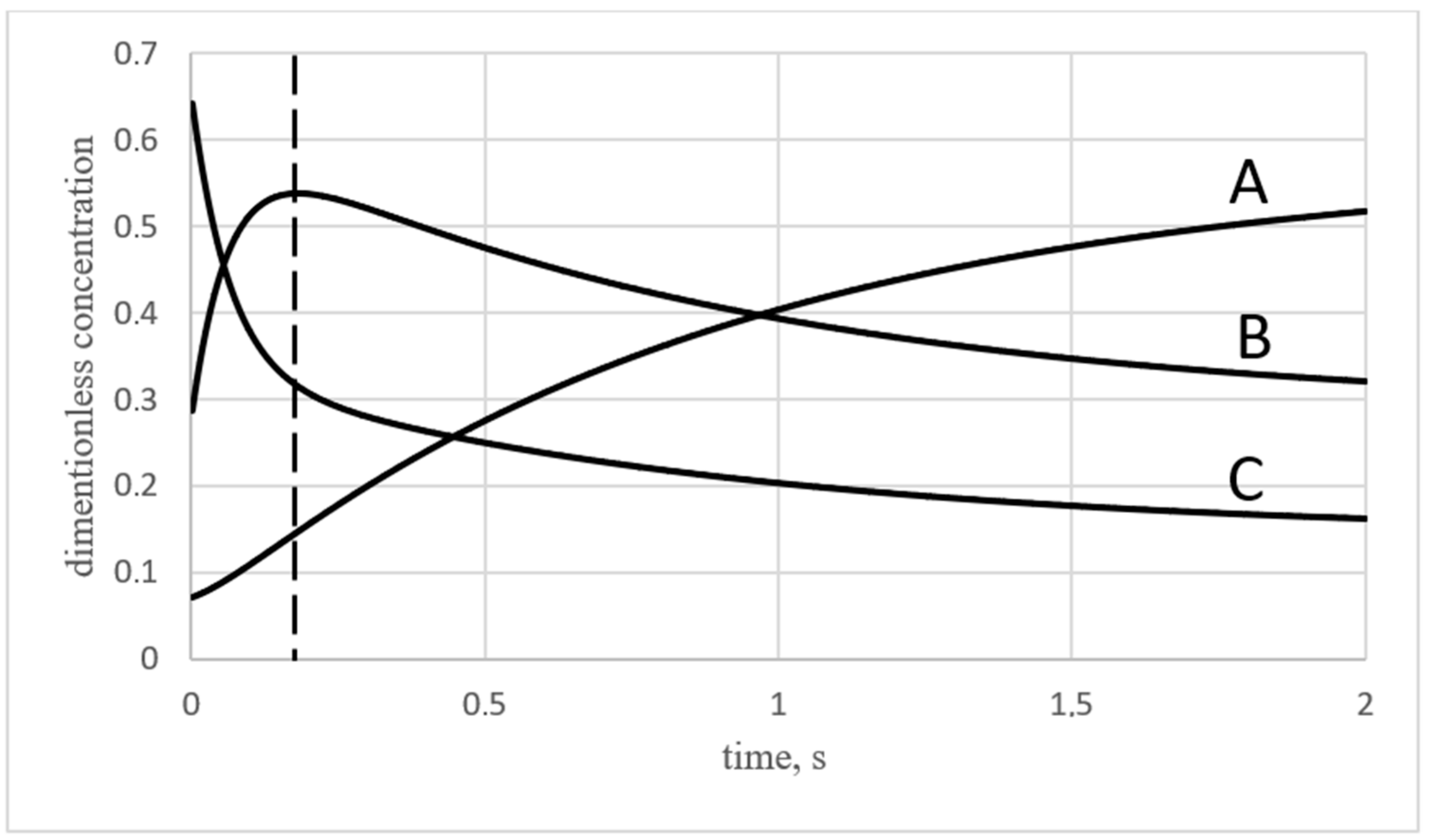
In Figure 1, the trend of all concentrations versus time is obvious as they tend to the complete equilibrium composition. This figure clearly illustrates the maximum concentration of component B. It is an over-equilibrium, i.e., a point in time, or a special position along the reactor length, where the concentration of an unperturbed component exceeds its corresponding equilibrium value. This point is marked with a dashed line. This is an important feature of the CPE regime, which can be used for intensifying catalytic processes. In many calculations [5,6], it is shown that in some domain, the magnitude of this extremum is proportional to the perturbation of initial concentration, i.e., CPE is the unavoidable and controlled phenomenon.
Figure 1.
Concentrations of A, B, and C for Δ = 0.5, B—unperturbed. . .
The general CPE experiment procedure is performed as follows:
- Determine equilibrium concentrations: The equilibrium concentration values of all species are determined at a specific temperature. This temperature is maintained during the CPE experiment.
- Choose initial concentrations: For the batch reactor, at least one species is selected, and its equilibrium concentration is used as the initial concentration. Similarly, for CSTR and PFR, at least one species is chosen, from which the inlet concentration is taken as the equilibrium value.
- Introduce perturbations: Some of the species, at least two, are chosen to have their concentration modified from the equilibrium value by some delta.
- Ensure conservation law: The perturbations are required to satisfy the conservation of chemical element amounts.
The goal of this work is to apply the CPE phenomenon to the problem of the intensification of heterogenous catalytic technology using the case of complex reforming processes as an example. This case is analyzed in an open system, i.e., in a typical PFR reactor. The analysis of kinetic dependencies is performed in terms of molar flow rates of the chosen species, under conditions of constant temperature, and constant total amount of each element in the system.
1.2. Methane Reforming Processes and CPE Application
Reforming of methane is a broad class of processes that are intensively studied in science and have wide industrial applications. This class of processes encompasses various methods aimed at converting methane (CH4) into more valuable products, such as hydrogen (H2) and carbon monoxide (CO), which are essential for various industrial applications. Here is a bit more detail on this class of processes:
- Steam reforming of methane (SRM) is the most widely used method for methane reforming. It involves reacting methane with steam in the presence of a catalyst to produce hydrogen and carbon monoxide. SMR is extensively employed for large-scale hydrogen production, which finds applications in fuel cells, chemical synthesis, and refining processes.
- Dry reforming of methane (DRM) differs from steam reforming in that it uses carbon dioxide instead of steam as the reactant. This process is particularly interesting because it can utilize two abundant greenhouse gases, methane and carbon dioxide, to produce valuable syngas (mixture of hydrogen and carbon monoxide). However, dry reforming is technically challenging due to thermodynamic constraints and the tendency for carbon formation (coking) on catalysts.
- Autothermal reforming of methane (ATR) combines elements of both steam reforming and partial oxidation. It involves reacting methane with both steam and oxygen, typically in a single reactor, with the assistance of a catalyst. ATR offers the advantages of both steam reforming (high hydrogen yield) and partial oxidation (simplicity and flexibility).
- Twenty years ago, a novel process concept called the tri-reforming of methane was proposed by Song and Pan [7]. This new process is aimed at utilizing CO2 contained in fossil fuel-based power plant flue gases without the need to separate it from the mixture. Tri-reforming of methane is a combination of three separate reforming reactions in one reacting space. These reactions include endothermic dry reforming, steam reforming, and the exothermic partial oxidation of methane. Both experiments and computational analysis performed by Song and Pan show that in addition to producing syngas (CO + H2) with desired H2/CO ratios of 1.5–2.0, tri-reforming can also reduce carbon formation—a serious problem encountered in the dry reforming process. These two advantages have been demonstrated by tri-reforming CH4 in a fixed-bed flow reactor at 850 C with supported nickel catalysts. Studies show that more than 95% CH4 conversion and 80% CO2 conversion can be achieved via tri-reforming over Ni catalysts on an oxide substrate [8]. In one of the last reviews on the tri-forming process [9,10], it is stated that steam reforming of methane (SRM) and partial oxidation of methane (POM) has been deployed at large industrial scale, while dry reforming of methane (DRM) and, more recently, tri-reforming of methane (TRM) are intensively studied. In the review, the uniqueness of TRM is determined as follows: it simultaneously combines SRM, POM, and DRM in one process and allows for overcoming several weaknesses of each individual methane reforming process: e.g., regulation of the molar ratio of H2/CO by controlling feed composition; adaptation to the variation in biogas composition as renewable resource. However, to date, the design of efficient TRM catalysts remains a challenge.
For our analysis of the CPE phenomenon, the “building block” of TRM is analyzed, i.e., two reversible reactions (dry reforming of methane (1) and steam reforming (2)) (see Table 2). Both reactions produce syngas from methane. The biggest difference between these reactions lies in the co-reactants used: CO2 for reaction (1) and steam (H2O) for reaction (2).
Table 2.
Selected reactions of methane reforming.
In our analysis, we do not include the irreversible partial methane oxidation reaction. However, in the future, it can be achieved based on the following fact: the total number of chemical elements (C, H, O) does not depend on whether this complex reaction is reversible or irreversible. Typically, the reaction of methane oxidation (POM or complete oxidation) is fast in comparison with the reactions of dry reforming or steam reforming. Let us consider the lean oxygen concentration. After completing the methane oxidation reaction, the reversible reactions remain. Obviously, the chemical equilibrium composition of this mixture at the fixed temperature will be the determined by amounts of chemical elements C, H, and O. The amount of the element O must be calculated considering the concentration of oxygen in the process of methane oxidation. However, presently, the POM process is beyond our analysis.
Therefore, only the “block” of reversible reactions, DRM and SRM, will be analyzed to illustrate the CPE phenomenon in the chemical reactor. For industrial purposes, this reactor can be used as the second stage of the two-stage reactor because the inlet concentration of one component (at least) is chosen as the equilibrium one. In this paper, modeling of only this reactor will be performed. For the first stage of the two-stage reactor, the reactor is only supplied by reactants (methane, CO2, and water), and initial concentrations of CO and H2 are negligible. Detailed modeling of the two-stage reactor of the tri-reforming process will be the subject of a separate paper.
2. Results
First simulations are intended to determine equilibrium concentrations of components at the fixed amount of each element (C, H, and O) and the fixed temperature. The temperature varies from 973.15 K to 1123.15 K at intervals of 50 K.
The initial composition is stochiometric, including only reactants:
- CO2: CO: H2: CH4: H2O = 1: 0: 0: 2: 1 (mole fractions).
- Calculated equilibrium concentrations are listed in Table 3.
Table 3. Equilibrium and perturbed molar flow rates for the CPE experiment.
In all calculations, the CO or H2 molar flow rate is left “unperturbed”. So, the initial CO or H2 molar flow rate is taken as equal to the corresponding exit value. This confirms both the basic chemical properties of the studied system and the validity of our calculations. Introduced perturbances are listed in Table 3.
Table 3 also shows that elemental balances are held constant.
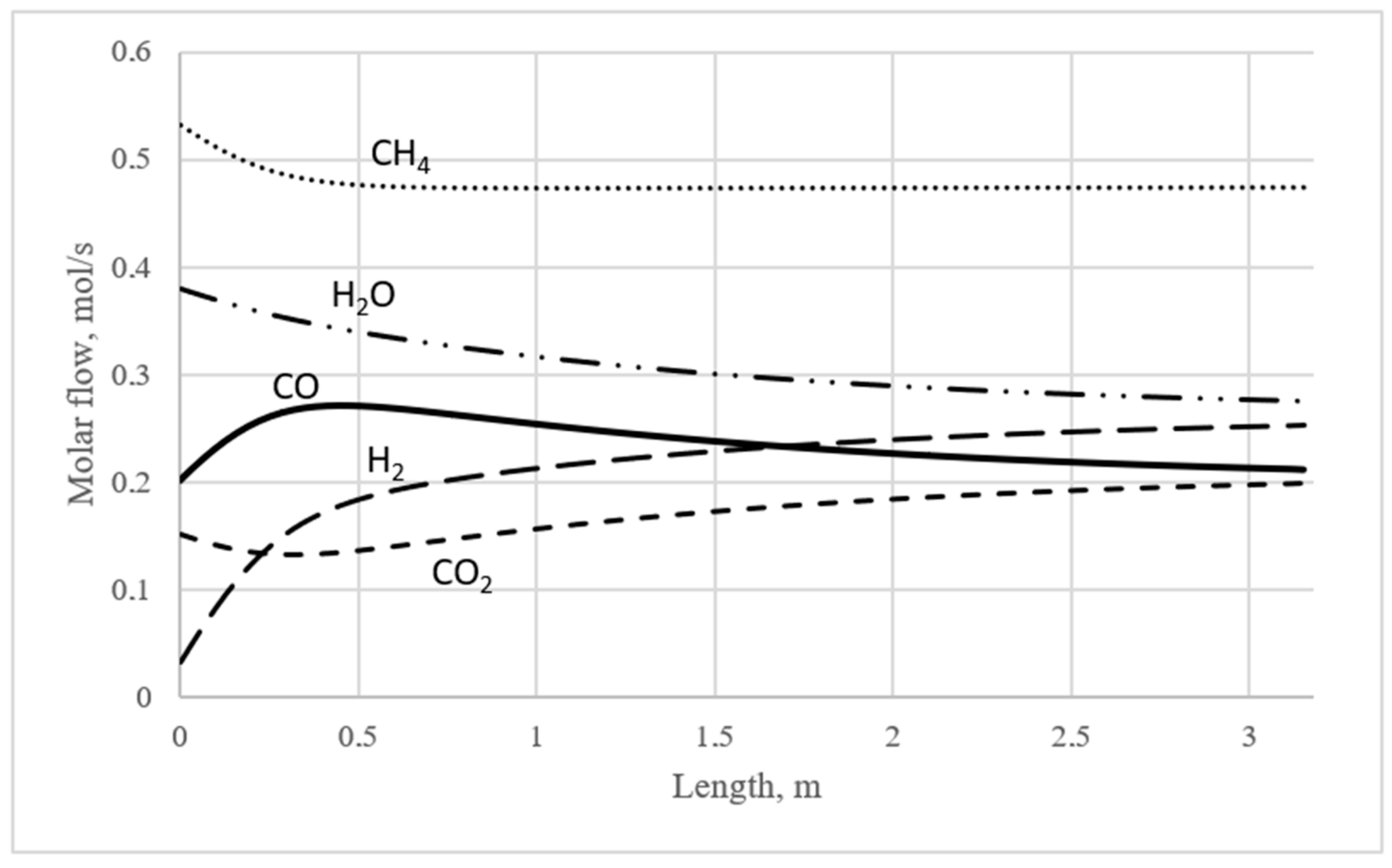
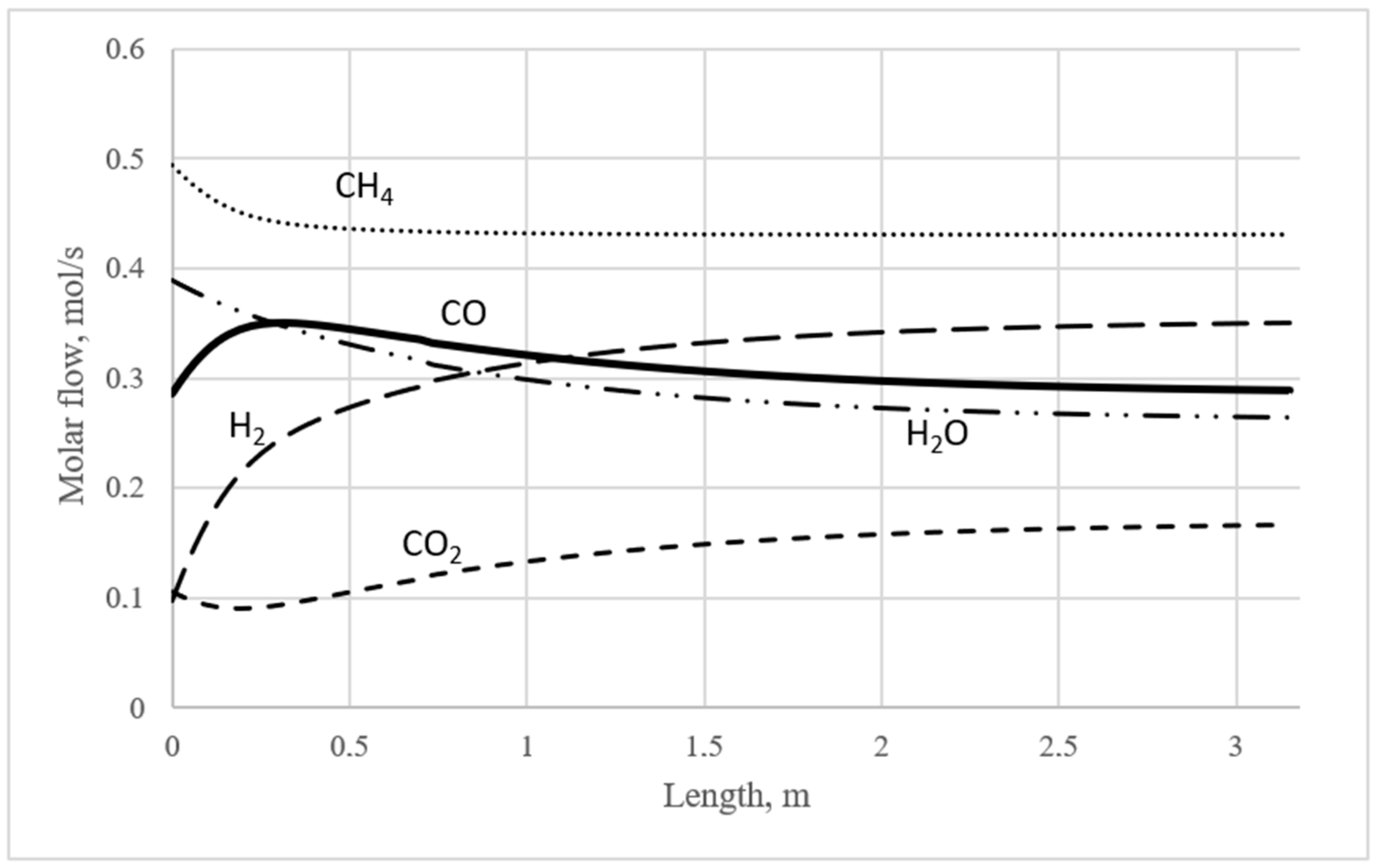
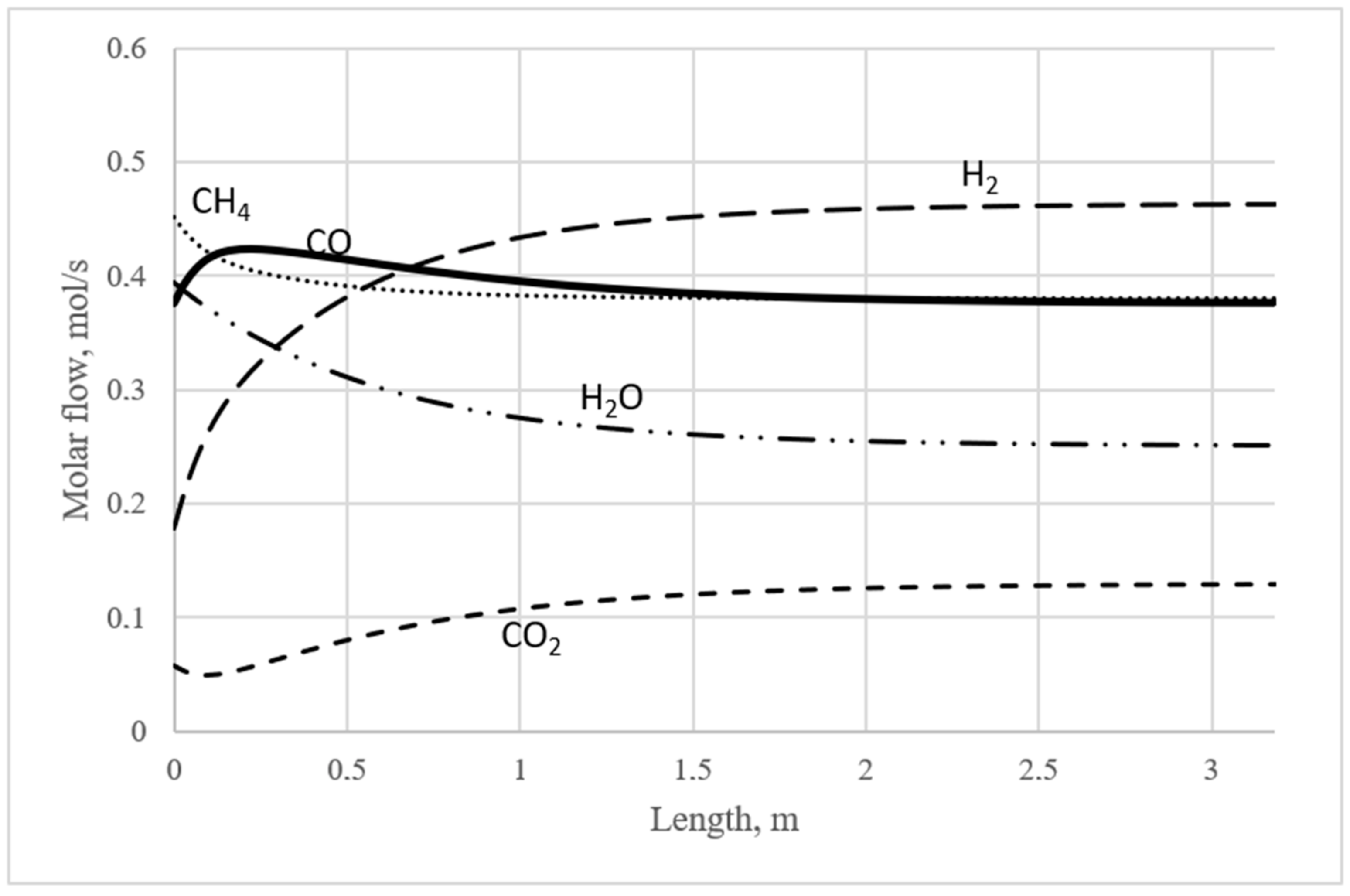
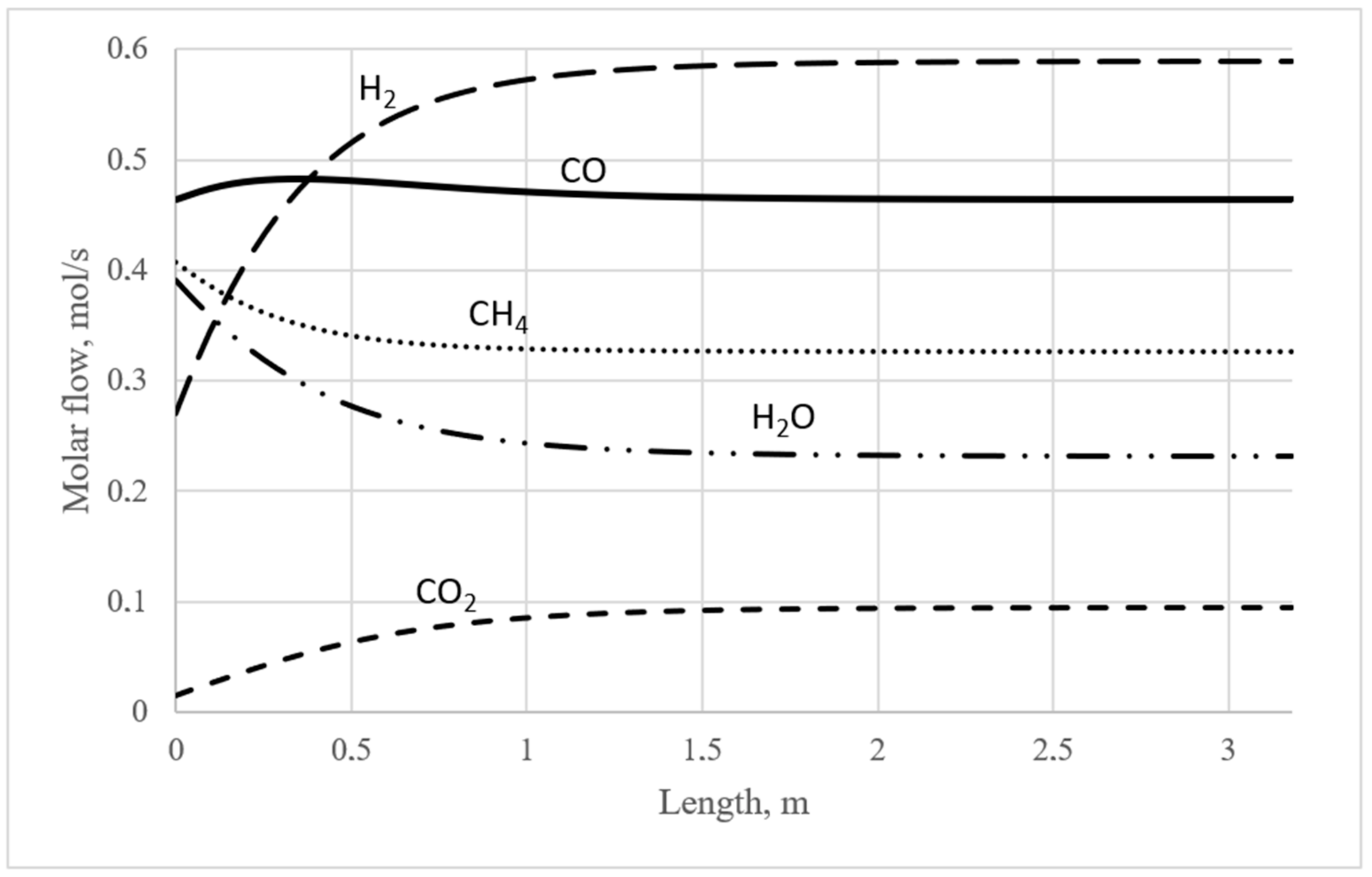
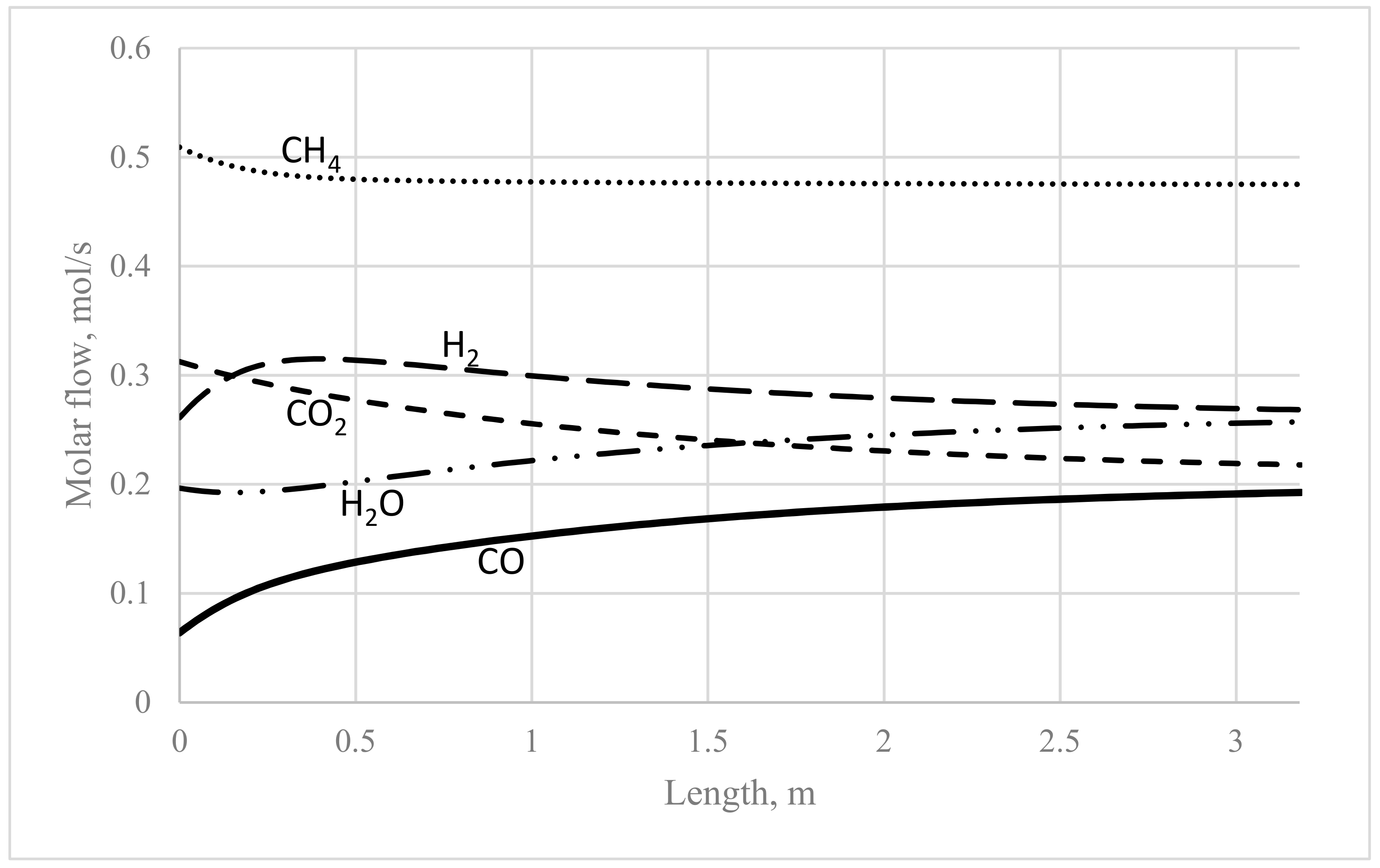
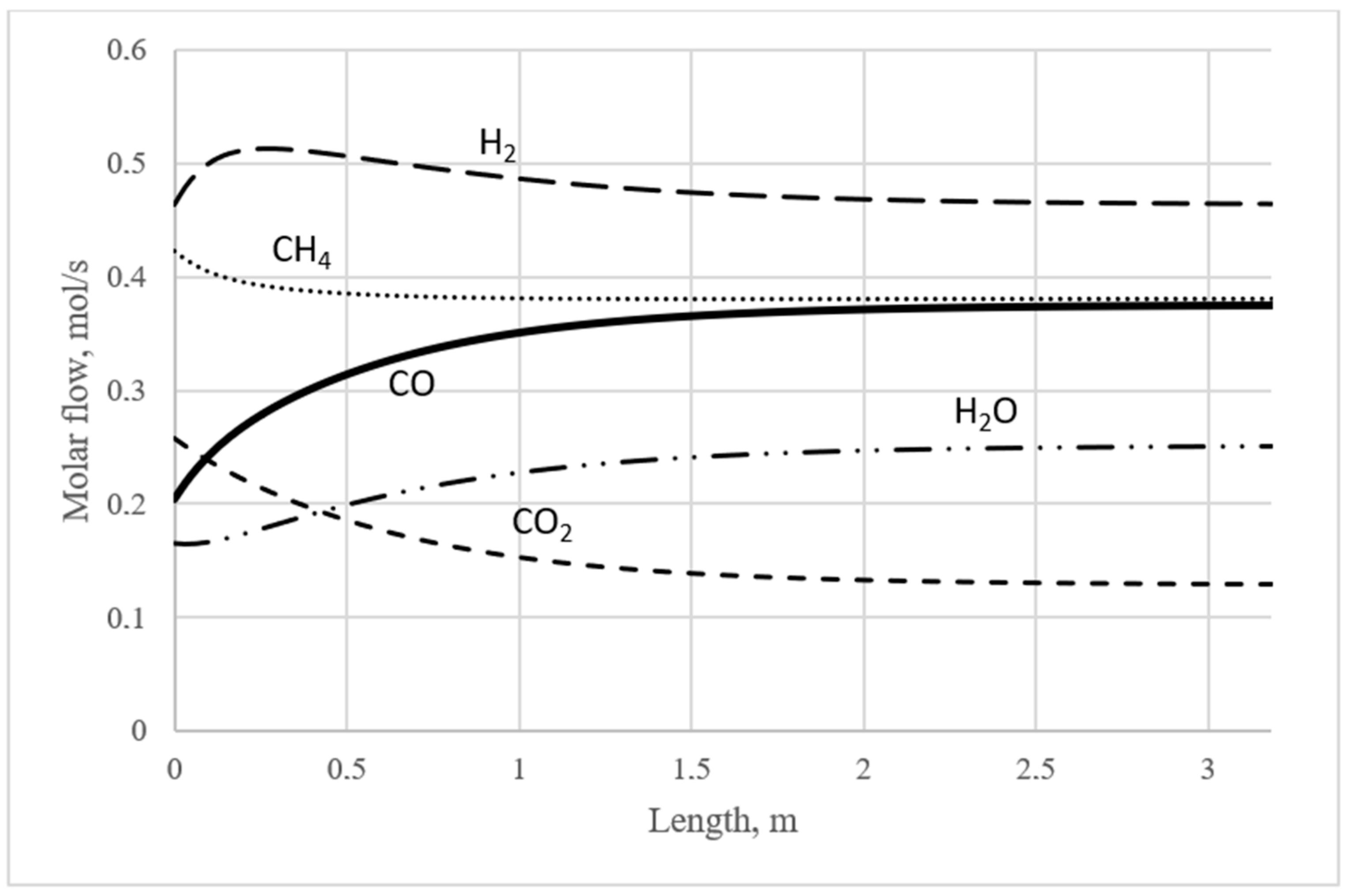
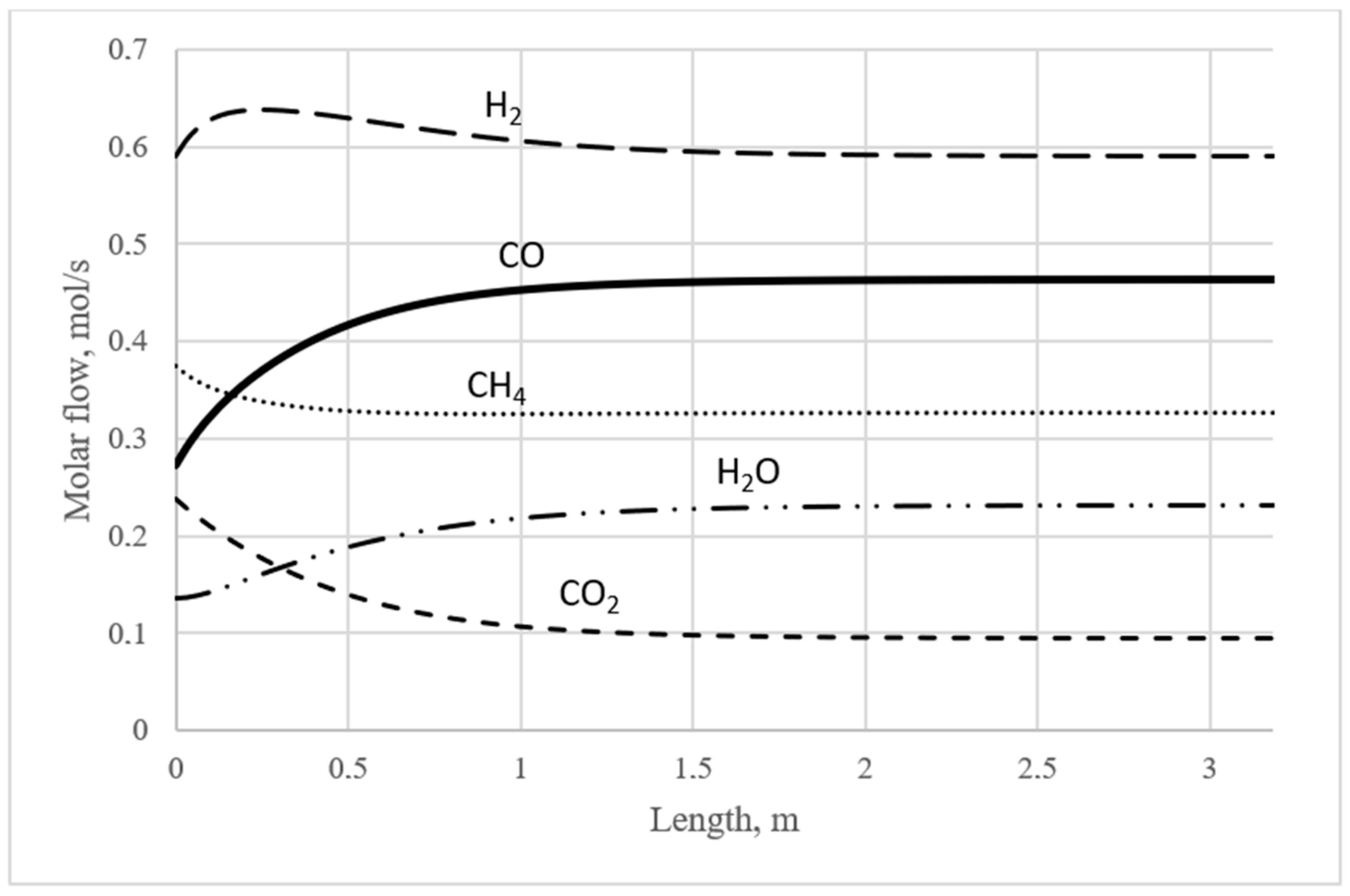
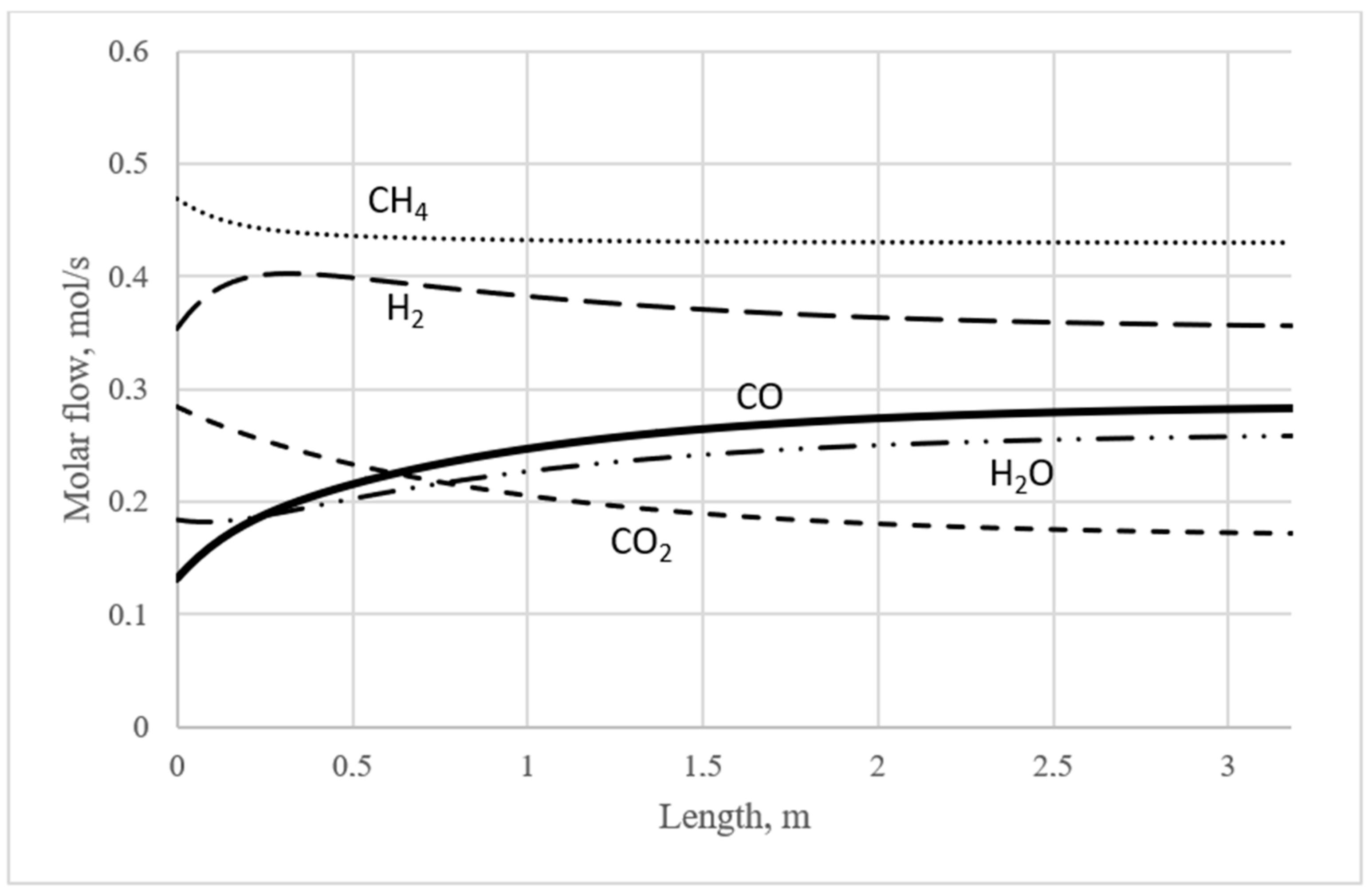
Figure 2, Figure 3, Figure 4 and Figure 5 depict molar flow profiles along the reactor length after perturbing the gas molar flow rates at the reactor inlet (see Table 3). Simultaneously, the CO molar flow rate at the inlet is maintained unperturbed, that is, kept equal to its exit value. Temperature is varied in range from 973.15 K to 1123.15 K with intervals of 50 K.
Figure 2.
Molar flow rate profile. T = 973.15 K. CO held unperturbed.
Figure 3.
Molar flow rate profile. T = 1023.15 K. CO held unperturbed.
Figure 4.
Molar flow rate profile. T = 1073.15 K. CO held unperturbed.
Figure 5.
Molar flow rate profile. T = 1123.15 K. CO held unperturbed.
It is clear from Figure 2 that CO, which is an unperturbed species, experiences a molar flow rate maximum at around 0.4 m from the reactor inlet. Also, it is worth noting that approximately at the same length in the reactor, the CO2 minimum is observed. However, the coordinates of these points are not the same, which becomes more obvious in cases with higher temperatures.
Figure 3 shows the effects of the temperature change on the parameters of the over-equilibrium point. The absolute molar flow rate at the over-equilibrium point is increased from 0.272 to 0.351 mol/s with the rise in temperature by 50 K, which is expected, as both reactions are endothermic in nature. The position of the over-equilibrium is shifted left, i.e., occurs closer to the reactor inlet. Both these changes are positive regarding the process efficiency; however, the relative maximum is lower than in the previous case (973 K).
Figure 4 depicts the effects of the temperature increase to 1073 K. This temperature regime is considered to be optimal for the tri-reforming process [11,12]. However, regarding the effect, these conditions cannot be viewed as the optimal ones. The relative over-equilibrium drops significantly from 35% for 973 K to just under 13% for 1073 K.
In the case of Figure 5, the CPE effect is obviously far from its optimal conditions: the CO flow rate maximum is very shallow, and the CO2 flow rate minimum is not present at all.
Figure 6, Figure 7, Figure 8 and Figure 9 present similar profiles, but under the circumstances where the H2 molar flow rate remains unperturbed within the range of temperatures 973.15 K to 1123.15 K at intervals of 50 K.
Figure 6.
Molar flow rate profile. T = 973.15 K. H2 held unperturbed.
Figure 7.
Molar flow rate profile. T = 1023.15 K. H2 held unperturbed.
Figure 8.
Molar flow rate profile. T = 1073.15 K. H2 held unperturbed.
Figure 9.
Molar flow rate profile. T = 1123.15 K. H2 held unperturbed.
The H2 over-equilibrium correlates with the temperature similarly to CO. One distinction is in the sensitivity of this parametric correlation: where for CO, the over-equilibrium at 973 K was well exhibited and at 1123 K it was barely visible, for H2, it was significant both at the very beginning of temperature range and at its end.
3. Discussions
As shown, in our CPE calculations, any CO profile and H2 profile are characterized by the “over-equilibrium”. This means the concentration value at the CPE point is bigger than the corresponding equilibrium value.
For assessing the CPE effect, the over-equilibrium factor β is proposed:
where ńCPE is the molar flow rate of a selected component in the CPE point and ńeq is the exit molar flow rate of the same component.
β = (ńCPE − ńeq)/ńeq
Also, it is useful to calculate the relative length/residence time at which the over-equilibrium is achieved, i.e.,:
where LCPE is the length at which the extremum of the chosen component is reached and Leq is the reactor length at which the molar flow rate of this component is located within the vicinity of its equilibrium value (±2.5%)
x = LCPE/Leq
Corresponding results for different cases are shown in Table 4.
Table 4.
Over-equilibrium (OE) parameters.
The majority of previous studies of the CPE phenomenon were performed using only linear models for better analytical understanding [2,3,5,6]. This study, on the contrary, uses non-linear real-world kinetic models. In both linear and non-linear models, it is possible to distinguish substances that participate only in single reactions and substances that participate in at least two reactions. As mentioned previously in the Introduction, in the acyclic linear sequence A↔B↔C, substances A and C participate only in reactions A↔B and B↔C, respectively. Substance B participates in both reactions A↔B and B↔C. In our non-linear case related to the kinetic model of the reforming process, CO2 and H2O participate only in the single reaction—dry and steam reforming, respectively. Species CH4, CO, and H2 participate in two reactions. Consequently, the CPE points for CO2 and H2O are momentary equilibria. Regarding CH4, CO, and H2 the CPE points are not equilibria. They present balancing between rates of different steps. So, for CPE points, the following conditions are fulfilled:
For CO2:
rdry = 0
For H2O:
rstm = 0
For CH4:
rdry + rstm = 0
For CO:
2rdry + rstm = 0
For H2:
where rdry—dry reforming reaction rate; rstm—steam reforming reaction rate.
2rdry + 3rstm = 0
From the last relationships, the following is is obvious:
For CH4:
rdry = −rstm
For CO:
2rdry = −rstm
For H2:
2rdry = −3rstm
This means that at the dry reforming and steam reforming CPE points oppose each other.
It is notable that despite these important distinctions in the nature of the reaction mechanisms, the CPE effect is still well observed for both linear and non-linear cases.
4. Modeling and It’s Methods
Modeling was performed using DWSIM ver. 8.6.8. open-source software. It provides a database of the chemical, physical, and thermodynamic properties of most components. This software allows for conducting computer experiments using a multitude of reactor models.
As mentioned, for our calculations, the plug flow reactor (PFR) model is employed, which allows for us to obtain the longitudinal concentration profiles across the reactor length/residence time.
In the literature, kinetic equations for dry and steam reforming on a nickel catalyst are presented in [13], see Table 5. These equations were used in our modeling.
Table 5.
Kinetic equations.
Kdr, Ksr—equilibrium constants for dry reforming and steam reforming, respectively; k1, k2—kinetic coefficient of the forward reaction for dry reforming and steam reforming, respectively.
The basic setup (Figure 10) in DWSIM needed for our computer experiment consists of the input stream, plug flow reactor, and output stream.
Figure 10.
Basic experimental setup in DWSIM. The parameters of the system are listed in Table 6.
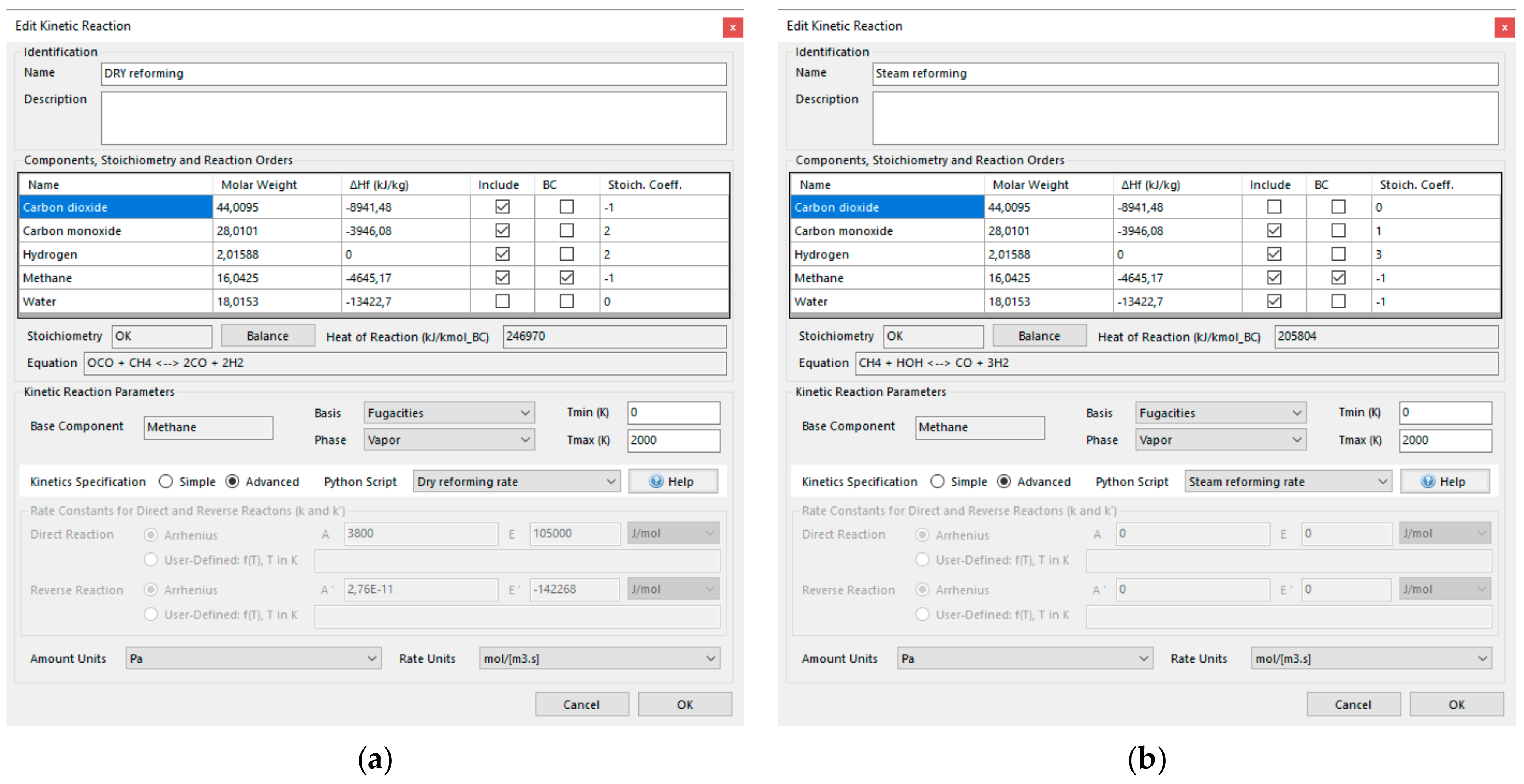
The default reaction set includes reactions from Table 5. In Figure 11, these reactions are described in detail, with all the parameters required by DWSIM ver. 8.6.8. software.
Figure 11.
Dry (a) and steam (b) reforming reaction parameters in DWSIM.
After this setup is completed, it is possible to conduct the computational CPE experiment. The only input information missing is the initial composition, which should be determined individually for each case. This process is further described in the next section.
5. Conclusions
Based on computer calculations, it is shown that the phenomenon of CPE is observed for the combination of steam and dry reforming of methane over a nickel catalyst at any temperature within the given interval (973–1123 K), and at a pressure of 10 bar.
The obtained over-equilibrium effect is well-defined. It is between 36% and 4% for CO (the low-temperature and high-temperature case, respectively) and between 21% and 8% for H2 (the low-temperature and high-temperature case, respectively). Another advantage is that this effect is achieved at a much shorter reactor length (residence time) than the complete equilibrium composition.
Obviously, these two features being combined are very attractive from an application point of view. Both CPE features can be used for developing new types of reactors and new operating regimes, which can produce higher product yields with better efficiency.
In the presented paper, based on the kinetic model by Wei and Iglesia [13], application of the CPE phenomenon to the methane reforming processes was analyzed considering two reversible reactions, DRM and SRM.
In the future, we are going to include in this analysis the irreversible reaction of partial oxidation of methane.
Also, we are going to study different configurations of the reactor setup.
Author Contributions
Conceptualization, G.S.Y. and M.O.V.; methodology, G.S.Y.; software, M.O.V.; validation, V.R.T.; resources, M.O.V.; data curation, G.S.Y.; writing—original draft preparation, M.O.V.; writing—review and editing, G.S.Y.; visualization, M.O.V.; supervision, G.S.Y. All authors have read and agreed to the published version of the manuscript.
Funding
This research received no external funding.
Data Availability Statement
Data supporting research results can be found at https://docs.google.com/spreadsheets/d/1aDE_GxFwIlaWZ7KoGqyMVZzbWxiRrZ8ey-02EYlmYtU/edit?usp=sharing (accessed on 20 June 2024).
Acknowledgments
The authors would like to express acknowledgment to Denis Constales (Ghent University) for providing mathematical consultation on this and previous studies on the subject. The authors would like to express acknowledgment to one of the reviewers of Catalysts for his creative comments.
Conflicts of Interest
The authors declare no conflicts of interest.
References
- Zel’dovich, Y.B. Selected Works of Yakov Borisovich Zeldovich: Chemical Physics and Hydrodynamics: Proof of the Uniqueness of the Solutions of the Equations of the Law of Mass Action; Princeton University Press: Princeton, NJ, USA, 2014. [Google Scholar]
- Yablonsky, G.S.; Branco, D.P.; Marin, G.B.; Constales, D. Conservatively Perturbed Equilibrium (CPE) in chemical kinetics. Chem. Eng. Sci. 2019, 196, 384–390. [Google Scholar] [CrossRef]
- Yiming, X.; Xinquan, L.; Constales, D.; Yablonsky, G.S. Perturbed and Unperturbed: Analyzing the Conservatively Perturbed Equilibrium (Linear Case). Entropy 2020, 22, 1160. [Google Scholar] [CrossRef] [PubMed]
- Yablonsky, G.S.; Gorban, A.N.; Constales, D.; Galvita, V.V.; Marin, G.B. Reciprocal relations between kinetic curves. EuroPhys. Lett. 2011, 66, 20004. [Google Scholar] [CrossRef]
- Trishch, V.R.; Beznosyk, Y.O.; Yablonsky, G.S.; Constales, D. The phenomenon of conservative perturbed equilibrium in multi-route catalytic systems, Bulletin of NTUU “Igor Sikorsky Kyiv Polytechnic Institute”. Ser. Chem. Eng. Ecol. Resour. Conserv. 2022, 3, 39–55. [Google Scholar] [CrossRef]
- Trishch, V.R.; Beznosyk, Y.O.; Yablonsky, G.S.; Constales, D. The phenomenon of conservative-perturbed equilibrium in conditions different reactors, Bulletin of NTUU “Igor Sikorsky Kyiv Polytechnic Institute”. Ser. Chem. Eng. Ecol. Resour. Conserv. 2021, 1, 38–46. [Google Scholar] [CrossRef]
- Song, C.; Pan, W. Tri-reforming of methane: A novel concept for catalytic production of industrially useful synthesis gas with desired H2/CO ratios. Catal. Today 2004, 98, 463–484. [Google Scholar] [CrossRef]
- Soleimani, S.; Lehner, M. Tri-Reforming of Methane: Thermodynamics, Operating Conditions, Reactor Technology and Efficiency Evaluation—A Review. Energies 2022, 15, 7159. [Google Scholar] [CrossRef]
- Minh, P.; Pham, X.-H.; Siang, T.J.; Vo, D.-V.N. Review on the catalytic tri-reforming of methane—Part I: Impact of operating conditions, catalyst deactivation and regeneration. Appl. Catal. A Gen. 2021, 621, 118202. [Google Scholar] [CrossRef]
- Pham, X.H.; Ashik UP, M.; Hayashi, J.I.; Alonso, A.P.; Pla, D.; Gómez, M.; Minh, D.P. Review on the catalytic tri-reforming of methane—Part II: Catalyst development. Appl. Catal. A Gen. 2021, 623, 118286. [Google Scholar] [CrossRef]
- Osat, M.; Shojaati, F. Assessing performance of methane tri-reforming reactor using a parametric study on the fundamental process variables. Clean. Chem. Eng. 2022, 3, 100050. [Google Scholar] [CrossRef]
- Lari, M.F.; Farsi, M.; Rahimpour, M.R. Modification of a tri-reforming reactor based on the feeding policy to couple with methanol and GTL units. Chem. Eng. Res. Des. 2019, 144, 107–114. [Google Scholar] [CrossRef]
- Wei, J.; Iglesia, E. Isotopic and kinetic assessment of the mechanism of reactions of CH4 with CO2 or H2O to form synthesis gas and carbon on nickel catalysts. J. Catal. 2004, 224, 370–383. [Google Scholar] [CrossRef]
Disclaimer/Publisher’s Note: The statements, opinions and data contained in all publications are solely those of the individual author(s) and contributor(s) and not of MDPI and/or the editor(s). MDPI and/or the editor(s) disclaim responsibility for any injury to people or property resulting from any ideas, methods, instructions or products referred to in the content. |
© 2024 by the authors. Licensee MDPI, Basel, Switzerland. This article is an open access article distributed under the terms and conditions of the Creative Commons Attribution (CC BY) license (https://creativecommons.org/licenses/by/4.0/).