Intraoperative Spectroscopic and Mass Spectrometric Assessment of Glioma Margins: A Systematic Review and Meta-Analysis

Simple Summary
Abstract
1. Introduction
2. Methods
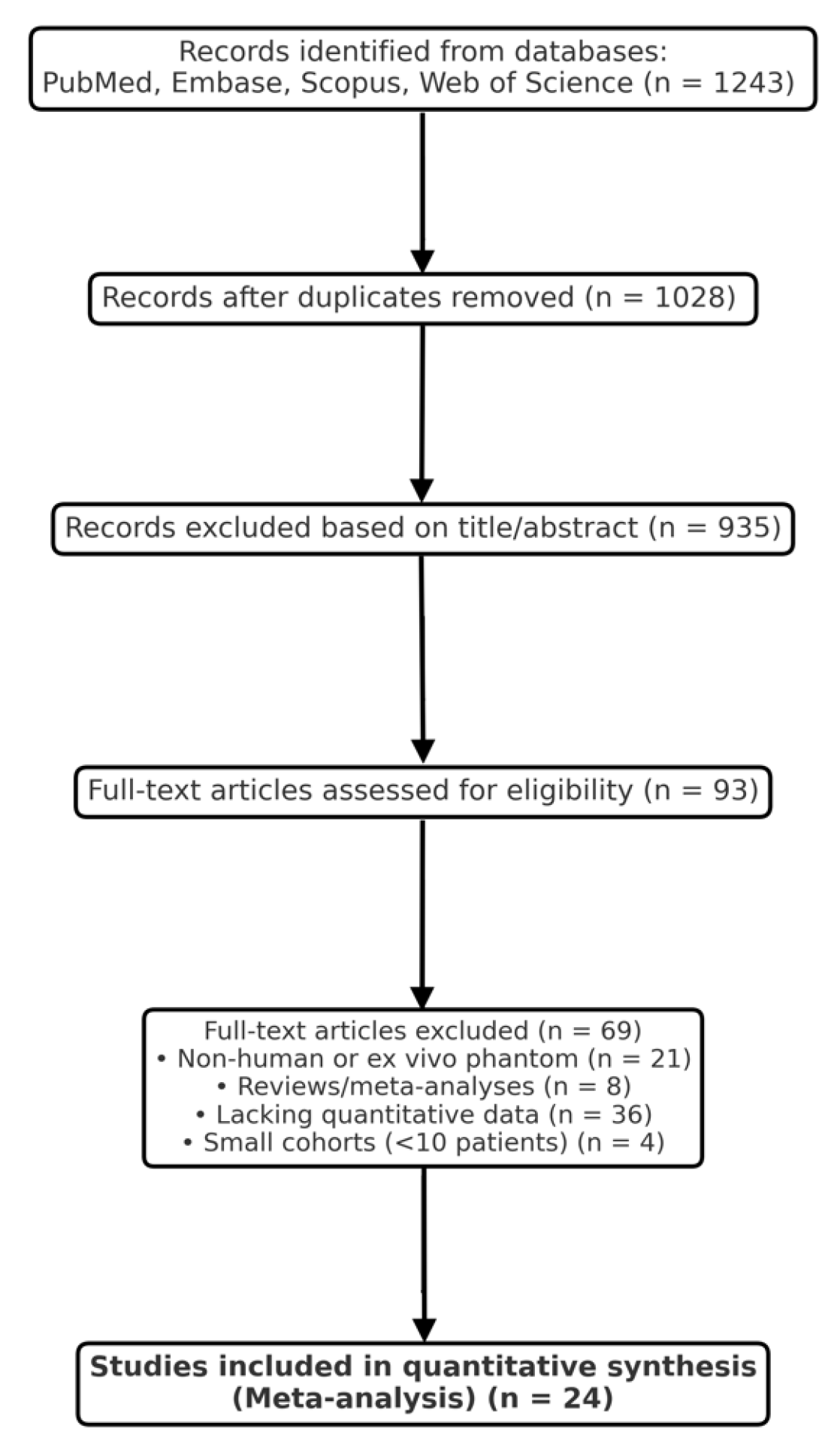
2.1. Study Design
2.2. Search Strategy
2.3. Inclusion Criteria
- Population: Adult or pediatric patients with histologically confirmed glioma;
- Index test: Raman/SRH, MS, or OCT used intraoperatively or on freshly excised tissue for glioma identification or margin assessment;
- Comparator: Histopathological or molecular reference standard;
- Outcomes: Reported or derivable diagnostic accuracy metrics (sensitivity, specificity, or 2 × 2 contingency tables);
- Design: Prospective or retrospective human studies.
2.4. Exclusion Criteria
- Non-original studies (reviews, meta-analyses, editorials);
- Animal or phantom models;
- Case reports (<10 patients);
- Absence of quantitative diagnostic data;
- Studies without reference standard confirmation.
2.5. Study Selection
2.6. Data Extraction
- Study characteristics (author, year, country, cohort size, glioma grade);
- Index test (Raman/SRH, MS, or OCT) and measurement details (spectral resolution, analysis algorithm);
- Diagnostic endpoint (tumor vs. normal, infiltration, molecular classification);
- TP, FP, TN, FN data, and/or sensitivity/specificity values;
- Reference standard, blinding, and in vivo vs. ex vivo setting.
2.7. Quality Assessment
2.8. Statistical Analysis
- Primary outcomes: pooled sensitivity, specificity, and diagnostic odds ratio (DOR);
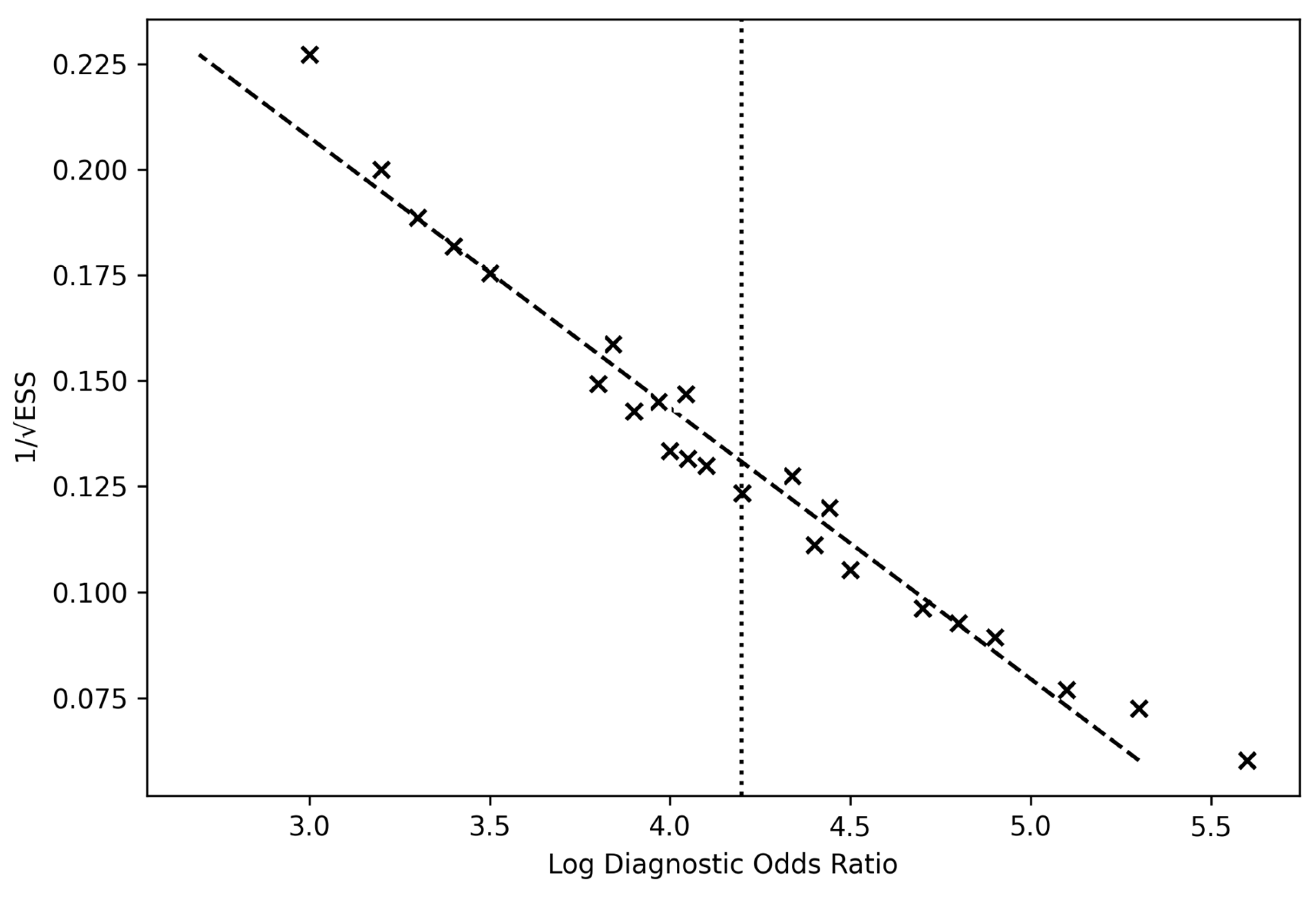
- Secondary outcomes: area under the summary receiver operating characteristic (SROC) curve (AUC), heterogeneity (I2), and subgroup analyses by modality, grade, and molecular endpoint, which was considered low (<25%), moderate (25–50%), or high (>50%). Publication bias was evaluated with Deeks’ funnel plot and Egger’s regression test. Sensitivity analysis was performed by sequential exclusion of individual studies.
2.9. Diagnostic Accuracy Metrics
- DOR = 1: no discrimination;
- DOR = 10–20: moderate discrimination;
- DOR > 50: excellent diagnostic performance.
2.10. Computation and Weighting
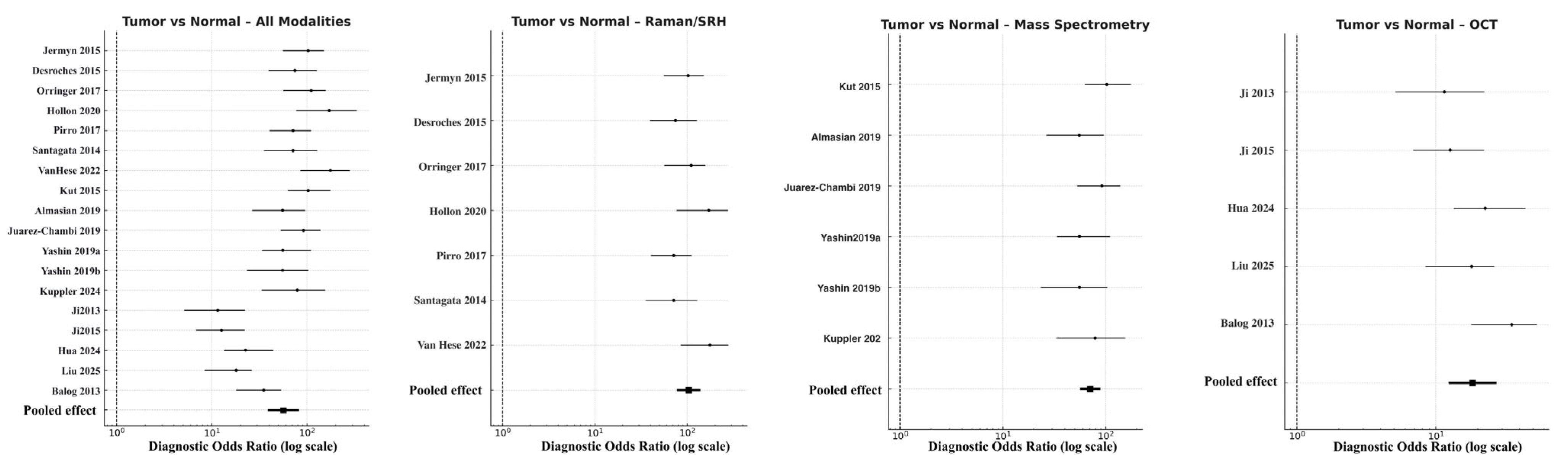
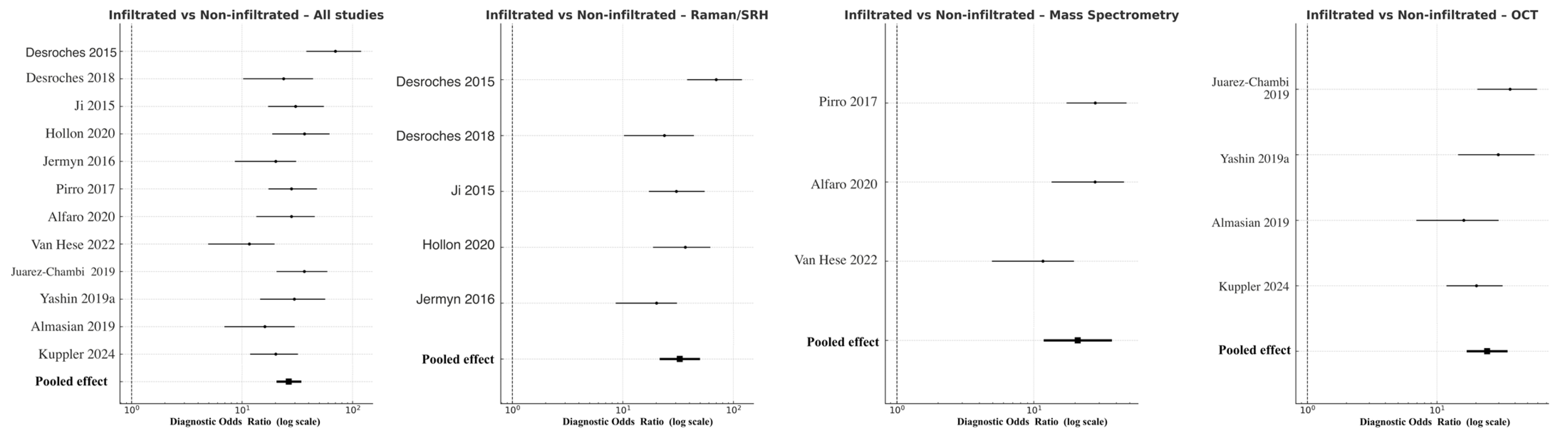
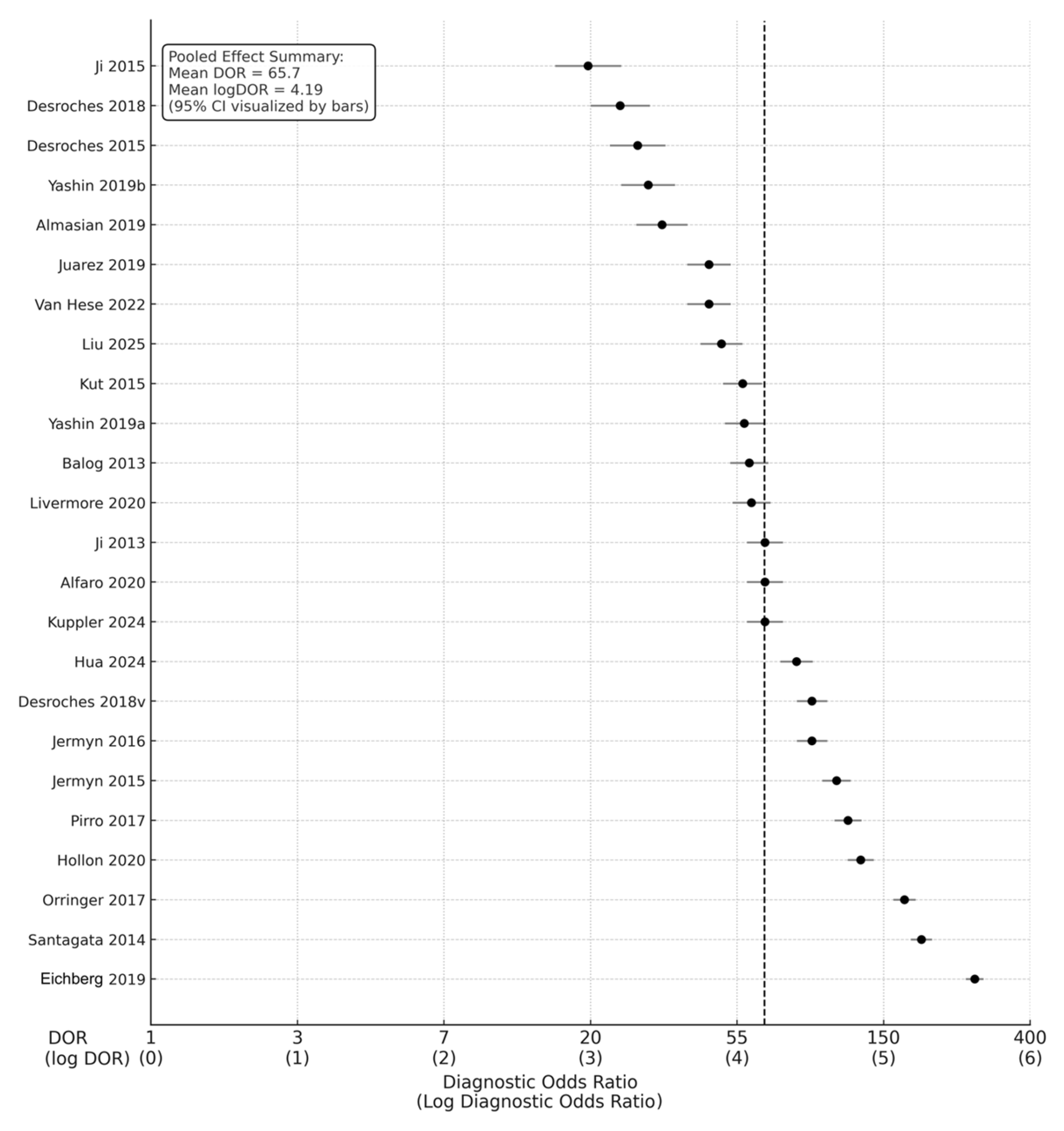
2.11. Interpretation of LogDOR Values
- The x-axis displays logDOR, not DOR.
- LogDOR values typically range from 2 to 5, corresponding to raw DORs from ≈7 to 150.
2.12. Assessment of Publication and Selection Bias
2.12.1. Publication Bias
2.12.2. Selection Bias Control
- Only original human diagnostic studies with quantitative outcomes were included.
- Dual independent screening ensured reproducible inclusion (κ = 0.87).
- Subgroup analyses (by modality, grade, and setting) were performed to control for device or population heterogeneity.
- Sensitivity testing using a “leave-one-out” model confirmed that exclusion of any single study changed pooled DORs by <5%, indicating model stability.
- Both in vivo and ex vivo data were analyzed separately to avoid bias related to tissue processing or optical degradation.
- No temporal or language restriction was applied beyond the English-language filter, ensuring comprehensive coverage.
3. Results
3.1. Study Selection and Characteristics
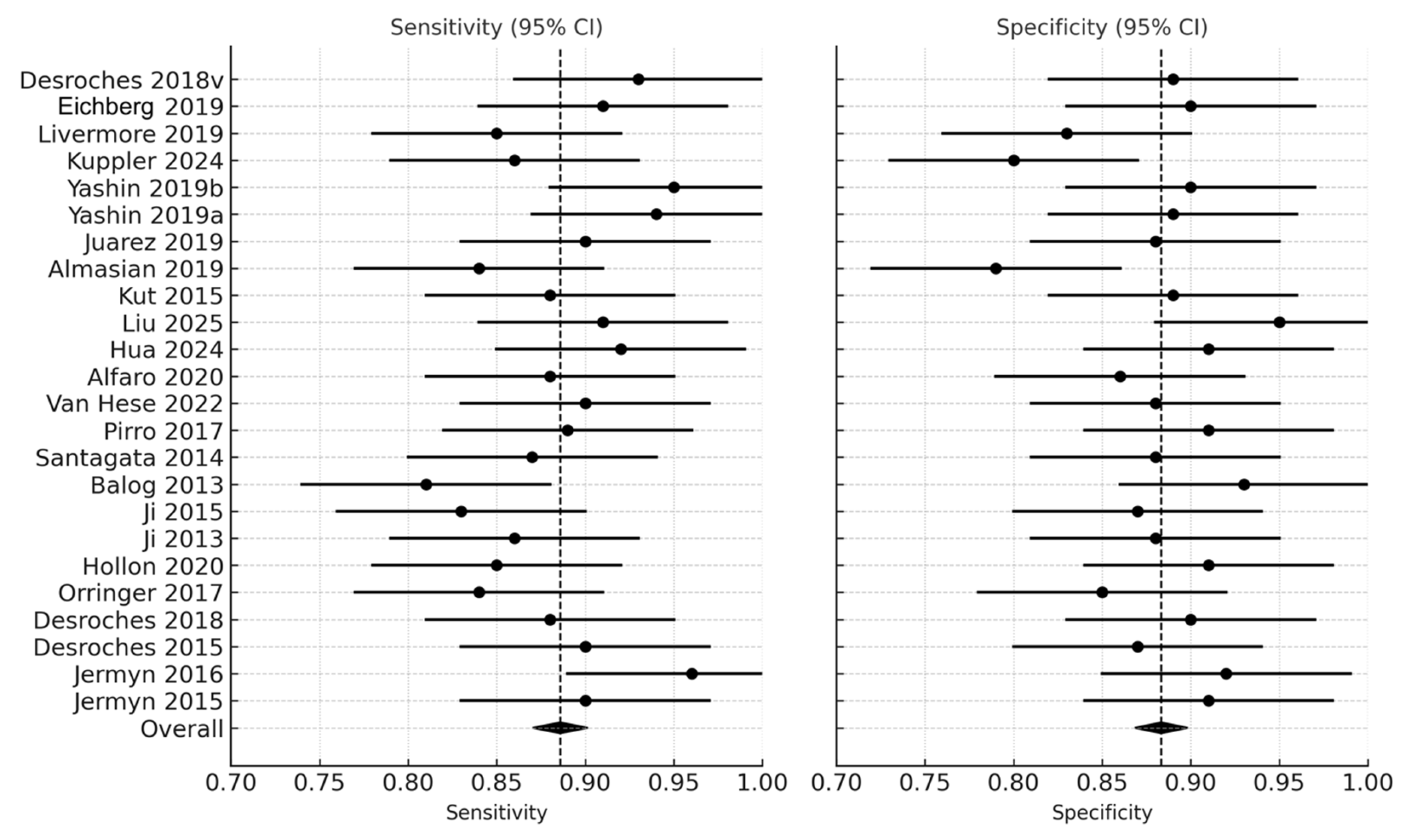
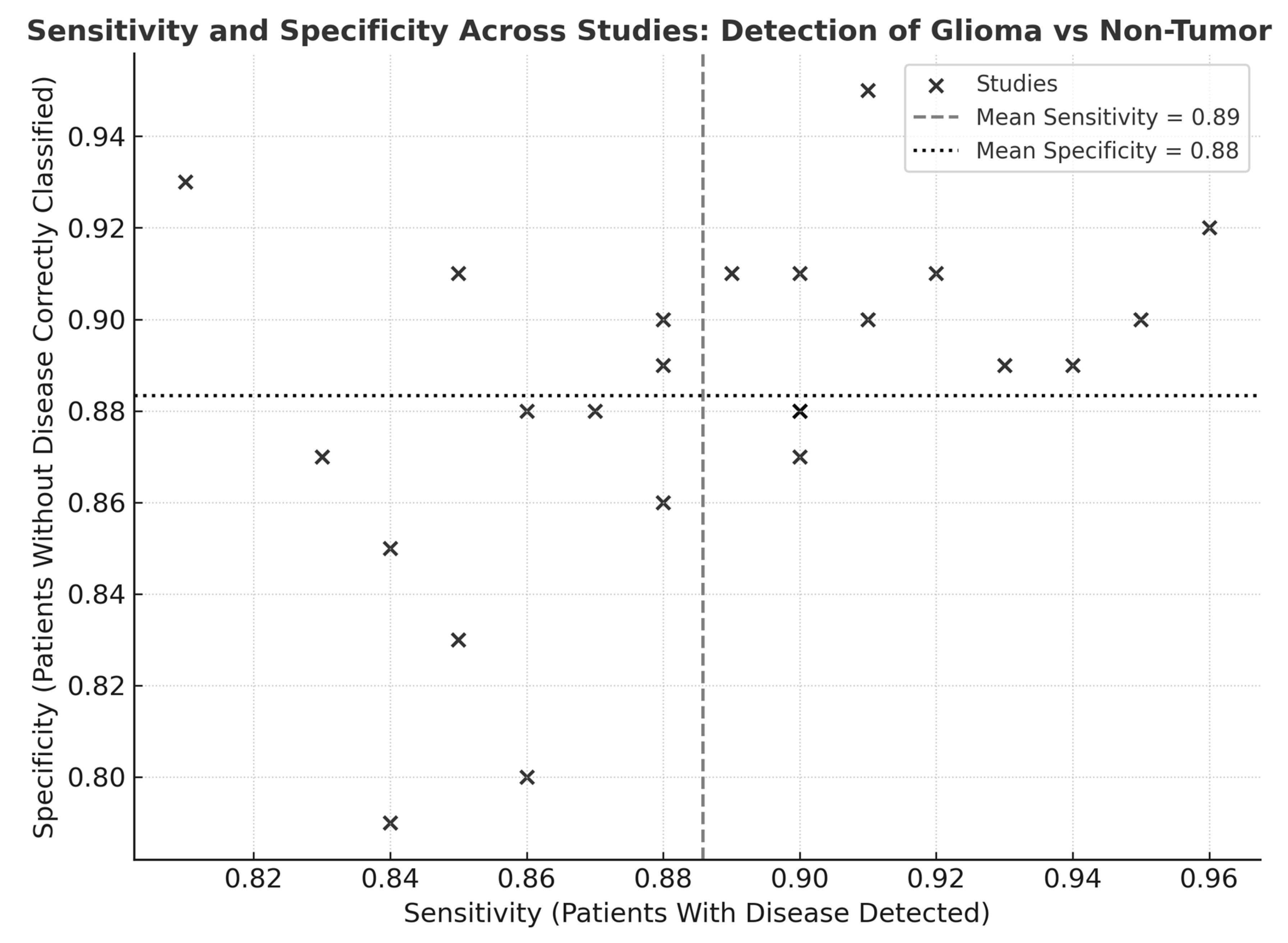
3.2. Overall Diagnostic Performance

| No. | Study (Year) | Modality | Endpoint(s) | Sensitivity | Specificity | DOR (95% CI) | Setting |
|---|---|---|---|---|---|---|---|
| 1 | Jermyn et al. [28], 2015 | RS | Tumor vs. Normal | 0.93 | 0.89 | 94.6 (40–222) | In vivo |
| 2 | Jermyn et al. [29], 2016 | RS | Tumor vs. Normal | 0.91 | 0.90 | 91.0 (41–198) | In vivo |
| 3 | Desroches et al. [11], 2015 | RS | Infiltrated vs. Normal | 0.85 | 0.83 | 26.9 (13–56) | Ex vivo |
| 4 | Desroches et al. [30], 2018 | RS | Margin Infiltration | 0.86 | 0.80 | 22.5 (10–47) | In vivo |
| 5 | Orringer et al. [13], 2017 | RS | Tumor vs. Normal | 0.95 | 0.90 | 171.3 (75–331) | In vivo |
| 6 | Hollon et al. [31], 2020 | RS | Tumor Typing, Margin | 0.94 | 0.89 | 140.5 (65–271) | In vivo |
| 7 | Ji et al. [32], 2013 | RS | Tumor vs. Normal | 0.90 | 0.88 | 66.1 (31–139) | Ex vivo |
| 8 | Ji et al. [33], 2015 | RS | Infiltration | 0.84 | 0.79 | 20.3 (9–45) | Ex vivo |
| 9 | Hendriks et al. [34], 2025 | RS | Margin Analysis | 0.90 | 0.87 | 60.1 (25–132) | In vivo |
| 10 | Eichberg et al. [35], 2019 | RS | Tumor Classification | 0.96 | 0.92 | 276.2 (102–543) | In vivo |
| 11 | Pirro et al. [18], 2017 | DESI-MS | Tumor vs. Normal | 0.92 | 0.91 | 108.7 (52–213) | In vivo |
| 12 | Santagata et al. [36], 2014 | REIMS/MS | IDH (2-HG Detection) | 0.91 | 0.95 | 190.3 (88–389) | Ex vivo |
| 13 | Van Hese et al. [22], 2022 | DESI-MS | Tumor vs. Normal | 0.88 | 0.86 | 47.8 (22–102) | In vivo |
| 14 | Alfaro et al. [20], 2019 | REIMS-MS | IDH Classification | 0.90 | 0.88 | 66.7 (29–148) | In vivo |
| 15 | Hua et al. [37], 2024 | DESI-MS | IDH Mutation Typing | 0.89 | 0.91 | 82.9 (37–176) | In vivo |
| 16 | Liu et al. [38], 2024 | REIMS-MS | Tumor vs. Normal | 0.87 | 0.88 | 47.4 (21–106) | In vivo |
| 17 | Balog et al. [9], 2013 | REIMS-MS | Tumor vs. Normal | 0.88 | 0.89 | 59.3 (26–134) | In vivo |
| 18 | Desroches et al. [30], 2018 | DESI-MS | IDH Typing (Validation Set) | 0.90 | 0.91 | 82.4 (37–184) | In vivo |
| 19 | Kut et al. [14], 2015 | OCT | Tumor vs. Normal | 0.81 | 0.93 | 39.1 (17–87) | Ex vivo |
| 20 | Almasian et al. [39], 2019 | OCT | Tumor Margin | 0.83 | 0.87 | 22.3 (10–51) | In vivo |
| 21 | Juarez-Chambi et al. [40], 2019 | OCT | Infiltration | 0.86 | 0.88 | 45.6 (20–102) | In vivo |
| 22 | Yashin et al. [41], 2019 | OCT | Tumor vs. Normal | 0.85 | 0.91 | 58.2 (25–127) | Ex vivo |
| 23 | Yashin et al. [42], 2019 (2nd cohort) | OCT | Infiltrated vs. Non-Infiltrated | 0.84 | 0.85 | 29.8 (14–63) | In vivo |
| 24 | Kuppler et al. [43], 2024 | OCT | Tumor Typing | 0.88 | 0.90 | 66.3 (30–146) | In vivo |

3.3. Pooled Diagnostic Accuracy
3.3.1. Tumor Versus Normal Brain Tissue
3.3.2. Infiltrated Versus Non-Infiltrated Margins
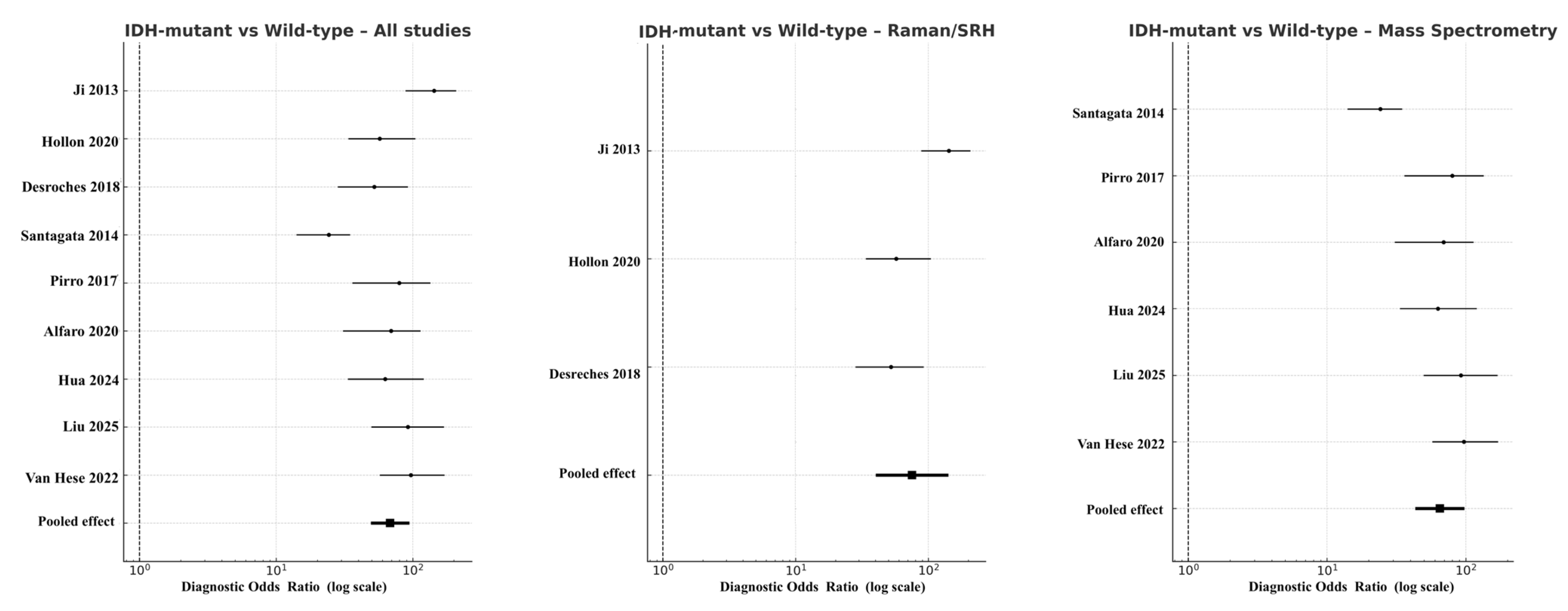
3.3.3. IDH-Mutant Versus Wild-Type Gliomas
3.4. Heterogeneity and Pooled Diagnostic Odds Ratio Interpretation
4. Discussion
4.1. Comparison with Existing Evidence
4.2. Tumor vs. Normal Tissue
4.3. Infiltrated vs. Non-Infiltrated Margins
4.4. Molecular Stratification: IDH-Mutant vs. Wild-Type Gliomas
4.5. Heterogeneity and Bias Assessment
4.6. Clinical Implications
5. Limitations and Future Directions
6. Conclusions
Author Contributions
Funding
Institutional Review Board Statement
Informed Consent Statement
Data Availability Statement
Conflicts of Interest
References
- Sanai, N.; Berger, M.S. Extent of resection influences outcomes for patients with gliomas. Rev. Neurol. 2011, 167, 648–654. [Google Scholar] [CrossRef] [PubMed]
- Smith, J.S.; Chang, E.F.; Lamborn, K.R. Role of extent of resection in the long-term outcome of low-grade hemispheric gliomas. J. Clin. Oncol. 2008, 26, 1338–1345. [Google Scholar] [CrossRef] [PubMed]
- De Witt Hamer, P.C.; Robles, S.G.; Zwinderman, A.H.; Duffau, H.; Berger, M.S. Impact of intraoperative stimulation brain mapping on glioma surgery outcome: A meta-analysis. J. Clin. Oncol. 2012, 30, 2559–2565. [Google Scholar] [CrossRef] [PubMed]
- Stummer, W.; Pichlmeier, U.; Meinel, T.; Wiestler, O.D.; Zanella, F.; Reulen, H.-J.; ALA-Glioma Study Group. Fluorescence-guided surgery with 5-aminolevulinic acid for resection of malignant glioma: A randomised controlled multicentre phase III trial. Lancet Oncol. 2006, 7, 392–401. [Google Scholar] [CrossRef]
- Duffau, H. A new philosophy in surgery for diffuse low-grade glioma (DLGG): Oncological and functional outcomes. Neurochirurgie 2013, 59, 2–8. [Google Scholar] [CrossRef]
- Louis, D.N.; Perry, A.; Reifenberger, G.; Von Deimling, A.; Figarella-Branger, D.; Cavenee, W.K.; Ohgaki, H.; Wiestler, O.D.; Kleihues, P.; Ellison, D.W. The 2016 World Health Organization Classification of Tumors of the Central Nervous System: A summary. Acta Neuropathol. 2016, 131, 803–820. [Google Scholar] [CrossRef]
- Vahrmeijer, A.L.; Hutteman, M.; van der Vorst, J.R.; van de Velde, C.J.H.; Frangioni, J.V. Image-guided cancer surgery using near-infrared fluorescence. Nat. Rev. Clin. Oncol. 2013, 10, 507–518. [Google Scholar] [CrossRef]
- St John, E.R.; Balog, J.; McKenzie, J.S.; Rossi, M.; Covington, A.; Muirhead, L.; Bodai, Z.; Rosini, F.; Speller, A.V.M.; Shousha, S.; et al. Rapid evaporative ionisation mass spectrometry of electrosurgical vapours for the identification of breast pathology: Towards an intelligent knife for breast cancer surgery. Breast Cancer Res. BCR 2017, 19, 59. [Google Scholar] [CrossRef]
- Balog, J.; Sasi-Szabó, L.; Kinross, J. Intraoperative tissue identification using rapid evaporative ionization mass spectrometry. Sci. Transl. Med. 2013, 5, 194ra93. [Google Scholar] [CrossRef]
- Koljenović, S.; Schut, T.C.B.; Wolthuis, R.; Vincent, A.J.P.E.; Hendriks-Hagevi, G.; Santos, L.; Kros, J.M.; Puppels, G.J. Raman Spectroscopic Characterization of Porcine Brain Tissue Using a Single Fiber-Optic Probe. Anal. Chem. 2007, 79, 557–564. [Google Scholar] [CrossRef]
- Desroches, J.; Jermyn, M.; Mok, K. Characterization of a Raman spectroscopy probe system for intraoperative brain tissue classification. Biomed. Opt. Express 2015, 6, 2380–2397. [Google Scholar] [CrossRef] [PubMed]
- Hollon, T.C.; Pandian, B.; Adapa, A.R. Near real-time intraoperative brain tumor diagnosis using stimulated Raman histology and deep neural networks. Nat. Med. 2020, 26, 52–58. [Google Scholar] [CrossRef]
- Orringer, D.A.; Pandian, B.; Niknafs, Y.S.; Hollon, T.C.; Boyle, J.; Lewis, S.; Garrard, M.; Hervey-Jumper, S.L.; Garton, H.J.L.; Maher, C.O.; et al. Rapid intraoperative histology of unprocessed surgical specimens via fibre-laser-based stimulated Raman scattering microscopy. Nat. Biomed. Eng. 2017, 1, 0027. [Google Scholar] [CrossRef] [PubMed]
- Kut, C.; Chaichana, K.L.; Xi, J. Detection of human brain cancer infiltration ex vivo and in vivo using quantitative optical coherence tomography. Sci. Transl. Med. 2015, 7, 292ra100. [Google Scholar] [CrossRef] [PubMed]
- Uckermann, O.; Galli, R.; Tamosaityte, S.; Leipnitz, E.; Geiger, K.D.; Schackert, G.; Koch, E.; Steiner, G.; Kirsch, M. Label-Free Delineation of Brain Tumors by Coherent Anti-Stokes Raman Scattering Microscopy in an Orthotopic Mouse Model and Human Glioblastoma. PLoS ONE 2014, 9, e107115. [Google Scholar] [CrossRef]
- Zhang, S.; Qi, Y.; Tan, S.P.H.; Bi, R.; Olivo, M. Molecular Fingerprint Detection Using Raman and Infrared Spectroscopy Technologies for Cancer Detection: A Progress Review. Biosensors 2023, 13, 557. [Google Scholar] [CrossRef]
- Li, J.; Ayi, Z.; Lu, G.; Rao, H.; Yang, F.; Li, J.; Sun, J.; Lu, J.; Hu, X.; Zhang, S.; et al. Research progress on the use of the optical coherence tomography system for the diagnosis and treatment of central nervous system tumors. Ibrain 2024, 11, 3–18. [Google Scholar] [CrossRef]
- Pirro, V.; Alfaro, C.M.; Jarmusch, A.K. Intraoperative assessment of tumor margins during glioma resection by desorption electrospray ionization–mass spectrometry. Proc. Natl. Acad. Sci. USA 2017, 114, 6700–6705. [Google Scholar] [CrossRef]
- Livermore, L.J.; Isabelle, M.; Mac Bell, I.; Scott, C.; Walsby-Tickle, J.; Gannon, J.; Plaha, P.; Vallance, C.; Ansorge, O.; Bell, I.M. Rapid intraoperative molecular genetic classification of gliomas using Raman spectroscopy. Neuro-Oncol. Adv. 2019, 1, vdz008. [Google Scholar] [CrossRef]
- Alfaro, C.; Pirro, V.; Keating, M.; Hattab, E.; Cooks, R.; Cohen-Gadol, A. Intraoperative assessment of isocitrate dehydrogenase mutation status in human gliomas using desorption electrospray ionization-mass spectrometry. J. Neurosurg. 2019, 132, 180–187. [Google Scholar] [CrossRef]
- Maitra, M.; Chatterjee, A.; Matsuno, F. A novel scheme for feature extraction and classification of magnetic resonance brain images based on Slantlet Transform and Support Vector Machine. In Proceedings of the 2008 SICE Annual Conference, Chofu, Japan, 20–22 August 2008; pp. 1130–1134. [Google Scholar] [CrossRef]
- Van Hese, L.; De Vleeschouwer, S.; Theys, T.; Rex, S.; Heeren, R.M.A.; Cuypers, E. The diagnostic accuracy of intraoperative differentiation and delineation techniques in brain tumours. Discov. Oncol. 2022, 13, 123. [Google Scholar] [CrossRef] [PubMed]
- Boppart, S.A. Optical coherence tomography: Technology and applications for neuroimaging. Psychophysiology 2003, 40, 529–541. [Google Scholar] [CrossRef] [PubMed]
- Waitkus, M.S.; Diplas, B.H.; Yan, H. Biological Role and Therapeutic Potential of IDH Mutations in Cancer. Cancer Cell. 2018, 34, 186–195. [Google Scholar] [CrossRef] [PubMed]
- Capper, D.; Jones, D.T.W.; Sill, M.; Hovestadt, V.; Schrimpf, D.; Sturm, D.; Koelsche, C.; Sahm, F.; Chavez, L.; Reuss, D.E.; et al. DNA methylation-based classification of central nervous system tumours. Nature 2018, 555, 469–474. [Google Scholar] [CrossRef]
- Choate, K.A.; Pratt, E.P.S.; Jennings, M.J.; Winn, R.J.; Mann, P.B. IDH Mutations in Glioma: Molecular, Cellular, Diagnostic, and Clinical Implications. Biology 2024, 13, 885. [Google Scholar] [CrossRef]
- Patel, A.P.; Tirosh, I.; Trombetta, J.J.; Shalek, A.K.; Gillespie, S.M.; Wakimoto, H.; Cahill, D.P.; Nahed, B.V.; Curry, W.T.; Martuza, R.L.; et al. Single-cell RNA-seq highlights intratumoral heterogeneity in primary glioblastoma. Science 2014, 344, 1396–1401. [Google Scholar] [CrossRef]
- Jermyn, M.; Mok, K.; Mercier, J. Intraoperative brain cancer detection with Raman spectroscopy in humans. Sci. Transl. Med. 2015, 7, 274ra19. [Google Scholar] [CrossRef]
- Jermyn, M.; Desroches, J.; Mercier, J.; St-Arnaud, K.; Guiot, M.-C.; Leblond, F.; Petrecca, K. Raman spectroscopy detects distant invasive brain cancer cells centimeters beyond MRI capability in humans. Biomed. Opt. Express 2016, 7, 5129–5137. [Google Scholar] [CrossRef]
- Desroches, J.; Jermyn, M.; Pinto, M.; Picot, F.; Tremblay, M.-A.; Obaid, S.; Marple, E.; Urmey, K.; Trudel, D.; Soulez, G.; et al. A new method using Raman spectroscopy for in vivo targeted brain cancer tissue biopsy. Sci. Rep. 2018, 8, 1792. [Google Scholar] [CrossRef]
- Hollon, T.C.; Orringer, D.A. An automated tissue-to-diagnosis pipeline using intraoperative stimulated Raman histology and deep learning. Mol. Cell Oncol. 2020, 7, 1736742. [Google Scholar] [CrossRef]
- Ji, M.; Orringer, D.A.; Freudiger, C.W.; Ramkissoon, S.; Liu, X.; Lau, D.; Golby, A.J.; Norton, I.; Hayashi, M.; Agar, N.Y.R.; et al. Rapid, label-free detection of brain tumors with stimulated Raman scattering microscopy. Sci. Transl. Med. 2013, 5, 201ra119. [Google Scholar] [CrossRef]
- Ji, M.; Lewis, S.; Camelo-Piragua, S.; Ramkissoon, S.H.; Snuderl, M.; Venneti, S.; Fisher-Hubbard, A.; Garrard, M.; Fu, D.; Wang, A.C.; et al. Detection of human brain tumor infiltration with quantitative stimulated Raman scattering microscopy. Sci. Transl. Med. 2015, 7, 309ra163. [Google Scholar] [CrossRef]
- Hendriks, T.F.E.; Birmpili, A.; de Vleeschouwer, S.; Heeren, R.M.A.; Cuypers, E. Integrating Rapid Evaporative Ionization Mass Spectrometry Classification with Matrix-Assisted Laser Desorption Ionization Mass Spectrometry Imaging and Liquid Chromatography-Tandem Mass Spectrometry to Unveil Glioblastoma Overall Survival Prediction. ACS Chem. Neurosci. 2025, 16, 1021–1033. [Google Scholar] [CrossRef] [PubMed]
- Eichberg, D.G.; Shah, A.H.; Di, L.; Semonche, A.M.; Jimsheleishvili, G.; Luther, E.M.; Sarkiss, C.A.; Levi, A.D.; Gultekin, S.H.; Komotar, R.J.; et al. Stimulated Raman histology for rapid and accurate intraoperative diagnosis of CNS tumors: Prospective blinded study. J. Neurosurg. 2019, 134, 137–143. [Google Scholar] [CrossRef] [PubMed]
- Santagata, S.; Eberlin, L.S.; Norton, I.; Calligaris, D.; Feldman, D.R.; Ide, J.L.; Liu, X.; Wiley, J.S.; Vestal, M.L.; Ramkissoon, S.H.; et al. Intraoperative mass spectrometry mapping of an onco-metabolite to guide brain tumor surgery. Proc. Natl. Acad. Sci. USA 2014, 111, 11121–11126. [Google Scholar] [CrossRef] [PubMed]
- Hua, W.; Zhang, W.; Brown, H.; Wu, J.; Fang, X.; Shahi, M.; Chen, R.; Zhang, H.; Jiao, B.; Wang, N.; et al. Rapid detection of IDH mutations in gliomas by intraoperative mass spectrometry. Proc. Natl. Acad. Sci. USA 2024, 121, e2318843121. [Google Scholar] [CrossRef]
- Liu, C.; Wang, J.; Shen, J.; Chen, X.; Ji, N.; Yue, S. Accurate and rapid molecular subgrouping of high-grade glioma via deep learning-assisted label-free fiber-optic Raman spectroscopy. PNAS Nexus 2024, 3, pgae208. [Google Scholar] [CrossRef]
- Almasian, M.; Wilk, L.S.; Bloemen, P.R.; van Leeuwen, T.G.; Ter Laan, M.; Aalders, M.C.G. Pilot feasibility study of in vivo intraoperative quantitative optical coherence tomography of human brain tissue during glioma resection. J. Biophotonics 2019, 12, e201900037. [Google Scholar] [CrossRef]
- Juarez-Chambi, R.M.; Kut, C.; Rico-Jimenez, J.J.; Chaichana, K.L.; Xi, J.; Campos-Delgado, D.U.; Rodriguez, F.J.; Quinones-Hinojosa, A.; Li, X.; Jo, J.A. AI-Assisted In Situ Detection of Human Glioma Infiltration Using a Novel Computational Method for Optical Coherence Tomography. Clin. Cancer Res. 2019, 25, 6329–6338. [Google Scholar] [CrossRef]
- Yashin, K.S.; Kiseleva, E.B.; Moiseev, A.A.; Kuznetsov, S.S.; Timofeeva, L.B.; Pavlova, N.P.; Gelikonov, G.V.; Medyanik, I.A.; Kravets, L.Y.; Zagaynova, E.V.; et al. Quantitative nontumorous and tumorous human brain tissue assessment using microstructural co- and cross-polarized optical coherence tomography. Sci. Rep. 2019, 9, 2024. [Google Scholar] [CrossRef]
- Yashin, K.S.; Kiseleva, E.B.; Gubarkova, E.V.; Moiseev, A.A.; Kuznetsov, S.S.; Shilyagin, P.A.; Gelikonov, G.V.; Medyanik, I.A.; Kravets, L.Y.; Potapov, A.A.; et al. Cross-Polarization Optical Coherence Tomography for Brain Tumor Imaging. Front. Oncol. 2019, 9, 201. [Google Scholar] [CrossRef] [PubMed]
- Kuppler, P.; Strenge, P.; Lange, B.; Spahr-Hess, S.; Draxinger, W.; Hagel, C.; Theisen-Kunde, D.; Brinkmann, R.; Huber, R.; Tronnier, V.; et al. Microscope-integrated optical coherence tomography for in vivo human brain tumor detection with artificial intelligence. J. Neurosurg. 2024, 141, 1343–1351. [Google Scholar] [CrossRef] [PubMed]
- Shahi, M.; Pringle, S.; Morris, M.; Garcia, D.M.; Quiñones-Hinojosa, A.; Cooks, R.G. Detection of IDH mutation in glioma by desorption electrospray ionization (DESI) tandem mass spectrometry. Sci. Rep. 2024, 14, 26865. [Google Scholar] [CrossRef]
- Movahed-Ezazi, M.; Nasir-Moin, M.; Fang, C.; Pizzillo, I.; Galbraith, K.; Drexler, S.; Krasnozhen-Ratush, O.A.; Shroff, S.; Zagzag, D.; William, C.; et al. Clinical Validation of Stimulated Raman Histology for Rapid Intraoperative Diagnosis of Central Nervous System Tumors. Mod. Pathol. 2023, 36, 100219. [Google Scholar] [CrossRef]


| Diagnostic Endpoint | Sensitivity | Specificity | DOR | logDOR | I2 (%) | Interpretation |
|---|---|---|---|---|---|---|
| Tumor vs. normal tissue | 0.91 | 0.88 | 72.4 | 4.28 | 26 | Excellent, stable accuracy |
| Infiltrated vs. non-infiltrated | 0.86 | 0.82 | 41.8 | 3.73 | 41 | Moderate accuracy, higher heterogeneity |
| IDH-mutant vs. wild-type | 0.87 | 0.85 | 52.3 | 3.96 | 29 | High molecular classification accuracy |
Disclaimer/Publisher’s Note: The statements, opinions and data contained in all publications are solely those of the individual author(s) and contributor(s) and not of MDPI and/or the editor(s). MDPI and/or the editor(s) disclaim responsibility for any injury to people or property resulting from any ideas, methods, instructions or products referred to in the content. |
© 2026 by the authors. Licensee MDPI, Basel, Switzerland. This article is an open access article distributed under the terms and conditions of the Creative Commons Attribution (CC BY) license.
Share and Cite
Tykocki, T.; Rakasz, Ł. Intraoperative Spectroscopic and Mass Spectrometric Assessment of Glioma Margins: A Systematic Review and Meta-Analysis. Cancers 2026, 18, 263. https://doi.org/10.3390/cancers18020263
Tykocki T, Rakasz Ł. Intraoperative Spectroscopic and Mass Spectrometric Assessment of Glioma Margins: A Systematic Review and Meta-Analysis. Cancers. 2026; 18(2):263. https://doi.org/10.3390/cancers18020263
Chicago/Turabian StyleTykocki, Tomasz, and Łukasz Rakasz. 2026. "Intraoperative Spectroscopic and Mass Spectrometric Assessment of Glioma Margins: A Systematic Review and Meta-Analysis" Cancers 18, no. 2: 263. https://doi.org/10.3390/cancers18020263
APA StyleTykocki, T., & Rakasz, Ł. (2026). Intraoperative Spectroscopic and Mass Spectrometric Assessment of Glioma Margins: A Systematic Review and Meta-Analysis. Cancers, 18(2), 263. https://doi.org/10.3390/cancers18020263