Nanomedicine in Ovarian Cancer: Advances in Imaging, Targeted Delivery, and Theranostic Therapeutic Platforms




Simple Summary
Abstract
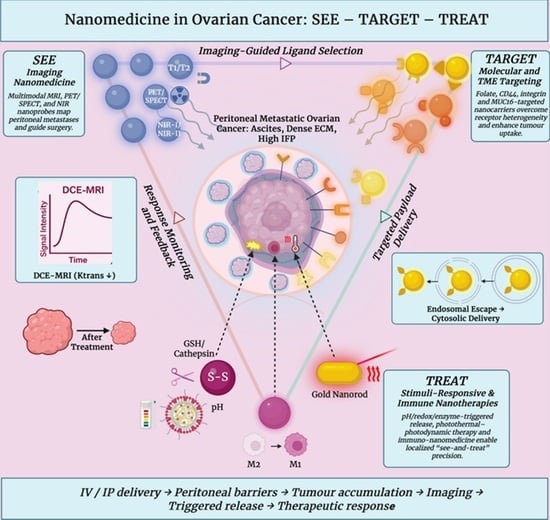
1. Introduction
2. Biological and Pathophysiological Context for Nanomedicine Delivery
2.1. Tumour Microenvironment, Peritoneal Dissemination and Ascites
2.2. Molecular Targets
2.3. Routes of Administration
2.4. Clinical Relevance and Limitations of the EPR Effect in Humans
3. Nanocarrier Platforms and Engineering Design
3.1. Lipid-Based Systems
3.2. Polymeric Nanoparticles
3.3. Inorganic and Hybrid Systems
3.4. Surface Functionalisation and Stealthing
3.5. Triggered and Controlled Release Mechanisms
3.6. Design Scalability and Clinical Translation
4. Targeting Strategies in Ovarian Cancer Nanomedicine
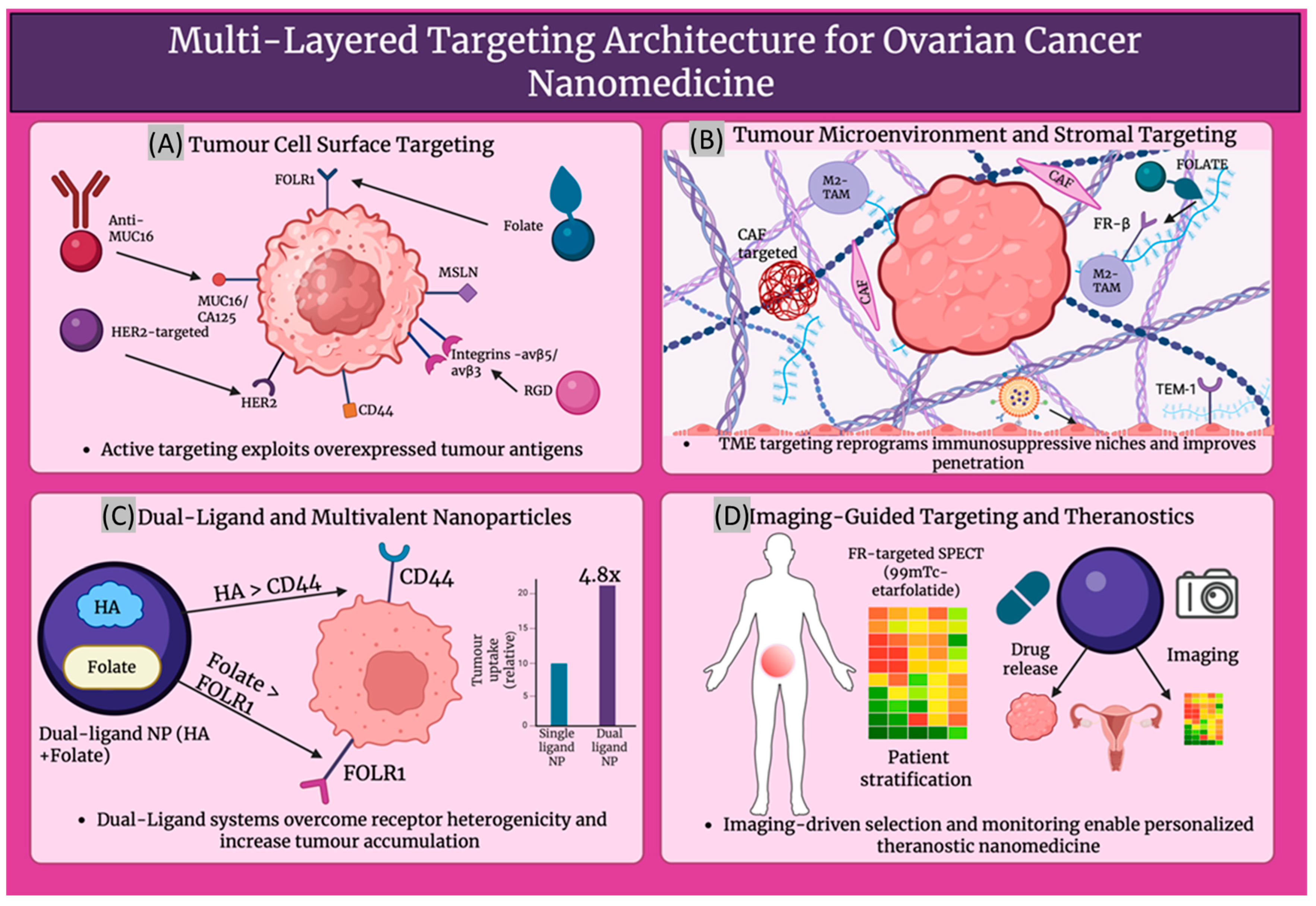
4.1. Active and TME Targeting Strategies in Ovarian Cancer Nanomedicine
4.2. Overcoming Receptor Heterogeneity Through Dual-Targeted and Theranostic Nanoparticle Platforms
5. Imagining and Theranostic Nanomedicine
5.1. Magnetic Resonance Imaging (MRI)
5.2. Nuclear Imaging (PET/SPECT)
5.3. Optical and Near-Infrared (NIR) Imaging
5.4. Ultrasound and Photoacoustic Imaging
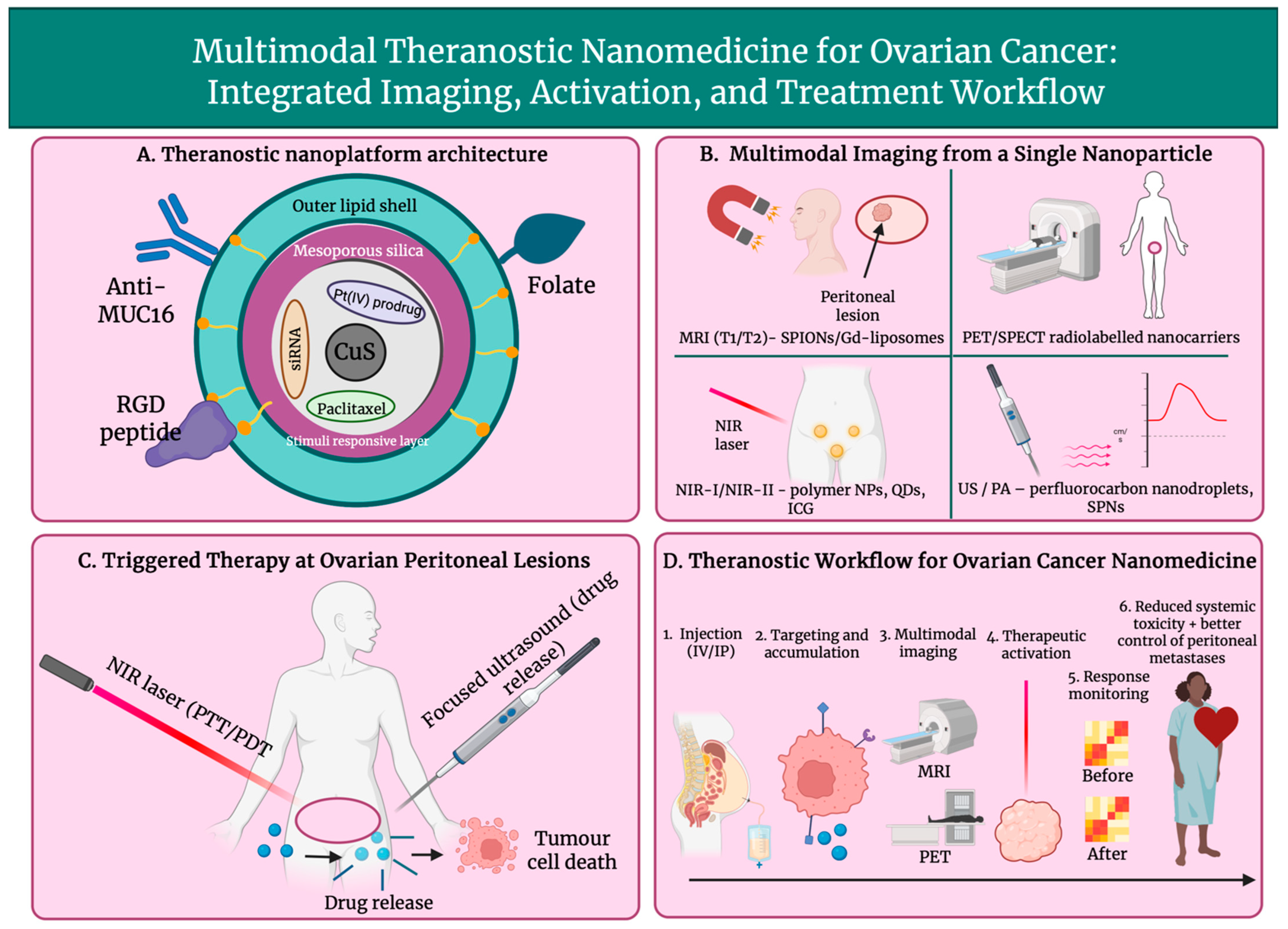
5.5. Multimodal Imaging Nanoplatforms
5.6. Quantitative Imaging Biomarkers
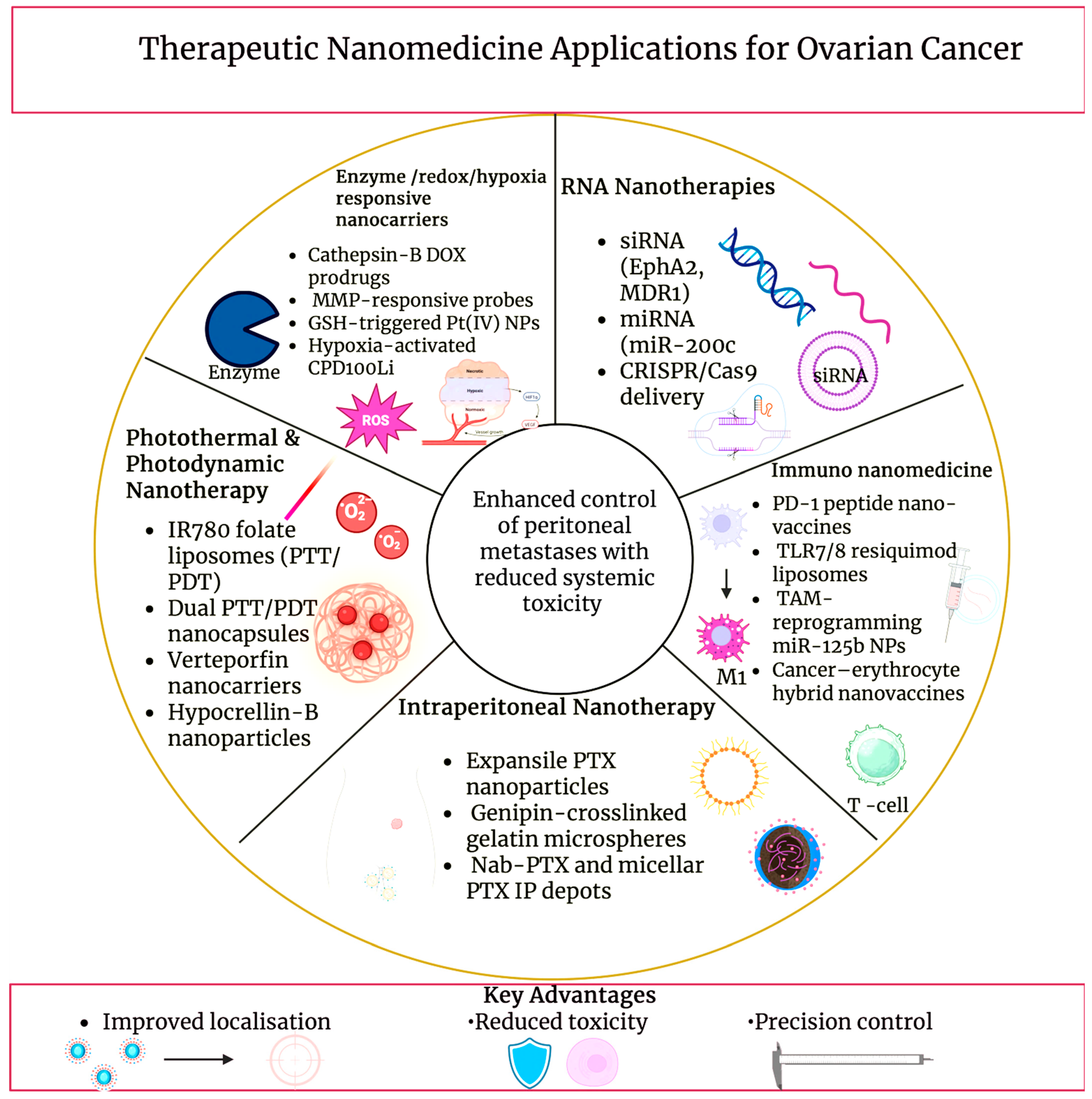
6. Therapeutic Nanomedicine Applications
6.1. Nucleic Acid Nanomedicine
6.2. Targeted Enzyme-Responsive Nanotherapies
6.3. Photothermal and Photodynamic Therapy
6.4. Immuno-Nanomedicine
6.5. Intraperitoneal Nanotherapy
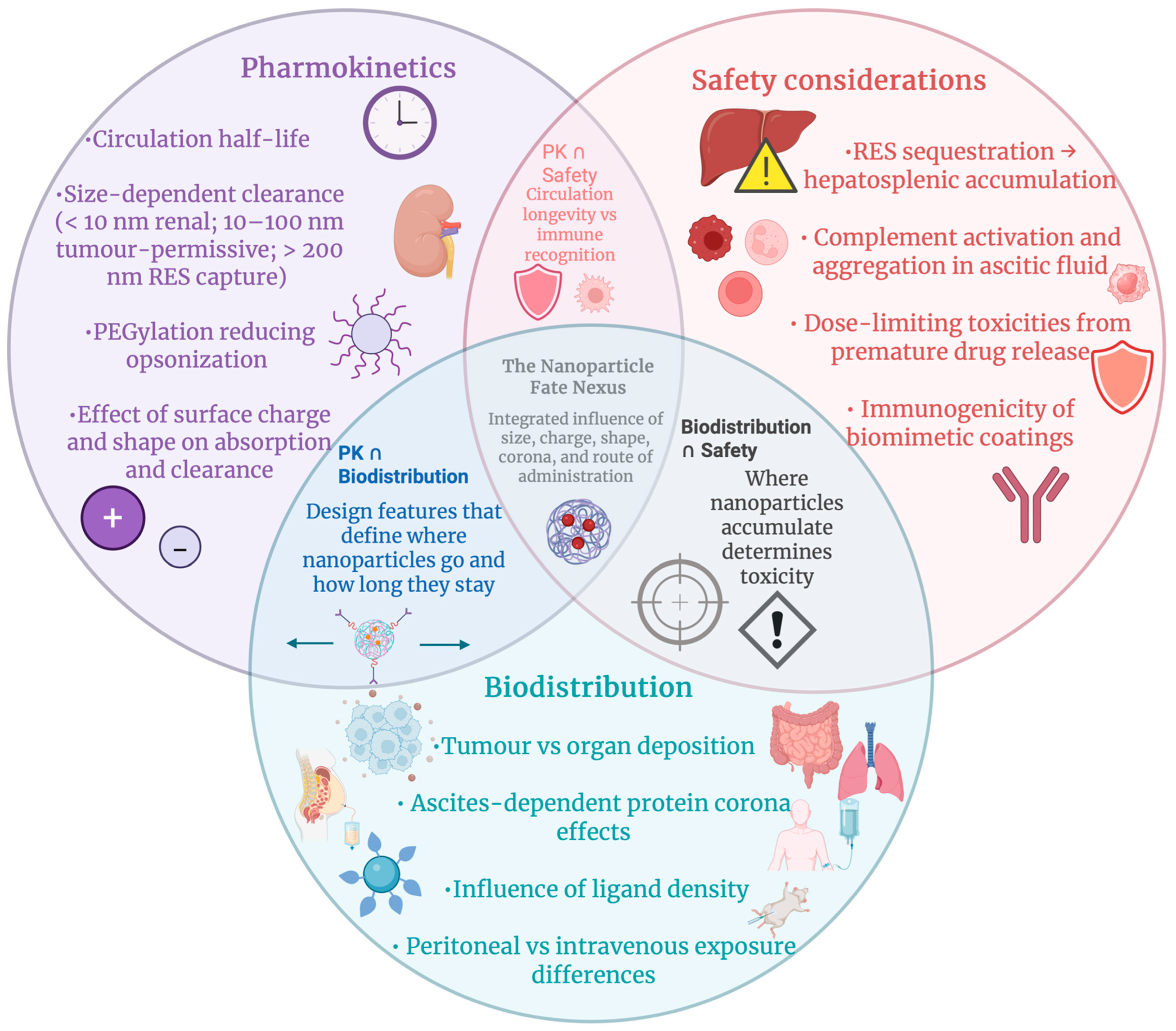
7. Pharmacokinetics, Biodistribution and Safety Considerations
7.1. Physicochemical Determinants of Nanoparticle Biodistribution and Clearance in Ovarian Cancer
7.2. Toxicity, Immunogenicity, and Reporting Standards in Ovarian Cancer Nanomedicine
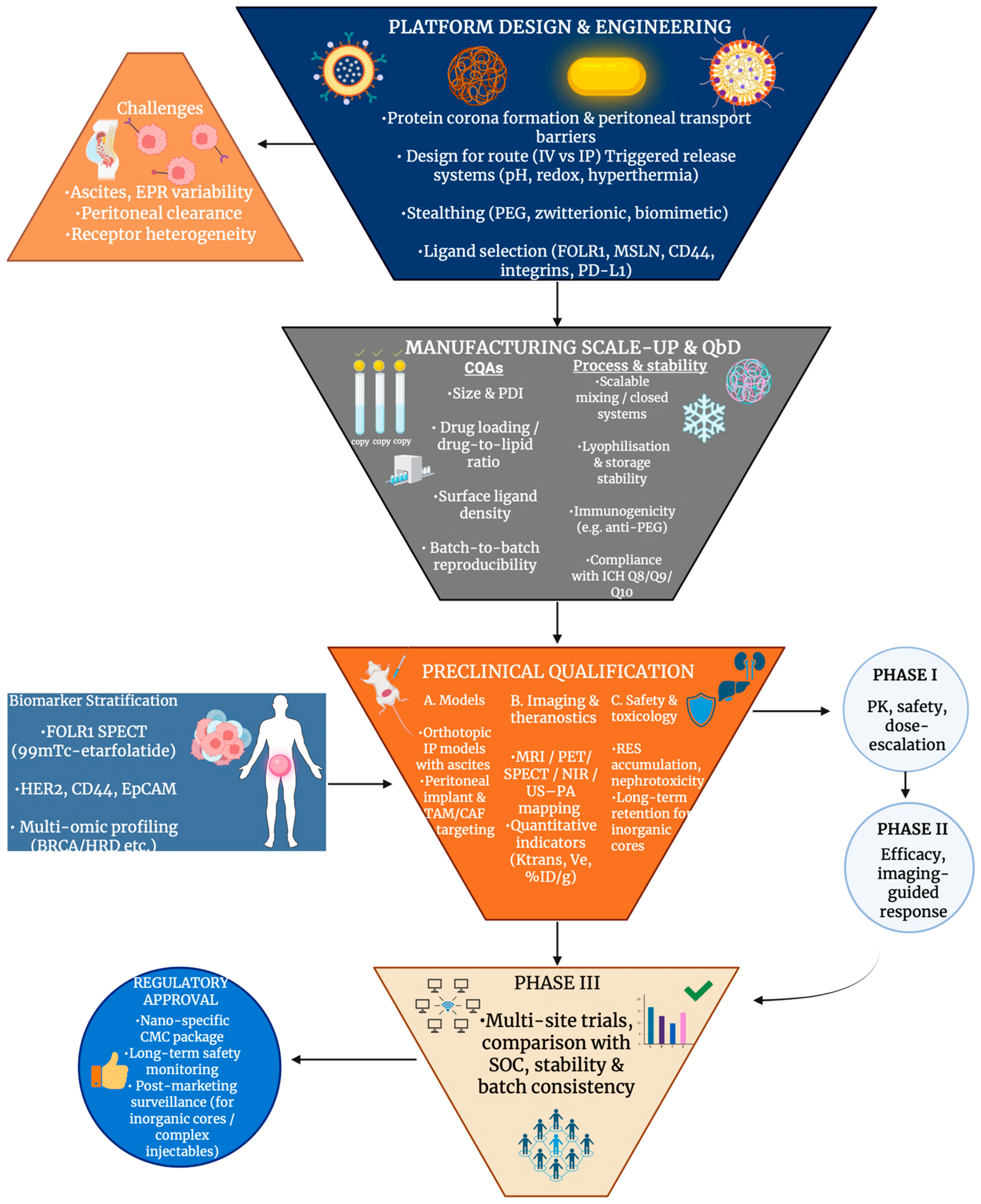
8. Clinical Translation and Regulatory Perspective
8.1. Clinical Progress, Therapeutic Outcomes, and Stratification Challenges in Ovarian Cancer Nanomedicine
8.2. Manufacturing, Stability and Regulatory Requirements for Ovarian Cancer Nanomedicines
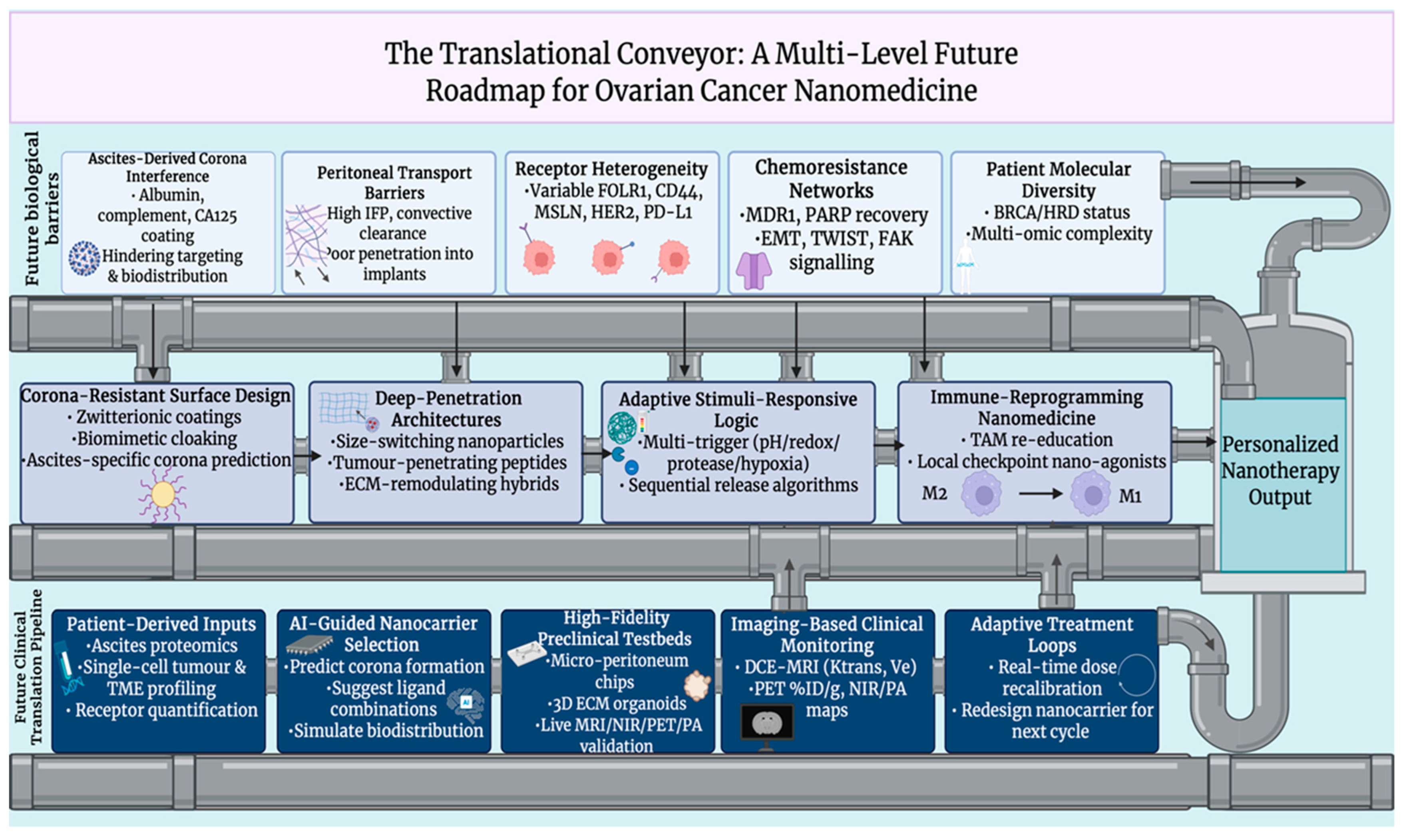
9. Future Perspectives and Challenges
10. Conclusions
Author Contributions
Funding
Data Availability Statement
Conflicts of Interest
References
- Dyba, T.; Randi, G.; Bray, F.; Martos, C.; Giusti, F.; Nicholson, N.; Gavin, A.; Flego, M.; Neamtiu, L.; Dimitrova, N.; et al. The European cancer burden in 2020: Incidence and mortality estimates for 40 countries and 25 major cancers. Eur. J. Cancer 2021, 157, 308–347. [Google Scholar] [CrossRef] [PubMed] [PubMed Central]
- Dalmartello, M.; La Vecchia, C.; Bertuccio, P.; Boffetta, P.; Levi, F.; Negri, E.; Malvezzi, M. European cancer mortality predictions for the year 2022 with focus on ovarian cancer. Ann. Oncol. 2022, 33, 330–339. [Google Scholar] [CrossRef] [PubMed]
- Bray, F.; Laversanne, M.; Sung, H.; Ferlay, J.; Siegel, R.L.; Soerjomataram, I.; Jemal, A. Global cancer statistics 2022: GLOBOCAN estimates of incidence and mortality worldwide for 36 cancers in 185 countries. CA Cancer J. Clin. 2024, 74, 229–263. [Google Scholar] [CrossRef] [PubMed]
- Lisio, M.A.; Fu, L.; Goyeneche, A.; Gao, Z.H.; Telleria, C. High-Grade Serous Ovarian Cancer: Basic Sciences, Clinical and Therapeutic Standpoints. Int. J. Mol. Sci. 2019, 20, 952. [Google Scholar] [CrossRef] [PubMed] [PubMed Central]
- Hong, M.K.; Ding, D.C. Early Diagnosis of Ovarian Cancer: A Comprehensive Review of the Advances, Challenges, and Future Directions. Diagnostics 2025, 15, 406. [Google Scholar] [CrossRef] [PubMed] [PubMed Central]
- Giampaolino, P.; Foreste, V.; Della Corte, L.; Di Filippo, C.; Iorio, G.; Bifulco, G. Role of biomarkers for early detection of ovarian cancer recurrence. Gland. Surg. 2020, 9, 1102–1111. [Google Scholar] [CrossRef] [PubMed] [PubMed Central]
- Wang, L.; Wang, X.; Zhu, X.; Zhong, L.; Jiang, Q.; Wang, Y.; Tang, Q.; Li, Q.; Zhang, C.; Wang, H.; et al. Drug resistance in ovarian cancer: From mechanism to clinical trial. Mol. Cancer 2024, 23, 66. [Google Scholar] [CrossRef] [PubMed] [PubMed Central]
- Fan, D.; Cao, Y.; Cao, M.; Wang, Y.; Cao, Y.; Gong, T. Nanomedicine in cancer therapy. Signal Transduct. Target. Ther. 2023, 8, 293. [Google Scholar] [CrossRef] [PubMed] [PubMed Central]
- Chandra, A.; Pius, C.; Nabeel, M.; Nair, M.; Vishwanatha, J.K.; Ahmad, S.; Basha, R. Ovarian cancer: Current status and strategies for improving therapeutic outcomes. Cancer Med. 2019, 8, 7018–7031. [Google Scholar] [CrossRef] [PubMed] [PubMed Central]
- Li, Y.; Gao, Y.; Zhang, X.; Guo, H.; Gao, H. Nanoparticles in precision medicine for ovarian cancer: From chemotherapy to immunotherapy. Int. J. Pharm. 2020, 591, 119986. [Google Scholar] [CrossRef] [PubMed]
- Giri, P.M.; Banerjee, A.; Layek, B. A Recent Review on Cancer Nanomedicine. Cancers 2023, 15, 2256. [Google Scholar] [CrossRef] [PubMed] [PubMed Central]
- Gabizon, A.; Shmeeda, H.; Barenholz, Y. Pharmacokinetics of pegylated liposomal Doxorubicin: Review of animal and human studies. Clin Pharmacokinet. 2003, 42, 419–436. [Google Scholar] [CrossRef] [PubMed]
- Barani, M.; Bilal, M.; Sabir, F.; Rahdar, A.; Kyzas, G.Z. Nanotechnology in ovarian cancer: Diagnosis and treatment. Life Sci. 2021, 266, 118914. [Google Scholar] [CrossRef] [PubMed]
- Henderson, E.; Huynh, G.; Wilson, K.; Plebanski, M.; Corrie, S. The Development of Nanoparticles for the Detection and Imaging of Ovarian Cancers. Biomedicines 2021, 9, 1554. [Google Scholar] [CrossRef] [PubMed] [PubMed Central]
- Burns, J.M.; Shafer, E.; Vankayala, R.; Kundra, V.; Anvari, B. Near Infrared Fluorescence Imaging of Intraperitoneal Ovarian Tumors in Mice Using Erythrocyte-Derived Optical Nanoparticles and Spatially-Modulated Illumination. Cancers 2021, 13, 2544. [Google Scholar] [CrossRef] [PubMed] [PubMed Central]
- Gralewska, P.; Gajek, A.; Marczak, A.; Rogalska, A. Targeted Nanocarrier-Based Drug Delivery Strategies for Improving the Therapeutic Efficacy of PARP Inhibitors against Ovarian Cancer. Int. J. Mol. Sci. 2024, 25, 8304. [Google Scholar] [CrossRef] [PubMed] [PubMed Central]
- Debnath, S.K.; Debnath, M.; Ghosh, A.; Srivastava, R.; Omri, A. Targeting Tumor Hypoxia with Nanoparticle-Based Therapies: Challenges, Opportunities, and Clinical Implications. Pharmaceuticals 2024, 17, 1389. [Google Scholar] [CrossRef] [PubMed] [PubMed Central]
- Garlisi, B.; Lauks, S.; Aitken, C.; Ogilvie, L.M.; Lockington, C.; Petrik, D.; Eichhorn, J.S.; Petrik, J. The Complex Tumor Microenvironment in Ovarian Cancer: Therapeutic Challenges and Opportunities. Curr. Oncol. 2024, 31, 3826–3844. [Google Scholar] [CrossRef] [PubMed] [PubMed Central]
- Yuan, Z.; Li, Y.; Zhang, S.; Wang, X.; Dou, H.; Yu, X.; Zhang, Z.; Yang, S.; Xiao, M. Extracellular matrix remodeling in tumor progression and immune escape: From mechanisms to treatments. Mol. Cancer 2023, 22, 48. [Google Scholar] [CrossRef] [PubMed] [PubMed Central]
- Murray, A.M.; Swingle, K.L.; Mitchell, M.J. Engineering Nanoparticles for Gynecologic Cancer Therapy. ACS Nano 2025, 19, 30758–30785. [Google Scholar] [CrossRef] [PubMed]
- Simonsen, M.; Mendoza López, R.V.; Maistro, S.; Ikeoka, L.T.; Pereira, G.F.L.; Lugão, A.B.; Sadalla, J.C.; Katayama, M.L.H.; Folgueira, M.A.A.K. Peritoneal chemotherapy delivery systems for ovarian cancer treatment: Systematic review of animal models. Front. Oncol. 2025, 14, 1487376. [Google Scholar] [CrossRef] [PubMed] [PubMed Central]
- Perelló-Trias, M.T.; Serrano-Muñoz, A.J.; Rodríguez-Fernández, A.; Segura-Sampedro, J.J.; Ramis, J.M.; Monjo, M. Intraperitoneal drug delivery systems for peritoneal carcinomatosis: Bridging the gap between research and clinical implementation. J. Control. Release 2024, 373, 70–92. [Google Scholar] [CrossRef] [PubMed]
- Leung, Y.Y.; Llaurado-Fernandez, M.; Cameron, A.; Da-Anoy, A.; Cook, L.C.; Hoenisch, J.; Ghesquiere, C.; Gaillard, S.; Schmid, J.; Dawson, A.; et al. FOLR1 as a therapeutic target in platinum-resistant ovarian carcinoma: Unique expression patterns across ovarian carcinoma histotypes and molecular subtypes of low-grade serous carcinoma. J. Gynecol. Oncol. 2025, 36, e74. [Google Scholar] [CrossRef] [PubMed] [PubMed Central]
- Rump, A.; Morikawa, Y.; Tanaka, M.; Minami, S.; Umesaki, N.; Takeuchi, M.; Miyajima, A. Binding of ovarian cancer antigen CA125/MUC16 to mesothelin mediates cell adhesion. J. Biol. Chem. 2004, 279, 9190–9198. [Google Scholar] [CrossRef] [PubMed]
- Spizzo, G.; Went, P.; Dirnhofer, S.; Obrist, P.; Moch, H.; Baeuerle, P.A.; Mueller-Holzner, E.; Marth, C.; Gastl, G.; Zeimet, A.G. Overexpression of epithelial cell adhesion molecule (Ep-CAM) is an independent prognostic marker for reduced survival of patients with epithelial ovarian cancer. Gynecol. Oncol. 2006, 103, 483–488. [Google Scholar] [CrossRef] [PubMed]
- Chanmee, T.; Ontong, P.; Kimata, K.; Itano, N. Key Roles of Hyaluronan and Its CD44 Receptor in the Stemness and Survival of Cancer Stem Cells. Front. Oncol. 2015, 5, 180. [Google Scholar] [CrossRef] [PubMed] [PubMed Central]
- Dijkgraaf, I.; Kruijtzer, J.A.; Frielink, C.; Corstens, F.H.; Oyen, W.J.; Liskamp, R.M.; Boerman, O.C. Alpha v beta 3 integrin-targeting of intraperitoneally growing tumors with a radiolabeled RGD peptide. Int. J. Cancer 2007, 120, 605–610. [Google Scholar] [CrossRef] [PubMed]
- Wang, L. Prognostic effect of programmed death-ligand 1 (PD-L1) in ovarian cancer: A systematic review, meta-analysis and bioinformatics study. J. Ovarian Res. 2019, 12, 37. [Google Scholar] [CrossRef] [PubMed] [PubMed Central]
- Maurer, A.H.; Elsinga, P.; Fanti, S.; Nguyen, B.; Oyen, W.J.; Weber, W.A. Imaging the folate receptor on cancer cells with 99mTc-etarfolatide: Properties, clinical use, and future potential of folate receptor imaging. J. Nucl. Med. 2014, 55, 701–704. [Google Scholar] [CrossRef] [PubMed]
- Briolay, T.; Fresquet, J.; Meyer, D.; Kerfelec, B.; Chames, P.; Ishow, E.; Blanquart, C. Specific Targeting of Mesothelin-Expressing Malignant Cells Using Nanobody-Functionalized Magneto-Fluorescent Nanoassemblies. Int. J. Nanomed. 2024, 19, 633–650. [Google Scholar] [CrossRef] [PubMed] [PubMed Central]
- Benedetto, G.; Fowler, A.; Langdon, D.; Raine, M.; White, M.L.; Ogle, J.; Garmon, C.; Ogle, C.; Richardson, C. Aptamer-Coated PLGA Nanoparticles Selectively Internalize into Epithelial Ovarian Cancer Cells In Vitro and In Vivo. Biomolecules 2025, 15, 1123. [Google Scholar] [CrossRef] [PubMed] [PubMed Central]
- Zhao, J.; Tan, W.; Zheng, J.; Su, Y.; Cui, M. Aptamer Nanomaterials for Ovarian Cancer Target Theranostics. Front. Bioeng. Biotechnol. 2022, 10, 884405. [Google Scholar] [CrossRef] [PubMed] [PubMed Central]
- Sun, X.; Zhao, R.; Zhao, E.; Wang, Q.; Lian, W.; Xiong, J. Targeting CD44-positive ovarian cancers via engineered paclitaxel prodrug nanoparticles for enhanced chemotherapeutic efficacy. Biomed. Pharmacother. 2022, 154, 113655. [Google Scholar] [CrossRef] [PubMed]
- Moon, Y.; Shim, M.K.; Choi, J.; Yang, S.; Kim, J.; Yun, W.S.; Cho, H.; Park, J.Y.; Kim, Y.; Seong, J.K.; et al. Anti-PD-L1 peptide-conjugated prodrug nanoparticles for targeted cancer immunotherapy combining PD-L1 blockade with immunogenic cell death. Theranostics 2022, 12, 1999–2014. [Google Scholar] [CrossRef] [PubMed] [PubMed Central]
- Haber, T.; Cornejo, Y.R.; Aramburo, S.; Flores, L.; Cao, P.; Liu, A.; Mooney, R.; Gilchrist, M.; Tirughana, R.; Nwokafor, U.; et al. Specific targeting of ovarian tumor-associated macrophages by large, anionic nanoparticles. Proc. Natl. Acad. Sci. USA 2020, 117, 19737–19745. [Google Scholar] [CrossRef] [PubMed] [PubMed Central]
- Matthaiou, E.I.; Barar, J.; Sandaltzopoulos, R.; Li, C.; Coukos, G.; Omidi, Y. Shikonin-loaded antibody-armed nanoparticles for targeted therapy of ovarian cancer. Int. J. Nanomed. 2014, 9, 1855–1870. [Google Scholar] [CrossRef] [PubMed] [PubMed Central]
- Rietveld, P.C.S.; Guchelaar, N.A.D.; Sassen, S.D.T.; Koch, B.C.P.; Mathijssen, R.H.J.; Koolen, S.L.W. A Clinical Pharmacological Perspective on Intraperitoneal Chemotherapy. Drugs 2025, 85, 931–943. [Google Scholar] [CrossRef] [PubMed] [PubMed Central]
- Kirmani, S.; Braly, P.S.; McClay, E.F.; Saltzstein, S.L.; Plaxe, S.C.; Kim, S.; Cates, C.; Howell, S.B. A comparison of intravenous versus intraperitoneal chemotherapy for the initial treatment of ovarian cancer. Gynecol. Oncol. 1994, 54, 338–344. [Google Scholar] [CrossRef] [PubMed]
- Wenzel, L.B.; Huang, H.Q.; Armstrong, D.K.; Walker, J.L.; Cella, D.; Gynecologic Oncology Group. Health-related quality of life during and after intraperitoneal versus intravenous chemotherapy for optimally debulked ovarian cancer: A Gynecologic Oncology Group Study. J. Clin. Oncol. 2007, 25, 437–443. [Google Scholar] [CrossRef] [PubMed]
- van Driel, W.J.; Koole, S.N.; Sikorska, K.; Schagen van Leeuwen, J.H.; Schreuder, H.W.R.; Hermans, R.H.M.; de Hingh, I.H.J.T.; van der Velden, J.; Arts, H.J.; Massuger, L.F.A.G.; et al. Hyperthermic Intraperitoneal Chemotherapy in Ovarian Cancer. N. Engl. J. Med. 2018, 378, 230–240. [Google Scholar] [CrossRef] [PubMed]
- Filis, P.; Mauri, D.; Markozannes, G.; Tolia, M.; Filis, N.; Tsilidis, K. Hyperthermic intraperitoneal chemotherapy (HIPEC) for the management of primary advanced and recurrent ovarian cancer: A systematic review and meta-analysis of randomized trials. ESMO Open 2022, 7, 100586. [Google Scholar] [CrossRef] [PubMed] [PubMed Central]
- Salmaso, S.; Caliceti, P. Stealth properties to improve therapeutic efficacy of drug nanocarriers. J. Drug Deliv. 2013, 2013, 374252. [Google Scholar] [CrossRef] [PubMed] [PubMed Central]
- Nowacki, M.; Peterson, M.; Kloskowski, T.; McCabe, E.; Guiral, D.C.; Polom, K.; Pietkun, K.; Zegarska, B.; Pokrywczynska, M.; Drewa, T.; et al. Nanoparticle as a novel tool in hyperthermic intraperitoneal and pressurized intraperitoneal aerosol chemotheprapy to treat patients with peritoneal carcinomatosis. Oncotarget 2017, 8, 78208–78224. [Google Scholar] [CrossRef] [PubMed] [PubMed Central][Green Version]
- Man, F.; Lammers, T.; de Rosales, R.T.M. Imaging Nanomedicine-Based Drug Delivery: A Review of Clinical Studies. Mol. Imaging Biol. 2018, 20, 683–695. [Google Scholar] [CrossRef] [PubMed] [PubMed Central]
- Lee, H.; Shields, A.F.; Siegel, B.A.; Miller, K.D.; Krop, I.; Ma, C.X.; LoRusso, P.M.; Munster, P.N.; Campbell, K.; Gaddy, D.F.; et al. 64Cu-MM-302 Positron Emission Tomography Quantifies Variability of Enhanced Permeability and Retention of Nanoparticles in Relation to Treatment Response in Patients with Metastatic Breast Cancer. Clin. Cancer Res. 2017, 23, 4190–4202. [Google Scholar] [CrossRef] [PubMed] [PubMed Central]
- Park, J.; Choi, Y.; Chang, H.; Um, W.; Ryu, J.H.; Kwon, I.C. Alliance with EPR Effect: Combined Strategies to Improve the EPR Effect in the Tumor Microenvironment. Theranostics 2019, 9, 8073–8090. [Google Scholar] [CrossRef] [PubMed] [PubMed Central]
- Lin, X.; Li, Z.; Huang, Y.; Li, Y.; Li, Y.; Zhang, L.; Wu, M. Polymer Nanoparticles Advancements for Gynecological Cancers. Int. J. Nanomed. 2025, 20, 6721–6742. [Google Scholar] [CrossRef] [PubMed] [PubMed Central]
- Gordon, A.N.; Fleagle, J.T.; Guthrie, D.; Parkin, D.E.; Gore, M.E.; Lacave, A.J. Recurrent epithelial ovarian carcinoma: A randomized phase III study of pegylated liposomal doxorubicin versus topotecan. J. Clin. Oncol. 2001, 19, 3312–3322. [Google Scholar] [CrossRef] [PubMed]
- Haemmerich, D.; Motamarry, A. Thermosensitive Liposomes for Image-Guided Drug Delivery. Adv Cancer Res. 2018, 139, 121–146. [Google Scholar] [CrossRef] [PubMed]
- He, Z.; Yu, Y.; Zhang, Y.; Yan, Y.; Zheng, Y.; He, J.; Xie, Y.; He, G.; Wei, Y.; Song, X. Gene delivery with active targeting to ovarian cancer cells mediated by folate receptor alpha. J. Biomed. Nanotechnol. 2013, 9, 833–844. [Google Scholar] [CrossRef] [PubMed]
- Low, H.Y.; Yang, C.T.; Xia, B.; He, T.; Lam, W.W.C.; Ng, D.C.E. Radiolabeled Liposomes for Nuclear Imaging Probes. Molecules 2023, 28, 3798. [Google Scholar] [CrossRef] [PubMed] [PubMed Central]
- Landen, C.N.; Merritt, W.M.; Mangala, L.S.; Sanguino, A.M.; Bucana, C.; Lu, C.; Lin, Y.G.; Han, L.Y.; Kamat, A.A.; Schmandt, R.; et al. Intraperitoneal delivery of liposomal siRNA for therapy of advanced ovarian cancer. Cancer Biol. Ther. 2006, 5, 1708–1713. [Google Scholar] [CrossRef] [PubMed]
- Yuan, L.; Chen, Q.; Riviere, J.E.; Lin, Z. Pharmacokinetics and tumor delivery of nanoparticles. J. Drug Deliv. Sci. Technol. 2023, 83, 104404. [Google Scholar] [CrossRef] [PubMed] [PubMed Central]
- Luiz, M.T.; Abriata, J.P.; Raspantini, G.L.; Tofani, L.B.; Fumagalli, F.; de Melo, S.M.G.; Emery, F.D.S.; Swiech, K.; Marcato, P.D.; Lee, R.; et al. In vitro evaluation of folate-modified PLGA nanoparticles containing paclitaxel for ovarian cancer therapy. Mater. Sci. Eng. C Mater. Biol. Appl. 2019, 105, 110038. [Google Scholar] [CrossRef] [PubMed]
- Byeon, Y.; Lee, J.W.; Choi, W.S.; Won, J.E.; Kim, G.H.; Kim, M.G.; Wi, T.I.; Lee, J.M.; Kang, T.H.; Jung, I.D.; et al. CD44-Targeting PLGA Nanoparticles Incorporating Paclitaxel and FAK siRNA Overcome Chemoresistance in Epithelial Ovarian Cancer. Cancer Res. 2018, 78, 6247–6256. [Google Scholar] [CrossRef] [PubMed]
- Repp, L.; Rasoulianboroujeni, M.; Lee, H.J.; Kwon, G.S. Acyl and oligo(lactic acid) prodrugs for PEG-b-PLA and PEG-b-PCL nano-assemblies for injection. J. Control. Release 2021, 330, 1004–1015. [Google Scholar] [CrossRef] [PubMed]
- Roberts, C.M.; Shahin, S.A.; Wen, W.; Finlay, J.B.; Dong, J.; Wang, R.; Dellinger, T.H.; Zink, J.I.; Tamanoi, F.; Glackin, C.A. Nanoparticle delivery of siRNA against TWIST to reduce drug resistance and tumor growth in ovarian cancer models. Nanomedicine 2017, 13, 965–976. [Google Scholar] [CrossRef] [PubMed] [PubMed Central]
- Gbadegesin, O.D.; Adesina, S.K. Gemcitabine-Doxorubicin Combination Polymer-Drug Conjugate Prepared by SPAAC Click Chemistry: In Vitro Characterization. Int. J. Mol. Sci. 2025, 26, 2798. [Google Scholar] [CrossRef] [PubMed] [PubMed Central]
- Dragulska, S.A.; Acosta Santiago, M.; Swierczek, S.; Chuang, L.; Camacho-Vanegas, O.; Camacho, S.C.; Padron-Rhenals, M.M.; Martignetti, J.A.; Mieszawska, A.J. Synthesis and Characterization of Poly(Lactic-Co-Glycolic Acid)-Paclitaxel (PLGA-PTX) Nanoparticles Evaluated in Ovarian Cancer Models. Pharmaceutics 2025, 17, 689. [Google Scholar] [CrossRef] [PubMed] [PubMed Central]
- He, W.; Yang, F.; Chen, K.; Zeng, Q. Targeted gold nanoparticles for ovarian cancer (Review). Oncol. Lett. 2024, 28, 589. [Google Scholar] [CrossRef] [PubMed] [PubMed Central]
- Samykutty, A.; Grizzle, W.E.; Fouts, B.L.; McNally, M.W.; Chuong, P.; Thomas, A.; Chiba, A.; Otali, D.; Woloszynska, A.; Said, N.; et al. Optoacoustic imaging identifies ovarian cancer using a microenvironment targeted theranostic wormhole mesoporous silica nanoparticle. Biomaterials 2018, 182, 114–126. [Google Scholar] [CrossRef] [PubMed] [PubMed Central]
- García-Soriano, D.; Milán-Rois, P.; Lafuente-Gómez, N.; Rodríguez-Díaz, C.; Navío, C.; Somoza, Á.; Salas, G. Multicore iron oxide nanoparticles for magnetic hyperthermia and combination therapy against cancer cells. J. Colloid. Interface Sci. 2024, 670, 73–85. [Google Scholar] [CrossRef] [PubMed]
- Fang, M.; Peng, C.W.; Pang, D.W.; Li, Y. Quantum dots for cancer research: Current status, remaining issues, and future perspectives. Cancer Biol. Med. 2012, 9, 151–163. [Google Scholar] [CrossRef] [PubMed] [PubMed Central]
- Savla, R.; Taratula, O.; Garbuzenko, O.; Minko, T. Tumor targeted quantum dot-mucin 1 aptamer-doxorubicin conjugate for imaging and treatment of cancer. J. Control. Release 2011, 153, 16–22. [Google Scholar] [CrossRef] [PubMed]
- Chen, Y.; Wang, X.; Liu, T.; Zhang, D.S.; Wang, Y.; Gu, H.; Di, W. Highly effective antiangiogenesis via magnetic mesoporous silica-based siRNA vehicle targeting the VEGF gene for orthotopic ovarian cancer therapy. Int. J. Nanomed. 2015, 10, 2579–2594. [Google Scholar] [CrossRef] [PubMed] [PubMed Central]
- Tolani, S.L.; Soni, S. Next-generation Mesoporous Silica Nanoparticles: Precision-engineered Platforms for Ovarian Cancer Therapy. Curr. Drug Res. Rev. 2025, 17. [Google Scholar] [CrossRef] [PubMed]
- Suk, J.S.; Xu, Q.; Kim, N.; Hanes, J.; Ensign, L.M. PEGylation as a strategy for improving nanoparticle-based drug and gene delivery. Adv. Drug Deliv. Rev. 2016, 99, 28–51. [Google Scholar] [CrossRef] [PubMed] [PubMed Central]
- Ouyang, X.; Liu, Y.; Zheng, K.; Pang, Z.; Peng, S. Recent advances in zwitterionic nanoscale drug delivery systems to overcome biological barriers. Asian J. Pharm. Sci. 2024, 19, 100883. [Google Scholar] [CrossRef] [PubMed] [PubMed Central]
- Zhang, S.; Zhang, X.; Gao, H.; Zhang, X.; Sun, L.; Huang, Y.; Zhang, J.; Ding, B. Cell Membrane-Coated Biomimetic Nanoparticles in Cancer Treatment. Pharmaceutics 2024, 16, 531. [Google Scholar] [CrossRef] [PubMed] [PubMed Central]
- Pires, I.S.; Covarrubias, G.; Gomerdinger, V.F.; Backlund, C.; Shanker, A.; Gordon, E.; Wu, S.; Pickering, A.J.; Melo, M.B.; Suh, H.; et al. “Target-and-release” nanoparticles for effective immunotherapy of metastatic ovarian cancer. bioRxiv 2024, bioRxiv:2024.07.05.602135. [Google Scholar] [CrossRef]
- Wu, Y.; Yang, Y.; Lv, X.; Gao, M.; Gong, X.; Yao, Q.; Liu, Y. Nanoparticle-Based Combination Therapy for Ovarian Cancer. Int. J. Nanomed. 2023, 18, 1965–1987. [Google Scholar] [CrossRef] [PubMed] [PubMed Central]
- AlSawaftah, N.M.; Awad, N.S.; Pitt, W.G.; Husseini, G.A. pH-Responsive Nanocarriers in Cancer Therapy. Polymers 2022, 14, 936. [Google Scholar] [CrossRef] [PubMed] [PubMed Central]
- Zhao, X.; Bai, J.; Yang, W. Stimuli-responsive nanocarriers for therapeutic applications in cancer. Cancer Biol. Med. 2021, 18, 319–335. [Google Scholar] [CrossRef] [PubMed] [PubMed Central]
- Gonzalez-Avila, G.; Sommer, B.; García-Hernandez, A.A.; Ramos, C.; Flores-Soto, E. Nanotechnology and Matrix Metalloproteinases in Cancer Diagnosis and Treatment. Front. Mol. Biosci. 2022, 9, 918789. [Google Scholar] [CrossRef] [PubMed] [PubMed Central]
- Bevilacqua, G.; Corvino, R.; Capriotti, A.L.; Montone, C.M.; Moriconi, M.; Salciccia, S.; Brunelli, V.; Santarelli, V.; Sciarra, B.; Laganà, A.; et al. The Protein Corona on Nanoparticles for Tumor Targeting in Prostate Cancer-A Review of the Literature and Experimental Trial Protocol. Biology 2024, 13, 1024. [Google Scholar] [CrossRef] [PubMed] [PubMed Central]
- Bian, X.; Guo, T.; Chen, G.; Nie, D.; Yue, M.; Zhu, Y.; Lin, M. The therapeutic effect and MR molecular imaging of FA-PEG-FePt/DDP nanoliposomes in AMF on ovarian cancer. Int. J. Nanomed. 2024, 19, 5227–5243. [Google Scholar] [CrossRef] [PubMed] [PubMed Central]
- Kafshdooz, L.; Kafshdooz, T.; Razban, Z.; Akbarzadeh, A. The application of gold nanoparticles as a promising therapeutic approach in breast and ovarian cancer. Artif. Cells Nanomed. Biotechnol. 2016, 44, 1222–1227. [Google Scholar] [CrossRef] [PubMed]
- Yallapu, M.M.; Othman, S.F.; Curtis, E.T.; Gupta, B.K.; Jaggi, M.; Chauhan, S.C. Multi-functional magnetic nanoparticles for magnetic resonance imaging and cancer therapy. Biomaterials 2011, 32, 1890–1905. [Google Scholar] [CrossRef] [PubMed] [PubMed Central]
- Colli, C.; Masi, I.; Jacchetti, E.; Santoni, S.; Sponchioni, M.; Colosimo, B.M.; Rosanò, L.; Raimondi, M.T.; Mauri, E.; Moscatelli, D. Zwitterionic nanoparticles for thermally activated drug delivery in hyperthermia cancer treatment. Nanoscale 2024, 16, 12635–12649. [Google Scholar] [CrossRef] [PubMed] [PubMed Central]
- Bhattacharya, S.; Prajapati, B.G.; Singh, S. A critical review on the dissemination of PH and stimuli-responsive polymeric nanoparticular systems to improve drug delivery in cancer therapy. Crit. Rev. Oncol. Hematol. 2023, 185, 103961. [Google Scholar] [CrossRef] [PubMed]
- Newhouse, R.; Nelissen, E.; El-Shakankery, K.H.; Rogozińska, E.; Bain, E.; Veiga, S.; Morrison, J. Pegylated liposomal doxorubicin for relapsed epithelial ovarian cancer. Cochrane Database Syst Rev. 2023, 7, CD006910. [Google Scholar] [CrossRef] [PubMed] [PubMed Central]
- Li, J.; Al Faruque, H.; Li, S.; Sima, M.; Sborov, D.; Hu-Lieskovan, S.; Werner, T.; Kopeček, J.; Yang, J. PD-L1 targeted antibody-polymer-Epirubicin conjugate prolongs survival in a preclinical murine model of advanced ovarian cancer. J. Control. Release 2025, 382, 113682. [Google Scholar] [CrossRef] [PubMed]
- Zhang, Y.; Wang, S.; Duan, X.; Xu, X.; Gao, Y.; Zhou, J.; Xu, X.; Li, J. mPEG-PDLLA Micelles Potentiate Docetaxel for Intraperitoneal Chemotherapy in Ovarian Cancer Peritoneal Metastasis. Front. Pharmacol. 2022, 13, 861938. [Google Scholar] [CrossRef] [PubMed] [PubMed Central]
- Hargrove, D.; Ranjbar, S.; Darji, M.; Nam, S.; Dawson, R.J.; Katugampola, S.; Lin, X.; Brown, A.; Carrasco-Rojas, N.; Goodwin, C.; et al. Tumor specific delivery and radiation-enhanced tumor penetration of mesoporous silica nanoparticles for effective radionuclide therapy of ovarian peritoneal metastasis. Int. J. Pharm. 2025, 669, 125071. [Google Scholar] [CrossRef] [PubMed] [PubMed Central]
- Knežević, N.Ž.; Lin, V.S. A magnetic mesoporous silica nanoparticle-based drug delivery system for photosensitive cooperative treatment of cancer with a mesopore-capping agent and mesopore-loaded drug. Nanoscale 2013, 5, 1544–1551. [Google Scholar] [CrossRef] [PubMed]
- Rapoport, N.; Nam, K.H.; Gupta, R.; Gao, Z.; Mohan, P.; Payne, A.; Todd, N.; Liu, X.; Kim, T.; Shea, J.; et al. Ultrasound-mediated tumor imaging and nanotherapy using drug loaded, block copolymer stabilized perfluorocarbon nanoemulsions. J. Control. Release 2011, 153, 4–15. [Google Scholar] [CrossRef] [PubMed] [PubMed Central]
- Chen, T.; Wang, Y.; Zhu, L.; Wu, J.; Lin, J.; Huang, W.; Yan, D. Hybrid Membrane Camouflaged Chemodrug-Gene Nanoparticles for Enhanced Combination Therapy of Ovarian Cancer. ACS Appl. Mater. Interfaces 2023, 15, 58067–58078. [Google Scholar] [CrossRef] [PubMed]
- Gabizon, A.A.; Gabizon-Peretz, S.; Modaresahmadi, S.; La-Beck, N.M. Thirty years from FDA approval of pegylated liposomal doxorubicin (Doxil/Caelyx): An updated analysis and future perspective. BMJ Oncol. 2025, 4, e000573. [Google Scholar] [CrossRef] [PubMed] [PubMed Central]
- Ramos, T.I.; Villacis-Aguirre, C.A.; López-Aguilar, K.V.; Santiago Padilla, L.; Altamirano, C.; Toledo, J.R.; Santiago Vispo, N. The Hitchhiker’s Guide to Human Therapeutic Nanoparticle Development. Pharmaceutics 2022, 14, 247. [Google Scholar] [CrossRef] [PubMed] [PubMed Central]
- Halamoda-Kenzaoui, B.; Holzwarth, U.; Roebben, G.; Bogni, A.; Bremer-Hoffmann, S. Mapping of the available standards against the regulatory needs for nanomedicines. Wiley Interdiscip. Rev. Nanomed. Nanobiotechnol. 2019, 11, e1531. [Google Scholar] [CrossRef] [PubMed] [PubMed Central]
- Rezvantalab, S.; Drude, N.I.; Moraveji, M.K.; Güvener, N.; Koons, E.K.; Shi, Y.; Lammers, T.; Kiessling, F. PLGA-Based Nanoparticles in Cancer Treatment. Front. Pharmacol. 2018, 9, 1260. [Google Scholar] [CrossRef] [PubMed] [PubMed Central]
- Gatto, M.S.; Najahi-Missaoui, W. Lyophilization of Nanoparticles, Does It Really Work? Overview of the Current Status and Challenges. Int. J. Mol. Sci. 2023, 24, 14041. [Google Scholar] [CrossRef] [PubMed] [PubMed Central]
- Paliwal, R.; Babu, R.J.; Palakurthi, S. Nanomedicine scale-up technologies: Feasibilities and challenges. AAPS PharmSciTech 2014, 15, 1527–1534. [Google Scholar] [CrossRef] [PubMed] [PubMed Central]
- Clogston, J.D.; Foss, W.; Harris, D.; Oberoi, H.; Pan, J.; Pu, E.; Guzmán, E.A.T.; Walter, K.; Brown, S.; Soo, P.L. Current state of nanomedicine drug products: An industry perspective. J. Pharm. Sci. 2024, 113, 3395–3405. [Google Scholar] [CrossRef] [PubMed] [PubMed Central]
- Patel, N.R.; Piroyan, A.; Nack, A.H.; Galati, C.A.; McHugh, M.; Orosz, S.; Keeler, A.W.; O’Neal, S.; Zamboni, W.C.; Davis, B.; et al. Design, Synthesis, and Characterization of Folate-Targeted Platinum-Loaded Theranostic Nanoemulsions for Therapy and Imaging of Ovarian Cancer. Mol. Pharm. 2016, 13, 1996–2009. [Google Scholar] [CrossRef] [PubMed]
- Luo, L.; Wan, Y.J.; Xu, X.Z.; Wang, N.; Li, F.; Zhou, H. Preliminary study of mesothelin-loaded paclitaxel nanoparticles for ultrasound molecular imaging and treatment of ovarian cancer. Chin. J. Oncol. 2025, 47, 395–403. (In Chinese) [Google Scholar] [CrossRef] [PubMed]
- Pantshwa, J.M.; Rhoda, K.; Clift, S.J.; Pradeep, P.; Choonara, Y.E.; Kumar, P.; du Toit, L.C.; Penny, C.; Pillay, V. Chemotherapeutic Efficacy of Implantable Antineoplastic-Treatment Protocols in an Optimal Mouse Model for Human Ovarian Carcinoma Cell Targeting. Int. J. Mol. Sci. 2018, 19, 3030. [Google Scholar] [CrossRef] [PubMed] [PubMed Central]
- Satpathy, M.; Wang, L.; Zielinski, R.J.; Qian, W.; Wang, Y.A.; Mohs, A.M.; Kairdolf, B.A.; Ji, X.; Capala, J.; Lipowska, M.; et al. Targeted Drug Delivery and Image-Guided Therapy of Heterogeneous Ovarian Cancer Using HER2-Targeted Theranostic Nanoparticles. Theranostics 2019, 9, 778–795. [Google Scholar] [CrossRef] [PubMed] [PubMed Central]
- Molecular Imaging and Contrast Agent Database (MICAD); National Center for Biotechnology Information (US): Bethesda, MD, USA, 2004. [PubMed]
- Han, H.D.; Mangala, L.S.; Lee, J.W.; Shahzad, M.M.; Kim, H.S.; Shen, D.; Nam, E.J.; Mora, E.M.; Stone, R.L.; Lu, C.; et al. Targeted gene silencing using RGD-labeled chitosan nanoparticles. Clin. Cancer Res. 2010, 16, 3910–3922. [Google Scholar] [CrossRef] [PubMed] [PubMed Central]
- Vangara, K.K.; Liu, J.L.; Palakurthi, S. Hyaluronic acid-decorated PLGA-PEG nanoparticles for targeted delivery of SN-38 to ovarian cancer. Anticancer. Res. 2013, 33, 2425–2434. [Google Scholar] [PubMed]
- Yang, X.; Iyer, A.K.; Singh, A.; Choy, E.; Hornicek, F.J.; Amiji, M.M.; Duan, Z. MDR1 siRNA loaded hyaluronic acid-based CD44 targeted nanoparticle systems circumvent paclitaxel resistance in ovarian cancer. Sci. Rep. 2015, 5, 8509. [Google Scholar] [CrossRef] [PubMed] [PubMed Central]
- Zhang, F.; Parayath, N.N.; Ene, C.I.; Stephan, S.B.; Koehne, A.L.; Coon, M.E.; Holland, E.C.; Stephan, M.T. Genetic programming of macrophages to perform anti-tumor functions using targeted mRNA nanocarriers. Nat. Commun. 2019, 10, 3974. [Google Scholar] [CrossRef] [PubMed] [PubMed Central]
- Thomas, T.P.; Goonewardena, S.N.; Majoros, I.J.; Kotlyar, A.; Cao, Z.; Leroueil, P.R.; Baker, J.R., Jr. Folate-targeted nanoparticles show efficacy in the treatment of inflammatory arthritis. Arthritis Rheum. 2011, 63, 2671–2680. [Google Scholar] [CrossRef] [PubMed] [PubMed Central]
- Yao, Y.; Zhang, J.; Huang, K.; Peng, Y.; Cheng, S.; Liu, S.; Zhou, T.; Chen, J.; Li, H.; Zhao, Y.; et al. Engineered CAF-cancer cell hybrid membrane biomimetic dual-targeted integrated platform for multi-dimensional treatment of ovarian cancer. J. Nanobiotechnol. 2025, 23, 83. [Google Scholar] [CrossRef] [PubMed] [PubMed Central]
- Kim, G.H.; Won, J.E.; Byeon, Y.; Kim, M.G.; Wi, T.I.; Lee, J.M.; Park, Y.Y.; Lee, J.W.; Kang, T.H.; Jung, I.D.; et al. Selective delivery of PLXDC1 small interfering RNA to endothelial cells for anti-angiogenesis tumor therapy using CD44-targeted chitosan nanoparticles for epithelial ovarian cancer. Drug Deliv. 2018, 25, 1394–1402. [Google Scholar] [CrossRef] [PubMed] [PubMed Central]
- Lee, J.Y.; Termsarasab, U.; Park, J.H.; Lee, S.Y.; Ko, S.H.; Shim, J.S.; Chung, S.J.; Cho, H.J.; Kim, D.D. Dual CD44 and folate receptor-targeted nanoparticles for cancer diagnosis and anticancer drug delivery. J. Control. Release 2016, 236, 38–46. [Google Scholar] [CrossRef] [PubMed]
- Li, X.; Zhou, H.; Yang, L.; Du, G.; Pai-Panandiker, A.S.; Huang, X.; Yan, B. Enhancement of cell recognition in vitro by dual-ligand cancer targeting gold nanoparticles. Biomaterials 2011, 32, 2540–2545. [Google Scholar] [CrossRef] [PubMed] [PubMed Central]
- Chen, W.; Bardhan, R.; Bartels, M.; Perez-Torres, C.; Pautler, R.G.; Halas, N.J.; Joshi, A. A molecularly targeted theranostic probe for ovarian cancer. Mol. Cancer Ther. 2010, 9, 1028–1038. [Google Scholar] [CrossRef] [PubMed] [PubMed Central]
- Graybill, W.S.; Coleman, R.L. Vintafolide: A novel targeted agent for epithelial ovarian cancer. Future Oncol. 2014, 10, 541–548. [Google Scholar] [CrossRef] [PubMed]
- López-Portugués, C.; Montes-Bayón, M.; Díez, P. Biomarkers in Ovarian Cancer: Towards Personalized Medicine. Proteomes 2024, 12, 8. [Google Scholar] [CrossRef] [PubMed] [PubMed Central]
- Garbuzenko, O.B.; Sapiezynski, J.; Girda, E.; Rodriguez-Rodriguez, L.; Minko, T. Personalized Versus Precision Nanomedicine for Treatment of Ovarian Cancer. Small 2024, 20, e2307462. [Google Scholar] [CrossRef] [PubMed] [PubMed Central]
- Morris, R.T.; Joyrich, R.N.; Naumann, R.W.; Shah, N.P.; Maurer, A.H.; Strauss, H.W.; Uszler, J.M.; Symanowski, J.T.; Ellis, P.R.; Harb, W.A. Phase II study of treatment of advanced ovarian cancer with folate-receptor-targeted therapeutic (vintafolide) and companion SPECT-based imaging agent (99mTc-etarfolatide). Ann. Oncol. 2014, 25, 852–858. [Google Scholar] [CrossRef] [PubMed]
- Vorobyeva, A.; Konovalova, E.; Xu, T.; Schulga, A.; Altai, M.; Garousi, J.; Rinne, S.S.; Orlova, A.; Tolmachev, V.; Deyev, S. Feasibility of Imaging EpCAM Expression in Ovarian Cancer Using Radiolabeled DARPin Ec1. Int. J. Mol. Sci. 2020, 21, 3310. [Google Scholar] [CrossRef] [PubMed] [PubMed Central]
- Santin, A.D.; Vergote, I.; González-Martín, A.; Moore, K.; Oaknin, A.; Romero, I.; Diab, S.; Copeland, L.J.; Monk, B.J.; Coleman, R.L.; et al. Safety and activity of anti-mesothelin antibody-drug conjugate anetumab ravtansine in combination with pegylated-liposomal doxorubicin in platinum-resistant ovarian cancer: Multicenter, phase Ib dose escalation and expansion study. Int. J. Gynecol. Cancer 2023, 33, 562–570. [Google Scholar] [CrossRef] [PubMed] [PubMed Central]
- Xu, T.; Tian, T.; Wang, C.; Chen, X.; Zuo, X.; Zhou, H.; Bai, J.; Zhao, C.; Fu, S.; Sun, C.; et al. Efficacy and safety of novel multiple-chain DAP-CAR-T cells targeting mesothelin in ovarian cancer and mesothelioma: A single-arm, open-label and first-in-human study. Genome Med. 2024, 16, 133. [Google Scholar] [CrossRef] [PubMed] [PubMed Central]
- Wu, Y.; Liu, Q.; Xie, Y.; Zhu, J.; Zhang, S.; Ge, Y.; Guo, J.; Luo, N.; Huang, W.; Xu, R.; et al. MUC16 stimulates neutrophils to an inflammatory and immunosuppressive phenotype in ovarian cancer. J. Ovarian Res. 2023, 16, 181. [Google Scholar] [CrossRef] [PubMed] [PubMed Central]
- Fung, K.; Sharma, S.K.; Keinänen, O.; Roche, K.L.; Lewis, J.S.; Zeglis, B.M. A Molecularly Targeted Intraoperative Near-Infrared Fluorescence Imaging Agent for High-Grade Serous Ovarian Cancer. Mol. Pharm. 2020, 17, 3140–3147. [Google Scholar] [CrossRef] [PubMed] [PubMed Central]
- Long, Y.; Shao, F.; Ji, H.; Song, X.; Lv, X.; Xia, X.; Liu, Q.; Zhang, Y.; Zeng, D.; Lan, X.; et al. Evaluation of a CD13 and Integrin αvβ3 Dual-Receptor Targeted Tracer 68Ga-NGR-RGD for Ovarian Tumor Imaging: Comparison With 18F-FDG. Front. Oncol. 2022, 12, 884554. [Google Scholar] [CrossRef] [PubMed] [PubMed Central]
- Matthaiou, E.I.; Guo, Y.; Barar, J.; Sandaltzopoulos, R.; Kandalaft, L.E.; Li, C.; Coukos, G.; Omidi, Y. TEM1-targeting PEGylated PLGA shikonin nanoformulation for immunomodulation and eradication of ovarian cancer. Bioimpacts 2022, 12, 65–86. [Google Scholar] [CrossRef] [PubMed] [PubMed Central]
- Kramer, M.; Criswell, A.; Marzette, K.; Cutcliffe, E.; Sewell-Loftin, M.K. Strain and hyaluronic acid interact to regulate ovarian cancer cell proliferation, migration, and drug resistance. Mechanobiol. Med. 2024, 2, 100094. [Google Scholar] [CrossRef] [PubMed] [PubMed Central]
- Peng, Z.; Li, M.; Li, H.; Gao, Q. PD-1/PD-L1 immune checkpoint blockade in ovarian cancer: Dilemmas and opportunities. Drug Discov. Today 2023, 28, 103666. [Google Scholar] [CrossRef] [PubMed]
- Guimarães, G.R.; Maklouf, G.R.; Teixeira, C.E.; de Oliveira Santos, L.; Tessarollo, N.G.; de Toledo, N.E.; Serain, A.F.; de Lanna, C.A.; Pretti, M.A.; da Cruz, J.G.V.; et al. Single-cell resolution characterization of myeloid-derived cell states with implication in cancer outcome. Nat. Commun. 2024, 15, 5694. [Google Scholar] [CrossRef] [PubMed] [PubMed Central]
- Mazumder, S.; Swank, V.; Komar, A.A.; Johnson, J.M.; Tuohy, V.K. Immunotherapy of ovarian cancer with a monoclonal antibody specific for the extracellular domain of anti-Müllerian hormone receptor II. Oncotarget 2020, 11, 1894–1910, Erratum in Oncotarget 2022, 13, 905–906. https://doi.org/10.18632/oncotarget.28246. PMID: 32499873; PMCID: PMC7244012. [Google Scholar] [CrossRef]
- Zhang, H.; Li, J.; Hu, Y.; Shen, M.; Shi, X.; Zhang, G. Folic acid-targeted iron oxide nanoparticles as contrast agents for magnetic resonance imaging of human ovarian cancer. J. Ovarian Res. 2016, 9, 19. [Google Scholar] [CrossRef] [PubMed] [PubMed Central]
- Ravoori, M.K.; Singh, S.; Bhavane, R.; Sood, A.K.; Anvari, B.; Bankson, J.; Annapragada, A.; Kundra, V. Multimodal Magnetic Resonance and Near-Infrared-Fluorescent Imaging of Intraperitoneal Ovarian Cancer Using a Dual-Mode-Dual-Gadolinium Liposomal Contrast Agent. Sci. Rep. 2016, 6, 38991. [Google Scholar] [CrossRef] [PubMed] [PubMed Central]
- Erdogan, S.; Medarova, Z.O.; Roby, A.; Moore, A.; Torchilin, V.P. Enhanced tumor MR imaging with gadolinium-loaded polychelating polymer-containing tumor-targeted liposomes. J. Magn. Reson. Imaging 2008, 27, 574–580. [Google Scholar] [CrossRef] [PubMed]
- Colby, A.H.; Kirsch, J.; Patwa, A.N.; Liu, R.; Hollister, B.; McCulloch, W.; Burdette, J.E.; Pearce, C.J.; Oberliels, N.H.; Colson, Y.L.; et al. Radiolabeled Biodistribution of Expansile Nanoparticles: Intraperitoneal Administration Results in Tumor Specific Accumulation. ACS Nano 2023, 17, 2212–2221. [Google Scholar] [CrossRef] [PubMed] [PubMed Central]
- Deshayes, E.; Ladjohounlou, R.; Le Fur, P.; Pichard, A.; Lozza, C.; Boudousq, V.; Sevestre, S.; Jarlier, M.; Kashani, R.; Koch, J.; et al. Radiolabeled Antibodies Against Müllerian-Inhibiting Substance Receptor, Type II: New Tools for a Theranostic Approach in Ovarian Cancer. J. Nucl. Med. 2018, 59, 1234–1242. [Google Scholar] [CrossRef] [PubMed]
- Nimmagadda, S.; Penet, M.F. Ovarian Cancer Targeted Theranostics. Front. Oncol. 2020, 9, 1537. [Google Scholar] [CrossRef] [PubMed] [PubMed Central]
- Mushtaq, S.; Bibi, A.; Park, J.E.; Jeon, J. Recent Progress in Technetium-99m-Labeled Nanoparticles for Molecular Imaging and Cancer Therapy. Nanomaterials 2021, 11, 3022. [Google Scholar] [CrossRef] [PubMed] [PubMed Central]
- Pu, T.; Liu, Y.; Pei, Y.; Peng, J.; Wang, Z.; Du, M.; Liu, Q.; Zhong, F.; Zhang, M.; Li, F.; et al. NIR-II Fluorescence Imaging for the Detection and Resection of Cancerous Foci and Lymph Nodes in Early-Stage Orthotopic and Advanced-Stage Metastatic Ovarian Cancer Models. ACS Appl. Mater. Interfaces 2023, 15, 32226–32239. [Google Scholar] [CrossRef] [PubMed] [PubMed Central]
- Li, Y.; Li, Z.; Wang, X.; Liu, F.; Cheng, Y.; Zhang, B.; Shi, D. In vivo cancer targeting and imaging-guided surgery with near infrared-emitting quantum dot bioconjugates. Theranostics 2012, 2, 769–776. [Google Scholar] [CrossRef] [PubMed] [PubMed Central]
- Liu, Q.; Zhou, X.; Feng, W.; Pu, T.; Li, X.; Li, F.; Kang, Y.; Zhang, X.; Xu, C. Gonadotropin-Releasing Hormone Receptor-Targeted Near-Infrared Fluorescence Probe for Specific Recognition and Localization of Peritoneal Metastases of Ovarian Cancer. Front. Oncol. 2020, 10, 266. [Google Scholar] [CrossRef] [PubMed] [PubMed Central]
- Kashiwagi, S.; Choi, H.S. Ovarian cancer-targeted near-infrared fluorophores for fluorescence-guided surgery. Ann. Transl. Med. 2023, 11, 274. [Google Scholar] [CrossRef] [PubMed] [PubMed Central]
- Li, J.; Ji, H.; Jing, Y.; Wang, S. pH- and acoustic-responsive platforms based on perfluoropentane-loaded protein nanoparticles for ovarian tumor-targeted ultrasound imaging and therapy. Nanoscale Res. Lett. 2020, 15, 31. [Google Scholar] [CrossRef] [PubMed] [PubMed Central]
- Yang, C.; Zhang, Y.; Luo, Y.; Qiao, B.; Wang, X.; Zhang, L.; Chen, Q.; Cao, Y.; Wang, Z.; Ran, H. Dual ultrasound-activatable nanodroplets for highly-penetrative and efficient ovarian cancer theranostics. J. Mater. Chem. B 2020, 8, 380–390. [Google Scholar] [CrossRef] [PubMed]
- Zhang, J.; Wang, X.; Guo, L.; Xiao, S.; Meng, D.; Shang, M.; Sun, X.; Shi, D.; Zhao, Y.; Liu, R.; et al. Dual-responsive nanoscale ultrasound contrast agent as an oxidative stress amplifier for enhanced DNA damage in BRCA-proficient ovarian cancer. Mater. Today Bio 2025, 32, 101761. [Google Scholar] [CrossRef] [PubMed] [PubMed Central]
- Li, J.; Rao, J.; Pu, K. Recent progress on semiconducting polymer nanoparticles for molecular imaging and cancer phototherapy. Biomaterials 2018, 155, 217–235. [Google Scholar] [CrossRef] [PubMed] [PubMed Central]
- Niu, G.; Song, G.; Kang, Y.; Zhai, Y.; Fan, Y.; Ye, J.; Li, R.; Li, R.; Zhang, Y.; Wang, H.; et al. Quinoidal Semiconductor Nanoparticles for NIR-II Photoacoustic Imaging and Photoimmunotherapy of Cancer. Adv. Mater. 2025, 37, e2415189. [Google Scholar] [CrossRef] [PubMed]
- St Lorenz, A.; Moses, A.S.; Mamnoon, B.; Demessie, A.A.; Park, Y.; Singh, P.; Taratula, O.; Taratula, O.R. A Photoacoustic Contrast Nanoagent with a Distinct Spectral Signature for Ovarian Cancer Management. Adv. Healthc. Mater. 2023, 12, e2202946. [Google Scholar] [CrossRef] [PubMed] [PubMed Central]
- Liu, Y.; Chen, S.; Sun, J.; Zhu, S.; Chen, C.; Xie, W.; Zheng, J.; Zhu, Y.; Xiao, L.; Hao, L.; et al. Folate-Targeted and Oxygen/Indocyanine Green-Loaded Lipid Nanoparticles for Dual-Mode Imaging and Photo-sonodynamic/Photothermal Therapy of Ovarian Cancer in Vitro and in Vivo. Mol Pharm. 2019, 16, 4104–4120, Erratum in Mol. Pharm. 2020, 17, 1442–1443. https://doi.org/10.1021/acs.molpharmaceut.0c00114. PMID: 31517495. [Google Scholar] [CrossRef]
- Zhou, M.; Melancon, M.; Stafford, R.J.; Li, J.; Nick, A.M.; Tian, M.; Sood, A.K.; Li, C. Precision Nanomedicine Using Dual PET and MR Temperature Imaging-Guided Photothermal Therapy. J. Nucl. Med. 2016, 57, 1778–1783. [Google Scholar] [CrossRef] [PubMed] [PubMed Central]
- Li, P.; Lin, B.; Chen, Z.; Liu, P.; Liu, J.; Li, W.; Liu, P.; Guo, Z.; Chen, C. Biodegradable hollow mesoporous organosilica nanotheranostics (HMONs) as a versatile platform for multimodal imaging and phototherapeutic-triggered endolysosomal disruption in ovarian cancer. Drug Deliv. 2022, 29, 161–173. [Google Scholar] [CrossRef] [PubMed] [PubMed Central]
- Liu, J.; Xu, F.; Huang, J.; Xu, J.; Liu, Y.; Yao, Y.; Ao, M.; Li, A.; Hao, L.; Cao, Y.; et al. Low-intensity focused ultrasound (LIFU)-activated nanodroplets as a theranostic agent for noninvasive cancer molecular imaging and drug delivery. Biomater. Sci. 2018, 6, 2838–2849. [Google Scholar] [CrossRef] [PubMed]
- Xiao, W.; Luo, J.; Jain, T.; Riggs, J.W.; Tseng, H.P.; Henderson, P.T.; Cherry, S.R.; Rowland, D.; Lam, K.S. Biodistribution and pharmacokinetics of a telodendrimer micellar paclitaxel nanoformulation in a mouse xenograft model of ovarian cancer. Int. J. Nanomed. 2012, 7, 1587–1597. [Google Scholar] [CrossRef] [PubMed] [PubMed Central]
- Nomani, A.; Yousefi, S.; Sargsyan, D.; Hatefi, A. A quantitative MRI-based approach to estimate the permeation and retention of nanomedicines in tumors. J. Control. Release 2024, 368, 728–739. [Google Scholar] [CrossRef] [PubMed] [PubMed Central]
- Yang, Y.; Zhang, J.; Zou, H.; Shen, Y.; Deng, S.; Wu, Y. Synthesis and evaluation of 68Ga-labeled dimeric cNGR peptide for PET imaging of CD13 expression with ovarian cancer xenograft. J. Cancer 2021, 12, 244–252. [Google Scholar] [CrossRef] [PubMed] [PubMed Central]
- Di Lorenzo, G.; Ricci, G.; Severini, G.M.; Romano, F.; Biffi, S. Imaging and therapy of ovarian cancer: Clinical application of nanoparticles and future perspectives. Theranostics 2018, 8, 4279–4294. [Google Scholar] [CrossRef] [PubMed] [PubMed Central]
- Chang, C.M.; Lan, K.L.; Huang, W.S.; Lee, Y.J.; Lee, T.W.; Chang, C.H.; Chuang, C.M. 188Re-Liposome Can Induce Mitochondrial Autophagy and Reverse Drug Resistance for Ovarian Cancer: From Bench Evidence to Preliminary Clinical Proof-of-Concept. Int. J. Mol. Sci. 2017, 18, 903. [Google Scholar] [CrossRef] [PubMed] [PubMed Central]
- Li, H.M.; Feng, F.; Qiang, J.W.; Zhang, G.F.; Zhao, S.H.; Ma, F.H.; Li, Y.A.; Gu, W.Y. Quantitative dynamic contrast-enhanced MR imaging for differentiating benign, borderline, and malignant ovarian tumors. Abdom. Radiol. 2018, 43, 3132–3141. [Google Scholar] [CrossRef] [PubMed]
- Landen, C.N., Jr.; Chavez-Reyes, A.; Bucana, C.; Schmandt, R.; Deavers, M.T.; Lopez-Berestein, G.; Sood, A.K. Therapeutic EphA2 gene targeting in vivo using neutral liposomal small interfering RNA delivery. Cancer Res. 2005, 65, 6910–6918. [Google Scholar] [CrossRef] [PubMed]
- Cittelly, D.M.; Dimitrova, I.; Howe, E.N.; Cochrane, D.R.; Jean, A.; Spoelstra, N.S.; Post, M.D.; Lu, X.; Broaddus, R.R.; Spillman, M.A.; et al. Restoration of miR-200c to ovarian cancer reduces tumor burden and increases sensitivity to paclitaxel. Mol. Cancer Ther. 2012, 11, 2556–2565. [Google Scholar] [CrossRef] [PubMed] [PubMed Central]
- Baldwin, P.; Ohman, A.W.; Tangutoori, S.; Dinulescu, D.M.; Sridhar, S. Intraperitoneal delivery of NanoOlaparib for disseminated late-stage cancer treatment. Int. J. Nanomed. 2018, 13, 8063–8074. [Google Scholar] [CrossRef] [PubMed] [PubMed Central]
- Mensah, L.B.; Morton, S.W.; Li, J.; Xiao, H.; Quadir, M.A.; Elias, K.M.; Penn, E.; Richson, A.K.; Ghoroghchian, P.P.; Liu, J.; et al. Layer-by-layer nanoparticles for novel delivery of cisplatin and PARP inhibitors for platinum-based drug resistance therapy in ovarian cancer. Bioeng. Transl. Med. 2019, 4, e10131. [Google Scholar] [CrossRef] [PubMed] [PubMed Central]
- He, Z.Y.; Zhang, Y.G.; Yang, Y.H.; Ma, C.C.; Wang, P.; Du, W.; Li, L.; Xiang, R.; Song, X.R.; Zhao, X.; et al. In Vivo Ovarian Cancer Gene Therapy Using CRISPR-Cas9. Hum. Gene Ther. 2018, 29, 223–233. [Google Scholar] [CrossRef] [PubMed]
- Kim, J.; Shim, M.K.; Cho, Y.J.; Jeon, S.; Moon, Y.; Choi, J.; Kim, J.; Lee, J.; Lee, J.W.; Kim, K. The safe and effective intraperitoneal chemotherapy with cathepsin B-specific doxorubicin prodrug nanoparticles in ovarian cancer with peritoneal carcinomatosis. Biomaterials 2021, 279, 121189. [Google Scholar] [CrossRef] [PubMed]
- Wang, K.H.; Wang, Y.M.; Chiu, L.H.; Chen, T.C.; Tsai, Y.H.; Zuo, C.S.; Chen, K.C.; Changou, C.A.; Lai, W.T. Optical imaging of ovarian cancer using a matrix metalloproteinase-3-sensitive near-infrared fluorescent probe. PLoS ONE 2018, 13, e0192047, Erratum in PLoS ONE 2018, 13, e0202610. https://doi.org/10.1371/journal.pone.0202610. PMID: 29390034; PMCID: PMC5794152. [Google Scholar] [CrossRef]
- Huang, H.; Dong, Y.; Zhang, Y.; Ru, D.; Wu, Z.; Zhang, J.; Shen, M.; Duan, Y.; Sun, Y. GSH-sensitive Pt(IV) prodrug-loaded phase-transitional nanoparticles with a hybrid lipid-polymer shell for precise theranostics against ovarian cancer. Theranostics 2019, 9, 1047–1065. [Google Scholar] [CrossRef] [PubMed] [PubMed Central]
- Shah, V.M.; Nguyen, D.X.; Al Fatease, A.; Patel, P.; Cote, B.; Woo, Y.; Gheewala, R.; Pham, Y.; Huynh, M.G.; Gannett, C.; et al. Liposomal formulation of hypoxia activated prodrug for the treatment of ovarian cancer. J. Control. Release 2018, 291, 169–183. [Google Scholar] [CrossRef] [PubMed]
- Song, J.; Zhang, N.; Zhang, L.; Yi, H.; Liu, Y.; Li, Y.; Li, X.; Wu, M.; Hao, L.; Yang, Z.; et al. IR780-loaded folate-targeted nanoparticles for near-infrared fluorescence image-guided surgery and photothermal therapy in ovarian cancer. Int. J. Nanomed. 2019, 14, 2757–2772. [Google Scholar] [CrossRef] [PubMed] [PubMed Central]
- Potara, M.; Nagy-Simon, T.; Focsan, M.; Licarete, E.; Soritau, O.; Vulpoi, A.; Astilean, S. Folate-targeted Pluronic-chitosan nanocapsules loaded with IR780 for near-infrared fluorescence imaging and photothermal-photodynamic therapy of ovarian cancer. Colloids Surf. B Biointerfaces 2021, 203, 111755. [Google Scholar] [CrossRef] [PubMed]
- Michy, T.; Massias, T.; Bernard, C.; Vanwonterghem, L.; Henry, M.; Guidetti, M.; Royal, G.; Coll, J.L.; Texier, I.; Josserand, V.; et al. Verteporfin-Loaded Lipid Nanoparticles Improve Ovarian Cancer Photodynamic Therapy In Vitro and In Vivo. Cancers 2019, 11, 1760. [Google Scholar] [CrossRef] [PubMed] [PubMed Central]
- Li, Z.; Sun, L.; Lu, Z.; Su, X.; Yang, Q.; Qu, X.; Li, L.; Song, K.; Kong, B. Enhanced effect of photodynamic therapy in ovarian cancer using a nanoparticle drug delivery system. Int. J. Oncol. 2015, 47, 1070–1076. [Google Scholar] [CrossRef] [PubMed]
- Wei, Q.; Xu, D.; Li, T.; He, X.; Wang, J.; Zhao, Y.; Chen, L. Recent Advances of NIR-II Emissive Semiconducting Polymer Dots for In Vivo Tumor Fluorescence Imaging and Theranostics. Biosensors 2022, 12, 1126. [Google Scholar] [CrossRef] [PubMed] [PubMed Central]
- Schweer, D.; McAtee, A.; Neupane, K.; Richards, C.; Ueland, F.; Kolesar, J. Tumor-Associated Macrophages and Ovarian Cancer: Implications for Therapy. Cancers 2022, 14, 2220. [Google Scholar] [CrossRef] [PubMed] [PubMed Central]
- Macpherson, A.M.; Barry, S.C.; Ricciardelli, C.; Oehler, M.K. Epithelial Ovarian Cancer and the Immune System: Biology, Interactions, Challenges and Potential Advances for Immunotherapy. J. Clin. Med. 2020, 9, 2967. [Google Scholar] [CrossRef] [PubMed] [PubMed Central]
- Kang, Y.; Flores, L.; Ngai, H.W.; Cornejo, Y.R.; Haber, T.; McDonald, M.; Moreira, D.F.; Gonzaga, J.M.; Abidi, W.; Zhang, Y.; et al. Large, Anionic Liposomes Enable Targeted Intraperitoneal Delivery of a TLR 7/8 Agonist to Repolarize Ovarian Tumors’ Microenvironment. Bioconjug. Chem. 2021, 32, 1581–1592. [Google Scholar] [CrossRef] [PubMed]
- Gautam, A.; Beiss, V.; Wang, C.; Wang, L.; Steinmetz, N.F. Plant Viral Nanoparticle Conjugated with Anti-PD-1 Peptide for Ovarian Cancer Immunotherapy. Int. J. Mol. Sci. 2021, 22, 9733. [Google Scholar] [CrossRef] [PubMed] [PubMed Central]
- Xiong, J.; Wu, M.; Chen, J.; Liu, Y.; Chen, Y.; Fan, G.; Liu, Y.; Cheng, J.; Wang, Z.; Wang, S.; et al. Cancer-Erythrocyte Hybrid Membrane-Camouflaged Magnetic Nanoparticles with Enhanced Photothermal-Immunotherapy for Ovarian Cancer. ACS Nano 2021, 15, 19756–19770, Erratum in ACS Nano 2024, 18, 34420. https://doi.org/10.1021/acsnano.4c16033. PMID: 34860006. [Google Scholar] [CrossRef]
- Parayath, N.N.; Gandham, S.K.; Leslie, F.; Amiji, M.M. Improved anti-tumor efficacy of paclitaxel in combination with MicroRNA-125b-based tumor-associated macrophage repolarization in epithelial ovarian cancer. Cancer Lett. 2019, 461, 1–9. [Google Scholar] [CrossRef] [PubMed] [PubMed Central]
- Colby, A.H.; Oberlies, N.H.; Pearce, C.J.; Herrera, V.L.; Colson, Y.L.; Grinstaff, M.W. Nanoparticle drug-delivery systems for peritoneal cancers: A case study of the design, characterization and development of the expansile nanoparticle. Wiley Interdiscip. Rev. Nanomed. Nanobiotechnol. 2017, 9, e1451. [Google Scholar] [CrossRef] [PubMed] [PubMed Central]
- Gilmore, D.; Schulz, M.; Liu, R.; Zubris, K.A.; Padera, R.F.; Catalano, P.J.; Grinstaff, M.W.; Colson, Y.L. Cytoreductive surgery and intraoperative administration of paclitaxel-loaded expansile nanoparticles delay tumor recurrence in ovarian carcinoma. Ann. Surg. Oncol. 2013, 20, 1684–1693. [Google Scholar] [CrossRef] [PubMed]
- De Clercq, K.; Xie, F.; De Wever, O.; Descamps, B.; Hoorens, A.; Vermeulen, A.; Ceelen, W.; Vervaet, C. Preclinical evaluation of local prolonged release of paclitaxel from gelatin microspheres for the prevention of recurrence of peritoneal carcinomatosis in advanced ovarian cancer. Sci. Rep. 2019, 9, 14881. [Google Scholar] [CrossRef] [PubMed] [PubMed Central]
- Lu, H.; Li, B.; Kang, Y.; Jiang, W.; Huang, Q.; Chen, Q.; Li, L.; Xu, C. Paclitaxel nanoparticle inhibits growth of ovarian cancer xenografts and enhances lymphatic targeting. Cancer Chemother. Pharmacol. 2007, 59, 175–181. [Google Scholar] [CrossRef] [PubMed]
- Demuytere, J.; Carlier, C.; Van de Sande, L.; Hoorens, A.; De Clercq, K.; Giordano, S.; Morosi, L.; Matteo, C.; Zucchetti, M.; Davoli, E.; et al. Preclinical Activity of Two Paclitaxel Nanoparticle Formulations After Intraperitoneal Administration in Ovarian Cancer Murine Xenografts. Int. J. Nanomed. 2024, 19, 429–440. [Google Scholar] [CrossRef] [PubMed] [PubMed Central]
- Alexis, F.; Pridgen, E.; Molnar, L.K.; Farokhzad, O.C. Factors affecting the clearance and biodistribution of polymeric nanoparticles. Mol. Pharm. 2008, 5, 505–515. [Google Scholar] [CrossRef] [PubMed] [PubMed Central]
- Hoshyar, N.; Gray, S.; Han, H.; Bao, G. The effect of nanoparticle size on in vivo pharmacokinetics and cellular interaction. Nanomedicine 2016, 11, 673–692. [Google Scholar] [CrossRef] [PubMed] [PubMed Central]
- He, C.; Hu, Y.; Yin, L.; Tang, C.; Yin, C. Effects of particle size and surface charge on cellular uptake and biodistribution of polymeric nanoparticles. Biomaterials 2010, 31, 3657–3666. [Google Scholar] [CrossRef] [PubMed]
- Mitchell, M.J.; Billingsley, M.M.; Haley, R.M.; Wechsler, M.E.; Peppas, N.A.; Langer, R. Engineering precision nanoparticles for drug delivery. Nat. Rev. Drug Discov. 2021, 20, 101–124. [Google Scholar] [CrossRef] [PubMed] [PubMed Central]
- Rickard, B.P.; Conrad, C.; Sorrin, A.J.; Ruhi, M.K.; Reader, J.C.; Huang, S.A.; Franco, W.; Scarcelli, G.; Polacheck, W.J.; Roque, D.M.; et al. Malignant Ascites in Ovarian Cancer: Cellular, Acellular, and Biophysical Determinants of Molecular Characteristics and Therapy Response. Cancers 2021, 13, 4318. [Google Scholar] [CrossRef] [PubMed] [PubMed Central]
- Shender, V.O.; Pavlyukov, M.S.; Ziganshin, R.H.; Arapidi, G.P.; Kovalchuk, S.I.; Anikanov, N.A.; Altukhov, I.A.; Alexeev, D.G.; Butenko, I.O.; Shavarda, A.L.; et al. Proteome-metabolome profiling of ovarian cancer ascites reveals novel components involved in intercellular communication. Mol. Cell Proteom. 2014, 13, 3558–3571. [Google Scholar] [CrossRef] [PubMed] [PubMed Central]
- Dakwar, G.R.; Zagato, E.; Delanghe, J.; Hobel, S.; Aigner, A.; Denys, H.; Braeckmans, K.; Ceelen, W.; De Smedt, S.C.; Remaut, K. Colloidal stability of nano-sized particles in the peritoneal fluid: Towards optimizing drug delivery systems for intraperitoneal therapy. Acta Biomater. 2014, 10, 2965–2975. [Google Scholar] [CrossRef] [PubMed]
- Wang, X.; Zhang, W. The Janus of Protein Corona on nanoparticles for tumor targeting, immunotherapy and diagnosis. J. Control. Release 2022, 345, 832–850. [Google Scholar] [CrossRef] [PubMed]
- Khetan, R.; Dharmayanti, C.; Gillam, T.A.; Kübler, E.; Klingler-Hoffmann, M.; Ricciardelli, C.; Oehler, M.K.; Blencowe, A.; Garg, S.; Albrecht, H. Using GPCRs as Molecular Beacons to Target Ovarian Cancer with Nanomedicines. Cancers 2022, 14, 2362. [Google Scholar] [CrossRef] [PubMed] [PubMed Central]
- Brand, W.; Noorlander, C.W.; Giannakou, C.; De Jong, W.H.; Kooi, M.W.; Park, M.V.; Vandebriel, R.J.; Bosselaers, I.E.; Scholl, J.H.; Geertsma, R.E. Nanomedicinal products: A survey on specific toxicity and side effects. Int. J. Nanomed. 2017, 12, 6107–6129. [Google Scholar] [CrossRef] [PubMed] [PubMed Central]
- Li, X.R.; Cheng, X.H.; Zhang, G.N.; Wang, X.X.; Huang, J.M. Cardiac safety analysis of first-line chemotherapy drug pegylated liposomal doxorubicin in ovarian cancer. J. Ovarian Res. 2022, 15, 96. [Google Scholar] [CrossRef] [PubMed] [PubMed Central]
- Giannakou, C.; Park, M.V.D.Z.; Bosselaers, I.E.M.; de Jong, W.H.; van der Laan, J.W.; van Loveren, H.; Vandebriel, R.J.; Geertsma, R.E. Nonclinical regulatory immunotoxicity testing of nanomedicinal products: Proposed strategy and possible pitfalls. Wiley Interdiscip. Rev. Nanomed. Nanobiotechnol. 2020, 12, e1633. [Google Scholar] [CrossRef] [PubMed] [PubMed Central]
- Mohammadi, E.; Behnam, B.; Mokhtarzadeh, A.; Rezaee, R.; Abiri, A.; Ramezani, M.; Giesy, J.P.; Sahebkar, A. Reproductive Toxicity of Nanoparticles: A Comprehensive Review. Curr Med Chem. 2023, 32, 1507–1552. [Google Scholar] [CrossRef] [PubMed]
- Faria, M.; Björnmalm, M.; Thurecht, K.J.; Kent, S.J.; Parton, R.G.; Kavallaris, M.; Johnston, A.P.R.; Gooding, J.J.; Corrie, S.R.; Boyd, B.J.; et al. Minimum information reporting in bio-nano experimental literature. Nat. Nanotechnol. 2018, 13, 777–785. [Google Scholar] [CrossRef] [PubMed] [PubMed Central]
- Percie du Sert, N.; Hurst, V.; Ahluwalia, A.; Alam, S.; Avey, M.T.; Baker, M.; Browne, W.J.; Clark, A.; Cuthill, I.C.; Dirnagl, U.; et al. The ARRIVE guidelines 2.0: Updated guidelines for reporting animal research. PLoS Biol. 2020, 18, e3000410. [Google Scholar] [CrossRef] [PubMed] [PubMed Central]
- Pignata, S.; Scambia, G.; Ferrandina, G.; Savarese, A.; Sorio, R.; Breda, E.; Gebbia, V.; Musso, P.; Frigerio, L.; Del Medico, P.; et al. Carboplatin plus paclitaxel versus carboplatin plus pegylated liposomal doxorubicin as first-line treatment for patients with ovarian cancer: The MITO-2 randomized phase III trial. J. Clin. Oncol. 2011, 29, 3628–3635. [Google Scholar] [CrossRef] [PubMed]
- Mutch, D.G.; Orlando, M.; Goss, T.; Teneriello, M.G.; Gordon, A.N.; McMeekin, S.D.; Wang, Y.; Scribner, D.R., Jr.; Marciniack, M.; Naumann, R.W.; et al. Randomized phase III trial of gemcitabine compared with pegylated liposomal doxorubicin in patients with platinum-resistant ovarian cancer. J. Clin. Oncol. 2007, 25, 2811–2818. [Google Scholar] [CrossRef] [PubMed]
- Pfisterer, J.; Shannon, C.M.; Baumann, K.; Rau, J.; Harter, P.; Joly, F.; Sehouli, J.; Canzler, U.; Schmalfeldt, B.; Dean, A.P.; et al. AGO-OVAR 2.21/ENGOT-ov 18 Investigators. Bevacizumab and platinum-based combinations for recurrent ovarian cancer: A randomised, open-label, phase 3 trial. Lancet Oncol. 2020, 21, 699–709, Erratum in Lancet Oncol. 2022, 23, e248. https://doi.org/10.1016/S1470-2045(22)00303-5. PMID: 32305099. [Google Scholar] [CrossRef]
- Monk, B.J.; Herzog, T.J.; Wang, G.; Triantos, S.; Maul, S.; Knoblauch, R.; McGowan, T.; Shalaby, W.S.W.; Coleman, R.L. A phase 3 randomized, open-label, multicenter trial for safety and efficacy of combined trabectedin and pegylated liposomal doxorubicin therapy for recurrent ovarian cancer. Gynecol. Oncol. 2020, 156, 535–544. [Google Scholar] [CrossRef] [PubMed]
- Coleman, R.L.; Brady, W.E.; McMeekin, D.S.; Rose, P.G.; Soper, J.T.; Lentz, S.S.; Hoffman, J.S.; Shahin, M.S. A phase II evaluation of nanoparticle, albumin-bound (nab) paclitaxel in the treatment of recurrent or persistent platinum-resistant ovarian, fallopian tube, or primary peritoneal cancer: A Gynecologic Oncology Group study. Gynecol. Oncol. 2011, 122, 111–115. [Google Scholar] [CrossRef] [PubMed] [PubMed Central]
- Van De Sande, L.; Graversen, M.; Hubner, M.; Pocard, M.; Reymond, M.; Vaira, M.; Cosyns, S.; Willaert, W.; Ceelen, W. Intraperitoneal aerosolization of albumin-stabilized paclitaxel nanoparticles (Abraxane™) for peritoneal carcinomatosis—A phase I first-in-human study. Pleura Peritoneum 2018, 3, 20180112. [Google Scholar] [CrossRef] [PubMed] [PubMed Central]
- Ceelen, W.; Sandra, L.; de Sande, L.V.; Graversen, M.; Mortensen, M.B.; Vermeulen, A.; Gasthuys, E.; Reynders, D.; Cosyns, S.; Hoorens, A.; et al. Phase I study of intraperitoneal aerosolized nanoparticle albumin based paclitaxel (NAB-PTX) for unresectable peritoneal metastases. eBioMedicine 2022, 82, 104151. [Google Scholar] [CrossRef] [PubMed] [PubMed Central]
- Wagner, M.J.; Mitra, R.; McArthur, M.J.; Baze, W.; Barnhart, K.; Wu, S.Y.; Rodriguez-Aguayo, C.; Zhang, X.; Coleman, R.L.; Lopez-Berestein, G.; et al. Preclinical Mammalian Safety Studies of EPHARNA (DOPC Nanoliposomal EphA2-Targeted siRNA). Mol. Cancer Ther. 2017, 16, 1114–1123. [Google Scholar] [CrossRef] [PubMed] [PubMed Central]
- Goldberg, M.S.; Xing, D.; Ren, Y.; Orsulic, S.; Bhatia, S.N.; Sharp, P.A. Nanoparticle-mediated delivery of siRNA targeting Parp1 extends survival of mice bearing tumors derived from Brca1-deficient ovarian cancer cells. Proc. Natl. Acad. Sci. USA 2011, 108, 745–750. [Google Scholar] [CrossRef] [PubMed] [PubMed Central]
- Singh, M.S.; Ramishetti, S.; Landesman-Milo, D.; Goldsmith, M.; Chatterjee, S.; Palakuri, R.; Peer, D. Therapeutic Gene Silencing Using Targeted Lipid Nanoparticles in Metastatic Ovarian Cancer. Small 2021, 17, e2100287. [Google Scholar] [CrossRef] [PubMed]
- Hua, S.; de Matos, M.B.C.; Metselaar, J.M.; Storm, G. Current Trends and Challenges in the Clinical Translation of Nanoparticulate Nanomedicines: Pathways for Translational Development and Commercialization. Front. Pharmacol. 2018, 9, 790. [Google Scholar] [CrossRef] [PubMed] [PubMed Central]
- Green, A.E.; Rose, P.G. Pegylated liposomal doxorubicin in ovarian cancer. Int. J. Nanomed. 2006, 1, 229–239. [Google Scholar] [PubMed] [PubMed Central]
- Bae, K.H.; Tan, S.; Yamashita, A.; Ang, W.X.; Gao, S.J.; Wang, S.; Chung, J.E.; Kurisawa, M. Hyaluronic acid-green tea catechin micellar nanocomplexes: Fail-safe cisplatin nanomedicine for the treatment of ovarian cancer without off-target toxicity. Biomaterials 2017, 148, 41–53. [Google Scholar] [CrossRef] [PubMed]
- Abuhanoğlu, G.; Ozer, A.Y. Radiation sterilization of new drug delivery systems. Interv. Med. Appl. Sci. 2014, 6, 51–60. [Google Scholar] [CrossRef] [PubMed] [PubMed Central]
- Saripilli, R.; Sharma, D.K. Nanotechnology-based drug delivery system for the diagnosis and treatment of ovarian cancer. Discov. Oncol. 2025, 16, 422. [Google Scholar] [CrossRef] [PubMed] [PubMed Central]
- Thapa, R.K.; Kim, J.O. Nanomedicine-based commercial formulations: Current developments and future prospects. J. Pharm. Investig. 2023, 53, 19–33. [Google Scholar] [CrossRef] [PubMed] [PubMed Central]
- Paradise, J. Regulating Nanomedicine at the Food and Drug Administration. AMA J. Ethics 2019, 21, E347–E355. [Google Scholar] [CrossRef] [PubMed]
- Rajapaksha, W.; Khetan, R.; Johnson, I.R.D.; Blencowe, A.; Garg, S.; Albrecht, H.; Gillam, T.A. Future theranostic strategies: Emerging ovarian cancer biomarkers to bridge the gap between diagnosis and treatment. Front. Drug Deliv. 2024, 4, 1339936. [Google Scholar] [CrossRef] [PubMed] [PubMed Central]
- Liao, S.; Zhou, M.; Wang, Y.; Lu, C.; Yin, B.; Zhang, Y.; Liu, H.; Yin, X.; Song, G. Emerging biomedical imaging-based companion diagnostics for precision medicine. iScience 2023, 26, 107277. [Google Scholar] [CrossRef] [PubMed] [PubMed Central]
- Mikdadi, D.; O’Connell, K.A.; Meacham, P.J.; Dugan, M.A.; Ojiere, M.O.; Carlson, T.B.; Klenk, J.A. Applications of artificial intelligence (AI) in ovarian cancer, pancreatic cancer, and image biomarker discovery. Cancer Biomark. 2022, 33, 173–184. [Google Scholar] [CrossRef] [PubMed]
- Oyowvi, M.O.; Babawale, K.H.; Atere, A.D.; Ben-Azu, B. Emerging nanotechnologies and their role in early ovarian cancer detection, diagnosis and interventions. J. Ovarian Res. 2025, 18, 96. [Google Scholar] [CrossRef] [PubMed] [PubMed Central]
- Kaur, P.; Singh, S.K.; Mishra, M.K.; Singh, S.; Singh, R. Nanotechnology for boosting ovarian cancer immunotherapy. J. Ovarian Res. 2024, 17, 202. [Google Scholar] [CrossRef] [PubMed] [PubMed Central]
- Huang, Q.; Tong, F.; Chen, J.; Kayumov, M.; Lv, Y.; Shi, Y.; Ye, B.; Gao, H. Tumor Microenvironment-Responsive Nanomedicines for Potentiating Cancer Immunotherapy. Adv. Sci. 2025, 12, e13567. [Google Scholar] [CrossRef] [PubMed] [PubMed Central]
- Wouters, R.; Westrøm, S.; Vankerckhoven, A.; Thirion, G.; Ceusters, J.; Claes, S.; Schols, D.; Bønsdorff, T.B.; Vergote, I.; Coosemans, A. Effect of Particle Carriers for Intraperitoneal Drug Delivery on the Course of Ovarian Cancer and Its Immune Microenvironment in a Mouse Model. Pharmaceutics 2022, 14, 687. [Google Scholar] [CrossRef] [PubMed] [PubMed Central]
- Rodríguez-Gómez, F.D.; Monferrer, D.; Penon, O.; Rivera-Gil, P. Regulatory pathways and guidelines for nanotechnology-enabled health products: A comparative review of EU and US frameworks. Front. Med. 2025, 12, 1544393. [Google Scholar] [CrossRef] [PubMed] [PubMed Central]
- Caputo, F.; Favre, G.; Borchard, G.; Calzolai, L.; Fisicaro, P.; Frejafon, E.; Günday-Türeli, N.; Koltsov, D.; Minelli, C.; Nelson, B.C.; et al. Toward an international standardisation roadmap for nanomedicine. Drug Deliv. Transl. Res. 2024, 14, 2578–2588. [Google Scholar] [CrossRef] [PubMed] [PubMed Central]
- Pisano, S.; Pierini, I.; Gu, J.; Gazze, A.; Francis, L.W.; Gonzalez, D.; Conlan, R.S.; Corradetti, B. Immune (Cell) Derived Exosome Mimetics (IDEM) as a Treatment for Ovarian Cancer. Front. Cell Dev. Biol. 2020, 8, 553576. [Google Scholar] [CrossRef] [PubMed] [PubMed Central]
- Hedegaard, C.L.; Redondo-Gómez, C.; Tan, B.Y.; Ng, K.W.; Loessner, D.; Mata, A. Peptide-protein coassembling matrices as a biomimetic 3D model of ovarian cancer. Sci Adv. 2020, 6, eabb3298. [Google Scholar] [CrossRef] [PubMed] [PubMed Central]
- Kumar, S.; Shukla, M.K.; Sharma, A.K.; Jayaprakash, G.K.; Tonk, R.K.; Chellappan, D.K.; Singh, S.K.; Dua, K.; Ahmed, F.; Bhattacharyya, S.; et al. Metal-based nanomaterials and nanocomposites as promising frontier in cancer chemotherapy. MedComm 2023, 4, e253. [Google Scholar] [CrossRef] [PubMed] [PubMed Central]






| Target/Receptor | Expression Pattern in Ovarian Cancer | Biological/Pathophysiological Role | Rationale for Nanomedicine Targeting | Example Nanomedicine Approaches |
|---|---|---|---|---|
| Folate Receptor-α (FOLR1/FR-α) | Highly overexpressed in HGSOC, limited in normal tissues | Drives folate uptake Associated with tumour aggressiveness |
|
|
| Mesothelin (MSLN) | Overexpressed in serous ovarian carcinoma and peritoneal implants | Mediates peritoneal adhesion through MSLN-MUC16 binding Facilitates dissemination |
|
|
| MUC16/CA-125 | Overexpressed on tumour cells and shed into ascites | Promotes metastasis via mesothelial binding Modulates immune evasion |
|
|
| EpCAM | Strong epithelial marker and linked to chemoresistance | Supports adhesion, proliferation and survival |
|
|
| CD44 | Elevated on tumour and cancer stem-like cells | Hyaluronan receptor driving metastasis, stemness and chemoresistance |
|
|
| Integrins (αvß3, αvß5) | Overexpressed on tumour cells and angiogenic vasculature | Promote invasion, angiogenesis, and metastatic survival |
|
|
| PD-L1 | Variably expressed, upregulated in immune-cold ovarian tumours | Suppresses T cell activation Drives immune evasion |
|
|
| Folate Receptor-ß (FR-ß) on TAMs | Selectively expressed on TAMs | Sustains immunosuppressive microenvironment |
|
|
| Tumour endothelial marker 1 (TEM1) | Expressed on tumour vasculature |
|
|
|
| Nanocarrier Platform | Core Composition and Architecture | Primary Release Triggers | Key Advantages for Ovarian Cancer | Limitations/Engineering Challenges | Clinically Relevant and Representative Examples |
|---|---|---|---|---|---|
| Lipid-Based Systems: Liposomes, LNPs, and Thermosensitive Liposomes | Phospholipid bilayers
| pH (endosomal), heat (thermosensitive), enzymatic |
|
|
|
| Polymeric Nanoparticles: PLGA, PEG-PLA Micelles, PAMAM, and PDCs |
| pH-triggered PEG shedding
|
|
|
|
| Inorganic Systems: Gold, Iron Oxide, Silica, and Quantum Dots |
| Photothermal (NIR), magnetic hyperthermia, pH, enzyme |
|
|
|
| Hybrid Nanoplatforms: Core–Shell, Magnetic–Silica, and Organic–Inorganic |
| Multi-stimuli: pH, thermal, magnetic, and enzymatic |
|
|
|
| Biomimetic & Stealth Systems: Cell-Membrane Coated and Zwitterionic |
| pH, redox, enzyme (protected by antifouling) |
|
|
|
| Biological Niche | Receptor (Target) | Ligand/Binding Moiety | Rationale & Expression Pattern | Nanocarrier Fit | Therapeutic/Imaging Advantages | Clinical Relevance |
|---|---|---|---|---|---|---|
| Tumour cell surface | Folate Receptor-α (FOLR1) | Folate, anti-FOLR1 antibodies | Highly overexpressed in HGSOC, restricted in normal tissue, excellent tumour: normal ratio | Liposomes, micelles, SPIONs, and NIR probes |
|
|
| HER2 | Trastuzumab fragments, HER2 peptides |
| Iron oxide NPs and gold nanoshells | MRI contrast, photothermal ablation, and cisplatin co-delivery |
| |
| EpCAM | EpCAM antibodies, aptamers |
| Magnetic NPs and polymeric carriers |
|
| |
| CD44 (CSC marker) | Hyaluronic acid (HA) |
| HA-PLGA, micelles, and dendrimers |
|
| |
| Metastasis/Peritoneal adhesion | Mesothelin (MSLN) | Anti-MSLN antibodies, peptides | Mediates mesothelial adhesion with MUC16 and is the core driver of peritoneal spread | Antibody-NP conjugates and polymeric micelles |
|
|
| MUC16/CA-125 | Aptamers, anti-MUC16 antibodies |
| Aptamer-drug conjugates and NIR probes | Enables fluorescence-guided surgery and selective delivery |
| |
| Integrins (αvß3/avß5) | RGD peptides |
| Liposomes, siRNA carriers, and photothermal systems | Dual targeting, tumour and angiogenic vasculature, and intraperitoneal imaging |
| |
| Stromal & angiogenic targets | TEM1 (Tumour endothelial marker-1) | Anti-TEM1 antibodies |
| Stealthed liposomes and polymer NPs | Enables vascular targeting and improved penetration into dense peritoneal nodules | Emerging vascular target with expanding utility |
| CD44 on endothelium | Hyaluronic acid | Supports endothelial remodelling and metastasis | HA-siRNA carriers | siRNA delivery to tumour endothelium, e.g., FAK and MDR1 | Bridges tumour and vascular targeting | |
| Immune microenvironment | PD-L1 | PD-L1 antibodies, peptides |
| Polymer–drug conjugates and immune-NPs |
|
|
| Folate receptor-ß (TAMs) | Folate | Selectively expressed on immunosuppressive M2-TAMs | TAM-targeted nanocarriers and macrophage-reprogramming systems | TAM re-education and enhanced chemo-immune synergy | Ideal for cold-to-hot tumour conversion | |
| MISRII/Other GPCRs | Antibodies, peptides | Overexpressed in subsets of ovarian cancer | Radiolabelled NPs and PET tracers | Enables PET-based molecular imaging and candidate selection | In preclinical imaging and imaging-therapy pairing |
| Imaging Modality | Nanoprobe Platform | Target/Mechanism | Model and Key Findings | Potential Clinical Utility |
|---|---|---|---|---|
| MRI (T1/T2-based) | Folate-decorated Fe3O4 SPIONs | FOLR1-overexpressing ovarian tumours |
| Imaging and tumour mapping of micrometastases |
| Cisplatin-tagged HER2-targeted iron oxide NPs | HER2-positive ovarian tumours | Enhanced MRI contrast and intratumoral NP accumulation
| MRI-guided cisplatin delivery | |
| Dual-Gd liposomes with indocyanine green (ICG) |
|
| MRI and NIR surgical guidance | |
| PET/SPECT | Radiolabelled expansile nanoparticles, e.g., 99mTc ENPs | Peritoneal tumour surface binding |
| PET/SPECT-guided route optimisation for therapy |
| 89Zr-labelled anti-MISRII antibodies | MISRII |
| Companion diagnostic for radionuclide therapy | |
| 64Cu- or 99mTc-labelled polymer/liposome carriers | Passive and ligand-guided targeting |
| Longitudinal whole-body NP tracking | |
| Optical/NIR-I/NIR-II | NIR-II polymer nanoparticles (1060 nm emission) | Passive tumour uptake and enhanced retention |
|
|
| Multi-functional QDs, e.g., MUC1 aptamer–QD | MUC1-positive tumour cells |
| Imaging and targeted DOX delivery | |
| NIR-labelled GPCR-targeted probes (GnRHR, FR) | GnRHR and FOLR1 |
| Image-guided cytoreductive surgery | |
| Ultrasound and acoustic imaging | Folate–ferritin nanocages with perfluoropentane |
|
| US-triggered drug release and tumour imaging |
| Dual US-activatable nanodroplets | FOLR1 or integrin-marked tumours |
| Photoacoustic, US imaging and therapy | |
| Photoacoustic (PA) | Semiconducting polymer nanoparticles (SPNs) |
|
| PA imaging and photothermal/immune synergy |
| Spectrally encoded PA nano-agents | Ovarian tumour chromophores |
| PA imaging and guided therapy | |
| Tri-modal platforms | FA-HCPT-Fe3O4-PFP nanodroplets | FOLR1 |
| Full tri-mode theranostics: diagnosis, activation and therapy |
| HMON@CuS/Gd2O3 hybrid | Passive accumulation and Gd enhancement |
| Triple imaging and synergistic photothermal therapy | |
| 64Cu–CuS nanoagents | PET, PA and PTT |
| PET, MR, and PA guided photothermal ablation |
| Therapeutic Category | Drug/Cargo | Nanoplatform | Mechanism/Target | Preclinical Efficiency and Translational Considerations |
|---|---|---|---|---|
| RNA nanotherapeutics (siRNA, miRNA, and CRISPR) | EphA2 siRNA | DOPC-neutral liposomes (EPHARNA) | Gene silencing of EphA2 |
|
| MDR1 siRNA | HA-decorated carriers | CD44 targeting of chemoresistant cells |
| |
| miR-200c | Polymeric nanoparticles |
|
| |
| CRISPR or Cas9 plasmid | Tumour-targeted liposomal system | In vivo genome editing |
| |
| Chemotherapy-enhancing nanocarriers | Paclitaxel (PTX) | HA-PLGA nanoparticles | Dual cargo PTX and FAK siRNA |
|
| Nab-paclitaxel | Albumin-bound nanoparticles | Improved PK and tumour delivery |
| |
| Cisplatin and PARP inhibitor | Hyaluronan-liposomal hybrid |
|
| |
| Enzyme/pH/Redox-responsive nanotherapies | DOX–FRRG prodrug | Cathepsin B–activated NPs | Protease-triggered DOX release |
|
| Pt (IV) prodrug | GSH-responsive hybrid nanoparticles | Redox-triggered platinum release |
| |
| Vinblastine-N-oxide (CPD100) | Hypoxia-activated liposomes (CPD100Li) | Hypoxic peritoneal lesion targeting |
| |
| Photothermal/photodynamic nanotherapies | IR780 dye | Folate-targeted liposomes | NIR PTT and tumour imaging |
|
| IR780 and PDT agents | Folate–Pluronic–chitosan nanocapsules | Dual PTT–PDT activation |
| |
| Verteporfin | Nanostructured lipid carriers | Prolonged circulation and deep tumour uptake |
| |
| Hypocrellin B | PBCA nanoparticles | Enhanced PDT |
| |
| Immuno-nanomedicine | PD-1 peptide | Cowpea mosaic virus nanoparticles | Multivalent immune checkpoint inhibition |
|
| TLR7/8 agonist Resiquimod | Large anionic liposomes | TAM reprogramming and checkpoint synergy |
| |
| miR-125b | HA-PEI nanoparticles | TAM phenotype shift |
| |
| Intraperitoneal nanotherapies for peritoneal metastases | Paclitaxel | Expansile nanoparticles (IP) | Slow release and tumour adherence |
|
| Paclitaxel | Genipin-crosslinked gelatin microspheres | Long-acting IP depot |
| |
| Paclitaxel (nanomicellar or Nab-PTX IP) | Micelles/albumin NPs | High peritoneal:plasma ratio |
|
| Nanomedicine Type/Example | Key Physicochemical Properties | Pharmacokinetic Profile | Biodistribution Characteristics | Safety and Immunogenicity Notes |
|---|---|---|---|---|
| PEGylated Liposomal Doxorubicin (PLD) | 80–100 nm, PEGylated, and neutral/mildly negative charge |
|
|
|
| DOPC-siRNA Liposomes, e.g., EphA2 siRNA |
|
|
|
|
| Expansile Nanoparticles (IP paclitaxel ENPs) |
|
|
|
|
| Radiolabelled Liposomes/Polymeric NPs, e.g., 99ᵐTc or 64Cu-labelled |
|
|
|
|
| Iron Oxide Nanoparticles (SPIONs) |
|
|
|
|
| NIR-II Polymer Nanoparticles (Optical probes) |
|
|
|
|
| GSH-Responsive Pt (IV) Hybrid Nanoparticles |
|
|
|
|
| Hypoxia-Activated Liposomes (CPD100Li) |
|
|
|
|
| Large Anionic TAM-Targeting Liposomes (Resiquimod) |
|
|
|
|
| Zwitterionic or Stealth Nanogels (UCST PTX-gels) |
|
|
|
|
| Cell Membrane Coated Nanoparticles (RBC-, leukocyte-, and cancer-derived) |
|
|
|
|
| Nanomedicine Platform/Trial | Phase and Clinical Setting | Mechanism/Technology | Key Clinical Outcomes | Regulatory/Translational Notes |
|---|---|---|---|---|
| Pegylated Liposomal Doxorubicin (PLD, Doxil or Caelyx) | Phase III: First-Line and Relapsed Ovarian Cancer | PEGylated liposome encapsulating doxorubicin | MITO-2: PLD–carboplatin non-inferior to paclitaxel–carboplatin
|
|
| PLD and Trabectedin | Phase III: Platinum-sensitive relapse | Liposomal DOX combined with marine-derived alkylator |
|
|
| PLD and Bevacizumab | Phase III: Recurrent disease | Liposomal DOX with anti-VEGF antibody | PLD–carboplatin–bevacizumab outperformed gemcitabine–carboplatin–bevacizumab in outcomes and tolerability | Shows synergy between nanomedicine and anti-angiogenic therapy |
| Nab-Paclitaxel (Albumin-bound paclitaxel) | Phase II or Phase I:
| 130 nm albumin-nanoparticle taxane |
|
|
| EPHARNA (DOPC-siRNA targeting EphA2) | GLP Safety Completed: Preclinical-to-IND Transition | Neutral liposome delivering EphA2-siRNA |
| Among the closest siRNA nanomedicines to clinical entry in ovarian cancer |
| Hybrid LNP PARP/siRNA platforms, e.g., PLK1-siRNA LNPs, PARP1-targeted LNPs | Preclinical | Lipid nanoparticles delivering RNAi agents |
|
|
| CRISPR or Cas9 Liposomal Nanomedicine | Preclinical | Liposomal CRISPR plasmid delivery |
| Demonstrates feasibility but major regulatory hurdles (gene editing) |
| Radiolabelled Liposomes/ENPs, e.g., 99mTc-ENPs, 188Re-liposomes | Early Clinical Imaging Studies | SPECT/PET-traceable nanocarriers |
|
|
| Folate-targeted agents, e.g., vintafolide and etarfolatide imaging | Phase II/III | FRα-targeted drug conjugate and FRα-SPECT tracer |
| Landmark in showing imaging-guided patient enrichment for ovarian nanomedicine |
| Inhaled/IP nanoparticle taxanes (IP Nab-PTX or aerosolised PTX-NPs) | Phase I | Locoregional nanotherapy |
| Highlights regulatory discussion around device–drug combination approaches |
| Iron oxide MRI nanoplatforms (HER2-targeted or cisplatin-tagged) | Translational/First-in-Human Imaging Ready | SPION-based theranostics | Preclinical:
| Regulatory focus on long-term metal accumulation |
Disclaimer/Publisher’s Note: The statements, opinions and data contained in all publications are solely those of the individual author(s) and contributor(s) and not of MDPI and/or the editor(s). MDPI and/or the editor(s) disclaim responsibility for any injury to people or property resulting from any ideas, methods, instructions or products referred to in the content. |
© 2025 by the authors. Licensee MDPI, Basel, Switzerland. This article is an open access article distributed under the terms and conditions of the Creative Commons Attribution (CC BY) license.
Share and Cite
Bartusik-Aebisher, D.; Wilk, I.; Aebisher, D. Nanomedicine in Ovarian Cancer: Advances in Imaging, Targeted Delivery, and Theranostic Therapeutic Platforms. Cancers 2026, 18, 86. https://doi.org/10.3390/cancers18010086
Bartusik-Aebisher D, Wilk I, Aebisher D. Nanomedicine in Ovarian Cancer: Advances in Imaging, Targeted Delivery, and Theranostic Therapeutic Platforms. Cancers. 2026; 18(1):86. https://doi.org/10.3390/cancers18010086
Chicago/Turabian StyleBartusik-Aebisher, Dorota, Izabella Wilk, and David Aebisher. 2026. "Nanomedicine in Ovarian Cancer: Advances in Imaging, Targeted Delivery, and Theranostic Therapeutic Platforms" Cancers 18, no. 1: 86. https://doi.org/10.3390/cancers18010086
APA StyleBartusik-Aebisher, D., Wilk, I., & Aebisher, D. (2026). Nanomedicine in Ovarian Cancer: Advances in Imaging, Targeted Delivery, and Theranostic Therapeutic Platforms. Cancers, 18(1), 86. https://doi.org/10.3390/cancers18010086