Dietary Guidance, Sensory, Health and Safety Considerations When Choosing Low and No-Calorie Sweeteners


 , ,
, ,
Abstract
1. Introduction
2. Sweeteners Segmentation and Definitions [1,2,3,4]
2.1. Sugars
2.2. Regular Sugars
2.3. Rare Sugars
2.4. Alternative Sweeteners
- Key Points
- Sweetening ingredients in food and beverages can be divided into sugars and alternative sweeteners.
- Regular sugars contribute approximately 4 calories/g and consist of monosaccharide and disaccharide sugars from natural sources.
- Rare sugars are available in limited quantity from natural sources, and they provide lower sweetness with less than 4 calories/g. Both regular and rare sugars contribute bulk to food and beverages.
- Alternative sweeteners include low- and no- calorie sweeteners. They are either natural or artificial sweeteners with little or no caloric contribution. The no-calorie sweeteners are higher in sweetness potency than sugar but provide no bulk to food and drinks. The low-calorie sweeteners are polyols or sugar-alcohols that contain fewer calories and a lower sweetness than sugars, but they provide bulk to foods and beverages.
- Total sugars in food and beverages are made of added sugars, intrinsic sugars, and milk sugars. Added sugars are used by manufacturers and consumers to sweeten food and beverages. Intrinsic sugars are naturally contained within fruits and vegetables. Milk sugars are in milk.
3. Dietary Guidance for Sugar Consumption and Reduction
3.1. Global Sugar Reduction Guidance Approaches
3.2. Agency and Government Guidelines
3.3. Consumer Behavior Changes
3.4. Industry Formulation
3.5. Global and Country-Specific Marketing Restrictions of Sugar
- Mexico—Restricts television advertising of certain foods to audiences of more than 35% children during certain weekday and weekend hours [64].
- The United States—As a part of the Better Business Bureau, the Children’s Food and Beverage Advertising Initiative (CFBAI) food industry participants voluntarily commit that in advertising primarily directed to children, they will either not advertise foods or beverages to children at all or advertise only products that meet CFBAI’s strict Uniform Nutrition Criteria. Participants also do not advertise in elementary schools [65].
3.6. Taxation
- Key Points
- Global and national sugar consumption guidelines inform the development of public health policy and programs focused on the reduction in dietary sugar.
- Improving diets to reduce obesity, diabetes, chronic illnesses, and dental caries is a global priority in the context of sugar intake.
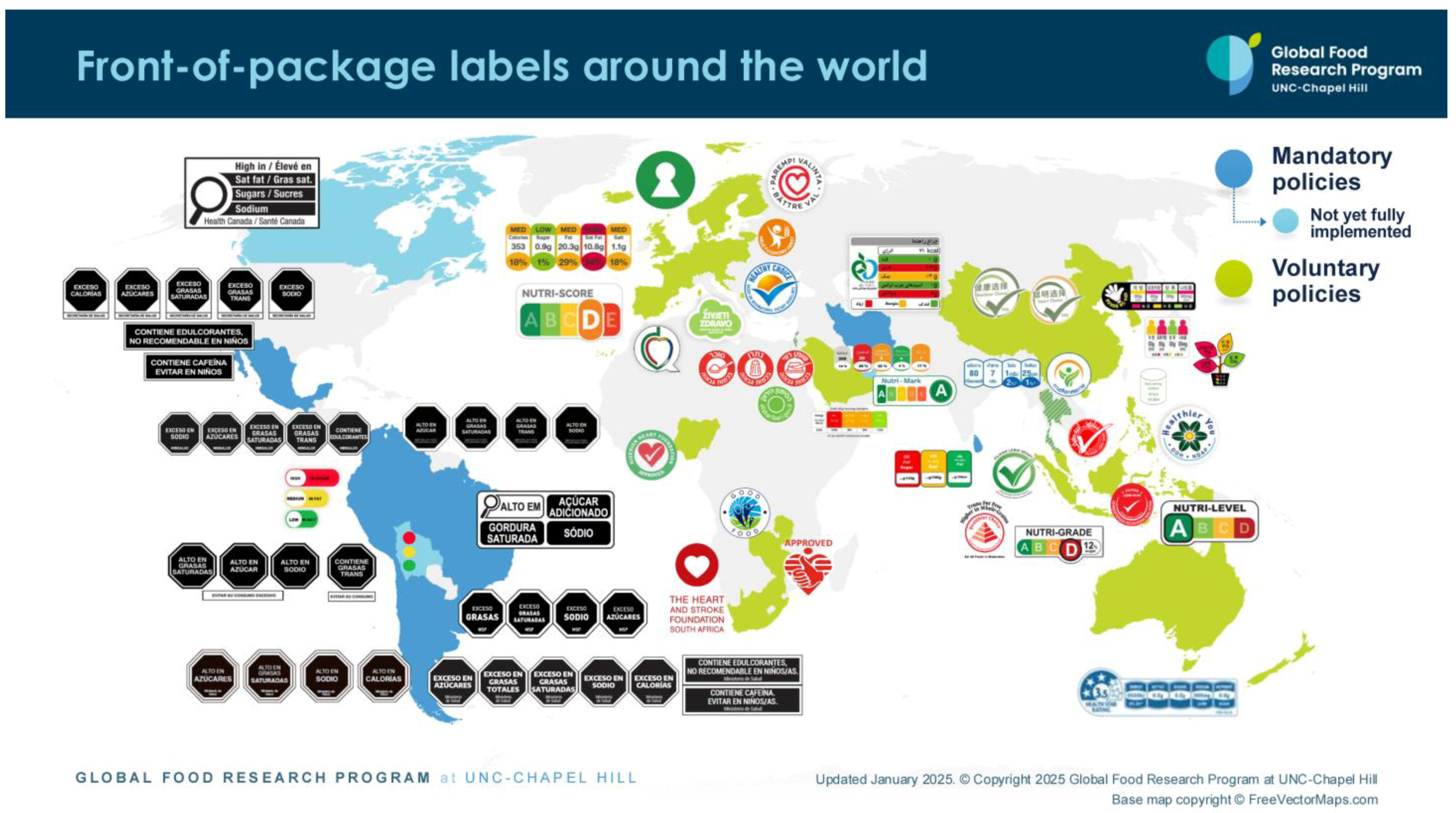
4. Front-of-Package Labeling Landscape: Global and Local
4.1. Key Trends
4.1.1. Nutrient-Specific Labeling
4.1.2. Traffic Light System
4.1.3. Health Claims and Symbols
4.2. Challenges
4.2.1. Global Harmonization
4.2.2. Consumer Understanding
4.3. Regulatory Approaches
4.3.1. Government Regulations
4.3.2. Industry Initiatives
- Key Points:
- The global landscape of FOP food labeling reflects a dynamic interplay between industry initiatives and government regulations.
- While trends like nutrient-specific labeling and the traffic light system are becoming widespread, challenges such as global harmonization, and ensuring consumer comprehension persist.
- As the landscape continues to evolve, collaboration between governments, industry stakeholders, and public health advocates will play a pivotal role in shaping the future of front-of-package food labeling.
5. Impact of Non-Nutritive Sweeteners on Sugar Reduction: Taste and Sensory Perception
5.1. Taste Perception and Physiology
5.2. Sensory Properties of Alternative Sweeteners
5.3. Impact of Alternative Sweeteners on Satiety and Satisfaction
- Key Points:
- Taste perception of sweeteners is impacted by solubility, binding site, and affinity to the taste receptors, and interactions with components of saliva. Sweeteners can interact with both the sweet taste receptor as well as specific bitter taste receptors which lead to differences in their overall taste perception.
- The sensory properties of natural sweeteners differ from sucrose. NNSs such as stevia, monk fruit, and sweet proteins typically deliver differing temporal properties with certain non-sweet attributes as compared to sucrose. However, this can be improved by blending with other sweeteners. In the case of stevia, high purity next generation steviol glycosides (such as reb M) can deliver a cleaner sweetness with fewer non-sweet attributes but still differ from sucrose.
- NNSs can activate sweet or bitter taste receptors like sugar; however, clinical trials overall indicate no meaningful effects on overall satiety signaling. The difference in ability to trigger reward and satiety signaling across sweeteners further illustrates the need to treat NNSs as different compound classes.
6. Impact of Non-Nutritive Sweeteners on Obesity, Diabetes, and Cardiovascular Disease with Potential Mediation by the Gut Microbiome and Other Mechanisms
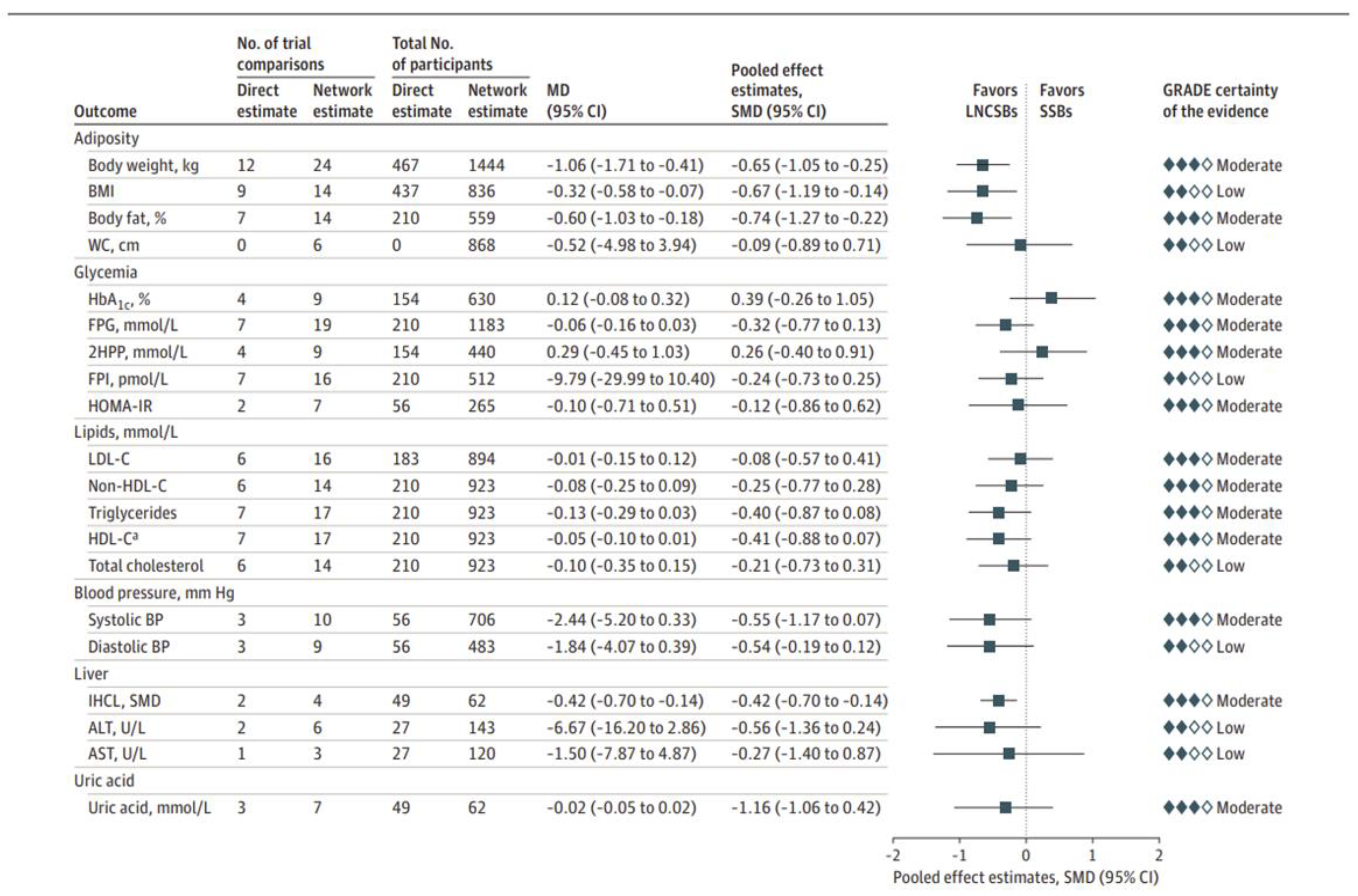
6.1. Evidence from Randomized Trials
6.2. Evidence from Prospective Cohort Studies
6.3. Potential Mechanisms of Action
6.3.1. “Uncoupling” and “Coupling” Hypotheses
6.3.2. Microbiome Changes

| NNS Type | Microbiome Changes in Randomized Controlled Trials | |||||
|---|---|---|---|---|---|---|
| Singh et al., 2024 [176] | Kwok et al., 2024 [178] | Suez et al., 2022 [177] | Serrano et al., 2021 [172] | Ahmad et al., 2020 [174] | Thomson et al., 2019 [173] | |
| Aspartame | ↔ | ↔ | ||||
| Acesulfame Potassium | ||||||
| Sucralose | ↓* | ↔ | ↔ | |||
| Saccharin | ↓* | ↔ | ||||
| Stevia | ↔ | ↔ | ↔ | |||
- Key Points:
- The ability of LNCSs to be useful in dietary strategies for reducing intake of calories and sugars in weight management has come under increased scrutiny.
- Systematic reviews and meta-analyses have shown mixed results; however, the preponderance of evidence from randomized trials supports the use of NNSBs are no less effective than water for replacement of SSBs as part of sugar reduction strategies in overweight/obese adults over the moderate to long term.
- More research will be important for improving the certainty of the estimates and clarifying any mechanisms beyond the displacement of added sugars and calories.
7. Safety of Low-Calorie and No-Calorie Sweeteners
7.1. Scope of Review
Background: Determination of Food Ingredient Safety and Common Questions Regarding the Safety of LNCSs, as a Class
7.2. Biologic Fate and Safety Profile of LNCSs
7.2.1. Acesulfame Potassium (Ace-K)
7.2.2. Allulose
7.2.3. Aspartame
7.2.4. Erythritol
7.2.5. Mogrosides
7.2.6. Neotame
7.2.7. Saccharin
7.2.8. Steviol Glycosides
7.2.9. Sucralose
7.2.10. Tagatose
7.2.11. Thaumatin
- Key Points:
- The FDA and other regulatory bodies follow rigorous standards in the evaluation of proposed new food ingredients, including LNCSs.
- A wide body of research supports the idea that approved LNCSs are safe for use.
- Over-reaching conclusions drawn from limited and/or unreliable research has led to the most common concerns raised about the safety of LNCSs.
8. Implications—Gaps in the Evidence and Recommendations for Further Research
9. Conclusions
Author Contributions
Funding
Institutional Review Board Statement
Informed Consent Statement
Data Availability Statement
Acknowledgments
Conflicts of Interest
References
- Das, A.; Chakraborty, R. Sweeteners: Classification, Sensory and Health Effects; Elsevier: Amsterdam, The Netherlands, 2016. [Google Scholar]
- Gómez-Fernández, A.R.; Santacruz, A.; Jacobo-Velázquez, D.A. The complex relationship between metabolic syndrome and sweeteners. J. Food Sci. 2021, 86, 1511–1531. [Google Scholar] [CrossRef]
- Muñoz-Labrador, A.; Hernandez-Hernandez, O.; Moreno, F.J. A review of the state of sweeteners science: The natural versus artificial non-caloric sweeteners debate. Stevia rebaudiana and Siraitia grosvenorii into the spotlight. Crit. Rev. Biotechnol. 2023, 44, 1080–1102. [Google Scholar] [CrossRef]
- Garcia, K.; Ferreira, G.; Reis, F.; Viana, S. Impact of dietary sugars on gut microbiota and metabolic health. Diabetology 2022, 3, 549–560. [Google Scholar] [CrossRef]
- Malaysia Government Gazette. No. 11. 20 May 2004. Supplement No 54.
- Ministry of Health Republic of Indonesia Number 033 2012. ADDITIONAL FOOD INGREDIENTS No. 585.
- South Korea KFDA Food Additive Code 2(ii) Article 3-B Standard and Specification of Steviol Glycoside (36) under Natural Food Additives (Updated 150302).
- World Bank World Population Data. Available online: https://data.worldbank.org/indicator/SP.POP.TOTL (accessed on 3 April 2024).
- Global Nutrition Report Country Nutrition Reports. Available online: https://globalnutritionreport.org (accessed on 3 April 2024).
- FAO/WHO Food-Based Dietary Guidelines. Available online: https://www.fao.org/nutrition/education/food-dietary-guidelines/background/sustainable-dietary-guidelines/en/ (accessed on 3 April 2024).
- World Health Organization. Fact Sheet No. 394: Healthy Diet; Guideline: Sugars Intake for Adults and Children. Available online: https://cdn.who.int/media/docs/default-source/healthy-diet/healthy-diet-fact-sheet-394.pdf (accessed on 10 June 2024).
- World Health Organization. Guideline: Sugars Intake for Adults and Children. Available online: https://www.who.int/publications/i/item/9789241549028 (accessed on 3 April 2024).
- U.S. Department of Agriculture and U.S. Department of Health and Human Services. Dietary Guidelines for Americans, 2020–2025. 9th Edition. Available online: https://www.dietaryguidelines.gov/sites/default/files/2021-03/Dietary_Guidelines_for_Americans-2020-2025.pdf (accessed on 27 May 2024).
- European Food Safety Authority. Sugar Consumption and Health Problems. Available online: https://www.efsa.europa.eu/en/infographics/sugar-consumption-and-health-problems (accessed on 10 June 2024).
- U.S. Food and Drug Administration. Nutrition Facts Label. Available online: https://www.fda.gov/food/food-labeling-nutrition/changes-nutrition-facts-label (accessed on 1 May 2024).
- Government of India Ministry of Health and Family Welfare. Dietary Guidelines for Indians—A Manual. Available online: https://www.nin.res.in/downloads/DietaryGuidelinesforNINwebsite.pdf (accessed on 15 March 2024).
- The Chinese Nutrition Society. Dietary Guidelines for Chinese. Available online: http://dg.cnsoc.org/ (accessed on 15 March 2024).
- World Health Organization. Healthy Diet in China. Available online: https://www.who.int/china/health-topics/healthy-diet (accessed on 3 April 2024).
- The Bangladesh National Nutrition Council, Ministry of Health and Family Welfare. Dietary guidelines for Bangladesh. Available online: https://www.fao.org/3/as880e/as880e.pdf (accessed on 15 March 2024).
- The National Health and Medical Research Council. Australian Dietary Guidelines. Available online: https://www.nhmrc.gov.au/file/10001/download?token=gUZekSqQ (accessed on 15 March 2024).
- Ministry of Health, New Zealand. New Zealand Food and Nutrition Guidelines, 2013–2020. Available online: https://www.tewhatuora.govt.nz/our-health-system/preventative-healthwellness/nutrition/eating-and-activity-guidelines (accessed on 15 March 2024).
- Ten guidelines of the German Nutrition Society for a Wholesome Diet. Available online: https://www.dge.de/gesunde-ernaehrung/gut-essen-und-trinken/dge-empfehlungen/ (accessed on 15 March 2024).
- The Eatwell Guide, United Kingdom. Available online: https://www.gov.uk/government/uploads/system/uploads/attachment_data/file/510363/UPDATED_Eatwell_guide_2016_FINAL_MAR23.pdf (accessed on 15 March 2024).
- The French National Nutrition and Health Program’s Dietary Guidelines. Available online: https://www.santepubliquefrance.fr/determinants-de-sante/nutrition-et-activite-physique/documents/rapport-synthese/recommandations-relatives-a-l-alimentation-a-l-activite-physique-et-a-la-sedentarite-pour-les-adultes (accessed on 15 March 2024).
- Dietary Guidelines for Healthy Eating, Italy. Available online: https://www.crea.gov.it/en/web/alimenti-e-nutrizione/-/linee-guida-per-una-sana-alimentazione-2018 (accessed on 15 March 2024).
- EFSA Panel on Nutrition; Novel Foods and Food Allergens (NDA); llergens, F.; Turck, D.; Bohn, T.; Castenmiller, J.; de Henauw, S.; Hirsch-Ernst, K.I.; Knutsen, H.K.; Maciuk, A.; et al. Tolerable upper intake level for dietary sugars. EFSA J. 2022, 20, e07074. [Google Scholar]
- Ministry of Health, Indonesia. Balanced Nutrition Guidelines. Available online: http://hukor.kemkes.go.id/uploads/produk_hukum/PMK%20No.%2041%20ttg%20Pedoman%20Gizi%20Seimbang.pdf (accessed on 15 March 2024).
- Dietary and Physical Activity Guidelines in the Context of Overweight and Obesity in the Mexican Population. Available online: https://www.anmm.org.mx/publicaciones/CAnivANM150/L29_ANM_Guias_alimentarias.pdf (accessed on 15 March 2024).
- Canada’s Dietary Guidelines. Available online: https://food-guide.canada.ca/en/guidelines/ (accessed on 15 March 2024).
- Dietary Guidelines for the Brazilian Population. Available online: http://bvsms.saude.gov.br/bvs/publicacoes/dietary_guidelines_brazilian_population.pdf (accessed on 15 March 2024).
- Brazilian Dietary Guidelines for Children Under Two Years. Available online: https://bvsms.saude.gov.br/bvs/publicacoes/dietary_guidelines_brazilian_chhildren_under.pdf (accessed on 15 March 2024).
- Food-Based Dietary Guidelines for the Colombian Population over 2 Years of Age. Available online: https://www.icbf.gov.co/system/files/guias_alimentarias_basadas_en_alimentos_para_la_poblacion_colombiana_mayor_de_2_anos_0.pdf (accessed on 15 March 2024).
- Food-Based Dietary Guidelines for Colombian Pregnant and Breastfeeding Women and Children Under 2 Years of Age. Available online: https://www.icbf.gov.co/system/files/guias_alimentarias_basadas_en_alimentos_para_mujeres_gestantes_madres_en_periodo_de_lactancia_y_ninos_y_ninas_menores_de_2_anos_para_colombia_0_0.pdf (accessed on 15 March 2024).
- Argentina Food-Based Dietary Guidelines. Available online: https://bancos.salud.gob.ar/recurso/guias-alimentarias-para-la-poblacion-argentina (accessed on 15 March 2024).
- Dietary Guidelines for the Peruvian Population. Available online: https://repositorio.ins.gob.pe/handle/20.500.14196/1247 (accessed on 15 March 2024).
- Dietary Guidelines for Venezuela. Available online: https://www.fao.org/3/a-as877s.pdf (accessed on 15 March 2024).
- Food-Based Dietary Guidelines for Nigeria—A Guide to Healthy Eating. Available online: https://www.fao.org/3/a-as841e.pdf (accessed on 15 March 2024).
- Ethiopia Food-Based Dietary Guidelines. Available online: https://ephi.gov.et/wp-content/uploads/2021/02/FBDG_MotherDocument_WebVersion.pdf (accessed on 15 March 2024).
- American Diabetes Association Professional Practice Committee. Introduction and Methodology: Standards of Care in Diabetes—2024. Diabetes Care 2024, 47, S1–S4. [Google Scholar]
- Diabetes Australia. Alternative Sweeteners—Can They Help Manage Diabetes? Available online: https://www.diabetesaustralia.com.au/blog/alternative-sweeteners-diabetes/ (accessed on 7 August 2024).
- Diabetes Canada Sugar & Diabetes. Position Statement. Available online: https://www.diabetes.ca/advocacy---policies/our-policy-positions/sugar---diabetes (accessed on 7 August 2024).
- Diabetes UK. The Use of Low or No Calorie Sweeteners. Available online: https://www.diabetes.org.uk/about-us/about-the-charity/our-strategy/position-statements/use-of-low-or-no-calorie-sweetners (accessed on 7 August 2024).
- Te Morenga, L.; Mallard, S.; Mann, J. Dietary sugars and body weight: Systematic review and meta-analyses of randomised controlled trials and cohort studies. BMJ 2013, 346, e7492. [Google Scholar] [CrossRef] [PubMed]
- Centers for Disease Control and Prevention. Get the Facts: Added Sugars. Available online: https://www.cdc.gov/nutrition/data-statistics/added-sugars.html (accessed on 3 April 2024).
- US Department of Agriculture, ARS. Food Patterns Equivalents Intakes from Food: Mean Amounts Consumed per Individual, What We Eat in America, NHANES 2017–2018; US Department of Agriculture, ARS: Beltsville, MD, USA, 2020. [Google Scholar]
- Fujiwara, A.; Omura, Y.; Oono, F.; Sugimoto, M.; Sasaki, S.; Takimoto, H. A Scoping Review of Epidemiological Studies on Intake of Sugars in Geographically Dispersed Asian Countries: Comparison of Dietary Assessment Methodology. Adv. Nutr. 2022, 13, 1947–1973. [Google Scholar] [CrossRef] [PubMed]
- Azaïs-Braesco, V.; Sluik, D.; Maillot, M.; Kok, F.; Moreno, L.A. A review of total & added sugar intakes and dietary sources in Europe. Nutr. J. 2017, 16, 1–15. [Google Scholar]
- Lara-Castor, L.; Micha, R.; Cudhea, F.; Miller, V.; Shi, P.; Zhang, J.; Sharib, J.R.; Erndt-Marino, J.; Cash, S.B.; Mozaffarian, D. Sugar-sweetened beverage intakes among adults between 1990 and 2018 in 185 countries. Nat. Commun. 2023, 14, 5957. [Google Scholar] [CrossRef] [PubMed]
- World Health Organization. Taxes on Sugary Drinks. Available online: https://www.who.int/southeastasia/news/feature-stories/detail/taxes-on-sugary-drinks (accessed on 3 April 2024).
- Malik, V.S.; Pan, A.; Willett, W.C.; Hu, F.B. Sugar-sweetened beverages and weight gain in children and adults: A systematic review and meta-analysis. Am. J. Clin. Nutr. 2013, 98, 1084–1102. [Google Scholar] [CrossRef]
- Malik, V.S.; Willett, W.C.; Hu, F.B. Global obesity: Trends, risk factors and policy implications. Nat. Rev. Endocrinol. 2013, 9, 13–27. [Google Scholar] [CrossRef] [PubMed]
- International Food Information Council, 2023 Food and Health Survey. Available online: https://foodinsight.org/2023-food-and-health-survey/ (accessed on 10 June 2024).
- Rodda, S.N.; Booth, N.; Brittain, M.; McKean, J.; Thornley, S. I was truly addicted to sugar: A consumer-focused classification system of behaviour change strategies for sugar reduction. Appetite 2020, 144, 104456. [Google Scholar] [CrossRef] [PubMed]
- World Cancer Research Fund International Foundation. Curbing Global Sugars Consumption. Available online: https://www.wcrf.org/policy/our-publications/curbing-global-sugar-consumption/ (accessed on 3 April 2024).
- Bergallo, P.; Castagnari, V.; Fernández, A.; Mejía, R. Regulatory initiatives to reduce sugar-sweetened beverages (SSBs) in Latin America. PLoS ONE 2018, 13, e0205694. [Google Scholar] [PubMed]
- Keller, K.O.; Guyt, J.Y. A War on sugar? Effects of reduced sugar content and package size in the soda category. J. Mark. 2023, 87, 698–718. [Google Scholar] [CrossRef]
- Chen, L.; Wu, W.; Zhang, N.; Bak, K.H.; Zhang, Y.; Fu, Y. Sugar reduction in beverages: Current trends and new perspectives from sensory and health viewpoints. Food Res. Int. 2022, 162, 112076. [Google Scholar] [CrossRef]
- Taillie, L.S.; Busey, E.; Stoltze, F.M.; Dillman Carpentier, F.R. Governmental policies to reduce unhealthy food marketing to children. Nutr. Rev. 2019, 77, 787–816. [Google Scholar] [CrossRef] [PubMed]
- Whalen, R.; Harrold, J.; Child, S.; Halford, J.; Boyland, E. Children’s exposure to food advertising: The impact of statutory restrictions. Health Promot. Int. 2019, 34, 227–235. [Google Scholar] [CrossRef] [PubMed]
- Silva, A.; Higgins, L.M.; Hussein, M. An evaluation of the effect of child-directed television food advertising regulation in the United Kingdom. Can. J. Agric. Econ. Rev. Can. D’agroeconomie 2015, 63, 583–600. [Google Scholar] [CrossRef]
- Tatlow-Golden, M.; Murrin, C.; Bergin, R.; Kerr, M.; O’Brien, S.; Livingstone, B. Creating good feelings about unhealthy food: Children’s televised ‘advertised diet’on the island of Ireland, in a climate of regulation. Ir. J. Psychol. 2015, 36, 83–100. [Google Scholar]
- World Health Organization. Global Report on the Use of Sugar-Sweetened Beverage Taxes. Available online: https://www.who.int/publications/i/item/9789240084995 (accessed on 3 April 2024).
- Andreyeva, T.; Marple, K.; Marinello, S.; Moore, T.E.; Powell, L.M. Outcomes following taxation of sugar-sweetened beverages: A systematic review and meta-analysis. JAMA Netw. Open 2022, 5, e2215276. [Google Scholar] [CrossRef]
- Salgado Hernandez, J.; Ng, S.; Colchero, M. Changes in sugar-sweetened beverage purchases across the price distribution after the implementation of a tax in Mexico: A before-and-after analysis. BMC Public Health 2023, 23, 265. [Google Scholar] [CrossRef] [PubMed]
- The Children’s Food and Beverage Advertising Initiative (CFBAI). Available online: https://bbbprograms.org/programs/all-programs/cfbai (accessed on 15 May 2024).
- Colchero, M.A.; Molina, M.; Guerrero-López, C.M. After Mexico implemented a tax, purchases of sugar-sweetened beverages decreased and water increased: Difference by place of residence, household composition, and income level. J. Nutr. 2017, 147, 1552–1557. [Google Scholar] [CrossRef] [PubMed]
- Walton, J.; Bell, H.; Re, R.; Nugent, A.P. Current perspectives on global sugar consumption: Definitions, recommendations, population intakes, challenges and future direction. Nutr. Res. Rev. 2023, 36, 1–22. [Google Scholar] [CrossRef]
- Nutrition Labelling: Front-of-Package Nutrition Symbol. Available online: https://www.canada.ca/en/health-canada/services/food-nutrition/nutrition-labelling/front-package.html (accessed on 8 January 2024).
- Manual de modificación a la Norma Oficial Mexicana NOM-051-SCFI/SSA1-2010. Available online: https://www.gob.mx/cms/uploads/attachment/file/654130/MANUAL_DE_LA_MODIFICACION_NOM-051_.pdf (accessed on 15 March 2024).
- La Asamblea Legislativa de Argentina. Ley 27642: Promoción De La Alimentación Saludable. Available online: https://www.boletinoficial.gob.ar/detalleAviso/primera/252728/20211112?busqueda=2 (accessed on 9 February 2024).
- Crosbie, E.; Gomes, F.S.; Olvera, J.; Patiño, S.R.-G.; Hoeper, S.; Carriedo, A. A policy study on front–of–pack nutrition labeling in the Americas: Emerging developments and outcomes. Lancet Reg. Health–Am. 2023, 18, 100400. [Google Scholar] [CrossRef]
- Plurinational Legislative Assembly of Bolivia. Law 775—Healthy Eating Promotion Law. Available online: http://www.gacetaoficialdebolivia.gob.bo/edicions/view/825NEC (accessed on 10 June 2024).
- Agência Nacional de Vigilância Sanitária (Anvisa). Instrução Normativa (IN) n° 75, de 8 de Outubro de 2020. Estabelece os Requisitos Técnicos Para Declaração da Rotulagem Nutricional dos Alimentos Embalados. Available online: https://antigo.anvisa.gov.br/documents/10181/3882585/IN+75_2020_.pdf/7d74fe2d-e187-4136-9fa2-36a8dcfc0f8f (accessed on 9 February 2024).
- de Salud de Chile Ministerio. Evaluación Ley De Alimentos N. 20.606. Available online: https://www.minsal.cl/wp-content/uploads/2019/08/EVALUACION-LEY-DE-ALIMENTOS_julio-2019_02.pdf (accessed on 9 February 2024).
- Republic of Colombia, Ministry of Health and Social Protection. Resolution Number 2492/2022; 2021. Published by Global Agricultural Information Network, U.S. Available online: https://gain.fas.usda.gov/Download.aspx?p=1941&q=58a95c77-e83d-4e76-8e9f-cfc7d12d4281 (accessed on 9 February 2024).
- Sandoval, L.A.; Carpio, C.E.; Sanchez-Plata, M. The effect of ‘Traffic-Light’nutritional labelling in carbonated soft drink purchases in Ecuador. PLoS ONE 2019, 14, e0222866. [Google Scholar] [CrossRef]
- República del Perú. Decreto Supremo Nº 012-2018-SA; 2018. Published by Plataforma del Estado Peruano, Peru. Available online: https://www.gob.pe/institucion/produce/normas-legales/185544-012-2018-sa (accessed on 9 February 2024).
- Gaceta Oficial de la Republica Bolivariana de Venezuela. Ministerio del Poder Popular para la Salud Resolucion No 011. 2020. Published by Food & Agriculture Organization of the United Nations. Available online: https://www.fao.org/faolex/results/details/es/c/LEX-FAOC192716/ (accessed on 9 February 2024).
- Gaceta Oficial de la Republica Bolivariana de Venezuela. Ministerio del Poder Popular para la Salud Resolucion No 137. 2021. Published by Food & Agriculture Organization of the United Nations. Available online: https://www.fao.org/faolex/results/details/es/c/LEX-FAOC222781/ (accessed on 9 February 2024).
- Ministerio de Salud de Uruguay. Decreto N° 272/018. Modificación del Reglamento Bromatológico Nacional, Relativo al Rotulado de Alimentos. 2018. Published by Food & Agriculture Organization of the United Nations. Available online: https://www.fao.org/faolex/results/details/en/c/LEX-FAOC215365/ (accessed on 9 February 2024).
- Moslemi, M.; Kheirandish, M.; Mazaheri, N.; Hosseini, H.; Jannat, B.; Mofid, V.; Fooladi, M.; Karimian, N. National food policies in the Islamic Republic of Iran aimed at control and prevention of noncommunicable diseases. East. Mediterr. Health J. 2020, 26, 1556–1564. [Google Scholar] [CrossRef] [PubMed]
- Gillon-Keren, M.; Kaufman-Shriqui, V.; Goldsmith, R.; Safra, C.; Shai, I.; Fayman, G.; Berry, E.; Tirosh, A.; Dicker, D.; Froy, O. Development of criteria for a positive front-of-package food labeling: The Israeli case. Nutrients 2020, 12, 1875. [Google Scholar] [CrossRef] [PubMed]
- Minister of Health Sri Lanka, Nutrition and Indigenous Medicine. Food (Colour Coding for Sugars Levels) Regulations 2016—No 1965/18; 2016. Published by Food & Agriculture Organization of the United Nations. Available online: https://www.fao.org/faolex/results/details/en/c/LEX-FAOC195989/ (accessed on 9 February 2024).
- Global Food Research Program University of North Carolina at Chapel Hill. Front-of-Package (FOP) Food Labelling: Empowering Consumers to Make Healthy Choices. Available online: https://www.globalfoodresearchprogram.org/wp-content/uploads/2020/08/FOP_Factsheet_UNCGFRP_2020_September_Final.pdf (accessed on 10 June 2024).
- Shin, S.; Puri, J.; Finkelstein, E. A randomized trial to evaluate the impact of Singapore’s forthcoming Nutri-grade front-of-pack beverage label on food and beverage purchases. Int. J. Behav. Nutr. Phys. Act. 2023, 20, 18. [Google Scholar] [CrossRef] [PubMed]
- Pettigrew, S.; Coyle, D.; McKenzie, B.; Vu, D.; Lim, S.C.; Berasi, K.; Poowanasatien, A.; Suya, I.; Kowal, P. A review of front-of-pack nutrition labelling in Southeast Asia: Industry interference, lessons learned, and future directions. Lancet Reg. Health-Southeast Asia 2022, 3, 100017. [Google Scholar] [CrossRef]
- Commonwealth of Australia. About Health Star Ratings. Available online: http://healthstarrating.gov.au/internet/healthstarrating/publishing.nsf/Content/About+the+Health+Star+Rating+System (accessed on 14 February 2024).
- Peonides, M.; Knoll, V.; Gerstner, N.; Heiss, R.; Frischhut, M.; Gokani, N. Food labeling in the European Union: A review of existing approaches. Int. J. Health Gov. 2022, 27, 460–468. [Google Scholar] [CrossRef]
- Choices International Foundation. Positive Nutrition Labeling: A Scientific Overview. Available online: https://www.choicesprogramme.org/dist/uploads/Scientific_Overview_Positive_Labeling_2019.pdf (accessed on 14 February 2024).
- The China Food Law Blog. China’s Healthier Choice. Available online: https://chinafoodlaw.blog/2020/04/30/chinas-healthier-choice/ (accessed on 14 February 2024).
- Croatian Institute of Public Health. Guarantee Mark Food Criteria, Annex 2 “Healthy Living”; 2016. Published by Hrvatski Zavod Javno Zdravstvo, Zagreb, Croatia. Available online: https://www.hzjz.hr/wp-content/uploads/2015/06/Healthy-Living-Food-criteria.pdf (accessed on 9 February 2024).
- Rimbawan, E.; Sari, K.; Sutrisna, A. Adjustments to Indonesia’s ’Healthier Choice Logo’ Food Labelling Scheme Could Promote Healthier Choices. Available online: https://www.gainhealth.org/resources/reports-and-publications/adjustments-indonesias-healthier-choice-logo-food-labelling (accessed on 14 February 2024).
- HCL Secretariat, Nutrition Division, Ministry of Health Malaysia. Nutritional Guidelines on Nutrient Criteria for Healthier Choice Logo Malaysia; 2023. Published by Portal Rasmi Kementerian Kesihatan Malaysia. Available online: https://myhcl.moh.gov.my/assets/doc/announcement/NUTRITIONAL_GUIDELINES_ON_NUTRIENT_CRITERIA_FOR_HCL_MALAYSIA.pdf (accessed on 9 February 2024).
- Nigerian Heart Foundation. Awareness. Available online: https://www.nigerianheart.org/awareness/ (accessed on 20 February 2024).
- Saudi Food and Drug Authority. Traffic Light Labeling; 2018. Published by SFDA.gov, Riyadh, Saudi Arabia. Available online: https://sfda.gov.sa/sites/default/files/2019-11/ND6-min.jpg (accessed on 9 February 2024).
- Health Promotion Board (A Singapore Government Agency Website). Healthier Choice Symbol. Available online: https://hpb.gov.sg/food-beverage/healthier-choice-symbol (accessed on 20 February 2024).
- The Heart and Stroke Foundation South Africa. Heart Mark Programme. Available online: https://heartfoundation.co.za/heart-mark/ (accessed on 20 February 2024).
- Kanter, R.; Vanderlee, L.; Vandevijvere, S. Front-of-package nutrition labelling policy: Global progress and future directions. Public Health Nutr. 2018, 21, 1399–1408. [Google Scholar] [CrossRef] [PubMed]
- Ministry of Public Health Thailand. The Notification of the Ministry of Public Health (No.373) B.E. 2559 (2016) Re: The Display of Nutrition Symbol on Food Label. 2016. [Google Scholar]
- Al-Jawaldeh, A.; Rayner, M.; Julia, C.; Elmadfa, I.; Hammerich, A.; McColl, K. Improving nutrition information in the eastern Mediterranean region: Implementation of front-of-pack nutrition labelling. Nutrients 2020, 12, 330. [Google Scholar] [CrossRef] [PubMed]
- Food Standards Agency United Kingdom. Nutrition Labelling. Available online: https://www.food.gov.uk/business-guidance/nutrition-labelling (accessed on 21 February 2024).
- World Food Programme. Good Food Logo: How a Simple Graphic Aims to Boost Nutrition in Zambia. Available online: https://www.wfp.org/stories/good-food-logo-how-simple-graphic-aims-boost-nutrition-zambia (accessed on 21 February 2024).
- Breslin, P.A. An evolutionary perspective on food and human taste. Curr. Biol. 2013, 23, R409–R418. [Google Scholar] [CrossRef]
- Chaudhari, N.; Roper, S.D. Review series: The cell biology of taste. J. Cell Biol. 2010, 190, 285. [Google Scholar] [CrossRef] [PubMed]
- Roper, S.D. Taste buds as peripheral chemosensory processors. Semin. Cell Dev. Biol. 2013, 71–79. [Google Scholar] [CrossRef] [PubMed]
- Breslin, P.A.; Huang, L. Human taste: Peripheral anatomy, tastetransduction, and coding. Tast. Smell 2006, 63, 152–190. [Google Scholar]
- von Molitor, E.; Riedel, K.; Krohn, M.; Hafner, M.; Rudolf, R.; Cesetti, T. Sweet taste is complex: Signaling cascades and circuits involved in sweet sensation. Front. Hum. Neurosci. 2021, 15, 667709. [Google Scholar] [CrossRef] [PubMed]
- Servant, G.; Tachdjian, C.; Li, X.; Karanewsky, D.S. The sweet taste of true synergy: Positive allosteric modulation of the human sweet taste receptor. Trends Pharmacol. Sci. 2011, 32, 631–636. [Google Scholar] [CrossRef]
- Jaitak, V. Interaction model of steviol glycosides from Stevia rebaudiana (Bertoni) with sweet taste receptors: A computational approach. Phytochemistry 2015, 116, 12–20. [Google Scholar]
- Reyes, M.M.; Gravina, S.A.; Hayes, J.E. Evaluation of sweetener synergy in humans by isobole analyses. Chem. Senses 2019, 44, 571–582. [Google Scholar] [CrossRef] [PubMed]
- Yuan, Y.; Yiasmin, M.N.; Tristanto, N.A.; Chen, Y.; Liu, Y.; Guan, S.; Wang, Z.; Hua, X. Computational simulations on the taste mechanism of steviol glycosides based on their interactions with receptor proteins. Int. J. Biol. Macromol. 2024, 255, 128110. [Google Scholar] [CrossRef] [PubMed]
- Dagan-Wiener, A.; Di Pizio, A.; Nissim, I.; Bahia, M.S.; Dubovski, N.; Margulis, E.; Niv, M.Y. BitterDB: Taste ligands and receptors database in 2019. Nucleic Acids Res. 2019, 47, D1179–D1185. [Google Scholar] [CrossRef] [PubMed]
- Di Pizio, A.; Shoshan-Galeczki, Y.B.; Hayes, J.E.; Niv, M.Y. Bitter and sweet tasting molecules: It’s complicated. Neurosci. Lett. 2019, 700, 56–63. [Google Scholar] [CrossRef] [PubMed]
- Knight, I. The development and applications of sucralose, a new high-intensity sweetener. Can. J. Physiol. Pharmacol. 1994, 72, 435–439. [Google Scholar] [CrossRef] [PubMed]
- Maillet, E.L.; Cui, M.; Jiang, P.; Mezei, M.; Hecht, E.; Quijada, J.; Margolskee, R.F.; Osman, R.; Max, M. Characterization of the binding site of aspartame in the human sweet taste receptor. Chem. Senses 2015, 40, 577–586. [Google Scholar] [CrossRef] [PubMed]
- Kuhn, C.; Bufe, B.; Winnig, M.; Hofmann, T.; Frank, O.; Behrens, M.; Lewtschenko, T.; Slack, J.P.; Ward, C.D.; Meyerhof, W. Bitter taste receptors for saccharin and acesulfame K. J. Neurosci. 2004, 24, 10260–10265. [Google Scholar] [CrossRef] [PubMed]
- Masuda, K.; Koizumi, A.; Nakajima, K.-i.; Tanaka, T.; Abe, K.; Misaka, T.; Ishiguro, M. Characterization of the modes of binding between human sweet taste receptor and low-molecular-weight sweet compounds. PLoS ONE 2012, 7, e35380. [Google Scholar] [CrossRef]
- Magnuson, B.A.; Carakostas, M.C.; Moore, N.H.; Poulos, S.P.; Renwick, A.G. Biological fate of low-calorie sweeteners. Nutr. Rev. 2016, 74, 670–689. [Google Scholar] [CrossRef] [PubMed]
- Acevedo, W.; Ramírez-Sarmiento, C.A.; Agosin, E. Identifying the interactions between natural, non-caloric sweeteners and the human sweet receptor by molecular docking. Food Chem. 2018, 264, 164–171. [Google Scholar] [CrossRef] [PubMed]
- Purkayastha, S.; Markosyan, A.; Prakash, I.; Bhusari, S.; Pugh Jr, G.; Lynch, B.; Roberts, A. Steviol glycosides in purified stevia leaf extract sharing the same metabolic fate. Regul. Toxicol. Pharmacol. 2016, 77, 125–133. [Google Scholar] [CrossRef] [PubMed]
- Bhusari, S.; Rodriguez, C.; Tarka, S.M., Jr.; Kwok, D.; Pugh, G.; Gujral, J.; Tonucci, D. Comparative In vitro metabolism of purified mogrosides derived from monk fruit extracts. Regul. Toxicol. Pharmacol. 2021, 120, 104856. [Google Scholar] [CrossRef] [PubMed]
- DuBois, G.E. Molecular mechanism of sweetness sensation. Physiol. Behav. 2016, 164, 453–463. [Google Scholar] [CrossRef] [PubMed]
- Shi, X.; Zhang, Y.; Xue, J.; Jin, Y.; Li, X. Exploring the mechanism of sweetener neohesperidin dihydrochalcone on oral tolerance via a network pharmacology approach combined with vivo and vitro methods. J. Funct. Foods 2022, 95, 105184. [Google Scholar] [CrossRef]
- Jiang, P.; Ji, Q.; Liu, Z.; Snyder, L.A.; Benard, L.M.; Margolskee, R.F.; Max, M. The cysteine-rich region of T1R3 determines responses to intensely sweet proteins. J. Biol. Chem. 2004, 279, 45068–45075. [Google Scholar] [CrossRef]
- Kim, T.Y.; Woo, E.J.; Yoon, T.S. Binding mode of brazzein to the taste receptor based on crystal structure and docking simulation. Biochem. Biophys. Res. Commun. 2022, 592, 119–124. [Google Scholar] [CrossRef]
- Nahon, D.F.; Roozen, J.P.; de Graaf, C. Sensory evaluation of mixtures of sodium cyclamate, sucrose, and an orange aroma. J. Agric. Food Chem. 1998, 46, 3426–3430. [Google Scholar] [CrossRef]
- Choi, J.-h.; Chung, S.-j. Optimal sensory evaluation protocol to model concentration–response curve of sweeteners. Food Res. Int. 2014, 62, 886–893. [Google Scholar] [CrossRef]
- Breslin, P.A.; Izumi, A.; Tharp, A.; Ohkuri, T.; Yokoo, Y.; Flammer, L.J.; Rawson, N.E.; Margolskee, R.F. Evidence that human oral glucose detection involves a sweet taste pathway and a glucose transporter pathway. PLoS ONE 2021, 16, e0256989. [Google Scholar] [CrossRef] [PubMed]
- Higgins, K.A.; Rawal, R.; Baer, D.J.; O’Connor, L.E.; Appleton, K.M. Scoping review and evidence map of the relation between exposure to dietary sweetness and body weight-related outcomes in adults. Adv. Nutr. 2022, 13, 2341–2356. [Google Scholar] [CrossRef]
- Stamataki, N.S.; Scott, C.; Elliott, R.; McKie, S.; Bosscher, D.; McLaughlin, J.T. Stevia beverage consumption prior to lunch reduces appetite and total energy intake without affecting glycemia or attentional bias to food cues: A double-blind randomized controlled trial in healthy adults. J. Nutr. 2020, 150, 1126–1134. [Google Scholar] [CrossRef] [PubMed]
- Jang, H.-J.; Kokrashvili, Z.; Theodorakis, M.J.; Carlson, O.D.; Kim, B.-J.; Zhou, J.; Kim, H.H.; Xu, X.; Chan, S.L.; Juhaszova, M. Gut-expressed gustducin and taste receptors regulate secretion of glucagon-like peptide-1. Proc. Natl. Acad. Sci. USA 2007, 104, 15069–15074. [Google Scholar] [CrossRef] [PubMed]
- Zhang, R.; Noronha, J.C.; Khan, T.A.; McGlynn, N.; Back, S.; Grant, S.M.; Kendall, C.W.; Sievenpiper, J.L. The effect of non-nutritive sweetened beverages on postprandial glycemic and endocrine responses: A systematic review and network meta-analysis. Nutrients 2023, 15, 1050. [Google Scholar] [CrossRef] [PubMed]
- Lu, P.; Zhang, C.-H.; Lifshitz, L.M.; ZhuGe, R. Extraoral bitter taste receptors in health and disease. J. Gen. Physiol. 2017, 149, 181–197. [Google Scholar] [CrossRef] [PubMed]
- Noya-Leal, F.; van der Wielen, N.; Behrens, M.; Rouschop, S.; van Arkel, J.; Jongsma, M.; Witkamp, R.; Mes, J.J.; Bastiaan-Net, S.; Meijerink, J. Rebaudioside A from Stevia rebaudiana stimulates GLP-1 release by enteroendocrine cells via bitter taste signalling pathways. Food Funct. 2023, 14, 6914–6928. [Google Scholar] [CrossRef] [PubMed]
- O’Connor, D.; Pang, M.; Castelnuovo, G.; Finlayson, G.; Blaak, E.; Gibbons, C.; Navas-Carretero, S.; Almiron-Roig, E.; Harrold, J.; Raben, A. A rational review on the effects of sweeteners and sweetness enhancers on appetite, food reward and metabolic/adiposity outcomes in adults. Food Funct. 2021, 12, 442–465. [Google Scholar] [CrossRef] [PubMed]
- Andrade, L.; Lee, K.M.; Sylvetsky, A.C.; Kirkpatrick, S.I. Low-calorie sweeteners and human health: A rapid review of systematic reviews. Nutr. Rev. 2021, 79, 1145–1164. [Google Scholar] [CrossRef] [PubMed]
- Toews, I.; Lohner, S.; de Gaudry, D.K.; Sommer, H.; Meerpohl, J.J. Association between intake of non-sugar sweeteners and health outcomes: Systematic review and meta-analyses of randomised and non-randomised controlled trials and observational studies. BMJ 2019, 364, k4718. [Google Scholar] [CrossRef] [PubMed]
- Azad, M.B.; Abou-Setta, A.M.; Chauhan, B.F.; Rabbani, R.; Lys, J.; Copstein, L.; Mann, A.; Jeyaraman, M.M.; Reid, A.E.; Fiander, M. Nonnutritive sweeteners and cardiometabolic health: A systematic review and meta-analysis of randomized controlled trials and prospective cohort studies. CMAJ 2017, 189, E929–E939. [Google Scholar] [CrossRef]
- Sylvetsky, A.C.; Rother, K.I. Nonnutritive sweeteners in weight management and chronic disease: A review. Obesity 2018, 26, 635–640. [Google Scholar] [CrossRef]
- Sievenpiper, J.L.; Khan, T.A.; Ha, V.; Viguiliouk, E.; Auyeung, R. The importance of study design in the assessment of nonnutritive sweeteners and cardiometabolic health. CMAJ 2017, 189, E1424–E1425. [Google Scholar] [CrossRef]
- Malik, V.S. Non-sugar sweeteners and health. BMJ 2019, 364. [Google Scholar] [CrossRef] [PubMed]
- Faeh, D. Risks and benefits of nonsugar sweeteners: Conflicting evidence between observational studies and randomized controlled trials. Curr. Opin. Clin. Nutr. Metab. Care 2024, 27, 344–349. [Google Scholar] [CrossRef]
- Khan, T.A.; Malik, V.S.; Sievenpiper, J.L. Letter by Khan et al. regarding article, “artificially sweetened beverages and stroke, coronary heart disease, and all-cause mortality in the Women’s Health Initiative”. Stroke 2019, 50, e167–e168. [Google Scholar] [CrossRef]
- Smith, J.D.; Hou, T.; Hu, F.B.; Rimm, E.B.; Spiegelman, D.; Willett, W.C.; Mozaffarian, D. A comparison of different methods for evaluating diet, physical activity, and long-term weight gain in 3 prospective cohort studies. J. Nutr. 2015, 145, 2527–2534. [Google Scholar] [CrossRef] [PubMed]
- Khan, T.A.; Sievenpiper, J.L. Low-energy sweeteners and cardiometabolic health: Is there method in the madness. Am. J. Clin. Nutr. 2020, 112, 917–919. [Google Scholar]
- Ashwell, M.; Gibson, S.; Bellisle, F.; Buttriss, J.; Drewnowski, A.; Fantino, M.; Gallagher, A.M.; De Graaf, K.; Goscinny, S.; Hardman, C.A. Expert consensus on low-calorie sweeteners: Facts, research gaps and suggested actions. Nutr. Res. Rev. 2020, 33, 145–154. [Google Scholar] [PubMed]
- Mela, D.J. Is there an academic bias against low-energy sweeteners? Nutrients 2022, 14, 1428. [Google Scholar] [CrossRef] [PubMed]
- Miller, P.E.; Perez, V. Low-calorie sweeteners and body weight and composition: A meta-analysis of randomized controlled trials and prospective cohort studies. Am. J. Clin. Nutr. 2014, 100, 765–777. [Google Scholar] [CrossRef] [PubMed]
- Rogers, P.J.; Hogenkamp, P.S.; de Graaf, C.; Higgs, S.; Lluch, A.; Ness, A.; Penfold, C.; Perry, R.; Putz, P.; Yeomans, M. Does low-energy sweetener consumption affect energy intake and body weight? A systematic review, including meta-analyses, of the evidence from human and animal studies. Int. J. Obes. 2016, 40, 381–394. [Google Scholar]
- Laviada-Molina, H.; Molina-Segui, F.; Pérez-Gaxiola, G.; Cuello-García, C.; Arjona-Villicaña, R.; Espinosa-Marrón, A.; Martinez-Portilla, R.J. Effects of nonnutritive sweeteners on body weight and BMI in diverse clinical contexts: Systematic review and meta-analysis. Obes. Rev. 2020, 21, e13020. [Google Scholar] [CrossRef] [PubMed]
- Rogers, P.J.; Appleton, K.M. The effects of low-calorie sweeteners on energy intake and body weight: A systematic review and meta-analyses of sustained intervention studies. Int. J. Obes. 2021, 45, 464–478. [Google Scholar] [CrossRef]
- McGlynn, N.D.; Khan, T.A.; Wang, L.; Zhang, R.; Chiavaroli, L.; Au-Yeung, F.; Lee, J.J.; Noronha, J.C.; Comelli, E.M.; Mejia, S.B. Association of low-and no-calorie sweetened beverages as a replacement for sugar-sweetened beverages with body weight and cardiometabolic risk: A systematic review and meta-analysis. JAMA Netw. Open 2022, 5, e222092. [Google Scholar] [CrossRef] [PubMed]
- The Diabetes and Nutrition Study Group (DNSG) of the European Association for the Study of Diabetes (EASD). Evidence-based European recommendations for the dietary management of diabetes. Diabetologia 2023, 66, 965–985. [Google Scholar] [CrossRef] [PubMed]
- Rios-Leyvraz, M.; Montez, J.; Organization, W.H. Health Effects of the Use of Non-Sugar Sweeteners: A Systematic Review and Meta-Analysis; World Health Organization: Geneva, Switzerland, 2022. [Google Scholar]
- World Health Organization. Use of Non-Sugar Sweeteners: WHO Guideline. Available online: https://www.who.int/publications/i/item/9789240073616 (accessed on 3 April 2024).
- Masic, U.; Harrold, J.; Christiansen, P.; Cuthbertson, D.; Hardman, C.; Robinson, E.; Halford, J. Effects of non-nutritive sWeetened beverages on appetITe during aCtive weigHt loss (SWITCH): Protocol for a randomized, controlled trial assessing the effects of non-nutritive sweetened beverages compared to water during a 12-week weight loss period and a follow up weight maintenance period. Contemp. Clin. Trials 2017, 53, 80–88. [Google Scholar]
- Harrold, J.A.; Hill, S.; Radu, C.; Thomas, P.; Thorp, P.; Hardman, C.A.; Christiansen, P.; Halford, J.C. Effects of non-nutritive sweetened beverages versus water after a 12-week weight-loss program: A randomized controlled trial. Obesity 2023, 31, 1996–2008. [Google Scholar] [CrossRef]
- Harrold, J.A.; Hill, S.; Radu, C.; Thomas, P.; Thorp, P.; Hardman, C.A.; Christiansen, P.; Halford, J.C. Non-nutritive sweetened beverages versus water after a 52-week weight management programme: A randomised controlled trial. Int. J. Obes. 2024, 48, 83–93. [Google Scholar] [CrossRef] [PubMed]
- Ayoub-Charette, S.; McGlynn, N.D.; Lee, D.; Khan, T.A.; Blanco Mejia, S.; Chiavaroli, L.; Kavanagh, M.E.; Seider, M.; Taibi, A.; Chen, C.T. Rationale, Design and Participants Baseline Characteristics of a Crossover Randomized Controlled Trial of the Effect of Replacing SSBs with NSBs versus Water on Glucose Tolerance, Gut Microbiome and Cardiometabolic Risk in Overweight or Obese Adult SSB Consumer: Strategies to Oppose SUGARS with Non-Nutritive Sweeteners or Water (STOP Sugars NOW) Trial and Ectopic Fat Sub-Study. Nutrients 2023, 15, 1238. [Google Scholar] [CrossRef]
- Lee, J.J.; Khan, T.A.; McGlynn, N.; Malik, V.S.; Hill, J.O.; Leiter, L.A.; Jeppesen, P.B.; Rahelić, D.; Kahleová, H.; Salas-Salvadó, J. Relation of change or substitution of low-and no-calorie sweetened beverages with cardiometabolic outcomes: A systematic review and meta-analysis of prospective cohort studies. Diabetes Care 2022, 45, 1917–1930. [Google Scholar] [CrossRef] [PubMed]
- Reynolds, A.N.; Hodson, L.; De Souza, R.; Tran Diep Pham, H.; Vlietstra, L.; Mann, J. Saturated Fat and Trans-Fat Intakes and Their Replacement with Other Macronutrients: A Systematic Review and Meta-Analysis of Prospective Observational Studies; World Health Organization: Geneva, Switzerland, 2022. [Google Scholar]
- Ma, L.; Hu, Y.; Alperet, D.J.; Liu, G.; Malik, V.; Manson, J.E.; Rimm, E.B.; Hu, F.B.; Sun, Q. Beverage consumption and mortality among adults with type 2 diabetes: Prospective cohort study. BMJ 2023, 381, e073406. [Google Scholar] [CrossRef]
- Khan, T.A.; Lee, J.J.; Ayoub-Charette, S.; Noronha, J.C.; McGlynn, N.; Chiavaroli, L.; Sievenpiper, J.L. WHO guideline on the use of non-sugar sweeteners: A need for reconsideration. Eur. J. Clin. Nutr. 2023, 77, 1009–1013. [Google Scholar] [CrossRef] [PubMed]
- Hunter, S.R.; Reister, E.J.; Cheon, E.; Mattes, R.D. Low calorie sweeteners differ in their physiological effects in humans. Nutrients 2019, 11, 2717. [Google Scholar] [CrossRef] [PubMed]
- Fowler, S.P. Low-calorie sweetener use and energy balance: Results from experimental studies in animals, and large-scale prospective studies in humans. Physiol. Behav. 2016, 164, 517–523. [Google Scholar] [CrossRef]
- Swithers, S.E. Artificial sweeteners produce the counterintuitive effect of inducing metabolic derangements. Trends Endocrinol. Metab. 2013, 24, 431–441. [Google Scholar] [CrossRef]
- Dalenberg, J.R.; Patel, B.P.; Denis, R.; Veldhuizen, M.G.; Nakamura, Y.; Vinke, P.C.; Luquet, S.; Small, D.M. Short-term consumption of sucralose with, but not without, carbohydrate impairs neural and metabolic sensitivity to sugar in humans. Cell Metab. 2020, 31, 493–502.e497. [Google Scholar] [CrossRef] [PubMed]
- Khan, T.A.; Sievenpiper, J.L. Low-calorie sweeteners with carbohydrate do not impair insulin sensitivity in humans: Re-Analysis highlighting the importance of the comparator. Cell Metab. 2021, 33, 225–226. [Google Scholar] [CrossRef]
- Gibbons, C.; Beaulieu, K.; Almiron-Roig, E.; Navas-Carretero, S.; Martínez, J.A.; O’hara, B.; O’connor, D.; Nazare, J.-A.; Le Bail, A.; Rannou, C. Acute and two-week effects of neotame, stevia rebaudioside M and sucrose-sweetened biscuits on postprandial appetite and endocrine response in adults with overweight/obesity—A randomised crossover trial from the SWEET consortium. EBioMedicine 2024, 102, 105005. [Google Scholar] [CrossRef]
- Luca, F.; Kupfer, S.S.; Knights, D.; Khoruts, A.; Blekhman, R. Functional genomics of host–microbiome interactions in humans. Trends Genet. 2018, 34, 30–40. [Google Scholar] [CrossRef] [PubMed]
- Suez, J.; Korem, T.; Zeevi, D.; Zilberman-Schapira, G.; Thaiss, C.A.; Maza, O.; Israeli, D.; Zmora, N.; Gilad, S.; Weinberger, A. Artificial sweeteners induce glucose intolerance by altering the gut microbiota. Nature 2014, 514, 181–186. [Google Scholar] [CrossRef]
- Serrano, J.; Smith, K.R.; Crouch, A.L.; Sharma, V.; Yi, F.; Vargova, V.; LaMoia, T.E.; Dupont, L.M.; Serna, V.; Tang, F.; et al. High-dose saccharin supplementation does not induce gut microbiota changes or glucose intolerance in healthy humans and mice. Microbiome 2021, 9, 11. [Google Scholar] [CrossRef] [PubMed]
- Thomson, P.; Santibanez, R.; Aguirre, C.; Galgani, J.E.; Garrido, D. Short-term impact of sucralose consumption on the metabolic response and gut microbiome of healthy adults. Br. J. Nutr. 2019, 122, 856–862. [Google Scholar] [CrossRef]
- Ahmad, S.Y.; Friel, J.; Mackay, D. The Effects of Non-Nutritive Artificial Sweeteners, Aspartame and Sucralose, on the Gut Microbiome in Healthy Adults: Secondary Outcomes of a Randomized Double-Blinded Crossover Clinical Trial. Nutrients 2020, 12, 3408. [Google Scholar] [CrossRef] [PubMed]
- Ahmad, S.Y.; Friel, J.K.; MacKay, D.S. The effect of the artificial sweeteners on glucose metabolism in healthy adults: A randomized, double-blinded, crossover clinical trial. Appl. Physiol. Nutr. Metab. 2020, 45, 606–612. [Google Scholar] [CrossRef] [PubMed]
- Singh, G.; McBain, A.J.; McLaughlin, J.T.; Stamataki, N.S. Consumption of the Non-Nutritive Sweetener Stevia for 12 Weeks Does Not Alter the Composition of the Human Gut Microbiota. Nutrients 2024, 16, 296. [Google Scholar] [CrossRef]
- Suez, J.; Cohen, Y.; Valdes-Mas, R.; Mor, U.; Dori-Bachash, M.; Federici, S.; Zmora, N.; Leshem, A.; Heinemann, M.; Linevsky, R.; et al. Personalized microbiome-driven effects of non-nutritive sweeteners on human glucose tolerance. Cell 2022, 185, 3307–3328.e19. [Google Scholar] [CrossRef] [PubMed]
- Kwok, D.; Scott, C.; Strom, N.; Au-Yeung, F.; Lam, C.; Chakrabarti, A.; Hutton, T.; Wolever, T.M. Comparison of a Daily Steviol Glycoside Beverage compared with a Sucrose Beverage for Four Weeks on Gut Microbiome in Healthy Adults. J. Nutr. 2024, 154, 1298–1308. [Google Scholar] [CrossRef] [PubMed]
- U.S. Food and Drug Administration. Guidance for Industry and Other Stakeholders Toxicological Principles for the Safety Assessment of Food Ingredients. Available online: https://www.fda.gov/files/food/published/Toxicological-Principles-for-the-Safety-Assessment-of-Food-Ingredients.pdf (accessed on 11 June 2024).
- OECD Test Guidelines for Chemicals. Available online: https://www.oecd.org/chemicalsafety/testing/oecdguidelinesforthetestingofchemicals.htm (accessed on 11 June 2024).
- Rulis, A.M.; Levitt, J.A. FDA’S food ingredient approval process: Safety assurance based on scientific assessment. Regul. Toxicol. Pharmacol. 2009, 53, 20–31. [Google Scholar] [CrossRef] [PubMed]
- U.S. Food and Drug Administration. Understanding How the FDA Regulates Food Additives and GRAS Ingredients. Available online: https://www.fda.gov/food/food-additives-and-gras-ingredients-information-consumers/understanding-how-fda-regulates-food-additives-and-gras-ingredients (accessed on 11 June 2024).
- Drewnowski, A.; Rehm, C. The use of low-calorie sweeteners is associated with self-reported prior intent to lose weight in a representative sample of US adults. Nutr. Diabetes 2016, 6, e202. [Google Scholar] [CrossRef]
- Yin, J.; Zhu, Y.; Malik, V.; Li, X.; Peng, X.; Zhang, F.F.; Shan, Z.; Liu, L. Intake of sugar-sweetened and low-calorie sweetened beverages and risk of cardiovascular disease: A meta-analysis and systematic review. Adv. Nutr. 2021, 12, 89–101. [Google Scholar] [CrossRef]
- Pavanello, S.; Moretto, A.; La Vecchia, C.; Alicandro, G. Non-sugar sweeteners and cancer: Toxicological and epidemiological evidence. Regul. Toxicol. Pharmacol. 2023, 139, 105369. [Google Scholar] [CrossRef] [PubMed]
- Lobach, A.R.; Roberts, A.; Rowland, I.R. Assessing the in vivo data on low/no-calorie sweeteners and the gut microbiota. Food Chem. Toxicol. 2019, 124, 385–399. [Google Scholar] [CrossRef]
- Conz, A.; Salmona, M.; Diomede, L. Effect of non-nutritive sweeteners on the gut microbiota. Nutrients 2023, 15, 1869. [Google Scholar] [CrossRef] [PubMed]
- Zöllner, N.; Ruckdeschel, G.; Wolfram, G. Effects of formula diet with varying carbohydrate proportion on gut microflora in man. Nutr. Metab. 1975, 18, 127–136. [Google Scholar] [CrossRef] [PubMed]
- Zhang, P. Influence of foods and nutrition on the gut microbiome and implications for intestinal health. Int. J. Mol. Sci. 2022, 23, 9588. [Google Scholar] [CrossRef] [PubMed]
- Bourdeau-Julien, I.; Castonguay-Paradis, S.; Rochefort, G.; Perron, J.; Lamarche, B.; Flamand, N.; Di Marzo, V.; Veilleux, A.; Raymond, F. The diet rapidly and differentially affects the gut microbiota and host lipid mediators in a healthy population. Microbiome 2023, 11, 26. [Google Scholar] [CrossRef]
- Garcia Mendez, D.F.; Egan, S.; Wist, J.; Holmes, E.; Sanabria, J. Meta-analysis of the Microbial Diversity Cultured in Bioreactors Simulating the Gut Microbiome. Microb. Ecol. 2024, 87, 57. [Google Scholar] [CrossRef]
- Armour, C.R.; Nayfach, S.; Pollard, K.S.; Sharpton, T.J. A metagenomic meta-analysis reveals functional signatures of health and disease in the human gut microbiome. MSystems 2019, 4, e00332-18. [Google Scholar] [CrossRef]
- Bryant, C.; Mclaughlin, J. Low calorie sweeteners: Evidence remains lacking for effects on human gut function. Physiol. Behav. 2016, 164, 482–485. [Google Scholar] [CrossRef]
- Renwick, A.G. The metabolism of intense sweeteners. Xenobiotica 1986, 16, 1057–1071. [Google Scholar] [CrossRef]
- U.S. Food and Drug Administration. Federal Register: Acesulfame Potassium: 21 CFR Part 172. Food Additives Permitted for Direct Addition to Food for Human Consumption; Vol. 53. No. 145. Available online: https://www.fda.gov/media/89181/download (accessed on 11 June 2024).
- World Health Organization. Acesulfame Potassium. Available online: https://apps.who.int/food-additives-contaminants-jecfa-database/Home/Chemical/926 (accessed on 30 August 2024).
- U.S. Food and Drug Administration. Aspartame and Other Sweeteners in Food. Available online: https://www.fda.gov/food/food-additives-petitions/aspartame-and-other-sweeteners-food (accessed on 11 June 2024).
- von Rymon Lipinski, G.-W. The new intense sweetener acesulfame K. Food Chem. 1985, 16, 259–269. [Google Scholar] [CrossRef]
- National Institutes of Health, Office of Dietary Supplements. Potassium: Fact Sheet for Health Professionals. Available online: https://ods.od.nih.gov/factsheets/Potassium-HealthProfessional/#en27 (accessed on 11 June 2024).
- Šedivá, A.; Panovská, Z.; Pokorný, J. Sensory profiles of sweeteners in aqueous solutions. Czech J. Food Sci. 2006, 24, 283. [Google Scholar] [CrossRef]
- Zhao, L.; Tepper, B.J. Perception and acceptance of selected high-intensity sweeteners and blends in model soft drinks by propylthiouracil (PROP) non-tasters and super-tasters. Food Qual. Prefer. 2007, 18, 531–540. [Google Scholar] [CrossRef]
- Allen, A.L.; McGeary, J.E.; Knopik, V.S.; Hayes, J.E. Bitterness of the non-nutritive sweetener acesulfame potassium varies with polymorphisms in TAS2R9 and TAS2R31. Chem. Senses 2013, 38, 379–389. [Google Scholar] [CrossRef] [PubMed]
- Cavagnari, B.M.; Gómez, G.; Kovalskys, I.; Quesada, D.; Brenes, J.C. Non-caloric sweeteners consumption in the adult population of Argentina. Medicina 2022, 82, 881–890. [Google Scholar] [PubMed]
- Lenighan, Y.M.; Meetro, J.; Martyn, D.M.; Darch, M.; Gwenter, L.S.; Thornton, E.; Jack, M.M. Low-and no-calorie sweetener intakes from beverages–an up-to-date assessment in four regions: Brazil, Canada, Mexico and the United States. Food Addit. Contam. Part A 2023, 40, 26–42. [Google Scholar] [CrossRef]
- Martyn, D.; Darch, M.; Roberts, A.; Lee, H.Y.; Yaqiong Tian, T.; Kaburagi, N.; Belmar, P. Low-/no-calorie sweeteners: A review of global intakes. Nutrients 2018, 10, 357. [Google Scholar] [CrossRef] [PubMed]
- Takehara, C.T.; Nicoluci, Í.G.; Andrade, T.F.; Arisseto-Bragotto, A.P. A comprehensive database of declared high-intensity sweeteners in Brazilian commercial products and updated exposure assessment. Food Res. Int. 2022, 161, 111899. [Google Scholar] [CrossRef] [PubMed]
- Muangthai, P.; Katinted, A. Trehalose and psicose sugar in jackfruit. Int. J. Adv. Res. 2014, 2, 1–6. [Google Scholar]
- Zulkarnaen, F.M.; Setyaningsih, W.; Palma, M. Validation of a Rapid Ultrasound-Assisted Extraction Coupled with Anion Exchange Chromatography Method for the Determination of D-Psicose in Raisin Matrices. Separations 2022, 9, 408. [Google Scholar] [CrossRef]
- Hu, M.; Wei, Y.; Zhang, R.; Shao, M.; Yang, T.; Xu, M.; Zhang, X.; Rao, Z. Efficient D-allulose synthesis under acidic conditions by auto-inducing expression of the tandem D-allulose 3-epimerase genes in Bacillus subtilis. Microb. Cell Factories 2022, 21, 63. [Google Scholar] [CrossRef]
- Wang, L.; Chen, K.; Zheng, P.; Huo, X.; Liao, F.; Zhu, L.; Hu, M.; Tao, Y. Enhanced production of D-psicose from D-fructose by a redox-driven multi-enzyme cascade system. Enzym. Microb. Technol. 2023, 163, 110172. [Google Scholar] [CrossRef] [PubMed]
- Zhang, W.; Chen, D.; Chen, J.; Xu, W.; Chen, Q.; Wu, H.; Guang, C.; Mu, W. D-allulose, a versatile rare sugar: Recent biotechnological advances and challenges. Crit. Rev. Food Sci. Nutr. 2023, 63, 5661–5679. [Google Scholar] [CrossRef] [PubMed]
- U.S. Food and Drug Administration. FDA Issues Draft Guidance Regarding the Declaration of Allulose on the Nutrition Facts Label. Available online: https://www.fda.gov/food/cfsan-constituent-updates/fda-issues-draft-guidance-regarding-declaration-allulose-nutrition-facts-label (accessed on 11 June 2024).
- Matsuo, T.; Suzuki, H.; Hashiguchi, M.; Izumori, K. D-Psicose is a rare sugar that provides no energy to growing rats. J. Nutr. Sci. Vitaminol. 2002, 48, 77–80. [Google Scholar] [CrossRef]
- Iida, T.; Hayashi, N.; Yamada, T.; Yoshikawa, Y.; Miyazato, S.; Kishimoto, Y.; Okuma, K.; Tokuda, M.; Izumori, K. Failure of d-psicose absorbed in the small intestine to metabolize into energy and its low large intestinal fermentability in humans. Metabolism 2010, 59, 206–214. [Google Scholar] [CrossRef] [PubMed]
- Iida, T.; Kishimoto, Y.; Yoshikawa, Y.; Hayashi, N.; Okuma, K.; Tohi, M.; Yagi, K.; Matsuo, T.; Izumori, K. Acute D-psicose administration decreases the glycemic responses to an oral maltodextrin tolerance test in normal adults. J. Nutr. Sci. Vitaminol. 2008, 54, 511–514. [Google Scholar] [CrossRef] [PubMed]
- Franchi, F.; Yaranov, D.M.; Rollini, F.; Rivas, A.; Rios, J.R.; Been, L.; Tani, Y.; Tokuda, M.; Iida, T.; Hayashi, N. Effects of D-allulose on glucose tolerance and insulin response to a standard oral sucrose load: Results of a prospective, randomized, crossover study. BMJ Open Diabetes Res. Care 2021, 9, e001939. [Google Scholar] [CrossRef]
- Daniel, H.; Hauner, H.; Hornef, M.; Clavel, T. Allulose in human diet: The knowns and the unknowns. Br. J. Nutr. 2022, 128, 172–178. [Google Scholar] [CrossRef]
- Miyoshi, M.; Kimura, I.; Inazu, T.; Izumori, K. High sensitivity analysis and food processing stability of rare sugars. Food Sci. Technol. Res. 2019, 25, 891–901. [Google Scholar] [CrossRef]
- Han, Y.; Choi, B.R.; Kim, S.Y.; Kim, S.-B.; Kim, Y.H.; Kwon, E.-Y.; Choi, M.-S. Gastrointestinal tolerance of D-allulose in healthy and young adults. A non-randomized controlled trial. Nutrients 2018, 10, 2010. [Google Scholar] [CrossRef] [PubMed]
- European Food Safety Authority. Scientific Opinion on Aspartame. Available online: https://www.efsa.europa.eu/sites/default/files/corporate_publications/files/factsheetaspartame.pdf (accessed on 11 June 2024).
- U.S. Food and Drug Administration. Federal Register: Aspartame, 1974: 21 CFR Part 172.804. Food Additives Permitted for Direct Addition to Food for Human Consumption: Aspartame. 39 FR 27319. Available online: https://www.ecfr.gov/current/title-21/part-172/section-172.804 (accessed on 11 June 2024).
- Furda, I.; Malizia, P.D.; Kolor, M.G.; Vernieri, P.J. Decomposition products of L-aspartyl-L-phenylalanine methyl ester and their identification by gas-liquid chromatography. J. Agric. Food Chem. 1975, 23, 340–343. [Google Scholar] [CrossRef]
- Pattanaargson, S.; Sanchavanakit, C. Aspartame degradation study using electrospray ionization mass spectrometry. Rapid Commun. Mass Spectrom. 2000, 14, 987–993. [Google Scholar] [CrossRef]
- U.S. Food and Drug Administration. Federal Register: Aspartame, 1983: 21 CFR Part 172 (Docket Nol. 82F-0305]. Food Additives Permitted for Direct Addition to Food for Human Consumption: Aspartame. 31376 Federal Register, Vol. 48. No. 132. Available online: https://www.fda.gov/files/food/published/ApartameBev-48FR31376-1983-07-08-%28PDF%29.pdf (accessed on 11 June 2024).
- European Food Safety Authority. Scientific Opinion on the Re-Evaluation of Aspartame (E 951) as a Food Additive. Available online: https://www.efsa.europa.eu/en/efsajournal/pub/3496 (accessed on 11 June 2024).
- Martyn, D.; Darch, M.; Floyd, S.; Ngo, K.; Fallah, S. Low-and no-calorie sweetener intakes in the Brazilian population estimated using added sugar substitution modelling. Food Addit. Contam. Part A 2022, 39, 215–228. [Google Scholar] [CrossRef]
- National Organization for Rare Disorders. Phenylketonuria. Available online: https://rarediseases.org/rare-diseases/phenylketonuria/ (accessed on 11 June 2024).
- Soffritti, M.; Belpoggi, F.; Manservigi, M.; Tibaldi, E.; Lauriola, M.; Falcioni, L.; Bua, L. Aspartame administered in feed, beginning prenatally through life span, induces cancers of the liver and lung in male Swiss mice. Am. J. Ind. Med. 2010, 53, 1197–1206. [Google Scholar] [CrossRef]
- Belpoggi, F.; Soffritti, M.; Padovani, M.; Esposti, D.D.; Lauriola, M.; Minardi, F. Results of long-term carcinogenicity bioassay on Sprague-Dawley rats exposed to aspartame administered in feed. Ann. N. Y. Acad. Sci. 2006, 1076, 559–577. [Google Scholar] [CrossRef]
- World Health Organization. Ninety-Sixth Meeting—Joint FAO/WHO Expert Committee on Food Additives (JECFA). Available online: https://www.who.int/publications/m/item/ninety-sixth-meeting-joint-fao-who-expert-committee-on-food-additives-(jecfa) (accessed on 13 May 2024).
- Borghoff, S.J.; Cohen, S.S.; Jiang, X.; Lea, I.A.; Klaren, W.D.; Chappell, G.A.; Britt, J.K.; Rivera, B.N.; Choski, N.Y.; Wikoff, D.S. Updated systematic assessment of human, animal and mechanistic evidence demonstrates lack of human carcinogenicity with consumption of aspartame. Food Chem. Toxicol. 2023, 172, 113549. [Google Scholar] [CrossRef] [PubMed]
- Fowler, S.P.; Gimeno Ruiz de Porras, D.; Swartz, M.D.; Stigler Granados, P.; Heilbrun, L.P.; Palmer, R.F. Daily Early-Life Exposures to Diet Soda and Aspartame Are Associated with Autism in Males: A Case-Control Study. Nutrients 2023, 15, 3772. [Google Scholar] [CrossRef]
- Mazi, T.A.; Stanhope, K.L. Erythritol: An in-depth discussion of its potential to be a beneficial dietary component. Nutrients 2023, 15, 204. [Google Scholar] [CrossRef] [PubMed]
- Khatape, A.B.; Dastager, S.G.; Rangaswamy, V. An overview of erythritol production by yeast strains. FEMS Microbiol. Lett. 2022, 369, fnac107. [Google Scholar] [CrossRef]
- Rzechonek, D.A.; Dobrowolski, A.; Rymowicz, W.; Mirończuk, A.M. Recent advances in biological production of erythritol. Crit. Rev. Biotechnol. 2018, 38, 620–633. [Google Scholar] [CrossRef] [PubMed]
- EFSA Panel on Food Additives and Flavourings; Younes, M.; Aquilina, G.; Castle, L.; Degen, G.; Engel, K.H.; Fowler, P.J.; Frutos Fernandez, M.J.; Fürst, P.; Gundert-Remy, U.; et al. Re-evaluation of erythritol (E 968) as a food additive. EFSA J. 2023, 21, e8430. [Google Scholar] [PubMed]
- World Health Organization. International Programme on Chemical Safety, Safety Evaluation of Certain Food Additives and Contaminants. Available online: https://inchem.org/documents/jecfa/jecmono/v44jec03.htm (accessed on 20 August 2024).
- Bordier, V.; Teysseire, F.; Senner, F.; Schlotterbeck, G.; Drewe, J.; Beglinger, C.; Wölnerhanssen, B.K.; Meyer-Gerspach, A.C. Absorption and metabolism of the natural sweeteners erythritol and xylitol in humans: A dose-ranging study. Int. J. Mol. Sci. 2022, 23, 9867. [Google Scholar] [CrossRef]
- Livesey, G. Tolerance of low-digestible carbohydrates: A general view. Br. J. Nutr. 2001, 85 (Suppl. S1), S7–S16. [Google Scholar] [CrossRef] [PubMed]
- Flood, M.; Auerbach, M.; Craig, S. A review of the clinical toleration studies of polydextrose in food. Food Chem. Toxicol. 2004, 42, 1531–1542. [Google Scholar] [CrossRef] [PubMed]
- Mäkinen, K.K. Gastrointestinal disturbances associated with the consumption of sugar alcohols with special consideration of xylitol: Scientific review and instructions for dentists and other health-care professionals. Int. J. Dent. 2016, 2016, 5967907. [Google Scholar] [CrossRef] [PubMed]
- Oku, T.; Okazaki, M. Laxative threshold of sugar alcohol erythritol in human subjects. Nutr. Res. 1996, 16, 577–589. [Google Scholar] [CrossRef]
- GRAS Notice 789: Erythritol. Available online: https://www.cfsanappsexternal.fda.gov/scripts/fdcc/index.cfm?set=GRASNotices&id=789&sort=GRN_No&order=DESC&startrow=1&type=basic&search=erythritol (accessed on 13 May 2024).
- Noda, K.; Nakayama, K.; Oku, T. Serum glucose and insulin levels and erythritol balance after oral administration of erythritol in healthy subjects. Eur. J. Clin. Nutr. 1994, 48, 286–292. [Google Scholar] [PubMed]
- Moon, H.-J.; Jeya, M.; Kim, I.-W.; Lee, J.-K. Biotechnological production of erythritol and its applications. Appl. Microbiol. Biotechnol. 2010, 86, 1017–1025. [Google Scholar] [CrossRef]
- European Association of Polyol Producers. ERYTHRITOL (E 968). Available online: https://polyols-eu.org/polyols/erythritol/ (accessed on 11 June 2024).
- U.S. Department of Agriculture, Agricultural Research Service. FoodData Central. Erythritol Natural Sweetener, Erythritol. Available online: https://fdc.nal.usda.gov/fdc-app.html#/food-details/2392047/nutrients (accessed on 13 May 2024).
- Fujimaru, T.; Park, J.H.; Lim, J. Sensory characteristics and relative sweetness of tagatose and other sweeteners. J. Food Sci. 2012, 77, S323–S328. [Google Scholar] [CrossRef] [PubMed]
- Gwak, M.-J.; Chung, S.-J.; Kim, Y.J.; Lim, C.S. Relative sweetness and sensory characteristics of bulk and intense sweeteners. Food Sci. Biotechnol. 2012, 21, 889–894. [Google Scholar] [CrossRef]
- de Cock, P.; Bechert, C.-L. Erythritol. Functionality in noncaloric functional beverages. Pure Appl. Chem. 2002, 74, 1281–1289. [Google Scholar] [CrossRef]
- Martău, G.A.; Coman, V.; Vodnar, D.C. Recent advances in the biotechnological production of erythritol and mannitol. Crit. Rev. Biotechnol. 2020, 40, 608–622. [Google Scholar] [CrossRef]
- Grabitske, H.A.; Slavin, J.L. Low-digestible carbohydrates in practice. J. Am. Diet. Assoc. 2008, 108, 1677–1681. [Google Scholar] [CrossRef] [PubMed]
- Ishikawa, M.; Miyashita, M.; Kawashima, Y.; Nakamura, T.; Saitou, N.; Modderman, J. Effects of oral administration of erythritol on patients with diabetes. Regul. Toxicol. Pharmacol. 1996, 24, S303–S308. [Google Scholar] [CrossRef] [PubMed]
- Wölnerhanssen, B.K.; Cajacob, L.; Keller, N.; Doody, A.; Rehfeld, J.F.; Drewe, J.; Peterli, R.; Beglinger, C.; Meyer-Gerspach, A.C. Gut hormone secretion, gastric emptying, and glycemic responses to erythritol and xylitol in lean and obese subjects. Am. J. Physiol. Endocrinol. Metab. 2016, 310, E1053-61. [Google Scholar] [PubMed]
- Shivani; Thakur, B.K.; Mallikarjun, C.; Mahajan, M.; Kapoor, P.; Malhotra, J.; Dhiman, R.; Kumar, D.; Pal, P.K.; Kumar, S. Introduction, adaptation and characterization of monk fruit (Siraitia grosvenorii): A non-caloric new natural sweetener. Sci. Rep. 2021, 11, 6205. [Google Scholar] [CrossRef] [PubMed]
- Hu, X.; Hou, Y.; Liu, S.; Jia, S.; Zhu, Y.; Lu, Y.; Zhang, X. Comparative analysis of volatile compounds and functional components in fresh and dried monk fruit (Siraitia grosvenorii). Microchem. J. 2024, 196, 109649. [Google Scholar] [CrossRef]
- Food Standards Australia New Zealand. Supporting Document 1, Risk and Technical Assessment Report—Application A1129 Monk Fruit Extract as a Food Additive. Available online: https://www.foodstandards.gov.au/sites/default/files/food-standards-code/applications/Documents/A1129%20SD1%20at%20approval.pdf (accessed on 11 June 2024).
- Li, D.; Ikeda, T.; Matsuoka, N.; Nohara, T.; Zhang, H.; Sakamoto, T.; Nonaka, G.-I. Cucurbitane glycosides from unripe fruits of Lo Han Kuo (Siraitia grosvenori). Chem. Pharm. Bull. 2006, 54, 1425–1428. [Google Scholar]
- Jia, Z.; Yang, X. A minor, sweet cucurbitane glycoside from Siraitia grosvenorii. Nat. Prod. Commun. 2009, 4, 769–772. [Google Scholar] [CrossRef] [PubMed]
- Hong, H.-J.; Yang, Q.; Liu, Q.; Leong, F.; Chen, X.-J. Chemical comparison of monk fruit products processed by different drying methods using high-performance thin-layer chromatography combined with chemometric analysis. Front. Nutr. 2022, 9, 887992. [Google Scholar] [CrossRef]
- Muñoz-Labrador, A.; Azcarate, S.; Lebrón-Aguilar, R.; Quintanilla-López, J.E.; Galindo-Iranzo, P.; Kolida, S.; Methven, L.; Rastall, R.A.; Moreno, F.J.; Hernandez-Hernandez, O. High-yield synthesis of transglycosylated mogrosides improves the flavor profile of monk fruit extract sweeteners. J. Agric. Food Chem. 2021, 69, 1011–1019. [Google Scholar] [CrossRef] [PubMed]
- Luo, Z.; Zhang, K.; Shi, H.; Guo, Y.; Ma, X.; Qiu, F. Development and Validation of a Sensitive LC–MS-MS Method for Quantification of Mogrol in Rat Plasma and Application to Pharmacokinetic Study. J. Chromatogr. Sci. 2017, 55, 284–290. [Google Scholar] [CrossRef]
- GRAS Notice GRN 706: Siraitia Grosvenorii Swingle (Luo Han Guo) Fruit Extracts. Available online: https://www.fda.gov/media/109982/download (accessed on 13 May 2024).
- Xu, F.; Li, D.P.; Huang, Z.C.; Lu, F.L.; Wang, L.; Huang, Y.L.; Wang, R.F.; Liu, G.X.; Shang, M.Y.; Cai, S.Q. Exploring in vitro, in vivo metabolism of mogroside V and distribution of its metabolites in rats by HPLC-ESI-IT-TOF-MS(n). J. Pharm. Biomed. Anal. 2015, 115, 418–430. [Google Scholar] [CrossRef] [PubMed]
- Zhou, G.; Zhang, Y.; Li, Y.; Wang, M.; Li, X. The metabolism of a natural product mogroside V, in healthy and type 2 diabetic rats. J. Chromatogr. B Anal. Technol. Biomed. Life Sci. 2018, 1079, 25–33. [Google Scholar] [CrossRef] [PubMed]
- U.S. Food and Drug Administration. Recently Published GRAS Notices and FDA Letters. Available online: https://www.fda.gov/food/gras-notice-inventory/recently-published-gras-notices-and-fda-letters (accessed on 11 June 2024).
- Wang, L.; Yang, Z.; Lu, F.; Liu, J.; Song, Y.; Li, D. Cucurbitane glycosides derived from mogroside IIE: Structure-taste relationships, antioxidant activity, and acute toxicity. Molecules 2014, 19, 12676–12689. [Google Scholar] [CrossRef]
- Cui, S.; Zang, Y.; Xie, L.; Mo, C.; Su, J.; Jia, X.; Luo, Z.; Ma, X. Post-Ripening and Key Glycosyltransferase Catalysis to Promote Sweet Mogrosides Accumulation of Siraitia grosvenorii Fruits. Molecules 2023, 28, 4697. [Google Scholar] [CrossRef] [PubMed]
- Wang, B.; Yang, Z.; Xin, Z.; Ma, G.; Qian, Y.; Xie, T.; Prakash, I. Analysis of mogrosides in Siraitia grosvenorii fruits at different stages of maturity. Nat. Prod. Commun. 2019, 14, 1934578X19878621. [Google Scholar] [CrossRef]
- Chen, N.; Cao, W.; Yuan, Y.; Wang, Y.; Zhang, X.; Chen, Y.; Yiasmin, M.N.; Tristanto, N.A.; Hua, X. Recent advancements in mogrosides: A review on biological activities, synthetic biology, and applications in the food industry. Food Chem. 2024, 449, 139277. [Google Scholar] [CrossRef] [PubMed]
- Pandey, A.; Chauhan, O. Monk fruit (Siraitia grosvenorii)-health aspects and food applications. Pantnagar J. Res. 2019, 17, 191–198. [Google Scholar]
- Massoud, M.I.; Hashem, S.M. Utilization of monk fruit sweetener as a promising sugar substitute in preparing sugar free syrup for popular desserts. Egypt. J. Food Sci. 2023, 51, 165–178. [Google Scholar] [CrossRef]
- Shi, Y.; Zhang, Y.H.; Peng, M. Process and Composition for Syrup and Jam from Luo Han Guo Fruit. 2009. Available online: https://patents.google.com/patent/US7575772B2/en (accessed on 13 May 2024).
- Bahraminejad, M.; Rostami, O.; Heydari, M.; Moradian, M.; Abdolmaleki, K. Characterization of gluten-free cupcakes without sucrose based on defatted soybean flour and monk fruit. Food Sci. Nutr. 2024, 12, 1268–1278. [Google Scholar] [CrossRef]
- Yeung, A.W.K. Bibliometric analysis on the literature of monk fruit extract and mogrosides as sweeteners. Front. Nutr. 2023, 10, 1253255. [Google Scholar] [CrossRef] [PubMed]
- Joint FAO/WHO Expert Committee on Food Additives (JECFA), World Health Organization. Evaluation of Certain Food Additives and Contaminants: Sixty-First Report of the Joint FAO/WHO Expert Committee on Food Additives. Available online: https://www.who.int/publications/i/item/9241209224 (accessed on 17 June 2024).
- Nofre, C.; Tinti, J.-M. Neotame: Discovery, properties, utility. Food Chem. 2000, 69, 245–257. [Google Scholar] [CrossRef]
- Aguilar, F.; Autrup, H.; Barlow, S.; Castle, L.; Crebelli, R.; Dekant, W.; Engel, K.H.; Gontard, N.; Gott, D.; Grilli, S. Neotame as a sweetener and flavour enhancer. EFSA J. 2007, 581, 1–43. [Google Scholar]
- Chopra, H.; Gaba, R.; Chaudhary, A.; Chugh, M.; Rawat, K. Relationship between Molecular Structure and Relative Sweetness of Various Artificial Sweeteners. Vantage 2020, 1, 147–160. [Google Scholar] [CrossRef]
- U.S. Food and Drug Administration. Food Additives Permitted for Direct Addition to Food for Human Consumption; Neotame. Available online: https://www.federalregister.gov/documents/2002/07/09/02-17202/food-additives-permitted-for-direct-addition-to-food-for-human-consumption-neotame (accessed on 17 June 2024).
- Le Donne, C.; Mistura, L.; Goscinny, S.; Janvier, S.; Cuypers, K.; D’Addezio, L.; Sette, S.; Catasta, G.; Ferrari, M.; Piccinelli, R. Assessment of dietary intake of 10 intense sweeteners by the Italian population. Food Chem. Toxicol. 2017, 102, 186–197. [Google Scholar] [CrossRef] [PubMed]
- Cohen, S.M. Saccharin: Past, present, and future. J. Am. Diet. Assoc. 1986, 86, 929–931. [Google Scholar] [CrossRef]
- Renwick, A. The disposition of saccharin in animals and man—A review. Food Chem. Toxicol. 1985, 23, 429–435. [Google Scholar] [CrossRef] [PubMed]
- Bartoshuk, L.M. Bitter taste of saccharin related to the genetic ability to taste the bitter substance 6-n-propylthiouracil. Science 1979, 205, 934–935. [Google Scholar] [CrossRef]
- Pronin, A.N.; Xu, H.; Tang, H.; Zhang, L.; Li, Q.; Li, X. Specific alleles of bitter receptor genes influence human sensitivity to the bitterness of aloin and saccharin. Curr. Biol. 2007, 17, 1403–1408. [Google Scholar] [CrossRef] [PubMed]
- U.S. Food and Drug Administration. 21CFR180.37. Available online: https://www.accessdata.fda.gov/scripts/cdrh/cfdocs/cfcfr/cfrsearch.cfm?fr=180.37 (accessed on 13 May 2024).
- De, G.O.; Ashworth, G.W.; Eaker, C.M.; Munch, R.H. Hydrolytic stability of saccharin. J. Am. Pharm. Assoc. Am. Pharm. Assoc. 1952, 41, 17–18. [Google Scholar] [CrossRef]
- Arnold, D.L.; Krewski, D.; Munro, I.C. Saccharin: A toxicological and historical perspective. Toxicology 1983, 27, 179–256. [Google Scholar] [CrossRef] [PubMed]
- LeMaire, P.C., III; LeMaire, P.K. Thermal Studies of Commercial Low Calorie Sweeteners. Am. J. Anal. Chem. 2022, 13, 346–364. [Google Scholar]
- Renwick, A.G. The intake of intense sweeteners—An update review. Food Addit. Contam. 2006, 23, 327–338. [Google Scholar] [CrossRef] [PubMed]
- Elcock, M.; Morgan, R. Update on artificial sweeteners and bladder cancer. Regul. Toxicol. Pharmacol. 1993, 17, 35–43. [Google Scholar] [CrossRef]
- Balint, I.B.; Erdodi, B.T. Is there a promoting role for artificial sweeteners in the evolution of bladder cancer? A meta-analysis of current literature. Minerva Surg. 2024, 79, 92–99. [Google Scholar] [CrossRef] [PubMed]
- Pitkin, R.M.; Reynolds, W.A.; Filer, L.J., Jr.; Kling, T.G. Placental transmission and fetal distribution of saccharin. Am. J. Obs. Gynecol. 1971, 111, 280–286. [Google Scholar] [CrossRef] [PubMed]
- Sweatman, T.; Renwick, A. Tissue levels of saccharin in the rat during two-generation feeding studies. Toxicol. Appl. Pharmacol. 1982, 62, 465–473. [Google Scholar] [CrossRef]
- Dropkin, R.; Salo, D.; Tucci, S.; Kaye, G. Effects on mouse embryos of in utero exposure to saccharin: Teratogenic and chromosome effects. Arch. Toxicol. 1985, 56, 283–287. [Google Scholar] [CrossRef]
- Kline, J.; Stein, Z.A.; Susser, M.; Warburton, D. Spontaneous abortion and the use of sugar substitutes (saccharin). Am. J. Obstet. Gynecol. 1978, 130, 708–711. [Google Scholar] [CrossRef] [PubMed]
- La Vecchia, C. Low-calorie sweeteners and the risk of preterm delivery: Results from two studies and a meta-analysis. J. Fam. Plan. Reprod. Health Care 2013, 39, 12–13. [Google Scholar] [CrossRef] [PubMed]
- Pope, E.; Koren, G.; Bozzo, P. Sugar substitutes during pregnancy. Can. Fam. Physician 2014, 60, 1003–1005. [Google Scholar]
- Carakostas, M.C.; Curry, L.L.; Boileau, A.C.; Brusick, D.J. Overview: The history, technical function and safety of rebaudioside A, a naturally occurring steviol glycoside, for use in food and beverages. Food Chem. Toxicol. 2008, 46 (Suppl. S7), S1–S10. [Google Scholar] [CrossRef]
- Kolb, N.; Herrera, J.; Ferreyra, D.; Uliana, R. Analysis of sweet diterpene glycosides from Stevia rebaudiana: Improved HPLC method. J. Agric. Food Chem. 2001, 49, 4538–4541. [Google Scholar] [CrossRef]
- Simoens, C.; Philippaert, K.; Wuyts, C.; Goscinny, S.; Van Hoeck, E.; Van Loco, J.; Billen, J.; de Hoon, J.; Ampe, E.; Vangoitsenhoven, R. Pharmacokinetics of Oral Rebaudioside A in Patients with Type 2 Diabetes Mellitus and Its Effects on Glucose Homeostasis: A Placebo-Controlled Crossover Trial. Eur. J. Drug Metab. Pharmacokinet. 2022, 47, 827–839. [Google Scholar] [CrossRef] [PubMed]
- Yang, G.; Ge, S.; Singh, R.; Basu, S.; Shatzer, K.; Zen, M.; Liu, J.; Tu, Y.; Zhang, C.; Wei, J. Glucuronidation: Driving factors and their impact on glucuronide disposition. Drug Metab. Rev. 2017, 49, 105–138. [Google Scholar] [CrossRef]
- Samuel, P.; Ayoob, K.T.; Magnuson, B.A.; Wölwer-Rieck, U.; Jeppesen, P.B.; Rogers, P.J.; Rowland, I.; Mathews, R. Stevia leaf to stevia sweetener: Exploring its science, benefits, and future potential. J. Nutr. 2018, 148, 1186S–1205S. [Google Scholar] [CrossRef] [PubMed]
- Tian, X.; Zhong, F.; Xia, Y. Dynamic characteristics of sweetness and bitterness and their correlation with chemical structures for six steviol glycosides. Food Res. Int. 2022, 151, 110848. [Google Scholar] [CrossRef] [PubMed]
- Jooken, E.; Amery, R.; Struyf, T.; Duquenne, B.; Geuns, J.; Meesschaert, B. Stability of steviol glycosides in several food matrices. J. Agric. Food Chem. 2012, 60, 10606–10612. [Google Scholar] [CrossRef]
- Van Loco, J.; Janssens, R.; Goscinny, S.; Van Hoeck, E.; Vleminckx, C.; Andjelkovic, M. Tiered dietary exposure assessment of steviol glycosides in the Belgian population. J. Nutr. Sci. 2023, 12, e28. [Google Scholar] [CrossRef] [PubMed]
- Kang, H.-H.; Yun, C.-I.; Choi, S.; Oh, K.-S.; Kim, Y.-J. Occurrence and risk characterization of non-nutritive sweeteners in selected food products from Korea. Food Sci. Biotechnol. 2022, 31, 37–48. [Google Scholar] [CrossRef]
- Grotz, V.L.; Munro, I.C. An overview of the safety of sucralose. Regul. Toxicol. Pharmacol. 2009, 55, 1–5. [Google Scholar] [CrossRef] [PubMed]
- Grotz, V.L.; Pi-Sunyer, X.; Porte, D., Jr.; Roberts, A.; Trout, J.R. A 12-week randomized clinical trial investigating the potential for sucralose to affect glucose homeostasis. Regul. Toxicol. Pharmacol. 2017, 88, 22–33. [Google Scholar] [CrossRef] [PubMed]
- Olmsted, W.H. The Metabolism of Mannitol and Sorbitol: Their Use as Sugar Substitutes in Diabetic Therapy. Diabetes 1953, 2, 132–137. [Google Scholar] [CrossRef] [PubMed]
- Flamm, G.; Glinsmann, W.; Kritchevsky, D.; Prosky, L.; Roberfroid, M. Inulin and oligofructose as dietary fiber: A review of the evidence. Crit. Rev. Food Sci. Nutr. 2001, 41, 353–362. [Google Scholar] [CrossRef] [PubMed]
- Drozdowski, L.A.; Thomson, A.B. Intestinal sugar transport. World J. Gastroenterol. WJG 2006, 12, 1657. [Google Scholar] [CrossRef] [PubMed]
- Pimentel, G.; Burton, K.J.; Rosikiewicz, M.; Freiburghaus, C.; von Ah, U.; Münger, L.H.; Pralong, F.P.; Vionnet, N.; Greub, G.; Badertscher, R. Blood lactose after dairy product intake in healthy men. Br. J. Nutr. 2017, 118, 1070–1077. [Google Scholar] [CrossRef] [PubMed]
- Barndt, R.; Jackson, G. Stability of sucralose in baked goods. Food Technol. 1990, 44, 62–66. [Google Scholar]
- U.S. Food and Drug Administration. Food Additives Permitted for Direct Addition to Food for Human Consumption; Sucralose. 1999. Available online: https://www.federalregister.gov/documents/1999/08/12/99-20888/food-additives-permitted-for-direct-addition-to-food-for-human-consumption-sucralose (accessed on 17 June 2024).
- U.S. Food and Drug Administration. Food Additives Permitted for Direct Addition to Food for Human Consumption; Sucralose. 1998. Available online: https://www.federalregister.gov/documents/1998/04/03/98-8750/food-additives-permitted-for-direct-addition-to-food-for-human-consumption-sucralose (accessed on 17 June 2024).
- Magnuson, B.A.; Roberts, A.; Nestmann, E.R. Critical review of the current literature on the safety of sucralose. Food Chem. Toxicol. 2017, 106, 324–355. [Google Scholar] [CrossRef] [PubMed]
- Martyn, D.M.; Nugent, A.P.; McNulty, B.A.; O’Reilly, E.; Tlustos, C.; Walton, J.; Flynn, A.; Gibney, M.J. Dietary intake of four artificial sweeteners by Irish pre-school children. Food Addit. Contam. Part A 2016, 33, 592–602. [Google Scholar] [CrossRef]
- Gujral, J.; Carr, J.; Tonucci, D.; Darwen, C.; Grotz, V.L. Use of sucralose in foods heated during manufacturing does not pose a risk to human health. Toxicol. Res. Appl. 2021, 5, 23978473211019490. [Google Scholar]
- Soffritti, M.; Padovani, M.; Tibaldi, E.; Falcioni, L.; Manservisi, F.; Lauriola, M.; Bua, L.; Manservigi, M.; Belpoggi, F. Sucralose administered in feed, beginning prenatally through lifespan, induces hematopoietic neoplasias in male swiss mice. Int. J. Occup. Environ. Health 2016, 22, 7–17. [Google Scholar]
- Berry, C.; Brusick, D.; Cohen, S.M.; Hardisty, J.F.; Grotz, V.L.; Williams, G.M. Sucralose non-carcinogenicity: A review of the scientific and regulatory rationale. Nutr. Cancer 2016, 68, 1247–1261. [Google Scholar] [CrossRef] [PubMed]
- EFSA Panel on Food Additives. Nutrient Sources added to Food; Aguilar, F.; Crebelli, R.; Di Domenico, A.; Dusemund, B.; Frutos, M.J.; Galtier, P.; Gott, D.; Gundert-Remy, U.; Lambré, C.; et al. Statement on the validity of the conclusions of a mouse carcinogenicity study on sucralose (E 955) performed by the Ramazzini Institute. EFSA J. 2017, 15, e04784. [Google Scholar]
- Elmore, S.A.; Rehg, J.E.; Schoeb, T.R.; Everitt, J.I.; Bolon, B. Pathologists’ perspective on the study design, analysis, and interpretation of proliferative lesions in a lifetime rodent carcinogenicity bioassay of sucralose. Food Chem. Toxicol. 2024, 188, 114524. [Google Scholar] [CrossRef]
- Gentry, R.; Greene, T.; Bartow, H.; Van Landingham, C.; Rodricks, J.; Clewell, H. Consideration of the variability in control tumor incidence data at the Ramazzini Institute in evaluating treatment-related effects following chemical exposure. Crit. Rev. Toxicol. 2024, 54, 153–173. [Google Scholar] [CrossRef] [PubMed]
- Chappell, G.; Borghoff, S.; Pham, L.; Doepker, C.; Wikoff, D. Lack of potential carcinogenicity for sucralose–Systematic evaluation and integration of mechanistic data into the totality of the evidence. Food Chem. Toxicol. 2020, 135, 110898. [Google Scholar] [CrossRef]
- Buemann, B.; Gesmar, H.; Astrup, A.; Quistorff, B. Effects of oral D-tagatose, a stereoisomer of D-fructose, on liver metabolism in man as examined by 31P-magnetic resonance spectroscopy. Metabolism 2000, 49, 1335–1339. [Google Scholar] [CrossRef]
- Kim, P. Current studies on biological tagatose production using L-arabinose isomerase: A review and future perspective. Appl. Microbiol. Biotechnol. 2004, 65, 243–249. [Google Scholar] [CrossRef] [PubMed]
- Roy, S.; Chikkerur, J.; Roy, S.C.; Dhali, A.; Kolte, A.P.; Sridhar, M.; Samanta, A.K. Tagatose as a potential nutraceutical: Production, properties, biological roles, and applications. J. Food Sci. 2018, 83, 2699–2709. [Google Scholar] [CrossRef]
- Troyano, E.; Martínez-Castro, I.; Olano, A. Kinetics of galactose and tagatose formation during heat-treatment of milk. Food Chem. 1992, 45, 41–43. [Google Scholar] [CrossRef]
- Rhimi, M.; Chouayekh, H.; Gouillouard, I.; Maguin, E.; Bejar, S. Production of D-tagatose, a low caloric sweetener during milk fermentation using L-arabinose isomerase. Bioresour. Technol. 2011, 102, 3309–3315. [Google Scholar] [CrossRef]
- Levin, G.V. Tagatose, the new GRAS sweetener and health product. J. Med. Food 2002, 5, 23–36. [Google Scholar]
- Zhao, J.; Wang, Z.; Jin, Q.; Feng, D.; Lee, J. Isomerization of galactose to tagatose: Recent advances in non-enzymatic isomerization. J. Agric. Food Chem. 2023, 71, 4228–4234. [Google Scholar] [CrossRef] [PubMed]
- Lu, Y.; Levin, G.V.; Donner, T.W. Tagatose, a new antidiabetic and obesity control drug. Diabetes Obes. Metab. 2008, 10, 109–134. [Google Scholar] [CrossRef]
- GRAS Notification for D-Tagatose Produced by a Novel Enzymatic Cascade. Available online: https://www.fda.gov/media/155246/download (accessed on 21 June 2024).
- U.S. Food and Drug Administration. FDA Issues Supplemental Response on the Labeling of D-tagatose on the Nutrition Facts Label. Available online: https://www.fda.gov/food/cfsan-constituent-updates/fda-issues-supplemental-response-labeling-d-tagatose-nutrition-facts-label (accessed on 11 June 2024).
- Venema, K.; Vermunt, S.H.; Brink, E.J. D-Tagatose increases butyrate production by the colonic microbiota in healthy men and women. Microb. Ecol. Health Dis. 2005, 17, 47–57. [Google Scholar]
- Lærke, H.N.; Jensen, B.B.; Højsgaard, S. In vitro fermentation pattern of D-tagatose is affected by adaptation of the microbiota from the gastrointestinal tract of pigs. J. Nutr. 2000, 130, 1772–1779. [Google Scholar] [PubMed]
- EFSA Panel on Dietetic Products, Nutrition and Allergies (NDA); Turck, D.; Bresson, J.L.; Burlingame, B.; Fairweather-Tait, S.; Heinonen, M.; Hirsch-Ernst, K.I.; Mangelsdorf, I.; McArdle, H.J.; Naska, A.; et al. Scientific Opinion on the energy conversion factor of D-tagatose for labelling purposes. EFSA J. 2016, 14, e04630. [Google Scholar]
- Mansuy-Aubert, V.; Ravussin, Y. Short chain fatty acids: The messengers from down below. Front. Neurosci. 2023, 17, 1197759. [Google Scholar] [CrossRef]
- Buemann, B.; Toubro, S.; Raben, A.; Astrup, A. Human Tolerance to a Single, High Dose ofd-Tagatose. Regul. Toxicol. Pharmacol. 1999, 29, S66–S70. [Google Scholar] [CrossRef]
- Buemann, B.; Toubro, S.; Astrup, A. Human Gastrointestinal Tolerance tod-Tagatose. Regul. Toxicol. Pharmacol. 1999, 29, S71–S77. [Google Scholar] [CrossRef] [PubMed]
- Lee, A.; Storey, D. Comparative gastrointestinal tolerance of sucrose, lactitol, ord-tagatose in chocolate. Regul. Toxicol. Pharmacol. 1999, 29, S78–S82. [Google Scholar] [CrossRef]
- Bueno-Hernández, N.; Vázquez-Frías, R.; y Abreu, A.A.; Almeda-Valdés, P.; Barajas-Nava, L.; Carmona-Sánchez, R.; Chávez-Sáenz, J.; Consuelo-Sánchez, A.; Espinosa-Flores, A.; Hernández-Rosiles, V. Review of the scientific evidence and technical opinion on noncaloric sweetener consumption in gastrointestinal diseases. Rev. Gastroenterol. México (Engl. Ed.) 2019, 84, 492–510. [Google Scholar] [CrossRef] [PubMed]
- Food Standards Australia New Zealand. D-Tagatose A Human Health Risk Assessment Technical Report Series No. 29. Available online: https://www.foodstandards.gov.au/sites/default/files/publications/Documents/29_D-tagatose.pdf (accessed on 21 June 2024).
- Luecke, K.J.; Bell, L.N. Thermal stability of tagatose in solution. J. Food Sci. 2010, 75, C346–C351. [Google Scholar] [CrossRef] [PubMed]
- Kwon, S.Y.; Baek, H.H. Effects of temperature, pH, organic acids, and sulfites on tagatose browning in solutions during processing and storage. Food Sci. Biotechnol. 2014, 23, 677–684. [Google Scholar] [CrossRef]
- Luo, X.; Arcot, J.; Gill, T.; Louie, J.C.; Rangan, A. A review of food reformulation of baked products to reduce added sugar intake. Trends Food Sci. Technol. 2019, 86, 412–425. [Google Scholar]
- van der Wel, H.; Loeve, K. Isolation and characterization of thaumatin I and II, the sweet-tasting proteins from Thaumatococcus daniellii Benth. Eur. J. Biochem. 1972, 31, 221–225. [Google Scholar] [CrossRef] [PubMed]
- Chinedu, S.N.; Oluwadamisi, A.Y.; De Campos, O.C. Exploring a Simple Method of Thaumatin Extraction from Thaumatococcus daniellii. Trop. J. Nat. Prod. Res. (TJNPR) 2022, 6, 768–771. [Google Scholar]
- Yeboah, S.; Hilger, T.; Kroschel, J. Thaumatococcus daniellii(Benn.) Benth.-A natural sweetener from the rain forest zone in West Africa with potential for income generation in small scale farming. J. Appl. Sci 2003, 6, 854–859. [Google Scholar]
- Iyengar, R.B.; Smits, P.; van der Ouderaa, F.; van Der Wel, H.; van Brouwershaven, J.; Ravestein, P.; Richters, G.; van Wassenaar, P.D. The complete amino-acid sequence of the sweet protein thaumatin I. Eur. J. Biochem. 1979, 96, 193–204. [Google Scholar] [CrossRef]
- Ledeboer, A.M.; Verrips, C.T.; Dekker, B.M. Cloning of the natural gene for the sweet-tasting plant protein thaumatin. Gene 1984, 30, 23–32. [Google Scholar] [CrossRef]
- Masuda, T.; Ohta, K.; Mikami, B.; Kitabatake, N.; Tani, F. Atomic structure of the sweet-tasting protein thaumatin I at pH 8.0 reveals the large disulfide-rich region in domain II to be sensitive to a pH change. Biochem. Biophys. Res. Commun. 2012, 419, 72–76. [Google Scholar] [CrossRef] [PubMed]
- EFSA Panel on Additives. Products or Substances used in Animal Feed. Scientific Opinion on the Safety and Efficacy of thaumatin for all animal species. EFSA J. 2011, 9, 2354. [Google Scholar]
- EFSA Panel on Food Additives and Flavourings; Younes, M.; Aquilina, G.; Castle, L.; Engel, K.H.; Fowler, P.; Frutos Fernandez, M.J.; Fürst, P.; Gürtler, R.; Gundert-Remy, U.; et al. Re-evaluation of thaumatin (E 957) as food additive. EFSA J. 2021, 19, e06884. [Google Scholar] [PubMed]
- GRAS Notices-Thaumatin. Available online: https://www.cfsanappsexternal.fda.gov/scripts/fdcc/index.cfm?set=GRASNotices&sort=GRN_No&order=DESC&startrow=1&type=basic&search=thaumatin (accessed on 11 June 2024).
- Nairn, M.; Dukan, E.; Zehavi, U.; Yaron, L. The water–sweet aftertaste of neohesperidin dihydrochalcone and thaumatin as a method for determining their sweet persistence. Chem. Senses 1986, 11, 361–370. [Google Scholar] [CrossRef]
- Calviño, A.; Garrido, D.; García, M. Potency of sweetness of aspartame, d-tryptophan and thaumatin evaluated by single value and time-intensity measurements. J. Sens. Stud. 2000, 15, 47–64. [Google Scholar] [CrossRef]
- An, J.-P.; Wang, Y.; Munger, S.D.; Tang, X. A review on natural sweeteners, sweet taste modulators and bitter masking compounds: Structure-activity strategies for the discovery of novel taste molecules. Crit. Rev. Food Sci. Nutr. 2024, 1–24. [Google Scholar] [CrossRef]
- Abraham, J.; Mathew, F. Taste masking of peadiatric formulation: A review on technologies, recent trends and regulatory aspects. Int. J. Pharm. Pharm. Sci. 2014, 6, 12–19. [Google Scholar]
- Świąder, K.; Wegner, K.; Piotrowska, A.; Tan, F.-J.; Sadowska, A. Plants as a source of natural high-intensity sweeteners: A review. J. Appl. Bot. Food Qual. 2019, 92, 160–171. [Google Scholar]
- Cohen, S.; Eisenbrand, G.; Fukushima, S.; Gooderham, N.; Guengerich, F.; Hecht, S.; Rietjens, I.; Harman, C.; Taylor, S. GRAS 28 flavoring substances. Food Technol. 2018, 72, 62–77. [Google Scholar]
- GRAS Notice (GRN) No. 738. Available online: https://www.fda.gov/media/110043/download (accessed on 11 June 2024).
- Kaneko, R.; Kitabatake, N. Sweetness of sweet protein thaumatin is more thermoresistant under acid conditions than under neutral or alkaline conditions. Biosci. Biotechnol. Biochem. 2001, 65, 409–413. [Google Scholar] [CrossRef]
- Pomon, B.; Zhao, Y.; Lai, A.L.; Lin, T.; Freed, J.H.; Abbaspourrad, A. Thermal Degradation of Thaumatin at Low pH and Its Prevention Using Alkyl Gallates. Food Hydrocoll. 2023, 139, 108544. [Google Scholar] [CrossRef] [PubMed]
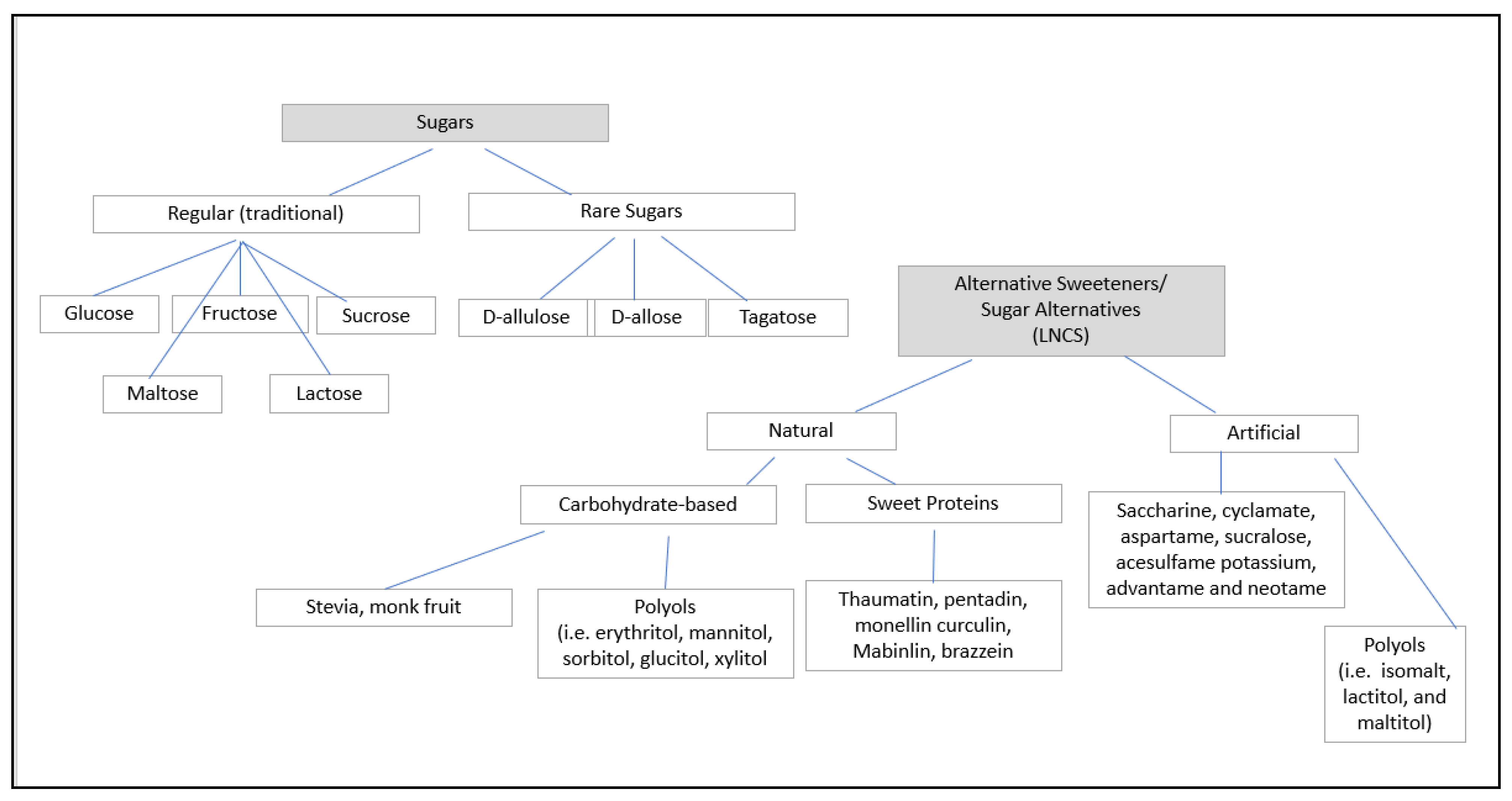

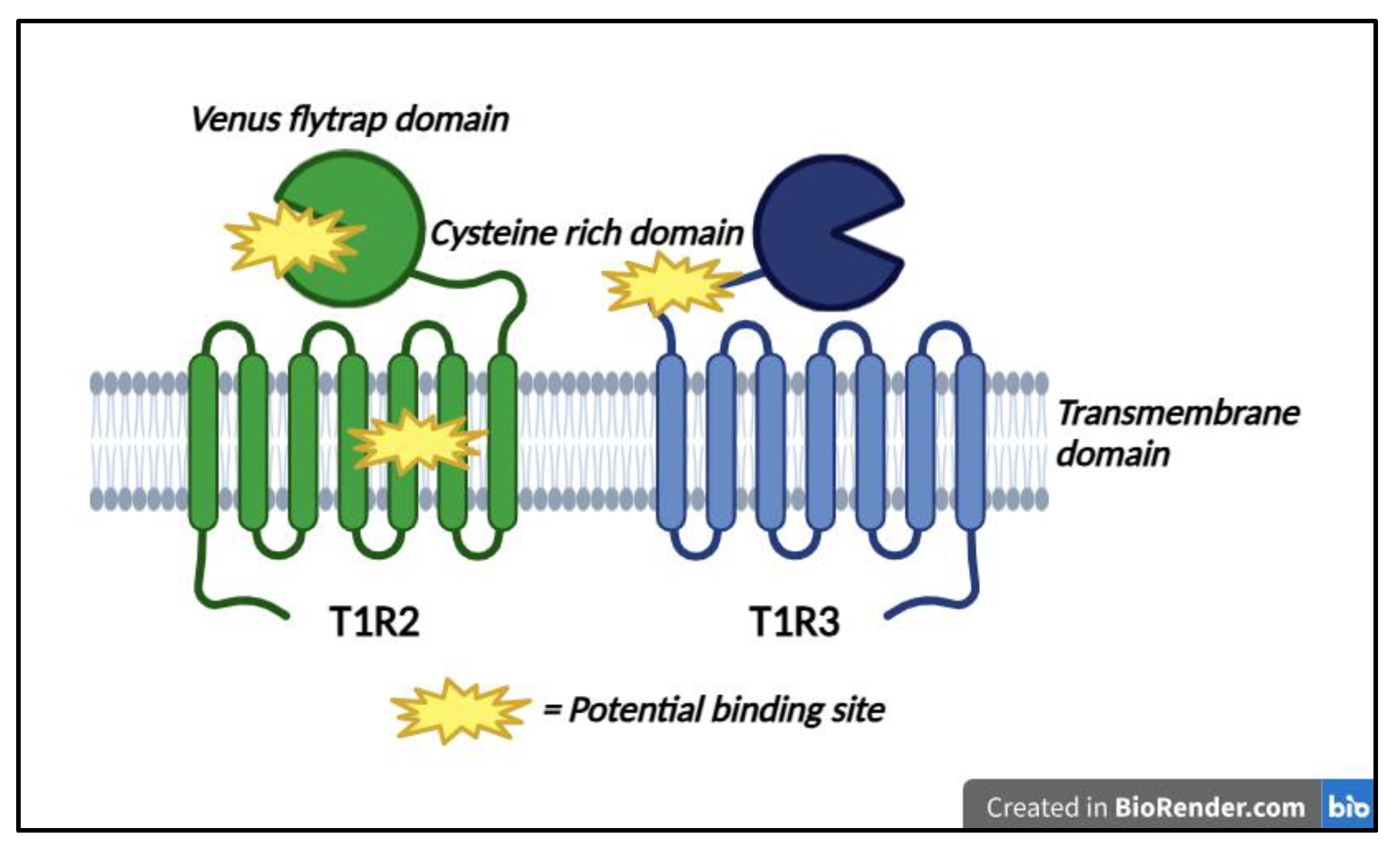

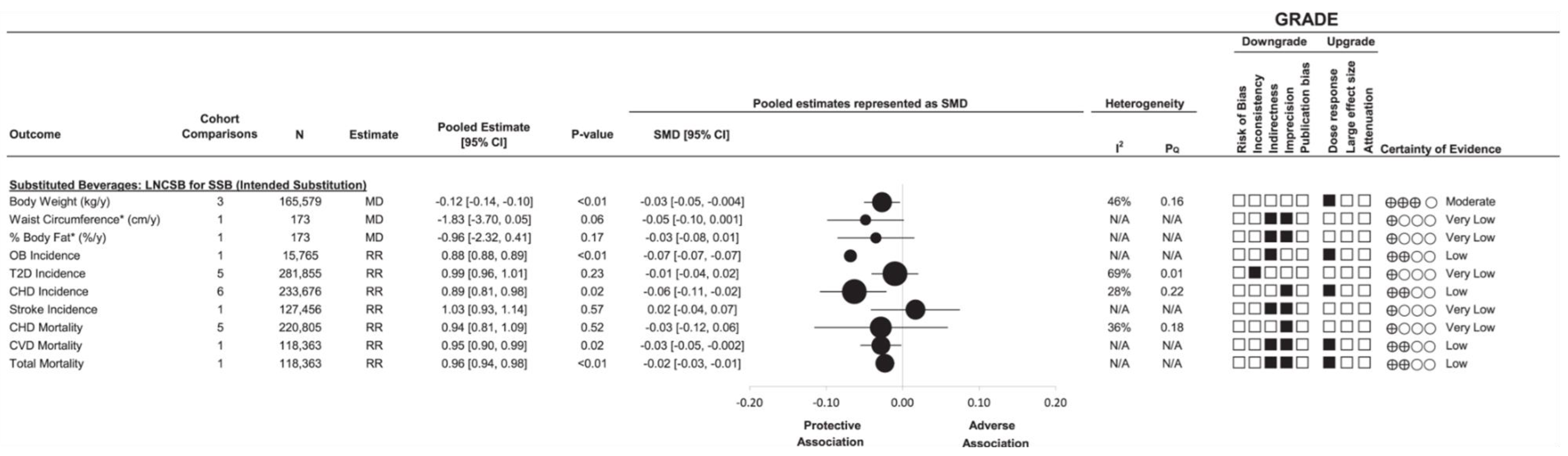
| Issuing Authority | Term and Definition |
|---|---|
| World Health Organization (WHO) [10,11] | Free Sugars All mono- and disaccharides except those naturally occurring in fruit, vegetables or dairy. This also includes all sugars during processing and preparation as well as sugars naturally present in juice or pureed fruit and vegetables |
| European Food Safety Authority (EFSA) [14] | Added and Free Sugars Free sugars include added sugars plus those naturally present in honey and syrups, as well as in fruit and vegetable juices and juice concentrates. |
| United States Department of Agriculture (USDA) [13] | Added Sugars Added sugars are sugars and syrups that are added when foods or beverages are processed or prepared. This does not include naturally occurring sugars such as those in milk and fruits. Added sugars provide calories without providing additional nutrients. |
| United States Food and Drug Administration (FDA) [15] | Total Sugars include sugars naturally present in many nutritious foods and beverages, such as sugar in milk and fruits as well as any added sugars that may be present in the product. There is no daily value * for total sugars because no recommendation has been made for the total amount to eat in a day. Added sugars include sugars that are added during the processing of foods (such as sucrose or dextrose), foods packaged as sweeteners (such as table sugar), sugars from syrups and honey, and sugars from concentrated fruit or vegetable juices. They do not include naturally occurring sugars that are found in milk, fruits, and vegetables. |
| Geographic Region/ Organization | Country SSB Tax in Effect * | Sugar Intake Recommendation (Yes/No) | Qualitative Recommendation | Quantitative Recommendation |
|---|---|---|---|---|
| WHO [11] | Yes | For both adults and children, free sugars (2015):
| For both adults and children, free sugars (2015):
| |
| EFSA [26] | Yes |
| NA | |
| Asia | India * [16] | Yes |
| A portion: 5 g sugar Adults:
|
| China [17] | Yes | NA | For both adult and children, added sugars:
| |
| Indonesia [27] | Yes |
| Sugar recommendations according to energy adequacy for aged groups:
| |
| Pakistan * | No | NA | NA | |
| Bangladesh * [19] | Yes |
|
| |
| AustraliaOceania | Australia [20] | Yes |
| NA |
| Papua New Guinea | No | NA | NA | |
| New Zealand [21] | Yes |
| NA | |
| Europe | Russia | No | NA | NA |
| Germany [22] | No |
| NA | |
| United Kingdom * [23] | Yes |
| No more than 5% of the energy we consume should come from free sugars.
| |
| France * [24] | Yes |
| NA | |
| Italy * [25] | Yes |
| Total sugars: ≤15% total energy; Free sugars: ≤10% total energy (Guide: 25 g sugars correspond to about 5% of the energy for a 2000 kcal/day diet) | |
| North America | United States [13] | Yes | Limit foods and beverages higher in added sugars, saturated fat, and sodium, and limit alcoholic beverages. | Adult (>2 y): Added sugars: <10% total calories <2 y: avoid foods and beverages with added sugars. |
| Mexico * [28] | Yes | Drink plain aguas frescas or flavored water without added sugars instead of sweetened drinks such as soft drinks, juices and aguas frescas. | Maximum suggested sugars consumption per day: <6 months: avoid added sugars; 2–5 y: 1–2 servings; 6–12 y: 2 servings; 13–18 y: 2–4 servings; ≥19 y: 2 servings. (1 serving: 2 teaspoons, 1/3 cup, or 1/4 can) | |
| Canada [29] | Yes | NA | Free sugars: <10% of total energy intake | |
| South America | Brazil * [30,31] | Yes |
| NA |
| NA | |||
| Colombia [32,33] | Yes |
| NA | |
| NA | |||
| Argentina * [34] | Yes |
| Free sugars: <10% of total energy intake | |
| Peru * [35] | Yes |
| NA | |
| Venezuela [36] | No | NA | NA | |
| Africa | Nigeria * [37] | Yes |
| NA |
| Ethiopia * [38] | Yes |
|
| |
| Egypt * | No | NA | NA | |
| Democratic Republic of the Congo * | No | NA | NA | |
| Issuing Authority | LNCS Position |
|---|---|
| American Diabetes Association [39] | “Counsel people with prediabetes and diabetes that water is recommended over nutritive and nonnutritive sweetened beverages. However, the use of nonnutritive sweeteners as a replacement of sugar-sweetened products in moderation is acceptable if it reduces overall calorie and carbohydrate intake”. |
| Diabetes Australia [40] | “The use of alternative sweeteners could assist in maintaining the palatability of foods and beverages with the absence of sugar and with less energy (kJ)”. “Non-nutritive sweeteners include aspartame, sucralose and stevia. These do not influence blood glucose levels and may be a useful alternative for replacing added sugar”. |
| Diabetes Canada [41] | “Limit intake of free sugars to less than 10% of total daily calorie (energy) intake. This is approximately 50 g (12 teaspoons) of free sugars consumption per day based on a 2000-calorie diet”. “Limit intake of sugar sweetened beverages (SSB) and drink water in their place”. “Promote the intake of whole foods and reduce the intake of free sugars throughout life for overall health”. “Low calorie sweeteners are one tool available for sugar intake reduction efforts”. |
| Diabetes UK [42] | “LNCS can be used as a ‘stepping stone’ to reduce intake of sugar in the diet as a part of an overall healthy eating plan”. “LNCS are shown to be safe, and they can be used as part of a strategy for adults and children in the management of weight and diabetes. LNCS sweetened beverages may be helpful when they are used as a substitute by regular consumers of sugar-sweetened beverages and as long as substitution doesn’t lead to later compensation with increased energy intake. This approach may be helpful for people who are accustomed to a sweet taste and for whom water, at least initially, is an undesirable option”. |
| Mandatory Policies | ||
|---|---|---|
| Canada [68] To be implemented 1 January 2026 | A black and white nutrition symbol. It has a magnifying glass and highlights what the food is high in: sodium, sugars, saturated fat or any combination of these. | 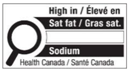 |
| Mexico [69] | Black and white octagon warning labels for each excess nutrient in the product: calories, sugars, saturated fats, trans fats, sodium. Additional warning labels for caffeine and sweeteners to be avoided in children. | 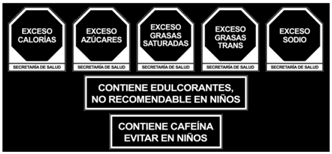 |
| Argentina [70,71] | Black and white octagon warning labels for each excess nutrient contained in the product: calories, sugars, saturated fats, total fat, sodium. Additional warning labels for caffeine and sweeteners to be avoided in children (not pictured). |  |
| Bolivia [72] Not yet implemented | Traffic light system that uses red, amber and green colors to indicate high, moderate and low levels of saturated fats, added sugars and sodium. | (not available) |
| Brazil [73] | Black and white warning labels; It has a magnifying glass and boxes for what the food is high in: added sugars, saturated fat and/or sodium. |  |
| Chile [74] | Black and white octagon warning labels for each nutrient in high amounts found in the product: calories, sugars, saturated fats, and sodium. |  |
| Colombia [75] | Black and white octagon warning labels for each excess nutrient contained in the product: sugars, saturated fats, total fat, and sodium. Additional octagon when sweetener is used. |  |
| Ecuador [76] | Traffic light system that uses red, amber, and green colors to indicate high, medium, and low levels of fat, sugars and salt. Different sized bars reflect the concentration of these nutrients. | 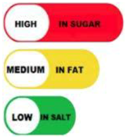 |
| Peru [77] | Black and white octagon warning labels for each nutrient in high amounts found in the product: sugars, saturated fats, and sodium. Additional octagon when product contains any amount of trans fat. | 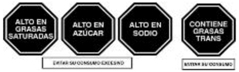 |
| Venezuela [78,79] To be fully implemented December 2024 | Black and white octagon warning labels for each nutrient in high amounts found in the product: sugars, saturated fats, trans fats, and sodium (not pictured). |  |
| Uruguay [71,80] | Black and white octagon warning labels for each excess nutrient contained in the product: total fat, saturated fats, sodium, and sugars. |  |
| Iran [81] | Traffic light label that uses red, amber and green colors to indicate high, moderate and low levels of sugars, fat, salt, and trans fatty acid. | 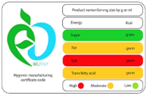 |
| Israel [82] | Red symbols for each nutrient in high amounts found in the product: sugars, salt, and saturated fats. |  |
| Sri Lanka [83,84] | Traffic light label for beverages that uses red, amber and green to denote levels of sugars in the product. | 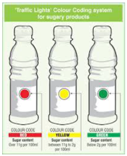 |
| Singapore [85] | Nutrition grading system for beverages that uses a four-point, color coded scale based on sugars and saturated fat levels. |  |
| Thailand [86] | Guideline Daily Amount (GDA) monochrome label that gives values of energy, sugars, fat, and sodium in a product. |  |
| Government-supported Voluntary Policies | ||
| Australia and New Zealand [87] | Summary score system that calculates an overall rating based on the nutritional profile of a product and presents in the form of stars. |  |
| Austria, Belgium, France, Germany, Luxembourg, Netherlands, Portugal, Spain, and Switzerland [88] | Nutrition grading system that uses a five-point color -coded scale that asses a product’s nutritional value. | 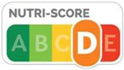 |
| Brunei [89] | Positive endorsement system that identifies a healthier choice by using a red seal with checkmark based on the nutritional profile of a product. |  |
| China [90] | Positive endorsement system that identifies a “smart choice” or “healthier choice” (not pictured by using a seal with checkmark based on the nutritional profile of a product. |  |
| Croatia [91] | Positive endorsement system that identifies a healthier choice by using a green logo based on the nutritional profile of a product. |  |
| Czech Republic, Poland [88] | Positive endorsement system that identifies a healthier choice by using a blue logo with checkmark based on the nutritional profile of a product. |  |
| Denmark, Iceland, Lithuania, Norway, and Sweden [88] | Positive endorsement system that identifies a healthier choice by using a green keyhole logo based on the nutritional profile of a product. |  |
| Finland [88] | Positive endorsement system that identifies a healthier choice by using a heart symbol logo based on the nutritional profile of a product. |  |
| Indonesia [92] | Positive endorsement system that identifies a healthier choice by using a green checkmark logo based on the nutritional profile of a product. |  |
| Israel [82] | Positive endorsement system that identifies a healthier choice by using a green logo based on the nutritional profile of a product. |  |
| Malaysia [86,93] | An energy-only label based on the Guideline Daily Amount (GDA) (not pictured) and a positive endorsement system that identifies a healthier choice by using a red checkmark logo based on the nutritional profile of a product. |  |
| Nigeria [94] | Positive endorsement system that identifies a healthier, “heart-friendly” choice by using a red heart and checkmark logo based on the nutritional profile of a product. |  |
| Philippines [86,89] | An energy-only label based on the Guideline Daily Amount (GDA) and a positive endorsement system that identifies a healthier choice by using a green flower logo based on the nutritional profile of a product. | 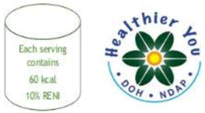 |
| Saudi Arabia [95] | Traffic light label that uses red, amber, and green colors to indicate high, medium, and low levels of fat, saturated fat, total sugars, and salt. | 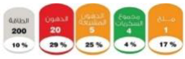 |
| Singapore [96] | Positive endorsement system that identifies a healthier choice by using a red pyramid logo and taglines based on the nutritional profile of a product. |  |
| Slovenia [88] | A positive endorsement system that identifies a healthier choice by using a heart symbol logo based on the nutritional profile of a product. |  |
| South Africa [97] | Positive endorsement system that identifies a healthier choice by using a red heart logo based on the nutritional profile of a product. |  |
| South Korea [98] | Multiple traffic light label options that use red, amber, and green colors to indicate high, medium, and low levels of total fat, saturated fat, total sugars, and sodium. Only recommended for certain children’s foods. | 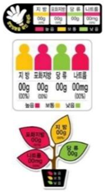 |
| Thailand [99] | Positive endorsement system that identifies a healthier choice by using a colored logo based on the nutritional profile of a product. |  |
| United Arab Emirates [100] | Traffic light label that uses red, amber, and green colors to indicate high, medium, and low levels of fat, saturated fat, sugars, and salt. | 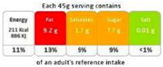 |
| United Kingdom [101] | Traffic light label that uses red, amber, and green colors to indicate high, medium, and low levels of fat, saturated fat, sugars, and salt. |  |
| Zambia [102] | Positive endorsement system that identifies a healthier choice by using a colored logo based on the nutritional profile of a product. |  |
| Zimbabwe [89] | Positive endorsement system that identifies a healthier choice by using a red heart logo based on the nutritional profile of a product. |  |
| Sweetener [E-Number] | Compound Classification and Source | Sweet Taste Receptor Binding Site(s) | Bitter Taste Receptor Binding Site(s) |
|---|---|---|---|
| Sucrose [108,109,110,111] | Carbohydrate | Venus flytrap domain of T1R2 and T1R3 | N/A |
| Cyclamates [E952] [108,112,113] | Sulfamic acid derivative, | Transmembrane domain of T1R3 | T2R1 and T2R38 |
| Sucralose [E955] [109,110,112,114] | Trichlorinated disaccharide, sugars | Venus flytrap domain of T1R2 and T1R3 | Binds to but does not activate: T2R1, T2R4, T2R5, T2R7, T2R8, T2R10, T2R39, T2R41, T2R46 |
| Aspartame [E951] [109,112,115] | Dipeptide, amino acids | Venus flytrap domain of T1R2 | Not yet known |
| Acesulfame-K [E950] [116,117,118] | Sulfamate ester, | Venus flytrap domain of T1R2 | T2R43 and T2R44 |
| Saccharin [E954] [118] | Benzoic acid sulfimide | ||
| Stevia and its glycosides (ex. Reb A, Reb M, etc.) [E960] [110,111,112,119,120] | Glycosylated diterpenoid, Stevia rebaudiana Bertoni | Venus flytrap domain of T1R2 and T1R3 | T2R4 and T2R14 |
| Monk fruit (ex. Mogroside V) [119,121] | Glycosylated triterpenoid, Siraitia grosvenorii (Luo Han Guo) | Venus flytrap domain of T1R2 and T1R3 | Not yet known |
| Neohesperidin dihydrochalcone (NHDC) [E959] [108,110,122,123] | Glycoside, citrus fruit | Transmembrane domain of T1R3 | Not yet known |
| Thaumatin [E957] [110,119,124] | Sweet protein, Thaumatococcus daniellii (Katemfe) | Cysteine-rich domain of T1R3 | Not yet known |
| Brazzein [124,125] | Sweet protein, Oubli (Pentadiplandra brazzeana) | Cysteine-rich domain of T1R3 | Not yet known |
| Monellin [122] | Sweet protein, Dioscoreophyllum cumminsii | Venus flytrap domain of T1R2 | Not yet known |
| Cardiometabolic Outcomes | Gut Microbiome | Food Intake and Satiety Management | |
|---|---|---|---|
| Level of evidence | Systematic reviews and meta-analyses | Preliminary randomized controlled trials | Emerging in vitro evidence and randomized controlled trial |
| Natural LNCSs (such as steviol glycosides, rare sugars) | positive impact | no effect | decrease |
| Artificial LNCSs (such as ace-K, aspartame, sucralose, saccharin) | positive impact | mixed effects | decrease |
Disclaimer/Publisher’s Note: The statements, opinions and data contained in all publications are solely those of the individual author(s) and contributor(s) and not of MDPI and/or the editor(s). MDPI and/or the editor(s) disclaim responsibility for any injury to people or property resulting from any ideas, methods, instructions or products referred to in the content. |
© 2025 by the authors. Licensee MDPI, Basel, Switzerland. This article is an open access article distributed under the terms and conditions of the Creative Commons Attribution (CC BY) license (https://creativecommons.org/licenses/by/4.0/).
Share and Cite
Sievenpiper, J.L.; Purkayastha, S.; Grotz, V.L.; Mora, M.; Zhou, J.; Hennings, K.; Goody, C.M.; Germana, K. Dietary Guidance, Sensory, Health and Safety Considerations When Choosing Low and No-Calorie Sweeteners. Nutrients 2025, 17, 793. https://doi.org/10.3390/nu17050793
Sievenpiper JL, Purkayastha S, Grotz VL, Mora M, Zhou J, Hennings K, Goody CM, Germana K. Dietary Guidance, Sensory, Health and Safety Considerations When Choosing Low and No-Calorie Sweeteners. Nutrients. 2025; 17(5):793. https://doi.org/10.3390/nu17050793
Chicago/Turabian StyleSievenpiper, John L., Sidd Purkayastha, V. Lee Grotz, Margaux Mora, Jing Zhou, Katherine Hennings, Cynthia M. Goody, and Kristen Germana. 2025. "Dietary Guidance, Sensory, Health and Safety Considerations When Choosing Low and No-Calorie Sweeteners" Nutrients 17, no. 5: 793. https://doi.org/10.3390/nu17050793
APA StyleSievenpiper, J. L., Purkayastha, S., Grotz, V. L., Mora, M., Zhou, J., Hennings, K., Goody, C. M., & Germana, K. (2025). Dietary Guidance, Sensory, Health and Safety Considerations When Choosing Low and No-Calorie Sweeteners. Nutrients, 17(5), 793. https://doi.org/10.3390/nu17050793