Does the Ketogenic Diet Mediate Inflammation Markers in Obese and Overweight Adults? A Systematic Review and Meta-Analysis of Randomized Clinical Trials
 , , , , and
Abstract
1. Introduction
2. Materials and Methods
2.1. Eligibility Criteria
2.2. Information Sources
2.3. Search Strategy
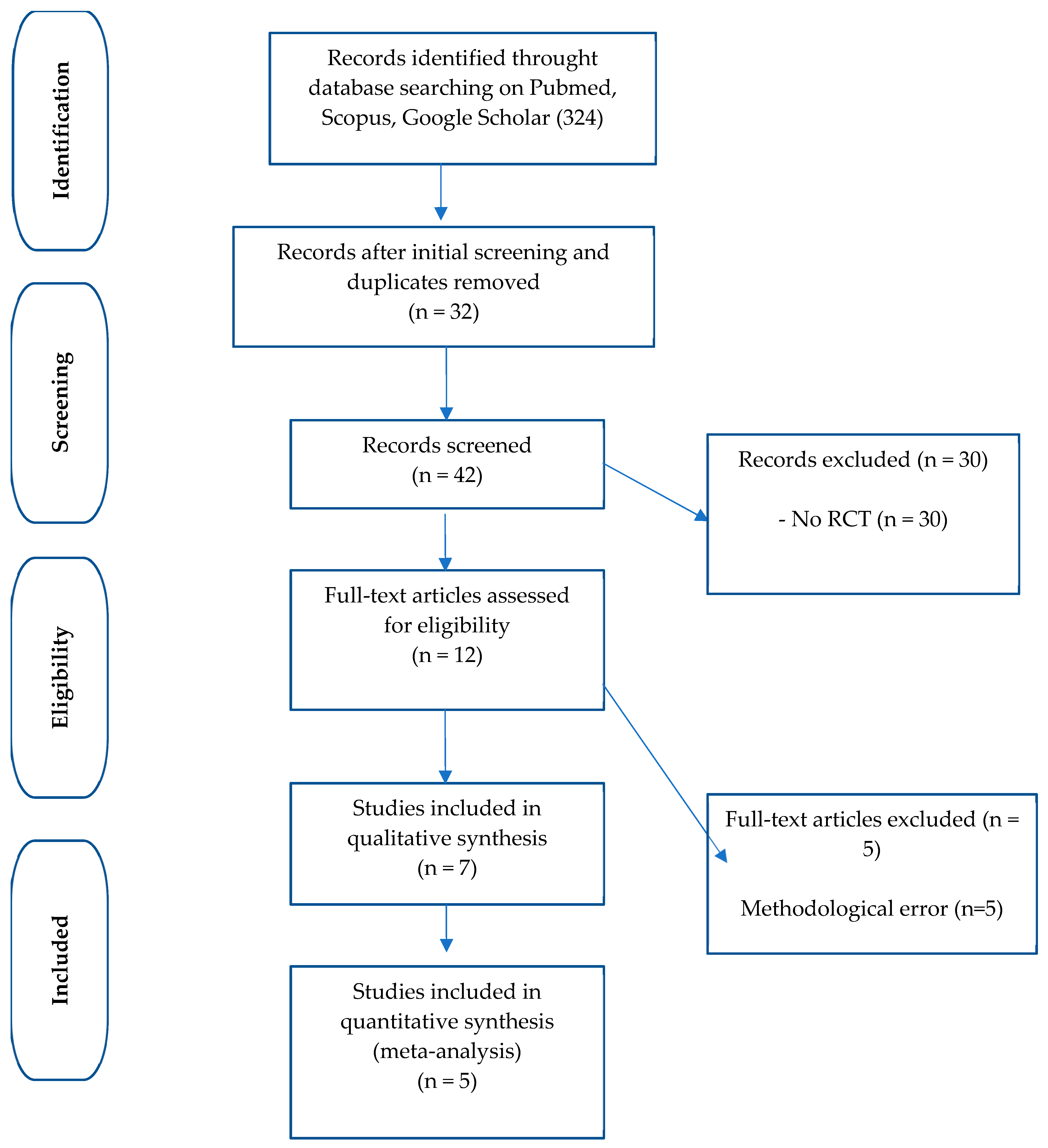
2.4. Study Selection
2.5. Participants
2.6. Intervention
2.7. Risk of Bias in Individual Studies
2.8. Data Extraction and Analysis
2.9. Statistical Analysis
3. Results
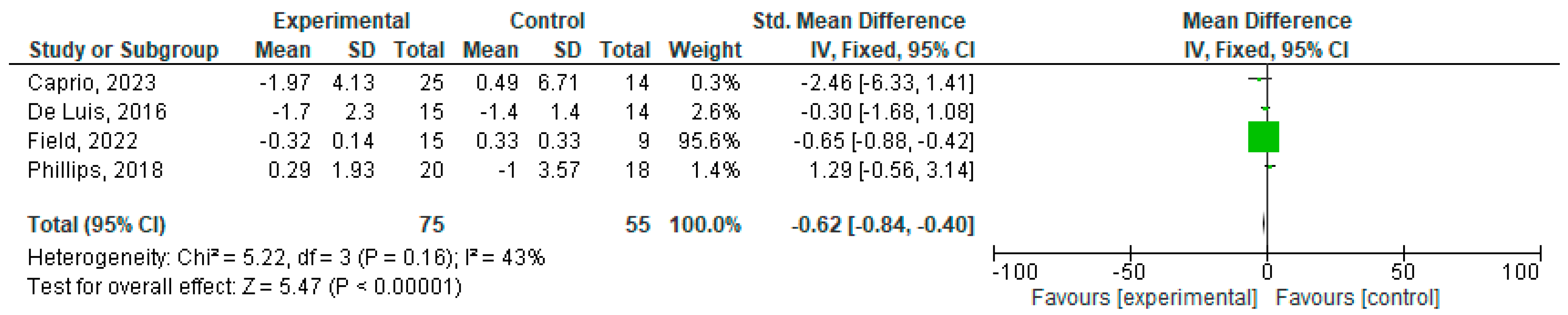
3.1. Meta-Analysis
3.2. Risk of Bias
4. Discussion
5. Conclusions
Author Contributions
Funding
Conflicts of Interest
References
- Rohm, T.V.; Meier, D.T.; Olefsky, J.M.; Donath, M.Y. Inflammation in Obesity, Diabetes and related Disorders. Immunity 2022, 55, 31. [Google Scholar] [CrossRef] [PubMed]
- Wondmkun, Y.T. Obesity, Insulin Resistance, and Type 2 Diabetes: Associations and Therapeutic Implications. Diabetes. Metab. Syndr. Obes. 2020, 13, 3611–3616. [Google Scholar] [CrossRef] [PubMed]
- Kawai, T.; Autieri, M.V.; Scalia, R. Adipose tissue inflammation and metabolic dysfunction in obesity. Am. J. Physiol. Cell Physiol. 2021, 320, C375–C391. [Google Scholar] [CrossRef] [PubMed]
- Clemente-Suárez, V.J.; Redondo-Flórez, L.; Beltrán-Velasco, A.I.; Martín-Rodríguez, A.; Martínez-Guardado, I.; Navarro-Jiménez, E.; Laborde-Cárdenas, C.C.; Tornero-Aguilera, J.F. The Role of Adipokines in Health and Disease. Biomedicines 2023, 11, 1290. [Google Scholar] [CrossRef]
- Magnuson, A.M.; Fouts, J.K.; Regan, D.P.; Booth, A.D.; Dow, S.W.; Foster, M.T. Adipose tissue extrinsic factor: Obesity-induced inflammation and the role of the visceral lymph node. Physiol. Behav. 2018, 190, 71–81. [Google Scholar] [CrossRef]
- Yu, J.Y.; Choi, W.J.; Lee, H.S.; Lee, J.W. Relationship between inflammatory markers and visceral obesity in obese and overweight Korean adults: An observational study. Medicine 2019, 98, e14740. [Google Scholar] [CrossRef]
- Reddy, P.; Lent-Schochet, D.; Ramakrishnan, N.; McLaughlin, M.; Jialal, I. Metabolic syndrome is an inflammatory disorder: A conspiracy between adipose tissue and phagocytes. Clin. Chim. Acta 2019, 496, 35–44. [Google Scholar] [CrossRef]
- Pietrzak, D.; Kasperek, K.; Rękawek, P.; Piątkowska-Chmiel, I. The Therapeutic Role of Ketogenic Diet in Neurological Disorders. Nutrients 2022, 14, 1952. [Google Scholar] [CrossRef]
- Rho, J.M. How does the ketogenic diet induce anti-seizure effects? Neurosci. Lett. 2017, 637, 4–10. [Google Scholar] [CrossRef]
- Payne, N.E.; Cross, J.H.; Sander, J.W.; Sisodiya, S.M. The ketogenic and related diets in adolescents and adults—A review. Epilepsia 2011, 52, 1941–1948. [Google Scholar] [CrossRef]
- Kossoff, E.H.; Dorward, J.L. The modified Atkins diet. Epilepsia 2008, 49 (Suppl. S8), 37–41. [Google Scholar] [CrossRef] [PubMed]
- Kwon, H.E.; Kim, H.D. Recent aspects of ketogenic diet in neurological disorders. Acta Epileptol. 2021, 3, 21. [Google Scholar] [CrossRef]
- Moreno, B.; Crujeiras, A.B.; Bellido, D.; Sajoux, I.; Casanueva, F.F. Obesity treatment by very low-calorie-ketogenic diet at two years: Reduction in visceral fat and on the burden of disease. Endocrine 2016, 54, 681–690. [Google Scholar] [CrossRef] [PubMed]
- Valenzano, A.; Polito, R.; Trimigno, V.; Di Palma, A.; Moscatelli, F.; Corso, G.; Sessa, F.; Salerno, M.; Montana, A.; Di Nunno, N.; et al. Effects of very low calorie ketogenic diet on the orexinergic system, visceral adipose tissue, and ROS production. Antioxidants 2019, 8, 643. [Google Scholar] [CrossRef] [PubMed]
- Abraham, P.A.; Attipoe, S.; Kazman, J.B.; Zeno, S.A.; Poth, M.; Deuster, P.A. Role of plasma adiponectin /C-reactive protein ratio in obesity and type 2 diabetes among African Americans. Afr. Health Sci. 2017, 17, 99–107. [Google Scholar] [CrossRef][Green Version]
- Moher, D.; Liberati, A.; Tetzlaff, J.; Altman, D.G. PRISMA Group Preferred Reporting Items for Systematic Reviews and Meta-Analyses: The PRISMA Statement. PLoS Med. 2009, 6, e1000097. [Google Scholar] [CrossRef]
- Higgins, J.P.T.; Altman, D.G.; Gøtzsche, P.C.; Jüni, P.; Moher, D.; Oxman, A.D.; Savovic, J.; Schulz, K.F.; Weeks, L.; Sterne, J.A.C.; et al. The Cochrane Collaboration’s tool for assessing risk of bias in randomised trials. BMJ 2011, 343, d5928. [Google Scholar] [CrossRef]
- Phillips, M.C.L.; Murtagh, D.K.J.; Gilbertson, L.J.; Asztely, F.J.S.; Lynch, C.D.P. Low-fat versus ketogenic diet in Parkinson’s disease: A pilot randomized controlled trial. Mov. Disord. 2018, 33, 1306–1314. [Google Scholar] [CrossRef]
- Field, R.; Pourkazemi, F.; Rooney, K. Effects of a Low-Carbohydrate Ketogenic Diet on Reported Pain, Blood Biomarkers and Quality of Life in Patients with Chronic Pain: A Pilot Randomized Clinical Trial. Pain Med. 2022, 23, 326–338. [Google Scholar] [CrossRef]
- Rosenbaum, M.; Hall, K.D.; Guo, J.; Ravussin, E.; Mayer, L.S.; Reitman, M.L.; Smith, S.R.; Walsh, B.T.; Leibel, R.L. Glucose and Lipid Homeostasis and Inflammation in Humans Following an Isocaloric Ketogenic Diet. Obesity 2019, 27, 971–981. [Google Scholar] [CrossRef]
- Saslow, L.R.; Kim, S.; Daubenmier, J.J.; Moskowitz, J.T.; Phinney, S.D.; Goldman, V.; Murphy, E.J.; Cox, R.M.; Moran, P.; Hecht, F.M. A randomized pilot trial of a moderate carbohydrate diet compared to a very low carbohydrate diet in overweight or obese individuals with type 2 diabetes mellitus or prediabetes. PLoS ONE 2014, 9, e91027. [Google Scholar] [CrossRef] [PubMed]
- Lambadiari, V.; Katsimbri, P.; Kountouri, A.; Korakas, E.; Papathanasi, A.; Maratou, E.; Pavlidis, G.; Pliouta, L.; Ikonomidis, I.; Malisova, S.; et al. The Effect of a Ketogenic Diet versus Mediterranean Diet on Clinical and Biochemical Markers of Inflammation in Patients with Obesity and Psoriatic Arthritis: A Randomized Crossover Trial. Int. J. Mol. Sci. 2024, 25, 2475. [Google Scholar] [CrossRef] [PubMed]
- De Luis, D.; Domingo, J.C.; Izaola, O.; Casanueva, F.F.; Bellido, D.; Sajoux, I. Effect of DHA supplementation in a very low-calorie ketogenic diet in the treatment of obesity: A randomized clinical trial. Endocrine 2016, 54, 111–122. [Google Scholar] [CrossRef] [PubMed]
- Caprio, M.; Moriconi, E.; Camajani, E.; Feraco, A.; Marzolla, V.; Vitiello, L.; Proietti, S.; Armani, A.; Gorini, S.; Mammi, C.; et al. Very-low-calorie ketogenic diet vs hypocaloric balanced diet in the prevention of high-frequency episodic migraine: The EMIKETO randomized, controlled trial. J. Transl. Med. 2023, 21, 692. [Google Scholar] [CrossRef] [PubMed]
- Keech, A.; Mitchell, P.; Summanen, P.; O’Day, J.; Davis, T.; Moffitt, M.; Taskinen, M.R.; Simes, R.; Tse, D.; Williamson, E.; et al. Effect of fenofibrate on the need for laser treatment for diabetic retinopathy (FIELD study): A randomised controlled trial. Lancet 2007, 370, 1687–1697. [Google Scholar] [CrossRef]
- Feinman, R.D.; Pogozelski, W.K.; Astrup, A.; Bernstein, R.K.; Fine, E.J.; Westman, E.C.; Accurso, A.; Frassetto, L.; Gower, B.A.; McFarlane, S.I.; et al. Corrigendum to “Dietary carbohydrate restriction as the first approach in diabetes management: Critical review and evidence base” [Nutrition 31 (2015) 1–13]. Nutrition 2019, 62, 213. [Google Scholar] [CrossRef]
- Youm, Y.H.; Nguyen, K.Y.; Grant, R.W.; Goldberg, E.L.; Bodogai, M.; Kim, D.; D’Agostino, D.; Planavsky, N.; Lupfer, C.; Kanneganti, T.D.; et al. The ketone metabolite β-hydroxybutyrate blocks NLRP3 inflammasome-mediated inflammatory disease. Nat. Med. 2015, 21, 263–269. [Google Scholar] [CrossRef]
- Jin, Z.; Berthiaume, J.M.; Li, Q.; Henry, F.; Huang, Z.; Sadhukhan, S.; Gao, P.; Tochtrop, G.P.; Puchowicz, M.A.; Zhang, G.F. Catabolism of (2E)-4-Hydroxy-2-nonenal via ω- and ω-1-Oxidation Stimulated by Ketogenic Diet. J. Biol. Chem. 2014, 289, 32327. [Google Scholar] [CrossRef]
- Achanta, L.B.; Rae, C.D. β-Hydroxybutyrate in the Brain: One Molecule, Multiple Mechanisms. Neurochem. Res. 2017, 42, 35–49. [Google Scholar] [CrossRef]
- Barrea, L.; Caprio, M.; Watanabe, M.; Cammarata, G.; Feraco, A.; Muscogiuri, G.; Verde, L.; Colao, A.; Savastano, S. Could very low-calorie ketogenic diets turn off low grade inflammation in obesity? Emerging evidence. Crit. Rev. Food Sci. Nutr. 2022, 63, 8320–8336. [Google Scholar] [CrossRef]
- Rondanelli, M.; Perna, S.; Ilyas, Z.; Peroni, G.; Bazire, P.; Sajuox, I.; Maugeri, R.; Nichetti, M.; Gasparri, C. Effect of very low-calorie ketogenic diet in combination with omega-3 on inflammation, satiety hormones, body composition, and metabolic markers. A pilot study in class I obese subjects. Endocrine 2022, 75, 129–136. [Google Scholar] [CrossRef] [PubMed]
- Endres, S.; Ghorbani, R.; Kelley, V.E.; Georgilis, K.; Lonnemann, G.; van der Meer, J.W.M.; Cannon, J.G.; Rogers, T.S.; Klempner, M.S.; Weber, P.C.; et al. The Effect of Dietary Supplementation with n-3 Polyunsaturated Fatty Acids on the Synthesis of Interleukin-1 and Tumor Necrosis Factor by Mononuclear Cells. N. Engl. J. Med. 1989, 320, 265–271. [Google Scholar] [CrossRef] [PubMed]
- Dinarello, C.A. Proinflammatory cytokines. Chest 2000, 118, 503–508. [Google Scholar] [CrossRef] [PubMed]
- Bock, M.; Karber, M.; Kuhn, H. Ketogenic diets attenuate cyclooxygenase and lipoxygenase gene expression in multiple sclerosis. eBioMedicine 2018, 36, 293–303. [Google Scholar] [CrossRef] [PubMed]
- Menezes, A.M.B.; Oliveira, P.D.; Wehrmeister, F.C.; Gonçalves, H.; Assunção, M.C.F.; Tovo-Rodrigues, L.; Ferreira, G.D.; Oliveira, I.O. Association between interleukin-6, C-reactive protein and adiponectin with adiposity: Findings from the 1993 pelotas (Brazil) birth cohort at 18 and 22 years. Cytokine 2018, 110, 44–51. [Google Scholar] [CrossRef]
- Su, Z.; Efremov, L.; Mikolajczyk, R. Differences in the levels of inflammatory markers between metabolically healthy obese and other obesity phenotypes in adults: A systematic review and meta-analysis. Nutr. Metab. Cardiovasc. Dis. 2024, 34, 251–269. [Google Scholar] [CrossRef]
- Ji, J.; Fotros, D.; Sohouli, M.H.; Velu, P.; Fatahi, S.; Liu, Y. The effect of a ketogenic diet on inflammation-related markers: A systematic review and meta-analysis of randomized controlled trials. Nutr. Rev. 2024, nuad175. [Google Scholar] [CrossRef]




| First Author, Year | Study Design | Participants | Treatment | Parallel Treatments | Duration | Outcomes Related to Inflammatory Status | Results |
|---|---|---|---|---|---|---|---|
| Rosenbaum, 2019 [20] | RCT | 17 men without diabetes and with BMI between 25–35 kg/m2 | Isocaloric 15% protein, 5% carbohydrate, 80% fat ketogenic diet (KD) on energy expenditure | / | 8 weeks | Cytokines, Inflammatory Markers | CRP were significantly increased on the KD. |
| Phillips, 2018 [18] | RCT | 38 patients aged 40 to 75 years with a diagnosis fulfilling the UK Parkinson’s Disease Society Brain Bank criteria, MoCA score > 20, able and willing to follow either diet plan. | Each caloriebooster recipe added an average of 500 extra kcal, which was made up of 50 g of fat (22 g saturated), 6 g of protein, 5 g of net carbohydrate, and 4 g of fiber. The ketogenic plan provided 1750 kcal per day, which was made up of 152 g of fat (67 g saturated), 75 g of protein, 16 g net carbohydrate, and 11 g of fiber. | For those with higher energy needs, ad libitum “caloriebooster” recipes each provided an average of 500 extra kcal, consisting of 4 g of fat (1 g saturated), 6 g of protein, 102 g of net carbohydrate, and 13 g of fiber. The low-fat plan provided 1750 kcal per day, which was made up of 42 g of fat (10 g saturated), 75 g of protein, 246 g net carbohydrate, and 33 g of fiber. | 8 weeks | CRP | There were no variations in CRP between groups or within groups. |
| Field, R., 2022 [19] | RCT | 27 (23 female, 4 male) The group sizes were not equal (WFD n = 9 and WFKD n = 15). Participants were included if they were 18 or over, had experienced chronic musculoskeletal pain for over three months, were currently eating a standard western diet, had baseline pain VAS of 30 mm, and agreed to the requirements of the study. | Well-formulated ketogenic diet (WFKD) with a reduction in carbohydrate intake to between 30 and 50 g/day to achieve nutritional ketosis with a ketone level of 0.5–3.0 mmol/L | whole-food diet (WFD), removing ultra-processed foods | 12 weeks | CRP, ESR | The WFKD group demonstrated significant improvements in inflammation (CRP) |
| De Luis, D., 2016 [23] | RCT | Control group (n = 15), PnK-DHA group (n = 14); healthy individuals. The inclusion criteria were age 18–65 years, body mass index (BMI) between 30 and 35, stable body weight in the previous 3 months, and desire to lose weight. | PnK-DHA group: This group used a commercial weight loss program (the PnK Method) that prescribed a ketogenic diet. A ketogenic diet that is extremely low in calories (600–800 kcal/day), low in carbohydrates (less than 50 g daily from veggies), and low in fats (only 10 g of olive oil per day) is what the intervention stage entails. In order to ensure that the body met its minimum requirements and to prevent the loss of lean mass, the amount of high-biological-value proteins ranged between 0.8 and 1.2 g per kilogram of ideal body weight. | isocaloric VLCK diet without DHA | 6 months | Proinflammatory and pro-resolving PUFA metabolite mediators (lipid mediator profile) | TNF alpha, resistin, and C-reactive protein were all significantly altered by the VLCK diets. The intervention group’s DHA-derived oxylipin levels dramatically rose after DHA supplementation. Over the course of the trial, the intervention group’s plasma showed an increase in the ratio of roresolution to proinflammatory lipid markers. The anti-inflammatory fatty acid index (AIFAI) was consistently elevated following the DHA therapy (p < 0.05), and the mean ratios of AA/EPA and AA/DHA in erythrocyte membranes were significantly decreased in the PnK-DHA group. The anti-inflammatory effect of a very low-calorie ketogenic diet supplemented with DHA was significantly improved. |
| Saslow et al., 2014 [21] | RCT | 34 participants aged 18 or over with a diagnosis of type 2 diabetes mellitus or prediabetes Participants also needed to have a BMI of 25 or above | A very low-carbohydrate, high-fat, non-calorie-restricted diet whose goal was to induce nutritional ketosis (LCK, n = 16). | A medium carbohydrate, low-fat, calorie-restricted, carbohydrate-counting diet (MCCR) consistent with guidelines from the American Diabetes Association (n = 18) | 3 months | CRP | CRP declined in both groups |
| Vaia Lambadiari et al., 2024 [22] | RCT | 16 patients met the following criteria: (1) they were older than 18, (2) their BMI was greater than 30 kg/m2, (3) they were diagnosed with psoriasis and psoriatic arthritis, (4) they had been prescribed biologic agents and/or synthetic disease-modifying anti-rheumatic drugs (DMARDs) for at least three months, (5) their PASI score improvement was less than 75%, and (5) their joints had moderate to severe activity (>3 swollen and >3 tender joints or DAPSA < 14). | A daily calorie intake of 1550 (±50). About 34% of the KD was protein, 55% was fat, and 11% was carbohydrate. | A daily calorie intake of 1550 (±50). The MD supplied 40% fat, 40% carbs, and 20% protein. | 8 weeks | Biochemical markers of inflammation (IL-6, IL-17, IL-22, IL-23) | Patients’ IL-6 levels significantly decreased after KD (p = 0.047) when compared to baseline, and this decrease was two times more than that of MD (−55.6% vs. −20.56%, p = 0.041). When compared to baseline, there was no discernible change in IL-6 following MD (p = 0.666). When compared to baseline, KD significantly decreased IL-17 (p = 0.042) and IL-23 (p = 0.037), while MD showed no discernible changes in the aforementioned markers (p > 0.05). All patients showed no change in IL-22 (p > 0.05). |
| Caprio et al., 2023 [24] | RCT | 57 patients were enrolled in the study and randomly assigned to VLCKD (n = 29) or HBD (n = 28). 27 kg/m2 < BMI < 35 kg/m2 Diagnosis of HFEM Signing of the informed consent Migraine onset < 50 years Preventive migraine treatment discontinuation since at least 3 months (including RAAS inhibitors) | VLCKD diets prepared by New Penta s.r.l. Diet provided 75–105 g protein/day, 30–50 g carbohydrate/day) and 20 g lipid/day. The amount of daily fiber intake was approximately 25 g/day, as requested from Italian Guidelines (LARN 2014), mostly deriving from vegetable servings with low glycaemic index. Total energy intake was <800 kcal/day. Recommended water intake was at least 2.5 lt/day. | Total daily average energy intake was 1500–1600 kcal/day, and macronutrient composition was based on the Mediterranean Diet [lipid: 30% of total daily energy (10% MUFA, 10% PUFA, 10% SFA); carbohydrates: 55% of total daily intake; daily protein intake was approximately 0.8–1.5 g/kg of ideal body weight]. | 12 weeks | inflammatory markers | Only the VLCKD group showed a substantial decrease in CRP at week 12 (p < 0.05), supporting the well-known anti-inflammatory impact of VLCKD. |
| Study, Year (Ref) | Random-Sequence Generation | Allocation Concealment | Participant- Personnel Blinding | Outcome- Assessment Blinding | Incomplete Outcome Data | Selective Reporting | Other Bias |
|---|---|---|---|---|---|---|---|
| Caprio, 2023 [24] | Low | Unclear | Low | Unclear | Low | Low | Low |
| Phillips, 2022 [18] | Low | Low | Low | Unclear | Low | Low | Low |
| Field, 2018 [19] | Unclear | Unclear | Low | Unclear | Low | Low | Low |
| De Luis, 2016 [23] | Low | Low | Low | Unclear | Low | Low | Low |
| Lambadiari, 2014 [22] | Low | Low | Low | Unclear | Low | Low | Low |
Disclaimer/Publisher’s Note: The statements, opinions and data contained in all publications are solely those of the individual author(s) and contributor(s) and not of MDPI and/or the editor(s). MDPI and/or the editor(s) disclaim responsibility for any injury to people or property resulting from any ideas, methods, instructions or products referred to in the content. |
© 2024 by the authors. Licensee MDPI, Basel, Switzerland. This article is an open access article distributed under the terms and conditions of the Creative Commons Attribution (CC BY) license (https://creativecommons.org/licenses/by/4.0/).
Share and Cite
Rondanelli, M.; Gasparri, C.; Pirola, M.; Barrile, G.C.; Moroni, A.; Sajoux, I.; Perna, S. Does the Ketogenic Diet Mediate Inflammation Markers in Obese and Overweight Adults? A Systematic Review and Meta-Analysis of Randomized Clinical Trials. Nutrients 2024, 16, 4002. https://doi.org/10.3390/nu16234002
Rondanelli M, Gasparri C, Pirola M, Barrile GC, Moroni A, Sajoux I, Perna S. Does the Ketogenic Diet Mediate Inflammation Markers in Obese and Overweight Adults? A Systematic Review and Meta-Analysis of Randomized Clinical Trials. Nutrients. 2024; 16(23):4002. https://doi.org/10.3390/nu16234002
Chicago/Turabian StyleRondanelli, Mariangela, Clara Gasparri, Martina Pirola, Gaetan Claude Barrile, Alessia Moroni, Ignacio Sajoux, and Simone Perna. 2024. "Does the Ketogenic Diet Mediate Inflammation Markers in Obese and Overweight Adults? A Systematic Review and Meta-Analysis of Randomized Clinical Trials" Nutrients 16, no. 23: 4002. https://doi.org/10.3390/nu16234002
APA StyleRondanelli, M., Gasparri, C., Pirola, M., Barrile, G. C., Moroni, A., Sajoux, I., & Perna, S. (2024). Does the Ketogenic Diet Mediate Inflammation Markers in Obese and Overweight Adults? A Systematic Review and Meta-Analysis of Randomized Clinical Trials. Nutrients, 16(23), 4002. https://doi.org/10.3390/nu16234002