Assessing Trends and Interactions of Essential Climate Variables in the Historic Urban Landscape of Sfax (Tunisia) from 1985 to 2021 Using the Digital Earth Africa Data Cube

Highlights
- The performance of the six urban spectral indices varies according to their spectral band combinations, with ENDISI and ASI showing higher sensitivity to annual urbanisation dynamics, while ENDISI, NBI, and BUI better capture spatial heterogeneity within the study area.
- Overall, the tested urban spectral indices demonstrate comparable accuracy in delineating built-up areas when validated against the Global Human Settlement Layer.
- Urban spectral indices based on SWIR and NIR bands (NDBI, BUI, NBI) exhibit stronger statistical associations with temperature-related variables, with temporal variations more strongly associated with air temperature at 2 m than with land surface temperature.
- Integrating vegetation indices and land-use/land cover information enhances interpretation of USI trends, supporting urban planning and monitoring of urban heat islands and microclimatic effects.
- The methodology using DEA data cube and automated Python workflows provides an effective framework for the long-term monitoring of Essential Climate Variables trends, offering insights for climate change adaptation, urban expansion management, and preservation of Historic Urban Landscapes.
Abstract
1. Introduction
2. Materials and Methods
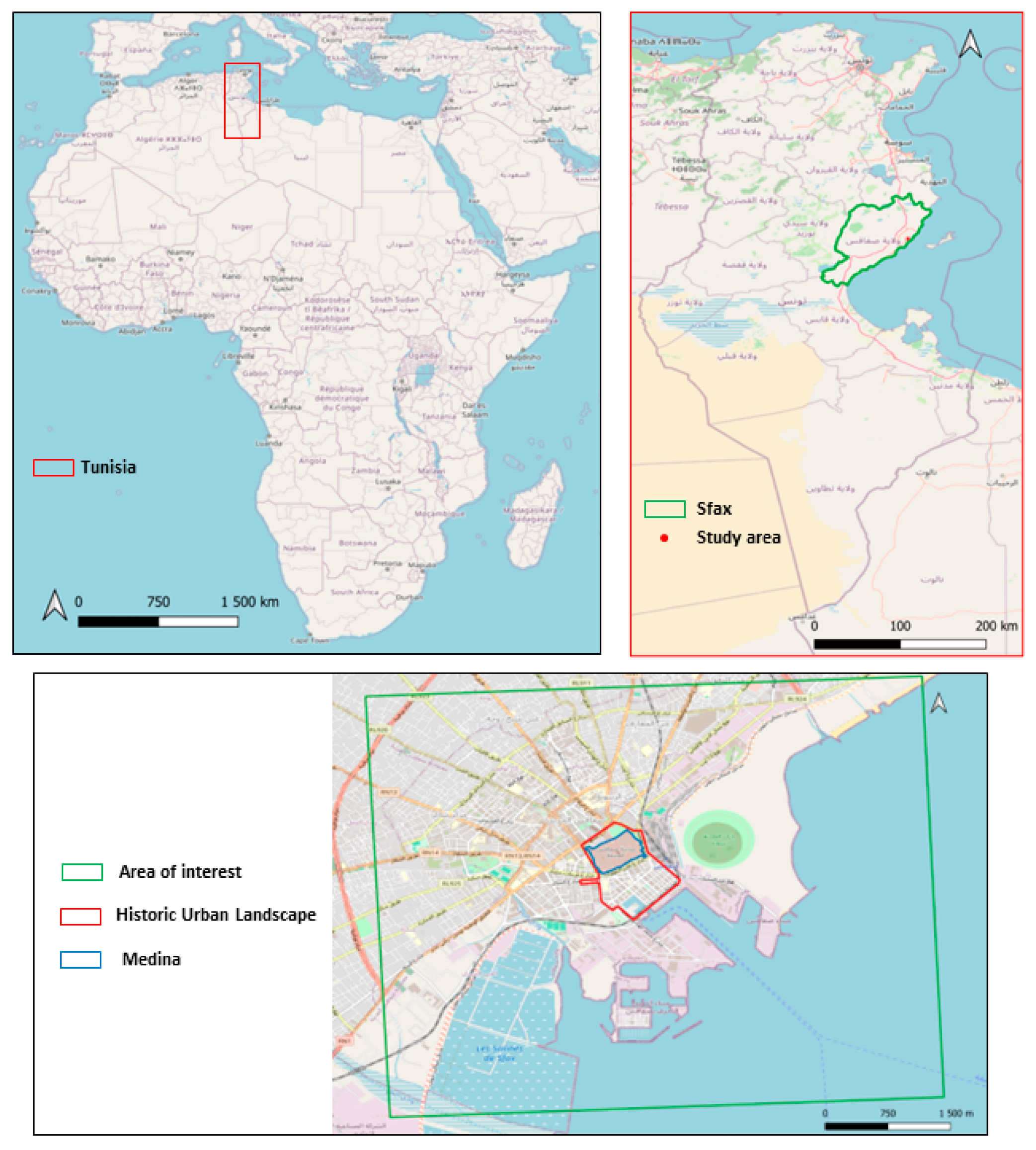
2.1. Area of Interest
2.2. Satellite-Based ECV’s Acquisition and Preparation
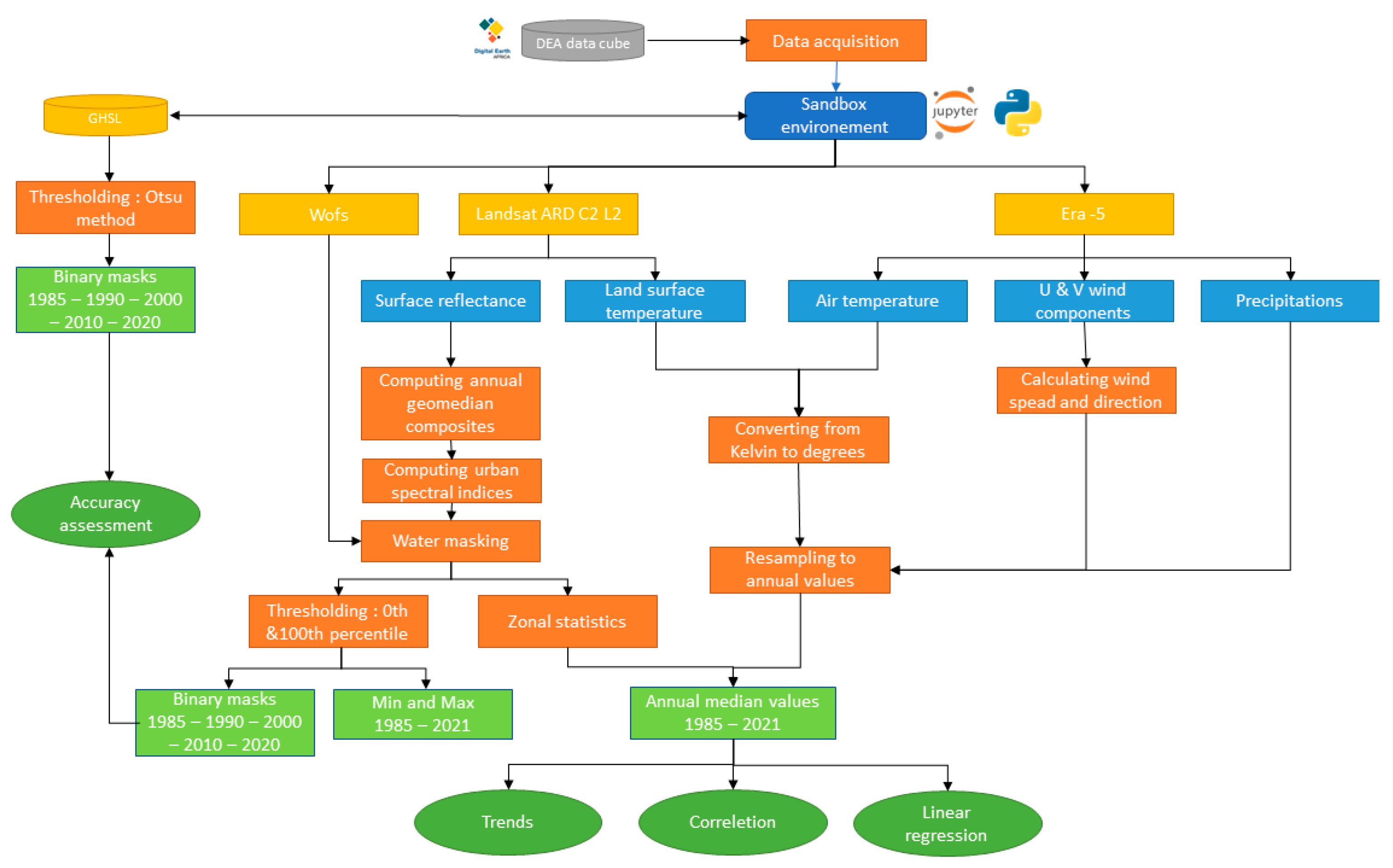
2.3. Computational Framework
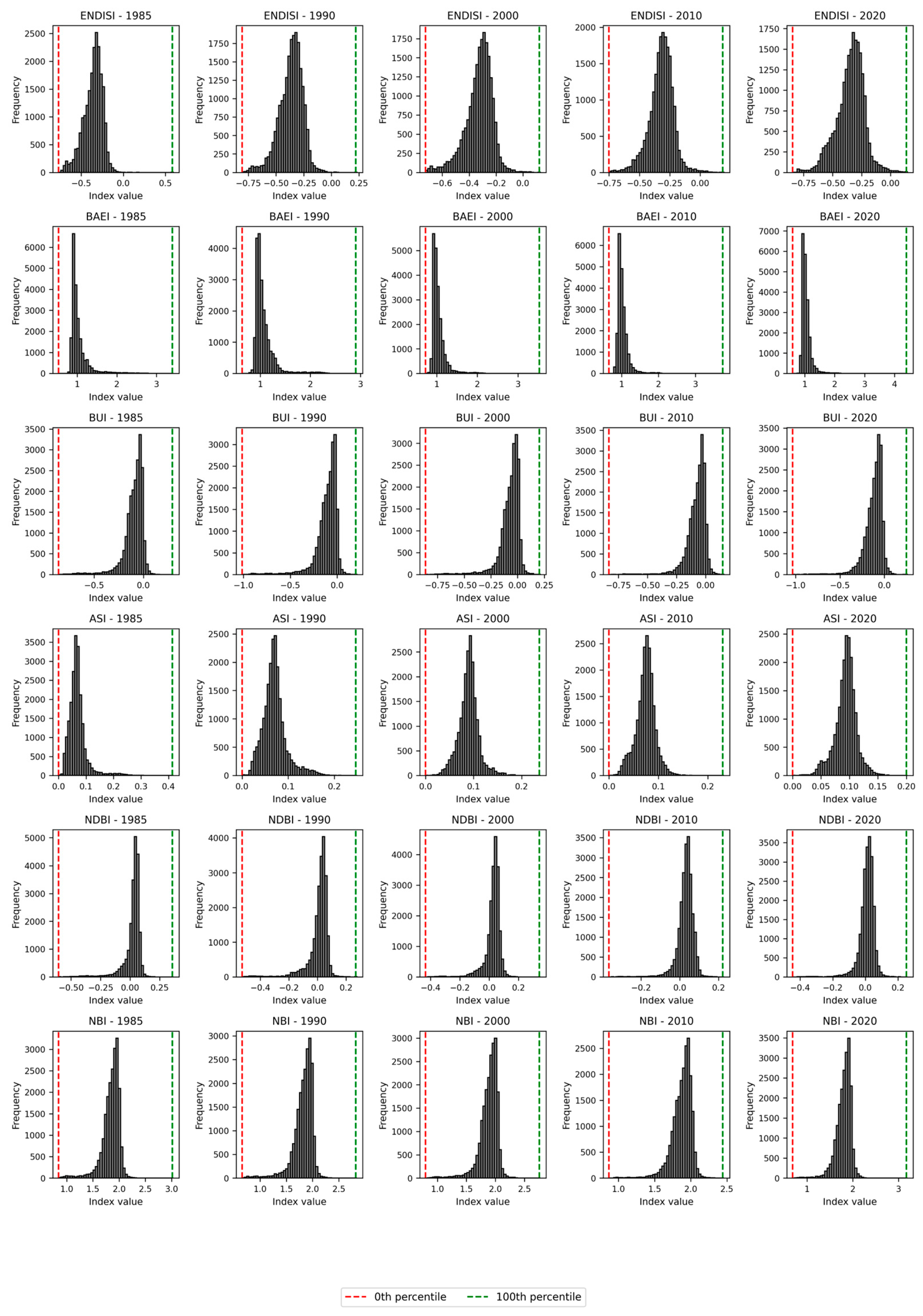
2.3.1. USI Threshold
2.3.2. USI Accuracy Assessment
2.3.3. ECVs Trends and Interrelation
3. Results
3.1. Urbanisation in the HUL of Sfax City
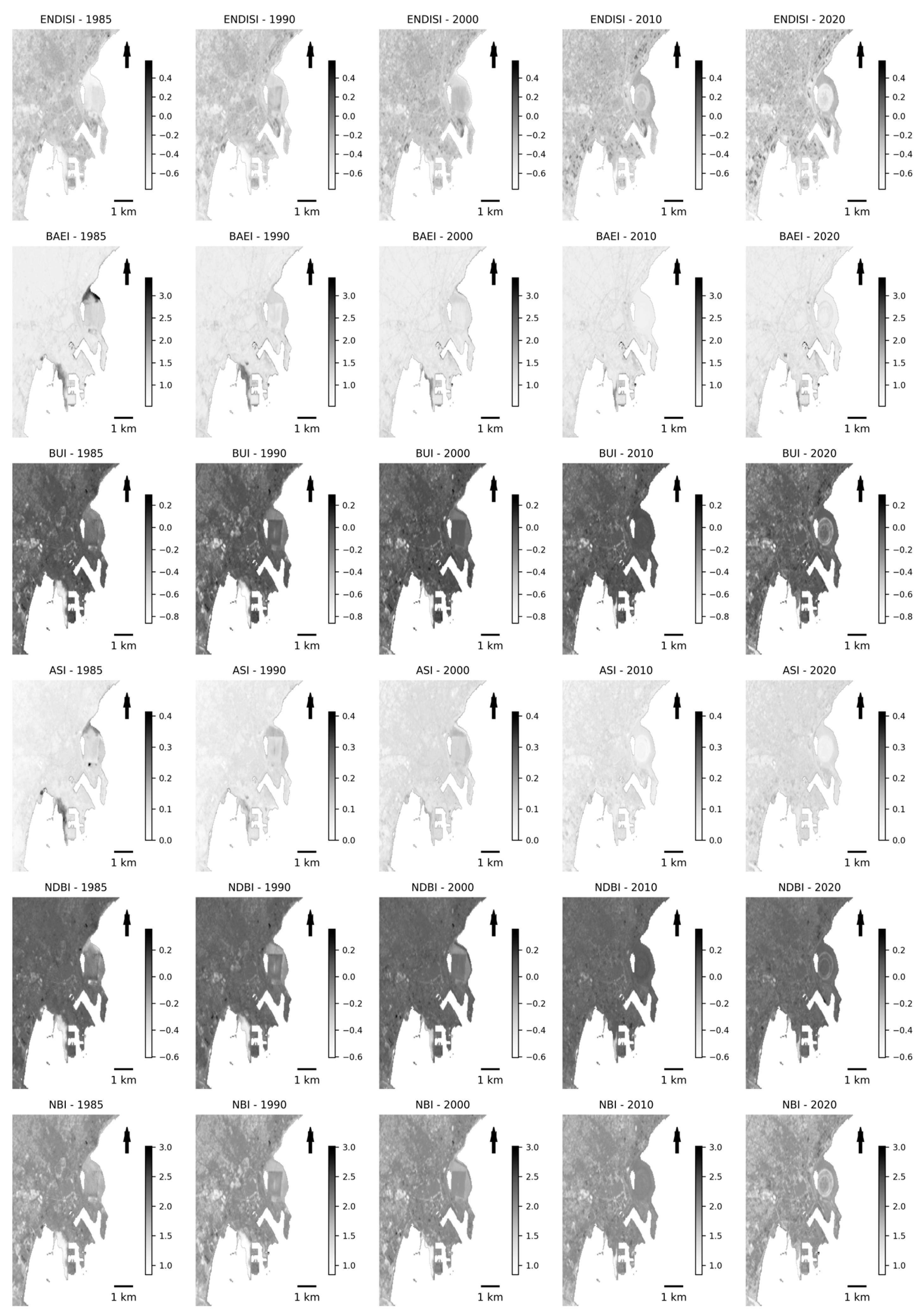
3.1.1. The HUL Spectral Behaviour
3.1.2. USI Comparison with GHSL
3.2. ECVs Contribution to Climate Change
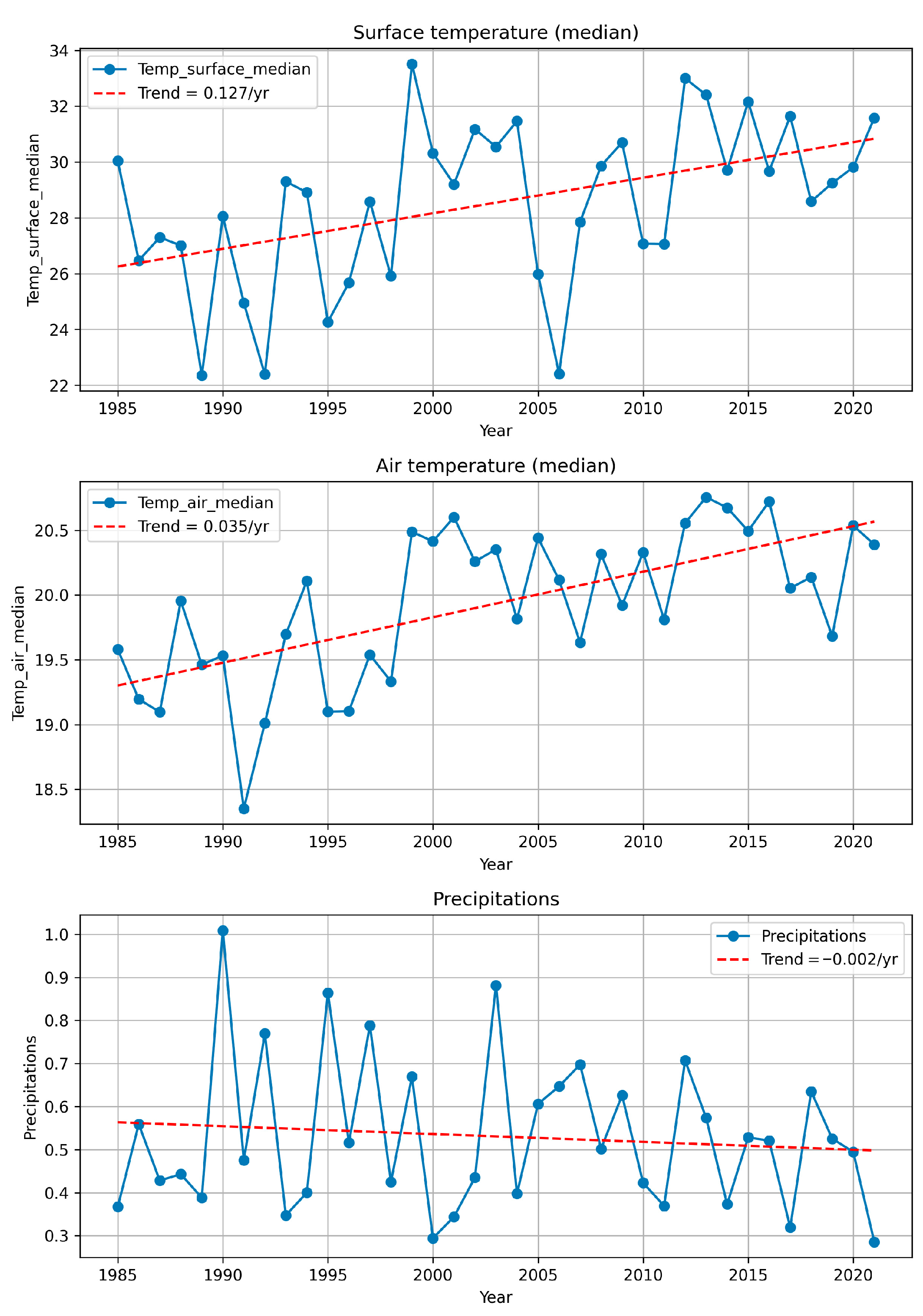
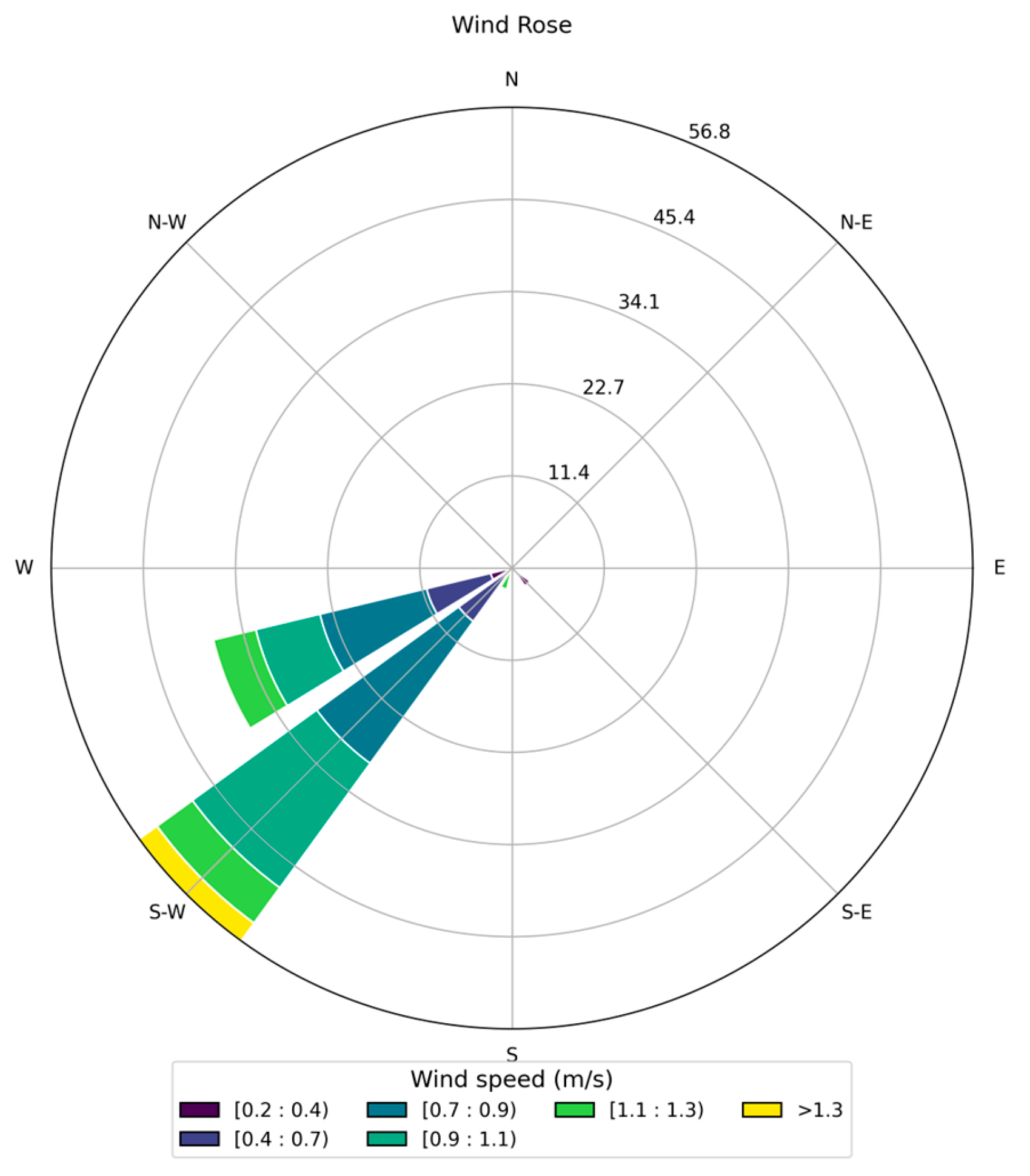
3.2.1. Trends of Temperature, Precipitation, and Wind
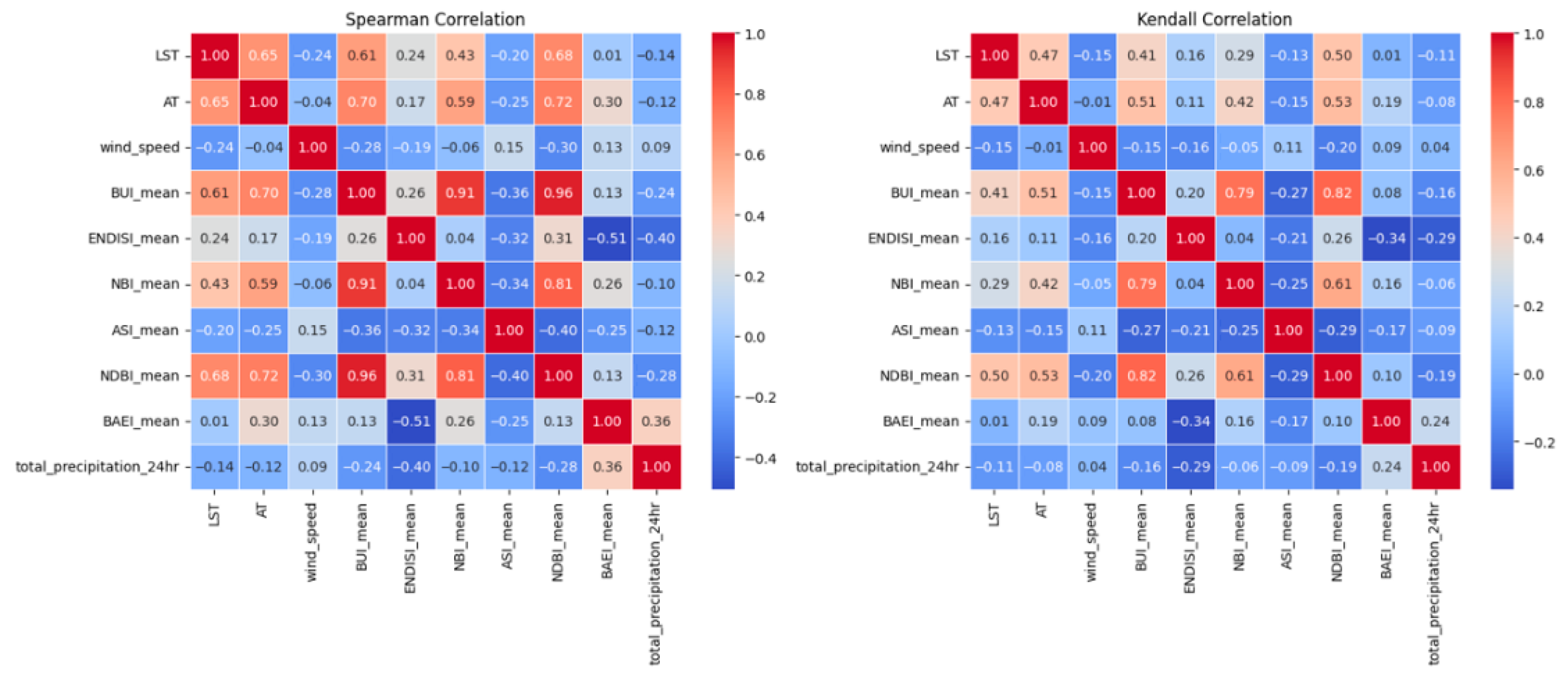
3.2.2. Correlations Between the ECV’s
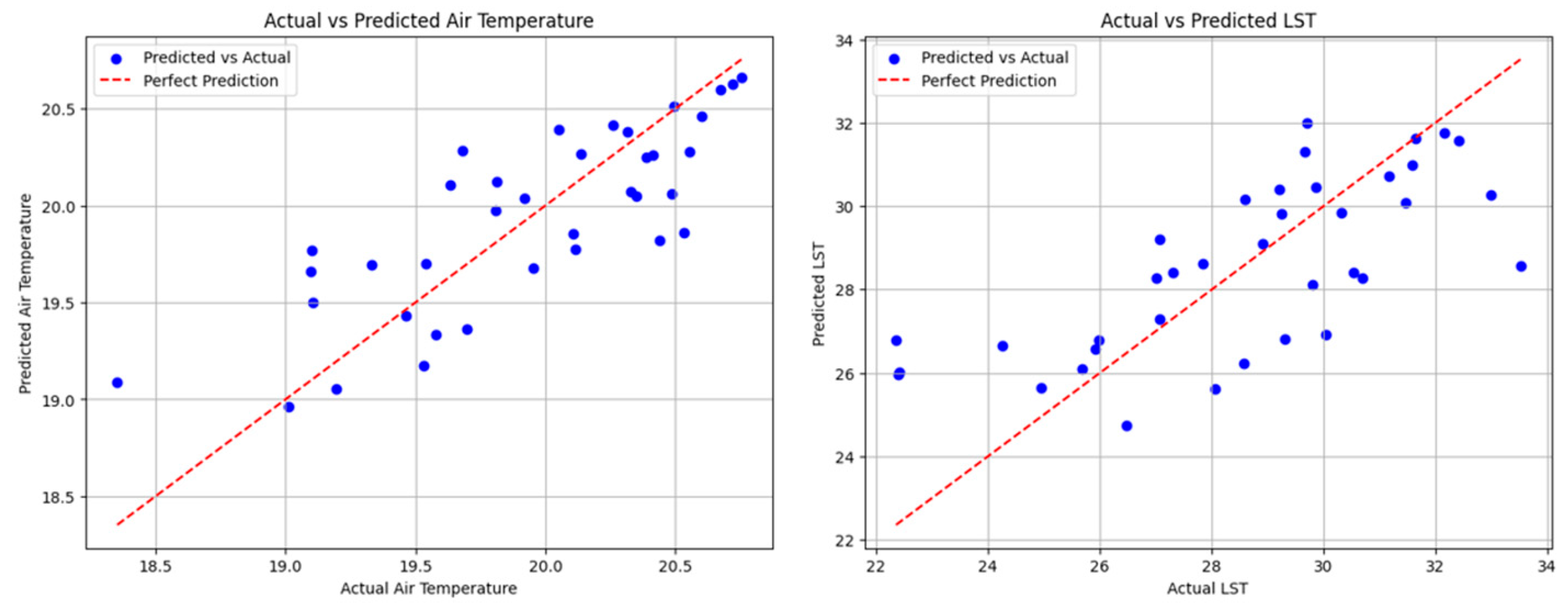
3.2.3. Urbanisation and Temperature Trends
4. Discussion
5. Conclusions
Author Contributions
Funding
Data Availability Statement
Acknowledgments
Conflicts of Interest
References
- Coates, R. Infrastructural events? Flood disaster, narratives and framing under hazardous urbanisation. Int. J. Disaster Risk Reduct. 2022, 74, 102918. [Google Scholar] [CrossRef]
- Lin, L.; Gao, T.; Luo, M.; Ge, E.; Yang, Y.; Liu, Z.; Zhao, Y.; Ning, G. Contribution of urbanization to the changes in extreme climate events in urban agglomerations across China. Sci. Total Environ. 2020, 744, 140264. [Google Scholar] [CrossRef] [PubMed]
- Elliot, T.; Torres-Matallana, J.A.; Teebken, J. Urbanization under extreme climate events leads to synchronized decreases in flood protection and increases in vulnerability. Cities 2025, 160, 105827. [Google Scholar] [CrossRef]
- Antal, H.; Bhutani, S. Identifying linkages between climate change, urbanisation, and population ageing for understanding vulnerability and risk to older people: A review. Ageing Int. 2023, 48, 816–839. [Google Scholar] [CrossRef]
- Bigio, A.G. Historic cities and climate change. In Reconnecting the City: The Historic Urban Landscape Approach and the Future of Urban Heritage; John Wiley & Sons: Hoboken, NJ, USA, 2014; pp. 113–128. [Google Scholar]
- Sesana, E.; Gagnon, A.S.; Ciantelli, C.; Cassar, J.; Hughes, J.J. Climate change impacts on cultural heritage: A literature review. WIREs Clim. Change 2021, 12, e710. [Google Scholar] [CrossRef]
- Taylor, K. The Historic Urban Landscape paradigm and cities as cultural landscapes. Challenging orthodoxy in urban conservation. Landsc. Res. 2016, 41, 471–480. [Google Scholar] [CrossRef]
- Erkan, Y. The way forward with historic urban landscape approach towards sustainable urban development. Built Herit. 2018, 2, 82–89. [Google Scholar] [CrossRef]
- Wang, S.; Gu, K. Pingyao: The historic urban landscape and planning for heritage-led urban changes. Cities 2020, 97, 102489. [Google Scholar] [CrossRef]
- Rong, W. Research hotspots and trends in the Historic Urban Landscape: A bibliometric perspective. J. Asian Archit. Build. Eng. 2025, 1–21. [Google Scholar] [CrossRef]
- Nichol, J.E.; Choi, S.Y.; Wong, M.S.; Abbas, S. Temperature change and urbanisation in a multi-nucleated megacity: China’s Pearl River Delta. Urban Clim. 2020, 31, 100592. [Google Scholar] [CrossRef]
- Aslam, A.; Rana, I.A.; Bhatti, S.S. The spatiotemporal dynamics of urbanisation and local climate: A case study of Islamabad, Pakistan. Environ. Impact Assess. Rev. 2021, 91, 106666. [Google Scholar] [CrossRef]
- Huadong, G.; Jianwen, M.; Han, X.; Feng, L.; Dong, L.; Haiyun, B.; Fangjian, W. 2012–2014 China’s Earth Observation and Earth Science Development. Chin. J. Space Sci. 2014, 34, 721–732. [Google Scholar]
- Pujar, G.S.; Taori, A.; Chakraborty, A.; Mitran, T. Sensing climate change through earth observations: Perspectives at global and National Level. In Digital Agriculture: A Solution for Sustainable Food and Nutritional Security; Springer International Publishing: Cham, Switzerland, 2024; pp. 225–280. [Google Scholar]
- Ballari, D.; Vilches-Blázquez, L.M.; Orellana-Samaniego, M.L.; Salgado-Castillo, F.; Ochoa-Sánchez, A.E.; Graw, V.; Turini, N.; Bendix, J. Satellite Earth observation for essential climate variables supporting Sustainable Development Goals: A review on applications. Remote Sens. 2023, 15, 2716. [Google Scholar] [CrossRef]
- Rani, S.; Singh, S.; Purohit, S. Evaluating Daytime and Nighttime Land Surface Temperature Pattern and Trends in India: A Comparative Analysis of Satellite and Reanalysis Data. Earth Syst. Environ. 2024, 9, 3479–3500. [Google Scholar] [CrossRef]
- Singh, S. Forest fire emissions: A contribution to global climate change. Front. For. Glob. Change 2022, 5, 925480. [Google Scholar] [CrossRef]
- Klemas, V. Remote sensing of floods and flood-prone areas: An overview. J. Coast. Res. 2015, 31, 1005–1013. [Google Scholar] [CrossRef]
- Edo, G.I.; Itoje-akpokiniovo, L.O.; Obasohan, P.; Ikpekoro, V.O.; Samuel, P.O.; Jikah, A.N.; Nosu, L.C.; Ekokotu, H.A.; Ugbune, U.; Oghroro, E.E.A.; et al. Impact of environmental pollution from human activities on water, air quality and climate change. Ecol. Front. 2024, 44, 874–889. [Google Scholar] [CrossRef]
- Li, X.; Stringer, L.C.; Dallimer, M. The impacts of urbanisation and climate change on the urban thermal environment in Africa. Climate 2022, 10, 164. [Google Scholar] [CrossRef]
- Yilmaz, M. Accuracy assessment of temperature trends from ERA5 and ERA5-Land. Sci. Total Environ. 2023, 856, 159182. [Google Scholar] [CrossRef]
- Soci, C.; Hersbach, H.; Simmons, A.; Poli, P.; Bell, B.; Berrisford, P.; Horányi, A.; Muñoz-Sabater, J.; Nicolas, J.; Radu, R.; et al. The ERA5 global reanalysis from 1940 to 2022. Q. J. R. Meteorol. Soc. 2024, 150, 4014–4048. [Google Scholar] [CrossRef]
- Saini, V.; Tiwari, R.K. A comparative study of remote sensing indices for urban mapping. Geocarto Int. 2021, 36, 1967–1985. [Google Scholar]
- Onačillová, K.; Gallay, M.; Paluba, D.; Péliová, A.; Tokarčík, O.; Laubertová, D. Combining Landsat 8 and Sentinel-2 data in Google Earth Engine to derive higher resolution land surface temperature maps in urban environment. Remote Sens. 2022, 14, 4076. [Google Scholar] [CrossRef]
- Kebede, T.A.; Hailu, B.T.; Suryabhagavan, K.V. Evaluation of spectral built-up indices for impervious surface extraction using Sentinel-2A MSI imageries: A case of Addis Ababa city, Ethiopia. Environ. Chall. 2022, 8, 100568. [Google Scholar] [CrossRef]
- Yücer, E. Determination of impervious surface areas using remote sensing indices: A case of Ankara. Episodes 2025, 48, 279–294. [Google Scholar] [CrossRef]
- Harrak, Y.; Rachid, A.; Aguejdad, R. Evaluation of Spectral Indices and Global Thresholding Methods for the Automatic Extraction of Built-Up Areas: An Application to a Semi-Arid Climate Using Landsat 8 Imagery. Urban Sci. 2025, 9, 78. [Google Scholar] [CrossRef]
- Yang, J.; Gong, P.; Fu, R.; Zhang, M.; Chen, J.; Liang, S.; Xu, B.; Shi, J.; Dickinson, R. The role of satellite remote sensing in climate change studies. Nat. Clim. Change 2013, 3, 875–883. [Google Scholar] [CrossRef]
- Zhu, X.X.; Tuia, D.; Mou, L.; Xia, G.S.; Zhang, L.; Xu, F.; Fraundorfer, F. Deep learning in remote sensing: A comprehensive review and list of resources. IEEE Geosci. Remote Sens. Mag. 2017, 5, 8–36. [Google Scholar] [CrossRef]
- Velastegui-Montoya, A.; Montalván-Burbano, N.; Carrión-Mero, P.; Rivera-Torres, H.; Sadeck, L.; Adami, M. Google Earth Engine: A global analysis and future trends. Remote Sens. 2023, 15, 3675. [Google Scholar] [CrossRef]
- Zurqani, H.A.; Post, C.J.; Mikhailova, E.A.; Allen, J.S. Mapping urbanization trends in a forested landscape using Google Earth Engine. Remote Sens. Earth Syst. Sci. 2019, 2, 173–182. [Google Scholar] [CrossRef]
- Zhang, A.; Tariq, A.; Quddoos, A.; Naz, I.; Aslam, R.W.; Barboza, E.; Ullah, S.; Abdullah-Al-Wadud, M. Spatio-temporal analysis of urban expansion and land use dynamics using google earth engine and predictive models. Sci. Rep. 2025, 15, 6993. [Google Scholar] [CrossRef]
- Ravanelli, R.; Nascetti, A.; Cirigliano, R.V.; Di Rico, C.; Leuzzi, G.; Monti, P.; Crespi, M. Monitoring the impact of land cover change on surface urban heat island through Google Earth Engine: Proposal of a global methodology, first applications and problems. Remote Sens. 2018, 10, 1488. [Google Scholar] [CrossRef]
- Kazemi Garajeh, M.; Haji, F.; Tohidfar, M.; Sadeqi, A.; Ahmadi, R.; Kariminejad, N. Spatiotemporal monitoring of climate change impacts on water resources using an integrated approach of remote sensing and Google Earth Engine. Sci. Rep. 2024, 14, 5469. [Google Scholar] [CrossRef] [PubMed]
- Kopp, S.; Becker, P.; Doshi, A.; Wright, D.J.; Zhang, K.; Xu, H. Achieving the full vision of earth observation data cubes. Data 2019, 4, 94. [Google Scholar] [CrossRef]
- Giuliani, G.; Chatenoux, B.; Piller, T.; Moser, F.; Lacroix, P. Data Cube on Demand (DCoD): Generating an earth observation Data Cube anywhere in the world. Int. J. Appl. Earth Obs. Geoinf. 2020, 87, 102035. [Google Scholar] [CrossRef]
- Lewis, A.; Oliver, S.; Lymburner, L.; Evans, B.; Wyborn, L.; Mueller, N.; Raevksi, G.; Hooke, J.; Woodcock, R.; Sixsmith, J.; et al. The Australian geoscience data cube—Foundations and lessons learned. Remote Sens. Environ. 2017, 202, 276–292. [Google Scholar] [CrossRef]
- Giuliani, G.; Chatenoux, B.; De Bono, A.; Rodila, D.; Richard, J.P.; Allenbach, K.; Dao, H.; Peduzzi, P. Building an earth observations data cube: Lessons learned from the swiss data cube (sdc) on generating analysis ready data (ard). Big Earth Data 2017, 1, 100–117. [Google Scholar] [CrossRef]
- Chatenoux, B.; Richard, J.P.; Small, D.; Roeoesli, C.; Wingate, V.; Poussin, C.; Rodila, D.; Peduzzi, P.; Steinmeier, C.; Ginzler, C.; et al. The Swiss data cube, analysis ready data archive using earth observations of Switzerland. Sci. Data 2021, 8, 295. [Google Scholar] [CrossRef]
- Bravo, G.; Castro, H.; Moreno, A.; Ariza-Porras, C.; Galindo, G.; Cabrera, E.; Valbuena, S.; Lozano-Rivera, P. Architecture for a Colombian data cube using satellite imagery for environmental applications. In Colombian Conference on Computing; Springer International Publishing: Cham, Switzerland, 2017; pp. 227–241. [Google Scholar]
- Mubea, K.; Menz, G.; Twesigye, C. Digital Earth Africa: An open, free platform for earth observation data. Int. J. Appl. Earth Obs. Geoinf. 2024, 116, 103175. [Google Scholar]
- Liu, L.; de Simone, L.; Fisk, C.; Adams, C.; Yuan, F.; Muir, J.; Delaney, P.; Rebelo, L.M.; Mubea, K.; Boamah, E.; et al. National Land Cover and Crop Mapping Through the Digital Earth Africa Platform. In International Conference of the African Association of Remote Sensing and the Environment; Springer Nature Switzerland: Cham, Switzerland, 2022; pp. 353–362. [Google Scholar]
- Wardle, J.; Phillips, Z. Examining Spatiotemporal Photosynthetic Vegetation Trends in Djibouti Using Fractional Cover Metrics in the Digital Earth Africa Open Data Cube. Remote Sens. 2024, 16, 1241. [Google Scholar] [CrossRef]
- Gimode, J.E.; Msusa, A.D.; Ngereja, Z. Using Digital Earth Africa to monitor chlorophyll-a concentration and detect harmful algal blooms in Suguti Bay, Lake Victoria, Tanzania. Afr. J. Aquat. Sci. 2025, 50, 229–244. [Google Scholar] [CrossRef]
- Wardle, J. Datacube-Driven Spatiotemporal Analyses of Vegetation Trends in Djibouti Using Digital Earth Africa Cloud-Based Computational Platform. Ph.D. Thesis, Saint Louis University, St. Louis, MO, USA, 2025. [Google Scholar]
- Peppa, M.V.; Solano-Correa, Y.T.; Mills, J.P.; Haile, A.T. Rapid Mapping of Waterbody Variations in the Central Rift Valley, Ethiopia, Using the Digital Earth Africa Open Data Cube. In Proceedings of the IGARSS 2023-2023 IEEE International Geoscience and Remote Sensing Symposium, Pasadena, CA, USA, 16–21 July 2023; pp. 5359–5362. [Google Scholar]
- Yap, L.; Kandé, L.H.; Nouayou, R.; Kamguia, J.; Ngouh, N.A.; Makuate, M.B. Vertical accuracy evaluation of freely available latest high-resolution (30 m) global digital elevation models over Cameroon (Central Africa) with GPS/leveling ground control points. Int. J. Digit. Earth 2019, 12, 500–524. [Google Scholar] [CrossRef]
- Di Ruocco, A.; Gasparini, P.; Weets, G. Urbanisation and climate change in Africa: Setting the scene. In Urban Vulnerability and Climate Change in Africa: A Multidisciplinary Approach; Springer International Publishing: Cham, Switzerland, 2015; pp. 1–35. [Google Scholar]
- Kuglitsch, F.G.; Toreti, A.; Xoplaki, E.; Della-Marta, P.M.; Zerefos, C.S.; Türkeş, M.; Luterbacher, J. Heat wave changes in the eastern Mediterranean since 1960. Geophys. Res. Lett. 2010, 37, L04802. [Google Scholar] [CrossRef]
- Tuel, A.; Eltahir, E.A. Why is the Mediterranean a climate change hot spot? J. Clim. 2020, 33, 5829–5843. [Google Scholar] [CrossRef]
- Coslett, D.E. Broadening the study of North Africa’s planning history: Urban development and heritage preservation in protectorate-era and postcolonial Tunis. In Urban Planning in North Africa; Routledge: Abingdon, UK, 2016; pp. 115–132. [Google Scholar]
- Silva, C.N. Urban Planning in North Africa; Routledge: Abingdon, UK, 2016. [Google Scholar]
- Dahech, S. Évolution de la répartition spatiale des températures de l’air et de surface dans l’agglomération de Sfax entre 1987 et 2010. Impact sur la consommation d’énergie en été. Climatologie 2012, 9, S11–S32. [Google Scholar] [CrossRef][Green Version]
- Dahech, S.; Beltrando, G. Observed temperature evolution in the City of Sfax (Middle Eastern Tunisia) for the period 1950–2007. Clim. Change 2012, 114, 689–706. [Google Scholar] [CrossRef]
- Bennasr, A. La dimension patrimoniale dans les grands projets urbains en Tunisie: Portées et limites. In Espaces Urbains à l’aube du XXIème Siècle Patrimoines et Héritages Culturels; Presses Universitaires Paris-Sorbonne: Paris, France, 2010; pp. 23–32. [Google Scholar]
- Bennasr, A. L’étalement urbain de Sfax. Rev. Tunis. Géogr. 2003, 36, 49–87. [Google Scholar]
- Ksibi, M.; Khadhraoui, M.; Kallel, A.; Aloulou, F.; Guargouri, I.; Daoud, A.; Zairi, M.; Kallel, M.; Elleuch, B.; Dhia, H.B. Urban environmental issues in the metropolitan area of Sfax City, Tunisia: Could an integrated management solve the problem? Euro-Mediterr. J. Environ. Integr. 2022, 7, 29–48. [Google Scholar] [CrossRef]
- Zaghden, H.; Serbaji, M.M.; Saliot, A.; Sayadi, S. The Tunisian Mediterranean coastline: Potential threats from urban discharges Sfax-Tunisian Mediterranean coasts. Desalin. Water Treat. 2016, 57, 24765–24777. [Google Scholar] [CrossRef]
- Dammak, R.; Bahloul, M.; Chabbi, I.; Azri, C. Spatial and temporal variations of dust particle deposition at three “urban/suburban” areas in Sfax city (Tunisia). Environ. Monit. Assess. 2016, 188, 336. [Google Scholar] [CrossRef]
- Ghribi, M.; Dahech, S. The impact of the Urban Heat Island on the sensation of thermal comfort and electricity consumption in Sfax in Central-Eastern Tunisia during the hot season. Energies 2023, 16, 911. [Google Scholar] [CrossRef]
- Xu, H. Analysis of impervious surface and its impact on urban heat environment using the normalized difference impervious surface index (NDISI). Photogramm. Eng. Remote Sens. 2010, 76, 557–565. [Google Scholar] [CrossRef]
- Estoque, R.C.; Murayama, Y. Classification and change detection of built-up lands from Landsat-7 ETM+ and Landsat-8 OLI/TIRS imageries: A comparative assessment of various spectral indices. Ecol. Indic. 2015, 56, 205–217. [Google Scholar] [CrossRef]
- Zha, Y.; Gao, J.; Ni, S. Use of normalized difference built-up index in automatically mapping urban areas from TM imagery. Int. J. Remote Sens. 2003, 24, 583–594. [Google Scholar] [CrossRef]
- He, C.; Shi, P.; Xie, D.; Zhao, Y. Improving the normalized difference built-up index to map urban built-up areas using a semiautomatic segmentation approach. Remote Sens. Lett. 2010, 1, 213–221. [Google Scholar] [CrossRef]
- Chen, J.; Yang, K.; Chen, S.; Yang, C.; Zhang, S.; He, L. Enhanced normalized difference index for impervious surface area estimation at the plateau basin scale. J. Appl. Remote Sens. 2019, 13, 016502. [Google Scholar] [CrossRef]
- Bouzekri, S.; Lasbet, A.A.; Lachtar, D. A new spectral index for extraction of built-up area using Landsat-8 data. J. Indian Soc. Remote Sens. 2015, 43, 867–873. [Google Scholar] [CrossRef]
- Chen, J.; Li, M.; Liu, Y.; Shen, C.; Hu, W. Extract residential areas automatically by New Built-up Index. In Proceedings of the 2010 18th International Conference on Geoinformatics, Beijing, China, 18–20 June 2010; pp. 1–5. [Google Scholar] [CrossRef]
- Nasiri, V.; Deljouei, A.; Moradi, F.; Sadeghi, S.M.M.; Borz, S.A. Land use and land cover mapping using Sentinel-2, Landsat-8 Satellite Images, and Google Earth Engine: A comparison of two composition methods. Remote Sens. 2022, 14, 1977. [Google Scholar] [CrossRef]
- Xie, S.; Liu, L.; Zhang, X.; Yang, J.; Chen, X.; Gao, Y. Automatic land-cover mapping using landsat time-series data based on google earth engine. Remote Sens. 2019, 11, 3023. [Google Scholar] [CrossRef]
- Silveira, M.V.; Silva-Junior, C.H.; Anderson, L.O.; Aragão, L.E. Amazon fires in the 21st century: The year of 2020 in evidence. Glob. Ecol. Biogeogr. 2022, 31, 2026–2040. [Google Scholar] [CrossRef]
- Zhang, X.; Liu, L.; Wu, C.; Chen, X.; Gao, Y.; Xie, S.; Zhang, B. Development of a global 30-m impervious surface map using multi-source and multi-temporal remote sensing datasets with the Google Earth Engine platform. Earth Syst. Sci. Data Discuss. 2020, 12, 1625–1648. [Google Scholar] [CrossRef]
- Xi, Y.; Thinh, N.X.; Li, C. Preliminary comparative assessment of various spectral indices for built-up land derived from Landsat-8 OLI and Sentinel-2A MSI imageries. Eur. J. Remote Sens. 2019, 52, 240–252. [Google Scholar] [CrossRef]
- Pesaresi, M.; Huadong, G.; Blaes, X.; Ehrlich, D.; Ferri, S.; Gueguen, L.; Halkia, M.; Kauffmann, M.; Kemper, T.; Lu, L.; et al. A Global Human Settlement Layer from Optical HR/VHR RS Data: Concept and First Results. IEEE J. Sel. Top. Appl. Earth Obs. Remote Sens. 2013, 6, 2102–2131. [Google Scholar] [CrossRef]
- Melchiorri, M.; Pesaresi, M.; Florczyk, A.J.; Corbane, C.; Kemper, T. Principles and Applications of the Global Human Settlement Layer as Baseline for the Land Use Efficiency Indicator—SDG 11.3.1. ISPRS Int. J. Geo-Inf. 2019, 8, 96. [Google Scholar] [CrossRef]
- Alexander, C. Normalised difference spectral indices and urban land cover as indicators of land surface temperature (LST). Int. J. Appl. Earth Obs. Geoinf. 2020, 86, 102013. [Google Scholar] [CrossRef]
- Li, L.; Zha, Y.; Wang, R. Relationship of Surface Urban Heat Island with Air Temperature and Precipitation in Global Large Cities. Ecol. Indic. 2020, 117, 106683. [Google Scholar] [CrossRef]



| ECV | Dataset | Provider | Source | Temporal Resolution | Spatial Resolution | Unit | Data Loaded | Data Processed |
|---|---|---|---|---|---|---|---|---|
| USI | Landsat Collection | USGS | DEA | 16 days | 30 m | - | 1898 | 37 |
| LST | °C | 1898 | ||||||
| Ta | ERA5 | ECMWF | AWS S3 | Hourly | 13 km | °C | 2322 | |
| U | m/s | 2322 | ||||||
| V | m/s | 2322 | ||||||
| PP | Daily | Mm | 2322 |
| Index | Author | Predefined Formula | Description |
|---|---|---|---|
| NDBI | [63] | Normalised Difference Built-up Index | |
| BUI | [64] | Built-up index | |
| ENDISI 1 | [65] | Enhanced Normalised Difference Impervious Surface Index | |
| BAEI | [66] | Built-up Area Extraction Index | |
| NBI | [67] | New Built-up index |
| Spectral Channel | Corresponding Band and Wavelength | |
|---|---|---|
| Landsat 5 and 7 | Landsat 8 | |
| Red | Band 3: 0.63–0.69 µm | Band 04: 0.64–0.67 µm |
| Green | Band 02: 0.52–0.60 µm | Band 03: 0.53–0.59 µm |
| Blue | Band 01: 0.45–0.52 µm | Band 02: 0.450–0.51 µm |
| NIR | Band 04: 0.76–0.90 µm | Band 05: 0.85–0.88 µm |
| SWIR1 | Band 05: 1.57–1.65 µm | Band 06: 1.55–1.75 µm |
| Year | GHSL Product Name |
|---|---|
| 2020 | GHS_BUILT_S_E2020_GLOBE_R2023A_54009_100_V1_0_R5_C19 |
| 2010 | GHS_BUILT_S_E2010_GLOBE_R2023A_54009_100_V1_0_R5_C19 |
| 2000 | GHS_BUILT_S_E2000_GLOBE_R2023A_54009_100_V1_0_R5_C19 |
| 1990 | GHS_BUILT_S_E1990_GLOBE_R2023A_54009_100_V1_0_R5_C19 |
| 1985 | GHS_BUILT_S_E1985_GLOBE_R2023A_54009_100_V1_0_R5_C19 |
| Index | Year | Threshold Interval | Global Precision | F1 Score |
|---|---|---|---|---|
| ENDISI | 2021 | [−0.768, 0.580] | 90.11353 | 0.891791 |
| 2011 | [−0.745, 0.119] | 89.95169 | 0.889743 | |
| 2001 | [−0.744, 0.081] | 89.64976 | 0.885785 | |
| 1991 | [−0.772, 0.165] | 88.92995 | 0.876765 | |
| 1985 | [−0.779, 0.112] | 88.58937 | 0.872386 | |
| BUI | 2021 | [0.530, 3.397] | 90.11594 | 0.891815 |
| 2011 | [0.688, 2.935] | 89.94203 | 0.889637 | |
| 2001 | [0.745, 3.441] | 89.63768 | 0.885649 | |
| 1991 | [0.650, 4.701] | 88.92512 | 0.876704 | |
| 1985 | [0.654, 3.502] | 88.58696 | 0.872363 | |
| ASI | 2021 | [−0.860, 0.293] | 90.11594 | 0.891809 |
| 2011 | [−0.861, 0.185] | 89.94928 | 0.889719 | |
| 2001 | [−0.881, 0.236] | 89.64976 | 0.885785 | |
| 1991 | [−0.890, 0.131] | 88.92995 | 0.876758 | |
| 1985 | [−0.967, 0.168] | 88.5942 | 0.872434 | |
| NBI | 2021 | [0.000, 0.414] | 90.11836 | 0.891838 |
| 2011 | [0.000, 0.317] | 89.94686 | 0.889696 | |
| 2001 | [0.000, 0.301] | 89.6401 | 0.885678 | |
| 1991 | [0.000, 0.207] | 88.93237 | 0.876788 | |
| 1985 | [0.000, 0.211] | 88.58696 | 0.872363 | |
| NDBI | 2021 | [−0.606, 0.356] | 90.11353 | 0.891791 |
| 2011 | [−0.475, 0.257] | 89.94686 | 0.889696 | |
| 2001 | [−0.403, 0.370] | 89.6401 | 0.885678 | |
| 1991 | [−0.402, 0.197] | 88.92995 | 0.876765 | |
| 1985 | [−0.456, 0.228] | 88.58696 | 0.872363 | |
| BAEI | 2021 | [0.845, 3.017] | 90.11353 | 0.891785 |
| 2011 | [0.697, 2.690] | 89.94928 | 0.889719 | |
| 2001 | [0.816, 2.949] | 89.64976 | 0.885785 | |
| 1991 | [0.771, 2.354] | 88.93237 | 0.876788 | |
| 1985 | [0.797, 2.614] | 88.58937 | 0.872386 |
Disclaimer/Publisher’s Note: The statements, opinions and data contained in all publications are solely those of the individual author(s) and contributor(s) and not of MDPI and/or the editor(s). MDPI and/or the editor(s) disclaim responsibility for any injury to people or property resulting from any ideas, methods, instructions or products referred to in the content. |
© 2026 by the authors. Licensee MDPI, Basel, Switzerland. This article is an open access article distributed under the terms and conditions of the Creative Commons Attribution (CC BY) license.
Share and Cite
Souissi, S.; Cohen, M.; Passy, P.; Khebour, F.A. Assessing Trends and Interactions of Essential Climate Variables in the Historic Urban Landscape of Sfax (Tunisia) from 1985 to 2021 Using the Digital Earth Africa Data Cube. Remote Sens. 2026, 18, 364. https://doi.org/10.3390/rs18020364
Souissi S, Cohen M, Passy P, Khebour FA. Assessing Trends and Interactions of Essential Climate Variables in the Historic Urban Landscape of Sfax (Tunisia) from 1985 to 2021 Using the Digital Earth Africa Data Cube. Remote Sensing. 2026; 18(2):364. https://doi.org/10.3390/rs18020364
Chicago/Turabian StyleSouissi, Syrine, Marianne Cohen, Paul Passy, and Faiza Allouche Khebour. 2026. "Assessing Trends and Interactions of Essential Climate Variables in the Historic Urban Landscape of Sfax (Tunisia) from 1985 to 2021 Using the Digital Earth Africa Data Cube" Remote Sensing 18, no. 2: 364. https://doi.org/10.3390/rs18020364
APA StyleSouissi, S., Cohen, M., Passy, P., & Khebour, F. A. (2026). Assessing Trends and Interactions of Essential Climate Variables in the Historic Urban Landscape of Sfax (Tunisia) from 1985 to 2021 Using the Digital Earth Africa Data Cube. Remote Sensing, 18(2), 364. https://doi.org/10.3390/rs18020364