An Efficient Remote Sensing Index for Soybean Identification: Enhanced Chlorophyll Index (NRLI)



Highlights
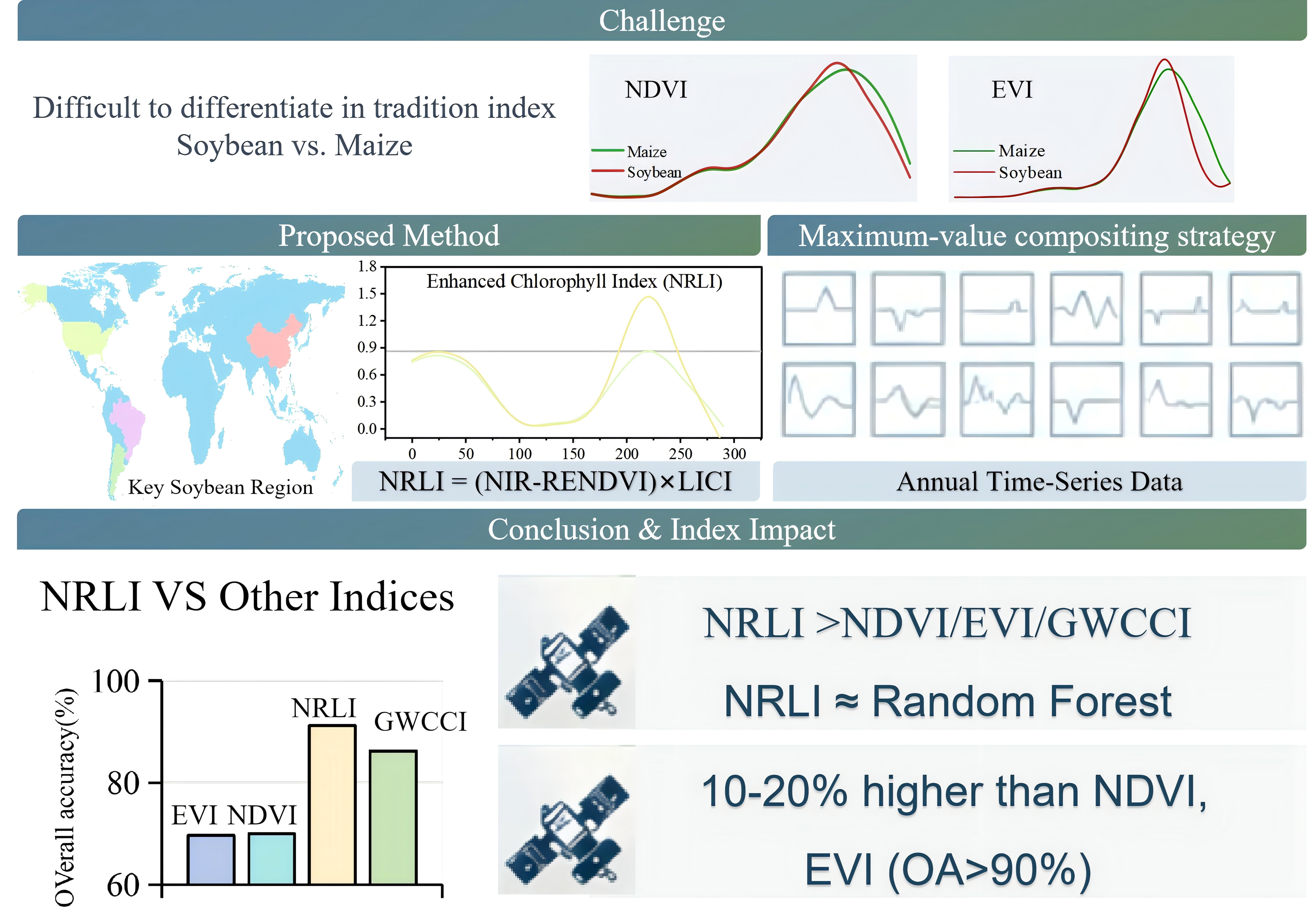
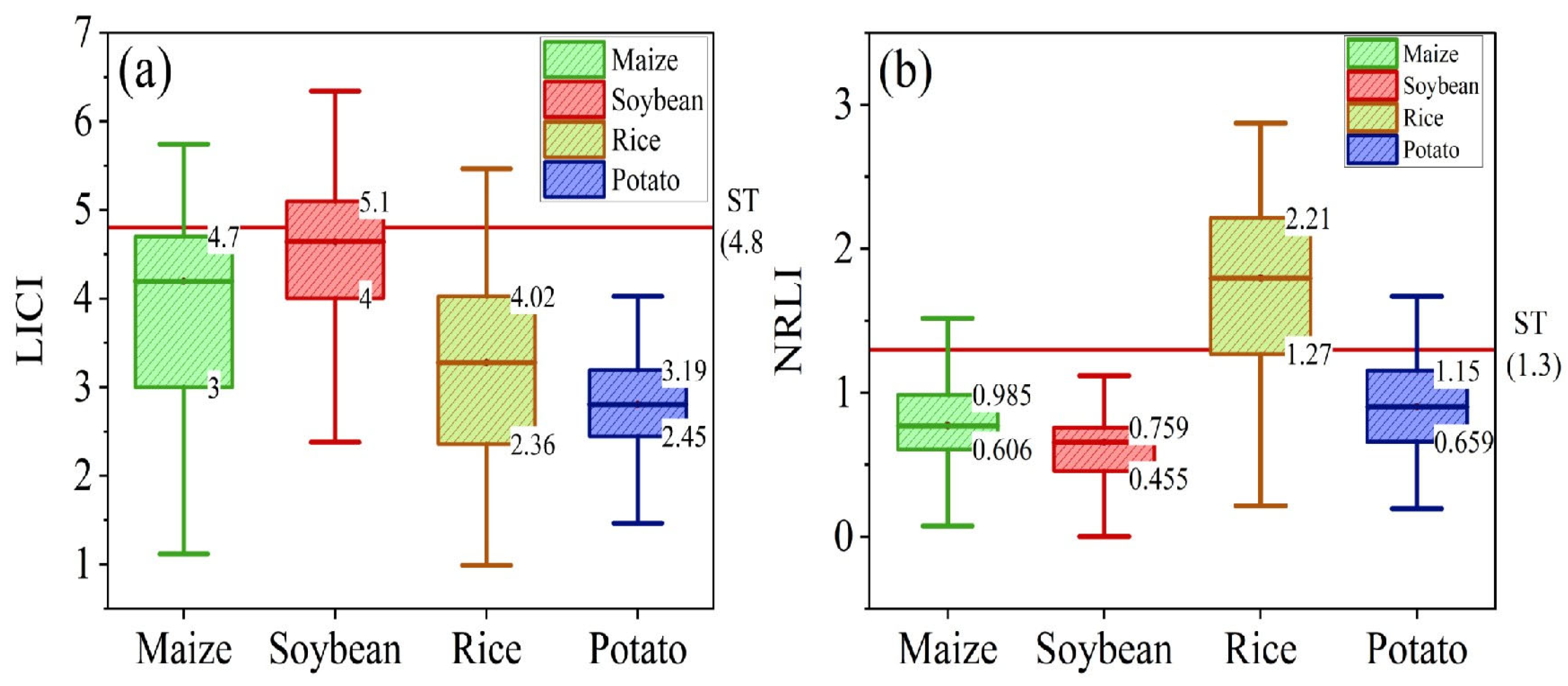
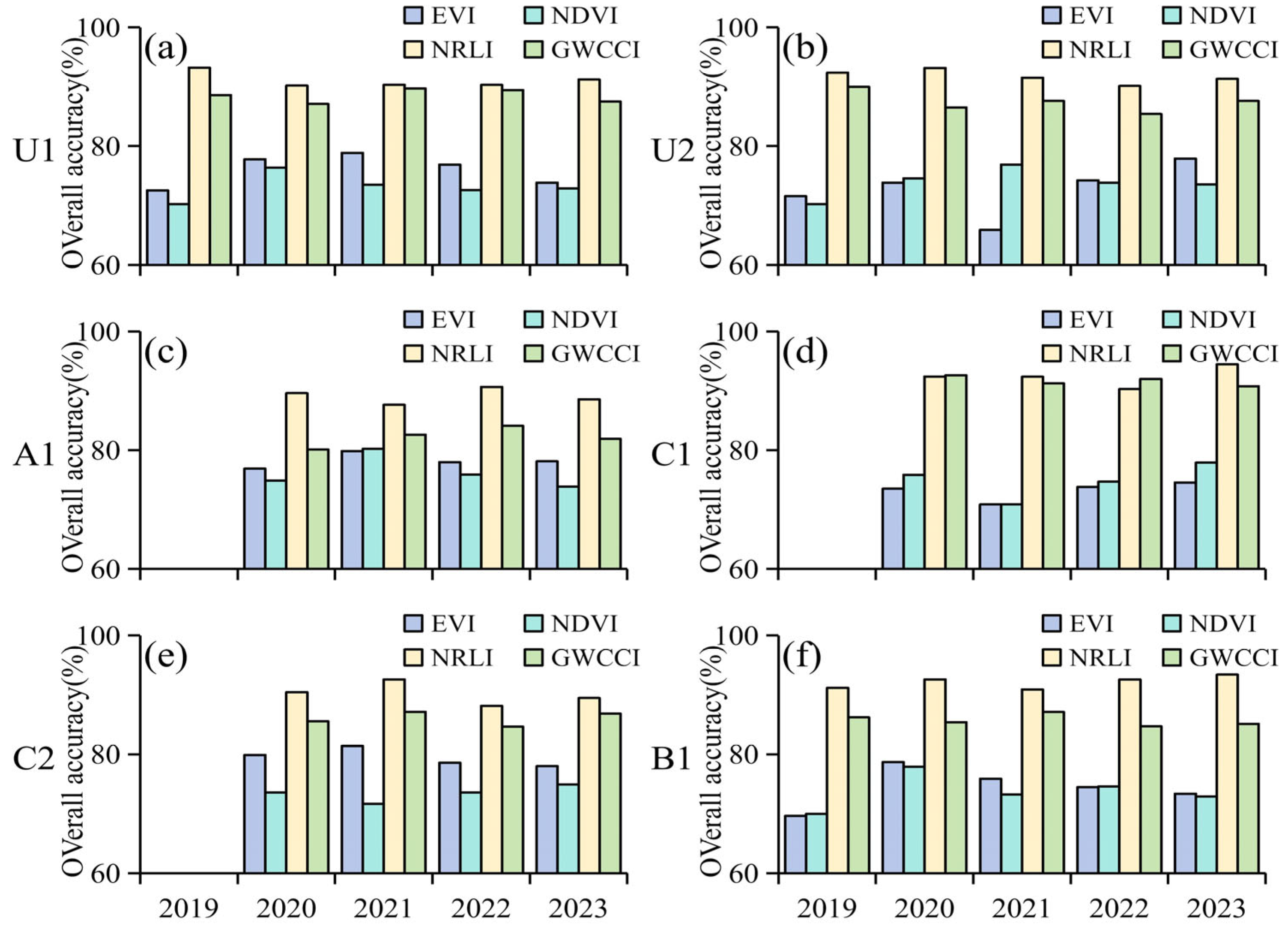
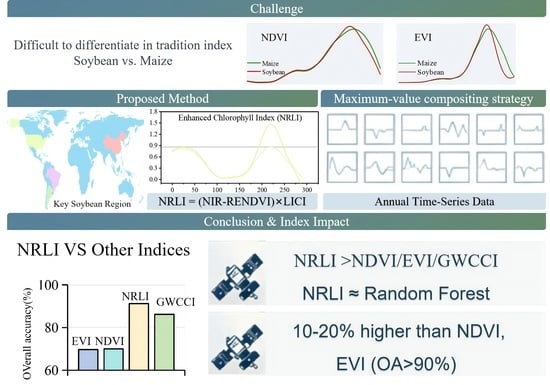
- We propose an Enhanced Chlorophyll Index (NRLI) that significantly improves the separability between soybean and maize, two spectrally similar crops that are difficult to distinguish using traditional vegetation indices.
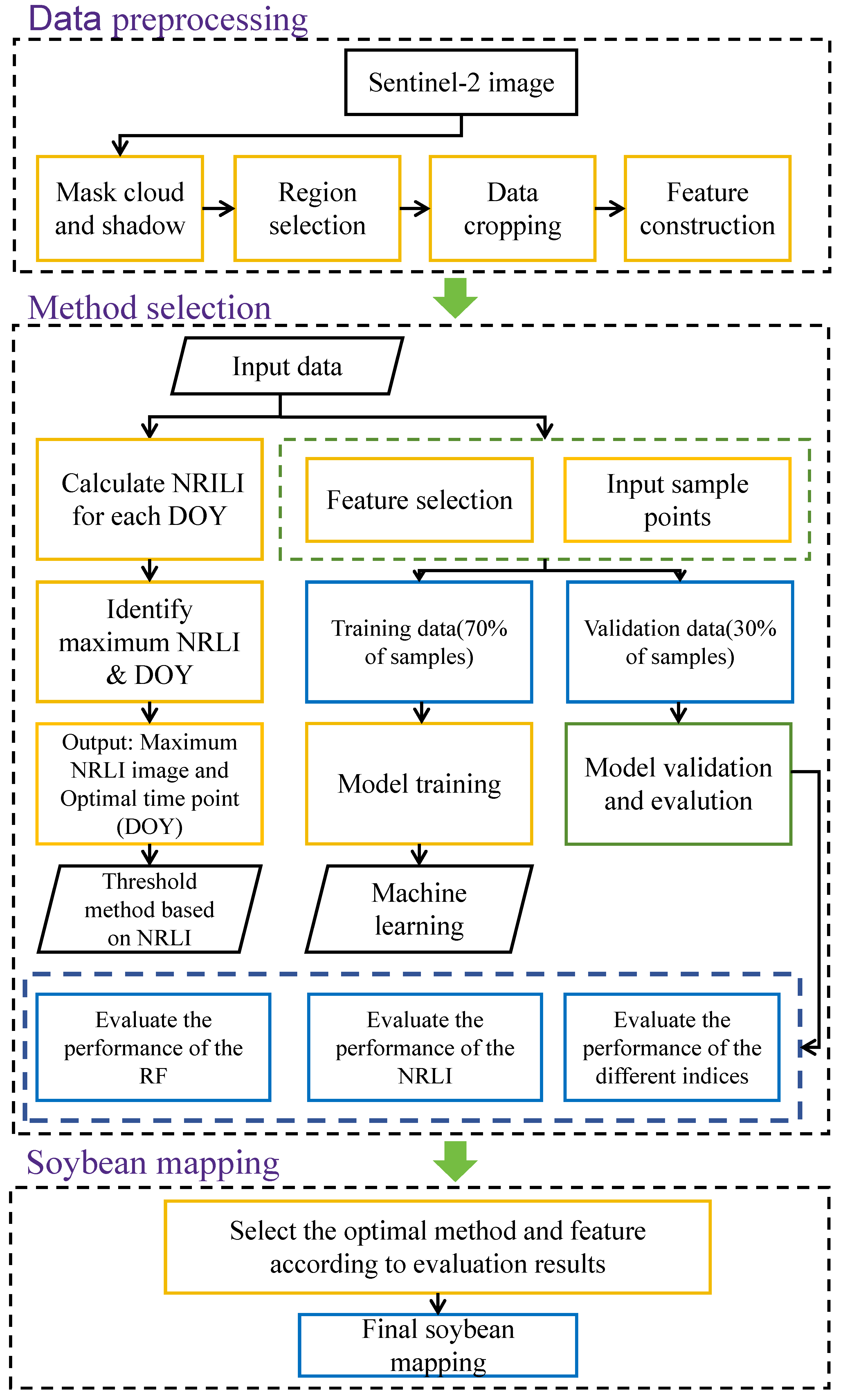
- NRLI enables the optimal soybean identification period to be automatically determined based on the temporal peak of the index, improving robustness across years and regions.
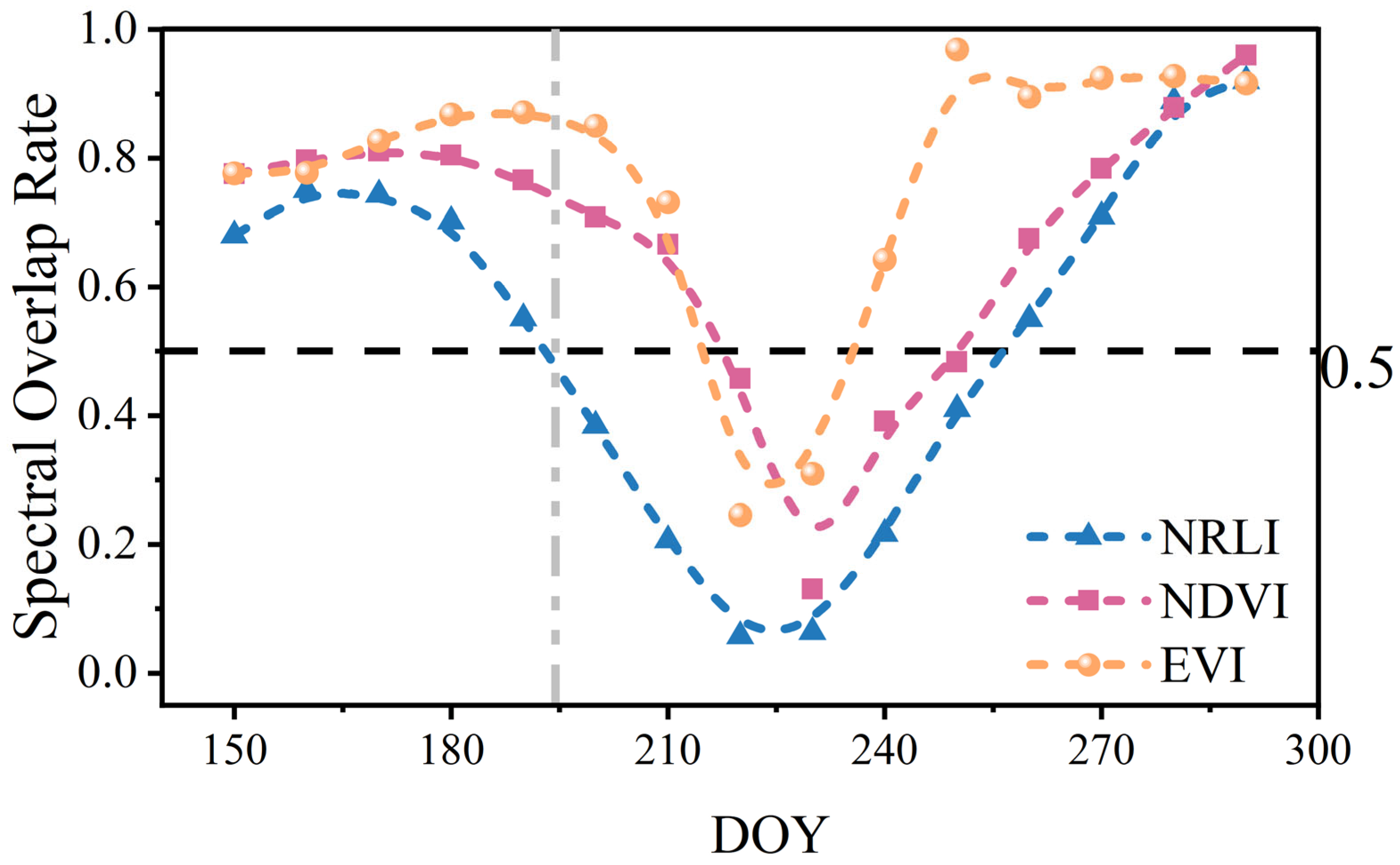
- NRLI allows earlier and more reliable soybean mapping, advancing the effective identification period by approximately 20 days compared with conventional indices.
- The proposed method provides a practical and transferable strategy for large-scale crop monitoring in operational remote sensing applications.
Abstract
1. Introduction
2. Study Area and Materials
2.1. Study Sites
2.2. Various Datasets
2.3. Validation Data

| Study Area Code | Dataset Name | Temporal Coverage | Spatial Resolution (Dataset) |
|---|---|---|---|
| U1, U2 | Cropland Data Layer | Annual update | 30 m |
| B1 | MapBiomas Collection 8.0 & MapBiomas AGRO | 1985–2024 | 30 m |
| A1 | Soybean Planting Dataset [41] | 2000–present | 30 m |
| C1, C2 | National Soybean Planting Dataset (2019–2022) [42] | 2019–2022 | 10 m |
2.4. Software and Computational Environment
3. Methods
3.1. Early Soybean Identification Using NRLI
3.2. Enhanced Chlorophyll Index


3.3. Classification Method
3.3.1. Threshold-Based Index Segmentation
3.3.2. Soybean Classification Using RF
3.4. Accuracy Assessment
4. Results
4.1. Statistical Separability Analysis
4.2. Classification Accuracies Using Vegetation Indices
4.3. Classification Accuracy of NRLI, GWCCI Versus RF
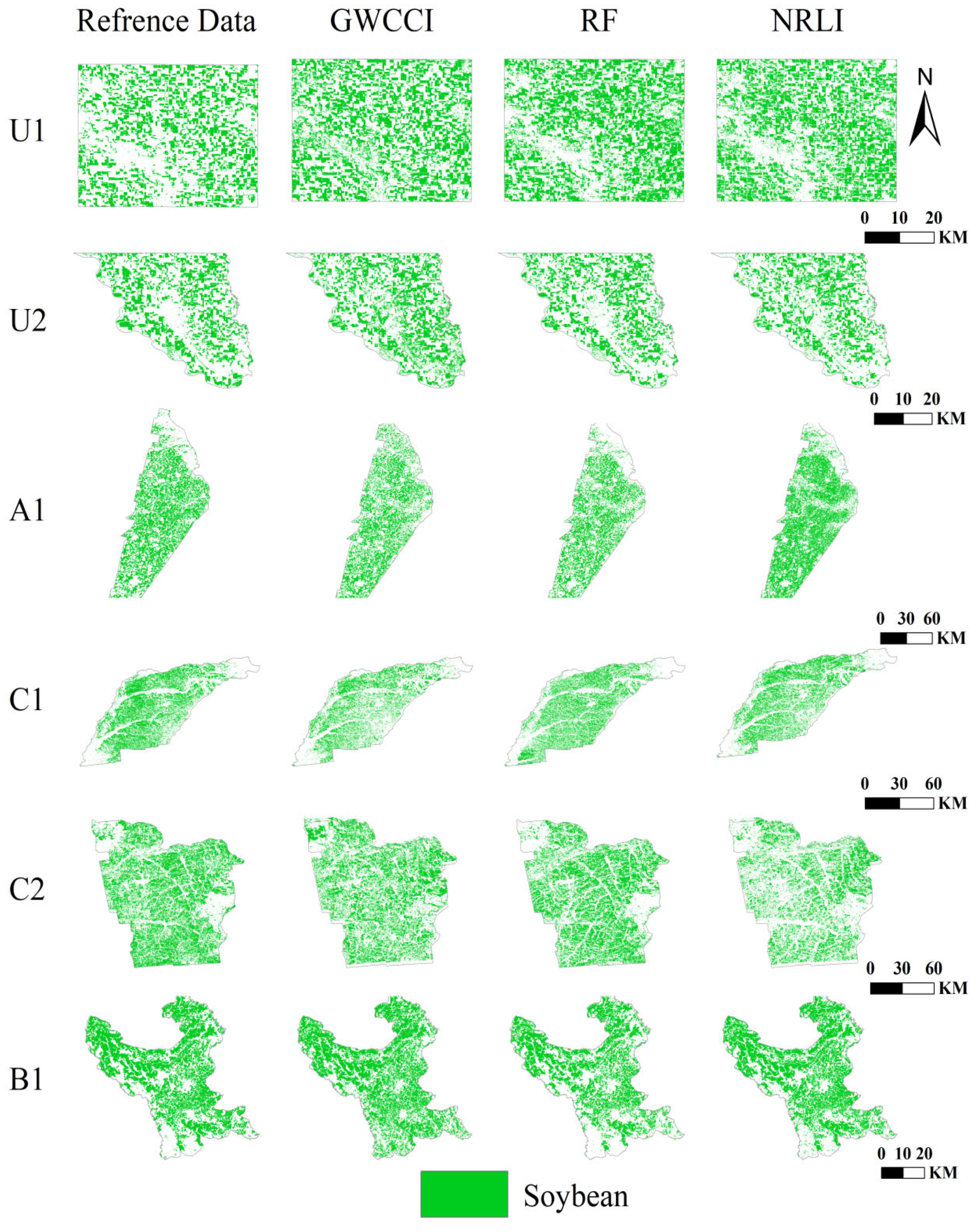
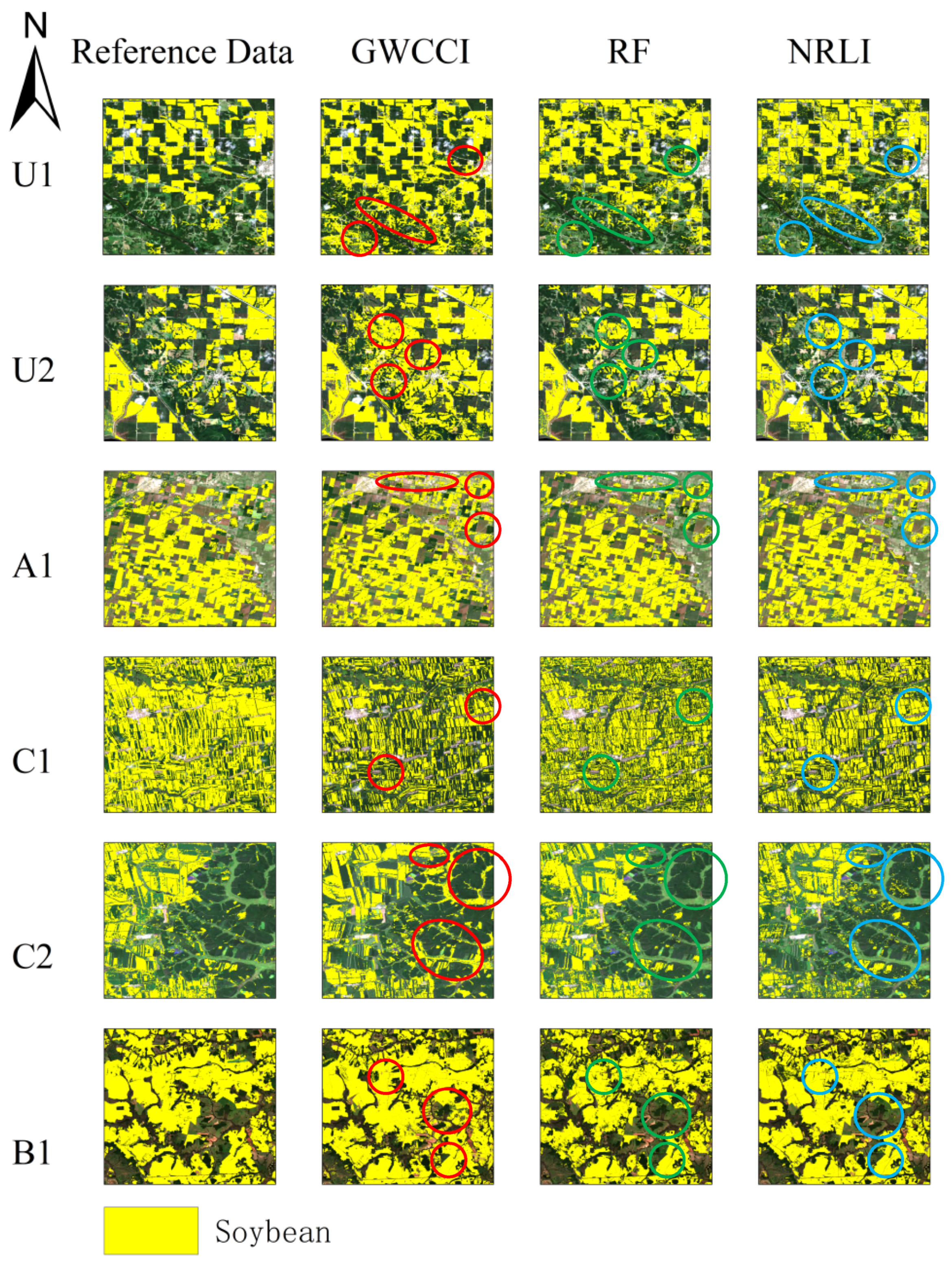
4.4. Detailed Classification Results
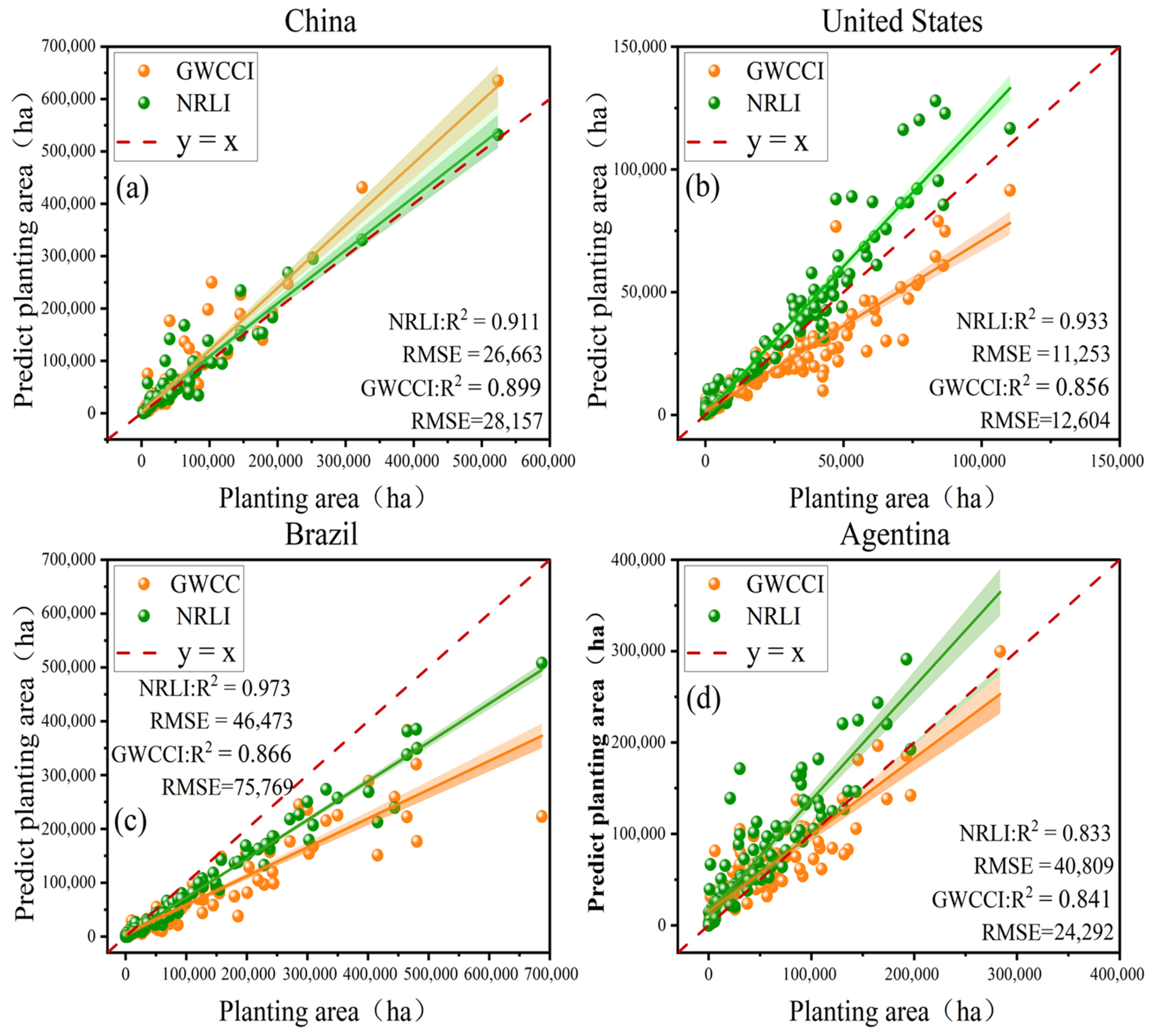
4.5. National-Scale Area Comparison and Statistical Validation
4.6. Model Performance Assessment
5. Discussion
5.1. Separability Reliability of NRLI
5.2. Advantages of Peak-Based Temporal Selection for NRLI
5.3. Comparative Analysis with Machine Learning Algorithm
5.4. Spatiotemporal Transferability
5.5. Potential Applications and Future Research Directions
6. Conclusions
Author Contributions
Funding
Data Availability Statement
Acknowledgments
Conflicts of Interest
Appendix A
| Abbreviation | Full Name | Formula |
| NRLI | Enhanced Chlorophyll Index | |
| EVI | Enhanced Vegetation Index | |
| GWCCI | Greenness and Water Content Composite Index | |
| NDVI | Normalized Difference Vegetation Index | |
| SWIR | Shortwave Infrared | B11 or B12 |
| LSWI | Land Surface Water Index | |
| RF | Random Forest | Ensemble method of decision trees |
| HLS | Harmonized Landsat and Sentinel | Time-series fusion of Landsat and Sentinel |
| UAV | Unmanned Aerial Vehicle | Aerial-based remote sensing system |
| GEE | Google Earth Engine | Cloud-based geospatial platform |
| USDA CDL | United States Department of Agriculture Cropland Data Layer | Agricultural land cover data for the U.S. |
| GIS | Geographic Information System | Spatial data management tool |
| R2 | Coefficient of Determination | |
| RMSE | Root Mean Square Error | sqrt(mean((observed − predicted)2)) |
| LAI | Leaf Area Index | Leaf area per unit ground area |
| DOY | Day of Year | Day number within a year |
| OA | Overall Accuracy | (TP + TN)/(TP + TN + FP + FN) |
| UA | User’s Accuracy | TP/(TP + FP) |
| PA | Producer’s Accuracy | TP/(TP + FN) |
| ST | Separation Threshold | Threshold that best separates classes |
| CNIK | China National Knowledge Infrastructure | Chinese database for academic resources |
| DTW | Dynamic Time Warping | Algorithm for matching time-series data |
| R1–R3 | Silking-to-Filling stage (Maize)/Flowering-to-PodDing stage (Soybean) | Growth stages of maize and soybean |
| C3 | C3 photosynthetic pathway | C3 plants, including soybean |
| C4 | C4 photosynthetic pathway | C4 plants, including maize |
| SOR | Spectral Overlap Rate | Overlapping pixels between crops in spectral bands |
| IQR | Interquartile Range | Statistical range between the 25th and 75th percentile |
| Q1–Q3 | First Quartile to Third Quartile | Middle 50% range between first and third quartiles |
| MVC | Maximum Value Composite | Selecting peak value from temporal series |
References
- Li, H.; Song, X.-P.; Hansen, M.C.; Becker-Reshef, I.; Adusei, B.; Pickering, J.; Wang, L.; Wang, L.; Lin, Z.; Zalles, V.; et al. Development of a 10-m resolution maize and soybean map over China: Matching satellite-based crop classification with sample-based area estimation. Remote Sens. Environ. 2023, 294, 113623. [Google Scholar] [CrossRef]
- Zhang, S.B.; Shi, B.F. The Asymmetric Tail Risk Spillover from the International Soybean Market to China’s Soybean Industry Chain. Agriculture 2024, 14, 1198. [Google Scholar] [CrossRef]
- Fisk, C.; Clarke, K.D.; Delean, S.; Lewis, M.M. Distinguishing Photosynthetic and Non-Photosynthetic Vegetation: How Do Traditional Observations and Spectral Classification Compare? Remote Sens. 2019, 11, 2589. [Google Scholar] [CrossRef]
- Shi, H.Z.; Liu, Z.Y.; Li, S.Q.; Jin, M.; Tang, Z.J.; Sun, T.; Liu, X.C.; Li, Z.J.; Zhang, F.C.; Xiang, Y.Z. Monitoring Soybean Soil Moisture Content Based on UAV Multispectral and Thermal-Infrared Remote-Sensing Information Fusion. Plants 2024, 13, 2417. [Google Scholar] [CrossRef] [PubMed]
- Abubakar, G.A.; Wang, K.; Shahtahamssebi, A.; Xue, X.; Belete, M.; Gudo, A.J.A.; Mohamed Shuka, K.A.; Gan, M. Mapping Maize Fields by Using Multi-Temporal Sentinel-1A and Sentinel-2A Images in Makarfi, Northern Nigeria, Africa. Sustainability 2020, 12, 2539. [Google Scholar] [CrossRef]
- Griffel, L.M.; Delparte, D.; Edwards, J. Using Support Vector Machines classification to differentiate spectral signatures of potato plants infected with Potato Virus Y. Comput. Electron. Agric. 2018, 153, 318–324. [Google Scholar] [CrossRef]
- Peña, J.; Gutiérrez, P.; Hervás-Martínez, C.; Six, J.; Plant, R.; López-Granados, F. Object-Based Image Classification of Summer Crops with Machine Learning Methods. Remote Sens. 2014, 6, 5019–5041. [Google Scholar] [CrossRef]
- Rußwurm, M.; Courty, N.; Emonet, R.; Lefèvre, S.; Tuia, D.; Tavenard, R. End-to-end learned early classification of time series for in-season crop type mapping. ISPRS J. Photogramm. Remote Sens. 2023, 196, 445–456. [Google Scholar] [CrossRef]
- Ashourloo, D.; Nematollahi, H.; Huete, A.; Aghighi, H.; Azadbakht, M.; Shahrabi, H.S.; Goodarzdashti, S. A new phenology-based method for mapping wheat and barley using time-series of Sentinel-2 images. Remote Sens. Environ. 2022, 280, 113206. [Google Scholar] [CrossRef]
- Xu, Y.J.; Ma, Y.C.; Zhang, Z. Self-supervised pre-training for large-scale crop mapping using Sentinel-2 time series. ISPRS J. Photogramm. Remote Sens. 2024, 207, 312–325. [Google Scholar] [CrossRef]
- Gadiraju, K.K.; Vatsavai, R.R. Remote Sensing Based Crop Type Classification Via Deep Transfer Learning. IEEE J. Sel. Top. Appl. Earth Obs. Remote Sens. 2023, 16, 4699–4712. [Google Scholar] [CrossRef]
- Hamza, M.A.; Alrowais, F.; Alzahrani, J.S.; Mahgoub, H.; Salem, N.M.; Marzouk, R. Squirrel Search Optimization with Deep Transfer Learning-Enabled Crop Classification Model on Hyperspectral Remote Sensing Imagery. Appl. Sci. 2022, 12, 5650. [Google Scholar] [CrossRef]
- Tanzer, D.N.; Witharana, C.; Fahey, R.T. Classification of tree mortality following drought-defoliation interaction using single date Landsat imagery and comparison to aerial detection surveys. Int. J. Appl. Earth Obs. Geoinf. 2025, 139, 104488. [Google Scholar] [CrossRef]
- Chen, H.; Li, H.; Liu, Z.; Zhang, C.; Zhang, S.; Atkinson, P.M. A novel Greenness and Water Content Composite Index (GWCCI) for soybean mapping from single remotely sensed multispectral images. Remote Sens. Environ. 2023, 295, 113679. [Google Scholar] [CrossRef]
- Woodcock, C.E.; Loveland, T.R.; Herold, M.; Bauer, M.E. Transitioning from change detection to monitoring with remote sensing: A paradigm shift. Remote Sens. Environ. 2020, 238, 111558. [Google Scholar] [CrossRef]
- Chen, R.; Sun, L.; Chen, Z.; Wuyun, D.; Sun, Z. Early Identification of Corn and Soybean Using Crop Growth Curve Matching Method. Agronomy 2024, 14, 146. [Google Scholar] [CrossRef]
- Zhou, L.F.; Meng, R.; Yu, X.; Liao, Y.G.; Huang, Z.H.; Lü, Z.G.; Xu, B.Y.; Yang, G.D.; Peng, S.B.; Xu, L. Improved Yield Prediction of Ratoon Rice Using Unmanned Aerial Vehicle-Based Multi-Temporal Feature Method. Rice Sci. 2023, 30, 247–256. [Google Scholar] [CrossRef]
- Bouguettaya, A.; Zarzour, H.; Kechida, A.; Taberkit, A.M. Deep learning techniques to classify agricultural crops through UAV imagery: A review. Neural Comput. Appl. 2022, 34, 9511–9536. [Google Scholar] [CrossRef]
- Cheng, X.; Sun, Y.; Zhang, W.; Wang, Y.; Cao, X.; Wang, Y. Application of Deep Learning in Multitemporal Remote Sensing Image Classification. Remote Sens. 2023, 15, 3859. [Google Scholar] [CrossRef]
- Wang, H.; Chang, W.; Yao, Y.; Yao, Z.; Zhao, Y.; Li, S.; Liu, Z.; Zhang, X. Cropformer: A new generalized deep learning classification approach for multi-scenario crop classification. Front. Plant Sci. 2023, 14, 1130659. [Google Scholar] [CrossRef]
- Ma, Y.Y.; Shen, Y.L.; Guan, H.X.; Wang, J.; Hu, C.L. A novel approach to detect the spring corn phenology using layered strategy. Int. J. Appl. Earth Obs. Geoinf. 2023, 122, 103422. [Google Scholar] [CrossRef]
- You, N.; Dong, J.; Li, J.; Huang, J.; Jin, Z. Rapid early-season maize mapping without crop labels. Remote Sens. Environ. 2023, 290, 113496. [Google Scholar] [CrossRef]
- Murguia-Cozar, A.; Macedo-Cruz, A.; Fernandez-Reynoso, D.S.; Salgado Transito, J.A. Recognition of Maize Phenology in Sentinel Images with Machine Learning. Sensors 2021, 22, 94. [Google Scholar] [CrossRef] [PubMed]
- Kordelas, G.A.; Manakos, I.; Aragones, D.; Diaz-Delgado, R.; Bustamante, J. Fast and Automatic Data-Driven Thresholding for Inundation Mapping with Sentinel-2 Data. Remote Sens. 2018, 10, 910. [Google Scholar] [CrossRef]
- Xiao, G.; Huang, J.; Song, J.; Li, X.; Du, K.; Huang, H.; Su, W.; Miao, S. A novel soybean mapping index within the global optimal time window. ISPRS J. Photogramm. Remote Sens. 2024, 217, 120–133. [Google Scholar] [CrossRef]
- Liu, X.Y.; Zhang, J.S.; Li, X.H.; Shen, K.J.; Zhu, S.; Liang, Z.H. Highly efficient wheat lodging extraction algorithm based on two-peak search algorithm. Precis. Agric. 2025, 26, 27. [Google Scholar] [CrossRef]
- Hu, W.W.; Liu, Y.; An, J.; Xu, S.P.; Zhou, Z.W.; An, M.M.; Guo, X.K.; Ma, X.; Jiang, W.F.; Wang, Y.S. Intelligent irrigation strategy model for farmland using dung beetle optimization-random forest algorithms. Agric. Water Manag. 2025, 317, 109653. [Google Scholar] [CrossRef]
- Li, X.Y.; Yu, L.; Du, Z.R.; Liu, X.X. Crop Statistic to Annual Map: Tracking spatiotemporal dynamics of crop-specific areas through machine learning and statistics disaggregating. Sci. Data 2025, 12, 1249. [Google Scholar] [CrossRef]
- Wei, P.; Ye, H.C.; Nie, C.J.; Zhang, Y.; Liu, R.H. Remote sensing estimation of nitrogen content in scenes of different crop types based on the random forest algorithm. Comput. Electron. Agric. 2025, 231, 109987. [Google Scholar] [CrossRef]
- van Stekelenburg, A.; Bleize, D.N.M.; Riet, J.V.; Schaap, G.; Vlasceanu, M.; Doell, K.C. Communicating consensus among climate scientists increases estimates of consensus and belief in human-caused climate change across the globe. J. Environ. Psychol. 2024, 100, 102480. [Google Scholar] [CrossRef]
- Beck, H.E.; Zimmermann, N.E.; McVicar, T.R.; Vergopolan, N.; Berg, A.; Wood, E.F. Present and future Köppen-Geiger climate classification maps at 1-km resolution. Sci. Data 2018, 5, 180214. [Google Scholar] [CrossRef] [PubMed]
- Drusch, M.; Del Bello, U.; Carlier, S.; Colin, O.; Fernandez, V.; Gascon, F.; Hoersch, B.; Isola, C.; Laberinti, P.; Martimort, P.; et al. Sentinel-2: ESA’s Optical High-Resolution Mission for GMES Operational Services. Remote Sens. Environ. 2012, 120, 25–36. [Google Scholar] [CrossRef]
- Zhao, C.P.; Jia, M.M.; Zhang, R.; Wang, Z.M.; Ren, C.Y.; Mao, D.H.; Wang, Y.Q. Mangrove species mapping in coastal China using synthesized Sentinel-2 high-separability images. Remote Sens. Environ. 2024, 17, 114151. [Google Scholar] [CrossRef]
- Yue, J.B.; Tian, Q.J.; Liu, Y.; Fu, Y.Y.; Tian, J.; Zhou, C.Q.; Feng, H.K.; Yang, G.J. Mapping cropland rice residue cover using a radiative transfer model and deep learning. Comput. Electron. Agric. 2023, 215, 108421. [Google Scholar] [CrossRef]
- Venter, Z.S.; Sydenham, M.A.K. Continental-Scale Land Cover Mapping at 10 m Resolution Over Europe (ELC10). Remote Sens. 2021, 13, 2301. [Google Scholar] [CrossRef]
- You, N.; Dong, J.; Huang, J.; Du, G.; Zhang, G.; He, Y.; Yang, T.; Di, Y.; Xiao, X. The 10-m crop type maps in Northeast China during 2017–2019. Sci. Data 2021, 8, 41. [Google Scholar] [CrossRef]
- Boryan, C.; Yang, Z.W.; Mueller, R.; Craig, M. Monitoring US agriculture: The US Department of Agriculture, National Agricultural Statistics Service, Cropland Data Layer Program. Geocarto Int. 2011, 26, 341–358. [Google Scholar] [CrossRef]
- Souza, C.M.; Shimbo, J.Z.; Rosa, M.R.; Parente, L.L.; Alencar, A.A.; Rudorff, B.F.T.; Hasenack, H.; Matsumoto, M.; Ferreira, L.G.; Souza, P.W.M.; et al. Reconstructing Three Decades of Land Use and Land Cover Changes in Brazilian Biomes with Landsat Archive and Earth Engine. Remote Sens. 2020, 12, 2735. [Google Scholar] [CrossRef]
- Olofsson, P.; Foody, G.M.; Herold, M.; Stehman, S.V.; Woodcock, C.E.; Wulder, M.A. Good practices for estimating area and assessing accuracy of land change. Remote Sens. Environ. 2014, 148, 42–57. [Google Scholar] [CrossRef]
- Friedl, M.A.; McIver, D.K.; Hodges, J.C.F.; Zhang, X.Y.; Muchoney, D.; Strahler, A.H.; Woodcock, C.E.; Gopal, S.; Schneider, A.; Cooper, A.; et al. Global land cover mapping from MODIS: Algorithms and early results. Remote Sens. Environ. 2002, 83, 287–302. [Google Scholar] [CrossRef]
- Song, X.P.; Hansen, M.C.; Potapov, P.; Adusei, B.; Pickering, J.; Adami, M.; Lima, A.; Zalles, V.; Stehman, S.V.; Di Bella, C.M.; et al. Massive soybean expansion in South America since 2000 and implications for conservation. Nat. Sustain. 2021, 4, 784–792. [Google Scholar] [CrossRef] [PubMed]
- Zhang, H.; Lou, Z.; Peng, D.; Zhang, B.; Luo, W.; Huang, J.; Zhang, X.; Yu, L.; Wang, F.; Huang, L.; et al. Mapping annual 10-m soybean cropland with spatiotemporal sample migration. Sci. Data 2024, 11, 439. [Google Scholar] [CrossRef] [PubMed]
- Gorelick, N.; Hancher, M.; Dixon, M.; Ilyushchenko, S.; Thau, D.; Moore, R. Google Earth Engine: Planetary-scale geospatial analysis for everyone. Remote Sens. Environ. 2017, 202, 18–27. [Google Scholar] [CrossRef]
- Criminisi, A.; Shotton, J.D.J. Machine Learning Process for Providing Semi-Supervised Random Decision Forest for e.g., Interactive Image Segmentation Application, Involves Training Set of Random Decision Trees to Form Semi-Supervised Random Decision Forest. U.S. Patent 9,519,868, 13 December 2016. [Google Scholar]
- Tamiminia, H.; Salehi, B.; Mahdianpari, M.; Quackenbush, L.; Adeli, S.; Brisco, B. Google Earth Engine for geo-big data applications: A meta-analysis and systematic review. ISPRS J. Photogramm. Remote Sens. 2020, 164, 152–170. [Google Scholar] [CrossRef]
- Virtanen, P.; Gommers, R.; Oliphant, T.E.; Haberland, M.; Reddy, T.; Cournapeau, D.; Burovski, E.; Peterson, P.; Weckesser, W.; Bright, J.; et al. SciPy 1.0: Fundamental algorithms for scientific computing in Python. Nat. Methods 2020, 17, 261–272. [Google Scholar] [CrossRef]
- Griffiths, P.; van der Linden, S.; Kuemmerle, T.; Hostert, P. Pixel-Based Landsat Compositing Algorithm for Large Area Land Cover Mapping. IEEE J. Sel. Top. Appl. Earth Obs. Remote Sens. 2013, 6, 2088–2101. [Google Scholar] [CrossRef]
- Holben, B.N. Characteristics of Maximum-Value Composite Images from Temporal Avhrr Data. Int. J. Remote Sens. 1986, 7, 1417–1434. [Google Scholar] [CrossRef]
- Viña, A.; Gitelson, A.A.; Nguy-Robertson, A.L.; Peng, Y. Comparison of different vegetation indices for the remote assessment of green leaf area index of crops. Remote Sens. Environ. 2011, 115, 3468–3478. [Google Scholar] [CrossRef]
- Li, D.; Chen, J.M.; Zhang, X.; Yan, Y.; Zhu, J.; Zheng, H.; Zhou, K.; Yao, X.; Tian, Y.; Zhu, Y.; et al. Improved estimation of leaf chlorophyll content of row crops from canopy reflectance spectra through minimizing canopy structural effects and optimizing off-noon observation time. Remote Sens. Environ. 2020, 248, 111985. [Google Scholar] [CrossRef]
- Gitelson, A.; Merzlyak, M.N. Quantitative Estimation of Chlorophyll-A Using Reflectance Spectra—Experiments with Autumn Chestnut and Maple Leaves. J. Photochem. Photobiol. B-Biol. 1994, 22, 247–252. [Google Scholar] [CrossRef]
- Hagolle, O.; Lobo, A.; Maisongrande, P.; Cabot, F.; Duchemin, B.; De Pereyra, A. Quality assessment and improvement of temporally composited products of remotely sensed imagery by combination of VEGETATION 1 and 2 images. Remote Sens. Environ. 2005, 94, 172–186. [Google Scholar] [CrossRef]
- Pena-Barragan, J.M.; Ngugi, M.K.; Plant, R.E.; Six, J. Object-based crop identification using multiple vegetation indices, textural features and crop phenology. Remote Sens. Environ. 2011, 115, 1301–1316. [Google Scholar] [CrossRef]
- Shao, Y.; Lunetta, R.S. Comparison of support vector machine, neural network, and CART algorithms for the land-cover classification using limited training data points. ISPRS J. Photogramm. Remote Sens. 2012, 70, 78–87. [Google Scholar] [CrossRef]
- Fu, X.; Chen, Y.; Yan, J.; Chen, Y.; Xu, F. BGRF: A broad granular random forest algorithm. J. Intell. Fuzzy Syst. 2023, 44, 8103–8117. [Google Scholar] [CrossRef]
- Qi, X.; Xu, B.; Wang, Z.P.; Hsu, L.T. Random forest-based multipath parameter estimation. GPS Solut. 2024, 28, 126. [Google Scholar] [CrossRef]
- Zhang, Y.F.; Wang, Y.H.; Gu, Z.F.; Pan, X.R.; Li, J.; Ding, H.; Zhang, Y.; Deng, K.J. Bitter-RF: A random forest machine model for recognizing bitter peptides. Front. Med. 2023, 10, 1052923. [Google Scholar] [CrossRef]
- Chen, M.; Chang, Z.; Jin, C.; Cheng, G.; Wang, S.; Ni, Y. Classification and Recognition of Soybean Quality Based on Hyperspectral Imaging and Random Forest Methods. Sensors 2025, 25, 1539. [Google Scholar] [CrossRef]
- Xie, Y.; Nhu, A.N.; Song, X.-P.; Jia, X.; Skakun, S.; Li, H.; Wang, Z. Accounting for spatial variability with geo-aware random forest: A case study for US major crop mapping. Remote Sens. Environ. 2025, 319, 114585. [Google Scholar] [CrossRef]
- Dey, S.; Bhogapurapu, N.; Homayouni, S.; Bhattacharya, A.; McNairn, H. Unsupervised Classification of Crop Growth Stages with Scattering Parameters from Dual-Pol Sentinel-1 SAR Data. Remote Sens. 2021, 13, 4412. [Google Scholar] [CrossRef]
- Bégué, A.; Arvor, D.; Bellon, B.; Betbeder, J.; de Abelleyra, D.; Ferraz, R.P.D.; Lebourgeois, V.; Lelong, C.; Simoes, M.; Verón, S.R. Remote Sensing and Cropping Practices: A Review. Remote Sens. 2018, 10, 99. [Google Scholar] [CrossRef]
- Ding, Y.M.; Wang, M.Y.; Jin, J.X.; Sun, Z.Y.; Zhang, J.; Zhu, L. Risk of real-time irrigation decision-making system for farmland in arid irrigation districts: Methodology and case study. Agric. Water Manag. 2025, 320, 109851. [Google Scholar] [CrossRef]
- Liu, Y.C.; Mizuta, K.; Morokuma, M.; Toyota, M. Effects of combined high temperature and water stress on soybean growth and physiological processes in a temperature gradient chamber. Field Crops Res. 2025, 333, 110063. [Google Scholar] [CrossRef]
- Nguy-Robertson, A.; Gitelson, A.; Peng, Y.; Viña, A.; Arkebauer, T.; Rundquist, D. Green Leaf Area Index Estimation in Maize and Soybean: Combining Vegetation Indices to Achieve Maximal Sensitivity. Agron. J. 2012, 104, 1336–1347. [Google Scholar] [CrossRef]
- Liao, Q.; Gu, S.J.; Gao, S.Y.; Du, T.S.; Kang, S.Z.; Tong, L.; Ding, R.S. Crop water stress index characterizes maize productivity under water and salt stress by using growth stage-specific non-water stress baselines. Field Crops Res. 2024, 317, 109544. [Google Scholar] [CrossRef]
- Ren, W.J.; Jiang, Q.Q.; Qi, W.L. Research progress in near-infrared spectroscopy for detecting the quality of potato crops. Chem. Biol. Technol. Agric. 2025, 12, 32. [Google Scholar] [CrossRef]
- Yue, J.B.; Wang, J.; Zhang, Z.Y.; Li, C.C.; Yang, H.; Feng, H.K.; Guo, W. Estimating crop leaf area index and chlorophyll content using a deep learning-based hyperspectral analysis method. Comput. Electron. Agric. 2024, 227, 109653. [Google Scholar] [CrossRef]
- Huang, L.; Miao, B.; She, B.; Zhang, A.; Zhao, J.; Ruan, C. Rapid mapping of soybean planting areas under complex crop structures: A modified GWCCI approach. Comput. Electron. Agric. 2025, 235, 110326. [Google Scholar] [CrossRef]
- Liu, L.; Xiao, X.; Qin, Y.; Wang, J.; Xu, X.; Hu, Y.; Qiao, Z. Mapping cropping intensity in China using time series Landsat and Sentinel-2 images and Google Earth Engine. Remote Sens. Environ. 2020, 239, 111624. [Google Scholar] [CrossRef]
- Griffiths, P.; Nendel, C.; Hostert, P. Intra-annual reflectance composites from Sentinel-2 and Landsat for national-scale crop and land cover mapping. Remote Sens. Environ. 2019, 220, 135–151. [Google Scholar] [CrossRef]
- Sudmanns, M.; Tiede, D.; Augustin, H.; Lang, S.F. Assessing global Sentinel-2 coverage dynamics and data availability for operational Earth observation (EO) applications using the EO-Compass. Int. J. Digit. Earth 2020, 13, 768–784. [Google Scholar] [CrossRef]
- Marsola, K.B.; de Oliveira, A.L.R.; Utino, M.Y.R.; Mann, P.; da Conceicao, T.C.O. The Impact of Exogenous Variables on Soybean Freight: A Machine Learning Analysis. Sustainability 2025, 17, 1067. [Google Scholar] [CrossRef]
- Ngcinela, S.; Mushunje, A.; Taruvinga, A.; Mutengwa, S.C.; Masehela, S.T. Mapping the Land Use Changes in Cultivation Areas of Maize and Soybean from 2006 to 2017 in the North West and Free State Provinces, South Africa. Agronomy 2024, 14, 1002. [Google Scholar] [CrossRef]


| Study Area Code | Country/Region | Type of Area | Climate Type | Spatial Extent |
|---|---|---|---|---|
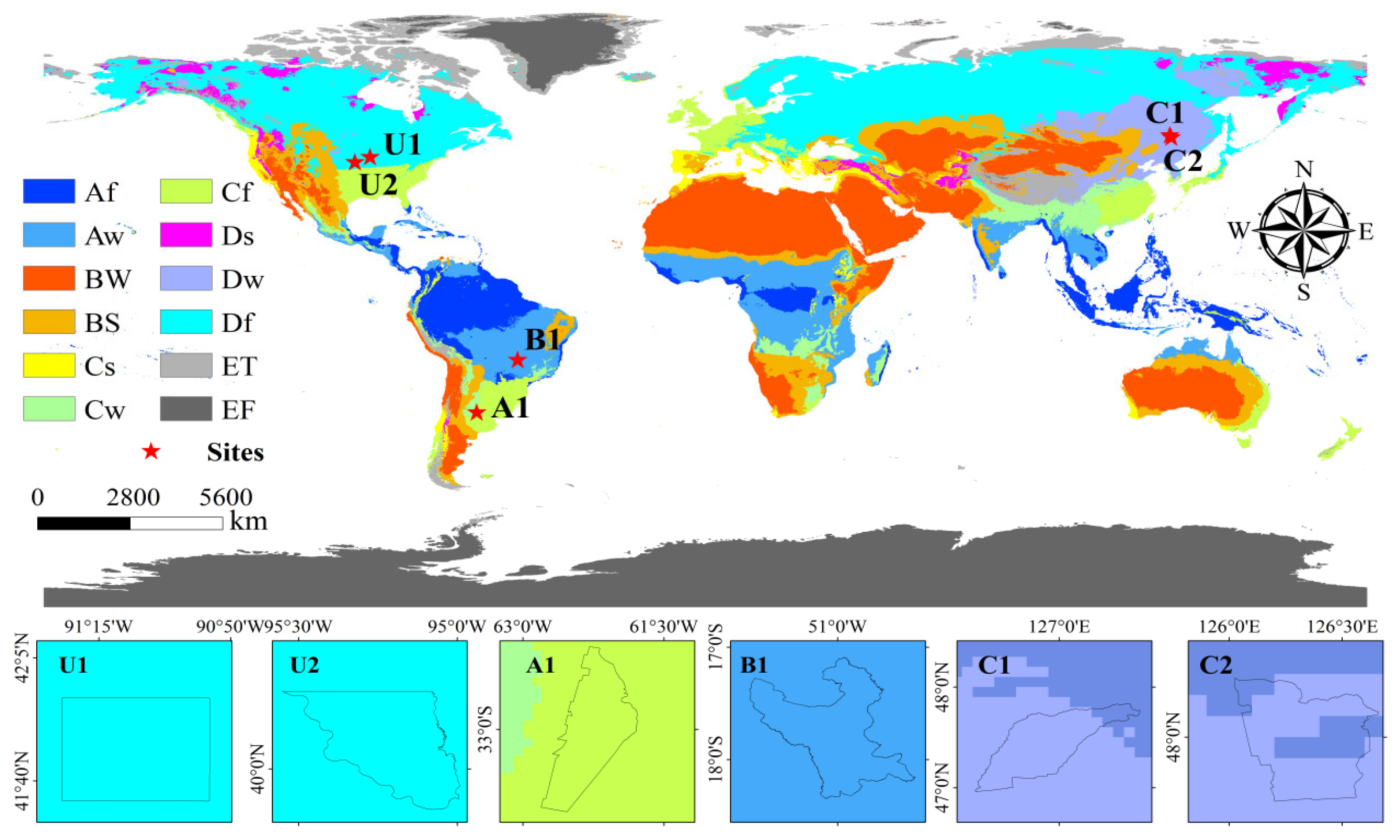
| U1 | United States (Cedar County) | Administrative Counties | Temperate continental climate | −91.36772969°–−90.89968015°, 41.59743319°–41.94827082° |
| U2 | United States (Holt County) | Administrative Counties | Temperate continental climate | −95.55256035°–−94.99099007°, 39.86314162°–40.26171841° |
| B1 | Brazil (Rio Verde) | Municipality | Tropical savanna climate | −51.73022749°–−32.37776908°, −18.34616421°–−3.80462096° |
| A1 | Argentina (Marcos Juárez) | Department | Temperate monsoon climates | −62.80857872°–−61.77767018°, −33.93945330°–−32.05285666° |
| C1 | China (Hailun City) | Administrative Counties | Temperate monsoon climate | 126.22184711°–127.74819305°, 46.96081318°–47.83722271° |
| C2 | China (Kedong County) | Administrative Counties | Temperate monsoon climate | 126.02212849°–126.66224140°, 47.69528060°–48.27939164° |
| Crop Types | Algorithm | OA (%) | UA (%) | PA (%) | Kappa |
|---|---|---|---|---|---|
| U1 | RF GWCCI NRLI | 91.3 87.1 90.2 | 93.41 90.21 90.35 | 88.90 87.65 88.15 | 0.86 0.75 0.81 |
| U2 | RF GWCCI NRLI | 90.5 86.5 89.5 | 91.21 89.21 91.6 | 90.11 87.5 90.5 | 0.88 0.77 0.85 |
| A1 | RF GWCCI NRLI | 91.5 80.11 89.6 | 87.32 83.23 90.13 | 83.23 79.63 89.54 | 0.76 0.68 0.81 |
| C1 | RF GWCCI NRLI | 93.5 92.6 92.4 | 92.03 90.12 94.20 | 90.32 91.8 90.23 | 0.86 0.87 0.85 |
| C2 | RF GWCCI NRLI | 88.42 85.54 90.45 | 90.36 84.65 90.56 | 91.69 86.63 92.36 | 0.81 0.71 0.85 |
| B1 | RF GWCCI NRLI | 90.9 85.4 92.6 | 90.9 83.6 91.4 | 91.5 81.46 90.9 | 0.83 0.70 0.85 |
Disclaimer/Publisher’s Note: The statements, opinions and data contained in all publications are solely those of the individual author(s) and contributor(s) and not of MDPI and/or the editor(s). MDPI and/or the editor(s) disclaim responsibility for any injury to people or property resulting from any ideas, methods, instructions or products referred to in the content. |
© 2026 by the authors. Licensee MDPI, Basel, Switzerland. This article is an open access article distributed under the terms and conditions of the Creative Commons Attribution (CC BY) license.
Share and Cite
Lyu, D.; Lai, C.; Zhu, B.; Zhen, Z.; Song, K. An Efficient Remote Sensing Index for Soybean Identification: Enhanced Chlorophyll Index (NRLI). Remote Sens. 2026, 18, 278. https://doi.org/10.3390/rs18020278
Lyu D, Lai C, Zhu B, Zhen Z, Song K. An Efficient Remote Sensing Index for Soybean Identification: Enhanced Chlorophyll Index (NRLI). Remote Sensing. 2026; 18(2):278. https://doi.org/10.3390/rs18020278
Chicago/Turabian StyleLyu, Dongmei, Chenlan Lai, Bingxue Zhu, Zhijun Zhen, and Kaishan Song. 2026. "An Efficient Remote Sensing Index for Soybean Identification: Enhanced Chlorophyll Index (NRLI)" Remote Sensing 18, no. 2: 278. https://doi.org/10.3390/rs18020278
APA StyleLyu, D., Lai, C., Zhu, B., Zhen, Z., & Song, K. (2026). An Efficient Remote Sensing Index for Soybean Identification: Enhanced Chlorophyll Index (NRLI). Remote Sensing, 18(2), 278. https://doi.org/10.3390/rs18020278