
You are currently viewing a new version of our website. To view the old version click .

Remote Sensing, Volume 12, Issue 9

May-1 2020 - 180 articles

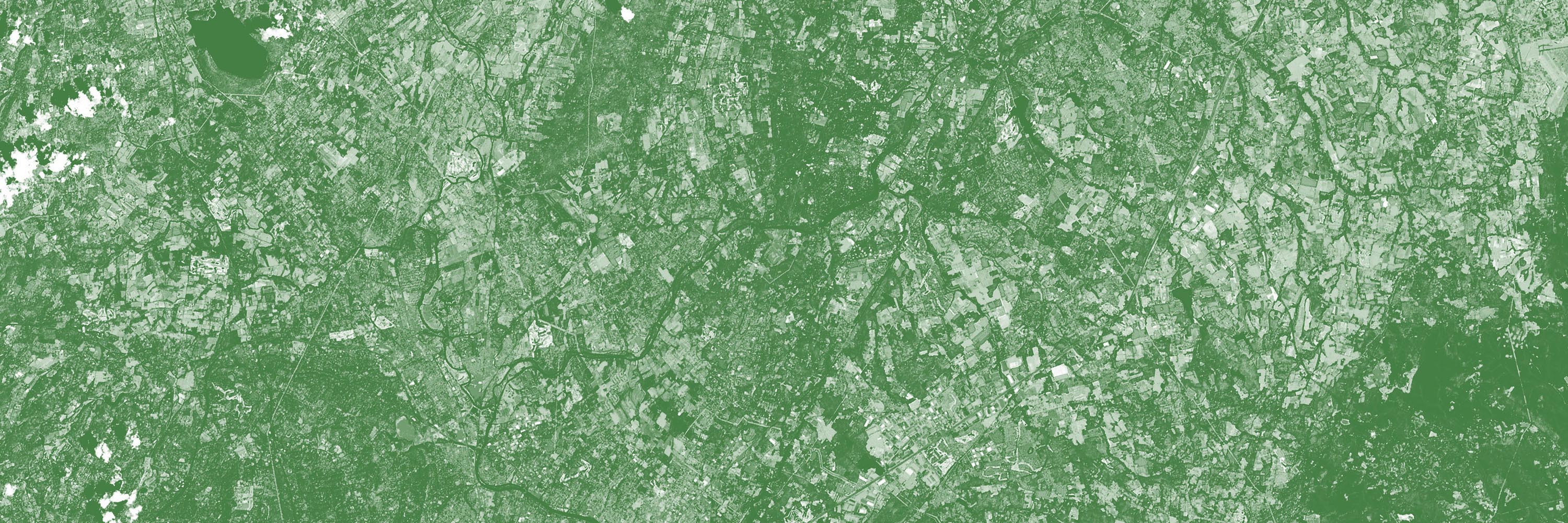
Cover Story: Tropical forests store globally significant amounts of carbon as aboveground biomass (AGB). Light detection and ranging (LiDAR) and optical wavelength data are increasingly being used to map tree height and to estimate AGB. In the tropics, cloud cover is prevalent, and so several years of satellite data may need to be considered. This may reduce mapping accuracy because of seasonal and interannual changes in forest reflectance. The sensitivity of tree height and AGB estimation derived using airborne LiDAR data with respect to the season of Landsat acquisition was examined. The quantitative results suggest that using a single cloud-free Landsat-8 image may be sufficient for dominant canopy height and AGB mapping, but that use of Landsat imagery from different seasons is preferred for improving Congo Basin forest inventories.View this paper.
  • Issues are regarded as officially published after their release is announced to the table of contents alert mailing list .
  • You may sign up for email alerts to receive table of contents of newly released issues.
  • PDF is the official format for papers published in both, html and pdf forms. To view the papers in pdf format, click on the "PDF Full-text" link, and use the free Adobe Reader to open them.

Articles (180)

  • Article
  • Open Access
27 Citations
10,661 Views
17 Pages

10 May 2020

Many previous studies have attempted to distinguish fog from clouds using low-orbit and geostationary satellite observations from visible (VIS) to longwave infrared (LWIR) bands. However, clouds and fog have often been misidentified because of their...

  • Article
  • Open Access
20 Citations
5,091 Views
15 Pages

Satellite-Based Observations Reveal Effects of Weather Variation on Rice Phenology

  • Hongfei Wang,
  • Aniruddha Ghosh,
  • Bruce A. Linquist and
  • Robert J. Hijmans

10 May 2020

Obtaining detailed data on the spatio-temporal variation in crop phenology is critical to increasing our understanding of agro-ecosystem function, such as their response to weather variation and climate change. It is challenging to collect such data...

  • Feature Paper
  • Article
  • Open Access
10 Citations
10,865 Views
20 Pages

Mapping Floristic Patterns of Trees in Peruvian Amazonia Using Remote Sensing and Machine Learning

  • Pablo Pérez Chaves,
  • Gabriela Zuquim,
  • Kalle Ruokolainen,
  • Jasper Van doninck,
  • Risto Kalliola,
  • Elvira Gómez Rivero and
  • Hanna Tuomisto

10 May 2020

Recognition of the spatial variation in tree species composition is a necessary precondition for wise management and conservation of forests. In the Peruvian Amazonia, this goal is not yet achieved mostly because adequate species inventory data has b...

  • Article
  • Open Access
16 Citations
7,344 Views
20 Pages

9 May 2020

This study presents a methodology for developing a high-resolution (2 m) urban tree canopy leaf area inventory in different tree phenological seasons and a subsequent application of the methodology to a 625 km2 urban area in Tokyo. Satellite remote s...

  • Article
  • Open Access
23 Citations
6,849 Views
19 Pages

9 May 2020

The traveling public judges the quality of a road mostly by its roughness and/or ride quality. Hence, mapping, monitoring, and maintaining adequate pavement smoothness is of high importance to State Departments of Transportation in the US. Current me...

  • Article
  • Open Access
18 Citations
4,399 Views
17 Pages

The Retrieval of Total Precipitable Water over Global Land Based on FY-3D/MWRI Data

  • Baolong Du,
  • Dabin Ji,
  • Jiancheng Shi,
  • Yongqian Wang,
  • Tianjie Lei,
  • Peng Zhang and
  • Husi Letu

9 May 2020

Total precipitable water (TPW) is an important key factor in the global water cycle and climate change. The knowledge of TPW characteristics at spatial and temporal scales could help us to better understand our changing environment. Currently, many a...

  • Article
  • Open Access
28 Citations
7,036 Views
16 Pages

Timing of Landsat Overpasses Effectively Captures Flow Conditions of Large Rivers

  • George H. Allen,
  • Xiao Yang,
  • John Gardner,
  • Joel Holliman,
  • Cédric H. David and
  • Matthew Ross

9 May 2020

Satellites provide a temporally discontinuous record of hydrological conditions along Earth’s rivers (e.g., river width, height, water quality). The degree to which archived satellite data effectively capture the overall population of river flo...

  • Article
  • Open Access
37 Citations
6,163 Views
15 Pages

9 May 2020

Wise soil management requires detailed soil information, but conventional soil class mapping in a rather coarse spatial resolution cannot meet the demand for precision agriculture. With the advantages of non-destructiveness, rapid cost-efficiency, an...

  • Feature Paper
  • Article
  • Open Access
38 Citations
7,780 Views
25 Pages

Estimating Stem Volume in Eucalyptus Plantations Using Airborne LiDAR: A Comparison of Area- and Individual Tree-Based Approaches

  • Rodrigo Vieira Leite,
  • Cibele Hummel do Amaral,
  • Raul de Paula Pires,
  • Carlos Alberto Silva,
  • Carlos Pedro Boechat Soares,
  • Renata Paulo Macedo,
  • Antonilmar Araújo Lopes da Silva,
  • Eben North Broadbent,
  • Midhun Mohan and
  • Hélio Garcia Leite

9 May 2020

Forest plantations are globally important for the economy and are significant for carbon sequestration. Properly managing plantations requires accurate information about stand timber stocks. In this study, we used the area (ABA) and individual tree (...

  • Letter
  • Open Access
15 Citations
5,289 Views
13 Pages

9 May 2020

We studied the influence of the statistical properties of soil moisture changes on the Interferometric Synthetic Aperture Radar (InSAR) coherence and closure phase to determine whether the InSAR coherence and closure phase can be used to estimate soi...

of 18

Get Alerted

Add your email address to receive forthcoming issues of this journal.

XFacebookLinkedIn
Remote Sens. - ISSN 2072-4292