Article

Assessment of Post-Earthquake Damaged Building with Interferometric Real Aperture Radar


1
Department of Structural Engineering, Polytechnic University of Catalonia, Calle/Street Jordi Girona, 31, 08034 Barcelona, Spain
2
Civil Engineering School, University of Azuay, Ave 24 de Mayo, 7-77, y Hernán Malo, 010107 Cuenca, Ecuador
3
Department of Remote Sensing-Division of Geomatics, Centre Tecnològic de Telecomunicacions de Catalunya, Ave. Carl Friedrich Gauss, 7, 08860 Castelldefels, Spain
4
Department of Civil and Environmental Engineering, Polytechnic University of Catalonia, Calle/Street Jordi Girona, 31, 08034 Barcelona, Spain
*
Author to whom correspondence should be addressed.
Remote Sens. 2019, 11(23), 2830; https://doi.org/10.3390/rs11232830
Submission received: 29 September 2019 / Revised: 16 November 2019 / Accepted: 25 November 2019 / Published: 28 November 2019
(This article belongs to the Special Issue Close Range Remote Sensing)

Abstract

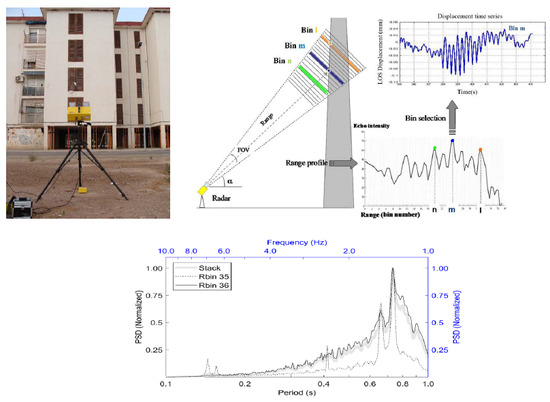
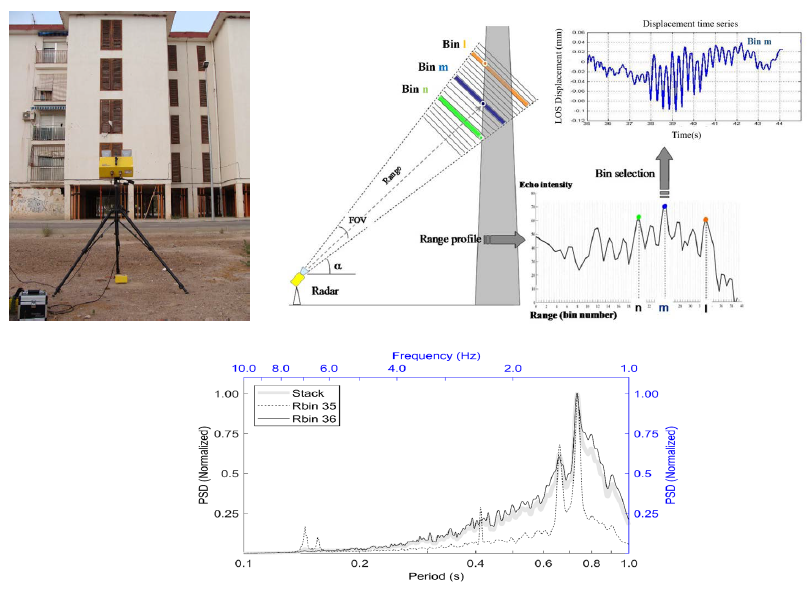
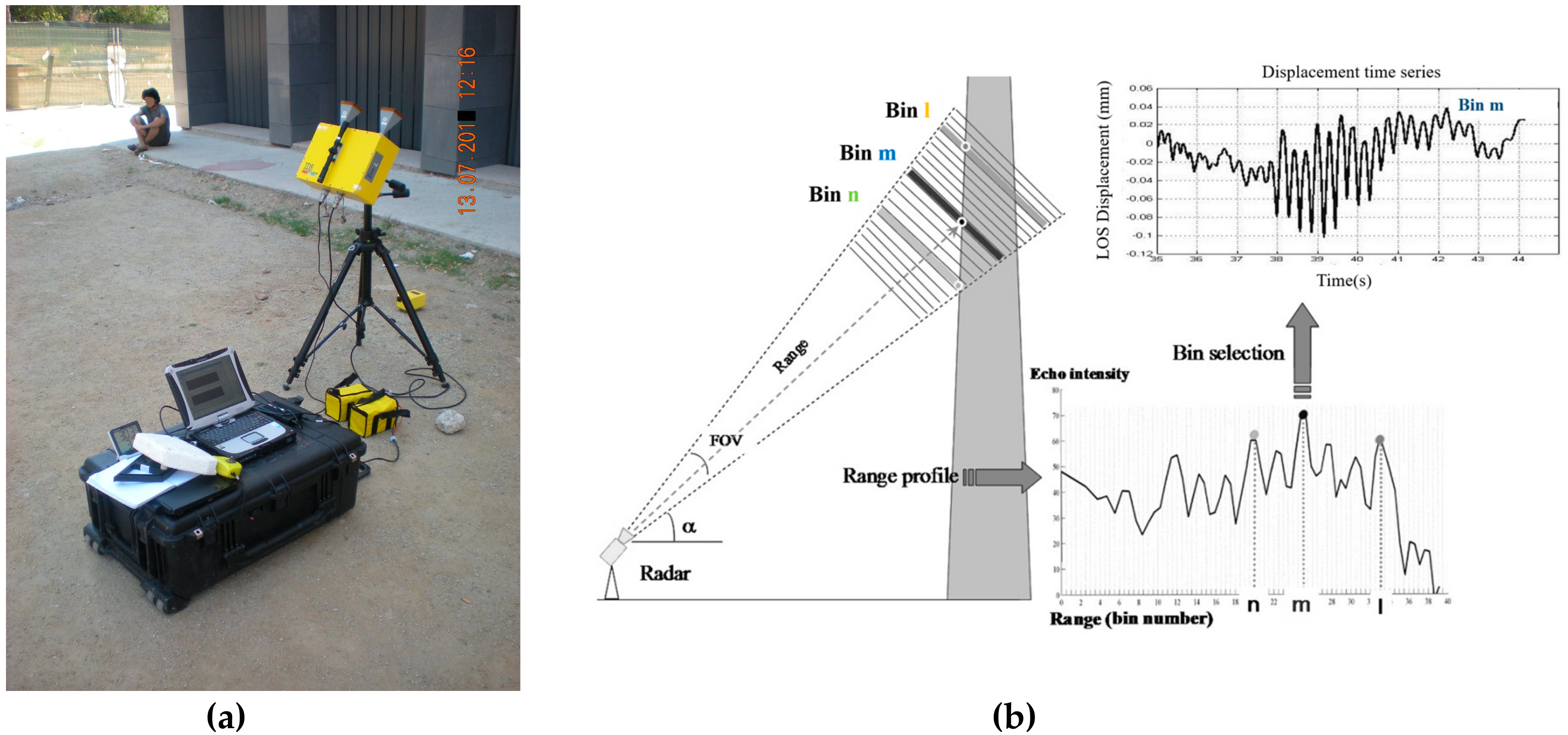
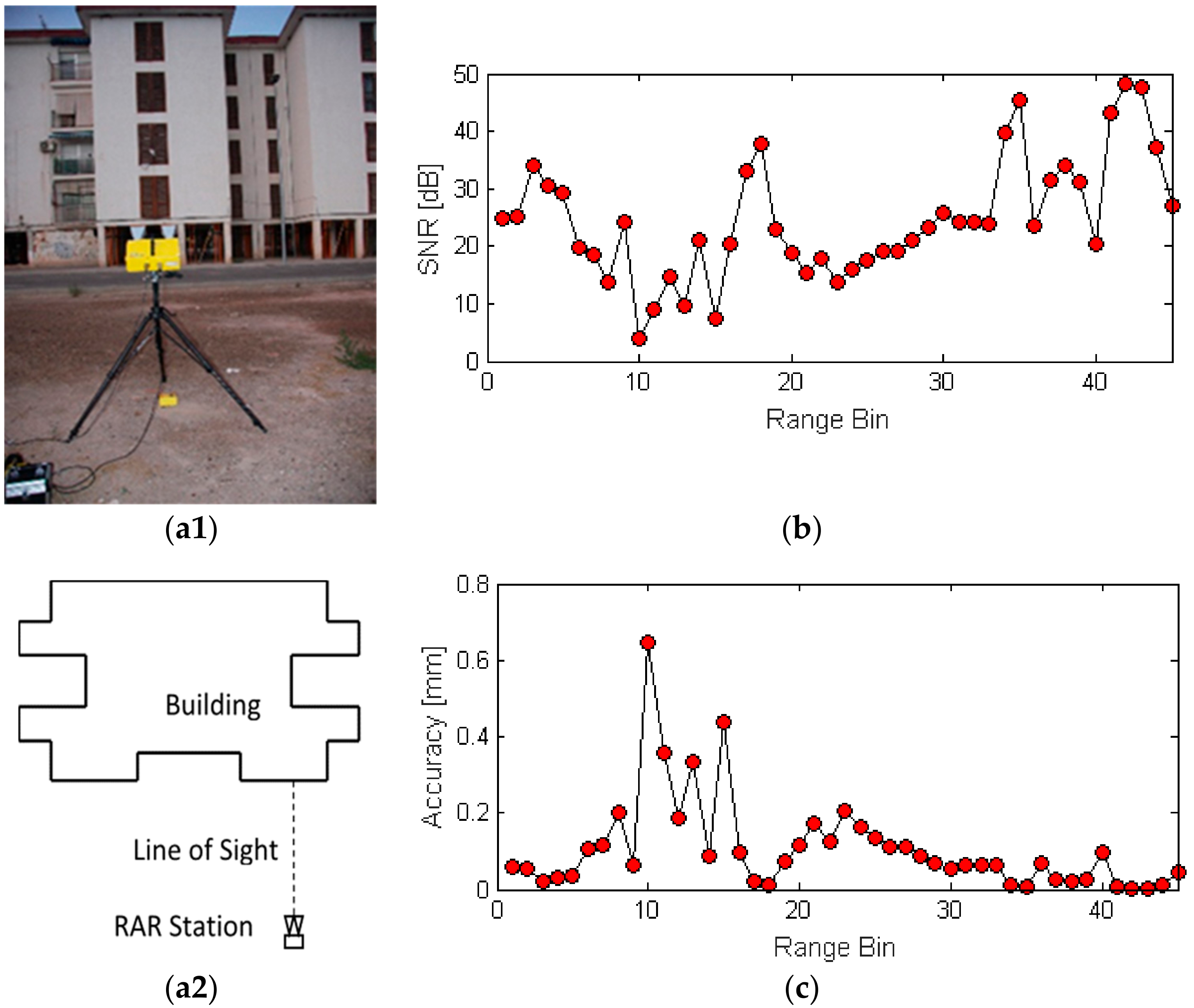
In this study the main results of a detailed analysis of an actual building, which was severely damaged during the Mw 5.1, May 11th 2011, Lorca earthquake (Murcia, Spain) are presented. The dynamic behavior of the building was analyzed by means of empirical and numerical approaches. The displacement response of the building submitted to ambient noise was recorded by using a Real Aperture Radar (RAR). This approach provides a secure remote sensing procedure that does not require entering the building. Based on the blueprints and other available graphical information about the building, a numeric 3D model was also set up, allowing obtaining capacity spectra and fragility curves in the two main resistant directions of the building. The main purpose of this study was to check out the feasibility of the RAR-based method to detect the safety state of a damaged building after an earthquake, without the need of entering unsafe structures. A good consistency of the numerical and experimental approaches and the observed damage was obtained, showing that RAR interferometric-based tools may provide promising supplementary remote sensing methods to safely survey and report about the structural health and the operative conditions of buildings in post-earthquake scenarios.
Keywords: seismic damage; seismic fragility; remote sensing; real aperture radar; capacity spectrum; Lorca earthquake seismic damage; seismic fragility; remote sensing; real aperture radar; capacity spectrum; Lorca earthquake
Graphical Abstract