


Abstract
Inquiry-based learning (IBL) is a rapidly growing pedagogical model that uses a learner-centered educational approach to address the needs of the 21st century. Relating to the sustainability of teaching, this approach addresses the systematic and complementary learning dimensions (e.g., cognitive, epistemic, and affective) relevant to the evolving needs of students, curricula, and technology. This study uses adaptive management as a theoretical model which views teachers as dynamic learning managers to investigate the integration of IBL in sustainable education targeting Sustainable Development Goal 4 (SDG4) (Quality Education). With the participation of 11 physics teachers, this phenomenological study delves into the inquiry-based learning implementation and experiences of physics teachers in building a sustainable learning culture in Türkiye’s public schools. The data were collected through semi-structured interviews to elicit teachers’ perceptions of the sustainability of the inquiry ecosystem, and thematic analysis was utilized to interpret and convey the essence of teaching experiences. The findings reveal that the use of adaptive management mechanisms for IBL reinforces students’ conceptual understanding and the long-term sustainability of teaching practices in physics education. The results also highlight the applicability of adaptive inquiry-based paradigms across disciplinary contexts to offer insights for the integration of new educational technology. This study suggests practical implications for teachers, school leaders, and teacher training programs for sustainable and flexible pedagogies.
1. Introduction
Contemporary educational systems increasingly respond to the complexity, unpredictability, and dynamism of development [1,2]. These global challenges, including technological transformation, call for equity and quality to support a more student-centered approach that provides students with opportunities to engage in deep conceptual and analytical thinking and advanced problem-solving [3,4]. Inquiry-based learning is a teaching methodology that emphasizes an active, participatory, and meaningful approach to knowledge acquisition and fosters an emotional and motivational learning experience in the 21st century [5]. Education is not merely a technical vehicle; it is a vital resource for long-term social, economic, and environmental sustainability [6,7]. This is articulated in the United Nations Sustainable Development Goal 4 (SDG4), which aims to support inclusive, equitable, and quality education as a platform for sustainable development [8]. Sustainable education adapts instruction to students’ needs, curriculum requirements, and context, thereby promoting students’ capabilities in critical thinking, problem-solving, and lifelong learning [9]. However, in science education, content-related instruction remains largely traditional, encompassing curriculum content and procedural problem-solving [10,11]. These practices discourage opportunities for student interaction, sense-making, and adaptation, and raise concerns about their capacity to withstand a rapidly changing world [2]; thus, it is increasingly necessary to think of teaching science as an active practice rather than a series of fixed teaching–learning routines. This demands pedagogy that enables teachers to respond flexibly to their own contexts while remaining consistent with broader educational aspirations [12,13]. In this sense, educational sustainability can be understood as educators’ ability to respond to the instructional process in a responsive and adaptive manner.
Inquiry-based science education supports the construction of sound explanations of natural phenomena through the analysis of evidence, with an emphasis on formulating arguments [14]. IBL stems from constructivist and sociocultural theories of learning, which view learners as more than passive recipients of information [15]. Likewise, science practices describe scientific knowledge in terms of ways of knowing and of working in the world, enabling students to learn to be producers rather than consumers [16]. Inquiry skills involve asking questions and defining problems, planning and designing investigations for data collection and analysis, constructing explanations, and using mathematics and computational thinking [17]. Such genuine practices can provide students with opportunities to develop high-level thinking and metacognition skills, including communication and collaboration, transfer across contexts, and reasoning [18]. IBL connects to learning through competencies in critical thinking, self-direction, collaboration, autonomy, and adaptability, all of which are integral to sustainability education [19,20]. These abilities are essential for equipping learners to navigate an uncertain future. Students’ engagement with science positively increases their motivation and interest in understanding scientific and technological issues in their lives. Physics teachers need to develop expertise in reform-based strategies to understand curricular innovations and integrate scientific inquiry into classroom instruction; however, teachers often face constraints related to curricular demands, assessment conditions, time constraints, and students’ prior experiences with conventional instruction [21]. This has prompted discussions about the need to maintain IBL as a regular course of instruction rather than a unique pedagogical intervention [12,22]. The emergence of IBL as a sustainable pedagogical model may involve examining teachers’ implementation, practice, observation, and adjustments to inquiry-based instruction in response to classroom dynamics.
Using adaptive management as a conceptual lens, this paper examines teachers’ instructional practices to address the challenge of maintaining inquiry-based instruction. The theory of adaptive management comprises four stages of planning, action, observation, and reflection, which can be used to alter the direction of practices within a context [23]. In educational settings, adaptive management offers a rich theoretical model that views teachers as masters of dynamic learning environments. IBL places both high cognitive and pedagogical demands on teachers aiming to navigate students’ diverse ideas and sense-making processes [11,24]. To successfully employ IBL, teachers can engage in learning in the moment, monitor learning, and use evidence to adjust instruction [25], as well as routinely analyze classroom evidence, develop effective instructional strategies, and adjust instruction to individual learning goals [26]. This view aligns with inquiry-oriented pedagogy, which relies on adaptability and responsiveness to students’ emergent thinking. Making teachers adaptive managers positions their professional resourcefulness as the basis for long-term, research-based learning. It aims to examine how teachers navigate uncertainty and make informed pedagogical decisions [27] to adapt to shifting curricular demands, learner needs, and institutional contexts [28].
The empirical literature on the link between inquiry-based learning and adaptive management has been limited, although there is theoretical support for this relationship, particularly in sustainability-oriented education. Building on this gap, the current study explores how physics teachers practice inquiry-based learning through adaptive management, with a focus on teaching and learning practices that ensure sustainability. Bringing these perspectives together in a single study provides greater clarity on how inquiry-based instruction can be embedded and sustained in real classrooms on the path to achieving SDG4 aspirations. The aim of this study is to examine inquiry-based learning (IBL) as a pedagogical practice aligned with adaptive management, situating the teacher as the operator and manager of dynamic learning systems. The study proposes characterizing teacher types and teaching practices for sustainable learning through adaptive management, presents a framework that regards teacher knowledge as a multidimensional construct, and provides a holistic picture of the complex interplay between knowledge, beliefs, context, and pedagogical choices. In line with Sustainable Development Goal 4 (Quality Education), this study examines how inquiry-based teaching strategies can contribute to sustainable pedagogical practices in physics education. The following are the study’s guiding questions:
RQ1. How do physics teachers enact inquiry-based learning through adaptive management principles to promote sustainable education?
RQ2. What adaptive teaching practices support or constrain the sustainability of inquiry-based learning in physics classrooms?
2. Literature Review
2.1. Adaptive Management Theory
The theoretical framework of this study centers on adaptive management theory and inquiry-based learning, which describe teaching as the process of planning, action, monitoring, and facilitating sustainable, student-centered instruction. Educational systems involve uncertainty, complexity, and heterogeneity, challenging conventional models of instruction and requiring the maintenance of effective learning over time to become a transformation agent of society [1,12]. For inquiry learning contexts, teachers must dynamically adapt instruction to students’ conceptual understandings, epistemic practices, and sociocultural and material contexts; thus, the teacher is placed between the practitioner role of an instructor and the manager role in the learning process. Learning is seen as an iterative and socially constructed process through disciplinary practices [11,29]. When properly scaffolded by teachers, however, IBL has been strongly correlated with enhanced conceptual understanding, scientific reasoning, and epistemic engagement [19,20]. As researchers have argued, inquiry-based instruction is context-bound, requiring teachers to consistently make teaching decisions according to students’ developing thoughts and affective states, as well as classroom constraints [12,21]. Such features treat inquiry-based teaching as an active rather than a passive approach.
Adaptive management provides a model for understanding teachers’ instructional practices in this complex context, treating decision-making as a circular process in which planning, action, monitoring, reflection, and adaptation operate under conditions of uncertainty [26]. Furthermore, adaptive management aims to learn from practice and adapt over time in response to feedback. As a teaching framework used in general education settings, adaptive management conceptualizes instruction as an ongoing, dynamic process in which teachers use classroom evidence, such as students’ questions, explanations, levels of engagement, and emotions, to adjust their strategies [13,30]. A system manager in management theory is an actor responsible for coordinating resources, regulating processes, and making decisions under uncertainty to accomplish the system’s objectives [31]. In an educational context, a teacher controls both the learning process and the introduction of content. Instruction is a management function that involves making decisions based on feedback from learners and the instructional context. This perspective aims to strengthen education through equity, creativity, lifelong learning, and community action. Aligning with 21st-century skills, new education models aim to create confident and creative individuals who are successful lifelong learners and informed community members [32]. Therefore, teachers become change agents and professional developers of the curriculum and classroom contexts from a sociocultural perspective, ensuring sustainability, coherence, and equity in the learning process [13].
The role of teachers should be not only to impart knowledge but also to manage the dynamics of the educational process through continuous adaptation of pedagogical decisions. Adaptive management provides a practical management framework for teachers in the inquiry-learning ecosystem. It is an approach derived from environmental and organizational management by Holling (1978) [26] that focuses on continuous monitoring, feedback, and iteration through which decision-making occurs under conditions of uncertainty. This approach integrates multiple dimensions of the sustainable inquiry ecosystem, such as conceptual and social understanding, to reduce uncertainty. In this process, teachers, as managers of the learning process, must view an action as an informed experiment rather than a fixed plan [31,33]. They should accommodate management notions and the learning process as a complex, dynamic, and non-linear adaptive system through managerial decisions relying on feedback, such as students’ prior knowledge, epistemic beliefs, and interactional patterns. These decisions are the result of professional judgment, pedagogical content mastery, and continuous learner feedback, in accordance with the teacher’s professional autonomy and management behaviors within adaptive systems for system sustainability [33]. Moreover, adaptive management is focused on the sustainability aspect of the system and sustainability issues related to long-term system viability, resilience, and capacity to learn [34]. In education, sustainability extends beyond environmental content to include the sustainability of learning processes. A sustainable inquiry-based learning ecosystem requires continuous alignment between instructional goals and learner needs, responsiveness to contextual limitations, teacher agency, and professional expertise. When teachers serve as adaptive managers, inquiry-based learning becomes a sustainable management practice.
Combining IBL and adaptive management in this study helps to reveal how inquiry-based instruction is created, enacted, and sustained over time; while IBL defines the pedagogical intention and practice of inquiry, adaptive management describes how teachers can use IBL to guide and sustain inquiry-based instructional practice within an ongoing feedback loop. This integrated perspective is employed not only to inform the research design and ensure that the data inform teachers’ instructional decisions and reflective practices, but also to enable teachers to respond flexibly to inquiry lessons. It also provides an analytical framework by identifying a few conceptual categories for understanding how teachers handle uncertainty, respond to student thinking, and sustain inquiry-based learning across multiple classroom contexts. In summary, this framework aligns with Sustainable Development Goal 4 (Quality Education) because it treats sustainability as an integral part of pedagogy rather than a secondary concern [6]. Emphasizing teachers’ adaptive expertise and responsiveness, the framework contributes to the literature on which sustainable pedagogy-based practices form the foundation of practices that promote sustainable learning within disciplinary and contextual constraints [7,9]. In their management role, the teacher demonstrates that sustainability is enacted in class through iterative decision-making, feedback use, and system regulation. This model also provides theoretical grounds for analyzing teachers’ lived experiences—especially descriptions of regulating inquiry processes, responding to uncertainty, and adapting instruction—from phenomenological analysis.
2.2. Sustainable Education and Teaching
Sustainable education is not only about protecting our environment; it is also about adaptive and equitable pedagogies that adapt and respond to our long-term needs. A critical perspective on this concerns critical thinking, problem-solving, cooperation, and lifelong learning as enablers of sustainable development [6]. It argues for the quality and relevance of pedagogical experience and moves away from a restricted view to a pedagogy that is responsive to social, technological, and educational reforms on a time-bound basis. Studies in sustainability education illustrate the implications of pedagogies that center learning on a purposeful integration of all involved participants and on learning to make sense for students [35,36]. Conventional teaching models have been increasingly criticized for failing to achieve these aims, particularly in science education, where active and purposeful engagement and sense-making are the bedrock of teaching practice [37]. Indeed, many educators and researchers realize that sustainability in learning relies on such active learning practices to facilitate adaptable instruction and is rooted in teachers’ capacity for informed instruction in a classroom that is constantly evolving. Sustainable teaching practices, according to Evans and Ferreira (2020) [38], are best summarized as those that can be maintained and refined over time, rather than implemented piecemeal as a single, standalone innovation. This perspective places teachers in roles beyond that of lecturers and/or curricular producers, wherein teachers create, shape, and adapt the learning process to its context.
2.3. Inquiry-Based Learning in Science Education
Inquiry-based learning (IBL) has been widely studied as a pedagogical method and is aligned with the objectives of science education reform. Basing its philosophy on a constructivist and sociocultural perspective on learning, IBL emphasizes students’ responsibility to pose questions, design inquiries, analyze evidence, and develop explanations [39,40]. This aligns with Dewey’s experiential learning, which involves students in producing knowledge in real-world, experiential, and problem-based contexts, grounded in experiences and situations, through a learning cycle consisting of hypothesizing, investigating, interpreting results, and generating new questions [41]. The Next-Generation Science Standards (NGSS) promote students’ research, model building, data collection, analysis, and argumentation about their epistemic practices within inquiry [42]. Moreover, Vygotsky (1978) [29] suggests an inquiry-based perspective: individuals jointly construct knowledge through social interaction, and learning increases with support from knowledgeable others (ZPD) when guided by someone more capable in the field. Vygotsky’s sociocultural perspective advocates that learning is internalized through language, collaboration, classroom discussion, peer work, and teacher input and feedback. Through activities such as peer research or scientific reasoning, students practice scientific thinking skills that contribute to their understanding of the world and their capacity to learn in the future [43]. They can validate ideas with evidence of their knowledge, draw associations, review, and revise explanations in response to a peer’s critique.
To develop a sustainable learning approach that fosters long-term planning, monitoring, and evaluation of students’ learning, the teacher establishes a scientific conversation and a classroom space for discussion [44]. As guides and designers, they ensure students experience and understand the science process and build interdisciplinary relationships, which means that inquiry learning will persist and foster a lifelong learning environment through continuous questioning.
More resilient inquiry ecosystems require the teacher’s purposeful, conscious, and ongoing guidance of students’ learning to cultivate lifelong learning habits [43,45]. Teachers design the environment in which students learn, drive the learning processes, and establish an ongoing cycle of inquiry among learners rather than knowledge transfer. The teacher role can be framed as a sustainable practice for integrating pedagogical, curricular, assessment, and contextual knowledge. The inquiry ecosystem is an organizational structure in which a teacher performs both planning activities and the design of an entire learning environment. In this ecosystem, the teacher is not just a guide; the teacher develops questions to guide students’ thinking and coaches them in asking questions without providing answers. Furthermore, teachers provide the prompt students need at the right time to help them discover their own path by including assessment at every stage of the learning journey. Assessment is more than the product of inquiry-based learning; it is a process that enables a teacher to continue the assignment, record observation notes, discuss evidence, review student notebooks, use rubrics, and more while demonstrating thinking and feedback. Teachers use these resources as evidence of progress, rather than for grading. Process assessments for monitoring students’ development are part of sustainable learning [42]. It follows that inquiry-based learning is sustainable when teachers’ professional development needs are continually integrated into teaching practice. In a sustainable inquiry ecosystem, assessment and feedback are tools that allow students to continuously improve their scientific processes, epistemic practices, and self-regulation skills by enhancing learning strategies [46,47]. Teachers must direct the path of investigation and provide immediate, structured feedback to ensure the continuity of the student learning cycle. Such an approach creates a more lasting influence of inquiry-based learning and ensures the sustainability of the learning ecosystem.
Recent research [39] has found that inquiry-based learning has the potential to address cognitive, affective, and contextual elements. The inquiry ecosystem supports students’ learning agency (cognitive), knowledge production and scientific thinking skills (epistemic), contextual meaning-making and transfer (contextual), and learning retention through emotional engagement and motivation (affective), along with a learning environment connected with the broader environment and life through pedagogical structures and pedagogical approaches (pedagogical) for sustainable learning. For example, the holistic inquiry approach asks students to sustain their own learning in the long term. This capacity goes beyond mere knowledge to encompass ongoing learning and the practice of cognitive and affective norms such as curiosity, questioning, scientific thinking, and self-regulation [19,43]. Students’ motivation, curiosity, and confidence, the classroom culture, the available resources, and the school’s physical environment determine the quality of inquiry. Consequently, inquiry is not only an instructional strategy but also a learning ecology in which teachers, students, resources, evaluation, and setting are interdependent. By linking abstract concepts to tasks that promote the production and appraisal of evidence-based knowledge, this approach guides students toward evidence-based inference and builds their scientific reasoning skills. When viewed as an ecosystem, inquiry-driven learning encompasses not only cognitive processes but also the pedagogical structure, learning resources, contextual and epistemic elements, and affective factors (Figure 1). These findings indicate that the sustainability of IBL should be examined not only in terms of curricular design but also in terms of teachers’ instructional judgment and their capability to tailor inquiry techniques to local settings.
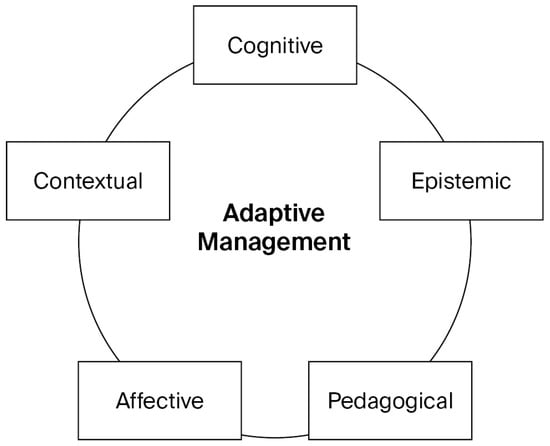
Figure 1.
Cycle of sustainable inquiry ecosystem through adaptive management.
Studies have shown that positive, caring, and supportive student–teacher relationships are associated with improved learning performance and engagement, enhanced emotional regulation, increased social competence, and greater readiness to take on challenges [47]. Learning cannot take place in an environment in which students do not feel physically or psychologically safe because fear and anxiety are barriers to cognitive processing in the course of learning. Positive relationships can enhance students’ development and well-being and foster them to be culturally competent, creating links between what takes place in school and the world students know and experience. School and classroom organization should support student–teacher attachment and positive, long-term relationships in students’ academic and social–emotional life, thereby fostering developmentally appropriate competencies, emotional security, resilience, and agency. Making the learning environment more personalized can help students feel seen and understood, and meeting their needs more effectively is a powerful lever for enhancing student outcomes.
2.4. Adaptive Instruction for Sustainable Inquiry-Based Learning
Enacting and sustaining inquiry-based learning (IBL) in classroom contexts requires an attentive study of teachers’ management decisions. Studies of teacher cognition and professional practice consistently show that teaching is a complex, ongoing, and contingent process constructed through active negotiation of students’ understandings, actions, and preferences [48,49]. Instead of providing learning in a linear or deterministic fashion, teachers make continuous choices as they respond to the classroom, negotiate curriculum objectives, and manage uncertainty in real time [27]. This view positions adaptive expertise among the key aspects of effective teaching.
Research indicates that effective inquiry-based pedagogy relies heavily on teachers’ ability to make pedagogical decisions moment by moment. Inquiry-based classrooms need teachers to balance openness and structure, provide timely and responsive scaffolding, and respond productively to unexpected student ideas and questions [11,50]. Teachers constantly need to assess when to intervene, when to withhold support, and how to facilitate inquiry without compromising students’ sense-making [24,51]. For example, Hardy et al. (2022) [52] showed that teachers’ diagnostic strategies and contingent support moves in science lessons predicted long-term conceptual understanding and student engagement. These results indicated that iterative monitoring and adjustment of learning led to sustained inquiry through teachers’ real-time adaptations of discourse. These adaptive instructional strategies are essential for continued productive inquiry and for aligning inquiry with learning.
A significant majority of the literature on professional development and curriculum design has focused primarily on strategies or activity structures while ignoring the processes that enable teachers to make sense of classroom evidence and shape feedback around it [53]. Thus, inquiry-based learning is often considered a technique for teaching with fidelity, rather than a dynamic, situation-sensitive pedagogy that develops over practice. This gap underscores the importance of conceptual frameworks that directly consider teachers’ adaptive practices when exploring the sustainability of inquiry-based learning. Honke and Becker-Genschow (2025) [54] underlined the significance of adaptive management environments in science education and emphasized the importance of technology-mediated adaptability for sustaining the scientific experience of grasping a concept.
Adaptive management provides a robust theoretical model [26] which involves iterative cycles of planning, action, monitoring, reflection, and adjustment in practice, underscoring the importance of learning through practice as a fundamental means of improvement [55]. Adaptive management is about avoiding optimal or fixed solutions and emphasizes responsiveness, evidence-informed decision-making, and an ongoing learning process. In the context of education, it views teaching as the management of a dynamic learning system, rather than a prescribed process [56]. From this vantage point, teachers become adaptive managers who assess the effectiveness of instructional strategies using classroom data, taking into account students’ reactions (ideas, engagement, and emotions) as well. This perspective resonates closely with knowledge on teacher noticing and pedagogical reasoning, focusing on teachers’ professional judgment and interpretive practice in directing instruction [57,58]. From a sustainability perspective, the integration of adaptive management is highly relevant to inquiry-based learning. Sustainability-based education means teaching methods that not only have proven effective at stimulating learning but can also be adjusted over time in light of ongoing curricular demands, learner heterogeneity, and institutional constraints [7,36]. An inquiry-based approach to pedagogical learning enables both teaching and learning to be more effective and sustained, fostering professional development by making teachers more reflective practitioners who learn from their practice [28,38].
While prior studies have focused on inquiry-based pedagogy, teacher decision-making, and adaptive management strategies, empirical work on inquiry-based learning and sustainability is limited, especially in physics education. The current study seeks to address this gap by using adaptive management as a conceptual lens to explore how physics teachers perform and maintain inquiry-based learning through continuous decision-making. The work foregrounds teachers’ adaptive practices, which add an important dimension to the exploration of sustainable, inquiry-based teaching, in line with the goals of quality and equitable education promoted by Sustainable Development Goal 4.
3. Materials and Methods
3.1. Research Design
This theoretical framing informed both the study’s design and the analytical lens used to interpret the teachers’ accounts. The study evaluated teachers’ views on inquiry, the methods they adopt to cultivate students’ science process skills, disciplinary epistemic practices, and the strategies they use to ensure the continuity of these practices. It is phenomenological in nature, with phenomenology being a qualitative research method that aims to explore and understand meaning-making processes in the human experience and strives to bring out and examine individuals’ lived versions of that experience [59,60]. The phenomenological perspective aims to understand how people experience a phenomenon, thereby clarifying its meaning, and it is particularly appropriate here, as the goal of this study is to examine the inquiry-based learning ecosystem, classroom implementation strategies, and sustainable learning perspective of physics teachers in public schools in Türkiye. It allows us to understand the experiences and pedagogical and epistemic meanings that teachers bring to their interactions with inquiry, and how their own contexts can be positioned within these processes. Phenomenology was selected to explore the participants’ experiences and the subjectivity that governs their meaning-seeking and is also applicable to the description of complex pedagogical processes that involve adaptive decision-making under situational constraints. In contrast, a case study design is frequently used in the study of a context or institution, allowing a comprehensive view of the events, practices, and processes [61]; however, since this study focuses on teachers’ experiences and perceptions rather than the context, a case study would be of limited significance [61]. Furthermore, while other qualitative research designs (e.g., ethnographic, action research) are oriented towards the sociocultural setting or the mechanisms of action and change, this study aims to capture teachers’ inquiry-based learning experiences and their meanings, which are subjective matters. Thus, a phenomenological approach was adopted to ensure a qualitative research design consistent with the study’s purpose. Through the topics and understandings generated from the teachers’ lived experiences, we gain a rich, locally valid understanding of the sustainability of the inquiry-based learning ecosystem.
Phenomenological Stance and Researcher Positioning
This study is phenomenological in its orientation to participants’ lived experiences and meaning-making contexts relating to inquiry-based learning (IBL). Our central analytic concern is understanding teachers’ perceptions, interpretations, and responses to uncertainty in the context of IBL in their own practice. Therefore, the study does not aim to explore all previous assumptions in a phenomenological sense, but rather puts teachers’ understandings and the variability of their experiential narratives into focus. In practice, we put this position in operational terms by applying thematic analysis as a pragmatic, transparent analytical strategy for uncovering patterns of meaning embedded in the interview data in a way that addresses the experiential dimensions that phenomenological approaches promote.
All interviews were conducted by the first author, a researcher experienced in inquiry-based learning in science and physics education. This experience contributed to the drafting of the interview approach and facilitated an adequate focus on teachers’ narrative. The process also required reflexive reflection on possible assumptions regarding the worth and use of IBL. During data gathering and analysis, the research team engaged in reflexive conversations to guard against interpretations that did not come from participants’ own experiences or evaluative assessments of practice.
Sample size is an important consideration in qualitative research design, and a sample size of eleven teachers was chosen to prioritize depth of experiential variation over statistical representation of the phenomenon of inquiry-based learning. The sampling was never meant to demonstrate the generalizability of the findings to a broader population, but rather to record how teachers may have interacted with and made sense of adaptive decision-making in inquiry-based learning in different forms. Such work aligns with phenomenologically informed qualitative research that supports analytical rather than quantitative generalization.
3.2. Participants
A purposeful sampling method was used to select participants for this study. Using the aforementioned phenomenological approach, we sought to collect data about physics teachers’ experiences and implementation of inquiry-based learning. These practitioners had at least 8 years of teaching experience and an undergraduate degree in physics or a teaching degree in physics, including, for example, teachers with undergraduate physics degrees who had obtained a pedagogical formation certificate from faculties of education. Eleven teachers from public schools in a metropolitan city in Türkiye, including both Anatolian High Schools and Vocational High Schools, volunteered to help with the study and interpret the inquiry-based learning (Table 1). To support transferability, Table 1 provides details on the participants and their teaching environments. These contextual details are important for understanding the structural and material conditions under which the inquiry-based learning was undertaken, including conditions with crowded classrooms and limited laboratory resources.

Table 1.
Characteristics of participating physics teachers.
3.3. Data Collection and Analysis
Semi-structured individual interviews were conducted to collect qualitative data and were audio-recorded with participant consent for thematic analysis. Each interview lasted 60–90 min and aimed to capture rich discussions with the educators about their experiences, understandings, and/or implementation practices within the IBL ecosystem. This approach involved a phenomenological investigation into the nature of participants’ experiences, and the following interview questions were used to elicit teachers’ perceptions of the sustainability of the inquiry ecosystem and help them to express their experiences and explain classroom cases and insights from these experiences:
- How do you describe inquiry-based learning (IBL)?
- How do you develop a learning culture through inquiry?
- What kinds of inquiry activities do you plan and implement in your classes?
- In what ways do you develop students’ science process skills?
- What type of assessments do you utilize in the context of IBL?
- How do these assessments help you improve students’ learning?
- Do you think IBL is a continuous process? Why?
- Are there any challenges to integrating IBL into classroom teaching?
In addition to this predetermined set of questions, the semi-structured interview technique employed allowed the teachers to reflect on and explain the content and meaning of the interview [62].
This study used phenomenological and thematic analysis to explore teachers’ perspectives on inquiry-based learning, which enabled us to collect data on the participants’ lived experiences and systematically generate the thematic categories [59,62]. All interviews were transcribed verbatim, and audio recordings were compared for accuracy. Transcriptions of the teacher interviews were grouped into units of meaning to convey the essence of these teachers’ experiences. At this stage, the researcher aimed to identify the subjective and/or interpretive aspects of teachers’ perceptions and their implementation of inquiry-based and sustainability practices. Because subjective experience was conveyed through the respondents’ responses, the phenomenological approach enabled their statements to be sensitively coded using thematic coding and categorization, generating phenomenological codes that could help to identify recurring patterns. The codes were derived from the research questions and the IBL elements (cognitive, epistemic, affective, contextual, and pedagogical). In this phase, themes were grouped according to teachers’ personal experiences. Codes and themes were gathered and compiled into a codebook which provided definitions for the focus on IBL elements (Table 2).
Table 2.
Themes and their focus for an inquiry-based learning ecosystem.
Several strategies were employed to enhance the study’s trustworthiness. First, both authors discussed the coding process to establish consistency, and the themes, subthemes, and codes, along with the teachers’ quotes, were compiled in the final step. This iterative process identified five interrelated approaches to sustaining IBL: student-centered, experiential, flexible, scientific, and emotional. This process not only revealed how the analysis was conducted but also the phenomenological properties of teachers’ experiences and the thematic classification based on analytic consensus. Thereafter, peer debriefing was conducted to facilitate critical analysis of emerging interpretations and refine the thematic structures. In this process, the authors documented the coding decisions, theme development, and analytic memos through continued reflection.
In the analysis, adaptive management was identified as a teacher’s decision-making in the face of uncertainty, rather than predetermined instructional strategies. Teachers make sense of feedback from student responses, engagement, and difficulties during inquiry-based learning activities, and then adapt their practice by applying their interpretations. These changes are neither linear nor predetermined but cyclical processes of observation, interpretation, and response in which each move alters the instructional context, which remains a work in progress. From this perspective, adaptive management is an iterative process in which teachers make sense of feedback generated from cognitive, affective, and epistemic responses during inquiry-based learning and adjust their actions. To explicitly articulate this analytical position, we revised Table 2 to present Adaptive Management Actions as the analytical categories that represent teachers’ interpretive and responsive decisions made in response to observed classroom feedback, rather than as isolated or prescriptive teaching practices. Table 2 shows how teachers’ interpretive and responsive decisions are systematically connected to cognitive, affective, epistemic, pedagogical, and contextual dimensions.
4. Results
This investigation framed inquiry-based learning using five frameworks drawn from constructivist theory: student-centered (guidance-focused), experiential (practice-oriented), flexible (meaning-focused), scientific (systematic), and emotional (human-centered). These frameworks show how physics teachers enact IBL through their pedagogical content knowledge (PCK) and the adaptive instructional practices they employ. These dimensions articulate how teachers implement an inquiry model of inquiry education that blends cognitively with sense-making, epistemically with scientific thinking, contextually with links to resources and curriculum constraints, pedagogically with responsive instructional design, and affectively with motivation and emotional security. In this way, this analysis highlights teachers’ instructional decisions and students’ active engagement and interaction with the cognitive, epistemic, contextual, pedagogical, and affective systems of learning. Teaching is conceived as an adaptive activity in which teachers interpret evidence to adjust their practices to accommodate learners’ needs across various situations.
The findings suggest that teachers’ PCK mediates inquiry-based instruction, aligning disciplinary goals with students’ ideas. For instance, the participating teachers’ pedagogical knowledge relates to how they address students’ alternative conceptions through a variety of instructional techniques, thereby cultivating a genuine climate. Their approaches to students and assessment align with both instructional and epistemic perspectives, thereby accommodating learning difficulties and uncovering each student’s thinking. Their contextual and curricular knowledge allows for contextual and affective learning, enabling the appreciation of a cultural way of knowing. These teachers’ adaptive management of inquiry-based learning was observed to be an interaction between teaching and learning in a cyclical process comprising planning, enacting, monitoring, and adjusting. These elements of PCK facilitate the holistic nature of teacher knowledge and are beneficial in unique ways, thereby laying the foundation for inquiry-based learning.
4.1. Student-Centered and Guidance-Oriented Approach
This theme centers around a democratic, reflective learning culture, illustrating teachers’ pedagogical content knowledge (PCK) in action as they balance disciplinary goals with responsiveness to learners’ needs. Audrey, Bella, and Camila employ a student-centered pedagogy, viewing teaching not as imparting knowledge but as coaching. Adaptive management is evident in their student-centered instruction to enhance students’ awareness. These teachers explained that teacher adaptation to a student-centered and guidance-focused approach is a process involving ongoing monitoring of students’ reasoning and decision-making where non-intervention is no longer productive. Rather than relying on a rigid set of guidelines, the teachers reported delaying intervention until they noticed signs of a problem, such as repeated unproductive trial-and-error and explanations lacking causal justification. These cases led to deliberate choices to include tailored prompts or constraints. Therefore, guidance is not a fixed instructional mechanism but rather a context-specific response to perceived adaptations in students’ meaning-making.
Audrey believes that learning is achieved through doing and repeating: “I am only concerned that the students should produce their questions by trial; they shouldn’t just search out, slowly find an answer, but they should learn a process,” she said. She reflected that adaptive decision-making is achieved through students’ active participation, with teachers serving as mentors throughout the process.
Bella attributed this influence to formative monitoring of students’ participation, stating, “I help students find their way; I help students find knowledge on their own, not just give it to them on a plate or spoon-feed them; I become a guide and a coach.” She delays explanations and promotes independent thinking by prompting, questioning, and waiting for students’ pauses before responding. This is a strategic guidance method where teachers vary the level and timing of the intervention given to students based on their ongoing responses.
Camila employs the principles of structure and system in constructivist learning. She said, “The information isn’t what I tell them in my class, but it is in what they discover within the process.” By structuring her pedagogy, Camila supports students in developing independent inquiry skills, thereby fostering active student participation in learning. She continued, “I consider which of my students would try it and which would prefer to watch. Some students prefer to experiment, while others wait to see what others have done.” Such a statement implies an awareness of students’ diverse learning characteristics obtained through an adaptive cycle of observation, interpretation, and instructional adjustment.
Audrey noted, “Fashion design is a kind of department where we have in vocational schools; these students generally fail in school academically; those kids suffer failure, they have a lack of progress, they suffer from a loss of confidence in education.” Audrey’s understanding helps students overcome their struggles by valuing them as individuals and highlighting adaptive replanning based on their needs.
Bella also remarked, “I feel like learning is permanent for that moment when a student’s question made me assure the learning. I wait until I am sure that the student understood.” Adaptive management is evident in the alignment of inquiry activities with students’ epistemic curiosity.
The teachers believe they could monitor student learning in a formative manner, for example, through observation. “It’s more valuable for me to see how students think, not the results,” said teacher Audrey. Teachers should support students in reflecting on their learning and in monitoring their ability to act on their development; teacher judgment is essential within the learning process.
Camila said of students’ attitudes, “I can tell from the expression on their faces… You can tell what will happen on the exam by their attitude in class.” She also described adjusting guidance in response to students’ affective states: “There must be an emotional connection in learning, learning is not only a cognitive dimension, as it must involve teachers on an emotional level.” This illustrates affective monitoring as part of adaptive management; the adaptive response reflects teachers’ PCK by integrating content goals with knowledge of learners’ emotional needs. Bella also addresses the social and emotional contexts of her students: “I use students’ immediate experiences to present the topic from their perspective.” In other words, she wants to show how the topic connects with students’ lives.
The teachers defended generative learning in the face of the limitations of the curriculum and adapt course materials to the students’ needs. Bella said, “We follow the Ministry of National Education curriculum, but I use additional resources based on students’ levels and design the instruction to support learning outcomes.” This example shows how teachers adaptively manage inquiry-based learning within contextual constraints, reinforcing the sustainability of these instructional practices.
Audrey described the curriculum as a framework and adds new content that can increase student engagement. “I don’t address the objectives individually; I prepare questions appropriate for each objective. This way, I try to engage students in the process.” Through these activities, Audrey incorporates inquiry-based learning as an intervention, allowing inquiry-based instruction to be adapted to students, classrooms, or schools in ways that reach a broader range of students. For instance, she defined context as follows: “If I realize one in 30 students doesn’t understand at all, I can’t continue explaining.” Some teachers employ experiments and physical activities in a student-centered manner, fostering a positive learning environment.
Camila also shifts students’ ideas about space, turning the extracurricular space into a laboratory: “For me, the laboratory isn’t just a place to experiment; it’s a place where students learn to think. So, context deepens learning.” The teacher believes that the laboratory’s contextual value can deepen students’ engagement.
This theme is important because it positions student-centered guidance not as a fixed teaching strategy but as an adaptive management decision under uncertainty. Teachers do not anticipate when guidance would be needed; instead, they make decisions about timing and format based on emergent feedback from students’ reasoning processes. This realization emphasizes that student-centered inquiry is sustained through ongoing judgment and responsiveness, not by an instructional protocol. Inquiry-based learning focuses on student agency in sustainability as students experience self-regulation, curiosity, and the capacity to learn new things. By continuously monitoring students’ ideas and engagement and adjusting guidance accordingly, teachers sustain inquiry as an ongoing learning process rather than a fixed instructional routine.
4.2. Experiential and Practice-Oriented Approach
This theme reveals that teachers are advocates of inquiry-based learning as a means of engaging in experience and action rather than passively constructing knowledge. In such a learning ecosystem, students engage in observation, hypothesis generation, experimentation, problem-solving, data collection, and analysis to learn science, observe practice, and apply it. It is during this process that students learn, as they can apply knowledge across the cognitive, sensory, and emotional domains. It was found that students can understand the nature of science or experience concrete applications of abstract ideas. PCK is used to create and adapt these experiences, while adaptive management involves tailoring activities to classroom realities. Despite their divergent beliefs, Daniel, Elena, and Bella all argued that physics courses should be made more experimental and that students should actively engage with conceptual knowledge. A common pedagogical feature of these teachers is their belief that learning is both conceptual and practical, occurring through active, perceptual, and empirical processes. In an inquiry-based learning environment, experience is already a form of knowledge; students learn by observing, touching, and applying what they have learned.
Physics teachers are pedagogical gateways that materialize abstract ideas into an experience. The following quote by Daniel illustrates this position: “Experiential learning is solid knowledge. Because they can’t understand what the circuit elements mean, they understand after they put their hands on them. Abstract knowledge takes on concrete form in the lab.” This means that experience using the hands is responsible for developing epistemic awareness in learning. Daniel is a teacher who chooses pedagogical methods by considering them to be flexible and creative.
Elena often decides to use a different process and build lessons based on students’ feedback, giving students many opportunities to shape lessons: “There are certain things that are easier to explain in practice… Sometimes an experiment gives an error, but it’s okay. Students can also learn that way.” As she described her method, she revealed that she serves as a guide for students, including those who make mistakes. It is what makes an adaptive cycle of action, monitoring, and adjustment to convert failure into an inquiry question. These practices support students’ epistemic engagement, emphasizing reasoning and explanation over procedural correctness.
Bella defines experience not only as practice but also as a background for generating questions: “My favorite lesson is when the student is interested and asks endless questions.” This quotation suggests that experience is a source of cognitive productivity. Thus, these teachers demonstrated that they adapt pedagogical strategies to their students’ needs and develop practical, logical methods that encourage active student participation.
The teachers were concerned about what they had observed, what was problematic, and what was misunderstood in practice. Daniel stated, “We come across a lot of misconceptions. It just continues from middle school. Watching while understanding how they think shows me what they are ready for… My criterion is not whether a student concluded, but how the students think.” This quote shows that he wants to remain conscious of students’ cognitive activity. Rather than correcting answers immediately, he focuses on students’ explanations when deciding how to recommend revisions for later tasks.
Elena considers students’ different learning styles, voicing the idea that students have preconceptions about physics: “In fact, there are a lot of clever students in vocational high school, but their backgrounds are very weak… I think most of them could reach this level if they were addressed from the beginning.” She tries to make her lessons enjoyable to help her students change their thinking. Elena also observed that the process does not depend on the outcome but is dynamic: “It is not just the result of an experiment but also the extent of how the experiment developed.” Teachers’ management is evident in how they evaluate students’ competence and confidence, as experiential learning is linked to students’ cognitive and affective readiness.
Bella explained that students’ emotional reactions indicate learning: “When a student questions, learning begins”. Thus, she understands the emotional function of curiosity in terms of skills and performance in practical activities and problem-solving. Bella, who uses her students’ post-exam tensions, also believes that teachers should employ more non-verbal over verbal forms of assessment. She said, “Just students’ reactions in the class can tell. Then you see it. By their faces…you can see their expressions- by their attitudes, you can see how their exam will go.” This teacher focuses on students’ curiosity and motivation as signs of productive engagement, and on adapting instruction to make inquiry responsive to learners’ motivations.
Teachers enrich the context through experiments and hands-on activities, aiming to help students learn the concepts. Daniel supports the curriculum by incorporating material students have learned, everyday examples, and mini-experiments. Regarding the experiments and curriculum content mandate books, he said, “National books… there’s only one question in them, you solved it, you passed. I don’t look at the list of learning outcomes; I look at the practical aspects of the learning outcome.” This statement suggests that Daniel views the tests he administers as learning tools rather than as instruments of judgment. Daniel adapts activities based on an experiential approach to accommodate contextual constraints. He also extends this to the laboratory and the out-of-class observation field, saying, “Then I take them for evening observation around a pond next to our school. Observation by a pond can sometimes teach more than a week’s lesson.” He concluded that the context could better convey the natural complexity.
Bella argued that the curriculum should promote experimentation, observation, and modeling among students. This, she said, enables students to learn both scientific practices and physics concepts through experimentation. Bella herself aims to deepen learning by combining the cognitive and affective dimensions: “Experimental results should surprise students; when they are surprised, it makes it easier for them to think scientifically, and they experience that their predictions may not be correct.” She argued that experimental education is necessary for learning physics and that students should engage in scientific inquiry and discovery to provide formative feedback. Science is perceived as an epistemic endeavor that links the experiential approach to the formation of scientific thought. “Being a scientist isn’t just about measuring, it’s about being able to imagine,” Bella said. This comment led her to define scientific thought more broadly, including imagination and other forms of creative and experiential learning.
Elena provides examples from everyday life during her lessons: “Physical knowledge comes from nature… most of the work I do to discover things from the universe is the same… every innovation is almost an old practice… when you add something new, it changes… It’s initially about experience, then it becomes research,” integrating scientific knowledge and experiential processes into everyday life. This example illustrates how experiential engagement functions within an adaptive management cycle to use evidence-based strategies.
This theme highlights that teachers can introduce abstract ideas by exploring students’ own lives through experiences and examples. Teachers’ adaptive responses are grounded in feedback and analysis from students’ direct physical engagement with materials and activities. The teachers shared examples of planned hands-on activities that did not yield the expected results, leaving them confused about whether the difficulties stemmed from an inherent conceptual misunderstanding or from limitations of the activity. They explained how they would make decisions immediately when adjusting experimental procedures, simplifying materials, or focusing on specific aspects of the task. These adjustments referred to their goals and the ability to restore experiential learning epistemologically. This pattern suggests that experiential adaptation results from practice-based feedback and the reconfiguration of task strategies to foster productive inquiry, rather than simply adding to students’ activity. Analytically, this is relevant because it signals that experiential learning is sustained through adaptive reshaping of practice. The teachers’ own decisions reflect ongoing consideration of whether experience is functioning as an epistemic resource. Therefore, by continuously monitoring, providing responsive scaffolding, and adapting to context, teachers facilitate students’ active engagement with physical phenomena and sustained management of uncertainty.
4.3. Flexible and Meaning-Oriented Approach
This theme centers around learning through the contextual reproduction of knowledge, fostering a dynamic, flexible learning environment that nurtures curiosity and meaning-making, and encouraging inquiry to promote meaningful learning through cause-and-effect relationships, while fostering flexible thinking, and supporting students’ flexibility. Teachers assume roles as guides, transformers, and contextual adaptors within the ecosystem, fostering students’ meaningful learning and ensuring they are active participants in the lesson. They focus on students’ conceptual understanding, adjusting instructional flow based on evidence of comprehension, confusion, or emerging ideas. This method aligns with teachers’ PCK and their capacity to adaptively manage inquiry under conditions of uncertainty.
Florence’s pedagogy is adapted to students’ contexts of meaning, with sufficient flexibility for implementation. Florence referred to the adaptivity of pedagogy, stating, “I don’t want stereotypes. Everybody has their method. I mean, everything works… teach in every way to explore student conceptions. Let them learn, however they can.” The teacher demonstrated structured freedom, with behavioral flexibility in knowledge and its application, as well as in student-centered education.
Pedagogical adaptivity and the metacognition process establish a student learning ecology; pacing choices reflect students’ understanding of the concept rather than the content. Gabriel presented the implementation of a flexible, creative method that enables the redesign of demonstrations and the contextualization of the teaching context within the teaching process. His humor and example-based teaching methods engage students.
Hadi, however, introduced a progressive method and teaching process design concept, strengthening the system approach’s principle and teaching adaptation; “First of all, for students to be curious… We can ask question tactics to pull into the subject.” Hadi clarified that questioning is an active discussion in the learning process.
These teachers consider students’ learning pace, differences, motivations, and needs. Florence said, “Some learn about it by seeing it in their own lives, some with analogies. The thing to do is to maintain this relationship.” This statement also illustrates meaning-focused student knowledge, where the teacher emphasizes the learner as both a cognitive and cultural subject, demonstrating how the teacher adjusts the inquiry path to modify students’ comprehension and suggesting that learning is an iterative process.
Gabriel said, “You know, according to the conditions, our medium-scale class is 27 students, and our more limited-scale class is 30. Although 27 students are currently enrolled in the class, only one or two are usually ready. Actually, readiness has to be good because if students contribute to the course, I believe the success of teaching effectiveness of the classroom and its increasing effect a lot.” This teacher views students’ readiness as a key indicator for guiding their learning, showing a flexible, understanding approach to working. This is also an adaptive decision-making approach to responding to uncertainty, as teachers need to evaluate not only whether students’ notions are correct, but also whether they are ready to benefit from more guidance.
Elena added, “Some students see and discover words by themselves, while some learn the meaning of words by talking to each other; and when I speak, I constantly switch between those ways.” Here, the teacher shows her flexibility in adapting to students’ ways of constructing meaning.
Hadi, in contrast, said, “One student receives quickly. He has an open perception, a little curiosity. Compared to other students, learning… he understands and integrates information more quickly.” He considers student readiness and characteristics in developing a student-centered approach. His flexible pacing is used to respond to students’ epistemic engagement, framing their ideas as resources for collective sense-making.
These teachers implement assessment processes in contexts where students’ processes, reflecting their understanding, should be analyzed across various application and problem-solving situations. For instance, when she talked about her approach to student achievement, Florence said, “I don’t ask students, ‘What did you learn?’ I say, ‘What did you notice?” This underscores the value of reflective, qualitative forms of assessment that lead to internalized learning.
Gabriel, in contrast, tries short, fast measures, for example, administering short tests every two hours using technology such as Kahoot: “We can’t do that right now, but to understand that we are getting feedback, the child has to respond to questions outside the curriculum.” He explained that the system limits the potential of non-exam assessments and feedback.
Assessment, Elena also noted, is visible and not quantifiable: “Even if a student isn’t understanding the material, the difference in their questions just tells me that they have learned.” She talks about assessment as meaning- and reflection-based. Teachers cannot administer specific tests because they are time-bound or do not align with the curriculum, but they can conduct assessments using traditional tests, situational measurements, and observations, she noted.
Hadi employs continual feedback: “I know if they’re beginning to learn just by the questions I’m asking at the end of the lesson. If they get feedback on what they read, what they did, and what cases they made, I can tell if they’re learning.” Hence, she prioritizes students’ ability to express and generate knowledge rather than degrading it through memorization.
Teachers adapt the curriculum flexibly to the context and students. Hadi’s statement shows how the curriculum is adapted to relate to students’ context: “I provide examples appropriate to the student’s context for meaningful learning.” He also adapts the curriculum flexibly to students’ levels by critically evaluating it since the curriculum serves as a framework for meaningful learning for him: “I’m interested in how the student internalizes the outcome as much as the outcome itself.” Hadi added that the curriculum should help build meaningful knowledge. The curriculum’s density and the number of learning outcomes, particularly in the 11th and 12th grades, constrains student-centered learning practices, as teachers feel constrained in their autonomy to modify the curriculum. He prefers transforming the curriculum into a contextualized learning environment and improving students’ readiness.
Contextual constraints include not only limited learning infrastructure, such as the absence of desk attachments or shared laboratory equipment, but also the interrelated processes of learning and meaning-making. Florence adapts her teaching by managing learning contextually: “A topic isn’t taught the same way in every classroom: as the environment, students, and agenda change, so does the lesson.” This quotation reinforces flexibility as an adaptive decision-making process under uncertainty, encouraging teachers to consider whether uniform treatment of a topic limits students’ conceptual engagement.
Gabriel seeks to derive knowledge from experience, but has limited opportunities for its implementation as he primarily only has access to simulations and video materials: “We don’t have a laboratory… We demonstrate with YouTube or a simulation.” The teacher addresses flexibility as a pedagogical re-appropriation of resources, in which meaning is produced outside of prescribed laboratory practices.
Hadi’s confession reveals the limitations and context of the school and classroom in relation to learning physics: “Lack of materials… we had problems when there wasn’t enough experimental equipment… We couldn’t fully explain the procedures to the children.” Teachers have to balance flexibility with curricular demands through strategic decisions. Adaptive management is evident in teachers’ selective focus on conceptual meaning and in their sustained inquiry within constraints.
These teachers implement science activities flexibly and appropriately for each student. Students experience meaningful learning through hands-on activities, everyday examples, and experiments. Florence is currently experiencing experimentation and modeling: “We can model by taking spatial intelligence into account. We try to really put the child in a concrete sense of what happened.” Teachers tend to structure their lessons so that students can understand them through the scientific process and scientific modeling.
Gabriel described science as a human activity: “Science is not knowing nature,” he said, “it is understanding the relationship between humans and nature.” The integration of scientific knowledge with cultural awareness and the coordination of both facts and personality are precise for the student. Teachers explain the concept of accumulation in science to students and encourage them to think critically about it with a meaningful, contextual orientation.
Hadi explained the testability of knowledge: “Science exists as long as knowledge is realized, renewed, and confirmed experimentally, as knowledge can be tested… Science combines observation and meaning; the concepts are the words of natural reality. Science will be for all humanity.” Therefore, science is synonymous with the search for meaning. The teacher guides students’ curiosity and helps them understand its meaning.
The flexible and meaning-focused approach demonstrates that teachers maintain inquiry-based learning through adaptive pacing and sequencing. Teachers produce learning environments that prioritize conceptual understanding and coherence with curricular and contextual realities by repeatedly attending to students’ sense-making. In this approach, teachers’ adaptive actions reflected their interpretations of students’ various conceptual framings, not just accuracy. The teachers referred to students’ explanations as scientifically incomplete yet internally coherent. These situations led to confusion about whether to correct, expand, or temporarily agree with alternative meanings. These teachers reported resolving this uncertainty by altering task framing, representations, or questioning strategies so that students’ sense-making was retained while also steadily integrating it within disciplinary expectations. The adaptive decision was not about whether students were right or wrong, but about how to keep epistemic spaces open without losing conceptual orientation, shedding light on the judgment inherent in the inquiry-based learning. As a result, this theme highlights adaptation as a meaning-based decision under uncertainty, in which teachers must decide whether to intervene early to avoid disrupting students’ conceptual engagement. This reframes flexibility not simply as being open, but as an adaptive process embedded in interpretations of students’ epistemic progress.
4.4. Scientific and Systematic Approach
Inquiry-based learning endeavors to develop scientific thinking through observation, experimentation, data collection, and evidence-based reasoning. Teachers aim to engage students in central disciplinary procedures such as using evidence, creating and modifying models, and generating arguments. Teachers’ PCK is a key factor in coordinating these practices; adaptive management guides the maintenance of scientific rigor in light of students’ capabilities and classroom conditions. Irven, Hadi, Jamieson, and Camila noted that teaching scientific thinking requires cyclical and constructivist methods, and that their courses incorporate these methods. These teachers advocated scientific process skills, systematic thinking, modeling, and structured instructional design as epistemic processes and pedagogical strategies.
Irven puts all of this into practice in terms of pedagogical systematicity: “A systematic and constructivist approach allows students to understand concepts more deeply.” He then stated the following: “Actually, the child learns to question. Because when we talk about science lessons, they seek answers to questions like ‘why, wherefore, how.’ We try to teach this awareness and why-how to our students.” These statements reveal that the teacher bridges the gap between pedagogical and field knowledge through a cycle of monitoring and refining reasoning.
Camila aims to ensure retention by connecting abstract physics concepts to real-life examples and through practical inquiry steps: “When we give examples of a pair of scissors, a pencil, a slide at the park… it sticks in the children’s minds.” This is a constructivist pedagogy based on scientific process skills.
Hadi defines science as a process of generating conceptual meaning: “Concepts appear abstract to students, but when they are combined with context, they acquire scientific meaning,” thus establishing a science pedagogy based on conceptual construction. He defines a student as someone who seeks meaning and develops scientific explanations; thus, he seeks to identify the student’s causal reasoning styles and high-level awareness.
Jamieson stated, “Science is not only done with reason but also with curiosity; student interest is the beginning of the system,” thus combining an emotionally oriented science pedagogy with systematic thinking and intrinsic motivation.
Teachers want to consider students’ individual differences and support their thinking through open inquiry and questioning. They prefer to adapt instruction to students’ learning and prior knowledge and to ensure that students’ experiences are used to create more meaningful learning. In addition to promoting students’ in-depth conceptual learning, teachers use concrete, real-world examples. In Jamieson’s view, students’ mathematical and laboratory-based learning influences their physics learning. Jamieson said, “The number of students who like physics is very low. The cause of failure is the unwillingness.” Thus, the teacher considers the students’ level of preparation, their interest, and their motivation.
Irven, on the other hand, described his competence in understanding students’ cognitive and affective characteristics as follows: “I try to guide them with simple problem-solving questions so I can ask them questions they can do and get them to return to the lesson… First, students need curiosity… We introduce the topic by stimulating students’ curiosity with question tactics.” He uses various methods to stimulate students’ interest and seeks to identify and develop students’ scientific reasoning styles.
Assessment is based on systematic observation and application of students’ scientific processes and problem-solving skills. Irven uses continuous feedback to understand student learning: “I can tell they’re learning if I can give feedback on students’ understanding, what they’ve done, and what inferences they’ve drawn towards the end of the lesson.” Moreover, the teacher evaluates how well students express their knowledge and understanding, rather than focusing on memorization.
Camila gave this example of assessing whether students have learned the material: “Have they internalized the logical reasoning involved in the material? If they can multiply it by 5 and put it into another question, then they have learned.” This is another way the teacher uses a more holistic approach, relating conceptual understanding to its application. The teacher’s assessment methods are based on performance-oriented skills, conceptual understanding, and non-testing-oriented assessments.
Teachers plan the curriculum in line with scientific processes and constructivist methods. Jamieson stated that lessons were planned within the curriculum framework, but factors such as time and class density limited ideal teaching methods: “Classes are crowded, and we have a curriculum. We have to act according to its duration.” This situation demonstrates that teachers must plan lessons by blending curriculum knowledge with current conditions.
Camila stated that the curriculum did not align with the exam system and students’ needs: “We don’t need pages of books explaining topics; we need books that will ask you to solve many problems.” These statements demonstrate that the teacher has a strong awareness of the incompatibility between the curriculum and practice in developing critical thinking skills at the system level.
Irven demonstrates a professional profile that not only implements the curriculum but also interprets and adapts it according to context: “With the new educational model, we aim to do this better for the student… We aim to encourage students to learn by questioning, rather than simply accepting ready-made information.” The teacher recognizes the aims and models of the curriculum, applies them flexibly in light of time, student levels, and school conditions, and makes pedagogical choices to extend the curriculum when necessary to address students’ misconceptions.
Applied and systematic teaching strategies are developed in response to the classroom environment and material constraints. According to Irven, the physical and sociocultural context also affects the teaching process. He plans his teaching methods based on three dimensions: school facilities, the sociocultural environment, and student profiles. For example, despite the financial constraint of lacking a laboratory, he achieves this through creative approaches such as thought experiments, simulations, and outdoor gardening activities. “I do not have enough experience to show experiments, but I explain it with simulation and with demonstrations… For example, students may need to learn what circular motion is. I take them to the garden, draw a circle, and explain it there. I make them experiment with stones; I mean, I went to the garden…. Our lab is not suitable for experiments…” These quotes express that the professional context develops the teacher in an environmentally and culturally sensitive way, referring to the physical characteristics of their work: the professional context shapes the teacher.
Jamieson stated, “Society needs physics to enlighten… thanks to physics, we can manage and consume technology.” He develops knowledge into a contextual dimension. In this context, Jamieson focuses on group arrangement and planning. His vision extends beyond the physical sciences and encompasses the social dimensions of being human in the physical world.
The scientific and systematic approach provides insights into how teachers sustain inquiry-based learning by continually managing students’ engagement with evidence, modeling, and argumentation. Through continuous monitoring and responsive scaffolding, teachers support students’ epistemic participation in scientific practices while reinforcing inquiry as a systematic, evidence-based learning process. In this theme category, teachers referred to adaptation to track the coherence and structure of students’ inquiry. For instance, students showed uncertainty if they pursued active investigation and did not link their observations to models, variables, or evidence-based explanations. Teachers interpreted this gap as a signal to build rigor by reminding students about the phases of inquiry, naming variables, or emphasizing the need to justify conclusions with evidence. These findings suggest that systematic adaptation emerges as part of a regulatory response to epistemic change, enabling teachers to rebalance inquiry procedures and preserve student agency.
4.5. Emotional and Human-Centered Approach
Inquiry-based learning involves not only cognitive but also motivational and emotional processes, helping students learn about the emotions of curiosity, surprise, stress, and anxiety in a sustainable way during the learning process. This approach supports students’ awareness of social, ethical, and environmental issues, in addition to cognitive activities, to provide value-oriented processes. Teachers in this theme category aim to establish an emotional connection in learning, strengthen students’ intrinsic motivation, and foster individual awareness. Teachers’ PCK guides them to address students’ emotional cues. For example, Kamal and Jamieson prioritize students’ emotional and social dimensions in their lessons and shape their pedagogical practices accordingly.
Kamal’s pedagogy forms the basis of humanistic learning theories: “I teach by considering the student’s psychological and social state… I’m no longer interested in physics, but in getting to know people. Love the child, and they will love you; then physics is contagious.” Kamal emphasizes a human-centered approach and has developed his pedagogical knowledge over many years through experience, describing it particularly in terms of his skills in getting to know his students and improvising teaching in the classroom: “I learned teaching much later. You could say I learned teaching while I was struggling to learn physics.” This statement demonstrates that a teacher’s pedagogical awareness develops over time through experience. Kamal prioritizes capturing student attention in the classroom: “I don’t come into the classroom thinking, Oh, I’m not going in with the intention of finishing the entire curriculum today. I’m thinking, what can I offer today, even if it’s just a little bit? What can I do to capture their attention?” Here, the teacher tailors instruction to the student’s cognitive state and prioritizes student affective engagement over learning objectives, creating a student-centered approach through flexible methods.
Jamieson’s pedagogy describes emotion as the power of learning. Discussing classroom management and working with students, he stated, “First of all, I’m a teacher who tries to win the student’s heart because they have to love the teacher and the lesson.” Therefore, the teacher structures the learning process using pedagogical knowledge and considers student motivation a precondition for success. Adaptive management involves intervening to protect students’ sense of belonging and keep students engaged in inquiry.
Teachers regulate the flow of lessons by considering students’ motivation, interests, and affective characteristics. Kamal also perceives students as emotional learners: “Some students do not speak; not because they fail but because they do not trust us.” This expression refers to teachers’ recognition of students’ emotional needs.
Jamieson also discerns students’ emotions and notices their expressions in the teaching and learning process: “Emotional communication is evident in the learning process, and I see the students and direct them according to their motivation, interest, and readiness.” “Do not fail,” he added. In other words, this teacher perceives students’ readiness, interest, and motivation and adapts instruction accordingly.
Both Kamal and Jamieson emphasized that they adopt a holistic approach to assessment, paying attention to students’ affective responses. Kamal described such an assessment as being more than process and curiosity and noted the limitations of the current system: “I try to live within the system. The system is limited to exams.” However, he insisted, “It’s not the score that makes it durable, but the confidence I observe.” In this statement, Kamal argues that emotional trust is the basis of assessment and that mistakes are also occasions for development. Thus, Kamal’s approach to evaluation allows for supportive and self-assessment. Kamal evaluates how students respond to the general process of studying: “I don’t care how they find the right answer, but the sensation they have when solving it.” This approach demonstrates that the teacher is concerned not only with the correct answer but also with the excitement of the situation, and assessment should foster student self-awareness.
Regarding emotions and social life, both teachers allow flexibility in curriculum implementation. According to Jamieson, “Classes are large, and we have a curriculum. We need to be guided by it in a few hours. To what extent I associate a unit while teaching it with a student’s own life.” This means the teacher adapts the topics to real-life experiences, which is particularly effective in fostering intrinsic motivation.
Kamal believes that it is easier to adjust the content to the student’s performance by relating it to daily life. The curriculum should not only indicate what is prioritized for teaching, but also provide a rough indication of the sort of people we are recreating. Thus, the teacher chooses a more moral, valuable, and empathy-oriented approach. Moreover, the teacher is aware of the context. Having worked in diverse socioeconomic and cultural environments, Kamal has developed contextual awareness that enables him to modify environments and student profiles: “Which class should I teach in which way? Class A or Class B?” He employs contextual sensitivity, thereby emphasizing the importance of environmental and cultural factors. This method demonstrates adaptive management by reframing the struggle as productive, supporting students’ confidence and persistence.
The emotional and human-oriented perspective makes scientific activities more meaningful for students. Kamal linked scientific practice, especially experimental practice, with students’ curiosity: “Experimentation is curiosity. A child must first be curious… If you inspire curiosity, it becomes meaningful. Science… should be what makes them love the world.” In fact, the statement underlines scientific practices as inquiry and curiosity, and the effort to relate science to ethics and emotions. For Kamal, opportunities for experimentation are limited, yet they still exist through digital simulations. Scientific processes are both formal and reasonable, yet also creative and human. Jamieson, on the other hand, related science to the quest for meaning and emotion: “The first requirement for being a scientist is to be curious and respectful of nature.” This message shows how this teacher soaks in science as a student’s emotional responses and concept of meaning.
Within the affective and human-centered approach, adaptive decisions emerge as teachers interpret students’ emotional and relational signals alongside their cognitive performance. The teachers described experiences where students’ disengagement, anxiety, or resistance indicated a need to adapt, even when their inquiry work was appropriate from a conceptual perspective. Instead of changing content, these teachers preferred adjusting interactional expectations, emotional safety, and sense of belonging. These decisions were made in the face of uncertainty; the teachers weighed the potential of slowing the pace of conceptual progress against preserving students’ readiness to inquire. Analytically, this feature is significant because it situates adaptation within a human-centered decision-making framework where feelings influence how teachers respond alongside cognitive considerations.
4.6. Summary
Sustainable inquiry-based learning provides a student-centered, teacher-guided experience that defines scientific meaning in the contextual, emotional, and pedagogical dimensions. These dimensions are integrated components that respond to teachers’ management behavior when classrooms change their environment. This learning ecosystem draws on students’ experiences arising from the environment, and the teacher serves as a balance in supporting students’ thinking. At one level, the learning ecosystem is dynamic, tentative, and responsive to students’ needs and curiosity, engaging students in scientific work and addressing their needs. Teachers should nurture students’ learning with active empathy and emotional investment, producing through its ecology teachers as regulators of learning rather than transmitters of knowledge. Teachers are not merely carriers of knowledge but also architects of sustainable learning. The findings indicate that educators engage in cycles of adaptive management by planning, action, monitoring, reflection, and response. In the student-centered experiential aspect, teachers monitor students’ cognitive and epistemic engagement with their work and adapt guidance and task design to foster inquiry. The flexible dimension addresses the responsive pacing and sequencing process by which teachers respond to students’ sense-making, and the scientific dimension examines how teachers address disciplinary rigor through scaffolding using evidence, modeling, and argumentation. The emotional dimension focuses attention on affective monitoring and responsive support, providing the conditions for safety, motivation, and belonging necessary for sustained engagement in inquiry. Importantly, these adaptive practices are grounded in teachers’ pedagogical content knowledge (PCK), enabling them to align disciplinary aims with awareness of pupils’ thoughts, emotions, and contextual constraints.
The inquiry ecosystem, through the elaboration of themes, merges the cognitive, affective, contextual, epistemic, and pedagogical domains into a broader constellation that supports and enhances one another. In this way, student-centeredness is integrated with enhanced cognitive functioning, enabling students to direct their attention and to stimulate imaginative and evidence-based thinking. Learning elicits curiosity, enthusiasm, and self-efficacy, thereby supporting the affective dimension. Additionally, the context dimension is further complicated by the inclusion of a link between learning and local context, culture, and scientific tools. The epistemic dimension conceives of knowledge as creation and as the restructuring of knowledge through the learner. The pedagogical dimension has also changed the teacher’s role from knowledge enabler to designer, guide, and facilitator of learning processes. Sustainability is not a strict requirement of inquiry-based methodology, but rather indicates that teachers can cope with the uncertainty and variability of learning contexts in their classrooms. Drawing on an understanding of teachers as adaptive managers of learning systems, this research links inquiry-based learning to Sustainable Development Goal 4 (Quality Education) objectives and supports inclusive, equitable, and effective learning. The results suggest that sustainable inquiry-based education is contingent on instructors’ and students’ contingent teaching adjustments to instruction across cognitive, epistemic, contextual, pedagogical, and affective systems. This integrative picture of inquiry-based learning extends beyond research that has developed an understanding of how adaptive management can sustain inquiry across a range of real-world classrooms.
5. Discussion
This study examined how 11 physics teachers enact and sustain inquiry-based learning comprising cognitive, affective, pedagogical, epistemic, and contextual components. The findings extend the IBL literature by suggesting that sustainability is not achieved through fixed instructional models but through adaptive management that adjusts instructional decisions. The teachers showed adaptive cycles of monitoring, interpretation, and adjustment across the five interconnected themes (student-centered, experiential, flexible, scientific, and emotional), supporting the existing literature on teacher responsiveness and contingent pedagogy in inquiry-oriented classrooms [11,12]. However, rather than treating responsiveness solely as an individual skill, this research positions it as a system-level regulatory process consistent with adaptive management theories originally articulated in sustainability science [26]. In this sense, inquiry-based teaching is sustained not by strict adherence to inquiry scripts but by teachers’ capacity to manage uncertainty and complexity in real time [63].
The student-centered, guidance-focused approach (described by Audrey, Bella, and Camila) fosters teachers’ ability to manage learners’ autonomy to ask questions and articulate their thoughts with guidance and assistance. Students are encouraged to be cognitively active and emotionally motivated, as well as to be curious and engaged. However, the literature suggests that excessive guidance can threaten inquiry, and insufficient support can lead to cognitive overload [20,22]. The current study shows that adaptive management enables teachers to flexibly negotiate this tension by adjusting guidance in real time to match active formative cues rather than predetermined instructional thresholds. While previous research has framed teacher guidance as a collective pedagogical responsibility [61], guidance has emerged as an ecosystemic requirement for sustainable learning. This is consistent with Sterling (2010) [7], who suggested that sustainable education is facilitated by students’ curiosity, self-regulation, and responsibility. In this way, it promotes sustainability in education by fostering an ecosystem that enables students to conduct their own research.
The approach of experiential and application-focused teachers (described by Daniel, Elena, and Bella) emphasizes the construction of knowledge through experimentation and observation. It focuses on teachers’ approach and centers the inquiry around experiential learning. This finding aligns with Kolb’s (1984) [64] experiential learning theory, indicating that an experiential learning experience is the basis of the experiential learning cycle in science instruction. Hofstein and Lunetta (2004) [65] similarly highlighted the importance of the laboratory in the development of inquiry. The distinctive value of this study is that teachers view experience not just as a medium for an abstract learning process, but as a nourishing cycle of the learning ecology. This type of metaphor mirrors our understanding of how students sustain learning by keeping the learning system alive through new experiences, analogous to the model proposed in research on sustainable education [66,67]. At the cognitive level, students construct meaning through experimentation and observation to guide their behavior; at the affective level, they are motivated to learn through curiosity and interest. A contextualist view of learning that emphasizes the potential of lab- and field-based approaches to enhance learning is articulated, with hands-on learning employed to support pedagogical practice. Experiential learning enables learning to be manageable, practical, and repeatable, and provides an ecosystem context for lasting, sustainable learning [68].
The flexible and meaning-focused approach (described by Florence, Gabriel, Elena, and Hadi) focuses on students’ sense-making processes at the individual level. Teachers view inquiry as something they do, a way of responding to students’ learning, classroom needs, and student dynamics, not a static process. This aligns with the research of Keys and Bryan (2001) [69], who argued that inquiry is also associated with a process of meaning-making, implying adaptive expertise among teachers [70]. Such a flexible method enables the learning process to be contextualized with respect to students’ prior knowledge, cultural backgrounds, and interests. Flexibility is often described in the literature as an instructional adaptability factor, but, as this study shows, it is a structural aspect of a sustainable learning culture. Therefore, the study is responsive to the contextual sensitivity, openness, and transformative potential revealed in the sustainability literature on science education [71]. They assume that knowledge and processes of meaning-making are cognitive, but motivation becomes entwined with the affective domain. According to pedagogical practice, learning is situated in students’ lived experiences and related to the present through a flexible, open pedagogical approach that adapts. In epistemic space, knowledge is constructed by sense-making with conceptual integrity. In the ecosystemic dimension, a flexible, meaning-led learning practice can foster a dynamic, persistent learning environment that responds to students’ interests.
Within a scientific, systematic approach, teachers’ adaptive scaffolding of epistemic practices aligns with prior research suggesting that disciplinary norms matter for inquiry [16]. Irven, Hadi, Jamieson, and Camila discussed the systematic approach to methodology in teaching practices. This indicates that scientific process skills constitute a significant aspect of science education [72,73], consistent with prior studies on science. Moreover, the teaching of science, along with teachers’ organizing system of principles that facilitate learning, is considered unique in the literature when it comes to understanding how teachers position scientific processes within an educational ecosystem. It aims to develop students’ scientific thinking, logical reasoning, and systematic thinking. It creates a context within the larger context that considers social reality and scientific validity, and the pedagogy is process-oriented and structured. Based on the premise that scientific activities such as theorizing, collecting data, and reasoning are not only cognitive processes but also a structural foundation for a classroom functioning within a learning environment, knowledge requires validation for logic and reason. At a theoretical level, this study enhances these ideas by connecting the pedagogical and epistemic facets of scientific processes to sustainable learning. The following is one hopeful outcome of this approach: the potential to build students’ critical thinking and scientific processes at the ecosystem level, thereby improving the permanence and long-term sustainability of learning.
The emotional and human-centered approach (described by Kamal and Jamieson) centers around how teachers view the affective component as fundamental to developing a culture of learning and inquiry among learners. Studies investigating emotions in learning revealed that emotional arousal activates students and enhances their learning [74,75], and thus this theme addresses the emotive and interpersonal side of learning and, at the cognitive level, it raises students’ self-awareness and cultivates empathy and curiosity. Given students’ lived conditions, this study employed a pedagogy of the emotions and a humanistic approach. Science is epistemic in its reliance on curiosity and emotion. From an ecosystem perspective, this approach yields sustainable learning from a learner standpoint, with students engaged and motivated through sustained engagement, grounded in the fundamental human capacity to learn. Teachers’ focus on students’ frustration, anxiety, and motivation is consistent with prior evidence that emotional regulation is essential to productive inquiry engagement [76]. Teachers engage in adaptive management, treating emotional cues as instructional data to encourage persistence and resilience in learning. However, the visibility of the affective dimension in these settings within a sustainable inquiry ecosystem is often limited in the literature. This study is groundbreaking in demonstrating that teachers consider emotion, curiosity, empathy, and human connection necessary for maintaining the quality of sustainable learning. Such findings are directly parallel to Sterling’s (2010) [7] model of human-centered, transformative, sustainable learning.
This research investigated the pedagogical philosophy of physics teachers working in public schools in Türkiye in the context of inquiry-based learning, within a holistic ecosystem encompassing cognitive, epistemic, affective, contextual, and pedagogical factors. Rather than presenting a novel theoretical lens, this study provides empirical evidence of how inquiry-based learning is enacted and sustained through teachers’ adaptive decision-making in practice. The findings are consistent with previous studies in constructivist, student-centered, and experiential learning paradigms, and further complement this prior work by demonstrating that inquiry is a dynamic and ongoing pedagogical process influenced by teachers’ perceptions of cognitive, affective, and epistemic feedback in environments of uncertainty. This study contributes by illuminating how inquiry occurs across everyday practice rather than merely defining it as a choice of methodology. By situating these processes in teachers’ descriptions within the Turkish context, this research provides context-sensitive empirical insights that extend international inquiries into inquiry-based learning through local experiences.
Teachers generally share several factors for understanding inquiry-based teaching: encouraging learners to be curious, engaging learners with learning materials, and fostering learning through experience-based, modeled, and conceptually integrated activities. This research shows that teacher beliefs and pedagogy should be fundamental for creating a sustainable learning environment through inquiry. Across multiple studies in various areas of investigation, teacher approaches indicate that the ecosystemic learning structure is multifaceted and dynamic; sustainability is achieved not only through pedagogical methods but also through teacher epistemology, student perceptions, contextual interpretation, and emotional factors. Most importantly, the literature describes inquiry approaches. This study captures teachers’ experiences of inquiry-based teaching not as a checklist of practices, but as situated in a multidimensional, context-sensitive learning ecosystem deeply embedded in teacher identity. Therefore, for policymakers and program developers, this implies that the best way to disseminate instruction is not to homogenize practices but to enable teachers to build their own sustainable pedagogical ecosystems.
This study includes a phenomenological aspect and a focus on teacher subjectivity, exploring teachers’ perspectives within the teaching–learning ecosystem. The study of phenomenology enabled the researcher to understand each teacher’s lived experiences. Furthermore, this study also examined the pedagogical content knowledge aspects of the ecosystem approach. The components of pedagogical knowledge, student knowledge, assessment knowledge, curriculum knowledge, and science knowledge were integrated to encompass the cognitive, affective, epistemic, pedagogical, and contextual ecosystem dimensions, all of which were incorporated as core knowledge units in our analysis of the teachers’ narratives. This offered an opportunity for a multifaceted analysis of themes related to sustainability in learning, which, in the literature, has been rare [39,77]. This is a robust response to the sustainable practice aspect of reform-based teaching [78] and fills a critical gap in the literature.
These findings suggest that a sustainable inquiry ecosystem in science education can be conceptualized as an adaptive management process where teachers continuously adjust the dynamics of learning through grounded, contextually aware decision-making. In inquiry-based classrooms, sustainability does not rely on rigidly prescribed teaching sequences; it depends on guided flexibility, which allows teachers to scaffold strategically while attending to learners’ emerging conceptual, epistemic, and emotional needs [12,32]. Physics teachers conceptualize instructional decisions in provisional, experimental ways by tuning explanations, representations, activity complexity, and pacing, guided by student learning in real time [26,34]. Experiment-oriented teaching suggests a systems-thinking view of the learning process as complex, non-linear, and influenced by interactions with students and materials in a discursive fashion and over time [12,33]. Importantly, the teacher’s interactions with students’ emotions, including uncertainty, frustration, curiosity, and confidence, provides critical feedback that influences adaptive decision-making, highlighting the affective dimension of sustainability in inquiry-based learning [79]. As an adaptive manager of the learning ecosystem, the teacher maintains inquiry in a systemic way [31,32], sustaining it not only cognitively but also emotionally [31] over time. Therefore, the sustainable inquiry ecosystem is developed as an adaptive system in which ongoing evaluation of feedback, pedagogical experimentation, and teacher decisions made in times of uncertainty contribute to the sustainability of inquiry-based science learning. There is no single realm of meaning in inquiry-based teaching; instead, teachers employ complementary approaches that foster the various parts of a sustainable learning ecosystem. Therefore, the results establish adaptive management as the common denominator across the pedagogical, epistemic, emotional, and contextual dimensions of inquiry. Adaptive management adds value to sustainability-oriented education by positioning teachers as not just guides to inquiry but adaptive managers of complex learning ecosystems, thereby extending sustainability discourse beyond environmental content into pedagogical practices [6,7].
6. Conclusions
This research provides an in-depth empirical analysis of how teachers engage in adaptive decision-making in inquiry-based learning. Adaptation and responsiveness are well-established themes in the literature, and our findings reveal these processes in action: teachers make sense of students’ cognitive, affective, and epistemic feedback and adapt the course under uncertain conditions. The examination of teachers’ choices regarding different teaching and learning orientations provides insight not only into descriptive accounts of inquiry-based teaching but also into a process-driven understanding of adaptation grounded in teachers’ experiences. This empirical attention builds on existing research by demonstrating not just how teachers adapt, but what they pay attention to, how they interpret feedback, and why particular adjustments are made in real classroom contexts. Moreover, this study suggests that maintaining inquiry-based learning in physics education is associated with teachers’ adaptive coping with change. Teachers provide an ongoing regulation of the student-centered, experiential, flexible, scientific, and emotional dimensions through monitoring and adjustment.
For practical purposes, the results have multiple implications. For physics teachers, the framework is a diagnostic and reflective tool that situates adaptive decision-making as both legitimate and necessary within inquiry-based pedagogy. The results indicate that school leaders and policymakers should create conditions, such as curricular flexibility and professional autonomy, that enable adaptive instructional practices. These results also call for a shift away from prescribing inquiry strategies toward cultivating teachers’ adaptive expertise and responsiveness. From a sustainability perspective, this report aligns with SDG 4 (Quality Education) by demonstrating that pedagogical sustainability can arise from adaptive, context-sensitive teaching practices. More research examining the relationship between adaptive management and contemporary educational technologies, such as artificial intelligence (AI)-based instructional applications, through longitudinal and observational studies and cross-disciplinary comparisons can deepen this line of inquiry. These studies would guide efforts to keep inquiry-based learning embedded across a range of educational contexts.
7. Limitations
This study had a few shortcomings. Firstly, the sample for this study comprised 11 teachers from publicly recognized Anatolian and Vocational High Schools in Türkiye, and thus, the study’s diversity was limited by the exclusion of teachers from different cities or school types. However, transferability occurs through specific context-specific descriptions [79].
Secondly, this study only has potential utility for public schools. Previous studies have examined science teaching in high schools, private schools, and project schools in Türkiye [80], but this research builds on the existing literature by examining the experiences of public school teachers across a range of socioeconomic contexts. Some studies have highlighted similar problems encountered by teachers in Vocational and Anatolian High Schools regarding physics lessons, including time constraints and a heavy curriculum [81]. Our results are congruent with the prevailing focus of the international IBL literature on the constructivist, student-centered designs to operationalize the concept [15,82]. Nevertheless, the findings bring critical new evidence on how teachers approach these approaches as pedagogical choices, as well as on how they conceptualize the culture of sustainable learning as a process.
Thirdly, our phenomenology study relies exclusively on interview data, thereby limiting triangulation. Responses drawn from all interview-derived research can be influenced by social desirability bias, as inquiry-based learning is a common pedagogical philosophy for science education [83]. To minimize this risk, the interview guide included neutral prompts, follow-up questions about challenges and constraints, and requests for concrete classroom examples. Further observational research could investigate whether discrepancies exist between the accounts teachers gave of their practices and the practices they actually use in classrooms.
A fourth limitation is that, while a phenomenological design offers the opportunity to study richly contextualized participant experiences, causal inference cannot be drawn. Therefore, mixed-methods research remains a valuable direction for future research. An empirical validation should be conducted through studies examining the impact of a sustainable inquiry ecosystem on students’ academic results, self-regulation, scientific reasoning, and long-term learning motivation. Research on these intervention programs can examine how teacher education supports the establishment of a sustainable culture of learning. The learning ecosystem should be expanded by promoting innovative digital tools, technologies, community-centered learning, and interdisciplinary approaches. The long-term sustainability of inquiry-based teaching can be systematically investigated through institutional, structural, and political lenses.
Author Contributions
Conceptualization, Ö.Ş.; methodology, Ö.Ş. and N.N.K.; validation, Ö.Ş. and N.N.K.; formal analysis, Ö.Ş. and N.N.K.; resources, Ö.Ş.; data curation, Ö.Ş.; writing—original draft preparation, Ö.Ş.; writing—review and editing, N.N.K.; visualization, Ö.Ş.; supervision, Ö.Ş.; project administration, Ö.Ş.; funding acquisition, Ö.Ş. All authors have read and agreed to the published version of the manuscript.
Funding
This research is funded by Boğaziçi University Science Project Grant: BAP-20322.
Institutional Review Board Statement
The study was conducted in accordance with the Declaration of Helsinki, and the protocol was approved by the Boğaziçi University of E-84391427-050.04-206425 on 30 October 2024.
Informed Consent Statement
Informed consent for participation was obtained from all subjects involved in the study.
Data Availability Statement
The original contributions presented in this study are included in the article. Further inquiries can be directed to the corresponding author.
Conflicts of Interest
The authors declare no conflicts of interest.
Abbreviations
The following abbreviations are used in this manuscript:
| IBL | Inquiry-Based Learning |
| AI | Artificial Intelligence |
| SDG | Sustainable Development Goal |
| NGSS | Next-Generation Science Standards |
References
- Fullan, M. System change in education. Am. J. Educ. 2020, 126, 653–663. [Google Scholar] [CrossRef]
- OECD. An OECD learning framework 2030. In The Future of Education and Labor; Springer International Publishing: Cham, Switzerland, 2019; pp. 23–35. [Google Scholar]
- Selwyn, N. Should Robots Replace Teachers?: AI and the Future of Education; John Wiley & Sons: Hoboken, NJ, USA, 2019. [Google Scholar]
- NGSS Lead States. Next Generation Science Standards: For States, by States; National Academies Press: Washington, DC, USA, 2013. [Google Scholar]
- Utami, S.; Sundari, S. Inquiry-based learning for improving student learning outcomes: Literature review. J. Penelit. Pengemb. Pendidik. Fis. 2019, 5, 49–62. [Google Scholar] [CrossRef]
- UNESCO. A Guide for Ensuring Inclusion an Equity in Education; UNESCO: Paris, France, 2017. [Google Scholar]
- Sterling, S. Sustainable education. In Science, Society and Sustainability; Routledge: Oxfordshire, UK, 2010; pp. 127–140. [Google Scholar]
- UN. Transforming Our World: The 2030 Agenda for Sustainable Development; United Nations: New York, NY, USA, 2015. [Google Scholar]
- Lotz-Sisitka, H.; Wals, A.E.; Kronlid, D.; McGarry, D. Transformative, transgressive social learning: Rethinking higher education pedagogy in times of systemic global dysfunction. Curr. Opin. Environ. Sustain. 2015, 16, 73–80. [Google Scholar] [CrossRef]
- Freeman, S.; Eddy, S.L.; McDonough, M.; Smith, M.K.; Okoroafor, N.; Jordt, H.; Wenderoth, M.P. Active learning increases student performance in science, engineering, and mathematics. Proc. Natl. Acad. Sci. USA 2014, 111, 8410–8415. [Google Scholar] [CrossRef]
- Windschitl, M.; Thompson, J.; Braaten, M.; Stroupe, D. Proposing a core set of instructional practices and tools for teachers of science. Sci. Educ. 2012, 96, 878–903. [Google Scholar] [CrossRef]
- Davis, M. Teaching Design: A Guide to Curriculum and Pedagogy for College Design Faculty and Teachers Who Use Design in Their Classrooms; Simon and Schuster: New York, NY, USA, 2017. [Google Scholar]
- Priestley, M.; Biesta, G.J.; Philippou, S.; Robinson, S. The teacher and the curriculum: Exploring teacher agency. In The SAGE Handbook of Curriculum, Pedagogy and Assessment; SAGE: Thousand Oaks, CA, USA, 2015; pp. 187–201. [Google Scholar]
- Sampson, V.; Enderle, P.; Grooms, J.; Witte, S. Writing to learn by learning to write during the school science laboratory: Helping middle and high school students develop argumentative writing skills as they learn core ideas. Sci. Educ. 2013, 97, 643–670. [Google Scholar] [CrossRef]
- Minner, D.D.; Levy, A.J.; Century, J. Inquiry-based science instruction—What is it and does it matter? Results from a research synthesis years 1984 to 2002. J. Res. Sci. Teach. Off. J. Natl. Assoc. Res. Sci. Teach. 2010, 47, 474–496. [Google Scholar] [CrossRef]
- Berland, L.K.; Schwarz, C.V.; Krist, C.; Kenyon, L.; Lo, A.S.; Reiser, B.J. Epistemologies in practice: Making scientific practices meaningful for students. J. Res. Sci. Teach. 2016, 53, 1082–1112. [Google Scholar] [CrossRef]
- Peters, E. Assessing scientific inquiry. In Readings in Science Methods, K-8: An NTSA Press Journals Collection; NSTA Press: Arlington, VA, USA, 2008; p. 165. [Google Scholar]
- Oliver, R. Engaging first year students using a web-supported inquiry-based learning setting. High. Educ. 2008, 55, 285–301. [Google Scholar] [CrossRef]
- Hmelo-Silver, C.E.; Duncan, R.G.; Chinn, C.A. Scaffolding and achievement in problem-based and inquiry learning: A response to Kirschner, Sweller, and Clark (2006). Educ. Psychol. 2007, 42, 99–107. [Google Scholar] [CrossRef]
- Lazonder, A.W.; Harmsen, R. Meta-analysis of inquiry-based learning: Effects of guidance. Rev. Educ. Res. 2016, 86, 681–718. [Google Scholar] [CrossRef]
- Kang, J.; Keinonen, T. The effect of student-centered approaches on students’ interest and achievement in science: Relevant topic-based, open and guided inquiry-based, and discussion-based approaches. Res. Sci. Educ. 2018, 48, 865–885. [Google Scholar] [CrossRef]
- Kirschner, P.; Sweller, J.; Clark, R.E. Why unguided learning does not work: An analysis of the failure of discovery learning, problem-based learning, experiential learning and inquiry-based learning. Educ. Psychol. 2006, 41, 75–86. [Google Scholar] [CrossRef]
- Allen, C.R.; Fontaine, J.J.; Pope, K.L.; Garmestani, A.S. Adaptive management for a turbulent future. J. Environ. Manag. 2011, 92, 1339–1345. [Google Scholar] [CrossRef]
- Crawford, B.A. From inquiry to scientific practices in the science classroom. In Handbook of Research on Science Education; Routledge: Oxfordshire, UK, 2014; Volume II, pp. 515–541. [Google Scholar]
- McNeill, K.L.; Krajcik, J. Scientific explanations: Characterizing and evaluating the effects of teachers’ instructional practices on student learning. J. Res. Sci. Teach. 2008, 45, 53–78. [Google Scholar] [CrossRef]
- Holling, C.S. Adaptive Environmental Assessment and Management; Wiley: Hoboken, NJ, USA, 1978. [Google Scholar]
- Schoenfeld, A.H. Reflections on doing and teaching mathematics. In Mathematical Thinking and Problem Solving; Routledge: Oxfordshire, UK, 2016; pp. 53–75. [Google Scholar]
- Sinnema, C.; Meyer, F.; Aitken, G. Capturing the complex, situated, and active nature of teaching through inquiry-oriented standards for teaching. J. Teach. Educ. 2017, 68, 9–27. [Google Scholar] [CrossRef]
- Vygotsky, L.S. Mind in Society: The Development of Higher Psychological Process; Harvard University Press: Cambridge, UK, 1978. [Google Scholar]
- Schön, D.A. The Reflective Practitioner: How Professionals Think in Action; Routledge: Oxfordshire, UK, 2017. [Google Scholar]
- Mintzberg, H. Rebuilding companies as communities. Harv. Bus. Rev. 2009, 87, 140–143. [Google Scholar]
- Biesta, G.; Heugh, K.; Cervinkova, H.; Rasiński, L.; Osborne, S.; Forde, D.; Wrench, A.; Carter, J.; Säfström, C.A.; Soong, H.; et al. Philosophy of education in a new key: Publicness, social justice, and education; a South-North conversation. Educ. Philos. Theory 2022, 54, 1216–1233. [Google Scholar] [CrossRef]
- Uhl-Bien, M.; Marion, R.; McKelvey, B. Complexity leadership theory. Leadersh. Q. 2007, 18, 298–318. [Google Scholar] [CrossRef]
- Folke, C.; Hahn, T.; Olsson, P.; Norberg, J. Adaptive governance of social-ecological systems. Annu. Rev. Environ. Resour. 2005, 30, 441–473. [Google Scholar] [CrossRef]
- Tilbury, D. Higher education for sustainability: A global overview of commitment and progress. High. Educ. World 2011, 4, 18–28. [Google Scholar]
- Sterling, S. A commentary on education and sustainable development goals. J. Educ. Sustain. Dev. 2016, 10, 208–213. [Google Scholar] [CrossRef]
- Hodson, D. Learning science, learning about science, doing science: Different goals demand different learning methods. Int. J. Sci. Educ. 2014, 36, 2534–2553. [Google Scholar] [CrossRef]
- Evans, N.; Ferreira, J.A. What does the research evidence base tell us about the use and impact of sustainability pedagogies in initial teacher education? Environ. Educ. Res. 2020, 26, 27–42. [Google Scholar] [CrossRef]
- National Research Council. A Framework for K-12 Science Education: Practices, Crosscutting Concepts, and Core Ideas; National Academies Press: Washington, DC, USA, 2012.
- Bell, T.; Urhahne, D.; Schanze, S.; Ploetzner, R. Collaborative inquiry learning: Models, tools, and challenges. Int. J. Sci. Educ. 2010, 32, 349–377. [Google Scholar] [CrossRef]
- Dewey, J. Experience and Education. Educ. Forum 1986, 50, 241–252. [Google Scholar] [CrossRef]
- Pedaste, M.; Mäeots, M.; Siiman, L.A.; De Jong, T.; Van Riesen, S.A.; Kamp, E.T.; Manoli, C.C.; Zacharia, Z.C.; Tsourlidaki, E. Phases of inquiry-based learning: Definitions and the inquiry cycle. Educ. Res. Rev. 2015, 14, 47–61. [Google Scholar] [CrossRef]
- Friesen, S.; Scott, D. Inquiry-based learning: A review of the research literature. Alta. Minist. Educ. 2013, 32, 1–32. [Google Scholar]
- Zimmerman, B.J. Becoming a self-regulated learner: An overview. Theory Pract. 2002, 41, 64–70. [Google Scholar] [CrossRef]
- Zwart, D.P.; Van Luit, J.E.; Noroozi, O.; Goei, S.L. The effects of digital learning material on students’ mathematics learning in vocational education. Cogent Educ. 2017, 4, 1313581. [Google Scholar] [CrossRef]
- Black, P.; Wiliam, D. Inside the Black Box: Raising Standards Through Classroom Assessment; Granada Learning: Granada, Spain, 1998. [Google Scholar]
- Darling-Hammond, L.; Flook, L.; Cook-Harvey, C.; Barron, B.; Osher, D. Implications for educational practice of the science of learning and development. Appl. Dev. Sci. 2020, 24, 97–140. [Google Scholar] [CrossRef]
- Bach, K.M.; Hofer, S.I.; Bichler, S. Adaptive learning, instruction, and teaching in schools: Unraveling context, sources, implementation, and goals in a systematic review. Learn. Individ. Differ. 2025, 124, 102781. [Google Scholar] [CrossRef]
- Shavelson, R.J.; Stern, P. Research on teachers’ pedagogical thoughts, judgments, decisions, and behavior. Rev. Educ. Res. 1981, 51, 455–498. [Google Scholar] [CrossRef]
- Levin, T.; Wagner, T. Mixed-methodology research in science education: Opportunities and challenges in exploring and enhancing thinking dispositions. In Quality Research in Literacy and Science Education: International Perspectives and Gold Standards; Springer: Dordrecht, The Netherlands, 2009; pp. 213–243. [Google Scholar]
- Schwarz, C.V.; Passmore, C.; Reiser, B.J. Helping Students Make Sense of the World Using Next Generation Science and Engineering Practices; NSTA Press: Arlington, VA, USA, 2017. [Google Scholar]
- Hardy, I.; Meschede, N.; Mannel, S. Measuring adaptive teaching in classroom discourse: Effects on student learning in elementary science education. Front. Educ. 2022, 7, 1041316. [Google Scholar] [CrossRef]
- Luft, J.A.; Navy, S.L.; Wong, S.S.; Hill, K.M. The first 5 years of teaching science: The beliefs, knowledge, practices, and opportunities to learn of secondary science teachers. J. Res. Sci. Teach. 2022, 59, 1692–1725. [Google Scholar] [CrossRef]
- Honke, N.; Becker-Genschow, S. Adaptive learning in bionics: Transforming science education. Front. Educ. 2025, 10, 1427083. [Google Scholar] [CrossRef]
- Williams, B.K. Adaptive management of natural resources—Framework and issues. J. Environ. Manag. 2011, 92, 1346–1353. [Google Scholar] [CrossRef]
- Fullan, M. The New Meaning of Educational Change; Teachers College Press: New York, NY, USA, 2016. [Google Scholar]
- Van Es, E.A.; Sherin, M.G. Learning to notice: Scaffolding new teachers’ interpretations of classroom interactions. J. Technol. Teach. Educ. 2002, 10, 571–596. [Google Scholar]
- Sherin, M.G.; Jacobs, V.R. Situating the study of teacher noticing. In Mathematics Teacher Noticing; Routledge: Oxfordshire, UK, 2011; pp. 33–44. [Google Scholar]
- Creswell, J.W.; Poth, C.N. Qualitative Inquiry and Research Design: Choosing Among Five Approaches; Sage Publications: Thousand Oaks, CA, USA, 2016. [Google Scholar]
- Pilarska, J. Phenomenological Qualitative Research Design. In Research Paradigm Considerations for Emerging Scholars; Channel View Publications: Bristol, UK, 2021; Chapter 6. [Google Scholar]
- Yin, R.K. Case Study Research and Applications; Sage: Thousand Oaks, CA, USA, 2018; Volume 6. [Google Scholar]
- Braun, V.; Clarke, V. Using thematic analysis in psychology. Qual. Res. Psychol. 2006, 3, 77–101. [Google Scholar] [CrossRef]
- Furtak, E.M.; Seidel, T.; Iverson, H.; Briggs, D.C. Experimental and quasi-experimental studies of inquiry-based science teaching: A meta-analysis. Rev. Educ. Res. 2012, 82, 300–329. [Google Scholar] [CrossRef]
- Kolb, D.A. The Kolb Learning Style Inventory; Hay Resources Direct: Boston, MA, USA, 2007. [Google Scholar]
- Hofstein, A.; Lunetta, V.N. The laboratory in science education: Foundations for the twenty-first century. Sci. Educ. 2004, 88, 28–54. [Google Scholar] [CrossRef]
- Lotz-Sisitka, H. Absenting absence: Expanding zones of proximal development in environmental learning processes. In Critical Realism, Environmental Learning and Social-Ecological Change; Routledge: Oxfordshire, UK, 2015; pp. 318–339. [Google Scholar]
- Wals, A.E.; Dillon, J. Conventional and emerging learning theories: Implications and choices for educational researchers with a planetary consciousness. In International Handbook of Research on Environmental Education; Routledge: Oxfordshire, UK, 2013; pp. 253–261. [Google Scholar]
- Aikenhead, G.S. Science Education for Everyday Life: Evidence-Based Practice; Teachers College Press: New York, NY, USA, 2006. [Google Scholar]
- Keys, C.W.; Bryan, L.A. Co-constructing inquiry-based science with teachers: Essential research for lasting reform. J. Res. Sci. Teach. 2001, 38, 631–645. [Google Scholar] [CrossRef]
- Hatano, G.; Inagaki, K. Sharing cognition through collective comprehension activity. In Learning Relationships in the Classroom; Routledge: Oxfordshire, UK, 2013; pp. 276–292. [Google Scholar]
- Salīte, I.; Fjodorova, I.; Ivanova, O. A co-evolutionary perspective in the search for sustainable education. J. Teach. Educ. Sustain. 2022, 24, 1–4. [Google Scholar] [CrossRef]
- Lederman, J.S.; Lederman, N.G.; Bartos, S.A.; Bartels, S.L.; Meyer, A.A.; Schwartz, R.S. Meaningful assessment of learners’ understandings about scientific inquiry—The views about scientific inquiry (VASI) questionnaire. J. Res. Sci. Teach. 2014, 51, 65–83. [Google Scholar] [CrossRef]
- Osborne, J. Teaching scientific practices: Meeting the challenge of change. J. Sci. Teach. Educ. 2014, 25, 177–196. [Google Scholar] [CrossRef]
- Pekrun, R. Emotions and Learning; International Academy of Education (IAE): Geneva, Switzerland, 2014; Volume 24. [Google Scholar]
- Zembylas, M. Three perspectives on linking the cognitive and the emotional in science learning: Conceptual change, socio-constructivism and poststructuralism. Stud. Sci. Educ. 2005, 41, 91–115. [Google Scholar] [CrossRef]
- Jaber, L.Z.; Hammer, D. Learning to feel like a scientist. Sci. Educ. 2016, 100, 189–220. [Google Scholar] [CrossRef]
- McNeill, K.L.; Knight, A.M. Teachers’ pedagogical content knowledge of scientific argumentation: The impact of professional development on K–12 teachers. Sci. Educ. 2013, 97, 936–972. [Google Scholar] [CrossRef]
- Fullan, M.; Hargreaves, A. Reviving teaching with ‘professional capital’. Educ. Week 2012, 31, 30–36. [Google Scholar]
- Alexander, A.P. Lincoln and Guba’s quality criteria for trustworthiness. IDC Int. J. 2019, 6, 1–6. [Google Scholar]
- Ersoy, F.N.B.; Karamustafaoğlu, O.; Özdoğan, T. Araştırmacı-sorgulayıcı fizik öğretim programının uygulanmasında öğretmenlerin karşılaştığı sorunlar. Kahramanmaraş Sütçü İmam Üniversitesi Sos. Bilim. Derg. 2018, 15, 1–20. [Google Scholar]
- Crawford, B.A. Learning to teach science as inquiry in the rough and tumble of practice. J. Res. Sci. Teach. 2007, 44, 613–642. [Google Scholar] [CrossRef]
- Hmelo-Silver, C.E. Problem-based learning: What and how do students learn? Educ. Psychol. Rev. 2004, 16, 235–266. [Google Scholar] [CrossRef]
- Bryman, A. Social Research Methods; Oxford University Press: New York, NY, USA, 2016. [Google Scholar]
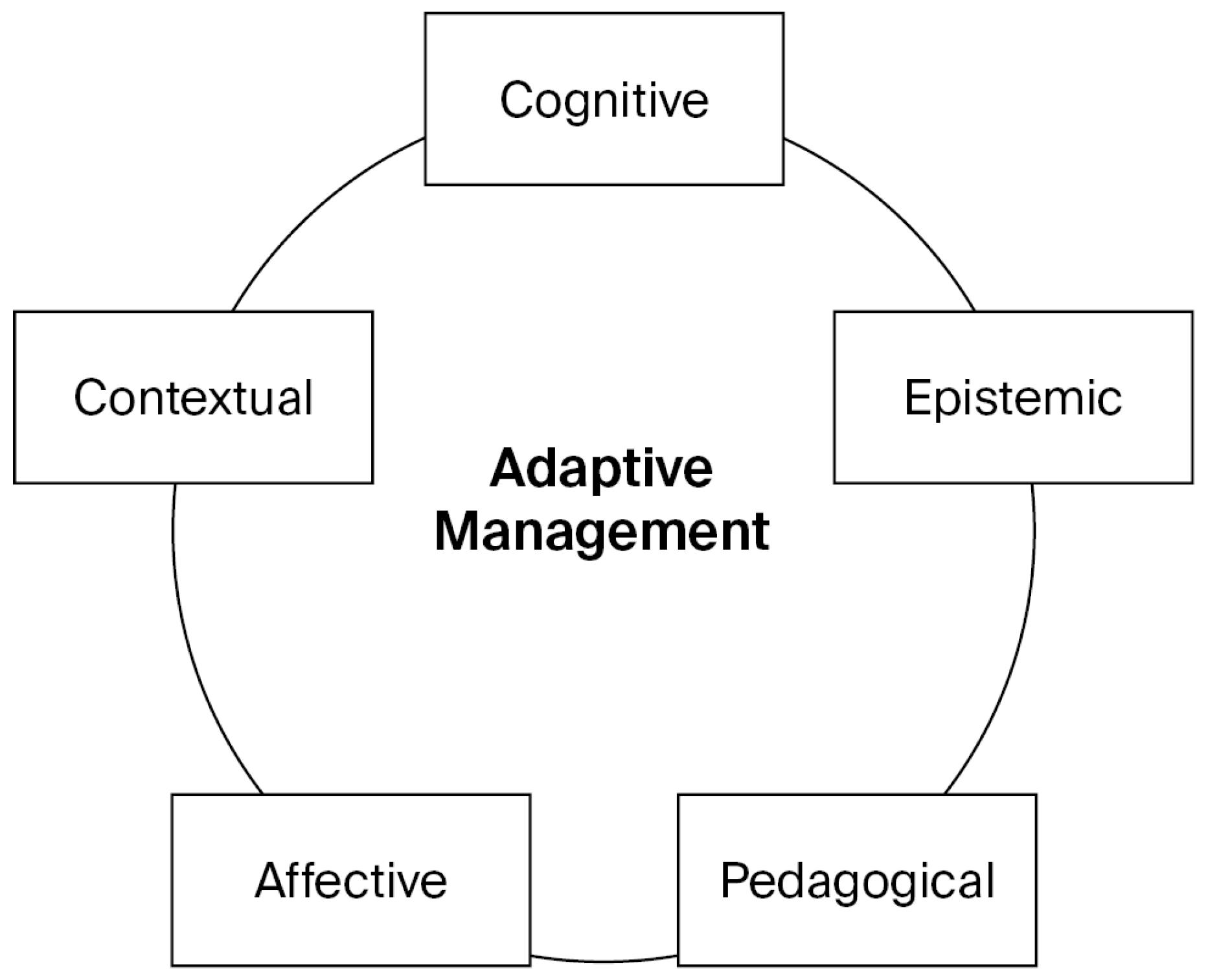
Disclaimer/Publisher’s Note: The statements, opinions and data contained in all publications are solely those of the individual author(s) and contributor(s) and not of MDPI and/or the editor(s). MDPI and/or the editor(s) disclaim responsibility for any injury to people or property resulting from any ideas, methods, instructions or products referred to in the content. |
© 2026 by the authors. Licensee MDPI, Basel, Switzerland. This article is an open access article distributed under the terms and conditions of the Creative Commons Attribution (CC BY) license.