Article

The Influence of Green Shared Vision on Employee Pro-Environmental Behaviour: The Mediating Role of Green Intrinsic Motivation and Green Mindfulness


by
Silvia Puiu
1,*,
Sıdıka Ece Yılmaz
2 and
Mihaela Tinca Udristioiu
3,*
1
Department of Management, Marketing and Business Administration, Faculty of Economics and Business Administration, University of Craiova, 200585 Craiova, Romania
2
Faculty of Economics, Administrative and Social Sciences/Tourism Management, Adana Alparslan Türkeş Science and Technology University, 01250 Adana, Türkiye
3
Department of Physics, Faculty of Sciences, University of Craiova, 200585 Craiova, Romania
*
Authors to whom correspondence should be addressed.
Sustainability 2026, 18(3), 1368; https://doi.org/10.3390/su18031368
Submission received: 21 December 2025 / Revised: 26 January 2026 / Accepted: 27 January 2026 / Published: 29 January 2026

Abstract

The study investigates the impact of green shared vision and green intrinsic motivation on pro-environmental behaviour in the workplace, utilising Self-Determination Theory and Social Cognitive Theory. Despite the acknowledgement of a green shared vision as a vital organisational factor for sustainability, there is a lack of empirical studies that explain the psychological mechanisms that promote employees’ pro-environmental behaviour. This study investigated a parallel mediation model where green mindfulness and green intrinsic motivation successively mediated the correlations. Data were collected via an online survey from 154 full-time employees working in the private sector in Romania across diverse industries between October 2024 and March 2025. The hypotheses of the study were tested by using partial least squares structural equation modelling (PLS-SEM). The results demonstrate that a green shared vision significantly affects workplace pro-environmental behaviour. Additionally, the study indicates a notable parallel mediation effect: a green shared vision promotes green mindfulness, which, in turn, fosters green intrinsic motivation, ultimately resulting in enhanced pro-environmental behaviour. The study underlines the significance of shared vision, mindfulness, and intrinsic motivation as fundamental behavioural processes supporting sustainability-oriented actions by organisations, based on insights from environmental psychology and organisational behaviour.

1. Introduction

Global sustainability challenges, including climate change, resource shortages, and environmental degradation, call for organisations to optimise their environmental responsibilities. The attainment of environmental sustainability objectives for organisations depends mainly on employees demonstrating environmentally friendly behaviours [1]. Sustainability and environmental consciousness are primary strategic considerations for contemporary organisations and have been recognised as crucial for achieving competitive advantage [2]. Organisations need to promote pro-environmental behaviours (PEB) among employees to achieve their environmental sustainability goals in the contemporary business landscape. PEB includes voluntary environmental initiatives by individuals that promote organisational sustainability [3]. Accordingly, identifying the organisational and individual factors that impact employees’ environmentally friendly attitudes and behaviours has emerged as a significant research topic.
The promotion of employees’ PEB through the establishment of a green shared vision by organisations has prompted significant interest in sustainability management and organisational behaviour [4,5,6]. A shared green vision emphasises to employees the value of sustainable objectives and the means to attain them [4]. Nonetheless, the extent to which employees accept this vision and adopt PEB could be contingent upon their intrinsic motivation. Intrinsic motivation refers to an individual’s internal drive to engage in a particular task without the expectation of external rewards [7]. Employees with higher green intrinsic motivation are more inclined to engage in environmentally friendly behaviours because of the immediate environmental benefits [8]. Moreover, individuals’ mindfulness about environmental challenges may contribute to this process. Green mindfulness may help convert intrinsic motivation into behaviour by increasing individuals’ awareness of their environmental impact [9].
According to Social Cognitive Theory (SCT) and Self-Determination Theory (SDT), fostering intrinsic motivation among employees, aligned with the organisation’s sustainability objectives, is vital for the adoption of environmentally friendly behaviours [10,11]. A shared green vision can enhance sustainability efforts by shaping employees’ perspectives, understanding, and self-regulatory mechanisms related to environmental accountability.
A review of the current literature reveals that the impact of a green shared vision on employees’ PEB is primarily examined through direct relationships [12], while the specific psychological mechanisms that promote this relationship remain inadequately clarified. Furthermore, recent studies often investigate green shared vision and green intrinsic motivation as distinct research topics. Green shared vision has mainly been examined regarding organisational-level consequences, involving green organisational citizenship behaviour and green innovation [13], while green intrinsic motivation has been mostly investigated as a motivational mechanism explaining employees’ green creativity and PEB [14]. Nevertheless, empirical research that integrates these constructs into a cohesive framework is lacking. To the best of the authors’ knowledge, no previous study has integrated green mindfulness and green intrinsic motivation into a unified parallel mediation framework to illustrate how a green shared vision simultaneously engages cognitive and motivational processes that promote employees’ PEB.
This study examines the effect of a green shared vision on employees’ PEB by investigating the parallel mediation effects of green mindfulness and green intrinsic motivation. It posits that a green shared vision affects employees’ PEB through two distinct yet complementary psychological mechanisms: (i) green mindfulness, which increases employees’ awareness of environmental impacts, and (ii) green intrinsic motivation, which creates environmentally aware behaviours that are intrinsically significant. The study examines how an organisational sustainability vision is translated into behaviour through individual cognitive and motivational processes, employing a parallel mediation model.
The study contributes theoretically by integrating SDT and SCT into the sustainability literature and by offering a more comprehensive understanding of the behavioural mechanisms by which a green shared vision promotes employees’ PEB. The findings offer practical insights for managers aiming at developing sustainability-oriented behaviours by simultaneously increasing employees’ environmental awareness and intrinsic motivation.

2. Literature Review

2.1. Green Shared Vision and Workplace Pro-Environmental Behaviour

The collective vision established within the organisation, aimed at sustainable and environmental development, is regarded as the green shared vision. The shared green vision provides appropriate guidance for the organisation’s employees to address concerns and perform work-related duties [15]. Within the framework of SCT, integrating employees with the organisational vision and cultivating a shared perspective on environmental sustainability can facilitate PEB through social learning mechanisms [16]. An explicit environmental vision established by the organisation can directly influence WPEB by enhancing employee engagement in environmental activities. PEB encompasses a wide variety of environmentally responsible initiatives, including enhancing environmental awareness, formulating and implementing strategies to reduce the organisation’s adverse environmental impact, improving sustainable processes and products, promoting recycling and reuse, and assessing actions that damage the environment [17]. Practical examples of PEB in the workplace include minimising energy use, double-sided printing, conserving water, using stairs, taking public transportation, and proposing recommendations to management to formulate sustainable strategies [18]. Employee participation in PEB enhances organisational sustainability activities and protects the natural environment [19]. Afsar (2020) indicated that green shared vision has a positive impact on PEB (β = 0.622, p < 0.05) [5]. Another study by Aghaei, Aghaee, and Shahriari (2024) also demonstrated that a shared green vision positively influences voluntary employee green behaviour (β = 0.279, p < 0.01) [6]. Incorporating a green vision into the organisation’s macro strategies and communicating it to each member can promote voluntary, environmentally friendly employee behaviour. From the SCT perspective, a well-defined environmental vision within an organisation acts as a behavioural reference point for employees, encouraging the adoption of environmentally friendly behaviours through observation and modelling [16]. A shared green vision is anticipated to affect PEB in the workplace. Accordingly, the following hypothesis is proposed:
H1. 
Green shared vision positively affects workplace pro-environmental behaviour.

2.2. Green Shared Vision, Green Mindfulness, and Green Intrinsic Motivation

A shared green vision fosters an overall comprehension of environmental objectives among employees [15], while green intrinsic motivation facilitates adoption of environmentally friendly behaviours [10]. Intrinsic motivation describes a condition of love and passion that compels individuals to be involved in activities, irrespective of extrinsic incentives or rewards [19]. It represents the innate desire to pursue novelty and challenges, to further develop and utilise one’s capabilities, to discover, and to acquire knowledge [7]. In such cases, green mindfulness can serve as an instrumental psychological mechanism that connects organisational environmental cues with employees’ motivational states. Green mindfulness describes being open to different viewpoints, concentrating on the present moment, paying attention to operational details, and being interested in investigating and understanding failures [20]. It demonstrates individuals’ intentional and present-oriented contemplation of sustainability objectives and practices. Unlike general mindfulness, green mindfulness explicitly highlights employees’ deliberate focus on environmental sustainability [20,21]. SDT and SCT indicate that employees’ motivations are influenced by the environment of the organisation and leadership practices [10,16]. SDT posits that employees’ intrinsic motivation can be accelerated by the support and autonomy given by their environment [22]. SCT contends that individuals cultivate environmental behaviours through observations of their social setting [11]. According to SCT, green mindfulness helps employees observe, comprehend, and consider environmental cues from the organisation, thus converting a common green vision into individually relevant sustainability-focused perspectives [16,21]. A shared green vision could give employees direction and meaning, promote the integration of environmentally friendly behaviours, enhance intrinsic motivation for sustainability, and encourage employee contributions to sustainability objectives. Enhancing employees’ awareness and enthusiasm for environmental objectives may foster a shared green vision that, over time, promotes green mindfulness, supports the adoption of sustainability values, and reinforces intrinsic motivation for PEB. A green shared vision enables employees to receive organisational guidance while enhancing their cognitive awareness of environmental concerns. SCT argues that this knowledge develops environmental mindfulness by allowing employees to perceive and comprehend organisational ecological cues. From the perspective of SDT, this understanding supports the internalisation of environmentally friendly behaviours, establishing the foundation for intrinsic motivation towards sustainable practices [16,22]. Adopting environmental strategies and communicating them effectively to employees helps to improve individuals’ intrinsic motivation for environmentally responsible behaviours. However, this subject has received limited empirical attention in the literature. Based on SCT and SDT, the following hypothesis was formed:
H2. 
Green shared vision positively and directly affects green mindfulness (H2a) and indirectly, through the mediation of green mindfulness, affects green intrinsic motivation (H2b).

2.3. Green Intrinsic Motivation and Workplace Pro-Environmental Behaviour

The likelihood that employees will demonstrate sustainable behaviours is closely linked to their levels of intrinsic motivation. SDT argues that individuals perceive their desire to engage in specific behaviours as intrinsic or extrinsic [10]. According to SDT, individuals engage in environmentally friendly behaviours voluntarily when these actions align with their intrinsic values. Thus, green intrinsic motivation can be considered a principal factor promoting PEB at the workplace [22]. Intrinsic motivation is characterised by an individual’s engagement in endeavours that align with their internal interests and values, and this motivation can promote sustainable behaviours in the workplace [23]. Green intrinsic motivation emphasises employees’ participation in sustainable practices that align with their beliefs and enhance their sense of satisfaction [8]. Within the SCT framework, employees’ environmentally friendly behaviours are influenced by personal motivation, organisational support, and environmental feedback. Consequently, individuals having higher intrinsic green motivation are more inclined to demonstrate PEB at the workplace [11]. A study by Faraz et al. [8] discovered a positive correlation between employee PEB and green intrinsic motivation, even though the concepts of PEB and green intrinsic motivation have only been briefly examined in the literature (β = 0.531, f2 = 0.339, t-value = 5.950). This indicates that employees with higher green intrinsic motivation are more likely to engage freely in environmentally friendly behaviours. Based on these findings and the theoretical framework, the subsequent hypothesis was proposed:
H3. 
Green intrinsic motivation positively affects workplace pro-environmental behaviour.

2.4. Green Mindfulness and Green Intrinsic Motivation

Mindfulness enables individuals to actively examine the current period, develop environmentally sensitive reactions, and strengthen motivation to adopt environmentally friendly behaviours [9]. Khamdamov, Tang, and Hussain (2023) [24] found that green mindfulness moderates the positive correlation between Green Human Resource Management (GHRM) practices and intrinsic motivation. The study indicated that GHRM practices positively influence intrinsic motivation when green mindfulness is high (β = 0.86, p < 0.01), in contrast with low green mindfulness (β = 0.36, ns). The findings indicate that green mindfulness enhances the positive correlation between GHRM practices and intrinsic motivation [24]. These findings show that green mindfulness can significantly impact the transformation of individuals’ intrinsic motivation into sustainable behaviours. Individuals demonstrate greater attention to environmental sustainability and engage in sustainable behaviour when their consciousness of green issues increases [25]. Furthermore, intrinsic motivation significantly increases the likelihood that individuals will exhibit environmentally friendly behaviour [26]. Individuals practising mindfulness are more likely to experience pleasant emotions and adapt to current circumstances by setting rational goals, thereby engaging in more environmentally sustainable actions. Green mindfulness empowers employees to intentionally and attentively address environmental concerns, ultimately aligning these behaviours with their personal beliefs. Within the context of SDT, this cognitive awareness strengthens employees’ intrinsic motivation for environmentally friendly behaviours [10,22]. Accordingly, the following hypothesis was proposed:
H4. 
Green mindfulness directly and positively affects green intrinsic motivation.

2.5. Mediating Effects

Establishing a shared green vision is an important way to advance sustainability within organisations. However, the influence of this vision on employees’ PEB might not be visible immediately but rather operate through specific psychological mechanisms. In this setting, it is proposed that green intrinsic motivation could be considered critical. Green intrinsic motivation, driven by a sense of autonomy and self-determination in exhibiting PEB, cultivates affection and enthusiasm for the environment [27]. SDT presumes that individuals’ intrinsic drive is influenced by supporting environmental factors, which, in turn, foster sustainable behaviour [28]. When employees acknowledge a robust environmental vision within the organisation, they are likely to invest in intrinsic motivation for sustainability [29]. This intrinsic motivation can improve PEB by prompting employees to engage willingly in environmental actions. Furthermore, according to SCT, a fundamental factor determining employees’ PEB is their assimilation of perceived organisational goals. When employees are aware of their organisation’s commitment to environmental sustainability, they can enhance their PEB by transforming these principles into intrinsic motivation [11]. Previous literature has shown that intrinsic motivation mediates the relationships between green mindfulness and green organisational citizenship behaviour [30] and between green servant leadership and employees’ PEB [8]. A prior study by Zhao et al. [14] utilising SDT examined the mediating role of green intrinsic motivation in the relationship between green mindfulness and green creative behaviour, thereby enhancing frontline managers’ ability to think creatively and act sustainably. The research confirmed that green intrinsic motivation partially mediates the relationship between green mindfulness and green creative behaviour (β = 0.294, 95% BCCI [0.235, 0.370]). Nevertheless, little research has been identified that explicitly examines the mediating function of green intrinsic motivation in the correlation between green shared vision and PEB. This study addresses a significant theoretical gap by exploring the relationship between organisational sustainability policies and employee motivations. This study proposes that the impact of a green shared vision on PEB in the workplace depends on employees’ psychological mechanisms. SCT posits that an organisational green vision translates into individual perceptions through green mindfulness, whilst SDT maintains that these perceptions are translated into behaviour through green intrinsic motivation. It is argued that green mindfulness and green intrinsic motivation perform parallel and complementary mediation functions [10,16,22]. Accordingly, the following hypotheses were proposed:
H5. 
Green intrinsic motivation mediates the relationship between green mindfulness and workplace pro-environmental behaviour by translating employees’ environmental awareness into voluntary pro-environmental actions.
H6. 
Green intrinsic motivation and green mindfulness mediate the relationship between green shared vision and workplace pro-environmental behaviour.

3. Method

3.1. Participants and Procedure

The research methodology we used was partial least squares structural equation modelling (PLS-SEM) with SmartPLS, version 4.1.1.4 [31]. The model is presented in Figure 1 and consists of four constructs (green shared vision—GSV; green mindfulness—GM; green intrinsic motivation—GIM; and workplace pro-environmental behaviour—WPEB), which are detailed in Table 1, where we can see the items for each construct and the codes we used.
We used a non-probability sampling strategy. Participants were recruited through the human resources departments of private-sector organisations in Romania that voluntarily agreed to support the research. The sample comprised full-time employees working in the Romanian private sector across a wide range of industries, including services, finance, marketing, engineering, manufacturing, and education. The survey was conducted in Google Forms, was anonymous, and each respondent was presented with informed consent, being able to withdraw at any time. The survey link was sent to employees between October 2024 and March 2025. We preferred collecting responses online to ensure higher coverage and greater honesty, given the anonymity. We received 154 valid questionnaires. We checked for missing data, and none were identified. The questions in the scales were translated by bilingual Romanian academics to ensure content validity.
The sample structure is presented in Table 2. Most respondents are female, between 45 and 54 years old, and have more than 21 years of work experience. PLS-SEM via SmartPLS is specifically adjusted to small samples in comparison with other methods, so we focused on having a minimum of 150 employees in order to not affect the statistical power of the model. We determined the VIF values (Table 3) and used an Exploratory factor analysis (EFA) to assess common bias (Table 4). The VIF values are below the threshold of 10 (most are below 5), and the EFA, combined with the VIF values, does not indicate any significant bias or multicollinearity issues. Thus, common method bias is not a threat to the validity of the data in our model.

3.2. Measurement Variables

Four measurement variables were included to evaluate the research model. The following section explains the details regarding these variables. The study employed a 5-point Likert scale for all constructs, with 1 indicating strong disagreement and 5 indicating strong agreement. The green shared vision was measured by using the four-item scale developed by Chen et al. [4]. The reliability of the scale was 0.897. To measure green intrinsic motivation, a six-item scale developed by Li et al. [27] was used in the study. The reliability for the green intrinsic motivation construct is 0.865. The Green Mindfulness Scale, adapted from Chen et al. (2015) [4], was used as a six-item scale. The reliability value for green mindfulness is 0.910. WPEB was measured by using a seven-item scale developed by Robertson and Barling [18].

4. Results

We determined the outer loadings and variance inflation factors (VIFs) to assess the reliability and collinearity among the items. The results are presented in Table 3. Items with outer loading greater than 0.7 have high reliability [32,33,34], and those between 0.6 and 0.7 have acceptable reliability [32,35]. We decided to remove the only item with outer loading below the acceptable reliability level (WPEB1). The rule of thumb for VIF values is not to exceed 10, which may indicate a serious problem with collinearity [36]. Most of the VIF values in our model are below 5, but some are between 5 and 7, still well below the threshold of 10.
In Table 4, we conducted an EFA to assess single-source bias and to identify any overlap among items in the model. We used JASP Version 0.19.3 (2024) software [37] to determine the variance for the single factor, which is 35.4%. This shows that common bias is not a concern in our proposed research model.
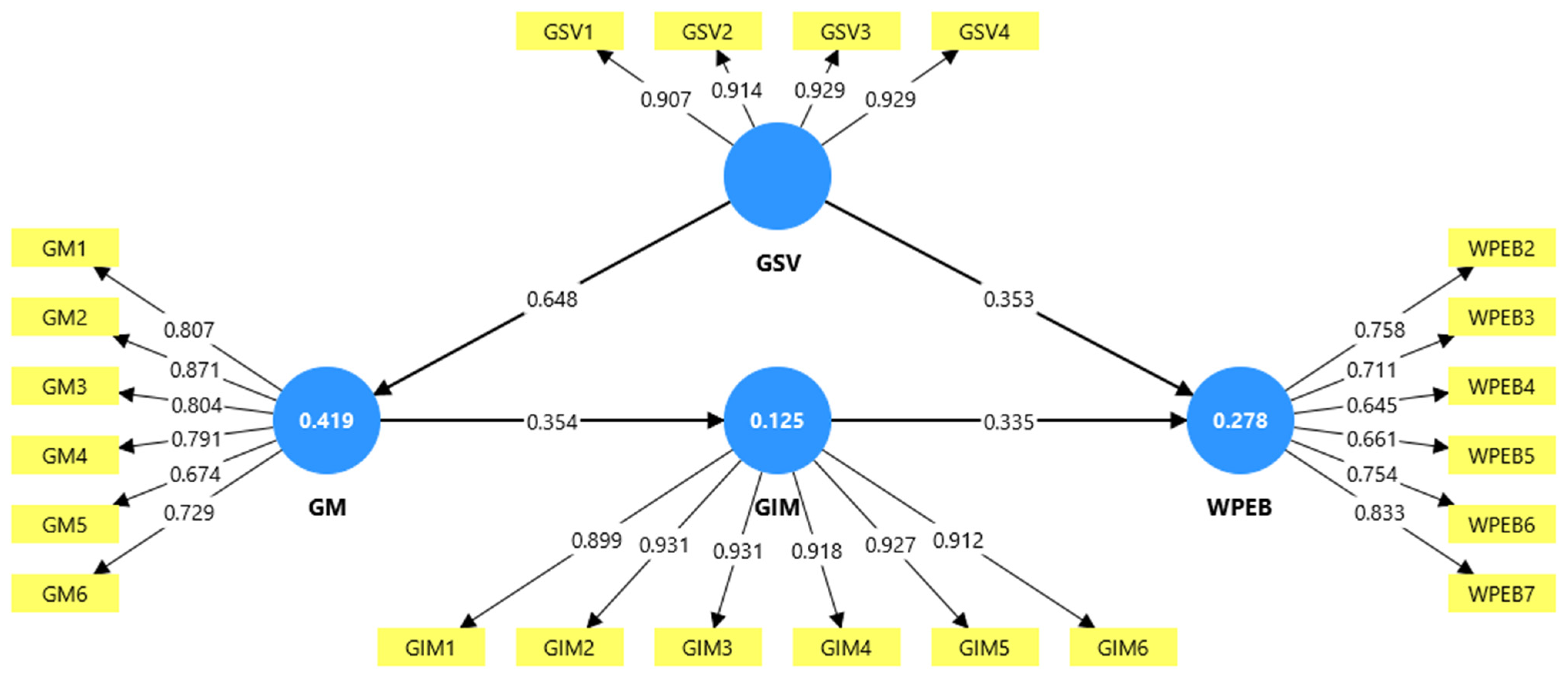
The research model, after removing WPEB1, is presented in Figure 2. The strongest influence is from GSV to GM (0.648). A total of 41.9% of GM variance is explained by the influence of GSV, and 27.8% of the WPEB variance is explained by the influence of both GSV and GIM.
The descriptive statistics for the items kept in the model are detailed in Table 5. For each item, we determined the mean, standard deviation, skewness, and kurtosis. All items except one (WPEB5) are within the normal range for skewness (−2 to 2), but it is only slightly left-skewed. Given the low VIF (below 2) and the acceptable outer loading (close to 0.7), the item does not pose a problem. PLS-SEM is considered robust to non-normality [38]. As a rule of thumb for SEM, Hair et al. [36] suggest that kurtosis should be between −7 and 7. With outer loadings and VIF values within acceptable ranges, the items ensure the robustness of the model.
The model fit is determined by SRMR, which is 0.078, which is below 0.08, the value considered a good fit for a model by Hu and Bentler [39]. Construct reliability and validity of the model are presented in Table 6. Cronbach’s alpha and composite reliability are above 0.7, and the AVE is above 0.5, indicating high reliability, validity, and consistency of the model [34,40,41].
The discriminant validity of the model is assessed with the Fornell–Larcker criterion. The main diagonal in Table 7 shows that the values are the highest in their columns, indicating the heterogeneity of the constructs in the model and its discriminant validity.
To test the validity of the hypotheses, we used the bootstrap test in SmartPLS. The results are in Table 8. All t-values are above 1.96 and p-values below 0.05, with the confidence intervals not including the zero value. These show that all hypotheses were validated. We also measured the effect size (f2) to assess the strength of the effect between variables in the model (Table 9). We observe a strong effect between GSV and GM (0.722), a medium effect between GIM and WPEB, and a medium effect between GSV and WPEB (all with values above 0.15). The effect of GM GIM is not so strong, but it is still meaningful (0.143).

5. Discussion

The first hypothesis, that green shared vision directly and positively affects the WPEB, is supported (t = 6.328; p = 0.000). This shows that the employees are more inclined to adopt eco-friendly behaviours at work when they feel that the organisation treats them as valuable members who share common values and principles regarding sustainability and the green direction of the company. This finding is in accordance with the results of other authors [5,6,8,15,17,18]. This illustrates that a shared green vision acts not merely as a communication instrument but also as a behavioural baseline for employees. From the SCT perspective, employees perceive the organisation’s environmental objectives, adopt these behaviours, and incorporate them into their daily work practices without requiring supplementary psychological mechanisms.
The second hypothesis is also validated (H2a and H2b). H2a (t = 12.740; p = 0.000) shows the direct influence of green shared vision on green mindfulness, and H2b (t = 3.026; p = 0.002) shows that green mindfulness mediates the relationship between green shared vision and the green intrinsic motivation, which is in accordance with the findings of other authors [4,10,11,16,19,22]. This shows that mindful employees who pay attention to the impact of their actions on the environment are influenced by an organisational culture that promotes sharing green principles with all employees. The strong result between green shared vision and green mindfulness, in contrast to other relationships, demonstrates that green vision increases employees’ cognitive awareness. A shared green vision shapes employees’ perceptions, interpretations, and understanding of environmental cues, establishing green awareness as a primary trigger mechanism. This coincides with SCT’s social learning and cognitive evaluation methodologies [16].
The third hypothesis, according to which green intrinsic motivation positively and directly influences the WPEB, is validated (t = 3.669, p = 0.000). This result is in accordance with other studies in the literature [8,10,11,18]. Thus, employees who are intrinsically motivated and perceive sustainability and the environment as important are more likely to act more eco-friendly at work. This highlights the crucial role of intrinsic motivation for the persistence of environmental behaviours from the SDT perspective. When employees engage in environmentally friendly behaviours that align with their personal values, rather than as a result of external pressure or anticipated rewards, these behaviours become more stable.
The fourth hypothesis is validated (t = 3.100, p = 0.002), indicating a direct influence of green mindfulness on employees’ green intrinsic motivation. Their mindfulness leads to intrinsic motivation because employees are focused on values and principles that support the environment and internalise them into their own system of values, which serves as a driving force behind their behaviours. As shown by H2b, green mindfulness acts as a mediator. The indirect effect is lower (0.234) than the direct effect between these variables (0.360). This finding is in accordance with other papers in the literature [9,14,25,26]. This indicates that green mindfulness is not solely a cognitive awareness but also performs a transforming function in developing motivation. SCT defines the emergence of this mental state, whereas SDT outlines the reasons for its evolution into intrinsic motivation.
The fifth hypothesis (t = 2.128, p = 0.033) was validated, showing that green intrinsic motivation mediates the relationship between the green mindfulness of the employees and their WPEB. This is in accordance with other findings in the literature [8,11,14,18,29,30]. The sixth hypothesis (t = 2.094, p = 0.036) is also validated as a parallel mediation in which both green mindfulness and green intrinsic motivation act as mediators between green shared vision and WPEB. This finding shows that the source of employees’ eco-friendly behaviour is represented by the support offered by the organisation [28]. This support refers to an organisational culture that encourages people to manifest these behaviours by promoting specific values aligned with a green orientation. This finding shows that an organisational green vision shapes employee behaviour both directly and indirectly. Nonetheless, the indirect effect underscores the fact that it is insufficient for employees to merely understand what needs to be done. It is equally essential that they internalise this knowledge through awareness and inner drive.
The direct effect of the green shared vision expressed in H1 is stronger (0.438) than the indirect effect through the parallel mediation of green mindfulness and green intrinsic motivation in H6 (0.081). This shows that the mediation is only partial, even if it is statistically significant. This partial mediation delivers a significant message from an organisational standpoint. A shared green vision is an effective mechanism for promoting sustainable behaviours for employees. But for these behaviours to become permanent and voluntary, they require the simultaneous development of employees’ green mindfulness and intrinsic motivation. Consequently, for organisations pursuing sustainability, merely formulating a vision is insufficient. It is imperative to formulate strategies that enable this vision to be actively embraced by employees.

6. Conclusions

The present research focused on the impact of the organisational green shared vision on employees’ WPEB. At the same time, this direct relationship is partially mediated by green mindfulness and green intrinsic motivation. These findings are helpful for managers who tailor human resources strategies. They should consider that employees are more willing to adopt eco-friendly behaviours at work if they feel they are valuable members of the company. They pay closer attention (are more mindful) and are more motivated to act sustainably when their personal values align with the company’s environmental values and a shared vision.
This study posits that the green revolution and environmental protection can be achieved not merely through macro policies or technological innovations, but rather through the collective impact of micro-level behaviours within an organisation. Green shared vision converts environmental objectives into a collective, meaningful framework for employees, establishing environmental responsibility as a common standard rather than a personal decision. Green mindfulness incorporates environmental awareness into everyday decisions by enabling employees to recognise the ecological impacts of their daily tasks. This awareness, fostered by intrinsic green motivation, helps employees to sustain ecologically responsible behaviours autonomously, without external pressure. Thus, employees’ PEB directly facilitates the execution of the green revolution within organisations by reducing resource consumption, minimising negative environmental impacts, and promoting the widespread implementation of sustainable practices.
Consequently, this study illustrates that employees’ PEB constitute a vital micro-foundation for executing green transformation within organisations. This integrated explanatory framework shows how environmentally friendly behaviours are influenced not only by intention or conformity but also by sustainable cognitive and motivational processes, specifically through the variables of green shared vision, green mindfulness, and green intrinsic motivation, within actual organisational settings. This study significantly contributes to the literature by highlighting that the green revolution is not merely a structural, political, or technological matter, but also a transformative process that involves employee behaviour and motivation.

6.1. Theoretical Implications

This study provides substantial theoretical contributions to the field on elucidating WPEB. Initially, it illustrates that the green shared vision exceeds a simple contextual organisational factor, functioning instead as a basic higher-order cognitive and normative mechanism that affects employees’ environmental behaviour.
Furthermore, the results clearly demonstrate the theoretical significance of integrating SDT with SCT. Green shared values enhance green intrinsic motivation through green mindfulness, leading to increased WPEB, suggesting that environmental behaviours are influenced not only by values or norms but also by the interaction between cognitive awareness and intrinsic motivation. This result offers compelling evidence that the constructs of awareness and motivation, frequently examined in isolation within sustainability discussions, can be conceptualised as a sequential and cohesive system.
The research also enhances Sustainability Vision Theory (SVT) by bringing SVT from the organisational level to the individual behaviour level, which enhances the explanatory capacity of the theory. Kantabutra’s approach, which regards sustainability vision as a strategic instrument that generates performance and sustainable outcomes through organisational values and long-term orientations [42], has been integrated with the cognitive and motivational processes of employees in this study. The findings reveal that a sustainability vision serves as both a guiding principle and a catalyst for tangible, environmentally friendly behaviours by fostering environmental awareness among employees and converting this awareness into intrinsic motivation. Consequently, the study responds to Vongariyajit and Kantabutra’s request for the practical functioning of SVT [43], elucidating the psychological mechanisms that clarify the effectiveness of the vision and reinforcing the micro-foundations of SVT.
Moreover, the study’s results regarding serial mediation address a significant gap in the literature. This illustrates that a shared environmental vision at the organisational level can be translated into individual behaviour by initially establishing a cognitive framework (mindfulness) and then a motivational resource (intrinsic motivation). This framework emphasises the need to go beyond static attitude models to explain environmental behaviours and to incorporate dynamic psychological processes.
Additionally, the significance of green mindfulness in the interplay between GSV and GIM strengthens the mindfulness literature concerning environmental sustainability. The result theoretically positions mindfulness not merely as confined to personal well-being or stress reduction, but also as a catalyst for environmental meaning-making and intrinsic motivation.
This study addresses the claim that PEB among employees may be merely symbolic in real-life organisation contexts. The findings suggest that a green shared vision, facilitated by green mindfulness, allows employees to cultivate cognitive awareness of environmental concerns, thereby increasing their intrinsic motivation for green initiatives. This sequential mechanism implies that employees’ PEB are influenced not only by intention or attitude but also by internalised motivational and cognitive processes. This study’s examination of employee behaviour offers a pragmatic and lasting micro-foundation for the implementation of green evolution in organisations.

6.2. Practical Implications

The study provides tangible, implementable outcomes for organisations and managers in advancing environmental sustainability. The findings indicate that organisations must convey their environmental objectives not only through policies and procedures, but also through a collectively embraced green vision adopted by employees. A clear environmental vision continuously articulated by senior management, embedded in daily operations, and symbolically endorsed can directly enhance employees’ PEB [44,45,46,47,48].
Secondly, the findings suggest that merely requiring environmentally friendly behaviours is inadequate; instead, organisational policies that improve employees’ green mindfulness are crucial. Employees can acquire an understanding of environmental implications via training programmes, workshops, and workplace practices. Practices that highlight the environmental impacts of standard work operations can enhance employees’ green mindfulness.
Thirdly, the findings underscore the considerable impact of green intrinsic motivation on WPEB. This reinforces the need for human resource policies that foster in employees a sense of environmental behaviours as important, valuable, and personally fulfilling, rather than relying on extrinsic motivation systems focused on rewards and punishments. Leadership that supports autonomy, promotes environmentally sustainable initiatives to engage employees, and acknowledges ecological efforts can enhance intrinsic motivation.
The study’s sequential mediation results demonstrate that sustainability measures must be multifaceted. An effective environmental strategy requires a comprehensive approach that integrates a shared vision, cognitive awareness, and intrinsic motivation. Therefore, organisations must develop consistent communication, training, and motivating systems to enhance environmental sustainability.
The findings indicate that green evolution cannot be achieved solely through technology investments, environmental legislation, or top-down sustainability measures. Green efforts may remain superficial or rapidly lose effectiveness if employees fail to develop environmental knowledge and do not perceive eco-friendly behaviours as inherently valuable. Consequently, employee behaviour must be regarded as a prerequisite rather than a supplementary component of the green transition process. Organisations that promote employees’ cognitive awareness and intrinsic motivation by establishing a shared green vision may ensure the sustainability of environmental practices in actual working settings.

6.3. Limitations and Future Research

Among the limitations of our study, we can mention the sample, which is limited to Romanian employees. Also, women were more likely to respond to the survey, so some gender differences may not be clear here. To cover more regions of the country and various organisations, we used an online survey, which typically yields lower response rates. Considering these limits, we intend, in the future, to focus our study on specific sectors to assess differences among them and to consider other approaches for building the sample. Collaborations with researchers in other countries will help us understand whether there are cultural differences in how organisations share their green vision and how these differences influence workplace eco-friendly behaviours. Despite these limitations, we appreciate that our study, which focused on one country, can be helpful to other researchers who want to replicate it in their own countries, thereby contributing to the body of research on this topic.
This study offers a clear research agenda for subsequent investigations. Initially, future studies may expand upon the results of this study to further evaluate SVT in other contextual and organisational environments. The study might specifically investigate if the effects of a green shared vision change across sectors, for contrasting manufacturing sectors with significant environmental impact versus service or technology sectors, through multigroup analyses. Secondly, longitudinal research designs could be implemented to assess the influence of sustainability vision on employees’ cognitive awareness, motivation, and PEB over time. Finally, new studies should extend beyond self-reported indicators and employ objective behavioural data, such as energy usage, waste reduction, or management assessments, to more effectively demonstrate how sustainability vision translates into tangible behavioural consequences.

Author Contributions

Conceptualisation, S.E.Y.; methodology, S.P. and S.E.Y.; validation, S.P.; formal analysis, S.P. and M.T.U.; investigation, S.P. and M.T.U.; writing—original draft preparation, S.P., M.T.U. and S.E.Y.; writing—review and editing, S.P., M.T.U. and S.E.Y.; visualisation, S.P.; supervision, S.P. and M.T.U. All authors have read and agreed to the published version of the manuscript.

Funding

This research was funded by the University of Craiova.

Institutional Review Board Statement

The study was conducted in accordance with the Declaration of Helsinki, and approved by the Ethics Committee at the University of Craiova, Romania (No. 5084, 16 September 2024).

Informed Consent Statement

Informed consent was obtained from all subjects involved in the study.

Data Availability Statement

The original contributions presented in this study are included in the article. Further inquiries can be directed to the corresponding author.

Acknowledgments

Support from the Fulbright Commission, provided through a Fulbright Research Scholar Grant for one of the authors of this study, is gratefully acknowledged.

Conflicts of Interest

The authors declare no conflicts of interest.

References

  1. Ones, D.S.; Dilchert, S. Environmental sustainability at work: A call to action. Ind. Organ. Psychol. 2012, 5, 444–466. [Google Scholar] [CrossRef]
  2. Dangelico, R.M.; Pujari, D. Mainstreaming green product innovation: Why and how companies integrate environmental sustainability. J. Bus. Ethics 2010, 95, 471–486. [Google Scholar] [CrossRef]
  3. Tang, G.; Ren, S.; Wang, M.; Li, Y.; Zhang, S. Employee green behaviour: A review and recommendations for future research. Int. J. Manag. Rev. 2023, 25, 297–317. [Google Scholar] [CrossRef]
  4. Chen, Y.S.; Chang, C.H.; Yeh, S.L.; Cheng, H.I. Green shared vision and green creativity: The mediation roles of green mindfulness and green self-efficacy. Qual. Quant. 2015, 49, 1169–1184. [Google Scholar] [CrossRef]
  5. Afsar, B.; Maqsoom, A.; Shahjehan, A.; Afridi, S.A.; Nawaz, A.; Fazliani, H. Responsible leadership and employee’s proenvironmental behavior: The role of organizational commitment, green shared vision, and internal environmental locus of control. Corp. Soc. Responsib. Environ. Manag. 2020, 27, 297–312. [Google Scholar] [CrossRef]
  6. Aghaei, M.; Aghaee, S.; Shahriari, M. The effect of green vision and green training on voluntary employee green behaviour: The mediating role of green mindfulness. Environ. Dev. Sustain. 2024, 1–17. [Google Scholar] [CrossRef]
  7. Ryan, R.M.; Deci, E.L. Intrinsic and extrinsic motivations: Classic definitions and new directions. Contemp. Educ. Psychol. 2000, 25, 54–67. [Google Scholar] [CrossRef] [PubMed]
  8. Faraz, N.A.; Ahmed, F.; Ying, M.; Mehmood, S.A. The interplay of green servant leadership, self-efficacy, and intrinsic motivation in predicting employees’ pro-environmental behavior. Corp. Soc. Responsib. Environ. Manag. 2021, 28, 1171–1184. [Google Scholar] [CrossRef]
  9. Wamsler, C.; Brink, E. Mindsets for sustainability: Exploring the link between mindfulness and sustainable climate adaptation. Ecol. Econ. 2018, 151, 55–61. [Google Scholar] [CrossRef]
  10. Deci, E.L.; Ryan, R.M. The “what” and “why” of goal pursuits: Human needs and the self-determination of behavior. Psychol. Inq. 2000, 11, 227–268. [Google Scholar] [CrossRef]
  11. Bandura, A. Social cognitive theory: An agentic perspective. Annu. Rev. Psychol. 2001, 52, 1–26. [Google Scholar] [CrossRef]
  12. Latif, B.; Gunarathne, N.; Gaskin, J.; San Ong, T.; Ali, M. Environmental corporate social responsibility and pro-environmental behavior: The effect of green shared vision and personal ties. Resour. Conserv. Recycl. 2022, 186, 106572. [Google Scholar] [CrossRef]
  13. Chang, T.-W.; Chen, F.-F.; Luan, H.-D.; Chen, Y.-S. Effect of Green Organizational Identity, Green Shared Vision, and Organizational Citizenship Behavior for the Environment on Green Product Development Performance. Sustainability 2019, 11, 617. [Google Scholar] [CrossRef]
  14. Zhao, M.; Yao, L.; Ma, R.; Sarmad, M.; Orangzab; Ayub, A.; Jun, Z. How green mindfulness and green shared vision interact to influence green creative behavior. Psychol. Res. Behav. Manag. 2023, 16, 1707–1723. [Google Scholar] [CrossRef] [PubMed]
  15. Chen, Y.S.; Chang, C.H.; Lin, Y.H. The determinants of green radical and incremental innovation performance: Green shared vision, green absorptive capacity, and green organizational ambidexterity. Sustainability 2014, 6, 7787–7806. [Google Scholar] [CrossRef]
  16. Bandura, A. Social Foundations of Thought and Action: A Social Cognitive Theory; Prentice Hall: Englewood Cliffs, NJ, USA, 1986. [Google Scholar]
  17. Graves, L.M.; Sarkis, J.; Zhu, Q. How transformational leadership and employee motivation combine to predict employee proenvironmental behaviors in China. J. Environ. Psychol. 2013, 35, 81–91. [Google Scholar] [CrossRef]
  18. Robertson, J.L.; Barling, J. Greening organizations through leaders’ influence on employees’ pro-environmental behaviors. J. Organ. Behav. 2013, 34, 176–194. [Google Scholar] [CrossRef]
  19. Coccia, M. Comparative incentive systems. In Global Encyclopedia of Public Administration, Public Policy, and Governance; Farazmand, A., Ed.; Springer Nature: Cham, Switzerland, 2019; pp. 1–5. [Google Scholar]
  20. Ho, Y.H.; Wang, C.K.; Lin, C.Y. Antecedents and consequences of green mindfulness: A conceptual model. Int. J. Environ. Res. Public Health 2022, 19, 6367. [Google Scholar] [CrossRef]
  21. Brown, K.W.; Ryan, R.M. The benefits of being present: Mindfulness and its role in psychological well-being. J. Personal. Soc. Psychol. 2003, 84, 822–848. [Google Scholar] [CrossRef]
  22. Ryan, R.M.; Deci, E.L. Research on intrinsic and extrinsic motivation is alive, well, and reshaping 21st-century management approaches: Brief reply to Locke and Schattke. Motiv. Sci. 2019, 5, 291–294. [Google Scholar] [CrossRef]
  23. Deci, E.L.; Olafsen, A.H.; Ryan, R.M. Self-determination theory in work organizations: The state of a science. Annu. Rev. Organ. Psychol. Organ. Behav. 2017, 4, 19–43. [Google Scholar] [CrossRef]
  24. Khamdamov, A.; Tang, Z.; Hussain, M.A. Unpacking parallel mediation processes between green HRM practices and sustainable environmental performance: Evidence from Uzbekistan. Sustainability 2023, 15, 1434. [Google Scholar] [CrossRef]
  25. Barbaro, N.; Pickett, S.M. Mindfully green: Examining the effect of connectedness to nature on the relationship between mindfulness and engagement in pro-environmental behavior. Personal. Individ. Differ. 2016, 93, 137–142. [Google Scholar] [CrossRef]
  26. Afsar, B.; Badir, Y.; Kiani, U.S. Linking spiritual leadership and employee pro-environmental behavior: The influence of workplace spirituality, intrinsic motivation, and environmental passion. J. Environ. Psychol. 2016, 45, 79–88. [Google Scholar] [CrossRef]
  27. Li, W.; Bhutto, T.A.; Xuhui, W.; Maitlo, Q.; Zafar, A.U.; Bhutto, N.A. Unlocking employees’ green creativity: The effects of green transformational leadership, green intrinsic, and extrinsic motivation. J. Clean. Prod. 2020, 255, 120229. [Google Scholar] [CrossRef]
  28. Deci, E.L.; Ryan, R.M. Intrinsic Motivation and Self-Determination in Human Behavior; Springer Science & Business Media: Berlin/Heidelberg, Germany, 2013. [Google Scholar]
  29. Gagné, M.; Deci, E.L. Self-determination theory and work motivation. J. Organ. Behav. 2005, 26, 331–362. [Google Scholar] [CrossRef]
  30. Chen, C.; Rasheed, A.; Ayub, A. Does green mindfulness promote green organizational citizenship behavior: A moderated mediation model. Sustainability 2023, 15, 5012. [Google Scholar] [CrossRef]
  31. Ringle, C.M.; Wende, S.; Becker, J.-M. SmartPLS 4. Bönningstedt: SmartPLS. 2024. Available online: https://www.smartpls.com (accessed on 26 July 2025).
  32. Hulland, J. Use of partial least squares (PLS) in strategic management research: A review of four recent studies. Strateg. Manag. J. 1999, 20, 195–204. [Google Scholar] [CrossRef]
  33. Memon, A.H.; Rahman, I.A. SEM-PLS analysis of inhibiting factors of cost performance for large construction projects in Malaysia: Perspective of clients and consultants. Sci. World J. 2014, 2014, 165158. [Google Scholar] [CrossRef] [PubMed]
  34. Ab Hamid, M.R.; Sami, W.; Sidek, M.M. Discriminant validity assessment: Use of Fornell & Larcker criterion versus HTMT criterion. J. Phys. Conf. Ser. 2017, 890, 012163. [Google Scholar]
  35. Yana, A.G.A.; Rusdhi, H.A.; Wibowo, M.A. Analysis of factors affecting design changes in construction project with Partial Least Square (PLS). Procedia Eng. 2015, 125, 40–45. [Google Scholar] [CrossRef]
  36. Hair, J.F.; Black, W.C.; Babin, B.J.; Anderson, R.E. Multivariate Data Analysis, 7th ed.; Pearson Education: London, UK, 2010. [Google Scholar]
  37. JASP. Version 0.19.3, Computer Software. 2024. Available online: https://jasp-stats.org/ (accessed on 27 July 2025).
  38. Hair, J.F.; Hult, G.T.M.; Ringle, C.M.; Sarstedt, M. A Primer on Partial Least Squares Structural Equation Modeling (PLS-SEM), 2nd ed.; Sage: Riverside County, CA, USA, 2017. [Google Scholar]
  39. Hu, L.T.; Bentler, P.M. Fit indices in covariance structure modeling: Sensitivity to underparameterized model misspecification. Psychol. Methods 1998, 3, 424–453. [Google Scholar] [CrossRef]
  40. Taber, K.S. The use of Cronbach’s alpha when developing and reporting research instruments in science education. Res. Sci. Educ. 2018, 48, 1273–1296. [Google Scholar] [CrossRef]
  41. Hair, J.F., Jr.; Sarstedt, M.; Hopkins, L.; Kuppelwieser, V.G. Partial least squares structural equation modeling (PLS-SEM): An emerging tool in business research. Eur. Bus. Rev. 2014, 26, 106–121. [Google Scholar] [CrossRef]
  42. Kantabutra, S. Toward an organizational theory of sustainability vision. Sustainability 2020, 12, 1125. [Google Scholar] [CrossRef]
  43. Vongariyajit, N.; Kantabutra, S. A Test of the Sustainability Vision Theory: Is It Practical? Sustainability 2021, 13, 7534. [Google Scholar] [CrossRef]
  44. Chew, I.K.H.; Chong, P. Effects of strategic human resource management on strategic vision. Int. J. Hum. Resour. Manag. 1999, 10, 1031–1045. [Google Scholar] [CrossRef]
  45. Foster, R.D.; Akdere, M. Effective organizational vision: Implications for human resource development. Eur. J. Ind. Train. 2007, 31, 100–111. [Google Scholar] [CrossRef]
  46. Laser, J. The importance of vision statements for human resource management–functions of human resource management in creating and leveraging vision statements. SHR Rev. 2021, 20, 145–147. [Google Scholar] [CrossRef]
  47. Park, S.; Kim, E.J. Organizational culture, leaders’ vision of talent, and HR functions on career changers’ commitment: The moderating effect of training in South Korea. Asia Pac. J. Hum. Resour. 2019, 57, 345–368. [Google Scholar] [CrossRef]
  48. Slåtten, T.; Mutonyi, B.R.; Lien, G. Does organizational vision really matter? An empirical examination of factors related to organizational vision integration among hospital employees. BMC Health Serv. Res. 2021, 21, 483. [Google Scholar] [CrossRef] [PubMed]
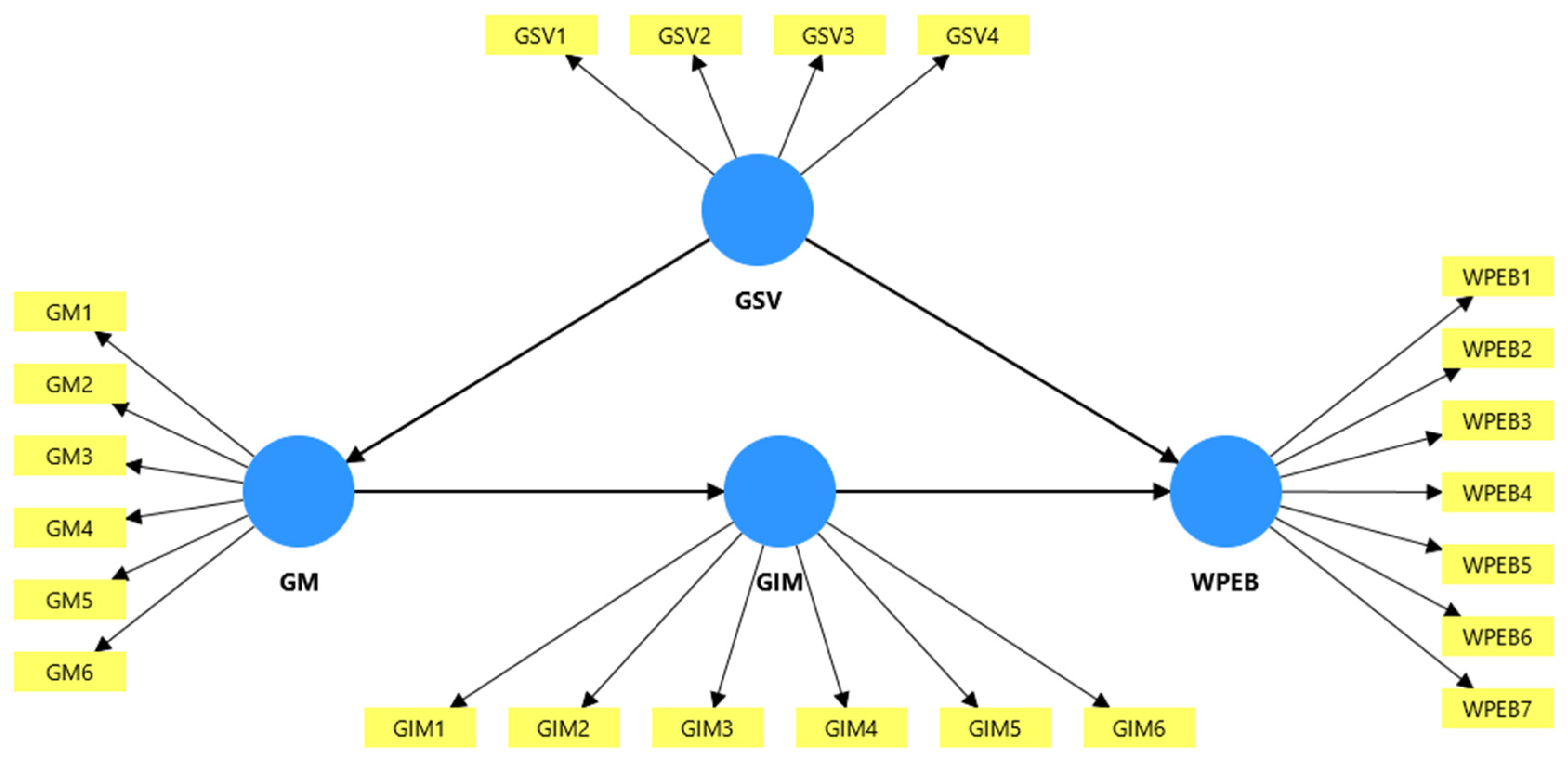
Figure 1. Research model.
Sustainability 18 01368 g001
Figure 2. Path coefficients in the research model after removing outer loading below 0.6.
Sustainability 18 01368 g002
Table 1. The constructs and items in the model.
ConstructsItemsCodesSource of the Scale
Green shared vision (GSV) “A commonality of environmental goals exists in the company.”GSV1[4]
“A total agreement on the strategic environmental direction of the organisation.”GSV2
“All members in the organisation are committed to the environmental strategies.”GSV3
“Employees of the organisation are enthusiastic about the collective environmental mission of the organisation.”GSV4
Green mindfulness (GM)“The members of the green innovation project feel free to discuss environmental issues and problems.”GM1[4]
“The members of the green innovation project are encouraged to express different views with respectGM2
to environmental issues and problems.”GM3
“The members of the green innovation project pay attention to what is happening if unexpected environmental issues and problems arise.”GM4
“The members of the green innovation project are inclined to report environmental information and knowledge that have significant consequences.”GM5
“The members of the green innovation project are rewarded if they share and announce new environmental information and knowledge.”GM6
Green intrinsic motivation (GIM)I enjoy “coming up with new green ideas.”GIM1[27]
I enjoy “trying to solve environmental tasks on the job.”GIM2
I enjoy “tackling with environmental tasks that are completely new.”GIM3
I enjoy “improving existing green ideas at my job.”GIM4
I feel “excited when I have new green ideas.”GIM5
I feel “like becoming further engaged in the development of green ideas.”GIM6
Workplace pro-environmental behaviour (WPEB)“I print double-sided whenever possible.”WPEB1[18]
“I put compostable items in the compost bin.”WPEB2
“I put recyclable material (e.g., cans, paper, bottles, batteries) in the recycling bins.”WPEB3
“I bring reusable eating utensils to work (e.g., travel coffee mug, water bottle, reusable containers, reusable cutlery).”WPEB4
“I turn lights off when not in use.”WPEB5
“I take part in environmentally friendly programmes (e.g., bike/walk to work day, bring your own local lunch day).”WPEB6
“I make suggestions about environmentally friendly practices to managers and/or environmental committees, in an effort to increase my organization’s environmental performance.”WPEB7
Table 2. Sample structure. Descriptive statistics.
FrequencyPercent
GenderFemale10970.8
Male4529.2
Age18–241610.4
25–343019.5
35–443724
45–544931.8
55–642013
65 and over21.3
Work experience (years)Less than a year159.7
1–53623.4
6–103522.7
11–15149.1
16–201610.4
21 and more3824.7
Table 3. The reliability and collinearity of the research model.
CODESOuter LoadingsVIF
GIM1 0.8993.847
GIM2 0.9315.484
GIM3 0.9305.305
GIM4 0.9184.176
GIM5 0.9286.133
GIM6 0.9135.058
GM1 0.8072.966
GM2 0.8713.262
GM3 0.8042.367
GM4 0.7912.382
GM5 0.6741.623
GM6 0.7291.801
GSV1 0.9074.198
GSV2 0.9144.361
GSV3 0.9296.639
GSV4 0.9296.587
WPEB1 0.5141.230
WPEB2 0.7561.769
WPEB3 0.7072.125
WPEB4 0.6431.537
WPEB5 0.6731.932
WPEB6 0.7362.104
WPEB7 0.8182.595
Table 4. EFA and single-factor test.
Unrotated Solution
EigenvaluesSumSq. LoadingsProportion Var.Cumulative
Factor 18.7578.1380.3540.354
Table 5. Descriptive statistics of the items in the model.
CodesMeanStandard
Deviation
SkewnessKurtosis
GIM14.2400.929−1.6373.152
GIM24.2210.850−1.6714.057
GIM34.1560.879−1.4212.852
GIM44.2340.854−1.4913.050
GIM54.2660.893−1.7233.621
GIM64.2270.939−1.6202.988
WPEB24.0711.150−1.2660.784
WPEB34.5650.749−1.9263.486
WPEB44.2990.894−1.1830.835
WPEB54.6100.761−2.3635.907
WPEB63.5451.172−0.580−0.442
WPEB73.6751.125−0.641−0.252
GSV13.9350.919−0.8920.854
GSV23.8960.985−0.8300.460
GSV33.7600.984−0.7100.386
GSV43.8050.964−0.7970.684
GM14.3250.808−1.3392.079
GM24.1950.886−1.2501.930
GM34.3510.632−0.6010.214
GM44.3310.696−1.2623.356
GM53.3701.199−0.380−0.572
GM63.9940.925−1.0901.462
Table 6. Construct reliability and validity.
CodesCronbach’s AlphaComposite Reliability (rho_a)Composite Reliability (rho_c)Average Variance Extracted (AVE)
GIM 0.964 0.968 0.971 0.846
GM 0.871 0.882 0.904 0.611
GSV 0.939 0.940 0.956 0.846
WPEB 0.828 0.857 0.872 0.533
Table 7. The Fornell–Larcker criterion.
CodesGIM GM GSV WPEB
GIM 0.920
GM 0.354 0.782
GSV 0.176 0.648 0.920
WPEB 0.397 0.604 0.412 0.730
Table 8. Bootstrap test and hypothesis testing.
Mean Standard
Deviation
T Statistics p-Values 2.5% 97.5% Hypotheses
Validation
GSV -> WPEB 0.438 0.068 6.328 0.000 0.279 0.549H1 validated
GSV -> GM 0.651 0.051 12.740 0.000 0.535 0.739H2a validated
GSV -> GM -> GIM 0.234 0.076 3.026 0.002 0.080 0.379H2b validated
GIM -> WPEB 0.342 0.091 3.669 0.000 0.143 0.495H3 validated
GM -> GIM 0.360 0.114 3.100 0.002 0.122 0.568H4 validated
GM -> GIM -> WPEB 0.124 0.056 2.128 0.033 0.038 0.253H5 validated
GSV -> GM -> GIM -> WPEB 0.081 0.037 2.094 0.036 0.0250.166H6 validated
Table 9. Effect strength (f2) between the variables in the model.
GIM GM GSV WPEB
GIM 0.167
GM 0.143
GSV 0.722 0.154
WPEB
Disclaimer/Publisher’s Note: The statements, opinions and data contained in all publications are solely those of the individual author(s) and contributor(s) and not of MDPI and/or the editor(s). MDPI and/or the editor(s) disclaim responsibility for any injury to people or property resulting from any ideas, methods, instructions or products referred to in the content.